When we confront mysteries like the Voynich Manuscript, we have to admit that our understanding of the world is built on cascading evidence—one culture copying, borrowing, or inheriting from another—and that our interpretations are limited by the historical record institutions allow us to see. I have enormous respect for the archaeologists who dig in the dirt and give us the raw material to think with, but once that evidence exists, we must be willing to put every piece on the board—like sticky notes in a Six Sigma or Lean seminar—and follow the trail wherever it leads, even if the truth is uncomfortable. Institutionalism often pressures scholars to conform, whether through policies like NAGPRA that restrict the study of artifacts or through the kind of self‑preservation we’ve seen in recent scientific controversies, and that means unconventional ideas become essential tools. Dolmens in the Jordan Valley, the Wheel of Giants near the Sea of Galilee, and the dolmens around Lake Superior’s ancient copper mines all hint at cultures and connections we don’t fully understand, possibly even long‑distance trade or contact far earlier than our textbooks allow. If we’re going to crack something as opaque as the Voynich Manuscript, we must be willing to entertain wild theories—not because they’re true, but because they free us from institutional prejudice and help us see what the evidence might actually be showing us. keep coming back to the same quiet fact that will not leave me alone. Somewhere between the years 1404 and 1438, on animal-skin parchment that laboratory carbon dating has pinned down with ninety-five percent confidence, someone or something produced a book that still sits in the Beinecke Rare Book and Manuscript Library at Yale and refuses every attempt the human race has made to understand it.
So, as we reflect on the mysteries of something like the Voynich manuscript, we have to acknowledge that our understanding is often built on the pillars of what we know—those periods from Abraham’s time through the Woodland period and beyond—because written records have survived. But the real intrigue lies in what hasn’t survived and what we haven’t yet discovered.
Think about the dolmen structures scattered across the world; their stones still stand, hinting at ancient rituals, cultures, and even trade networks that may have stretched across oceans. We often measure history by what we can observe and document, but there’s a vast world of unknowns—cultures that predated familiar texts, religions that existed before Yahweh was even recorded into history, and trade routes that might have linked continents long before we currently believe. What was going on in the world from 2000 BCE to 8000 BCE? What religion did the Windover people of Central Florida practice? We can’t just say, “there is no evidence” because we haven’t found it yet. Nor can we say anything for certain until we’ve done the adventure of looking and asking the hard questions. What was the religion of those who built the dolmen structures along the Jordan River, and around Lake Superior, because they look like the same culture, by practice?
In the same way, when we look at something like the Voynich manuscript, we’re facing a puzzle that can’t be solved by standing under the same lamppost where we’ve always looked. We need to shine a light on those uncharted areas and ask the questions that haven’t been asked yet. It’s only by pushing beyond the known parameters that we can truly uncover the answers that have eluded us for so long.We call it the Voynich Manuscript because a Polish-American book dealer named Wilfrid Voynich acquired it from a Jesuit collection near Rome in 1912, but that is only the last chapter of its known history of custody. Before that, it passed through the hands of a Prague alchemist, a court pharmacist to Emperor Rudolf II, and possibly the emperor himself. The parchment itself, the ink, the pigments, the stitching all belong to the early fifteenth century. The architecture drawn on its most famous fold-out page carries the distinctive swallow-tail merlons that northern Italian masons favored in the region around Verona and Milan. So the physical object was made in central Europe, most likely northern Italy or the adjacent Alpine valleys, right at the hinge between the late Middle Ages and the early Renaissance.
And yet almost nothing inside it behaves as if it belongs to that world.
The plants do not match any known species on Earth. Botanists have spent decades trying. A few leaves resemble European herbs if you squint hard enough and ignore the roots. Still, most of the drawings are hybrids that nature has never produced: roots that terminate in animal claws or lion-like heads, stems that branch into impossible geometries. These flowers look more like mechanical organs than petals. One folio in particular shows a creature that seems half plant and half beast, claws extended, head crowned with vegetation. It does not look like a medieval copyist’s mistake. It looks like something observed and recorded by an intelligence that does not share our taxonomy.
Then there are the women. Page after page of naked female figures, some crowned, most bare, standing in green or blue pools connected by an elaborate network of tubes and pipes. They bathe, they gestate, they hold stars on cords, they move through circular diagrams that look more like cosmic plumbing than any European bathhouse. The largest of these diagrams, the famous nine-rosette fold-out, spreads across six pages and shows circular islands linked by causeways, towers, walls, and what may be a volcano. Inside one of those circles sits a castle whose battlements are pure northern Italian. The rest of the page feels like architecture from somewhere else entirely.
The script itself is the purest insult to human expectation. It is not a cipher in any ordinary sense. Statistical analysis shows word frequencies that obey Zipf’s law the way natural languages do, yet the conditional entropy of the characters sits far below every known human writing system, around two bits instead of the three-to-four bits that living languages produce. The patterns are rigid, position-dependent, almost mechanical, and still no one has produced a translation that survives peer review. Cryptographers who broke Enigma, linguists who cracked Linear B, teams armed with modern machine learning- all of them have walked away empty-handed.
I have stared at high-resolution scans of those pages for years now, and the longer I look, the more the manuscript feels like a notebook that was never meant for us. Not a hoax. Not a lost European herbal. Not a coded medical text. Something closer to field notes taken by a non-human intelligence that brushed against our reality, leaving the record behind.
I am not the first person to sense the otherness. The Peruvian visionary painter Pablo Amaringo filled canvas after canvas with exactly this vocabulary after drinking ayahuasca: naked feminine spirits rising out of water, mermaid forms, plants that become animals, circular cosmic architectures pulsing with energy that does not belong to ordinary daylight. Amaringo claimed he was painting what the spirits showed him. The visual overlap with certain Voynich pages is not subtle. The same obsession with feminine water beings, the same organic tubes and circular mandalas, the same sense that the artist is recording a conversation rather than inventing decoration.
Closer to home, here in the Ohio River valleys where I have lived my entire life, we have our own small reminder that the boundary is thin. The Loveland Frogman sightings of 1955 and 1972 describe bipedal, leathery, grayish creatures three to four feet tall, frog-faced, standing upright beside the Little Miami River only a short drive from where I sit. One of them was said to hold a wand that sprayed sparks. The official explanation later became a large iguana that had lost its tail. That explanation has never satisfied anyone who has stood on those banks at night.
When you place the Frogman beside the congressional testimony of 2023, the picture sharpens. David Grusch, under oath before the House Oversight Committee, stated that the United States has recovered non-human biologics from crash sites of craft whose performance exceeds anything we can build. He spoke of multiple species, of multi-decade reverse-engineering programs, of materials that do not belong to our periodic table. Whether those beings are extraterrestrial, interdimensional, or something older that has always shared the planet with us is a secondary question. The primary fact is the admission, on the record, that non-human intelligences have physical presence and have left physical residue.
I look at the Voynich Manuscript, and I see another piece of that residue.
Imagine a small bipedal being, gray or greenish, frog-like or more classically “gray,” moving through the forests and river valleys of fifteenth-century northern Italy with a purpose we cannot yet name. It carries a notebook bound in the local style so that it will not attract attention if dropped. Inside that notebook it records the plants of this world as they appear to senses that are not human, the reproductive cycles of the dominant bipedal species, the astronomical patterns it uses for navigation or timing, the circular geometries of the places it considers important. It is taking notes the way any field researcher would. Then, one afternoon or one night, the notebook is left behind. Perhaps it was set down while the being was examining something. Perhaps it slipped from a pouch when the being returned to whatever craft or aperture it uses to leave our continuum. The book is found by a local, carried into a library or a private collection, and begins its six-hundred-year career as the most stubborn unsolved object in European history.
That is my working theory. It is not polite. It is not the theory that keeps university careers safe. But it accounts for the data better than the alternatives I have seen.
If the manuscript were simply a lost human language or an elaborate cipher, someone would have broken it by now. The statistical properties are too regular and too alien at the same time. If it were a hoax, the materials science would not hold up; the parchment is genuinely early fifteenth-century, and the pigments match the period. If it were a normal medical or herbal text, the plants would match something we know, and the women would not be arranged in cosmic plumbing diagrams. The only hypothesis that still fits is that the reference frame itself is wrong. We keep trying to map the manuscript onto human knowledge systems because we are human. The manuscript was never written inside those systems.
This is the same mistake we make with the older records. Moses speaks with a burning bush that is not a bush. Ezekiel describes wheels within wheels that sound more like technology than theology. The Book of Enoch, recovered among the Dead Sea Scrolls, speaks of Watchers who descended and taught forbidden arts. The ancient world is saturated with accounts of non-human teachers, non-human bargains, non-human bloodlines. We have spent centuries translating those accounts into allegory because the literal reading was too disruptive. The Voynich Manuscript is the same disruption written in a different alphabet.
The obsession with naked human women is not incidental. Every serious student of the contact literature eventually notices the same pattern. From the early modern occultists who mixed sex magic with angelic communication, through the Crowley-Parsons experiments at the edge of the Mojave, to the modern abductee reports that focus with clinical intensity on reproductive systems, the non-human interest in human biology and human sexuality is persistent. The Voynich balneological section reads like a laboratory notebook on exactly that subject. The women are not erotic in any human sense; they are specimens, vessels, stages in a process the writer found important enough to illustrate in exhaustive detail.
I do not claim the writer was frightened. Fascination and fear often travel together when the frame of reference collapses. The plant-animal hybrid on that one folio feels like something that crawled out of a place Lovecraft would have recognized: organic, intelligent, and utterly indifferent to our categories of beauty or horror. The circular diagrams on the rosette pages have the same cold geometry. They are not decorations. They are maps or circuit diagrams or star charts drawn by a mind that does not care whether we can read them.
The fact that the book survived is almost the strangest part. Paper and parchment vanish easily. This one was protected, sold, hidden, and finally placed in a climate-controlled vault where anyone with an internet connection can turn its pages in high resolution. It is as if the accident of its loss was meant to become permanent. Six hundred years of human attention have produced no translation, only a growing sense that the object is looking back at us.
I have no laboratory proof that a non-human hand held the quill. What I have is a manuscript that behaves exactly as field notes from an outside intelligence should behave, a growing body of official testimony that such intelligences leave physical traces, a local folklore of bipedal frog-like beings along the same river systems that feed the Ohio, and a visual language that reappears in the visionary art of people who deliberately open the same doors with plant medicines. The accumulation is what matters.
We keep applying the wrong map. We keep asking which medieval European doctor, alchemist, or hoaxer produced this book. The more productive question is what kind of mind would produce a book that no human mind has been able to claim. The Voynich Manuscript is not waiting for a better cipher key. It is waiting for us to admit that the key may never have been human.
That is the thought that will not leave me. Somewhere in the early fifteenth century, something that was not us walked through our world, took notes in a language that was not ours, and left the notebook behind. We found it. We have been staring at it ever since. And every decade that passes without a translation only deepens the suspicion that we were never the intended audience.
The book is still there. The plants still do not match. The women still bathe in their impossible tubes. The script still refuses. And the longer it refuses, the more it looks like evidence rather than enigma.
Footnotes
1. University of Arizona radiocarbon dating results published 2011; 95 % probability interval 1404–1438. See also René Zandbergen’s compilation of the dating data at voynich. nu.
2. Swallow-tail (Ghibelline) merlons on the castle in the upper right of the nine-rosette folio are characteristic of northern Italian fortifications of the period, especially the Verona–Milan corridor.
3. Beinecke MS 408; high-resolution digital facsimile freely available through the Beinecke Library website.
4. Currier’s A and B “languages,” low second-order character entropy (≈ 2.0 bits) versus 3–4 bits for natural languages; see Lindemann (2020) and earlier statistical work by Montemurro & Zanette.
5. David Grusch testimony, House Oversight Committee hearing, 26 July 2023; sworn statement regarding recovery of non-human biologics.
6. Pablo Amaringo, Ayahuasca Visions: The Religious Iconography of a Peruvian Shaman (1999) and subsequent collections; visual parallels noted by multiple independent observers.
7. Loveland Frogman primary sightings: 1955 (three bipedal creatures), 1972 (police officer Ray Shockey and subsequent reports).
8. On the persistence of non-human reproductive interest across contact traditions, see the comparative literature from Jacques Vallée, John Keel, and the more recent compilations of abduction research.
Selected Bibliography
Amaringo, Pablo, and Luis Eduardo Luna. Ayahuasca Visions: The Religious Iconography of a Peruvian Shaman. North Atlantic Books, 1999.
Clemens, Raymond, and Deborah E. Harkness. The Voynich Manuscript. Yale University Press, 2016. (Facsimile and scholarly introduction.)
Grusch, David. Testimony before the U.S. House Committee on Oversight and Accountability, 26 July 2023. Official transcript.
Keel, John A. The Mothman Prophecies. Saturday Review Press, 1975; and Operation Trojan Horse. Putnam, 1970.
Lindemann, Luke. Statistical analyses of Voynichese entropy and positional constraints, various papers 2018–2020.
Montemurro, Marcelo A., and Damián H. Zanette. “Keywords and Co-Occurrence Patterns in the Voynich Manuscript.” PLoS ONE, 2013.
Rugg, Gordon. Various papers on the “hoax” hypothesis and statistical structure; useful as negative control.
Vallée, Jacques. Passport to Magonia. Henry Regnery, 1969; and Messengers of Deception. And/Or Press, 1979.
Zandbergen, René. voynich.nu – the most comprehensive open repository of Voynich research, imaging, and historical documentation.
Additional primary sources: Beinecke Rare Book & Manuscript Library digital collection; University of Arizona AMS radiocarbon reports; original 1665/1666 correspondence of Johannes Marcus Marci regarding the manuscript’s earlier provenance.
Rich Hoffman
More about me
Click Here to Protect Yourself with Second Call Defense https://www.secondcalldefense.org/?affiliate=20707
About the Author: Rich Hoffman
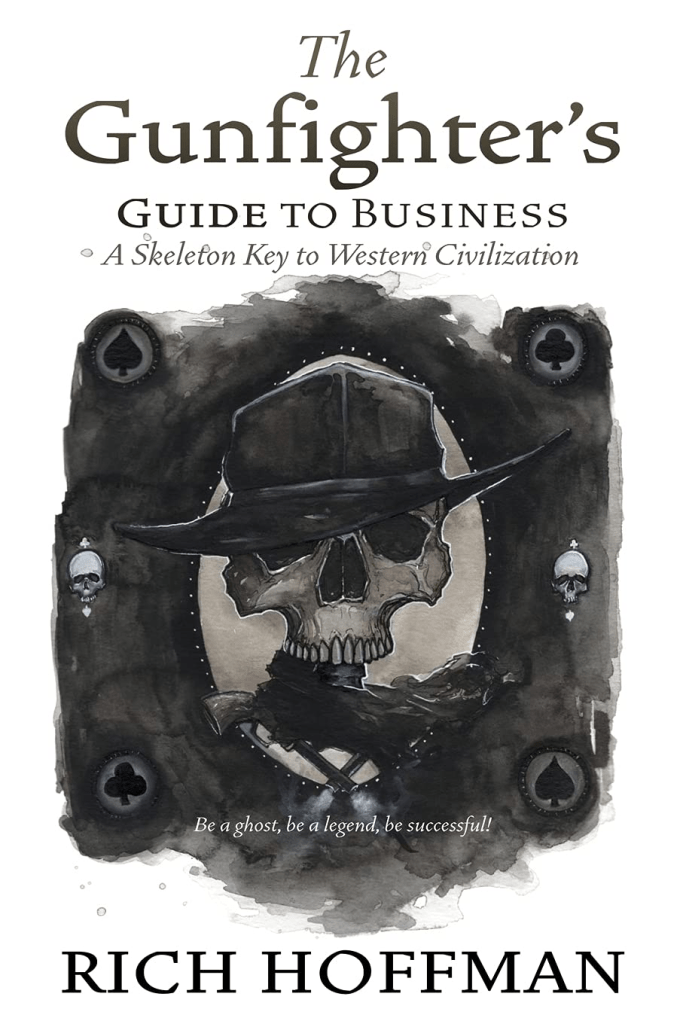
Rich Hoffman is an author, political consultant, and strategic advisor based in Cincinnati, Ohio, and the creator of The Politics of Heaven—a unique framework that connects biblical theology, ancient history, and modern power structures to explain how moral alignment and spiritual forces shape global events. Blending real-world political experience with deep research into archaeology, UFO phenomena, and suppressed historical narratives, Hoffman offers compelling commentary on topics ranging from ancient civilizations and the Dead Sea Scrolls to modern populist movements, paranormal continuity, and leadership strategy in chaotic environments. As the author of The Gunfighter’s Guide to Business and the forthcoming Politics of Heaven, he brings a grounded yet provocative voice to media discussions, supported by firsthand experiences and a cross-disciplinary approach that bridges science, history, and theology. For interviews, speaking engagements, or expert analysis, visit richhoffmanbooks.com or contact directly via phone at 513-307-5815 or email at rhoffman@richhoffmanbooks.com. If you’ve seen the movie, Disclosure Day and want to talk about it and the implications of Presidnet Trump’s UAP disclosures, let me know and we can bring some color to your coverage. https://richhoffmanbooks.com/media-inquiries-broadcast-topics-and-contact-info/?frame-nonce=ad51e7ecba I do have a firsthand UFO encounter to discuss.