The Conspiracies of Erika Kirk: In a lot of ways, its all too much too fast

The recent assassination of Charlie Kirk on September 10, 2025, at Utah Valley University in Orem, Utah, has left a profound void in the conservative movement, particularly among young people drawn to his message through Turning Point USA (TPUSA). Charlie, at just 31 years old, was gunned down by a single shot to the neck from a rooftop sniper during an outdoor campus event. The accused, 22-year-old Tyler James Robinson from Washington, Utah, surrendered the next day and now faces charges including aggravated murder, with prosecutors seeking the death penalty. Robinson reportedly stated he acted because Kirk “spreads too much hate,” highlighting the toxic polarization that can turn ideological differences into deadly violence.

In the aftermath, Erika Kirk—Charlie’s wife of four years (they married in 2021)—stepped into the immense role of CEO and chairwoman of TPUSA. The organization’s board unanimously elected her shortly after the tragedy, and she has since vowed to carry on her husband’s legacy, emphasizing faith, family, and conservative values for the next generation. Erika, now in her late 30s and raising their two young children alone, delivered an emotional speech at Charlie’s memorial service held on September 21, 2025, at State Farm Stadium in Glendale, Arizona. Thousands attended, including President Donald Trump and Vice President JD Vance. Her address was heavy with grief; she recounted the hospital moment seeing her husband’s wound, paused in prayer, and called on attendees to “choose Christ” while pledging the movement would endure. She received a prolonged standing ovation.

At the close of the event, President Trump concluded his own remarks hailing Charlie as a “giant of his generation” and called Erika back to the stage for a supportive hug. This moment, captured in videos and widely shared, drew attention—some viewers noted her composure amid sorrow, while others speculated on body language or attire in ways that fueled online commentary. Grief manifests differently for everyone, especially under public scrutiny. Erika has spoken of putting on a “brave face” while managing profound loss, motherhood, and leadership of a major organization. The pressure is enormous: stepping from private family life into heading a high-profile entity built on her husband’s vision, all while mourning a brutal, public tragedy.

Recent events, like TPUSA’s “All-American Halftime Show” during Super Bowl LX in February 2026, underscore ongoing cultural divides. As an alternative to the official halftime performance featuring Bad Bunny—which some conservatives criticized for its pro-immigration themes and global market appeal—TPUSA’s event featured artists like Kid Rock, Brantley Gilbert, Lee Brice, and Gabby Barrett. It emphasized patriotism, faith, and family values, with tributes to Charlie. Erika did not appear in person but praised it afterward on social media, saying it was “incredible,” that “Charlie would’ve absolutely loved it,” and framing it as a way to “make Heaven crowded” while honoring God and country. The contrast highlighted philosophical tensions: an America First stance rooted in sovereignty and traditional values versus broader global outreach.

Criticism of Erika has surfaced in some corners—accusations of inauthenticity, questions about her past (including pre-marriage photos from college years showing a more carefree side), or even internal TPUSA drama like staff departures and leaked audio discussions. Some speculate wildly, turning personal grief into conspiracy narratives about TPUSA shifting directions or hidden motives. Others project unmet expectations onto her, wanting a saint-like figure perpetually in mourning, perhaps akin to a “Mother Mary” archetype, rather than a young widow navigating real-life changes: biological motherhood pressures, responsibility for children without their father, and the emotional toll of sudden leadership.

Yet this overlooks the human element. Erika and Charlie’s marriage was relatively short but appeared strong and faith-centered. They built a life together in their 30s, raising kids while advancing a movement that offered young conservatives an alternative to cultural despair—replacing lost optimism in institutions like housing markets, Social Security, or generational compounding with faith-based activism. Charlie’s work, alongside figures like Steve Bannon, Jack Posobiec, John Solomon, and others in election coverage, provided reliable, in-depth analysis that resonated deeply. His generation, much like my own kids’ peers, grew up amid disappointments from prior ones—broken promises of endless prosperity—and found redemption in characters like him (or even Candace Owens from related circles, despite fluctuations).

Assassination often elevates figures posthumously, much like Martin Luther King Jr., whose impact and Bible sales surged after his death, turning him into a larger-than-life symbol. Charlie’s killing has sparked similar dynamics: grief transfers emotions onto survivors, creating pressure for Erika to embody perfection. But she’s human—37 or 38, still finding her way, dealing with survival instincts, public-facing duties, and private sorrow. Expecting her to cry constantly, wear only somber clothes, or become a nun-like figure ignores reality. People grieve variably; some compartmentalize to function, especially with kids to raise and a legacy to steward.

The controversies often stem from hurt feelings—people who admired Charlie deeply, perhaps invested emotionally in him as a proxy for missing stability in their lives. When Erika doesn’t match idealized projections (a stable front every day, no “phony” moments under stress), it breeds speculation. But there’s no evidence of underlying plots to subvert TPUSA or counter the current political order. The movement Charlie built—youth mobilization for conservative principles, Christian values, and American exceptionalism—transcends the immediacy of momentary movements. If Erika carries it forward admirably, great; if she needs time to heal (perhaps stepping back for family), someone else will rise. The ideas endure because they’re bigger situationally.

Erika deserves grace. She’s bravely taken on a massive role amid unimaginable loss. TPUSA remains one of the strongest vehicles for young people seeking faith-based alternatives in a divided culture. Supporting her means recognizing the toll: the “layers of hurt” beneath any public facade, the difficulty of sounding grounded when everything’s shattered.  Personally, I think she needs to take a few years off, for her own good.  And let things settle in her own head.  Because people are going to read into everything she does and embed their own emotions into what they expect from her as the head of Turning Point.  It’s too much to ask her to replace Charlie Kirk, and that is what a lot of people want.  What everyone forgets is that the assassination itself was a devastating event that requires action, and a lot of that action hasn’t happened.  In a Christian sense, the emphasis has been forgiveness which leaves everyone feeling empty as a result, and wanting to replace that action with sainthood.  Then when Erika can’t present herself as a saint, people are angry with her.  And that just isn’t fair to her, her family, or the relationship she had with Charlie Kirk. 

The controversy surrounding Erika Kirk and Turning Point USA’s (TPUSA) “All-American Halftime Show” during Super Bowl LX in February 2026 often misses a deeper, more redemptive truth about human transformation and the nature of movements built on faith. Critics have seized on the event—headlined by Kid Rock, who sang a song at the halftime event about prostitutes and strippers—as somehow incompatible with Christian values, particularly given Kid Rock’s rock ‘n’ roll persona and past lyrics that embrace rebellion, excess, and a gritty, unpolished lifestyle. Some question the wisdom of placing the “mantle of Christ” on such figures, or see it as a dilution of purity in a faith-based youth organization now led by a grieving widow.

Yet this overlooks the biblical pattern of redemption itself. The original disciples of Jesus were hardly paragons of institutionalized holiness. Fishermen, tax collectors, zealots—many were societal outcasts, rough around the edges, and far from “pure” before their calling. Peter denied Christ three times; Paul persecuted believers before his dramatic conversion. Mary Magdalene, often cited as a key follower, had a troubled past marked by affliction and societal judgment before encountering Jesus. These were “down and out” people who didn’t fit neatly into polite society, yet they carried the Christian message forward, transforming it into the global force we know today. Institutions later tried to claim and sanitize that legacy, but its origins were raw, human, and imperfect.

In the same way, the MAGA movement—and TPUSA’s cultural push—draws from individuals who’ve lived messy lives, fallen into temptations, made mistakes, and only later turned toward something bigger and better. President Trump himself, Kid Rock, and countless others in this space embody that late-in-life redirection: shaking off past errors, learning from them, and dedicating energy to positive, faith-aligned efforts like patriotism, family values, and American sovereignty. The halftime show wasn’t about perfection; it was about offering an alternative to what many saw as the NFL’s push toward a global, pro-immigration narrative via Bad Bunny’s performance. By contrast, TPUSA’s event celebrated pro-America themes, faith, and family—drawing millions of viewers (with reports of over 19 million YouTube views) and reportedly pulling attention and revenue away from the official show. Whether Roger Goodell missed an opportunity to unify rather than divide is beside the point; the response resonated because it spoke to people seeking authentic, unapologetic expressions of belief.

Erika Kirk doesn’t have to be the flawless vessel for this. She’s a young widow in her late 30s, raising two children alone after her husband’s brutal assassination in September 2025, while stepping into the immense role of CEO at TPUSA. She praised the halftime show on social media as “incredible,” noting Charlie “would’ve absolutely loved it,” and framed it as a way to “make Heaven crowded” while honoring God and country. She wasn’t even present at the event, yet she supported it fully. If she’s not the one to carry the mantle forward long-term, someone else will—the movement transcends any single person. Charlie built TPUSA as a vehicle for young conservatives to find purpose amid cultural despair, replacing broken promises of endless prosperity with faith-based activism.

Criticism often stems from unrealistic expectations: that leaders must always have been holy, never stumbled, or fit a saintly mold. But humans rarely arrive at conviction without a process—mistakes, detours, and all. The healthy thing is seeing people dedicate themselves to something greater, as we see in the MAGA-aligned push and TPUSA’s efforts. Erika deserves grace as she navigates grief, leadership, and legacy. The halftime show, controversies aside, aligns with that redemptive arc: imperfect messengers pointing toward enduring values. The movement will continue, one way or another, because the ideas—faith, freedom, and national pride—aren’t dependent on flawless execution. They’re carried by those willing to step up, bumps and all.

For continued reading and research:

•  Wikipedia entry on the Assassination of Charlie Kirk (en.wikipedia.org/wiki/Assassination_of_Charlie_Kirk) – Detailed timeline, charges, and aftermath.

•  Erika Kirk’s Wikipedia page (en.wikipedia.org/wiki/Erika_Kirk) – Background, role at TPUSA, and post-assassination leadership.

•  Coverage of the memorial service, including Trump’s remarks and the hug moment (e.g., NBC News, BBC reports from September 2025).

•  TPUSA’s official statements and Erika’s social media (@mrserikakirk on Instagram/X) for direct insights into her perspective.

•  Articles on the Super Bowl halftime alternative (e.g., Taste of Country, Times of India) for context on cultural divides.

This isn’t about conspiracy—it’s about empathy for a young woman thrust into extraordinary circumstances, trying to honor a legacy while healing. The movement won’t stop; it evolves through people like her, or those who follow. She deserves a fair shake to find her footing.

Rich Hoffman

More about me

Click Here to Protect Yourself with Second Call Defense https://www.secondcalldefense.org/?affiliate=20707
Jim Cameron Has Lost It: Democrat movies are bad for theatre owners and very irresponsible

I’m not rooting for this new Avatar film to be a bust. I want the theaters breathing; I want popcorn machines humming; I want the marquee lights on for people who built these auditoriums and stuck it out through shutdowns, strikes, and the great experiment of “day‑and‑date” streaming. I’ve always liked the filmmaker; I’m not rooting for him to fail. But I can read a marketplace, and I can listen to what regular moviegoers tell each other—at the concession stand, online, at church, at work—and they’ll forgive almost anything except being lectured when they paid to be entertained. If the third one—this Fire and Ash one—lands, I’m happy for every exhibitor who cashes tickets and sells a few extra souvenir cups. If it stumbles, the reason won’t be the craft; Jim Cameron still builds technical worlds like few others. It will be the message mismatch in a market that has shifted under his feet. And that shift isn’t in our imaginations; it’s in the numbers. Opening weekend? $345 million globally, $88–89 million domestic—second‑largest global debut of 2025 behind Zootopia 2, but materially softer than The Way of Water’s $435 million holiday launch in 2022. The third film’s premium formats carried a heavy share—IMAX alone did $43.6 million, and 3D/IMAX accounted for 66% of grosses—proof that the draw remains “event tech” even when general interest cools a bit. 12

And yes, Jim Cameron knows exhibition math, over the years, he’s been the best at it; these films play for legs, not for a single weekend spike. The first one opened to $77 million domestically but camped at No. 1 for seven weeks and marched past $2.9 billion lifetime—still the all-time champ after reclaiming the crown via China re-release. The second one opened bigger—$134.1 million domestic—and legged out to $2.343 billion worldwide. So “Fire and Ash” starting below Way of Water doesn’t predetermine the finish line, but it does announce the current climate: domestic ticket buyers are more selective; they save their premium formats for must-see spectacles and otherwise wait for streaming. 34

Cameron bets that Fire and Ash can give Pandora a human core the audience bonds with again. He’s been telling the press that family—love, bonds, empathy—moved to the forefront after Way of Water’s reception, and that the “Ash People” show a different angle on the Na’vi. The studios pushed all of that: ABC’s primer explains the arc and the 197-minute run; USA TODAY walked folks through the romance pivot with Spider and Kiri; People and the official Avatar site laid out the December 19 release, cast, and creative. It’s all there if you want the meta‑story of the franchise’s evolution and Cameron’s tinkering to tune it to audience reaction. 5678

But I’m going to say the part people mutter in the lobby: Avatar is FernGully in space, Dances With Wolves in space, hippie parables in space. Beautiful, yes. Bioluminescent, yes. But the heart isn’t the creature; it’s the ride. You can see it at Disney’s Animal Kingdom—Pandora is a marvel of engineering; Flight of Passage is a technical knockout. People queue for hours, glow under the blacklight, and walk out saying, “That was cool.” Then they turn left and head for Everest or the safari. The land is loved; the Na’vi dolls are not driving retail like Marvel or Star Wars. Pandora is foremost an experience of tech and design. 910

That’s the sore truth Cameron wrestles with: he won the world by selling a technical spectacle and then tried to use that platform to teach environmentalism and human restraint to a culture whose purchasing habits—phones, trucks, streaming subscriptions—declare that they want harmony with technology, not a scolding about it. If you can make the metaphor land without the wagging finger, you’re in business. But modern audiences, especially domestic ones, have tuned their ears to “message movies,” and they pick them carefully. When they don’t like yours, you feel it in the Friday night cash drawer. Ask the theater managers: they’ll tell you that premium‑format demand spikes when the spectacle is undeniable—and the rest of the release slate lives or dies by word of mouth about fun, action, and escape, not the righteousness of the lecture. 1

And since we’re talking about keeping theaters alive, let’s talk economics. The domestic yearly box office has clawed back to $8.2 billion as of mid December 2025—up from pandemic lows but still well below the $11+ billion of pre-COVID years. Ticket sales around 726 million and an average price in the $11 range (with premium surcharges pushing the “effective” average higher for event weeks) tell you how fragile attendance remains even when tentpoles overperform. Zootopia 2 blasted the family corridor and crossed $1 billion in just 17 days—the fastest PG film ever to the milestone—demonstrating that when a title hits, America still shows up with kids and grandparents. But the recovery is uneven; mid-budget adult films continue to crater, and exhibitors need reliable pipelines of four-quadrant hits to pay the rent. 11121314

Operating a theater is unforgiving math: payroll, lease, utilities, insurance, and the studio’s cut, which is heaviest in the opening weeks. Concessions are the lifeline—popcorn and soda can carry margins north of 80%; ticket revenue shares may be 70–90% to studios in week one, easing toward 50/50 later. So the survival instinct for exhibitors is simple—give them blockbusters frequently enough that the concession engine runs hot, and use subscription programs to smooth the demand curve. That’s how you pay the $83K monthly OpEx and keep the HVAC humming. When tentpoles slide, and streaming conditions lead audiences to wait, that cash‑flow logic breaks down. 1516

Industry analysts tracked closures: roughly 5% of U.S./Canada screens gone between 2019 and 2022; AMC closed 106 net theaters through 2023; Regal/Cineworld shed dozens through bankruptcy. Foot traffic dropped by double digits across major chains in late 2023–mid 2024 because strikes delayed releases. Even with 2025’s steadier slate, domestic totals were still hovering in the low eighths by December, threatening fatigue if the holiday anchors didn’t deliver. That’s the context in which exhibitors watch Avatar 3: if it has legs, the end-of-year swing can push totals toward $9B; if it behaves like a front-loaded blockbuster without the legs, the last two weeks don’t bail out the ledger. 1718

Meanwhile, the streaming battlefield grew sharper. Households averaged 2.9 paid streamers, spending ~$46/month, with Netflix the most used; Amazon introduced default ads unless you pay to remove them; Disney tightened windows on high‑performers like Zootopia 2, stretching theatrical exclusivity into 2026. Consumers say inflation bites their entertainment budget, but they don’t cancel streaming easily; ad-supported tiers make the price stickier. All of that pulls casual theatergoers away from opening weekends—unless the title is a true “you gotta see it on the big screen” phenomenon. That’s the point: theaters remain vital for communal spectacles; streaming dominates convenience. 192021

So where does Cameron’s messaging collide with that behavior? Hollywood’s data on “woke” communication is complicated: some research finds inclusive advertising drives sales and engagement; other research warns consumers may perceive “woke‑washing,” eroding brand trust. In exhibition terms, the American audience isn’t a monolith—some will welcome explicit themes on environment, identity, or politics; others recoil if they feel preached to. When a movie becomes the avatar of a social crusade, it risks trading broad escapism for factional passion. That can be commercially fine when the target demos are wide (family animation, for instance). It’s harder when the film expects legions of repeat adult viewers to sustain $400M budgets. 222324

Technically, Cameron is still a master. The franchise’s premium format share proves that—audiences paid more than the average to see the images in the best way possible. Guinness World Records still catalogs the original’s mountain of achievements: the highest-grossing 3D film at the time, the fastest to a billion at the time, and global king. Way of Water reinforced that technical leadership, but here’s the 3D lesson of the last fifteen years: outside of Avatar (and a handful of bespoke releases), 3D became a surcharge for middling conversions. Audiences noticed; the novelty wore off. When Avatar returns, people remember, “Oh, this is what 3D is supposed to feel like,” and they show up in IMAX. But it doesn’t rehabilitate 3D as a default; it just says “this franchise is the exception.” That’s both a badge of honor for Cameron and a ceiling he can’t escape: as long as the brand’s primary hook is visual immersion, the story has to be world-beating to keep legs beyond the tech hit. 2526

You can ride that tech wave into theme parks. Pandora at Animal Kingdom opened in 2017 and became a crown jewel; it did exactly what the films do best—make you feel like you’re inside a place. But again, the halo is experiential. People gush about the floating mountains and Flight of Passage. They don’t fill shelves with Na’vi figurines the way they do Marvel characters. That’s not a moral judgment; it’s a merchandising truth that tells you what audiences connect to: the ride and the view. 10

Now, to the box office chessboard of 2025. Zootopia 2 became the highest-grossing American film of the year, blowing past $1 billion in record time for a PG title, with China acting as a rocket booster—over $430–$ 447 million there, second only to Endgame among MPA releases. Family content remains the most reliable play in a jittery market; inside Disney’s slate, you can see the split personality—animated juggernauts on one end, adult mid-budget dramedies like Ella McCay face-planting on the other. Exhibitors need the former to keep the concession margin pumping through the holidays, and they will take any Cameron-sized spectacle that keeps teens, dads, and gearheads buying premium tickets. 271314

On that score, Fire and Ash didn’t exactly bomb, initially—it managed to gain a $345 million worldwide opening and posted more assertive China than Way of Water’s first frame. But domestically, it’s under the sequel’s pace. Not the kind of performance that a film like this needs, given how many resources went into making it.  They are expensive to make and market.  And this kind of performance doesn’t come close to what the industry needs.  Analysts called out the new reality: three years after Way of Water—without the thirteen-year nostalgia gap—brand saturation and the streaming habit create a ceiling. Cameron is competing against his own legacy. The question is legs: holiday weekdays that behave like weekends, repeat viewings in premium formats, and the overseas skew that has always been Pandora’s ally. If the film holds like the first two, the break-even—reported budgets of ~$400 million plus $150 million in marketing—demand $1B+ to be comfortable. Disney’s decision tree on parts 4 and 5 will look at those legs, not the Friday surge. 2829

But let’s say the worst happens and domestic audiences shrug after two weekends. What does that mean? It doesn’t mean theaters are doomed. It means studios must feed exhibitors with a genre spread that respects what Americans actually buy: action they can cheer, family movies they can share, comedy that feels “earned” not sermonized, and adult thrillers that find urgency beyond streaming. The market is proving it will sprint for the right reasons—look at 2025’s slate: Minecraft, Wicked: For Good, Superman, Jurassic World Rebirth—all fueled weekends over $90–160 million. The domestic total we saw in Box Office Mojo’s year page—low eights as of Dec 22—can still jump if the holiday corridor behaves and Cameron’s legs show up. But the macro trend is stubborn: we’re not at $11 billion, and we won’t be until release pipelines and consumer habits align. 1211

A word for the owners who lasted this long: your business is still, fundamentally, concessions powered by event content. Subscription passes (AMC Stubs A-List, Regal Unlimited) cushion attendance; laser projection, PLF screens, and dine-in service lift per-patron revenue. But your fixed costs don’t care about critical scores; they care about whether Friday brings teenagers who buy buckets of popcorn and dads who add an IPA. So when a Cameron tentpole arrives, you pray for the old magic: repeat viewings, premium surcharges, and a “must see on the big screen” vibe. That’s why, regardless of anyone’s politics, I want Avatar to do well enough to float the end of the year for the exhibitor class. 30

And the politics—since we’re being honest—matter in a way studios underestimated. The 2016–2025 period trained Americans to see media as partisan signaling. Some studies say inclusive marketing drives sales; other data points to backlash when consumers smell inauthenticity. The Bud Light saga, Target backlash, Disney controversies—they taught brand managers to avoid overt culture‑war stands unless they can carry the consequences. Films became lightning rods. When a blockbuster’s press tour tilts into liberal advocacy—it can polarize the chatter that would otherwise be “did you see that set piece?” Cameron seems to have steered Fire and Ash toward grief, family, and character, perhaps as a recalibration. But if the audience has already filed Avatar under “lecture about environment,” you need months of word‑of‑mouth to prove you’ve delivered a narrative they can feel passion for. 2231

Cameron at his peak was never “woke” in the modern meme sense; he was a master of romance in catastrophe (Titanic) and man‑versus‑machine (Terminator), of Marines versus xenomorphs (Aliens). Those are universal frames you fill with craft, pace, and heart. Avatar’s universalism is visual; its message is particular. The bigger the individual, the narrower the net. Maybe Fire and Ash, with Lo’ak’s POV and Neytiri’s grief, has found the core that makes Pandora feel like a home family fights for rather than a lecture on planetary stewardship. Reviews and audience scores suggest the gap between critics (67%) and audiences (91%) is real—if the crowd likes it, the legs can happen. That’s the best-case path: the people drown out the pundits and get their friends to go. 32

As for me, I’m still walking into Pandora at Animal Kingdom and grinning at the floating mountains. I’m glad the tech exists, but my wish this holiday is practical: give exhibitors enough cash flow to survive. Give them Zootopia 2 numbers every Thanksgiving and Cameron-sized legs every Christmas, and then scatter a year with mid-range hits that fill Tuesdays. Give the owners who survived a marketplace with streaming siphons and political crossfire a break. They’re the stewards of a civic experience—strangers laughing together in the dark—that no algorithm can replace. If Fire and Ash ends up short of the Way of Water’s heights, I hope it’s still long enough to keep the box office humming while studios recalibrate toward stories that are fun first, message second, and always worth buying a large popcorn for. And when the exhibitors tally the year—$8.2B domestic, maybe a late surge to $9B if the holiday miracles stack—they’ll know the path forward. Audiences haven’t disappeared; they’ve become choosier. Earn the trip. Earn the concession upsell.  But a fair warning for Cameron and the rest of the Hollywood lefty types, when you find out that people don’t support your fantasy messaging for a Democrat platform at the movies, don’t be surprised that people reject you. 3311

Footnotes

1. “Box Office: ‘Avatar: Fire and Ash’ Powers to $345 Million Globally… Premium formats accounted for 66%; IMAX $43.6M.” Variety/Yahoo syndication (Dec 21, 2025). 1

2. Box Office Mojo: Avatar: The Way of Water totals and opening; franchise legs. 3

3. Wikipedia: List of box office records set by Avatar; regaining #1 worldwide via 2021 China re-release. 4

4. ABC News: “Everything to know about ‘Avatar: Fire and Ash’” including runtime and Dec. 19 release. 5

5. USA TODAY: Cameron’s emphasis on relationships; Ash People context. 6

6. People.com: Fire and Ash overview; Ash People framing; Dec. 19 release. 7

7. Avatar.com: official runtime, cast, awards notes. 8

8. Walt Disney World: Pandora – The World of Avatar land overview. 9

9. Pandora – The World of Avatar (Wikipedia): acreage, attractions, opening history. 10

10. Deadline: Domestic box office crossed $8B in 2025; holiday expectations tied to Fire and Ash. 33

11. Box Office Mojo: Domestic Yearly Box Office (historical totals). 12

12. Deadline/Hollywood Reporter/Variety: Zootopia 2 crosses $1B in record time for PG; China lift. 133427

13. Variety: Ella McCay opening; mid-budget adult titles struggling. 14

14. eFinancialModels: Concession margins and opening‑week revenue shares, typical breakdown. 15

15. Financial Models Lab: Example OpEx profile (payroll, lease, utilities) for a theater. 16

16. IndieWire/Yahoo: NATO/Cinema Foundation report—average ticket price $10.53 (2022) and ~5% screen decline 2019–2022. 1735

17. RetailStat industry outlook: chain closures, strike impacts, foot‑traffic declines. 18

18. Forbes Home: 2025 streaming habits—average subs and spend; Netflix share. 19

19. Inside the Magic: Zootopia 2 theatrical window held into 2026. 20

20. Nielsen Consumer Survey (2023): inflation concerns; ad-free streaming preference stability. 21

21. Kantar Brand Inclusion Index (2024): Inclusive advertising drives purchase decisions. 22

22. Journal of Brand Management (2023/2024): “woke” brand communication engagement; polarization nuance. 23

23. International Journal of Advertising (2024/2025): woke‑washing risks to brand trust. 24

24. Guinness World Records: Avatar records; 3D/IMAX dominance; analysts projecting Fire and Ash domestic potential. 25

25. ScreenRant (Oct 14, 2025): 3D boom and decline context; post‑conversion fatigue. 26

Bibliography & Further Reading

• Brueggemann, Tom. “The NATO Annual Report… Average Price of a Movie Theater Ticket.” IndieWire, Mar. 9, 2023. 17

• Rubin, Rebecca. “‘Zootopia 2’ Crosses $1 Billion Globally…” Variety, Dec. 12, 2025. 27

• Tartaglione, Nancy. “‘Zootopia 2’ Crosses $1 Billion… Fastest Hollywood Animation Ever.” Deadline, Dec. 12, 2025. 13

• “Avatar: The Way of Water – Box Office Mojo.” boxofficemojo.com. 3

• “List of Box Office Records Set by Avatar.” Wikipedia. 4

• “Pandora – The World of Avatar.” Walt Disney World Resort. 9

• “Pandora – The World of Avatar.” Wikipedia. 10

• “Economic Contributions of the US Movie Theater Industry (2019).” Ernst & Young for NATO (Cinema United). Aug. 2021. 36

• RetailStat. “Movie Theater Industry Outlook.” Sept. 12, 2024. 18

• Forbes Home. “2025 Media Streaming Stats You Should Know.” Nov. 27, 2025. 19

• Nielsen. “2023 Consumer Survey Report.” Nov. 2023. 21

• Kantar. “Brand Inclusion Index 2024.” July 15, 2024. 22

• Journal of Brand Management. “How persuasive is woke brand communication…” Dec. 21, 2023 (Vol. 31/2024). 23

• International Journal of Advertising. “Is woke advertising necessarily woke‑washing?” 2025 (accepted 2024). 24

• Guinness World Records. “Unbelievable amount of records Avatar has broken…” Dec. 19, 2025. 25

• ScreenRant. “The Rise and Fall of 3D Movies: Avatar’s Unfulfilled Promise.” Oct. 14, 2025. 26

Rich Hoffman

Click Here to Protect Yourself with Second Call Defense https://www.secondcalldefense.org/?affiliate=20707

Why Trump’s War on Drug Cartels Is the Right Fight for America: Blow up more drug boats and dealers

For decades, America has tolerated a slow-motion disaster disguised as “due process” and “fairness.” While courts crawled at the speed of molasses, drug cartels pumped billions of dollars’ worth of poison into our communities. The result? Generations destroyed, families shattered, and a culture softened for collapse. President Trump’s decision to take the fight directly to cartel operations—blowing up drug boats in international waters—is not just bold; it’s necessary. This is not about policing petty crime. It’s about defending the United States from a military-grade invasion disguised as commerce. Fentanyl alone killed 73,960 Americans in the 12 months ending April 2025, according to CDC data. That’s more than the total U.S. combat deaths in Vietnam. When Trump authorized strikes off the coast of Venezuela, he signaled a new era: America will no longer play defense while cartels wage war on our soil. Critics in Europe wring their hands about “due process,” but let’s be clear—cartels are not misunderstood entrepreneurs. They are terrorist organizations, and their weapon is chemical warfare.

Why did it take so long to get here? Because cartels mastered the art of hiding behind our own institutions. They’ve turned the American legal system into their own version of a Trojan horse. Every time a kingpin gets caught, billions flow into law firms to stall extradition, manipulate loopholes, and buy influence. The Sinaloa Cartel alone generates up to $11 billion annually, and much of that bankroll fuels legal defenses and bribery. Lawyers addicted to cartel money are as dangerous as people with an addiction to heroin. This isn’t hyperbole—it’s systemic corruption. Court cases drag on for years, not because justice is complicated, but because money makes complexity profitable. Meanwhile, politicians posture about “comprehensive reform” while quietly pocketing donations from interests tied to the drug economy. The result? A judiciary that moves more slowly than a glacier, while cartels move faster than a hypersonic missile. Trump’s approach bypasses this charade. No more plea deals. No more courtroom theater. When a cartel boat crosses international waters loaded with fentanyl, it’s not a defendant—it’s a target.

If you think this is just about drugs, think again. Cartels are not mere suppliers—they are warlords. Since 2006, Mexico has recorded over 460,000 homicides linked to cartel violence, according to the Council on Foreign Relations. That’s nearly half a million lives erased in less than two decades. In 2021 alone, 18,000 people died in cartel-related conflicts. These aren’t sanitized numbers—they represent real atrocities: beheadings, bodies hung from bridges, families slaughtered to send a message. And it’s not confined to Mexico. Along the U.S. border, innocent Americans have been kidnapped, tortured, and killed—crimes that rarely make headlines because they don’t fit the narrative of “immigration reform.” Illegal immigration has been the perfect smokescreen for cartel operations, scattering enforcement resources and creating chaos by design. Every migrant caravan is a Trojan horse, hiding cartel scouts and smugglers among desperate families. This is not immigration—it’s infiltration. And every fentanyl pill that slips through is a bullet aimed at America’s future.

The time for half-measures is over. Trump’s strikes on cartel boats are a start, but they must be the beginning of a relentless campaign: destroy cartel mansions, burn their plantations, seize their offshore accounts, and dismantle their propaganda networks. Treat them as what they are—terrorists. Fentanyl is not a recreational drug; it’s a weapon of mass destruction. In FY2023, U.S. authorities seized 27,000 pounds of fentanyl at the southern border, a staggering 480% increase since 2020. That’s enough to kill every man, woman, and child in America several times over. Over 107,000 Americans died from overdoses in 2022, with fentanyl responsible for 70% of those deaths. This is not a market—it’s a battlefield. And the enemy is winning because we’ve been too polite to call this what it is: war. Trump called it. He acted. And for that, he deserves not just support but a mandate to finish the job. Blow up more boats. Raid more compounds. Cut off the financial arteries that keep this beast alive. America cannot afford another decade of courtroom theater while cartels wage chemical warfare on our streets. The choice is simple: escalate or perish.

History will judge this moment. Will we continue to let cartels poison our culture under the guise of “due process,” or will we fight back with the full force of a nation that refuses to die on its knees? Trump chose the latter, and that’s one of the reasons we elected him.  Drug dealing is not a harmless, free market enterprise; it is meant to feed the worst of any society, the slack-jawed losers who supply the poison and the diabolical menaces who use them, and make them both the moral imperative of all social structure.  Because of the United States’ power and its successful military, threats against it have taken the form of guerrilla warfare.  They have no plans to fight a direct war with America, but they indeed plan to subvert it, which has undoubtedly been the case of many socialist countries around the world, and yes, Mexico and Canada fall in that category.  They are OK to support a power like the drug cartels to cause the inward destruction of America, and even the lawyers play their part by putting their personal profit over the good of the nation.  Just like the drugs the cartels deal, the money that spawns from it has given significant amounts of wealth to the legal profession in America to keep the dealers out of jail, for the most part.  The drugs themselves aren’t the only addiction meant to exploit a culture to its own self-destruction, and many enemy countries to America have learned to use a much more passive-aggressive approach to military attack.  Venezuela certainly falls under that category.  So knowing all that, I would like to see more drug boats blown from the water.  I would like to see their drug mansions raided and destroyed.  I would like to see all drug assets eradicated and the perpetrators punished to the fullest extent.  Drug dealing and use is not an innocent crime; it’s the poison of society itself.  There is no innocent drug use when the destruction of human minds is the intent.  And when you look at the many socialist countries where many of these drug dealers spawn from, the endeavor is all too obvious.  They let the cartels be their military and chaos their agent of destruction as they seek to overthrow capitalism and to usher in communism as the replacement for sanity.  And in large sections of America, it has been working.  When you trace back the origin of many of the anti-ICE riots in America to its root cause, the perpetrators are primarily drug users who have had their minds poisoned by the cartels, and in many cases, they are proud of it.  The many members of all communist movements, in most cases, also have a relationship to drug use because, in their destroyed minds, they lose the ability to think for themselves and instead seek centralized authorities to do it for them.  And that is the reason why these drug dealers need a spectacular end to their life of crime and villainy.  And the Trump administration couldn’t destroy enough of them to make me happy.   But I am glad to see the intent headed in the right direction.  I am looking forward to a lot more blowing up of drug dealers, and if the Trump team ever wants any help, call.  It would be a privilege. 

Rich Hoffman

Click Here to Protect Yourself with Second Call Defense https://www.secondcalldefense.org/?affiliate=20707

The Conditions that Make People Poor: Bill Gates as usual, is way off the mark

In the modern discourse surrounding climate change, healthcare, and economic disparity, we often find ourselves circling the same ideological drain without ever confronting the root of the issue: how we define and address poverty. Recently, Bill Gates made headlines by walking back some of his climate change positions, suggesting that economic development must be prioritized alongside environmental goals. This echoes a more profound truth—one that Donald Trump touched on when he proposed sending healthcare payments directly to individuals rather than filtering them through bureaucratic systems. These moments reveal a fundamental tension in our society: the battle between centralized control and individual empowerment. At the heart of this tension lies a philosophical divide between those who believe in micromanaging outcomes through administrative states and those who believe in unleashing human potential through economic liberty. The former seeks to engineer fairness through redistribution, while the latter aims to cultivate prosperity by removing barriers to opportunity.

This divide is best understood through the lens of The Oz Principle, published in 1994 by Roger Connors, Tom Smith, and Craig Hickman, a widely respected business philosophy that categorizes individuals and cultures as either “above the line” or “below the line.” I love the book and its sequel, The Oz Principle Journey, which was published in 2011, many years later, offering a wealth of new ideas that utilize Wizard of Oz metaphors to articulate effective business practices and the proper social conduct of society at large.  Above-the-line thinkers are proactive, solution-oriented, and driven by positive energy. They ask, “What else can I do?” and take ownership of outcomes. Below-the-line thinkers, by contrast, dwell in a state of victimhood, blaming others and avoiding accountability. In business, cultures dominated by above-the-line thinkers thrive—they innovate, adapt, and grow. Cultures saturated with below-the-line mentalities stagnate, collapse, or become toxic. The same applies to nations. When a country fosters a culture of victimization, entitlement, and dependency, it creates systemic poverty. It’s not merely about access to resources; it’s about the mindset with which people approach life. Suppose the dominant narrative teaches individuals that they are powerless, oppressed, or owed something by the state. In that case, the result is a population that waits for handouts rather than builds solutions.

This is the trap of the administrative state, particularly as envisioned by modern leftist ideologies. The Democrat Party, increasingly driven by collectivist impulses, seeks to centralize control over healthcare, education, and economic redistribution. Their vision of “fairness” is not about equal opportunity but about equal outcomes, regardless of effort or merit. They create systems that reward victimhood and penalize initiative. Public education, once a bastion of enlightenment and upward mobility, has become a breeding ground for thought patterns that are below the line. Teachers, often radicalized by personal grievances and ideological indoctrination, pass on a worldview that prioritizes identity politics, grievance culture, and dependency over personal responsibility, excellence, and ambition. Instead of teaching Shakespeare or the principles of economics, they teach children to see themselves as oppressed, marginalized, and incapable of success without government intervention. This is not education—it’s indoctrination into failure.

As of 2025, approximately 10.1% of the global population—roughly 839 million people—live in extreme poverty, defined by the World Bank as surviving on less than $3.00 per day (2021 PPP). The burden of poverty is not evenly distributed across all individuals. Sub-Saharan Africa remains the most affected region, with 46% of its population living in extreme poverty. Within this region, Eastern and Southern Africa report rates exceeding 53%, while Western and Central Africa hover around 35.7%. In stark contrast, high-income countries and territories, such as Europe, East Asia, and North America, report poverty rates below 1%, underscoring the profound impact of economic systems and governance on wealth distribution.

The disparity in GDP per capita between economically free and administratively controlled nations is staggering. In 2025, Luxembourg leads the world with a GDP per capita of $141,080, followed by Switzerland ($111,716), Ireland ($107,243), and Singapore ($93,956). These nations consistently rank among the highest in economic freedom indices, characterized by low regulatory burdens, strong property rights, and open markets. Meanwhile, countries with heavy administrative oversight and limited economic freedom—such as Burundi, South Sudan, and the Central African Republic—report GDP per capita figures below $1,000, reflecting the economic stagnation that results from centralized control and restricted market access.

The Fraser Institute’s Economic Freedom of the World (EFW) report reveals a direct correlation between economic freedom and prosperity. Nations in the freest quartile enjoy an average income of $40,376, compared to just $5,649 in the least free quartile—a 7.1x difference. The poorest 10% in free economies earn 7.9x more than their counterparts in the least free nations. Moreover, life expectancy in free countries is 15 years longer, and infant mortality rates are 6.8x lower. The UN World Happiness Index also shows that citizens in economically free nations report life satisfaction scores two points higher on average than those in restrictive economies.  These metrics confirm that economic liberty is not just a path to wealth—it’s a foundation for human flourishing.  If you want to help people have access to wealth, teach them, and empower them to be “above the line people.”  Solution-based and to enjoy the result of that way of thinking with wealth creation, the ability to enjoy a full bank account, and the results of a task well done. 

The rise of the administrative state—defined by expansive government agencies that regulate economic activity—has been linked to sluggish growth and persistent poverty. While initially intended to address industrial complexity and social inequality, these bureaucracies often stifle innovation and delay wealth creation. The U.S. federal administrative apparatus now issues thousands of regulations annually, with the Code of Federal Regulations exceeding 185,000 pages, quadruple the size of the U.S. Code of Laws passed by Congress.  This regulatory overload disproportionately affects small businesses and low-income entrepreneurs, who face barriers to entry and limited access to capital. In contrast, countries that have adopted deregulation, sound monetary policies, and trade expansion have experienced significant reductions in poverty and increases in GDP.

The solution is not more government, more regulation, or more redistribution. The solution is to cultivate a culture of thinking above the line. This means empowering individuals to take control of their lives, make better decisions, and pursue success through effort and innovation. Capitalism, despite its imperfections, remains the most effective mechanism for lifting people out of poverty because it rewards productivity, creativity, and personal responsibility. When people have access to capital and the freedom to use it, they build wealth—not just for themselves, but for their communities and nations. The administrative state, by contrast, stifles this process. It throws up regulatory stop sticks, preventing people from even starting a lemonade stand. It confiscates wealth under the guise of fairness and redistributes it through inefficient bureaucracies that serve more to perpetuate their own existence than to solve problems. To reduce poverty, we must dismantle these barriers, reject the cult of victimization, and return to a model that celebrates personal agency, economic liberty, and the power of positive thinking. That’s how you build a society that thrives—not by managing poverty, but by eliminating the conditions that create it.  Too much “below the line thinking” creates depraved conditions that bring down all cultures.  And if you want to prevent that way of thinking, then you have to change where people are on that invisible line that we draw in the sand, above and below.  It’s not a political line, it’s one of personal responsibility.  And when you teach people to be victims, of course, you are then teaching them to be poor.  And no amount of money that you throw at them will help them if they don’t think right about how to use it. 

Rich Hoffman

Click Here to Protect Yourself with Second Call Defense https://www.secondcalldefense.org/?affiliate=20707

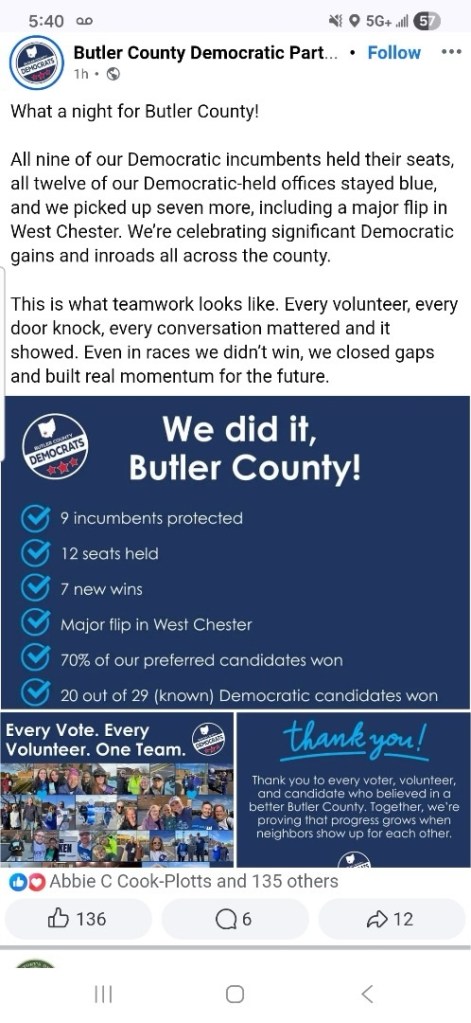
Republicans Played Too Nicely in the Election of 2025: Who to blame in the West Chester Trustee race

It is a bit surprising to listen to everyone’s post-election analysis, where they think Democrats did a lot better than they actually did.  In West Chester, Ohio, there is a lot of chest beating that Democrats found themselves in a lot of seats, especially the West Chester Trustee position, where I went to bed feeling like my guy, Mark Welch, the incumbent who has done a good job, came in third in a six-person race for two spots, was going to win.  There was a Trojan horse effect there, where the average person didn’t know who the Democrats were.  In the West Chester race, that certainly would be the case.  Mark was a Republican-endorsed candidate, but there wasn’t much advertising for the Democrats running, as they hoped to slip under the radar without the general public knowing who they were.  I still felt Mark was strong enough to win anyway.  I might have had disagreements with the way that Republicans set themselves up for this election.  But I wasn’t surprised by anything in Virginia, New York, or California.  Where Republicans ran away from President Trump, Republicans lost to Democrats, and it’s pretty much that simple.  Republicans, the same old Never Trump types, a year after his magnificent election, tried to go it alone, and they lost.  I hear a lot of analysis, and they are all mostly missing the point.  The Republican Party traditionalists still don’t want to admit what MAGA America really is.  The West Chester race, like the Lakota levy issue, truly captured a national sentiment worth mentioning.  I’ve spoken to Mark, and he’ll have the opportunity to do many great things.  Meanwhile, West Chester was warned what electing a bunch of Democrats would do, which is what the Lakota school board has been experiencing.  And people are going to have to learn some hard lessons. 

But here’s the deal.  While I support and endorse various candidates, and I certainly did endorse Mark Welch, I disagreed with the “niceness” campaign.  Mark is a nice guy, but everyone has to remember he won as a Tea Party conservative, and the Republican Party at that time was led in that effort by a scrappy George Lang, who when pressed can be pretty ruthless to those he runs against.  It was the Tea Party types who went out and fought to put Mark on the Board of Trustees of one of the most successful communities in America, and he has been great in that position.  Over time, people have forgotten what it took to get there and what it takes to keep a community great.  New York is going through that same cycle. Over time, people get complacent when things are stable for a long time, and they dare to make changes that might sound “nicer.”  And when it comes to me and many political people, there are always these tagalongs who aren’t very savvy, and they certainly don’t like me.  When I see Mark at an event and speak to him, there are always those who swoop in after me and ask him why he gives me the time of day.  There are lots of whispers in the ears of some of these people who want to believe that the world is something other than what it is, and that I should not have a place in it.  But I’ll tell you what, if I were managing Mark Welch’s campaign, he wouldn’t have lost.  I would have advised him to be a lot more competitive and a less smiling, more angry, Mark.  The belief was that Mark needed to get Democrats to vote for him, so he needed to be more like Lee Wong, whom conservatives thought of as safe to vote for, but who would undoubtedly receive a bleed over of Democrat votes.  The belief was that in West Chester, if you wanted to win the trustee seat, Democrats would have to step over and vote for Mark. 

But in truth, as it was everywhere in the country, it’s the MAGA base that supports Trump that everyone had to tap into.  Because even there, there are already Democrats who have left the party and are voting for Republicans because of Trump.  So, in Mark’s case, and this is the fault of all those people who whisper in his ear when I leave the room, playing “keep away” with these office seats is not the way to win.  Democrats are trying to sneak under the door, and Republicans are trying not to look too mean to win over Democrats.  When the real desire is for MAGA Republicans to grow in number, and people in West Chester would have loved to know that Mark was much more MAGA than just being a nice guy incumbent.  The reason why Mark didn’t pull out one of the two top spots was engagement.  The MAGA people, the old Tea Party types, weren’t excited about this election cycle, so they stayed home.  And Democrats were desperate for relevancy, so they worked the polls, mailed out their mailers, knocked on doors, and tried to sneak under the door wherever possible so people wouldn’t know who they were.  Mark worked hard, but the people around him were on their heels, and that was obvious.  They were on cruise control and wanted him to play keep away, to not do anything that might steer away those Democrats that they are so afraid of. 

This year, more than other years, I have been doing a lot of video coverage of important political figures, not because I’m some radical right winged maniac, as those people who were whispering to Mark criticisms toward him for even talking to me, but because I know what I’m talking about and I always know how to handle these kinds of things with an excellent track record.  If someone listens to me, they will have a significantly better chance of winning their issue, regardless of who they are.  I’m so good at it that lots of people want to pay me a lot of money to do it, but I look down my nose at that kind of business, because I don’t respect people who take money for something that is essentially part of our republican form of government.  It should be a labor of love, in my opinion, not something you profit from.  So I already don’t respect a lot of those types of people who are critical of me.  Everything gets back to me, so I know who those people are.  And I think so little of them that I don’t even waste my time speaking with them at a lot of those events.  I see them as a waste of time.  They don’t understand the game, and they don’t respect the people who vote.  They are busy trying to make the world into what it isn’t.  Because they like Democrats secretly, and they don’t want to fight them, they want to get along with them.  I advocate destroying them.  Why wouldn’t you want to destroy people who are trying to ruin our civilization?  And I understand that a lot of the people I’m talking about don’t think of things on a vast scale for the actuality of existence.  That’s the only way I think.  So do I care if they find my outlook repulsive? Absolutely not.  I see them as a waste of time, and they have a lot to learn about life.  And when they give bad advice, as they certainly have been, don’t be surprised when your guy loses.  Republicans lost in races they could have won because they were too nice to Democrats.  And it’s that simple. 

Rich Hoffman

We’re rebuilding the school board. Good management is the best way to defeat tax increases.

Click Here to Protect Yourself with Second Call Defense https://www.secondcalldefense.org/?affiliate=20707

The Value of “Goodwill”: Attacking America infrastructure behind the banking industry

There are a lot of bad people out there doing a lot of nasty stuff, and often it’s not over the pursuit of ideological differences.  One of the greatest perpetrators of evil in the world is the pursuit of easy money because people are too lazy to make it for themselves.  And that is certainly the case with a conflict I’m involved in with Wells Fargo, where I have witnessed many layers of evil driven by those types of sentiments that really put a challenge to all the assumptions people have of freedom.  It’s one thing to work toward MAGA goals of self-government and personal fulfillment.  It’s quite another to see how a mobster-type of network running behind the legal profession thinks of itself as a government behind a government, and that when they want to steal something from you, they believe they can do it without recourse, because their efforts are so predictably parasitic that a whole new layer of concern unfolds before you.  When I warn people about the problems with modern banking, it comes from direct experience.  And when you have something really valuable, there will always be entities out there who will want to steal it, perhaps for purely ideological reasons.  But mostly, because they can and they lack that value themselves.  So if you leave your doors unlocked in a crowded area, you can almost guarantee that someone will try to open your door and steal the contents of your car.  Especially if it looks like something valuable might be in it.  You cannot trust that good deeds will always maintain civility.  More often than not, you will see the worst of the human race if you allow them to show it to you, and that is the case with a conflict I’m involved in with a team of others that finds itself in a dispute with a vast bank that thinks it has more power than the United States government, and that they have complete control over the legal profession, and can essentially make anything happen that they want to see happen.

Not to get into the specifics of the case I’m involved in, which is a very public case.  Nothing much shocks me; I’ve pretty much been there and done everything.  But in the Wells Fargo case, which most people dealing with them outside the coloring lines of normal loans and transactions report, the level of evil they utilize these days is long over the rainbow.  But to see their behavior and arrogance displayed before the courts is essentially a lesson on why the creation of the Fed at Jekyll Island was such a bad idea in 1913.  It’s one thing to vote for the right to vote.  To pass a school levy.  Or even to go to war with another country.  But this idea that we’d let some global terrorists run our monetary policy and be able to control financial interests in the defense of our country, essentially, is reprehensibly wrong, which is the issue at the center of the case I’m involved in.  How would a bank like Wells Fargo get so much power to begin with, or BlackRock, which owns so many companies with a controlling financial interest in them, as BlackRock does with Wells Fargo?  The answer starts with the Fed printing trillions of dollars and issuing the phony money into Wall Street over a long period of time to wash it.  And essentially give the handlers of that money control over all the means of production in the world through finance.  When we study how communism has spread beyond the borders of politics, look at the finance industry, and you’ll see what a menace all this is. 

But for the depth of it, I had a front row seat as we were securing counsel for a vigorous defense of essentially a hostile takeover.  And while looking for that level of counsel, we found that most of the top talent across the country had to recuse themselves because they had some financial tie to Wells Fargo, in some way.  And the obvious answer that comes to mind is how could any one bank acquire that much power?  To influence to such an extent the entire legal industry.  And they had no fear of law enforcement or political reform of their holdings.  They acquired that power from the Lords of Easy Money, who print money at the Fed to saturate the market with a flood of cash, no matter what its real value to gold is.  It’s the perception of value that they control because there are no auditors on the face of the planet who could come in and scrutinize them for their deeds.  And when we did, it was hard to find a lawyer anywhere who was not on the take somehow by just that one bank.  Then apply that same standard to the many banks that control our lives, and you start to see a real problem.  They think they are well beyond political controls to be regulated by the people of a nation through an election process.  We’ve learned a lot over these last few years about how these sinister characters operate behind the curtain.  And we were all too polite to even ask the question, until this latest Trump term where we have seen a lot of evil behavior that assumed it had control of the political process including the FBI, CIA, and of course, the banking industry, hiding behind a Federal Reserve that never should have been created in the first place, for these very reasons.

There is a legal standard in cases like this where “goodwill” is the real commodity.  It’s not the dollars and sense that buy material or pay payroll, it’s the intangibles of what a company or entity means to society in general.  And that looks to be the case here, where money doesn’t mean anything to the attackers, because they work in an industry where they can print all they want to flush it through the system through hedge fund investors like a personal assassination squad.  The attack is on the value of something to society, not in the hardware it uses to produce the product.  In this case, a company openly supportive of the Trump administration and a very woke bank that wanted to attack the “goodwill” of that brand to take that chess piece off the map, essentially.  And it’s not so much the politics of it as it comes down to a case of private ownership, on the premise of privately held companies versus publicly traded ones, where the means of production are out of the hands of private people, but collectively owned.  The amount of money that it takes to keep the entire legal profession on a retainer is essentially enormous.  Yet that is the case as I see it; it is an astonishing level of power that no bank, no single entity, should ever have for themselves.  And a lot has been revealed in their arrogance, which is worth fighting.  And that will undoubtedly be the case here.  But to see just how bad it is up close and personal has been alarming.  It’s one thing to talk about these things as they happen and are observed.  It’s another to be personally involved.  And to see the rot up close and to meet the characters.  If we thought the situation was bad before, now we know it.  And we can’t unsee what we have seen.  Nor can we put that genie back in the bottle.  The wrath of justice has to take place because we can’t let it endure untethered.  Knowing what I do about cases like this, it is astonishing to consider how much “goodwill” has been attacked by phony money to destroy businesses from the inside out.  And to determine, based on that assessment, what the real threat to American infrastructure truly is.

Rich Hoffman

Click Here to Protect Yourself with Second Call Defense https://www.secondcalldefense.org/?affiliate=20707

The Success of Operation Midway Blitz: Pushing communism under the door with illegal immigration

Happy to report that Operation Midway Blitz in Chicago has been very successful, with over 1500 arrests since the start of September.  The Department of Homeland Security has been targeting alleged criminals like pedophiles and gang members with some of the arrests spilling over outside of Illinois.  ICE agents have been very successful in removing the criminal elements that have been deliberately put in place by Democrats to serve progressive causes, and it has the radical left very upset, which is good.  That’s what happens when you start solving problems that want to exist so they can exert power over all society.  The high crime in Chicago was deliberately placed and left alone, and it’s time to clean up that city, even if the mayor, Brandon Johnson, and Governor J.B. Pritzker have been doing everything they can to facilitate the continuation of the high crime.  Why, because they know, as all Democrats do, that the key to their insurrection party is illegal immigration, who bring with it criminal elements to destabilize society in detrimental ways and convince people to turn to big government for safety and security.  Governor Pritzker has to have high crime to justify the kind of personal intrusions and government growth that the Democratic Party intends.  Otherwise, the whole premise of their existence falls apart. Trump pushing for Operation Midway Blitz exposed this strategy for what it was, and it has now been very successful.  Crime is down, and that started before the blitz because caution was in the air as criminals realized the game was up and their free roam of the city streets was at an end.  There is more going on with Chicago than just this latest issue; it was built to be a progressive invasion in America, and if we want that to stop, the city itself and its politics have to be attacked.  So this is more than a symbolic exercise; it’s a strategy that should have been implemented long ago.

Chicago is one of the great American cities, located in the heart of the Midwest.  I interact with Chicago a lot, and it has been part of my story for many years.  Not that I meant to, but I worked for several organized crime groups early in my life, who were centered out of Chicago, for one, the Chinese mob.  And the second was a money-laundering outfit that operated car dealerships to launder money.  I started in these enterprises through the usual application process: getting a job and earning money straight away.  But because of my personality, I was quickly sought out to do the things other people are scared to do, and I learned, up close and personal, how the life of crime worked, always in the background.  I did not become a criminal, but I did get into a lot of entanglements, some of which were very violent and dangerous.  But let’s just say I have first-hand knowledge of the kind of world Governor Pritzker is trying to protect and maintain.  I was so outraged by everything I learned that I have dedicated my life to eradicating that evil, which is why I do many of the things I do for free.  I don’t like evil, and I really don’t like crime that spawns from it.  And with all that said, I am thrilled Trump has declared war against this terrible tyranny always looming in the background.  Chicago wasn’t always the crime-ridden pit that it is today.  It was made that way on purpose, and we should all be insulted by the intention, which is now finally being corrected.

If you fly into O’Hara, you’ll see miles and miles of communist style apartment complexes where people have been stacked on top of each other for as far as the eye can see.  There is quite an attempt right now to show China as the example of what communism can bring, with its centrally planned efforts producing great architecture and technology, all the while in America using that same centralized management approach to depress Americans away from free markets and free enterprise.  Even the positive effects of a supposedly democratic system, where people pick their representatives in a republic-style government.  In both cases, centralized governments used their power to prop up one international standard over the other.  Globalist elites drove the push toward Chinese communism.  And it has been they who have shaped Chicago into the crime-ridden hell-hole that it is.  The downtown areas are not too bad —deliberately so —especially around McCormick Place and Soldier Field.  The northside isn’t too bad once you get well past the city.  But to the south and west of downtown, it’s pretty rough.  If you get gas anywhere in those zones, you can expect an engagement with crime, and all that is on purpose.  Crime doesn’t just happen; in this case, it was invited in with the purpose of illegal immigration.  And the Democrat party knows they need crime and illegal immigration to fulfill their communist plans of pushing people away from capitalism and into outright Chinese communism.  Chicago and its crime were always part of the plan of suppression.  To save the great American city, the push was for America to adopt more Chinese communism so we could be more like their shining example. 

The way that Chicago set up its neighborhoods tells the whole story of why they have crime now; it was always meant to.  Free enterprise was never part of how the modern city was put together; it was meant to bring in and hide illegal immigrants who would funnel the drug trade in behind the chaos and destabilize polite society from behind a political firewall.  While society was debating the proper pay for women in the workplace and abortion, criminals were undercutting one of the great American cities with grotesque violence occurring every day to the point where it was normalized, and people expected a suppressed environment.  It wasn’t just about Chicago; it was about pushing communism under the door of the Midwest and bringing down America from the inside out.  Poisoning the highway system to all the other big cities with crime, and those destabilizing attempts started with illegal immigration hidden in the apartment slums of west Chicago, to the point where the crime spilled over into the outside world to destroy the American dream like a Trojan Horse in the middle of the night, to slit all our throats while we slept.  That is why Democrats are so upset about Operation Midway Blitz.  And why it’s so good to see it succeed, no matter how long it continues.  Democrats need illegal immigration to pull off their communist scam.  And instead of just accepting that, as we have for many decades —essentially an entire century —we are fighting back and taking Chicago away from the criminal elements, which is leaving Democrats in a panic as to what to do next.  Pritzker, unable to shake Trump off the trail, turned to gambling to pump up his already deflated image.  But his political hopes are being cleaned away, too, in all this.  He took a stand to protect illegal immigration, and Trump is ripping that away, leaving Democrats helpless as a result.  And for the first time in many decades, the truth about Chicago is finally being seen.  And a lot of people will live, who usually would have been sacrificed to the need for crime by Democrats who have been cheerleading communism all along.

Rich Hoffman

Click Here to Protect Yourself with Second Call Defense https://www.secondcalldefense.org/?affiliate=20707

Under New Management: Why companies fail and how leadership works

All over my town of West Chester, Ohio, there are signs everywhere indicating that new management is running a business.  Most of them are restaurants and bars, but they have been unusually placed in front of all kinds of companies, even manufacturing facilities.  Which was another thing I said would happen as a result of the catastrophic stupidity of COVID, where a global Marxist strategy of micromanaging how people were going to do work was imposed on all of us through the ridiculous means of a doctor’s office.  White coat losers in the form of health professionals were trying to scare us into open socialism, and it was always going to be a disaster.  And now, five years later, the world has turned to populism, specifically to capitalism.  If you really want to get philosophical about the Trump administration at this particular time, it’s because the human race knows what’s good for it, and all forms of Marxism have not been it.  There was never a plan for Trump to be in any authority position.  The plan was to take over mass society and make people afraid of a virus that was made in a Chinese lab, by people who wanted to make a bioweapon to use against the world, to steal elections, and take over economies.  People saw this happening, and they put Trump in office as the rest of the world has been supporting their own version of pro-capitalist populism.  Its not because they were that great of a candidate, but because people didn’t like the direction the world was turning, which brought about out of desperation, the Covid year of 2020 and the complete collapse of the global economy that was so tragic that most people didn’t even want to discuss what happened because they wanted so badly to put it out of their minds. 

So the mindset of the economic shutdowns has taken a few years to recover from, and it has taken a while for people to get their feet under them again.  And what we’re talking about are all the DEI hires and the work-from-home mentality that has been socially disastrous—social policy cooked up in a lab, with everyone’s books open to Karl Marx’s literature.  Even Microsoft was in on the gag, trying to push everyone into Teams meetings from home in their pajamas.  Nobody was betting on a complete economic recovery in those dark months of 2021, as Biden took office, Trump was forced into exile, and Covid protocols were imposing themselves on every one of us.  People should have been more intelligent to see the obvious.  We were under attack by an extensively laid plan of a complete Marxist takeover of the world.  And I said it at the time, and said all this was going to happen.  Nobody listened until it was too late.  And I would go around town and talk about all the businesses that were working from home, and how they were going to fail, and all the fast food places that closed their dining rooms because they didn’t have enough staff to stay open.  I told everyone what was going to happen, and now it is.  And I saw it clearly because of the way I live my life, in front of the train. At the same time, most of the world lives in the back, where it’s safe.  We’re talking about Robert Pirsig’s Metaphysics of Quality as he talked about it in the great book Zen and the Art of Motorcycle Maintenance.  It’s a very popular book, though largely misunderstood.  Its sequel, Lila, has not been read by millions, but by a very select few in the world who are audacious rarities. 

The metaphysics of quality, as I explained in my video with a train roaring by, is essentially a perspective on leadership and decision-making. Outstanding leadership is done at the front of a metaphorical train, where you can see what’s coming as it approaches.  You can turn the train, slow it down, tell people what you see coming.  But most people don’t dare to lead from the front.  So they have built an administrative bureaucracy in the back of the train to provide analysis, which is useful.  But it’s not leadership because by the time the moving train reaches the point of decision, the caboose has passed it entirely too late.  Decisions have to be made at the front to ensure the quality people expect.  That is why great generals who lead from the front are great.   Great business leaders are so rare.  And why political efforts succeed or fail.  If leadership is at the back of the train, a management effort will likely fail every time.  If, under scarce circumstances, an organizational leader is at the front of the train —where few people dare to be —then great success is possible.  Success that is often beyond people’s wildest dreams.  So when a business is failing and wants the public to know they are making changes, they put up signs saying they are under new management, hoping people will give them a second chance in the economy, implying that their leadership change will be different.  After COVID, a lot of companies got suckered and put their leaders all in the back of the train, where it was safe, and it was a disaster for the world’s economy under a hostile takeover. 

Karl Marx was always an idiot and a coward.  He died broke because he was a back-of-the-train theorist.  The world is full of them.  But because there were a lot of cowards in the world who ended up in government, health care, and were second-generation titans of industry who didn’t have the same guts their previous generation had, they adopted Marxism to hide what losers they were.  But in a marketplace where free will is expected, that kind of back-of-the-train micromanagement was never going to work.  And I said so all along.  And now that the money is flowing again and Trump is back in the White House, leading from the front, it has exposed this plan for the fraud it was.  And now everyone is scrambling to find people at the front of the train, and their “under new management” signs are hopes that people will assume that there is leadership at the front of the train instead of everyone functioning from the back, where all the wimps hang out.  And that’s why there are suddenly so many signs.  At least the owners of these businesses are trying.  But it shows clearly the danger that arises when we micromanage society, with back-of-the-train personalities who are not equipped to lead.  Even in a bar or nightclub, where leadership isn’t even considered.  People expect the lights to work and the beer to be cold.  And when everyone is hiding in the back of the train, they often order those things too late to arrive for a Friday night gathering that nobody thought would happen because of COVID social distancing rules.  Only people in the front of the train were ready, because they saw well in advance what a dumb idea everything was.  And most businesses that lacked those unique personalities failed, are now trying to recover, and want the world to know they are looking for front-of-the-train management.  And even if they haven’t yet found them, they are at least looking.

Rich Hoffman

Click Here to Protect Yourself with Second Call Defense https://www.secondcalldefense.org/?affiliate=20707

Wells Fargo Analyst Matthew Akers Was Purposely Wrong: When bankers are more dangerous in the world than Hamas

There’s a very public case going on right now that I’m in the middle of, and all this is on public record so that people can judge for themselves the contents.  But when I have to explain it to people —many thousands of people —the only thing that comes to mind is pirates.  People who rob other ships at sea and kill the crew and steal all the wealth on the ship.  The case I’m referring to involves a huge bank, Wells Fargo.  But as I have learned, what they are doing in the finance world is very common, not unique to just them.  We have a lot of plundering pirates in the finance and legal world, who, to put it mildly, steal wealth for all kinds of radical reasons.   And they have grown so large over the years that they have turned to piracy as their mode of operation.  The system we have allowed to exsist has created pirates in the finance industry that are completely stealing the kind of wealth that Trump is trying to unleash and based on my experience, because none of these people will ever admit any of this in court, it all comes back to politics and radicalism of human beings who have been allowed by law to get too much power over industry standards.  In the case I am talking about, Wells Fargo published an analytical opinion in April of 2025 that indicated the aerospace industry was going to suffer through a tough year.  This opinion appeared in multiple trade publications aimed at investors, and, to make a long story short, the intent of the opinion and its publication across multiple fronts was to depress the aerospace industry as a whole.  The comment by Wells Fargo analyst Matthew Akers regarding the poor performance of the aerospace industry was way off the mark, and I knew it then.  But the reason for the comment is that the piracy begins there, and is no different than the robbery we know occurred on the high seas in 1690, or in the finance industry in 2025. 

Banks like Wells Fargo did not get to be so big by their own power, there is a whole corrupt story that involves BlackRock, State Street, and Vanguard, and the Federal Reserve pumping a lot of printed money in the system that essentially gives public companies like Wells Fargo a pirate ship to attack the finance industry, while appearing to a media they largely control through advertising, to dress them up as good vessels.  Pirate ships used to perform this trick all the time: they would pretend to be a normal merchant vessel, then, just before they pulled up alongside another boat, they would hoist the Jolly Roger flag to scare the inhabitants of the ship they were trying to attack into surrendering.  And from there, the boat would be plundered for all its worth.  I see that happening to a lot of companies these days, especially after Trump was put back into office, which, based on the case I’m involved in, appears to be the motivating factor behind Matthew Akers’s statement.  I could have easily told him all about the aerospace industry and that he was incredibly wrong about his forecast in April of 2025.  But he wasn’t looking for the truth.  He was putting up a friendly flag to look helpful to the industry, to pull up alongside unsuspecting vessels to rob them.  That was the apparent purpose of his statement to the investment media.  And they thought they’d get away with it cleanly because they have for years, and have acquired more power, they believe, than our court systems can process.

There are a couple of strategies for why Matthew Akers and the people at Wells Fargo would make this prediction, knowing it was not the case.  2025 was projected to be a big year for the aerospace industry.  Trump was back in office.  The economy was poised to be red-hot.  And when people are happy and spending money, they fly to places.  Knowing a lot of people in this finance industry who are Democrat rats in disguise of pirates wearing suits, I would bet a lot of money that the purpose of the Wells Fargo statement to the industry was to attack the aerospace industry as a whole because they wanted to depress the incoming Trump economy.  If the Autopen president were still in office, I think the Wells Fargo forecast would have been the opposite.  And this is one of the primary reasons so many businesspeople are wishy-washy about politics.  They don’t want to be targeted by pirates who try to take over their business and industry.  So by depressing the industry, a large bank like Wells Fargo thinks it can actually shape politics.  And we see the same behavior wherever significant money is controlled by political radicals, such as in the pharmaceutical industry.  Only in aerospace, if you want to attack the military that Trump was to have access to, and the free flow of money into commercial aerospace because you want to protect the earth from the carbon footprint of a lot of new airplanes being built, you would if you could seek to tank the stock and harm the supply chain so that the industry would meet the expectations of a forecast that was not measured in real market value, but the strategic intent of the pirates involved at the front of the lending practices. 

Even worse than the political motivations is the ability to actually steal value.  In the case of the Wells Fargo April analysis, the mention was on the impact on Boeing stock, which a large bank’s opinion could greatly influence.  Such negative news could easily spark a mass sell-off and lower the price.  Only to have BlackRock, which owns a lot of Wells Fargo, sweep in and buy up all that stock for a very low cost.  And that money came straight from the Federal Reserve.  So we have a terrible game going on here that is really restricting a positive American economy and a global aerospace industry critical to Trump’s goals in the world.  In the case I’m involved in, the pirate ship is being fought; it was recognized well before they raised their pirate flag.  And the intention is to sink that pirate ship and bring disaster to all who are on it.  Ruthlessness has to be the means of proper conduct when its necessity is discovered.  But this practice isn’t unique; it’s common, and it is shocking how many court cases are spawned from this very behavioral practice.  These big banks have way too much confiscated power.  And Matthew Akers at Wells Fargo obviously is abusing that power for all kinds of political and financial reasons.  And the biggest threat to the American economy isn’t coming from foreign attackers, but from the banking industry that is entirely way too politically radicalized.  They keep their pirate flags lowered until it’s too late.  They pretend to be friends and helpful merchants.  But they are ruthless pirates by their conduct, and they intend to do anything to destroy positive financial growth in opposition to the politics they disagree with.  And in the case I mentioned, they went too far.  I know a lot more about the business of aerospace than Matthew Akers does.  So being wrong revealed a deeper problem, and it was easy to see in this case.  But often, nobody figures it out until it’s too late.  And if we want to have a good economy, we can’t let our bankers be more dangerous than Hamas. 

Rich Hoffman

Click Here to Protect Yourself with Second Call Defense https://www.secondcalldefense.org/?affiliate=20707

Why I Support Michael V. Ryan for Butler County Commissoner Over Roger Reynolds: The Spooky Nook Sports Complex and vision for the future

In the ever-evolving landscape of local politics, decisions about leadership are rarely simple. They require reflection, vision, and a deep understanding of what a community truly needs to thrive. As someone who has stood by Roger Reynolds through difficult times and considers him a personal friend, my decision to endorse Michael Ryan for Butler County Commissioner was not made lightly. It stems from a clear-eyed assessment of the future of Butler County and the kind of leadership that can best guide us there.

A Legacy of Loyalty and Friendship

Let me begin by acknowledging my longstanding support for Roger Reynolds. I’ve stood with him through challenging moments, and I’ve always appreciated his dedication to public service. Roger has contributed meaningfully to Butler County, and I personally like him. But politics isn’t just about personal loyalty—it’s about choosing the right person for the right job at the right time. And in this moment, I believe Michael Ryan is that person. Roger has announced his run for this office knowing the political situation, and he did it anyway, ultimately making it more about what he wants and needs, over what is best for this commissioner seat. He has a desire to justifiably clear his name from a rough period of time. But in that process, he showed a lot of bad judgment in pushing away people who stood by him the strongest through that process, and we don’t need that kind of trouble in a commissioner office.

The Spooky Nook Sports Complex: A Symbol of Visionary Leadership

One of the most compelling reasons I’m supporting Michael Ryan is his instrumental role in the development of the Spooky Nook Sports Complex in Hamilton. Located on the site of the old Champion International Paper factory, this facility is more than just a sports venue—it’s a symbol of economic revitalization, community engagement, and visionary leadership.

Hamilton has long needed a spark to reignite its downtown economy, and the Spooky Nook project has provided just that. It’s the largest sports complex of its kind in North America, and it has transformed a once-depleted industrial site into a vibrant hub of activity. Michael says it’s the second largest, but who’s splitting straws?  It’s a pretty spectacular venue on the Hamilton, Ohio riverfront.  Weekends at Spooky Nook are packed with volleyball tournaments, basketball games, and conventions. The facility includes a hotel and event center, drawing visitors from across the country and injecting new life into local businesses.

This kind of transformation doesn’t happen by accident. It requires leadership that can bring people together, facilitate investment, and create a shared vision for the future. Michael Ryan, as Vice Mayor and City Council member, played a key role in making this happen. He didn’t just support the project—he helped create the conditions that made it possible.

The Power of Communication and Connection

Michael Ryan’s greatest strength is his ability to get people talking. In today’s political climate, shaped in many ways by President Trump’s deal-making influence, the leaders who succeed are those who can build coalitions, foster dialogue, and unite diverse groups around common goals. Michael Ryan is that kind of leader.

He’s personable, approachable, and genuinely interested in what others have to say. When you put him in a room with people from different backgrounds, he doesn’t create division—he creates conversation. That’s a rare and valuable trait in politics, and it’s one of the reasons why the Spooky Nook project was able to move forward. Investors felt confident that the city government would support their efforts, and that confidence was rooted in the kind of leadership Michael Ryan exemplifies.

A New Generation of Politicians

Michael Ryan represents a new generation of politicians—leaders who don’t wait for opportunities to come to them but actively seek out ways to improve their communities. He was elected in 2017, during Trump’s first term, and he brought with him a fresh perspective and a proactive approach to governance.

This isn’t the era of traditional politics anymore. The days of sitting in an office and waiting for constituents to come knocking are over. Today’s leaders need to be out in the world, building relationships, attracting investment, and thinking creatively about the future. Michael Ryan understands this, and he’s already demonstrating it—even before officially becoming commissioner.

Aviation and Economic Development

A perfect example of Michael Ryan’s forward-thinking approach is his involvement with Joby Aviation. He’s been working to establish connections with the Dayton International Airport area, where a new factory is being built to produce air taxis. This is cutting-edge technology, and it represents a major opportunity for Butler County to position itself as a hub for innovation and transportation.

Michael Ryan isn’t waiting for someone else to take the lead—he’s already out there, laying the groundwork for future partnerships and economic growth. That kind of initiative is exactly what we need in a commissioner.

The Contrast with Roger Reynolds

Again, this isn’t personal. Roger Reynolds has had his time in office, and he’s done some good work. But his approach is rooted in a more traditional style of politics—one that doesn’t always align with the demands of today’s rapidly changing world. His decision to run again feels more like an attempt to redeem his personal brand than a genuine effort to serve the community in new and innovative ways.

In contrast, Michael Ryan is focused on the future. He’s thinking about how to revitalize Middletown, attract enterprise zones to Hamilton, and create sustainable growth across Butler County. He’s not just reacting to problems—he’s anticipating opportunities and acting on them.

Leadership for the Right Reasons

Ultimately, leadership is about seeing and doing things that other people can’t do for themselves, or understand at the time. It’s about putting the needs of the community ahead of personal ambition, and I think with Roger Reynolds, he has a need for personal redemption because of what he’s been through.  But he’s had a chance to do things in the past and we know what we’ll get from him.  Michael Ryan has shown that he can do more, and is a fresh start. He’s not running for commissioner to boost his own profile, which comes naturally as part of the job—he’s running because he believes in Butler County and wants to help it reach its full potential.  He’s what the future looks like and he brings with him a lot of fresh perspective.

He’s already proven that he can attract investment, facilitate dialogue, and bring people together. He’s shown that he understands the complexities of economic development and the importance of proactive governance. And he’s demonstrated a commitment to transparency, collaboration, and long-term planning.

A Vision for Butler County’s Future

As we look ahead to the future of Butler County, we need leaders who can think big, act boldly, and unite our communities around a shared vision. We need commissioners who understand the importance of infrastructure, innovation, and investment. We need people who are willing to work around the clock to make our county a better place to live, work, and raise a family.

Michael Ryan is that kind of leader. His work on the Spooky Nook Sports Complex is just the beginning. He has the energy, the ideas, and the relationships to take Butler County to the next level. Whether it’s aviation, tourism, or enterprise development, he’s already laying the foundation for a brighter future.

Conclusion

So yes, I’ve supported Roger Reynolds in the past. I’ve stood by him, and I still consider him a friend. But when it comes to choosing the best person for Butler County Commissioner, my support goes to Michael Ryan. He’s the right leader for this moment, and I believe he will do an outstanding job.

If you haven’t visited the Spooky Nook Sports Complex, I encourage you to go. See for yourself what visionary leadership can accomplish. And when it comes time to vote, you won’t go wrong in supporting Michael Ryan—a leader who listens, connects, and delivers.  And has an eye for a future that people can really get excited about. 

Rich Hoffman

Click Here to Protect Yourself with Second Call Defense https://www.secondcalldefense.org/?affiliate=20707