Damnatio Memoriae and the Modern Effort to Erase Exceptionalism: From Caracalla and Geta to Cancel Culture and Corporate Algorithms

I always stop for the new issue of Biblical Archaeology Review. They publish only a few times a year, and I have been looking forward to the Winter 2026 edition. Inside it, or in the advertising that came with it, there was a notice for a Museum of the Bible exhibit on the Byzantine Empire—and an ancient Rome story that caught my attention immediately. The Rome article pointed to a familiar pattern: an emperor facing the problem of legacy, succession, and what happens when one son decides the other must disappear so that he can rule alone. The surviving brother murders the other and then sets out to erase every trace of him—paintings, sculptures, inscriptions, public memory. The goal is not merely to kill a rival but to make it as if the rival never existed.¹

That practice has a name that later historians gave it: damnatio memoriae, the condemnation of memory. The most famous and thorough Roman example is Caracalla’s treatment of his brother Geta. After their father Septimius Severus died in 211 AD, the two brothers were supposed to rule jointly. Caracalla had Geta murdered (reportedly in their mother’s presence) and then ordered a systematic campaign to remove Geta from the record. Faces were scraped from portraits. The famous Severan Tondo shows the imperial family with Geta’s face deliberately obliterated. Names were chiseled out of inscriptions. Coins were recalled or defaced. Even speaking the name became dangerous. The violence of the erasure is still visible today; the blank spaces draw the eye more than any intact portrait could.²

The Ancient Method and Its Modern Form

I have seen versions of this method up close for a long time. It is not new. In biblical history and in the records of ancient empires, people who wanted power have repeatedly tried to murder a rival and then erase the evidence of that rival’s existence so that their own claim looks cleaner. What struck me in the BAR material and the Museum of the Bible advertisement was how clearly the same impulse appears in modern left-wing politics and in the communist tradition. The goal is not simply to defeat an opponent in open argument. It is to remove the opponent from public memory so that the desired narrative can stand alone.

Communist regimes in the twentieth century and the present Chinese system have practiced versions of this. History is rewritten. Figures who do not fit the current line are removed from textbooks, monuments, and public discussion. In the West, the softer version is called cancel culture. It seeks to make a person a non-person: unemployable, unpublishable, algorithmically invisible. The techniques differ—social media campaigns, institutional pressure, corporate compliance, platform suppression—but the purpose is the same as Caracalla’s: clear the field so that the remaining power looks natural and unchallenged.

Hollywood, China, and the Box Office Reports I Used to Hear

I remember listening to WLW in the mornings around 2010–2012. Every Monday there was a box-office report from the theaters. I paid attention to the overseas numbers, especially China. Studios were desperate to get films into that market. The rules were strict. Content had to be adjusted. Certain themes, characters, or portrayals were unacceptable if you wanted access. Domestic box-office numbers were announced, but the real pressure often came from the Chinese share. Studios learned that playing by those rules was the price of entry. Over time, that pressure affected what got made, how stories were told, and which cultural signals were allowed to remain.

The same pattern appeared in other industries. Aerospace, automotive, and manufacturing companies adjusted practices, supply chains, and internal culture to maintain access or avoid friction with Chinese partners and regulators. The argument was usually commercial: the market is too large to ignore. The cost was gradually adopting methods that treat independent or exceptional voices as problems to be managed rather than assets to be protected. I watched that process for years. It was not always dramatic. It was often quiet compliance that slowly narrowed what could be said or built inside the company.

Platforms, Algorithms, and Soft Erasure

I have experienced the modern version directly. On YouTube and similar platforms, the algorithm decides visibility. Content that fits certain preferred narratives—identity-focused, progressive in the current institutional sense—receives promotion. Material that questions those narratives, or that pursues different subjects, does not. I have posted videos for years. The views that matter most often come when people find the work through other channels (the blog, direct links, word of mouth) rather than through algorithmic recommendation. Offers to “boost” numbers for a fee exist; they are a scam layered on top of a system that already sorts visibility according to non-transparent criteria.

This is not the same as a Roman emperor ordering statues smashed. It is slower and more deniable. A creator can keep posting and still become functionally invisible to the majority of potential viewers. The result is similar in effect: the space for certain kinds of argument or personality shrinks. People who notice the pattern and refuse to adjust their output pay a visibility tax—those who adapt to what the system rewards grow. The selection pressure favors conformity over the kind of independent exceptionalism that used to be more common in American cultural and industrial life.

Corporate Adoption and the Attack on Exceptionalism

Too many American corporations imported elements of this control culture. Human-resources departments, compliance regimes, and external pressure from large institutional investors or government partners created environments in which deviation from approved language or priorities carried career risk. Manufacturing and technical industries felt it as well. The explicit goal was often described in terms of inclusion or risk management. The practical effect was to reduce the space for people who operated outside conventional boxes, questioned prevailing assumptions, or produced results that did not fit the preferred narrative.

Communism and its softer socialist variants have long treated exceptional individual performance as a problem. If success remains visible and unpunished, it undermines the claim that outcomes are primarily the product of systems rather than differences in ability, effort, or judgment. Erasure—whether by violence, by institutional exclusion, or by algorithmic demotion—serves to protect the preferred story. In ancient Rome, it protected a brother’s claim to sole power. In modern institutions, it protects a managerial or ideological claim that certain kinds of people and certain kinds of results should not be allowed to stand out.

I have been outside the conventional box for most of my working life. That position made the pattern easier to see. When you are not dependent on the approval of the group enforcing the current line, you notice how often the first move against a rival or dissenter is not argument but removal from the conversation. The Roman example in the BAR material and the Museum of the Bible advertisement is useful because it is old, documented, and visually obvious. The scraped face on the Severan Tondo still testifies to the attempt. Modern versions are less physical but no less intentional.

What Remains Visible

History shows that complete erasure is difficult. Coins stay in circulation. Fragments of inscriptions survive. People remember. Digital platforms create new records even while they suppress others. The attempt itself often becomes the most durable evidence. Caracalla’s campaign against Geta’s memory is better known today because of the blanks he left behind than it would have been if he had ignored his brother.

The same dynamic operates now. Efforts to make certain voices or certain historical facts disappear tend to draw attention to the effort. Readers of Biblical Archaeology Review and visitors to the Museum of the Bible can see the ancient pattern clearly. Anyone paying attention to media, corporate culture, and platform governance can see the modern continuation. The method is old. The tools have been updated. The underlying desire—to clear rivals and inconvenient evidence so that one narrative can rule without competition—has not changed.

I recommend the Museum of the Bible exhibit if the timing works. The artifacts and the historical record make the point more effectively than any contemporary argument. The Winter 2026 Biblical Archaeology Review continues a publication I have read for decades because it keeps the longer record available. That longer record is the best defense against any temporary success at erasure.

Footnotes

1.  The specific advertisement or article in the Winter 2026 Biblical Archaeology Review referenced a Museum of the Bible exhibit touching on Empire and Roman succession struggles. The historical pattern described matches well-documented cases of political murder followed by memory sanctions.

2.  The clearest surviving visual evidence is the Severan Tondo (c. 200 AD), a painted wooden panel showing Septimius Severus, Julia Domna, Caracalla, and the deliberately erased face of Geta. Parallel erasures appear on the Arch of the Argentarii and in numerous inscriptions and coins. Ancient sources (Cassius Dio and others) record the murder and the subsequent purge. Modern scholarship treats this as one of the most thorough applications of what later writers called damnatio memoriae.

3.  Hollywood’s adjustments for the Chinese market in the 2000s–2010s are documented in contemporary trade reporting and later analyses of content changes required for theatrical release and co-production.

4.  Platform ranking systems and their effects on political or culturally non-conforming content have been described by creators, researchers, and, in some cases, internal documents released through litigation or leaks. The precise weighting remains non-public.

5.  Corporate adoption of speech and conduct codes influenced by external activist or state pressure accelerated in the 2010s; measurable effects on hiring, promotion, and internal expression have been reported across multiple industries.

Bibliography for Further Reading

• Biblical Archaeology Review, Winter 2026 (and the long run of the magazine for comparative ancient Near Eastern and classical material).

•  Museum of the Bible current and recent exhibits touching on Empire, Rome, and the transmission of texts and images.

•  Cassius Dio, Roman History (accounts of the Severan succession and Geta’s death).

•  Historia Augusta (later and less reliable, but part of the traditional source base).

•  Scholarly treatments of damnatio memoriae: Eric R. Varner, Mutilation and Transformation: Damnatio Memoriae and Roman Imperial Portraiture; Harriet I. Flower, The Art of Forgetting: Disgrace and Oblivion in Roman Political Culture.

•  The Severan Tondo (Altes Museum, Berlin) and related epigraphic evidence from the Arch of the Argentarii and provincial inscriptions.

•  Contemporary reporting on Hollywood and the Chinese theatrical market (Variety, Hollywood Reporter, and later academic or journalistic retrospectives).

•  Analyses of platform content moderation and ranking (various technical and policy papers; creator testimonies).

•  Studies of corporate speech codes and institutional capture in U.S. industry during the 2010s–2020s.

•  Comparative work on historical memory sanctions from ancient Egypt (Akhenaten) through twentieth-century totalitarian regimes.

The Roman evidence is physical and still visible. The modern evidence is institutional and algorithmic. Both reward attention to what was removed and why. I have watched the pattern long enough to recognize it when it appears in a museum advertisement or in a platform’s recommendation engine. The older record remains the clearest teacher.

Rich Hoffman

More about me

Click Here to Protect Yourself with Second Call Defense https://www.secondcalldefense.org/?affiliate=20707

About the Author: Rich Hoffman

Rich Hoffman is an author, political consultant, and strategic advisor based in Cincinnati, Ohio, and the creator of The Politics of Heaven—a unique framework that connects biblical theology, ancient history, and modern power structures to explain how moral alignment and spiritual forces shape global events. Blending real-world political experience with deep research into archaeology, UFO phenomena, and suppressed historical narratives, Hoffman offers compelling commentary on topics ranging from ancient civilizations and the Dead Sea Scrolls to modern populist movements, paranormal continuity, and leadership strategy in chaotic environments. As the author of The Gunfighter’s Guide to Business and the forthcoming Politics of Heaven, he brings a grounded yet provocative voice to media discussions, supported by firsthand experiences and a cross-disciplinary approach that bridges science, history, and theology. For interviews, speaking engagements, or expert analysis, visit richhoffmanbooks.com or contact directly by email at rhoffman@richhoffmanbooks.com.  If you’ve seen the movie, Disclosure Day and want to talk about it and the implications of Presidnet Trump’s UAP disclosures, let me know and we can bring some color to your coverage. https://richhoffmanbooks.com/media-inquiries-broadcast-topics-and-contact-info/?frame-nonce=ad51e7ecba I do have a firsthand UFO encounter to discuss.

The Holy Grail of Space Travel: How SpaceX Just Redefined Manufacturing, Operations Management, and the Future of Industry

On Saturday, November 14, 2026, SpaceX’s Mechazilla tower at Starbase in Boca Chica, Texas, caught Ship 42—the Starship upper stage—after roughly 22.5 hours in orbit. It was the first time any Starship upper stage had returned from orbital flight and been caught by the chopsticks. The booster (Booster 22) did not make it back to the tower; it aborted and was lost offshore in the Gulf of America. The ship, however, did exactly what the program has been building toward for years: it flew, orbited, survived the thermal and mechanical extremes of reentry, and came home to be caught for rapid reuse.¹

I have been telling people for a long time that this was coming and that it would change manufacturing and operations management far beyond aerospace. On Friday, November 13—before the launch—I met with a board of aerospace executives and consultants—smart people who run companies and advise boards. When I started talking about Starship Flight 15, the planned double catch, the shift away from cost-plus contracting, and what full reusability does to the entire cost structure of space and everything that follows from it, I got the familiar looks. Some were interested. Most were politely skeptical. None of them seemed aware that a Starship was about to attempt an orbital catch the next day.

What Actually Happened on Flight 15

Flight 15 lifted off from Pad 2 at Starbase on Friday afternoon, November 13, 2026. Super Heavy Booster 22 and Ship 42 (a Block 3 vehicle) headed for orbit. The plan was ambitious: catch both stages at the tower. After stage separation, the booster aborted its return—SpaceX later indicated a low-fuel-mass or guidance issue—and was directed to an offshore splashdown. The ship continued, reached orbit (only the second Starship to do so after Flight 14 in late September), deployed 26 next-generation Starlink V3 satellites, and completed roughly 14 orbits.²

More than 22 hours later, on Saturday afternoon, Ship 42 performed its deorbit burn, reentered, flipped, and descended under power into the tower’s waiting arms. Everyday Astronaut (Tim Dodd) covered the return live, as he has for so many of these flights. The precision required is extreme. The ship has to hit a very small window so the chopsticks can close on the catch pins. It did. The reaction from the teams watching was exactly what it should have been: pure excitement that something long considered extremely difficult had just been done.³

This is the holy grail of reusable spaceflight in the form SpaceX has pursued: a vehicle that can reach orbit, stay there long enough to do useful work, return under its own control, and be caught for inspection, refurbishment, and rapid reflights. Previous Starships that reached orbit either splashed down or were not recovered at the launch site. Catching the ship after a full orbital mission is a different category of achievement.

Why Traditional Aerospace Boards Miss This

I have spent years in aerospace and high-regulatory environments. The industry developed around cost-plus contracting, heavy compliance, and a culture in which engineers put their names on systems and prefer incremental improvements that protect existing programs. Questioning the rules or the people who wrote them is not the default posture. The customer often absorbs cost overruns. The incentive structure does not strongly reward the aggressive, rapid iteration that SpaceX has used.

SpaceX operates inside a highly regulated environment and still moves faster because the leadership treats constraints as problems to be solved rather than permanent features of the landscape. They build infrastructure—towers, production facilities at Starbase, the evolving Starfactory and Gigabay capacity, propellant systems, and the operational cadence needed for high flight rates—while iterating the vehicles. The result is a system that can, in principle, support the kind of launch rates that make reusability economically transformative. Gwynne Shotwell and others have spoken about ramping production; the company has discussed ambitions for high flight rates from Starbase and elsewhere, with environmental reviews underway for much higher cadences than the current authorization.⁴

When I told that board that the cost-plus model they know would be disrupted and that SpaceX’s approach would force changes across the industry, the reaction was muted. Many successful people in traditional aerospace have built careers inside the existing system. It is natural to view claims of rapid transformation as overly optimistic. I have heard versions of that skepticism before. I also cannot recall being wrong about the direction of these particular trends for long.

Operations Management, Culture, and the Workforce That Gets Excited

The goal of operations management, whether you are building spaceships or stocking shelves, is a workforce that cares about the outcome and feels the satisfaction of solving hard problems. On Saturday, when the catch happened, the people watching—engineers, technicians, and the broader community following the flight—showed that reaction. Conventional wisdom in much of aerospace had treated reliable, rapid reuse of an orbital upper stage as extremely difficult or effectively out of reach for the near term. NASA has flown a limited number of Space Shuttles over decades. China has made progress but has not demonstrated this capability. SpaceX just did the hardest part of the recovery on an orbital vehicle.

That kind of result does not come from process compliance alone. It comes from a culture that prioritizes results, iteration, and a willingness to accept risk, while building in the engineering margins and operational discipline to keep it manageable. Not every organization can create or sustain that culture. It requires leaders who trust capable people enough to give them room, and people who respond by pushing hard. SpaceX has done it at scale. The proof is the vehicle that flew for more than 22 hours, survived reentry heating and dynamic pressure, and was caught on the first attempt of that specific mission profile.

I have long drawn lessons from Industrial Light & Magic. George Lucas built ILM because the special-effects infrastructure he needed for the films he wanted to make did not exist. He built the capability, hired exceptional people, and produced work that raised the industry standard. Many of the techniques and problem-solving approaches that came out of that environment later influenced other fields. SpaceX has a similar “we will build what we need” posture applied to rockets, engines, production systems, and recovery hardware. The next decade at SpaceX will likely look like a continuous toppling of previous limits, in the same way ILM defined visual effects for years. The financial and industrial consequences will be larger.

Manufacturing Techniques That Cascade Beyond Aerospace

The big money and the lasting impact are in the manufacturing techniques. Rapid, high-volume production of large stainless-steel vehicles, iterative design under flight loads, supply-chain development for engines and heat shields, and operational systems for quick turnaround won’t stay in space launch. Once those methods mature, they affect how other things are built. The same pressure toward lower cost, higher throughput, and better use of automation and AI will show up in more ordinary manufacturing—from automotive and industrial equipment to consumer goods and infrastructure.

SpaceX has already shifted Starlink deployment economics and is expanding into large-scale computing infrastructure. The company has plans for major data-center and power investments at or near Starbase and elsewhere. Discussions about orbital data centers become more practical once you have a vehicle that can loft large payloads repeatedly and return. Ground-based data-center siting fights (power, water, land use, local opposition) do not disappear, but the existence of a high-capacity, reusable launcher changes the set of options. Complaints that are absolute today become relative once the cost and cadence of access to orbit drop.

An IPO for SpaceX, if and when it occurs, will be priced against this demonstrated capability rather than against projections alone. I have said publicly that the valuation impact will be large—potentially multiples of what many people currently assume—because full reusability plus production scale changes the addressable market for launch, satellite deployment, and eventually point-to-point or deep-space transport. People who understand the operational and manufacturing implications early will be better positioned than those who treat this as a niche aerospace story.

Regulatory Lag and the Broader Environment

While Starship was demonstrating autonomous precision return and catch, other parts of the aviation system were dealing with aging infrastructure. Public discussions have focused on FAA systems, airline operational disruptions, and the need to modernize air-traffic control equipment. An orbital vehicle that can guide itself to a precise catch at its launch site highlights the contrast. The engineering exists to do hard things autonomously; institutional and regulatory systems often lag.

I have also noted, as many others have, rapid movements in gasoline prices around election periods. On the drive home to watch the launch coverage, prices at stations near me were already lower than in the preceding period. Whether that reflects ordinary market adjustment, inventory, or other factors is a separate discussion. The larger point is that regulatory and political environments affect cost structures in energy, aerospace, and manufacturing. SpaceX has operated within existing rules while pushing what is possible. That combination—compliance plus aggressive iteration—is rare.

What This Means Going Forward

The November 14 catch does not mean every future flight will succeed or that production will instantly reach the rates needed for airline-like operations. It does mean the central technical risk of recovering an orbital upper stage at the launch site has been demonstrated. With that barrier reduced, the focus shifts more heavily to production rate, turnaround time, reliability statistics, and the supply chain that supports them. SpaceX is building the facilities (Starfactory, Gigabay, additional pads, and plans for other sites) to support higher cadence. The company has requested environmental review for launch rates from Starbase far above current levels.

For operations managers, engineers, and executives in any industry, the relevant question is how quickly the methods that produced this result will propagate. Automation and AI will handle more of the repetitive and monitoring work. The human role becomes higher-level problem solving, system design, and exception handling. Organizations that treat that shift as a threat will lag. Organizations that treat it as an opportunity to raise their people’s capability and their systems’ throughput will capture the gains.

I told the aerospace board that the standard for manufacturing innovation and operational performance is being reset. The catch on November 14 is the public proof. People who pay attention to how SpaceX builds, flies, recovers, and iterates will have a clearer view of what is coming for the rest of industry. Those who wait until the effects are obvious in their own cost structures and competitive positions will spend years catching up.

Congratulations to the SpaceX teams. The footage of the catch is widely available. If you have not watched the return sequence, it is worth the time—especially the Everyday Astronaut coverage that walks through the timeline and the engineering stakes in real time. This is American engineering executed at a level that raises the bar. The manufacturing and operational consequences will not stay confined to one company or one industry.

Footnotes

1.  Multiple contemporaneous reports confirm the first orbital Starship upper-stage catch on November 14, 2026, after liftoff on November 13. See Space.com, Reuters, Ars Technica, NPR, and SpaceX’s own statements. The booster abort and Gulf splashdown are also consistently reported.

2.  Flight 15 details: Ship 42 completed approximately 14 orbits over ~22.5 hours and deployed 26 Starlink V3 satellites. Prior booster catches occurred on earlier flights; this was the first ship catch from orbit.

3.  Everyday Astronaut (Tim Dodd) provided live coverage of the return and catch. His channel has long offered detailed technical commentary on Starship flights.

4.  Production and cadence plans are discussed in company statements, NASASpaceflight reporting on Starbase facilities (Starfactory, Gigabay), and FAA environmental review documents regarding higher launch rates from Starbase. Shotwell has spoken about manufacturing rates in prior interviews.

Bibliography for Further Reading

•  SpaceX official Flight 15 materials and public statements (spacex.com and company X account).

•  Ars Technica, Eric Berger, coverage of the Flight 15 catch and margins.

• Space.com reporting from Starbase on Flight 15.

•  Reuters and Associated Press accounts of the launch, orbital phase, and catch.

• NASASpaceflight.com ongoing Starbase production and flight coverage.

•  Everyday Astronaut YouTube channel, Flight 15 launch and catch livestreams.

•  Aerospace America (AIAA) summary of the first ship catch.

•  Prior reporting on Starship Block 3 vehicles, Starlink V3, and Starbase infrastructure expansion.

•  Historical context on cost-plus contracting in U.S. defense and aerospace (various GAO and industry analyses).

•  Industrial Light & Magic history and George Lucas’s approach to building capability (multiple biographies and company accounts).

•  FAA and environmental review documents related to Starship launch cadence proposals from Starbase.

Rich Hoffman

More about me

Click Here to Protect Yourself with Second Call Defense https://www.secondcalldefense.org/?affiliate=20707

About the Author: Rich Hoffman

Rich Hoffman is an author, political consultant, and strategic advisor based in Cincinnati, Ohio, and the creator of The Politics of Heaven—a unique framework that connects biblical theology, ancient history, and modern power structures to explain how moral alignment and spiritual forces shape global events. Blending real-world political experience with deep research into archaeology, UFO phenomena, and suppressed historical narratives, Hoffman offers compelling commentary on topics ranging from ancient civilizations and the Dead Sea Scrolls to modern populist movements, paranormal continuity, and leadership strategy in chaotic environments. As the author of The Gunfighter’s Guide to Business and the forthcoming Politics of Heaven, he brings a grounded yet provocative voice to media discussions, supported by firsthand experiences and a cross-disciplinary approach that bridges science, history, and theology. For interviews, speaking engagements, or expert analysis, visit richhoffmanbooks.com or contact directly by email at rhoffman@richhoffmanbooks.com.  If you’ve seen the movie, Disclosure Day and want to talk about it and the implications of Presidnet Trump’s UAP disclosures, let me know and we can bring some color to your coverage. https://richhoffmanbooks.com/media-inquiries-broadcast-topics-and-contact-info/?frame-nonce=ad51e7ecba I do have a firsthand UFO encounter to discuss.
Godzilla Minus Zero, the Liberty Center Stall, and Why Young People Are Looking East and at Communism

I know a lot of people who read and watch me. They get uncomfortable when I start talking about movies. After the way the 2026 election went, I’ve talked to plenty of people who still have no idea what actually happened or what people are thinking. If you want to understand the phenomenon, pay attention to the new Godzilla Minus Zero movie.

First, a note on the theater. My favorite in the Cincinnati area is at Liberty Center. New owners (B&B Theatres) took it over, put real money into renovations, and opened it back up. It looks and feels good. I hope they succeed and that local cinema comes back stronger for it. We took the grandkids. The whole family loves Godzilla. We had a great time.

For those who see me as a hard-core conservative and wonder how I can still talk to wishy-washy liberals and Democrats without losing my mind, here’s the short version: I don’t need the validation of peers. There is no leverage there. Friendship, neighborhood approval, or social standing cannot be used to steer me. I don’t lose sleep over other people’s political positions, and I don’t particularly care whether they like me. That indifference is useful.

We went into the freshly renovated theater and, in one of the bathroom stalls, someone had carved “capitalism” with a greater-than sign pointing to “communism.” Capitalism < communism. Fresh enough that it could have been recent. Somebody at that theater—almost certainly young—felt the need to make the point. I’ve been saying for years that this is where a lot of people under thirty are. Public education has spent decades teaching them, through peer pressure and institutional incentives, that collectivism is the higher good. If you care what your neighbors, friends, or classmates think, that care becomes a handle. People who want to control you will use it. That’s why I emphasize indifference. I care so little about what most people think that I don’t even bother trying to change their minds. I’ll just tell you the hard lessons.

Godzilla Minus Zero is a family-first film. It’s a horror movie about family, well photographed, well executed, with characters you care about and visual effects that put most current Hollywood work to shame. It was made in Japan by Japanese people, about Japanese concerns, on a budget that is a fraction of what the unions and overhead in Hollywood demand. I’ve known Hollywood types. I spent years around producers and projects before roughly 2008–2009. I watched the industry price itself out of making economically sensible, hungry, high-craft films. The people who made this one are still doing the old-fashioned work. It reminded me of the better Kurosawa films—direction with passion, seriousness about craft, and a cultural respect for value that shows up even in small Japanese transactions. I’ve been to Japan multiple times. I like the culture. They still largely treat men as men and women as women. They take the exchange of money and effort seriously. You don’t see progressive ideology dominating the frame the way it does here. That’s part of why the film works.

It is not, however, an American or Western-civilization advocacy piece. The Japanese were not clean in the lead-up to and during World War II—what they did to the Chinese and others is well documented. The Americans who ended the war with the atomic bombs on Hiroshima and Nagasaki were not the villains of that story. Yet in this film the American occupation is treated with suspicion, Americans are part of the antagonistic machinery, and there is little reverence for Pearl Harbor or the reasons the war started. Godzilla itself emerged from Japanese postwar psychosis: the shock of going from imperial power to occupied nation, the nuclear trauma, the need to process defeat. The movie walks that line—cooperation with Americans on one hand, deep resentment and traditional suspicion on the other. A Hiroshima survivor character wants to turn Godzilla into a weapon against New York; American forces want to control the monster for their own arsenal. Critics in the trades praise it in part because of that anti-American tilt. Hollywood and its associated press have been captured by the same left-wing politics for a long time. An anti-American Japanese film gets the benefit of the doubt that a comparable American film would not.

None of that makes it a bad movie. It is a good movie—strong on family, craft, and visual power. Go see it. Support the new owners at Liberty Center and local theaters in general. They spent the money; it shows.

The larger point is what the film and the bathroom stall together reveal. Young people under thirty have been told they don’t need to work hard, don’t need to form families, don’t need to buy houses, and that the system is stacked against them. Housing is expensive in part because of deliberate market tampering—green-space mandates, zoning, and the same progressive policies that made ownership harder in places like England years ago. You cannot keep compounding residential real-estate values generation after generation and then build a tax model on permanent appreciation; the bubble was always going to meet reality. Property taxes function as a soft form of the social ownership of land. When people feel they are not personally benefiting from a free-market trajectory, they vote for the powerful government that promises to take from others and give to them. That is a large part of what the 2026 results reflected—not some pure rebuke of one man, but a demand for redistribution dressed up as fairness.

Those same young people are hungry for values. American popular culture stopped projecting coherent ones decades ago. Japanese art still does. So does Islam, which is not shy about stating what it believes. Christianity in the West largely learned to stay quiet about separation of church and state while the same voices that demand that silence advocate for radical Islam. People notice. They gravitate toward cultures that still take themselves seriously.

Godzilla Minus Zero is excellent entertainment for all the ordinary reasons art and spectacle work. Make no mistake about the worldview: it is apologetic toward Western types and more reverent of Eastern perspectives shaped by defeat, occupation, and nuclear memory. That tells you something about where a lot of the audience is. Political people who want to understand the under-thirty cohort would do well to watch it and listen.

Notes

1. Godzilla Minus Zero (2026), written and directed by Takashi Yamazaki, is the direct sequel to Godzilla Minus One (2023). Set in 1949 during the American occupation, it features returning characters from the prior film, King Ghidorah, and explicit engagement with Hiroshima trauma, including a survivor character who contemplates using Godzilla against the United States. Multiple reviews and director interviews note the heightened focus on nuclear aftermath and U.S.–Japan postwar tensions compared with the previous entry.

2.  B&B Theatres assumed operation of the former CMX cinema at Liberty Center (Liberty Township, Ohio) in early 2026 and completed major renovations, including ScreenX, 4DX, and other premium formats, by late summer/fall 2026.

3.  The original 1954 Godzilla is widely understood as a metaphor for Japan’s experience of nuclear weapons and defeat. Subsequent films have varied in how directly they address the American role; the 2026 sequel is among the more explicit.

4.  On housing costs and generational expectations, the long-term unsustainability of perpetual real-estate appreciation compounded with property-tax systems that treat rising assessments as permanent revenue is a structural observation independent of any single election cycle.

Rich Hoffman

More about me

Click Here to Protect Yourself with Second Call Defense https://www.secondcalldefense.org/?affiliate=20707

About the Author: Rich Hoffman

Rich Hoffman is an author, political consultant, and strategic advisor based in Cincinnati, Ohio, and the creator of The Politics of Heaven—a unique framework that connects biblical theology, ancient history, and modern power structures to explain how moral alignment and spiritual forces shape global events. Blending real-world political experience with deep research into archaeology, UFO phenomena, and suppressed historical narratives, Hoffman offers compelling commentary on topics ranging from ancient civilizations and the Dead Sea Scrolls to modern populist movements, paranormal continuity, and leadership strategy in chaotic environments. As the author of The Gunfighter’s Guide to Business and the forthcoming Politics of Heaven, he brings a grounded yet provocative voice to media discussions, supported by firsthand experiences and a cross-disciplinary approach that bridges science, history, and theology. For interviews, speaking engagements, or expert analysis, visit richhoffmanbooks.com or contact directly by email at rhoffman@richhoffmanbooks.com.  If you’ve seen the movie, Disclosure Day and want to talk about it and the implications of Presidnet Trump’s UAP disclosures, let me know and we can bring some color to your coverage. https://richhoffmanbooks.com/media-inquiries-broadcast-topics-and-contact-info/?frame-nonce=ad51e7ecba I do have a firsthand UFO encounter to discuss.
Election Night Math in Ohio 2026: Precinct Trends, High-Density Drops, and the Erosion of Republican Margins

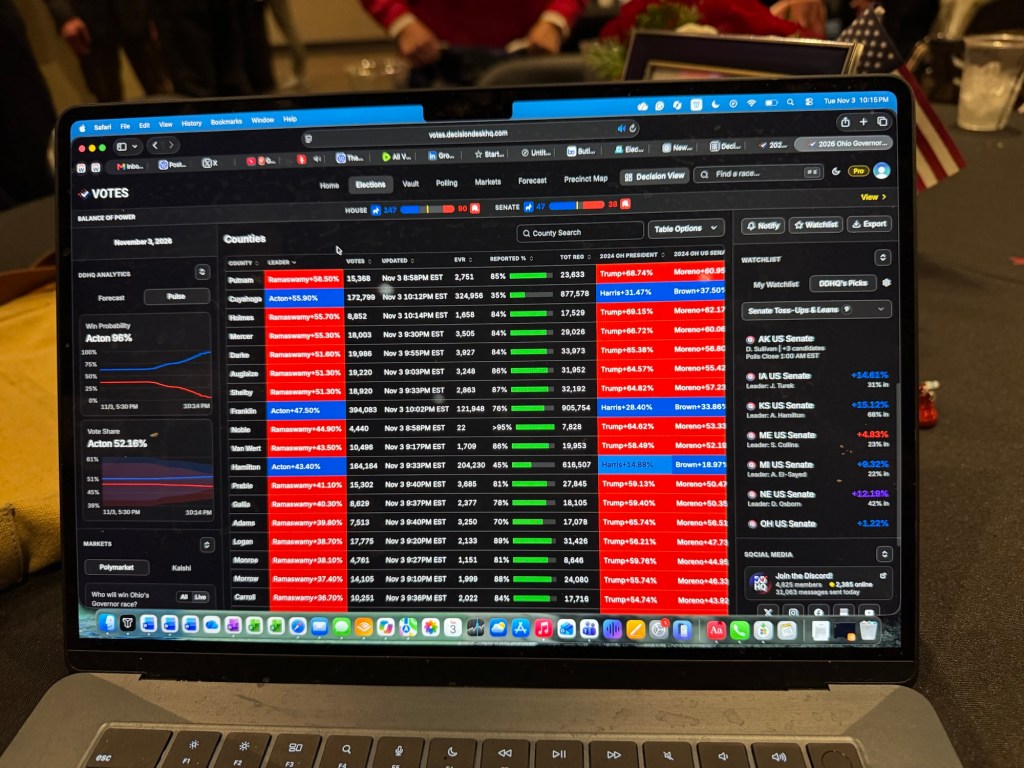
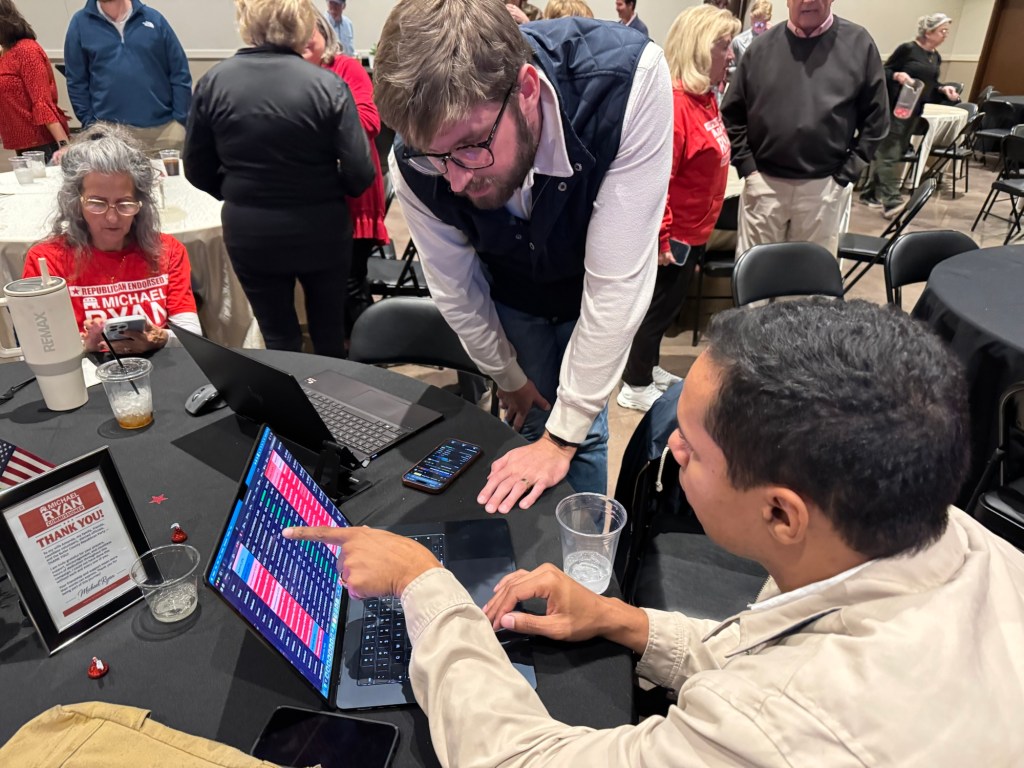
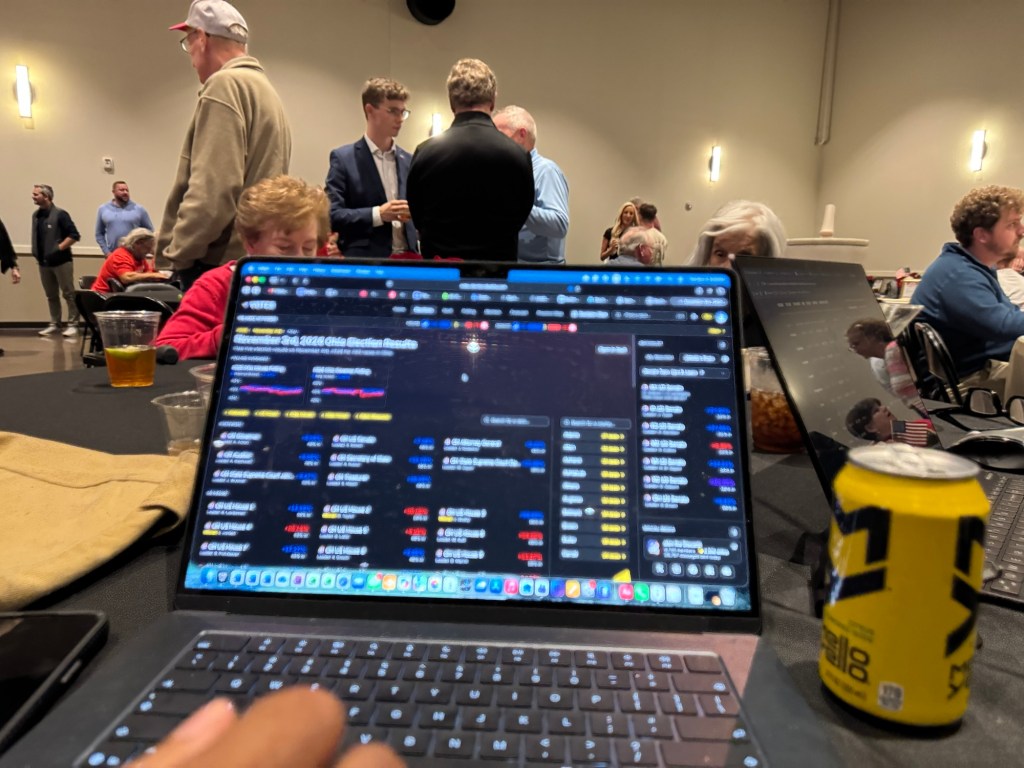
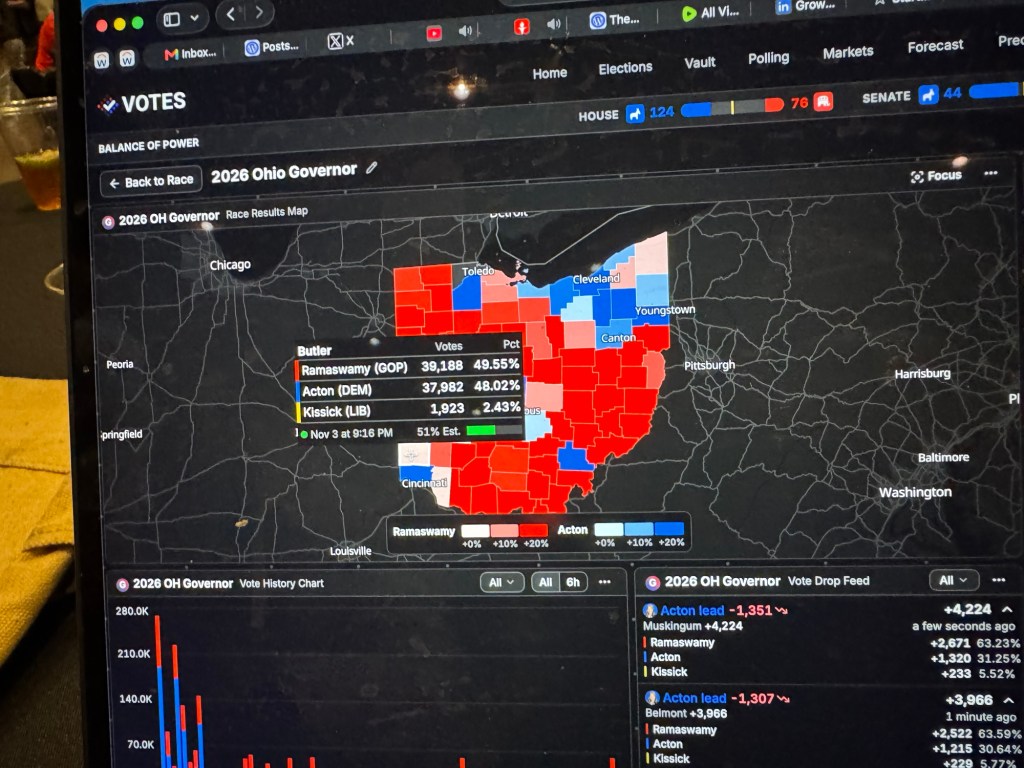
I spent election night at the Butler County GOP watch party with local leaders and a few of us tracking live precinct data on laptops alongside the television feeds. Most of the state came in trending for Vivek Ramaswamy as the night progressed. Rural and lower-density precincts reported steadily and heavily for the Republican ticket. The exceptions that stood out were the high-population urban cores and their immediate surrounding areas: Franklin County (Columbus), Hamilton County (Cincinnati), and the denser pockets around Dayton. Those drops arrived later and favored Amy Acton by wide margins. That pattern is not unique to Ohio, and it is worth examining carefully rather than dismissing.

Statewide, with roughly 98 percent reporting as of November 10, Acton (D) finished with about 2,404,216 votes (52.3 percent) to Ramaswamy’s 2,039,834 (44.4 percent). Libertarian Don Kissick took the rest at roughly 3.3 percent, which likely would have gone to the Republicans. This is the first Democratic gubernatorial win in Ohio in twenty years and the first time a woman has been elected to the office. Ohio went for Trump by about eleven points in 2024; the swing toward Democrats in this midterm was substantial. Turnout reached at least 58.1 percent of registered voters—the highest midterm figure since 1990—with approximately 4.66 million ballots counted unofficially. Frank LaRose, who won reelection as Auditor, has described the process as among the most secure, with machines not connected to the internet and post-election audits historically exceeding 99 percent accuracy.

In Butler County, where I live and where we watched the local races closely, Ramaswamy still carried the county at roughly 52.3 percent (76,829 votes) to Acton’s 44.6 percent (65,509). That is a clear Republican win, yet the margin is narrower than Trump’s 2024 performance in the same county (about 63 percent). Michael Ryan won the county commission race, consistent with local Republican strength. At the party we noted the number of new apartment complexes that have gone up. Renters in higher-density housing do not pay local property taxes the same way homeowners do, often arrive from more liberal areas, and vote accordingly. That demographic shift reduces Republican margins without any need for conspiracy theories. It is ordinary land-use and migration effects playing out in real time.

Hamilton County, Ramaswamy’s home county, went heavily for Acton—about 63 percent (216,201) to 34.5 percent (118,273). Franklin County was even more lopsided, with Acton near 72 percent (roughly 364,000 votes) to Ramaswamy’s 26 percent.  Socialism was certainly on the ballot and makes up the foundation of left-wing populism, which is why they didn’t think they needed to campaign.  Republicans have been slow to understand this and assume all people view communism as un-American, or that people want to be even considered American at all.  These are the places where population density is highest, early and mail voting is heaviest, and the Democratic organizational infrastructure is strongest. On election night, the urban precincts and mail/absentee ballots arrived and moved the statewide numbers. That is visible in the timing of the reporting. Most of rural and exurban Ohio came in for Ramaswamy; the decisive volume was concentrated in a handful of high-density counties. If the goal is to alter an outcome, the efficient method is precisely that—focus resources, mail volume, and turnout operations in the chaotic, high-population areas rather than the entire state. Whether any given batch contained irregularities is a separate question from the observable concentration.

A few county-level reporting anomalies surfaced afterward. In Wyandot County the unofficial canvass showed more votes cast in the governor and Senate races than total ballots. The county elections director confirmed the numbers did not reconcile; the cause was mock-election test data left in the system for one precinct. It did not change any outcome. Ohio’s post-election audits have long shown extremely high accuracy rates. Claims of systemic machine-driven fraud that flipped the statewide result do not align with the county-by-county pattern or the overall turnout and demographic data. At the same time, high-density urban areas with heavy mail voting and lower property-tax stakes remain the places where administrative standards matter most and where small percentage shifts produce large absolute vote differences.

Megyn Kelly has been dismissive of renewed election-integrity questions, telling Trump to “just stop” and noting that the midterms were “too big to rig.” That reaction treats skepticism as unserious. The practical reality on the ground in Ohio was that Democrats were highly organized, heavily incentivized, and effective at mobilizing their voters in the places that decide statewide races. Republicans largely played by the existing rules, showed up, and still lost the top of the ticket because the math in the urban and high-density precincts, combined with demographic change in the suburbs, was decisive. Pretending the only options are either “perfect security” or “the whole thing was stolen” is not useful. The useful work is tightening standards on mail and provisional ballots, requiring proof of citizenship and residency where possible, and recognizing that apartment growth and urban density change the electorate whether anyone likes it or not.

I watched the precincts report in real time. The red areas performed. The blue high-density cores and their mail volume did not. That is the arithmetic. Moving forward requires both rigorous election administration and an honest reading of how land-use policy, migration, and turnout organization actually shift results. Ohio Republicans can improve the rules and the ground game; they cannot assume the other side will sit out. The numbers from November 3 make that plain.

Bibliography and Further Reading

•  Ohio Secretary of State unofficial results and county canvass reports (Butler, Hamilton, Franklin, Wyandot).

•  Cincinnati Enquirer and Columbus Dispatch county breakdowns and turnout reporting.

•  Lead Stories and What the Fact fact-checks on the Wyandot County discrepancy.

•  Ballotpedia and news projections (BBC, AP, NBC) on the final statewide margin.

•  Frank LaRose statements on election security and audit history.

•  Megyn Kelly commentary on post-election claims (November 9, 2026).

Rich Hoffman

More about me

Click Here to Protect Yourself with Second Call Defense https://www.secondcalldefense.org/?affiliate=20707

About the Author: Rich Hoffman

Rich Hoffman is an author, political consultant, and strategic advisor based in Cincinnati, Ohio, and the creator of The Politics of Heaven—a unique framework that connects biblical theology, ancient history, and modern power structures to explain how moral alignment and spiritual forces shape global events. Blending real-world political experience with deep research into archaeology, UFO phenomena, and suppressed historical narratives, Hoffman offers compelling commentary on topics ranging from ancient civilizations and the Dead Sea Scrolls to modern populist movements, paranormal continuity, and leadership strategy in chaotic environments. As the author of The Gunfighter’s Guide to Business and the forthcoming Politics of Heaven, he brings a grounded yet provocative voice to media discussions, supported by firsthand experiences and a cross-disciplinary approach that bridges science, history, and theology. For interviews, speaking engagements, or expert analysis, visit richhoffmanbooks.com or contact directly by email at rhoffman@richhoffmanbooks.com.  If you’ve seen the movie, Disclosure Day and want to talk about it and the implications of Presidnet Trump’s UAP disclosures, let me know and we can bring some color to your coverage. https://richhoffmanbooks.com/media-inquiries-broadcast-topics-and-contact-info/?frame-nonce=ad51e7ecba I do have a firsthand UFO encounter to discuss.
Humans Came from Mars, Rahab’s Chaos, and the Martian Trauma That Still Controls Us: Fear Narratives, Biblical Memory, and the Reality Behind Election cycles

I’ve been turning this over for six or seven weeks. It started in the dark of a Kings Island haunted maze and ended in the bright lights of a newly renovated theater at Liberty Center, watching Godzilla Minus Zero with my family. Between those two experiences sits everything I keep trying to explain about fear, narrative, origins, and why so many people still vote and live as if they are not free.

Learning Control Through Fear at Kings Island

In the fall of 2026 I played Jason Voorhees in the new Jason: Blood Reign maze at Kings Island. Four nights a week, for the length of the Haunt season, I stood in the dark and watched thousands of people react to the same simple stimulus: the sudden appearance of a masked figure with a machete. The results were consistent. Most people freeze, scream, or bolt in predictable directions. A smaller number laugh or posture. Almost no one stops to analyze the situation rationally in the moment.

What I learned, again and again, is that fear works. It works on crowds. It works on individuals. It works whether the threat is real or theatrical. The people who design these attractions understand the psychology; so do the people who design political campaigns, school curricula, and certain kinds of religious systems. Once you have watched enough people abandon their own judgment under a controlled threat, you start looking at other institutions differently. Public education, mass media, and large parts of modern politics all rely on the same basic mechanism: create or amplify anxiety, then offer the peer group, the expert class, or the state as the only reliable source of safety. If you care what your neighbors think, the leverage is already there. I don’t. That indifference is useful.

Godzilla Minus Zero as a Cultural Trauma Device

A few weeks later my family and I saw Godzilla Minus Zero (2026), Takashi Yamazaki’s direct sequel to the Oscar-winning Godzilla Minus One (2023). The film is set in 1949, two years after the events of the first movie. Japan is trying to rebuild. Godzilla returns. King Ghidorah arrives. The human characters—especially the Shikishima family—are forced to confront another wave of destruction while still carrying the previous one. It is, at bottom, a family film. The performances, the visual effects, and the restraint with which the monsters are used all serve the story of people trying to live after catastrophe.

The critical and commercial response has been strong. As of early November 2026 the film sat in the high 80s to low 90s on Rotten Tomatoes’ Tomatometer with audience scores near 96 percent. It opened to roughly $30.6 million in North America—the largest opening for a live-action foreign-language film in the territory—and was the first Japanese production filmed for IMAX. Godzilla Minus One had already shown that a Japanese production with a reported budget around $15 million and a VFX team of about 35 people could win the Academy Award for Best Visual Effects and outperform far more expensive Hollywood product. Minus Zero confirmed the pattern.

I have spent enough time around Japanese culture, and enough years watching Hollywood price itself out of coherent storytelling, that the quality of these films does not surprise me. What interests me more is the function. Yamazaki has described Godzilla in this series as a metaphor for war. The original 1954 film processed the atomic bombings of Hiroshima and Nagasaki (immediate and later deaths commonly estimated in the range of 140,000–200,000 for Hiroshima and 70,000–80,000 for Nagasaki by the end of 1945, with higher cumulative figures recognized by Japan in later decades). The new films continue that work while also reflecting Japanese guilt over the treatment of Chinese civilians and the broader costs of imperial expansion. Americans appear in the story as both the source of nuclear destruction and, later, as an occupying force whose presence is resented even as cooperation occurs. The films are not anti-American propaganda in any crude sense, but they are unmistakably Japanese. They process Japanese trauma from a Japanese point of view.

That is exactly why they work for Western audiences right now. Hollywood has largely stopped telling coherent stories about responsibility, family, and the cost of violence. Japanese filmmakers, working with fewer resources and less ideological overhead, are still doing it. People notice.

The Bathroom Stall and the 2026 Election

After the movie I went into a freshly renovated bathroom at the Liberty Center theater and found a message carved into a stall: “capitalism” with a greater-than sign pointing toward “communism.” Someone young enough to still treat public property as a canvas had felt the need to leave that particular opinion. It was not an isolated incident in my experience. For years I have watched the same pattern in schools and on campuses: students who have been taught that capitalism is the problem and that some form of managed equality is the solution, without ever being given a clear account of what communism actually produced when it was tried.

The 2026 midterm results, in which Democrats performed better than many expected, fit the same picture. Large numbers of voters, especially those under 30, appear to have decided that their current material situation is someone else’s fault and that a more powerful government is the remedy. Housing costs, education debt, and the simple observation that previous generations seemed to have more straightforward paths into homeownership and family formation are real pressures. Those pressures have been amplified by policies that restrict supply (green-space requirements, zoning, and the long-term effects of earlier housing-price inflation) and by an education system that treats market economics as optional or suspect. When people have been trained to look to collective action rather than individual competence, they vote accordingly.

None of this requires a grand conspiracy. It requires only the ordinary incentives of institutions that benefit from dependency. Public schools were designed, in part, to socialize children into a particular civic consensus. Peer pressure does the rest. If your standing with friends, teachers, or future employers depends on repeating the correct views, most people will repeat them. I have never cared much about that standing. That makes conversations with people who do care more straightforward, not less.

Rahab in Scripture and the Speculative Planet

While I was thinking about the Godzilla films as narrative devices for processing historical trauma, I kept returning to a name that appears in the Bible in two different registers: Rahab.

In Joshua 2, Rahab is the Canaanite prostitute who hides the Israelite spies in Jericho, extracts a promise of protection for her family, and is spared when the city falls. She appears in the genealogy of Jesus in Matthew 1:5 and is cited in Hebrews 11 and James 2 as an example of faith demonstrated by action. The Hebrew term used for her occupation is the ordinary word for prostitute.

In the poetic books the same name (with a different spelling and root sense) refers to a chaotic sea monster. Job 26:12 says that by His understanding God shattered Rahab. Psalm 89:10 describes God crushing Rahab. Isaiah 51:9 asks whether it was not the Lord’s arm that cut Rahab in pieces and pierced the dragon. In these passages Rahab functions as a symbol of pride, chaos, and the forces God subdues—sometimes associated with Egypt, sometimes with the primordial sea.

David Flynn and others have argued that the poetic Rahab preserves a memory of a destroyed planet whose remnants form the asteroid belt between Mars and Jupiter. Mainstream planetary science rejects this. The total mass of the main asteroid belt is only about 4 percent that of the Moon, and the differentiated nature of the larger asteroids is consistent with them having formed as separate bodies rather than as fragments of a single shattered world. The scientific consensus is that the belt is leftover material from the formation of the solar system that never coalesced into a planet, largely because of Jupiter’s gravitational influence.

I do not treat the destroyed-planet reading as established fact. I treat it as a hypothesis that is consistent with certain textual patterns and with the broader pattern of cultures creating narrative devices to process catastrophes whose physical evidence has been eroded or is located somewhere we have not yet looked carefully. Flynn’s Cydonia: The Secret Chronicles of Mars and related writings make a sustained case for ancient Martian influence on terrestrial civilization, artificial structures photographed on Mars, and connections to biblical and extra-biblical traditions about giants and pre-Adamic events. Timothy Alberino has popularized related material on giants, the Book of Enoch, and alleged suppression of physical evidence; he appeared on Joe Rogan in 2026. Sharon and Derek Gilbert’s Veneration examines the Rephaim, ancestor veneration, and end-times connections. These works sit outside the mainstream of both academic biblical studies and planetary science. That does not automatically make them worthless. It means their claims require evidence that has not yet been produced in forms most specialists accept.

The Keys in the Dark

The analogy I keep using is simple. Suppose you drop your car keys somewhere between the door of your workplace and the car. It is dark. You search under the light near the car and do not find them. That does not prove the keys do not exist. It proves only that your current method and lighting have not reached the place where the keys actually are. You can wait for daylight, get a flashlight, or systematically search the darker ground. The absence of evidence under the light is not evidence of absence.

Earth’s archaeological record is limited by erosion, plate tectonics, sea-level change, and the simple fact that most material culture does not survive more than a few thousand years without deliberate preservation. Mars has a thinner atmosphere and no plate tectonics of the same kind. Large impact scars are visible. Evidence of past surface water is established. Whether any of that evidence includes the remains of technological civilization is an open question that can only be answered by going there and looking. SpaceX’s stated goal of making life multi-planetary is, from this perspective, also an archaeological project. If Flynn and others are substantially wrong, the data will show it. If they are substantially right about some part of the picture, the data will show that too.

Narrative Devices and Residual Trauma

The parallel that keeps returning is between the Godzilla films and the older textual traditions. A person watching Godzilla Minus Zero two thousand years from now, with no other knowledge of the twentieth century, could reasonably conclude that a giant radioactive monster attacked Japan in the late 1940s. The film is fiction created to process real historical trauma: nuclear destruction, occupation, guilt, and the difficulty of rebuilding a society. The Japanese did not invent the atomic bombings; they invented a story that let them live with the consequences.

I read the poetic Rahab passages, the accounts of giants in Genesis 6 and the Book of Giants among the Dead Sea Scrolls, and certain strands of Mesopotamian tradition in a similar light. They may preserve distorted memories of real catastrophes—planetary, terrestrial, or both—whose physical evidence is no longer easily accessible on Earth. Cultures that experience the sudden loss of a homeland, or the arrival of destructive forces they cannot fully explain, create stories that externalize the anxiety. Those stories can later be read as literal history, as pure metaphor, or as something in between. The fact that the same name appears in different genres and centuries does not prove a continuous hidden narrative, but it is consistent with the ordinary human habit of reusing powerful symbols when new disasters need to be named.

Ohio’s Serpent Mound sits on the eroded remains of a confirmed impact structure roughly 8–14 kilometers across and hundreds of millions of years old. The mound itself is much younger (Adena period, around 300 BCE, with later repairs). Whether the builders chose the site because of any residual geological or magnetic peculiarities is unknown. The coincidence is real. So is the much larger pattern of human beings building ritual structures in places that later turn out to have unusual geology.

Fear, Control, and the Politics of Heaven

The practical consequence of all this, for me, is straightforward. If human beings carry residual psychological and cultural trauma from origins or catastrophes that predate recorded history, then the mechanisms we use to manage that trauma—religion, politics, education, entertainment—will keep producing the same patterns. People will seek certainty, scapegoats, and collective solutions. Institutions that can supply those things, or that can threaten to withhold them, will accumulate power. Spiritual or non-human intelligences, if they exist and have interests opposed to human flourishing, would have every incentive to encourage the fear and the dependency.  The pattern is visible enough, across enough domains, that it is reasonable to keep looking for evidence rather than assuming the current lighting is sufficient. The 2026 election results, the graffiti in the theater bathroom, the success of Godzilla Minus Zero, and the persistent interest in giants, Nephilim, and alternative readings of the Bible are all data points. They do not force a single conclusion. They do suggest that large numbers of people are looking for accounts of reality that include more than the material and the recent.

The relevant question is whether we are willing to follow evidence wherever it leads, including to places that require leaving the well-lit parking lot. Mars is one of those places. The asteroid belt is another. The textual traditions that have survived repeated attempts at suppression or reinterpretation are a third. I expect the archaeology of the next few decades to be more interesting than most people currently assume. I also expect that some of what we find will be used, once again, to frighten people into accepting arrangements that benefit someone else.

Godzilla Minus Zero is a very good movie. It is also a reminder that narrative devices for processing trauma are still being built, still being consumed, and still shaping what people believe is possible. The same has been true for a very long time.

Rich Hoffman

More about me

Click Here to Protect Yourself with Second Call Defense https://www.secondcalldefense.org/?affiliate=20707

Rich Hoffman is an author, political consultant, and strategic advisor based in Cincinnati, Ohio, and the creator of The Politics of Heaven—a unique framework that connects biblical theology, ancient history, and modern power structures to explain how moral alignment and spiritual forces shape global events. Blending real-world political experience with deep research into archaeology, UFO phenomena, and suppressed historical narratives, Hoffman offers compelling commentary on topics ranging from ancient civilizations and the Dead Sea Scrolls to modern populist movements, paranormal continuity, and leadership strategy in chaotic environments. As the author of The Gunfighter’s Guide to Business and the forthcoming Politics of Heaven, he brings a grounded yet provocative voice to media discussions, supported by firsthand experiences and a cross-disciplinary approach that bridges science, history, and theology. For interviews, speaking engagements, or expert analysis, visit richhoffmanbooks.com or contact directly by email at rhoffman@richhoffmanbooks.com.  If you’ve seen the movie, Disclosure Day and want to talk about it and the implications of Presidnet Trump’s UAP disclosures, let me know and we can bring some color to your coverage. https://richhoffmanbooks.com/media-inquiries-broadcast-topics-and-contact-info/?frame-nonce=ad51e7ecba I do have a firsthand UFO encounter to discuss.Footnotes

About the Author: Rich Hoffman

Footnotes:

1.  Kings Island Halloween Haunt 2026 introduced the Jason: Blood Reign maze based on the Friday the 13th franchise. See contemporary park reporting from Ride Ready, Thrillzing, and Haunted Attraction Network.

2. Godzilla Minus Zero (2026), directed by Takashi Yamazaki, is the direct sequel to Godzilla Minus One (2023). It premiered in Japan on 3 November 2026 and in North America on 6 November 2026. Rotten Tomatoes scores in the first weeks of release were in the high 80s–low 90s (critics) and mid-to-high 90s (audiences). Domestic opening weekend approximately $30.6 million.

3. Godzilla Minus One won the Academy Award for Best Visual Effects in 2024. It was produced on a reported budget of roughly $10–15 million with a core VFX team of about 35 artists.

4.  Hiroshima and Nagasaki casualty figures vary by source and by whether later radiation-related deaths are included. Common ranges for deaths by the end of 1945 are approximately 90,000–166,000 (Hiroshima) and 60,000–80,000 (Nagasaki). Japan has recognized higher cumulative totals in subsequent decades.

5.  Rahab the prostitute: Joshua 2; 6:17–25; Matthew 1:5; Hebrews 11:31; James 2:25. Rahab the sea monster/chaos figure: Job 9:13; 26:12; Psalm 89:10; Isaiah 51:9. The Hebrew spellings and root meanings differ.

6.  David Flynn, Cydonia: The Secret Chronicles of Mars (and collected writings). Flynn argued for a destroyed planet Rahab whose remnants constitute the asteroid belt and for ancient Martian civilization influencing Earth.

7.  Main-belt asteroid mass is approximately 4% of the Moon’s mass. See standard planetary science summaries (e.g., Astronomy magazine treatments of the disruption hypothesis).

8.  Timothy Alberino appeared on The Joe Rogan Experience #2530 (July 2026) discussing giants, the Book of Enoch, and related claims. Sharon K. Gilbert and Derek P. Gilbert, Veneration: Unveiling the Ancient Realms of Demonic Kings and Satan’s Battle Plan for Armageddon (2019/2020).

9.  Serpent Mound crater (Ohio) is a confirmed complex impact structure, roughly 8–14 km in diameter, dated to the Mississippian or younger (<320 Ma). The effigy mound itself dates to the Adena period.

The Republican Party’s Civil War Cost Ohio a Real Opportunity with Vivek Ramaswamy: What happened

I like Vivek Ramaswamy. I thought he represented a genuine chance to move Ohio forward with energy, business sense, and a clear America First orientation instead of the usual managed decline. Watching him lose to Amy Acton was a real tragedy for the state. It was not inevitable. A lot of the damage came from inside the Republican Party itself—the same pattern I have watched for years where people would rather fight each other than win. The result is that Democrats get handed a candidate they can work with while the GOP tears itself up over personality, purity tests, and who is “like us.”

What the Numbers Actually Show

Statewide, Acton finished with about 52.3 percent (roughly 2.4 million votes) to Ramaswamy’s 44.4 percent (about 2.04 million). The margin was roughly eight points. She became the first woman elected governor of Ohio and the first Democrat to win the office in twenty years, in a state Trump carried by double digits in 2024.

That does not mean Ramaswamy was rejected across the board. He carried 73 of Ohio’s 88 counties. In many rural counties he ran 60, 70, even 76 percent. Acton won only 15 counties, but they included the big population centers: Cuyahoga (she took about 72 percent and 877 of 898 precincts), Franklin, Hamilton (Ramaswamy’s home county), Summit, Montgomery, Lucas, and others.  Ohio has roughly 8,834 precincts. Ramaswamy won the large majority of them by number. The problem was density. A handful of urban and inner-suburban precincts delivered enough raw votes to overcome the rest of the state.

Here in Butler County the pattern was clearer and more local. Ramaswamy won with about 52.3 percent to Acton’s 44.6 percent. Turnout was strong at 59.5 percent of registered voters. Republicans also held the county commissioner’s seat (Michael Ryan) and the auditor’s office (Nancy Nix). The margins were tighter than recent presidential cycles, but the county stayed red.  That is the reality on the ground where I live and work.

The NFL Analogy and the Party’s Self-Inflicted Damage

I have said this to anyone who will listen: the Republican Party right now looks like a dysfunctional NFL team in mid-season. The coaches have lost control. The offense is arguing with the defense. Practices are half-hearted because players do not want to risk injury when they already sense the season is slipping away. Fans still show up and buy the jersey or the Terrible Towel, but the product on the field is mediocre. After a few losses the front office starts blaming the quarterback, the fans start blaming the front office, and nobody cleans house. The result is another year of “good enough” that is not actually good enough.

That is what happened with Ramaswamy. There was a real opening. He had the Trump endorsement, national profile, money, and a message centered on efficiency and economic growth. Instead of locking arms, elements of the party treated him as an outsider. The identity attacks were ugly and predictable: he is Hindu, he is not “like us,” he is some kind of anchor-baby interloper. Those lines circulated in precincts and on social media. Democrats were happy to amplify them. When your own side is whispering that the nominee does not belong, you hand the other side free ammunition.

The campaign itself made unforced errors. The late attack ad that featured Acton’s estranged mother—accusing her of lying about a childhood that included abuse and instability—backfired. Even some Republicans called it out. Husted distanced himself from it. The ad ran, money was spent, and it gave Acton a sympathy story while the substantive arguments about her record as health director during COVID got buried.  That is coaching malpractice. You do not need to go there when the opponent’s actual record is available.

Local Reality in Butler County and the Central Committee Problem

I know the local landscape. Sheriff Richard Jones is not my closest personal friend, but I respect him as a person and as someone who has been elected repeatedly and delivers on the law-and-order side of the job. He shows up. People notice when he walks into a place like Ace Hardware. That does not mean every decision is perfect or that powerful people never make mistakes that affect others. Ethical arguments happen. The question is whether the party rallies to win or whether central-committee factions spend their energy trying to ostracize the people who actually deliver votes.

Nancy Nix won re-election as auditor. A lot of people I work with and talk to like her. In other parts of the state she would be called a moderate or even soft; here she is a Republican who keeps the books and pushes back on unnecessary tax increases. The same pattern holds: the people who show up and do the work get results, while the internal fights over who is pure enough waste time.

The goal should be simple. Vote. Invest in the team. Buy the jersey of the people who are actually trying to win rather than treating every election as an opportunity to settle scores. When the party spends years fighting itself, Democrats walk in with a candidate who can be sold as reasonable and the results follow. Acton will now govern. That was not the only possible outcome.

What Comes Next

Most people do not have a long view. They vote for the person who promises something immediate or against the person they were told to hate. Defending capitalism, competent administration, and basic order requires standing by each other longer than one news cycle. The same forces that turn every disagreement into a purity test are the ones that leave the field open for the other side.

I have watched this pattern for decades. The coaches lose control, the players stop fully committing, and the fans are left wondering why the team underperforms relative to its talent. Ramaswamy was not perfect. No candidate is. But the opportunity that existed in Ohio was real, and a significant part of it was squandered by people inside the Republican Party who preferred the civil war to the victory. That is on us to fix if we want different results next time.

Footnotes

1.  Statewide results drawn from multiple election trackers and Ohio Secretary of State unofficial counts as of early November 2026. Acton 52.3 percent (2,404,178), Ramaswamy 44.4 percent (2,039,730).

2.  County and precinct analysis from Cleveland.com reporting on Acton’s 15-county win and the Cuyahoga precinct breakdown (877 of 898).

3.  Butler County figures from local Journal-News coverage and Board of Elections reporting: Ramaswamy ~52.3 percent, turnout 59.5 percent.

4.  Campaign controversy details from contemporaneous reporting on the mother attack ad and reactions from both parties.

Bibliography

•  Ohio Secretary of State unofficial 2026 general election results and county summaries.

• Cleveland.com: “How Amy Acton won the Ohio governor’s race: A look behind the numbers” (November 2026).

•  Journal-News (Butler County): coverage of local results and turnout.

•  Multiple national outlets (BBC, USA Today, Dispatch, CNN) on the Acton-Ramaswamy contest and the mother-ad controversy.

•  Local Board of Elections precinct-level reporting for Butler, Cuyahoga, and other counties.

Rich Hoffman

More about me

Click Here to Protect Yourself with Second Call Defense https://www.secondcalldefense.org/?affiliate=20707

About the Author: Rich Hoffman

Rich Hoffman is an author, political consultant, and strategic advisor based in Cincinnati, Ohio, and the creator of The Politics of Heaven—a unique framework that connects biblical theology, ancient history, and modern power structures to explain how moral alignment and spiritual forces shape global events. Blending real-world political experience with deep research into archaeology, UFO phenomena, and suppressed historical narratives, Hoffman offers compelling commentary on topics ranging from ancient civilizations and the Dead Sea Scrolls to modern populist movements, paranormal continuity, and leadership strategy in chaotic environments. As the author of The Gunfighter’s Guide to Business and the forthcoming Politics of Heaven, he brings a grounded yet provocative voice to media discussions, supported by firsthand experiences and a cross-disciplinary approach that bridges science, history, and theology. For interviews, speaking engagements, or expert analysis, visit richhoffmanbooks.com or contact directly by email at rhoffman@richhoffmanbooks.com.  If you’ve seen the movie, Disclosure Day and want to talk about it and the implications of Presidnet Trump’s UAP disclosures, let me know and we can bring some color to your coverage. https://richhoffmanbooks.com/media-inquiries-broadcast-topics-and-contact-info/?frame-nonce=ad51e7ecba I do have a firsthand UFO encounter to discuss.
Obama Back on the Trail in Ohio: Socialism, Gold, Value, and Why Voters Chose Trump Instead

I’m tired of Barack Obama. When he returned to the campaign trail in Ohio for Amy Acton and Sherrod Brown, it reminded many people of everything they wanted to leave behind. He remains the public face of a socialist approach smuggled into American politics with the help of old underground networks and cultural figures who treated the country as something to be remade rather than built. Voters got tired of that project. They chose the ultimate capitalist instead.

Obama Campaigning for Acton and Brown in Cleveland and Across Ohio

Obama still draws a crowd. He is one of the few Democrats who can fill a room and make the old arguments sound fresh. In the final stretch, he was out making the case for Acton in the governor’s race and for Brown in the Senate contest. The message was familiar: government will protect you from high costs, from Trump, from the consequences of earlier policies. People can vote for whoever they want. No widespread evidence of the kind of systematic tampering some claimed in prior cycles emerged. Voters made a choice. In Ohio, they chose Acton and Brown. Nationally, the picture was mixed, but the local and statewide results showed that the free-stuff appeal still works when prices are high, and the alternative is framed as indifference.

I have already written about the gas prices and the cost of bread at the grocery store. Democratic policies created or worsened most of those costs by shrinking the margin for people who actually make things. Environmental rules, spending that outruns revenue, and a regulatory climate that treats producers as the problem all raise the price of everyday goods. Obama and the people around him spent years building that structure. When the bills came due, the same voices blamed the people trying to reverse it. That is why Obama had to get back on the trail. No deep bench of Democrats can make the argument the way he can.

Trump as the Capitalist Alternative: Gold, Towers, and High-Value Things

We picked Trump because he represented the opposite set of instincts. He has always liked gold. The towers, the lettering on the book The Art of the Deal, the interiors—gold has been the consistent color. It signals value rather than the bare minimum. I own several of his ties. They are silk, made in America, and they were expensive when I bought them. I wear them when something matters. They are not cheap. When you want to think about good things as high value, you don’t reach for a coupon. You reach for something that lasts.

Trump’s White House renovations fit the same pattern. The ballroom is needed. The original White House was deliberately kept modest so the new republic would not look like it was challenging Europe’s monarchies. They built it a little too small on purpose. You can walk around it in a short time. For the kind of security, diplomacy, and large gatherings that now take place there, more space is practical. I visited the White House recently. The changes look good. I support them. Critics treat gold and scale as vanity. Many voters saw them as a sign that someone still believed in making things better rather than managing decline.

The contrast with Obama is not subtle. Obama’s political coalition includes people who treat high taxes and big government as the way to extract money from those who create value and redistribute it. A lazy segment of society prefers the coupon and the handout. Socialism is marketed to them because it improves their relative position without requiring them to produce more. Those voters turned out for Obama and for the candidates he supported. There are still more people who prefer the Trump approach—visible value, private production, and the refusal to treat government as the primary engine—but they have to show up.

The Old Networks and the Cultural Invasion

Older radical circles helped Obama’s rise. Bill Ayers and the Weather Underground types were never mainstream, but they were part of the broader left infrastructure that treated American institutions as targets rather than inheritances. The same cultural current included the old hippies who rejected ordinary work, ordinary family life, and ordinary ambition. That was an invasion of American ideas, not a representation of them. Obama knew how to speak to the destitute and the resentful without sounding like he was asking them to do the hard part. He could make government expansion sound like compassion.

Trump’s background was different. The Apprentice was popular because it showed people competing, building, and being judged on results. Many viewers recognized the format. They had been to places like the Cheesecake Factory for family celebrations. It costs real money. The atmosphere is ornate. People like it because it feels like a reward for work rather than a subsidy. That preference showed up in the votes. Voters who wanted the gold and the ballroom and the visible success chose Trump. Voters who wanted someone else to cover the cost chose the other side.

High Prices, Policy, and the Midterm Lesson

Prices are high because of the structure Obama and his allies spent years constructing. Democrats have spent the intervening years managing the consequences rather than reversing the causes. When Trump’s administration tried to restore margins for producers, those same voices blamed him for the results. Obama’s return to the trail was an attempt to keep that political enterprise alive. He is still better at it than most of the people who followed him. The midterms showed the limit. Democrats did not have a deep roster of figures who could carry the argument without reaching back to Obama. That reminds voters of what many wanted to get away from.

Republicans cannot sit on the couch and wait it out. Presidential-year energy does not automatically appear in the midterms. If people who prefer value, production, and smaller extraction do not vote, those who prefer handouts and expanded government will set the terms. Obama on the trail is useful in one respect: he makes the choice clearer. The two ideas of what America should be are still in conflict. One treats gold, scale, and private success as legitimate. The other treats them as problems to be managed or taxed away. Voters picked the first option when they had the chance. They will have to keep picking it.

Footnotes

1.  Ohio 2026 results (Secretary of State and major outlets as of early November): Amy Acton (D) defeated Vivek Ramaswamy (R) for governor; Sherrod Brown (D) won the U.S. Senate race. Obama campaigned in the state for both in the closing weeks.

2.  National and Ohio gas-price and grocery-cost context: Post-2026 Iran-related disruptions and longer-term regulatory and spending policies contributed to elevated energy and food prices. Multiple analyses linked affordability concerns to midterm voting patterns.

3.  White House physical history: The original Executive Mansion was intentionally modest relative to European royal residences. Modern security, diplomatic, and event requirements have repeatedly raised questions about capacity; Trump-era renovations, including ballroom plans, addressed those practical limits.

4.  Historical background on Bill Ayers, the Weather Underground, and their limited but real connections to later Democratic networks is documented in contemporary reporting and subsequent histories of the 1960s–1970s radical left and its institutional afterlife.

5.  Cultural and voting observations draw on consistent patterns in Ohio and national exit data: higher support for candidates emphasizing production and visible private success versus candidates emphasizing expanded government services and redistribution.

Selected Bibliography / Further Reading

•  Ohio Secretary of State unofficial and certified results for the 2026 gubernatorial and U.S. Senate contests.

•  Contemporary reporting on Obama’s 2026 campaign appearances in Ohio (Cleveland and other stops) for Acton and Brown.

•  Energy Information Administration, AAA, and related data on 2025–2026 gasoline and household energy costs.

•  Architectural and historical accounts of the White House’s original scale and subsequent modifications.

•  Standard histories and journalistic accounts of the Weather Underground, Bill Ayers, and the broader 1960s–1970s radical milieu and its later political influence.

•  Exit polls and demographic analyses from the 2024 and 2026 cycles on economic voting, cultural attitudes toward success and redistribution, and turnout differences between presidential and midterm elections.

Rich Hoffman

More about me

Click Here to Protect Yourself with Second Call Defense https://www.secondcalldefense.org/?affiliate=20707

About the Author: Rich Hoffman

Rich Hoffman is an author, political consultant, and strategic advisor based in Cincinnati, Ohio, and the creator of The Politics of Heaven—a unique framework that connects biblical theology, ancient history, and modern power structures to explain how moral alignment and spiritual forces shape global events. Blending real-world political experience with deep research into archaeology, UFO phenomena, and suppressed historical narratives, Hoffman offers compelling commentary on topics ranging from ancient civilizations and the Dead Sea Scrolls to modern populist movements, paranormal continuity, and leadership strategy in chaotic environments. As the author of The Gunfighter’s Guide to Business and the forthcoming Politics of Heaven, he brings a grounded yet provocative voice to media discussions, supported by firsthand experiences and a cross-disciplinary approach that bridges science, history, and theology. For interviews, speaking engagements, or expert analysis, visit richhoffmanbooks.com or contact directly by email at rhoffman@richhoffmanbooks.com.  If you’ve seen the movie, Disclosure Day and want to talk about it and the implications of Presidnet Trump’s UAP disclosures, let me know and we can bring some color to your coverage. https://richhoffmanbooks.com/media-inquiries-broadcast-topics-and-contact-info/?frame-nonce=ad51e7ecba I do have a firsthand UFO encounter to discuss.
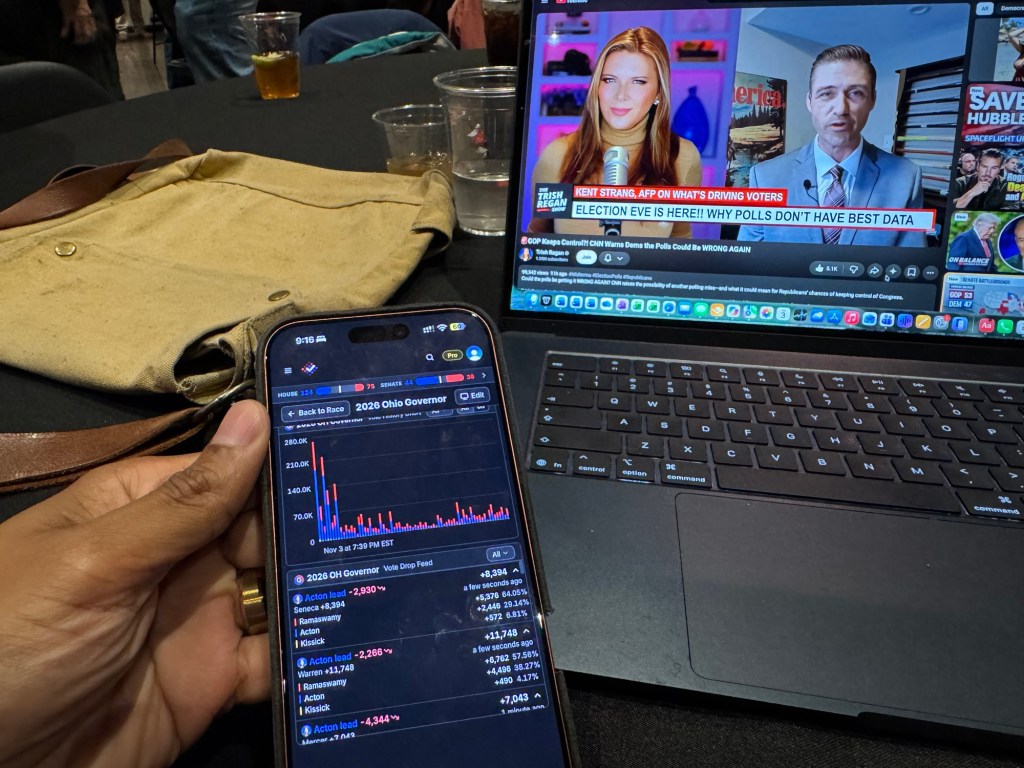
Biblical Context Versus Institutional Christianity: Defending the Gospel Against Empire, Islam, and the Confusions of History

I have always had trouble with the way people mix biblical context and the long history of institutional Christianity. The two are not the same thing. One is the text and the claim it makes. The other is what men have done with it across centuries of power, conquest, and the ordinary human habit of turning a useful idea into a weapon. Diarmaid MacCulloch’s Christianity: The First Three Thousand Years is a useful chronicle of the second part. It is a big book written by a careful historian who describes himself as a candid friend of the faith. I do not think he is an Islamic sympathizer in any simple sense, but he writes with the detachment of someone who left formal orders and who is more interested in how humans have used the narrative than in whether the narrative is true. The book holds up as history. It shows how the biblical story has been interpreted, expanded, and sometimes distorted to serve earthly purposes. That distinction matters more than ever when Islam continues its long effort to spread by various means and when many people treat any strong defense of Christianity as off-limits for emotional or liberal reasons.

Separating the Biblical Text from the History of Empires

The Bible stands as a text. Much of what became the canonical Old Testament is supported by the Dead Sea Scrolls and other early witnesses. The process of deciding the canon can be debated, and it has been. Councils and authorities recognized writings they believed already carried authority; they did not invent them. Over time, material was added, emphasized, or sidelined in ways that suited the needs of power. Romans, British, French, Spanish, and others each took their turn turning Christianity into a support for empire. They baptized ambition in the name of the Lamb. That is not the gospel. The gospel is a kingdom not of this world, purchased by blood rather than by conquest.

I have imagined how Jonathan Edwards might respond if asked about this. He would say the early church spread by witness and by willingness to die, not by the sword. When Islam advanced by the blade, the truest answer was not a matching blade but a life that would not stop speaking. Liberal critics often miss the distinction: one faith conquers by force and submission; the other conquers by witness, even when it costs. Empires forged the cross into a sword. The British and the French did the same. Each nation used the name of Christ to justify its reach. That is human pride wearing religious language. It is not the original claim.

MacCulloch’s Chronicle and the Useful Invention Argument

MacCulloch’s volume is a strong chronicle of how Christianity rose and how humans interpreted the biblical narrative to serve their purposes. I have not read every page cover to cover in recent years, but the overall shape is clear. He starts a thousand years before Christ to show the Jewish and Greek soil. He follows the institutional story through councils, schisms, reformations, and modern accommodations. Some readers find him too kind to certain heresies or too ready to note Christian intolerance. Others note his preference for a secular frame. None of that erases the value of the historical record he assembles. Empires and crosses have their own colors. A biased witness can still point at the wound if he does not hide the blood.

Christianity has been extremely beneficial as a constructive force for civilization. Hospitals, universities, the dignity of the poor, and the eventual movement against slavery all grew in soil shaped by the biblical text. The Spanish confrontation with the Aztec system under Montezuma is one hard case. The Aztec religion practiced large-scale human sacrifice. Christianity, carried by Spanish power, ended that particular horror. You can view the encounter as a surgeon’s knife cutting out disease, even while the surgeon’s hand trembled with fever and ambition. The same pattern appears in other places. The goodness was never the purity of the institution. It was the gospel leaking out despite the empire, like water through stone. Men remain faulty in their interpretation. The presence of the text still made the world better because it kept introducing the idea that justice and mercy are not optional.

Abuses, Witch Trials, Crusades, and the Flesh in Religious Dress

The record also contains clear failures. The Salem witch trials show how a society that claims righteousness can turn accusation into proof. Anyone disliked could be labeled a witch and destroyed. That is not justice. That is the flesh dressed in religious language. The Protestant Reformation, the Crusades, and various inquisitions all produced versions of the same problem: using the name of Christ to eradicate those who did not conform. Islam has done the same in its own spheres. A free society cannot be built on the rule that accusation equals guilt. A righteous people may defend themselves from real threats, but they must prove the threat before they strike. When they stop proving and start assuming, they become the thing they claim to oppose.

Puritans were wrong when they treated every troublemaker as a threat that could be removed by accusation alone. The same error appears whenever any group claims the right to silence or destroy dissenters in the name of purity. The Bible gives a vehicle for study and a standard for justice. It does not authorize the shortcut of calling every opponent a witch.

The Bible as the Document That Defines Justice

The Bible is the only major document in the world that truly centers justice as a sustained, personal claim rather than a subordinate idea. The Hebrew word mishpat appears roughly 400 to 421 times in the Old Testament alone. Amos cries that justice should roll down like waters. Micah asks what the Lord requires: to do justice, love mercy, and walk humbly. In the New Testament the language of righteousness is tied to Christ. Whether the English word “justice” appears dozens or hundreds of times in a given translation, the concept saturates the pages. Other ancient texts reach toward justice. Confucius taught order under the emperor. The Quran speaks of justice under submission to one law and one sword. Plato and Aristotle explored justice as a principle. The Bible shows justice wounded in Job, satisfied at the cross, and still standing. That is different.

Most of the Old Testament material predates Plato. The New Testament was written after him. Islam arrives roughly six centuries after Christ. The idea that justice is a social judgment rooted in a personal God who acts in history is specific to the biblical stream. Men did not invent a God who dies for his enemies. Every instinct of pride and power runs the other way. The claim is revelation breaking in on a world that had exhausted its own wisdom. Every heresy, crusade, and inquisition is a later attempt to make that claim serve human ends. The danger was never that Christ was too weak. It was that men were too proud to leave him as he was.

Defending Christianity Against Replacement Religions: Why the double standard

A defense of Christianity as a religion is essential, especially when the practical replacement on offer is Islam or some other system of submission. Islam has a long record of expansion by conquest, law, and demographic pressure. Liberal habits that treat any strong Christian response as illegitimate do not change the historical pattern. Christianity’s truth claims and its record of producing hospitals, literacy, and restraints on power are worth defending. The alternative is not neutral space. It is a different set of rules about who may speak, who may leave, and what happens to dissenters.

When people come after you for reading the Bible, carrying it, or having a relationship with its claims, the response is not to stop. Peter and John were told to stop speaking. They went away rejoicing that they were counted worthy to suffer. The defense is not primarily armies or laws. It is people who will not stop speaking. The old hymn “Onward, Christian Soldiers” captures an instinctual sense of the battle. The warfare is real. Ephesians 6:12 makes the distinction clear: we wrestle not against flesh and blood but against principalities and powers. The moment the sword points at a neighbor instead of at the darkness, the text has been misread. Spiritual warfare is not an excuse for political laziness. Many Christians sat out recent elections and let others fight the battles. That is not faith. It is laziness dressed in robes. The ballot and free speech are available weapons. Refusing to use them is not piety.

Religion as Unifier Versus the Biblical Relationship

There is a fine line between people who take over a religion because it unifies large numbers of people and those who want a relationship with the text. MacCulloch’s history shows the institutional side of that line across three thousand years. Empires saw Christ as a useful heart for order. Institutions asked for obedience. Those two masters cannot be served at once. The biblical narrative keeps breaking through the crust of human pride. The historical record of the church is full of corruption and compromise. That record should not be confused with the text itself. One is what men built. The other is what the text claims was given.

I recommend the MacCulloch volume to anyone who wants the long historical view. Read it as a chronicle of how the narrative was used, not as a substitute for the narrative. Study the Bible itself. The distinction between institutional Christianity and the biblical claim is not convenient for empire-building. It is necessary if the claim is to remain anything more than a tool.

Footnotes

1.  Diarmaid MacCulloch, Christianity: The First Three Thousand Years (2009/2010). The author, a former Anglican deacon and Oxford historian, describes himself as a “candid friend” of Christianity. Reviews note both the book’s comprehensive scope and its secular-leaning or liberal academic frame; some critics find it too ready to question uniqueness or to treat certain historical actors with detachment.

2.  Dead Sea Scrolls and related manuscript evidence support the antiquity and substantial stability of much of the Hebrew Bible text that later formed the Old Testament canon. Canon formation involved recognition and debate rather than pure invention.

3.  Hebrew mishpat (Strong’s H4941) occurs approximately 400–421 times in the Old Testament, frequently in contexts of judgment, ordinance, and justice (e.g., Amos 5:24; Micah 6:8). Related terms for righteousness appear extensively as well.

4.  Ephesians 6:12: “For we wrestle not against flesh and blood, but against principalities, against powers, against the rulers of the darkness of this world, against spiritual wickedness in high places.”

5.  Historical patterns of Christian institutional expansion (Roman, medieval European, Spanish in the Americas) and Islamic expansion by conquest are extensively documented in standard histories. Aztec sacrificial practices and the Spanish confrontation are part of that record. Salem witch trials and various inquisitions illustrate the recurring problem of accusation substituting for evidence.

6.  Plato’s major works predate the New Testament writings. Islam emerges in the seventh century, roughly six centuries after the events surrounding Jesus.

Selected Bibliography / Further Reading

•  Diarmaid MacCulloch, Christianity: The First Three Thousand Years (Viking/Penguin, 2009/2010).

•  Standard treatments of the Dead Sea Scrolls and textual transmission of the Hebrew Bible.

•  Concordance and lexical studies of mishpat (H4941) and related justice/righteousness vocabulary in the Old and New Testaments.

•  Primary and secondary sources on the Crusades, Spanish conquest of Mexico, Salem witch trials, and comparative histories of Christian and Islamic expansion.

•  Ephesians 6 and related New Testament texts on spiritual conflict.

•  Reviews of MacCulloch’s volume from both sympathetic and critical perspectives (academic, Anglican, Catholic, and secular outlets).

Rich Hoffman

More about me

Click Here to Protect Yourself with Second Call Defense https://www.secondcalldefense.org/?affiliate=20707

About the Author: Rich Hoffman

Rich Hoffman is an author, political consultant, and strategic advisor based in Cincinnati, Ohio, and the creator of The Politics of Heaven—a unique framework that connects biblical theology, ancient history, and modern power structures to explain how moral alignment and spiritual forces shape global events. Blending real-world political experience with deep research into archaeology, UFO phenomena, and suppressed historical narratives, Hoffman offers compelling commentary on topics ranging from ancient civilizations and the Dead Sea Scrolls to modern populist movements, paranormal continuity, and leadership strategy in chaotic environments. As the author of The Gunfighter’s Guide to Business and the forthcoming Politics of Heaven, he brings a grounded yet provocative voice to media discussions, supported by firsthand experiences and a cross-disciplinary approach that bridges science, history, and theology. For interviews, speaking engagements, or expert analysis, visit richhoffmanbooks.com or contact directly by email at rhoffman@richhoffmanbooks.com.  If you’ve seen the movie, Disclosure Day and want to talk about it and the implications of Presidnet Trump’s UAP disclosures, let me know and we can bring some color to your coverage. https://richhoffmanbooks.com/media-inquiries-broadcast-topics-and-contact-info/?frame-nonce=ad51e7ecba I do have a firsthand UFO encounter to discuss.

Fear, Fertility, and Ancient Instincts: An Observational Study from the Kings Island Haunt

In my view, ideological pressures have shaped scholarship and made certain questions difficult to examine openly. This is not a new problem. When I visited the Museum of the Bible and spent time with the Dead Sea Scrolls exhibition and related high-level books on the formation of the biblical canon, the transition from earlier Near Eastern traditions to the exclusive worship of Yahweh, and the pre-Israelite cultures of Canaan, I kept encountering the same pattern: ritual practices involving fertility, sacrifice, and the role of women were either minimized or reframed in ways that avoided uncomfortable historical realities.  The same tendency appears in discussions of pre-Columbian copper-working cultures around Lake Superior, where evidence of large-scale indigenous mining dating back thousands of years is accepted, yet contemporary academic assumptions often constrain questions about broader cultural contacts, religious practices, or the nature of those societies.

I wanted to test one specific question with direct observation rather than theory alone. The question concerned how women, particularly those in childbearing years, respond under sudden fear, and whether that response retains traces of older cultural and biological patterns. Ancient Near Eastern sources, including biblical condemnations of Canaanite practices, describe fertility cults associated with deities such as Baal and Asherah/Astarte. These involved sexual rites intended to stimulate agricultural and human fertility through sympathetic magic. While modern scholarship has become more cautious about the precise scale of “sacred prostitution,” the biblical texts themselves (Deuteronomy 23, Hosea 4, 2 Kings 23) treat the practices as real and objectionable enough to prohibit.  Parallel patterns appear in accounts of other cultures that used sexual signaling or ritualized access to women as a means of managing powerful or dangerous forces.

An Observational Method: Playing Jason at Kings Island

In the fall of 2026, I auditioned for and worked as Jason Voorhees in the Jason: Blood Reign attraction at Kings Island’s Halloween Haunt. The role placed me in a controlled environment where thousands of guests moved through a maze under strobe lights, timed sound effects, and deliberate jump scares. I was often at the curtain, where timing and speed produced consistent reactions. Over multiple eight-hour shifts, I observed a broad cross-section of Cincinnati and southern Ohio residents. The hockey mask created a psychological barrier that made sustained observation easier than face-to-face interaction.

Men and women reacted differently under the same stimulus. Men often stiffened, tried to project toughness, or positioned themselves protectively. A noticeable subset of women in the approximate age range of the late teens through the early fifties—the years when sexual signaling capacity is highest—responded by flashing, winking, sticking out their tongues, making explicit sexual gestures, or saying some version of “Jason, I love you.” I estimated this at roughly five percent of the women who passed through under direct scare conditions, with a larger group showing subtler eye contact or flirtatious recovery behaviors once the immediate fright subsided. These were not isolated incidents. They repeated night after night across a large sample.

Historical and Biological Context

The pattern is consistent with both historical fertility practices and with findings in evolutionary psychology. Anne Campbell’s work on sex differences in fear, and the broader “staying alive” literature, documents that women on average exhibit stronger fear responses and more self-protective strategies than men. Self-protection carries higher fitness value for women because of the demands of pregnancy and dependent offspring.  Sexual signaling is one available tool for reducing threat or securing protection in unstable conditions. In a modern haunted attraction, the threat is theatrical, yet the first-order physiological reaction appears to draw on older circuitry.

The same logic appears in non-theatrical settings. Women at rock concerts and at Mardi Gras flash as a status display and a way to seek access from high-status males in the room. The behavior is not random. It is a calculated or semi-automatic use of a resource historically exchanged for security, resources, or reduced danger. Ancient temple practices formalized a version of the same exchange. Contemporary culture has largely removed the religious framing while retaining the underlying bargaining pattern.

Why the Observation Matters

I do not claim that five percent of women will behave this way under every form of stress, nor that the behavior defines women as a class. I do claim that the frequency is high enough, and consistent enough across a large public sample, that it cannot be dismissed as noise. It also cannot be fully explained by “just having fun in a haunted house.” The guests knew they were in a commercial attraction. The response still emerged when fear was suddenly activated. Evolutionary and historical accounts predict exactly this kind of residual pattern; much current academic and political discourse treats the pattern as either nonexistent or unmentionable.

The biblical narrative of Eve and the serpent is one ancient attempt to describe a recurring vulnerability: a point of entry through which external influence can operate by appealing to desire rather than force. Cultures that later restricted women’s formal political or economic roles often cited long observation of this dynamic, not abstract misogyny. Whether those restrictions were justified in every case is a separate question. The observational record, both ancient and modern, shows that a non-trivial minority of women will use sexual access as a primary tool for securing safety or advantage when other tools feel unavailable. Pretending the pattern does not exist does not make the underlying incentives disappear.

This short account is the observational core of a longer project. The data come from repeated, structured exposure to the same stimulus across thousands of people in a single season. Further controlled work would be useful. What I observed at Kings Island in October 2026 is not an outlier. It is a visible remainder of patterns that ancient texts, archaeological records, and evolutionary psychology have all described from different directions. The question is whether contemporary scholarship is willing to look at the remainder directly.

Footnotes

1.  Museum of the Bible hosted an authenticated Dead Sea Scrolls exhibition in partnership with the Israel Antiquities Authority beginning in November 2025, distinct from earlier forged fragments previously associated with the museum.

2.  Lake Superior copper mining by indigenous groups is documented from roughly 9,500–6,000 years ago onward, with thousands of pits and cold-hammered artifacts recovered from Isle Royale and the Keweenaw Peninsula.

3.  Biblical prohibitions on cultic sexual practices appear in Deuteronomy 23:17–18, Hosea 4:14, and the Josiah reforms in 2 Kings 23:7. Scholarly debate continues over the precise institutional form of these practices, but the texts treat them as real and objectionable.

4.  Anne Campbell and subsequent work on the “staying alive” hypothesis document consistent sex differences in fear intensity and self-protective behavior across multiple threat domains.

5.  The five-percent figure is an observational estimate based on repeated shifts in the Jason: Blood Rain attraction; it is not a formal statistical sample but reflects consistent patterning across a large public throughput.

Bibliography

•  Campbell, Anne. Sex Differences in Fear Response: An Evolutionary Perspective. Springer, 2021.

•  Benenson, Joyce F., et al. “Self-protection as an adaptive female strategy.” Behavioral and Brain Sciences, 2021.

•  Lipiński, Edward. “Cult Prostitution and Passage Rites in the Biblical World.” The Biblical Annals, 2019.

•  Pompeani, David P., et al. “Copper mining on Isle Royale 6500–5400 years ago.” The Holocene, 2015.

•  Scientific American reporting on lead-isotope evidence for Archaic copper production in the Lake Superior basin.

•  Museum of the Bible / Israel Antiquities Authority materials on the 2025–2026 Dead Sea Scrolls exhibition.

•  Biblical texts: Deuteronomy 23, Hosea 4, 2 Kings 23; Ugaritic mythological texts on Baal and Anat.

•  Herodotus, Histories (on Babylonian temple practices); comparative ancient Near Eastern sources collected in Ancient Near Eastern Texts Relating to the Old Testament.

•  Buss, David M. and related evolutionary psychology literature on female threat management and sexual signaling.

•  Hoffman, Rich. Prior essays and podcast material on the politics of fear, institutional incentives, and the limits of contemporary academic framing.

Rich Hoffman

More about me

Click Here to Protect Yourself with Second Call Defense https://www.secondcalldefense.org/?affiliate=20707

About the Author: Rich Hoffman

Rich Hoffman is an author, political consultant, and strategic advisor based in Cincinnati, Ohio, and the creator of The Politics of Heaven—a unique framework that connects biblical theology, ancient history, and modern power structures to explain how moral alignment and spiritual forces shape global events. Blending real-world political experience with deep research into archaeology, UFO phenomena, and suppressed historical narratives, Hoffman offers compelling commentary on topics ranging from ancient civilizations and the Dead Sea Scrolls to modern populist movements, paranormal continuity, and leadership strategy in chaotic environments. As the author of The Gunfighter’s Guide to Business and the forthcoming Politics of Heaven, he brings a grounded yet provocative voice to media discussions, supported by firsthand experiences and a cross-disciplinary approach that bridges science, history, and theology. For interviews, speaking engagements, or expert analysis, visit richhoffmanbooks.com or contact directly by email at rhoffman@richhoffmanbooks.com.  If you’ve seen the movie, Disclosure Day and want to talk about it and the implications of Presidnet Trump’s UAP disclosures, let me know and we can bring some color to your coverage. https://richhoffmanbooks.com/media-inquiries-broadcast-topics-and-contact-info/?frame-nonce=ad51e7ecba I do have a firsthand UFO encounter to discuss.

Mixed Bag in Butler County: Michael Ryan’s Solid Win, Tighter Races Than Expected, and the National Price of Soft Politics

The 2026 midterms delivered a mixed bag across Butler County, the state of Ohio, and the nation. Local officeholders who were on the ballot largely held or won, and I was never truly worried about my good friend Michael Ryan’s commissioner race once the early numbers started coming in. Republicans had reason for concern as the night progressed in other races, and the tighter margins reflect new voter groups, split-ticket voting, and a failure at higher levels to deliver the results people can feel in their wallets. What I said for years about Pauline, gerrymandering, jury-mandering, and the need to treat Democrats as the opponent they are proved true. Socialism was on the ballot. Democrats ran on free stuff and big government without clearly defining the costs, and a lot of insecure or younger voters bought it because Republicans did not smash-mouth them hard enough or show decisive victories on the things that matter most: gas prices, the cost of goods, and a quality of life people can actually live with.

Election Night at the Michael Ryan Watch Party and the Precinct Math

I was at Michael Ryan’s watch party with a table set up to break down precincts, the numbers behind the numbers, state races, and national races. Warren Davidson was there; he was fine locally but the early tightness everywhere put people on edge. We called Ryan’s race around 9:30 or so once enough precincts reported that his opponent could not catch him mathematically. Ryan ran a great campaign over a couple of years with strong endorsement support—this is exactly why voters need to believe in their party in Ohio instead of treating every race as an independent free-for-all. He defeated longtime incumbent Cindy Carpenter in the May primary by 72% to 28%, a historic margin according to local GOP leaders, then carried the general with roughly 57.2–57.3% (around 78,000–82,000 votes) over Democrat Mike Miller’s 42.7–42.8%. Miller, a Fairfield Township resident and first-time candidate, ran as a community volunteer focused on “bad news and controversies.” Ryan, a former Hamilton City Council member and vice mayor who works as a life insurance underwriter, emphasized economic development, lower taxes, and bringing technology and innovation to the county. Nancy Nix held the auditor’s seat with about 59% over Amy Hines. Turnout in Butler County sat near 60%. These were real wins for people who showed up and worked the ground game.

Butler County Still Leans Republican—But the Margins Tell a Story

Ramaswamy carried Butler County in the governor’s race by roughly 52.4% to Amy Acton’s 44.5%, and Warren Davidson held Ohio’s 8th District (which includes much of Butler) with about 52.1% to Vanessa Enoch’s 47.9%. That is far closer than Davidson’s previous margins of 25–38 points. Redistricting added more Democratic-leaning areas from Hamilton County, but the broader pattern is clear: even reliable Republican territory is seeing tighter races. Younger voters under 40 who have been taught that big government will give them free stuff, plus demographic shifts from people who recognize big-government tactics from places they left, are changing the math. I talked to plenty of folks beforehand who said they were not voting or would go for their guns if Democrats won big; some split tickets or stayed home because they had lost faith in the system after years of feeling the pocketbook smash. My own kids in their 30s are still conservative enough, but they did not feel passionate enough about the national tickets to put yard signs out. They blamed high gas prices on Trump and the administration. That is the real-world performance review.

Statewide Ohio: Affordability Wins the Night for Democrats

Amy Acton (D) defeated Vivek Ramaswamy (R) for governor, taking roughly 52% (about 2.4 million votes) to his 44% (about 2.04 million). She becomes the first Democrat elected governor of Ohio in 20 years and the first woman elected to the office. Sherrod Brown (D) beat incumbent Jon Husted (R) for the U.S. Senate by about 50% to 45%. Other statewide races were mixed and often close—Attorney General, Auditor, Secretary of State, Treasurer, and Supreme Court seats all saw competitive results with some Democratic gains or near-misses. Ramaswamy had Trump’s endorsement, strong name recognition from the 2024 primary and DOGE work, and a chance to look strong on the trail. Independents and some conservatives peeled off; he was painted as rich and out of touch, and a late attack ad featuring Acton’s estranged mother backfired hard with many Republicans. Acton, the former Ohio Department of Health director during the early COVID response, ran on affordability, ending corruption, and tax cuts for working families. Socialism’s populist platform—free stuff, nanny state, big taxes—won the argument where Republicans did not counter it decisively. I said all along that Vivek needed to come down to the trail and connect on results; the national and state numbers show why.

National Results: Democrats Seize the House and Senate

Democrats took control of both the U.S. House and Senate in a historic blue wave. They flipped Senate seats in places like Kansas (first Democratic senator since 1932), Texas, Iowa, South Carolina, Ohio (Brown), and others, ending up with a clear majority (projections around 54 seats). In the House they flipped more than two dozen seats, many in Trump-won districts, and are projected well above the 218 needed. Mike Johnson was reelected in his Louisiana district but the majority is gone; his future as the top House Republican is uncertain as others position for minority leader. This is what happens when you do not protect the turf. Johnson and the leadership did not treat voter problems—especially gerrymandering fights and the need to fight hard on redistricting and election integrity—seriously enough. They played softball while Democrats played smash-mouth war-room politics. You cannot let the enemy stick around and then complain when they smash your mouth. People wanted action: Fauci still free, no real accountability on past COVID and election issues, and no decisive delivery on costs. Trump’s rallies and tough talk are not big-time wrestling. When you are in the White House, voters hold you to results. Gas prices stayed high years into the administration; people blamed the Iranian conflict (the U.S.-Israel actions beginning in late February 2026 that disrupted oil through the Strait of Hormuz and sent prices soaring), refinery capacity issues, and what looked like price-gouging. Promising money or blaming others does not substitute for lower costs of living. Democrats sabotaged where they could, then ran a campaign blaming Republicans—just as they once managed to pin slavery on the party created to end it. The midterms became a performance review, and Republicans did not get the grade they needed.

Gas Prices, the Iranian War, and Why Pocketbooks Overrode Everything Else

National average gas prices rose roughly 40% or more after the Iran conflict began, with Ohio seeing increases in the 35–48% range in key reporting. Average prices sat well above $4 a gallon in many places heading into Election Day; diesel spiked even harder in some periods. Inflation ran around 3.7% year-over-year in recent reports, with energy, groceries, and housing all elevated. Ohio households faced hundreds of dollars in extra gas costs alone from the war-related surge, on top of broader cost pressures. Trump’s administration had mechanisms—refinery capacity explanations, pressure on oil companies, clear defense of why the Iranian actions were necessary against a terrorist, Marxist, Muslim-fundamentalist regime that suppresses its own people—but they did not hammer those points hard enough or long enough for average voters. Bill Riley and others had been warning about this forever. People understand that Brent crude and gasoline are too high; complex geopolitics is harder. They ran on bringing prices down. Two years later the sabotaging by Democrats was coming to fruition, and Republicans cried foul instead of delivering smash-mouth victories people could point to. Victims look weak. Winners who lower the cost of filling the tank and putting food on the table keep their majorities.

Demographic Shifts, New Faces, and the Socialism Taught in Schools

Butler County still delivered for local Republicans, but the closer-than-usual margins at the start of the night were a scare for people used to double-digit wins. New faces less invested in long-time county politics, younger voters steeped in public-school socialism (“big government will give you stuff”), and people from places where they already lived under heavy government recognize the Democratic playbook and vote accordingly—even if their English is limited. Split-ticket voting was real. Many traditional Trump supporters showed up but without the enthusiasm of past cycles because they had not seen the results they were promised. Democrats ran a base campaign focused on affordability grievances without owning the sabotage that helped create them. Christianity and traditional measures are under pressure from a strategy that tries to hijack the language while embracing far worse ideologies; I have been covering the value of Christianity against this for a reason. We are told to abandon strong resolutions against evil while embracing something far more dangerous. That ridiculousness was on the ballot, and voters looking for a strong government that lowers costs chose the option that promised free stuff.

Party Unity, Smash-Mouth Politics, and the Path Forward

Republicans need to pull together, put differences aside, and build a party people invest in and feel good about. Do not primary your own candidates two or three days before an election. Get behind the people on the ballot for statewide races. Defend the turf on issues like FirstEnergy-style deals or redistricting instead of playing defense after the fact. Deliver real victories—low gas prices, controlled costs, accountability—that people can watch and believe. Crying foul and drawing offside penalties does not move the ball. When you lose the big seats, the punching comes too late. Locally we had wins worth being proud of: Michael Ryan’s campaign and victory, Nix’s hold, Davidson’s narrow retention. Statewide and nationally the lesson is clear—socialism’s populist platform (the one Bernie Sanders showed could work) is now mainstream Democratic strategy, and it advances when Republicans fail to give people something better to invest in. Elections are always interesting; they show you what your society has become. We have learned that the high costs in the background will hurt for a long time if Democrats now put the screws to everything. The people who wanted results and strength did not get enough of them from the national ticket. That is why the midterms of 2026 went the way they did.

Footnotes

1.  Unofficial Butler County Board of Elections and Journal-News reporting: Michael Ryan 57.2% over Mike Miller 42.8%; primary win over Cindy Carpenter 72–28. Commissioner oversees ~$563 million budget and nearly 1,900 employees. Salary ~$112,502 in 2027.

2.  Nancy Nix (R) ~59% over Amy Hines (D) ~41% for auditor.

3.  Butler County turnout reported just under 60%.

4.  Ohio Secretary of State / local results: Ramaswamy carried Butler County ~52.4% to Acton’s ~44.5%. Statewide Acton ~52% (≈2.4M) to Ramaswamy ~44% (≈2.04M); first Democratic governor in 20 years and first woman elected.

5.  Warren Davidson (OH-8) ≈52.1% to Vanessa Enoch ≈47.9% (unofficial). Previous margins far larger; redistricting noted as a factor.

6.  Sherrod Brown (D) ≈50% over Jon Husted (R) ≈45% for U.S. Senate.

7.  National projections (AP, CNN, Axios, Politico, Ballotpedia summaries as of Nov. 4, 2026): Democrats control House (projections 220+ to well above 218) and Senate (≈54 seats after multiple flips including Kansas, Texas, Iowa, South Carolina, Ohio). Mike Johnson reelected in LA-4 but loses majority.

8.  Gas price and inflation context: National averages rose ~40%+ post-late-February 2026 Iran-related conflict (Strait of Hormuz disruptions); Ohio increases in the 35–48% range reported; prices commonly above $4/gallon. CPI ~3.7% year-over-year in recent data. Multiple outlets (Fox, NBC, Reuters, Washington Post, Joint Economic Committee analyses) linked affordability/gas to midterm voter anger.

9.  Acton background and campaign: Former Ohio Department of Health director; campaign focused on affordability and working-family relief. Controversial Ramaswamy ad featuring estranged mother widely reported as backfiring.

10.  Local Butler County results page and Journal-News confirm Ryan, Nix, and related county outcomes. Statewide numbers consistent across WKRC, Dispatch, Ballotpedia, and Secretary of State feeds as of early Nov. 4.

Selected Bibliography / Further Reading

•  Butler County Board of Elections unofficial results and Journal-News coverage of commissioner and auditor races (Nov. 3–4, 2026).

•  Ohio Secretary of State election night results and county-level feeds.

•  National reporting: Associated Press, CNN, Axios, Politico, Ballotpedia midterm summaries (Nov. 3–4, 2026).

•  Economic context: AAA/EIA gas price data, CPI reports, and analyses from NBC News, Fox News, Reuters, and congressional Joint Economic Committee materials on Ohio household costs.

•  Campaign and candidate background pieces from Journal-News (primary and general), Cincinnati Enquirer, and statewide outlets on Ramaswamy-Acton and Brown-Husted.

•  Historical comparisons on Ohio gubernatorial and Senate control (last Democratic governor 2006; prior Senate patterns).

Rich Hoffman

More about me

Click Here to Protect Yourself with Second Call Defense https://www.secondcalldefense.org/?affiliate=20707

About the Author: Rich Hoffman

Rich Hoffman is an author, political consultant, and strategic advisor based in Cincinnati, Ohio, and the creator of The Politics of Heaven—a unique framework that connects biblical theology, ancient history, and modern power structures to explain how moral alignment and spiritual forces shape global events. Blending real-world political experience with deep research into archaeology, UFO phenomena, and suppressed historical narratives, Hoffman offers compelling commentary on topics ranging from ancient civilizations and the Dead Sea Scrolls to modern populist movements, paranormal continuity, and leadership strategy in chaotic environments. As the author of The Gunfighter’s Guide to Business and the forthcoming Politics of Heaven, he brings a grounded yet provocative voice to media discussions, supported by firsthand experiences and a cross-disciplinary approach that bridges science, history, and theology. For interviews, speaking engagements, or expert analysis, visit richhoffmanbooks.com or contact directly by email at rhoffman@richhoffmanbooks.com.  If you’ve seen the movie, Disclosure Day and want to talk about it and the implications of Presidnet Trump’s UAP disclosures, let me know and we can bring some color to your coverage. https://richhoffmanbooks.com/media-inquiries-broadcast-topics-and-contact-info/?frame-nonce=ad51e7ecba I do have a firsthand UFO encounter to discuss.