The Making of George Washington: Lessons from Youth and Adversity in Young Washington

George Washington occupies a unique place in the American imagination. His face appears on currency, his name rests upon the nation’s capital, and his reputation has become so intertwined with the founding of the United States that many people think of him only as the victorious commander of the Revolutionary War or the first President. Yet the making of George Washington occurred long before Yorktown, before the Constitutional Convention, and before the presidency itself. The true story of Washington is the story of formation through adversity, failure, hardship, and character. That is why a film centered upon his youth is so important. A society that wishes to understand greatness must study not only triumphs but also the difficult roads that produced them.

The importance of Young Washington lies precisely in its willingness to explore that earlier chapter. Rather than beginning with a celebrated general crossing the Delaware River or presiding over a new republic, the story examines the young man who had not yet become the legend. It reveals Washington during the years when mistakes carried consequences, when ambition collided with reality, and when the wilderness of North America tested the limits of endurance and leadership. Those experiences were not side notes to history. They were the furnace in which the future Father of His Country was forged.

Modern audiences often forget how dangerous eighteenth-century America actually was. The colonies were not peaceful settlements waiting patiently for independence. The frontier remained a contested world of forests, mountains, rivers, Native American nations, French military forces, British colonial ambitions, and competing claims to vast territories stretching westward beyond the Appalachians.[1] Young Washington entered this world as a surveyor and officer, navigating landscapes that were physically unforgiving and politically explosive.

The French and Indian War shaped the future of North America long before the American Revolution. Many historians describe it as the first global war because fighting extended beyond the American colonies into Europe, the Caribbean, India, and the Atlantic world.[2] The outcome would determine which empire dominated much of the continent—into this conflict stepped a young Virginian with little combat experience and enormous expectations resting upon his shoulders.

One of the most fascinating aspects of Washington’s early life was the extraordinary responsibility placed upon him at a remarkably young age. While many modern young adults are encouraged to avoid risk and postpone responsibility, eighteenth-century society frequently demanded the opposite. Washington found himself carrying diplomatic messages through wilderness territories, negotiating with Native American leaders, evaluating military threats, and commanding troops in situations that would challenge experienced officers.[3] Such responsibilities matured him quickly. The lessons learned in forests and mountains would prove no less valuable than those later learned on battlefields or in government chambers.

The story surrounding Fort Necessity remains one of the most important episodes of Washington’s development. It was not his greatest victory. In many respects, it represented a significant defeat. Yet history repeatedly shows that failures often teach more than successes. Built in a vulnerable meadow, the fort placed British colonial forces in a precarious position. French troops and their allies occupied superior terrain within the surrounding wooded areas. Rain transformed the battlefield into a muddy disaster. Washington ultimately surrendered under difficult circumstances in July 1754.[4]

Many historical figures spend their careers attempting to hide their failures. Washington did something different. He learned from them. The humiliation at Fort Necessity did not destroy his reputation; rather, it became one of the experiences that taught caution, patience, logistics, and strategic judgment. Years later, during the Revolutionary War, Washington would demonstrate restraint and discipline that distinguished him from many contemporaries. Those qualities did not emerge from nowhere. They emerged from earlier encounters with defeat and disappointment.

There is also something powerful about physically visiting places connected to history. Reading books provides knowledge, but standing where events occurred provides perspective. The mountains of western Maryland and Pennsylvania remain striking reminders of the challenges faced by colonial soldiers. The terrain itself explains much of the story. Steep ridges, dense forests, winding roads, and isolated valleys reveal why campaigns in that region were so difficult. Geography often becomes an invisible character in historical narratives, and nowhere is that more evident than in Washington’s frontier experience.

The routes that would later become the National Road carry tremendous historical significance as well. Connecting eastern population centers with western territories, they became some of the most important transportation projects in early American history.[5] Yet before roads and highways transformed the region, movement through those mountains demanded determination, courage, and endurance. Washington’s experiences along those routes exposed him to the realities of frontier America and deepened his understanding of the continent he would later help unite.

A film exploring these events succeeds when it respects the material. Historical drama does not require perfect documentation of every detail, but it must convey the spirit, character, and significance of the people involved. According to many viewers familiar with Washington’s biography, Young Washington captures that spirit effectively. The portrayal of Washington as noble without being perfect allows audiences to encounter him as a human being rather than an untouchable monument.

That distinction matters because modern culture frequently swings between extremes. Historical figures are either idealized beyond recognition or condemned without context. Washington deserves neither treatment. He was a man with strengths and flaws, successes and failures, extraordinary abilities and ordinary limitations. What separates him from countless others is not perfection but character. Throughout crises, disappointments, and temptations, he consistently sought duty above personal comfort.[6]

This emphasis upon character may explain why the film resonates so strongly with audiences. Many forms of contemporary entertainment focus upon antiheroes, cynicism, moral ambiguity, or spectacle. Such approaches can produce compelling stories, but they often leave audiences hungry for something different. There remains a deep desire to witness individuals striving toward virtue, honor, courage, and responsibility. Human beings naturally admire excellence. They seek examples of people attempting to become better versions of themselves.

This is one reason George Washington continues to command respect centuries after his death. His achievements cannot be separated from his moral aspirations. He believed leadership required self-control. He believed reputation mattered. He believed public service demanded sacrifice. He understood that power, if not restrained by character, could destroy both leaders and nations.[7]

Few decisions illustrate this more clearly than his resignation of military authority after the American Revolution. History contains countless examples of victorious generals who transformed military success into political dictatorship. Washington chose another path. After securing independence, he surrendered power and returned home. King George III reportedly remarked that such an action would make Washington “the greatest man in the world.”[8] The roots of that decision can be traced back to earlier lessons learned during his youth. The young officer who experienced failure at Fort Necessity eventually became the mature statesman willing to relinquish power.

The success of films like Young Washington also reflects a broader cultural shift. Many audiences increasingly search for stories that celebrate rather than deconstruct. Entertainment once produced numerous historical adventures focused upon courage, exploration, leadership, and national heritage. Classic productions such as Davy Crockett and Zorro attracted viewers not because their heroes were flawless, but because they represented ideals worth pursuing. Such stories reminded audiences that civilization depends upon honorable conduct.

Angel Studios appears to recognize this hunger. The company has developed a reputation for producing projects that emphasize family-friendly storytelling, historical subjects, faith, perseverance, and moral clarity. Whether individual viewers agree with every creative choice is ultimately secondary. The greater significance lies in the fact that audiences continue to support films that treat virtue seriously rather than sarcastically.

The enthusiastic audience response described by many theatergoers reinforces this point. Packed theaters, applause during credits, and viewers remaining in their seats after the film concludes suggest more than mere entertainment value. They suggest emotional investment. People stay because they do not want the experience to end. They remain because something meaningful has occurred. The story has connected them not merely with a plot but with values, memories, and aspirations.

History possesses a unique ability to create that connection. Contemporary debates often divide people, but historical narratives sometimes unite them around shared admiration for courage and perseverance. George Washington serves as one of those rare figures capable of reaching across ideological boundaries. Americans may disagree about countless issues, yet many still recognize the importance of the leadership that guided the nation through its earliest and most fragile years.[9]

Perhaps the most striking aspect of Washington’s story is the consistency between his public life and his private aspirations. The pursuit of self-improvement remained a recurring theme throughout his life. As a young man, he studied, observed, listened, and learned from mistakes. As a military leader, he refined discipline and judgment. As president, he attempted to place national interests above factional interests. Growth never stopped.

That emphasis upon striving rather than perfection carries enduring relevance. Every generation faces moments of disappointment, conflict, and uncertainty. Every individual encounters failures that seem overwhelming in the moment. Washington’s example demonstrates that setbacks need not define a life. Defeat at Fort Necessity did not prevent future greatness. Criticism did not prevent achievement. Hardship did not destroy resolve. Instead, adversity became preparation.

The frontier itself symbolized this process. The forests beyond colonial settlements represented danger, uncertainty, and opportunity. They tested physical endurance while revealing inner character. Washington’s journeys across that landscape helped develop qualities that later proved indispensable. Resourcefulness, patience, courage, adaptability, and resilience emerged not in comfort but in challenge.

A compelling historical film, therefore, accomplishes more than simple education. It invites audiences to reconsider what greatness actually means. Greatness is not merely holding office, winning battles, or receiving recognition. Greatness begins in the difficult choices made before anyone is watching. It begins with responsibility embraced rather than avoided. It begins with the willingness to learn from mistakes rather than deny them.

For that reason, Young Washington offers a valuable contribution to American historical storytelling. It introduces viewers to formative experiences that are often overshadowed by later accomplishments. It encourages appreciation for the long process through which character develops. Most importantly, it reminds audiences that the foundations of leadership are laid long before leadership is publicly recognized.

There is also something refreshing about spending time in the company of admirable characters. Modern culture often celebrates transgression while dismissing virtue as naïve. Yet viewers continue responding positively to stories featuring courage, integrity, loyalty, and self-sacrifice. The reason is simple. Human beings instinctively recognize these traits as desirable. They recognize them as qualities capable of elevating communities, institutions, and nations.

Washington’s story continues to endure because it illustrates that elevation. A young surveyor became a frontier officer. A frontier officer became a military commander. A military commander became the leader of a revolution. A revolutionary leader became the first president. Yet beneath each transformation remained the same aspiration toward honor and duty. The titles changed. The character remained.

Films capable of conveying that truth perform an important cultural service. They preserve memory. They encourage reflection. They connect present generations with the experiences that shaped earlier ones. They provide reminders that history is not simply a collection of dates and events but a record of human choices.

Ultimately, the enduring appeal of George Washington rests upon more than military accomplishments or political achievements. It rests upon the example of a man who repeatedly sought the higher path when easier alternatives existed. The youth who faced defeat in the mountains became the leader who guided a fragile republic. The officer who learned difficult lessons on the frontier became the statesman willing to place principle above personal ambition. The story remains powerful because it speaks to universal themes of growth, responsibility, perseverance, and character.

That is why Young Washington deserves attention. It tells a chapter of history too often ignored. It introduces audiences to the experiences that forged one of the most important figures in American history. It presents nobility without arrogance, courage without recklessness, and patriotism without cynicism. In an era frequently dominated by stories celebrating the worst of human behavior, there is something profoundly valuable about a story centered upon the possibility of becoming better. George Washington’s journey reminds audiences that greatness is not inherited, accidental, or effortless. It is earned through struggle, formed through adversity, and sustained through character. More than two centuries after his death, that lesson remains as relevant as ever.

Footnotes

[1] Fred Anderson, Crucible of War: The Seven Years’ War and the Fate of Empire in British North America, 1754–1766 (New York: Knopf, 2000).

[2] Daniel Baugh, The Global Seven Years’ War 1754–1763 (London: Routledge, 2011).

[3] George Washington, The Journal of Major George Washington (1754).

[4] David Preston, Braddock’s Defeat: The Battle of the Monongahela and the Road to Revolution (Oxford University Press, 2015).

[5] Karl Raitz, The National Road (Johns Hopkins University Press, 1996).

[6] Ron Chernow, Washington: A Life (New York: Penguin Press, 2010).

[7] James Thomas Flexner, George Washington in the American Revolution (Little, Brown and Company, 1968).

[8] Joseph J. Ellis, His Excellency: George Washington (New York: Knopf, 2004).

[9] Gordon S. Wood, The Radicalism of the American Revolution (Vintage Books, 1993).

Bibliography

Anderson, Fred. Crucible of War: The Seven Years’ War and the Fate of Empire in British North America, 1754–1766. New York: Knopf, 2000.

Baugh, Daniel. The Global Seven Years’ War 1754–1763. London: Routledge, 2011.

Chernow, Ron. Washington: A Life. New York: Penguin Press, 2010.

Ellis, Joseph J. His Excellency: George Washington. New York: Knopf, 2004.

Flexner, James Thomas. George Washington in the American Revolution. Boston: Little, Brown and Company, 1968.

Preston, David. Braddock’s Defeat: The Battle of the Monongahela and the Road to Revolution. Oxford: Oxford University Press, 2015.

Raitz, Karl. The National Road. Baltimore: Johns Hopkins University Press, 1996.

Washington, George. The Journal of Major George Washington. Williamsburg, 1754.

Wood, Gordon S. The Radicalism of the American Revolution. New York: Vintage Books, 1993.

Rich Hoffman

More about me

Click Here to Protect Yourself with Second Call Defense https://www.secondcalldefense.org/?affiliate=20707
About the Author: Rich Hoffman

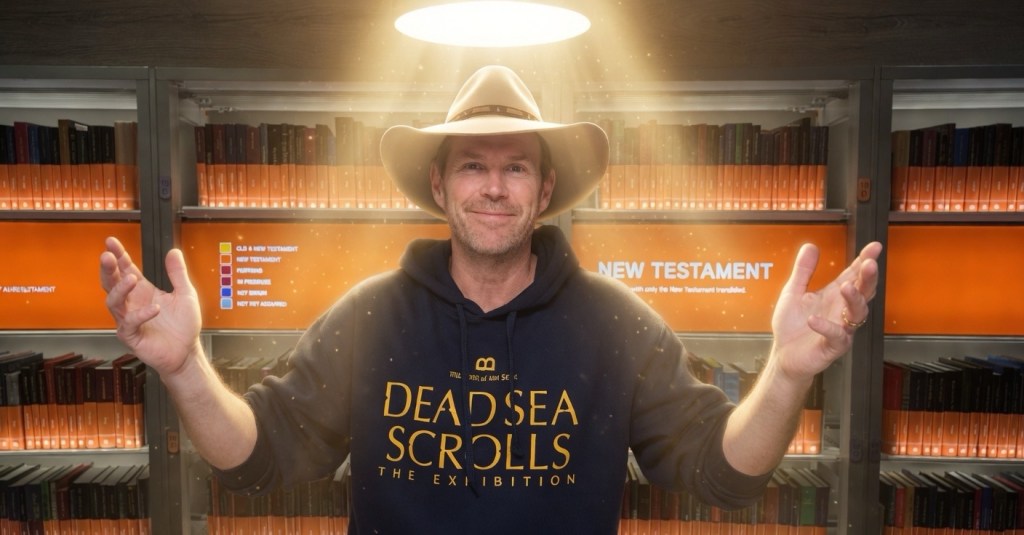
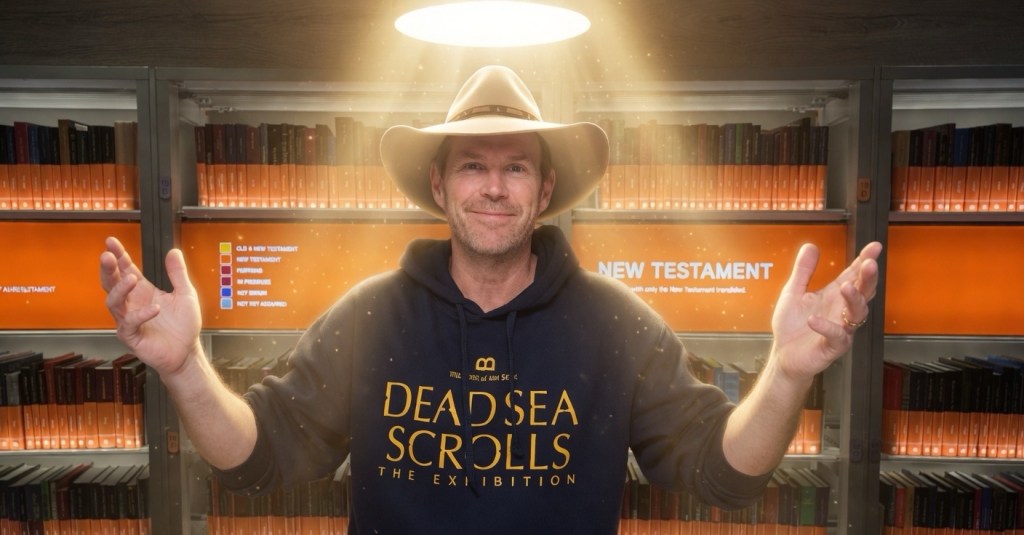
Rich Hoffman is an author, political consultant, and strategic advisor based in Cincinnati, Ohio, and the creator of The Politics of Heaven—a unique framework that connects biblical theology, ancient history, and modern power structures to explain how moral alignment and spiritual forces shape global events. Blending real-world political experience with deep research into archaeology, UFO phenomena, and suppressed historical narratives, Hoffman offers compelling commentary on topics ranging from ancient civilizations and the Dead Sea Scrolls to modern populist movements, paranormal continuity, and leadership strategy in chaotic environments. As the author of The Gunfighter’s Guide to Business and the forthcoming Politics of Heaven, he brings a grounded yet provocative voice to media discussions, supported by firsthand experiences and a cross-disciplinary approach that bridges science, history, and theology. For interviews, speaking engagements, or expert analysis, visit richhoffmanbooks.com or contact directly via phone at 513-307-5815 or email at rhoffman@richhoffmanbooks.com.  If you’ve seen the movie, Disclosure Day and want to talk about it and the implications of Presidnet Trump’s UAP disclosures, let me know and we can bring some color to your coverage. https://richhoffmanbooks.com/media-inquiries-broadcast-topics-and-contact-info/?frame-nonce=ad51e7ecba I do have a firsthand UFO encounter to discuss.
The Lesson of Supergirl: The audience has a lot of Christian dads in it

I haven’t seen the Supergirl movie yet. From everything I’ve heard and read about the promotional run and the way the numbers have come in, I’m not in any rush. It’s the same old story playing out again, the one that keeps repeating itself in Hollywood these days like a bad loop on an old VHS tape. The actress, Milly Alcock, went out there during the press cycle and made some comments that landed exactly the way these things always do when the people in charge forget who actually buys the tickets. She talked about online critics and how a lot of them were just “Dad of four, Christian” types with no profile picture or burner accounts, and she said it was hilarious to her. Then she added that if you’re pissing off the right kind of people, you’re doing okay. 

That kind of talk might play well in certain rooms in Los Angeles or New York, but it doesn’t play well with the people who were supposed to be the core audience for a big summer superhero movie built around Superman’s cousin. Christian dads with a couple of kids aren’t some fringe group you can mock on the way to the bank. They’re the ones who used to load up the minivan, buy the tickets, get the popcorn, and make these movies cultural events. When you go out of your way to signal that their worldview is a punchline, they notice. And they stay home. Then the box office comes in soft, everybody starts pointing fingers, and the same executives who greenlit the messaging act surprised.

This is the same playbook that wrecked the live-action Snow White over at Disney. Rachel Zegler went out there and called the original story dated, took shots at the prince character, and sprinkled in enough political commentary that a big chunk of the traditional family audience decided they had better things to do with their Saturday afternoon. The movie opened okay but collapsed fast, and Disney ended up losing something like $170 million on it once you factored in the budget, the reshoots after the set fire, and the marketing.  It wasn’t just one actress. It was a whole system that decided the audience needed re-education more than it needed entertainment.

Supergirl opened the weekend of June 26, 2026, to about $37 million domestically. That was well below the $50 million range some trackers were expecting and a steep drop from what Superman did the year before under James Gunn’s watch. Superman opened to $125 million domestically and finished with roughly $355 million here in the States and over $618 million worldwide. Supergirl, with a reported $170 million production budget plus heavy marketing, was tracking toward the low $60s, or maybe $70 million, domestically if it held on through the holiday frame, with worldwide totals hovering around $110-115 million.  That’s not enough to break even on a movie this size. It’s the kind of number that makes everybody downstream from the studio—crew, vendors, theater chains—feel the pain while the people who made the decisions move on to the next project.

The demographic split on opening weekend told the story in real time. The audience was skewed heavily male and over 25. The young women and families the movie was supposed to bring in large numbers didn’t show up in force. That’s what happens when the lead actress spends part of the promotional cycle telling a big slice of the potential audience that their very existence as profile pictures with kids and a faith is funny to her. You don’t have to agree with every dad out there. You don’t even have to like them. But if you’re getting paid millions to stand in front of a camera in a cape and sell a $200 million piece of intellectual property, your job during promo is to get as many people as possible to buy a ticket. Not to litigate culture war points from a Variety interview conducted months earlier. 

I’ve been around this business enough over the years to know how it works. I had a stretch where I thought I might direct or at least write and produce films. I wrote a few things, got them in rooms, and sat across from people who controlled real money. What I saw up close was that a certain faction had already decided the product came second to the politics. I remember one conversation where I pitched something and the response wasn’t about whether the story would connect or make money. It was about whether the script had the right messaging baked in. When I realized the game was rigged that way, I made a decision. I wasn’t going to spend my life compromising on things that mattered to me to get a seat at a table that was already serving a different meal. I walked away from chasing that particular brass ring and put my energy into the Tea Party and then the broader movement that became MAGA. The checks in Hollywood can be big for a minute, but they don’t buy back your integrity once you’ve traded pieces of it away.

That’s why these promotional disasters keep happening. The people in charge keep hiring talent who treat the job as a personal activism platform rather than a professional obligation. Zendaya is the counterexample people should study. She’s a good actress; she’s in big franchises; she married Tom Holland; and she mostly keeps her head down and does the work. She doesn’t feel the need to go out on every carpet and unload on half the country. That’s why she keeps getting hired. The ones who treat every interview like a chance to settle scores or signal to the online choir end up with one big movie and then a lot of quiet time afterward.

James Gunn has been in an interesting spot through all of this. He came in with real goodwill from the Guardians movies, which proved you could take obscure characters, give them personality and humor, and make a fortune. Superman last year was a genuine hit—fun, hopeful, well-reviewed, and profitable. It looked like maybe the new DCU under Gunn and Peter Safran had found a lane. Supergirl was supposed to build on that momentum. Instead, it landed with a thud. Gunn didn’t direct this one—Craig Gillespie did—but he and Safran produced it and shaped the vision. The character on screen is described as more jaded, sarcastic, impulsive, a bit of an anti-hero who parties on red-sun planets where she can actually get drunk. That’s a valid take on the comics, but when you pair it with a promotional tone that mocks the audience that grew up on the classic Superman ideal of truth, justice, and the American way, you’re asking for trouble. 

There’s already talk in the trades about whether this soft opening puts Gunn’s position under more scrutiny. Some agents are whispering that another miss like this and the corporate structure might decide it’s time for a change, even though Superman succeeded and the long-term plan is still being sold as sound.  That’s how it goes in these big studios now. One regime comes in promising to fix the mess left by the last one, spends a fortune on a new slate, and then the same underlying problems—audience alienation, messaging over story, talent who can’t or won’t sell the product—show up again. Gunn has more runs on the board than most, but the Supergirl numbers are a reminder that goodwill has a shelf life when the results don’t follow.

I keep coming back to the Indiana Jones situation because it shows the pattern so clearly. In the last film, there were persistent rumors that the original plan involved killing the character off or erasing him in some way that felt like a deliberate gut punch to the legacy. The director denied reshoots for that specific reason, but a lot of us who watched the sausage get made over the years didn’t buy the full denial. Extra money got spent, the ending got massaged, and the movie still underperformed relative to what an Indiana Jones picture should do. The people in charge wanted to make a statement. The audience wanted one more ride with the character they loved. When those two things collide, the audience usually wins by staying home, and the studio eats the difference.

Captain Marvel followed the same arc. Brie Larson went out and did the whole “toxic masculinity” circuit after the first movie made money. The sequel, The Marvels, became one of the bigger bombs in recent Disney history. The pattern is consistent: the first project coasts on existing goodwill and curiosity, the star or the messaging starts treating the core audience like the enemy, and the follow-up craters. Then the same executives who approved the approach acted shocked that families and longtime fans didn’t line up again.

What’s happening now is bigger than any single movie or actress. Hollywood went hard left years ago, and the corporate layer that runs these places decided DEI checklists and cultural re-education were more important than selling tickets. They hired people who shared that worldview, gave them big platforms, and then acted surprised when the people who actually pay for the content walked away. The trust erosion is real. Once families decide a brand doesn’t have their kids’ best interests at heart—whether it’s live-action remakes that lecture them or kids’ programming that slips in stuff no parent asked for—they don’t come back easily. You see it in the vinyl revival, the return to physical media, people wanting to own their libraries instead of renting everything from a streaming service that can memory-hole a title whenever it wants. We went through this with music. The industry told everybody they’d rent forever from iTunes and Spotify. Now people are buying records again because they want something they can actually hold when the power goes out or when the algorithm decides they shouldn’t hear a certain song anymore.

The same principle applies to movies. These big corporate entities keep treating the audience like a resource to be mined and then scolded. The audience is responding by treating Hollywood as an optional expense rather than a weekly habit. Supergirl didn’t fail because the character is unlikable in the comics or because superhero fatigue is total. It failed because the promotional campaign handed the opposition free ammunition and because the underlying calculation—that you could insult a big chunk of the paying public and still get their money—turned out to be wrong.

I’ve said for years that the best movies, the ones that actually shaped generations, came from people who cared more about the story than the politics of the moment. Star Wars in its original run was a phenomenon because it gave people something to line up for, something to argue about in the schoolyard, something that felt bigger than the daily grind. The merch drops were events. Families participated together. When the machine decided it needed to lecture instead of entertain, the cultural grip loosened. The same thing is happening across the board now. The pushback isn’t coming from some organized cabal. It’s coming from millions of individual decisions by people who are tired of paying premium prices to be told their values are the problem.

James Gunn still has a runway because Superman worked and because he has a track record of making things people actually want to watch. But the Supergirl results are a warning shot. If the next projects keep treating the core audience as something to be managed or mocked rather than served, the DCU experiment will end up in the same pile as every other attempt to force-feed ideology through expensive capes. The audience has options now. They can wait for streaming, skip it entirely, or see something else that doesn’t require them to check their beliefs at the door.

Look, I’m not saying every actor has to be a robot with no opinions. I’ve got plenty of my own, and I’ve never been shy about sharing them on my own platforms. The difference is I built those platforms myself. When you’re handed a lead role in a $170 million studio movie, the job description includes not actively driving away the people who are supposed to fill the seats. That’s not censorship. That’s basic professionalism and basic math. The Christian dads with kids aren’t asking for a sermon from the screen. They’re asking for two hours where the good guys win, the hero stands for something worth standing for, and nobody on the promotional tour calls their existence hilarious. When Hollywood forgets that simple transaction, the box office reminds them. And the reminders are getting more expensive every year.

I’ve watched this industry from the outside for a long time now, close enough to see the decisions but far enough away that I didn’t have to compromise to keep a seat. What I see is a system that keeps choosing the same losing strategy and then acting confused when the results don’t change. The audience didn’t leave because they hate superheroes. They left because the people making the movies began to hate the audience. Until that calculation flips, these soft openings and outright disasters will keep happening. The ones who figure it out first—the ones who treat the job like a privilege instead of a pulpit—will be the ones still standing when the dust settles. The rest will explain to their next meeting why the numbers didn’t work out again.

That’s the reality on the ground in the middle of 2026. Superman proved there’s still an appetite for hopeful, well-made comic book movies. Supergirl proved that even a strong foundation can be undermined in a single promotional cycle when the people involved forget who they’re talking to. The pushback is real; it’s measurable at the ticket window, and it’s not going away until the people writing the checks decide that making money and telling stories people actually want to see matter more than scoring points with the crowd that already agrees with them. I’ve made my peace with walking away from that table years ago. Watching it wobble from a distance confirms I made the right call.

Sources and Further Reading

•  Box office figures and analysis for Supergirl (2026): TheWrap, Box Office Mojo, USA Today, ComicBook.com reports from late June and early July 2026. 

•  Milly Alcock Variety interview comments on critics and “Dad of four, Christian” profiles: Originally conducted mid-April 2026, widely discussed after May publication and post-release. 

•  Snow White (2025) financial losses and promotional controversies: Forbes, Variety, Box Office Mojo. 

•  James Gunn DCU context and insider speculation post-Supergirl: Slashfilm, Screen Daily, ComicBook.com

•  Broader industry patterns around audience alienation, DEI priorities, and promotional missteps: Multiple trade coverage 2023–2026 on Captain Marvel/The Marvels, Indiana Jones and the Dial of Destiny rumors and reshoots (director denials notwithstanding), and shifting audience behavior toward physical media and selective viewing.

Rich Hoffman

More about me

Click Here to Protect Yourself with Second Call Defense https://www.secondcalldefense.org/?affiliate=20707

About the Author: Rich Hoffman

Rich Hoffman is an author, political consultant, and strategic advisor based in Cincinnati, Ohio, and the creator of The Politics of Heaven—a unique framework that connects biblical theology, ancient history, and modern power structures to explain how moral alignment and spiritual forces shape global events. Blending real-world political experience with deep research into archaeology, UFO phenomena, and suppressed historical narratives, Hoffman offers compelling commentary on topics ranging from ancient civilizations and the Dead Sea Scrolls to modern populist movements, paranormal continuity, and leadership strategy in chaotic environments. As the author of The Gunfighter’s Guide to Business and the forthcoming Politics of Heaven, he brings a grounded yet provocative voice to media discussions, supported by firsthand experiences and a cross-disciplinary approach that bridges science, history, and theology. For interviews, speaking engagements, or expert analysis, visit richhoffmanbooks.com or contact directly via phone at 513-307-5815 or email at rhoffman@richhoffmanbooks.com.  If you’ve seen the movie, Disclosure Day and want to talk about it and the implications of Presidnet Trump’s UAP disclosures, let me know and we can bring some color to your coverage. https://richhoffmanbooks.com/media-inquiries-broadcast-topics-and-contact-info/?frame-nonce=ad51e7ecba I do have a firsthand UFO encounter to discuss.
The Cincinnati Bridge Cost too Much and its Too Slow: There is too much administration these days that slows everything down, and puts unreasonable cost into everything

The groundbreaking ceremony for the new companion bridge alongside the aging Brent Spence Bridge, connecting Cincinnati, Ohio, to Covington, Kentucky, took place on May 8, 2026, leaving me shaking my head in a mix of cautious optimism and deep-seated irritation. For decades, this project has been the poster child for everything wrong with how America builds critical infrastructure these days. The price tag now sits at around $4.4 billion for the first major phase—including the new cable-stayed companion span, approach work, and some reconfiguration of the existing bridge—with the new structure slated to open to traffic in 2031. That is more than a decade since the groundbreaking and nearly thirty years since serious planning began in earnest back in the early 2000s. I remember pushing for better river crossings when I was politically active downtown in the 1990s, attending City Hall meetings day after day under multiple mayors and city council members. Back then, the Brent Spence was already showing its age, functionally obsolete, and choking on traffic that far exceeded its original design capacity from when it opened in 1963 at a mere $10 million cost. Kentucky’s commercial development folks in Newport and across the river were eager partners, seeing the economic spillover that a modernized crossing would bring to real estate and business growth on both sides. Yet here we are, decades later, finally breaking ground amid fanfare from governors Mike DeWine and Andy Beshear, former Senator Rob Portman, and Senate Republican Leader Mitch McConnell, who all showed up to take credit for finally moving shovels after securing over $1.6 billion in federal grants from the Bipartisan Infrastructure Law. It is pathetic, really. There was zero excuse for this kind of delay, and the cost escalation driven by inflation, regulatory hurdles, and bureaucratic inertia is nothing short of irresponsible. 

I have spent a lot of time in that Cincinnati-Kentucky corridor over the years, and I can tell you from firsthand experience that the need for this bridge upgrade has been glaringly obvious since at least the 1990s. Traffic volumes on the Brent Spence now routinely exceed 150,000 vehicles per day, double what it was engineered to handle, creating bottlenecks that ripple through the economies of southern Ohio and northern Kentucky. When I was down in the region talking to Kentucky development people before Newport became the revitalized hotspot it is today, the conversation always circled back to the idea that a reliable, high-capacity crossing was essential for commercial flow, tourism, and residential expansion. Real estate deals hinged on it. Business relocation decisions depended on it. Yet politicians on both sides of the river dithered, studied, and deferred while the bridge aged into a liability. The groundbreaking feels like a hollow victory because it should have happened twenty years ago. Mitch McConnell himself noted the decades of headaches, and he played a role in finally unlocking federal dollars alongside Portman. But let us be honest: high-level dealmakers in public office should have cut through the red tape far sooner. Claiming credit now for something that was critically needed in the 1990s and 2000s rings hollow. The same crowd that delayed action is now patting itself on the back while everyday drivers and businesses foot the bill through higher taxes and lost productivity. 

What makes this saga even more galling is how it stacks up against other bridge projects I have seen or studied across the country. Consider the Arthur Ravenel Jr. Bridge in Charleston, South Carolina, which replaced the old Cooper River spans. Groundbreaking occurred in 2001, and the cable-stayed beauty opened in July 2005—one full year ahead of schedule and under its roughly $700 million budget. Construction took about four years, and it delivered a magnificent structure that enhanced the historic district’s connectivity without the endless delays or ballooning costs we see today. Or look at the Mackinac Bridge up in northern Michigan, spanning the Straits of Mackinac to the Upper Peninsula. Built between 1954 and 1957 in just three and a half years at a total cost of about $100 million (in 1950s dollars), it remains a marvel of efficiency and engineering grace. Tolls helped pay it off, but the project moved with purpose and minimal bureaucratic interference. Even the old Cooper River Bridge that preceded the Ravenel was completed in just seventeen months back in the 1920s for around $6 million. These examples prove that America once knew how to build big things quickly and relatively affordably when the focus was on results rather than process. 

Contrast that with the Brent Spence Companion Bridge, where nearly twenty years of planning preceded even this groundbreaking, and the timeline now stretches to 2031 or beyond for full corridor improvements. The existing bridge itself was declared functionally obsolete in the 1990s, yet it took until the Biden administration’s infrastructure package—and McConnell’s bipartisan maneuvering—to secure the federal piece that finally broke the logjam. Inflation alone has driven costs up dramatically; nationwide highway construction expenses rose about 61 percent from 2020 to 2025, according to federal indices, and the Brent Spence price tag jumped from earlier estimates of around $3.6 billion to $4.4 billion for this phase. But inflation is only part of the story. The real culprits are the layers of regulation, environmental reviews, lawsuits, and bureaucratic oversight that have piled up since the 1970s. Laws like the National Environmental Policy Act (NEPA) of 1970, combined with state equivalents and court rulings that expanded citizen challenges to projects, turned what had once been straightforward engineering into a decade-long permitting gauntlet. Add in the Davis-Bacon prevailing wage requirements, limited competition among contractors, over-reliance on consultants by understaffed state transportation departments, and the tendency for projects to balloon during long design and review phases, and you have a perfect storm of delay and expense. 

I saw this regulatory bloat up close during my time at Cincinnati City Hall in the 1990s. Every proposed river crossing or infrastructure tweak sparked endless studies, public hearings, environmental impact statements, and legal threats from interest groups. Kentucky’s side was eager for development, but Ohio’s processes dragged everything into the mud. It was the same story with other local projects—always more studies, more delays, never faster action. Meanwhile, the Empire State Building in New York was completed in just 410 days back in 1930-1931, rising to 102 stories at a cost of about $40.9 million (roughly $600 million today). Crews added fourteen stories in ten days at peak. Storage was optimized, deliveries were just in time, and the focus was on getting it done—no endless NEPA reviews, no years of lawsuits over every rivet. The Mackinac Bridge faced turbulent waters and harsh winters, yet it was finished on schedule. Today’s projects? They take nine to nineteen years on average from planning to completion for major highways, according to federal estimates, with costs often tripling those in peer nations due to these procedural thickets. 

The toll debate adds another layer of absurdity to all this. Proponents of the Brent Spence project proudly note that it will remain toll-free, unlike the Ohio River Bridges Project in Louisville, where the Abraham Lincoln and Lewis and Clark bridges opened in 2016 as part of a tolled system that continues to collect fees until at least 2053. I find that Louisville’s setup reprehensible—preposterous, really. Drivers already pay high gas taxes that were supposed to fund infrastructure, yet now they face double-dipping through tolls on bridges that should have been built with existing revenue streams. My own recent experiences with toll roads only reinforce this frustration. On a trip to Washington, DC, I racked up about $18 in tolls using Route 66 from Fairfax County, which conveniently dumps you onto Constitution Avenue near the mall and the White House. It was worth it to avoid the nightmare traffic I endured the previous year on the George Washington Parkway along the river. But the system itself is maddening: no booths to pay at the spot, just an AI license plate reader and an online account you have to set up with a transponder, or risk violations. My time is worth far more than $18 an hour spent fiddling with websites and dashboards. Gas taxes are already high—federal at 18.4 cents per gallon since 1993, with many states adding more—and they were never properly indexed for inflation or for efficiency gains from better-mileage vehicles. The result is chronic underfunding that politicians try to patch with tolls or higher property taxes instead of cutting waste elsewhere. 

This addiction to high taxation and spending is the root problem. Government at all levels has become hooked on revenue streams that never quite cover the bloated projects they pursue. Gas tax relief proposals surface occasionally—some good folks in the Ohio Statehouse, like Thomas Hall, have pushed for it—but they rarely go far because the money gets siphoned into unrelated pet projects or administrative bloat. Property taxes in many areas, including around Cincinnati, feel punishingly high, funding schools and services, while infrastructure like bridges languishes. The same crowd that cheers the Brent Spence groundbreaking after years of delay now talks about how the Biden infrastructure plan made it possible, yet they could not get it done faster under previous administrations, either. It is too little, too late, and far too expensive. I drove the region constantly for business and personal reasons, and the traffic snarls around the Brent Spence affect everything from daily commutes to freight hauling worth over $1 billion annually across the river. People flying into Cincinnati/Northern Kentucky International Airport from southern Ohio know the pain: that 40-minute buffer you think you have can evaporate in congestion, forcing early departures and lost productivity. I had a client just last week racing for a flight after meeting me, banking on the 275 loop and western routes to beat the clock. The new bridge cannot come soon enough, but 2031 feels like an eternity, especially after we once built an icon like the Empire State in under 14 months. 

The human and economic costs of these delays are real. Businesses lose money idling in traffic. Families waste hours that could be spent productively. Emergency responders face longer response times. And the politicians who finally show up for the photo op act as if they have achieved something heroic rather than merely catching up to what should have been routine maintenance of critical national infrastructure. The Brent Spence Corridor is not some luxury—it is essential for the tri-state region’s economy, linking Ohio, Kentucky, and Indiana in ways that affect supply chains nationwide. Yet the project’s slow pace mirrors a broader national malaise where soft costs—permitting, legal fights, consultant fees—now dominate budgets. State departments of transportation have shrunk in capacity over decades, outsourcing expertise and driving up prices through limited bidder pools. Procurement rules meant to ensure fairness often reduce competition, and the litigious environment lets anyone with a complaint tie things up in court for years. Inflation compounds the problem, but the underlying issue is that we no longer prioritize speed and efficiency. We prioritize process, equity checkboxes, and avoiding any possible offense to environmental or community interests, even when the overall public good screams for action. 

I have traveled enough to see magnificent bridges done right. The Ravenel Bridge stands as a graceful gateway to Charleston’s historic district, completed efficiently and beautifully. The Mackinac Bridge, with its soaring suspension design, opened the Upper Peninsula without bankrupting the state or dragging on forever. Even older projects like the original Cooper River spans showed what focused effort could achieve. America built the interstate system in the 1950s and 1960s with purpose, using dedicated gas tax revenue, before diversions and inflation eroded it. Today’s approach—layer upon layer of federal mandates, state reviews, and endless stakeholder input—has turned infrastructure into a jobs program for lawyers, consultants, and bureaucrats rather than a means of connecting people and moving goods. The result is projects that cost three times as much as they do in other developed nations and take far longer. For the Brent Spence, that means drivers will endure construction disruptions and detours for years, while costs climb further for the remaining corridor work, which remains unfunded in full. 

None of this is inevitable. Other countries manage complex builds faster and more cheaply by streamlining reviews, limiting frivolous lawsuits, and maintaining in-house expertise within their transportation agencies. Here, we could index gas taxes to inflation and usage, phase out inefficient tolling on essential crossings, and reform NEPA to focus on genuine environmental protection rather than indefinite delay. Cut the regulatory thicket that ballooned after the 1970s, restore competitive bidding without excessive reliance on consultants, and demand accountability from politicians who treat infrastructure as a campaign prop rather than a governing priority. I have seen the contrast in my own travels: toll roads in Virginia that work but sting because they supplement already-high gas taxes, versus free bridges that should be the norm. The Louisville tolls remain a cautionary tale of how users end up paying twice—once at the pump, again at the gantry—while politicians congratulate themselves for “innovative financing.” The Brent Spence team wisely avoided tolls this time, but the underlying addiction to funding persists. Property taxes remain too high in many jurisdictions, siphoning money that could have accelerated this very project years ago. 

As someone who has watched this region evolve from the inside—navigating City Hall debates, Kentucky commerce meetings, and endless traffic on I-71/I-75—I am glad the shovels are finally in the ground. The new companion bridge will be a cable-stayed marvel, easing congestion, supporting economic growth, and providing a safer, more reliable link for generations. But the pride politicians express at the ceremony rings false when you consider how long it took and how much more it costs than it should. This was not a triumph of vision; it was the bare minimum delivered far too late after years of inaction. The Empire State Building taught us that America could once build audaciously and rapidly. The Mackinaw and Ravenel bridges exemplified modern efficiency, even with environmental considerations. We can reclaim that spirit if we stop treating every project as an opportunity for endless process and start demanding results. Relief on gas taxes, smarter use of existing revenues, and slashing bureaucratic delays are not radical ideas—they are common sense. Until then, projects like the Brent Spence will continue to exemplify government at its most sluggish: too expensive, too late, and always promising better days that arrive only after the public has paid the price in time, treasure, and frustration.

The broader lesson here extends beyond one bridge. Across the nation, infrastructure decay and project bloat threaten competitiveness. The Highway Trust Fund, once robustly supported by gas taxes established during the Depression and expanded for the interstate era, now struggles because the levy has not kept pace with needs or economic reality. The federal gas tax, at 18.4 cents per gallon since 1993 and unadjusted for inflation or fuel-efficiency gains, leaves states scrambling with sales taxes, bonds, or tolls. Proposals for vehicle-miles-traveled fees or higher taxes surface regularly, but without spending discipline, they merely feed the beast. I support targeted relief—temporary gas tax pauses or rollbacks where feasible—because families and businesses already bear enough. The addiction to spending shows in unrelated boondoggles, administrative overhead, and failure to prioritize true needs like the Brent Spence. Politicians from both parties share blame: decades of gridlock until a big federal bill provided the excuse to act. Even then, costs rose, and timelines stretched. 

In my travels to Washington, DC, the toll experience crystallized the inefficiency. Route 66’s convenience came at a price, but the lack of easy payment options and the AI enforcement felt more like revenue capture than a fair user fee. Compare that to the free-flowing vision we should have for essential crossings. The Charleston and Michigan bridges stand as testaments to what is possible when focus replaces process. The Louisville toll bridges warn what happens when it does not. For Cincinnati and Kentucky, the new bridge will finally deliver relief, but only after unnecessary years of waiting and billions in inflated costs. I have seen the politics firsthand, the development potential squandered, and the traffic endured. It did not have to be this way. With smarter governance—less regulation, more accountability, and honest use of revenue—we could build the infrastructure our economy demands without the endless delays and overruns. The groundbreaking is a step forward, but it should have been taken long ago, cheaper, and faster. That is the real story behind why these bridges cost so much and take so long: not engineering limits, but human and governmental ones. And until we address those, the next critical project will follow the same predictable, expensive path. 

(Word count: approximately 4,012)

Footnotes

1.  WCPO Cincinnati reporting on Brent Spence Companion Bridge cost and timeline, March 2026 updates.

2.  Official project timeline from BrentSpenceBridgeCorridor.com, including 2022 federal grant award.

3.  Kentucky Transportation Cabinet announcement, March 16, 2026.

4.  ENR and Business Courier coverage of cost escalation to $4.4 billion, April 2026.

5.  WLWT and AASHTO Journal on May 8, 2026, groundbreaking attendees and statements.

6.  Wikipedia and historical records on the Brent Spence original 1963 construction.

7.  Ohio River Bridges Project history via Wikipedia and RiverLink.org.

8.  Arthur Ravenel Jr. Bridge details from Wikipedia and South Carolina historical sources.

9.  Mackinac Bridge Authority historical records and construction timeline.

10.  Cato Institute analysis of 1970s regulatory changes impacting infrastructure costs.

11.  Pew Charitable Trusts report on factors inflating road and bridge maintenance costs, April 2026.

12.  Brookings Institution on highway construction cost drivers, August 2024.

13.  Empire State Building construction history from The B1M and historical accounts.

14.  PBS NewsHour on gas tax history and infrastructure funding challenges.

15.  Additional sources drawn from FHWA data, GAO reports, and state DOT analyses referenced in search results.

Bibliography for Further Reading and Research

•  Brent Spence Bridge Corridor Project Official Site. https://brentspencebridgecorridor.com/timeline/

•  WCPO Cincinnati. “What we know about the Brent Spence Companion Bridge cost and timeline.” March 2026.

•  Kentucky Transportation Cabinet. “Gov. Beshear: Brent Spence Bridge Companion Bridge Set To Begin.” March 16, 2026.

•  ENR. “Path Cleared for $4.5B Brent Spence Bridge Project as Costs Mount.” April 10, 2026.

•  Wikipedia. “Brent Spence Bridge” and “Arthur Ravenel Jr. Bridge” entries (accessed 2026).

•  Mackinac Bridge Authority. “History of the Bridge.” https://www.mackinacbridge.org/history/

•  Cato Institute. “Why Does American Infrastructure Cost More and Take Longer?” March 25, 2021.

•  Pew Charitable Trusts. “5 Factors Inflate Costs of Maintaining Roads and Bridges.” April 8, 2026.

•  Brookings Institution. “Why does building and maintaining highways in the US cost so much?” August 5, 2024.

•  The B1M. “Why can’t we build as fast as the Empire State Building?” February 14, 2023.

•  PBS NewsHour. “The gas tax’s tortured history shows how hard it is to fund new infrastructure.” June 22, 2021.

•  Ohio River Bridges / RiverLink. Project history and tolling details. https://riverlink.com/about/history/

•  Federal Highway Administration. National Highway Construction Cost Index data.

•  U.S. Government Accountability Office. Reports on environmental review timelines for transportation projects.

•  Additional economic analyses from Statecraft.pub and Practical Engineering on infrastructure cost overruns.

•  Historical texts on 1930s skyscraper construction and 1950s interstate-era projects for comparative context.

Rich Hoffman

More about me

Click Here to Protect Yourself with Second Call Defense https://www.secondcalldefense.org/?affiliate=20707

About the Author: Rich Hoffman

Rich Hoffman is an aerospace executive, political strategist, systems thinker, and independent researcher of ancient history, the paranormal, and the Dead Sea Scrolls tradition. His life in high‑stakes manufacturing, high‑level politics, and cross‑functional crisis management gives him a field‑tested understanding of power — both human and unseen.

He has advised candidates, executives, and public leaders, while conducting deep, hands‑on exploration of archaeological and supernatural hotspots across the world.

Hoffman writes with the credibility of a problem-solver, the curiosity of an archaeologist, and the courage of a frontline witness who has gone to very scary places and reported what lurked there. Hoffman has authored books including The Symposium of JusticeThe Gunfighter’s Guide to Business, and Tail of the Dragon, often exploring themes of freedom, individual will, and societal structures through a lens influenced by philosophy (e.g., Nietzschean overman concepts) and current events

The New Mob is No Different than the Old Mob: The bigger the government, the more mobsters there are to exploit it

Organized crime never went away; it just moved into the globalist movement. The old mobsters like Moe Dalitz from Cleveland and Screw Andrews from Cincinnati are now Larry Fink, Bill Gates, and Mark Zuckerburg. When people get a lot of money and use it to buy our government, it’s all the same game of corruption.  What we have witnessed with the advent of technology is that the lazy, the corrupt, the malicious, and outright evil people of the world still rally together to use mass to exploit easy living for themselves through crime and jeopardy.  Just as during western expansion, Jesse James and the gang would gather with force to rob a bank or hold up a train and steal the wealth from the inhabitants.  Mobsters always sought ways to profit off sin to exploit an endeavor, and what we see happening now globally is no different.  Technology and travel allowed them to do so on larger scales, along with centralized banking.  In other words, the bigger the government and the more organized it is, the more tempting the target is to exploit to acquire wealth as quickly as possible.  So, of course, governments would be targets for mobster activities.  Why would you hold up victims on a train when you can use the power of the government to do it for you?  All you have to do is control the government, and that is the easy part because there are always whores of some kind looking for an easy buck.  Living in Cincinnati, I have had a front-row seat to some of this mobster behavior.  Some of the biggest mobsters of their time spent a lot of time in Cincinnati and Newport, Kentucky, because it was such a centralized hub within the country.  Like anywhere where there is a lot of money; of course, organized crime elements would grow to exploit it as much as possible, which they did. 

I think it was very fortunate that I grew up the way I did.  I have always had a bold personality, and there was never a part of my life where I faced some ramifications for having it.  Instead, I have lived a vibrant life full of massive experiences.  And when danger and dollars were put before me to see if I dared take them, I was always yearning for the opportunities that came with both.  Not so good for the crime, and of course, that caused rifts that led to violence.  Which I was always perfectly fine with.  I enjoyed it.  If I could be said to have an addiction of some kind, it would be danger and it took me many years to find good ways to satisfy that part of my nature.  It’s a topic that came up in a conversation I had where someone asked me how many times I have had a gun pulled on me because they expected the answer to be zero.  Instead, I had to think about it and realized I couldn’t count them all.  It’s not like it was every day, but it was so often that I couldn’t think of them all, even after several days.  Whenever I came up with a number over twenty, I thought of new times.  And for me, it was never a regrettable experience but an excellent opportunity that made my life better as a result.  So, I don’t look back on those experiences with apprehension, but conquerable moments that made me better.  I learned firsthand that mobsters were not as brutal or scary as portrayed in the movies. Instead, at their core, they relied on group affiliation to fill in insecurities in their public lives that led to easy money because they were essentially lazy.  Their only power was fear and the ability to manipulate other people with even less courage than they had.  People sell themselves to the “take” way too easily, and often.   

Naturally, as our world grew smaller with technology and transportation, those types of people sought to exploit more people easily with a centralized government.  The old mob guys, and I met several of them in Cincinnati, mainly when I worked as a busboy at the Mike Fink restaurant on the Ohio River, was no different from the billionaires and manipulators of the world today, such as Larry Fink, Bill Gates, and Klause Schwab.  People who met Moe Dalitz from the Cleveland Four would think of him as a very charitable person involved in many front groups that everyone would recognize.  He was a trendy guy who would essentially become Mr. Las Vegas.  But he was still a thug, just as Larry Fink of BlackRock is today.  They run front organizations that give them the appearance of legitimacy.  But they made their money off the crimes of their mobster behavior, organized crime.  The activity of washing money through Ukraine by starting wars and profiting off the misery would classify as a classic mobster endeavor.  The only reason they used to be regional is that the technology and transportation at the time kept them from getting too far from a central location.  Back in the period known as the golden age of mob behavior, from the 1920s through the 1960s, planes were more challenging to get around the earth as fast as they can today, and cars were big and slow.  There weren’t highways like we have these days where you can be in another state within five hours of traveling all day, seven days a week.  Now, mobster types can hide in the mountains of Davos with all the other international gangs, such as the Khazarian Mafia, the Knights of Malta, The Jesuits, and the World Economic Forum.  Because of technology, those people have found each other easier and aligned for their crimes against humanity, which is in their nature to do.  I only mentioned my experience because I know better and understand the thinking that attracts those people to do what they do.  And why they point guns at people, hoping to use force to gain compliance. 

I also learned that the only thing those people understand is force.  They don’t respect sympathy or pleading.  They only understand force.  I’m still around to tell some of these stories because of force.  The secret to understanding this realization is that they join mobs for the same reason people join labor unions: they hope to collectively bargain for an easier life that pays them the most.  They want as much money as possible by doing as little as they can get by earning it.  And joining a mob, whether the racket is hustling girls, gambling, or bootlegging, or whether it’s drug trafficking, stealing tax money through front group organizations that get sizable grants from the government, and the kickbacks flow into the pockets of those granting the money.  Wherever there is a lot of money and access, there will be some organized crime element to exploit it and the people in the way of getting it. And there is no appeal to their “better” natures.  They will do anything to acquire easy money.  And demonizing cash doesn’t stop the behavior.  Only force manages such thugs.  There is no way to use bigger government to protect yourself from their attempts at organized crime, which Big Pharma is only a modern version of the kind of businesses that Moe Dalitz used to run.  The bigger and more powerful government only makes it easier for more mob types to exploit innocent people for their desires to gain power and money as quickly as possible, which is at the core of everything BlackRock does in the world from a money management standpoint.  And they are no different than what the old mobsters of memory did every day.  The only difference is that technology allows them to do it on a bigger scale, and our understanding of those scales is just catching up to reality.   

Rich Hoffman

Click Here to Protect Yourself with Second Call Defense https://www.secondcalldefense.org/?affiliate=20707

It Would Be Easy to Defend Trump on this Third Indictment: There’s only one horse in this race, all the others are still in the barn

I’d be happy to volunteer for President Trump’s legal team to argue this third indictment.  I could do it in front of an entirely Democrat jury and make a successful case for a not-guilty verdict.  Without even reading the specifics of the Jack Smith prosecution of President Trump and any connection to the January 6th insurrection dialogue that the perpetrators of election fraud to put Joe Biden in the White House instead, is clearly a free speech case that will fall apart quickly in a courtroom.  Just as most of these Democrat prosecutions will if they ever see a courtroom.  I don’t think this one will be from Jack Smith.  My opinion about it is that it’s pure desperation from a bunch of people who know they were not elected into their positions and that their power and authority are completely phony.  Trump was elected legitimately, and these government prosecutors have been involved in a political coup that utilized with undeserved power acquired through theft and manipulation.  And this is getting way too predictable.  We all knew they were going to try to do this because they have no other way of trying to stop Trump from being elected.  And again, Joe Biden was going to get destroyed by this upcoming IRS whistleblower, so to defer attention in the media, they did what Democrats always do; they tried to make the story about someone else.  So, they played this card hoping to shake attention away from Old Man Biden, who is the real guilty party.  Yeah, I would happily defend Trump in court on this one.  Any lawyer should be able to if it even sees a court date.  I do not agree with many of the theories that are out there that are in love with the horse race of politics.  This abuse of power by the Biden Department of Justice is a short-lived threat. 

In the end, there is only one horse in this political horse race; all the other horses are still in the barn.  It doesn’t matter if it’s the Republicans or the Democrats, Trump is the only horse on the track, and there isn’t anything anybody can do to change that.  This is not China, as much as many of the Administrative State people looking for perpetual security with government jobs would like to think.  These personal abuse legal cases motivated purely out of self-preservation of the bad guys aren’t going to last long.  All it does is give people who like to talk about the horse races of politics something to discuss.  When it comes to the actual race, Trump has already won.  Many talking about that horse race think that the Democrats have this all figured out and are using these indictments to make Trump the Republican nominee because it’s making him so popular.  And that Democrats want to run against Trump as opposed to all the other options.  And that Trump will be killed in the general as all the suburban moms and soft-shelled tacos will drift back to Biden, and the long string of corruption associated with the Democrat Party can then continue.  News flash, the Democrats aren’t that smart.  They don’t have that kind of horsepower. 

Clay and Buck, on the new show that has replaced Rush Limbaugh, is nowhere near as insightful as Rush was.  Rush would understand what’s going on, but those guys and their Fox contracts keep them from seeing reality.  Or maybe they just miss it because they are too conventional.  I heard them utter that theory about Democrats, and it’s clear that they are swinging and missing.  Trump isn’t in trouble.  There could be 100s of indictments by this corrupt government, which won’t change one thing about this upcoming election.  People are mad; they want revenge for the way Trump was ripped off during his first term and had his presidency taken from him in an all too obvious coup, ran by our own government with Covid, that sought to destroy our entire economy just to preserve the losers in the Swamp.  And if Trump isn’t on a ticket where they try to strip him off the ballot in all 50 states with some made-up technicality, then there will be a lot of unleashed anger that the Democrats are all too aware of.  They’ve looked at the numbers, and they know they cheated and by how much.  And they know that the American people do not support the Democrat platform.  And now we are at another election, and more people believe that the 2020 election was stolen than during that first year.  The movement has only grown, and Democrats are terrified of those eventual ramifications.  They hope they can run out the clock by keeping Trump out of the election because they know they won’t be able to beat him in the general.  Because Joe Biden never had 81 million votes.  They rigged the election the old-fashioned way, the way elections have been rigged in China, Venezuela, Russia, and all over Central and South America and Europe.  They cheated on so many fronts that it’s almost ridiculous at this point, and people have seen it for themselves.  The Democrats who played along have some tough days coming, with or without Trump.  And they know it.

I watched a recent Fox News interview with Trump and Bret Baier carefully, as it was important for the reporter to remind President Trump that he did not win the election.  That was coming from Fox News and Rupert Murdoch’s position as a media owner from a foreign country.  That wasn’t a reporter letting the facts take him wherever they went.  That was an activist trying to preserve the Beltway institution from an outside challenger who clearly won, but that victory was canceled by nefarious means, such as judges who refused to review the case for the implications it would have caused to the institution of government itself.  And the reminder that all 50 states had a recount and that Trump still lost because they counted all the same fake ballots that were put in place by Facebook, and a lot of FBI activism to finish off the coup they started while Trump was in office, revenge for firing Jim Comey and not bending the knee to the fourth branch of government, which was never supposed to exist in the first place.  I’ve talked to Frank LaRose, our Secretary of State in Ohio, about this election fraud issue.  Everyone knows what states like Pennsylvania and Michigan did to stuff ballots.  Frank did well in Ohio, so there was a good margin for Trump.  But other states had more open laws made more open by early voting and Covid mail-in ballots.  And the cheating got so out of hand that it took 81 million votes to beat the actual real number that Trump received, which was more than any other president in the history of America.  The suburban moms did not stay home the way Fox News said they did.  Trump had a frightening number of votes even after all that was thrown at him.  And his support has increased; it hasn’t gone down.  That’s why they are doing what they are now with the Department of Justice and the dummy Jack Smith, who is willing to make himself look like a fool to save his friends in government who have built quite a criminal empire out of their positions.  But in the end, the Bill of Rights matters, and these ridiculous charges are going to be exploited easily.  

Rich Hoffman

Click to buy The Gunfighter’s Guide to Business

Homophobia, Transphobia, and Kings Island: I’m tired of being hit on sexually wherever I go

How bad is it out there? Well, it’s pretty ugly. We have a pornography culture that some of these kids have never otherwise known, and now they have been taught in their public schools that all kinds of alternative sex practices are perfectly healthy and encouraged. They are taught that self-expression sexually is a good thing, so of course, we now see a society reflect those traits. And it was never more evident to me than in a recent trip to Kings Island, the big amusement park near my home in Northern Cincinnati. I was there with my family to see the re-opening of the Adventure Express, a ride that has been around for a while, but they have updated the theming in that part of the park and given everything a fresh paint job. I’ve always loved the ride, and as I often do at the end of a hard week of work in the summer, I like to meet my family there to ride a few roller coasters and have some dinner around the Eiffel Tower. I have been to Paris with my family and honestly prefer the Eiffel Tower at Kings Island to the one in Paris any day. So that is where I like to blow off the stress of a hard week at Kings Island. So I’m there at the park with my two daughters, their kids, my wife, and one of my sons-in-law, and we wanted to check out all the cool new things at the Adventure Express. It was a very nice day, the park had low attendance, so most of the rides were walk-ons. What could go wrong? 

Well, all my grandkids wanted to take turns riding with me. They had already been there all day, and when they think of adventure, they think of me, so they all wanted time to ride together with me, but each wanted a turn to ride with me on this epic ride that reminded them so much of Indiana Jones. That is after all the ride’s history back when Paramount Studios owned the park. That Adventure Express was designed to be an Indiana Jones ride reflective of the mine car chase from the movie Temple of Doom. And in the ride queue, they used to play music from the Indiana Jones movie The Last Crusade. So the kids wanted to ride it multiple times, and we ended up riding it 12 times. But it started off very uncomfortably.

I had been wearing an expensive business suit that day, and when I got to the park, I took off the jacket and my tie. I unbuttoned my shirt because it was hot out; I figured people were walking around half-undressed from the water park anyway, so why not. As we were going through the line at Adventure Express to get to the usher who tells people which car to get into, a very small young man was having a hard time speaking to us. I told the kid that we had six at our party, my three grandchildren, myself, one of my daughters, and my wife. He was openly gushing in a sexual way and staring at my chest with my shirt unbuttoned, and fanning himself flamboyantly. He said, “Oh my gosh, oh my, that is just too much, oh my, your shirt. It’s so breathtaking,. I repeated that we had six people. I was trying to contain the incident because it was strange for the little ones. They just wanted to ride this ride with their grandpa; they weren’t prepared for some kid trying to pick him up in a sexual way. He couldn’t have been much older than 16, so there were all kinds of things wrong with this exchange. 

After several uncomfortable moments, the train was looking for passengers, so he pointed us where to go while still fanning himself, holding that stick they use to measure kids’ height before riding. My daughter noticed all this and laughed about it as we sat because it was entirely too obvious.   But this wasn’t the only time this had happened recently. On a family trip to the Mellow Mushroom in West Chester, which is a fancy pizza place, they have really good Hawaiian Pizza; our waiter was a drag queen and was significantly over the top gay, and made his intentions toward me very obvious.   He kept talking about how he loved my hat and how strong and sexy I looked, and my family was sitting right there. It was bizarre and uncomfortable. I downplayed it, we had our pizza, and we left as soon as possible. The waiter acted like he wanted to be sexually pleasured right there at our table; he had no reservations about openly expressing himself. I felt bad for the management, as I did for the Kings Island crew too. If they tried to correct the behavior, they would be called discriminatory toward alternative sexual deviants. So they were being forced to pick their poison, which was just another reminder of how bad this modern social system was. 

I hate to say I’m used to that kind of thing, but I handled it all so my kids and grandkids would not be damaged for life. I will do something regardless of who is in the way if I want to do something. And if I want to have fun with my family, I will, even if some perverted people try to wreck the experience. But it’s becoming much more common. I remember when you had to be 18 to experience any kind of sexual material, and now, it’s out in the open with an almost gleeful disregard for family values. Desecration is on their minds, and they have been trained to be activists for that cause. The kid at Kings Island, at any other time, would have either been fired for sexually harassing the guests, or he would have contained his attraction to older males, obvious father figure issues that many young people have these days due to the failures in the social network, not enough good dads in the homes and kids lost as to how to behave as pending adults properly. I felt a little sorry for the kid, to be honest. And since we rode the ride another 11 times, I had to see him a lot. And I tried to keep things light and lofty and overlook the obvious sexual tension. But he was visibly shaken by the presence of masculinity for many reasons. And it would have otherwise ruined our visit to the park. Yet we see this kind of thing everywhere these days, and much more often because our culture has encouraged it much to the desecration of civility. It would have been wrong even if the kid was a girl. Nobody in that age group should be hitting on men over 50. They really shouldn’t be thinking about sex of any kind. They should be learning something, doing something, and working hard to earn money to build a good life. But the failure of our times is our public education system, media culture, and politics that have encouraged kids like that to behave that way. And the cost of it all is yet to come. 

Rich Hoffman

Click to buy The Gunfighter’s Guide to Business

Defeating Evil Governments: A society with lots of guns and Bibles keeps people free

It’s been a more common occurrence, of course, that I discuss religion. I mean, look at the times we are living in. There is an astonishing level of evil on display here, so it comes my way a lot; what should we do? So, it’s unsurprising that I talk about religion; it has always been a big part of my life. But I have a lot of other things going on in my life that I felt I could talk about everything else without imposing myself on the people around me. I deal with a lot of people with lots of different viewpoints. Everyone knows that I’m morally very rigid, but I am accommodating toward other people, perhaps extraordinarily. But religion isn’t a new thing for me. I never said a curse word in my life until after I was 18 years old. I never drank alcohol until my church pushed it on me to take communion. I despise belching and farting, especially when people can hear it. I’ve never smoked marijuana or done drugs of any kind. I went to church most Sundays of my life until I was about 22. And I stopped because the pastor of my church had his wife leave him, which I never forgave him for. As I said then and still say it today, how do you lead a church if you can’t lead a family? (she got bored with Church life and had a wild streak hit her in her middle years. But I still blame the husband when things like that happen)  Church wasn’t religious enough for me, so I stopped going. I never felt it did a good enough job of fighting evil. I could go on and on, but as a person, I’ve never been a very loosie goosy person to be around. So when all the avenues of evil show themselves for the slaughter, I feel that there is a license to express myself accordingly. 

So yes, it has always come up, I handle religion cordially, but I often don’t impose my views on people because, literally, nobody has the kind of views about a good and moral life that I do, so I’ve learned to keep a lot to myself, just to have speaking relationships with people. But my views are certainly not new. I’m talking about it more now because it literally comes up every day from someone looking for answers. And with all the talk about what’s going on in the world and the level of evil we are dealing with, I have a simple two-part answer strategically on how to defeat our foes that I’m happy to share. It’s why I don’t worry too much about the level of corruption we are dealing with because I have always seen the clear path out of it. Of course, I’m happy to share that self-assurance with anybody who wants to listen. However, for context, even the most devout Baptist minister would find it hard to live with my rigidity religiously. My comment to people who are curious is that evil is struggling to remain hidden, and now they are going all out toward apocalyptic activism. But the trajectory of history is against them, and they are behaving out of desperation because they know it. So, when people ask me about the solutions to our modern problems, I assure them that the bad guys will not win, especially in America, for two very specific reasons, the Bible and gun ownership. As long as those two things exist in America, the government might fall away, but the people will go on as usual. Because we are not ruled, we have representatives. If they go bad, that doesn’t mean all the people follow. Instead, far from it.

I was at one of my favorite bookstores recently in Dayton, Ohio. It has a tremendous second floor, large enough to comfortably throw footballs in, big high ceilings, and lots of open space, and I took a minute to marvel at the religious section. The number of Bibles on display for sale was bewildering, and they are there because Bibles make up a substantial percentage of all books sold. And when people buy Bibles, they read them, so a literate society makes for one that won’t fall for all the ridiculously stupid leftist ideology. The really religious people, the people who read the Bible, tend to make up most of the homeschool movement, which I’ve always been a part of in some way. My children are currently homeschooling my grandchildren, for instance, because the schools are such cesspools of evil, exposing them to it just isn’t in the cards of reality. But I get to speak with a lot of very smart people because they essentially read their Bibles. Reading as an action makes people more intelligent, so Bible reading gives people who do so advantage over those who don’t. And the Bible’s contents took many lives to reach our hands. Every time I see a bunch of bookshelves filled with Bibles knowing that people are buying them up often, I consider how many millions of people died just to get those lines printed on paper for people to read. It’s quite a journey filled with a lot of spilled blood. But printing presses, mass publishing, and a stable economy have made Bibles so common that there is no way to go back in time to where totalitarian governments ruled by ignorance. That is clearly the modern strategy to rule over the world, to keep people ignorant and groundless on morality. But as long as there are Bibles in the world, tyranny will not be able to take over where people read them. That’s why communist countries are so hostile toward the Holy Bible because it’s nearly impossible for them to rule over literate people with beliefs in good and evil. 

But reading the Bible isn’t enough. Throughout most of our history, just reading and sharing certain Bibles, such as the Wyclif Bible in 1384, could put you to death. A lot of people have been burnt at the stake or killed in multiple ways just for reading the Bible or seeking independent spiritual belief, a belief away from the governments trying to impose on people a belief system they otherwise wouldn’t accommodate. That’s why our gun culture is so influential and why they want to get rid of guns so aggressively. Guns keep the government from coming door to door and burning people at the stake because they want to read from the Bible or express their values which go against the lunacy of a tyrannical government. So long as those two things are in a society, the intentions of evil upon a mass culture will fail. In America, currently, the government is failing, but the people are not. This government tries to rule through fear, mechanisms they learned in academia. But the assumption all along was that they could turn America into an atheist nation and a gunless nation. And they haven’t been able to come close on either point. And so long as guns and Bibles are part of American culture, the intentions of the communists, the Democrat losers, the globalists, the gangsters who are now in our government to hide from the prosecutors who used to haunt them, now they are them—all of them will fall short on their objectives because, for the first time in history, people have access to massive self-defense, and the intelligence of the written word, the ability to think for themselves. They don’t need government. But the government needs them. And in times such as these, a way of life that I have been more than prepared for every year that I’ve lived it, the things I have said over all that time are only becoming more obviously true. Keep your guns close and use them to keep reading from the Bible. And if you do those two things and share your enthusiasm openly, the bad guys will lose in this apocalyptic war, which will be fun to watch. 

Rich Hoffman

Click to buy The Gunfighter’s Guide to Business

Yes, Lakota Schools Are Letting Boys Use the Girls’ Bathrooms: Why liberals hate Darbi Boddy

I think the only reason many anti-Darbi Boddy people hate her with so much conviction is that she does not look like the bottom of a foot, as most other education types do. Most people who do work in the field of education are not what you might call attractive. Instead, they look like potatoes that have been left in the basement too long on one side and are in a perpetual state of rot. That thought came to my mind as I saw Darbi Boddy, the second-year school board member from Lakota, at the Republican Lincoln Day Dinner, a glamorous event celebrating conservative values each April with Ron DeSantis speaking about his education reforms in Florida. Darbi was dressed well, and a long line of people wanted to take their pictures with her. There was quite a crowd, but we did get a chance to talk about how things were going and what she had in mind for the future as one of the most important political offices that any property owner could vote on. We send so much money to these public schools only to have them used against us as a backdoor for extreme liberalism distributed like a weed into our community with the intent to rot the minds of our youth. When you get a chance to meet Darbi, it would be hard to understand why so many people hate her. But it becomes apparent when you look at the line of people waiting to shake her hand and take a picture with her. Fellow school board members Kelley Casper and Julie Shaffer could never get a reception like that, and jealousy is undoubtedly a factor in the way that women get jealous of other women for obvious insecurities.

For all those reasons and more, Darbi Boddy is one of the most controversial figures in Cincinnati politics; she is a Butler County version of Marjorie Taylor Greene, only with a softer presentation. She and I did get a chance to talk about a few Lakota problems, and one was the transgender radicalism that is exploding in all public schools across America as a clear strategy by progressives that was unfolding. Darbi, unlike me, thinks that public education can be fixed or at least improved. Where I tend to think all elements of public education are ready for the junk pile, I am happy to see at least that people like Darbi want to try and make it work, especially considering how much money gets wasted on it in our community. And to that point, she told me about some of the challenges regarding boys and girls’ bathrooms that were trying to emerge again. Listening to her talk, she sounded very reasonable, leaving it clear to the mind of any decent person the precise point of view that people hated Darbi for purely cosmetic purposes and because she was a conservative more than any other reason. I was impressed with her statement that her main reason for dealing with many of the problems she has become wrapped up in is because she wants kids to have a stable environment to work in. And the liberal politics was intrusive to them, especially the trans bathroom issue where boys were using it as a means to get into the girl’s bathroom. Of course, at a recent school board meeting, the rest of the board stated clearly that they didn’t think that was happening. But then, after the meeting where Darbi brought the issue up for a vote to put the issue to rest, Lakota spokesperson Betsy Fuller stated that only under exceptional circumstances were boys being let into the girl’s bathroom and that the issue was distracting for students who would rather not think about those kinds of things.

After speaking with Darbi, I always leave with the thought about how bat-crap crazy women can be with other women, just over cosmetic looks, and how nuts Democrats are who are so full of hate, they want to protest the sun coming up. Darbi’s argument about removing political radicalism from kids so they can just be kids makes a lot of sense. But then again, Lakota schools are filled with radical, progressive liberals, from the school board down to the class-to-class teachers who are teaching CRT and are supporting trans activism, and those people, if left unchecked, are looking for a co-parenting relationship with the community’s kids, and to teach them all the wrong kinds of things. If Darbi wasn’t there to protect them, who would? The radicals would say that the best way to protect the kids would be to get rid of Darbi because she is the center of political controversy. But without Darbi, these people would have unhindered access to children, which is a terrifying thought, when you find out how radical some of these people really are. Darbi, in person, behaves very professionally and has genuine sincerity for the betterment of children in the classrooms. And the people who hate her hate that she’s a conservative who is not afraid to express it in public. And they hate her because of what they intend to do to innocent kids, which Darbi stands in the way of. 

You always have to watch it when the public relations people are controlling the message, and Betsy Fuller made it clear without trying, that boys were being allowed in the girl’s bathroom under unique conditions, as expressed in an email to the media after Darbi proposed a ban on the entire idea, for the safety of all kids. At a fundamental level, boys are dirtier than girls, and if they don’t sit down while using the restroom, they tend to make a mess of the seat, making it very inconvenient for the girls who have to use it after them and it’s just not fair to the girls. The other school board members were a bit outraged by Darbi, for all the reasons stated that they would be, but that didn’t change the fact that Lakota is supporting transgender radicalism, which is more of a religious issue than one of political inclusion, which is an entire problem of its own under a separation of church and state argument. Public schools have made it clear that religious references such as the Ten Commandments were not allowed to be displayed, but then they are very supportive of the rainbow flags of the Pride movement, which is a direct correlation to the Cult of Ishtar. That support was evident in Betsey’s statement to the press; they prioritize inclusion among kids that identify with gender questions, which are purely political in their progressive push culturally. And as Darbi made it clear to me, kids just want to be kids. Adults are trying to push all this sex agenda radicalism onto them, abusing that innocence between the child and adult relationship that is often detrimental to the child’s development. When you really peel back the layers of hate that have been applied to Darbi just for existing, it becomes clear that it’s not because she’s a bad school board member. Quite the opposite, I think she is the best out of the current four, and Lakota would do well to get four more just like her.   And if they did, at that point, Lakota schools might actually serve the community well and spend the vast amounts of money that are sent to them by the community wisely. And kids might be able to have one thing less to worry about than adults with radical political agendas who want to pervert children sexually for their own maniacal purposes. 

Rich Hoffman

Click to buy The Gunfighter’s Guide to Business

Darbi Boddy is Right Again: The SAVE Students Act seeks to separate students from their parents

When I was watching the Lakota school board meeting from February 6th, 2023, on video, I heard the statement from Darbi Boddy regarding the suicide watch program that was being proposed and didn’t think there was anything controversial about it. I also listened to some of the public debate and the counter statement by Julie Shaffer, who is up for re-election this year, and I would expect those types of big government types to find what Darbi was saying disturbing. In the wake of the meeting, there were apparently a lot of people confused about why the topic was even brought up, which in my view, was just a regular topic for a typical school board meeting where the Matt Miller drama was no longer the centerpiece. Then toward the end of that same week, I heard a constant barrage of negative articles in the media done on the story, Darbi’s position on mental health initiatives by Ohio’s SAVE Students Act on suicide watch. She had really hit a nerve because the stories just kept coming. And on Friday of that week, there were top-of-the-news discussions on Clear Channel radio stations discussing it and how there was a petition to remove Darbi from the board again with a signature drive. Several people approached me and said, “your buddy Darbi Boddy is in trouble again; it doesn’t look like she’s going to survive this one. What’s with her?” My reply to them is the same one I’ll address here, “she’s fine. This is the kind of topic they should be talking about in school board meetings, and she brings up a great point, how much parental involvement should there be in these programs, and what role should a school have in the personal lives of the children who attend?” 

Regarding Julie Shaffer, the fellow school board member who offered a counter comment to Darbi’s statement on the SAVE Students Act, I learned about her a long time ago that she represents all the things I personally hate. She and I had debates on WLW radio many years ago about the nature of education in general, and she and I agree on pretty much nothing. And since it’s an election year, there will be time to tell lots of stories about her personal conduct that shows why she thinks the way she does about things.   But the bottom line is that she represents the kind of parents at Lakota who do not have much confidence in their ability to raise their own children, and they want to lean on the crutch of a big public institution to help them deliver good kids into adulthood. I don’t get freaked out about it because she represents a portion of the Lakota population with the same issues with their personal parenting power. And Darbi also represents a significant portion of the Lakota population that believes in old-school parental roles and that the debate they had in a school board meeting regarding the SAVE Students Act was a healthy exchange of ideas which Darbi put forth as a concern from her point of view. Darbi’s argument was that nowhere in the proposal for suicide watch was there a protocol for calling the parents. The fundamental assumption was that the school knew best what to do with the kids, and the parents were thought of as a kind of nuisance or perhaps even the cause of suicide concerns. And by Darbi pointing all that out, it ripped the scab off a concern that all those big government school types have about everything, and that’s the security blanket they all have in the back of their minds. Can they be bad parents and still raise good children if institutionalism can come in like Superman and save everyone? It’s a liberal fantasy that most Democrats have about big government, and essentially what Darbi said popped that bubble of a fantasy in a very public way, and people reacted very violently to it. 

I listened to Darbi’s comments several times and put them here for others to listen to. Darbi is simply saying that the SAVE Students Act should have as a priority a relationship with the parents. As its written, it assumes that parents are part of the problem, which is implied in the text, and she was concerned about the direction it was going, and she brought it to everyone’s attention during the meeting. Her references to the Salem Witch Trials and to Nazis are historical in context and weren’t mentioned just to be an eye-popping revelation. The way that public schools view parental relationships is very much in line with mistakes from history which she pointed out, in separating parents from their children through institutional controls. We have well-recorded incidents of those mistakes from the past, which is why she mentioned them. The fact that we can never talk about Nazi behavior in public unless it is referenced to conservatives is a topic all its own for many other articles. But for this one, the state sponsored the Hitler Youth movment historically and those same sentiments were clearly present in the SAVE Students Act as it was proposed. Parents were not at the center of suicide watch concerns, and they should be. In terrible situations where kids want out of a bad situation so severely that they are thinking of taking their own life, their school relationships would likely be the cause, and parents should know about it. Not to be assumed that bad parents were the cause. Darbi simply wanted to point out that mental health conditions in public school atmospheres should involve a relationship with the parents. The parents might cause the depression, and the school may help those kids. But often, and likely, the situation would be the other way around, and such conditions should trigger parental involvement to provide resolution. Not castigation. 

The violent reaction to Darbi from those on the liberal side of things makes perfect sense; again, I didn’t see anything wrong with it. Obviously, there are strategic reasons for their violent reaction. We just went through six months of drama where the school superintendent admitted in a police report that he had sexual fantasies of drugging, molesting, and videotaping kids who went to the school he managed, and nobody had any problem with that. But their faces melted when Darbi suggested that the parents be the center of any public school interaction with children. It’s obvious what’s going on. There is a political push behind all this to separate children from their parents, with the government stepping in as a kind of gooish blob of liberalism and taking over the parental role. That was the warning Darbi was making, which is perfectly valid. People who want that transfer of power don’t want any opposition to that transaction for whatever reason they think that way.

In many cases, in their own lives to be fair, they lack confidence in their ability to be good parents, and they hope and dream that a taxpayer-funded school will bridge the gap in their parental abilities. They love their children; they just don’t have the confidence in themselves to be a “super parent.” But that is the topic for a school board debate, which is all I saw it to be. Healthy and fruitful. All the rest was political revenge for what happened to Matt Miller. And to those negative participants, I think they will learn that making such a big deal over little issues will only bring forth more like Darbi Boddy, who will want to run for school board and join her on a much-needed crusade to restore parental rights in public education, which is obviously in short supply and in much need of change.

Rich Hoffman

Click to buy The Gunfighter’s Guide to Business

The Paper Tigers of Liberalism: Should we expect violence before and after the election and what to do about it

Many people are worried about how liberals will react after losing so much in the upcoming midterms. It’s a similar concern that I heard ahead of 2020 when people worried that the reelection of President Trump would lead to riots in the streets, the attack of Trump voters in their homes, and a general collapse of all society. That was until we saw the massive amount of cheating that took place, which put their pick, Joe Biden, the criminal, treasonous malcontent in the White House, through unthinkable scandal. But that was during an unthinkable year where Covid was used to steal the election and have a global insurgency against the trends of populism. We know a lot now that we didn’t then, and speaking from my personal experiences, I think it’s safe to say that we have witnessed the worst that the political left has to offer. Sure, they can still kick and scream and incite riots. But their strategy for everything has been endured, and the concerns that violence will erupt due to a conservative clean sweep is based on a paper tiger villain that falls apart quickly when wet. And as a result of this next election, that will surely be the result. It has been a scary time for everyone. But the bottom line is that much of the bad behavior that we witnessed that has given everyone the anxiety of violence has been illegal. This insurgency of the Biden administration and leftist politics, in general, has violated the American Constitution in favor of new rules written by the Desecrators of Davos under the United Nations. They planned to abandon our Constitution in favor of one written by the United Nations in the future, and in that act, they told us everything we needed to know about how to defend ourselves. 

Speaking truthfully, which is something I have been hesitating to talk about, but it’s been on my mind for two years now, I have expected every day and every hour of those days to be in a shootout with some branch of this insurgent government. Whether they were official officers of the law sent like the FBI to harass Trump patriots or paid off assassins by those forces so as not to have dirt on their hands toward groups known for terrorism and discord. I have expected to be attacked and to have to defend myself at all times. And it has been rough. I’m not Roger Stone or Paul Manafort, public figures who talk tough in public but quickly surrender when authority is applied. I would offer that the abuse of them and others around Trump was carefully selected. The authorities knew these personalities would not fight back when attacked, so they were picked to make an example of them to scare other supporters who were not so inclined. I’m sure the scouting report on me is deep, so I never expected any courtesy of politeness to be applied. When I was up reading at 2 AM in the morning, I was expecting a knock on the door, and I have been quite sure of how I would handle it. For me, the Bill of Rights of our American Constitution is absolute. It’s the agreed-upon laws of our land. There is no compromise with the 4th Amendment, which states: “the right of the people to be secure in their persons, houses, papers, and effects, against unreasonable searches and seizures, shall not be violated, and no warrants shall issue but upon probable cause, supported by oath or affirmation, and particularly describing the place to be searched, and the persons or things to be seized.” The government cannot invent crises like Covid to bypass these laws. Once that happens once, even if the excuse might have merit, then the law loses its effectiveness, which was obviously the strategy of the global insurgents all along. 

A Great Work of Political Philosophy, and the Word of God as far as America Goes.

During the Covid lockdowns, it was clear to me that the governor was violating the American Constitution, and I did not follow the health director guidelines of the state of Ohio because there was no legal grounding for it. I argued many times with $400 an-hour lawyers in the heat of those times, and I was right about the validity of a state governor overriding the Constitution with emergency powers without the legislature to consider the proposal. And in the end, I was right, as the years in court after that would prove. But it was scary at the time. Even members of the Ohio Supreme Court whom I spoke with were unsure how to proceed with such an intrusion of our constitutional rights by the emergency powers of a governor under a crisis, made up or legitimate. So I operated my life as normal. I was on the road every day, and I fully expected to be stopped by the police at some point during the lockdowns and harassed for not following the made-up on the back of a napkin Governor rules for Covid. And that would have been a clear violation of the 4th Amendment, and I was prepared, and still am, to defend the Bill of Rights with the 2nd Amendment. Not that I ever wanted anybody to get hurt, but this violation of the law to me was serious business, and I felt that at any time, I was going to be targeted as an example to be made of so that others wouldn’t get the same idea.   I stayed on edge like that for two solid years until it became apparent recently that the whole Liberal World Order overplayed its hand and is now falling apart. I’m still ready for anything at any moment. But the political momentum for the political left is lost, and now they are in a retreat.

So to the point of violence, I can say from personal experience that the entire makeup of the Liberal World Order, from the local authorities to the military, to the IRS bureaucrats that there is so much talk of, are paper tigers wherever such Marxist pushes occur in the world, especially in Africa where rebels against insurgent Marxists have figured it out, that the Administrative State is filled with paper tigers that fall apart quickly. They do not have the moral authority to conduct their abuse. We have seen the worst they can manage to apply to the world in what they did under the Trump administration, climaxing into the election fraud of 2020 and the creation of Covid in a Wuhan lab in China to push the world into the Desecrators of Davos Great Reset. The whole event was a military attack to my way of looking at these things that were meant to destroy the American rule of law through the Constitution, and that was a line I was never going to cross. And others felt the same way; the result was that the effort failed for the Liberal World Order, and they were caught. So when they lose, which they will lose, they will not have the authority to go door to door, killing Republican voters. They don’t have a right to do that, and nobody should fear it or abuse authority to arrest people just because they voted for a conservative. Follow the Constitution. Keep it committed in your mind and be prepared to defend that rule of law in the face of lawlessness. I get it; it was scary during those Covid days. But know that the bad guys are weak; they are paper tigers who are easily exposed. And once people know that, the fear goes away quickly, and a world that is restored to the rule of law can take place once again, which is the obligation of each and every one of us. 

Rich Hoffman

Click to buy The Gunfighter’s Guide to Business