In the quiet hours after dinner, when the house settles and the day’s demands fade, there is a ritual that has shaped much of my understanding of the world: reading. Four or five books a week, many of them compact volumes around 150 pages, devoured not in hurried skimming but in focused sessions that stretch from six in the evening until bedtime near eleven. This habit is no idle pastime. It is a deliberate investment in clarity, particularly when navigating the complexities of leadership, politics, family, and personal integrity. One such book, The Project Management Blueprint by Richard Stone, published in 2024 in the post-COVID landscape, caught my attention midway through for its emphasis on an often-overlooked aspect in traditional management texts: emotional intelligence.
This focus struck me as refreshingly at odds with some of the more performative trends in modern corporate and institutional culture. Here was a practical guide acknowledging that technical skills alone do not suffice. Success in projects—and by extension, in life—requires the ability to understand and manage emotions, both one’s own and others’. Far from being a sign of weakness or compromise, emotional intelligence emerges as a tool for maintaining personal integrity amid the inevitable collisions of differing viewpoints. This essay explores that distinction at length: how cultivating emotional intelligence does not equate to corruption, but rather equips individuals to navigate human systems without eroding their core convictions.
Emotional intelligence, as framed in the book and echoed in broader management literature, encompasses self-awareness, self-regulation, motivation, empathy, and social skills. Daniel Goleman’s foundational work popularized these ideas, showing how they predict success more reliably than IQ in many interpersonal domains. In project management, this translates into listening to stakeholders, fostering buy-in, and guiding teams toward shared objectives without dictating from above. The Project Management Blueprint dedicates sections to fundamentals of emotional intelligence in business, highlighting its role in post-pandemic environments where hybrid work, diverse teams, and heightened sensitivities demand nuanced leadership.
Consider a simple family road trip as a microcosm. Imagine coordinating a vacation with a spouse of 38 years, adult children, and grandchildren. Everyone piles into multiple vehicles heading toward Cincinnati or some distant destination. Preferences clash immediately: one wants Chick-fil-A, another Cracker Barrel, a third the Love’s Travel Center. Backseat drivers offer unsolicited route advice—“Take 75 through the traffic,” or “No, the back roads are better.” If you are the driver, the path seems obvious to you. Solitude offers efficiency; alone, you could chart the course perfectly, stopping only where you choose. Yet family life demands inclusion. Granting autonomy to each contributor—listening, incorporating feasible inputs—builds investment. Dismiss them curtly, and resentment brews. The journey may take longer, but relationships endure.
This balancing act requires emotional intelligence. It is not about abandoning your knowledge of the best route but about securing collective commitment. In families, this sustains marriages and multi-generational bonds. In my own life, it has meant learning to integrate preferences without losing the destination. Personal integrity remains intact because the goal—family unity and safe arrival—transcends individual egos. Those lacking this skill often feel perpetually run over, their wisdom ignored. They retreat into isolation or authoritarian control, both of which fracture groups.
Scale this to politics and organizations. Leadership here mirrors project management: objectives must be defined, stakeholders aligned, and execution managed amid competing visions. Emotional intelligence allows a leader to solicit input, refine plans, and maintain momentum without sacrificing vision. It is the art of getting to “yes” without coercion. Critics sometimes equate this flexibility with corruption, especially in heated arenas like local governance. Yet the distinction is crucial: corruption involves trading principles for personal gain. Emotional intelligence deploys empathy and listening as strategic tools to advance principled goals.
Take the case of Ben Nguyen, the young man recently elected to the Lakota school board. Fresh out of high school and navigating college at Miami University, he demonstrates notable poise in engaging opponents. Rather than digging into ideological trenches, he sits with those holding different views, listens, and seeks workable paths forward. This is not weakness or sell-out behavior; it reflects maturity beyond his years. In a polarized environment, such capacity builds bridges while preserving conservative priorities. High emotional intelligence here serves integrity, not undermines it.
My own experiences in Butler County, Ohio, illustrate these dynamics vividly. Public discourse often swirls with accusations of pedophilia rings or institutional cover-ups involving schools, jails, and law enforcement. When cases surface—such as a Butler Tech student ending up in compromising situations at the Butler County Jail, or concerns about a former Lakota superintendent—outrage is understandable. Communities demand accountability. Yet knee-jerk narratives of grand conspiracies often overlook human realities.
As foreman of a grand jury for about a month, I gained an insider’s view. Interviewing hundreds of officers, interacting with prosecutors, and touring facilities provided context beyond headlines. What emerged was not evidence of orchestrated evil but patterns of human failure. Jails house vulnerable populations alongside seasoned criminals. Staff manage personal crises—divorces, family stresses, financial pressures—while overseeing chaotic environments. Young interns or students enter this pressure cooker. Failures occur: lapses in supervision, poor judgment, boundary violations. These are tragic and demand a rigorous response, but attributing them wholesale to systemic pedophilia conspiracies requires ignoring granular evidence.
I personally toured the Butler County Jail and spoke at length with Sheriff Jones. I investigated claims directly. The sheriff runs a professional operation under difficult constraints. Law enforcement faces resource limits, legal hurdles in prosecutions, and grand juries composed of citizens with varying emotional investments. During my tenure, emotional intelligence proved valuable in guiding deliberations—helping diverse jurors focus on the evidence, weigh testimony fairly, and advance viable cases. Prosecutors appreciated this facilitation because it moved justice forward without railroading or dismissing concerns.
This work revealed layers. Institutions staffed by thousands inevitably reflect human frailty. Employees bring personal baggage to work. Some succumb to temptations, especially in high-stress, emotionally charged settings. Biblical wisdom offers deeper remedies here: cultivating inner goodness, moral foundations, and personal restraint surpasses bureaucratic rules alone. Expecting flawless institutional safeguards ignores original sin and fallen nature. Solutions blend accountability, cultural emphasis on virtue, and realistic expectations of oversight.
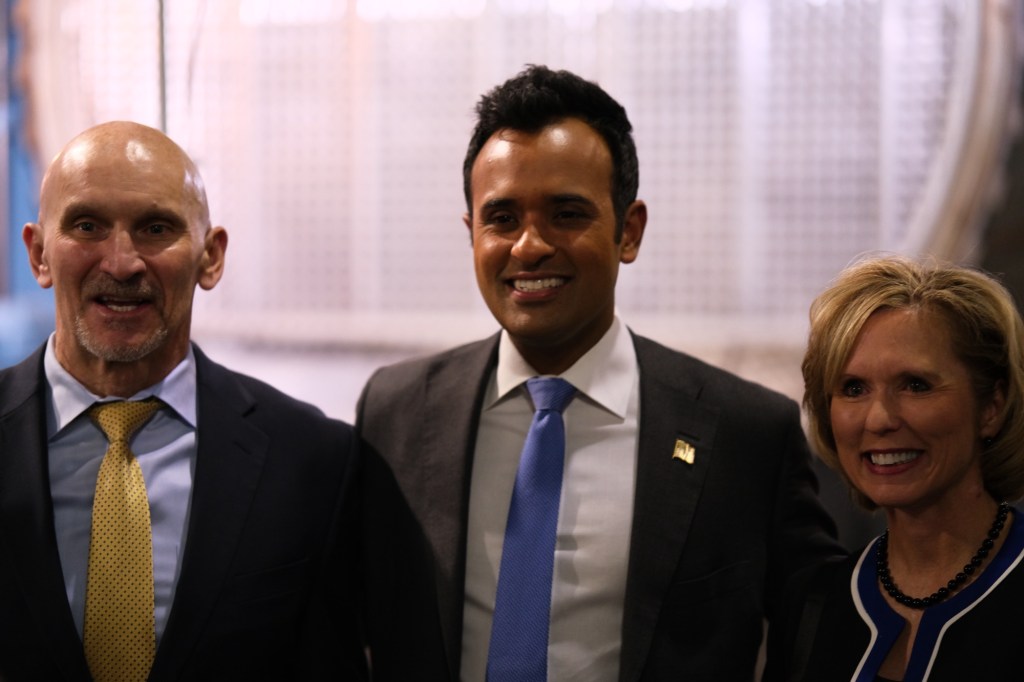
Critics who cry “corruption” when leaders engage power structures—accepting invitations, building relationships, or appearing in photos—often miss this nuance. Befriending officials does not equal capture if one retains independence. Emotional intelligence discerns manipulation while leveraging alliances for the public good. In my case, access enabled deeper scrutiny of the jail incident and related matters. Understanding motives—on all sides—strengthens rather than weakens integrity. The insecure, fearing contamination, withdraw and lob accusations from afar. Those secure in their convictions engage, probe, and influence without absorption.
This principle extends broadly. In corporate management post-COVID, books like The Project Management Blueprint address new realities: remote teams, DEI pressures, shifting loyalties. Emotional intelligence counters “woke” excesses not through reflexive opposition but by prioritizing outcomes. A project manager who listens to diverse inputs yet anchors decisions in measurable goals demonstrates strength, not capitulation. Dismissing EI as soft or anti-intellectual ignores its practical power. Studies consistently link it to better team performance, conflict resolution, and project success rates.
Personal integrity withstands collaboration when rooted deeply. Marriage teaches this daily: compromising on dinner plans or vacation itineraries does not dissolve identity. Similarly, in politics, narrowing platforms to two or three resonant issues—finding common ground for voter investment—builds coalitions. Insisting on purity at every margin isolates and fails. Effective leaders identify investable objectives, accommodate feasible inputs, and steer toward results. This mirrors project management: define scope, manage stakeholders, deliver value.
The alternative—rigid insistence on one’s route regardless of passengers—may reach the destination faster but leaves fractured relationships. In families, it breeds resentment. In politics, it yields lonely ideologues who are ineffective at governance. In organizations, it produces high turnover and stalled initiatives. Emotional intelligence mitigates this without erasing self. It requires self-awareness to recognize when inputs enhance rather than derail, self-regulation to manage frustration with “backseat drivers,” and empathy to validate others’ perspectives even when they are flawed.
Critics of high-EI leaders often project their insecurities. Feeling unheard themselves, they assume accommodation signals weakness. Yet secure individuals view dialogue as a strength. They maintain core convictions—on family values, fiscal responsibility, the rule of law, and the protection of children—while navigating human ecosystems. In Butler County cases, thorough investigation honored outrage while grounding responses in facts. Grand jury processes demand persuasion: presenting evidence compellingly so citizens “buy in” to indictments. This is emotional intelligence applied to justice.
Developing this capacity is possible. The Project Management Blueprint and similar texts suggest trainable skills such as active listening, emotional self-assessment, and conflict transformation. Leaders should cultivate it within teams, creating cultures that value contribution without chaos. Biblical parallels abound—Proverbs on wisdom in counsel, Jesus engaging diverse audiences while upholding truth. Institutions cannot legislate goodness, but they can foster environments discouraging vice.
In politics, this manifests as team-building. Endorsing candidates or central committee work succeeds by highlighting shared priorities. Voters invest in relatable figures who listen yet lead. Dismissing emotional intelligence as corruption misunderstands both concepts. Corruption betrays trust for gain. Intelligence harmonizes without betrayal. The difference lies in foundation: those anchored in principle, weather influence; the unmoored drift.
My reading habit reinforces this. Amid noise, books provide perspective. Post-dinner sessions accumulate knowledge steadily. Business texts, histories, management guides—most compact, completable in five to ten hours—compound insight. Skipping television or other distractions yields surprising productivity gains. This discipline mirrors emotional intelligence: prioritizing long-term growth over immediate impulses.
Ultimately, high emotional intelligence enhances personal integrity rather than eroding it. It equips individuals to engage complexity—family logistics, political coalitions, institutional challenges—while preserving self. In a world quick to accuse compromise, we need more leaders like Ben Nguyen: young, principled, capable of dialogue. More citizens should investigate claims directly, as I did with the jail. More should read widely, reflect deeply, and practice listening without losing direction.
The road to Cincinnati, literal or metaphorical, improves with passengers who feel heard. The driver retains the wheel, guided by wisdom and conviction. Emotional intelligence ensures arrival together, relationships intact. This is not corruption. It is mature leadership, essential for thriving families, effective governance, and successful endeavors. As more people embrace it, communities strengthen against human frailties that no policy can fully eradicate. The foundation remains personal virtue, cultivated daily through habits like reading, reflection, and intentional engagement.
Bibliography for Further Reading
• Stone, Richard. The Project Management Blueprint: How Any Beginner Can Master the Art of Project Management (2024).
• Goleman, Daniel. Emotional Intelligence: Why It Can Matter More Than IQ.
• Various PMI resources on EI in project management.
• Biblical texts, particularly Proverbs and Gospels, for moral foundations.
• Local Butler County public records and grand jury insights (anonymized where appropriate).
Rich Hoffman
More about me
Click Here to Protect Yourself with Second Call Defense https://www.secondcalldefense.org/?affiliate=20707

About the Author: Rich Hoffman
Rich Hoffman is an aerospace executive, political strategist, systems thinker, and independent researcher of ancient history, the paranormal, and the Dead Sea Scrolls tradition. His life in high‑stakes manufacturing, high‑level politics, and cross‑functional crisis management gives him a field‑tested understanding of power — both human and unseen.
He has advised candidates, executives, and public leaders, while conducting deep, hands‑on exploration of archaeological and supernatural hotspots across the world.
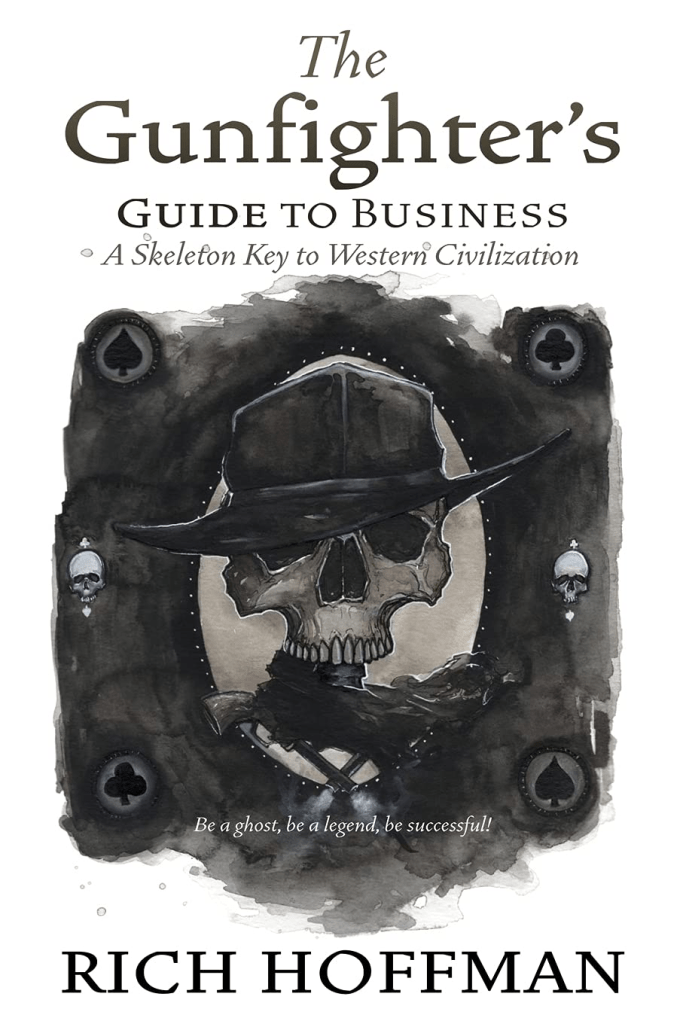
Hoffman writes with the credibility of a problem-solver, the curiosity of an archaeologist, and the courage of a frontline witness who has gone to very scary places and reported what lurked there. Hoffman has authored books including The Symposium of Justice, The Gunfighter’s Guide to Business, and Tail of the Dragon, often exploring themes of freedom, individual will, and societal structures through a lens influenced by philosophy (e.g., Nietzschean overman concepts) and current events.