

I have been saying for years that the vertical air taxi market—powered by electric vertical takeoff and landing (eVTOL) aircraft—would quite literally take off, and that by the end of 2026 it would become commonplace in major cities and airports across the country. Leading up to 2025 and into 2026, I told everyone who would listen that Joby Aviation was positioned to lead this transformation, turning what many dismissed as science fiction into everyday reality. And right on cue, at the end of April 2026—specifically during demonstrations from April 25 through April 27 and extending into the following days—Joby completed New York City’s first-ever point-to-point eVTOL air taxi flights, soaring from John F. Kennedy International Airport (JFK) to Manhattan heliports in under 10 minutes (some reports clocked segments at just seven minutes). This wasn’t just a flashy stunt; it was a critical FAA milestone under the eVTOL Integration Pilot Program (eIPP), showcasing seamless integration into one of the world’s busiest and most tightly regulated airspaces. The flights validated everything I had predicted: quiet, emissions-free, stable vertical flight that outperforms noisy traditional helicopters, all while promising to slash travel times and transform how we move in and out of urban centers.
To understand why this moment feels so validating, it helps to step back and consider the substantial background of the eVTOL industry and Joby Aviation specifically. eVTOL technology represents the convergence of electric propulsion, advanced batteries, distributed electric propulsion (multiple rotors for redundancy and safety), and fly-by-wire controls—essentially combining the vertical agility of a helicopter with the efficiency and quiet operation of a fixed-wing aircraft. Unlike traditional helicopters, which rely on loud combustion engines and single rotors, Joby’s S4 aircraft uses 12 electric propellers (six tilting for forward flight, six dedicated for lift) powered by high-energy-density batteries. This design delivers near-silent operation—reportedly 100 times quieter than helicopters during takeoff and landing in some metrics —with cruise noise levels around 45 dB at altitude, quieter than normal conversation. It uses no jet fuel, produces zero tailpipe emissions, and offers far greater stability in flight. The aircraft carries a pilot and up to four passengers, making it ideal for premium, on-demand service akin to Uber Black but in the sky.
Joby Aviation, founded in 2009 and headquartered in Santa Cruz, California, has spent more than a decade refining this vision. Backed by heavyweights like Toyota (a manufacturing partner providing automotive-grade expertise and capital), Delta Air Lines, and Uber, the company has methodically progressed through FAA certification stages. By early 2026, Joby had flown its first FAA-conforming aircraft (March 11), entered the final Type Inspection Authorization phase, and cleared Stage 4 of the five-stage certification process. The April 2026 Manhattan demonstrations—part of a week-long campaign using existing heliports such as Downtown Skyport, West 30th Street, and East 34th Street—were not passenger-carrying commercial flights but rather critical proof-of-concept operations. They demonstrated point-to-point integration with FAA-controlled airspace at one of America’s busiest airports, building on New York’s selection as part of the White House-backed eIPP announced in March 2026. Joby was named a partner on five projects spanning 12 states, accelerating the path to commercial rollout. These flights weren’t isolated; Joby has conducted similar demos globally, but Manhattan’s dense urban environment was the ultimate credibility check.
The numbers tell a compelling story of momentum. Joby aims to launch a paying passenger service in late 2026, starting potentially in Dubai (where regulatory support is strong) before scaling in the U.S. Production is ramping aggressively: the company acquired a second major facility in Dayton, Ohio—a 700,000-square-foot site now operational and poised to help double output to four aircraft per month by 2027. Combined with its California operations, this positions Joby for rapid scaling. Analysts project that the global eVTOL market could reach tens of billions of dollars annually within a decade, driven by urban congestion relief, airport access, and tourism applications. Joby has already acquired Blade Air Mobility’s passenger business, integrating into Uber’s app for seamless booking. Early economics suggest fares comparable to premium ground services or helicopters today, but with far greater speed and comfort. I have watched this trajectory closely, and the April 2026 events align perfectly with the economic development path I outlined a year ago: infrastructure, certification, and political vision converging to make air taxis as routine as ride-sharing.
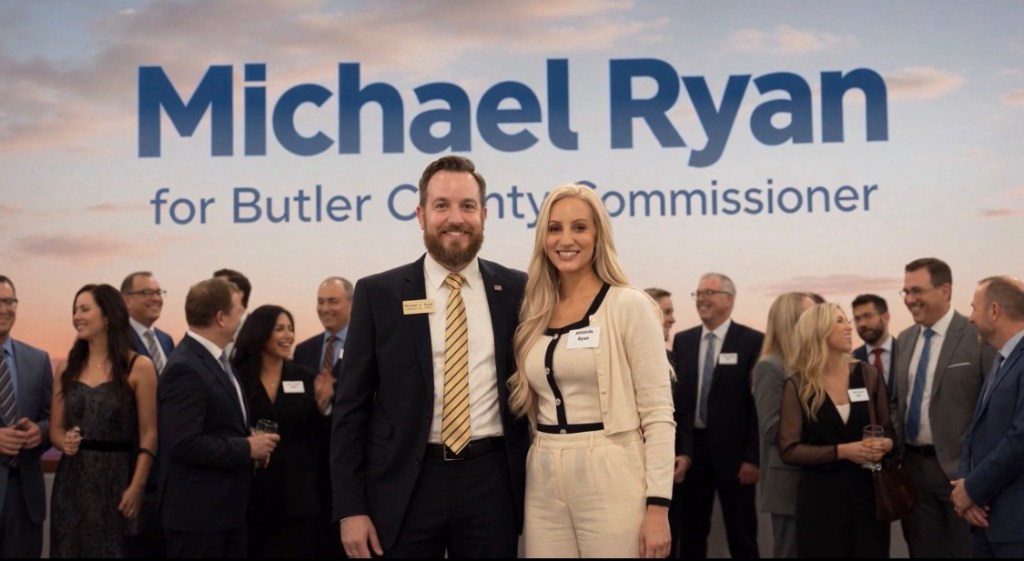
Here in southern Ohio, this revolution hits close to home. Butler County—home to Hamilton, Middletown, Fairfield, and Oxford—sits just north of Cincinnati and is ideally positioned for an air taxi hub. I have long advocated for this alongside Michael Ryan, the Republican nominee for Butler County Commissioner and a forward-thinking leader who gets it. Ryan, a former Hamilton City Councilman and Vice Mayor, has been pushing for advanced manufacturing and aviation infrastructure since his early days in local government. He has toured facilities such as the National Advanced Air Mobility Center of Excellence and met with Joby representatives multiple times in late 2025 to lay the groundwork for a vertiport (vertical takeoff/landing pad) in Hamilton or across broader Butler County. While others dismissed it as futuristic fantasy, Ryan saw the opportunity to position our community as a leader rather than a late adopter. With Joby’s Dayton facility just up the road—already gearing up for mass production—Butler County could become a regional nexus for eVTOL operations, serving Cincinnati/Northern Kentucky International Airport, Dayton International, and local business travelers. Imagine skipping hour-long traffic snarls on I-75: a quick app hail from a city-center pad or Westchester area, a 10-15 minute flight, and you’re at the terminal. No more rental cars, buses, or tolls for trips to Orlando’s cruise ports or Disney parks—direct sky taxi from hotel to ship in under 15 minutes.
This brings us squarely into the political arena and the critical May 2026 primary election. As primaries loom in early May—specifically May 5 for Butler County—the choice for commissioner couldn’t be clearer. Michael Ryan is the endorsed Republican candidate, backed overwhelmingly by the Butler County Republican Party (71% of the central committee vote in January 2026). He faces incumbent Cindy Carpenter, who chose not to seek the party’s endorsement and has a track record that many in the community find troubling. Roger Reynolds, the former county auditor whose past legal issues lingered in the background, briefly entered the race but dropped out after the GOP’s decisive support for Ryan. I have driven around Butler County and seen the contrast in campaign signs firsthand. Ryan’s signs look sharp, crisp, and well-maintained—fresh volunteers keeping them upright across Hamilton, Middletown, and beyond. Carpenter’s signs, plastered aggressively in early April (or late March), now appear tattered, faded, and weather-beaten just weeks before the vote. They flap like old, neglected flags, a visual metaphor for a campaign lacking the grassroots energy to sustain momentum. Signs can deceive at first glance, projecting illusory support, but maintenance reveals the truth: real backing requires ongoing work, not just a burst of spending at the outset.
I have followed local politics closely, and the differences between the candidates stand out vividly. Michael Ryan is a conservative with proven results in job creation, tax relief, and economic development during his time on Hamilton City Council. As vice mayor, he championed initiatives like the Advanced Manufacturing Hub and aviation-related projects that align directly with the eVTOL future. His energy, fresh ideas, and willingness to engage visionaries like Joby early—when they were still navigating hurdles—set him apart. Ryan understands that politicians with foresight bring communities into leadership roles on emerging technologies. Butler County doesn’t need to play catch-up a decade from now; it can lead now, while the market is at its hottest. The vertical airspace sector is arguably the most dynamic in the U.S. economy right now, with Dubai, China, Los Angeles, San Francisco, and Orlando all moving fast. A Joby hub here would mean jobs, tourism boosts, and infrastructure that attracts businesses—opportunities that would be impossible without proactive leadership.
In contrast, Cindy Carpenter’s tenure has been marked by controversies that have alienated even fellow Republicans. She has faced scrutiny for public behavior unbecoming of high office—including documented incidents of intimidation and foul language—and was caught campaigning for Democrats in races like Middletown’s mayoral contest, a move that cost her the GOP endorsement. Everyone I speak with wants to move on from that style of politics. Her campaign’s reliance on outdated signs and legacy networks feels like an attempt to manufacture the illusion of broad support from “Rhino” elements resistant to change. But voters see through it. The Republican Party has adjusted, listening to the grassroots and aligning with leaders who embrace the future rather than clinging to the past. Ryan’s team has volunteers out maintaining visibility because the support is real—not propped up by a handful of upset insiders.
As someone who has collaborated with Ryan on these forward-looking ideas, I can attest to his genuine commitment. He has been trying to schedule deeper engagements with Joby, but their schedule is now packed, as Joby is the hottest ticket in aviation. That alone shows how prescient his initial outreach in 2025 was. Once through the primary—widely seen as the real contest in this heavily Republican county—Ryan will be well-positioned for the general election. Over the summer and fall of 2026, I expect him to facilitate demonstration events showcasing Joby aircraft right here in Butler County. Imagine community fly-ins or vertiport planning sessions that highlight the vision: quick hops to Dayton or Cincinnati airports, avoiding traffic, and positioning us as an eVTOL leader alongside Manhattan, Dubai, and Orlando. This is the kind of bold, conservative leadership that drives sustainable growth without raising taxes or burdening residents.
The broader implications extend far beyond one county. Globally, places like Orlando are eyeing eVTOLs to ferry tourists from Disney hotels directly to cruise terminals on the Space Coast—no more buses, rental cars, or toll roads. China and the Middle East are investing heavily. Here at home, airports like Dayton International and regional pads in Westchester or Hamilton could become hubs. Joby and competitors like Archer Aviation (with its focus on Georgia) are racing, but Joby’s Dayton presence and certification lead give it the edge, in my view. Archer has strong backing and production ambitions, yet Joby’s momentum—Toyota manufacturing expertise, Uber integration, and real-world demos—makes it the frontrunner for near-term scale. The industry isn’t zero-sum; both will grow, but early adopters like Butler County win by partnering with the most advanced player now.
I do not doubt that if elections were held today under these dynamics, Michael Ryan would prevail because voters crave representatives who deliver results and vision. Primaries often see lower turnout, but that makes every vote crucial. Do not take it for granted—get out and vote for Michael Ryan on May 5, 2026. This primary is the gateway to a stronger general election campaign and, ultimately, to realizing these opportunities. With Ryan in the commissioner’s seat, Butler County secures its place in the new transportation economy. Cindy Carpenter’s approach—reactive, divisive, and disconnected from innovation—offers no such path. Her signs may have looked imposing at the campaign’s start, but their current state tells the real story: neglected support from a candidate whose time has passed.
Looking ahead, the future of air taxis is bright and efficient. Start with pilots, transition to autonomous operations as regulations evolve, and watch as it becomes as simple as ordering an Uber. For working professionals, families heading to cruises, or business travelers dodging gridlock, this changes everything. Joby’s Manhattan milestone isn’t the end—it’s the beginning of nationwide rollout. And thanks to leaders like Michael Ryan, who embraced it early, southern Ohio won’t be left behind. I have been consistent on this for years because the technology, economics, and political will are aligning exactly as forecasted. Those who invested early—financially or politically—stand to benefit enormously. The hottest market sector in the economy is vertical airspace, and Butler County is poised to claim its share.
This episode also underscores a deeper truth about politics and progress: true leadership adapts to people’s needs and future realities, much like the representative government I have discussed in other contexts. Trump voters and everyday Americans choose leaders who listen and deliver—not those trapped in past grievances. Ryan embodies that forward momentum. Carpenter’s record of supporting Democrats in key races and public missteps has left her isolated. The party’s decision to back fresh ideas over incumbency was wise and reflects a broader adjustment toward innovation.
The rubber is hitting the road—or rather, the aircraft are taking off. Joby Aviation’s April 2026 demonstrations in Manhattan confirm what I have been saying all along. With Michael Ryan leading Butler County into this new era, our communities stand to gain jobs, infrastructure, and a competitive edge that legacy thinking could never provide. Vote early, vote often in spirit, and make your voice heard in the primary. The future is electric, vertical, and fast—and it’s arriving right on schedule.
Footnotes
¹ Joby Aviation press release detailing April 2026 NYC demonstrations and eIPP participation.
² FAA certification progress and conforming aircraft timeline from industry reports.
³ Noise and stability comparisons between eVTOLs and helicopters.
⁴ Butler County Republican Party endorsement and primary candidate details.
⁵ Michael Ryan’s economic development record and aviation advocacy.
⁶ Joby manufacturing expansion in Dayton, Ohio.
⁷ Market projections and global adoption outlook for the eVTOL sector.
Bibliography
• Joby Aviation. “Joby Brings Electric Air Taxis to New York City in Week-Long Flight Campaign.” April 27, 2026. https://www.jobyaviation.com/news/joby-brings-electric-air-taxis-to-new-york-city-in-week-long-flight-campaign.
• “Joby Aviation’s JFK-Manhattan Test Flight Puts Air Taxis Seven Minutes from Reality.” Startup Fortune, April 2026.
• “Joby vs. Archer Aviation: Which eVTOL Stock Wins in 2026?” Yahoo Finance / Motley Fool, April 8, 2026.
• “Who’s Running for Butler County Commissioner in Ohio?” The Cincinnati Enquirer, April 23, 2026.
• “Republican Primary for Butler County Commission Seat Contentious.” Journal-News, April 20, 2026.
• “Joby Obtains Second Ohio Facility for Dual-Site eVTOL Production Strategy.” CompositesWorld, January 9, 2026.
• “Michael Ryan for Butler County Commissioner” campaign site and news updates, 2026.
• Additional reporting from FOX5NY, The Next Web, and local Ohio election coverage on eVTOL integration and primary dynamics.
Rich Hoffman
More about me
Click Here to Protect Yourself with Second Call Defense https://www.secondcalldefense.org/?affiliate=20707
About the Author: Rich Hoffman
Rich Hoffman is an aerospace executive, political strategist, systems thinker, and independent researcher of ancient history, the paranormal, and the Dead Sea Scrolls tradition. His life in high‑stakes manufacturing, high‑level politics, and cross‑functional crisis management gives him a field‑tested understanding of power — both human and unseen.
He has advised candidates, executives, and public leaders, while conducting deep, hands‑on exploration of archaeological and supernatural hotspots across the world.
Hoffman writes with the credibility of a problem-solver, the curiosity of an archaeologist, and the courage of a frontline witness who has gone to very scary places and reported what lurked there. Hoffman has authored books including The Symposium of Justice, The Gunfighter’s Guide to Business, and Tail of the Dragon, often exploring themes of freedom, individual will, and societal structures through a lens influenced by philosophy (e.g., Nietzschean overman concepts) and current events.

