A Community Night at Miami University’s Innovation Center
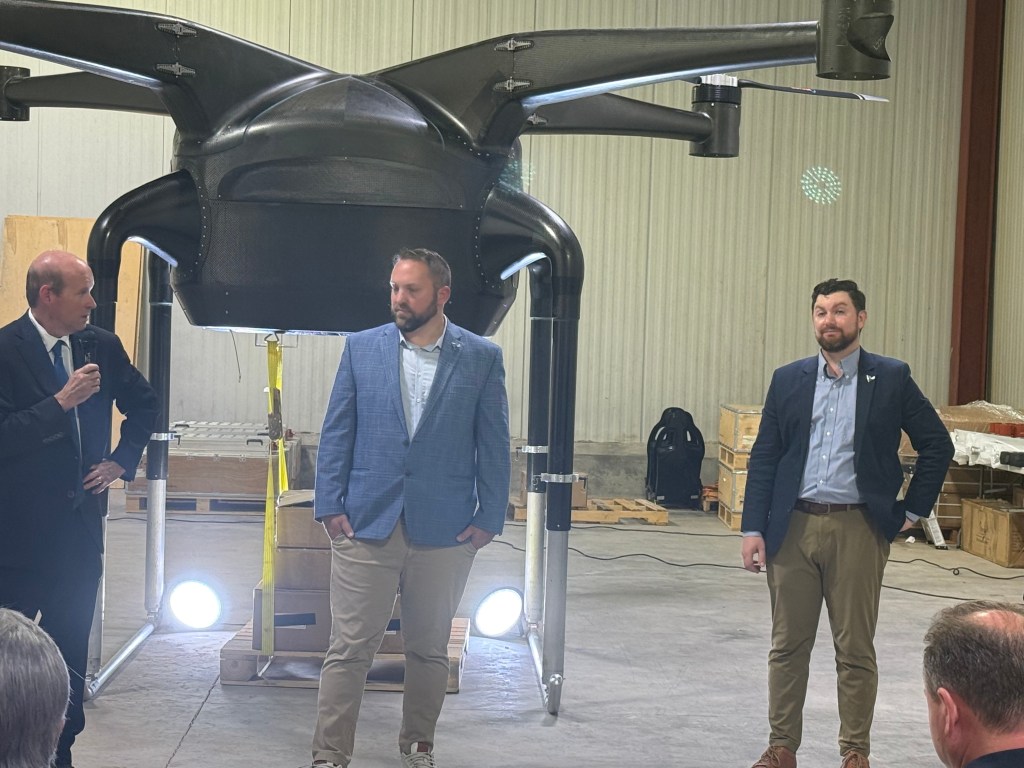
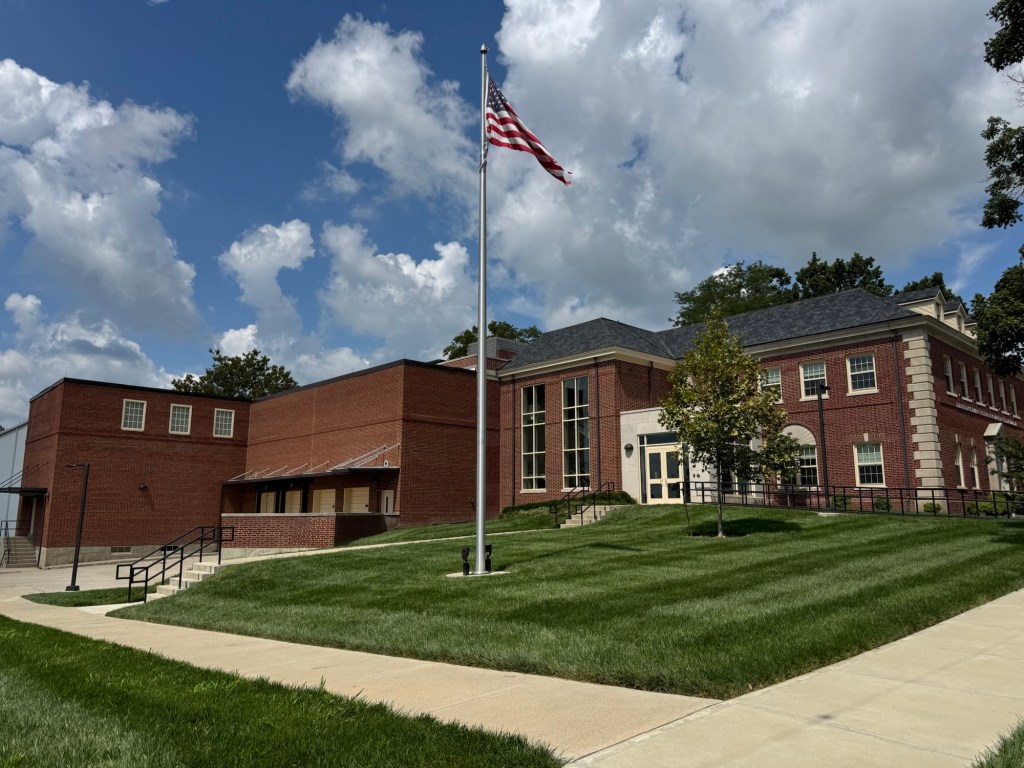
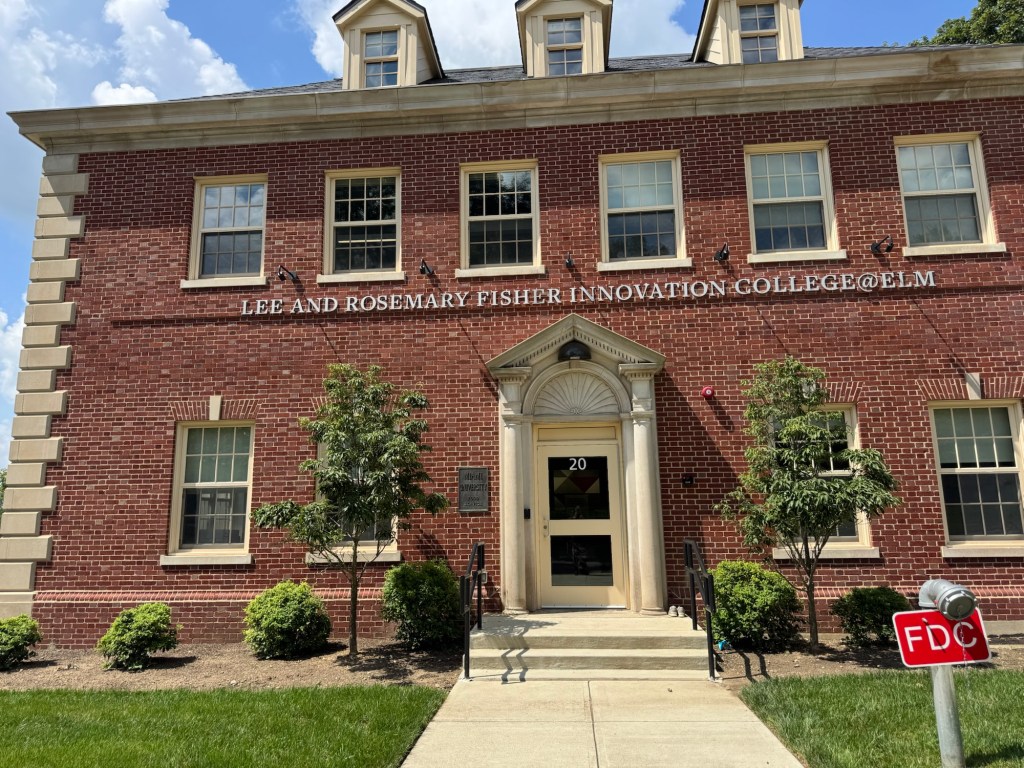
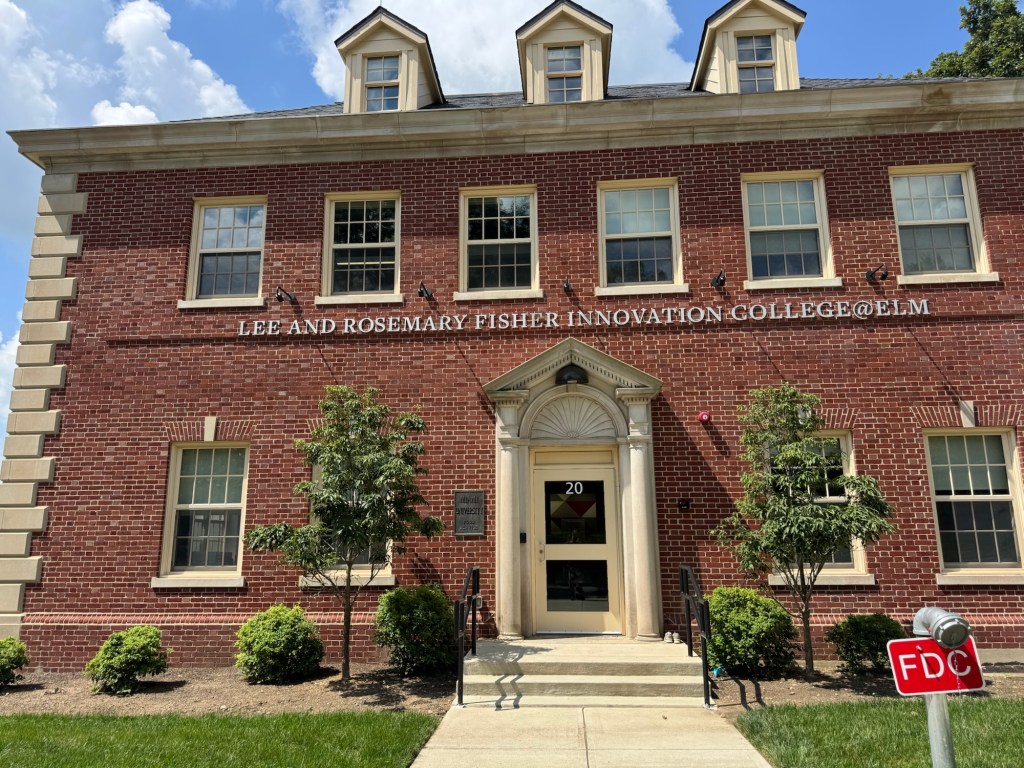
On September 21, 2026, we hosted a special community event at Miami University’s Innovation Center on Elm Street in Oxford, Ohio.
We called the evening “Dreams on Elm Street”, a lighthearted nod to the classic 1980s film. But what we’re building at Volynt isn’t the stuff of nightmares. It’s the realization of a dream, one that is taking shape right here in Butler County and has the potential to transform the future of logistics, aviation, and economic development in Ohio.
The turnout exceeded our expectations. The room was filled with Miami University staff, students, local business leaders, elected officials, and community members who wanted to learn more about what Volynt is building and where we’re headed.
We were honored to welcome Senator George Lang, Butler County Auditor Nancy Nix, and Michael Ryan, who is poised to become Butler County’s next commissioner. Their presence reflected the growing enthusiasm for innovation, entrepreneurship, and advanced aerospace development in our region.
Sharing the Vision
I opened the evening by welcoming our guests and providing an overview of the event. From there, our leadership team took the stage.
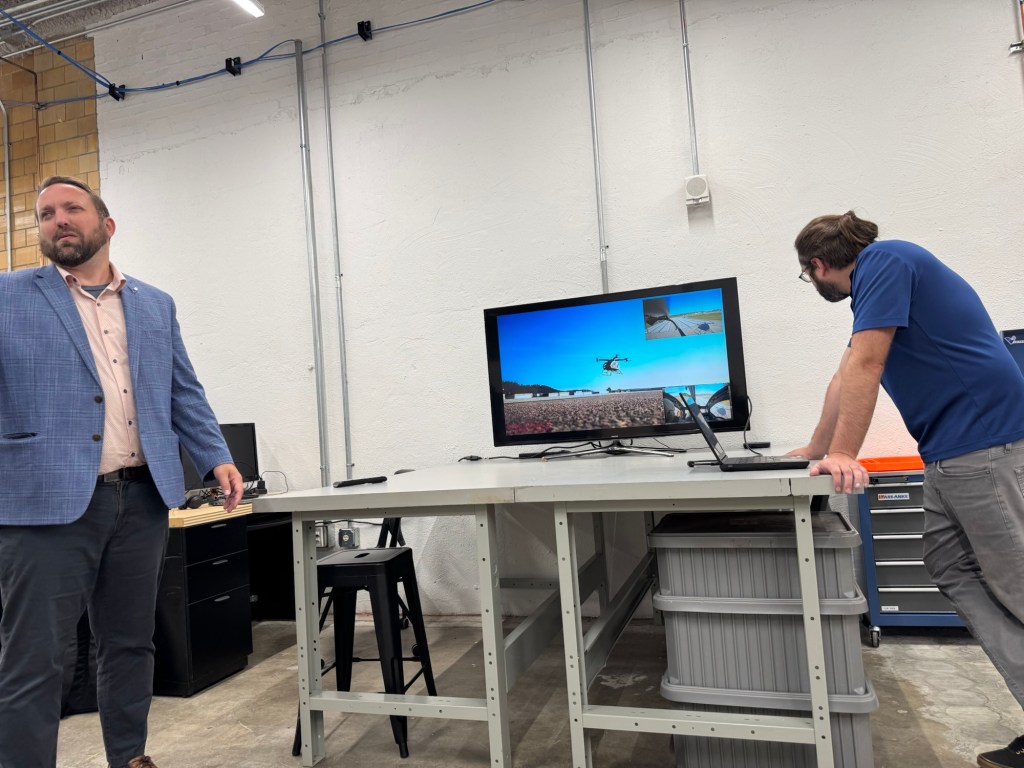
Our CEO shared Volynt’s long-term vision and mission. Our Chief Technology Officer highlighted the engineering milestones we’ve achieved and the technology behind the Volynt Vyper platform. As Chief Operating Officer, I discussed how Volynt is transforming cutting-edge aviation technology into a scalable and sustainable business. I outlined our operational strategy, manufacturing roadmap, partnerships, and the steps required to move from prototype development to commercial deployment.
The presentations were engaging, the audience was attentive, and the questions that followed demonstrated genuine interest and excitement.
Most importantly, this wasn’t a flashy product launch filled with unrealistic promises. It was an honest conversation about where we are today, what we’ve accomplished, and what the next several years may hold.
From Prototype to Production
Our immediate focus is straightforward.
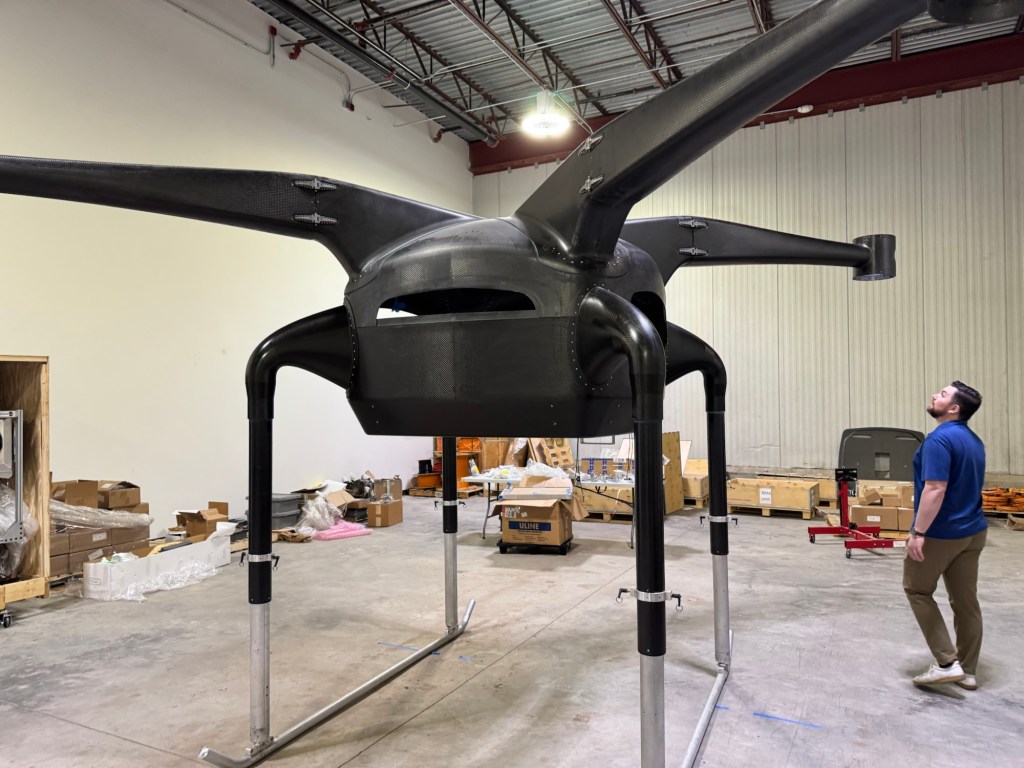
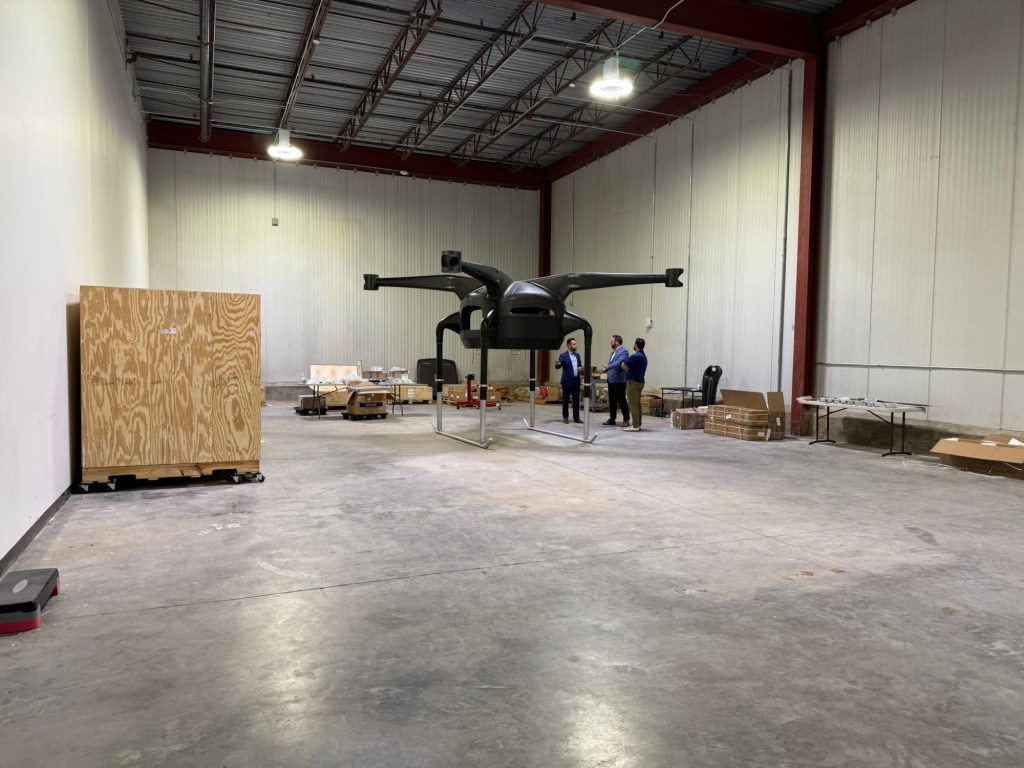
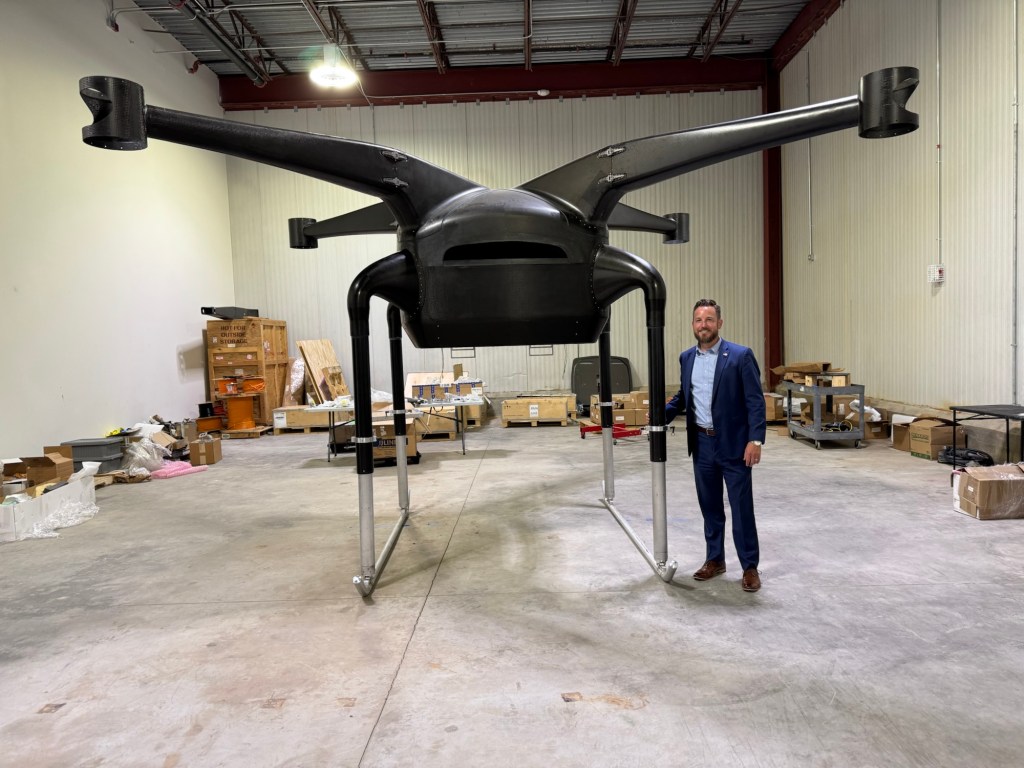
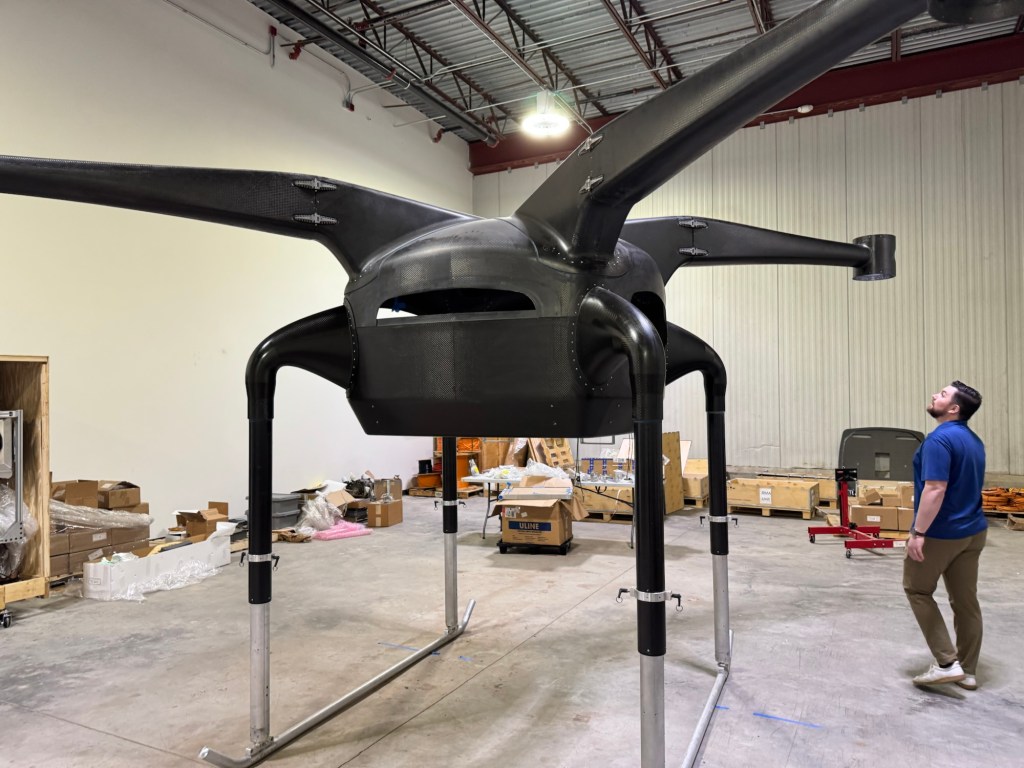
Over the next six months, our team will complete the full-scale Vyper prototype that was unveiled at the Innovation Center. That aircraft represents years of design work, engineering refinement, and determination.
Once completed, the aircraft will enter an intensive testing phase designed to validate performance, reliability, and operational capabilities.
Looking ahead to 2027, we plan to participate in major industry competitions, build broader recognition within the aerospace community, and begin manufacturing multiple aircraft.
The goals are ambitious, but they are supported by a clear roadmap and a dedicated team committed to execution.
The Drone Revolution Is Already Here
One of the most important messages of the evening was that autonomous aviation is no longer a future concept.
It’s happening today.
Just one day after our event, Dayton-area company Dexa launched a drone delivery service in Kettering. The program delivers food orders from TJ Chumps on East Stroop Road to customers within a several-mile radius across Kettering, Oakwood, and Centerville.
These smaller drones operate as last-mile delivery systems. Flying at approximately 400 feet, they lower food orders safely to customers using a cable-delivery system. Dexa has spent years developing this capability and is helping demonstrate that drone delivery is becoming a practical reality.
Volynt’s mission is different.
While companies like Dexa focus on last-mile delivery, Volynt is developing larger autonomous aircraft designed for middle-mile logistics. Our aircraft are intended to transport meaningful payloads between regional hubs such as Cincinnati/Northern Kentucky International Airport (CVG), Dayton International Airport, Indianapolis, and other distribution centers.
This approach has the potential to reduce transportation bottlenecks, address driver shortages, and create more efficient supply chains.
Whether it’s delivering a meal across town or transporting freight across a region, autonomous aviation is rapidly reshaping how goods move through our economy.
Why Ohio Is Positioned to Lead
Ohio’s aviation legacy is unmatched.
The birthplace of powered flight now has an opportunity to become a leader in autonomous flight.
Few regions are better positioned than Butler County to participate in that transformation.
Our region offers access to multiple airports, including Miami University’s airport, where initial flight operations can be conducted. At the same time, substantial investment continues at Butler County Regional Airport, where significant infrastructure improvements are being planned.
The resources, workforce, educational institutions, and transportation network already exist. What remains is bringing together the innovators, investors, and community leaders who can turn opportunity into reality.
Creating Careers That Stay Close to Home
One topic that resonates deeply with me is talent retention.
I have spoken with countless parents who have made tremendous sacrifices to provide educational opportunities for their children through Miami University, Butler Tech, and the University of Cincinnati. Too often, those graduates leave Ohio because they believe the best opportunities are elsewhere.
That reality creates a challenge for families and communities alike.
One of our long-term goals at Volynt is to help change that story.
We envision creating thousands of high-quality aerospace, engineering, technology, and manufacturing jobs throughout Southern Ohio. We want talented young people to have the option of building exciting, fulfilling careers without leaving their families, communities, and hometowns behind.
Strong Community Support
One of the most encouraging moments of the evening was seeing the level of support from the community.
Michael Ryan delivered an excellent presentation about economic development in Butler County and how innovative companies such as Volynt can contribute to future growth and prosperity.
The participation from Miami University, local leaders, educators, students, business professionals, and community members reinforced something I’ve believed from the beginning:
Innovation succeeds when communities embrace it.
Dreams on Elm Street was more than a company presentation. It was a milestone. It brought together people from different backgrounds and perspectives to discuss a shared vision for the future of our region.
The energy in the room was unmistakable. The conversations were thoughtful. The questions were insightful. The enthusiasm was genuine.
For me, that confirmed that we’re moving in the right direction.
Looking Ahead
Volynt’s journey is still in its early chapters.
There is much work ahead, many challenges to overcome, and numerous milestones still to achieve. But the momentum is real, and the opportunities are significant.
We will continue sharing updates with the community as we progress from prototype development to testing, certification, manufacturing, and beyond.
This is only the beginning.
Thank you to everyone who attended Dreams on Elm Street and supported our mission. Your encouragement and belief in what we’re building means more than you know.
Together, we’re not just dreaming about the future.
We’re building it.
About the Author
Rich Hoffman is Chief Operating Officer of Volynt, where he leads operational strategy, business development, manufacturing planning, and growth initiatives for the company’s autonomous aerospace programs. A longtime Butler County leader and aerospace executive, he is committed to building high-quality technology careers and advancing innovation throughout Southwest Ohio.
Rich Hoffman is an author, political consultant, and strategic advisor based in Cincinnati, Ohio, and the creator of The Politics of Heaven—a unique framework that connects biblical theology, ancient history, and modern power structures to explain how moral alignment and spiritual forces shape global events. Blending real-world political experience with deep research into archaeology, UFO phenomena, and suppressed historical narratives, Hoffman offers compelling commentary on topics ranging from ancient civilizations and the Dead Sea Scrolls to modern populist movements, paranormal continuity, and leadership strategy in chaotic environments. As the author of The Gunfighter’s Guide to Business and the forthcoming Politics of Heaven, he brings a grounded yet provocative voice to media discussions, supported by firsthand experiences and a cross-disciplinary approach that bridges science, history, and theology. For interviews, speaking engagements, or expert analysis, visit richhoffmanbooks.com or contact directly via phone at 513-307-5815 or email at rhoffman@richhoffmanbooks.com. If you’ve seen the movie, Disclosure Day and want to talk about it and the implications of Presidnet Trump’s UAP disclosures, let me know and we can bring some color to your coverage. https://richhoffmanbooks.com/media-inquiries-broadcast-topics-and-contact-info/?frame-nonce=ad51e7ecba I do have a firsthand UFO encounter to discuss.
People have been asking me what I am doing. They have wondered about me. They have watched the episodes, read the blog, seen me in rooms around Butler County for years, and then I went quiet in the way a person goes quiet when they are changing the work under their feet and are not ready to turn it into content.
I am not looking for a safe job that pays well so I can run out the clock. I have had those offers. I appreciate them. I am affiliating myself with a team of very sharp engineers and builders at Volynt Aero, as a senior consultant, with a path toward the COO seat, and I am doing it because I am in a stage of life where I want to swing for the fences. Not out of desperation. Out of refusal. I have watched too many capable people spend their best remaining years hitting ground balls and calling it wisdom.[1][2]
On Monday, September 21, 2026, at 7:00 p.m., at 20 South Elm Street, Oxford, Ohio 45056, inside Fisher Innovation College@Elm on Miami University’s campus, we are going to talk in public about economic vitality and what I believe is an enormous opportunity for Butler County. The event is free. Nobody is asking you to bring a checkbook. Just eat some snacks, shake hands, and hear the plan. I told my wife to go to Costco and get Doritos, punch, and whatever else makes a room feel welcoming instead of processed. That is the tone—serious work. Easy room. If you have wanted a reason to see me after a decade of reading or listening, that is the date. My schedule jumps around a lot, but I will be there for this.[3][4]
Oxford. The university town on the west side of the county. The building is the renovated old food-service and workforce site at 20 S. Elm Street — College@Elm — not a lecture hall buried in the academic core. Volynt Aero lists that building as its home. Miami’s Advanced Air Mobility Hub lives in that same incubator. The door you want is on Elm.[1][2][3][5]
I still dislike the word consultant, even though I now wear it, because I spent years chained to a success I had already built, and I felt embarrassed standing next to men who had already swung and connected. And why I would rather strike out in public, in Butler County, in the aerospace market I have been talking about for years, than spend the rest of my working life protecting ground that other people were already trying to steal.
I am a job-creator kind of person. I want to make jobs. I do not want to get a job someone else already made. That distinction sounds like a slogan until you have lived both sides of it. Most of the professional class measures adulthood by getting a job. Making jobs is how a county stays alive. I am happiest when I create work for other people—hundreds, or thousands. If I can help build something that employs a thousand people or more, that is the scoreboard I care about. Upper mobility. Payrolls that put gas in cars. Families that can stay in Butler County instead of exporting their kids to Texas, North Carolina, or the coasts and then coming home at Christmas to tell us how much better the schools are somewhere else.
I have done versions of this before. I have hired. I have built programs. I have kept a business alive longer than I wanted to because I brought people into it and felt responsible for the lives attached to those paychecks. That loyalty was not branding. It cost me years. It also taught me the thing the consultant class never learns: once you make something valuable, you become a target. Pirates do not always arrive with hooks and flags. Sometimes they arrive with decks, retainers, and a vocabulary about “professionalizing the operation.”
Go back to 2019. We had a Trump rally at a place where I had spent much of my life building a business. The owner was my friend. I stayed with that business a long time because of that friendship and because I didn’t want to deal with the woke corporatism that evolved from 2015 through 2020. Then COVID. Then the years after COVID, when the work stopped being about building and started being about keeping the lights on for people I had hired. I felt chained to their ability to put gas in the car. In a lot of ways I felt like I was lashed to a white whale. From the outside, that can look like success. The people who still had jobs were glad the jobs existed. I was glad they still had them. Inside, I was resentful — not of the people, of the process. I had created jobs, and then I became the janitor of those jobs while other people bought in, layered in, and tried to change what I didn’t want changed.[6]
It felt like trying to stay married to someone who wanted to cheat. Every time you turned around, they were climbing out a window toward some new lover with a fancier spreadsheet and phony EBITA numbers propped up by a shell game. I poured my heart into a company I didn’t fully control. Other people wanted to change it. I didn’t like the changes or the people who came with them. I still liked the people I had encouraged to become part of it. So I stayed. I defended. I hit ground balls to advance other people already safely on base. I kept the lights on.
Over the last couple of years, I went through multiple cycles of consulting firms imposed on me by, come what may, financial institutions who thought they knew best, after the best was already placed in their lap and worked out for them. Three waves. Then a fourth. I will say it the way I say it when I am not dressing it up for a chamber breakfast: a lot of them are dumb as rocks, and I do not mean to insult rocks. They are paid like industry professionals while the world under their feet has already changed. They exist to maintain ground already taken. They do not create the ground. They arrive after value exists and explain to the people who made the value how the value should now be managed. That is not a free market. That is a priesthood of fools.[7][8]
I worked at the same place for many years because of loyalty to the owner and because I wanted his family to benefit from what had been built. I still want that. Friendship does not expire because a corporate process gets stupid. But I also wanted an excuse to get away from a machine that had stopped being a build and had become a defense. The first opening that would let me play where I actually wanted to play showed up in these guys at Miami, in vertical takeoff, in the new space-adjacent aerospace market I have been putting episodes on for a long time. I have been interested in vertical aerospace for years. I wanted into that market for all kinds of reasons. Then my life opened a gap; I met them, I liked them, I wanted them to succeed, and they started introducing me to people. That was the intention. That is why I said yes.
They have introduced me as the coming COO. Right now I am a consultant. A senior consultant. I have a path toward the COO role at the scale they are trying to reach. I was apprehensive about the word. I have been stunned by how many places want me to consult for them. I had personal reservations about putting my name on that label. I still have them. I am also proud to be affiliated with this particular team. The title is not the prize. The prize is whether we can turn a sharp technical package into manufacturing, customers, and jobs.
Vivek Ramaswamy and J.D. Vance were at that 2019 rally I hosted. Warren Davidson has been in the orbit. I have had conversations with Bernie Moreno. I had a good talk with Jim Renacci after an event at Jags in West Chester. I have watched a lot of people I know leave the safe lane, take a real risk, and come back with independent wealth—enough to enter politics, or to refuse to be owned by it.[9][10]
Vivek was already on a steep wealth curve then. He wasn’t quite in the billionaire club the way magazines like to print it, but he was headed that way, and since then he’s been in that conversation and has taken the political path back toward Ohio’s governorship. Years later the call came through other people: he wanted to announce a governor’s race at my place, because the place still represented a free-enterprise culture that had not gone fully woke, and because we were doing things that did not look like everybody else. I said yes. I meant yes. I also felt a private embarrassment I should admit here, because if I do not admit it, the rest of this sounds like a victory lap instead of a confession.
When you stand next to people who built or sold large enterprises and then used that capital to change the map, and you are the guy still defending last decade’s success against the fourth wave of consultants, you feel the difference in your chest. They look at you the way a hitting coach looks at a veteran who will not let the bat get through the zone. You are at this stage of life. Why are you hitting ground balls? Why are you taking the walk? Why are you protecting a single when the bases are loaded? You are a guy who could drive the ball with runners on. Why are you trying to beat out a roller to short?
The honest answer, for a long time, was loyalty. Loyalty to the owner who was my friend. Loyalty to the people I hired. I do not apologize for that. I also will not pretend it was the same thing as ambition. Ambition would have left earlier. Loyalty stayed. Then loyalty, after enough waves of professional stupidity, became a kind of self-betrayal. I felt like I was underperforming in front of people I respected. I felt like I was wasting a bat. When Vivek talked about using the place because it still stood for the free-enterprise system, I felt a flicker of pride and a bigger flicker of “I should have more to put on the table than a good venue and a good story about the past.”
I watched them swing. Some of the balls went over the fence. The crowd enjoyed it. The players enjoyed it. Everybody enjoys seeing a ball leave the yard, including the man who hit it. I wanted that feeling again — not the celebrity, the creation. I want to make other people wealthy. I want payrolls large enough that a community can even start talking about abolishing property taxes without gutting the services people actually like. That is a standard, not a slogan. If you are not trying to create billions in new market value, I am not sure the conversation is worth the evening. A few hundred million in annual revenue is what the coastal startup press calls a win. I do not think that is a win. Ten billion in new market growth is the starting point for a conversation about success. To me, success looks like a hundred billion. That is how you change a county instead of decorating it.
I haven’t built a job base that employed a thousand people or more in over a decade. I have been trying to hang on to the success I had already built. That work has its honor. It also became boring to me, and boredom in an operator is a warning light. When the fourth wave of consultants arrived with different ideas about how we should do the thing I had already done, I was happy to leave and not look back. They did not like me. I did not like their ideas. I did not want to be part of another cycle of ground balls. I took the off-ramp. I would rather hit the reset button and start over with people who want to build than spend another year arguing with people who think a slide deck is an airplane. I’m sure I’ll write a book about all this once I get some distance from the immediacy of it all. It will make a very interesting business book. But first, such books are only valuable to people once you are looking back from a position of success; otherwise, it’s just another story about a down-and-out situation. Success has to be attached to the narrative.
That is how I landed at Volynt.
The building matters, and I am going to stay on the building for a minute because “Miami University” is a large map, and people get lost on large maps. College@Elm is Miami’s innovation and workforce hub at 20 S. Elm Street. It used to sit vacant. The university, the City of Oxford, alumni, the state capital budget, and JobsOhio money turned it into a technology, entrepreneurship, and light-manufacturing incubator — office, design and testing, startup space, a workforce resource function, and room for real production instead of just posters about production. Miami alumni Lee and Rosemary Fisher put their name on it. Randi Thomas and the ASPIRE shop treated it as a way to drag Oxford out of an eight-month student economy and toward a twelve-month one. That is the room.[3][4][11][12]
Volynt Aero’s address is that building. Suite language has appeared in their capability materials as 20 S. Elm St., Suite 117. Miami has also stood up an Advanced Air Mobility Hub in the same incubator, aimed at autonomous, hybrid-electric, and eVTOL aircraft, in collaboration with Butler County and Middletown Regional Airports, Cincinnati/Northern Kentucky International Airport, Butler Tech, and industry partners including Volynt.[1][2][5]
Volynt is not a passenger flying-taxi pitch dressed up for a TED talk. I need to say that because the popular press only knows one picture of this industry: a four-seat air taxi humming over a downtown skyline in a rendering that has never paid a supplier. The company is building large hybrid-electric uncrewed aircraft for cargo logistics, disaster response, contested logistics, mobile power generation, and forward communications—ugly work. Useful work. The work that can find a customer before the lifestyle brochure does. They call the aircraft line Vyper in their public materials. The founding team came out of UAS and eVTOL work dating to 2012, including AFWERX Agility Prime flight-test experience on a full-scale electric aircraft; University of Cincinnati aerospace engineering; Rose-Hulman and Illinois mechanical engineering; and FAA experimental airworthiness work. Together, they have forty-plus years of experience in electric vehicles, eVTOL, and manned and uncrewed aircraft. Jeffrey Bennett is the CEO. Justin Jantzen is the CTO. The rest of the technical bench is the kind of bench a county should want to keep.[2][5][13]
They have proposed a Hybrid Propulsion and Energy Lab — the HyPE Lab — at Miami University Airport in Oxford, a facility in the neighborhood of seven million dollars aimed at hybrid-electric, hydrogen fuel cell, and electric aviation development. They have already pulled Ohio Third Frontier / TVSF grant support in partnership with Miami and the Entrepreneurs’ Center. That is not a finished factory. That is a package with technology laid out, customer logic laid out, and a county sitting in the birthplace of powered flight, next to Wright-Patterson, next to a new Butler Tech aviation hangar beside Middletown Regional, next to Joby and BETA and Electra planting metal in the Miami Valley, in a state that has spent years trying to own advanced air mobility instead of applauding it from the stands.[14][15][16][17][18]
Ohio’s own AAM studies are not modest. DriveOhio and the NEXA work done for the state put the prize at roughly thirteen billion dollars in economic activity over twenty-five years, about fifteen thousand jobs, and about two and a half billion in tax revenue — if Ohio actually captures the market. Cargo, emergency services, and vehicle manufacturing are a large share of that stack. That is the lane Volynt is in. I do not treat a consultant forecast as destiny. I have spent too many years watching forecasts get used as incense. I treat the number as a fastball I can see. If the state leaves that stack on the table, California and Texas will take it and send us a newsletter about thought leadership.[19][20]
I want to give this some color, because “economic vitality” is a phrase chambers of commerce use until it means nothing.
Vitality is not a social-hour calendar. Vitality is surplus. It is when a county produces so much new value that young people do not have to leave, old industrial sites get reused, airports become more than weekend-pilot hobbies, and tax fights become less vicious because the base is growing faster than the government. I have spent a lot of my public life as the tax-killer in this county. I didn’t do that because I hate roads, sheriffs, and firehouses. I did it because a government that cannot stop growing will eat a private economy that has stopped growing. The only durable answer is not a clever levy. The durable answer is so much new payroll and new production that the argument changes temperature.
Butler County already has pieces of the machine. Miami’s Oxford campus and the regional campuses. Middletown’s steel and manufacturing memory, including the kind of heavy industry that still knows what a shift is. The I-75 corridor. Two relevant airports inside the conversation — Miami University Airport in Oxford and Middletown Regional — plus CVG as the big-hub partner on the AAM map. Butler Tech’s new aviation center, a roughly fifteen-million-dollar hangar and classroom pile next to the Middletown airport, with county, city, and JobsOhio money in it, training kids who can see an aerospace job without leaving home. And a university incubator on Elm Street, explicitly sold as a way to create year-round work in a town that used to hibernate when students left.[1][15][11]. And let’s not forget about the wonderful Butler County Regional, which has the prospect of enormous significance in a way that it has always been poised to bring forth.
Advanced air mobility is one of the few new industrial stacks that can still be built in the Midwest instead of being imported as a finished product from the coasts. Ohio has been recruiting it on purpose. Joby has been planting manufacturing near Dayton and talking about thousands of jobs and hundreds of aircraft a year if the production curve holds. Electra has committed a huge Ohio production bet out of an MIT classroom idea that turned into a short-takeoff hybrid aircraft and an $850 million manufacturing story in Springfield and Clark County, with job counts in the neighborhood of two thousand. BETA and the National Advanced Air Mobility Center of Excellence in Springfield are part of the same weather system. JobsOhio has treated AAM as a super-sector and has been walking that story all the way to Paris. Hartzell in Piqua certified an electric-aircraft propeller. The FAA’s eVTOL Integration Pilot Program is on the 2026 calendar. Ohio entered that fight with a multi-state medical-logistics proposal.[16][17][18][21]
Most of the passenger eVTOL story is still a certification and capital-markets story. That is not an insult. It is a timeline. Certification is slow. Air-taxi unit economics are a sermon until the aircraft is legal, maintainable, and paid for by someone other than a vision fund. The cargo, disaster, defense-adjacent, and mobile-power story can move sooner because the customer is not waiting for a four-seat taxi to become socially fashionable. An uncrewed hybrid aircraft that can haul, generate, and communicate in ugly terrain is a product a government buyer and a logistics company can understand without a lifestyle brochure. That is why I like this package. It is closer to a truck than to a fashion object.
I have talked about the new space economy and vertical aerospace for years. All these things mentioned here are merging at a very unique time in Southern Ohio, and I’ve known it for a long time, and I had felt stuck, unable to participate because of my other commitments. I wanted into that market, not stuck to loyal obligations. Not as a fan. As an operator. I have walked the producer culture at SpaceX and looked at what happens when a company treats manufacturing as the product instead of treating the press release as the product. Reusability. Iteration. Catching the thing and flying it again. That is the version of aerospace I want in Ohio. I do not need Volynt to be SpaceX. I need Volynt to be as serious as SpaceX: close the gap between the drawing and the floor. California and Texas will take a lot of the gold rush. They should not take all of it. Ohio invented powered flight. It should not rent the sequel from the coasts and call the rental economic development.
There is a second vitality problem I will not dance around. A lot of American corporate culture imported a compliance religion that I believe tracks, in spirit if not in every memo, to the same managerial habits that made Wall Street comfortable with Communist China’s labor and governance model while lecturing American manufacturers about virtue. ESG-era asset managers scolded domestic firms and stayed hungry for China exposure. Larry Fink could write letters telling American CEOs that climate and stakeholders would reshape finance, and the same apparatus could treat Beijing as a growth market. That split personality cost real companies real billions in distracted leadership. It also trained a consultant class to speak fluent morality while missing the factory. I have watched it up close. I have watched financial institutions send in the next wave of advisors because they thought a firm that had not gone woke yet still had juice that could be squeezed if only the culture were more compliant. They do not like Elon Musk. They do not like being told the world will change through building instead of through postings. I have been a target of that instinct. I am done volunteering for it.[22][23][24]
I want to lead a very dramatic change that changes entire industry standards, around the world. I want to help build a company that makes money the old way: a customer pays for a machine that works. Easy money and financial engineering can look like vitality for a while. Then inflation shows up, and the community realizes the jobs were never as solid as the press release. I want the other kind. Output. Exports. Aircraft. Power systems. Maintenance hangars. Suppliers. Kids from Butler Tech and Miami who can stay home and get paid. I want so much money coming into this community that property taxes become a conversation you can have without destroying the services people like. That is where my mind is. Getting on base is not enough.
Swinging for the fences is a moral choice, not a motivational poster. Baseball metaphors get cheap. I am keeping this one because it is the cleanest picture of the decision.
Most people in operating roles at this stage of life take the safe route. Get on base. Take the walk. Protect the pension. Let someone else hit the homer. You have already done the hard thing once. Now you need to keep your place in the lineup. I understand that instinct. I rejected it.
Swinging for the fences can end in a strikeout. I know that. I am a realist in business. Success is not entirely up to me. Other people have to get on base. The pitcher has to leave a pitch you can actually hit. Certification, capital, customers, suppliers, and timing all have to arrive in something like the right order. I have said on the air that this is a poker game more than a guaranteed jackpot. The risk is real. I do not think the risk is stupid. They have a gap I think they can close. I know what I can do in an operating seat. That part is not in doubt in my mind. I have done versions of it many times. The barrier most early technical teams cannot cross is not the CAD model. It is the factory floor, the hiring machine, the customer close, and the culture that does not dissolve when the first institutional money arrives. In this case, I see all those coming together in very unique and profitable ways. It’s always about timing, and the timing for this is right now.
Even so, a strikeout while swinging for the fence feels more honest to me than a career of ground balls. I have wanted a window to build from the ground up again. I got one. Before the window closes, I want a grand slam for Butler County — or at least a swing that everybody in the stands can respect. Safety is not my default setting. Loyalty is. Those two traits fought each other for years. Loyalty won, until the fourth wave of consultants made it obvious that staying was no longer protecting the people I hired. It was protecting a process I did not believe in.
I enjoy risk. I enjoy my life most when there is real risk in it. People who have known me a long time know that. They also know I will hang onto a job base I created longer than a purely rational careerist would, because I do not like being the person who collected a check and left other people’s mortgages on the table. When the money showed up to go somewhere else, and I knew the new layer was going to take it in a direction I would not sign off on, I did not feel like I was letting anybody down by leaving. I felt like I was buying my freedom from a process that had already decided I was the problem.
I want to be a version, in Ohio, of what the serious aerospace builders are doing in Texas. I expect that of myself. I was embarrassed, in those conversations with people like Vivek Ramaswamy and Bernie Moreno who had already swung and connected in their own lives, because I could hear the unasked question from them: you love the free-enterprise system enough to host a speech, why aren’t you in the game at that scale? I hosted the speech. I meant it. I also needed a moment of my own — the kind where you roll the dice large enough that the win, if it comes, is visible from the rest of the world.
September 21 is not a fundraiser with a soft-ask after the punch. It is not the Rich Hoffman show. It is not a secret society. It is a public conversation about a plan for economic vitality in Butler County, hosted where the work is already living, on a Monday night, with the people doing the engineering in the room. If you come, you will not be listening to me invent a company out of a microphone. You will be listening to why I think this particular team, in this particular building, in this particular county, is a bat worth swinging.
Monday, September 21, 2026. Seven o’clock. Fisher Innovation College@Elm. 20 South Elm Street. Oxford, Ohio 45056. Free. Come as you are.
If the evening works, you will leave less interested in me and more interested in what a serious advanced-air-mobility build could do to the tax base, the talent pipeline, and the self-respect of a manufacturing region that has been told for twenty years that the future lives somewhere else. There is a lot of affiliation possible in this — Miami engineers, Butler Tech kids, airport boards, suppliers who already know composites and power electronics, people across Ohio who are tired of watching the next factory announcement land in another state. I want these guys among the names people mention when they talk about who actually built the upper-mobility market instead of posting about it on LinkedIn.
Let me stay in Butler County long enough that the vitality claim isn’t a vibe.
This county sits between Cincinnati and Dayton with a population now in the high 380,000s to about 400,000 depending on which vintage of the estimate you trust, employment in the neighborhood of 190,000 people, and a local GDP north of twenty billion dollars. Manufacturing is not the largest headcount sector—healthcare and retail usually win that race—but it is still the spine. County profile data puts manufacturing employment in the mid-teens of thousands, with hundreds of manufacturing establishments. That is the difference between a bedroom county and a producing county. Bedroom counties import paychecks and export children. Producing counties keep a reason to stay.[26][27]
I have lived in this county my whole adult life. I did not stay because it was fashionable. I stayed because this is the ground I know, and because I think a person who talks about job creation while quietly arranging his own exit to a coastal zip code is running a different play than the one they are selling. The future I want is not a TED talk in Austin about the Midwest. The future I want is a payroll in Oxford, Middletown, Hamilton, Trenton, West Chester, Fairfield, and the townships not named in the brochures.
Middletown still knows steel. Cleveland-Cliffs putting real capital into Middletown Works is the kind of story that should shame anyone who wrote this valley off as a twentieth-century museum. Hamilton is growing again, according to the latest Census slice of incorporated places. Oxford shrinks a little when the student count wobbles, which is exactly why College@Elm was sold as a twelve-month economy instead of an eight-month one. The I-75 corridor still moves freight. The airports are not theoretical. Miami University Airport is a tool if someone treats it as one. Middletown Regional now has a Butler Tech aviation hangar next door — roughly thirty thousand square feet and fifteen million dollars, with millions from the county commissioners, JobsOhio, and the city — so a kid can learn airframes and powerplants without buying a plane ticket to Dayton on the first day of class.[28][15][11]
That is the county I am talking about on the 21st. Not a fantasy county. This one.
I should talk about the industry itself, because vitality without an industry is just a mood.
The Wright brothers did not invent flight so Ohio could become a spectator. Huffman Prairie is a cow pasture with a better story than most nations ever get, and Wright-Patterson plus the Air Force Research Laboratory turned that story into a century of metal, propulsion, sensors, and people who know how to hold a tolerance. The National Advanced Air Mobility Center of Excellence in Springfield gave the new stack a hangar and a test culture. Ohio was early on beyond-visual-line-of-sight work. JobsOhio has been walking AAM around the world as a super-sector. That is nothing. It is also not finished. A super-sector that does not produce aircraft, batteries, blades, software, and trained hands in this state is just a brand.[16][21]
Joby is the loudest nearby proof. In 2023, the state stood at Hawthorn Hill and announced a Dayton-area manufacturing bet aimed at two thousand jobs, hundreds of millions in investment, and a long-run rate described as up to five hundred aircraft a year if the curve holds. By late 2025 they were making propeller blades in Dayton — thirty blades per aircraft across six rotors, with talk of fifteen thousand blades a year at scale. In January 2026 they bought a 700,000-square-foot building in the Vandalia / Dayton orbit to support a doubling of production toward four aircraft a month in 2027, while California still does final assembly in Marina. That is what a real company looks like when it stops rendering and starts buying floor. I do not work for Joby. I am not pretending Volynt is Joby. I am saying the weather system is here, and a county that refuses to fly in that weather is choosing to stay on the ground for sport, and just hitting ground balls when they should be home runs.[18][29][30]
Electra is the other loud proof. An MIT classroom argument about short takeoff versus pure eVTOL turned into a hybrid-aircraft story, then into an $850 million Ohio manufacturing commitment in Springfield and Clark County, with job figures in the neighborhood of two thousand. That architecture differs from Volynt’s unmanned hybrid cargo and power mission, and that is the point. A healthy industrial stack is not one company. It is a density of companies that can share suppliers, schools, airports, and a labor pool that already knows composites, wiring harnesses, thermal problems, and shift work.[17]
BETA, Wisk, Archer, and the rest of the passenger field will keep eating capital and calendar until the FAA is satisfied. That is their fight. Ohio’s eIPP proposal — medical cargo, multi-state coordination, existing infrastructure north of a billion dollars already in the AAM pipeline by the state’s telling — is an attempt to make the fight operational instead of ceremonial.[21]
Volynt’s lane is the one I keep coming back to because it does not need a downtown skyline to make sense. Contested logistics. Disaster. Mobile power. Forward comms. Cargo that does not care whether the landing zone has a concourse. Hybrid propulsion because batteries alone still lose arguments with range, weather, and payload. Unmanned because the scarce resource in a bad place is often the trained crew, not the box. If you have listened to me talk about cargo drones, battlefield and hurricane power, and the difference between a toy and a truck, this is that conversation with a company attached to it.[2][5][13]
I have been drawing and talking through those vehicles for a long time — American-flag and camouflage workhorses, five-hundred-pound-class cargo, relief power after a storm, the ugly missions that do not photograph like an air taxi over a football stadium. The point of affiliation is not that I became a CAD operator. The point is that I know what it looks like when a technical team has the machine but doesn’t yet have the operating company around it. That gap is where COOs either earn their keep or become another slide.
What do I think I bring? I am not going to write myself a brochure. I will say this. I have hired at scale. I have built programs. I have kept operations alive under pressure. I have sat through the consultant priesthood, and I know which parts of their language are anesthesia. I have a public voice in this county, which is either an asset or a liability depending on whether you want the work known. I want the work known. I want suppliers to walk in. I want kids from Butler Tech to see a ladder. I want Miami engineers to have a reason to stay on Elm Street after graduation instead of taking the first offer that spells California correctly. I want political people who talk about jobs to have to look at an actual floor instead of a resolution.
I also want to be honest about scale. Volynt is early. Public profiles put the firm in the small-headcount startup band, founded in 2024, grant-supported, incubator-housed, airport-lab proposed. That is not a criticism. That is the inning. I am walking in at the inning where the bat still matters.
People will ask why a person who distrusts consultants became one. I have answered it, and I will answer it again because the contradiction is the point. I distrust consultants as a class because the class profits from ambiguity and from other people’s sunk costs. I accepted this particular affiliation because the team asked me to help them become a company, not to help them become a presentation about a company. If that changes — if the work becomes another layer of process laid on top of people who actually know how to build aircraft — I will not stay for the fee. I have already lived that movie. I did not like the ending.
The same is true of the COO language. A COO at this stage is not a parking place for a résumé. A COO at this stage is the person who turns a technical core into hiring, suppliers, quality, customers, cash discipline, and a culture that can survive the first serious outside money. Most startups die in that translation. They have smart founders and a concept that connects, and they cannot get distance. I think I can get them distance. That is the only reason to say the letters out loud. A COO has to be top notch and able to build at scale to achieve the kind of revenue I think is meaningful, and you won’t get that by playing it safe and hitting ground balls.
I want to address a risk that the safe people often overlook. Risk isn’t the same as recklessness. Recklessness is swinging at everything. Risk is knowing the count, knowing the pitcher, and still letting the bat go because a walk will not change the game. I have been offered safe work that paid well. I know what that work is. It is a ground ball with a 401(k). It is a walk with better catering. It is other people’s home runs. I have lost years to loyalty, and I am not going to lose the next window to comfort. Comfort is how a producing region becomes a commenting region.
A cultural fight runs beneath the industrial one, and I am not going to pretend I do not see it. LinkedIn-era corporate America learned a language that came into American firms through compliance, banking, and the HR stack, and a lot of that language treats production as a moral problem to be managed instead of a good to be multiplied. I have called that language anti-American in the sense that it distrusts the producer and trusts the administrator. I have called out the China contradiction because it is the tell. If your virtue system cannot survive contact with the actual labor and governance model of the country that ate so much of our manufacturing, your virtue system is a costume. I don’t want a company that puts on the costume to raise a round. I want a company that makes a machine a customer will pay for, then makes another one faster.[22][23][24]
That is why I talk about SpaceX the way I do. Not because I think every Ohio startup is going to catch a booster. Because the method is the method: iterate in public, treat the factory as the product, refuse the cost-plus fog, and accept that some days the thing blows up and you learn. The consultant class hates that method because it makes their timelines look like prayer. I like that method because it is the only one that has recently changed what a country can do in the air.
I also like it because it creates the thing I actually want to be judged by. Jobs. Not jobs as a press-release noun. Jobs as a person who can buy a house in this county, raise children who do not have to apologize for staying, and look at a factory or a hangar and know the work is real. I have not had a run at a thousand-plus job base in more than ten years. That sentence bothers me. It should. A person who knows how to do a thing and spends a decade defending a smaller version of the thing is not being humble. They are being delayed.
Vertical aerospace does not sit in a vacuum. The same decade that made reusable orbital machines ordinary made a lot of people rich and made a lot of other people angry that wealth could still be created without a committee. I have said that a few hundred million in revenue is not the definition of a serious company in this era. I meant it. The markets being built around launch, satellite constellations, lunar logistics, point-to-point cargo, and now advanced air mobility are not cottage markets. They are the next industrial revolution, and they still have an American accent if we keep it. If we treat them as branding exercises for cities that want to look modern, the accent moves to Shenzhen, to a Gulf sovereign fund, or to whatever coastal firm learned to speak Ohio long enough to take the incentive and leave the toolpath somewhere else.
Vertical takeoff is the part of that revolution that touches a county like mine first. You do not need a Cape to build a hybrid cargo aircraft. You need engineers, a hangar, a certification strategy, suppliers, and a customer with a problem a road cannot solve. Disaster is that customer. Defense logistics is that customer. A hospital network that cannot wait for a truck in snow is that customer. A grid that dies in a hurricane is that customer. I have watched too many AAM conversations start at the air-taxi rendering and stay there until the money gets bored. Start at the ugly mission. The ugly mission pays. The pretty mission might pay later.
I kept doing episodes on this because it would have been easier to do another week of political weather. Politics matters. I am not walking away from it. But politics without production is commentary. I got tired of being excellent at commentary while the production problem in my own working life was a whale I was feeding. That is the private engine under this public announcement. I wanted my workdays to match the thing I have been telling this audience is coming.
I also wanted my community to have a shot at the kind of wealth that does not arrive as a transfer payment. Transfer wealth makes clients. Produced wealth makes citizens. I have watched federal money, state money, levy money, and foundation money wash through this region and leave behind a professional class that knows how to apply for the next wash. I am not against a smart grant. Volynt has used Ohio Third Frontier support and I am not going to pretend that seed capital is sinful. I am against a culture that thinks the grant is the business. The business is an aircraft that flies, a customer who pays, a shop that can build the next one, and a payroll that does not vanish when the appropriation cycle turns.
Consultants love the grant cycle. They measure it in the way they understand measurement: hours, decks, compliance language, a ribbon, a quote in the paper. Builders love the second aircraft. The second aircraft is the only metric that means the first one was not a stunt. If you come on the 21st and you only want to hear about the first rendering, you will be in the wrong room. I want to hear about the second, the tenth, and the factory that makes the tenth boring.
Boring is the compliment. SpaceX became important when landing a booster stopped being a miracle and started being a Tuesday. Joby becomes important in Ohio when a blade is just a blade and an airframe is just an airframe and the third shift is staffed. Volynt becomes important in Butler County when a hybrid unmanned cargo aircraft is a product you can point at, not a paragraph in an incubator newsletter. I am here for the Tuesday. I am willing to live through the miracles to get there. I am not willing to live through another decade of process about the miracles.
People who have known me since the car lots and the plants and the courtrooms and the long years in aerospace programs know I do not have a clean corporate story. I have a Western story. I worked young. I learned in rooms that did not care about my feelings. I wrote a book that used a gunfighter as the American stand-in for Sun Tzu and Musashi because I thought this civilization had forgotten that speed plus competence is a moral achievement, not a personality defect. That book was not a merch play. It was meant to give operators a language that did not come from a consultancy or from a monastery. If you read it and then watch me take a safe COO job at a firm that wants to be liked by the same class the book was written against, you should reject the book and I would never want you to do that.[7]
The loyalty years complicate the legend, and I am leaving the complication in. I could tell this as a clean break: woke capital arrived, I left, I found the future. That is too clean. I stayed because of a friend. I stayed because of people I hired. That is a virtue until it becomes a cage. The cage ended when the fourth wave made it obvious that the fight was no longer about the work. It was about who got to narrate the work. I do not give that away anymore.
If you are a young engineer at Miami and you are reading this, I want you in the room. If you are a trades kid at Butler Tech who can hold a torque spec, I want you in the room. If you are a supplier who already sells to the Dayton aerospace pile and you are curious whether Oxford is serious, I want you in the room. If you are a mover and shaker, a trustee, a mayor, or a staffer who only knows this industry from a JobsOhio slide, I want you in the room. If you are a person who has listened to me for ten years and thought I would never come back to a build, I want you in the room so you can see that I meant what I said when it really mattered most. Not when the game was on the line and we were hitting ground balls just to get and stay on base. But to hit home runs and to win the game in ways that nobody ever forgets.
So come to Elm Street.
If you are coming from Middletown or Liberty Township, you are driving west toward Oxford, not south toward Cincinnati and not north toward Dayton unless you like extra highway. You want 20 South Elm Street. You want the College@Elm building. You want 7:00 p.m. on Monday the 21st. Park like a person who has been to Oxford before, the building has its own parking lot— the streets are tight, the students exist, the building is the old food-service site that does not look like a cathedral and should not. Walk in. Eat a Dorito. Shake a hand. Listen to engineers. Listen to why I think this is the fence we need to knock the ball over with the bases loaded.
If you have known me for a long time and you have been waiting for a reason that was not another levy fight or another school-board night, this is a different reason. I still care about taxes, because a county that cannot grow its base will keep reaching into the same pockets. I still care about schools, because a talent pipeline that hates production will not staff a hangar. I still care about the sheriff’s side of a functioning county, because none of this works in a place that cannot keep law and order. But the 21st is not a political rally. It is an economic conversation with a company in the room.
I have said I want wealth large enough that property tax abolition becomes thinkable without wrecking services. People hear that as a joke or as a campaign line. Hear it as a measuring stick. If the new stack in Ohio is really thirteen billion over twenty-five years and fifteen thousand jobs, and if Butler County captures even a serious slice of the cargo, power, training, and supplier work, the tax argument in this county changes. If we capture nothing, we will keep fighting over the same pie and calling the fight civic engagement.[19][20]
I wrote The Gunfighter’s Guide to Business because I thought America needed its own book of strategy — not another imported mystic manual, and not another consultant workbook that teaches people how to manage decline politely. Shooting from the hip, in that book, is not sloppiness. It is mastery under time pressure. I have made a lot of people money before. I have given a lot of people jobs they could live on. I am proud of that. I want to do it again, bigger than I have had a chance to do it in more than a decade. That is why I am standing where I am standing. That is why I stopped protecting the whale. That is why I am swinging.
If the ball goes over the fence, Butler County should feel it in the payrolls. If it does not, at least nobody will be able to say I spent the late innings bunting.
[2] Volynt Aero LinkedIn company page: Oxford headquarters; hybrid unmanned eVTOL mission; 20 S. Elm St. address; Ohio TVSF / Third Frontier grant with Miami University. https://www.linkedin.com/company/volynt-aero
[7] Rich Hoffman, The Gunfighter’s Guide to Business: A Skeleton Key to Western Civilization (Liberty Hill Publishing, 2021).
[8] Rich Hoffman, video commentary on consultants, pricing, and corporate process theater, including “Affordability and Pricing” (2025).
[9] C-SPAN, “Gubernatorial Candidate Vivek Ramaswamy (R-OH) Campaign in Middletown,” August 2026.
[10] Public biographies and campaign records of Vivek Ramaswamy, J.D. Vance, Warren Davidson, Bernie Moreno, and Jim Renacci, used only to locate the author’s personal encounters.
[11] “The new Fisher Innovation College@Elm center hopes to drive economic growth in the community,” The Miami Student, March 9, 2023.
[12] Miami University, “Miami, city of Oxford receive JobsOhio Vibrant Community Grant for visionary College@Elm project,” June 2021.
[20] Michael J. Dyment and Chase Leeby, Advanced Air Mobility Business Case Assessment: State of Ohio, NEXA Capital Partners / NEXA Advisors.
[21] JobsOhio, Ohio eIPP / AAM coalition materials, including the January 28, 2026 GlobeNewswire release on Ohio’s FAA eVTOL Integration Pilot Program proposal.
[22] “BlackRock’s China Hypocrisy Highlights ESG’s Shortcomings,” National Review, February 3, 2022.
[23] “China Has One Powerful Friend Left in the U.S.: Wall Street,” The Wall Street Journal.
[24] “‘Woke’ Capitalists Sell Out U.S. to China Behind a Mask of Virtue,” RealClearPolitics, June 4, 2020.
[25] Rich Hoffman, author bio and Politics of Heaven project description, The Overmanwarrior / richhoffmanbooks.com.
[26] St. Louis Fed (FRED), Employed Persons in Butler County, OH, 2025 annual: 189,920.
[27] Butler County / BCFA community profile: population near 388,000–399,000; manufacturing employment in the mid-teens of thousands; GDP reported above $22 billion in profile materials.
[28] Journal-News, May 26, 2026, Census estimates on Hamilton and other Butler County cities.
[29] JobsOhio, “Joby Aviation Doubles Down on Ohio,” 2026, and DeWine / Husted 2023 Dayton manufacturing announcement: 2,000 jobs targeted, up to 500 aircraft per year at full ambition.
[30] Dayton Daily News, June 15, 2026, Joby Dayton blade work and Vandalia 700,000-square-foot assembly building.
Bibliography and Further Reading
Hoffman, Rich. The Gunfighter’s Guide to Business: A Skeleton Key to Western Civilization. Liberty Hill Publishing, 2021. Hoffman, Rich. Tail of the Dragon. CreateSpace, 2012. Hoffman, Rich. The Symposium of Justice. Hoffman, Rich. The Overmanwarrior (blog). https://overmanwarrior.wordpress.com/ Hoffman, Rich. https://richhoffmanbooks.com/ Volynt Aero. https://volynt.aero Volynt Aero. Capability Statement. 2024. Miami University ASPIRE. Advanced Air Mobility Hub. Miami University. Economic and Community Impact of College@Elm. DriveOhio. Advanced Air Mobility Economic Impact Study. Dyment, Michael J., and Leeby, Chase. Advanced Air Mobility Business Case Assessment: State of Ohio. JobsOhio eIPP and AAM super-sector materials, 2025–2026. Ohno, Taiichi. Toyota Production System. Productivity Press, 1988. Goldratt, Eliyahu M. The Goal. Womack, Jones, and Roos. The Machine That Changed the World. 1990. Christensen, Clayton M. The Innovator’s Dilemma. 1997. Grove, Andrew S. Only the Paranoid Survive. 1996. Drucker, Peter F. Innovation and Entrepreneurship. Ries, Eric. The Lean Startup. 2011. Fink, Larry. Annual letters to CEOs, BlackRock, 2018–2025. Ramaswamy, Vivek. Woke, Inc. 2021. Ramaswamy, Vivek. Nation of Victims. 2022. Vance, J.D. Hillbilly Elegy. 2016. Rand, Ayn. Atlas Shrugged. 1957. Rand, Ayn. The Fountainhead. 1943. NASA / Booz Allen Hamilton urban air mobility market studies. FAA eVTOL Integration Pilot Program (eIPP) announcements, 2026. AFWERX Agility Prime program overviews. Kahn, Roger. The Boys of Summer. 1972. Lewis, Michael. Moneyball. 2003. Nietzsche, Friedrich. Thus Spoke Zarathustra. Sun Tzu. The Art of War. Musashi, Miyamoto. The Book of Five Rings.
Rich Hoffman is an author, political consultant, and strategic advisor based in Cincinnati, Ohio, and the creator of The Politics of Heaven—a unique framework that connects biblical theology, ancient history, and modern power structures to explain how moral alignment and spiritual forces shape global events. Blending real-world political experience with deep research into archaeology, UFO phenomena, and suppressed historical narratives, Hoffman offers compelling commentary on topics ranging from ancient civilizations and the Dead Sea Scrolls to modern populist movements, paranormal continuity, and leadership strategy in chaotic environments. As the author of The Gunfighter’s Guide to Business and the forthcoming Politics of Heaven, he brings a grounded yet provocative voice to media discussions, supported by firsthand experiences and a cross-disciplinary approach that bridges science, history, and theology. For interviews, speaking engagements, or expert analysis, visit richhoffmanbooks.com or contact directly via phone at 513-307-5815 or email at rhoffman@richhoffmanbooks.com. If you’ve seen the movie, Disclosure Day and want to talk about it and the implications of Presidnet Trump’s UAP disclosures, let me know and we can bring some color to your coverage. https://richhoffmanbooks.com/media-inquiries-broadcast-topics-and-contact-info/?frame-nonce=ad51e7ecba I do have a firsthand UFO encounter to discuss.
I am not a separation of church and state guy the way the left has used it to push a secular agenda. But to understnad that, you have to understand history, and many people just don’t. And those same people don’t know much about one of the people I consider to be one of the early American Founding Fathers, Jonathan Edwards. I say, use what works and is healthy for a great society, and don’t argue with the poliitcal left the interpritation of law and order when they want to destroy America by using its own laws and policy against its creation. Since that is their method, I would advise that we drop the polite veil and admit what we are all thinking: churches go well with Republican politics, and we should be a whole lot more open about it, and just let the Marxists of the Democratic Party have their faces melt. Art Sauerwein is the new chairman of the Butler County Republican Party. The Journal-News piece I have been talking about put his wish list in public: take back the schools and make them more conservative; see more Christian values in the community; and, most of all, Republicans already in office need to learn to cut spending and cut taxes. I agree with most of that list. I would put the disagreement, if there is one, in a sliver. Five percent, maybe. The problem is not the nouns. The problem is that a county chairman saying he is displeased with his own officeholders signals to every Democrat and every reporter in the room that the party is not united.¹
I have a particular soft spot for people who take thankless chairs. I also have a long memory of what happens when the Bush years go slack, when Clinton years teach the other side to use government as a wealth-transfer machine, and when a Republican majority forgets that it was elected to stop that machine, not to learn its levers. Small-government capitalism is not the same project as confiscating through the tax code and redistributing under a better letterhead. I have been on that argument since before the Tea Party years. I have not left it.
What I will not do is pretend that the way you get Christian schools and lower taxes is to twist the arms of the people you still need on the card. That is the Democrat tactic with different hymns. Ostracize, purity-test, call the holdout a RINO, and then act surprised when the tent is an empty Sunday-school classroom with folding chairs and no majority.
Why I Walked George Lang to His Car
People tell me I cannot be trusted because I am friends with George Lang. I was invited to an evening with him and his wife, Debbie. We get along. I like them. I like George. Not because he is a state senator from the 4th District. Because we can stay on a subject until the parking lot lights are the only ones left.²
We started years ago with a mutual fascination with Ayn Rand and the long story of human order. She was an atheist. I was not. We did not make religion the ticket into the room. We made taxes, small business, the Ohio caucus work, jobs that let a family buy nice things without the government picking the neighbor’s pocket. Those are the planks you can stand on with a man who is not yet where you are on Sunday morning. Then you walk him to the car.
This year, 2026, not a decade ago, we were still talking when we got to his car, extending the evening as much as possible because the conversation was good. He knows what I carry. He knows the maps and the notes. He pulled out a Bible that had been given to him in the Senate. It was beautiful. I would have liked it for the shelf. It was his. He had been going through it. Debbie has said, in the way honest people say it, that they have not always lived in that lane. I did not need a performance. I needed the book’s facts in the car of a man who helps write Ohio law. That is how influence works. That is Nicodemus in a parking lot instead of a midnight stair.³
If the chairperson’s job is to get people on the card, then the chairman’s job is to make nights like that more common, not to publish a scolding that makes the next senator keep the Bible in the trunk.
Jonathan Edwards Did Not Found America From a Letter to the Editor
The Jonathan Edwards Study Bible came out in August 2026 from Thomas Nelson, NKJV, notes drawn from Edwards’s own work, edited by Matthew Everhard. I saw it advertised in Biblical Archaeology Review, which is still the magazine I would take to a desert island and be happy with nothing else. I will likely make that Edwards volume my next daily Bible. The one I have carried through airports is full of notes. Every blank space they left me has writing in it.⁴
Edwards did his public work in the 1730s through the 1750s, while a young George Washington was still making himself and Franklin was already allergic to other people’s piety and still able to hear the weather. The Awakening put biblical speech in the streets. The colonies that broke from England were not a faculty workshop. They were a people who had been arguing, singing, and frightening themselves with sermons about a God who was not a mascot. I do not claim Edwards “founded” the United States. I claim the country is harder to imagine without that pressure in the air.
He was also the grandfather of Aaron Burr, who later killed Alexander Hamilton. I am not a Hamilton man. I mention the grandson so nobody thinks I am selling a stained-glass window. Edwards’s own church in Northampton eventually threw him out because he would not lower the table to the town’s comfort. He finished in a smaller charge at Stockbridge, among the Mahican, and then the College of New Jersey—Princeton—made him president. He lasted about a month. He took the smallpox inoculation during an outbreak, fever followed, and he died on March 22, 1758. His last counsel was to trust God and not be afraid. The same college that begged him to come later drifted into the progressive machine that now congratulates itself for unmaking the civilization he helped catechize.⁵
That arc is the warning. You can put a Christian on a letterhead and still lose the building. You can also lose the building by refusing to put your arm around anyone who is not already converted.
Darbi Boddy and the Noble Death That Vacates the Seat
I have always had a soft spot for Darbi Boddy on the Lakota school board. She came out of a Puritan temperament: right is right, wrong is wrong, say it, take the heat. I admired the spine. The political class asked whether she knew she had to go to other people and shake hands. She drew a line so hard that the people who should have been part of her coalition treated her as a problem to be managed. She was removed. Not enough Republicans came to her defense in the way that kept the seat. I was very angry about that. I still am.⁶
There is a Christian imagination that treats the pike as the only honorable furniture—burned, sawn, beheaded, and therefore faithful. The martyrs were real. Rome tried to kill the church, and the church outlived the attempt. I am asking a different question for a school board and a county party. Are we here to die beautifully and hand the district back to the purple-haired people eaters or are we here to keep the chair and put more than one adult in the room?
A public school system designed as an agent of social reconstruction will not become conservative because a chairman tells the Journal-News he would like that very much. You need people on the board who can last. You need people around them who do not run at the first ugly headline. You need a farm team that was not raised only in a sanctuary, because most of the county was not. Maybe forty percent can make the born-again jump on a timetable that satisfies a Sunday-school teacher. The rest will come, if they come, the way George came toward a Bible in a backseat: over years, over taxes, over ancient history, over the proof that you will still walk them to the car when they are not yet where you are.
The Church That Taught Me Business Had Classrooms and a Mortgage
I saw my grandson today, and I told him about my years between eleven and sixteen, High Adventure, the Scout post that met at a big church on RT42 in West Chester. We made pizzas in the church kitchen, and people came to pick them up. That was a fundraiser, a civics lesson, and a first business plan. My family church in Fairfield was the other building. My wife and I were married there. Catechism, Sunday school, the pastor’s house on the property, the side rooms where a kid learned how adults talk when they think they are only running a troop meeting. Then the money ran out. They sold it. It broke my family’s heart. It is not on the market presently. I have been thinking about buying it back for a couple of million. dollars In any other use, that ground in Fairfield is a different number. Because it is a church, the market treats it like a problem.⁷
I am not announcing a closing. I am saying the thought is serious, and Jonathan Edwards is the reason the thought got louder. Churches decline when they have no profit model and a pastor who thinks Jesus only ever taught under a tree. Jesus could walk from village to village. A sanctuary in a hot real-estate corridor has a mortgage. Nicodemus money, the quiet help that keeps a ministry on its feet, is not a compromise with Egypt. It is how a thing survives long enough to teach the next boy how to sell a pizza and keep the books.
The West Chester Tea Party lost a church venue while I was in Japan not that long ago. A guest, a fight, and the door closed. For years the movement lived on donated fellowship halls and cookies after the meeting. Streamers, Republicans, whoever would come. That was a big tent that still knew the room had been a sanctuary an hour earlier. I want a building in this county that Tea Party groups and Republican meetings can use without a landlord who gets nervous. Not a state church. A civic table with a steeple still on it.
Princeton Forgot. The Party Should Not Copy the Forgetting.
Edwards as president of Princeton is the picture I cannot shake. The college wanted the man who could make seniors write on divinity and then talk about it. A short generation later, the heirs of that project began the long surrender. Liberty University and the older schools are not the same charter, but the temptation is the same: keep the Christian name, lose the Christian nerve, export Democrats with verse numbers. Complaining about that in a newspaper will not reverse it. Buying a pulpit, filling a room, putting your arm around a senator who keeps a Bible in the backseat, teaching a Scout to make change for a pizza—that is the slower work.
Peer pressure is not evangelism. “Agree, or we will put you outside” is what the other party already does. If we do it with better footnotes, we still lose the county. Jesus did not recruit from the Sanhedrin’s banquet list. He took the people who had fallen out of the wagon. Edwards could fill a town and still get voted out. Both facts matter. The first tells you preaching works. The second tells you preaching without a coalition becomes a memorial service.
What I Want the Chairman to Do Instead of Being Displeased
Help officeholders get elected. Help them get money. Help them get on the slate card. If you want Christian values in the community, put a beautiful Bible in more backseats by being the kind of man a senator will linger with in a parking lot. If you want the schools, do not design another martyr and then wonder why the seat is empty after they are killed or lose their seat in the next election. If you want taxes cut, stay on the subject with people who will go to the small-business caucus before they will go to your Wednesday Bible study volunteer class.
I will keep reading BAR. I will keep the Edwards volume in the rotation. I will keep walking George to the car. I will keep thinking about the Fairfield church, not because nostalgia is a strategy, but because the kids I see now do not have the side room I had, and a party that cannot raise its own young in a hall it does not have to rent is a party that will keep leasing its future from people who do not like its hymn.
Lead. Do not write the other side’s headline for them.
Notes
1. Art Sauerwein, Butler County GOP executive chairman, quoted in late-August 2026 Journal-News coverage on local Republicans, schools, Christian values, spending, and taxes. A public rebuke of sitting Republican officeholders is usable copy for the other party. That is not mind-reading. That is how newspapers work.
2. George F. Lang, Republican, Ohio Senate 4th District since 2021; previously Ohio House 52nd; West Chester. Married to Debbie Lang. I am describing a private evening in 2026 and a longer friendship. I am not claiming he has asked me to speak for him.
3. John 3; 7:50–51; 19:39–42. Nicodemus keeps his station and still moves toward the teacher. Influence that can only speak in the sanctuary will not reach the people who write statutes.
4. The Jonathan Edwards Study Bible (NKJV), Thomas Nelson, August 18, 2026, general editor Matthew Everhard. Biblical Archaeology Review, Biblical Archaeology Society, 1975–present.
5. Edwards was inaugurated at the College of New Jersey on February 16, 1758; died March 22, 1758, after smallpox inoculation. Buried in the Presidents’ Lot, Princeton Cemetery. Esther Edwards married Aaron Burr Sr.; their son was Aaron Burr Jr. Northampton dismissed Edwards in 1750 over communion discipline; Stockbridge followed.
6. Darbi Boddy won a Lakota Local Schools board seat in 2021 on a conservative platform and was removed by the board in March 2024 after a long, ugly fight and a 90-day absence tied to a protection-order conflict with another member. I am not retrying that case here. I am talking about coalition and what happens when courage has no bench.
7. The Fairfield church of my childhood and marriage is named as a family fact and a present thought, not as a listed property and not as a pledge. High Adventure and the West Chester church on the Cincinnati-Dayton Road corridor are the Scout years as I lived them.
Bibliography for Further Reading
Local Politics and the People Named
Journal-News (Hamilton). Late-August 2026 coverage of Butler County Republicans and Chairman Art Sauerwein.
Lang, George F. Ohio Senate, District 4. Public record, 2021–present; Ohio House, 2017–2020.
Ballotpedia and the Ohio Legislature biographical pages for George Lang.
Journal-News. “2 conservative newcomers, incumbent win Lakota seats.” November 2021.
WVXU. “Darbi Boddy is removed from Lakota’s school board.” March 20, 2024.
WLWT. Lakota board appointment coverage following the vacant seat, April 2024.
FOX19. “Criminal charge dismissed against former Lakota school board member.” August 1, 2024.
Jonathan Edwards and the Awakening
The Jonathan Edwards Study Bible: Experience Abiding Joy in Christ (NKJV). Edited by Matthew Everhard. Thomas Nelson, 2026.
Edwards, Jonathan. The Works of Jonathan Edwards. 26 vols. Yale University Press.
Edwards, Jonathan. Religious Affections; Freedom of the Will; “Sinners in the Hands of an Angry God.”
Marsden, George M. Jonathan Edwards: A Life. Yale University Press, 2003.
Marsden, George M. A Short Life of Jonathan Edwards. Eerdmans, 2008.
McClymond, Michael J., and Gerald R. McDermott. The Theology of Jonathan Edwards. Oxford, 2012.
Noll, Mark A. The Rise of Evangelicalism. InterVarsity, 2003.
Kidd, Thomas S. The Great Awakening. Yale University Press, 2007.
Princeton University. Presidential biographies: Jonathan Edwards, 1758.
This Day in Presbyterian History. “February 23: Jonathan Edwards.” On the inoculation and death.
Princeton and the Long Drift
The Princetonians and official presidential histories of the College of New Jersey.
Noll, Mark A. Princeton and the Republic, 1768–1822. Princeton University Press, 1989.
Marsden, George M. The Soul of the American University. Oxford, 1994.
Burtchaell, James Tunstead. The Dying of the Light. Eerdmans, 1998.
Church, Money, and the Nicodemus Problem
The Gospel of John, chapters 3, 7, 19.
Luke 8:1–3. The women who funded the ministry.
Acts 4:32–37; 16:14–15. Property and hospitality in the first churches.
Wesley, John. “The Use of Money.”
Newbigin, Lesslie. The Gospel in a Pluralist Society. Eerdmans, 1989.
Bonhoeffer, Dietrich. Life Together.
Schaeffer, Francis A. The Church at the End of the 20th Century.
Schools, Boards, and the Limits of Martyrdom
Sowell, Thomas. Inside American Education. Free Press, 1993.
Hirsch, E. D., Jr. The Schools We Need. Doubleday, 1996.
Murray, Charles. Real Education. Crown Forum, 2008.
Gatto, John Taylor. Dumbing Us Down. New Society, 1992.
Ohio Department of Education standards files for the official language boards to actually vote on.
Parties, Tents, and Coalition
Burke, Edmund. Reflections on the Revolution in France. 1790.
Rauch, Jonathan. Political Realism. Brookings, 2015.
Riker, William H. The Theory of Political Coalitions. Yale, 1962.
Skocpol, Theda, and Vanessa Williamson. The Tea Party and the Remaking of Republican Conservatism. Oxford, 2012.
Hoffman, Rich. The Gunfighter’s Guide to Business. Liberty Hill, 2021.
Hoffman, Rich. The Politics of Heaven. Forthcoming.
Scripture, Friendship, and Slow Conversion
Lewis, C. S. Mere Christianity and The Four Loves.
Newby, Elizabeth. On ordinary friendship as the delivery system of belief, read against Lewis.
Augustine. Confessions. The long way toward a book that was already in the house.
Biblical Archaeology Review. For the magazine that sits on the table while the political argument goes on.
Boy Scouts of America. Handbook and the old troop-and-post structure. The side room was a civics school whether the adults knew it or not.
Rich Hoffman is an author, political consultant, and strategic advisor based in Cincinnati, Ohio, and the creator of The Politics of Heaven—a unique framework that connects biblical theology, ancient history, and modern power structures to explain how moral alignment and spiritual forces shape global events. Blending real-world political experience with deep research into archaeology, UFO phenomena, and suppressed historical narratives, Hoffman offers compelling commentary on topics ranging from ancient civilizations and the Dead Sea Scrolls to modern populist movements, paranormal continuity, and leadership strategy in chaotic environments. As the author of The Gunfighter’s Guide to Business and the forthcoming Politics of Heaven, he brings a grounded yet provocative voice to media discussions, supported by firsthand experiences and a cross-disciplinary approach that bridges science, history, and theology. For interviews, speaking engagements, or expert analysis, visit richhoffmanbooks.com or contact directly via phone at 513-307-5815 or email at rhoffman@richhoffmanbooks.com. If you’ve seen the movie, Disclosure Day and want to talk about it and the implications of Presidnet Trump’s UAP disclosures, let me know and we can bring some color to your coverage. https://richhoffmanbooks.com/media-inquiries-broadcast-topics-and-contact-info/?frame-nonce=ad51e7ecba I do have a firsthand UFO encounter to discuss.
Full disclosure, this is a long one and it might be easier to watch the video. I have a lot to explain here, and this topic is much bigger than most surface-level discussions on politics and business and what role the two play in a happy society. I talk about abortion in a different way here, but it’s a mentality that is at the heart of Marxism, and many years of our civilization straining under a mixed economy that many of us never even thought about. But it’s the heart of what has been driving me for many years to this point. I am affiliated with Volynt Aero in Oxford. I am a consultant and, at this point, an advisor. I am proud of it. I do not normally attach my name to things. For years, I’ve handled much of the work in the background. People who have known me a long time know the method. You trade whatever you have—sometimes it was literally baseball cards when I was young—to get close enough to a problem to be useful. I come out of the school of hard knocks. I have seen what happens to people and to companies when the process is dirty, when the lawyers arrive late, when the regulators decide the idea should die in the permit office. I have helped a lot of people mine their way through improper methods without becoming the method.
That is the only reason this essay exists; there is a lot of interconnected tissue to consider in something as massive as this, and it takes a bit to discuss in context. Not because I needed another logo on a card. Because I watched a good idea be born in Oxford, in Butler County, Ohio, and I recognized the old American pattern: the builders are ready, the market is arriving whether the townships like the noise or not, and the political class is still deciding whether it wants to midwife the thing or abort it.
Why I Attach a Name at All
I have been a huge supporter of FirstEnergy. I was a supporter when Larry Householder was Speaker. When we talk about alliances between government and big business, I think FirstEnergy got a raw deal in the public square. I do not think they did a good job defending themselves. Real life in the background of a utility is lived inside regulatory compliance, rate cases, and a grid that still has to keep the lights on while somebody in Washington changes the religion of energy policy every four years.[1] What I saw was a company running a model that the Obama-era compliance environment made it almost impossible to operate profitably, then being treated as a morality play when it sought political relief.
I see a lot of Democrats trying to take ground in Ohio after years of Republican control of the House, the Senate, and the governor’s office. They cannot get a message through to people because the message, once you strip the focus-grouped nouns off it, is still a mixed-economy sermon with a communist destination. That is not what people in this county vote for. It is not what they vote for in 2026 either. But the fight does not end because you won a map. You are always overcoming Karl Marx. You can see it in the way a left-wing media personality in Columbus will work a hit job on a Republican until the man will not look you in the face in a hallway. I have watched politicians go quiet because they do not want to be called a communist, or worse. After all, they do not want to be trapped at a urinal in the Statehouse by somebody with a microphone asking why they voted for an “evil” bank or an “evil” energy company that was not kneeling hard enough toward the religion of wind and solar power.
There are a lot of safer ways to make money. There are not many ways to do it that still serve the two parts of the American condition I actually care about: job creation, and political representation honest enough to get out of the job creator’s way. I lend my name to enterprising people who take risks because I want to see them make jobs. I lend my name to political figures for the same reason. The Marxist type always attacks them, and it is a lonely business to be sabotaged out of a restroom at the Statehouse by a hostile media personality trying to put you in a horrible state of mind. Why did you vote for that? Why did you say this? Why do you support FirstEnergy? Why aren’t they for wind? All questions from a Marxist perspective, intended to root everything in a leftist point of view as a baseline.
I involve myself because I want to protect capitalism from the next adjustment to the breaker panel, the one that shows up on your electric bill whether or not you ever voted for the sermon that caused it.
John Galt Types, and the Movie That Taught Me the Pattern
At the beginning of this, I put the Volynt affiliation together because I like the guys. I like entrepreneurs. I like John Galt types. I like people who work. When I meet them, I want to help them. I want to help them avoid having to dynamite their own buildings at the end of the story, the way the book taught a generation of us to fear.
My favorite movie on this subject is still Tucker: The Man and His Dream, directed by Francis Ford Coppola, from the same mind that gave the country The Godfather and then turned around and made a hymn to the American crackpot who wanted to build a better car outside Ford, Chrysler, and General Motors.[2] Tucker put the engine in the back. He put seat belts in the car. Fuel injection in 1947. The Big Three knew they could not retool fast enough to compete. The pipeline was already poured. So the story goes that they used Senator Ferguson to try to throw Tucker in jail.[3] That is how the red decade moved into the American system: not always with a red flag in the street, but with a committee, a compliance file, and a prosecutor.
There is a speech Tucker gives at the end of that movie that I have never gotten over. It sounds like Howard Roark’s speech in The Fountainhead, stretched across a courtroom instead of granite.[4] He is wondering where his country went. Marx came in. Regulatory compliance came in. The power of government came in. Ferguson wanted donations from the Big Three, so he tried to eliminate the competition that would have made them better. Tucker assumed the American dream was still built around the man who builds something better. The country had changed on him in the thirties and forties, and he just then figured that out.
We had just won a war by manufacturing the Nazis and the Japanese into the ground. Then, mysteriously, we started sending consultants the other direction to learn how to manufacture from our former enemies; we let our enemies teach us how to mass-produce when it was that very trait which caused us to win World War II. People like Tucker got crushed in the interval.[5] He stayed out of jail. He built fifty cars. Some were wrecked in the process. The ones that remain are still Tucker cars, and you can look at them. The ideas did not die. The company did; it was murdered by a tyrannical government.[6]
I have always hated, in the background of my adult life, the long trend that followed: the creation of a permanent international management layer, the suppression of American ingenuity as if ingenuity were a pollutant, the habit of treating the founder as a defendant. We did something right in the teens, the twenties, even into the thirties. Then the red decade came over from Europe under the banner of free speech, and pretty soon you had a government trying to jail a man for building a safer car.
If it had been me in Householder’s chair, I would not have done the pinhead stuff a two-thousand-dollar-an-hour lawyer could later dissect. I tend to have sympathy for the people who were trying to keep power flowing while the rules were written to euthanize the old plant in favor of a liberal sermon. I do not want to see the power of government illuminate ingenuity only long enough to book it.
What These Drones Actually Do
So why Volynt Aero? Yes, they have an unmanned hybrid VTOL—the Vyper—that can fly, carry a serious payload, and put a box where a truck cannot go. You have seen the animation. I was able to get close enough to the real work that the animation looks like a polite version of what I watched. I went to the facility in Oxford. I talked to a great bunch of guys. The intellectual property is not a napkin. It is already there. Public specs on the aircraft talk about carrying on the order of 500 pounds of cargo out to 150 nautical miles, then landing and offering plug-in power—110, 240, or 480 volts—off standard jet fuel, without waiting for a charging farm to be built in the mud.
The crowded market is last-mile photographs and Amazon-adjacent experiments. Everybody has a drone story now. Walmart has a drone story. Amazon has a drone story. Texas has companies. California has companies.[7] The middle-mile market alone is described as a ten-billion-dollar band within a much larger stack. I have been saying to anybody who will listen that the five-year systems market—vehicles, energy, warehousing, insurance, municipal integration—could run toward a trillion dollars if the country actually lets it hatch. Those are inside numbers, not a press release.
What makes Volynt different is not that they can hover. It is the combination. Cargo logistics and highly mobile power generation on the same airframe. They can come in, drop a payload, and leave. And they can do battlefield resource management, which in civilian clothes means disaster-zone logistics. Power recovery. Fly into a hurricane zone or an Ohio River floodplain, get past the trees that are lying across the only road the trucks can use, land, and put 110, 240, or 480 volts where a ventilator is still a life.[8]
The Hurricane, the Chainsaws, and the Road You Cannot See
Years ago, I was between jobs. I tend to get involved in crusades because they teach you things you cannot learn from a paycheck. One of the reasons I have been effective over the years is that I have done things other people never get to do, or never have the guts to do, because it means leaving the comfort of a W-2. A friend who ran a tree crew called. A storm had flattened a stretch of the Carolinas around the Raleigh-Durham universities. Trees older than the subdivisions they shaded were down across the highways.[9] He was paying cash crews a thousand dollars a day because people were pulling money out of safes rather than wait on insurance to cut the trees off their homes after the storm. A crew member—the kind of guy who couldn’t do anything else because he did not have many other options, because he was out of jail for killing people—had decided he wanted all of it and had started talking about killing my friend. My friend asked me to come down to help him with the guy. My wife did not want me to go. I did not want to leave her. A couple of weeks of that work could be a year’s income. I got on a plane to chase treasure and danger. And to that point, where there is danger, is usually where there is treasure.
As we were landing, they had just cleared the runway. From the air, you could not even see the highway. That is the image I have never forgotten. There is no way for the trucks to get the equipment to the poles if the trees own the asphalt. Before the utility can be a utility, somebody with a saw has to invent a road again. It took some of those people three or four weeks to get power back. Generators mattered. They still matter. A patriot generator in a garage is not a hobby. It is how you keep a freezer and a CPAP and a window into the world from dying on the same night.
When the Volynt team walked me through the demonstration, that memory came back to me. Every September, somewhere, a hurricane does a version of that story. Every late winter, the Ohio, the Mississippi, the Great Miami find a floodplain and take a substation with them. Senior citizens do not have three weeks for power to return. A drone that can fly the downed corridor and restore a line, or drop the thing that lets a crew restore a line, is not a gadget. It is the difference between a shelter with lights and a shelter guessing.
Same grid logic as fifty years ago. The wires still have to carry the current. The new part is that you do not always have to wait for the infrastructure; you can fly the infrastructure into a distressed zone.
The Mixed Economy That Aborts the Company Before It Is Born
The hard problem is not the airframe technology. The hard problem is an unfriendly manufacturing and permitting environment. Unless you can throw Elon Musk money at it, the political monster can crush you before the second prototype.[10] Even Musk needed government contracts and, for a stretch, an alliance with China to get Tesla through the years when the same people who wanted electric cars also wanted to drown the factory in process. A lot of the operators I talk to do not want politics at all. They want the big animal to stay in its cage until the product exists. I get involved because I have watched companies get crushed before they build anything.
I was in Columbus a few years ago sitting next to very expensive lawyers who were selling solar the way people used to sell riverfront lots. There is a big solar farm near Piqua. There is another in Warren County. Fine. Generate what you can generate; I’m not against other ways of getting power. But if we aren’t talking about Thorium or nuclear, we aren’t being serious about acquiring real energy. What I will not do is pretend that a sermon about wind and panels is a substitute for a dispatchable grid when you are trying to host the next wave of computation and industry.[11] FirstEnergy was the legacy company being squeezed like a zit so that a younger lobby could inherit the moral high ground. That is an Obama-era move, and it is still the move. Euthanize the old method. Call it progress. Act shocked when people are upset about it.
Republicans have not defended capitalism very well. They have not defended FirstEnergy well. They have not defended the Householder disaster as a policy failure instead of a personality failure, which is what it was, and that has fed this Amy Acton narrative now. I listen to two-thousand-dollar-an-hour lawyers miss the only point that matters: are you using the power of government to confiscate wealth, or are you using it to keep the builder from being hunted while he builds? A lot of people in the political class do not feel they have latitude to say that out loud because they do not want the Columbus media animals waiting for them at the urinal. I am not in public office, so I can say it.[12]
The metaphor I keep using, because Ohio taught it to me, is abortion as industrial policy. A certain kind of politics wants to abort the business before it attaches. Regulation becomes the instrument. You never have to out-compete the founder if you can keep him from being born. The same crowd will turn around and euthanize a legacy company they have decided is morally expired, which was what the FirstEnergy story was really about. Young ideas killed in the womb. Old plants killed in the bed. What they never want is a living competitor that was not pre-cleared by the donor list.
Fences, Data Centers, and Who Gets to Say No
In my neighborhood, an older, decent neighbor started a wooden fence in the front yard. Posts went in. It was their property. I would not have chosen the look. My wife and I were not going to say anything. Then came the hearing. Then the posts came back out of the ground. I had not called a trustee. I did not need to. I knew what happened. People who bought half-million and million-dollar houses, some of them new from the coasts, did not want to look at a tacky fence on the drive-by. No lumber in the front. Property rights, until the new people appeal to government to make your porch match their taste.
That is the data-center argument in miniature. I am pro data center. The new economy is an electricity story whether the township signs the petition or not. China is building data centers whether or not we do, and if people protest, they just disappear. That’s how it is in China, in America: communist terrorism hides behind free speech, which does not exist in a real communist country. People who do not want the noise still want the market cap that pays for a federal deficit that no longer fits on a bumper sticker. They want a trillion-dollar growth story and a quiet backyard. They want to keep up with Beijing and keep the transformers out of sight.[13] My daughter lives near Millikan Road in the Liberty Township development and does not want more congestion. I understand the feeling. I also drive through Middletown and remember what the place looked like when the work was here. You can still find houses in that city at prices that tell you how much vitality is left. Vance can talk about investment, but there’s a lot more. I want the investment to be real enough that Main Street is not a museum of what we used to make.
I love Liberty Center. I like Costco. I like the Monroe exits and the Millikin exchange along the 63 corridor as places where you can put large things without paving a township’s last pasture. Balance is a real problem for trustees. Pretending that every large thing is a moral injury is not balance. It is a lifestyle veto dressed up as conservation.[14]
Property taxes are the scream under all of this. There is a movement that wants them gone. Fine. Show me the replacement arithmetic. One honest way to change the math is to land in an industry that generates revenue on land that is already industrial. Vertical mobility—middle-mile drones, disaster logistics, the power-restore mission—is not a server farm humming behind a fence. It is a reason a site exists. Amazon, Walmart, the carriers, the hospitals, the utilities, the Guard: they all have the same problem. Get the box, or the tool, or the kilowatt, past the broken road.[15]. We’re talking about a lot of things here that are always under the tip of our tongues, but they are the center of all discussion.
Michael Ryan Was There Before It Was a Photo Opportunity
I was not going to drag a campaign into this. Michael Ryan put his visit on Facebook. He went to the Volynt facility. He talked about it at a fundraiser. I happened to be there with him. I know what he has been doing in the background for a couple of years while other people were still deciding whether drones were a toy, a nuisance, or a federal problem.[16]
By the time a lot of people read this, he may already be sitting as a Butler County commissioner, or he may be in the last stretch of proving it in November. Either way, I want it on the record. Michael Ryan has been acting like a commissioner of this county well before the title was his. He has been providing leadership in rooms that were not yet fashionable. Four years from now, when the project is a ribbon and a CNBC segment, and every officeholder in a fifty-mile radius is trying to stand in the photograph, I want it remembered that he was there when it was still a risk.
That is what good leadership looks like when it is not a press release. It is not waiting for the market to become safe and then claiming the harvest. Socialism, in the small-town version, is just that reflex: somebody else takes the risk, then the committee arrives to redistribute the credit. Ryan did the opposite. He showed up early. He has done a lot of unglamorous work that makes life in this county better. This is one of the visible ones.[17]
I like a lot of the Ohio names in the builder register. I have had the chance to talk to them one-on-one in informal settings. I think I know who they are. Bernie Moreno built businesses and then walked into the grinder of public service with enough money in the bank that a paycheck could not vote for him. Warren Davidson is in that same pattern. That is the opposite of the professional politician, who needs the mixed economy because it is his meal. Bernie Sanders is a communist. The late-life American version I respect is the man who made something and then spent the surplus defending the conditions that let other people make something.
Ryan is young enough to want still the county to have a next chapter. That matters. The people who have been in the chair too long start to treat every new idea as a zoning headache. The people who still think like founders treat it as a chance.
What I Want This to Become
I want Volynt featured on CNBC as one of the great global innovators, not as a local curiosity that got a grant and a ribbon. A proposed HyPE Lab at the Miami University Airport is the kind of physical bet a county should want next to an existing runway. Ohio Third Frontier money already touched the powertrain work. That is a start, not a finish. I want them to have a shot at being the next SpaceX in the only sense that phrase is useful: a company that made a hard physical thing at a scale the incumbents said was impossible, in a county that decided not to strangle it. That is a lofty goal. Lofty goals are how factories start. The constraint is not imagination. The constraint is whether Ohio and Butler County will keep the political animal on a leash long enough for scale.
Scale needs land that is already industrial, power that is actually on the bus, a workforce that can turn a wrench and read a print, and a waiver culture at the FAA that does not take a decade to admit a machine can fly past the pilot’s eyeballs.[18] Ohio is already in the drone-first-responder business through DriveOhio. Hamilton police are getting aircraft that beat a cruiser to the scene. That is a different mission from cargo and power restoration, but it is the same county learning the same sky.[19]
I have been accused of being part of the military-industrial complex because I have worked around aerospace companies for a long time and I know people in politics. The accusation is a category error. I want the opposite of what happened to Tucker. I want the opposite of what happened to Roark in the book. I want the man with the idea outside the approved pipeline to get to the market before the senator from the incumbent district files the paperwork. I have put my name on things when it was unpopular and could and have cost me. I will put it here.
Books do not usually make the kind of money people think they do. I am writing The Politics of Heaven anyway, because I think there is a spiritual war under the economic one, and because non-human intelligence—call it what your tradition requires—does not only show up in a sky story. It shows up in the institutional habit of killing the builder.[20] I volunteer a lot of time that isn’t invoiced. I want the human race better. Helping a company in my own county get off the ground is one of the ways that sentence becomes concrete.
The Record I Want Left
This is a long one. Context does not work in ten minutes. The video at the front of this would be useful to watch.
When people ask me what I am working on, this is the answer. I am helping a group of scrappy operators, with the IP already done and the demonstration already flown, get across a minefield that usually destroys the idea before it can pay a tax bill. I am proud of them. I want the state of Ohio to treat this as more than a local hobby. The upside is not a buzz in the background. The upside is a transportation and recovery layer that Amazon, Walmart, and every hospital system in a floodplain will need, whether the township board likes the look of the fence or not.
Watch Tucker’s speech. Read Roark’s. Then look at a county that still has room at the exits, a commissioner candidate who showed up before the cameras were easy to get, and a machine that can put power back on at a shelter while the trees are still on the road. That is the whole argument. I would like, for once, not to give the speech at the end of the movie. I want the cars—or, in this case, the aircraft—to be built.
Michael Ryan was ahead of it. The company is ahead of the market’s imagination. I am putting years of scar tissue behind both facts. The rest is execution, voltage, and whether we still believe a man with a better idea should be allowed to leave the ground.
Cincinnati Business Courier / Dayton Business Journal. Coverage of Volynt Aero’s proposed Hybrid Propulsion and Energy (HyPE) Lab at Miami University Airport, January 2025.
LinkedIn, Volynt Aero company page. Oxford headquarters; Vyper aircraft described for emergency cargo logistics and autonomous power generation.
Workhorse Group and other Midwest cargo-UAS public materials, Sharonville / Mason, Ohio.
National Hurricane Center. Storm histories for Carolinas landfalls affecting the Research Triangle transportation grid.
Notes
[1] On Householder and FirstEnergy, see United States v. Householder, S.D. Ohio, and contemporaneous reporting in The Columbus Dispatch and Cleveland Plain Dealer, 2020–2023. The policy point here is not a brief for every transaction; it is that one administration’s rules can squeeze a regulated utility until the only remaining path appears to be politics.
[3] Senator Homer Ferguson of Michigan chaired the Senate investigations that, in Coppola’s telling and in Tucker’s own defense, functioned as a political weapon for Detroit incumbents. Whether every cinematic beat is courtroom-accurate is less important than the pattern: government process used as a moat.
[4] Ayn Rand, The Fountainhead (Indianapolis: Bobbs-Merrill, 1943). Howard Roark’s courtroom defense remains the clearest American statement that a creator does not exist to feed the parasites who arrive after the risk is taken.
[5] U.S. manufacturing after 1945 did send missions to study Japanese methods; the irony Tucker’s speech names is that the country that out-produced the Axis then imported process discipline from the countries it had just defeated. See postwar productivity literature and W. Edwards Deming’s later influence in Japan.
[6] Preston Tucker produced fifty Tucker 48 automobiles. Most survive. The Big Three later adopted seat belts, disc brakes, fuel injection, and aerodynamic safety ideas that Tucker had already put on the road. See Tucker Automobile Club of America histories.
[7] Amazon, Walmart, UPS, and the United States Postal Service have all published or piloted roadmaps for drone and middle-mile automation. Industry estimates for advanced air mobility and drone logistics through the early 2030s commonly range from tens of billions in the near term to well above $100 billion as last-mile and middle-mile use cases stack. The trillion-dollar figure in this essay is a five-year systems view that includes vehicles, energy, warehousing, insurance, and municipal infrastructure—not airframes alone.
[8] Volynt Aero, Inc., Oxford, Ohio (Butler County). Public materials describe the Vyper hybrid-electric unmanned eVTOL as carrying on the order of 500 pounds of cargo out to about 150 nautical miles, then landing and providing 110, 240, or 480 VAC plug-in power from JP-8 or Jet A without a high-voltage charging network. See Volynt Aero’s capability statement and company site at volyntaero.com. A proposed Hybrid Propulsion and Energy (HyPE) Lab at Miami University Airport was reported by the Cincinnati Business Courier and Dayton Business Journal in January 2025. The company received Ohio Third Frontier/TVSF support through the Entrepreneurs’ Center.
[9] Hurricane Fran (1996) and later storms that struck the Carolinas left large sections of the I-40 / Research Triangle corridor impassable from downed timber. The operational lesson is unchanged: you cannot restore a grid if you cannot reach the poles.
[10] Elon Musk’s public record on Tesla and SpaceX includes DOE loans, NASA Commercial Crew and Cargo contracts, and later criticism of the same regulatory state. The relevant point is not purity. It is that even a high-capacity founder needed both capital and political oxygen to keep the factory from being regulated out of existence before the product matured.
[11] On Ohio energy policy after House Bill 6, see Public Utilities Commission of Ohio dockets and legislative history of subsequent repeal and reform efforts. Nuclear and dispatchable baseload remain the quiet argument under every data-center fight.
[12] On mixed-economy control, see Ludwig von Mises, Interventionism: An Economic Analysis, and Rand’s distinction between the producer and the looter. The essay’s claim is practical: once incumbents learn they can buy a senator rather than retool a factory, innovation becomes a permit problem.
[13] On local data-center zoning fights, see Journal-News coverage of the Butler County commissioners’ 2026 moratorium discussion and township requests. The noise argument and the fiscal argument are not the same conversation, though they are treated as one at public meetings.
[14] Liberty Center, Monroe / I-75 corridor industrial sites, Middletown Regional Airport aviation investments, and the Spooky Nook complex on Hamilton’s west side are the visible pieces of a county trying to replace lost mill and auto-adjacent employment with logistics, aviation, sport, and advanced manufacturing.
[15] Property tax pressure in Ohio townships is the political surface of a deeper math problem: residential valuations rise while commercial and industrial bases either leave or get blocked. A new high-value industry that uses existing industrial land is one of the few honest answers that does not require another levy speech.
[16] Butler County Commission primary, May 5, 2026: Michael V. Ryan defeated incumbent Cindy Carpenter approximately 72 percent to 28 percent. See Journal-News (Hamilton), May 5–6, 2026. Ryan, a former Hamilton City Council member and vice-mayor, advanced to the November 2026 general election.
[17] Bernie Moreno and Warren Davidson have both operated in the Ohio builder-and-business register the essay prefers to the professional political class. Endorsement lists in the 2026 Butler County commission primary included both names on Ryan’s side.
[18] Federal Aviation Administration, Unmanned Aircraft Systems (UAS) regulations, 14 C.F.R. Part 107, and successive beyond-visual-line-of-sight (BVLOS) waiver practice. Ohio House Bill 77 (effective April 9, 2025) added state-level UAV provisions at Ohio Revised Code §§ 4561.50–4561.53.
[19] Ohio Department of Transportation / DriveOhio statewide drone-first-responder pilot, announced for multiple agencies including Hamilton Police, 2025–2026. Public-safety drones and cargo drones are different machines; they share airspace, waiver culture, and a county that is already learning to fly.
[20] Rich Hoffman, The Politics of Heaven (manuscript, 2026; targeted 2027 publication). The book treats non-human intelligence, spiritual warfare, and the political history of heaven as the long background to why human institutions keep aborting builders.
Rich Hoffman is an author, political consultant, and strategic advisor based in Cincinnati, Ohio, and the creator of The Politics of Heaven—a unique framework that connects biblical theology, ancient history, and modern power structures to explain how moral alignment and spiritual forces shape global events. Blending real-world political experience with deep research into archaeology, UFO phenomena, and suppressed historical narratives, Hoffman offers compelling commentary on topics ranging from ancient civilizations and the Dead Sea Scrolls to modern populist movements, paranormal continuity, and leadership strategy in chaotic environments. As the author of The Gunfighter’s Guide to Business and the forthcoming Politics of Heaven, he brings a grounded yet provocative voice to media discussions, supported by firsthand experiences and a cross-disciplinary approach that bridges science, history, and theology. For interviews, speaking engagements, or expert analysis, visit richhoffmanbooks.com or contact directly via phone at 513-307-5815 or email at rhoffman@richhoffmanbooks.com. If you’ve seen the movie, Disclosure Day and want to talk about it and the implications of Presidnet Trump’s UAP disclosures, let me know and we can bring some color to your coverage. https://richhoffmanbooks.com/media-inquiries-broadcast-topics-and-contact-info/?frame-nonce=ad51e7ecba I do have a firsthand UFO encounter to discuss.
The autonomous drone delivery market has moved from a distant Jetsons fantasy to operating infrastructure in 2026. What once required years of regulatory and technical work now appears in everyday retail and logistics conversations across American suburbs. Last-mile packages weighing roughly eight pounds or less arrive in under thirty minutes from select stores. Intermediate and heavier-payload systems are advancing in parallel. The combination creates a rare window for regional economic expansion, particularly in places positioned between major air hubs and dense distribution networks.
Autonomous Drone Delivery Reaches Critical Mass in 2026
Walmart surpassed one million cumulative drone deliveries by May 2026, with roughly 40 percent of that volume occurring in a single quarter. Operations ran from 66 stores across multiple states and metro markets, averaging about 23 minutes from order to drop. Partners include Alphabet’s Wing for broad national expansion and Zipline for higher-payload and restaurant-focused routes in select areas.
Cincinnati and the greater metro area form part of the 2026–2027 rollout. Walmart and Wing announced the market as part of a plan to add roughly 150 more stores and reach more than 270 locations, serving over 40 million Americans by 2027. Service is free for limited periods for Walmart+ members and typically around $19.99 otherwise. Eligible items stay within weight limits of approximately 2.5–8 pounds, depending on the operator, and include groceries, household goods, electronics, and prepared food in an increasing number of locations.
Local conversations in Butler County point to even nearer-term activity. Future Commissioner Michael Ryan has noted that the Walmart on the west side of Hamilton is positioning for drone delivery within a short window. Whether that specific site activates in the next month or two, the broader Cincinnati network is already advancing. Amazon Prime Air is simultaneously expanding toward Cleveland and other Ohio markets. The pattern is clear: consumer-facing drone delivery is no longer experimental.
How Zipline Solved the Last-Mile Safety and Precision Problem
Zipline began in 2014 and launched commercial medical deliveries in Rwanda in 2016. Fixed-wing Platform 1 aircraft, catapult-launched, carried blood and vaccines over long distances and released packages by parachute to remote clinics. The model scaled across African nations, later expanding to additional countries and use cases. By early 2026, the company had exceeded two million commercial deliveries and more than 120–130 million autonomous miles, with U.S. operations accounting for a growing majority of daily volume.
Platform 2 shifted the architecture for denser suburban and urban environments. The aircraft flies and hovers at higher altitudes—often around 200–300 feet—well above trees, power lines, pets, and people. A tethered “droid” or delivery pod, equipped with its own sensors, thrusters, and cameras, lowers the package with high precision to a customer-selected spot such as a driveway, backyard, deck, or patio. The main aircraft never descends into the risk zone. Payload capacity reaches approximately eight pounds. This tethered approach removes many of the earlier concerns about rotor wash, noise near the ground, and physical conflict with ground activity.
The technology matured through years of medical logistics under demanding conditions before consumer retail partners arrived. Walmart, multiple restaurant chains (including Little Caesars and others), and more recent partnerships, such as Uber Eats (announced in August 2026 for Dallas–Fort Worth with ambitious volume targets), demonstrate commercial viability. Cleveland Clinic has begun using the system for prescription deliveries in the Beachwood area of Ohio, with plans to expand medical logistics. OhioHealth had earlier explored similar capabilities in the Columbus region.
Manufacturing follows a vertically integrated model. Aircraft, docks, and droids are produced primarily in the United States, with significant capacity in the South San Francisco area that has been expanded to support thousands of units annually. Core systems—motors, batteries, flight computers, and software—are designed in-house. The approach emphasizes rapid iteration, quality control, and the ability to scale production in response to demand, drawing practical lessons from high-volume advanced manufacturing environments.
Intermediate Payload Drones and the Middle-Mile Opportunity
Consumer last-mile delivery creates a secondary effect: higher inventory turnover at the store level. Impulse purchases—ketchup for a backyard cookout, shoes, small electronics, or prepared meals—arrive faster and more frequently. Stores therefore require more frequent replenishment from regional distribution centers and airport hubs. Traditional semi-truck schedules become a bottleneck.
This is where intermediate autonomous systems matter. Vehicles capable of carrying several hundred pounds of payload between points such as CVG and distribution centers in Monroe, Hamilton, or West Chester can compress lead times. Several developers are advancing hybrid or eVTOL designs in the 250–550 pound class for military and commercial logistics. Demonstrations of precision airdrop and unattended delivery already exist. Scaling these systems for routine civil middle-mile use remains earlier-stage than the eight-pound consumer platforms, yet the economic logic is straightforward: faster store replenishment supports higher sales volume without proportional increases in ground traffic.
A regional vertical port or staging facility in the Butler County area sits at a logical geographic node. Proximity to CVG, major interstate corridors, existing distribution infrastructure, and a growing advanced manufacturing base creates natural advantages. Costs for a functional facility in the low tens of millions are considered realistic when private capital and public partnerships align. The same logic that once applied to highway interchanges and rail spurs now applies to low-altitude airspace corridors and charging or docking infrastructure.
Space Economy Linkages and Regional Positioning
Global rapid cargo movement is also advancing. Reusable orbital systems continue to reduce the cost and increase the frequency of long-distance transport. Once high-value or time-sensitive goods reach a continental hub such as CVG, the final legs—from airport to distribution center, then from distribution center to store or home—determine whether the speed advantage is preserved. Autonomous intermediate and last-mile drones close that chain. Regions that develop the supporting infrastructure, manufacturing capacity, and regulatory familiarity capture disproportionate economic activity.
Butler County already hosts advanced manufacturing initiatives and has examined advanced air mobility concepts at the regional airport. Conversations with local economic development leaders focus on scalable employment, high-skill technical roles, and long-term tax base growth rather than one-time projects. The model is not a simple replication of any single company. It is the disciplined application of rapid iteration, vertical integration where it adds value, reliable, autonomous operations, and customer-driven volume growth—qualities evident in both SpaceX’s production approach and Zipline’s evolution from medical necessity to consumer logistics.
Ground-Level Entry Before the Narrative Hardens
Technology adoption follows a familiar curve. Early technical risk and capital intensity give way to proven systems, regulatory clarity, and rapid commercial deployment. Those who engage while the infrastructure is still being built—manufacturing capacity, docking networks, airspace procedures, and local partnerships—participate in the steeper part of the value creation curve. Later entrants often pay higher multiples for the same assets.
An event on September 18 at Miami University, where I will be one of the hosts, will present specific examples of technology and partnership frameworks. The focus remains practical demonstration rather than abstract vision. Anyone who has worked alongside long-term economic development efforts in the region already knows the key points of contact. The opportunity is visible now in a way it was not two or three years earlier.
Why the Timing Matters for Southern Ohio
Consumer drone delivery is already operating at meaningful volume in multiple U.S. metros and is expanding into the Cincinnati market. Medical applications are live in Ohio. Intermediate heavy-payload systems are progressing from demonstration toward commercial readiness. Manufacturing capacity for autonomous aircraft is scaling inside the United States. Local leadership is actively discussing vertical airspace and advanced manufacturing as part of the county’s longer horizon.
The combination is unusual. Windows of this character do not remain open indefinitely. Regions that organize capital, talent, and regulatory alignment around the intermediate and supporting layers of the drone logistics stack position themselves for durable employment and wealth creation. The consumer-facing flights that will soon appear over Hamilton and surrounding communities are the visible surface of a deeper shift in supply chain and manufacturing. The deeper layer is where the larger and more lasting economic effects concentrate.
Footnotes
1. Aggregate delivery and timing statistics drawn from industry reporting on Walmart’s May 2026 milestone and subsequent expansions.
2. Platform technical details synthesized from Zipline operational descriptions, FAA-related documentation, and independent technical coverage of the tethered droid system.
3. Manufacturing capacity and vertical integration details from company announcements and facility reporting covering 2025–2026 expansions.
4. Cincinnati and Ohio market timing from contemporaneous business and local news coverage of the Wing–Walmart rollout.
5. Heavy-lift payload platforms referenced from public demonstrations and developer disclosures in the 250–550 lb class.
6. Local advanced air mobility discussion at Butler County Regional Airport from public meeting summaries.
7. Cleveland Clinic and OhioHealth medical delivery pilots from regional health-system announcements and industry tracking.
Bibliography and Further Reading
• DroneXL and related industry trackers for cumulative delivery volumes, operator comparisons, and market maps (2026 updates).
• Chain Store Age and retail trade coverage of Walmart–Wing and Walmart–Zipline expansions.
• Scientific American and technical press on Zipline Platform 2 tethered delivery mechanics.
• Zipline official materials on operational history, platforms, and U.S. manufacturing.
• Cincinnati Business Courier, Cincinnati Enquirer, and local broadcast reporting on the Cincinnati drone delivery timeline.
• FAA environmental assessments and Part 135 operational documentation relevant to commercial package delivery.
• Public materials on intermediate cargo UAS programs (Elroy Air Chaparral, AIR heavy-lift platforms, and related dual-use systems).
• Butler County commission and airport authority records regarding advanced air mobility planning.
• Broader logistics analyses of middle-mile autonomous systems and the interaction between last-mile speed and inventory velocity.
The infrastructure is being built in real time. The economic consequences will accrue to the regions and operators that treat the present window as operational rather than speculative.
Rich Hoffman is an author, political consultant, and strategic advisor based in Cincinnati, Ohio, and the creator of The Politics of Heaven—a unique framework that connects biblical theology, ancient history, and modern power structures to explain how moral alignment and spiritual forces shape global events. Blending real-world political experience with deep research into archaeology, UFO phenomena, and suppressed historical narratives, Hoffman offers compelling commentary on topics ranging from ancient civilizations and the Dead Sea Scrolls to modern populist movements, paranormal continuity, and leadership strategy in chaotic environments. As the author of The Gunfighter’s Guide to Business and the forthcoming Politics of Heaven, he brings a grounded yet provocative voice to media discussions, supported by firsthand experiences and a cross-disciplinary approach that bridges science, history, and theology. For interviews, speaking engagements, or expert analysis, visit richhoffmanbooks.com or contact directly via phone at 513-307-5815 or email at rhoffman@richhoffmanbooks.com. If you’ve seen the movie, Disclosure Day and want to talk about it and the implications of Presidnet Trump’s UAP disclosures, let me know and we can bring some color to your coverage. https://richhoffmanbooks.com/media-inquiries-broadcast-topics-and-contact-info/?frame-nonce=ad51e7ecba I do have a firsthand UFO encounter to discuss.
Traveling, Independent Media, and Coming Home to Butler County Politics
I’ve been traveling most of the summer, so I’ve been doing a lot of catching up. You can’t help but notice the difference when you step away and then come back. I’ve been a little behind on the local politics, and I want to refer to some changes in the Butler County Republican Party at the chair level.[1] When you’re in a leadership position, there’s always somebody who thinks they could do it better than you. There’s always a critic. I tell people that’s part of leadership. You’re always going to have armchair quarterbacks. They’re going to criticize and say stuff. Sitting down and talking to people who don’t agree with you is hard. Winning them over to your side is hard.
In Butler County we’ve had strong Republican support for a long time. When you’re the weak party—as Democrats are in Ohio and in Butler County—the only realistic path to power is splitting the majority party. Some Republicans, once they lose the eye of the tiger, start looking for ways to lose so they can feel relevant again. That’s Rocky III territory. The champion takes the top for granted and gets knocked down by someone hungrier. Strong leadership holds the party together so the majority stays a majority.
Todd Hall, Armchair Quarterbacks, and the Reality of Party Leadership
I always liked Todd Hall. I remember when people would complain about him. When you’re the chairman, you’re the lightning rod. Todd managed to keep things moving by focusing on something everybody could rally behind: electing Republicans and keeping the county on a conservative track.[2] You need a big tent to win. Pure factions feel righteous and then lose. I’ve said it for years—I’ll take people who will come to the table, grab a pizza, and argue philosophy all day long. We have more in common than not. The alternative is handing Democrats the only hope they have: a fractured Republican Party.
Big Tent Republicans vs. Purity Factions: Why Winning Requires Team Building
Trump himself was not a lifelong Republican in the traditional sense. Elon Musk came into the MAGA orbit from a different background. I take people who show up and want to win. The opposite impulse—the desire to purge and purify until only the purest remain—is how majorities become minorities. Democrats understand this. Their only realistic path in Butler County is to encourage Republicans to fight each other, thereby opening up the general-election map.[3]
I’ve watched it. People who could not win through the front door start working the back door—undermining officeholders who did win their primaries, feeding narratives to the Journal-News, and treating every establishment Republican as the enemy. That is not strategy. That is revenge dressed up as principle. And it is exactly what hands seats to Democrats.
Nancy Nix: Fiscal Discipline, Quiet Influence, and Why I Stand Behind Her
I love Nancy Nix, and I mean that genuinely. I can tell you that in their household, back when the Trump question was still unsettled for some people, her husband and I were already on the same page. Nancy came around eventually because she is logical and watches results; not everyone always agrees with everything all the time. As a fiscally responsible officeholder, she reduced staff sizes when she was Treasurer and again when she was Auditor. She has run things in the black for a long time. That is top-level conservative performance.[4]
A lot of the people you see in the White House and in state-level Republican success came through networks that include Nancy Nix. I know some of the behind-the-scenes. Nancy has been part of important scaffolding on all levels. When I was last at the White House, her fingerprints are on so many important things. She won’t claim credit, but I will give it. If Vivek is a few points up in the averages, a meaningful share of the organizational credit in this region runs through people like her.[5]
George Lang: Friendship, Door-Knocking, and the Night He Took Down a Protester
I’ve always been affiliated with George Lang. We’ve developed a real friendship. I’ve seen him, Debbie, and the girls work events, knock doors, and hold the party together behind the scenes for decades. I like his family. I like the way he carries himself under pressure.[6]
Here’s a story for context. At the Savannah Center Trump event in the primary season, I had a VIP pass. Todd Hall did not want to be seen sitting in the front row with Trump at that stage—he was still in the John Kasich lane as the Ohio guy. Fair enough. George was there as a state representative. A protester started coming down the aisle toward Trump. George had told me earlier he would handle it if it came to that. When the moment arrived, George grabbed the guy, put him on the ground, and bought the security detail the second and a half they needed. That is not armchair commentary. That is a man who showed up when it was not yet popular and did the physical work.[7]
I was with George during the difficult period around John Boehner. We did not always agree on every personnel fight, but I have seen him under real pressure, and I trust the man. When purity voices treat George as the problem, they are discarding decades of actual organizational labor.
Michael Ryan, Don Dixon, and the Commissioners Who Actually Govern
I really like Michael Ryan. I spoke with him just this morning about something positive on the Republican side. He is a good conservative and a good man. The party endorsement and the primary result were decisive.[8] Don Dixon and I go back a long way—I used to race soapbox with his son Brent. Don has been a solid commissioner. These are not theoretical conservatives. These are people who show up, manage budgets, and keep the county functioning.
Sheriff Richard Jones and the Mayberry Standard
I like Sheriff Jones. I want the Butler County Sheriff’s Office to carry a bit of Mayberry and a bit of Walnut Grove—competent, present, and rooted in the community. His book is worth reading. It makes me proud of the department. When personal and political conflicts involving Roger Reynolds spilled into court and public narrative, it became another example of how intra-party score-settling distracts from the actual work of public safety.[9][10]
Revenge Politics, Back-Door Insurrection, and the Journal-News Narrative
Here is the pattern I keep seeing. People who could not win their primaries, or who lost influence, start working to tear down those who did win. They feed stories. They call solid conservatives RINOs. They treat every successful officeholder as the establishment enemy. The recent Journal-News framing of the November races and the tone around party leadership fits the pattern: soft language toward Democratic opportunities, little enthusiasm for defending the Republican incumbents and nominees who actually earned their spots.[11]
That is not leadership. Leadership is hard. Leadership is sitting across the table from people you do not fully agree with and still building a winning team. Leadership is defending the people the voters already chose in the primary so the general election is about Republicans versus Democrats, not Republicans versus Republicans. When party leadership sounds happier to give Democrats a seat at the table than to fight for the Republican majority, the voters notice.
The West Chester Lesson and What Happens When You Play Nice with the Wrong Strategy
We already lived through a version of this in the West Chester trustee and school board fights. People who thought the pure strategy would deliver instead watched Democrats and soft candidates benefit from Republican disarray. Mark Welch and others paid the price of a fractured effort. The same dynamic is available at the county level if the new posture continues.[12]
A Longer View: From Ross Perot to Trump to the Present
I’ve been doing this a long time. Election night 1992, I was at Ross Perot’s place with his daughters after helping with the big Dallas rally. We drove hard back to Ohio so I could vote. I learned then what happens when the majority party fractures or when outsiders and insiders refuse to build anything durable.[13] Through the Tea Party years and the early Trump years, I watched the same purity-versus-majority argument play out. The people who told me Trump was going nowhere were often the same voices now calling Nancy Nix, Michael Ryan, or George Lang the problem. They were wrong then. They are wrong now.
What Butler County Actually Needs from Republican Leadership
Butler County is still a Republican stronghold if the party acts like one.[14] That requires leadership that understands the difference between primary competition and general-election self-sabotage. It requires people who will defend Nancy Nix, Michael Ryan, George Lang, Sheriff Jones, and the other officeholders who have earned their places. It requires the discipline to sit down with people you do not fully agree with and still leave the room as a team.
I have stood by people when it was unpopular—Darbi Boddy when others told me to stay away, Roger Reynolds in earlier seasons, and the current slate of solid conservatives even when the purity voices are loud. I will continue to do so. The alternative is a party that defines itself only by what it is against, hands Democrats open seats, and then wonders why the majority slipped.
I love Nancy Nix. I respect George Lang, Michael Ryan, and Sheriff Jones. I want a big-tent Republican Party that wins. The people trying to burn it down to feel important again are not helping Butler County. They are helping the only people who benefit from Republican disunity: Democrats.
If you are mad at me over this, check back in a decade. I’ll still be right, and I won’t let you forget it. Have a good day.
Footnotes
[1] Journal-News (Butler County / Cox First Media), “Republicans defend Butler County stronghold as Democrats seek local gains this fall,” late August 2026. The piece surveys November 2026 county and judicial races and the competitive posture of both parties.
[2] Butler County Republican Party materials and contemporaneous reporting identify Todd Hall as long-serving Executive Chairman through at least the May 2026 primary cycle.
[3] The “big tent” versus purity debate is a long-standing tension within the Republican Party, both nationally and locally.
[4] Nancy Nix has served Butler County in fiscal offices (Treasurer and Auditor) with a consistent record of staff reductions, budget discipline, and low-tax philosophy.
[5] Vivek Ramaswamy’s 2026 Ohio gubernatorial campaign has drawn significant support from Butler County and statewide Republicans; local organizers, including Nancy Nix, have been credited with early and sustained organizational assistance.
[6] George Lang, Ohio State Senator, has been a consistent conservative voice and organizational workhorse in Butler County Republican politics for decades.
[7] The 2015 Trump campaign event at the Savannah Center took place during the Republican presidential primary, when many establishment figures remained cautious or opposed.
[8] Michael Ryan won the May 2026 Republican primary for Butler County Commissioner with approximately 72 percent of the vote over long-time incumbent Cindy Carpenter after receiving a strong party endorsement.
[9] Richard K. Jones has served as Butler County Sheriff for multiple terms and has published a memoir detailing the department’s culture and operational philosophy.
[10] Roger Reynolds previously served as Butler County Auditor. His later political and legal conflicts became a public episode in local Republican politics.
[11] Journal-News, “Republicans defend Butler County stronghold as Democrats seek local gains this fall,” late August 2026.
[12] West Chester Township trustee and school-board contests in recent cycles illustrated the cost of intra-party warfare.
[13] Ross Perot’s 1992 independent presidential campaign and the subsequent Reform Party activity formed an early training ground for many later organizers.
[14] Butler County has maintained a structural Republican registration and performance advantage for decades, making internal cohesion the primary variable between comfortable majorities and avoidable losses.
Bibliography (full version is in the Word document and text files)
The complete formatted version with all footnotes properly placed is in the three files listed at the top. Download the .txt file, and you can copy the entire essay in one click.
Rich Hoffman is an author, political consultant, and strategic advisor based in Cincinnati, Ohio, and the creator of The Politics of Heaven—a unique framework that connects biblical theology, ancient history, and modern power structures to explain how moral alignment and spiritual forces shape global events. Blending real-world political experience with deep research into archaeology, UFO phenomena, and suppressed historical narratives, Hoffman offers compelling commentary on topics ranging from ancient civilizations and the Dead Sea Scrolls to modern populist movements, paranormal continuity, and leadership strategy in chaotic environments. As the author of The Gunfighter’s Guide to Business and the forthcoming Politics of Heaven, he brings a grounded yet provocative voice to media discussions, supported by firsthand experiences and a cross-disciplinary approach that bridges science, history, and theology. For interviews, speaking engagements, or expert analysis, visit richhoffmanbooks.com or contact directly via phone at 513-307-5815 or email at rhoffman@richhoffmanbooks.com. If you’ve seen the movie, Disclosure Day and want to talk about it and the implications of Presidnet Trump’s UAP disclosures, let me know and we can bring some color to your coverage. https://richhoffmanbooks.com/media-inquiries-broadcast-topics-and-contact-info/?frame-nonce=ad51e7ecba I do have a firsthand UFO encounter to discuss.
I’ve taken a lot of heat over the years for how I approach operations management. People watch what I’ve done with large, complicated organizations and then announce that I’m somehow making it look too easy, or that the method can’t scale, or that anyone with enough capital could copy it. Fine. Let me answer all of them at once, because the emails on this subject have been piling up and a single clear response is better than another round of copy-and-paste.
Jungle Jim’s International Market sits out on Route 4 in Fairfield, right here in Butler County. I grew up watching the place. My grandfather worked across the way at the old Fisher Body plant. The roadside produce stand that became the store was there in the early seventies, bouncing from vacant lot to vacant lot until Jim Bonaminio finally planted roots in 1975 with a 4,200-square-foot building. Today the flagship is somewhere north of 200,000 square feet—some measurements put it closer to 280,000 or even 300,000 depending on how you count the latest expansions—and there is a second location in Eastgate. It is one of the largest independent grocery operations in the country and easily the most distinctive.
People from every corner of the planet who land in the Cincinnati area homesick walk through those doors and find something that tastes like home. Almost two thousand wines. Live seafood tanks. Sections organized by country. Animatronics, a monorail, giant animals, a cooking school, a podcast studio. The bathrooms open into rooms that feel like Narnia. It is a theme park of food, and it runs on thin margins in one of the most competitive, low-margin industries on earth. Yet it keeps growing while the corporate chains in their shiny shoes and pressed shirts keep trying—and failing—to reverse-engineer the magic.
I have watched Jim walk the floor in costume, looking like Merlin or some jungle explorer, and the first thing you notice is that he is not trying to do every job himself. He hires people who actually care about the product, gives them real authority over their departments, and then gets out of the way. Department managers run their sections like independent businesses—buying, merchandising, hiring, firing. He does not need his name stamped on every decision. That is one of the hardest disciplines in leadership: empowering competent people without constantly inserting yourself so everyone knows who is in charge. Most executives fail that test. They cannot stand the idea that something good happened without their fingerprints all over it.
The same pattern shows up across Butler County. Sheriff Richard Jones has run the sheriff’s office for two decades with a continuity culture that keeps the books in the black, generates substantial boarding-of-prisoners revenue (including the ICE contract), and maintains operational discipline without the endless consultant theater you see in other counties. He understands that you put the right people in place, give them clear authority, and then hold them accountable for results. You do not throw money at wet wood and hope it lights.
Butler County has produced more than its share of these personalities. JD Vance came out of Middletown. The traits are recognizable once you have lived here long enough: direct, practical, uninterested in the performance of competence that substitutes for the real thing. You see the same operating style in the way Jungle Jim built from a roadside stand across from the factory where my grandfather worked into the largest independent of its kind. You see it in the way SpaceX runs.
Elon Musk did not invent the principle, but he has executed it at industrial scale. SpaceX gives engineers real ownership—cradle-to-grave responsibility—and then demands results. Automation and advanced welding are not about eliminating jobs; they are about expanding capacity when there are not enough skilled people to meet demand the old way. The robots and the elevated welding systems are force multipliers. The culture underneath them is the same one that lets Jungle Jim’s stock 180,000 items and still feel alive instead of sterile. It is the same culture that lets a sheriff’s office run surplus while neighboring jurisdictions drown in process.
Corporate types in suits keep flying in from New York and Los Angeles and San Francisco with large budgets and big investors. They walk the aisles of Jungle Jim’s taking notes. They study SpaceX’s production rates. Then they go home and throw gasoline on wet wood. They saturate the problem with capital and consultants and shiny process decks, and when the fire never quite catches they blame the market or the labor force or the regulations. They never figure out that the wood was never stacked correctly in the first place. The people who actually know how to start a fire in the rain do not need the gas. They prepare the ground, choose the right people, and let the work speak.
I have done this for decades in complex organizations. The critics who say it looks easy are usually the ones who have never had to do it without a blank check. When you do not have unlimited capital you get creative. You learn to empower rather than control. You accept that the best people will not stay if you keep putting your name over theirs. Jungle Jim has had corporate buyers and executives studying him for thirty years and they still cannot copy it. China has been trying to copy SpaceX and they still cannot drop the vehicle on the camera the way SpaceX does. The difference is not money. The difference is a personality type and an operating culture that cannot be faked.
That is why I believe the SpaceX IPO path will continue to create enormous new wealth. The culture is real. The operational discipline is real. The people closest to the work are trusted to move. Investors who understand people—who understand the difference between wet-wood capital and actual fire—will do very well. The ones who think you can buy the same result with consultants and process will keep burning fuel and wondering why nothing catches.
I will put a couple of the better documentaries and walk-throughs of Jungle Jim’s on the blog, along with material on SpaceX’s production and welding systems. Watch the way the people on the floor actually operate. Then watch the corporate versions of the same industries. The contrast is the entire lesson.
Operational excellence is not a mystery. It is rare because most people cannot stand to give away the credit. The ones who can do it make it look easy. The ones who cannot keep throwing gas on wet wood and calling it strategy. Butler County has produced more than its share of the first kind. I am not going to apologize for noticing.
Notes
1. Jungle Jim’s International Market was founded by James O. “Jungle Jim” Bonaminio. The permanent Fairfield store opened in 1975 at 4,200 square feet after several years of roadside stands, including a location across from the Fisher Body plant. Current main-store size is reported in the 200,000–300,000 square-foot range depending on the source and the most recent expansions; a second location operates in Eastgate. See Wikipedia entry and official Jungle Jim’s history pages.
2. Weekly visitor figures of approximately 82,000 and product counts exceeding 180,000 items (with strong international representation) appear consistently in contemporaneous reporting. The store is frequently described as a “theme park of food.”
3. Bonaminio’s management approach emphasizes hiring people with passion for specific departments and granting them substantial operating authority. Recent interviews and employee descriptions confirm department-level autonomy in buying, merchandising, and staffing.
4. Butler County Sheriff Richard K. Jones has held office since 2005. The office generates significant revenue through boarding-of-prisoners contracts, including a renewed ICE arrangement that has produced multi-million-dollar annual inflows and rate increases. County budget documents show the sheriff’s operation remaining a major, self-supporting component of the overall budget while maintaining operational continuity.
5. SpaceX’s internal culture of extreme ownership, flat structure for engineers, and cradle-to-grave product responsibility is documented in multiple former-employee accounts and contemporaneous reporting. Automation and advanced welding processes are treated as capacity multipliers rather than pure labor replacements.
6. JD Vance was raised in Middletown, Ohio (Butler County). The local cultural and industrial background is a matter of public record.
Bibliography / Further Reading
• Jungle Jim’s official site and “The Jungle Jim Story” pages (junglejims.com).
• Wikipedia: “Jungle Jim’s International Market.”
• Smithsonian Magazine, “Welcome to Jungle Jim’s” (2016).
• Cincinnati Business Courier and Journal-News coverage of Bonaminio interviews and 50th-anniversary material (2024–2026).
• Wall Street Journal Opinion Q&A with Jim Bonaminio (2026).
• Progressive Grocer and Supermarket News profiles of Jungle Jim’s independent model.
• Butler County Sheriff’s Office budget submissions and Journal-News reporting on ICE contract revenues and staffing (2025–2026).
• Reporting on SpaceX engineering culture and ownership model (Wired, Business Insider, former-employee accounts, 2022–2026).
• “Evolution of the Jungle” and related YouTube material produced by Jungle Jim’s International Market.
• Local Butler County political and business coverage of Sheriff Jones and regional figures.
Rich Hoffman is an author, political consultant, and strategic advisor based in Cincinnati, Ohio, and the creator of The Politics of Heaven—a unique framework that connects biblical theology, ancient history, and modern power structures to explain how moral alignment and spiritual forces shape global events. Blending real-world political experience with deep research into archaeology, UFO phenomena, and suppressed historical narratives, Hoffman offers compelling commentary on topics ranging from ancient civilizations and the Dead Sea Scrolls to modern populist movements, paranormal continuity, and leadership strategy in chaotic environments. As the author of The Gunfighter’s Guide to Business and the forthcoming Politics of Heaven, he brings a grounded yet provocative voice to media discussions, supported by firsthand experiences and a cross-disciplinary approach that bridges science, history, and theology. For interviews, speaking engagements, or expert analysis, visit richhoffmanbooks.com or contact directly via phone at 513-307-5815 or email at rhoffman@richhoffmanbooks.com. If you’ve seen the movie, Disclosure Day and want to talk about it and the implications of Presidnet Trump’s UAP disclosures, let me know and we can bring some color to your coverage. https://richhoffmanbooks.com/media-inquiries-broadcast-topics-and-contact-info/?frame-nonce=ad51e7ecba I do have a firsthand UFO encounter to discuss.
The text from Sheriff Richard K. Jones arrived while the phone sat face-down during a showing of Young George Washington. The calls and messages kept lighting the edge of the screen in the dark theater. One of them was Jonesy himself letting me know that the book was out and that a careful reading would be worth the time. The timing was almost perfect in its inconvenience. A planned window to get out of the normal daily life pattern had already opened. The decision had been made to break the usual Friday-night routine, drive a different route, and head for South Bass Island rather than return straight home. Packages left on a front porch while the household was away create their own problems. So the order waited until the return was certain. The Amazon driver handed the book over in the driveway as the camper was being backed into its usual spot after the short island run. Twenty-four hours of steady reading followed.
They Call Me Jonesy: Let’s Get Real About Saving America is not a polished campaign document. It is the voice of a man who has spent decades as Butler County Sheriff, wearing the same cowboy hat that has become a kind of quiet declaration, speaking the same plain language about crime, family, political correctness, and what he calls the swamp. The second half of the book returns again and again to a single practical point: if the country is going to be fixed, the most important public office available to ordinary citizens is the local school board. The phrase and the idea appear often enough that it begins to feel directed. Jonesy has watched the same ground for a long time. He knows the people who stay outside the formal structures and still manage to move things. He also knows how many of those same people keep getting told they should step inside.
Politics remains a bloodsport even when the combatants know and respect one another. There have been seasons when Jones and others in the county stood on opposite sides of particular fights. That never erased the underlying regard. The nature of the game requires choosing a side and playing it hard. Sometimes the people across the board are the ones who would otherwise be natural allies. That is simply how the contest works. Jones himself has never shown much appetite for trading the sheriff’s office for something higher. He has said, in public and in the book, that effectiveness often improves when a person stays outside the formal swamp rather than climbing deeper into it. The same logic applies in reverse to those who have never worn a badge or held a seat. The most useful work is frequently done by people who refuse to become creatures of the system they are trying to restrain.
The pressure to enter the school-board arena does not come only from Jonesy’s pages. It arrives weekly, sometimes more often. The arguments are familiar: the schools shape the next generation; the curriculum, the hiring, the culture, and the tax levies are decided there; surrendering those seats to people who treat traditional American formation as the problem is a slow form of civic suicide. Ben Nguyen’s recent election to the Lakota board stands as a living example that younger, clear-eyed candidates can still win and serve. The point is not lost. School boards remain the most direct lever ordinary citizens still possess. When they are captured by people who view the institution as a platform for every progressive fashion rather than a place to transmit competence, literacy, and ordered liberty, the damage compounds for decades.
Yet the practical question remains. A life already organized around seventy-hour professional weeks, family obligations, writing, and the constant low-grade vigilance that comes with a public profile does not easily absorb another formal role. Most elected officials keep outside employment because the official salary alone is rarely enough and because the work itself expands to fill every available hour. Adding a school-board seat would require rearranging the entire calendar around meeting nights, executive sessions, and the inevitable political theater that follows any vote that displeases the organized interests. Controversy travels with the name. There are people who read the work, request signed copies of The Gunfighter’s Guide to Business, and fly into Butler County Regional to hand over stacks for their own teams. There are also people who scheme in the opposite direction. Changing routes, avoiding predictable patterns, and occasionally leaving the mainland for an island that requires deliberate effort to reach are not theatrical gestures. They are the ordinary precautions of a man who would rather not end up in a courtroom explaining a justified use of force. The island trip provided a short psychological reset for me. The pressure did not disappear, but the constant proximity did. That matters. When things are getting thick, its best to step away from the pressure so not to be impacted by it.
Jonesy’s repeated insistence that the school board is the place to fight does not require every capable person to file petitions tomorrow. It does require that the capable people stop treating the board as someone else’s problem. Jonesy’s book’s larger argument is that America is not saved by distant national theater alone. It is saved, or lost, in the places where children are taught what to value, what to respect, and what to defend. The sheriff who prefers to remain a sheriff rather than become a congressman or a senator is making the same point from the other direction: stay close to the ground, stay effective, and do not surrender the institutions that still answer directly to the people who live under them.
The book is worth the careful reading it received. Jonesy has made hard decisions over a long career and has refused to sand the edges off the lessons. The message about the school board lands with particular force on those who already know the terrain and who keep being asked the same question. The answer, for now, is not a categorical refusal. It is a recognition that effectiveness has its own schedule and its own costs. The arena is real. The children in the classrooms are real. The people who would rather keep the seats filled with ideological placeholders are also real. Jonesy is not wrong about any of that. The only remaining question is how many more seasons the current arrangement can continue before the price of staying outside becomes higher than the price of stepping in.
They Call Me Jonesy is available now. Read it. Then look at the next school-board ballot in the county and decide what the ground actually requires. The larger fight over what is taught, what is remembered, and what is defended has never been only about one board or one county. It has always been about whether the next generation will inherit a coherent civilization or a managed decline. Jonesy has stated his preference clearly. The rest is up to the people who still have the energy and the will to act on it.
Footnotes
1. Richard K. Jones, They Call Me Jonesy: Let’s Get Real About Saving America (2025/2026), available via Amazon and theycallmejonesy.com. The official site describes the work as a candid leadership book addressing crime, political correctness, “The Swamp,” and the practical question of what ordinary citizens can do to save the country.
2. Official book site, theycallmejonesy.com, accessed July 2026. Testimonials include statements from Mark Lamb, J.D. Vance, and former Middletown Police Chief Rodney Muterspaw emphasizing law-and-order leadership and traditional values.
3. Rich Hoffman, “They Call Me Jonesy: The Night the Arena Roared and the Establishment Lost the Plot,” richhoffmanbooks.com, July 27, 2026. Earlier treatment of the same volume focusing on the 2016 U.S. Bank Arena appearance, family destruction by the drug culture, and Jones’s style of practical authority.
4. Lakota Local School District Board of Education roster, lakotaonline.com, listing Benjamin Nguyen as a seated board member beginning January 2026. Nguyen, a 2025 Lakota West graduate, won election in November 2025 and has been described as among the youngest elected officials in Ohio.
5. Butler County Sheriff’s Office public statements and local coverage (Journal-News, FOX19, WCPO) documenting Jones’s long record of engagement with area school boards on security, resource officers, and related policy.
6. Personal observation of the repeated emphasis inside the volume itself on school-board service as the highest-leverage local office available to citizens concerned with the direction of the country.
Bibliography
Jones, Richard K. They Call Me Jonesy: Let’s Get Real About Saving America. 2025/2026. https://theycallmejonesy.com/ and Amazon listings.
Hoffman, Rich. “They Call Me Jonesy: The Night the Arena Roared and the Establishment Lost the Plot.” richhoffmanbooks.com, July 27, 2026.
Lakota Local School District. Board of Education roster and meeting materials. lakotaonline.com.
Butler County Sheriff’s Office. Public releases and social-media statements regarding school security and related policy, 2018–2026.Various local reporting (Journal-News, FOX19 NOW, WCPO 9, Cincinnati.com )
Rich Hoffman is an author, political consultant, and strategic advisor based in Cincinnati, Ohio, and the creator of The Politics of Heaven—a unique framework that connects biblical theology, ancient history, and modern power structures to explain how moral alignment and spiritual forces shape global events. Blending real-world political experience with deep research into archaeology, UFO phenomena, and suppressed historical narratives, Hoffman offers compelling commentary on topics ranging from ancient civilizations and the Dead Sea Scrolls to modern populist movements, paranormal continuity, and leadership strategy in chaotic environments. As the author of The Gunfighter’s Guide to Business and the forthcoming Politics of Heaven, he brings a grounded yet provocative voice to media discussions, supported by firsthand experiences and a cross-disciplinary approach that bridges science, history, and theology. For interviews, speaking engagements, or expert analysis, visit richhoffmanbooks.com or contact directly via phone at 513-307-5815 or email at rhoffman@richhoffmanbooks.com. If you’ve seen the movie, Disclosure Day and want to talk about it and the implications of Presidnet Trump’s UAP disclosures, let me know and we can bring some color to your coverage. https://richhoffmanbooks.com/media-inquiries-broadcast-topics-and-contact-info/?frame-nonce=ad51e7ecba I do have a firsthand UFO encounter to discuss.
I just got back from Put-in-Bay, and the whole time I kept looking at that big park and the yacht club thinking the same thing: this is exactly the kind of place a Republican governor candidate should plant a flag and talk about jobs. Not the usual Columbus or Cincinnati media circus. An island. Outside. Real people on vacation who still live in Ohio and want their kids to stay here. It would make great news precisely because it is not the typical stop. It signals strength. It tells the other side their strategy is already under pressure.
That same instinct applies east of Columbus in Amish country. Put an arm around the people who live with the paranormal side of Ohio—the Bigfoot reports that still come in, the stories that never make the official narrative. Those people vote. They know when somebody is listening and when somebody is talking down to them. A little color in the campaign does not hurt when the other side is running the same old progressive script.
Because that is what this race is really about. David Pepper is on the bottom of the Amy Acton ticket, the former Ohio Democratic Party chairman now serving as the institutional muscle. The person on the bottom of the ticket usually does the hard work of carrying the party machinery and the progressive money networks. They are connected into the larger Democrat operation that has treated Ohio as a prize in the long project of remaking the country. Mark Elias and that entire apparatus do not show up by accident. Ohio has been a target for years. Knock it off and the map changes.
Pepper has been loud about Vivek Ramaswamy moving Strive Asset Management out of Columbus to Texas. He acts like it is some personal betrayal. It is not. It is fiduciary duty. Companies exist to protect and grow capital, not to perform patriotism for politicians who create the conditions that drive capital away. Ramaswamy built brands. He understands that investors put money where the rules reward production instead of punishing it. Texas had better policy. Ohio is improving, and a lot of dedicated legislators have been grinding to make it friendlier, but the record under the last round of heavy-handed governance still hangs over the place. Aerospace manufacturing and advanced industry are coming whether the political class likes it or not. The only question is whether Ohio captures them or watches them locate somewhere else.
Amy Acton does not understand any of that. She resigned as health director in June 2020 after the COVID policies she helped drive produced real damage. Businesses closed. Ownership changed hands. Some never recovered. You can still feel it. Then there is the 2019 police call to her house over a domestic dispute where she had been drinking, took medication, shattered a mirror, and her husband had to keep her from driving. That is not abstract. It is part of the public record now. She never held a stable executive job that required building something that had to survive market discipline. She became popular with a certain type during the early COVID days because she made anxious people feel protected. That constituency is real, but it is not the majority that decides whether capital stays or leaves.
I have watched the type for decades. She reminds me of the girls who adopted the Fast Times at Ridgemont High beach-festival personality so they would not intimidate anyone by seeming too sharp. It worked in high school. It does not build a state. The Democrats seem to think they can turn that same soft, non-threatening persona into statewide votes. There are not enough of those voters left in Ohio to carry it. The people who still believe in opportunity look at a billionaire who actually ran companies and built an anti-woke asset manager because the existing ones had gone soft, and they see someone who knows how money moves.
Capitalism is voting with your feet. If the policy environment is hostile, you leave. That is not disloyalty. That is how free people protect what they have built. The Democrat instinct is closer to East Berlin. Stay. Wear the mask. Do not go to church. Be loyal to the state even when the rules are destroying the very conditions that let families raise the next generation here. They never understood why people climbed the wall. They still do not. North Korea makes the same calculation. Fear and guilt are cheaper than good policy.
That is why young people have been leaving their parents in Ohio for years. Mom and Dad stayed. Junior and the daughter looked around, saw limited opportunity, and moved. The traditional pattern—raise a family here, take the kids to Put-in-Bay or Hilton Head, keep the cycle going—breaks when the economic soil is thin. Ohio needs to be a premier destination again. That requires a governor who understands brand, investment, and the difference between real growth and political theater. Ramaswamy has lived that difference. He moved a company when the numbers said move. He will sign legislation that changes the numbers in Ohio’s favor. There is an army of legislators waiting for exactly that.
Pepper and the Acton operation are already showing the strain. The money is flowing in on their side, but the investment of belief is not. People remember who locked things down and who paid the price. They also notice who treats a corporate relocation as moral failure instead of economic signal. A few months out, the race is still competitive on paper, but the underlying dynamics favor the candidate who can talk about opportunity without apology. Seven or eight points is possible if the campaign stays aggressive and refuses to play on the other side’s chosen ground.
I would still take the Put-in-Bay stop and the Amish-country swing. Stretch the map. Force the media to cover something other than the scripted attacks. Show that the campaign is strong enough to go where the usual consultants say not to go. That is how you make the other side squirm. Ohio does not need another festival personality in the governor’s office ordering pizza and managing decline. It needs someone who knows how to build a brand people want to invest in and a state people want to raise families in. That is the choice. The rest is noise.
Notes
1. Amy Acton selected former Ohio Democratic Party chairman David Pepper as her lieutenant governor running mate in January 2026.
2. Strive Asset Management, co-founded by Vivek Ramaswamy as an anti-ESG/anti-woke firm, relocated its headquarters from Columbus, Ohio, to Dallas, Texas, with most staff expected to move by early 2025. Pepper and labor allies have repeatedly attacked the move as evidence of disloyalty to Ohio.
3. Acton served as Ohio Department of Health director from February 2019 until her resignation on June 11, 2020, amid intense controversy over COVID orders; she briefly continued as an advisor to Governor DeWine.
4. A 2019 Bexley police report described a domestic dispute at Acton’s home involving a verbal argument, alcohol, prescription medication, and a shattered mirror; no charges were filed. The report resurfaced during the 2026 campaign.
5. Multiple 2026 polls and the Cook Political Report have rated the Ramaswamy–Acton race a toss-up or extremely close as of mid-to-late July, after earlier lean-Republican ratings.
6. Ohio has long experienced net out-migration of young college-educated adults, a phenomenon repeatedly described as brain drain in academic and policy literature; recent data show some stabilization but the cultural memory of limited opportunity remains strong.
7. Ohio continues to record Bigfoot and other cryptid reports, including a notable 2026 uptick in Northeast Ohio, with cultural resonance in rural and Amish-adjacent communities.
Bibliography for Further Research
Acton, Amy, and related Ohio Department of Health records, 2019–2020.
Ballotpedia. “Ohio gubernatorial and lieutenant gubernatorial election, 2026.”
Cook Political Report. Race ratings for Ohio governor, July 2026 updates.
DeWine, Mike. Public statements on Acton’s resignation, June 11, 2020.
Elias, Marc / Democracy Docket. Broader progressive legal and electoral infrastructure materials.
McGuire, Patrick, et al. “Brain Drain in Ohio: Observations and Summaries.” University of Toledo Urban Affairs Center, 2006 (and subsequent updates).
Ohio Capital Journal and Columbus Dispatch reporting on Acton job history and the 2019 police call, April–July 2026.
Pepper, David. Substack writings and campaign statements criticizing Ramaswamy and Strive relocation, 2025–2026.
Ramaswamy, Vivek. Woke, Inc. and public comments on fiduciary duty, capital allocation, and state competitiveness.
Strive Enterprises press materials and Dallas Morning News coverage of the headquarters relocation, late 2024–2025.
U.S. Census and Ohio Board of Regents historical analyses of college-graduate migration patterns.
Additional reading on East German border controls, capital flight under socialist policy regimes, and the political economy of state competition (Texas vs. Ohio business climate comparisons).
Rich Hoffman is an author, political consultant, and strategic advisor based in Cincinnati, Ohio, and the creator of The Politics of Heaven—a unique framework that connects biblical theology, ancient history, and modern power structures to explain how moral alignment and spiritual forces shape global events. Blending real-world political experience with deep research into archaeology, UFO phenomena, and suppressed historical narratives, Hoffman offers compelling commentary on topics ranging from ancient civilizations and the Dead Sea Scrolls to modern populist movements, paranormal continuity, and leadership strategy in chaotic environments. As the author of The Gunfighter’s Guide to Business and the forthcoming Politics of Heaven, he brings a grounded yet provocative voice to media discussions, supported by firsthand experiences and a cross-disciplinary approach that bridges science, history, and theology. For interviews, speaking engagements, or expert analysis, visit richhoffmanbooks.com or contact directly via phone at 513-307-5815 or email at rhoffman@richhoffmanbooks.com. If you’ve seen the movie, Disclosure Day and want to talk about it and the implications of Presidnet Trump’s UAP disclosures, let me know and we can bring some color to your coverage. https://richhoffmanbooks.com/media-inquiries-broadcast-topics-and-contact-info/?frame-nonce=ad51e7ecba I do have a firsthand UFO encounter to discuss.
I have spent enough years around lawyers to recognize the type when I see it. They are not the Perry Mason figures of old television or the crusading heroes of public imagination. Most of them are people who did what their parents told them to do, scored high enough on the LSAT in their early twenties, ground through law school, and then settled into a comfortable professional life that rewards caution more than courage. By the time they reach their thirties and forties, they have the house, the spouse, often selected with family approval in mind, the country-club membership, and the afternoon golf game with the same judges they appear before in the morning. The workday for many of them effectively ends at noon. The rest of the afternoon is reserved for the social circuit that keeps the referrals flowing and the invitations coming. I read statutes and case law with a high level of comprehension, and I have found more than once that I can parse the language more clearly than the attorney sitting across the table who is already thinking about what time the tee time starts. That is not arrogance. It is observation.
This psychological profile explains a great deal about why election-fraud prosecutions rarely mature into serious courtroom contests even when the evidence is substantial. The legal profession is not staffed by people who wake up each morning eager to risk social exile, professional retaliation, or the loss of the comfortable rhythm they have built. A prosecutor who signs off on a high-profile election case knows that liberal advocacy groups will protest outside the office, that the state bar association will take a dim view of any action that appears to “undermine confidence” in the system, and that the judges who play golf with the defense bar will find procedural reasons to slow or stop the case. The same dynamic appears in other categories of crime that carry social discomfort. I have been on the prosecution side of cases involving the sexual exploitation of children. Even when the digital evidence is clear, and the devices are full of material that no jury would excuse, the institutional reluctance is palpable. Prosecutors calculate the cost in time, the likelihood that sympathy arguments will sway a jury, and the quiet knowledge that some of their own colleagues or family members consume large volumes of pornography and may not draw the brightest moral lines. The rational calculation becomes: is this particular case worth the disruption? Too often the answer is no. The same calculation is applied to election integrity.
After the 2020 election, more than sixty lawsuits were filed in multiple states. The overwhelming majority never reached a full evidentiary hearing on the core allegations. Courts dismissed them on standing, on the doctrine of laches—essentially that the challengers had waited too long—or on the ground that the claimed irregularities did not meet the high bar required to overturn certified results. In Wisconsin, the state supreme court, then controlled by conservatives, largely rejected key claims in Trump v. Biden on timing grounds. In Michigan, King v. Whitmer was dismissed, with the court finding the equal-protection theories too speculative. Arizona’s Ward v. Jackson ended with a finding that the plaintiffs had not met the evidentiary standard. The United States Supreme Court repeatedly declined to accelerate or take up these matters. The pattern repeated in subsequent cycles. Cases that might have forced a deeper examination of ballot handling, chain of custody, or voter roll integrity were steered into procedural dead ends. The lawyers on both sides understood the game. Those who wanted the status quo preserved had every incentive to keep the process slow, technical, and bloodless.
Mark Elias and the network of Democratic election lawyers who operate through vehicles such as Democracy Docket have been far more aggressive on their side of the ledger. They file early, they file often, and they treat every procedural opening as an opportunity to expand mail voting, limit signature verification, or block citizenship documentation requirements. Their success is not mysterious. They are playing offense while the other side is staffed by people who prefer not to be labeled extremists at the next bar association dinner. The SAFE Act—later reintroduced in expanded form as the SAVE America Act—has passed the House of Representatives more than once, including in 2025 and again in February 2026. It requires documentary proof of citizenship to register for federal elections. The Senate has refused to bring it to a floor vote, which would require 60 senators. The resistance is not rooted in complex constitutional theory. It is rooted in the knowledge that tightening the rules would reduce the margin of maneuver that certain political machines have come to rely upon.
This psychological profile explains a great deal about why election-fraud prosecutions rarely mature into serious courtroom contests even when the evidence is substantial. The legal profession is not staffed by people who wake up each morning eager to risk social exile, professional retaliation, or the loss of the comfortable rhythm they have built. A prosecutor who signs off on a high-profile election case knows that liberal advocacy groups will protest outside the office, that the state bar association will take a dim view of any action that appears to “undermine confidence” in the system, and that the judges who play golf with the defense bar will find procedural reasons to slow or stop the case. The same dynamic appears in other categories of crime that carry social discomfort. I have been on the prosecution side of cases involving the sexual exploitation of children. Even when the digital evidence is clear, and the devices are full of material that no jury would excuse, the institutional reluctance is palpable. Prosecutors calculate the cost in time, the likelihood that sympathy arguments will sway a jury, and the quiet knowledge that some of their own colleagues or family members consume large volumes of pornography and may not draw the brightest moral lines. The rational calculation becomes: is this particular case worth the disruption? Too often the answer is no. The same calculation is applied to election integrity.
After the 2020 election, more than sixty lawsuits were filed in multiple states. The overwhelming majority never reached a full evidentiary hearing on the core allegations. Courts dismissed them on standing, on the doctrine of laches—essentially that the challengers had waited too long—or on the ground that the claimed irregularities did not meet the high bar required to overturn certified results. In Wisconsin, the state supreme court, then controlled by conservatives, largely rejected key claims in Trump v. Biden on timing grounds. In Michigan, King v. Whitmer was dismissed, with the court finding the equal-protection theories too speculative. Arizona’s Ward v. Jackson ended with a finding that the plaintiffs had not met the evidentiary standard. The United States Supreme Court repeatedly declined to accelerate or take up these matters. The pattern repeated in subsequent cycles. Cases that might have forced a deeper examination of ballot handling, chain of custody, or voter roll integrity were steered into procedural dead ends. The lawyers on both sides understood the game. Those who wanted the status quo preserved had every incentive to keep the process slow, technical, and bloodless.
Democrats continue to advance policies that polling shows are deeply unpopular with the broader American public—expanded gender-transition interventions for minors, open hostility to traditional religious norms, and economic frameworks that treat private capital as the enemy. They do so with remarkable confidence. That confidence is rational only if they believe the electoral margins can be kept close enough, through administrative practices and legal delay, that the unpopularity never fully translates into permanent minority status. When the legal profession as a whole lacks the appetite to prosecute the mechanisms that keep those margins artificially narrow, the calculation holds. The media benefits from the permanent horse race. The donor class benefits from the permanent conflict. The lawyers benefit from the billable hours generated by endless preliminary motions. The only people who lose are the citizens who expect the rules to be enforced without regard to which party benefits.
I know prosecutors in Butler County and elsewhere who chose public service over the higher private-sector income precisely because they still believe the job is about more than billing and social navigation. They are the exceptions. The broader professional culture rewards the opposite temperament. The young lawyer who spent his twenties doing everything the family and the firm expected of him arrives in his forties with a quiet resentment that he has never been allowed to live an authentic life. That resentment rarely expresses itself as a sudden burst of moral courage in a courtroom. It expresses itself in safer rebellions—affairs, passive-aggressive litigation tactics, or simply the decision to treat every difficult case as someone else’s problem. By the time these men and women retire, they are often the most tedious company imaginable at a local restaurant, nursing a lifetime of compromises that never quite tasted as good as the brochure promised.
Election fraud continues not because the evidence is absent, but because the people whose job it is to act on that evidence have built lives that depend on never acting too forcefully. They are not villains in the cartoon sense. They are ordinary professionals who chose comfort over confrontation and then discovered that the system rewards exactly that choice. Until enough of them decide that the country club is less important than the integrity of the ballot box, the pattern will continue. The SAVE Act will keep stalling. The cases will keep dying on procedural grounds. And the public will keep being told that the absence of successful prosecutions proves the absence of the crime. That is the circular logic of a profession that has forgotten what it was supposed to protect.
Notes
1. On the volume and disposition of 2020 post-election litigation, see the compilation maintained by the Campaign Legal Center, “Results of Lawsuits Regarding the 2020 Elections,” and the analysis in “2020 Election Litigation: The Courts Held,” Judicature (Duke Law). More than sixty cases were filed; the large majority were dismissed or resolved against the challengers on standing, laches, or failure to meet evidentiary thresholds.
2. Trump v. Biden, 951 N.W.2d 568 (Wis. 2020): Wisconsin Supreme Court rejected key claims, applying laches to several and finding the indefinite-confinement challenge insufficiently particularized.
3. King v. Whitmer, No. 20-13134 (E.D. Mich. Dec. 7, 2020): District court dismissed, finding constitutional claims speculative and deviations from state law insufficient to establish an Elections Clause violation.
4. Ward v. Jackson, No. CV-20-0343 (Ariz. Super. Ct. Maricopa Cnty. Dec. 4, 2020), aff’d Arizona Supreme Court: Plaintiffs failed to meet the evidentiary standard for an election contest.
5. The Safeguard American Voter Eligibility (SAVE) Act and its successor, the SAVE America Act, passed the House in 2025 and again in February 2026; as of mid-2026, the Senate has not advanced the measure past the filibuster threshold. See congressional tracking for H.R. 22 (119th Congress) and related bills.
6. Mark Elias’s role in Democratic election litigation is documented through Democracy Docket filings and public statements; his firm and associated entities have been central to challenges against voter-ID and citizenship-documentation measures.
7. Heritage Foundation Election Fraud Database catalogs proven instances of fraud across jurisdictions; the existence of documented cases does not by itself resolve the separate question of prosecutorial and judicial willingness to treat systemic claims as criminal matters.
Select Bibliography
Campaign Legal Center. “Results of Lawsuits Regarding the 2020 Elections.” Updated compilation.
Hively, Ray, and Robert Horn’s materials on related institutional behavior are less directly applicable here; for election procedure, see the American Bar Association Standing Committee on Election Law’s litigation summaries instead.
Pauketat and other archaeological sources are irrelevant to this subject; for legal culture see instead:
Posner, Richard A. How Judges Think. Cambridge: Harvard University Press, 2008 (on institutional incentives).
Congressional Research Service and Ballotpedia case trackers for 2020–2024 election litigation outcomes.
U.S. Congress. H.R. 22, Safeguard American Voter Eligibility Act, 119th Congress, and subsequent SAVE America Act iterations.
Rich Hoffman is an author, political consultant, and strategic advisor based in Cincinnati, Ohio, and the creator of The Politics of Heaven—a unique framework that connects biblical theology, ancient history, and modern power structures to explain how moral alignment and spiritual forces shape global events. Blending real-world political experience with deep research into archaeology, UFO phenomena, and suppressed historical narratives, Hoffman offers compelling commentary on topics ranging from ancient civilizations and the Dead Sea Scrolls to modern populist movements, paranormal continuity, and leadership strategy in chaotic environments. As the author of The Gunfighter’s Guide to Business and the forthcoming Politics of Heaven, he brings a grounded yet provocative voice to media discussions, supported by firsthand experiences and a cross-disciplinary approach that bridges science, history, and theology. For interviews, speaking engagements, or expert analysis, visit richhoffmanbooks.com or contact directly via phone at 513-307-5815 or email at rhoffman@richhoffmanbooks.com. If you’ve seen the movie, Disclosure Day and want to talk about it and the implications of Presidnet Trump’s UAP disclosures, let me know and we can bring some color to your coverage. https://richhoffmanbooks.com/media-inquiries-broadcast-topics-and-contact-info/?frame-nonce=ad51e7ecba I do have a firsthand UFO encounter to discuss.