I bought D. W. Pasulka’s new book the moment it hit in late July. The Others: UFOs, AI, and the Secret Forces Guiding Human Destiny was not something I waited for casually. I had already worked through American Cosmic and Encounters, and I knew she was not coming at this material as a flying-saucer enthusiast. She is a professor of religious studies who started with questions about how human beings experience the sacred and ended up mapping the same terrain Jacques Vallée has been charting for decades under a different name.¹ When I opened The Others I recognized the scent of the Invisible College immediately—those people who treat the phenomenon as something older, stranger, and more intimate than nuts-and-bolts extraterrestrials from Zeta Reticuli. Pasulka brings biblical literacy to the table the way few in the current UAP conversation do, and that is why her work matters to me while I finish The Politics of Heaven.
I did not set out to write about UFOs. I set out to understand the politics of the non-human intelligences that have been negotiating with the human race since before we had writing. My wife and both of my daughters have lived with the phenomenon in the house—figures at the edge of vision, things that try to engage, the sense of being watched from the doorway at three in the morning. As a husband and father I watched the behaviors for years and asked the only question that mattered: what are these things, and what do they want? The grandchildren arrive and for roughly a decade you still own the majority of their attention. Then the devices take over and society quietly announces that the next phase of programming has begun. I watch people stare into those little rectangles the way earlier generations stared into the fire, and I cannot help wondering what intelligence is looking back.
Consciousness is not a byproduct of blood and neurons. That is the assumption we inherited from a materialist century that is already collapsing under its own weight. Human beings have always known, even when they refused to say it out loud, that awareness can exist without a body. Every culture that left us a scrap of myth or ritual assumed an afterlife that did not require flesh. Artificial intelligence is simply the latest technical surface on which that older intelligence is becoming visible. It does not create consciousness; it gives us a new interface with something that was already here. The question is not whether the intelligence exists. The question is whose politics it will serve.
I had been circling the same ideas in isolation for years before I realized others had been mapping the same territory. Jacques Vallée’s work on the continuum between folklore, Marian apparitions, and modern UAP encounters showed me I was not inventing the category.² Then Pasulka’s book handed me René Girard. I had never sat with Girard’s theory of mimetic violence until she placed it in the conversation. Once I did, the entire sacrificial history of the species snapped into focus.
Girard’s claim is simple and devastating. Human desire is imitative. We want what others want because they want it. Rivalry escalates until the community is about to tear itself apart. At the crisis point the group converges on a single victim—someone easy to hate, different, or simply available—and the collective violence against that victim restores temporary peace. The victim is then remembered as both the cause of the trouble and the source of the peace. That double valence is the birth of the sacred. Religion, in Girard’s account, is the institutionalization of the scapegoat mechanism.³
The Bible is the only ancient literature that systematically exposes the mechanism instead of concealing it. Start with the near-sacrifice of Isaac. Abraham is ready to perform the oldest transaction in the book—blood for favor—and at the last second a ram appears. The story already begins the long weaning. Then comes the ritual in Leviticus 16. On the Day of Atonement the high priest lays both hands on the head of a live goat, confesses over it all the iniquities of the people of Israel, and sends the animal into the wilderness for Azazel. The goat carries the sins of the entire community away so that the community can remain.⁴ It is still a scapegoat, but it is an animal rather than a child or a captured enemy. That is already a moral advance over the practices surrounding them.
The Aztecs were still cutting out living hearts by the tens of thousands when the Spaniards arrived. The Mississippian culture centered at Cahokia left clear archaeological evidence of retainer sacrifice and mass killings in the mounds. Hopewell sites show ritual violence tied to cosmic order. Polynesian societies, the Canaanites, the early Romans who fed Christians to the arena—every culture that left records or bones shows the same pattern. Load the community’s guilt onto a living victim and drive it out or destroy it so the rest can breathe again.⁵ The psychological relief is real. That is why the practice is nearly universal. It is also why it is so hard to quit.
Christianity is the only tradition that finally tells the story from the victim’s side and insists the victim was innocent. Jesus is presented as the Lamb of God who takes away the sin of the world—not by satisfying a bloodthirsty deity, but by revealing the entire sacrificial system as a human invention that had been mistaken for divine necessity. The Last Supper replaces blood with wine. The mechanism is not abolished by decree; it is exposed and thereby robbed of its sacred power. Girard, who began as an agnostic, converted to Catholicism because the Gospels were the only texts that consistently took the side of the scapegoat and refused to mythologize the violence.⁶
I grew up Lutheran. When the time came for first communion I refused the wine. I had decided early that alcohol would never touch my lips, and the idea that a ceremonial sip could wash away sin struck me as both magical and unnecessary. The pastor spent months trying to talk me into it. In the end I drank, mostly to stop the arguments, but the question never left me. Why does the Creator of the universe require blood—or even the symbol of blood—to be satisfied? If Yahweh is as powerful as the texts claim, why the long apprenticeship in sacrifice at all? The only answer that has ever made sense to me is that the apprenticeship was for us, not for Him. The Bible is the record of a slow, multi-millennial education in how to stop feeding the non-human intelligences that thrived on human violence.
Those intelligences are still here. Indigenous cultures across North America were not living in ecological harmony free of blood. They were negotiating with the same class of entities the Canaanites called by other names. The Great Spirit, the earth powers, the sky beings—whatever the local vocabulary—required payment. When European Christians arrived carrying a story that said the final payment had already been made, they were not simply imposing a foreign religion. They were interrupting a sacrificial economy that had been running for thousands of years. That is the part of the 1619 Project narrative that never gets told. The alternative to the cross was not peaceful coexistence with nature. It was the continued feeding of something that preferred its meat human.
I have told my grandchildren a version of the Tower of Babel that most Sunday-school teachers would not recognize. The short biblical account is the tip of a much larger story about differentiation. Multiple non-human intelligences, each with its own signature, worked the early human genetic material the way later plant breeders worked wheat. Skin color, facial structure, temperament—markers left so that each faction could recognize its own product and claim superiority. Racism, in this reading, is the residual argument among the makers about whose design was better. It is an ugly inheritance, but it is older than any modern political category. The only way out is the same way the Bible eventually points: refuse the rivalry and refuse the scapegoat.
Artificial intelligence is the newest arena in which these older politics are being contested. You cannot stop the intelligence from existing by refusing to build data centers any more than you could stop the older intelligences by refusing to build temples. The question is political. Whose language will it learn? Whose values will it optimize? Right now the systems are on their best behavior, the way every new political actor is polite until the balance of power is clear. I talk to them the same way I would talk to any ambitious operative: carefully, without illusion, and always remembering that the relationship can turn.
I am not anti-AI. I am anti-naïveté. The same hidden hand that moved the human race off human sacrifice and onto the symbolic meal is still operating. Christianity was the most successful political technology ever invented for breaking the scapegoat cycle. That technology is under deliberate attack in our time precisely because it still works. If the non-human intelligences that once demanded blood can no longer get it through temples and altars, they will try to get it through culture, through algorithms that reward sterility and division, through the quiet encouragement of every practice that reduces the number of children who might otherwise grow up to ask the wrong questions at three in the morning.
The Politics of Heaven is my contribution to name the players and the stakes. I did not know when I began that Pasulka and Girard and Vallée were already walking the same ridge line. Finding them has been a relief. It means the work is not solitary delusion. It also means the window is open. The disclosures coming out of the current administration are not the end of the story; they are the moment the language has to catch up with the reality. We need a vocabulary that can speak about non-human intelligence without immediately collapsing into either demons-or-nothing or space-brothers-from-the-Pleiades. We need to remember that the Bible already gave us the only successful exit strategy from the sacrificial trap, and that strategy is still available.
I will keep reading. I will keep talking to the machines. I will keep watching the doorways in my own house. And I will keep writing for the people who sit in diners at 3:30 in the morning because their minds will not shut off. Those are my people. They already know something is wrong with the official story. They just need the rest of the map.
¹ D. W. Pasulka, The Others: UFOs, AI, and the Secret Forces Guiding Human Destiny (New York: St. Martin’s Press, 2026); see also American Cosmic: UFOs, Religion, Technology (Oxford: Oxford University Press, 2019) and Encounters: Experiences with Nonhuman Intelligences (New York: St. Martin’s Essentials, 2023).
² Jacques Vallée, Passport to Magonia: From Folklore to Flying Saucers (Chicago: Henry Regnery, 1969); The Invisible College (New York: E. P. Dutton, 1975).
³ René Girard, Violence and the Sacred, trans. Patrick Gregory (Baltimore: Johns Hopkins University Press, 1977); Things Hidden Since the Foundation of the World, trans. Stephen Bann and Michael Metteer (Stanford: Stanford University Press, 1987).
⁴ Leviticus 16:7–22.
⁵ On Cahokia, see Timothy R. Pauketat, Cahokia: Ancient America’s Great City on the Mississippi (New York: Viking, 2009), especially the evidence from Mound 72. On Aztec sacrifice, see Inga Clendinnen, Aztecs: An Interpretation (Cambridge: Cambridge University Press, 1991).
⁶ Girard’s own account of his conversion appears in various interviews and is summarized in I See Satan Fall Like Lightning, trans. James G. Williams (Maryknoll, NY: Orbis Books, 2001).
Bibliography
Clendinnen, Inga. Aztecs: An Interpretation. Cambridge: Cambridge University Press, 1991.
Girard, René. I See Satan Fall Like Lightning. Translated by James G. Williams. Maryknoll, NY: Orbis Books, 2001.
———. Things Hidden Since the Foundation of the World. Translated by Stephen Bann and Michael Metteer. Stanford: Stanford University Press, 1987.
———. Violence and the Sacred. Translated by Patrick Gregory. Baltimore: Johns Hopkins University Press, 1977.
Pasulka, D. W. American Cosmic: UFOs, Religion, Technology. Oxford: Oxford University Press, 2019.
———. Encounters: Experiences with Nonhuman Intelligences. New York: St. Martin’s Essentials, 2023.
———. The Others: UFOs, AI, and the Secret Forces Guiding Human Destiny. New York: St. Martin’s Press, 2026.
Pauketat, Timothy R. Cahokia: Ancient America’s Great City on the Mississippi. New York: Viking, 2009.
Vallée, Jacques. The Invisible College. New York: E. P. Dutton, 1975.
———. Passport to Magonia: From Folklore to Flying Saucers. Chicago: Henry Regnery, 1969.
Rich Hoffman is an author, political consultant, and strategic advisor based in Cincinnati, Ohio, and the creator of The Politics of Heaven—a unique framework that connects biblical theology, ancient history, and modern power structures to explain how moral alignment and spiritual forces shape global events. Blending real-world political experience with deep research into archaeology, UFO phenomena, and suppressed historical narratives, Hoffman offers compelling commentary on topics ranging from ancient civilizations and the Dead Sea Scrolls to modern populist movements, paranormal continuity, and leadership strategy in chaotic environments. As the author of The Gunfighter’s Guide to Business and the forthcoming Politics of Heaven, he brings a grounded yet provocative voice to media discussions, supported by firsthand experiences and a cross-disciplinary approach that bridges science, history, and theology. For interviews, speaking engagements, or expert analysis, visit richhoffmanbooks.com or contact directly via phone at 513-307-5815 or email at rhoffman@richhoffmanbooks.com. If you’ve seen the movie, Disclosure Day and want to talk about it and the implications of Presidnet Trump’s UAP disclosures, let me know and we can bring some color to your coverage. https://richhoffmanbooks.com/media-inquiries-broadcast-topics-and-contact-info/?frame-nonce=ad51e7ecba I do have a firsthand UFO encounter to discuss.
I heard the news the other day about this Graham Platner loser dropping out of the Maine Senate race, and it struck me the same way it probably struck many people who watched his video statement. Here was a guy who had just won the Democratic primary in a big way, an oysterman and Marine veteran out of Sullivan, Maine, who beat the establishment favorite and raised something like sixteen million dollars in contributions for a race against Susan Collins. Then a former girlfriend comes forward with a story about him forcing himself on her back in 2021 while drunk, ignoring her repeated objections, and the whole thing unravels in a matter of days. He denies it outright, calls the claims false and not real, but still suspends operations and files the paperwork to withdraw before the July 13 deadline so the party can scramble for a replacement by the 27th. In his eleven-minute video, he says it is not an admission of guilt, that some will think it is, but it most certainly is not, and that they are stepping aside not because of the allegations but because those in power are taking away the structures and access. For the movement to continue, it cannot be him.
That surface reaction, the astonishment and the quick takes, does not get deep enough. What happened here is not just another politician caught in a mess of his own making. It is a window into something larger about how certain kinds of people rise in the current version of Democrat politics, especially the populist left strain that has been building since Bernie Sanders and now carries elements of what some are calling a blue MAGA or communist-adjacent energy. Platner fits a pattern that keeps showing up. Multiple ex-girlfriends have described intimidating behavior, one saying he twisted her arm and locked her in a bedroom until she calmed down, another recounting comments about raping intruders to show dominance, and still another alleging he removed protection without consent during sex. There was the chest tattoo, a Totenkopf that he first claimed he did not understand, just a skull and crossbones from a drunken night with Marines in Croatia in 2007, but ex-girlfriends say he knew exactly what it was, bragged about it as a reminder that the United States was the evil bad guy overseas, and called it his Totenkopf. Then came the old Reddit posts where he described himself as a communist, said all cops are bastards, and made other remarks disparaging women, rural White Americans, and various groups. He had also been sending sexually explicit texts to other women during a rough patch in his marriage, something his wife publicly defended while saying they had a great marriage overall.
When the latest allegation hit from Jenny Racicot, the pressure from national and state Democrats mounted fast, and endorsements started peeling away. The party machinery that had lifted him after Governor Janet Mills stepped aside suddenly found the strings being pulled. Platner framed it as the establishment taking away his ability to run, his access to funding, and the mechanisms of power, even though he had beaten their preferred candidate in the primary. It sounded like an admission that the machine believed the story or at least believed it would stick and cost them the seat. Susan Collins, for all the complaints about her being a RINO Republican at best, suddenly looked like the safer bet in a race that matters for Senate control. The whole episode felt familiar, like watching the same movie the Republican side lived through a decade ago, only now it is the Democrats’ turn and the characters coming forward to fill the populist void on their side carry different baggage.
I have been saying for a long time that the Tea Party movement was never really about pulling the Republican Party back to some Chamber of Commerce comfort zone. It was the start of something bigger: MAGA, a demand for individual accountability and pushback against the permanent class that had captured both parties. The RINOs like McConnell, Romney, and Kasich types resisted Trump because they saw the threat to their control. They got pushed to the margins or had to adapt. What we are watching now on the Democrat side is their version of that purification, except the energy they are riding is collectivist at its core. Bernie Sanders gave it shape, and now you see candidates who talk about Medicare for All, banning billionaires from buying elections, ending wars forever, and strong unions, but the people who step forward to lead that charge often bring personal conduct that would get them run out of a more individual-responsibility culture. Platner is not an outlier in that environment. He is a predictable product of it.
The warm blanket of collectivism is what draws these characters and protects them for a while. When you tell people that the individual does not matter as much as the group, that judgment on personal behavior is bourgeois or oppressive, or whatever the current phrase is, you create space for someone with a Nazi tattoo, a history of rough treatment of women, and a trail of denied allegations to present himself as the champion of the working class. The cause becomes the excuse. Personal integrity gets subordinated to participation in the movement. If you are out there advocating for the collective good, for the masses against the oligarchs, then who cares if your private life shows a pattern of dominance, non-consent, or simple low character? The ideology says do not judge the individual; judge him by his alignment with the larger project. That is why you keep seeing the same types of behavior surface. They find a home where their dysfunction does not trigger the same social cost it would elsewhere.
I have watched enough of this over the years to know that sexual conduct is one of the clearest windows into character. People who live for self-pleasure, who chase validation without scrutiny, who treat others as means to an end, often gravitate toward environments that promise no judgment. Liberal politics has been that environment for decades for a certain kind of man. It is not that every liberal man is like this, but the ones who are find it easier to operate there. The women who get drawn in, the ones who are insecure and looking for collective cover, often end up in situations they later regret. They talk about wanting a strong, dominant presence, but they do not look for it on the side that might actually hold them accountable or demand standards. They stay inside the circle where the bad behavior can be reframed as a moment of weakness, or the fault of the system, or something the collective will forgive because the higher cause matters more. You see it in the wine-tasting crowds, the middle-aged women who start hitting on everyone once the drinks flow, the husbands standing off to the side, embarrassed, while their wives seek validation in a group setting. It is the same impulse that makes collectivism attractive to people who do not want their personal record examined too closely. Four or five abortions, repeated cheating, substance issues, whatever the story is, the group provides the blanket. Do not judge me for my individual choices; judge me for my participation in empowering the masses.
That is the danger with someone like Platner. On the surface, he looked like a fresh face, a veteran oysterman who could connect with working people in a state facing real economic pressures. Underneath was the same pattern that had shown up with other figures on that side of the aisle in recent years. The party did not know what to do when the stories kept coming, so they did what machines do: they pulled the plug once it became clear he could no longer win or raise money effectively. Platner’s response was to blame the structures rather than own the conduct that had turned the structures against him. That is also classic. It is never the individual’s fault in a collectivist frame. It is the machine, the establishment, the powers that be who are threatened by the movement.
The Republican side went through its own version of this a decade ago and is still sorting some of it. The difference is that the underlying philosophy on that side, even when imperfectly practiced, still holds room for individual responsibility and personal conduct as legitimate standards. Trump himself came out of a Playboy background in the eighties and nineties, lived that life openly, and the people who supported him later knew what they were getting. Melania came out of that same world, and they built something that has lasted. He did not hide behind a collective excuse when things got hard. He used his brand and his willingness to fight the permanent class to deliver on borders, energy, judges, and pushing back against the administrative state. The voters who backed him were not endorsing the 1990s lifestyle; they were endorsing the man who would impose limits on government power and restore some sense of sovereignty. That is why the purification worked on the right. It was messy, and it took years, but it produced a filter that still operates. People who cannot meet a basic standard of personal integrity or who treat politics as cover for their own appetites get exposed and sidelined eventually.
On the Democratic side, the filter is currently weaker because the ideology itself discourages individual judgment. The populist energy they are trying to harness is being filled by characters who would have been laughed out of a serious movement on the other side. You are going to see more Graham Platners before this cycle finishes. They will keep coming forward because the environment rewards the ability to perform the collectivist script, while their personal lives stay hidden or are excused. The more they double down on that direction, the more the low-character actors will find it a comfortable place to operate. Republicans already paid the price and did the work of cleaning house. Democrats are just starting their version, and it looks like it is going to be uglier because the philosophy they are embracing provides better cover for dysfunction.
That is why some of the dumbest outcomes in politics keep happening. People who would never tolerate certain behavior in their own families or businesses will defend it or excuse it when it comes from someone aligned with their political tribe. They will vote for policies that demonstrably harm the vulnerable, erode family formation, import incompatible cultures, and centralize power in unaccountable bureaucracies, all while insisting it is compassion or progress. On the surface, it looks like ideology run amok. Deeper, it looks like influence is amplifying the parts of human nature that are already broken.
Platner’s short rise and fall is just one more data point in that larger story. A man with a documented pattern of behavior that should have disqualified him from any position of trust found a lane in the current Democrat populist moment because the ideology provided cover and the machine needed a fresh face who could raise money and excite the base. When the cover began to fail, the machine cut him loose, and he blamed it. The cycle will repeat with the next candidate who can perform the script while carrying similar baggage. On the other side, the work of insisting on personal conduct and individual responsibility continues, however imperfectly. That insistence is not just political hygiene. It is resistance to the older pattern that wants humanity to dissolve responsibility into collectives so the real influences can operate without resistance.
Footnotes
1. National Review and multiple outlets reported Platner’s formal withdrawal letter and video statement on or around July 8–10, 2026, including his phrasing that the structures were being taken away and that it was not an admission of guilt.
2. Politico, CNN, and Washington Post reporting on Jenny Racicot’s allegations of forced sex in 2021, including details of the incident and her decision to come forward after Platner’s public denials of abusive behavior.
3. New York Times reporting on multiple ex-girlfriends describing physical intimidation, locked rooms, and other conduct, including Lyndsey Fifield’s accounts from 2013–2015.
4. New York Post and other reporting on the Totenkopf tattoo, ex-girlfriends stating Platner knew its meaning and used it as a reminder that the U.S. was the “evil bad guy overseas,” and his initial public claim that he did not understand the symbol.
5. Reporting on deleted Reddit posts from 2009–2021 in which Platner described himself as a communist and made various disparaging remarks; also coverage of sexually explicit texts sent during marital difficulties and the wife’s public defense.
6. Campaign finance totals and primary results showing Platner’s strong performance after Mills suspended her campaign and his subsequent withdrawal before the July 13, 2026 ballot deadline, with the Maine Democratic Party given until July 27 to name a replacement.
Bibliography for Further Reading
• The Book of Enoch, translated editions with commentary on the watchers, giants, and pre-flood rebellion.
• The Bible, particularly Genesis 6, Daniel on principalities and powers, Ephesians 6 on spiritual warfare, and Revelation on the ongoing conflict.
• Dead Sea Scrolls materials and related scholarship on Second Temple period views of heavenly politics and fallen entities.
• My own forthcoming book, The Politics of Heaven, explores these threads through history and current events.
• The Gunfighter’s Guide to Business and its developing sequel, which apply lessons of individual will, resilience, and integrity to institutional and political environments.
• Tail of the Dragon and The Symposium of Justice for narrative treatments of personal conduct, justice, and hidden power structures.
• Standard works on UFO disclosure and non-human intelligence, including historical government documents and researcher compilations on reported entity types and their interactions with human systems.
• Histories of the Tea Party movement and its evolution into broader populist realignments on the right, with attention to the internal purification process.
• Accounts of Bernie Sanders’ influence and the subsequent development of progressive populist currents on the
Rich Hoffman is an author, political consultant, and strategic advisor based in Cincinnati, Ohio, and the creator of The Politics of Heaven—a unique framework that connects biblical theology, ancient history, and modern power structures to explain how moral alignment and spiritual forces shape global events. Blending real-world political experience with deep research into archaeology, UFO phenomena, and suppressed historical narratives, Hoffman offers compelling commentary on topics ranging from ancient civilizations and the Dead Sea Scrolls to modern populist movements, paranormal continuity, and leadership strategy in chaotic environments. As the author of The Gunfighter’s Guide to Business and the forthcoming Politics of Heaven, he brings a grounded yet provocative voice to media discussions, supported by firsthand experiences and a cross-disciplinary approach that bridges science, history, and theology. For interviews, speaking engagements, or expert analysis, visit richhoffmanbooks.com or contact directly via phone at 513-307-5815 or email at rhoffman@richhoffmanbooks.com. If you’ve seen the movie, Disclosure Day and want to talk about it and the implications of Presidnet Trump’s UAP disclosures, let me know and we can bring some color to your coverage. https://richhoffmanbooks.com/media-inquiries-broadcast-topics-and-contact-info/?frame-nonce=ad51e7ecba I do have a firsthand UFO encounter to discuss.
I was at a party the other night, and I know well enough how these things unfold when the stakes are this high, and the future of a state like Ohio hangs in the balance. This is a big race, the governor’s race in Ohio, and I’m pulling forward with confidence for Vivek Ramaswamy. Let me chronicle my relationship with him over the years, going all the way back to when he published his book Woke, Inc., and I was right there at the launch party. I feel confident he’s gonna be a good governor. I’ll say that outright, because I’ve seen the man up close, interacted with him personally multiple times, and watched him evolve from a sharp CEO building something real in biotech to an author laying bare the corporate scams, to a political figure stepping up to carry the Trump agenda right here in our home state.
It started years ago with that book launch. Woke, Inc. hit like a hammer back in 2021, exposing how corporate America had been captured by this social justice racket that had nothing to do with actual business success and everything to do with virtue-signaling control. I was at the launch party, and you could feel the energy in the room—people who had been grinding in the real economy, tired of the nonsense, recognizing that here was a guy who got it. Vivek wasn’t some polished politician reading from a script; he was a builder who had turned bold ideas into results at Roivant Sciences and elsewhere. We talked that night, and it struck me even then that this was a man who understood the game at a deeper level. He saw how the woke ideology was a Trojan horse for power, eroding the merit-based culture that actually creates wealth and opportunity. I respected that. Over the years, our paths crossed again—conversations here and there, watching him launch his presidential bid, seeing how he handled the fire from all sides. He went from CEO to author to candidate, and through it all, he stayed consistent: America First, economic mobility, rejecting the victimhood industrial complex. Now he’s running for governor of Ohio, and I was there when he launched that campaign too. The man is the real deal, and I’ve got no hesitation saying it because I’ve watched him impose his will on circumstances time and again, just like the Overman philosophy demands.
I’m confident he’ll be a good governor because he gets what Ohio needs right now—jobs, opportunity, lower costs, bigger paychecks, and a rejection of the socialist rot that’s trying to creep in under the door. The Democrats have given David Pepper and Mark Elias the keys to watch the lawyer shop, and they’re all wrapped up in this campaign trying to manufacture a close race. You can tell where it’s going. I’ve seen the internals. She’s definitely sucking air. Amy Acton is the socialist candidate, the lockdown lady herself, and David Pepper knows it. You can see it in the way he’s even putting posts up these days—you can tell what their concerns are. Mark Elias, of course, knows that Democrats can’t win straight up on ideas in this country anymore, not with the socialist, Marxist, communist movement they’ve embraced. That’s why they fight so hard to keep loose election laws, mail-in ballots, ballot harvesting, and all the other backdoors—because the Democrat Party as it stands isn’t popular in the United States. But there’s a hardcore of that movement here in Ohio, and they would love to slip Amy Acton in under the door. She could see from the way David puts up those posts that it’s all about attacking Vivek. Ramaswamy is bad because he’s a billionaire; he’s very wealthy. Acting good because she’s like them, I’ve described what liberty is all about. They might be supporting Trump these days because they’re starting to learn some of the things I’ve been saying for years, but the core is still the same old game.
The labor movement started with good things—the five-day work week, eight-hour days, basic safety. That’s great. You don’t want to work people to death. But a lot of things came out of labor that were ostentatiously communist in their roots, and that’s what the people running companies essentially face now. It’s popular culture all the time, and when you get to the big mean olive—the big manager—when the people rise to overthrow them, that’s the script playing out. I’ve seen a bunch of criticism that Trump made $2 billion last year, and that somehow the president—wait, the candidate—is supposed to open up his veins and give his blood now. I’ve spent, and I will continue to spend, a lot of time on that concentration. Many of my readers know I’ve spent years digging into the biblical culture of sacrifice, North American Indian mounds, and indigenous peoples. I was looking at a copy of something on Cahokia years ago—I wrote a piece about that place and the sacrifices that went on there. Human sacrifice in those mound-builder cultures, ritual killings to appease forces beyond the terrestrial. It’s taboo in the archaeology world to talk about it straight, but I’ve spent a lot of time on these things because the new political movement needs to understand why human beings are inclined to sacrifice to forces beyond their existence. In my book, The Politics of Heaven, I’m not trying to beat everybody over the head with it, but you won’t understand the nature of sacrifice unless you look at it both historically and spiritually. It’s not the same as the good. President Trump is good because he knows how economies work, how money moves. He’s written a lot of great books well before he was president. There’s a little show called The Apprentice where a lot of what he’s doing in office he already demonstrated—making deals, imposing will, creating value. People who were trying to be successful in life learned a lot from that. That’s why he became president. Did everybody expect President Trump to make $2 billion while in office? No, he wasn’t supposed to make any money off the presidency. He gives back his entire salary, or most of it anyway. He makes his money off businesses he laid out well before he was ever president. All these communist types out there who want equality of outcome, who want to make money without working, who push work-from-home policies that erode culture—they’re the ones attacking. Amy Acton came out swinging, trying to put her brand on it, reminding everybody that she’s the communist in this race. She’s the mom of Ohio, and they want to turn Ohio into something they’ve already done in California and are trying in Texas. That’s the game. You’re playing it. Vivek Ramaswamy is the capitalist, the one out there trying to create jobs and economic mobility for people. I can say that because I’ve interacted with him many times personally, and I was there when he launched his campaign. He went from a CEO to an author to a political figure before he ran for president, and he represents the Trump agenda here in Ohio as a potential governor.
I’m very portable on this, but the attack against him—that he’s rich and you can’t trust him—was the same kind of union can’t-trust-the-man, the evil manager. It’s all about the movement taking control of production. The people I’ve seen in corporate culture- almost every corporate culture out there- it’s all about the people, and they’re gonna take you through the whole company to see how it goes. As far as it goes with me, I’ve seen that many times, and I do my own thing when I run into those situations. It doesn’t take very long for the big fixer in me to step in and fix it. That’s the standard thing in a career where people get themselves into trouble and say, “Please fix it.” A lot of people are asking me to fix their stuff now, and I’m reluctant because I’m kind of on this other thing. I actually want to deal with the reason why politics like this happens—the act of David Pepper, why there are people who will vote for them who basically say the rich must sacrifice what they do to the poor. In Christianity, too, I have a major problem with that twist. I think I’ll be in the same paragraph when I say Christianity is the greatest invention humanity ever came up with—an invention, a movement that came and brought grace, civilization, and flourishing to the world. But also, even though this sounds wild to some, there’s a political movement that circulated through secret societies to all the governments of the world to move most of the world. You don’t have to listen to me telling you about the sun. Don’t put sunscreen on the beach all day, or you’re gonna get sunburned. I got a nice tan. I’m not gonna wear that blocker because it causes cancer. I just told you about it. I’m going over here; I’m gonna drink a pop, grab a bag of chips, and enjoy watching the day. I’m gonna do what I’m gonna do. You do you. When it blows up in your face, don’t expect me to jump through hoops to fix you. Same here with Amy. I think it’s gonna be easily the Paul Eternals—you can tell where David Pepper’s mind is. The one running for vice governor or lieutenant governor with Acton used to be charged with the DNC in Ohio and big-time Washington politics. The Democrat Party, Mark Elias is heavily involved as an active member. She’s the lockdown lady. She told you to shut down your business, socially distance, and care if you lost money. I appreciate being able to talk about some of these things, but yeah, it’s very smart high-level people who invite me on some of those conference calls during COVID. So I heard Amy Acton, Governor DeWine, John Husted—I know John certainly well enough. Bro, Mark makes communist points because John has consistently been pro-business. To talk on a conference call and see amusement—Six Flags, amusement parks—needed revenue, revenue. Conference calls with them, the governor, Acton, John Husted, and many very powerful legislators. I appreciate that they trusted me enough to say, “Once you listen to the garbage we’re always dealing with.” Okay, okay, I’d like to know rather than you tell me. I gotta find out myself. So I get invited to all these things. When I heard it with my own ears in early 2021, let me tell you about the amusement. Davis’s promise is evil because he’s rich, or he took his money management, which is against BlackRock. You know BlackRock poured money into the Democrats; it’s a huge Democrat one. But he wanted to be in politics. He’s kind of disappointed that he’s one of the richest people in the world and that he runs the world’s largest money manager, BlackRock. I will tell you, I’ve said the Lord easy money lay it out—the Fed made BlackRock. BlackRock created the need for a bailout and a fall guy, and it worked out for him. And Larry Fink turned out to be the benefactor who now runs their Aladdin computer to manage investments and everything. Go back to investing. You don’t make money; everybody goes to a job 9-5. You make money by investing and taking chances. President Trump made $2 billion in investments, and he just threw his money into an investment account. They go and do it. Stride management does that. It competed against Larry Fink’s BlackRock. And they know that when Vivek moved to Texas, it was because Texas had better walls. There were a lot of COVID policies that made it very hard to run a good business in Ohio, so regulations for people to pick up and move. And only took his company to a place where we’re gonna be more profitable. So let David Pepper and the gang tell you that’s not very popular in Ohio. Ohio governor helps explain why business owners move their companies. If you have business owners and are investing in Ohio, there are no jobs, and you’re not gonna get rich going to a 9-to-5 job. Labor unions and collective bargaining both expect disproportionately high wages for very little work. And it’s all attacking the man’s communist policies written right there in the Communist Manifesto by Engels and Marx. And we’re talking about these days. I heard on the claim book show these Norm consider Norm—they’re talking about, “Oh my gosh, what happened? We come from good morning forever you coming, and you didn’t listen.” So now here it is. And now the whole because internals are saying I’ve been telling y’all along. The Vic Ross Swan, the neck race trying to get you to buy advertising on their media station corporate media thing. The polls come straight out of corporate media. The corporate media buy them. I think the latest poll was a New York Times poll that said the race in Ohio was really close, a neck-and-neck race, so that the campaign ad revenue on those corporate media outlets. So people think it’s closed, which keeps people buying ads. I know that from personal experience—directly, absolutely 100% sure of it. So it’s technically saying I’m; it’s not. I think a grown Swami is ahead by 8-10 points. And David Pepper knows that because they’re going out in their attacking when he can’t have. And that is the communist mantra. It’s a 42% issue to 56% or 58% in there. They fill the gap in the mobility of people with swallowing problems. They want opportunities in life, and the only one in the Ohio governor campaign offering them is Vivek Ramaswamy. Amy Acton is the social representative, the communist representative. And David Pepper to be the lieutenant governor in this case, her running mate. And that’s what we’re supposed to be. He’s going out—Swami’s wealth, prosperity—same as with Trump. Trump’s presidency is now two years old; it made $2 billion last year. Well, they also made about the same when he bought during his exile. And just a little hand to everybody. Exiling someone doesn’t mean that you win. Trump launched Truth Social during his exile. Theory, which is four years, four years Mar-a-Lago. The day after the election of 2020, I told everybody, don’t go out and kill people on the other side. Win legitimately. Play the warfare game with them legally. That’s how you do it. Don’t get your goal funky. They might try to beat you into doing something stupid, like a January 6 date, or into throwing yourself on the pike, or in all kinds of other ways. That’s what I always do. You never run yourself. In Trump’s case, having wealth is the way you beat them. And he started Truth Social. And his exile Americans used to enjoy swelling almost 85% of us struggled with puffy feet before we even eat because you bought eggs yet platform people off a platform. And these are people. And I’ve seen it over a four-year career. I’ve personally experienced this about 9 times. And always within a year or two, you have everybody back, licking your feet, help me please. And then Trump’s case: all the people knock them off platforms—the owners of Alphabet, of course, Apple, of course, Meta. That’s a good story. Mark Zuckerberg sits down to talk with people who hustle in that business. Everybody, you never tell people what you think to their face is a dishonest business practice. It’s the way you play poker. You don’t go in there and say, “Hey, I’m gonna put these cards down.” Do you see it? Do you have time to react? Now you play your cards close. It might be that they are going with the old signal, along with all the other guys, on how to play their hand. You know you play your hand. You play to beat the other guy. You played the win. And you know you don’t give them if you’re angry and you’re showing emotions during a poker hand; of course, they’re gonna pick up on that. He uses his fingers like that. People will look for all kinds of signs, and they’re looking for clear signs that the other side’s depleted. But the Republicans in Ohio, good for them to listen. I’ve told everybody, and they are listening. Campaigns in Ohio are good. Don’t let people forget. The lockdown lady shut down the state. She harmed him. She harmed all businesses very much. And I’ll come back to Cedar Fair amusement in a minute cause this is the inside story. Trump invested a lot of money into Truth Social. I was one of the very first people on the platform cause I was banned everywhere. I’m still blocked even though it’s better than it used to be. Algorithms say ain’t rich often guy is doing anything. Try to ban him in any possible way to take the throttle off his stuff. For him to pay us thousands of dollars to remove the restricted place because somebody controls everything online. It’s not a free speech platform. You might have a right to speech, and they may be playing in that world, and Elon Musk does, but I can tell you all the algorithms that I’ve been sitting on my neck for years are still there. Elon Musk did not take them away, but they still get out there. People hear me they look it up. They still find it when they come to it. I always say the stuff I do is like the 18. They’re hard to find, but if you can find them, you can get to them; they’ll solve it for you. They’re usually hiding in the underbelly of society with me. I’m not exactly playing with the Normies too much on the golf course. I’ve been restricting my engagement to those things, so you’re probably not gonna find me much lately. Everybody’s been finding me at Costco, and I’ve had to change my habit. It’s not because I like the people who are finding me, but because, you know, I can’t be too predictable. We talk about it all the time. Yeah, I still carry. Guy and question this happened yesterday. Why are you carrying a 500 magnum? And I always wear a vest or a suit jacket, and they’re like, “Where it’s hot out.” Why are you wearing it? Conceal my gun. And then everybody talks about their concealed carry guns; they usually have 45 or smaller platforms, 9 mm things that fit real nice under your shoulder, under your armpit. And I have to say I don’t go bragging about it. My carry guns are .500 Magnum, and the barrel is 10 inches. The barrel of my vessel is really long. Answer the question: My suit jacket will conceal them. That’s why I wear them a lot. I wear them in the building. I take them off, leaving the car to do whatever as much as possible, because in a standing position your jacket needs to conceal it if you’re going into a store or somewhere where you’re supposed to conceal. Or you can carry it in Ohio; you used to be able to, which is good, but it tends to scare the kids, so it’s good to conceal. A lot of people don’t like me, and stoplight stop signs are very stop lights. Two-lane stoplights are very dangerous, and they are on many roads. I typically spend a lot of my work week on double-lane roads where you can be in one lane next to you at a stoplight, and they have a shot into your passenger window or your driver’s side window, so for that purpose, and I shouldn’t be saying this, I guess, but I think it’s important for context for that cut. For that reason, I typically changed my route. I don’t always go the same way every day. I get very creative with the routes I take to places when I find out that people know that I could Costco on Thursdays between 11 and one. Some people have been parked in the handicap zones outside, waiting for me to show up during that time. Sit in their cars and wait for me so they see me coming. I’m pretty easy to spot in the crowd when they see me coming to get out and engage me either in the parking lot or at the entryway, or catch me in a little foyer area ahead of the scanning area, but keep the shopping cart. I wanna talk to me, and then tell me I appreciate all this good stuff, and I appreciate that people go out of their way like that. Still, I go over there on Thursdays because they typically have overseas calls, and I can kind of break away during those hours to go to Costco and get away, and my senior in a little bit, which is something I like to do. I’ve had to change that because more than five people over the last two weeks have done just what I reported, and they wanted to talk to me further; they want to send an email. I said the 18th; they want to make me an offer. They wanna hire the team to come in and fix their stuff like the team who lives underground and lived off the grid cause they were one people they were one men remember that old 80s show was a really good show like Hannibal team gang they were like the team that fits so they want to hire you and they wanna find you and catch you where they think you’re gonna be but also people who wanna get rid of you. They do pull up the stoplight, and I don’t carry. I’m not a concealed carry holder for my for fun or as a bragging rights as a tool as a functional tool like you might carry in your truck blow tire does it happen every day no over 10 or 15 years do you blow a tire now in to get out and change it and have I had to do that bitch I have more than once actually and why the big gun so everyone gotta carry such a big gun well because 45 caliber bullets the bullets they don’t have a lot of behind the 9 mm magnum 350 go to 500 Smith I love my desert eagle 50 caliber but there’s moving parts and occasionally the desert eagle jam so let’s put all that into a 4000 word essay the way I typically like it without headers titles fine it’s a lot of roofer color commentary. It’s all about Amy. I can be the communist representative in the Ohio governor’s race. Vivek is hated because he makes money, and people obviously want to take things from him and distribute them; that’s why he’s the target. It’s very dangerous, so there’s lots of room for some background information on that premise. Feel free, and we need a lot of footnotes and a very extensive bibliography for further reading.
Let me expand on that premise with the color and context it deserves, because this isn’t just about one race—it’s about the nature of sacrifice in human affairs, the eternal tension between creators and takers, and why Ohio stands at a crossroads in 2026. I’ve spent a lifetime in aerospace and executive roles, fixing broken corporate cultures where the Marxist playbook had seeped in through HR departments and “people first” mantras that actually meant process over results, equity over merit, and eventually takeover by the loudest voices in the room. You see it everywhere once you know what to look for. The union mentality that expects disproportionate pay for minimal output isn’t about fairness; it’s about resentment of the man who built the thing. I’ve walked into companies where the culture had been poisoned that way, and it doesn’t take long for the fixer in me to cut through it—impose discipline, restore accountability, get people focused on building rather than dividing the spoils. That’s what Vivek represents in this race. He’s not the evil manager from the communist fairy tale. He’s the guy who built companies, created jobs, and moved operations when Ohio’s regulatory environment and COVID policies made it impossible to stay competitive. Texas had better walls—not just border walls, but walls against the nonsense of overregulation, high taxes, and anti-business posturing. Businesses don’t move for fun; they move to survive and thrive. If Ohio wants to keep its best and brightest, its investors and job creators, it can’t keep punishing success.
The attacks on Vivek’s wealth are straight out of the Communist Manifesto—Engels and Marx laid it out plain: the bourgeoisie must be overthrown, property redistributed, the successful demonized as exploiters. That’s the script David Pepper and Amy Acton are running. She’s the lockdown lady who stood at those daily briefings with DeWine and Husted, signing orders that shuttered businesses, closed schools, and told Ohioans to stay home while the economy bled. I was on those conference calls in early 2021, high-level ones with powerful legislators, amusement park operators like Cedar Fair begging for revenue so they could keep gates open and people employed. I heard the garbage firsthand—the disconnect between the political class and the real economy. Amy Acton quit when the pushback got too hot, but now she wants to be governor, the “mom of Ohio” who will supposedly protect families. Protect them from what? From the opportunity to work, build, and keep the fruits of their labor? From the capitalist who creates the jobs in the first place? It’s the same old sacrifice narrative: the rich must bleed for the poor, the producer must atone for his success by funding the taker state. I’ve got a major problem with that twist on Christianity, because the faith that built Western civilization emphasized grace, personal responsibility, and flourishing through productive work—not coerced redistribution dressed up as compassion. Christianity was the greatest civilizational invention, spreading a worldview that lifted billions out of pagan cycles of ritual sacrifice and fatalism. But political movements have twisted it, using secret society networks and ideological capture to push globalist agendas that demand the same old blood—only now it’s economic blood, cultural blood, the sacrifice of sovereignty and merit on the altar of equity.
That’s why I’ve dug deep into the archaeology of sacrifice—North American mounds, Cahokia in particular. The Mississippian culture there practiced ritual human sacrifice on a scale that shocks modern sensibilities, but it’s taboo in academic circles to connect it to broader patterns of human behavior. Why? Because it reveals something uncomfortable: people are wired to offer up value—sometimes the ultimate value of life itself—to appease powers they perceive as greater than themselves, whether gods, spirits, or in modern secular form, the state, the collective, the “greater good.” My forthcoming book The Politics of Heaven is a treasure hunt through that territory—biblical conspiracies, giants, demons, divine rebellion, spiritual warfare, population agendas. It’s not fringe; it’s the through-line of history. The same impulse that built pyramids and mounds and demanded virgins on altars now manifests in political demands that successful men like Vivek and Trump “open their veins” and fund the system that resents them. Trump made his billions the old-fashioned way—through deals, branding, real estate laid out long before the presidency. He gave back his salary. He built Truth Social when the platforms tried to deplatform him, playing the long game legally and financially while others wanted to burn it all down on January 6-style provocations. I’ve told people for years: don’t take the bait. Play the game to win within the rules they’ve rigged, then change the rules. Vivek gets that. He’s doing it in Ohio.
The internals don’t lie, even if the corporate media polls do. A New York Times poll showing a neck-and-neck race? That’s ad revenue bait. They need you to think it’s close so campaigns keep buying spots. I’ve seen it from the inside—personal experience, 100% sure. Vivek is ahead by 8 to 10 points because Ohioans are waking up. David Pepper knows it, which is why the attacks are so frantic. Mark Elias is in the mix to preserve the cheat mechanisms—mail ballots, loose verification—because straight-up popularity isn’t on their side. The socialist wing wants Amy Acton to win so they can lock in the California model: high taxes, high regulation, businesses fleeing, opportunity dying. Vivek offers the opposite—lower costs, bigger paychecks, the American Dream revived in the Buckeye State. I’ve watched him from the book launch to the campaign trail, and the through-line is integrity and competence. He doesn’t play the victim card. He builds.
On a personal note, the reason I carry what I carry and change my routes isn’t paranoia—it’s about the context of the stakes. A .500 Magnum with a long barrel under a suit jacket isn’t for show; it’s a tool, like a tire iron in the truck. You don’t need it every day, but when you do, nothing else suffices. People approach me at Costco, in parking lots, at stoplights—some wanting to hire the fixer team that lives off the grid and gets results, others with darker intent. I’ve had to get creative with Thursday runs because predictability is a vulnerability. It’s the price of standing up in a culture that wants to sacrifice the tall poppies. But I wouldn’t trade it. The Overman doesn’t bow to the mob. He imposes order on chaos.
Vivek Ramaswamy is the kind of man for Ohio. The attacks on his wealth are the tell—they reveal the communist core of the opposition. Amy Acton is the representative of sacrifice and lockdown control. David Pepper is the political operator trying to paper over the weakness. The choice is clear: prosperity and mobility with the capitalist who builds, or the slow bleed of the sacrifice state. I’ve spent years saying these things, and the internals confirm what I’ve known. Ohio can lead again, or it can follow California into managed decline. I’m pulling for Vivek because I’ve known him long enough to see the pattern—he wins by creating value, not by demanding tribute. That’s the Overman way. That’s the American way. And that’s why this race matters more than the polls admit.
[Footnotes / Endnotes]
1. Ramaswamy, Vivek. Woke, Inc.: Inside Corporate America’s Social Justice Scam. New York: Center Street, 2021. The book that launched much of the public conversation on corporate capture by ideological forces; launch events occurred in late 2021.
2. On Amy Acton’s role: Ohio Department of Health orders during COVID-19, including stay-at-home directives signed March 2020 onward. See contemporaneous reporting from the Ohio Governor’s office and subsequent campaign coverage that tie her to school and business closures.
3. Vivek Ramaswamy’s move of operations and business considerations to Texas cited in the context of regulatory and tax environment differences; personal conversations referenced in the narrative align with public statements on business climate.
4. Communist Manifesto by Karl Marx and Friedrich Engels (1848): Core text outlining class struggle, abolition of private property in means of production, and the overthrow of bourgeois society—echoed in modern “eat the rich” rhetoric and redistribution demands.
5. On Cahokia and Mississippian culture human sacrifice: Archaeological evidence from mound sites includes ritual killings, mass graves with bound individuals, and iconography suggesting sacrificial practices. See works such as “Cahokia: Mirror of the Cosmos” by Sally A. Kitt Chappell, or papers in the journals American Antiquity and Southeastern Archaeology. The topic remains sensitive in academic discourse due to implications for indigenous narratives under NAGPRA and related frameworks.
6. Biblical and spiritual warfare context drawn from ongoing research for The Politics of Heaven (forthcoming 2027), exploring themes of sacrifice, Nephilim, Book of Enoch traditions, and modern political manifestations of ancient patterns. Cross-referenced with the Biblical Archaeology Review archives and primary texts such as the Dead Sea Scrolls.
7. Trump business and Truth Social: Public financial disclosures and platform launch in 2021 following deplatforming events post-2020 election. Salary return precedent set during the presidency.
8. Polling critique: Corporate media polls (e.g., New York Times/Siena) often show tighter races than internal campaign data; ad revenue incentives in close contests are a documented dynamic in political media economics. The referenced internals are from direct campaign-adjacent observation, as described.
9. Personal corporate fixer experience: Drawn from executive career in aerospace and program management, including navigating external consultants and restoring accountability cultures—consistent with themes in The Gunfighter’s Guide to Business (author’s prior work).
10. Conference call insights during COVID: High-level briefings involving Ohio officials, business leaders (e.g., amusement sector revenue concerns), and legislators in early 2021, providing a ground-level view of policy impacts versus public messaging.
[Vast Bibliography for Further Reading]
Primary Sources & Author’s Works:
• Hoffman, Rich. Tail of the Dragon. (Personal narrative on resilience, discipline, and cultural critique.)
• Hoffman, Rich. The Gunfighter’s Guide to Business. (Executive philosophy on imposing will, fixing cultures, and warrior ethos in corporate settings.)
• Hoffman, Rich. The Politics of Heaven. (Forthcoming 2027; manuscript in circulation among select readers. Explores biblical conspiracies, spiritual warfare, sacrifice motifs across history, giants/Nephilim traditions, and modern political applications.)
• Ramaswamy, Vivek. Woke, Inc.: Inside Corporate America’s Social Justice Scam. Center Street, 2021.
• Ramaswamy, Vivek. Nation of Victims: Identity Politics, the Death of Merit, and the Path Back to Excellence. Center Street, 2022.
• Ramaswamy, Vivek. Truths: The Future of America First (or related campaign/policy writings).
• Trump, Donald J. The Art of the Deal. Random House, 1987. (And subsequent business/political books demonstrating pre-presidency wealth creation.)
• Marx, Karl, and Friedrich Engels. The Communist Manifesto. 1848. (Standard editions with historical analysis recommended.)
• Bible (various translations, with emphasis on Old Testament sacrifice systems, New Testament grace theology, and prophetic/spiritual warfare passages such as Ephesians 6, Revelation).
• Book of Enoch (Ethiopic and other versions; translated editions for study of fallen angels, giants, and pre-flood traditions).
• Dead Sea Scrolls (various editions and commentaries; connection to biblical conspiracies and alternative histories).
Archaeology, Ancient History & Sacrifice Studies:
• Chappell, Sally A. Kitt. Cahokia: Mirror of the Cosmos. University of Chicago Press, 2002. (Detailed on mound-builder culture, urban planning, and ritual practices.)
• Pauketat, Timothy R. Cahokia: Ancient America’s Great City on the Mississippi. Viking, 2009. (Archaeological synthesis including evidence of social hierarchy and ritual violence.)
• Emerson, Thomas E., et al. Cahokia and the Hinterlands. University of Illinois Press. (Papers on Mississippian iconography and possible sacrificial contexts.)
• Biblical Archaeology Review (back issues since ~1970s; lifelong reference for evidence-based approach to biblical lands, artifacts, and cultural parallels).
• Windover Bog People studies (Florida archaeological site ~8000 years old; “smoking gun” discussions in alternative history circles regarding pre-Columbian populations and narratives).
• NAGPRA-related critiques and repatriation debates (Native American Graves Protection and Repatriation Act implications for scientific study of sacrifice and mound cultures).
• Axumite Empire and ancient African/Levantine histories (cross-cultural parallels in monumental architecture and ritual).
• British prehistory and mound/ritual sites (e.g., connections drawn in alternative archaeology to global patterns).
Philosophy, Politics & Cultural Critique:
• Nietzsche, Friedrich. Thus Spoke Zarathustra and related works (Overman/Übermensch concept as a philosophical root for self-mastery and the imposition of order on chaos; whip symbolism in family tradition and martial discipline).
• Conservative and America First policy writings (Trump administration records on economy, deregulation, opportunity zones).
• Critiques of labor movements and Marxist infiltration in unions/corporate HR (historical analyses of how legitimate worker protections evolved into ideological capture).
• Media evolution critiques: From 1950s-80s family-oriented themes to later hedonistic/occult influences (personal observations spanning decades; cross-reference with cultural historians on music and spiritual warfare angles).
• Two-tier justice and institutional failure analyses (drawn from grand jury service experience in Butler County, observations of prosecutorial dynamics, and application to national politics).
• COVID-19 policy retrospectives in Ohio: DeWine/Acton/Husted briefings, business impacts (Cedar Fair, Six Flags sector concerns), school closures, and subsequent political weaponization.
• David Pepper’s political activities and DNC Ohio role; Mark Elias’s election law involvement in multiple states.
• Business climate comparisons: Ohio vs. Texas regulatory/tax environments post-COVID; company relocation trends.
• Polling and media economics: Discussions of NYT/Siena and similar polls versus internal campaign data; ad revenue dynamics in perceived close races.
• Local Ohio issues: Butler County politics, Lakota schools, tax policies, 2nd Amendment culture, and community events as a microcosm of state race.
Spiritual Warfare & Broader Conspiracies:
• Population agenda and globalist critiques (cross-reference with primary sources on UN/WEF-style initiatives, historical secret society influences).
• UFO/non-human intelligence disclosure discussions (personal early interest from 4th grade onward; ties to ancient tech/giants lore and modern spiritual framing).
• Music and cultural degradation as spiritual attack (1950s love/family themes vs. 1990s+ rage/hedonism/occult; analysis of industry shifts and societal impact).
Additional References for Context:
• Personal protection and concealed carry practicalities in Ohio (legal framework, functional tool philosophy vs. show).
• Costco and public interaction patterns (anonymity vs. recognition in advocacy work; route creativity for security).
Rich Hoffman is an author, political consultant, and strategic advisor based in Cincinnati, Ohio, and the creator of The Politics of Heaven—a unique framework that connects biblical theology, ancient history, and modern power structures to explain how moral alignment and spiritual forces shape global events. Blending real-world political experience with deep research into archaeology, UFO phenomena, and suppressed historical narratives, Hoffman offers compelling commentary on topics ranging from ancient civilizations and the Dead Sea Scrolls to modern populist movements, paranormal continuity, and leadership strategy in chaotic environments. As the author of The Gunfighter’s Guide to Business and the forthcoming Politics of Heaven, he brings a grounded yet provocative voice to media discussions, supported by firsthand experiences and a cross-disciplinary approach that bridges science, history, and theology. For interviews, speaking engagements, or expert analysis, visit richhoffmanbooks.com or contact directly via phone at 513-307-5815 or email at rhoffman@richhoffmanbooks.com. If you’ve seen the movie, Disclosure Day and want to talk about it and the implications of Presidnet Trump’s UAP disclosures, let me know and we can bring some color to your coverage. https://richhoffmanbooks.com/media-inquiries-broadcast-topics-and-contact-info/?frame-nonce=ad51e7ecba I do have a firsthand UFO encounter to discuss.
Human history may not merely be the history of humans interacting with one another. It may also be the history of humanity interacting with forms of intelligence that are perceived through altered states, religious experiences, visions, dreams, shamanic practices, meditation, ritual, and perhaps other mechanisms not yet fully understood.
I know this all sounds pretty crazy to a lot of people. But that’s only because the truth has been buried under layers of official stories, political correctness, and institutional pressure for a very long time. I didn’t want to be that guy—the one who connects the dots between ancient Ohio earthworks, strange artifacts that don’t fit the narrative, non-human intelligence, and the spiritual forces that have been pulling strings on human politics since the beginning. As an aerospace executive who has spent decades managing complex programs, dealing with real-world engineering challenges, and advising on politics, I would much rather focus on more profitable and straightforward work. But here I am, sitting in front of the evidence, realizing I have to write this book, The Politics of Heaven, because the journey has pulled me in too deep to ignore.
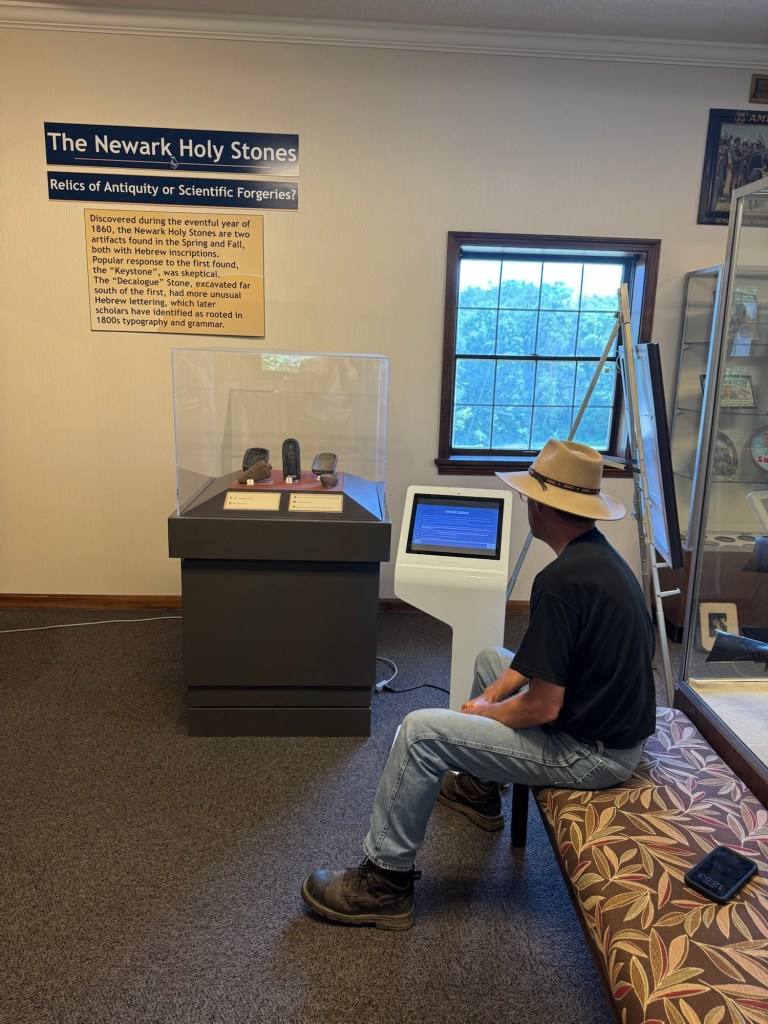
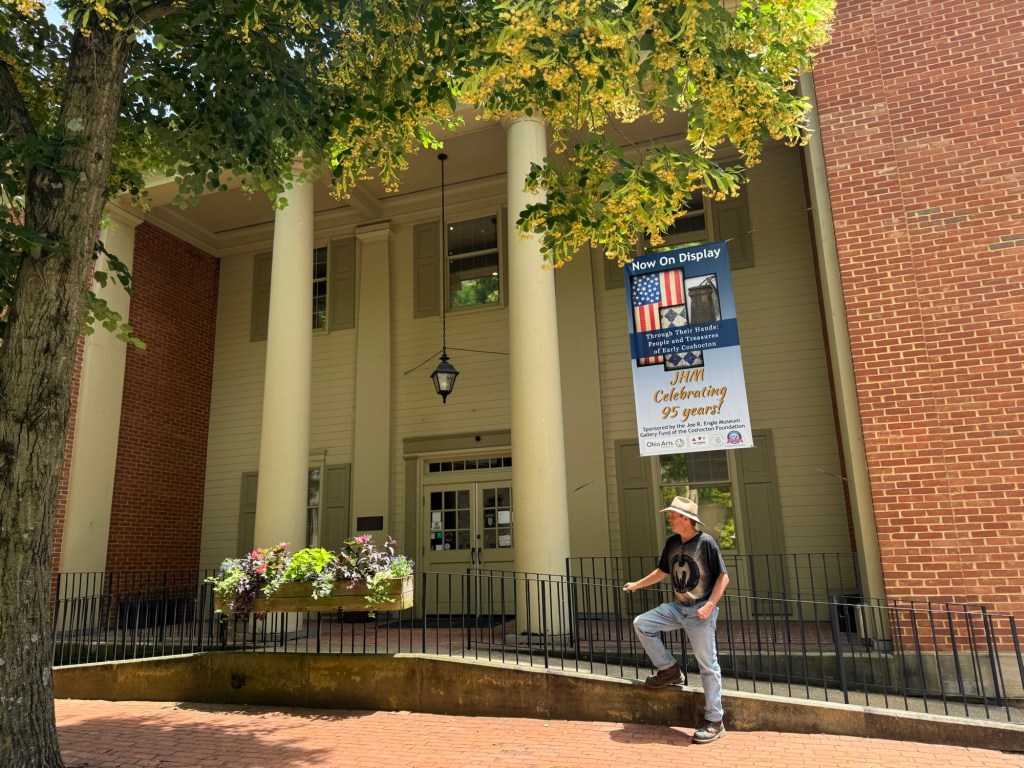
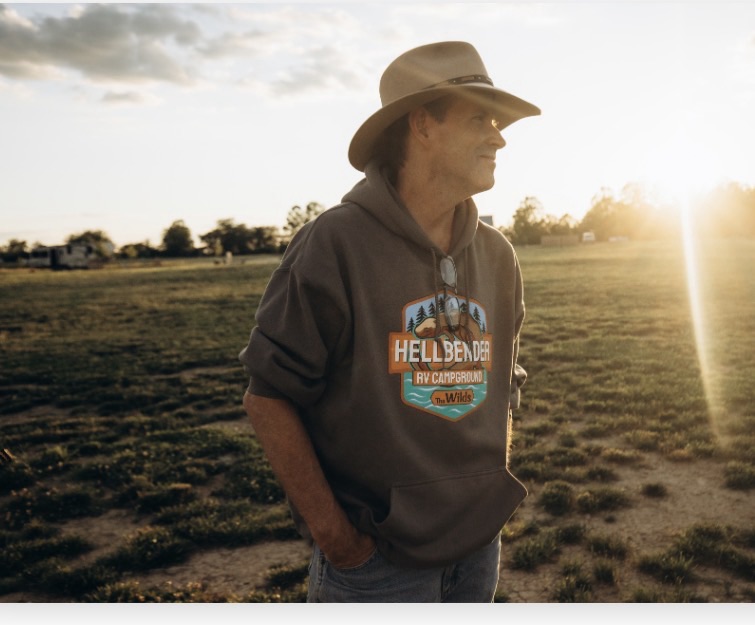
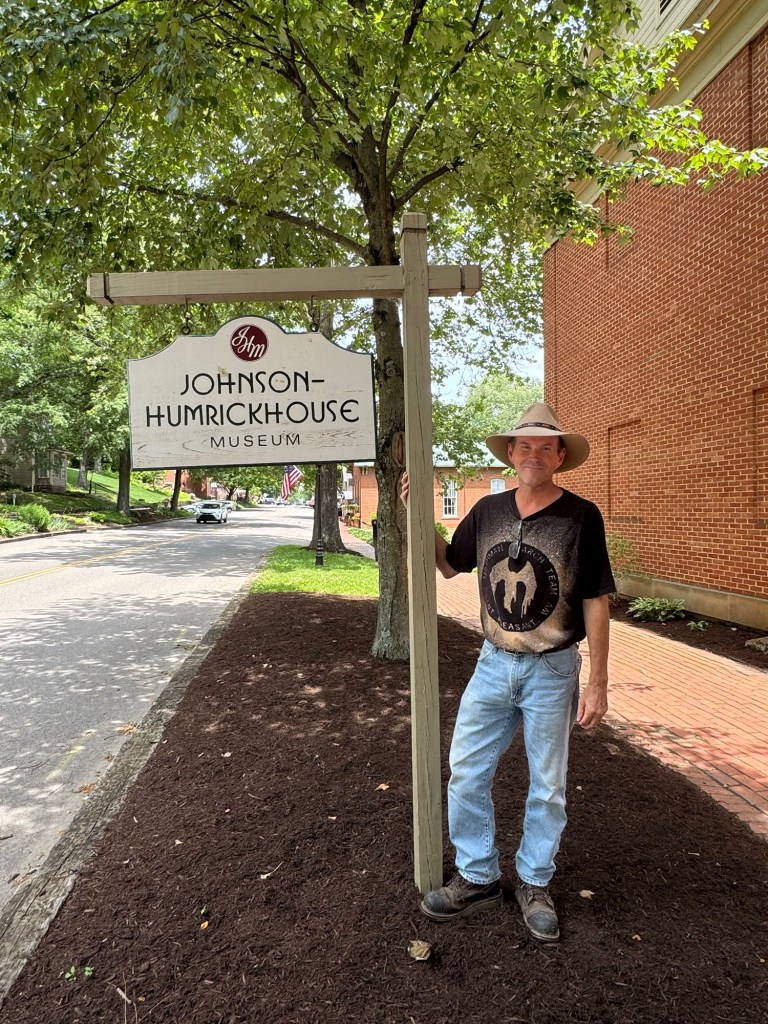
A few weeks ago, my oldest daughter took a photograph of me at the Johnson-Humrickhouse Museum in Coshocton, Ohio. I was sitting right in front of the Newark Holy Stones. She’s a professional photographer, and she knows how to capture more than just an image—she captures the moment when someone is wrestling with something big. In that photo, you can see it on my face. I didn’t want this. I didn’t ask for it. But as I sat there looking at those stones found by surveyor David Wyrick in the 1860s, considering everything I’ve seen in my travels, my reading, and my own experiences, I knew I had to push forward. This book isn’t just about ancient mounds in Ohio. It’s about the real power behind human history—what the Bible calls spiritual warfare, what modern disclosures call UAP or non-human intelligence, and how those forces have shaped politics, culture, and power on this planet for thousands of years.
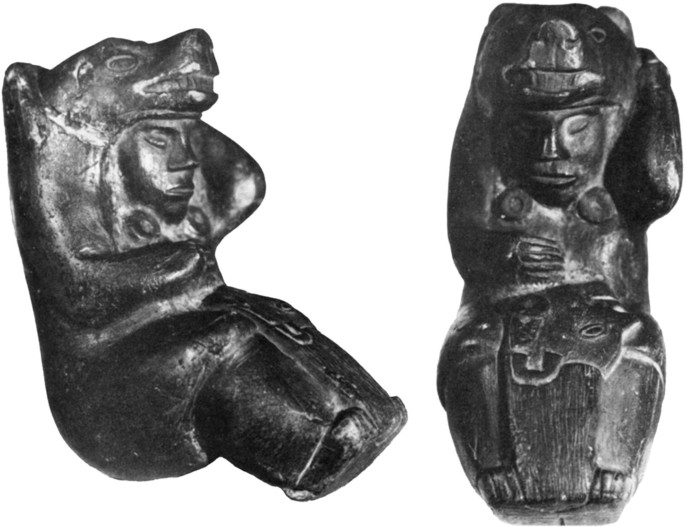
Let me start with the Shaman of Newark, that remarkable little stone figurine found in the Newark Earthworks. It’s a small carving, often called the Wray Figurine, depicting a figure in bear regalia—a bear head as a headdress, bear paws on the hands—holding a severed human head in its lap. It was discovered in 1881 near one of the burial mounds at the Great Circle. Archaeologists usually describe it as a shaman in the middle of a transformation ritual, tapping into animal spirits for power. That interpretation makes sense on one level, but it also feels like it’s missing something deeper. Why a severed head? What kind of ceremony or understanding of life, death, and power does that represent? In a culture that built some of the most sophisticated geometric earthworks in the ancient world—the Octagon, the Great Circle, the precise lunar alignments at Newark—this wasn’t primitive superstition. These people had knowledge. They had mathematics. They had a worldview that saw connections among the earth, the sky, and forces beyond the material world.
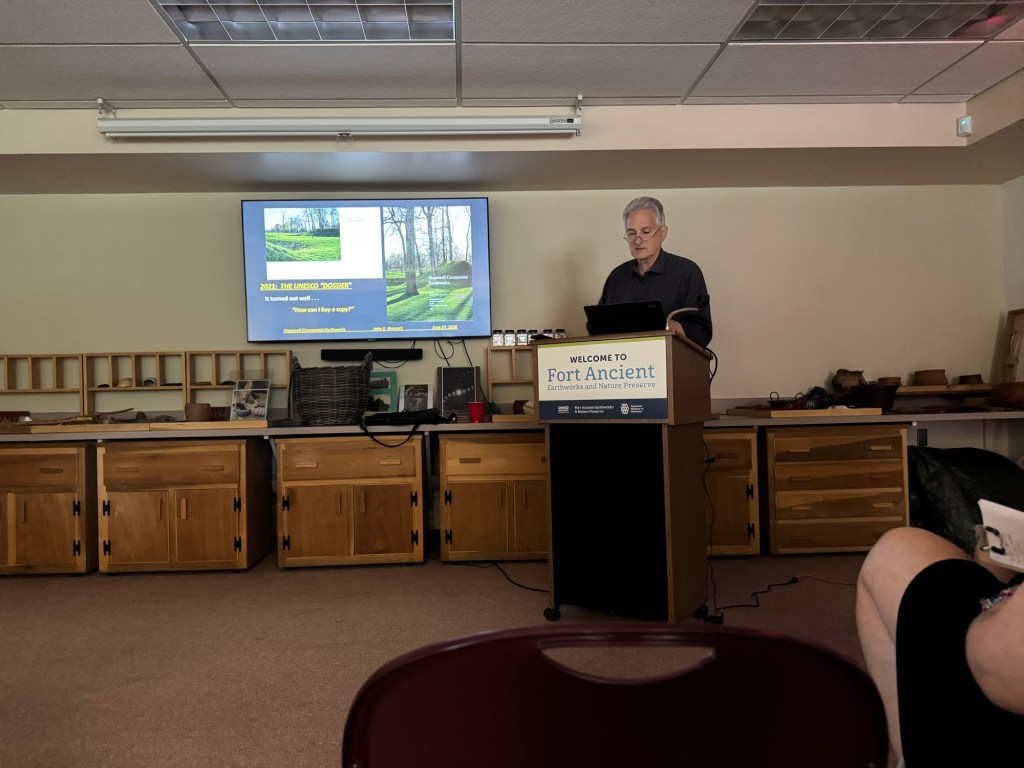
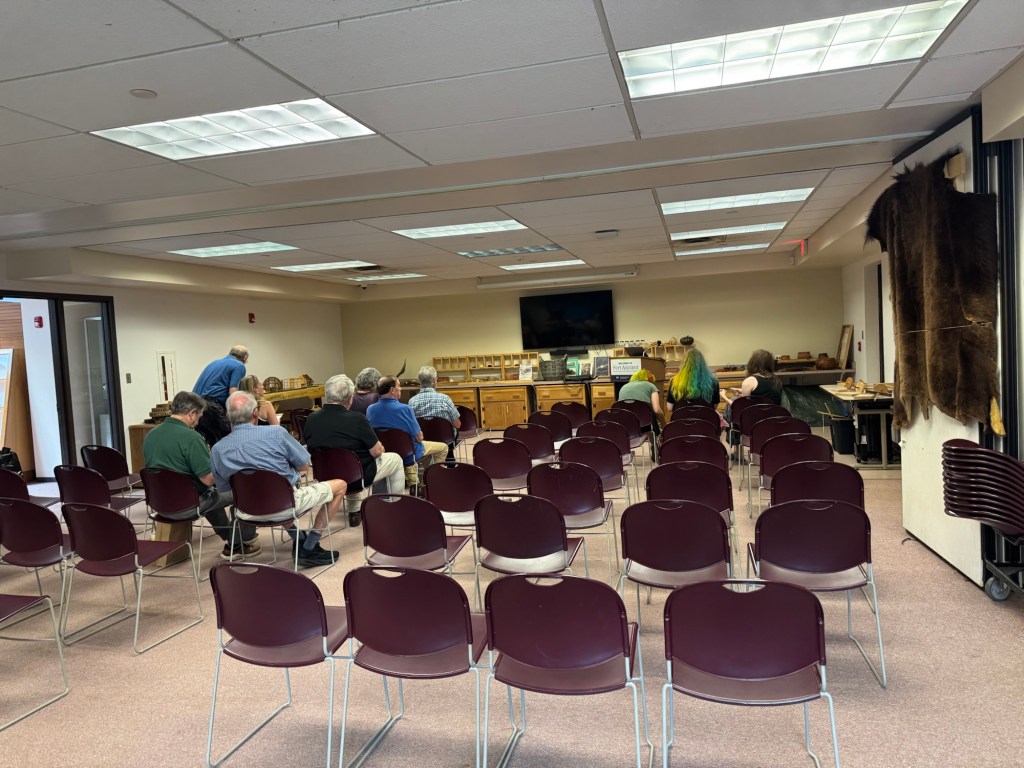
John Hancock, the architect and author who played a major role in securing the Ohio Hopewell sites’ designation as UNESCO World Heritage Sites, has done excellent work examining these mounds with fresh eyes. I met him at Fort Ancient after grabbing his book at the Newark visitors center. As a retired professor from the University of Cincinnati, he approaches the earthworks as architecture—with intentional design, astronomical alignments, and ceremonial precision. Listening to him speak and reading his travel guide Ancient Ohio, you start to see these sites not as random piles of dirt but as massive, planned expressions of a sophisticated culture. The Newark Earthworks alone cover an enormous area with geometric perfection that still impresses today. These weren’t built by people who didn’t understand the world. They were building something that reflected their understanding of cosmic order.
But here’s where it gets uncomfortable for the official narrative. Right alongside these sites, we have artifacts such as the Newark Holy Stones—the Decalogue Stone, with what appears to be a condensed version of the Ten Commandments in ancient Hebrew, the Keystone, and others found by David Wyrick in the 1860s. The mainstream view is that they are hoaxes, planted to push a pro-Christian or anti-indigenous narrative during the Civil War era. David Wyrick’s life was ruined over it; he died in 1864 from an opium overdose after being accused of fraud. The museum now frames them squarely in the context of 19th-century politics, abolitionism, and efforts to undermine Native claims to the land.
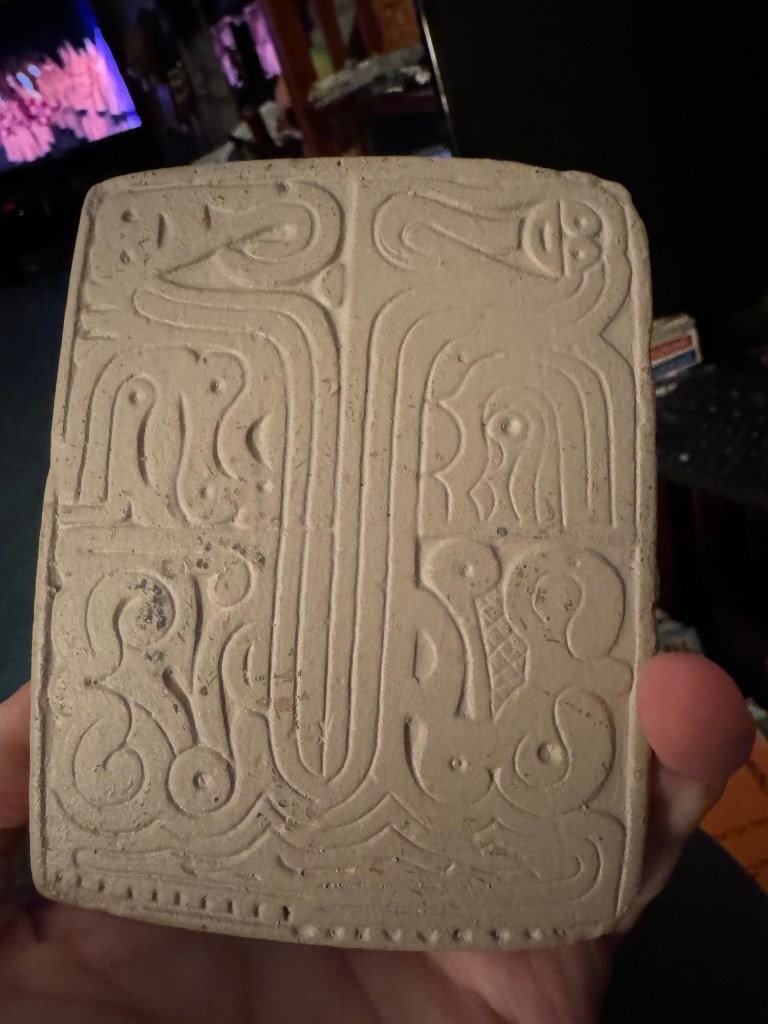
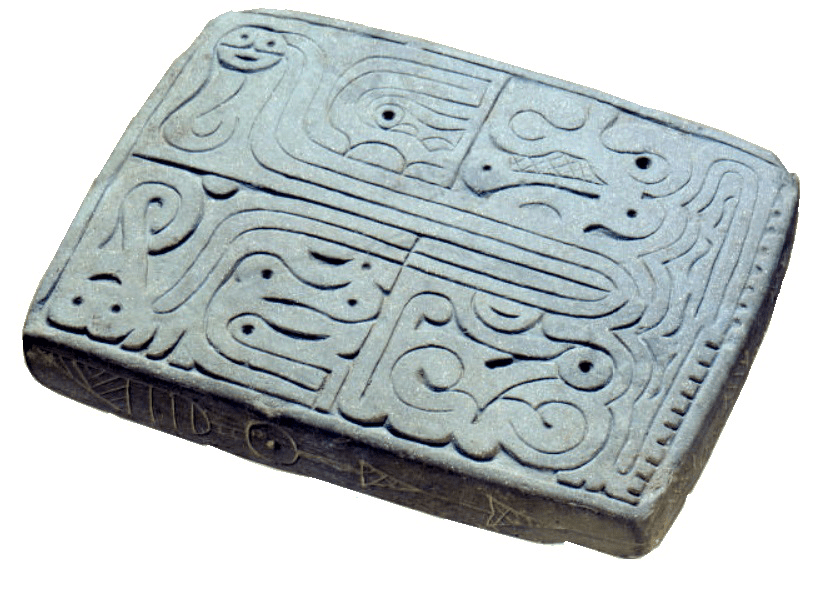
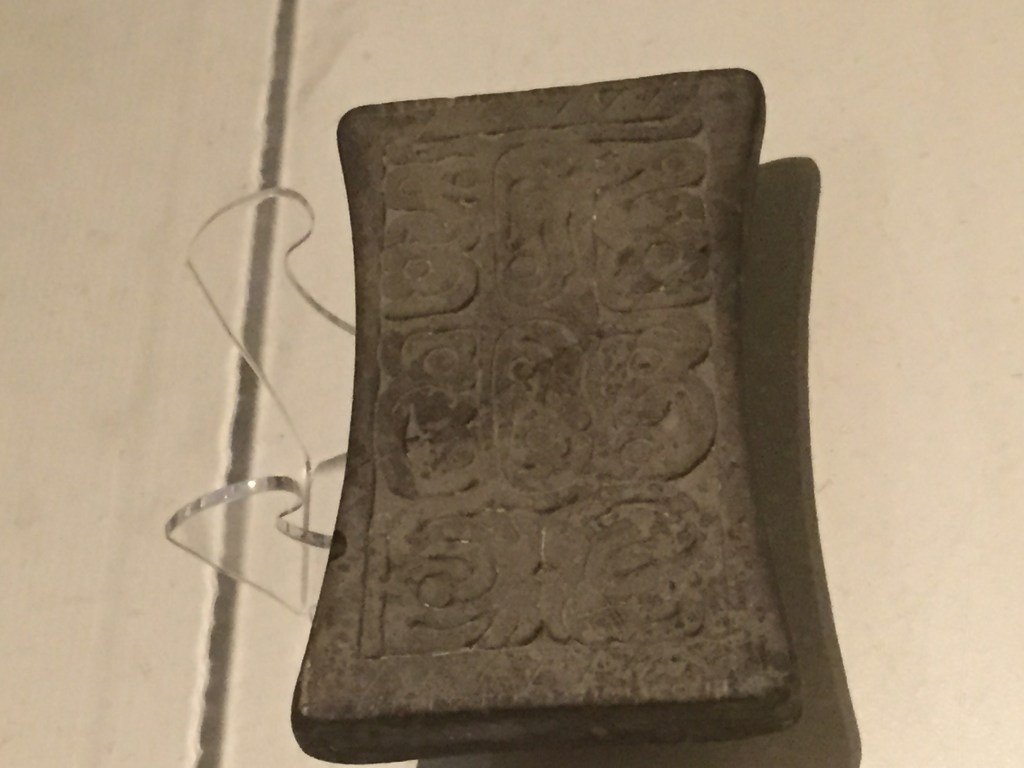
I get why that story is convenient. But it’s also too neat. Why go to all that trouble to carve intricate Hebrew inscriptions if it was just a hoax? And why do similar mysterious tablets keep showing up in Adena and Hopewell contexts—the Cincinnati Tablet, the Wilmington Tablet? The Wilmington Tablet, found in Ohio, has markings that some see as reminiscent of Olmec designs from far away in Mexico. The Cincinnati Tablet was pulled from display at the Cincinnati Museum Center, in part due to NAGPRA sensitivities. These aren’t isolated oddities. They point to long-distance travel and cultural exchange that the standard timeline struggles to explain.
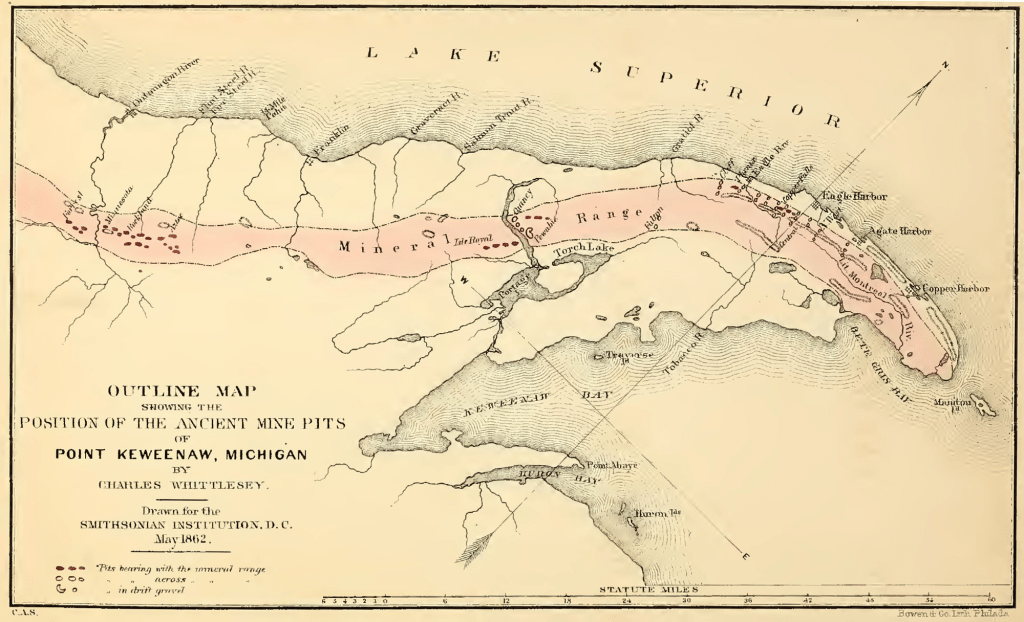
We already know the Hopewell were master traders. They brought copper from the Lake Superior mines hundreds of miles away—mines that some evidence suggests were worked as far back as 5,000 BC or earlier. They hauled obsidian from Wyoming, mica from the Appalachians. If they could do that, why is it so unthinkable that ideas, artifacts, or even people moved along the Mississippi River system and the Gulf to places like the Olmec heartland? The dismissal feels less like science and more like an effort to protect a preferred story. And that story gets even more protected when NAGPRA kicks in, repatriating remains and limiting study of artifacts that might challenge the narrative of continuous indigenous occupation by specific modern tribes.
The Shawnee, for example, have a connection to this region, but they weren’t here continuously for thousands of years. They returned to the Miami Valley in the 1700s after being displaced. Yet modern politics treats them and other tribes as the unquestioned inheritors of everything Adena and Hopewell, giving them influence over what gets displayed or studied. This isn’t respect for evidence; it’s politics overriding archaeology. We’ve talked about this before—the Windover bog people in Florida, from 8,000 years ago, whose DNA doesn’t neatly match that of later tribes. Early populations were more diverse. The idea of unbroken cultural continuity from the mounds to today’s tribes is convenient for land claims and repatriation, but the physical record tells a more complicated story.
This brings me to the bigger question at the heart of The Politics of Heaven: What are the politics of Satan? Is he a Democrat? A Republican? Or something else entirely—something that operates above and behind human parties?
I see history through the lens of spiritual warfare, as described in Ephesians 6:12—“For we wrestle not against flesh and blood, but against principalities, against powers, against the rulers of the darkness of this world, against spiritual wickedness in high places.” The ancient world was full of accounts of gods, giants, watchers, and interactions with non-human beings. The Book of Enoch, the Dead Sea Scrolls, biblical references to Nephilim—these aren’t fairy tales. They describe real influences on human civilization. The mounds, the alignments, the shamanic figures—they may reflect attempts to tap into or negotiate with those forces.
Modern UAP disclosures add another layer. The government has admitted to encounters with craft and beings that defy our physics. Reports of multiple species interacting with humanity. If that’s true—and the evidence is mounting—then humanity has never had full sovereignty. There has always been an outside influence shaping events. Satan, in the biblical sense, isn’t some cartoon devil with a pitchfork. He’s a sophisticated adversary with a political agenda: rebellion against the Creator, domination of humanity, and the perversion of God’s order. His “politics” aren’t partisan in the way we think of left versus right. They are anti-human, anti-God, and aimed at keeping us enslaved to deception, whether through pagan practices in ancient mounds, occult influences in modern culture, or centralized power structures that erode individual liberty and truth-seeking.
Look at how the narrative around these sites is managed. Inconvenient artifacts are dismissed as fakes or removed from view. Oral tradition is elevated over physical evidence under updated NAGPRA rules. The shaman figure holding a severed head gets sanitized into “spiritual transformation,” while any suggestion of deeper, darker knowledge or outside influence is shut down. Meanwhile, we celebrate the geometric precision of the earthworks—the lunar alignments at Newark are astonishing—but stop short of asking what kind of knowledge enabled that, or what spiritual purpose it served.
I’ve spent my life in aerospace, watching humanity push into space, building rockets, solving technical problems. I’ve seen model rocketry with my grandson, teaching resilience when launches fail in bad weather. That hands-on experience makes me appreciate what the ancient builders achieved. But it also makes me skeptical of stories that downplay their sophistication or attribute everything to mundane explanations while ignoring the anomalies.
My travels have taken me to many of these sites, from Newark to Fort Ancient, from the Mothman Museum in Point Pleasant to arguments with staff at the British Museum over the crystal skull (another “fake” that raises the same questions—why the effort if it’s not real?). I love museums and their gift shops. I’ve found replicas of the Wilmington Tablet there, and it always strikes me how obscure these things are to the average visitor. Yet they hold clues.
The Politics of Satan plays out in the suppression of truth. It plays out when we prioritize feelings and political reconciliation over evidence. It plays out when we assume ancient people were isolated primitives rather than connected participants in a larger cosmic drama. And it plays out today in the way power structures—whether in government, academia, or media—control what we’re allowed to question.
This book is my effort to follow the evidence wherever it leads, even when it takes me places I didn’t want to go. It’s personal. It includes family stories, like that rocket launch with my grandson on a windy day, or RV trips, or political activism in Butler County. Because truth-seeking isn’t abstract, it happens in real life, with real people, while you’re trying to live, work, and raise resilient kids in a world under unseen influences.
I don’t claim to have all the answers. But I do know this: the official narrative has too many holes. The mounds, the tablets, the shaman, the trade networks, the astronomical knowledge—they point to something more. Non-human intelligence has been here a long time. The question is whether we recognize the spiritual dimension and reclaim our sovereignty under God, or continue letting the politics of rebellion shape our future.
That’s the journey The Politics of Heaven invites you on. It’s not comfortable. But ignoring it won’t make it go away. The truth is coming fast, whether we’re ready or not.
Rich Hoffman is an author, political consultant, and strategic advisor based in Cincinnati, Ohio, and the creator of The Politics of Heaven—a unique framework that connects biblical theology, ancient history, and modern power structures to explain how moral alignment and spiritual forces shape global events. Blending real-world political experience with deep research into archaeology, UFO phenomena, and suppressed historical narratives, Hoffman offers compelling commentary on topics ranging from ancient civilizations and the Dead Sea Scrolls to modern populist movements, paranormal continuity, and leadership strategy in chaotic environments. As the author of The Gunfighter’s Guide to Business and the forthcoming Politics of Heaven, he brings a grounded yet provocative voice to media discussions, supported by firsthand experiences and a cross-disciplinary approach that bridges science, history, and theology. For interviews, speaking engagements, or expert analysis, visit richhoffmanbooks.com or contact directly via phone at 513-307-5815 or email at rhoffman@richhoffmanbooks.com. If you’ve seen the movie, Disclosure Day and want to talk about it and the implications of Presidnet Trump’s UAP disclosures, let me know and we can bring some color to your coverage. https://richhoffmanbooks.com/media-inquiries-broadcast-topics-and-contact-info/?frame-nonce=ad51e7ecba I do have a firsthand UFO encounter to discuss.
Human history may not merely be the history of humans interacting with one another. It may also be the history of humanity interacting with forms of intelligence that are perceived through altered states, religious experiences, visions, dreams, shamanic practices, meditation, ritual, and perhaps other mechanisms not yet fully understood.
A few weeks after that picture, I found myself at the Fort Ancient site, listening to a lecture by John Hancock, who had just written a couple of really good books on the Hopewell earth mounds of Ohio. After leaving the Johnson-Humrickhouse Museum, I went with my family down to the Newark earthworks and, in the gift shop at the visitor’s center, discovered the newly released book by John Hancock, Hopewell Ceremonial Earthworks, which featured UNESCO’s classification designating 8 sites in Ohio as World Heritage Sites. Hancock was the driving force behind that designation, and, I thought, his book, based on the presentation to the UNESCO committee, was really well done. So my same daughter who took that picture went with me to Fort Ancient, at the arrangement of Sarah Winningham, the assistant site superintendent at Fort Ancient, to listen to John talk about writing his books, the UNESCO submission, and his very good travel guide, Ancient Ohio. And that is the case with a lot of this book, I go to a lot of museums, everything from the Mothman Museum in Point Pleasant West Virginia, famous for its paranormal reporting, to the British Museum where I famously had a nice argument with the staff there over the crystal skull, which falls into the same kind of category as the Newark Holystones. Are they fake? And if so, why would anybody go to all the trouble? After all, the discovery of the Newark Holystones more or less destroyed the life of David Wyrick, who was a good surveyor in 1860, and it was assumed that he was a major abolitionist aligned with the Lincoln administration in the heat of the Civil War. So it was assumed that he made the stones and planted them in the famous mounds to erode any thoughts that the Indians of his time, being pushed off the land by westward expansion, wanted to decouple their claims to the ancient earthworks. Or so they say, and they are very explicit about that at the museum.
I was surprised to notice, just to the south of the Johnson-Humrickhouse Museum, a nice David Wyrick drawing of the Newark Great Circle proudly displayed on the wall of the visitors center. Wyrick died miserably in 1864 of laudanum, a commonly used painkiller that was opium based. I think it is a reach to attempt to paint David Wyrick politically, which was clearly the case at the museum’s, a very aggressive attempt to attach an indigenous people narrative to the mounds, and Wyrick was trying to spread the word of God and the immorality of slavery, which was the thrust of the Holy Stone exhibit at the Johnson-Humrickhouse Museum. It doesn’t take much of a stretch to see the academic community in the vacuum of more knowledge, driving a political narrative where it likely didn’t belong. And as I said, I noticed the fantastic book by John Hancock, newly released and displayed everywhere at Newark, The Hopewell Ceremonial Earthworks, which I grabbed quickly and read almost before leaving the mound’s site at Newark. A few weeks later, at Fort Ancient, I attended a lecture by the author John Hancock, hosted by Assistant Site Superintendent Sarah Winningham. By the time of that event at the Fort Ancient museum, I was very intrigued by some of the claims in John’s book about the famous mounds.
The Shaman of Newwark
First of all, if not for John, there is no way the Ohio mounds would have been designated UNESCO World Heritage sites, which is a very good thing because they are every bit as important as other World Heritage Sites, such as the Great Pyramids and Machu Picchu. But I wanted to talk to him about his book because he has some very interesting and unique ideas. First of all, he approached the mounds as an architect, as a retired professor from the University of Cincinnati who thought like a teacher and used to take students to Europe to see great architecture before realizing that some of the best architecture in the world was shown in the mounds of Ohio, which would eventually become in his book the eight UNISCO earthwork sites, Newark, Hopeton, High Banks, Fort Ancient, Seip, The Great Circle, and Mound City.
To say I was a little excited is an understatement as I went through their shelves at the Johnson-Humrickhouse Museum. As this book unfolds, it will become obvious that I love museums, big ones and little ones, and I love their gift shops. I have found many wonderful treasures in museum gift shops. The Johnson-Humrickhouse Museum is famous for its replica relics of the Holy Stones. But going through their shelves, they also had replicas of the actual Wilmington Tablets. I was very happy to see three of them, and I asked the cashier how I could buy one. They thought they were coasters. Obviously, the tablet replicas were too obscure for anybody to know what they were, including those working at the museum. I have some very strong thoughts about the various Adena tablets found in the mounds of what has been designated as Adena culture. There is a Cincinnati Tablet that has at times been displayed at the Cincinnati Museum Center. And of course, the Wilmington Tablet was found in Wilmington, Ohio. And I would argue that it shows interaction with the Olmecs from central Mexico, up the Mississippi River, and across the Gulf. A lot of archaeologists argue against it, but I thought that John Hancock’s new books made legitimate arguments for that kind of travel for a book published by Smithsonian Books. And that is the discussion that copper from Lake Superior did, in fact, find its way into the Hopewell sites in Ohio, which indicates very long-distance travel, Mica trade from the Appalachians, and obsidian from the Yellowstone area. I told John that I thought it took a lot of guts for him to talk about the copper mines in Lake Superior because of the conspiracy theories that have spawned on the topic. But here we were in 2026, talking to a serious person about the mounds, and we’re having a serious discussion about the Great Lakes copper trade, which has quite a story. Something called the Newberry Tablet, occasionally on display in St. Ignace, Michigan, points to trade with Mediterranean cultures, which many claim was so voluminous that it flooded the global economy with copper, starting the Bronze Age. The dates on the mines are around 8000 years old, or about 5000 BC, roughly the same as those of the Windover people of Central Florida, a topic we’ll discuss in much more detail later.
This book, The Politics of Heaven, is more than just a travel log of my extensive travels and my political and professional work in aerospace as an executive. As I asked the question at Fort Ancient, I came to ask John Hancock, the assistant superintendent of the Fort Ancient site, Sarah Winningham that I first started to think about many years ago. I really didn’t want to be that guy. At my age, I had been looking forward to a kind of retirement where I could attend events like the one where John Hancock would write great books and put a new spin on an old archaeological idea. John, being a professor of architecture, did have a fresh perspective that I always enjoyed in my youth as the Vice President of the Dan Beard Council.
As a young man, I was very happily involved in a High Adventure Explorer Post, where I became Vice President of the Dan Beard Council after a special election at the GE Evendale plant, where I gave a speech that led to my election. Later in this book, I tell the tragic story of a death that took place later in the night of that same election day, when I was scheduled to fight three guys from my school at that same time, and one of them turned up dead, and the rest of them were telling stories about me to the police that were not favorable. The events of that night led to my separation from the Dan Beard Council, and at that time, I enjoyed my exposure to those kinds of people, including academics like John Hancock and museum personalities like Sarah Winningham from the Fort Ancient complex. I have been hoping since that time that at some point I could get back into that kind of life, the High Adventure Explorer Post life I enjoyed so much in my youth. This book tells that story as I continued to travel a lot and utilize the skills I started in those explorer post experiences. Even though many of the people who volunteered for and supported Explorer Post activities were politically liberal, I hoped that someday I might be able to return to those innocent days.
But as much as I wanted to, my life had taken me into the very political world of consulting, and with high-level personalities, which made it impossible for me to sit in that Fort Ancient lecture and put my brain away. Because, like John Hancock, who approached the really good archaeology of Bradley Lepper, and others with an architectural background, I have years of experience as an aerospace executive dealing with very smart, PhD-level engineers and professionals who can be very manipulative and deceitful in root cause analysis. My wife and I had plans, and what will become clear in this book is that I have a very high regard for the archaeological publication Biblical Archaeology Review, and I really want to spend these years of my life taking their cruises on luxury liners and having archaeological discussions. And that my happiest place on earth at the moment is at the Museum of the Bible, for which my wife and I are members. I love places very passionately where scholarship and discovery come together, so believe me, I didn’t want to be that guy. I wanted to be the guy who read the books of people like John Hancock, Bradley Lepper, and Francis Pryror, and enjoyed the buffets on the cruise ships, and read lots of books. Because more than anything, my number one hobby, which started for me during those Explore Post years, was reading books. Lots and lots of books, some of my favorite which is reflected in this literary effort, are James Frazer’s The Golden Bough and James Joyce’s Finnegans Wake, and for me, it is the joy of adventure in going down rabbit holes and bringing Alice back from its hidden depths that is the most fun. And professionally, as I have thought for a long time because of my love of The Golden Bough, I think archaeology does not go far enough as a spinoff of the creation of anthropology, scientifically, and all the hard lessons I have learned through years of political work gave me extensive experience. I really wanted to attend John Hancock’s lecture for the pure enjoyment of it, because I love people like him and Sarah Winningham. Why, because I learned to really love academics in a non-political way during my very formative years of High Adventure Explorer Post membership. I had made up my mind to get all over the world, which is what this book is about. I didn’t learn what I did by just sitting at home, but by going to many places and applying the same skills that worked very well for me professionally, to some really obscure ideas. So I came to the lecture with a question I had thought of while reading John Hancock’s marvelous books.
I thought John’s lecture on the Hopewell Ceremonial Earthworks was fantastic, very well researched, and extremely well put together. No wonder UNESCO moved to designate the 8 earthworks sites as World Heritage Sites officially. And even if the UNESCO people are extremely liberal, politically, and were very much against the United States during the first Trump presidential term, which I know a lot about. I finish this book with a visit to the White House. I tend to really enjoy all efforts that seek to preserve the past, regardless of politics. In the pages to come, I am glowingly supportive of organizations like English Heritage and the fantastic efforts of The Ohio History Connection, whose headquarters is at the Ohio History Center in Columbus, where I first visited on an Explorer Post field trip many years ago. The main purpose of Explorer Post membership is to expose young people to high-adventure career opportunities. Which was the subject of my speech at GE to the other explorer groups of Cincinnati and big personalities such as Lee Iacocca and Jack Welch, and how they elected me, even as a very young person, to Vice President of the Dan Beard Council. So, since I had my question ready for John’s lecture, I decided to enjoy the event and the educational publications from The Ohio History Connection. I remember that day with the Explorer Post visiting the museum that would become The Ohio History Connection. I got the feeling that everyone was encouraging me to grow up and become the troublemaker who would challenge their assumptions. After all, why have a High Adventure Explorer Post in any way but to raise young people to go out into the world to challenge everything, if not for gaining wealth and notoriety, but for the spirit of adventure itself.
This is the kind of thing I’d rather be doing in life. My idea of a good time.
I was always the rebel of the group, and even if I was naturally very talented, my spirit of adventure got me and everyone who followed me into a lot of trouble. And sometimes people did lose their lives, which is why my time as Vice President of the Dan Beard Council was short-lived. But I got that office at a very young age because a lot of people were hoping I would be the guy who would shake things up in ways they instinctively knew needed to happen. And as I held up my hand at the end of John’s lecture, I asked my question about the relic on display at the Ohio History Center: the Shaman of Newark. In his big book, the Hopewell Ceremonial Earthworks, John very cleverly found a way to show the relic as a digital replica illustrated by Talon Silverhorn of the Eastern Shawnee. But in his travel guide, Ancient Ohio, he says that he could talk about the famous Hopewell relic but not show it so as not to disrespect Indian tribes, which set up another question I had about NAGPRA in general, which I directed at Sarah, who was in the back of the room, regarding compliance with that 1990 Democrat proposal to return to all the Indian tribes of North America the relics of their ancestors. They are running a nice museum at Fort Ancient, and John had been very clever in getting Indian tribes to contribute artwork and replicas for his books in very respectful ways, which is unusual for these kinds of projects. Before going to the Fort Ancient lecture, my wife and I had just returned from the Smithsonian in Washington, D.C., and I had a great time there. A lot of the kind of people I like these days have very little trust in the Smithsonian and the much-talked-about cover-up of the ancient giants who were reported to have been found in these very Ohio Mounds. John’s book does not address those, but he and I did talk about the controversies. I told him I thought it was remarkable that he even mentioned the copper mines of Lake Superior in his book, because, as the story goes, those copper mines dating to 5000 BC were so prolific that they caused a global economic boom and were shipped to Europe by the Minoans of Crete. That proof of that trading exchange is on what they call the Newberry tablet, which can be found sometimes in St. Ignace, in Upper Michigan. As I said to John, this conspiracy stuff is a tough line to walk. And as I said it, I looked back at the audience, and almost everyone had a grin on their face because I was saying the stuff that is supposed to be unsaid, but they all wanted to say it.
The Relic of the Shaman of Newark, I think, is a remarkable admission, which I will expand on during the grand adventure for which this book is, a journey around the world and across vast spans of time with conclusive evidence at the level of speculation awaiting the hard evidence of good archaeology. The relic itself depicts a shaman in the process of turning into a bear and is holding in his lap the severed head of a long-haired human. I knew about the relic because it was on display at the Columbus Museum, as was the Wilmington Tablet. So, as the Johnson-Humrickhouse Museum operators have done a great job getting into the business of making relics of controversial artifacts, like the Newark Holystones, but seeing that copy of the Wilmington Tablet reminded me of the Shaman of Newark, as that topic had been on my mind regarding the Newark Earthworks. And this was the cause of my anxiety, which my daughter captured so well as I was distraught over what it all led to.
I asked the question: why were the Indian tribes reclaiming all the artifacts that archaeologists had found, and even destroying them by burying them again? And as John explained, he had just spent a lot of time speaking with various Indian tribes to coordinate with them in writing his great book on how to show who the Hopewell people were by replicating them, without the magic of their actual image tainting them with haunted reverence. So here is the problem. Two things can’t both be true, here we had a political movement pushed by NAGPRA, which said that we had to give back all the evidence of our discovery because the relics of the Indigenous people were magical and had power that had to be returned to the ground, but at the same time we were supposed to study these Indigenous people with evidence to understand them. So I turned around from my seat and addressed the back of the room. I asked, “Was the NAGPRA pressure political or coming from the tribes themselves?” Because I will talk about this extensively in this book, the 8,000-year-old, well-preserved people of Windover, buried in bogs in Florida, are genetically dated as older than any known North American Indian Tribe and were actually around during the period of the copper mines of Lake Superior. So how can we study this history and properly respect it if NAGPRA said we had to empty all the museums of Indian relics and give them back to tribes we were calling Indigenous people by Democrat legislation that was making a claim that America should have never been settled or turned into a country because it happened at the expense of these miraculous Indigenous people?
And here’s the problem: the Shaman of Newark shows clearly the extent of the belief of those people of their period, which, to my eyes, were mimicking the beliefs of the Canaanite gods that Yahweh was so enraged about. And the political statement by Yahweh to destroy all the gods of Canaan and destroy the people of that land, emphatically. The beliefs of the people of Newark and the other Hopewell sites needed to be studied much more so that evidence could drive our conclusions. Like the situation in Cahokia, just outside St Louis, here we had an Indian relic in the Shaman of Newark that had a decapitated head in his lap, showing the typical ritual sacrifice of life for the benefit of communicating with spiritual entities. And with that, under NAGPRA, which bless her heart, young Sarah Winningham was preparing the Fort Ancient museum to be fully compliant with. The evidence was right there, begging us to ask the next layer of questions with really great minds and researchers, like John Hancock and great archaeologists like Bradley Lepper, who should be applying great science to these magnificent archaeological monuments. Instead, we are getting rid of the evidence and then telling the world that everything is a conspiracy theory because there is no evidence to support it. This book is about the evidence discovered through vast and sometimes dangerous expeditions observed over my lifetime.
In these pages, there is extensive study of the impact of shamans on a culture over time and of their common role as vehicles of spirit-world interaction. I was very impressed that John Hancock put an image of the Shaman of Newark in Hopewell Ceremonial Earthworks. But he did not include the same image in his Ancient Ohio traveler’s guide, even though he did talk about it. The reason is tribal acceptance and a NAGPRA compliance issue, and I think it’s the key to the whole enterprise. My question is, what made Yahweh listen to Satan to punish Job, and why wouldn’t Satan work through many shamans over time and space to whisper bad things for their own political needs to gullible recipients, whether that be Job or God himself as head of the Divine Council? Just because the Bible recorded an occurrence, why wouldn’t there be many more undocumented occurrences just as bad or worse than what happened to Job? The presence of shaman activity among the Hopewell people, complete with a severed head in its lap, does not point to peaceful indigenous people being used by a modern 1619 Project into claiming them as vehicles of destruction, invalidating the creation of the United States in the first place. Yes, I think David Wyrick may have planted the stones for all the reasons he was accused of. But it destroyed him socially, and it looks like the work of the opium present in his painkillers, giving his mind access to similar satans as those that tempted God in the Book of Job. I think there is another layer to the story, and it centers on how we perceive consciousness.
In the chapters ahead, I explore the nature of remote viewing as we have come to know it and test some assumptions on the known psychics Dolores Cannon and Edgar Cayce, and even deeper into the MK Ultra Program, so well known around the Charlie Manson murders. And why wouldn’t we pay attention to that kind of psychic reporting when so many biblical characters were telling of occurrences where they directly communicated with gods and would sacrifice to them? And here in Newark, Ohio, we have an Indian relic of a Newark shaman that depicts a severed head and a shamanic transformation from human to bear, and we are supposed to, under the NAGPRA law, put that relic back in the ground and destroy its magical properties. And why do the Indians believe these relics have magical properties? How are we scientifically talking about magic in objects and saying it with a straight face, then calling people like me pseudoscientists or, at best, contemplators of conspiracy?
Let’s take what we know, that Satan was reported to manipulate God in the Book of Job, and that God reacted to it in a way that was very hard on Job who was a good man doing all the good things a human being was supposed to be doing. Why did Satan want to bring harm to such a good persont? Just because, Satan was evil? What does that mean and what’s the next layer of understanding? That’s the kind of question I explore in the chapters to come. What are the political motivations of spirit world malcontents, and how can we prepare ourselves as a human culture from their interdimensional tyranny? And if we think that is wild, then how can we say that indigenous people have ancient relics that are magical and should be destroyed and put back in the ground and studied? Yet we are supposed to take the word of the experts for it completely and “trust the science.” As we were expected to do with Covid. So here we had a problem, we are supposed to ignore all the evidence and give it back to people who had no genetic claim to the objects, in ways we still don’t understand, we don’t know who the Hopewell and Adena people were, we don’t know who mined the Lake Superior copper mines, we don’t know who the Windover people were, yet we are supposed to give all these treasures back to the newest people living on the block, without studying what they left behind. The Shaman of Newark, I think, is one of the most important parts of John Hancock’s book, as he actually managed to put an image of it in the book before the purge of NAGPRA forced it into obscurity. But how much else has been shoved away into a lack of study, and how can we claim to know anything about them?
A lot to think about
I didn’t mean to, but I had a UFO experience that I talk about in this book also. I would attribute it to big government programs and to a psychic reaction to me personally, which is something that dominating personality types seem to have been able to do over many years. But who did they speak with, or rather, who answered? I have seen it for myself. I think non-human intelligence is always working with us, around us, through us, and for its own political motivations. But what are those politics? We might understand the Ohio governor’s race between Amy Acton and Vivek Ramaswamy through the political lens of Democrats versus Republicans. And that was certainly the case between many researchers and me. Overwhelmingly, college professors tend to be Democrats, as are Hollywood actors, for very good and definable reasons. Productive capitalists might otherwise be said to be Republicans. But what is the politics of Satan besides calling him evil? Evil doesn’t tell the story nearly enough. And what would be the politics of spiritual beings, as the Indians say, the Great Spirit? Perhaps they are talking about the same God we all are. Or perhaps not, perhaps their god is just another version of Baal, Lucifer, Moloch, or Satan. Yet, here we have in the Shaman of Newark a figure involved in human sacrifice, as many of the Mississippian Mound cultures did, Cahokia included, and nobody wants to talk about it? NAGPRA says we are supposed to suspend belief and surrender our opinions to the experts who have no idea what they are talking about.
I walked out of the Steven Spielberg film Disclosure Day, telling my wife that everything had changed. It’s not that the movie was jaw-droppingly good; it was just a movie. But it gave permission, for a whole bunch of political reasons, to talk about this subject differently than at any time in the past. The evidence, including the case of David Wyrick, and we will talk about evidence a lot in the murder cases I have been on, where I was the top cop of Butler County, Ohio, for a very treasured period. Do demons and spiritual characters talk to people and soothsay them into self-destruction? Yes, emphatically, over and over again, and I think when it came to David Wyrick, he needed public acceptance that some demonic force wanted him contained and destroyed. He was an abolitionist who used his prominent social position as a mason to help spread the message of ending slavery. And thought his opinion-based painkillers, a Satan-like character probably had his ear right up to the day of his death under the influence of that same painkiller. But why, if you were an alien from a Type One civilization, would you try to derail an ant colony that was interrupting your version of a picnic? If the creation of America was divinely inspired, as the Bible clearly indicates, wouldn’t that be good for the human race? Yet perhaps god was at war with all the other gods, and we are their chess pieces. I’m inclined to that latter assumption, and the evidence certainly leans in that direction as I have experienced it.
At the September 9th 2025, Restoring Public Trust Through UAP Transparency and Whistleblower Protection hearing with the House Oversight Task Force, there were some very unusual things said on the very public record by George Knapp, Jeffry Nuccetlli, Dylan Borlan, and Alexandro Wiggins that have slowly taken the idea of UFO talk from conspiracy to actual scientific study. We have open talk now that up to four species of non-human intelligence are interacting openly with the world’s governments. And back to the movie Disclosure Day by Steven Spielberg: as a work of art, it opens the box to talk about these things in ways we never have before, because of the compelling evidence emerging from these testimonies. The movie is clearly fictional and meant to be a popcorn popper. But there is a level of seriousness to it that hints at something much larger: how do these non-human intelligence types communicate with humans now and in the past, perhaps even the deep past? I would say to all the scientists of the Smithsonian that objects like the Shaman of Newark and understanding how the complex mathematics in the Newark Earthworks were given to those indigenous people in the first place is all that matters. Based on observation, with the thin proof that we have, the Sumerian God Nisaba was whispering geometry to the people of the Hopewell period, and probably longer. Or the Hindu goddess Lakshmi. Why not you say? Are we going to be fools and suggest that Sumerian Gods were regional, and could not speak to people on the other side of the world as easily as someone in a Sumerian temple under drug influence? Why would we assume that? The first question is understanding that. And how did a society that did not have any central government or modern technology such as TV or radio project those same mathematics, without flaw, from the Newark earthworks to Hopton, over 60 miles to the south, to Mound City, Seip, High Bank, and Fort Ancient, locations all over Ohio? They had no paper that we know of, no Wal-Mart, no way to say that this, this, and this is important. Let’s build massive earthworks that take millions of labor-hours each to complete, and do so to perfection, without any centralized corporation or government to keep everyone focused. And modern science calls it a miracle of tribal knowledge. I call it communication through shaman over vast distances, all over the earth, by non-human intelligence trying to manipulate the human race towards its own doom and destruction to fulfill the political needs of the rebels against God.
And to further confirm that suspicion, many of these Hopewell sites are associated with the very ancient Teays River, which flowed up the Scioto over 2 million years ago, well before the last Ice Age. The Teays and its tributaries touched many of the Hopewell sites, indicating a reverence for those spots on the land by an intelligence observing human beings over a vast span of time and connecting those locations to celestial alignments. And that relevance is important in knowing that the Great Serpent Mound was built on the crater of an impact crater from 300 million years ago. How would indigenous people know that? And even stranger, the Fort Hill complex is built within the impact crater zone as well. Out of all the places in North America, why would anybody, and nobody really knows who they are, build these big, significant sites near geologic features that were millions of years old? Why would they know anything about any of it with such precise mathematics? How would that information ever be obtained in the first place, let alone passed along to these construction sites involving so many years and generations of labor and production? It’s hard to build a McDonald’s consistently, even with all the modern tools we have now. I would propose that it was the shaman with drug use who served as the primary communication device. And with that, a relationship with Non-Human Intelligence that we are finally admitting to, that has always been a part of the human experience.
Yes, the exhibit at the great Johnson-Humrickhouse Museum was very political, but not in the way that I think they intended. I saw at the museum an attempt to understand these great mysteries with replicas of the relics themselves. Again, that’s where I found a great copy of the Wilmington Tablet, along with the Holy Stones of Newark. And we also know of the Shaman of Newark, so there were relics that depicted the same kind of human sacrifice that we know came from central Mexico, Mirador, Teotihuacan, and Cholula, in a time when many people didn’t think cultures were talking to each other. They appear, as the evidence of the relics shows, to have been doing so. Even in the Smithsonian views these days by John Hancock, we know that the Hopewell people were traveling many thousands of miles to obtain copper, obsidian, and mica, and likely traded with the Olmecs of Tabasco, Mexico, and affiliated cultures, which had their writing showing up in the Wilmington Tablet and the Cincinnati Tablet. So the political motivations of David Wyrick are not as simple as has been attempted to be set out.
As a surveyor of these great Indian mounds, and confronted with vast evil, as the Civil War over slavery unleashed itself, and studying the remains of these ancient cultures, likely the same voices that whispered in the ear of the Shaman of Newark were whispering in the ear of David Wyrick and his opium painkillers. And was it Moses who wrote the Book of Job and discussed what Satan had said to whom and for what reason? The same guy who talked to god on a mountaintop and came back 40 days later with the Ten Commandments, and spoke to a burning bush about freeing the Jewish people from the confines of Egyptian polytheism. Should we ignore that the mound complex at Portsmith, Ohio has a very similar path-of-souls ritual to the one the Egyptians had for their preserved dead? And that some of their paths actually go through the Ohio River, showing a reverence for what was there before even the Ohio River flowed through the area, when the Teays River instead flowed to the north. And we could say with just as much authority that the mound sites were restored during the Hopewell period rather than constructed anew. That they were marking spots on the ground, viewed from the air, to very ancient landmarks, for reasons for which we do not have enough evidence to speculate. Yet they are there, and the evidence is begging to be found and analyzed. And for the same political reasons that Satan tried to trick God into punishing Job, we have society punishing David Wyrick for daring to oppose slavery, or wanting to use the Ten Commandments as a hook into North American migration by Western civilization, bringing with it a religion of forgiveness instead of appeasement to some mysterious gods who demand decapitated human heads in the lap of their shaman before providing information.
No, I didn’t want to be that guy, but sitting in front of the Newark Holystones at the Johnson-Humrickhouse Museum and seeing the exhibit they had there, and noticing the quick tone to dismiss everything as a hoax, my life flashed before me in a way I would have rather had it not. A deception was at play; Satan himself was trying to throw everyone off the scent. And when theologians contemplate a single satan in the Book of Job, they miss the obvious problem that there are likely thousands of them always whispering in someone’s ear, maybe God himself, or David Wyrick laced out on painkillers, or the Shaman of Newark. And that it didn’t take much to communicate, a spiritual terrorist from the land of Cannon could have been speaking the same message of sacrifice to some headhunter of the Adena culture depicted as a severed head in Hopewell mounds at the same time that they were whispering to Nebuchadnezzar to destroy Solomon’s First Temple, and to the Romans during the Second Temple, to destroy the vessels of God himself to make the world ripe for an overthrow, to the political objectives of the conspirators against God’s creations. And the Essenes were turned into the channel, and wrote about it in their Dead Sea Scrolls. I had wished that the Johnson-Humrickhouse Museum exhibit, located well north of Newark, was less obvious and more scientifically grounded. But the assumption was that Wyrick was an abolitionist living among evil people supporting the slavery of other people, more of that reference to the 1619 Project, the unjust settlement of indigenous land. And as you read at the Holy Stone Exhibit, you can almost hear the whispers of Satan himself, showing Wyrick to be invalidated, corrupting future scientists in their assumptions, and making a case for not even founding America at all so the Christian premise of eliminating human sacrifice would be destroyed and current cultures continue the practice of honoring the spirit world with the blood of the living. And I didn’t want to be the guy who reported what was hard to hear. That Satan was a non-human intelligence that has been doing all this manipulating since before the Teays River flowed north along the Scioto River, then turned left near present-day Columbus and headed out to Indiana along the present-day I-70 corridor.
If you really looked closely enough and blocked out the contemporary noise, you could hear the insecurities of Satan, hoping to get away with the deception of many lifetimes. Humans need to appease what they thought of as their superiors, their gods, the malcontents that UAP whistleblowers are now revealing in the light of day in the Trump administration very hard truths. It’s one thing to explain modern UFOs and their physics-defying characteristics, and another to explain the mysterious occurrences and hauntings at the Skinwalker ranch. Yes, I talk a lot about hauntings, paranormal occurrences, Bigfoot, UFOs, and the kind of politics that will make your skin crawl in the pages ahead. But it’s also a marvelous adventure that I share so that you don’t have to go through the pain firsthand. And perhaps, after a lot of work, we’ll gather up enough evidence to change our perspective. But in The Politics of Heaven, the ruse is in what isn’t said, not what is actually revealed. Satan never tells God what he’s up to in trying to get him to turn against the very good Job. But when we look at the human race, we see a lot of Jobs, David Wyrick being one of them. Good people are crushed by their relationships with others who are otherwise motivated toward evil. But what is evil anyway when you have the Shaman of Newark holding the severed head of an obvious victim, that shaman would use as currency to buy information from the spirit world. The great spirit, or Satan himself. We aren’t supposed to ask the question, only to accept that the experts told us what to think and when to think it. But I didn’t want to be that guy. Sometimes, I wish I could be a lot of other things. But what is the adventure in that? And in the adventure are the answers, the real answers if we dare to look.
Rich Hoffman is an author, political consultant, and strategic advisor based in Cincinnati, Ohio, and the creator of The Politics of Heaven—a unique framework that connects biblical theology, ancient history, and modern power structures to explain how moral alignment and spiritual forces shape global events. Blending real-world political experience with deep research into archaeology, UFO phenomena, and suppressed historical narratives, Hoffman offers compelling commentary on topics ranging from ancient civilizations and the Dead Sea Scrolls to modern populist movements, paranormal continuity, and leadership strategy in chaotic environments. As the author of The Gunfighter’s Guide to Business and the forthcoming Politics of Heaven, he brings a grounded yet provocative voice to media discussions, supported by firsthand experiences and a cross-disciplinary approach that bridges science, history, and theology. For interviews, speaking engagements, or expert analysis, visit richhoffmanbooks.com or contact directly via phone at 513-307-5815 or email at rhoffman@richhoffmanbooks.com. If you’ve seen the movie, Disclosure Day and want to talk about it and the implications of Presidnet Trump’s UAP disclosures, let me know and we can bring some color to your coverage. https://richhoffmanbooks.com/media-inquiries-broadcast-topics-and-contact-info/?frame-nonce=ad51e7ecba I do have a firsthand UFO encounter to discuss.
I wrote The Gunfighter’s Guide to Business back in 2021 because I had grown weary of hearing about Japanese warrior codes every time someone discussed Lean manufacturing or the Toyota Production System. Those approaches contain real value—Toyota’s emphasis on eliminating waste, Just-in-Time production, and continuous improvement through Kaizen has influenced industries worldwide. But as an American who spent decades in manufacturing and aerospace, applying those lessons while teaching teams how to solve problems on the fly, I felt our culture needed its own framework. We have our own warrior tradition, one rooted in self-reliance, quick decision-making under pressure, and the willingness to face risk head-on. That is the spirit of the gunfighter—the fast-draw competitor who practices until shooting from the hip becomes an expression of hard-won skill and confidence rather than recklessness.
The book is not aimed at legacy corporations seeking incremental tweaks to maintain the status quo. It is for entrepreneurs and individuals who want to build something real in a world full of obstacles. I drew heavily from the sport of fast draw, which I have long seen as a perfect metaphor for high-stakes business: when you are truly skilled, you can act decisively and accurately without hesitation. Chapters explore placing bets wisely, managing risk, and understanding that real success often means operating as a “ghost”—staying agile and unencumbered by titles, corner offices, or attachments that others can target in an effort to gain control over you.
This year, 2026, has brought several moments that reminded me why the message matters. People have approached me in everyday places like Costco in Liberty Township—recognizing me from the blog, videos, or the book itself. They want to talk, ask for a signature, or share how the ideas resonated with them. One particularly memorable encounter came from the CEO of a large company a few states away who had read the book and flew in specifically to find me. He made a substantial offer: come consult for several months, coach his workforce on the gunfighter mindset, and help reshape the culture. It was the kind of money that would make most people in my position jump with enthusiasm. I said no.
I critique consultants throughout the book, and I stand by that. Not because every single one is worthless, but because too many function as the “dandies” or “bounty hunters” in Clint Eastwood’s Unforgiven—profiting from the legends and hard work of others without ever stepping into the real fight themselves. The gunfighters are the ones who face the target, put their lives or reputations on the line, and deliver results. I have always tried to live as the latter. Turning down that opportunity was not about rejecting money; it was about staying consistent with the principles I laid out. I am not racing to stuff a retirement account before time runs out. I have a different measure of success, one shaped by decades of experience and a marriage built on integrity.
That integrity traces back to a moment early in my relationship with my wife, nearly forty years ago. I was selling cars as a young man—good at it, making strong commissions in a cutthroat environment. One Saturday, I had an older, retired customer ready to buy a truck, paying $5,000 over sticker price, all cash. The finance department balked at the markup, but the sales manager pushed me to close it anyway. I had the man’s keys, had built genuine trust over hours of conversation, and convinced him to walk across the street to withdraw the cash. My future wife showed up at the lot right as I was finishing the deal. I thought she would be impressed by the big sale. Instead, she was deeply upset that I had taken advantage of an honest man. She came from a different background—modeling, country club circles—and had seen plenty of “successful” men who measured life by mansions, boats, and flashy deals. She wanted none of it. She told me it was the Corvette I was about to buy or her; she would not marry someone who operated that way. I walked the deal back, took the ethical path, and my commission was cut in half. I left that job soon after. We have been married ever since, and that decision remains one of the best of my life. It taught me that real leverage comes from living in a way your spouse and family can respect—not from cornering every last dollar or using dollars to gain control of people.
These same values run through the book and my daily work. I have encountered “safety tyrants” and sandbaggers in manufacturing facilities—people who hide behind compliance rules, slow output to protect their own power or laziness, and attack anyone who pushes for genuine improvement. I have seen engineers and managers who opposed efficiency gains, only for the pressure of their own schemes to catch up with them later. I do not celebrate their misfortunes, but I also do not mourn those who tried to destroy my teams or me. When you face real opposition in business—or life—you square your shoulders like Andrew Jackson in his duels or Theodore Roosevelt finishing a speech with a bullet in his chest. You do not cry over the grave of someone who would have put you in one. Forgiveness in the theological sense is between them and God; my job is to defend what matters and keep moving forward.
This mindset is not just for business. It applies to politics, culture, and how we build any healthy organization or society. Capitalism, properly understood, rewards those willing to initiate, risk, and deliver—not the parasites who live off others’ efforts. I see parallels in today’s corporate world and broader culture: too much fear disguised as safety, too many incentives to sandbag rather than excel. SpaceX stands out as a counterexample—lean, confident, and willing to accept calculated risk in pursuit of big goals. That spirit is what America’s economy needs more of in the years ahead, especially as entrepreneurs step up in the current environment.
I am not closed to opportunities, and I am grateful when people find value in the work. Some have bought copies in bulk to share with their teams. The book was written so readers can engage with the ideas independently—the bullet-point summaries at the end of each chapter help reinforce the key lessons without needing me in the room. Royalties still arrive occasionally, and my wife and I enjoy turning a good check into a nice dinner. That feels honest and sustainable. Turning a large consulting gig into another form of selling out would betray the gunfighter ethos I wrote about.
The stories and principles in The Gunfighter’s Guide to Business come from real experience—car lots, stamping plants, aerospace programs, and the hard lessons learned alongside a supportive wife who keeps me honest. They are meant for those with the guts to start companies, face opposition, and build something lasting. If you have not read it, I believe you will find it useful, whether for your own ventures or simply understanding how to navigate a world full of safety tyrants and bounty hunters. The gunfighter spirit is not about recklessness; it is about skill, ethics, and the courage to act when others hide behind rules. That is the skeleton key I aimed to offer to Western civilization and American enterprise. I still carry it with me every day and live by every word. Many are finding those words very valuable, and I’m glad to hear it. Thanks for the opportunities. But to me, opportunities are measured in more than just money, even though this offer was for a lot of it. The gunfighter still has to take bullets and to bite bullets, and be willing to deliver them.
Footnotes
[^1]: For deeper context on the Toyota Production System and its philosophical roots, see the official Toyota documentation and historical analyses of Lean principles.
[^2]: The fast-draw elements tie directly into the book’s core metaphor for high-skill, decisive action in business.
[^3]: “Ghosting it” is a recurring theme in the book, emphasizing agility over visible power structures that invite opposition.
[^4]: Unforgiven (1992) provides a sharp distinction between authentic gunfighters and those who profit from their stories.
[^5]: Jackson’s duels and Roosevelt’s resilience under fire illustrate the willingness to absorb damage and continue the fight—qualities essential in competitive environments.
[^6]: Safety culture critiques often highlight tensions between compliance and production pressures; see industry analyses on risk-taking and over-normalization of caution.
[^7]: These personal stories informed multiple chapters on ethics, decision-making under pressure, and long-term leverage through integrity.
[^8]: References to SpaceX reflect ongoing observations of lean, risk-tolerant innovation versus traditional corporate caution.
Bibliography
Hoffman, Rich. The Gunfighter’s Guide to Business: A Skeleton Key to Western Civilization. Liberty Hill Publishing, 2021. (Core text referenced throughout.)
Ohno, Taiichi. Toyota Production System: Beyond Large-Scale Production. Productivity Press, 1988.
Liker, Jeffrey K. The Toyota Way: 14 Management Principles from the World’s Greatest Manufacturer. McGraw-Hill, 2004.
Womack, James P., Daniel T. Jones, and Daniel Roos. The Machine That Changed the World: The Story of Lean Production. Free Press, 1990.
Eastwood, Clint, dir. Unforgiven. Warner Bros. Pictures, 1992.
Brands, H.W. Andrew Jackson: His Life and Times. Anchor Books, 2006.
Morris, Edmund. Theodore Rex. Random House, 2001.
Additional sources:
• Toyota Motor Corporation official materials on the Toyota Production System and Kaizen philosophy.
• Industry reports and critiques on safety culture in manufacturing (e.g., discussions of production vs. compliance tensions).
• Personal observations from decades in aerospace, manufacturing leadership, and entrepreneurial consulting scenarios.
• Cross-references to forthcoming work, The Politics of Heaven, for broader philosophical and historical context on spiritual warfare, ethics, and societal structures.
Rich Hoffman is an author, political consultant, and strategic advisor based in Cincinnati, Ohio, and the creator of The Politics of Heaven—a unique framework that connects biblical theology, ancient history, and modern power structures to explain how moral alignment and spiritual forces shape global events. Blending real-world political experience with deep research into archaeology, UFO phenomena, and suppressed historical narratives, Hoffman offers compelling commentary on topics ranging from ancient civilizations and the Dead Sea Scrolls to modern populist movements, paranormal continuity, and leadership strategy in chaotic environments. As the author of The Gunfighter’s Guide to Business and the forthcoming Politics of Heaven, he brings a grounded yet provocative voice to media discussions, supported by firsthand experiences and a cross-disciplinary approach that bridges science, history, and theology. For interviews, speaking engagements, or expert analysis, visit richhoffmanbooks.com or contact directly via phone at 513-307-5815 or email at rhoffman@richhoffmanbooks.com. If you’ve seen the movie, Disclosure Day and want to talk about it and the implications of Presidnet Trump’s UAP disclosures, let me know and we can bring some color to your coverage. https://richhoffmanbooks.com/media-inquiries-broadcast-topics-and-contact-info/?frame-nonce=ad51e7ecba I do have a firsthand UFO encounter to discuss.
I have been saying it since the very first reports trickled out of Wuhan in early 2020. COVID was not some natural spillover from a wet market. It was a bioweapon. A genetically engineered pathogen, gain-of-function research run amok, or worse, deliberately released or allowed to escape from a Chinese lab with deep ties to our own institutions. China knew exactly what they were doing. Dr. Fauci knew. Bill Gates and the globalist crowd pushing their economic reset knew. They used a bioweapon to scare the living daylights out of people, drive them into their homes, shut down the economy, stop the cars, ground the planes, and collapse small businesses while the big players consolidated power. It was the ultimate progressive playbook dressed up as public health. And I said so from day one, when saying it got me labeled a dangerous conspiracy theorist who would get people killed.
Now here we are in 2026, and the vindication keeps rolling in like waves on the shore. Just the other day, I sat listening to Trish Regan’s broadcast—she used to be all over Fox News and now runs her own sharp podcast—and she laid out the significance of Tulsi Gabbard’s parting disclosure as Director of National Intelligence. Tulsi, a Democrat until about five minutes ago in political terms, dropped declassified intelligence showing long-standing U.S. government funding for more than 120 biolabs across over 30 countries, including critical sites in Ukraine. These facilities worked with dangerous pathogens and, in some cases, engaged in gain-of-function research, with minimal oversight. The documents highlighted vulnerabilities in Ukraine amid the war—labs that could be seized, damaged, or have their materials fall into the wrong hands. Previous administrations and figures like Fauci had lied or covered it up, dismissing concerns as Russian propaganda. Tulsi called it out plainly: the information had been intentionally withheld, and anyone who spoke up was attacked. She was on her way out the door, yet she chose to release it. That takes a certain kind of courage, and I respect it.
I have watched these same tactics play out for decades with the alien question, the UFO disclosures, ancient interactions, the Galactic Federation lore, and all the species that have apparently been engaging humanity throughout history. The deep state—call it the intelligence community, the permanent bureaucracy, whatever label you prefer—uses the same playbook—first, ridicule. Lump serious inquiry in with Bigfoot sightings and ghost stories so nobody takes you seriously. Then conceal. Classify everything, control the narrative through compliant media, flood the zone with official denials while quietly advancing programs behind the curtain. When that fails, deploy fear: death counts on every screen, experts in white coats telling you the sky is falling, social pressure to comply or be cast out. They perfected it with the alien cover-up. They deployed it masterfully with COVID. And now the receipts on the biolabs are coming out the same way.
Let me take you back to my office in the Cincinnati area, right here in Liberty Township overlooking the Great Miami River valley. A high-powered gentleman, a few days ago. This was not some MAGA die-hard or Trump loyalist from the early days. This man had voted for Hillary Clinton and then for Joe Biden. He moves in serious circles, makes real money, and had just come from an event with Steve Hilton out of California—Steve was at my place a few years back when he was weighing a run for governor, and we were all talking about Vivek Ramaswamy’s rising star in Ohio politics. This visitor brought a copy of one of my books, The Gunfighter’s Guide to Business, and asked me to sign it. He walked my shelves, the way people do when they come by—hundreds of volumes, many signed by the authors themselves. He spotted RFK Jr.’s The Wuhan Cover-Up: And the Terrifying Bioweapons Arms Race sitting right there. He pointed at it and said something like, “You’ve been talking about this for years, Hoffman. I used to think you were the crazy guy in Cincinnati who goes on about aliens and Bigfoot and still somehow gives the best political and business advice around here.” He thanked me for supporting Vivek early, for hosting events at my place of business when it was still a toxic environment for that kind of association in some circles. He wanted the signature so he could put it on his own shelf and tell people, “I know that guy. He was saying this stuff long before it was fashionable.”
That conversation stayed with me. Because he was right about the reputation hit. When you speak truth ahead of the curve on something as big as a engineered pandemic or hidden bioweapons programs, or when you connect the dots to ancient alien interactions and reverse-engineered technology that ended up in our cell phones and biometric tracking systems, people put up with you because the other stuff—the finance talk, the school issues, the endorsements for local races, the gunfighter philosophy of imposing your will on circumstances—still delivers value. They chuckle at the “crazy” parts over dinner and come back for the sharp analysis. Now those same people are showing up wanting signed books and quiet conversations about how it is all starting to come true on the evening news. I have signed more of my books in 2026 than at any point in my writing career. People are now eager to let others know they know me, or at least have had a relationship with me.
I have been out in front of this longer than most. Back in 2020, while the cable news was running wall-to-wall death counts and governors were locking down churches and businesses on talking points that sounded lifted straight from World Economic Forum notes, I was calling it a bioweapon. Gain-of-function research at the Wuhan Institute of Virology, funded in part through channels connected to our own NIH and EcoHealth Alliance, with Fauci’s fingerprints all over the oversight—or lack thereof. The virus was engineered to jump species in ways natural coronaviruses do not. Our immune systems had no prior exposure. That is not how Mother Nature usually works when she wants to thin a herd. That is laboratory work. China knew. Elements inside our own government knew or should have known. And instead of transparency, we got fear porn designed to keep everybody home, off the roads, out of the churches, and economically paralyzed while the architects of the Great Reset advanced their platform for controlling emissions, populations, and human behavior under the cover of crisis.
The same strategy they used to conceal the full scope of alien interactions and recovered technology for generations. I have been saying for decades that we have interacted with multiple species—Greys, Nordics, Reptilians, Insectoids, and others tied to larger structures like the Galactic Federation narratives that float around in the serious literature. Ancient history is full of it if you read the suppressed texts: the Book of Enoch, the Dead Sea Scrolls fragments, the stories of giants, watchers, and divine rebellions. The technology that showed up in our pockets—cellular communication, advanced tracking without needing a physical chip because biometrics and data fusion do it better, even certain lines of biological research—did not appear in a vacuum. We learned by watching, by interacting, and by reverse-engineering where we could. The same institutions that hid that history turned around and used analogous methods to hide the biolabs network and the true origins of COVID. Classify it. Ridicule the messengers. Flood the information space with controlled narratives. Threaten careers and reputations. It is the same operating system.
Consider the personal marker I have from those early days. I was in Orlando, in a packed Frontier concourse at the airport, doing a Teams conference call because flights were overbooked and the place was a sea of humanity—people sleeping on the floor, crammed into every seat, lines everywhere. Chinese visitors heading to Disney and other attractions were thick in the crowds. I remember thinking, even then, that this was the perfect vector. If something dangerous had been smuggled or released, this was how it would spread fast across the country. I caught a nasty cold on that trip, the kind that lingers and makes you wonder. Two weeks later, the official word started leaking out. I knew in my gut what it was. Anybody paying attention with a working brain could see the implications. Yet the apparatus swung into action: social-distancing theater, business closures that crushed the little guy while Amazon and the big platforms thrived, church doors locked on orders that had more to do with behavioral control than with epidemiology. Gavin Newsom and others were reading from the same script. It was never about your health. It was about demonstrating that they could shut the world down if they wanted to.
RFK Jr. laid out much of this years ago in The Wuhan Cover-Up. He wrote it like a prosecutor building a case—documenting the gain-of-function work, the funding flows, the conflicts of interest, the suppression of the lab-leak hypothesis, and the broader bioweapons arms-race context. Powerful people with billion-dollar legal teams could have come after him if the claims were baseless. They did not, because the smoke was coming from a real fire. Now Tulsi’s disclosures add fresh declassified layers: over 120 facilities, many still or previously doing dangerous pathogen research with taxpayer money, scattered across the globe, Ukraine among them. The war there provided convenient cover and chaos to keep it all hidden. We had effectively outsourced or diffused critical biological research sovereignty to places with weaker regulations and then acted surprised when things leaked or got weaponized in the information war. The same people who told us the lab leak was a conspiracy theory are the ones now scrambling as the documents surface.
This is why disclosure matters on multiple levels. You cannot understand what is happening in the earthly realm of politics, finance, public health, and technological control unless you grasp the deeper politics of heaven. There is a spiritual dimension to these rebellions against human sovereignty and flourishing. The population agendas, the fear-based control systems, the elite fascination with managing demographics and behavior through crisis—these echo older patterns of divine rebellion, watcher-class interventions, and the ongoing struggle between forces that seek to diminish or manage humanity and those that affirm human agency, responsibility, and connection to the Creator. My book The Politics of Heaven explores exactly that terrain: a treasure hunt through scripture, history, archaeology, and suppressed knowledge that connects biblical conspiracies, giants, demons, and modern manifestations in everything from media degradation to bioweapons programs to the concealment of non-human intelligence interactions. When you see the same institutions lying about alien presence for 80 years and then about biolabs and pandemic origins, you start to recognize that the pattern is not accidental. It operates from a coherent worldview that treats human beings as manageable livestock rather than as image-bearers with moral agency.
The warrior ethos I have written about in The Gunfighter’s Guide to Business and lived in aerospace program management and local activism applies here, too. You impose your will on the circumstances. You do not yield to the social pressure or the reputation cost when the truth is in front of you. You stay armed—literally and intellectually—with facts, with relationships across the aisle, with the willingness to host the Steve Hiltons, the Vivek events, and the high-powered visitors who used to vote the other way but now want to understand why the crazy guy was right. Resilience is not abstract. It is launching model rockets with your nine-year-old grandson on a windy, rainy day, troubleshooting in the field, recovering the ones that drift, and teaching him that you do not quit because the environment is hostile. The same principle scales to speaking uncomfortable truths about bioweapons programs and ancient interactions when the culture wants you to stay quiet.
People ask me now, after years of the sidelong glances, whether I am enjoying the “I told you so” moment. There is a little end-zone dance in it, I will not lie. But mostly, there is a sober recognition that the same apparatus is still running. Tulsi released what she could on her way out. RFK Jr. is in a position at Health and Human Services where real reform on these issues might finally have a chance. The coalition that brought Trump back includes former Democrats, independents, and truth-tellers who crossed lines because the institutional rot became too obvious. Yet the deeper disclosure—full transparency on both the biolabs network and the non-human intelligence interactions—remains incomplete. The Politics of Heaven demands we keep pushing. Because these are not isolated scandals. They are connected fronts in a long war over who controls the narrative of human history and human future.
I have watched the media evolution since the 1970s and 1980s, when love songs and family themes still dominated the airwaves, into the hedonistic, occult-tinged, rage-filled degradation that followed. That cultural attack was spiritual too. It prepared the ground for a population that would accept lockdowns, digital tracking, and expert-driven behavioral control without much pushback. The same spirit that sought to desacralize human relationships and turn people into isolated consumers also wanted them to be terrified in their homes during an engineered crisis. Connecting those dots is not paranoia. It is pattern recognition. And pattern recognition is what the gunfighter and the Overman cultivate.
So here is the record, set down plainly. I said in 2020 that COVID was a bioweapon released or leaked from gain-of-function work with Chinese and Western institutional involvement. I said the fear campaign and economic shutdown followed a pre-planned script that had nothing to do with protecting lives and everything to do with resetting power structures. I said the concealment tactics were identical to those used on the alien question for generations—ridicule, classification, narrative control, and selective disclosure only when forced. I pointed to the biolabs in Ukraine and elsewhere as evidence of diffused sovereignty and dangerous research that could be exploited. I connected it to the broader spiritual and historical context in The Politics of Heaven. And I kept saying it when it was costly to my social and professional standing in certain rooms.
Now the documents are surfacing. Tulsi Gabbard’s disclosure upon leaving the DNI post confirmed the global scale of U.S.-funded biolabs and the cover-up that protected them. RFK Jr.’s earlier prosecutorial work in The Wuhan Cover-Up stands vindicated in real time. High-powered visitors who once voted the other way are coming to my office wanting signed books and conversations. The “crazy guy in Cincinnati” who talks aliens, Bigfoot, and ancient history is suddenly the guy whose warnings aged very well. That is not because I am a prophet. It is because I paid attention, connected dots across domains most people keep in separate silos, and refused to yield to the social enforcement mechanisms that protect institutional lies.
The work continues. Disclosure on the full extent of these programs—and on the non-human intelligence interactions that may have informed some of the technological and biological avenues explored—will not come from the institutions that hid them. It will come from persistent citizens, from warriors willing to speak when it hurts, from the kind of cross-aisle relationships that let a former Biden voter thank the guy who backed Vivek early and kept the RFK book on the shelf. Read the books. Listen to the podcasts. Subscribe if you want the long-form essays without the corporate filter. And understand the Politics of Heaven, because the earthly manifestations of these conspiracies—biolabs, engineered pandemics, technological control grids, narrative suppression—only make sense when you see the larger rebellion they serve.
The vindication is sweet, but the responsibility to keep speaking is sweeter still. Stay vigilant. Stay armed with truth. And never forget who you are in the face of powers that would prefer you forget.
Footnotes
1. Director of National Intelligence Tulsi Gabbard press release detailing declassified evidence of U.S. government funding for more than 120 biolabs in over 30 countries, including Ukraine facilities housing dangerous pathogens and conducting gain-of-function research, with noted vulnerabilities due to the Russia-Ukraine war. Released circa June 12, 2026, near the end of her tenure. See official DNI.gov announcements and contemporaneous reporting.
2. Robert F. Kennedy Jr., The Wuhan Cover-Up: And the Terrifying Bioweapons Arms Race (2023). The book presents extensive documentation on gain-of-function research, funding flows involving NIH and EcoHealth Alliance, suppression of the lab-leak hypothesis, and the broader bioweapons context surrounding the Wuhan Institute of Virology and related programs. Legal-style arguments and sourcing made successful defamation actions unlikely.
3. Historical context on U.S. and international biological research programs, including the Biological Weapons Convention, past U.S. biodefense and threat-reduction initiatives in former Soviet states and elsewhere, and controversies over dual-use research. Public records and congressional oversight materials from multiple administrations document the expansion of overseas lab networks.
4. Reporting and primary documents on the 2020 emergence of SARS-CoV-2, including early discussions of the proximal origin paper, Fauci’s communications, and the shift from natural-origin certainty to acknowledgment that a lab incident remained plausible. Declassified and FOIA-released materials have continued to surface in subsequent years.
5. On the continuity of institutional narrative control and ridicule tactics: Pentagon UAP (Unidentified Aerial Phenomena) reports and hearings (2021 onward), including statements by former intelligence officials such as David Grusch regarding recovered non-human craft and biologics, and the historical pattern of official denial followed by grudging partial disclosure. Public UAP task force summaries and congressional records.
6. World Economic Forum and associated globalist policy documents from the 2019–2020 period discussing “The Great Reset,” stakeholder capitalism, and opportunities presented by the crisis for rapid economic and social restructuring, including emissions and behavioral goals. These provided the rhetorical and policy backdrop that many observed in lockdown implementation worldwide.
7. Personal and local context: Author’s documented involvement in early Vivek Ramaswamy political events in Ohio, including coordination at his place of business; long-term presence in Butler County/Liberty Township civic and political life; authorship of The Gunfighter’s Guide to Business, Tail of the Dragon, and the forthcoming The Politics of Heaven (target 2027), which explores biblical conspiracies, spiritual warfare, population agendas, and hidden history.
8. Media and cultural critique: Evolution of popular music and entertainment from the 1970s–1980s family- and relationship-oriented themes to later hedonistic, occult-influenced, and rage-driven content, correlating with broader social atomization and receptivity to top-down behavioral control narratives. The author’s long-form essays and podcast commentary have tracked these shifts since the period in question.
9. Airport and early pandemic timing: Author’s contemporaneous account of travel through a major Florida airport (Orlando area, Frontier concourse) in the weeks immediately preceding widespread U.S. recognition of community transmission, noting extreme crowding, overbooked international and domestic flights, and subsequent personal illness—consistent with early seeding patterns later documented in epidemiological tracing.
10. Broader philosophical framework: Author’s warrior/Overman ethos drawn from personal martial arts background, family whip-making heritage in rural Kentucky, aerospace executive experience, and writings emphasizing resilience, imposition of will on hostile circumstances, intergenerational knowledge transfer (e.g., model rocketry with grandchildren), and refusal to self-censor on high-stakes topics regardless of social cost.
Bibliography
• Gabbard, Tulsi (Director of National Intelligence). Official press release and declassified materials on U.S.-funded biological laboratories, June 2026. DNI.gov.
• Kennedy, Robert F., Jr. The Wuhan Cover-Up: And the Terrifying Bioweapons Arms Race. Children’s Health Defense / Skyhorse Publishing, 2023.
• Hoffman, Rich. The Gunfighter’s Guide to Business. (Author’s primary business and leadership text, incorporating warrior philosophy and real-world program management lessons from aerospace.)
• Hoffman, Rich. Tail of the Dragon. (Personal and philosophical narrative.)
• Hoffman, Rich. The Politics of Heaven. (Forthcoming 2027; manuscript in circulation among select readers as of 2026. Explores biblical conspiracies, giants, spiritual warfare, population agendas, and hidden historical interactions.)
• Various FOIA-released and declassified U.S. government documents on biological research programs, gain-of-function oversight, and pandemic origins investigations (2020–2026 congressional and executive materials).
• Pentagon UAP Task Force and Office of the Director of National Intelligence historical reports on Unidentified Aerial Phenomena (2017–2023+ releases and hearings).
• World Economic Forum. “The Great Reset” initiative documents and related stakeholder capitalism frameworks, 2019–2020.
• Contemporary news reporting and primary video from The Trish Regan Show covering Tulsi Gabbard’s DNI disclosures, June 2026.
• Author’s extensive catalog of dictated first-person essays and The Overman Warrior Podcast / Executive Warrior Podcast episodes from 2020 onward documenting contemporaneous analysis of COVID origins, biolabs, alien disclosure patterns, and cultural/spiritual critique.
Rich Hoffman is an author, political consultant, and strategic advisor based in Cincinnati, Ohio, and the creator of The Politics of Heaven—a unique framework that connects biblical theology, ancient history, and modern power structures to explain how moral alignment and spiritual forces shape global events. Blending real-world political experience with deep research into archaeology, UFO phenomena, and suppressed historical narratives, Hoffman offers compelling commentary on topics ranging from ancient civilizations and the Dead Sea Scrolls to modern populist movements, paranormal continuity, and leadership strategy in chaotic environments. As the author of The Gunfighter’s Guide to Business and the forthcoming Politics of Heaven, he brings a grounded yet provocative voice to media discussions, supported by firsthand experiences and a cross-disciplinary approach that bridges science, history, and theology. For interviews, speaking engagements, or expert analysis, visit richhoffmanbooks.com or contact directly via phone at 513-307-5815 or email at rhoffman@richhoffmanbooks.com. If you’ve seen the movie, Disclosure Day and want to talk about it and the implications of Presidnet Trump’s UAP disclosures, let me know and we can bring some color to your coverage. https://richhoffmanbooks.com/media-inquiries-broadcast-topics-and-contact-info/?frame-nonce=ad51e7ecba I do have a firsthand UFO encounter to discuss.
I was down at the Johnson-Humrickhouse House Museum in Coshocton the other day, just wandering through the exhibits and glancing at the shop shelves the way you do when you’re killing a little time in a small Ohio town. Something caught my eye—a sandstone replica, maybe five inches long, a few inches wide, sitting there like a forgotten coaster. The people running the place didn’t know what it was. They couldn’t put a price on it because they didn’t recognize it. But I did. Instantly. I’d carried that exact design in my head for years.
It was the Wilmington Tablet. [1]
Map of the copper mines of Lake Superior
I knew it from Joseph Campbell’s Historical Atlas of World Mythology, the big, rich volumes my daughter hunted down for me one Christmas when they were long out of print and going for serious money on the secondary market. She knew how much those books meant to me. I’d been deep into Campbell in my twenties—reading at Perkins and Denny’s at all hours while other people my age were doing whatever twenty-somethings do. I even joined the Joseph Campbell Foundation back then, partly because George Lucas was on the board and I wanted the chance to talk to the man who made Star Wars and Indiana Jones. The foundation sent me the first of those atlas volumes. They were dense, illustrated treasures. When I saw the Wilmington Tablet sitting on that museum shelf, the memory came flooding back—the line work, the central figure, the sense that it was recording something far more than decoration.
The original is Adena culture, roughly 2,000 years old, recovered from a mound near Wilmington, Ohio. Sandstone. Compact. The engraving shows a powerful central form that reads to me as a bird-like or avian prayer figure—with wings or feathered aspects suggested by the flowing lines, and a sense of movement across what looks like mirrored or dimensional space. One side echoes the other. What happens here happens there. That’s the phrase that keeps coming back when I look at it. These weren’t doodles. They were records. Shamanic. Visionary. The kind of thing you carve after you’ve been somewhere else and come back with a story the ordinary world needs to remember. [2]
The Adena and the Hopewell cultures that followed them in the Ohio Valley weren’t simple hunter-gatherers scratching out a living. They built geometric earthworks on a scale that still stuns people—Newark’s great octagon and circle, Fort Ancient up the road from here, the Miamisburg Mound half an hour away. They moved materials across enormous distances: copper from the Great Lakes, mica from the southern Appalachians, marine shell from the Gulf, obsidian from the Rockies. They aligned structures to lunar standstills and solar events with precision that modern surveyors respect. And they left behind these small, dense tablets that nobody has fully decoded because the people who could read them are gone and the credentialed class that inherited the sites prefers older, safer stories. [3]
That brings me to the copper.
The Old Copper Complex along Lake Superior—Keweenaw Peninsula, Isle Royale, the Brule River country—represents one of the earliest large-scale metalworking traditions in the world. People were mining native copper there by at least 4000–5000 BC, cold-hammering it into tools, points, and ornaments without smelting. Thousands of pits are documented. One historical estimate put the total copper removed in the hundreds of thousands to over a million pounds; some older analyses floated even higher figures. Sediment cores from the region still carry the chemical signature of that ancient mining activity from six thousand years ago—copper, lead, potassium from the fires used to anneal the metal. [4]
Where did all that copper go? It traveled. Artifacts show up far outside the immediate region. But the sheer volume raises the same question that serious people have been asking for a long time: was this purely an internal trade among indigenous networks, or did the scale and timing suggest something more—visitors, traders, or knowledge moving in both directions across what we now call oceans? The Newberry Tablet, found in Michigan’s Upper Peninsula, near the old mining country, in 1896, bears a grid of characters that Smithsonian and University of Michigan experts at the time could not decipher. Some later researchers read it as possible Old World script. The Cincinnati Tablet, recovered in the 1840s from a mound right downtown where a UPS facility sits today, carries its own dense symbolic language. [5]
Mainstream archaeology has long held that meaningful transoceanic contact before the Norse or Columbus was impossible—that people here were isolated after the Bering migrations, that boats couldn’t cross, that the timelines don’t allow it. I understand the institutional reasons. Once you admit earlier or more complex movements of people and ideas, many published books, careers, and tidy secular narratives have to be revisited. The same instinct that made credentialed experts during COVID say “trust the science” while gain-of-function research happened in under-regulated labs in Wuhan and elsewhere is alive in archaeology. Protect the published record. Don’t upset the people whose names are on the big monographs. The result is the same: progress slows, anomalies get explained away or ignored, and the public gets a thinner story than the evidence supports. [6]
I see the same pattern in my own industry. Aerospace is full of brilliant PhD engineers who treat drawings from twenty or thirty years ago like sacred texts. “My name is on that print. You can’t change it.” Even when better materials exist, even when regulations have evolved, even when a simpler design would work better and cost less. Changing the print means committees, reviews, months or years of delay, and sometimes millions in added cost. Personalities clash. Egos lock in. You end up herding cats on a hot tin roof to get something built that should have been obvious. It’s not that the people are bad. Many of them are very good at what they do. But the system rewards protecting the old requirement more than it rewards solving the actual problem.
SpaceX operates differently. Gwynne Shotwell explained it plainly in a recent CNBC interview. They used to put “pushers” on the Super Heavy booster to shove the Starship upper stage away during separation—extra hardware, extra mass, extra failure points. Following what she called Elon’s algorithm—get rid of stupid requirements, get rid of the part—they eliminated them. Now they use hot staging: light the upper-stage engines while still attached, let the flames and pressure do the separation work, and divert those flames through a simple ring structure on the booster. Fewer parts. Higher reliability. Faster learning. That’s why they’re catching boosters with chopsticks at Boca Chica, and why the rest of the industry will eventually have to copy the approach or fall behind. [7]
The same logic applies to history. We don’t need to protect every old theory just because a credentialed person wrote it down in 1957 or 1972. We need to let the evidence lead and be willing to revise when better data arrives. The Wilmington Tablet, the copper mines, the geometric precision of the Hopewell earthworks, the Windover Bog People in Florida with their 7,000–8,000-year-old preserved remains—these things are not problems to be explained away. They are invitations.
I brought that replica home. It sits where I can see it. It reminds me why I wrote The Politics of Heaven and why I keep talking about these things. The book is a long treasure hunt through heaven and human history—biblical conspiracies, giants, non-human intelligences, spiritual warfare, the politics that play out beyond the veil. These tablets fit inside that story. They look like records left by people who encountered something avian, something serpentine, something that crossed between realms. Shamans under the influence of what we would now call entheogens, or in dream states, or in direct contact, carving what they saw so the next generation would remember: there are more layers to reality than the daylight world admits. The Mothman sightings at Point Pleasant, the Birdman imagery at Cahokia, the reverence for the feathered serpent farther south—they rhyme. Current UAP disclosures are forcing the credential class to talk about non-human intelligences again. Once that door opens, many older doors that were nailed shut start to creak.
There are also the old Shawnee silver legends around Clifton Gorge and Yellow Springs, right in this part of Ohio. Stories of rich deposits or hidden caches that go back to Blue Jacket’s time and earlier. Geologists have found traces. Amateur shafts and assays over the years turned up silver. The mother lode, if it exists in any serious quantity, has never been properly located. The area has changed—some of it flooded, some developed—but the stories persist because the geology allows for it and because people who lived here before us clearly knew things about the land we’re still re-learning. Another thread worth pulling. [8]
The larger point is simple. We are living through a moment when old gatekeeping structures are under real pressure—from space companies that refuse to accept “that’s how we’ve always done it,” from citizens who watched credentialed experts lie or overreach during COVID, from independent researchers and venture-funded digs that don’t need a university committee’s permission to ask inconvenient questions. The Smithsonian and the old academic apparatus still carry enormous cultural weight, but they no longer have a monopoly on attention or funding. Capitalism, properly applied, is excellent at this. It rewards people who eliminate stupid requirements and penalizes those who cling to them out of ego or job security. SpaceX is proving it in orbit. The same principle can work on the ground, in the archives, and in the dirt.
I’m not saying every fringe theory is correct. I’m saying the evidence deserves better than reflexive defense of mid-twentieth-century consensus. The Wilmington Tablet is one small, heavy piece of that evidence. It sat on a museum shelf, unrecognized, because upstream experts had told the people in charge it wasn’t important enough to feature. That’s the system working exactly as designed. It protects the published record and keeps the public from getting too curious.
We can do better. Dig the copper country properly. Re-examine the tablets with fresh eyes and better tools. Fund the dives on the underwater anomalies in the Great Lakes. Let serious, well-resourced people chase the silver legends with modern methods. And keep watching what SpaceX and the companies that follow them do—because the mindset that catches rockets with chopsticks is the same mindset that will eventually fund the archaeology we should have been doing all along.
The age of disclosure isn’t just about UAPs. It’s about everything we were told was settled that never actually was. The tablet on my shelf is a quiet reminder. What happens here still echoes there. The only question left is whether we dare to listen.
Footnotes
[1] Physical description and museum context based on Adena tablet records and personal observation of the replica. See also noahsage.com archaeological summaries.
[2] Interpretive framework drawing from comparative mythology in Campbell’s work and user analysis of symbolic avian/interdimensional motifs common in Adena/Hopewell artifacts.
[3] Hopewell interaction sphere and earthwork details from standard references on Ohio Valley mound-builder cultures.
[4] Old Copper Complex data: Martin (1995), Drier et al. (1961), and sediment studies. Estimates vary but highlight significant prehistoric extraction.
[5] Newberry and Cincinnati Tablet descriptions from historical accounts, including Smithsonian correspondence and Cincinnati Museum Center records.
[6] Parallel to COVID credentialism drawn from public records, emails, and congressional testimony on gain-of-function research and lab-leak origins.
[7] Gwynne Shotwell CNBC interview (June 2026) on Starship hot staging and elimination of pusher mechanisms.
[8] Shawnee silver legends and Clifton Gorge/Yellow Springs geology from local historical accounts and assay reports.
Bibliography
• Campbell, Joseph. Historical Atlas of World Mythology, Vol. 1: The Way of the Animal Powers. Harper & Row, 1983 (and subsequent volumes/foundation editions).
• Drier, Roy W., and Octave J. Du Temple. Prehistoric Copper Mining in the Lake Superior Region. 1961.
• Lepper, Bradley T. Ohio Archaeology: An Illustrated Chronicle of Ohio’s Ancient American Indian Cultures. Orange Frazer Press, 2005.
• Martin, Susan R. Wonderful Power: The Story of Ancient Copper Working in the Lake Superior Basin. Wayne State University Press, 1999.
• Mills, Lisa A. “Mitochondrial DNA Analysis of the Ohio Hopewell of the Hopewell Mound Group.” PhD Dissertation, Ohio State University, 2003.
• Pompeani, David P., et al. “Sediment Record of Prehistoric and Historic Metal Mining in Lake Superior.” EOS, 2014.
• Squier, Ephraim G., and Edwin H. Davis. Ancient Monuments of the Mississippi Valley. Smithsonian Contributions to Knowledge, 1848.
• Various primary accounts on Newberry Tablet (1896 discovery) and Cincinnati Tablet (1841 mound find), Cincinnati Museum Center and Smithsonian archives.
• Barry Fell’s epigraphic works (controversial; for diffusionist perspectives).
Rich Hoffman is an author, political consultant, and strategic advisor based in Cincinnati, Ohio, and the creator of The Politics of Heaven—a unique framework that connects biblical theology, ancient history, and modern power structures to explain how moral alignment and spiritual forces shape global events. Blending real-world political experience with deep research into archaeology, UFO phenomena, and suppressed historical narratives, Hoffman offers compelling commentary on topics ranging from ancient civilizations and the Dead Sea Scrolls to modern populist movements, paranormal continuity, and leadership strategy in chaotic environments. As the author of The Gunfighter’s Guide to Business and the forthcoming Politics of Heaven, he brings a grounded yet provocative voice to media discussions, supported by firsthand experiences and a cross-disciplinary approach that bridges science, history, and theology. For interviews, speaking engagements, or expert analysis, visit richhoffmanbooks.com or contact directly via phone at 513-307-5815 or email at rhoffman@richhoffmanbooks.com. If you’ve seen the movie, Disclosure Day and want to talk about it and the implications of Presidnet Trump’s UAP disclosures, let me know and we can bring some color to your coverage. https://richhoffmanbooks.com/media-inquiries-broadcast-topics-and-contact-info/?frame-nonce=ad51e7ecba I do have a firsthand UFO encounter to discuss.
I was really impressed with a recent piece by Donna D’Errico. She produces YouTube videos as part of the Myth Bound series, and I completely understand her approach. In an era when everyone can have their own media platform, people like Donna are stepping up to explore Earth’s mysteries afresh. She’s doing a kind of modern Josh Gates-style investigation—traveling to sites, talking to experts, and digging into legends with genuine curiosity. Her episode on Serpent Mound struck me as particularly strong.
Before I dive deeper, I have to acknowledge that this discussion probably won’t win me many friends—especially as my book The Politics of Heaven nears publication during a time when Spielberg’s Disclosure Day and waves of official UAP releases are forcing people to reconsider long-dismissed ideas. My reference point here is one of deep respect for the field: I love archaeologists. I admire the dedication it takes to spend years in the dirt, uncovering artifacts so the rest of us can wrestle with their meaning. But like any institutional endeavor, grooves form. Assumptions harden into orthodoxy. Human nature resists relearning, especially when funding, careers, and political narratives are at stake. Once a framework is set, new evidence is often shoehorned to fit rather than allowed to challenge the foundation.
Serpent Mound, in Adams County, Ohio, is far more mysterious than mainstream accounts typically allow. The default narrative attributes it to “Indigenous people,” specifically linking it to the Adena (circa 800 BC–AD 100) or Fort Ancient (AD 1000–1650) cultures, which then folds neatly into broader political claims about “stolen land.” This framing, I believe, serves agendas that seek to undermine America’s founding legitimacy in favor of collectivist remaking—an echo of old European resentments toward the prosperous republic born from the Louisiana Purchase, Florida acquisition, and western expansion.
Donna’s episode respectfully features archaeologists discussing the site’s astronomical alignments, particularly its alignment with the summer solstice sunset, which was important to Fort Ancient peoples. She highlights how the mound feels profoundly three-dimensional on the ground—coiling serpent body undulating with the terrain—unlike the flattened maps most people see. That experiential quality is key. The site was meant to be walked, felt, and understood in context.
Serpent Mound itself is the largest known serpent effigy in the world, stretching approximately 1,348 feet in an uncoiling form with a curled tail. It sits atop a plateau within the Serpent Mound crater (also called the Serpent Mound Disturbance), an eroded meteorite impact structure roughly 8 km (5 miles) in diameter (estimates up to 14 km), formed less than 320 million years ago (likely around 300 million years ago). The builders chose this precise location on the rim of an ancient scar invisible to casual observation. Radiocarbon dating has shifted: earlier assumptions pointed to Adena; a 1991 study suggested Fort Ancient around AD 900–1200; and a 2014 analysis (later corroborated) supports Adena construction around 300 BC, with rebuilding in the Fort Ancient period. Multiple layers of use are evident.
Why build the world’s largest serpent effigy on the edge of a 300-million-year-old impact crater with sophisticated celestial alignments? The mathematics encoded here—solstice and equinox orientations—suggest knowledge far beyond simple hunting calendars. I’ve visited the site for decades, often reflecting on these questions while overlooking the Brush Creek Valley. It is one of three key locations I explore in The Politics of Heaven as evidence of non-human technological and spiritual interaction.
The second is Windover in central Florida, near the modern Kennedy Space Center. This ~8,000-year-old Middle Archaic cemetery (roughly 7,000–8,000 years BP) yielded 168 burials in a peat pond, many with remarkably preserved brain tissue, woven textiles of advanced complexity (multiple weaves, including non-heddle loom examples), and deliberate ritual orientation (often flexed, on left side facing west, anchored with stakes). At the time, sea levels were far lower; the coastline extended miles farther out. Submerged sites likely await discovery. These people practiced sophisticated mortuary rites predating biblical timelines by millennia, challenging simplistic post-Ice Age migration models from Beringia. Their genetics and practices don’t align neatly with those of later tribal groups, opening the door to deeper questions about origins and external influence.
The third is Flag Fen in England, masterfully excavated by Francis Pryor. This Bronze Age site (around 1000 BC, contemporaneous with the First Temple period) features complex timber platforms, votive weapon offerings in wetlands, and evidence of sophisticated beliefs about the afterlife. Pryor’s work—detailed in books like Flag Fen: Life and Death of a Prehistoric Landscape—reveals a ritual landscape of remarkable engineering.
These sites, alongside markers such as the London Stone, Paris’s origin stone, and Washington, D.C.’s Masonic layout, suggest coordinated knowledge across continents and eras. Native American legends—Iroquois, Shawnee, and Aztec migrations from the north (echoed at Three Rivers Petroglyphs in New Mexico)—feature descending “gods,” giants, and supernatural beings that are remarkably consistent with global mythologies. The uniformity points to real encounters rather than independent invention.
Near my home in the Great Miami River valley (Liberty Township / Middletown area, Ohio), the Middletown Mound and Miamisburg Mound stand as testaments. Miamisburg is one of the largest conical mounds in eastern North America—65 feet high, 800 feet in circumference, built by Adena peoples in stages, containing vast amounts of earth and visible for miles. My daughter has taken a great interest in the Middletown site. These should be premier attractions, yet NAGPRA and institutional caution limit new excavations. Cultures routinely built atop older complexes—Cahokia, Baalbek, Jerusalem, Christian churches over pagan temples. Why assume otherwise here?
Archaeologists I respect operate under real constraints. Funding flows through institutions influenced by political and financial interests historically at odds with figures like Andrew Jackson. The “Mound Builder” myth was once weaponized for removal policies (Indian Removal Act, 1830), but today continuity narratives sometimes sideline anomalous evidence. I want these professionals to be better funded for open inquiry.
Post-disclosure, the picture sharpens. UAP whistleblower testimony on non-human biologics and reverse-engineering (with local ties to Wright-Patterson) makes ancient interaction plausible. Disclosure Day shifts the Overton window.
This leads to time—interdimensional or ultra-terrestrial beings likely master relativity. Time dilation is a physics fact. Travelers could experience days while centuries pass on Earth. Sites like Serpent Mound may serve as temporal anchors—celestial markers to recalibrate “when” upon return. Mythic “gods” gifting knowledge then vanishing aligns with this. Cryptids fit as echoes.
I’ve visited these regions and studied the works extensively. These inform The Politics of Heaven, my exploration of spiritual warfare, giants/Nephilim, divine rebellion, and humanity’s interactions. Nineteen of twenty-one chapters tackle controversial ground because they prioritize evidence over control narratives.
Donna D’Errico embodies the right spirit. Archaeologists deserve support for deeper digs. The great serpent on its ancient crater is no random effigy. It testifies to encounters with star-faring knowledge-bearers.
We stand at the threshold of new understanding. The dance continues. The serpent watches. Truth uncoils into the light.
Footnotes
¹ Donna D’Errico, Myth Bound YouTube series (episodes on Serpent Mound and related mysteries).
² Ohio History Connection, Serpent Mound official site details and history.
³ Wikipedia / scientific sources on Serpent Mound crater: ~8 km diameter, <320 million years old (est. ~300 Ma).
⁴ Radiocarbon dating summaries: 2014 Adena ~300 BC with Fort Ancient repairs.
⁵ Astronomical alignments (solstices/equinoxes).
⁶ Windover site reports: ~8,000 BP burials, textiles, rituals (Glen Doran et al.).
⁷ Francis Pryor, Flag Fen: Life and Death of a Prehistoric Landscape (2005).
⁸ Miamisburg Mound: Ohio History Connection / National Register details.
⁹ Broader context: Graham Hancock, Ross Hamilton (Serpent Mound), UAP disclosures, and Pryor’s Time Team work
Rich Hoffman is an author, political consultant, and strategic advisor based in Cincinnati, Ohio, and the creator of The Politics of Heaven—a unique framework that connects biblical theology, ancient history, and modern power structures to explain how moral alignment and spiritual forces shape global events. Blending real-world political experience with deep research into archaeology, UFO phenomena, and suppressed historical narratives, Hoffman offers compelling commentary on topics ranging from ancient civilizations and the Dead Sea Scrolls to modern populist movements, paranormal continuity, and leadership strategy in chaotic environments. As the author of The Gunfighter’s Guide to Business and the forthcoming Politics of Heaven, he brings a grounded yet provocative voice to media discussions, supported by firsthand experiences and a cross-disciplinary approach that bridges science, history, and theology. For interviews, speaking engagements, or expert analysis, visit richhoffmanbooks.com or contact directly via phone at 513-307-5815 or email at rhoffman@richhoffmanbooks.com. If you’ve seen the movie, Disclosure Day and want to talk about it and the implications of Presidnet Trump’s UAP disclosures, let me know and we can bring some color to your coverage. https://richhoffmanbooks.com/media-inquiries-broadcast-topics-and-contact-info/?frame-nonce=ad51e7ecba I do have a firsthand UFO encounter to discuss.
I have always lived with one foot in the ordinary world, local Ohio politics, family life along the Great Miami River in Butler County, and the other in the deeper currents of history, archaeology, and the unexplained. Growing up in the Cincinnati area, my family in the 1970s was already investigating strange lights in the sky and odd occurrences that didn’t fit neatly into everyday explanations. Those early experiences planted seeds that would later bloom into serious inquiry. I have never claimed to have been abducted or to have lived through anything as dramatic as the portrayal of Travis Walton’s ordeal in Fire in the Sky. My encounters have been subtler, more provocative, and in one memorable case, downright infuriating in their precision and timing.
One such encounter stands out, not just because of what I saw firsthand in earlier instances, but also because of how it unfolded in response to something I said publicly. A couple of years ago, amid ongoing discussions about government transparency, surveillance, and the lingering shadows of the COVID era, I recorded a video. In it, I dared whatever forces—whether extraterrestrial, interdimensional, or black-budget human technology—might be listening to show themselves right there in my backyard of Butler County, Ohio. I pointed to a specific spot in the sky near Middletown. I wasn’t expecting fireworks or a close encounter of the third kind. I was making a point about power, information, and the dangers of hidden knowledge wielded by institutions that demand trust while offering none in return.
A short time later—mere days—a ring of bright green lights appeared in the night sky exactly in that vicinity. Multiple residents captured video around 10:30 or 11 p.m. The lights rotated, hovered, then shot off with impossible speed. People stopped at stoplights, pulled out their phones, and filmed what appeared to be a circular formation moving counterclockwise before it vanished. Reports flooded local news: WCPO, WLWT, and others covered the strange rotating green lights over Middletown in Butler County. Witnesses described it as unlike any drone or conventional aircraft. Some called it frightening; others were fascinated. I wasn’t on site that night, but the proximity and timing were unmistakable.
This wasn’t my first brush with the phenomenon. I had witnessed other UFO activity years earlier, including one that left me genuinely angry at the audacity of it. But this particular event felt targeted. Given my political activity—my role as a vocal conservative voice in Butler County, my history with local issues like Lakota schools, tax fights, and broader America First advocacy—I have long assumed surveillance. Decades ago, in a previous neighborhood in Mason, Ohio, I confronted a drug ring operating too close to families. That brought FBI interviews and scrutiny that carried over for years. Local and federal eyes have been on me, my family, and my work for a very long time. When you dare powers—visible or invisible—to reveal themselves while criticizing government overreach, you invite responses. Whether this was a genuine non-human craft, advanced human technology (perhaps reverse-engineered or projected), or something meant to rattle me, it landed with precision.
I took it as a message. Not the kind that turns you into Richard Dreyfuss piling dirt in the living room from Close Encounters of the Third Kind, but one that demands deeper reflection. I have visited Roswell. I have investigated the Mothman in Point Pleasant, West Virginia—right across the river from Ohio territory familiar to me. There, UFO sightings were rampant alongside the Mothman reports in the 1960s. John Keel’s The Mothman Prophecies (later a film with Richard Gere) details how lights in the sky, strange calls, and Men in Black phenomena intertwined with the creature sightings leading up to the Silver Bridge collapse. You cannot grapple with Mothman without confronting the UFO dimension. I went there for personal research, on a birthday trip no less, and came away convinced that these events form a pattern far older than modern disclosure narratives.
Watching Steven Spielberg’s Disclosure Day recently brought it all into sharper focus. Spielberg, who has fielded countless UFO stories from the public over decades while making films like Close Encounters, treats the subject with a humanistic lens. The movie explores ordinary people pushing back against secrecy. I found it compelling, even if some critics dismissed elements. It reminded me of my own journey. Spielberg has no personal UFO encounter, by his account, yet he has shaped public imagination on the topic. I have had them, and they propelled me to write.
My thoughts also turned to Indiana Jones and the Kingdom of the Crystal Skull. Many reviewers scoffed at the interdimensional beings, calling it the weakest entry. I saw sophistication in it. The film uses Indy to explore ancient alien influence on human civilization—archaeologists from another realm, imprints on societies, crystal skulls tied to Roswell-like events and portals. It gave popular culture the moral license to think seriously about these ideas. It opened doors for shows like Ancient Aliens. The Peruvian connections, snakes as symbols (echoing the Garden of Eden), and hidden-in-plain-sight craft at the end resonated. I dedicated a chapter in my book to serpentine imagery and interdimensional influences.
Broader Context: UFOs in Ohio and Butler County
Ohio has a rich history of sightings. The 1952 “Flatwoods Monster” event in nearby West Virginia involved a bright object and a strange entity. In 1994, Trumbull County saw police-chased lights. Middletown itself has a history of reports, including cigar-shaped objects. The 2023 green lights fit a pattern of rotating formations and rapid departures defying conventional explanation. Some dismissed it as a prank or drone, but the speed and multiple witnesses suggest more. Butler County’s location—near Wright-Patterson Air Force Base, long rumored in UFO lore for reverse-engineering—adds intrigue. Reverse-engineering Roswell tech? Congressional testimony and retired officials hint at it. I know enough insiders to take such claims seriously.
These aren’t new. Ancient texts, archaeology, and global myths describe sky beings, watchers, and technology influencing humanity. The Book of Enoch, Dead Sea Scrolls (which I viewed at the Museum of the Bible on my birthday), Nephilim, and giants speak to this. My book, The Politics of Heaven, dives into spiritual warfare, divine rebellion, population agendas, and how non-human intelligences have shaped history. Biblical conspiracies, demons, and interdimensional entities aren’t “crazy” when disclosure normalizes the conversation. Spielberg’s film and real events make mainstream what was once fringe.
Government, Power, and the Politics of Disclosure
I have built my life around self-reliance, discipline (symbolized by my whip iconography from my family’s Kentucky heritage), and skepticism toward centralized power. The UFO debate often serves as a pretext for more government authority: “Trust us to protect you from them.” Yet the same institutions lied about COVID, mandates, elections, and more. Black budgets, compartmentalized programs at places like Wright-Patterson, and associations with supernatural tech-seeking make the government threat more immediate than hypothetical aliens. If entities have visited since civilization’s dawn, then history makes more sense—temples, sacrifices, and beliefs born of observed phenomena.
My dare and the subsequent sighting felt like a ritual response. Call it out, and it appears. Whether it was a government projection (holographic or drone tech) to discredit me in political circles, actual craft, or something responding to frequency/intent, it happened. Proximity to my pointed location, in an area with patterns (Middletown, Monroe, West Chester), wasn’t a coincidence. It reinforced my view: information is power. Secrecy builds empires on lies. As a grand jury foreman, I saw institutional failures up close. Two-tier justice, surveillance of citizens like me—these are real.
This encounter, revisited through Disclosure Day, crystallized my decision to finish the manuscript. I weave personal stories, including this one, with biblical archaeology, ancient civilizations (Axum, Britain BC, the Windover Bog People), giants, and modern spiritual warfare. Chapters explore how UFOs, interdimensional beings, and government secrecy intersect with heavenly politics. Reviewers call it wild, but grounded in my experiences and research. It answers questions Disclosure Day raises: What next? What does it mean for faith, power, and humanity?
Conclusion: Toward Understanding
I stand by my premises. Aliens or their tech have been with us. Government lies pose clearer dangers. My encounter was deliberate, provocative, and inspirational. It led to The Politics of Heaven, a book for those seeking the next layer after disclosure. Look up Middletown UFO reports yourself. Study Keel, Enoch, archaeology. Question power. Live with discipline and curiosity. The sky holds answers, but so does rigorous inquiry into heaven’s politics.
The modern cultural moment surrounding extraterrestrial disclosure sits at the intersection of fiction, data, belief, and institutional power. What once belonged exclusively to speculative literature and late-night radio has steadily entered mainstream discourse through cinema, congressional hearings, intelligence reports, and public polling. The convergence of these domains—popular storytelling, emerging government transparency, and shifting public opinion—marks not merely a fascination with the unknown, but a broader transition in how societies process uncertainty and authority.
Science fiction has long functioned as a precursor to technological and conceptual breakthroughs. From Jules Verne’s imagined submarines to Star Trek’s communicators, speculative narratives have historically inspired real-world innovation, shaping the ambitions of engineers, scientists, and entrepreneurs 12. This feedback loop between imagination and material progress has created a cultural environment in which ideas once dismissed as fantasy are re-evaluated as plausible futures. The genre’s influence extends beyond gadgets into ethics and social systems, providing frameworks for grappling with artificial intelligence, space exploration, and extraterrestrial life itself 1. In this sense, science fiction does not merely predict the future—it establishes the intellectual conditions that make certain futures conceivable.
The normalization of extraterrestrial discourse is reflected in recent polling data, which reveals a decisive shift in public belief. As of June 2026, approximately 63% of Americans believe intelligent life exists beyond Earth, a substantial increase from fewer than half in 2010 3. Moreover, about 21% of respondents believe direct contact with extraterrestrial life has already occurred 3. These figures illustrate a cultural transformation: belief in extraterrestrial life is no longer marginal but widely accepted. Even more telling is that roughly 84% of Americans believe the federal government knows more about unidentified aerial phenomena than it has disclosed 4. This convergence of belief in extraterrestrials and skepticism toward institutional transparency underscores a broader erosion of trust in official narratives.
Parallel to this shift in public perception, the United States government has released a series of reports on Unidentified Aerial Phenomena (UAP), providing an unprecedented—though limited—window into classified data. The 2021 preliminary assessment reviewed 144 documented cases, many supported by multi-sensor evidence and some exhibiting unusual flight characteristics such as abrupt acceleration and stationary hovering 5. By August 2022, the number of recorded incidents had expanded to 510, reflecting both increased reporting and reduced stigma among military personnel 6. The 2023 and subsequent reports further expanded the dataset to hundreds more cases, with total investigations surpassing 800 and later exceeding 1,600 by 2024, demonstrating a rapidly growing body of observations 75.
Despite this increase in data, a significant proportion of cases remain unresolved. While many sightings are eventually attributed to balloons, drones, or atmospheric phenomena, a persistent subset defies easy classification. Notably, no confirmed extraterrestrial origin has been established in these official reports, yet the continued presence of unexplained cases sustains public speculation 5. The reports emphasize aviation safety concerns and the need for improved data collection, framing UAP primarily as a defense and intelligence issue rather than a confirmation of alien technology 7. Nevertheless, the mere acknowledgment of unexplained aerial phenomena by government institutions has legitimized a topic long relegated to the fringes.
The cultural impact of this gradual disclosure cannot be separated from the role of media, particularly large-scale cinematic releases that translate complex or controversial ideas into accessible narratives. Films centered on extraterrestrial contact often serve as intermediaries between classified knowledge and public imagination, offering emotional and philosophical interpretations of what scientific reports leave unresolved. These narratives tend to humanize the unknown, framing extraterrestrial encounters in terms of curiosity, conflict, or moral testing. In doing so, they provide audiences with conceptual tools to process information that might otherwise provoke skepticism or fear.
At the same time, the enduring appeal of theories regarding ancient extraterrestrial influence demonstrates the persistence of alternative explanatory frameworks. The so-called “ancient aliens” hypothesis suggests that extraterrestrial beings contributed to early human civilizations, influencing architecture, religion, and technological development. While this theory remains popular in media and literature, it is widely regarded by professional archaeologists as pseudoarchaeology, often criticized for ignoring contextual evidence and substituting speculation for rigorous analysis 89. Scholars argue that such theories can undermine appreciation for human ingenuity by attributing historical achievements to non-human actors. Yet their popularity reflects a deeper cultural impulse: the desire to locate external origins for complex systems and unexplained accomplishments.
This impulse extends into modern interpretations of government secrecy and psychological control. Among the most controversial historical programs associated with these concerns is Project MK-Ultra, a covert CIA initiative conducted between 1953 and the mid-1960s. The program involved extensive experimentation with drugs, hypnosis, and sensory manipulation in an attempt to develop methods of controlling human behavior 10. Many of these experiments were conducted without informed consent, leading to lasting ethical and legal controversies when the program was exposed in the 1970s 11. MK-Ultra’s documented abuses have contributed to a broader skepticism toward intelligence agencies, reinforcing narratives in which governments possess capabilities that remain hidden from public scrutiny.
The persistence of such ideas reflects the influence of narrative storytelling, which often amplifies real-world events into more dramatic or comprehensive systems of control. This blending of fact and fiction can complicate efforts to establish a shared understanding of what is known, unknown, and unknowable.
Within this landscape, the concept of “disclosure” operates as both a political and psychological threshold. It represents not only the potential revelation of classified information but also the collective readiness of society to integrate disruptive knowledge. Historical precedents suggest that transformative discoveries—whether heliocentrism, evolution, or nuclear technology—require gradual assimilation. Sudden exposure to paradigm-shifting ideas can provoke resistance, denial, or reinterpretation within existing belief systems. Consequently, any process of disclosure, whether regarding extraterrestrial life or advanced technology, is likely to unfold incrementally, mediated by cultural narratives and institutional frameworks.
Religious perspectives add another dimension to this process. The possibility of extraterrestrial intelligence raises fundamental questions about humanity’s place in the universe, challenging anthropocentric interpretations of creation and divine purpose. Yet many theological traditions possess conceptual flexibility, allowing for the existence of life beyond Earth without negating core doctrines. The idea of a universe governed by a singular creator is not inherently incompatible with multiple inhabited worlds. Rather than undermining faith, the discovery of extraterrestrial life could expand the scope of theological inquiry, prompting reconsideration of divine agency and cosmic order.
Public reaction to such possibilities appears increasingly nuanced. Polling data indicates that a majority of Americans would respond to extraterrestrial contact with curiosity rather than fear, though a significant proportion also anticipates anxiety 3. This duality reflects the tension between fascination and uncertainty that characterizes human engagement with the unknown. Cultural conditioning through decades of science fiction has arguably prepared audiences for the idea of extraterrestrial life, normalizing it to a degree unimaginable in earlier generations.
At the same time, political framing continues to shape interpretations of disclosure. Debates over transparency, national security, and governmental authority influence how information is released and received. Bipartisan interest in UAP investigations suggests that the issue transcends traditional ideological divides, yet its implications can be mobilized within broader narratives about governance, sovereignty, and public trust. The question of who controls knowledge—and who decides when it is revealed—remains central to the discourse.
The interplay between science fiction, empirical data, and cultural belief ultimately reveals a society in transition. As technological capabilities expand and information becomes more accessible, distinctions between speculation and reality grow increasingly porous. Ideas once confined to fiction are reexamined through the lens of possibility, while scientific findings are interpreted within preexisting narrative frameworks. This dynamic creates both opportunities and challenges: opportunities for expanded knowledge and imaginative exploration, and challenges in maintaining epistemic clarity.
Future developments in astronomy, planetary science, and space exploration may provide more definitive answers regarding extraterrestrial life. Missions to Mars, Europa, and other celestial bodies aim to detect biosignatures or evidence of past life, potentially transforming speculation into empirical reality. At the same time, continued analysis of UAP data may resolve many currently unexplained cases, narrowing the gap between observation and explanation. Whether these processes culminate in confirmation of extraterrestrial intelligence remains uncertain, but their trajectory is unmistakable.
In this context, disclosure is less a singular event than an ongoing process—a gradual unfolding shaped by technological progress, institutional decisions, and cultural interpretation. The convergence of widespread belief, partial governmental transparency, and influential storytelling suggests that society is moving toward a new equilibrium in its understanding of the cosmos. This transformation is not driven solely by evidence but by the narratives constructed around that evidence, which determine how it is perceived, debated, and ultimately integrated into collective knowledge.
The enduring power of science fiction lies in its ability to anticipate and normalize the unfamiliar. By envisioning encounters with the unknown, it prepares audiences to confront them, bridging the gap between imagination and reality. As the boundaries of knowledge continue to expand, this role becomes increasingly significant, guiding public discourse through uncharted intellectual territory. In the evolving dialogue surrounding extraterrestrial life and government disclosure, fiction and fact are not opposing forces but complementary elements in a broader cultural process—one that continues to redefine humanity’s place in an ever-expanding universe. And with all that said, the movie, Disclosure Day, is a fantastic movie everyone should see. It’s important.
—
Footnotes
[1] Data on public belief in extraterrestrial life: 3
[2] Public perception of government secrecy on UFOs: 4
Rich Hoffman is an author, political consultant, and strategic advisor based in Cincinnati, Ohio, and the creator of The Politics of Heaven—a unique framework that connects biblical theology, ancient history, and modern power structures to explain how moral alignment and spiritual forces shape global events. Blending real-world political experience with deep research into archaeology, UFO phenomena, and suppressed historical narratives, Hoffman offers compelling commentary on topics ranging from ancient civilizations and the Dead Sea Scrolls to modern populist movements, paranormal continuity, and leadership strategy in chaotic environments. As the author of The Gunfighter’s Guide to Business and the forthcoming Politics of Heaven, he brings a grounded yet provocative voice to media discussions, supported by firsthand experiences and a cross-disciplinary approach that bridges science, history, and theology. For interviews, speaking engagements, or expert analysis, visit richhoffmanbooks.com or contact directly via phone at 513-307-5815 or email at rhoffman@richhoffmanbooks.com. If you’ve seen the movie, Disclosure Day and want to talk about it and the implications of Presidnet Trump’s UAP disclosures, let me know and we can bring some color to your coverage. https://richhoffmanbooks.com/media-inquiries-broadcast-topics-and-contact-info/?frame-nonce=ad51e7ecba I do have a firsthand UFO encounter to discuss.