The Truth About Bigfoot Sightings in Ohio During March of 2026: What nobody wants to admit–the terror behind the conspiracies

It was one of those crisp March evenings in 2026 when the calls started pouring in from Portage County, Ohio—eight credible Bigfoot sightings crammed into barely a hundred hours, each one more jaw-dropping than the last. People weren’t just spotting shadows in the woods; they were locking eyes with something massive, something that didn’t belong in our tidy little version of reality. One report came from a mom and her daughter, who were driving along a back road near Mantua Center, right around 8:00 p.m. on March 7th. They almost hit it. The thing stepped out of the treeline and stood there three feet from the passenger door—close enough, the daughter said, that she could have reached out and touched it if the window had been down. It was around six-foot-five, brown, and moving with that casual, unhurried stride that big creatures seem to have when they know they own the night. But here’s the part that is most chilling: its face was blurry. Not out of focus like a bad photo, but genuinely indistinct, as if the creature was only halfway rendered into our four-dimensional world. The mom slammed the brakes, the daughter screamed, and then it was gone—melted back into the trees as if it had never been there at all. No aggression, no chase, just a quiet acknowledgment that something ancient had crossed their path and decided, for whatever reason, to let them live with the memory.

By the time the Bigfoot Society podcast and local news outlets like Cleveland 19 and FOX 8 started mapping it out, the reports were stacking up from Mantua Center to Garrettsville to Windham to Newton Township. Daytime sightings in broad sunlight on the Headwaters Trail—a nine-foot brown male standing 120 yards off Route 44 at 12:23 p.m. on March 6th. Nighttime grunts and muddy prints the size of dinner plates. An older woman in Windham who had never believed in any of this nonsense watched something massive bolt through the woods on March 9th. A man walking his German Shepherd at 4:00 a.m. on March 10th had the dog lose its mind at the back door before the shadow of an eight- to ten-foot figure vanished into the blackness. Multiple independent witnesses, at different times of day, on different roads, under different lighting conditions. Some smelled that unmistakable wet-dog-meets-skunk odor. Others heard deep, vibrating grunts that carried through the trees like distant thunder. And every single one of them swore it wasn’t a bear, wasn’t a hoax, wasn’t some kid in a costume. These were ordinary Ohioans—hikers, dog walkers, a mom just trying to get her kid home—who suddenly found themselves face-to-face with the impossible.

The internet, of course, went wild with the usual explanations. “Undocumented Neanderthal remnant!” cried the cryptid enthusiasts. “Lost tribe of giant hairy hominids migrating through the Midwest!” But I’ve spent too many years chasing these things—camping at the Mothman Museum with my grandkids, hiking the haunted Moonville Tunnel at midnight, standing on the ridges of Little Round Top at Gettysburg—to buy the simple “flesh-and-blood ape-man hiding in the woods” story. The more I read the reports, the more I kept coming back to the same conclusion I’ve reached after researching the Ohio Valley mounds for decades: these aren’t just undiscovered animals. They’re something far older, far stranger, and far more connected to the Politics of Heaven than most people are ready to admit. They’re dimensional. They’re quantum-entangled echoes of beings who have been walking these same trails for thousands of years—sometimes in our reality, sometimes bleeding through from somewhere else entirely. And the reason they keep showing up right here, right now, in the same corridors where ancient earthworks once stood, is because those earthworks were never just “religious monuments.” They were communication devices. Calling cards. Mathematical beacons built by people who understood something we’ve spent centuries trying to forget.

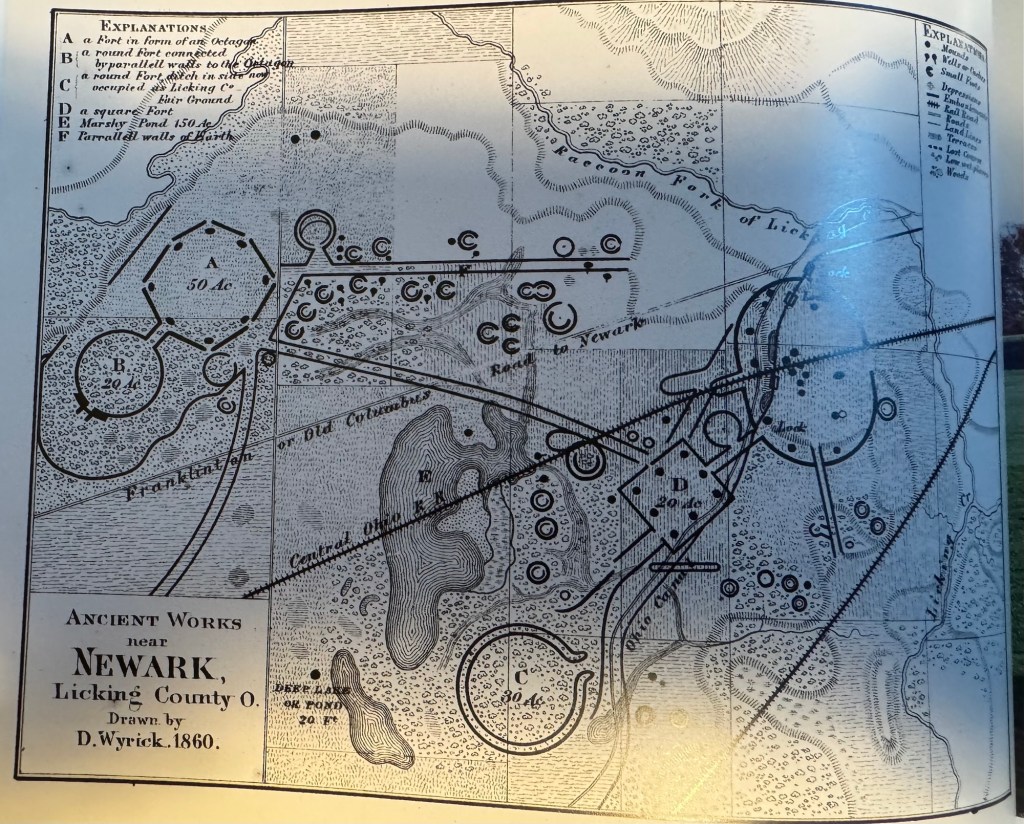
Let me take you back to the source of all this strangeness—the Ohio River Valley itself, that ribbon of land that runs from the Serpent Mound down near Cincinnati all the way up through the Newark Earthworks and beyond. This isn’t random wilderness. It’s one of the most concentrated paranormal hotspots on the planet, and it has been for a very long time. The same week those Portage County sightings were making national news, I pulled out the old hidden-haunts map I’d bought at the Mothman Museum and started plotting the locations. Every single sighting clustered around old mound corridors, old Indian trails that modern roads had paved over, places where the veil has always been thin. Serpent Mound, Fort Ancient, the massive geometric works at Newark that once covered more ground than the Great Pyramid complex in Egypt—those aren’t just piles of dirt left by “primitive” hunter-gatherers. They’re precise mathematical constructs aligned to the Pleiades, to solstices, to the movement of stars in ways that required calculus-level understanding of Earth’s circumference and axial tilt. The same mathematics you find at Stonehenge and Avebury in England. The same geometric obsession you see at Flag Fen near Peterborough, where Francis Pryor and his team uncovered an entire Bronze Age village built on a bog around 1300 B.C.—a place so sophisticated it makes the Romans who later conquered Britain look like amateurs playing catch-up.

I remember the first time I stood at Stonehenge with my family, the same trip where I picked up Pryor’s book Britain BC at the visitor center gift shop. You see the famous stones on TV, and you think, “cool rocks.” But when you’re actually there, walking the landscape, you realize the stones are just the tip of the iceberg. The entire countryside is dotted with burial mounds—hundreds of them—some almost identical in size and construction to the ones at Miamisburg and Middletown right here in Ohio. There’s a massive cursus—a long, linear earthwork over a mile long—that you can’t even see properly from the ground; it only makes sense from the air. It looks like a giant runway aimed at the heavens. And just a few miles north at Avebury, you’ve got the same thing: enormous circular henges, burial barrows, and geometric patterns that mirror the Newark Octagon and the Great Circle earthworks back home. Pryor’s work at Flag Fen blew the lid off the whole “primitive Britons” myth. They built an entire wooden platform and causeway across a bog, throwing broken tools and weapons into the water as offerings to the dead. Why? Because they understood that bogs preserve. They understood that the afterlife wasn’t some vague cloud kingdom—it was a place you could send messages to. And they used mathematics and geometry to do it.

Fritz Zimmerman has been saying the same thing about North America for years, only louder and with more receipts. His books—The Encyclopedia of Ancient Giants in North America, The Nephilim Chronicles: Fallen Angels in the Ohio Valley, Ancient America: The Dark Side, and Mysteries of Ancient America—aren’t fringe conspiracy rants. They’re the result of decades of boots-on-the-ground research, cross-referencing thousands of old newspaper accounts, county histories, and Smithsonian reports that mainstream archaeology would rather pretend don’t exist. Zimmerman’s core thesis is as elegant as it is explosive: the giant bones reported in over 500 separate accounts across the Midwest weren’t hoaxes or exaggerations. They belonged to the Amorites—biblical giants, descendants of the Nephilim—who fled Joshua’s conquest of Canaan, migrated through Europe (building or influencing Stonehenge and Avebury along the way), and eventually crossed the Atlantic in sophisticated boats to settle the Ohio Valley. The mounds they left behind aren’t random; they’re the same celestial observatories and ritual centers you find in England, only transplanted here. And the paranormal activity that clusters around them—Bigfoot, orbs, Mothman, shadowy figures—aren’t new phenomena. They’re the lingering echoes of the same entities those ancient builders were trying to communicate with.

Think about it. The Book of Enoch—preserved in the Dead Sea Scrolls and left out of our modern canon for reasons that should make every honest person furious—gives us the clearest picture. Two hundred Watchers, led by Semyaza and Azazel, descend on Mount Hermon, lust after human women, and produce giant offspring. God punishes them, but their disembodied spirits are cursed to roam the earth until the final judgment. These aren’t cartoon devils with pitchforks. They’re principalities and powers (Ephesians 6:12), interdimensional beings who once had physical bodies and now operate from the quantum edges of our reality. The Amorites carried that knowledge with them. They built geometric earthworks—circles, octagons, serpents aligned to the stars—because those shapes spoke the language those fallen entities understood. It wasn’t “religion” in the Sunday-school sense. It was technology. It was science. It was an attempt to maintain a relationship with the divine council, which Psalm 82 warns is still plotting against Yahweh to this day.

That’s why the mom and her daughter didn’t see a clear-faced ape-man on that dark Ohio road. They saw something bleeding through the veil—something that exists in a higher or adjacent dimension and only partially manifests here. The blurry face? That’s what quantum entanglement looks like when two realities briefly overlap. The creature wasn’t “lost.” It was answering an ancient call that still resonates through the mounds it once helped build. The same thing explains the Mothman at Point Pleasant in 1966–67—Stolas, the 36th demon from the Lesser Key of Solomon, appearing as a prophetic harbinger before the Silver Bridge collapse. The same thing explains the orbs we photographed at the Moonville Tunnel, the green healing spirits that seem to drift down from the ridges at Gettysburg, the Bigfoot sightings that spike whenever someone disturbs an old mound corridor. These aren’t separate mysteries. They’re the same phenomenon wearing different masks depending on who’s looking and what the local geometry is tuned to.

And here’s where the real conspiracy kicks in—the one that has nothing to do with the CIA and everything to do with the spiritual wickedness in high places. Mainstream archaeology, the Smithsonian, and the political class that funds them have spent over a century burying this truth under layers of political correctness and bad assumptions. The Native American Graves Protection and Repatriation Act (NAGPRA) of 1990—passed right after Dances with Wolves tugged at everyone’s heartstrings—made it illegal to study many of these sites properly. Bones that could prove the existence of pre-Columbian European or Near Eastern contact? Reburied. Giant skeletons reported in hundreds of 19th-century newspapers? Carted off to Smithsonian vaults and never seen again. The Windover Bog site in Florida is the perfect example. Discovered in the 1980s during housing construction, it yielded 168 incredibly preserved skeletons from 7,000–8,000 years ago—people with advanced woven textiles, bog-preservation knowledge identical to European practices, and thigh bones so large that Dr. Geoffrey Thomas held one up next to his own leg on camera at the Brevard Museum and basically admitted these folks were giants. Average height estimates got downplayed to 5’5” in some reports, but the video evidence and the bone density tell a different story. These weren’t primitive hunter-gatherers. They were part of a sophisticated culture that understood time, astronomy, and the spirit world in ways we’re only beginning to rediscover. And what happened? The site was covered up. Research stalled. NAGPRA kicked in. End of story.

Meanwhile, in England, Francis Pryor and the English Heritage team get to dig Flag Fen like it’s the greatest adventure on Earth. They uncover a Bronze Age village built on a bog, with broken swords and tools thrown in as offerings, and everyone celebrates the sophistication of prehistoric Britons. Why the double standard? Because admitting the same people—or at least the same knowledge—crossed the Atlantic thousands of years before Columbus shatters too many comfortable narratives. It forces us to confront the biblical timeline. It forces us to admit that the “indigenous” label we slap on every pre-Columbian culture is as accurate as calling the Romans “indigenous” to Britain. Migration, trade, and the collision of cultures happened constantly. Giants walked among us. Fallen angels taught forbidden knowledge. And their disembodied offspring are still here, still walking the old paths, still answering calls that were broadcast through geometric earthworks when the stars were in different alignments.

This is the Politics of Heaven playing out on Earth. Yahweh’s divine council—Elohim plural, as Psalm 82 makes painfully clear—has been in rebellion since before the Flood. The Watchers’ sin produced the Nephilim, whose spirits became the principalities and powers that still rule from the shadows. Solomon commanded them to build his Temple. The Canaanites sacrificed children to Moloch to appease them. The mound builders aligned their works to the stars to communicate with them. And today, in 2026, when eight Bigfoot encounters happen in a single week in Portage County, we’re seeing the same entities responding to the same ancient geometry. The mounds may be paved over, but the call still echoes. The quantum entanglement still happens. The blurry faces still peer through the veil.

I’ve stood on Little Round Top at Gettysburg at night with my family. I’ve hiked the Moonville Tunnel when the mist rolls in, and the green orbs appear exactly where my wife said they would. I’ve walked the ridges at Stonehenge and felt the same electric charge I feel standing on Fortified Hill or the Middletown Mound back home. The pattern is undeniable. The science—real science, the kind Pryor practices in England and the kind Zimmerman has been quietly practicing in America for decades—points to a lost chapter of human history in which advanced cultures used mathematics not just to measure the stars but to speak to the beings who live among them. We call them cryptids. The Bible calls them demons, watchers, principalities. The Japanese call them kami. The Muslims call them jinn. Every culture that ever built geometric earthworks knew them by a different name, but they all knew the same truth: these entities are real, they’re ancient, and they never really left.

The mom and her daughter in Portage County didn’t almost hit a lost ape. They brushed up against something that has been walking these trails since the Amorites—or whoever came before them—first laid out the geometric patterns that still whisper across time. The Bigfoot that stood three feet away with the blurry face wasn’t confused. It was exactly where it was supposed to be—answering a call that was programmed into the landscape thousands of years ago. And until we stop pretending that our textbooks tell the whole story, until we start digging the mounds again with the same adventurous spirit that Pryor brought to Flag Fen, we’ll keep mistaking echoes for myths and calling the messengers monsters.

The Politics of Heaven (the title of my new book coming up) aren’t happening somewhere far away in the clouds. They’re happening on the back roads of Ohio in March 2026, when the veil thins and something very old decides to step through for a moment and remind us that the war never ended. It just changed costumes. And the next time you see a blurry figure on the side of the road, don’t reach for your phone to call it a hoax. Reach for the truth instead. The mounds are still talking. The Watchers are still listening. And the rest of us? We’re just now starting to remember how to hear them.

BOOK SUMMARY of the upcoming Politics of Heaven (I will be finishing the final chapter in Washington D.C. at the Museum of the Bible soon after this posting)

The Politics of Heaven is a sweeping, unconventional investigation into the hidden structure of history — blending biblical archaeology, supernatural encounters, political warfare, cryptid phenomena, and ancient mathematics into a single, high‑powered thesis:

Earth’s political conflicts are the surface-level reflections of a much older, multidimensional battle among the Elohim — the divine council referenced throughout the Bible.

Drawing from firsthand experiences at sites like Chichen Itza, Stonehenge, Serpent Mound, Osaka’s Kofun tombs, Moonville Tunnel, and Washington D.C.’s Masonic grid — combined with encounters in modern political war rooms — Hoffman argues that the veil separating Heaven, Earth, and the unseen realm is thinner than we admit.

The book culminates in Chapter 19, where recent Bigfoot sightings in Ohio become the key to unifying the narrative. These blurry, partially‑manifest beings are framed as:

Residual spiritual entities tied to the Amorites, the Watchers, and the pre‑Flood giants — evidence of dimensional interference and the limits of human free will.

The result is a revelatory, provocative work for readers of Biblical studies, ancient mysteries, UFO/paranormal research, and political philosophy.

Footnotes

1.  Cleveland 19 News, “Several Bigfoot sightings reported in Portage County,” March 2026; FOX8, “Bigfoot roaming Portage County: Several reported sightings within days,” March 10, 2026.

2.  The Bigfoot Society podcast and mapping project documented at least eight high-credibility reports between March 6–10, 2026, including the Mantua Center daytime encounter and the Newton Township 4 a.m. sighting.

3.  Francis Pryor, Flag Fen: Life and Death of a Prehistoric Landscape (Tempus, 2005; updated editions). Pryor’s excavations revealed a sophisticated Bronze Age platform and votive offerings in the bog.

4.  Fritz Zimmerman, The Encyclopedia of Ancient Giants in North America (2015); The Nephilim Chronicles: Fallen Angels in the Ohio Valley (2010); Ancient America: The Dark Side (2024). Zimmerman’s fieldwork and archival research compile over 500 historical giant-bone reports.

5.  Windover Archaeological Site reports, including video testimony from Dr. Geoffrey Thomas at the Brevard Museum of History and Natural Science (Brevard County, Florida). Skeletons dated to 7000–8000 years ago; some long bones indicate individuals were taller than those in typical Archaic populations.

6.  English Heritage maps of Stonehenge and Avebury World Heritage Site (1:10,000 scale) show cursus, barrows, and geometric alignments mirroring Newark Earthworks in Ohio.

7.  Book of Enoch (1 Enoch), chapters 6–16, Dead Sea Scrolls fragments; cross-referenced with The Book of Giants also found at Qumran.

8.  Psalm 82; Ephesians 6:12 (KJV).

Bibliography for Further Reading

•  Zimmerman, Fritz. The Encyclopedia of Ancient Giants in North America. 2015.

•  Zimmerman, Fritz. The Nephilim Chronicles: Fallen Angels in the Ohio Valley. 2010.

•  Zimmerman, Fritz. Ancient America: The Dark Side. 2024.

•  Pryor, Francis. Flag Fen: Life and Death of a Prehistoric Landscape. Tempus, 2005.

•  Pryor, Francis. Britain BC. Harper Perennial, 2004.

•  The Book of Enoch. Translated by R.H. Charles. 1912 (modern editions widely available).

•  Biblical Archaeology Review archives on Dead Sea Scrolls and Qumran texts.

•  English Heritage official guides to Stonehenge and Avebury (2020s editions).

•  Windover site reports: “Windover: Prehistoric Past Revealed,” Orange County Regional History Center; Ancient Origins coverage, 2016–2025 updates.

Rich Hoffman

More about me

Click Here to Protect Yourself with Second Call Defense https://www.secondcalldefense.org/?affiliate=20707
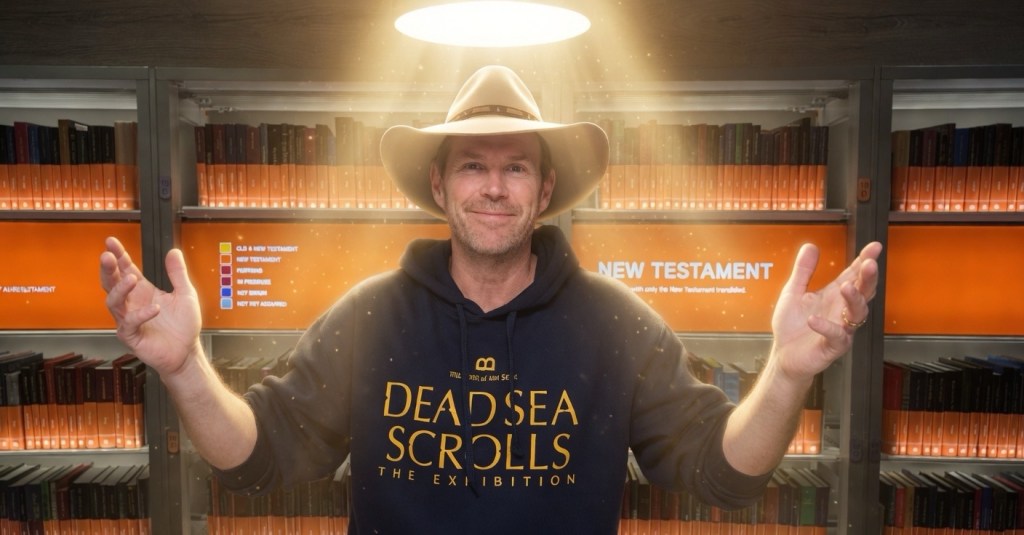
About the Author: Rich Hoffman

Rich Hoffman is an aerospace executive, political strategist, systems thinker, and independent researcher of ancient history, the paranormal, and the Dead Sea Scrolls tradition. His life in high‑stakes manufacturing, high‑level politics, and cross‑functional crisis management gives him a field‑tested understanding of power — both human and unseen.

He has advised candidates, executives, and public leaders, while conducting deep, hands‑on exploration of archaeological and supernatural hotspots across the world.

Hoffman writes with the credibility of a problem-solver, the curiosity of an archaeologist, and the courage of a frontline witness who has gone to very scary places and reported what lurked there. Hoffman has authored books including The Symposium of JusticeThe Gunfighter’s Guide to Business, and Tail of the Dragon, often exploring themes of freedom, individual will, and societal structures through a lens influenced by philosophy (e.g., Nietzschean overman concepts) and current events.

The End of the Roll: Opportunities and Failure in Ohio’s Statehouse

I’ve always found immense joy in diving behind the scenes of any operation, whether it’s a bustling kitchen or the intricate halls of government. Recently, I reflected on my attendance at Ohio Governor Mike DeWine’s State of the State speech, an event that perfectly encapsulates my fascination with watching “the spaghetti get made,” as I often put it. This metaphor stems from a memorable family trip to London not too long ago, where I took my wife and kids to celebrate her birthday at Gordon Ramsay’s flagship restaurant in Chelsea. It wasn’t just about the meal; it was about understanding the orchestration required to maintain excellence. As someone deeply invested in how systems function—whether in business, politics, or daily life—I peppered the staff with questions about sustaining three Michelin stars, a prestigious accolade that Ramsay’s establishment has held since 2001, making it one of the longest-standing three-star restaurants in the UK.[^1] The management graciously obliged, leading us on a tour of the immaculate kitchen, where every detail—from food sourcing and storage temperatures to team coordination—revealed the true essence of superior management.

In that kitchen, I saw firsthand how the magic happens. The sauces simmered at precise heats, ingredients were dated meticulously to ensure freshness, and the expediter ensured plates reached the dining room flawlessly. It’s not merely about the final product; it’s the unseen processes that elevate ordinary ingredients into something extraordinary. Ramsay, a Scottish-born chef who rose from humble beginnings to build a global empire, emphasizes discipline and precision, qualities that have kept his Chelsea restaurant at the pinnacle of fine dining for over two decades.[^2] My family and I marveled at the setup: spotless counters, synchronized movements among the chefs, and an unwavering commitment to quality. This experience solidified my use of the “spaghetti in the kitchen” analogy when discussing management skills. You see, good management isn’t accidental; it’s deliberate. How do you select the right sausage for the meatballs? What temperature do you cook them at, and for how long? Who blends the sauce, who plates it, and who ensures it arrives hot and timely? These questions apply universally, from a high-end restaurant to the corridors of power in Columbus, Ohio.

Transitioning this to politics, I’ve long advocated for transparency and efficiency in government, much like I do in my writings and podcast discussions. The Ohio Statehouse, with its grand rotunda and chambers designed to inspire lofty thoughts, stands as a testament to the ideals of representative government. Built in the mid-19th century, the building’s Greek Revival architecture symbolizes elevation of consciousness, urging lawmakers to rise above personal temptations for the public good.[^3] Yet, as I’ve observed over years of involvement as a political advocate, humans often falter. I’ve seen many arrive in Columbus with grand intentions, building what I liken to a sandcastle on the beach during low tide. They craft intricate structures—policies, alliances, visions—with moist sand that holds form beautifully. Flags atop turrets, photos snapped for posterity. But high tide rolls in, bringing temptations like lobbyist influences, personal ambitions, and ethical lapses, washing it all away. Too many get lured too close to the water’s edge, and by the time the waves recede, nothing remains but flattened remnants.

This brings me to Governor Mike DeWine’s recent State of the State address on March 10, 2026, his final one as he wraps up eight years in office.[^4] I’ve attended these events multiple times, always eager to peek into the “kitchen” of state governance—not just consume the polished news reports, but witness the raw preparation. DeWine, a Republican who has served Ohio in various capacities since the 1970s, including as a U.S. Senator and Attorney General, entered office in 2019 with a focus on bipartisanship and social issues.[^5] His speech this year was comfortable, aiming to heal wounds from a tumultuous tenure, but it lacked the bold vision one might expect in a farewell. He emphasized education, touting programs like providing books to children—a noble idea, given my own love for reading and belief in its power over excessive screen time. Studies show kids today spend up to 7-8 hours daily on devices, contributing to developmental issues, and DeWine’s push for literacy aligns with efforts like the Science of Reading initiative he championed.[^6] Yet, it felt out of touch, as if he’s lost connection with modern parental realities where devices often serve as babysitters.

Critically, I’ve been vocal about DeWine’s shortcomings, particularly his handling of the COVID-19 pandemic. Appointing Dr. Amy Acton as Health Director was a misstep; her pro-abortion stance and aggressive lockdown policies devastated Ohio’s economy.[^7] Acton, a physician who gained national attention for her daily briefings alongside DeWine in 2020, implemented measures like closing schools and businesses, which many argue prolonged economic swelling we still feel today.[^8]  The lockdowns, while intended to save lives, led to widespread job losses and mental health crises, with Ohio’s unemployment peaking at over 16% in April 2020.[^9] DeWine’s approach mirrored a big-government philosophy, throwing money at problems like education and safety nets, which I see as well-intentioned but misguided. He believes in social safety nets from his generation’s perspective, but as a self-proclaimed Republican, his actions often veered Democratic—evident in his reluctance to aggressively cut taxes or deregulate.

Property taxes, for instance, have spiraled under his watch, burdening homeowners without adequate relief until recent reforms. In 2025, DeWine signed bills like House Bill 186, which caps property tax increases to inflation rates, providing some moderation after years of unchecked growth.[^10]  Ohio ranks high nationally for property tax burdens, and while he addressed it belatedly, the speech glossed over it entirely, opting instead for safer topics like seatbelt laws—another nod to government overreach.[^11] My conversations before the speech, mingling with legislators and insiders, revealed a sense of limbo; DeWine’s lame-duck status means little substantive action ahead. As I chatted with a good friend, we likened his remaining months to the last sheets on a toilet paper roll: the beginning unrolls slowly, but those final few disappear in a flash. With the 2026 election looming, attention shifts to fresh faces.

Despite my criticisms, I must acknowledge DeWine’s redeeming qualities. Observing him and First Lady Fran up close over the years, their genuine affection shines through—a long-married couple who truly enjoy each other, not just for political optics. Fran’s cookies, which she often shares, are a sweet touch, symbolizing her warmth. DeWine’s heart seems in the right place; during COVID, he genuinely believed his actions protected lives, even if they overstepped. Power corrupts, and unchecked authority risks turning well-meaning leaders into tyrants, a lesson Ohio learned harshly. Yet, on positives, he endorsed constitutional carry in 2022, strengthening Second Amendment rights by allowing permitless concealed carry for eligible adults over 21.[^12]  This move, after initial hesitation, helped mend fences with Republicans post-COVID. Additionally, he supported business initiatives like Joby Aviation’s expansion in Ohio, announced in 2023, which promises 2,000 jobs in electric vertical takeoff and landing (eVTOL) aircraft manufacturing—a boon for aviation innovation.[^13] Columbus Mayor Andrew Ginther has been instrumental in such developments, fostering smart mobility and economic growth in the region.[^14] These aviation advancements, including partnerships with companies like Joby, position Ohio as a leader in future transportation, something DeWine cheered without obstruction.

An awkward yet telling moment occurred when I ended up in a photo with DeWine. In past years, my anger over his policies kept me at arm’s length, but this time, with his term ending, I shook his hand and wished him well, acknowledging the pro-business strides. Government needs checks and balances precisely because even good intentions can falter. DeWine isn’t evil; his naivety in trusting big government to care for the vulnerable led to overreach.

Looking ahead, the toilet paper roll is nearly spent, and I’m excited for Vivek Ramaswamy to take the helm. Ramaswamy, a Cincinnati native and biotech entrepreneur who founded Roivant Sciences and ran for president in 2024, announced his gubernatorial bid in 2025 with Trump’s endorsement.[^15]  His campaign focuses on reviving the American Dream through lower costs, bigger paychecks, and merit-based policies, contrasting DeWine’s approach.[^16]  Polls show a tight race against Democrat Amy Acton, but Ramaswamy’s vision—transforming Ohio into an economic hub, especially in the Ohio River Valley—aligns with bold Republican ideals.[^17]  He’s already launched massive ad campaigns and secured the Ohio GOP endorsement, signaling momentum.[^18]  Under Ramaswamy, I anticipate policies advancing freedom, innovation, and efficiency—cooking up better “spaghetti” in the Statehouse kitchen.

Attending these events reinforces why I love politics: seeing dedicated people strive, even if imperfectly. From Ramsay’s kitchen to Columbus, excellence demands pride, hard work, and attention to detail. Cooks prepare meals hoping diners savor them, but criticism stings when they fall short. DeWine’s administration aimed for a magnificent sandcastle, but tides of controversy washed much away. Still, remnants like stronger gun rights and business growth endure. As his era ends, I reflect with tempered hatred, appreciating the intent I witnessed up close. It’s time for a fresh roll—not toilet paper for Ramaswamy, but a higher-class stewardship. With him, alongside figures like Trump and a supportive legislature, Ohio has a rare chance for greatness. I look forward to much better food coming out of the kitchen to come.

[^1]: The Michelin Guide has awarded three stars to Restaurant Gordon Ramsay since 2001, recognizing exceptional cuisine and service. 

[^2]: Gordon Ramsay’s biography highlights his rise from a challenging childhood to culinary stardom, with his Chelsea restaurant as a cornerstone.

[^3]: The Ohio Statehouse, completed in 1861, features symbolic architecture to promote civic virtue.

[^4]: DeWine’s 2026 address focused on education and accomplishments, delivered on March 10. 

[^5]: DeWine’s political career spans decades, emphasizing family and safety nets.

[^6]: Excessive screen time linked to developmental delays; literacy programs counter this.

[^7]: Acton supported abortion rights and led lockdowns.

[^8]: Acton’s role in COVID response included school closures. 

[^9]: Ohio’s economic impact from COVID policies.

[^10]: House Bill 186 caps tax increases. 

[^11]: Ohio’s high property tax ranking.

[^12]: Signed SB 215 in 2022. 

[^13]: Joby Aviation’s Ohio expansion creates jobs in eVTOL.

[^14]: Ginther promotes smart mobility in Columbus.

[^15]: Ramaswamy’s 2026 bid announced in 2025. 

[^16]: Campaign priorities include economic revival. 

[^17]: Polls show competitive race. 

[^18]: GOP endorsement in 2025. 

Bibliography

1.  Ramsay, Gordon. Humble Pie: My Autobiography. HarperCollins, 2006. (For insights into Ramsay’s management style.)

2.  DeWine, Mike. Ohio’s Path Forward. Ohio Governor’s Office Publications, 2025. (Overview of DeWine’s policies.)

3.  Ramaswamy, Vivek. Woke, Inc.: Inside Corporate America’s Social Justice Scam. Center Street, 2021. (Ramaswamy’s views on business and politics.)

4.  Acton, Amy. Leading Through Crisis: Lessons from Ohio’s Pandemic Response. Self-published, 2024. (Acton’s reflections on COVID.)

5.  Hoffman, Rich. The Gunfighter’s Guide to Business. Overman Warrior Publications, 2020. (My own book on management principles.)

6.  Ohio Historical Society. The Ohio Statehouse: A History of Democracy. Arcadia Publishing, 2015. (Background on the Statehouse.)

7.  Tax Foundation Reports. Property Tax Burdens in the U.S. Annual editions, 2020-2026. (Data on Ohio taxes.)

8.  National Rifle Association. Second Amendment Victories: Constitutional Carry Laws. NRA Publications, 2023. (On gun rights reforms.)

9.  Joby Aviation. Annual Report 2025. (Details on Ohio expansion.)

10.  Michelin Guide. Great Britain & Ireland. Michelin Travel Publications, annual. (Restaurant ratings.)

Rich Hoffman

More about me

Click Here to Protect Yourself with Second Call Defense https://www.secondcalldefense.org/?affiliate=20707

About the Author: Rich Hoffman

Rich Hoffman is an independent writer, philosopher, political advisor, and strategist based in the Cincinnati/Middletown, Ohio area. Born in Hamilton, Ohio, he has worked professionally since age 12 in various roles, from manual labor to high-level executive positions in aerospace and related industries. Known as “The Tax-killer” for his activism against tax increases, Hoffman has authored books including The Symposium of JusticeThe Gunfighter’s Guide to Business, and Tail of the Dragon, often exploring themes of freedom, individual will, and societal structures through a lens influenced by philosophy (e.g., Nietzschean overman concepts) and current events.

He publishes the blog The Overmanwarrior (overmanwarrior.wordpress.com), where he shares insights on politics, culture, history, and personal stories. Active on X as @overmanwarrior, Instagram, and YouTube, Hoffman frequently discusses space exploration, family values, and human potential. An avid fast-draw artist and family man, he emphasizes passing practical skills and intellectual curiosity to younger generations.

‘Prehistoric Worlds Or, Vanished Races’: The truth of the anti-giant conspiracy

Not very long ago, my daughter called me in a rush from a used bookstore in downtown Middletown, Ohio—a place that’s seen better days, rough around the edges, but still holding onto some hidden gems. She told me I had to come right away because she’d found something special and was guarding it like a treasure. When I got there, she handed me an 1885 original edition of The Prehistoric World: Or, Vanished Races by E.A. Allen. The book is barely holding together after all these years, its pages fragile and yellowed, but it’s a remarkable artifact. I bought it for a reasonable price, and it’s become one of my prized possessions. It’s not just a book; it’s a window into a time when exploration and curiosity drove inquiry, before modern institutions locked down narratives with rigid assumptions.

I’ve always been drawn to these topics. Back in high school, even as far back as fifth and sixth grade, I was ahead of my teachers in history and anthropology classes. I’d read widely—Joseph Campbell’s works, myths, comparative religion—and I knew much of what was being taught was incomplete or outright wrong. I endured it to graduate and escape that institutionalized mindset, which I saw holding back real understanding. In my twenties, I dove deeper into Joseph Campbell and even joined the Joseph Campbell Foundation. My adventures around the world, combined with a lifelong connection to southern Ohio, shaped my views. My wife and I have been married nearly 39 years, and throughout that time, we’ve visited Serpent Mound repeatedly—every few years, it’s become a touchstone for us.

Living in southern Ohio, near Middletown and Hamilton, I’ve always had a personal relationship with these ancient sites. Serpent Mound, the massive effigy serpent earthwork in Adams County, is one of the most famous, but closer to home are the mounds along the Great Miami River Valley. There’s the Miamisburg Mound, one of the largest conical burial mounds in eastern North America, built by the Adena culture around 800 B.C. to A.D. 100. It’s 65 feet tall, 800 feet around, and excavations in 1869 revealed layered construction with possible stone facing and burial goods like pipes and effigies. There are even reports that they found skulls in that mound that would fit over the top of regular people, and that these finds terrified the excavators and they abandoned the site, never to return. Yet, despite its proximity—right near where I grew up—schools never took us there on field trips. We went to other places, heard stories about Native American burials and the sadness of destruction by Europeans, but nothing about these advanced earthworks.

Then there’s the area across from Joyce Park in Hamilton, where Pyramid Hill Sculpture Park now sits near Fortified Hill, an older than 2,000-year-old ceremonial earthworks site tied to the Hopewell or earlier traditions. In Allen’s 1885 book, there’s a description and illustration of a large effigy mound or structure in that vicinity—two high peaks carved or shaped, possibly reflecting ancient alignments, even to constellations like Aries, thought to be around 5,000 years old in some interpretations. The book chronicles many Ohio River Valley mounds, dedicating significant portions to the Miami and Mississippi cultures, Mexico, the Aztecs, and global prehistoric peoples. It’s an adventurous, Victorian-era take—profusely illustrated, speculative, open to wonders without the heavy filter of modern politics or funding constraints.

What strikes me most is how this 1885 book feels more honest about discoveries than much of what came later. During that era, explorers and adventurers reported findings without preconceived notions imposed by institutions. Allen’s work reflects a time when people were excited about vanished races and prehistoric worlds, including reports of mound contents that challenged emerging narratives. Many 19th-century accounts from Ohio mounds mentioned unusually large skeletons—sometimes described as 7 to 9 feet tall—unearthed during excavations. These were often speculatively linked to biblical giants or to ancient, advanced peoples. Newspapers and reports from the time sensationalized them, but they reflected genuine observations before professional archaeology standardized explanations. Mainstream archaeology today attributes these to the Adena and Hopewell cultures—sophisticated societies with wide trade networks, astronomical alignments in their earthworks, and ceremonial practices—but dismisses giant claims as misinterpretations, exaggerations, or hoaxes based on crumbling bones and poor documentation.  I have come to understand that the anti-giant conspiracy that has permeated the sciences was a secular construct intended to disprove biblical narratives, rather than to understand them, which was a critical error from that perspective.

I can’t help but feel that institutional science took a wrong turn. After the late 19th century, education and research became centralized, often prioritizing narratives that fit political or funding needs over raw observation. The mounds were attributed solely to ancestors of modern Native Americans, like the Adena (800 B.C.–A.D. 100) and Hopewell (200 B.C.–A.D. 500), who built massive geometric enclosures and burial sites with precision. These are now UNESCO-recognized, like the Hopewell Ceremonial Earthworks, celebrated for their engineering and cultural depth. Yet, in my view, this framing sometimes ignores anomalies or alternative interpretations to maintain control over the story.

This ties into broader questions I’ve pondered for decades. What if these earthworks—Serpent Mound with its debated alignments to solstices (summer sunset at the head, possible lunar or solar cycles), Miamisburg’s layered burials, Fortified Hill’s ceremonial space—are remnants of something older, perhaps offshoots of lost civilizations? Some speculate connections to Atlantis or pre-Ice Age advanced societies, which were wiped out by the Younger Dryas catastrophe around 12,900–11,600 years ago—a sudden cold snap possibly triggered by comet impacts and freshwater floods that disrupted ocean currents, leading to megafauna extinctions and cultural disruptions. Graham Hancock and others link this to Plato’s Atlantis, a global flood-like event ending an Ice Age civilization, with survivors possibly influencing later cultures.

In Ohio, the mounds don’t fit neatly into short timelines. Serpent Mound’s age is debated—some radiocarbon dates suggest an Adena date around 300 B.C., others a Fort Ancient date around A.D. 1100, with possible repairs—but its astronomical sophistication and serpent symbolism hint at deeper roots. The book I found predates the heavy institutionalization that followed, capturing a spirit of adventure where discoveries weren’t immediately boxed into “primitive Indians” or dismissed. It dedicates half its 800 pages to American earthworks, showing alignments and complexities that modern textbooks often downplay.

My frustration stems from this: growing up here, no one talked about these sites in school. No field trips to Pyramid Hill or Miamisburg. No discussion of potential giant remains or alignments that “they shouldn’t even know about” at the time. It felt like a deliberate omission to preserve a simple narrative. Institutions, chasing grants and political correctness, built assumptions around limited data, leading to dead ends. Meanwhile, independent researchers and adventurers are bypassing them, returning to direct observation and instinct.

This book reminds me how much more open inquiry was in 1885, before the Smithsonian and universities solidified control. It shows we knew—or at least wondered—more freely then. We’ve gone downhill in some ways, prioritizing preservation of timelines over pursuit of truth. My daughter recognized that instinctually when she saved it for me. It’s a benchmark: a call to question, explore, and reject complacency in institutionalized science.

We need to return to that adventurous spirit—observe these mounds, ask who built them, why, how old they truly are, and how they connect to our story today. The earthworks along the Ohio River Valley aren’t just relics; they’re evidence of advanced understanding—astronomical, engineering, spiritual—that challenges easy answers. By reflecting on books like Allen’s, we see where assumptions went wrong and how rediscovering truth requires going beyond the official path.

Bibliography

•  Allen, E. A. The Prehistoric World: Or, Vanished Races. Central Publishing House, 1885. (Available via Project Gutenberg and archives.)

•  Ohio History Connection. “Miamisburg Mound.” ohiohistory.org.

•  Ohio History Connection. “Serpent Mound.” ohiohistory.org.

•  Hopewell Ceremonial Earthworks. hopewellearthworks.org.

•  UNESCO. “Hopewell Ceremonial Earthworks.” whc.unesco.org.

•  Romain, William F. Various studies on Ohio earthworks astronomy.

•  Hancock, Graham. America Before: The Key to Earth’s Lost Civilization. St. Martin’s Press, 2019. (For Younger Dryas and catastrophe discussions.)

•  Various 19th-century newspaper reports on mound discoveries (e.g., via historical archives).

Footnotes

1.  Radiocarbon dating debates on Serpent Mound: See Monaghan and Hermann (2019) reconciliation of dates.

2.  Giant skeleton reports: Often debunked as mismeasurements (e.g., Columbus Dispatch, 2019), but reflect period observations.

3.  Younger Dryas Impact Hypothesis: Firestone et al. (2007) and subsequent studies.

4.  Adena/Hopewell mainstream views: National Park Service, Hopewell Culture National Historical Park.

Rich Hoffman

More about me

Click Here to Protect Yourself with Second Call Defense https://www.secondcalldefense.org/?affiliate=20707

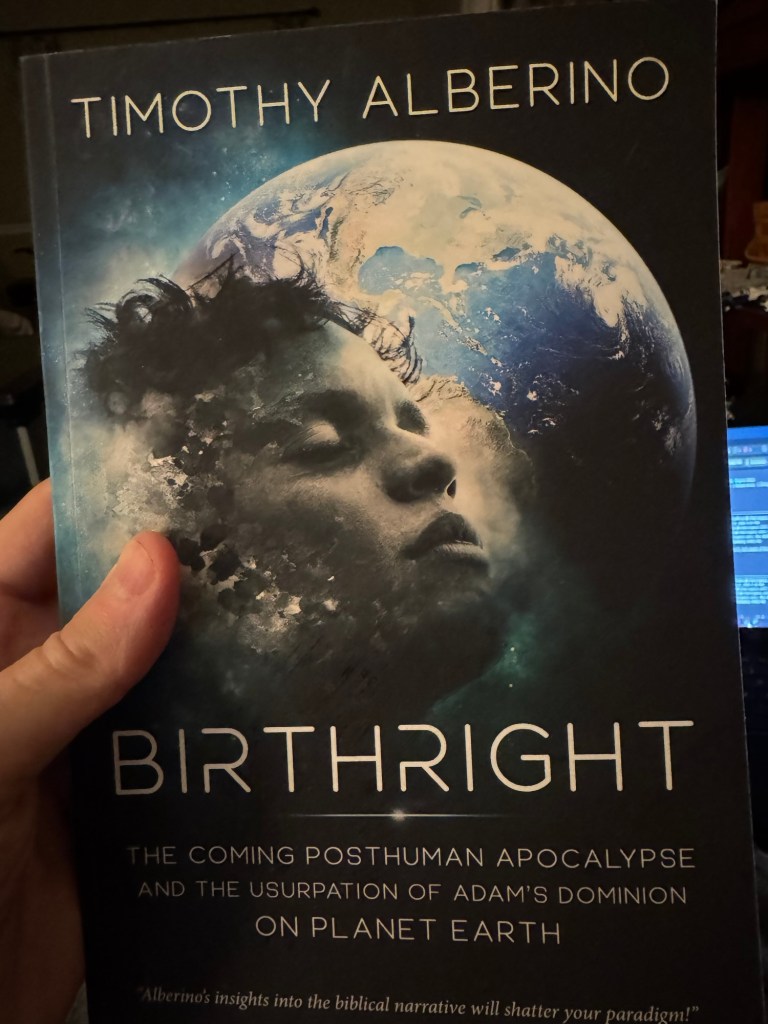
Timothy Alberino’s Fantastic book ‘Birthright’: Why we shouldn’t sell our souls for a bowl of stew

In the quiet moments away from the relentless pace of political battles, economic analysis, and the daily grind of defending principles in a world that often seems intent on erosion, there’s something profoundly refreshing about diving into a book that pulls back the curtain on deeper realities. One such discovery came recently with Timothy Alberino’s Birthright: The Coming Posthuman Apocalypse and the Usurpation of Adam’s Dominion on Planet Earth, published in 2020. This isn’t just another volume on ancient mysteries or fringe theories; it’s a meticulously crafted narrative that weaves biblical scholarship, historical inquiry, and contemporary phenomena into a cohesive worldview. It challenges the sanitized, compartmentalized versions of history and scripture we’ve been fed, urging readers to step out of Plato’s cave—where we’ve been chained, staring at shadows on the wall—and confront the fuller light of reality.

I finished the book on the day of the Olympic opening ceremonies that many viewed as laden with overt satanic symbolism and references to Luciferian themes. Such public displays, alongside scandals in Hollywood, the music industry, and elite circles involving ritualized sex, power, and exploitation—from Aleister Crowley’s influence to modern figures like Sean Combs or echoes in the Epstein saga—underscore a persistent undercurrent. Alberino argues these aren’t isolated excesses but part of an ancient war over humanity’s inheritance, a theme he traces back to the very beginning of the biblical account.

At the heart of Birthright is the concept of dominion granted to Adam and Eve in Genesis. Humanity, created in God’s image, was given authority over the Earth—to expand Eden, steward creation, and bring heaven’s order to the physical realm. This birthright represents not just land or resources but a divine mandate for rule, creativity, and moral governance. Yet from the outset, forces sought to usurp it. The serpent’s temptation in Eden was the first theft attempt, leading to the fall and the squandering of that authority through disobedience. Alberino expands this into a cosmic drama, drawing on the Book of Enoch (an apocryphal text preserved in the Dead Sea Scrolls and quoted in the New Testament) to detail the rebellion of the Watchers—200 fallen angels who descended, took human wives, and produced the Nephilim, hybrid giants whose existence corrupted the Earth with violence and forbidden knowledge.<sup>1</sup>

These events, detailed in Genesis 6:1-4 and elaborated in Enoch, explain the pre-Flood world’s wickedness, necessitating the deluge as divine judgment. The Nephilim weren’t mere tall humans but offspring engineered to challenge human dominion, their spirits becoming demons after their bodies perished.<sup>2</sup> Alberino connects this ancient incursion to modern phenomena: UFO sightings, alien abductions, and what he sees as a deceptive “alien” presence masquerading as extraterrestrial but rooted in the same fallen spiritual realm. He posits that today’s transhumanist agenda—merging human biology with technology, AI, and genetic engineering—represents the latest phase in this usurpation, aiming for a posthuman apocalypse where humanity’s birthright is fully stripped away, replaced by hybrid or enhanced entities loyal to adversarial forces.<sup>3</sup>

This framework resonates deeply with longstanding interests in giants, ancient history, and the Nephilim. For years, discussions of giants in North America—mound builder discoveries from the 1800s along rivers like the Miami Valley, often dismissed as carnival hoaxes or pseudoscience—were marginalized. An early article I wrote on these topics back in 2010 drew massive attention but faced backlash for blending “serious” issues like tax policy with what mainstream culture deemed conspiracy territory. Institutions prefer neat categories: politics here, religion there, ancient anomalies safely labeled myth. Yet evidence persists, from biblical references to global giant lore, suggesting a suppressed history.

Alberino’s work builds on scholars like Michael Heiser, who applied rigorous biblical exegesis to the divine council and supernatural elements in scripture.<sup>4</sup> The Bible, as an artifact, is remarkable—preserved through millennia of translation, political editing (from early Roman church councils to Renaissance interpretations), and textual discoveries like the Dead Sea Scrolls, which confirm remarkable consistency. Yet it’s dense, fragmented, like shadows in Plato’s allegory: we see projections but not always the sources. Alberino encourages turning from the wall to examine the fire, the figures casting shadows, and ultimately stepping into the world beyond illusion.

He frames the ongoing battle as one over this birthright. The story of Esau and Jacob in Genesis 25 illustrates it starkly. Esau, the firstborn, sells his birthright to Jacob for a bowl of stew when hungry and impatient, valuing immediate gratification over eternal inheritance. Yahweh honors the transaction, leading to Jacob (renamed Israel) fathering the tribes and claiming the promised land. This narrative isn’t just family drama; it’s a microcosm of humanity’s temptation to trade divine authority for fleeting pleasures—sex, power, convenience, or modern equivalents like celebrity, wealth, or technological transcendence.<sup>5</sup>

Alberino ties this to figures who rejected paternal guidance and embraced rebellion. Aleister Crowley and Friedrich Nietzsche, both losing religious fathers young, spiraled into philosophies that influenced destructive movements—Crowley’s occult sex magic permeating Hollywood and music, Nietzsche’s Übermensch (overman) twisted into Nazi ideology. These represent selling the birthright for Luciferian promises of godhood without God. In contrast, the biblical Overman ideal—Adam as God’s supreme representation on Earth, uncorrupted—offers a heroic vision: humanity as stewards, not slaves to temptation or manipulation.

My affinity for the “Overman warrior” concept aligns here—not the corrupted Nietzschean version that fueled tyranny, but a Superman-like ideal of strength, virtue, and resistance to evil. It’s about refusing to be broken, manipulated, or seduced into yielding dominion. Personal history in passion plays, portraying biblical roles, fostered a lifelong engagement with these themes, yet frustration with weak portrayals of figures like Adam (easily tempted) or institutional failures to confront modern implications has been, to say the least, infinitely disappointing for me.

Alberino’s book bridges gaps: why the Bible omits details (political censorship, lost texts), why giants and fallen angels matter (they explain evil’s origins), and why UFOs fit (as modern deceptions echoing ancient incursions). He critiques institutional religion for downplaying Enoch or supernatural elements, allowing secular science to dismiss anomalies. Yet fresh scholarship—Dead Sea Scrolls, archaeological confirmations of biblical sites like the City of David—validates the narrative’s core.

This isn’t pseudoscience; it’s interdisciplinary inquiry challenging controlled categories. The Temple Mount disputes—Islam denying Jewish archaeological evidence despite visible proof—mirror broader suppressions of inconvenient truths. Similarly, giants’ stories were ridiculed as roadshow myths to justify land theft or secularize history, but persistent global accounts suggest otherwise.

In an era of disclosure debates, black budgets, and fear-based control narratives around “mysteries,” Alberino reframes UFOs as spiritual, not merely technological. The 200 Watchers’ rebellion sought to corrupt the human line, preventing Eden’s expansion. Today’s equivalents—rituals in entertainment, elite exploitation—continue that agenda, luring people to sell their birthright cheaply.

The hope lies in reclamation. Humanity’s mandate remains: expand Eden, resist deception, claim dominion through alignment with divine order. Alberino’s work, alongside emerging discussions in UFO communities, biblical studies, and alternative history, signals a shift—people untying from Plato’s cave, exploring freely.

This book stands out for its scholarly precision, narrative flow, and refusal to compartmentalize. It entertains while provoking profound reflection, much like Graham Hancock’s works or Vera brothers’ explorations, but with stronger biblical anchoring. For anyone weary of surface-level politics or religion, it’s a reminder that the real fight transcends the visible—it’s eternal, cosmic, and personal.

Highly recommended. It elevates understanding, inspires resistance to temptation, and reaffirms the value of pursuing truth beyond shadows. More from Alberino—on Enoch commentary, expeditions—promises further illumination. In a world pushing posthuman futures, remembering our birthright may be the ultimate act of defiance and hope.

Bibliography and Further Reading

•  Alberino, Timothy. Birthright: The Coming Posthuman Apocalypse and the Usurpation of Adam’s Dominion on Planet Earth. Independently published, 2020. (Primary text; available on Amazon, author’s site.)

•  Alberino, Timothy. The Book of Enoch: With Commentary & Concept Art on the Book of the Watchers.

•  Heiser, Michael S. The Unseen Realm: Recovering the Supernatural Worldview of the Bible. Lexham Press, 2015.

•  The Book of Enoch (Ethiopic version, translated editions; referenced in Jude 1:14-15).

•  Dead Sea Scrolls publications (e.g., via Biblical Archaeology Society resources).

•  Reviews and summaries: Goodreads (4.5+ average), Shortform book summary, Amazon customer reviews.

•  Related discussions: YouTube interviews with Alberino (e.g., Shawn Ryan Show, various podcasts).

<sup>1</sup> Alberino, Birthright, drawing on Book of Enoch chapters 6-16; see also Genesis 6:1-4.

<sup>2</sup> Ibid.; Heiser, The Unseen Realm, pp. 92-110 on Nephilim as hybrid offspring.

<sup>3</sup> Alberino, Birthright, chapters on UFOs and transhumanism; Shortform summary highlights the “posthuman apocalypse” thesis.

<sup>4</sup> Heiser, The Unseen Realm, core argument on divine council and rebellious “sons of God.”

<sup>5</sup> Genesis 25:29-34; Alberino frames this as emblematic of selling dominion for temporal gain.

Footnotes reference key biblical passages, book sections, and supporting scholarship for further personal exploration.

Rich Hoffman

More about me

Click Here to Protect Yourself with Second Call Defense https://www.secondcalldefense.org/?affiliate=20707

Beat the Hell Out of Them: Crushing the socialist protestors at the Roebling Bridge in Cincinnati

As I said, the ICE agents who had rocks thrown at them in California, detaining illegal aliens from that pot farm, should have shot them.  They had every right to do so.  So I was thrilled to see that the Covington, Kentucky police physically bloodied a bunch of stringy-haired protestors as they tried to close the Roebling Suspension Bridge over a protest of Ayman Soliman, the former Cincinnati Children’s Hospital chaplain, detained by ICE on July 9th, 2025.  For some ridiculous reason, someone has told these loser socialists that shutting down highways and bridges was a thing they could do to express free speech.  It is not.  And certainly not in my town. I use that bridge all the time, and it should not be closed down by a bunch of protestors cheering on illegal activity.  I have no tolerance for it.  We hire law enforcement to enforce laws.  And when the protestors dug in and started getting pushy, the Covington Police beat the hell out of those protestors and arrested them like the scrappy losers that they are.  It’s one thing to see these things happening in some far away place like California, where their politics has fallen off the edge of the earth with liberalism.  It’s quite another to see something like that happen in the heartland city of Cincinnati, not in my town.  I want to see our highways, bridges, and sidewalks open at all costs, despite the impediments of protestors.  They do not have the right to shut down anything in protest, and it’s about time they are taught a lesson about impeding traffic.  When it comes to using violence to maintain law and order, I’m 100% for it.  As the videos of this violence at the bridge went viral, I was very proud of the Covington, Kentucky, police department. 

The protestors crossed the line when they tried to stop a black SUV driven by an out-of-town tourist, as the insurgents were banging on the hood and vandalizing the vehicle as it attempted to push through the crowd.  Police issued warnings and tried to be as kind as possible, but they ended up arresting 15 of the 100 or so protesters at the site, including two CityBeat journalists, Madeline Fening and Lucas Griffith.  The charges include felony rioting, unlawful assembly, failure to disperse, obstructing a highway, criminal mischief, disorderly conduct, and resisting arrest.  The Cincinnati and Northern Kentucky chapter of the Democratic Socialists of America claimed that the police “violently broke up” the protest, alleging some of the arrestees were beaten and required medical treatment.  An attorney for the miscreants, Benjamin Pugh, argued that the police escalated the situation and did not give sufficient time to disperse.  So that is the cast of characters involved, and I have no sympathy for the CityBeat journalists.  As I have said about them for many decades, they exist to breed these kinds of losers in our youth culture, so they are as guilty of why those protestors thought they could get away with this kind of thing in the first place, as anybody.  There’s plenty of bad to go around, and it’s good that the Covington Police did not allow these individuals to embarrass our city of Greater Cincinnati in front of the nation.  The message we want to send to all these socialist and communist sympathizers is zero tolerance for their view of the world.  That’s where we are these days, as I have been saying for a long time.  These aren’t just Democrats with differing political views.  These are people who want to overthrow our society, which is why they are upset at the ICE deportations, because all those illegal immigrants are part of their strategy to destroy our law and order society.

However, here is a statement for attorneys like Mr. Pugh, who involved himself in this case: the public’s right to free egress exceeds the right of one individual to express their free speech.  People can say and hold whatever opinion they want about anything.  But they don’t have the right to force someone else to have that opinion.  And stopping traffic is an expression of a free speech opinion by force.  The protesters are saying, ‘Join me in my opinion; otherwise, I’m not going to let you use this bridge or travel down this highway.’  Time is an essential thing, and people in a free society cannot have others impose restrictions on their movement to coerce their opinions politically.  The protesters could have written an article, or spoken on YouTube or TikTok about the deportation of the Egyptian Ayman Soliman.  However, they did not have the right to block traffic to get attention or put their hands on the car of someone trying to cross the bridge.  This Marxist notion of damaging private property to communicate political opinions just isn’t going to fly.  We are a private property country.  A mob of losers does not get to override every principle of personal freedom that we have in our society, and one of the fundamental rights that we have is the right to egress.  The right to move around unimpeded and the freedom to enjoy our lives.  That’s why the bridge exists, so that people can travel from one place to another.  That’s why the roads exist.  A protester does not have the right to take that freedom away from people to force their opinions on an issue, due to having no other option but violence to get their point across. 

Once the protestors made a move to close the road, the Convington Police had a right and obligation to remove them and restore that freedom of egress.  There is no group sentiment, such as the Ignite Peace Cincy group, that has the right to close down any roads or even make someone walk around them on a sidewalk.  Any imposition on the personal freedoms of anybody warrants a violent removal of that impediment.  There is no right to Free Speech, which means people who don’t share those opinions have to be inconvenienced by any method.  People ultimately have a choice, and if that choice is removed from them, including the option to listen to socialist protestors or not, or to read that socialist social magazine, CityBeat, or not, the frustrated advocates of a political position don’t get to threaten free people and their private property in any way at all.  Especially trying to stop them from crossing a bridge and vandalizing their property, as if the group mob decided what was valuable socially, or what was acceptable.  And in this case, Ayman Soliman might have been a nice guy who fled persecution in his homeland in 2014 for his work as a freelance journalist covering the Arab Spring.  He was granted asylum in 2018, but that was revoked in June of 2025, leading to his arrest by ICE on July 9th.  He was a Muslim chaplain at Cincinnati Children’s and a board member at the Clifton Mosque, so a lot is happening with him that aligns with the profile of the Democrat Party and the way they want to shape our country politically.  But when people don’t want to hear what they have to say, they don’t get to take away choice from people, so that they do.  Any attempt to do that warrants violence against the protestors attempting it.   And no compassion for individual circumstances justifies anything done at the Roebling bridge, other than the police shutting it down and arresting with violence the perpetrators.  And I would have fully supported much more violence.  Because when I want to use that bridge, which happens often, I don’t want stringy-haired hippie socialists blocking the way.   Get them off the road, by any means necessary.

Rich Hoffman

Click Here to Protect Yourself with Second Call Defense https://www.secondcalldefense.org/?affiliate=20707

My Committment to Atlantis and Its Technology: A problem we have to solve before we get to Mars

It’s only fair to take a minute from all the political coverage to make an official statement that I don’t think is new.  But that I intend to contribute a significant amount of my time to in the years to come, and that is to prove that the fabled civilization of Atlantis was real, and that the contents of it, the proof of its existence became the original Native Americans, settling in the Americas and what is left of them is what we have in the mound cultures of the world.  In Atlantis, as Plato described, they had fallen to sorcery and witchcraft and declined well before they were destroyed by catastrophe, and I think the proof of that technology is what we see in the mound-building culture, especially in the Ohio Valley along the Ohio River.  Mounds are worldwide, and I think they are evidence of a society thriving globally around 50,000 BC until around 9500 BC.  And it’s one of the greatest conspiracies ever to be perpetrated against the human race for all kinds of political reasons.  This isn’t something I just woke up thinking about, but something that has bothered me for decades.  I grew up around the mound cultures of southern Ohio, and it started for me when, as a young person, I was given some inadequate explanations about them being burial methods. Instead, as it looks to me after looking at a lot of evidence, which I’m putting together for a new book project called, The Politics of Heaven, I am ready to put a stake in the ground on Atlantis being represented on earth by the destruction of their survivors through the mound building culture and the revelation of their celestial technology which I attribute to occult utilization as a science to perpetuate their society forward, best represented to our historic eyes in Egypt and expressed in the conflict of God with Pharaoh when Moses came to free his people and there was a kind of dual with the magicians of Egypt, the Hermetic order that were the remains of the previous long standing civilization of Atlantis.

The most significant resistance to such a proposal is transportation; the current lazy science understanding about the Clovis culture, of how humans came into North America through a land bridge through Alaska, hasn’t held up under further scrutiny.  Now, with LiDAR technology, we can see under the canopy of the Amazon, for instance, and all over South America, formations of mound-building that are just like what we see popularly in North America.  And that Pythagorean geometry in a very occult way are consistently utilized everywhere, for the same reasons.  This very sophisticated culture used positive relief geometric shapes to communicate with spiritual planes of reality, for which they had full knowledge.  Some aspects of this technology are revealed to us through the Bible, so it doesn’t take much to expand that understanding to this broader conception.  Most eerily, we see the evidence of this kind of ritual technology at Portsmouth, Ohio, where, just like at Stonehenge, they have a series of mound structures that are intended to communicate beyond terrestrial concerns with an avenue that extends from Ohio across the river into Kentucky.  The purpose and location of this construction defy logic, for its location is a glimpse into a much deeper technology that spoke to the spirit world in much the same way that we use electrons to turn on a light.  There are many more of these mysterious sites all over, but the site at Portsmouth is bewilderingly overlooked for its relevance to a profound understanding of a specific astrological technology used as an everyday level of culture descended from great sophistication. Indeed, not primitive hunters and gatherers who could barely rub sticks together to make fire or catch food for the day.

The most obvious evidence of this global trade, which descended from Atlantis and Mu, a raised area in the Pacific Ocean, is the evidence in Egyptian mummies of tobacco and cocaine, which we know were only grown in the Americas.  So any traces of these things would have come from knowledge of trade with society in North America for tobacco and South America for the coca plant.  And specifically to those items, it also shows the obvious connection with drug stimulants to the creation and use of religion, and to communicate in a hyper mind state with assistance from the spirit world.  But it all started in America and not in other places.  That’s not to say that places like Antarctica were not once tropical paradises when the Earth’s poles were otherwise shifted, and those plants weren’t in other places, according to a record of known botany.  But as we understand the modern world, post Ice Age, those plants only came from North America and South America and when traces of them show up in mummies from around the world, you know they had contact with what we call the New World, many thousands and thousands of years before Christopher Columbus rediscovered for Europe, the concept of a new place.  We find more truth in this kind of global population in stories like the Tower of Babel that we think of as regionalized in the Mesopotamian Valley, but likely has roots in a much larger tapestry. 

So why is this important?  Well, institutionalism has been lying to us.  And new characters in the world seek to use this kind of Atlantean technology to have power over others.  Keeping people disjointed and on their heels as rulers keep challengers from attacking their power base through deception.  We see that happening in American politics, and when you study how institutionalism has processed information and used it to control mass populations, a much clearer story begins to emerge.  That is why I have recently been talking a lot about the book by David Price called Weaponizing Anthropology. Anthropologists, archaeologists, geologists, botanists, all the sciences have shown a delineation of logic in saying whatever they have to based on the source that is giving them money.  And by that method, a vast conspiracy has been concealing the truth of human origins, which we need to understand to plan our future.  And so far, we are finding ourselves victims of a power base of politics hiding the past so they can have power in the present.  So I see it as a significant, engaging, and technologically practical consideration.  The secrets of the Lost Continent of Atlantis are not buried under the Atlantic Ocean.  They are in the mounds of North America, at places like Portsmouth, Ohio, Serpent Mound, and hundreds of other places.  And their technology wasn’t mechanical the way we see it, but occult-driven, and completely different.  We see whispers of it everywhere, especially in astrology horoscope readings.  And that doesn’t make that technology superior to what we have today.  Just different, and a method of approaching problems working in the background that reflects our politics of the here and now.  Why do people believe what they do about things?  That is why studying these things is important and extends beyond psychology or history.  But the hows and whys of a culture long suppressed.  A current political order that uses hints of that technology to stay in power today can do so because people don’t even know it exists. After all, the evidence has been hidden.  Even though, as Jesus says in the Gospel of Thomas, “the kingdom of the father is spread out upon the earth, and people do not see it.”  Jesus wasn’t talking about the tiny part of the Near East where he lived, but he meant the whole earth, as it was well known from a long and deep history at that time.  Well, we see it, and it’s time we have a serious discussion about it and take that power away from those who seek to abuse it at the expense of all civilization’s past, present, and future.  And we have to do it now before we find ourselves on Mars and facing a harsh reality about ourselves, that we find there archaeology of a past that existed long before Atlantis appeared on earth.

Rich Hoffman

Click Here to Protect Yourself with Second Call Defense https://www.secondcalldefense.org/?affiliate=20707

A Wonderful Expereince: Playing the new Indiana Jones game on PS5

I wasn’t going to play the new Indiana Jones game on PlayStation 5, but after much encouragement from my wife, I did, and I’m glad.  Indiana Jones and the Great Circle was an excellent experience with a great story, and was a throwback to the kind of entertainment I think we need a lot more of.  I was skeptical of Lucasfilm doing anything with Indiana Jones these days under the ownership of Disney.  I like the character and the kind of science spawned from those movies over the years.  But I wasn’t sure if they could pull off a good story without George Lucas.  But my wife has been pressing me to play more video games with the grandchildren, because that’s what they like to do.  But my life is so busy, I don’t have time to hang out online like most video games require, with a very social experience.  These days, video games are a way for kids to interact socially.  Games like Fortnite and Call of Duty put you in contact with thousands of people daily.  Kids who play these games for hours will interact with thousands of people in real time, so video game playing these days is a very social experience, and I’m not at all crazy about that.  I talk to way too many people throughout the week to want to spend my downtime talking and playing with more people.  So I haven’t been playing video games very much, and my wife thinks I need to do more for stress management.   So I listened to her, wives can be good for many things, and when the new Indiana Jones game came out in April of 2025 on the PS5 console, I thought I’d try it. 

Because I’m a fan of the character and raised my kids on the optimism of those movies, as a baseline for other things, I bought the Collector’s Edition of the game, which came with all kinds of neat stuff.  But once I started playing the game, I enjoyed the story as it takes you through the character of Indiana Jones to Peru, the Vatican, Giza, the Himalayas, Thailand, Shanghai, and Iraq.  It’s not an online game, so you can play it without interacting with others and have a nice story-driven experience.  And much to my surprise, this game was very much in line with the Indiana Jones movies, and it had a tone similar to the most recent one, the Dial of Destiny.  So it was true to the original character and didn’t have the woke stuff, which is such a problem these days.  There were a few things, but not enough to tarnish the game.  It was a good adventure story that was much longer than a typical movie.  I spent 60 hours playing the game, with about 12 hours of that time just doing the story itself, so it turned out to be a long movie experience that took place for me during April 2025, which was a good break from all the other things I typically do.  And it was good for the grandkids to see me doing something besides reading books, as I’ve said before, I read 4 to 5 books a week.  Some weeks, more than that, so I cover a lot of content that is very personal.  You can’t share the content you read with your family very well because reading is such a private thing.  But ironically, there is a scholarly element to this Indiana Jones game that was very refreshing.  

The game itself is about the “giant” controversy, which I think is the most important in the world right now, the idea that an ancient race of giants who lived before Noah’s flood inhabited the earth and had a very advanced culture.  I read a lot about this evidence, and it was a surprise that the modern debate drove the game’s plot.  We live in a time when people ask tough questions, and authority figures in authority positions have been caught lying to us, right to our faces.  At the center of this Indiana Jones story are many problems that played out during the Second World War.  Playing the Indiana Jones character you get to deal with actual historic characters such as Bonito Mussolini and the obsession with the occult that the Nazis were investing in and when you put the biblical narrative of the Fallen Angels of God, the Nephilim at the heart of a massive modern conspiracy theory, you have all the contents of a fascinating story, and it was.  Because I read so much about many different topics, the story of Indiana Jones and the Great Circle felt like it was produced and made just for me, including all the items that came with the Collector’s Edition.  I spend a lot of time thinking about these things through books and online lectures.  So it was a pleasure to play a video game about that kind of storyline.  And to have the material compelling, educational, and entertaining.  The game makers really loved the story, and it showed.

They first announced this game in 2020 during the COVID-19 crisis.  I wanted to like the news, but I was so down on Disney and Lucasfilm for what they had done to Star Wars that I would have rather they just left Indiana Jones alone.  As a literary character in our culture, Indiana Jones does so many good things that I figured Disney would only damage that character, as they have so many other things they’ve mishandled.  For instance, the pressure seen on a recent Joe Rogan Podcast with the Egyptologist Dr. Zahi Hawass probably wouldn’t have happened without an Indiana Jones character in popular, mainstream literature and filmmaking laying the foundation to apply the pressure.  So many people have been inspired by the character that they have correctly challenged established norms in a very healthy, academic way.  And when a game like this comes out and a mainstream audience plays it in such a mass way, good things tend to happen, and you see that with the questioning of independent investigators, questioning the institutional narrative of things to evoke the truth, which is what we should all be concerned about.  Stories like this light intellectual fires and usually have great significance for those who experience them.  So a game format, as opposed to a movie or a book, was very appropriate.  And I had a lot of fun with the game.  I’m glad I listened to my wife.  I like playing video games, but don’t think I’ll play them often.  But I am so happy to have taken the time to play this one, and it ended up being a positive thing for my entire family.  And I wish it could have gone on forever in many ways.  But playing through the whole story was an enjoyable experience that was a nice break from my day-to-day.  And I look forward to similar experiences to come along that kind of storytelling frontier.

Rich Hoffman

Click Here to Protect Yourself with Second Call Defense https://www.secondcalldefense.org/?affiliate=20707

The Politics of Heaven: Evidence of a vast conspiracy involving giants, disembodied evil spirits, and the ancient Book of Enoch

I certainly didn’t start this process with the eventual conclusion being what it is.  And no, people are not ready to hear this truth.  But under some diligent investigation over a long period, this is where everything essentially leads: the central conflict on Earth and what I call the Politics of Heaven.  We’re talking about the contents of 1 Enoch 15:8-12, where the disembodied spirits of ancient giants are imprisoned on earth and cause so much harm in the world.  And why not? Look at the mess we can see; this problem has been looming in the background of everything since the beginning of the known time.  And the region of the world where all this started, with a band of around 200 rebels against God who plotted to corrupt humanity to perverse God’s creation at the current site of Mt. Hermon in Israel, and they are still at it.  Millions and millions of what we call demons, working at a quantum level, occupying the dumb, naive, and corrupt by working their bodies against their will through drunkenness and drug-induced recklessness, to provide us with the outcomes of evil which we are now contending with.  I came into all this just asking questions, and to peel away those questions with eventual answers, which end at Mt Hermon and this band of rebels against God who conspired on earth to corrupt humans, which introduced all the pagan practices that have been with us for tens of thousands of years.  I would think of it all as a story if not for a couple of conspiratorial elements that make a lot of sense and have been bothering me most of my life.  The first is the conspiracy of why 1 Enoch is not a book in the Bible because it is the key to understanding the entire plot of the Bible.  And two, that in ancient mounds all over the world, especially in the United States, we have the bones of giant people who have been hidden from the public behind this ridiculous notion of Indian grave preservation.  The conspiracy to make that evidence not known to the public answers the first question of why 1 Enoch was not in the Bible, politically.  And how that decision was made.

Long-time readers here might remember; you can certainly look it up over the last 15 years when I published an article on the Giants of Ohio, which was a collection of old newspaper articles reporting the discovery of giant skeletons around traditional Indian mound locations, which are abundant in Ohio specifically.  But they extend down the Ohio River to the Gulf of Mexico.  I had just taken my family to a ghost hunt at the Moonville Tunnel in eastern Ohio, expecting to disprove the existence of ghosts.  Instead, we ran into the opposite condition, which proved to me that there are all kinds of disembodied spirits roaming around the earth fixed on locations they inhabited during life, and they don’t go to Heaven for whatever reason.  But they do attach themselves to people who are passengers in their bodies.  These disembodied spirits take control of these people, often without them realizing it, and drive their bodies around as if they were their own.  Learning all that, my family and I found ourselves at the Mothman Festival down in Point Pleasant, West Virginia, where very paranormal activities occurred, so we capped our trip off with a visit there to check things out.  That is where I found a map of paranormal activity for Ohio, which bewildered me, and on it were provided known locations of giant skeletons of previously unknown people. 

Since that time at the Mothman Festival, I have been interested in who these giants were and why science refused to do any further investigation from the point of view of scholarship. I know of four blatant conspiracies related to this topic. One is the famous Serpent Mound, where people over 8 feet tall were found in the mounds. In Miamisburg, many huge people were located in the ground, and archaeologists stopped digging in the late 1800s because it scared them what they found. Strangely, no further digging was done with all the colleges in the area. Then there is the Middletown Mound, right across the river from my house, that sits stagnant and in political limbo, partially looted. The bones on the top of it have been stolen for a private collection where no further study has ever been done. And, of course, there is the primary site down the road from my home just a few miles south of downtown Hamilton, which is the Fortified Hill site, which has a direct connection to the Pleiades star system and is significant, much like Serpent Mound. These are hints of an ancient, global culture, not a bunch of nomadic Indians scraping sticks together for fire and hunting with rocks. These were celestial characters who were very large in stature, and history has erased them from the earth, for political reasons. Except for the bones left behind and their story written down in the 2nd temple period, roughly 300 BC, in the Book of Enoch, which Jesus Christ certainly would have known about. The Books of Enoch and specifically The Book of Giants were found within the Dead Sea Scrolls which was discovered in 1946, so it’s very recent. Slowly, people have come to accept that the Book of Enoch, which talks about all these giant people, should have been one of the significant books of the Bible preceding the events of Noah.

Over the last twenty years, more private investigations have cascaded off each other to uncover many of these giants’ truths.  I likely played a part in that, I wrote things, a lot of things.  People would contact me about my articles.  I can think of many hours of interviews I did with the people from The Unearthed television series that didn’t add up to much on screen but indeed pointed the private investigators in the right direction to acquire vast amounts of evidence.  There have been many books written on the subject. Yet, there is still this stubborn reluctance to admit to the truth, which ironically is the same level of conspiracy as we have seen with COVID-19, which was created in a lab by the American DOD and released by globalists for all kinds of political reasons. We have a media that has covered up the truth for over three years.  We have the same conspiracy going on with the Book of Enoch, including the many reasons it was considered an Apocryphal writing and not part of the orthodox text of the original Bible.  Because of the amount of scholarship being done these days, particularly the great work of the late Dr. Heiser where the Book of Enoch has been taken very seriously, we now know that it had a significant influence on writers of the New Testament in the opening centuries AD, from 100 AD on.  So, you can’t study the Bible without understanding the Book of Enoch.  And to understand Enoch you have to understand the nature of evil and its connection to these ancient giants, these Heavenly watchers and angels who sought out human females for their quest for lust and malice.  And all that would sound very far-fetched if not for what we know about these ancient bones, which are still covered up to this day.  Only now do we have a lot of evidence that there is a lot more to the story concerning us in the present.  And that the politics of Heaven is just as bloodthirsty as what we see anywhere in the world, perhaps more so.  And it’s a very ancient problem we are tasked with solving now.

What’s important about all this is that it points to a common theme among globalists and those who get invited to the upcoming Davos World Economic Forum meetings.  When you know some of these people and learn what they think about things, you will find common traits that make them easy for quantum manipulation by living organisms that we traditionally call “spirits” and “demons.”  And when you witness their lifestyles of perverse sexual obsessions, intoxication, and other sinister behaviors, you will find the exact personalities that were present at the time of the Watchers, as talked about in the Book of Enoch.  And to keep that trait disguised so as not to let the world know what has always been going on behind power moves, wars, and all the misery of the earth, the public has been kept in the dark by looking for evil in all the wrong places, which has always been part of the strategy of concealment.  But time and the shrinking world have brought us to this point of finally figuring it out.  Along the way, many good thinkers, starting with the Jewish people, then migrating to Christians, Mormons, Hindu, and Buddhist people, have formulated a way to combat these evil traits from the same flawed characters that jump from body to body over many lifetimes.  And they hide behind the weak, the stupid, and the compromised, to fulfill their lusts concealed behind our assumptions.  Yet, the task of our times is to end this nonsense once and for all, which starts by acknowledging that it was an evil that was always there and that we have a right and obligation to make it no more and to conquer it wherever they are, and in all of their hiding places, openly and concealed.

Rich Hoffman

Click Here to Protect Yourself with Second Call Defense https://www.secondcalldefense.org/?affiliate=20707

The Best Way to Fight Terrorism is to Buy a Gun: Israel should have had private gun ownership

I think my wife’s reaction to the attack on Israel is similar to most people.  She is such a sweet, loving person, and not some radical ideologue, that her opinion represents the majority.   And as we watched the footage of all the poor young women being beaten and raped by the thugs of Palestine, she turned to me and said, “I want to buy more guns.”  I asked her how many guns she wanted because we weren’t lacking in that department.  For my concealed carry, I always have my .50 caliber Desert Eagle.  When people ask me about my leather vests, I always wear them because it’s the only thing I can wear that conceals that gun in public.  Additionally, I carry with me at all times a Smith & Wesson .500 Magnum with an extra long barrel to keep the recoil down when firing.  Some people think that is too much heat in a civilized country like America, but I have much experience that says otherwise.  The default mode for all humans is just above that of a wild animal.  The only thing that brings about civility is good laws through a decent religion.  Governments have never been able to install a philosophy that protects people from a centralized state.  So, the key to a civilized society that ensures destruction from a villainous perpetrator is gun rights.  And instinctively, my wife understood that as she watched the carnage from the news coverage and heartbreaking reports.  So I told her we could go up to the gun store at the end of our street and buy as many guns as she wanted.  I’m always good for a few more guns.  They are the best votes you can make in a society that you want to be civil and law-driven. 

Israel’s most significant problem that facilitated all this carnage is that they don’t have gun rights for individuals, which opened them up to this attack.  They have a good military and generally a decent government, which is a deterrent in most cases.  But their lack of personal gun ownership allowed the house-to-house raids in Israel and the Hamas checkpoints, which stopped and slaughtered entire families.  I would further add that if not for individual gun rights, there would have already been terrorist raids like we saw in Israel in the United States.  I do not doubt that there will be attempts by some radical terrorist cells to bring similar horrors to our communities.  That is the intention of the open border policy people.  Hamas is just another terrorist weapon that agents of evil in the world can tap into at will to inspire fear and death for political advantage, and this attack in Israel was far from a spontaneous event.  It was the result of a culture that built into it the vulnerabilities of a liberal world order on purpose so that mass control of the population through fear would be easy to achieve.  I get the ability to travel extensively, and I can report that countries that do not have personal firearm protections and functional religions are ingredients for outright destruction.  Without personal protections and military-grade defense of private property, society cascades into chaos quickly.  The people of that society are either too compliant to be inventive and economically potent or too dangerous to coexist with other people.  Only through the maintenance of private property and a standard of value everyone can share does success in a social regard begin to function correctly. 

I could tell many personal stories I have had from my past where carrying such large caliber weapons makes perfect sense, even if it’s not the shared experience of the everyday business person or soccer mom hauling their kids around to sporting events.  On more than one occasion, I have learned how dangerous people can be just one carload away at a traffic light, so I keep myself prepared for the worst they can offer.  Government rules do not deter villainy; instead, they attract malicious characters like flies on a hot summer in July.  The more guns a culture has, the safer that society is.  And that would be my recommendation based on a lot of personal experience as a lesson from this attack on Israel.  Any government that says it wants to control the private ownership of guns is setting up that culture for personal violence, especially in the United States, where the open border policy in the south has purposefully allowed so many characters with a bad reputation into our country.  The same people telling us they want to take our guns are also creating a policy where Hamas-level terrorists are moving into our cities and communities with just as much hostile intention as they attacked Israel during Yom Kippur.  Only fools would follow such ridiculous instructions.  If they could, they would have attacked already and are always looking for a vulnerability to exploit.  Should society always be that close to complete mayhem?  Well, that’s up to the people’s values, and religion is a means to regulate society into some mutually agreed sentiment of value.  But in an open society with free expression, where governments tend to be corrupt on a good day, people must be able to protect themselves.  Because the government won’t, can’t, and is inspired to evil on its own.

So, if you are considering getting a gun, I would say to do so.  I would also say to carry one with you all the time.  Everywhere.  Do not trust the government to protect you.  It’s great if they do.  But don’t be a sucker and expect it by default.  I told my wife she can buy as many guns as she wants.  I recommend purchasing a new weapon every month and supporting our gun manufacturers.  With more than 300 million guns in America, I want to see more than a billion in private ownership.  And the bigger, the better.  Criminals break the rules, and there is something to steal wherever there is value.  Something to bring harm to.  Israel is a country of value in a pit of vipers who live a substandard, collective existence.  To adequately protect their people, they should have had private gun ownership for those days when Hamas would attack them and perform such acts of terror as we have just witnessed.  It can happen in America, too, and while you can’t remove such intentions from the mind of the malicious, you can stop them once they start shooting and minimize the carnage.  To have a free society that protects private property from even the government gangsters, which, even under the best circumstances, they are, you must always carry firearms with you.  You must have your house filled with them.  And if you want to vote for true prosperity, you can buy lots and lots of guns to let the world know you are more than prepared for anything that might come your way from dangerous personalities.  Buying guns is an act of civility and law and order.  Without the maintenance of every individual in a culture toward that objective, there is no hope to wrestle away from the villains of a stable society of mutual respect.  Only with superior firepower can a society hope to thrive from those despotes of civilization that always want to crawl back into the cave and retreat and stop human progress to fear every approaching thunderstorm that streaks across the sky, unleashed by the gods because somebody forgot to sacrifice a goat.

 Rich Hoffman

The Mystery of Ishi-no-Hoden: foundations of Any Successful soceity

It is one of the most mysterious sites in the world, the megalithic site of Ishi-no-Hoden just south of Osaka, Japan. And I happened to be in the neighborhood and wanted to see it myself. The dates are ridiculous; many say it is 14,000 years old, which would put it in the Ice Age period and that of Gobeki Tepe in Turkey. There is plenty of evidence, and Ishi-no-Hoden is one of them, of a global culture that mass communicated and worked with large stones for purposes we are just beginning to scratch the surface of. Our previous assumptions have been pretty much shattered on this idea of evolutionary science that progressed through trade and a slow awakening of the human race. Ishi-no-Hoden shatters those beliefs, which is why it is one of the holiest sites in Japan and certainly one of their most mysterious places. So I wanted to see it for myself. Some of the most pervasive thoughts were that the creators tried to mimic a spaceship that landed in that part of the world many years ago but never finished carving it out of the rock. In that region of the world, a few miles south of Kobe, in a very dense area of suburbs along the coast, as bullet trains flash across the landscape, this strange enigma reminded me of the monolith from the 2001 Space Odyssey. It was there, and nobody understood it, so the people of Japan set up a Shinto shrine to worship it, which I witnessed several people do while I was present. It consisted of washing your hands outside from a dragon’s mouth; then you stepped into the shrine, clapping a few times, bowing a bit, and then clapping again before stepping inside. And to what god, to what force? That much isn’t all that important to the people of Japan. But showing respect and reverence was necessary, which is the real takeaway of this spectacular mystery.

I haven’t been to everything I want to see in life, all the things I have read about in books. But I’ve been to enough far-flung places in the world to see a pattern emerging that you get through diverse and voluminous reading. Then, it is validated through an actual site visit, which was undoubtedly the case with Ishi-no-Hoden. We are looking at a lost art of working rugged rock and transporting it over vast distances for unknown reasons. There are plenty of places in the world where these things have been significantly studied, but not so much in the oriental cultures of Japan, China, the Koreas, and down into India. Due to political currents and their religious nature, they don’t approach these kinds of mysteries like we do in the West, so putting the puzzle together has been slow. But the path to Ishi-no-Hoden is essentially a single-lane road that zig zags through numerous suburbs of very compact living by the Japanese people. Access to such an area is intended for tiny cars without much traffic. But once we did arrive at the site, it was pretty unspectacular from the outside. Not much of a parking lot and some industrial buildings in the surrounding vicinity. Ishi-no-Hoden was a project of carving this massive structure out of the mountainside, as many such quarries have been conducted in that precise region to get the foundation stones for the many castles and temples built all over Japan. If such a site had been in America or England, it would have had an amusement park entrance, much like Stonehenge. This site is just as spectacular as any place in the world. Yet, it is undoubtedly not presumptuous.

I love the amusement park-like tourism at Stonehenge. I think it’s good for science to make it so that so many people can visit it and get involved in its mystery. But there is nothing like that at Ishi-no-Hoden. There is nothing much on its history or relevancy. Only a shrine, the emphasis was on worship rather than understanding, which is good and bad, depending on what you want to take from the experience. During my visit to the area and interacting with the people, knowing what was happening around my home, I distinctly appreciated this site and its Japanese reaction. Ishi-no-Hoden has no relationship to modern-day Japanese culture, and they have not claimed it. Only to pay it respect, which says a lot about them as a people. It is just as logical to say that aliens landed from the planet Sirus, which many believe because of the high diet of ocean goods and reverence for dragons that are distinct from Western viewpoints, or to say that a race of giants was making some mechanical device that was to be used in some vast structure. When you see Ishi-no-Hoden and put your hands on it, its dimensions are exact and purposeful. And not applicable to the kind of cultures we have been studying throughout our historical understanding. Which is why I wanted to visit this site mainly. It is one of those places where you can still put your hands on the object and consider it as it was constructed, not as humans have attempted to interpret it meagerly.

I’ve been to Japan before, but this particular time, I couldn’t help but compare it to other places in the world that I’ve been and notice how polite and together the people of Japan are. As I interacted a lot with Kobe just to the north of Ishi-no-Hoden, I saw a lot of shrines with incense burning right in the heart of town. And the people are so polite, crime is way down, and the people themselves are good to deal with. These are cultural traits that come straight from their Shinto-Buddhist beliefs. I get along best with these people because I understand their firm convictions. In the West, we should have the same kind of reverence for our Bible. It’s not so much in believing that what you believe is correct but that you have some foundation of thought rooted in a belief in something. Visiting Ishi-no-Hoden and seeing these beliefs play out with so many people was interesting. The function of their rituals gave their souls comfort, leading to a productive society in all aspects, from business to buying a Coke in Chinatown. All the transactions with the Japanese people were respectful and effective, which comes directly from their belief systems. It doesn’t matter that Ishi-no-Hoden is connected to their Shinto religion. But what matters is that it is an object of mystery and deserves respect. Which they then functionally give it. And in that transaction of care, the essential elements of their culture are revealed in very productive ways. For them, it doesn’t matter where Ishi-no-Hoden came from. What does matter is that they honor its existence with respect, which comes from a culture that believes such things are essential because they are. The lesson of places like Ishi-no-Hoden, which can be applied worldwide, and to many different religions, isn’t the truth about the past, but in respecting what it has taught us, and using that knowledge for our future. And that belief is always paved with respect as the basic foundation, and from there, whatever happens, will at least be rooted in value.

Rich Hoffman