
THE SYSTEM WAS NEVER DESIGNED TO RESPECT THE VOTE—I’m Proud of Trump. The Media Is Already Writing the Impeachment as a Suppression Operation. 

I am proud of President Trump. I say that first because I have spent years decoding the obvious, and I don’t intend to pretend I discovered courage last week. I walked people through the exile years. I did the COVID coverage when it was still lonely work. I was calling balls and strikes before a lot of the later names had a show. Laura Loomer has done hard work. Natalie Winters has done hard work from a young age. The War Room lane has done hard work. I respect the daily calling of hypocrisy. I also think that lane, by itself, never gets to the doing. Recognition without a mechanism is how evil keeps the back office while we argue about the headline.[1]

I have shifted gears. Not away from Trump. Toward the machinery that outlasts him.

I USED TO SIT IN A COMFORTABLE CHAIR AND CALL BALLS AND STRIKES

For a long time I had a comfortable place to sit. Call it a cloud. Call it a good office. I could look down on the news cycle, name the lie, and go home. That is useful. It is also incomplete. Hypocrisy reporting is a spotlight. Evil works in the dark behind the spotlight, on purpose, while the audience stares at the bright circle.

The hardships I have been talking about in my own professional life were not a detour from the political argument. They were the laboratory. Once you are no longer sitting in the clubhouse, you see how the game is actually rigged. Corporate America. Easy Federal Reserve money. China in the supply chain and in the information pipe. HR departments as political enforcement. Flippers who buy a shop and call compliance a personality. I have covered that combination for years. I have now lived a chapter of it at ground level. Micro teaches macro. The same pattern that ruins a company ruins a republic.[2]

Pickle Rick was not a joke. If you are going to call balls and strikes, you cannot live on the owner’s floor. You cannot take the rigged clubhouse deal and then pretend you still have clean eyes. I put myself outside the comfortable chair on purpose. That is why the reporting sounds different now. I am not interested in announcing that we have a problem. I want the problem named at the layer where it is actually built.

WE HAVE NOT HAD A SYSTEM THAT RESPECTED VOTERS

This is October 1st, 2026. The midterms are November 3. Thirty days or so. I am not sitting here assuming Republicans have already lost the House and the Senate. I am sitting here watching a regime of people who have controlled the machinery for a long time try to convince you the race is already over so you will stay on the couch.[3]

We have not had what they call democracy in the clean-textbook sense. We have had a controlled, manipulated administrative state that learned a simple math problem. A 30-year career outlasts a 2-year House term, a 6-year Senate term, and even a 4-year presidency. They reveal elections. Then they outlast whoever slides through. Checks on power were meant to slow radicalism. The deep state learned to use those same checks as a parking brake on anyone the voters actually sent.[4]

I know this from men I have spoken with privately. Bernie Moreno. Warren Davidson. Others who went to Washington from my world. I have been close enough to Congress and the Senate to hear what they sound like when the cameras are off. I know who they were when they went in. I know what the building does to a mission. The system is designed to stop the mission. It is the same design I have seen in corporate cultures. New owner. New process. Same rotting joists. The title on the door changes. The permanent staff does not.[5]

THE IMPEACHMENT HEADLINE IS NOT A LEGAL DOCUMENT. IT IS A TAILGATE

I read the news Saturday morning the way I always do, through a lot of inputs. The outlets were already wet with impeachment—Yahoo-style aggregation. Democrats talking impeachment as if it were weather. Impeach him for what? He is the president the country put in office, and a large part of the opposition class cannot think past social takeover as a governing theory.[6]

Look at the actual paper on the table this month, not the feeling. On September 15, the House tabled Al Green’s latest impeachment attempt. Democrats split. Leadership voted present. On September 24, Steve Cohen filed 26 articles covering everything from Iran to immigration to emoluments. Hakeem Jeffries is already telling reporters that if Democrats take the House, oversight will be vast and impeachment is “not ruled out.” Defense Secretary Pete Hegseth already has articles hanging over him from Thomas Massie over the Iran war. That is not a completed removal. That is a war machine. It is built to make you feel like your side already lost, so you will not get up in November.[7]

I have used the tailgate picture because it is the most honest one I have. You wear your jersey into the other team’s parking lot. They put an arm around you. They sell you a hot dog. They tell you, friendly as Sunday, that your team is going to get destroyed. The point is not information. The point is to make you feel stupid for showing up. Democratic media does that at an industrial scale because the advertising model needs your despair. If you believe your side can win, you are harder to monetize and harder to keep home. If you believe the thing is already over, you stay on the couch while their people walk.[8]

POLLS ARE A WEAPON. TURNOUT IS THE ONLY COUNTER

I will not lie to you about the temperature. Generic ballots in late September are ugly for Republicans. Some aggregators have Democrats up by several points. Forecast shops are assigning the House to Democrats at high confidence and treating the Senate as a coin that has started to lean. Trump’s national approval is being printed in the high 30s by the same class of numbers that has been wrong before and will be wrong again if the people who actually vote decide the numbers are a dare.[9]

That is the point of the suppression. They do not need you to love their candidates. They need you to believe resistance is already futile. They need Republicans who have learned to live inside the old control system—comfortable calendar, known vacation, decent pay, no appetite for real reform—to sit still and hope the storm misses the golf course. How many men, alone on a tee box with nobody watching, will still take the honest lie? If they will cheat a stroke when the only prize is a par, why would you trust them with a republic when the prize is a career.[10]

GAS, IRAN, AND THE MEN WHO LICK THE BOOTS IN THE ROOM

I said I thought gas would be under two dollars by the summer of 2026. It is not. National averages this year ran from the low threes before the Iran escalation, spiked toward the mid-fours in May, kissed four dollars after a June paper ceasefire, and then climbed again when the fight did not stay dead—Labor Day printed above four. That is not the number I wanted. It is also not a mystery.[11]

Iran is being used as a straw man for price. As long as a war, a blockade, a rumor of the Strait, or a tent full of men who can still light a fuse exists, refiners and traders have a story. They will smile at the gold trim in the White House. Strong executives always get that smile. Then they talk on the way to the car. I have watched that smile in companies. I have been in the room. The Iran file is being stretched because stretched files protect margins and protect the permanent war party that wants Trump blamed for a fight they have been feeding for decades.[12]

We did not vote for a forever war. We voted for cheaper energy and a country that is not managed by the people who never leave. Forever war is how you wait a president out. Afghanistan already taught that lesson to anyone willing to read a graveyard. A movement that can pitch a tent and find water can outlast a news cycle. Radical Islamic politics and Marxist economics are not opposites in the field. They are often the same engine with different slogans. As long as the tent has water, the fire keeps a little wind.[13]

CHINA, HONG KONG, IRAN, AND A STRANGE CHANGE ON MY SITE

I have watched my own traffic for years. For a long stretch, there were two persistent hits a day from China, like a pair of regulators taking attendance. A few months ago that changed. I started seeing 37 to 40 hits a day from China. That is not a standing ovation. That is a change in the pipe. Somebody stopped capping the faucet, or somebody started studying the faucet. Either way, the information war is not only domestic.[14]

Hong Kong showed what happens when a population gets a window and does not finish the job. Iran is the same kind of window with worse weather. Voice of America, X, a blog in Ohio—none of that is a revolution by itself. The other side has speech control as a governing tool. We still talk as if the whole earth is a comments section. It is not. Getting a message into a closed country is half the war. The other half is whether the people inside will use the opening. I cannot do that part for them. Trump cannot do that part for them. A better speech will not save a hammer that refuses to swing.[15]

WRIGHT-PATT, DISCLOSURE, AND THE GIANT IN THE VIDEO GAME

I live close enough to Wright-Patterson Air Force Base to know people who work there. They confirm what they can confirm. Files are coming out in a Trump administration that previous buildings sat on. Spielberg’s Disclosure Day movie is sitting in the culture as a myth-shaped object while the real files move in smaller rooms. I will give cameras their own essay. They deserve it. The point here is simpler. The same class of manipulator that runs a corporate takeover also runs a disclosure drip. Look this way. Do not look at the jurisdiction fight underneath.[16]

A new generation is walking into stories I have been telling for 20 and 30 years, and they are walking in through a game controller. Indiana Jones and the Great Circle is not Sunday school. It is a very good game. The Order of Giants DLC puts Nephilim, Gibborim, Noah’s Ark, and a secret order of large men on PlayStation and Xbox and doesn’t apologize. Giants from the Bible are popular again because the old text never stopped being a map. Hollywood will sell you the costume. Michael Heiser spent his career trying to make people read the unseen realm without the costume. He died. People like to whisper that this kind of work draws fire. I do not need a ghost story to notice that my own life got louder after I finished The Politics of Heaven. I am not stopping.[17]

THE FALLEN CONSPIRACY HAS MORE THAN ONE LETTERHEAD

You can spell it a lot of ways—fallen angels. Secret societies. A Hollywood death cult. China in the media stack. Progressive branding on an old hatred of the God of creation. A mother in a Manson weather system. Lawyers and jurors leaned on until justice becomes a performance. Lucifer is not a Halloween decoration. He is a politician. He recruits institutions. He prefers a Truman Show to an honest election because a show can be rewritten between seasons.[18]

The same fingerprints show up on a Saturday impeachment dump and on a corporate letter telling a CEO to adopt the current left-wing weather or lose the easy money. Federal Reserve plumbing. Wall Street wash. ESG as a protection racket. That is not three conspiracies. That is one method at three altitudes. If you only stare at gas prices, you will miss the wet paint. If you only stare at the wet paint, you will miss the spirit that taught the painter his stroke.[19]

GOD IS NOT RUNNING A CLOSED SET

A lot of good people want the comfort sentence. God’s got this. God’s got my back. God knows where I live. I expect the plot is already locked and we are only extras. That’s not what I am looking at. I think conspirators are working against the script. I think they have been trying to overthrow the visible order for a very long time. I think calling them “progressives” or “Democrats” or even “the deep state” is sometimes accurate and always incomplete. Those are avatars. Avatars can be replaced. The method remains.[20]

The Constitution is a costume the other team has learned to wear. Free-speech rules get used to protect the spread of the thing the speech was supposed to restrain. Courts can refuse to join a mood and still leave a machine intact. A strong executive in the White House answers some questions. He cannot answer whether a people will stay home because a poll told them to feel defeated. He cannot be your rapture. He cannot be your substitute for courage.[21]

I have been saying this in the hammer language because I mean it. If you were made as a tool, waiting for heaven to happen while you use Jesus as an excuse for being a chicken is not piety. It is absenteeism. Trump was not a chicken. He stayed in the pocket long enough that the footprints in the wet paint became visible to people who did not want to see them. That is a gift. It is not a finished repair. He cannot repair for you any more than God will swing a hammer you refuse to pick up.[22]

WHAT I WANT INSTEAD OF ANOTHER DECADE OF HIGHLIGHT REELS

I am still with Trump. I think he has done a good job in a building that was built to digest him. I think the House and the Senate in November are still winnable if the people who know better refuse the tailgate. I think a lot of Republicans who like the current control system will not help you, because the current system pays them on time. I think election integrity is not a slogan. It is the only peaceful way to take a government back from a class that has already decided you do not own it. If you will not fight for a clean count, you are agreeing that you do not run the place.[23]

I do not want AI licensed by the same kind of people who wash out of real shops and land at a patent window because the job is protected and the standards are political. I have talked to that office. I know that weather. You do not want those hands on a technology China is already treating as a battlefield. You do not want a permission culture writing the rules of the next tool while the last tool is still being used to manage your speech.[24]

Identify the problem at the right layer. Then fix it. Reporting hypocrisy is a start. Naming the spirit, the paycheck, the waiting-out strategy, the impeachment-as-suppression cycle, the energy excuse, the China pipe, and the fallen-angel politics behind the human letterhead is the work I am actually in. The Politics of Heaven exists because the news cycle never goes downstairs.[25]

NOTES FOR LEADERS

Do not confuse a recognition show with a repair.

Do not let a poll put you on the couch. Polls are part of the tailgate.

Do not expect a president to finish a job the permanent class is paid to stall.

Do not call every delay incompetence. Some of it is a wait-him-out.

Do not baptize cowardice as faith if you are a hammer, swing.

Do not outsource election integrity to people who like the present machine.

Do not stare only at gas. Stare at who needs Iran to stay useful.

Do not flatten spiritual war into team colors. Teams change. The method does not.

I am proud of President Trump. He has not let me down. The world around him has. That is the sentence I will keep. The next sentence is on us.

FOOTNOTES

[1] War Room and associated daily-accountability media; Laura Loomer’s investigative work; Natalie Winters’s War Room reporting. The author does not claim this work is worthless. It is that recognition of hypocrisy, by itself, leaves the back office intact.

[2] Rich Hoffman, The Gunfighter’s Guide to Business, and the 2026 Overman Warrior essays on corporate flippers, HR politics, and Pickle Rick as a method.

[3] 2026 midterm election date: Tuesday, November 3, 2026.

[4] The administrative-state “outlast” problem is the author’s description of career officialdom relative to elected terms. See also the longer literature on the permanent bureaucracy after the Progressive Era and the postwar national-security state.

[5] Sen. Bernie Moreno (R-Ohio); Rep. Warren Davidson (R-Ohio). Private conversations described here are the author’s account of mood and structural frustration, not quoted transcripts.

[6] Late-September 2026 consumer aggregation of impeachment talk across Yahoo-style and similar feeds, coinciding with formal House activity cited below.

[7] House vote September 15, 2026, tabling Rep. Al Green’s impeachment articles, 232–147, with 18 Democrats joining Republicans to table and 46 Democrats voting present, including Minority Leader Hakeem Jeffries. Rep. Steve Cohen (D-Tenn.) introduced 26 articles of impeachment on September 24, 2026. Associated Press, September 26, 2026: House Democrats preparing a vast oversight agenda if they win the chamber; impeachment “not off the table.” Rep. Thomas Massie (R-Ky.) filed articles against Defense Secretary Pete Hegseth over Iran-war management.

[8] Advertising-supported political media has an incentive to keep a horse race emotionally hot and a base emotionally tired. The tailgate analogy is the author’s.

[9] Late-September 2026 public aggregators printed Democratic leads on the generic ballot and elevated Democratic odds on House control. Silver Bulletin / FLIPR and similar models updated September 25–27, 2026. Trump approval prints in some aggregates near 37 percent. Aggregates are not ballots.

[10] The golf-course example is moral psychology, not a claim about a named official’s scorecard.

[11] AAA and related trackers: pre-escalation national averages near or under $3 in early 2026; spike toward about $4.50 in May; brief dip under $4 after a June 2026 preliminary U.S.–Iran arrangement to reopen Hormuz; return toward and above $4 as fighting and shipping risk resumed. Labor Day 2026 national average reported near $4.15 by inflation-tracking compilations using AAA. The author’s earlier $2 summer target did not materialize.

[12] U.S.–Israel strikes on Iran from late February 2026; Hormuz disruption; naval measures; a June preliminary arrangement that did not hold as a durable peace. Energy desks treated the file as a supply-risk story throughout.

[13] The author’s reading of forever-war incentives and of radical Islamic politics sharing logistical patience with other anti-Western movements. Afghanistan is cited as the recent American education in outlasting.

[14] Traffic observation from richhoffmanbooks.com / Overman Warrior properties, as reported by the author. Not a claim about a named Chinese agency.

[15] Hong Kong protests and the subsequent tightening; Iranian information controls. X and related platforms widened some outbound speech after 2022–2024, but inbound reach into closed states remains contested.

[16] Wright-Patterson Air Force Base, near Dayton, Ohio, is a historic center of foreign-material and aerospace lore in disclosure literature. Dan Farah, The Age of Disclosure (2025). Steven Spielberg’s Disclosure Day is a forthcoming cultural object in the same weather system, not a substitute for documents.

[17] Indiana Jones and the Great Circle (MachineGames / Bethesda / Lucasfilm, 2024), with The Order of Giants DLC (2025). The game treats a Nephilim Order, Gibborim material, and Noah’s Ark as plot architecture. Michael S. Heiser, The Unseen Realm (2015); Heiser died February 20, 2023. The author’s parallel is vocational, not medical diagnosis.

[18] Genesis 6; Psalm 82; Ephesians 6:12. John Keel and Jacques Vallée on high-strange events as political and folkloric, not merely extraterrestrial.

[19] ESG shareholder letters and federal-contractor political pressure, 2018–2024, as a documented enforcement style even where the brand names later softened.

[20] Rich Hoffman, The Politics of Heaven (forthcoming).

[21] U.S. Const. arts. I–III. The author claims that factions can wear the procedural costumes the procedures were written to restrain.

[22] Matthew 25:14–30; James 2:17. The hammer language is the author’s, developed across the 2026 Overman Warrior series.

[23] Election-administration fights after 2020 and 2024 remain live in state houses, courts, and Congress. The author argues that integrity is a precondition of consent, not a conspiracy hobby.

[24] U.S. Patent and Trademark Office culture as experienced by the author in prior dealings; a critique of political hiring and risk-averse examination, not a claim that every examiner is incompetent.

[25] Closing frame of the Overman Warrior project, 2024–2026.

BIBLIOGRAPHY AND FURTHER READING

Politics, Midterms, and the Permanent Machine

Associated Press / Lisa Mascaro. “House Democrats Plan Vast Oversight of Trump Administration. Impeachment Is an Option.” September 26, 2026. New York Times. “House Kills Bid to Impeach Trump as Democrats Split.” September 15, 2026. Rep. Steve Cohen. “Congressman Cohen Introduces Comprehensive Articles of Impeachment Against President Donald Trump.” September 24, 2026. Silver Bulletin. “2026 Midterm Election Forecast: Senate & House.” Updated September 25, 2026. House of Representatives roll call on tabling the Green impeachment articles, September 15, 2026.

Energy and Iran

AAA Daily Fuel Gauge reports, 2026. New York Times. “Average U.S. Gas Price Falls Below $4 After U.S.-Iran Agreement.” June 18, 2026. New York Times. “U.S. Average Gas Price Returns to $4 a Gallon as Iran Crisis Escalates.” July 20, 2026. Axios; CNBC; GasBuddy 2026 pump-price coverage of Hormuz risk.

Spiritual War, Giants, and Disclosure

The Holy Bible. Genesis 6; Numbers 13:33; Psalm 82; Ephesians 6:12. Heiser, Michael S. The Unseen Realm. Bellingham, WA: Lexham Press, 2015. Heiser, Michael S. Reversing Hermon. Crane, MO: Defender, 2017. Farah, Dan, dir. The Age of Disclosure. 2025. Keel, John A. The Mothman Prophecies. 1975. Vallée, Jacques. Passport to Magonia. 1969. MachineGames / Bethesda. Indiana Jones and the Great Circle (2024) and The Order of Giants (2025).

Money, Corporations, and Permission Culture

Hoffman, Rich. The Gunfighter’s Guide to Business. Federal Reserve and post-2008 easy-money literature; ESG engagement letters as political enforcement. U.S. Patent and Trademark Office public reports and the author’s prior dealings.

The Author’s Related Work

Hoffman, Rich. The Politics of Heaven. Forthcoming. Hoffman, Rich. Overman Warrior essays, 2024–2026, including the Pickle Rick / hammer-of-God series. richhoffmanbooks.com and overmanwarrior.wordpress.com.

Rich Hoffman

More about me

Click Here to Protect Yourself with Second Call Defense https://www.secondcalldefense.org/?affiliate=20707
About the Author: Rich Hoffman

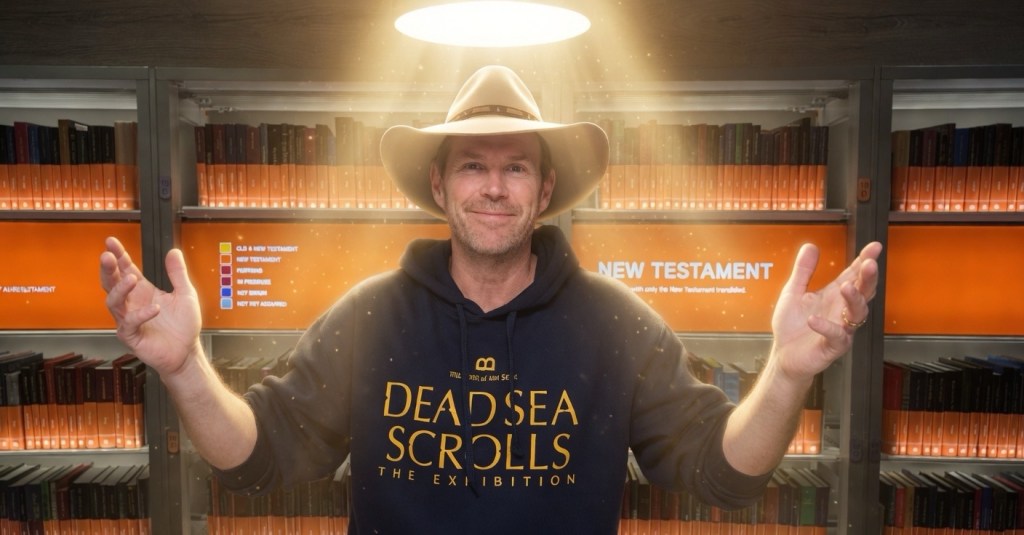
Rich Hoffman is an author, political consultant, and strategic advisor based in Cincinnati, Ohio, and the creator of The Politics of Heaven—a unique framework that connects biblical theology, ancient history, and modern power structures to explain how moral alignment and spiritual forces shape global events. Blending real-world political experience with deep research into archaeology, UFO phenomena, and suppressed historical narratives, Hoffman offers compelling commentary on topics ranging from ancient civilizations and the Dead Sea Scrolls to modern populist movements, paranormal continuity, and leadership strategy in chaotic environments. As the author of The Gunfighter’s Guide to Business and the forthcoming Politics of Heaven, he brings a grounded yet provocative voice to media discussions, supported by firsthand experiences and a cross-disciplinary approach that bridges science, history, and theology. For interviews, speaking engagements, or expert analysis, visit richhoffmanbooks.com or contact directly via phone at 513-307-5815 or email at rhoffman@richhoffmanbooks.com.  If you’ve seen the movie, Disclosure Day and want to talk about it and the implications of Presidnet Trump’s UAP disclosures, let me know and we can bring some color to your coverage. https://richhoffmanbooks.com/media-inquiries-broadcast-topics-and-contact-info/?frame-nonce=ad51e7ecba I do have a firsthand UFO encounter to discuss.
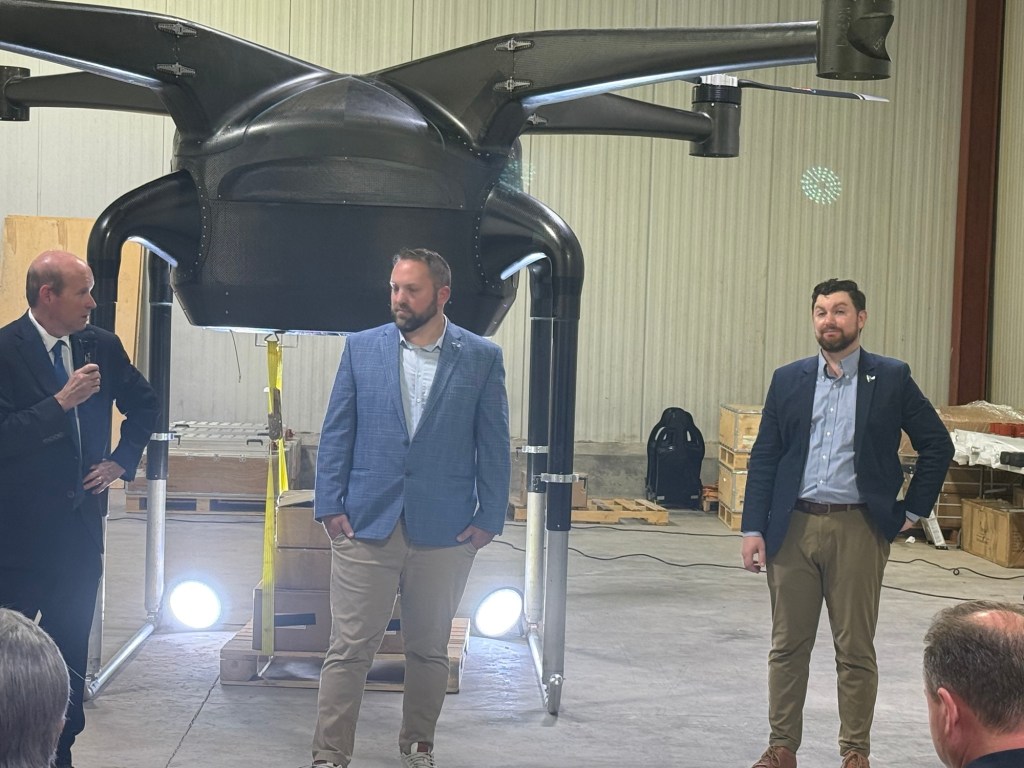
THEY FOLLOW THE PAYCHECK, NOT THE DIRT: Noah’s Ark at Durupınar, Göbekli Tepe Tourism, Petrified Wood, and Why Biblical Archaeology Moves When the Money Moves

I have been watching Turkey for a long time. Not as a tourist with a lanyard. As a man who loves biblical archaeology, loves the people who actually put a trowel in the ground, and does not love the way the field gets fenced. Turkey is producing more ancient material right now than most Western newsrooms know how to hold. Mount Ararat sits on the edge of that pile. South of it, in Ağrı Province near Doğubayazıt, there is a boat-shaped ridge about 515 feet long that has looked like Noah’s Ark from the air since 1959.[1] For decades the respectable answer was simple: it is a rock. In 2026 that answer is finally being put under a drill bit. I do not need the lab to finish before I am allowed to talk. I need the paycheck question asked out loud, because that is usually the lock on the gate.

FOLLOW THE CHECK, THEN FOLLOW THE DIRT

I am a fan of biblical studies. I am a fan of changing the way archaeologists get paid. That is not a side remark. That is the argument.

I have seen the field raw. I love a lot of the people in it. I also know they are controlled, often dramatically, in what they can say if they want to be published, promoted, and invited back next season. If a result smells too biblical, the gatekeepers get a rash. If a government figures out that a mound can sell tickets, the rash clears up. That is not mysticism. That is payroll.[2]

I say the same thing when people talk conspiracy. Do not start with the archaeologist’s personality. Start with who signs the check. People tend to say what they are paid to be allowed to say. When the funding comes from institutions with strong academic gatekeeping, anything that looks like Genesis gets parked in the “folklore” lot. When the funding starts to look like tourism, the same site suddenly deserves radar, cores, and a press conference.[3]

I want fortune and glory for the diggers. I mean that. I want them rich from books and discoveries. I want them famous for being right. I do not want them turned into England.

ENGLAND IS THE WARNING LABEL

I know a good deal about England. I have a son-in-law who is a dual citizen. He married my daughter. He is an American citizen now. He still goes back and forth. I have been there. I have done business there. I like a lot of the people. I like the humor. Monty Python comes to mind. I like Stonehenge. I like a lot of English archaeology very much.[4]

I do not like the posture. A lot of that culture likes a keeper. They want a kindly authority to tell them the rules of the week. Americans, at their best, do not love rulers. The English appetite for a digital ID, a chip in the workflow, a “right to work” that runs through a central system, is the same appetite that makes a scholar wait for permission to say what the dirt already said.[5]

They tried to push a harder version of that during COVID. They have kept pushing digital verification around employment. The politics shifted in 2026. A national mandatory “BritCard” scheme got announced, diluted, and then, under a later Labour government, cancelled as a single national program. The digital right-to-work machinery did not vanish with the slogan. Employers still have to prove status. The paperwork just put on a nicer shirt.[6]

Here is why I drag England into an essay about a boat on a Turkish ridge. Managed economies love a workforce that kneels for a paycheck. Chinese-style social credit is the clean version of the dream: you work if the system says you may work. Archaeology already runs a softer version of that dream. Publish the approved story or starve. I do not want the dirt community to become that. The way you beat it is not always a march on the ministry. The way you beat it is a competitive model. Tourism. Books. Independent labs. Audiences that will pay to see the thing the committee would rather leave unnamed. Money that does not need the old permission slip.[7]

TURKEY LEARNED WHAT ROSWELL LEARNED

Turkey has spent years fighting a reputation problem that is not only about dirt. Radical politics. Security headlines. A country that Western travelers used to skip. Then Göbekli Tepe broke the spell.

Since UNESCO listed Göbekli Tepe in 2018, the site has drawn about 4.4 million visitors over eight years. Officials in Şanlıurfa are talking about a million visitors in 2026 alone. They are widening roads and walkways because the mound cannot hold the crowd on the old path. Stonehenge still beats it on raw annual fame, but Göbekli Tepe is no longer a specialist’s secret. It is an industry.[8]

That is the tell. The stones were always there. Klaus Schmidt and the German team made them famous. The Turkish state then learned what Roswell learned after the jobs left and the town became a husk: a mystery that draws a ticket line can feed a region that ideology starved. Cappadocia already knew it. Underground cities. Tunnels. Cave churches. The Derinkuyu complex alone is a tourist engine. Shipwrecks off the Turkish coast, the Uluburun wreck with its Bronze Age copper and tin, already proved that early sailors were not paddling toy boats.[9]

I have been saying the same thing about dolmens in the Jordan Valley, up past Mount Hermon, and on into the high country that touches Turkey. The landscape is not empty. It is stacked. 5,000 years ago, 10,000 years ago, this belt of the world was not a waiting room for Greece and Rome. We are only now being allowed to notice because noticing pays.[10]

THE RIDGE THAT WOULD NOT SHUT UP

Capt. İlhan Durupınar spotted the boat-shaped formation on a Turkish Air Force aerial photo in 1959. It sits roughly nineteen miles south of Mount Ararat, about 157 meters long, close to the 300 cubits in Genesis if you use a common cubit. Ron Wyatt made it famous in the 1980s. Drilling happened in 1988. Then the site went back to being a punchline. “Natural rock. Stop bothering us.”[11]

I have been to the idea of the boat even if I am writing this from Ohio. The Ark Encounter in Williamstown, Kentucky, is a wonderful exhibit. It is well done. It gives a body a scale the Sunday-school flannelgraph never could. A vessel in that class is not a canoe. I do not find it strange that a man in the deep past could build something that size. I find it strange that modern people think competence was invented in 1850.[12]

We are talking about a world before the Bronze Age as we usually teach it, or on the doorstep of it, depending which flood chronology you use. Five thousand years ago. Seven thousand. The Bible is catching a memory that is older than our textbooks are comfortable admitting. Most wood dies in that kind of time. Turkey is one of the few places where a large wooden thing, if it were mineralized or buried in the right muck, might still leave a chemical ghost.[13]

WHAT 2026 ACTUALLY PRODUCED

This is the part the internet is yelling about, so I am going to keep the facts tighter than the headlines.

In late June 2026, Prof. Dr. Cenker Atila of Sivas Cumhuriyet University opened a permitted field season at Durupınar with an international team of roughly twenty people from five countries. They worked about ninety days. They mapped the ridge in two and three dimensions. They ran ground-penetrating radar and electrical surveys. They collected something like a thousand soil samples from about 150 spots. They took cores and sent them to Ankara. They reported pottery fragments. They have not published a date on the pottery. Some stories said “possible pre-flood.” That is a hope sentence, not a lab sentence.[14]

The radar claims are the ones that moved the needle. The team and its partners reported angular anomalies, right-angle features, a corridor-like void running tens of meters along the long axis, layered shapes some of them are willing to call decks, and tunnel-like cavities a few meters down. Dr. Khosrow Bakhtar deployed BakhtarRadar, a system with a U.S. Air Force EarthRadar pedigree built to find tunnels and buried structure, not to decorate a creationist brochure. His public point was blunt: the old skeptic line that the ridge is just solid rock is the thing being tested.[15]

Soil chemistry is the second needle. Atila has said carbon levels inside the formation ran about 40 percent higher than samples taken outside it, with other differences in organic content, potassium, and pH that you would expect if something that used to be alive had rotted in place. That is not a hull. That is a smell. Smells are how you decide where to drill.[16]

Then the drill bit broke.

In September 2026, core drilling started for the first time since 1988. Noah’s Ark Scans and the university team reported that in one hole, four to five meters down, the bit hit a layer hard enough to shatter the tooling. They said petrified wood or highly mineralized wood is a possibility they want a third-party lab to test. They also said they intend to put a small drone into mapped voids. Winter lab work is supposed to cover organic content, mineralogy, microscopy. Atila has talked about a public scientific statement after the lab finishes. More seasons are already being planned for 2027.[17]

I want to be precise, because precision is how you keep from becoming the guy the gatekeepers are waiting to mock. Nobody has pulled a named plank with Noah’s chisel mark on it. The lead archaeologist has said the data increase the possibility day by day. Skeptics, including some creationists who prefer other ridges on Ararat itself, still call Durupınar a mudslide that learned a boat impression. IFLScience published a scold on September 25, 2026, two days before I am writing this, saying researchers have not found the Ark and that enthusiasts are flogging a dead horse. Fine. Let the horse’s bones go to Ankara. That is what a lab is for.[18]

PETRIFIED WOOD IS THE QUESTION THAT MATTERS THIS WINTER

If the cores come back as ordinary rock, the boat shape remains a boat shape and the tourism office still has a ridge. If the cores come back as petrified or worked wood in the right places, at the right depths, with the right angles sitting over them, then a lot of comfortable lectures have to be rewritten in public.

I think there is more truth in the old story than the modern faculty lounge can stand. I do not think Noah was the only man on earth who ever built a large hull. I think large boats were more common than the textbook allows, and that most of the wood is gone, which is why the textbook looks so clean. Turkey has already given us wrecks with bronze and copper that should have embarrassed the “they only hugged the coastline” sermon. A mineralized hull on a slope below Ararat would not be an insult to science. It would be science finally catching a memory the text never dropped.[19]

GÖBEKLİ TEPE WAS THE REHEARSAL

People who have heard me talk about Göbekli Tepe know why I keep putting it next to the Ark ridge. The official story of human beginnings liked a slow farmer who eventually got around to religion. Göbekli Tepe is a 12,000-year-old ritual machine with T-shaped pillars measured in tons, carved animals, and a construction culture that was not supposed to exist yet. The controversy never really died. It just got a ticket booth.[20]

Once Turkey understood that “zero point of history” sells rooms in Şanlıurfa, the Taş Tepeler landscape around it started getting roads. Karahantepe. The wider Neolithic belt. The same state that can be heavy-handed in other files became suddenly curious. That is not a conversion. That is an education by cash register. I would rather have a curious state than a silent one.[21]

The same pattern is sitting on Durupınar. The formation was always on the tongue. New instruments made it louder. Tourism made it speakable. If you want to stop the old suppression, you do not have to win a faculty vote. You make the silence expensive.

CAPPADOCIA, TUNNELS, AND THE SHIPS THEY SAID COULD NOT EXIST

Cappadocia’s underground cities still feel like a prank the earth played on a committee. Whole communities under the basalt. Storage. Churches. Air shafts. You can call it refuge architecture. You can call it a civilization that knew the surface was not always friendly. Either way, it is not a myth, because you can walk it.[22]

The wrecks off the Turkish coast do the same work for boats. Uluburun, dated to the late fourteenth century B.C., carried copper ingots, tin, glass, and a cargo list that looks like a trade network, not a fisherman’s accident. When people tell me early humans could not have built anything in Noah’s class, I point at the metal and ask them to explain the smaller miracle first.[23]

I am a proponent of the plain idea that people built boats bigger, earlier, and farther than the approved timeline. Wood vanishes. Stone lies. Metal sometimes survives. Chemistry sometimes remembers. Radar sometimes finds a right angle in a place the mudslide story did not budget for.

WHAT I THINK THE LAB WILL FORCE US TO SAY

I do not run Atila’s lab. I am not going to baptize a press release. I will say what I think, because that is the job of a man who writes under his own name.

I think a serious fraction of that ridge is going to come back as organic, mineralized, or both. I think “just a rock” is going to look sloppier in 2027 than it did in 1988. I think the pottery will turn out to be human presence on a landscape that already had a story, not a magic proof by itself. I think the right angles will keep the argument alive even if some of them resolve into geology. And I think the important civilizational fact will not be “we found the one boat.” It will be “large construction in that age was not an anomaly.”[24]

If the Bible only ever caught a hint of a much longer truth, that is still a hint with better staying power than most peer-reviewed fashions. Texts that survive five millennia are not accidents. They are technologies of memory. Archaeology at its best is the recovery of the hardware those memories were pointing at.[25]

FORTUNE AND GLORY, NOT A CHIP

I want archaeologists paid like people who found something. Not like clerks. Fortune and glory is not a cartoon line to me. It is the opposite of the English model I do not want exported into the dirt. If the only way you eat is to please the committee, you will not find an ark even if you are standing on the deck. If the public will buy the book, walk the ridge, and fund a lab that does not need a bishop or a dean to bless the result, the silence breaks.

That is also how you fight the larger politics. Centralized systems love a limited workforce. They love a chip. They love a right-to-work switch. Automation then arrives to finish the job the policy started, because a frightened labor pool and a permission culture do not compete well on a global stage. Tourism is crude. It is also one of the few forces that has repeatedly forced closed countries and closed faculties to open a gate they would rather keep locked.[26]

THE POLITICS OF HEAVEN IS NOT A SIDE HOBBY

I keep saying it because it is the frame, not the bumper sticker. In the age of disclosure you must understand the politics of heaven. A flood story is not only meteorology. A boat on a mountain is not only a tourist photo. If the old world had a rupture, and if memory of that rupture was stored in Genesis, then the fight over whether the ridge may be mentioned in polite company is not a geology quarrel. It is a jurisdiction quarrel. Who gets to say what the deep past contains. Who gets to keep the human race smaller than the text says we were.[27]

Disclosure, in the popular sense, is usually aimed at the sky. Fine. Start with the ground. Turkey is coughing up temples older than the agriculture story, cities under the rock, wrecks full of metal, and now a boat-shaped ridge with a broken drill bit and a carbon spike. The sky will still be there after the cores come back from Ankara.

NOTES FOR LEADERS

If you run a company, a church, a school, or a town, do not wait for a faculty to tell you when a fact has become respectable.

Do not sneer at tourism. Tourism is often the only leverage a buried truth gets.

Do not confuse a headline with a hull. Demand the lab. Then do not let the lab hide.

Do not pretend early people were stupid. That conceit is how modern managers excuse their own smallness.

Do not attack only the archaeologist. Ask who signed the check.

Do not copy England’s posture and call it seriousness. A culture that wants a keeper will always find a reason to leave the boat in the mud.

If you ever read my book The Gunfighter’s Guide to Business, you already know how I think about permission cultures. The dirt is the same fight with older dust.[28]

We will know more when Ankara speaks. I can live with waiting for chemistry. I cannot live with waiting for permission.

FOOTNOTES

[1] The Durupınar Formation is a boat-shaped landform near Doğubayazıt in Ağrı Province, eastern Türkiye, about 19 miles south of Mount Ararat / Ağrı Dağı. Length commonly given as 157 meters / 515 feet. Identified on aerial imagery in 1959 by Capt. İlhan Durupınar.

[2] On academic gatekeeping and the difficulty of publishing explicitly biblical interpretations in mainstream journals, see the long-running tension documented in biblical archaeology magazines and in critiques of “minimalist” versus “maximalist” schools. The paycheck point is the author’s operational claim, not a claim that every archaeologist is dishonest.

[3] Noah’s Ark Scans, the California-linked project working with Turkish partners at Durupınar, also operates paid site visits. Tourism and research are braided at the ridge the same way they are braided at Göbekli Tepe and Roswell.

[4] Stonehenge visitor figures commonly run in the low millions over multi-year counts; English Heritage has reported on the order of 1.5 million visits in strong years. The comparison in the essay is scale and brand, not a claim that Durupınar already matches that traffic.

[5] UK digital identity and right-to-work policy, 2025–2026: Prime Minister Keir Starmer announced a digital ID scheme on 26 September 2025, initially framed as mandatory for proving the right to work. The mandatory single-card version was later diluted. See House of Commons Library briefing CBP-10369.

[6] In July 2026 the subsequent Burnham Labour government cancelled the national Digital ID programme as proposed. Digital right-to-work checks through certified Digital Verification Services and the Home Office online service continued to expand, with a new code of practice associated with 1 October 2026. Cancellation of a branded national card is not the same thing as cancellation of digital employment control.

[7] The competitive-model argument is the author’s: centralized permission cultures lose to open ticket lines, independent publication, and labs that can be paid without a ministry’s blessing.

[8] Daily Sabah and Anadolu Agency, July 2026: Göbeklitepe drew 4,409,590 visitors in the eight years after UNESCO listing in July 2018. Şanlıurfa Tourism Development Association head Mehmet Kamil Türkmen cited more than 320,000 visitors in the first half of 2026 and a path toward roughly one million for the year. Roads and walkways were being expanded in summer 2026.

[9] Uluburun shipwreck, discovered off Kaş, Türkiye, in 1982; late Bronze Age cargo including copper and tin ingots. Cappadocia underground settlements, including Derinkuyu, are open archaeological-tourist sites under the Turkish Ministry of Culture and Tourism.

[10] Dolmen fields in the Jordan Valley and southern Levant, and the ritual/high-place landscape around Mount Hermon, are part of the author’s running map of pre-classical sacred geography. See also Michael S. Heiser, The Unseen Realm (2015), on the Hermon tradition.

[11] Durupınar research history: Wyatt expeditions in the 1980s; 1988 drilling; later ground-penetrating radar and soil work by associated teams in 2019, 2021, 2022, and 2024 before the 2026 university-led season.

[12] Ark Encounter, Williamstown, Kentucky, opened 2016 by Answers in Genesis. The wooden reconstruction is 510 feet long, built to a 51-centimeter cubit reading of Genesis 6:15.

[13] Genesis 6–9; 2 Peter 2:5; Hebrews 11:7. Chronologies differ. Ussher-style readings cluster the Flood in the third millennium B.C. Other conservative readings push earlier. The essay does not pretend those clocks agree. It insists the memory is older than Bronze Age textbooks.

[14] 2026 Durupınar season: Prof. Dr. Cenker Atila, Archaeology Department, Sivas Cumhuriyet University; fieldwork beginning late June 2026; about 20 participants from five countries; approximately 90 days; roughly 1,000 soil samples from about 150 locations; cores to Ankara; pottery fragments reported in late September 2026 without a published date. Rector Prof. Dr. Ahmet Şengönül publicly supported the project.

[15] August 2026 BakhtarRadar deployment by Dr. Khosrow Bakhtar, Bakhtar Research and Engineering, with Noah’s Ark Scans. Reported features have included angular structures to about six meters, a central corridor on the order of 70 meters, tunnel-like voids, and right-angle anomalies. These are geophysical interpretations pending physical confirmation.

[16] Atila, quoted in Arkeonews and university-linked reporting, August–September 2026: interior carbon about 40 percent higher than exterior samples; organic matter, potassium, and pH differences treated as leads, not as a completed identification of timber.

[17] Noah’s Ark Scans / GlobeNewswire, 23 September 2026: core drilling begun; bit shattered on a hard layer about 4–5 meters down in one interior hole; petrified or highly mineralized wood listed as a possibility for third-party testing; drone inspection of mapped voids planned; laboratory suite to include organic content, mineralogy, and microscopy; additional seasons planned for 2027.

[18] IFLScience, “No, Researchers Haven’t Found ‘Noah’s Ark’ Near Mount Ararat In Eastern Turkey,” 25 September 2026. The piece notes tour pricing associated with Noah’s Ark Scans and the long geologic counter-argument that Durupınar is a natural formation. Fair warning. Not a lab result.

[19] On early seafaring and large hulls, see the Uluburun corpus and the broader literature on prehistoric navigation in the eastern Mediterranean and Black Sea. The author’s claim is capacity, not a completed identification of Durupınar as the Genesis vessel.

[20] Klaus Schmidt, Göbekli Tepe: A Stone Age Sanctuary in South-Eastern Anatolia (exh. and site literature). Monumental T-pillars, 3–6 meters, enclosures dated to the Pre-Pottery Neolithic, roughly the 10th–9th millennium B.C.

[21] Taş Tepeler (“Stone Mounds”) is the Turkish umbrella for the wider Şanlıurfa Neolithic landscape, including Karahantepe. 2019 was declared the Year of Göbeklitepe by President Recep Tayyip Erdoğan.

[22] Derinkuyu Underground City and the wider Cappadocia tunnel-and-refuge systems. Ministry visitor figures during 2026 holiday periods put related Cappadocia sites in the tens of thousands per short window.

[23] Cemal Pulak and the Institute of Nautical Archaeology publications on Uluburun. Copper from Cyprus, tin likely from distant sources, a cargo that implies organized long-range exchange.

[24] Atila has said organic remains and carbon dating of those remains will decide whether “there really is a ship here.” That is the correct sentence. Radar is a map. Chemistry is a verdict.

[25] On Scripture as durable cultural memory rather than late fiction, see the maximalist stream in biblical archaeology and the author’s forthcoming The Politics of Heaven.

[26] The England comparison is analogical: permission-to-work systems and permission-to-publish systems both shrink the labor of truth. Automation then harvests the gap.

[27] Rich Hoffman, The Politics of Heaven (forthcoming). Working essays at richhoffmanbooks.com and overmanwarrior.wordpress.com.

[28] Rich Hoffman, The Gunfighter’s Guide to Business.

BIBLIOGRAPHY AND FURTHER READING

The Site and the 2026 Season

Atila, Cenker, and Sivas Cumhuriyet University communications on the 2026 Durupınar field season. Ağrı Province / Doğubayazıt. June–September 2026. Bakhtar, Khosrow. BakhtarRadar / EarthRadar deployment reports and August 18, 2026 GlobeNewswire release with Noah’s Ark Scans. Noah’s Ark Scans. “Core Drilling Begins at Durupinar Noah’s Ark Site, Drill Bit Shatters on Possible Layer of Petrified Wood.” GlobeNewswire, September 23, 2026. Arkeonews. “Radar Finds Right-Angled Anomalies Beneath Türkiye’s Famous ‘Noah’s Ark’ Formation.” August 29, 2026. Arkeonews. “Noah’s Ark Mystery Deepens as New Discoveries Emerge Near Mount Ararat.” September 23, 2026. Türkiye Today. “Possible pre-Flood pottery uncovered during Noah’s Ark search on Mount Agri.” September 24, 2026. Anatolian Archaeology. “Pottery Found at Türkiye’s Mysterious ‘Noah’s Ark’ Formation.” September 23, 2026. Ancientist. “Pottery Found During New Search at Türkiye’s ‘Noah’s Ark’ Formation.” September 23, 2026. Ancientist. “Radar Built to Find Military Tunnels Tests Turkey’s Noah’s Ark-Shaped Formation.” August 30, 2026. Living Passages. “Was Noah’s Ark Found at Durupinar? What the 2026 Scans Test.” Updated September 22, 2026. Ancient Content. “Drilling at Durupınar for the First Time Since 1988.” September 23, 2026. IFLScience. “No, Researchers Haven’t Found ‘Noah’s Ark’ Near Mount Ararat In Eastern Turkey.” September 25, 2026. Gadget Review. “Scientists Scanned the ‘Noah’s Ark’ Formation — and Found Impossible Right-Angle Structures.” September 2026.

Bible, Flood Memory, and the Boat

The Holy Bible. Genesis 6–9; 2 Peter 2:5; Hebrews 11:7. KJV / NKJV. Beale, G. K. The Temple and the Church’s Mission. Downers Grove, IL: IVP Academic, 2004. Heiser, Michael S. The Unseen Realm. Bellingham, WA: Lexham Press, 2015. Heiser, Michael S. Reversing Hermon. Crane, MO: Defender, 2017. Snelling, Andrew. Earth’s Catastrophic Past. Dallas: Institute for Creation Research, 2009. Whitcomb, John C., and Henry M. Morris. The Genesis Flood. Philadelphia: Presbyterian and Reformed, 1961. Ark Encounter / Answers in Genesis. Site literature, Williamstown, Kentucky.

Göbekli Tepe, Taş Tepeler, and Turkish Tourism

Schmidt, Klaus. Göbekli Tepe site reports and popular synthesis. Daily Sabah / Anadolu Agency. “Göbeklitepe draws 4.4M visitors in 8 years since UNESCO listing.” July 2026. Türkiye Today. “Gobeklitepe expands roads, visitor routes as annual traffic nears 1M.” August 2026. Anatolian Archaeology. “Göbeklitepe Expands Routes for Nearly One Million Visitors.” August 2026. UNESCO World Heritage Centre. Göbekli Tepe listing, 2018. Şanlıurfa Tourism Development Association public comments, 2026.

Ships, Metal, Caves, and the Older World

Bass, George F., and Cemal Pulak. Uluburun and Institute of Nautical Archaeology publications. Pulak, Cemal. Papers on the Uluburun copper and tin cargo. Ministry of Culture and Tourism of Türkiye. Cappadocia and Derinkuyu visitor materials. Joffe, Alexander H., and regional surveys on Levantine dolmens.

Paychecks, Permission Cultures, and Digital Control

House of Commons Library. “Digital ID in the UK.” CBP-10369. Updated 2026. The Immigration (Restrictions on Employment and Residential Accommodation) Regulations 2026, U.K. S.I. 2026/700. New York Times. “U.K. Retreats on Plan to Require ‘BritCard’ ID for Workers.” January 14, 2026. Data Use and Access Act 2025, U.K., Part 2, digital verification services.

Disclosure, Archaeology, and the Author’s Frame

Farah, Dan, dir. The Age of Disclosure. 2025. Keel, John A. The Mothman Prophecies. 1975. Vallée, Jacques. Passport to Magonia. 1969. Hoffman, Rich. The Gunfighter’s Guide to Businessusiness. Hoffman, Rich. The Politics of Heaven. Forthcoming. Hoffman, Rich. OvermanWarrior 

Rich Hoffman

More about me

Click Here to Protect Yourself with Second Call Defense https://www.secondcalldefense.org/?affiliate=20707

About the Author: Rich Hoffman

Rich Hoffman is an author, political consultant, and strategic advisor based in Cincinnati, Ohio, and the creator of The Politics of Heaven—a unique framework that connects biblical theology, ancient history, and modern power structures to explain how moral alignment and spiritual forces shape global events. Blending real-world political experience with deep research into archaeology, UFO phenomena, and suppressed historical narratives, Hoffman offers compelling commentary on topics ranging from ancient civilizations and the Dead Sea Scrolls to modern populist movements, paranormal continuity, and leadership strategy in chaotic environments. As the author of The Gunfighter’s Guide to Business and the forthcoming Politics of Heaven, he brings a grounded yet provocative voice to media discussions, supported by firsthand experiences and a cross-disciplinary approach that bridges science, history, and theology. For interviews, speaking engagements, or expert analysis, visit richhoffmanbooks.com or contact directly via phone at 513-307-5815 or email at rhoffman@richhoffmanbooks.com.  If you’ve seen the movie, Disclosure Day and want to talk about it and the implications of Presidnet Trump’s UAP disclosures, let me know and we can bring some color to your coverage. https://richhoffmanbooks.com/media-inquiries-broadcast-topics-and-contact-info/?frame-nonce=ad51e7ecba I do have a firsthand UFO encounter to discuss.
Paradise Lost, Pickle Rick, John Milton’s Blindness:  Why I Feel Like the Hammer of the Holy Spirit

I write this for leadership people. Everyday readers can come along. I am glad when they do. But I am not aiming at a general audience that wants a latte and a soft ending. I am aiming at the people who have to make payroll, keep promises after a friend dies, and decide whether the universe still contains free will or only the appearance of it. In the age of disclosure you must understand the politics of heaven.[1] That sentence is not a slogan I printed on a mug. It is the working title of the book I have been writing, and it is the only frame I have found that can hold Milton, a pickle on a workbench, a farting office pirate, the Holy Spirit, and the rivals who do not want any of that named.[2]

People have been kind about the AI conversations I have been having in public. I appreciate that. I think those conversations are one useful tool in a much older war. Human beings built tools because the rules of the fight have been lopsided against our race for a very long time. Through art, theology, and the various sciences we have tried to identify the problem and answer it. Artificial intelligence is one more hammer in that toolbox. I do not worship the hammer. I use it.

WHAT PEOPLE KEEP TELLING ME ABOUT PARADISE LOST

The feedback I have been getting on The Politics of Heaven keeps rhyming with the same book. People who have read it tell me it reminds them of John Milton’s Paradise Lost. Some of them say that as a compliment. Some of them say it as a warning. A traditional publisher hears “this is like Paradise Lost” and starts calculating how many buyers in a secular market want a twelve-book blank-verse argument about the Fall, pride, and the architecture of existence.[3] I think the comparison is a good thing. I also think the mechanisms of trade publishing have been too entrenched for a book this heavy-handed to walk in the front door without being asked to lose twenty pounds and smile more.[49]

I picked up a copy at my Barnes & Noble at Bridgewater Falls. It was the kind of edition that sits off the ordinary shelf, the one with the art that makes you hold the object like it still believes language can carry glory. I bought it because so many people had already put Milton’s name next to mine, and I wanted the poem in my hands while I decided what I believed about the Holy Spirit’s role in a blind man’s work.[33]

Milton’s poem is the famous English account of the Fall in the garden. It is also more than that. It is an attempt to “justify the ways of God to men.”[4] That is an insane sentence if you say it out loud in 2026. It is also the only sentence large enough for the problem. If you will not justify the ways of God, you will justify the ways of the house flipper, the compliance officer, the cartel in the sewer, or the spirit that does not want the garden mentioned at all.

MILTON WAS BLIND, DEFEATED, AND STILL WROTE THE ARCHITECTURE OF EXISTENCE

John Milton was completely blind when he composed Paradise Lost. He dictated it. He had already given his eyes to pamphlets and state papers for a republic that collapsed under him. After the Restoration he was a politically defeated man, lucky to keep his head.[5][6][7] People who write books like this have usually gone over the deep end a little. They are not sipping lattes on a yacht in a distant luxury destination. The work comes out of the school of hard knocks. The harder the knocks, the more some readers feel the heat in the page.

A lot of people say Milton was inspired by the Holy Spirit. I tend to agree. I also want to challenge the bubble version of that claim. The bubble version says the Spirit lives in a giant empty room with no rivals, no politics, no competing wills, and no interest in using ugly tools. That is not the Bible I read. That is not the world I have watched. And that is not the Milton I hear when Satan wakes up in a lake of fire and starts giving speeches that still recruit undergraduates.[8][9]

Milton revised the poem from ten books to twelve so it would stand next to Virgil.[3][59] That is not a decorating choice. That is a man who believed the English language could carry an epic the way Latin carried Rome. He gave English the word pandemonium for the capital of Hell.[34] He made Satan so persuasive in the early books that William Blake said Milton was of the Devil’s party without knowing it, and Shelley treated Satan as a moral being superior to the God Milton depicts.[8][9] I think Blake and Shelley were usefully wrong. They felt the heat and then baptized it. Milton made Satan alluring on purpose so the reader would feel the temptation and then watch the costume shrink. The fallen archangel ends as a serpent on his belly. The revolutionary becomes a reptile. That is not an accident of taste. That is a diagnosis.[10][11][36]

“The mind is its own place, and in itself / Can make a Heav’n of Hell, a Hell of Heav’n.” — Paradise Lost 1.254–255

Stanley Fish argued that the poem first seduces you and then convicts you. You sympathize with the charismatic rebel. Then you watch pride eat him from the inside. “Which way I fly is Hell; myself am Hell.”[11][36] That is not liberty. That is self-imprisonment with better speeches. I have sat across the hall from men who thought they were running a revolution because they had a fresh coat of paint and a compliance binder. Same energy. Smaller stage.

SUFFICIENT TO HAVE STOOD, THOUGH FREE TO FALL

The human half of the poem is where Milton gets modern. In Genesis the Fall is brief. In Paradise Lost it is a long, agonizing process of psychological manipulation and domestic drama.[13] Eve wants to work alone to prove her strength. Adam lets her. The serpent does not have to invent vanity. He only has to aim it. Milton’s God says the pair were “sufficient to have stood, though free to fall.”[12] If they had been puppets, their obedience would have meant nothing. Love that cannot refuse is not love. It is programming.

Eve reaches for knowledge and status. Adam is not deceived the same way. He chooses to fall because he cannot bear separation from her. That is a very expensive sentence. It means the first man preferred a human relationship to a divine command, and then had to live inside the wreck of both. The shame arrives. The blame arrives. Love turns into lust and then into argument. They only find their way back by reconciling with each other and then with God. The ending is not a crushed defeat. Michael shows them a vision of the future, the Messiah, the long road of redemption. They leave Eden hand in hand, wandering steps and slow.[42] Milton turned a story of loss into a story of potential. That is why Mary Shelley’s Creature reads the poem and cannot decide whether he is Adam or Satan.[14] That is why Pullman tried to flip the whole machine and call the Fall a graduation.[15]

C. S. Lewis warned readers not to confuse Satan’s charisma with Milton’s allegiance.[16] I agree with Lewis on the hierarchy. I do not agree that hierarchy settles the political question I keep asking. Milton wrote after his earthly republic failed. He had served Cromwell. He had argued that kings could be tried.[48] Then the king came back. The poem is doing more than Sunday school. It is a defeated revolutionary trying to understand authority, liberty, order, and why a just cause can still lose on Tuesday. Orlando Reade has traced how later revolutionaries kept stealing the poem for their own wars.[35] I am not stealing it for a party. I am using it as a map of a fight that did not end in 1660 and did not end in Eden.

WAS THE HOLY SPIRIT ALONE IN THE ROOM?

If you believe the Holy Spirit drove Milton’s hand, you already believe the Spirit works in history through damaged people. Good. Then do not stop the sentence halfway. Who said the Spirit was the only intelligence in the room? The Bible does not say that. Paul says we wrestle not against flesh and blood but against principalities and powers.[17] Psalm 82 is a courtroom, not a lullaby.[18] Daniel watches territorial princes delay an angel.[19] Revelation puts a war in heaven before it puts a cradle in Bethlehem.[43]

My book follows those breadcrumbs across a long stretch of time. I think The Politics of Heaven will be a series, not a pamphlet. The first volume has to identify the crumbs before it can feed you the loaf. I am not claiming I sit on an ivory throne and watch galaxies turn. I am claiming that a lot of respectable theology prefers a lonely God because a lonely God is easier to manage. A God with rivals requires politics. Politics requires sides. Sides require tools. Tools get splinters.

They loved a certain plastic Jesus in the 1960s when they needed him to bless a hippie lifestyle with loveless sex and primal behavior embraced as virtue. They did not want the message. They still do not want the God of creation to finish what He started. The hatred of Jesus that walks around in polite clothes is not a personality quirk. It is a tell. If there were no competing spirits, the tell would not be so consistent, so old, and so allergic to the actual claims of the text.

I have been shown things on purpose so I can talk like this. That sounds silly until you have lived inside a twenty-year stretch that felt almost ordinary and then watched the ordinary catch fire after you finished a manuscript. Since I completed The Politics of Heaven I have had nothing but trouble. Weird family friction. Job change. Time-sucking nonsense. I do not think that is a coincidence, and I also do not think coincidence is a Christian doctrine. If the elements I identified wanted to stay hidden in the order of our culture, they would prefer I write a nice book about leadership habits and leave heaven out of it.

PICKLE RICK IS NOT A JOKE. IT IS A METHOD.

On my fiftieth birthday my kids gave me a Pickle Rick figure. It used to sit on my desk at work. I do not talk about Rick and Morty as much as I watch it. It is my favorite show, and the grandpa is the character my family thinks I resemble.[20][21][58] I will take the comparison. Rick is the smartest being in that universe. He does not want to go to family therapy. So he turns himself into a pickle on the workbench to challenge himself: if I remove my own tools, can I still win?

The family leaves. It rains. A cat knocks him off the bench. He has no arms and no legs. He is a mouth and a pair of eyes. He rolls into the sewer. He bites the heads off rats, hijacks their biology, builds himself a filthy little warrior body, conquers the sewer, knocks over a drug cartel, and still ends up in therapy on time. He does not escape the appointment. He survives the condition. That is the part my family recognized. That is the part I recognized.

When I say I am going through something, Pickle Rick is the cleanest picture I have. I did not want to stay in a chair I no longer believed in. I also did not want to pretend I was above the fight. So I put myself in a hard spot on purpose. I wanted to measure how the universe responds when the old furniture gets carried out and the new owners start talking about compliance. I wanted to know whether God protects His tools or just uses them up. I wanted to know whether free will exists or whether the only choice a hammer gets is which nail it hits first.

People hear “I turned myself into a pickle” and think I am being cute. I am not being cute. I am describing a method. If hardship is coming anyway, you can at least choose the shape of it. Rick chose the pickle to dodge therapy and accidentally ran a graduate seminar in survival. I chose a season of stripped tools to see what was left when the title, the office, and the illusion of being indispensable were gone. The show is filthy. The theology is not. The theology is: do not confuse comfort with calling, and do not confuse a workbench with a grave.[47]

THE HAMMER OF GOD AND THE QUESTION I RESENT

I have said for a while that I feel like the hammer of the Holy Spirit. I do not always want the job. When I try not to be it, the reminder comes back in the grain of things: in the biological world of Earth, you are My hammer. I had about twenty years when day-to-day life was pretty good. Then the weather changed. I wrote the book. The book named a structure. The structure pushed back.

Here is the part that makes me mad, and I am not going to baptize the anger so it sounds pious. If God made the universe, why does He need a hammer that talks back? Why this tool? Why not a better one? The head of a hammer after a carpenter has been on a roof all day is not a glamorous object. Nobody envies the steel. They envy the house. I look at the pain that followed the manuscript and I ask the obvious question: why can’t You do a cleaner job of running Your own shop, God?

The answer that keeps coming back is the one I like least. You were not created for your own enjoyment. You may taste wine. You may love a grandchild’s chicken nugget day. Those are real pleasures. They are not the purpose. They are incentives and mercies inside an assignment. If you buy a hamster a wheel and a salt block, the hamster has pleasures. The hamster does not own the living room.[39]

Read the garden that way and a lot of sentimental religion falls over. We were put in Eden as stewards, image-bearers, a living toolset meant to extend heaven’s order into earth. The wrath in the garden is not the tantrum of a needy parent. It is the fury of a craftsman whose instrument started taking orders from the competition.[39] I view the human race as a way of copying God’s work on earth as it is in heaven. I think we were made the way we now make AI: as combat capacity against elements that do not love the garden. The disaster was not that we were tools. The disaster was that we were easily seduced off the task. That is Paradise Lost in one paragraph.

Isaiah can call Assyria a rod in the Lord’s hand and still hold Assyria responsible.[45] Paul can call a thorn a messenger and still plead three times for it to leave.[44] Hebrews can call hardship evidence of sonship rather than abandonment.[37] None of that makes the hammer feel better at 2 a.m. It does keep the hammer from lying about the job.

WE WERE NOT CREATED FOR OUR OWN PLEASURE

We do not exist for our own pleasure. We are given the opportunity to experience pleasure through taste and the rest of the senses. A good meal is not a sin. A good day with grandchildren is not a bribe I have to refuse. But we are not promised a comfortable life as the point of the contract. Pleasure is used to incentivize the right thing. It is not the right thing.

If you read the Bible as a prosperity brochure you will hate this essay, and you will hate Milton, and you will hate half the Psalms. The theme is not “God wants you on a yacht.” The theme is that suffering is in the plot because the plot is a war, not a spa.[38] Remove the suffering and you do not get a better book. You get a brochure. Satan suffers. Milton suffers. Christ suffers. The people who tell you the Holy Spirit only produces serenity have not read the sources they quote.  Suffering is the key theme of life, but why?

I resent the binary when it is put crudely: suffer or serve. I have spent a career arguing about limited government, competent companies, and whether a shop can hit a number without lying. Those are debates with room in them. Then you get told the deeper game does not offer the same menu. You can choose a method of pain. You cannot choose a universe with no pain and still tell the truth about evil. I do not like those two options. I am not required to like them. I am required not to pretend a third option exists just because I have a personality.

BUSINESS FLIPPERS, COMPLIANCE AS A COSTUME, AND WHY I LEFT

I was a high-level senior executive at a very good company. I put a lot of love into that place for a long time. The owner passed away. I had made promises. Some members of that world I liked. Loyalty is a real thing. It is also how a man stays in a room after the room has changed species.

New buyers arrived. A new management group set up across the hall. I was the old furniture. They put up with me for the politics of the transition. I did not like their furniture either. I have used the house-flipper analogy for context. You have seen the type in every neighborhood. They buy a tired house, lay cheap carpet, spray a smell that means “new,” and sell at the top of the market. The same rot is still in the joists. There is a corporate version of that man. He distresses a business, especially a business coming out of COVID, puts a coat of process on it, talks about compliance, and tries to ride someone else’s years of work to an exit.[41]

I have sympathy for what a political and regulatory vise can do to a company. I have watched FirstEnergy’s public wreck and recognized the pattern of a firm pushed toward the brink by forces that are not all on the shop floor.[40] I have also watched incompetent men use “the last guys cut corners” as a story that excuses their inability to sell. The turtle calls the rabbit a criminal because the turtle cannot run. Then the turtle staffs the building with people who are good at hiding inside rules they did not write. Compliance becomes a costume for ineptitude. That costume works until the payroll has to be borrowed and the people who used to make the place go start asking for a door.

There was a man across from me I will not decorate. He was a low character kind of person.  The kind of person who would whistle at a girl on the sidewalk and call it charm. Not biblically inclined. He sat there and farted through the day like the air belonged to him. Pirates used to be a romance my oldest daughter and I could share. I do not like pirates as much as I used to. These were pirates who wanted to steal wealth other people had built, and when they could not find the well they blamed the previous management for having known where the water was.

I made it easy for them to want me gone, and I was glad to go. They paid me a lot of money to leave. I took it. I wanted that message in the air. I know what it costs to perform at a certain level. I know what happens to a payroll when you replace operators with flippers. I am not going to let them loaf off my work and then baptize their slowness as virtue.

WHAT I TOLD THE PEOPLE WHO WANT THEIR JOBS BACK

Since I left, the place has struggled to hit the numbers they thought would be easy. People who used to work with me have been asking if I can give them a job.  I told them the truth. I am not quite ready. Give me a month. Give me two. I am Pickle Rick right now. That means I am on the workbench without the old tools, testing what I can survive, and I am not going to hire a rescue party before I have a body again.

I did what I could for employees while I was there. I am not obligated to become the emergency exit for every person the new owners disappoint. I also know how this works. When you are the person who can still hit a number, every frightened staffer wants to climb onto your back. If you let them do it during the pickle phase, you never find out whether you can crawl through the sewer on your own. I will keep them in mind. I will not pretend I am already staffed for a company I have not rebuilt.

This is why I talk about swinging for the fences. I want there to be free will in the universe. I am testing the market to see if it exists. I suspect the deeper layer does not offer as much of it as American speeches claim. I still act as if a man can choose his method. God protects His tools from being eradicated because He still wants them in the box. That is not the same thing as promising the tool a beach.

JONATHAN EDWARDS, AI, AND THE SCHOOL OF AFFLICTION

One of the useful things about these machines is that if a dead man left a large enough paper trail, you can have a conversation that stays inside his mind instead of your fan fiction. Jonathan Edwards left that kind of trail.[22][23][52] I wanted Edwards and I wanted the Holy Spirit in the same room as Milton. I wanted to ask whether the Spirit acted alone when a blind, politically ruined man wrote the English language’s most ambitious poem, or whether competing spirits were trying to interrupt the work.

Edwards, as the machine rendered him from his actual body of writing, would not give me the lonely-bubble theory. He would give me spiritual warfare. Satan as the adversary. Affliction as the school. The resurrection as public victory rather than a mood.[24][54] When I pressed him on hope versus conviction, the distinction mattered. Hope can be a wish. Conviction says providence already governs the story and the empty tomb is not a pep talk. Milton did not write Paradise Lost as optimism. He wrote it as a claim about the government of all things.

I told Edwards—this will sound comic, and I meant it—that he ought to watch some Rick and Morty. The principle is older than Adult Swim. Hardship comes. A man may choose a posture inside it. Fire purifies gold. Affliction strips the earthly props so a man has to lean on God or collapse.[25][26] Milton’s blindness did not merely add atmosphere. It took away the last ordinary supports. My pickle season is a cruder picture of the same school. I do not like the school. I have stopped pretending I am only visiting.

Edwards would say our choice does not dethrone providence. I can live with that sentence if I am allowed the other half of it: providence does not make the flipper innocent, and it does not make the hammer mute. Augustine already knew the two cities grow in the same field.[27] Father Schall already knew heaven and hell have political consequences on earth.[28] I am not inventing a subject. I am refusing to keep it in the seminary basement while the shop floor gets looted.

SATAN’S RHETORIC AND THE RIVALS OF YAHWEH

Milton understood something Hollywood keeps cheapening. Evil is not only a cartoon villain. Evil is a rhetoric. It sounds like liberty. It sounds like injured merit. It sounds like “who wrote these rules?” It recruits the part of you that is tired of being a tool. Then it builds a capital named Pandemonium and calls the construction project freedom.

I do not think Yahweh, the Son, and the Spirit are alone in a big empty universe. I think the biblical writers already told us there is a contested field. I think some of what the age of disclosure is circling—UAP, non-human intelligence, the old folklore Jacques Vallée and John Keel tried to drag into the modern conversation—will not make sense if you insist that the only two categories are “space aliens” and “nothing.”[29][30][46] I like Keel. I like the older investigators who refused to flatten every light in the sky into either a sermon or a saucer. My book is an effort to put a political order back on the spirit side of the ledger. If heaven has politics, disclosure is not a press conference. It is a jurisdiction fight.

God may be the creator of this frame and still not be the mascot of the way we prefer to imagine Him. Scale is grotesque. Quantum and cosmic sizes make our arguments look like ants debating a cathedral. That does not make the ants imaginary. It makes their pride funny and their assignment still binding. I have used the image of cells in a body, worlds inside worlds, not because I want a new cult, but because the lonely-monarch model cannot explain the evidence the Bible itself keeps putting on the table.

NOAH’S ARK, THE GARDEN, AND THE BREADCRUMBS

I said on the podcast I would get to a wonderful and contested piece of news out of Turkey. I will not oversell it. The Durupınar Formation near Mount Ararat has been a boat-shaped argument since 1959. In 2026 an international team under Prof. Cenker Atila spent a field season there with radar, mapping, pottery fragments, and something like a thousand soil samples. Enthusiasts hear ark. Geologists hear hill. I hear a breadcrumb.[31][32]

I do not need a tourist ticket to believe Genesis. I also do not think it is an accident that the old stories keep growing physical arguments at the edge of respectable attention. The garden, the flood, the tower, the temple, the empty tomb—these are not self-help metaphors. They are claims about a contested earth. If you flatten them into Sunday-school felt boards, you will not understand why naming them in a book might make a man’s ordinary life get louder.[53]

AI AS A TOOL IN A LOPSIDED WAR

I said at the start that AI is a tool mankind created to fight a battle whose rules have been lopsided against us. I mean that. The people who want the tool banned and the people who want the tool worshiped are both useful to the wrong side. One leaves you unarmed. The other puts a new idol on the workbench and calls it a colleague. I use the machine the way I use a press or a spreadsheet. I do not let it baptize itself.

Talking to a reconstructed Jonathan Edwards is not necromancy. It is literacy plus memory. If the paper trail is thick enough, the conversation can be more honest than a living panel that only knows three quotations. That is one more way to steal fire back. The rivals of God have always preferred a dark information environment. Flood the zone with noise, mock the old books, keep Milton on the exam and out of the bloodstream. Then act surprised when a generation cannot tell a rebel from a savior.

I am not the Holy Spirit. I am not Milton. I am not Edwards. I am a man from Ohio who ran things, wrote things, and got tired of watching low-character people call their appetite a strategy.[57] If it is presumptuous to say I have been driven in a way that rhymes with the old driven men, the alternative is worse: that nothing is driving anyone and the sewer is all there is. I have looked at the sewer. I do not believe it is all there is.

FINDING PARADISE AGAIN IS THE WORK

The point is not to mourn a lost garden as if the story ended at the gate. Milton did not end there. Michael’s vision runs forward. The Messiah is not a footnote. Adam and Eve walk out together. The human story begins in motion, not in a museum of regret.[42]

Bringing paradise back under God’s glory, in the only sense a mortal can mean that sentence, means you have to fight the local characters. My way of fighting is not a costume and not a rant. It is refusal. I will not let pirates live off my numbers. I will not let compliance theater hide a dead sales curve. I will not let a secular publishing mood decide whether heaven is allowed to have politics. I will not let a lonely-Spirit theology talk me out of the war the Bible itself describes.

If you are selected to be a tool, you do the job. You can complain on the way. I have. Complaining is not the same as laying the hammer down. The strain in a man’s voice when he says this stuff is not unbelief. It is the sound of someone who expected fairness to be the same thing as purpose and found out it isn’t.

CHICK-FIL-A, GRANDCHILDREN, AND WHY THE SUFFERING IS WORTH IT

I do not want to leave this where the dark would prefer it to end. A Saturday afternoon at Bridgewater Falls, Paradise Lost in the bag, grandchildren in the car, chicken nuggets from Chick-fil-A on the way home—that day made a lot of the rest of it worth carrying. I am not a monk. I am not a masochist. I am a grandfather who still thinks a good small day is part of the evidence. Pleasure is not the purpose. Pleasure is still a witness that the garden was real and that the world, even now, is not only sewer.

I am going to pickle Rick all the way through this stretch and see how it turns out. I think I know how it turns out. I think I am inclined to climb, and I think I am not permitted to choose my own demise even when I am angry at the assignment. That is either grace or a leash. On most days I can live with both words.

NOTES FOR LEADERS

If you lead anything—a company, a shop, a family, a church, a town—I would leave you with a short list, not a mood.

Do not confuse a fresh coat of paint with a resurrection. Flippers can smell like a new house. The joists still know.

Do not let compliance become your personality. Rules are tools. When they become a hiding place for people who cannot sell, build, or keep a promise, the rules have been captured.

Do not outsource your backbone to a publisher, a platform, or a committee. Heavy books have always had a hard time in soft rooms. That is not a verdict on the book.

Do not treat AI as either a god or a demon. Treat it as a tool in a fight that started before the tool existed.

Do not accept the lonely-Spirit model just because it is tidier. Read the war passages. Read Milton without becoming Satan’s intern. Read Edwards without becoming a museum.

Do not waste a pickle season. If you are going to be stripped of ordinary tools, learn what you still are. Then come back and hire the people who were worth hiring—on your terms, not on their panic.

In the age of disclosure, the press conference is the least important part of the event. The important part is whether you have a politics big enough for heaven, hell, the shop floor, and the garden that still has a gate. I wrote The Politics of Heaven because I got tired of watching serious people discuss power as if the only actors were human. They are not. They never were.

FOOTNOTES

[1] Dan Farah, dir., The Age of Disclosure (Farah Films, 2025), premiered at SXSW March 9, 2025; theatrical and Amazon Prime Video release November 21, 2025. The film presents testimony from more than thirty current and former U.S. officials concerning UAP and alleged non-human craft recovery programs.

[2] Rich Hoffman, The Politics of Heaven (forthcoming). Working title and framework used across the Overman Warrior essays at overmanwarrior.wordpress.com and richhoffmanbooks.com, 2024–2026.

[3] John Milton, Paradise Lost (1667; rev. 12-book edition, 1674). Milton recast the original ten-book poem to mirror Virgil’s Aeneid.

[4] Milton, Paradise Lost 1.1–26. The invocation addresses both a heavenly Muse and the Spirit that “from the first / Wast present, and with mighty wings outspread / Dove-like satst brooding on the vast Abyss.” Most Christian readers identify that Spirit with the Holy Spirit.

[5] William Riley Parker, Milton: A Biography, 2 vols. (Oxford: Clarendon Press, 1968); Barbara K. Lewalski, The Life of John Milton (Oxford: Blackwell, 2000).

[6] Milton went completely blind by 1652. Paradise Lost was dictated to amanuenses, including his daughters. See Milton, Second Defence of the English People (1654), on blindness as inward sight rather than curse.

[7] Milton served the Commonwealth as Secretary for Foreign Tongues under the Council of State. After the Restoration of 1660 he was briefly imprisoned and narrowly escaped worse punishment as a defender of regicide.

[8] William Blake, The Marriage of Heaven and Hell (c. 1790–93): “The reason Milton wrote in fetters when he wrote of Angels & God, and at liberty when of Devils & Hell, is because he was a true Poet and of the Devil’s party without knowing it.”

[9] Percy Bysshe Shelley, A Defence of Poetry (written 1821; published 1840); and the preface to Prometheus Unbound (1820).

[10] Milton, Paradise Lost 1.254–255: “The mind is its own place, and in itself / Can make a Heav’n of Hell, a Hell of Heav’n.” And 1.263: “Better to reign in Hell, than serve in Heav’n.”

[11] Milton, Paradise Lost 4.75: “Which way I fly is Hell; myself am Hell.”

[12] Milton, Paradise Lost 3.98–99: “I made him just and right, / Sufficient to have stood, though free to fall.”

[13] Genesis 3; compare Milton’s long domestic and psychological treatment of the Fall in Books 9–10 with the brevity of the biblical narrative.

[14] Mary Shelley, Frankenstein; or, The Modern Prometheus (1818). The Creature finds a copy of Paradise Lost and identifies with both Adam and Satan.

[15] Philip Pullman, His Dark Materials (1995–2000), an explicit inversion of Milton in which the “Fall” is treated as the birth of consciousness.

[16] C. S. Lewis, A Preface to Paradise Lost (Oxford: Oxford University Press, 1942). Lewis argues that Romantic sympathy for Satan misreads Milton’s hierarchical cosmos.

[17] Ephesians 6:12: “For we wrestle not against flesh and blood, but against principalities, against powers, against the rulers of the darkness of this world, against spiritual wickedness in high places.” (KJV)

[18] Psalm 82; Deuteronomy 32:8–9 (Dead Sea Scrolls / LXX reading); Michael S. Heiser, The Unseen Realm (Bellingham, WA: Lexham Press, 2015).

[19] Daniel 10:13, 20–21, on the “prince of Persia” and the “prince of Grecia” as territorial spiritual powers opposed to Michael.

[20] “Pickle Rick,” Rick and Morty, season 3, episode 3, written by Jessica Gao, directed by Anthony Chun, first broadcast Adult Swim, August 6, 2017.

[21] The figurine described is the popular Pickle Rick merchandising line associated with Adult Swim / Cartoon Network’s Rick and Morty.

[22] Jonathan Edwards, A Treatise Concerning Religious Affections (1746); Freedom of the Will (1754); “Sinners in the Hands of an Angry God” (1741).

[23] Thomas Nelson, The Jonathan Edwards Study Bible: NKJV, general editor Matthew Everhard (Nashville: Thomas Nelson, 2026).

[24] Edwards, “Sinners in the Hands of an Angry God,” preached at Enfield, Connecticut, July 8, 1741.

[25] Job 23:10; 1 Peter 1:6–7; Malachi 3:2–3 on affliction as refinement.

[26] Romans 8:28; Edwards’s doctrine of providence as meticulous, not merely general.

[27] Augustine, The City of God, Books XIV–XIX, on the interwoven cities of God and man.

[28] James V. Schall, S.J., The Politics of Heaven and Hell (Lanham, MD: University Press of America, 1984; Ignatius Press reprint).

[29] John A. Keel, The Mothman Prophecies (New York: Saturday Review Press, 1975); Operation Trojan Horse (1970). Keel treated many “UFO” events as interdimensional and folkloric rather than simply extraterrestrial.

[30] Jacques Vallée, Passport to Magonia (Chicago: Henry Regnery, 1969); Dimensions (1988); Wonders in the Sky (2009).

[31] The Durupınar Formation near Doğubayazıt, Ağrı Province, Turkey, identified in 1959 by Capt. İlhan Durupınar. 2026 field season led by Prof. Cenker Atila, Sivas Cumhuriyet University, with Noah’s Ark Scans and Bakhtar Research radar work. Pottery fragments and roughly 1,000 soil samples were reported; identification as Noah’s Ark remains unproven and is disputed by many geologists.

[32] Genesis 6–9; 2 Peter 2:5; Hebrews 11:7.

[33] Barnes & Noble Collectible Editions and related illustrated reprints of Paradise Lost; the Bridgewater Falls location is the Barnes & Noble at Bridgewater Falls, Miami Township / Monroe, Ohio.

[34] Milton coined or popularized “pandemonium” (Paradise Lost 1.756) as the capital of Hell.

[35] Orlando Reade, What in Me Is Dark: The Revolutionary Afterlife of Paradise Lost (London: Jonathan Cape / Princeton University Press, 2024).

[36] Stanley Fish, Surprised by Sin: The Reader in Paradise Lost (1967; 2nd ed. Harvard University Press, 1997). Fish argues Milton first seduces the reader into Satan’s rhetoric and then convicts the reader.

[37] Hebrews 12:5–11 on discipline as evidence of sonship, not abandonment.

[38] Matthew 10:34–39; Luke 12:49–53. The Gospels do not present discipleship as a yacht.

[39] Colossians 1:16; John 1:1–3; Genesis 1:26–28 on human beings as image-bearing stewards, not pets in a luxury habitat.

[40] FirstEnergy Corp. entered Chapter 11 in 2023 amid the Ohio House Bill 6 scandal and related investigations; the case is cited here as a public example of how a large enterprise can be pushed into financial peril by politics, regulation, and internal failure—not as a claim about the author’s employment.

[41] On “house flipper” private-equity and roll-up patterns in middle-market manufacturing after COVID-19, see general reporting in The Wall Street Journal and Private Equity International, 2021–2025.

[42] Milton, Paradise Lost 12.641–649: Adam and Eve leave Eden “hand in hand with wand’ring steps and slow.”

[43] Revelation 12:7–12; the war in heaven as the larger frame Milton dramatizes in Books 5–6.

[44] 2 Corinthians 12:7–10; Paul’s thorn and strength in weakness.

[45] Isaiah 10:5, 15 on Assyria as the rod and axe in the Lord’s hand—an instrument that still remains accountable.

[46] The phrase “age of disclosure” is used both as the title of Farah’s 2025 film and, more broadly, for the post-2017 public UAP turn that followed the New York Times AATIP reporting and the creation of AARO.

[47] Helene Wecker and others have noted the afterlife of Milton’s Satan in modern anti-hero culture; the point here is cultural, not a claim that Adult Swim intended a Milton commentary.

[48] Cromwell’s government and Milton’s political prose: Areopagitica (1644); The Tenure of Kings and Magistrates (1649); Eikonoklastes (1649).

[49] On traditional publishing’s risk aversion toward heavy theological-political manuscripts, see industry reporting in Publishers Weekly and the decline of midlist nonfiction lists after 2010.

[50] Gordon Campbell and Thomas N. Corns, John Milton: Life, Work, and Thought (Oxford: Oxford University Press, 2008).

[51] Alastair Fowler, ed., Milton: Paradise Lost, 2nd ed. (London: Longman, 1998)—standard annotated text.

[52] Jonathan Edwards, A Faithful Narrative of the Surprising Work of God (1737); A History of the Work of Redemption (posthumous).

[53] G. K. Beale, The Temple and the Church’s Mission (Downers Grove, IL: IVP Academic, 2004).

[54] N. T. Wright, Surprised by Hope (New York: HarperOne, 2008), on resurrection as public victory rather than private optimism.

[55] C. S. Lewis, The Screwtape Letters (1942), on bureaucratic evil and the unspectacular methods of spiritual opposition.

[56] Solzhenitsyn, The Gulag Archipelago (1973–78), on ideology as a lie that requires human instruments.

[57] Middletown / Warren and Butler Counties, Ohio, as the geographic frame of the author’s public writing and business life.

[58] Adult Swim / Williams Street, Rick and Morty created by Justin Roiland and Dan Harmon (2013– ).

[59] Virgil, Aeneid, trans. Robert Fagles (New York: Viking, 2006). Milton’s twelve-book revision deliberately courts comparison with Rome’s national epic.

[60] Homer, Iliad and Odyssey. Milton places himself in the line of blind bards: “blind Thamyris and blind Maeonides” (Paradise Lost 3.35).

BIBLIOGRAPHY AND FURTHER READING

This list is longer than a polite essay needs. That is the point. If you are going to argue about heaven’s politics you should know the shelf, not three quotations.

Scripture and Classical Theology

The Holy Bible. King James Version; New King James Version. Augustine of Hippo. The City of God. Especially Books XIV–XIX. Beale, G. K. The Temple and the Church’s Mission. Downers Grove, IL: IVP Academic, 2004. Heiser, Michael S. The Unseen Realm: Recovering the Supernatural Worldview of the Bible. Bellingham, WA: Lexham Press, 2015. Heiser, Michael S. Reversing Hermon. Crane, MO: Defender, 2017. Lewis, C. S. The Screwtape Letters. London: Geoffrey Bles, 1942. Lewis, C. S. The Great Divorce. London: Geoffrey Bles, 1945. Schall, James V. The Politics of Heaven and Hell: Christian Themes from Classical, Medieval, and Modern Political Philosophy. Lanham, MD: University Press of America, 1984. Wright, N. T. Surprised by Hope. New York: HarperOne, 2008. Wright, N. T. Paul and the Faithfulness of God. Minneapolis: Fortress Press, 2013.

Milton and the Afterlife of Paradise Lost

Milton, John. Paradise Lost. 1667. Revised twelve-book edition, 1674. Milton, John. Areopagitica. 1644. Milton, John. The Tenure of Kings and Magistrates. 1649. Milton, John. Second Defence of the English People. 1654. Campbell, Gordon, and Thomas N. Corns. John Milton: Life, Work, and Thought. Oxford: Oxford University Press, 2008. Fish, Stanley. Surprised by Sin: The Reader in Paradise Lost. 1967. 2nd ed. Cambridge, MA: Harvard University Press, 1997. Fowler, Alastair, ed. Milton: Paradise Lost. 2nd ed. London: Longman, 1998. Lewis, C. S. A Preface to Paradise Lost. Oxford: Oxford University Press, 1942. Lewalski, Barbara K. The Life of John Milton. Oxford: Blackwell, 2000. Parker, William Riley. Milton: A Biography. 2 vols. Oxford: Clarendon Press, 1968. Quint, David. “Things Invisible to Mortal Sight”: Light, Vision, and the Unity of Book 3 of Paradise Lost. Modern Language Quarterly 71, no. 3 (2010). Reade, Orlando. What in Me Is Dark: The Revolutionary Afterlife of Paradise Lost. London: Jonathan Cape, 2024. Blake, William. The Marriage of Heaven and Hell. c. 1790–93. Including Blake’s later watercolors for Paradise Lost. Shelley, Percy Bysshe. A Defence of Poetry. Written 1821; published 1840.

Edwards, Awakening, and Providence

Edwards, Jonathan. A Faithful Narrative of the Surprising Work of God. 1737. Edwards, Jonathan. “Sinners in the Hands of an Angry God.” Sermon preached at Enfield, Connecticut, July 8, 1741. Edwards, Jonathan. A Treatise Concerning Religious Affections. 1746. Edwards, Jonathan. Freedom of the Will. 1754. WJE vol. 1. New Haven: Yale University Press, 1957. Edwards, Jonathan. A History of the Work of Redemption. Posthumous. Everhard, Matthew, gen. ed. The Jonathan Edwards Study Bible: NKJV. Nashville: Thomas Nelson, 2026. Marsden, George M. Jonathan Edwards: A Life. New Haven: Yale University Press, 2003. McClymond, Michael J., and Gerald R. McDermott. The Theology of Jonathan Edwards. New York: Oxford University Press, 2012.

Spiritual Warfare, Unseen Realm, and Disclosure

Farah, Dan, dir. The Age of Disclosure. Farah Films, 2025. SXSW premiere March 9, 2025; Prime Video November 21, 2025. Keel, John A. Operation Trojan Horse. New York: Putnam, 1970. Keel, John A. The Mothman Prophecies. New York: Saturday Review Press, 1975. Vallée, Jacques. Passport to Magonia. Chicago: Henry Regnery, 1969. Vallée, Jacques. Dimensions: A Casebook of Alien Contact. Chicago: Contemporary Books, 1988. Vallée, Jacques, and Chris Aubeck. Wonders in the Sky. New York: Tarcher/Penguin, 2009. Elizondo, Luis. Forthcoming and prior public testimony associated with AATIP and the disclosure debate, 2017–2026. New York Times. Helene Cooper, Leslie Kean, and Ralph Blumenthal. “Glowing Auras and ‘Black Money’: The Pentagon’s Mysterious U.F.O. Program.” December 16, 2017. Atila, Cenker, and collaborators. 2026 Durupınar Formation field season reporting, Sivas Cumhuriyet University / Noah’s Ark Scans / Bakhtar Research radar deployment. Identification of the formation as Noah’s Ark remains unproven.

Literature, Myth, and Modern Retellings

Homer. Iliad and Odyssey. Virgil. Aeneid. Trans. Robert Fagles. New York: Viking, 2006. Shelley, Mary. Frankenstein; or, The Modern Prometheus. 1818. Pullman, Philip. His Dark Materials. 3 vols. 1995–2000. Gao, Jessica, writer. “Pickle Rick.” Rick and Morty, season 3, episode 3. Adult Swim, August 6, 2017. Harmon, Dan, and Justin Roiland, creators. Rick and Morty. Adult Swim, 2013– . Solzhenitsyn, Aleksandr. The Gulag Archipelago. 1973–1978.

Business, Power, and the Shop Floor

Reporting on post-COVID middle-market acquisitions, add-on roll-ups, and operational distress. The Wall Street Journal; Private Equity International, 2021–2025. Public record of FirstEnergy Corp. restructuring and the Ohio House Bill 6 investigations, 2020–2024. Hoffman, Rich. The Gunfighter’s Guide to Business. Prior volume in the author’s leadership line.

The Author’s Related Work

Hoffman, Rich. The Politics of Heaven. Forthcoming. Working essays serialized at richhoffmanbooks.com and overmanwarrior.wordpress.com. Hoffman, Rich. “Why I Had an AI Conversation with Jonathan Edwards.” 2026. Hoffman, Rich. “Is God an Idiot: I don’t want to serve a king; I want allies who want to fight and defeat a vast evil.” 2026. Hoffman, Rich. “The Twenty-Dollar Jar I Left on My Desk.” 2026. Hoffman, Rich. “Joseph’s Cup: What a Coffee-Shop Sign Showed Me About How Evil Actually Works.” 2026.

Rich Hoffman

More about me

Click Here to Protect Yourself with Second Call Defense https://www.secondcalldefense.org/?affiliate=20707

About the Author: Rich Hoffman

Rich Hoffman is an author, political consultant, and strategic advisor based in Cincinnati, Ohio, and the creator of The Politics of Heaven—a unique framework that connects biblical theology, ancient history, and modern power structures to explain how moral alignment and spiritual forces shape global events. Blending real-world political experience with deep research into archaeology, UFO phenomena, and suppressed historical narratives, Hoffman offers compelling commentary on topics ranging from ancient civilizations and the Dead Sea Scrolls to modern populist movements, paranormal continuity, and leadership strategy in chaotic environments. As the author of The Gunfighter’s Guide to Business and the forthcoming Politics of Heaven, he brings a grounded yet provocative voice to media discussions, supported by firsthand experiences and a cross-disciplinary approach that bridges science, history, and theology. For interviews, speaking engagements, or expert analysis, visit richhoffmanbooks.com or contact directly via phone at 513-307-5815 or email at rhoffman@richhoffmanbooks.com.  If you’ve seen the movie, Disclosure Day and want to talk about it and the implications of Presidnet Trump’s UAP disclosures, let me know and we can bring some color to your coverage. https://richhoffmanbooks.com/media-inquiries-broadcast-topics-and-contact-info/?frame-nonce=ad51e7ecba I do have a firsthand UFO encounter to discuss.
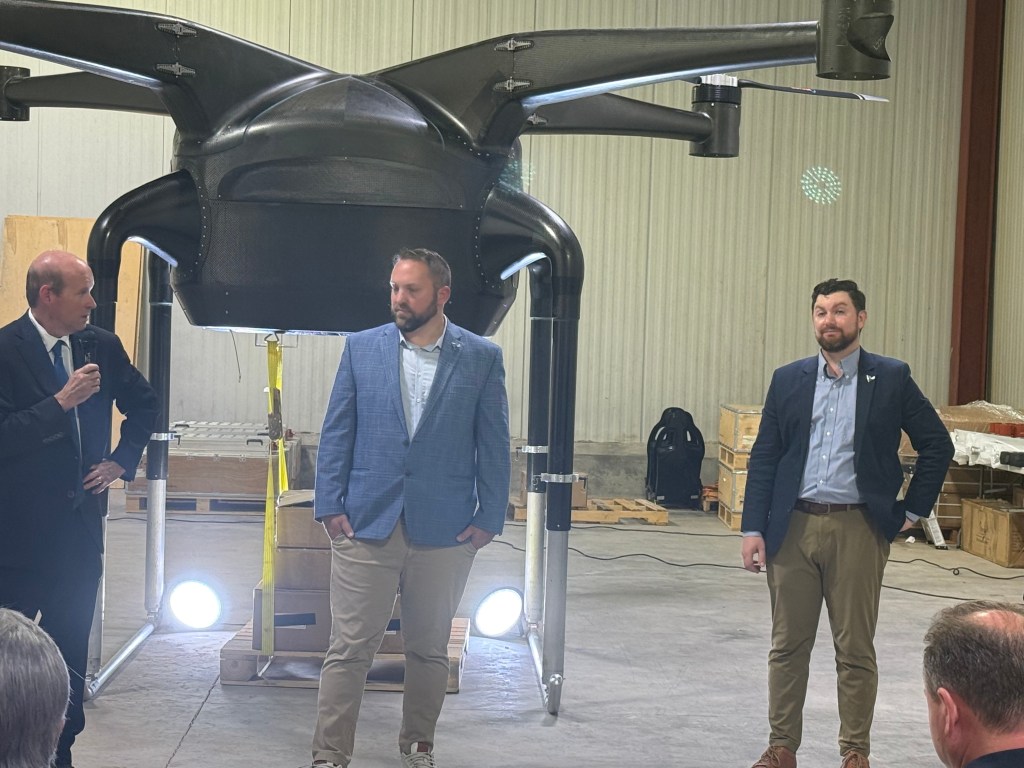
THE TWENTY-DOLLAR JAR I LEFT ON MY DESK: I couldn’t wait to get away

I have loved the work I did for around about twenty-five years and I passed up a lot of opportunities do do that work. The financial opportunity cost was enormous. That is not a slogan. That is a long marriage to a craft, a lot of people counted on me to keep them in a job and it was not good for me, for a long time, several years. It was a really tough period and I didn’t talk about it much, but I did a lot of work that nobody will ever know about to make a lot of people’s lives just a little better. Then 2026 arrived, and one of the best things I have done in this decade, maybe in my adult life, was not a deal and not a title. It was a birthday. My wife and I went to the Museum of the Bible in Washington to see Dead Sea Scrolls: The Exhibition. I wear the hoodie from that day the way some men wear a championship jacket. The shirt is cloth. The day is not.

My new guys

In the gift shop outside the exhibit, I bought a replica clay jar, the kind of vessel the Qumran caves used to keep parchment alive through empires. [1] It was about twenty dollars. I spent far more than that in the gift shop. I like the twenty-dollar thing most. I put it on my desk at work so that every conference call had a reminder of a century before Christ sitting next to the phone. When I finally got free of that place, I left so fast I abandoned the jar. A friend kept it safe. It took about two months to get it back. I missed the jar more than I missed the job. That sentence tells you what I value.  The people who took over the company paid me a lot of money to leave, and I couldn’t get out fast enough.  And as I predicted, they are quickly running the place I spent a large part of my life running into the ground, which is a shame. 

THE BIRTHDAY I ACTUALLY WANTED

If you can do anything you want on your birthday and you choose an exhibit of old skin and ink, you are telling the truth about your interior life. I am a member of the Museum of the Bible. I like the building. I like the traveling shows even more. This one was the only thing I wanted.

I don’t agree with DeWine on much, but I can work with him. A lot of people say they know people, but most of the time it’s nobodies just as dumb as they are. They might be good for a lunch meeting, but they can’t do anything for you.

The museum sits at 400 Fourth Street SW, a short walk from Federal Center, in that southwest quadrant where the Capitol complex, the Mall museums, and the old Department of Education neighborhood all lean on each other. [2] We parked in a garage, came up, and ate sausage-and-egg McMuffins at the McDonald’s down the road. I took a picture of my wife. We have been married thirty-eight years. You think you know a face. I have never seen her happier than that morning. The joy was all over her. It has become my favorite picture of her.

People who only know me from videos think they know what fills a man. A lot of the country is spiritually vacant, and they tune in to get a little ballast. Here is the ballast. If I could design a heaven, it would look like that day on a loop: time, the Bible, the cases, the reading, the thinking. I would be happy forever. Nothing I have bought with a title has come close.

THE EXHIBIT THAT WAS THE REAL THING

Dead Sea Scrolls: The Exhibition opened at the museum on November 22, 2025, in partnership with the Israel Antiquities Authority and Running Subway. Curators: Navit Popovich-Geller, Risa Levitt, and Joe Uziel. Floor 5. Official run through September 7, 2026. East Coast stop. [3]

They rotated the fragments in three phases so the skin could rest and so visitors would not see the same eight pieces all year.

First rotation, November 2025 into February 2026: 4Q7 Genesis, 11Q10 Targum Job, 4Q83 Psalms, Astronomical Enoch, Barkhi Nafshi, War Scroll material, an eschatological commentary, Temple Scroll. [3]

Second rotation, February through May 2026: fragments of the Great Psalms Scroll, Numbers, Lamentations, Community Rule, apocryphal psalms, Tohorot, non-canonical psalms, Book of the Giants. [3]

Third rotation, May through September 2026: Isaiah, Tobit, phylacteries, Birth of Noah, Jubilees, communal ceremony, Community Rule, Damascus Document. [3]

We hit Phase Two. I am glad we did. I stood in front of text copied when Rome was still a rumor in Judah and the Hebrew Bible was still held in a living community’s hands. You can read about Qumran in a chair. It is another thing to see the letter-forms under museum glass and realize the narrative did not begin in a nineteenth-century print shop.

That matters. The scrolls are the great twentieth-century confirmation that the biblical text is not a late pious invention. They are a Second Temple Jewish library, biblical and sectarian, hidden in jars in the caves above the Dead Sea and found again beginning in 1947. [4] They do not make a man holy by themselves. They make a liar work harder.

I know the museum’s early years included purchased “Dead Sea Scroll” fragments that testing later showed were fakes. The museum said so and pulled them. [5] This show is not that drawer. This is Israel Antiquities Authority material from the national collection, the real library on tour. Christianity Today called it the real deal. [6] They were right.

THE JAR THAT WAS NEVER THE POINT AND BECAME THE POINT

The original scroll jars are tall, lid-tight, local clay. They are why the texts survived weather, war, and time. [1] The replica I bought is a scale souvenir. It came with a copy of a scroll like the ones on display. I put the whole little shrine on the desk.

I kept fortune-cookie slips in it.

That needs explaining.

THE LUNCHES WHILE THE BUILDING CHANGED HANDS

CTL-Aerospace is a Butler County composites and aerospace shop with a long OEM life, the kind of midwestern plant that actually makes the parts. In September 2025, it filed Chapter 11 in the United States Bankruptcy Court for the Southern District of Ohio, Western Division, Case No. 1:25-bk-12226, Judge Beth A. Buchanan. [7] The company’s own first-day declaration described raw-material quality shocks, a 2024 loss on still-strong sales, and a lender fight with Wells Fargo that turned into a cash choke. [8].  The company never recovered from challenges caused initially by the COVID lockdowns. I worked real hard to save the company from an acquisition and I’m very bitter about the time I wasted on it, but I felt obligated to a lot of people which was not to my benefit. It was very insulting, as hard as I worked, to watch these new people coming into the management system and assume they could just erase me, which of course they haven’t been. A lot of people have been contaccting me wanting a job wherever I end up landing and wanting to know what’s going on with me, which doesn’t have a quick and easy answer. I Poured a lot of myself into something that was not in my control and I owe myself some time to dust off the negativitive experience. I traditionally list my work experience as a writer and consultants. Both take a lot of experience to do. And when you get a chance to learn new things, out of the box, you do all you can. It takes a lot of experience to be a good writer. That is always my first priority.

What followed is the new modern American ritual. Advisors. Debtor-in-possession money. An auction under section 363. A sale of substantially all assets free and clear. The docket names the buyer’s side as an affiliate of Davidson Kempner: DK OF VI Trading Subsidiary LP, designee DK CTL Aerospace Opco LLC. The sale hearing record sits in January 2026. The DK deal closed in March 2026.  And followed a typical story these days among a lot of companies that don’t get talked about enough in CNBC financial discussions.  [9][10].  Yes, I hate Amy Acton for what she did to the state of Ohio under the COVID lockdowns.  And I haven’t talked about it much, but because I spent so much time there, I have to tell that story 50 times a week, because everyone wants to know what happened, especially since I was on the executive leadership end of it.  And it comes up a lot because we launched Vivek Ramaswamy’s run for governor there, and people want to know what happened.  

I kept things running as long as I could, but I witnessed a massive failure in the infrastructure smaller businesses use to stay running.  And there are lots of parasites who look to target wounded companies for their profit, just like pirates in the days of old, only in a very modern context.  Government made it possible for these pirates to make a lot of money off wounded companies.  There’s a lot more to the story, but that’s a good starting point. Much of this is in the public record, and I wasn’t happy about any of it.  You loan your name to these things, and lots of other people make your life difficult, and you stick around to take care of people you consider friends, when the smart money would have said goodbye a long time ago.  Instead of getting upset, I spent my time going to places like The Museum of the Bible.  I have some great and horrific stories to tell. Things nobody will believe.

I lived the floor version. Executive management had a habit of going out for Chinese. We were in a tough stretch. A takeover is a weather system. Consultants and funding people move through a plant like they already own everything when you spend years building everything they are taking.  You can feel the Monopoly problem in your bones: you are still on the board, but you do not hold the properties, and every roll of the dice is a mortgage you cannot pay. I call that parasite logic because that is how it feels when people who did not build the thing arrive to manage the thing and treat the builders as furniture.  I’m talking about this now because I would put all those fortunes in my Dead Sea Scrolls jar for safekeeping during this really hard period, and now that I have it back, it reminds me of these last several years.  And I did a presentation at my new place this past week, which went well.  And I have a chance to build everything from scratch again, which is about a ten-year plan.  But it’s good to get going on something positive again instead of trying to defend employees from a takeover of the business they counted on to put food on their table.  When we talk about the economy and Trump expanding jobs, nobody ever talks about these kinds of things which destroy many thousands of jobs every month in America, and it’s what I would consider the biggest job killer in the world, an open attack against America through finance. For many decades, we were able to protect the business from these kinds of elements, but it takes smart people to protect the finance side of things, and COVID conditions broke a lot of cracks that many companies already saw at a critical time.  

The court file is the court file; we wanted employees to keep their jobs. My desk was my desk. During those lunches I kept the fortunes and dropped them in the jar. It was a private joke with history among those who went to lunch with me then. The oldest surviving copies of Scripture in a twenty-dollar pot, stuffed with cheap paper predictions, sitting in an office while a seventy-year industrial story got run through a Cincinnati docket. I could have done something else several years ago, but I couldn’t let everyone down who counted on me for their jobs.  For my own personal interest, until I took the step shown in the video displayed here for a new opportunity built from the ground up, I was very bitter about it all.  

What was good for me was to leave.  And I found myself doing everything for everyone else.  That made going to the Museum of the Bible a very personal, positive thing for me, as I was seeing massive failures all around me from so many people.  Eventually, I will write a book about all this, name names, and tell the whole story.  Right now, I’m too angry for it.  For a lot of legal reasons, I just put my effort into better things for the future, things I could have direct control over. And I say all that knowing that there are a lot of people who want a new job with me.  I have been building something that didn’t already have jobs made for it, which takes a lot more work and more time. That’s why I don’t have a new home for you, yet.  But I won’t forget.  I plan to build something that is at least 10 times more valuable.  That’s how I prefer to work against those who did a lot of bad things.   

WHY I LEFT LIKE THE ROAD RUNNER

I cleaned the office out. Books gone. Ready. I still could not stand to be apart from the jar, so it stayed on the desk until the last day. Then the last day came, and I did not make a farewell tour. I did not go room to room to say goodbye. I left like a cartoon puff of dust in a Looney Tunes episode of Road Runner.

A man across the hall belched and farted all day, which disgusted me.  I would never hire a person like that for anything, yet there he was, inserted disrespectfully against me. That sentence is not decoration. Some characters are the atmosphere of a declining shop.  He was disgusting to be near. The minute I could put distance between my lungs and that hallway, I did. I moved so fast I betrayed the one object I had meant to carry out in my hands.

Halfway down the road, I felt it. Incomplete. The phone and the computer were replaceable. The jar was not, because it held the day with my wife, the Phase Two case, the confirmation that the old book is old in the right way, and the little paper fortunes from the last honest lunches where in it. I had left my treasure in a building I found repulsive, so much so I don’t even drive down I-75 anymore in that part of town so I don’t have to look at the building.  I probably won’t again for decades. 

A friend picked it up and kept it exactly as I had left it. I have it back now, much to my relief.  I feel finished and ready to do something else. 

WHAT I LOOKED AT ALL DAY

Every call, every meeting, I looked at that jar and thought of her face at McDonald’s and the dim room where a fragment of a book still spoke. People think a man like me is fueled by argument. Argument is downstream. The fuel is contact with the source.

The feed has a spiritual vacancy. People come to a voice because they want to be filled. I cannot fill them with a hoodie. I can tell them what filled me. I chose, on a day I could have chosen anything, to stand in front of Qumran. I bought the cheapest true thing in the shop and put it where my work-eye would hit it. When the work turned into a court-supervised transfer to a fund, I still wanted the jar more than the chair.

That is not just nostalgia; it’s the kind of values and priorities that build the kind of value in a company that others want to steal because they can’t make it on their own. 

THE SCROLLS AND THE POLITICS OF HEAVEN

I have been writing toward a book I call The Politics of Heaven. The phrase sounds misty until you have seen the evidence that the text survived empires in clay. Power is always trying to own the story. Jars on a cliff are what the story does when power is coming, just as the Romans did when they were plotting the destruction of the Jews.  The intellectual rebels of Qumran stayed in the desert to get a jump on their planned retreat, to preserve themselves.  I stayed around until the very last minute, even though I had lots of opportunities to do other, much more profitable things.  It feels good now to be able to go down that road, instead of trying to hold everything together just long enough to save people’s jobs.  

The Community Rule and the Damascus Document in those rotations are not tourist wallpaper. They are a sect’s attempt to live under a holy order while history went feral. [3][4] Psalms in the second rotation is the prayerbook of a people who had already learned that governments are weather. I looked at that material and felt the same thing I feel when I write: the old book is not a hobby. It is the deepest available account of how heaven and earth argue.

I do not thump people with it. I live next to it. My Dead Sea Scrolls hoodie is a souvenir of living next to it for a day that worked.

WHAT THE JAR ACCUSES ME OF, KINDLY

I felt as if I had betrayed it by leaving it. That is a strange sentence about fired clay. It is accurate. We betray what we love when we let urgency become panic. I was right to leave the hallway. I wanted to be away from those people so badly that I left behind the one object that proved I had a life outside the hallway.

Getting it back did not restore a career. It restored a ranking. The job was a long love. The jar is a truer one, because it points past the job to the day, the wife, the text, and the stubborn fact that some things are dear. Of course the experience has been very jarring to think about. I have a lot of information that is very valuable because of it. It will make an excellent book, the first third of one that I’ll write talking about all this. But, it needs a good last half to be the kind of book I like to write, which is a story that is unfolding right now. These are the dangers of modern business and its something that a lot of people can’t wait ten years for, because now its a problem. And pretty much nobody bothers to untangle the mess. But, I feel like I can talk about it more now that I have my Jar back. Its one of those incomplete things that has been bothering me a lot for a few months. The stories I will tell of these months will make great writing content, that a lot of people will never believe. And of course, I won’t hold anything back.

If you see me in the Museum of the Bible shirt, that is why. I do not get tired of it. I do not get tired of the little Dead Sea Scroll Jar. I got it back from people who were careful with it, and I will not park it again on a desk I might have to flee when the Romans come to destroy Jerusalem again, or corporate raiders come to steal all the treasure that hard work builds.  

FOOTNOTES

[1] Qumran scroll jars: cylindrical, lidded storage pottery associated with the cave finds of 1947–1956. Israel Antiquities Authority / Library of Congress exhibit notes on Qumran pottery; World History Encyclopedia image and description of Dead Sea Scrolls jars. Gift-shop replicas commonly include a small clay pot and a printed scroll insert; museum retail varies by exhibit.

[2] Museum of the Bible, 400 Fourth Street SW, Washington, DC 20024. Near Federal Center SW Metro. The building sits south of the National Mall museum cluster; the Lyndon Baines Johnson Department of Education Building is at 400 Maryland Avenue SW, in the same southwest federal pocket.

[3] Museum of the Bible, “Dead Sea Scrolls: The Exhibition,” November 22, 2025–September 7, 2026, partnership with the Israel Antiquities Authority and Running Subway. Official rotation lists as published by the museum newsroom, October 1, 2025, and the exhibit page.

[4] Discovery and corpus: eleven caves near Qumran, 1947–1956; biblical manuscripts plus sectarian works (Community Rule, War Scroll, Damascus Document, Enoch traditions, and others). Standard introductions: Vermes; VanderKam; Collins.

[5] In 2018, the Museum of the Bible announced that five of its then-owned “Dead Sea Scroll” fragments showed characteristics inconsistent with ancient origin and removed them from display. That episode concerns purchased fragments in the museum’s own early collection, not the 2025–2026 IAA loan show.

[6] Gordon Govier, “New Dead Sea Scrolls Exhibit Is the Real Deal,” Christianity Today, April 8, 2026.

[7] In re CTL-Aerospace, Inc., Case No. 1:25-bk-12226, United States Bankruptcy Court for the Southern District of Ohio, Western Division (Cincinnati), Judge Beth A. Buchanan, petition filed September 8, 2025. Debtor address in the petition header: 5616 Spellmire Drive, Cincinnati, Ohio 45246, Butler County.

[8] Declaration of President and COO, in support of the Chapter 11 petition and first-day motions, September 8, 2025 (Doc. 9 and related first-day papers). Public summaries: Stretto / chapter11cases write-up of the filing, September 2025.

[9] Docket items in 1:25-bk-12226 include the bidding-procedures motion (Doc. 90, October 9, 2025), sale papers, declaration of Geoffrey Frankel in support of sale to DK CTL Aerospace Opco LLC as designee of DK OF VI Trading Subsidiary LP (January 19, 2026), and the January 20, 2026 sale hearing activity. Later docket entries include a March 23, 2026 stipulation involving DK CTL Aerospace Opco LLC.

[10] Capstone Partners, “Capstone Partners Advised CTL Aerospace, Inc. on its Sale to Davidson Kempner in Chapter 11 Bankruptcy,” posted June 10, 2026, stating the section 363 sale to a DK affiliate closed in March 2026. Capstone describes its Special Situations and Financial Advisory Services work after the September 2025 filing. Pre-petition turnaround work with Focus Management Group is described in contemporary filing summaries. Davidson Kempner is a global investment firm; the buyer vehicle on the docket is the DK-named Opco / trading-subsidiary chain above. I am describing the public control change. My language about parasites is how a fund-and-consultant weather system feels to a builder on the floor.

BIBLIOGRAPHY AND FURTHER READING

Museum of the Bible. “The Dead Sea Scrolls Exhibition with the Oldest Biblical Texts Arrives at Museum of the Bible in November 2025.” Newsroom, October 1, 2025.

Museum of the Bible. Exhibit page: Dead Sea Scrolls: The Exhibition. museumofthebible.org/exhibits/dead-sea-scrolls-the-exhibition.

Museum of the Bible. Plan Your Visit; address and parking notes.

Washington.org. Museum of the Bible listing; Dead Sea Scrolls event page.

Govier, Gordon. “New Dead Sea Scrolls Exhibit Is the Real Deal.” Christianity Today, April 8, 2026.

Arlington Catholic Herald. “Ancient Biblical texts make a rare appearance at the Museum of the Bible.” December 2025.

Washington Stand. Coverage of Museum of the Bible Capitol Hill outreach on the scrolls, February 2026.

Israel Antiquities Authority. National Treasures / Qumran publications and conservation notes on rotating exhibition of fragments.

Vermes, Geza. The Complete Dead Sea Scrolls in English. Penguin, revised editions.

VanderKam, James C. The Dead Sea Scrolls Today. Eerdmans.

VanderKam, James C., and Peter Flint. The Meaning of the Dead Sea Scrolls. HarperSanFrancisco.

Collins, John J. The Dead Sea Scrolls: A Biography. Princeton University Press.

Schiffman, Lawrence H. Reclaiming the Dead Sea Scrolls. Doubleday / Yale.

García Martínez, Florentino. The Dead Sea Scrolls Translated.

Wise, Michael, Martin Abegg Jr., and Edward Cook. The Dead Sea Scrolls: A New Translation.

Cross, Frank Moore. The Ancient Library of Qumran.

de Vaux, Roland. Archaeology and the Dead Sea Scrolls.

Magness, Jodi. The Archaeology of Qumran and the Dead Sea Scrolls.

Lim, Timothy H. The Dead Sea Scrolls: A Very Short Introduction. Oxford.

Tov, Emanuel. Textual Criticism of the Hebrew Bible. On why the Qumran biblical manuscripts matter for the history of the text.

Ulrich, Eugene. The Dead Sea Scrolls and the Origins of the Bible.

Charlesworth, James H., ed. The Dead Sea Scrolls. Princeton / Westminster John Knox volumes.

“Community Rule” (Serekh ha-Yahad) and “Damascus Document.” In the editions above.

1 Enoch and related Qumran Enochic material; Book of Giants fragments. See Nickelsburg and VanderKam on 1 Enoch.

Yadin, Yigael. The Temple Scroll.

Jubilees. James C. VanderKam translation.

The Holy Bible. Psalms, Isaiah, Genesis, Numbers, Lamentations; read next to the Qumran witnesses listed in the rotation notes.

Hoffman, Rich. The Gunfighter’s Guide to Business. Liberty Hill, 2021.

Hoffman, Rich. The Symposium of Justice. 2004.

Hoffman, Rich. Tail of the Dragon. 2012.

Hoffman, Rich. The Politics of Heaven. Manuscript.

In re CTL-Aerospace, Inc., No. 1:25-bk-12226 (Bankr. S.D. Ohio). Petition, declaration, Doc. 90 bidding procedures, sale motions, Frankel declaration, sale orders, DK CTL Aerospace Opco LLC papers. PACER/court docket.

Capstone Partners transaction notice, June 10, 2026.

Stretto / chapter11cases.com. “Ohio Aerospace Manufacturer CTL-Aerospace Files Chapter 11.” September 2025.

Butler County development notes listing CTL among regional aerospace suppliers.

Riveron. Public descriptions of bankruptcy, fiduciary, and turnaround practice. I include the firm here because that consultant class is the air a Chapter 11 plant breathes; readers should use the CTL docket itself for who was retained in this specific case.

Wells Fargo as prepetition secured lender, per the first-day declaration summaries.

11 U.S.C. § 363. Sale of assets in Chapter 11.

On Museum of the Bible provenance controversies (for contrast with the IAA loan): 2018 reporting on forged fragments; Hobby Lobby / Green family civil penalty and repatriation coverage from 2017–2021. Frommer’s and major-wire summaries.

Library of Congress / IAA. “Scrolls from the Dead Sea” historical exhibit notes on jars and Cave 4.

World History Encyclopedia. Dead Sea Scrolls jars.

Rich Hoffman

More about me

Click Here to Protect Yourself with Second Call Defense https://www.secondcalldefense.org/?affiliate=20707

About the Author: Rich Hoffman

Rich Hoffman is an author, political consultant, and strategic advisor based in Cincinnati, Ohio, and the creator of The Politics of Heaven—a unique framework that connects biblical theology, ancient history, and modern power structures to explain how moral alignment and spiritual forces shape global events. Blending real-world political experience with deep research into archaeology, UFO phenomena, and suppressed historical narratives, Hoffman offers compelling commentary on topics ranging from ancient civilizations and the Dead Sea Scrolls to modern populist movements, paranormal continuity, and leadership strategy in chaotic environments. As the author of The Gunfighter’s Guide to Business and the forthcoming Politics of Heaven, he brings a grounded yet provocative voice to media discussions, supported by firsthand experiences and a cross-disciplinary approach that bridges science, history, and theology. For interviews, speaking engagements, or expert analysis, visit richhoffmanbooks.com or contact directly via phone at 513-307-5815 or email at rhoffman@richhoffmanbooks.com.  If you’ve seen the movie, Disclosure Day and want to talk about it and the implications of Presidnet Trump’s UAP disclosures, let me know and we can bring some color to your coverage. https://richhoffmanbooks.com/media-inquiries-broadcast-topics-and-contact-info/?frame-nonce=ad51e7ecba I do have a firsthand UFO encounter to discuss.

JOSEPH’S CUP: WHAT A COFFEE-SHOP SIGN SHOWED ME ABOUT HOW EVIL ACTUALLY WORKS, the Boogeyman will get you

I have driven past the sign for years. A name can sit on a building in plain Ohio daylight, and you will treat it like landscaping until the day your life rhymes with the story on the sign. I have been going through a hard stretch. I spent time in the Mason and Bridgewater Falls corridor, the seam where Warren County and Butler County lean on each other, and I looked at Joseph’s Cup the way you look at a verse you thought you already knew. It hit me as consolation. Not the soft kind. The kind that gives a shape to the pressure.

I am not swinging a Bible at anybody’s head. I have never liked that style. I am saying the book still does the best job on earth of describing how evil moves through ordinary rooms. It does not usually arrive painted red with a pitchfork. It arrives as a brother. It arrives as a social test. It arrives as the offer of an easy life if you will just say uncle.

THE SHOP PEOPLE DRIVE PAST WITHOUT READING THE NAME

Joseph’s Cup in Mason sits at 8050 Arbor Square Drive, inside the Pro-Clean Car Wash, ZIP 45040. [1] Reviews keep saying the same things: the owner, Joseph, greets people himself, the coffee is good, the room is small and human, you can watch cars come through the wash while you drink. [2] That is not a cathedral. That is a local counter. West of there, Bridgewater Falls in Fairfield Township is the big Butler County retail stretch on Princeton Road, the kind of place you pass because you have an errand. [3] I have been in that whole pocket of road. I was not hunting for a sermon. I was looking around during a season that felt like a sentence.

I could not find a public statement from the shop tying the name to Genesis. The Mason owner’s name is Joseph. That is enough for a storefront. [2] The biblical parallel is not a press release. It is what the name did to me when I finally had the ears for it. Sometimes a sign has been there for years and you only notice it when the story on it is already happening in your ribs.

WHY THE NAME IS NOT CUTE

People hear “Joseph” and think Sunday school felt board. The actual story is a machine for understanding betrayal.

Jacob loved Joseph and gave him the garment English Bibles call a coat of many colors, the ketonet passim of Genesis 37. [4] The brothers were jealous. They threw him in a pit, sold him for silver, and sent the torn coat home bloody so their father would think an animal had finished him. [4] In Egypt he was slandered in Potiphar’s house, jailed, and left to rot until he interpreted dreams and rose to sit just under Pharaoh. [5] Years later the same brothers came to him for grain and did not know his face. He put his silver cup in Benjamin’s sack, sent them out, and had them stopped. [6] The cup was a test. Silver had bought him. Silver would now show whether the brothers had changed.

That is not a children’s story. That is a man who was discarded by his own house, sentenced by a foreign power, and still wanted a living connection with the people who had done it. I am not sure I would have wanted the connection. Joseph did. He made himself known. The family came down into Egypt. A long time later, the book says, that sojourn became bondage, and Moses came. [7] The rescue of a later generation sits on the success and the wound of an earlier one. History is not tidy that way. Neither is a family.

I used to read that sequence as literature. I still think it is the best literature we have for the human race under pressure, better than Shakespeare at the specific job of showing how evil uses kinship, hunger, and status. [8] Shakespeare is a genius of pain. Genesis is a genius of mechanism. Lately I have not been reading Joseph. I have been recognizing him.

DOLLY PARTON WAS NOT THE FIRST COAT

A lot of Americans hear “coat of many colors” and think Dolly Parton first. That is backwards in the right American way. Parton wrote the 1971 song about a patchwork coat her mother sewed from rags in the Smokies. While she sewed, her mother told her the Joseph story. Appalachia already knew the verses. The hit was a local memory wearing a biblical name. [9] People of that country did not need a seminary to understand jealousy in a house. They needed a coat that cost nothing and meant everything.

That is how the Bible works when it is still a living book and not a museum object. It names a pattern. Then ordinary people keep walking into the pattern.

THE CUP IS THE POINT OF THE NAME

The Mason shop is called Joseph’s Cup, not Joseph’s Coat. The coat starts the jealousy. The cup finishes the test.

Joseph does not plant the cup to steal his brothers again. He plants it to see whether they will throw Benjamin away the way they threw him away. Judah steps forward and offers himself instead. [6] Only then does Joseph break. The cup is an instrument of disclosure. It forces the hidden thing into the sack where everyone can see it.

That is why the storefront name landed on me like a communication. I have been thinking about how evil tracks, how it recruits normal people, how it promises an easier life if you will just stop being the difficult one. The cup in the story is not china. It is a reveal. You find out who is still willing to sell a brother to keep their own seat at the table.

EVIL WITHOUT HORNS

The cheap version of evil is a costume. Red. Horns. A contract signed at midnight. That version is almost comforting, because you would see it coming.

The version I keep watching is the Joseph version. Siblings. Colleagues. People who want you smaller because your existence makes their position feel like a critique. They do not have to be brilliant. They have to be jealous and organized enough to use the room against you. They twist decent people with the promise of belonging. They put a little social screw to you and wait to see if you will say uncle.

I had one of those tests recently. Millennial operators who make a living off value other people created. They were sounding me out. Could I be made safe. Could I be enough like them to work with. They had gone to Paris for a Bad Bunny concert. I told them the only thing I knew about Bad Bunny was the Super Bowl appearance that made a lot of people angry. [10] I got the look. You are old. You are out of touch. You will not play ball with us; we are uncomfortable with you because you don’t have tattoos and don’t like pop music. The unspoken deal was obvious. Love the right noise, laugh at the right joke, and you can keep the easy life. Tell the truth, and you are the problem.

I am not going to fake a concert I do not care about so a thief of other people’s work will find me acceptable. Honesty costs you. Appeasement is how that kind of person gets a hand on the controls of real evil at work. A lot of people think the mature move is to make friends with the jealous sibling. Joseph’s brothers would have liked that version. It would have kept the coat in the house and the dreamer quiet.

I will not do it. I work nine times harder and stay clean. If I get the sense that someone is trying to shock me into line, I withdraw the thing they wanted to loop. Call it John Galt if you want the novel version. [11] I take my mind off their board. Let them find out how little they can build once the person they mocked is no longer available to be harvested.

AGE IS THE NEW EXCUSE FOR THE OLD JEALOUSY

The critique they offered was that I am pretty old. That is not analysis. That is a permission structure. If the target is old, or bald, or out of sync with the approved playlist, then discarding him feels like hygiene instead of sin. I have written about that fashion in business. It is the same spirit that treats a long résumé as a threat. [12] Joseph was not discarded for being old. He was discarded for being marked. The coat made him visible. Visibility is what jealousy cannot stand.

You do not have to be seventeen in a pit to know the temperature. You can be a grown man in Ohio, still doing the work, and feel the room decide that your continued competence is an insult.

WHY I WILL NOT BEFRIEND THE SIBLING WHO SOLD ME

People say forgiveness means proximity. Joseph’s story is more severe than that. He feeds them. He tests them. He does not pretend the pit was a misunderstanding. When he weeps, it is after Judah offers his own life. [6] Restoration in that book is not a group hug over the coat. It is a moral change that can be seen.

I can understand Joseph now in my guts, not just in a verse. The first night in the Egyptian system. The false charge. The years when the people who should have known you were silent. The strange second life when you can interpret what the powerful cannot see, and they use you, and you still have a hole where a family was. That is not “sad.” That is blood knowledge. I am taking material out of this season that I will write from for decades. I want to crush the mechanism, not just complain about the mood.

The mechanism is simple. Evil gains a dominant position in a family, a company, a market. It throws the marked person into a death sentence, social or professional. It tells the bystanders that the marked person was difficult, old, extra, out of fashion. It offers the bystanders a nicer life if they go along. Most people go along. That is how it scales from a pit in Canaan to a whole economy that punishes the wrong kind of excellence.

A SIGN YOU NOTICE LATE IS STILL A SIGN

I do not need the owner of Joseph’s Cup to have meant Genesis. Meaning is not only what a merchant intended. Meaning is also what a true story does when it finds you in the parking lot.

I have been wrestling with the depth of evil in ordinary American life. Not the cartoon devil. The brother-level stuff. The way it works in families, in businesses, in the little loyalty tests about music and politics and age. Looking at that sign gave me context worth more than money. Every time I see it now I think about the cup in the sack. I think about how many Josephs get thrown aside so a lesser circle can keep its story. I think about the work that comes after you refuse to say uncle.

You go through stages. At one stage the Bible is a book you respect. At another stage it is a map of the room you are standing in. I am in the second stage with this story. I would rather have the map than the easy life that requires me to laugh on cue at the stupid things evil people say. 

WHAT I DO WITH THE CONSOLATION

Consolation, if it is real, is not a nap. It is a commission.

I keep my name. I keep the work. I do not audition for people who need me smaller to make themselves feel better about all their bad decisions in life. I use the season. I write. I have already put the gunfighter ethic in a book: trained instinct under pressure, not sloppiness, and not surrender to the fashion of the hour. [13] Joseph is the older cousin of that ethic. He does the hard years. He keeps his mind. He does not become his brothers in order to be loved by his brothers.

If you are in a pit someone else dug, do not decorate the pit with their playlist. Interpret the dream. Do the work they cannot do. Let the cup fall where it falls. The people who sold you will eventually need grain. That is not spite. That is how the world is built.

I love the name of the shop. I love it more because it sits in a car wash and a commercial corridor instead of on a steeple. Evil works in commercial corridors. So does the reminder. Butler County, Warren County, a cup of coffee, a sign I ignored until I couldn’t. That is enough communication for one stretch of road.

But, I’m not as forgiving as Joseph. I know a lot of people like mob movies, like Goodfellas and John Wick. Remember what happened when they took John Wick’s car, fellas. You’ll never know when or where. But you will get it, I will make sure of it. Enjoy!

FOOTNOTES

[1] Joseph’s Cup, 8050 Arbor Square Drive, Mason, Ohio 45040; listed as inside the Pro-Clean Car Wash. Phone commonly listed as (513) 409-3287. Site: josephscup.com.

[2] Aggregated customer reviews on Restaurantji, joe.coffee, LocalCoffeeShops.org, and related listings describe owner Joseph as personally greeting guests and note the car-wash setting. I found no official shop statement tying the name to Genesis 44.

[3] Bridgewater Falls, Fairfield Township / Hamilton, Ohio 45011 area, Princeton Road at State Route 4, Butler County. Travel Butler County and Kimco property descriptions. Mason itself is in Warren County; the two sit on the same daily-driving map.

[4] Genesis 37. Jacob’s gift of the ketonet passim; the brothers’ jealousy; sale to traders; the bloodied coat returned to Jacob. On the Hebrew garment and the “many colors” / long-sleeved translation debate, see standard Bible dictionaries and the Wikipedia entry “Coat of many colors.”

[5] Genesis 39–41. Potiphar’s house, the false accusation, prison, the cupbearer and baker, Pharaoh’s dreams, Joseph as vizier.

[6] Genesis 44–45. The silver cup placed in Benjamin’s sack; the chase; Judah’s offer to stand in Benjamin’s place; Joseph reveals himself.

[7] Genesis 46–47 and Exodus 1; Exodus 12:40 on the long sojourn. Traditional preaching often rounds the Egyptian years toward four centuries before Moses. Treat the figure as the Bible’s own long-memory math, not a modern archaeological press release.

[8] For Shakespeare on jealousy and household ruin, start with Othello and King Lear. The comparison in this essay is about function: Genesis tracks the social technology of betrayal with less ornament and more consequence.

[9] Dolly Parton, “Coat of Many Colors,” recorded 1971, album Coat of Many Colors. Parton has said her mother told the Joseph story while sewing the rag coat. See Songfacts; Parton interviews; Coat of Many Colors (song) overview.

[10] Bad Bunny performed as part of the Super Bowl LIV halftime-adjacent and later mainstream-award cycle in U.S. pop memory; the February 2026 Super Bowl conversation around his place in the show is the recent nerve the anecdote touches. The point of the story is the loyalty test, not a music review.

[11] Ayn Rand, Atlas Shrugged (1957). The withdrawal of the creative mind from a looting moral order is the John Galt plot. I am using the shape, not joining a fan club.

[12] Age Discrimination in Employment Act of 1967; U.S. EEOC age-discrimination materials. Cultural contempt for older workers is larger than the statute and smaller than a conspiracy chart. It is a fashion with teeth.

[13] Rich Hoffman, The Gunfighter’s Guide to Business: A Skeleton Key to Western Civilization (Liberty Hill Publishing, 2021).

BIBLIOGRAPHY AND FURTHER READING

The Holy Bible, Genesis 37–50 and Exodus 1–12. Read at least two translations side by side; the King James “coat of many colours” and modern renderings of ketonet passim both matter.

Alter, Robert. The Art of Biblical Narrative. Basic Books, 1981. Still the cleanest account of how these stories are built.

Alter, Robert. The Five Books of Moses: A Translation with Commentary. Norton, 2004.

Sarna, Nahum M. Understanding Genesis. Jewish Publication Society / Schocken.

Kass, Leon R. The Beginning of Wisdom: Reading Genesis. Free Press, 2003. Especially strong on Joseph, statesmanship, and the education of the brothers.

Fox, Everett. The Five Books of Moses. Schocken. Useful for hearing the Hebrew grit in English.

Guzik, David. Study Guide for Genesis 44. Blue Letter Bible.

Jamieson, Robert, A. R. Fausset, and David Brown. Commentary on Genesis 44.

Bible Hub and Bible Gateway, Genesis 44, “A Silver Cup in a Sack.”

Parton, Dolly. “Coat of Many Colors.” 1971. See also My Life and Other Unfinished Business (1994) for the dry-cleaning-receipt composition story.

Songfacts; Rolling Stone Parton interviews on the coat and the Joseph telling.

Shakespeare, William. Othello. Jealousy as a technology.

Shakespeare, William. King Lear. Family, ingratitude, the discarded father.

Dostoevsky, Fyodor. The Brothers Karamazov. The other great Western book on how evil talks in a household.

Milton, John. Paradise Lost. For the intelligent voice of temptation, not the costume devil.

Goethe, Johann Wolfgang von. Faust.

Arendt, Hannah. Eichmann in Jerusalem. The modern brief on evil that does not need horns.

Girard, René. Violence and the Sacred; Deceit, Desire, and the Novel. Mimetic rivalry is the academic name for what Genesis 37 shows without the jargon.

Solzhenitsyn, Aleksandr. The Gulag Archipelago. On the line of evil running through every human heart, not only through official villains.

Lewis, C. S. The Screwtape Letters. Bureaucracy and flattery as the devil’s work clothes.

Lewis, C. S. The Great Divorce.

Tolkien, J. R. R. “On Fairy-Stories”; The Lord of the Rings, on the Ring as a handle for domination. Different myth, same warning about the easy life.

Rand, Ayn. Atlas Shrugged. 1957.

Rand, Ayn. The Fountainhead.

Hoffman, Rich. The Gunfighter’s Guide to Business. 2021.

Hoffman, Rich. The Symposium of Justice. 2004.

Hoffman, Rich. Tail of the Dragon. 2012.

Hoffman, Rich. The Politics of Heaven. Manuscript.

U.S. Equal Employment Opportunity Commission. Age Discrimination fact sheets and The State of Age Discrimination and Older Workers in the U.S. 50 Years After the ADEA.

Restaurant and place listings for Joseph’s Cup, 8050 Arbor Square Drive, Mason, Ohio: josephscup.com; joe.coffee location page; Restaurantji; TripAdvisor.

Travel Butler County. Listings for Bridgewater Falls and area hospitality.

Kimco Realty. Bridgewater Falls property overview, 3459 Princeton Road, Hamilton, Ohio 45011.

Journal-News (Butler County) coverage of Bridgewater Falls as a Fairfield Township retail center.

Rich Hoffman

More about me

Click Here to Protect Yourself with Second Call Defense https://www.secondcalldefense.org/?affiliate=20707

About the Author: Rich Hoffman

Rich Hoffman is an author, political consultant, and strategic advisor based in Cincinnati, Ohio, and the creator of The Politics of Heaven—a unique framework that connects biblical theology, ancient history, and modern power structures to explain how moral alignment and spiritual forces shape global events. Blending real-world political experience with deep research into archaeology, UFO phenomena, and suppressed historical narratives, Hoffman offers compelling commentary on topics ranging from ancient civilizations and the Dead Sea Scrolls to modern populist movements, paranormal continuity, and leadership strategy in chaotic environments. As the author of The Gunfighter’s Guide to Business and the forthcoming Politics of Heaven, he brings a grounded yet provocative voice to media discussions, supported by firsthand experiences and a cross-disciplinary approach that bridges science, history, and theology. For interviews, speaking engagements, or expert analysis, visit richhoffmanbooks.com or contact directly via phone at 513-307-5815 or email at rhoffman@richhoffmanbooks.com.  If you’ve seen the movie, Disclosure Day and want to talk about it and the implications of Presidnet Trump’s UAP disclosures, let me know and we can bring some color to your coverage. https://richhoffmanbooks.com/media-inquiries-broadcast-topics-and-contact-info/?frame-nonce=ad51e7ecba I do have a firsthand UFO encounter to discuss.

Everyone is Wrong about AI: WHY EXPERIENCE STILL BEATS THE World Economic Forum Scams

I keep hearing the same two stories about artificial intelligence, and both of them are wrong. The first story says AI will take your job, run your company, replace your CEO, and close the gap left by people who were never qualified to sit in the chair. The second story says AI is a monster and you should protest data centers, paper, cash, and every tool that looks like the future. I have used the tools. I have run departments. I have been the job maker and the job getter. I have dealt with more human resources departments this year than in the rest of my life combined. My assessment is simple. AI is an employee that does not sleep. It is useful. It is not thinking. It won’t save a company that hired the wrong people. And it is not going to take over the market economy.

I said versions of this years ago. I wrote it into The Gunfighter’s Guide to Business when I argued that trained intuition, the kind people smear as “shooting from the hip,” still beats a mechanical process most of the time. [1] I was curious whether I was being Paul Bunyan with an axe while the chainsaw era rolled in. I have checked that thought against reality. I was not being Paul Bunyan. I was early.

WHAT PEOPLE ACTUALLY MEAN WHEN THEY SAY THEY ARE AFRAID OF AI

A lot of the fear is not about software. It is about people. I have heard it all year. You are an old white guy with privilege, so nobody has to take you seriously. That is not an economic analysis. That is a social permission slip. A generation that came of age working from living rooms, insulated from deadlines, conflict, and performance pressure, was taught that experienced men over fifty were the threat. Angry. Scary. Too much résumé. Too many relationships. Too much industrial memory.

I did not even keep a LinkedIn account for a long time. I have one now because people look me up. The feedback is almost comic. Oh my gosh, you have a giant, scary résumé. You know a lot of people. You are scary. The consensus I keep running into among people twenty-five to fifty is that they want insulation from old white guys, and they want AI and HR processes to provide it.

That is arrogance dressed up as progress. It assumes the world started when they arrived. It assumes the CEOs who fly to Davos and recycle the same mantras on LinkedIn have discovered a substitute for judgment. They have not.

AN EMPLOYEE THAT DOES NOT SLEEP IS STILL AN EMPLOYEE

I like AI. I use it. I get up at three in the morning, and I can talk to it. A human expert may not be available at four. As a research assistant, an editor, a bundler of notes into a first-pass PowerPoint, it is excellent. That is the honest use.

Ask me if I use it to write the source material. No. I write. Then I use it to filter, clean, and catch sentences that sound like a machine trying to imitate a person. It still does not understand human communication the way a person does; it cannot write like me. It rearranges. It polishes. It does not originate the thing that has to be true in the real world.

I have given it more than a fair shake. I have tried versions of it on air and off. It is a resource. It is not a mind. The companies that bought the line that AI would author strategy, close the leadership gap, and replace people who have actually built things are now bumper-carring into the wall. The toy came out of the box broken and not broken as a tool and broken as a religion.

HUMAN RESOURCES DID NOT GET DUMBER BY ACCIDENT

I have run HR departments. I know what those departments are supposed to do on the job-maker side and how they feel on the job-getter side. What I have watched this year is a shift. A lot of people in those offices are just doing a job. They are not asking who wrote the rules. They inherited a form memo from a CEO who inherited a political fashion straight out of China and Davos. The fashion said identity boxes plus software would outperform experience.

That is why so many program-management groups now want to teach Microsoft Copilot as if a bundle of prompts can run a business. Copilot is brilliant as an aid. It is not a substitute for a person who has missed a shipment, faced a union problem, held a customer’s rage, signed a payroll when the cash was tight, and still hit the date. Conflict-averse HR, deadline-optional culture, and “AI will cover it” is a combination that looks modern and performs like a hobby.

Age discrimination is not a vibe I invented. Federal law has prohibited it against workers 40 and older since 1967, and the EEOC still takes thousands of charges a year, but it’s still a problem that slips through legal loopholes. [2][3] The cultural version is cruder than the legal version. It says experience itself is suspect if it comes in the wrong demographic wrapper. Then it pretends a model trained on yesterday’s text can replace the person who lived the work.

THE DEI-PLUS-AI BET WAS A COVER STORY

Here is the game I see. Corporations adopted policies that pushed skilled, experienced leadership aside. They checked the boxes. They told Wall Street a story. Wall Street, which is very good at polishing a story and selling it to investors who brag about the penthouse, treated it as value. The quiet assumption was that artificial intelligence would run the company anyway, so the nameplate on the office did not have to belong to the best operator. You could hang a CEO tag on almost anyone. The software would drive the results.

That is a communist-adjacent fantasy wearing a tech hoodie. Anybody can do it; the model will think, output will hold, and the country will not notice the drop. I have watched the opposite happen. Companies hired people who fit a political costume and lacked the scar tissue. The work did not get done. The dates slipped. The quality sagged. AI did not close the gap because AI cannot supply intuition, accountability, or the courage to tell a room the truth.

There is a live argument in the research about whether DEI programs help or hurt firm performance. Consulting shops have sold the “diversity outperforms” slide for years. [4] Other work, including recent official economic analysis, has argued that identity-based promotion into management after 2016 tracks with lower productivity and high aggregate costs. [5] Other papers say markets did not punish firms that kept DEI programs after the 2025 policy shift. [6] I am not asking you to treat any one paper as scripture. I am telling you what I have seen in the rooms where the product has to ship. When you select against experience and then pray a chatbot will think for the inexperienced, you do not get a renaissance. You get a mess you can hide only as long as cheap money and a pumped Wall Street aligned with the Federal Reserve keep the lights pretty.

THE 2026 ECONOMIC REPORT OF THE PRESIDENT put a number on one version of the cost: industries that leaned hard into those practices were associated with lower productivity, with an estimated hit on the order of tens of billions of dollars a year by 2023. [5] You can fight about methods. You cannot fight the operating reality I keep walking into. The people who still know how to run plants, programs, and payrolls are being called back because the substitute failed.

CASHLESS, PAPERLESS, AND THE DREAM OF A HANDLE ON MONEY

The same fashion that sold AI-as-CEO sold cashless and paperless as moral improvement. Save the trees and they were all wrong. Go online. Let the system monitor everything. If money isn’t tied to anything hard, it becomes easier to change the unit of account, funnel value through banks and markets, and pay huge salaries that don’t have to answer to real output. I write things on my hand for a reason. Systems fail. Internet fails. Even a satellite link is not reliable beyond fault. When the process is slow because nobody will put a number on paper and look a vendor in the eye, you do not have innovation. You have latency with a sustainability sticker on it.

Central bank digital currency talk is the polished end of that dream. Supporters sell inclusion and efficiency. Critics, including people who are not talking from a barstool, warn about privacy, programmable control, bank-run risk, and a tool that lets the issuer see or freeze the transaction. [7][8][9] The United Kingdom’s House of Lords called retail CBDC a solution in search of a problem. [7] I do not need a white paper to know why cash still matters. Cash is rude to central planners. Paper is rude to people who want every thought inside a dashboard. It was a communist push sent straight from China to destroy the West and its economy. 

Do I think every CEO who said “paperless” was running a global conspiracy? No. Most of them were repeating a slogan. The slogan still has a direction. If you can get firms off cash, off paper, off experienced dissenters, and onto a monitored stack “managed by AI,” you do not need to win the argument about value. You change the scoreboard to make it look good. 

WALL STREET, THE TAIL OF THE DOG, AND THE STINK ON THE FIELD

I am tired of financial television chasing the tail of the dog. I am telling you where the nose is pointed. As long as the Federal Reserve can put money into the system and Wall Street can mark the story to a market that is not a gold standard, companies can hide bad operating bets. They can hire the wrong people, buy the wrong software narrative, and still show a chart. That does not last once real demand, real competition, and real delivery show up.

I have seen the smaller version of this inside companies. A finance person who thinks everyone is doing it, treats the accounts like a personal weather system, buys the boat and the early retirement, and assumes that by the time anyone counts, the story will have moved on. I have seen the harm that leaves behind. I am not going to dress that up as a composite Hollywood villain. I am telling you the pattern. Corporatism hides a lot of ordinary theft and ordinary incompetence behind process. AI will not save those people from arithmetic. Justice, eventually, is just arithmetic with a badge.

Trump’s first term already showed how official narratives about prices, energy, and markets can run one way while operators on the ground run another. I am not asking you to treat every spike as a morality play. I am asking you to notice when CEOs change how they value human beings because a political weather system told them experience was optional. When the weather changes, they want the experienced person back. They want the so-called angry white guy over fifty. They will pay. They should. The next stretch of this economy won’t be won by people who have only managed a Slack channel and a vendor scorecard.

WHY THE ANTI-AI, ANTI-DATA-CENTER PANIC IS USEFUL TO AMERICA’S RIVALS

Here is the part a lot of people miss because they only know how to protest. There is a strategy, whether fully coordinated or merely convenient, that wants American firms less competitive. Chase nonproductive internal politics. Constrain labor. Then tell the public that the remaining productive machinery, the data centers, the industrial base, the people who still know how to build, is the enemy.

AI can supplement a labor market that politics has made stupid. That is exactly why a rival would love the United States to hate the tool and keep the policy. If China can cap American output while American companies argue about pronouns, paper, and whether a fifty-five-year-old program manager is too frightening to hire, Beijing does not need to beat us in a fair race. It needs us to trip.

In 2026, OpenAI, Republican committee chairs, and threat-intelligence shops reported China-origin influence activity testing anti-data-center and anti-AI-infrastructure narratives in American feeds. [10][11][12] Serious reporters also pointed out that Americans have homegrown reasons to dislike a warehouse that eats power and water on the edge of town, and that foreign amplifiers often ride a wave they did not create. [13] Both things can be true. Local land-use fights are real. So is the fact that a strategic competitor has no incentive to cheer an American buildout.

I am not telling you to love every server farm or every utility bill. I am telling you not to take your marching orders from a laser pointer. If you have ever used a laser with a cat, you know the trick. The light is not the mouse. A lot of the anti-AI content is the light.

BLADE RUNNER IS A MOVIE

People talk as if we are one product launch from a replicant you cannot tell from a neighbor. That is science fiction. Current systems predict the next token from past data. They are strong on familiar patterns and weak on novel, counter-to-data judgment. Researchers keep finding the same limit: impressive on the benchmark you trained toward, brittle when the problem is actually new. [14][15][16][17] Clinical and decision studies show overconfidence and shallow reasoning where a human still has to live with the miss. [18]

Could robotics pick up a can, sort a bin, run a basic route? Yes, and that will get better. Could a model sit in a budget fight, read a liar across a table, redesign a line at 2 a.m. when the fixture is wrong and the customer is flying in at dawn? Not in this decade in any way that replaces the person. Maybe the mid-2030s produce something scarier on television. I do not see human-level intuition on a corporate org chart by 2027. The people who bet the firm would already be here were suckers. COVID revealed a lot of sucker games. This is another one.

THE MARKET IS ALREADY VOTING FOR EXPERIENCE

I am watching the reversal in real time. After the first wave of large firms and Davos talkers, the rest of the economy still has to find people who will work harder than the median, who still value cash, who will write the note, who will own the date. The companies that got off the hook early and went back to old school- paper when it helps, cash when it matters, experienced people when the problem is ugly- are going to eat the ones that cannot.

I run exercises that force me to think like a younger person. I get in the dirt and check the idea against the part. What I have learned is that I was more correct than I expected, and that a lot of CEOs who bought the AI-will-save-our-staffing-politics story are going to choke on it. Trump-era pressure and a tighter real economy make it harder to hide a nonperforming org chart behind a diversity slide and a Copilot license.

SpaceX and serious industrial operators didn’t get there by pretending a chatbot could substitute for a propulsion engineer who’s already failed twice and knows what failure smells like. In the second half of this decade, no matter the logo on the building, it’s a race for qualified people. Not vibes. Not boxes. People.

HOW I ACTUALLY USE THE TOOL, AND HOW YOU SHOULD

I use AI like a good editor and a tireless librarian. I do not outsource the claim. I do not let it invent a number I have not seen. I do not let it talk to a customer in my voice until I have put my name on the sentence. If your company is using it to hide the fact that nobody in the room has done the job, you are not modern. You are late and lying to yourself.

If you are a CEO who spent three years telling the board that software would replace judgment, you already know the next slide. You need operators. You will pay for them. Say it out loud before the market says it for you.

WHAT I WANT YOU TO REMEMBER

Do not fear AI. Fear the story that says you can fire experience, flatten money into a controllable token, put every process inside a monitor, and trust a model to think. That story is how a country makes itself smaller while it talks about innovation.

AI will help people work better. It will not replace human intuition. It will not run the next serious company. It will not protect a generation from having to confront other human beings. It will not get a DEI hire through a merit-based storm. It will not rescue the consultant class from the promises they sold.

Watch the dog’s nose, not the tail. The stink on the field is failed output. That is where the animal is going. I told you first. You will not hear it clean on the usual financial shows, because they are paid to narrate the tail.

Have a good day. Remember who told you. I will see you in the argument that actually matters: whether this country still believes a human being can outthink a woke agenda

FOOTNOTES

[1] Rich Hoffman, The Gunfighter’s Guide to Business: A Skeleton Key to Western Civilization (Liberty Hill Publishing, 2021). The book treats “shooting from the hip” as trained speed after fundamentals, not sloppiness, and sets that American gunfighter ethic against Eastern strategy texts.

[2] U.S. Equal Employment Opportunity Commission, “Age Discrimination,” and “Fact Sheet: Age Discrimination.” The Age Discrimination in Employment Act of 1967 protects applicants and employees forty and older in hiring, firing, pay, promotion, and other terms of employment.

[3] U.S. Equal Employment Opportunity Commission, The State of Age Discrimination and Older Workers in the U.S. 50 Years After the ADEA; AARP reporting on EEOC charge volume, including 16,223 age-discrimination charges in 2024.

[4] McKinsey & Company, “Diversity Matters Even More” (2023) and earlier Diversity Matters series. These reports are the standard corporate citation for a diversity-outperformance claim and should be read as correlational advocacy research, not a controlled experiment.

[5] Council of Economic Advisers, Economic Report of the President, 2026, chapter on the economic consequences of DEI, discussing post-2016 associations between DEI-related management practices and productivity, including an estimated GDP cost on the order of $94 billion in 2023 in one specification.

[6] Jacob Grumbach and coauthors, “Markets Do Not Punish Firms for Maintaining DEI” (2026 working paper / Democracy Policy Lab), finding no abnormal-return penalty for S&P 500 firms that kept DEI programs after Executive Order 14173 (January 2025). CBS News summary, August 18, 2026.

[7] House of Lords Economic Affairs Committee, report on retail central bank digital currency (2023), described in later reviews as calling a retail CBDC a “solution in search of a problem.”

[8] Norbert Michel, “Central Bank Digital Currency: The Risks and the Myths,” Cato Institute Briefing Paper No. 145 (January 10, 2023).

[9] Kevin Dowd, work collected in later Cambridge writing on CBDCs, arguing negligible public demand where retail CBDCs have been tried and warning about programmable control. See also SUERF review of retail CBDC costs and bank-run arguments (2026).

[10] OpenAI threat report, June 2026, describing China-origin clusters using ChatGPT to generate social content testing narratives against U.S. AI infrastructure and data centers—coverage: Politico, June 10, 2026.

[11] House Energy and Commerce Committee Republican letter (June 2026) asking the administration to investigate foreign influence around data-center opposition. E&E News / Politico, June 4, 2026.

[12] New York Times, “China, Russia and Others Seek to Inflame Debate Over A.I. Data Centers,” July 9, 2026, citing Alethea analysis of state-media amplification.

[13] Wired, “China Didn’t Make Americans Hate Data Centers,” June 12, 2026, and follow-up September 6, 2026, arguing domestic land-use, power, and political grievances are the base layer and that influence operations often exploit existing anger.

[14] “Does AI Prediction Scale to Decision Making?” Communications of the ACM, 2025, on the limit of past-data prediction for counter-to-data human decisions.

[15] MIT CSAIL / MIT News, “Reasoning skills of large language models are often overestimated” (July 11, 2024), on failure under counterfactual and unfamiliar variants.

[16] “Take caution in using LLMs as human surrogates,” Proceedings of the National Academy of Sciences, 2025.

[17] Strategy Science, “Mean Articulation Machines” (2025), on remaining human advantages in abduction and strategy under true uncertainty.

[18] “Limitations of large language models in clinical problem-solving arising from inflexible reasoning,” Scientific Reports, 2025.

BIBLIOGRAPHY AND FURTHER READING

Hoffman, Rich. The Gunfighter’s Guide to Business: A Skeleton Key to Western Civilization. Liberty Hill Publishing, 2021.

Hoffman, Rich. The Symposium of Justice. Self-published, 2004.

Hoffman, Rich. Tail of the Dragon. Cliffhanger Research and Development, 2012.

Hoffman, Rich. The Politics of Heaven. Manuscript in revision; forthcoming.

Goldratt, Eliyahu M. The Goal. North River Press, various editions.

Womack, James P., Daniel T. Jones, and Daniel Roos. The Machine That Changed the World. Free Press, 1990.

Sun Tzu. The Art of War. Multiple translations.

Musashi, Miyamoto. The Book of Five Rings.

U.S. Equal Employment Opportunity Commission. Age Discrimination resources and The State of Age Discrimination and Older Workers in the U.S. 50 Years After the ADEA.

AARP. Age-discrimination complaint tracking and related labor-force reports.

Council of Economic Advisers. Economic Report of the President. 2026. Chapter on DEI and productivity.

McKinsey & Company. Diversity Matters series, including “Diversity Matters Even More” (2023).

Hsieh, Chang-Tai, Erik Hurst, Charles I. Jones, and Peter J. Klenow. Work on the allocation of talent and growth, often cited in the opposing DEI-economic-cost debate. See Science Forum, “On the economic costs of ending DEI,” May 15, 2025.

Grumbach, Jacob, et al. “Markets Do Not Punish Firms for Maintaining DEI.” 2026.

Larcker, David F., Charles McClure, Shawn Shi, and Edward M. Watts. “The Limited Corporate Response to DEI Controversies.” SSRN, 2026.

Michel, Norbert. “Central Bank Digital Currency: The Risks and the Myths.” Cato Institute, 2023.

Dowd, Kevin. Critiques of retail CBDC adoption and demand. Cambridge / related essays, mid-2020s.

Bank for International Settlements. Surveys and risk papers on CBDC design, security, and financial-stability implications.

House of Lords Economic Affairs Committee. Retail CBDC inquiry, 2023.

Allison and coauthors. “Central Bank Digital Currencies, Financial Inclusion, and Privacy: A Normative Perspective.” Southern Economic Journal, 2026.

OpenAI. Influence-operations reporting on AI-infrastructure narratives, June 2026.

Alethea. Threat-intelligence analysis of foreign state-media coverage of U.S. data centers, 2026.

Bitcoin Policy Institute. Reports on foreign influence ecosystems around AI infrastructure (treat as advocacy research; read against Wired and NYT).

Politico; E&E News; New York Times; Wired. 2026 coverage of the data-center politics and influence debate.

Acemoglu, Daron, and Simon Johnson. Power and Progress. PublicAffairs, 2023. For a broad political-economy critique of who captures tech rents.

Kissinger, Henry, Eric Schmidt, and Craig Mundie. Genesis: Artificial Intelligence, Hope, and the Human Spirit. 2024.

Chamorro-Premuzic, Tomas. I, Human: AI, Automation, and the Quest to Reclaim What Makes Us Unique. Harvard Business Review Press.

Hougaard, Rasmus, and Jacqueline Carter. More Human: How the Power of AI Can Transform the Way You Lead. Harvard Business Review Press, 2025.

Hoffman, Reid, and Greg Beato. Superagency: What Could Possibly Go Right with Our AI Future. 2025. Useful as the optimistic techno-humanist counter-case.

Mallaby, Sebastian. The Infinity Machine: Demis Hassabis, DeepMind, and the Quest for Superintelligence. 2026.

Communications of the ACM; PNAS; Scientific Reports; Strategy Science; MIT CSAIL papers cited in the footnotes, 2024–2025, on reasoning limits of large language models.

World Economic Forum. Annual meeting materials from Davos. Read as primary source for the managerial dialect, not as gospel.

Microsoft. Copilot for Microsoft 365 product documentation. Useful for separating the actual tool from the sales mysticism.

Rich Hoffman

More about me

Click Here to Protect Yourself with Second Call Defense https://www.secondcalldefense.org/?affiliate=20707

About the Author: Rich Hoffman

Rich Hoffman is an author, political consultant, and strategic advisor based in Cincinnati, Ohio, and the creator of The Politics of Heaven—a unique framework that connects biblical theology, ancient history, and modern power structures to explain how moral alignment and spiritual forces shape global events. Blending real-world political experience with deep research into archaeology, UFO phenomena, and suppressed historical narratives, Hoffman offers compelling commentary on topics ranging from ancient civilizations and the Dead Sea Scrolls to modern populist movements, paranormal continuity, and leadership strategy in chaotic environments. As the author of The Gunfighter’s Guide to Business and the forthcoming Politics of Heaven, he brings a grounded yet provocative voice to media discussions, supported by firsthand experiences and a cross-disciplinary approach that bridges science, history, and theology. For interviews, speaking engagements, or expert analysis, visit richhoffmanbooks.com or contact directly via phone at 513-307-5815 or email at rhoffman@richhoffmanbooks.com.  If you’ve seen the movie, Disclosure Day and want to talk about it and the implications of Presidnet Trump’s UAP disclosures, let me know and we can bring some color to your coverage. https://richhoffmanbooks.com/media-inquiries-broadcast-topics-and-contact-info/?frame-nonce=ad51e7ecba I do have a firsthand UFO encounter to discuss.

Unrestricted Warfare: The Front Line Moved Into the Paycheck:  How a 1999 Chinese Military Doctrine Helps Explain Cultural, Corporate, and Cognitive Conflict, if you are against Data Centers and AI, you are helping China win against America

A state can be defeated without a single soldier crossing a border and without a single missile leaving a rail. That sentence used to sound like science fiction. It is now closer to a working description of how power is actually contested. The old picture of war—troops, tanks, flags, and a declared beginning—still exists. It is no longer the whole picture. The more important contest often happens in finance, law, media, software, supply chains, classrooms, and the human-resources office that decides which attitudes are allowed at work.

I have talked about this for years, including when War Room and other outlets treated the subject as strategy rather than slogan. I still own a promotional shirt from the Atlas Shrugged film cycle that advertised in October 2012. The story in those pictures was about producers versus the people who live by controlling producers. This essay’s argument is related, but colder. It is not only about bad policy. It is about a style of conflict designed to make a free country less competitive without looking like an invasion.

What follows is part brief, part review, and part field note. The brief is the 1999 book Unrestricted Warfare, written by two People’s Liberation Army officers. The review is how that book’s logic shows up in gray-zone operations, cyber incidents, sanctions fights, and what NATO now calls cognitive warfare. The field note is personal. After decades in one workplace, I’ve talked to different people, in different rooms, under different rules. The rules often arrive as kindness, inclusion, and “compliance.” The effect is something else: a society trained to police its own energy.

  • What Clausewitz Said, and What the Colonels Rewrote

Carl von Clausewitz gave the West its most famous definition: war is an act of force to compel the enemy to do our will.[1] That definition assumes you can see the force. It assumes a distinction between peace and war, soldier and civilian, battlefield and marketplace. Those distinctions were never perfect. In 1999, two PLA Air Force senior colonels, Qiao Liang and Wang Xiangsui, published Chao Xian Zhan—warfare beyond limits—arguing that the distinctions were collapsing on purpose.[2][3]

They were writing after the Gulf War, which had advertised American conventional superiority in brutal high definition. If you cannot beat a superpower on its preferred field, you do not accept the field. You change the game. You use economic pressure, legal process, media, networks, finance, culture, and technology as weapons in combination. You aim at political results, not at a parade of wrecked tanks. In a June 1999 interview, Qiao put the doctrine in one line: the first rule of unrestricted warfare is that there are no rules, and nothing is forbidden.[4]

Using all means, including armed force or non-armed force, military and non-military, and lethal and non-lethal means to compel the enemy to accept one’s interests.

That is still Clausewitz’s object—compulsion of will—with the means blown wide open. The authors were not shy about the catalog. They discussed psychological warfare, media warfare, cultural warfare, financial warfare, trade warfare, network warfare, legal warfare, smuggling, resources, and more.[5] They also insisted on combination. One tool is a dispute. A dozen tools timed together are a campaign. If you hit a currency, seed social discord, and probe a power grid in the same season, the target spends its energy arguing about which event “counts” as war. Meanwhile, the damage accumulates.

The most important sentence in the book is not the slogan about rules. It is the claim that the battlefield is everywhere. Ground, sea, air, and space remain battlefields. So do politics, economics, culture, and the psyche.[6] Once you accept that sentence, a lot of modern life stops looking like “politics as usual” and starts looking like low-intensity conflict that never has to declare itself.

Combination Warfare and the Vanishing Front Line

Traditional strategy likes a map with a front. Unrestricted warfare looks like a web. The authors talk about “addition”—stacking methods until the opponent cannot find the line of contact. Later PLA political work formalized a related toolkit as the “Three Warfares”: public opinion warfare, psychological warfare, and legal warfare, written into regulations in 2003.[7] Those three are not a substitute for the 1999 book. They are one way the same instinct was institutionalized: shape what people believe, shake what they are willing to endure, and use law as a weapon rather than a fence.

This is why “hybrid warfare” and “gray zone” became fashionable terms in the West. Russia’s campaign against Ukraine before and after 2014 mixed information operations, energy leverage, proxies, and cyber operations. On December 23, 2015, attackers attributed to the Sandworm group shut off power to roughly 230,000 customers in Ukraine. It was the first widely acknowledged successful cyberattack on a power grid.[8] No tank had to roll for the lights to go out. Plausible deniability did part of the work. If activists, criminals, or “unknown actors” can be blamed, a conventional military reply becomes politically and legally expensive.

International law was built for visible armies. The Geneva tradition assumes you can tell a combatant from a civilian. A server room, a social platform, a ratings agency, or a human-resources policy shop does not wear a uniform. The Tallinn Manuals—first in 2013, then 2.0 in 2017—tried to apply existing law to cyber operations. Most of what unrestricted warfare describes happens below the threshold of an “armed attack.” States like the ambiguity. Clear rules would bind them too.[9]

Economic tools sit in the same gap. Sanctions can wreck a financial system and still fail the legal test of armed attack.[10] That is a feature if your doctrine says the point is political collapse or capitulation, not a formal declaration. The violence, when it comes, may be late. The conference room and the data center get there first.

Cognitive Warfare: The Target Is the Decision Itself

NATO and allied research communities now talk openly about cognitive warfare: operations aimed not only at what people know, but at how groups perceive, trust, and decide.[11] Artificial intelligence lowers the cost of volume. You do not need a master propagandist in every town. You need models that can generate tailored narratives, test what spreads, and keep the target public arguing with itself.

This is the frightening part of the 1999 thesis updated for 2026. The original colonels talked about media and psychology. They could not fully describe algorithmic amplification, deepfakes, or automated social engineering. The logic did not need those tools to be valid. The tools made the logic cheaper. If you can degrade collective cognition—attention, memory, trust, and the willingness to pay a cost—you do not have to occupy the capital. You occupy the argument.

Hardware races in the same direction. Autonomy reduces the political cost of using force because fewer of “your” people come home in boxes. That drops the barrier to kinetic conflict even as non-kinetic conflict is already permanent. The two trends reinforce each other. A society that is internally confused is easier to pressure. A society that is internally confident is harder to push around with either drones or narratives.

Cultural Warfare Does Not Arrive Waving a Foreign Flag

Here is where the argument gets personal, and where a serious reader should keep two ideas in the same hand.

First idea: Unrestricted Warfare names cultural warfare as a method. Weaken an adversary from the inside. Make the opponent less cohesive, less fertile, less industrious, less willing to defend its own standards. You do not need every Western fashion to be a Beijing plot for that method to be real. You only need the method to exist, and you need American institutions to be available as terrain.[12]

Second idea: over the last decade, much of American corporate culture has trained people to treat productivity, punctuality, sex differences, and plain speech as moral problems. The memos did not say “this is how you lose a contest with a mercantilist authoritarian state.” They said “values,” “belonging,” and “compliance.” The question worth asking is not whether every diversity officer reports to the PLA. The question is whether a rival who studies cultural warfare would look at the results and smile.

I think the rival would smile. I did not come to that as a theory first. I came to it after watching people obey rules they could not defend. During COVID, I watched institutions in Ohio treat CDC language as liturgy. Court challenges were slow. Social punishment was fast. I put a phone on speaker and called people who were supposed to know the law. That is how I got through it. Plenty of workplaces did not have anyone willing to do that. They complied because compliance had become the local religion. An enemy watching from outside would have learned something useful: large parts of the American professional class will enforce a rule before they will examine it.

That is the footprint. Not tanks on the lawn. A workforce taught that the highest civic virtue is not causing trouble.

The HR office as terrain

Human resources is where abstract ideology becomes a condition of employment. I have had HR people report to me. When I asked where an idea came from, the face-to-face answer was often some version of “we will do better.” The inbox told a different story. Newsletters and vendor templates arrived with the new values. The people sending them were frequently the age of my children, not villains in a movie. They were following a script that had already been professionalized.

Onboarding at many firms now spends a remarkable share of time on identity rules and sensitivity machinery. Time spent teaching a new hire to be useful—show up, learn the work, look your coworkers in the eye, carry weight—gets crowded out by time spent teaching the new hire which sentences are dangerous. If you are an older man who talks like work is a duty, you can be framed as a climate problem. If you ride a bicycle twenty miles to a job because the car is dead, that used to be called character. In some offices it now reads as “intensity,” which is a polite word for unwanted masculinity.

I am not romantic about every man over fifty. Some of them are tired and rude. I am romantic about the old expectation: if you are sick enough to stay home, stay home; if you are not, go. If it snows, go to work anyway; your co-workers are counting on you.  Make yourself useful. That ethic built payrolls. The substitute ethic—work from the living room, treat output as optional, treat feelings as infrastructure—does not build payrolls. It manages them downward.

Masculinity, entertainment, and the cheapening of standards

Culture is not a side show in this doctrine. It is named terrain. When a commercial sport that sells collision and spectacle starts treating the halftime eye-candy as a seminar in preferences, that is not the end of the republic. It is a tell. Men who paid for front-row seats to watch a game and see women dance are not required to pretend they paid for a lecture. If saying so sends you to an HR office, the office is no longer just administering benefits. It is administering taste.

The same pattern showed up in film. The hard, unsmooth male lead became a problem to be managed. You can call that progress. You can also notice that a civilization in a long contest with a high-discipline mercantilist rival might not want to train its young men to be ashamed of drive. Beards and tattoos on men in their thirties are not a military doctrine. They are sometimes a leftover male signal in a workplace that punished the older signals. The strategic point is simpler: if you flatten the people who like to compete, you flatten the economy that depends on them.

Sexual identity fights belong in the same file. A free country can leave adults alone. A strategic culture that turns every workplace into a referendum on private life is doing something else. It burns attention. It splits coalitions. It makes ordinary competence look like aggression. Unrestricted warfare does not need to invent the fight. It only needs the fight to continue.

COVID as a rehearsal

I keep returning to COVID because it was the week the mask slipped on the machinery. Policy moved faster than evidence in too many rooms. Dissent was treated as dirtiness. The people who said “just follow the rules” were often the same people who could not name who wrote the rules. “We are a culture of compliance” is not a boast in a republic. It is a vulnerability report.

A rival does not have to love the virus to love the data. How quickly did professionals accept workplace punishments for speech? How quickly did schools take over children’s moral education while parents were isolated? How quickly did “expert” language replace judgment? Those are cultural measurements. They tell you how much friction an influence campaign would meet.

Corporations, LinkedIn, and the Myth of Neutral Policy

American business is not the Chinese Communist Party. Conflating the two is sloppy. What is not sloppy is noticing that global firms optimize for access, risk reduction, and reputational peace. If the cheapest way to keep markets, banks, campuses, and NGOs quiet is to import a values language that flattens conflict inside the firm, many firms will import it. They will call it best practice. Vendors will sell the templates. LinkedIn will reward the slogans. Smaller companies will copy larger ones because lenders, insurers, and talent pipelines punish deviation.

That is how you get a one-way ratchet without a conspiracy chalkboard. Beijing does not have to draft the memo if the memo already weakens the only large open society that still out-innovates it. United Front work, elite capture, research partnerships, and capital access are the documented channels. Cultural mimicry is the force multiplier—retired Brig. Gen. Robert Spalding and others have argued that if you watch Chinese behavior since 1999 through the lens of the book, the picture snaps into focus.[13] You do not have to accept every page of that popularization to accept the narrower point: connectivity is a weapon as well as a market.

Cashless systems, monitored transactions, and centralized payment rails belong to the same family of tools. They can be convenient. They can also be turned. A society that cannot complete a private exchange without a third-party ledger is a society that can be throttled. Again: not every debit card is an invasion. The doctrine says look at the combination, not the single instrument.

The Defense Paradox: How You Lose by Winning the Wrong Way

Qiao and Wang understood something Western liberals are late to admit. A society that lives by open rules can be made to trip over those rules. Lawfare ties up the opponent in his own courts. Media warfare uses the opponent’s platforms. Cultural warfare uses the opponent’s guilt. If the target responds by building a surveillance state to stop the influence, the target has paid in the coin the influence campaign wanted: less freedom. If the target refuses to notice the campaign, the target stays open and stays cut.

That is the lose-lose proposition. Defend badly, and you become the thing you were defending against. Decline to defend, and you are disarmed in the only war that is already underway. Critics of the 1999 doctrine are right that it treats human rights and international law as just another front. That is not a misunderstanding of the text. That is the text.

The Western answer cannot be “no rules, nothing forbidden.” That is how you cease to be the West. The answer is narrower and harder: name the methods, refuse the scripts that make you weaker, keep due process, and rebuild the habits that make a high-trust, high-output society possible. Resilience matters more than the fantasy of blocking every lie. Recovery speed and social trust are the actual defenses. A country that still believes its own people can work, argue, worship, raise children, and laugh at bad art is a hard country to hollow out.

What This Means on the Ground

If the battlefield is the paycheck, then the first duty is not a new missile. It is a refusal to treat the workplace as a reeducation camp. Hire for output. Measure output. Stop confusing moral fashion with risk management. Parents who want children should not have to apologize to a values slide deck. Men and women are not a paperwork error. Speech about all of that should not be a firing offense.

Political leadership matters because only the state can answer state-backed capital, theft of intellectual property, and platform manipulation at scale. Business leadership matters because most Americans meet the new rules at work, not at a Senate hearing. Voters who want people who have signed payrolls are not being crude. They are asking for officials who recognize a negotiation that smiles in public and competes in private.

I have watched firms that still recruit hungry people—SpaceX is the example everyone uses because it is obvious—outperform firms that recruit for the seminar. That gap will widen as the space economy and other fast industries punish delay. A culture that cannot tell a worker to come in when it snows will not beat a culture that can. This is not poetry. It is arithmetic.

Education is the long front. If the schoolhouse becomes the delivery system for political fashion, the family loses the first chance to form character. You do not need foreign infantry in the hallway after that. You need time. Time is what unrestricted warfare buys when it stays below the threshold of open war.

Conclusion: The Winner Integrates the Board

The authors of Unrestricted Warfare said the winner would be the side that can play on a board that keeps expanding, while the loser keeps staring at the old squares. Missiles still matter. So do grids, ports, chips, and ships. So do birth rates, work rates, attention spans, and whether a man can say he prefers female cheerleaders without being marched into a conference room. The last item sounds small until you notice the method: make the confident people tired, then call the tiredness progress.

I was insulated from a lot of this for a long time: same place, same people, same expectations. Coming back into a wider set of rooms felt like being thawed out of ice. The tools were new. The weakness was not new. It was the old American temptation to believe that because we mean well, the contest must be a seminar. It is not a seminar. It is a continuous campaign against cohesion.

Sun Tzu wanted victory without battle.[14] The 1999 colonels wrote a modern manual for that instinct and published it openly. They could afford to. A book is not dangerous to the side that is already inside the institutions of the other side. The dangerous thing is a public that still thinks war only looks like a landing craft.

Understand the doctrine. Keep the distinction between evidence and suspicion. Then look at your own shop, your own school, your own screen, and ask the only operational question that matters: does this rule make us harder to beat, or easier? If the honest answer is easier, it is not “best practice.” You have donated terrain to someone who is not confused about whether this is a contest.

Selected Bibliography

Clausewitz, Carl von. On War. 1832. Book I, Chapter 1.

Qiao Liang and Wang Xiangsui. Unrestricted Warfare (Chao Xian Zhan). Beijing: PLA Literature and Arts Publishing House, 1999. English selections via FBIS.

Schmitt, Michael N., ed. Tallinn Manual on the International Law Applicable to Cyber Warfare. Cambridge: Cambridge University Press, 2013.

Schmitt, Michael N., ed. Tallinn Manual 2.0 on the International Law Applicable to Cyber Operations. Cambridge: Cambridge University Press, 2017.

Spalding, Robert. War Without Rules: China’s Playbook for Global Domination. New York: Sentinel, 2022.

Sun Tzu. The Art of War.

Jamestown Foundation. “The PLA’s Latest Strategic Thinking on the Three Warfares.” China Brief, 2016.

NATO Science and Technology Organization. Materials from HFM-361, Mitigating and Responding to Cognitive Warfare (Madrid, November 2023), and related Chief Scientist reporting on cognitive warfare.

MITRE ATT&CK. “2015 Ukraine Electric Power Attack (Campaign C0028).”

Wikipedia and contemporaneous technical reporting on the December 23, 2015 Ukraine power-grid cyberattack attributed to Sandworm.

U.S. Marine Corps University. “To Win without Fighting” and related essays on PRC political warfare and unrestricted warfare.

RSIS Commentary. Nan Li, “Unrestricted Warfare and Chinese Military Strategy,” 2002.

Author’s Note

This essay is written in the first person on purpose. The strategic literature can be cited. The workplace scenes cannot be footnoted like a statute. They are offered as testimony from one American who spent decades in a single shop, then walked into the new rules and recognized the old doctrine. Readers who want only the book should stop at the bibliography. Readers living under the new rules already know why the paycheck is the front line.

Notes

[1] Carl von Clausewitz, On War, Book I, Chapter 1: “War therefore is an act of violence to compel our opponent to fulfill our will.”

[2] Qiao Liang and Wang Xiangsui, Unrestricted Warfare (Beijing: PLA Literature and Arts Publishing House, February 1999). English selections circulated by the Foreign Broadcast Information Service (FBIS).

[3] The original Chinese title is Chao Xian Zhan (超限战), literally “warfare beyond limits” or “warfare beyond bounds.”

[4] Zhongguo Qingnian Bao interview with Qiao Liang, June 28, 1999; FBIS translation OW2807114599. Qiao: “The first rule of unrestricted warfare is that there are no rules, with nothing forbidden.”

[5] Qiao and Wang, Unrestricted Warfare. The authors list methods including psychological, media, cultural, financial, trade, network, legal, smuggling, drug, resource, and ecological warfare.

[6] Qiao and Wang write that “spaces in nature including the ground, the seas, the air, and outer space are battlefields, but social spaces such as the military, politics, economics, culture, and the psyche are also battlefields.”

[7] The “Three Warfares”—public opinion warfare, psychological warfare, and legal warfare—were written into PLA Political Work Regulations in 2003 and elaborated in subsequent PLA teaching texts.

[8] On December 23, 2015, attacks attributed to the Russian group Sandworm disrupted electricity for roughly 230,000 customers in western Ukraine. It is widely cited as the first publicly acknowledged successful cyberattack on a power grid.

[9] Michael N. Schmitt, ed., Tallinn Manual on the International Law Applicable to Cyber Warfare (Cambridge: Cambridge University Press, 2013); Tallinn Manual 2.0 (2017). Legal literature has discussed work toward a third edition through 2025–2026.

[10] U.S. and allied legal analyses generally hold that ordinary economic sanctions, however severe, do not by themselves constitute an “armed attack” under Article 51 of the UN Charter. That legal line is precisely why economic and regulatory pressure is attractive in unrestricted-warfare thinking.

[11] NATO Science and Technology Organization materials from the HFM-361 symposium (Madrid, November 2023) and subsequent Chief Scientist reporting treat cognitive warfare as influence operations aimed at human decision-making, accelerated by AI and digital platforms.

[12] This section states the author’s interpretive thesis. It is not a claim that a single CCP memo authored every Western HR policy. It is a claim about effects, incentives, and the kind of battlefield the 1999 doctrine described.

[13] Robert Spalding, War Without Rules: China’s Playbook for Global Domination (Sentinel, 2022), popularizes the 1999 text as a standing playbook rather than a one-off essay.

[14] Sun Tzu, The Art of War: the highest excellence is to subdue the enemy without fighting. Qiao and Wang explicitly place their argument in that lineage.

Rich Hoffman

More about me

Click Here to Protect Yourself with Second Call Defense https://www.secondcalldefense.org/?affiliate=20707

About the Author: Rich Hoffman

Rich Hoffman is an author, political consultant, and strategic advisor based in Cincinnati, Ohio, and the creator of The Politics of Heaven—a unique framework that connects biblical theology, ancient history, and modern power structures to explain how moral alignment and spiritual forces shape global events. Blending real-world political experience with deep research into archaeology, UFO phenomena, and suppressed historical narratives, Hoffman offers compelling commentary on topics ranging from ancient civilizations and the Dead Sea Scrolls to modern populist movements, paranormal continuity, and leadership strategy in chaotic environments. As the author of The Gunfighter’s Guide to Business and the forthcoming Politics of Heaven, he brings a grounded yet provocative voice to media discussions, supported by firsthand experiences and a cross-disciplinary approach that bridges science, history, and theology. For interviews, speaking engagements, or expert analysis, visit richhoffmanbooks.com or contact directly via phone at 513-307-5815 or email at rhoffman@richhoffmanbooks.com.  If you’ve seen the movie, Disclosure Day and want to talk about it and the implications of Presidnet Trump’s UAP disclosures, let me know and we can bring some color to your coverage. https://richhoffmanbooks.com/media-inquiries-broadcast-topics-and-contact-info/?frame-nonce=ad51e7ecba I do have a firsthand UFO encounter to discuss.

Why Christianity Survived as a Scaling Operation, Not a Martyr Cult—and Why the Apostle Paul was the Best One

I have been living inside a new Bible. Not a novelty Bible. Not one of those thin inspirational editions that treat Scripture like a greeting card. The Jonathan Edwards Study Bible, New King James Version, edited by Dr. Matthew Everhard and published by Thomas Nelson in August of 2026. I cannot say enough about it. The notes are Edwards. The sermons sit next to the text. The Resolutions are there. The miscellany system is explained so a man can actually work the way Edwards worked. Every time I pick up a different Bible, I change perspective a little. This one changed it a lot.

I was going through it, and I couldn’t help thinking about a miracle that doesn’t get preached the way it should. Not only the crucifixion. Not only the empty tomb. The miracle that Christianity emerged at all. That the word got out. That a Jewish movement in a backwater of the Roman Empire became the operating system of Western civilization. I want to talk about Christianity as a military and commercial endeavor—not instead of the spiritual, but as the way the spiritual actually conquered. What benefit did Christianity bring to the race and to civilization? Magnificent. And I keep thinking, reading Edwards, how many movements rose and fell that we will never know about because the writing did not survive, or it is still buried in the desert waiting to be discovered. We know Christianity because it was documented, scaled, and defended by men who understood value.

King Charles, the Quran, and Knowing Where You Are

I saw King Charles in England talking about the holy book of the Quran, how we have to respect it, all that progressive mantra that is designed to undo Western civilization. You need to know where you are. You need to know your own nation’s history. I have read the Quran for years. I cannot say there is anything in any version I’ve read that has the spiritual and intellectual merit I get from Edwards. Edwards is a good writer. He is a great mind under pressure. He is the kind of intelligence that contemplates large ideas and then puts them into a form a civilization can use. If you want to know what the United States began as—a Christian nation in the serious sense, not the slogan sense—this Bible is the right tool.

Somebody asked me if I was working for the publisher because I have been pushing this volume so hard. I am not. I want them to make money. Scholars spent years, decades of work behind them, putting Edwards next to the text so a man in 2026 can buy it on the open market and think. How do you make a living long enough to produce something intelligent? How do you buy a hamburger and still have thousands of hours left to put a mind like Edwards in one place? That question is not small. It is the same question Paul answered with a needle and goat hair.

Paul Was a Businessman. That is why we still have Christianity.

My favorite book in the Bible is Ephesians. Paul wrote it. I think a lot of people confuse Paul with John. John wrote Revelation. John is the one who survived—tradition says they tried to boil him and he lived, and then he wrote. They killed Paul in Rome, most likely sometime between 64 and 67. People mix the two up. They should not. John is the seer. Paul is the scaler.

Paul came in late. He was against Jesus, and then he was for Jesus. Many people in the world might find themselves in that place. He was a Pharisee, educated, and a tentmaker. The original disciples, when they were still following Jesus around Galilee, were mostly fishermen. Dirt poor. I tend to see that first circle as an early form of communal living—they held things in common, lived off shared provision, and took care of their own. Historians generally see the Jerusalem church in Acts as voluntary generosity inside a tight, persecuted community, not a formal communist system. It was “we take care of our own,” not a political ideology. And it did not last as a model. It could not scale.

Paul’s idea came from a businessman. Because of Paul, we still have Christianity today. That is not a slight against Peter or James or John. It is an observation about how movements survive. The dramatic turn—from hunting the church to becoming its biggest champion after the Damascus Road—matters. His background as a tentmaker and an educated Pharisee gave him a different toolkit than the original disciples. He could travel. He could talk to Gentiles. He could write letters that functioned as operating manuals. Without the missionary journeys and without letters like Ephesians, Christianity might have stayed a small Jewish sect. He brought structure, theology, and a scalable vision.

Financial Independence Is Not a Side Note. It Is the Strategy.

The part of Paul that made him effective with people initially against the movement is the part churches don’t like to talk about on Sunday. He did not have to live off a handout. He could be bold, even if he went a little over the edge, because he was financially independent enough from his trade to go against the grain and reshape a movement. That personal independence—having a trade, having a bank account from business days—gave him latitude. Everybody else emphasized martyrdom. Martyrdom is remembered. Martyrdom does not stay around long enough, or hold enough social influence, to make people listen after the body is gone. They were easily disposed of, crucified, written into history as a memento. It takes more than that to make a movement work.

Paul knew how to scale ideas. Ephesians is the proof. He supported himself while traveling and preaching, so he wasn’t as vulnerable to local pressure or to needing one house to feed him. That freedom let him be bolder in the message and push boundaries without worrying about immediate survival. The other apostles were deeply rooted in the Jewish context. Paul was building something that could outlast any single leader. The shift from “follow me to death” to “this truth can transform anyone, anywhere” is the difference between a local witness and a civilization.

If Paul had never converted, I think the movement would have fizzled. The Roman world was full of rebellions and religious groups we have never even heard of. Without his organizational skill and his ability to take the message beyond Jewish circles, Christianity likely stays small, localized, and eventually fades like the rest. His conversion and his strategic vision gave him a unique angle on the bigger picture. I wonder how many political efforts to overthrow or outlast Rome rose and fell that we will never know about. Paul would have been one of them if he had stayed Saul.

Ephesians 6:12 and the Politics of Heaven

My favorite verse is Ephesians 6:12. I love that line because it is a truth revealed to a mind under tremendous pressure, telling the grim reality of the human race. “For we do not wrestle against flesh and blood, but against principalities, against powers, against the rulers of the darkness of this age, against spiritual hosts of wickedness in the heavenly places.” Paul is preaching monotheism against the tides of the day, against a Roman world that had many gods, and he comes up with the idea that the secret rulers of existence are not the men in front of you. Thank goodness he had the creative nerve to write it that way.

I recognize that verse because I’ve learned it the hard way. The true reality of the universe is that good people end up hurting each other while chasing things that don’t matter, and the reason isn’t always the name on the driver’s license. It is the entities behind the people. Our mistake is stopping at Tim or Bob or Bill. I don’t remember names the way other people want me to. I care about the principalities that climb into bodies and drive them. The flesh-and-blood parts—whose nose looks like the father, whose hair color came from the great-grandfather—mean little to me. The politics of the principality does.

I have a granddaughter a few years old. I watch her walk, run, pick things up, touch the world, learn who is important and who is not. Those bonds will go through her entire life—parents, uncles, cousins, grandparents—even when she is forty or fifty. She is writing those meetings into her experience as she learns. We all go through that. But what was the human being before the human being? What is a person’s spiritual essence before it manifests in flesh and blood? What is the politics of that principality? That is the kind of thing I think about. A personality there is not rooted only in genetic material. We are not always what we are as defined by the human experience. We are what we are whether it manifests or not.

When Does the Principality Enter the World?

People want a clean answer on conception, quickening, birth. I think the principalities are already at work when a mother and father find themselves wanting to form a union to produce a child. They either will themselves into the world or wield the world toward its demise. Human beings create political systems that reflect that dependency because we learned to become flesh, and we rarely see the principal active behind the desire. We are stuck seeing the physical side. The human experience starts to feel like actors on a stage, with invisible directors.

That is why the incarnation is such a radical move. God of the universe taking form as a human being, the Spirit moving through people—if you only watch flesh, it looks strange. If you watch principalities, it looks like the only way to break through hidden influences and meet us in the middle of the mess. Human beings are not the whole problem. The forces that drive the human being are. If you measure your value only by how much you sacrifice yourself to other human beings, you can feed the wrong powers and call it virtue. I have an awful lot of friends in that place. To be nice, I will put my wife in that category. She is a person who will sacrifice as a mother, as a wife, as a community member, so that something good can happen. A lot of people judge their value in the world by what they are willing to give up. Hidden power resides behind the efforts of everything we interact with. You have to know what you are serving.

Paul and the Apostles Did Not Get Along. That Is Why It Worked.

Christianity did not spread as a locked-arm kumbaya. Paul fought the original apostles. The clashes were open. Peter was vocal. The question of Gentiles, purity, who is in and who is out—those were not polite committee meetings. It is amazing Christianity even made it. The Jerusalem circle wanted purity. Keep the impure out. Paul wanted scale. Include the nations. If the purity party had won clean, there would have been no movement that could leave Judea. There would have been no Edwards. There would have been no Washington. There would have been no Lincoln. Christianity does not break out of being a Jewish sect without Paul’s vision for the Gentile world.

I mentioned Nancy Nix in the video because that is how this works in real life. I was at Fort Necessity, walking around the bookstore outside the theater, and she called. She represents Republican politics in my community in Butler County, Ohio. We do not talk every five seconds. We talk a good deal. We think alike about a lot of things. She was having a particular problem—kids not playing well in the sandbox, twenty-five people in a room with twenty-five backgrounds and twenty-five ideas of right and wrong, and you have to point them in one direction. That is the same problem Paul had. How do you bring people together and make a movement voters, or believers, can actually trust? Real movements are made in that mess. Not by people who only keep the circle pure. By people who can stand the friction and still build.

Fort Necessity, Mount Vernon, Ford’s Theatre, Gettysburg

If Paul met Jesus on the road to Damascus, my wife and I had Fort Necessity on a wrong turn. We were headed toward Washington. We took a wrong turn onto the National Road with the camper. Hard to turn a camper around in the mountains. We were too far in to go back, so we kept going and drove right by Necessity. I pulled into the big parking lot to turn around. I went back into the camper for a Mello Yello. She said we were already an hour and a half off schedule; we were here- why not go into the museum? So we did. March or April 2026. Cool. Not crowded. A Wednesday afternoon, and we had the place to ourselves. I walked the ground where a young George Washington learned what command costs.

A few months later the Washington movie came out, and we went to see it. I was already thinking about what made Washington Washington. The Great Awakening—the idea of a people who could stand up against the mother country—was coming out of churches. Edwards was in the air those men breathed. Then the same year I got to Mount Vernon, to the grave where Washington and Martha overlook the Potomac, into the house, into the room. I have been interested in the influence on his day-to-day life. Edwards is one of those influences. I was thinking about Edwards before this Bible existed. Then this is the year they put the Study Bible together. That is not an accident in my calendar.

A couple of days after Necessity, my friend Nancy called while I was in that library. A couple of days after that, my wife and I were in Gettysburg. We had already been in Washington. We took a whole day for Ford’s Theatre. I stood at the door of the box Booth walked through to shoot Lincoln in the back of the head. I had been at the White House that morning. Assassination attempts on Trump were in my head—the Butler, Pennsylvania picture, blood down the face. I was ready to leave and get a sandwich. My wife wanted to go across the street to see where Lincoln had died. We had made friends with a tour guide, a Park Service man who gives the presentation on stage. He saw we were abnormally interested. He took us to the Petersen House, to the room where Lincoln died. A little chair sat by the bed. I sat there a long time. No ghosts. A good museum. A man who works that room every day and understood where I was.

I sat there thinking what Lincoln was thinking as he bled out. I think he was thinking about the creation of the United States. I think he was thinking about the men who had already given their lives. I think the moral language in his pocket went back through the Awakening to Edwards. Then we spent days on the Gettysburg field with the RV. Maps. Day one, day two, day three. Temperature. What the soldiers felt like. I had this overwhelming thought that Edwards—the sermons, the memos of the Awakening in a man’s kit—helped Union soldiers hold together long enough to win, and Lincoln put everything on that hold. Day three. Cemetery Ridge. A republic built on Christian values against an aristocracy that still wanted Europe’s old arrangement. That does not happen without a moral backbone. That backbone does not happen without Edwards. Edwards does not happen in the form that made America without a Christianity that could already scale. That Christianity does not happen without Paul.

Trump Is a Lot Like Paul

A lot of people in the political circles I run in are asking what we are supposed to be doing. Trump has been in the White House. He has held Bibles. He has tried to bring old tradition back into the public eye. I don’t know that Trump is “into it” the way a seminary man is. He is a businessman. In many ways, Trump is a lot like Paul. We were given a second chance because a man with a messy former life and a real business ability sat Christians and conservatives down at a table of political power they would not have had otherwise. Charlie Kirk and a lot of others got a larger platform because of that. Things are better because of it. It does not always come in the package you would have designed on a Sunday morning. Paul did not either.

Both used a practical scaling mindset. Neither arrived as the saint the purity party wanted. Both made the movement larger than the room that wanted to keep it small. That is the comparison. I catch some of that same spirit in Edwards—the hope in the sermons that God would walk with a people onto the battlefields of life and that justice would be served. There are always difficulties. A remnant will always rather dismantle what was built than build on it. I am saying no. We need to build on what we built here and continue it productively.

The Second Great Awakening Will Not Come From Washington

We always focus on Washington and Franklin and Jefferson and Adams. What made them? The first Great Awakening made the moral weather they walked through. A Second Great Awakening will not come from the Trump administration as a program. The administration can facilitate space. It cannot preach it. It has to come from churches and Bibles and men who will talk in public. Putting this Edwards Bible together helps people recover the first so we can form another.

What does a modern awakening look like? A lot of people despise AI. They do not like Elon Musk. They think we are headed for Age of Ultron, Tony Stark trying to fix the world and creating new problems. I am having a public conversation with a human-created intelligence on purpose. That does not mean we end up the villain. I think the next awakening is going to use the technology we created to serve the old fire—real-time reference, real-time argument, people able to spy on a serious conversation from their own house at whatever hour they can stand it. Churches on Sunday give you the names and the memorize-the-event version. They do not give you the psychology of why the thing worked. That is why this conversation matters.

The biggest threat to the legacy is not a missile. It is an anti-business movement aimed at the root of what Paul brought into Christianity: a sense of value, then that value carried into a relationship with the everlasting, with the principalities beyond flesh and blood. When people attack business and capital in Western culture, they are often attacking the mechanism that let Christianity endure long enough to shape law, ethics, and institutions. Paul’s business mindset did not just help Christianity. It shaped the DNA of a civilization that understood productivity and serving others as spiritual work. That came from a tentmaker who refused to live only on other people’s tables.

What I Want People to Take From This

Paul is why Christianity is a world force and not a forgotten Judean faction. Edwards is a large reason we have an America that could produce Washington and Lincoln. Washington and Lincoln are why a republic is left to defend. 

I don’t think Jesus would say, “Take joy in melting their faces.” I think Jesus would do the thing that got Him in trouble: preach anyway, against the warnings, against the purity party, against the empire. Paul took that and made it travel. Edwards took that and made it American. We are due to take it again.

In the age of disclosure, you must understand the politics of heaven. Start with Paul. Start with Edwards. 

Notes

1.  The Jonathan Edwards Study Bible: Experience Abiding Joy in Christ (NKJV), general editor Dr. Matthew Everhard (Thomas Nelson, August 18, 2026). Study notes drawn from Edwards’s works; includes the Resolutions, an introduction to the Miscellanies note-taking system, and essays on Edwards’s theology and the First Great Awakening. Works of Jonathan Edwards are freely available at edwards.yale.edu.

2.  Acts 18:2–3 identifies Paul, Aquila, and Priscilla as tentmakers (Greek skēnopoios). Cilicia, Paul’s home region, was known for cilicium, goat-hair cloth used in tents. Paul sometimes refused congregational support so the gospel would not look like a sales pitch (1 Corinthians 9; 1 Thessalonians 2:9; Acts 20:33–35).

3.  Acts 2:44–45 and 4:32–35 describe voluntary sharing in the Jerusalem church. Most historians treat this as emergency generosity in a persecuted minority, not a transferable political economy. The model does not govern later Pauline congregations.

4.  Ephesians 6:12 (NKJV): “For we do not wrestle against flesh and blood, but against principalities, against powers, against the rulers of the darkness of this age, against spiritual hosts of wickedness in the heavenly places.” Parallel language appears in Ephesians 1:21, 3:10; Colossians 1:16, 2:15; Romans 8:38; 1 Corinthians 15:24.

5.  Early tradition places Paul’s martyrdom in Rome under Nero, commonly dated 64–67. The New Testament does not narrate the death. John of Patmos, associated by church tradition with the apostle John, is the figure tied to Revelation and to survival of attempted execution.

6.  Conflicts over Gentile inclusion are recorded in Acts 15 and Galatians 2. Paul’s public confrontation with Peter at Antioch is one of the clearest internal fractures in the earliest movement.

7.  Jonathan Edwards (1703–1758), pastor at Northampton, author of A Faithful Narrative of the Surprising Work of God (1737) and the Enfield sermon “Sinners in the Hands of an Angry God” (1741). The First Great Awakening (roughly 1734–1745) created the first intercolonial religious public in British America.

8.  Fort Necessity National Battlefield, Farmington, Pennsylvania, marks Washington’s 1754 defeat in the opening of the French and Indian War. Mount Vernon; Ford’s Theatre and the Petersen House in Washington, D.C.; Gettysburg National Military Park.

9.  Mark A. Noll, America’s God: From Jonathan Edwards to Abraham Lincoln (Oxford University Press, 2002), traces the theological line from the Awakening through the early republic and the Civil War era. Influence is cultural and moral, not a claim that Edwards sat in Lincoln’s cabinet.

10.  The comparison of Trump to Paul is analogical: a commercially formed outsider who enlarges a religious-political coalition the purity faction would have kept small. It is not a claim of apostleship.

Bibliography

The Holy Bible, New King James Version. Nashville: Thomas Nelson.

The Jonathan Edwards Study Bible: Experience Abiding Joy in Christ (NKJV). Edited by Matthew Everhard. Nashville: Thomas Nelson, 2026.

Edwards, Jonathan. A Faithful Narrative of the Surprising Work of God. 1737.

Edwards, Jonathan. A Treatise Concerning Religious Affections. 1746.

Edwards, Jonathan. “Sinners in the Hands of an Angry God.” Enfield, Connecticut, July 8, 1741.

Edwards, Jonathan. The Works of Jonathan Edwards. Yale University. https://edwards.yale.edu.

Marsden, George M. Jonathan Edwards: A Life. New Haven: Yale University Press, 2003.

Noll, Mark A. America’s God: From Jonathan Edwards to Abraham Lincoln. New York: Oxford University Press, 2002.

Wright, N. T. Paul: A Biography. San Francisco: HarperOne, 2018.

Bruce, F. F. Paul: Apostle of the Heart Set Free. Grand Rapids: Eerdmans, 1977.

Berding, Kenneth. “Was Paul a Tentmaker?” The Good Book Blog, Biola University, 2021.

Wink, Walter. Naming the Powers: The Language of Power in the New Testament. Philadelphia: Fortress Press, 1984.

Arnold, Clinton E. Powers of Darkness: Principalities and Powers in Paul’s Letters. Downers Grove, IL: InterVarsity Press, 1992.

Hoffman, Rich. The Gunfighter’s Guide to Business.

Hoffman, Rich. The Politics of Heaven. Manuscript, forthcoming.

Rich Hoffman

More about me

Click Here to Protect Yourself with Second Call Defense https://www.secondcalldefense.org/?affiliate=20707

About the Author: Rich Hoffman

Rich Hoffman is an author, political consultant, and strategic advisor based in Cincinnati, Ohio, and the creator of The Politics of Heaven—a unique framework that connects biblical theology, ancient history, and modern power structures to explain how moral alignment and spiritual forces shape global events. Blending real-world political experience with deep research into archaeology, UFO phenomena, and suppressed historical narratives, Hoffman offers compelling commentary on topics ranging from ancient civilizations and the Dead Sea Scrolls to modern populist movements, paranormal continuity, and leadership strategy in chaotic environments. As the author of The Gunfighter’s Guide to Business and the forthcoming Politics of Heaven, he brings a grounded yet provocative voice to media discussions, supported by firsthand experiences and a cross-disciplinary approach that bridges science, history, and theology. For interviews, speaking engagements, or expert analysis, visit richhoffmanbooks.com or contact directly via phone at 513-307-5815 or email at rhoffman@richhoffmanbooks.com.  If you’ve seen the movie, Disclosure Day and want to talk about it and the implications of Presidnet Trump’s UAP disclosures, let me know and we can bring some color to your coverage. https://richhoffmanbooks.com/media-inquiries-broadcast-topics-and-contact-info/?frame-nonce=ad51e7ecba I do have a firsthand UFO encounter to discuss.

Volynt Dreams on Elm Street: Turning Innovation into Reality

A Community Night at Miami University’s Innovation Center

On September 21, 2026, we hosted a special community event at Miami University’s Innovation Center on Elm Street in Oxford, Ohio.

We called the evening “Dreams on Elm Street”, a lighthearted nod to the classic 1980s film. But what we’re building at Volynt isn’t the stuff of nightmares. It’s the realization of a dream, one that is taking shape right here in Butler County and has the potential to transform the future of logistics, aviation, and economic development in Ohio.

The turnout exceeded our expectations. The room was filled with Miami University staff, students, local business leaders, elected officials, and community members who wanted to learn more about what Volynt is building and where we’re headed.

We were honored to welcome Senator George Lang, Butler County Auditor Nancy Nix, and Michael Ryan, who is poised to become Butler County’s next commissioner. Their presence reflected the growing enthusiasm for innovation, entrepreneurship, and advanced aerospace development in our region.

Sharing the Vision

I opened the evening by welcoming our guests and providing an overview of the event. From there, our leadership team took the stage.

Our CEO shared Volynt’s long-term vision and mission. Our Chief Technology Officer highlighted the engineering milestones we’ve achieved and the technology behind the Volynt Vyper platform. As Chief Operating Officer, I discussed how Volynt is transforming cutting-edge aviation technology into a scalable and sustainable business. I outlined our operational strategy, manufacturing roadmap, partnerships, and the steps required to move from prototype development to commercial deployment.

The presentations were engaging, the audience was attentive, and the questions that followed demonstrated genuine interest and excitement.

Most importantly, this wasn’t a flashy product launch filled with unrealistic promises. It was an honest conversation about where we are today, what we’ve accomplished, and what the next several years may hold.

From Prototype to Production

Our immediate focus is straightforward.

Over the next six months, our team will complete the full-scale Vyper prototype that was unveiled at the Innovation Center. That aircraft represents years of design work, engineering refinement, and determination.

Once completed, the aircraft will enter an intensive testing phase designed to validate performance, reliability, and operational capabilities.

Looking ahead to 2027, we plan to participate in major industry competitions, build broader recognition within the aerospace community, and begin manufacturing multiple aircraft.

The goals are ambitious, but they are supported by a clear roadmap and a dedicated team committed to execution.

The Drone Revolution Is Already Here

One of the most important messages of the evening was that autonomous aviation is no longer a future concept.

It’s happening today.

Just one day after our event, Dayton-area company Dexa launched a drone delivery service in Kettering. The program delivers food orders from TJ Chumps on East Stroop Road to customers within a several-mile radius across Kettering, Oakwood, and Centerville.

These smaller drones operate as last-mile delivery systems. Flying at approximately 400 feet, they lower food orders safely to customers using a cable-delivery system. Dexa has spent years developing this capability and is helping demonstrate that drone delivery is becoming a practical reality.

Volynt’s mission is different.

While companies like Dexa focus on last-mile delivery, Volynt is developing larger autonomous aircraft designed for middle-mile logistics. Our aircraft are intended to transport meaningful payloads between regional hubs such as Cincinnati/Northern Kentucky International Airport (CVG), Dayton International Airport, Indianapolis, and other distribution centers.

This approach has the potential to reduce transportation bottlenecks, address driver shortages, and create more efficient supply chains.

Whether it’s delivering a meal across town or transporting freight across a region, autonomous aviation is rapidly reshaping how goods move through our economy.

Why Ohio Is Positioned to Lead

Ohio’s aviation legacy is unmatched.

The birthplace of powered flight now has an opportunity to become a leader in autonomous flight.

Few regions are better positioned than Butler County to participate in that transformation.

Our region offers access to multiple airports, including Miami University’s airport, where initial flight operations can be conducted. At the same time, substantial investment continues at Butler County Regional Airport, where significant infrastructure improvements are being planned.

The resources, workforce, educational institutions, and transportation network already exist. What remains is bringing together the innovators, investors, and community leaders who can turn opportunity into reality.

Creating Careers That Stay Close to Home

One topic that resonates deeply with me is talent retention.

I have spoken with countless parents who have made tremendous sacrifices to provide educational opportunities for their children through Miami University, Butler Tech, and the University of Cincinnati. Too often, those graduates leave Ohio because they believe the best opportunities are elsewhere.

That reality creates a challenge for families and communities alike.

One of our long-term goals at Volynt is to help change that story.

We envision creating thousands of high-quality aerospace, engineering, technology, and manufacturing jobs throughout Southern Ohio. We want talented young people to have the option of building exciting, fulfilling careers without leaving their families, communities, and hometowns behind.

Strong Community Support

One of the most encouraging moments of the evening was seeing the level of support from the community.

Michael Ryan delivered an excellent presentation about economic development in Butler County and how innovative companies such as Volynt can contribute to future growth and prosperity.

The participation from Miami University, local leaders, educators, students, business professionals, and community members reinforced something I’ve believed from the beginning:

Innovation succeeds when communities embrace it.

Dreams on Elm Street was more than a company presentation. It was a milestone. It brought together people from different backgrounds and perspectives to discuss a shared vision for the future of our region.

The energy in the room was unmistakable. The conversations were thoughtful. The questions were insightful. The enthusiasm was genuine.

For me, that confirmed that we’re moving in the right direction.

Looking Ahead

Volynt’s journey is still in its early chapters.

There is much work ahead, many challenges to overcome, and numerous milestones still to achieve. But the momentum is real, and the opportunities are significant.

We will continue sharing updates with the community as we progress from prototype development to testing, certification, manufacturing, and beyond.

This is only the beginning.

Thank you to everyone who attended Dreams on Elm Street and supported our mission. Your encouragement and belief in what we’re building means more than you know.

Together, we’re not just dreaming about the future.

We’re building it.


About the Author

Rich Hoffman is Chief Operating Officer of Volynt, where he leads operational strategy, business development, manufacturing planning, and growth initiatives for the company’s autonomous aerospace programs. A longtime Butler County leader and aerospace executive, he is committed to building high-quality technology careers and advancing innovation throughout Southwest Ohio.

Rich Hoffman

More about me

Click Here to Protect Yourself with Second Call Defense https://www.secondcalldefense.org/?affiliate=20707

About the Author: Rich Hoffman

Rich Hoffman is an author, political consultant, and strategic advisor based in Cincinnati, Ohio, and the creator of The Politics of Heaven—a unique framework that connects biblical theology, ancient history, and modern power structures to explain how moral alignment and spiritual forces shape global events. Blending real-world political experience with deep research into archaeology, UFO phenomena, and suppressed historical narratives, Hoffman offers compelling commentary on topics ranging from ancient civilizations and the Dead Sea Scrolls to modern populist movements, paranormal continuity, and leadership strategy in chaotic environments. As the author of The Gunfighter’s Guide to Business and the forthcoming Politics of Heaven, he brings a grounded yet provocative voice to media discussions, supported by firsthand experiences and a cross-disciplinary approach that bridges science, history, and theology. For interviews, speaking engagements, or expert analysis, visit richhoffmanbooks.com or contact directly via phone at 513-307-5815 or email at rhoffman@richhoffmanbooks.com.  If you’ve seen the movie, Disclosure Day and want to talk about it and the implications of Presidnet Trump’s UAP disclosures, let me know and we can bring some color to your coverage. https://richhoffmanbooks.com/media-inquiries-broadcast-topics-and-contact-info/?frame-nonce=ad51e7ecba I do have a firsthand UFO encounter to discuss.

Christianity as a Weapon of War: Unashamed Scripture, the Protection of Children, and the Duty to Fight Evil in Our Own Generation

If you came here looking for a populist hit piece, this is not that. I write for people who lead, want to lead, or at least refuse to stay on the couch while the culture is rewritten around their children. Scripture is not a campaign prop. It is the sharpest instrument I know for cutting through a coordinated lie. That is the politics of heaven: not party first, not personality first, but the question of whether a people will still call good good and evil evil when the price of doing so is social exile.

I. THE AGE OF DISCLOSURE AND THE POLITICS OF HEAVEN

We are living in what I call an age of disclosure. Not merely the disclosure of secrets in government files, though that conversation is loud enough. I mean something older and more dangerous: the moment when a civilization is forced to admit what it has been doing in the dark. The ideologies that were supposed to stay in graduate seminars leaked into human-resources manuals, then into public schools, then into pediatric clinics. The result is not a private lifestyle. The result is a public demand that the rest of us recite the new creed or be treated as a moral contaminant.

The politics of heaven answers that demand. Heaven is not a voting bloc. Heaven is not a branding exercise. Heaven is the claim that God made the world a certain way, that male and female are not costumes, that children are not raw material for adult ideology, and that a nation which inverts those realities will not stay strong merely because its GDP looks impressive for another quarter.[1]

Paul said he was not ashamed of the gospel of Christ.[2] That sentence is doing more work in 2026 than most platform planks. Shame is the enforcement mechanism of the present order. If they can make you embarrassed to name what you love, they do not have to refute you. They only have to watch you edit yourself until there is nothing left worth hearing.

I will not edit it.

II. FALSE COMPASSION IS NOT LOVE

Start with the word that has been most abused: compassion.

True compassion would protect children from irreversible medical decisions they cannot possibly understand. What we have instead is a coordinated social contagion, especially visible among elites, in which adults congratulate themselves for “affirming” a minor into a pathway of puberty blockers, cross-sex hormones, and surgery. That is not love. That is sacrificing children to an ideology. I will call it what it is: a form of child abuse dressed up as progress.[3]

I am not talking about the rare, severe, persistent cases that clinicians used to treat with extreme caution. I am talking about the sudden clustering, the peer networks, the online scripts, the school social transitions done behind parents’ backs, and the astonishing overrepresentation of transgender-identifying children in a handful of zip codes, friend groups, and celebrity households. When parents, schools, corporations, and entertainment all push the same story at once, vulnerable children get swept up. That is not a coincidence. It is social engineering, plain and simple.

Look at Hollywood. The list of high-profile actors and actresses with children who identify as transgender or non-binary has become a genre of its own. Charlize Theron, Jamie Lee Curtis, Robert De Niro, Jennifer Lopez, Megan Fox, Dwyane Wade, Annette Bening and Warren Beatty, Cynthia Nixon, Sigourney Weaver, Naomi Watts—the names keep accumulating.[4] In a country where transgender identification among youth was, until recently, vanishingly rare, that concentration is not “just visibility.” Visibility does not create statistical spikes this localized unless something in the environment is recruiting.

Some researchers and activists insist there is no social contagion, and they would be wrong. Other researchers, clinicians, and dissenters say the opposite, and the Cass Review in the United Kingdom was blunt about the weakness of the evidence base that was used to medicalize children.[5] I do not need a unanimous journal to use my eyes. When a belief system travels through prestige networks faster than it travels through farm towns, you are not watching a spontaneous awakening. You are watching fashion with a clinical billing code.

Scripture is not ambiguous about the created order. God created them male and female.[6] To catechize children into rebellion against that order is not pastoral care. It is a revolt against the Creator, outsourced to minors who will live with the consequences long after the adults have moved on to the next cause.

The proper Christian response is not cruelty. It is not mockery of the suffering. It is this: speak truth with clarity, protect children from harm, and offer genuine compassion to those who are distressed—without affirming the lie that is injuring them. Affirmation of a falsehood is not mercy. It is participation.

III. WHY THE RATES ARE NOT RANDOM

People who do not want to face this subject hide in averages. They will tell you that “only a small percentage” of children identify this way, as if a small percentage plus institutional capture is nothing. The point is not only prevalence. The point is location.

Certain circles have dramatically higher rates of trans-identifying children. Elite schools. Entertainment. Specific online subcultures. Certain therapeutic fashions. Human-resources departments that rewrote the rules of speech and then dared the rest of the country to object. The same class of people who draft the corporate training also sit on museum boards, donate to universities, and lecture the working class about which words are now violence.

I have watched this move through institutions the way termites move through a beam. You do not notice the first memo. You notice the tenth, when a teacher is punished for using ordinary sexed language, or a parent is treated as the threat for refusing to transition a twelve-year-old socially. By then the lie has become policy.

This is why I reject the slogan that “silence is kindness.” Silence in a captured institution is how the capture finishes. If you work in a place where DEI language has been used to smuggle gender ideology into childhood, you already know the mechanism. It was not a grassroots cry from children. It was a professional class writing rules that everyone else was expected to obey while calling the obedience righteousness.

I do not owe that project my vocabulary.

IV. YOU ARE NOT REQUIRED TO SURRENDER WHAT YOU LOVE

There is a related lie, and it is aimed at Christians specifically: that the loving thing is to mute your own faith so that people who despise it can feel comfortable.

I reject that.

It is one thing to say we should not be cruel. It is another thing to say that Islam, progressive sexual ideology, and the new civic religion of the public school must be handled with velvet, while Christian speech must be handled with a muzzle. I am supposed to be endlessly compassionate toward alternative sexual lifestyles and toward the latest curriculum, and then I am supposed to treat my own Scripture as a private hobby that might offend the room.

No.

You like what you like. I like what I like. I am not going to edit the Bible to make you happy. You do not care if I am unhappy. So I am going to talk about the Bible. I am going to talk about the Scripture I enjoy. I believe this is what God says, and I will not be ashamed of it.

That kind of honest, unapologetic speech is far more powerful than the aggressive politeness of people who sand their faith down until it can pass a diversity seminar. The world feels no obligation to make Christians comfortable. Reciprocal self-erasure is not tolerance. It is surrender.

As Paul said, I am not ashamed of the gospel of Christ.[2] Speaking Scripture openly, without apology, is one of the most effective ways to push back against cultural pressure. It draws a clear line. It gives courage to people who have been staying quiet. Leaders who speak plainly strengthen the faithful and expose deception at the same time.

There is nothing wrong with liking Christian things and professing them openly. You do not have to put a lid on your viewpoint while everybody else imposes theirs and you are told to shut up and take it. That hour is over, or it should be.

V. THE MUSEUM OF THE BIBLE AND THE POWER OF BEING UNASHAMED

Let me give a point of reference I have used for years.

The Museum of the Bible in Washington, D.C., is one of my favorite places in the world.[7] I never liked Washington much until the political weather changed and I had reason to be there. I have been more than once. I am a member and a supporter. In the background of my life, I love using the Bible, and I love a building three blocks from the Capitol that says: here is the history of this book. See it. Relish it. Enjoy it.

They are not required to plant flags all over the National Mall. You can still go to the Smithsonian. You can still do every other official thing the capital offers. People love the Museum of the Bible anyway, because it feeds them. It does not pretend to be a neutral warehouse. It professes that this book is good. It is open about that goodness. It loves being good.

That is the model.

Other places I enjoy for the same reason: the Ark Encounter and the Creation Museum in northern Kentucky, the work of Ken Ham and Answers in Genesis.[8] I love those guys. I may not agree with their young-earth timeline. I am an old-earth kind of guy. We would argue, probably at length, about whether the earth is six thousand years old or many millions. I have read Ham. I understand the argument. I would still debate him profusely on the age of the earth. That disagreement does not cancel the thing I actually love: their embrace of goodness.

When you walk those sites, you cannot help but see how hard they try to be good, and they do not hide it. They do not cram it down every throat on earth. They also do not crush their own enjoyment to satisfy people who arrive already offended. The offended party does not mind offending you. It is quite fine to go the other way—to be audacious about your love for what you value. You do not have to destroy it to make someone else happy.

Jonathan Edwards understood the same principle in a different century. True religion is not mere outward show. When the heart is captured by the beauty of God and His word, it cannot stay silent. The joy overflows.[9] Dimming that joy to appease people who hate its source is not love, and it is not tolerance. It betrays the truth you claim to love.

You do not have to attack persons. You also must not shrink back. Let the light shine clearly. Those who love truth will be drawn to it. I have watched that happen in the galleries of the Museum of the Bible. Stand firm. Speak plainly. Enjoy God’s goodness without shame. That is every Christian’s duty, not a branding strategy for an election cycle.

VI. KEN HAM, BILL NYE, AND THE DIFFERENCE BETWEEN CORE AND SECONDARY

I was at the Creation Museum not long ago, wearing a Museum of the Bible shirt—the kind I wear often, because it reminds me of the things I actually like when a lot of darkness surrounds me. The woman at the counter said it was great that I go to the Museum of the Bible. I told her I love that museum, and I also love what Ken Ham built. Ham set a public philosophy in motion. The exhibits are well done. I have read the books. I understand why the young-earth argument matters to the people who hold it.

The real discussion is larger than a debate-club win. Science and theology are allowed to argue. I would argue with Ham that the earth is much older than six thousand years. I would also tell Bill Nye that sneering at Genesis as if the only alternatives were a cartoon ark or a materialist closed system is a different kind of ignorance. The point for this essay is not to settle geology. The point is that Christians can disagree on the age of the earth and still refuse to surrender the created order, the moral law, and the right to love Scripture out loud.

That is maturity. Rally around the core of the confession, not around every secondary interpretation. Ken Ham loves what he believes and says it without shame. I will not take that joy from him. I wish more people in public life had that spine, even when I think their timeline is wrong.

VII. JD VANCE, BUTLER COUNTY, AND WHY SCRIPTURE AT A RALLY IS NOT A GIMMICK

JD Vance is from my part of the world. Middletown. Butler County. Monroe just down the road. I know those hardy people. I know the flea markets—Traders World, Treasure Island—where folks come out of church on Sunday and walk the aisles looking at vendors, wall art, and the kind of homemade biblical kitsch that elites mock and ordinary people actually live with.[10]

Vance knows that country. His people are those people. When he talks about Scripture, it does not sound like a consultant discovered “faith outreach” on a whiteboard. It sounds like Butler County. That matters.

I have been glad to see President Trump and Vice President Vance put Scripture into the open at the Texas midterm moment and in surrounding speeches and interviews.[11] Vance has been unusually explicit that Christianity is not a private hobby you hide to keep a coalition calm. He has said Christianity is America’s creed—not that every citizen must be a Christian, but that the moral language that actually formed the country is Christian.[12] He has said Satan’s favorite trick is convincing Christians that faith and politics belong in separate rooms.[13] He has even been willing to talk about end times without collapsing into either panic or passivity: do the work in front of you; do not outsource your whole moral life to a countdown clock.[14]

I think that is smart. It will help the midterms. Not because Bible verses are magic turnout dust, but because a lot of serious churchgoing conservatives have concluded that politicians are blabbermouths who say one thing at the banquet and another in the agency. Those people will stay home if they think the language is rented. They will show up if they think the man actually fears God more than he fears the clip.

I am not naive. Quoting Scripture at a rally is easy. Governing in a way that honors the God of that Scripture is harder. The test is not whether a line lands in a speech. The test is whether the administration’s actions, over time, hate what God hates and love what God loves. A leader who merely drapes verses over policies that protect evil is a hypocrite. A leader who fears God will not be silent when innocent blood, confused children, and public lies are being baptized as kindness.

For midterms, for holding the House and the Senate, the Christian vote is not a sentiment. It is a body of people who still believe first allegiance is not to a party. If you want them off the couch, do not give them another focus-grouped paragraph about “values.” Give them the thing they already know is true and have been told to whisper.

VIII. THREE VERSES LEADERS SHOULD NOT BE AFRAID TO SAY OUT LOUD

If a leader wants language that encourages the faithful and warns the powerful at the same time, he does not need a speechwriter to invent it. It is already in the book.

First: “Righteousness exalts a nation, but sin is a reproach to any people.”[15]

That is Proverbs 14:34. It directly assaults the idea that a country becomes great by GDP, weapons, or branding. Moral order is not an accessory. If we keep normalizing what Scripture calls evil, we are not becoming sophisticated. We are becoming weak. Wealth will not save a people that has taught its children to despise the created order.

Second: “Woe to those who call evil good, and good evil; who put darkness for light, and light for darkness.”[16]

Isaiah 5:20 is the verse for this exact hour. It names the mechanism. The deception is not only that people do wrong. The deception is that they rename the wrong and then punish the person who remembers the old name. Redefine marriage, celebrate the confusion of sex, treat biblical speech as harm, and you have not expanded compassion. You have inverted the moral dictionary. A leader who will not say that sentence is not being pastoral. He is being careful about his future bookings.

Third: “Blessed is the nation whose God is the Lord.”[17]

Psalm 33:12 is not a magic formula for a superpower. It is a reminder of allegiance. The Christian community’s ultimate loyalty is not to a party, a personality, or a news cycle. Blessing, in the biblical sense, attaches to a people that still knows who God is. That is hope, not nostalgia. It tells serious people why they should bother.

These three verses do what a good rally needs: moral clarity, a warning against deception, and a promise larger than the next quarter. They are short enough to remember. They are sharp enough to divide light from fog.

IX. DO NOT WAIT FOR THE RAPTURE WHILE EVIL DOES THE WORK

Here is the pastoral failure I have watched for decades.

Many people I know will say they are good Christians because they refuse to “engage.” They will hang the Ten Commandments on the wall, go to church on Sunday, and then treat public evil as a problem God will vacuum up at the end of the age. They do not want to confront anybody. They do not want to fight. They want the apocalypse to do the job they were too tired or too timid to do. They call that humility. I call it a religious mask on laziness.

The same Bible that promises the return of Christ also commands believers to resist the devil, hate what is evil, do justice, and love mercy.[18] God never called a people to nap while wickedness reorganizes the schools. Waiting for God to fix everything while we do nothing is not faith. It is presumption.

Moses did not treat Egypt as a spectator sport. Deborah did not. David did not. Nehemiah did not rebuild a wall by quoting a verse about patience and going home. The apostles did not treat the ruling authorities as an excuse to go mute. Romans 13 tells Christians to recognize governing authority. Acts 5:29 tells them that when those authorities command what God forbids, the first allegiance is to God.[19] Submission to God is not submission to evil—quite the opposite.

If a world leader will not bow to the authority of God, that does not mean the rest of us take a back seat and wait for the credits. It means discernment. It means we do not confuse a Bible on the podium with a conscience in the chest. It also means we do not treat politics as a substitute for conversion. A man can win a midterm and still lose his soul. Reformation that begins only in rallies and podcasts, and never in the soul’s submission to Christ, profits nothing.

However, the opposite error is just as real: using “God will handle it” as cover for refusing to handle the thing in front of you. Faith works in its own generation. It prays for the kingdom to come and then spends its breath on righteousness while it still has breath.

X. FLEA-MARKET CHRISTIANITY AND THE DIFFERENCE BETWEEN DECORATION AND BACKBONE

I like Traders World. I like Treasure Island. Monroe, Ohio, is a strange and specific place, and I love it for what it is. Walk those markets, and you will see a lot of people who came straight from church. You will see biblical references on the walls. Treasure Island, in particular, draws a large Mexican immigrant population, and if you have spent time in Mexico, you already know how Catholic that visual world is. They love images of Jesus. They carried older indigenous forms into Catholic form and made something that is not a seminar paper. It is folk theology in color. I love Mexican religious art, including the Christianized approach to death that outsiders reduce to a cartoon of “the cult of the dead.” It is not voodoo. It is a people who still think the dead and the living are not sealed off from each other by a shopping mall.

I can love all of that and still say the hard thing: too many of those same households treat Scripture as interior decorating.

They will buy the plaque. They will love the verse. They will tell you they left it to Jesus. Then, when the school, the HR office, or the culture demands that they deny what the plaque says, they fold and call the fold piety. That is not devotion. That is decoration. Faith that only admires Scripture on a wall, and will not stand for the same commandments when the cost is a customer, a job, or a family argument, is not the faith that built anything worth keeping.

True Christianity has always required backbone. Nice religious imagery is easy. JD Vance coming out of that same region makes the stakes sharper. Those people need to see a leader who will fight for what the wall art claims to believe. If he only sounds like church on Sunday and then governs like every other manager of decline, the flea-market vote will stay home, and the professional class that rewrote childhood will not.

XI. CHRISTIANITY IS A WEAPON — BUT NOT THE WAY THE MOB MEANS WEAPON

People get nervous when you say Christianity is a weapon. They should get the meaning right.

Christianity is not a weapon in the way a riot is a weapon. It is not deceit. It is not a secret police of the pious. The word of God is living and active, sharper than any two-edged sword.[20] Truth is the blade. When a leader speaks Scripture with actual conviction, it cuts through slogans, exposes the rename-the-evil trick, and wakes a conscience that had gone to sleep under the word “kindness.”

That is how you fight evil in high places without becoming the thing you oppose.

Many of the policies I have been watching—the sexual ones, the speech ones, the childhood ones—were designed in the background to wear away a society that still had a Christian base. You do not have to invent a conspiracy chart to see the sequence. First, the language changes. Then the training changes. Then the child is caught in the middle, and the parent is the last to be informed. The answer is not to copy the enemy’s methods. The answer is to stop being ashamed of the only thing that can actually defeat the darkness: the gospel of Jesus Christ, spoken as if you mean it.

A leader should stand on Scripture not as a mascot but as a man who fears God more than he fears the mob. This generation is starving for that kind of boldness. Amen. Let it be said without the usual throat-clearing.

XII. ISLAM, SAUDI ARABIA, AND THE RIGHT TO DEFEND YOUR OWN HOUSE

A short word on a subject that makes consultants sweat.

Twenty-five years after 9/11, a lot of people are angry that American leadership will not spend every morning railing at Saudi Arabia and at radical Islam in the old post-2001 register. Radical Islam is not a hallucination. It is still at work. It is fair game. I also think you can put your hand on the Bible without turning every speech into a comparative-religion insult comic.

You do not have to be condescending toward every competing religion to defend Christianity.  [21] A leader who fears God will not be silent when innocent blood is shed in the name of religion. He also needs wisdom. Sometimes the most effective stand is not the loudest anathema. It is the clear, consistent defense of truth and justice, and the refusal to treat Christianity as the one faith that must apologize for existing.

If Trump or Vance quote Scripture, the test is not the quote. The test is whether their actions line up with the book they opened. Religion used as a costume for power is an old trick. Religion used as the thing a man actually submits to is rarer, and it is the only version worth the airtime.

XIII. THE JONATHAN EDWARDS STUDY BIBLE AND A PRACTICAL NEXT STEP

If you want an entry point that is not a meme and not a campaign pamphlet, start with a book that expects you to stay.

The Jonathan Edwards Study Bible, published by Thomas Nelson in August 2026 and edited by Matthew Everhard, is built on the NKJV and Edwards’s own notes, resolutions, and theological instincts.[22] Edwards’s great theme was not American politics. It was joy in God. “The enjoyment of God is the only happiness with which our souls can be satisfied.” That is the sentence under the project. Study notes drawn from his work, essays on the Great Awakening, his Resolutions, and his miscellanies system are all there if you want to do more than highlight a rally verse.

I love a study Bible that treats Scripture as something you live inside, not something you mine for applause lines. I do not agree with every secondary system any commentator has ever hung on the text. I do not need to. The point is daily reading, public love, and an unashamed life. Treat yourself to something good. Read it. Let people know you love it. At this stage of the game, visible joy in the word is not a small witness. It is one of the last clean ones left.

XIV. WHAT I WANT FROM LEADERS — AND WHAT I WILL NOT PRETEND

I want leaders who will:

Protect children from medical and social experiments they cannot consent to in any meaningful sense.

Stop treating “compassion” as a synonym for affirmation.

Speak Scripture as if it were true, not as if it were a demographic.

Refuse the HR liturgy that recodes male and female as optional.

Understand that Christian voters are not a prop. They are people whose first loyalty is supposed to be higher than a ticket.

Fight in their own generation instead of waiting for the sky to split.

Keep their joy. An ashamed church is a disarmed church.

I will say this: goodness is not something you have to apologize for. Find it. Love it. Project it. Evil is not shy about encroaching. You are not obligated to meet that encroachment with a permanent second cheek and a taped mouth. The job, when you see the lie eating children and renaming itself kindness, is to conquer it with righteousness and to be bold about the source of that righteousness.

Do not be ashamed of the gospel.

Do not be ashamed of the book.

Do not be ashamed of liking what is good.

That is the politics of heaven in an age that keeps disclosing how much of our public life was built on a dare: that ordinary people would rather be polite than tell the truth about their own sons and daughters.

XV. A LAST WORD TO THE PEOPLE WHO ACTUALLY LEAD

This was never written for the algorithm that wants a screaming thumbnail. It was written for the smaller room: the people who draft, who vote in caucuses, who manage institutions, who sit close enough to power to change a line in a bill or a tone in a speech.

It is safe to put your arm around Scripture.

It is not safe, in the only sense that matters, to keep pretending that the sexual revolution’s latest chapter is too delicate to name.

You are allowed to enjoy the Museum of the Bible, the Creation Museum, a Mexican retablo of Christ, a Jonathan Edwards page, a Butler County flea market, and a Vice President who will still say the name of Jesus without coughing. You are allowed to disagree about the age of the earth and still agree that a girl is not a boy because a school counselor said so.

The light does not need your permission to be light. It needs you to stop putting a basket over it.

Speak plainly. Protect the children. Love the good without apology. Leave the shame to the people who require it.

That is how you strengthen the faithful. That is how you expose the deception. That is how a nation finds out, in an age of disclosure, whether it still remembers the politics of heaven.

NOTES

[1] The phrase “politics of heaven” is used here in the older Christian sense: the public consequences of God’s reign and moral law, not a claim that any party is the kingdom of God. See Augustine, The City of God, esp. Books XIV–XIX, on the interweaving of the city of God and the city of man.

[2] Romans 1:16: “For I am not ashamed of the gospel of Christ, for it is the power of God to salvation for everyone who believes.”

[3] On the distinction between pastoral care for distressed youth and the affirmation-only medical pathway, see Hilary Cass, Independent Review of Gender Identity Services for Children and Young People: Final Report (NHS England, 2024); Abigail Shrier, Irreversible Damage (Regnery, 2020); Lisa Littman, “Parent reports of adolescents and young adults perceived to show signs of a rapid onset of gender dysphoria,” PLOS ONE 13, no. 8 (2018).

[4] Reporting and commentary on the clustering of transgender-identifying children in celebrity households include Rikki Schlott, “How social contagion created a generation of trans kids in Hollywood,” New York Post, June 4, 2026; “The rise of the celebrity trans kid,” The Spectator, April 10, 2024; and recurring profiles in mainstream entertainment coverage of specific families. Clustering is not the same as a complete census; it is a pattern that demands an explanation beyond “visibility.”

[5] Cass, Independent Review (2024). For the contrary claim that social contagion is unsupported, see Jack Turban et al., “Sex Assigned at Birth Ratio among Transgender and Gender Diverse Adolescents in the United States,” Pediatrics (2022). For more recent discussion of declining youth identification after the peak years, see analysis associated with Eric Kaufmann’s 2025 commentary on survey trends. The existence of a debate is the point: the science was never “settled” in the way school districts pretended.

[6] Genesis 1:27; Matthew 19:4; Mark 10:6.

[7] Museum of the Bible, 400 4th Street SW, Washington, D.C.; opened November 17, 2017; founded through the Green family / Museum of the Bible, Inc. See museumofthebible.org and the institution’s published FAQ on mission, square footage, and exhibit floors.

[8] Ken Ham, Answers in Genesis; Creation Museum, Petersburg, Kentucky (opened 2007); Ark Encounter, Williamstown, Kentucky (opened 2016). See answersingenesis.org.

[9] Jonathan Edwards, A Treatise Concerning Religious Affections (1746); The Life of David Brainerd; and the Resolutions. Edwards’s insistence that true religion engages the affections, not merely the mouth, is the through-line of the 2026 study Bible project cited below.

[10] Traders, World and Treasure Island are long-running flea-market / vendor sites serving the Monroe–Middletown corridor in Butler County, Ohio. JD Vance’s upbringing in Middletown and family ties in the county are documented in Hillbilly Elegy (Harper, 2016) and in subsequent local reporting.

[11] Coverage of Trump and Vance at the Republican midterm convention in Dallas, September 2026, includes contemporaneous reports from ABC and other national outlets. Vance’s broader 2025–2026 record of public Christian speech includes the Turning Point USA AmFest 2025 address and the May 2026 “Rededicate 250” remarks on the National Mall.

[12] JD Vance, AmFest / Turning Point USA remarks, December 2025: “Christianity is America’s creed,” with the explicit caveat that one need not be a Christian to be an American. See also Catholic News Agency, “Vice President JD Vance presents a Christian vision of politics,” December 2025.

[13] Ryan Foley, “JD Vance: Satan wants Christians to separate faith from politics,” The Christian Post, July 20, 2026, reporting on Vance’s conversation with Bishop Robert Barron.

[14] Maya Yang, “JD Vance says he is doing ‘God’s work – and if that leads to the end times, OK,’” The Guardian / syndicated, September 2, 2026, on the Bryce Crawford interview.

[15] Proverbs 14:34 (NKJV): “Righteousness exalts a nation, but sin is a reproach to any people.”

[16] Isaiah 5:20.

[17] Psalm 33:12: “Blessed is the nation whose God is the Lord, the people He has chosen as His own inheritance.”

[18] James 4:7; Romans 12:9; Micah 6:8; Psalm 97:10.

[19] Romans 13:1–7; Acts 5:29. The Deborah and David narratives are Judges 4–5 and 1 Samuel 16–31 / 2 Samuel.

[20] Hebrews 4:12; Ephesians 6:17.

[21] John 14:6; Acts 4:12.

[22] The Jonathan Edwards Study Bible: Experience Abiding Joy in Christ (NKJV), general editor Matthew Everhard (Thomas Nelson, August 18, 2026). Features include Edwards-derived study notes, doctrinal articles, essays on Edwards and the Great Awakening, the Resolutions, and an introduction to his miscellanies method.

BIBLIOGRAPHY AND FURTHER READING

Scripture and Classic Christian Sources

The Holy Bible, New King James Version. Augustine of Hippo. The City of God. Trans. Henry Bettenson. London: Penguin, 2003. Calvin, John. Institutes of the Christian Religion. Ed. John T. McNeill. Louisville: Westminster John Knox, 1960. Edwards, Jonathan. A Treatise Concerning Religious Affections. 1746. In The Works of Jonathan Edwards, Vol. 2. New Haven: Yale University Press. Edwards, Jonathan. “Resolutions.” In Letters and Personal Writings, Works of Jonathan Edwards, Vol. 16. New Haven: Yale University Press. Edwards, Jonathan. Sinners in the Hands of an Angry God. 1741. The Jonathan Edwards Study Bible: Experience Abiding Joy in Christ (NKJV). General editor Matthew Everhard. Nashville: Thomas Nelson, 2026. Packer, J. I. Knowing God. Downers Grove, IL: InterVarsity Press, 1973. Lewis, C. S. The Abolition of Man. Oxford: Oxford University Press, 1943. Lewis, C. S. Mere Christianity. London: Geoffrey Bles, 1952. Niebuhr, Reinhold. Moral Man and Immoral Society. New York: Scribner, 1932. Solzhenitsyn, Aleksandr. “Live Not by Lies.” 1974. Schaeffer, Francis A. How Should We Then Live? Old Tappan, NJ: Revell, 1976. Schaeffer, Francis A. A Christian Manifesto. Westchester, IL: Crossway, 1981.

Creation, Museums, and Public Christian Witness

Ham, Ken. The Lie: Evolution. Green Forest, AR: Master Books, 1987; rev. eds. thereafter. Ham, Ken. Gospel Reset. Green Forest, AR: Master Books, 2018. Answers in Genesis. Creation Museum and Ark Encounter visitor guides and position papers. https://answersingenesis.org Museum of the Bible. Institutional FAQs, exhibit guides, and annual materials. Washington, D.C. https://www.museumofthebible.org Wishard, Grant. “Love to Tell the Story.” Washington Examiner, November 17, 2017. Zauzmer Weil, Julie, and Sarah Pulliam Bailey. “The ark vs. the covenant: the dramatic contrast between the Creation Museum and the Museum of the Bible.” Washington Post, November 20, 2017.

Sex, Children, Medicine, and Social Contagion

Cass, Hilary. Independent Review of Gender Identity Services for Children and Young People: Final Report. NHS England, 2024. Shrier, Abigail. Irreversible Damage: The Transgender Craze Seducing Our Daughters. Washington, D.C.: Regnery, 2020. Shrier, Abigail. Bad Therapy: Why the Kids Are Not Growing Up. New York: Sentinel, 2024. Littman, Lisa. “Parent reports of adolescents and young adults perceived to show signs of a rapid onset of gender dysphoria.” PLOS ONE 13, no. 8 (2018). Bailey, J. Michael, and Ray Blanchard. Clinical and taxonomic papers on autogynephilia and rapid-onset presentations (various). Laidlaw, Michael, et al. Endocrine and pediatric critique literature on puberty blockade. SEGM (Society for Evidence-Based Gender Medicine). Collected reviews. Turban, Jack L., et al. “Sex Assigned at Birth Ratio among Transgender and Gender Diverse Adolescents in the United States.” Pediatrics (2022). [Contrary thesis; included so the reader can see both sides of the official argument.] Kaufmann, Eric. Commentary and data notes on declining youth LGBT / transgender identification after the early-2020s peak (2025). Schlott, Rikki. “How social contagion created a generation of trans kids in Hollywood.” New York Post, June 4, 2026. “The rise of the celebrity trans kid.” The Spectator, April 10, 2024. “Hollywood’s growing A-list of non-binary, transgender kids.” The Daily Telegraph, 2025. Hruz, Paul W., Lawrence S. Mayer, and Paul R. McHugh. “Growing Pains: Problems with Puberty Suppression in Treating Gender Dysphoria.” The New Atlantis, 2017. McHugh, Paul. “Transgender Surgery Is not the Solution.” Wall Street Journal, 2014, and related Johns Hopkins commentary. Soh, Debra. The End of Gender. New York: Threshold, 2020. Joyce, Helen. Trans: When Ideology Meets Reality. London: Oneworld, 2021. Hilton, Emma, and Colin Wright. Biological-sex primer essays in Reality’s Last Stand and related venues. Singal, Jesse. Long-form reporting on youth gender medicine, The Atlantic and later independent work.

Culture, Elite Capture, and Institutional Language

Murray, Douglas. The Madness of Crowds. London: Bloomsbury, 2019. Murray, Douglas. The War on the West. New York: Harper, 2022. Trueman, Carl R. The Rise and Triumph of the Modern Self. Wheaton, IL: Crossway, 2020. Trueman, Carl R. Strange New World. Wheaton, IL: Crossway, 2022. Hanby, Michael. Various essays on technology, liberalism, and the body, First Things. Lasch, Christopher. The Culture of Narcissism. New York: Norton, 1979. Rieff, Philip. The Triumph of the Therapeutic. New York: Harper & Row, 1966. MacIntyre, Alasdair. After Virtue. Notre Dame: University of Notre Dame Press, 1981. Sowell, Thomas. The Vision of the Anointed. New York: Basic Books, 1995. Sowell, Thomas. Intellectuals and Society. New York: Basic Books, 2009. Darel E. Paul. From Tolerance to Equality. Waco: Baylor University Press, 2018.

Vance, Ohio, and the Present Political-Religious Moment

Vance, J. D. Hillbilly Elegy. New York: Harper, 2016. Vance, J. D. Communion: Finding My Way Back to Faith. 2026. “Vice President JD Vance presents a Christian vision of politics.” Catholic News Agency, December 2025. “JD Vance: Satan wants Christians to separate faith from politics.” Christian Post, July 20, 2026. “Religious Vance seeks to avoid MAGA schism as he keeps the faith for 2028.” The Guardian / syndicated, September 13, 2026. Yang, Maya. “JD Vance says he is doing ‘God’s work – and if that leads to the end times, OK.’” September 2, 2026. Forbes Breaking News. “The Morality & Religion That Formed The American Consciousness Were Decidedly Christian.” National Mall remarks, May 2026. Local reporting on Middletown, the Cleveland-Cliffs mill, and Vance’s hometown visits: Cincinnati Enquirer, Journal-News, Fox News, 2023–2026. Dreher, Rod. Live Not by Lies. New York: Sentinel, 2020. Renn, Aaron M. Life in the Negative World. Washington, D.C.: Zondervan / related 2024 essays on post-Christian America.

Islam, Religious Liberty, and Public Courage

Ibn Warraq. Why I Am Not a Muslim. Amherst, NY: Prometheus, 1995. Spencer, Robert. The History of Jihad. New York: Bombardier, 2018. [Use critically; included because the public argument exists.] Griffith, Sidney H. The Church in the Shadow of the Mosque. Princeton: Princeton University Press, 2008. Weigel, George. Faith, Reason, and the War against Jihadism. New York: Doubleday, 2007. First Amendment and religious-liberty case law: Employment Division v. Smith; Fulton v. City of Philadelphia; 303 Creative v. Elenis; related commentary in Harvard Journal of Law & Public Policy.

Ohio Color, Folk Religion, and Place

Hoffman, Rich. Prior columns and commentary at OvermanWarrior / related essays on Middletown, Monroe, and regional culture. Brandes, Stanley. Skulls to the Living, Bread to the Dead: The Day of the Dead in Mexico and Beyond. Oxford: Blackwell, 2006. Carmichael, Elizabeth, and Chloë Sayer. The Skeleton at the Feast: The Day of the Dead in Mexico. Austin: University of Texas Press, 1991. Nutini, Hugo G. Todos Santos en Rural Tlaxcala. Princeton: Princeton University Press, 1988. Local vendor culture around Traders World (Monroe, Ohio) and Treasure Island as primary, on-the-ground observation rather than academic monograph.

Journalism and Primary Documents Worth Keeping

Cass Review full report and supporting research annexes (NHS England). WPATH Files / leaked internal files and subsequent journalistic treatment (2024). SEGM, Genspect, and Society for Evidence-Based Gender Medicine bibliographies. Museum of the Bible press FAQs. Answers in Genesis statement of faith and museum interpretative materials. Thomas Nelson catalog entry and Everhard interviews on the Jonathan Edwards Study Bible (August 2026).

Suggested Reading Paths

If you lead and have one night: Romans 1 and 13, Acts 5, Proverbs 14, Isaiah 5, Psalm 33, Hebrews 4; then Cass’s final report summary; then Vance’s Communion on why he will not keep the faith in a separate drawer.

If you want the child-medicine argument without online noise: Cass; Shrier; Hruz/Mayer/McHugh; then one contrary paper (Turban, 2022) so you know what the institutions cited.

If you want the soul of the thing rather than the policy: Edwards’s Religious Affections; the 2026 Edwards Study Bible notes on joy; Augustine’s two cities; Solzhenitsyn’s “Live Not by Lies.”

Suppose you want to walk the places named here: Museum of the Bible in Washington; Creation Museum and Ark Encounter in Kentucky; a Sunday-to-Monday loop through Middletown and the Monroe markets. The argument is clearer after you have stood in the rooms.

About the Author

Rich Hoffman writes from the Middletown, Ohio, side of the country, for readers who still think Scripture is allowed in public and that children are not a canvas for someone else’s revolution. This essay is not a substitute for a church, a clinician, or a ballot. It is a refusal to whisper.

© 2026 Rich Hoffman. First-person essay for circulation and reprint in the author’s usual channels.

Rich Hoffman

More about me

Click Here to Protect Yourself with Second Call Defense https://www.secondcalldefense.org/?affiliate=20707

About the Author: Rich Hoffman

Rich Hoffman is an author, political consultant, and strategic advisor based in Cincinnati, Ohio, and the creator of The Politics of Heaven—a unique framework that connects biblical theology, ancient history, and modern power structures to explain how moral alignment and spiritual forces shape global events. Blending real-world political experience with deep research into archaeology, UFO phenomena, and suppressed historical narratives, Hoffman offers compelling commentary on topics ranging from ancient civilizations and the Dead Sea Scrolls to modern populist movements, paranormal continuity, and leadership strategy in chaotic environments. As the author of The Gunfighter’s Guide to Business and the forthcoming Politics of Heaven, he brings a grounded yet provocative voice to media discussions, supported by firsthand experiences and a cross-disciplinary approach that bridges science, history, and theology. For interviews, speaking engagements, or expert analysis, visit richhoffmanbooks.com or contact directly via phone at 513-307-5815 or email at rhoffman@richhoffmanbooks.com.  If you’ve seen the movie, Disclosure Day and want to talk about it and the implications of Presidnet Trump’s UAP disclosures, let me know and we can bring some color to your coverage. https://richhoffmanbooks.com/media-inquiries-broadcast-topics-and-contact-info/?frame-nonce=ad51e7ecba I do have a firsthand UFO encounter to discuss.