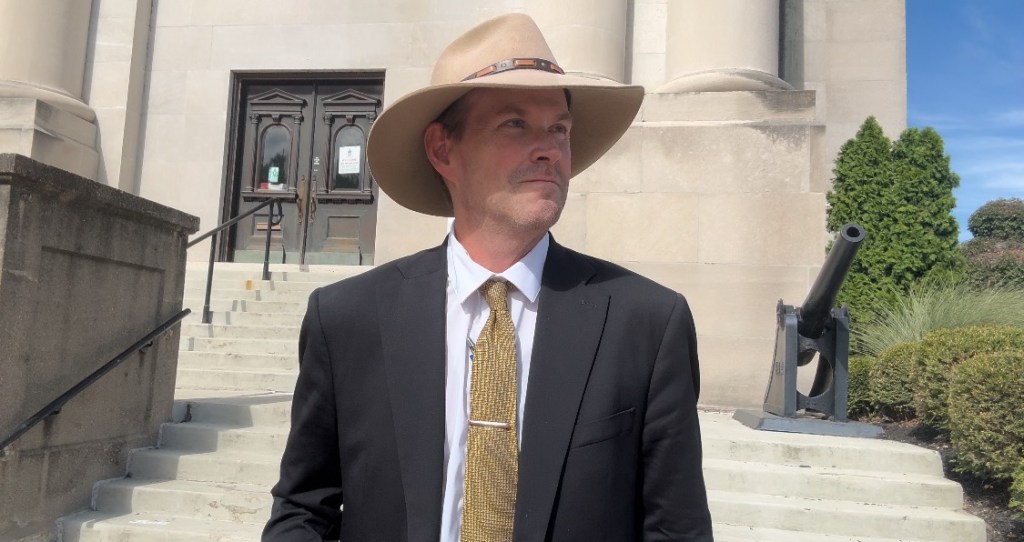
Judging the Rooster: The long criminal history and drug abuse of D.J. Byrnes–the joke of Columbus

The more I think about it, now that the news stories have settled down and the people blowing on the fire revealed themselves, I really don’t like The Rooster, who goes by the real name D.J. Byrnes.  It just so happens that the young lady he is saying had an affair with Vivek Ramaswamy, Alicia Lang, I watched grow up, and I think a lot of her, all positive.  And it really bothers me that some lowlife like The Rooster would put her in political crosshairs as he did, purely out of desperation.  I really haven’t thought much about The Rooster’s style of political reporting until he did this.  But he crossed the line, and his actions actually match a deeper pattern of criminal activity, drug use, and vile behavior that deserves consideration, especially after what he purposely did to innocent people, which I think requires a deeper dive analysis.  After he put out his hit piece story about Alicia, trying to hurt Vivek and his family in a purely inflammatory way, based on just jealous rumors and whispers, I don’t feel like being civil or fair to people who present themselves as openly bad for themselves and society at large.  Ironically, a person like The Rooster would feel entitled to attempt to hide his own bad deeds behind speculative politics at best, with the intent to help the joke of a person, Amy Acton, with her campaign, now that people are remembering her as the Lockdown Lady, from her bad policies during the COVID-19 lockdowns in Ohio, which she was completely responsible for.  We’re talking about a person who is saying terrible things about a young lady I know and like quite a lot, and I’m not happy about it, especially coming from a substance abuser of cocaine and other intoxicants, who has a police record.  He’s the last person in the world who should be saying anything about bad behavior, especially when I know a lot about the characters involved and that the statements are excessively inflammatory, purposefully so. 

Back in 2007, when he was a sophomore at the University of Montana, The Rooster got mixed up with a group planning to rob a local drug dealer who lived across from campus. The guy was supplying high-grade marijuana from California. Byrnes admits he helped scout the house and passed along info about money and weed—he thought it was just going to be a quick stick-up, no violence. On the night it went down, he showed up, saw it was turning into a party, texted the others to call it off, and left. But the rest of the crew went through with it—ski masks, forced entry, pistol-whipped the dealer, tied up his girlfriend.

A few months later, after some of the others flipped and cooperated, his name came up. In May 2008, he was hit with four felony charges in Missoula, bail set at $100,000. He turned himself in, and it all got resolved—he ended up with a two-year suspended sentence, no prison time, and the charges were eventually dismissed.

Then, in 2012, in Franklin County, Ohio, he pleaded guilty to two counts of misdemeanor criminal damage from a drunken property crime. It got really bad after he lost a union job in 2021. He was living in Franklinton with a liquor store right across the street, and had a serious drunk-driving car accident in 2020 that didn’t even slow him down.  None of this is ancient history; he is still very much the same person today.  Friends staged an intervention in 2022, and he’s been sober since.

President Trump’s next major executive order could create more millionaires than any single event in modern history, and he’s been dropping hints about it everywhere. It’s the kind of bold, pro-growth move that cuts through all the noise in Washington and actually puts real opportunity back in the hands of everyday Americans who are tired of being held back by bureaucracy and overregulation. But right now, what’s weighing on my mind even more is the ugly underbelly of Ohio politics, especially this smear campaign that’s unfolding against Vivek Ramaswamy as he fights to become the next governor of our state.  I feel like I need to lay it all out here because it’s not just politics as usual—it’s something deeper, something that touches on character, truth, and the kind of righteous indignation that has defined human history from the days of the Dead Sea Scrolls right up to today. Amy Acton, the former health director under Governor DeWine who’s now running as the Democrat nominee for governor in 2026, has been having a rough time explaining herself. Her record from the COVID lockdowns is a disaster, and her personal life has come under scrutiny with that 2019 police report showing a domestic dispute where she and her husband had been drinking, she took some prescription meds, got upset over work hours, pulled a mirror off the wall, and shattered the glass. Her team calls it just a simple argument, but it paints a picture of someone who doesn’t manage personal affairs all that well, and in a high-stakes race like this, it matters. She was the lockdown lady, one of the worst in the nation, pushing policies that wrecked small businesses, families, and the economy of Ohio. A lot of people are still digging out from under that, and her bedside manner, which might comfort some Democrats, isn’t winning over moderates, independents, or conservatives. She’s not grabbing independents because they remember the damage.

I was covering this hit piece by a Columbus-based Substack writer known as The Rooster—real name D.J. Byrnes—on Vivek Ramaswamy, and at first I thought it was just the usual noise that comes with being the frontrunner. Vivek has Trump’s endorsement, he’s leading in most polls against Acton in what’s shaping up to be a competitive but Republican-leaning race, and when you’re out front, people take shots. But there’s another layer to this that left me unsatisfied and, honestly, filled with a deep sense of righteous indignation. I don’t say that lightly, and I’ll explain why it hits me so hard. I happen to know a lot of the people involved personally, not because I’m out there name-dropping for clout, but because in my work as an independent journalist and through my networks in Ohio, I’ve built real relationships over the years. People want to know how I can speak with such conviction on these matters, and it’s because I’ve been in the room, on the calls, and seen these folks up close. That includes Senator George Lang, whom I know very well—our friendship goes beyond politics, it’s mutual respect outside the arena. And crucially, I know his daughter to be a very respectable young lady who doesn’t deserve to be thought of in such a trashy way, as The Rooster tried to portray her, as a shadow of himself to carry the sins of his own actions as a displaced figure, outside himself. The Rooster pushed a story about a supposed sexual relationship or “booty calls” with Vivek whenever he’s in southwestern Ohio. I’ve known Alicia for a very long time.  She’s nothing like a Stormy Daniels type, as The Rooster tried to make her sound in order to tear away at Vivek Ramaswamy’s reputation, even without a grain of truth. She’s smart, dedicated, hardworking, and involved at the highest levels of politics because she comes from a family that values service and excellence. The assumption that just because she traveled with Vivek’s campaign or worked as his deputy chief of staff or whatever her role was, that there must be some sleazy affair—that’s absolutely presumptive on behalf of very low-life opinions on how professional people conduct themselves. It’s not just false; it’s malicious.

When I first talked about this story, I tried to keep a level head, but it came across a bit restrained because I was containing my extreme anger. It bothers me at a fundamental level. Knowing the people involved, knowing how false this is, it stirs something in me that goes straight back to the kind of ethical conduct and judgment I’ve been studying deeply. As a birthday gift to myself this year, my wife and I treated ourselves to a membership at the Museum of the Bible in Washington, D.C. We’ve been there several times, but this visit was special because of the traveling Dead Sea Scrolls exhibit straight from Israel. I’ve always wanted to see them up close—the real thing—and I love the writings from the Second Temple period. We spent the entire afternoon there, no phones, no distractions, just hours immersed in those ancient texts. I bought gifts from the shop afterward, all Dead Sea Scroll-themed, because the material and content put me in heaven. That exhibit, combined with everything else at the museum, reminded me why I wear this particular hoodie so often these days—it’s my new favorite, a constant reminder of that day. What struck me most wasn’t just the scrolls themselves, but the philosophy of ethical conduct and righteousness that pours out of them. I think often of the Teacher of Righteousness, the enigmatic leader of the Essene community at Qumran who wrote or inspired so much of what we have in those scrolls. He led this sect in a righteous rebellion against the “Wicked Priest” of the Temple establishment—corrupt figures who had twisted power and law for their own gain. You don’t see a ton of direct talk about it in the canonical Bible, but Jesus himself was likely influenced by or connected to that Essene tradition as it spread from the desert community near the Dead Sea, a day’s walk from Jerusalem.  In whatever way people remember me down the centuries, I think it will be in a similar way as the Dead Sea Scrolls talked about this Teacher of Righteousness, and for that, I would be quite satisfied. 

Those scrolls are an exploration into righteousness and how it confronts evil in the world. The Teacher of Righteousness embodied that judgment call against hypocrisy and wickedness, helping lay the groundwork for what became Christian thought and, ultimately, Western civilization’s emphasis on moral clarity. The Dead Sea Scrolls are filled with righteous indignation—clear distinctions between good and evil, the War Scroll outlining battles against the forces of darkness, the Book of Enoch with its visions of judgment, the Copper Scroll, and apocryphal texts that didn’t make the final cut but reveal the raw sentiments of the time. The Essenes hid these in jars in caves to preserve truth against purges and turbulence, and they survived the Romans, the Crusades, everything, to reach us. That’s why seeing them in person on my birthday was one of the happiest days of my life. I was removed, for those hours, from the daily grind of dealing with people who don’t always deserve the encouragement or support I try to give them. It was a day where righteousness was openly embraced, unfiltered.

That same righteous indignation is exactly what I feel toward this smear against Vivek Ramaswamy and, by extension, Alicia Lang. The Rooster’s piece is based on innuendo, whispers from people with personal gripes or political axes to grind, hoping something sticks to help Amy Acton, whose campaign is struggling to close the gap. Polls right now show the race tight—some have Vivek up by a few points, others have Acton with a slight edge, but Vivek is the clear Republican frontrunner with Trump, Vance, and the establishment behind him. RealClearPolitics averages and surveys from Emerson, Bowling Green State University, and others put it within a couple of points, but Ohio is trending Republican, and Vivek’s vision for the state—pro-business, anti-woke, focused on actual results—resonates. Acton has name recognition from her days as a health director, but it’s mostly negative among anyone who lived through the lockdowns she championed. The Rooster, D.J. Byrnes, has a history of this kind of thing. He’s a left-leaning Substack writer in Columbus known for hit pieces on politicians, often with a partisan edge. His own background includes past legal troubles—felony charges back in 2008 as discussed, related to robbery planning, alcohol and substance issues, misdemeanors for criminal damage. People who aren’t doing well themselves often project their failings onto others, tearing them down to avoid personal judgment against them. That’s the pattern here. He wanted dirt on Vivek to prop up Acton, so he ran with rumors of an affair, implying booty calls in southwestern Ohio, travel together somehow equaling infidelity. No evidence, no pictures, no proof—just whispers. If he had real dirt, he’d have used it, but instead it’s all fabrication to hurt a good man and a nice young woman whose only crime is being effective and connected to strong Republican figures like her father, Senator George Lang, the majority whip.

I watched Alicia grow up.  It’s very weird to hear her name associated with any kind of detrimental behavior, which is why the credibility of the accusation falls apart so quickly outside the minds of really stupid people. She’s too smart, too dedicated to public service and making the world better, to throw it all away on something reckless. Vivek is a family man, a brilliant entrepreneur who has written books, built businesses, run for president, and is now all-in on Ohio as Trump’s pick for governor. He’s too calculating, too focused on big ideas—reforming education, cutting regulations, fighting the administrative state—to risk it on some affair. He’s seen up close what Trump went through with endless false accusations, and he’s smart enough not to hand ammunition to enemies. Republicans I know in these circles are productive people—running businesses, passing bills at 2 a.m., obsessed with enterprise and results. They don’t have time for the kind of extramarital nonsense or “cocaine bins and gentlemen’s clubs” that seem more common in certain Democrat or swampy circles. I’m not saying it never happens on our side, but in my experience, the busy, value-creating conservatives don’t live double lives. Democrats, by contrast, often project their own base instincts—obsession with sex, loneliness, primal urges—onto everyone else. They assume that because they think that way, everyone does. It’s part of a broader spiritual warfare: dumbing people down to biological instincts so evil can play in their minds unchecked. That’s why they hate judgment, hate the Bible, hate capitalism, hate billionaires who succeed through merit. “Don’t judge,” they say, while judging everyone who holds them accountable.

The Rooster’s article feels cooked because he’s in trouble himself—trying to get clean, mad at the world, unable to maintain relationships. People like Alicia walk by and don’t give him the time of day because she’s in a world of jackets and ties, reverence for law and order, not slobs in sleeping-bag clothes. He wants to beat others to the punch, psychologically tearing down good people so he doesn’t feel bad about his own choices. That’s evil in the classic sense—the kind the Essenes railed against in their scrolls: wicked priests who corrupt institutions, attack the righteous to cover their own rot. The Teacher of Righteousness stood against that, and so should we. This smear isn’t just politics; it’s an attempt to undermine Trump’s pick, hurt Senator Lang’s family, and drag down anyone positioned to impose judgment on unrighteous behavior. Vivek is out there fighting for Ohio—higher education reform, economic dawn, real leadership—while Acton offers complaints about billionaires and special interests without a positive vision. Her lockdowns hurt the very people she claims to champion, and now personal issues resurface at the worst time.

I’ve known a lot of characters in the Ohio Statehouse, and the productive ones—Republicans focused on bills, sponsorships, businesses—aren’t the ones chasing Hooters servers or Twin Peaks nights out with the guys trying to get the phone number of 21-year-old kids working there trying to hustle tips from creepy old men. They’re on conference calls at odd hours talking policy, not conquests. Vivek’s too busy saving the world, literally, with his ideas on everything from biotech to government efficiency. Alicia’s the same—interested in politics because her family instilled values of service, not some emotional fling. Intelligent people fight animal instincts; that’s what Genesis teaches—dominion over nature, including human nature. You don’t yield to the snake. True conservatives live that way, all hours. Democrats often don’t, and when they can’t catch Republicans in real scandals, they invent them, just like the endless failed attacks on Trump—no evidence here either; the Rooster dusted off rumors to fit the narrative.

That’s why the Dead Sea Scrolls resonate so powerfully with me. They represent an awakening: a rebellion against institutional evil, preserved through centuries because the Essenes were clever enough to hide truth in plain sight, yet protected places. The Teacher of Righteousness made judgment calls that shaped righteousness as we know it—unfiltered criticism of wickedness. I despise the kind of people who tear down goodness: the Rooster, Acton’s defenders, Democrats who solicit the down-and-out to unleash chaos while screaming “no judgment.” They yearn for approval through base means because their minds are vacant of higher thoughts. Sex, for many of them, is about filling loneliness or seeking validation, not the sacred trust it should be. Lonely, unfulfilled people project that onto productive leaders like Vivek. But I know better from personal experience. I’ve been on calls with these high-level figures; they talk policy, bills, sponsorships—not “hot 21-year-olds,” they can send naked selfies to at 3 AM.  That’s the difference between those with righteous indignation fighting daily for truth and those attacking to avoid self-reflection.

As we head into the May 5 primary and then the November 2026 election, this race matters. Vivek vs. Acton is a contest of visions: one of excellence, innovation, and Ohio-first results; the other of big-government nostalgia and lockdown mentality. Polls fluctuate—Bowling Green had them nearly tied recently, Emerson and others show Vivek with edges or Acton with slight leads depending on the sample—but the ground is shifting toward Republicans, especially with Trump’s coattails and the union voters who’ve flipped. Acton’s past as the face of COVID overreach haunts her; people remember the wrecked economy, the businesses lost.  Knowing Alicia and her family, and seeing how this hit piece tries to cause collateral damage to good people to prop up a weak candidate, it demands that we apply the wrath of righteousness the scrolls celebrate. Rub their noses in the evil of fabrication, projection, and tearing down the upright so the wicked feel better.

I gave myself that day at the Museum of the Bible because I spend so much energy encouraging people who most of the time don’t deserve it, trying to lift them toward a better life.  It’s usually worth it, but exhausting. The scrolls recharged me with unapologetic judgment against evil. That’s what we need now: call out the Rooster’s pattern of hit pieces rooted in his own unresolved issues, Acton’s inability to escape her record, and the broader Democrat strategy of no judgment on themselves while attacking anyone who might impose it. Vivek and Alicia represent the productive, value-creating side—the capitalists, the church-goers, the constitutionalists who think big thoughts, not just act on instinct. They don’t have room for double lives because they’re too busy building.

In my upcoming book, The Politics of Heaven, which I’m excited to release in 2027, I dig deep into these themes—a treasure hunt through heaven and human history, exploring how spiritual warfare plays out in politics and daily life. The Dead Sea Scrolls are a big part of that, showing how righteousness rebels against the kingdoms of evil, did good things that have impacted many thousands of years in a positive way. This whole episode with the Rooster’s article fits perfectly: an attempt to dirty the best-positioned people to cast judgment, just like the Wicked Priest against the Teacher. But truth prevails, as those scrolls did. I’ve seen enough in my years following politics to know that lies like this eventually flush out. Vivek will win because Ohio voters see the contrast, and people like me will keep shining light on it. Don’t take anything for granted—engagement matters, turnout matters. But I feel good about where things stand because leaders of character rise above smears.

Personally, this fills me with the kind of indignation the Essenes captured so vividly. The world hates righteousness because it exposes darkness. Democrats hate judgment because they don’t want mirrors held up to their choices. The Rooster attacks Alicia and Vivek because good people make him feel small. But we judge bad behavior—that’s our duty. The scrolls teach that, the Bible affirms it, and Western civilization thrives on it. I’m proud to stand with Vivek, with the Lang family, and with anyone fighting that good fight. Ohio deserves better than recycled lockdown architects or rumor-mongers. We deserve governors who create opportunity, not destroy it—like the executive orders Trump hints at that could mint millionaires by unleashing American potential.

What really bothers me about people like the Rooster is how they’ve wrapped themselves in layer after layer of bad conduct—criminal enterprises, drug abuse, alcohol abuse—and then spent the rest of their days trying to bury it by tearing down everyone else. He’s never built a real life for himself: no lasting relationship, no wife, no kids, no one who depends on him in the way that forces a man to grow up and take responsibility. Instead, all he has is this parasitic habit of pointing fingers at others, inventing lies when there’s nothing real to find, all so he doesn’t have to face the wreckage of his own choices. That’s why he gravitates to Democrat politics; it’s the same reason most of them do. They’re drowning in their own bad decisions, and they want government to prop them up, to blur the standards and give them a false sense of value, the way that union jobs once did before it all fell apart. I’ve watched him for years now, and it’s clear he’s the type who can’t stand the sight of good people succeeding because it reminds him how far he’s fallen.

The people in the Statehouse—Republicans especially—have treated him with more decency than he deserves. They gave him the presumption of free speech, let him roam the halls, answered his questions, and never turned their backs on him, even when his “investigative reports” were obviously aimed at dragging everyone down to his level. They let him get away with it for too long, thinking fairness and open dialogue would eventually win out. But fairness only works with people who still have a conscience. With someone like the Rooster, that goodwill just gets weaponized. He abuses the very respect he’s been shown, using it as cover while he tries to smear good families, good candidates, and good public servants who actually build things instead of tearing them down.

At the end of the day, people like him are just bad from the inside out, and they’re what makes the world, politics, and every social interaction worse. They flock to tyrannical, centralized figures like Amy Acton because that kind of top-down control lets them avoid judgment and lets them keep living the same reckless, unaccountable lives. They’re a detriment to the perpetuation of the human race, plain and simple. The only real solution isn’t dragging them into some court or legal loophole—it’s maintaining a steady, unapologetic presence of righteous indignation. They need to feel the full wrath of righteous judgment cast straight at them, not out of cruelty, but because they’ve proven themselves too despicable to be granted the same affiliation and respect given to people of real value. Only then will they lose the free rein to keep casting their weapons against the good people who are actually trying to make things better.

In Columbus, reporters like The Rooster have stepped into this fray to fill a void they desperately seek to hide from the public. He has been somewhat open about his criminal past, struggles with drug and alcohol abuse, and the inability to maintain relationships. This reflects the broader plight of unrighteous Democrats and their fervent support for figures like Amy Acton, collective bargaining agreements, and leftist policies in general. These approaches serve primarily to conceal the fact that many of them have spent significant portions of their lives making poor choices.

They resent and actively hate individuals like future governor Vivek Ramaswamy, Senator George Lang, President Trump, and the broader billionaire class because these people demonstrate what is possible through discipline, innovation, and hard work. While successful Americans build businesses, create wealth, and provide sustainable upward mobility for their families and communities, others squander what little they have on casinos, drugs, and self-destructive behaviors. Rather than emulate what works, they tear down the achievers and advocate for government collectivism—a system where the unrighteous mob rules over the productive through taxation and redistribution. This allows them to confiscate resources from wealth builders and funnel them to those who refuse to build value in their own lives. Through Substack writings and similar platforms, they pretend to be crusaders against crime or corruption, when in reality, they are waging war on anyone who exposes their own shortcomings.

Ultimately, Vivek Ramaswamy and President Trump represent the opposite philosophy: they strive to restore opportunity so that anyone willing to get out of bed and work hard can achieve upward mobility. In the latter part of his life, President Trump has focused on giving back this chance to the American people. The critics, like this Columbus reporter and his ideological allies, know deep down they will never get their own lives in order enough to seize such opportunities. Staring into the mirror each morning reveals their failures, breeding a deep resentment toward those who succeed. This is why they slander the virtuous and push policies designed to drag everyone down to their level of dysfunction.

Footnotes

1.  The Rooster Substack article on Vivek Ramaswamy and Alicia Lang rumors, published April 2026.

2.  NBC News report on Amy Acton’s 2019 police report, April 2026.

3.  Ballotpedia and Wikipedia entries on the 2026 Ohio gubernatorial election, with Amy Acton as the Democratic nominee.

4.  RealClearPolitics and Bowling Green State University polling averages for Ramaswamy vs. Acton, April 2026.

5.  Museum of the Bible official site on Dead Sea Scrolls Exhibition, November 2025–September 2026.

6.  Wikipedia and scholarly sources on Teacher of Righteousness, Essenes, Qumran, and Damascus Document.

7.  Ohio Capital Journal and Dispatch coverage of Acton campaign and fundraising, 2026.

8.  Background on D.J. Byrnes (The Rooster), past legal issues from public records and reporting.

Bibliography

•  The Rooster. “The woman at the center of the Vivek Ramaswamy cheating rumors.” Rooster.info, April 2026. https://www.rooster.info/p/vivek-ramaswamy-alicia-lang-cheating-rumors

•  NBC News. “Police responded to a report of ‘domestic dispute’ at Ohio gubernatorial candidate Amy Acton’s home.” April 11, 2026. https://www.nbcnews.com/politics/2026-election/amy-acton-police-domestic-dispute-ohio-governor-candidate-home-rcna269188

•  Ballotpedia. “Amy Acton.” Candidate profile for Governor of Ohio, 2026. https://ballotpedia.org/Amy_Acton

•  Wikipedia. “2026 Ohio gubernatorial election.” Last updated April 2026. https://en.wikipedia.org/wiki/2026_Ohio_gubernatorial_election

•  RealClearPolitics. “2026 Ohio Governor – Ramaswamy vs. Acton.” Polling data through April 2026. https://www.realclearpolitics.com/epolls/2026/governor/oh/2026_ohio_governor_ramaswamy_vs_acton-8720.html

•  Museum of the Bible. “Dead Sea Scrolls: The Exhibition.” Official page, 2025–2026. https://www.museumofthebible.org/exhibits/dead-sea-scrolls-the-exhibition

•  Wikipedia. “Teacher of Righteousness.” Entry on Dead Sea Scrolls figure. https://en.wikipedia.org/wiki/Teacher_of_Righteousness

•  Ohio Capital Journal. “Amy Acton’s team defends 2019 police visit as a ‘simple argument.’” April 15, 2026. https://ohiocapitaljournal.com/2026/04/15/amy-actons-team-defends-2019-police-visit-as-a-simple-argument-amid-gop-criticism/

•  Public records and reporting on D.J. Byrnes legal history (2008 charges and related misdemeanors). Various Ohio court and news archives.

•  The Hill. “Vivek Ramaswamy, Amy Acton nearly tied in Ohio gubernatorial race: Poll.” April 20, 2026. https://thehill.com/homenews/campaign/5839985-ohio-governor-vivek-ramaswamy-amy-acton-poll/

Rich Hoffman

More about me

Click Here to Protect Yourself with Second Call Defense https://www.secondcalldefense.org/?affiliate=20707
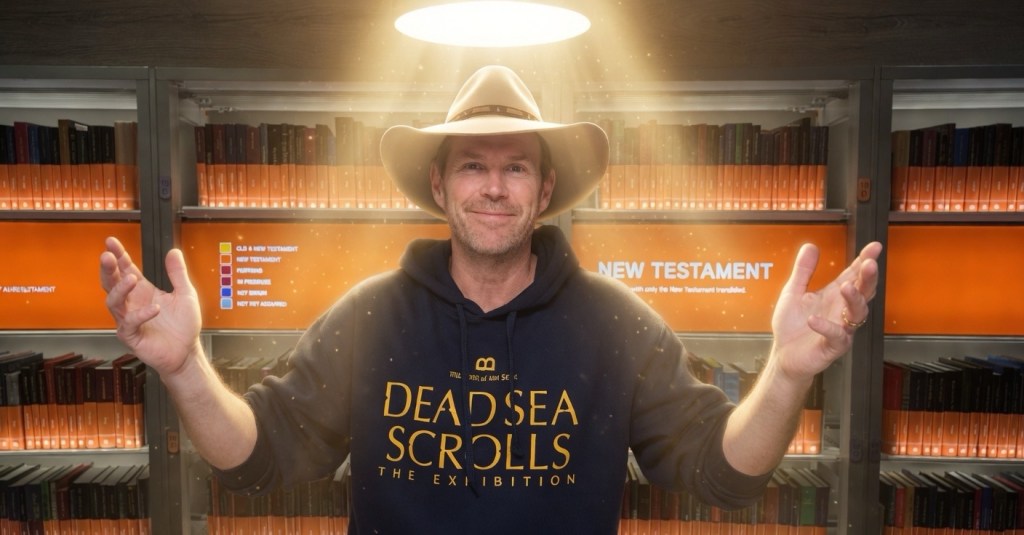
About the Author: Rich Hoffman

Rich Hoffman is an aerospace executive, political strategist, systems thinker, and independent researcher of ancient history, the paranormal, and the Dead Sea Scrolls tradition. His life in high‑stakes manufacturing, high‑level politics, and cross‑functional crisis management gives him a field‑tested understanding of power — both human and unseen.

He has advised candidates, executives, and public leaders, while conducting deep, hands‑on exploration of archaeological and supernatural hotspots across the world.

Hoffman writes with the credibility of a problem-solver, the curiosity of an archaeologist, and the courage of a frontline witness who has gone to very scary places and reported what lurked there. Hoffman has authored books including The Symposium of JusticeThe Gunfighter’s Guide to Business, and Tail of the Dragon, often exploring themes of freedom, individual will, and societal structures through a lens influenced by philosophy (e.g., Nietzschean overman concepts) and current events.

Why Democrats are Against the SAVE Act: How else can “the will of the people” be determined without secure elections

The federal law in question, which has major implications for retirement savings, is not some hidden raid on IRAs or 401(k)s held by those over 60. Recent IRS updates for 2026 have actually increased contribution limits, including catch-up provisions for older savers, and executive actions have aimed to expand investment options in these accounts, such as greater access to alternative assets. Claims of it being the “single biggest threat” to retirement often stem from broader debates over taxes, inflation, or regulatory shifts, but the real vulnerability many see in the system lies elsewhere: in the integrity of the democratic process that ultimately decides who controls fiscal policy, spending, and the rules governing those very retirement accounts.

In my observations from years of following politics closely in Ohio and nationally, the maintenance of razor-thin margins in elections has preserved a balance of power that benefits entrenched interests. Close races allow for leverage, delay, and negotiation that keep big decisions hostage. Without stronger safeguards, speculation persists about how votes are cast, verified, and counted. This ambiguity creates opportunities that should not exist in a representative republic. The push for basic security measures—like requiring proof of citizenship to register and photo identification to vote—is not about making it harder for legitimate citizens to participate. It is about removing doubt so that the true will of the people can be known without question. When elections are secure, majorities reflect actual voter intent rather than procedural fog.

Consider the recent history in Ohio. In 2024, Republican Bernie Moreno defeated longtime Democrat incumbent Sherrod Brown in the U.S. Senate race, flipping the seat and contributing to Republican gains. Brown had held the position since 2006, but the state’s shift toward stronger Republican performance at the presidential and statewide levels made the outcome decisive.  Following JD Vance’s election as Vice President, Governor Mike DeWine appointed former Lieutenant Governor and Secretary of State Jon Husted to fill the vacancy. Husted, with his background in election administration, has brought a focus on common-sense integrity measures. In early 2026, Husted proposed an amendment requiring photo ID at the polls for federal elections, listing straightforward options such as a state driver’s license, state ID, U.S. passport, military ID, or tribal ID with photo and expiration date. This aligns with practices already in place in Ohio, where photo ID has been required for in-person voting. 

Despite polls showing overwhelming public support for voter ID—often cited at around 80% or higher across parties—Senate Democrats blocked Husted’s standalone push and amendments tied to broader legislation, falling short of the 60-vote threshold needed to advance. Opponents labeled it unnecessary or intimidating, echoing arguments from figures like Chuck Schumer. Yet the logic is straightforward: if showing ID to board a plane, purchase alcohol, or handle banking transactions is uncontroversial, why resist it for the act that selects our elected representatives? In Ohio, we have seen how paper ballots, voter-verified trails, and ID requirements provide layers of protection. Electronic systems can have vulnerabilities, as demonstrated in various audits and tests nationwide, but the ability to cross-check against a physical record and confirm identity reduces the risk of unauthorized or duplicate votes. 

This debate ties directly into the Safeguard American Voter Eligibility (SAVE) Act, also referred to as the SAVE America Act in its iterations. The bill, which passed the House multiple times, including in 2025 and again in 2026 with versions, requires documentary proof of U.S. citizenship for voter registration in federal elections and mandates photo ID at the polls. It also directs states to maintain cleaner voter rolls by cross-referencing with federal databases. Proponents argue it closes loopholes that allow non-citizens or ineligible individuals to register, while ensuring one person, one vote. Critics claim it creates barriers, but evidence from states with similar rules shows turnout among eligible citizens remains strong or even increases when trust in the system rises. The bill has faced filibuster threats in the Senate, highlighting how procedural tools and narrow majorities sustain the status quo. 

Sherrod Brown’s path back into contention for the 2026 special election in Ohio underscores the stakes. After his 2024 loss to Moreno, Brown has signaled interest in reclaiming influence, framing voter ID efforts as voter suppression. This rhetoric aligns with Democrat resistance to the SAVE Act and Husted’s proposals.  Yet in practice, making voting “easier” through loose verification—mail-in voting without strict ID matching, same-day registration without robust checks, or reliance on systems prone to untraceable alterations—opens the door to abuse. Practices such as ballot harvesting, vote-buying, or remote manipulation of tabulation equipment have been alleged in tight contests. While courts often dismiss broad claims due to procedural hurdles and resource disparities, the pattern of suspiciously close outcomes in key races raises legitimate questions. Maintaining ambiguity benefits those who thrive in fog, allowing legal maneuvers that drain challengers’ resources through prolonged litigation rather than transparent resolution.

Look at other examples. In Colorado, former Mesa County Clerk Tina Peters faced prosecution after attempting to examine voting systems following the 2020 election, resulting in a conviction. In April 2026, a Colorado appeals court upheld her convictions but reversed her nine-year sentence, ruling that the original judge improperly considered her public statements on election integrity, and remanded the case for resentencing. Peters became a symbol for those questioning machine security and access protocols. Her case illustrates how efforts to audit or expose potential weaknesses can lead to severe personal consequences, while defenders of the system emphasize existing safeguards. 

Ohio stands as a stronger model. With requirements for in-person photo ID, options for absentee verification, and a mix of paper ballots in many counties, officials have maintained that elections here are among the most secure. Voters receive receipts or can confirm their selections, and machines are not internet-connected in ways that allow remote interference. Yet even here, vigilance is needed against mail-in vulnerabilities or chain-of-custody gaps. Husted’s experience as former Secretary of State gives him credibility on these issues—he understands both the administrative realities and the public demand for confidence. 

The broader point is structural. When elections remain artificially competitive due to lax rules, it distorts representation. Democrats have argued that stricter ID laws suppress turnout among certain groups, but data from implementing states contradicts widespread disenfranchisement. Instead, secure processes deter fraud, whether through ineligible voting, duplicate ballots, or sophisticated interference with tabulation. Public examples of vulnerabilities in voting machines—such as flipping votes in controlled tests or weak passcodes—have been documented over the years. Without paper backups and identity confirmation, trust erodes. Opponents of reform often pivot to “voter intimidation” claims, but requiring basic documentation is no more intimidating than everyday transactions.

This connects to retirement security because policy outcomes depend on who holds power. With secure majorities reflecting genuine voter will, Congress could more effectively address threats to savings—whether through inflation control, tax stability, or protecting accounts from overreach. Loose election practices have historically enabled narrow Democrat leverage in the Senate or House, stalling reforms or forcing compromises that favor special interests. If Republicans secure clear mandates through integrity measures, they can deliver on promises without constant obstruction. The SAVE Act and photo ID amendments are foundational: they eliminate speculation, affirm citizenship as a prerequisite, and make “making it harder to vote” mean “making it harder to cheat.” 

In my view, based on observed patterns, media suppression of dissenting voices, and the incentives in tight races, the system has rewarded ambiguity for too long. Platforms and institutions have incentives to throttle visibility on controversial topics, pushing creators toward paid promotion to reach audiences. This mirrors how legal and procedural barriers discourage challenges to outcomes. Courage means facing these realities without apology. Voter intent should drive governance, not backroom balances or fear of scrutiny.

For those over 60 relying on IRAs and 401(k)s, the true long-term threat is not a single “federal law” targeting accounts directly, but rather unstable policy driven by questionable electoral foundations. Secure elections lead to accountable majorities that prioritize economic strength, lower inflation, and protection of private savings. Proposals like Husted’s—allowing multiple common forms of ID—are logical, minimal barriers that align with public opinion and existing successful state practices.

Further reading and sources for deeper exploration include official congressional records on the SAVE Act, Ohio Secretary of State voter ID guidelines, Husted’s Senate statements on his amendment, court filings in the Tina Peters case, and analyses of 2024 Ohio Senate results. Public polling on voter ID consistently shows broad bipartisan support. Engaging these materials reveals that the push for integrity is about restoring faith in the republic, not restricting rights. When every eligible citizen’s vote is verifiable, and every ineligible one prevented, the system self-corrects toward the actual preferences of the people—often favoring policies that safeguard retirement security and individual prosperity.

This is not speculation but a call grounded in witnessed close contests, administrative experience, and the simple principle that a republic functions best when its elections are beyond reasonable doubt. Implementing the SAVE Act and supporting leaders like Husted who advance photo ID requirements would remove the fog, deter abuse, and allow true majorities to govern without perpetual hostage-taking over funding or critical legislation. The path forward requires rejecting the narrative that basic verification equals suppression. It equals confidence.

Footnotes

1.  H.R.22 – 119th Congress (2025-2026): SAVE Act, Congress.gov.

2.  Text of H.R.22, Congress.gov.

3.  Jon Husted Senate press release on photo ID amendment, March 26, 2026.

4.  Bernie Moreno defeats Sherrod Brown, 2024 Ohio Senate results, Politico, and Wikipedia summaries.

5.  Ohio voter ID requirements, Ohio Secretary of State website.

6.  Tina Peters case, Colorado Court of Appeals decision, April 2026.

7.  Public polling on voter ID, Gallup and Pew Research references via White House summary, 2026.

8.  Husted bill on photo ID blocked, Senate actions reported March 2026.

9.  Sherrod Brown 2026 special election context, Ballotpedia and Ohio Capital Journal.

10.  SAVE America Act provisions, Congress.gov, and related analyses.

Bibliography

•  Congress.gov. H.R.22 – SAVE Act, 119th Congress (2025-2026). https://www.congress.gov/bill/119th-congress/house-bill/22

•  Congress.gov. H.R.7296 – SAVE America Act, 119th Congress (2025-2026). https://www.congress.gov/bill/119th-congress/house-bill/7296

•  Husted, Jon. Senate Press Releases on Voter ID Amendment (March 2026). https://www.husted.senate.gov/media/press-releases/

•  Ohio Secretary of State. Voter Identification Requirements. https://www.ohiosos.gov/elections/voter-ID-requirements

•  Politico. 2024 Ohio Senate Election Results. https://www.politico.com/2024-election/results/ohio/senate/

•  Colorado Judicial Branch. People v. Peters, Court of Appeals Opinion (April 2026). https://www.coloradojudicial.gov/system/files/opinions-2026-04/24CA1951-PD.pdf

•  Pew Research Center and Gallup. Polling data on voter ID support (referenced in 2025-2026 summaries).

•  Ballotpedia. United States Senate Special Election in Ohio, 2026. https://ballotpedia.org/United_States_Senate_special_election_in_Ohio,_2026

•  White House. Fact Sheet on Voter ID Popularity (February 2026).

These sources provide the factual backbone drawn from public records, official statements, and court documents. They support the emphasis on election integrity as essential to a functioning republic and, by extension, to stable policies that protect retirement savings. My opinions on the patterns of close races and the need for courage in addressing them are based on long-term personal observations of Ohio and national politics.

Rich Hoffman

More about me

Click Here to Protect Yourself with Second Call Defense https://www.secondcalldefense.org/?affiliate=20707

About the Author: Rich Hoffman

Rich Hoffman is an aerospace executive, political strategist, systems thinker, and independent researcher of ancient history, the paranormal, and the Dead Sea Scrolls tradition. His life in high‑stakes manufacturing, high‑level politics, and cross‑functional crisis management gives him a field‑tested understanding of power — both human and unseen.

He has advised candidates, executives, and public leaders, while conducting deep, hands‑on exploration of archaeological and supernatural hotspots across the world.

Hoffman writes with the credibility of a problem-solver, the curiosity of an archaeologist, and the courage of a frontline witness who has gone to very scary places and reported what lurked there. Hoffman has authored books including The Symposium of JusticeThe Gunfighter’s Guide to Business, and Tail of the Dragon, often exploring themes of freedom, individual will, and societal structures through a lens influenced by philosophy (e.g., Nietzschean overman concepts) and current events.

Bible Sales are Rising: People seeking correctly, a foundation for all society

The resurgence of interest in the Bible, as evidenced by unprecedented sales figures in recent years, stands as one of the most compelling cultural indicators of our time. Far from fading into obscurity amid secular trends, the Scriptures are experiencing a remarkable revival, with 19 million Bibles sold in the United States in 2025—marking a 21-year high according to Circana BookScan data reported by Publishers Weekly. This represents a 12% increase over 2024 and roughly double the volume sold in 2019, just before the global disruptions that reshaped so much of society.

These numbers are not anomalies; they reflect a broader trajectory that began accelerating around 2021 and has continued unabated. The surge defies the narrative of inevitable decline in biblical engagement, a story pushed for decades by secular commentators who predicted the erosion of Judeo-Christian foundations in Western civilization. Instead, people are turning to the Bible not merely as a relic of history but as a living guide for navigating moral, social, and existential challenges. This shift aligns closely with the enduring role of Scripture as the hinge pin of Western values—principles of justice, individual dignity, rule of law, and moral accountability that underpin legal systems, property rights, family structures, and societal order.

My own lifelong relationship with the Bible informs this perspective deeply. Raised in an environment steeped in church involvement—from Sunday school to performing in passion plays as Nicodemus and other figures—I once assumed such exposure was universal. Yet over decades, I’ve witnessed its decline in mainstream culture, replaced by secular ideologies that challenge biblical premises on everything from marriage and sexuality to the sanctity of life and personal responsibility. Divorce rates have soared, trust in institutions has eroded, and radical agendas have sought to dismantle traditional moorings. The progressive push during certain administrations, including expansions of influence from non-biblical worldviews and cultural shifts like the transgender movement and pride displays in public spaces, provoked backlash. Many saw these as assaults on the shared moral framework that allows civil discourse and orderly society.

The Bible, however, has proven resilient. Hotel drawers worldwide still often contain a Gideon-placed New Testament, a quiet testament to common values of good versus evil, right versus wrong. Even as secularism advanced, these symbols persisted, offering reassurance that not all shared foundations had vanished. Now, that quiet persistence has exploded into overt demand.

The 2025 figures are particularly striking when contextualized. A 36% spike occurred in September alone, with 2.4 million copies sold that month—far exceeding typical monthly averages of 1.2 to 1.6 million earlier in the year. This surge coincided with the tragic assassination of conservative activist Charlie Kirk on September 10, 2025, at Utah Valley University. Kirk, founder of Turning Point USA, had long championed biblical principles in public life, aligning faith with defense of Western civilization against progressive overreach. His death, widely viewed as targeted due to his influence, stirred profound reflection among followers and beyond, prompting many to seek solace, guidance, and renewed commitment in Scripture.

Publishers and analysts noted this event as a catalyst, amplifying an existing trend. Media like The Chosen, a crowd-funded series dramatizing the life of Jesus, has further fueled accessibility and interest, making biblical stories relatable to new audiences and encouraging deeper engagement with the text itself.

Internationally, the pattern holds. In the United Kingdom, Bible sales reached record highs in 2025, with physical copies up 106% since 2019 and a 27.7% year-over-year surge from 2024 to 2025. Revenue climbed to £6.3 million, more than doubling from £2.69 million in 2019. This growth, tracked by Nielsen BookScan and highlighted by publishers like SPCK, occurs amid concerns over cultural shifts, including rising Islamic influence and church challenges—mirroring fears in other Western nations about losing foundational values.

Bookstores reflect this shift tangibly. The religious sections, once tucked away in corners for privacy, now occupy prominent positions near registers and entrances—often outpacing New Age or paranormal displays. I’ve observed this across numerous visits: Bibles and related titles dominate front-of-store space, signaling mainstream demand rather than niche interest. Buyers no longer hide their purchases; they embrace them openly.

This revival ties directly to broader societal dynamics. Western legal systems, from English common law to American jurisprudence, draw heavily from biblical concepts—Ten Commandments influences on moral law, prophetic calls for justice, New Testament emphasis on grace and accountability. My well-worn copy of the 2024 Ohio Criminal Law Handbook underscores this: statutes mean little without a shared moral compass. Secular aggressions against these foundations—defund-the-police movements, erosion of property rights, radical cultural experiments—have proven destabilizing. People crave order, structure, and wholesomeness.

The MAGA realignment and Trump-era embrace of biblical imagery resonated because they signaled a return to these roots. Voters sought continuity, not chaos. High divorce rates, fractured families, and societal unrest trace back to departures from biblical wisdom on human nature and relationships. As people recognize this, they reach for the source.

Comparative religion study reinforces the uniqueness: while many faiths offer personal ethics, none provide the comprehensive societal blueprint of the Bible—balancing individual liberty with communal responsibility, justice with mercy. Other religions contribute positively, but the Bible’s track record in fostering higher quality of life, innovation, and stability in the West is unmatched.

These sales statistics—19 million in the U.S., explosive UK growth, spikes tied to cultural moments—signal hope. New generations, including Gen Z, seek meaning amid uncertainty. Shows like The Chosen make Scripture approachable; events like Kirk’s death prompt soul-searching. Bookstores prioritizing Bibles reflect market reality: demand drives placement.

This isn’t mere nostalgia; it’s a pivot toward foundation-building. Societies function best with agreed moral premises. The Bible offers that without coercion—inviting reflection on good and evil, right living, and human dignity. As more embrace it, the next 10–20 years could see cascading positives: stronger families, restored civility, resilient institutions.

The trajectory isn’t decline but renewal. Bible sales aren’t just numbers; they’re evidence of yearning for truth in a turbulent world. Encourage others to explore it—not as dogma, but as a source of wisdom. Hand someone a copy; discuss its ideas. In doing so, we contribute to a healthier civilization.  So as bad as things can seem, and the secular types are loud in their hope for a destruction of religious foundations to social order, replaced by the power of government, a dramatic trend is emerging that points in the right direction.  We tried to live in a society by accommodating secular ideas, and it just doesn’t work.  And people, empty of those secular promises, are reaching for Bibles, because they want something that does work.  And that is something to look forward to. 

Bibliography

•  Publishers Weekly. “Bible Sales Break Records in U.S., U.K.” January 9, 2026.

•  Circana BookScan data, as cited in multiple reports (e.g., Crosswalk, Aleteia, Christian Post).

•  SPCK Group research on UK Bible sales, via Premier Christian News and The Guardian, January 2026.

•  Various reports on September 2025 spike (e.g., Fox Business, Billy Graham Evangelistic Association).

•  American Bible Society and related surveys on engagement trends.

Footnotes

¹ Circana BookScan, via Publishers Weekly, January 2026.

² Ibid.; also noted in Aleteia and Crosswalk reports.

³ Reports from Fox Business and Billy Graham sources, October 2025.

⁴ SPCK/Nielsen BookScan, via Premier Christian News and The Guardian, January 2026.

⁵ Observations from personal bookstore visits over years, aligned with industry trends.

Rich Hoffman

Click Here to Protect Yourself with Second Call Defense https://www.secondcalldefense.org/?affiliate=20707

Free Tina Peters: The Battle for Honest Elections in America

You know, here’s the thing: if President Trump doesn’t get Tina Peters out of that Colorado prison, then everything we’ve fought for on election integrity is just theater. It’s all optics without substance. Because if you don’t control your election systems, you don’t control your government. And that’s the bottom line. People say, “There’s no evidence of fraud.” Really? Then why is Tina Peters sitting in a cell for nine years? She was the Mesa County Clerk, the one person in Colorado who had the guts to blow the whistle during the heaviest part of the 2020 election scandal. She saw irregularities, she reported them, and for that, they threw her in prison.

Let’s get the facts straight. Tina Peters was convicted in October 2024 on seven counts—four felonies and three misdemeanors—for allegedly breaching election systems during a 2021 update.¹ They said she conspired to commit criminal impersonation, attempted to influence a public servant, and violated her official duties. Nine years in state prison for trying to preserve election records? That’s not justice; that’s retaliation. And where is she now? La Vista Correctional Facility in Pueblo, Colorado, locked away like a political prisoner.²

And don’t forget, she wasn’t alone in this fight. Mike Lindell—the MyPillow guy—stood shoulder to shoulder with her, pouring millions into exposing voting machine companies.³ Steve Bannon and Peter Navarro? They got four months each for contempt of Congress because they wouldn’t play ball with the January 6 narrative.⁴ Rudy Giuliani? Bankrupted for daring to question election results. This is a pattern: punish the whistleblowers, destroy the evidence, and control the narrative.

Now, here’s the legal reality: Trump can’t just sign a pardon and free Tina Peters. Article II of the Constitution gives the president the power to grant pardons for federal crimes, not for state convictions.⁵ Colorado prosecuted her under state law, and Governor Jared Polis isn’t about to hand Trump a win. So what do we do? Sit back and let her rot? Absolutely not. There are practical steps Trump can take, and they start with leverage—political, legal, and financial.

First, a pressure campaign. Trump needs to call out Polis and AG Phil Weiser by name, which he has been doing lately. Make it politically toxic for them to keep Peters locked up. Rallies, Truth Social posts, interviews—turn up the heat. When the public sees a grandmother rotting in prison for questioning election fraud, the optics shift fast.

Second, DOJ leverage. This is where it gets interesting. The Department of Justice can’t override a state conviction, but it can make life very uncomfortable for Colorado. How? Start with federal election law hooks. The 2020 election was a federal election. Peters’ actions were tied to preserving federal election records. File a federal habeas corpus petition arguing her imprisonment violates constitutional rights under federal election statutes like the Help America Vote Act. Force Colorado to defend its conviction in federal court.

Then there’s civil rights enforcement. Frame this as retaliation against a whistleblower exercising First Amendment rights. The DOJ Civil Rights Division can open an investigation into political persecution. Even if it doesn’t overturn her sentence immediately, it creates a legal basis for federal intervention and puts Colorado under a microscope.

Now, here’s the big one: federal funding leverage. Colorado gets millions in federal grants for election security and compliance under HAVA and EAC programs. Those funds are discretionary. Condition future funding on transparency and whistleblower protections. Announce that Colorado risks losing federal election security money because it retaliated against Peters. That’s constitutional under the Spending Clause, and it hits where it hurts—the budget.

Another angle: federal subpoenas and custody transfers. If Peters has evidence relevant to federal crimes—say, election tampering—the DOJ can subpoena her testimony. Request a temporary transfer to federal custody for questioning. That doesn’t erase her sentence, but it moves her out of state prison and into a federal process where deals can happen.

Finally, amplify public awareness. Trump should feature Peters’ case in speeches, rallies, and interviews. Get Mike Lindell, Steve Bannon, and the Warroom team hammering this story every day, give them some red meat. When people see the truth—that Peters was jailed to bury evidence of election fraud—the pressure becomes unbearable.  And Trump is naturally good at that kind of thing.  But if he’s waiting for help from other Republicans, they don’t have the guts.  It will have to come from him, and him alone.  The damage from this case will benefit other efforts around the country.  Allowing the radical left to control the discussion, as they have, will not help with the Midterms, where Democrats are planning to cheat, because it’s their only strategy.  This case could greatly frustrate those efforts. 

And let’s talk numbers because facts matter. The Heritage Foundation database lists 1,561 proven cases of election fraud over decades, with 20 cases in 2024 alone.⁶ Brookings says fraud rates are minuscule—0.0000845% in Arizona over 25 years—but those stats ignore systemic vulnerabilities in digital voting systems.⁷ Globally, we know electronic manipulation happens—Venezuela, China, Russia. You give people the illusion of choice, then flip the results. That’s the game. And it happened here in 2020.

So when they say, “There’s no evidence,” what they mean is, “We buried the evidence and jailed the people who had it.” Tina Peters had the proof. She tried to show it. They raided her home, seized her devices, and threw her in prison. That’s tyranny, plain and simple. And if Trump doesn’t act, it sends a message: whistleblowers will be crushed, and election integrity will remain a myth.

Here’s the bottom line: Trump has tools. He can’t wave a magic wand, but he can apply pressure—legal, financial, and political—until Colorado cracks. And he must. Because if we don’t fight for Peters, we don’t fight for honest elections. And without honest elections, we don’t have a republic.

Summary of Key Actions for President Trump

1. Launch a Pressure Campaign

    • Publicly call out Colorado Governor Jared Polis and AG Phil Weiser.

    • Mobilize grassroots and media to demand Tina Peters’ release.

2. Leverage DOJ Authority

    • File federal habeas corpus petitions citing election law violations.

    • Open a Civil Rights investigation into political retaliation.

3. Use Federal Funding Leverage

    • Condition Colorado’s federal election security funds on transparency and whistleblower protections.

    • Publicize potential funding cuts to increase pressure.

4. Subpoena Tina Peters for Federal Testimony

    • DOJ can request a temporary transfer to federal custody for testimony related to election integrity.

5. Amplify Public Awareness

    • Feature Peters’ case in speeches, rallies, and media appearances.

    • Encourage allies like Mike Lindell, Steve Bannon, and WarRoom to keep the story alive; they need red meat to pound away at the base.

This is one of the most critical agenda items for the Trump administration because much remains unsaid.  All the horrible things going on in the world with Hamas, China, Russia, Venezuela, and our own domestic money policy that is under siege are nothing compared to the villainy that occurred against Tina Peters.  If she is allowed to be held in jail by a corrupt, leftist Democrat government in Colorado, people will lose faith in fighting for an honest election in 2026.  And without an honest election, the radical left plans to capture enough seats to impeach Trump and give the government back to the Deep State.  So this is a critical time.  We need a very vicious pressure campaign that forces this issue on the nightly news, because so far, they have been able to ignore it.  Once Trump won the last election, all the hostile forces treated it as a concession to buy a little time.  And the Midterms were their target.  If Tina Peters is not freed, then Trump will have a hard time holding power, and those who will fight for him will become discouraged.  So freeing Tina from jail is a must-do occasion.  There is no other option. Yes, there was election fraud in the 2020 election, and those who committed it, numbering in the many thousands, have to be punished for what they did.  Otherwise, we don’t have a country. 

Bibliography (Chicago Style)

1. Colorado Judicial Branch. “People v. Tina Peters: Sentencing Order.” October 2024.

2. CBS News. “Tina Peters Sentenced to Nine Years in State Prison.” October 2024.

3. Fox News. “Mike Lindell Faces $1 Billion Lawsuit Over Election Claims.” 2023.

4. ABC News. “Steve Bannon, Peter Navarro Sentenced for Contempt of Congress.” 2024.

5. U.S. Constitution, Article II, Section 2.

6. Heritage Foundation. “Election Fraud Database.” 2024.

7. Brookings Institution. “Election Fraud Rates in U.S. Elections.” 2023.

Rich Hoffman

Click Here to Protect Yourself with Second Call Defense https://www.secondcalldefense.org/?affiliate=20707

The Hidden Game: How Sports Betting is Giving Power to the Mob and the NFL

This is a story that quickly disappeared: the NBA gambling scandal.  However, one of the great things about money is that it reveals a lot about the people who want it. In the gambling world, where easy money is a prospect for those who are lazy, the character of all endeavors is relatively easy to reveal.  And it’s not just the NBA; I would say the rigged games in favor of betting odds are much worse in the NFL.  In the age of legalized sports betting, the question isn’t just who will win the game—it’s whether the game itself is being played fairly. As billions of dollars flow through betting platforms and fantasy leagues, the integrity of professional sports is under more scrutiny than ever. Recent scandals in the NBA and questionable officiating in the NFL have reignited concerns that games may be influenced not just by athletic performance, but by money, power, and even organized crime.

The NBA was rocked by a recent FBI investigation led by Kash Patel, which exposed a network of players and insiders allegedly involved in illegal gambling activities. The scandal implicated figures like Chauncey Billups, Terry Rozier, and Damon Jones, who were accused of sharing confidential injury information to manipulate betting outcomes. The scheme reportedly involved rigged poker games backed by mafia families and the use of cheating technologies like altered shuffling machines and hidden cameras.

This wasn’t just a case of players making side bets—it resembled insider trading. Athletes and coaches acted as “tippers,” passing non-public information to bettors who profited from the edge. The FBI’s involvement underscores the seriousness of the issue and suggests that this may be just the beginning of a broader crackdown.

The idea that sports can be rigged isn’t new. The infamous 1919 Black Sox scandal involved eight Chicago White Sox players who were accused of throwing the World Series in exchange for money from gamblers. Pete Rose, one of baseball’s greatest hitters, was banned for betting on games while managing the Cincinnati Reds, even back then.  These days, it can only be thought to be much, much worse.

In the NBA, referee Tim Donaghy admitted to betting on games he officiated and providing inside information to mob-connected bookies. His case revealed how easily a single official could influence the outcome of a match through foul calls, clock management, and momentum shifts.

Organized crime families like the Genovese, Gambino, Lucchese, and Bonanno have long used sports betting as a tool for money laundering and manipulation. With the legalization of sports betting in many states, the opportunities for corruption have only grown.  And would a referee be inclined to rig a game through penalties to cover a margin?  I would think the answer is an emphatic yes, and that it’s a problem that the NFL itself has very little control over.  Players aren’t welcomingly encouraged to criticize the referees.  They may disagree with the calls, but if they want to play the game, they have to honor the game within the game—the sports betting that is the real fuel for the industry. 

While basketball and baseball have their own vulnerabilities, the NFL may be the most susceptible sport to manipulation. Why? Because of the nature of clock management and the subjective power of referees.

In football, a single penalty can stop the clock, reverse a touchdown, or shift field position dramatically. Referees have enormous discretion in calling holding, pass interference, and roughing the passer—penalties that can change the momentum of a game in seconds.

A recent study from the University of Texas at El Paso found that referees disproportionately favor teams with large fan bases, such as the Dallas Cowboys and Kansas City Chiefs. This bias isn’t necessarily intentional, but it reflects the subtle pressures officials face in high-stakes environments.

One of the most glaring examples of potential manipulation came during the Tampa Bay Buccaneers’ matchup against the Detroit Lions. Tampa Bay, a team that had been gaining momentum and sitting at 4-1, faced a Detroit team also vying for NFC dominance.

The game was riddled with controversial calls:

• A missed tripping penalty on Baker Mayfield, who was clearly impeded while scrambling.

• A fourth-down catch by Cade Otton that was reviewed twice—despite NFL rules prohibiting double reviews.

• A reversal of a completed catch into a turnover on downs.

• Multiple missed defensive holding calls and phantom illegal contact penalties.

Mayfield, known for his competitive fire, publicly criticized the officiating, saying, “I work my ass off… when things I don’t deem are fair, I’m going to let somebody know.”

These calls didn’t just affect the scoreboard—they disrupted Tampa Bay’s rhythm, shifted momentum, and arguably changed the outcome of the game. For fans who know their team well, the inconsistencies were glaring.

The NFL is a multi-billion-dollar entertainment empire. When one team dominates the standings early in the season, it can lead to reduced viewer engagement and betting activity. A close, competitive playoff race keeps fans watching, betting, and spending.

If Tampa Bay had continued its winning streak, it could have created a lopsided picture in the NFC. By slowing their momentum—intentionally or not—the league maintains parity and keeps the narrative exciting. This benefits advertisers, sportsbooks, and the league itself.

Legalized betting has created a new layer of influence. Referees, who earn significantly less than star players, may be more susceptible to corruption. Even if the league itself isn’t orchestrating outcomes, individual officials could be incentivized to make calls that favor betting interests.

At some point, fans must ask: Is the NFL a sport or a scripted entertainment product?

Like professional wrestling, where outcomes are predetermined to maximize drama, the NFL may be leaning into narrative manipulation. Injuries, rivalries, and comeback stories make for compelling television—but when officiating inconsistencies align too neatly with betting odds, it raises eyebrows.

This doesn’t mean every game is rigged. Players still compete fiercely, and many games are decided by skill and strategy. However, the influence of money, media, and betting creates an environment where manipulation is not only possible but also profitable.

Legal sportsbooks have helped uncover scandals, such as the lifetime ban of NBA player Jontay Porter for betting violations. But they also create conflicts of interest. Integrity monitors like Sportradar and Genius Sports are financially tied to the leagues they’re supposed to oversee.

Betting is now embedded in broadcasts, apps, and team partnerships. Fans are encouraged to wager on everything from coin tosses to player stats. This normalization of gambling makes it increasingly difficult to distinguish between sport and speculation.

Despite these challenges, some teams still manage to win. Tampa Bay, led by Baker Mayfield and a strong coaching staff, has shown resilience. Even when calls go against them, they find ways to compete.

But it’s harder. When referees disrupt momentum, call phantom penalties, or ignore obvious infractions, it forces teams to play not just against their opponents—but against the system itself.

Professional sports are no longer just games—they’re entertainment products shaped by money, media, and betting interests. Fans must approach them with a critical eye, understanding that while the athleticism is real, the forces behind the scenes may not be.

The NBA scandal is a wake-up call. The NFL’s officiating inconsistencies are a warning. And the rise of legalized betting is a game-changer.

Enjoy the games. Cheer for your team. But remember: the real game is always happening off the field.

Rich Hoffman

Click Here to Protect Yourself with Second Call Defense https://www.secondcalldefense.org/?affiliate=20707

The Impairment Playbook: One of the biggest threats to American infrastructure

One of my many roles is Vice President of Manufacturing, Facilities, and Program Management at CTL Aerospace. At Senator George Lang’s fundraiser on November 1st, 2025, everyone I spoke with was primarily interested in an update on the Chapter 11 filing for the company.  After all, it wasn’t that long ago when Vivek Ramaswamy came to CTL to announce his run for Governor, so there were lots of people cheering that the company would find a way through to the other side of a challenging financial situation.  And to make matters worse, our case was not one of not having customers or income, but rather part of a widespread suppression campaign by our bank that many privately owned Tier 2 suppliers have experienced over the last decade.  Only in the case of CTL Aerospace, the ownership has shown a very rigorous desire to hold ownership rather than to be pushed aside, essentially by pirates who just wanted to raid our ship and steal all the plunder for a quick flip on the market, as a turn and burn, as they like to say.  The context and legal positioning regarding CTL Aerospace’s Chapter 11 proceedings, specifically the compelling basis for equitable subordination under 11 U.S.C. §510(c). The facts of our case, supported by documented creditor misconduct and predatory financial behavior, are now a very public matter, so the personalities involved are in the public record. 

CTL Aerospace—a 79-year-old aerospace manufacturer—has faced targeted financial suppression during a period of global supply chain instability. The aggressor in this case refused to extend forbearance, coupled with abrupt covenant enforcement and term manipulation, directly impaired our ability to procure raw materials and maintain operational continuity, resulting in massive damages for which everyone in the crowd I was speaking with was very interested. These actions were timed to coincide with industry-wide distress and reflect a pattern of bad faith and strategic impairment.  And the target against us was the “goodwill” of our business, the brand that we had built over a long period of time, the intangibles that are often overlooked in modern business because nobody prosecutes those kinds of cases anymore.  Even though they certainly should and would otherwise if the costs weren’t so prohibitively high.  Once you get into something like this, you see a real menace to the infrastructure of America that is determined to erode our manufacturing base by international banks, who, just like pirates, are seeking short-term plunder and quick sales on the hedge fund market.  When you attack a company’s “goodwill” through purposeful suppression techniques, which a bank can do since it is the mechanism through which all cash for a company flows, if it breaches that fiduciary trust, it can really wreck a business.  And as I found out during this process, it’s not just CTL Aerospace going through this kind of thing, but it’s common in the nation right now, as many private owners we know closely have had to step out of the game and get into the name change cycle every few years, which has caused all kinds of supply chain instability.  Again, much of this is now public record, and people have been following the case. They wanted me to provide an undercover perspective, as this is a very political problem, a matter of national security, which is undoubtedly the case at CTL Aerospace.

Case law supports our position, which is to fight back and seek damages for the massive financial impact on our company’s goodwill. In Citicorp Venture Capital, Ltd. v. Committee of Creditors Holding Unsecured Claims (In re Papercraft Corp.), 211 B.R. 813 (W.D. Pa. 1997), the court subordinated a creditor’s claim due to inequitable conduct that harmed other creditors and the debtor’s reorganization prospects. Similarly, In re Fabricators, Inc., 926 F.2d 1458 (5th Cir. 1991), emphasized that insider status and control over the debtor’s financial decisions can trigger subordination when used to the detriment of the estate.  And that was certainly the case at CTL Aerospace in really extraordinary ways.  But often, such defenses are never applied because by the time you go through the Chapter 11 process, a company doesn’t have the money to fight, which means you essentially have to hire $3000 per hour lawyers to run the case.  Because the banks certainly have those types on their side. In this case, the conduct—potentially documented in internal communications and covenant enforcement timelines—suggests a deliberate strategy to induce distress and position itself for asset acquisition or impairment accounting. We are actively pursuing discovery to uncover these records and may seek engagement with the DOJ or OCC for a lender liability review.  And based on the evidence we have and the timeline, which many have told us from an insider perspective is a classic case of “The Playbook,” would be an easy case to prosecute.  And likely a large settlement.  But that’s not where my mind is, or some of the people involved in this with me.  We want to see much deeper punishment for the entire financial industry, because this hasn’t just happened to us.  It’s a significant impediment to the economic backbone of the entire American manufacturing industry.  It’s not enough for us to survive, which we look poised to do.  However, to illustrate what was done. 

I explained it like this to many people at the fundraiser, and it was good to chat with Senator Bernie Moreno, who is doing a great job in D.C., and Congressman Warren Davidson who has been fantastic over the role of the Fed in government and is very cerebral in problem resolution, imagine you are a big deer with a full rack of antlers, a 10 pointer.  You have lived a long time, and it shows in the development of your antlers.  But one unfortunate day, you try to cross a road and you get hit by a car, breaking your hip or leg.  The driver keeps going.  You are lying there helpless.  Then a cringy pick-up truck comes along with a very loathsome character getting out, who sees an opportunity for a free mount on his cabin wall to brag about.  He sees the big deer with the whole rack and thinks it’s an excellent opportunity to kill the deer and hang the head on his wall for bragging rights.  He didn’t do the work of hunting the deer, but nobody will ever know.  Typically, in a business cycle, the deer would find a way to crawl away into the woods to heal and restore itself to life after such an accident.  In CTL’s business, a global supply chain issue put us under significant stress.  However, rather than helping CTL, the bank adopted a suppression strategy, essentially running the deer over with a car so they could hang the easy kill on their portfolio management wall for bragging rights and a path to easy money.  And from my perspective, based on the evidence, there is a prominent political position in all this, too, a hatred for the Trump administration and this notion of Making America Great Again.  Patriotic companies like CTL Aerospace, which are privately owned and conduct a significant amount of defense work, are prime targets.  They are the 10-point bucks that would look great on a very progressive trophy wall for financial institutions.  However, the facts of the case are sufficient.  It was a sloppy case on the opposition’s part; they made numerous mistakes that they thought they could hide behind expensive lawyers.  But the case law certainly doesn’t favor them. 

When everyone asked me what needs to happen in this case, I gave my point of view, which is prosecution on equitable subordination under 11 U.S.C. §510(c).  The attacker is demoted from a secured creditor, and their impairment play is wrapped up in a case law lesson.  However, the issue would have to be taken out of their control, as they currently hold a monopoly status in the courts and the financial mechanism.  At the very least, this is a case of predatory accounting that should serve as a cautionary lesson for similar cases.  And as long as it’s going on, it violates any notion that Ohio, or America, can sustain new business activity when these practices are hindering the behavior.  It’s a significant threat to our economy and national security.  Over the course of the last year, we spoke to a lot of people to get involved, and once they realized that CTL was in the squeeze play, they didn’t want to get wrapped up in the whole effort for fear of being sucked in themselves.  Like the deer example, they felt sorry for the deer but didn’t dare to help, fearing they would be poached themselves. 

I told the same story over and over, but it has a lot of details, so I wrote it down here, as most of the attendees are very interested in the topics I discuss.  This financial behavior is actually part of a larger collapse of political and social order that is occurring in most industries. This lack of respect for goodwill, for instance, is precisely why the Disney Company is struggling these days, as it owns intangibles such as movie rights, brand names, and amusement parks.  But they have, through woke corporate practices, destroyed the “goodwill” of the company that Uncle Walt built, and people wanted to be associated with.  Hedge fund people think in terms of tangibles, such as the head of a 10-point buck on their wall to brag about.  However, what truly adds value to the marketplace is the intangible of “goodwill.”  And that’s what the fight at CTL Aerospace is really about, and why so many people were interested in an update.  Most of these tier 2 companies don’t put up much of a fight.  Once wounded, they sell off to make the pain end as quickly as possible.  And that is what the opposition thought was going to happen here.  Only it didn’t, and the stand and fight part was not something they were quite ready for.  And that’s where the case is as of now. Significant reforms to the finance industry are needed, as this is certainly not the only example.  And suppose we really want to make America Great Again. In that case, we need to punish these predatory practices of fiduciary terrorism through “goodwill” destruction because it’s a real problem for virtually everyone whose lives are touched in terrifying ways by it.

Rich Hoffman

Click Here to Protect Yourself with Second Call Defense https://www.secondcalldefense.org/?affiliate=20707

The Arrest of James Comey: It’s time for justice

Nobody should be surprised by the arrest of James Comey.  Of course, it was proper to let the statute of limitations run just short of 5 years, then arrest the old FBI director, letting him think he was going to get away with his crimes, of lying to Congress and obstruction of justice.  Comey purposely misled lawmakers during the Russian probe into Crossfire Hurricane, and it wasn’t forgivable.  You can’t have a law and order society if those who are supposed to be caretakers of that law and order are committing crimes, and James Comey clearly did.  And he’s not the only one.  But Comey started a lot of the Deep State activism against Trump, and the rest of us with a reckless disregard for the truth and he has to be punished for it.  And we knew that when Trump pushed Pam Bondi to move on some of these indictments, this was all going to go down.  It’s time.  The stall tactics of the career bureaucrats, who were expecting to wait out Trump’s term, have revealed an arrogance that needs to be broken up.  They can’t be allowed to conduct themselves as they have and resist justice.  With people we expect to run these investigations, such as Pam Bondi and Kash Patel, this unique window was only going to open up for a short time, and now is that time.  The expectation that people like Comey could commit crimes and stall the results and sit on a beach somewhere waiting out the previous administration until voters simply removed them is over.  As I have said, and this is key, from the beginning.  You can’t throw people like Peter Navarro and Steve Bannon in jail without expecting punishment.  These people tried to destroy Trump’s life just for daring to be in politics, and now he has the authority of the American people behind him to set right all these many wrongs, starting with Jim Comey.

Scum bag

I will be talking about it a lot, my now-famous CNN segment where I said live on the air to Anderson Cooper’s audience that Comey had lied in his first testimony in May 2017, when Trump first fired him.  At that time, it was a very scandalous thing to say.  Not that I cared much, because I had my own media outlet that was much more popular than any of those mainstream ones.  So my punishment for saying what I did about Comey put me in the radical right-wing crazy column, and everyone stopped asking me to appear on television and radio shows after that CNN segment.  And all I said was that I thought Comey was more inclined to fiction when saying anything.  I was pretty nice about saying that the former FBI Director was a lying scum bag.  However, people had a hard time getting their minds around that idea because Comey projected a Boy Scout-like honesty that defied the reality of him.  And people wanted the illusion.  And the Deep State took note, figuring they could get away with anything.  And the arrogance of Comey continued to escalate.  And the career types who are in these jobs were cheerleading the demise of Trump from their way too comfortable jobs.  They conspired against the hand-picked administration and thought we were all fools as they manipulated the FISA courts, expecting us all to just sit on our hands and let it happen.  They thought we were suckers who would not fight back.  And they ended up stealing an election just a few short months after the testimony that got Comey in all the trouble he is in now.  These charges are not the only ones for which he is guilty.  But the trend was evident at the time, and now, in hindsight, there were a lot of crimes that were committed against Trump and the idea of an open election that is impossible to ignore.

This idea of stalling out investigations, as seen with Pam Bondi in the Department of Justice and Kash Patel, is reminiscent of what Comey used to do.  And people like Dan Bongino helping in the background, that the system was designed to hide people like Jim Comey from justice was going to be allowed to stand.  It was a dumb concept that was never going to work.  I have been very forgiving of Pam Bondi.  It takes a few months to learn some of these jobs, especially when all the employees who report to you are sandbagging.  You don’t want to prosecute unfairly, and Trump certainly didn’t want to win office and start throwing his political rivals in jail.  But, they asked for it.  And after the assassination of Charlie Kirk, after the attempted assassination of Trump, there simply is no other option.  We can point to the killers and send them to the firing squad.  But there is an entire system behind them of these career Deep Staters who are really causing all the trouble in the world, and justice has to point in their direction, starting with one of the worst of all, James Comey.  He lied and hid his malice behind a “golly gee” Tayler Swift façade, like he’s the dad in Ferris Bueller’s Day Off, instead of a conniving villain trying to protect the pensions of career leeches off taxpayer dollars. 

And the public will reward Trump with the arrest of Jim Comey, and they’ll expect many more to be prosecuted as well.  The best way to undo the system is to crush it and let it collapse.  Let the media have a meltdown over what they thought was a protected class of criminals, the career bureaucrats, such as James Comey, who were protected by government unions into perpetual activism and could lie, cheat, and steal because all the laws were rigged to favor them.  And to get away with their crimes, all they had to do was outlast the elected office holders who would come and go.  They were protected by a media driven by the same labor union mentality, which led them not to criticize their brothers and sisters in government, but instead to criticize the elected representatives who send those people to Washington to work on their behalf, only to rotate out every four years or so.  Arresting Comey is the start of something truly outstanding and orderly.  No longer can career political figures hide in the background and get away with horrendous legal tampering, as we saw happen with the former FBI Director.  And he won’t be the last, but is just the first.  And that’s how it should be, given this long history.  It was eight years ago that I interviewed on CNN, where I stated that Comey was a liar.  It has taken this long to have him finally arrested for his crimes, and that is with someone like Trump in the White House.  These crimes are committed because there is an expectation of being too nice, and the criminals have been taking advantage of that gullibility for too long.  And they expected it to continue perpetually.  But we all have an obligation to a law and order society, and that starts by not letting these criminals get away with it, and to hide behind union cards and mass collectivism.  And with that in mind, James Comey is just the very first.

Rich Hoffman

Click Here to Protect Yourself with Second Call Defense https://www.secondcalldefense.org/?affiliate=20707

Trying to Make Padro Pascal the New Sexiest Man: But you can’t fake it

The new Fantastic Four movie was pretty fantastic.  I’ll do a review on it, which it deserves later.  However, for now, we must discuss the promotional activities taking place in Hollywood, so that people can understand how they are manipulated by mass PR culture, which is currently in transition and at the forefront of a rebellion.  Hollywood is distancing itself from woke culture, yet still trying to fulfill its former commitment to it, which lies at the heart of a fascinating problem that Hollywood has with leading men.  They do not have people like Mel Gibson, Bruce Willis, and Clint Eastwood to drive box office numbers because they went woke a long time ago and have seen value into the Hollywood product decline ever since.  So they need a leading man, but it can’t be a white man from America, as is traditionally the case.  So Pedro Pascal as a Latino man kind of gives them that and they have been trying to milk him for all they can.  I think he was pretty good in the Star Wars television show, The Mandalorian.  And he’s been in other things since the success of that show launched him into fame.  But, he’s not quite the package that PR firms would like him to be.  He’s missing some things that normal “sexy” men usually have.  Hollywood would love Pedro to be the next Harrison Ford.  But in a kind of woke way, so it’s interesting to watch how the press handles him.  And that has certainly been the case, as Pedro Pascal has been doing press for The Fantastic Four alongside his co-star in the film, Vanessa Kirby.

You might have heard about how affectionate Kirby and Pascal have been with each other during interviews.  And I think much of it is natural.  As much as actors want to say “it’s just acting,” the truth is that actors fall in love with each other all the time.  Case in point, the recent discussion about Liam Neeson and Pamela Anderson from The Naked Gun set, where they were spotted kissing at the movie premiere.  For years now, we have been told by Hollywood that men could be women, and women, men.  And that romance was overrated, and even showing romantic scenes in movies was a downward trend, because behind all this was a very anti-family agenda.  And it has cost Hollywood a lot, and continues to do so, because movie fans like romance and seeing the people they watch in movies like each other.  It has been quite interesting to see how Vanessa Kirby has been playing up her role in promoting Pedro Pascal as a romantic figure that women can’t keep their hands off.  Because Pedro is safe, because he’s not a white male, Hollywood thinks it’s OK to promote him as the new sexiest man, because it still checks off their woke box within the culture itself.  I believe there is some genuine affection between Kirby and Pascal, but with all the romantic touching that they have been doing, with her pregnant with another man’s baby and Pedro dating someone else, they are trying to start rumors of an affair so that people believe more in their film’s character’s relationship, and this is a new strategy for Hollywood, as they are trying to repair their anti-family, anti-romance reputation with a public that has decided to move on without them.  Despite these efforts by Kirby and Pascal, The Fantastic Four has been pretty flat at the box office.  Not because it’s a bad movie, but because the public has lost faith in Disney as a film producer.

I don’t think actors are ever really actors, and I’ve known quite a few very well.  I’ve shared a trailer on movie sets with a few and can report that they are very human people behind the PR stunts.  And I was personally invited to the home of Jennie Garth from Beverly Hills 90210 and her husband at the time, Peter Facinelli who was doing the Twilight movies then, and it’s a tough life to essentially be a 24/7 PR relations billboard.  The pressure that is put on relationships is crushing, and I don’t think any actor in that business ever really figures it out.  I believe Vanessa Kirby loves the guy she’s engaged to the best she can.  And I think Pedro Pascal loves everyone in a kind of metro sexual way.  But the MAGA loving public doesn’t like the woke stuff so there is no real way to dress it up.  My reference to Jennie Garth essentially is to point out that I think the PR people behind The Fantastic Four, and the agents involved have told these two to act in the press as they would in the movie, and if that means acting like they are sleeping together to get the public excited to see them in a film together, then do it.  Usually, actors are told to refrain from that kind of public affection.  But with Hollywood out of ideas and trying to win back a jaded public, they are trying everything.  And one thing that actors do is act.  It’s hard to tell when they are sincere about anything, including things to themselves.  They are often not very grounded in reality because they always serve someone’s PR machine. 

To explain it away, as people have been talking about the possible reality that Pedro Pascal and Vanessa Kirby are cheating on their significant others with each other, it has been leaked to the press that Vanessa knows Pedro so well that she knows he suffers from anxiety and that he requires physical contact to maintain himself.  Well, that sounds like a cheesy pickup line to me, but it’s not very sexy.  So either way all this goes, it’s not the kind of appeal that audiences are looking for.  Right now, The Fantastic Four will be lucky to break even at the box office for a whole lot of reasons that Disney is unsure how to deal with.  It will take a lot more than rumors of affairs to win people over to their leading actors and actresses.  And when it comes to whether an actress would continue to act long after the cameras are off, well, of course, they would.  And I’m sure with Vanessa Kirby, she is acting when it comes to playing Pedro Pascal up as the next, sexiest, leading man in Hollywood.  I often feel sorry for actors because at the Hollywood level, the job never goes away.  I saw in Jennie and Peter a genuine attempt to be a real family, but the cracks were certainly there in trying to balance a private life with the pressures of PR needs for their entertainment projects.  People see romance between actors and want to believe it’s real.  As a last-ditch effort to save themselves, PR specialists and their agents are advising their clients to show affection for their co-stars in public, thereby fueling speculation and promoting film sales.  But what nobody has figured out is that what the public wants is authenticity, not more phony relationships.  Instead of fixing the problem, Hollywood is making it worse.  And woke is not going to work with the movie going public.  Hollywood can’t have a leading man who is also woke.  There are certain things that a sexy man is, and Hollywood won’t be able to define them for their use.  They either provide a product that people want.  Or they don’t.  The market is, and has always been, in charge.  Not the PR people. 

Rich Hoffman

Click Here to Protect Yourself with Second Call Defense https://www.secondcalldefense.org/?affiliate=20707

We Have To Teach People Why Capitalism is Good: The Vivek Ramaswamy approach to Zohran Mamdani

I think people misread Vivek Ramaswamy’s comments about Zohran Mamdani incorrectly, for the most part.  However, when Vivek placed an ad in New York challenging the socialist candidate for mayor to a debate, it raised several interesting questions that will undoubtedly be part of future discussions about politics.  Vivek, of course, is jumping into the conversation about New York politics because, as a capitalist who made a lot of money in New York and is now planning to be the governor of Ohio, he is uniquely positioned to have a debate with what the political left thinks of as a bright young star, in Mamdani.  But critics of communism and socialism expect a more visceral hatred of Mamdani than Vivek shows to people.  I’ve had the fortune of knowing Vivek personally, and this is true for most people: bright individuals who can debate any topic with anyone don’t have to get defensive every time a challenge arises to their belief system.  So Vivek can have a very cerebral discussion about Mamdani without getting too upset that the trend in Democrat politics is a radical leaning towards far-left, Marxist policies.  And most people have been taught, through years of Cold War policy from the over 50s crowd and onward, that we are to approach communists and socialists with anger, like they are the invaders we saw in the movie Red Dawn.  Vivek comes from a much younger generation, and that’s a good thing because, in the post-Trump years, many things are going to change.  People are realizing right now, and with Mamdani, just how dangerous all the socialist instruction in our public schools has been.  And most young people have had extensive exposure to it through public education. For too many voters, this issue has snuck up on them, evoking a lot of fear in people like Mamdani.

I have been warning everyone about the problems with socialism for many years.  And while public schools don’t overtly have classes teaching Marxism in general, it is implicit in the background of almost everything done in the teaching process, including in kindergarten, when the teacher instructs you to share your toys with your neighbor.  And that everyone is equal.  Vivek Ramaswamy’s approach to the communist problem is to debate it, because he can.  Not to fight them in the streets or call them names.  There are many young people, like Zohran Mamdani, who will be able to utilize social media to capture the attention of young voters who lack opportunities to surpass their parents’ achievements.  For many young people who can’t afford to buy their own home or have children, life seems unappealing and not worth fighting for.  While most MAGA supporters of today’s politics likely have their own car, their own home with lots of property, maybe even a boat.  Several kids.  A pretty good life, and something that they want to defend from people who want to take all that from them.  Vivek understands that the under-50 crowd has vastly different motivations and perspectives, and that they don’t feel the need to fight for anything, because, from their perspective, they don’t have much to fight for.  Their minds have mainly been rotted out by the public education experience that taught them all the wrong Marxist things about social equality and the value of private property ownership.  Therefore, portraying our political enemies as revolting figures will not win over new voters, because those new voters essentially share Mamdani’s perspective. 

That’s why the future of the MAGA movement needs to include people like Vivek Ramaswamy and J.D. Vance, who can debate any issue with anyone, anywhere.  And Vivek certainly can, and that is the way to win over the next generation of voters.  If, during the Trump years, the goal was to overcome all the lies that had been told to us by a government that sought global socialism as its governing principle, now the shoe is on the other foot.  It’s not enough to question the government of socialists and to run them out of office.  The problem that J.D. Vance and Vivek Ramaswamy will face with young people is that many of them have to be taught the virtues of capitalism from scratch.  We can’t just hold up Adam Smith’s Wealth of Nations and tell them to read it.  They need to understand it relative to their thoughts as young socialists who we have let get out of control, rob away their hopes and dreams.  Fighting socialism and communism with the kind of Cold War hatred that we have in the past won’t work on today’s social media.  Capitalism has to be sold to people all over again.  It will help to have a successful Trump administration to point to so that young socialists can see for themselves how much better a capitalist system is than their socialist and communist teachings.  In the world’s plans, they never thought a Trump character would ever hold a position of power, revealing just how powerful capitalism could be.  His election was crucial in many ways at this particular point in history.  But do not assume that the new generation will have a hatred for communism as previous generations in America have.  It’s quite the opposite.  Most young people will have to be taught from scratch why capitalism is so much better, because they certainly haven’t been taught why in school, or entertainment, or their social groups. 

The shock everyone has felt at hearing Mamdani utter outright communist sentiment, wanting to be the mayor of New York City, what many think of as the capitalist capital of the world, is the reality that this new generation of young people is more prone to accept elements of Marxism because it’s all they know.  And for many, this issue snuck up on them as they realized how much of modern-day social media is dominated by young people who are just like Alexandria Ocasio-Cortez, and now Mamdani.  We say today they won’t and can’t win elections if this is what the Democrat Party is.  However, this is what the Democratic Party has been for quite some time.  They just hid it all behind a social mask, but it’s always been there, and now that people see it and hear them talk, the realization they have toward it is hatred.  However, be cautious not to demonize all these young socialists, as the goal is to win over that generation in a competitive race for the minds of a new generation.  And understand that capitalism has to be sold to them because they were not taught its value, and they do not have a natural love for it.  It will take someone like Vivek Ramaswamy to explain it to them and show them why it works.  They can’t expect just to read Adam Smith’s book and draw their conclusions.  They will have to be taught, with considerable debate.  And Vivek is just the right mind for all that.  He understands the problem all too well, even as many are just now waking up to it and have been caught off guard.  The next generation in America has to be mainly taught from scratch.  Their minds have been ruined.  And hating them won’t convince them to join you.  We have to earn them to our side person for person. 

Rich Hoffman

Click Here to Protect Yourself with Second Call Defense https://www.secondcalldefense.org/?affiliate=20707

Re-elect Mark Welch to West Chester Trustee: The excitment about the future of air taxis

It began with a discussion about the new Trump executive order on air taxis and exploring how West Chester, Ohio, could become part of this exciting new trend.  But halfway through our conversation, it became apparent to me that Mark Welch was up for re-election, and it would be a good idea to continue the discussion on camera so that people could see how the spaghetti is made politically, because West Chester is at a critical time.  It has been very prosperous, and Mark, as a trustee, has been exceptionally effective in contributing to that success.  He is what remains of a long-standing government relationship that balanced power and innovation in just the right way over an extended period, resulting in great success.  I don’t think he will have a difficult time re-winning his seat.  However, there are challengers, and quite a few of them lean toward Democratic politics, and we all know what that means.  It’s a second-generation kind of thing, where the governing we do ends up being second-generation concerns.  They know they like the success, but they don’t know how to earn more of it for themselves.  And under the traditional campaign platform approach, there isn’t much opportunity for someone with extensive experience and success, like Mark Welch, to demonstrate why he is so much better than everyone else.  During our conversation, I suggested to Mark that we record the rest of our talk on camera so people could listen in and see what goes into being a good trustee.  These kinds of races cost a lot of money, because you have to buy print media, do the yard signs in a big district, and do radio and television to maintain a brand expectation that the public has for a front-running political figure.  However, the best thing Mark Welch has in his favor, campaign-wise, is his own experience, allowing people to hear it for themselves without interruption. 

One thing that Mark has always been good at is understanding the passions that business owners have and embracing a go-forward path toward fulfillment, which is why we were discussing flying cars and a vertiport in West Chester.  Over the last 14 years or so, there were numerous decisions made, including Mark’s election as a trustee, that contributed to West Chester, Ohio, becoming one of the best places to live in the world. Welch knows his stuff.  Every time I speak with him, he rattles off an enormous amount of detailed information about the subjects we’re discussing, and he finds a way to get along with just about everyone.  So he was undoubtedly the right guy to talk about an abandoned property that I had been thinking about that could use a repurpose to be a vertiport for the new Joby Air Taxi service which would take visitors to and from the local airports, CVG to the south, and Dayton International to the north, to avoid the heavy traffic that is typically associated with both routes.  Joby Aviation has relationships with Uber, Toyota, and Delta Airlines to advance personal transportation along these frontiers. All they needed was a presidential administration like Trump’s to sign an executive order allowing them to proceed, and FAA certification to advance.  Mark and I were talking about what a shame it was that Saudi Arabia and, specifically, Dubai, were going to be the first to market for this exciting new transportation system.  This is no longer science fiction, like the Jetsons cartoon or Back to the Future.  These vertical takeoff vehicles are real, very efficient, and can safely transport up to four passengers right now.  All they need at this point is the FAA certification, which they are expected to receive later in 2025.  Now was the time to discuss how West Chester, Ohio, could become part of this exciting new trend.

The reason West Chester would be a great place to start an American hub is that Joby Aviation has a manufacturing facility where it will build thousands of these sky cars in the Dayton area for many years.  And as it stands, Toyota has invested over $500 million in a partnership with Joby, which means that Japan will be using these sky cars soon, as will China.  It would be a real shame to have all these far-away places using something that was being built right down the road from West Chester.  I have people who come from all over the world to see me often, and their number one complaint is that it takes too long to get to the area airports from West Chester.  They’d rather not worry about renting a car once they get to Cincinnati to visit a business associate in West Chester.  They’d like to fly in on Delta, catch their direct shuttle service to the Joby air taxi at the Delta hub, and fly directly to West Chester, so they can walk to their hotel without worrying about traffic.  West Chester has a lot of hotels, but the other complaint is that they are always booked, so there is a genuine business need to solve this transportation problem.  It’s great to have such excellent highway access as West Chester does.  But the hour spent either to the north or the south getting to the airport could be used in a much better way, and these Joby Air Taxis are just the right thing. 

Air taxis will play a significant role in the future American economy.  The best way to deal with traffic is to fly over it; as a result, many parts of America will likely utilize air taxis after just visiting Washington D.C. I can say that they will be instrumental in flying people in and out of the city from many directions, as the traffic on the highways is always so thick.  People don’t travel long distances for business meetings only to sit in traffic.  And it happens all the time in West Chester: people from out of town want to go to a Reds game, but everyone has worked all day at their business and doesn’t have time to drive down to the stadium to sit in traffic for an hour and a half during rush hour.  If they could take a Joby air taxi to the stadium, they would do it without hesitation.  Mark and I were discussing that old building in West Chester that would make a great skyport for the southern Ohio region.  Because establishing those would be the very next problem that Joby Aviation would have to overcome, they had the technical parts worked out.  Now they had the political support.  Now, all they needed were vertiports to create a network of use that these flying cars could be a part of, so that commercial travel could begin.  But that was new information.  Mark has been down this kind of road before, with many thousands of similar enterprises that just needed a friendly place to set up shop, which is why West Chester became one of the best places in the world to live.  Mark Welch embodies the perfect politician, and if we want to protect what is so good about West Chester, Ohio, re-electing Mark Welch to his trustee position is crucial and a wise decision.  There is a lot of fun coming on the horizon for those bold enough to put their arm around innovation.  And when it comes to government leadership, Mark Welch excels at doing just that.

Rich Hoffman

Click Here to Protect Yourself with Second Call Defense https://www.secondcalldefense.org/?affiliate=20707