No New Taxes Means No Relief: Lakota is at it again

I have been saying no to Lakota tax increases for a long time. People who dislike that fact have a ready-made story about me. They say I will never be for anything. They say I hate schools. They say I would rather buy a television than teach a child. That last one is a joke I make myself, and I will make it again before we are done, because I would rather keep my money than subsidize a system that lectures families about everything except the marketplace those children will enter. I am not against education. I am against the public-education trick: lose at the ballot box, split the package, dress it up as a renewal, and come back until the people who write the checks get tired.

Last November the district asked this community for more than half a billion dollars. Voters answered with 61% no. That was not a polite disagreement. That was a verdict. Eight months later, the same board put a two-hundred-twenty-three-million-dollar, thirty-seven-year bond on the November 3, 2026 ballot and called it Phase One. They say it is not a tax increase. They say it merely replaces a bond that expires in 2028. They say seventy-seven dollars a year on a hundred-thousand-dollar home is what you are already paying, so why not keep paying it?

Here is what that sentence actually means. You have been making a mortgage payment to the school district. The mortgage is almost paid off. Instead of celebrating the payoff, they want you to sign a new note for thirty-seven more years and call the signing a favor. That is no new taxes. That is no tax relief. And tax relief is the thing this community has earned.

The Mortgage They Do Not Want You to Pay Off

Imagine a family in Liberty Township that bought a house in the early nineties. They paid the bank. They paid Lakota. They raised children who left the system twenty years ago. They kept writing the check because that is what property owners in Ohio do. They did not get a parade when the old bond schedule wound down. They got a brochure.

The brochure says the same thing every brochure says. Our buildings need work. Our classes are too large. Our enrollment is about to explode. If you vote no, you are against children. If you vote yes, your bill stays the same. Status quo. Responsible. Community.

I have watched this language for two decades. It is professional consent-building. The school board does not know how to say no, and the superintendent’s office is not hired to manage scarcity. It is hired to keep the train on the tracks after the train has already gone over the hill. When the train leaves the rails, they do not ask why the engineer was cheering. They ask the passengers for a new train.

Voting yes does not keep your taxes the same in any moral sense. It prevents the cut you were about to receive when the old debt died.

That is the whole argument, and everything else is scenery. The district is not wrong that buildings age. The district is not wrong that some classrooms are crowded. The district is wrong to claim that those facts entitle it to another generation of extraction without ever letting the burden fall on the people who already paid.

What Is Actually on the November 3 Ballot

Let us be precise, because the district is precise when it helps them and foggy when it does not.

On June 9, 2026, the Lakota Board of Education voted to place a bond issue before every elector in the district. The principal amount is $223,483,492. The maximum term is thirty-seven years. The Butler County Auditor certified an estimated average annual levy of 2.20 mills, which the resolution states amounts to $77 for each $100,000 of the county auditor’s market value. Collections would begin with tax year 2028 and first come due in calendar year 2029, timed to the death of the existing roughly 2.23 mill bond. [1] The election is Tuesday, November 3, 2026.

The money is not operating cash. It cannot legally be dumped into teacher salaries. It is debt service for facilities: renovating and improving existing schools, constructing facilities, safety work, furniture and equipment, site work, and land. Phase One of the Master Facilities Plan is estimated at $300 million. The Ohio Facilities Construction Commission would put up about seventy-seven million. Local taxpayers would carry $223 million.

If it passes, the district’s current sketch looks like this. Grade bands are being rearranged to reduce transitions: preschool at Liberty Early Childhood; K-5 in the remaining elementary plants; grades 6-8 at East Freshman and Plains Junior after additions; and grades 9-12 at East and West high schools after additions. Three schools will close: Adena Elementary, Ridge Junior, and the West Freshman / Creekside / Central complex. Twenty-one buildings become eighteen. [2]

That is the product. Now look at the price tag they put in the window.

The Seventy-Seven-Dollar Illusion

Every piece of official copy leads with $77 per $100,000. That number is not a lie. It is a costume. There is not a representative owner-occupied house in Liberty Township or West Chester listed on the tax duplicate at $100,000. Liberty’s recent median sales have been in the low-to-mid-500s. West Chester’s typical values sit in the low-to-mid-four hundreds.

Auditor market value / Annual cost of 2.20 mills / What the brochure calls it $100,000 / $77 / The headline $350,000 / About $270 / A modest house here $450,000 / About $347 / Common West Chester $530,000 / About $408 / Common Liberty Township $650,000 / About $501 / Plenty of roofs in this district

Figures are the bond’s stated $77 per $100,000, scaled. They do not include other school, township, or county levies.

Three hundred to four hundred dollars a year is not a Friday-night blowout at Liberty Center, though I have heard that comparison from people inside the system. It is a 65-inch television. It is several trips to Ford’s Garage. It is the difference between a household that just finished paying for someone else’s children and a household that gets to keep the last chapter of the old bond. The district calls it no increase because the new millage is almost identical to the old millage. I call it locking the extraction in place until most of the people voting today are dead.

Last Year They Asked for Half a Billion

November 4, 2025, was not a close call. The package failed 60.81 percent to 39.19 percent. The bond alone sought $506.4 million. There was a permanent-improvement levy riding along. Ballot language looked like nearly six mills. The district insisted the net would be 2.66 mills, or about $93 per $100,000, if collections waited until 2029 and old debt rolled off. Voters did not buy the complexity. [3]

I was not surprised. The 2025 plan was ostentatious. Tear-downs. New elementaries. A district-wide redesign sold as inevitability. When a community that has already funded a quarter-billion-dollar annual operation looks at a half-billion construction dream and says no, a healthy institution would ask whether the dream was the problem. Lakota asked how to slice the dream so it would fit through the door.

Phase One is the slice. Grades six through twelve first. Elementaries later. Same philosophy, smaller first bite, friendlier slogan. The public-education trick is to keep putting it on the ballot until compassion and confusion outvote memory. I do not think the memory of last November is that short. We will find out on November 3.

The Enrollment Story They Need You to Believe

The pitch depends on a spike. Maintain seventeen thousand students for years, then warn that apartments and new housing will deliver two thousand more children, nineteen thousand by 2033, hundreds already over capacity, nearly twenty-five hundred over by the end of the forecast if you use the aggressive numbers. Build or drown. That is the emergency.

The district’s own September 2025 slides said enrollment had reached 17,348, OFCC capacity was 16,577, and the system was already 771 students over. They projected 19,074 by 2033. [4] I do not dismiss crowding where it exists. I dismiss the habit of treating the high case as destiny and the housing pipeline as an act of God.

FutureThink Was More Cautious Than the Brochure

In March 2026, FutureThink delivered an enrollment study to the district. The total for 2025-26 in that report is 16,913. The ten-year path does not march to nineteen thousand. It drifts downward toward the mid-sixteen thousands by the mid-2030s. [5] The consultants, to their credit, tell the district to monitor births, housing, community school enrollment, and open enrollment. That is what a serious projection does. It does not convert every apartment proposal into a permanent crisis.

Two stories can be true at once. Some buildings feel tight today. Some grade levels bulge. And the long-run student count may not justify a thirty-seven-year debt service schedule sold as if the spike were already signed into law. If the independent study is closer to reality than the campaign slide, Lakota would be borrowing against a future that is not arriving.

This is why I keep dragging housing policy into a school argument. Enrollment is not weather. Enrollment is the residue of planning decisions made by trustees, zoning boards, and developers along the corridors we all drive. When those decisions load the district with children whose households do not share the same property-tax skin as a longtime homeowner, the school office declares an emergency, and the homeowner discovers another levy.

Apartments, Renters, and Who Pays the Bill

I like Costco. I like Liberty Center. I like development that looks like a place you would take your family on purpose. I do not like the psychological trick of county and township government, which is to look at empty dirt, imagine bodies, and call the bodies success. Bodies consume services. Bodies send children to school. Bodies vote. Bodies in apartments do not sit on the tax duplicate the way a paid-off house does.

The owner of the apartment building pays property tax once. The families inside pay rent. They use the schools, the roads, the deputies, the parks. On election day they are citizens, as they should be. The structural mismatch is still real. The coalition that benefits from the spending can grow faster than the coalition that writes the largest checks. School districts understand that math even when they pretend the conversation is only about children.

Renters vote for the services. Homeowners pay the bill. That is not a slur. It is the system’s design.

Todd Minniear saw this coming. He is a Liberty Township trustee, a small-government guy and not my Siamese twin. We do not agree on every topic. We agree on the load-bearing ones. When apartment proposals stacked up near new commercial toys, Todd’s warning was simple. You cannot recklessly add households that demand a school system and then act shocked when the school system sends the invoice to the people who already paid the taxes for it for thirty years.

Two years ago, in the hearings around those proposals, the answer from too many planners was that we would cross that bridge when we came to it. We are on the bridge. Lakota is the tollbooth. The district says there is a spike; therefore, you must keep paying. I say the spike, to the extent it is real, is the bill for yes votes that should have been no votes.

Ford’s Garage Instead of Another Stack of Balconies

If you want a picture of the difference one trustee can make, drive to Liberty Center and eat. During COVID, the place struggled. Condos were hard to move. The playground sat dark after the rest of the country had taken off their masks, because nobody wanted to call the health department to ask permission to let children play. I texted Todd from lunch. Why is this still closed? He made calls. The playground opened. My grandkids used it. That is government doing a small thing that actually matters.

There was also a temptation to drop an apartment complex onto the pad where Ford’s Garage sits now. Another trustee might have taken the bodies. Todd helped kill the apartment idea. A year and a half later, a theme restaurant arrived, the kind of room you expect in Orlando or Las Vegas, except you can go on a Thursday after a movie at the theater across the little park. On the menu there is a Sheriff Jones burger and a Todd Minniear burger. The Todd burger is the one I order. It is messy. It is also a tax base that turns over every night: people come, spend, leave, and do not enroll a child at 7:45 in the morning.

That is the contrast to consider. Commercial vitality throws off sales and property revenue without parking a permanent pupil in a classroom. An apartment complex throws off one owner’s tax bill and a precinct full of service demand. When Lakota says the enrollment spike requires a new thirty-seven-year note, they are describing the second model and mailing the statement to the first.

A Quarter-Billion Operating Budget, Already

Facilities are the ask this year. Operations are the ocean the ask floats on. Lakota’s general-fund operation is in the neighborhood of $226 million for the current fiscal year, with recent actual spending already north of two hundred million and climbing. [6] Call it a quarter of a billion dollars a year for one suburban district. Salaries and benefits eat most of it, as they do everywhere the public-sector union model still sets the clock.

On a student count near seventeen thousand, that is roughly thirteen thousand dollars per pupil from the operating side alone, before you count capital dreams. Ohio, as a state, spends near $17,000 per pupil. The national current-expenditure figures sit higher still, depending on the year and the accountant.

I can already hear the reply. See? We spend less than the average. We are efficient. Give us the bond. That is a category error. Below-average unit cost does not grant a moral claim on thirty-seven more years of debt if the outcomes are mediocre and the administration’s reflex is always expansion. A factory can spend less per widget than its competitors and still ship a product nobody wants to buy. The customers in this case cannot easily leave, because the tax is bolted to the house.

This community has not been stingy. The last bond was 2005. The last operating and permanent-improvement levy was in 2013, sold as a five-year bridge and extended through 2028. That stretch is the part the district likes to advertise as thrift. I read it as evidence that the last yes vote was larger than the brochure admitted, and that the institution learned it could live on the leftover air. Now that the air is thinning, they want the next yes before you notice you were about to breathe.

Outcomes Are the Part the Brochures Skip

Nice buildings do not automatically mean prepared adults. Lakota has had serious money for decades. Too many graduates still walk out unready for work or for a college that is not a remedial waiting room. I have talked to hundreds of people inside this system over the years. Plenty of them are decent. Plenty of classrooms are trying. The institution, as an institution, has drifted toward ideology and away from the marketplace.

I do not want Pride Month as a substitute for literacy. I do not want sexual politics smuggled in under social-emotional wallpaper. I do not want a free babysitting service that congratulates itself for equity language while employers quietly wonder what the diploma means. When district people tell me three hundred dollars a year is a small price to teach kids, they are asking me to pay my fair share of their mistakes and their curriculum. Fair share is the phrase you use when you have already decided the number and only need a sermon.

Saying no to the bond is not a curriculum veto by itself. Bond money is concrete and steel. But it is one of the few remaining levers a property owner has when the board will not say no, the superintendent class will not manage, and the next operating levy is already a rumor for 2028. They split the cost. Facilities now. Operations later. Teachers’ union step increases forever. If you keep saying yes to the split, you never get to the conversation about living within the two hundred twenty-six million.

Nancy Nix and the Math Problem of Property Taxes

I am going to say something that confuses the people who think I only throw rocks. I like competent government. I fought to put competent people in office. When they run the numbers in the black, I say so. Nancy Nix has been that kind of fiscal adult in Butler County. She does not enjoy the compliment. She has earned it. The county has operated with a seriousness about headcount and cash that you cannot take for granted anywhere in America.

I sat with her long enough to hear what a good auditor has to say, even when activists want a simpler hymn. There is a growing movement in Ohio to repeal property taxes outright. I hear from those people constantly. Many of them read me. They are tired of paying for schools after their children have been gone for twenty years. They look at a five-hundred-thousand-dollar house and see three or four hundred dollars a year of government clinging to the siding. They want the money back.

Nancy is not the enemy of that instinct. She is the person who has to make arithmetic survive contact with a government that was built on the assumption that the property-tax river never dries up. You cannot pull the plug on every district, every township, every county function on a Tuesday and call it a finished symphony. You also cannot keep telling seventy-year-olds that the river is sacred. The model is ancient; it is tied to ZIP codes instead of children, and young buyers are not lining up to inherit the millage with a smile.

That is the larger war. This levy is a local battle inside it. If Ohio ever funds students instead of geography, districts like Lakota will have to compete. Competition is the only force that brings per-pupil cost down without a speech. Until then, the only language the cheerleaders understand is a lost election.

What Voting No Actually Does

If the bond fails, the old millage still expires. That is the point they dance around. Failure is a tax cut in 2029, not a freeze in amber. The district will still have a massive operating budget. The buildings will still stand. The state co-funding window may shift. They will tell you that you left free state money on the table. State money is not free. It is a matching grant that requires you to indenture your own duplicate for a generation.

If the bond passes, you will be told nothing changed. Your bill looks familiar. The familiar bill is the trick. You just refinanced a house you had nearly paid off and congratulated yourself for keeping the payment flat.

I am a huge no. I will say it in rooms where it is unpopular. I will say it to people in the district who think I am cheap. I will say it to the professional consensus-builders who punish dissent until the dissenters get tired. I do not threaten anyone. I do not need to. I put facts in front of people who still own their own minds.

Good Government Is the Art of the Timely No

Todd saying no to apartments is why Ford’s Garage exists. A school board saying no to a superintendent’s monument is how you stay inside two hundred twenty-six million dollars. Voters saying no in 2025 is why this year’s ask is smaller. Voters saying no in 2026 is how you force the next conversation: manage the district you have, stop using development mistakes as a hostage note, and stop treating property owners as an ATM with a mascot.

People have asked me to run for the school board. I have always said no, because commentary requires independence. I may not say no forever. The board needs members who can stand in public, explain a refusal, and live with not being invited to the Friday wine tasting. Most people want to be liked. The system is built on that weakness. Liked people vote yes. Adults vote no and then do the hard work of living with the no.

Until that board exists, the taxpayer’s tool is the ballot. Not a riot. Not a smear. A no. Then another no if they come back in 2027. They will come back. They always come back. The only way the chaos model ends is if someone on the inside learns to stay within means, and someone on the outside keeps the lights on long enough for that lesson to hurt.

The Ask, Without the Perfume

Lakota wants you to authorize two hundred twenty-three million dollars of new bonded debt for thirty-seven years, collected at about seventy-seven dollars per hundred thousand of auditor value, beginning in 2029, to rebuild the secondary side of a district that already spends more than two hundred million a year, after voters crushed a five-hundred-six-million-dollar version of the same philosophy last fall.

They want you to believe enrollment is racing toward nineteen thousand even though a study sitting in their own files is far more cautious. They want you to treat apartment-driven growth as an act of nature. They want you to accept that a paid-off bond is a crisis rather than a reward. They want you to call that stewardship.

I want the money back. Not because I think children are disposable. Because I think a system that cannot live on a quarter-billion dollars a year, cannot tell a straight story about its own headcount, and cannot resist the next housing fad has lost the right to call the next thirty-seven years inevitable.

Vote no on November 3. If they bring an operating levy next, vote no again. Hire managers instead of cheerleaders. Put people on the board who can say the word. Keep the Todd Minniear instinct alive in the townships: better a restaurant that turns tables than a balcony that turns ballots. And when the old bond dies, do something radical in American public life. Keep the savings.

Notes

The numbered references in the essay correspond to the following sources. They are starting points, not a claim that any official agrees with my conclusions.

[1] Lakota Board of Education, Resolution to Proceed, June 9, 2026: bonds in the principal amount of $223,483,492; estimated average annual levy of 2.20 mills, certified as $77 per $100,000 of county auditor market value; election November 3, 2026; collections commencing in 2028, first due in calendar year 2029.

[2] Journal-News, July 6, 2026, and WCPO: Phase One would take Adena Elementary, Ridge Junior, and the Lakota West Freshman/Creekside/Lakota Central complex offline; reduce the building count from 21 to 18; add buildings at East Freshman, Plains Junior, and both high schools.

[3] Cincinnati Enquirer and Journal-News, November 2025: the November 4, 2025 bond and permanent improvement package failed 60.81 percent to 39.19 percent. The 2025 bond request was $506.4 million, plus a 0.95-mill PI levy.

[4] District presentations, September 2025: enrollment reported at 17,348 as of late September 2025; OFCC capacity listed at 16,577; district claimed it was already 771 students over capacity and projected 19,074 by 2033.

[5] FutureThink enrollment study for Lakota Local School District, March 11, 2026: 2025-26 total 16,913; projection declines toward approximately 16,555 by 2035-36. The study itself warns the district to watch live births, housing, and open enrollment.

[6] Lakota five-year forecast materials, Treasurer Adam Zink: FY2026 general-fund operating investment listed near $226 million; FY2025 general-fund expenditures in the low $221 million range before other financing uses.

Further Reading

Lakota Local Schools, Resolution to Proceed on November 2026 Bonds (BoardDocs, June 9, 2026). The controlling legal description of the amount, millage, term, and election date.

Lakota Master Facilities Plan site, https://mfp.lakotaonline.com, and the June 17, 2026 board news release on Phase One, grade bands, and the no-increase claim.

Zack Carreon, “Lakota approves $223M bond issue for November ballot,” WVXU, June 11, 2026; De’Jah Gross, WCPO, same week—straight news on the replacement structure.

Michael D. Clark, Journal-News coverage of the 2025 ballot, the 60.81 percent defeat, and the 2026 reset, including the July 6, 2026 strategic-plan piece.

FutureThink, “Report: Lakota Local School District,” March 11, 2026. Read the tables, not the campaign adjectives.

Adam Zink, Lakota five-year forecasts (September 2025 and February 2026)—operating reality, not construction poetry.

Thomas B. Fordham Institute, Ohio Education by the Numbers, 2026 edition; National Education Association, Rankings and Estimates. Context for per-pupil cost.

Butler County Auditor tax-calculator materials and Ohio Revised Code Chapter 133 and 5705 on bonds, millage, and auditor market value. The $77 figure lives here.

Redfin and Zillow 2026 market pages for Liberty Township and West Chester. Use them when someone pretends this is a hundred-thousand-dollar housing stock.

Ohio Department of Education and Workforce district profile and expenditure-per-pupil pages; Legislative Service Commission school-spending primers for readers who want the statewide frame.

Rich Hoffman
The Eye of the Tiger: Lindsey Graham dies and Conor McGregor loses

I woke up in the middle of July 2026 to a couple of pieces of news that landed with a familiar weight, the kind you feel when patterns you have watched for years finally play out exactly as expected. Senator Lindsey Graham had died suddenly of a heart attack, or more precisely, what the reports called an aortic dissection tied to arteriosclerotic cardiovascular disease. It was a brief and sudden illness, they said, and the flags were ordered to half-mast. Around the same time, or perhaps the very same night, depending on time zones and fight cards, Conor McGregor stepped back into the Octagon at UFC 329 in Las Vegas against Max Holloway and lasted just sixty-nine seconds before a knee injury from one of his own flashy opening kicks forced the stoppage. A suspected blown ACL, the kind of thing that ends careers or at least sends fighters into long nights of the soul.

Neither outcome surprised me, though both carried that sting of unnecessary diminishment. I have never been a big fan of Lindsey Graham. He and John McCain represented a certain strain of Republicanism that always felt more interested in maintaining a seat at the table than in actually winning the fight for the principles they claimed to hold. They were the “Three Amigos” with Joe Lieberman, globetrotting on foreign policy, cutting deals, positioning themselves as the reasonable voices who could work across the aisle. In practice, that often meant the Republican brand took on water while the more aggressive side kept advancing. Graham bristled early when Trump criticized McCain’s war record, called Trump names, and destroyed phones in a stunt when his number got out. Later, he became a golfing buddy and defender. It was transactional. Hang around the winners long enough, and maybe some of the fire rubs off, or at least you stay relevant. I do not disparage a man on the day of his passing out of basic politeness and respect for the family. That is not what I will do. But as far as the political work goes, the vacancy he leaves in the South Carolina Senate is an opening. Governor McMaster will appoint someone as interim, and then there will be a special election. The question is whether that seat goes to someone who actually carries the eye of the tiger or to another placeholder who thinks proximity to power is the same as having it.

The McGregor situation felt even more avoidable and therefore more disappointing. I have always respected what he accomplished in his prime. The speed, the left hand, the way he made the entire sport bigger by sheer force of personality and skill. He changed the game. But watching the buildup to this comeback, I could see it coming from a mile away. There was a vacancy in his face during the face-off. The look was not there. The walk to the arena hours ahead of time already told the story. He was going through the motions that had once been fueled by something deeper. When the fight started, he opened with the jumping, theatrical kicks that signal a man trying to manufacture intensity he no longer feels in his bones. Within seconds, the knee buckled on landing; he tried to continue, but the referee waved it off. Max Holloway did not even have to do much. He just had to be the one who still had the gas in the tank and the willingness to press when the other man was already compensating with showmanship.

I felt sorry for Conor McGregor before the fight even started. I said it out loud to myself and to anyone who would listen in the days leading up to it. He should have stayed retired. Go out on the legacy you built when you had the eye of the tiger, when you were the hungry kid from Dublin knocking people out and changing divisions. Instead, he stepped back in, got the big paycheck and the big stage, and now he walks away with another loss and a serious injury that will linger. That is how legacies get complicated. The record book will show the late-career defeats, and the highlight reels will always include the moments where the body betrayed the intention because the intention itself was no longer pure. I have torn my own ACL. I know what it feels like when the leg suddenly is not under you anymore, when the bones shift, and you realize in an instant that something fundamental has given way. It is not just pain. It is the body telling you that the architecture you trusted has limits, and theatrics do not change those limits. McGregor knew it the second it happened. You could see it in the way he tried to keep throwing and then had to stop. The opponent did not have to finish him with strikes. The injury did the work because the preparation and the mindset had already left the building.

This is bigger than one fighter or one senator. It is about the eye of the tiger and what happens when you lose it. I go back to Rocky III every time this comes up. Apollo Creed sits Rocky down after the loss to Clubber Lang and tells him straight: you had that eye of the tiger, man, the edge, and now you have got to get it back. Rocky had gotten comfortable. He had the money, the fame, the big house, the training that had become routine instead of desperate. He was still strong on paper, but the hunger that made him dangerous had been replaced by the soft belief that reputation alone would carry him. Apollo drags him back to the old gym, strips away the comforts, and forces him to remember what it felt like to have nothing but the will to impose himself on the moment. That is the lesson. The eye of the tiger is not about being loud or theatrical. It is about the quiet, relentless knowledge that you are willing to do what the other person is not, and that you have prepared your mind and body for the exact second when everything is on the line.

McGregor used to have it. You saw it in the old fights, the way he walked through opponents with that left hand and that certainty. The theatrics were there too, the entrances, the predictions, the psychological warfare. But they were backed by the real thing. When the real thing started to fade, after the losses to Khabib and the leg break against Poirier and the years away, the theatrics became the main act. He tried to win the fight in the buildup, in the face-off, in the flying kicks that look spectacular on a highlight but leave you vulnerable the moment your timing or your body is even slightly off. That is what entitlement looks like in combat sports. You start believing your own press clippings and your bank account. You think the name and the history will do some of the work for you. The young hungry dogs see it immediately. They do not care about your past glories. They see the vacancy in the eyes, and they know that if they stay disciplined and scrappy, they can take the perch. McGregor invited it by trying to overcompensate with movement and show instead of the cold, patient application of skill and will.

That is why I felt the same way about Gina Carano and Ronda Rousey in their moments. You could see it a month in advance in some cases. The eye was gone. The comfort had set in. The performance became about protecting an image rather than dominating the moment. Rocky III nailed it because Apollo was not just talking about boxing. He was talking about any arena where human beings test themselves against each other or against circumstances. Business, politics, raising a family, teaching a grandson how to launch model rockets on a windy, rainy day when every instinct says stay inside. You impose your will on the environment anyway. You troubleshoot when things go wrong. You recover the drifted rocket, and you turn the failure into a story about resilience. That is the eye of the tiger in everyday form. It is not glamorous. It does not trend on social media. But it is what actually builds lasting legacies.

Lindsey Graham spent a career learning that he could hang around winners and borrow some of their credibility. McCain had the maverick brand and the war hero story. Trump had the unmistakable fighter energy that resonated with people tired of the old accommodations. Graham positioned himself as the bridge, the one who could translate between worlds. It worked for a long time. He accumulated influence, especially on judicial appointments and foreign policy. But the underlying pattern was the same one I saw in McGregor. When you are operating from a place of borrowed fire rather than your own, eventually the bill comes due. People remember how you carried yourself when the pressure was highest. They remember whether you were willing to stand alone or always needed validation from the current power structure. Graham’s death leaves a vacancy, and vacancies are opportunities. South Carolina and the broader Republican ecosystem now have a chance to put someone in that seat who does not need to borrow the eye of the tiger because he already carries it.

McGregor has his own vacancy to reckon with now. The physical one in the knee will heal or it will not, but the deeper one is in the approach to competition itself. He has advocated for Christianity in public ways that I respect. He has weighed in on Irish politics with a directness that cuts through a lot of the usual noise. Those are good things. But you cannot carry those convictions into the Octagon on theatrics alone. The cage does not care about your brand deals, your past knockouts, or your social media following. It cares about whether you are willing to impose your will on another trained human being who is trying to do the same to you. When that willingness is replaced by the need to perform the role of the dangerous man, the outcome becomes predictable. The hungry young fighters are already circling. They watched the same face-off I did. They saw the same vacancy. They will be ready when the next opportunity presents itself.

I have carried large-caliber handguns for personal protection for years. I vary my routes. I pay attention to how people move and how they look at you when they think no one is watching. You learn to distinguish between real readiness and the kind of posturing that comes from people who hope the image will do the work. The ones who are truly prepared do not need to announce it with every step. They are. That same discernment applies to politics, business, and every other competitive space. The eye of the tiger shows up in the small things: the consistency of preparation, the refusal to make excuses, the willingness to do the boring work that makes the dramatic moments possible. When that is missing, no amount of jumping around or clever marketing changes the underlying math.

There is a broader context to all of this that I keep returning to in my own writing and thinking. We are living through a period in which many of the old structures are being tested, and in which entitlement and performance have been elevated over substance in too many corners of culture. The media rewards the loudest voices. Politics sometimes rewards those who can perform the role of a fighter without actually having to fight on the hard issues. Sports and entertainment industries create stars and then watch them fade when the underlying fire goes out. It is not just about individual choices. It is about a cultural atmosphere that makes comfort and image more attractive than the daily discipline of staying sharp. That is why the lessons from the cage and from the Senate floor matter beyond their immediate arenas. They are microcosms of the same human dynamics that play out everywhere.

I have written before about the gunfighter ethos as a skeleton key to understanding Western success in business and in life. The willingness to draw when necessary, to be precise under pressure, to accept that reputation is earned in the moment of truth rather than in the buildup. McGregor in his prime embodied a version of that. Graham, for all his years in Washington, never quite projected the same self-contained readiness. He was effective in his own way, but the effectiveness often depended on the company he kept rather than on a solitary, unmistakable center of gravity. When that center is missing, time eventually exposes it. For Graham, the exposure came at the end of a long career. For McGregor, it came in sixty-nine seconds under the bright lights.

The vacancy left by Graham’s passing is an opportunity for someone who understands that politics at its best is not about hanging around winners but about being willing to fight for the right things even when it is costly. The lesson from McGregor’s fight is an opportunity for every young athlete, every entrepreneur, every person who steps into any arena: do not go out there unless you have the eye of the tiger. Do not try to fake it with theatrics or reputation or the hope that the other side will respect your past. The cage, the marketplace, the ballot box, and life itself have a way of finding the vacancy and exploiting it. The ones who win consistently are the ones who wake up every day knowing they are still hungry, still willing to do the work, still prepared to impose their will on whatever stands in their way.

I felt sorry for both men in different ways. For Graham, the human reality of a sudden exit after decades of service. For McGregor, the avoidable nature of the loss and the way it complicates a legacy that did not need complicating. But I am not surprised by either. When you operate without the eye of the tiger, the outcomes become foreseeable. The body, the political environment, or the competitive landscape eventually calls the bluff. The only real choice is whether you recognize it in time to either rekindle the fire or step aside with dignity while the fire is still remembered for what it once was.

That is the lesson I keep returning to, whether I am watching a fight card, reading political news, or whatever the issue.  The eye of the tiger is not a feeling that comes and goes with the crowd or the paycheck. It is a decision you make every day about how you will meet the moment. Some people never lose it. Others let comfort, distraction, or the accumulation of small compromises take it from them. The ones who keep it understand that every fight, every negotiation, every election, every personal test is an opportunity to prove it is still there. When it is not, the smart move is to recognize it before the knee buckles or the vacancy becomes the story everyone tells about you.

Conor McGregor should have stayed retired if the fire had not been there in full force. Lindsey Graham’s seat now belongs to whoever is willing to occupy it with something more than borrowed credibility. Both situations point to the same truth. You cannot win on theatrics when the other side is still willing to do the real work. You cannot fake the eye of the tiger. Either you have it or you do not, and the arena always finds out which.

This is why I keep writing and talking about these things. The surface events, the fights, the elections, and the headlines are never just about themselves. They are reflections of deeper patterns in how human beings handle pressure, power, and the passage of time. If you want to understand why certain people rise and others fade, why institutions get captured or renewed, why cultures either strengthen or decay, you have to look past the performance and into the actual state of the will. That is the work I have tried to do in my books, and it is the work that feels more urgent now than ever. 

Footnotes

[1] Reports on Lindsey Graham’s death on or around July 11-12, 2026, described the cause as an aortic dissection due to arteriosclerotic cardiovascular disease, following a brief illness. He was 71. See contemporaneous coverage from Reuters, The Washington Post, and The Guardian (July 2026).

[2] Graham served in the U.S. House before winning the election to the Senate in 2002, representing South Carolina. He formed a close political and personal alliance with Sen. John McCain, often traveling together and working on foreign policy and judicial matters. They were part of the informal “Three Amigos” grouping that also included Sen. Joe Lieberman for a period. Graham initially criticized Donald Trump sharply during the 2016 campaign, including over Trump’s comments about McCain, but later became a supporter and frequent golf partner.

[3] Conor McGregor returned to the UFC at event 329 in Las Vegas, facing Max Holloway in a welterweight bout. The fight ended at 1:09 of the first round when McGregor injured his right knee (suspected ACL tear) upon landing from an opening flying left roundhouse kick. He had not fought since breaking his leg against Dustin Poirier in 2021. Holloway was awarded the TKO victory. Post-fight commentary and McGregor’s own statements reflected significant disappointment.

[4] McGregor’s fighting style has long combined elite striking (particularly the left hand) with significant showmanship, psychological warfare, and theatrical elements in entrances and pre-fight interactions. Analysts have noted both the effectiveness of his mental game in his prime and the risks when physical tools or timing are compromised. His history includes notable leg injuries that affected mobility in later bouts.

[5] The phrase “eye of the tiger” originates in the film Rocky III (1982, directed by Sylvester Stallone). After Rocky loses to Clubber Lang, Apollo Creed tells him he has lost “that eye of the tiger, man—the edge,” and must recover the hunger and intensity that defined his earlier success. The song “Eye of the Tiger” by Survivor was written for the film and underscores the theme of reclaiming drive after comfort sets in.

[6] The author’s perspective on competitive mindset, resilience, and Western strategic traditions is developed in The Gunfighter’s Guide to Business: A Skeleton Key to Western Civilization, which draws on gunfighter ethos, Lean manufacturing experience, and practical leadership lessons from decades in aerospace and business environments. Personal experiences with high-stakes situations, personal protection, and teaching resilience (including model rocketry with family) inform the analogies used throughout.

[7] Broader themes of spiritual and historical patterns that underlie visible political and cultural conflicts are explored in the author’s forthcoming work, The Politics of Heaven, which examines biblical conspiracies, ancient history, non-human influences, and the nature of power and moral alignment across time.

Bibliography / Recommended Reading

•  Stallone, Sylvester, dir. Rocky III. United Artists, 1982. Film.

•  Survivor. “Eye of the Tiger.” Eye of the Tiger, Scotti Brothers Records, 1982. Song.

•  Hoffman, Rich. The Gunfighter’s Guide to Business: A Skeleton Key to Western Civilization. (Available editions emphasize practical Western strategic thinking for business and life.)

•  Hoffman, Rich. The Politics of Heaven. Forthcoming / completed 2026. (Explores deeper spiritual warfare, historical conspiracies, and power structures.)

•  Contemporary news reporting on Sen. Lindsey Graham’s career, alliance with Sen. John McCain, evolution regarding Donald Trump, and death in July 2026 (Reuters, The Washington Post, The Guardian, Roll Call).

•  MMA technical and career analysis of Conor McGregor, including striking style, psychological approach, injury history, and the UFC 329 bout against Max Holloway (various fight coverage and breakdowns, July 2026).

Rich Hoffman

More about me

Click Here to Protect Yourself with Second Call Defense https://www.secondcalldefense.org/?affiliate=20707

About the Author: Rich Hoffman

Rich Hoffman is an author, political consultant, and strategic advisor based in Cincinnati, Ohio, and the creator of The Politics of Heaven—a unique framework that connects biblical theology, ancient history, and modern power structures to explain how moral alignment and spiritual forces shape global events. Blending real-world political experience with deep research into archaeology, UFO phenomena, and suppressed historical narratives, Hoffman offers compelling commentary on topics ranging from ancient civilizations and the Dead Sea Scrolls to modern populist movements, paranormal continuity, and leadership strategy in chaotic environments. As the author of The Gunfighter’s Guide to Business and the forthcoming Politics of Heaven, he brings a grounded yet provocative voice to media discussions, supported by firsthand experiences and a cross-disciplinary approach that bridges science, history, and theology. For interviews, speaking engagements, or expert analysis, visit richhoffmanbooks.com or contact directly via phone at 513-307-5815 or email at rhoffman@richhoffmanbooks.com.  If you’ve seen the movie, Disclosure Day and want to talk about it and the implications of Presidnet Trump’s UAP disclosures, let me know and we can bring some color to your coverage. https://richhoffmanbooks.com/media-inquiries-broadcast-topics-and-contact-info/?frame-nonce=ad51e7ecba I do have a firsthand UFO encounter to discuss.

Fortune Favors the Bold: Attacking Iran had to happen

To answer the question of whether these events will hurt—or were worth the cost—the answer is uncomfortable but clear: this confrontation with Iran was inevitable. The threat was never theoretical. It was already present, already embedded, already metastasizing beneath the surface of polite society. What decisive action does is not create violence; it exposes where it has been hiding. When hostile regimes and their ideological proxies are allowed to operate unchallenged, they do not become peaceful—they become bolder. The choice is never between peace and conflict; it is between managed confrontation now or uncontrolled destruction later. What we are witnessing is the surfacing of a danger that already existed, and that visibility matters because it allows societies to identify, isolate, and ultimately dismantle networks that thrive only in darkness.

The regime change operation in Iran, which began with joint U.S.-Israeli strikes on February 28, 2026, has escalated dramatically into a full-scale conflict with profound implications for global security, domestic U.S. politics, and the broader fight against masked authoritarianism. President Donald Trump’s decision to target not just nuclear and military infrastructure but also key leadership—culminating in the confirmed death of Supreme Leader Ayatollah Ali Khamenei—marks a decisive break from decades of containment and diplomacy. This action, framed by Trump as the “single greatest chance for the Iranian people to take back their Country,” aligns with his executive approach: rapid, results-driven intervention over endless negotiations.

Intelligence from the CIA, shared with Israeli partners over months, enabled precise strikes that eliminated Khamenei along with approximately 48 senior leaders, including IRGC commanders and other officials, in the initial wave. U.S. forces have sunk at least nine Iranian warships, destroyed naval headquarters, and hit over 1,000 targets, including ballistic missile sites with B-2 stealth bombers armed with 2,000-pound bombs. Trump has described operations as “ahead of schedule” and “moving along very rapidly,” with potential continuation for weeks if needed. He has expressed openness to talks with Iran’s interim leadership council—comprising figures like President Masoud Pezeshkian and judiciary chief Gholamhossein Mohseni Ejehi—but warned of overwhelming force against further escalation.

Iran’s retaliation has been swift and widespread: missile and drone barrages on Israel, U.S. bases in Bahrain, Qatar, UAE, Kuwait, Jordan, Saudi Arabia, and others, killing three U.S. service members and wounding five seriously. Civilian casualties include reports of over 100 girls killed near a military site in one strike (per Iranian claims), blasts in Tehran, and disruptions to oil shipments and airports like Dubai. Israel has countered with new waves targeting Tehran and the internal security apparatus, such as Basij bases, involved in suppressing recent protests.

This exposes the regime’s true nature: a theocratic facade over Marxist-statist control since 1979, blending radical Islamism with centralized economic repression and proxy terrorism via the Axis of Resistance (Hezbollah, Houthis, Hamas). Long appeased to avoid violence, these elements are now lashing out openly. In the U.S., heightened alerts follow, with warnings of potential proxy activations like Hezbollah or Iraqi militias. Isolated incidents—stabbings, assaults—linked to radical Islamist actors have emerged post-strikes, reflecting latent threats provoked into visibility. This mirrors the “beast within” dynamic: when leadership is decapitated, desperate reactions expose networks for confrontation in wartime conditions.

Parallel events reinforce the pattern. In Mexico, the February 22-23, 2026, killing of CJNG leader Nemesio “El Mencho” Oseguera Cervantes—via a U.S.-aided Mexican raid—sparked unprecedented violence: road blockades, arson, attacks killing 25 National Guard members across 20+ states, stranding tourists, and disrupting infrastructure. Cartel reprisals, including 85+ burning blockades, highlight criminal-socialist entanglements exploiting weak governance. Trump’s pressure compelled Mexican action, weakening narco-influence tied to broader destabilization.

Venezuela’s reforms, under similar pressure, dismantle socialist structures that serve as Chinese leverage points in the hemisphere. These interconnected victories target the global Marxist push—hidden behind religion (Iran), race/feminism (West), or “fairness” rhetoric—responsible for millions dead and stifled prosperity since the 1970s.

Capitalism remains the counter: hard work yields upward mobility—no central planners ban “ice cream shops” or micromanage lives. Dubai and Abu Dhabi thrive despite Islamic roots when free from tyranny, proving compatibility with enterprise.

Politically, this bolsters Republicans. Voters reward bold winners delivering resolutions over complacency or UN globalism. Regime change in Iran, cartel disruptions in Mexico, and Venezuelan reforms project strength; people favor progress amid occasional downsides. Strong Trump-aligned Republicans will gain in the 2026 midterms; indecisiveness loses. Domestically, Democrats defend these ideologies, but freedom-seekers back opportunity.

The trajectory favors self-rule and honest elections, inspiring emulation in Hong Kong or elsewhere, weakening China’s proxies. Trump’s short-window decisiveness delivers what voters elected: America leading freedom’s advance.

The timing of recent domestic attacks underscores this reality. In Washington State, a brutal multiple‑fatality stabbing incident shocked the public, reminding Americans how fragile civil order can be when violent ideologies or psychological radicalization go unchecked—regardless of the specific motive still under investigation 1. More strikingly, in Austin, Texas, a mass shooting on March 1 left three people dead and at least fourteen wounded, prompting the FBI’s Joint Terrorism Task Force to investigate a potential nexus to terrorism. Federal authorities have stated there were “indicators” associated with the suspect and his vehicle suggesting ideological motivation, though the investigation remains ongoing and conclusions have not yet been finalized 23. These events did not occur in a vacuum. They occurred amid heightened global tensions and reflect the reality that ideological violence does not respect borders. When regimes built on terror feel pressure abroad, their sympathizers and offshoots often react domestically—not because they are newly inspired, but because they are newly threatened.

Politically, this will not punish decisive leadership—it will reward it. History shows that voters do not rally around hesitation; they rally around clarity and resolve. The Trump administration’s actions project strength at a moment when ambiguity would invite chaos. Yes, it is tragic that innocent people suffer—but innocent people have been suffering all along. The difference now is not the presence of violence, but the presence of attention. What was once ignored or reframed is now visible, named, and confronted. This is the hard truth of peace: it is not achieved by accommodation with evil, but by facing it directly, exposing its mechanisms, and denying it safe harbor. That is the path being taken now, and it is the only one that leads anywhere other than decline.

Footnotes

1.  Supreme Leader Ayatollah Ali Khamenei was confirmed killed in U.S.-Israeli strikes on February 28, 2026, per Iranian state media and U.S. sources.<sup>1</sup>

2.  Trump described operations as “ahead of schedule” in a CNBC interview, March 1, 2026.<sup>2</sup>

3.  U.S. forces sank nine Iranian warships and hit over 1,000 targets, including ballistic missile sites.<sup>3</sup>

4.  Three U.S. service members killed, five wounded in Iranian retaliatory strikes on regional bases.<sup>4</sup>

5.  Iran launched barrages on Israel and U.S. allies in Bahrain, Qatar, UAE, etc.<sup>5</sup>

6.  Mexico: El Mencho was killed on February 22-23, 2026; cartel violence killed 25 National Guard members, and there were widespread blockades.<sup>6</sup>

7.  CIA intelligence enabled Khamenei strike targeting a senior leaders’ meeting.<sup>7</sup>

8.  Interim Iranian leadership council formed amid power vacuum.<sup>8</sup>

9.  Protests and violence in Pakistan, India (Kashmir), etc., following Khamenei’s death.<sup>9</sup>

10.  Trump’s call for Iranian uprising and regime change in Truth Social posts and addresses.<sup>10</sup>

Bibliography

•  CNN. “February 28, 2026 — US-Israeli strikes on Iran.” Live updates. https://www.cnn.com/world/live-news/israel-iran-attack-02-28-26-hnk-intl

•  CNBC. “Live updates: Trump tells CNBC that Iran military operations are ‘ahead of schedule’.” March 1, 2026. https://www.cnbc.com/2026/03/01/us-iran-live-updates-khamenei-death-trump-gulf-strikes.html

•  CBS News. “U.S. confirms 3 troops killed in Iran war as Trump says operation is ‘ahead of schedule’.” March 1, 2026. https://www.cbsnews.com/live-updates/us-iran-war-israel-supreme-leader-khamenei-funeral-day-2

•  NPR. “Trump warns Iran not to retaliate after Ayatollah Ali Khamenei is killed.” March 1, 2026. https://www.npr.org/2026/03/01/nx-s1-5731333/iran-us-israel-strikes

•  The New York Times. “Iran Says Supreme Leader Killed in U.S.-Israeli Strikes.” February 28-March 1, 2026. https://www.nytimes.com/live/2026/02/28/world/iran-strikes-trump

•  Reuters. “US-Israeli strikes kill Khamenei, and Iranian retaliation shakes the Gulf.” February 28-March 1, 2026. https://www.reuters.com/world/iran-crisis-live-explosions-tehran-israel-announces-strike-2026-02-28

•  Understanding War (ISW). “Iran Update Morning Special Report: March 1, 2026.” https://understandingwar.org/research/middle-east/iran-update-morning-special-report-march-1-2026

•  CNN. “February 23, 2026 – Mexico cartel leader ‘El Mencho’ killing sparks chaos.” https://www.cnn.com/world/live-news/mexico-el-mencho-killed-travel-chaos-02-23-26-intl-hnk

•  CSIS. “Criminal Kingpin ‘El Mencho’ Is Dead, What Comes Next?” February 26, 2026. https://www.csis.org/analysis/criminal-kingpin-el-mencho-dead-what-comes-next

•  Wikipedia. “2026 Jalisco operation.” (Timeline overview). https://en.wikipedia.org/wiki/2026_Jalisco_operation

Rich Hoffman

More about me

Click Here to Protect Yourself with Second Call Defense https://www.secondcalldefense.org/?affiliate=20707

Why It’s Cool for Trump To Give the Middle Finger to People, But Not for Cindy Carpenter: The difference between deceit and honesty

The perceived double standard in public reactions to similar gestures by public figures often stems not from the act itself but from the context, intent, and perceived authenticity of the individual involved. In late 2025, Butler County Commissioner Cindy Carpenter visited the office of Level 27, a student housing apartment complex near Miami University in Oxford, Ohio, amid a rent dispute involving her granddaughter, who resided there. During the encounter, Carpenter became frustrated with the staff’s handling of the situation, raised her voice, and—when she believed she was alone and unobserved—made an obscene gesture (flipping off the empty front counter) while mouthing an expletive, as captured on surveillance video. The apartment manager filed a complaint alleging intimidation, racist remarks, belligerent behavior, and abuse of power, though a subsequent investigation by Butler County Prosecutor Mike Gmoser cleared her of official misconduct.

This incident drew significant local criticism, portraying Carpenter as entitled and leveraging her position as a county commissioner to pressure private employees for personal family gain. Critics described her as embodying a “Karen” archetype—someone who weaponizes authority or status when not getting their way—mainly since the gesture occurred passively and covertly, behind the backs of those involved after they had turned away.

In contrast, on January 13, 2026, President Donald Trump toured the Ford River Rouge Complex in Dearborn, Michigan, as part of efforts to highlight manufacturing and economic policies. During the visit, a worker heckled him from the plant floor, shouting “pedophile protector”—a reference to criticisms surrounding Trump’s past associations with Jeffrey Epstein and the administration’s handling of related document releases. Trump, walking on an elevated area, turned, mouthed an expletive (appearing to say “f— you”), and raised his middle finger directly at the heckler before continuing. The White House defended the response as “appropriate and unambiguous” to what they called a “lunatic… wildly screaming expletives in a complete fit of rage.”

The Ford worker was later suspended, and while some condemned Trump’s gesture as unpresidential, many supporters viewed it positively as a bold, unfiltered rejection of antagonism. The key distinctions lie in several factors. First, Trump’s action was a direct, face-to-face response to active heckling during a public tour where he was not seeking personal favors but representing broader interests—such as supporting American manufacturing and workers. Many observers see this as authentic: Trump has long cultivated an image of unapologetic directness, consistent whether cameras are rolling or not. He was not attempting to extract a concession or intimidate subordinates for private gain; he was dismissing an insult while moving on to his next engagement.

Carpenter’s gesture, however, appeared passive-aggressive and concealed—she performed it when backs were turned, and she thought no one (including cameras) was watching, only to be caught on surveillance. This revealed a discrepancy between her public persona as a dedicated public servant focused on families and communities and her private frustration. The incident involved using her official title to influence a private business matter concerning family, which amplified perceptions of entitlement and abuse of position. Even though both acts involved the same crude gesture, the surrounding circumstances rendered them qualitatively different: one as a raw, representative dismissal of hostility, the other as a tantrum from perceived privilege.

Public tolerance for such behavior often hinges on authenticity and representation. When a leader acts consistently—openly embodying the frustrations of those they serve—the same act can be celebrated as “real” or “standing up.” When it exposes hypocrisy or self-serving motives, it invites disdain. In a republic, elected officials are expected to wield power responsibly for the public good, not personal leverage. Trump’s pre-office persona as a straightforward businessman carried over into politics, allowing supporters to see his gesture as aligned with their own impulses against critics. Carpenter’s action, tied to a family dispute and hidden until exposed, reinforced doubts.

Carpenter’s gesture, however, appeared passive-aggressive and concealed—she performed it when backs were turned, and she thought no one (including cameras) was watching, only to be caught on surveillance. This revealed a discrepancy between her public persona as a dedicated public servant focused on families and communities and her private frustration. The incident involved using her official title to influence a private business matter concerning family, which amplified perceptions of entitlement and abuse of position. Even though both acts involved the same crude gesture, the surrounding circumstances rendered them qualitatively different: one as a raw, representative dismissal of hostility, the other as a tantrum from perceived privilege.

Ultimately, the difference is not that one figure “gets away with” the gesture while the other does not due to partisan bias alone. It is the context of intent, directness, and whether the act serves personal entitlement or a broader representational role. True character emerges in moments of pressure, especially when one believes no one is watching. Failing that test of consistency undermines credibility far more than the gesture itself.  What actions like this reveal about the people involved is how they really think about the world around them.  With Carpenter, we see what she thinks about people she disagrees with, because she thought nobody was looking.  But with Trump, he gave his heckler the finger to his face, not caring who saw, or what they might think of him.  One incident of giving the finger made a politician look like an unhinged “Karen” throwing a temper tantrum that she didn’t have the guts to show to people’s faces.  The other was cool, and a proper fighting back at the moment, without the usual calculated political response people have grown tired of.  And in the end, the gestures showed voters who the people really were.  So it’s not a double standard where Trump can get away with it because he’s a man, and Cindy can’t because she’s a woman.  But because one of those politicians is honest, while the other one is deceitful, power hungry, and a train wreck of a person.  And figuring all that out is sometimes just as easy as a simple hand gesture. 

The contrast becomes even starker when considering the aftermath of each incident. In Carpenter’s case, the surveillance footage—showing her gesture directed at an empty counter after staff had walked away—fueled calls for her resignation from political opponents ahead of the May 2026 Republican primary. Challengers like Hamilton councilman Michael Ryan seized on the event to portray her as embodying a pattern of arrogance and entitlement, with one opponent explicitly labeling it as part of a broader “bias, arrogance, and abuse of power.” Even after Prosecutor Mike Gmoser cleared her of legal misconduct in early December 2025, the damage lingered in public opinion, reinforcing narratives of a two-faced politician whose private frustrations betray a cultivated public image of community service. This revelation of inconsistency erodes the foundational trust voters place in representatives: if the mask slips when unobserved, what other discrepancies exist in policy or decision-making?

At its root, the perceived double standard is less about partisan favoritism and more about the alignment between action and identity. Public figures are judged not solely on isolated behaviors but on whether those behaviors cohere with the narrative they project and the interests they claim to serve. Trump’s pre-political life as a blunt, unfiltered dealmaker provided a consistent backdrop; his gesture fit seamlessly into that continuity, even if it shocked traditional decorum. Carpenter’s long tenure—clerk of courts from 1996-2010, commissioner since 2011—has emphasized family values, community initiatives, and fiscal responsibility, making the covert outburst appear as a betrayal of that facade. In a republic, voters demand representatives who embody reliability under pressure, particularly when power is involved. When a leader’s conduct varies based on audience or visibility, it signals a deeper unreliability that invites skepticism far beyond one crude gesture.

Footnotes

¹ Butler County Prosecutor Mike Gmoser, report on complaint against Commissioner Cindy Carpenter, as summarized in Journal-News coverage, December 3, 2025.

² Kiara Nard, Level 27 community manager, complaint details reported in WKRC Local 12, December 4, 2025.

³ Cindy Carpenter, statement to Journal-News, December 2025.

⁴ Video footage from Ford River Rouge Complex tour, January 13, 2026, as reported by TMZ and Reuters.

⁵ White House statement via Steven Cheung, January 13-14, 2026.

⁶ United Auto Workers and Ford responses, January 14, 2026.

Bibliography

•  Journal-News. “Prosecutor clears Butler County commissioner of misconduct after apartment dispute.” December 3, 2025. https://www.journal-news.com/news/prosecutor-clears-butler-county-commissioner-of-misconduct-after-apartment-dispute/LXCURTXAMJFV5FP7W25HM62NKQ

•  WKRC Local 12. “Butler County commissioner cleared of misconduct despite heated exchange caught on camera.” December 4, 2025. https://local12.com/news/local/butler-county-commissioner-cleared-misconduct-despite-heated-exchange-caught-camera-cindy-carpenter-oxford-ohio-miami-university-apartment-building-staff-racial-racist-language-accused-political-office-obscene-gesture-cincinnati

•  ClickOnDetroit. “Video shows Trump flipping off Ford worker during plant visit in Dearborn.” January 13, 2026. https://www.clickondetroit.com/news/local/2026/01/13/video-shows-trump-flipping-off-ford-worker-during-plant-visit-in-dearborn

•  Reuters. “Trump flips off Michigan auto worker who criticized handling of Epstein case.” January 14, 2026. https://www.reuters.com/world/trump-flips-off-antagonizing-worker-ford-plant-michigan-2026-01-14

•  The Washington Post. “Trump makes obscene gesture, mouths expletive at Detroit factory heckler.” January 16, 2026. https://www.washingtonpost.com/politics/2026/01/13/trump-ford-factory-heckler-detroit

•  Additional context from Cincinnati.com and Michigan Advance reports on the respective incidents.

Rich Hoffman

Click Here to Protect Yourself with Second Call Defense https://www.secondcalldefense.org/?affiliate=20707

The Impairment Playbook: One of the biggest threats to American infrastructure

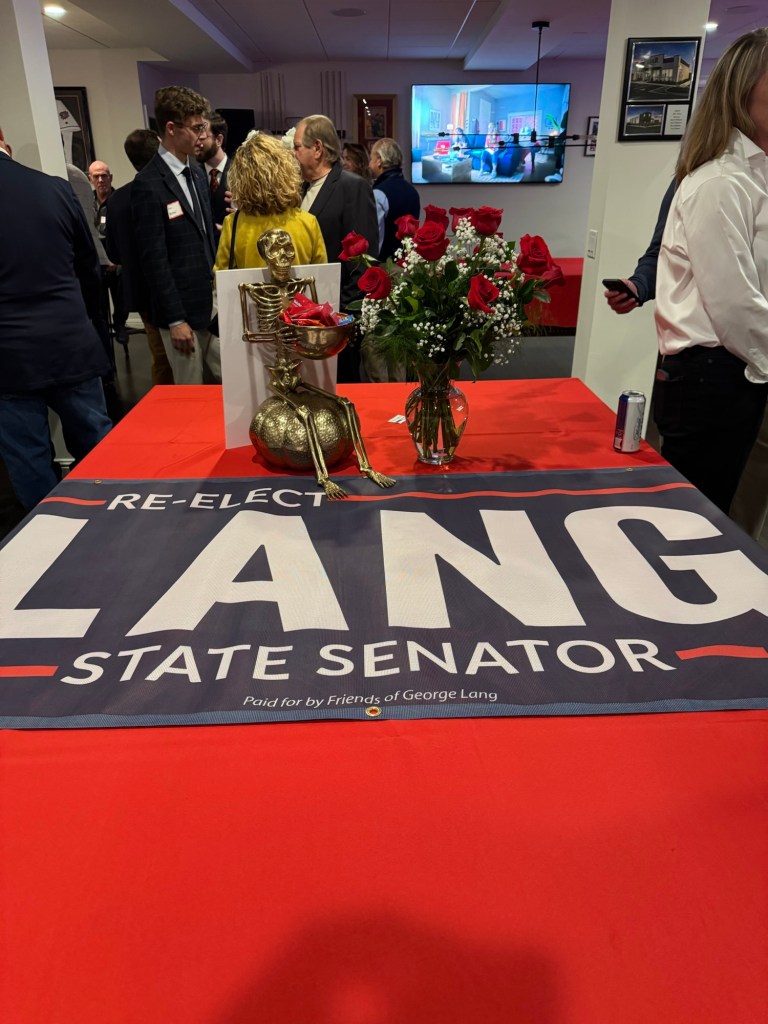
One of my many roles is Vice President of Manufacturing, Facilities, and Program Management at CTL Aerospace. At Senator George Lang’s fundraiser on November 1st, 2025, everyone I spoke with was primarily interested in an update on the Chapter 11 filing for the company.  After all, it wasn’t that long ago when Vivek Ramaswamy came to CTL to announce his run for Governor, so there were lots of people cheering that the company would find a way through to the other side of a challenging financial situation.  And to make matters worse, our case was not one of not having customers or income, but rather part of a widespread suppression campaign by our bank that many privately owned Tier 2 suppliers have experienced over the last decade.  Only in the case of CTL Aerospace, the ownership has shown a very rigorous desire to hold ownership rather than to be pushed aside, essentially by pirates who just wanted to raid our ship and steal all the plunder for a quick flip on the market, as a turn and burn, as they like to say.  The context and legal positioning regarding CTL Aerospace’s Chapter 11 proceedings, specifically the compelling basis for equitable subordination under 11 U.S.C. §510(c). The facts of our case, supported by documented creditor misconduct and predatory financial behavior, are now a very public matter, so the personalities involved are in the public record. 

CTL Aerospace—a 79-year-old aerospace manufacturer—has faced targeted financial suppression during a period of global supply chain instability. The aggressor in this case refused to extend forbearance, coupled with abrupt covenant enforcement and term manipulation, directly impaired our ability to procure raw materials and maintain operational continuity, resulting in massive damages for which everyone in the crowd I was speaking with was very interested. These actions were timed to coincide with industry-wide distress and reflect a pattern of bad faith and strategic impairment.  And the target against us was the “goodwill” of our business, the brand that we had built over a long period of time, the intangibles that are often overlooked in modern business because nobody prosecutes those kinds of cases anymore.  Even though they certainly should and would otherwise if the costs weren’t so prohibitively high.  Once you get into something like this, you see a real menace to the infrastructure of America that is determined to erode our manufacturing base by international banks, who, just like pirates, are seeking short-term plunder and quick sales on the hedge fund market.  When you attack a company’s “goodwill” through purposeful suppression techniques, which a bank can do since it is the mechanism through which all cash for a company flows, if it breaches that fiduciary trust, it can really wreck a business.  And as I found out during this process, it’s not just CTL Aerospace going through this kind of thing, but it’s common in the nation right now, as many private owners we know closely have had to step out of the game and get into the name change cycle every few years, which has caused all kinds of supply chain instability.  Again, much of this is now public record, and people have been following the case. They wanted me to provide an undercover perspective, as this is a very political problem, a matter of national security, which is undoubtedly the case at CTL Aerospace.

Case law supports our position, which is to fight back and seek damages for the massive financial impact on our company’s goodwill. In Citicorp Venture Capital, Ltd. v. Committee of Creditors Holding Unsecured Claims (In re Papercraft Corp.), 211 B.R. 813 (W.D. Pa. 1997), the court subordinated a creditor’s claim due to inequitable conduct that harmed other creditors and the debtor’s reorganization prospects. Similarly, In re Fabricators, Inc., 926 F.2d 1458 (5th Cir. 1991), emphasized that insider status and control over the debtor’s financial decisions can trigger subordination when used to the detriment of the estate.  And that was certainly the case at CTL Aerospace in really extraordinary ways.  But often, such defenses are never applied because by the time you go through the Chapter 11 process, a company doesn’t have the money to fight, which means you essentially have to hire $3000 per hour lawyers to run the case.  Because the banks certainly have those types on their side. In this case, the conduct—potentially documented in internal communications and covenant enforcement timelines—suggests a deliberate strategy to induce distress and position itself for asset acquisition or impairment accounting. We are actively pursuing discovery to uncover these records and may seek engagement with the DOJ or OCC for a lender liability review.  And based on the evidence we have and the timeline, which many have told us from an insider perspective is a classic case of “The Playbook,” would be an easy case to prosecute.  And likely a large settlement.  But that’s not where my mind is, or some of the people involved in this with me.  We want to see much deeper punishment for the entire financial industry, because this hasn’t just happened to us.  It’s a significant impediment to the economic backbone of the entire American manufacturing industry.  It’s not enough for us to survive, which we look poised to do.  However, to illustrate what was done. 

I explained it like this to many people at the fundraiser, and it was good to chat with Senator Bernie Moreno, who is doing a great job in D.C., and Congressman Warren Davidson who has been fantastic over the role of the Fed in government and is very cerebral in problem resolution, imagine you are a big deer with a full rack of antlers, a 10 pointer.  You have lived a long time, and it shows in the development of your antlers.  But one unfortunate day, you try to cross a road and you get hit by a car, breaking your hip or leg.  The driver keeps going.  You are lying there helpless.  Then a cringy pick-up truck comes along with a very loathsome character getting out, who sees an opportunity for a free mount on his cabin wall to brag about.  He sees the big deer with the whole rack and thinks it’s an excellent opportunity to kill the deer and hang the head on his wall for bragging rights.  He didn’t do the work of hunting the deer, but nobody will ever know.  Typically, in a business cycle, the deer would find a way to crawl away into the woods to heal and restore itself to life after such an accident.  In CTL’s business, a global supply chain issue put us under significant stress.  However, rather than helping CTL, the bank adopted a suppression strategy, essentially running the deer over with a car so they could hang the easy kill on their portfolio management wall for bragging rights and a path to easy money.  And from my perspective, based on the evidence, there is a prominent political position in all this, too, a hatred for the Trump administration and this notion of Making America Great Again.  Patriotic companies like CTL Aerospace, which are privately owned and conduct a significant amount of defense work, are prime targets.  They are the 10-point bucks that would look great on a very progressive trophy wall for financial institutions.  However, the facts of the case are sufficient.  It was a sloppy case on the opposition’s part; they made numerous mistakes that they thought they could hide behind expensive lawyers.  But the case law certainly doesn’t favor them. 

When everyone asked me what needs to happen in this case, I gave my point of view, which is prosecution on equitable subordination under 11 U.S.C. §510(c).  The attacker is demoted from a secured creditor, and their impairment play is wrapped up in a case law lesson.  However, the issue would have to be taken out of their control, as they currently hold a monopoly status in the courts and the financial mechanism.  At the very least, this is a case of predatory accounting that should serve as a cautionary lesson for similar cases.  And as long as it’s going on, it violates any notion that Ohio, or America, can sustain new business activity when these practices are hindering the behavior.  It’s a significant threat to our economy and national security.  Over the course of the last year, we spoke to a lot of people to get involved, and once they realized that CTL was in the squeeze play, they didn’t want to get wrapped up in the whole effort for fear of being sucked in themselves.  Like the deer example, they felt sorry for the deer but didn’t dare to help, fearing they would be poached themselves. 

I told the same story over and over, but it has a lot of details, so I wrote it down here, as most of the attendees are very interested in the topics I discuss.  This financial behavior is actually part of a larger collapse of political and social order that is occurring in most industries. This lack of respect for goodwill, for instance, is precisely why the Disney Company is struggling these days, as it owns intangibles such as movie rights, brand names, and amusement parks.  But they have, through woke corporate practices, destroyed the “goodwill” of the company that Uncle Walt built, and people wanted to be associated with.  Hedge fund people think in terms of tangibles, such as the head of a 10-point buck on their wall to brag about.  However, what truly adds value to the marketplace is the intangible of “goodwill.”  And that’s what the fight at CTL Aerospace is really about, and why so many people were interested in an update.  Most of these tier 2 companies don’t put up much of a fight.  Once wounded, they sell off to make the pain end as quickly as possible.  And that is what the opposition thought was going to happen here.  Only it didn’t, and the stand and fight part was not something they were quite ready for.  And that’s where the case is as of now. Significant reforms to the finance industry are needed, as this is certainly not the only example.  And suppose we really want to make America Great Again. In that case, we need to punish these predatory practices of fiduciary terrorism through “goodwill” destruction because it’s a real problem for virtually everyone whose lives are touched in terrifying ways by it.

Rich Hoffman

Click Here to Protect Yourself with Second Call Defense https://www.secondcalldefense.org/?affiliate=20707

Six Flags is Ruining Kings Island: They have turned it into just another money grab revenue stream

Ownership matters. When a large company goes public and is traded among the slack-jawed loser clan, which is the vast majority, the company’s personal identity gets lost, and its value disappears most of the time.  That was certainly the case when Lucasfilm was sold to Disney.  George Lucas wanted all his Star Wars employees to have something to do while he retired, and the Disney people ruined the franchise, much to his frustration.  But that is the cost of private ownership that goes public and is traded among thieves, losers, and short-term bandits.  And that was what I was thinking at this year’s Halloween Haunt at Kings Island, which was recently bought out by Six Flags as they merged with Cedar Fair Amusement Parks.  Six Flags has made Kings Island worse, not better, and its brand has pulled down the popular Cincinnati amusement park.  When we talk about problems with capitalism, the flow of money, and the protection of private ownership, what has happened to some of these companies that go public is an important lesson.  And in the case of Kings Island, I have watched it all my life as it was initially owned by the Taft Broadcasting Company to create a family-friendly entertainment destination near Cincinnati. Back then, its rival to the north, Cedar Point, forced the two to outdo each other constantly, and the two parks developed their identities through direct competition, which made them what they are today.  But of course, when you build something good, there are always people who will want to take that value for themselves, so this concept of publicly traded companies is a real problem, because it facilitates the sale of value, and once that happens, a company loses itself once its personal identity is sold to the whims of collectivism.  In 1992, Paramount Communications bought Kings Island in an attempt to turn it into more of a Universal Studios, but that didn’t work out well, so they sold it to their rival, Cedar Point, owned by Cedar Fair Entertainment, in 2006.   

I thought Cedar Fair Amusements did an excellent job with Kings Island and the other parks it owned, because it understood what Midwest thrill parks were all about.  The problem was that amusement parks in the northern part of the state had to close during the off-season because it was too cold.  And competition from Six Flags, which operates mainly in the south and runs year-round, strains cash and makes shareholder returns challenging.  So, looking to generate year-round revenue as a large company, Six Flags joined with Cedar Fair and kept Six Flags as the parent company.  And Kings Island has suffered because of it.  Not that I’m thinking cheap about things, but this is the first year the Halloween Haunt has charged for its haunted houses on site.  I get it, it’s an expensive operation to hire all those actors and dress them up every night for full-scale haunted houses that rival everything on the open market during Halloween season.  Halloween Haunts is my favorite time to visit Kings Island.  I love the late-night operating hours, the cool nights, and the general atmosphere.  We invest pretty heavily in Gold passes for our entire family every year so we can all go there together, and that is my favorite time to attend.  So I was not happy to see that Six Flags started charging separately for all the haunted houses, and that they were taking Kings Island down the money-grab hole deeper than they had before. 

Now, this is the problem with publicly traded amusement parks.  During COVID, Kings Island was hit hard by ridiculous health regulations that nearly killed the company for a few years and drained it of cash.  And without question, it pushed them into this merger with Six Flags, seeking all year revenue on cash flow, making them appear to the public desperate.  Which then blows the whole entertainment vibe.  If people are having fun, they’ll spend money.  But if an amusement park starts looking desperate — which the year-round parks do, including Disney World — it becomes a drain that causes a lot of pain.  And not very fun.  What Six Flags has done to Kings Island is similar to what has happened to Disney World.  All the parks have fallen into the Fast Pass game, where they try to make the wait lines for rides excessively long so visitors will buy a Fast Pass to skip them.  They have done that at Disney World and Universal for years, and now they have adopted it at Six Flags and, ultimately, at Kings Island.  And when a Gold Pass doesn’t buy you much of anything special anymore, it’s almost cheaper to get general admission when you do want to go and to go less often.  Because the advantages of going all the time go away.  At Kings Island this year, the ride lines were really long —several hours long for the premier rides —because people weren’t waiting in the lines for the haunted houses like they usually do, since they cost money.  This forces people to buy Fast Passes to shorten the lines.  And it just took the fun out of the whole experience.

For instance, we were at Disney’s Hollywood Studios not that long ago, and my grandkids wanted to ride Slinky Dog.  We weren’t crazy about it because it’s not as exciting as the kinds of rides they have at Kings Island.  But it was a Toy Story-themed ride, and all my kids love that movie series, so they wanted to ride it.  It just so happened it had been raining heavily and had just stopped.  So they reopened the ride, and we were standing right at the front of the line when they did.  So we figured we’d jump right on.  The ride would be worth it if we only had to wait a few minutes.   We ended up waiting 45 minutes in line because they opened the fast-pass lane and let everyone ride first.  The standard line was now a holdover non-premium experience, and the girl at the front, who had a chart on how to fill the lines, tried to explain it all to me, not very well.  I had spent $20,000 on a vacation package to Disney World for my family, and here I was being told that wasn’t enough.  Give me a break.  And now, Kings Island had that same attitude, and it was a real turn-off.  A money grab to make shareholders happy with short-term gains, by destroying the long-term viability of the entertainment value.  And nobody cared because now everyone was doing the same thing: Six Flags, Universal, and, of course, Disney World.  It was a shame to see that Kings Island was now just like everyone else.  And it all started with COVID-19, another thing permanently ruined by the government’s overreach in the healthcare industry.  And it was not nearly as fun as it used to be, as most things are when they lose their identity as a privately held company, now driven by public sentiment, which is often short-sighted and greedy in its narrow scope.  And at Kings Island now, it shows.  What made Kings Island better than other parks was that at least they were owned by a Ohio based company that understood the Midwest, and they were different from the other parks.  But now, they are all the same, and none of them very good.  

Rich Hoffman

Click Here to Protect Yourself with Second Call Defense https://www.secondcalldefense.org/?affiliate=20707

‘Sketch’ is a Great Movie: Disney goes against Trump supporters

You would think that Disney would have learned some hard lessons about its role in the world and the financial problems it is finding itself in.  However, I don’t like discussing negatives all the time, because a fantastic movie called Sketch hit theaters a few weeks ago and is a sign of many good things to come from Angel Studios, showcasing a much different movie world on the horizon.  The Hollyweird crowd has lost all its influence and power and is on a dramatic downward trend.  Sketch was an excellent film that was on limited release, so it’s not a box office titan, unlike the way Disney distributes films. However, coming off the success of the fantastic Chosen series, Angel Studios, I think, is fair to say, is replacing the role Disney used to play with families.  I thought Sketch reminded me of a modern version of E.T., Goonies, or even Gremlins, movies produced by Steven Spielberg in his prime.  And it shows that markets determine success, not PR firms and lawyers who run these big studios these days.  The CEO of Disney came a bit unglued this past week, doubling down on his decision to release films that continue to fail to excite the public as they once did.  The recent movie, Fantastic Four, which I thought was pretty fantastic, has not performed well.  It will be fortunate to collect $500 million, half of what was expected to be made, and that is because Disney has lost the trust of the public. Bob Iger now sees the problem I have been pointing out for a long time, much more clearly.  It’s safe to say that his hopes for the upcoming movie Doomsday are in serious trouble because all the films building it up are not performing well at the movie theater.  

It just goes to show how little the entertainment industry knows about the psychology of the movie-going public.  And I love this topic because movies are something most everyone can relate to.  Most of us watch them whether on television, streaming services, or at the movie theater.  So, in many ways, buying a movie ticket, as I have always seen the experience, is like voting.  People vote for their values by spending money.  But there was a communist movement, as outlined by Cleon Skousen in the famous book, The Naked Communist, to take over the movie studios and the message that they broadcast to the world, and that has undoubtedly happened to Disney through the mask of woke culture.  Now that people have seen just how much Disney resembles the Democrat Party and how anti-Trump they have been, they have stopped spending money on Disney products and have turned toward other entertainment options, such as those provided by Angel Studios.  Currently, they are not financially comparable, even though they may show movies side by side.  I think the movie Sketch cost around $ 3 million to make, and it is considered very profitable, having doubled that amount in returns.  Whereas something like the latest Fantastic Four movie costs half a billion dollars by the time it’s made, and some media is created for it.  And it’s poised to break even, maybe.  So it’s not apples to apples, but more like apples and apple sauce.  However, the message is clear: people are leaving Disney and seeking alternatives, which is evident in their declining park attendance as well.  And in anger over their bad decisions to support woke agendas as an entertainment studio, Bob Iger and the stars of Fantastic Four, like Pedro Pascal, have been complaining about Trump supporters, which didn’t help their case.

Disney assumed that people would support whatever they put together because the public had to.  And that is not the case.  Trump supporters have taken themselves off the grid because they dislike the products that Disney has released, or even traditional cable.  I have been talking about emerging streaming services such as Truth Social, Trump’s personal social media platform, and they have good television that breaks the cycle of traditional cable services, leaving CNN, MSNBC, and all the networks struggling to maintain their audiences because they are all fleeing to outlets they trust more even if they are brand new.  Such as Angel Studios, which earned its audience with great projects like The Chosen.  And successful films at the theater, such as The Sound of Freedom.  However, it’s not just Disney; Warner Bros. has been more successful and less woke than Disney, as evidenced by its box office performance.  However, their recent update to Superman didn’t perform well at the theater, falling well short of expectations, which James Gunn was very dismissive about.  Superman is all about “truth, justice, and the American Way.”  Not the “human way.”  The world looks to America to be a beacon of hope, and that’s what the world wants out of American entertainment.  They don’t wish to communicate messages that put out the fires of hope.  And this Superman just wasn’t that “super.”  He was an all-too-human global citizen, and audiences rejected the premise.  It might have been a pretty good movie, just as Fantastic Four was.  However, the messaging was off-target for the intended audiences.  And when Bob Iger is mad, it’s because he thought he understood elements of market trends that he didn’t.  For all the same reasons people voted for Trump, they also vote with their market dollars on where to spend their money on amusement parks or movies. 

Bob Iger and many others believe that people go to see movies because they like the actors, such as in the upcoming Doomsday with Robert Downey Jr. They are investing massive amounts of money in these actors, thereby inflating the budgets.  There will be approximately 100 cameo actors in the upcoming big Marvel movie.  But the gamble on Pedro Pascal is scaring everyone at the Mouse House because it hasn’t turned out the way they planned.  I personally liked Pedro Pascal in The Fantastic Four.  I think he is good as The Mandalorian.  But he’s too woke to replace Mel Gibson and Bruce Willis as the new Hollywood leading man.  Because Hollywood thought it controlled the message, and that people loved the actors, but that is not turning out to be true.  A movie like Sketch features a cast of actors, none of whom are stars, and yet the movie still performed well for its small audience.  It will stream well, and people will remember it far longer than these Marvel movies.  And rather than learn their lesson, Disney is only digging deeper, indicating that they are going to double down on their woke agenda.  And that’s the problem.  Nobody cares about their product, and the more they push an openly gay agenda, which they did in The Eternals, people will drop them as an entertainment option, and that includes the $20k vacation to Disney World.  Eternals, with its openly gay scenes, was the dagger that halted Marvel’s successes at Disney.  The longer they avoid addressing that issue, the more financial damage they will incur.  When a studio and its actors go against the political trend of a nation like America, they can’t survive.  To fill the void of family entertainment left behind by Disney, there is the wonderful Angel Studios, which is producing great entertainment.  Sketch is just one example.  And for Bob Iger, a hard lesson that he will learn too late: the market is in charge.  Communist leaders are not.  And studios, if such assumptions capture them, will lose money in that marketplace because of free choice. 

Rich Hoffman

Click Here to Protect Yourself with Second Call Defense https://www.secondcalldefense.org/?affiliate=20707

Trying to Make Padro Pascal the New Sexiest Man: But you can’t fake it

The new Fantastic Four movie was pretty fantastic.  I’ll do a review on it, which it deserves later.  However, for now, we must discuss the promotional activities taking place in Hollywood, so that people can understand how they are manipulated by mass PR culture, which is currently in transition and at the forefront of a rebellion.  Hollywood is distancing itself from woke culture, yet still trying to fulfill its former commitment to it, which lies at the heart of a fascinating problem that Hollywood has with leading men.  They do not have people like Mel Gibson, Bruce Willis, and Clint Eastwood to drive box office numbers because they went woke a long time ago and have seen value into the Hollywood product decline ever since.  So they need a leading man, but it can’t be a white man from America, as is traditionally the case.  So Pedro Pascal as a Latino man kind of gives them that and they have been trying to milk him for all they can.  I think he was pretty good in the Star Wars television show, The Mandalorian.  And he’s been in other things since the success of that show launched him into fame.  But, he’s not quite the package that PR firms would like him to be.  He’s missing some things that normal “sexy” men usually have.  Hollywood would love Pedro to be the next Harrison Ford.  But in a kind of woke way, so it’s interesting to watch how the press handles him.  And that has certainly been the case, as Pedro Pascal has been doing press for The Fantastic Four alongside his co-star in the film, Vanessa Kirby.

You might have heard about how affectionate Kirby and Pascal have been with each other during interviews.  And I think much of it is natural.  As much as actors want to say “it’s just acting,” the truth is that actors fall in love with each other all the time.  Case in point, the recent discussion about Liam Neeson and Pamela Anderson from The Naked Gun set, where they were spotted kissing at the movie premiere.  For years now, we have been told by Hollywood that men could be women, and women, men.  And that romance was overrated, and even showing romantic scenes in movies was a downward trend, because behind all this was a very anti-family agenda.  And it has cost Hollywood a lot, and continues to do so, because movie fans like romance and seeing the people they watch in movies like each other.  It has been quite interesting to see how Vanessa Kirby has been playing up her role in promoting Pedro Pascal as a romantic figure that women can’t keep their hands off.  Because Pedro is safe, because he’s not a white male, Hollywood thinks it’s OK to promote him as the new sexiest man, because it still checks off their woke box within the culture itself.  I believe there is some genuine affection between Kirby and Pascal, but with all the romantic touching that they have been doing, with her pregnant with another man’s baby and Pedro dating someone else, they are trying to start rumors of an affair so that people believe more in their film’s character’s relationship, and this is a new strategy for Hollywood, as they are trying to repair their anti-family, anti-romance reputation with a public that has decided to move on without them.  Despite these efforts by Kirby and Pascal, The Fantastic Four has been pretty flat at the box office.  Not because it’s a bad movie, but because the public has lost faith in Disney as a film producer.

I don’t think actors are ever really actors, and I’ve known quite a few very well.  I’ve shared a trailer on movie sets with a few and can report that they are very human people behind the PR stunts.  And I was personally invited to the home of Jennie Garth from Beverly Hills 90210 and her husband at the time, Peter Facinelli who was doing the Twilight movies then, and it’s a tough life to essentially be a 24/7 PR relations billboard.  The pressure that is put on relationships is crushing, and I don’t think any actor in that business ever really figures it out.  I believe Vanessa Kirby loves the guy she’s engaged to the best she can.  And I think Pedro Pascal loves everyone in a kind of metro sexual way.  But the MAGA loving public doesn’t like the woke stuff so there is no real way to dress it up.  My reference to Jennie Garth essentially is to point out that I think the PR people behind The Fantastic Four, and the agents involved have told these two to act in the press as they would in the movie, and if that means acting like they are sleeping together to get the public excited to see them in a film together, then do it.  Usually, actors are told to refrain from that kind of public affection.  But with Hollywood out of ideas and trying to win back a jaded public, they are trying everything.  And one thing that actors do is act.  It’s hard to tell when they are sincere about anything, including things to themselves.  They are often not very grounded in reality because they always serve someone’s PR machine. 

To explain it away, as people have been talking about the possible reality that Pedro Pascal and Vanessa Kirby are cheating on their significant others with each other, it has been leaked to the press that Vanessa knows Pedro so well that she knows he suffers from anxiety and that he requires physical contact to maintain himself.  Well, that sounds like a cheesy pickup line to me, but it’s not very sexy.  So either way all this goes, it’s not the kind of appeal that audiences are looking for.  Right now, The Fantastic Four will be lucky to break even at the box office for a whole lot of reasons that Disney is unsure how to deal with.  It will take a lot more than rumors of affairs to win people over to their leading actors and actresses.  And when it comes to whether an actress would continue to act long after the cameras are off, well, of course, they would.  And I’m sure with Vanessa Kirby, she is acting when it comes to playing Pedro Pascal up as the next, sexiest, leading man in Hollywood.  I often feel sorry for actors because at the Hollywood level, the job never goes away.  I saw in Jennie and Peter a genuine attempt to be a real family, but the cracks were certainly there in trying to balance a private life with the pressures of PR needs for their entertainment projects.  People see romance between actors and want to believe it’s real.  As a last-ditch effort to save themselves, PR specialists and their agents are advising their clients to show affection for their co-stars in public, thereby fueling speculation and promoting film sales.  But what nobody has figured out is that what the public wants is authenticity, not more phony relationships.  Instead of fixing the problem, Hollywood is making it worse.  And woke is not going to work with the movie going public.  Hollywood can’t have a leading man who is also woke.  There are certain things that a sexy man is, and Hollywood won’t be able to define them for their use.  They either provide a product that people want.  Or they don’t.  The market is, and has always been, in charge.  Not the PR people. 

Rich Hoffman

Click Here to Protect Yourself with Second Call Defense https://www.secondcalldefense.org/?affiliate=20707

The Radicalism of Stephen Colbert: Trying to kill off toxic masculinity as been very expensive and not worth it

There is a much deeper reason that the news about Stephen Colbert being taken off the air is such big news.  Or why ABC is re-thinking some of its daytime programming, such as The View.  There will be numerous television changes because many of these big production companies have been so committed to progressive causes that the financial impact of it is finally starting to catch up to them.  However, in everyday conversation, the real reasons for economic failures have been largely unexplored.  People know they are generally happy to hear that the Trump-hating Colbert is losing his late-night show, and that many of the other late-night hosts are in danger as well, because of the anti-Trump agenda.  Anti-Make America Great Again agenda points are not popular for good business.  And typically, CBS Studios, a division of Paramount Global, the parent company of CBS, would not hesitate to donate $40 million to progressive political causes.  Which is what they are saying the show is losing per year.  It’s not about the money; it’s about the viability of the position.  Losing that much money by putting Stephen Colbert on television every night to attempt to destroy the Trump agenda is more or less a financial contribution to their political platform.  The problem for them is that they spent all that money and committed so many resources to it, yet they were unable to move the political needle at all.  Trump did not end up in jail, or bankrupt as radical liberals had fantasized about.  Instead, six months into his re-elected term, he is doing great, and there are no signs of him slowing down.  And he’s more popular than ever, which is breaking the back of the production companies and their commitment to communism that dates back to the fifties and sixties. 

I know quite a bit about all this as I have been discussing it for years.  For many people, it has been hard to connect the dots.  However, I hosted a major radio show on this topic, specifically centered on the release of the Star Wars movie, The Force Awakens, where Disney killed the very popular character of Han Solo.  A friend of mine and I discussed the poor decision that Disney made in killing off the white hero Han Solo and replacing him with a DEI cast that nobody ever took to.  And now, ten years later, the things we said have turned out to be hauntingly accurate.  After that big, popular show, my friend received an offer to work at Disney for an excellent salary.  I always thought they did it to shut him up and get him off the air.  It is much easier to throw money at controversial voices to contain them somewhat.  My friend loved the Disney Company and hoped to improve it, so more power to him.  I told him there was no saving the company, but he had to try.  But the point of the matter is this: Disney didn’t need to kill off the original heroes of the Star Wars saga.  But they did it anyway, and they did it for purely political reasons.  That’s how radical the hatred in Hollywood is for the Make America Great Again movement, which was emerging openly as Disney was committing to these new Star Wars movies that had a DEI cast, and a killing off of the strongest character of them all, Han Solo, who was made popular by the very popular actor, Harrison Ford.

Now I’ve heard it all before.  People tell me that old Harrison Ford always wanted to kill off the character of Han Solo.  As an actor, he hears all the stories about toxic white masculinity, which he has made a lot of money over the years popularizing.  So, for him, to sacrifice one of his roles to the gods of progressivism is a logical choice.  And he has been saying for forty years that Han Solo should die in the Star Wars series.  However, George Lucas knew better, so they brought him back for The Return of the Jedi, and that character went on to become one of the biggest and most popular in the Star Wars brand.  If Han Solo is on the movie posters, people are excited for Star Wars and the toys that came from that series of movies.  But if the movie posters, as they turned out to be, were just diversity, equity, and inclusion characters, then the public was going to reject the offering.  And in that process, Disney killed the Star Wars brand forever.  I don’t think it will ever come back. The damage was so significant that they begged Harrison Ford to return and make an appearance in the last Star Wars movie, The Rise of Skywalker, but it was too late by then.  And Disney has not been making any more Star Wars movies because their DEI characters were being rejected left and right.  A similar controversy arose on The Mandalorian television show involving Gina Carano.  She turned out not to be a DEI hire, but a conservative fighter, and Disney tried to punish her for it, and it blew up in their faces in terrible ways.  We are seeing entertainment that is not intended to entertain, but rather to convey political messages through popular franchises, and it has turned out to be a disastrous business decision. 

So, the writing was already on the wall when Trump was re-elected, and Disney was already undergoing its assessment process.  They had to learn, as a large entertainment company, that their public would reject them if they did not produce content that they wanted.  Kathy Kennedy should have known better about the Han Solo character.  Her husband, Frank Marshell, should be able to help her understand it.  He produced all the Jurassic Park movies and was the German mechanic in the very popular Raiders of the Lost Ark movie, notably in the fight scene.  He’s not a progressive lunatic.  However, he and Kennedy are fans of Jimmy Buffett and music from that era, so they have a left-leaning side that certainly comes through in their movies.  Kathy, as a woman CEO, went completely DEI and began pushing for female directors and characters.  I mean, they killed off Han Solo, knowing he was the father figure of the series, and they gave his famous spaceship, the Millennium Falcon, to some girl that nobody knew, as if the public would just accept it.  And they never did.  And the franchise took a permanent hit that it will never recover from.  I tried to tell them.  My friend and I laid it all out on that now-famous radio show, so we know the Disney bigwigs heard it and offered us jobs afterwards.  I have had numerous companies offer me money to try to keep me quiet, essentially.  I don’t blame my friend for taking the money.  Many people do, and it can lead to a fulfilling life.  And that is essentially why nobody understands these kinds of things structurally.  But that’s what’s going on with Stephen Colbert, and many others that will follow.  The man-hating Hollywood has not been working, and if they want to survive at all, they will have to make adjustments because the consumer is the boss.  Not the studios, and they have had to learn some tough lessons, too late.  The ramifications of all those bad decisions are only now becoming well-known and prominent.

Rich Hoffman

Click Here to Protect Yourself with Second Call Defense https://www.secondcalldefense.org/?affiliate=20707

Don’t Cry for Obama: They opened the door for punishment of their many crimes

Don’t cry for Obama; he put himself in this mess.  And certainly don’t think that Obama is too privileged to do a perp walk in handcuffs in front of the media.  I will never forget it, or forgive it, when they marched Steve Bannon, Trump’s former chief strategist, down a hall in handcuffs and put him in jail for four months, as they did Peter Navarro.  I will never forget the Trump mug shot when they booked him in Fulton County.  And when they did everything they could to destroy him with legal cases meant to kill his entire family, I will never forget what they did to Alex Jones, to Roger Stone, to Rudi Guiliani, Sydney Powell, and General Flynn.  What I watched happen over the last several years was nothing short of a coup against our form of government, and it was a communist revolutionary type like Barack Obama who was dead set to use all the powers of government to destroy our government in just the same way that Che and Fidel Castro did in Cuba.  Or any communist revolution for that matter, around the world, whether it be in China or Russia.  What they tried to do in the United States was every bit as bad, and they went for our jugular.  So now the shoe is on the other foot.  We have extensive evidence of what Obama directly did as president, which only confirms what we already suspected.  The evidence is significantly worse.  They didn’t just talk about destroying the people around Trump; they tried actually to do it, and where they could, they did.  So yes, when people ask me if it’s even possible to prosecute Barack Obama, a former president, it is because Democrats already opened the door to the possibility in the way they handled Trump.  Remember, the goal here is to define who runs our country, and if we let Obama and his gang of thugs loose, we surrender to their domestic terrorism in a way that will encourage others to do so in the future.  So I would argue that we can’t afford to let them get away with it.

After Trump made his feelings very clear about what Tulsi Gabbard had released to the public about what Obama’s role in the Russiagate scandal was, Obama released a statement essentially trying to hide his crime behind the dignity of the Oval Office, just as it was expected that the Deep State would hide his terrorist intentions behind his skin color.  Obama was created to undo the notion of a free country run by free people who picked their elected representatives.  And there are a whole bunch of malicious characters behind Barack Obama who need to be snuffed out and destroyed within American society.  It doesn’t just end with Obama.  But, Obama was caught trying to hold power as he was a sitting president, and he orchestrated a coup against the incoming administration that was every bit as radical as when the Castro brothers overtook Cuban society.  And Comey, Clapper, Clinton, Brennan, and many, many others deep within the CIA and FBI were in on it, and they paid for a doctored-up dossier working with foreign governments to undo a sitting president.  They broke every kind of protocol to destroy the results of a free election.  And all those involved must be punished because they didn’t respect our system the first time.  They laughed at our sense of justice and counted on their ability to hold office and control the legal outcome.  And when they had power, which people took away from them in the 2024 election, they abused their power, making it so that a counteraction is now mandated.  It’s not compassionate to let them go with all we know; it would be foolish.

There was always a notion behind the crimes Obama committed during his presidency that by the time everything caught up to him and his partners, America would be a different country.  In no scenario did they think that a person like Trump would become president, let alone twice.  And there were no calculations that Trump would survive all they threw at him to stop him from running for a second term.  Because they understand this, they know they have been winning elections through election fraud for years, and they are aware of what I have been saying about elections, whether we are talking about 2020, 2024, or any of the upcoming elections, such as 2026 or 2028.  If we keep Democrats from cheating, or make it harder for them, they can’t win elections because they are a dramatic minority, just as in the communist uprisings around the world had been, minorities taking control of majorities through the illusion of force.  And that was tried here in the United States by many members of our intelligence departments, and Obama was put in place to be the inserted wrecking ball, hiding his communist intentions behind his skin color, so that we couldn’t have an opinion on his actions because we had to prove we weren’t a racist country.  Or that we couldn’t prosecute him for what he did during his term, or as a puppeteer during the Biden years, because of some respectability of the office he held as a former president.  Trump was a former president, and they tried to destroy him and all his associates ruthlessly.  So now that the shoe is clearly on the other foot, we must have justice, and that means Obama in handcuffs, a mug shot, and jail time for the gross abuses of government he used to keep his party in power.

Don’t forget, if not for the whole Russiagate issue that Obama started, there would not be a war between Russia and Ukraine right now.  It was because of this deteriorated relationship with Russia that diplomacy crumbled, and a war was started that has killed many millions of people.  The war was always a cover story for the Steele Dossier and the people behind it, who were guilty of committing treason against our country to remove an elected president from office.  Trump isn’t the first time; they did it to Nixon, and they outright killed President Kennedy. Many of us have long suspected that those things happened, but now we have the proof, and we can’t just turn away from it.  We can’t allow a Deep State to think it’s in charge of our government.  And we have to punish their agents as we catch them, and Obama has been caught, without question.  Trump didn’t enter office looking to punish his political rivals.  However, he can’t disregard the crimes committed against him leading up to this point.  He has no obligation to turn away from justice, and that’s what we elected him to do.  People want to run a self-ruled government.  They don’t want a bunch of loser Deep Staters running their country for the benefit of globalism.  We have been too lenient in the past, which has given these people a false sense of security, leading them to believe they could get away with anything.  So yes, we have to send a message.  But don’t fret over the methods.  Obama and many others already went too far with Trump, and now the shoe is on the other foot.  So don’t cry for Obama.  It won’t start color revolutions in the streets to see him arrested and marched down the street in chains.  He did it to himself, and now he and many others must pay for the crimes they committed.  And no amount of fancy talk will help him now.  He’s busted!  And if people take to the streets to protest the arrest of Obama, we will bust them too, arrest by arrest, and if they get violent, with bone-crushing force. 

Rich Hoffman

Click Here to Protect Yourself with Second Call Defense https://www.secondcalldefense.org/?affiliate=20707