
Michael Ryan Wins in the Primary for Butler County Commissioner: What a victory of 72% over 28% says about political reality

Michael Ryan’s decisive victory in the 2026 Butler County Republican primary for commissioner marks a significant shift in local politics, reflecting voter demand for genuine conservatism, accountability, and fresh leadership. I have followed these races closely for years, and this outcome stands out as a clear repudiation of entitlement politics and a triumph for the kind of candidate who earns support through hard work and integrity. With final unofficial results showing Ryan capturing approximately 72% of the vote to Cindy Carpenter’s 28%, the primary essentially decides the seat in this heavily Republican county. 

Butler County, Ohio, is in the southwestern part of the state, encompassing communities such as Hamilton, Middletown, Fairfield, and Oxford (home to Miami University), as well as numerous townships. Its population exceeds 390,000, with a strong manufacturing and agricultural base alongside growing suburban development. The Board of Commissioners oversees a substantial budget, infrastructure projects, economic development, public safety, and human services. For decades, the board has operated under Republican dominance, making the GOP primary the real contest. Winning it virtually guarantees victory in November against the unopposed Democrat Mike Miller. 

Cindy Carpenter had served as commissioner since 2011 and was seeking a fifth term. Her tenure focused on human services, public health, and fiscal matters, but it was marred by controversies that alienated many in the party base. Incidents included a heated confrontation at a Miami University-area apartment complex involving her granddaughter, where she was accused of leveraging her position, using inappropriate language, and displaying aggressive behavior captured on video. Investigations cleared her of criminal wrongdoing but highlighted conduct deemed “distasteful” and “beneath her elected position.” Additional complaints arose, including allegations of aggressive conduct at a housing coalition meeting. Even the county sheriff publicly expressed concerns about her behavior.

A particularly damaging episode involved Carpenter campaigning for a Democrat in the Middletown mayoral race, crossing party lines in ways that many viewed as disloyal. This move, combined with her decision not to seek the Butler County Republican Party endorsement, signaled a disconnect. She appeared to operate with an entitled mindset, assuming incumbency alone would carry her through. Her campaign signs, some in blue tones reminiscent of Democratic aesthetics, and limited fundraising—only about $7,700 compared to Ryan’s over $46,000—underscored a lack of broad support. 

In contrast, Michael Ryan entered the race as a former Hamilton City Council member with a background in business and community service. He positioned himself as a true conservative caretaker focused on fiscal responsibility, job creation, lower taxes, and practical governance. Ryan methodically built support: he secured the Republican Party endorsement with a striking 71% in the first round of voting, an early and historic show of strength. Major figures lined up behind him, including Auditor Nancy Nix, who endorsed him at a fundraiser when it still carried risk; Congressman Warren Davidson; State Representative Thomas Hall; and others, such as George Lang. These endorsements validated his approach and reassured voters that change could be safe and effective. 

I endorsed Ryan early, well before the primary heated up. Having known him for years, I saw in him the sincerity and dedication often missing in politics. He raised money effectively, attended events tirelessly, engaged voters across the county, and maintained a positive, bridge-building demeanor even amid challenges like sign theft. His campaign emphasized family values, economic growth, and responsiveness—qualities that resonated deeply in a county frustrated with the status quo. The watch party on primary night, held at the Premier Shooting facility with a speakeasy-style back area, overflowed with supporters. The room was packed; people had to turn sideways to navigate. Energy filled the space as results rolled in.

Congressman Warren Davidson attended and shared insights from his experience in large districts. We discussed the political savvy required at every level and how Ryan had grown into a polished figure capable of uniting people. Davidson’s presence underscored the race’s importance, and his admiration for Ryan’s development over the couple of years spoke volumes. Other supporters like Darbi Boddy added to the festive, optimistic atmosphere. It felt like a genuine celebration of earned success rather than entitlement. 

The results confirmed what grassroots momentum had suggested. With 100% of precincts reporting in unofficial tallies, Ryan’s 72%-28% margin was overwhelming and, for some, embarrassing to the incumbent. Early voting and election-day observations showed Carpenter’s team attempting a last-minute sign blitz, but it failed against organized, enthusiastic Ryan volunteers who kept their ground game strong. The Republican slate card proved crucial, as it often does; voters seeking vetted candidates found Ryan prominently featured through party processes and independent media coverage. 

This victory carries broader lessons for politics, especially local races. Party systems matter because they help aggregate preferences in a diverse society. People differ on countless details—concrete versus asphalt, tax priorities, development approaches—but effective governance requires building majorities. Dismissing the party as irrelevant or operating as a “RINO” critic while undermining it rarely succeeds. Ryan demonstrated the opposite: he worked within the system, earned endorsements through respect and effort, and presented a positive vision.

Background on Butler County’s political landscape adds context. The county has long leaned conservative, supporting Republican candidates at high levels, including strong support for Trump in recent cycles. Yet local frustrations with taxes, growth management, infrastructure, and perceived insider politics have grown. Projects involving economic development, public safety, and services will benefit from new energy. Ryan has signaled readiness to hit the ground running, with ideas on efficiency, accountability, and forward-thinking initiatives already in motion during the campaign. His experience on Hamilton council involved practical decision-making on budgets and community issues, preparing him well for county-level responsibilities. 

Roger Reynolds, former county auditor, briefly entered the race but withdrew after the party endorsement went decisively to Ryan. His last-minute alignment with Carpenter, including sign placement, highlighted lingering personal grievances but ultimately underscored the party’s unified shift. Voters rejected that approach. In an era where authenticity matters more than ever, Ryan’s consistent message and character won out.

I am proud to have supported him from the beginning. When Nancy Nix announced her endorsement at a fundraiser, it took courage because challengers to incumbents often face skepticism. Yet as momentum built—through articles, videos, conversations, and events—support snowballed. Thousands accessed information in the final days, researching Ryan’s record and deciding he represented the change they sought without chaos.

Looking ahead to the general election in November 2026, the focus shifts to implementation. Ryan will face minimal opposition, allowing emphasis on transition planning. Priorities likely include continuing fiscal stewardship amid state and federal shifts, addressing housing and development thoughtfully, enhancing public safety, and promoting economic opportunities in a region balancing rural roots with suburban expansion. His fresh perspective promises to inject optimism and results-oriented governance.

Politics at the county level profoundly affects daily life: road maintenance, emergency services, property taxes, zoning, and more. When voters sense entitlement or disconnection, they respond, as seen here. Carpenter’s campaign assumed voter inertia; Ryan proved engagement and sincerity prevail. This race reminds us that traditional political games—relying on name recognition, minimal effort, or media insiders—have diminished effectiveness in an era of an informed electorate.

The night of the primary embodied hope. A full room of dedicated Republicans, conversations with leaders like Davidson, and the visible relief and excitement on supporters’ faces painted a picture of renewal. Ryan’s wife and family shared in the moment, grounding the victory in personal commitment. For those involved in politics, the takeaway is clear: do the work, be genuine, build coalitions, and respect the process. Ryan exemplified this, turning potential obstacles into advantages.

As someone who values conservative principles of limited government, individual responsibility, and community strength, I see Ryan’s win as validation. Butler County deserves leadership that listens, acts prudently, and prioritizes residents. With the primary behind us, anticipation builds for his term starting in 2027. Many good projects and ideas wait in the wings, ready for execution.  And because of this election, a lot of good things will happen.

Footnotes

1.  Journal-News reporting on final unofficial results showing Ryan at 72%.

2.  Cincinnati Enquirer coverage of fundraising disparity and endorsements.

3.  Ballotpedia profiles on candidates and race background.

4.  Accounts of Carpenter controversies from multiple local news outlets.

5.  Party endorsement details and 71% vote.

6.  Observations from the watch party and interactions with Davidson.

Bibliography / Further Reading

•  Journal-News (Hamilton, Ohio): Multiple articles on the primary, results, and candidate profiles (2026).

•  Cincinnati Enquirer: Coverage of the commissioner race, fundraising, and controversies.

•  Ballotpedia: Entries for Michael V. Ryan, Cindy Carpenter, and Butler County elections 2026.

•  Ryan for Butler official campaign site: Policy positions and updates.

•  Butler County Board of Elections: Official results and candidate filings.

•   articles on local politics and endorsements.

•  Additional context from county commissioner office descriptions and historical election data.

This primary will be remembered as a turning point in which voters chose character, preparation, and vision over incumbency. Michael Ryan earned this victory, and Butler County stands to benefit. The hard work of the campaign now transitions to governance, with high expectations and strong support. It is a positive development for the future.

Rich Hoffman

More about me

Click Here to Protect Yourself with Second Call Defense https://www.secondcalldefense.org/?affiliate=20707
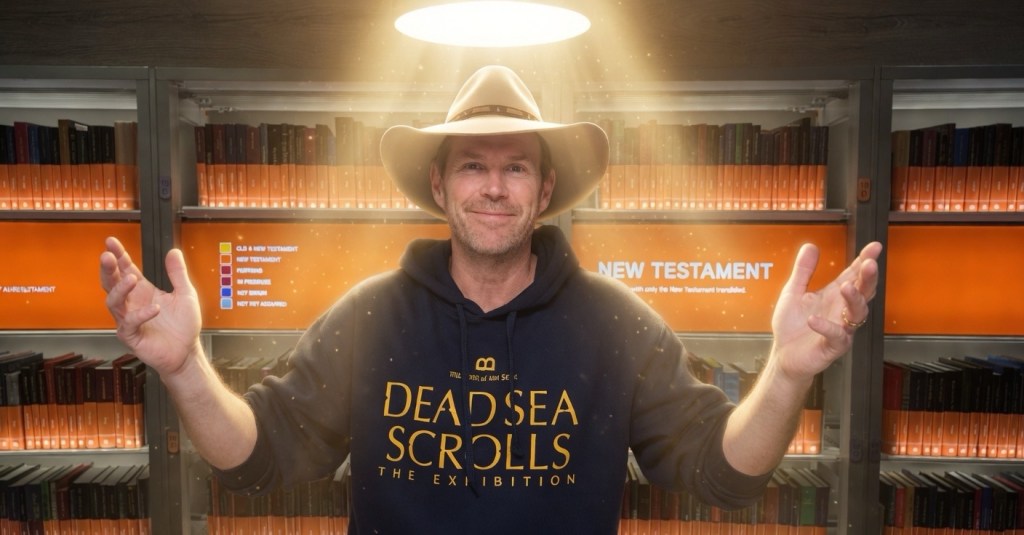
About the Author: Rich Hoffman

Rich Hoffman is an aerospace executive, political strategist, systems thinker, and independent researcher of ancient history, the paranormal, and the Dead Sea Scrolls tradition. His life in high‑stakes manufacturing, high‑level politics, and cross‑functional crisis management gives him a field‑tested understanding of power — both human and unseen.

He has advised candidates, executives, and public leaders, while conducting deep, hands‑on exploration of archaeological and supernatural hotspots across the world.

Hoffman writes with the credibility of a problem-solver, the curiosity of an archaeologist, and the courage of a frontline witness who has gone to very scary places and reported what lurked there. Hoffman has authored books including The Symposium of JusticeThe Gunfighter’s Guide to Business, and Tail of the Dragon, often exploring themes of freedom, individual will, and societal structures through a lens influenced by philosophy (e.g., Nietzschean overman concepts) and current events.

The Illusion of Media Kingmakers: Why Donald Trump Represents the American Voter, Not Celebrity Endorsers – A Personal Reflection on Fox News, Tucker Carlson, and the Essence of Representative Government

I have long maintained that Fox News performs better when Donald Trump occupies the White House, and recent events have only reinforced that view. The network’s success has never hinged on any single personality but on delivering timely, relevant content to working Americans who tune in after a long day. Yet the story of Tucker Carlson’s rise, departure, and subsequent evolution reveals deeper truths about media power, celebrity egos, and the limits of influence in American politics. As someone who has observed these dynamics closely from Ohio, I have always believed that media tycoons like Rupert Murdoch crave control over the executive branch—and when they cannot exert it, they push back. Trump proved uncontrollable, leading to internal shifts at Fox, including the ousting of Carlson. What followed was a tale of inflated celebrity status untethered from corporate structure, celebrity endorsements during the 2024 campaign, and now, in year two of the Trump administration, profound regret over foreign policy, particularly the Israel-Iran conflict. 

To understand this fully, we must start with a background on Fox News itself. Launched in 1996 by Rupert Murdoch and Roger Ailes, Fox News Channel revolutionized cable news by targeting an underserved audience: conservative viewers seeking alternatives to what they perceived as liberal bias in mainstream networks. Bill O’Reilly’s The O’Reilly Factor, which debuted in 1996 and dominated the 8 p.m. slot for decades, epitomized this model. O’Reilly drew massive audiences—often exceeding three million viewers nightly—by blending straight reporting with opinionated commentary that resonated with working-class Republicans who returned home from jobs around 6 or 7 p.m., ate dinner, and wanted a digest of the day’s events. His show was not just entertainment; it was appointment viewing for an audience that worked hard during the day and valued straightforward analysis without the corporate polish of other networks. 

I always respected O’Reilly’s style, even if I did not agree with every nuance. When Tucker Carlson assumed the 8 p.m. slot in 2017 following O’Reilly’s departure amid sexual harassment allegations, many wondered if the audience would follow. Carlson had been a frequent contributor to The O’Reilly Factor, bringing a sharper, more polemical edge honed from his time at CNN and MSNBC. His show quickly captured the same demographic, maintaining strong ratings—averaging around 3.2 million viewers in early 2023—by focusing on cultural issues, immigration, and skepticism of establishment narratives. Jesse Watters, who later inherited the slot, has done a solid job continuing that tradition, often drawing competitive numbers, though initial post-Carlson viewership dipped slightly as loyalists adjusted. The point remains: Fox’s success stemmed from understanding its audience’s schedule and delivering content they craved at the precise hour they could consume it, not from any individual star’s charisma alone. 

Rupert Murdoch, the media mogul often misspoken as “Myrtle” in casual conversation but known to all as the force behind News Corp and Fox, has had a complex, transactional relationship with Donald Trump that has spanned decades. Back in the 1970s and 1980s, as Murdoch built his American empire with the New York Post, Trump was a brash New York real estate developer who fed scoops to the tabloid’s Page Six. Their alliance was mutually beneficial: Trump gained publicity, Murdoch gained insider access. Yet tensions arose when Trump ran for president in 2015-2016. Murdoch initially viewed him skeptically as a “phony” and publicly criticized his immigration stance. Once Trump won, however, the relationship deepened; they spoke frequently, and Fox became a platform amplifying Trump’s message. Still, Murdoch’s empire has always prioritized control. When Trump proved resistant to influence—particularly during his first term and after the 2020 election—frictions emerged. Murdoch reportedly wanted Trump sidelined as a “nonperson” after January 6, 2021, and backed alternatives like Ron DeSantis in the 2024 primaries. The Murdoch family’s discomfort with uncontrollable figures like Trump led to strategic moves at the network. 

Carlson’s departure from Fox in April 2023 exemplified this dynamic. Officially announced as a mutual parting, the reality involved deeper issues tied to the Dominion Voting Systems lawsuit, in which Fox settled for $787.5 million over 2020 election coverage. Internal texts revealed Carlson’s private frustrations and inflammatory language, alienating executives. Critics inside Fox described him as having grown “too big for his boots,” with racially charged comments and misogynistic undertones surfacing in discovery. Murdoch himself reportedly ordered the firing, viewing Carlson’s toxicity as a liability amid mounting legal and reputational risks. I always thought Carlson did a decent job as a reporter—grounded enough to challenge narratives effectively—but he was never as consistently anchored as O’Reilly. His style appealed to the same audience, yet the corporate structure eventually constrained him. 

Once freed from Fox, Carlson found a massive platform on X (formerly Twitter), bolstered by support from Elon Musk and others. Celebrity status untethered from corporate oversight can be intoxicating. I have observed this pattern repeatedly: individuals discover fame independent of the old guard, and their heads swell. Carlson’s post-Fox trajectory followed this path. He campaigned vigorously for Trump in 2024, headlining events, interviewing the candidate, and even influencing discussions about the VP selection, including J.D. Vance. Many Democrats and independents joined the “Trump bandwagon” too—Joe Rogan, Alex Jones, and others—uniting behind a shared vision. I was invited to several VIP package events in Ohio where Carlson was set to headline during the election cycle. These were high-profile gatherings with figures like Bernie Moreno and J.D. Vance, promising networking and insight. As someone deeply involved in Ohio politics and conservative circles, I enjoy such environments. Yet I declined. My calendar was full, but more importantly, I sensed something off with Carlson—a growing ego, a detachment from the grassroots he once claimed to represent. I had a feeling this might eventually reveal itself, and it has. 

In the 2024 election, Trump secured victory with approximately 73.5 million popular votes and 312 electoral votes, compared with Kamala Harris’s roughly 69 million popular votes. Turnout was solid but lower than 2020 in many areas, with Trump maintaining or slightly improving margins in key demographics. Claims of widespread fraud persisted on both sides post-election, echoing 2020 debates, but the results held under scrutiny in states with voter ID requirements and robust audits. I have long argued that election integrity matters profoundly; where voter ID is absent, or mail-in processes lack safeguards, problems arise—as seen in 2020. Yet the core truth is this: Trump did not win because of celebrity endorsements. Tucker Carlson, Elon Musk, Joe Rogan, or any podcaster did not deliver the one or two percentage points that carried him across the finish line. Voters did. Trump positioned himself as their representative—listening, adapting, and embodying frustrations with the status quo. Without any of those high-profile backers, the numbers would not have changed meaningfully. People vote for whoever they believe represents them, not for whoever a media figure tells them to support. 

This brings us to the present, year two of the second Trump administration. Carlson has fallen dramatically out of alignment with the Trump agenda, particularly over U.S. involvement in the Israel-Iran conflict. He has publicly expressed regret for campaigning for Trump, apologizing on his podcast for “misleading people” and admitting he will be “tormented” by his role. He has accused Trump of becoming a “slave” to Israel, claiming external pressures from donors and influencers pushed the administration into war despite America First promises. Carlson argues the conflict serves Israeli interests over American ones, a stance that has alienated him from many former supporters. I find this preposterous and ego-driven. No single commentator, no matter how influential on X or in podcasts, possesses the power to “make” a president or dictate foreign policy outcomes. Carlson never had that kind of sway at Fox, nor does he now. His regret stems from a fantasy that his endorsement was pivotal—when, in reality, it was the voters who chose Trump as their representative. 

I have seen this celebrity bubble up close. During the campaign, many high-profile figures climbed aboard the Trump train after initial skepticism. Musk poured resources and personal endorsement into the effort; Rogan hosted landmark interviews. It was a unifying moment for the right and some disaffected left-leaning voices. Yet as I have written in my own work, including The Gunfighter’s Guide to Business, true leadership and strategy come from understanding systems, not inflating personal myths. Trump adapted to the people’s will—he listened to their concerns on the economy, borders, and cultural erosion. If elections were held again today under fair conditions (no Covid-era irregularities, full voter ID enforcement), the outcome would likely mirror 2024. Democrats traded Biden for Harris, knowing the 2020 fraud playbook could not be replicated without backlash. People ultimately vote for their representative, not the podcast host’s narrative.

The hard lesson for Carlson—and anyone tempted by similar hubris—is that loyalty to the movement and its representative endures. Trump voters are not abandoning him over foreign policy disagreements; they see the bigger picture of domestic priorities. Fox News knew this audience intimately: Republicans who clock in early, work hard, and catch news at 8 p.m. after dinner and a shower. The network thrived by reliably filling that slot, whether with O’Reilly, Carlson, or now Watters. When Fox pushed Carlson amid tensions with Trump and the Murdoch family’s unease, a segment of the audience followed him to X, but that loyalty fractured when he turned against the agenda voters had endorsed. Rebels who break from the core movement find themselves on the outside looking in.

This is not unique to Carlson. Media personalities often overestimate their role. I did not attend those Ohio events, not out of disdain but intuition: something in Carlson’s independence felt unmoored, destined to clash with the representative nature of Trump’s coalition. I have met Vance, Moreno, and others in collaborative settings focused on political tasks, and those environments succeed because they prioritize the people’s will over individual egos. Tucker’s current path—anti-Trump rhetoric on Iran—illustrates the peril of believing one “made” the president. It is preposterous, ego-driven, and disconnected from electoral reality.

In the end, the true essence of politics lies in representation. Trump offered himself as that vessel, adapting to voters’ intentions without needing celebrity validation. Media figures report what busy Americans lack time to discover; they do not create presidents. Celebrities like Carlson, Musk, or Rogan provided support and enjoyed the ride, but Trump’s victories—past and future—stem from the courage of ordinary voters rejecting the status quo. Election fraud debates aside, when the system functions with integrity, the people’s choice prevails.

The Murdoch family’s Trump skepticism, Carlson’s bubble, and the 2024 bandwagon all underscore one fact: no media tycoon or podcaster controls the executive branch. Voters do. And that will remain the case.

Footnotes

¹ Rupert Murdoch and Donald Trump’s relationship has been documented extensively as transactional yet fraught; see sources below.

² Tucker Carlson’s firing and internal dynamics are detailed in contemporaneous reporting.

³ Viewership data from Nielsen via industry analyses.

⁴ 2024 election tallies from Associated Press and state certifications.

⁵ Carlson’s 2026 statements on Iran from interviews and podcasts.

Bibliography

•  “The Intertwined Legacies of Rupert Murdoch and Donald Trump.” The New Yorker, September 12, 2025.

•  “Tucker Carlson’s Ugly Exit From Fox News.” Vanity Fair, October 31, 2023.

•  “Tucker Carlson Fired by Fox News.” The Guardian, October 31, 2023.

•  “Tucker Carlson Apologizes for Backing Trump.” KOMO News, April 21, 2026.

•  “Tucker Carlson Says He Is ‘Tormented’ by His Past Support.” The New York Times, April 21, 2026.

•  “Jesse Watters Ratings Compared to Tucker Carlson.” Newsweek, July 19, 2023.

•  2024 U.S. Election Results. Associated Press, November 2024.

•  Hoffman, Rich. The Gunfighter’s Guide to Business.

•  Additional reporting from NPR, BBC, and Fox News internal analyses on ratings and programming.

Rich Hoffman

More about me

Click Here to Protect Yourself with Second Call Defense https://www.secondcalldefense.org/?affiliate=20707

About the Author: Rich Hoffman

Rich Hoffman is an aerospace executive, political strategist, systems thinker, and independent researcher of ancient history, the paranormal, and the Dead Sea Scrolls tradition. His life in high‑stakes manufacturing, high‑level politics, and cross‑functional crisis management gives him a field‑tested understanding of power — both human and unseen.

He has advised candidates, executives, and public leaders, while conducting deep, hands‑on exploration of archaeological and supernatural hotspots across the world.

Hoffman writes with the credibility of a problem-solver, the curiosity of an archaeologist, and the courage of a frontline witness who has gone to very scary places and reported what lurked there. Hoffman has authored books including The Symposium of JusticeThe Gunfighter’s Guide to Business, and Tail of the Dragon, often exploring themes of freedom, individual will, and societal structures through a lens influenced by philosophy (e.g., Nietzschean overman concepts) and current events.