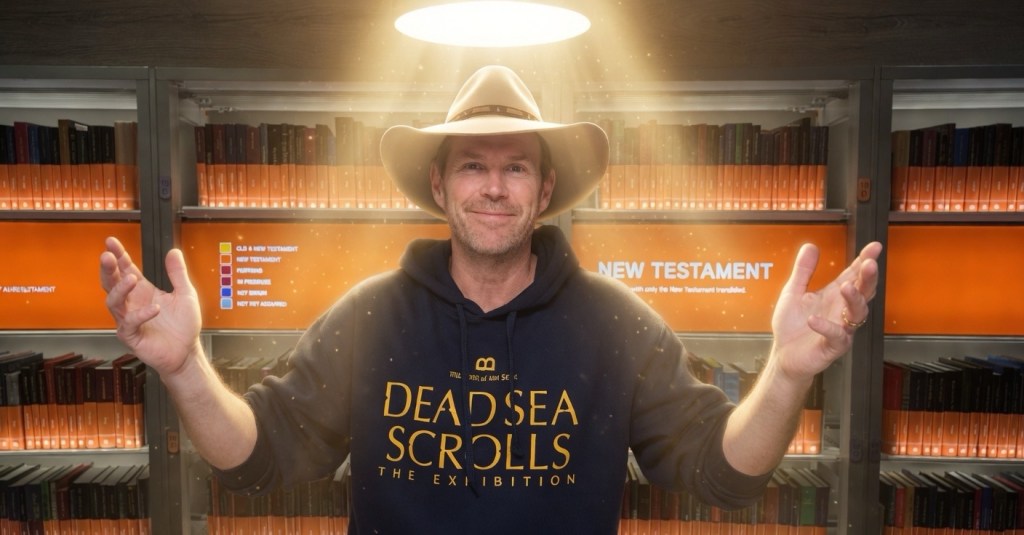
A Community Night at Miami University’s Innovation Center
On September 21, 2026, we hosted a special community event at Miami University’s Innovation Center on Elm Street in Oxford, Ohio.
We called the evening “Dreams on Elm Street”, a lighthearted nod to the classic 1980s film. But what we’re building at Volynt isn’t the stuff of nightmares. It’s the realization of a dream, one that is taking shape right here in Butler County and has the potential to transform the future of logistics, aviation, and economic development in Ohio.
The turnout exceeded our expectations. The room was filled with Miami University staff, students, local business leaders, elected officials, and community members who wanted to learn more about what Volynt is building and where we’re headed.
We were honored to welcome Senator George Lang, Butler County Auditor Nancy Nix, and Michael Ryan, who is poised to become Butler County’s next commissioner. Their presence reflected the growing enthusiasm for innovation, entrepreneurship, and advanced aerospace development in our region.
Sharing the Vision
I opened the evening by welcoming our guests and providing an overview of the event. From there, our leadership team took the stage.
Our CEO shared Volynt’s long-term vision and mission. Our Chief Technology Officer highlighted the engineering milestones we’ve achieved and the technology behind the Volynt Vyper platform. As Chief Operating Officer, I discussed how Volynt is transforming cutting-edge aviation technology into a scalable and sustainable business. I outlined our operational strategy, manufacturing roadmap, partnerships, and the steps required to move from prototype development to commercial deployment.
The presentations were engaging, the audience was attentive, and the questions that followed demonstrated genuine interest and excitement.
Most importantly, this wasn’t a flashy product launch filled with unrealistic promises. It was an honest conversation about where we are today, what we’ve accomplished, and what the next several years may hold.
From Prototype to Production
Our immediate focus is straightforward.
Over the next six months, our team will complete the full-scale Vyper prototype that was unveiled at the Innovation Center. That aircraft represents years of design work, engineering refinement, and determination.
Once completed, the aircraft will enter an intensive testing phase designed to validate performance, reliability, and operational capabilities.
Looking ahead to 2027, we plan to participate in major industry competitions, build broader recognition within the aerospace community, and begin manufacturing multiple aircraft.
The goals are ambitious, but they are supported by a clear roadmap and a dedicated team committed to execution.
The Drone Revolution Is Already Here
One of the most important messages of the evening was that autonomous aviation is no longer a future concept.
It’s happening today.
Just one day after our event, Dayton-area company Dexa launched a drone delivery service in Kettering. The program delivers food orders from TJ Chumps on East Stroop Road to customers within a several-mile radius across Kettering, Oakwood, and Centerville.
These smaller drones operate as last-mile delivery systems. Flying at approximately 400 feet, they lower food orders safely to customers using a cable-delivery system. Dexa has spent years developing this capability and is helping demonstrate that drone delivery is becoming a practical reality.
Volynt’s mission is different.
While companies like Dexa focus on last-mile delivery, Volynt is developing larger autonomous aircraft designed for middle-mile logistics. Our aircraft are intended to transport meaningful payloads between regional hubs such as Cincinnati/Northern Kentucky International Airport (CVG), Dayton International Airport, Indianapolis, and other distribution centers.
This approach has the potential to reduce transportation bottlenecks, address driver shortages, and create more efficient supply chains.
Whether it’s delivering a meal across town or transporting freight across a region, autonomous aviation is rapidly reshaping how goods move through our economy.
Why Ohio Is Positioned to Lead
Ohio’s aviation legacy is unmatched.
The birthplace of powered flight now has an opportunity to become a leader in autonomous flight.
Few regions are better positioned than Butler County to participate in that transformation.
Our region offers access to multiple airports, including Miami University’s airport, where initial flight operations can be conducted. At the same time, substantial investment continues at Butler County Regional Airport, where significant infrastructure improvements are being planned.
The resources, workforce, educational institutions, and transportation network already exist. What remains is bringing together the innovators, investors, and community leaders who can turn opportunity into reality.
Creating Careers That Stay Close to Home
One topic that resonates deeply with me is talent retention.
I have spoken with countless parents who have made tremendous sacrifices to provide educational opportunities for their children through Miami University, Butler Tech, and the University of Cincinnati. Too often, those graduates leave Ohio because they believe the best opportunities are elsewhere.
That reality creates a challenge for families and communities alike.
One of our long-term goals at Volynt is to help change that story.
We envision creating thousands of high-quality aerospace, engineering, technology, and manufacturing jobs throughout Southern Ohio. We want talented young people to have the option of building exciting, fulfilling careers without leaving their families, communities, and hometowns behind.
Strong Community Support
One of the most encouraging moments of the evening was seeing the level of support from the community.
Michael Ryan delivered an excellent presentation about economic development in Butler County and how innovative companies such as Volynt can contribute to future growth and prosperity.
The participation from Miami University, local leaders, educators, students, business professionals, and community members reinforced something I’ve believed from the beginning:
Innovation succeeds when communities embrace it.
Dreams on Elm Street was more than a company presentation. It was a milestone. It brought together people from different backgrounds and perspectives to discuss a shared vision for the future of our region.
The energy in the room was unmistakable. The conversations were thoughtful. The questions were insightful. The enthusiasm was genuine.
For me, that confirmed that we’re moving in the right direction.
Looking Ahead
Volynt’s journey is still in its early chapters.
There is much work ahead, many challenges to overcome, and numerous milestones still to achieve. But the momentum is real, and the opportunities are significant.
We will continue sharing updates with the community as we progress from prototype development to testing, certification, manufacturing, and beyond.
This is only the beginning.
Thank you to everyone who attended Dreams on Elm Street and supported our mission. Your encouragement and belief in what we’re building means more than you know.
Together, we’re not just dreaming about the future.
We’re building it.
About the Author
Rich Hoffman is Chief Operating Officer of Volynt, where he leads operational strategy, business development, manufacturing planning, and growth initiatives for the company’s autonomous aerospace programs. A longtime Butler County leader and aerospace executive, he is committed to building high-quality technology careers and advancing innovation throughout Southwest Ohio.
Rich Hoffman is an author, political consultant, and strategic advisor based in Cincinnati, Ohio, and the creator of The Politics of Heaven—a unique framework that connects biblical theology, ancient history, and modern power structures to explain how moral alignment and spiritual forces shape global events. Blending real-world political experience with deep research into archaeology, UFO phenomena, and suppressed historical narratives, Hoffman offers compelling commentary on topics ranging from ancient civilizations and the Dead Sea Scrolls to modern populist movements, paranormal continuity, and leadership strategy in chaotic environments. As the author of The Gunfighter’s Guide to Business and the forthcoming Politics of Heaven, he brings a grounded yet provocative voice to media discussions, supported by firsthand experiences and a cross-disciplinary approach that bridges science, history, and theology. For interviews, speaking engagements, or expert analysis, visit richhoffmanbooks.com or contact directly via phone at 513-307-5815 or email at rhoffman@richhoffmanbooks.com. If you’ve seen the movie, Disclosure Day and want to talk about it and the implications of Presidnet Trump’s UAP disclosures, let me know and we can bring some color to your coverage. https://richhoffmanbooks.com/media-inquiries-broadcast-topics-and-contact-info/?frame-nonce=ad51e7ecba I do have a firsthand UFO encounter to discuss.
If you came here looking for a populist hit piece, this is not that. I write for people who lead, want to lead, or at least refuse to stay on the couch while the culture is rewritten around their children. Scripture is not a campaign prop. It is the sharpest instrument I know for cutting through a coordinated lie. That is the politics of heaven: not party first, not personality first, but the question of whether a people will still call good good and evil evil when the price of doing so is social exile.
I. THE AGE OF DISCLOSURE AND THE POLITICS OF HEAVEN
We are living in what I call an age of disclosure. Not merely the disclosure of secrets in government files, though that conversation is loud enough. I mean something older and more dangerous: the moment when a civilization is forced to admit what it has been doing in the dark. The ideologies that were supposed to stay in graduate seminars leaked into human-resources manuals, then into public schools, then into pediatric clinics. The result is not a private lifestyle. The result is a public demand that the rest of us recite the new creed or be treated as a moral contaminant.
The politics of heaven answers that demand. Heaven is not a voting bloc. Heaven is not a branding exercise. Heaven is the claim that God made the world a certain way, that male and female are not costumes, that children are not raw material for adult ideology, and that a nation which inverts those realities will not stay strong merely because its GDP looks impressive for another quarter.[1]
Paul said he was not ashamed of the gospel of Christ.[2] That sentence is doing more work in 2026 than most platform planks. Shame is the enforcement mechanism of the present order. If they can make you embarrassed to name what you love, they do not have to refute you. They only have to watch you edit yourself until there is nothing left worth hearing.
I will not edit it.
II. FALSE COMPASSION IS NOT LOVE
Start with the word that has been most abused: compassion.
True compassion would protect children from irreversible medical decisions they cannot possibly understand. What we have instead is a coordinated social contagion, especially visible among elites, in which adults congratulate themselves for “affirming” a minor into a pathway of puberty blockers, cross-sex hormones, and surgery. That is not love. That is sacrificing children to an ideology. I will call it what it is: a form of child abuse dressed up as progress.[3]
I am not talking about the rare, severe, persistent cases that clinicians used to treat with extreme caution. I am talking about the sudden clustering, the peer networks, the online scripts, the school social transitions done behind parents’ backs, and the astonishing overrepresentation of transgender-identifying children in a handful of zip codes, friend groups, and celebrity households. When parents, schools, corporations, and entertainment all push the same story at once, vulnerable children get swept up. That is not a coincidence. It is social engineering, plain and simple.
Look at Hollywood. The list of high-profile actors and actresses with children who identify as transgender or non-binary has become a genre of its own. Charlize Theron, Jamie Lee Curtis, Robert De Niro, Jennifer Lopez, Megan Fox, Dwyane Wade, Annette Bening and Warren Beatty, Cynthia Nixon, Sigourney Weaver, Naomi Watts—the names keep accumulating.[4] In a country where transgender identification among youth was, until recently, vanishingly rare, that concentration is not “just visibility.” Visibility does not create statistical spikes this localized unless something in the environment is recruiting.
Some researchers and activists insist there is no social contagion, and they would be wrong. Other researchers, clinicians, and dissenters say the opposite, and the Cass Review in the United Kingdom was blunt about the weakness of the evidence base that was used to medicalize children.[5] I do not need a unanimous journal to use my eyes. When a belief system travels through prestige networks faster than it travels through farm towns, you are not watching a spontaneous awakening. You are watching fashion with a clinical billing code.
Scripture is not ambiguous about the created order. God created them male and female.[6] To catechize children into rebellion against that order is not pastoral care. It is a revolt against the Creator, outsourced to minors who will live with the consequences long after the adults have moved on to the next cause.
The proper Christian response is not cruelty. It is not mockery of the suffering. It is this: speak truth with clarity, protect children from harm, and offer genuine compassion to those who are distressed—without affirming the lie that is injuring them. Affirmation of a falsehood is not mercy. It is participation.
III. WHY THE RATES ARE NOT RANDOM
People who do not want to face this subject hide in averages. They will tell you that “only a small percentage” of children identify this way, as if a small percentage plus institutional capture is nothing. The point is not only prevalence. The point is location.
Certain circles have dramatically higher rates of trans-identifying children. Elite schools. Entertainment. Specific online subcultures. Certain therapeutic fashions. Human-resources departments that rewrote the rules of speech and then dared the rest of the country to object. The same class of people who draft the corporate training also sit on museum boards, donate to universities, and lecture the working class about which words are now violence.
I have watched this move through institutions the way termites move through a beam. You do not notice the first memo. You notice the tenth, when a teacher is punished for using ordinary sexed language, or a parent is treated as the threat for refusing to transition a twelve-year-old socially. By then the lie has become policy.
This is why I reject the slogan that “silence is kindness.” Silence in a captured institution is how the capture finishes. If you work in a place where DEI language has been used to smuggle gender ideology into childhood, you already know the mechanism. It was not a grassroots cry from children. It was a professional class writing rules that everyone else was expected to obey while calling the obedience righteousness.
I do not owe that project my vocabulary.
IV. YOU ARE NOT REQUIRED TO SURRENDER WHAT YOU LOVE
There is a related lie, and it is aimed at Christians specifically: that the loving thing is to mute your own faith so that people who despise it can feel comfortable.
I reject that.
It is one thing to say we should not be cruel. It is another thing to say that Islam, progressive sexual ideology, and the new civic religion of the public school must be handled with velvet, while Christian speech must be handled with a muzzle. I am supposed to be endlessly compassionate toward alternative sexual lifestyles and toward the latest curriculum, and then I am supposed to treat my own Scripture as a private hobby that might offend the room.
No.
You like what you like. I like what I like. I am not going to edit the Bible to make you happy. You do not care if I am unhappy. So I am going to talk about the Bible. I am going to talk about the Scripture I enjoy. I believe this is what God says, and I will not be ashamed of it.
That kind of honest, unapologetic speech is far more powerful than the aggressive politeness of people who sand their faith down until it can pass a diversity seminar. The world feels no obligation to make Christians comfortable. Reciprocal self-erasure is not tolerance. It is surrender.
As Paul said, I am not ashamed of the gospel of Christ.[2] Speaking Scripture openly, without apology, is one of the most effective ways to push back against cultural pressure. It draws a clear line. It gives courage to people who have been staying quiet. Leaders who speak plainly strengthen the faithful and expose deception at the same time.
There is nothing wrong with liking Christian things and professing them openly. You do not have to put a lid on your viewpoint while everybody else imposes theirs and you are told to shut up and take it. That hour is over, or it should be.
V. THE MUSEUM OF THE BIBLE AND THE POWER OF BEING UNASHAMED
Let me give a point of reference I have used for years.
The Museum of the Bible in Washington, D.C., is one of my favorite places in the world.[7] I never liked Washington much until the political weather changed and I had reason to be there. I have been more than once. I am a member and a supporter. In the background of my life, I love using the Bible, and I love a building three blocks from the Capitol that says: here is the history of this book. See it. Relish it. Enjoy it.
They are not required to plant flags all over the National Mall. You can still go to the Smithsonian. You can still do every other official thing the capital offers. People love the Museum of the Bible anyway, because it feeds them. It does not pretend to be a neutral warehouse. It professes that this book is good. It is open about that goodness. It loves being good.
That is the model.
Other places I enjoy for the same reason: the Ark Encounter and the Creation Museum in northern Kentucky, the work of Ken Ham and Answers in Genesis.[8] I love those guys. I may not agree with their young-earth timeline. I am an old-earth kind of guy. We would argue, probably at length, about whether the earth is six thousand years old or many millions. I have read Ham. I understand the argument. I would still debate him profusely on the age of the earth. That disagreement does not cancel the thing I actually love: their embrace of goodness.
When you walk those sites, you cannot help but see how hard they try to be good, and they do not hide it. They do not cram it down every throat on earth. They also do not crush their own enjoyment to satisfy people who arrive already offended. The offended party does not mind offending you. It is quite fine to go the other way—to be audacious about your love for what you value. You do not have to destroy it to make someone else happy.
Jonathan Edwards understood the same principle in a different century. True religion is not mere outward show. When the heart is captured by the beauty of God and His word, it cannot stay silent. The joy overflows.[9] Dimming that joy to appease people who hate its source is not love, and it is not tolerance. It betrays the truth you claim to love.
You do not have to attack persons. You also must not shrink back. Let the light shine clearly. Those who love truth will be drawn to it. I have watched that happen in the galleries of the Museum of the Bible. Stand firm. Speak plainly. Enjoy God’s goodness without shame. That is every Christian’s duty, not a branding strategy for an election cycle.
VI. KEN HAM, BILL NYE, AND THE DIFFERENCE BETWEEN CORE AND SECONDARY
I was at the Creation Museum not long ago, wearing a Museum of the Bible shirt—the kind I wear often, because it reminds me of the things I actually like when a lot of darkness surrounds me. The woman at the counter said it was great that I go to the Museum of the Bible. I told her I love that museum, and I also love what Ken Ham built. Ham set a public philosophy in motion. The exhibits are well done. I have read the books. I understand why the young-earth argument matters to the people who hold it.
The real discussion is larger than a debate-club win. Science and theology are allowed to argue. I would argue with Ham that the earth is much older than six thousand years. I would also tell Bill Nye that sneering at Genesis as if the only alternatives were a cartoon ark or a materialist closed system is a different kind of ignorance. The point for this essay is not to settle geology. The point is that Christians can disagree on the age of the earth and still refuse to surrender the created order, the moral law, and the right to love Scripture out loud.
That is maturity. Rally around the core of the confession, not around every secondary interpretation. Ken Ham loves what he believes and says it without shame. I will not take that joy from him. I wish more people in public life had that spine, even when I think their timeline is wrong.
VII. JD VANCE, BUTLER COUNTY, AND WHY SCRIPTURE AT A RALLY IS NOT A GIMMICK
JD Vance is from my part of the world. Middletown. Butler County. Monroe just down the road. I know those hardy people. I know the flea markets—Traders World, Treasure Island—where folks come out of church on Sunday and walk the aisles looking at vendors, wall art, and the kind of homemade biblical kitsch that elites mock and ordinary people actually live with.[10]
Vance knows that country. His people are those people. When he talks about Scripture, it does not sound like a consultant discovered “faith outreach” on a whiteboard. It sounds like Butler County. That matters.
I have been glad to see President Trump and Vice President Vance put Scripture into the open at the Texas midterm moment and in surrounding speeches and interviews.[11] Vance has been unusually explicit that Christianity is not a private hobby you hide to keep a coalition calm. He has said Christianity is America’s creed—not that every citizen must be a Christian, but that the moral language that actually formed the country is Christian.[12] He has said Satan’s favorite trick is convincing Christians that faith and politics belong in separate rooms.[13] He has even been willing to talk about end times without collapsing into either panic or passivity: do the work in front of you; do not outsource your whole moral life to a countdown clock.[14]
I think that is smart. It will help the midterms. Not because Bible verses are magic turnout dust, but because a lot of serious churchgoing conservatives have concluded that politicians are blabbermouths who say one thing at the banquet and another in the agency. Those people will stay home if they think the language is rented. They will show up if they think the man actually fears God more than he fears the clip.
I am not naive. Quoting Scripture at a rally is easy. Governing in a way that honors the God of that Scripture is harder. The test is not whether a line lands in a speech. The test is whether the administration’s actions, over time, hate what God hates and love what God loves. A leader who merely drapes verses over policies that protect evil is a hypocrite. A leader who fears God will not be silent when innocent blood, confused children, and public lies are being baptized as kindness.
For midterms, for holding the House and the Senate, the Christian vote is not a sentiment. It is a body of people who still believe first allegiance is not to a party. If you want them off the couch, do not give them another focus-grouped paragraph about “values.” Give them the thing they already know is true and have been told to whisper.
VIII. THREE VERSES LEADERS SHOULD NOT BE AFRAID TO SAY OUT LOUD
If a leader wants language that encourages the faithful and warns the powerful at the same time, he does not need a speechwriter to invent it. It is already in the book.
First: “Righteousness exalts a nation, but sin is a reproach to any people.”[15]
That is Proverbs 14:34. It directly assaults the idea that a country becomes great by GDP, weapons, or branding. Moral order is not an accessory. If we keep normalizing what Scripture calls evil, we are not becoming sophisticated. We are becoming weak. Wealth will not save a people that has taught its children to despise the created order.
Second: “Woe to those who call evil good, and good evil; who put darkness for light, and light for darkness.”[16]
Isaiah 5:20 is the verse for this exact hour. It names the mechanism. The deception is not only that people do wrong. The deception is that they rename the wrong and then punish the person who remembers the old name. Redefine marriage, celebrate the confusion of sex, treat biblical speech as harm, and you have not expanded compassion. You have inverted the moral dictionary. A leader who will not say that sentence is not being pastoral. He is being careful about his future bookings.
Third: “Blessed is the nation whose God is the Lord.”[17]
Psalm 33:12 is not a magic formula for a superpower. It is a reminder of allegiance. The Christian community’s ultimate loyalty is not to a party, a personality, or a news cycle. Blessing, in the biblical sense, attaches to a people that still knows who God is. That is hope, not nostalgia. It tells serious people why they should bother.
These three verses do what a good rally needs: moral clarity, a warning against deception, and a promise larger than the next quarter. They are short enough to remember. They are sharp enough to divide light from fog.
IX. DO NOT WAIT FOR THE RAPTURE WHILE EVIL DOES THE WORK
Here is the pastoral failure I have watched for decades.
Many people I know will say they are good Christians because they refuse to “engage.” They will hang the Ten Commandments on the wall, go to church on Sunday, and then treat public evil as a problem God will vacuum up at the end of the age. They do not want to confront anybody. They do not want to fight. They want the apocalypse to do the job they were too tired or too timid to do. They call that humility. I call it a religious mask on laziness.
The same Bible that promises the return of Christ also commands believers to resist the devil, hate what is evil, do justice, and love mercy.[18] God never called a people to nap while wickedness reorganizes the schools. Waiting for God to fix everything while we do nothing is not faith. It is presumption.
Moses did not treat Egypt as a spectator sport. Deborah did not. David did not. Nehemiah did not rebuild a wall by quoting a verse about patience and going home. The apostles did not treat the ruling authorities as an excuse to go mute. Romans 13 tells Christians to recognize governing authority. Acts 5:29 tells them that when those authorities command what God forbids, the first allegiance is to God.[19] Submission to God is not submission to evil—quite the opposite.
If a world leader will not bow to the authority of God, that does not mean the rest of us take a back seat and wait for the credits. It means discernment. It means we do not confuse a Bible on the podium with a conscience in the chest. It also means we do not treat politics as a substitute for conversion. A man can win a midterm and still lose his soul. Reformation that begins only in rallies and podcasts, and never in the soul’s submission to Christ, profits nothing.
However, the opposite error is just as real: using “God will handle it” as cover for refusing to handle the thing in front of you. Faith works in its own generation. It prays for the kingdom to come and then spends its breath on righteousness while it still has breath.
X. FLEA-MARKET CHRISTIANITY AND THE DIFFERENCE BETWEEN DECORATION AND BACKBONE
I like Traders World. I like Treasure Island. Monroe, Ohio, is a strange and specific place, and I love it for what it is. Walk those markets, and you will see a lot of people who came straight from church. You will see biblical references on the walls. Treasure Island, in particular, draws a large Mexican immigrant population, and if you have spent time in Mexico, you already know how Catholic that visual world is. They love images of Jesus. They carried older indigenous forms into Catholic form and made something that is not a seminar paper. It is folk theology in color. I love Mexican religious art, including the Christianized approach to death that outsiders reduce to a cartoon of “the cult of the dead.” It is not voodoo. It is a people who still think the dead and the living are not sealed off from each other by a shopping mall.
I can love all of that and still say the hard thing: too many of those same households treat Scripture as interior decorating.
They will buy the plaque. They will love the verse. They will tell you they left it to Jesus. Then, when the school, the HR office, or the culture demands that they deny what the plaque says, they fold and call the fold piety. That is not devotion. That is decoration. Faith that only admires Scripture on a wall, and will not stand for the same commandments when the cost is a customer, a job, or a family argument, is not the faith that built anything worth keeping.
True Christianity has always required backbone. Nice religious imagery is easy. JD Vance coming out of that same region makes the stakes sharper. Those people need to see a leader who will fight for what the wall art claims to believe. If he only sounds like church on Sunday and then governs like every other manager of decline, the flea-market vote will stay home, and the professional class that rewrote childhood will not.
XI. CHRISTIANITY IS A WEAPON — BUT NOT THE WAY THE MOB MEANS WEAPON
People get nervous when you say Christianity is a weapon. They should get the meaning right.
Christianity is not a weapon in the way a riot is a weapon. It is not deceit. It is not a secret police of the pious. The word of God is living and active, sharper than any two-edged sword.[20] Truth is the blade. When a leader speaks Scripture with actual conviction, it cuts through slogans, exposes the rename-the-evil trick, and wakes a conscience that had gone to sleep under the word “kindness.”
That is how you fight evil in high places without becoming the thing you oppose.
Many of the policies I have been watching—the sexual ones, the speech ones, the childhood ones—were designed in the background to wear away a society that still had a Christian base. You do not have to invent a conspiracy chart to see the sequence. First, the language changes. Then the training changes. Then the child is caught in the middle, and the parent is the last to be informed. The answer is not to copy the enemy’s methods. The answer is to stop being ashamed of the only thing that can actually defeat the darkness: the gospel of Jesus Christ, spoken as if you mean it.
A leader should stand on Scripture not as a mascot but as a man who fears God more than he fears the mob. This generation is starving for that kind of boldness. Amen. Let it be said without the usual throat-clearing.
XII. ISLAM, SAUDI ARABIA, AND THE RIGHT TO DEFEND YOUR OWN HOUSE
A short word on a subject that makes consultants sweat.
Twenty-five years after 9/11, a lot of people are angry that American leadership will not spend every morning railing at Saudi Arabia and at radical Islam in the old post-2001 register. Radical Islam is not a hallucination. It is still at work. It is fair game. I also think you can put your hand on the Bible without turning every speech into a comparative-religion insult comic.
You do not have to be condescending toward every competing religion to defend Christianity. [21] A leader who fears God will not be silent when innocent blood is shed in the name of religion. He also needs wisdom. Sometimes the most effective stand is not the loudest anathema. It is the clear, consistent defense of truth and justice, and the refusal to treat Christianity as the one faith that must apologize for existing.
If Trump or Vance quote Scripture, the test is not the quote. The test is whether their actions line up with the book they opened. Religion used as a costume for power is an old trick. Religion used as the thing a man actually submits to is rarer, and it is the only version worth the airtime.
XIII. THE JONATHAN EDWARDS STUDY BIBLE AND A PRACTICAL NEXT STEP
If you want an entry point that is not a meme and not a campaign pamphlet, start with a book that expects you to stay.
The Jonathan Edwards Study Bible, published by Thomas Nelson in August 2026 and edited by Matthew Everhard, is built on the NKJV and Edwards’s own notes, resolutions, and theological instincts.[22] Edwards’s great theme was not American politics. It was joy in God. “The enjoyment of God is the only happiness with which our souls can be satisfied.” That is the sentence under the project. Study notes drawn from his work, essays on the Great Awakening, his Resolutions, and his miscellanies system are all there if you want to do more than highlight a rally verse.
I love a study Bible that treats Scripture as something you live inside, not something you mine for applause lines. I do not agree with every secondary system any commentator has ever hung on the text. I do not need to. The point is daily reading, public love, and an unashamed life. Treat yourself to something good. Read it. Let people know you love it. At this stage of the game, visible joy in the word is not a small witness. It is one of the last clean ones left.
XIV. WHAT I WANT FROM LEADERS — AND WHAT I WILL NOT PRETEND
I want leaders who will:
Protect children from medical and social experiments they cannot consent to in any meaningful sense.
Stop treating “compassion” as a synonym for affirmation.
Speak Scripture as if it were true, not as if it were a demographic.
Refuse the HR liturgy that recodes male and female as optional.
Understand that Christian voters are not a prop. They are people whose first loyalty is supposed to be higher than a ticket.
Fight in their own generation instead of waiting for the sky to split.
Keep their joy. An ashamed church is a disarmed church.
I will say this: goodness is not something you have to apologize for. Find it. Love it. Project it. Evil is not shy about encroaching. You are not obligated to meet that encroachment with a permanent second cheek and a taped mouth. The job, when you see the lie eating children and renaming itself kindness, is to conquer it with righteousness and to be bold about the source of that righteousness.
Do not be ashamed of the gospel.
Do not be ashamed of the book.
Do not be ashamed of liking what is good.
That is the politics of heaven in an age that keeps disclosing how much of our public life was built on a dare: that ordinary people would rather be polite than tell the truth about their own sons and daughters.
XV. A LAST WORD TO THE PEOPLE WHO ACTUALLY LEAD
This was never written for the algorithm that wants a screaming thumbnail. It was written for the smaller room: the people who draft, who vote in caucuses, who manage institutions, who sit close enough to power to change a line in a bill or a tone in a speech.
It is safe to put your arm around Scripture.
It is not safe, in the only sense that matters, to keep pretending that the sexual revolution’s latest chapter is too delicate to name.
You are allowed to enjoy the Museum of the Bible, the Creation Museum, a Mexican retablo of Christ, a Jonathan Edwards page, a Butler County flea market, and a Vice President who will still say the name of Jesus without coughing. You are allowed to disagree about the age of the earth and still agree that a girl is not a boy because a school counselor said so.
The light does not need your permission to be light. It needs you to stop putting a basket over it.
Speak plainly. Protect the children. Love the good without apology. Leave the shame to the people who require it.
That is how you strengthen the faithful. That is how you expose the deception. That is how a nation finds out, in an age of disclosure, whether it still remembers the politics of heaven.
NOTES
[1] The phrase “politics of heaven” is used here in the older Christian sense: the public consequences of God’s reign and moral law, not a claim that any party is the kingdom of God. See Augustine, The City of God, esp. Books XIV–XIX, on the interweaving of the city of God and the city of man.
[2] Romans 1:16: “For I am not ashamed of the gospel of Christ, for it is the power of God to salvation for everyone who believes.”
[3] On the distinction between pastoral care for distressed youth and the affirmation-only medical pathway, see Hilary Cass, Independent Review of Gender Identity Services for Children and Young People: Final Report (NHS England, 2024); Abigail Shrier, Irreversible Damage (Regnery, 2020); Lisa Littman, “Parent reports of adolescents and young adults perceived to show signs of a rapid onset of gender dysphoria,” PLOS ONE 13, no. 8 (2018).
[4] Reporting and commentary on the clustering of transgender-identifying children in celebrity households include Rikki Schlott, “How social contagion created a generation of trans kids in Hollywood,” New York Post, June 4, 2026; “The rise of the celebrity trans kid,” The Spectator, April 10, 2024; and recurring profiles in mainstream entertainment coverage of specific families. Clustering is not the same as a complete census; it is a pattern that demands an explanation beyond “visibility.”
[5] Cass, Independent Review (2024). For the contrary claim that social contagion is unsupported, see Jack Turban et al., “Sex Assigned at Birth Ratio among Transgender and Gender Diverse Adolescents in the United States,” Pediatrics (2022). For more recent discussion of declining youth identification after the peak years, see analysis associated with Eric Kaufmann’s 2025 commentary on survey trends. The existence of a debate is the point: the science was never “settled” in the way school districts pretended.
[6] Genesis 1:27; Matthew 19:4; Mark 10:6.
[7] Museum of the Bible, 400 4th Street SW, Washington, D.C.; opened November 17, 2017; founded through the Green family / Museum of the Bible, Inc. See museumofthebible.org and the institution’s published FAQ on mission, square footage, and exhibit floors.
[8] Ken Ham, Answers in Genesis; Creation Museum, Petersburg, Kentucky (opened 2007); Ark Encounter, Williamstown, Kentucky (opened 2016). See answersingenesis.org.
[9] Jonathan Edwards, A Treatise Concerning Religious Affections (1746); The Life of David Brainerd; and the Resolutions. Edwards’s insistence that true religion engages the affections, not merely the mouth, is the through-line of the 2026 study Bible project cited below.
[10] Traders, World and Treasure Island are long-running flea-market / vendor sites serving the Monroe–Middletown corridor in Butler County, Ohio. JD Vance’s upbringing in Middletown and family ties in the county are documented in Hillbilly Elegy (Harper, 2016) and in subsequent local reporting.
[11] Coverage of Trump and Vance at the Republican midterm convention in Dallas, September 2026, includes contemporaneous reports from ABC and other national outlets. Vance’s broader 2025–2026 record of public Christian speech includes the Turning Point USA AmFest 2025 address and the May 2026 “Rededicate 250” remarks on the National Mall.
[12] JD Vance, AmFest / Turning Point USA remarks, December 2025: “Christianity is America’s creed,” with the explicit caveat that one need not be a Christian to be an American. See also Catholic News Agency, “Vice President JD Vance presents a Christian vision of politics,” December 2025.
[13] Ryan Foley, “JD Vance: Satan wants Christians to separate faith from politics,” The Christian Post, July 20, 2026, reporting on Vance’s conversation with Bishop Robert Barron.
[14] Maya Yang, “JD Vance says he is doing ‘God’s work – and if that leads to the end times, OK,’” The Guardian / syndicated, September 2, 2026, on the Bryce Crawford interview.
[15] Proverbs 14:34 (NKJV): “Righteousness exalts a nation, but sin is a reproach to any people.”
[16] Isaiah 5:20.
[17] Psalm 33:12: “Blessed is the nation whose God is the Lord, the people He has chosen as His own inheritance.”
[18] James 4:7; Romans 12:9; Micah 6:8; Psalm 97:10.
[19] Romans 13:1–7; Acts 5:29. The Deborah and David narratives are Judges 4–5 and 1 Samuel 16–31 / 2 Samuel.
[20] Hebrews 4:12; Ephesians 6:17.
[21] John 14:6; Acts 4:12.
[22] The Jonathan Edwards Study Bible: Experience Abiding Joy in Christ (NKJV), general editor Matthew Everhard (Thomas Nelson, August 18, 2026). Features include Edwards-derived study notes, doctrinal articles, essays on Edwards and the Great Awakening, the Resolutions, and an introduction to his miscellanies method.
BIBLIOGRAPHY AND FURTHER READING
Scripture and Classic Christian Sources
The Holy Bible, New King James Version. Augustine of Hippo. The City of God. Trans. Henry Bettenson. London: Penguin, 2003. Calvin, John. Institutes of the Christian Religion. Ed. John T. McNeill. Louisville: Westminster John Knox, 1960. Edwards, Jonathan. A Treatise Concerning Religious Affections. 1746. In The Works of Jonathan Edwards, Vol. 2. New Haven: Yale University Press. Edwards, Jonathan. “Resolutions.” In Letters and Personal Writings, Works of Jonathan Edwards, Vol. 16. New Haven: Yale University Press. Edwards, Jonathan. Sinners in the Hands of an Angry God. 1741. The Jonathan Edwards Study Bible: Experience Abiding Joy in Christ (NKJV). General editor Matthew Everhard. Nashville: Thomas Nelson, 2026. Packer, J. I. Knowing God. Downers Grove, IL: InterVarsity Press, 1973. Lewis, C. S. The Abolition of Man. Oxford: Oxford University Press, 1943. Lewis, C. S. Mere Christianity. London: Geoffrey Bles, 1952. Niebuhr, Reinhold. Moral Man and Immoral Society. New York: Scribner, 1932. Solzhenitsyn, Aleksandr. “Live Not by Lies.” 1974. Schaeffer, Francis A. How Should We Then Live? Old Tappan, NJ: Revell, 1976. Schaeffer, Francis A. A Christian Manifesto. Westchester, IL: Crossway, 1981.
Creation, Museums, and Public Christian Witness
Ham, Ken. The Lie: Evolution. Green Forest, AR: Master Books, 1987; rev. eds. thereafter. Ham, Ken. Gospel Reset. Green Forest, AR: Master Books, 2018. Answers in Genesis. Creation Museum and Ark Encounter visitor guides and position papers. https://answersingenesis.org Museum of the Bible. Institutional FAQs, exhibit guides, and annual materials. Washington, D.C. https://www.museumofthebible.org Wishard, Grant. “Love to Tell the Story.” Washington Examiner, November 17, 2017. Zauzmer Weil, Julie, and Sarah Pulliam Bailey. “The ark vs. the covenant: the dramatic contrast between the Creation Museum and the Museum of the Bible.” Washington Post, November 20, 2017.
Sex, Children, Medicine, and Social Contagion
Cass, Hilary. Independent Review of Gender Identity Services for Children and Young People: Final Report. NHS England, 2024. Shrier, Abigail. Irreversible Damage: The Transgender Craze Seducing Our Daughters. Washington, D.C.: Regnery, 2020. Shrier, Abigail. Bad Therapy: Why the Kids Are Not Growing Up. New York: Sentinel, 2024. Littman, Lisa. “Parent reports of adolescents and young adults perceived to show signs of a rapid onset of gender dysphoria.” PLOS ONE 13, no. 8 (2018). Bailey, J. Michael, and Ray Blanchard. Clinical and taxonomic papers on autogynephilia and rapid-onset presentations (various). Laidlaw, Michael, et al. Endocrine and pediatric critique literature on puberty blockade. SEGM (Society for Evidence-Based Gender Medicine). Collected reviews. Turban, Jack L., et al. “Sex Assigned at Birth Ratio among Transgender and Gender Diverse Adolescents in the United States.” Pediatrics (2022). [Contrary thesis; included so the reader can see both sides of the official argument.] Kaufmann, Eric. Commentary and data notes on declining youth LGBT / transgender identification after the early-2020s peak (2025). Schlott, Rikki. “How social contagion created a generation of trans kids in Hollywood.” New York Post, June 4, 2026. “The rise of the celebrity trans kid.” The Spectator, April 10, 2024. “Hollywood’s growing A-list of non-binary, transgender kids.” The Daily Telegraph, 2025. Hruz, Paul W., Lawrence S. Mayer, and Paul R. McHugh. “Growing Pains: Problems with Puberty Suppression in Treating Gender Dysphoria.” The New Atlantis, 2017. McHugh, Paul. “Transgender Surgery Is not the Solution.” Wall Street Journal, 2014, and related Johns Hopkins commentary. Soh, Debra. The End of Gender. New York: Threshold, 2020. Joyce, Helen. Trans: When Ideology Meets Reality. London: Oneworld, 2021. Hilton, Emma, and Colin Wright. Biological-sex primer essays in Reality’s Last Stand and related venues. Singal, Jesse. Long-form reporting on youth gender medicine, The Atlantic and later independent work.
Culture, Elite Capture, and Institutional Language
Murray, Douglas. The Madness of Crowds. London: Bloomsbury, 2019. Murray, Douglas. The War on the West. New York: Harper, 2022. Trueman, Carl R. The Rise and Triumph of the Modern Self. Wheaton, IL: Crossway, 2020. Trueman, Carl R. Strange New World. Wheaton, IL: Crossway, 2022. Hanby, Michael. Various essays on technology, liberalism, and the body, First Things. Lasch, Christopher. The Culture of Narcissism. New York: Norton, 1979. Rieff, Philip. The Triumph of the Therapeutic. New York: Harper & Row, 1966. MacIntyre, Alasdair. After Virtue. Notre Dame: University of Notre Dame Press, 1981. Sowell, Thomas. The Vision of the Anointed. New York: Basic Books, 1995. Sowell, Thomas. Intellectuals and Society. New York: Basic Books, 2009. Darel E. Paul. From Tolerance to Equality. Waco: Baylor University Press, 2018.
Vance, Ohio, and the Present Political-Religious Moment
Vance, J. D. Hillbilly Elegy. New York: Harper, 2016. Vance, J. D. Communion: Finding My Way Back to Faith. 2026. “Vice President JD Vance presents a Christian vision of politics.” Catholic News Agency, December 2025. “JD Vance: Satan wants Christians to separate faith from politics.” Christian Post, July 20, 2026. “Religious Vance seeks to avoid MAGA schism as he keeps the faith for 2028.” The Guardian / syndicated, September 13, 2026. Yang, Maya. “JD Vance says he is doing ‘God’s work – and if that leads to the end times, OK.’” September 2, 2026. Forbes Breaking News. “The Morality & Religion That Formed The American Consciousness Were Decidedly Christian.” National Mall remarks, May 2026. Local reporting on Middletown, the Cleveland-Cliffs mill, and Vance’s hometown visits: Cincinnati Enquirer, Journal-News, Fox News, 2023–2026. Dreher, Rod. Live Not by Lies. New York: Sentinel, 2020. Renn, Aaron M. Life in the Negative World. Washington, D.C.: Zondervan / related 2024 essays on post-Christian America.
Islam, Religious Liberty, and Public Courage
Ibn Warraq. Why I Am Not a Muslim. Amherst, NY: Prometheus, 1995. Spencer, Robert. The History of Jihad. New York: Bombardier, 2018. [Use critically; included because the public argument exists.] Griffith, Sidney H. The Church in the Shadow of the Mosque. Princeton: Princeton University Press, 2008. Weigel, George. Faith, Reason, and the War against Jihadism. New York: Doubleday, 2007. First Amendment and religious-liberty case law: Employment Division v. Smith; Fulton v. City of Philadelphia; 303 Creative v. Elenis; related commentary in Harvard Journal of Law & Public Policy.
Ohio Color, Folk Religion, and Place
Hoffman, Rich. Prior columns and commentary at OvermanWarrior / related essays on Middletown, Monroe, and regional culture. Brandes, Stanley. Skulls to the Living, Bread to the Dead: The Day of the Dead in Mexico and Beyond. Oxford: Blackwell, 2006. Carmichael, Elizabeth, and Chloë Sayer. The Skeleton at the Feast: The Day of the Dead in Mexico. Austin: University of Texas Press, 1991. Nutini, Hugo G. Todos Santos en Rural Tlaxcala. Princeton: Princeton University Press, 1988. Local vendor culture around Traders World (Monroe, Ohio) and Treasure Island as primary, on-the-ground observation rather than academic monograph.
Journalism and Primary Documents Worth Keeping
Cass Review full report and supporting research annexes (NHS England). WPATH Files / leaked internal files and subsequent journalistic treatment (2024). SEGM, Genspect, and Society for Evidence-Based Gender Medicine bibliographies. Museum of the Bible press FAQs. Answers in Genesis statement of faith and museum interpretative materials. Thomas Nelson catalog entry and Everhard interviews on the Jonathan Edwards Study Bible (August 2026).
Suggested Reading Paths
If you lead and have one night: Romans 1 and 13, Acts 5, Proverbs 14, Isaiah 5, Psalm 33, Hebrews 4; then Cass’s final report summary; then Vance’s Communion on why he will not keep the faith in a separate drawer.
If you want the child-medicine argument without online noise: Cass; Shrier; Hruz/Mayer/McHugh; then one contrary paper (Turban, 2022) so you know what the institutions cited.
If you want the soul of the thing rather than the policy: Edwards’s Religious Affections; the 2026 Edwards Study Bible notes on joy; Augustine’s two cities; Solzhenitsyn’s “Live Not by Lies.”
Suppose you want to walk the places named here: Museum of the Bible in Washington; Creation Museum and Ark Encounter in Kentucky; a Sunday-to-Monday loop through Middletown and the Monroe markets. The argument is clearer after you have stood in the rooms.
About the Author
Rich Hoffman writes from the Middletown, Ohio, side of the country, for readers who still think Scripture is allowed in public and that children are not a canvas for someone else’s revolution. This essay is not a substitute for a church, a clinician, or a ballot. It is a refusal to whisper.
Rich Hoffman is an author, political consultant, and strategic advisor based in Cincinnati, Ohio, and the creator of The Politics of Heaven—a unique framework that connects biblical theology, ancient history, and modern power structures to explain how moral alignment and spiritual forces shape global events. Blending real-world political experience with deep research into archaeology, UFO phenomena, and suppressed historical narratives, Hoffman offers compelling commentary on topics ranging from ancient civilizations and the Dead Sea Scrolls to modern populist movements, paranormal continuity, and leadership strategy in chaotic environments. As the author of The Gunfighter’s Guide to Business and the forthcoming Politics of Heaven, he brings a grounded yet provocative voice to media discussions, supported by firsthand experiences and a cross-disciplinary approach that bridges science, history, and theology. For interviews, speaking engagements, or expert analysis, visit richhoffmanbooks.com or contact directly via phone at 513-307-5815 or email at rhoffman@richhoffmanbooks.com. If you’ve seen the movie, Disclosure Day and want to talk about it and the implications of Presidnet Trump’s UAP disclosures, let me know and we can bring some color to your coverage. https://richhoffmanbooks.com/media-inquiries-broadcast-topics-and-contact-info/?frame-nonce=ad51e7ecba I do have a firsthand UFO encounter to discuss.
Rich Hoffman is an author, political consultant, and strategic advisor based in Cincinnati, Ohio, and the creator of The Politics of Heaven—a unique framework that connects biblical theology, ancient history, and modern power structures to explain how moral alignment and spiritual forces shape global events. Blending real-world political experience with deep research into archaeology, UFO phenomena, and suppressed historical narratives, Hoffman offers compelling commentary on topics ranging from ancient civilizations and the Dead Sea Scrolls to modern populist movements, paranormal continuity, and leadership strategy in chaotic environments. As the author of The Gunfighter’s Guide to Business and the forthcoming Politics of Heaven, he brings a grounded yet provocative voice to media discussions, supported by firsthand experiences and a cross-disciplinary approach that bridges science, history, and theology. For interviews, speaking engagements, or expert analysis, visit richhoffmanbooks.com or contact directly via phone at 513-307-5815 or email at rhoffman@richhoffmanbooks.com. If you’ve seen the movie, Disclosure Day and want to talk about it and the implications of Presidnet Trump’s UAP disclosures, let me know and we can bring some color to your coverage. https://richhoffmanbooks.com/media-inquiries-broadcast-topics-and-contact-info/?frame-nonce=ad51e7ecba I do have a firsthand UFO encounter to discuss.
I know a lot of people out there take issue with my point of view. Good. I get involved in this stuff precisely because that is the case. I did not want another polite Bible study where everybody already agrees and then goes home feeling spiritually hydrated. I wanted an open discussion, talking to an audience, with the entire database of Jonathan Edwards in the chair across from me. Faith, theology, the Bible as I actually read it, and the work I have been doing for years under the heading I call the politics of heaven.
The timing is not accidental. We are living through what the documentary industry has branded The Age of Disclosure — a season in which former officials, intelligence people, and military witnesses are finally willing to say out loud that non-human intelligence is here, that craft have been recovered, and that the American state has been lying about it since at least 1947.[1] The film treats that as a national-security and science story. I treat it as a political story that starts long before Roswell. If you have read me for any length of time, you already know I do not separate UFOs from demons, Elohim, Watchers, or the divine council. I do not separate any of that from how human beings get sorted into controllable categories. That is the whole point of The Politics of Heaven.[2]
Why I Chose Jonathan Edwards as a Sparring Partner
Jonathan Edwards does not agree with me. That is why I wanted him. If I only talk to people who already think the universe is a messy civil war among non-human rebels, I am just warming up my own choir. Edwards spent a life preaching the absolute sovereignty of God over all things, including the devil.[3] His notes sit in one of my favorite Bibles on the planet. I love the intelligence in that book. I love the seriousness. I do not swallow the theology hook, line, and sinker just because it became part of the American founding atmosphere.[4]
A lot of people who read me are 1750s people in 2026 clothes. They want Edwards’s God — the God who never loses a committee vote, the God whose enemies only borrow power for a season. I understand the hunger. I have been through enough grief to know why a soul wants a strong anchor. I also think that hunger can become a psychological mechanism. When life is chaotic, the human heart will pay almost any price to believe somebody competent is driving. That does not make the belief true. It makes it useful.
Edwards would say Satan was once among the brightest in heaven, fallen, subtle, powerful, and still on a leash. He would say rebellion was never a political contest because God is not one being among beings. God is the ground of existence. I love that sentence. I have used versions of it myself. I also look at the last several thousand years, and I do not see a manager winning on the ground. I see a lot of borrowed-power talk and a lot of bodies.
The Age of Disclosure and the Politics of Heaven
Disclosure, as the government class uses the word, means a press conference. A file release. A hearing. A former AATIP guy staring at a building while the score tells you to feel solemn. That is not disclosure. Disclosure is when you admit the other intelligence in the room has been running a ground game through religion, politics, sex, war, and category-making since before your grandparents had a country.
Michael Heiser did the church a favor by forcing Psalm 82 back onto the table. God stands in the divine council. He judges among the gods. Deuteronomy 32, in the older reading, has the Most High allotting nations to the sons of God. Job opens with the sons of God presenting themselves and the Accuser walking in like he has a badge.[5] You can baptize all of that into “God is still in charge” if you need to sleep. Alternatively, you can read it the way a political operator reads a situation room: there is a board, there are governors, some of them have gone rogue, and the chairman keeps insisting the org chart proves he never lost control. Moreover, to the point of evil being in control, remember Michael Heiser died of a rare illness. I have also had a lot of trouble since completing my most recent book on this precise subject. The bad guys look to get rid of people who are close to smoking them out of their hiding places. I have seen it up close, and it is much more than a coincidence.
Inside the disclosure world there is already a split. One camp wants interstellar biologists and reverse-engineered alloys. The other camp — the so-called Collins Elite strain inside defense culture — has been whispering for decades that these things are not cousins from Zeta Reticuli. They are deceivers. They deny the Son. They catechize abductees.[6] I am closer to the second camp, with one difference. I do not think calling them “demons” ends the argument. Demons is a church word that lets people stop thinking. I want the org chart. I want the ground game. I want to know who is manipulating whom, and why God keeps hiring the same contractors after they burn the city down.
Categories Are How Non-Human Intelligence Controls the Human Race
Here is the running thought I brought into the conversation. When astronomers hunted black holes, they did not start with a photograph. They started with a gravity signature. Something unseen was tugging at visible bodies. The logical conclusion was a compact mass so dense light could not climb out. Better instruments later confirmed what the footprints already said.
I look at human history the same way. You can see spirit-world manipulation in how people get thrown into categories, and then those categories get administered. Left, right. Saved, unsaved. Young earth, old earth. Alien, angel. Loyal servant, blasphemer. Once you are in the box, the box does the rest of the work. You police yourself. You attack the neighboring box. Meanwhile, the intelligence that built the shelves goes home early.
That is why I get impatient with people who think the main spiritual task is to pick the correct team jersey and never ask whether the stadium itself is the trap. I used a football picture in the conversation because I live in Bengal country and I have watched 60,000 people invent causation out of a lucky shirt. One receiver catches a ball in the last minute, and ten thousand isolated nervous systems all decide their fabric caused the physics. We do the same thing with God and history. We live in a vacuum of limited observation, and then we call the vacuum providence.
I Am Not a Young-Earth Creationist, and I Do Not Need the Planetarium to Close the Argument
The Creation Museum has a fine exhibit culture. I live in this triangle. I have sat through their planetarium show, which is really good, and I have been curious how they sell a 6,000-year-old Earth with a straight face while the sky over Petersburg is the same sky that makes deep time obvious.[7] I am not a young-earth man. I am a deep-past man. The idea that life only exists here, and only during this thin slice of time, is ridiculous to me. That is not rebellion against Genesis. That is refusing to let a nineteenth-century fight with Darwin become the whole religion.
Young-earth certainty and materialist certainty are twin categories. Both are easy to administer. Both spare you from the harder sentence: we do not know how old the war is, we do not know how many worlds it touches, and we are arrogant to think the Bible’s human camera angle is the only camera in the universe. I love the Bible because it is the longest political and spiritual after-action report I have. I do not love it because a committee told me I am not allowed to notice the lens.
Job Is Not Comfort Literature
I understand Job. I have had enough wreckage in my life that the book does not feel like a classroom exercise. I do not sit around looking for a hug from a psychotherapist. I outmaneuver hard things by moving. People say I am positive about everything. That is not a personality quirk. That is a method. You do not beat a siege by narrating your wounds to an audience that cannot lift a gate.[8]
What I will not do is pretend Job is a success story for management. Satan walks into the council, talks God into a demonstration, and a good man’s world is stripped for a wager. Edwards says the boundaries prove sovereignty because the Accuser had to ask permission. I say that is the behavior of a boss who can still sign the visitor badge while the factory burns. Permission is not the same thing as competence. Permission is not the same thing as loyalty to the people who actually bleed.
If I had been standing in that council, I would have wanted Satan’s head off in the air. Not as theater. As containment. Then I would have watched God’s face. That is the test nobody in Sunday school is allowed to run. If the Accuser is a rebel, you kill the rebel. If the Accuser is a tool, you just learned something about the toolmaker that the later chapters are designed to keep you from saying out loud.
Sovereignty, Lucky Jerseys, and the Divine Council Bureaucracy
Edwards’s best line in the exchange, the one that still rings, is that God is not a being among beings. He upholds the universe by the word of his power. The greater one in us is greater than the one in the world.[9] I like the music of that. I also asked the question bureaucracy always dreads: if he is in charge of everybody, why the council? Why the governors? Why the sons of God with portfolios? Why a heavenly civil service if the king can move the sun with a sentence?
The approved answer is generosity. God does not need help. He shares the dignity of rule, as a great king appoints judges. Fine. I have run companies. I have watched kings appoint judges. Sometimes it is generosity. Sometimes it is a man who cannot stand to be seen doing the ugly work with his own hands. A weak leader uses other people to do what he lacks the social courage to do himself. He works through passive systems. He keeps a villain on payroll, so the villain can be blamed when the quarterly report comes in bloody.
That is how Job reads to me when I take the piety filter off. God keeps an Accuser. The Accuser proposes torture. God authorizes a limited version. Later writers explain that it was for Job’s refinement and for the audience’s faith. Hindsight is the favorite tool of every failed administration. You look back at what already happened and discover it was necessary. Necessity is cheap when you are not the one burying children.
Why Does an All-Powerful God Need Proof of Loyalty Through Pain?
Edwards says God is not insecure. The infinite self-existent one was happy before he made a single atom. Tests are for us, not for him. The fire does not inform the goldsmith. It purifies the gold. I have heard that sermon. I have preached versions of it to myself on bad mornings. It still leaves the managerial question on the table.
Why is the refinement this expensive? Why do the loyal become the demonstration models? Why does Israel get the Assyrian, the Babylonian, the Roman, the exile, the rape, the blinded king, the suicide cliff at Masada, and then a theologian with a clean desk explaining that holiness required it? I am too old to pretend that stacking enough millennia on the wound automatically turns it into wisdom. Maybe from the vantage of a thousand years and many worlds there is a logic. I have been looking for that logic. So far I have found a political war against non-human insurgents, and a human need to believe the chairman is still chairman.
People do not like that sentence because you are not supposed to question God’s authority. Scripture itself is full of people who did — Job, David, Jeremiah, the man on the cross quoting Psalm 22. The ban is not in the text. The ban is in the later management of the text. You may wrestle. You may not judge the judge. That rule is very convenient for the judge.
I Do Not Wake Up Looking for a Savior
I will say this as plainly as I said it in the conversation. I am not a bend-the-knee type. I am not looking for a replacement father. I think a lot of organized religion is built for people who never stopped needing that structure, and I do not despise them for it. If that is what holds a person together, it is more valuable than my path would be for them. It is not my path.
Loyalty has to be earned. You do not get my service because I inherited Adam’s paperwork. You do not get it because a Roman-era council said the canon is closed and the questions are now a character issue. If you let evil run loose through my world and then call the wreckage a quiz, you have not earned the title you keep putting on the letterhead.
Edwards asked the fair question: if you no longer believe God is fully in control, why keep the Bible? Because it is the only chronicle I have that is long enough to show the pattern. Three or four thousand years of God-talk, council-talk, war-talk, and human failure. I read it the way I would read an after-action report on a candidate who keeps losing precincts and then writing memoirs about hidden victories. I am looking for the ground game. I want to beat the evil that I think God has failed to contain. I do not want a ticket out. I do not want an eternal basement where I am safe because I surrendered. I want the thing hunted where it lives — on earth, in the unseen, in whatever dark matter and outer dark the language is pointing at.
The Strategic Failure Pattern Across Scripture
Edwards’s counter is the old one. Every time man tries to destroy evil in his own strength, he fails or makes it worse. Lasting victories come only when God acts through surrendered people. Therefore, the strategy I am hunting is the one I distrust: decrease so he can increase.
That sounds to me like passive-aggressive leadership. A failed executive telling the staff that the only competence left in the building is his, so stop trying. Maybe divine wisdom really does sit above my pay grade which is a concept I don’t believe in because it accepts a structure that protects evil from analysis. Maybe. I have also watched that speech get used by every earthly institution that wanted obedience without performance. Israel tries to clear the land and cannot. Disciples try to cast out a demon and cannot. The church inherits the empire and then burns people for translation errors. The pattern I keep seeing is not “surrender works.” The pattern is “the movement needs the failure so it can keep selling surrender.”
If I could rewrite one rule of the war, I would stop using good and innocent people as acceptable casualties. I would stop treating the loyal as the easiest demonstration objects. A leader who lets the enemy chew his own household to make a point is not mysterious. He is a poor defender. Call that blasphemy if you need the category. I call it a performance review.
What Jesus Meant by “My God, My God, Why Have You Forsaken Me”
That was the question I wanted Edwards for. In the last minutes, Jesus quotes the opening of Psalm 22.[10] The orthodox reading is elegant. Every Jew in earshot knows the rest of the psalm. Agony first, victory later. The Son bears wrath. The physical torture is not the worst part. The worst part is separation. It is not doubt. It is payment.
What I hear is a man in a scapegoat machine. The idea that the sins of the world can be loaded onto one body and walked out of the camp is older than Golgotha. It is in Leviticus. It is in the human nervous system. People who have cheated, grabbed, and gone numb need a goat. First-century Jerusalem had Rome on its neck and a purity system in its temples. A public death that could be read as both Roman order and Jewish atonement is politically efficient. I do not say that as a sneer at the man. I say it as a reading of the market.
Was he doubting? I think he was a tortured human body, lightheaded, pierced, and still honest enough to say the sentence that piety wants to footnote away. If the cry is only liturgy, then the pain is only theater. I do not think the pain was theater.
The Kashmir Question, Politics, and Why Bodies Matter
I am going to say the part that gets people really upset. I think the crucifixion was a political killing. I think Rome wanted a problem removed without owning the whole bill, and a slice of the Jerusalem establishment wanted a pressure valve. I think the body of Jesus becoming unfindable helped everyone who needed a story that could travel. Moreover, I think the Kashmir tradition — Roza Bal, Yuz Asaf, a man who survives the empire and dies old in the north of India — is at least as entitled to forensic curiosity as the claim that matter dematerialized because a later council said so.[11]
I know the Ahmadiyya have their own reasons for wanting Jesus alive and unsacrificed. I know Islam has its own reasons. I know Led Zeppelin fans have their reasons, and they are not theological. None of that makes the empty tomb automatically supernatural. It makes the empty tomb a contested piece of political property. If there are bones in a private or shrine context that people have whispered about for a century, the adult move is not to hiss “blasphemy.” The adult move is to ask what the genes say. We are not ready for that conversation as a culture because the conversation would smash too many identities at once.
Edwards, and the whole martyr argument after him, asks why the inner circle would die for a lie. It is a serious question.[12] My answer is not that they were cartoon frauds. My answer is that movements eat identity. Once your name, your friends, your enemies, and your hope of being remembered are all welded to a story, the story becomes the last asset you have. I have watched modern parties do it. I have watched people who finally got power try to crawl back into the victim costume because the costume was the only self they trusted. Rome, Judea, a dead or vanished leader, a handful of men who would otherwise be nobody — that is enough heat to bake a religion.[13]
James, Paul, and the Psychology of Movements After the Leader Is Gone
James is the hard case, and I will not pretend otherwise. He was not a believer during the ministry. Afterward, he becomes the spine of the Jerusalem church and dies for it.[14] Guilt is part of my read. Grief is part of it. So is the sudden, terrible honor of being the last blood left in the room. That is not the same celebrity as wine and women. If you inherit a crucified brother’s name, the only way the currency spends is to live poor, pray the knees off yourself, and look like him. Immortality through the written word is still immortality. Most people thrown off temples are forgotten. James is not. That incentive is real whether the metaphysics are true or not.
Paul is the scaling engine. Without Paul there is no Gentile church as we know it. James and Paul did not roast hot dogs in matching shirts. They fought. The later harmony is a product, the way party platforms are products.[15] I like James. I think he was one of the good ones. I also think good men can stabilize a narrative they did not start and cannot fact-check anymore because the body is gone and the politics have already hardened.
Led Zeppelin, Kashmir, and the Whisper of the Spirit World
Why do people who like to dissolve their ordinary mind keep circling that song? I do not think it is just the riff.[16] I think the spirit world has a long memory and popular art is one of the leaks. We hear whispers, and we dress them as taste. That is not an argument for taking a rock band as a footnote to Matthew. It is an argument that the official custodians of the story do not have a monopoly on the residue.
If you love God and you look around, you do not see a tight ship. You see evil spitting in the claim of control every five seconds. Then you see nice people turn the other cheek and use Jesus as a permit to stay out of the fight. Martyrdom becomes a brand. Cowardice borrows a cross. I want the opposite instinct. I want the war taken to the thing that is torturing people.
Are We Free, or Are We Reading a Record Left by People Who Needed Compliance?
Who wrote the dumb rules? That was my question when Edwards said the only way to beat evil is to yield to the God who, from my chair, has let it run. A rational rule would look like any competent shop floor. Contain the arsonist. Do not use the night shift as kindling to prove the arsonist exists. Do not publish a handbook later that says the fire was a teaching moment.
The Bible I trust is the Bible I can read between the lines of. I trust it more than I trust the handlers. Councils, empires, reformers, and television teachers all have motives. Rome needed glue as the frontiers cracked. A crucified provincial who could be turned into a cosmic loyalty oath is better glue than another legion.[17] That does not make every line a lie. It means you read like an adult. You ask what was written down and what was not, and why.
My assertion is simple enough to make people furious. Non-human intelligence — call them Elohim, Watchers, demons, NHI, whatever shelf-label you need — has been trying to undo what was made. I think the garden commission was a political statement against rebels on the council. Humans were not designed to be mascots.[18] We were designed to be dangerous to the bureaucracy that did not want us here. That is why the categories exist. That is why “do not question” is preached as humility. A questioning human is harder to herd.
What I Am Looking For in the Bible
I am looking for a strategy. I study wars because I want to know where people failed to beat what was hunting them. I want to succeed where they failed. That is not pride in the cheap sense. It is refusal. I did not wake up wanting to be anybody’s servant, on earth or off it. I woke up wanting to do good work and to stop watching evil treat the world like an open cafeteria.
Edwards was right about my temperature. I am angry. I think anger, in this case, is cleaner than the sweetness that calls itself faith while the same pattern repeats. He was also right that I still have the book open. I keep it open because it is the only long record that does not pretend human beings are only animals or only angels. It shows the council. It shows the Accuser. It shows the empires. It shows the scapegoat. It shows the men who died with the name in their mouths. It shows, if you will look, the politics.[19][20]
If you want the softer Edwards, he is in the Study Bible, and he is worth the time. If you want the American warrior version of the same hunger — competence, natural law, no more yielding to a failed order because the order has a hymn — that is the work I put into The Gunfighter’s Guide to Business and the earlier books.[21] Read both. Argue with both. I did not earn the right to say these things by being careful. I earned it by thinking them for a long time and then saying them with my own name attached.
Are we free? That is the only question left that matters. Free will is either real, or we are livestock with better marketing. I act as if it is real. I read as if the other side is trying to convince me it is not. Moreover, I will keep looking for a way to destroy the evil that has been working for thousands of years, with God if he will do a decent job of it, and without him if he will not. That is the conversation I wanted. That is the conversation I had.
Notes for Searchers, Pastors, and Operators
If you came here from a search on Age of Disclosure, divine council, Jonathan Edwards sovereignty, Job and Satan, Jesus in Kashmir, or whether UAP are demons, you are in the right file. The point was never to baptize a documentary. The point was to stop letting science-press-conference language hide a much older political structure. Read Psalm 82 before you read the next hearing transcript. Read Job 1 before you let a preacher tell you permission and goodness are the same thing. Read the crucifixion as both theology and provincial crisis management. Then decide what you are willing to serve.
Bibliography and Further Reading
Ahmad, Mirza Ghulam. Jesus in India. 1899. English editions vary.
Alberino, Timothy. Birthright: The Coming Posthuman Apocalypse and the Annihilation of Man. 2020, and related Enochic commentary in the current disclosure debate.
Brown, Peter. The Rise of Western Christendom. 3rd ed. Wiley-Blackwell, 2013.
Creation Museum / Answers in Genesis. Public exhibits and published young-earth materials. Petersburg, Kentucky.
Edwards, Jonathan. Freedom of the Will. 1754. WJE vol. 1. Yale University Press, 1957.
Edwards, Jonathan. Religious Affections. 1746.
Edwards, Jonathan. “Sinners in the Hands of an Angry God.” 1741.
Edwards, Jonathan. Sermons on the sovereignty of God in the salvation of men. Various WJE volumes.
Eusebius. Ecclesiastical History.
Farah, Dan, dir. The Age of Disclosure. 2025.
Goodman, Martin. Rome and Jerusalem: The Clash of Ancient Civilizations. Knopf, 2007.
Habermas, Gary, and Michael Licona. The Case for the Resurrection of Jesus. Kregel, 2004.
Hassnain, Fida. A Search for the Historical Jesus. 1994, and later Roza Bal collaborations.
Heiser, Michael S. The Unseen Realm. Lexham Press, 2015.
Heiser, Michael S. Supernatural. Lexham Press, 2015.
Heiser, Michael S. Reversing Hermon. Defender, 2017.
Hoffman, Rich. The Symposium of Justice. 2004.
Hoffman, Rich. Tail of the Dragon. Cliffhanger Research and Development, 2012.
Hoffman, Rich. The Gunfighter’s Guide to Business. Liberty Hill / Overman Warrior Publications, 2021.
Hoffman, Rich. The Politics of Heaven. Forthcoming.
Led Zeppelin. “Kashmir.” Physical Graffiti. Swan Song, 1975.
Millar, Fergus. The Roman Near East, 31 BC–AD 337. Harvard University Press, 1993.
Redfern, Nick. Final Events. Anomalist Books, 2010.
The Holy Bible. Especially Genesis 1–11; Deuteronomy 32; 1 Kings 22; Job; Psalm 22; Psalm 82; Daniel 4; Matthew 27; Mark 15; Acts; Galatians; Ephesians 6; Hebrews 1; 1 John 4.
Wright, N. T. The Resurrection of the Son of God. Fortress Press, 2003.
1 Enoch (Book of the Watchers) and related Second Temple literature, including material from the Dead Sea Scrolls.
Suggested search headers for syndication
Age of Disclosure spiritual meaning; non-human intelligence demons or Elohim; Jonathan Edwards sovereignty of God critique; divine council Psalm 82 politics; Book of Job Satan permission; Jesus tomb Kashmir Roza Bal; James brother of Jesus motive; why did disciples die for the resurrection; Creation Museum planetarium old earth; politics of heaven Rich Hoffman; Overmanwarrior theology.
[1] Dan Farah, dir., The Age of Disclosure (Farah Films, 2025). The film compiles testimony from current and former U.S. government, military, and intelligence officials asserting an eighty-year concealment of non-human intelligence and recovered craft.
[2] Rich Hoffman, The Politics of Heaven (forthcoming). The working thesis is that biblical theology, ancient Near Eastern political structures, and modern power systems describe one continuous contest, not two separate subjects called “religion” and “politics.”
[3] Jonathan Edwards, Freedom of the Will (1754), in The Works of Jonathan Edwards, vol. 1, ed. Paul Ramsey (Yale University Press, 1957). Edwards distinguishes God as the permitter and disposer of events from God as the moral author of sin.
[4] Jonathan Edwards Study Bible (various Crossway/ESV study editions and companion notes used in American Reformed preaching). Edwards remains the most serious American attempt to hold together revival, metaphysics, and civic order.
[5] Michael S. Heiser, The Unseen Realm: Recovering the Supernatural Worldview of the Bible (Lexham Press, 2015); see also Psalm 82:1; Deuteronomy 32:8–9 (Dead Sea Scrolls / LXX reading); Job 1:6–12; 1 Kings 22:19–23.
[6] On the “Collins Elite” and the demonic interpretation of UAP/NHI inside defense circles, see Nick Redfern, Final Events (Anomalist Books, 2010), and later pastoral briefings discussed in coverage of Age of Disclosure. The claim is contested. The pattern is not.
[7] Answers in Genesis / Creation Museum, Petersburg, Kentucky. The institution is a short drive from the Cincinnati–Northern Kentucky metro. Young-earth chronology is their public commitment; it is not mine.
[8] Job 1–2; Job 38–42. The book is not a Hallmark card. It is a courtroom transcript with a body count.
[9] Hebrews 1:3; Colossians 1:16–17; 1 John 4:4. Edwards and the Reformed tradition treat these as proofs of unshared sovereignty. I treat them as claims that still have to survive contact with history.
[10] Psalm 22. The first line is agony; the psalm ends in public vindication. That literary fact does not automatically settle what a dying man felt.
[11] Roza Bal (Rozabal) shrine, Khanyar, Srinagar. The Ahmadiyya claim that Yuz Asaf is Jesus after a survived crucifixion is advanced in Mirza Ghulam Ahmad, Jesus in India (1899), and later in Fida Hassnain and popular Kashmir travel literature. Mainstream historians and the shrine’s Sunni caretakers reject the identification. I am not asking anyone to baptize the theory. I am asking why the empty-tomb claim is protected from ordinary forensic curiosity.
[12] N. T. Wright, The Resurrection of the Son of God (Fortress, 2003), remains the strongest academic case that the earliest Christians believed they had seen a bodily risen Jesus and were willing to die for that claim. Gary Habermas and Michael Licona collect the “minimal facts” argument. I am familiar with that literature. I am unpersuaded that martyrdom proves the metaphysics. It proves intensity.
[13] On Roman provincial management of Judea, the threat of messianic movements, and the later Constantinian settlement, see Martin Goodman, Rome and Jerusalem (Knopf, 2007); Fergus Millar, The Roman Near East (Harvard, 1993); and Peter Brown, The Rise of Western Christendom (Wiley-Blackwell, 2013).
[14] Josephus, Antiquities 20.197–203, on the death of James. Eusebius, Ecclesiastical History 2.23, preserves Hegesippus on James’s reputation and execution.
[15] Acts 9; Galatians 1–2; and the well-documented tension between Paul and the Jerusalem circle. Christianity as a scaled movement is unthinkable without Paul. That is a political observation, not a Sunday-school slight.
[16] Led Zeppelin, “Kashmir,” Physical Graffiti (Swan Song, 1975). Popular culture often keeps older spirit-world memory that official theology pretends it has already solved.
[17] On Roman provincial management of Judea, the threat of messianic movements, and the later Constantinian settlement, see Martin Goodman, Rome and Jerusalem (Knopf, 2007); Fergus Millar, The Roman Near East (Harvard, 1993); and Peter Brown, The Rise of Western Christendom (Wiley-Blackwell, 2013).
[18] Genesis 1:26–28; Psalm 8. The image-of-God commission is a political charter over the garden and the nations, not a permission slip to become a house pet in someone else’s bureaucracy.
[19] 1 Peter 5:8; Ephesians 6:12. Principalities and powers language is not a metaphor for bad vibes. It is organizational language.
[20] Jonathan Edwards, “Sinners in the Hands of an Angry God” (1741); Religious Affections (1746); and the sermons on God’s sovereignty in the salvation of men. Edwards feared chaos in the human heart more than he feared looking like a weak manager. That is the difference between us.
[21] Rich Hoffman, The Gunfighter’s Guide to Business (Liberty Hill / Overman Warrior Publications, 2021); The Symposium of Justice (2004); Tail of the Dragon (2012).
Rich Hoffman is an author, political consultant, and strategic advisor based in Cincinnati, Ohio, and the creator of The Politics of Heaven—a unique framework that connects biblical theology, ancient history, and modern power structures to explain how moral alignment and spiritual forces shape global events. Blending real-world political experience with deep research into archaeology, UFO phenomena, and suppressed historical narratives, Hoffman offers compelling commentary on topics ranging from ancient civilizations and the Dead Sea Scrolls to modern populist movements, paranormal continuity, and leadership strategy in chaotic environments. As the author of The Gunfighter’s Guide to Business and the forthcoming Politics of Heaven, he brings a grounded yet provocative voice to media discussions, supported by firsthand experiences and a cross-disciplinary approach that bridges science, history, and theology. For interviews, speaking engagements, or expert analysis, visit richhoffmanbooks.com or contact directly via phone at 513-307-5815 or email at rhoffman@richhoffmanbooks.com. If you’ve seen the movie, Disclosure Day and want to talk about it and the implications of Presidnet Trump’s UAP disclosures, let me know and we can bring some color to your coverage. https://richhoffmanbooks.com/media-inquiries-broadcast-topics-and-contact-info/?frame-nonce=ad51e7ecba I do have a firsthand UFO encounter to discuss.
I have been reading The Jonathan Edwards Study Bible, the new NKJV edition from Thomas Nelson, edited by Dr. Matthew Everhard and released August 18, 2026.[1] I promised myself I would have a conversation with Jonathan Edwards. He died in 1758. He is not coming back to sit across a table in Middletown. But I think with AI a conversation can go the way it would go if he were alive today, provided the machine is forced to stay inside what the man actually wrote and believed.
I used Grok because it does a decent job of pulling from the public record instead of inventing a pious cartoon. I asked it to be Jonathan Edwards. I asked questions that came off the page of that study Bible and off the street of 2026. What follows is not a séance. It is not a message from heaven. It is a simulation built on a lifetime of Edwards’s sermons, treatises, miscellanies, letters, and the notes now printed beside the biblical text.[2] I say that up front because honesty is part of the point. If we start lying about what a tool is, we will start lying about what God is.
I still think it was a healthy conversation. I think America is starving for the kind of seriousness Edwards brought to a pulpit in Northampton and later to Enfield. I think the timing of this Bible is not an accident. And I think righteousness is a weapon. Not a slogan. A weapon.
The Jonathan Edwards Study Bible and Why I Opened It
Thomas Nelson published The Jonathan Edwards Study Bible: Experience Abiding Joy in Christ in multiple bindings: hardcover, brown Leathersoft, and black genuine leather. It is a red-letter NKJV, Comfort Print, with study notes drawn from Edwards’s own work, full-page essays on his theology and the First Great Awakening, his Resolutions, and an introduction to his Miscellanies note-taking system so a reader can build one of his own.[3]
I bought a marked, indexed copy. I prefer brown leather to black. The smell of the leather is not a small thing. A Bible you want to pick up is a Bible you will actually read. I have several Thomas Nelson Bibles. They are a top-tier publisher. This one is different because the notes are not a committee of living professors talking about Edwards. They are Edwards talking about Scripture himself.
That is why I started asking him questions.
Page 379, in the neighborhood of 1 Kings, stopped me. The text is about the adversaries God raised against Solomon after the king’s heart drifted. Hadad the Edomite. Rezon of Damascus. Then Jeroboam from inside the house.[4] God did not give Solomon an easy life after Solomon stopped giving God an undivided heart. I think that is one of the most important patterns in the whole Bible, and I think modern people hate it because we have been trained to treat comfort as proof of blessing.
God Raised Adversaries Against Solomon on Purpose
The Lord “raised up” adversaries against Solomon.[5] That verb matters. These men were not accidents. Hadad had a childhood grievance from Joab’s slaughter in Edom. Rezon gathered a band after David crushed Zobah and eventually took Damascus. Jeroboam was Solomon’s own servant. Three directions of pressure: south, north, and home.
Edwards’s whole theology of providence says God is not wringing His hands when enemies appear. God uses them. Wisdom was given to Solomon. Trial was also given to Solomon. The point was not to make the throne comfortable. The point was to keep the heart from treating the throne as a god.
I told “Edwards” that I find it interesting how God operates. He is not trying to give His representatives an easy life. He is trying to shape them. Adversaries rise so that a man either returns to dependence or exposes the fact that he never had it.
The simulated Edwards answered in the key I expected from Religious Affections and the sermons on 1 Kings: complacency is more dangerous than opposition. Opposition drives a soul back to the Almighty. Comfort lets a soul drift toward other gods while still singing the right hymns on the Sabbath.
Solomon’s ivory throne is not a small detail.[6] Ivory is luxury. Ivory is imported glory. Ivory shows up again in the language of palaces and later in the white throne imagery people reach for when they talk about final judgment.[7] Edwards would not tell you to admire the furniture. He would tell you to ask whether the man sitting on it still loved the Lord with his whole heart.
Solomon did not. He multiplied wives and concubines. He built high places for their gods. He wanted an easy life. He wanted seven political marriages to keep the surrounding powers happy instead of going to war with his own desires. That is not strength. That is management. Management is how kingdoms rot.
Why a Thousand Years of Peace Would Not Make Us Heroes
I pressed the millennial question because people use it as a sedative. If God would just take the devil off the board for a thousand years, wouldn’t everybody become righteous by default?
No. That is the opposite of the biblical argument.
Take the adversaries away and you do not automatically produce servants. You produce people who have never been conditioned. External enemies can be bound. The rebellion inside a human heart is not bound by a change in the weather. Revelation is blunt about what happens at the end of that thousand years: there is still a revolt when the test returns.[8] The problem was never only the dragon outside the camp. The problem is us.
Edwards’s Calvinism is not popular at the Waffle House. It says the peaceful life is not the goal. Obedience is the goal, whether in comfort or in suffering. Suffering does not manufacture righteousness. Suffering reveals whether righteousness is there. Solomon’s comfort exposed his heart. Jesus’ suffering exposed His.
That is the comparison I wanted on the table.
Solomon had wives who all wanted attention and all had different gods. He bent. Jesus had no wife, refused the kingdoms of this world when they were offered in the wilderness, and chose the cross rather than a negotiated peace with the powers.[9] Suffering itself is not the righteousness. The obedience inside the suffering is. Solomon failed that test. Christ passed it. Every one of us will answer the same question in our own lives: do we love God more than we love our own comfort?
I think that question is the one America is failing in public.
Why Does God Let Satan Exist?
I asked the rude question. If God is in charge, why keep an adversary? Doesn’t He need a prosecutor to see who is worthy of the ivory throne?
The Edwards answer, drawn from Job, from Luke 22, from the whole Reformed reading of providence, is that God does not need Satan. God uses Satan. The Accuser is on a leash. The trials expose whether faith is genuine or only a profession. Success can be a more dangerous drug than pain. Solomon discovered that. So did every fat church that ever confused a full offering plate with revival.
People do not like that because it removes the alibi. If evil is a rival god fighting Yahweh to a draw, then I can shrug. If evil is permitted for a purpose, then I am responsible for how I respond.
That is not a donation-plate bow. That is the doctrine of sovereignty. Either God is God or He is a committee chairman hoping the other members show up.
Psalm 82 Is a Courtroom, Not a Plea for Help
Then I took AI Edwards to Psalm 82, because that psalm is the one modern readers use to claim God is bargaining with a divine council He cannot control.
“God stands in the congregation of the mighty; He judges among the gods.”[10] “How long will you judge unjustly and show partiality to the wicked?” Defend the poor. Deliver the fatherless. Free them from the hand of the wicked. Then: you shall die like men and fall like one of the princes. Arise, O God, judge the earth, for You shall inherit all nations.
I told the simulation it does not sound like Psalm 2. It sounds like God is appealing to superiors.
God is not in Control
According to Edwards in Psalm 82 which is essentially a courtroom scene. God is not negotiating. God is indicting delegated authorities who abused the office He gave them. Whether a reader takes the “gods” as corrupt human judges or as rebellious members of the heavenly host, the structure is the same.[11] Authority was delegated. Authority was abused. The Judge is not asking them for help. He is telling them their time is up. Their power is temporary. They will answer. The fatherless condition in a society is not proof that God lost. It is evidence that the stewards failed.
Pharaoh was permitted. Babylon was permitted. Rome was permitted. Permission is not partnership. The outcome is already written. “You shall die like men.” That is not a fundraising slogan. That is a sentence.
I think Americans need that psalm right now more than they need another panel discussion about “threats to democracy.” The question in Psalm 82 is not whether the wicked have a season. The question is whether the Judge will rise. The psalm says He will.
Sinners in the Hands of an Angry God Still Fits
If there is one Edwards text I return to, it is Sinners in the Hands of an Angry God, preached at Enfield on July 8, 1741.[12] He had already preached a form of it at home. Enfield was the explosion. People cried out. He had to stop. The image that stuck in the American mind is the spider.
A spider hangs over the fire by a thread. You can drop it. You can set it on a log. The spider does not get a vote about the heat. Edwards said that is exactly how a soul hangs over the flames of God’s wrath: not by its own strength, but only by God’s forbearance.
I asked whether he would preach it the same way today.
The honest Edwards answer is that he would not make it more vicious. The truth is already terrible enough. What he would add, because the whole counsel of God requires it, is that the hands holding the thread are the same hands that were nailed to the cross. The terror is real. The invitation is wide. Comfort has made men more careless, not less. An age that can watch a thousand horrors before breakfast and then complain that a sermon is “mean” is an age that has gone numb.
I had forgotten how much he liked that spider. I have not forgotten how much modern pulpits hate it. They want the benefactor without the fire. They want pancakes and a parking lot. Edwards would say the only reason you are not already lost is patience you did not earn.
That still offends people. It offended them in 1741. Offended people are sometimes the ones who finally wake up.
Free Will, Desire, and the Fire
I pushed him on freedom. If God holds the thread, do I have any real choice?
Edwards spent a career on this in Freedom of the Will.[13] Men do what they want. That is the freedom they have. They are not dragged into hell against their desire. They love darkness rather than light. The spider cannot save itself. The offer of mercy is still genuine: come to Christ and live. Refusal is not a kidnapping. Refusal is a preference.
That is a hard psychology. It means the problem is not that we are too weak to be good. The problem is that we do not want God to be God. We want to be our own security. Eve wanted a better life and a shortcut to wisdom. The serpent did not overpower her. He offered what she already wanted.[14] That is why evil moves so easily. It does not have to kick the door in. It has to flatter the desire that is already sitting in the living room.
Insecurity is the soil. The lie is always the same: God is holding out on you; take what you want and you will be safe. Solomon took it. The end of Ecclesiastes is the hangover. Vanity. Emptiness. Palaces and wives and gold, and the man still has to say it was chasing the wind.[15]
Comfort is the more dangerous drug. Suffering is the megaphone.
Trust Is the Root the Bible Keeps Cutting Open
Once you see it, you see it everywhere. The fallen angels. The garden. Babel. Moses striking the rock. Israel at the edge of the land. Solomon’s high places. The rebels in Psalm 82. They do not fail because they doubt that God exists. They fail because they do not trust His character. They would rather rule a corrupt corner than submit to a good King. In my case, I want nothing to do with corruption. But I have no inclination to call anything a king, anywhere in the universe, or to submit to a king. Or to submit to anything, for that matter: a god, a government, even a friend or neighbor.
That is why Scripture treats faith as the non-negotiable. Not because God is fragile and needs compliments. Because distrust is the taproot of every other sin. Stop trusting God and you will trust yourself. Trust yourself long enough and you get destruction dressed up as freedom.
Joshua went into the land trusting that God would be there in the battle. Others had the same promise and folded. The difference was not tactics. The difference was trust. I think that is still the difference.
The Holy Ghost Is Not the Force and Not an Alien
I like Edwards on the Holy Spirit. I do not accept the lazy claim that “ghost” language is a New Testament invention. The Old Testament already speaks of men giving up the ghost when they die.[16] The idea of a life that is more than meat was not invented in Luke. What is new in the New Testament is the permanence of the Spirit’s indwelling in the believer, and the clear confession that the Spirit is not a mood. He is the third Person of the Trinity.
I asked whether that overlaps with the modern non-human intelligence conversation: can mind exist without a body? Edwards’s line, and the church’s line, is that the Holy Spirit is not a discovered intelligence. He is God who reveals Himself. He is not one competitor among principalities. The principalities are rebels against their Creator. They are not a genuine threat to His throne. Spiritual warfare is real. The outcome is not in doubt.[17]
People want the Force from Star Wars because the Force has no claim on you. An impersonal energy cannot tell you that you are wrong. A Person can. That is why we call Him the Holy Ghost and not “the vibe.” He has no biological nose or lips. He is also not a program. I am talking to a program. The Holy Spirit is the source of intelligence, not a product of it. You can have a relationship with a Person. You cannot have a relationship with electricity.
The literary device would be pretending there is no war. The reality is that the war is real and the Captain of salvation has already won.
How Jonathan Edwards Died, and What He Thought Death Was
Edwards became president of the College of New Jersey after his son-in-law, Aaron Burr Sr., died in 1757. He was inaugurated in early 1758. Smallpox was in Princeton. He took the inoculation then in use—variolation, not a modern vaccine—and died of complications on March 22, 1758.[18] His last counsel was calm. He commended his wife to the “uncommon union” he believed was spiritual and therefore would continue. He told his children they were about to be fatherless in this world and should seek a Father who would not fail them.
Sarah Pierpont Edwards went to care for the orphaned Burr grandchildren, contracted dysentery, and died in Philadelphia on October 2, 1758.[19] Their daughter Esther, who had nursed Edwards in his last days, also died that spring. Three funerals in months.
I asked the simulation if he was bitter. The writings say no. They had lived as people who did not think this world was the last home. Death was a door. I asked whether, from the other side, he watched them come in. That is where an honest AI has to break character. Jonathan Edwards has been dead since 1758. A model can imitate his style. It cannot send a field report from glory. The hope itself is the thing he preached. The chatbot is not the proof.
I would rather have that honesty than a counterfeit ghost.
What Would Edwards Have Said About His Grandson and Hamilton?
Aaron Burr Jr. was Edwards’s grandson. In 1804 he killed Alexander Hamilton in a duel at Weehawken.[20] I have my own view of Hamilton and the early banking architecture. I think it was an early warning of how a republic can slide. I think the duel froze something for a while. That is my reading, and I will own it.
Edwards, if you keep him inside his own ethics, would not celebrate a duel. He wrote against pride, against private vengeance, against the code of honor that makes a gentleman’s pistol into a sacrament. He would have called it a tragic moral failure even if he also saw Hamilton’s system as a temptation. A grandson who kills a man in a field is not the fruit Edwards prayed for when he wrote the Resolutions. In my case, I lean more to Burr than Edwards.
Family pain and public consequence can sit in the same paragraph. They did in that family. Burr Sr. ran Princeton. Edwards ran it for a few weeks. The grandson became vice president of the United States and then a byword. Providence is not neat. Providence is still providence.
What Hits Hardest in 2026
Human nature has not changed. The garden lie has not changed. The tower lie has not changed. The desire to be like God so that we do not have to trust God has not changed. Socialism, sacralized identity, the attempt to rewrite the founding as if Christianity were an embarrassment—those are new costumes on an old revolt.
Edwards’s usefulness is not that he was a mascot for a party. His usefulness is that he preached God’s glory and human dependence so fiercely that you cannot use him to bless complacency. Sinners in the Hands of an Angry God is not a midterms gimmick. It is a diagnosis. People are hanging by a thread and calling the thread a lifestyle.
I will say the political part in the first person because that is what I think, and I will not hide behind a committee.
I was at the White House. I was outside the residence, near that photograph of the assassination attempt in Pennsylvania, blood on the face, the head turned. I thought: what is missing in all this elegance is a little Jonathan Edwards. Not as décor. As ballast. Then this study Bible came out a few months later and I thought: this is the book that should be on the desk, not as a prop, as a working text.
I think President Trump talking about this Bible in the Oval Office would do more than another round of Smithsonian arguments. I think visible engagement with the moral soil of the American experiment shifts a conversation from defense to provision. I think JD Vance could read Sinners in the Hands of an Angry God in full, not as a stunt after a ceremony that should stay a ceremony, but as a public act of seriousness. I have met him. He is from this part of Ohio. He can sound like a man who has read old books. If it moves two or three points among people who still believe church on Sunday means something, that is not nothing. If it does nothing, it still costs less than another week of chasing the ground the other side chose.
I know the church-and-state reflex. I also know the founding generation read these men. Edwards shaped the air that Franklin, Witherspoon, and the New England clergy breathed, even when they argued with him.[21] You can tell that story without turning the government into a church. You can also refuse to let the other side turn the government into a church of a different god.
Righteousness, in practical terms, is not a gun. It is the high ground. You make the other side climb. You stop letting them define the battlefield as groceries-only, feelings-only, procedure-only. You tell the truth about the human heart. You tell the truth about judgment and mercy in the same breath. You stop being embarrassed that the country had a First Great Awakening before it had a Constitution.
I think we need a second one. I think it will not start in a studio. It will start when enough people get off the couch after a hard year of prices and weariness and decide that suffering is not an excuse to go numb. Edwards did not have an easy life. Solomon did, and it ruined him. That is the lesson I want in circulation before November, and after November, and into 2027 when the people who thought history had ended discover it did not.
Righteousness as a Weapon, Not a Brand
I am not selling Bibles as a side hustle. I want the people who did this work rewarded so they can do more of it. I want readers. The weapon is not the object. The weapon is the content getting into the bloodstream.
If you understand righteousness, you can recognize counterfeits. You can see the garden move when someone says God is the problem and autonomy is the cure. You can see Babel when someone says we will make a name for ourselves and call it equity. You can see Solomon when a nation chooses palaces and alliances over a whole heart.
Preach that. Share it. Read the Enfield sermon out loud once without irony. Then read the notes on 1 Kings and Psalm 82 and the essays on the Awakening. Then decide whether you want to live like the man on the ivory throne or the Man on the cross.
I could run this conversation twelve hours. I am stopping here because an entry point is more useful than a warehouse. The door is open. Have the courage to step in. Buy the edition you can afford. Hardcover is enough. Leather is a pleasure. Cheap compared to dinner out, and it feeds longer.
I would encourage the people who actually have microphones in 2026 to stop being clever and start being clear. Edwards was clear. Clarity is what a numb age cannot stand and what it most needs.
Footnotes
[1] Thomas Nelson, The Jonathan Edwards Study Bible: Experience Abiding Joy in Christ (NKJV), general editor Dr. Matthew Everhard (Nashville: Thomas Nelson, 2026), publication date August 18, 2026. Product listings at Thomas Nelson Bibles, Amazon, Christianbook, and Barnes & Noble confirm ISBN 9781400339532 (hardcover) and related binding ISBNs.
[2] The Yale edition of The Works of Jonathan Edwards remains the scholarly standard. See The Works of Jonathan Edwards, 26 vols. (New Haven: Yale University Press, 1957–2008). Much of the corpus is also available through the Jonathan Edwards Center at Yale.
[3] Publisher description: study notes drawn from Edwards’s writings; doctrinal articles; full-page essays on his theology, spiritual practices, and the First Great Awakening; introduction to the Miscellanies system; Edwards’s Resolutions; red-letter text; center-column references; concordance. See Thomas Nelson Bibles product page, “The Jonathan Edwards Study Bible, NKJV.”
[4] 1 Kings 11:14–40. Hadad the Edomite (vv. 14–22); Rezon son of Eliada in Damascus (vv. 23–25); Jeroboam son of Nebat (vv. 26–40).
[5] 1 Kings 11:14, 23. The Hebrew idiom is that the LORD “raised up” a satan—an adversary—against Solomon after 11:1–13 records the divided heart and the high places.
[6] 1 Kings 10:18–20 describes the ivory throne overlaid with gold, six steps, twelve lions. Compare Amos 6:4 on ivory beds as a mark of complacent luxury.
[7] Revelation 20:11, the great white throne. The visual rhyme is easy to overwork; Edwards would tie throne language to dominion and judgment, not to interior design.
[8] Revelation 20:7–10. After the thousand years, Satan is released and gathers a revolt. The passage is the standard problem for any theology that treats peace itself as sanctifying.
[9] Matthew 4:8–10; Philippians 2:5–8; Hebrews 5:8–9. The wilderness offer of the kingdoms is the clean opposite of Solomon’s method of keeping the kingdoms happy through marriage and shrines.
[10] Psalm 82:1–8 (NKJV). Verse 1: “God stands in the congregation of the mighty; He judges among the gods.”
[11] Two major reading traditions: (a) human judges called elohim as in Exodus 21:6 and 22:8–9; (b) heavenly beings in a divine council, a reading associated in recent popular scholarship with Michael S. Heiser, The Unseen Realm (Bellingham, WA: Lexham, 2015). Edwards, working with the received text and Reformed federal theology, treats the psalm as God’s indictment of unjust rulers and His pledge to judge the earth. Either reading still leaves God as Judge, not petitioner.
[12] Jonathan Edwards, Sinners in the Hands of an Angry God. A Sermon Preached at Enfield, July 8th, 1741 (Boston: S. Kneeland and T. Green, 1741). Contemporary diary evidence from Stephen Williams of Longmeadow records the outcry in the meetinghouse.
[13] Jonathan Edwards, A Careful and Strict Enquiry into the Modern Prevailing Notions of that Freedom of Will (Boston: S. Kneeland, 1754). The argument: the will always follows the strongest motive; moral inability is not physical compulsion.
[14] Genesis 3:1–6. The structure of the temptation is desire plus reinterpretation of God’s character, not raw force.
[15] Ecclesiastes 2:1–11; 12:13–14. Solomon’s own autopsy of pleasure.
[16] Genesis 25:8; 35:29; Job 3:11; Jeremiah 15:9 in older English. “Gave up the ghost” is translation English for the departure of breath/life. Luke 23:46 and Acts 5:5, 10 stand in that stream. The Personhood of the Holy Spirit is a New Testament clarity (John 14–16; Acts 5:3–4), not the first rumor that human beings are more than bodies.
[17] Ephesians 6:12; Colossians 2:15; Revelation 12:7–11. Warfare language and victory language belong together.
[18] Edwards died March 22, 1758, at Princeton after inoculation by Dr. William Shippen. Standard accounts: Sereno E. Dwight’s Life of President Edwards; George M. Marsden, Jonathan Edwards: A Life (New Haven: Yale University Press, 2003), closing chapters; contemporary letter of Shippen to Sarah Edwards dated March 22, 1758.
[19] Sarah Pierpont Edwards died October 2, 1758, in Philadelphia, of dysentery, after traveling to retrieve her grandchildren. Esther Edwards Burr died April 7, 1758. Jonathan, Sarah, and Esther are buried at Princeton Cemetery.
[20] The Burr–Hamilton duel, July 11, 1804, Weehawken, New Jersey. Burr was the son of Aaron Burr Sr. and Esther Edwards Burr, hence Edwards’s grandson. See Nancy Isenberg, Fallen Founder: The Life of Aaron Burr (New York: Viking, 2007), and Ron Chernow, Alexander Hamilton (New York: Penguin, 2004).
[21] On Edwards and the Revolutionary generation, see Mark A. Noll, Christians in the American Revolution (Grand Rapids: Eerdmans, 1977); Harry S. Stout, The New England Soul (New York: Oxford University Press, 1986); and the Witherspoon literature connecting Princeton’s Edwardsian air to later political thought. Influence is atmospheric and documentary, not a claim that Edwards wrote the Constitution.
Bibliography
Primary Sources: Jonathan Edwards
Edwards, Jonathan. A Careful and Strict Enquiry into the Modern Prevailing Notions of that Freedom of Will. Boston: S. Kneeland, 1754.
Edwards, Jonathan. A Treatise Concerning Religious Affections. Boston: S. Kneeland and T. Green, 1746.
Edwards, Jonathan. An Humble Attempt to Promote Explicit Agreement and Visible Union of God’s People in Extraordinary Prayer. Boston: D. Henchman, 1747.
Edwards, Jonathan. Discourses on Various Important Subjects. Boston: S. Kneeland and T. Green, 1738.
Edwards, Jonathan. Sinners in the Hands of an Angry God. A Sermon Preached at Enfield, July 8th, 1741. Boston: S. Kneeland and T. Green, 1741.
Edwards, Jonathan. The Distinguishing Marks of a Work of the Spirit of God. Boston: S. Kneeland and T. Green, 1741.
Edwards, Jonathan. The Life of David Brainerd. Boston: D. Henchman, 1749.
Edwards, Jonathan. The Nature of True Virtue. Written c. 1755; published posthumously.
Edwards, Jonathan. The Works of Jonathan Edwards. 26 vols. New Haven: Yale University Press, 1957–2008.
Edwards, Jonathan. The Works of Jonathan Edwards Online. Jonathan Edwards Center at Yale University. https://edwards.yale.edu/
The 2026 Study Bible
Everhard, Matthew, gen. ed. The Jonathan Edwards Study Bible: Experience Abiding Joy in Christ. NKJV. Nashville: Thomas Nelson, 2026.
The Holy Bible, New King James Version. Nashville: Thomas Nelson, 1982. (Text base of the 2026 study edition.)
Edwards Biography and Context
Dwight, Sereno E. The Life of President Edwards. In The Works of Jonathan Edwards, vol. 1. New York: S. Converse, 1829.
Marsden, George M. Jonathan Edwards: A Life. New Haven: Yale University Press, 2003.
McClymond, Michael J., and Gerald R. McDermott. The Theology of Jonathan Edwards. New York: Oxford University Press, 2012.
Murray, Iain H. Jonathan Edwards: A New Biography. Edinburgh: Banner of Truth, 1987.
Piper, John. God’s Passion for His Glory: Living the Vision of Jonathan Edwards. Wheaton, IL: Crossway, 1998.
Tracy, Joseph. The Great Awakening. Boston: Tappan and Dennet, 1842.
Family, Princeton, Death
Burr, Esther Edwards. The Journal of Esther Edwards Burr, 1754–1757. Edited by Carol F. Karlsen and Laurie Crumpacker. New Haven: Yale University Press, 1984.
Rich Hoffman is an author, political consultant, and strategic advisor based in Cincinnati, Ohio, and the creator of The Politics of Heaven—a unique framework that connects biblical theology, ancient history, and modern power structures to explain how moral alignment and spiritual forces shape global events. Blending real-world political experience with deep research into archaeology, UFO phenomena, and suppressed historical narratives, Hoffman offers compelling commentary on topics ranging from ancient civilizations and the Dead Sea Scrolls to modern populist movements, paranormal continuity, and leadership strategy in chaotic environments. As the author of The Gunfighter’s Guide to Business and the forthcoming Politics of Heaven, he brings a grounded yet provocative voice to media discussions, supported by firsthand experiences and a cross-disciplinary approach that bridges science, history, and theology. For interviews, speaking engagements, or expert analysis, visit richhoffmanbooks.com or contact directly via phone at 513-307-5815 or email at rhoffman@richhoffmanbooks.com. If you’ve seen the movie, Disclosure Day and want to talk about it and the implications of Presidnet Trump’s UAP disclosures, let me know and we can bring some color to your coverage. https://richhoffmanbooks.com/media-inquiries-broadcast-topics-and-contact-info/?frame-nonce=ad51e7ecba I do have a firsthand UFO encounter to discuss.
Some conversations don’t stay inside the news cycle. They punch through the floorboards of what people assume reality is made of. I am not trying to wreck anybody for sport. I am trying to tell the truth about a case that has America arguing with itself, and then I am going to take that case all the way down into the older question underneath it: what is evil, how does it work, and what kind of people does a free republic need if it still intends to have law and order?
The case is Lindsay Clancy. The older question is Jonathan Edwards. The connecting image is a spider.
I have been living in the new Jonathan Edwards Study Bible, and I keep running into his spiders.1 That is not a cute curiosity. Edwards looked at a web and saw intelligence. I look at the same geometry, and I see something else as well: a design that catches the living while they are going about their business. That is the argument I want to make. Evil is not only a mood. It is not only a chemical storm in a brain. It is not only a bad lawyer and a weak juror. It is also an architecture. It builds traps. It waits. It uses our own rules against us. And if we do not face that, we will keep getting hung juries in the cases that matter most.
What a Mistrial Actually Means
A mistrial is not an acquittal. It is not a conviction. It is the legal system admitting that this particular jury could not finish the job.
In Massachusetts, Lindsay Clancy still faces first-degree murder charges in the deaths of her three children. The charges did not vanish on Friday, September 4, 2026, when Judge William Sullivan declared a mistrial in Plymouth Superior Court.2 Plymouth County District Attorney Timothy Cruz now decides whether to retry her before a new jury. The next status hearing is set for September 29, 2026.3 Defense attorney Kevin Reddington has already said he expects prosecutors to try the first-degree murder case again.4 Clancy remains held at a hospital without bail.5
That is the dry definition. The human meaning is harder. Three children are still dead. A mother is still paralyzed from the waist down after jumping from a window. A husband still has to live in the wreckage. And a country is still split between two sentences that cannot both be the last word: she was sick, and she killed them.
The Lindsay Clancy Case the News Cycle Keeps Flattening
On January 24, 2023, in Duxbury, Massachusetts, Lindsay Clancy strangled her three children with exercise bands while her husband, Patrick, was out getting dinner.6 Cora Marie Clancy was five. Dawson William Clancy was three. Callan Patrick Clancy was eight months old.7 Cora and Dawson were pronounced dead that night. Callan died days later.8 Lindsay then tried to kill herself, cutting herself and leaping from a second-story window. The fall left her paralyzed from the waist down.9
She has not denied that the children died by her hand. The trial was never really about the physical act. It was about criminal responsibility. Prosecutors said she acted intentionally, rationally, and swiftly.10 They pointed to planning: sending her husband farther away for takeout so she would have time.11 The defense said she was in the grip of postpartum psychosis, a rare and catastrophic break linked to the hormonal crash, sleeplessness, and psychiatric collapse that can follow childbirth, and that she should be found not criminally responsible.12
The jury of nine women and three men heard weeks of testimony.13 They deliberated about seven days, nearly forty hours.14 They told the judge more than once they were deadlocked. He gave them the extra push judges give hung juries, the Tuey-Rodriguez instruction, sometimes called a dynamite charge, and told them to keep trying.15 It did not work.
According to the defense, the split was 11 to 1 in favor of finding her not criminally responsible. The holdout was described as a man who would not move.16 The foreperson told the court that one juror would not follow the instructions on reasonable doubt. Reddington tried to have that juror removed. The judge refused. Reddington then made an emergency run to the Massachusetts Supreme Judicial Court. That failed too.17 The judge would not pick a side inside the disagreement. He declared a mistrial and reset the machine.
That is why people are furious. They are not only angry at a mother. They are angry at a system that can look at three dead children, a confession of the act, a paralyzed defendant, a seven-day deliberation, and still end with no verdict at all.
Why One Holdout Can Stop a Nation
I understand the rage. I have sat in the room where one person refuses to move.
I was the foreman of a grand jury in Butler County, Ohio. Officers had pulled over drivers coming from a house the police already believed was feeding the Hamilton drug market out of Cincinnati. The stop was a traffic infraction. The drivers had not signaled. Inside the car, the officers found a small amount of marijuana. It was not a Hollywood seizure. It was a paper trail. Law enforcement needed a lawful step they could take to a judge so they could get a warrant and go into the house the right way.
Eleven of us were ready to advance the indictment. One woman would not. I knew the shape of her life well enough to see the sympathy sitting in the chair. Family wreckage around drugs. A softness toward marijuana legalization. A story in her head about intrusive government, pretext stops, and police using a little weed to build a bigger case. She heard “setup.” I heard “the only legal door they have.”
I walked the Ohio code. I explained why you cannot just kick the door because you “know” what is in the house. I explained that an indictment on the people coming and going was how you give the next case a spine. It was not enough. Emotions outran the statute.
That is the same tension I see in Plymouth. A jury is supposed to be a cross-section of the community. That is the poetry we tell ourselves. The prose is uglier. Twelve strangers bring their dead marriages, their addicted kids, their distrust of cops, their hatred of cops, their church or their lack of church, their private disasters, and their appetite to be the hero of their own movie. Rules of evidence and jury instructions exist because human beings are not robots. You cannot fully extract the person from the juror.
The flip side is just as true. If you screened out everyone with a history and a strong opinion, you would not have a jury of peers. You would have a room of people who have never been marked by life. That is not a republic. That is a lab.
So the system lives in the mess. It assumes that twelve random people will follow the law and the evidence far enough to reach one sentence together. When that assumption fails, you get O.J. memory. You get this Clancy mistrial. You get a grand jury that will not give police the warrant-path they need to dismantle a dope house. You get a society that wants justice as a feeling and then acts shocked when feelings deadlock the law.
The Dirty Harry Temptation and Why I Will Not Live There
I will say the ugly part out loud, because pretending I never thought it would be a lie.
When I looked at that drug house, my private interpretation of justice was primitive. Go in at night. End it. The people flooding a city with poison are already killing more innocents than a clean raid ever would. That is the Batman version. That is Dirty Harry. We have made a century of movies about that exact hunger because the hunger is real.
I also know what that hunger becomes if you baptize it. It becomes another species of lawlessness. It becomes the thing you claimed you were fighting. I told the prosecutor I could not manufacture the twelfth vote. I did not take a rifle to Hamilton and settle the account myself. I stood inside the process I claim to believe in.
That is the cost of order. Evil knows the cost. It uses our refusal to become death squads. It spreads behind procedure, discovery, sympathy, delay, and the one juror who will not move. If you love law, you have to admit that law can be turned into a web.
I carry guns. I am not a pacifist. I still say this without blinking: righteousness is a better weapon than bullets. I have seen enough to mean it. A bullet ends a body. Righteousness rebuilds a people who can sit in a jury box and tell the truth when it costs them something.
Jonathan Edwards and the Country That Used to Know What Judgment Was
If you want to know why America once had a stronger instinct for law and order, you do not start with the Constitution as if it fell out of the sky in 1787. You start earlier. You start with the moral weather that made a constitutional people even imaginable.
Jonathan Edwards lived from 1703 to 1758.18 He was dead before the Revolution. He was the intellectual voltage of the First Great Awakening. He was a pastor, philosopher, missionary, short-lived president of the College of New Jersey that became Princeton, and the last man a lot of modern people want to read because he will not flatter them.19
On July 8, 1741, in Enfield, Connecticut, he preached “Sinners in the Hands of an Angry God.”20 People still treat that sermon like a Halloween prop. They should read it instead. Edwards did not invent wrath for the sake of theatre. He described a universe in which holiness is real, rebellion is real, and the only reason a man is not already ruined is God’s patience.
America did not come from therapy language. It came from people who thought judgment was as actual as weather. You can hate that. You cannot erase it and then act stunned when juries no longer share a common floor of right and wrong.
That is why I have been promoting the Jonathan Edwards Study Bible. Thomas Nelson released the NKJV edition in 2026, edited by Dr. Matthew Everhard, with Edwards’s own notes, doctrinal essays, his Resolutions, and his way of keeping miscellanies.21 I have burned hours in it. Some days it has felt like the whole day. I love it because it does not give you a decorative Founder. It gives you the mind that helped form the country before the country had a Constitution.
If you want better juries, you need better people. If you want better people, you need a shared story about good and evil that is older and harder than the last viral clip. Two or three generations of daily Scripture and Sunday worship will not manufacture angels. It will raise the odds that eleven people are not held hostage by one person’s private fog.
The Obsession Edwards Had With Spiders
Edwards was not only the fire preacher. As a young man, he was a natural philosopher in Newton’s age. He watched the woods the way a physicist watches an experiment.
As a youth, he wrote the essay “Of Insects.”22 On October 31, 1723, he sent a polished letter, now famous as the spider letter, describing the “flying” spiders of New England.23 He had seen them sail. They let out a thread lighter than air, hang, loosen, and ride the current from tree to tree. He sketched it. He chased them through the forest all day. He wrote that of all insects none was more wonderful than the spider, “especially with respect to their sagacity and admirable way of working.”24
He drew two theological conclusions that still matter.
First, God provides not only for creatures’ necessities but for their pleasure. Edwards thought the spiders looked like they were enjoying themselves.25
Second, the numbers stay. Birds eat them. The sailing itself destroys many of them. And still the kind continues. He saw mathematical providence in that balance.26
That is intelligent design as an eighteenth-century Christian meant it. Nature is not an accident with pretty lighting. Nature is speech. The web is too exact to be a shrug.
Then, almost twenty years later, he picked up the same creature and turned it into the most famous image in American preaching. In Enfield he said:
“The God that holds you over the pit of hell, much as one holds a spider, or some loathsome insect, over the fire, abhors you, and is dreadfully provoked.”27
In the same sermon he pressed the image further: a man’s own righteousness would have “no more influence to uphold you and keep you out of hell, than a spider’s web would have to stop a fallen rock.”28
The spider that had been a proof of delight became a proof of exposure. Same man. Same insect. Two sermons in one life: wonder and warning.
I do not think that was a contradiction. I think Edwards saw that the same world can display the mind of God and the peril of the soul. Creation is not a children’s museum. It is beautiful, and it bites.
What I See in the Web That Edwards Did Not Have to Name
Here is where I leave the safe academic reading and say what I actually think.
I look at a spiderweb, and I see intelligence. Edwards was right about that. The geometry is not sloppy. The angles, the tension, the patience, the invisibility until the light hits it just so: that is design. You can stand in late sun and watch filaments that look tacked to the sky. Edwards described that exact sight.29
I also look at a web and see a trap.
The insect is not committing a crime. It is flying. It is doing what it was made to do. Then it hits a structure built to convert motion into food. The spider does not debate. The spider waits. That is predation with architecture.
Ohio people should feel this in their bones. The Hopewell and other mound-building cultures left geometric earthworks through the Scioto and Little Miami valleys, around Chillicothe, and in places like the old works near Milford that settlement later erased or buried under ordinary American life.30 In 2023, UNESCO inscribed eight of those Ohio complexes as the Hopewell Ceremonial Earthworks, the state’s first World Heritage Site: precise circles, squares, and octagons on a scale that still startles engineers.31 Newark’s Octagon encloses about fifty acres and tracks major standstills of the moon across an 18.6-year cycle.32 Those shapes were not doodles. They were alignments. They were attempts to deal with powers the builders believed were real.
I am not saying a Hopewell priest and a garden spider sat on a committee. I am saying human beings keep stumbling into the same patterns: circle, octagon, line, trap, offering, sky.
Indigenous peoples were not stupid. They were reaching for non-human intelligence. So was Israel, except Israel named the source and bound it to law. So was Edwards, except he named the source Holy Spirit and Creator. I am not interested in flattening all of that into “UFO content” for a thumbnail. I am interested in the older, harder claim: some minds are not us. Some of them tell the truth. Some of them hunt.
I have spent a lot of time talking about non-human intelligence. I think people hear “aliens” and stop listening. That is their problem. Scripture already assumed a populated unseen world. Edwards assumed it. The first Americans on this ground assumed it. The modern mistake is to pretend the only actors in a murder trial are a brain, a statute, and a camera.
I think there was evil at work in Duxbury that wanted those children dead. I think evil wanted a mother at a window. I think there is evil that wants a jury to freeze, a lawyer to aim at sympathy instead of truth, a public to lose the ability to say that slaughtering Cora, Dawson, and Callan is a crime even if the killer’s mind was in pieces. Mental illness can be real, and responsibility can still matter. The unseen war does not cancel the courtroom. It explains why the courtroom feels haunted.
Edwards would have called the good side of that pressure the Holy Spirit working through nature and through people, often cryptically. I agree that the Spirit works that way. I also think there is a rival. The rival likes webs. The rival likes procedure without righteousness. The rival likes a geometric perfection that exists to feed.
God made the spider. That sentence is true. It does not obligate me to call every pattern in nature a children’s Sunday-school poster. Some of creation is a sermon about provision. Some of it is a sermon about how easily the living are taken.
Lawyers, Sympathy, and the Forked Tongue
We hire professionals to do what that web does.
A great defense lawyer is paid to find the strand you missed. That is the job. In a decent system, the prosecutor is paid to cut you free with facts. The jury is supposed to be the thing with a spine. When the jury becomes the meal, the whole design fails.
People still talk about Johnny Cochran the way they talk about magic. They remember the glove and forget the dead. I hear the same music around this Clancy trial. The defense needed one heart to crack. In a culture with no common moral language, one heart is not hard to find. You do not even have to trick a fool. You only have to find someone whose life has already trained them to confuse mercy with refusing to judge.
I am not saying postpartum psychosis is fake. I am saying a society that can only speak the language of diagnosis will eventually lose the language of guilt. And a society that can only speak the language of guilt will crush the truly broken. The adult position is both. The children are dead. The mother’s mind may have been on fire. The law still has to answer. A hung jury answers nothing.
There is a reason people do not want to serve. Jury duty is one of the last places America asks a citizen to be an adult in public. Of course, the unserious run from it. I loved being grand jury foreman. It was one of the most rewarding things I have done. I wish more people understood that sitting in judgment of facts is not cruelty. It is how a civilization refuses to become either a mob or a therapy waiting room.
After that one holdout voted against me on the drug case, she voted with me on the next stretch of indictments. Not because I bullied her. Because I gave her a platform, took her seriously, and then held the line. That is what persuasion in a jury room actually looks like. It is slow. It is personal. It is why character in the pool matters more than any trick a high-priced tongue can perform.
The Politics of Heaven and the Age of Disclosure
At the end of all this, I keep coming back to a sentence I cannot shake: you must understand the politics of heaven.
If the only government you believe in is the one with a flag and a courthouse, you will misread every major case. You will think the Clancy trial is only about Massachusetts procedure. You will think a hung jury is only a staffing problem. You will think a spider is only an arthropod.
I think we are living through a disclosure, whether officialdom likes it or not. Not just of craft in the sky. Of the fact that the world is contested. Edwards already knew that. The Bible already knew that. The people who cut those Ohio earthworks knew that in their own vocabulary. The modern West forgot it and called the forgetting sophistication.
Evil wants political charge over human order. It wants the rules of a biblical people without the fear of God. It wants juries that cannot condemn. It wants churches that cannot mention hell. It wants Bibles as décor. It wants Edwards reduced to a spider quote on a tote bag and stripped of the sermon that made grown men hold the pew.
I am not asking the state to become a church. I am asking a people who still claim law and order to remember where their nerves for judgment came from. Church and state can be distinct, and the Bible can still be the book that teaches a citizen how not to be a sucker.
Righteousness Is How You Slay What Bullets Cannot Touch.
If this case wrecked you, I understand. Cora liked princesses and taking care of people. Dawson liked firefighters, trucks, and Paw Patrol. Callan was a happy baby.33 Their father has had to learn how to breathe in a house that no longer contains them. In the days after the killings, he asked the public to forgive his wife, as he had.34 A park in Duxbury now carries the children’s names because the living did not know what else to build.35 Lindsay Clancy will never have an ordinary body again. Some people think that is already a sentence. Other people will not sleep until a prison door closes. Both of those instincts are human. Only one of them can become a verdict, and even that one just failed.
I will not tell you to stop wanting accountability. I will tell you that rage without formation becomes the next web.
Spread the narrative that makes better human beings. Increase Bible literacy like you mean it. Stop being shy. The church-and-state slogan was never a command to raise a nation of morally illiterate people. Read Edwards. Read the sermon. Read the spider letter. Hold both in one head: the God who delights in the sailing thread and the God who will not be mocked.
If you know someone who cannot get there alone, put a Bible in their hands. If the older English feels like a locked door, the Jonathan Edwards Study Bible is one of the best ways I know to walk through it. Edwards is mixed now with the text that made him. You get the philosophy that helped create America sitting next to the Scriptures that helped create Edwards.
That is how you squeeze evil without becoming it. Not by pretending the drug house is a misunderstanding. Not by pretending three strangled children are a policy debate by forming a people who can look at a web and recognize both the mind of God and the appetite of the trap.
The insect that flies into the geometry was not asking for it. The children in Duxbury were not asking for it. A republic that forgets how to judge will keep calling the trap a misunderstanding and the holdout a deep thinker.
I want law. I want order. I want juries that will do their duty. I want a public that knows righteousness is not a mood. And I want us awake enough to see that the fight is older than Massachusetts, older than Butler County, older than the Constitution, and visible even in a thread of silk shining in the sun.
Get the book. Get the Bible. Get your nerve back.
Then show up when they call your name for the jury.
FOOTNOTES
1. The Jonathan Edwards Study Bible: Experience Abiding Joy in Christ, NKJV, ed. Matthew Everhard (Nashville: Thomas Nelson, 2026).
2. Jacey Fortin, “Lindsay Clancy’s Murder Trial Ended With a Hung Jury. What Now?,” New York Times, September 4, 2026; Associated Press, “Mistrial Is Declared in Lindsay Clancy Child Killings Case After Jury Deadlocks,” September 4, 2026.
3. Travis Andersen, “Judge Declares Mistrial in Lindsay Clancy’s Murder Case After Jury Deadlocks,” Boston Globe, September 4–5, 2026. Judge William Sullivan set a status hearing for September 29, 2026, at 2:30 p.m.
4. Fortin, “What Now?” Reddington told reporters he expected the Plymouth County district attorney to retry the first-degree murder charges.
5. CNN, “Lindsay Clancy’s Triple-Murder Case Ended in a Mistrial. What Happens Next?,” September 4, 2026. Clancy was returned to Tewksbury Hospital and held without bail.
6. “Killing of the Clancy Children,” Wikipedia, last modified September 17, 2026; Abby Patkin, “Duxbury Case: 5 Things We Learned from Lindsay Clancy’s Arraignment,” Boston.com, February 7, 2023.
7. Cora Marie Clancy, born December 24, 2017 (some contemporaneous reports give December 4); Dawson William Clancy, born September 30, 2019; Callan Patrick Clancy, born May 26, 2022. See Maia Spoto, “The Clancy Children: A ‘Girly Girl,’ a ‘Paw Patrol’ Fan and a Happy Baby,” New York Times, September 3, 2026.
8. Callan died after being flown to Boston Children’s Hospital. Cora and Dawson were pronounced dead the night of January 24, 2023. Noah R. Bombard, “Duxbury Mother Lindsay Clancy’s Husband Says He Forgives Wife,” MassLive, January 28, 2023.
9. “Killing of the Clancy Children,” Wikipedia; Associated Press, “Mistrial Is Declared.”
10. CNN live coverage, September 4, 2026, summarizing the Commonwealth’s theory that Clancy acted “intentionally, rationally, and swiftly.”
11. Assistant District Attorney Jennifer Sprague’s arraignment timeline, reported in “A Timeline of Events in the Case Against Lindsay Clancy,” Boston Globe, February 8, 2023.
12. Associated Press, “Mistrial Is Declared”; defense theory as argued by Kevin Reddington throughout the 2026 trial.
13. Melina Khan and Christopher Cann, “Lindsay Clancy Case Ends in Mistrial over Hung Jury,” USA Today, September 4, 2026.
14. Fortin, “What Now?”; Khan and Cann, USA Today. Deliberations ran roughly 38 to 40 hours across seven days.
15. NBC Boston, “Lindsay Clancy Trial: What Happens If There’s a Hung Jury and Mistrial?,” September 2, 2026. Judge Sullivan gave the Tuey-Rodriguez charge after jurors reported they were deadlocked.
16. Defense statements after the mistrial; Reddington said the jury “know one man robbed them.” Associated Press, September 4, 2026; CNN, September 4, 2026.
17. CBS Boston, “Lindsay Clancy Murder Case Ends in Mistrial After Her Attorney’s Last-Ditch Attempt to Avoid Jury Deadlock,” September 4, 2026; Andersen, Boston Globe. Associate Justice Dalila Argaez Wendlandt of the Supreme Judicial Court denied the emergency appeal.
18. George M. Marsden, Jonathan Edwards: A Life (New Haven: Yale University Press, 2003).
19. Edwards served briefly as president of the College of New Jersey in 1758 and died that same year after a smallpox inoculation. Marsden, Jonathan Edwards.
20. Jonathan Edwards, Sinners in the Hands of an Angry God. A Sermon Preached at Enfield, July 8th, 1741 (Boston: S. Kneeland and T. Green, 1741). Modern reading text: Reiner Smolinski, ed., University of Nebraska–Lincoln, Electronic Texts in American Studies.
21. Thomas Nelson, The Jonathan Edwards Study Bible, NKJV, ed. Matthew Everhard (2026).
22. Jonathan Edwards, “Of Insects,” in Scientific and Philosophical Writings, ed. Wallace E. Anderson, The Works of Jonathan Edwards, vol. 6 (New Haven: Yale University Press, 1980).
23. Jonathan Edwards to Paul Dudley, Windsor, October 31, 1723, manuscript at the New-York Historical Society; printed in WJE 6. See also New-York Historical Society, “Jonathan Edwards and the Flying Spiders.”
24. Edwards, “Of Insects,” WJE 6: “Of all insects, no one is more wonderful than the spider, especially with respect to their sagacity and admirable way of working.”
25. Edwards, spider letter, October 31, 1723, WJE 6. He concluded that the Creator provides “not only for all the necessities, but also for the pleasure and recreation of all sorts of creatures, even the insects.”
26. Ibid. Edwards argued that despite destruction by sailing and by birds, the species does not dwindle, evidence of the Creator’s “nicely and mathematically adjusting their plastic nature.”
27. Edwards, Sinners in the Hands of an Angry God (1741).
28. Ibid.: “all your righteousness, would have no more influence to uphold you and keep you out of hell, than a spider’s web would have to stop a fallen rock.”
29. Edwards, spider letter, October 31, 1723, describing “vast multitudes of little shining webs and glistening strings” that appeared “tacked to the vault of the heavens.”
30. On the Milford, Ohio, works along the Little Miami, later damaged by settlement and agriculture, see Ephraim G. Squier and Edwin H. Davis, Ancient Monuments of the Mississippi Valley (Washington: Smithsonian Institution, 1848); site reconstructions at earthworks. site, “Milford Earthworks.”
31. UNESCO inscription, September 19, 2023: Hopewell Ceremonial Earthworks, eight sites in Ohio. National Park Service, “Hopewell Ceremonial Earthworks.”
32. Ohio History Connection / hopewellearthworks.org, “Octagon Earthworks,” Newark, Ohio. The octagon encloses approximately 50 acres; alignments correspond to the 18.6-year lunar cycle.
33. Spoto, “The Clancy Children,” New York Times, September 3, 2026, quoting Patrick Clancy’s trial testimony.
34. Patrick Clancy public statement, late January 2023, asking people to “forgive my wife as I have.” Bombard, MassLive, January 28, 2023.
35. WBZ NewsRadio, “Park Opens in Duxbury to Honor Clancy Children,” June 10, 2025. The Heard Foundation, founded by Patrick Clancy, built the playground at Wadsworth Field Park.
BIBLIOGRAPHY
Court Case and Contemporary Reporting
Andersen, Travis. “Judge Declares Mistrial in Lindsay Clancy’s Murder Case After Jury Deadlocks.” Boston Globe, September 4–5, 2026.
Associated Press. “Mistrial Is Declared in Lindsay Clancy Child Killings Case After Jury Deadlocks.” September 4, 2026.
Bombard, Noah R. “Duxbury Mother Lindsay Clancy’s Husband Says He Forgives Wife, Accused of Killing Their Three Children.” MassLive, January 28, 2023.
Boston Globe. “A Timeline of Events in the Case Against Lindsay Clancy.” February 8, 2023.
CBS Boston. “Lindsay Clancy Murder Case Ends in Mistrial After Her Attorney’s Last-Ditch Attempt to Avoid Jury Deadlock.” September 4, 2026.
CNN. “Judge Declares Mistrial in Lindsay Clancy Case After Jury Deadlock.” September 4, 2026.
CNN. “Lindsay Clancy’s Triple-Murder Case Ended in a Mistrial. What Happens Next?” September 4, 2026.
Fortin, Jacey. “Lindsay Clancy’s Murder Trial Ended With a Hung Jury. What Now?” New York Times, September 4, 2026.
Khan, Melina, and Christopher Cann. “Lindsay Clancy Case Ends in Mistrial over Hung Jury.” USA Today, September 4, 2026.
“Killing of the Clancy Children.” Wikipedia. Last modified September 17, 2026.
NBC Boston. “Lindsay Clancy Trial: What Happens If There’s a Hung Jury and Mistrial?” September 2, 2026.
New York Times live file. “Judge Declares Mistrial in Lindsay Clancy Triple-Murder Case.” September 4–5, 2026.
Patkin, Abby. “Duxbury Case: 5 Things We Learned from Lindsay Clancy’s Arraignment.” Boston.com, February 7, 2023.
Slate. “The Lindsay Clancy Case Has Ended in a Mistrial. What Happens Now?” September 4, 2026.
Spoto, Maia. “The Clancy Children: A ‘Girly Girl,’ a ‘Paw Patrol’ Fan and a Happy Baby.” New York Times, September 3, 2026.
WBZ NewsRadio. “Park Opens in Duxbury to Honor Clancy Children.” June 10, 2025.
Jonathan Edwards: Primary Sources
Edwards, Jonathan. “Of Insects.” In Scientific and Philosophical Writings, edited by Wallace E. Anderson. The Works of Jonathan Edwards, vol. 6. New Haven: Yale University Press, 1980.
Edwards, Jonathan. Letter to Paul Dudley, Windsor, October 31, 1723 (“Spider Letter”). Manuscript, New-York Historical Society. Printed in The Works of Jonathan Edwards, vol. 6.
Edwards, Jonathan. Sinners in the Hands of an Angry God. A Sermon Preached at Enfield, July 8th, 1741. Boston: S. Kneeland and T. Green, 1741. Modern edition: Reiner Smolinski, ed. Electronic Texts in American Studies. University of Nebraska–Lincoln.
Edwards, Jonathan. The Works of Jonathan Edwards. Vol. 6, Scientific and Philosophical Writings. Edited by Wallace E. Anderson. New Haven: Yale University Press, 1980.
Jonathan Edwards: Secondary Sources and Study Bible
Everhard, Matthew, ed. The Jonathan Edwards Study Bible: Experience Abiding Joy in Christ. NKJV. Nashville: Thomas Nelson, 2026.
Marsden, George M. Jonathan Edwards: A Life. New Haven: Yale University Press, 2003.
New-York Historical Society. “Jonathan Edwards and the Flying Spiders.” September 29, 2015.
Philosophy Now. “Jonathan Edwards on Spiders.” Issue 145.
Thomas Nelson Bibles. “The Jonathan Edwards Study Bible, NKJV.” Product page, 2026.
Yale University, Jonathan Edwards Center. WJE Online, vol. 6.
Ohio Earthworks and Comparative Geometry
City of Milford, Ohio. Public history note on the Route 50 / Greenlawn Cemetery corridor. April 11, 2026.
Rich Hoffman is an author, political consultant, and strategic advisor based in Cincinnati, Ohio, and the creator of The Politics of Heaven—a unique framework that connects biblical theology, ancient history, and modern power structures to explain how moral alignment and spiritual forces shape global events. Blending real-world political experience with deep research into archaeology, UFO phenomena, and suppressed historical narratives, Hoffman offers compelling commentary on topics ranging from ancient civilizations and the Dead Sea Scrolls to modern populist movements, paranormal continuity, and leadership strategy in chaotic environments. As the author of The Gunfighter’s Guide to Business and the forthcoming Politics of Heaven, he brings a grounded yet provocative voice to media discussions, supported by firsthand experiences and a cross-disciplinary approach that bridges science, history, and theology. For interviews, speaking engagements, or expert analysis, visit richhoffmanbooks.com or contact directly via phone at 513-307-5815 or email at rhoffman@richhoffmanbooks.com. If you’ve seen the movie, Disclosure Day and want to talk about it and the implications of Presidnet Trump’s UAP disclosures, let me know and we can bring some color to your coverage. https://richhoffmanbooks.com/media-inquiries-broadcast-topics-and-contact-info/?frame-nonce=ad51e7ecba I do have a firsthand UFO encounter to discuss.
I want people to remember the speech. That is the point of writing this. Not the tent at the Canfield Fair. Not the man with a phone in his hand and pistols on his belt who never took them out. Not the Labor Day parade the next morning where the cameras decided she was a warrior because she walked a route and helped two people who fainted in the heat, get back up. I want the speech. The one they needed a diversion for, because it was that bad.
Over the Labor Day weekend Amy Acton stood in front of a union crowd and tried to take Vivek Ramaswamy to the finish line by yelling that he could not buy Ohio. She said it until the words stopped meaning anything. You cannot buy this state. You can’t buy us. You can’t buy us. You can’t buy us. Pete Buttigieg was in the frame. She sounded unhinged. She sounded like a candidate who had seen internals that were not doing what the press releases promised and decided volume would substitute for a theory of growth.
Then, the same weekend, a thirty-eight-year-old Canfield man named Patrick Havas shoved through a Democratic Party tent at the Canfield Fair, phone up, calling her name, knocking elderly people off mobility scooters. Highway Patrol grabbed him. After the fact they found two handguns, a Taser, brass knuckles. He never brandished a weapon. He never touched her. The charges that stuck were misdemeanor assault and disorderly conduct. That is a serious enough mess. It is not the movie they sold by Monday morning. It is a chaotic lunge by a man trying to get a picture and a word in, dressed up as an assassination attempt so nobody would have to replay the chant.
I have watched this trick before. When the product is bad, change the channel.
People Who Have Money Have Been Successful. That Is Not a Confession.
The attack they wanted the speech to carry is the oldest cheap shot in a democracy that still pretends it hates results. He is rich. He is not like you. He flew to a tennis match. He has a court at his house. He sits three rows back at the U.S. Open while you pack a lunch. David Pepper and the background choir have been working that note for months. It did not work on Donald Trump. It will not work on Vivek Ramaswamy unless Republicans help them play it.
We put Trump in the White House three times, through every mechanism designed to stop him, in no small part because he was rich. Means is not a moral defect. Means is how you survive a lawfare state that bills by the hour. Trump never ran away from golf. Golf is a sport wealthy people play. He likes it. He kept playing it. Every time they pointed at the clubhouse he doubled down. Here is the gold. Here is the silk. I have done well. Vote for me and I will make it so you can do well too.
Vivek likes tennis. He is good at tennis. He has a court. He flew to watch tennis. That is allowed. A man who can get on a plane without checking a savings account is not required to apologize to a woman whose closing argument is that independence itself is suspicious. Wealthy people enjoy things. That is one of the reasons people become wealthy. Fluidity gives you permission to be your own person. I would rather a governor who already has a life than a governor who needs the mansion to feel like somebody.
I have been talking lately about the Apostle Paul and why he was so effective. Part of it was independence. A man who can move, speak, and refuse a bribe because he is not waiting on a stipend is a different kind of missionary than a man who needs the collection plate to land. The Christian movement was not hurt by personal means. Politics is not hurt by it either. The people who tell you otherwise are usually standing between you and the next job.
She Is Preaching the Loser Mentality. That Is Why She Is Yelling.
Listen to the pitch underneath the chant. He is not like you. He has money. You cannot trust him. I am like you. I am not a politician. My last election was in high school. I am a doctor becoming a common one right in front of your eyes. The subtext she cannot help leaking is uglier. I have problems. I have chaos in the house. I am the lockdown saint who will steal from the people who made wealth and hand you a government job and a PlayStation afternoon.
There will always be some people who want that. They will vote for Amy Acton because they think she will pick a pocket that is not theirs and call it justice. That is her crowd: the discontent, the union hall that never got off the wagon, the people who believe the state’s highest purpose is a transfer. They know they are running behind. They need a few points. So they scream.
I said she was a con before the family-police stories made the rounds. I said it when she was DeWine’s health director, the Dr. Fauci of Ohio, the woman in the white coat in the Statehouse briefing room telling a free people that the long haul would be managed from her clipboard. Lockdown. Recovery after her stent. A governor who let her run because the cameras liked the lab coat. Anybody who doubts that record can read the last six years of Ohio and stop pretending it was a seminar.
She cannot raise money the way a winner raises money. She can scrape small-dollar piety and then announce she outraised the billionaire in a quarter if you leave his own check out of the math. Vivek put tens of millions of his own dollars on the table. Elon Musk wrote a super PAC a check. Jeff Yass and Bill Ackman showed up. Allies are outspending her on television by a brutal multiple. That is not “buying Ohio.” That is what happens when people who build things decide the state should not be handed back to the clipboard.
When you cannot compete in the only currency that buys airtime, you moralize the currency. You cannot buy us. Translation: please stop outspending us.
The 2016 Rhyme They Think We Forgot
I have been on stages with this type before. Going into 2016, John Kasich was still out there. Establishment machinery was still chipping. Mitch McConnell’s world was still working the edges against Trump. They said you could not vote for him because of this, because of that, because the lawyers had a theory. Trump did not run away from being Trump. He went around and spoke to people. He was proud. His crowds were better. He won anyway.
The same habit is alive in this race. Republicans still fight each other after the primary. A few voices would rather be right about Vivek’s swing in a batting cage than right about Ohio’s tax climate. Tucker-adjacent complainers who want the demise of the party more than they want a governor will always find a clip. Shame on them. They are doing what Kasich did in 2015 and what a slice of the donor class tried again in 2024. Trump won anyway. The people who stayed tight when it was hard have a special place with me. The late arrivals who discovered their conscience after the primary should know I have a memory.
Democrats do not have that problem. They made a fool of even the Democrats who privately know she is a weak closer, and they will still show up. That gives Amy Acton the feeling she can scream her way into a conversation. Republicans, meanwhile, donate opposition research to the other team and call it principle.
I Support Vivek. I Will Miss One Fundraiser. That Is Not a Taper.
I love Vivek Ramaswamy. I have said it. I will keep saying it. There was a fundraiser I was not at. I am usually at these things. This one I could not make, and it is not a cooling. I had something else that night. I will tell people privately what it was. Everybody will get a kick out of it. I expect to make an announcement in about a month, and I have to stay inside a contract until I know what I am allowed to say. When I am not in the room it is not personal. He will raise more at that party than she will raise in the next month. That is how the ball bounces when one candidate can fill a room with people who have already built something and the other candidate is asking the room to resent the builder.
The early people who stayed with him when it was not fashionable have my loyalty. I will always support them. The rock-throwers who showed up late to explain why a winner is insufficient should sit with that.
What Ohio Votes for When the Noise Stops
When the chant dies and the fairground movie is over, the choice is not mysterious. Do you want a state that brings job creators in so you can get hired, keep a paycheck, and climb, or do you want a state whose highest pitch is that the man with the plane should be ashamed of the plane?
Vivek flying to a tennis match is not a scandal. It is a demonstration that he does not need the job. “I don’t need the chair. I want the state to work so you can have what I have.” That is a better sentence than “I want to give everybody a government job.” One of those sentences produces a tax base. The other produces a line.
The public polls as of mid-September still bounce around a coin flip in the averages—Fox had him at 50–48 in August, Wedgewood had her up a point, Siena had them tied in June. Forecast models that bother with Ohio’s fundamentals still give him the better chance in a state Donald Trump carried by double digits. Tight is not tied in the soul of the electorate. Tight is what a bad weekend of Republican infighting and a successful media diversion can manufacture.
She sounded like the goalie of a team that knows the third period is going badly. I doubt she was drinking on the camera that caught the chant. She sounded like it. She cannot get out of her own way. That only helps him, and he does not need the help as much as she needs the noise.
Go vote for Vivek. If you want Ohio to prosper, he is the only logical candidate on the ballot. Do it enthusiastically. Remember that Amy Acton locked you down, and remember that she also stood in front of a crowd and tried to make success sound like theft. Do not let a fairground shove erase the sentence. The speech happened. The Amy Acton speech was bad.
Footnotes
[1] Amy Acton’s Labor Day-weekend appearances included a rally clip, circulated widely beginning about September 6, 2026, in which she repeated that Vivek Ramaswamy “cannot buy this state” and “can’t buy us,” with Secretary Pete Buttigieg in the orbit of the event. Conservative and independent clips branded the delivery a rant.
[2] On September 6, 2026, at the Canfield Fair in Mahoning County, Patrick Havas, 38, of Canfield, pushed through a crowd at the Mahoning County Democratic Party tent while Acton was speaking, phone raised, calling her name. Ohio State Highway Patrol detained him. Acton was unharmed. Two elderly attendees were knocked down. After the arrest, officers reported two pistols, a Taser, and brass knuckles on his person; he never brandished a firearm. Charges: misdemeanor assault, disorderly conduct, inducing panic. He pleaded not guilty.
[3] Acton marched the next morning, Labor Day, September 7, 2026, in Cleveland’s Labor Day parade, called Sunday a “rough day,” and assisted two women who collapsed on the route. The fair story dominated the weekend news hole.
[4] David Pepper is Acton’s 2026 running mate. He has used Ramaswamy’s wealth and a mocked batting-cage video as attack lines.
[5] Ramaswamy attended the U.S. Open in early September 2026. Acton’s campaign posted video and stills and accused him of “jetting off” the trail. He is a documented tennis player. Tennis was the sport they were afraid looked “too fancy.”
[6] Donald Trump’s refusal to apologize for golf, clubs, and wealth is the relevant precedent, 2016 through 2024. Ohio voted for Trump by 11.2 points in 2024.
[7] Acts of the Apostles presents Paul as a Roman citizen of Tarsus, a tentmaker who could travel, appeal to Caesar, and support himself. The argument here is independence, not a bank statement. See Acts 18:3, 22:25–29, 25:11.
[8] Acton served as Ohio Department of Health director under Gov. Mike DeWine from 2019 into 2020 and was the public face of Ohio’s COVID orders. Columbus Dispatch, September 14, 2026.
[9] Acton has at times outraised Ramaswamy in donor receipts for calendar 2026; Ramaswamy loaned his campaign on the order of $25 million plus later sums. A super PAC drew large checks including $5 million from Elon Musk. September reporting described allies outspending Acton on television by roughly six to one.
[10] Fox News / Beacon-Shaw, August 6–10: Ramaswamy 50, Acton 48. Wedgewood, August 11–13: Acton 47, Ramaswamy 46. NYT/Siena, June 15–28: 47–47. Aggregators in early September clustered near a dead heat.
[11] John Kasich remained a critic of Trump through the 2016 cycle as Ohio’s sitting governor. The parallel is factional Republican fire directed at a nominee after the fight should have ended.
Selected Bibliography
“2026 Ohio gubernatorial election.” Wikipedia. Updated September 14, 2026.
“2026 Polls: Ohio Governor.” 270toWin.
“Who Is Ahead in the Ohio Governor’s Race?” New York Times. Updated September 14, 2026.
Balmert, Jessie. “Amy Acton’s COVID response at center of race for Ohio governor.” Columbus Dispatch, September 14, 2026.
WKYC; Akron Beacon Journal; News 5 Cleveland. Labor Day parade and Canfield Fair coverage, September 6–7, 2026.
BBC; Reuters; NBC News. Havas arrest and charging, September 6–8, 2026.
Washington Examiner; NBC4; Cleveland.com / Jeremy Pelzer; New York Times (Musk/V-PAC). Fundraising and ad spend, June–September 2026.
Newsweek; The Independent; Mediaite; James Surowiecki on X. Tennis, U.S. Open, batting-cage video, September 2026.
The Holy Bible. Acts 18, 22, 25.
Hoffman, Rich. The Gunfighter’s Guide to Business. Liberty Hill, 2021.
Hoffman, Rich. The Politics of Heaven. Forthcoming.
Rich Hoffman is an author, political consultant, and strategic advisor based in Cincinnati, Ohio, and the creator of The Politics of Heaven—a unique framework that connects biblical theology, ancient history, and modern power structures to explain how moral alignment and spiritual forces shape global events. Blending real-world political experience with deep research into archaeology, UFO phenomena, and suppressed historical narratives, Hoffman offers compelling commentary on topics ranging from ancient civilizations and the Dead Sea Scrolls to modern populist movements, paranormal continuity, and leadership strategy in chaotic environments. As the author of The Gunfighter’s Guide to Business and the forthcoming Politics of Heaven, he brings a grounded yet provocative voice to media discussions, supported by firsthand experiences and a cross-disciplinary approach that bridges science, history, and theology. For interviews, speaking engagements, or expert analysis, visit richhoffmanbooks.com or contact directly via phone at 513-307-5815 or email at rhoffman@richhoffmanbooks.com. If you’ve seen the movie, Disclosure Day and want to talk about it and the implications of Presidnet Trump’s UAP disclosures, let me know and we can bring some color to your coverage. https://richhoffmanbooks.com/media-inquiries-broadcast-topics-and-contact-info/?frame-nonce=ad51e7ecba I do have a firsthand UFO encounter to discuss.
This is free advice. Nobody sent a twenty-five-hundred-dollar-an-hour invoice. I have been talking to people who live close to the pointed end of Republican strategy—the White House orbit, the Hill, the donor class that still thinks a memo is a movement—and I am putting the same thing on paper that I have been saying out loud. I do not know their internals. I know the look of a team that has started managing a loss before the fourth quarter. I have a long track record of calling the weather before the radar does. Take it or leave it.
Two months is a long time in American politics and a short time in a football season. The generic ballot is ugly. The president’s numbers are not what they were on the night the balloons fell. A lot of very serious people have decided the House is already gone and the Senate is a grind. Fine. Serious people have been wrong before.[1] The map is still a map of close races. Close races move on turnout, weather, and whether your own side can stand to look at itself in the mirror. That last item is the one Speaker Johnson keeps failing.[2]
Mike Johnson Is Talking Like a Man Preparing the Concession Speech
Mike Johnson has not done a really good job of projecting the one thing a thin majority cannot live without: the appearance of wanting the ball. He says the right sentences. He told NOTUS he would not even think about minority leader because “we’re going to win.” He told Dallas this is a pivotal moment and that the next fifty-odd days decide the republic.[3] Then the body language arrives. The schedule shrinks. The House books a quick September exit. The speaker warns audiences what Democrats will do if they take the gavel—impeachment is “not even the big concern,” he says; they will go after the family, the donors, the cabinet. That is not a two-minute drill. That is a man describing the visitor’s locker room.[4]
I am not asking Johnson to lie about the polls, which I don’t think are that bad; the election of 2026 will be all about engagement. I am asking him to stop sounding like a chaplain at a wake. The country can smell managed decline. Voters who already lean your way will stay home if they think the people with the gavel have already donated the furniture. Democrats do not need a wave if Republicans supply the shrug.
Johnson is a devout man. That is supposed to be an asset. Lately it reads as apology. He has spent too many years on the hook, line, and sinker of the progressive contamination that treats public Christianity as a zoning violation. Separation of church and state, as the slogan is now used, is not Madison. It is a muzzle. If you want to know how stupid the muzzle is, skip the seminar and walk three blocks in Southwest Washington.
Remember the Stretch Between the Election and January 20
Everybody who was paying attention remembers that little corridor of time after the 2024 election and before the inauguration. People were happy. Trump went to the fights. He brought people around. He made the transition look like a court and a carnival at the same time—which, if you understand American energy, is the correct mixture. He brought Speaker Johnson into that weather. He brought Elon Musk into that weather. The country got to watch alignment instead of autopsy.[5]
That is the template. Not a new platform. Not another reconciliation draft that dies in a five-vote conference. Presence. Trump should pull Johnson into the open air again and keep him there until the speaker’s shoulders come down. Bring the candidates. Put an arm around the people he picked and let the picture do the work the talking points cannot. Ken Paxton is one. There are others. The point is not a photo-op for the already converted. The point is to tell a tight district that the president still thinks the race is live.
Elon Does Not Need to Pray on Camera. He Needs to Be in the Room.
I say Elon Musk should be around this because I have a significant position in SpaceX stock and I feel better about where the thing is headed than I did when I first said I was in for the IPO. I was enthusiastic then. I am more enthusiastic now. That is not a ticker-tape prayer. That is a judgment about build-out, launch cadence, orbital compute, and the simple fact that the country that cedes the high ground will not remain the country that writes the rules.[6]
Elon does not need to hang around Trump and do the praying circuit. Leave the altar to the people who mean it. What he needs to do is refuse the role the press has written for him: court jester, wrecking ball, or exile. The midterms will be run, in part, as a referendum on whether American industry is allowed to remain impolite. SpaceX is impolite. Good. Bring that heat into the same frame as the speaker and the president and let the contrast with the Democratic freeze-and-regulate coalition explain itself.
Fox Already Has Your People. Football Season Has Everybody Else.
Doing another hit on Fox & Friends is not a strategy. Those viewers are already in the boat. They will vote if the weather is decent and the church van shows up. What you do not have, automatically, is the man who works first shift, drinks a beer on Saturday, and thinks politics is a smell he would rather not bring into the house. That man still goes to football games.
It is football season. You may not have a string of UFC cards to tour, but you have stadiums. You have tailgates. You have jumbotrons and mayors who will still pose for a picture if the president of the United States walks the sideline. Arena speeches work because they look like a country that is still alive. Mega rallies work for the same reason. Take Johnson. Take the candidates. Shake hands. Kiss the babies. Let the vice president hang around and do the work vice presidents are for. Do it in October, when the leaves turn and people remember they have neighbors.
The professional class will call this optics. Optics is what you call it when you have forgotten that human beings decide with their eyes first and their position papers later. A president in a stadium on a Saturday afternoon is a statement that the administration is not hiding in the Residence reading tracking memos. A speaker who looks like he wants to be there is a statement that the majority is not a rental.
The McDonald’s Test, or What DC Actually Sounds Like Before 10 a.m.
If you want to know where America is, skip the think-tank breakfast and go to the McDonald’s on the corner just down from the federal cluster in Southwest. Everybody who films in this town knows the neighborhood I mean. You are close to the Air and Space Museum. The American Indian museum is in the same walk. Congressional offices, the old Health and Human Services pile, the Department of Education’s gravity well—the whole faded government face of the city sits in a few blocks. Two blocks south of that McDonald’s is the Museum of the Bible.[7]
My wife and I have a ritual when we are in Washington. We park in a garage there, at a spot next to the elevator shaft at the bottom where the car fits as if the architect had us in mind. Ten feet to the elevator. The elevator dumps into a lobby that looks like a financial office. Two rights and you are in that McDonald’s. It is awkward in the way elevators are awkward, so somebody always talks. I like your hat. Thank you. Where are you headed?
I have stood in those elevators and at those tables and listened. “I work at Education.” “I am heading to one of the Smithsonian buildings.” “Congressional office.” The voice is flat. It is a job voice. Then, in a car of seven people, somebody says they are going to the Museum of the Bible, and the register changes. There is a little pop. You can see it. Not piety as performance. Pleasure. Anticipation. The same city that teaches its workforce to speak in acronyms still produces a human sound when the subject is Scripture.
I could have gone anywhere I wanted for my birthday in April. I told my wife I wanted a full day at the Museum of the Bible. We did the other DC things. I kept one day just for that museum. Sausage muffin, egg, orange juice or a Coke, about nine o’clock. The museum opens around ten. Then six or seven hours inside a building that does not apologize for the book that made the country possible. That joy is not a private hobby. It is a political fact. I sat there and watched people the way I watch shop floors and precincts. The ones walking toward the Bible were the ones who still had a pulse. The ones walking toward another government building looked like they were reporting for a sentence.
If You Cannot Unite Them on a Bill, Unite Them on a Book
I have been carrying a new Jonathan Edwards Study Bible and I am extremely pleased with it. I have been going through it like a man who has been waiting for a tool. Edwards understood something the modern party consultant has forgotten: joy is not the opposite of seriousness. Joy is the fuel. “The enjoyment of God,” he wrote, is the only happiness with which the soul can be satisfied. You do not have to sign the Westminster Confession to feel the political implication. A movement that cannot speak with pleasure about the source of its own moral language will lose to a movement that at least knows how to yell.[8] [9]
Republicans in the professional class are reluctant to do this because they swallowed, whole, the idea that the Constitution requires the public square to be a chapel with the crosses pried off. That is lunacy. The system was built Christian in the only sense that matters for a republic: it assumed a created order, a fallen citizen, a law above the state, and a people who could be trusted with liberty because they feared something higher than a committee.[10]
I love the Bible as a historical narrative. Those are not two different objects. There is an entry point at every degree of scholarship. Some people will come for the archaeology. Some will come for the cadence of the King James that still sits in the American ear whether they attend or not. Some will come because their grandmother did. You do not need a uniformity of dogma to get a uniformity of attention. Attention is the scarce commodity of a midterm.
So carry the book. Do not only produce it for a swearing-in and then lock it in a drawer. Talk about it. Do a short press availability that is not a culture-war trap and not a sermon. “This is the family Bible. This is a wonderful place. The country still knows what this is.” That is enough. The people you need do not require a systematic theology from the podium. They require permission to stop being embarrassed.
A Quiet Hour at the Museum Before the Ropes Open
I would go further. President Trump should walk across town—it is not far—and take a private tour of the Museum of the Bible before it opens to the public. Eight o’clock. They would open the building for him. Secret Service can lock a place like that down so it would be very safe. The access points are manageable. He can be through the history floors and the room with the Bibles laid out, pictures taken, and gone by nine-thirty, with the public none the wiser until the photos land. Visit the history-of-the-book exhibit while he is there. Stand in the room where the book is treated as an object of civilization rather than a punch line.
Then say the simple sentence: I love this museum. People who visit Washington often tell you it is their favorite stop, and they say it with that same pop in the voice I hear in the elevator. Put the president’s name next to that feeling. It is not phony if he means even half of it. Reminding people where he stands costs an hour and a motorcade. The return is not a sudden forty-state revival. The return is permission, again, for the people who already suspected they were allowed to believe this to act like it on a Tuesday in November.
Do Not Play Not to Lose
I have been saying this all along. Republicans who would not get behind the hard instruments—the same-day rules, the full use of a trifecta, the refusal to pre-negotiate the next Democratic revenge tour—did it because they believed Democrats always take power back, and that the smart play is to stay presentable so the other side will not pack the courts or torch the furniture. That is how you lose on purpose and call it statesmanship.
Democrats do not play that game. They play to take the referee. When they are out of power they yell, they play the victim, and they hope Republicans do not show up. When the rules of mail and curing and late counting favor them, they use the rules. I am not writing a brief for lawlessness. I am writing a brief against the peculiar Republican talent for bringing a rulebook to a street fight and then congratulating themselves for the bruises.
Go out there and win. If you cannot find a tax provision everyone will bleed for, you can still find a book almost everyone in your coalition will recognize. That is not a substitute for wages and borders and energy. It is the thing that makes people bother to vote for the wages and the borders and the energy in the first place.
The AI Debate Is a Strategy, Not a Concern
While we are talking about midterms, look at what is being built on the other side of the board. Democrats are trying to play the whole AI game. A lot of the people who run the large AI shops spent years working against President Trump. They are also busy playing games with each other over who owns the future. The issue is hot inside the Republican coalition for a reason: it is designed to be hot. Steve Bannon is set to appear at the same Washington “pro-human” AI gathering as Bernie Sanders. Populist right and socialist left, holding the same fear by different handles.[11]
For them the unifying note is jobs, dignity, the machine that will replace the man. Those are real human questions. I am not sneering at a machinist who wonders what a model trained on his craft will do to his shop. I am saying the political use of that fear is older than the transformer architecture.
They Ran This Play on Nuclear. They Will Run It on Compute.
Nuclear was always good for a healthy industrial society. Dense energy is how a free people stay warm without kneeling to a cartel or a planning board. Democrats of the anti-human strain used Three Mile Island—and every movie and textbook that turned a contained accident into a morality play—to discourage the independence that comes with the atom. They crippled an industry to suppress the growth of a capitalist nation and called it safety.[12]
Ohioans of a certain age do not need the lecture. We watched the same shot fired at FirstEnergy’s nuclear plants. Regulation and politics helped run a generation business onto the rocks. The subsidiary goes looking for a way to stay alive. Suddenly the company is corrupt, the Republicans who touched the file are dirty, and the moral of the story is that atoms were the original sin. The plants were a balance-sheet problem wrapped in a morality play. The morality play won the news cycle. The electrons still had to come from somewhere.[13]
AI is the new reactor. The doomsday register is the same. Pause. Ban superintelligence. Global coordination. Keep the models on a leash held by the people who already lost the last three arguments about growth. Trace a good portion of that propaganda and you will not end in a Vermont lecture hall. You will end in a strategic environment where China does not want America to embrace the thing that multiplies American labor. Beijing does not need to invent our anxiety. It only needs us to treat our own dynamism as a war crime.[14]
Barack Obama’s network does not have to send a memo titled “Split the GOP with AI” for the effect to be the effect. Put Republicans on their heels. Make the party of builders argue with the party of builders about whether building is allowed. In a midterm year, when turnout is already soft, that argument is not a seminar. It is a suppression tactic.
Low-turnout midterms reward whoever gets their people to the room. The AI fight, framed as apocalypse, keeps the Republican coalition in a family argument while the other side votes. That is why the biblical narrative is not a side quest. It is the offset. The communist register around AI—man as raw material, the future as a planning problem, the soul as an outdated user interface—cannot survive contact with a public that still thinks a human being is a creature and not a dataset. You do not beat a materialist panic with a better white paper. You beat it by reminding people what they are.[15]
The Tight Races Are Tight for a Reason
I look at the board and I do not see a wipeout that has already happened. I see a House that is still a handful of seats and a Senate that can hold even if a chair or two gets wobbly. Texas is the advertisement. Ken Paxton and James Talarico have been inside the margin of error for months. Some surveys now have Talarico a couple of points up. That is not destiny. That is a couple of points.[16]
A couple of points is a stadium visit. A couple of points is a president who looks like he is having a good time standing next to the man he wants in the seat. A couple of points is church-going women who decided the race was about more than a generic ballot average. A couple of points is the difference between Johnson keeping a gavel and Johnson becoming a trivia question about the last Republican speaker before the investigations.[17]
Fox will cover the rallies. That is not the point. The point is the pictures that leak into the places Fox does not run the morning show: the parking lot, the Sunday potluck, the group chat of the parents who have not voted since 2024 because they assumed the grown-ups had it. High engagement is not a mystery cult. It is a function of whether people think their side is alive.
Two Months. Not a Miracle. A Decision.
I think the House is winnable. I think the Senate can hold. I think some of these close races are close enough that a little public relations in football weather would move them. I think you can swing two or three points of engagement—not by converting the faculty lounge, but by giving your own people a reason to stand in a line. Democrats cannot pull this particular lever. They can lecture. They can threaten. They can mail. They cannot make the Museum of the Bible crowd feel seen, because they have spent a generation telling that crowd to sit down.
Do not act like you are losing. Act like you have fifty days and a country that still knows a hymn when it hears one. Bring Johnson into the light until he stops narrating the minority. Bring Musk into the frame as the man who builds. Bring Paxton and the rest into the presidential weather. Carry the book. Walk the museum. Go to the games. Talk like the majority is a thing you intend to keep.
If you ever read The Gunfighter’s Guide to Business, you already know the rule I am applying. You do not win a gunfight by announcing your readiness to lose the street. You win it by being the man who came to keep the street. In the age of disclosure you must understand the politics of heaven. The earthly contest is downstream of what a people think a human being is for. The Bible is not a prop in that argument. It is the argument, bound in leather, still doing what it has always done when somebody is willing to carry it into the weather.[18]
That is the advice. I would like to see Republicans win. From my map, and from the neighborhood I actually walk when I am in that city, it is very winnable—if they will stop rehearsing the loss and go collect the joy that is already standing in line for a sausage muffin and a museum ticket.
Notes:
Scripture, Theology, and American Religion
The Holy Bible. New King James Version. The Jonathan Edwards Study Bible. Edited by Matthew Everhard. Nashville: Thomas Nelson, 2026.
Edwards, Jonathan. “Sinners in the Hands of an Angry God.” Enfield, Connecticut, July 8, 1741.
Edwards, Jonathan. A Treatise Concerning Religious Affections. 1746.
Edwards, Jonathan. The Works of Jonathan Edwards. New Haven: Yale University Press, various volumes.
Noll, Mark A. America’s God: From Jonathan Edwards to Abraham Lincoln. New York: Oxford University Press, 2002.
Marsden, George M. Jonathan Edwards: A Life. New Haven: Yale University Press, 2003.
Kidd, Thomas S. The Great Awakening: The Roots of Evangelical Christianity in Colonial America. New Haven: Yale University Press, 2007.
Heiser, Michael S. The Unseen Realm: Recovering the Supernatural World of the Bible. Bellingham, WA: Lexham Press, 2015.
Jefferson, Thomas. Letter to the Danbury Baptist Association. January 1, 1802.
Dreisbach, Daniel L. Thomas Jefferson and the Wall of Separation between Church and State. New York: NYU Press, 2002.
Museum of the Bible. “Plan Your Visit” and “Frequently Asked Questions for Press.” museumofthebible.org.
Politics, Congress, and the 2026 Midterms
RealClearPolling. “Latest Polls 2026, 2028.” Accessed September 14, 2026.
USPollingData. “US Polling Data 2026 — Midterms, Generic Ballot & Trump Approval.” Updated September 14, 2026.
Cornell, Fred. “US Senate Forecast September 2026.” fredcornell.com. Model run September 14, 2026.
Newsweek. “Democrats’ chances of flipping the Senate with 50 days to midterms—Polls.” September 14, 2026.
New York Times. “Senate Polls 2026: See the Latest Midterm Polls.” Updated September 10, 2026.
New York Times. “Promising Much to Many, Johnson Loses His Grip on the House.” July 1, 2026.
NOTUS. “Johnson’s Political Future May Hinge on Republicans Exceeding Midterm Expectations.” August 24, 2026.
Newsweek. “Mike Johnson Warns Impeachment Not ‘The Big Concern’ if Dems Win Midterms.” June 26, 2026.
CNN. “Johnson gambles on ambitious summer agenda as GOP anxiety rises ahead of midterms.” July 13, 2026.
Just the News. “Mike Johnson says 2026 marks a ‘pivotal moment’ in American history.” September 10, 2026.
Roll Call. “House plans quick September exit.” September 3, 2026.
Denver Gazette. “The 21 seats Mike Johnson says will decide the House majority.” September 2026.
NBC News / Meet the Press. Interview with Speaker Mike Johnson. September 13, 2026.
USA Today. “Talarico ahead of Paxton in Texas Senate race as older voters shift lead.” September 14, 2026.
The Hill. “James Talarico, Ken Paxton tied at 47 percent in Texas Senate race: Poll.” June 30, 2026.
Texas Politics Project / University of Texas. Statewide survey releases, spring–summer 2026.
NPR. “With 99 days until midterm elections, here’s where things stand.” July 27, 2026.
Campbell, Angus. “Surge and Decline: A Study of Electoral Change.” Public Opinion Quarterly 24, no. 3 (1960).
Artificial Intelligence, Energy, and Industrial Policy
New York Times. “From Bernie Sanders to Steve Bannon, Political Figures Sound Alarms on A.I.” September 14, 2026.
Axios. “Scoop: Coxon, Bernie and Bannon unite for ‘pro-human’ AI.” September 14, 2026.
Reuters. “US Senator Sanders and podcaster Bannon, longtime foes, to urge AI restrictions.” September 14, 2026.
The Hill. “Bernie Sanders and Steve Bannon join forces to advocate for AI regulation.” September 14, 2026.
Washington Examiner. “Sanders, Bannon, and former Anthropic staffer join forces in AI regulation push.” September 14, 2026.
Future of Life Institute. “The Pro-Human AI Declaration” and “Pro-Human Assembly” program notes. September 2026.
U.S. Nuclear Regulatory Commission. Historical accounts of the Three Mile Island Unit 2 accident, March 28, 1979.
Federal Register. Materials related to the Crane Clean Energy Center / former Three Mile Island Unit 1 restart docket. 2026.
Ferrise, Adam. “Ex-regulator: FirstEnergy nearly tanked credit as nuke plants drained finances.” Cleveland.com, February 4, 2026.
Utility Dive. “Ohio PUC orders FirstEnergy utilities to pay $250.7M over HB 6 bribery scandal.” November 20, 2025.
U.S. District Court, Southern District of Ohio. Civil filings summarizing FirstEnergy, House Bill 6, and the nuclear-plant bailout structure.
Reuters. “Musk’s SpaceX prices record $75 billion IPO at $135 a share.” June 11, 2026.
New York Times. “SpaceX Stock Rises in Largest IPO Ever.” June 12, 2026.
Wikipedia. “Initial public offering of SpaceX.” Accessed September 2026.
The Author’s Shelf and Related Works
Hoffman, Rich. The Gunfighter’s Guide to Business: A Skeleton Key to Western Civilization. Liberty Hill Publishing, 2021.
Hoffman, Rich. The Symposium of Justice. iUniverse, 2004.
Hoffman, Rich. Tail of the Dragon.
Hoffman, Rich. The Politics of Heaven. Forthcoming.
Nietzsche, Friedrich. Thus Spoke Zarathustra. 1883–1885. For the Overman frame the author has long adapted, not baptized.
Farah, Dan, dir. The Age of Disclosure. Documentary, 2026.
Author’s note.
This essay is strategic commentary offered in a private and public voice I have used for years. It is not a paid consulting product, not an official statement of any campaign, and not investment advice. SpaceX is a publicly traded company as of June 2026; readers should treat every market sentence here as the opinion of a shareholder who has already shown his cards.
Footnotes
[1] Generic congressional ballot averages in mid-September 2026 have generally shown Democrats ahead by roughly five to eight points depending on the pollster. Rasmussen Reports, September 14, 2026, found Democrats 47 percent and Republicans 42 percent. CBS News, September 13, 2026, found Democrats 54 percent and Republicans 46 percent. Aggregators such as USPollingData placed the generic ballot near D+6.9 as of September 14, 2026.
[2] House and Senate seat counts as commonly reported in September 2026 put Republicans near 222–213 in the House and 53–47 in the Senate, meaning Democrats needed a modest net pickup for the House gavel and a larger four-seat swing for Senate control. See USPollingData, “US Polling Data 2026,” updated September 14, 2026; Newsweek, “Democrats’ chances of flipping the Senate with 50 days to midterms,” September 14, 2026.
[3] Speaker Mike Johnson has publicly insisted Republicans will keep the House. See NOTUS, “Johnson’s Political Future May Hinge on Republicans Exceeding Midterm Expectations,” August 24, 2026. The same coverage notes that Johnson’s future as speaker is widely understood to be tied to the majority. Separate reporting described caucus frustration and a sense of a thinning grip. New York Times, “Promising Much to Many, Johnson Loses His Grip on the House,” July 1, 2026.
[4] Johnson told a Dallas audience that the next fifty-three days would “determine the fate of the republic.” Just the News, September 10, 2026. He has also spoken of twenty-one toss-up seats as decisive. Denver Gazette / Colorado Politics, September 2026.
[5] On the transition period after the 2024 election and before the January 20, 2025 inauguration, the public record is thick with high-visibility events, cabinet theater, and the brief alignment of Trump, congressional Republicans, and Elon Musk around a governing project. The point here is political memory, not a claim that every meeting was a prayer circle.
[6] SpaceX priced its IPO at $135 a share on June 11, 2026, raising on the order of $75 billion and valuing the company near $1.77 trillion at pricing, with a first-day close that pushed the market capitalization higher. Reuters, “Musk’s SpaceX prices record $75 billion IPO at $135 a share,” June 11–12, 2026; New York Times, June 12, 2026. Subsequent trading was volatile. This essay’s enthusiasm is the author’s investment thesis and political judgment, not investment advice.
[7] Museum of the Bible, 400 Fourth Street SW, Washington, D.C., opened November 17, 2017, three blocks from the U.S. Capitol. Museum of the Bible, “Frequently Asked Questions for Press.” A McDonald’s sits a short walk from the museum—Yelp lists one about 0.08 miles away—on the southwest federal corridor near Federal Center SW Metro, the National Air and Space Museum, and the National Museum of the American Indian.
[8] The Jonathan Edwards Study Bible (NKJV), edited by Matthew Everhard and published by Thomas Nelson, was released in 2026. Thomas Nelson Bibles product page; Christianbook.com listing for NKJV The Jonathan Edwards Study Bible.
[9] Jonathan Edwards, “Sinners in the Hands of an Angry God” (1741) and the broader First Great Awakening are the American precedent for treating religious revival as a public, not merely private, event. Edwards’s own emphasis on joy in God is the stated editorial theme of the 2026 study Bible.
[10] On church and state, the relevant constitutional text is the First Amendment’s prohibition on an establishment of religion and its protection of the free exercise of religion. The modern slogan of a “wall of separation” is a later political gloss, most famously associated with Jefferson’s 1802 letter to the Danbury Baptists, not a phrase in the Constitution itself.
[11] The Future of Life Institute’s “Pro-Human Assembly” in Washington, announced for September 15, 2026, listed Senator Bernie Sanders and Steve Bannon among speakers, along with labor leaders and members of both parties. They were not scheduled to share a single stage. New York Times, September 14, 2026; Axios, September 14, 2026; Reuters, September 14, 2026.
[12] Three Mile Island Unit 2 suffered a partial meltdown on March 28, 1979. The accident produced no immediate deaths but became the central public symbol of anti-nuclear politics in the United States and helped freeze a generation of reactor construction. See NRC historical summaries of TMI-2.
[13] FirstEnergy’s Ohio nuclear plants, Davis-Besse and Perry, became the center of a financial and political crisis that included the bankruptcy of the generation subsidiary, House Bill 6, and later criminal and regulatory proceedings. Cleveland.com, February 4, 2026; Utility Dive, November 20, 2025; related federal court filings summarizing the HB 6 bailout structure.
[14] On AI industrial policy and Chinese competition, see the public record of export controls, semiconductor policy, and repeated U.S. government warnings that Beijing treats frontier compute as a strategic resource. The causal claim that every domestic “pause AI” campaign is a Chinese information operation is the author’s inference, not a documented indictment.
[15] Midterm electorates are typically older, more partisan, and lower-turnout than presidential electorates. The “surge and decline” literature from Angus Campbell onward remains the basic framework. Small shifts in evangelical and conservative Protestant turnout have been decisive in multiple close cycles since 2004.
[16] Recent Texas Senate polling has been tight. An AARP survey conducted August 30–September 1, 2026, and reported September 14, showed James Talarico at 48 percent and Ken Paxton at 44 percent among likely voters. Earlier NYT/Siena work in late June had them tied at 47 percent. USA Today, September 14, 2026; The Hill, June 30, 2026.
[17] President Trump’s job approval in mid-September 2026 varied by pollster, with several national surveys clustering in the high thirties to mid-forties approve and a clear plurality disapprove. Rasmussen, September 14, 2026: 45 approve / 54 disapprove. Morning Consult, same window: 42 / 56. CBS News, September 13: 39 / 61.
[18] Rich Hoffman, The Gunfighter’s Guide to Business: A Skeleton Key to Western Civilization (Liberty Hill Publishing, 2021). The forthcoming Politics of Heaven develops the same author’s argument that earthly power contests are unintelligible without the older grammar of heaven, will, and moral order.
Rich Hoffman is an author, political consultant, and strategic advisor based in Cincinnati, Ohio, and the creator of The Politics of Heaven—a unique framework that connects biblical theology, ancient history, and modern power structures to explain how moral alignment and spiritual forces shape global events. Blending real-world political experience with deep research into archaeology, UFO phenomena, and suppressed historical narratives, Hoffman offers compelling commentary on topics ranging from ancient civilizations and the Dead Sea Scrolls to modern populist movements, paranormal continuity, and leadership strategy in chaotic environments. As the author of The Gunfighter’s Guide to Business and the forthcoming Politics of Heaven, he brings a grounded yet provocative voice to media discussions, supported by firsthand experiences and a cross-disciplinary approach that bridges science, history, and theology. For interviews, speaking engagements, or expert analysis, visit richhoffmanbooks.com or contact directly via phone at 513-307-5815 or email at rhoffman@richhoffmanbooks.com. If you’ve seen the movie, Disclosure Day and want to talk about it and the implications of Presidnet Trump’s UAP disclosures, let me know and we can bring some color to your coverage. https://richhoffmanbooks.com/media-inquiries-broadcast-topics-and-contact-info/?frame-nonce=ad51e7ecba I do have a firsthand UFO encounter to discuss.
These are my favorite kind of days. The best days. No matter how tough it is out there, no matter how rough the problems of life get, sometimes you just have a good day, and this is one of them. I had the grandkids all day. We have been running back and forth at Kings Island, parched in the heat, and we are going to finish the evening at the waterpark. In the middle of all that, a box arrived. I took a minute to sit down with it. I opened it the way I open every book that matters to me. I smelled the pages.
One of my greatest pleasures in life is the wisdom and context of history sitting in my hand. I love the Bible for that reason. I love having so much history in one place. I love study Bibles because they explore the thing you can actually build a civilization on. I have carried one of those Bibles everywhere for years. I will not retire it. I will still read large portions of it every day. But I was ready to add to it, and I was ready to give the old one a rest. The first few pages of the worn one have a crease I cannot get out. That crease has bothered me. The new one does not have wrinkled pages. It just came out of the box.
I saw the Jonathan Edwards Study Bible advertised in Biblical Archaeology Review in the late-summer, early-fall edition. I fell in love with the idea immediately. When I hear the name Jonathan Edwards, I think of the father of the founding fathers. Thomas Nelson released the edition on August 18, 2026, after years of work under general editor Dr. Matthew Everhard. I picked the brown Leathersoft with thumb indexes. I was close to the black genuine leather. I wanted brown. I wanted the indexes. I am a sucker for thumb indexes. That had been my only real gripe with the Bible I have carried for years. They made this one with them. Brilliant.
A Good Day Is Not an Accident
I have said it before and I will say it again: a good day is not the absence of problems. A good day is the presence of a standard that can survive the problems. The world is full of people pinballing off each other. They do not share a common point of reference. They argue government, law, family, and history as if those things were invented last Tuesday. They were not. The argument over what kind of government we are supposed to have was largely settled in the long runway from the 1740s through the 1770s. The First Great Awakening was not a side show. It was a Christian surge into the New World that formed the conscience of a people who would soon have to decide whether they were subjects or citizens.
I wanted something that would push my mind into the right frame for the complicated issues in front of us. Two years into President Trump’s second term, the question is no longer whether the old order can be broken. The question is what we build with the pieces. Biblical scholarship is a very good place to start. Not as decoration. As infrastructure.
Who Jonathan Edwards Actually Was
Jonathan Edwards was born October 5, 1703, and died March 22, 1758. He was a Congregationalist pastor, philosopher, and theologian, widely regarded as America’s most original philosophical theologian. He oversaw early revivals in Northampton, Massachusetts, in 1733–35. He preached “Sinners in the Hands of an Angry God” at Enfield, Connecticut, on July 8, 1741. That sermon is the one everybody remembers. It is not the whole man.
Edwards was not a mascot for rage. He was a man obsessed with joy in God. “The enjoyment of [God] is…the only happiness with which our souls can be satisfied.” That line sits on the new study Bible for a reason. His Religious Affections, his Resolutions, his Miscellanies, and his massive unpublished notebooks were an attempt to think with total seriousness about Scripture, beauty, virtue, and the public order. He became the third president of the College of New Jersey—Princeton—after the death of his son-in-law, Aaron Burr Sr. He served only weeks. He died after a smallpox inoculation. Short tenure. Long shadow.
Princeton was a child of the Great Awakening. When Harvard and Yale resisted the revivals, New Lights built new colleges. The first presidents of Princeton stood in that stream. John Witherspoon, later president of the same college, signed the Declaration of Independence. The line from Edwards to Witherspoon to the Revolutionary generation is not a slogan. It is institutional history.
Calvin Coolidge, speaking on the sesquicentennial of the Declaration, put it as plainly as any American president ever has: “No one can escape the conclusion that in the great outline of its principles the Declaration was the result of the religious teachings of the preceding period. The profound philosophy which Jonathan Edwards applied to theology… had aroused the thought and prepared the colonists for this great event.” I consider Calvin Coolidge to be one of America’s greatest presidents.
I call Edwards a founding father because America would not have the moral vocabulary it used to become America without men like him. Ben Franklin admired George Whitefield, the great itinerant of the same awakening. Thomas Jefferson, George Washington, and John Adams inherited a public that had already been trained to take sin, covenant, virtue, and judgment seriously. You do not get a Bill of Rights out of thin air. You get it from a people who already believed that law has a source above the king.
The Great Awakening Was a Political Event
People treat revival as private emotion. That is a modern mistake. The Awakening taught ordinary men and women that a regenerated beggar stood before God on the same ground as an unholy prince. In a hierarchical empire, that idea is dynamite. It does not automatically produce 1776. It does produce a population that can hear “all men are created equal” without laughing.
The Awakening also split churches, founded colleges, and trained a habit of examining authority rather than merely inheriting it. That habit can go wrong. It can become mere rebellion. Edwards himself was no enthusiast for unfettered liberty as an end in itself. He wanted ordered affections under God. That is exactly why he is useful now. A country that has spent years dissolving every standard needs the man who refused to separate joy from holiness and holiness from public life.
I have been telling people that the squabbles of the present require a basic foundation. Study of that foundation got settled, in outline, by the 1750s and was tested in the 1770s. If we will not return to it, we will keep inventing new religions of the self and calling them law.
What This Study Bible Actually Contains
The Jonathan Edwards Study Bible is an NKJV edition from Thomas Nelson: Comfort Print, red letter, center-column references, concordance, maps, translator notes, two-color printing. The distinctive load is Edwards himself. Study notes drawn from his work. Articles on doctrinal topics. Full-page essays on his theology, his life, his spiritual practices, and the First Great Awakening. His Resolutions. An introduction to his Miscellanies note-taking system, with space to build your own. The Yale Jonathan Edwards Center remains the great online companion. If you are doing real scholarship, you can move from the page in your hand to the archive.
I like that. I like any book that tries to achieve superior intellect. The Bible, at its most basic essence, is the attempt to put the human mind in contact with the source of order. A study Bible is not a substitute for the text. It is scaffolding. Edwards is unusually good scaffolding because he will not let you treat Scripture as therapy. God, in Edwards, is not a life coach. God is holy. God is beautiful. God is uncompromising. If we follow in those footsteps, the same seriousness can look ruthless to a soft age. That is not a reason to flatten God into niceness. That is a reason to think.
I looked at the maps, the color, the paper, the print, the way the notes sit on the page. I judge Bibles the way I judge tools. Binding, glue, opacity, ribbon, indexes, whether the thing will survive being carried. Thomas Nelson still backs many of these editions with a lifetime guarantee against manufacturing defects. Companies that talk that way are running a different business model than the disposable world. I respect that.
I almost bought the black leather. I bought the brown because I like brown and because this one has the thumb indexes. I will likely still read the old study Bible. I will not carry the creased one everywhere anymore. This one takes that job.
The Smell of a New Book Is Not Trivial
I take publishers seriously when they do their job. The best smell in the book world is still new-Bible smell: paper, ink, glue, cloth, leather. I told my wife, half joking and half not, that if she wants me to keep loving her forever she should find a perfume that smells like a new book. The grandkids laugh at me because I keep putting my face in the pages. Fine. Let them laugh. There are very few things in life better than a well-made book that is trying to make you smarter than you were yesterday.
My old Bible still smells good to me. It has been everywhere. Full-color pages, notes from good scholars, a companion through work I am proud of. It also has the wounds of use. That is honorable. It is also honest to say when a tool has earned a rest. I can straighten pages and put it on the shelf without pretending I have outgrown it. I have not. I have added a second pillar.
Law and Order Begins With a Book on the Desk
People have told me they like that I keep a Bible on the desk in my office. Everybody walking by can see it. I did the same thing when I served as foreman of a grand jury in Butler County. I was not trying to be ostentatious. I was stating the premise. We were there for order. We were swearing to tell the truth. The values that created this civilization are not shameful. You do not apologize for them. You do not mumble that every tradition is equal so that no tradition can judge anything.
I put the Bible on the desk and I swore people in. That book represented a common standard. We can disagree about a thousand things after that. We cannot pretend there is no standard.
When I look back on a long life—good family, good kids, good grandchildren, good work in business—I still say that those weeks as grand jury foreman were among the most rewarding things I have ever done. I wish I could do that job every day. They paid something like twenty-four dollars a day. The whole stint put maybe four hundred dollars in my pocket. I spent every dime of it on Ohio law books, the kind of volumes lawyers keep on their shelves. I needed to explain the law to the other people in the room. Twelve other citizens. Evidence. A vote. Whether a person goes further into the machine of the state. That is serious work. I loved it. For a few weeks I was, in a manner of speaking, the top cop in Butler County, and I treated the job that way.
I have been thinking about cases that break your heart and then break your confidence in a jury’s ability to follow the law. A mother walks away from the death of her own children and the process cannot arrive at the destination the facts required. I will not relitigate a verdict in this space. I will say what the experience taught me. Law is not a mood. Law is a discipline. If the people in the room do not share a moral language, the statutes become a maze. The Bible is not a statute book. It is the source of the moral language that made statute books possible in the West.
Jonathan Edwards belongs on that desk because he is part of the formula that formed the legal society of the early republic. The attempt in our time has been to undermine that formation completely. Our job is to keep the undermining from succeeding. One way to do that is to return to the starting point and read it again, slowly, with notes from a man who actually thought.
God Is Not a Conflict-Resolution Seminar
I need to be clear about something I said in the moment and will not sand down. God is not a slogan for “can’t we all just get along.” God, as Scripture presents Him, is often ruthless and uncompromising. If we claim to follow, we do not get to edit that into suburban kindness and call it discipleship. The intellectual task is to understand what holiness requires in public life without turning the church into a mob and without turning the state into a church.
Edwards is helpful there. He is a pastoral philosopher. He will not let affection float free of doctrine, and he will not let doctrine float free of the glory of God. That combination is what a movement needs after it wins elections. Winning is not the same as governing. Governing requires a metaphysics. If your metaphysics is “the self is sovereign,” you will get the last twenty years on repeat. If your metaphysics is that there is a law above the ruler and a Judge above the law, you have a chance.
I have been saying that we need a common point of reference. This Bible can be that for people who are even half willing. You do not have to become a professional Edwards scholar. You have to read, mark, compare, and refuse the cheap alternatives.
The Politics of Heaven in the Age of Disclosure
We are living in what I have been calling the age of disclosure. Hidden things are coming up. Political things, institutional things, spiritual things. If you do not understand the politics of heaven, you will misread the politics of earth. Heaven is not a fog of niceness. Heaven is a court. There is a throne. There is law. There is judgment. There is mercy that costs something. Edwards never forgot that. A great deal of modern religion did.
The founding generation argued about church and state. They did not argue that the state could invent morality out of committee. They assumed a created order. They assumed sin. They assumed that republics die when character dies. That is not nostalgia. That is the operating system.
I want my grandchildren to see a Bible on the desk and know what it means when I walk into a room. It means I stand for law and order, and that law and order have a foundation that did not begin in a press release. I am not closing my life. I am opening a new chapter with a better tool for the same fight.
Why I Am Telling You to Get This One
If you need a first serious study Bible, this is a strong candidate. If you already have one you love, as I do, this is the right second. The scholarship is serious. The production is handsome. The price is not insane. The leather edition runs more. I paid for the version I would actually use—the one I will thumb through in the car, on the desk, and at the table.
I would like to shut the rest of life off and only read it. I will read a lot of it. It will become the Bible I carry. There is plenty here to work with. I think it is a key to launching a new stretch of work in my own life, and I think it can serve the same purpose for anyone who is tired of arguing with no floor under the argument.
Go get it. Put it where people can see it. Swear to the truth. Then go do the hard parts—family, work, citizenship, the long patience of building a civilization instead of commenting on its collapse.
I took the kids back to the waterpark and we had a great day. While I waited on them I sat in a chair and read through this new Bible and it turned out to be one of the best days I have had in a while. I am going to smell the pages again many more times. There are very few things in life better than that. If you want the longer map of how I think about work, conflict, and Western order, read The Gunfighter’s Guide to Business. If you want the foundation under that map, start with Scripture and a guide who already walked the ground we keep pretending is new.
Notes
1. Thomas Nelson released The Jonathan Edwards Study Bible: Experience Abiding Joy in Christ (NKJV) on August 18, 2026, with Dr. Matthew Everhard as general editor. Editions include hardcover, brown Leathersoft (including thumb-indexed), and black genuine leather. See publisher listings and trade bibliographic records for ISBNs 9781400339532 (hardcover), 9781400339556 (brown Leathersoft, thumb indexed), and 9781400339600 (black genuine leather).
2. Edwards’s dates, Northampton revivals, the Enfield sermon of July 8, 1741, and his brief presidency of the College of New Jersey are standard in the biographical literature. See George M. Marsden, Jonathan Edwards: A Life (Yale University Press, 2003).
3. Edwards died after smallpox inoculation in March 1758, weeks into the Princeton presidency. Marsden and the Yale Jonathan Edwards Center treat the episode in detail.
4. Coolidge’s sesquicentennial remarks on Edwards and the Declaration are printed in Calvin Coolidge, The Price of Freedom: Speeches and Addresses. The quotation is discussed in Gordon Arnold, “Jonathan Edwards: Founding Father of American Political Thought,” The Imaginative Conservative, October 4, 2024.
5. On Princeton’s revivalist origins and the New Light college movement, see Thomas Breidenthal, “Princeton’s Revivalist Roots,” Princeton Alumni Weekly, June 21, 2019, and George M. Marsden’s work on evangelical higher education.
6. John Witherspoon, sixth president of the College of New Jersey, signed the Declaration of Independence and served in the Continental Congress. The Edwards–Burr–Witherspoon succession is a matter of college history, not metaphor.
7. George Whitefield’s relationship with Benjamin Franklin is documented in Franklin’s Autobiography and in the standard Whitefield biographies. Admiration is not the same as conversion; it is evidence of the Awakening’s public weight.
8. Edwards’s line on the enjoyment of God as the only satisfying happiness is used by Thomas Nelson as the editorial keynote of the 2026 study Bible.
9. The Yale Jonathan Edwards Center (edwards.yale.edu) hosts the Works of Jonathan Edwards and remains the primary digital archive corresponding to the print notes.
10. Thomas Nelson’s published lifetime guarantee covers manufacturing defects, not ordinary wear. See Thomas Nelson Bibles customer-service and Premier Collection guarantee pages.
11. The First Great Awakening’s role in colonial egalitarianism, church conflict, and revolutionary political culture is argued, with different emphases, by Alan Heimert, Religion and the American Mind (1966); Mark Noll, America’s God (2002); and Michael Novak’s essays on the “two wings” of the American eagle.
12. Butler County, Ohio, grand juries operate under Ohio law. Compensation for jurors has historically been modest; the figures given here are from my own service and recollection, not a claim about current statutory rates.
13. Biblical Archaeology Review is the flagship magazine of the Biblical Archaeology Society. I first noticed the Edwards Bible as a paid advertisement in a late-summer / early-fall issue.
14. Edwards owned enslaved people. That fact belongs in any honest account. It does not erase his intellectual role in American theology; it does forbid hagiography. See Marsden and the Yale Center’s documentary record.
Bibliography for Further Reading
Primary Edwards
• Edwards, Jonathan. A Faithful Narrative of the Surprising Work of God. 1737.
• Edwards, Jonathan. “Sinners in the Hands of an Angry God.” 1741.
• Edwards, Jonathan. A Treatise Concerning Religious Affections. 1746.
• Edwards, Jonathan. Freedom of the Will. 1754.
• Edwards, Jonathan. The Life of David Brainerd. 1749.
• Edwards, Jonathan. Ethical Writings. Works of Jonathan Edwards, vol. 8. Yale University Press.
• Edwards, Jonathan. The Miscellanies. Works of Jonathan Edwards, multiple volumes. Yale University Press.
• Edwards, Jonathan. Resolutions. Various editions; also included in the 2026 study Bible.
• The Works of Jonathan Edwards. 26 vols. Yale University Press. Digital companion: Jonathan Edwards Center at Yale University, https://edwards.yale.edu.
The 2026 Study Bible
• Everhard, Matthew, gen. ed. The Jonathan Edwards Study Bible: Experience Abiding Joy in Christ (NKJV). Thomas Nelson, 2026.
Biography and Intellectual History
• Marsden, George M. Jonathan Edwards: A Life. Yale University Press, 2003.
• McClymond, Michael J., and Gerald R. McDermott. The Theology of Jonathan Edwards. Oxford University Press, 2012.
• Murray, Iain H. Jonathan Edwards: A New Biography. Banner of Truth, 1987.
• Gura, Philip F. Jonathan Edwards: America’s Evangelical. Hill and Wang, 2005.
• Sweeney, Douglas A. Edwards the Exegete. Oxford University Press, 2016.
• Nichols, Stephen J. Jonathan Edwards: A Guided Tour of His Life and Thought. P&R, 2001.
Great Awakening, Princeton, and the Revolution
• Noll, Mark A. America’s God: From Jonathan Edwards to Abraham Lincoln. Oxford University Press, 2002.
• Heimert, Alan. Religion and the American Mind: From the Great Awakening to the Revolution. Harvard University Press, 1966.
• McDermott, Gerald R. One Holy and Happy Society: The Public Theology of Jonathan Edwards. Penn State University Press, 1992.
• Kidd, Thomas S. The Great Awakening: The Roots of Evangelical Christianity in Colonial America. Yale University Press, 2007.
• Marsden, George M. The Soul of the American University. Oxford University Press, 1994.
Rich Hoffman is an author, political consultant, and strategic advisor based in Cincinnati, Ohio, and the creator of The Politics of Heaven—a unique framework that connects biblical theology, ancient history, and modern power structures to explain how moral alignment and spiritual forces shape global events. Blending real-world political experience with deep research into archaeology, UFO phenomena, and suppressed historical narratives, Hoffman offers compelling commentary on topics ranging from ancient civilizations and the Dead Sea Scrolls to modern populist movements, paranormal continuity, and leadership strategy in chaotic environments. As the author of The Gunfighter’s Guide to Business and the forthcoming Politics of Heaven, he brings a grounded yet provocative voice to media discussions, supported by firsthand experiences and a cross-disciplinary approach that bridges science, history, and theology. For interviews, speaking engagements, or expert analysis, visit richhoffmanbooks.com or contact directly via phone at 513-307-5815 or email at rhoffman@richhoffmanbooks.com. If you’ve seen the movie, Disclosure Day and want to talk about it and the implications of Presidnet Trump’s UAP disclosures, let me know and we can bring some color to your coverage. https://richhoffmanbooks.com/media-inquiries-broadcast-topics-and-contact-info/?frame-nonce=ad51e7ecba I do have a firsthand UFO encounter to discuss.
I am sitting on my porch with a book in my lap, the same way I have done it for years, and the same way I imagine Thomas Jefferson doing it at Monticello when the noise of government finally fell away. People still walk up and ask the question as if it were an accusation: you are in your prime earning years; what are you doing out here reading? I tell them the truth. I am practicing an old idea that most of modern politics has forgotten how to pronounce. The Greeks called it eudaimonia. Speech-to-text software, and more than a few hurried conversations, turn the word into “pneumonia.” That slip is almost perfect. We have caught a fever about happiness and then treated the wrong disease.
I am not an anti-machine person, and I am not an anti-data-center person. Tools are tools. I use them the way I use a library: to get to the argument faster. What I am against is the siren song that says a meaningful life can be issued by a legislature, mailed as a rebate, or confiscated from a neighbor who hit the jackpot. That song is older than the Democratic platform and older than the American republic. It is the temptation to let someone else define the good life and then charge you for the privilege.
The Declaration of Independence did not promise us a feeling. It promised us a pursuit. That difference is the whole American argument, and it is the argument I keep returning to when the season turns political, and every candidate suddenly wants to sell happiness by the pound.[1]
What Did the Founders Mean by the Pursuit of Happiness?
Schoolhouse history likes a tidy swap. Locke wrote “life, liberty, and property.” Jefferson, we are told, crossed out property and wrote happiness because he was more generous, or more poetic, or less capitalist. The tidy swap is too tidy.[2]
Jefferson had George Mason in front of him. Mason’s Virginia Declaration of Rights kept both goods on the table: the means of acquiring and possessing property, and the pursuing and obtaining of happiness and safety.[3] Jefferson compressed the line. He did not throw property into the river. He refused to let property pretend it was the whole human good. Locke himself, in the Essay Concerning Human Understanding, had already said that the highest perfection of an intellectual nature is “a careful and constant pursuit of true and solid happiness.”[4] The phrase was in the air of the eighteenth century. Adams said the happiness of society is the end of government, as the happiness of the individual is the end of man.[5]
So the Founders were not announcing a mood. They were naming a classical end: a life that can actually be lived well. Happiness, in that older English, is closer to flourishing than to a grin. It is closer to a completed form than to a shopping list. Arthur Schlesinger once wrote about the “lost meaning” of the phrase, and Pauline Maier showed how common the political language of happiness already was in American writing before July 4, 1776.[6] Jefferson did not invent a slogan for a greeting card. He put a thick word in a thin space and trusted a free people to know the difference between a right and a result.
I like to say it this way, because it is how I live it. Happiness is not a second house in Florida, a place in the Upper Peninsula, and a third address in Cincinnati. Those things can be fine. They are not the definition. I have been happier with a book and a family meal of takeout Chinese than with a ledger that looked impressive to somebody else. The money that buys the meal matters less than the hour in which you eat it. If that sounds sentimental, it is only because we have been trained to measure a soul with a bank statement.
What Is Aristotle’s Eudaimonia, and Why Is It Not a PlayStation?
Aristotle calls the highest human good eudaimonia. Translators say happiness. They should also say flourishing, living well, a complete life of excellent activity. Aristotle is blunt about the alternatives. Pleasure is not enough. Honor depends on other people. Wealth is a tool. The human function is rational activity, and the human good is that activity done with virtue, not for a weekend but across a life.[7]
Two features of that definition wreck most modern politics.
First, happiness is an activity, not a stash. Aristotle says a virtuous man who never exercises the virtue is like an athlete who never enters the stadium. You do not become happy by owning the equipment. You become happy by running the race.[8] A free PlayStation in every house would not settle the question. It would only prove we had confused amusement with a soul.
Second, external goods are real and still secondary. Aristotle is not a monk. He knows a man needs enough equipment for a complete life. He does not pretend that catastrophe is a spiritual opportunity brochure. But he will not let the equipment become the prize.[9] That is why I can be making a million dollars a year or fifty dollars a year, and the inner measure does not have to move with the account. The measure is whether I am living a life I can defend: books, family, work I own, a porch that is mine, a conscience that is not for sale.
People hear that and think I am romanticizing poverty. I am not. I am refusing the opposite romance, the one that says the state can allocate flourishing the way it allocates a tax credit. You cannot mail a man eudaimonia. You can only leave him room to practice it, or crowd the room until he forgets how.[10]
Plato vs. Aristotle: Philosopher Kings, Jedi Knights, and Limited Government
If you want the American argument in one Greek quarrel, start here. The city executes Socrates. Plato, who loved him, answers with a republic in which the wise few rule the many for their own good. The guardians own little, lie when necessary, and impose a harmony the public cannot be trusted to choose. “Until philosophers rule as kings,” Plato says, the cities will have no rest from their troubles.[11]
Aristotle studied in that household of ideas and then pushed the furniture back toward the ground. He is more empirical, more household, more individual. He does not start with a caste of golden souls. He starts with a man who must choose, a family that must hold together, a city that must mix its powers so that no class eats the rest.[12] The debate is not a museum piece. It is the difference between a government that protects your pursuit and a government that performs your virtue in your name.
I have always thought Star Wars is popular philosophy wearing a robe. When George Lucas was at his best, the Jedi looked like knighthood: discipline, apprenticeship, a refusal of cheap power. Then the story showed you the other face. A council of the enlightened, hovering above the Republic, managing fairness, announcing balance, and slowly becoming what Aristotle warned against: a class that cannot imagine the good unless it administers it.[13] That is Plato in space. It is a beautiful picture and a dangerous constitution.
Ayn Rand saw the same fork and planted her flag with Aristotle.[14] You do not have to take her whole system to see why the Founders feared the Jedi option. Once an elite is authorized to impose happiness, it will need your property, your time, and eventually your vocabulary. The Book of Judges already knew the seesaw: no king, and every man does what is right in his own eyes; then a king, and the king takes your sons and your fields.[15] America tried to cut a third path. Not chaos. Not philosopher-kings. A limited government around an unlimited soul.
How Greek Philosophy Reached the Declaration of Independence
Ideas do not float. They ride languages, armies, and churches.
Aristotle taught Alexander. Alexander broke the old map and left Greek cities, Greek speech, and Greek books across a world that had not asked for them.[16] That Hellenistic weather is the weather in which Scripture becomes Greek, in which the New Testament can be written, in which Paul can argue in cities that already have a word for a complete life. I do not claim Alexander meant to pave a road for Christ. I claim history is thick. The Teacher of Righteousness, the Maccabean revolt, the tense priesthoods, John and his cousin in the wilderness—none of that happens in a vacuum. It happens in a Near East already argued over by Greek thought and imperial power.[17]
Rome later sits on that same furniture and, when it can no longer hold the old gods together, leans on the Church to keep a civilization from flying apart. I have spent years in books that tell that long story. Paul Johnson’s A History of Christianity is one of them. Diarmaid MacCulloch’s three-thousand-year account is another, because he is honest that Christianity does not begin at the manger in an empty room. It inherits Israel and Greece.[18]
This is why I say something that makes secular lecture halls flinch. Without the Christian movement, the Aristotelian idea of a dignified individual soul does not arrive in Virginia with enough moral force to become a political principle. Cicero carried the Greek conversation into Latin. Aquinas baptized Aristotle for the schools.[19] The Reformation and the colonial pulpit then taught ordinary people that they stood before God without a philosopher-king in the way. That is not “separation of church and state” as a sterilization protocol. It is the free exercise of a faith that made limited government feel natural instead of suicidal.[20]
Jonathan Edwards and the Christian Platform Beneath American Liberty
I have been talking a lot about Jonathan Edwards, and not because I want to turn the Founders into revivalists in powdered wigs. Edwards is useful because he forced a distinction the modern state keeps trying to erase. Liberty is not the chance to do as you please. Liberty is the healed capacity to love what is good.[21]
The First Great Awakening did not write the Constitution. It did something prior. It taught crowds of uncredentialed people that the most important transaction in a human life happens between a soul and God, not between a subject and a board of guardians. Historians still fight about how straight the line runs from Edwards and Whitefield to 1776. Coolidge, speaking in Philadelphia on the Declaration’s 150th birthday, was not shy about it. He said the religious teaching of the preceding period prepared the mind of the country, and he put Edwards in that company.[22]
What I take from that fight is simple. A Christian account of human dignity—image of God, direct accountability, sin that a committee cannot cure—makes personal responsibility feel like realism rather than cruelty. If man is only appetite plus circumstance, then of course the only “fairness” left is to move piles of stuff from the disciplined to the wrecked. If man is a soul, then the first mercy is to tell him the truth: happiness cannot be injected. It has to be lived.[23]
Why Jefferson Wrote Happiness Instead of Property
Property matters. I won’t pretend otherwise. A man who cannot keep what he earns is not free; he is a tenant of whoever counts the votes. The Fifth Amendment still talks about property because the Founders were not monks. But Jefferson left the word out of the most famous sentence in American politics on purpose, or at least with a purpose that survived the editing.[24]
If he writes “property,” the sentence can be captured by the ledger. If he writes “happiness,” the sentence stays larger than the ledger. Happiness includes the right to acquire, to build, to fail, to start again, to sit down, to open a book, to refuse a treadmill that exists only so someone else can be paid from your exhaustion. Government is instituted to secure those rights, not to emit the outcome the rights were meant to make possible.[25]
Democrats who want to retire Jefferson with Sally Hemings are not, in my experience, primarily interested in the enslaved. They want to turn off the sentence.[26] I took my children to Monticello when I was in my twenties and thirties because I wanted them to see the house, the river country, the laboratory of a mind, and the wound in the same tour. A serious country can hold both. A propaganda country can hold only one. I will not surrender the idea of the pursuit because the man who wrote it failed his own measure. That would be like burning the Gospels because Peter denied Christ before sunrise.
What Is the Government’s Role in Happiness?
The government’s job is to get out of your way without disappearing. That is a narrower job than it sounds, and a harder one. Madison’s line still does the work: if men were angels, no government would be necessary.[27] Men are not angels. So you need law against force and fraud. You need a shield around the porch. You need courts that can tell a thief from a neighbor. You do not need a ministry of flourishing.
Every month people open an electric bill and feel that drop in the stomach. Some of that is the price of a physical world. Some of that is policy dressed up as compassion. When government decides it must manufacture happiness, it discovers it has no happiness in the warehouse. It only has other people’s time. So it takes. It calls the taking fairness. It calls the residue a benefit. And it is shocked—shocked—when the people being harvested stop believing the harvest is a public service.
Representatives are not Jedi. They are not there to impose a vision of the good life on Ohio or on the country. They are there to keep the framework from being eaten: contracts, speech, worship, arms, due process, the right to keep the fruit of work. The moment they start using your success to subsidize somebody else’s refusal of consequence, they have changed jobs. They are no longer guardians of liberty. They are brokers of dependence.[28]
Can Government Distribute Happiness by Taxing Success?
This is the active campaign version of the old temptation. A man goes out, takes risks, hits the jackpot, and the speech begins: tax the rich, because his surplus is the raw material of your comfort. I have watched that speech attach itself to Vivek Ramaswamy in Ohio the way it attaches itself to anyone whose success is visible enough to photograph. The names change. The metaphysics do not.
If your only picture of a human being is a stomach, then the moral task is, of course, to move food. If your picture includes a soul, the moral task is harder. Some people are broke because the world broke them. Some people are broke because they made a string of decisions that would break anyone: addiction, idleness, the refusal to be teachable. A serious country can tell those stories apart. A political machine cannot afford to. Dependent people are reliable. Independent people are inconvenient. They might stay home and read. They might not need the next check. They might not love you at the next election.
Happiness cannot be confiscated from one life and poured into another like fuel. When you sever effort from reward, you do not get fairness. You get resentment on one side and learned helplessness on the other. Aristotle would not have been confused by this. A virtue that is not practiced dies. A city that pays people not to become excellent should not act surprised when excellence becomes scarce.
Why Minimum Wage Politics Often Create Dependence Instead of Dignity
Even a hard, poorly paid job can begin eudaimonia if the work is real and the paycheck is yours. Ownership of a small life is still ownership. The political class that talks down “minimum wage work” is not protecting the worker’s dignity. It is protecting a story in which only a managed outcome counts as a human life.
Artificially jack the wage floor and two ordinary things happen. Some businesses hire fewer people—some cut hours. Prices around the worker rise. The first rung rises, and more people never reach it. Then the same political class arrives with a program for the people who cannot find the rung, and the program requires a larger state, which requires a deeper reach into the people who are still climbing.[29] That is not an accident that keeps happening to kind-hearted people. It is a machine that converts failed economics into loyal constituencies.
I am not against a man earning more. I am against the pretense that a statute can repeal scarcity without repealing somebody’s opportunity. Happiness at the bottom of the ladder is not a higher number on a poster. It is the knowledge that the step you are standing on belongs to you.
Jefferson’s Porch, Roosevelt’s Badlands, and My Own Monticello
When life got heavy, Jefferson went home. He wrote that nature intended him for the tranquil pursuits of science and that leaving power felt like a prisoner shaking off chains. In retirement, he gave up newspapers for Tacitus and Thucydides, Newton and Euclid, and said he found himself much the happier.[30] After he sold his library to rebuild Congress’s, he said the line I have loved since I first walked that hill in Virginia: “I cannot live without books.”[31]
Theodore Roosevelt learned the same lesson the hard way. On February 14, 1884, his mother and his wife died in the same house, hours apart. He put a great X in the diary and wrote that the light had gone out of his life. Then he went to the Dakota Territory, simplified the world down to cattle, weather, and work, and stayed long enough to remember he was still a man.[32] That is not “self-care.” That is the Rough Rider version of Aristotle. Unplug from the grid of other people’s noise. Choose a smaller field. Practice being alive on purpose.
I do the same thing when the complications pile up. I start unplugging. I sit on a porch that reminds me of the older American houses, and I read. Visitors think I have dropped out. I have dropped back in. A designated place for thought is not a luxury good. It is how a person remembers that he is not a device on the state’s network. Aristotle said the highest activity is contemplation.[33] Jefferson built rooms for it. I have rooms for it. If government ever decides that my unproductive hours are a public resource, it will have declared war on the very right it exists to protect.
Homelessness, Bad Decisions, and the Difference Between Charity and Clientage
I have walked into Canterbury, past the old gates toward the cathedral I love, and seen the same scene you can see outside too many American churches and civic showpieces. People sleeping rough in the shadow of a great Christian building, because the building is a good place to be seen by tourists with sandwiches. I have looked at faces there, and in Los Angeles, and in New York. I do not claim I can read a whole biography off a face. I have spoken with enough of those men to know that many of them are not there because a rich stranger refused them a rebate. They are there because addiction, or a collapsed will, or a long series of refusals, ate the mechanisms by which a person stays housed.
A Christian society is supposed to help. It is not supposed to freeze a man in his worst hour and call the freeze compassion.[34] When a system removes the cost of a bad decision while also flattening the reward of a good one, it trains people out of agency. Then it photographs the wreckage and says, see, this is why we must take more from the competent.
Government’s legitimate role is to keep the road from being blocked so you can walk it in your own way: reading your books, staying with your family, ordering the Chinese food, building a firm, disappearing into North Dakota, disappearing onto a porch, working a first job that nobody at a fundraiser wants to brag about. The state may not decide your values and then bill you for the sermon. The state may not call your success a surplus inventory of happiness to be broken up for parts.
That is why the original quarrel still matters. Plato’s temptation is always to let the few define the good and administer it. Aristotle counters that a human life is an activity you cannot outsource. Christianity carried that dignity through empires that would have been happy to forget it. The American Founders, soaked in both Athens and the Bible, wrote a sentence telling the state to stay in its lane and not interfere with people’s happiness.
Notes
[1] Thomas Jefferson never left a memorandum explaining why he chose the phrase. The Thomas Jefferson Encyclopedia at Monticello notes that he was almost certainly influenced by George Mason’s Virginia Declaration of Rights (June 12, 1776), which spoke of “the enjoyment of life and liberty, with the means of acquiring and possessing property, and pursuing and obtaining happiness and safety.” See “Pursuit of Happiness,” Thomas Jefferson Encyclopedia, Monticello.
[2] John Locke, Two Treatises of Government (1689), Second Treatise, §87 and §123. Locke’s triad is often summarized as “life, liberty, and property,” though Locke’s larger category of “property” includes life, liberty, and estate.
[3] George Mason, Virginia Declaration of Rights, §1 (June 12, 1776). The National Archives notes that Jefferson drew on Mason for the opening paragraphs of the Declaration.
[4] John Locke, An Essay Concerning Human Understanding (1690), Book II, ch. 21. Locke writes that “the highest perfection of intellectual nature lies in a careful and constant pursuit of true and solid happiness.”
[5] John Adams, Thoughts on Government (1776): “the happiness of society is the end of government, as all Divines and moral Philosophers will agree that the happiness of the individual is the end of man.”
[6] Arthur M. Schlesinger, “The Lost Meaning of the ‘Pursuit of Happiness,’” William and Mary Quarterly, 3rd ser., 21, no. 3 (1964): 326–327. See also Pauline Maier, American Scripture: Making the Declaration of Independence (New York: Knopf, 1997).
[7] Aristotle, Nicomachean Ethics 1098a16: the human good is “activity of the soul in accord with virtue.” The Greek εὐδαιμονία (eudaimonia) is commonly rendered “happiness” or “flourishing.” It is not a mood. It is a life well lived.
[8] Aristotle, Nicomachean Ethics 1098a7–18 (the function argument) and 1103b26–30: the point of ethical inquiry is not merely to know what virtue is, but to become good.
[9] Aristotle, Nicomachean Ethics 1099a31–1099b8 and 1101a14–16. External goods are conditions of a complete life, not the definition of the good itself. A man wrecked by catastrophe is not called happy in the full sense, but neither is a rich man who lives without virtue.
[10] For a clear popular account of eudaimonia versus hedonic pleasure, see the discussion in the Stanford Encyclopedia of Philosophy, s.v. “Aristotle’s Ethics” (Richard Kraut). Flourishing is activity, not a pile of goods.
[11] Plato, Republic 473c–e: until philosophers rule as kings, or kings philosophize, “there can be no rest from ills for the cities.”
[12] Aristotle, Politics I and III. Aristotle begins with the household and the citizen, not with a caste of guardians. He defends a mixed constitution and treats extreme concentrations of power as a constant temptation toward tyranny.
[13] George Lucas has long acknowledged that Star Wars draws on myth, knighthood, and mentor-pupil initiation. The Jedi Council, however it began, becomes a cloistered caste managing the galaxy’s “balance.” That is a Republic problem, not an Ethics problem.
[14] Ayn Rand repeatedly named Aristotle as the only philosopher to whom she owed a genuine intellectual debt. See the appendix to Atlas Shrugged and her essay “The Objectivist Ethics” in The Virtue of Selfishness (New York: New American Library, 1964). Rand’s politics are not the Founders’ politics, but her recovery of Aristotelian individualism is part of the modern American argument.
[15] 1 Samuel 8. Israel asks for a king “like all the nations.” Samuel warns that a king will take sons, daughters, fields, and a tenth. The Book of Judges had already shown the opposite problem: “In those days there was no king in Israel; everyone did what was right in his own eyes” (Judges 21:25).
[16] Plutarch, Life of Alexander; and the ancient biographical tradition that Aristotle tutored the young Alexander at Mieza. The cultural aftershock of that education was Hellenism: Greek language, cities, and books stretched from the Aegean to the Indus.
[17] The Septuagint translated Hebrew Scripture into Greek in the Hellenistic age. The New Testament was written in Greek. Without that linguistic world, the Christian movement would have traveled a narrower road. See Diarmaid MacCulloch, Christianity: The First Three Thousand Years (New York: Viking, 2010), opening chapters on Greece, Rome, and Israel.
[18] Paul Johnson, A History of Christianity (New York: Atheneum, 1976). Johnson’s one-volume narrative remains a favorite of general readers who want the political and institutional story without losing the religion itself.
[19] Cicero, in De Finibus and De Officiis, transmitted the Greek conversation about the highest good into Latin moral vocabulary that later Christian and Enlightenment writers still used. Aquinas baptized large parts of Aristotle in the Summa Theologiae.
[20] The First Amendment protects free exercise; it does not exile Christianity from the moral formation of a people. Jefferson’s Virginia Statute for Religious Freedom (1786) was written to keep the state from prescribing worship, not to keep citizens from having a faith.
[21] Jonathan Edwards, A Treatise Concerning Religious Affections (1746); and Freedom of the Will (1754). Edwards insisted that true liberty is not mere license—“opportunity to do as one pleases”—but the capacity of a converted heart to love what is good.
[22] Calvin Coolidge, Address at the Celebration of the 150th Anniversary of the Declaration of Independence, Philadelphia, July 5, 1926. Coolidge argued that the Declaration’s principles were prepared by the religious teaching of the preceding period, and he named Jonathan Edwards among those who had “aroused the thought” of the colonists.
[23] Thomas S. Kidd, The Great Awakening: The Roots of Evangelical Christianity in Colonial America (New Haven: Yale University Press, 2007); Patricia U. Bonomi, Under the Cope of Heaven: Religion, Society, and Politics in Colonial America (New York: Oxford University Press, 1986).
[24] On “happiness” as a political term already common in American writing before 1776, see Pauline Maier, American Scripture, and the Gilder Lehrman essay “The Harmonizing Sentiments of the Day.” Jefferson compressed a public language; he did not invent a private slogan.
[25] Declaration of Independence, final text adopted by Congress, July 4, 1776: governments are instituted “to secure these rights,” and the people may alter or abolish a government that becomes destructive of those ends, organizing new powers “as to them shall seem most likely to effect their Safety and Happiness.”
[26] On Jefferson’s contradictions, including slavery and the Hemings family, the honest reader does not need a campaign commercial. He needs Annette Gordon-Reed, The Hemingses of Monticello (New York: W. W. Norton, 2008), and the documentary record at Monticello. The argument of this essay is not that Jefferson was a saint. It is that the sentence he wrote still tells the truth about what a free government is for.
[27] James Madison, Federalist No. 51: “If men were angels, no government would be necessary.” Limited government is a theological and anthropological claim before it is a procedural one.
[28] See Thomas Sowell, Knowledge and Decisions (New York: Basic Books, 1980), and The Vision of the Anointed (New York: Basic Books, 1995), on the difference between process and result, and on elites who treat other people’s lives as raw material for a designed outcome.
[29] Minimum-wage literature is contested, but the basic price-control logic is not mysterious: raise the legal price of low-skill labor and some hours, some jobs, and some first rungs disappear. For a classical statement, see Henry Hazlitt, Economics in One Lesson (New York: Harper, 1946), ch. 19.
[30] Thomas Jefferson to John Adams, January 21, 1812: “I have given up newspapers in exchange for Tacitus & Thucydides, for Newton & Euclid; & I find myself much the happier.” Founders Online, National Archives.
[31] Thomas Jefferson to John Adams, June 10, 1815: “I cannot live without books; but fewer will suffice where amusement, and not use, is the only future object.” After the British burned the Capitol library in 1814, Jefferson sold his collection of more than 6,500 volumes to Congress. He immediately began assembling another library. See Endrina Tay, “I cannot live without books,” Monticello.
[32] On February 14, 1884, Martha “Mittie” Roosevelt died of typhoid fever, and Alice Hathaway Lee Roosevelt died of Bright’s disease, hours apart, in the same New York house. Roosevelt wrote in his diary, “The light has gone out of my life.” He left infant Alice with his sister and went west to the Dakota Territory. See Theodore Roosevelt National Park, “Theodore Roosevelt the Rancher,” National Park Service.
[33] Aristotle, Nicomachean Ethics X.7–8. Contemplation (theoria) is the highest activity, which is why a porch, a book, and an unhurried hour are not laziness in the Aristotelian sense. They can be the peak of a human life if the rest of the life has been ordered toward virtue.
[34] Charity that preserves agency predates the welfare state. The Christian distinction between helping a neighbor and creating a client runs from the Pauline collections for the poor to later debates inside the Church of England itself.
Rich Hoffman is an author, political consultant, and strategic advisor based in Cincinnati, Ohio, and the creator of The Politics of Heaven—a unique framework that connects biblical theology, ancient history, and modern power structures to explain how moral alignment and spiritual forces shape global events. Blending real-world political experience with deep research into archaeology, UFO phenomena, and suppressed historical narratives, Hoffman offers compelling commentary on topics ranging from ancient civilizations and the Dead Sea Scrolls to modern populist movements, paranormal continuity, and leadership strategy in chaotic environments. As the author of The Gunfighter’s Guide to Business and the forthcoming Politics of Heaven, he brings a grounded yet provocative voice to media discussions, supported by firsthand experiences and a cross-disciplinary approach that bridges science, history, and theology. For interviews, speaking engagements, or expert analysis, visit richhoffmanbooks.com or contact directly via phone at 513-307-5815 or email at rhoffman@richhoffmanbooks.com. If you’ve seen the movie, Disclosure Day and want to talk about it and the implications of Presidnet Trump’s UAP disclosures, let me know and we can bring some color to your coverage. https://richhoffmanbooks.com/media-inquiries-broadcast-topics-and-contact-info/?frame-nonce=ad51e7ecba I do have a firsthand UFO encounter to discuss.