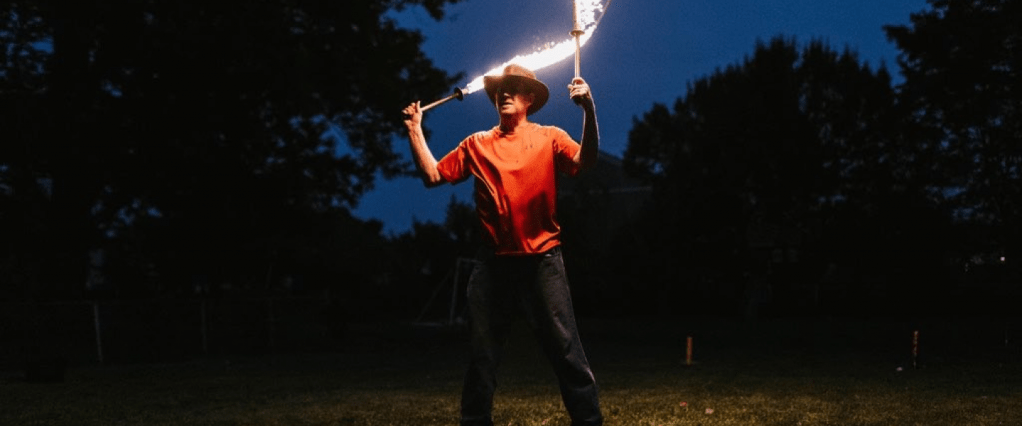
The Tool Belt Life: Why a Superior Existence Still Starts with Tools, Calloused Hands, and the Refusal of the Administrative State

In the age of disclosure, you must understand the Politics of Heaven. The administrative state has failed. It produces bureaucrats, form-fillers, and people trained to manage decline rather than fix anything. Meanwhile, the people who still know how to put a tool belt on and make something work again are the ones quietly holding the real economy together. I have learned this the hard way, across decades of executive work, competitive shooting, gunsmithing, and long hours in machine shops. The happiest version of my life has always involved tools.

A Tool Belt Full of Useful Things

I was at O’Reilly’s recently, talking with the counter guy, and he showed me a small 3/8-inch drive universal joint with a spring in it. Most of those joints flop around the moment you get them into a tight spot. This one has a spring that lets it stand up and stay put until you apply force. Titan Tools. Simple, clever, and exactly the kind of thing that makes a working day better. It went straight into the belt.

That belt already carries a telescopic magnet for fishing dropped fasteners out of engine bays and dashboards, a selection of screwdrivers, O-ring picks that actually work, a half-inch drive ratchet, and a pair of DeWalt pliers I genuinely like. The grips on the pliers are supposed to be bright yellow. They are now dark with oil and use, which is how I prefer them. There is nothing ornamental about any of it. Every item has been chosen because it solves a recurring problem.

When I strap that belt on to work on a car in the driveway, or when I used to carry one every day, the day feels correctly ordered. You have the tools you need. You can see the problem, isolate it, and correct it. That is a form of competence the administrative world almost never delivers.

Machine Shop Days and the Double-Stack Toolbox

In my late teens and early twenties I worked in a machine shop attached to a metal-stamping operation. It was a rough place. People got hurt. The work was loud, dirty, and unforgiving. They called it a “sitter” in the older language of the trade—an operation that chewed through equipment and required constant attention. I learned to set dies, make dies, troubleshoot production lines, and keep machines running. I also learned how to work alongside people who had no interest in office politics or motivational posters. They cared whether the part was good and whether the press kept cycling.

Later I refurbished old machinery for a living. We would bring in worn-out equipment, tear it down to the last nut and bolt, and rebuild it. I kept a double-stacked toolbox in the shop. In the 1990s that box held roughly a thousand dollars’ worth of tools, many of them custom or modified for specific jobs. I looked forward to work because the tools were there and the problems were concrete. When I moved into more executive roles, that daily contact with tools largely disappeared. The satisfaction did not transfer automatically to meetings and spreadsheets.

Gunsmithing, Competitive Shooting, and the Real Pleasure

Early in my marriage I set up a gunsmithing shop behind the house. I studied the craft because I wanted to work for myself and because the tools are specialized and satisfying: spring compressors, sear jigs, headspace gauges, bolt-face tools, and the particular screwdrivers and punches required for Ruger, Browning, and other actions. The guns themselves were interesting, but the tools and the process of diagnosing and correcting problems were what I enjoyed most.

Competitive fast shooting later gave me an outlet on weekends. From roughly 2018 through 2025 I shot a lot, won a lot of first-place trophies, and filled part of the office with them. The shooting itself was enjoyable—drawing, presenting, and hitting plates in a quarter or half second is a pure skill. What I came to realize, though, was that the part I looked forward to most was the workbench. Before one of the last events, in Cleveland, a gun had developed a tick. The mechanism was catching on the frame. We took the gun apart, identified the interference, and dressed it. I intended to replace the part properly once I got home. Standing there with the gun disassembled, the right tools laid out, and a clear mechanical problem in front of me, I recognized the pattern again. The shooting was the excuse. The tools and the troubleshooting were the pleasure.

Every serious competitor ends up with a small collection of specialized items: the correct bit for the screw that loosens under recoil, the fixture that holds a slide while you stone a surface, the gauge that tells you whether the timing is still correct. Building that kit, and using it under time pressure before a match, felt like the same work I had done in the machine shop decades earlier. It was crew-chief work, not spectator work.

Public Education, the Administrative Class, and What Young People Actually Need

Public education has spent decades training people to become members of the administrative bureaucracy. It has done this systematically and with considerable success. The result is a surplus of people who can navigate forms, attend meetings, and manage processes, and a shortage of people who can diagnose a hydraulic leak, set a die, pull a wiring harness, or rebuild a transmission. We talk about college as the default path while the skilled trades remain under-taught and, in many places, socially discouraged.

I have no interest in romanticizing hard physical work for its own sake. The point is narrower and more practical: a society that cannot produce and retain people who know how to fix things will not remain productive. The administrative state can write regulations. It cannot keep the machines running. When the machines stop, the regulations become irrelevant.

Young men in particular have been steered away from this path for a generation. Many of them now reach their mid-twenties without basic mechanical competence. Women notice. A man who cannot change a tire, change the oil, or diagnose a simple electrical problem is less useful as a partner and less useful as a citizen. This is not a complicated observation, and it does not require hostility toward anyone. It is simply a description of what has happened when schools stopped teaching shop, when parents stopped requiring basic mechanical literacy, and when culture began treating hands-on work as a fallback rather than a respectable primary path.

Home-improvement television and the tool aisles at places like O’Reilly’s exist for a reason. People still want to solve physical problems. The gadgets keep improving—better ratchets, magnetic trays, spring-loaded universals, compact torque wrenches, inspection cameras—because the underlying need has not gone away.

The Economic Case for the Tool Belt

The next wave of American productivity will not be led exclusively by people who write code or manage brand narratives. Space launch, electric vehicles, robotics, data-center construction, and advanced manufacturing all require large numbers of technicians who can work with tools, read drawings, troubleshoot in real time, and keep complex systems operating. Tesla-style manufacturing, reusable rocketry, and the supporting industrial base will need people who treat a tool belt as normal daily equipment rather than a costume.

Companies such as Carvana have tried to reorganize automotive retail around logistics and software. Some of those experiments will succeed in pieces; others will discover that physical goods still require physical maintenance. The firms that scale will be the ones that can recruit and retain people who already know how to use tools and who take satisfaction in the work. Those people are currently in short supply.

I am not arguing that everyone should abandon white-collar work. I am arguing that the cultural hierarchy which treats skilled trades as inferior has been a mistake, and that the economic consequences of that mistake are becoming visible. A person who can make a living with a tool belt, who owns the tools, and who looks forward to using them is in a stronger position than many people with higher formal credentials and less practical capability. The work is measurable. The customer either gets a running machine or does not. There is less room for the kind of ambiguity that administrative roles often reward.

Personal Conclusion

Across machine-shop work in my twenties, gunsmithing in the early years of marriage, competitive shooting on weekends, and the ordinary maintenance of cars and equipment at home, the pattern has been consistent. The periods in which I used tools every day were the periods I looked forward to most. Executive work has its own satisfactions and its own necessities, but it has never replaced the direct feedback of diagnosing a problem, selecting the right tool, and correcting the fault.

If a young person can learn a trade, acquire good tools, and make a living while wearing a tool belt, that person has a realistic chance at a high-quality life. The marriage, the family stability, and the personal satisfaction tend to follow the competence rather than the other way around. Public education has spent too many years teaching the opposite lesson. The correction will not come from another round of administrative reforms. It will come from people who simply decide to learn how to fix things and who refuse to treat that skill as second-class.

The future economy will reward them. In the meantime, a well-stocked tool belt remains one of the more reliable sources of ordinary happiness available.

Footnotes

1.  The spring-loaded 3/8-inch universal joint is a small but representative example of incremental tool improvement. Older flex-joint designs required constant manual positioning; the spring returns the joint to a usable attitude, reducing frustration in confined spaces.

2.  “Sitter” was shop-floor language for certain stamping or forming operations that demanded continuous operator or maintenance attention because of wear rates, material variability, or tooling sensitivity. Injury rates in older metal-stamping environments were high by modern standards.

3.  The double-stacked toolbox from the 1990s refurbishing work contained both standard and job-specific tooling. Custom ground punches, modified wrenches, and dedicated fixtures were common because production machinery of that era was not designed for rapid field service.

4.  Competitive practical shooting requires ongoing gunsmith-level maintenance. Recoil, fouling, and high round counts loosen fasteners, alter timing, and reveal small dimensional problems that range guns rarely expose. Most serious competitors maintain a traveling tool kit for exactly this reason.

5.  Matthew B. Crawford’s Shop Class as Soulcraft (2009) remains one of the clearer modern arguments that manual competence produces a distinct form of cognitive and moral satisfaction largely absent from many administrative and symbolic-analytic jobs.

6.  Public high-school shop programs declined sharply after the 1970s–1980s in most U.S. districts. The shift coincided with rising college-enrollment targets and a cultural redefinition of “good” jobs as those requiring bachelor’s degrees. Skilled-trade shortages in construction, manufacturing maintenance, and automotive repair have been widely documented since the mid-2010s.

7.  Basic mechanical literacy (tire changes, oil changes, simple electrical diagnosis, plumbing and electrical fundamentals) functions as a practical filter in household and community life. Its absence is frequently noted in discussions of partner selection and household stability, independent of broader ideological framing.

8.  Advanced manufacturing, commercial space, electric-vehicle production, and data-center build-out all increase demand for technicians who combine traditional mechanical skills with newer diagnostic tools (thermal imaging, borescopes, precision torque, digital multimeters, and basic programmable-logic troubleshooting). The tool belt evolves; it does not disappear.

Bibliography & Further Reading

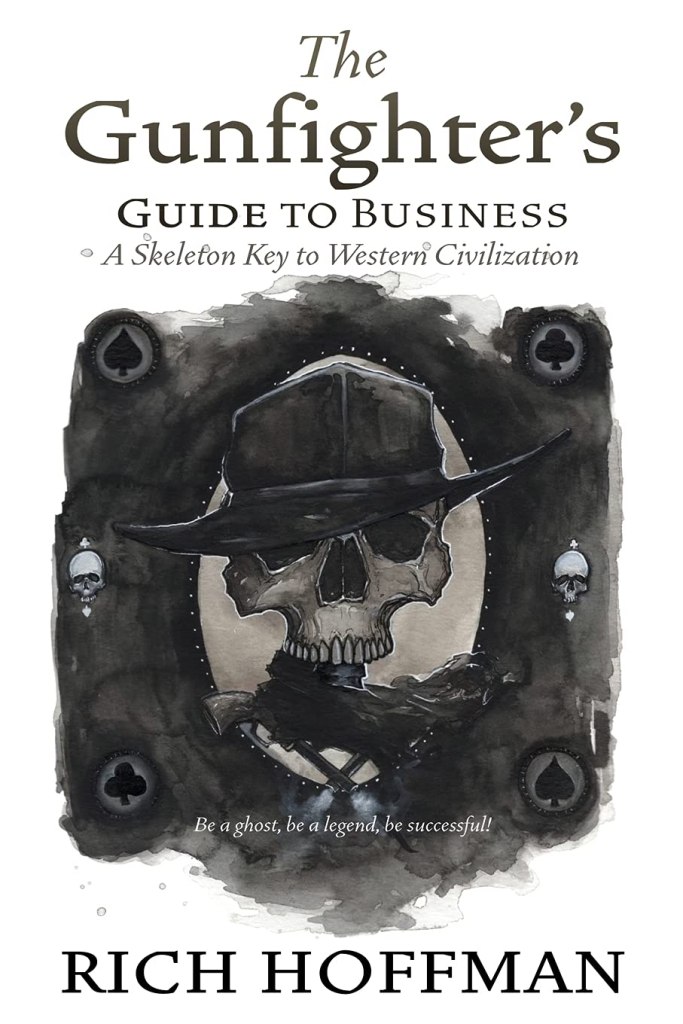
•  Hoffman, Rich. The Gunfighter’s Guide to Business. (Personal framework connecting competitive shooting, tool use, executive decision-making, and individual agency.)

•  Crawford, Matthew B. Shop Class as Soulcraft: An Inquiry into the Value of Work. Penguin, 2009.

•  Rowe, Mike. Profoundly Disconnected (various essays and talks on skilled trades and cultural attitudes toward manual work).

•  Pirsig, Robert M. Zen and the Art of Motorcycle Maintenance. (Classic exploration of quality, tools, and the relationship between mechanic and machine.)

•  Sennett, Richard. The Craftsman. Yale University Press, 2008.

•  Industry reporting on skilled-trade shortages: U.S. Bureau of Labor Statistics occupational outlooks for industrial machinery mechanics, automotive technicians, electricians, and millwrights (ongoing).

•  Historical context on the decline of vocational education: various state and federal reports from the 1980s–2000s documenting the reduction of shop programs in public secondary schools.

The tools remain available. The work remains necessary. The satisfaction, for those willing to acquire the skill, has not been repealed by any administrative decree.

Rich Hoffman

More about me

Click Here to Protect Yourself with Second Call Defense https://www.secondcalldefense.org/?affiliate=20707

About the Author: Rich Hoffman

Rich Hoffman is an author, political consultant, and strategic advisor based in Cincinnati, Ohio, and the creator of The Politics of Heaven—a unique framework that connects biblical theology, ancient history, and modern power structures to explain how moral alignment and spiritual forces shape global events. Blending real-world political experience with deep research into archaeology, UFO phenomena, and suppressed historical narratives, Hoffman offers compelling commentary on topics ranging from ancient civilizations and the Dead Sea Scrolls to modern populist movements, paranormal continuity, and leadership strategy in chaotic environments. As the author of The Gunfighter’s Guide to Business and the forthcoming Politics of Heaven, he brings a grounded yet provocative voice to media discussions, supported by firsthand experiences and a cross-disciplinary approach that bridges science, history, and theology. For interviews, speaking engagements, or expert analysis, visit richhoffmanbooks.com or contact directly via phone at 513-307-5815 or email at rhoffman@richhoffmanbooks.com.  If you’ve seen the movie, Disclosure Day and want to talk about it and the implications of Presidnet Trump’s UAP disclosures, let me know and we can bring some color to your coverage. https://richhoffmanbooks.com/media-inquiries-broadcast-topics-and-contact-info/?frame-nonce=ad51e7ecba I do have a firsthand UFO encounter to discuss.
Don’t Squander the SpaceX Gift: Why Good Government, Hard People, and Real Competition Must Arrive Before the Medical Industrial Complex Collapses

Elon Musk has said he will give every child in America one share of SpaceX stock next year, routed through the Trump Accounts program. At recent prices, that is roughly a $10.5 billion transfer to about 72–73 million kids, drawn from a company now valued near $2 trillion after its June 2026 IPO.  The gift is real enough to matter. It is not large enough, by itself, to paper over decades of reckless public spending, structural medical overcharging, or the permanent administrative class that treats other people’s money as an infinite resource. Politics is management. The managers we choose will decide whether this windfall is invested or squandered.

The SpaceX Share and the Limits of Private Generosity

Musk posted the pledge on X on October 19, 2026: one of his SpaceX shares to every kid in America, “the first of many.” The shares were trading near $146–148. SpaceX had just reported third-quarter revenue of $14.6 billion, up 161 percent year-over-year, and the company carries a market capitalization around $2 trillion.  The transfer is large by ordinary standards and small relative to Musk’s holdings. It is also downstream of policy. SpaceX’s explosive growth came after regulatory barriers fell. Private capital and engineering solved problems that public aerospace processes had treated as permanent. The same sequence will have to occur in medicine if the cost structure is ever to break.

Gifting stock to children does not repeal the obligation of fiscal discipline at every level of government. Butler County has maintained that discipline for years. Nancy Nix, first as treasurer and now as auditor, and Mike McNamara as treasurer have kept the books in the black. I have disagreed with Nancy on restaurants, cars, sweaters, and larger political questions including Trump and Vance. None of that changes the observable fact that she understands money. When we talk about county finances, I get clear answers. That is what an auditor is for. Preference arguments can wait until after the numbers are settled.

Local People, Hard Times, and the Test of Character

I have known George Lang for a long time. He is one of Ohio’s stronger state senators and has been through serious political and legal pressure. Years ago, when I was in the middle of one of the more public controversies that have followed me, I held a strategy lunch at LaRosa’s in Liberty Township. Fifteen to twenty people showed up. George came. At the time he was a West Chester trustee, not yet a state representative or senator, and he had every conventional reason to stay away. Conventional wisdom said a rising figure should not sit down with the local radical. He came anyway, ate pizza, and talked. I have not forgotten it. In adult life, I have found that the people willing to show up when the cost is real are the ones you can trust later. Most others reveal themselves under pressure.

The same pattern appears with other local figures. I have had hard conversations with Ann Becker and with Darbi Boddy. Their positions have moved; mine have stayed more constant. I still speak with both when the subject is county or party direction. Art Sauerwein, the new Butler County Republican chair, is navigating a party that is shifting toward clearer Trump alignment after twenty years of more mixed leadership. That shift will be permanent or it will not. The practical question is whether the party represents the voters who show up or protects an internal preference for moderation those voters have already rejected. Sheriff Jones and I differ on operational style; I still recognize competence where it exists. Roger Reynolds, Thomas Hall, Jennifer Gross, and Michael Ryan each bring different vantage points. Good government requires finding the overlapping work that must be done even when the people involved are not identical in every preference.

My own operating rule has been consistent. People who threaten me, send letters, or try to force me into their preferred lane discover that the cost is not free. I cannot think of a case in my adult life where someone who moved against me didn’t eventually pay a price. That reputation is not an accident. It is the same discipline I applied while working the Jason Voorhees role at the Kings Island haunt: guests are protected by the attraction’s rules, yet the job is still to function within those constraints and produce the intended effect. Public life has similar constraints. I defend the position. The threats continue from people who treat disagreement as license for antagonism. The work continues anyway.

The Medical Cost Structure and the Coming Reckoning

The medical industry in its current form is not sustainable. Hospitals routinely bill hundreds of dollars to push a syringe that can be purchased for a few dollars at a retail pharmacy. One documented case involved $722 charges for each IV push; the medication itself was billed separately.  Facility fees, chargemaster markups, and billing the same service at hospital rates when performed in an office setting have produced multiples of Medicare reference prices. Large health systems have built entire hillsides of facilities—visible near Bridgewater Falls looking toward the Cincinnati airport—on the assumption that the current reimbursement model continues indefinitely.

I have turned down high-paying offers inside that system because continued public criticism of it was worth more to me than the salary. Many people take the money. The salary structure rests on the post-2010 Affordable Care Act architecture and the expectation of perpetual third-party payment. X-ray technicians and other roles routinely clear six figures. The economic incentive is to keep patients in treatment pathways rather than to eliminate the underlying condition. Shopping malls once looked permanent too. When the cost structure became indefensible, and alternatives appeared, the physical footprint emptied. The same sequence is available in medicine once competitive models are allowed to scale.

Cures for major cancers are closer than the current billing regime admits. Recent work at UCLA and elsewhere has shown methods for producing renewable, off-the-shelf engineered immune cells that can attack solid tumors, reprogram stem cells to generate ongoing T-cell responses, and reduce the cost and customization barriers that have limited CAR-T approaches.  These are not yet standard of care. They are evidence that the technical path exists. The political and reimbursement path does not. Radiation and chemotherapy remain the default for many late-stage patients because the payment system rewards ongoing intervention. Friends of mine who are in stage-three and stage-four treatment have been told to hold on. The practical advice is the same: stay alive long enough for the competitive models to clear the regulatory and payment obstacles. That clearance requires elected officials who will not protect the existing revenue streams.

Good People, Hard Conditions, and the Management of Growth

Easy money has corrupted incentives across multiple sectors. People who know a three-dollar item is billed at two hundred dollars and still collect a paycheck participate in a system that delays better outcomes. The same pattern appears in any protected administrative layer: the work becomes the protection of the process rather than the production of the result. SpaceX grew because it lowered barriers and enforced engineering standards. Medicine will require an equivalent reduction in barriers and an equivalent insistence on measurable outcomes.

Good government comes from good people who have already survived hard conditions. The LaRosa’s lunch, the haunt work, the machine-shop years, and the periods of public controversy all tested the same question: who shows up when the cost is real and who disappears. Butler County has a concentration of people who have demonstrated fiscal competence and willingness to absorb political heat. Nancy Nix’s record on the numbers is one example. George Lang’s decision to attend an unpopular meeting is another. Those traits are not universal in politics. They are also not optional if the SpaceX-era wealth is to become lasting productive capacity rather than get absorbed by the next round of administrative expansion.

Trump will not be in office indefinitely. The question of continuity—whether through Vance or another figure—will be settled by whether the underlying incentives have been altered. A county party that aligns more closely with the voters who delivered the recent results is better positioned to defend those changes than one that treats them as temporary. The medical cost collapse will arrive whether local officials prepare for it or not. The difference will be whether replacement models are allowed to form here or whether revenue protection continues until the facilities empty, as the malls did.

The private gift of SpaceX shares is a useful transfer. It does not replace the requirement for managers who can keep public books in the black, tolerate disagreement without treating it as grounds for destruction, and clear the path for competitive innovation in sectors that have been protected too long. You can identify those managers by their behavior under pressure. The rest is preference. The numbers are not.

Footnotes

1.  Musk’s October 19, 2026 statement on X committed one SpaceX share per American child, to be delivered via Trump Accounts. Census estimates place the under-18 population near 72–73 million. At contemporaneous share prices of approximately $146–148, the notional value was roughly $10.5 billion. SpaceX’s post-IPO market capitalization has fluctuated near $2 trillion.

2.  SpaceX’s third-quarter 2026 revenue was reported at $14.58 billion, a 161 percent year-over-year increase. Analyst targets vary widely; Bernstein raised its target to $268, while the stock traded near $149 in late October.

3.  Documented hospital billing examples include $722 charges solely for the act of an IV push (medication billed separately) and systematic multiples of Medicare rates through facility fees and chargemaster pricing. Hospitals have also billed office-based services at hospital outpatient rates, producing large differentials on identical procedures.

4.  UCLA and related groups have published methods for generating renewable engineered immune cells from stem cells, off-the-shelf CAR-NKT and similar platforms capable of attacking solid tumors, and approaches that reduce per-patient customization costs. These remain largely preclinical or early-stage; they illustrate technical feasibility rather than immediate clinical availability.

5.  Butler County’s multi-year record of operating in the black under Nix (treasurer then auditor) and McNamara (treasurer) is a matter of public financial reporting. Preference disagreements on non-fiscal questions do not alter the observable management of county resources.

6.  The LaRosa’s Liberty Township lunch occurred during a period of elevated local controversy. Attendance by a then-township trustee who later became a state senator is cited as an instance of behavior under conditions where conventional incentives favored absence.

Bibliography & Further Reading

•  Hoffman, Rich. The Gunfighter’s Guide to Business.

•  Bloomberg, Wall Street Journal, New York Times, and Axios coverage of the October 19, 2026 Musk SpaceX share pledge and Trump Accounts mechanism.

•  SpaceX public financial reporting and analyst notes on Q3 2026 results (revenue, market capitalization).

•  NPR and KFF Health News reporting on hospital chargemaster practices, IV-push fees, and facility-fee differentials.

•  Patient Rights Advocate and related analyses of medical billing error rates and markups relative to Medicare reference prices.

•  UCLA Health and OncLive summaries of stem-cell-derived and off-the-shelf engineered immune-cell platforms for solid tumors (2025–2026 publications).

•  Ohio Auditor of State and Butler County financial reports on multi-year operating balances.

The private capital is arriving. Public managers will decide whether to use or consume it. In the age of disclosure, the distinction remains measurable.

Rich Hoffman

More about me

Click Here to Protect Yourself with Second Call Defense https://www.secondcalldefense.org/?affiliate=20707

About the Author: Rich Hoffman

Rich Hoffman is an author, political consultant, and strategic advisor based in Cincinnati, Ohio, and the creator of The Politics of Heaven—a unique framework that connects biblical theology, ancient history, and modern power structures to explain how moral alignment and spiritual forces shape global events. Blending real-world political experience with deep research into archaeology, UFO phenomena, and suppressed historical narratives, Hoffman offers compelling commentary on topics ranging from ancient civilizations and the Dead Sea Scrolls to modern populist movements, paranormal continuity, and leadership strategy in chaotic environments. As the author of The Gunfighter’s Guide to Business and the forthcoming Politics of Heaven, he brings a grounded yet provocative voice to media discussions, supported by firsthand experiences and a cross-disciplinary approach that bridges science, history, and theology. For interviews, speaking engagements, or expert analysis, visit richhoffmanbooks.com or contact directly via phone at 513-307-5815 or email at rhoffman@richhoffmanbooks.com.  If you’ve seen the movie, Disclosure Day and want to talk about it and the implications of Presidnet Trump’s UAP disclosures, let me know and we can bring some color to your coverage. https://richhoffmanbooks.com/media-inquiries-broadcast-topics-and-contact-info/?frame-nonce=ad51e7ecba I do have a firsthand UFO encounter to discuss.

Jason at Kings Island and the Rules of the Haunted House: Why Darbi Boddy Is Right About Islam Using American Freedoms to Undo Christian Culture in West Chester

The Window Needs Moving, and Someone Has to Pull It

I have known Ann Becker for a long time. She knows what it takes to stand in a public meeting, take the heat, and keep talking when the institutional machinery wants to shut down the conversation. That is why I listen when Darbi Boddy speaks. She has spent years crossing the state, appearing at school board meetings, and putting uncomfortable realities on the record about how certain Islamic communities in Western countries treat the American premises of free speech, free exercise of religion, and separation of church and state. A Christian people built those premises for a Christian culture. They were never designed as a one-way shield for a competing civilizational order whose own foundational texts and majority opinion in many of its societies reject the same liberties when the roles reverse.

West Chester needs people willing to say this out loud. Mark Welch is no longer a township trustee. The current board is Ann Becker as chair, Lee Wong, and Amanda Ortiz. The board needs clear-eyed leadership that doesn’t treat every demand for religious accommodation as automatically benign. Darbi has done the preparatory public-comment work candidates used to do before seeking office. She earned a seat once. The lawyers and the process found a way to remove her from the Lakota board after a civil protection order kept her from meetings for ninety days. I do not see that removal as a victory for order. I see it as a successful effort to silence the person who kept forcing the discussion the rest of the board preferred not to have.

Darbi Boddy’s Record and the Price of Speaking Plainly

Darbi was elected to the Lakota Local Schools Board of Education in 2021 on a platform of teaching the greatness of America and opposing critical race theory and related ideological imports. Lakota serves West Chester and Liberty Townships and is one of the largest suburban districts in southwest Ohio. Her tenure was contentious. She criticized suicide-prevention mandates she believed separated parents from children, questioned curriculum, and clashed repeatedly with colleagues. A civil stalking protection order fellow board member Isaac Adi obtained in 2023 prevented her from attending meetings with him present. After 90 days of absences, the remaining members declared them insufficient and voted her off in March 2024. She has continued speaking at other boards, including Xenia, and has faced lawsuits and counterclaims over public comment and First Amendment issues. She now leads Access Ohio, focused on parent rights and traditional American values.

People call her a bull in a China shop. Aggressive clarity is often required when institutions have already accepted the progressive framing that any scrutiny of Islamic political theology is bigotry. The same institutions treat Christian residual culture as the problem to be managed. Darbi keeps pointing at the asymmetry. Islamic leadership in many Western settings has stated, in plain language or through institutional practice, the goal of replacing Christian cultural dominance with Islamic norms. She refuses to let local politicians, including those in West Chester, pretend the observation is out of bounds.

The Legal Gambit: Freedom of Religion as a One-Way Shield

Lawyers are skilled at reinterpreting English and case law to fit the argument of the moment. The modern reading of “separation of church and state” is a prime example. The Founders intended to prevent the federal government from establishing a national church or interfering with the free exercise of existing Christian denominations. They did not intend a neutrality so absolute that a competing theocratic system could use the First Amendment as cover while its own doctrines prescribe death for apostasy, second-class status for non-believers, and legal supremacy for sharia.

Pew Research Center’s 2013 survey of Muslims in thirty-nine countries found overwhelming majorities in South Asia, the Middle East and North Africa, Southeast Asia, and parts of sub-Saharan Africa favoring sharia as the official law of the land, at least for Muslims. In Afghanistan, Egypt, Pakistan, and Jordan, large shares of those who favored sharia also favored the death penalty for leaving Islam. Later Pew work has shown Islam as the world’s fastest-growing major religion between 2010 and 2020, driven primarily by higher fertility and a younger median age rather than mass conversion. In Europe, the Muslim share reached roughly 6 percent by 2020; projections with continued migration put it near 10 percent by mid-century. In the United States, the absolute numbers remain smaller, but the growth rate is among the highest of any region. West Chester is home to the Islamic Center of Greater Cincinnati, a large campus with a prominent golden dome visible from I-75, which has grown to serve tens of thousands of families since it opened in the mid-1990s.

None of this is a conspiracy theory. It is demography plus doctrine. When a community whose median opinion in many source countries rejects the equal status of other religions uses the American guarantee of free exercise to expand its institutional footprint, while simultaneously pressing for speech restrictions on “Islamophobia,” the constitutional premise is being used against the culture that created it. Lawyers can draft the accommodation language. Politicians can call the resulting pressure “tolerance.” The practical result is the gradual displacement of the prior order.

My Experiment at Kings Island’s Jason: Blood Reign

I spent the 2026 Halloween season working as Jason Voorhees in the new “Jason: Blood Reign” maze at Kings Island’s Halloween Haunt. Before guests enter, they are told the rule: the monsters will not touch you. You have complete safety. Do not touch the monsters. Thousands of people waited, sometimes for hours, for the thrill of being scared while knowing they were protected.

The parallel to the political debate is direct. In the haunted house, guests know the rules protect them. Some guests, once they understand the protection is absolute, become rambunctious. They test the boundary. A few try to punch or kick the actor. They know the performer is forbidden from retaliating. The same dynamic appears when a radical religious order treats American free-speech and free-exercise rules as a shield while advancing practices and political goals incompatible with those rules. The aggressor is told he cannot be touched. He then lashes out, confident the defender is constrained.

Out of the tens of thousands of people I scared during the season, I turned every negative or hostile encounter into a positive, and that is consistent with most things that I get involved with.  It was fun and rewarding to do it on a large scale; I tested what I wanted to challenge myself with.

I read body language—shoulders, facial expressions, the way a group clustered—before they reached my position. I used the strobe, the sound, the timing of the jump. People who knew exactly where I was still jumped. Some laughed afterward and admitted they had been gotten anyway. The aggressive ones still got the scare because the common purpose of the attraction was shared: they came to be frightened. The rules constrained my physical response, but they did not constrain psychological effectiveness.

That is the practical lesson. You do not have to break the Fourteenth Amendment or the First Amendment to defend the culture. You do have to understand the strategy of the other side and refuse to pretend the asymmetry does not exist. Darbi is doing that work in public meetings. The institutional response has been to use process and protection orders to remove her from the conversation. The lawyers did their job of reinterpreting the rules. The result is that the discussion she forced is harder to have.

The Psychology of the Protected Aggressor and What the Numbers Show

The people who waited in the long line outside Blood Reign wanted the experience. They did not want to be harmed. Some still behaved poorly once they believed the rules gave them impunity. That is ordinary human behavior under asymmetric constraint. Scale it to civilizational level and the pattern is recognizable. Groups that retain high in-group preference, higher fertility, and doctrinal rejection of equal religious liberty can expand under a host culture’s free-exercise rules while the host culture is told that reciprocal scrutiny violates its own principles.

The data do not require exotic interpretation. Pew’s global religious landscape work shows Muslim population growth outpacing every other major group from 2010 to 2020. Fertility differentials, not adult conversion, drive most of the increase. In many Muslim-majority societies, majorities continue to favor legal systems in which sharia has official status. Western polling of Muslim populations shows greater moderation on average, particularly among those born in the West, yet the institutional organizations and the source-country norms travel with the migration. Local officials who treat every request for accommodation as self-evidently compatible with American order are choosing not to examine the long-term trajectory.

Ann Becker has been on the other side of contentious meetings. She knows the difference between an ideology held in a living room and the same ideology defended under public scrutiny and procedural attack. Darbi’s style is more confrontational. That style is sometimes necessary to move the Overton window back toward the place where Christian cultural continuity is treated as the default rather than the problem. The progressive platform

Rich Hoffman

More about me

Click Here to Protect Yourself with Second Call Defense https://www.secondcalldefense.org/?affiliate=20707

About the Author: Rich Hoffman

Rich Hoffman is an author, political consultant, and strategic advisor based in Cincinnati, Ohio, and the creator of The Politics of Heaven—a unique framework that connects biblical theology, ancient history, and modern power structures to explain how moral alignment and spiritual forces shape global events. Blending real-world political experience with deep research into archaeology, UFO phenomena, and suppressed historical narratives, Hoffman offers compelling commentary on topics ranging from ancient civilizations and the Dead Sea Scrolls to modern populist movements, paranormal continuity, and leadership strategy in chaotic environments. As the author of The Gunfighter’s Guide to Business and the forthcoming Politics of Heaven, he brings a grounded yet provocative voice to media discussions, supported by firsthand experiences and a cross-disciplinary approach that bridges science, history, and theology. For interviews, speaking engagements, or expert analysis, visit richhoffmanbooks.com or contact directly via phone at 513-307-5815 or email at rhoffman@richhoffmanbooks.com.  If you’ve seen the movie, Disclosure Day and want to talk about it and the implications of Presidnet Trump’s UAP disclosures, let me know and we can bring some color to your coverage. https://richhoffmanbooks.com/media-inquiries-broadcast-topics-and-contact-info/?frame-nonce=ad51e7ecba I do have a firsthand UFO encounter to discuss.and the legal class have made adherence to the rules nearly impossible for a civil society that wishes to remain itself. The rules were written by people who assumed a shared civilizational premise. When that premise is rejected by one of the parties using the rules, the defender must name the rejection.

Moving the Window Without Breaking the Rules

I am proud of the season I spent as Jason. The work was physically demanding. It required reading people under pressure and finding a way to deliver the intended experience even when some guests tried to weaponize the safety rules. The political parallel is not perfect, but it is close enough to be useful. The guests who behaved worst still left having been scared, because the shared purpose of the attraction overrode the temporary abuse of the rules. A society that still possesses a shared purpose—constitutional loyalty, individual responsibility, and the cultural inheritance that produced those things—can do the same. It requires people willing to speak the obvious asymmetries in public, to accept the personal cost, and to keep the discussion alive after the lawyers and the process have done their best to end it.

Darbi Boddy has been doing that. West Chester has the institutional space for it now that the prior trustee arrangement has changed. The argument matters more than the personalities. Voters ultimately decide whether the community remains American in more than name or whether it continues to treat every use of its own freedoms as equally legitimate even when the user does not reciprocate. I have seen the dynamic up close, under the mask, with a large sample of ordinary people. The rules can be used against you. You can still win the encounter if you refuse to pretend the rules were written for a different game.

Bibliography

Bat Ye’or. Eurabia: The Euro-Arab Axis. Fairleigh Dickinson University Press, 2005.

Hirsi Ali, Ayaan. Infidel. Free Press, 2007.

Hirsi Ali, Ayaan. Nomad: From Islam to America. Free Press, 2010.

Hoffman, Rich. The Gunfighter’s Guide to Business. (and related works on individual responsibility and cultural continuity).

Ibrahim, Raymond. Sword and Scimitar: Fourteen Centuries of War between Islam and the West. Da Capo, 2018.

Lewis, Bernard. What Went Wrong? Western Impact and Middle Eastern Response. Oxford University Press, 2002.

Lewis, Bernard. The Crisis of Islam: Holy War and Unholy Terror. Modern Library, 2003.

Pew Research Center. “The World’s Muslims: Religion, Politics and Society.” April 30, 2013.

Pew Research Center. “The Future of World Religions: Population Growth Projections, 2010–2050.” April 2, 2015.

Pew Research Center. “How the Global Religious Landscape Changed From 2010 to 2020.” June 9, 2025.

Spencer, Robert. The History of Jihad: From Muhammad to ISIS. Bombardier Books, 2018.

Spencer, Robert. The Critical Qur’an: Explained from Key Islamic Commentaries and Contemporary Historical Research. Bombardier Books, 2022.

Warraq, Ibn. Why I Am Not a Muslim. Prometheus Books, 1995.

Local reporting on Lakota Local Schools Board actions regarding Darbi Boddy (Cincinnati Enquirer, Dayton Daily News, FOX19, WXIX, 2021–2025).

West Chester Township Board of Trustees meeting records and official site, 2025–2026.

Kings Island Halloween Haunt 2026 materials on “Jason: Blood Reign.”

Footnotes

1.  Darbi Boddy elected 2021; removed March 2024 after protection order produced ninety-day absence under Ohio Revised Code provisions allowing removal when absences are declared insufficient by two-thirds of the remaining board. See Cincinnati Enquirer, March–April 2024 coverage.

2.  Pew Research Center, “The World’s Muslims: Religion, Politics and Society,” 2013. Regional medians for support of sharia as official law: South Asia 84 %, Middle East-North Africa 74 %, Southeast Asia 77 %, sub-Saharan Africa 64 %. Support for death penalty for apostasy among those favoring sharia reached 78 % in Afghanistan and was high in Egypt and Pakistan.

3.  Pew Research Center, “How the Global Religious Landscape Changed From 2010 to 2020,” June 2025. Muslims increased by 347 million; share of world population rose to 25.6 %. Growth driven primarily by fertility and age structure.

4.  Islamic Center of Greater Cincinnati, West Chester Township, opened mid-1990s; large campus visible from I-75. Contemporary reporting describes service to tens of thousands of families.

5.  Kings Island Halloween Haunt 2026 featured the licensed “Jason: Blood Reign” maze. Guest instructions explicitly prohibit contact with actors; actors are constrained from physical retaliation.

6.  West Chester Township Board of Trustees as of 2026: Ann Becker (Chair), Lee Wong, Amanda Ortiz. Mark Welch, longtime trustee, did not continue after the 2025 election cycle.supplies the footnotes

Rich Hoffman

More about me

Click Here to Protect Yourself with Second Call Defense https://www.secondcalldefense.org/?affiliate=20707

About the Author: Rich Hoffman

Rich Hoffman is an author, political consultant, and strategic advisor based in Cincinnati, Ohio, and the creator of The Politics of Heaven—a unique framework that connects biblical theology, ancient history, and modern power structures to explain how moral alignment and spiritual forces shape global events. Blending real-world political experience with deep research into archaeology, UFO phenomena, and suppressed historical narratives, Hoffman offers compelling commentary on topics ranging from ancient civilizations and the Dead Sea Scrolls to modern populist movements, paranormal continuity, and leadership strategy in chaotic environments. As the author of The Gunfighter’s Guide to Business and the forthcoming Politics of Heaven, he brings a grounded yet provocative voice to media discussions, supported by firsthand experiences and a cross-disciplinary approach that bridges science, history, and theology. For interviews, speaking engagements, or expert analysis, visit richhoffmanbooks.com or contact directly via phone at 513-307-5815 or email at rhoffman@richhoffmanbooks.com.  If you’ve seen the movie, Disclosure Day and want to talk about it and the implications of Presidnet Trump’s UAP disclosures, let me know and we can bring some color to your coverage. https://richhoffmanbooks.com/media-inquiries-broadcast-topics-and-contact-info/?frame-nonce=ad51e7ecba I do have a firsthand UFO encounter to discuss.

The Erosion of Integrity: Elections, Oaths, and the Progressive Paradox of Authority

I have been talking about this for years now, and the pattern keeps confirming itself. A few years ago, in 2022, it was Cochise County, Arizona, with Katie Hobbs as Secretary of State. Republican supervisors on the board delayed certifying the midterm results past the statutory deadline, citing concerns about the certification and accreditation of the voting machines. Hobbs, who was herself a candidate for governor against Kari Lake, sued the county to force the canvass. A judge ordered them to certify; they eventually did under threat, and later two supervisors were indicted for interference. Official accounts insist there was “no evidence of a count being incorrect,” yet the resistance itself, the attempted full hand-count that a court blocked, and the broader atmosphere of machine distrust revealed how thin the institutional trust had become. 

We have seen the same dynamic in Fulton County, Georgia. In December 2025, an attorney for the county stood before the State Election Board and stated plainly that they did not dispute the failure to sign tabulator tapes covering roughly 315,000 early votes from the 2020 election—nearly all of the early in-person ballots. That directly violates the rules designed to create a verifiable chain of custody between voters and tabulated results. There have also been admissions and findings around double-scanned ballots, missing ballot images, and inconsistent batch tallies from the risk-limiting audit and recount. Officials and the Secretary of State call these clerical errors that did not change the outcome; Biden’s margin in Georgia was about 11,779 votes. Yet the volume of procedural failures is not trivial, and the late admission years later only feeds the original skepticism. 

How They Thought They Would Get Away With It

This is what has always puzzled me. The Constitution and American society rest on a baseline of integrity—people raising their right hand and swearing to tell the whole truth, so help them, God. When that idea is hollowed out, the entire mechanism of voluntary cooperation collapses. Progressive globalism treated the removal of that integrity as a feature, not a bug. Without the sacred weight of the oath, testimony becomes just another tactical instrument. You can say whatever advances the narrative today and walk it back tomorrow as a “clerical error.” The goal was authority without the restraint of genuine accountability.

They preached using the power of government to reshape the individual and society, yet simultaneously pushed to defund the police. That is an obvious contradiction. If you dismantle the everyday instruments of law and order, how exactly do you intend to enforce the new authority you claim? You cannot have it both ways. Either the rules apply with consistent enforcement, or the system becomes pure power exercised by whoever controls the institutions at the moment. The progressive assumption seemed to be that once integrity was sufficiently degraded, and once enough people accepted that “the process” itself was the only legitimacy required, dissent could be managed through narrative, lawfare, and selective prosecution rather than persuasion.

Lawfare, Oaths, and the Targeting of Questioners

We saw that approach in practice. Efforts to put Trump in jail; the imprisonment of Peter Navarro for contempt of Congress related to the January 6 committee and election-related challenges; and the FBI seizure of Mike Lindell’s phone at a drive-through while he was under heavy scrutiny for questioning the machines and the results—these were not abstract debates. They showed what happens when you question the official story too persistently. At the same time, discussions continue about holding figures such as Anthony Fauci accountable for the pandemic response, yet the institutional machinery has been far more energetic in pursuing those who challenged 2020 election procedures than in applying the same standard universally.

The removal of the idea that an oath means something is central. When liberals treat the “so help me God” clause as optional theater, the entire structure of testimony and public record loses its force. That is why a candidate like Amy Acton can run for governor in Ohio with a campaign largely managed through public relations filters, raising tens of millions while avoiding direct, unscripted answers to difficult questions. The model is to control the information environment rather than submit to open scrutiny. In a system that still had robust integrity, that approach would be fatal. Once integrity is optional, it becomes a viable strategy.

The Voice of the People and the 2024 Contrast

People still went out and voted in large numbers in 2024. The red wave, though it could not be fully contained, showed that when voters have a clear channel and counting is sufficiently visible, the representative mechanism can still function. That is why calls to re-examine 2020—not as nostalgia, but as a demand that discrepancies be treated with the same seriousness as any other large-scale administrative failure—continue. Trump didn’t have to be drafted into that fight; he volunteered because the alternative was accepting a system in which the oath and the count are both flexible. It was never more complicated than that for those who still believe the mechanisms they were told were reliable should actually be reliable.

The progressive error was thinking that authority could be sustained after integrity had been systematically weakened. Without the cultural habit of telling the truth under oath, and without consistent law enforcement that does not depend on political convenience, the only remaining tools are narrative control and selective coercion. That is not a stable foundation for any society that claims to be constitutional. The admissions in places like Fulton County and the certification fights in Cochise County are not the whole story, but they clearly illustrate why so many people concluded the system had stopped treating integrity as non-negotiable.

Bibliography

•  New York Times, “Republican-Controlled County in Arizona Holds Up Election Results,” November 28, 2022.

•  Snopes, “Fulton County, Georgia, officials admitted ballot-handling errors during 2020 election,” December 2025 (citing State Election Board proceedings and county attorney Ann Brumbaugh’s statement).

•  Atlanta News First and 11Alive reporting on the December 9, 2025, State Election Board hearing regarding unsigned tabulator tapes covering approximately 315,000 early votes.

•  Associated Press and other contemporaneous coverage of Cochise County Board of Supervisors actions, Hobbs lawsuit, and subsequent judicial order to certify.

•  Judicial Watch and reporting on the 2022 FBI warrant and seizure of Mike Lindell’s phone.

•  Coverage of Peter Navarro’s conviction and imprisonment for contempt of Congress.

•  Acton for Governor campaign finance announcements and contemporaneous polling.porting on the 2026 Ohio gubernatorial race.The record is public.

Rich Hoffman

More about me

Click Here to Protect Yourself with Second Call Defense https://www.secondcalldefense.org/?affiliate=20707

About the Author: Rich Hoffman

Rich Hoffman is an author, political consultant, and strategic advisor based in Cincinnati, Ohio, and the creator of The Politics of Heaven—a unique framework that connects biblical theology, ancient history, and modern power structures to explain how moral alignment and spiritual forces shape global events. Blending real-world political experience with deep research into archaeology, UFO phenomena, and suppressed historical narratives, Hoffman offers compelling commentary on topics ranging from ancient civilizations and the Dead Sea Scrolls to modern populist movements, paranormal continuity, and leadership strategy in chaotic environments. As the author of The Gunfighter’s Guide to Business and the forthcoming Politics of Heaven, he brings a grounded yet provocative voice to media discussions, supported by firsthand experiences and a cross-disciplinary approach that bridges science, history, and theology. For interviews, speaking engagements, or expert analysis, visit richhoffmanbooks.com or contact directly via phone at 513-307-5815 or email at rhoffman@richhoffmanbooks.com.  If you’ve seen the movie, Disclosure Day and want to talk about it and the implications of Presidnet Trump’s UAP disclosures, let me know and we can bring some color to your coverage. https://richhoffmanbooks.com/media-inquiries-broadcast-topics-and-contact-info/?frame-nonce=ad51e7ecba I do have a firsthand UFO encounter to discuss.

THE TWENTY-DOLLAR JAR I LEFT ON MY DESK: I couldn’t wait to get away

I have loved the work I did for around about twenty-five years and I passed up a lot of opportunities do do that work. The financial opportunity cost was enormous. That is not a slogan. That is a long marriage to a craft, a lot of people counted on me to keep them in a job and it was not good for me, for a long time, several years. It was a really tough period and I didn’t talk about it much, but I did a lot of work that nobody will ever know about to make a lot of people’s lives just a little better. Then 2026 arrived, and one of the best things I have done in this decade, maybe in my adult life, was not a deal and not a title. It was a birthday. My wife and I went to the Museum of the Bible in Washington to see Dead Sea Scrolls: The Exhibition. I wear the hoodie from that day the way some men wear a championship jacket. The shirt is cloth. The day is not.

My new guys

In the gift shop outside the exhibit, I bought a replica clay jar, the kind of vessel the Qumran caves used to keep parchment alive through empires. [1] It was about twenty dollars. I spent far more than that in the gift shop. I like the twenty-dollar thing most. I put it on my desk at work so that every conference call had a reminder of a century before Christ sitting next to the phone. When I finally got free of that place, I left so fast I abandoned the jar. A friend kept it safe. It took about two months to get it back. I missed the jar more than I missed the job. That sentence tells you what I value.  The people who took over the company paid me a lot of money to leave, and I couldn’t get out fast enough.  And as I predicted, they are quickly running the place I spent a large part of my life running into the ground, which is a shame. 

THE BIRTHDAY I ACTUALLY WANTED

If you can do anything you want on your birthday and you choose an exhibit of old skin and ink, you are telling the truth about your interior life. I am a member of the Museum of the Bible. I like the building. I like the traveling shows even more. This one was the only thing I wanted.

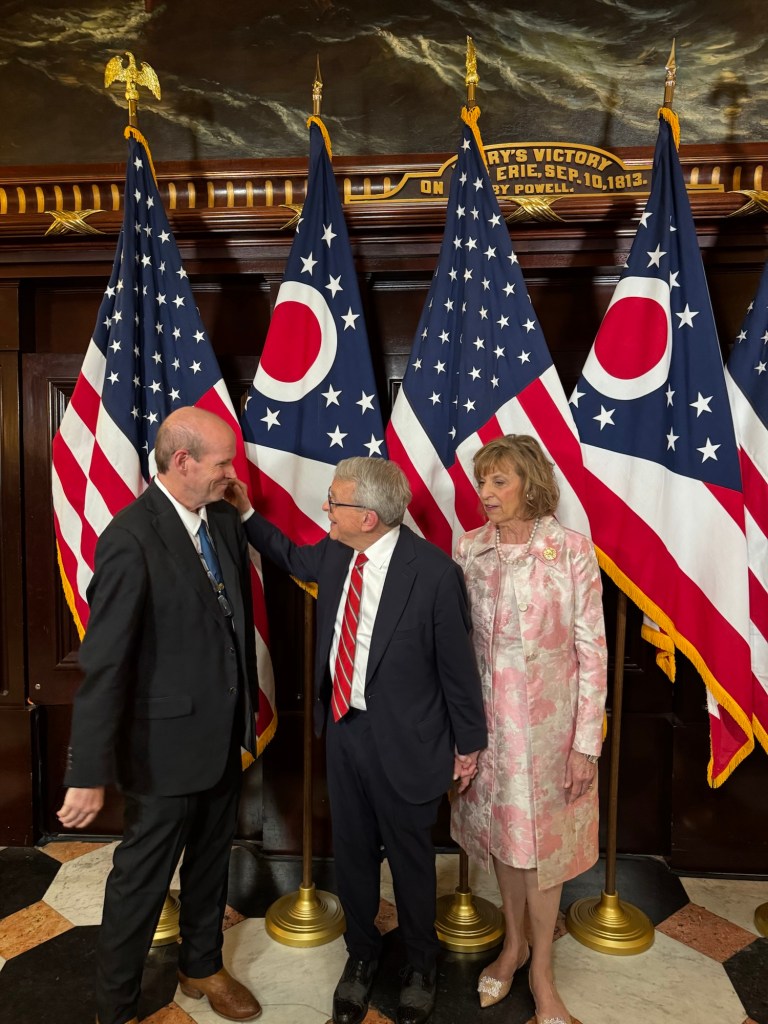
I don’t agree with DeWine on much, but I can work with him. A lot of people say they know people, but most of the time it’s nobodies just as dumb as they are. They might be good for a lunch meeting, but they can’t do anything for you.

The museum sits at 400 Fourth Street SW, a short walk from Federal Center, in that southwest quadrant where the Capitol complex, the Mall museums, and the old Department of Education neighborhood all lean on each other. [2] We parked in a garage, came up, and ate sausage-and-egg McMuffins at the McDonald’s down the road. I took a picture of my wife. We have been married thirty-eight years. You think you know a face. I have never seen her happier than that morning. The joy was all over her. It has become my favorite picture of her.

People who only know me from videos think they know what fills a man. A lot of the country is spiritually vacant, and they tune in to get a little ballast. Here is the ballast. If I could design a heaven, it would look like that day on a loop: time, the Bible, the cases, the reading, the thinking. I would be happy forever. Nothing I have bought with a title has come close.

THE EXHIBIT THAT WAS THE REAL THING

Dead Sea Scrolls: The Exhibition opened at the museum on November 22, 2025, in partnership with the Israel Antiquities Authority and Running Subway. Curators: Navit Popovich-Geller, Risa Levitt, and Joe Uziel. Floor 5. Official run through September 7, 2026. East Coast stop. [3]

They rotated the fragments in three phases so the skin could rest and so visitors would not see the same eight pieces all year.

First rotation, November 2025 into February 2026: 4Q7 Genesis, 11Q10 Targum Job, 4Q83 Psalms, Astronomical Enoch, Barkhi Nafshi, War Scroll material, an eschatological commentary, Temple Scroll. [3]

Second rotation, February through May 2026: fragments of the Great Psalms Scroll, Numbers, Lamentations, Community Rule, apocryphal psalms, Tohorot, non-canonical psalms, Book of the Giants. [3]

Third rotation, May through September 2026: Isaiah, Tobit, phylacteries, Birth of Noah, Jubilees, communal ceremony, Community Rule, Damascus Document. [3]

We hit Phase Two. I am glad we did. I stood in front of text copied when Rome was still a rumor in Judah and the Hebrew Bible was still held in a living community’s hands. You can read about Qumran in a chair. It is another thing to see the letter-forms under museum glass and realize the narrative did not begin in a nineteenth-century print shop.

That matters. The scrolls are the great twentieth-century confirmation that the biblical text is not a late pious invention. They are a Second Temple Jewish library, biblical and sectarian, hidden in jars in the caves above the Dead Sea and found again beginning in 1947. [4] They do not make a man holy by themselves. They make a liar work harder.

I know the museum’s early years included purchased “Dead Sea Scroll” fragments that testing later showed were fakes. The museum said so and pulled them. [5] This show is not that drawer. This is Israel Antiquities Authority material from the national collection, the real library on tour. Christianity Today called it the real deal. [6] They were right.

THE JAR THAT WAS NEVER THE POINT AND BECAME THE POINT

The original scroll jars are tall, lid-tight, local clay. They are why the texts survived weather, war, and time. [1] The replica I bought is a scale souvenir. It came with a copy of a scroll like the ones on display. I put the whole little shrine on the desk.

I kept fortune-cookie slips in it.

That needs explaining.

THE LUNCHES WHILE THE BUILDING CHANGED HANDS

CTL-Aerospace is a Butler County composites and aerospace shop with a long OEM life, the kind of midwestern plant that actually makes the parts. In September 2025, it filed Chapter 11 in the United States Bankruptcy Court for the Southern District of Ohio, Western Division, Case No. 1:25-bk-12226, Judge Beth A. Buchanan. [7] The company’s own first-day declaration described raw-material quality shocks, a 2024 loss on still-strong sales, and a lender fight with Wells Fargo that turned into a cash choke. [8].  The company never recovered from challenges caused initially by the COVID lockdowns. I worked real hard to save the company from an acquisition and I’m very bitter about the time I wasted on it, but I felt obligated to a lot of people which was not to my benefit. It was very insulting, as hard as I worked, to watch these new people coming into the management system and assume they could just erase me, which of course they haven’t been. A lot of people have been contaccting me wanting a job wherever I end up landing and wanting to know what’s going on with me, which doesn’t have a quick and easy answer. I Poured a lot of myself into something that was not in my control and I owe myself some time to dust off the negativitive experience. I traditionally list my work experience as a writer and consultants. Both take a lot of experience to do. And when you get a chance to learn new things, out of the box, you do all you can. It takes a lot of experience to be a good writer. That is always my first priority.

What followed is the new modern American ritual. Advisors. Debtor-in-possession money. An auction under section 363. A sale of substantially all assets free and clear. The docket names the buyer’s side as an affiliate of Davidson Kempner: DK OF VI Trading Subsidiary LP, designee DK CTL Aerospace Opco LLC. The sale hearing record sits in January 2026. The DK deal closed in March 2026.  And followed a typical story these days among a lot of companies that don’t get talked about enough in CNBC financial discussions.  [9][10].  Yes, I hate Amy Acton for what she did to the state of Ohio under the COVID lockdowns.  And I haven’t talked about it much, but because I spent so much time there, I have to tell that story 50 times a week, because everyone wants to know what happened, especially since I was on the executive leadership end of it.  And it comes up a lot because we launched Vivek Ramaswamy’s run for governor there, and people want to know what happened.  

I kept things running as long as I could, but I witnessed a massive failure in the infrastructure smaller businesses use to stay running.  And there are lots of parasites who look to target wounded companies for their profit, just like pirates in the days of old, only in a very modern context.  Government made it possible for these pirates to make a lot of money off wounded companies.  There’s a lot more to the story, but that’s a good starting point. Much of this is in the public record, and I wasn’t happy about any of it.  You loan your name to these things, and lots of other people make your life difficult, and you stick around to take care of people you consider friends, when the smart money would have said goodbye a long time ago.  Instead of getting upset, I spent my time going to places like The Museum of the Bible.  I have some great and horrific stories to tell. Things nobody will believe.

I lived the floor version. Executive management had a habit of going out for Chinese. We were in a tough stretch. A takeover is a weather system. Consultants and funding people move through a plant like they already own everything when you spend years building everything they are taking.  You can feel the Monopoly problem in your bones: you are still on the board, but you do not hold the properties, and every roll of the dice is a mortgage you cannot pay. I call that parasite logic because that is how it feels when people who did not build the thing arrive to manage the thing and treat the builders as furniture.  I’m talking about this now because I would put all those fortunes in my Dead Sea Scrolls jar for safekeeping during this really hard period, and now that I have it back, it reminds me of these last several years.  And I did a presentation at my new place this past week, which went well.  And I have a chance to build everything from scratch again, which is about a ten-year plan.  But it’s good to get going on something positive again instead of trying to defend employees from a takeover of the business they counted on to put food on their table.  When we talk about the economy and Trump expanding jobs, nobody ever talks about these kinds of things which destroy many thousands of jobs every month in America, and it’s what I would consider the biggest job killer in the world, an open attack against America through finance. For many decades, we were able to protect the business from these kinds of elements, but it takes smart people to protect the finance side of things, and COVID conditions broke a lot of cracks that many companies already saw at a critical time.  

The court file is the court file; we wanted employees to keep their jobs. My desk was my desk. During those lunches I kept the fortunes and dropped them in the jar. It was a private joke with history among those who went to lunch with me then. The oldest surviving copies of Scripture in a twenty-dollar pot, stuffed with cheap paper predictions, sitting in an office while a seventy-year industrial story got run through a Cincinnati docket. I could have done something else several years ago, but I couldn’t let everyone down who counted on me for their jobs.  For my own personal interest, until I took the step shown in the video displayed here for a new opportunity built from the ground up, I was very bitter about it all.  

What was good for me was to leave.  And I found myself doing everything for everyone else.  That made going to the Museum of the Bible a very personal, positive thing for me, as I was seeing massive failures all around me from so many people.  Eventually, I will write a book about all this, name names, and tell the whole story.  Right now, I’m too angry for it.  For a lot of legal reasons, I just put my effort into better things for the future, things I could have direct control over. And I say all that knowing that there are a lot of people who want a new job with me.  I have been building something that didn’t already have jobs made for it, which takes a lot more work and more time. That’s why I don’t have a new home for you, yet.  But I won’t forget.  I plan to build something that is at least 10 times more valuable.  That’s how I prefer to work against those who did a lot of bad things.   

WHY I LEFT LIKE THE ROAD RUNNER

I cleaned the office out. Books gone. Ready. I still could not stand to be apart from the jar, so it stayed on the desk until the last day. Then the last day came, and I did not make a farewell tour. I did not go room to room to say goodbye. I left like a cartoon puff of dust in a Looney Tunes episode of Road Runner.

A man across the hall belched and farted all day, which disgusted me.  I would never hire a person like that for anything, yet there he was, inserted disrespectfully against me. That sentence is not decoration. Some characters are the atmosphere of a declining shop.  He was disgusting to be near. The minute I could put distance between my lungs and that hallway, I did. I moved so fast I betrayed the one object I had meant to carry out in my hands.

Halfway down the road, I felt it. Incomplete. The phone and the computer were replaceable. The jar was not, because it held the day with my wife, the Phase Two case, the confirmation that the old book is old in the right way, and the little paper fortunes from the last honest lunches where in it. I had left my treasure in a building I found repulsive, so much so I don’t even drive down I-75 anymore in that part of town so I don’t have to look at the building.  I probably won’t again for decades. 

A friend picked it up and kept it exactly as I had left it. I have it back now, much to my relief.  I feel finished and ready to do something else. 

WHAT I LOOKED AT ALL DAY

Every call, every meeting, I looked at that jar and thought of her face at McDonald’s and the dim room where a fragment of a book still spoke. People think a man like me is fueled by argument. Argument is downstream. The fuel is contact with the source.

The feed has a spiritual vacancy. People come to a voice because they want to be filled. I cannot fill them with a hoodie. I can tell them what filled me. I chose, on a day I could have chosen anything, to stand in front of Qumran. I bought the cheapest true thing in the shop and put it where my work-eye would hit it. When the work turned into a court-supervised transfer to a fund, I still wanted the jar more than the chair.

That is not just nostalgia; it’s the kind of values and priorities that build the kind of value in a company that others want to steal because they can’t make it on their own. 

THE SCROLLS AND THE POLITICS OF HEAVEN

I have been writing toward a book I call The Politics of Heaven. The phrase sounds misty until you have seen the evidence that the text survived empires in clay. Power is always trying to own the story. Jars on a cliff are what the story does when power is coming, just as the Romans did when they were plotting the destruction of the Jews.  The intellectual rebels of Qumran stayed in the desert to get a jump on their planned retreat, to preserve themselves.  I stayed around until the very last minute, even though I had lots of opportunities to do other, much more profitable things.  It feels good now to be able to go down that road, instead of trying to hold everything together just long enough to save people’s jobs.  

The Community Rule and the Damascus Document in those rotations are not tourist wallpaper. They are a sect’s attempt to live under a holy order while history went feral. [3][4] Psalms in the second rotation is the prayerbook of a people who had already learned that governments are weather. I looked at that material and felt the same thing I feel when I write: the old book is not a hobby. It is the deepest available account of how heaven and earth argue.

I do not thump people with it. I live next to it. My Dead Sea Scrolls hoodie is a souvenir of living next to it for a day that worked.

WHAT THE JAR ACCUSES ME OF, KINDLY

I felt as if I had betrayed it by leaving it. That is a strange sentence about fired clay. It is accurate. We betray what we love when we let urgency become panic. I was right to leave the hallway. I wanted to be away from those people so badly that I left behind the one object that proved I had a life outside the hallway.

Getting it back did not restore a career. It restored a ranking. The job was a long love. The jar is a truer one, because it points past the job to the day, the wife, the text, and the stubborn fact that some things are dear. Of course the experience has been very jarring to think about. I have a lot of information that is very valuable because of it. It will make an excellent book, the first third of one that I’ll write talking about all this. But, it needs a good last half to be the kind of book I like to write, which is a story that is unfolding right now. These are the dangers of modern business and its something that a lot of people can’t wait ten years for, because now its a problem. And pretty much nobody bothers to untangle the mess. But, I feel like I can talk about it more now that I have my Jar back. Its one of those incomplete things that has been bothering me a lot for a few months. The stories I will tell of these months will make great writing content, that a lot of people will never believe. And of course, I won’t hold anything back.

If you see me in the Museum of the Bible shirt, that is why. I do not get tired of it. I do not get tired of the little Dead Sea Scroll Jar. I got it back from people who were careful with it, and I will not park it again on a desk I might have to flee when the Romans come to destroy Jerusalem again, or corporate raiders come to steal all the treasure that hard work builds.  

FOOTNOTES

[1] Qumran scroll jars: cylindrical, lidded storage pottery associated with the cave finds of 1947–1956. Israel Antiquities Authority / Library of Congress exhibit notes on Qumran pottery; World History Encyclopedia image and description of Dead Sea Scrolls jars. Gift-shop replicas commonly include a small clay pot and a printed scroll insert; museum retail varies by exhibit.

[2] Museum of the Bible, 400 Fourth Street SW, Washington, DC 20024. Near Federal Center SW Metro. The building sits south of the National Mall museum cluster; the Lyndon Baines Johnson Department of Education Building is at 400 Maryland Avenue SW, in the same southwest federal pocket.

[3] Museum of the Bible, “Dead Sea Scrolls: The Exhibition,” November 22, 2025–September 7, 2026, partnership with the Israel Antiquities Authority and Running Subway. Official rotation lists as published by the museum newsroom, October 1, 2025, and the exhibit page.

[4] Discovery and corpus: eleven caves near Qumran, 1947–1956; biblical manuscripts plus sectarian works (Community Rule, War Scroll, Damascus Document, Enoch traditions, and others). Standard introductions: Vermes; VanderKam; Collins.

[5] In 2018, the Museum of the Bible announced that five of its then-owned “Dead Sea Scroll” fragments showed characteristics inconsistent with ancient origin and removed them from display. That episode concerns purchased fragments in the museum’s own early collection, not the 2025–2026 IAA loan show.

[6] Gordon Govier, “New Dead Sea Scrolls Exhibit Is the Real Deal,” Christianity Today, April 8, 2026.

[7] In re CTL-Aerospace, Inc., Case No. 1:25-bk-12226, United States Bankruptcy Court for the Southern District of Ohio, Western Division (Cincinnati), Judge Beth A. Buchanan, petition filed September 8, 2025. Debtor address in the petition header: 5616 Spellmire Drive, Cincinnati, Ohio 45246, Butler County.

[8] Declaration of President and COO, in support of the Chapter 11 petition and first-day motions, September 8, 2025 (Doc. 9 and related first-day papers). Public summaries: Stretto / chapter11cases write-up of the filing, September 2025.

[9] Docket items in 1:25-bk-12226 include the bidding-procedures motion (Doc. 90, October 9, 2025), sale papers, declaration of Geoffrey Frankel in support of sale to DK CTL Aerospace Opco LLC as designee of DK OF VI Trading Subsidiary LP (January 19, 2026), and the January 20, 2026 sale hearing activity. Later docket entries include a March 23, 2026 stipulation involving DK CTL Aerospace Opco LLC.

[10] Capstone Partners, “Capstone Partners Advised CTL Aerospace, Inc. on its Sale to Davidson Kempner in Chapter 11 Bankruptcy,” posted June 10, 2026, stating the section 363 sale to a DK affiliate closed in March 2026. Capstone describes its Special Situations and Financial Advisory Services work after the September 2025 filing. Pre-petition turnaround work with Focus Management Group is described in contemporary filing summaries. Davidson Kempner is a global investment firm; the buyer vehicle on the docket is the DK-named Opco / trading-subsidiary chain above. I am describing the public control change. My language about parasites is how a fund-and-consultant weather system feels to a builder on the floor.

BIBLIOGRAPHY AND FURTHER READING

Museum of the Bible. “The Dead Sea Scrolls Exhibition with the Oldest Biblical Texts Arrives at Museum of the Bible in November 2025.” Newsroom, October 1, 2025.

Museum of the Bible. Exhibit page: Dead Sea Scrolls: The Exhibition. museumofthebible.org/exhibits/dead-sea-scrolls-the-exhibition.

Museum of the Bible. Plan Your Visit; address and parking notes.

Washington.org. Museum of the Bible listing; Dead Sea Scrolls event page.

Govier, Gordon. “New Dead Sea Scrolls Exhibit Is the Real Deal.” Christianity Today, April 8, 2026.

Arlington Catholic Herald. “Ancient Biblical texts make a rare appearance at the Museum of the Bible.” December 2025.

Washington Stand. Coverage of Museum of the Bible Capitol Hill outreach on the scrolls, February 2026.

Israel Antiquities Authority. National Treasures / Qumran publications and conservation notes on rotating exhibition of fragments.

Vermes, Geza. The Complete Dead Sea Scrolls in English. Penguin, revised editions.

VanderKam, James C. The Dead Sea Scrolls Today. Eerdmans.

VanderKam, James C., and Peter Flint. The Meaning of the Dead Sea Scrolls. HarperSanFrancisco.

Collins, John J. The Dead Sea Scrolls: A Biography. Princeton University Press.

Schiffman, Lawrence H. Reclaiming the Dead Sea Scrolls. Doubleday / Yale.

García Martínez, Florentino. The Dead Sea Scrolls Translated.

Wise, Michael, Martin Abegg Jr., and Edward Cook. The Dead Sea Scrolls: A New Translation.

Cross, Frank Moore. The Ancient Library of Qumran.

de Vaux, Roland. Archaeology and the Dead Sea Scrolls.

Magness, Jodi. The Archaeology of Qumran and the Dead Sea Scrolls.

Lim, Timothy H. The Dead Sea Scrolls: A Very Short Introduction. Oxford.

Tov, Emanuel. Textual Criticism of the Hebrew Bible. On why the Qumran biblical manuscripts matter for the history of the text.

Ulrich, Eugene. The Dead Sea Scrolls and the Origins of the Bible.

Charlesworth, James H., ed. The Dead Sea Scrolls. Princeton / Westminster John Knox volumes.

“Community Rule” (Serekh ha-Yahad) and “Damascus Document.” In the editions above.

1 Enoch and related Qumran Enochic material; Book of Giants fragments. See Nickelsburg and VanderKam on 1 Enoch.

Yadin, Yigael. The Temple Scroll.

Jubilees. James C. VanderKam translation.

The Holy Bible. Psalms, Isaiah, Genesis, Numbers, Lamentations; read next to the Qumran witnesses listed in the rotation notes.

Hoffman, Rich. The Gunfighter’s Guide to Business. Liberty Hill, 2021.

Hoffman, Rich. The Symposium of Justice. 2004.

Hoffman, Rich. Tail of the Dragon. 2012.

Hoffman, Rich. The Politics of Heaven. Manuscript.

In re CTL-Aerospace, Inc., No. 1:25-bk-12226 (Bankr. S.D. Ohio). Petition, declaration, Doc. 90 bidding procedures, sale motions, Frankel declaration, sale orders, DK CTL Aerospace Opco LLC papers. PACER/court docket.

Capstone Partners transaction notice, June 10, 2026.

Stretto / chapter11cases.com. “Ohio Aerospace Manufacturer CTL-Aerospace Files Chapter 11.” September 2025.

Butler County development notes listing CTL among regional aerospace suppliers.

Riveron. Public descriptions of bankruptcy, fiduciary, and turnaround practice. I include the firm here because that consultant class is the air a Chapter 11 plant breathes; readers should use the CTL docket itself for who was retained in this specific case.

Wells Fargo as prepetition secured lender, per the first-day declaration summaries.

11 U.S.C. § 363. Sale of assets in Chapter 11.

On Museum of the Bible provenance controversies (for contrast with the IAA loan): 2018 reporting on forged fragments; Hobby Lobby / Green family civil penalty and repatriation coverage from 2017–2021. Frommer’s and major-wire summaries.

Library of Congress / IAA. “Scrolls from the Dead Sea” historical exhibit notes on jars and Cave 4.

World History Encyclopedia. Dead Sea Scrolls jars.

Rich Hoffman

More about me

Click Here to Protect Yourself with Second Call Defense https://www.secondcalldefense.org/?affiliate=20707

About the Author: Rich Hoffman

Rich Hoffman is an author, political consultant, and strategic advisor based in Cincinnati, Ohio, and the creator of The Politics of Heaven—a unique framework that connects biblical theology, ancient history, and modern power structures to explain how moral alignment and spiritual forces shape global events. Blending real-world political experience with deep research into archaeology, UFO phenomena, and suppressed historical narratives, Hoffman offers compelling commentary on topics ranging from ancient civilizations and the Dead Sea Scrolls to modern populist movements, paranormal continuity, and leadership strategy in chaotic environments. As the author of The Gunfighter’s Guide to Business and the forthcoming Politics of Heaven, he brings a grounded yet provocative voice to media discussions, supported by firsthand experiences and a cross-disciplinary approach that bridges science, history, and theology. For interviews, speaking engagements, or expert analysis, visit richhoffmanbooks.com or contact directly via phone at 513-307-5815 or email at rhoffman@richhoffmanbooks.com.  If you’ve seen the movie, Disclosure Day and want to talk about it and the implications of Presidnet Trump’s UAP disclosures, let me know and we can bring some color to your coverage. https://richhoffmanbooks.com/media-inquiries-broadcast-topics-and-contact-info/?frame-nonce=ad51e7ecba I do have a firsthand UFO encounter to discuss.

Thank Goodness Kristi Noem Thought to Ask the Question: We don’t have to take our shoes off at the airport anymore

Thank goodness Kristi Noem thought to ask the question, because many things in government are just like this.  Someone comes up with a stupid rule, and we end up following it for the rest of our lives without question, even though it was dumb to begin with.  And that was certainly the case when it came to the security measures that were implemented after 9/11.  Our FBI and CIA didn’t do a very good job in detecting a terrorist cell within the United States training to fly planes in Florida, but not caring to land them, and our security got caught napping, so those terrorists were able to get onto commercial planes and use them as weapons of war.  And the crises of that moment made people clamor for corrective action, which human beings most often overreact to.  And the Department of Homeland Security was created, giving us the TSA, and the dumb policy of removing shoes at the airport while going through security.  Now, over twenty years later, it hasn’t saved anyone anything, but it has certainly cost a lot of time and misery.  And until Kristi Noem was put in charge of Homeland Security and asked everyone working there why we were still taking off our shoes at security checks, nobody had an answer.  The only thing they could say was that we were doing it because we had always done it.  Never was the question asked whether we should be doing it at all.  Thankfully, Kristi Noem, due to the weak reaction to that question, changed the policy, and we no longer have to remove our shoes at airport security checkpoints.  It’s a significant step toward addressing many issues that amusement parks have already identified.  An overreaction to security to cover the impediment of actually doing the job the first time is a dumb idea, and it’s good to see that policy go.

It has been terrible to deal with the security procedures since the 9/11 terrorist attacks.  The entire creation of the unionized TSA has been a disaster, making traveling by plane a miserable experience.  I try not to do it unless I have to travel overseas, because essentially it takes all day to travel.  I never feel comfortable arriving at the airport less than two hours before a flight because many things can go wrong, especially at security.  Nobody is saying that we don’t want security on flights.  However, it’s the kind of overcompensation that we see with the TSA that’s the problem.  Private security would be much better than unionized labor, which often fails to perform effectively in any field.  There is plenty of technology these days that can detect bomb making equipment just through a quick scan.  We don’t need to take off half our clothes through the demeaning process of vulnerability in front of hundreds of other people.  This idea of stripping away your identity into a near locker room vulnerability is just dumb and lazy.  And it never made us a safer society.  It just made us feel that way.  If people just did their jobs the first time, many of the well-known terrorist attempts that we know of on airplanes wouldn’t have happened.  However, these days, the technology is so advanced and intrusive that there’s no need to take off all your clothes to board an airplane.  With domestic flights, and I fly out of Cincinnati, if the destination is east of the Mississippi River, it’s much better and faster to drive.  And because of that, think of how much money airlines lose because of the TSA rules.

People don’t talk about it as much as they should. Think how much money Homeland Security has cost airline companies by being such a pain in the neck that people don’t buy plane tickets.  It’s a massive opportunity cost.  Before the creation of Homeland Security and the introduction of the TSA’s overly restrictive rules, many airlines had significantly larger hubs.  Delta operated a central hub that served numerous destinations from Cincinnati well into the 1990s.  Because flying was easy and not so intrusive, people chose to do it.  Once they turned the experience into essentially a locker room at the YMCA, it has cost airlines a lot of money in lost opportunity cost.  Some of the low-cost carriers have found a way to adapt somewhat.  However, the experience of flying has deteriorated significantly.  If you want to dress up and go somewhere to show the best version of you to the world, you don’t fly in a plane.  Because it’s such a demeaning experience.  And for a long time, amusement parks were just as bad.  However, they have recently upgraded their scanners, and as a result, they wave everyone through much faster.  The scanners can practically see through your clothing, leaving nothing to the imagination.  But at least you don’t have to strip down almost naked to go through security.  We live in a society that needs to do things faster, not slower, or safer.  We need people to do their jobs better the first time, and everything would work so much better.  And to Kristi Noem’s point, nobody had even thought to ask the question, “Why are we doing this dumb thing?” all this time.  When the answer was, “because we have always done it.” 

The convenience of flying and getting somewhere far away quickly has become a ridiculous compromise of personal merit, and it never should have been.  The airport’s safety policies have ruined the experience of traveling with others because people often show up in their pajamas, knowing that their travel day is going to be intrusive and demeaning. When you pay that much money for something, it shouldn’t feel the way it does.  It should be fun and rewarding.  People should dress nicely when going to the airport.  By default, due to excessive regulations, airports have become unpleasant places with excessive security, ineffective communication systems, and dirty and uncomfortable seats.  And the staff treat the whole experience like you’re lucky to be there, rather than being grateful that you bought a ticket that funded all their jobs.  The concept of prioritizing safety over profits, when in reality it was always laziness that was the real problem, has made owning an airline too complicated and a draining experience for customers.  And if not for Homeland Security and the TSA specifically, we’d have many more consumer options in airports that are much better for us than what we currently have.  And most of the time, it always starts with asking the right questions from leadership. “Why are we doing this dumb thing?”  And when nobody can answer it, you eliminate the policy.  Thank goodness, because of Kristi Noem, we no longer have to take our shoes off at the airport.  And hopefully, we can roll back many other misguided ideas that were implemented in haste to make people feel safe, when the reality was far from the case.  In all things economic, whether it’s amusement parks or airports, faster is better, and more options are always preferred.  And we don’t want dumb, mindless rules to ruin economic activity that should bring us joy and opportunity.  Just because lazy security guards don’t take their jobs very seriously and have to be turned into a union-led monstrosity to give an illusion of effectiveness, the truth is very far from it.

Rich Hoffman

Click Here to Protect Yourself with Second Call Defense https://www.secondcalldefense.org/?affiliate=20707

If You Like Your Money, You Better Vote For Trump: Trump Cash vs. Kamala Crash

The communist left in the world still thinks this way. And their economies are based on the same dumb ideas

Yeah, here’s the deal: If you like your money, your 401K investments, your real estate, your job, or anything connected to money, you better vote for Trump. It’s not a political thing; it’s a policy thing, which is what I have been telling everyone who has been asking leading up to the terrible jobs report in August, ahead of the global sell-off on Monday, 8.5.24.  There were a lot of reasons that the Asian markets opened poorly that morning, which started a chain reaction around the world.  Some of them are very sinister.  Some of them are just bombastically panic-driven and innocent.  There will always be a crash when free people have been manipulated the way that centralized banking has done to the public over the last century.  I mean, these are the same kind of losers who invented public education and can’t keep public toilets clean.  At least in the day of Morgan, Rockefeller, and the Rothschilds manipulating global currency, they were pretty good at it and driven not to fail by a sense of self-preservation that we all benefited from.  If the money supply were destroyed, they would lose all their money, and so would we.  So we were tied together in unhealthy ways, at least ways that gave us something to work with.  But here’s the problem: those who had the most money and wanted to hedge their risk invented this relationship with governments to insulate them from catastrophic failure, and the results have not been good.  This led to what I have been saying for several decades now: a financial climate in 2024 where the wheels are poised to come off in ominous ways.  Democrats are fully aware of this impending catastrophe because they have been hiding the terrible economic numbers every week of the Biden presidency, which were stolen in 2020 to preserve these global powers and prevent populist reforms.  And the writing was on the wall from 2016 to 2020 with Trump.  He showed just how phony the whole machine was during his term and currently is the only one with a plan to preserve the American dollar.  The global markets will still collapse, as we saw in Japan, just a hint of on Monday.  But America could preserve itself with a divorce from global markets, as much as is possible these days.  And to protect the American dollar from complete collapse, which is a planned exercise, especially if global communists can manage to slide Kamala Harris under the door.

Trump has a plan, and yes, the house of cards that global communism has built for the purposeful collapse of the American dollar can be averted by electing Trump.  But in so doing, a scab will be ripped off a wound that has been there for ages.  It’s a house of wet cards built in an earthquake zone that we are talking about, and also, as I have been saying, we are well into depression territory with the actual economic numbers under Biden.  It’s not much better worldwide, but this is part of a global strategy to push everyone into a digital currency that the central banks control.  It’s just as sinister as any military campaign that history has observed, for exactly all the same reasons.  And we are all attached to it through money management.  And if you have any hope of preserving your way of life, the investments you have built on all this phony pile of made-up cash, then you better vote for Trump.  Forget the ideological differences.  Forget about any other consideration.  To prevent a complete economic collapse, you had better vote for Trump.

The hints for this problem go back to the 2000s when the real estate crash in 2008 happened, after years of stagnant economic growth inspired by the terrorism of 9/11.  In reaction to that financial crisis, the American Fed printed up a bunch of fake money through quantitative easing and put in place a Modern Monetary Theory that they have been floating through big Wall Street firms like BlackRock, who have been buying up boards of most major companies with all that fake money, and turning them to communist woke practices.  Most Americans were too trusting to question this activity and didn’t care much as long as they had a car to drive to pick up their kids from soccer practice and grab a pizza on the way home to eat in their nicely air-conditioned homes.  If you get the chance to travel around the world, you will quickly find that most people don’t live like this and struggle mightily due to the mistakes their governments make with monetary policy.  What is truly terrible is that all these global markets are now attached through cooperative governments bound together through centralized banking with a communist view of the world as its primary outlook.  They have been making a lot of mistakes for many years. They have propped up with phony money organizations like the American Fed, printing money as they needed it and using it to buy fake value for an essentially phony economy.  And they were hiding it through their massive control of most media outlets.  And that House of Cards was poised to fail during the entire Biden presidency, which is why they put him in place through election fraud in the first place.

The hint of all this hitting the fan triggered the global sell-offs on Monday, early August 2024.  Some will say it’s fear of Kamala Harris winning the White House and prominent investors taking their money from the market before everyone else figures out how wrong everything has been and joins them with massive sell-offs.  I would propose that all this devious financial information is catching up to Democrats, and they can’t hide it from the public anymore.  The Fed has screwed up in its relationship with political activists like BlackRock and other Wall Street sharks looking to profit at the expense of the government providing the shield.  And when they get into trouble, they print more money and can do so as long as America controls the dollar.  But that control is now threatened, revealing horrendous economic mismanagement that goes back decades and is finally coming due.  Yeah, Trump is the only pick to stop what is planned to happen: the complete financial failure of the United States, which is currently over 35 trillion in debt and rising by 1 trillion dollars every 100 days.   This is a planned military attack by globalism against the sovereignty of the United States.  And literally, the only way out of it is Trump, which money-making policies could put America back into control of global markets, which is the only answer available here.  That’s also why they want to kill him, as we have witnessed recently, or put him in jail and destroy him in any way possible.  Globalists attached to central banking must control the American White House for their objectives.  Only now do people have a hint as to what they’ve been up to, which is revealed in the collapse of all financial involvement.  The cracks are now seen in some of these market crashes that are showing themselves presently.  However, much more is to come, and Trump is the only way out.  So if you like your life, even a little bit, and want to protect it from very hostile globalist forces, you better vote for Trump in the November election.  This week, we have seen the tip of a massive iceberg that is just out of sight but vast, deep, and very ominous.  More so than you can possibly imagine.

Rich Hoffman

Click Here to Protect Yourself with Second Call Defense https://www.secondcalldefense.org/?affiliate=20707

Joe Biden Declares Covid is Over: We will never forget that The Administrative State created a bioweapon to attack the western economy and everything it touched

I’ve told the story repeatedly, but apparently, people need to hear it.  There seems to be a lot of shock about Biden suddenly declaring one day that Covid was over and that life would return to normal.  Even the socialist country of Canada is lifting its travel restrictions, and just like that, we are supposed to forget that Covid even happened.  I said all this was going to happen, Covid was not working for Democrats, and they are hoping to have the best possible results from the Midterms that they can get.  So they want to forget about Covid all of a sudden even though Covid was created as a weapon of the political left to impose on the world a Great Reset, complete destruction of the old world, and a new normal as established by The Desecrators of Davos.  But, many people say to me, “I knew people who were sick.  I was sick myself.  I know Covid wasn’t a fake because I knew people who died.  I still don’t have all my taste back.” As I said from the beginning, from day one of the Scamdemic, Covid was an attack on western culture and everything it touched.  It was an intentional attack, not with an army, but with a virus to change how the world did business.  And the goal was to give the Administrative State more power, which we saw flourish out of control in America, running against the Constitution on several occasions so quickly that court cases couldn’t happen fast enough to challenge the legal intrusions.  The hope was that by the time America figured out what was happening, it would all be over.  It was a planned attack by the Desecrators of Davos, those mysterious and intrusive figures from the World Economic Forum who went for all our throats with a cult-like vigor.  And what was left in the aftermath was death, destruction, and the revelation of an Administrative State that was out for blood much more than anybody previously thought was possible.

Everyone has a hard time believing that Covid was a bioweapon created in a lab in China by globalist forces using the American Department of Defense as their cover story.  They intended to hide their actions behind the administrative bureaucracy of the Liberal World Order, which included all the media they controlled.  Facebook was in on it, and so was Google and many others.  They had all formed an alliance to establish a New Normal, and they thought they would get away with it.  Covid-19 was built by members of Dr. Fauci’s NIH under gain of function, and he knew about it as early as January of 2020, according to emails.  So as Covid was let out of the Chinese lab during an election year, everyone involved from the beginning, like Bill Gates and Klaus Schwab, knew the goal.  And they also knew they needed deaths to feed the panic.  So they purposely prevented known medicines like Hydroxychloroquine and Ivermectin from helping to prevent the spread of the virus because they wanted people to get sick.  It was the only way people would take it seriously and the only way they could ever hope to get to the New Normal they had been planning with complete economic destruction for which they would manage the new changes personally.  And this is documented everywhere; it’s not some fringe conspiracy.  It’s just so evil that many people still have a hard time believing it.  These were horrible, malicious people who were attacking society the way attacks in the past had occurred.  Only they changed the military uniforms from those of aggression and replaced them with trusted white coat doctors and media personalities. 

The scam occurred by the methods of dealing with the virus.  Normally, a scientifically based society would rely on medicine to cure such a thing, but we were told from the beginning that there was no medicine to stop the virus, which wasn’t true, obviously.   But they lied to us and told us there was no medicine even as people with compromised immune systems started dying due to their exposure to the manufactured virus.  So yes, people did get sick.  Yes, people suffered from it.  But it wasn’t the virus itself that was the biggest problem.  It was the method that the white coat terrorists told us to deal with it that caused all the problems.  We were told to social distance, for which there was no scientific evidence even to attempt.  We were told to wear masks, which looks to have worsened the problem by keeping viruses fresh on people’s faces all day long with very unsanitary practices.  We were told to stay in our homes and not to drive anywhere, which was consistent with the dreams of the Climate Change zealots.  All the methods that were imposed on people to deal with the manufactured virus of Covid were wrong and only spread the virus.  It didn’t prevent it, which was the scam’s giveaway.  The idea that society was being punished for spreading a virus was the first time in history such a thing was attempted, and all the methods they gave us to fight the virus were intentionally wrong.  They tried to hide medicine from people and gave them instead voodoo science such as social distancing and masks and laughed at us as we tried to live our lives with insanely ridiculous rules preventing a solution.  And as the virus spread, as they knew it would, the death rates shown on the cable news sidebars kept everyone terrified that they might become next. 

But it didn’t work.  There was no “new normal.” Several politicians have gone down for their role in Covid, and Dr. Fauci is finally starting to feel some heat for his role in the mess.  The Great Reset people have retreated to their villas in Davos and are trying to lay low for a while as the world is very angry with them, for a good reason.  And the medical industry may never recover to the trust people previously had in them.  Once Americans started ignoring all the stupid rules that the white coat terrorists of the Administrative State had come up with, the whole mess started falling apart.  And now that it’s evident that Democrats won’t be able to use Covid again to steal another election in 2022, they are doing the next best thing, declaring all of a sudden that the Pandemic is over just a few weeks before the election, hoping that people will forget by election day what role they played in ruining everyone’s lives.  But not so fast.  The Liberal World Order, represented in this case by the criminal Joe Biden family, doesn’t get to decide when and where Covid is relevant.  With the opportunity to elect several new Republicans to Congress and the Senate, there will be investigations into the terrorist act that Covid was, and people will have to pay for what they did.  They are hiding behind looted money now, but we will not forget what they did, and the investigations will likely go on for many years.  But Covid was the biggest crime and wartime attack on the world in the history of mankind.  And it will not be forgotten for the scam that it always was.  People are just slow to accept the truth because the lack of trust they now have in the Administrative State has been very tragic for them. 

Rich Hoffman

Click to buy The Gunfighter’s Guide to Business

Beetlejuice and the Head-Shrinker: Standing and fighting instead of getting up and leaving

What’s going on with conservatives? Aren’t they all like Mitch McConnell asks the modern progressive loser working in government, bowing to the feet of the United Nations, and has always had globalism as the sovereign idea for the future of humanity? No, they were never like Mitch McConnell, Mitt Romney, or Liz Cheney. The Cheney family, the Bush family, the McCains, the Portmans, and other similar political figures have been propped up to represent the conservative side without actually representing anybody but liberals. And there aren’t that many real liberals in the world; not once people started really talking to each other. Instead, Republicans are more like the witch doctor at the end of the great, funny movie from the 80s, Beetlejuice. You might remember when Beetlejuice was in the afterlife at the end of the movie, and he had a long wait in the receptionist lobby for his appointment with the everlasting. But next to him is a head-shrinker who will be called next. So Beetlejuice steals his number by tricking him into cutting in line. The behavior of Beetlejuice in that movie is how I see Democrats, takers, ostentatious imposers of time and money upon the world around them. And Americans, real Americans, are tired of them and want to do to them what that head-shrinking witch doctor did to Beetlejuice upon realizing that the guy had just stolen our ticket. The witch doctor simply sprinkles some dust over Beetlejuice’s head; just like that, his head shrinks to close out the movie with a funny ending. That’s where America is with globalism and the sorry, loser Republicans who have helped it along.

This issue hasn’t been addressed before in America because conservatives have always responded to liberalism by moving away. You can see the trend clearly if you have watched real estate values over the years. Where liberals move to, conservatives move away to get away from them. It’s even more evident in crowded movie theaters. You might notice that few people ever choose to sit next to someone else if they don’t have to. Americans like their space and their personal freedoms, so when given the option to turn the other cheek and leave, they usually do. Conservatives never choose to sit down next to a heavily tattooed, blue-haired liberal covered in body piercings and to start conversing with them. Instead, they’ll do what they need to do to be as far away as possible from them. When those types of people start moving from one place to another, conservatives pack up and leave. Only now, we live in a time where there really isn’t any place to go. Traveling a lot around the country, you can see this condition  most apparent in places like Austin, Texas. Liberals have been encouraged by radical progressives like George Soros and many like him to invade conservatives in their home areas and attempt to convert them to liberalism or make them move away so that liberals can take over the local government in those areas. Those areas then become blue areas, states, or cities, and then start the process of personal destruction because Democrats take over those governments. 

Now there isn’t anywhere to go. People have moved, turned the other cheek, and are now red with the slaps. And Republicans have not represented them the way they sold themselves. Real Republicans are tired of having Beetlejuice continuously stealing their number and cutting in line, playing them for suckers. So they are fighting back; they are turning toward Trump, who fights back the way they want conservatives always to do. And that is why voters are picking Trump-backed candidates in the upcoming election over traditional offerings. That’s why political machine families like Liz Cheney are suddenly ineffective. They never represented conservatives, but Democrats knew if those people were in government, it would be easy to destroy conservatives any time they wanted.

For many years people just tried their best to ignore politics and its influence over their lives. But eventually, it was just Beetlejuice and the witch doctor sitting alone in that lobby of the afterlife, and everything was going to come to a head, which is where we find ourselves now. Republicans want their party back. They don’t want to keep moving and avoiding Democrats wherever they appear. Aside from moving into space, there isn’t anywhere in the world anymore to get away from the globalist goals of Democrats, so finally, the idea of standing and fighting is part of the conservative view. Ten years ago and beyond, conservatives might have said about their liberal instigators, pray for them, wish them well. Then they would go to their homes in rural America and give themselves space to deal with Democrats, and it worked so long as they could get away from them. But not anymore. Now the Democrats are moving all over the country like the disease they are, destroying healthy tissue in government whenever possible. It’s what they do; it’s all they do.

Fortunately, there really aren’t that many Democrats, which will become very obvious if America moves to paper ballots and a one-day election as they have in France. All the early voting that Democrats want and the mail-in considerations have only opened the door for massive cheating, which has obviously been going on for a long time, and in giving the impression that Democrats were even with Republicans in real numbers among the population density. In actuality, there is only one Beetlejuice in a roomful of Republicans. There really aren’t that many loser liberals out there, which becomes apparent when you see a voting map of America where only a few blue areas show concentrated in large cities and their surrounding counties, while the rest of the nation is overwhelmingly red. In the past, conservatives would just sell their property and move to leave behind their homes to incoming Democrats. They’d move to Florida or wherever liberals weren’t and hoped to avoid dealing with Democrats in any way possible, just as they do in crowded movie theaters. But a point comes where people realize there is nowhere to go, so they are turning their need for change toward the Republican Party as a whole and replacing the kind of candidates that represent them. And that is what is at the heart of the MAGA movement. People are tired of their own version of Beetlejuice and want retaliation for Democrats always stealing their stuff. And they want to fight back, finally and fully. That means Fox News has lost its audience. The Chamber of Commerce’s view of the world has lost its grip on mass populations. And publishing is obviously making a turn; the books that are selling are not the memoirs of Mitt Romney and Paul Ryan as they used to be. It’s The Great Reset by Alex Jones and news about the Trump White House by Jarad Kushner. And people will go wherever Trump is on social media because they want the head-shrinker who will retaliate against Beetlejuice and defend conservative values instead of always being a sucker to liberals. Sure, there is panic among traditional media and the leaders of political parties. It’s scary to have their head shrunken by an angry conservative. But it’s the wave of the future and will just get more intense as people stop doing what they have done for years, and that is to get up and leave. When there is nowhere to go, standing and fighting are the only and next option.

Rich Hoffman

Click to buy The Gunfighter’s Guide to Business

Want to be Free: Learn to wear a hat

The problem is that people talk about fighting for freedom, but often by the time they are voting age adults, they are so beat down with compromise that they no longer know what freedom is or why they should be fighting for it. We talk about it all the time, fighting for freedom. Yet very few people are remotely free in their lives; they have bosses at their jobs, spouses often working at odds with them, and peer pressures in their neighborhoods. Medical professionals always tell us what to do, which was common before Covid became a government policy disaster. Then there are the various governments in our lives, the local zoning board as to whether or not a water garden can be built on our private property, whether a state governor can ruin our lives with lockdowns and other fears of economy, or an executive branch at the federal level who will sign a piece of paper that could actually destroy our physical bodies with a vaccine mandate. Most people are so burdened with obedience to many other people in their lives that they have no idea what freedom is or what they should be doing with it. So it’s hard for them to know why they should be fighting for it or even why they should value it at all. Oddly enough, as I was thinking about all these things, I have grandchildren who are at that magical age of deciding who they will be for the rest of their lives. They were asking about these matters, for which I gave them their first hats and told them why I have always worn a hat of some kind and what benefits it can provide them in the quest for personal freedom and benefit their lives in magnificent ways. 

One of my favorite hat stores in America, at Jackson Hole, Wyoming

It was a pretty good moment to explain why I have always worn a variation of a cowboy hat all my life to my grandchildren because they wanted to know. But the message has value well beyond family advice on how to live a better life, which is worth sharing. I learned early in my life that being unique was a freedom that had value in it, and to protect that freedom when you are too young to fight it off physically and mentally, is to shake off your attackers with audacity. So, I wore hats to declare my own unique look. Being young or old and having hair or not are conditions of nature, but wearing a hat was a proclamation of controlling your own appearance by choice, by invention. Even in the third and fourth grade, I started this process, and I wore my hats even to bed at night, and I found that within that simple measure, I was teaching myself to love personal freedom and making decisions that showed I had control over my appearance and was not a victim to public opinion. Of course, whenever you make such a declaration, people will make fun of you for it. And sometimes, those opinions can be brutal. It is amazing how threatening to people a kid wearing a hat can be, but I heard some of the worst and most violent talk when I was age 10 through 15 that you can imagine, just because I showed up in public places always wearing a hat. But those were some very valuable years because I learned not to care. And as I learned not to be shaped by the opinions of others, I learned to have real independence in my life, which has dramatically frustrated a significant number of people. 

We all wear hats in my family, always have

We were indeed a better society during periods where people wore hats, even though the social stigma favored them, such as during the Revolutionary period with the tri-cornered hats that were common to the day. Or the cowboy hats of western expansion. Then there were the fedoras of the roaring twenties up until the socialist incursions of the 60s. Hats were a statement of independence and control over nature. If it started raining, you could use your hat to shield your head from the elements of chaos coming in the form of weather. If you were balding, you could fashion your own style of cosmetic appearance with a good hat. Hats showed individual taste, they could be whatever color you wanted, and they projected your values to the world. But to those who wanted to reject those values, hats were dangerous because they showed individual expression, which was a real threat to the collectivist intentions of Marxism. Some of the cruelest comments that came in my direction about my hats as a kid came from the drug user class of long-haired hippies and dope smokers. When I wore a hat, it threatened them and their desires for social conformity. That safe place where a stoned mind and social camouflage could insulate them from the opinions of others. They certainly didn’t want to stand out in a crowd; they wanted to blend in. And when they saw someone who didn’t feel those social fears, it truly scared them. 

At that Jackson Hole hat shop, getting my latest one steamed to shape

I told my grandchildren that people would ridicule them for wearing their hats in public. Anything they show to the world that they valued would be ridiculed to no end, and if people could steal their hats and destroy them, they would do it to punish them for even wearing them in public. I explained that people are cruel because they don’t want to live up to the expectations of personal independence and crave to hide in the shadows where it’s safe. Wearing a hat publicly was a declaration of independence and a real threat to their existence. So be ready for anything and everything. But the benefit would be that by the time you are an adult, which will be most of your life, you will have been well practiced in being your own person. Nobody really cares what you look like after age 30, so don’t waste your lives trying to look like a teenager.

Enjoy your life no matter how old you are. Wear a hat that reflects who you are and how much you like it. Don’t let them make you feel bad for self-expression. And by the time you are 40, 50, and 60 years old, nobody will care if you wear a hat in public. They’ll avoid you most of the time, but making fun of you will stop. So the task of being young and out of control of your social circumstances because so many other factors are still governing your lives is to learn not to care what the opinions of others are. And when you do that, you will gain valuable freedom that will spill over into other parts of your life and enrich yourself. To have real freedom in life is to be free of the opinions of others. Once you do that, you can understand freedom’s basic premise and why it’s worth fighting for. A society of people who have worn hats to express that freedom had a better ability to maintain that freedom. But a society of people who care too much about what other people think are not going to understand why freedom is worth fighting for. Because essentially, they aren’t free anywhere in their lives if they constantly fear what the opinions of others are. So as I told my grandchildren, wear your hats. Don’t listen to what people say to you, and learn to love the controversy. Because when people’s opinions no longer control your actions, you can start to see yourself as a free person.

Rich Hoffman

Click to buy The Gunfighter’s Guide to Business