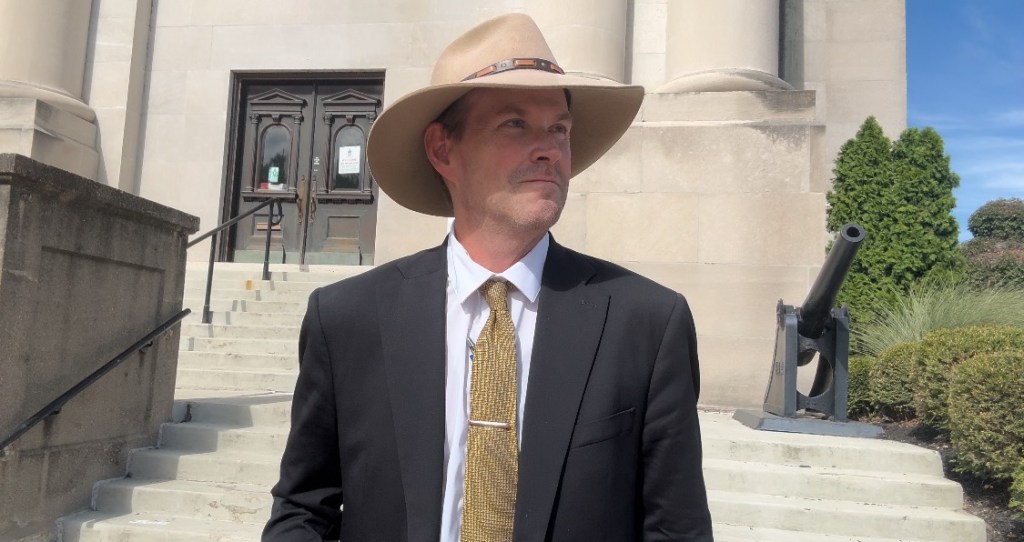
The No Kings Sedition: Its all paid for by those trying to overthrow America

Democrats have been lying low in the shadows, licking their wounds after the last election cycle, and waiting for the perfect moment to strike back with all their usual finagling. They’ve been pounding away with constant pushback on everything from the economy to foreign policy, but the Iranian situation right now—this whole mess with the Strait of Hormuz and the threats of escalation—is where they’re making their big, calculated move. It’s not random; it’s orchestrated. They’ve been taking it on the chin for a while, staying quiet while the country started to feel the momentum of real leadership again, and now they’re emerging with their germs of dissent and their coordinated push because they see an opening. But here’s the thing I keep telling everyone who tunes in: there’s always a counter to their moves, and President Trump is the master of reading the room and delivering it. This Iranian thing couldn’t have come at a better time, even if it looks threatening and bad on the surface. If you’re going to confront it, do it decisively, get it out of the way before summer fully hits, and watch the gas prices snap back under control—which is exactly what’s going to happen. I told everybody weeks ago that the Iranians are not going to be allowed to clog up that vital waterway. It’s just not going to work out the way they ever wanted or planned. Their little game of running speedboats and firing rockets at tankers might make headlines for a day or two, but it’ll be dealt with pretty quickly. In the grand scheme of things, it’s not the insurmountable problem they’re hyping it up to be.

To really understand why this moment feels so pivotal, you have to go back into the background of U.S.-Iran relations, something I’ve unpacked in detail because it’s not just current events—it’s decades of bad policy piling up. The story starts in the 1950s with the CIA-backed coup against Prime Minister Mohammad Mossadegh, which put the Shah back in power and set the stage for resentment that boiled over in the 1979 Islamic Revolution. That revolution wasn’t some organic people’s uprising in the way the left likes to romanticize it; it was a theocratic takeover that replaced a flawed but modernizing monarchy with a brutal mullah regime that has oppressed its own citizens ever since. The embassy hostage crisis, the Iran-Iraq War, where they used human waves and chemical weapons, the tanker wars in the Strait of Hormuz back in the 1980s—including the U.S. Navy’s Operation Earnest Will and the downing of Iran Air Flight 655 by the USS Vincennes—all of that set patterns we’re still living with. Iran has threatened to close the Strait dozens of times over the years because they know it carries about 20 percent of the world’s oil supply. A blockade spikes global prices overnight, which is exactly what we’ve seen in the last few weeks with gas creeping toward five dollars a gallon in some spots before the latest pause kicked in. Trump pulled us out of Obama’s JCPOA nuclear deal in 2018 for good reason—it was a giveaway that funneled cash to the regime while they kept enriching uranium and funding proxies like Hezbollah and the Houthis. His “maximum pressure” campaign starved them of revenue, and now, in 2026, we’re seeing the regime double down because they’re cornered. I believe Trump was counting on the Iranian people themselves to take back their country eventually. They’ve been beaten down by decades of oppression—the morality police, the executions, the economic misery—but recent protests like the 2022 Woman, Life, Freedom movement after Mahsa Amini’s death showed flashes of resistance. Hundreds killed, thousands arrested, yet it fizzled because the regime’s Revolutionary Guard and Basij thugs are a mismatched bunch of enforcers, not a unified military facing a real, organized opposition. The people run around in rubber boats trying to clog up the Strait with rockets and mines, but that’ll be handled fast—not a big problem when you have real naval power and allies who understand the stakes.

Democrats, on the other hand, have always had a soft spot for Iran and other authoritarian governments. They loved the JCPOA because it let them pretend diplomacy was working while the mullahs built their bomb and spread terror. They cozy up to China’s Communist Party, overlook Venezuela’s socialist collapse under Maduro, and cheer whenever a strongman sticks it to the West. It’s all about it for them now—power centralized, control over the masses, the illusion of equity through force. That’s why this rash of protests we’ve been watching—the so-called “No Kings” movement—isn’t just a spontaneous reaction to the Iranian standoff. They attempt to manufacture chaos and shift the narrative back in their direction. And I think it’s a great thing in the long run. All this stuff forces the opposition to show their true colors. Elections, at their core, are negotiations over positions and power. Republicans have historically read the room wrong because so many of us are good Christian people raised to turn the other cheek. We forgive our neighbor even when that neighbor wants to cut our heads off and crucify us on live television. We look for ways to have lunch and find common ground, which is noble but leaves us on the wrong side of hard negotiations. That’s exactly why so many of us gravitated to Trump—he’s not the typical Republican who folds for the sake of decorum. Trump is about wins, plain and simple. He’s Republican in name but results-oriented in action, and that’s why people keep supporting him even through the noise. He gets things done. Just to let everybody know, Trump’s going to be back on the road this summer doing all that good stuff—rallies, appearances, the full campaign energy even though he’s already in office. It’s like he’s running for president all over again because momentum never stops. The best way to start getting everything moving in the right direction when you’re in a fight is to bring your past along—bring Speaker Johnson and the whole unified team, just like he did before. Get everybody together, have some fun, and show the country that government can be energetic and effective again instead of this dour, bureaucratic slog we endured for years.

I would also say to everybody paying attention that disclosure is a smart play here. Releasing more on the UFO/UAP files takes away a huge media headline that the Democrats and their allies have been salivating over. They love that stuff because it feeds into narratives of government secrecy and elite control, something very close to their hearts. Trump could snatch that away from them entirely, and he’s already signaling he’s willing to do a lot of good things in that space. It gives him leeway on the Iranian deal, too—he has to give a little on the political theater side to break something loose that’s been a problem forever. Ultimately, it will bring gas prices down to a great level and solve many downstream issues. There are plenty of speculators out there right now profiting off the manufactured crisis; media reports are spiking prices for the moment, but they’ll get back under control pretty fast once the Strait reopens and the visits from U.S. assets make their point. Let’s talk more about the “No Kings” movement because calling Trump a king or an authoritarian is the height of projection. He certainly isn’t one, but I think all this noise is good because it forces the opposition to reveal who they really are. I’ve seen these movements pop up in England, all over Europe, Washington D.C., and right here at the Ohio Statehouse in Columbus—not far from my home in Middletown. They look the same everywhere: not organic grassroots uprisings driven by free speech or genuine voter frustration. This is a coordinated effort involving roughly 500 organizations—radical liberal, socialist, and even radical Islamic elements—all tied together by the Soros network. George Soros and his son Alex have poured billions—estimates put the Open Society Foundations and related groups at over three billion dollars funneled through these channels—buying influence, printing signs, busing people in, and funding media amplification. If not for the money, a lot of these folks wouldn’t show up at all. They’re franchise Democrats who turn out for a free lunch, a free T-shirt, or a pallet of pre-printed rocks and signs ready to throw. That’s the kind of organization we’re dealing with—hostile to the American experiment, cheerleading from corporate media outlets that pretend it’s all spontaneous outrage against the Trump White House.

In my view, and I’ve said this locally in Ohio and at the federal level, this “No Kings” push is no organic movement. It’s a paid-for infomercial produced by the radical left to try to destroy the United States from within. They used to hide behind other liberal causes—racism narratives, minority crisis issues—but now the mask is off with a bunch of crazy radicals who look and sound like people you wouldn’t want to sit next to on a bus. Those are the faces on TV advocating for the movement, and it’s pushing independents straight into the arms of Republicans. If only the GOP would dare wrap its arms around those voters, it couldn’t be easier. Trump has a clear strategy to steer things back on track, playing the Iran game in a way no previous president has dared. That’s why these problems festered in the background for so long—the left’s weapons of radical Islam, radical Marxism, and communism are being taken away one by one. So, of course, the money flows: three billion dollars into five hundred organizations, protests erupting like clockwork the moment Trump takes a hard line. But here’s the reality check: locally in Ohio, where I live, and certainly at the national level, Democrats have scored a few little pickup victories only when Republicans got asleep at the wheel or too cocky riding the Trump wave without defending turf properly. Some in the party got their hearts out of it because they secretly expected Democrats to retake power and didn’t want the responsibility that comes with winning. It’s hard when you’re in charge—you have no one to complain about except yourself. There’s a fair number of Republicans who want Democrats back in so they can stay in the comfortable role of opposition. This movement gives them an off-ramp from behaving like actual Republicans. But it’s going to blow up in everybody’s face because it’s not organic. It’s a funded operation by radicals who’ve been trying to undermine the country for decades. What they don’t have anymore is the polite illusion. People watching these idiots on TV are saying, “I don’t want that. I don’t want to be associated with that. I can’t vote for that.” It’s pushing the country the other way.

Just look at the contrast: Trump supporters stand in line for eight, twelve, twenty-four hours to get a seat ten rows back at a rally because they’re excited about real change. These protest crowds don’t have that energy. They’ve got franchise lunatics trading time for cash, drugs, or free swag. They’re not high-quality people showing up on camera, and it’s kind of humorous how badly it makes their side look. As far as worrying about it goes, only Republicans who don’t understand how to read the leaves are sweating this. They need more confidence in themselves because the victory is clear if you’re actually listening beyond the nightly news spin. Where do you think all that three billion dollars is coming from, and who’s receiving it? The media will say anything for a few bucks or a free steak dinner, but that money buys influence and it shows in the quality of the foot soldiers—radical losers who look horrible on screen and remind everyday Americans exactly why they voted for Trump in the first place. The most likely consequence as we head into June and July—especially if Trump keeps the pressure on without letting the Democrats steal the narrative—is that gas prices recover rapidly. This isn’t something that lingers for years or even months once the Strait issue is settled. Real victories are there for the taking, and it really comes down to having the courage to stay in power whether some in the party want the responsibility or not. Democrats don’t have much gas left in their tank; it takes three billion dollars just to get their people to show up and look stupid on camera. That’s not a winning position. You might as well be a Republican right now, and that’s how the ball is going to bounce when the dust settles. Don’t worry about it. It’s going to come out just the way logic and history say it will. In the meantime, they’re being exposed as the crazy lunatics they always were, and we know exactly how much they were paid to act that way. Good things come to those who wait, especially those who hate what we’ve picked for representative government and are trying to flatten the tires to push toward the midterms. They’re acting desperate, and desperate doesn’t photograph well. Looking good for Republicans overall.

If you ever want to dig deeper into the philosophy that underpins all this—how to navigate chaos, win negotiations, and build something lasting instead of tearing down—I’d point you toward my book, The Gunfighter’s Guide to Business: A Skeleton Key to Western Civilization. It lays out the mindset that treats life and politics like the Old West: know your terrain, carry the right tools, and don’t apologize for defending what’s yours. Trump embodies a lot of that frontier spirit, which is why the radical left hates it so much. They prefer managed decline and dependency. We prefer wins, clarity, and a government that gets out of the way so people can thrive.

Looking ahead, Trump’s going to keep leveraging this Iran situation for broader gains—getting the Russia-Ukraine conflict out of the headlines where it’s been conveniently ignored, pushing for better negotiating positions on everything from rare earth metals to energy independence. A lot is going on behind the scenes that’s headed toward proper closure, and the Democrats know it. That’s why the protests are ramping up—to try and bring people to their cause. But again, their whole side is paid for. It’s not organic. It’s not the kind of passion that fills arenas or lines up for hours. It’s manufactured, and the country is seeing through it. The bad guys are desperate, and that desperation is their undoing. Republicans need to keep reading the room correctly, stay unified, and remember that we win when we stop turning the other cheek and start delivering results. I’m confident it’s all going to balance out in our favor by the time summer rolls around, and the American people will be reminded once again why they put their trust in leadership that actually fights for them.

Footnotes

1.  Recent reporting on the April 2026 U.S.-Iran ceasefire negotiations and Strait of Hormuz reopening conditional on infrastructure threats; see coverage from Reuters and Al Jazeera on Trump’s deadlines and conditional pause.

2.  Background on U.S.-Iran history drawn from Council on Foreign Relations timelines, including JCPOA withdrawal (2018), maximum pressure campaign, and 2022-2023 Woman, Life, Freedom protests (BBC, Human Rights Watch reports on regime crackdowns).

3.  Trump’s 2026 public schedule and rally-style events referenced in White House releases and conservative outlets, noting continued campaign-style travel.

4.  “No Kings” protest network details, including Indivisible’s Soros/Open Society Foundations grants (~$3M direct) and broader ecosystem of 500+ progressive groups with combined revenues exceeding $3 billion; Fox News investigations and Capital Research Center analyses of funding flows.

5.  Ohio-specific protest activity at Statehouse and local coverage in Columbus Dispatch/Middletown outlets; national patterns documented in New York Post and Washington Examiner reporting on astroturf elements.

Bibliography

•  Council on Foreign Relations. “U.S.-Iran Relations: A Timeline.” CFR.org (updated 2026).

•  Open Society Foundations annual reports and grant databases (public filings via InfluenceWatch/Capital Research Center).

•  Human Rights Watch. “Iran: Crackdown on Woman, Life, Freedom Protests” (2022-2025 updates).

•  Hoffman, Rich. The Gunfighter’s Guide to Business: A Skeleton Key to Western Civilization. Self-published, 2021 (expanded editions available via Overmanwarrior.com).

•  Reuters. “Trump Announces Conditional Ceasefire in Iran Standoff” (April 2026).

•  Fox News. “Soros Network Funds ‘No Kings’ Protests: Inside the $3B Progressive Machine” (2026 investigative series).

•  BBC Persian Service archives on Iranian internal dissent and Strait of Hormuz incidents.

•  U.S. Energy Information Administration. “Strait of Hormuz Oil Transit Chokepoint” (fact sheets, 2026).

•  Additional further reading: George Soros’s Open Society writings for a primary source on his philanthropy philosophy; compare with critiques in David Horowitz’s The Shadow Party (updated editions) and recent think-tank papers from Heritage Foundation on foreign policy leverage strategies.

Rich Hoffman

More about me

Click Here to Protect Yourself with Second Call Defense https://www.secondcalldefense.org/?affiliate=20707
About the Author: Rich Hoffman

Rich Hoffman is an aerospace executive, political strategist, systems thinker, and independent researcher of ancient history, the paranormal, and the Dead Sea Scrolls tradition. His life in high‑stakes manufacturing, high‑level politics, and cross‑functional crisis management gives him a field‑tested understanding of power — both human and unseen.

He has advised candidates, executives, and public leaders, while conducting deep, hands‑on exploration of archaeological and supernatural hotspots across the world.

Hoffman writes with the credibility of a problem-solver, the curiosity of an archaeologist, and the courage of a frontline witness who has gone to very scary places and reported what lurked there. Hoffman has authored books including The Symposium of JusticeThe Gunfighter’s Guide to Business, and Tail of the Dragon, often exploring themes of freedom, individual will, and societal structures through a lens influenced by philosophy (e.g., Nietzschean overman concepts) and current events.
A Secular Nation Doesn’t Work: The Creation Museum is a great place to find a moral compass

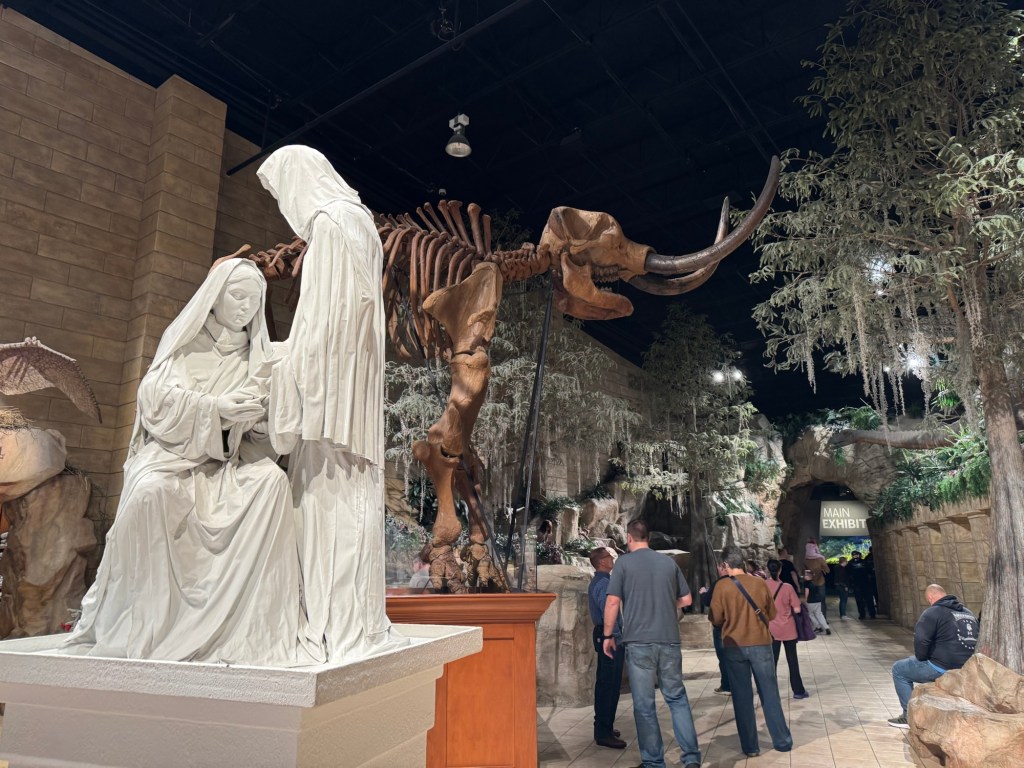
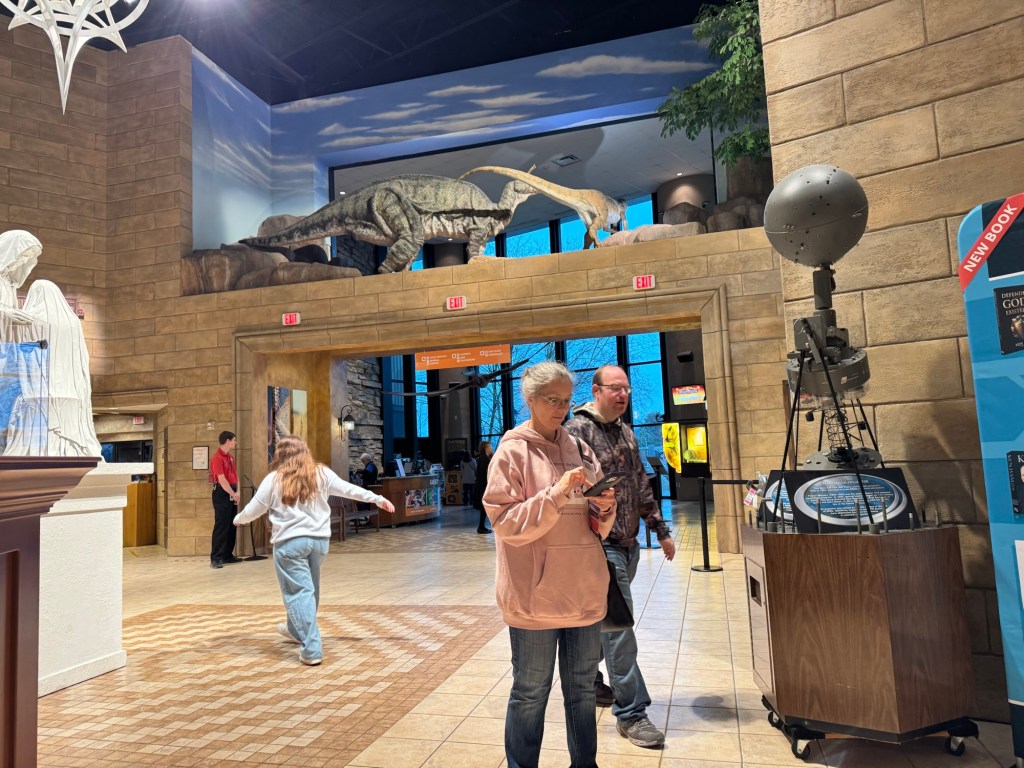
I’ve been thinking a lot about why places like the Creation Museum feel so good, so clarifying, so strangely peaceful in a world that is racing toward noise and confusion. The day after Christmas 2025, my wife and I gave ourselves a simple gift—one day in Northern Kentucky to walk through exhibits dedicated to the Book of Genesis, to consider the first words people used to anchor reality, and to be among people who weren’t embarrassed to say that values matter, that truth exists, that our lives are accountable to more than fashion and force. I’ve been to the Ark Encounter too—the sister site Ken Ham’s team built—and I’ve always admired the sincerity and craftsmanship behind both projects. It’s not that you have to agree with every detail of their interpretation; it’s that the experience reminds you what a society feels like when people share a moral vocabulary and are willing to live by it. That sensation—a shared foundation—has become rare. When you step out of those doors, the contrast is obvious: a secular culture increasingly says there’s no shared foundation at all, and then wonders why the political kitchen is a mess, why trust collapses, why crime rises or governance frays or people feel isolated and angry. The idea that a secular world can function sustainably is attractive in theory and brittle in practice. My own proclamation, tested across business, government, and the day‑to‑day pressures of family life, is that it cannot.

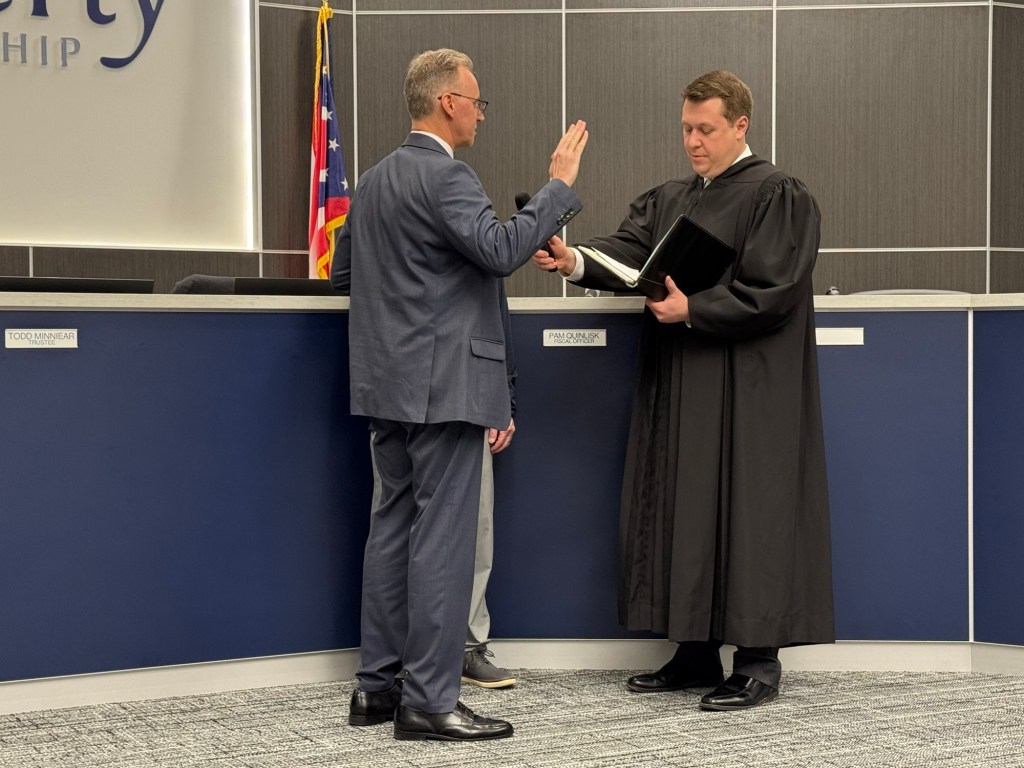
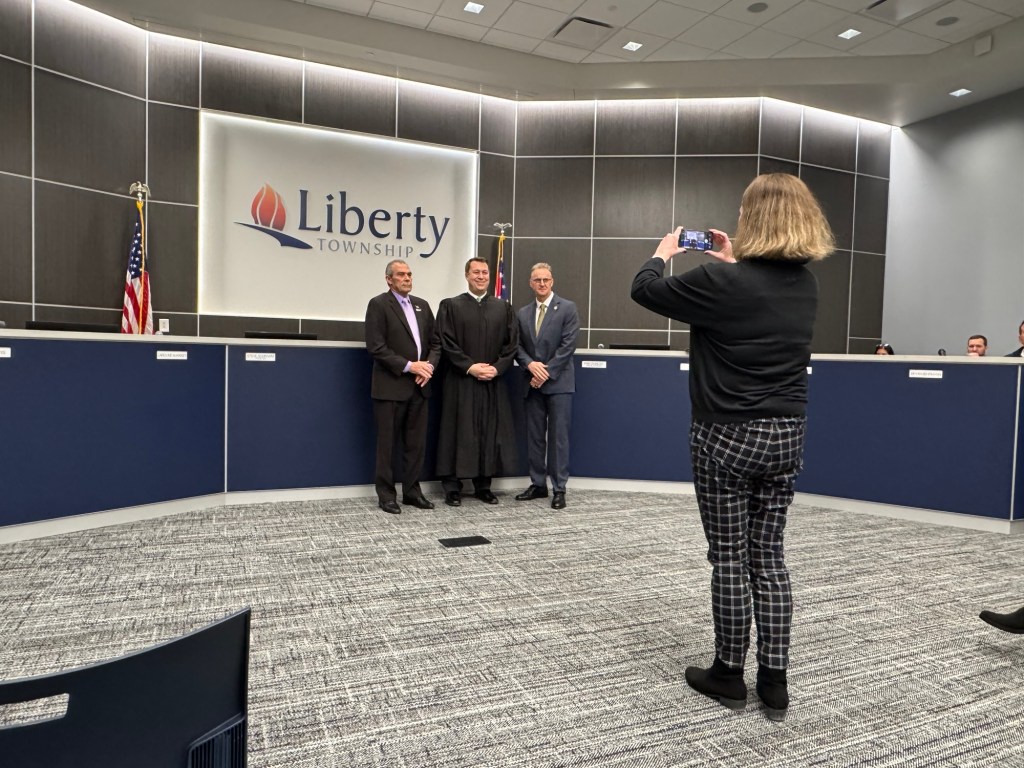
My friend Todd Minniear being sworn in as President of the Liberty Township Trustees on January 6th 2026. Without the hand on a Bible the promises have no meaning, or context

I’ve been open to the debate. I’ve listened to the arguments about separation of church and state, the fear that religious conviction leads to wars of doctrine or oppressive social control. I understand the logic behind wanting neutral ground—some space where the State doesn’t weaponize God and God doesn’t seize the State. Historically, Americans know exactly why the First Amendment begins with religion: they fled countries where the State punished belief or demanded it, and they didn’t want federal power to become a priesthood in uniform.[1] But somewhere in that effort to restrain coercion, we drifted into a different error: confusing neutrality with nihilism. In practice, our public institutions evacuated shared moral content and then expected people to behave, expected businesses to operate, expected courts to arbitrate, expected children to learn, expected citizens to sacrifice—without shared purpose or metaphysical meaning. That hollowness is what I mean by “secularism” here, not a simple legal separation, but a cultural posture that denies any binding moral architecture at the center of public life. When you throw out the Ten Commandments, when you refuse a common oath because you don’t believe it, when you insist that every value is relative, you remove not just symbols but the agreed‑upon citizenship of virtue. You end up legislating tactics instead of truth, and tactics alone cannot build a civilization.[2]

Good government necessitates social agreement on values for law and order to sustain

If you step inside the Creation Museum, you find something that modern administrative life can’t provide: a sense of coherence that connects knowledge to duty. You can disagree with their young‑earth timelines or their carbon‑dating critiques and still appreciate the underlying lesson—a society needs a moral template. That template is about obligations—toward God, toward the truth, toward one another—and those obligations bind us even when convenience suggests otherwise. Emile Durkheim, no evangelical by any stretch, recognized that religion functions sociologically by creating the sacred—a point of collective reverence that stabilizes norms and discourages predatory behavior.[3] Strip that out and the rituals of respect disappear, leaving only private interests vying for position. Robert Putnam showed how civic life atrophies when shared institutions thin out, when we “bowl alone,” when participation and obligation retreat.[4] Business leaders, judges, engineers, inspectors—we all feel it in the daily grind: decision‑making becomes fragile when there is no widely accepted compass. Even the best program plan fails if it lives in a vacuum of meaning.

The Creation Museum in Northern Kentucky, a wonderful place

The counterargument says that religion causes conflict—that secular space is supposed to prevent wars of doctrine by removing faith from public calculation. Historically, yes, religious wars have occurred; human beings fight over anything that anchors identity. But the cure is not to remove anchors; it’s to choose anchors that turn hearts toward self‑control and mercy. The question isn’t “religion or peace,” but “which moral order best disciplines power and offers forgiveness?” The American Founding assumed that virtue was necessary for liberty and that religion was the most practical instructor of virtue—Tocqueville saw that plainly.[5] The First Amendment works not by sterilizing public religion, but by protecting it from state capture and protecting citizens from religious coercion. It assumes, in other words, that religion will thrive freely and will thereby sustain the habits of self‑government. This is not hostility toward faith; it is scaffolding for faith’s free operation across plural communities. Courts have vacillated for decades on how to apply that balance—Engel v. Vitale limited school‑sponsored prayer,[6] then later cases narrowed or reinterpreted the Lemon test’s reach,[7] with Kennedy v. Bremerton recognizing that personal religious expression need not be purged from public employment.[8] The point isn’t to litigate doctrine; it’s to remember that our system was designed to let religion breathe in the civic air, not to suffocate it.

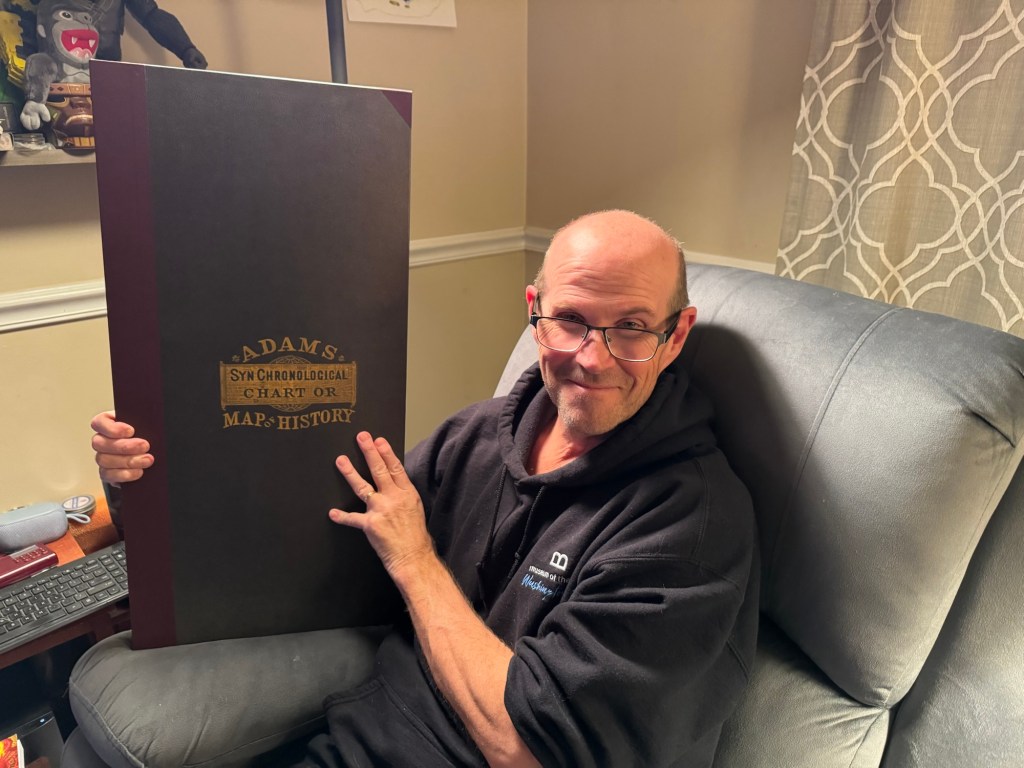
What a great bookstore!

When secularism becomes a comprehensive worldview—a philosophy that reduces moral truth to private taste—notice the pattern. Public assurances about equality and compassion remain in the rhetoric, but the institutional courage to enforce norms collapses. A society without shared moral content has difficulty setting limits on violence or exploitation because it refuses to say why one ought not do a thing beyond preference or procedure. Alasdair MacIntyre described this with unsparing clarity: when virtue theory is abandoned, we inherit a culture of incommensurable moral claims—emotivism—where arguments devolve into expressions of will rather than reason.[9] In business terms, that looks like cultural drift—every meeting is a negotiation of appetites, with no shared first principles to resolve the conflict. In law, it looks like proceduralism without justice. In education, it looks like content stripped of meaning. In media, it looks like outrage cycles fueled by algorithmic attention rather than truth. You can still have sophisticated technology, but you lose wisdom. Charles Taylor’s account of secular modernity admits the trade: the “immanent frame” can stabilize certain freedoms but empties transcendence, and with it, the ability to answer “why.”[10]

A very unique place

Walk through the Creation Museum and you feel the opposite effect. The exhibits are meant to argue for a particular cosmology, yes, but the deeper experience is social: alignment. People sing the same hymns, they reflect on the same stories, they accept that authority is not just a bureaucratic title but a moral office answerable to God. That shared consent to moral order produces peace—even where debate exists on details, the atmosphere is oriented toward reverence. It’s the same sensation one feels inside a good church on a Sunday morning—a relief that the room is not staging a competition of egos but rehearsing charity and courage. Jonathan Haidt’s work makes the point from a different angle: humans bind and blind; moral communities bind us together with shared sacred values and inevitably blind us to some counter‑claims, but the binding is essential for cooperation.[11] The sober question is whether our binding story teaches love of neighbor and humility. In the biblical tradition, it does, and that matters for everything from family life to factory floors.

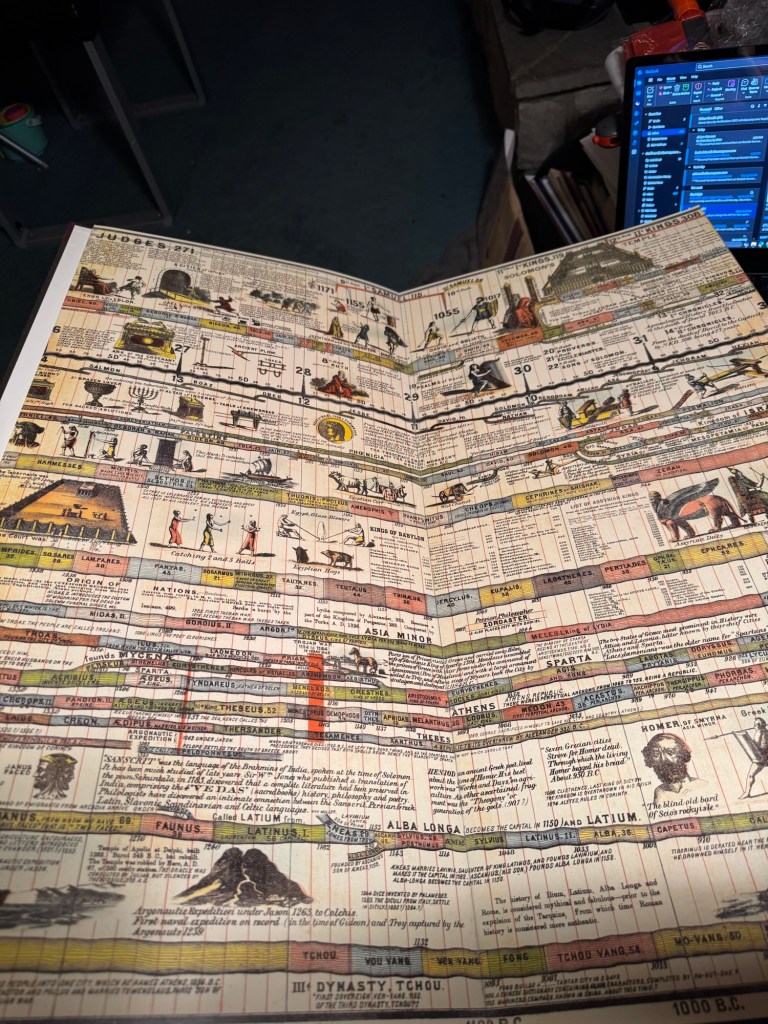
Ambitious displays within the context of history

You can see why, after a day in that environment, a trip to the Smithsonian sometimes feels lukewarm—not because science is bad, but because the presentations often employ a deliberate neutrality that subtracts moral consequence from the narrative. It’s science as a series of facts rather than science interrogated by responsibility. The Museum of the Bible, by contrast, radiates a sense that the literary achievement of Scripture is nut and bolt for civilization—whatever the denominational debates over translation, the civilizational impact is beyond question. A museum can either aim at wonder or at relativism; sometimes the same building holds both. The question is whether our public culture still knows how to talk about goodness as a sturdy thing, not an opinion.

This debate isn’t abstract for me. I interact with government regularly. I see how bills get written, how media narratives shape legislative appetite, how election incentives distort courage. A secular posture—where conviction is suspect and truth is negotiable—depresses the willingness to do hard, right things. Engineering knows this in material terms: you can cheat a tolerance, but the airframe will remember. Law knows this: you can fudge a rule, but justice will remember. Business knows this: you can delay a difficult choice, but the market will remember. A society without a shared moral anchor will buy time with procedures and lose the soul of performance. And when it loses that soul, it becomes easier for external enemies to fracture it—from propaganda to immigration debates to economic sabotage—because the internal immune system of virtue has been suppressed in the name of neutrality.[12]

But neutrality was never the goal; fairness was. The promise of America rests on equal protection and free conscience, not the abolition of moral language. The founders did not imagine a naked public square—they imagined a modestly clothed one, where citizens bring convictions without state compulsion.[13] When modern elites invoke “separation of church and state,” they often mean “banish religious reasoning from public institutions.” Jefferson’s letter to the Danbury Baptists used the metaphor to reassure a minority that the federal government wouldn’t intrude on their worship, not to exile religion from civic life.[14] Over time, the metaphor grew into an ideology that sees piety as dangerous. That suspicion coexists uneasily with social data: religious participation correlates with charitable giving, volunteering, stable families, and lower crime,[15] and it builds social capital that secular substitutes rarely match.[16] You can’t brute‑force these fruits with policy. They are cultural. They require a story of meaning people choose to live by.

Are there religious abuses? Yes. Are there bad churches? Yes. Are there weaponized doctrines? Yes. So there are bad banks, bad courts, bad schools, bad newspapers, bad laboratories. Human nature will corrupt anything it touches. The correction, then, is not to evict religion from the public ecosystem, but to purify it—reform it—by calling it back to its own standards. In Christianity, those standards include the fruit of the Spirit: love, joy, peace, patience, kindness, goodness, faithfulness, gentleness, self‑control. If a religious institution doesn’t cultivate those, it earns reform or decline. But the existence of failure does not argue for the abolition of the only widely available language strong enough to restrain the worst instincts of power. A secular philosophy often proposes procedural checks; a moral tradition demands virtue. The former can slow harm; the latter can prevent it at the root.

Look at all those homeschool options!

So we went to the Creation Museum to breathe values—to be among people who were not ashamed to say that goodness exists, that truth is real, that beauty is objective, and that society goes to pieces when we pretend otherwise. It isn’t about forcing belief; it’s about remembering that belief orders life and that the ordering is not optional for civilization. If you want confirmation, you can test museums against one another. Visit a secular facility where narrative design deliberately refuses moral conclusions, and then visit the Museum of the Bible. Watch how people respond. One experience will feel informative; the other will feel formative. You might debate manuscript integrity, translation variance, canon history—the intellectual work is welcome—but you will also feel the social warmth that comes when a room of people agree that moral order is not a negotiable commodity. That warmth is not a sentimental convenience; it is a precondition for honest politics and high‑trust business.

I know some will reply that secular frameworks enable pluralism—that by removing religion from public arbitration, we avoid endless theological lawsuits. That argument is respectable and has achieved good in limiting specific harms. But our present secularism is not a modest procedural boundary; it is an anthropological claim that refuses to name the good beyond private choice. That is untenable. Human beings are teleological—they need ends, purposes—and a society that won’t speak honestly about ends will end up obsessing over means. We’ll set up compliance structures, not justice; risk matrices, not courage; brand management, not truth. When a nation forgets why it exists—that rights are not granted by the State but secured by it,[17] that duties are owed to each other because we are made in God’s image—it becomes easy to rearrange institutions against the very people they were meant to serve. The vacuum draws in other ideologies, often more aggressive and less merciful, that prefer domination to persuasion. And because secular public discourse has weakened moral confidence, the vacuum welcomes the worst guests.

There are lots of Dinosaurs, it’s Jurassic Park meets the Bible

The fix is not complicated in theory, even if it’s demanding in practice. Recover the idea that public life depends on private virtue, and private virtue depends on a transcendent standard. Encourage religion without establishing it. Protect conscience while insisting that our shared moral language is not optional. Teach children that some acts are wrong not because the State says so today, but because they violate what the State is supposed to honor every day. Invite museums, schools, businesses, media, and the courts to acknowledge that a society is healthiest when people agree on basic moral commitments—truthfulness, fidelity, stewardship, courage, mercy—and that those commitments are not simply personal preferences. If we do this, pluralism becomes livable because disagreement happens within a common moral grammar.

People sometimes ask me, after a day like the one we had at the Creation Museum, whether we are closing ourselves off from “real” science or “real” politics. I answer that love of God and love of truth are the opposite of anti‑science or anti‑politics. A moral universe makes experimentation meaningful; it holds scientists to honesty precisely because results matter. A moral universe keeps politics from devolving into pure contest; it holds legislators to integrity because laws shape human flourishing. The secular experiment tried to sustain those virtues without the metaphysical oxygen that created them. For a time, it worked—habits carried over from religious generations. But as the generational memory fades, the tank runs empty. You can feel it everywhere—from the local council to the federal bureaucracy, from boardrooms to classrooms. We are rationing virtues we stopped cultivating.

If you want to remember how to cultivate them, walk back into a place that takes values seriously. Listen to hymns; read Genesis; argue with carbon dating; reconcile faith and physics where you can and note your disagreements where you must. But don’t pretend that the disagreement abolishes our need for a shared moral order. It does not. The debate itself presupposes a standard for honesty and charity. In that sense, the Creation Museum is useful not merely for what it asserts about origins but for what it models about the social effect of belief. People there feel obligated to treat one another well, and that obligation is rooted in a story larger than themselves. That, more than any specific exhibit caption, is what our public square now lacks. Recover it, and schools will regain purpose, courts will regain moral confidence, businesses will regain cultural backbone, and governance will regain courage.

One of my favorite things from the Creation Museum

We came home from Northern Kentucky grateful—not only for the content we saw but for the reminder that peace is not the absence of conviction. Peace is the fruit of rightly ordered conviction. A secular approach, as presently practiced, cannot deliver that fruit because it has uprooted the tree. It promised fairness by abolishing shared morality and has left us with procedures that cannot prevent chaos. Religion—not mandated by the State, not policed as a tool of power, but lived freely by citizens—can. It is not the only ingredient, but it is an irreplaceable one. To build a healthy society, you must name what is good and teach people to love it. The Creation Museum gives you a taste of that lesson. The question is whether we will carry it back into the public square with courage.

Here’s why!

I said to my family, and I’ll say here: you don’t have to be cruel to those who disagree, or hostile to those of other faiths, or blind to the complexities of pluralism. You simply have to be honest that a civilization cannot survive without shared moral ground. You must recognize that a naked public square isn’t neutral; it’s vulnerable. And you must be willing to rebuild a culture that honors virtue openly, without apology. If you want to see the difference, spend a day in a place that dares to say values are real. Then ask yourself which world you want your children to inherit—the one that believes in goodness and demands it, or the one that refuses to name it and then watches, powerless, as the center falls apart.

Footnotes

[1] First Amendment to the U.S. Constitution; see also James Madison, “Memorial and Remonstrance Against Religious Assessments” (1785).

[2] See the Ten Commandments’ historical role in Anglo‑American law: John Witte Jr., Religion and the American Constitutional Experiment (Westview, 2000).

[3] Émile Durkheim, The Elementary Forms of Religious Life (1912), esp. on collective effervescence and social cohesion.

[4] Robert D. Putnam, Bowling Alone: The Collapse and Revival of American Community (Simon & Schuster, 2000); Robert D. Putnam and David E. Campbell, American Grace: How Religion Divides and Unites Us (Simon & Schuster, 2010).

[5] Alexis de Tocqueville, Democracy in America (1835–1840), esp. Vol. I on the role of religion in sustaining democratic habits.

[6] Engel v. Vitale, 370 U.S. 421 (1962).

[7] Lemon v. Kurtzman, 403 U.S. 602 (1971); for the Court’s later narrowing and critiques of the Lemon test, see American Legion v. American Humanist Association, 588 U.S. ___ (2019).

[8] Kennedy v. Bremerton School District, 597 U.S. ___ (2022), protecting personal prayer as private speech.

[9] Alasdair MacIntyre, After Virtue (Notre Dame, 1981).

[10] Charles Taylor, A Secular Age (Harvard University Press, 2007).

[11] Jonathan Haidt, The Righteous Mind: Why Good People Are Divided by Politics and Religion (Pantheon, 2012).

[12] On moral capital and social resilience, see Yuval Levin, The Fractured Republic (Basic Books, 2016); also Peter Berger, The Sacred Canopy (1967).

[13] See George Washington’s Farewell Address (1796) on religion and morality as “indispensable supports.”

[14] Thomas Jefferson’s letter to the Danbury Baptist Association (January 1, 1802), articulating the “wall of separation” metaphor.

[15] Pew Research Center, “Religion and Public Life” surveys; see also Arthur C. Brooks, Who Really Cares (Basic Books, 2006) on charitable giving and religiosity.

[16] Putnam and Campbell, American Grace; see also David E. Campbell, Why We Vote: How Schools and Communities Shape Our Civic Life (Princeton, 2008).

[17] Declaration of Independence (1776): rights are “endowed by their Creator,” governments are instituted to secure those rights.

Bibliography

Berger, Peter. The Sacred Canopy: Elements of a Sociological Theory of Religion. Anchor, 1967.

Brooks, Arthur C. Who Really Cares: The Surprising Truth About Compassionate Conservatism. Basic Books, 2006.

Campbell, David E. Why We Vote: How Schools and Communities Shape Our Civic Life. Princeton University Press, 2008.

Durkheim, Émile. The Elementary Forms of Religious Life. 1912.

Haidt, Jonathan. The Righteous Mind: Why Good People Are Divided by Politics and Religion. Pantheon, 2012.

Levin, Yuval. The Fractured Republic: Renewing America’s Social Contract in the Age of Individualism. Basic Books, 2016.

MacIntyre, Alasdair. After Virtue. University of Notre Dame Press, 1981.

Madison, James. “Memorial and Remonstrance Against Religious Assessments.” 1785.

Pew Research Center. Various reports on religion, social trust, and civic engagement.

Putnam, Robert D. Bowling Alone: The Collapse and Revival of American Community. Simon & Schuster, 2000.

Putnam, Robert D., and David E. Campbell. American Grace: How Religion Divides and Unites Us. Simon & Schuster, 2010.

Taylor, Charles. A Secular Age. Harvard University Press, 2007.

Tocqueville, Alexis de. Democracy in America. 1835–1840.

Washington, George. Farewell Address. 1796.

Witte Jr., John. Religion and the American Constitutional Experiment. Westview Press, 2000.

U.S. Supreme Court decisions: Engel v. Vitale (1962), Lemon v. Kurtzman (1971), American Legion v. American Humanist Association (2019), Kennedy v. Bremerton School District (2022).

Declaration of Independence (1776); U.S. Constitution (First Amendment).

Rich Hoffman

Click Here to Protect Yourself with Second Call Defense https://www.secondcalldefense.org/?affiliate=20707

There Will Never Be Peace with Hamas: Releasing hostages that should have never been captured in the first place

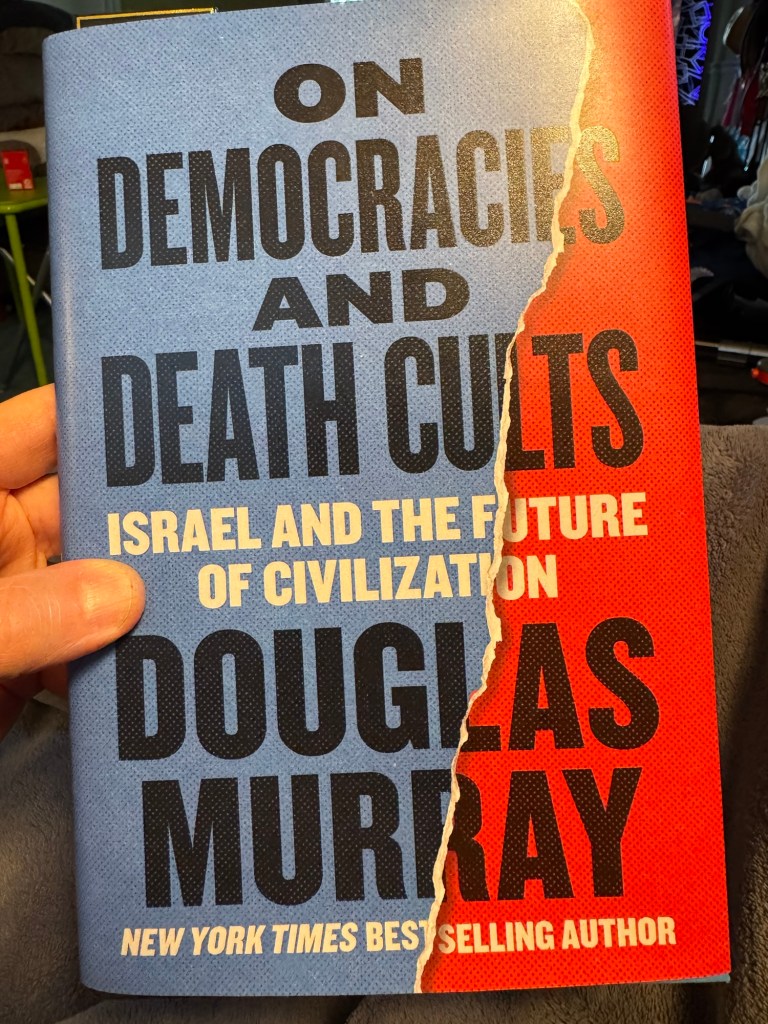
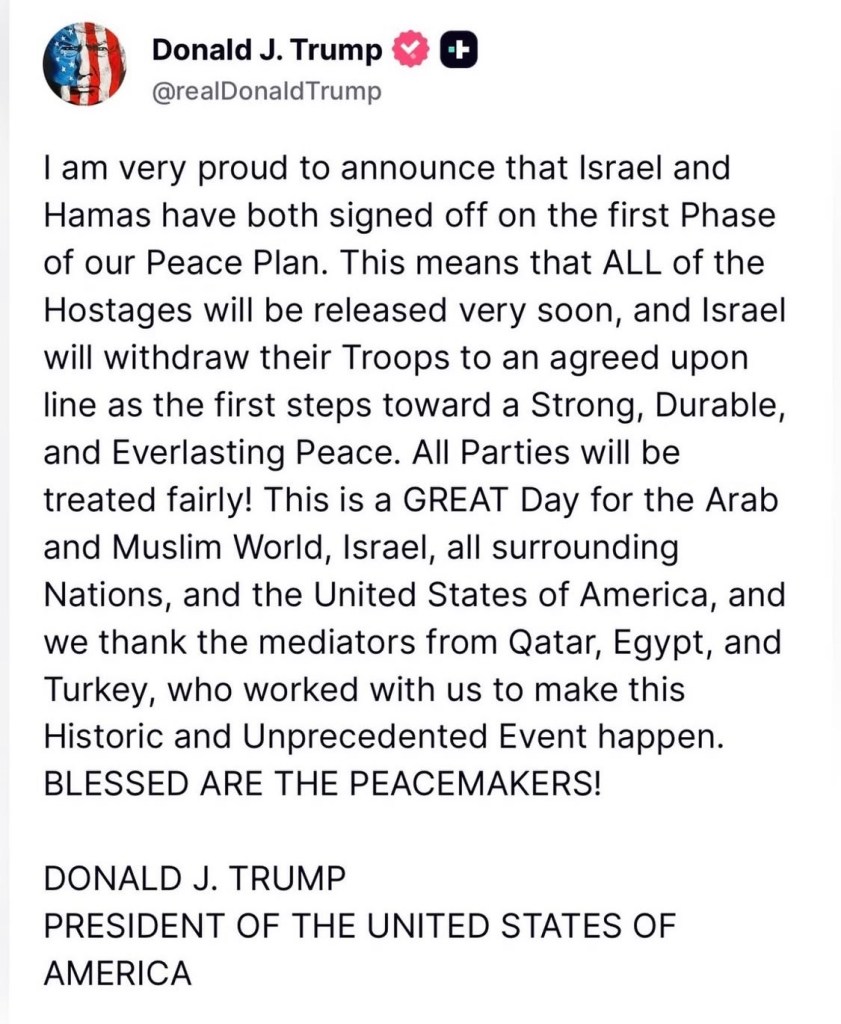
After Trump posted support for Douglas Murray’s book, On Democracies and Death Cults: Israel and the Future of Civilization, I bought it quickly and read it because I wanted to know what Trump’s position on these hostage negotiations was with Hamas.  There are 48 total, with only 20 still alive, but none of them are in good shape.  Trump was wise to point to that particular book as an example of his policy on the issue, because it can be confusing.  But here’s the thing: it’s nice to do everything you can to save those poor people who have been hostages to Hamas.  And to return those bodies to their families.  But the solution is a deep one that I think will require much worse than Israel wants to do to all these Palestinian neighbors.  There is no way to achieve peace, and a two-state solution will never be realized.  One side will have to eliminate the other, and that will be the end of it.  That is the only way at this point.  The foundations of the religions at play are meant to provoke each other into conflict, and this is serving a greater evil that is far at work beyond normal sentiment.  There is a real lust for the death of the people involved that looms in the background.  And just for the record, when people ask me about AI and if I use it.  The answer is no, there is no AI program in the world, and I don’t think there ever will be, that can write the way I do.  It can attempt to copy my style, but it can’t think in the way I approach writing my articles.  AI could not write this article from scratch because it would require it to exceed human capacity to do so. To answer the question, no, I don’t use AI.  I do it the old-fashioned way because that’s the only way it works. 

I say all that because I think there is only one solution, especially after you read Murray’s book.  I’m not particularly impressed with Murray as a person; he is way too progressive for me and way too accepting of drug use.  There was a lot of drug use going on at that Nova dance party in southern Israel when Hamas ruthlessly attacked them over their Gaza Strip war.  Gaza is one of those positions where Israel tried to play nice and let the Palestinians live in some co-existence.  However, the terrorist mindset in the region simply cannot and won’t do it.  And they never will.  The minds at play are poisoned with hate, and we have to deal with that before we do anything, which is a radical leftist issue that is global.  It plays out beyond the façade of religion in the Middle East, as a validation between indigenous people and their territorial captors, as is the issue over the creation of Israel to begin with.  The primary assumption is that the Jewish people should not exist.  And the creation of Western Civilization behind biblical history should never have happened.  I know a lot more about this issue because I am very interested in the archaeology of the region and the politics on dig sites. At the most fundamental level, the situation is irreparable.  Islam is determined never to admit that there was ever a First Temple period, and they work really hard to make sure that science can never find anything from that period, which predates Islam by almost 2000 years.  There is a significant amount of historical revisionism occurring to validate their current political stance, which is unacceptable. 

Israel itself is way too progressive; the drug use at that festival was not appropriate for the young people who were slaughtered for no reason.  And the way Bibi Netanyahu has been untrustworthy as a leader of Israeli politics, claiming power, reveals how fractured the government really is at the highest levels.  The solution to it all is a much more conservative government and people far less inclined to liberal ideas.  The raids into border towns like Nir Oz, which had Hamas raiders going door to door and ripping out people from their homes and killing them ruthlessly, would not have happened if Israel had more guns in the hands of private citizens.  To answer the question about why such a thing as this doesn’t happen in the United States, it is because of the mass gun ownership that we have.  The same terrorists, using different masks, attack, and they kill ruthlessly and often.  Consider the recent situation involving Charlie Kirk.  It’s the same kind of leftist evil that is corrupting so many young people; there isn’t much difference between Charlie Kirk’s killer and the young people of Hamas who ruthlessly killed so many at the music festival and raided the homes of innocent people at Nir Oz.  But the incident cannot be widespread in America because every home is so well armed with personal firearms.  Terrorist elements would love to go door to door, raping and killing people in the suburbs of America.  However, they can’t because people can retaliate if the government fails them.  And in Israel, the government failed the people.  They should have known an attack was coming.  It took them too long to respond.  And it all could have been solved with wider gun ownership.  So Israel and its way-too-democratic government are too liberal to start with, which has caused them many of the problems they do have.  Without the United States, Israel would not exist, and everyone knows it.

The solution to the problem is not at the level of government.  The United States can’t get drawn into fighting Israel’s battles for it.  If we are going to say Israel should exist because God wants it to and we want to serve God, then let’s get serious.  Send in private contractors to wipe out Hamas wherever they are, pay them $100k per head, and hunt them down like dogs.  The solution to the violence is a lot more violence by private citizens.  I would volunteer for that.  I’d be happy to go and be a private contractor by going door to door where Hamas lives in Gaza, and other places, and just getting rid of them.  Forget about the armies, those are too structured.  Just take the violence to the enemy with profit-minded contractors, and beat the political left with their own game of terror, and stop playing nice.  I think it’s commendable that Trump is trying to secure the release of those hostages.  It’s a reasonable effort to try to make peace.  But, to really solve the problem, Hamas has to be hunted down and destroyed where they sleep.  That is the only way.  All the Hezbollah activity in the region, and the funding support that comes from Qatar and Iran, are just too deep.  When books like Mein Kampf and The Protocols of the Elders of Zion are as popularly sold in book stores in that region as they are, there is a much deeper evil at work for any logical negotiations.  And that evil wants the blood of humans for its personal consumption.  The only way to deal with it is to flood it with the blood of its own supporters.  Not the innocent.  And that is the only way.  I’m happy Trump is willing to try.  But the only solution is a lot of blood from the bad guys.  And the best definition of good in all human history has been defined by the Holy Bible.  And that’s the foundation of the entire fight.  You can’t make peace with that evil.  It has to be destroyed, and nothing else.

Rich Hoffman

Click Here to Protect Yourself with Second Call Defense https://www.secondcalldefense.org/?affiliate=20707

Beat the Hell Out of Them: Crushing the socialist protestors at the Roebling Bridge in Cincinnati

As I said, the ICE agents who had rocks thrown at them in California, detaining illegal aliens from that pot farm, should have shot them.  They had every right to do so.  So I was thrilled to see that the Covington, Kentucky police physically bloodied a bunch of stringy-haired protestors as they tried to close the Roebling Suspension Bridge over a protest of Ayman Soliman, the former Cincinnati Children’s Hospital chaplain, detained by ICE on July 9th, 2025.  For some ridiculous reason, someone has told these loser socialists that shutting down highways and bridges was a thing they could do to express free speech.  It is not.  And certainly not in my town. I use that bridge all the time, and it should not be closed down by a bunch of protestors cheering on illegal activity.  I have no tolerance for it.  We hire law enforcement to enforce laws.  And when the protestors dug in and started getting pushy, the Covington Police beat the hell out of those protestors and arrested them like the scrappy losers that they are.  It’s one thing to see these things happening in some far away place like California, where their politics has fallen off the edge of the earth with liberalism.  It’s quite another to see something like that happen in the heartland city of Cincinnati, not in my town.  I want to see our highways, bridges, and sidewalks open at all costs, despite the impediments of protestors.  They do not have the right to shut down anything in protest, and it’s about time they are taught a lesson about impeding traffic.  When it comes to using violence to maintain law and order, I’m 100% for it.  As the videos of this violence at the bridge went viral, I was very proud of the Covington, Kentucky, police department. 

The protestors crossed the line when they tried to stop a black SUV driven by an out-of-town tourist, as the insurgents were banging on the hood and vandalizing the vehicle as it attempted to push through the crowd.  Police issued warnings and tried to be as kind as possible, but they ended up arresting 15 of the 100 or so protesters at the site, including two CityBeat journalists, Madeline Fening and Lucas Griffith.  The charges include felony rioting, unlawful assembly, failure to disperse, obstructing a highway, criminal mischief, disorderly conduct, and resisting arrest.  The Cincinnati and Northern Kentucky chapter of the Democratic Socialists of America claimed that the police “violently broke up” the protest, alleging some of the arrestees were beaten and required medical treatment.  An attorney for the miscreants, Benjamin Pugh, argued that the police escalated the situation and did not give sufficient time to disperse.  So that is the cast of characters involved, and I have no sympathy for the CityBeat journalists.  As I have said about them for many decades, they exist to breed these kinds of losers in our youth culture, so they are as guilty of why those protestors thought they could get away with this kind of thing in the first place, as anybody.  There’s plenty of bad to go around, and it’s good that the Covington Police did not allow these individuals to embarrass our city of Greater Cincinnati in front of the nation.  The message we want to send to all these socialist and communist sympathizers is zero tolerance for their view of the world.  That’s where we are these days, as I have been saying for a long time.  These aren’t just Democrats with differing political views.  These are people who want to overthrow our society, which is why they are upset at the ICE deportations, because all those illegal immigrants are part of their strategy to destroy our law and order society.

However, here is a statement for attorneys like Mr. Pugh, who involved himself in this case: the public’s right to free egress exceeds the right of one individual to express their free speech.  People can say and hold whatever opinion they want about anything.  But they don’t have the right to force someone else to have that opinion.  And stopping traffic is an expression of a free speech opinion by force.  The protesters are saying, ‘Join me in my opinion; otherwise, I’m not going to let you use this bridge or travel down this highway.’  Time is an essential thing, and people in a free society cannot have others impose restrictions on their movement to coerce their opinions politically.  The protesters could have written an article, or spoken on YouTube or TikTok about the deportation of the Egyptian Ayman Soliman.  However, they did not have the right to block traffic to get attention or put their hands on the car of someone trying to cross the bridge.  This Marxist notion of damaging private property to communicate political opinions just isn’t going to fly.  We are a private property country.  A mob of losers does not get to override every principle of personal freedom that we have in our society, and one of the fundamental rights that we have is the right to egress.  The right to move around unimpeded and the freedom to enjoy our lives.  That’s why the bridge exists, so that people can travel from one place to another.  That’s why the roads exist.  A protester does not have the right to take that freedom away from people to force their opinions on an issue, due to having no other option but violence to get their point across. 

Once the protestors made a move to close the road, the Convington Police had a right and obligation to remove them and restore that freedom of egress.  There is no group sentiment, such as the Ignite Peace Cincy group, that has the right to close down any roads or even make someone walk around them on a sidewalk.  Any imposition on the personal freedoms of anybody warrants a violent removal of that impediment.  There is no right to Free Speech, which means people who don’t share those opinions have to be inconvenienced by any method.  People ultimately have a choice, and if that choice is removed from them, including the option to listen to socialist protestors or not, or to read that socialist social magazine, CityBeat, or not, the frustrated advocates of a political position don’t get to threaten free people and their private property in any way at all.  Especially trying to stop them from crossing a bridge and vandalizing their property, as if the group mob decided what was valuable socially, or what was acceptable.  And in this case, Ayman Soliman might have been a nice guy who fled persecution in his homeland in 2014 for his work as a freelance journalist covering the Arab Spring.  He was granted asylum in 2018, but that was revoked in June of 2025, leading to his arrest by ICE on July 9th.  He was a Muslim chaplain at Cincinnati Children’s and a board member at the Clifton Mosque, so a lot is happening with him that aligns with the profile of the Democrat Party and the way they want to shape our country politically.  But when people don’t want to hear what they have to say, they don’t get to take away choice from people, so that they do.  Any attempt to do that warrants violence against the protestors attempting it.   And no compassion for individual circumstances justifies anything done at the Roebling bridge, other than the police shutting it down and arresting with violence the perpetrators.  And I would have fully supported much more violence.  Because when I want to use that bridge, which happens often, I don’t want stringy-haired hippie socialists blocking the way.   Get them off the road, by any means necessary.

Rich Hoffman

Click Here to Protect Yourself with Second Call Defense https://www.secondcalldefense.org/?affiliate=20707

What’s the Difference Between Islam and Mormons: The Book of Mormon Evidence

Considering that we just fought a war over the very topic of Islam, we have to discuss that an absurdity is at the core of all social discourse.  What’s the big difference between Islam and the Bible among the major religions of the world?  The Bible was written by many people over a long period and is corroborated by other documents, such as the Dead Sea Scrolls, to validate that the authors were more than fanciful fiction writers.  On the other hand, the Quran was revealed to Muhammad through the angel Gabriel over 23 years.  So to believe the Quran, we have to accept the premise of its creation and trust that Muhammad wasn’t just another snake oil selling scam artist looking for attention in the world by creating another religion.  In 1823, at the age of 14, Joseph Smith was visited by an angel named Moroni, who revealed the location of some golden plates buried near his home in New York State, near the Finger Lakes.  Then, using Urim and Thummim (of which the nature is unknown) and other seer stones, Smith translated the plates into the Book of Mormon in 1830.  Both of those major religions were founded by individuals who claimed to have been visited by an angel, and we are expected to accept their word completely and trust that what they imparted is the truth, the whole truth, and nothing but the truth.  We are not supposed to think that the recipients of this information might be con artists looking for attention, or that they weren’t crazy people in their own right.  However, they were chosen by God to convey information to the people of Earth.  Strangely, the same people would point to the religion of Islam and say that we can’t question anything about it, while they would say that the Mormon religion was founded under the premise of a con artist trying to rob Native American people from their inheritance of domestic tranquility, by the Christian rantings of immigrant raiders. 

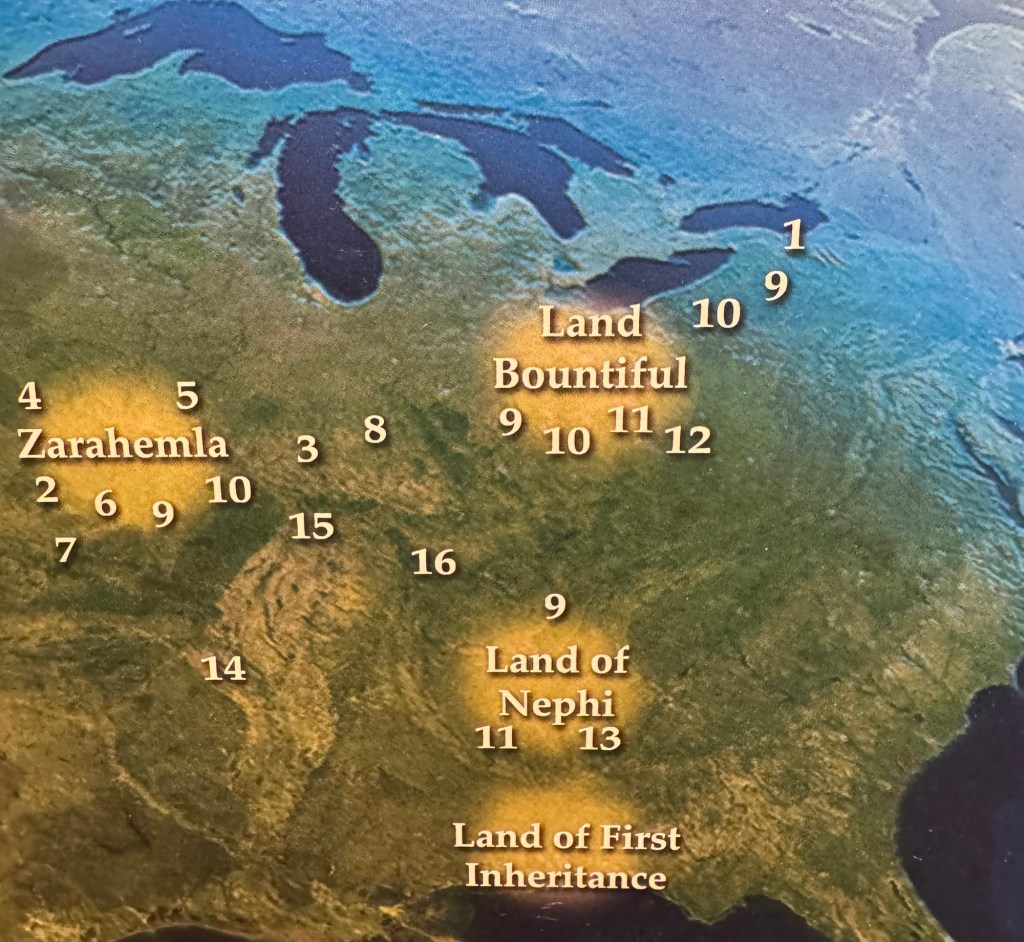
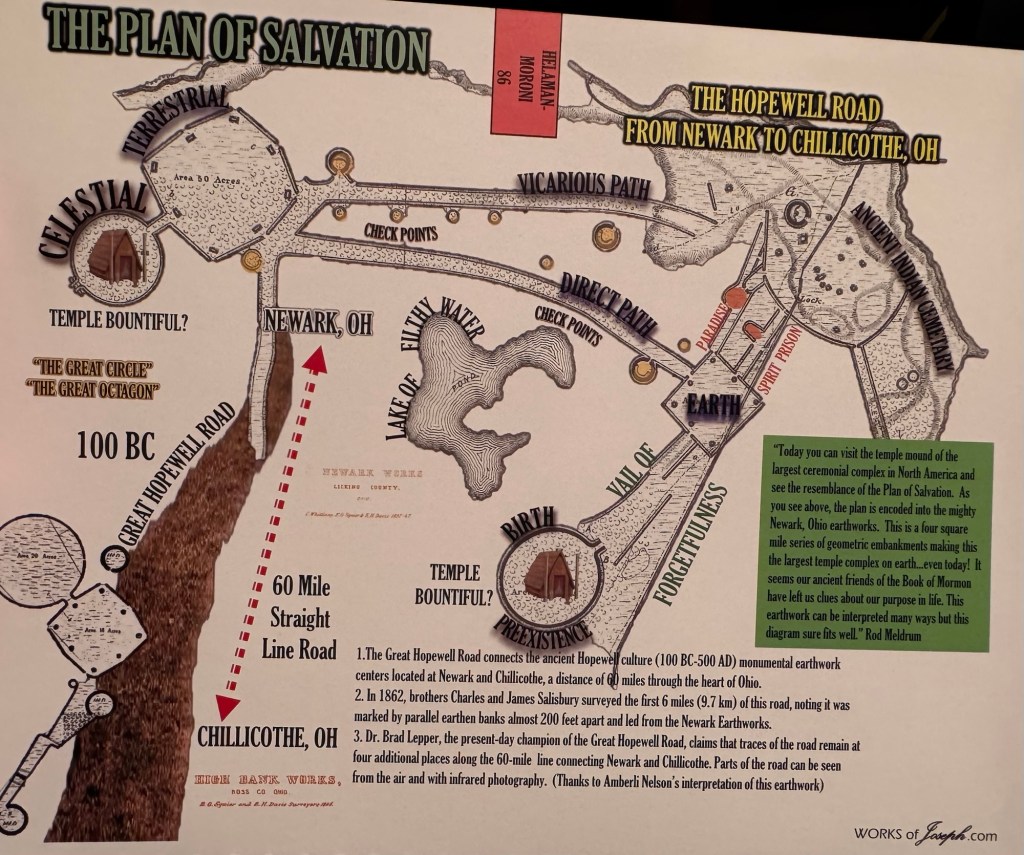
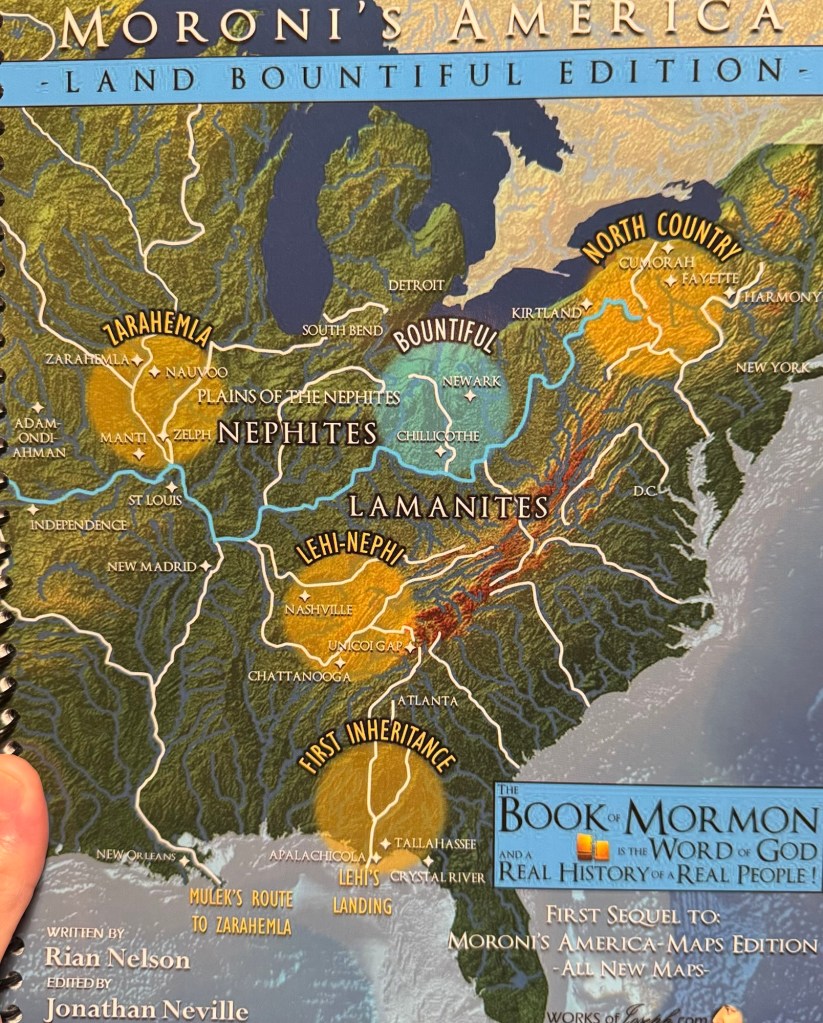
I have thought that the most logical explanation for the Mormons was that Joseph Smith was a homesick immigrant into America wanting to continue the Bible’s influence into the New World, so they created stories to expand the Biblical narrative, which involves a couple of different migrations from the Holy Land to the American continent taking place many thousands of years ago.  One of the most significant migrations occurred when the prophet Lehi, guided by God, fled Jerusalem around 600 BCE, eventually landing in the Americas, specifically in the area now known as Florida, just to the west of modern-day Tallahassee.  And from there, they formed two tribes, the Nephites and the Lamanites.  Primarily, the Nephites settled in the area of modern-day Ohio, and their presence is evident in the Adena Indians and Hopewell people, as well as in their mound-building cultures, which featured advanced mathematical concepts.  When I first read the Book of Mormon many years ago, I thought of the area they were talking about as being in Central America and even in the Gulf of America when the water levels were lower.  But it’s a fascinating book that I thought could have been the product of a fantastic story of adventure and continued discovery by a people hungry for more Bible stories, in a world that didn’t have much else going on in 1830. However, there has been some excellent research, which I find particularly interesting, especially from a society that seeks to validate a religion by uncovering compelling evidence of its existence.  The more you learn about the mound-building cultures, the more valid the origin story of the Mormon religion reveals itself.  The people at Book of Mormon Evidence.org have a wealth of fascinating material that, according to them, provides evidence of the Mormon migration into North America as a tribe of Israel.  And once here, they mixed with people who were ancient descendants of Atlantis and the Pacific island of Mu, as well as other places. 

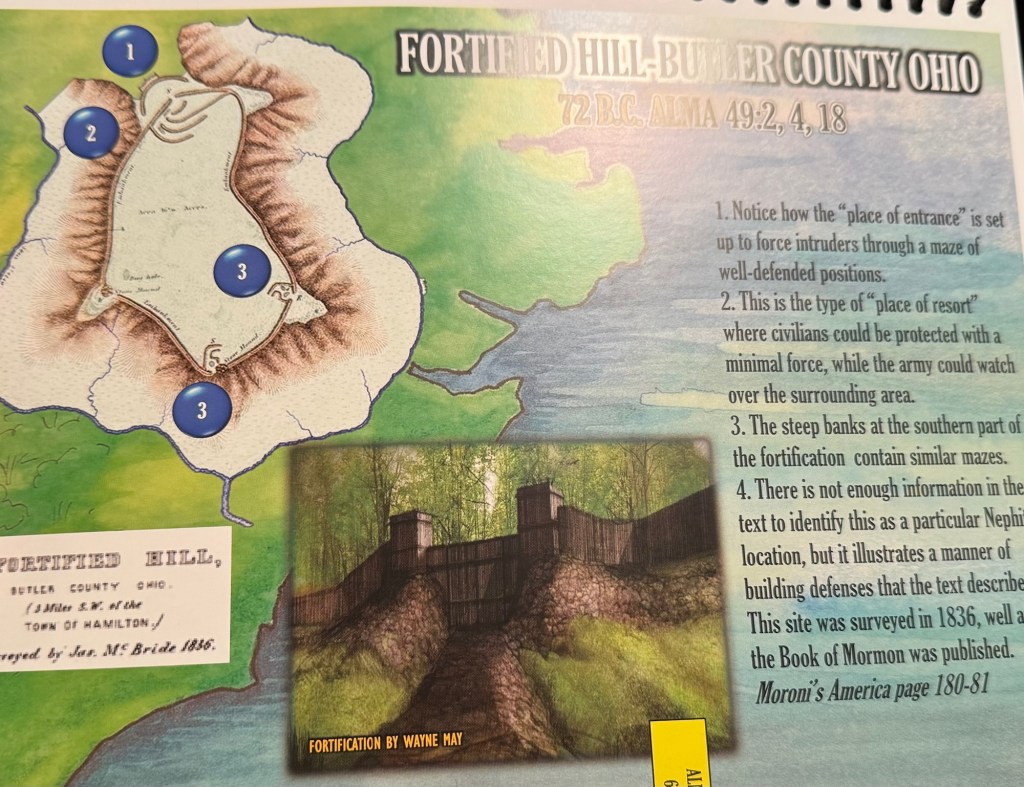
There are some rather wild claims, but upon examining the evidence, legitimate questions arise.  And if we apply the same logic as we do to Islam, we have to believe the Book of Mormon just as much as we do the Quran because they were created under the same pretense of assumption.  The only reason we couldn’t believe the Book of Mormon is if we accept that human beings could not travel by boat until Christopher Columbus did so in 1492. Instead, it looks like humans were traveling all over the world in ships many thousands of years ago and that the Columbus missions were built off the maps he used to sail over the horizon of the earth with full knowledge that it was round, and that there was a mysterious land on the horizon that would connect it to a trade route with the east.  Once settled, during American expansionism, during the period when the Mormon religion was created, many of the thousands and thousands of mounds that were attributed to Indians were destroyed to farming and the building of towns, and that the people did record the bones of giant people that were in the mounds, as they built over them and destroyed so much of the evidence.  However, in some cases, there are obvious Jewish influences evident in the mounds that would not be part of any simple hunter-gatherer groups. 

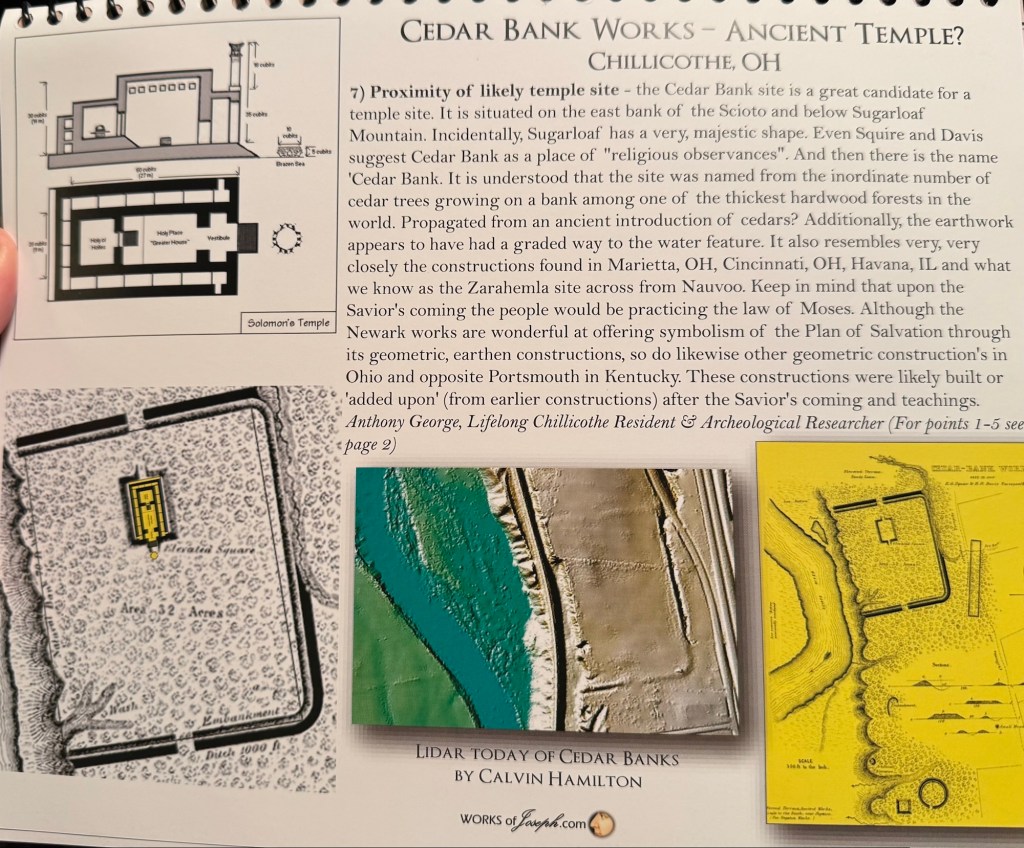
About 20 miles east of Cincinnati is a mound complex known as the Ohio Hanukkiah Mound, which is now gone, but it was recorded when it was discovered before farming destroyed it for good.  It was built in the shape of a Menorah.  Additionally, other Jewish-style artifacts have been found in numerous mounds, notably the Holy Stones located near the Newark complex, just outside modern-day Columbus.  And based on that, and a lot of the well-researched maps provided by the Book of Mormon Evidence.org group, we see more validation of the Mormon religion spreading around the world as a lost tribe of Israel, than just the fanciful imaginings of Joseph Smith, a young kid who grew up into a snakeoil salesman to create a religion that allowed people to have more than one wife.  And when we accept one religion and its premise over another one, we have to ask why the logic isn’t universal.  And if we do find that the Mormons are the actual inhabitants of North America, along with descendants of Atlantis who have been in the New World for many thousands of years, dating back 250,000 years or more.  Then how can we say that the Indians were the “indigenous people” as a tribe of nomads who happened across a land bridge during the Ice Age, and had no technology and were nature worshippers who deserve to have their land back from the mean migrants who came from Europe and took everything away from them. Instead, we see stories of Mormons who left a hostile region to pursue a better life. In those old Jewish cultures, there were teachings of Hermes, who brought advanced knowledge of astrology and the magical practices of the Kabbalah.  The selection of Islam to be believed fits a political desire, not a scientific one.  Because Joseph Smith has been ridiculed by academia as a hoax, while Islam’s Muhammad was not to be questioned as anything but a prophet and the direct hand of God, Allah. If we are going to accept one however, we have to take the other, and as far as evidence, the large amount of it in North America shows that the Jewish people had a large colony of people with very advanced ideas that were recorded in the Book of Mormon that provide some very intriguing viewpoints from a time not very well understood by modern science.  And we have a lot more to learn.

Rich Hoffman

Click Here to Protect Yourself with Second Call Defense https://www.secondcalldefense.org/?affiliate=20707

In Florida, You Can Run Protestors Over: Fighting communists rioting against ICE deportations

You did notice that there are no mass protests in Florida, where communists trained in our colleges take to the streets in one of these anti-ICE deportation mobs to block traffic with their bodies.  In Florida, if people throw their bodies in front of your car to stop you, you are allowed to run them over.  There are some technical and legal gymnastics involved, but in essence, protesters are not allowed to block traffic in Florida.  Because drivers won’t be prosecuted for driving over their scummy, dirty, communist bodies, and that’s how it should be in every American state.  It’s nice to have Free Speech, but that speech cannot impose itself on other people and cause them discomfort or even harm.  And blocked traffic is reprehensibly disruptive.  But there’s more to it than that, even.  We are not obligated in America to tolerate enemies of our nation.  And to hide hostile, treasonous intent behind any form of Free Speech.  And this is what the social Marxists, communists, and open socialists want to do by working against the values of America while using the values of Free Speech to attempt to undercut the foundations of society itself.  We must recognize what is truly happening with these individuals. Suppose they show up to a rally outside of Sheriff Jones’ jail in Butler County, for instance, as they have been doing, wearing a t-shirt indicating membership in a socialist organization. In that case, they are openly declaring war against the United States and the self-governed people of that nation.  And actions worse than legal prosecutions are more than justified.  Those people are declaring war on our way of life, and we need to treat them that way.  We have no obligation to be accommodating to people who are trying to overthrow our country, and these protestors against the ICE deportations are with their stated intent.

There is a lot to unpack behind the supporters of these protestors who have blocked traffic in Los Angeles and made themselves into a menace to society.  Having different opinions on a matter and expressing them openly in the marketplace of ideas is one thing.  Impeding people’s lives with those opinions, with the explicit intention of using force and inconvenience to convey their point, is not acceptable.  And for the people who are financing these protests, there is a lot of action that we must take against them.  Everyone needs to stop thinking of the government as something separate from themselves, done by some mysterious people in power.  Self-government means we elect people into positions that need to be filled, and they work on our behalf to accomplish the tasks assigned to them.  So we must protect that government from attack when it does happen.  In this case, Trump was elected to do our work.  And we must preserve his ability to do that work on our behalf.  That work cannot be stopped by a bunch of lifetime appointed judges with both feet into Marxist causes as they have been lured into that political philosophy during their Friday night wine tasting social gatherings, and they have learned to drink the brew with their pinky out to disguise from their spouses detrimental elements of porn addiction and diabolical life choices they want to hide behind collectivist living.  The people who are attacking our country are attacking us, and they use these mindless, dumb kids right out of college, and the old hippies of the Flower Child generation who are still alive to provoke them into antagonisms against all things American.  Even in some of these protests, the American flag was burned while the Mexican flag was hoisted with reverence as if domination over occupation were a forgone conclusion. 

Most of the wars that Americans have fought over the last century were against socialist, Marxist, and communist forces and their attempts to overthrow our capitalist system of economics.  We have gone to war, for instance, to prevent Korea from being overrun by communism.  We did the same in Vietnam.  What’s left of the Soviet Union, which Vladimir Putin is trying to unite Ukraine back under the home country from its fall from communist power, is at the heart of the modern conflict.  China is a communist nation that is exporting communism all around the world, including providing financial backing for many of the ICE protests.  The conflicts in Central America have been over the spread of communism.  Communism took over and ruined Cuba, creating a lot of trouble for the United States.  And the military action of choice by these communist groups has been to change their tactics from open aggression to legal challenges.  For instance, rather than go to war again with the United States in Korea recently, the communists just penetrated society to the point where they rigged elections so they could steal the government as they just did in South Korea, and took over the country without firing a shot.  They have tried to do the same thing in America.  The Joe Biden presidency was a good example of that very intention.  A presidency was stolen and given to a communist supporter, which Joe Biden was.  They did the same thing in Brazil with Bolsonaro.  They used election fraud to remove him from office, then lawfare to strangle him in court.  This is how the communists, who are the enemies of humanity, work in the world.  They have changed their approach, and in America, they attempt to conceal themselves behind free speech, expecting not to be identified as hostile agents of the American way of life.  And when they show up to a protest wearing socialist membership t-shirts, they are making it easy to identify who they are and what needs to be done to them.

There has been considerable debate about the role of communism in a free society.  For a long time, people on the left assumed they had an equal right to express their opinions in that free society.  But Democrats, socialists, and communists of Marxist thought are a political party that is hostile to American values.  When we discuss the political right and the political left, we are referring to support for Adam Smith’s economics on the right and Karl Marx’s on the left.  One is hostile to the other, and they can’t all coexist in the world, which is the moral of the story behind all the conflicts we have had up to this point and the blood that has been spilled, defining those parameters.  And that is what they are protesting with the immigration issues, open supporters of overthrowing America are trying to import communist ideas into the nation to change the voting standards of a free country, so that they can topple the nation with the pressure of the policies.  So, illegal immigration is an invasion of our country by hostile agents trying to hide their radicalism behind loopholes in the law, which think only countries can declare war on our nation, and that we can’t fight them if a nation hasn’t openly declared war.  But Mexico has come pretty close to it by supporting illegal immigration into America and all the violence and chaos it brings.  But to the protestors themselves, who were taught in our public education system and colleges to become agents of Marxism, we have been too friendly and accommodating to them.  We should be openly hostile and even violent when they show up in our communities with t-shirts showing an affiliation with socialism, communism, and Marxism.  And if they block our road with their communist bodies uttering Marxist values and expect to stop our progress from point A to point B, we should run them over and not look back for a second at their broken bodies and hippie rantings.  It is more valuable to acquire our gallon of milk from the store than to consider for a moment the fractured lives of those hostile protestors and their ill intent toward our great nation.  Their destruction would be an improvement to the quality of our country, and we should defend it accordingly.  We aren’t required to put up with communists in our society under the guise of free speech.  When we see them and they identify themselves as such, we should always be at war with the basic premise of their diabolical existence.

Rich Hoffman

Click Here to Protect Yourself with Second Call Defense https://www.secondcalldefense.org/?affiliate=20707

There Won’t Be A War with Iran: They can’t afford it

There is all this talk about war with Iran, and America getting sucked into a prolonged war that will further entangle us into a mess of foreign commitment.  And there are all these war hawks like Lindsey Graham who want to go to war and bomb Iran into destruction.  And then there are people like Tucker Carlson who want complete involvement in Israel’s business, at all.  But everyone is missing the point, and Trump gets it.  You have to know your leverage points, and just to burst everyone’s bubble, Iran has already lost any potential war.  Iran is another hostile country, much like Antifa or Black Lives Matter in America, that is propped up with foreign money to create a grand distraction in the world.  Iran is the number 1 sponsor of terrorism in the world.  They don’t call it terrorism; however, they instead call it “revolutionary activities,” using almost the same kind of logic as we saw from the No Kings riots in America.  Iran exists to fight capitalism behind the façade of radical Islamic Fundamentalism.  And they can’t be reasoned with.  There is nothing about them that exists to protect the indigenous rights of the Palestinian people, and their continued protest to fight and destroy the creation of Israel as a country in the post-World War II environment.  Remember when the Obama administration left behind 1.7 billion dollars on an airport runway to Iran?  Or when Joe Biden lifted sanctions against Iran that were there from Trump’s first term?  Iran is not a country; it’s an Occupy Wall Street endeavor by radical leftist lunatics to destabilize the world.  Here are the facts: Iran can’t win a war with the United States.  I can’t win a war against a turtle.  And the threat of calling their bluff will shatter them completely. 

$1.7 billion might sound like a lot of money, but ground troops cost significantly more than that for just a few weeks of war.  And with all those missiles that they have launched against Israel, those are very expensive.  Additionally, Iran has its entire power grid concentrated in a small area, which would be very easy to target and disrupt.  Iran has an essentially oil-based economy, but not much else.  You don’t see people rushing out to buy the latest Iranian television or a new pair of jeans.  Iran could be brought to its knees without America firing a single shot, by just forcing the price of oil too low to compete with by exporting American oil.  And that is the way Trump is going to destroy hostile markets like Venezuela and Iran, through economics.  There is no reason to engage in a military conflict.  Iran doesn’t have the money to fight a war, and their entire infrastructure could be destroyed easily.  And with all the missiles they have launched recently toward Israel, they are going to run out of rockets fast.  And where are they going to get more of them?  Who is going to supply Iran with more weapons while the world’s eyes are on them?  Typically, Iran manufactures missiles on assembly lines, but it has to import the technology that powers them, which comes from North Korea and China.  Who thinks that either country is going to supply Iran with anything while Trump is in office?  They want to appease Trump, rather than risk being on the wrong side of the negotiating table with him.  Iran is currently on its own, and it can’t last long.  The Revolutionaries who run the country are not very deep in number, and the people in general in Iran do not support the current regime, so they only hold onto power with the threat of violence.  And they’ll lose that with any fight against Israel.

The Army Parade came at the perfect time, because it showed the world what the riches of capitalism can produce in such a display in the very nice city of Washington, D.C.  It took off the table any thought of engagement in a ground war with America, and the rest of the world doesn’t have the money to keep up.  The wars we have been dealing with were largely creations by centralized banking, not countries fighting over borders and ideology.  Trump knows he can crush Iran economically.  They are already reeling from the short conflict with Israel.  And when Iran falls, that will put pressure on Russia to settle things with Ukraine, which is also propped up entirely by globalist money.  And China is in a delicate situation with its economy.  They are propped up by globalism, and now that people are onto the scam, they are in a preventive defense mode.  They can’t afford any sustained competition along economic lines.  They’d love to attack Taiwan and take all its resources.  They’d love to do the same in Japan.  However, they dare not do it, because they would be economically destroyed.  So they have to play nice.  There won’t be any war.  And while many of these countries have their militaries, they can also hold parades.  They have to work a lot harder to have those militaries than America does.  In any engagement, they will run out of gas and come up short on missiles really fast.  But America can produce weapons like candy.  And when it was put on display, as it was at the Army Parade, it was disheartening to those in the world who want to intimidate by puffing up their feathers, only for everyone to learn that it was just a skinny, weak bird in the middle.

Iran is going to fall, and they should.  They are evil.  And once they do, there won’t be any place left in the world for all these terrorist organizations to hide behind.  If you take out the number one sponsor of terrorism, a world with a lot less terrorism would be a good one.  And when you look around at the hostile places of the world, who are just as close to falling as Iran currently is, they can’t hang onto power unless people are scared of them.  China is at risk of losing Hong Kong, for instance.  If Iran falls apart, the rest of them will likely follow suit.  And Trump, or America, doesn’t have to do much of anything for it to happen.  We certainly don’t need to send troops into Israel.  I love Israel, and I think they deserve revenge for what happened at that music festival.  A lot of people were killed and tortured who didn’t deserve it, and what was done to them, with Iran backing the activity in the background, was terrible.  But forget about this idea of ground engagement.  Those are not the fights we are fighting anymore.  When Iran falls, the Ukraine War will likely end shortly thereafter, due to the resulting pressure.  And China will struggle to maintain its current economic strength because it needs American markets to sell its products to.  They are dependent on America for their power, which can be turned off quickly.  And ruthlessly.  Which is what Trump will do to Iran, and once that vulnerability is exposed, all the other dominoes in the world fall too.  Therefore, there will be no military engagement.  Iran has already lost, and I believe they are aware of it.  It’s just taking the media a while to figure it out, because they need the subject matter.  However, the war with Iran never even began.  And Israel will easily triumph over their enemies with the power of economics.  Not missiles. 

Rich Hoffman

Click Here to Protect Yourself with Second Call Defense https://www.secondcalldefense.org/?affiliate=20707

Why ‘The Chosen’ is Successful and ‘Snow White’ is Not: Understanding basic ecnomics

I am a little bit baffled by some of the fear surrounding the Trump tariffs. What did anybody expect to happen?   While this is a topic in its own right, economic understanding in general appears to be lost entirely on ordinary people; they don’t understand basic concepts, let alone complex ones.  The same mentality also applies to movies.  It’s a different business, but it’s all about generating revenue within an economic system that provides entertainment to people.  This Snow White Disney story is a microcosm of the general global trade understanding.  What was Disney thinking in making that stupid live-action remake?  And spending so much money on it.  You could say the same about trade imbalances that favored China over American imports and exports.  Why did the world make the dumb decisions to push international wealth redistribution, which is unmistakably present in financial transactions?  Incentives for foreign trade versus domestic production have been in place for a long time, and they were costly and detrimental; now someone has to pay for all that foolishness.  Why is that so stunning to people? Surely, they can’t be that stupid?  Yet they are, and in incredible ways.  In the first week of April 2025, the streaming show The Chosen Season 5 was released to theaters and did so well that it came in third at the box office, just behind Snow White.  That says a couple of things: that The Chosen is doing really well, and that Snow White is doing really badly, because these are not apples-to-apples movies.  Snow White has a budget of around $ 300 million, whereas The Chosen is designed to be a streaming show that plays in theaters as a dedication to Easter, giving fans a big-screen experience during the Holiday.  It will have three theatrical releases leading up to the Easter Holiday with a total budget of around $45 million.  The Chosen is monstrously successful on paper, whereas Snow White from Disney is a dismal failure on every measure.

My wife and I like The Chosen show. We’ve watched it on several streaming platforms over the years and look forward to every season, which I think is surprising.  It’s not as if people don’t know the story of Jesus; it’s very well-documented.  However, the director, Dallas Jenkins, and his wife, Amanda, have done a fantastic job with the show, telling the story of Jesus in a way that I have never seen or heard before.  They love the material, and they love each other, and it shows on screen, even on the big screen.  You can see The Chosen’s previous four seasons on Amazon Prime. I’ve also watched it on Roku.  And we liked it so much that we went to the theater to see Season 5, because we enjoy it that much.  There are planned 7 seasons in total, as this Season 5 is leading up to the crucifixion of Christ, and by Season 7, it will be the resurrection and an exploration of what happened in the years following Christ’s death.  The way they are presenting the material is well done.  I think it’s the best television in years, much better than anything else on the big screen or small.  It reminds me of Little House on the Prairie from the 1970s in many ways, with well-told stories that encompass all the things humans genuinely desire from the world, including goodness.  You would think that this would be obvious to more people and that more of these kinds of projects would have been made over the years, but Dallas Jenkins was pretty much ran out of Hollywood, as most faith based filmmakers have been forcing him to take his skills to the smallest venue possible, because he had been rejected from the business in Hollywood.

The Chosen began as a project for one of Dallas Jenkins’ friends, who wanted to create something for his church in St. Louis.  It was essentially a small film project that would be shown on a YouTube-like platform for a tiny audience.  And the project just grew from there, becoming the first season of The Chosen, which was produced on a minimal budget by a large group of people who were passionate about the project.  Nobody was getting rich off this material; they just did it because they loved it.  But ironically, even though everyone thinks they know everything about the life of Jesus and his disciples, The Chosen goes several steps further, and each season has grown in popularity and budget.  Season 5 was pretty big stuff, as much of it takes place on the Second Temple in Jerusalem and deals in great detail with all the politics behind the killing of Jesus in ways that have never been done before on such a scope.  Solomon’s Temple looks fantastic, as does everything else.  It is a stunningly good show with great acting.  A lot is happening with it that has tremendous social value, both politically and personally, and I am pleased with it.  I love seeing stories like this both in front of and behind the camera.  I want the world to have more people in it like Dallas Jenkins and his wife.  They are a good family who want to do good things and have the courage to do them without fear.  And if I had to put investment money behind something, those are the kind of people you want to invest in.  Those who took action early on are now seeing the benefits.

This Chosen project reminds me of the Atlas Shrugged movies from 2010.  People who have read me for a long time remember my involvement in that project.  I wanted to see John Aglialoro succeed in adapting that famous novel into a movie that Hollywood had rejected entirely.  The unions caused all kinds of problems, ensuring that each section of the movie’s releases never featured the same actors, which was brutal.  I thought the movies were pretty good and I talked them up as much as I could.  They tell the story quite well, based on the famous book.  The Chosen is similar in that it took a small budget approach that exceeded expectations in its delivery.  However, where Atlas Shrugged was unable to overcome production difficulties without being a bit resentful in the process, Dallas Jenkins gives viewers of his production no sense of trouble at all.  People can enjoy Jesus bringing the New Testament to life in all its glory on the screen, shot by shot.  Where John Aglialoro struggled to recover his massive investment in making the Atlas movies, The Chosen will likely turn out to be extremely profitable, a message that Hollywood cannot ignore, especially as Mel Gibson enters production on his Resurrection movie.  I tend to think that if Aglialoro had made the Atlas films more like Jenkins’ The Chosen, he would have been a lot more successful.  However, we’re dealing with the Trump years, as opposed to the Obama years, and things are pretty different now than they were then. People have a hunger for goodness that they didn’t have even back then, when they took a lot of things socially for granted.  But now with The Chosen, people are finding themselves again, almost as born-again Christians do.  And it’s showing up at the box office.  It’s not that the box office is failing because people aren’t going to see movies.  They don’t want the kind of movies Hollywood wants to show them, like woke adaptations of Snow White.  They want The Chosen, and those who provide that kind of content will be the ones who make the most money.  It’s not rocket science. 

Rich Hoffman

Click Here to Protect Yourself with Second Call Defense https://www.secondcalldefense.org/?affiliate=20707

Under Jerusalem: Why Trump has a right to build wonderful hotels over the Gaza Strip

I have a mild obsession with the city of Jerusalem, so there is a lot to talk about regarding the modern Middle East policy where that ancient city is concerned.  The claims that Islam has over it are very recent, and it’s a simple math problem to work out as far as territory rights.  The Arabs of Islam didn’t come along until about 600 A.D., after the fall of the Roman Empire, so claims to the area had long before been erased by the Greek and Roman Empires over a thousand years before.  But before Islam indicated any claim to the area, especially around the Temple Mount, the most hostile piece of real estate on planet earth, the Hebrew people were in the region over three thousand years ago, 1600 years before the creation of Islam as a religion.  I believe there was a very technological civilization in the area before any of them, including in North America, as it was global, and the only remnants of it are in our modern understanding of astrology. These people were large- what we call giants and had a very advanced civilization before and during the Ice Age. They used an astrology-like scientific approach to conduct a society that our history books do not yet understand.  And they were at the Mount Moriah area for tens of thousands of years before the Jews considered settling it.  One of their obvious artifacts of reference is Rujm el-Hiri, or Gilgal Refaim, “The Wheel of Giants,” which is so big you can see it from space, and it’s just west of the Sea of Galilee in the Golan Heights.  When we talk about Goliath and his family of giants, who King David killed in battle, we are talking about the last of their ancient species, which is how Jerusalem was founded to start with, as David built his city there and started the location that would eventually become the temple of his son, Solomon. 

I have a very nice map that shows the small mountain range that runs between the Jordan River and the Mediterranean Sea, and all these mountain peaks that are now covered by three thousand years of human history, built one on top of another, take up those high lands.  The caves under the Temple Mount and Jerusalem were there long before anybody else.  There are biblical kings, and others, who added a human touch, but there is a lot going on under Jerusalem that is very ancient, and doesn’t get talked about much at all.  And is at the heart of the dispute in the Middle East.  Do the Palestinians have any claim to the land?  What is behind the aggressive talk Trump has put forth about making the Gaza Strip into an American free enterprise zone?  Should the nation of Israel have ever been created after World War II?  The argument is that we are violating the indigenous claims of the Arabs in the area, and they use the aggressive stance of Islam to drive away legitimate claims to history that the Jewish and Christian people clearly have a right to.  More than that are the even more ancient cultures that we should be studying, but we can’t because of modern religious territorial squabbles that have no relevancy in the context of things.  The history of understanding isn’t on a scale of acceptable criteria.  Buried under all this religious history is a truth that is earth shattering and is at the heart of the whole problem.  And it’s in those caves under the Temple Mount where Mount Moriah held significance long before Abraham tried to sacrifice Isaac there on that Foundation Stone, or from Islam, Ishmael.

I had the rare privilege of reading the book Under Jerusalem by Andrew Lawler, The Buried History of the World’s Most Contested City.  I’m not one who constantly complains about how dumb archaeologists are and how they deliberately cover up the past with their discoveries.  I get the game. They have to hustle to get funding, and the people giving them money want specific validation discovered with the digs.  So, there is a lot of politics in archaeology.  My favorite thing in the world is my Biblical Archaeology Review magazines, which I have been getting since childhood. I love reading about what archaeologists discover in the Holy Land.  It is stunning how many feet of earth have been built up after three thousand years of people walking the streets of Jerusalem, and just how far under the modern city are the remains of the walled City of David.  In some cases, we are dealing with 30 to 40 feet of ancient dirt, sewage, and garbage that has built up to become the modern ground.  City streets in Jerusalem are not at the same level as they were during the time of David or earlier.  And to get to the foundation layers of Solomon’s Temple, you would have to dig deep.  The Second Temple period by Herod was 1000 years later, and many feet under even that period.  Dirt comes in off people’s shoes over time, and it builds up slowly.  And that’s just how old these sites are.  But I’m saying that even with all those considerations, there are tens of thousands more years of history in that area.  So we should be digging a lot more, giving archaeologists a lot more respect and money, and we should be openly prepared for what we learn during the adventure of discovery. 

As to the Islamic claim of the Temple Mount and their abuse of the Jewish people who had the first claim on the land after they conquered it from the pagan worshipping Canaanites, they are just the most recent culture to claim it for themselves.  They won’t let archaeologists dig under and around the Temple Mount to provide proof of the Jewish heritage.  But then they claim that there is no proof of that Jewish heritage because it’s buried under 40 feet of soot because their time on Mount Moriah is so ancient that nearly two thousand years had to pass before Islam became a religion.  The conflict and claims over the territory are entirely based on historical perspective, not a pursuit of the truth that is buried under layers of history on a range of small mountains that have been occupied for tens of thousands of years and of which the proof is in those caves under the Temple Mount.  What we know about Derinkuyu, just to the north in Turkey, is that that underground city was dated to the same period as Solomon’s Temple and even much older in some layers of it.  And, of course, the nearby Gobekli Tepe, dated in the 10,000 BCE range, has the same kind of math technology as the Rujm el-Hiri at the Golon Heights to the south.  So what does all this mean?  Well, Islam doesn’t have a legitimate claim to the area, not where they can demand that their heritage is more important than all this ancient history.  And when they say, show me the proof, they can’t play games by denying dig permits and funding for the truth to be found.  I would say that under the Mount Moriah complex is all the proof anybody needs.  But Islam doesn’t want to know because then it would erode their political claims in the area and destroy their modern aggressions.  Because they don’t want to see the truth.  As many don’t because they are afraid of what they suspect to be the case. Giants ruled the earth and had a technology that was far more sophisticated than what we are achieving in a modern way.  It was a different technology but undoubtedly very sophisticated and global.  Eventually, we must admit to it if we want to advance. 

Rich Hoffman

Click Here to Protect Yourself with Second Call Defense https://www.secondcalldefense.org/?affiliate=20707

The Empire of the Snake: Why Islam will always be at war with the Bible

It’s almost comical to see modern science tell us that the Serpent Mound in Ohio was built by Indians when they could barely get up each day to eat food.  About an hour east of Cincinnati, the Serpent Mound is one of the most mysterious places on earth and is revered archaeologically as high or higher as the Great Pyramids of Giza.  What makes Serpent Mound so astonishing is the very advanced mathematics and knowledge of the stars that it would have taken a culture thousands, if not millions of years, to develop.  Admittedly, I have been to the Serpent Mound site lots of times.  I have even gone there to think and get away from the world’s chaos on really bad days.  If I’m having a terrible day, don’t be surprised if you find me there reading a book, or looking at some crop circle that sometimes happens across the street from the park entrance.  When I go to Serpent Mound, I think about many things, but it’s never about Indians.  The site was never intended to be a burial mound for a ceremonial culture.  But a reference to the stars and, specifically, the constellation Draco.  It truly has an ancient feeling to the place that is bizarrely intelligent, not the sentiments of a hunter-gatherer culture.  Even more mysteriously, the entire site is built on the edge of a massive crater left over from a crypto explosion many millions of years ago.  So, how did they know where to put the Serpent Mound when there isn’t any evidence to the naked eye of this explosion?  The people who pay reverence to the site with the construction of Serpent Mound would have had to know what the geology under the ground would eventually show, and that is the alarming part of the place and the peek back in time toward an entirely different global civilization that nobody has yet figured out because they are asking all the wrong questions about the evidence that we do have.  We had a global civilization of star worshipers who used to build earth effigies that contained very advanced mathematics.  And something happened to them that was very traumatic. 

It’s coming up a lot lately because of the recent terrorist attack in New Orleans from a radical practitioner of Islam; what is the primary difference between the Christian Bible and the Muslim Quran?  That’s an interesting question because both religions have many of the same characters, so how could they have such a radically different approach to the world?  One pronounced difference is that Islam and Christians have almost the same Adam and Eve story, except in Islam, the Devil is the villain.  In the Jewish and Christian faiths, the snake gives Eve the apple and tells her to eat from the knowledge of good and evil.  The more you dig, the more it is realized that the religion of the Arab people, the same descendants of Mesopotamia, and the original antagonizers from the Land of Canaan were these same people.  And that Yahweh’s fight against them traces back to this essential difference.  In Islam, the snake could be a jinn, a helpful or harmful spirit.  This view of snakes traces back to an Empire of Snake worshippers who had an obsession with star worship and traumatic crises culturally when it comes to the memory of the constellation Draco, Sirius, and many others.  Things get wild when we consider that Thuban, the pole star, lines up with Serpent Mound from approximately 3942 BCE to 1793 BCE.  And if that was the only case with those dates, we might assume somebody made a mistake.  But this same kind of math can be found in the Pyramids, Stonehenge, and even at another giant earth effigy just to the south of downtown Hamilton, Ohio, at the Fortified Hill complex, which during the same period lines up to the constellation Pleiades.  If you want to check it out for yourself, just visit Pyramid Hill Park, and you’ll get a fascinating perspective on the scale of our subject. 

To Islam, the snake is beneficial, just as it is viewed in most cultures of the world with ancient reverence, especially in the Orient, where serpents, dragons, and all species of snakes are seen as helpful entities, not enemies.  But to Western culture, dragons are to be slain.  Snakes are the embodiment of evil.  And to this very day, at the center of conflict between Christianity and Islam is the reverence of the snake and what we should or shouldn’t be doing with them.  For the same reasons that modern archaeologists can’t figure out the Serpent Mound’s relationship to the constellation Draco, they are looking for Indians who would evolve even to begin to understand those kinds of things. What they miss is a clear understanding of the kind of rebellion that Yahweh was advocating for, which is clearly expressed in the Bible as a crisis against the global power of snake worship that inspired the conquest of the land of Canaan to begin with.  And that’s where things really start to get interesting, especially when the most common theme that emerges from the use of psychedelics in religion shares a relationship with snakes as one of the primordial terrors that come from visits to the spirit world today.  Practitioners of the ayahuasca experience that shamans from South America utilize and have become very popular, know what I’m talking about. Most all experience snakes as dominant figures in that hidden kingdom.  And it looks like it was primarily psychedelics in the form of mushrooms or other plant-based agents that helped form the basis for the world’s religions.  And Yahweh was rebelling against the Empire of the Snakes, not submitting to them. 

Therefore, we had an entire world that traded with each other for obviously tens of thousands of years.  Probably much longer.  They did not behave as modern scientist lazily concluded, and that is as hunter and gatherers who migrated to North America from the Jomon people emerging out of Japan and crossing the Bering Strait without any advanced knowledge of the greater heavens that wasn’t at the center of their worship, a crisis for them in great turmoil yearning for celestial bodies.  I have also been to many Jomon sites in Japan, dating from 14,000 BCE to around 300 BCE. Many of their artifacts can be found buried offshore when sea levels were over 400 feet lower during the Ice Age.  All this matters in understanding the vast difference in Western civilization, how it works, and why the East is and will always be at war with it.  Islam is a religion of the East.  Their concepts of the jinn, evil spirits, are almost identical to the Japanese kami and the spirits of the Indians.  And they all stand, just as the land of Canaan did, against the advancement of Western civilization and its blaming of the snake for all that went wrong in the world, as opposed to an artificial Devil as Islam does.  And with that straightforward distinction, we see the root cause of much of the trouble.  The Empire of the Snake is old and global.  It took a rebellion to stand against it and overthrow it, which was captured in the Jewish stories about the conquest of the Land of Canaan and why that was necessary.  It also explains why those who still worship the snake have so much trouble in the world and why Western civilization can be said to be so much better.  Because the anxiety of snake worship never took that global civilization to a healthy psychological place.  We will find the same crises once we land on other stars, such as Mars, and find ourselves homesick to beliefs that resonated from those faraway places.  Only to have a religion come along and fight against that ancient reverence and deal with what is before us in a psychologically healthy way.  At the heart of that, we can then understand why Islam will always be at war with Christians because, for them, the snake and its old empire is a cry for home, a sense of belonging that they will never have again.

Rich Hoffman

Click Here to Protect Yourself with Second Call Defense https://www.secondcalldefense.org/?affiliate=20707