

I’ve been thinking a lot about why places like the Creation Museum feel so good, so clarifying, so strangely peaceful in a world that is racing toward noise and confusion. The day after Christmas 2025, my wife and I gave ourselves a simple gift—one day in Northern Kentucky to walk through exhibits dedicated to the Book of Genesis, to consider the first words people used to anchor reality, and to be among people who weren’t embarrassed to say that values matter, that truth exists, that our lives are accountable to more than fashion and force. I’ve been to the Ark Encounter too—the sister site Ken Ham’s team built—and I’ve always admired the sincerity and craftsmanship behind both projects. It’s not that you have to agree with every detail of their interpretation; it’s that the experience reminds you what a society feels like when people share a moral vocabulary and are willing to live by it. That sensation—a shared foundation—has become rare. When you step out of those doors, the contrast is obvious: a secular culture increasingly says there’s no shared foundation at all, and then wonders why the political kitchen is a mess, why trust collapses, why crime rises or governance frays or people feel isolated and angry. The idea that a secular world can function sustainably is attractive in theory and brittle in practice. My own proclamation, tested across business, government, and the day‑to‑day pressures of family life, is that it cannot.
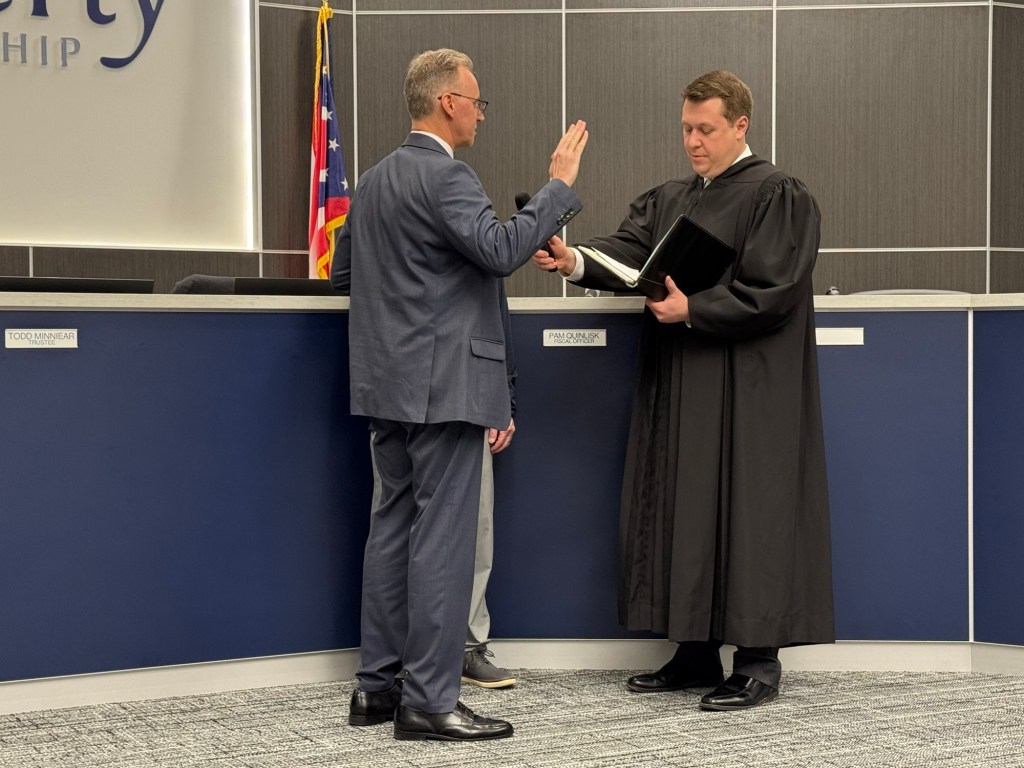
I’ve been open to the debate. I’ve listened to the arguments about separation of church and state, the fear that religious conviction leads to wars of doctrine or oppressive social control. I understand the logic behind wanting neutral ground—some space where the State doesn’t weaponize God and God doesn’t seize the State. Historically, Americans know exactly why the First Amendment begins with religion: they fled countries where the State punished belief or demanded it, and they didn’t want federal power to become a priesthood in uniform.[1] But somewhere in that effort to restrain coercion, we drifted into a different error: confusing neutrality with nihilism. In practice, our public institutions evacuated shared moral content and then expected people to behave, expected businesses to operate, expected courts to arbitrate, expected children to learn, expected citizens to sacrifice—without shared purpose or metaphysical meaning. That hollowness is what I mean by “secularism” here, not a simple legal separation, but a cultural posture that denies any binding moral architecture at the center of public life. When you throw out the Ten Commandments, when you refuse a common oath because you don’t believe it, when you insist that every value is relative, you remove not just symbols but the agreed‑upon citizenship of virtue. You end up legislating tactics instead of truth, and tactics alone cannot build a civilization.[2]
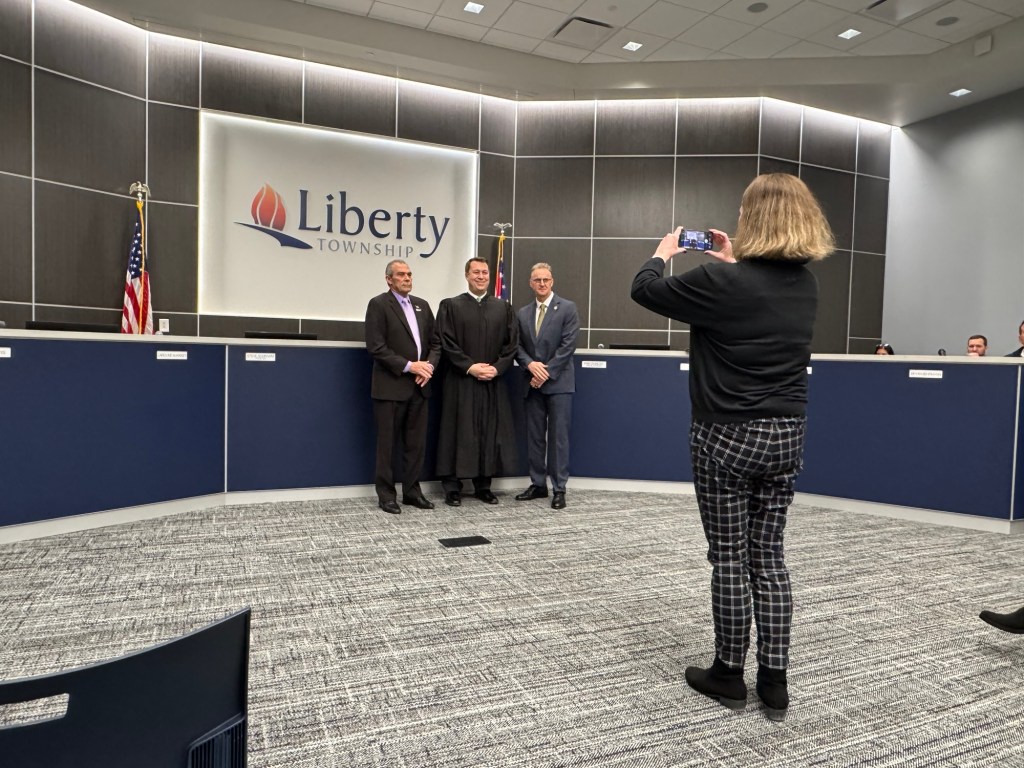
If you step inside the Creation Museum, you find something that modern administrative life can’t provide: a sense of coherence that connects knowledge to duty. You can disagree with their young‑earth timelines or their carbon‑dating critiques and still appreciate the underlying lesson—a society needs a moral template. That template is about obligations—toward God, toward the truth, toward one another—and those obligations bind us even when convenience suggests otherwise. Emile Durkheim, no evangelical by any stretch, recognized that religion functions sociologically by creating the sacred—a point of collective reverence that stabilizes norms and discourages predatory behavior.[3] Strip that out and the rituals of respect disappear, leaving only private interests vying for position. Robert Putnam showed how civic life atrophies when shared institutions thin out, when we “bowl alone,” when participation and obligation retreat.[4] Business leaders, judges, engineers, inspectors—we all feel it in the daily grind: decision‑making becomes fragile when there is no widely accepted compass. Even the best program plan fails if it lives in a vacuum of meaning.

The counterargument says that religion causes conflict—that secular space is supposed to prevent wars of doctrine by removing faith from public calculation. Historically, yes, religious wars have occurred; human beings fight over anything that anchors identity. But the cure is not to remove anchors; it’s to choose anchors that turn hearts toward self‑control and mercy. The question isn’t “religion or peace,” but “which moral order best disciplines power and offers forgiveness?” The American Founding assumed that virtue was necessary for liberty and that religion was the most practical instructor of virtue—Tocqueville saw that plainly.[5] The First Amendment works not by sterilizing public religion, but by protecting it from state capture and protecting citizens from religious coercion. It assumes, in other words, that religion will thrive freely and will thereby sustain the habits of self‑government. This is not hostility toward faith; it is scaffolding for faith’s free operation across plural communities. Courts have vacillated for decades on how to apply that balance—Engel v. Vitale limited school‑sponsored prayer,[6] then later cases narrowed or reinterpreted the Lemon test’s reach,[7] with Kennedy v. Bremerton recognizing that personal religious expression need not be purged from public employment.[8] The point isn’t to litigate doctrine; it’s to remember that our system was designed to let religion breathe in the civic air, not to suffocate it.

When secularism becomes a comprehensive worldview—a philosophy that reduces moral truth to private taste—notice the pattern. Public assurances about equality and compassion remain in the rhetoric, but the institutional courage to enforce norms collapses. A society without shared moral content has difficulty setting limits on violence or exploitation because it refuses to say why one ought not do a thing beyond preference or procedure. Alasdair MacIntyre described this with unsparing clarity: when virtue theory is abandoned, we inherit a culture of incommensurable moral claims—emotivism—where arguments devolve into expressions of will rather than reason.[9] In business terms, that looks like cultural drift—every meeting is a negotiation of appetites, with no shared first principles to resolve the conflict. In law, it looks like proceduralism without justice. In education, it looks like content stripped of meaning. In media, it looks like outrage cycles fueled by algorithmic attention rather than truth. You can still have sophisticated technology, but you lose wisdom. Charles Taylor’s account of secular modernity admits the trade: the “immanent frame” can stabilize certain freedoms but empties transcendence, and with it, the ability to answer “why.”[10]

Walk through the Creation Museum and you feel the opposite effect. The exhibits are meant to argue for a particular cosmology, yes, but the deeper experience is social: alignment. People sing the same hymns, they reflect on the same stories, they accept that authority is not just a bureaucratic title but a moral office answerable to God. That shared consent to moral order produces peace—even where debate exists on details, the atmosphere is oriented toward reverence. It’s the same sensation one feels inside a good church on a Sunday morning—a relief that the room is not staging a competition of egos but rehearsing charity and courage. Jonathan Haidt’s work makes the point from a different angle: humans bind and blind; moral communities bind us together with shared sacred values and inevitably blind us to some counter‑claims, but the binding is essential for cooperation.[11] The sober question is whether our binding story teaches love of neighbor and humility. In the biblical tradition, it does, and that matters for everything from family life to factory floors.

You can see why, after a day in that environment, a trip to the Smithsonian sometimes feels lukewarm—not because science is bad, but because the presentations often employ a deliberate neutrality that subtracts moral consequence from the narrative. It’s science as a series of facts rather than science interrogated by responsibility. The Museum of the Bible, by contrast, radiates a sense that the literary achievement of Scripture is nut and bolt for civilization—whatever the denominational debates over translation, the civilizational impact is beyond question. A museum can either aim at wonder or at relativism; sometimes the same building holds both. The question is whether our public culture still knows how to talk about goodness as a sturdy thing, not an opinion.
This debate isn’t abstract for me. I interact with government regularly. I see how bills get written, how media narratives shape legislative appetite, how election incentives distort courage. A secular posture—where conviction is suspect and truth is negotiable—depresses the willingness to do hard, right things. Engineering knows this in material terms: you can cheat a tolerance, but the airframe will remember. Law knows this: you can fudge a rule, but justice will remember. Business knows this: you can delay a difficult choice, but the market will remember. A society without a shared moral anchor will buy time with procedures and lose the soul of performance. And when it loses that soul, it becomes easier for external enemies to fracture it—from propaganda to immigration debates to economic sabotage—because the internal immune system of virtue has been suppressed in the name of neutrality.[12]
But neutrality was never the goal; fairness was. The promise of America rests on equal protection and free conscience, not the abolition of moral language. The founders did not imagine a naked public square—they imagined a modestly clothed one, where citizens bring convictions without state compulsion.[13] When modern elites invoke “separation of church and state,” they often mean “banish religious reasoning from public institutions.” Jefferson’s letter to the Danbury Baptists used the metaphor to reassure a minority that the federal government wouldn’t intrude on their worship, not to exile religion from civic life.[14] Over time, the metaphor grew into an ideology that sees piety as dangerous. That suspicion coexists uneasily with social data: religious participation correlates with charitable giving, volunteering, stable families, and lower crime,[15] and it builds social capital that secular substitutes rarely match.[16] You can’t brute‑force these fruits with policy. They are cultural. They require a story of meaning people choose to live by.
Are there religious abuses? Yes. Are there bad churches? Yes. Are there weaponized doctrines? Yes. So there are bad banks, bad courts, bad schools, bad newspapers, bad laboratories. Human nature will corrupt anything it touches. The correction, then, is not to evict religion from the public ecosystem, but to purify it—reform it—by calling it back to its own standards. In Christianity, those standards include the fruit of the Spirit: love, joy, peace, patience, kindness, goodness, faithfulness, gentleness, self‑control. If a religious institution doesn’t cultivate those, it earns reform or decline. But the existence of failure does not argue for the abolition of the only widely available language strong enough to restrain the worst instincts of power. A secular philosophy often proposes procedural checks; a moral tradition demands virtue. The former can slow harm; the latter can prevent it at the root.

So we went to the Creation Museum to breathe values—to be among people who were not ashamed to say that goodness exists, that truth is real, that beauty is objective, and that society goes to pieces when we pretend otherwise. It isn’t about forcing belief; it’s about remembering that belief orders life and that the ordering is not optional for civilization. If you want confirmation, you can test museums against one another. Visit a secular facility where narrative design deliberately refuses moral conclusions, and then visit the Museum of the Bible. Watch how people respond. One experience will feel informative; the other will feel formative. You might debate manuscript integrity, translation variance, canon history—the intellectual work is welcome—but you will also feel the social warmth that comes when a room of people agree that moral order is not a negotiable commodity. That warmth is not a sentimental convenience; it is a precondition for honest politics and high‑trust business.
I know some will reply that secular frameworks enable pluralism—that by removing religion from public arbitration, we avoid endless theological lawsuits. That argument is respectable and has achieved good in limiting specific harms. But our present secularism is not a modest procedural boundary; it is an anthropological claim that refuses to name the good beyond private choice. That is untenable. Human beings are teleological—they need ends, purposes—and a society that won’t speak honestly about ends will end up obsessing over means. We’ll set up compliance structures, not justice; risk matrices, not courage; brand management, not truth. When a nation forgets why it exists—that rights are not granted by the State but secured by it,[17] that duties are owed to each other because we are made in God’s image—it becomes easy to rearrange institutions against the very people they were meant to serve. The vacuum draws in other ideologies, often more aggressive and less merciful, that prefer domination to persuasion. And because secular public discourse has weakened moral confidence, the vacuum welcomes the worst guests.

The fix is not complicated in theory, even if it’s demanding in practice. Recover the idea that public life depends on private virtue, and private virtue depends on a transcendent standard. Encourage religion without establishing it. Protect conscience while insisting that our shared moral language is not optional. Teach children that some acts are wrong not because the State says so today, but because they violate what the State is supposed to honor every day. Invite museums, schools, businesses, media, and the courts to acknowledge that a society is healthiest when people agree on basic moral commitments—truthfulness, fidelity, stewardship, courage, mercy—and that those commitments are not simply personal preferences. If we do this, pluralism becomes livable because disagreement happens within a common moral grammar.
People sometimes ask me, after a day like the one we had at the Creation Museum, whether we are closing ourselves off from “real” science or “real” politics. I answer that love of God and love of truth are the opposite of anti‑science or anti‑politics. A moral universe makes experimentation meaningful; it holds scientists to honesty precisely because results matter. A moral universe keeps politics from devolving into pure contest; it holds legislators to integrity because laws shape human flourishing. The secular experiment tried to sustain those virtues without the metaphysical oxygen that created them. For a time, it worked—habits carried over from religious generations. But as the generational memory fades, the tank runs empty. You can feel it everywhere—from the local council to the federal bureaucracy, from boardrooms to classrooms. We are rationing virtues we stopped cultivating.
If you want to remember how to cultivate them, walk back into a place that takes values seriously. Listen to hymns; read Genesis; argue with carbon dating; reconcile faith and physics where you can and note your disagreements where you must. But don’t pretend that the disagreement abolishes our need for a shared moral order. It does not. The debate itself presupposes a standard for honesty and charity. In that sense, the Creation Museum is useful not merely for what it asserts about origins but for what it models about the social effect of belief. People there feel obligated to treat one another well, and that obligation is rooted in a story larger than themselves. That, more than any specific exhibit caption, is what our public square now lacks. Recover it, and schools will regain purpose, courts will regain moral confidence, businesses will regain cultural backbone, and governance will regain courage.
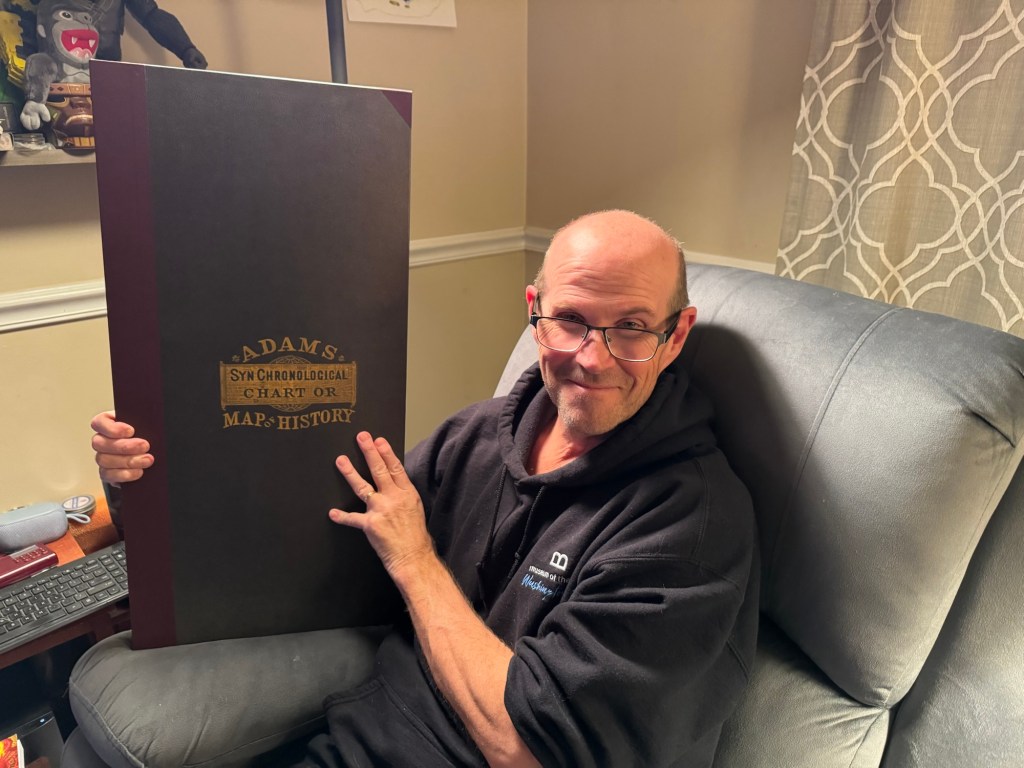
We came home from Northern Kentucky grateful—not only for the content we saw but for the reminder that peace is not the absence of conviction. Peace is the fruit of rightly ordered conviction. A secular approach, as presently practiced, cannot deliver that fruit because it has uprooted the tree. It promised fairness by abolishing shared morality and has left us with procedures that cannot prevent chaos. Religion—not mandated by the State, not policed as a tool of power, but lived freely by citizens—can. It is not the only ingredient, but it is an irreplaceable one. To build a healthy society, you must name what is good and teach people to love it. The Creation Museum gives you a taste of that lesson. The question is whether we will carry it back into the public square with courage.
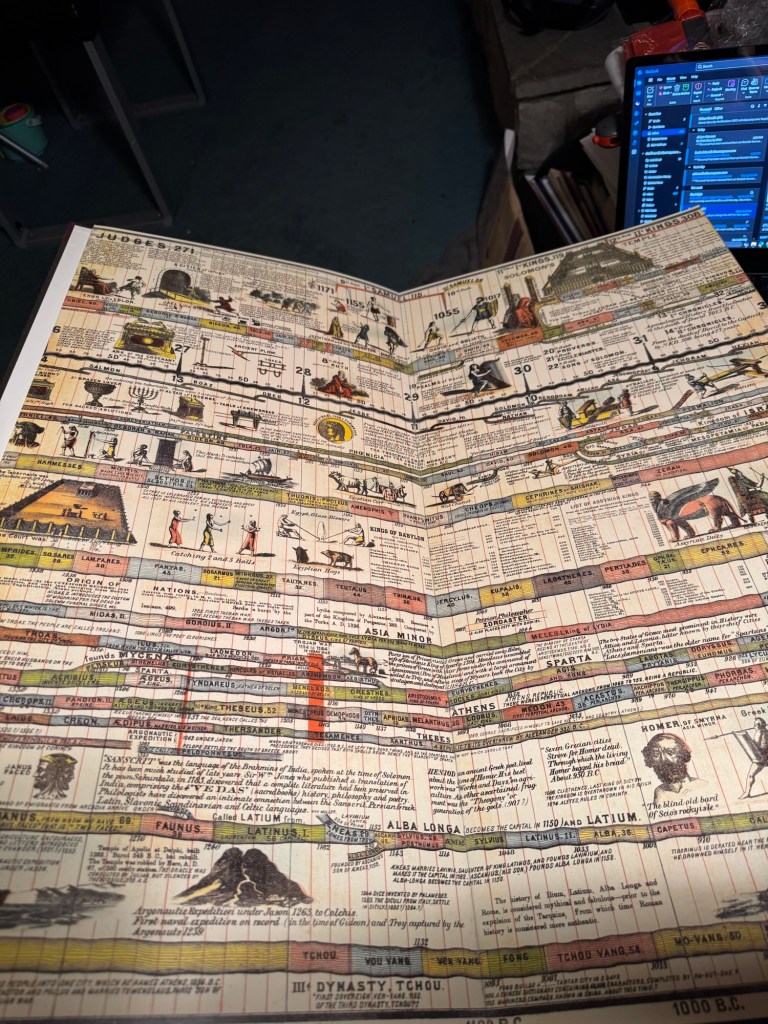
I said to my family, and I’ll say here: you don’t have to be cruel to those who disagree, or hostile to those of other faiths, or blind to the complexities of pluralism. You simply have to be honest that a civilization cannot survive without shared moral ground. You must recognize that a naked public square isn’t neutral; it’s vulnerable. And you must be willing to rebuild a culture that honors virtue openly, without apology. If you want to see the difference, spend a day in a place that dares to say values are real. Then ask yourself which world you want your children to inherit—the one that believes in goodness and demands it, or the one that refuses to name it and then watches, powerless, as the center falls apart.
—
Footnotes
[1] First Amendment to the U.S. Constitution; see also James Madison, “Memorial and Remonstrance Against Religious Assessments” (1785).
[2] See the Ten Commandments’ historical role in Anglo‑American law: John Witte Jr., Religion and the American Constitutional Experiment (Westview, 2000).
[3] Émile Durkheim, The Elementary Forms of Religious Life (1912), esp. on collective effervescence and social cohesion.
[4] Robert D. Putnam, Bowling Alone: The Collapse and Revival of American Community (Simon & Schuster, 2000); Robert D. Putnam and David E. Campbell, American Grace: How Religion Divides and Unites Us (Simon & Schuster, 2010).
[5] Alexis de Tocqueville, Democracy in America (1835–1840), esp. Vol. I on the role of religion in sustaining democratic habits.
[6] Engel v. Vitale, 370 U.S. 421 (1962).
[7] Lemon v. Kurtzman, 403 U.S. 602 (1971); for the Court’s later narrowing and critiques of the Lemon test, see American Legion v. American Humanist Association, 588 U.S. ___ (2019).
[8] Kennedy v. Bremerton School District, 597 U.S. ___ (2022), protecting personal prayer as private speech.
[9] Alasdair MacIntyre, After Virtue (Notre Dame, 1981).
[10] Charles Taylor, A Secular Age (Harvard University Press, 2007).
[11] Jonathan Haidt, The Righteous Mind: Why Good People Are Divided by Politics and Religion (Pantheon, 2012).
[12] On moral capital and social resilience, see Yuval Levin, The Fractured Republic (Basic Books, 2016); also Peter Berger, The Sacred Canopy (1967).
[13] See George Washington’s Farewell Address (1796) on religion and morality as “indispensable supports.”
[14] Thomas Jefferson’s letter to the Danbury Baptist Association (January 1, 1802), articulating the “wall of separation” metaphor.
[15] Pew Research Center, “Religion and Public Life” surveys; see also Arthur C. Brooks, Who Really Cares (Basic Books, 2006) on charitable giving and religiosity.
[16] Putnam and Campbell, American Grace; see also David E. Campbell, Why We Vote: How Schools and Communities Shape Our Civic Life (Princeton, 2008).
[17] Declaration of Independence (1776): rights are “endowed by their Creator,” governments are instituted to secure those rights.
—
Bibliography
Berger, Peter. The Sacred Canopy: Elements of a Sociological Theory of Religion. Anchor, 1967.
Brooks, Arthur C. Who Really Cares: The Surprising Truth About Compassionate Conservatism. Basic Books, 2006.
Campbell, David E. Why We Vote: How Schools and Communities Shape Our Civic Life. Princeton University Press, 2008.
Durkheim, Émile. The Elementary Forms of Religious Life. 1912.
Haidt, Jonathan. The Righteous Mind: Why Good People Are Divided by Politics and Religion. Pantheon, 2012.
Levin, Yuval. The Fractured Republic: Renewing America’s Social Contract in the Age of Individualism. Basic Books, 2016.
MacIntyre, Alasdair. After Virtue. University of Notre Dame Press, 1981.
Madison, James. “Memorial and Remonstrance Against Religious Assessments.” 1785.
Pew Research Center. Various reports on religion, social trust, and civic engagement.
Putnam, Robert D. Bowling Alone: The Collapse and Revival of American Community. Simon & Schuster, 2000.
Putnam, Robert D., and David E. Campbell. American Grace: How Religion Divides and Unites Us. Simon & Schuster, 2010.
Taylor, Charles. A Secular Age. Harvard University Press, 2007.
Tocqueville, Alexis de. Democracy in America. 1835–1840.
Washington, George. Farewell Address. 1796.
Witte Jr., John. Religion and the American Constitutional Experiment. Westview Press, 2000.
U.S. Supreme Court decisions: Engel v. Vitale (1962), Lemon v. Kurtzman (1971), American Legion v. American Humanist Association (2019), Kennedy v. Bremerton School District (2022).
Declaration of Independence (1776); U.S. Constitution (First Amendment).
Rich Hoffman
Click Here to Protect Yourself with Second Call Defense https://www.secondcalldefense.org/?affiliate=20707

