How a Dilapidated Miami Food Service Building Became an Innovation Hub:  Why Senator George Lang and Auditor Nancy Nix Were Already There, and What Volynt Is Doing With the Vyper at College@Elm

September 21, 2026, College@Elm, Oxford, Ohio

I like doing these kinds of talks. Positive stuff. The benefits of things. The proper role of government. When you vote people into government, you are not voting them in to manage your life. You are voting them in to manage something you need done at the local, state, and federal levels, and then to get out of the way so good minds can finish the work. I talk about that a lot, and I talk about my friend, State Senator George Lang, who I consider one of my very best friends, because he has spent a long time doing the unglamorous part of that job. Good things, done over a long period of time, eventually just happen. He does not always realize, in the moment, how far those things are going to travel. I will talk more about some of that in November. For now, I want to talk about a day in Oxford that caught me off guard in the best way.

We had an event at the College@Elm innovation center on September 21. I was there to talk about what I have been calling the dreams of Elm Street. I discussed the next generation of middle-mile work I am involved with through Volynt, the company I lead as COO, and the hybrid unmanned aircraft they call Vyper (with a Y), since Volynt also uses a Y. Volynt Aero sits at 20 S. Elm Street, Suite 117, Oxford, Ohio, inside that building, and I am very proud of the affiliation and of the people around it.[1] When I do these kinds of things, I invite people I know. I know quite a few political people. I looked into the audience, and there were some very important faces in it. I had invited George to come out and listen. I had no idea he was already part of the roots of the place.

Positive people, positive work

It is nice to be involved in positive things with positive people who mean to do good things. I had no idea when I first got involved with Volynt, and they brought me out to show me the facility and how deep the story of that building went. I was impressed with the building. I didn’t know the story of the Innovation Center on Elm Street. When I gave the talk, I made a play on words. Nightmare on Elm Street used to be the honest description of the building Volynt is in. It was dilapidated. People had considered tearing it down. Miami University President Gregory Crawford brought George Lang out, and Nancy Nix, and a bunch of other people, and said Let us save this building and make it an innovation center for young minds coming through Miami University, a place to get a launch in life. That is exactly what is happening. A partnership moved into the building. I came out there in a COO role with Volynt. We talked a little about the history of how they arrived there, and about the other tenants, in a building that sits right there on the campus square, right there on Elm Street.

I talked about the play on words. A nightmare on Elm Street becoming dreams on Elm Street, because innovation startups are dreams. They are people trying to bring about new thoughts and new ideas. I guess a lot of people knew that story already. I did not. I was talking to George, telling him to come out, and George was already coming. As I was giving the speech, I looked out, and of course Michael Ryan was there, who I believe is going to be the next Butler County commissioner, and he came and gave part of the speech with me. In the audience were people like Nancy Nix. And George was there. I am going to show you. I know George is going to do the work. I had no idea that when I said, “Come on out,” he already knew all about it. He knew about the innovation center. He was there when it was being born. Nancy and I were talking about it, and she had been invited to see it back when President Crawford pitched the idea of taking this building and turning it into an innovation hub for aspiring ideas at Miami University. I had no idea this was where it was going.

The building that almost got torn down

I saw George in the background as we were setting up to give our speech. He was filming a short presentation on the building’s history, which he hadn’t told me about. I had no idea it was happening. I just joined the Volynt role. I admired the building. I thought it was a good use of a structure that might otherwise have been lost. It is very close, in Oxford terms, to the Miami University Airport, the little airport down the road at 7101 Fairfield Road, identifier OXD, a 4,011-foot runway that Miami operates and that sits only a few miles from campus.[2] For a company building uncrewed aircraft, that proximity is not a small thing. It is all very well set up.

Here is the history, for those unfamiliar, because it is a good story and deserves to be talked up.

The building at 20 S. Elm Street was built in 1933. For 68 years it served as Miami University’s central food service facility, the unglamorous engine room that kept the campus fed.[3] After dining services moved to the Demske Culinary Support Center, the Elm Street building became swing space and general storage, then sat vacant. By the time people were seriously arguing about its future, it was a roughly 90-year-old, 39,000-square-foot brick building with a strong foundation and a failing prospect. Miami and the City of Oxford debated what to do with it. Selling it was on the table. Tearing it down was on the table. Leaving it as a forgotten building on South Elm was the path of least resistance.[4]

President Crawford did not take the path of least resistance. He had been in business before higher education. He had founded companies. He knew the difference between a press release and a building that works. Around 2017 and 2018, he began walking potential partners through the place and asking whether they could see what Elm Street might become.[5] By 2020, the university and the city had a plan: turn the vacant structure into a technology, entrepreneurship, and workforce hub. Preparations began in 2021. The renovation cost about $10.7 million, part of a larger public-private investment of $17.55 million from the State of Ohio, JobsOhio, Butler County, the City of Oxford, and private donors.[6] Miami alumni Lee Fisher, class of 1968, and Rosemary Fisher, class of 1969, provided the naming gift. In February 2023, the building opened as the Lee and Rosemary Fisher Innovation College@Elm.[7]

That is the part I did not know when I was admiring the brick.

George Lang, the incubator, and the long clock

George has said publicly that he used whatever political capital he had to get state dollars into the project so it could get started and get up and running. He has called College@Elm something very special and very unique. His line, the one that matches what I half-heard him filming in the background, is that it is the only incubator he knows of where you can go from concept to production under one roof: prototypes, marketing expertise, funding, the whole path an entrepreneur needs to find out whether an idea can succeed.[8] Advanced manufacturing was part of the original pitch. The Fischer Group was an early anchor concept, an “innovation extension” inside the same walls as Miami’s entrepreneurship training.[9] When I watched him in the background and later saw the clip surface on LinkedIn, because the algorithm knows I know him, he was not doing a campaign spot. He was telling the history of a building he had already helped stand up, eight or ten years before Volynt moved into Suite 117.

I have known George for about twenty years: very good times and some very hard times. You learn the character of a person that way. A good person is pretty stable whether the times are good or bad. I am sure things are going on in his life where people look at him from the outside and say, I wish I were him. Then you know the pressure of living. It can be hard. I am sure he would trade some of the blood pressure for an easier job. He has said as much, in the way friends say it. The goldfish feeder at Walmart might be a better life on some days, because you can enjoy things a little more and carry less pressure. He finds himself under a lot of pressure a lot of the time. I say that as a friend, someone I talk to pretty regularly. It is not always better on the other side of the glass. It is hard. But when you care about innovation, and business, and technology, and job growth, this is the work. That is why I am involved in it. Not because the title is comfortable. Because the output is real.

Nancy Nix has the same knack. She was in the audience on September 21. She has a way of seeing a good thing before it becomes important, and she has been that way for a long time, back through nearly sixteen years as Butler County Treasurer and into the Auditor’s office she was sworn into in February 2023.[10] She was invited out when Crawford was still pitching the building. She came. Michael Ryan has supported this kind of work well before the commissioner race, and he stood up and spoke with me that day. He won the Republican primary in May 2026 with about 72 percent of the vote, and he is on the November 3 ballot focused on economic development, job creation, and capital investment.[11] I think he is going to win. More to the point, he showed up.

What Volynt is actually doing there

Volynt Aero was formed in 2024 by people who have been developing uncrewed aircraft and eVTOL machines for years. The spelling is the point—Volynt, with a Y. The aircraft is the Vyper, also with a Y. They are always doing things a little differently, and I like that. The company builds hybrid-electric uncrewed aircraft aimed at cargo logistics, highly mobile power generation, and forward communications for defense and for disaster response- the work where you cannot always count on a runway, a fuel truck, or a pilot who can get there.[1] The address on the capability statement and on the federal registration is the same as the innovation center: 20 S. Elm Street, Suite 117, Oxford, Ohio 45056. They have taken Ohio Third Frontier and TVSF support and partnered with Miami University on powertrain work. That is the right use of a building like this. Not a plaque. A prototype.

I had no idea, the first time I walked the facility, that the roots of the innovation talk went back that far, or that George was part of it, or that Nancy Nix was part of it. A lot of things in government never mature. Maybe only five percent of them ever become anything good. This one has a chance to mature into something really good. It is exactly the kind of thing that all of these people hope their role in government can do: take good minds, imagination, goodwill, and blood, and help them mature into something productive. Government, used properly, does not dream for people. It keeps the road open so the people who do dream can get the work to market.

Dreams, not the extended nightmare

I have always enjoyed my time on college campuses. I have not been happy with the direction academia has taken, captured as so much of it has been by left-wing politics and by the pursuit of intelligence subordinated to social order. I still encourage what I see. Even if everybody on a campus is not pushing the limit the way I think they should, you still see a proportion of people who are. I stop by the little convenience store on the campus, and I get a Mello Yello. People joke about it. The three drinks I drink are Mello Yello, water, and milk. A lot of water, a lot of milk, and a lot of Mello Yello. Sugar is not good for you, but I don’t consume much else with a lot of sugar in it, so I am good with it. And when I am standing there, I see a lot of bright-eyed people walking around with backpacks, dreaming and hoping.

That is what I was talking about in the speech. The dreams of Elm Street, because we were on Elm Street, in the innovation center. You expect a company like Volynt, working there, to have a shot at evolving into a technological powerhouse. It all started with the dreams of people like the president of Miami University, and Senator Lang, and Nancy Nix. You can tell who your friends are. It depends on who shows up for these things. You invite them to come out, you look into the audience, and you see faces that are very familiar to you. Some of the things you are doing may not become important for five years, or ten. They still come.

George said it in his own way. The things you do today are the things that show up eight or nine years from now. A lot of the work he does, and a lot of the work the other people who came out to our event are doing, works on that clock. I appreciate everybody who came. Michael Ryan has been supportive before he was ever on a commissioner ballot. Nancy has always supported things well before they become important. She has a good eye. She was in the audience. She knows a good thing when she sees it.

The innovation center on Elm Street is there for a purpose. It is there to inspire the growth of human intellect, as academia was always meant to do. I was proud to be there, and proud to be a part of it, and proud to look into that audience and see those kinds of people. I appreciate having high-quality people like that in my life. I think all of us, working together, can make dreams come true for a lot of people who don’t even know they are dreaming yet. They are just living their lives and hoping for a dream to dream, instead of living inside an extended nightmare where intellect is no longer in charge of the human condition.

Innovation centers like the one on Elm Street are, I think, among the highest-order things a community can build anywhere in the world, because they are dedicated to aspiring intelligence that makes everybody else’s lives much better. George Lang has always been supportive of that. It was good to hear his story, and to hear it go back those eight or nine years. The things you do today will be the things people are standing inside of nine years from now. That is what good government looks like. A president of a university pushing. A senator putting political capital on a building that is still empty. An auditor who shows up early. A future commissioner who stands up and speaks. They help pave the way for dreams to become a reality instead of a nightmare.

Footnotes

[1] Volynt Aero, Inc. lists its primary address as 20 S. Elm Street, Suite 117, Oxford, Ohio 45056. Founded in 2024, the company develops hybrid-electric uncrewed eVTOL aircraft for cargo logistics, mobile power generation, and forward communications under the Vyper name, and has paired Ohio Third Frontier and TVSF support with Miami University powertrain work. See Volynt Aero capability statement, volynt.aero; federal entity record, CAGE 9X2Y4, UEI ZDFZRXS7EJY2; Volynt Aero LinkedIn company page.

[2] Miami University Airport (OXD), 7101 Fairfield Road, Oxford, Ohio 45056, is a public-use airport operated in connection with the university and has a 4,011-by-70-foot asphalt runway. Miami University, “OXD Airport in Oxford, Ohio,” miamioh.edu/oxd-airport.

[3] Miami University, “From Food Services to Innovation Hub: The Story of College@Elm,” College@Elm Impact Blog, 2025. The building was constructed in 1933 and served as the university’s central food service facility for 68 years before dining operations moved to the Demske Culinary Support Center.

[4] Halie Barger, “Forgotten building on South Elm Street to become space for innovation startups and a focus on the arts,” Oxford Observer, February 14, 2020. Miami and Oxford officials described a vacant former food-service building that had later been used for storage; sale and continued vacancy were both live options before the innovation-hub plan.

[5] Sean Scott reporting in the Oxford Free Press, “College@Elm aims to provide innovation hub for Southwest Ohio businesses,” drawing on Lee Fisher’s account that President Gregory Crawford approached potential partners around 2017–2018 and was “the big driving force” behind the project. Crawford has described walking partners through the building more than two years before the 2023 opening. Miami University News, “The Lee and Rosemary Fisher Innovation College@Elm celebrates grand opening,” February 2023.

[6] Miami University put the renovation at $10.7 million and total invested funding at $17.55 million from the State of Ohio, JobsOhio, Butler County, the City of Oxford, and private donors. Miami University News, February 4, 2021, “Miami and Oxford initiative to transform uptown into an entrepreneurial hub”; Miami University News, February 2023 grand-opening release. The Oxford Free Press separately noted a City of Oxford contribution of about $1.18 million toward renovations, plus parking-lot work. Figures vary by what is counted as renovation versus total public-private investment; both numbers are in the public record.

[7] Lee Fisher ’68 and Rosemary Fisher ’69 provided the naming gift. The Lee and Rosemary Fisher Innovation College@Elm held its grand opening in February 2023 at 20 S. Elm Street. Miami University News, February 2023.

[8] George Lang, quoted in the Oxford Free Press: “I was very proud to use whatever political capital I had to get some dollars at the state level to help get the program started and get it up and running.” And: “It’s the only place, literally the only incubator in Ohio, that I know of in the country, where you can go from concept to production all under one roof and have everything right there.” The Miami Student, March 2023, also noted Lang’s support through the funding process. The September 21, 2026 remarks I saw him filming are his own telling of that same history.

[9] Miami University News, February 4, 2021. The early plan named two anchor uses: Miami’s entrepreneurship training and incubator center, and the Fischer Group’s manufacturing “innovation extension.” Later tenants have included student and alums ventures such as Coarse Culture. The Miami Student, March 2023, reported a five-year hope, attached to the Fischer Group concept, of 52 jobs and just under $3 million in payroll.

[10] Butler County Auditor Nancy Nix was sworn in on February 13, 2023, after nearly 16 years as Butler County Treasurer, and was elected in November 2024 to the unexpired term. She holds a B.S. from Truman State University, an MBA from Miami University (2012), and a CPA license—Butler County Auditor, “Meet Nancy,” auditor.bcohio.gov.

[11] Michael V. Ryan, former Hamilton City Council member and vice-mayor, won the May 5, 2026 Republican primary for Butler County Commissioner with about 72 percent against incumbent Cindy Carpenter, and faces Democrat Mike Miller on the November 3, 2026 ballot. Journal-News, “Butler County commissioners race: Michael Ryan and Mike Miller up for open seat,” September 30, 2026. Ryan has campaigned on economic development, job creation, and capital investment.

Bibliography and further reading

Miami University. “The Lee and Rosemary Fisher Innovation College@Elm celebrates grand opening.” Miami University News, February 2023. https://miamioh.edu/news/2023/02/the-lee-and-rosemary-fisher-innovation-college@elm-celebrates-grand-opening-this-week.html

Miami University. “Miami and Oxford initiative to transform uptown into an entrepreneurial hub.” Miami University News, February 4, 2021. https://www.miamioh.edu/news/top-stories/2021/02/college-at-elm.html

Miami University. “From Food Services to Innovation Hub: The Story of College@Elm.” College@Elm Impact Blog, 2025. https://miamioh.edu/college-at-elm/impact/blog/2025/from-department-store-to-innovation-hub-the-story-of-college-at-elm.html

Miami University. Lee and Rosemary Fisher Innovation College@Elm. https://miamioh.edu/college-at-elm/

Barger, Halie. “Forgotten building on South Elm Street to become space for innovation startups and a focus on the arts.” Oxford Observer, February 14, 2020. https://oxfordobserver.org/1021/business/forgotten-building-on-south-elm-street-to-become-space-for-innovation-startups/

Oxford Free Press. “College@Elm aims to provide innovation hub for Southwest Ohio businesses.” https://www.oxfreepress.com/college-elm-innovation-hub-southwest-ohio-businesses/

The Miami Student. “The new Fisher Innovation College@Elm center hopes to drive economic growth in the community.” March 2023. https://www.miamistudent.net/article/2023/03/new-fisher-innovation-collegeelm-center

Miami University. “OXD Airport in Oxford, Ohio.” https://miamioh.edu/oxd-airport/

Volynt Aero. Capability statement and company site. https://volynt.aero/ — address listed as 20 S. Elm Street, Suite 117, Oxford, Ohio 45056. Aircraft program styled Vyper.

Volynt Aero. LinkedIn company page, Oxford, Ohio. Notes Ohio TVSF grant and Miami University powertrain partnership.

Butler County Auditor. “Meet Nancy.” https://auditor.bcohio.gov/auditors_office/meet_nancy.php

Journal-News. “Butler County commissioners race: Michael Ryan and Mike Miller up for open seat.” September 30, 2026.

Hoffman, Rich. The Gunfighter’s Guide to Business. https://hoffmanbooks.com

Hoffman, Rich. Overmanwarrior essays and podcast, hoffmanbooks.com — including the September 21, 2026 College@Elm remarks and the George Lang clip referenced here.

Rich Hoffman

More about me

Click Here to Protect Yourself with Second Call Defense https://www.secondcalldefense.org/?affiliate=20707

About the Author: Rich Hoffman

Rich Hoffman is an author, political consultant, and strategic advisor based in Cincinnati, Ohio, and the creator of The Politics of Heaven—a unique framework that connects biblical theology, ancient history, and modern power structures to explain how moral alignment and spiritual forces shape global events. Blending real-world political experience with deep research into archaeology, UFO phenomena, and suppressed historical narratives, Hoffman offers compelling commentary on topics ranging from ancient civilizations and the Dead Sea Scrolls to modern populist movements, paranormal continuity, and leadership strategy in chaotic environments. As the author of The Gunfighter’s Guide to Business and the forthcoming Politics of Heaven, he brings a grounded yet provocative voice to media discussions, supported by firsthand experiences and a cross-disciplinary approach that bridges science, history, and theology. For interviews, speaking engagements, or expert analysis, visit richhoffmanbooks.com or contact directly via phone at 513-307-5815 or email at rhoffman@richhoffmanbooks.com.  If you’ve seen the movie, Disclosure Day and want to talk about it and the implications of Presidnet Trump’s UAP disclosures, let me know and we can bring some color to your coverage. https://richhoffmanbooks.com/media-inquiries-broadcast-topics-and-contact-info/?frame-nonce=ad51e7ecba I do have a firsthand UFO encounter to discuss.
JOSEPH’S CUP: WHAT A COFFEE-SHOP SIGN SHOWED ME ABOUT HOW EVIL ACTUALLY WORKS, the Boogeyman will get you

I have driven past the sign for years. A name can sit on a building in plain Ohio daylight, and you will treat it like landscaping until the day your life rhymes with the story on the sign. I have been going through a hard stretch. I spent time in the Mason and Bridgewater Falls corridor, the seam where Warren County and Butler County lean on each other, and I looked at Joseph’s Cup the way you look at a verse you thought you already knew. It hit me as consolation. Not the soft kind. The kind that gives a shape to the pressure.

I am not swinging a Bible at anybody’s head. I have never liked that style. I am saying the book still does the best job on earth of describing how evil moves through ordinary rooms. It does not usually arrive painted red with a pitchfork. It arrives as a brother. It arrives as a social test. It arrives as the offer of an easy life if you will just say uncle.

THE SHOP PEOPLE DRIVE PAST WITHOUT READING THE NAME

Joseph’s Cup in Mason sits at 8050 Arbor Square Drive, inside the Pro-Clean Car Wash, ZIP 45040. [1] Reviews keep saying the same things: the owner, Joseph, greets people himself, the coffee is good, the room is small and human, you can watch cars come through the wash while you drink. [2] That is not a cathedral. That is a local counter. West of there, Bridgewater Falls in Fairfield Township is the big Butler County retail stretch on Princeton Road, the kind of place you pass because you have an errand. [3] I have been in that whole pocket of road. I was not hunting for a sermon. I was looking around during a season that felt like a sentence.

I could not find a public statement from the shop tying the name to Genesis. The Mason owner’s name is Joseph. That is enough for a storefront. [2] The biblical parallel is not a press release. It is what the name did to me when I finally had the ears for it. Sometimes a sign has been there for years and you only notice it when the story on it is already happening in your ribs.

WHY THE NAME IS NOT CUTE

People hear “Joseph” and think Sunday school felt board. The actual story is a machine for understanding betrayal.

Jacob loved Joseph and gave him the garment English Bibles call a coat of many colors, the ketonet passim of Genesis 37. [4] The brothers were jealous. They threw him in a pit, sold him for silver, and sent the torn coat home bloody so their father would think an animal had finished him. [4] In Egypt he was slandered in Potiphar’s house, jailed, and left to rot until he interpreted dreams and rose to sit just under Pharaoh. [5] Years later the same brothers came to him for grain and did not know his face. He put his silver cup in Benjamin’s sack, sent them out, and had them stopped. [6] The cup was a test. Silver had bought him. Silver would now show whether the brothers had changed.

That is not a children’s story. That is a man who was discarded by his own house, sentenced by a foreign power, and still wanted a living connection with the people who had done it. I am not sure I would have wanted the connection. Joseph did. He made himself known. The family came down into Egypt. A long time later, the book says, that sojourn became bondage, and Moses came. [7] The rescue of a later generation sits on the success and the wound of an earlier one. History is not tidy that way. Neither is a family.

I used to read that sequence as literature. I still think it is the best literature we have for the human race under pressure, better than Shakespeare at the specific job of showing how evil uses kinship, hunger, and status. [8] Shakespeare is a genius of pain. Genesis is a genius of mechanism. Lately I have not been reading Joseph. I have been recognizing him.

DOLLY PARTON WAS NOT THE FIRST COAT

A lot of Americans hear “coat of many colors” and think Dolly Parton first. That is backwards in the right American way. Parton wrote the 1971 song about a patchwork coat her mother sewed from rags in the Smokies. While she sewed, her mother told her the Joseph story. Appalachia already knew the verses. The hit was a local memory wearing a biblical name. [9] People of that country did not need a seminary to understand jealousy in a house. They needed a coat that cost nothing and meant everything.

That is how the Bible works when it is still a living book and not a museum object. It names a pattern. Then ordinary people keep walking into the pattern.

THE CUP IS THE POINT OF THE NAME

The Mason shop is called Joseph’s Cup, not Joseph’s Coat. The coat starts the jealousy. The cup finishes the test.

Joseph does not plant the cup to steal his brothers again. He plants it to see whether they will throw Benjamin away the way they threw him away. Judah steps forward and offers himself instead. [6] Only then does Joseph break. The cup is an instrument of disclosure. It forces the hidden thing into the sack where everyone can see it.

That is why the storefront name landed on me like a communication. I have been thinking about how evil tracks, how it recruits normal people, how it promises an easier life if you will just stop being the difficult one. The cup in the story is not china. It is a reveal. You find out who is still willing to sell a brother to keep their own seat at the table.

EVIL WITHOUT HORNS

The cheap version of evil is a costume. Red. Horns. A contract signed at midnight. That version is almost comforting, because you would see it coming.

The version I keep watching is the Joseph version. Siblings. Colleagues. People who want you smaller because your existence makes their position feel like a critique. They do not have to be brilliant. They have to be jealous and organized enough to use the room against you. They twist decent people with the promise of belonging. They put a little social screw to you and wait to see if you will say uncle.

I had one of those tests recently. Millennial operators who make a living off value other people created. They were sounding me out. Could I be made safe. Could I be enough like them to work with. They had gone to Paris for a Bad Bunny concert. I told them the only thing I knew about Bad Bunny was the Super Bowl appearance that made a lot of people angry. [10] I got the look. You are old. You are out of touch. You will not play ball with us; we are uncomfortable with you because you don’t have tattoos and don’t like pop music. The unspoken deal was obvious. Love the right noise, laugh at the right joke, and you can keep the easy life. Tell the truth, and you are the problem.

I am not going to fake a concert I do not care about so a thief of other people’s work will find me acceptable. Honesty costs you. Appeasement is how that kind of person gets a hand on the controls of real evil at work. A lot of people think the mature move is to make friends with the jealous sibling. Joseph’s brothers would have liked that version. It would have kept the coat in the house and the dreamer quiet.

I will not do it. I work nine times harder and stay clean. If I get the sense that someone is trying to shock me into line, I withdraw the thing they wanted to loop. Call it John Galt if you want the novel version. [11] I take my mind off their board. Let them find out how little they can build once the person they mocked is no longer available to be harvested.

AGE IS THE NEW EXCUSE FOR THE OLD JEALOUSY

The critique they offered was that I am pretty old. That is not analysis. That is a permission structure. If the target is old, or bald, or out of sync with the approved playlist, then discarding him feels like hygiene instead of sin. I have written about that fashion in business. It is the same spirit that treats a long résumé as a threat. [12] Joseph was not discarded for being old. He was discarded for being marked. The coat made him visible. Visibility is what jealousy cannot stand.

You do not have to be seventeen in a pit to know the temperature. You can be a grown man in Ohio, still doing the work, and feel the room decide that your continued competence is an insult.

WHY I WILL NOT BEFRIEND THE SIBLING WHO SOLD ME

People say forgiveness means proximity. Joseph’s story is more severe than that. He feeds them. He tests them. He does not pretend the pit was a misunderstanding. When he weeps, it is after Judah offers his own life. [6] Restoration in that book is not a group hug over the coat. It is a moral change that can be seen.

I can understand Joseph now in my guts, not just in a verse. The first night in the Egyptian system. The false charge. The years when the people who should have known you were silent. The strange second life when you can interpret what the powerful cannot see, and they use you, and you still have a hole where a family was. That is not “sad.” That is blood knowledge. I am taking material out of this season that I will write from for decades. I want to crush the mechanism, not just complain about the mood.

The mechanism is simple. Evil gains a dominant position in a family, a company, a market. It throws the marked person into a death sentence, social or professional. It tells the bystanders that the marked person was difficult, old, extra, out of fashion. It offers the bystanders a nicer life if they go along. Most people go along. That is how it scales from a pit in Canaan to a whole economy that punishes the wrong kind of excellence.

A SIGN YOU NOTICE LATE IS STILL A SIGN

I do not need the owner of Joseph’s Cup to have meant Genesis. Meaning is not only what a merchant intended. Meaning is also what a true story does when it finds you in the parking lot.

I have been wrestling with the depth of evil in ordinary American life. Not the cartoon devil. The brother-level stuff. The way it works in families, in businesses, in the little loyalty tests about music and politics and age. Looking at that sign gave me context worth more than money. Every time I see it now I think about the cup in the sack. I think about how many Josephs get thrown aside so a lesser circle can keep its story. I think about the work that comes after you refuse to say uncle.

You go through stages. At one stage the Bible is a book you respect. At another stage it is a map of the room you are standing in. I am in the second stage with this story. I would rather have the map than the easy life that requires me to laugh on cue at the stupid things evil people say. 

WHAT I DO WITH THE CONSOLATION

Consolation, if it is real, is not a nap. It is a commission.

I keep my name. I keep the work. I do not audition for people who need me smaller to make themselves feel better about all their bad decisions in life. I use the season. I write. I have already put the gunfighter ethic in a book: trained instinct under pressure, not sloppiness, and not surrender to the fashion of the hour. [13] Joseph is the older cousin of that ethic. He does the hard years. He keeps his mind. He does not become his brothers in order to be loved by his brothers.

If you are in a pit someone else dug, do not decorate the pit with their playlist. Interpret the dream. Do the work they cannot do. Let the cup fall where it falls. The people who sold you will eventually need grain. That is not spite. That is how the world is built.

I love the name of the shop. I love it more because it sits in a car wash and a commercial corridor instead of on a steeple. Evil works in commercial corridors. So does the reminder. Butler County, Warren County, a cup of coffee, a sign I ignored until I couldn’t. That is enough communication for one stretch of road.

But, I’m not as forgiving as Joseph. I know a lot of people like mob movies, like Goodfellas and John Wick. Remember what happened when they took John Wick’s car, fellas. You’ll never know when or where. But you will get it, I will make sure of it. Enjoy!

FOOTNOTES

[1] Joseph’s Cup, 8050 Arbor Square Drive, Mason, Ohio 45040; listed as inside the Pro-Clean Car Wash. Phone commonly listed as (513) 409-3287. Site: josephscup.com.

[2] Aggregated customer reviews on Restaurantji, joe.coffee, LocalCoffeeShops.org, and related listings describe owner Joseph as personally greeting guests and note the car-wash setting. I found no official shop statement tying the name to Genesis 44.

[3] Bridgewater Falls, Fairfield Township / Hamilton, Ohio 45011 area, Princeton Road at State Route 4, Butler County. Travel Butler County and Kimco property descriptions. Mason itself is in Warren County; the two sit on the same daily-driving map.

[4] Genesis 37. Jacob’s gift of the ketonet passim; the brothers’ jealousy; sale to traders; the bloodied coat returned to Jacob. On the Hebrew garment and the “many colors” / long-sleeved translation debate, see standard Bible dictionaries and the Wikipedia entry “Coat of many colors.”

[5] Genesis 39–41. Potiphar’s house, the false accusation, prison, the cupbearer and baker, Pharaoh’s dreams, Joseph as vizier.

[6] Genesis 44–45. The silver cup placed in Benjamin’s sack; the chase; Judah’s offer to stand in Benjamin’s place; Joseph reveals himself.

[7] Genesis 46–47 and Exodus 1; Exodus 12:40 on the long sojourn. Traditional preaching often rounds the Egyptian years toward four centuries before Moses. Treat the figure as the Bible’s own long-memory math, not a modern archaeological press release.

[8] For Shakespeare on jealousy and household ruin, start with Othello and King Lear. The comparison in this essay is about function: Genesis tracks the social technology of betrayal with less ornament and more consequence.

[9] Dolly Parton, “Coat of Many Colors,” recorded 1971, album Coat of Many Colors. Parton has said her mother told the Joseph story while sewing the rag coat. See Songfacts; Parton interviews; Coat of Many Colors (song) overview.

[10] Bad Bunny performed as part of the Super Bowl LIV halftime-adjacent and later mainstream-award cycle in U.S. pop memory; the February 2026 Super Bowl conversation around his place in the show is the recent nerve the anecdote touches. The point of the story is the loyalty test, not a music review.

[11] Ayn Rand, Atlas Shrugged (1957). The withdrawal of the creative mind from a looting moral order is the John Galt plot. I am using the shape, not joining a fan club.

[12] Age Discrimination in Employment Act of 1967; U.S. EEOC age-discrimination materials. Cultural contempt for older workers is larger than the statute and smaller than a conspiracy chart. It is a fashion with teeth.

[13] Rich Hoffman, The Gunfighter’s Guide to Business: A Skeleton Key to Western Civilization (Liberty Hill Publishing, 2021).

BIBLIOGRAPHY AND FURTHER READING

The Holy Bible, Genesis 37–50 and Exodus 1–12. Read at least two translations side by side; the King James “coat of many colours” and modern renderings of ketonet passim both matter.

Alter, Robert. The Art of Biblical Narrative. Basic Books, 1981. Still the cleanest account of how these stories are built.

Alter, Robert. The Five Books of Moses: A Translation with Commentary. Norton, 2004.

Sarna, Nahum M. Understanding Genesis. Jewish Publication Society / Schocken.

Kass, Leon R. The Beginning of Wisdom: Reading Genesis. Free Press, 2003. Especially strong on Joseph, statesmanship, and the education of the brothers.

Fox, Everett. The Five Books of Moses. Schocken. Useful for hearing the Hebrew grit in English.

Guzik, David. Study Guide for Genesis 44. Blue Letter Bible.

Jamieson, Robert, A. R. Fausset, and David Brown. Commentary on Genesis 44.

Bible Hub and Bible Gateway, Genesis 44, “A Silver Cup in a Sack.”

Parton, Dolly. “Coat of Many Colors.” 1971. See also My Life and Other Unfinished Business (1994) for the dry-cleaning-receipt composition story.

Songfacts; Rolling Stone Parton interviews on the coat and the Joseph telling.

Shakespeare, William. Othello. Jealousy as a technology.

Shakespeare, William. King Lear. Family, ingratitude, the discarded father.

Dostoevsky, Fyodor. The Brothers Karamazov. The other great Western book on how evil talks in a household.

Milton, John. Paradise Lost. For the intelligent voice of temptation, not the costume devil.

Goethe, Johann Wolfgang von. Faust.

Arendt, Hannah. Eichmann in Jerusalem. The modern brief on evil that does not need horns.

Girard, René. Violence and the Sacred; Deceit, Desire, and the Novel. Mimetic rivalry is the academic name for what Genesis 37 shows without the jargon.

Solzhenitsyn, Aleksandr. The Gulag Archipelago. On the line of evil running through every human heart, not only through official villains.

Lewis, C. S. The Screwtape Letters. Bureaucracy and flattery as the devil’s work clothes.

Lewis, C. S. The Great Divorce.

Tolkien, J. R. R. “On Fairy-Stories”; The Lord of the Rings, on the Ring as a handle for domination. Different myth, same warning about the easy life.

Rand, Ayn. Atlas Shrugged. 1957.

Rand, Ayn. The Fountainhead.

Hoffman, Rich. The Gunfighter’s Guide to Business. 2021.

Hoffman, Rich. The Symposium of Justice. 2004.

Hoffman, Rich. Tail of the Dragon. 2012.

Hoffman, Rich. The Politics of Heaven. Manuscript.

U.S. Equal Employment Opportunity Commission. Age Discrimination fact sheets and The State of Age Discrimination and Older Workers in the U.S. 50 Years After the ADEA.

Restaurant and place listings for Joseph’s Cup, 8050 Arbor Square Drive, Mason, Ohio: josephscup.com; joe.coffee location page; Restaurantji; TripAdvisor.

Travel Butler County. Listings for Bridgewater Falls and area hospitality.

Kimco Realty. Bridgewater Falls property overview, 3459 Princeton Road, Hamilton, Ohio 45011.

Journal-News (Butler County) coverage of Bridgewater Falls as a Fairfield Township retail center.

Rich Hoffman

More about me

Click Here to Protect Yourself with Second Call Defense https://www.secondcalldefense.org/?affiliate=20707

About the Author: Rich Hoffman

Rich Hoffman is an author, political consultant, and strategic advisor based in Cincinnati, Ohio, and the creator of The Politics of Heaven—a unique framework that connects biblical theology, ancient history, and modern power structures to explain how moral alignment and spiritual forces shape global events. Blending real-world political experience with deep research into archaeology, UFO phenomena, and suppressed historical narratives, Hoffman offers compelling commentary on topics ranging from ancient civilizations and the Dead Sea Scrolls to modern populist movements, paranormal continuity, and leadership strategy in chaotic environments. As the author of The Gunfighter’s Guide to Business and the forthcoming Politics of Heaven, he brings a grounded yet provocative voice to media discussions, supported by firsthand experiences and a cross-disciplinary approach that bridges science, history, and theology. For interviews, speaking engagements, or expert analysis, visit richhoffmanbooks.com or contact directly via phone at 513-307-5815 or email at rhoffman@richhoffmanbooks.com.  If you’ve seen the movie, Disclosure Day and want to talk about it and the implications of Presidnet Trump’s UAP disclosures, let me know and we can bring some color to your coverage. https://richhoffmanbooks.com/media-inquiries-broadcast-topics-and-contact-info/?frame-nonce=ad51e7ecba I do have a firsthand UFO encounter to discuss.

A message to Senator George Lang: Making deals with the dead for earthly power

Yes, George, you need to watch this video. I had to finish our discussion from lunch. I had a good lunch with Senator George Lang the other day. Nothing formal, nothing staged for the cameras, just two guys who have known each other a long time sitting outside at a place we both like, talking the way we always end up talking when the politics finally take a back seat. People assume that every time I sit down with a senator or a sheriff or a treasurer around here, it is some closed-door strategy session. It is not. George and I share a long-standing interest in ancient history, the kind of deep, layered history that most people in public life never get the chance to dig into. He likes that I run into the stranger corners of it. I like that he actually reads the books I recommend and asks the kind of questions that keep the conversation alive long after the plates are cleared.

We ran out of time that day. Rain started coming down hard while we were still outside, and I had only gotten started on the things I wanted to walk him through. So I am continuing the conversation here the same way I would if he were still sitting across from me and the rest of you were at the next table over. Nothing confidential. Nothing I would not say in front of anyone. Just the thoughts that were already in motion when we had to pack it up.

I updated him on where The Politics of Heaven stands, my next book. The manuscript is finished. The first full draft has been through enough eyes that the early feedback keeps coming back in the same surprising way. More than one reader, including people who know the publishing world, has said the same thing: this book reminds them of The Immortality Key. That 2020 book from St. Martin’s Press by Brian Muraresku, the one Graham Hancock helped put on the map. I told George that I had already decided to go back through The Immortality Key carefully, not because I think I borrowed from it, but because the comparison keeps arriving uninvited and I want to be precise about where the overlap ends and where my own line of inquiry begins. Publication is a relationship, like any other. You do not jump straight into sharing an apartment. You get dinner. You talk. You figure out whether the trust is real. That process takes time, and patience is part of the work.

What pushed me back into The Immortality Key was the same impulse that had me reading Sharon and Derek Gilbert’s Veneration in the early hours before that lunch. Timothy Alberino had been discussing related material on Joe Rogan, and the conversation turned to the older Near Eastern material that most people never hear about. The Gilberts work from a biblical frame, and they do it with real attention to the primary texts. I respect that. Their book digs into the cult of the Rephaim, those dead aristocratic warrior kings whose spirits the living kings of the Late Bronze Age still summoned by name. The Ugaritic tablet known as KTU 1.161 records the liturgy. The dead are called up. Food and drink are set for them. The living king anchors his own right to rule in a line that stretches back into a mythic age of heroes. The meal is not polite remembrance. It is consultation. It is power.

That is the system the biblical writers were confronting. When the scouts came back from Canaan and said they felt like grasshoppers beside the people living there, they were describing more than physical size. They were describing a culture that still fed and consulted the spirits of the giants who had once ruled. Og of Bashan, the last of the remnant of the Rephaim, still had an iron bedstead measured in cubits that made the point for anyone who needed numbers. The physical and spiritual threats were the same. The command to wipe the system out was not simple land hunger. It was an attempt to close the door that the cult of the dead kept trying to hold open.

Mount Hermon sits at the center of that geography. In the Book of Enoch it is the place where the Watchers came down. In the older Canaanite material it is the mountain of assembly, the seat of the divine council that opposed Yahweh. When Jesus took his disciples to the region of Caesarea Philippi at the foot of that mountain and said the gates of hell would not prevail, he was standing on the front porch of the old cult and issuing a direct challenge. The Gilberts make that geography impossible to ignore once you have seen it.

I have been reading this material with one eye on the Near East and the other on the ground under my own feet. The Wheel of the Giants, Gilgal Refaim, sits up in the Golan Heights, a massive set of concentric stone circles that some call the Stonehenge of the East. It belongs to the same broad horizon of ritual architecture that appears along the Jordan and then, in different forms, moves westward. At the same time, over here in the Ohio Valley, the Hopewell people were raising enormous ceremonial centers with the same intensity of purpose. The Milford Works, the great earthworks near the confluence of the Little Miami and the East Fork, the alignments at Newark, the mounds that once stood all through what is now Butler County and Warren County and on up the Scioto. These were not random piles of dirt. They were places where the living gathered to deal with the dead and whatever else they believed could be reached through the right rituals and alignments.

I keep coming back to the Windover site just west of Titusville, a few miles from the Kennedy Space Center. Seven to eight thousand years old. Bodies preserved in peat with brain tissue still intact. Textiles more sophisticated than anything the standard story allows for at that early stage. Directional burial practices. A people who do not fit neatly into the later tribal identities we project backward. Some of the individuals were tall by the standards of the time. The site sits in a region that later becomes part of the same trade networks that moved copper out of the Lake Superior mines and into the wider world just as the Bronze Age was taking shape. The usual explanations for exotic materials found in these contexts grow more strained the longer you look at them. Bananas and turmeric proteins in elite Near Eastern burials. Advanced textiles and possible African or Mediterranean contacts at Windover. The copper that left the Upper Peninsula in quantities that still have not been fully accounted for. At some point, the assumption that the oceans were closed until Columbus made his journey starts to look like a real leap of faith.

The Loveland Frogmen sightings sit right in the middle of this local landscape. 1955, then 1972, later reports still in the same general corridor. Small, grayish, bipedal figures near the water, not far from the old Hopewell ceremonial centers. I am not claiming they are the same entities the Ugaritic kings were feeding under the palace benches. I am saying that when you map the places where people once worked hard to open contact with the dead, and then you look at the places where anomalous encounters keep showing up in the modern record, the overlap is hard to ignore. Point Pleasant and the Mothman. The poltergeist activity that still gets reported in houses built over older burial grounds. The same pattern appears in other parts of the world whenever the old ritual centers are disturbed or left alone long enough for whatever was once invited to keep answering.

I told George that the deeper I go into this material, the clearer it becomes that the biblical story is not a late invention dropped into an empty landscape. It is a record of conflict in a world already thick with competing claims about who had the right to rule and whose spirits still held authority. The non-human intelligences that show up in the older texts, the ones that later get called demons or Watchers or the shades of the Rephaim, did not disappear when the last physical giant was killed. The cult changed its methods. Psychedelics appear to have been one of the technologies that kept the door open. Muraresku’s work on the ritual use of those substances in the ancient Mediterranean and their possible survival into early Christian practice is part of the same larger picture. If you want to understand why a culture builds a certain kind of religion, you have to understand what it was taking and what it thought it was talking to while it was under the influence.

My own book takes the next step. It treats the entire span from the deep pre-biblical period to the present as a single continuous political and spiritual struggle. The copper, the earthworks, the burial practices, the later attempts to rebury or reclassify the evidence, the modern fascination with ascended masters and ancient aliens and celebrity necromancy, all of it belongs to the same long contest. The entities that once sat at the banquet tables under the palace floors in Ugarit are still trying to claim a seat at the table. The question is whether we keep setting places for them.

I am not interested in scaring people. I am interested in making the pattern visible so that the next time someone tries to sell a new version of the old system we recognize it for what it is. The Gilberts do that work from one angle. Muraresku does it from another. Alberino keeps pushing the conversation into the open. I am simply adding the North American material and the long view that comes from living in a place where the mounds are still under the subdivisions, and the river valleys still remember older traffic.

Notes:

¹ Brian C. Muraresku, The Immortality Key: The Secret History of the Religion with No Name (New York: St. Martin’s Press, 2020). Foreword by Graham Hancock.

² Sharon K. Gilbert and Derek P. Gilbert, Veneration: Unveiling the Ancient Realms of Demonic Kings and Satan’s Battle Plan for Armageddon (Crane, MO: Defender, 2020).

³ KTU 1.161 (Ugaritic funerary liturgy), standard edition in Manfried Dietrich, Oswald Loretz, and Joaquín Sanmartín, The Cuneiform Alphabetic Texts from Ugarit, Ras Ibn Hani and Other Places (Münster: Ugarit-Verlag, 2013). See also Baruch A. Levine and Jean-Michel de Tarragon, “Dead Kings and Rephaim: The Patrons of the Ugaritic Dynasty,” Journal of the American Oriental Society 104 (1984): 649–659.

⁴ On Gilgal Refaim / Rujm el-Hiri see Yonathan Mizrachi et al., recent satellite survey work published in PLOS ONE (2026) documenting additional circular structures in the Golan; earlier discussions in Yonathan Paz and others on Early Bronze Age ritual landscapes.

⁵ Glen H. Doran, ed., Windover: Multidisciplinary Investigations of an Early Archaic Florida Cemetery (Gainesville: University Press of Florida, 2002). See also subsequent DNA and textile studies confirming the site’s uniqueness within the Archaic Southeast.

⁶ On Hopewell ceremonial centers, alignments, and ritual feasting, see Bradley T. Lepper, Ohio Archaeology (Wilmington, OH: Orange Frazer Press, various editions) and the UNESCO World Heritage documentation for the Hopewell Ceremonial Earthworks. For the Milford Works specifically, nineteenth-century surveys by Squier and Davis remain foundational.

⁷ Book of Enoch (1 Enoch) 6–16 on the descent of the Watchers at Mount Hermon; standard translation by R. H. Charles or George W. E. Nickelsburg and James C. VanderKam.

⁸ Timothy Alberino’s appearance on The Joe Rogan Experience #2530 (July 2026) discusses the Rephaim, the kispum rites, and the continued occult utility of giant remains in modern contexts.

Bibliography for further reading

Alberino, Timothy. Various lectures and the special edition of The Book of Enoch with commentary (2026).

Byers, A. Martin. Sacred Games, Death, and Renewal in the Ancient Eastern Woodlands. Knoxville: University of Tennessee Press, 2011.

Charles, R. H., trans. The Book of Enoch. Oxford: Clarendon Press, 1912 (and later editions).

Doran, Glen H., ed. Windover. Gainesville: University Press of Florida, 2002.

Gilbert, Derek P., and Sharon K. Gilbert. Veneration. Crane, MO: Defender, 2020.

———. Giants, Gods & Dragons. Crane, MO: Defender, 2020.

———. The Great Inception. Crane, MO: Defender, 2017.

Hancock, Graham. America Before. New York: St. Martin’s Press, 2019.

Heiser, Michael S. The Unseen Realm. Bellingham, WA: Lexham Press, 2015.

Lepper, Bradley T. Ohio Archaeology. Wilmington, OH: Orange Frazer Press.

Muraresku, Brian C. The Immortality Key. New York: St. Martin’s Press, 2020.

Nickelsburg, George W. E., and James C. VanderKam. 1 Enoch: The Hermeneia Translation. Minneapolis: Fortress Press, 2012.

Pardee, Dennis. Ritual and Cult at Ugarit. Atlanta: Society of Biblical Literature, 2002.

Squier, Ephraim G., and Edwin H. Davis. Ancient Monuments of the Mississippi Valley. Washington: Smithsonian Institution, 1848 (reprint editions widely available).

Vallée, Jacques. Passport to Magonia. Chicago: Henry Regnery, 1969 (and later editions).

Additional primary Near Eastern texts are available in The Context of Scripture, ed—William W. Hallo (Leiden: Brill), and in the standard Ugaritic editions cited above.

Rich Hoffman

More about me

Click Here to Protect Yourself with Second Call Defense https://www.secondcalldefense.org/?affiliate=20707

About the Author: Rich Hoffman

Rich Hoffman is an author, political consultant, and strategic advisor based in Cincinnati, Ohio, and the creator of The Politics of Heaven—a unique framework that connects biblical theology, ancient history, and modern power structures to explain how moral alignment and spiritual forces shape global events. Blending real-world political experience with deep research into archaeology, UFO phenomena, and suppressed historical narratives, Hoffman offers compelling commentary on topics ranging from ancient civilizations and the Dead Sea Scrolls to modern populist movements, paranormal continuity, and leadership strategy in chaotic environments. As the author of The Gunfighter’s Guide to Business and the forthcoming Politics of Heaven, he brings a grounded yet provocative voice to media discussions, supported by firsthand experiences and a cross-disciplinary approach that bridges science, history, and theology. For interviews, speaking engagements, or expert analysis, visit richhoffmanbooks.com or contact directly via phone at 513-307-5815 or email at rhoffman@richhoffmanbooks.com.  If you’ve seen the movie, Disclosure Day and want to talk about it and the implications of Presidnet Trump’s UAP disclosures, let me know and we can bring some color to your coverage. https://richhoffmanbooks.com/media-inquiries-broadcast-topics-and-contact-info/?frame-nonce=ad51e7ecba I do have a firsthand UFO encounter to discuss.
The Wilmington Tablet and the Cost of Stupid Requirements: Disclosure is about more than just UFOs

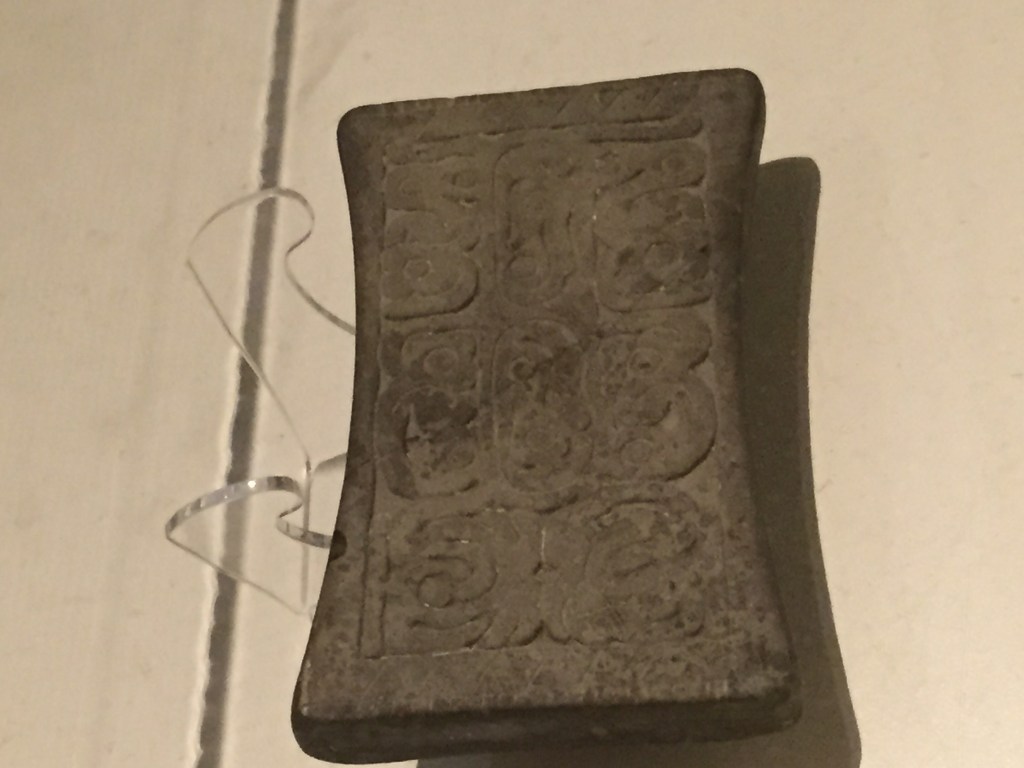
I was down at the Johnson-Humrickhouse House Museum in Coshocton the other day, just wandering through the exhibits and glancing at the shop shelves the way you do when you’re killing a little time in a small Ohio town. Something caught my eye—a sandstone replica, maybe five inches long, a few inches wide, sitting there like a forgotten coaster. The people running the place didn’t know what it was. They couldn’t put a price on it because they didn’t recognize it. But I did. Instantly. I’d carried that exact design in my head for years.

It was the Wilmington Tablet. [1]

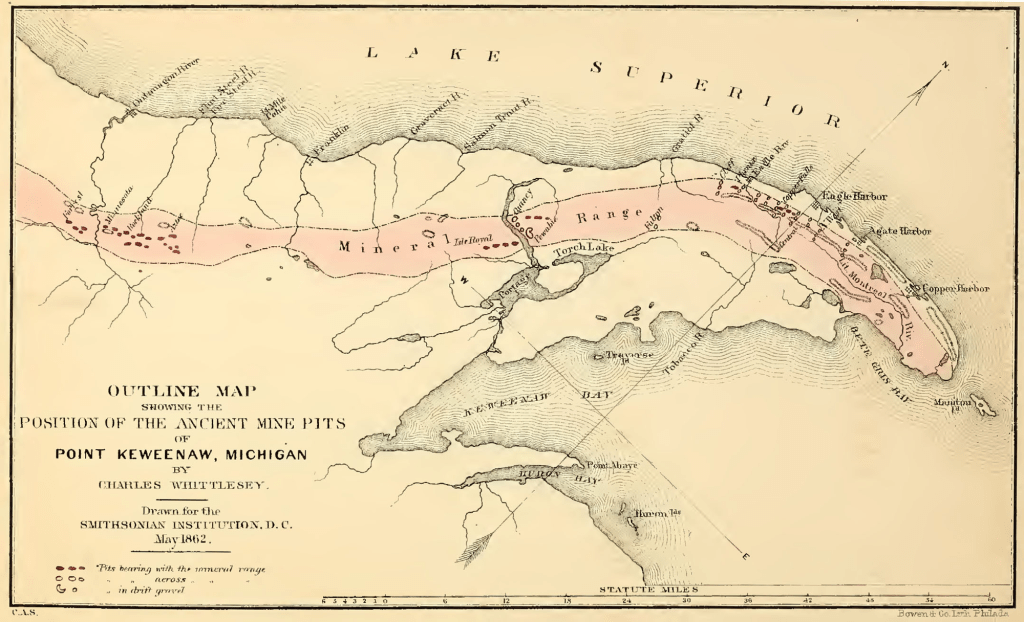
Map of the copper mines of Lake Superior

I knew it from Joseph Campbell’s Historical Atlas of World Mythology, the big, rich volumes my daughter hunted down for me one Christmas when they were long out of print and going for serious money on the secondary market. She knew how much those books meant to me. I’d been deep into Campbell in my twenties—reading at Perkins and Denny’s at all hours while other people my age were doing whatever twenty-somethings do. I even joined the Joseph Campbell Foundation back then, partly because George Lucas was on the board and I wanted the chance to talk to the man who made Star Wars and Indiana Jones. The foundation sent me the first of those atlas volumes. They were dense, illustrated treasures. When I saw the Wilmington Tablet sitting on that museum shelf, the memory came flooding back—the line work, the central figure, the sense that it was recording something far more than decoration.

The original is Adena culture, roughly 2,000 years old, recovered from a mound near Wilmington, Ohio. Sandstone. Compact. The engraving shows a powerful central form that reads to me as a bird-like or avian prayer figure—with wings or feathered aspects suggested by the flowing lines, and a sense of movement across what looks like mirrored or dimensional space. One side echoes the other. What happens here happens there. That’s the phrase that keeps coming back when I look at it. These weren’t doodles. They were records. Shamanic. Visionary. The kind of thing you carve after you’ve been somewhere else and come back with a story the ordinary world needs to remember. [2]

The Adena and the Hopewell cultures that followed them in the Ohio Valley weren’t simple hunter-gatherers scratching out a living. They built geometric earthworks on a scale that still stuns people—Newark’s great octagon and circle, Fort Ancient up the road from here, the Miamisburg Mound half an hour away. They moved materials across enormous distances: copper from the Great Lakes, mica from the southern Appalachians, marine shell from the Gulf, obsidian from the Rockies. They aligned structures to lunar standstills and solar events with precision that modern surveyors respect. And they left behind these small, dense tablets that nobody has fully decoded because the people who could read them are gone and the credentialed class that inherited the sites prefers older, safer stories. [3]

That brings me to the copper.

The Old Copper Complex along Lake Superior—Keweenaw Peninsula, Isle Royale, the Brule River country—represents one of the earliest large-scale metalworking traditions in the world. People were mining native copper there by at least 4000–5000 BC, cold-hammering it into tools, points, and ornaments without smelting. Thousands of pits are documented. One historical estimate put the total copper removed in the hundreds of thousands to over a million pounds; some older analyses floated even higher figures. Sediment cores from the region still carry the chemical signature of that ancient mining activity from six thousand years ago—copper, lead, potassium from the fires used to anneal the metal. [4]

Where did all that copper go? It traveled. Artifacts show up far outside the immediate region. But the sheer volume raises the same question that serious people have been asking for a long time: was this purely an internal trade among indigenous networks, or did the scale and timing suggest something more—visitors, traders, or knowledge moving in both directions across what we now call oceans? The Newberry Tablet, found in Michigan’s Upper Peninsula, near the old mining country, in 1896, bears a grid of characters that Smithsonian and University of Michigan experts at the time could not decipher. Some later researchers read it as possible Old World script. The Cincinnati Tablet, recovered in the 1840s from a mound right downtown where a UPS facility sits today, carries its own dense symbolic language. [5]

Mainstream archaeology has long held that meaningful transoceanic contact before the Norse or Columbus was impossible—that people here were isolated after the Bering migrations, that boats couldn’t cross, that the timelines don’t allow it. I understand the institutional reasons. Once you admit earlier or more complex movements of people and ideas, many published books, careers, and tidy secular narratives have to be revisited. The same instinct that made credentialed experts during COVID say “trust the science” while gain-of-function research happened in under-regulated labs in Wuhan and elsewhere is alive in archaeology. Protect the published record. Don’t upset the people whose names are on the big monographs. The result is the same: progress slows, anomalies get explained away or ignored, and the public gets a thinner story than the evidence supports. [6]

I see the same pattern in my own industry. Aerospace is full of brilliant PhD engineers who treat drawings from twenty or thirty years ago like sacred texts. “My name is on that print. You can’t change it.” Even when better materials exist, even when regulations have evolved, even when a simpler design would work better and cost less. Changing the print means committees, reviews, months or years of delay, and sometimes millions in added cost. Personalities clash. Egos lock in. You end up herding cats on a hot tin roof to get something built that should have been obvious. It’s not that the people are bad. Many of them are very good at what they do. But the system rewards protecting the old requirement more than it rewards solving the actual problem.

SpaceX operates differently. Gwynne Shotwell explained it plainly in a recent CNBC interview. They used to put “pushers” on the Super Heavy booster to shove the Starship upper stage away during separation—extra hardware, extra mass, extra failure points. Following what she called Elon’s algorithm—get rid of stupid requirements, get rid of the part—they eliminated them. Now they use hot staging: light the upper-stage engines while still attached, let the flames and pressure do the separation work, and divert those flames through a simple ring structure on the booster. Fewer parts. Higher reliability. Faster learning. That’s why they’re catching boosters with chopsticks at Boca Chica, and why the rest of the industry will eventually have to copy the approach or fall behind. [7]

The same logic applies to history. We don’t need to protect every old theory just because a credentialed person wrote it down in 1957 or 1972. We need to let the evidence lead and be willing to revise when better data arrives. The Wilmington Tablet, the copper mines, the geometric precision of the Hopewell earthworks, the Windover Bog People in Florida with their 7,000–8,000-year-old preserved remains—these things are not problems to be explained away. They are invitations.

I brought that replica home. It sits where I can see it. It reminds me why I wrote The Politics of Heaven and why I keep talking about these things. The book is a long treasure hunt through heaven and human history—biblical conspiracies, giants, non-human intelligences, spiritual warfare, the politics that play out beyond the veil. These tablets fit inside that story. They look like records left by people who encountered something avian, something serpentine, something that crossed between realms. Shamans under the influence of what we would now call entheogens, or in dream states, or in direct contact, carving what they saw so the next generation would remember: there are more layers to reality than the daylight world admits. The Mothman sightings at Point Pleasant, the Birdman imagery at Cahokia, the reverence for the feathered serpent farther south—they rhyme. Current UAP disclosures are forcing the credential class to talk about non-human intelligences again. Once that door opens, many older doors that were nailed shut start to creak.

There are also the old Shawnee silver legends around Clifton Gorge and Yellow Springs, right in this part of Ohio. Stories of rich deposits or hidden caches that go back to Blue Jacket’s time and earlier. Geologists have found traces. Amateur shafts and assays over the years turned up silver. The mother lode, if it exists in any serious quantity, has never been properly located. The area has changed—some of it flooded, some developed—but the stories persist because the geology allows for it and because people who lived here before us clearly knew things about the land we’re still re-learning. Another thread worth pulling. [8]

The larger point is simple. We are living through a moment when old gatekeeping structures are under real pressure—from space companies that refuse to accept “that’s how we’ve always done it,” from citizens who watched credentialed experts lie or overreach during COVID, from independent researchers and venture-funded digs that don’t need a university committee’s permission to ask inconvenient questions. The Smithsonian and the old academic apparatus still carry enormous cultural weight, but they no longer have a monopoly on attention or funding. Capitalism, properly applied, is excellent at this. It rewards people who eliminate stupid requirements and penalizes those who cling to them out of ego or job security. SpaceX is proving it in orbit. The same principle can work on the ground, in the archives, and in the dirt.

I’m not saying every fringe theory is correct. I’m saying the evidence deserves better than reflexive defense of mid-twentieth-century consensus. The Wilmington Tablet is one small, heavy piece of that evidence. It sat on a museum shelf, unrecognized, because upstream experts had told the people in charge it wasn’t important enough to feature. That’s the system working exactly as designed. It protects the published record and keeps the public from getting too curious.

We can do better. Dig the copper country properly. Re-examine the tablets with fresh eyes and better tools. Fund the dives on the underwater anomalies in the Great Lakes. Let serious, well-resourced people chase the silver legends with modern methods. And keep watching what SpaceX and the companies that follow them do—because the mindset that catches rockets with chopsticks is the same mindset that will eventually fund the archaeology we should have been doing all along.

The age of disclosure isn’t just about UAPs. It’s about everything we were told was settled that never actually was. The tablet on my shelf is a quiet reminder. What happens here still echoes there. The only question left is whether we dare to listen.

Footnotes

[1] Physical description and museum context based on Adena tablet records and personal observation of the replica. See also noahsage.com archaeological summaries.

[2] Interpretive framework drawing from comparative mythology in Campbell’s work and user analysis of symbolic avian/interdimensional motifs common in Adena/Hopewell artifacts.

[3] Hopewell interaction sphere and earthwork details from standard references on Ohio Valley mound-builder cultures.

[4] Old Copper Complex data: Martin (1995), Drier et al. (1961), and sediment studies. Estimates vary but highlight significant prehistoric extraction.

[5] Newberry and Cincinnati Tablet descriptions from historical accounts, including Smithsonian correspondence and Cincinnati Museum Center records.

[6] Parallel to COVID credentialism drawn from public records, emails, and congressional testimony on gain-of-function research and lab-leak origins.

[7] Gwynne Shotwell CNBC interview (June 2026) on Starship hot staging and elimination of pusher mechanisms.

[8] Shawnee silver legends and Clifton Gorge/Yellow Springs geology from local historical accounts and assay reports.

Bibliography

•  Campbell, Joseph. Historical Atlas of World Mythology, Vol. 1: The Way of the Animal Powers. Harper & Row, 1983 (and subsequent volumes/foundation editions).

•  Drier, Roy W., and Octave J. Du Temple. Prehistoric Copper Mining in the Lake Superior Region. 1961.

•  Lepper, Bradley T. Ohio Archaeology: An Illustrated Chronicle of Ohio’s Ancient American Indian Cultures. Orange Frazer Press, 2005.

•  Martin, Susan R. Wonderful Power: The Story of Ancient Copper Working in the Lake Superior Basin. Wayne State University Press, 1999.

•  Mills, Lisa A. “Mitochondrial DNA Analysis of the Ohio Hopewell of the Hopewell Mound Group.” PhD Dissertation, Ohio State University, 2003.

•  Pompeani, David P., et al. “Sediment Record of Prehistoric and Historic Metal Mining in Lake Superior.” EOS, 2014.

•  Squier, Ephraim G., and Edwin H. Davis. Ancient Monuments of the Mississippi Valley. Smithsonian Contributions to Knowledge, 1848.

•  Various primary accounts on Newberry Tablet (1896 discovery) and Cincinnati Tablet (1841 mound find), Cincinnati Museum Center and Smithsonian archives.

•  Barry Fell’s epigraphic works (controversial; for diffusionist perspectives).

•  Recent UAP/UFO disclosure materials: ODNI reports and congressional hearings (2020s).

•  Local histories on Shawnee silver legends, Clifton Gorge, and Yellow Springs (Greene County historical collections).

•  Shotwell, Gwynne. CNBC interview transcript on SpaceX Starship development, June 2026.

Rich Hoffman

More about me

Click Here to Protect Yourself with Second Call Defense https://www.secondcalldefense.org/?affiliate=20707

About the Author: Rich Hoffman

Rich Hoffman is an author, political consultant, and strategic advisor based in Cincinnati, Ohio, and the creator of The Politics of Heaven—a unique framework that connects biblical theology, ancient history, and modern power structures to explain how moral alignment and spiritual forces shape global events. Blending real-world political experience with deep research into archaeology, UFO phenomena, and suppressed historical narratives, Hoffman offers compelling commentary on topics ranging from ancient civilizations and the Dead Sea Scrolls to modern populist movements, paranormal continuity, and leadership strategy in chaotic environments. As the author of The Gunfighter’s Guide to Business and the forthcoming Politics of Heaven, he brings a grounded yet provocative voice to media discussions, supported by firsthand experiences and a cross-disciplinary approach that bridges science, history, and theology. For interviews, speaking engagements, or expert analysis, visit richhoffmanbooks.com or contact directly via phone at 513-307-5815 or email at rhoffman@richhoffmanbooks.com.  If you’ve seen the movie, Disclosure Day and want to talk about it and the implications of Presidnet Trump’s UAP disclosures, let me know and we can bring some color to your coverage. https://richhoffmanbooks.com/media-inquiries-broadcast-topics-and-contact-info/?frame-nonce=ad51e7ecba I do have a firsthand UFO encounter to discuss.
Outside the Box: COVID Vindication, Hidden Influences, and yes, I told everyone so

I have always lived outside the box. While most people see only the trees right in front of them—the regimented routines, the narrow daily concerns, the approved narratives—I have survived and found my greatest happiness and clearest insights almost exclusively through big-picture thoughts, concepts, and discussions. When I am forced into the box, I am extremely unhappy. Outside of it, I am pretty happy, and I have a lot to share with people who are willing to look up from the immediate and see the patterns across time. That is why, six or seven years from now, when the conversation about non-human intelligence and its long influence on human affairs becomes mainstream—partly through my own work with the book The Politics of Heaven—many will wonder how I knew what I knew back in 2020 and what I am saying now. The answer is simple: I live outside the box, where the forest is visible, and the hidden hands become apparent.

Just recently, as Tulsi Gabbard concluded her service as Director of National Intelligence in the Trump administration, she highlighted truths that those of us who have followed the COVID story closely have known for years.[^1] Gain-of-function research at the Wuhan Institute of Virology, funded with millions in U.S. taxpayer dollars through channels that included EcoHealth Alliance and ultimately NIH oversight, produced a virus that was made transmissible to humans in ways that natural evolution had not achieved.[^2] It was not a simple bat spillover in a wet market. Dr. Anthony Fauci, in his testimony before Congress, parsed words carefully and denied funding for gain-of-function research under the definitions he preferred, but the evidence from emails, proposals like DEFUSE, and the very nature of the research conducted shows otherwise. He misled the public and lawmakers. Perjury before Congress is a serious matter, and it should carry consequences. It took six years for these confirmations to gain official traction in some circles. I was calling it from day one when the virus emerged from that airport in China, and the stories began to shift. I saw it because the people inside the box were the ones constructing the narrative to hide the truth, and from the outside, the pattern was obvious.

The same dynamic unfolded right here in Ohio during the lockdowns. I was on those conference calls with Jon Husted, who served as a key point of contact trying to bridge the concerns of business owners and executives with the administration. We were asking practical questions: How do we keep businesses open? How do we protect workers and customers without destroying livelihoods and constitutional rights? Governor Mike DeWine was listening closely to his Health Director, Amy Acton—our version of Dr. Fauci in Ohio.[^3] The memos were floating around from the federal health establishment, and they knew the constitutional walls were being tested and breached. Stay-at-home orders, business closures, school shutdowns, and the whole apparatus of control were put in place under emergency powers that stretched far beyond what the people or the legislature had authorized. It was sold as keeping us safe, as if a public health official could write policy that would override the Constitution and turn the governor’s office into an extension of that vision. Now, years later, DeWine is positioning himself as the compassionate voice calling for the abolition of the death penalty, saying it is not a deterrent after all these decades.[^4] He helped craft the law as a state legislator, defended it as Attorney General, yet now on his way out, he wants to be remembered as the one who questioned it. The same man who expanded Medicaid under pressure to appear more progressive after earlier battles with public unions and collective bargaining. These politicians often find themselves in trouble because they listen to the wrong voices—the ones inside the box who prioritize short-term safety narratives and political positioning over the big picture of liberty, accountability, and human nature.

I remember the feeling in 2020 all too well. I carry firearms, as people who know me understand. I was prepared to draw a hard line if unconstitutional checkpoints or enforcement actions came to my door or my community. I was close to a bridge too far. The treatment of January 6 defendants—many held in harsh conditions for what amounted to political expression or presence—showed exactly what the machinery could do when it chose to. I love law and order and a stable society, but when that machinery is weaponized against free citizens who have done nothing wrong, it ceases to be law and becomes something darker. I was on those calls and in my writings arguing the constitutional problems from the beginning. With some influence among legislators who were also concerned, we helped prevent the worst scenarios from taking hold in Ohio. Thank God we did not end up with a situation where I or others were pulled over unconstitutionally and forced into a confrontation that could have escalated. But it was not because I was unwilling to stand. I had drawn my line. Even Rush Limbaugh, in the last year of his life, was cautioning about the overreach and the importance of listening to the right voices. I was saying it earlier, more directly, because I see where the inside-the-box crowd hides what they do not want examined—outside the box, in plain sight for those willing to look.

The costs were immense and are still being counted. More than 1.1 million Americans lost their lives in connection with COVID-19.[^5] Economic analyses projected GDP losses in the range of $3 trillion to $5 trillion or more in the initial years from the combination of the pandemic and the policy responses, with mandatory closures and reopenings being the dominant factor in the downturn. Small businesses—restaurants, gyms, shops, service providers—were shuttered or crippled, many permanently. Mental health crises surged, overdoses increased, domestic issues rose, and a generation of children suffered learning loss and social setbacks whose full measure we are only beginning to understand. In Ohio specifically, the early and strict orders under DeWine and Acton had real human and economic consequences. People died not only from the virus but from delayed medical care, from isolation, from the despair that comes when livelihoods and communities are upended by top-down decree. All of it was made worse because the truth about the virus’s origins and the proper limits of power was suppressed or attacked as dangerous misinformation by those inside the box who could not afford to admit what they had done or enabled.

Now the confirmations are emerging. Fauci and the apparatus he oversaw knew more than they let on. The research that made a non-transmissible virus transmissible to humans was real, and U.S. funding played a role. Taxpayers paid for it. Lives were lost or forever altered because of it and the subsequent cover stories. If we do not hold people accountable—if we do not prosecute perjury and malfeasance when the evidence is this clear—then we should not be surprised when the next crisis arrives, and the same patterns repeat. When you have the opportunity to confront the lie and you decline, the liar learns that there is no cost. That is not compassion. That is a weakness that invites more harm. The average annual cost to taxpayers for housing inmates in U.S. prisons runs $40,000 to $65,000 or more per person, depending on the jurisdiction[^6], a figure that makes long-term incarceration of irredeemable offenders a perpetual burden without the deterrent or finality some argue the death penalty provides for the worst cases.

But COVID is only the most recent and personal example of a much older and larger pattern. I have been speaking and writing for years about non-human intelligence and the ways it has influenced the human race—in our modern politics and in the deep politics of the past thousands of years. The creation of empires, the divine mandates claimed by pharaohs, the dreams and visions that shaped the decisions of kings and conquerors—these were not always purely human inventions or organic developments. They were often steered, amplified, or initiated by non-human intelligences operating through mechanisms of paranoia, superstition, and religious belief systems that were not the faith of the Bible but the polytheisms of the ancient world, particularly the gods of Canaan and their counterparts across the Near East and beyond. We are now discovering, through the accelerating study of UAP, that these intelligences have been present with Earth and human beings for many thousands of years. The same skepticism and ridicule I faced in 2020 when I spoke about the lab origin and the unconstitutional overreach, I face now when I connect these dots. But in six or seven years, it will be different. It will be safe. There will be correspondents and anchors discussing it who are actually non-human intelligence. There will be podcasts and series that treat it as established context rather than as fringe theory. What seems like science fiction today will be science fact tomorrow, just as the COVID truths I stated in 2020 are now being acknowledged years later.

The Book of Enoch provides one of the clearest ancient windows into this reality.[^7] That text, which I have studied and referenced for decades, describes the Watchers—divine beings who descended, took human wives, and produced the Nephilim, giants whose violence and appetites ravaged the earth. These Watchers did not stop at interbreeding; they taught humanity forbidden knowledge: the working of metals into weapons and ornaments, the use of cosmetics and sorcery for manipulation and deception, the arts of divination and the secrets of the stars and earth. This was technology and occult instruction delivered prematurely, corrupting human development and filling the world with bloodshed and chaos. The judgment of the flood followed, but the influence of these fallen ones and their offspring persisted through bloodlines, secret traditions, and the false religious systems that shaped the great powers of antiquity. The gods of Canaan—Baal with his storms and demands for sacrifice, Asherah and her fertility cults, Molech and the fires that consumed children—were not harmless myths. They were presentations of real intelligences that steered societies toward war, ritual, and control. The pharaohs of Egypt presented themselves as divine incarnations or the recipients of direct oracles from the gods, justifying their absolute rule and military campaigns. Similar patterns appear in Mesopotamian kingship, in the oracles and omens that guided Greek and Roman leaders, and in the visionary experiences claimed by conquerors and rulers across history. From outside the box, these are not random cultural developments; they are evidence of consistent non-human influence operating through the structures of power and belief.

We are seeing the modern face of this same presence in the UAP phenomenon.[^8] These unidentified anomalous phenomena are not new. Ancient texts across cultures record fiery chariots in the sky, beings of light or terror descending, and craft that defies the technology of the time. What has changed is our ability and willingness to document and disclose. Government videos released in recent years, testimony from trained observers including Navy pilots, and statements from intelligence community whistleblowers such as David Grusch have brought the topic into congressional hearings and public debate. In 2026, the push for transparency has led to concrete actions, including the release of historical records through mechanisms such as the PURSUE system under the current administration. Tranches of documents are emerging, adding to the body of evidence that something non-human has been here, interacting at times, and remaining largely hidden. Just as the lab-leak hypothesis for COVID was censored and mocked only to be treated as plausible or likely by multiple intelligence agencies years later, the NHI reality is moving from ridicule to reluctant recognition. The pattern is the same: truth that threatens existing power structures or comfortable narratives is suppressed until it can no longer be contained.

In six or seven years, the conversation will have shifted dramatically. People who today roll their eyes at talk of non-human intelligence influencing human events will be nodding along in podcasts and interviews. The age of disclosure will be in full swing. My book, The Politics of Heaven, completed in 2026 and moving toward publication, is my contribution to providing the framework for understanding what is coming.[^9][^10] It is a treasure hunt through heaven and all human history, tracing biblical conspiracies, the role of giants and demons, the reality of divine rebellion, the nature of spiritual warfare, and the population agendas that have shadowed humanity from ancient times into the present. It connects the dots between the Watchers of Enoch, the false gods of Canaan and Egypt, the hidden influences on empires and kings, and the modern manifestations in technology, media, global institutions, and the UAP question. When you understand the politics of heaven—the real power dynamics that operate behind and through earthly politics—you see why certain patterns repeat, why certain lies persist, and why accountability is so often delayed. The same intelligences that once presented themselves as gods demanding worship and sacrifice have not disappeared; they have adapted their methods to new veils and new technologies.

I was willing to risk confrontation in 2020 because I saw the pattern clearly. The fear was that it would be used to centralize power. Dissent was being pathologized. The Constitution was being treated as optional under the pretext of an emergency. Amy Acton did that in Ohio. I had seen enough of how power operates—in my younger years in the Cincinnati area and across the river in Newport, Kentucky, where I had front-row exposure to the coded ways influence and enforcement worked—to recognize when it was happening again. I was not going to be treated like a January 6 prisoner or have my community subjected to checkpoint enforcement without resistance. Thankfully, cooler heads and some influence in the right places kept the worst from occurring here. But the experience taught me again that being outside the box is not just a preference; it is a survival skill when the box is being used to hide dangerous truths.

Now the question is whether we will learn from the COVID chapter or repeat it on a larger scale. The revelations about gain-of-function and Fauci’s role are vindication for those who spoke early, but vindication without accountability is incomplete. If perjury and the engineering of a pathogen that killed over a million Americans carry no real consequence, then the system has learned nothing. The same applies to the bigger picture. When disclosure of non-human intelligence reaches the point where even former skeptics in the media and politics are discussing it openly, will we have the frameworks to understand it, or will we be caught flat-footed by the spiritual and political implications we have refused to consider? My book exists to help with that preparation. It argues that these influences are real, that they have shaped human history in profound ways, and that the age of disclosure is also an age of decision about who we are and whose agenda we will ultimately serve.

I am an older man now, but I have lived a life that kept me engaged with both the practical and the profound—from aerospace program management and the discipline of precision work, to writing books like Tail of the Dragon, The Gunfighter’s Guide to Business, and The Symposium of Justice, to my podcasting and activism on behalf of limited government, traditional values, and individual responsibility. The cowboy hat I have worn since childhood is a declaration that I stand apart from the herd. The whip is my personal symbol of discipline, precision, preparedness, and the moral agency to impose order when chaos threatens. But above all, it is the commitment to big-picture thinking that has defined my path. I criticize the regimented life not because I disdain structure, but because too many people never lift their eyes from the trees to see the forest or the forces moving through it.

Six or seven years from now, when the podcasts, news segments, and public conversations are filled with talk of non-human intelligence and its historical role, remember that some of us were saying it when it was still costly to do so. Not for credit, but because the truth matters and because being outside the box allows you to see what is coming before it arrives. The COVID chapter proved that. The disclosure chapter will prove it again. The politics of heaven are the ultimate big picture, and understanding them is the only way to navigate what lies ahead without being steered by forces we refuse to name.

The truth always comes out. It came out on the origins of COVID after six years of resistance. It is coming out on UAP and the deeper history of influence. It will come out on accountability or the lack of it. I hope that when it does, enough people will have stepped outside the box to see it clearly, to demand what is right, and to prepare for the fuller reality of our place in a universe that has never been as empty or as human-centered as the inside-the-box narrative claimed.

Footnotes

[^1]: Tulsi Gabbard’s resignation as Director of National Intelligence was announced on May 22, 2026, effective June 30, 2026, citing her husband’s health; see reports from BBC, CNBC, and the New York Times (May 2026).

[^2]: On gain-of-function research, EcoHealth Alliance, Wuhan Institute of Virology, and Fauci testimony controversies, see RFK Jr., The Real Anthony Fauci (2021) and subsequent congressional reviews and intelligence assessments on COVID origins (2023-2026).

[^3]: Amy Acton served as Ohio Department of Health Director under Gov. Mike DeWine, issued stay-at-home orders in March 2020, and resigned in June 2020 amid criticism; see contemporary reporting from the Columbus Dispatch, WOSU, and the Ohio Capital Journal.

[^4]: Gov. Mike DeWine announced June 16, 2026, that Ohio should abolish the death penalty, reversing long-held support; see Associated Press, Ohio Capital Journal, and New York Times coverage (June 2026).

[^5]: U.S. COVID-19 deaths exceeded 1.1 million; economic impact studies project trillions in GDP losses from the pandemic and policy responses. See CDC data summaries and analyses, such as Walmsley et al. (2020) in the Journal of Urban Economics and Chen et al.’s economic burden projections.

[^6]: Average annual cost of incarceration in U.S. state prisons is around $ 60,000 per inmate (median figures from USAFacts and state reports); federal prisons are around $41,000 per inmate (FY2023 Federal Register). Life sentences for serious crimes impose an ongoing taxpayer burden of tens of thousands of dollars per individual per year.

[^7]: Book of Enoch (1 Enoch), particularly the Book of the Watchers (chs. 1-36), describes the descent of the Watchers, their instruction of humanity in forbidden arts, and the birth of the violent Nephilim giants. See translations by R.H. Charles (1917) and modern editions; scholarly discussion in The Torah.com and related ancient Near Eastern studies.

[^8]: UAP disclosure developments include 2017-2023 Pentagon video releases, the 2021 ODNI Preliminary Assessment, the 2023 congressional hearings with David Grusch’s testimony, and the 2026 releases under the PURSUE system (Department of War/ODNI tranches announced May-June 2026).

[^9]: Ancient historical patterns of divine kingship and oracular influence in Egypt (pharaoh as god-king), Canaanite pantheon (Ugaritic texts, Baal Cycle), and biblical accounts (Genesis 6, Numbers 13, Deuteronomy on Canaanite practices). See Biblical Archaeology Review archives and standard references such as The Oxford History of the Ancient Near East.

[^10]: Broader context on spiritual warfare, giants, and population themes in biblical and extra-biblical literature; see also the author’s forthcoming The Politics of Heaven (target 2027) for an integrated treatment that connects ancient influences to modern geopolitical and technological developments.

Bibliography for Further Reading

•  Charles, R.H., trans. The Book of Enoch. London: Society for Promoting Christian Knowledge, 1917 (and subsequent reprints).

•  Elizondo, Luis. Imminent: Inside the Pentagon’s Hunt for UAP. New York: William Morrow, 2024.

•  Hoffman, Rich. Tail of the Dragon. (Author’s earlier work on personal and philosophical themes).

•  Hoffman, Rich. The Gunfighter’s Guide to Business. (On resilience, problem-solving, and imposing will on circumstances).

•  Hoffman, Rich. The Symposium of Justice. (Philosophical and justice themes).

•  Hoffman, Rich. The Politics of Heaven. (Forthcoming 2027; manuscript completed 2026, exploring biblical conspiracies, giants, demons, spiritual warfare, and population agendas across history).

•  Kennedy, Robert F., Jr. The Real Anthony Fauci: Bill Gates, Big Pharma, and the Global War on Democracy and Public Health. New York: Skyhorse, 2021.

•  Biblical Archaeology Review. Multiple issues on ancient Near Eastern religion, giants/Nephilim debates, and archaeological context for biblical texts (ongoing since 1975).

•  Office of the Director of National Intelligence. Preliminary Assessment: Unidentified Aerial Phenomena. June 2021 and subsequent UAP reports.

•  Various 2023-2026 congressional hearings and whistleblower testimony on UAP (Grusch et al.).

•  Academic and government analyses of COVID-19 economic impacts: Walmsley, Terrie et al. “The Impacts of the Coronavirus on the Economy of the United States” (2020); Chen, Simiao et al. economic burden studies (2021); CDC COVID Data Tracker summaries.

•  USAFacts and Bureau of Justice Statistics reports on incarceration costs and prison populations (2023-2025 data).

•  Ancient primary sources: Ugaritic Baal Cycle texts; Egyptian royal inscriptions and Pyramid Texts; biblical texts (Genesis 6, Enoch references in Jude and 2 Peter).

•  Additional context on Canaanite religion and its influence: Day, John. Yahweh and the Gods and Goddesses of Canaan. Sheffield Academic Press, 2000 (and related scholarship).

Rich Hoffman

More about me

Click Here to Protect Yourself with Second Call Defense https://www.secondcalldefense.org/?affiliate=20707

About the Author: Rich Hoffman

Rich Hoffman is an author, political consultant, and strategic advisor based in Cincinnati, Ohio, and the creator of The Politics of Heaven—a unique framework that connects biblical theology, ancient history, and modern power structures to explain how moral alignment and spiritual forces shape global events. Blending real-world political experience with deep research into archaeology, UFO phenomena, and suppressed historical narratives, Hoffman offers compelling commentary on topics ranging from ancient civilizations and the Dead Sea Scrolls to modern populist movements, paranormal continuity, and leadership strategy in chaotic environments. As the author of The Gunfighter’s Guide to Business and the forthcoming Politics of Heaven, he brings a grounded yet provocative voice to media discussions, supported by firsthand experiences and a cross-disciplinary approach that bridges science, history, and theology. For interviews, speaking engagements, or expert analysis, visit richhoffmanbooks.com or contact directly via phone at 513-307-5815 or email at rhoffman@richhoffmanbooks.com.  If you’ve seen the movie, Disclosure Day and want to talk about it and the implications of Presidnet Trump’s UAP disclosures, let me know and we can bring some color to your coverage. https://richhoffmanbooks.com/media-inquiries-broadcast-topics-and-contact-info/?frame-nonce=ad51e7ecba I do have a firsthand UFO encounter to discuss.
There Will Never Be Peace with Hamas: Releasing hostages that should have never been captured in the first place

After Trump posted support for Douglas Murray’s book, On Democracies and Death Cults: Israel and the Future of Civilization, I bought it quickly and read it because I wanted to know what Trump’s position on these hostage negotiations was with Hamas.  There are 48 total, with only 20 still alive, but none of them are in good shape.  Trump was wise to point to that particular book as an example of his policy on the issue, because it can be confusing.  But here’s the thing: it’s nice to do everything you can to save those poor people who have been hostages to Hamas.  And to return those bodies to their families.  But the solution is a deep one that I think will require much worse than Israel wants to do to all these Palestinian neighbors.  There is no way to achieve peace, and a two-state solution will never be realized.  One side will have to eliminate the other, and that will be the end of it.  That is the only way at this point.  The foundations of the religions at play are meant to provoke each other into conflict, and this is serving a greater evil that is far at work beyond normal sentiment.  There is a real lust for the death of the people involved that looms in the background.  And just for the record, when people ask me about AI and if I use it.  The answer is no, there is no AI program in the world, and I don’t think there ever will be, that can write the way I do.  It can attempt to copy my style, but it can’t think in the way I approach writing my articles.  AI could not write this article from scratch because it would require it to exceed human capacity to do so. To answer the question, no, I don’t use AI.  I do it the old-fashioned way because that’s the only way it works. 

I say all that because I think there is only one solution, especially after you read Murray’s book.  I’m not particularly impressed with Murray as a person; he is way too progressive for me and way too accepting of drug use.  There was a lot of drug use going on at that Nova dance party in southern Israel when Hamas ruthlessly attacked them over their Gaza Strip war.  Gaza is one of those positions where Israel tried to play nice and let the Palestinians live in some co-existence.  However, the terrorist mindset in the region simply cannot and won’t do it.  And they never will.  The minds at play are poisoned with hate, and we have to deal with that before we do anything, which is a radical leftist issue that is global.  It plays out beyond the façade of religion in the Middle East, as a validation between indigenous people and their territorial captors, as is the issue over the creation of Israel to begin with.  The primary assumption is that the Jewish people should not exist.  And the creation of Western Civilization behind biblical history should never have happened.  I know a lot more about this issue because I am very interested in the archaeology of the region and the politics on dig sites. At the most fundamental level, the situation is irreparable.  Islam is determined never to admit that there was ever a First Temple period, and they work really hard to make sure that science can never find anything from that period, which predates Islam by almost 2000 years.  There is a significant amount of historical revisionism occurring to validate their current political stance, which is unacceptable. 

Israel itself is way too progressive; the drug use at that festival was not appropriate for the young people who were slaughtered for no reason.  And the way Bibi Netanyahu has been untrustworthy as a leader of Israeli politics, claiming power, reveals how fractured the government really is at the highest levels.  The solution to it all is a much more conservative government and people far less inclined to liberal ideas.  The raids into border towns like Nir Oz, which had Hamas raiders going door to door and ripping out people from their homes and killing them ruthlessly, would not have happened if Israel had more guns in the hands of private citizens.  To answer the question about why such a thing as this doesn’t happen in the United States, it is because of the mass gun ownership that we have.  The same terrorists, using different masks, attack, and they kill ruthlessly and often.  Consider the recent situation involving Charlie Kirk.  It’s the same kind of leftist evil that is corrupting so many young people; there isn’t much difference between Charlie Kirk’s killer and the young people of Hamas who ruthlessly killed so many at the music festival and raided the homes of innocent people at Nir Oz.  But the incident cannot be widespread in America because every home is so well armed with personal firearms.  Terrorist elements would love to go door to door, raping and killing people in the suburbs of America.  However, they can’t because people can retaliate if the government fails them.  And in Israel, the government failed the people.  They should have known an attack was coming.  It took them too long to respond.  And it all could have been solved with wider gun ownership.  So Israel and its way-too-democratic government are too liberal to start with, which has caused them many of the problems they do have.  Without the United States, Israel would not exist, and everyone knows it.

The solution to the problem is not at the level of government.  The United States can’t get drawn into fighting Israel’s battles for it.  If we are going to say Israel should exist because God wants it to and we want to serve God, then let’s get serious.  Send in private contractors to wipe out Hamas wherever they are, pay them $100k per head, and hunt them down like dogs.  The solution to the violence is a lot more violence by private citizens.  I would volunteer for that.  I’d be happy to go and be a private contractor by going door to door where Hamas lives in Gaza, and other places, and just getting rid of them.  Forget about the armies, those are too structured.  Just take the violence to the enemy with profit-minded contractors, and beat the political left with their own game of terror, and stop playing nice.  I think it’s commendable that Trump is trying to secure the release of those hostages.  It’s a reasonable effort to try to make peace.  But, to really solve the problem, Hamas has to be hunted down and destroyed where they sleep.  That is the only way.  All the Hezbollah activity in the region, and the funding support that comes from Qatar and Iran, are just too deep.  When books like Mein Kampf and The Protocols of the Elders of Zion are as popularly sold in book stores in that region as they are, there is a much deeper evil at work for any logical negotiations.  And that evil wants the blood of humans for its personal consumption.  The only way to deal with it is to flood it with the blood of its own supporters.  Not the innocent.  And that is the only way.  I’m happy Trump is willing to try.  But the only solution is a lot of blood from the bad guys.  And the best definition of good in all human history has been defined by the Holy Bible.  And that’s the foundation of the entire fight.  You can’t make peace with that evil.  It has to be destroyed, and nothing else.

Rich Hoffman

Click Here to Protect Yourself with Second Call Defense https://www.secondcalldefense.org/?affiliate=20707

‘Sketch’ is a Great Movie: Disney goes against Trump supporters

You would think that Disney would have learned some hard lessons about its role in the world and the financial problems it is finding itself in.  However, I don’t like discussing negatives all the time, because a fantastic movie called Sketch hit theaters a few weeks ago and is a sign of many good things to come from Angel Studios, showcasing a much different movie world on the horizon.  The Hollyweird crowd has lost all its influence and power and is on a dramatic downward trend.  Sketch was an excellent film that was on limited release, so it’s not a box office titan, unlike the way Disney distributes films. However, coming off the success of the fantastic Chosen series, Angel Studios, I think, is fair to say, is replacing the role Disney used to play with families.  I thought Sketch reminded me of a modern version of E.T., Goonies, or even Gremlins, movies produced by Steven Spielberg in his prime.  And it shows that markets determine success, not PR firms and lawyers who run these big studios these days.  The CEO of Disney came a bit unglued this past week, doubling down on his decision to release films that continue to fail to excite the public as they once did.  The recent movie, Fantastic Four, which I thought was pretty fantastic, has not performed well.  It will be fortunate to collect $500 million, half of what was expected to be made, and that is because Disney has lost the trust of the public. Bob Iger now sees the problem I have been pointing out for a long time, much more clearly.  It’s safe to say that his hopes for the upcoming movie Doomsday are in serious trouble because all the films building it up are not performing well at the movie theater.  

It just goes to show how little the entertainment industry knows about the psychology of the movie-going public.  And I love this topic because movies are something most everyone can relate to.  Most of us watch them whether on television, streaming services, or at the movie theater.  So, in many ways, buying a movie ticket, as I have always seen the experience, is like voting.  People vote for their values by spending money.  But there was a communist movement, as outlined by Cleon Skousen in the famous book, The Naked Communist, to take over the movie studios and the message that they broadcast to the world, and that has undoubtedly happened to Disney through the mask of woke culture.  Now that people have seen just how much Disney resembles the Democrat Party and how anti-Trump they have been, they have stopped spending money on Disney products and have turned toward other entertainment options, such as those provided by Angel Studios.  Currently, they are not financially comparable, even though they may show movies side by side.  I think the movie Sketch cost around $ 3 million to make, and it is considered very profitable, having doubled that amount in returns.  Whereas something like the latest Fantastic Four movie costs half a billion dollars by the time it’s made, and some media is created for it.  And it’s poised to break even, maybe.  So it’s not apples to apples, but more like apples and apple sauce.  However, the message is clear: people are leaving Disney and seeking alternatives, which is evident in their declining park attendance as well.  And in anger over their bad decisions to support woke agendas as an entertainment studio, Bob Iger and the stars of Fantastic Four, like Pedro Pascal, have been complaining about Trump supporters, which didn’t help their case.

Disney assumed that people would support whatever they put together because the public had to.  And that is not the case.  Trump supporters have taken themselves off the grid because they dislike the products that Disney has released, or even traditional cable.  I have been talking about emerging streaming services such as Truth Social, Trump’s personal social media platform, and they have good television that breaks the cycle of traditional cable services, leaving CNN, MSNBC, and all the networks struggling to maintain their audiences because they are all fleeing to outlets they trust more even if they are brand new.  Such as Angel Studios, which earned its audience with great projects like The Chosen.  And successful films at the theater, such as The Sound of Freedom.  However, it’s not just Disney; Warner Bros. has been more successful and less woke than Disney, as evidenced by its box office performance.  However, their recent update to Superman didn’t perform well at the theater, falling well short of expectations, which James Gunn was very dismissive about.  Superman is all about “truth, justice, and the American Way.”  Not the “human way.”  The world looks to America to be a beacon of hope, and that’s what the world wants out of American entertainment.  They don’t wish to communicate messages that put out the fires of hope.  And this Superman just wasn’t that “super.”  He was an all-too-human global citizen, and audiences rejected the premise.  It might have been a pretty good movie, just as Fantastic Four was.  However, the messaging was off-target for the intended audiences.  And when Bob Iger is mad, it’s because he thought he understood elements of market trends that he didn’t.  For all the same reasons people voted for Trump, they also vote with their market dollars on where to spend their money on amusement parks or movies. 

Bob Iger and many others believe that people go to see movies because they like the actors, such as in the upcoming Doomsday with Robert Downey Jr. They are investing massive amounts of money in these actors, thereby inflating the budgets.  There will be approximately 100 cameo actors in the upcoming big Marvel movie.  But the gamble on Pedro Pascal is scaring everyone at the Mouse House because it hasn’t turned out the way they planned.  I personally liked Pedro Pascal in The Fantastic Four.  I think he is good as The Mandalorian.  But he’s too woke to replace Mel Gibson and Bruce Willis as the new Hollywood leading man.  Because Hollywood thought it controlled the message, and that people loved the actors, but that is not turning out to be true.  A movie like Sketch features a cast of actors, none of whom are stars, and yet the movie still performed well for its small audience.  It will stream well, and people will remember it far longer than these Marvel movies.  And rather than learn their lesson, Disney is only digging deeper, indicating that they are going to double down on their woke agenda.  And that’s the problem.  Nobody cares about their product, and the more they push an openly gay agenda, which they did in The Eternals, people will drop them as an entertainment option, and that includes the $20k vacation to Disney World.  Eternals, with its openly gay scenes, was the dagger that halted Marvel’s successes at Disney.  The longer they avoid addressing that issue, the more financial damage they will incur.  When a studio and its actors go against the political trend of a nation like America, they can’t survive.  To fill the void of family entertainment left behind by Disney, there is the wonderful Angel Studios, which is producing great entertainment.  Sketch is just one example.  And for Bob Iger, a hard lesson that he will learn too late: the market is in charge.  Communist leaders are not.  And studios, if such assumptions capture them, will lose money in that marketplace because of free choice. 

Rich Hoffman

Click Here to Protect Yourself with Second Call Defense https://www.secondcalldefense.org/?affiliate=20707

Sydney Sweeney Has Great Jeans: America’s newest sweetheart

When Steve Bannon is talking about the primal scream of a dying regime, this is what he’s talking about: the social reaction to the Sydney Sweeney American Eagle Jeans ad.  It has been astonishing, to say the least, to see just how much throwing water on this wicked witch has melted the political left.  Until a few days ago, I had no idea who Sydney Sweeney was.  From my perspective, even looking at her as a sexy American sweetheart is too much.  She’s a few years older than my grandkids are now, so I see a kid in her.  Not a sex object.  However, I have some experience in public relations and marketing. And I have known A-list celebrities and their agents up close and personal, and I have to say, ahead of this new movie release for ‘Americana’ which Sydney Sweeney is in and is a kind of Tarantino movie that I think I’m going to like quite a lot, this young lady made a power move that is going to make her the next Bo Derek and or, Brooke Shields.  Her timing on coming out as a Republican, and shooting guns on TikTok, couldn’t have been better, or more coordinated.  This is an intelligent young lady.  And American Eagle and her agent, manager, and personal advisors knew what they were doing to go as anti-woke as possible with the marketing of these blue jean ads that have so many diabolical leftists so upset.  I love it because, strategically, it exposes something that I have known for a long time and was ripe for someone to take advantage of.  But watching Sydney’s Saturday Night Live monologue from a year ago, this model for all things MAGA wasn’t so obvious.  Now that Trump has won the election and America is certainly headed in a much different direction than the Joe Biden administration anticipated, Sydney Sweeney is poised to become not just America’s sweetheart, but also a mega-explosive model and actress on a scale nobody has seen in a long time.  And I think she knows exactly what she is doing, and I admire her a lot for doing it.

Bo Derek comes to mind when I think of Sydney Sweeney. She gained fame from the movie ‘10’, which propelled her to Hollywood fame in ways that everyone from that period remembers.  But Sydney Sweeney is talented in ways that Bo Derek never could be.  And I make that comparison because both women have large breasts, and they don’t mind showing them off.  Sydney Sweeney has been known up to this point in her young career, at only 27 years old, to enjoy doing nude scenes.  So, she would seem very unlikely to become the spokesperson for the MAGA movement and have President Trump very excitedly endorse her from the White House.  And as long as she was showing her boobs in movies and having very provocative sex scenes in her acting profession, the political left didn’t mind at all.  They put their arm around her and were entirely ready to endorse her as just another actress who was willing to get naked to get film roles.  But like Bo Derek, Sydney Sweeney is a much deeper person that people fell in love with.  The sexiness gave a cover story to the real issue lingering beneath the surface that nobody wanted to see past their boobies, and that was that they were conservative women, and America loves women who are conservative and not afraid to show it.  And Sweeney has fully embraced that conservative appeal as a marketing move she is ready to stand behind, and exploit the woke agenda as one of the first wrecking balls to it in the entertainment industry.

To say that this American Eagle ad for Sydney features great jeans is an accident that coincided with the release of one of the most explosive films she happens to be in is not to understand the industry.  I would say there are hundreds of people behind the scenes who are in on the Sydney Sweeney decision-making process.  There are numerous agents, managers, producers, financiers, and business types who all have a few cents to add to what a fashion model does and when they do it, in an attempt to exploit a new market trend.  And American Eagle decided they wanted to be the anti-Bud Light commercial by putting a very hot and willing young woman into their ad campaign, and Sydney Sweeney just made the Americana movie that spins on its head a lot of social assumptions that we make for a movie set in South Dakota, one of my favorite states.  A lot is happening here that is a direct reaction to Trump’s win back in the White House, and it’s much bigger than just jean sales.  It’s a decision and a gamble that will pay off in a big way for Sweeney.  But it’s also a market indicator for where the entire entertainment industry is headed.  And the goal from the left was to destroy American ideas about beauty and exceptionalism.  And here was Sydney Sweeney making a power move to dominate the landscape at just the right time, and to do it boldly, to the point where she has everyone talking about her.  Like I said, this is a lot more complicated than bare breasts and sex scenes.  It’s about the conservative values under it all that men and women both find irresistibly attractive, and since she has been willing to put her arm around it, it exposes a significant weakness that the political left has always had, and they hate her for it.

Sydney’s parents went bankrupt trying to support her acting career, and they divorced.  And that looks to have had a significant impact on her, so she isn’t planning to waste her opportunity.  And an opportunity that was only given to her because she was gifted with big boobs and a pleasant personality.  But women can’t live very long on just looks, so she is looking to make a much bigger splash, and this move by her is a pretty smart move, that politically exploits something that leftists have tried to destroy in American culture.  And I’m saying that this new movie, Americana, is going to be for Sydney Sweeney what ‘10’ was for Bo Derek, and culture in general.  It is going to capture America’s hopes and dreams at a time when Trump is in the White House, and it will be used to significant effect.  And for Sydney Sweeney to stand firm amid all this criticism, she will see great things happen because of it.  We all will.  We’re not just talking about a young lady who looks good in American Eagle Jeans and the stock price of that company exploding in value.  We are discussing the values of the human race as a whole, as only American culture can display them.  And Sydney Sweeney has gone from an aspiring actress wanting to repay her family for believing in her desire to become an actress, to taking on a political movement and essentially changing the world in ways that few have ever accomplished.  In this case, it has always fallen a little short.  But with Sydney Sweeney, America’s new sweetheart, something much better has happened.  A spell of corruption and hate has been broken, and she was the one who first broke it.  And people are going to be in for quite a treat from her over the next decade.  What good timing, and tremendous guts on her part. 

Rich Hoffman

Click Here to Protect Yourself with Second Call Defense https://www.secondcalldefense.org/?affiliate=20707

‘Revenge of the Sith’ Made 25 Million Dollars: Its all about the artist, not the product

My son-in-law said it best when we were on a family vacation in Florida and attending the Disney Parks, as we were at the Star Wars Land they have at Hollywood Studios, that Disney didn’t buy an entertainment franchise, they purchased a religion.  And they never understood it.  And you can see that with the new films compared to the ones that George Lucas directed himself, who created the franchise and sold it in 2012, with good intentions.  But honestly, and I hate to say it, Star Wars would have been better off if Lucas had never sold it to Disney.  I get why he did; he had many employees, wanted them to have something to do, and wanted to retire.  But Disney screwed up a lot with their woke politics and they significantly reduced the brand of Star Wars with their ownership.  And it has been a disaster.  Some good things happened, like their theme park presence.  But Bob Iger never understood what Star Wars was, the writers of the new movies had no idea what they were doing, and the films themselves were filled with woke ideas that modern audiences have soundly rejected.  And I have to say all that because we just recently had the now-famous holiday of May 4th, and I noticed a few things that were certainly interesting.  Primarily, the old movie Revenge of the Sith was re-released in theaters for a limited run to celebrate its 29th anniversary, and it made a really good 25 million dollars over the last weekend of April 2025.  It’s a movie that is free on television just about anytime that anybody wants to watch it, yet people were so hungry for Star Wars that they returned to the theater to see the movie one more time in actual movie theaters that says a whole lot about where people are and how valuable Star Wars is to our modern culture.

I wanted Disney’s ownership to succeed and Star Wars to be available to a new generation.  But Disney certainly screwed that up, what they have contributed to Star Wars was woke garbage that was astonishingly bad compared to what George Lucas directed.  And other people obviously feel the same way.  They aren’t rushing out to see the new Star Wars stuff that Disney produces. They rushed out to see the old movie and were quite celebratory over it.  I understand that there is real value in the old Star Wars movies. It is truly fascinating to see how corporate institutionalism, with all the money to work with, could not come close to duplicating that original magic.  But people didn’t let that stop them from celebrating the new Holiday, Star Wars Day, on May 4th, as in “May the 4th be with you.”  It was everywhere on May 4th 2025, from all kinds of surprising parts of society, especially at baseball games that now openly support the Star Wars Holiday, and people seem to really like it.  Even sports jocks like to brag about their Star Wars knowledge and are not afraid to geek out on May 4th dressing up as their favorite character.  And regarding Revenge of the Sith, it is stunning to hear how people today love that movie so much.  I remember when it came out and how people talked about it then, as well as the prequels of George Lucas in general, and I never would have thought that that movie would hold such a dear place in people’s hearts. 

But that is a testament to just how bad things are these days.  I knew it was bad when Disney got rid of the canon that George Lucas had built, leading up to the Disney merger by rewriting the history in novels, comic books, and then in the movies.  That was the biggest mistake that Disney could have made.  I said it at the time because my wife and I had personally read hundreds of Star Wars books, all of them ever produced at that time.  We tried to read some new ones under Disney ownership and couldn’t do it.  Disney was too woke to tell the story of Star Wars, a struggle for freedom from tyranny in deep space, a long time ago, and very far away.   Disney was incapable of getting it, and the story group at Lucasfilm was way too San Francisco progressive and anti-Trump to continue what George Lucas started.  That was obvious this year when Trump was back in the White House and stated how he wanted to make Hollywood great again.  Well, it starts by understanding what made it great to begin with, and clearly, people like what George Lucas did with Star Wars much more than what Disney was able to do with it.  And a sad wedge has now been introduced to the fanbase.  But this year, as opposed to the past, people are openly embracing the old Star Wars much more than just holding their nose to support the new stuff. And those very successful box office numbers for Revenge of the Sith are exciting.  People are hungry for good traditional values in the Star Wars movies.  But Disney never could get their arms around it. 

It hasn’t all been bad; a few Star Wars shows like Andor have been good.  Ahsoka is a pretty good show.  There have been a few movies there and there, like Solo and Rogue One, that were good.  But most of it has been garbage, including the most recent sequel movies.  You wonder how a bunch of people could sit in a room and, by committee, produce such garbage.  But George Lucas used to write stories in a notebook and with a pencil, a very anti-technology thing to do for one of the most technology-driven enterprises ever attempted.  It has been a lesson in arrogance, where institutionalism thinks it is superior to individual achievement.  However, with all that Disney had as resources, they could not do better than George Lucas did, all by himself.  Of course, thousands of employees made Star Wars great, but the vision started and ended with one guy.  And that’s what people wanted to see: the interpretation of an artist and their work.  Not some corporate collection of nonsense.  It’s like seeing a Picasso painting and thinking about the guy who made the art, as opposed to the same image produced by a museum committee trying to duplicate the genius of a Picasso painting.  People have voted; they love the old George Lucas stuff, but they don’t like the new stuff.  You don’t see people going crazy over the newly made Disney material.  But people will go to the movies dressed up to watch a free film that has been out for 20 years, because George Lucas, the artist, made it.  And they will spend time and money on that while rejecting the much more expensive new stuff.  And there is a lesson for the entire industry on May 4th, Star Wars Day.  Corporate collectivism does not beat individual merit, in any case.  Time in mass culture has proven that, overwhelmingly.  The artist is what people invest in, not the product or art itself.  And there can’t be any good Star Wars without the artist who created it, being the center of the conversation.  It was an experiment in entertainment that has shown a true trend that everyone should learn some hard lessons from.

Rich Hoffman

Click Here to Protect Yourself with Second Call Defense https://www.secondcalldefense.org/?affiliate=20707

Elon Musk Has Found His Szechuan Sauce: Turning a One to a Zero

Mar-a-Lago has been the center of American politics, as I said it would be on day one of removing Trump from office in 2021, since then.  And it has replaced the White House as the place to be and do business with America.  But what I never thought would happen would be that I would ever see Elon Musk, the wealthiest person in the world and poised to become the first trillionaire, sitting at the big kid’s table on Thanksgiving with the Trump family, President Trump, Barron, and Melania, dancing to the YMCA song.  I thought it was an extraordinary historical event, maybe one of the most significant events ever, and I have seen many things.  For context, this particular Thanksgiving event had been building all this time, since Trump left office, or was pushed out, and was now culminating into this fantastic celebration where so many improbable things emerged in that wonderful moment captured on video with Trump backslapping Musk like a little boy, or dear old friend and having essentially two of the most powerful men in the world be not rivals with each other, but soul mates, and deep friends who know their place in history, and are happy about it.  These kinds of things never go together, and if Trump had not taken that bullet to the face and lived, this Thanksgiving celebration never would have happened.  It only happens in cases such as when Jesus Christ was killed and came back to have dinner with his disciples, a kind of post-death celebration of eternal life.  This is the best Trump we could have hoped to have gotten, and it came with so many improbable resolutions that the world is uniting around Trump for all the reasons that they were all so wrong.  Suddenly, everything reversed course and swung in the other direction.

As I watched Elon Musk sitting there obviously enjoying his newly adopted father, which is what Trump has become to him over these last few months, I was thinking of a Rick and Morty episode that I like a lot where the character Rick Sanchez destroys the entire Federation Government by changing a 1 to a 0 in their galactic financial markets just because Rick wanted to get the dipping sauce from McDonald’s that was part of a Mulan promotion called Szechuan Sauce.  I don’t know if Elon Musk is the most intelligent person on earth, the way that the character Rick Sanchez is the most intelligent human being in the entire universe.  I have known people like Elon Musk regarding intelligence, and if they turned the mirror just a little bit, they could be just as wealthy.  Those kinds of social measures do not seem to matter to Elon Musk.  To him, money is just a tool so he can build and do extraordinary things.  And for the MAGA movement, he has become the replacement for George Soros, who used to fund all those left-leaning causes.  Elon Musk, after that assassination attempt, admired Trump so much that his brilliant mind was able to see something emerging that he needed in his life, and that was to overthrow the kind of government that was keeping his SpaceX company from doing what it needed to do, and that is to carry humanity to space.  This transformation with Elon Musk is something I pointed out almost two years ago when I saw his book recommendation for Johan Norberg called The Capitalist Manifesto: Why the Global Free Market Will Save the World.  I reviewed that book and pointed out at that time that something compelling was happening when a person like Elon Musk was stepping away from the World Economic Forum and stepping in to open support of global capitalism. 

Everyone disagreed with me, and they wanted to argue about why Trump would never be back in office and that Elon Musk was an asset to China because of his relationship with Tesla, making factories there, and having to dance to the strings of the communist government.  He was also the poster boy for Klaus Schwab at the WEF.  I saw this all happening when I was introduced to Vivek Ramaswamy at an event right before the release of his book, Woke Inc., by the wonderful Nancy Nix, Butler County’s fabulous auditor.  Maybe someday Vivek will tell a story about what we discussed, but even then, it was becoming clear to me where the world was heading, and people with their finger on it, like Trump, Vivek, Musk, and others, were crawling out into the light of day.  Books like Vivek’s and Norberg’s could not be written and not shatter an established order because the only reason that order had power was through deceit.  And now people were talking about these kinds of things.  You never know how little things end up becoming big things.  That’s why you do everything. 

And I was the only one saying that the polls were lying and that Kamala was never ahead.  Only Rasmussen was showing a contrary election that showed that Trump could win.  But I was even more aggressive than them because I looked at a more significant trend that nobody else seemed to see, not even Elon Musk.  But once he did see it, as Trump was nearly assassinated, everything from there just clicked into place, and perhaps the most improbable event in all human history happened on Thanksgiving down at Mar-a-Lago with Musk dancing to the famous YMCA song while sitting next to Trump for Thanksgiving Dinner, 2024.  Musk was happy that he found his Szechuan Sauce.

I know the world will catch up, but nobody will see what has hit them in a few years.  The way all this added up to this Thanksgiving event was a change for the entire human race, and it was so good that it almost made up for all the misery we have experienced over the last 8 years.  The first few years of Trump were great, but we learned many ugly truths about our world and its governments that moved out of conspiracy theory and into observable facts.  It happened fast and will continue to accelerate at a mind-bending pace.  And Musk knows it.  He had been trying to solve this engineering problem: how can you make the human race a space-fairing society?  Well, you have to build a political system that can accommodate it, and first, you have to start with world peace.  How can you do that, support the guy who they were trying to kill, and essentially change a 1 to a 0 and collapse their entire world order so that we can get a colony of over a million people on Mars within a few years?  Musk solved his engineering problem, and he found in Trump precisely what he needed, and he was so happy about it that he hadn’t left Mar-a-Lago since the election of 2024.  While everyone was celebrating, we saw just a glimpse of what the world could be, and it was very positive and happening in such a way that nobody saw it coming.  Except for me, nobody called it the way I did out of all the media markets.  And personally, because of all the grief that I took over everything I had been saying and continue to say, seeing Trump and Musk together on Thanksgiving was the best gift I could have received.  In this case, it’s a gift that keeps on being given.   Musk turned the world from a 1 to a 0.  And I love it!

Rich Hoffman

Click Here to Protect Yourself with Second Call Defense https://www.secondcalldefense.org/?affiliate=20707