

I never set out one morning to rewrite history. History is already written, mostly by people who stop digging the moment the official story feels comfortable enough to protect careers and funding streams. The deeper problem is that the accepted version of the past is often assembled by those who never ask the next layer of “why.” In my professional life, I have spent decades sitting across tables from PhD-level experts who sandbag information to protect their own positions. You learn quickly that the only way to get at truth is to keep asking the next question after the comfortable answer has been delivered. I applied that same method to biblical studies, and the formation of American culture, and the rabbit hole opened wider than I expected.
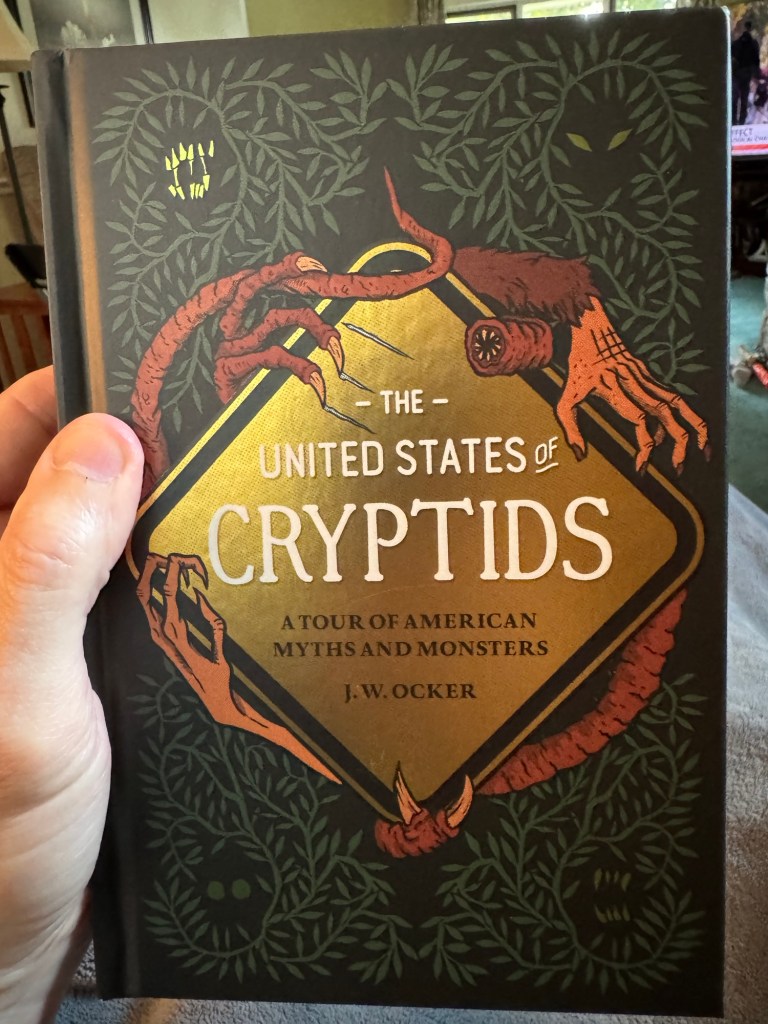
What began as an effort to explain why the Constitution is a moral document rooted in biblical principles—work I first sketched in The Gunfighter’s Guide to Business—grew into something larger. The Bible is not merely a religious text for Christians and Jews; it is a civilizational blueprint. Its commandments and narratives shape cultures that produce durable wealth, ordered liberty, and the capacity for self-government. Once you accept that premise, the next question becomes unavoidable: what was the actual historical environment in which those commandments were given, and what older currents were already flowing when Abraham stepped onto the stage? That question forced me to travel, read, and dig. Over several years, I spent roughly half a million dollars of my own money on research travel—museums, remote sites, late nights in hotels far from home, books read on airplanes and beside campfires. The resulting manuscript is The Politics of Heaven. It is not a polite academic summary. It is an attempt to connect dots that mainstream archaeology and history have preferred to leave disconnected.
In the middle of July 2026, Timothy Alberino sat with Joe Rogan for nearly three hours. I watched the episode while camped on South Bass Island in Lake Erie with family, RV parked among several campsites we had claimed for a week. My daughters were cooking breakfast. The ordinary noise of daily life—hardware-store conversations, Costco recognition, local political pressure—had been left behind on the mainland. That distance mattered. The conversation Alberino and Rogan had would have been confined to late-night AM radio or Coast to Coast a decade earlier. Now it was mainstream, carried by the largest podcast in the English-speaking world. Alberino spoke of giants, of the Book of Enoch, of non-human intelligences that have interacted with humanity across millennia. He recounted the long-circulating story of a Kandahar giant—an enormous humanoid encountered by American troops in a cave in Afghanistan, killed after it attacked, its body placed on a pallet and flown out. The remains, according to the account, were taken to Wright-Patterson Air Force Base. I live a short drive from that base. I have spoken over the years with men who held clearances there. They smile, lower their voices, and say that reverse-engineering of foreign technology has always been the cover story. Whether the technology is Russian, Chinese, or something that violates our airspace from farther afield is left for the listener to decide.

That interview did not surprise me so much as it confirmed a trajectory I had already been following. Alberino’s work and mine are not identical, but they occupy overlapping ground. He has spent more than a decade knocking on the door of the giant question and the Watcher tradition. I have been following the same scent through Ohio’s earthworks, Florida’s bogs, Malta’s temples, and the copper pits of Lake Superior. The difference is emphasis. I approach these matters as a political animal. Wealth creation, nation-building, and the commandments that make ordered liberty possible are never far from my mind. When non-human intelligences appear in the historical record—whether as the “sons of God” of Genesis 6, the entities contacted by shamans, or the craft recovered at crash sites—the political question is immediate: who holds sovereignty over the human race?
Consider the copper. Between roughly 5000 and 1200 BC, miners removed hundreds of thousands of tons of nearly pure native copper from the Lake Superior region—Isle Royale, the Keweenaw Peninsula, and surrounding shores. Thousands of ancient pit mines still scar the landscape. The purity of that copper exceeds 99 percent, a grade rarely achieved by Old World smelting of sulfide ores. Yet the archaeological inventory of North America accounts for only a tiny fraction of the extracted metal. The rest vanished. Mainstream accounts insist the copper stayed local, used by indigenous peoples for tools and ornaments. The volumes do not add up. Alternative researchers have long argued that the missing copper fueled the Bronze Age in the Near East and Europe. Timeline, purity, and scale align too neatly to dismiss out of hand. I have walked those Upper Peninsula sites. I have stood on Mackinac Island and looked across the water toward the old mining grounds. The place itself argues for industrial-scale extraction long before Columbus.
If copper moved from the Great Lakes to the Mediterranean, then knowledge and people moved as well. The megalithic temples of Malta—Ġgantija, Ħaġar Qim, Mnajdra, Tarxien—were raised between 3600 and 2500 BC. Local folklore has always claimed giants built them; the very name Ġgantija means “Giant’s Tower.” These structures predate the pyramids and Stonehenge. Their alignments, their scale, and the ritual deposits inside them point to a sophisticated religious system concerned with ancestors, fertility, and entities larger than ordinary men. At the same period, Hopewell culture in the Ohio Valley was constructing earthworks of staggering geometric precision. The Newark Earthworks, now a UNESCO site, are aligned to the 18.6-year lunar standstill cycle with an accuracy that matches or exceeds Stonehenge. The same lunar mathematics appear at High Bank Works near Chillicothe and at Serpent Mound. Either distant cultures independently arrived at identical astronomical solutions, or they shared information. Boats can cross oceans when sea levels are lower, as they were before the final melt of the ice sheets. Dreams, trance states, and psychedelic plants can also transmit knowledge. Shamans in Ohio and priests on Malta may have been speaking to the same non-human interlocutors.
I do not romanticize the indigenous cultures of North America. The 1619 Project and its political descendants treat pre-Columbian peoples as perpetual victims whose every tragedy must be laid at the feet of European settlement. That framing is propaganda, not history. Tribes displaced other tribes. The Cherokee themselves carry traditions of the “Moon-Eyed People”—pale, nocturnal, possibly albino inhabitants they drove from the mountains before European contact. Cahokia, the great Mississippian city near modern St. Louis, practiced large-scale human sacrifice. At Mound 72, archaeologists found mass graves of young women, some still alive when buried, arranged in ritual order. These were not peaceful gardeners living in harmony with nature. They were complex societies with elites, enslaved people, and blood rituals aimed at contacting powers beyond the visible world.
The same pattern appears in the Windover Bog site near Titusville, Florida. Roughly eight thousand years ago, a community buried its dead in a peat pond. The anaerobic conditions preserved soft tissues, including brains, in nearly 100 individuals. Early reports described unusually large skeletal remains. DNA work suggested an Asian origin that does not match living Native American tribes. Then NAGPRA intervened. The remains were reburied. Further study became politically toxic. We are left with photographs, fragmentary reports, and the knowledge that a population of large-boned people lived on a coastline that is now underwater, their shoreline having retreated miles eastward as seas rose after the Younger Dryas. The same story repeats along the Gulf Coast and the drowned continental shelves of the world: previous human worlds now lie beneath forty or more feet of water.
In my own backyard, the Loveland Frogmen still appear in local memory. Three well-documented sightings in 1955 and 1972 occurred along the Little Miami River, precisely where Hopewell ritual sites once stood before neighborhoods and schools covered them. Police officers described bipedal, leathery, four-foot-tall creatures that stood upright and then fled toward the water. I have walked those banks. I do not claim the Frogmen are biological animals in the ordinary sense. I suggest they are the same class of non-human intelligence that shamans once summoned at the earthworks—entities that move through dimensions where time does not behave as we experience it. A call issued two thousand years ago can be answered in 1972. The beings arrive, see streetlights and police cars, panic, and retreat to the familiar river corridor. Crop circles, mound alignments, and stone circles may function as temporal markers—breadcrumbs left so travelers from outside linear time can locate themselves.
Graham Hancock’s Supernatural opened this door for many readers by documenting the global use of psychedelics in the birth of religion. The next step is obvious. If the visions are consistent across continents and millennia—serpents, flying craft, shape-shifting beings, instructions for building, planting, and navigating—then the source is not merely the human subconscious. It is an external intelligence that has been seeding, guiding, and sometimes exploiting humanity for thousands of years. Eric von Däniken saw the same pattern and attributed it to ancient astronauts. I think the reality is closer and older. These entities have never left. They operate in the background of history the way certain political factions operate in the background of governments—rarely seen, always present, shaping outcomes.
Wright-Patterson has studied recovered materials and biological remains for decades. The Kandahar giant, if the accounts are true, is only one more specimen on the shelf. Trump-era disclosures and subsequent War Department releases have edged the conversation into daylight. We are being told, carefully and incompletely, that non-human intelligence has violated our airspace and our sovereignty for a very long time. Immigration debates that ignore this dimension are incomplete. Sovereignty that stops at the water’s edge or the edge of the atmosphere is not sovereignty at all.
The Politics of Heaven gathers these threads. It argues that the biblical tradition represents a successful civilizational path precisely because it names the competing powers and places humanity under a single transcendent authority rather than under the shifting demands of local spirits and giants. Pagan and occult systems—whether Hopewell shamanism, Maltese temple cults, or the Crowleyite rituals that still echo in certain California circles—produce different outcomes. They open doors. What walks through those doors is rarely benevolent. The copper trade that may have ignited the Bronze Age, the lunar mathematics shared across an ocean, the giant bones reported in mounds from Ohio to Florida to the Near East, the frog-men that still surface along rivers once lined with ritual earthworks—all of it points to a single, continuous story. Non-human intelligence has been a political actor longer than any human empire.
I finished the manuscript after that week on the island. The noise of ordinary life had been far enough away that the pattern could finally lock into place. Alberino’s conversation with Rogan was not the beginning of the revelation; it was a public confirmation that the conversation itself had moved from the fringe to the center. The next five or ten years will force a reckoning with these older layers of history. Archaeologists must keep digging. The rest of us must be willing to read what they find without the ideological filters that have already buried too much evidence. The politics of heaven are not abstract theology. They are the oldest and most consequential politics of all.
Notes
1. The Joe Rogan Experience episode featuring Timothy Alberino aired in mid-July 2026 and discussed the Kandahar giant narrative at length in its opening segment. The story has circulated in military and conspiracy circles since the mid-2000s; the Department of Defense has not released any official confirmation or physical evidence.
2. On the scale of ancient copper extraction in the Lake Superior basin, see Susan R. Martin, Wonderful Power: The Story of Ancient Copper Working in the Lake Superior Basin (Detroit: Wayne State University Press, 1999). Estimates of total copper removed range from hundreds of thousands to over a million tons; mainstream archaeology maintains local use, while alternative researchers point to the absence of corresponding artifacts as evidence of export.
3. For the lunar alignments of the Newark Earthworks, see Ray Hively and Robert Horn, “Geometry and Astronomy in Prehistoric Ohio,” Archaeoastronomy 4 (1982), and subsequent work by the same authors. The Octagon Earthworks track the 18.6-year major lunar standstill with high precision.
4. Maltese temple chronology and folklore: David H. Trump, Malta: Prehistory and Temples (Malta: Midsea Books, 2002); UNESCO documentation on the Megalithic Temples of Malta. The name Ġgantija derives directly from the Maltese word for giant.
5. Windover site: Glen H. Doran, ed., Windover: Multidisciplinary Investigations of an Early Archaic Florida Cemetery (Gainesville: University Press of Florida, 2002). DNA and morphological studies indicated that the population was not closely related to later Native American groups; NAGPRA repatriation limited further analysis.
6. Cahokia Mound 72 sacrifices: Timothy R. Pauketat, Cahokia: Ancient America’s Great City on the Mississippi (New York: Viking, 2009); Melvin L. Fowler et al., The Mound 72 Area: Dedicated and Sacred Space in Early Cahokia (Illinois State Museum, 1999).
7. The Ohio History Connection holds the Wray Figurine (Hopewell Shaman of Newark). It depicts a figure in bear regalia holding a severed human head and is widely interpreted as a transforming shaman.
8. Cherokee traditions of the Moon-Eyed People appear in James Mooney, Myths of the Cherokee (Washington: Bureau of American Ethnology, 1900) and later ethnographic collections.
9. Loveland Frogman primary accounts: police reports filed by Officers Ray Shockey and Mark Matthews, March 1972; earlier 1955 sighting reported in local newspapers and summarized in various cryptozoological compilations.
10. Graham Hancock, Supernatural: Meetings with the Ancient Teachers of Mankind (New York: Disinformation, 2006) remains the most accessible survey of the global psychedelic-shamanic complex.
Select Bibliography
Alberino, Timothy. Birthright: The Coming Posthuman Apocalypse and the Usurpation of Adam’s Dominion on Planet Earth. Independently published, 2020.
Doran, Glen H., ed. Windover: Multidisciplinary Investigations of an Early Archaic Florida Cemetery. Gainesville: University Press of Florida, 2002.
Hancock, Graham. Supernatural: Meetings with the Ancient Teachers of Mankind. New York: Disinformation, 2006.
Hively, Ray, and Robert Horn. “Geometry and Astronomy in Prehistoric Ohio.” Archaeoastronomy 4 (1982): S1–S20.
Martin, Susan R. Wonderful Power: The Story of Ancient Copper Working in the Lake Superior Basin. Detroit: Wayne State University Press, 1999.
Mooney, James. Myths of the Cherokee. Washington: Bureau of American Ethnology, 1900.
Pauketat, Timothy R. Cahokia: Ancient America’s Great City on the Mississippi. New York: Viking, 2009.
Rich Hoffman
More about me
Click Here to Protect Yourself with Second Call Defense https://www.secondcalldefense.org/?affiliate=20707
About the Author: Rich Hoffman
Rich Hoffman is an author, political consultant, and strategic advisor based in Cincinnati, Ohio, and the creator of The Politics of Heaven—a unique framework that connects biblical theology, ancient history, and modern power structures to explain how moral alignment and spiritual forces shape global events. Blending real-world political experience with deep research into archaeology, UFO phenomena, and suppressed historical narratives, Hoffman offers compelling commentary on topics ranging from ancient civilizations and the Dead Sea Scrolls to modern populist movements, paranormal continuity, and leadership strategy in chaotic environments. As the author of The Gunfighter’s Guide to Business and the forthcoming Politics of Heaven, he brings a grounded yet provocative voice to media discussions, supported by firsthand experiences and a cross-disciplinary approach that bridges science, history, and theology. For interviews, speaking engagements, or expert analysis, visit richhoffmanbooks.com or contact directly via phone at 513-307-5815 or email at rhoffman@richhoffmanbooks.com. If you’ve seen the movie, Disclosure Day and want to talk about it and the implications of Presidnet Trump’s UAP disclosures, let me know and we can bring some color to your coverage. https://richhoffmanbooks.com/media-inquiries-broadcast-topics-and-contact-info/?frame-nonce=ad51e7ecba I do have a firsthand UFO encounter to discuss.


“Costco recognition”…. That’s me. Surprised we didn’t see you during our last several visits to South Bass this summer!
LikeLike
It’s been more than one person. It was good to see you. There have been a lot of “unfriendliness” lately. You were good to meet.
LikeLike