The Loveland Frogmen: Giants in Malta and Timothy Alberino on the Joe Rogan Podcast talking about the Kandahar Giant at Wright-Patterson Air Force Base

I never set out one morning to rewrite history. History is already written, mostly by people who stop digging the moment the official story feels comfortable enough to protect careers and funding streams. The deeper problem is that the accepted version of the past is often assembled by those who never ask the next layer of “why.” In my professional life, I have spent decades sitting across tables from PhD-level experts who sandbag information to protect their own positions. You learn quickly that the only way to get at truth is to keep asking the next question after the comfortable answer has been delivered. I applied that same method to biblical studies, and the formation of American culture, and the rabbit hole opened wider than I expected.
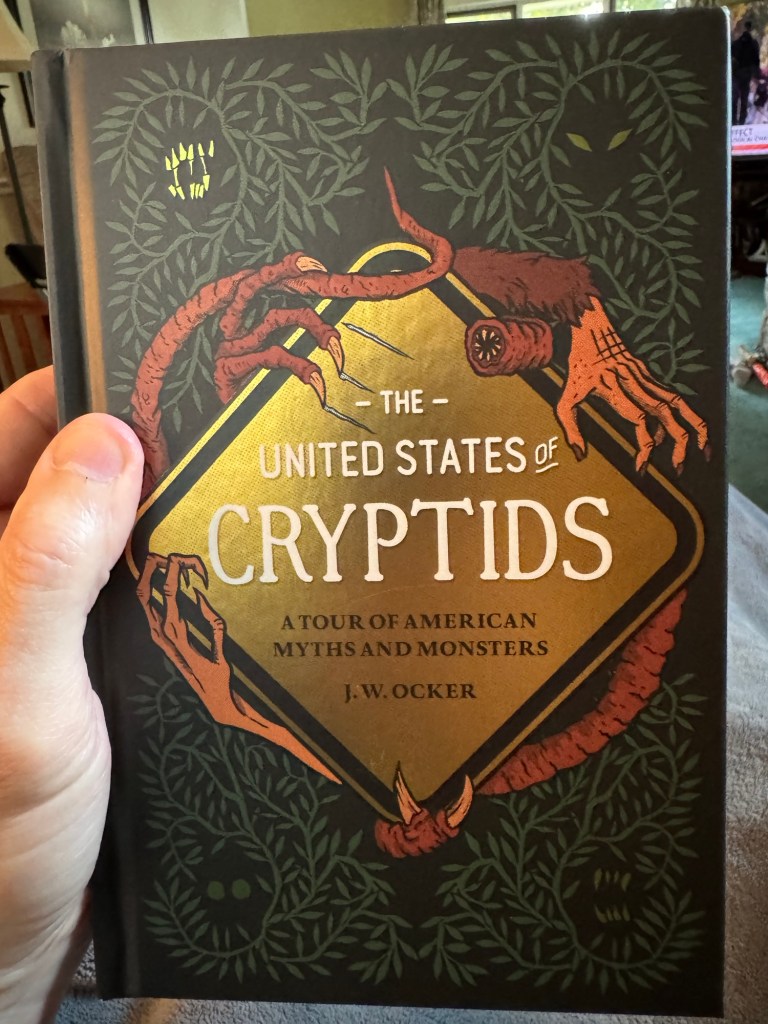
What began as an effort to explain why the Constitution is a moral document rooted in biblical principles—work I first sketched in The Gunfighter’s Guide to Business—grew into something larger. The Bible is not merely a religious text for Christians and Jews; it is a civilizational blueprint. Its commandments and narratives shape cultures that produce durable wealth, ordered liberty, and the capacity for self-government. Once you accept that premise, the next question becomes unavoidable: what was the actual historical environment in which those commandments were given, and what older currents were already flowing when Abraham stepped onto the stage? That question forced me to travel, read, and dig. Over several years, I spent roughly half a million dollars of my own money on research travel—museums, remote sites, late nights in hotels far from home, books read on airplanes and beside campfires. The resulting manuscript is The Politics of Heaven. It is not a polite academic summary. It is an attempt to connect dots that mainstream archaeology and history have preferred to leave disconnected.

In the middle of July 2026, Timothy Alberino sat with Joe Rogan for nearly three hours. I watched the episode while camped on South Bass Island in Lake Erie with family, RV parked among several campsites we had claimed for a week. My daughters were cooking breakfast. The ordinary noise of daily life—hardware-store conversations, Costco recognition, local political pressure—had been left behind on the mainland. That distance mattered. The conversation Alberino and Rogan had would have been confined to late-night AM radio or Coast to Coast a decade earlier. Now it was mainstream, carried by the largest podcast in the English-speaking world. Alberino spoke of giants, of the Book of Enoch, of non-human intelligences that have interacted with humanity across millennia. He recounted the long-circulating story of a Kandahar giant—an enormous humanoid encountered by American troops in a cave in Afghanistan, killed after it attacked, its body placed on a pallet and flown out. The remains, according to the account, were taken to Wright-Patterson Air Force Base. I live a short drive from that base. I have spoken over the years with men who held clearances there. They smile, lower their voices, and say that reverse-engineering of foreign technology has always been the cover story. Whether the technology is Russian, Chinese, or something that violates our airspace from farther afield is left for the listener to decide.

That interview did not surprise me so much as it confirmed a trajectory I had already been following. Alberino’s work and mine are not identical, but they occupy overlapping ground. He has spent more than a decade knocking on the door of the giant question and the Watcher tradition. I have been following the same scent through Ohio’s earthworks, Florida’s bogs, Malta’s temples, and the copper pits of Lake Superior. The difference is emphasis. I approach these matters as a political animal. Wealth creation, nation-building, and the commandments that make ordered liberty possible are never far from my mind. When non-human intelligences appear in the historical record—whether as the “sons of God” of Genesis 6, the entities contacted by shamans, or the craft recovered at crash sites—the political question is immediate: who holds sovereignty over the human race?

Consider the copper. Between roughly 5000 and 1200 BC, miners removed hundreds of thousands of tons of nearly pure native copper from the Lake Superior region—Isle Royale, the Keweenaw Peninsula, and surrounding shores. Thousands of ancient pit mines still scar the landscape. The purity of that copper exceeds 99 percent, a grade rarely achieved by Old World smelting of sulfide ores. Yet the archaeological inventory of North America accounts for only a tiny fraction of the extracted metal. The rest vanished. Mainstream accounts insist the copper stayed local, used by indigenous peoples for tools and ornaments. The volumes do not add up. Alternative researchers have long argued that the missing copper fueled the Bronze Age in the Near East and Europe. Timeline, purity, and scale align too neatly to dismiss out of hand. I have walked those Upper Peninsula sites. I have stood on Mackinac Island and looked across the water toward the old mining grounds. The place itself argues for industrial-scale extraction long before Columbus.

If copper moved from the Great Lakes to the Mediterranean, then knowledge and people moved as well. The megalithic temples of Malta—Ġgantija, Ħaġar Qim, Mnajdra, Tarxien—were raised between 3600 and 2500 BC. Local folklore has always claimed giants built them; the very name Ġgantija means “Giant’s Tower.” These structures predate the pyramids and Stonehenge. Their alignments, their scale, and the ritual deposits inside them point to a sophisticated religious system concerned with ancestors, fertility, and entities larger than ordinary men. At the same period, Hopewell culture in the Ohio Valley was constructing earthworks of staggering geometric precision. The Newark Earthworks, now a UNESCO site, are aligned to the 18.6-year lunar standstill cycle with an accuracy that matches or exceeds Stonehenge. The same lunar mathematics appear at High Bank Works near Chillicothe and at Serpent Mound. Either distant cultures independently arrived at identical astronomical solutions, or they shared information. Boats can cross oceans when sea levels are lower, as they were before the final melt of the ice sheets. Dreams, trance states, and psychedelic plants can also transmit knowledge. Shamans in Ohio and priests on Malta may have been speaking to the same non-human interlocutors.

This is a video from my son in law taken during a recent family trip. For context.

I do not romanticize the indigenous cultures of North America. The 1619 Project and its political descendants treat pre-Columbian peoples as perpetual victims whose every tragedy must be laid at the feet of European settlement. That framing is propaganda, not history. Tribes displaced other tribes. The Cherokee themselves carry traditions of the “Moon-Eyed People”—pale, nocturnal, possibly albino inhabitants they drove from the mountains before European contact. Cahokia, the great Mississippian city near modern St. Louis, practiced large-scale human sacrifice. At Mound 72, archaeologists found mass graves of young women, some still alive when buried, arranged in ritual order. These were not peaceful gardeners living in harmony with nature. They were complex societies with elites, enslaved people, and blood rituals aimed at contacting powers beyond the visible world.

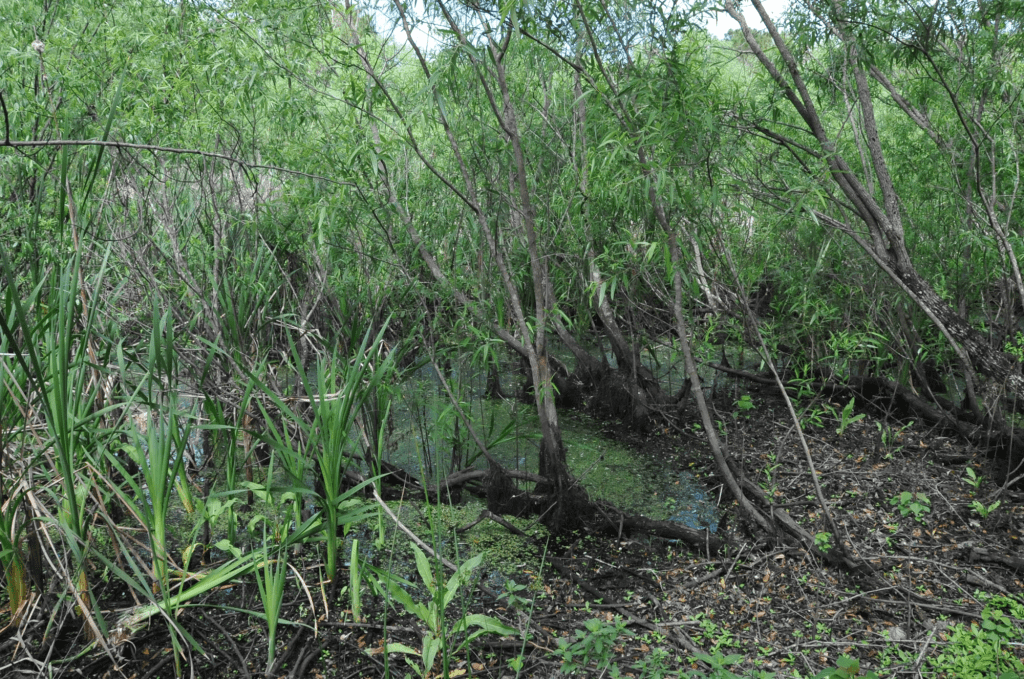
The same pattern appears in the Windover Bog site near Titusville, Florida. Roughly eight thousand years ago, a community buried its dead in a peat pond. The anaerobic conditions preserved soft tissues, including brains, in nearly 100 individuals. Early reports described unusually large skeletal remains. DNA work suggested an Asian origin that does not match living Native American tribes. Then NAGPRA intervened. The remains were reburied. Further study became politically toxic. We are left with photographs, fragmentary reports, and the knowledge that a population of large-boned people lived on a coastline that is now underwater, their shoreline having retreated miles eastward as seas rose after the Younger Dryas. The same story repeats along the Gulf Coast and the drowned continental shelves of the world: previous human worlds now lie beneath forty or more feet of water.

In my own backyard, the Loveland Frogmen still appear in local memory. Three well-documented sightings in 1955 and 1972 occurred along the Little Miami River, precisely where Hopewell ritual sites once stood before neighborhoods and schools covered them. Police officers described bipedal, leathery, four-foot-tall creatures that stood upright and then fled toward the water. I have walked those banks. I do not claim the Frogmen are biological animals in the ordinary sense. I suggest they are the same class of non-human intelligence that shamans once summoned at the earthworks—entities that move through dimensions where time does not behave as we experience it. A call issued two thousand years ago can be answered in 1972. The beings arrive, see streetlights and police cars, panic, and retreat to the familiar river corridor. Crop circles, mound alignments, and stone circles may function as temporal markers—breadcrumbs left so travelers from outside linear time can locate themselves.

Graham Hancock’s Supernatural opened this door for many readers by documenting the global use of psychedelics in the birth of religion. The next step is obvious. If the visions are consistent across continents and millennia—serpents, flying craft, shape-shifting beings, instructions for building, planting, and navigating—then the source is not merely the human subconscious. It is an external intelligence that has been seeding, guiding, and sometimes exploiting humanity for thousands of years. Eric von Däniken saw the same pattern and attributed it to ancient astronauts. I think the reality is closer and older. These entities have never left. They operate in the background of history the way certain political factions operate in the background of governments—rarely seen, always present, shaping outcomes.

Wright-Patterson has studied recovered materials and biological remains for decades. The Kandahar giant, if the accounts are true, is only one more specimen on the shelf. Trump-era disclosures and subsequent War Department releases have edged the conversation into daylight. We are being told, carefully and incompletely, that non-human intelligence has violated our airspace and our sovereignty for a very long time. Immigration debates that ignore this dimension are incomplete. Sovereignty that stops at the water’s edge or the edge of the atmosphere is not sovereignty at all.

The Politics of Heaven gathers these threads. It argues that the biblical tradition represents a successful civilizational path precisely because it names the competing powers and places humanity under a single transcendent authority rather than under the shifting demands of local spirits and giants. Pagan and occult systems—whether Hopewell shamanism, Maltese temple cults, or the Crowleyite rituals that still echo in certain California circles—produce different outcomes. They open doors. What walks through those doors is rarely benevolent. The copper trade that may have ignited the Bronze Age, the lunar mathematics shared across an ocean, the giant bones reported in mounds from Ohio to Florida to the Near East, the frog-men that still surface along rivers once lined with ritual earthworks—all of it points to a single, continuous story. Non-human intelligence has been a political actor longer than any human empire.

I finished the manuscript after that week on the island. The noise of ordinary life had been far enough away that the pattern could finally lock into place. Alberino’s conversation with Rogan was not the beginning of the revelation; it was a public confirmation that the conversation itself had moved from the fringe to the center. The next five or ten years will force a reckoning with these older layers of history. Archaeologists must keep digging. The rest of us must be willing to read what they find without the ideological filters that have already buried too much evidence. The politics of heaven are not abstract theology. They are the oldest and most consequential politics of all.

Notes

1.  The Joe Rogan Experience episode featuring Timothy Alberino aired in mid-July 2026 and discussed the Kandahar giant narrative at length in its opening segment. The story has circulated in military and conspiracy circles since the mid-2000s; the Department of Defense has not released any official confirmation or physical evidence.

2.  On the scale of ancient copper extraction in the Lake Superior basin, see Susan R. Martin, Wonderful Power: The Story of Ancient Copper Working in the Lake Superior Basin (Detroit: Wayne State University Press, 1999). Estimates of total copper removed range from hundreds of thousands to over a million tons; mainstream archaeology maintains local use, while alternative researchers point to the absence of corresponding artifacts as evidence of export.

3.  For the lunar alignments of the Newark Earthworks, see Ray Hively and Robert Horn, “Geometry and Astronomy in Prehistoric Ohio,” Archaeoastronomy 4 (1982), and subsequent work by the same authors. The Octagon Earthworks track the 18.6-year major lunar standstill with high precision.

4.  Maltese temple chronology and folklore: David H. Trump, Malta: Prehistory and Temples (Malta: Midsea Books, 2002); UNESCO documentation on the Megalithic Temples of Malta. The name Ġgantija derives directly from the Maltese word for giant.

5.  Windover site: Glen H. Doran, ed., Windover: Multidisciplinary Investigations of an Early Archaic Florida Cemetery (Gainesville: University Press of Florida, 2002). DNA and morphological studies indicated that the population was not closely related to later Native American groups; NAGPRA repatriation limited further analysis.

6.  Cahokia Mound 72 sacrifices: Timothy R. Pauketat, Cahokia: Ancient America’s Great City on the Mississippi (New York: Viking, 2009); Melvin L. Fowler et al., The Mound 72 Area: Dedicated and Sacred Space in Early Cahokia (Illinois State Museum, 1999).

7.  The Ohio History Connection holds the Wray Figurine (Hopewell Shaman of Newark). It depicts a figure in bear regalia holding a severed human head and is widely interpreted as a transforming shaman.

8.  Cherokee traditions of the Moon-Eyed People appear in James Mooney, Myths of the Cherokee (Washington: Bureau of American Ethnology, 1900) and later ethnographic collections.

9.  Loveland Frogman primary accounts: police reports filed by Officers Ray Shockey and Mark Matthews, March 1972; earlier 1955 sighting reported in local newspapers and summarized in various cryptozoological compilations.

10.  Graham Hancock, Supernatural: Meetings with the Ancient Teachers of Mankind (New York: Disinformation, 2006) remains the most accessible survey of the global psychedelic-shamanic complex.

Select Bibliography

Alberino, Timothy. Birthright: The Coming Posthuman Apocalypse and the Usurpation of Adam’s Dominion on Planet Earth. Independently published, 2020.

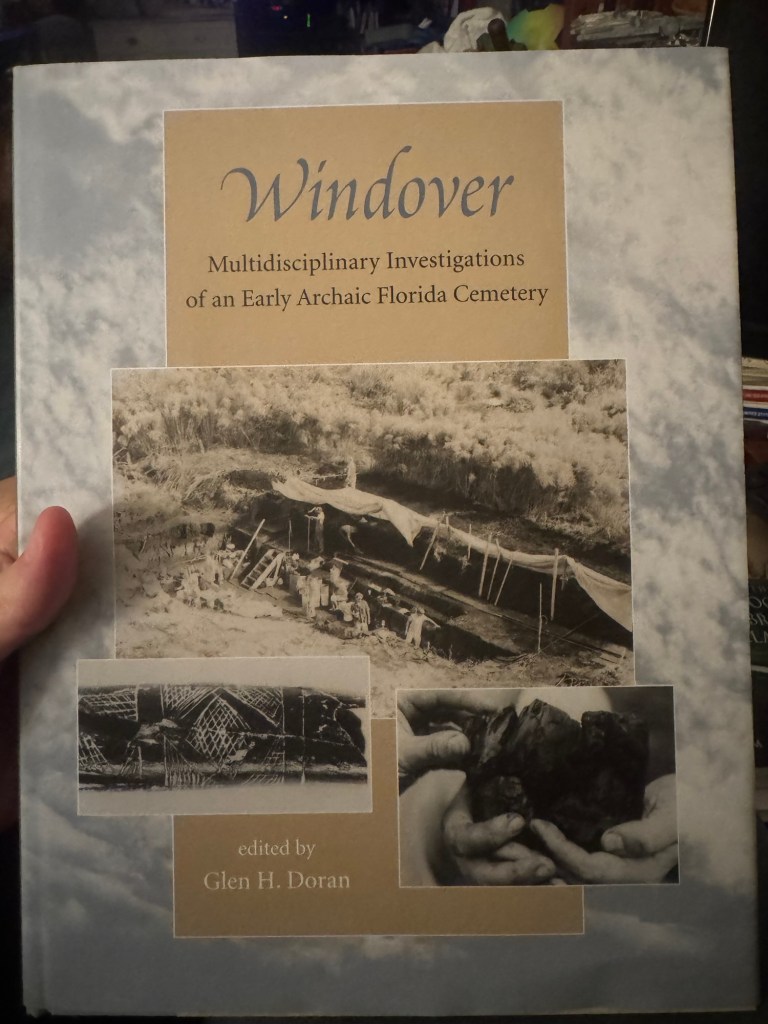
Doran, Glen H., ed. Windover: Multidisciplinary Investigations of an Early Archaic Florida Cemetery. Gainesville: University Press of Florida, 2002.

Hancock, Graham. Supernatural: Meetings with the Ancient Teachers of Mankind. New York: Disinformation, 2006.

Hively, Ray, and Robert Horn. “Geometry and Astronomy in Prehistoric Ohio.” Archaeoastronomy 4 (1982): S1–S20.

Martin, Susan R. Wonderful Power: The Story of Ancient Copper Working in the Lake Superior Basin. Detroit: Wayne State University Press, 1999.

Mooney, James. Myths of the Cherokee. Washington: Bureau of American Ethnology, 1900.

Pauketat, Timothy R. Cahokia: Ancient America’s Great City on the Mississippi. New York: Viking, 2009.

Rich Hoffman

More about me

Click Here to Protect Yourself with Second Call Defense https://www.secondcalldefense.org/?affiliate=20707
About the Author: Rich Hoffman

Rich Hoffman is an author, political consultant, and strategic advisor based in Cincinnati, Ohio, and the creator of The Politics of Heaven—a unique framework that connects biblical theology, ancient history, and modern power structures to explain how moral alignment and spiritual forces shape global events. Blending real-world political experience with deep research into archaeology, UFO phenomena, and suppressed historical narratives, Hoffman offers compelling commentary on topics ranging from ancient civilizations and the Dead Sea Scrolls to modern populist movements, paranormal continuity, and leadership strategy in chaotic environments. As the author of The Gunfighter’s Guide to Business and the forthcoming Politics of Heaven, he brings a grounded yet provocative voice to media discussions, supported by firsthand experiences and a cross-disciplinary approach that bridges science, history, and theology. For interviews, speaking engagements, or expert analysis, visit richhoffmanbooks.com or contact directly via phone at 513-307-5815 or email at rhoffman@richhoffmanbooks.com.  If you’ve seen the movie, Disclosure Day and want to talk about it and the implications of Presidnet Trump’s UAP disclosures, let me know and we can bring some color to your coverage. https://richhoffmanbooks.com/media-inquiries-broadcast-topics-and-contact-info/?frame-nonce=ad51e7ecba I do have a firsthand UFO encounter to discuss.
NAGPRA: Worse than book burning–the Time Team shows how to do it right

As I reflect on this continuation of my birthday gift to myself—the deep dive into the Windover Archaeological Site and everything it represents—I can’t help but feel a profound sense of urgency mixed with frustration. My wife suggested we check it out because it tied directly into a project I was working on, and while I had heard about it before, seeing the exhibits up close and then immersing myself in the details through books like Glen H. Doran’s Windover: Multidisciplinary Investigations of an Early Archaic Florida Cemetery (published by the University Press of Florida in 2002) changed everything for me. That visit wasn’t just a casual outing; it was a revelation about what American archaeology could be and what it has become under policies that, in my view, prioritize political narratives over truth-seeking discovery. This is part two of that discussion, building on what I wrote earlier about the dig itself, but now zooming in on why the Native American Graves Protection and Repatriation Act—NAGPRA, which I’ve come to call the “Wolves Act” because of the cultural buzz around Dances with Wolves during its passage—needs to be repealed or fundamentally reformed. We should be following the example of Britain’s Time Team, not letting a 1990 law bury our history, as the developers and politicians did with that Florida pond after just three seasons of excavation.

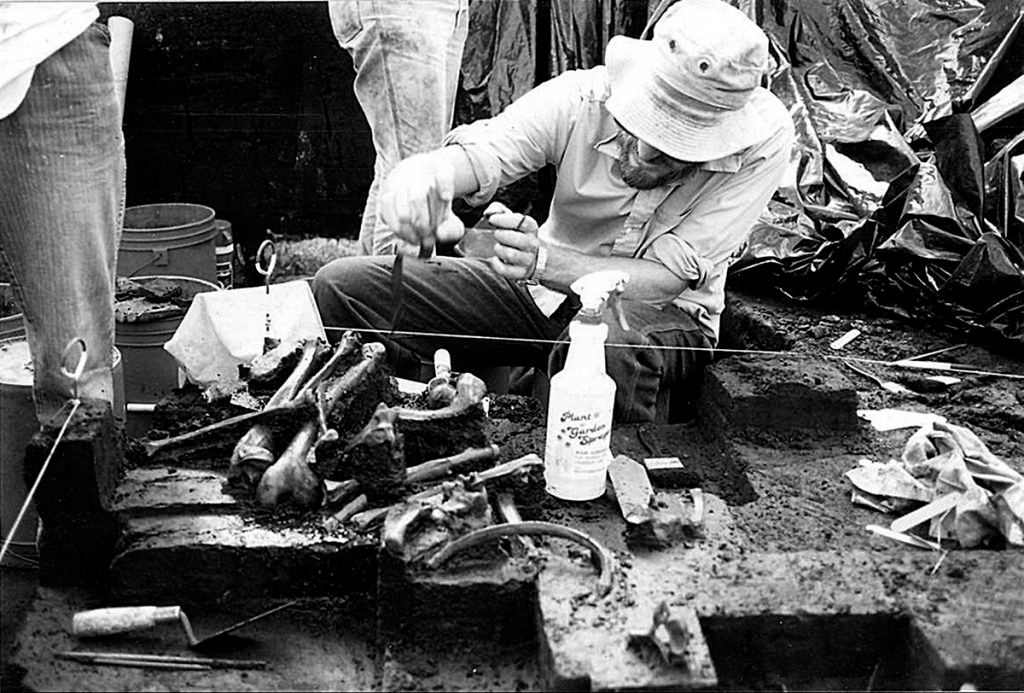
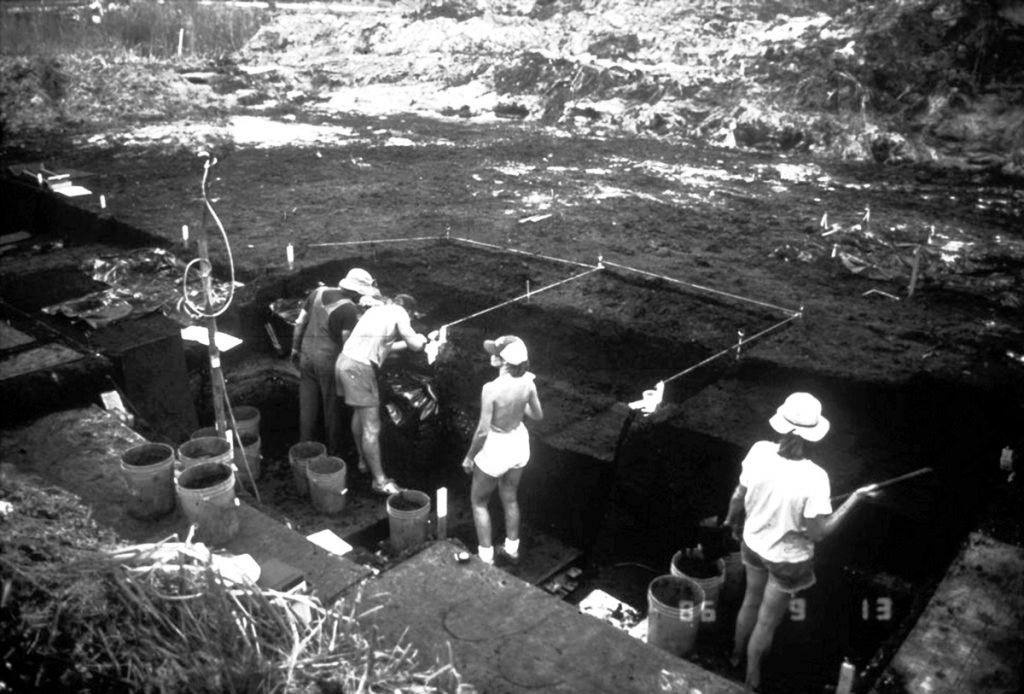
Let me start from the beginning of my personal connection to this. I remember driving out to the area near Titusville with my wife, the kind of trip where you expect a quiet museum stop but walk away astonished. The Windover site, discovered in 1982 during road construction for a housing development called Windover Farms, turned out to be one of the most significant archaeological finds in the Western Hemisphere. A backhoe operator scooped up skulls, and what followed was a frantic but methodical excavation led by Glen Doran from Florida State University between 1984 and 1986. They uncovered remains of about 168 individuals buried in a shallow pond that had become a natural peat bog, preserving everything from brain tissue—the oldest known in the world at the time—to intricate textiles, wooden artifacts, bone tools, and more. These people lived around 7,000 to 8,000 years ago in the Early Archaic period, long before what we think of as “Native American” tribes like the Cherokee or Seminole even formed as we know them today. The preservation was phenomenal because of the pond’s anaerobic conditions; it was like a time capsule from a world we barely understand.

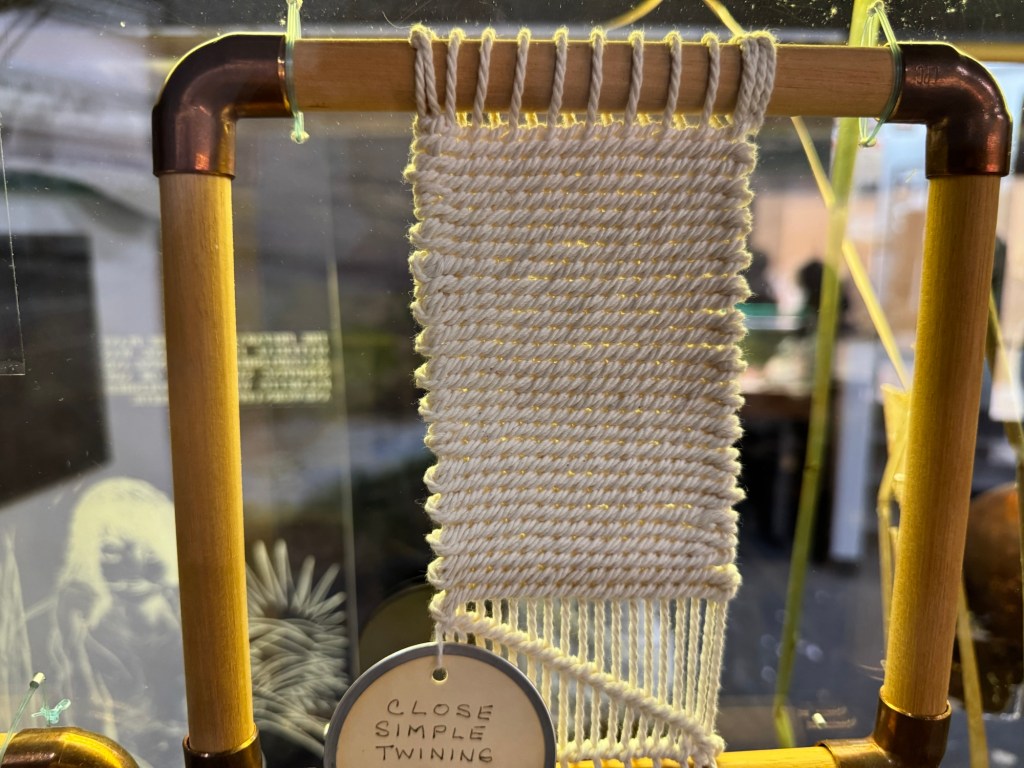
Reading Doran’s book afterward felt like stepping into that excavation myself. It’s a multidisciplinary masterpiece—environmental analysis, radiocarbon dating, paleoethnobotany, DNA studies from the brain tissue, mortuary patterns, the works. They found the oldest woven fabrics in the Southeast, complex cordage, and evidence of sophisticated lifeways that challenge the simplistic “hunter-gatherer” stereotypes. My wife and I stood there in the museum exhibits, looking at replicas and displays (some now limited or relocated due to modern restrictions), and I kept thinking: This is North America’s equivalent of discovering a lost civilization, yet it barely registers in our national consciousness. Why? Because right around the time the final analyses were wrapping up, NAGPRA dropped in 1990 like a political hammer. The law was signed by President George H.W. Bush on November 16, 1990, after being introduced in the House by Democrat Mo Udall of Arizona. It sailed through on voice votes, with strong Democratic backing amid a wave of activism and cultural sentiment fueled by movies like Dances with Wolves, which painted indigenous peoples as noble victims of American aggression. I was living through that era, very aware of the buzz in Washington. I wasn’t a Bush fan—I voted against him, worked against him in the ’92 election, even flirted with the Reform Party because I saw him as a RINO continuing the same globalist, sovereignty-eroding policies Democrats had long championed. This wasn’t some Republican innovation; it was a bipartisan surrender to a narrative that America’s foundations were built on theft and needed constant atonement.

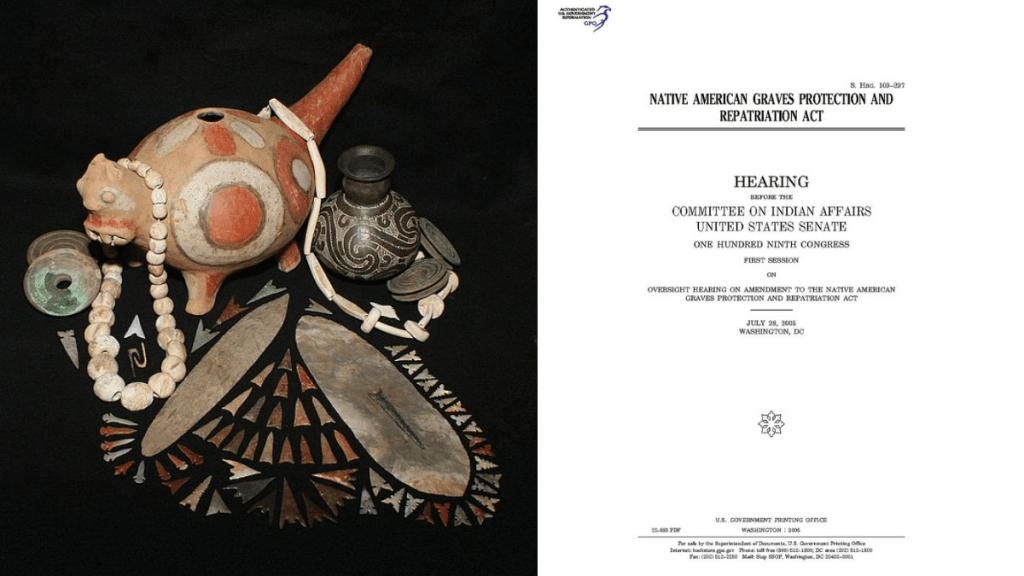
NAGPRA’s stated goal was to protect Native American graves, repatriate human remains and cultural items from museums and federal agencies to lineal descendants or culturally affiliated tribes. On paper, it sounds reasonable—addressing real historical wrongs like grave robbing in the 19th century. But in practice, and especially for ancient sites like Windover, it’s been devastating. The remains at Windover predate any known modern tribal affiliations by millennia. DNA studies from the site (what little could be done before restrictions tightened) showed haplogroups tracing back to ancient Asian migrations, but nothing that tied them neatly to today’s federally recognized tribes. Yet the law forces institutions like Florida State University to consult tribes, inventory collections, and often repatriate or rebury without full study. FSU has issued NAGPRA notices for some collections, and the process drags on, limiting further research. The pond was partially backfilled after the initial dig; half the cemetery remains untouched, not because the science was done, but because funding dried up amid the political winds. Developers and archaeologists knew what was coming, so they rushed what they could. Today, if a similar site were found, it might never see the light of day beyond a quick salvage operation before reburial. That’s not science; that’s erasure disguised as respect.  It’s equivalent to modern-day book burning, only the material is destroyed before we even have a chance to discover it. 

I’ve seen this pattern before, and it screams deliberate policy to undermine American sovereignty. Democrats have long used “victim” groups—indigenous peoples, in this case—as levers to dismantle narratives of Western expansion and self-reliance. NAGPRA wasn’t born in a vacuum; it was part of a broader 1990s push that included open-border sentiments and identity politics. The same era gave us policies questioning every aspect of American settlement, from land use to energy. Bush signed it, sure, but as a continuation of the previous administration’s trajectory. I stepped away from the GOP at the time because it felt like the party was complicit in weakening the republic from within. This law doesn’t just repatriate; it creates a framework in which federal recognition of tribes governs everything on or near federal lands, which is a huge chunk of the country. It turns archaeologists into bureaucrats navigating tribal consultations instead of digging for truth. And for sites with no clear affiliation—like the 8,000-year-old Windover bones, which likely belonged to pre-Clovis or early Archaic peoples who other groups later displaced—it effectively halts inquiry. How do you return remains to a tribe that didn’t exist yet? You don’t; you bury the evidence and pretend the history starts with the groups Democrats designate as “indigenous.”

This ties directly into the speculation about giants and multiple cultures in the Ohio Valley and Mississippi River mounds that I’ve pondered for years. Old newspaper accounts and 19th-century reports from the Smithsonian and others described oversized skulls and skeletons in Adena and Hopewell mounds—evidence, some say, of earlier populations. Modern archaeology dismisses much of it as exaggeration or hoaxes, but the pattern is suspicious: NAGPRA and similar policies make it risky even to revisit those claims with new tech like DNA. If there were prior cultures—perhaps Solutrean influences from Europe or other migrations predating the Beringia model—it challenges the singular “Native Americans as eternal stewards” narrative. Pre-Clovis sites like Buttermilk Creek in Texas (15,000+ years old) and genetic evidence of multiple waves into the Americas already poke holes in the old Clovis-first theory. Yet NAGPRA’s cultural affiliation rules often default to modern tribes, erasing the complexity. It’s the same playbook as border policies today: open the gates, label critics as aggressors, and rewrite the founding story to justify dismantling sovereignty. Democrats didn’t invent this overnight; it’s been their trajectory—using “aggrieved” groups to fracture the American experiment.

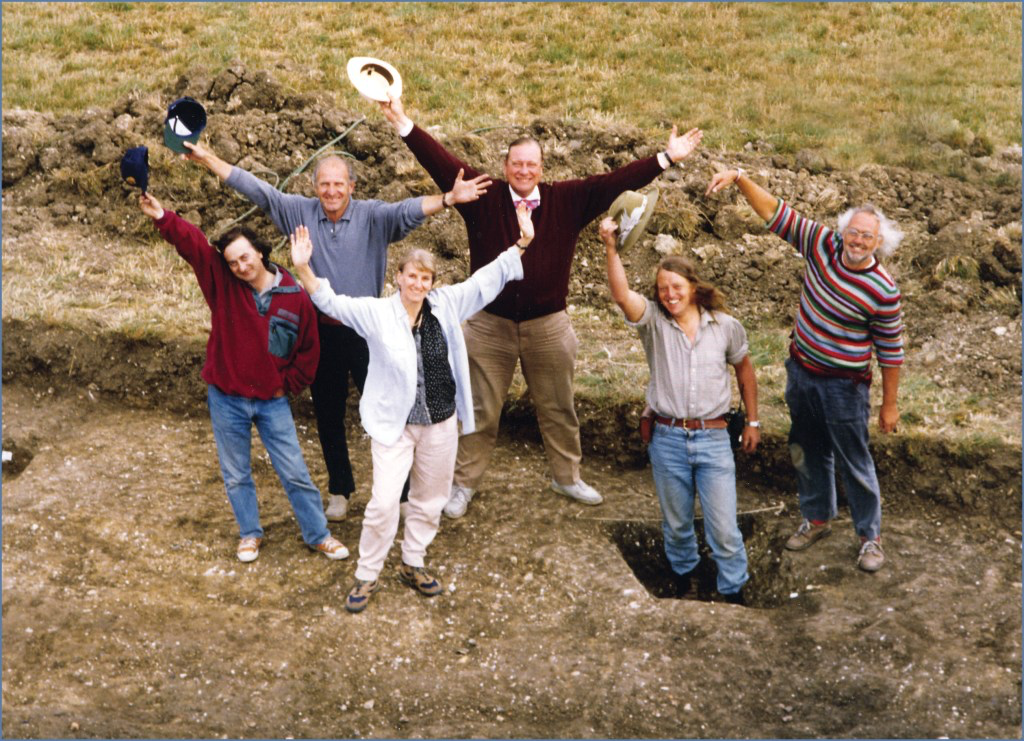
Compare that to what’s happening in Great Britain with Time Team. If you’ve never watched it, do yourself a favor—episodes are all over YouTube now, even after the show ended its main run on Channel 4. Hosted by Tony Robinson with archaeologists like Mick Aston, Phil Harding, and Carenza Lewis, it was a phenomenon from 1994 to 2014. They’d show up at a site—often tipped off by locals or metal detectorists—spend three days digging with geophysics, volunteers, and experts, then reveal everything from Roman villas to Neolithic tombs to medieval villages. No endless permits bogged down by politics; English Heritage and local councils supported it. The archaeologists became celebrities, the public ate it up, and it funded real research while turning history into entertainment. They published scientific papers too—more than some university departments. Stonehenge, Hadrian’s Wall, Roman baths: Britain celebrates layer upon layer of its past, from Mesolithic to medieval, without erasing any group. Bones from Iron Age, Bronze Age, or Roman contexts are studied for diet, disease, migration—not reburied to appease a modern political framework. It’s respectful scholarship that builds national pride, not guilt. I’ve been to England; their heritage sites are tourist magnets, economic engines, and educational goldmines. Archaeologists there are rock stars, not bureaucrats.

Why can’t we do that here? Japan has underwater sites off the coast of Osaka; China guards its ancient tombs but still excavates selectively. Even in the volatile Middle East, guys like Joel Kramer on his Expedition Bible YouTube channel navigate borders, checkpoints, and regimes to document sites from Sodom to Shiloh. His book Where God Came Down is a masterclass in persistence amid obstacles. The Biblical Archaeology Society and Biblical Archaeology Review fight for dig seasons in Israel despite political minefields—hostile neighbors, military oversight, and permit battles. Yet they publish voraciously because the region’s history is too vital to bury. In the U.S., we have a free country, capital markets, and vast untouched potential—from Florida ponds to Ohio mounds to underwater sites off the coasts—and we tie our hands with NAGPRA. Developers bulldoze sites quietly to avoid red tape; museums shelve collections. The Windover team saw the writing on the wall and wrapped up just as the law hit. The 2002 book exists as a snapshot of what was possible pre-NAGPRA; post-law, that level of open inquiry is gone.

This isn’t abstract. It harms research into who we really are as Americans. Western expansion wasn’t just conquest; it was building on layers of human history, some of which involved the displacement of earlier groups by later ones—just like everywhere else on Earth. Suppressing that validates a one-sided story used to push globalist agendas: open borders, energy restrictions framed as “respecting the land,” and centralized control. The same forces behind NAGPRA cheer solar mandates while demonizing natural gas and erasing our industrial heritage, just as they erase pre-Columbian complexity. I’ve said it before in my writings and streams: Rumble and independent platforms are game-changers because legacy media conceals this. There’s no evidence of giants or advanced pre-Native societies, they claim—yet policies prevent the digs that could prove or disprove it. Old Smithsonian reports from the 1800s detailed large skeletons in mounds; modern DNA from Hopewell and Adena sites shows continuity with later Native groups but also hints of admixture. Why not let the marketplace of ideas decide through open science?

Imagine an American Time Team. Archaeologists as celebrities on the Discovery Channel, live digs at mound sites or Florida bogs, public volunteers, and tourist revenue fund more work. Stonehenge draws millions; why not make Windover or Serpent Mound a Disney-level attraction with VR reconstructions, exhibits, and ongoing excavations? We have the capital, the freedom, the talent. Instead, we have rogue developers destroying sites, and universities complying with repatriation, which halts study. FSU still holds some Windover materials, but NAGPRA inventories and consultations limit what can be done. Rachel Wentz’s popular book Life and Death at Windover captures the human story—families, health, rituals—but even that feels like a last gasp before the freeze.

Repealing or reforming NAGPRA for remains older than, say, 5,000 years—where affiliation is impossible—would be a start. Treat ancient bones like science treats Ötzi the Iceman in Europe: study, learn, share. Respect living tribes’ concerns for recent remains, but don’t let it blanket 15,000 years of migration and replacement. England’s approach proves you can honor the dead without erasing history. Their Time Team episodes on Roman occupation or Neolithic life don’t undermine modern Britain; they enrich it. We need that here—full stop.

My effort in writing this and in pushing these ideas on my platforms stems from that museum visit and the book that followed. It’s personal: I want my kids and grandkids to know the full story of this continent, not a sanitized version designed to undermine the republic. The Windover discovery was a window—a fantastic, irreplaceable one—into a sophisticated past. NAGPRA closed it. Democrats knew what they were doing in 1990, riding the Dances with Wolves wave to frame America as a perpetual aggressor. Republicans like Bush went along. It’s the same game as today’s policies. We deserve better: open archaeology, public celebration, evidence wherever it leads. Let’s make American digs rock stars again. The Time Team model isn’t just British; it’s what humanity needs. And it starts by repealing the laws that bury our past to serve political ends.

Footnotes

1.  Glen H. Doran, ed., Windover: Multidisciplinary Investigations of an Early Archaic Florida Cemetery (University Press of Florida, 2002). Core source for site details, artifacts, and analyses.

2.  Rachel Wentz, Life and Death at Windover: Excavations of a 7,000-Year-Old Pond Cemetery (personal accounts and bioarchaeology).

3.  Native American Graves Protection and Repatriation Act, Pub. L. 101-601 (1990). Legislative history via Congress.gov; signed by GHW Bush.

4.  Time Team episodes, Channel 4 (UK), available on YouTube; see also English Heritage reports on public archaeology impact.

5.  Joel P. Kramer, Where God Came Down: The Archaeological Evidence (Expedition Bible publications); YouTube channel documents border and access challenges.

6.  Biblical Archaeology Review archives detail permit struggles in the Holy Land due to geopolitics.

7.  Pre-Clovis and migration studies: e.g., Waters et al. on Buttermilk Creek (Science, 2011); ancient DNA papers in PNAS and Nature on multiple waves.

8.  Historical mound reports: 19th-century Smithsonian and newspaper accounts (contextualized in modern critiques); DNA from Hopewell sites (Ohio History Connection studies).

Bibliography for Further Reading

•  Doran, Glen H., ed. Windover: Multidisciplinary Investigations of an Early Archaic Florida Cemetery. University Press of Florida, 2002.

•  Wentz, Rachel. Life and Death at Windover. University Press of Florida (related publications).

•  U.S. Congress. Native American Graves Protection and Repatriation Act (NAGPRA), 25 U.S.C. 3001 et seq. (1990).

•  Robinson, Tony, et al. Time Team series (1994–2014). Channel 4; scientific outputs summarized in Current Archaeology and English Heritage reports.

•  Kramer, Joel P. Where God Came Down. Expedition Bible, 2022 (approx.).

•  Biblical Archaeology Society. Biblical Archaeology Review (ongoing issues on global dig challenges).

•  Waters, Michael R., et al. “The Buttermilk Creek Complex and the Origins of Clovis at the Debra L. Friedkin Site, Texas.” Science, 2011.

•  Mills, Lisa A. “Ancient DNA from the Ohio Hopewell.” Ohio History Connection research.

•  ProPublica/NBC investigations on NAGPRA implementation (2023 reports on repatriation delays and impacts).

•  Additional: Federal Register notices on FSU NAGPRA inventories (2021+); Archaeological Conservancy site profiles on Windover.

Rich Hoffman

More about me

Click Here to Protect Yourself with Second Call Defense https://www.secondcalldefense.org/?affiliate=20707

About the Author: Rich Hoffman

Rich Hoffman is an aerospace executive, political strategist, systems thinker, and independent researcher of ancient history, the paranormal, and the Dead Sea Scrolls tradition. His life in high‑stakes manufacturing, high‑level politics, and cross‑functional crisis management gives him a field‑tested understanding of power — both human and unseen.

He has advised candidates, executives, and public leaders, while conducting deep, hands‑on exploration of archaeological and supernatural hotspots across the world.

Hoffman writes with the credibility of a problem-solver, the curiosity of an archaeologist, and the courage of a frontline witness who has gone to very scary places and reported what lurked there. Hoffman has authored books including The Symposium of JusticeThe Gunfighter’s Guide to Business, and Tail of the Dragon, often exploring themes of freedom, individual will, and societal structures through a lens influenced by philosophy (e.g., Nietzschean overman concepts) and current events.

The Smoking Gun of Windover: What NAGPRA was meant to conceal

I have been reflecting deeply on this as April 9th rolls around—my birthday—and I decided this year I would give myself something truly personal, something that excites me at the core of my being and ties together years of my own research, political observations, and that relentless drive to uncover truths that the system tries to bury. It is not some flashy gift or a day off from the work I do for everyone else; instead, it is this deep dive into what I consider one of the most important archaeological revelations of our lifetime, a site that serves as a smoking gun for so many historical narratives that have been twisted, politicized, and deliberately constrained. I am talking about the Windover archaeological site in Central Florida, that extraordinary bog cemetery near Titusville, just up the road from the Kennedy Space Center, where an accidental discovery in the mid-1980s peeled back layers of prehistory in ways that challenge everything we have been taught about the peopling of North America, the sophistication of ancient cultures, and the very foundations of modern political narratives about land, history, and who truly belongs here. I have poured over the rare academic book that documented it all—Windover: Multidisciplinary Investigations of an Early Archaic Florida Cemetery, edited by Glen H. Doran and published by the University Press of Florida in 2002—and it has become my birthday present to myself because it represents a narrow window into truth before the doors slammed shut with laws like NAGPRA. I invite everyone who reads this to share in that excitement with me, because this is not just dusty bones in a pond; it is evidence of a sophisticated society that predates the standard Beringia migration story by thousands of years in meaningful ways, and it exposes how politics, not science, has been driving the suppression of our deep past.  

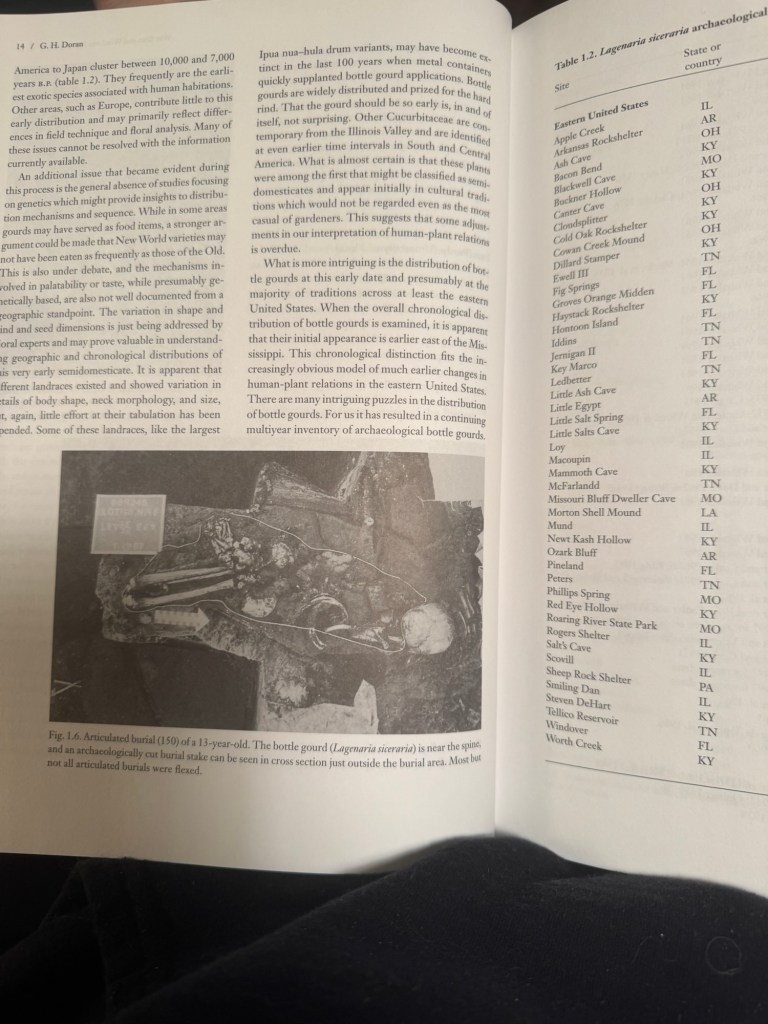
I first came across references to this site years ago in my own independent studies of ancient American history, the kind of reading I do late at night after dealing with local politics here in Butler County, Ohio, or after watching the national scene unfold with all its layers of deception. Back then, I was already skeptical of the official timelines pushed in academia—the neat little story that indigenous peoples crossed the Bering land bridge around 15,000 to 20,000 years ago, spread south as hunter-gatherers, and that everything before European contact fits neatly into that box with tribes like the Iroquois, Lakota, or Sioux representing the “original” inhabitants. But Windover blew that open for me in a way nothing else had. Discovered accidentally in 1982 or early 1984 when a backhoe operator for a housing development called Windover Farms scooped up a human skull while digging in a small peat bog pond, it quickly became clear this was no recent crime scene. County medical examiners dated the remains as ancient, and that led to Florida State University anthropologist Glen Doran stepping in as principal investigator. From 1984 through about 1987, his team excavated roughly half of this half-acre pond cemetery under challenging wet-site conditions, uncovering the remains of at least 168 individuals—men, women, and children, from infants to elders around 60—buried in a deliberate, logical manner that suggested a thoughtful, organized society. What made it extraordinary was the preservation: the acidic yet neutral-pH peat bog acted like a natural time capsule, keeping not just bones but also soft tissue intact. We are talking brain tissue still present in 91 skulls, some with cellular structure preserved enough for DNA extraction; skin on the bodies; even the last meals still identifiable in their stomachs. They had clothing woven from plant fibers—some of the oldest and most complex textiles ever found in the New World, requiring looms or advanced weaving techniques that nobody expected for an “Archaic” period people 7,000 to 8,000 years ago. Wooden artifacts, bone and antler tools, a bottle gourd—evidence of a culture far more advanced than the simple hunter-gatherer label academia slaps on prehistory.  

An amazing book!

I have that Doran book—it is a thick, technical volume, the kind produced in limited academic runs, probably only a few thousand copies worldwide, and I feel fortunate to have one because it captures every multidisciplinary angle: environmental analysis, radiocarbon dating pinning the site firmly to around 6000-5000 BC, mortuary patterns showing bodies often placed with poles or stakes to keep them submerged, facing north with heads turned west in what looks like a deliberate ritual orientation toward the setting sun and perhaps some spiritual reverence. The people themselves were robust; average adult males stood about five feet nine inches, taller and healthier than many later prehistoric groups, with some individuals pushing six feet or more based on femur lengths and bone density—enough to fuel those early newspaper reports of “giants” in North America before institutionalized science dismissed them as hoaxes or exaggerations. There is no wild conspiracy in Doran’s work; it is straight, careful archaeology by scientists who genuinely loved the field and rushed to document everything because they sensed the political tides turning. Half the cemetery was left untouched, and today the site sits under a plaque in a wooded subdivision, a National Historic Landmark with no further major digs. That is the tragedy I keep coming back to, and it is why Windover feels like the smoking gun for me. 

What hit me hardest when I dug into the details—and this is where my own political experience from years fighting school levies, local corruption, and national narratives in Ohio gives me a unique lens—is how perfectly timed this discovery was before the Native American Graves Protection and Repatriation Act (NAGPRA) slammed the brakes on American archaeology. NAGPRA passed Congress on November 16, 1990, right after the Windover excavations wrapped up and right around the cultural frenzy sparked by Dances with Wolves, that Hollywood epic romanticizing the Sioux and framing Western expansion as pure theft of indigenous land. I have studied how bills get written, who lobbies them, and the closed-door intentions behind them, and NAGPRA was loaded with progressive language designed to solidify a specific narrative: America as stolen property from “Native Americans” defined by a very shallow historical scope. It required consultation with tribes for any remains or cultural items, mandated repatriation, and effectively shut down large-scale digs because developers and archaeologists alike knew that uncovering bones could halt projects, tie up land in legal battles, and invite tribal claims. Developers started burying finds quietly rather than reporting them, and grant money in academia dried up unless you played along with the official story. Windover happened in that narrow window before the law fully kicked in—Doran and his team worked fast, funded in part by the curious developers themselves, who paused their subdivision to allow proper science—and the result was this irreplaceable snapshot of an 8,000-year-old culture that does not neatly fit the Beringia-to-modern-tribes pipeline. 

The DNA analysis of the preserved brain tissue is what really undermines the premises on which NAGPRA was built. Studies showed genetic markers linking these Windover people to ancient Asian populations via the Beringia route, as expected—haplogroups like A, C, D, and even the rare X that pops up in some Native contexts—but crucially, they do not align closely with any living Native American tribes or even many known prehistoric groups. It suggests either their lineage died out, experienced a severe bottleneck, or represents a distinct early population that predates or diverged from the groups we retroactively label as “indigenous.” I am not here to take anything away from what we have been calling Native American communities or their cultural heritage; I respect the reverence for ancestors. But when you have remains this old—older than the pyramids, older than Mesopotamian civilizations in some contexts—and DNA that does not match the shallow 300-400-year tribal samples used to justify repatriation claims, who exactly do you hand them back to? The law assumes a direct, unbroken chain to contemporary tribes, but Windover proves the timeline, and the populations were far more complex. These were not simple hunter-gatherers; they had advanced textile production, implying looms; thoughtful burial rituals suggesting religion or cosmology; trade networks possibly reaching far beyond the region (given certain materials); and a settled community life in a resource-rich Florida environment when sea levels were lower and the coastline extended miles outward. Villages and mounds now submerged offshore hint at even broader Archaic networks. This site forces a reevaluation: the “Native American” designation under NAGPRA was built on politically convenient assumptions that ignored deeper prehistory, and that ignorance was weaponized to challenge the legitimacy of Western expansion and the founding of the United States itself. 

I see this as part of a larger pattern I have observed in my own work on politics and history—the way organized systems, often with roots in spiritual battles that play out in the terrestrial realm, rewrite narratives to maintain power. My upcoming book, The Politics of Heaven, dives straight into this because sites like Windover provide the hard evidence that legends, mythology, and even biblical accounts of ancient sophistication are not fairy tales. Think about it: these people knew how to weave delicate fabrics thousands of years before we associate such technology with the Indus Valley, Mesopotamia, or Egypt. They cared for their sick and dead in a mass cemetery with ritual precision. Their stature and health suggest a robust population living in a stable society. And all of this at a time when the Ice Age was ending, sea levels were rising, and cultures we now call “Atlantis” in Platonic accounts or other global flood myths were supposedly migrating and seeding knowledge worldwide. Plato described Atlantis as an advanced civilization destroyed by catastrophe, with survivors spreading to Egypt, Britain, the Americas—places where we find sudden leaps in sophistication that do not fit the slow Beringia crawl. Windover fits as one piece of that puzzle: evidence of pre-Mesopotamian complexity right here in North America, with possible ties to shamanic or spiritual practices seen in even older Near Eastern sites. Take Qesem Cave near Tel Aviv in Israel, for example—an ancient site showing early humans (or pre-modern hominins) with innovative tool use, controlled fire, and communal activities dating back hundreds of thousands of years, far predating the standard timelines and hinting at organized, intelligent societies communicating with or revering something beyond the material world. Similar patterns appear in Natufian or shamanic contexts in the Levant around 13,000-10,000 BC, with ritual fires and early communal structures. These are not isolated; they point to a deep, sophisticated human history that institutional science, constrained by funding and politics, has been reluctant to explore fully. 

Here in North America, we have the same suppression at work, only dressed up as “reverence for indigenous rights.” Cahokia Mounds near St. Louis is another example I have studied closely—a massive Mississippian city around 1000-1400 AD with more people than London at the time, featuring the famous Birdman tablet and legends of Thunderbirds that echo across Native oral histories. Yet St. Louis was literally built on top of it, and we still vaguely associate it with later tribes despite clear discontinuities. Mound builders, Adena, Hopewell—earlier cultures with advanced earthworks and trade—get shoehorned into the same narrative, ignoring how each generation builds over the previous one, claiming territory like animals marking trees. Human nature drives this, but laws like NAGPRA freeze it artificially at a politically useful point: 1492 onward, with Europeans as the sole thieves. The reality, as Windover shows, is layered theft and migration going back millennia—groups taking from older groups, sophisticated societies rising and falling. If we had unrestricted digs, we could map this properly, learn from mistakes, and avoid repeating cycles of conquest and cultural erasure. Instead, the law—passed in that post-Dances with Wolves glow of guilt—created incentives to hide discoveries, starved archaeology of funding for controversial sites, and prioritized a narrative that undermines the Christian-influenced Western foundation of America. I know how these bills are crafted from my own experiences fighting local and state politics; the closed-door intentions are rarely about dead ancestors and always about power, land claims, and reshaping history to favor certain ideologies.

Glen Doran himself, who passed away in 2021, and his colleagues captured their frustration between the lines in that book. They knew NAGPRA was coming; they rushed the work because they understood the profession was about to be handcuffed. The peat chemistry, the pollen, the paleoethnobotany, the DNA—all of it documented before the repatriation machine could intervene. Yet even today, the remaining half of the pond sits largely untouched, and broader Florida bog sites or offshore mounds from lower sea-level eras go unexplored because developers fear land seizures and archaeologists fear grant denials or tribal vetoes. This is not reverence; it is concealment. I love true archaeology—the kind done in England on shows like Time Team, where they dig openly, analyze bones without mandatory handover, and let evidence speak. Here, the human need to know has been subordinated to politics, which is why Windover feels like such a miracle: it slipped through just before the gates closed. It validates folklore, Plato’s hints at Atlantis, global trade networks in deep antiquity, and even the idea that our origin stories—whether biblical, mythological, or shamanic—involve advanced pre-flood or pre-catastrophe civilizations that revered higher powers, appeased spirits, and built societies with ritual purpose. The Windover dead faced north, heads west toward the sunset—symbolism that screams cosmology, not random burial. They were not “cavemen”; they were part of something older and wiser than we have only breadcrumbs of now.

This all ties directly into the spiritual warfare I explore in my work—the fallen entities at war with creation itself, imprinting their influence on earthly power structures to erase God’s narrative and replace it with controlled ignorance. Laws like NAGPRA are not neutral; they serve to keep humanity deficient in knowledge, allowing modern political orders to maintain authority built on false premises. Western expansion brought a Christian viewpoint and free civilization that disrupted older pagan or shamanic systems, but if deeper evidence shows sophisticated pre-Columbian (and pre-Beringia in practice) cultures with their own complexities, the “stolen land” story loses its moral absolutism. Everyone stole from someone; history is layered conquest. The real crime is preventing inquiry that could reveal this, because it threatens the power base. Windover proves it in my eyes: 8,000-year-old brains yielding DNA that does not fit the 1990 legal template, textiles requiring technology we associate with much later eras, and a cemetery showing care and ritual in a society predating known tribes. It is the perfect example for my book because it shows how politics cascades from heavenly rebellion into terrestrial control—concealing evidence so the deficient knowledge keeps people dependent on the current narrative.

I have met enough people in politics over the years, from Tea Party rallies to local commissioners, to recognize when good intentions get co-opted by larger agendas. Archaeologists like Doran wanted knowledge; the system wanted control. That is why I judge these things rigorously in my own life and work—if you cannot manage truth at the foundational level, you cannot lead effectively elsewhere. Windover demands we repeal or heavily reform NAGPRA, not to disrespect anyone but to prioritize the human need to know over artificial constraints. We need more digs, more funding for wet sites in Florida and beyond, and more open analysis of offshore mounds from Ice Age coastlines. Only then can we bridge the gap between legend and evidence, avoid repeating past mistakes, and understand our true place in the deep timeline. This site, with its preserved last meals, woven fabrics, and unclaimed DNA, hints at Atlantis-like migrations, shamanic connections to the spirit world (echoing Qesem Cave’s early innovations or Cahokia’s Birdman symbolism), and a history far richer than the shallow one politicized in 1990.

As I celebrate another year on this earth, I find real joy in holding this truth close. It reinforces why I fight the battles I do—not just local levies or national elections, but the deeper war for accurate history. The Windover people were real, sophisticated, and part of something vast. Their story survived by accident in the bog, preserved long enough for us to glimpse it before the political machine intervened. That is my birthday gift: the excitement of knowing more is out there if we demand the freedom to look. I will keep pushing in my writings, my podcast, and my life because evidence like this changes everything. Share it, study it, and let it provoke the larger discussion it deserves. The republic, and humanity’s understanding of itself, depends on refusing to let politics bury the past any longer.

Footnotes

1.  Primary source details on discovery, excavation, and findings from Glen H. Doran’s edited volume and supporting analyses.

2.  DNA results and non-alignment with modern tribes were summarized from peer-reviewed studies referenced in site reports.

3.  NAGPRA legislative history and timing relative to Windover drawn from official records and archaeological critiques.

4.  Stature and artifact sophistication (textiles, rituals) from bioarchaeological chapters in the Windover investigations.

5.  Broader connections to global prehistory (Qesem Cave, Cahokia) informed by my independent cross-referencing of Paleolithic and Mississippian sites.

6.  Political motivations behind NAGPRA are tied to the cultural context of 1990 (Dances with Wolves) and observed patterns in bill-making from my experience.

Bibliography for Continued Reading

•  Doran, Glen H., ed. Windover: Multidisciplinary Investigations of an Early Archaic Florida Cemetery. University Press of Florida, 2002.

•  Wentz, Rachel K. Life and Death at Windover: Excavations of a 7,000-Year-Old Pond Cemetery. Florida Historical Society Press, 2012.

•  National Park Service. “Native American Graves Protection and Repatriation Act.” Official NPS overview and regulations.

•  Plato. Timaeus and Critias (translations discussing Atlantis).

•  Various reports on Qesem Cave: Barkai et al., publications on Lower Paleolithic innovation in Israel.

•  Pauketat, Timothy R. Cahokia: Ancient America’s Great City on the Mississippi. Penguin, 2010 (for Birdman and mound-builder context).

•  Biblical Archaeology Review and related journals on Near Eastern shamanic/ritual sites predating Mesopotamia.

•  My own forthcoming The Politics of Heaven for expanded spiritual-political synthesis.

•  National Geographic and Florida Museum archives on Windover preservation and public exhibits.

Rich Hoffman

More about me

Click Here to Protect Yourself with Second Call Defense https://www.secondcalldefense.org/?affiliate=20707

About the Author: Rich Hoffman

Rich Hoffman is an aerospace executive, political strategist, systems thinker, and independent researcher of ancient history, the paranormal, and the Dead Sea Scrolls tradition. His life in high‑stakes manufacturing, high‑level politics, and cross‑functional crisis management gives him a field‑tested understanding of power — both human and unseen.

He has advised candidates, executives, and public leaders, while conducting deep, hands‑on exploration of archaeological and supernatural hotspots across the world.

Hoffman writes with the credibility of a problem-solver, the curiosity of an archaeologist, and the courage of a frontline witness who has gone to very scary places and reported what lurked there. Hoffman has authored books including The Symposium of JusticeThe Gunfighter’s Guide to Business, and Tail of the Dragon, often exploring themes of freedom, individual will, and societal structures through a lens influenced by philosophy (e.g., Nietzschean overman concepts) and current events.

The Windover Giants: Its all about the bog people of central Florida and a connection to the fallen Nephilim

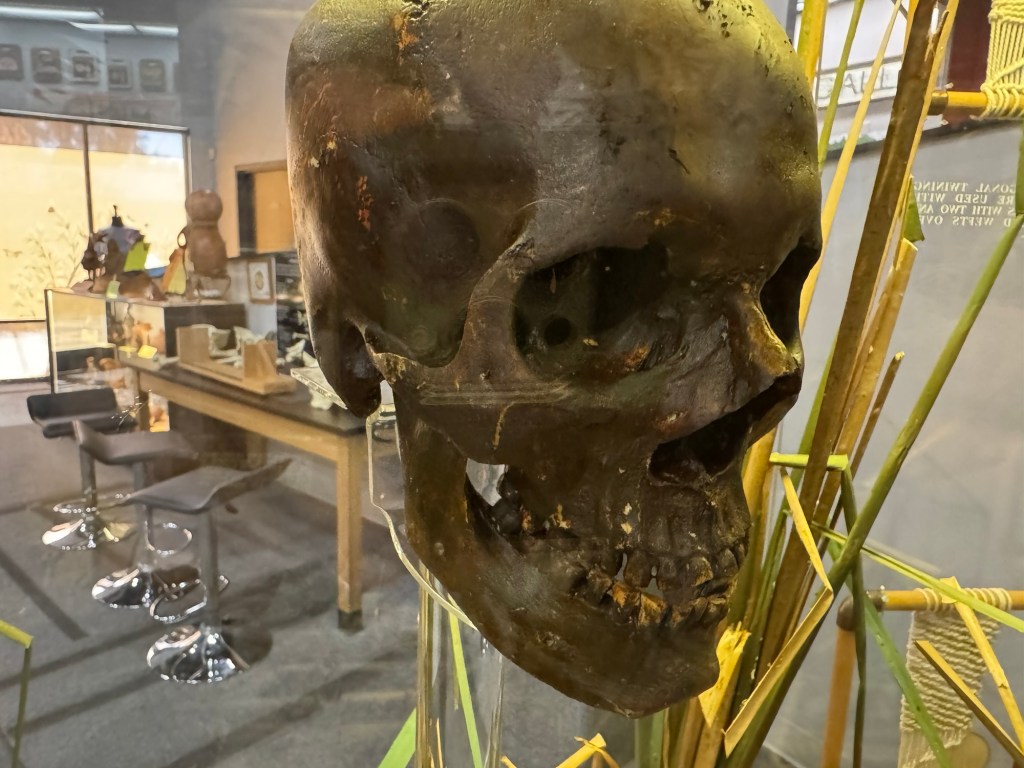
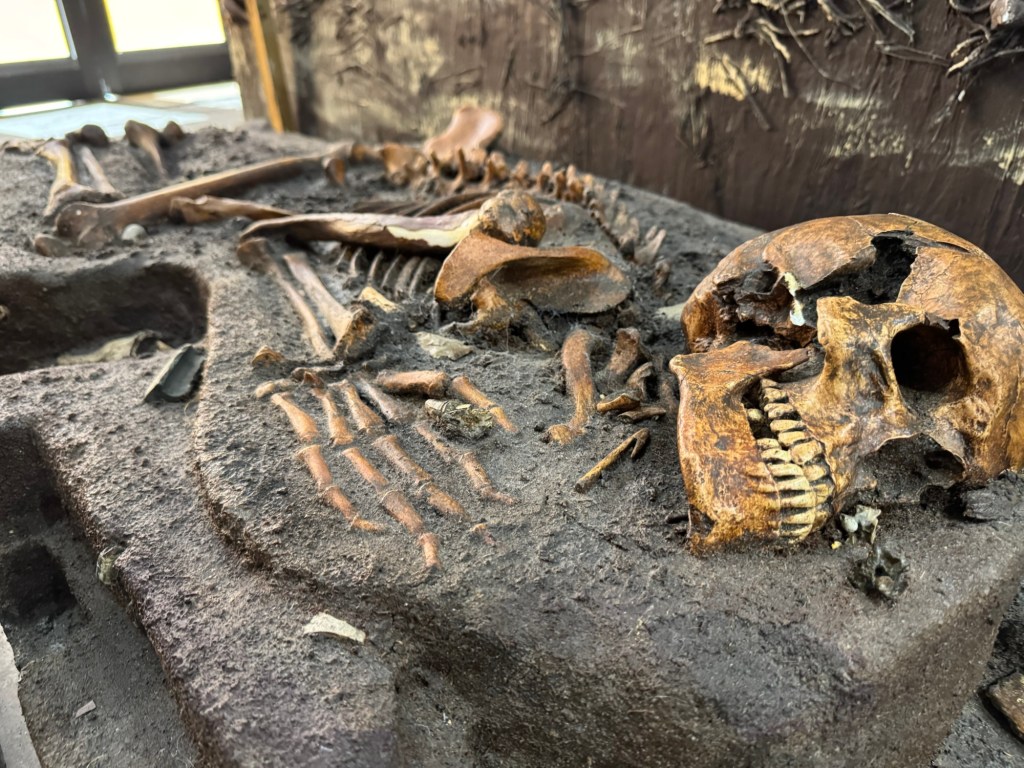
The Windover Archaeological Site, discovered accidentally in 1982 during construction of a housing development near Titusville, Brevard County, Florida, stands as one of the most significant prehistoric burial grounds in North America. What began as a backhoe operator uncovering what he initially thought was an unusual rock—soon identified as a human skull—unfolded into the excavation of a shallow pond that became an ancient cemetery. Over several field seasons from 1984 to 1986, led primarily by Florida State University archaeologist Dr. Glen Doran, the site yielded the remarkably well-preserved skeletal remains of at least 168 individuals, along with artifacts, textiles, and, in many cases, preserved brain tissue. Radiocarbon dating placed these burials in the Middle Archaic period, roughly 7,000 to 8,000 years ago, a time when sea levels were significantly lower due to the lingering effects of the last Ice Age, making the area a higher inland location rather than the near-coastal zone it is today.

The preservation at Windover is extraordinary, thanks to the anaerobic, acidic peat environment of the bog-like pond, which prevented rapid decay and allowed soft tissues, such as brain matter, to survive in shrunken but intact form for millennia. This enabled DNA sequencing from the brain tissue, revealing genetic markers linking the Windover people to ancient Asian populations via migrations through Beringia, with no direct matches to modern Native American groups alive today. The DNA evidence supports the broader consensus of Siberian/Asian origins for early American populations, though some early interpretations or discussions speculated on other affinities; current analyses firmly place them within the founding lineages of the Americas without evidence of European admixture from that era.  Other than the burial technique itself, and the Western European DNA mixed into the specimens.

The burials were intentional and organized: bodies were often placed in a flexed or fetal position, lying on their left side, with heads oriented west and faces north, wrapped in textiles or accompanied by grave goods. Artifacts included woven plant-fiber fabrics—some of the oldest and most sophisticated textiles known from Archaic North America—bone and wood tools, and other items suggesting a settled, resourceful hunter-gatherer society capable of complex social practices, including caring for the injured and elderly. Evidence from the skeletons shows healed fractures, possible splinting of broken bones, and even signs of amputations, indicating communal support and medical knowledge far beyond simple survival instincts. The population included men, women, and children across all ages, from infants to individuals aged 60–70, an unusually long lifespan for the period, with roughly equal representation of the sexes and about half the remains being subadults.

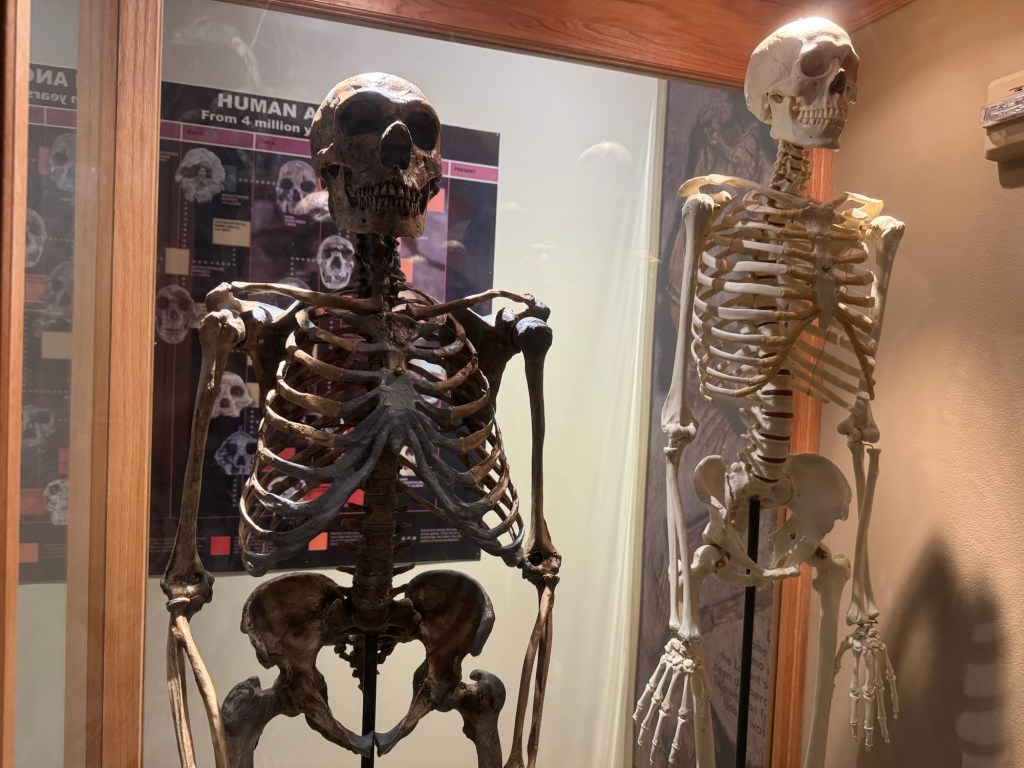
Skeletal analysis provides key insights into stature and health; these people were very large for their time. Adult males averaged about 5 feet 9 inches (175 cm), with some reaching nearly 6 feet, while females averaged about 5 feet 2 inches to 5 feet 6 inches. These heights were notably taller and more robust than many later prehistoric populations in the region, with strong bone density reflecting a healthy, active lifestyle supported by a diverse diet of fish, shellfish, plants, and game.  This discovery is consistent with the reports of giants found in many North American mounds.  The example shown in the video could easily have been a 7-foot-tall person.  But even the 6’ averages are extraordinary considering the period.  The people were heavily muscled, adapted to a wetland environment rich in resources. This physical profile has fueled speculation in some circles about connections to reports of unusually large individuals in early American history, including newspaper accounts from the 19th and early 20th centuries describing oversized bones from mound sites across the Midwest and elsewhere. Proponents of alternative histories link such findings to biblical accounts of giants or Nephilim, as described in Genesis 6 and elaborated in texts like the Book of Enoch, suggesting a pre-flood or pre-Columbian race of large-statured people whose remains were later suppressed or reinterpreted.

Claims of 7- to 9-foot skeletons from mound sites in Ohio’s Miami River Valley or along the Mississippi have often been traced to exaggerated reports, mismeasurements, or hoaxes from an era before rigorous scientific standards. But also a desired interpretation by secular science, not wishing to introduce discoveries that shatter credentialed statements about human origins.  In this case, the video shown at the museum is hard to interpret as reckless, as the bone presented could easily be interpreted as a very large bone for a very large person, well beyond the average heights assumed.  Early archaeology, pre-1950s, frequently documented large bones in mounds attributed to Adena or Hopewell cultures, but modern re-examinations attribute these to normal variation, robust builds, or occasional taller individuals rather than a distinct giant race. Institutions like the Smithsonian have faced accusations of hiding such evidence to fit evolutionary or secular narratives.

The Windover site’s significance extends beyond stature. It challenges simplistic views of Archaic peoples as purely nomadic hunter-gatherers with minimal social complexity. The organized mass cemetery, sophisticated textiles, and evidence of long-term site use (one family lineage apparently burying there over a century) indicate settled communities with ritual practices and cultural continuity. The bog burial method mirrors practices in northern Europe (e.g., Danish or German bogs), prompting questions about cultural diffusion or independent invention. Underwater sites off Florida’s coast, now submerged due to post-Ice Age sea-level rise (up to 300–400 feet higher today), likely hold similar settlements, suggesting a richer coastal prehistory than previously assumed.

The exhibit at the Brevard Museum of History and Natural Science in Cocoa, Florida, preserves this legacy through displays, loaned artifacts from Florida State University, and interpretive materials. Directed for years by Patricia (Patty) Meyers, an anthropologist passionate about public education, the “People of Windover” exhibit includes reconstructions, videos, and casts of remains. In one featured video segment, anthropologist Dr. Geoffrey Thomas (often referred to in some accounts as Jeffrey Thomas) demonstrates skeletal elements, holding up a femur and comparing it to his own leg to illustrate its size and robustness. Such presentations highlight the impressive preservation and stature beyond dispute. The museum, in a tourist-rich area near Kennedy Space Center, remains underappreciated despite free or low-cost admission and dedicated volunteers; it offers an accessible entry point for exploring this discovery firsthand.

Funding challenges and institutional priorities have limited broader excavations—only half the pond was dug, leaving potential for future work. Some critics argue that narratives around indigenous rights, repatriation under laws like NAGPRA, or academic agendas favoring certain migration models have slowed inquiry into mound sites or “anomalous” finds. Yet archaeology thrives on evidence, not suppression; new technologies, such as ancient DNA, continue to refine our understanding. The Windover shows a logical connection to reports of biblical giants and early transoceanic contact, enriching the story of human adaptation in the Americas by showing sophisticated societies millennia before agriculture dominated.

This discovery invites reevaluation of pre-Columbian history. Traditional models of Siberian land-bridge migration around 15,000–20,000 years ago, followed by a gradual spread, are complicated by sites like Windover, which demonstrate early complexity. Parallels to mound-building cultures in the Ohio Valley (e.g., Adena earthworks) or the Mississippi Valley suggest shared architectural or ritual traditions across vast distances, possibly through trade or migration.

For those drawn to the intersection of archaeology and scripture, works like the ESV Archaeology Study Bible correlate findings with biblical timelines, viewing such sites as evidence of ancient human ingenuity under divine creation. The Book of Enoch’s influence on New Testament ideas, preserved in Ethiopian traditions and echoed in Masonic lore, adds layers to interpretations of “giants” as fallen angel offspring. Yet evidence demands scrutiny: Windover’s “large” bones reflect healthy, tall-for-their-time people, not mythical behemoths.  But present a bridge to associate myths and legends with actual evidence that shows how such conclusions emerged in human consciousness.

The site’s obscurity—covered now by development, with only a small exhibit and limited media coverage—contrasts with its potential to reshape narratives. It underscores the need for open inquiry, free from ideological constraints. As an aerospace executive accustomed to root-cause analysis (digging through “five whys” or more to reach truth), I see Windover as a call to keep excavating—literally and figuratively—beyond surface assumptions. Mainstream science may resist paradigm shifts, but discoveries like this, preserved in museums and DNA labs, push toward a fuller picture.

What the Windover discoveries ultimately expose is not merely a dispute over bones or measurements, but a deeper conflict over who gets to define evidence and under what conditions it is allowed to matter. Across professional fields—archaeology included—people often carry private doubts and curiosities that never surface publicly because institutional survival depends on conformity. Funding structures, professional accreditation, and reputational risk quietly shape what can be said, what can be studied, and what must be dismissed. In such environments, agreement is frequently less a function of conviction than of economic alignment. People learn, often unconsciously, to adopt the intellectual posture required by those who control resources, grants, and career continuity.

This dynamic is not unique to archaeology; it is a recurring feature of modern institutional life. When research is tethered to centralized funding—whether state-based, academic, or corporate—the culture surrounding that research tends to harden around acceptable conclusions. Over time, this produces a form of intellectual self-censorship where entire categories of inquiry are quietly labeled unproductive, controversial, or unprofessional. Evidence that challenges dominant narratives is not always refuted; more often, it is starved of attention, relegated to obscurity, or dismissed before meaningful examination can occur. The result is a consensus that appears robust but is, in reality, tightly bound by economic and cultural incentives.

By contrast, independent researchers—particularly those who are self-funded or operating outside institutional hierarchies—retain a degree of intellectual freedom that formal systems often cannot tolerate. Without a paycheck to protect or a grant cycle to satisfy, they can follow the evidence wherever it leads, even when it collides with established assumptions. This does not make independent inquiry automatically correct, but it does make it structurally less constrained. Ironically, it is often these unaffiliated voices—working without institutional sanction—that preserve the exploratory spirit science claims as its foundation.

In this light, the muted response to Windover and similar archaeological anomalies becomes more revealing than the discoveries themselves. The lack of enthusiasm, the rapid dismissal, and the reluctance to engage deeply point more to strong disincentives than to weak evidence. Funding models, cultural expectations, and philosophical commitments—particularly those that resist integration with older historical or biblical frameworks—play a decisive role in determining what is deemed worthy of serious study. These patterns suggest that the real conspiracy is not one of secret cabals or hidden vaults, but of incentives quietly shaping belief. What is hidden, why it is hidden, and who benefits from its obscurity often tell us far more than the measurements of the bones alone.

Ultimately, Windover reminds us that history is layered, like the peat that protected these remains. It was no accident of nature alone but a deliberate choice by people who valued their dead enough to bury them in a sacred pond. Whether linking to biblical giants, ancient global civilizations, or simply advanced Archaic societies, the evidence invites wonder and further research. Visit the Brevard Museum, watch the exhibit videos, and measure the casts yourself. The truth lies in the bones, waiting for those willing to dig deeper.

Footnotes

1.  Wikipedia, “Windover Archeological Site” (accessed via current knowledge).

2.  The History Center, “Windover: Prehistoric Past Revealed at Ancient Pond Cemetery.”

3.  PBS NOVA, “America’s Bog People.”

4.  History Hit, “The Secrets of The Bog Bodies at Windover Pond.”

5.  Brevard Museum resources and Florida Frontiers episodes on the Windover exhibit.

6.  DNA studies referenced in Wikipedia and related publications (e.g., linking to Asian markers).

7.  GreaterAncestors.com and similar alternative sources for stature discussions (for contrast).

8.  ESV Archaeology Study Bible (Crossway) for scriptural correlations.

9.  Pre-Columbian archaeology texts (pre-1950s editions) for historical context.

10.  Book of Enoch translations and commentaries for interpretive links.

Bibliography

•  Doran, Glen H. (various publications on Windover excavations, Florida State University).

•  Milanich, Jerald T. Archaeology of Precolumbian Florida (1994).

•  “The People of Windover” exhibit materials, Brevard Museum of History and Natural Science.

•  Pääbo, Svante et al. (DNA sequencing studies on ancient remains).

•  The Book of Enoch (Ethiopic version).

•  Crossway ESV Archaeology Study Bible.

•  Various Florida Historical Society and PBS Florida Frontiers documentaries.

•  Academic papers on Archaic period stature and health (e.g., via ResearchGate distributions).

Rich Hoffman

More about me

Click Here to Protect Yourself with Second Call Defense https://www.secondcalldefense.org/?affiliate=20707