The Windover Archaeological Site, discovered accidentally in 1982 during construction of a housing development near Titusville, Brevard County, Florida, stands as one of the most significant prehistoric burial grounds in North America. What began as a backhoe operator uncovering what he initially thought was an unusual rock—soon identified as a human skull—unfolded into the excavation of a shallow pond that became an ancient cemetery. Over several field seasons from 1984 to 1986, led primarily by Florida State University archaeologist Dr. Glen Doran, the site yielded the remarkably well-preserved skeletal remains of at least 168 individuals, along with artifacts, textiles, and, in many cases, preserved brain tissue. Radiocarbon dating placed these burials in the Middle Archaic period, roughly 7,000 to 8,000 years ago, a time when sea levels were significantly lower due to the lingering effects of the last Ice Age, making the area a higher inland location rather than the near-coastal zone it is today.
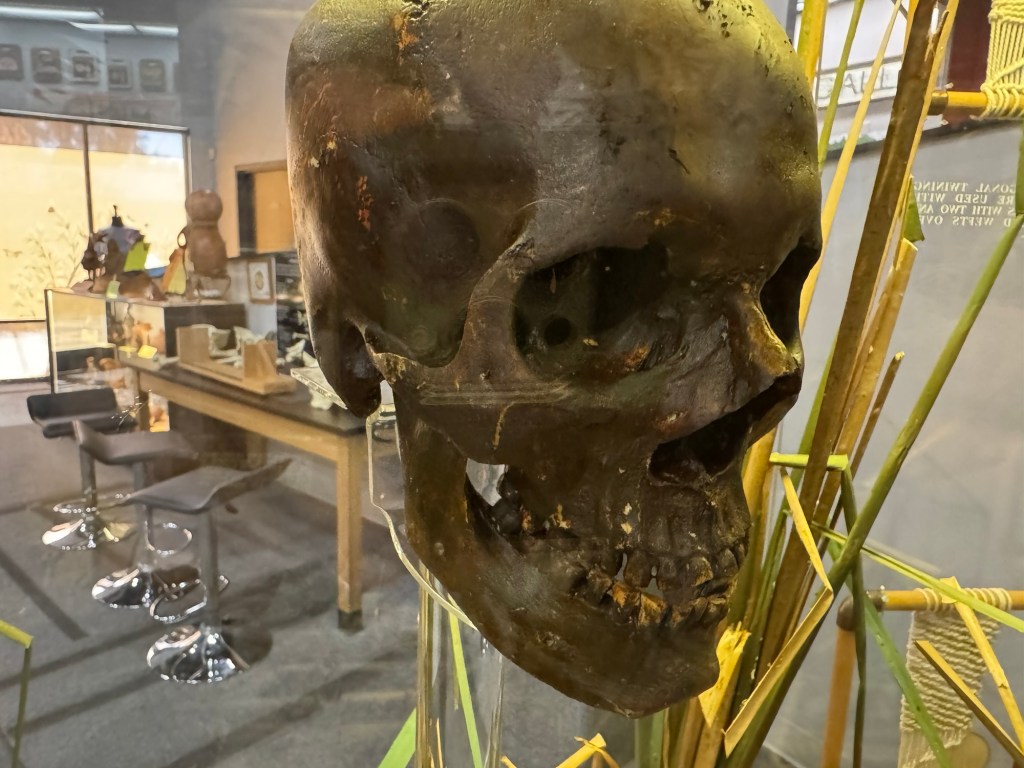
The preservation at Windover is extraordinary, thanks to the anaerobic, acidic peat environment of the bog-like pond, which prevented rapid decay and allowed soft tissues, such as brain matter, to survive in shrunken but intact form for millennia. This enabled DNA sequencing from the brain tissue, revealing genetic markers linking the Windover people to ancient Asian populations via migrations through Beringia, with no direct matches to modern Native American groups alive today. The DNA evidence supports the broader consensus of Siberian/Asian origins for early American populations, though some early interpretations or discussions speculated on other affinities; current analyses firmly place them within the founding lineages of the Americas without evidence of European admixture from that era. Other than the burial technique itself, and the Western European DNA mixed into the specimens.
The burials were intentional and organized: bodies were often placed in a flexed or fetal position, lying on their left side, with heads oriented west and faces north, wrapped in textiles or accompanied by grave goods. Artifacts included woven plant-fiber fabrics—some of the oldest and most sophisticated textiles known from Archaic North America—bone and wood tools, and other items suggesting a settled, resourceful hunter-gatherer society capable of complex social practices, including caring for the injured and elderly. Evidence from the skeletons shows healed fractures, possible splinting of broken bones, and even signs of amputations, indicating communal support and medical knowledge far beyond simple survival instincts. The population included men, women, and children across all ages, from infants to individuals aged 60–70, an unusually long lifespan for the period, with roughly equal representation of the sexes and about half the remains being subadults.
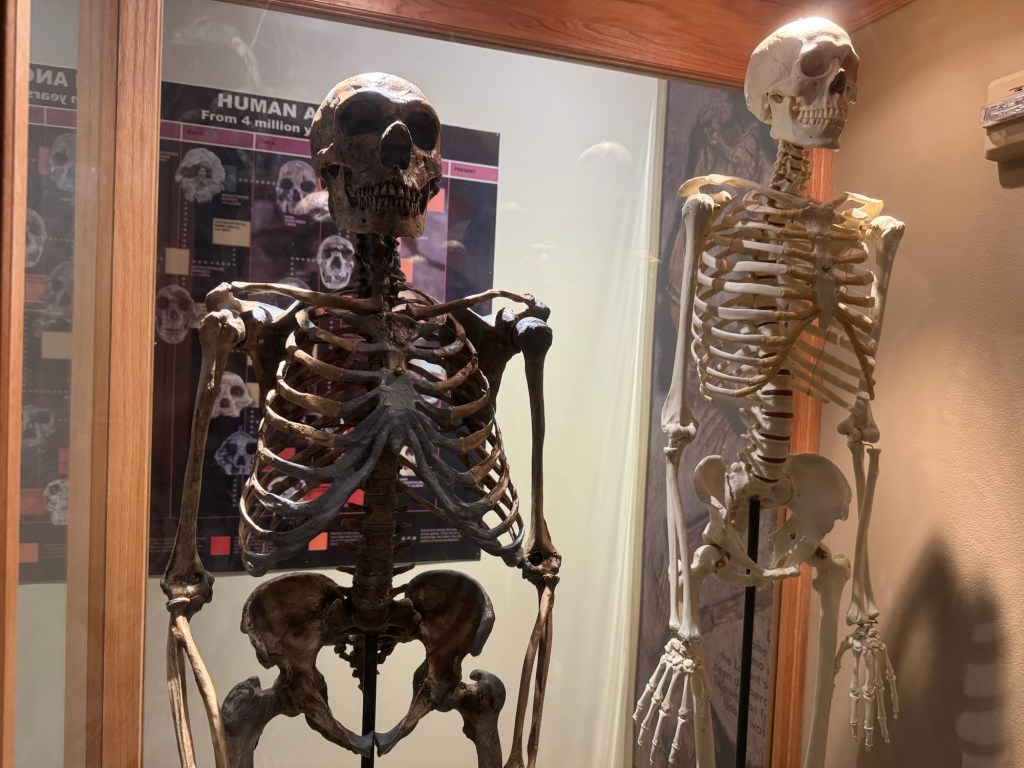
Skeletal analysis provides key insights into stature and health; these people were very large for their time. Adult males averaged about 5 feet 9 inches (175 cm), with some reaching nearly 6 feet, while females averaged about 5 feet 2 inches to 5 feet 6 inches. These heights were notably taller and more robust than many later prehistoric populations in the region, with strong bone density reflecting a healthy, active lifestyle supported by a diverse diet of fish, shellfish, plants, and game. This discovery is consistent with the reports of giants found in many North American mounds. The example shown in the video could easily have been a 7-foot-tall person. But even the 6’ averages are extraordinary considering the period. The people were heavily muscled, adapted to a wetland environment rich in resources. This physical profile has fueled speculation in some circles about connections to reports of unusually large individuals in early American history, including newspaper accounts from the 19th and early 20th centuries describing oversized bones from mound sites across the Midwest and elsewhere. Proponents of alternative histories link such findings to biblical accounts of giants or Nephilim, as described in Genesis 6 and elaborated in texts like the Book of Enoch, suggesting a pre-flood or pre-Columbian race of large-statured people whose remains were later suppressed or reinterpreted.
Claims of 7- to 9-foot skeletons from mound sites in Ohio’s Miami River Valley or along the Mississippi have often been traced to exaggerated reports, mismeasurements, or hoaxes from an era before rigorous scientific standards. But also a desired interpretation by secular science, not wishing to introduce discoveries that shatter credentialed statements about human origins. In this case, the video shown at the museum is hard to interpret as reckless, as the bone presented could easily be interpreted as a very large bone for a very large person, well beyond the average heights assumed. Early archaeology, pre-1950s, frequently documented large bones in mounds attributed to Adena or Hopewell cultures, but modern re-examinations attribute these to normal variation, robust builds, or occasional taller individuals rather than a distinct giant race. Institutions like the Smithsonian have faced accusations of hiding such evidence to fit evolutionary or secular narratives.
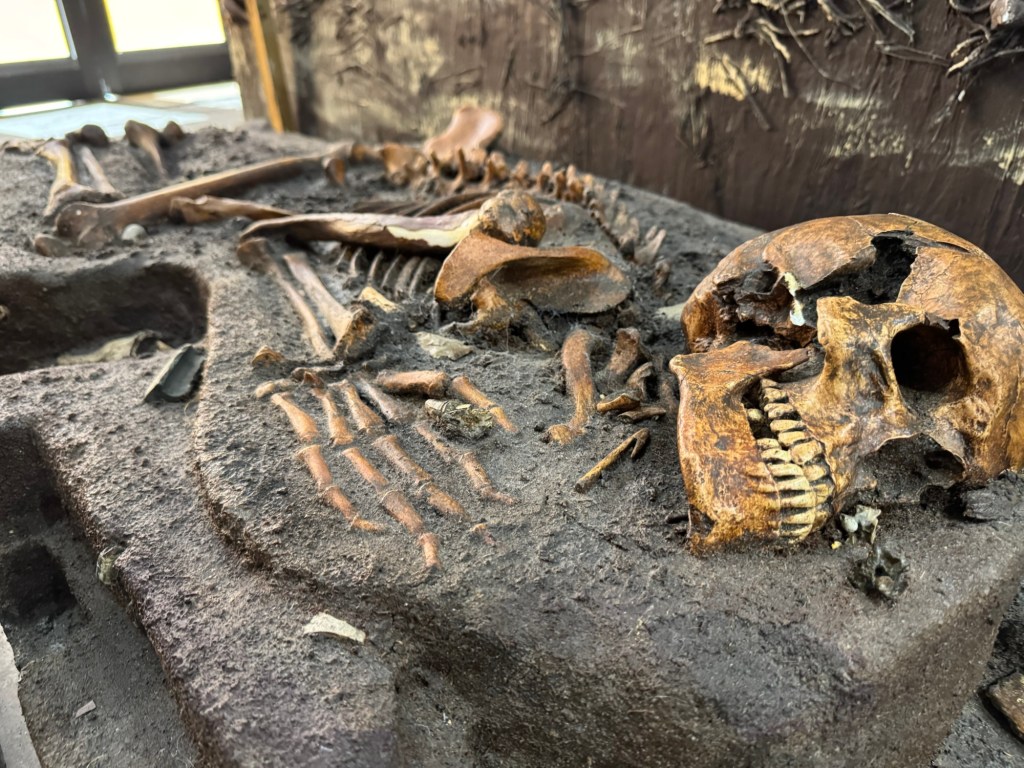
The Windover site’s significance extends beyond stature. It challenges simplistic views of Archaic peoples as purely nomadic hunter-gatherers with minimal social complexity. The organized mass cemetery, sophisticated textiles, and evidence of long-term site use (one family lineage apparently burying there over a century) indicate settled communities with ritual practices and cultural continuity. The bog burial method mirrors practices in northern Europe (e.g., Danish or German bogs), prompting questions about cultural diffusion or independent invention. Underwater sites off Florida’s coast, now submerged due to post-Ice Age sea-level rise (up to 300–400 feet higher today), likely hold similar settlements, suggesting a richer coastal prehistory than previously assumed.
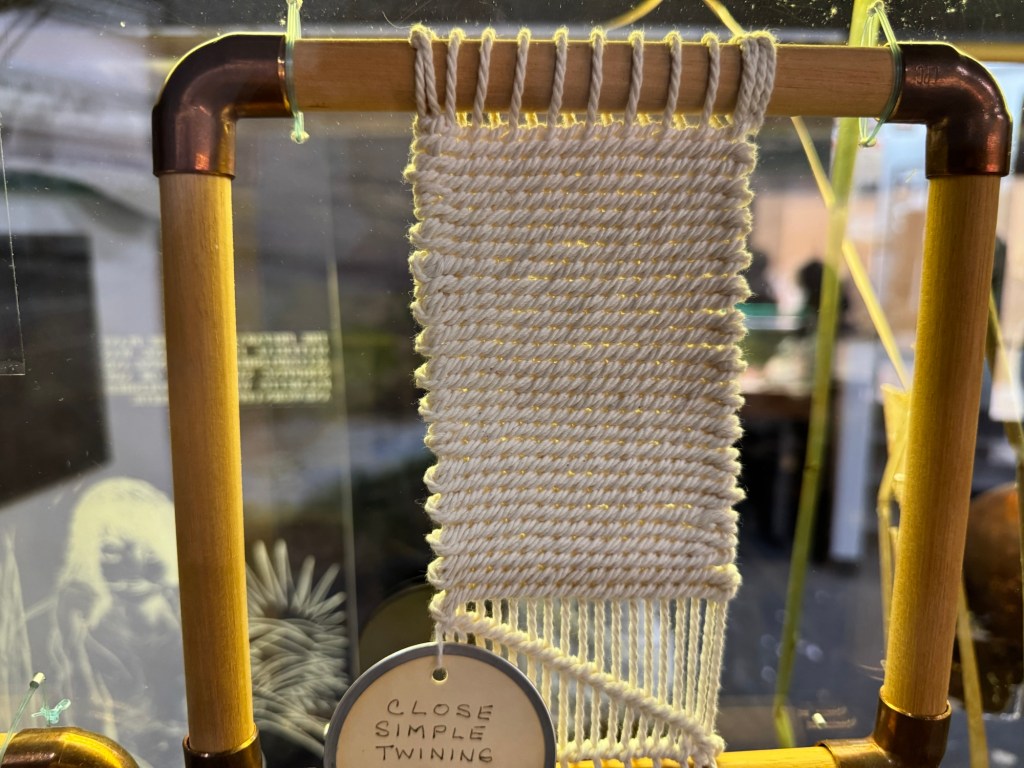
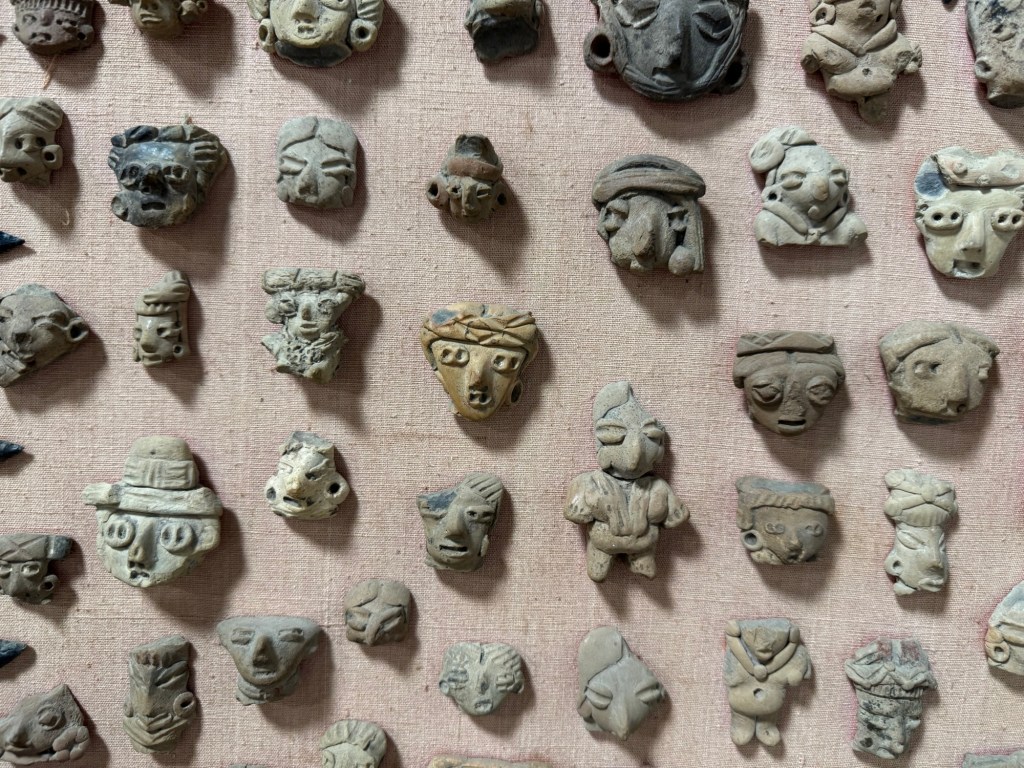
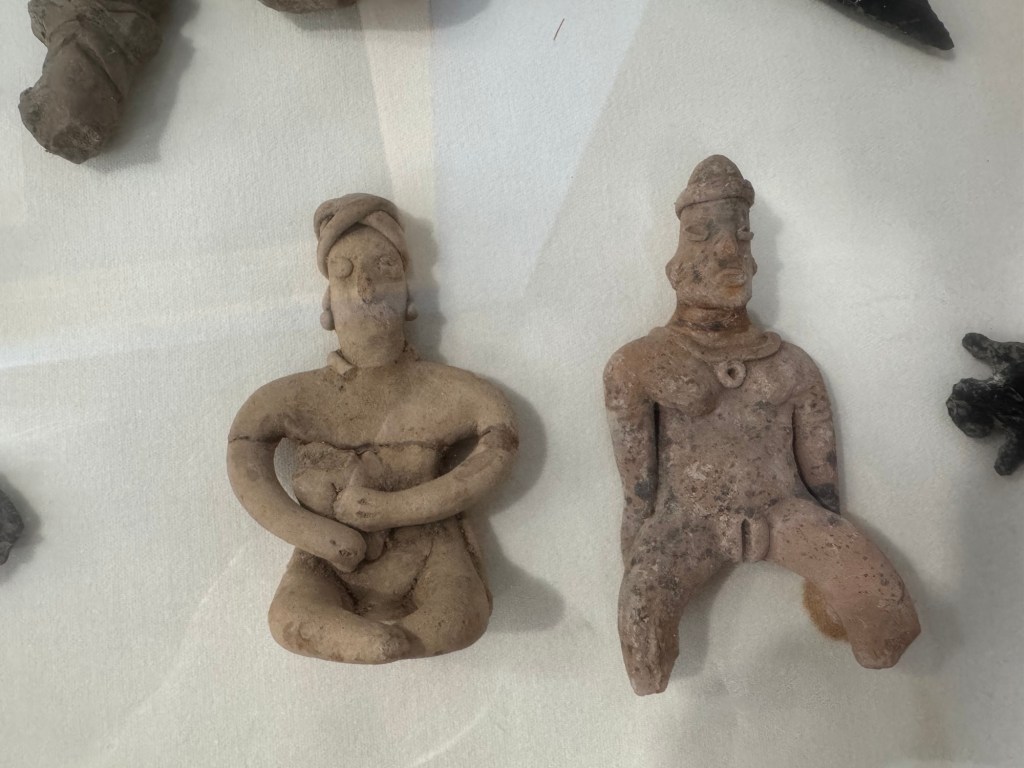
The exhibit at the Brevard Museum of History and Natural Science in Cocoa, Florida, preserves this legacy through displays, loaned artifacts from Florida State University, and interpretive materials. Directed for years by Patricia (Patty) Meyers, an anthropologist passionate about public education, the “People of Windover” exhibit includes reconstructions, videos, and casts of remains. In one featured video segment, anthropologist Dr. Geoffrey Thomas (often referred to in some accounts as Jeffrey Thomas) demonstrates skeletal elements, holding up a femur and comparing it to his own leg to illustrate its size and robustness. Such presentations highlight the impressive preservation and stature beyond dispute. The museum, in a tourist-rich area near Kennedy Space Center, remains underappreciated despite free or low-cost admission and dedicated volunteers; it offers an accessible entry point for exploring this discovery firsthand.
Funding challenges and institutional priorities have limited broader excavations—only half the pond was dug, leaving potential for future work. Some critics argue that narratives around indigenous rights, repatriation under laws like NAGPRA, or academic agendas favoring certain migration models have slowed inquiry into mound sites or “anomalous” finds. Yet archaeology thrives on evidence, not suppression; new technologies, such as ancient DNA, continue to refine our understanding. The Windover shows a logical connection to reports of biblical giants and early transoceanic contact, enriching the story of human adaptation in the Americas by showing sophisticated societies millennia before agriculture dominated.
This discovery invites reevaluation of pre-Columbian history. Traditional models of Siberian land-bridge migration around 15,000–20,000 years ago, followed by a gradual spread, are complicated by sites like Windover, which demonstrate early complexity. Parallels to mound-building cultures in the Ohio Valley (e.g., Adena earthworks) or the Mississippi Valley suggest shared architectural or ritual traditions across vast distances, possibly through trade or migration.
For those drawn to the intersection of archaeology and scripture, works like the ESV Archaeology Study Bible correlate findings with biblical timelines, viewing such sites as evidence of ancient human ingenuity under divine creation. The Book of Enoch’s influence on New Testament ideas, preserved in Ethiopian traditions and echoed in Masonic lore, adds layers to interpretations of “giants” as fallen angel offspring. Yet evidence demands scrutiny: Windover’s “large” bones reflect healthy, tall-for-their-time people, not mythical behemoths. But present a bridge to associate myths and legends with actual evidence that shows how such conclusions emerged in human consciousness.
The site’s obscurity—covered now by development, with only a small exhibit and limited media coverage—contrasts with its potential to reshape narratives. It underscores the need for open inquiry, free from ideological constraints. As an aerospace executive accustomed to root-cause analysis (digging through “five whys” or more to reach truth), I see Windover as a call to keep excavating—literally and figuratively—beyond surface assumptions. Mainstream science may resist paradigm shifts, but discoveries like this, preserved in museums and DNA labs, push toward a fuller picture.
What the Windover discoveries ultimately expose is not merely a dispute over bones or measurements, but a deeper conflict over who gets to define evidence and under what conditions it is allowed to matter. Across professional fields—archaeology included—people often carry private doubts and curiosities that never surface publicly because institutional survival depends on conformity. Funding structures, professional accreditation, and reputational risk quietly shape what can be said, what can be studied, and what must be dismissed. In such environments, agreement is frequently less a function of conviction than of economic alignment. People learn, often unconsciously, to adopt the intellectual posture required by those who control resources, grants, and career continuity.
This dynamic is not unique to archaeology; it is a recurring feature of modern institutional life. When research is tethered to centralized funding—whether state-based, academic, or corporate—the culture surrounding that research tends to harden around acceptable conclusions. Over time, this produces a form of intellectual self-censorship where entire categories of inquiry are quietly labeled unproductive, controversial, or unprofessional. Evidence that challenges dominant narratives is not always refuted; more often, it is starved of attention, relegated to obscurity, or dismissed before meaningful examination can occur. The result is a consensus that appears robust but is, in reality, tightly bound by economic and cultural incentives.
By contrast, independent researchers—particularly those who are self-funded or operating outside institutional hierarchies—retain a degree of intellectual freedom that formal systems often cannot tolerate. Without a paycheck to protect or a grant cycle to satisfy, they can follow the evidence wherever it leads, even when it collides with established assumptions. This does not make independent inquiry automatically correct, but it does make it structurally less constrained. Ironically, it is often these unaffiliated voices—working without institutional sanction—that preserve the exploratory spirit science claims as its foundation.
In this light, the muted response to Windover and similar archaeological anomalies becomes more revealing than the discoveries themselves. The lack of enthusiasm, the rapid dismissal, and the reluctance to engage deeply point more to strong disincentives than to weak evidence. Funding models, cultural expectations, and philosophical commitments—particularly those that resist integration with older historical or biblical frameworks—play a decisive role in determining what is deemed worthy of serious study. These patterns suggest that the real conspiracy is not one of secret cabals or hidden vaults, but of incentives quietly shaping belief. What is hidden, why it is hidden, and who benefits from its obscurity often tell us far more than the measurements of the bones alone.
Ultimately, Windover reminds us that history is layered, like the peat that protected these remains. It was no accident of nature alone but a deliberate choice by people who valued their dead enough to bury them in a sacred pond. Whether linking to biblical giants, ancient global civilizations, or simply advanced Archaic societies, the evidence invites wonder and further research. Visit the Brevard Museum, watch the exhibit videos, and measure the casts yourself. The truth lies in the bones, waiting for those willing to dig deeper.
Footnotes
1. Wikipedia, “Windover Archeological Site” (accessed via current knowledge).
2. The History Center, “Windover: Prehistoric Past Revealed at Ancient Pond Cemetery.”
3. PBS NOVA, “America’s Bog People.”
4. History Hit, “The Secrets of The Bog Bodies at Windover Pond.”
5. Brevard Museum resources and Florida Frontiers episodes on the Windover exhibit.
6. DNA studies referenced in Wikipedia and related publications (e.g., linking to Asian markers).
7. GreaterAncestors.com and similar alternative sources for stature discussions (for contrast).
8. ESV Archaeology Study Bible (Crossway) for scriptural correlations.
9. Pre-Columbian archaeology texts (pre-1950s editions) for historical context.
10. Book of Enoch translations and commentaries for interpretive links.
Bibliography
• Doran, Glen H. (various publications on Windover excavations, Florida State University).
• Milanich, Jerald T. Archaeology of Precolumbian Florida (1994).
• “The People of Windover” exhibit materials, Brevard Museum of History and Natural Science.
• Pääbo, Svante et al. (DNA sequencing studies on ancient remains).
• The Book of Enoch (Ethiopic version).
• Crossway ESV Archaeology Study Bible.
• Various Florida Historical Society and PBS Florida Frontiers documentaries.
• Academic papers on Archaic period stature and health (e.g., via ResearchGate distributions).
Rich Hoffman
More about me
Click Here to Protect Yourself with Second Call Defense https://www.secondcalldefense.org/?affiliate=20707