It is always a special day whenever one of these comes in the mail.
I have been saying that for most of a lifetime, and I have not found a reason to take it back. I have been reading Biblical Archaeology Review since I was a kid in the 1970s.[1] The magazine was new then. Hershel Shanks had just pried a door open between the trench and the kitchen table, and a generation of ordinary readers suddenly had access to the same arguments the professors were having in Jerusalem, Amman, and Cambridge.[2] I am still on that list. The issue still arrives every few months. And when it does, I have a ritual. I block the calendar. I throw the noise out of the room. I turn the phone face down. I let the house go quiet, and I go through the thing article by wonderful article until the night is gone.
If I milk it—and I usually do—I stay up while everyone else has gone to bed. Two o’clock in the morning, a glass of water, the window dark, the mind finally unhurried. I never get tired of it. They do such a good job on this magazine that I can disagree with half of what I am reading and still close the cover grateful. That is a rarer virtue than most publications admit.
A Rough Day, a Small Face, and Japanese Dumplings from Costco
Today was a rough day. There were problems stacked on problems, the kind of list that makes a person keep working because stopping would only let the list talk louder. I was at it when my wife went to the mailbox. She saw the mailman go down the road. She came back in with that smaller face she wears when she is carrying a gift she already knows will land, and she pulled the issue out of the stack as if she had found a holiday hiding in ordinary paper.
She knows the ritual. She has known it for years. Shut everything down. Give him the hours. Let him disappear into the Bronze Age and come back when he is done. She also knows the other half of the ceremony, which is not in any style guide and would not impress a tenure committee: Japanese dumplings from Costco. They are our favorite meal in the world. I put my work away. We ate. Then I came back to the magazine and started turning pages again.
I can tell you, without much fear of contradiction from anyone who has lived a long marriage, that there is not much better in the world than those two things arriving on the same evening. Life is already wonderful. The dumplings do not create the wonder. They just have the good manners to show up when the past does.
That is not a small thing. A culture is what it chooses to interrupt itself for. Some houses interrupt themselves for a game. Some interrupt themselves for a crisis. In this house we interrupt ourselves for a quarterly argument with the dirt of the ancient Near East, served with dumplings. I will defend that liturgy against any number of more fashionable ones.
I Do Not Read This Magazine Because I Agree with It
I do a lot of coverage on alternative history. The people who write Biblical Archaeology Review are, by and large, the academics who write the official history. In a seminar room, we would probably disagree on most of the load-bearing claims. Over coffee, one on one, we would discover we have more in common than the professional costumes suggest. We both love the ground. We both hate a lazy sentence. We both know it takes years to get one good layer out of a tell and only minutes for a man in an armchair to declare the layer silly.
I do not want to disparage their work. It takes a special kind of patience to spend a salary’s worth of afternoons on ancient Mediterranean studies, to draw a wall, to weigh a sherd, to argue about a burn layer until the argument itself becomes a kind of craft. Thank God people go out and dig. I love them for it. What they hand a general reader is the compressed labor of thousands of hours. That bandwidth is the gift. I can sit with their results at two in the morning and ask what the weight of the discovery actually does to the historical narrative.
The gift is not the same thing as a verdict. I come out of aerospace, which is a culture that slings a thousand things at the wall at the same time and then forces smart people to defend their assumptions out loud. You get them in a room. You make them spell the claim. When they stumble—because the evidence is not quite obtained enough, not quite clear enough—you put a mark next to that line and you keep going. A 5-Why breakdown is just the civilian name for the same habit.[3] You are trying to get to the bottom. You often end with more questions than you started with. That is not failure. That is the work confessing that the universe is larger than the first memo.
So I read BAR the way I used to sit in those rooms. I take the facts they sweat for. I refuse to inherit the spellings they cannot finish. Conviction, if it is worth anything, has to be able to look a trench report in the eye and still ask the next why.
What These Pages Teach Better Than Almost Anything
If you want a working grasp of the land of Canaan, of Israel, of the First Temple and the Second, this magazine is still one of the best public teachers in the English language. It will not give you a Sunday-school flannelgraph. It will give you walls, seals, bullae, burnt rooms, inscription fights, and the slow humiliation of theories that looked inevitable in 1986. That is how you learn a period well enough to ask an intelligent question about what is not on the page.
The Dead Sea Scrolls are the obvious example. Once you have sat with what those caves actually held—the textual habits, the calendar arguments, the purity rules, the war language—you can hear Second Temple Judaism thinking out loud.[4] You stop treating “what people believed” as a slogan. You start treating it as an artifact. Belief leaves residue. So does politics. So does fear. A society is whatever it bothers to bury, copy, smash, or hide in a jar.
That is also why I read this magazine as a student of business and politics, not only as a student of Scripture. If you are trying to build a company culture, you are already in the archaeology business. You are asking what a group worships when no one is watching, what it will pay for, what it will kill a project to protect, and what story it tells itself about why the last city fell. Civilizations rise for reasons. They decline for reasons. The reasons are never only economic and never only theological. They are psychological, liturgical, and military at the same time.[5] The Bronze Age did not end because a professor needed a chapter title. It ended because systems that looked permanent discovered they were not.
I like politics. I like business. I like understanding how cultures work so I can apply the lesson before the lesson applies itself to me. You cannot do that on vibes. You do it by watching how a people handled copper, kingship, covenant, and collapse when the outcome was still in doubt.
The Questions the Trench Reports Keep Leaving Off the Table
Here is where I stop being a grateful subscriber and start being the guy from aerospace with a marker in his hand.
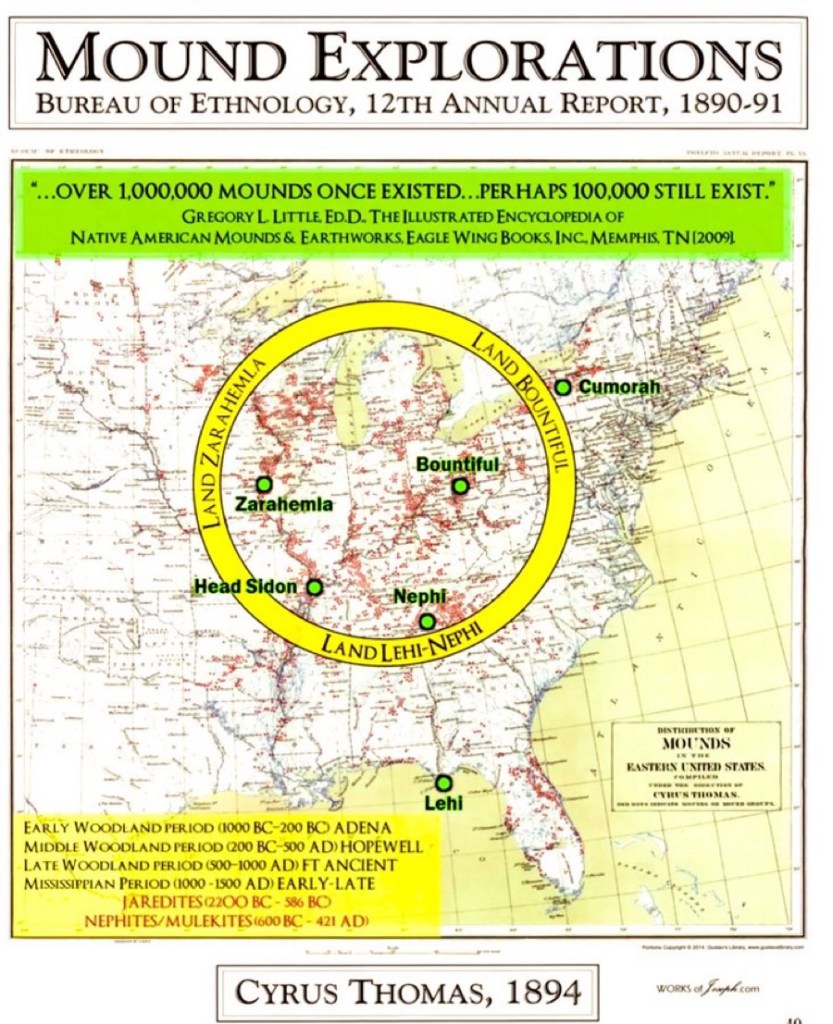
Everybody who reads widely in this field knows the argument about Bronze Age copper and long-distance trade. I have said for years that North American copper belongs in that conversation. The Old Copper Culture of the Great Lakes was not a footnote. The people working the Keweenaw and Isle Royale were among the earliest miners and metalsmiths on the planet.[6] Mainstream archaeology is prepared to praise that fact and then change the subject when the next question arrives: where did all that copper go, and what does the timing do to the usual map of Bronze Age supply? I know the consensus answer. The consensus answer is that European and Near Eastern copper is accounted for by Old World mines, and that a transatlantic trade remains unproven.[7] Fair enough. Unproven is not the same as unaskable. In a review room, “we have not found the shipwreck yet” is a status report. It is not a gag order.
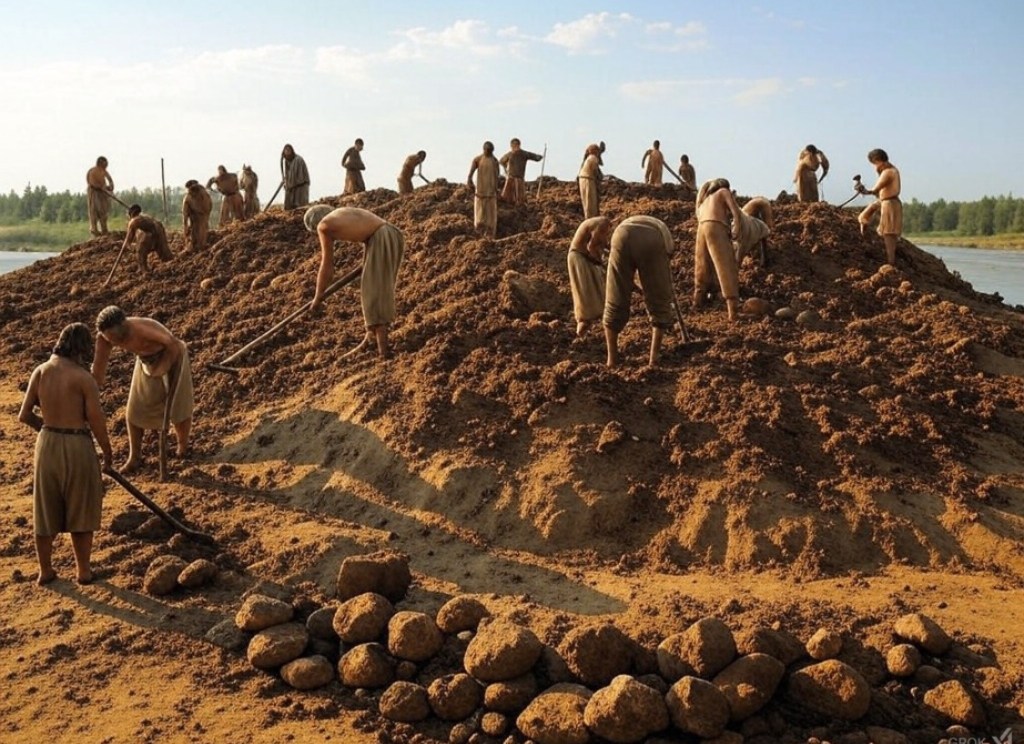
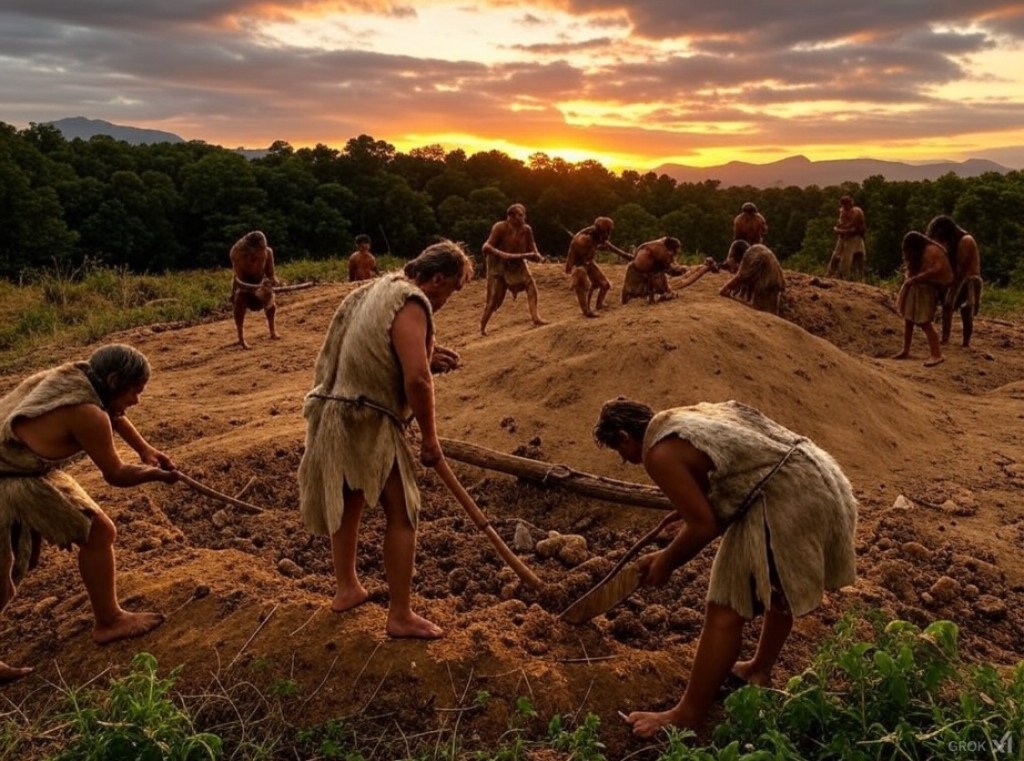
The same habit shows up closer to home. When I talk about stone monuments in northern Michigan—dolmens, capstones, arrangements that look like cousins of the chambers you can walk through in the British Isles and across Atlantic Europe—the geological reflex is always waiting. Displacement. Glaciers. The ice did it.[8] Ice did a great many things. Ice does not get a monopoly on every balanced stone in the Upper Midwest. We already know that people in the Great Lakes arranged rock on purpose. Under Lake Huron, on the old Alpena-Amberley Ridge, there are drive lanes and hunting blinds nine thousand years old. That is not a glacier having a hobby. That is a culture thinking in stone.[9] If a people can build that under what is now water, I am not required to call every terrestrial chamber an accident of meltwater.
I am not asking BAR to become a magazine of North American diffusionism. I am asking the older question the magazine itself taught me to ask: if you know a period well, you are obligated to notice the silence around it. Why this map and not the larger one? Why this set of ancestors and not the ones standing in the next drainage? Absence from a journal is not the same thing as absence from the world. Spilled milk can disappear from the fossil record. That does not mean the glass was never full.
Canaan, Yahweh, and the Politics That Did Not Stay in the Ground
Once you have a good grip on what the excavators actually know about Canaan and the highlands of Israel, you can ask the question the field sometimes treats as bad manners: what kind of culture was already there when the Hebrew Bible says Yahweh told a people to go in?[10] I do not treat that command as a campfire exaggeration and I do not treat it as a modern war-crimes pamphlet. I treat it as politics in the older sense—the ordering of a people under a claim about who runs the unseen world.
The Bible is not embarrassed by a populated heaven. Psalm 82 puts God on his feet in a council of gods and tells them they are going to die like men. Deuteronomy 32, in the reading preserved by the Dead Sea Scrolls and the Septuagint, says the nations were parceled out according to the number of the sons of God, while Yahweh kept Israel as his own portion.[11] That is not a children’s story. That is a jurisdictional map. Babel is the administrative crisis that precedes the map. The conquest traditions are what the map looks like when it reaches the ground. You do not have to like the theology to see the structure. You only have to stop flattening the text until it resembles a modern committee.
This is the argument of the book I have been writing, The Politics of Heaven. Blood, loyalty, and throne-claims do not stay in one register. They move between temples, palaces, and the beings the temples were built to negotiate with. If that sounds speculative from the cheap seats, I would only note that the Bible itself is less shy about the subject than many of its professional interpreters.[12]
Eve, the Fruit, and a Remark I Have Not Been Able to Shake
Most of my readers do not leave public comments. They send texts. They send emails. They would rather be known by a sentence than by a handle. One of them said something I have been turning over ever since: Eve was the original Ayn Rand.
It is a mischievous line, and it is sharper than it first sounds. Rand was an atheist who treated knowledge as security. Eve reaches for the fruit she was told not to eat because the fruit promises the knowledge of good and evil—which is to say, it promises a kind of coverage. If I can see the whole field, I will not be surprised. If I cannot be surprised, I might not need to trust. The serpent’s pitch is not “become wicked.” The serpent’s pitch is “become independently briefed.” That is a political offer. It is also a religious one. The two are not different departments in Genesis.
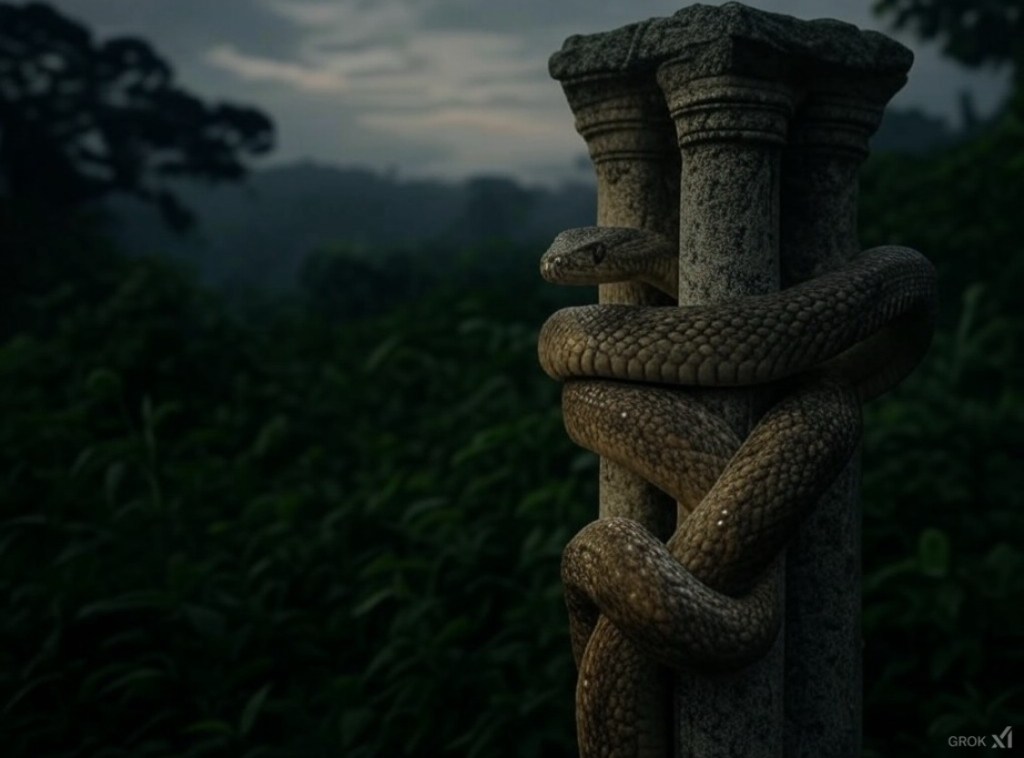
There is good and evil. That part is not subtle. There is also the other tree, the one that did not get eaten, the one that has to do with eternal life. We were built for a purpose and we fell out of the purpose. Ever since, there has been a disorder in the world that would prefer the purpose stay fallen. The snakes are still in the catalog. They still talk. They still offer fruit at the expense of every Adam who thought he could manage the garden by intelligence alone.
I am not above a joke when I say that Jesus was crucified in the middle of that argument. I am thinking of Job, and of Satan telling the court that loyalty is only loyalty until the invoice arrives.[13] I am thinking of the wilderness, with the kingdoms of the world placed on a ridgeline and the offer to jump, to seize, to save himself. “My God, my God, why have you forsaken me” is what it sounds like when a man refuses the offer and pays the price the offer was designed to avoid. If Eve reached for knowledge as security, the cross is the opposite transaction: knowledge of the worst thing, accepted without the security.
That is not a footnote to archaeology. It is the reason archaeology of the biblical world still matters to a person who also thinks about elections, companies, and the way a culture decides what it is allowed to notice. The past is not a museum. It is a set of unfinished negotiations.
How to Read a Magazine Without Becoming Its Disciple
The method is simple, and I commend it to anyone who is going to spend a night with BAR or with any other serious journal.
First, grant the labor. A published excavation is not a blog post. Treat it that way.
Second, separate the find from the frame. The wall is one fact. The paragraph that tells you what the wall “means for early Israelite state formation” is another fact, and a softer one.
Third, ask the aerospace question: can they spell the assumption without coughing? If the dating depends on a circular pottery sequence, say so. If the absence of evidence is doing the work of a conclusion, say so. If a whole continent has been ruled out because it would rearrange the lecture notes, say so.
Fourth, keep a second ledger for the questions the article makes possible and then declines to ask. Those questions are often the real harvest.
Fifth, take the night. Do not speed-read a civilization. The quiet is part of the instrument. A magazine like this is built for the hours when the house has stopped performing and a reader can finally hear himself think.
Why I Will Keep Subscribing
I can say the things I say about these topics because other people did the unglamorous work first. They published. I sat with what they published. Sometimes I said, that is not good enough. Sometimes I said, that changes the picture. Either way, the picture moved because they went into the ground.[14]
That is how you connect the past to the future without turning either into a costume. You learn a period until you can feel its joints. You watch what a people did when copper was wealth, when a temple was a government, when a scroll was a survival strategy. Then you look at your own shop floor, your own county, your own country, and you ask whether the same joints are moving.
If you have ever read The Gunfighter’s Guide to Business, you already know I do not treat culture as decoration. Culture is the operating system. Archaeology is one of the few disciplines that lets you watch an operating system fail in slow motion and leave the wreckage where a later age can still touch it. That is why this magazine remains, for me, one of the best publications in the world. Not because it is always right. Because it keeps putting first-rate evidence in the hands of people who are willing to stay up with it.
My wife knew what kind of day I was having. She also knew the cure that would not insult the day by pretending it had been easy. She brought in the mail. She made the dumplings. She gave me the hours. It does not get any better than that.
Life is wonderful with or without the dumplings. It is more wonderful when the past arrives on the same plate.
Notes
The numbered notes in the essay appear as footnotes on each page. The list below is a reading path, not a claim that every title agrees with me. A good bibliography should be a room you can walk around in, not a unanimous chorus.
A Working Bibliography for Further Reading
Biblical Archaeology Review and the Public Craft
Biblical Archaeology Society. Biblical Archaeology Review. Washington, D.C., 1975–present. https://www.biblicalarchaeology.org/.
Cline, Eric H. “Larger Than Life.” Biblical Archaeology Society, February 8, 2021.
Shanks, Hershel, ed. Understanding the Dead Sea Scrolls. New York: Random House, 1992.
Shanks, Hershel. The Mystery and Meaning of the Dead Sea Scrolls. New York: Random House, 1998.
VanderKam, James C. The Dead Sea Scrolls Today. 2nd ed. Grand Rapids: Eerdmans, 2010.
Collins, John J. The Dead Sea Scrolls: A Biography. Princeton: Princeton University Press, 2013.
Schiffman, Lawrence H. Reclaiming the Dead Sea Scrolls. New York: Doubleday, 1995.
Magness, Jodi. The Archaeology of Qumran and the Dead Sea Scrolls. 2nd ed. Grand Rapids: Eerdmans, 2021.
Canaan, Israel, Judah, and the Temples
Mazar, Amihai. Archaeology of the Land of the Bible, 10,000–586 B.C.E. New York: Doubleday, 1990.
Mazar, Amihai, and Ephraim Stern. Archaeology of the Land of the Bible. Vol. 2, The Assyrian, Babylonian, and Persian Periods. New York: Doubleday, 2001.
Dever, William G. What Did the Biblical Writers Know and When Did They Know It? Grand Rapids: Eerdmans, 2001.
Dever, William G. Beyond the Texts: An Archaeological Portrait of Ancient Israel and Judah. Atlanta: SBL Press, 2017.
Finkelstein, Israel, and Neil Asher Silberman. The Bible Unearthed. New York: Free Press, 2001.
Finkelstein, Israel. The Forgotten Kingdom: The Archaeology and History of Northern Israel. Atlanta: Society of Biblical Literature, 2013.
Kitchen, K. A. On the Reliability of the Old Testament. Grand Rapids: Eerdmans, 2003.
Provan, Iain, V. Philips Long, and Tremper Longman III. A Biblical History of Israel. 2nd ed. Louisville: Westminster John Knox, 2015.
Rainey, Anson F., and R. Steven Notley. The Sacred Bridge: Carta’s Atlas of the Biblical World. 2nd ed. Jerusalem: Carta, 2014.
Stern, Ephraim. Archaeology of the Land of the Bible. Vol. 2. New York: Doubleday, 2001.
Ussishkin, David. Biblical Lachish. Jerusalem: Israel Exploration Society, 2014.
Mazar, Eilat. The Palace of King David. Jerusalem: Shoham, 2009.
Faust, Avraham. The Archaeology of Israelite Society in Iron Age II. Winona Lake: Eisenbrauns, 2012.
Killebrew, Ann E. Biblical Peoples and Ethnicity. Atlanta: Society of Biblical Literature, 2005.
Levy, Thomas E., ed. Historical Biblical Archaeology and the Future. London: Equinox, 2010.
Bronze Age Worlds, Collapse, and Trade
Cline, Eric H. 1177 B.C.: The Year Civilization Collapsed. Rev. ed. Princeton: Princeton University Press, 2021.
Cline, Eric H. After 1177 B.C.: The Survival of Civilizations. Princeton: Princeton University Press, 2024.
Tainter, Joseph A. The Collapse of Complex Societies. Cambridge: Cambridge University Press, 1988.
Yoffee, Norman, and George L. Cowgill, eds. The Collapse of Ancient States and Civilizations. Tucson: University of Arizona Press, 1988.
Drews, Robert. The End of the Bronze Age. Princeton: Princeton University Press, 1993.
Broodbank, Cyprian. The Making of the Middle Sea. Oxford: Oxford University Press, 2013.
Kristiansen, Kristian, and Thomas B. Larsson. The Rise of Bronze Age Society. Cambridge: Cambridge University Press, 2005.
Kristiansen, Kristian. “The Rise of Bronze Age Peripheries and the Expansion of International Trade.” In Trade and Civilisation, edited by Kristian Kristiansen, Thomas Lindkvist, and Janken Myrdal. Cambridge: Cambridge University Press, 2018.
Roberts, Benjamin W., and Christopher P. Thornton, eds. Archaeometallurgy in Global Perspective. New York: Springer, 2014.
Radivojević, Miljana, et al. “The Provenance, Use, and Circulation of Metals in the European Bronze Age.” Journal of Archaeological Research 27 (2019): 331–98.
Muhly, James D. Copper and Tin. Hamden, CT: Archon Books, 1973.
Kassianidou, Vasiliki, and A. Bernard Knapp. “Archaeometallurgy in the Mediterranean.” In The Archaeology of Mediterranean Prehistory, edited by Emma Blake and A. Bernard Knapp. Oxford: Blackwell, 2005.
Great Lakes Copper, Stone, and the North American File
Pompeani, David P., et al. “On the Timing of the Old Copper Complex in the Keweenaw Peninsula and Isle Royale.” Radiocarbon, 2021.
Wade, Lizzie. “Great Lakes people among first coppersmiths.” Science 371, no. 6536 (2021): 1299.
Martin, Susan R. Wonderful Power: The Story of Ancient Copper Working in the Lake Superior Basin. Detroit: Wayne State University Press, 1999.
Pleger, Thomas C. “A Brief Introduction to the Old Copper Complex of the Western Great Lakes.” The Wisconsin Archeologist 82 (2001).
O’Shea, John M., and Guy A. Meadows. “A 9,000-year-old caribou hunting structure beneath Lake Huron.” Proceedings of the National Academy of Sciences 111, no. 19 (2014): 6911–15.
Howey, Meghan C. L., et al. “Geospatial modeling approach to monument construction using Michigan from A.D. 1000–1600 as a case study.” Proceedings of the National Academy of Sciences 113, no. 29 (2016).
Griffin, James B. “The Late Prehistory of the Ohio Valley.” In Handbook of North American Indians, vol. 15. Washington, D.C.: Smithsonian, 1978.
Cunningham, Wilbur M. A Study of the Glacial Kame Culture in Michigan, Ohio, and Indiana. Ann Arbor: University of Michigan Press, 1948.
Squier, E. G., and E. H. Davis. Ancient Monuments of the Mississippi Valley. Washington, D.C.: Smithsonian, 1848.
Fell, Barry. America B.C. New York: Quadrangle, 1976. Read as a document in the history of a controversy, not as a closed case.
Feder, Kenneth L. Frauds, Myths, and Mysteries. 10th ed. New York: Oxford University Press, 2020. The standard skeptical counterweight.
Midgley, Magdalena S. The Megaliths of Northern Europe. London: Routledge, 2008.
Divine Council, Genesis, and the Unseen Politics of Scripture
Heiser, Michael S. The Unseen Realm: Recovering the Supernatural Worldview of the Bible. Bellingham, WA: Lexham Press, 2015.
Heiser, Michael S. “Deuteronomy 32:8 and the Sons of God.” Bibliotheca Sacra 158 (2001): 52–74.
Heiser, Michael S. “Divine Council.” In Lexham Bible Dictionary, edited by John D. Barry et al. Bellingham, WA: Lexham Press, 2012.
Smith, Mark S. The Origins of Biblical Monotheism. Oxford: Oxford University Press, 2001.
Smith, Mark S. The Early History of God. 2nd ed. Grand Rapids: Eerdmans, 2002.
Day, John. Yahweh and the Gods and Goddesses of Canaan. Sheffield: Sheffield Academic Press, 2000.
Mullen, E. Theodore, Jr. The Divine Council in Canaanite and Early Hebrew Literature. Chico, CA: Scholars Press, 1980.
Boyd, Gregory A. God at War. Downers Grove: InterVarsity Press, 1997.
Walton, John H. The Lost World of Genesis One. Downers Grove: IVP Academic, 2009.
Walton, John H. Ancient Near Eastern Thought and the Old Testament. 2nd ed. Grand Rapids: Baker Academic, 2018.
Sarna, Nahum M. Understanding Genesis. New York: Schocken, 1966.
Alter, Robert. The Five Books of Moses. New York: Norton, 2004.
Levenson, Jon D. Creation and the Persistence of Evil. Princeton: Princeton University Press, 1994.
Pagels, Elaine. The Origin of Satan. New York: Random House, 1995.
Wright, N. T. Jesus and the Victory of God. Minneapolis: Fortress, 1996.
Wright, N. T. The Resurrection of the Son of God. Minneapolis: Fortress, 2003.
Culture, Business, and Why the Past Still Issues Orders
Hoffman, Rich. The Gunfighter’s Guide to Business. Author’s edition.
Hoffman, Rich. The Politics of Heaven. Forthcoming.
Ohno, Taiichi. Toyota Production System. New York: Productivity Press, 1988.
Schein, Edgar H. Organizational Culture and Leadership. 5th ed. Hoboken: Wiley, 2017.
Girard, René. Violence and the Sacred. Baltimore: Johns Hopkins University Press, 1977.
Girard, René. I See Satan Fall Like Lightning. Maryknoll, NY: Orbis, 2001.
Voegelin, Eric. Order and History. 5 vols. Baton Rouge: Louisiana State University Press, 1956–1987.
Eliade, Mircea. The Sacred and the Profane. New York: Harcourt, 1959.
Bellah, Robert N. Religion in Human Evolution. Cambridge, MA: Harvard University Press, 2011.
Scott, James C. Against the Grain. New Haven: Yale University Press, 2017.
Graeber, David, and David Wengrow. The Dawn of Everything. New York: Farrar, Straus and Giroux, 2021.
Jordan, the East Bank, and the Neighbors the Text Will Not Leave Alone
MacDonald, Burton. East of the Jordan: Territories and Sites of the Hebrew Scriptures. Boston: American Schools of Oriental Research, 2000.
Bienkowski, Piotr, ed. Early Edom and Moab. Sheffield: J. R. Collis, 1992.
Dearman, J. Andrew, ed. Studies in the Mesha Inscription and Moab. Atlanta: Scholars Press, 1989.
Routledge, Bruce. Moab in the Iron Age. Philadelphia: University of Pennsylvania Press, 2004.
Herr, Larry G., and Douglas R. Clark. “Madaba Plains Project.” Multiple season reports in Annual of the Department of Antiquities of Jordan.
Savage, Stephen H., and Steven E. Falconer. “Spatial and Temporal Trends in Levantine Settlement.” Journal of Archaeological Science, various.
A note on method. I have not required the bibliography to agree with me, and I have not required myself to agree with the bibliography. That is the same rule I bring to Biblical Archaeology Review. Read the people who dug. Read the people who doubt the people who dug. Then keep the night watch and decide which assumptions still refuse to be spelled.
[1] Biblical Archaeology Review (ISSN 0098-9444) has been published by the Biblical Archaeology Society since March 1975. The magazine is presently issued quarterly. See “About Biblical Archaeology Review,” Biblical Archaeology Society, https://www.biblicalarchaeology.org/magazines/.
[2] Hershel Shanks (1930–2021), a Washington lawyer turned editor, founded the Biblical Archaeology Society in 1974 and launched BAR in March 1975. He remained editor-in-chief until 2018. See Eric H. Cline, “Larger Than Life,” Biblical Archaeology Society, February 8, 2021; and “Setting the BAR,” Biblical Archaeology Society, 2025.
[3] The 5 Whys method is associated with Taiichi Ohno and the Toyota Production System. It is a root-cause drill: ask “why” until the chain of causation is exposed. In aerospace and other high-reliability cultures the same spirit appears as assumption-busting reviews, red teams, and formal failure analysis. See Taiichi Ohno, Toyota Production System (New York: Productivity Press, 1988).
[4] On the Dead Sea Scrolls as a window into Second Temple belief, see James C. VanderKam, The Dead Sea Scrolls Today, 2nd ed. (Grand Rapids: Eerdmans, 2010); and Hershel Shanks, ed., Understanding the Dead Sea Scrolls (New York: Random House, 1992).
[5] On collapse and regeneration as a comparative problem, see Joseph A. Tainter, The Collapse of Complex Societies (Cambridge: Cambridge University Press, 1988); Eric H. Cline, 1177 B.C.: The Year Civilization Collapsed, rev. ed. (Princeton: Princeton University Press, 2021); and Norman Yoffee and George L. Cowgill, eds., The Collapse of Ancient States and Civilizations (Tucson: University of Arizona Press, 1988).
[6] David P. Pompeani et al., “On the Timing of the Old Copper Complex in the Keweenaw Peninsula and Isle Royale,” Radiocarbon (2021); and Lizzie Wade, “Great Lakes people among first coppersmiths,” Science 371, no. 6536 (2021): 1299. Sediment and radiocarbon work now places intensive Great Lakes copper working as early as ca. 9500 years ago, peaking roughly 7000–5000 years ago.
[7] The hypothesis that Lake Superior native copper supplied Bronze Age Europe remains outside the archaeological consensus. Mainstream syntheses locate European copper in Alpine, Iberian, Balkan, Cypriot, and British Isles sources. See Benjamin W. Roberts and Christopher P. Thornton, eds., Archaeometallurgy in Global Perspective (New York: Springer, 2014); and “The Provenance, Use, and Circulation of Metals in the European Bronze Age,” Journal of Archaeological Research 27 (2019). I record the disagreement rather than pretend it does not exist.
[8] On European and Levantine dolmens, see Magdalena S. Midgley, The Megaliths of Northern Europe (London: Routledge, 2008); and James L. Swauger, work on petroforms and stone constructions in the Upper Great Lakes. Geologists commonly classify northern Michigan capstone-and-pedestal arrangements as glacial erratics. I do not find that explanation sufficient for every specimen.
[9] John M. O’Shea and Guy A. Meadows, “A 9,000-year-old caribou hunting structure beneath Lake Huron,” Proceedings of the National Academy of Sciences 111, no. 19 (2014): 6911–15. The Alpena-Amberley Ridge drive lanes are a reminder that stone work in the Great Lakes is not exhausted by the glacial-dumping story.
[10] On the archaeology of Canaan, Israel, and Judah in the Iron Age, standard entry points include Amihai Mazar, Archaeology of the Land of the Bible, 10,000–586 B.C.E. (New York: Doubleday, 1990); Israel Finkelstein and Neil Asher Silberman, The Bible Unearthed (New York: Free Press, 2001); and William G. Dever, What Did the Biblical Writers Know and When Did They Know It? (Grand Rapids: Eerdmans, 2001). I read all three and do not baptize any of them.
[11] Michael S. Heiser, The Unseen Realm: Recovering the Supernatural Worldview of the Bible (Bellingham, WA: Lexham Press, 2015); and Heiser, “Deuteronomy 32:8 and the Sons of God,” Bibliotheca Sacra 158 (2001): 52–74. The Dead Sea Scrolls and the Septuagint support “sons of God” rather than “sons of Israel” at Deuteronomy 32:8.
[12] Rich Hoffman, The Gunfighter’s Guide to Business (author’s edition); and Hoffman, The Politics of Heaven (forthcoming). Related essays appear at overmanwarrior.wordpress.com.
[13] Job 1–2; Luke 4:1–13; Matthew 4:1–11. The Accuser’s wager in Job and the wilderness temptations of Jesus are two scenes in the same political drama: a claim on loyalty, tested under pressure, with the kingdoms of the world placed on the table.
[14] Biblical Archaeology Society All-Access membership presently includes the print magazine, the digital BAS Library (every issue of BAR since 1975, plus Bible Review and Archaeology Odyssey), lecture video, and curated collections. See https://www.biblicalarchaeology.org/.
Rich Hoffman
More about me
Click Here to Protect Yourself with Second Call Defense https://www.secondcalldefense.org/?affiliate=20707

About the Author: Rich Hoffman
Rich Hoffman is an author, political consultant, and strategic advisor based in Cincinnati, Ohio, and the creator of The Politics of Heaven—a unique framework that connects biblical theology, ancient history, and modern power structures to explain how moral alignment and spiritual forces shape global events. Blending real-world political experience with deep research into archaeology, UFO phenomena, and suppressed historical narratives, Hoffman offers compelling commentary on topics ranging from ancient civilizations and the Dead Sea Scrolls to modern populist movements, paranormal continuity, and leadership strategy in chaotic environments. As the author of The Gunfighter’s Guide to Business and the forthcoming Politics of Heaven, he brings a grounded yet provocative voice to media discussions, supported by firsthand experiences and a cross-disciplinary approach that bridges science, history, and theology. For interviews, speaking engagements, or expert analysis, visit richhoffmanbooks.com or contact directly via phone at 513-307-5815 or email at rhoffman@richhoffmanbooks.com. If you’ve seen the movie, Disclosure Day and want to talk about it and the implications of Presidnet Trump’s UAP disclosures, let me know and we can bring some color to your coverage. https://richhoffmanbooks.com/media-inquiries-broadcast-topics-and-contact-info/?frame-nonce=ad51e7ecba I do have a firsthand UFO encounter to discuss.