

The text from Sheriff Richard K. Jones arrived while the phone sat face-down during a showing of Young George Washington. The calls and messages kept lighting the edge of the screen in the dark theater. One of them was Jonesy himself letting me know that the book was out and that a careful reading would be worth the time. The timing was almost perfect in its inconvenience. A planned window to get out of the normal daily life pattern had already opened. The decision had been made to break the usual Friday-night routine, drive a different route, and head for South Bass Island rather than return straight home. Packages left on a front porch while the household was away create their own problems. So the order waited until the return was certain. The Amazon driver handed the book over in the driveway as the camper was being backed into its usual spot after the short island run. Twenty-four hours of steady reading followed.
They Call Me Jonesy: Let’s Get Real About Saving America is not a polished campaign document. It is the voice of a man who has spent decades as Butler County Sheriff, wearing the same cowboy hat that has become a kind of quiet declaration, speaking the same plain language about crime, family, political correctness, and what he calls the swamp. The second half of the book returns again and again to a single practical point: if the country is going to be fixed, the most important public office available to ordinary citizens is the local school board. The phrase and the idea appear often enough that it begins to feel directed. Jonesy has watched the same ground for a long time. He knows the people who stay outside the formal structures and still manage to move things. He also knows how many of those same people keep getting told they should step inside.
Politics remains a bloodsport even when the combatants know and respect one another. There have been seasons when Jones and others in the county stood on opposite sides of particular fights. That never erased the underlying regard. The nature of the game requires choosing a side and playing it hard. Sometimes the people across the board are the ones who would otherwise be natural allies. That is simply how the contest works. Jones himself has never shown much appetite for trading the sheriff’s office for something higher. He has said, in public and in the book, that effectiveness often improves when a person stays outside the formal swamp rather than climbing deeper into it. The same logic applies in reverse to those who have never worn a badge or held a seat. The most useful work is frequently done by people who refuse to become creatures of the system they are trying to restrain.
The pressure to enter the school-board arena does not come only from Jonesy’s pages. It arrives weekly, sometimes more often. The arguments are familiar: the schools shape the next generation; the curriculum, the hiring, the culture, and the tax levies are decided there; surrendering those seats to people who treat traditional American formation as the problem is a slow form of civic suicide. Ben Nguyen’s recent election to the Lakota board stands as a living example that younger, clear-eyed candidates can still win and serve. The point is not lost. School boards remain the most direct lever ordinary citizens still possess. When they are captured by people who view the institution as a platform for every progressive fashion rather than a place to transmit competence, literacy, and ordered liberty, the damage compounds for decades.
Yet the practical question remains. A life already organized around seventy-hour professional weeks, family obligations, writing, and the constant low-grade vigilance that comes with a public profile does not easily absorb another formal role. Most elected officials keep outside employment because the official salary alone is rarely enough and because the work itself expands to fill every available hour. Adding a school-board seat would require rearranging the entire calendar around meeting nights, executive sessions, and the inevitable political theater that follows any vote that displeases the organized interests. Controversy travels with the name. There are people who read the work, request signed copies of The Gunfighter’s Guide to Business, and fly into Butler County Regional to hand over stacks for their own teams. There are also people who scheme in the opposite direction. Changing routes, avoiding predictable patterns, and occasionally leaving the mainland for an island that requires deliberate effort to reach are not theatrical gestures. They are the ordinary precautions of a man who would rather not end up in a courtroom explaining a justified use of force. The island trip provided a short psychological reset for me. The pressure did not disappear, but the constant proximity did. That matters. When things are getting thick, its best to step away from the pressure so not to be impacted by it.
Jonesy’s repeated insistence that the school board is the place to fight does not require every capable person to file petitions tomorrow. It does require that the capable people stop treating the board as someone else’s problem. Jonesy’s book’s larger argument is that America is not saved by distant national theater alone. It is saved, or lost, in the places where children are taught what to value, what to respect, and what to defend. The sheriff who prefers to remain a sheriff rather than become a congressman or a senator is making the same point from the other direction: stay close to the ground, stay effective, and do not surrender the institutions that still answer directly to the people who live under them.
The book is worth the careful reading it received. Jonesy has made hard decisions over a long career and has refused to sand the edges off the lessons. The message about the school board lands with particular force on those who already know the terrain and who keep being asked the same question. The answer, for now, is not a categorical refusal. It is a recognition that effectiveness has its own schedule and its own costs. The arena is real. The children in the classrooms are real. The people who would rather keep the seats filled with ideological placeholders are also real. Jonesy is not wrong about any of that. The only remaining question is how many more seasons the current arrangement can continue before the price of staying outside becomes higher than the price of stepping in.
They Call Me Jonesy is available now. Read it. Then look at the next school-board ballot in the county and decide what the ground actually requires. The larger fight over what is taught, what is remembered, and what is defended has never been only about one board or one county. It has always been about whether the next generation will inherit a coherent civilization or a managed decline. Jonesy has stated his preference clearly. The rest is up to the people who still have the energy and the will to act on it.
Footnotes
1. Richard K. Jones, They Call Me Jonesy: Let’s Get Real About Saving America (2025/2026), available via Amazon and theycallmejonesy.com. The official site describes the work as a candid leadership book addressing crime, political correctness, “The Swamp,” and the practical question of what ordinary citizens can do to save the country.
2. Official book site, theycallmejonesy.com, accessed July 2026. Testimonials include statements from Mark Lamb, J.D. Vance, and former Middletown Police Chief Rodney Muterspaw emphasizing law-and-order leadership and traditional values.
3. Rich Hoffman, “They Call Me Jonesy: The Night the Arena Roared and the Establishment Lost the Plot,” richhoffmanbooks.com, July 27, 2026. Earlier treatment of the same volume focusing on the 2016 U.S. Bank Arena appearance, family destruction by the drug culture, and Jones’s style of practical authority.
4. Lakota Local School District Board of Education roster, lakotaonline.com, listing Benjamin Nguyen as a seated board member beginning January 2026. Nguyen, a 2025 Lakota West graduate, won election in November 2025 and has been described as among the youngest elected officials in Ohio.
5. Butler County Sheriff’s Office public statements and local coverage (Journal-News, FOX19, WCPO) documenting Jones’s long record of engagement with area school boards on security, resource officers, and related policy.
6. Personal observation of the repeated emphasis inside the volume itself on school-board service as the highest-leverage local office available to citizens concerned with the direction of the country.
Bibliography
Jones, Richard K. They Call Me Jonesy: Let’s Get Real About Saving America. 2025/2026. https://theycallmejonesy.com/ and Amazon listings.
Hoffman, Rich. “They Call Me Jonesy: The Night the Arena Roared and the Establishment Lost the Plot.” richhoffmanbooks.com, July 27, 2026.
Lakota Local School District. Board of Education roster and meeting materials. lakotaonline.com.
Butler County Sheriff’s Office. Public releases and social-media statements regarding school security and related policy, 2018–2026.Various local reporting (Journal-News, FOX19 NOW, WCPO 9, Cincinnati.com )
Rich Hoffman
More about me
Click Here to Protect Yourself with Second Call Defense https://www.secondcalldefense.org/?affiliate=20707
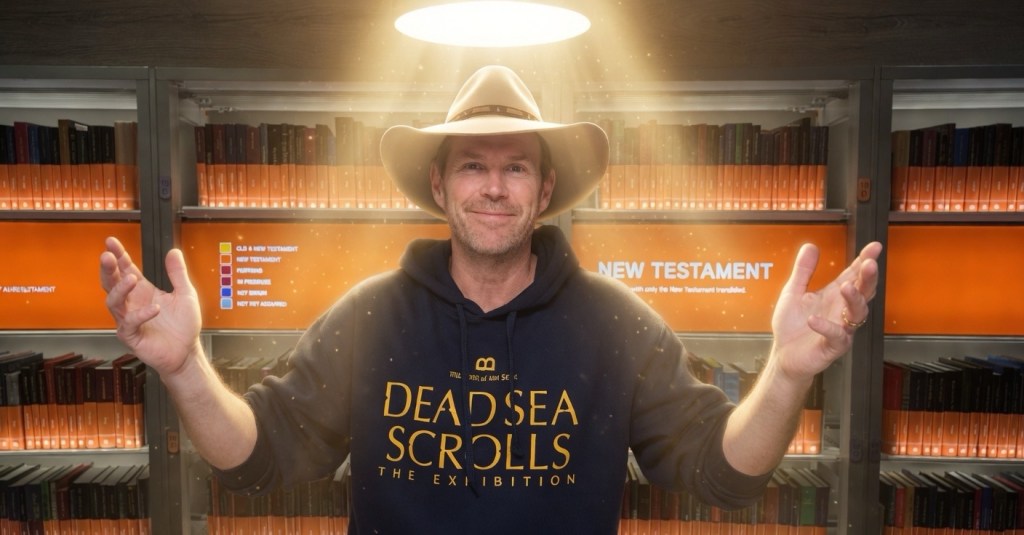
About the Author: Rich Hoffman
Rich Hoffman is an author, political consultant, and strategic advisor based in Cincinnati, Ohio, and the creator of The Politics of Heaven—a unique framework that connects biblical theology, ancient history, and modern power structures to explain how moral alignment and spiritual forces shape global events. Blending real-world political experience with deep research into archaeology, UFO phenomena, and suppressed historical narratives, Hoffman offers compelling commentary on topics ranging from ancient civilizations and the Dead Sea Scrolls to modern populist movements, paranormal continuity, and leadership strategy in chaotic environments. As the author of The Gunfighter’s Guide to Business and the forthcoming Politics of Heaven, he brings a grounded yet provocative voice to media discussions, supported by firsthand experiences and a cross-disciplinary approach that bridges science, history, and theology. For interviews, speaking engagements, or expert analysis, visit richhoffmanbooks.com or contact directly via phone at 513-307-5815 or email at rhoffman@richhoffmanbooks.com. If you’ve seen the movie, Disclosure Day and want to talk about it and the implications of Presidnet Trump’s UAP disclosures, let me know and we can bring some color to your coverage. https://richhoffmanbooks.com/media-inquiries-broadcast-topics-and-contact-info/?frame-nonce=ad51e7ecba I do have a firsthand UFO encounter to discuss.

