

I have spent a good deal of time lately thinking about the ancient copper mines of Lake Superior and the strange, almost otherworldly geology that surrounds the Great Lakes. Those thoughts were still turning over in my mind when my family and I loaded the RV and headed for South Bass Island. People from California or Europe might look at a map of Ohio and wonder why anyone would choose an island in Lake Erie for a vacation. From where I sit, it is one of the finest places on earth. It is close enough that my wife and I can reach it without turning the trip into an ordeal, yet once you are on the island you feel properly away from the mainland and its noise. That distance matters to me more than it once did.
We took the ferry with the RV, set up camp, and let the grandchildren loose on golf carts. They had a tremendous time. My son-in-law captured a different angle of the same days on his YouTube channel—lighter, more focused on the pure family fun. I present information one way; he and my daughter present it another. The island itself offered exactly what I had hoped for: a short escape, some serious geology, and a chance to feed the particular curiosity I see in one of my grandsons.
Why South Bass Island and the Lake Erie Caves Called to Us
The geology of these islands is young by deep-time standards. Much of what you see was shaped by the last ice age, roughly 12,000 years ago, yet the underlying limestone and the cave systems hold older stories. I wanted the grandchildren to walk through those stories. Perry’s Cave is the most famous of them. During the War of 1812, men under Commodore Oliver Hazard Perry used the underground freshwater stream inside the cave while the fleet was based in the natural harbor at Put-in-Bay. The cave sits fifty-odd feet below the surface, stays a constant cool temperature, and still carries that quiet historical weight.
A short distance away is Crystal Cave at Heineman’s Winery, recognized as the world’s largest geode. You descend into a single vast cavity lined with celestite crystals, some of them more than a foot long. The space is large enough to accommodate a small group of people comfortably. Standing inside it feels less like visiting a tourist attraction and more like stepping into a mineral cathedral formed over thousands of years after the ice retreated. My grandson, the one who already shows the restless, pattern-seeking intelligence that strongly reminds me of a young Thomas Edison, had been talking about the largest geode in the world. We made sure he saw it.
Joe’s Bar sits near the little airport, close enough that people flying in on small planes can walk over for a hamburger or fries. They allow dogs on the outdoor side, which is why my granddaughter wanted to go. We were not there for the drinking crowd. We were there because it sits almost on the path between the campground and the caves, and because a place that welcomes the family dog while serving simple food has its own quiet usefulness. These small details are part of what makes the island work.
The Edison Parallel and the Decision to Stay Longer in Milan
I talk about Thomas Edison a good deal around that particular grandson. It is not that I want to turn him into a replica. I want him to see that there have always been alternatives to the standard path. After the rest of us headed home, my oldest daughter, her husband, and that grandson stayed on. They took the extra days to drive over to Milan, Ohio, and visit Edison’s boyhood home. The house is modest, brick, and sits in a quiet town that still carries the inventor’s name with a certain local pride.
I had recommended Edmund Morris’s biography of Edison years earlier. Morris structured the book in reverse, beginning near the end of Edison’s life—when the older man was still frantically trying to solve the problem of domestic rubber production with Henry Ford and others—and working backward to the boy in Milan. That structure stays with me. It shows a man who never stopped pushing against limits, even when he was five minutes from death. His mother had pulled him out of the public school system early because the ordinary classroom could not contain him. She homeschooled him, protected his oddities, and gave him room to become the person who would later file patents at a pace almost no one has matched.
That decision by a mother in a small Ohio town still matters. The regulatory and educational environment today makes another Edison far less likely. My daughter understands this. Her husband understands it. They did not stay behind to force a legend on a child. They stayed to show him the actual house, the actual town, and the atmosphere that once allowed a singular mind to develop without being sanded down into a drone.
Local Newspapers, Mickey’s Gas Station, and the Voynich Manuscript
While they were in the Milan area, they stopped at one of the Mickey’s locations—a regional gas-station and market chain that still feels rooted in northern Ohio rather than corporate nowhere. At the counter, they picked up free local newspapers. One of them carried a feature on the Voynich Manuscript, the world’s most mysterious book. My daughter texted me photos of the pages and asked what I thought of it.
I had already written about the manuscript. My working view is that it may be the notebook of a non-human intelligence that somehow ended up in human hands—an idea that fits the larger pattern I explore in The Politics of Heaven. Whether that theory is ultimately correct or not, the fact that a free newspaper distributed at a gas station in Edison country would feature the Voynich at all tells you something about the residual curiosity that still lives in these communities. They are not merely selling fuel and snacks. They are still willing to put strange, difficult ideas in front of ordinary people who might take a copy home and actually read it.
That same spirit shows up in the little free papers and local efforts you find on the islands themselves. People publish them because they love the place and want to keep a certain industrious, heritage-minded atmosphere alive. It is the opposite of the passive consumption that dominates so much of modern life.
Hardware-Store Towels, Uranus Fudge, and the Ordinary Magic of Ohio Stops
One afternoon we took the kids to a beach facing Kelley’s Island from South Base Island. It is one of the better swimming spots in the area, down past the memorial at the far end. No one had packed swimsuits or towels. The water was cold, as Lake Erie usually is. My wife climbed into a golf cart, drove to the little hardware-and-grocery store that serves much of the island, bought towels and extra clothes, and raced back so the children would not freeze on the return ride. The whole episode lasted maybe half an hour. It was pure small-town improvisation, and it worked.
On other trips, we stop at Shelton’s fireworks store in Richmond, Indiana, right across the state line. Across the street sits the Uranus Fudge Factory, a place that leans hard into adolescent humor in its name yet sells genuinely high-quality candy. This has been a candy year for the grandchildren. We have hit obscure sweet shops all over Ohio, and Uranus held its own. We also make the ritual stop at the McDonald’s in Eaton with the good playground, even though the kids are now mostly too old to play on it. They still like being there. On the way back, we often grab Chinese food from the little plaza near the Walmart. These are not glamorous destinations. They are simply places that have kept a certain American texture—part commerce, part joke, part genuine local pride.
What These Days Actually Mean
I did not plan the vacation as a lesson. I planned it as time away with the people I care about, on an island that still feels like itself. The geology, the caves, the geode, the Edison house, the free newspaper with the Voynich article, the hardware-store towels, and the slightly ridiculous fudge factory all belong to the same larger pattern. They are evidence that pockets of real curiosity and individual initiative still exist in ordinary American places.
The copper mines of Superior, the glacial history of the islands, the unexplained manuscript, and the boy who was protected from the standard school system all feed into the same set of questions I have been carrying for years. Those questions will appear in full in The Politics of Heaven. For now, it is enough to say that a family trip to Put-in-Bay and a side journey to Milan reminded me why I keep returning to these subjects. Intelligence and inventiveness do not come from committees or from systems designed to produce uniform results. They come from particular minds given room to develop, often in small towns that still value their own odd heritage.
I am glad my daughter and son-in-law captured their version of the days on video. I am glad the grandchildren got to stand inside the largest geode, walk through Perry’s Cave, and see the actual house where Edison began. And I am glad a free newspaper at a gas station still bothers to tell people about the world’s most mysterious book. These are small signs, but they are real. In a time when so much of the culture seems determined to flatten everything into the same safe shape, they are worth noticing.
If you ever find yourself near Lake Erie with a few free days, take the ferry. Walk the caves. Stand inside the geode. And if you are driving through northern Ohio, stop at a Mickey’s and pick up whatever free paper they are giving away that week. You never know what might be inside it.
Footnotes
1. Guinness World Records recognizes Crystal Cave at Heineman’s Winery on South Bass Island as the largest geode, a single celestite cavity discovered in 1887 while digging a well.
2. Historical accounts credit men under Commodore Oliver Hazard Perry with using the underground stream in Perry’s Cave for freshwater during the 1813 occupation of the island before the Battle of Lake Erie.
3. Edmund Morris, Edison (New York: Random House, 2019). The biography is structured in reverse chronological order, beginning near the end of Edison’s life and moving backward to his boyhood in Milan, Ohio.
4. The Voynich Manuscript, held at Yale’s Beinecke Rare Book & Manuscript Library, remains undeciphered. Fringe theories have long included non-human or extraterrestrial origin; the author’s own published view aligns with that line of speculation as part of a broader inquiry into non-human intelligence.
5. Mickey’s is a regional convenience-store and gas-station chain headquartered in the Milan, Ohio area, known for community involvement and local character.
Selected Bibliography
Morris, Edmund. Edison. New York: Random House, 2019.
Heineman’s Winery and Crystal Cave historical materials, Put-in-Bay, Ohio.
Perry’s Cave Family Fun Center and related War of 1812 documentation.
National Park Service materials on Perry’s Victory and International Peace Memorial.
Voynich Manuscript facsimile and scholarly literature, Beinecke Rare Book & Manuscript Library, Yale University.
Local histories of South Bass Island, Kelleys Island, and the Lake Erie island archipelago.
Geology of the Great Lakes region and post-glacial cave formation studies.
Hoffman, Rich. The Gunfighter’s Guide to Business.
Hoffman, Rich. The Politics of Heaven (forthcoming).
The Gunfighter’s Guide: A skeleton key to Western Civilization (gunfighterguide.shop)
Rich Hoffman
More about me
Click Here to Protect Yourself with Second Call Defense https://www.secondcalldefense.org/?affiliate=20707
About the Author: Rich Hoffman
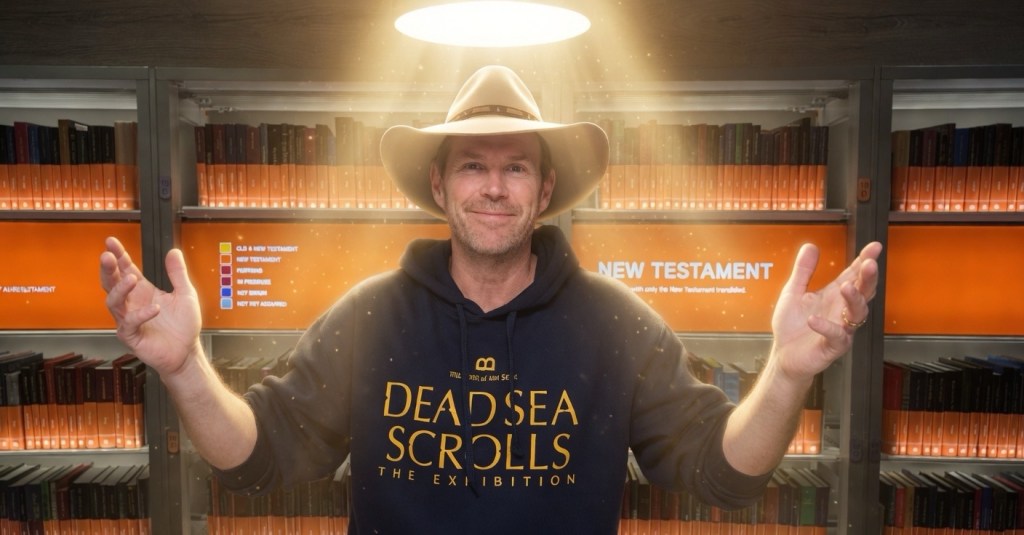
Rich Hoffman is an author, political consultant, and strategic advisor based in Cincinnati, Ohio, and the creator of The Politics of Heaven—a unique framework that connects biblical theology, ancient history, and modern power structures to explain how moral alignment and spiritual forces shape global events. Blending real-world political experience with deep research into archaeology, UFO phenomena, and suppressed historical narratives, Hoffman offers compelling commentary on topics ranging from ancient civilizations and the Dead Sea Scrolls to modern populist movements, paranormal continuity, and leadership strategy in chaotic environments. As the author of The Gunfighter’s Guide to Business and the forthcoming Politics of Heaven, he brings a grounded yet provocative voice to media discussions, supported by firsthand experiences and a cross-disciplinary approach that bridges science, history, and theology. For interviews, speaking engagements, or expert analysis, visit richhoffmanbooks.com or contact directly via phone at 513-307-5815 or email at rhoffman@richhoffmanbooks.com. If you’ve seen the movie, Disclosure Day and want to talk about it and the implications of Presidnet Trump’s UAP disclosures, let me know and we can bring some color to your coverage. https://richhoffmanbooks.com/media-inquiries-broadcast-topics-and-contact-info/?frame-nonce=ad51e7ecba I do have a firsthand UFO encounter to discuss.

