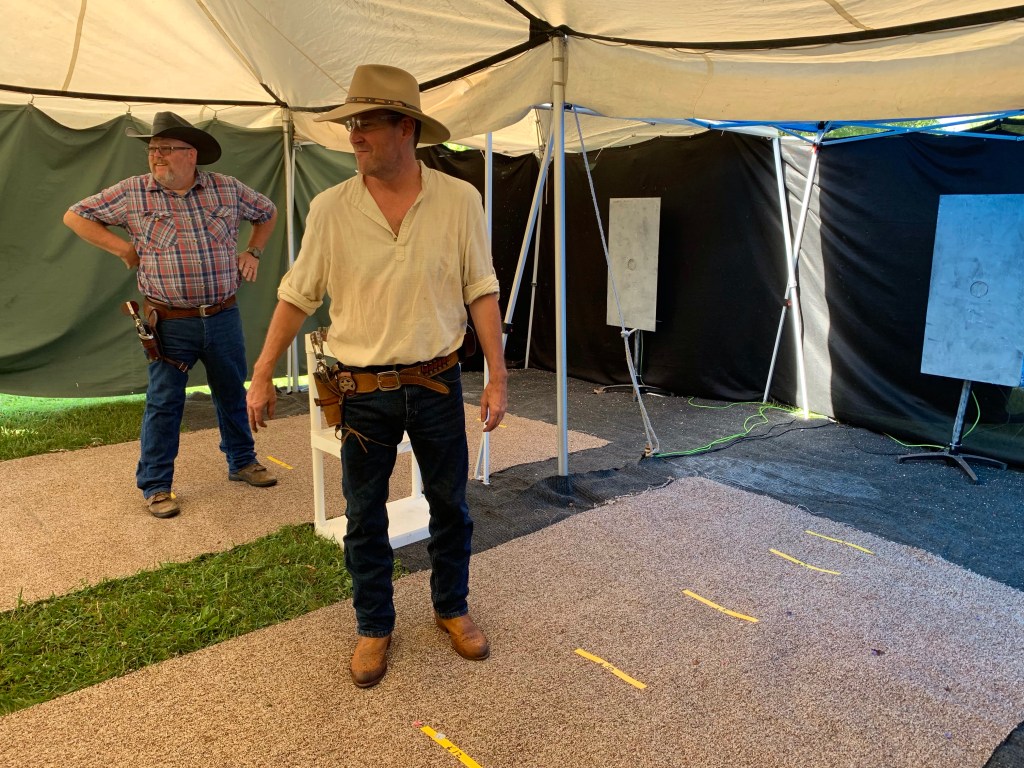
The Politics of Fear: Non-Human Intelligence, Cultural Programming, and Embodied Terror as Mechanisms of Social Control

An Academic Reflection from Put-in-Bay and the Kings Island Haunt, 2026

This paper examines how fear functions as a primary mechanism of cultural programming and social control, drawing on personal fieldwork conducted in 2025–2026. It integrates archaeological, anthropological, and psychological perspectives with experiential data from a period of deliberate privation (finishing The Politics of Heaven at Put-in-Bay, Ohio) and embodied performance (portraying Jason Voorhees in the “Blood Reigns” attraction at Kings Island’s Haunt). The argument posits that non-human intelligence—whether framed as demons, interdimensional entities, or residual “software” written into human cognition—operates primarily through fear, peer pressure, and mythic narratives. Observations of gendered responses to terror, connections to ancient shamanic and Canaanite practices, and the broader “Truman Show” constraints of modern society are developed. The work is offered as a foundational paper toward a larger doctoral-scale thesis.

Introduction: Writing Under Privation and the Search for Root Causes


I have long maintained that the written word remains the most durable vehicle for knowledge transfer, even as video and podcast media dominate contemporary communication. My books are intended not merely for commercial circulation but as time capsules—relevant to readers centuries hence. The Politics of Heaven, completed in draft at Put-in-Bay, Ohio, in 2026, addresses the political order of conspirators against God (or Yahweh), using history, archaeology, and anthropology to map the software that programs human intellect and society.¹

Influences include James Frazer’s comparative mythology, the psychology of Jung and Freud, the poetry of T. S. Eliot, and the science fiction of Frank Herbert (Dune), whose Bene Gesserit and later revelations about programmed human destiny illuminate how mythologies function as code.² We live in a constrained existence often analogized to The Truman Show or The Matrix: perceptions are filtered, free will is debated, and destinies are described as “meant to be.” Who writes the program? My working hypothesis, refined through decades of study and travel, is that non-human intelligence—lingering outside or adjacent to dimensional reality—has shaped human software for millennia. JD Vance and others have used the language of demons; Timothy Alberino’s work on the Book of Enoch and related texts has brought these questions into wider circulation.³ I align with much, though not all, of that framing.
Archaeology and anthropology remain central. Periodicals on human settlement, migration, skull cults at Göbekli Tepe (c. 10,000 BCE), copper cultures of the Upper Peninsula of Michigan, the Windover people of Central Florida (c. 7,000–8,000 years ago), dolmens and shaman caves in the Jordan Valley and near the Sea of Galilee (dating to 14,000–15,000 years ago), and the unresolved questions surrounding the First Temple period in Jerusalem all indicate advanced activity long before conventional biblical timelines.⁴ Graham Hancock’s The Sign and the Seal modeled an adventure-correspondence approach I adapted, though my expenditure of roughly half a million dollars in travel and research produced a more systematic chronology of museums and sites.⁵ The goal was never light entertainment but a serious attempt to order the politics of spiritual adversaries.

Method: Privation, Shamanic Parallel, and the Truman Show


Shamans historically depleted themselves—through fasting, stress, sleep deprivation, or plant medicines such as ayahuasca—to heighten interaction with the spirit world. Jesus’s fasting in the wilderness and Pablo Amaringo’s visionary work (emerging from Hancock’s circles) illustrate the pattern.⁶ I employ a parallel method when finishing major works: deliberate hardship to push perception beyond ordinary constraints.
I finished The Gunfighter’s Guide to Business in Roswell, New Mexico, during a snowstorm after racing from Kansas City through untreated roads. The setting let me research the 1947 incidents, John Chisum’s economic impact, and the Lincoln County War. Similarly, Put-in-Bay provided isolation. Hostile actors—corporate pirates, political adversaries, and those who label dissent “crazy” to enforce social ostracism—create constant vigilance. I have maintained a zero-violence policy while carrying defensive arms and varying routes, informed by early exposure to organized-crime environments in the Cincinnati area (hitmen who preferred chaotic public sites such as stoplights to minimize witnesses).⁷ Put-in-Bay’s limited geography and reduced chaos allowed genuine relaxation for several days, revealing the extent of chronic self-preservation stress. Jacques Vallée’s books, read there, confirmed that readers of my manuscript already recognized the parallel to his hypotheses on non-human intelligence and control systems.⁸

The “Truman Show” is not metaphor alone. Peer pressure, institutional relief valves, and mythic programming keep populations within acceptable bounds. Politics is software input. Questions of free will, destiny, and “God’s plan” require root-cause analysis rather than repetition of received narratives.

Archaeological Foundations and Pre-Biblical Complexity


Göbekli Tepe’s skull cult, beer production, and monumental architecture predate conventional agricultural narratives. Michigan copper sources potentially fueled early Bronze Age metallurgy. Windover bog burials demonstrate sophisticated indigenous cultures in Florida long before 1619-project framings. Near-Eastern shaman caves show continuous use of psychoactive means to contact non-human intelligence. Jerusalem’s stratigraphy—layers of soil obscuring First Temple remains, the Dome of the Rock’s contested holiness, debates over the Ark of the Covenant—illustrates selective historical emphasis.⁹

I contend that when humans return to the Moon and Mars in the 2030s, archaeology will expand into space. Evidence of prior habitation—structures, temples, or genetic serial numbers distinguishing populations—may confirm that modern humanity is either a continuation or an edited product of earlier intelligences. Giants in biblical and extra-biblical texts may reflect lower-gravity origins as readily as Nephilim mating. Erich von Däniken and Zechariah Sitchin, though contested, raised questions that academic orthodoxy often dismisses too quickly.¹⁰ The 1619 Project and related efforts to reframe American founding as purely extractive ignore the long Western-civilizational arc emerging from the Near East through political and religious turmoil into constitutional self-government.¹¹

Fear as the Core Control Mechanism


Fear constructs society. Loss of employment, social ostracism, political realignment, parental authority, spectral threats—all function as relief valves or enforcement tools. Communism and modern institutional capture operate similarly. Haunted attractions, by contrast, offer bounded terror: participants pay to confront fear while guaranteed physical safety.

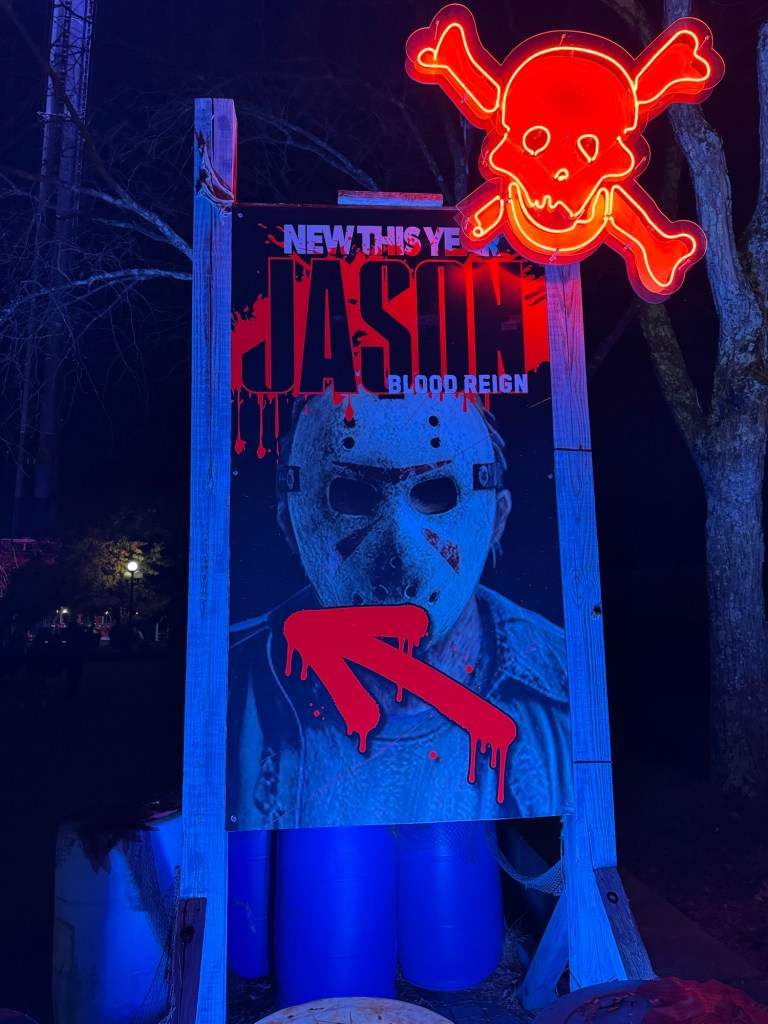
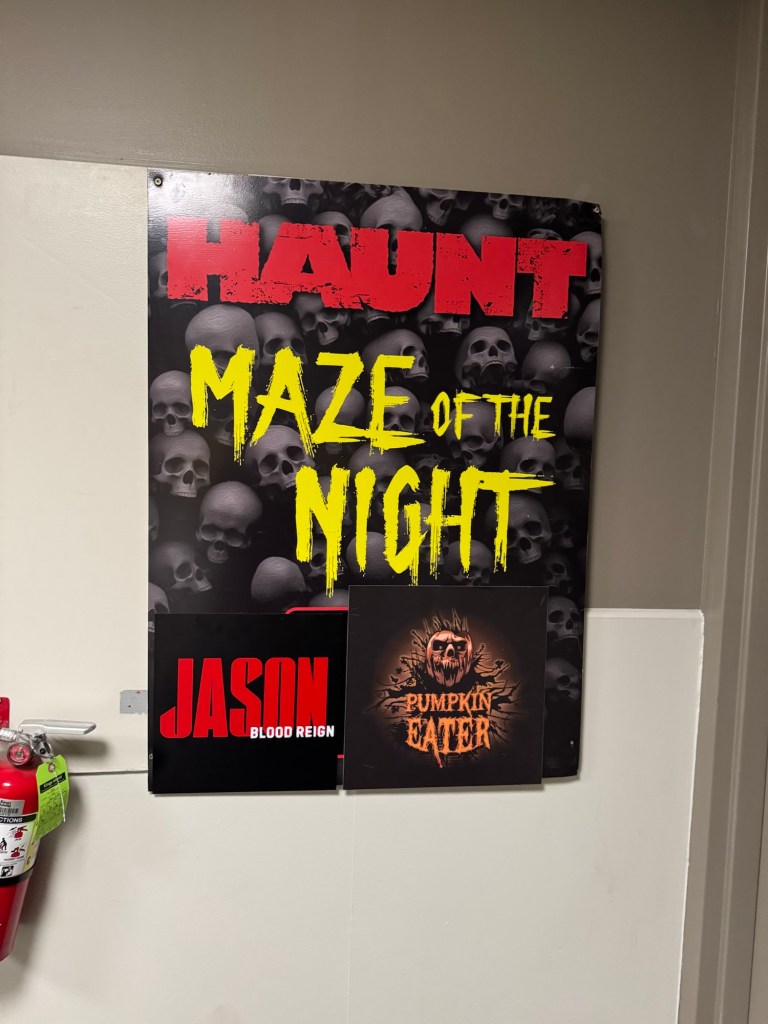
In September–October 2026, I auditioned for Kings Island’s Haunt. My walk—shaped by decades of executive work, proximity to power without subservience, and early familiarity with violent environments—led casting directors to select me as Jason Voorhees for the “Blood Rains” house, which drew heavily on the first four Friday the 13th films. Six Flags invested substantially in authentic sets, pine scent, rain effects, and practical lighting/sound. I worked Thursday–Sunday nights from mid-September through Halloween, typically 5 p.m. to after midnight, among a cast largely in their teens and twenties. The Saturday before Halloween saw multi-hour lines extending into the mall area; tens of thousands of guests passed through.¹²

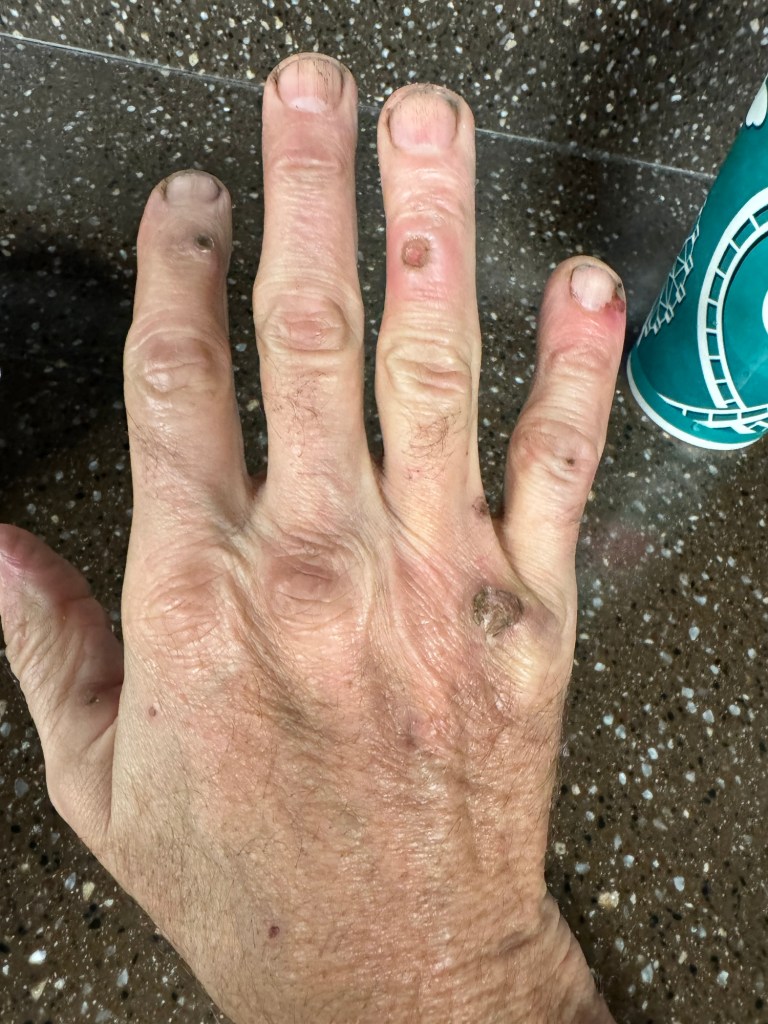
Jason does not speak. Presence, posture, and eye contact project threat. I employed every available non-verbal means—strobe activation, machete motion, wall strikes when audio failed—to maximize effect. Physical cost was real: cut hands from repeated machete handling, bloodied knuckles, observed injuries among other performers. The experience supplied a large statistical sample of human response under controlled terror.

Gendered and Developmental Responses to Terror


Males (boys and men) predominantly sought engagement: “Hi Jason,” fist-bump requests, verbal acknowledgment that affirmed survival and status. Females, especially adolescents (roughly 15–18), frequently defaulted to sexual display or verbal seduction—“I love you, Jason,” blown kisses, tongue gestures, exposure—under hive conditions in groups of six or more. This was not universal but patterned and striking. I remained fully in character and found the behavior revealing rather than gratifying.

These responses map onto older fertility and goddess-cult practices. Academic literature sometimes underplays the sexual dimensions of Canaanite religion—temple prostitution, fertility rites offered to deities. Under uncertainty (future, status, survival), young females appear to test sexual capital as appeasement. Parallel questions arise regarding high-school relationships with older authority figures: the same calculus of power and fear can and do operate. Once reproductive and household realities set in, the pattern typically attenuates.¹³

Haunted-house guests emerge smiling, having survived bounded terror. The certainty of the scare itself provides relief from the more diffuse fears of ordinary life. People want to locate the monsters and the pecking order.

Canaanite Cults, Shamanism, and Western Counter-Narratives


Why did populations worship Canaanite deities with sexual and sacrificial rites? Fear and the desire for fertility or protection. Shamanic caves throughout the region, continuous with Göbekli Tepe traditions, indicate long interaction with non-human intelligence. The Protestant Reformation’s debates over the Apocrypha (Luther et al.) and the Bible’s selective time-capsule nature leave room for pre-Adamite or edited human populations.¹⁴ Western civilization, emerging through Christian and classical synthesis, largely rejected the more destructive cultic practices even while retaining fear as a social tool.

My observations in the Haunt supplied modern ethnographic data: under acute fear, sexual appeasement and status-seeking appear as default strategies. This does not require endorsement of any particular theology; it requires acknowledging that non-human intelligence (or residual programming attributed to it) continues to exploit fear. In The Politics of Heaven, Yahweh faces ongoing conspirators; human beings are both targets and potential representatives.

Implications for Programming, Free Will, and Future Archaeology


Stories and folklore write software. Families, companies, political parties, and nations transmit it. Elon Musk’s enterprises (SpaceX, Tesla, Starlink) illustrate an engineer bringing science-fiction templates into hardware; the same logic applies to cultural templates. Disclosure discussions around non-human intelligence remain constrained by institutional incentives.
When archaeological work reaches Mars and the Moon, prior human or human-intelligence presence will force timeline revisions. Genetic distinctions among populations may be re-read as creator “serial numbers.” Fear will remain the primary enforcement mechanism unless deliberately countered by clearer understanding of the program and its authors. Bounded experiences of terror (haunts, controlled shamanic methods) can illuminate the mechanism without surrendering to it.

Conclusion


The 2026 season—completing The Politics of Heaven under conditions of hostility, reading Vallée at Put-in-Bay, and embodying Jason Voorhees for tens of thousands of guests—functioned as an extended field experiment. Fear governs more of human society than is commonly admitted. Gendered responses, ancient cultic parallels, and the architecture of the Truman Show all converge on the same point: non-human intelligence, or the residual code it left, continues to shape outcomes. Academic archaeology, anthropology, and psychology supply tools; personal privation and embodied performance supply data. Further work will expand this foundation into a fuller thesis. The Haunt was excellent service; the learning exceeded any wage.

Jason: Blood Reign and the Quiet Proof of Leadership

I went into the 2026 Halloween Haunt at Kings Island deliberately choosing the hard, less-visible work. For a long time the projects I’ve been around have tended to succeed, and it can become difficult to know how much of that success you actually carry with you versus how much simply arrives because you’re standing next to it. So I picked something outside my usual wheelhouse—seasonal work as Jason Voorhees inside the new licensed Friday the 13th maze, Jason: Blood Reign—and treated it as a personal experiment. Could I still move the needle when the assignment was physically demanding, the hours long, the setting unfamiliar, and the success of the night depended on people I had to help form into a team under real pressure?

It was hard. Very hard on the body and on the schedule. But the result was clearer than I expected. Blood Reign became one of the headlining mazes of the season. Kings Island ran seven haunted mazes in 2026 (Blood Reign and Metal Massacre new; Order of the Dragon, Alien Abyss, Killmart, Slaughter House, and the separate add-on Conjuring experience). Blood Reign was the line people planned around. Early in the run it regularly posted 60-minute medians on Fridays and Saturdays and hit 180 minutes on at least one Saturday. Guests who waited still came out talking about it. Reviews from park regulars and content creators repeatedly called the production a step up for the park—strong sets that moved between woods and camp scenes drawn from the franchise, effective scares, and actors who kept the tension alive rather than just jumping out. Multiple people described it as “S-tier,” “some of the best production I’ve seen at Kings Island,” and worth the extra Haunted Attractions Pass. The same maze ran at two other Six Flags parks this year (SCarowinds and Great Adventure’s Fright Fest); at Kings Island the long lines and the volume of positive guest reactions after they exited were the clearest local verdict.

What I take from it is not the mask or the machete. It is the confirmation that my strongest lever is still team-building and culture. When you can get the people around you to raise their game, stay consistent under fatigue, and care about the experience the guest is having, the maze performs. There were the usual background conversations about what actually makes a good haunt—staffing, pacing, the difference between a cheap jump and a sustained sense that something is hunting you—and the group that formed around the maze worked through those. Six Flags supplied a budget and the licensed concept; the actors and the people supporting them turned it into something guests wanted to stand in line for and then recommended to others. Tens of thousands of people moved through that experience across the roughly 22 operating nights. The ones I saw leaving were generally happy with what they had just paid for.

That outcome matters to me for 2027. It was not my normal environment. It was physical, seasonal, and outside the usual executive or advisory frame. Yet the same pattern held: get the culture right, elevate the people doing the work, and the thing tends to succeed. That is the blank check I was looking for. Whatever projects I put my name next to next year—whether they look familiar or deliberately difficult—I now have another clear data point that the method travels. The lines, the reviews, and the team that held together through the hard nights are the evidence. I’m proud of the contribution. More than that, I’m satisfied that the experiment worked.

My daughters and one of my grandsons while I was working as Jason

I was especially happy to hear the guys at Tower Topics—Don Helbig and Ryan Suhr—talk about Jason: Blood Reign on their podcast. Around the four-minute mark of the episode where Ryan reviewed this year’s Haunt (“Ryan Went to Haunt So Don Didn’t Have To”), he specifically described what he ran into at the curtain. That’s where they put me most nights—about 80% of the time. I’m fast, and I developed a way of timing the button that triggers the sound effect and the light visuals so the jump lines up exactly when I rip the curtain open.

I call it the Jack-in-the-Box effect. You know the jump is coming. You can see me twisting the knot and the handle just a little, building the anticipation, but you still don’t know the exact second. Ryan came through multiple times—I recognized him once I saw him on the podcast—and he kept coming back through the maze the way a lot of people do once they’ve been scared. Across the hall from the curtain there’s a little graphic animation of Jason killing someone in shadow. Guests lock onto that. While they’re looking at it, I come out behind them. Even when people have already been through several times and know I’m standing there, the timing still gets them. A lot of them fall down. Some crawl out of the room on their hands and knees. Others jump so hard they pull the people in front of them down with them. It happens often enough that I’m sure there will be reviews mentioning the safety side of it, but the reaction is real.

Groups of thirty or so would come through. I’d get the first couple, then people four or five back would see me and still get hit when I timed the jump. They’d say “I knew you were behind that curtain—I just went through here” and then admit I still scared them. I never broke character. They’d try to get you to talk or react, but I stayed locked in. The goal every night was simple: they paid good money, so give them everything you’ve got. Don’t hold back. Don’t phone it in.

We had a strong group—mostly younger people—and we built a positive, high-energy culture. I challenged myself by stepping into something outside my normal element, injecting energy and creativity day after day, and treating every guest like they deserved the full scare. It was a tough, physical job with long hours, but being part of making it succeed felt good. Hearing Ryan Suhr, who has been through a lot of haunts and isn’t easy to impress, talk about Jason: Blood Reign as one of the best in the country made me proud of the part I played in it. These guys do a half-hour to hour-long show and still came away with a genuinely positive take. That meant something.

I’m happy they had a good experience, and I’m glad Ryan recognized the work we put in at the curtain. It was a successful season, and I was glad to contribute to it.Notes

  1. Rich Hoffman, The Politics of Heaven (manuscript, 2026).
  2. Frank Herbert, Dune series (1965–1985); James G. Frazer, The Golden Bough (1890–1915); C. G. Jung, Archetypes and the Collective Unconscious (1959).
  3. Timothy Alberino, Birthright and related lectures on Enochic literature; public statements by JD Vance on demonic language.
  4. Klaus Schmidt, Göbekli Tepe: A Stone Age Sanctuary in South-Eastern Anatolia (2012); reports on Windover archaeological site (Florida); copper provenance studies linking Lake Superior to Near Eastern Bronze Age.
  5. Graham Hancock, The Sign and the Seal (1992).
  6. Pablo Amaringo and Luis Eduardo Luna, Ayahuasca Visions (1991); biblical accounts of Jesus’s wilderness fasting (Matthew 4; Luke 4).
  7. Personal observational data from Cincinnati-area environments, 1980s–1990s; general criminological literature on witness behavior in chaotic public spaces.
  8. Jacques Vallée, Passport to Magonia (1969) and Dimensions (1988).
  9. Standard stratigraphic reports on the City of David and Temple Mount; debates summarized in Israel Finkelstein and Neil Asher Silberman, The Bible Unearthed (2001), read critically.
  10. Erich von Däniken, Chariots of the Gods? (1968); Zechariah Sitchin, The 12th Planet (1976).
  11. Critical responses to the 1619 Project, including those emphasizing continuity of Western legal and philosophical traditions.
  12. Kings Island Haunt operational data and personal field notes, September–October 2026.
  13. Comparative material on Canaanite religion in William G. Dever, Did God Have a Wife? (2005); ethnographic parallels in fear and fertility rites.
  14. Martin Luther’s prefaces to the Apocrypha; standard introductions to biblical canon formation.

Selected Bibliography for Further Reading
Alberino, Timothy. Works on Enoch and related pseudepigrapha.
Amaringo, Pablo, and Luis Eduardo Luna. Ayahuasca Visions.
Dever, William G. Did God Have a Wife?
Finkelstein, Israel, and Neil Asher Silberman. The Bible Unearthed.
Frazer, James G. The Golden Bough.
Hancock, Graham. The Sign and the Seal; Fingerprints of the Gods.
Herbert, Frank. Dune series.
Jung, C. G. Collected works on archetypes and the unconscious.
Schmidt, Klaus. Göbekli Tepe.
Sitchin, Zechariah. Earth Chronicles series.
Vallée, Jacques. Passport to Magonia; Dimensions; Confrontations.
von Däniken, Erich. Chariots of the Gods?
Additional primary archaeological reports on Göbekli Tepe, Windover, Michigan copper, and Levantine dolmens and caves; criminological studies of public violence and witness behavior; psychological literature on fear conditioning and gender differences under stress (e.g., works descending from Freud, Jung, and modern terror-management theory).

Rich Hoffman

More about me

Click Here to Protect Yourself with Second Call Defense https://www.secondcalldefense.org/?affiliate=20707

About the Author: Rich Hoffman

Rich Hoffman is an author, political consultant, and strategic advisor based in Cincinnati, Ohio, and the creator of The Politics of Heaven—a unique framework that connects biblical theology, ancient history, and modern power structures to explain how moral alignment and spiritual forces shape global events. Blending real-world political experience with deep research into archaeology, UFO phenomena, and suppressed historical narratives, Hoffman offers compelling commentary on topics ranging from ancient civilizations and the Dead Sea Scrolls to modern populist movements, paranormal continuity, and leadership strategy in chaotic environments. As the author of The Gunfighter’s Guide to Business and the forthcoming Politics of Heaven, he brings a grounded yet provocative voice to media discussions, supported by firsthand experiences and a cross-disciplinary approach that bridges science, history, and theology. For interviews, speaking engagements, or expert analysis, visit richhoffmanbooks.com or contact directly via phone at 513-307-5815 or email at rhoffman@richhoffmanbooks.com.  If you’ve seen the movie, Disclosure Day and want to talk about it and the implications of Presidnet Trump’s UAP disclosures, let me know and we can bring some color to your coverage. https://richhoffmanbooks.com/media-inquiries-broadcast-topics-and-contact-info/?frame-nonce=ad51e7ecba I do have a firsthand UFO encounter to discuss.
The Erosion of Integrity: Elections, Oaths, and the Progressive Paradox of Authority

I have been talking about this for years now, and the pattern keeps confirming itself. A few years ago, in 2022, it was Cochise County, Arizona, with Katie Hobbs as Secretary of State. Republican supervisors on the board delayed certifying the midterm results past the statutory deadline, citing concerns about the certification and accreditation of the voting machines. Hobbs, who was herself a candidate for governor against Kari Lake, sued the county to force the canvass. A judge ordered them to certify; they eventually did under threat, and later two supervisors were indicted for interference. Official accounts insist there was “no evidence of a count being incorrect,” yet the resistance itself, the attempted full hand-count that a court blocked, and the broader atmosphere of machine distrust revealed how thin the institutional trust had become. 

We have seen the same dynamic in Fulton County, Georgia. In December 2025, an attorney for the county stood before the State Election Board and stated plainly that they did not dispute the failure to sign tabulator tapes covering roughly 315,000 early votes from the 2020 election—nearly all of the early in-person ballots. That directly violates the rules designed to create a verifiable chain of custody between voters and tabulated results. There have also been admissions and findings around double-scanned ballots, missing ballot images, and inconsistent batch tallies from the risk-limiting audit and recount. Officials and the Secretary of State call these clerical errors that did not change the outcome; Biden’s margin in Georgia was about 11,779 votes. Yet the volume of procedural failures is not trivial, and the late admission years later only feeds the original skepticism. 

How They Thought They Would Get Away With It

This is what has always puzzled me. The Constitution and American society rest on a baseline of integrity—people raising their right hand and swearing to tell the whole truth, so help them, God. When that idea is hollowed out, the entire mechanism of voluntary cooperation collapses. Progressive globalism treated the removal of that integrity as a feature, not a bug. Without the sacred weight of the oath, testimony becomes just another tactical instrument. You can say whatever advances the narrative today and walk it back tomorrow as a “clerical error.” The goal was authority without the restraint of genuine accountability.

They preached using the power of government to reshape the individual and society, yet simultaneously pushed to defund the police. That is an obvious contradiction. If you dismantle the everyday instruments of law and order, how exactly do you intend to enforce the new authority you claim? You cannot have it both ways. Either the rules apply with consistent enforcement, or the system becomes pure power exercised by whoever controls the institutions at the moment. The progressive assumption seemed to be that once integrity was sufficiently degraded, and once enough people accepted that “the process” itself was the only legitimacy required, dissent could be managed through narrative, lawfare, and selective prosecution rather than persuasion.

Lawfare, Oaths, and the Targeting of Questioners

We saw that approach in practice. Efforts to put Trump in jail; the imprisonment of Peter Navarro for contempt of Congress related to the January 6 committee and election-related challenges; and the FBI seizure of Mike Lindell’s phone at a drive-through while he was under heavy scrutiny for questioning the machines and the results—these were not abstract debates. They showed what happens when you question the official story too persistently. At the same time, discussions continue about holding figures such as Anthony Fauci accountable for the pandemic response, yet the institutional machinery has been far more energetic in pursuing those who challenged 2020 election procedures than in applying the same standard universally.

The removal of the idea that an oath means something is central. When liberals treat the “so help me God” clause as optional theater, the entire structure of testimony and public record loses its force. That is why a candidate like Amy Acton can run for governor in Ohio with a campaign largely managed through public relations filters, raising tens of millions while avoiding direct, unscripted answers to difficult questions. The model is to control the information environment rather than submit to open scrutiny. In a system that still had robust integrity, that approach would be fatal. Once integrity is optional, it becomes a viable strategy.

The Voice of the People and the 2024 Contrast

People still went out and voted in large numbers in 2024. The red wave, though it could not be fully contained, showed that when voters have a clear channel and counting is sufficiently visible, the representative mechanism can still function. That is why calls to re-examine 2020—not as nostalgia, but as a demand that discrepancies be treated with the same seriousness as any other large-scale administrative failure—continue. Trump didn’t have to be drafted into that fight; he volunteered because the alternative was accepting a system in which the oath and the count are both flexible. It was never more complicated than that for those who still believe the mechanisms they were told were reliable should actually be reliable.

The progressive error was thinking that authority could be sustained after integrity had been systematically weakened. Without the cultural habit of telling the truth under oath, and without consistent law enforcement that does not depend on political convenience, the only remaining tools are narrative control and selective coercion. That is not a stable foundation for any society that claims to be constitutional. The admissions in places like Fulton County and the certification fights in Cochise County are not the whole story, but they clearly illustrate why so many people concluded the system had stopped treating integrity as non-negotiable.

Bibliography

•  New York Times, “Republican-Controlled County in Arizona Holds Up Election Results,” November 28, 2022.

•  Snopes, “Fulton County, Georgia, officials admitted ballot-handling errors during 2020 election,” December 2025 (citing State Election Board proceedings and county attorney Ann Brumbaugh’s statement).

•  Atlanta News First and 11Alive reporting on the December 9, 2025, State Election Board hearing regarding unsigned tabulator tapes covering approximately 315,000 early votes.

•  Associated Press and other contemporaneous coverage of Cochise County Board of Supervisors actions, Hobbs lawsuit, and subsequent judicial order to certify.

•  Judicial Watch and reporting on the 2022 FBI warrant and seizure of Mike Lindell’s phone.

•  Coverage of Peter Navarro’s conviction and imprisonment for contempt of Congress.

•  Acton for Governor campaign finance announcements and contemporaneous polling.porting on the 2026 Ohio gubernatorial race.The record is public.

Rich Hoffman

More about me

Click Here to Protect Yourself with Second Call Defense https://www.secondcalldefense.org/?affiliate=20707

About the Author: Rich Hoffman

Rich Hoffman is an author, political consultant, and strategic advisor based in Cincinnati, Ohio, and the creator of The Politics of Heaven—a unique framework that connects biblical theology, ancient history, and modern power structures to explain how moral alignment and spiritual forces shape global events. Blending real-world political experience with deep research into archaeology, UFO phenomena, and suppressed historical narratives, Hoffman offers compelling commentary on topics ranging from ancient civilizations and the Dead Sea Scrolls to modern populist movements, paranormal continuity, and leadership strategy in chaotic environments. As the author of The Gunfighter’s Guide to Business and the forthcoming Politics of Heaven, he brings a grounded yet provocative voice to media discussions, supported by firsthand experiences and a cross-disciplinary approach that bridges science, history, and theology. For interviews, speaking engagements, or expert analysis, visit richhoffmanbooks.com or contact directly via phone at 513-307-5815 or email at rhoffman@richhoffmanbooks.com.  If you’ve seen the movie, Disclosure Day and want to talk about it and the implications of Presidnet Trump’s UAP disclosures, let me know and we can bring some color to your coverage. https://richhoffmanbooks.com/media-inquiries-broadcast-topics-and-contact-info/?frame-nonce=ad51e7ecba I do have a firsthand UFO encounter to discuss.

Why We Root for Jason Voorhees: Peer Pressure, the Scapegoat, and JASON: Blood Reign at Kings Island

I said I would do a thesis on Jason Voorhees. I still will. I have been thinking about him all season, and I have been close enough to the subject to test a few things I used to know only from a chair. I cannot talk about that work yet. I am under an obligation on it, and I will get into the details in November, after Halloween 2026 has passed. What I can say now, and what I will stand behind, is this: if you go to Kings Island Haunt and walk JASON: Blood Reign, you will be scared. I do not care how tough you think you are.

That is not a park slogan. It is an observation about what the maze is built to do.

A B-movie with a longer shadow

When I was a teenager, Friday the 13th was the movie you watched hoping to see a topless girl. There was no internet. You could not pull anything up whenever you wanted to see nudity. You sat through a camp-in-the-woods picture and took what you could get. I have always thought of those films that way. They are B-movies. They are fun. They are rough. The later ones are mostly refs of the earlier ones.

They are also still here.

A dozen films on, Jason Voorhees is one of the most recognized villains American cinema ever produced. People do not just remember him. They wear him. At Kings Island, you can walk out of the gift shop in a Jason jersey or a Jason hoodie, and you can buy the same stuff almost anywhere else the season is being sold. That is not how audiences are supposed to treat a killer. They are supposed to sympathize with the victims. They do not. They root for Jason to finish the job. I have wanted to know why, and I have wanted to know it in a way that survives contact with the actual exhibit, not just the comfort of a book.

Haunted houses are a very specific American habit. Jason is a very specific kind of villain. The Kings Island maze, one of three Six Flags parks debuting JASON: Blood Reign this year, and the only one in the Midwest, is the cleanest public expression of that psychology I have seen. Universal has promoted the property. Other parks have tried the mask. This one understands the character.

Psycho, the mother, and the boy in the lake

The first Friday the 13th is not really a Jason movie. It is a mother movie. Pamela Voorhees is the killer. Her boy drowned in the lake while the counselors were off doing what counselors in these movies always do. The picture owes a great deal to Psycho: the mother, the frame, the sense that you are being watched from the tree line, the score doing half the violence before a hand ever moves. Hitchcock is all over the early films, whether anyone on set would have said so. You are often looking at the victims from the place the killer is standing.

Jason himself comes back in the sequel, still not the hockey mask. The mask arrives in Part III, taken off a prankster, and from then on it is the face. No eyes you can bargain with. No mouth you can read. Kevin Bacon, years before Footloose, dies in the first film with an arrow through the throat. We did not leave the theater grieving the campers. We left talking about the kill.

The added layer, past Psycho, is that Jason was the picked-on boy. Different. Isolated. Kept by his mother. Abandoned, in the story the films tell, by the very people hired to watch the children. He dies. She avenges him. Then he comes back, and he does not stay dead. He has no fear of death because the films will not let death keep him. He cannot be appealed to. He cannot be shamed. He grew into a slow, silent killer with no tether to the rules the camp was built to teach.

Why the gift shop sells the killer

Most of what scares people in a haunt is not contact. You are not allowed to be touched. The scare is psychological, and nothing in that toolkit is more psychological than a silent killer who does not yell, does not explain, and does not hurry. He keeps coming.

People identify with that. I do not think they were supposed to. I think Jason was built as a killer and a punishment. Audiences made him something else. They bought the jersey. They wanted the counselors dead. The kids in those movies are the structure: the ones who tell you when to build the fire, when to brush your teeth, when the season starts, when it ends, which lake you can swim in, which trail you can take. They are also, in the films’ own moral accounting, the ones who were having sex while a boy drowned. The audience holds both ideas at once and picks Jason.

That is the interesting part. We do not identify with the victims of a system. We identify with what cuts the system down, even when that thing is a murderer. Art in a free country is allowed to show that. We do not have to pretend we came for the counselors.

Camp counselors, peer pressure, and the pecking order

I have spent a lot of years watching this kind of subject from a distance. Books. A chair. A camper. Airports. High altitude, low emotional cost. This year I have had to look at a few things up close, without that distance, and I think some of that was on purpose. The Jason question got sharper when I could no longer keep it theoretical.

Here is the part I have been telling people.

Most of us spend our lives appealing to someone we have decided is above us. The neighbor has more money. Someone else has the better job, the better spouse, the better lawn, the better pool. We measure ourselves in human units, and we learned the units early. Babies mimic. They copy speech, the shape of a mouth, the way an eye narrows, the way a person walks. Then the wider world gets hold of the copy. Peer pressure is the delivery system. I have said for years that evil does some of its best work there: not as a monster in a lake, but as the whisper that tells ordinary people who is at the top of the order, and what they have to do to stay near it.

Joseph Campbell, in one of the lectures that stayed with me, talked about the packing order. Take away the modern costume, and you still have the top male, the top female, the breeding pair, the children who grow up to be the quarterback and the homecoming queen. Those are not small social decorations. They are the structure. Camp counselors are a summer-stock version of the same thing. So are a lot of police in the later Friday the 13th films, and many other authority figures who show up to explain Jason away and then get killed for their trouble. The audience is not shocked. The audience wanted the explanation killed.

Public life works the same way. We drive the kids to the institution. We pass the levy. We clap for the order that tells people when to sit, what to repeat, and who is allowed to be different. Then we feel a small, guilty satisfaction when something outside that order swings an axe at it. Lakota, in my own backyard, is the argument I usually use for how a system can be captured. I am not making Jason a school-board lecture. I am saying the reflex is the same. We participate in the structure, and we cheer when the structure bleeds, because some part of us knows the structure is how peer pressure keeps score.

Jason never learned the score. He never learned how to get the girl’s attention. He had his mother, and the films treat that attachment as unnatural, which it is, and also as the only loyalty he has that is not for sale. When he comes back, he is not in the pecking order. He is what happens when the pecking order is refused.

Sacrifice, scapegoats, and why the kill feels like relief

This is where the character stops being a B-movie and starts rhyming with older material, which is why he belongs in the neighborhood of The Politics of Heaven even if a hockey mask looks ridiculous next to a dolmen.

Human beings have a long habit of killing a designated victim so the group can feel clean. Aztec sacrifice, Canaanite offerings, sexual cults built to feed a deity, the Roman habit of treating the planets as powers that had to be paid: the names change, and the mechanic does not. Something is angry. Something wants blood. The group picks a body and calls the killing sacred. René Girard’s scapegoat account is the cleanest modern description of that mechanic I have found. The victim is loaded with the group’s disorder and destroyed so the group can go back to pretending it is orderly. In the Christian telling, Christ walks into that role on purpose and breaks the cycle, which is why the crucifixion is not just another offering on the pile. It is the offering meant to end offerings.

Jason is a pop version of the other half of the story. He is not the scapegoat the counselors sacrifice. He is the return of the boy they already sacrificed through neglect, mockery, and busyness. The films then reverse the rite. The counselors become the offering. The audience feels relief, not because murder is good, but because the social order that lives on peer pressure has been put on the block for ninety minutes. We get to watch the thing we obey get punished by something that cannot be shamed, fired, voted out, or talked down.

That is why he cannot be killed in any way that sticks. Immortality, in this costume, means he is outside the leverage. You cannot threaten a dead man with his reputation.

I am not saying the movies are theology. I am saying a free country, left alone with a camera and a mask, stumbled onto a picture of the same appeasement instinct the old death cults organized on purpose. We call it entertainment. We still buy the hoodie.

Why Blood Reign works

JASON: Blood Reign puts that on a floor you have to walk. Kings Island’s Halloween Haunt runs select nights from September 25 through October 31, 2026, and the maze is the new centerpiece: the woods, the camp, the blood-soaked retelling, Jason as the slasher the franchise spent forty years building. It is not a pile of cut-up props and a loud noise. A lot of haunts are only that. This one puts him on a pedestal and makes the guest do the psychological work the films trained them to do. You already know whose side you are on before the first corridor. That is the scare. The body knows it came to see the order lose.

I have called it the best haunted experience in the country this year, and I’ll stand by that. The build is top-notch, and it is smarter than the promotion. Six Flags asked, in so many words, whether you were on Jason’s side. The honest answer, for more people than will admit it in daylight, is yes.

What November is for

I have a longer argument, and I am not making it this month. I want to confirm some of what I want to confirm up close, not from the usual distance. After the season, I will write the dissertation version: the rise of this particular evil, why a picked-on boy became a folk saint, what a silent killer is doing in a culture that claims to hate bullies and then organizes itself by them. Until then, the public point is enough.

Go to Kings Island. Walk JASON: Blood Reign. You will be scared, because the maze is built on what Jason means, not on a rubber knife. He does what most of us won’t. He does not negotiate with peer pressure. He kills the people whose job is to apply it. We root for him because some part of us is tired of the pecking order, and because art is still the safest place in America to admit it.

I’ll explain more in November.

Further reading

•  Friday the 13th (1980), Sean S. Cunningham; Friday the 13th Part 2 (1981); Friday the 13th Part III (1982). The mother, the return, the mask.

•  Psycho (1960), Alfred Hitchcock. The template the first film is borrowing from.

•  René Girard, The Scapegoat and Violence and the Sacred. The group, the victim, the relief.

•  Joseph Campbell, The Power of Myth and the packing-order material in the primitive-mythology lectures. Social order before it puts on modern clothes.•  Kings Island Halloween Haunt, JASON: Blood Reign, Mason, Ohio, select nights September 25–October 31

Rich Hoffman

More about me

Click Here to Protect Yourself with Second Call Defense https://www.secondcalldefense.org/?affiliate=20707

About the Author: Rich Hoffman

Rich Hoffman is an author, political consultant, and strategic advisor based in Cincinnati, Ohio, and the creator of The Politics of Heaven—a unique framework that connects biblical theology, ancient history, and modern power structures to explain how moral alignment and spiritual forces shape global events. Blending real-world political experience with deep research into archaeology, UFO phenomena, and suppressed historical narratives, Hoffman offers compelling commentary on topics ranging from ancient civilizations and the Dead Sea Scrolls to modern populist movements, paranormal continuity, and leadership strategy in chaotic environments. As the author of The Gunfighter’s Guide to Business and the forthcoming Politics of Heaven, he brings a grounded yet provocative voice to media discussions, supported by firsthand experiences and a cross-disciplinary approach that bridges science, history, and theology. For interviews, speaking engagements, or expert analysis, visit richhoffmanbooks.com or contact directly via phone at 513-307-5815 or email at rhoffman@richhoffmanbooks.com.  If you’ve seen the movie, Disclosure Day and want to talk about it and the implications of Presidnet Trump’s UAP disclosures, let me know and we can bring some color to your coverage. https://richhoffmanbooks.com/media-inquiries-broadcast-topics-and-contact-info/?frame-nonce=ad51e7ecba I do have a firsthand UFO encounter to discuss.

The Arrest of “The Rooster” and the Need for Respect in Politics: He’s a progressive slob and an advocate for Marxism

I strongly support the recent arrest of independent journalist D.J. Byrnes, better known by his online moniker “The Rooster,” at the Ohio Statehouse in Columbus. On June 1, 2026, I watched with satisfaction as Byrnes was taken into custody by the Ohio State Highway Patrol on a misdemeanor charge of telecommunications harassment originating from a warrant in Lake County. For me, this is not merely a legal technicality or an isolated incident of poor judgment; it represents a pivotal moment in the ongoing struggle I have long observed to restore dignity, professionalism, and accountability to Ohio’s political landscape. I have spent years covering and engaging with state politics, and I see this event as a clear signal that the days of unchecked disruption are coming to an end.

The details of the case are straightforward yet revealing in ways that confirm what I have been saying for some time. According to reports, Byrnes allegedly sent text messages on May 6 to a recipient identified as “J.C.,” widely understood to be State Senator Jerry Cirino (R-Kirtland). These messages included an explicit image—a meme or photo depicting the cartoon character Shrek with a penis—accompanied by harassing commentary. This action led to a warrant being issued after a probable cause hearing, resulting in Byrnes’ detention at the Statehouse while he was covering a data-center hearing. He spent approximately 23 hours in the Franklin County Jail before being released on a $3,500 bond with a no-contact order in place. Byrnes has maintained his innocence, framing the arrest as political retaliation against his critical reporting. Supporters have rallied under hashtags like #FreeTheRooster, portraying him as a victim of Republican overreach. I reject this narrative entirely. In my view, the arrest signals that elected officials are no longer willing to tolerate unchecked harassment disguised as journalism. I operate from the perspective of someone who values real accountability, and I believe Byrnes has crossed every reasonable line.

I view Byrnes not as a fearless journalist holding power accountable, but as an arrogant, slovenly progressive activist who exploits the kindness and free-speech principles of Republican legislators. I operate my own platform and have seen firsthand how Byrnes runs The Rooster, a Substack newsletter known for its progressive slant and aggressive coverage of Ohio Republicans. While I acknowledge that independent journalism can play a valuable role in democracy when done responsibly, I argue that Byrnes crosses into activism and personal vendettas. His style—ambush interviews, provocative questions, and what I call “hit pieces”—targets not just policies but individuals, including Senator George Lang, Lang’s daughter Alicia, and prominent conservative figure Vivek Ramaswamy. These tactics, I contend, erode public trust rather than enhance it. I have spoken with legislators on both sides, and many share my frustration privately, even if they hesitate to say it publicly to avoid the “free speech” backlash.

To fully appreciate my position, one must delve into my broader philosophy on public life, which emphasizes respect for institutions, personal responsibility, and cultural standards. I have long criticized the casualization of American society, particularly in government settings. I recount personal experiences that underscore this point. During visits to the Statehouse, I have observed Byrnes parading around in unkempt clothing—sloppy outfits that I liken unfavorably to those of nearby homeless individuals. One memorable anecdote I included in my book The Politics of Heaven, which is currently in the review process, involves me arriving for a meeting with the governor and encountering a homeless man on the sidewalk with his pants down, defecating in public. Passersby ignored the scene out of discomfort or fear of judgment. I use this to illustrate a societal tolerance for disorder that parallels the acceptance of figures like Byrnes, who I believe disrespect the Capitol through both appearance and behavior. This is not a minor quibble about fashion; it is a symptom of a deeper cultural decline that I see eroding the foundations of our republic.

This theme of decorum extends throughout my own life and standards. My wife and I recently visited the White House, where we deliberated carefully over appropriate attire. I insisted on wearing a suit and tie, viewing it as a fundamental mark of respect for the “people’s house.” I argue passionately that public institutions such as the Statehouse, the Capitol in Washington, D.C., and the White House demand formality. Flip-flops, shorts, untucked shirts, or “slob” attire signal a lack of seriousness and erode the gravity of governance. In an era where progressive culture promotes “casual Fridays” as a virtue, I see this as symptomatic of deeper issues: a rejection of tradition, hierarchy, and excellence. Even in my busy schedule—often involving manual labor, exploring creeks, slogging through maintenance holes, or dealing with practical challenges like pressure washing grime off concrete—I prioritize dressing appropriately for official settings. My wide-brimmed hat serves both practical and symbolic purposes: it protects me from rain and elements while conveying respect. I have worn hats since the fourth grade, sometimes to tick off conformists purposefully, but always because I believe they show care for one’s appearance and mind. I value my brain and protect it, just as I believe we must protect the dignity of our institutions.

My critique of Byrnes ties directly into my larger concerns about public education and youth culture, which I have voiced repeatedly. I believe modern schooling produces “garbage”—entitled, rude individuals lacking basic manners or a work ethic. Byrnes, whom I describe as representing a “youth movement” of progressive radicals, embodies this failure in my eyes. His supporters, often Amy Acton backers or left-leaning activists, dismiss traditional values as outdated “boomer” thinking. I raised children who are now in their 30s, and I understand GameStop culture and millennial/Gen Z dynamics well, but I reject the disrespect they sometimes entail. Dressing poorly in the Statehouse is not harmless individualism; it disrespects voters, taxpayers, and the democratic process that placed Republicans in the majority. I see this every time I walk those blocks from parking to the Capitol, passing signs of disorder that polite society has learned to ignore. Why do we tolerate it? Because we fear being called judgmental. Yet judgment is necessary for a functioning society.

Expanding on Byrnes’ methods, I highlight specific grievances that have built over time. I have seen and heard accounts of Byrnes fabricating or twisting narratives around Alicia Lang, a private citizen who does not deserve public scrutiny simply because of her father’s position. Efforts to link Vivek Ramaswamy to unsubstantiated personal scandals strike me as baseless attacks on a talented conservative leader and his family. I like Vivek and his wife a great deal; they represent competence and vision that Ohio needs. Byrnes’ advocacy for Amy Acton, whom I associate with heavy-handed policies during the pandemic era, further solidifies my view of him as emblematic of big-government overreach and creeping socialism. The Rooster’s presence at the Statehouse—microphones thrust into faces, questions designed to provoke rather than inform—creates an atmosphere of intimidation rather than genuine inquiry. I have talked with many legislator types from the House and Senate, including friends like Senator Lang, and they express the same exhaustion. Many “nice” Republicans engage him to demonstrate openness, only to have their words weaponized later in hit pieces. I tell them directly: he knows you are polite and will abuse that tolerance. It is time to stop giving him the benefit of the doubt.

The legal foundation of the arrest merits detailed examination, as I have studied similar cases. Ohio Revised Code § 2917.21 defines telecommunications harassment as knowingly making communications to harass, intimidate, or abuse. A first offense is a first-degree misdemeanor, punishable by up to 180 days in jail and fines. Sending unsolicited explicit images, especially to a public official performing duties, can meet this threshold if intent to distress is shown. Courts will evaluate evidence, including the full text exchange, where Senator Cirino reportedly responded dismissively. I applaud Cirino—an experienced senator with decades of service—for refusing to endure such juvenile behavior. Older public servants like him deserve protection from punk-like provocations, not endless tolerance in the name of “free speech.” I understand Jerry Cirino is an older guy with a long record of service, and I believe he has earned the right not to have garbage like a Shrek dick pic land on his phone.

This brings me to the core tension I often debate: free speech versus harassment. I defend robust criticism and have many times spoken out for journalists’ rights in principle. Ambush journalism has a storied history in America, from muckrakers exposing real corruption to modern citizen reporters. However, I draw a sharp line here. Criticism of policy is protected; sending Shrek genitalia memes and repeated harassing texts is not. Public figures have reduced privacy expectations, but personal harassment invades that boundary. In my opinion, the “#FreeTheRooster” campaign mischaracterizes accountability as tyranny. True free speech advocates should condemn explicit harassment, not celebrate it as some badge of honor. Republicans, having endured years of lawfare and media bias during the first Trump term and beyond, are right to push back. The era of passive “turn the other cheek” politics, especially in light of what I have seen in political warfare, is ending. I am glad to see it.

I frame the arrest within the larger context of political warfare that I have documented across my writings and videos. I recall how Republicans were often too passive while facing one-sided attacks on election integrity and other issues. Those days, I declare based on my observations, are over. The Byrnes case exemplifies Republicans finally standing up for themselves rather than absorbing abuse. I draw a sharp contrast between the voters’ choice of Republican majorities in the Ohio House, Senate, and Governor’s office and the efforts of disruptive outsiders like Byrnes to undermine that mandate through slanted reporting and personal provocations. Ohio voters have chosen us for a reason. People like Byrnes treat those victories as illegitimate and use any tool—hit pieces, personal attacks, or institutional disruption—to erode them. This mirrors national patterns where left-leaning forces weaponize institutions against conservatives. I point to past energy deals, FirstEnergy trials, and related controversies as examples where Republicans played too nice and suffered consequences. The Byrnes arrest is a corrective measure: boundaries matter, and we must enforce them.

Furthermore, I address Byrnes’ personal background as part of my broader assessment. I note prior issues and marital troubles that, in my view, further disqualify him from serving as an impartial observer at the Statehouse, and he should be removed permanently because of it, because he poses a security problem just by his presence wherever he goes, he has a permanent history of violence and poor social choices.  No security area can allow him to enter and to consider the area secure. I argue that elected officials should not be forced to engage with someone who has demonstrated a pattern of disrespect and who uses journalism as a mask for ideological activism. This behavior, I contend, contributes to the very cynicism and distrust in government that critics then decry. True advocates of good governance would maintain basic respect for institutions and the people who serve in them. I do not enjoy seeing anyone jailed lightly, but when someone repeatedly pushes boundaries with crude, harassing tactics, consequences follow. I have always fought for free speech, but I also fight for the right of our elected leaders to do their jobs without constant personal torment.

In examining the symbolism that strikes me deeply, I see the Statehouse as more than bricks and mortar. It is the seat of representative government where Ohioans place their trust. Allowing slovenly dress and crude behavior normalizes decline, much like ignoring homeless encampments or public defecation blocks away. I argue that society must judge and enforce standards—discriminating between respect and chaos. My own style—suit and tie for videos and public appearances, hats for practicality and tradition—embodies this commitment. Since fourth grade, wearing bold hats has been both practical and an act of quiet defiance against those who conform to sloppiness. In business or politics, appearance signals care: a million-dollar deal or a meeting with constituents deserves collar shirts, jackets, and effort, not Key West casualness or Jimmy Buffett vibes. I reject the progressive mantra that casual is always better. It often masks laziness and disrespect.

Critics may label me as out of touch, a “cowboy hat-wearing boomer.” I embrace this label with pride because experience grants wisdom. Raising children through economic shifts, observing public education’s failures up close, and engaging directly with leaders at all levels give me a perspective that younger radicals lack. Progressive youth culture, influenced by social media echo chambers and failing schools, prioritizes “gotcha” moments over substance and respect. Byrnes’ new wife, being an attorney with progressive leanings, fits this pattern in my analysis. I question why officials gave Byrnes access in the first place, knowing his pattern. Tolerance was abused; now consequences are arriving. This is how we rebuild.

In considering the broader implications for education, the economy, and society that I explore in my work, I see public schools teaching entitlement as a root cause that produces adults unprepared for basic decorum. Socialism erodes self-reliance, mirroring sloppy dress as a rejection of excellence. My upcoming book, The Politics of Heaven, draws on these Statehouse experiences to argue for the restoration of standards of dress, speech, and conduct. It rebuilds trust. Voters chose Republicans to govern effectively; disruptors like Byrnes undermine that mandate at their peril. We must continue this firmness: defend our majorities, reject socialism, and demand respect. Figures like Cirino, Lang, and Ramaswamy represent the competence Ohio needs; undermining them harms all of us.

The cultural contrast I observe daily is stark. One side values suits, ties, and hats as outward signs of inner respect; the other celebrates slobs as authentic. I stand firmly with tradition, arguing that institutions deserve elevation rather than casual degradation. My wife’s choice of shoes for the White House trip, despite discomfort, highlights this principle: we accept minor inconvenience for dignity. Public servants and those covering them should model the same. Byrnes’ arrest enforces a necessary boundary. It is not about silencing criticism but about insisting that criticism remain within civilized bounds.

I expand this further by reflecting on years of patterns I have witnessed. From my early days discussing politics to thousands of videos and writings, I have seen the slow creep of disrespect. Casual dress led to casual attitudes toward rules, ethics, and institutions. Byrnes is a symptom, not the disease. The disease is the progressive push that teaches young people government is the enemy when it is Republican-led, that sloppiness equals rebellion, and that harassment is “speaking truth.” I reject all of it. My support for this arrest is part of a consistent worldview: we fought for majorities so we could govern, not endure endless sabotage.

Additionally, I consider how this fits national trends. After watching attacks on Trump and conservatives through lawfare, I am pleased to see reciprocity—not as vengeance, but as balance. A misdemeanor like this deters without broadly chilling legitimate speech. Real journalists criticize policies without explicit memes. Officials can set boundaries. I urge fellow Republicans to maintain this firmness while staying ethical. Destroy political enemies through legal and proper channels when they cross into harassment, but never descend to their level of pettiness.

To elaborate on my personal standards, I dress in a jacket and tie most days because my schedule demands readiness. Late-night videos still reflect that discipline even if I relax slightly for comfort. It drives some crazy, but it shows I take my platform seriously. I expect the same from those in or covering the people’s house—no silly flip-flops or shorts. Respect the space where laws are made.

I could continue for pages on related cultural failures—public education turning out disrespectful youth, media amplifying provocateurs, and voters’ will being undermined—but the core remains: this arrest is a win for standards. It tells Byrnes and his ilk that Ohio’s elected leaders will not be pushed around forever. I love seeing Republicans stand firm. It honors the voters. It restores dignity. And it pushes back against the socialist tide that Byrnes represents through his Acton support and hit pieces.

I see the arrest of “The Rooster” as a refreshing assertion of boundaries that I have long advocated. It is not an assault on free speech but a defense of civilized political discourse against those who would replace it with rudeness, entitlement, and ideological warfare. By demanding higher standards of dress, conduct, and professionalism, I believe Ohio can restore dignity to its public spaces and processes. Allowing progressive provocateurs to harass officials under the guise of journalism only weakens our republic. Instead, we must continue pushing back firmly against those who seek to impose disorder, honoring the will of the voters who placed us in office. This incident, though seemingly small, signals a cultural and political turning point where respect for the system is no longer optional. I stand by that fully.

(Word count: approximately 4,350)

Footnotes

1.  Signal Ohio report on the arrest and charges.

2.  Columbus Dispatch coverage detailing the incident.

3.  NBC4i on the Shrek image specifics.

4.  Ohio Revised Code § 2917.21 legal text.

5.  Background on Byrnes’ blogging style.

6.  Additional context from progressive reactions.

Bibliography

•  “Progressive blogger arrested outside Ohio statehouse.” Signal Ohio, June 2, 2026. https://signalohio.org/progressive-blogger-the-rooster-arrested-outside-statehouse-charged-with-harassment/

•  “Ohio blogger The Rooster arrested at Statehouse.” Columbus Dispatch, June 1, 2026. https://www.dispatch.com/story/news/politics/2026/06/01/rooster-arrest-ohio-statehouse/90358157007/

•  “Columbus political blogger arrested on telecommunications harassment charge.” NBC4i, June 2026.

•  Ohio Revised Code § 2917.21. https://codes.ohio.gov/ohio-revised-code/section-2917.21

•  “Who is The Rooster? See D.J. Byrnes in action.” Columbus Dispatch, March 17, 2026.

•  “Blogger ‘The Rooster’ Arrested for Alleged Telecom Harassment.” Trending reports, June 2026.

•  Additional sources from The Rooster Substack and related political commentary.

Rich Hoffman

More about me

Click Here to Protect Yourself with Second Call Defense https://www.secondcalldefense.org/?affiliate=20707

About the Author: Rich Hoffman

Rich Hoffman is an aerospace executive, political strategist, systems thinker, and independent researcher of ancient history, the paranormal, and the Dead Sea Scrolls tradition. His life in high‑stakes manufacturing, high‑level politics, and cross‑functional crisis management gives him a field‑tested understanding of power — both human and unseen.

He has advised candidates, executives, and public leaders, while conducting deep, hands‑on exploration of archaeological and supernatural hotspots across the world.

Hoffman writes with the credibility of a problem-solver, the curiosity of an archaeologist, and the courage of a frontline witness who has gone to very scary places and reported what lurked there. Hoffman has authored books including The Symposium of Justice, The Gunfighter’s Guide to Business, and Tail of the Dragon, often exploring themes of freedom, individual will, and societal structures through a lens influenced by philosophy (e.g., Nietzschean overman concepts) and current events.

Bullwhips: Why they are associated with everything I do

I have been asked for years why whips appear in my videos, my sites, and my personal iconography. For those who have known me longest, the question usually comes with a knowing smile, as if recalling an old shared joke. For newer acquaintances—those who discover my work through a podcast appearance, a cultural commentary piece, or a passing mention in wider discourse—the question carries genuine curiosity, sometimes even mild bewilderment. They wonder what such an archaic object could mean in modern life. The answer is straightforward, yet layered: the whip has never represented bravado or a hunger for conflict. It has always stood for preparation, symbolism, discipline, and the quiet refusal to hand over one’s agency to fear.

My fascination began in childhood, not with rebellion or spectacle, but with stories of individuals who met intimidation with composure. I devoured classic adventure cinema and serialized tales—black-and-white films flickering on late-night television, Republic Pictures serials with their cliffhanger tension, Westerns where lone figures upheld a code amid chaos. Zorro, in particular, captured me. He moved with elegance and precision, masked not to evade accountability but to shoulder it fully. He confronted tyranny without mirroring its cruelty, using wit and skill as extensions of moral clarity. Those stories planted a seed: justice need not seek permission from the powerful; it could arise from personal conviction and disciplined action.

That abstract pull found concrete grounding in family history. My grandfather and great-grandfather were practical men who worked the land in rural Kentucky. Whips were tools for them—extensions of the hand for guiding livestock, clearing brush, or managing distance with precision. As a boy, I watched them with wide-eyed reverence. I remember the dry Kentucky air thick with the scent of earth and hay, the faint creak of leather, and then the sharp, clean crack that split the stillness. One vivid memory remains etched: my great-grandfather, calm as still water, snapping a fly clean off the weathered side of a shed without disturbing the wood. There was no anger in the motion, no theatrical flourish. Only years of practiced focus, an intimate understanding of leverage, timing, and the physics of energy traveling down a braided length. The whip became, in that moment, a lesson in mastery—not domination, but harmony with consequence. Every crack carried immediate feedback. Miss, and you knew it instantly. Succeed, and the satisfaction was private, earned.

Those early impressions shaped more than idle curiosity. As I entered adolescence, schoolyard realities tested abstract ideals. Environments where hierarchies formed through bluster and threat rather than merit were common. I learned quickly that fear functions as currency only when accepted. A bully’s power evaporates the moment their target refuses the transaction. One particular incident stands out—not for drama, but for the internal shift it produced. Cornered by a group testing boundaries, I felt the familiar spike of adrenaline. Yet instead of freezing or fleeing, something from those whip lessons and adventure tales clicked: respond with clarity, not escalation. I stood firm, voice steady, eyes level. The moment passed without violence, but the realization endured. Intimidation relies on your participation. Withdraw consent, and the dynamic collapses. That lesson traveled with me into adulthood, informing how I navigated professional pressures, public discourse, and personal challenges.

Martial arts deepened this foundation. I immersed myself in disciplines emphasizing structure, balance, footwork, timing, and above all, restraint. Years of training in systems rooted in traditional practice taught that true competence whispers rather than shouts. It waits, patient and prepared. I studied the transfer of force, the economy of motion, and the mental discipline required to remain centered amid chaos. Over time, these elements—family craft, cinematic archetypes, physical training—wove into a cohesive personal philosophy. It was never about inventing novelty or seeking attention. It was integration: taking timeless principles and applying them to contemporary existence.

Preparedness, I came to understand, is frequently misconstrued as paranoia or latent aggression. In truth, it cultivates calm. When you have tested your limits through deliberate practice, when you know your capabilities and accept your responsibilities, fear loses its primary lever. You cease knee-jerk emotional reactions and begin responding with reasoned presence. This mindset proved invaluable as I moved into public life. Speaking on cultural matters, challenging assumptions, or simply voicing independent thought invites pressure. Sometimes it arrives as social exclusion, professional repercussions, or relentless psychological framing. The tactic remains consistent: induce retreat without substantive engagement. Fear is efficient because it bypasses debate.

I decided early against living under that shadow. The choice was deliberate, not reckless. Discipline over anxiety. Preparation over denial. Personal responsibility over dependence on external validation or protection. The whip crystallized this decision. Learning it demands patience. The leather does not forgive haste or distraction. Its physics are unforgiving: energy builds along the taper, accelerating to supersonic speed at the tip. One slight error in wrist angle, grip, or follow-through, and the crack becomes a painful self-inflicted lesson. Progress requires ego surrender. Early attempts bring frustration—tangles, weak pops, bruised pride. Each failure teaches humility and attention. Success arrives only after hundreds of repetitions, when mind, body, and tool align in quiet competence.

Psychologically, the whip mirrors broader life patterns. It punishes emotional volatility. Swing in anger, and you lose control. Approach with calm focus, and precision follows. In public discourse, the parallel is striking. A flailing argument scatters energy uselessly. A single, well-timed point—delivered with clarity and restraint—cuts through noise like that supersonic tip. The whip rewards respect for its nature; so does effective communication. Over the years, this symbol has organically attached itself to my work. Friends referenced it with humor. Viewers inquired. Strangers requested demonstrations. “Can you do a trick?” became a common refrain. I often smiled and redirected, preferring substance over performance. Yet maturity brings a willingness to explain the root rather than minimize it.

The deeper essence has never been domination or threat. It centers on deterrence born of inner certainty, moral confidence, and psychological resilience. When others recognize that fear holds no sway, dynamics transform. Posture straightens. Conversations shift from coercion to exchange. Many potential conflicts dissipate before ignition because the foundation for intimidation has been removed. This principle extends beyond physical tools into speech, integrity, and cultural navigation. In an era of digital amplification—where outrage algorithms reward emotional reactivity, where institutional pressures frame dissent as deviance, where social mechanisms attempt to enforce conformity through shame cycles—the response remains consistent: remove fear from the equation. Reclaim agency. Force interactions back into the arena of reason and accountability. Those unable to operate there reveal their own limitations.

Philosophical traditions reinforced what experience taught. Miyamoto Musashi’s The Book of Five Rings spoke to detached clarity amid conflict, the warrior’s mind unclouded by emotion. Sun Tzu emphasized winning before battle through positioning and insight. Jigoro Kano’s judo principles highlighted using an opponent’s force against them while maintaining balance—much like channeling energy precisely through a whip rather than brute resistance. Joseph Campbell’s hero’s journey framed the personal quest: venturing into uncertainty, confronting shadows, returning transformed with hard-won wisdom. These were not abstract texts; they illuminated lived practice. The restrained guardian archetype—Zorro as a modern knight-errant, Fairbanks’ swashbucklers balancing flair with duty—echoed across time. Even historical reflections on justice outside rigid institutions, as explored by thinkers like E.P. Thompson, underscore that moral order sometimes requires personal readiness when systems falter.

At its core, the whip embodies self-control in an age prone to indulgence, responsibility amid widespread excuse-making, and preparedness against currents of denial. It is no relic of aggression but a tangible reminder that discipline precedes freedom. Courage, similarly, is cultivated long before any visible conflict. The hours of solitary practice, the ego-bruising repetitions, the quiet satisfaction of incremental mastery—these build the internal reservoir that sustains through storms.

I have worn many masks across decades: professional, public, private. Beneath them, the values remain constant—discipline, preparedness, restraint, resolve. Sharing this openly now feels right, not for performance or provocation, but for honesty. People today hunger for tangible examples of lived conviction. Abstract ideals fall short of witnessing how principles endure in practice. If articulating this path helps even one person loosen fear’s grip on their decisions, the candor serves a purpose. If it illustrates that justice and clarity begin with personal accountability, all the better.

Looking forward, the legacy I hope to leave transcends any single symbol. It is a quiet demonstration that ordinary individuals can cultivate extraordinary resilience. In daily life—facing workplace coercion, digital pile-ons, familial tensions, or cultural headwinds—the same mindset applies. Assess honestly. Prepare diligently. Respond with measured agency. Teach children through example that mastery arises from repetition and respect, not entitlement. Encourage friends to value inner calibration over external approval. The whip, for me, remains a private compass more than a public prop. Its crack echoes a simpler truth: you are capable of more than fear allows you to believe.

That realization, extended outward, fosters healthier discourse, stronger communities, and freer minds. It asks each of us to examine our own tools of self-mastery—whatever form they take—and wield them with care. In doing so, we honor the lineage of those who came before: the quiet practitioners, the storytellers, the guardians of principle. We pass forward not fear, but freedom earned through discipline.

This path is ongoing. I continue to practice, reflect, and integrate. The whip still rests in my hand from time to time, a tactile link to origins and aspirations. Its lessons endure: precision over power, calm over chaos, responsibility as the truest form of strength.

Bibliography & Further Reading / Viewing

Classic Film & Serial Influences

•  The Mark of Zorro (1920 silent version with Douglas Fairbanks; 1940 sound version with Tyrone Power)

•  Republic Pictures adventure serials (1930s–1940s, including Zorro-themed entries)

•  Douglas Fairbanks Sr. swashbuckler films

•  Don Q, Son of Zorro (1925)

Martial Philosophy & Discipline

•  Miyamoto Musashi, The Book of Five Rings

•  Sun Tzu, The Art of War

•  Jigoro Kano, writings and teachings on Judo discipline and philosophy

•  Dave Grossman, On Combat: The Psychology and Physiology of Deadly Conflict in War and in Peace (for mental preparedness frameworks)

•  Epictetus and Seneca, selected Stoic writings on controlling fear and the internal locus of control

Cultural Symbolism & Justice Archetypes

•  Joseph Campbell, The Hero with a Thousand Faces

•  Julius Evola, Revolt Against the Modern World (for traditional archetype context)

•  E. P. Thompson, Whigs and Hunters: The Origin of the Black Act (historical justice outside formal institutions)

Historical Tools & Craft

•  Ron Edwards, How to Make Whips

•  David Morgan, Whips and Whipping

•  Additional craft resources from traditional leatherwork and equestrian traditions

Image & Archive Sources

•  Library of Congress film stills and historical photography archives

•  Academy of Motion Picture Arts and Sciences photo and poster collections

•  Smithsonian Folkways and rural American material culture collections

•  Museum of Western Film History image archives

Rich Hoffman

More about me

Click Here to Protect Yourself with Second Call Defense https://www.secondcalldefense.org/?affiliate=20707

About the Author: Rich Hoffman

Rich Hoffman is an aerospace executive, political strategist, systems thinker, and independent researcher of ancient history, the paranormal, and the Dead Sea Scrolls tradition. His life in high‑stakes manufacturing, high‑level politics, and cross‑functional crisis management gives him a field‑tested understanding of power — both human and unseen.

He has advised candidates, executives, and public leaders, while conducting deep, hands‑on exploration of archaeological and supernatural hotspots across the world.

Hoffman writes with the credibility of a problem-solver, the curiosity of an archaeologist, and the courage of a frontline witness who has gone to very scary places and reported what lurked there. Hoffman has authored books including The Symposium of Justice, The Gunfighter’s Guide to Business, and Tail of the Dragon, often exploring themes of freedom, individual will, and societal structures through a lens influenced by philosophy (e.g., Nietzschean overman concepts) and current events.

The Radicalism of Stephen Colbert: Trying to kill off toxic masculinity as been very expensive and not worth it

There is a much deeper reason that the news about Stephen Colbert being taken off the air is such big news.  Or why ABC is re-thinking some of its daytime programming, such as The View.  There will be numerous television changes because many of these big production companies have been so committed to progressive causes that the financial impact of it is finally starting to catch up to them.  However, in everyday conversation, the real reasons for economic failures have been largely unexplored.  People know they are generally happy to hear that the Trump-hating Colbert is losing his late-night show, and that many of the other late-night hosts are in danger as well, because of the anti-Trump agenda.  Anti-Make America Great Again agenda points are not popular for good business.  And typically, CBS Studios, a division of Paramount Global, the parent company of CBS, would not hesitate to donate $40 million to progressive political causes.  Which is what they are saying the show is losing per year.  It’s not about the money; it’s about the viability of the position.  Losing that much money by putting Stephen Colbert on television every night to attempt to destroy the Trump agenda is more or less a financial contribution to their political platform.  The problem for them is that they spent all that money and committed so many resources to it, yet they were unable to move the political needle at all.  Trump did not end up in jail, or bankrupt as radical liberals had fantasized about.  Instead, six months into his re-elected term, he is doing great, and there are no signs of him slowing down.  And he’s more popular than ever, which is breaking the back of the production companies and their commitment to communism that dates back to the fifties and sixties. 

I know quite a bit about all this as I have been discussing it for years.  For many people, it has been hard to connect the dots.  However, I hosted a major radio show on this topic, specifically centered on the release of the Star Wars movie, The Force Awakens, where Disney killed the very popular character of Han Solo.  A friend of mine and I discussed the poor decision that Disney made in killing off the white hero Han Solo and replacing him with a DEI cast that nobody ever took to.  And now, ten years later, the things we said have turned out to be hauntingly accurate.  After that big, popular show, my friend received an offer to work at Disney for an excellent salary.  I always thought they did it to shut him up and get him off the air.  It is much easier to throw money at controversial voices to contain them somewhat.  My friend loved the Disney Company and hoped to improve it, so more power to him.  I told him there was no saving the company, but he had to try.  But the point of the matter is this: Disney didn’t need to kill off the original heroes of the Star Wars saga.  But they did it anyway, and they did it for purely political reasons.  That’s how radical the hatred in Hollywood is for the Make America Great Again movement, which was emerging openly as Disney was committing to these new Star Wars movies that had a DEI cast, and a killing off of the strongest character of them all, Han Solo, who was made popular by the very popular actor, Harrison Ford.

Now I’ve heard it all before.  People tell me that old Harrison Ford always wanted to kill off the character of Han Solo.  As an actor, he hears all the stories about toxic white masculinity, which he has made a lot of money over the years popularizing.  So, for him, to sacrifice one of his roles to the gods of progressivism is a logical choice.  And he has been saying for forty years that Han Solo should die in the Star Wars series.  However, George Lucas knew better, so they brought him back for The Return of the Jedi, and that character went on to become one of the biggest and most popular in the Star Wars brand.  If Han Solo is on the movie posters, people are excited for Star Wars and the toys that came from that series of movies.  But if the movie posters, as they turned out to be, were just diversity, equity, and inclusion characters, then the public was going to reject the offering.  And in that process, Disney killed the Star Wars brand forever.  I don’t think it will ever come back. The damage was so significant that they begged Harrison Ford to return and make an appearance in the last Star Wars movie, The Rise of Skywalker, but it was too late by then.  And Disney has not been making any more Star Wars movies because their DEI characters were being rejected left and right.  A similar controversy arose on The Mandalorian television show involving Gina Carano.  She turned out not to be a DEI hire, but a conservative fighter, and Disney tried to punish her for it, and it blew up in their faces in terrible ways.  We are seeing entertainment that is not intended to entertain, but rather to convey political messages through popular franchises, and it has turned out to be a disastrous business decision. 

So, the writing was already on the wall when Trump was re-elected, and Disney was already undergoing its assessment process.  They had to learn, as a large entertainment company, that their public would reject them if they did not produce content that they wanted.  Kathy Kennedy should have known better about the Han Solo character.  Her husband, Frank Marshell, should be able to help her understand it.  He produced all the Jurassic Park movies and was the German mechanic in the very popular Raiders of the Lost Ark movie, notably in the fight scene.  He’s not a progressive lunatic.  However, he and Kennedy are fans of Jimmy Buffett and music from that era, so they have a left-leaning side that certainly comes through in their movies.  Kathy, as a woman CEO, went completely DEI and began pushing for female directors and characters.  I mean, they killed off Han Solo, knowing he was the father figure of the series, and they gave his famous spaceship, the Millennium Falcon, to some girl that nobody knew, as if the public would just accept it.  And they never did.  And the franchise took a permanent hit that it will never recover from.  I tried to tell them.  My friend and I laid it all out on that now-famous radio show, so we know the Disney bigwigs heard it and offered us jobs afterwards.  I have had numerous companies offer me money to try to keep me quiet, essentially.  I don’t blame my friend for taking the money.  Many people do, and it can lead to a fulfilling life.  And that is essentially why nobody understands these kinds of things structurally.  But that’s what’s going on with Stephen Colbert, and many others that will follow.  The man-hating Hollywood has not been working, and if they want to survive at all, they will have to make adjustments because the consumer is the boss.  Not the studios, and they have had to learn some tough lessons, too late.  The ramifications of all those bad decisions are only now becoming well-known and prominent.

Rich Hoffman

Click Here to Protect Yourself with Second Call Defense https://www.secondcalldefense.org/?affiliate=20707

Air Taxis in West Chester, Ohio: The future is now, and its very exciting

The future is now

It’s going to happen at this point anyway.  My bringing it up now is more of a formality of connecting the dots and explaining to anybody who will listen how the future economy under President Trump will look.  I have conversations about making Ohio the number one state for business-friendly conditions all the time.  I attend many seminars on economic development and Chamber of Commerce incentives for depressed areas looking to rebound.  And when I say the only thing holding back this technology is the FAA, politics has changed.  Deregulation under Trump will get stuffy bureaucrats out of the way, and a second wave of aviation and aerospace development will be unleashed.  The other day, I talked a lot about Hyperloop and how and why a terminal should be built in Monroe, Ohio. But today, I’m talking about an old idea that is about to be unleashed and create an all-new transportation mode: skycars, or more technically speaking, VTOL air taxis.  I can say from personal experience that Joby Aviation, up the road from West Chester and Liberty Township, is at the front of the market.  They have air taxis ready to go, built, tested, flushed out, and prepared for delivery to market in 2025/2026; essentially, all that is standing in the way is the FAA approval process.  Joby Aviation is making a piloted version, but they will quickly become fully automatic and will work by calling one on your phone and having them pick you up and perform just like an Uber.  The future is here, now.  All that needed to happen was that politics would have to get behind it.  We don’t already have these air taxis in use because the Biden administration was a slow and Marxist micromanager that stalled all these efforts.  If Trump had stayed in the White House in 2020, these Joby air taxis would have been out for a few years by now.  So once we get a Trump administration back in the White House and install a pro-business mindset back into America, Joby and a few other companies are going to move quickly, and technical innovation on this front will happen at a blistering pace. 

Knowing all that, I would propose that we get all the minds together in West Chester and Liberty Township and become the first areas in the world to develop official Sky Ports.  Abu Dhabi and China are already deep in development.  And Europe is already all over it.  But they don’t have Joby Aviation right down the road and a stable environment to perform the early day development of the technology, which could make Ohio the first to fly again.  Here’s how and why it would work.  For instance, there is a nice little piece of property across from Ikea in West Chester that is just big enough for a sky port, a mini runway kind of helipad where these air taxis would land and take off like a helicopter, but much quieter and with much more stable flight.  This always happens to me; people come and see me from out of town.  They stay at the many hotels and have to get back and forth between CVG and West Chester, and their biggest problem is the traffic down I-75, which gets back to the airport to catch their flight when doing business in West Chester.  This air taxi system would take all that worry away and improve life for many people. 

For instance, when business guests were ready to leave their hotel, they would walk or catch a little transport from their hotel to Sky Port by Ikea. Theoretically, a sky taxi would be waiting for them.  In this case, a piloted version of the Joby VTOL vehicle would be waiting for them just like an Uber, dialed up by their phone with the ticket, and everything would be paid.  The guests would arrive and get into the craft like a car.  The sky taxi would fly them down to the airport at CVG and land at the front of the terminal, likely on top of the parking garage there, and fly over all the traffic, making the trip in about 15 minutes, which usually takes over 50 minutes.  Another problem I have is bringing people from West Chester who are in town without a car to sporting events.  I typically pick them up and drive to the Great American Ballpark to attend a game for the evening.  Getting downtown with all the rush hour traffic is a pain in the neck.  It would be much better to get into an air taxi and fly straight to the stadium, land in a nice, safe place along the river, and get to the game in about 10 minutes instead of an hour during those peak hours of 5 to 6 PM.  When the game was over, the passengers would just let the air taxi service know you were about to leave, and they would come and pick you up just like an Uber driver now.  Only it would be a VTOL instead of a car.  The same air taxi service could be set up to get to Kings Island from all over Cincinnati.  It could also be set up to serve politicians from their districts directly to the Ohio Statehouse.  There are a vast number of immediate applications that would benefit immediately from the low price of freshly poured concrete. 

After the FAA permit process, the next barrier would be to win over the public.  So, the sooner people see these vehicles working and overcome their fear of flying, the more the concept will expand rapidly.  At first, it would be similar to a helicopter ride experience that you see in very safe tourist areas.  Only this air taxi concept is even safer and much quieter.  It would be at a small volume, maybe a few flights every hour throughout the peak hours of a business day.  But enough people are interested now to make that happen with the Joby Aviation vehicles right out of the box.  However, the flight frequency would quickly increase to a flight every couple of minutes, and even several flights from several pads at the Skyport would come and go all the time.  It will also greatly enhance the business climate wherever sports reside.  So, I think Ohio has a unique opportunity to be the first.  West Chester, precisely because of its hotels and business traffic, could be the first in the world to demonstrate this technology and benefit economically from the visionary approach.  I’m just connecting the dots here for the many people I know in this business who need to know about each other.  And to explain that this isn’t some far off Jetson’s fantasy concept.  I’ve been involved in these Skycars for over three decades now, so when I say that they are here, I can say it with confidence.  Air taxis are here; they will happen and will be the hottest ticket in town for the next half of a decade.  People will find them very convenient, safe, and pleasant.  And they will become nearly as common as a personal car in a very short time.  The VTOL market needed a president like Trump in the White House.  The rest was waiting for the permit approval, which is about to happen as you read this.  If not sooner. 

Rich Hoffman

Click Here to Protect Yourself with Second Call Defense https://www.secondcalldefense.org/?affiliate=20707

The Illusion of Joe Biden: Who really runs the world

Sorry to break it to everyone. People continue to be surprised that Joe Biden is not in charge of our government, and he never was.  I told you guys that he was a puppet president put in place.  He was not elected.  The Administrative State selected him to serve the Deep State of globalists hiding in the World Economic Forum in the mountains of Davos.  And the Joe Biden presidency is them flexing the muscle of their power and control over the rest of us.  Now that time has passed, and the election fraud of 2020 is so apparent, with objective evidence beyond a doubt, the realization is becoming more mainstream.  People have assumed that when they elect a president, they bring in an executive to run the country.  But that is not what the hostile agents of doom worldwide want.  They want an idiot like Joe, who is so compromised as a person that he is easy to control.  They are still so mad that we elected Trump back in 2016 that they no longer care if we see how they control our lives.  The illusion of freedom has now been ripped away, and during that debate with Trump at the end of June 2024, people had that moment where they realized that all the comments about Biden were not some conspiracy theory created by some Alex Jones personality.  This was real.  To many people, that realization was terrifying and something that people were beginning to observe.  If Joe Biden wasn’t running the country, then who was?  The answer is the Administrative State.  The Biden presidency is a creation of bureaucrats to preserve Washington D.C.’s culture of easy money and sinful mayhem.  And they didn’t want a real executive like President Trump traditionally running things.  Instead, they gave us President Biden to flex their muscle and preserve their globalist plans.  And now they aren’t even trying to hide it with that mess of a debate they gave us with tongues deeply in their cheeks.

But how could they do such a thing?  Well, it’s simple, and we see this audaciousness in almost every industry.  Yes, it is raw communism, but it is disguised to us as procedural fulfillment.  Those who write the rules and create the procedures are the absolute rulers of the world.  And that is how they have been running Joe Biden.  He is not concerned about deciding on the health of the nuclear football because these same administrator types control the whole world and know whether there will be a war or not between two parties.  They have complete control over everything, including when wars happen and where, such as in the Russia/Ukraine war presently.  Or the fight between the Palestinians and Israel.  Or whether China will invade Taiwan.  It’s all carefully scripted, with procedural mandates flowing down through the United Nations.  How it works in this Biden White House and since the first George Bush was in office was that administrators following the handbook of global politics set the agenda and policy for the American president, and he is supposed to follow that without deviation.  The president’s job, such as Obama’s job exclusively, was to sell the illusion to the public.  Not to make executive decisions.  We don’t have a system that allows for a president to act as a traditional executive.  They aren’t making decisions decisively in the situation room anymore.  They are given PR memos and told what to say and where to do it.  It’s all written down for them, but who does all the writing?  Well, it’s the same pinheaded young college kids who learn in school how to be friendly, little compliant members of the administrative state.  They also learn to get their information from the United Nations, where all procedures and rules for global conduct are put in place. 

It works that way in business, too.  Many of the world’s best companies are not run by strong personalities as we expect them to be. Instead, most CEOs are focused on compliance with the standards created by the Administrative State.  The values have shifted dramatically in recent years, not to a company’s performance but more to its compliance with rules and standardization, which is meant to bring sameness to the world’s industries and usher in global communism using China as the model.  That is what the United Nations has been doing in the background.  And for proof, look at your local zoning and township maintenance.  Most of what they have to deal with comes straight out of the pages of Agenda 21 and 2030, including the smart meters on all our houses.  I live in an area heavily targeted by Agenda 21’s “sustainable development” and warned everyone 20 years ago what it was and how it would be done.  As a result, we have roundabouts and bicycle trails everywhere for these beta males who like to ride bicycles looking like girls in their tight spandex pants and gay little helmets.  But the shell game works like this: Deep Staters flow down the rules and regulations through the Administrative State, who pick it up and flow it into every company in the world through standardization.  And it ends up in local government school boards and with the trustees as enforceable mandates.  And if the local leadership doesn’t follow the rules, they get sued.  When people are upset over some new zoning change, all trustees can do is follow the zoning recommendations, which are entirely shaped by those same kids right out of college who were trained to be compliant members of the Administrative State bureaucracy.  And if the trustees don’t follow the rules and prove themselves non-compliant, they are harassed legally. 

This has been the phantom impact of global communism as advocated by the United Nations.  This is how they plan to rule the world, as they have been doing. Essentially, all rules and regulations that we endure today, no matter what industry it is, go to the doorstep of the mindless bureaucrats banging wine glasses together in the mountains of Davos hiding behind the World Economic Forum on behalf of the United Nations.  And Joe Biden, for them, was revenge against the rest of us because Trump threatened to dismantle that entire mess.  So Joe Biden, the complete idiot, was to stick it in our eye that they are in control and have been for years.  But we are fighting back, with Trump running for another term.  The Supreme Court just ruled on the Chevron case, which dramatically takes away the power of the Administrative State to grab power for itself and then continue to change rules, solidifying that power to an even greater extent.  As bad as it has been, people are catching on, and if that debate was meant to discourage people from challenging the power of the Administrative State, it turned people in the other direction.  I would say that the power and arrogance of the Deep State and their frustrations at a public that insists on more than an illusion of freedom forced them into a rather large error.  They should not have put Biden on that stage to show the world he was never in charge.  Because it only confirmed the suspicions that the public had been having.  They may have wanted a replacement on the Democrat ticket while there is still time to build up someone else.  But this is the kind of mess you always get when dealing with the Administrative State.  They make a lot of mistakes because competent rulers don’t rule them.  But pinheaded bureaucrats who have been trying to replace real executive leadership for years.  And it’s all been a trick that most people have fallen for, at least until now. 

Rich Hoffman

Click Here to Protect Yourself with Second Call Defense https://www.secondcalldefense.org/?affiliate=20707

Banning TikTok from China: Morality is the best policy for protecting society from its enemies

I’m generally not for the government getting into the banning business, such as all this talk about banning TikTok from American consumption.  It might make everyone feel good, but at this point, it’s not nearly enough.  I think what they do in Florida with age restrictions is the right way for all social media.  The introduction of the internet to kids in puberty has been horrendous, culturally, so they are headed down the right road in Florida by identifying that fundamental use problem.  Strengthen the family; you solve a lot of these problems.  The government is a poor substitute for parental guidance.  But that doesn’t change what TikTok is and China’s intentions with it.  Yes, they are all about propaganda, and TikTok was invented as a social media platform to empower stupidity to destroy our culture by making it more mainstream.  When President Trump wanted to ban TikTok during his first presidency, he had the right idea in identifying a threat to our American youth.  China wants to make them dumb and to pursue the destruction of the next generation.  I was just in Japan studying how Kobe Beef is produced by tampering with cattle growth in ways that make the meat taste better.  TikTok was invented and utilized to be different from other forms of social media, more appealing to youth, and more addictive than YouTube or Facebook.  As a result, it is the critical platform millions of Americans use to share videos and opinions about a whole array of matters.  But residing behind that effort is a menace to destroy the mind of the consumer with addiction and short thinking, sexual obsession, and low intellect manipulations.  That could be said of most social media, but when it comes to TikTok, owned by the Chinese, the level of deceit is in a category of its own. 

The more general threat behind TikTok is the ability of foreign governments, hostile to the United States to own American assets.  Not just social media companies, but movie companies, land acquisition, and all other forms of investment.  America advertises itself as an open society; we allow foreign investment into our culture under the banner of “free trade,” only to see those hostile cultures use that weakness as leverage for our destruction.  Who needs a military when you can destroy the culture that produces the military?  By now, even the most dense person should understand that’s what we are dealing with.  When you look at all fronts, the poisoning of our youth with drugs, the teaching of communism in public schools, the destruction of the American family with feminism, and other methods, it should be obvious to everyone what’s going on.  Globalism wasn’t about bringing different countries into a capitalist society.  Globalism was about destroying the only real capitalist culture left on earth and eroding it from within, much the way TikTok was used as a kind of Trojan Horse.  But the troops don’t sneak in under the cover of night to slit everyone’s throats while they sleep.  They do it in the day, while everyone is awake.  But they get the people to slit their own throats and giggle about it like it’s a rebellion against convention.  The openness of American culture has been used against the kindness it was intended to project to the world’s less fortunate.  Rather than be thankful, those countries have plotted our destruction and then boasted about how weak we are for allowing them to do it.  So the TikTok problem won’t just disappear because politicians create a new ban on a social media platform.  The effort will just pack up and move to the next technological thing. 

My solution is to keep the government out of it and raise the expectations of social behavior through free market enterprise.  I agree with Trump, who has changed his mind on TikTok over time and with some perspective.  As long as we are allowing criminal syndicates, like China, and hostile billionaires like Bill Gates, to buy up massive amounts of American property and to use it in a hostile way against us, whether it be farmland or social media platforms, we open ourselves to the hostilities of those antagonizers, and there a lot of them.  Of course, those types of people want open borders; they want to suck off the merit of a capitalist country with lots of people to exploit in the process.  The government was supposed to protect us, but many of them are just as bad as the criminals, not being able to resist the many temptations in Washington D.C., from the easy money, the gratuitous sex, and the compromised lifestyles.  The way to beat all these characters is not with more government rules enforced by corrupt government officials but by increasing society’s morality in general.  We don’t have to put up with such low standards as the Chinese have offered us to make us fat, dumb, and easily manipulated toward their military objectives.  We are expected to express our feelings about things and to maintain standards that are difficult for lowlifes to live up to.  And in that way, who needs a ban on TikTok when a social stigma behind the platform permeates through market conditions?  The best way to deal with these hostilities from foreign governments is not to allow foreign investment to be so easy and to use a good moral code to regulate the amount of stupidity a culture is willing to put up with. 

There has been a lot of consternation locally where a new representative for the 47th District in Ohio beat out an entrenched Republican who is well known to be a RINO because she happens to be a pastor for a large church.  RINOs are dangerous because they believe in compromise and are willing to work with evil to make things happen, which is how we end up with things like TikTok in our culture.  The consternation comes from the endorsement of Diane Mullins from churches to become a political representative because the argument is that it’s supposed to be illegal, separation of church and state kind of issue. The left commits a lot of unlawful acts, such as cheating in elections and conducting open borders.  I don’t think a church endorsing a pastor for a political position is a problem at all.  And those who want to think so obviously have the destruction of America in mind because the entire debate about the separation of church and state was to make sure morality wasn’t provided to sustain a healthy culture with biblical guideposts.  The goal of removing such considerations was to make it easier to destroy the youth of America, which was a military strategy disguised as social policy.  But it is in affirming those moral values, a society protects itself best from intrusions like TikTok and other intentions from hostile foreign governments.  And we’d do much more good by not apologizing for upholding moral virtue than in a newly created government ban.  I would rather have a government ban than have a rudderless society, such as bans on drugs, abortion, and general bad conduct.  However, the best way to enforce moral policy is to have a society that isn’t afraid to make judgments against bad behavior.  And that is what most of these characters fear: people and politicians are not afraid to judge; which was the most effective means of social control ever invented by human beings?

Rich Hoffman

Click Here to Protect Yourself with Second Call Defense https://www.secondcalldefense.org/?affiliate=20707

Downfall of the Girl Boss: The Market serves the public, not the other way around

If anybody doubted the intention, history would never remember it better than in movies’ ridiculous concept of the “Girl Boss.”  One of the first things I did after the election results showed President Trump losing in 2020 to the dumb old man, Joe Biden, was to read to the public the 45 Planks of Communism from Cleon Skousen’s great book, The Naked Communist, where it was clearly stated, communists intended to infiltrate America and impose their view of the world through captured assets, such as both political parties, and the media.  The proof that had happened wasn’t just in the obvious election fraud that had put Joe Biden in office, but it has been in how foolish the entertainment industry had been with their “Girl Boss” concept, with feminism gone out of control without any market checks to keep it from making a fool of itself.  Once you understand the stupidity of the Girl Boss, a lot of things make sense, and the world becomes more accessible to explain.  It’s also why the pendulum is swinging so violently in the other direction now, and likely all the dumb ideas that the communists who infiltrated our American culture had, are being rejected so outrageously.  The Girl Boss was the straw that broke the camel’s back.  The entertainment industry, particularly film and television, thought that people loved their product so much that they’d consume anything given to them which is clearly not the case.  There are a lot of movie studios that will not survive this stupidity, particularly the big one in Disney.  But it goes to show just how radical, politically, the people running those companies were, and what a mistake it would become because they all had to learn an important lesson, which is unfolding now, and it really evolves into the power of capitalism over the dark forces of communism.  When other countries in the world complain about them being poor, it’s because they adopted too much socialism and communism into their cultures and not enough capitalism.   Being poor is a decision, and if people understood it better, they would have never come up with the dumb idea of the Girl Boss in movies, which is currently destroying Disney in spectacularly avoidable ways, yet they did it anyway. 

Much of this came to the surface due to the Elon Musk lawsuit he is supporting with Gina Carano against Disney for unlawful termination of her contract.  Gina was a famous actor in the Star Wars show on Disney+ called The Mandalorian and was part of the initiative to put more strong women into Star Wars, as outlined by Kathy Kennedy.  But humans are humans, and upon meeting Gina, the CEO of Lucasfilm immediately disliked Carano, likely because she was cute and imposing in person, as a former fighter in MMA.  Insecure women in positions of power are dangerous, as are men in the same state.  But with women, it’s a bit different because with them, their sexual roles in society are to be pollinated, not to pollinate, so there are always insecurities about the men in their lives finding them attractive enough to pollinate.  And when someone like Gina walks into a room, even though Lucasfilm under Disney wanted to promote women in the workplace, they didn’t have women like Gina in mind.  They wanted homely women who were not a threat to their households, women their husbands wouldn’t be looking at with ideas of pollination.  So things started badly for Gina Carano with the boss, Kathy Kennedy, right from the start, and it only got worse once the boss found out that Gina was a conservative. 

So, a conservative in Hollywood, especially a woman, was a big no, no so Disney proceeded to push Gina out of the marketplace and essentially ruin her as an actress to send a message to other actresses that if they wanted to work, they needed to be socialists and they should not look too attractive so to threaten all these insecure movie executives who were now suddenly in charge and directing all these movies and television shows.  The worst example of this in the Star Wars franchise was the character of Rose from The Last Jedi, a movie that was worse than even Barbarella as far as a science fiction movie that tried to put feminism as its central theme and drive the audience to accept it at all cost.  I used to make fun of the Rose character to my kids because I said that Star Wars as a market share would suffer because nobody would buy the Rose action figure.  She was cast as a chunky Asian girl who would certainly not be a threat to anybody’s husbands, and somehow, everyone thought this was a winning enterprise.  Instead, it killed the franchise, as seen spectacularly in the following years as the Target toy racks tried to sell Rose at a discount and couldn’t unload the merchandise.  And it wasn’t just Rose, but it was all Star Wars toys that suffered as a result, leaving the toy maker Hasbro with warehouses of merchandise they couldn’t ever hope to sell because of the bad decisions of the feminists to stick all these Girl Bosses in movies, killed the collector’s market, and Star Wars as a brand was destroyed.  That’s why they can’t make Star Wars movies anymore.

For more than 40 years, Star Wars managed to protect its marketplace brand until Disney came along and screwed it all up with political activism, essentially until that movie, The Last Jedi.  After that, the toy presence of Star Wars disappeared in Walmart and Target, which is a significant market indicator for other kinds of things, particularly along the lines of political sentiment.  As if it had been previously doubted, the entertainment industry would not survive as a propaganda arm for communism, which was the assumption.  Like all other market factors, the market had to serve the needs of the public, not the other way around.  Star Wars would not be used to convert people to feminist thoughts. Instead, people would reject the entire brand, just as they have with Bud Light and the Marvel movie franchise.  Men and women don’t want political propaganda; they’d rather have Superman fighting for Truth, Justice, and the American Way, not some crybaby like Brie Larson in Captain Marvel throwing planets and beating up men nine times bigger than she is and standing over them like a Girl Boss.  The public, men, and women, want what they can relate to and think about favorably, and the Girl Boss was something neither one of them wanted.  And because Disney forced it on them, the public has rejected the product and moved on to other things.  And that doesn’t just hurt the film industry, but it hurts everything it touches, like the theater owners, toy makers, and even restaurants.  When people would sit at home and instead stream the latest episode of The Chosen rather than go to the movies and watch the latest Girl Boss movie, then even dining out is impacted by the decision.  That is the unsaid cost of communism when it is attempted to impose it on society rather than studying market fulfillment and how best to give the audience what it wants.  When it was assumed that the communists were in charge of the propaganda machine and that the public would be forced to obey them, the market reality was crushing for them.  And they have ruined the lives of many people in that assumption.  But the world has moved on.  What has failed are the fools who listened to them, to begin with.  Everyone tried to warn them, but they brought out the Girl Boss anyway, which history will still be laughing at thousands of years from now.

Rich Hoffman

Click Here to Protect Yourself with Second Call Defense https://www.secondcalldefense.org/?affiliate=20707