I sat there the other day listening to the typical pre-speech coverage of President Trump’s primetime address on election security, and it was the same tired script I’ve heard for years now. The reporters and anchors could barely contain their eagerness to frame it as the desperate act of a man who cannot bring himself to abandon the most unpopular policies, no matter how toxic they may be for his own people running for reelection or for the party itself. They talked about his “gambit,” about how he was going to try to convince Republicans that the sky is falling on voting machines and foreign influence, and they already had the line ready: the president is expected to release declassified intelligence about China’s role, but of course it will all be false. How do they know it’s false before anyone has even looked at the documents? Because the network producers and the people who own those networks already decided it was false. That network of people is the real problem. They take bits and pieces, glue them together into a predetermined conclusion, and then run with it as if they have done any real analysis. One thing Donald Trump is not incapable of is putting actual evidence in front of the American people. That was the coverage before the speech even aired, right in the middle of July, while Trump was still out there logging the hours and trying to lock in the system’s security for the long haul. It is disconcerting, and it is exactly why I have spent more time than most going down the rabbit hole of what is really running our political order. When every talking head gets the same memo and says the same thing about elections, you start to wonder whether they are all that stupid or whether a lie can be denied until you die and everybody will play along.
We have known Democrats have been cheating for decades. It was not invented in 2020. I knew something was fishy in 2012. I knew it again in 2016 when Trump obviously won Florida. The panhandle results came in early, and they were overwhelmingly Republican, just as anyone who understands the state would expect. Then you had the usual delays out of the bigger Democrat-leaning counties, Brevard and the rest, where the reporting slowed to a crawl on election night. What they found was that Trump’s lead was too large to overcome with the remaining ballots, so they finally had to turn the results in. This was before COVID and the great expansion of mail-in ballots, signature verification theater, and the endless counting until the other side got what it needed. We just kept counting. That is the pattern. Now people are paying closer attention, and the same act is still necessary for Democrats and the media that cover for them. I heard the ABC reporter come straight out and say the President of the United States was going to give an address to the nation on Thursday night talking about the SAVE Act and election security, and the framing was already that he was pushing something false. Trump is not going to run again. He will be well into his eighties when he leaves office. He has done the job he set out to do and will ride off into the sunset. So why does he care so much? Because the midterms are lining up to be an overwhelming Republican year if the elections are actually secure. Democrats are going to have a hard time if everybody is watching the results carefully. I will say it again: if you are a Republican and you do not want to have to compete against another Democrat who should never have been on the ballot, you need to pay attention to making these elections as secure as possible. They cannot cheat if the system will not let them. How do you know they have been cheating? You can tell by the way the coverage is handled. They know something is there. The same ABC voice that said “President Trump falsely claims there was election fraud in 2020” did not wait to examine the evidence he was about to release. They just declared it false. Trump does not need a personal reason beyond the upcoming midterms and the simple fact that he does not want Democrats taking the House through the same methods they have used for years. The projections already lean Republican, but those projections assume a relatively clean process. Force voter ID. Make people show identification to vote. Why is that so controversial? Because Democrats cannot win if they cannot cheat, and that is a real problem that has been with us not just for a few years but for decades. That is how they have kept it close since Reagan was in office.
Both Bushes knew it was going on, and the Republican establishment did not stand up for itself. I am not a typical Republican in that sense. I knew Rob Portman pretty well before he became a senator, and I watched him drift. You get to Washington, and people start leaning on you. You start sympathizing with the other side a little. You eat lunch with them every day in the cafeteria. They have good hamburgers down there, by the way. You stand in line with the people you are supposed to be fighting, and they talk about the movies and their kids and where the kids are going to college. You develop a liking for them. Pretty soon you are voting more similarly than you ever intended, and you might even suspect that some of them only got into office through fraud, but you do not want to see them embarrassed. You do not want to expose it because friendships have formed. Fair enough. It happens in almost every industry. But that is not what voters are voting for. Voters want representative government. When you soft-pedal the problem, you are voting not to give it to them. The 2020 election was the clearest case yet of the system deciding that President Trump would not be allowed a second term, so they threw him out. They rigged it the way they do in other nations, the way Russia and much of Europe keep their people in power. Democrats have kept it close in the United States through election fraud for many decades, and reporters are being deliberately disingenuous when they refuse to admit it. They know it. When they come out and say “President Trump falsely claims” before they have even looked at the reports he just released, they are not doing journalism. They are taking the corporate byline and running with it. He put the evidence out there. No one analyzed it. They just declared the claim false.
I happen to know precisely where a lot of the theft took place, and there were a lot of crooks involved. Now that more people are open to looking at it, we have to talk about it and make sure it doesn’t happen again. That is what Trump’s national address was about: why we need secure elections, what we have learned, and what needs to happen going forward so the SAVE Act can finally pass. He went to the public and laid it out, and the criticism from the media types was extraordinary in its uniformity and its arrogance. How do they have the right to say he provided evidence of fraud involving China and then act as if they already know more than he does? They were given a line by the producers and the owners of their media companies: Trump is crazy, there was no election fraud in 2020, even though everybody who has looked at the data knows there was an abundance of it. Most Democrats currently in office should not be there because the elections that put them there were compromised. Look at Kentucky. The teachers’ unions and the college towns in Louisville, Lexington, and Frankfort were able to push a candidate over the top with enough votes collected without proper identification. Anywhere you have low election security, you are going to find Democrats excelling and winning even when the broader population is not actually voting for them. That is the problem. If you do not have secure elections, you do not have representative government. You have a system that has seized power and is using its influence to destroy the free will of the voters. That is not acceptable. Before you say “he falsely claims,” you should at least look at the evidence. Trump put it out. There is a lot of it.
The documents released with the speech show that over a period of years starting in the 2020 cycle, China carried out what is described as the largest compromise of election data in history, acquiring roughly 220 million U.S. voter files. Those files included names, home addresses, phone numbers, political party preferences, and other sensitive data that could be used to register voters or engage in other forms of interference. Intelligence assessments indicated that China assigned a specific data-exploitation unit to the project. U.S. agencies began learning about the compromise of tens of millions of voters’ data across 18 states as early as 2020, yet the information was suppressed and downplayed. The same set of documents underscores long-known vulnerabilities in electronic voting and ballot-counting systems. Adversaries including China, Russia, Iran, and North Korea can compromise election infrastructure, particularly centralized repositories such as voter registration databases, poll books, and official election websites. A DHS review of available state voter rolls and public records identified approximately 278,000 non-citizens registered to vote in federal elections, and the actual number is almost certainly higher because several Democrat-controlled states refused to share their full files. These are not fringe theories. These are the findings that the administration declassified and put before the country. The media response was to declare the claims false before the public had time to read a single page.
That is the conspiracy. The people who run the corporations that own the major media outlets want to reserve the right to insert Democrats into office and play kingmaker through illegal or insecure election means, whether through machines, mail-in ballots with no reliable chain of custody, or perpetual counting that continues until the desired margin appears. There is no voter ID on many of these ballots, so votes can be manufactured until the numbers work out. There is a great deal of evidence that this is exactly what has happened in multiple cycles, and it is a big story. A primetime address should have received far more serious treatment. Instead, you see how the media handled it, because they are part of the problem. Corporations want to control who gets into office, which is why so many policy outcomes look the way they do. It is not because we freely chose them. It is because the system has been captured by people who treat free elections as an obstacle rather than the foundation of self-government. Free and secure elections are how a people maintains its own government. They are taking that away, and that is why Trump went on primetime and talked about it. We had a hard lesson in 2020. We are still fiddling around with the facts when we should have taken decisive action years ago. He went to the airwaves because the matter is serious, and it will remain serious for every election going forward.
The media voices who dismiss all of this without examination are in bed with the same forces trying to rob people of their ability to maintain their own government through honest elections. That is supposed to stay here. Until we address it, we will keep having the same problems. The SAVE Act needs to pass. If you are serious about representative government, demand it. Call your representatives. Pay attention to the midterms. Make the process as hard to cheat as possible. That is the only way the people who actually show up and vote get the government they intend.
If you have ever read my book on business and the gunfighter approach to dealing with reality as it is rather than as the comfortable prefer it to be, you already know where I stand on these matters of discipline and clear-eyed assessment. The larger story of how power actually operates in this country, and the deeper forces that shape the political order, is something I have been exploring at length. Disclosure of the full picture requires understanding the politics of heaven itself. The evidence is there for anyone willing to look past the daily bylines.
Footnotes
1. Pre-speech and post-speech framing by ABC, NBC, and CNN treated Trump’s claims as predetermined falsehoods; networks declined to air the July 16, 2026, primetime address live on their main channels. See ABC News, “Key takeaways from Trump’s election speech,” July 17, 2026; The Hill, “James Carville criticizes networks for not airing Trump’s election security speech,” July 17, 2026.
2. On 2016 Florida reporting patterns, panhandle counties reported early and heavily for Trump while certain larger counties lagged; contemporaneous accounts noted the scale of the Republican margin forced earlier reporting. See Politico, “How Trump won Florida,” November 8, 2016.
3. The SAVE America Act (also referred to as the Safeguard American Voter Eligibility Act) mandates documentary proof of citizenship for registration, photo identification for voting in federal elections, and greater state sharing of voter-roll data. House passage occurred in February 2026; subsequent efforts attached provisions to other legislation amid Senate resistance. See Bipartisan Policy Center, “Six Things to Know About the SAVE America Act,” updated July 17, 2026; Congress.gov, H.R. 7296 and related measures.
4. White House release accompanying the July 16, 2026, address: “Over a period of years starting during the 2020 election cycle, the People’s Republic of China carried out what is believed to be the largest compromise of election data in history—resulting in China’s illicit acquisition of 220 million U.S. voter files.” Includes names, addresses, phone numbers, and party preferences; intelligence community assessments spanning 2020–2026 document adversary capabilities against election infrastructure. Official White House page, “Election Integrity,” July 2026, and linked declassified packages on China’s acquisition of American voter data and vulnerabilities in electronic voting systems.
5. DHS review cited in the same release identified approximately 278,000 non-citizens registered to vote based on available state rolls and public records; the administration noted the figure is incomplete because certain states declined full data sharing. White House, “Election Integrity,” July 2026.
6. Heritage Foundation Election Fraud Database contains more than 1,400 documented, proven instances of election fraud across multiple categories (as of late 2025 updates exceeding 1,600 sampled cases). Heritage Foundation, Election Fraud Map and Database, electionfraud.heritage.org.
7. Kentucky races have repeatedly featured claims of irregularities concentrated in urban and university-adjacent counties with weaker identification practices; former Governor Matt Bevin and others publicly alleged absentee and machine issues after close contests. Courier-Journal, “What officials, experts say about Bevin’s voter fraud claims,” November 2019; ongoing Kentucky Attorney General election-integrity inquiries, 2026.
8. Intelligence Community assessments (January 2020 onward) state that U.S. adversaries including China, Russia, Iran, and North Korea possess the capability to compromise election infrastructure, with centralized voter databases and poll books judged most vulnerable: declassified materials released July 16, 2026, White House Election Integrity portal.
Bibliography
ABC News. “Key takeaways from Trump’s elections speech.” July 17, 2026. https://abcnews.com/Politics/key-takeaways-trumps-elections-speech/story?id=134835191.
Bipartisan Policy Center. “Six Things to Know About the SAVE America Act
Rich Hoffman
More about me
Click Here to Protect Yourself with Second Call Defense https://www.secondcalldefense.org/?affiliate=20707
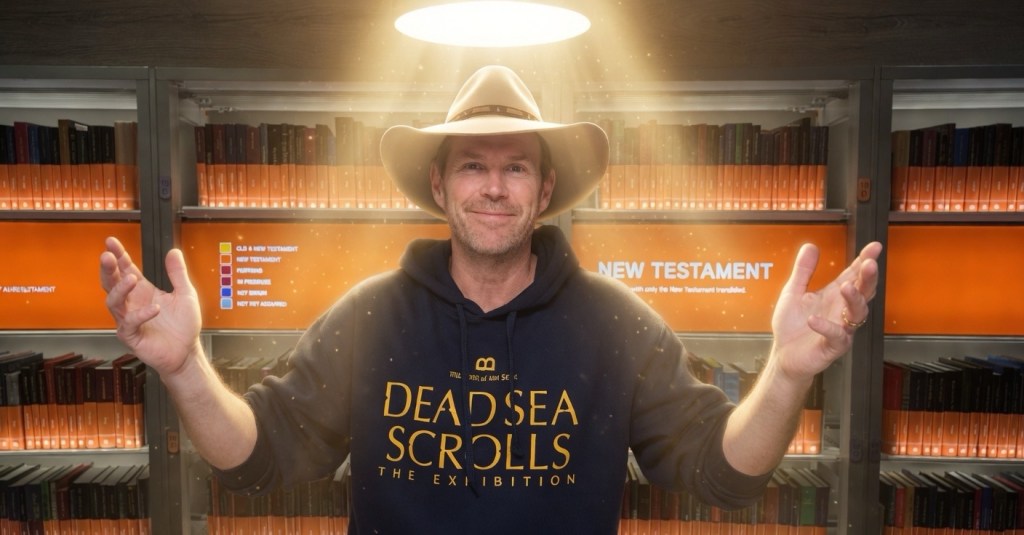
About the Author: Rich Hoffman
Rich Hoffman is an author, political consultant, and strategic advisor based in Cincinnati, Ohio, and the creator of The Politics of Heaven—a unique framework that connects biblical theology, ancient history, and modern power structures to explain how moral alignment and spiritual forces shape global events. Blending real-world political experience with deep research into archaeology, UFO phenomena, and suppressed historical narratives, Hoffman offers compelling commentary on topics ranging from ancient civilizations and the Dead Sea Scrolls to modern populist movements, paranormal continuity, and leadership strategy in chaotic environments. As the author of The Gunfighter’s Guide to Business and the forthcoming Politics of Heaven, he brings a grounded yet provocative voice to media discussions, supported by firsthand experiences and a cross-disciplinary approach that bridges science, history, and theology. For interviews, speaking engagements, or expert analysis, visit richhoffmanbooks.com or contact directly via phone at 513-307-5815 or email at rhoffman@richhoffmanbooks.com. If you’ve seen the movie, Disclosure Day and want to talk about it and the implications of Presidnet Trump’s UAP disclosures, let me know and we can bring some color to your coverage. https://richhoffmanbooks.com/media-inquiries-broadcast-topics-and-contact-info/?frame-nonce=ad51e7ecba I do have a firsthand UFO encounter to discuss.