Why ‘The Chosen’ is Successful and ‘Snow White’ is Not: Understanding basic ecnomics

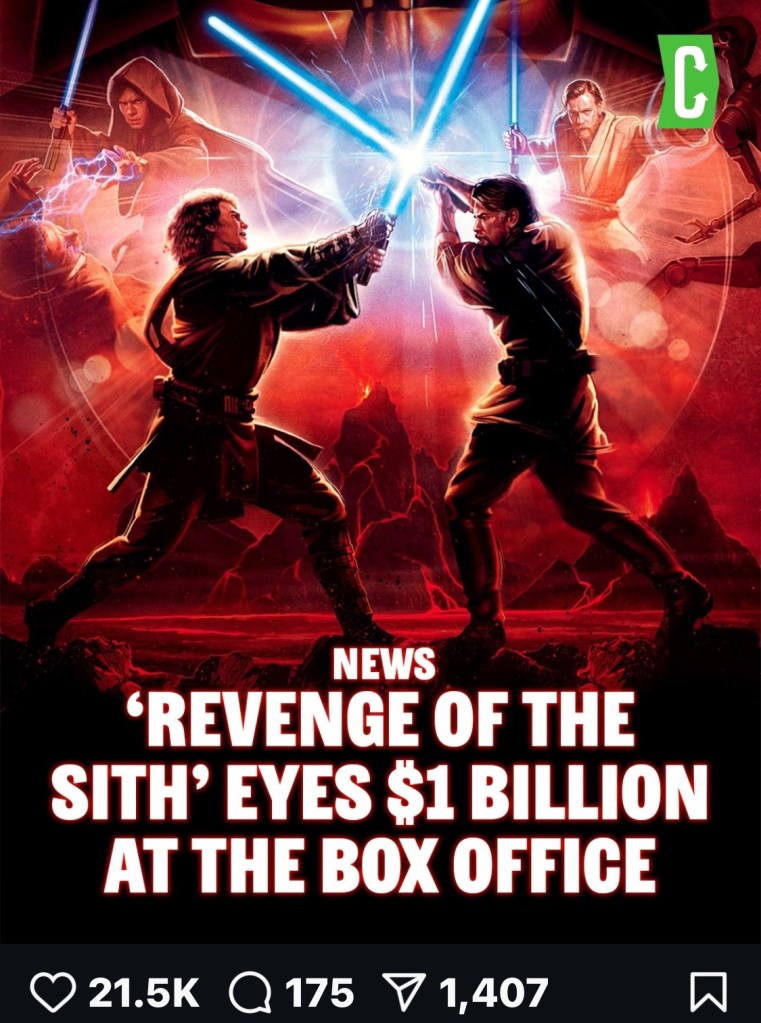
I am a little bit baffled by some of the fear surrounding the Trump tariffs. What did anybody expect to happen?   While this is a topic in its own right, economic understanding in general appears to be lost entirely on ordinary people; they don’t understand basic concepts, let alone complex ones.  The same mentality also applies to movies.  It’s a different business, but it’s all about generating revenue within an economic system that provides entertainment to people.  This Snow White Disney story is a microcosm of the general global trade understanding.  What was Disney thinking in making that stupid live-action remake?  And spending so much money on it.  You could say the same about trade imbalances that favored China over American imports and exports.  Why did the world make the dumb decisions to push international wealth redistribution, which is unmistakably present in financial transactions?  Incentives for foreign trade versus domestic production have been in place for a long time, and they were costly and detrimental; now someone has to pay for all that foolishness.  Why is that so stunning to people? Surely, they can’t be that stupid?  Yet they are, and in incredible ways.  In the first week of April 2025, the streaming show The Chosen Season 5 was released to theaters and did so well that it came in third at the box office, just behind Snow White.  That says a couple of things: that The Chosen is doing really well, and that Snow White is doing really badly, because these are not apples-to-apples movies.  Snow White has a budget of around $ 300 million, whereas The Chosen is designed to be a streaming show that plays in theaters as a dedication to Easter, giving fans a big-screen experience during the Holiday.  It will have three theatrical releases leading up to the Easter Holiday with a total budget of around $45 million.  The Chosen is monstrously successful on paper, whereas Snow White from Disney is a dismal failure on every measure.

My wife and I like The Chosen show. We’ve watched it on several streaming platforms over the years and look forward to every season, which I think is surprising.  It’s not as if people don’t know the story of Jesus; it’s very well-documented.  However, the director, Dallas Jenkins, and his wife, Amanda, have done a fantastic job with the show, telling the story of Jesus in a way that I have never seen or heard before.  They love the material, and they love each other, and it shows on screen, even on the big screen.  You can see The Chosen’s previous four seasons on Amazon Prime. I’ve also watched it on Roku.  And we liked it so much that we went to the theater to see Season 5, because we enjoy it that much.  There are planned 7 seasons in total, as this Season 5 is leading up to the crucifixion of Christ, and by Season 7, it will be the resurrection and an exploration of what happened in the years following Christ’s death.  The way they are presenting the material is well done.  I think it’s the best television in years, much better than anything else on the big screen or small.  It reminds me of Little House on the Prairie from the 1970s in many ways, with well-told stories that encompass all the things humans genuinely desire from the world, including goodness.  You would think that this would be obvious to more people and that more of these kinds of projects would have been made over the years, but Dallas Jenkins was pretty much ran out of Hollywood, as most faith based filmmakers have been forcing him to take his skills to the smallest venue possible, because he had been rejected from the business in Hollywood.

The Chosen began as a project for one of Dallas Jenkins’ friends, who wanted to create something for his church in St. Louis.  It was essentially a small film project that would be shown on a YouTube-like platform for a tiny audience.  And the project just grew from there, becoming the first season of The Chosen, which was produced on a minimal budget by a large group of people who were passionate about the project.  Nobody was getting rich off this material; they just did it because they loved it.  But ironically, even though everyone thinks they know everything about the life of Jesus and his disciples, The Chosen goes several steps further, and each season has grown in popularity and budget.  Season 5 was pretty big stuff, as much of it takes place on the Second Temple in Jerusalem and deals in great detail with all the politics behind the killing of Jesus in ways that have never been done before on such a scope.  Solomon’s Temple looks fantastic, as does everything else.  It is a stunningly good show with great acting.  A lot is happening with it that has tremendous social value, both politically and personally, and I am pleased with it.  I love seeing stories like this both in front of and behind the camera.  I want the world to have more people in it like Dallas Jenkins and his wife.  They are a good family who want to do good things and have the courage to do them without fear.  And if I had to put investment money behind something, those are the kind of people you want to invest in.  Those who took action early on are now seeing the benefits.

This Chosen project reminds me of the Atlas Shrugged movies from 2010.  People who have read me for a long time remember my involvement in that project.  I wanted to see John Aglialoro succeed in adapting that famous novel into a movie that Hollywood had rejected entirely.  The unions caused all kinds of problems, ensuring that each section of the movie’s releases never featured the same actors, which was brutal.  I thought the movies were pretty good and I talked them up as much as I could.  They tell the story quite well, based on the famous book.  The Chosen is similar in that it took a small budget approach that exceeded expectations in its delivery.  However, where Atlas Shrugged was unable to overcome production difficulties without being a bit resentful in the process, Dallas Jenkins gives viewers of his production no sense of trouble at all.  People can enjoy Jesus bringing the New Testament to life in all its glory on the screen, shot by shot.  Where John Aglialoro struggled to recover his massive investment in making the Atlas movies, The Chosen will likely turn out to be extremely profitable, a message that Hollywood cannot ignore, especially as Mel Gibson enters production on his Resurrection movie.  I tend to think that if Aglialoro had made the Atlas films more like Jenkins’ The Chosen, he would have been a lot more successful.  However, we’re dealing with the Trump years, as opposed to the Obama years, and things are pretty different now than they were then. People have a hunger for goodness that they didn’t have even back then, when they took a lot of things socially for granted.  But now with The Chosen, people are finding themselves again, almost as born-again Christians do.  And it’s showing up at the box office.  It’s not that the box office is failing because people aren’t going to see movies.  They don’t want the kind of movies Hollywood wants to show them, like woke adaptations of Snow White.  They want The Chosen, and those who provide that kind of content will be the ones who make the most money.  It’s not rocket science. 

Rich Hoffman

Click Here to Protect Yourself with Second Call Defense https://www.secondcalldefense.org/?affiliate=20707

Rachel Zegler is Only Part of the Problem: The live action Snow White is a disaster on every level

As I said many times, Disney should have listened.  I wasn’t planning to discuss the new Snow White film, but there is just too much to discuss to ignore.  The Disney stock is never coming back, guys.  Bad decisions lead to failed companies, and Disney has made numerous poor decisions, which it can’t afford.  Sure, out of all the movies released last year, they were the only studio to get a few movies in the billion-dollar club.  But for them these days, as opposed to just a few years ago, their business approach was reckless, and they lost respect for their audience and instead put them in an abusive relationship.  And that is the only thing that can be determined about the horrible decision to cast Rachel Zegler into a live-action remake of the Disney classic, Snow White.  And it pains me to say all this, because I have liked Disney, as a company.  As a vacation destination.  I enjoyed Disney as a company and as a family.  I have wanted nothing more than to see Disney succeed, and my intentions in that direction can be traced back for decades. I have put it in writing.  However, as a large company and an easy target for left-wing politics, they have adopted an extreme political stance, becoming increasingly arrogant, and have inadvertently made people like Rachel Zegler possible.  Zegler is essentially the Alexandria Ocasio-Cortez of Hollywood actresses, and she has sunk herself with this one before the Snow White remake could even get out of the box with feminist diatribes and anti-Israel messaging in support of Palestinian terrorism.  She is one of the worst members of the radical left, and she didn’t do anything to keep it off people’s minds.  Instead, like an entitled brat, she thought for some reason that she could use her platform to advance her personal beliefs, which at her young age of 23 years old, nobody wants to hear.   What could she possibly know?

Disney spent well more than $300 million on a remake of Snow White that nobody wanted.  It’s a beloved classic that, if you were to remake it, audiences would likely want to see how a cartoon looks in live-action, rather than using live-action to reinterpret classic themes as modern social commentary.  And then to write a script and put it on the screen by committee, the way many studios do these days.  Someone should have pulled Disney aside as a company well before they cast Zegler in the film to play the pure, white Snow White.  There were numerous mistakes made well before the cameras started rolling.  However, Disney, like Zegler, started this process by targeting Rosanne Barr for her political beliefs, and most notably, the actress Gina Carano, who appeared in the Star Wars: The Mandalorian show.  Of course, Rachel Zegler thought she should discuss her radical left-wing politics while doing press for Snow White, as the company itself was promoting that kind of activism.  She’s just a dumb, inexperienced kid, copying the adults around her.  What did she know?  Or what could she be expected to know?  Disney attempted to part ways with Johnny Depp regarding the Pirates of the Caribbean movies, which was a terrible mistake.  Not that Johnny Depp is a good person.  He did call for the killing of President Trump by assassination.  But when it comes to the Hollywood community, most people can agree that he is the character people want to see in any Pirates of the Caribbean movie, and Disney tried to push him out because of the anti-white male stereotypes.  Now that they are in deep financial trouble, they are trying to repair that relationship.  But it’s too late.

The math is obvious: movies like Snow White need to be in the billion-dollar range for box office viability.  However, Snow White only grossed around $43 million in its opening weekend, projecting the film to be a massive loss.  But Rachel Zegler is only part of the problem.  She’s the face of it, and she opened her mouth way too much even a year before the film came out.  Disney re-shot the movie and attempted to address some seriously problematic plot points.  For lots of ridiculous reasons, Disney thinks it needs to reprogram what little girls want to see in a movie, anti-romance stories, and feminist power where the evil witches are made sympathetic, rather than hated.  And that is because these goofy feminists are now running these studios, and they bring their broken politics to these projects and hire a cast that represents their radicalism as if these career movies will hide what’s ruined inside them.  But that’s not what people want to see.  People go to the movies to see hope and a positive reflection of their concerns.  They want to leave a movie feeling good about things, not being lectured to about how they need to change their minds.  Little girls hope that someday they will have a prince who comes and sweeps them off their feet, and that they can produce a nice family and live happily ever after.  The original Snow White was all about love’s first kiss and defeating the evil queen.  Not coming to terms with evil which is ultimately where Disney has fallen short.

There are properties that Disney still owns that are generating a little money, such as the Marvel films, Star Wars, and Avatar, with a few projects on the horizon.  There will still be a few movies here and there that do somewhat well, relative to the rest of the Hollywood industry.  But that is only a shadow of its former self, and once that trust is broken with audiences, it will be lost forever.  There is no way to repair it now.  Disney has made itself an anti-Trump, anti-family entertainment company, and I can say that after just visiting there with my family recently.  I wanted to love the Disney experience.  I had just returned from a week-long trip to Japan and then spent a week with my whole family at Disney World, staying at the wonderful Fort Wilderness resort.  I wanted to like it.  But it was like being in love with a ghost.  The magic had gone from the park; it was obvious to me.  All my kids enjoyed themselves, but to be honest, their favorite part of the entire trip and all the fantastic things we did was the swimming pool at the resort.  I spent a small fortune to give my granddaughter a Disney princess experience, complete with a dress and opportunities at the famous castle, and she thoroughly enjoyed it.  She still talks about it all the time and I spent the money because I wanted her to have a taste of an elevated female experience, as a little girl, of what life might be for her, as opposed to the doubts that are so persistent in little girls worried that they might not be pretty enough, or smart enough to get what they want in life.  Disney’s answer to that is to attack the expectations so that nobody fails.  And that is not what people want, which is why the parks are not as full as they used to be, and why people have stopped seeing Disney movies, are canceling their Disney+ memberships, and are turning to other entertainment options.  Rachel Zegler is a creation of Disney, and their support of people like her is precisely why they are failing now.  And why their stock will never bounce back, which I hate to say.

Rich Hoffman

Click Here to Protect Yourself with Second Call Defense https://www.secondcalldefense.org/?affiliate=20707
Family is the First and Most Important Form of Government: The Truths of Vivek Ramaswamy

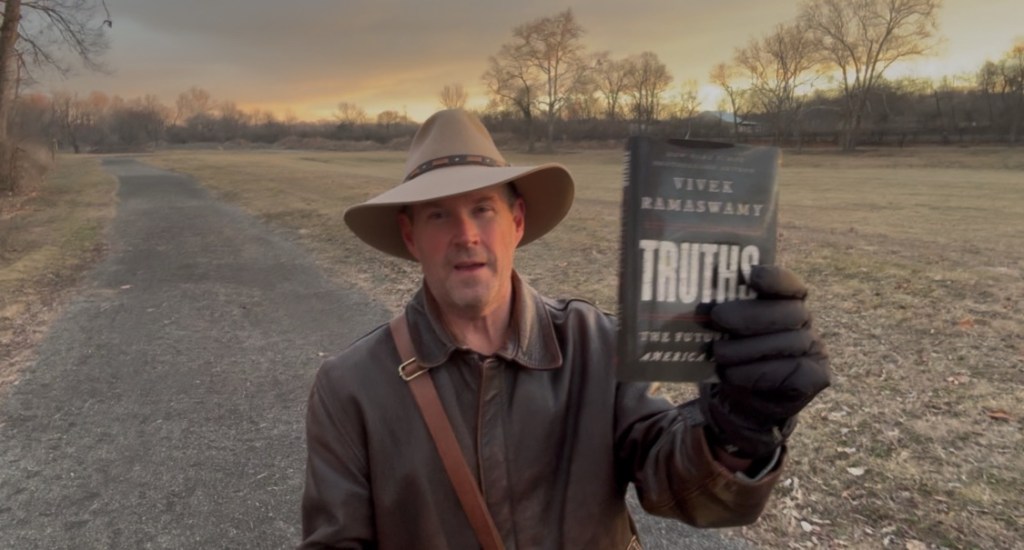
You might have noticed a theme with the incoming Trump administration.  It was very obvious at the Daytona 500, where Trump walked around the track with his granddaughter.  Or with Elon Musk bringing his children into the Oval Office to play while doing press conferences.  I told my very good friend, Senator George Lang, how I thought so much about how he and his wife work together so well and enjoy doing many things as a couple.  A lot of people don’t get to see that side of him, but George has a great family. They love their kids and are just good people from the ground up.  And that seems to be a constant theme regarding people I tend to think are doing a good job in government; they do a good job in their homes, starting there.  That was certainly the message with J.D. Vance at the inauguration, where his children were crawling all over the place during the parade ceremonies.  It was very nice to see.  As I was reading Vivek Ramaswamy’s new book Truths recently, ahead of a big event with him where he is going to announce he’s running for governor of Ohio, he spent a whole chapter on the topic of family and how important it is to the constructs of a good society and good government.  In almost every case, you can’t expect to govern other people well if you don’t have a good family life.  So more and more, the way to sell good government to people is to show everyone that you know how to run a good family, because it all starts in the home.  We have been lied to when it has been suggested otherwise.  To be Great Again, America needs to make families great again as the first layer of good government; from there, everything else flows forward. 

I tell my wife every year that it is her birthday, in late February, to which I always hold my breath and which I most look forward to.  I’m not crazy about the weeks between Christmas and her birthday.  I enjoy the holiday season–Halloween, Thanksgiving, Christmas, and the New Year.  There is a lot of optimism that the human race has created for itself during that time of year, and I do love it.  But once the cold of winter hits and there are several weeks of very short days of daylight, I sort of hold my breath for her birthday, which always comes after it, the optimism of spring.  So we usually do something fun as a family for her birthday as a mile marker through a winter hard won.  This year, we celebrated by going to the Fuji House at Bridgewater Falls, and we had a wonderful evening there as a family with my kids and their kids.  It was her pick; it’s an open hibachi-style Japanese place where they cook in front of you.  I get to do that a lot. I’ve been to Japan a few times recently, and they do a lot of that cooking style there, so I’ve seen it firsthand. I have to say, they do a great job at the Fuji House.  It’s the only place my wife wanted to go for her birthday dinner, and everyone had a great time together.  The little kids loved it.  My kids enjoyed the treat, as they work hard, and life has a way of chipping away at people in their thirties and forties, they needed the break.  So my wife’s instincts were correct on that particular place on that particular night.  One thing you always get with Japanese society, in any form, is that they are very family-friendly, and the Fuji House in Butler County, Ohio, is undoubtedly family-oriented, making it fun for everyone. 

As I was watching our cook doing his warrior-like slicing up of our food with fire dancing all around in front of us, I kept thinking about Vivek’s book, about Trump and his kids and grandkids, Elon Musk, J.D. Vance, my friend George and his wife Debbie and there isn’t any way to hide it.  Family is the first foundation for everything; you can’t have a culture of success without it.  Everything starts at home.  You manage your family well.  Only then can you think of managing anything in your community.  I know most of the trustees in the communities I work with, and I can say that in all their cases, family is essential to them.  Most of them have functional relationships with their spouses.  If you control that, you can think about state government.  Then, from there, the federal government.  And if there is anything left after all that, you can think about what’s happening in the world.  But never do any of those things at the expense of your family.  Family is everything, and any experiment from the past that has been said otherwise is a catastrophic failure, and we are paying for it now on many levels.  Sitting there watching our cook put all that well-prepared food on our plate for us to eat with chopsticks, I thought about all the great family moments we have had over the years, and really, those are the only things that ever mattered.  I’ve done many neat things, but time with our family has been the most important.  When I talk about good government and its needs, I always utter it from the perspective of a good family foundation first.

All suggestions otherwise have been wrong and should be viewed as an attack on our basic social structure.  Anything that attacks the pursuit of a happy family attacks the basic premise of values in that culture.  Thinking more about our own experiences, especially over this last decade, as we have traveled a lot as a family, usually with a caravan of RV campers, we have had many great experiences that indeed show up in the little children.  And that is the task of someone like Trump to give his grandkids an idea of what a good life should look like.  Otherwise, how would they know?  If you can’t have a good life at home with your family, how will you do it for community members, state, or nation?  That is what the borderless world people have gotten wrong from the beginning; they are trying to erode this essential Truth, as Vivek Ramaswamy calls it.  The government doesn’t start from the world as a global citizen and then work down to the family.  It’s the complete opposite, which is why Disney as a company has been failing.  They used to understand the family first concept.  But through radicalized politics, they tried to turn that basic structure on its head, attack the premise of family membership, and replace it with being a global citizen.  And that’s just wrong at every level.  So, I again enjoyed my wife’s birthday and dinner with our family to celebrate it.  There was a time not that long ago when we all got on a plane and flew to London to have her birthday dinner at Chef Ramsey’s premier restaurant in Chelsea, which was fantastic.  But in the scheme of things, Fuji House was better.  Not so much in the quality of food, but in the atmosphere.  The family-friendly environment there was just conducive to a good evening; many families there doing the same thing we were, and I saw a lot of evidence of good government in the home and people ready to take those values into their community, which was terrific.  There is hope for the world yet–through the children.  And if the adults let them down, that is a real tragedy.  And the signs of a future lousy government. 

We did it last year; I had just stepped off a plane from Japan.  And I was going to take our whole family to Disney World.  We were planning to spend a whole week at the Fort Wilderness Campground.  It’s a trip I had wanted to do before the grandkids got too old for Disney.  And I wanted them to experience it before the park started to fall off the rails due to their woke politics.  Since I was traveling late from Japan, the rest of my family headed to a little campsite in Georgia with their RV, and the agreement was that my wife and I would meet them there, just south of Atlanta.   I stepped off the 14-hour plane ride from Tokyo and literally got right into our SUV to pull our RV trailer to that Georgia campsite to catch up with my kids, who were already there, to drive 8 hours per day over the next couple of days.  And that evening, when we met up at a table set up between our two RVs, I brought them little treasures from Japan, and we had a great evening together, ahead of a week at Disney World and a Park Hopper pass to all four of their amusement parks for the week.  It was a wonderful day, the best we could ever hope for in a government experience.  Seeing it firsthand, I can say that I know what it looks like and what other people should be doing to get to similar happy places.  And it’s not up for debate. 

Rich Hoffman

Click Here to Protect Yourself with Second Call Defense https://www.secondcalldefense.org/?affiliate=20707

A Hyperloop Terminal in Monroe, Ohio: The only thing holding back such an emerging technology is political will

I have been thinking a lot more of it since President Trump won the election.  But once the news started leaking out of Mar-a-Lago from people who would know, my thinking about it grew into genuine excitement.  My ideas about Monroe, Ohio, becoming the focal point of a new hyperloop terminal, grew some serious legs.  Most of the people involved probably don’t know what a hyperloop is, so I put together a pitch video to explain it to them and get some conceptual faculty behind the thought.  After all, why would little ol’ Monroe, Ohio, be such a hot spot for one of the great emerging technologies on Earth?  Once I learned that Jon Husted would be appointed as the Senate seat replacement for J.D. Vance, all the elements started clicking into place.  I like Jon because of a mutual friend we have, and I know he is very pro business.  However, it only got better once I learned that Trump was very concerned about the next governor of Ohio and wanted to clear the decks for a pick he wanted after DeWine was done in a few years.  After a few years of D.O.G.E., Vivek Ramaswamy was planning to be governor, which is pretty much a slam dunk on the election process.  And I know a lot of mutual friends regarding Vivek.  And, of course, his relationship with Elon Musk then became very important.  After all, J.D. Vance will be in the White House, and economic stimulation will be very important to the Trump/Vance White House.  It was likely that Vance would be in the White House for the next 12 years, 4 with Trump, then 8 with his own administration because people won’t want Trump to go away.  And things started to get hot on my idea.

A few days before all this information emerged out of Mar-a-Lago, Musk proposed a 20 billion dollar Hyperloop connection between New York and London.  Hyperloop is something I have supported for a very long time.  I even hired a few engineers from the University of Cincinnati open source program who worked at SpaceX to develop the emerging technology so I could learn all I could about the pitfalls of the technology.  And I realized what I needed to know.  Hyperloop is a very advanced high-speed transportation system that blasts passengers in a train-like pod at 700-1000 mph conceptually through a cushion of air through a tunnel with all the air removed, almost duplicating the vacuum levels of space to remove wind resistance.  Using magnets to pull the craft along, passengers can travel much faster than a commercial airline.  This trip from New York to London would happen in just a few hours instead of much of the day and would travel under the ocean through tunneling technology from one of Elon Musk’s companies, The Boring Company.  To many people, this all sounded like crazy science fiction from Musk.  But he’s serious.  They are already building a hyperloop in Abu Dhabi, the capital city of the United Arab Emirates.  They have also built a preliminary tunneling system in Las Vegas as a kind of test bed.  China is also hard at work as it has stolen the idea from Musk.  So far, nobody has had success, but it’s not because the science is wrong.  It’s because doing such a thing takes enormous political will.  Musk has all the money in the world.  What he doesn’t have is what was forming in Ohio in the Monroe area, the political will to pull it off, from President Trump himself, who wants to do something big during his presidency with a new highway system effort that would rival what we did in America during the 1950s under Eisenhower.  Hyperloop had the opportunity to be bigger than America’s national highway system, and once that was started as a massive infrastructure project, it happened very fast and became normal. 

Monroe makes sense for the first national terminal because if there is a line for 20 billion dollars from New York to London, another 500-mile hyperloop from Monroe to New York could feed the country’s interior to the east coast with a trip that would take about 45 minutes.  And Monroe is only an hour’s drive from Columbus, Indianapolis, Lexington, Louisville and is between Cincinnati and Dayton.  Many people can drive a short distance to Monroe, where they could pick up a few hyperloop lines that would take them to places like Las Angeles, Vegas, and Orlando within a few hours.   And with such a hyperloop hub comes massive economic activity, which would feed the economically deprived hometown of J.D. Vance.  An economic goal that the Trump administration has for many such cities in America, especially along the Rust Belt.  With Governor Ramaswamy in Ohio, many good things can happen with a revitalized Trump economy that could pay down the debt and still generate several hundred billion dollars for something on this scale.  Elon Musk is working with them all to do such a thing, and the technology of The Boring Company makes it all possible.  While there are technical issues to solve, the rate of innovation isn’t the problem.  Political support is, and under the conditions described, Monroe, Ohio, suddenly looks to be the best place in the world for such an effort.  It would revitalize Middletown, Ohio, nearby Hamilton, and, of course, Dayton.  All areas that had been husked out to globalism.  Suddenly, a lot was possible for a relatively small investment. 

Musk knows how to solve this problem, which he needs to do before humans colonize the Moon and Mars.  Living on other planets will require tunnels to protect people from large doses of radiation on planets struggling with their own atmospheres until they are terraformed into habitable planets through science.  Developing a hyperloop on Earth would give The Boreing Company the experience to perform the same on other planets.  So, such an effort has value beyond the convenience of high-speed travel between long-distance destinations on Earth.  As I was talking to my good friend Senator Lang about all this, we shared an intense desire to bring more technology and aerospace imprint along that particular section of the I-75 corridor to make Ohio one of the most business-friendly places in the world.  A hyperloop terminal would go a long way to making that instantly happen.  And suppose there was a President Vance in the White House, a Governor Ramaswamy in the Ohio governor’s mansion, and the wealthiest person in the world who would do anything to get to Mars. In that case, there are a lot of dots that are getting connected if the right people help steer the ship.  So this isn’t a typical article for my usual audience, but for the powerful people I know who read in the background and can help unify everyone behind this effort.  The first thing I thought of as soon as Trump gave his acceptance speech the night of the election was, “Now we have the kind of president who can make the hyperloop possible.”  For many years now, I have considered Monroe, Ohio, the premier place to build such a terminal in the large amounts of land behind the outlet mall.  It would look techy and destination-driven, like Space Mountain from Disney World, only much larger, and impressive.  And suddenly, America would do something that would improve the lives of everyone on earth for centuries.  If only we could align the politics, which is entirely possible based on how things are shaping up. 

Rich Hoffman

Click Here to Protect Yourself with Second Call Defense https://www.secondcalldefense.org/?affiliate=20707

Democrats Tend to Be Bad With Money: The attempt to hide a lack of value behind chaos and emotion

One of the big takeaways when you meet people who have all kinds of psychological problems and tend to lean toward Democrat politics is that they are bad with money.  They don’t understand money, don’t like to talk about money, and tend to have a natural hatred toward people who do have money because of what money represents in the world.  Money is a measure of value; it’s what something means to someone else in an agreed-upon value of exchange.  Then naturally, those who don’t produce much value in the world or are insecure about that value and what people think of it resent money because it exposes them to all their insecurities.  That is why I say that the participants have problems in Democrat politics, which is why they are attracted to forms of collectivism to hide their lack of value from the world behind disguised altruism.  They are broken people who are otherwise detrimental to all existence.  And I don’t say all this to disparage people needlessly, but we have to understand why and how these people have moved into government employment and regulation.  As we move into talks about reducing government employment and the many millions on a government payroll who do too little and get paid way too much, at the heart of the problem is this problem of Democrat politics, the hatred of money, and the desperate effort to use collective services to hide their otherwise worthless, social traits.  Government expansion for the sake of social goalposts rather than the value of a job well done and work performed that people value and want.  The great fear many have about the efforts of D.O.G.E demanding, for instance, that people return to work after years of staying home and getting paid for it has at the heart of it this sense of entitlement that is expensive.  A person exists, and someone needs to pay them for that existence rather than earn their way through life for the value performed that people want.  This makes any government oversight a rejection of people who have decided to be worthless to the world because of their lack of productivity.

You see this kind of thing all the time in business these days, with woke politics and its attempts to embed itself into an American capitalist culture.  Hidden behind the complaints is a genuine desire to conceal their worthless nature.  Companies use money to measure value. In that case, it is that premise that liberalism has used through Democrat politics to hide useless behavior and attempt to disguise it as a value.  For the same reason that Joe Biden is working to sign protection for federal workers before he leaves office, allowing them to stay home under continued employment, by law, the same methodology has been applied to the world of business and attempting to attack profit and loss statements and replace those values with woke compliance.  Once that is the assumed value, all actions that relate to the measurement of money become irrelevant, and it’s not soon after that a company goes bankrupt.  Or at least performing poorly financially.  It has been stunning over these last few years because many of the money haters out there thought things were shifting in their direction to see how many open Marxists have emerged and how much they profess for more government regulation to impose their version of fairness upon the world, that ultimately means, to protect them from value judgments that are traditionally measured in money.  They want more government pay for less work done, and the gig only works if everything takes away the value of money to measure success and replaces those needs with woke politics. 

Karl Marx was always a money-hating despot who wrote his philosophy with an eye toward total social disruption.  And for people who question their value, Marxism gave them a home to hide in from the world in hopes that nobody would notice how lazy and stupid they were.  Karl Marx himself died a very broke person. The only reason his philosophy of communism and, overall, Marxism spread the way it did was that it was a weaponized idea that served the concept of centralized governments.  Over time, these ideas migrated into the human resource departments of most of our companies and their measurement policies of money.  As many scratched their heads about this activity, the attempt was to replace monetary value as a measurement of social compliance scores and to make dog-eat-dog capitalism subservient to fairness measurements imposed by the government for more government expansion.  And under that premise, of course, the government grew in uncomfortable ways and cost too much money to maintain because too many worthless participants were leeching off the system.  That has been my argument about public schools for years. Finally, more people are catching up to it, and we are now having honest conversations about it.  But it wasn’t always that way.  We were told to spend infinite amounts of money on public schools no matter the results because the measurement wasn’t in cash but in creating fairness in the world.  And from there, budgets ran out of control.  Most of the time, when you see a runaway budget, Democrat politics is looming in the background and is seeking to be subsidized by emotional measures to avoid monetary value.

Money has to be the measure to have a healthy relationship with the world.  And everyone should love money for the truth it reveals about people.  And we must have a government that honors and respects money as a measure of value. For instance, the Biden administration is purposely selling off portions of the border wall with Mexico out of spite because Trump is returning to the White House, and they want to make it hard for him to return to building the wall.  The wall itself is a statement of value that people crossing that border are moving from a Marxist government in Mexico to a capitalist government in America, and one is better than the other.  But Marxists want to hide that value measurement from the world with borderless sentiments so that people hopefully won’t notice.  That kind of policy ends up on P&L statements worldwide, slowly destroying everything in the background.  But at the heart of it is a hatred of money because it exposes bankrupt personalities from judgments cast upon them for their worthlessness.  Such people could be given millions of dollars, but they still waste it faster than they get it because they are bottomless pits of destructive personality traits that they attempt to hide from the world through government power and a change in how value is perceived.  In truth, there is only one way to measure value, and money is the agreement among the human race on how to express it across culture and social alliance.  Having a love of money because it measures shared value accurately is healthy and good.  And we must return to it for the good of a productive future.  And not fuel jealousy from those who don’t work hard to be good people and reside behind social policies that point to money as the villain when it’s the other way around.  

Rich Hoffman

Click Here to Protect Yourself with Second Call Defense https://www.secondcalldefense.org/?affiliate=20707

Why DEI Was Always a Dumb Idea: What we learned from the Swordsman Scene in ‘Raiders of the Lost Ark’

I really loved the book about Howard Kazanjian called A Producer’s Life.  I’ve referenced it many times over the last several weeks because it was an enjoyable book.  It’s the most fun I’ve had reading a book in a while, and it is one that I promised myself I’d read if Trump was re-elected into the White House.  I wouldn’t let myself think about these kinds of things as what is in Howard’s book prior, even if I do love the topic.  For a large part of my life, I wanted to be a filmmaker, and Hollywood producers like Howard Kazanjian were the kind of people who inspired me.  He produced most of my favorite movies from a key period, when he was on top of the Hollywood pile with Steven Spielberg, George Lucas, and many others, with films from 1975 until 1982.   Howard was always good, but if you are trending good movies and who made them over the entire history of Hollywood, this specific period set the stage for what the industry would become, and mean to the world as a whole regarding entertainment.  So, I find it very interesting to study what went right and wrong during this period.  Ironically, learning these things is precisely why understanding DEI policies and why they failed is important.  Because currently, after the Trump election and his spectacular victory, the world is giving up on Diversity, Equity, and Inclusion programs, and rightfully so.  We’re not talking about a Republican versus Democrat position here; Howard Kazanjian, I would say, probably leans toward Hollywood liberalism and likely wanted Kamala Harris to win the election.  But with Trump back in office, the world is a lot better, and I have more tolerance for people who are not so bright on political matters.  Which is why I couldn’t let myself read a book like this before the election. 

In that book, I read a good illustrative example of why DEI failed and why companies needed to get rid of it for the sake of everyone.  Picking employees based on their skin color or assuming they are equal to other people and that they should be included in something just because they exist was always ridiculous.  Some people are better than others, and if you want something to be good, you have to find the best people and put them in place; that’s good management.  And in the movie business, good people are few and far between.  But Howard Kazanjian, during that period I mentioned, found a way to be around the best people in the business, and specifically, a conversation I had never heard about regarding the famous swordsman scene from Raiders of the Lost Ark, being filmed in 1980 for a 1981 release.  Everyone, no matter who they are, knows the scene.  Indiana Jones is looking for his lost girlfriend, Marian, who the Nazis have captured on the streets of Cairo.  And he has to stop them with a glorious shootout with lots of explosions and good stuff.  Along the way, Indiana Jones is stopped by an Arab swordsman who wants to fight.  But the hero doesn’t have time for it.  What does he do?   People remember with great recollection that Indy pulls out his gun, shoots the villain on the spot with no fanfare, and gets back to looking for his girlfriend.  In all the documentaries of how that movie was made, we learned that Harrison Ford was sick that day and just did the scene as a joke because there was supposed to be a fight with bullwhips that was very elaborate, and the whole crew was sick of filming take after take.  When Spielberg saw what Harrison Ford did, he wanted to keep it as a new version and print it for the film.  But there was more to the story I heard in this book on Howard Kazanjian for the first time.

George Lucas still wanted his bullwhip fight scene.  One of the reasons he was making Raiders of the Lost Ark as the executive producer was to create a modern version of the kind of movies he liked as a kid, and he wanted a classic bullwhip fight like might have been in Don Q Son of Zorro, or Zorro’s Fighting Legion.  And he wasn’t convinced that just having Indiana Jones shoot the bad guy and get on with his business was the right thing to do.  So, here were the most talented filmmakers in movie-making history who disagreed with this famous scene.  So what were they going to do?  George Lucas decided to run two film versions by a test audience, one Spielberg’s way, the other with the bullwhip fight.  They were going to let market desire determine the film’s final version.  So they played George’s version first to a test audience.  People came out of the movie liking it, and Paramount Pictures felt they had a hit.  It was a good movie.  But when Spielberg’s version was seen, people applauded when Indiana Jones shot the swordsman.  And it became everyone’s favorite moment in the movie, even after all these years.  They made 5 Indiana Jones films over the next 40 years, but none would ever have a better moment than that one to mass audiences. 

Ultimately, even with all the talent of all these people involved, it was the marketplace that picked the scene. The filmmakers came up with ideas, but to determine the success of the enterprise, they tested the waters with market analysis. The audience clearly picked one version over the other, and the rest is filmmaking history.  Presently, they are test-screening the new Captain America movie for Disney, and it is going through all kinds of trouble because nothing is working.  The film is filled with a bunch of woke politics, and people don’t like it.  It’s going to bomb when it hits theaters in February.  Ultimately, that is why DEI programs destroyed market share and value for all companies, from cookie makers to high-tech offerings.  DEI was an imposed value put on the marketplace that would have been similar to George Lucas keeping his whip fight in the movie because he wanted it, to force the audience to like it because he did.  Instead of listening to them, which is what happened.  When companies try to impose themselves on the public and force values on them that they don’t have, failure is almost assured.  However, when products appeal to the audience’s sentiment, great success is possible.  It is rare because good ideas are complex, and companies often hang on to them even if the market pressure rejects them.  Only to plot an enterprise to its doom.  But when we say that getting rid of DEI suits all businesses everywhere, this is what we mean and why.  In capitalism, value serves the marketplace.  In authoritarian governments, values are imposed, and a monopoly status is sought that limits the viability of options.  And the world is far worse off because of it.  The best example of why some ideas work over other ideas can sometimes come from interesting places, which is undoubtedly the case with a movie most people agree has some value to them over time, and that is how Indiana Jones was created in that old classic movie, Raiders of the Lost Ark

Rich Hoffman

Click Here to Protect Yourself with Second Call Defense https://www.secondcalldefense.org/?affiliate=20707

What To Learn From Howard Kazanjian’s ‘A Producers Life’: Hollywood was never going to be able to help a bad product like Kamala Harris

This will be fun; I could do it every day for years.  I’m not sure how useful that would be, but I’d enjoy it.  And that is explaining to Democrats why they lost the 2024 election.  The first answer is that election fraud was harder for them.  They still cheat in many places, have been caught, and will get into trouble over it.  In these areas of the country that have still been counting ballots weeks after the election in November of 2024, there is only one reason: introducing false ballots to change the outcome.  And in those places, voter ID is a problem, and so are the mathematical trends.  You don’t win in all these national elections, and, in strange places, trend the other way.  That might happen in random spots, but not like this.  Many of these House and Senate seats were stolen for Democrats to keep those two government bodies from sliding even further to Republicans.  It will be easy to prove, and the Trump Justice Department will be able to prosecute those cases efficiently.   But the point remains: if Democrats can’t cheat, they can’t win.  That also makes this perspective that has been going on with Democrats about Hollywood even funnier.  They believed that Hollywood support from celebrities and the visual effects ads they had access to with people like Steven Spielberg would turn people toward their side.  Yeah, that was never going to happen, and I’ve known that for a long time from very personal experience with Hollywood.  They don’t have that kind of power, and they never did.  They only illusioned themselves by talking about these things within their inward culture. 

I just finished reading a great book I promised myself I’d read if Trump won the election.  And boy, is it a real treasure; it’s the autobiography of the film producer Howard Kazanjian, ‘A Producer’s Life,’ and it was a wonderful experience.  I rarely get to read something that good, and it’s not a book intended for mass audiences.  Maybe only 100,000 people worldwide would be interested in it, and most of them would likely be film students.  The book came out in 2021, but I was too busy these last couple of years, even with all my reading, to sit down and enjoy a book like that.  Howard is one of my favorite film producers of all time, and he’s been close to some of my favorite movies, from the Star Wars and Indiana Jones films to Cool Hand Luke and The Wild Bunch.  He worked with Hitchcock and many big-name Hollywood directors through the latest golden age of cinema, from the late 70s to the early 80s.  He told many stories about things that have gone on behind the scenes in many movies that I found fascinating, and I wouldn’t let myself think like that because of all the other stuff politically going on.  There wasn’t time to enjoy anything like that, so the first thing I did once Trump was elected was give myself a bit of a vacation and read a few books like this that I had been thinking about for a long time.  In it, Howard essentially confirms everything I have been saying about Hollywood.  Much of the appeal of that industry is fake, in front of the camera and especially behind it. Hollywood is about creating illusions, not truth, and in this climate of free media and free speech, anything phony is going to be rooted out and rejected.  Someone should have told the Democrats that, but they were so obsessed with their ability to make images that suckers buy in a darkened theater that they missed the trend.  And they have lost miserably because of it.  And they aren’t making any corrections to change anything, which is fine with me.

All this has provoked in me remembrances of my exposure to Hollywood culture, and I quickly learned how phony it was.  I was always just as interested in what happened behind the camera as I was in front of it, and quickly, you see what kind of mentality goes on in these Hollywood productions.  Most people in the industry do not think like Howard; he’s one of the great ones, but most think people are so stupid that they can manipulate the thoughts of mass society with the Hollywood image.  They miss the whole point, and the entire industry misses the truth.  Because they purposely live in a kind of entertainment bubble, they don’t get to talk to real people much, except when they do press junkets and comic cons and lose touch with reality.  I tasted that when I worked on projects, and a producer gave me my trailer to reside between takes. The line producers pamper you with union-standard assumptions.  I thought it was all interesting and for me, a dream come true career wise, but not very practical or sustainable.  I have the opposite way of viewing things as they do; I expect the people being photographed to be good people, turn on the camera, and capture a little bit of their natural essence, and that what is sold is worth investing your time and energy into. 

Ultimately, that’s why the Hollywood machine could never overtake Trump: He isn’t just an image; he’s a lot more in real life than what a camera can capture.  And Kamala Harris’ people thought that if they raised over a billion dollars, they could purchase an image and that voters would be dumb enough to buy it like they would the next Hollywood blockbuster.  That if the movie preview was good but the movie sucked, that people would still buy it.  And, of course, they didn’t.  Reading that book about Howard Kazanjian reminded me of how out of touch many in the movie industry are, even when they are the best in their field.  Ultimately, Hollywood is too slow and clunky to be relevant in the modern world, which is one reason their industry is dying.  The unions will not allow them to keep pace with YouTube content creators, and that’s where entertainment is headed.  People aren’t going to wait for three years for movie content anymore, teased well in advance.  And they aren’t going to buy the Hollywood product of making an image of a president of the United States without the substance of doing anything meaningful as a leader.  It all comes down to public opinion, and just because Hollywood can make an image, they can’t make people buy into it.  That is precisely the trouble the woke new Captain America movie is struggling with regarding test audiences.  The producers won’t be able to cut together enough coverage to fix the film because its merit is terrible, just like Kamala Harris.  More fancy camerawork won’t change the fact that people don’t like the characters in bad situations.  What would you expect if it’s a woke storyline coming from Disney these days? People aren’t going to buy it.  And they rejected Kamala for the same reasons.  Hollywood couldn’t make her.  Hollywood was, and will always be, a reflection of what people want to buy.  Not the creators of what people do buy.  That is a lesson Hollywood has never learned, which is why they are now perplexed.  And also why I do not work in that industry.  I can’t do the phony thing, for me, it has to be real.

Rich Hoffman

Click Here to Protect Yourself with Second Call Defense https://www.secondcalldefense.org/?affiliate=20707

Why Trump Won the Debate Against Harris: Using illegal immigration as a military attack of treasonous intention

I didn’t think there was any question after President Trump’s and Kamala Harris’s debate.  I think she had an earpiece, and people were talking her through the event, just like the setup between cable news hosts and their producers.  I also think ABC gave her the questions ahead of time and that it was a three-way production against Trump.  But we knew that going in, and I thought Trump did a fantastic job.  And no, we are not a nation of complicit fools who put professional candor ahead of the merit of the work.  President Trump’s role, much to the frustration of the established order, was not to sit there like a polite boy in grade school waiting to drink from the drinking fountain and standing in line in the cafeteria and not to touch the person in front of him.  He was there to show he was a leader and that he was mad, as many of us are.  And that he was going to provide leadership against an established order that failed.  Politeness was not the proper method of delivery; anger was.  And Trump showed just how angry he was, which is what people voting wanted to see.  Someone should be furious about inflation, the expansion of useless government, and how America has been projected worldwide.  In all those respects, Trump established himself as he needed to under very hostile circumstances.  More importantly, which is the point of debate these days, Trump captured the only impressions that mattered in the wake of the discussion.  In the polls in the following days, Trump was +2 nationally.  The debate did not help Harris, nor did it hurt Trump.  If anything, independents are making a break for Trump now that they are thinking about the election, and that indicates Harris, with all the theatrics, did nothing to help her cause.

But when people look back at the history of this famous debate, they are going to remember only one thing, “they are eating the dogs, they are eating the cats,” which has turned into a significant TikTok campaign where people are singing songs to Trump’s words said during the debate which he said about the Haitian immigration into Springfield, Ohio.  I was just in Springfield, Ohio, last weekend. It has been a very nice town, but yes, it has a major illegal immigration problem where these Haitian immigrants were dropped off in the classic Democrat playbook of changing entire communities with an infusion of radically different people to purposely attack that culture and force it into a change state.  When it comes to Haitians, they come with some very radical ideas, particularly those of voodoo, which comes with the sacrifice of animals to the demons of existence.  Springfield, Ohio, is a very traditional, Christian small town, but because of its proximity just north of Dayton and west of Columbus off I-70, it makes it easy to drop off over 20,000 immigrants into a community of 60,000 to challenge their culture and change it away from traditional American, to an armpit of globalism.  That is certainly the case in Hamilton, Ohio, and Middletown, Ohio, to the south; purposeful strategies of doom were implemented in those communities to open the door to crime and to force the people residing there to flee into the country and away from Democrat policies.  This was done by replacing hard-working blue-collar cultures with lazy drug addicts masked behind racist facades to implement an attack vector of hostile intent, to destroy our country city by city from the inside, not with tanks and troops, but policy and fiscal mismanagement. 

Springfield’s strategy is to saturate the community with an open border policy in the heart of America and hope that the virus spreads into the surrounding countryside.  This is essentially what the political left has done in San Francisco, Denver, Colorado, Minnesota, and south Texas, particularly Austin.   They are doing it in Springfield, Ohio, and the residents are not happy.  We’ve all seen this before and were suckered by it. But we don’t plan to let this one slide into obscurity; people are talking about it, especially since these Haitians come with them with different dietary tendencies and religious practices that are still tied to the Stone Age.  In Springfield, there is much evidence that the pets of the people living there are being stolen and eaten due to a lack of food and voodoo practices from these incoming government-sponsored immigrants.  And it’s a tricky thing to witness up close.  However, Trump managed to put a tag on it that everyone could remember, and he had the guts to say it during a considerable international debate.  And it blew the doors off the established order that is getting its marching orders from the World Economic Forum and the George Soros Open Society Foundation. It’s not that complicated of a conspiracy.  Organizations seeking funding and corporate sponsorship share affiliation with progressive groups, so they adopt their globalist policies.  Haitian immigration into America’s heartland is part of their military strategy to take over the world.  But to disrupt that, Trump has cut to the heart of the matter with his gift of brand building, and that is the only thing people will remember from this debate, that he managed to put all that complicated story into a few sentences that people could understand, which is the genius behind, “they are eating the dogs, they are eating the cats.”  Brilliant!

I knew when Trump said he had won the debate because it showed that the established order did not control him, so people wanted to vote for him for president.  Even independents who do not think much of politics can see that they have not benefited from the system presented to us.  So, they have been looking for a disrupter for several election cycles.  Even Bernie Sanders, the open communist, was being looked at by these same independents because they wanted someone to disrupt that system.  The Democrat party and its relationship to the globalist movement understands that.  Kamala is actually to the political left of the communist Sanders.  However, she has shown that she doesn’t think much independently and will take orders from those who give them.  So she is a pick the globalists like and can work with, even down to the earpiece and rigged debate.  That is essentially what they plan for the White House and is precisely what voters don’t want.  So, with all that said, Trump won the debate, and he won the message.  He was the one who made his points clear and gave people things to think about in the days after.  But more importantly, he made the whole debate about not what the Harris people wanted to make it, on a policy that fed their narrative, but on an open border that has been a disaster for all Americans, and the role the Biden administration, which Harris is a part of, in making it that way either by sheer stupidity or by deliberate design and strategy.  And it wasn’t just a blow against Kamala Harris; it was a blow against globalism at its heart and their scheme of changing American cities from good places into hell holes with the plights of illegal immigration that are essentially treasonous plots intent to destroy our country from the inside out so that global criminal networks connected to international finance can profit off the demise.  And it’s been a clear act of treason.

Rich Hoffman

Click Here to Protect Yourself with Second Call Defense https://www.secondcalldefense.org/?affiliate=20707

Australia’s Dumb New Law: Right to Disconnect

In the spirit of Labor Day, which is the holiday I hate the most, we need to have a talk about the ridiculously dumb Australian law, Right to Disconnect which they just passed there at the end of August 2024.  The world needs to be working more, not less.  And this socialist trend of encouraging people to sit around looking at the walls all day is a terribly destructive one.  The world doesn’t need more dumb laws like this one that enables the world to be lazier.  Labor Day, to me, is essentially a celebration of laziness, a union concept of work stoppages holding productivity hostage unless management recognizes the workers’ limits to performing tasks.  It is poison to the human race to think such things, and at the core of all these ridiculous laws are horrible people fighting for the right to be unproductive. Instead, I think we need to be going in the opposite direction.  We need to work harder and more often.  We need to extend our work day hours and work more days of the week than we do now because productive enterprise is very much needed.  Additionally, I think our five-day workweek is ridiculously short.  And I think people should work more than 8 hours per day.  I have always worked more than 8 hours per day.  I often work seven days a week, so let me say I am a happy person.  Leaving work undone is what makes me unhappy.  So, I can’t imagine a happy world restricting itself in productivity.  It’s the wrong message, and anybody suggesting such a lazy life should be ridiculed.  The Australians proposing this Marxist trend of disconnecting from work to produce a sane society shows just how out of touch they are with the needs of the world. 

What to tell lazy people using Marxism to get out of hard work.

As usual, free market enterprise should be at play here.  Those who work more often and spread out among the population should be rewarded appropriately.  If people want to work more, they should be rewarded with more stuff.  And again, this idea that “stuff” can’t make you happy is more communism and Marxist ideas from people who are at their heart lazy and not the kind of people anybody should be listening to.  It’s essentially the government restricting their productivity through mass collective effort.  Whenever workers propose less work or else, we see a terrorist incursion to our means of production, and the intention is to manage all such rights under the power of collective government to restrict output.  And if people want output, then demands under collective bargaining must be met.  However, not all people are the same.  Some people get tired of sitting around looking at the walls doing nothing, and they want to do more work.  They want to go out and earn money.  Because they want more stuff, they want to pay off their house.  They want a nice car.  They may want a more attractive spouse.  Who wants to be married to a slug?  Someone who would rather play video games all day rather than work and make money?  People need to work more so that a country can have a better GDP.  However, this Australian strategy encourages the world to work less so everyone can be less productive.  That’s the spirit of their new legislation.  No wonder they are an armpit down there and only have any population on the east coast.  What a waste of good land and space. 

Oh, I’ve heard it before: ” If not for the labor unions, those big mean companies would work people to death.”  Wrong. What kills people and society is less work, not more of it. People need to be productive to truly feel good about themselves. This notion that people need all this downtime is ridiculous.  I often love traveling in Japan; people there work hard.  Even when you have a taxi pick you up at the airport, the drivers universally run to open the door for you and make sure you get where you are going without much delay.  Because they appreciate hard work there, which is common in Asian cultures, don’t mind working hard, and usually, they have strong families as well because they work at it.  And that is never going to go away.  When people in the West profess to work less, they are cutting their throats, and the Marxists, I would say, are well aware of it.  Most still hope the globalist union movement will put them on top of world management and central government.  But what will end up happening is that they will end up behind as a result, and Asian cultures, through wealth redistribution, will fill the market void with actual hard work.  The human need for work can be filled with robots and AI, but the demand for things to happen will always be present.  The most successful cultures will be those who do the most work and can maintain their sanity best. Presently, especially in the West, there are too many lazy people playing video games and smoking pot, which is the point where we should consider it a national security risk under every definition.  Who needs a military invasion of a country when you can destroy it from within with more laws against work?  The primary reason America conquered other nations in World War II was that we could out produce against the rest of the world.  And that is still the reason America has the top GDP of any country, even though there are fewer people to do that work. 

I mentioned video games a few times here. I have been playing a lot of Call of Duty lately because I have grandchildren who like to interact with my wife and me through video games.  And I take time to play them to spend time with them.  But it’s evident to me how dangerous this modern video game culture is; we’re not talking about Pac-Man or Space Invaders here, where you play the game for 15 or 20 minutes.  Then you go back to your life.  No, these are all-day excursions, and people work hard to level up on these modern games.  People are taking the effort very seriously.  And I can’t help but think how misapplied it all is.  The natural state of the human being is to be thoughtful and productive.  Whenever you repress those notions about life, you find unhappy people who develop all kinds of emotional problems.  This video game culture represents the need for hard work in every human being’s life, which has replaced effort with waste.  Some people get good at these video games, but to what end?  Will they be able to buy a new house or a new car?  Put savings in the bank?  Of course not.  And for a government to tell its people to work less.  We will penalize employers for providing opportunities beyond eight hours of need per day or more than five days of working per week.  And when people go home, you can’t call them to harass them over work matters.  I’ve been on vacation in exotic places and always took the time to have a business call.  If my family was with me, they could do some shopping while I worked through issues.  After 20 minutes, we’d be back to our vacation and happy.  And work was done.  This idea that people should disconnect from work to be satisfied is insane.  But it’s what the Australians are proposing for their life.  And I would say in response that it’s no wonder they are such losers.  They don’t want to work, and no wonder they are an armpit of a country that is last in just about every category of human endeavor.  They need to be working more, not less, as is the case with most of the human race, except the Asian cultures, who aren’t going to pass “right to disconnect” legislation any time soon.  Likely for them, never. 

Rich Hoffman

Click Here to Protect Yourself with Second Call Defense https://www.secondcalldefense.org/?affiliate=20707

The Anti-Woke Message of Deadpool: It’s all about regeneration and healing

I always have learned a lot from young people.  Yes, adults have lived long lives and have much to teach based on experience.  But kids are freshly created and don’t have assumptions yet baked into their thought process.  So I listened when one of my grandsons wanted to see the new Deadpool & Wolverine movie doing big business at the theater.  It’s one of the rare movies these days to hit over one billion dollars, so that’s a significant financial triumph that is at least good for theater owners.  I want theater owners to survive all this World Economic Forum wokeness, so I was interested in why so many people liked Deadpool.  I’m not a Deadpool fan. I don’t want to see Marvel characters cursing and talking about sex and drugs, and the Deadpool movies are R-rated experiences filled with a lot of bad stuff.  So, up to now, I have had zero interest in anything Deadpool.  However, my policy with my children and grandchildren is to take the edge away of any forbidden fruits in society with guidance.  So when he asked me to take him to the movie theater to see the movie, I didn’t hesitate.  We made it a somewhat family affair, with my daughters going along to watch the film with us and make any commentary about it that needed to be made from an adult leadership perspective.  All the world needs is another kid out there speaking in a trashy way with F-bombs and drug references.  And this was a Disney production now, so here was Disney, who used to get criticized for making too many G-rated movies, putting out an R-rated horror of sin and indulgence.  However, after watching the movie, I noticed much worth seeing, which became apparent quickly.  And I could understand why my grandson liked Deadpool so much.   I have always liked Wolverine from the X-Men, so I thought I could at least like that much of it.  But in the end, I liked Deadpool & Wolverine for many unexpected reasons.

So here’s the lowdown I have talked about extensively throughout the previous decade: Disney is dead.  They have mismanaged the company and are only surviving now because they are too big to fail.  But they have lost their core audience.  They enjoy decades of brand building, and roughly 50% of all adults are willing to go into serious debt to take their kids to Disney World for a vacation.  That trend will not pass to the next generation, so once these current kids grow up and become adults themselves, they will not follow that path.  I am happy I could take my kids, their kids, and their husbands to Disney World last year, which was extraordinarily expensive.  At least my family had a chance to see Disney before it declined into oblivion, and the Deadpool character is very much a cultural symbol of that. Part of what makes Deadpool movies so funny is that Disney is aware of its decline, and that’s part of the strange joke in the film.  Deadpool used to be a 20th Century Fox thing, but after Bob Iger, as the CEO, bought up that media property, they acquired several Marvel characters, such as Spiderman, the X men, and, of course, Deadpool, among other things.  But it was like bringing in Kamala Harris for president over Joe Biden for Disney.  It was a sugar high at best and only delayed the inevitable decline of a media company that had gone global woke and lost its domestic audience toward family value.  It’s hard to become a leader of the global citizen movement as an anti-family provocateur of sexual grooming of children and still be the bastion of family values that it’s known for.  That is why theme parks still get so much respect from parents who want to give their children a good life and think a vacation there will do the trick.  But it can’t; once you lose that reputation, it’s gone forever. 

Yet that is the theme of the new Deadpool & Wolverine movie.  Both characters are about regeneration; when wounded, they heal almost like reptiles.  So, the movie and the characters are more about second chances than anything else.  And in a social context, that is the same thing the nation and world are going through.  Most people can relate to Deadpool and all his mistakes because, at his heart, he is a person who wants to do good and be respected.  Ultimately, Deadpool wants to become a respected Avenger and to be one of the good guys, which I found surprising given the R-rated nature of the content.  However, the movie is very self-aware of its situation in society; it is essentially an anti-woke movie in the style of an old 80s film that checks all the boxes of the World Economic Forum investors who require excessive wokeness to be produced.  There are a lot of gay references in the film and discussions about drugs, but not in a way that promotes them as much as Deadpool has to overcome them to be who he wants to be.  But yet, the plot is filled with overt references, which, of course, the wokesters out there love.  I don’t support any of that, but as a running commentary on our current social status and the position of Disney as a media company that is undoubtedly headed on hard times ahead, it is an interesting observation of itself. 

The Marvel films had a plan that started with a series of movies in the last decade that were very traditional heroic enterprises.  I loved the Captain America movies, and the Civil War between Captain America and Iron Man, with all the tag-alongs, was terrific cinema.  But then we entered the overt woke era of the most recent movies, and there are a lot of horrible decisions made, starting with Captain Marvel and moving into The Eternals, which I thought was a horrendously lousy movie with overt gay characters in it that just made the whole thing no fun to watch.  Disney continues to make horrible decisions, such as what they are doing with their Land of the Villains announcement for Disney World, their closing of Tom Sawyer’s Island, which is my favorite part, and embracing villains in their family offerings because these days, so many people see themselves as Deadpool sees himself.  They can’t relate with the good guys anymore.  But at least with Deadpool, he wants to be a good guy, even though he’s been essentially a bad guy.  Marvel is trying to do as the characters in Deadpool & Wolverine: regenerate themselves and heal.  Their new Marvel movies are trying to get back to the basics.  As America tries to make itself Great Again as a country, media companies are also trying to do the same.  Everyone is looking in the mirror and asking if this is where we want to be.  That is what the new Deadpool movie is all about, asking those essential questions.  So it was pretty good.  Too late to save Disney.  But it’s a good thing to talk about as a patient lays dying on an operating table as a last thought and sentiment.  There is a humanity in Deadpool that people are clinging to, which surprised me.  And I certainly understand why young people would be attracted to that message.  They want to have hope that their future can be better than the past.  Because for them, they don’t have any memory of the good ol’ days.  Just the days of woke losers and political hacks who have ruined the world with bad decisions and tried to sell the mess as redemption.

Rich Hoffman

Click Here to Protect Yourself with Second Call Defense https://www.secondcalldefense.org/?affiliate=20707