

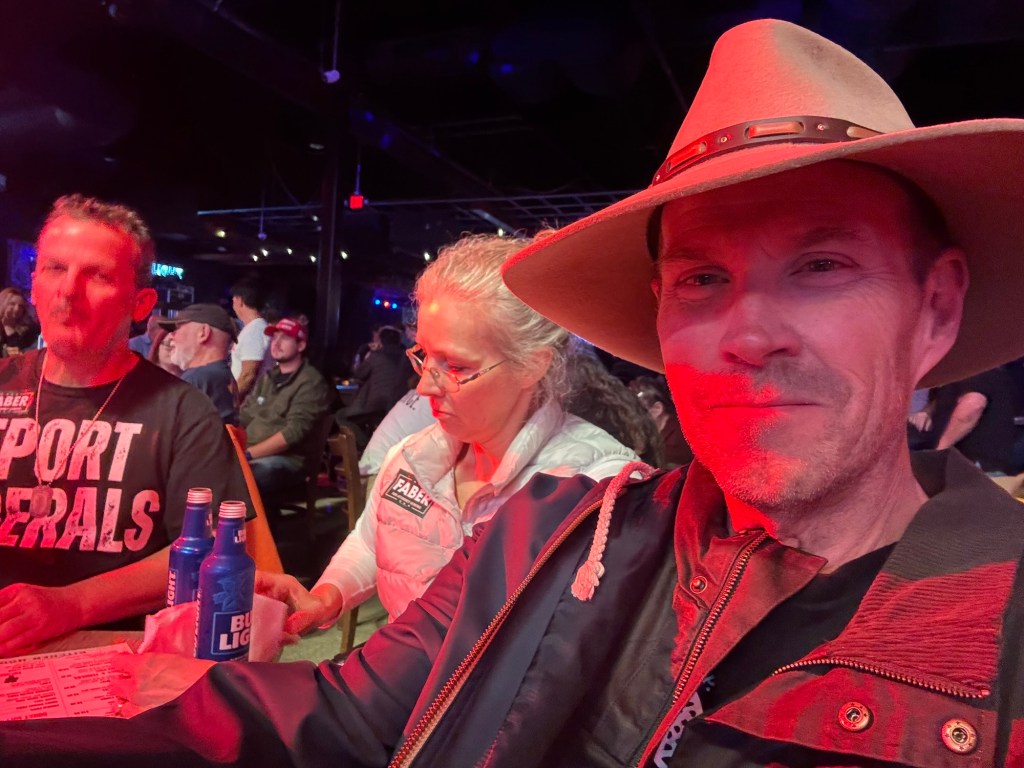
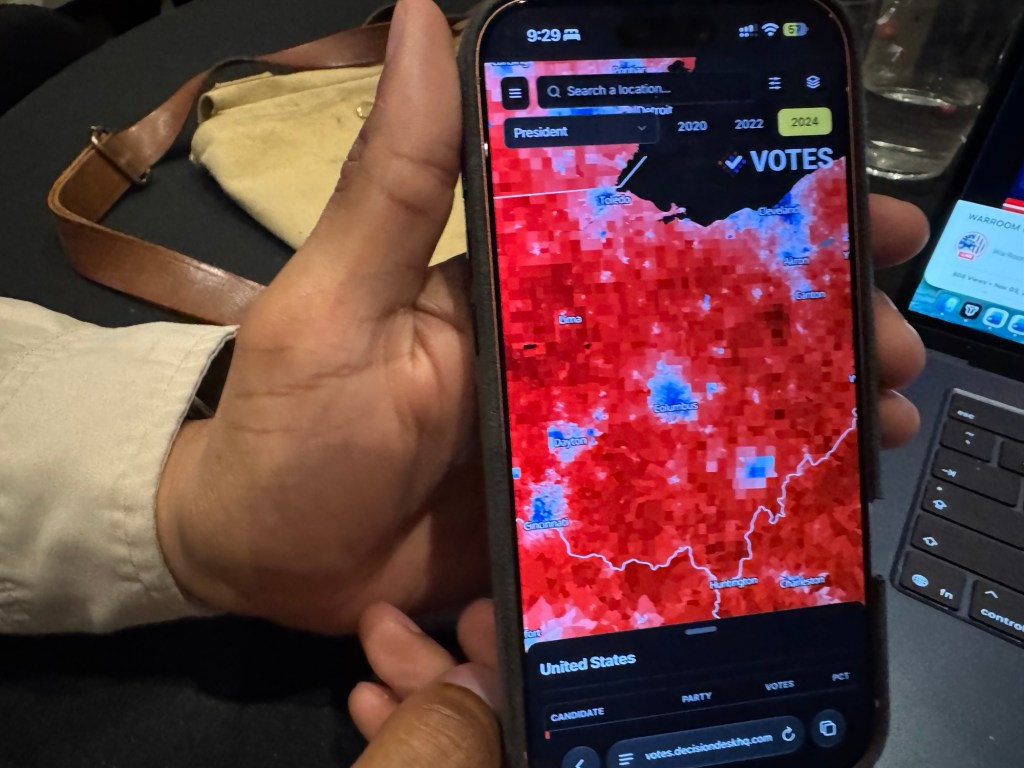
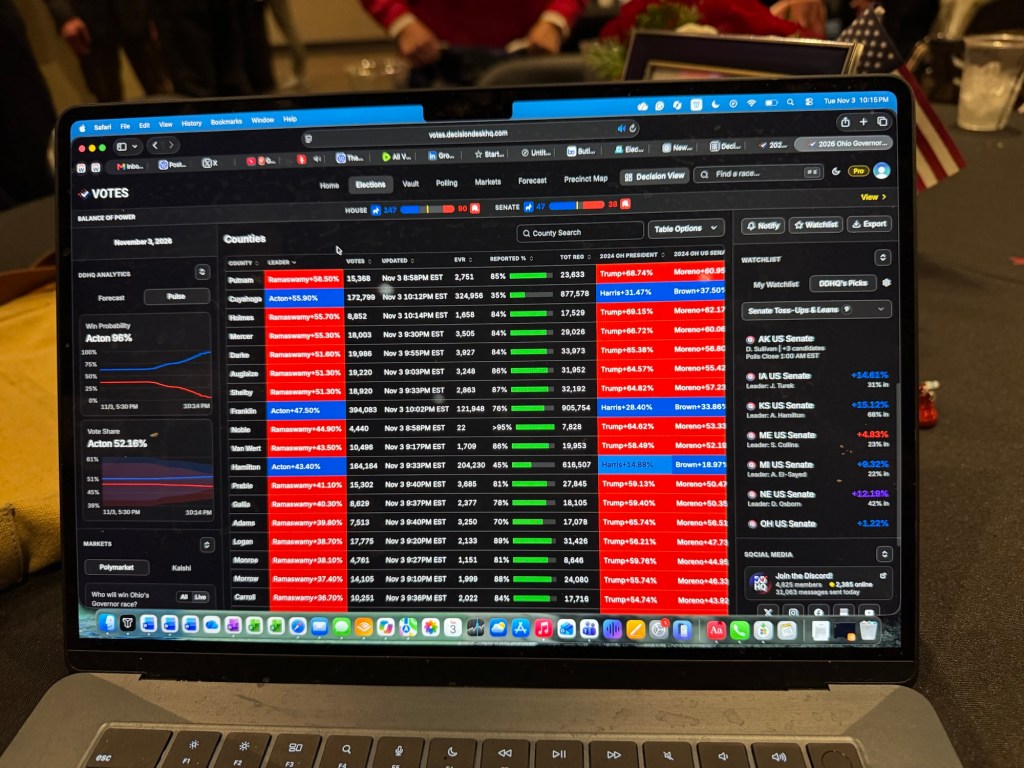
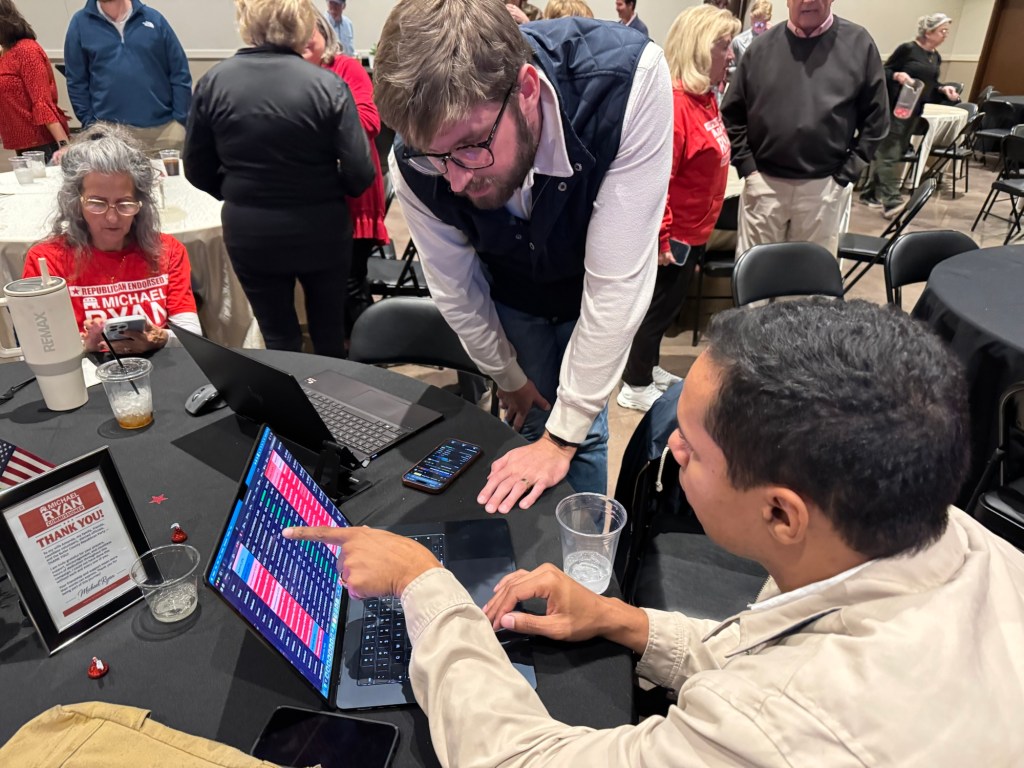
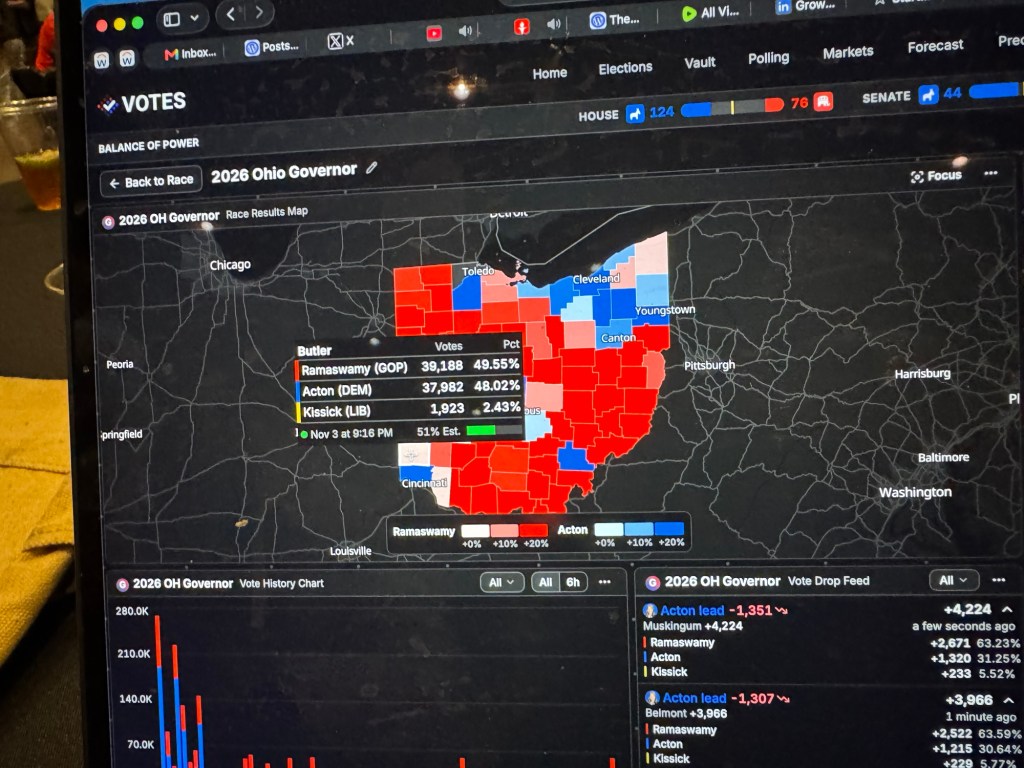
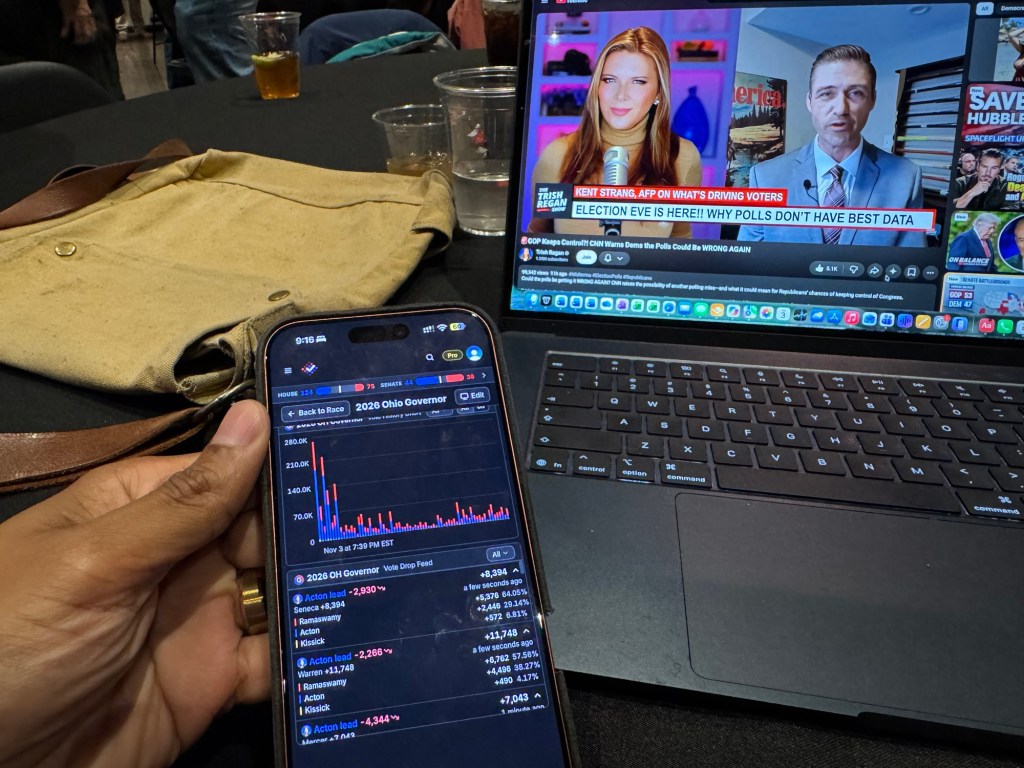
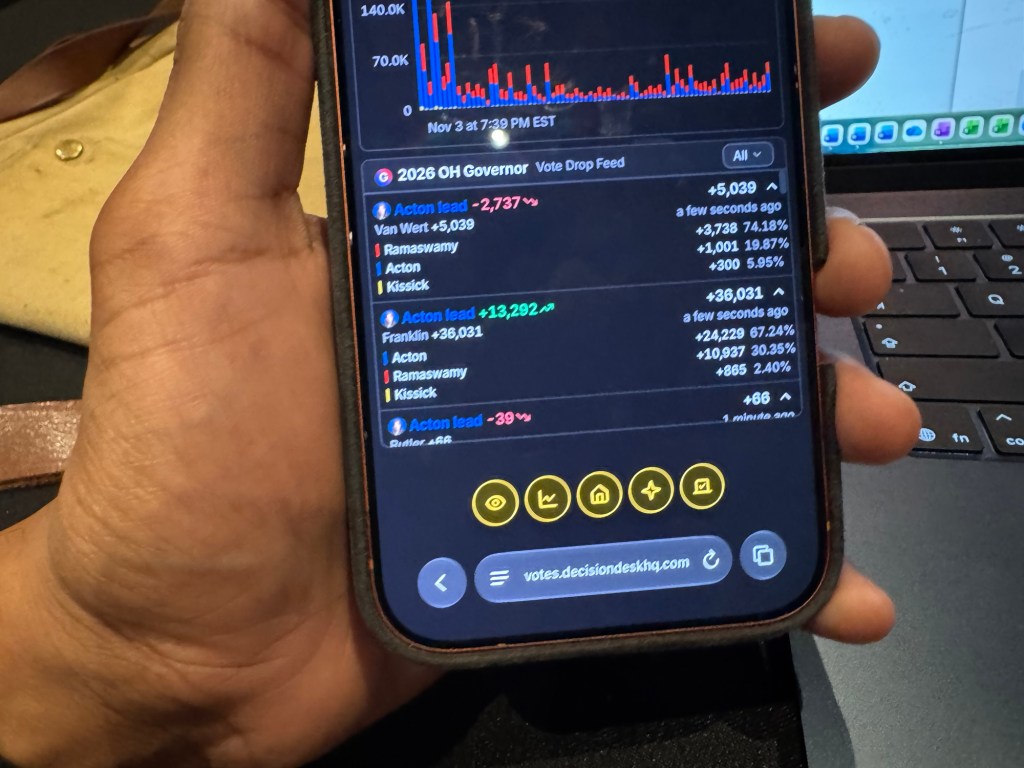
I spent election night at the Butler County GOP watch party with local leaders and a few of us tracking live precinct data on laptops alongside the television feeds. Most of the state came in trending for Vivek Ramaswamy as the night progressed. Rural and lower-density precincts reported steadily and heavily for the Republican ticket. The exceptions that stood out were the high-population urban cores and their immediate surrounding areas: Franklin County (Columbus), Hamilton County (Cincinnati), and the denser pockets around Dayton. Those drops arrived later and favored Amy Acton by wide margins. That pattern is not unique to Ohio, and it is worth examining carefully rather than dismissing.
Statewide, with roughly 98 percent reporting as of November 10, Acton (D) finished with about 2,404,216 votes (52.3 percent) to Ramaswamy’s 2,039,834 (44.4 percent). Libertarian Don Kissick took the rest at roughly 3.3 percent, which likely would have gone to the Republicans. This is the first Democratic gubernatorial win in Ohio in twenty years and the first time a woman has been elected to the office. Ohio went for Trump by about eleven points in 2024; the swing toward Democrats in this midterm was substantial. Turnout reached at least 58.1 percent of registered voters—the highest midterm figure since 1990—with approximately 4.66 million ballots counted unofficially. Frank LaRose, who won reelection as Auditor, has described the process as among the most secure, with machines not connected to the internet and post-election audits historically exceeding 99 percent accuracy.
In Butler County, where I live and where we watched the local races closely, Ramaswamy still carried the county at roughly 52.3 percent (76,829 votes) to Acton’s 44.6 percent (65,509). That is a clear Republican win, yet the margin is narrower than Trump’s 2024 performance in the same county (about 63 percent). Michael Ryan won the county commission race, consistent with local Republican strength. At the party we noted the number of new apartment complexes that have gone up. Renters in higher-density housing do not pay local property taxes the same way homeowners do, often arrive from more liberal areas, and vote accordingly. That demographic shift reduces Republican margins without any need for conspiracy theories. It is ordinary land-use and migration effects playing out in real time.
Hamilton County, Ramaswamy’s home county, went heavily for Acton—about 63 percent (216,201) to 34.5 percent (118,273). Franklin County was even more lopsided, with Acton near 72 percent (roughly 364,000 votes) to Ramaswamy’s 26 percent. Socialism was certainly on the ballot and makes up the foundation of left-wing populism, which is why they didn’t think they needed to campaign. Republicans have been slow to understand this and assume all people view communism as un-American, or that people want to be even considered American at all. These are the places where population density is highest, early and mail voting is heaviest, and the Democratic organizational infrastructure is strongest. On election night, the urban precincts and mail/absentee ballots arrived and moved the statewide numbers. That is visible in the timing of the reporting. Most of rural and exurban Ohio came in for Ramaswamy; the decisive volume was concentrated in a handful of high-density counties. If the goal is to alter an outcome, the efficient method is precisely that—focus resources, mail volume, and turnout operations in the chaotic, high-population areas rather than the entire state. Whether any given batch contained irregularities is a separate question from the observable concentration.
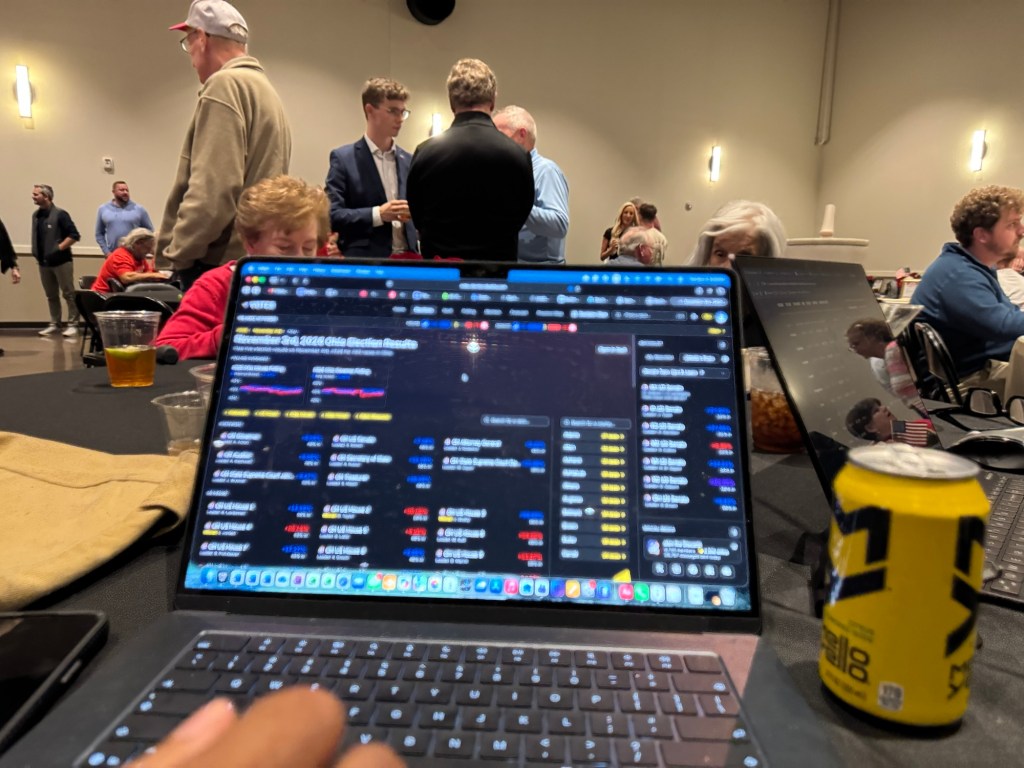
A few county-level reporting anomalies surfaced afterward. In Wyandot County the unofficial canvass showed more votes cast in the governor and Senate races than total ballots. The county elections director confirmed the numbers did not reconcile; the cause was mock-election test data left in the system for one precinct. It did not change any outcome. Ohio’s post-election audits have long shown extremely high accuracy rates. Claims of systemic machine-driven fraud that flipped the statewide result do not align with the county-by-county pattern or the overall turnout and demographic data. At the same time, high-density urban areas with heavy mail voting and lower property-tax stakes remain the places where administrative standards matter most and where small percentage shifts produce large absolute vote differences.
Megyn Kelly has been dismissive of renewed election-integrity questions, telling Trump to “just stop” and noting that the midterms were “too big to rig.” That reaction treats skepticism as unserious. The practical reality on the ground in Ohio was that Democrats were highly organized, heavily incentivized, and effective at mobilizing their voters in the places that decide statewide races. Republicans largely played by the existing rules, showed up, and still lost the top of the ticket because the math in the urban and high-density precincts, combined with demographic change in the suburbs, was decisive. Pretending the only options are either “perfect security” or “the whole thing was stolen” is not useful. The useful work is tightening standards on mail and provisional ballots, requiring proof of citizenship and residency where possible, and recognizing that apartment growth and urban density change the electorate whether anyone likes it or not.
I watched the precincts report in real time. The red areas performed. The blue high-density cores and their mail volume did not. That is the arithmetic. Moving forward requires both rigorous election administration and an honest reading of how land-use policy, migration, and turnout organization actually shift results. Ohio Republicans can improve the rules and the ground game; they cannot assume the other side will sit out. The numbers from November 3 make that plain.
Bibliography and Further Reading
• Ohio Secretary of State unofficial results and county canvass reports (Butler, Hamilton, Franklin, Wyandot).
• Cincinnati Enquirer and Columbus Dispatch county breakdowns and turnout reporting.
• Lead Stories and What the Fact fact-checks on the Wyandot County discrepancy.
• Ballotpedia and news projections (BBC, AP, NBC) on the final statewide margin.
• Frank LaRose statements on election security and audit history.
• Megyn Kelly commentary on post-election claims (November 9, 2026).
Rich Hoffman
More about me
Click Here to Protect Yourself with Second Call Defense https://www.secondcalldefense.org/?affiliate=20707

About the Author: Rich Hoffman
Rich Hoffman is an author, political consultant, and strategic advisor based in Cincinnati, Ohio, and the creator of The Politics of Heaven—a unique framework that connects biblical theology, ancient history, and modern power structures to explain how moral alignment and spiritual forces shape global events. Blending real-world political experience with deep research into archaeology, UFO phenomena, and suppressed historical narratives, Hoffman offers compelling commentary on topics ranging from ancient civilizations and the Dead Sea Scrolls to modern populist movements, paranormal continuity, and leadership strategy in chaotic environments. As the author of The Gunfighter’s Guide to Business and the forthcoming Politics of Heaven, he brings a grounded yet provocative voice to media discussions, supported by firsthand experiences and a cross-disciplinary approach that bridges science, history, and theology. For interviews, speaking engagements, or expert analysis, visit richhoffmanbooks.com or contact directly by email at rhoffman@richhoffmanbooks.com. If you’ve seen the movie, Disclosure Day and want to talk about it and the implications of Presidnet Trump’s UAP disclosures, let me know and we can bring some color to your coverage. https://richhoffmanbooks.com/media-inquiries-broadcast-topics-and-contact-info/?frame-nonce=ad51e7ecba I do have a firsthand UFO encounter to discuss.

