I talk about it every year, and it’s that time again for the Annie Oakley Festival in Darke County, Ohio, which is a yearly vacation for me. And I continue to get asked about it because it’s work for a lot of people but a paradise for me. I have participated in several annual events at the Annie Oakley Festival, some for over 20 years. And out of all the things I could do, I find this particular weekend, the last one of each July, as my refuge from the mundane effects of the Administrative State. I hate slow people in life. Even though most people are pretty slow, they frustrate me tremendously, and out of all the other days of the year when I have to deal with them, I always look forward to the Annie Oakley Festival because it is there where speed and accuracy are celebrated in the traditional American ways rather than this slow New World Order globalism garbage. I love speed and have always been obsessed with it because when it is experienced, there is a morality to it that is unique to American culture, and each year at that event, I get to experience it without restriction and be around other people who appreciate it with a kind of raw understanding of morality. The world under the misguidance of the Administrative State is designed for slow, stupid people, and I find it pathetic. My idea of a vacation is to be away from those kinds of people, even though I may be exhausted at the end of all the competitions, which last all weekend. It’s a good tired. Because it is refreshing to be away from slow people, lazy people, and people who hide behind the Administrative State to appear valuable when all they are, are mindless bureaucrats.
Many of the old stunt performers, cowboys, gunslingers, and general roughnecks I hang around in some of these Western preservation groups all understand something that most people have forgotten, which will likely be returning shortly. In traditional American Westerns, which most of the world still enjoys, speed dominating evil is a consistent theme at the core of all values. When the good guy was faster to a dueler’s pistol, we cheered for the demise of the slower bad guy—the villain. (villains lost because they are slow) The value of speed was directly connected to the morality of capitalism, and society generally understood the metaphor. I spoke this year with many of these old fast-draw professionals who feel like they are a dying breed. I told them this year that I thought that young people might find themselves very attracted to the old fast-draw traits as globalism’s effects were failing worldwide, and people would be looking for a replacement. There are consistently good Westerns doing well on streaming services, like Hell on Wheels, and shows like Yellowstone. Some video games, like Red Dead Redemption, are very popular with young people, so it’s not like Westerns are dead or dying. It would only take a film studio like Angel Studios to start making traditional Westerns again, and people would flock to see them because they enjoy those kinds of stories. Hollywood may be a dying business model, but that doesn’t mean the Western will die with it. Hollywood used to be all about Westerns, and their demise started when they stopped committing themselves to Westerns. You can tell how people feel about Westerns at these shows I go to, especially the fast-draw events. There is always a crowd watching, and we are amazed that we shoot real guns that fast, competitively. Most of them have only witnessed that in movies and television shows.
Part of the suppression of Westerns, starting with those who finance movies, was the desire to build a global administrative state to mask production from performance expectations. As globalism has proposed, the administrative state’s goal is to slow down the world to the communist intentions of centralized authority. Those were the villains in the old Westerns, so it’s no wonder they don’t like Western values. They want to slow the world down with bureaucracy so that centralized communism can rule. But they are so slow and pathetic. No wonder they want to legalize marijuana because they want people brain dead and too slow to think, to ask questions, and to meet reality head-on. Most of my life is about dealing with slow-minded administrative state losers who seem only to want to slow things down. So when I get to compete at Annie Oakley, speed becomes the priority, and it is just so refreshing. I practice Fast Draw most every day in some form or another, so I’m always thinking fast about things. But to express that speed in public, where people appreciate it, is very refreshing. Usually, this Annie Oakley event charges me up for the rest of the year, just those few days. I attend other fast draw events throughout the year, but what makes Annie Oakley stand out is that it’s done in a public forum with audience attendance. Most competitions are held in private venues, so the general public cannot witness them. At Annie Oakley, it feels like it would be like to have been in the Buffalo Bill Wild West Show. And I love it!
Many Americans have been polite about the slow world of the administrative state and the ridiculous European concepts of the World Economic Forum. They don’t have a culture in Europe or Asia where people can express themselves with guns, rapid draw in the classic Western way of dueling a bad guy as the Bible would define villainy, to establish individualized law and order. Speed was the way to achieve justice, and the action was from a superior individual against the masses of slower bandits. I’ve never learned to accept a lack of speed in life, no matter what it is, production, driving down the road, going to the grocery, everything. I read fast. I think fast. I am happiest when things are fast. I’m a guy who will drive a 51-foot RV rig at 85 miles per hour, happily zipping in and out of traffic, and I don’t care how much gas it burns. Because I like to go fast. But there isn’t much more satisfying in life than the fast draw events at Annie Oakley, whether with bullwhips or traditional six guns. The participants and the audience appreciate speed; when you see it, you know all is right with the world. And in the end, when the World Economic Forum types must face reality and deal with the speed of American culture outside of their Davos forums, where they talk to each other in a vacuum, they’re going to learn that they are the bad guy, and slowness is not going to be acceptable. Americans like things fast, whether it’s a Chick-fil-A drive-thru, highway traffic, or a running back on a football team. Americans want things quickly, and Cowboy Fast Draw represents American culture in so many satisfying ways that I am happiest when I compete with other fast gunslingers. I’m more comfortable than anywhere on Earth under any condition. And I never get tired of it. Slow people are terrible. But fast people, the world could use a lot more of those.
As much as I talk about other things, I am not completely lost like a lot of people my age might otherwise be on the magical world of video games and their relatively new impact on global entertainment. But let me just say to my usual readers, its big business. I finally finished the story mode of Red Dead Redemption 2 after around 100 hours of game play, taking my time when I could and I have to say that I was absolutely amazed by the result. The game is such an astonishing technical achievement and it is by far the best thing that could have ever happened to the entertainment format of the American Western. As a story and experience it really is like taking a real-life cowboy experience like the movie City Slickers and placing them into a 1960s spaghetti western with all the high drama of something like Game of Thrones. It is big, bold and beautiful in so many ways. And I knew that as I completed the game and all the epilogue missions that there was going to be a Red Dead online coming at the end of November. I planned to revisit the game at that time but wasn’t expecting much. But let me say that I have been pleasantly surprised. It looks like as massive as Red Dead Redemption 2 is as a game with sales well over a billion dollars already and something like 20 million copies sold before the Holiday season, that the purposed of the online play is to use the game as a kind of training experience for the online world that they have created. It is just vast and ultimately never-ending in what it allows players to do and interact with one another.
I couldn’t help but think as I was playing missions with other people the other day, most of them much younger than I am, that this game is really their only experience with a real American western and for many they are very touched by it. The game itself is a very moral story about good and bad and the many quandaries of the critical decisions that went into exploding life across the American frontier. But at its core it’s about gunfighting and is clearly one of the best arguments for the real-life problems of the Second Amendment. A lot of young people may not be paying attention to the real political problems going on in the outside world, but they sure care a lot about earning enough money in the game to purchase upgrades for their guns and dress in the coolest gunfighting outfits. But I couldn’t help notice that many of them probably didn’t know that they could do all the things they are doing in Read Dead Redemption in real life with Cowboy Fast Draw as seen at the following link:
Belonging to the Cowboy Fast Draw Association is one of the groups I am most proud to affiliate with, they are really a good group of people who meet all over the United States to compete in real life fast draw competitions using real guns. It’s what I think of as one of the coolest sports in the world right now as other countries are trying to participate but have too strict of gun laws to actually do it. But in the good ol’ United States it is much easier to participate in. Yet I have noticed that most of the members are well over 40, largely because guns and holster rigs are expensive so it takes a little upfront investment to get involved. But once you do, it is infinitely rewarding. I enjoyed the original Red Dead Redemption enormously and getting my own fast draw rig was always something I had planned to do. But raising a family every last dollar that I made went into family needs, a car was always breaking down, a kid always needed a school fee or band instrument. Someone needed braces of a family member across the country wanted us to visit them, so there was always something for like twenty years that kept me from getting my own fast draw gun rig.
I ran across a substantial amount of money for a big job I had been working on so I treated myself to my gun rig and have been practicing at Cowboy Fast Draw for several years now, and am getting pretty good at it. After probably 30,000 to 35,000 shots at a fast draw target, I am starting to feel good about my speed and accuracy. It did take a while. It was something that had been on my mind well before I ever played the first Red Dead going way back into my twenties when I was going through a really tough time. Westerns and western music really kept the zest for life alive in me. On their most basic foundations westerns are about the meaning of life so they always had great appeal to me so when I grew up I wanted to be as much of a gunfighter as society could endure. Ironically, I had acquired my gun rig and some advanced fast draw skill before Red Dead Redemption 2 came out which had even more meaning for me because of the new hobby I had.
Traveling around the online world it has become very obvious that many young people are deeply touched by Red Dead Redemption 2 and likely would like to have a similar experience as I have. So let me put this little invite out there. If you are unsure of how to get involved in Cowboy Fast Draw because you are enjoying playing Red Dead Redemption but would like to take everything up a notch, don’t hesitate to ask me. I can help you get started on something that would be infinitely rewarding. While my regular audience here is much older than the people playing Red Dead Redemption 2 I would personally love to see more young people getting involved in Cowboy Fast Draw. It really isn’t any different from what you do in the game, but that it never ends. While the content of Red Dead Redemption does eventually run out, the challenges in real life never do.
In the Cowboy Fast Draw Association, you get to dress up as a gunslinger for real, and have a reason to do it. You have a reason to buy fancy guns for real and learn to take care of them. And the scoring format is safe and fun. Its one of the most satisfying things I’ve done in my life and I would recommend it to anybody. I had been thinking that membership in the cowboy sports may just flicker away because new generations just do not have many positive western entertainment venues that are cool enough to hold their attention, that is until Red Dead Redemption 2 came along and inspired millions of people to live in that world quite authentically. And for those who just want to climb into the world of Red Dead Redemption for real and live it in real life I’d point you to the Cowboy Fast Draw Association at the link shown here. If you have any questions, just ask. I’d love to help as many new people get involved in the sport as possible. While I personally love the world of Red Dead Redemption, it is no match for having a real fast draw rig on your hip which is an experience I have every day. And wouldn’t trade it for anything in the world.
I know that especially lately, each new movie that comes out; I have had grand things to say about them which weaves back through my life to points of origin that are not only sentimental, but deliberately placed there by the important people in my life who raised me. Part of being alive as opposed to half-dead or socially subdued is that you feel things. And I feel things, lots of things—because I have never turned my mind off to the world. I love movies, I love music, I love visiting places, I love food, I love family, I love books, I love comic books, but probably more than anything in my life besides family, I love bullwhips, and I was elated to discover recently that one of the great whip makers with ties to Western Stage Props had made three bullwhips for the upcoming Disney film The Lone Ranger. I was happy to hear that Joe Strain from his business The Northern Whip Company had supplied the whips for the grand revisit to the Old West by The Lone Ranger because it would not only help my friends in the bullwhip industry who make large parts of their livings off sharing their unique skills with the public, but that the modern makers of The Lone Ranger were going to pay tribute to the use of the whip in the classic stories that took place from the 1930s to the late 1950s. Not only would the new Lone Ranger from Disney pay direct tribute to the classic silver bullet mythology, the tenacious horse named “Silver,” the “William Tell Overture,” a very ambitious rendition of Tonto played by Johnny Depp, but they were even going to put a few whip scenes in the film, which used to be a standard in westerns.
I watched every television episode of The Lone Ranger at some point of my life at least once. I used to watch it with my grandfather when I was a very small child. CLICK HERE FOR MORE. When I was a kid it was a combination of The Lone Ranger, Disney’s Zorro, John Wayne westerns, and Clint Eastwood westerns that I watched with my family as entertainment before there was ever a Star Wars, or an Indiana Jones. In most of those old westerns, a bullwhip was the secondary weapon of choice on many occasions. So I grew up with a tremendous reverence for the bullwhip as have many of my friends from the bullwhip world who are seen scattered throughout this article in videos of their own displaying their love of a uniquely American art form. In fact the only place in the world where the bullwhip holds even more reverence than in America is in Australia. It is there that the whip maker who made the two whips seen hanging from my holsters in the picture above resides–Terry Jacka.
In the typical Lone Ranger stories, the hero Texas Ranger Reid is gunned down with a group of fellow Rangers and left for dead by a group of thugs who wish to inject crony capitalism into their local business operations. (Do not confuse this with pure capitalism which I support adamantly) To do so, they gun down the legitimate law so that they can make easy prey of the people they wish to exploit. It’s a classic theme that can be seen in virtually every western made and no matter how many hundreds of westerns I have seen, I never tire of the message. It is a theme I resurrected in my novel The Symposium of Justice in 2004 which essentially was a modern western set in the current time, and featured the marketing slogan “Justice Comes with the Crack of a Whip.” I enjoyed tremendously the opportunities writing that novel gave me, the ability to do some stunt work for the World Stunt Association, make public appearances, and even do some consulting work in feature films, CLICK HERE TO REVIEW. I understood why my bullwhip friends enjoyed traveling the country doing tricks for audiences and performing in large shows. But from 2007 to 2009 I was getting the overwhelming feeling that something of a real Lone Ranger was needed in the actual world and I wasn’t quite sure how to go about it. As I looked around at the diminishing crowds at some of the western events I attended and my friends with their commitment to traditional western arts were looking more antiquated each year by audiences who were rapidly losing an understanding of the typical values displayed in film westerns, I had noticed that a similar evil that was clear in the old Lone Ranger episodes was sucking the life out of the world around us, and I wasn’t content to just write about it in books, and show up on movie sets earning acclaim from top actors, directors, and producers just because I had a unique talent. I felt an overwhelming desire to not just talk about it, or write about it, but to actually fight for the values of the Lone Ranger in real life.
The whip trick video was featured on The Blaze by Glenn Beck’s new enterprise during its opening weekend. CLICK FOR REVIEW. Just a few days later I did a personal interview with The Cincinnati Enquirer where I spoke out openly against the tax increases proposed by the school and I did whip tricks for the reporters knowing full well what would follow. I knew that the established order of things would attempt to paint me as a radical traditionalist who was so in love with the “old days” that I couldn’t see the wonderful benefits of “progress” as it has been brought to America by intelligentsia, CLICK TO REVIEW. At the time, I had been involved in many personal fights with others, one on one, or otherwise, and had no problem with direct conflict. But as I was writing The Symposium of Justice and telling the story of Fletcher Finnegan, who was a modern masked outlaw named “Cliffhanger,” I had a persistent nagging desire to prove a theory that I had constructed in the book which had to be proven for the follow-up novel, which is how one man can take on a giant statist organization and survive. In my novel, it was the heroics of Cliffhanger that inspired good people in the town of Fort Seven-Mile to join together and form Cliffhanger’s Fighting Legion, to fight tyranny all the way to the powers that pulled the strings of political puppets beyond the reach of Washington D.C. Fletcher Finnegan was my modern version of The Lone Ranger, a masked man who instead of a silver bullet, used bullwhips to bring justice to the world. But for me, that wasn’t enough. I wanted to strike at the heart of the evil, not just the reaction to it, which had always bothered me about every western I had ever seen. It was one thing to fight evil and stand for the good, but what was the cause of the evil? To answer that I had to go on a dark quest of my own.
The bull whip video had started me down a road for justice and soon after I was doing many radio broadcasts, granting interviews to the AP, and speaking on television. As I had been working with several local Tea Party groups, I had grown concerned that my work with the whips might draw bad publicity for them so I backed off some of my public bull whip presentations relying instead on my speaking ability to perform the pursuit of justice. At this point I was already deep into my experimental theory which I am about to reveal the result. Over the next couple of years I found that like the Lone Ranger, I had put on a kind of social mask to protect the people I cared about in the Tea Party movement, and traded business attire as my mask, keeping the whip hidden from a media that was looking for every opportunity to paint me as an extremist radical that wanted to destroy the lives of children—instead of saving them.
What I learned during this endeavor is exactly what I set out to understand. Government statists spread their evil by creating anti-concepts. If the American western was about creating in the mind of viewers a “concept” about tradition, and value, then the anti-concept was about destroying that value. This was the cause of the declining popularity of the American western and why my bull whip friends were finding declining interest in their art form over the years. This anti-concept theory is being taught in public schools to metaphorically deliver the souls of millions of young people to the slavery of a giant Cavendish gang represented in reality by statist governments all over the world. Before I started all this activity the biggest fear that small government activists had was retaliation, particularly from labor unions set up like parasites in government institutions such as public schools, and IRS agencies. These unions got what they wanted by acting identically to the gangs of the Old West who robbed trains, stole cattle, and harassed settlers. They used force, or the threat of it, to take what they wanted and imposed fear on their victims so they could maintain their regional power. These statists functioned from misleading facts through the formation of the “anti-concept”—by stripping away values from society. The way to destroy a concept is with open attack, using the threat of force, or by subversion, by undercutting the value of an argument. For instance with the public school mentioned, they failed to recognize the need for their tax increase was caused by their mismanaged finances. They associated the value of education to money equaling goodness for children even though the facts had nothing to do with that reality. If someone challenged that premise, the union would show up in collective force to protest the school board sending a message to the community that if anyone stood in their way, they’d be vandalized, personally harassed, their children would be tortured in various degrees, and they’d be turned into social outcasts. Because of this threat, nobody challenged them, even the so-called wealthy elite who understood clearly what was happening but were unable to do anything about it for fear that their businesses would come under attack by union thugs and social radicals. What the unions were doing was no different from what the Cavendish gang did in The Lone Ranger. They used fear to impose their statist will on the innocent.
It is one thing to think such a thing, but quite another to speak out against it. After all, nobody wants to be called a mean, selfish, or a diabolical menace to the fibers of an interconnected society which is how the villains in this case had destroyed the concept of goodness. They had subverted entire communities into sitting on their hands and not speaking out in fear of being considered socially as an outcast—or even an outlaw. I theorized in The Symposium of Justice that the way to beat these types of villains was to challenge their premise with the question “why.” When the statist enemy cannot answer, which they never can, they then turn to force. This is where my hero Fletcher Finnegan/Cliffhanger used his bullwhips to impose justice on those who tried to use force to remove the concept of goodness from society. My problem was that I knew such an idea worked in small combat situations with fewer than ten combatants at a time from personal experience. But I wasn’t sure if the same could be applied to statist government all the way to the top of the food chain which is what my next novel in the series is all about.
When I did the Enquirer interview Mike Clark asked me if I knew what I was doing in bringing my whips to the front page of Cincinnati’s largest paper. I knew as he asked the question that I was looking at a future Judas, a betrayer who would pretend to be a friend just like the villain in The Lone Ranger who led the Texas Rangers to their deaths in the canyon trap set by the Cavendish gang. But this time, I would use the bait to my advantage—and I did. I knew that if the threat of personal harm was removed from the unions’ arsenal of weapons that they’d be defenseless against me because they certainly couldn’t answer any questions regarding “why.” When I have my Terry Jacka whips, nobody is going to bring personal harm to me with any melee weapon. For those hired thugs who don’t care to use a firearm, the decision of that kind falls into a level of thuggery that our current statist society still recognizes as bad, so it doesn’t happen often and that is when firearms are needed for defense. But for all other circumstances, no gang of thugs can bring harm to a person who can use bullwhips in the fashion that I do. By presenting my whips to the unions all across the State of Ohio through popular media, I had taken away the weapon that all statist organizations use to impose their will, the threat of force. This allowed me to give many dozens of interviews to the media against unarmed opposition because the statist representatives of public schools could not answer the “why” and they could not stop me with force. So they were unable to stop me and this remains the case to this day. Without thuggish force, without bringing harm to others, they have no ground to stand on. The way to beat them time and time again is to ask them “why” which they can never answer, and then to let it be known that physical force, social intimidation, and extortion will not serve them. When they learn that, their game is over. They cannot win with facts of any kind.
When I say, “Justice Comes with the Crack of a Whip” this is what is meant; that statist villains have had their most important weapon removed from them—the ability to apply force. This is why whips were so popular in the early westerns like The Lone Ranger and Zorro, because they represented the “concept” of justice in a way that does not involve killing your opponent. The whip allows the wielder an ability to disarm those who wish to use force against others. The bull whip cuts like a knife, is far faster than a pair of nunchucks, and much more versatile than a sword, staff, or baseball bat. In short, a person who learns to use the bull whip anywhere close to the kind of people shown in the videos on this article know in their mind that nobody can harm them in one-on-one or group combat. That self-assurance is a measure of freedom that allows goodness to be seen clearly, and solutions to statism are then solved.
As The Lone Ranger puts on his mask in the new Disney film, I’m taking mine off. I am no longer concerned about what anybody thinks about my use of the bullwhip as I have made my point. For me, the bull whip is a symbol of justice because it prevents those who wish to steal away righteousness from the innocent eliminating the ability to invoke any fear to do so. It forces statist opponents to take the next step which involves more lethal force and in this way the “ground” to combat is controlled by the whip holder, because they know what their opponent is going to do since their options are so limited. Before that next step, which obviously the Clinton’s have no problem utilizing, CLICK HERE FOR REVIEW; decisions have to be made on how the public perception of such an action can be justified. Most statist enemies lack this type of arrogance, or network to pull off such a feat, so they are paralyzed when threat of force is removed from their social holsters, and that is invoked by the bull whip.
There are many great whip makers in the world for my money; Terry Jacka is the absolute best. Right up there with him is Joe Strain and my old friend Paul Nolan who was seen in the video on the pillars at sunset with his wife and friend T-Rex. A lot of whip masters don’t talk about it, but when they put a whip in their hand the power they feel is not one to inflict pain and suffering on other people the way some statist slave master might think. What they feel is the power to defend themselves from any melee force that might attempt to enter their barrier of protection. Speaking personally, when you see a whip artist standing at the center of a two-handed Queensland Crossover, or other two-handed routine, they know they are standing in the middle of spinning knives that can cut to shreds anyone who tries to penetrate that parameter. When I wear my Jacka whips with the long 12” handles pointing out like Samurai swords on both sides of my hip I do so to have quick access to them off my quick release holsters, which were specially designed for me by Gery Deer. I know when I walk around with them that I have complete control over my life because the whip keeps anybody who might wish me harm from entering my parameter of individuality, and that is a wonderful feeling.
It is in this spirit that the bull whip was used in the Old West mythology as a symbol of justice instead of pain. The greatest of them all was Lash LaRue who was known as The King of the Bullwhip. He was another of my favorite western protagonists. So it brought me great delight to see that Disney had purchased three whips from The Northern Whip Company to be featured in the new Lone Ranger film. I would love to see a film where whips are used in them to the level that Lash LaRue or Zorro did, but I’ll be very happy to see a scene or two with the Lone Ranger bringing about a bullwhip to implement justice in a way that only bullwhip masters understand.
As for me, the bullwhip is an important part of my life, and I am taking the social mask I put on for a brief time off. The justice I seek doesn’t require a mask, because in the hands of a bull whip master, there is nothing to fear. It would be my hope that I could share this self-assurance with as many people possible so that they too could learn such a skill that would free them from the tyranny of fear that so cripples such vast majorities with the constant threat of personal harm while in pursuit of honor.
Check out Joe Strain’s bull whips for yourself. I’m sure he will have replicas of the ones he made for The Lone Ranger available soon.
Another great champion of the bull whip sport is Adam Winrich. He is a wonderful whip maker, but spends most of his time these days doing professional gigs. He also has dozens and dozens of instructional videos on technique some seen here on this article.
Then of course there’s Chris Camp who laid the foundation for many world record endeavors and stays busy as a whip professional traveling the world with his family for many corporate clients.
And if you want to take some classes on how to get started in a nice comfortable bull whip training studio that is just a short drive north of Cincinnati, contact my friend Gery Deer. It’s the only one of its kind in the world. Most of the names mentioned have attended Gery’s Annie Oakley Western Showcase event each year in Ohio during the last weekend of July.
But the first step is in deciding not to live in fear, then learning what can be done about it. Justice Comes with the Crack of a Whip, and for each of us, there is nothing more important.
Executive Order 10995 ASSIGNING TELECOMMUNICATIONS MANAGEMENT FUNCTIONS
WHEREAS telecommunications is vital to the security and welfare of this Nation and to the conduct of its foreign affairs; WHEREAS it is imperative that the United States maintain an efficient and well-planned national and international telecommunications program capable of stimulating and incorporating rapid technological advances being made in the field of telecommunications; WHEREAS the radio spectrum is a critical natural resource which requires elective, efficient and prudent administration in the national interest; WHEREAS it is essential that responsibility be clearly assigned within the executive branch of the Government for promoting and encouraging effective and efficient administration and development of United States national and international telecommunications and for effecting the prudent use of the radio frequency spectrum by the executive branch of the Government; WHEREAS there is an immediate and urgent need for an examination of ways and means of improving the administration and utilization of the radio spectrum as a whole; WHEREAS there is an immediate and urgent need for integrated short and long-range planning with respect to national and international telecommunications programs, for continuing supervision over the use of the radio frequency spectrum by the executive branch of the Government and for the development of national policies in the field of telecommunications; NOW, THEREFORE, as President of the United States and Commander-in-Chief of the armed forces of the United States, and by virtue of the authority vested in me by sections 305 and 606 of the Communications Act of 1934, as amended (47 U.S.C. 305 and 606), and by section 301 of Title 3 of the United States Code, it is hereby ordered as follows: SECTION 1. There is hereby established the position of Director of Telecommunications Management, which position shall be held by one of the Assistant Directors of the Office of Emergency Planning provided for under Reorganization Plan No. 1 of 1958, as amended (72 Stat. 1799). SEC. 2. Subject to the authority and control of the President, the Director of Telecommunications Management shall:
(a) Coordinate telecommunications activities of the executive branch of the Government and be responsible for the formulation, after consultation with appropriate agencies, of overall policies and standards therefor. He shall promote and encourage the adoption of uniform policies and standards by agencies authorized to operate telecommunications systems. Agencies shall consult with the Director of Telecommunications Management in the development of policies and standards for the conduct of their telecommunications activities within the overall policies of the executive branch. (b) Develop data with regard to United States Government frequency requirements. (c) Encourage such research and development activities as he shall deem necessary and desirable for the attainment of the objectives set forth in section 6 below. (d) Contract for studies and reports related to any aspect of his responsibilities. SEC. 3. The authority to assign radio frequencies to Government agencies, vested in the President by section 305 of the Communications Act of 1934, as amended (47 U.S.C. 305), including all functions heretofore vested in the Interdepartment Radio Advisory Committee, is hereby delegated to the Director of the Office of Emergency Planning, who may redelegate such authority to the Director of Telecommunications Management. Such authority shall include the power to amend, modify, or revoke frequency assignments. SEC. 4. The functions and responsibilities vested in the Director of the Office of Emergency Planning by Executive Order No. 10705 of April 17, 1957, as amended, may be redelegated to the Director of Telecommunications Management Executive Orders No. 10695A of January 16, 1957, and No. 10705, as amended are hereby further amended insofar as they are with the present order. Executive Order No. 10460 of June 16, 1953, is hereby revoked. SEC. 5. The Director of Telecommunications Management shall establish such interagency advisory committees and working groups composed of representatives, interested agencies and consult with such departments and agencies as may be necessary for the most effective performance of his functions. To the extent that he deems it necessary or advisable to continue tile Interdepartment Radio Advisory Committee it shall serve in an advisory capacity to the Director of Management. SEC. 6. In carrying out functions under this order, the Director of Telecommunications Management shall consider the following objectives:
(a) Full and efficient employment of telecommunications resources in carrying out national policies; (b) Development of telecommunications plans, policies, and programs under which full advantage of technological development will accrue to the Nation and the users of telecommunications; and which will satisfactorily serve the national security; sustain and contribute to the full development of world trade and commerce; strengthen the position and serve the best interests of the United States in negotiations with foreign nations; and permit maximum use of resources through better frequency management; (c) Utilization of the radio spectrum by the Federal Government in a manner which permits and encourages the most beneficial use thereof in the public interest; (d) Implementation of the national policy of development and effective use of space satellites for international telecommunications services.
SEC.7. Nothing contained in this order shall be deemed to impair any existing authority or jurisdiction of the Federal Communications Commission. SEC. 8. The Director of Telecommunications Management and the Federal Communications Commission shall assist and give policy advice to the Department of State in the discharge of its functions in the field of international telecommunications policies, positions and negotiations. SEC.9. The Director of Telecommunications Management shall issue such rules and regulations as may be necessary to carry out the duties and responsibilities vested in him by this order or delegated to him wider this order. SEC. 10. All executive departments and agencies of the Federal Government are authorized and directed to cooperate with the Director of Management and to furnish him such information, support and assistance, not inconsistent with the law, as he may require in the performance of his duties. JOHN F. KENNEDY THE WHITE HOUSE, February 16, 1962. Executive Order 10997 ASSIGNING EMERGENCY PREPAREDNESS FUNCTIONS TO THE SECRETARY OF THE INTERIOR By virtue of the authority vested in me as President of the United States, including authority vested in me by Reorganization Plan No. 1 of 1958 (72 Stat. 1799), it is hereby ordered as follows: SECTION 1. Scope. The Secretary of the Interior (hereinafter referred to as the Secretary) shall prepare national emergency plans and develop preparedness programs covering (1) electric power; (2) petroleum and gas; (3) solid fuels; and (4) minerals. These plans and programs shall be designed to provide a state of readiness in these resource areas with respect to all conditions of national emergency, including attack upon the United States. SEC. 2. Definitions. As used in this order: (a) The term “electric power” means all forms of electric power and energy, including the generation, transmission, distribution, and utilization thereof. (b) The term “petroleum” means crude oil and synthetic liquid fuel, their products, and associated hydrocarbons, including pipelines for their movement and facilities specially designed for their storage. (c) The term “gas” means natural gas (including helium) and manufactured gas, including pipelines for the movement and facilities specially designed for their storage. (d) The term “solid fuels” means all forms of anthracite, bituminous, sub-bituminous, and lignitic coals, coke, and coal chemicals produced in the coke making process. (e) The term “minerals” means all raw materials of mineral origin (except petroleum, gas, solid fuels, and source materials as defined in the Atomic Energy Act of 1954, as amended) obtained by mining and like operations and processed through the stages specified and at the facilities designated in an agreement between the Secretary of the Interior and the Secretary of Commerce as being within the emergency preparedness responsibilities of the Secretary of the Interior. SEC. 3. Resource Functions. With respect to the resources defined above, the Secretary shall: (a) Priorities and allocations. Develop systems for the emergency application of priorities and allocations to the production and distribution of assigned resources. (b) Requirements. Periodically assemble, develop as appropriate, and evaluate requirements for power, petroleum, gas and solid fuels, taking into account estimated needs for military, civilian, and foreign purposes. Such evaluation shall take into consideration geographical distribution of requirements under emergency conditions. (c) Resources. Periodically assess assigned resources available from all sources in order to estimate availability under an emergency situation, analyze resource estimates in relation to estimated requirements in order to identify problem areas, and develop appropriate recommendations and programs including those necessary for the maintenance of an adequate mobilization base. Provide data and assistance before and after attack for national resource evaluation purposes of the Office of Emergency Planning. (d) Claimancy. Prepare plans to claim materials, manpower, equipment, supplies and services needed in support of assigned responsibilities and other essential functions of the Department before the appropriate agency, and work with such agencies in developing programs to insure availability of such resources in an emergency. (e) Minerals development. Develop programs and encourage the exploration, development and mining of strategic and critical minerals for emergency purposes. (f) Production. Provide guidance and leadership to assigned industries in the development of plans and programs to insure the continuity of production in the event of an attack, and cooperate with the Department of Commerce in the identification and rating of essential facilities. (g) Stockpiles. Assist the Offices of Emergency Planning in formulating and carrying out plans and programs for the stockpiling of strategic and critical materials, and survival items. (h) Salvage and rehabilitation. Develop plans for the salvage of stocks and rehabilitation of producing facilities for assigned products after attack. (i) (Economic Stabilization. Cooperate with the Office of Emergency Planning in the development of economic stabilization policies as they might affect the power, fuels and assigned minerals supply, production, and marketing programs, and the conservation of essential commodities in an emergency, including rationing of power and fuel. ( j ) Financial aid. Develop plans and procedures for financial and credit assistance to producers, processors, and distributors who might need such assistance in various mobilization conditions. SEC. 4. Cooperation with the Department of Defense. In consonance national civil defense plans, programs and operations of the Department of Defense, under Executive Order No. 10952, the Secretary shall: (a) Facilities protection. Provide protection industry protection guidance material adapted to needs of industries concerned with assigned products, and promote a national program to stimulate disaster preparedness and control in order to minimize the effects of overt or covert attack and maintain continuity of production and capacity to serve essential users in an emergency. Guidance shall include but not be limited to: organizing and training, facility personnel, personnel shelters, evacuation plans, records protection, continuity of management, emergency repair, deconcentration or dispersal of facilities, and mutual aid associations for emergency. (b) Chemical, biological and radiological warfare. Provide for the detection, identification, monitoring and reporting of chemical, biological and radiological agents at selected facilities operated or controlled by the Department of the Interior. (c) Damage assessment. Maintain a capability to assess the effects of attack on assigned products, producing facilities, and department installations both at national and field levels, and provide data to the Department of Defense. SEC. 5. Research. Within the framework of Federal research objectives, the Secretary shall supervise or conduct research directly concerned with carrying out emergency preparedness responsibilities, designate representatives for necessary ad hoc or task force groups, and provide advice and assistance to other agencies in planning for research in areas involving the Department’s interest. SEC. 6. Functional Guidance. The Secretary, in carrying out the functions assigned in this order, shall be guided by the following: (a) Interagency cooperation. The Secretary shall assume the initiative in developing joint plans for the coordination of emergency fuel, energy, and assigned mineral programs of those departments and agencies which have the responsibility for any segment of such activities. He shall utilize to the maximum those capabilities of other agencies qualified to perform or assist in the performance of assigned functions by contractual or other agreements. (b) Presidential coordination. The Director of the Office of Emergency Planning shall advise and assist the President in determining policy for, and assist him in coordinating the performance of functions under this order with the total national preparedness program. (c) Emergency planning. Emergency plans and programs, and emergency organization structure required thereby, shall be developed as an integral part of the continuing activities of the Department of the Interior on the basis that it will have the responsibility for carrying out such programs during an emergency. The Secretary shall be prepared to implement all appropriate plans developed under this order. Modifications, and temporary organizational changes, based on emergency conditions, will be in accordance with policy determination by the President. SEC. 7. Emergency Actions. Nothing in this order shall be construed as conferring authority under Title III of the Federal Civil Defense Act of 1950, as amended, or otherwise, to put into effect any emergency plan, procedure, policy, program, or course of action prepared or developed pursuant to this order. Such authority is reserved to the President. SEC. 8.Redelegation. The Secretary is hereby authorized to redelegate within the Department of the Interior the functions hereinabove assigned to him. SEC. 9. Prior Actions. To the extent of any inconsistency between the provisions of any prior order and the provisions of this order, the latter shall control. Emergency Preparedness Order No. 7 (heretofore issued by the Director, Office of Civil and Defense Mobilization) (26 F.R. 669-660), is hereby revoked. JOHN F. KENNEDY
THE WHITE HOUSE, February 16, 1962.
Executive Order 10998 ASSIGNING EMERGENCY PREPAREDNESS FUNCTIONS TO THE SECRETARY OF AGRICULTURE By virtue of the authority vested in me as President of the United States, including authority vested in me by Reorganization Plan No. 1 of 1958 (72 Stat. 1799), it is hereby ordered as follows: SECTION 1. Scope. The Secretary of Agriculture (hereinafter referred to as the Secretary) shall prepare national emergency plans and develop preparedness programs covering: Food resources, farm equipment, fertilizer, and food resource facilities, as defined below; rural fire control; defense against biological warfare, chemical warfare, and radiological fallout pertaining to agricultural activities; and rural defense information and education. These plans and programs shall be designed to develop a state of readiness in these areas with respect to all conditions of national emergency, including attack upon the United States. SEC. 2. Definitions. As used in this order: (a) “Food resources” means all commodities and products, simple, mixed or compound, or complements to such commodities or products, that are capable of being eaten or drunk, by either human beings or animals’ irrespective of other uses to which such commodities or products may be. put, at all stages of processing from the raw commodity to the products thereof in vendible form for human or animal consumption. For the purposes of this order the term “food resources” shall also include all starches, sugars, vegetable and animal fats and oils, cotton, tobacco, wool, mohair, hemp, flax fiber, and naval stores, but shall not include any such material after it loses its identity as an agricultural commodity or agricultural product. (b) “Farm equipment” means machinery, equipment and repair parts manufactured primarily for use on farms in connection with the production or preparation for market or use of “food resources.” (c) “Fertilizer” means any product or combination of products for plant nutrition in form for distribution to the users thereof. (d) “Food resource facilities” means plants, machinery, vehicles (including on farm) and other facilities for the production, processing, distribution and storage (including cold storage) of food resources, and for domestic distribution of farm equipment and fertilizer. SEC. 3. Food Function. With respect to food resources, food resource facilities, farm equipment, and fertilizer the Secretary shall: (a) Resources. Periodically assess assigned resources available from all sources in order to estimate availability under an emergency situation, analyze resource estimates in relation to estimated requirements in order to identify problem areas, and develop appropriate recommendations and programs including those necessary for the maintenance of an adequate mobilization base. Provide data and assistance before and after attack for national resource evaluation purposes of the Office of Emergency Planning. (b) Requirements. Periodically assemble, develop as appropriate, and evaluate requirements for assigned resources and service, taking into account the estimated needs for military, civilian, and foreign purposes. Such evaluation shall take into consideration the geographical distribution of requirements under emergency conditions. (c) Priorities and allocations. Develop priorities, allocations and distribution control systems and related plans to insure that available food resources are properly apportioned among and distributed to civilian, military and foreign claimants in an emergency and develop priorities, allocations and distribution control systems and related plans for the domestic distribution of farm equipment and fertilizer. (d) Production and processing. Develop control systems and related plans including control of use of facilities designed to provide adequate and continuing production, processing and storage of essential food resources in an emergency. (e) Salvage and rehabilitation. Develop plans for salvage of food resources after determination by proper authorities having the responsibility for this function, of their safety for human or animal consumption anti develop plans for the rehabilitation of food resource facilities after attack. (f) Economic stabilization. Cooperate with the Office of Emergency Planning in the development of stabilization policies as they might affect agricultural production, processing, distribution, and storage, and in tile development of policies for consumer rationing of food resources. (g) Financial aid. Develop plans and procedures for financial and credit assistance for farmers who might need such assistance under various mobilization conditions, and provide assistance to food industries in obtaining necessry financing and credit in an emergency. SEC. 4. Cooperation with Department of Defense. In consonance with national civil defense plans, programs and operations of the Department of Defense, under Executive Order No. 10952, the Secretary shall: (a) Facilities protection. Provide industry protection guidance materials adapted to the needs of assigned food resources facilities and promote a national program to stimulate disaster preparedness and control in order to minimize the effects of overt or covert attack, and to maintain continuity of production and capacity to serve essential users in an emergency. Guidance shall include, but not be limited to, organizing and training facility personnel shelter, evacuation plans, records protection, continuity of management, emergency repair, deconcentration or dispersal of facilities, and industrial mutual :lid associations for an emergency. (b) Rural fire functions. In cooperation with Federal, State and local agencies, develop plans for a national program and direct activities in relationship to the prevention and control of fires in the rural areas in the United States caused by the effects of enemy attack. (c) Biological, chemical, and radiological warfare defense functions. Develop plans for a national program, direct Federal activities, and furnish technical guidance to State and local authorities concerning (1) diagnosis and strengthening of defensive barriers and control or eradication of diseases, pests, or chemicals introduced as agents of biological or chemical warfare against animals, crops or products thereof; (2) protective measures, treatment and handling of livestock, including poultry, agricultural commodities on farms or ranches, agricultural lands, forest lands, and water for agricultural purposes, any of which have been exposed to or affected by radiation. Plans shall be developed for a national program and direction of Federal activities to assure the safety and wholesomeness and to minimize losses from biological and chemical warfare radiological effects, and other emergency hazards of livestock, meat and meat products, poultry and poultry products in establishments under the continuous inspection of the U.S. Department of Agriculture, and agricultural commodities and products owned by the Commodity Credit Corporation or by the Secretary. (d) Rural flefense information and education. Conduct a rural defense information and education program to advise farmers that they will have a responsibility to produce food of the kind and quantity needed in an emergency and shall work with farmers and others in rural areas to reduce the vulnerability of hollies, crops, livestock, and forests, to either overt or covert attack. (e) Damage assessment. Maintain a capability to assess the effects of attack on assigned resource areas and departmental installations, both at national and field levels, and provide data to the Department of Defense. SEC. 5. Claimancy. The Secretary shall prepare plans to claim materials, manpower, equipment, supplies and services which would be needed to carry out assigned responsibilities and other essential functions of the Department from the appropriate agency and work with such agencies in developing programs to insure availability of such resources Ill an emergency. SEC. 6. Stockpiles. The Secretary shall assist the Office of Emergency Planning in formulating and carrying out plans for stockpiling strategic and critical materials. In the administration of Commodity Credit Corporation inventories of food resources shall take all possible measures to assure the availability of such inventories when and where needed in an emergency. The secretary shall also develop plans and procedures for the proper utilization of agriculture items stockpiled for survival purposes. SEC. 7. National Program Guidance. The Secretary shall provide technical guidance to State and local governments to the end that all planning concerned with functions assigned herein will be effectively coordinated. He shall also maintain relations with the appropriate industries to foster mutual understanding of Federal emergency plans. SEC. 8. Research. Within the framework of over-all Federal research objectives, the Secretary shall supervise or conduct research directly concerned with carrying out emergency preparedness responsibilities, designate representatives for necessary ad hoc or task force groups’ and provide advice and assistance to other agencies in planning for research in areas involving the interests of the Department of Agriculture. SEC. 9. Functional Guidance. The Secretary, in carrying out the functions assigned in this order, shall be guided by the following: (a) Interagency cooperation. The Secretary shall assume the initiative in developing joint plans for the coordination of emergency food resources of those departments and agencies which have the responsibility for any segment of such activities. He shall utilize to the maximum those capabilities of other agencies qualified to perform or assist in the performance of assigned functions by contractual or other agreements. (b) Presidential coordination. The Director of the Office of Emergency Planning shall advise and assist the President in determining policy for, and assist him in coordinating the performance of functions under this order with the total national preparedness program. (c) Emergency planning. Emergency plans and programs and emergency or organization structure required thereby, shall be developed as an integral part of the continuing activities of the Department of Agriculture and the basis that it will have the responsibility for carrying out such programs during an emergency. The Secretary shall be prepared to implement all appropriate plans developed under this order. Modifications and-temporary organizational changes, based on emergency conditions, will be in accordance with policy determination by the President. SEC. 10. Emergency Functions. Nothing in this order shall be construed as conferring authority under Title III of the Federal Civil Defense Act of 1950, as amended, or otherwise, to put into effect any emergency plan, procedure, policy, program, or course of action prepared or developed pursuant to this order. Such authority is reserved to the President. SEC. 11. Redelegation. The Secretary is hereby authorized to redelegate within the Department of Agriculture the functions hereinabove assigned to him. SEC. 12. Prior Actions. To the extent of any inconsistency between the provisions of ,any prior order and the provisions of this order, the latter shall control. Emergency Preparedness Order No. 1 (hereto issued by the Director, Office of Civil and Defense Mobilization) (26 F.R. 651-652). is hereby revoked. JOHN F. KENNEDY THE WHITE HOUSE, February 16, 1962.
Executive Order 10999 ASSIGNING EMERGENCY PREPAREDNESS FUNCTIONS TO THE SECRETARY OF COMMERCE By virtue of the authority vested in me as President of the United States, including authority vested in me by Reorganization Plan No. 1 of 1958 (72 Stat. 1799), it is hereby ordered as follows: SECTION 1. Scope. The Secretary of Commerce (hereinafter referred to as the Secretary) shall prepare national emergency plans and develop preparedness programs covering: (a) Development and coordination of over-all policies, plans, and procedures for the provision of a centralized control of all modes of transportation in an emergency for the movement of passenger and freight traffic of all types, and the determination of the proper apportionment and allocation of the total civil transportation capacity, or any portion thereof, to meet over-all essential civil and military needs. (b) Federal emergency operational responsibilities with respect to: highways, roads, streets, bridges, tunnels, and appurtenances; highway traffic regulation; allocation of air carrier aircraft for essential military and civilian operations; ships in coastal and intercoastal use and ocean shipping, ports and port facilities; and the Saint Lawrence Seaway; except those elements of each normally operated or controlled by the Department of Defense. (c) The production and distribution of all materials, the use of all production facilities, the control of all construction materials, and the furnishing of basic industrial services except the following: (1) Production and distribution of and use of facilities for petroleum, solid fuels, gas, and electric power; (2) Production, processing, distribution and storage of food resources and the use of food resource facilities for such production, processing, distribution, and storage; (3) Domestic distribution of farm equipment and fertilizer; (4) Use of communications services and facilities, housing, and lodging facilities, and health and welfare facilities; (5) Production, and related distribution, of minerals defined as all raw materials of mineral origin (except petroleum, gas, solid fuels, and source materials as defined in the Atomic Energy Act of 1954, as amended) obtained by mining and like operations and processed through the stages specified, and at the facilities designated in an agreement between the Secretary of Commerce and the Secretary of the Interior as being within the emergency preparedness responsibilities of the Secretary of the Interior, and the construction and use of facilities designated as within the responsibilities of the Secretary of the Interior; (6) Distribution of items in the supply systems of, or controlled by the Department of Defense and the Atomic Energy Commission, and (7) Construction and use of civil aviation facilities. (d) Fallout forecasting based on current weather data. (e) Collection and reporting of census data for emergency planning purposes. These plans and programs shall be designed to develop a state of readiness in those areas with respect to all degrees of national emergency, including attack upon the United States. SEC. 2. Transportation Planning and Coordination Function. The Secretary shall develop long range programs designed to integrate the mobilization requirements for movement of all forms of commerce with all forms of national and international transportation systems including air, ground, water, and pipelines, in an emergency; more particularly he shall: (a) Resources and requirements. Obtain, assemble, analyze, and evaluate data on the requirements of all claimants for all types of civil transportation to meet the needs of the military and of the civil economy. Consolidate, evaluate, and interpret both current and projected resources and requirements data developed by all Federal agencies concerned with moving passengers or cargo by all modes of transportation for the purpose of initiating actions designed to stimulate government and industry actions to improve the peacetime structure of the transportation system for use in an emergency. (b) Economic projections. Conduct a continuing analysis of transportation problems and facilities in relation to long-range economic projections for the purpose of recommending incentive and/or regulatory programs designed to bring all modes of transportation in balance with each other, with current economic conditions, projected peacetime conditions, and with emergency conditions. (c) Passenger and cargo movement. Develop plans and procedures which would provide for the central collection and analysis of passenger and cargo movement demands of both shipper and user agencies as they relate to the capabilities of various transport modes in existence at the time, control or delegate control of the priority of movement of passengers and cargo for all modes of transportation by mode or within a mode and develop policies, standards and procedures for emergency enforcement of controls through the use of means such as education, incentives, embargoes, permits, sanctions, clemency policies, etc. (d) Emergency transportation functions. In consonance with plans developed by other agencies assigned operational responsibilities in the transportation program, develop plans for and be prepared to provide the administrative facilities for performing emergency transportation functions when required by the President. SEC. 3. Transportation Operations Planning Functions. The Secretary shall develop plans and procedures in consonance with international treaties and in cooperation with other Federal agencies, the States and their political subdivisions to: (a) Highways and streets. Adapt and develop highway and street systems to meet emergency requirements and provide procedures for their repair, restoration, improvement, revision and use as an integral part of the transportation system in an emergency. (b) Ocean shipping and ports. To plan for the operation and control of Federal activities concerned with: (1) Shipping allocation. Allocation of merchant shipping to meet all national requirements including those for military, foreign assistance, and emergency procurement programs, and those essential to the civilian economy. The term “merchant shipping” and the term “ocean shipping” as used herein include all coastwise and intercoastal, and Great Lakes shipping except that solely engaged in the transportation of passenger and cargo between United States ports. (2) Ship acquisition. Provision of ships for ocean shipping by purchase, charter, or requisition, by breakout from the national defense reserve fleet, and by construction. (3) Operations. Operation of ocean shipping directly or indirectly. (4) Traffic control. Provision for the control of traffic through port areas to assure an orderly and continuous flow of such traffic. The term “port area(s)” as used herein includes any zone contiguous to or associated in the traffic network of an ocean or Great Lakes port, or outport location, including beach loading sites, within which facilities exist for the transshipment of persons and property between domestic carriers and carriers engaged in coastal, intercoastal, and overseas transportation. (5) Traffic priority. Administration of priorities for the movement of traffic through port areas. (6) Port allocation. Allocation of available ports and port facilities to meet the needs of the Nation and our allies. The term “port facilities” as used herein includes all port facilities (including the Great Lakes), port equipment including harbor craft, and port services normally used in accomplishing the transfer or interchange of cargo and passengers between ocean-going vessels and other media of transportation or in connection therewith. (7) Support activities. Performance of supporting activities needed to carry out the above functions, such as: ascertaining national requirements for ocean shipping including those for military and other Federal programs and those essential to the civilian economy, maintenance, repair, and arming of ships, recruitment, training, and assignment of officers and seamen; procurement, warehousing, and issuance of ships stores, supplies, equipment, and spare parts; supervision of stevedoring and bunkering; management of terminals, shipyards, and other facilities; and maintenance, restoration, and provision of port facilities. (c) Air carrier civil air transportation. Develop plans for a national program to utilize the air carrier civil air transportation capacity and equipment, both domestically and internationally, in a national emergency, particularly in the following areas concerned with: (1) Requirements. Obtaining from the Department of Defense, Civil Aeronautics Board, or other agencies, and analyzing requirements for the services of air carrier aircraft for essential military and civilian use. (2) Allocation. Allocation of air carrier aircraft to meet the needs of the Department of Defense for military operations and the Civil Aeronautics Board for essential civilian needs. SEC. 4. Production Functions. Within the areas designated in section 1 (c) hereof, the Secretary shall: (a) Requirements. Periodically assemble, develop as appropriate, and evaluate estimated requirements for assigned resources and services taking into account the estimated needs for military, civilian, and foreign purposes. Such evaluation shall take into consideration geographical distribution of requirements in an emergency. (b) Resources. Periodically assess assigned resources available from all sources in order to estimate availability under an emergency situation, analyze resource estimates in relation to estimated requirements in order to identify problem areas, and develop appropriate recommendations and programs including those necessary for the maintenance of an adequate mobilization base. Provide data and assistance before and after attack for national resource evaluation purposes of the Office of Emergency Planning. (c) Priorities and allocations. Develop priorities, allocation, production, and distribution control systems, including provisions for other Federal departments and agencies, as appropriate, to serve as allotting agents for materials made available under such systems for construction and operation of facilities assigned to them. (d) New construction. Develop procedures by which new production facility construction proposals will be reviewed for appropriate location in the light of such area factors as locational security, availability of labor, water, housing, and other requirements. (e) Industry evaluation. Identify and rate those products and services, and their producing or supporting facilities, which are of exceptional importance to mobilization readiness, national defense, or post-attack survival and recovery. (f) Production capability. Analyze potential effects of attack on actual production capability, taking into account the entire production complex including shortages of resources, and conduct studies as a basis for recommending pre-attack measures that would strengthen capabilities for post-attack production. (g) Stockpiles. Assist the Office of Emergency Planning in formulating and carrying out plans for stockpiling of strategic and critical materials, and essential survival items. (h) Essential activities. Maintain lists of activities essential to defense production and to minimum requirements of the civilian economy, such lists to be used in conjunction with lists of critical occupations. (i) Financial aid. Develop plans and procedures for financial aids and incentives, including credit assistance to producers, processors, and distributors of those industries included in section 1(c) hereof, who might need such assistance in various mobilization conditions, particularly those resulting from attack. (j) Salvage and rehabilitation. Develop plans for the salvage of stocks and rehabilitation of assigned products and facilities after attack. SEC. 5. Economic Stabilization. The Secretary shall cooperate with the Office of Emergency Planning in the development of suitable economic stabilization measures providing continuing guidance to the States, their political subdivisions, manufacturers, processors, and the public on the use and conservation of essential commodities in an emergency including rationing. SEC. 6. Cooperation with Department of Defense. In consonance with national civil defense plans, programs, and operations of the Department of Defense under Executive Order No. 10952, the Secretary shall: (a) Facilities protection. Provide industry protection guidance materials adapted to the needs of assigned facilities and promote a national program to stimulate disaster preparedness and control in order to minimize the effects of overt or covert attack, and to maintain continuity of production and capacity to serve essential users in an emergency. Guidance shall include, but not be limited to, organizing and training facility personnel, personnel shelter, evacuation plans, records protection, continuity of management, emergency repair, deconcentration or dispersal of critical facilities, and industrial mutual aid associations for emergency. (b) Public roads control. Develop plans for a national program, in cooperation with all Federal, State and local government units or other agencies concerned, for technical guidance to States and direction of Federal activities relating to highway traffic control problems which may be created during an emergency; and plans for barricading and/or marking streets and highways, leading into or out of restricted fallout areas, for the protection of the public by external containment of traffic through hazardous areas. (c) Weather function. Prepare and issue currently, as well as in an emergency, forecasts and estimates of areas likely to be covered by fallout in event of attack and make this information available to the Federal, State, and local authorities for public dissemination. (d) Monitoring. Provide for the detection, identification, monitoring, and reporting of chemical, biological and radiological agents at facilities operated or controlled by the Department of Commerce. (e) Damage assessment. Maintain a capability to assess the effects of attack on assigned resource areas and departmental installations, other facilities; and maintenance, restoration, and provision of port facilities. SEC. 7. Claimancy. The Secretary shall prepare plans to claim supporting materials, manpower, equipment, supplies and services which would be needed to carry out assigned responsibilities and other essential functions of the Department from the appropriate agency and shall work with such agencies in developing programs to insure availability of such resources in an emergency. SEC. 8. Census Data. The Secretary shall provide for the collection and reporting of census information on the status of human and economic resources including population, housing, agriculture, manufacture, mineral industries, business, transportation, foreign trade, construction, and governments, as required for emergency planning purposes. SEC. 9. Research. Within the framework of Federal research objectives, the Secretary shall supervise or conduct research in areas directly concerned with carrying out his emergency preparedness responsibilities, designate representatives for necessary ad hoc or task force groups, and provide advice and assistance to other agencies in planning for research in areas involving the Department’s interest. SEC. 10. Functional Guidance. The Secretary, in carrying out the functions assigned in this order, shall be guided by the following: (a) Interagency cooperation. The Secretary shall assume the initiative in developing joint plans for the coordination of transportation and production programs which involve other departments and agencies which have responsibilities for any segment of such activities. He shall utilize to the maximum those capabilities of other agencies qualified to perform or assist in the performance of assigned functions by contractual or other agreements. (b) Presidential coordination. The Director of the Office of Emergency Planning shall advise and assist the President in determining policy for, and assist him in, coordinating the performance of functions under this order with the total national preparedness program. (c) Emergency planning. Emergency plans and programs, and emergency organization structure required thereby, shall be developed as an integral part of the continuing activities of the Department of Commerce on the basis that it will have the responsibility for carrying out such programs during an emergency. The Secretary shall be prepared to implement all appropriate plans developed under this order. Modifications and temporary organizational changes, based on emergency conditions, will be in accordance with policy determination by the President. SEC. 11. Emergency Actions. Nothing in this order shall be construed as conferring authority under Title III of the Federal Civil Defense Act of 1950, as amended, or otherwise, to put into effect any emergency plan, procedure, policy, program, or course of action prepared or developed pursuant to this order. Such authority is reserved to the President. SEC. 12. Redelegation. The Secretary is hereby authorized to redelegate within the Department of Commerce the functions hereinabove assigned to him. SEC. 13. Prior Action. To the extent of any inconsistency between the provisions of any prior order and the provisions of this order, the latter shall control. Emergency Preparedness Order No. 2 (heretofore issued by the Director, Office of Civil and Defense Mobilization) (26 F.R. 653-654), is hereby revoked. JOHN F. KENNEDY THE WHITE HOUSE, February 16, 1962.
Executive Order 11000 ASSIGNING EMERGENCY PREPAREDNESS FUNCTIONS TO THE SECRETARY OF LABOR SECTION 1. Scope. The Secretary of Labor (hereinafter referred to as the Secretary) shall prepare national emergency plans and develop preparedness programs covering civilian manpower mobilization, more effective utilization of limited manpower resources including specialized personnel, wage and salary stabilization, worker incentives and protection, manpower resources and requirements, skill development and training, research, labor-management relations, and critical occupations. These plans and programs shall be designed to develop a state of readiness in these areas with respect to all conditions of national emergency, including attack upon the United States. SEC. 2. Functions. The Secretary shall: (a) Civilian manpower mobilization. Develop plans and issue guidance designed to utilize to the maximum extent civilian manpower resources, such plans and guidance to be developed with the active participation and assistance of the States and local political subdivisions thereof, and of other organizations and agencies concerned with the mobilization of the people of the United States. Such plans shall include, but not necessarily be limited to: (1) Manpower management. Recruitment, selection and referral, training, employment stabilization (including appeals procedures), proper utilization, and determination of the skill categories critical to meeting the labor requirements of defense and essential civilian activities. (2) Priorities. Procedures for translating survival and production urgencies into manpower priorities to be used as guides for allocating available workers. (3) National guidance. Technical guidance to States for the utilization of the nationwide system of public employment offices and other appropriate agencies for screening, recruiting, and referring workers, and for other appropriate activities to meet mobilization and civil defense needs in each community. (4) Improving mobilization base. Programs for more effective utilization of limited manpower resources, and in cooperation with other appropriate agencies, programs for recruitment, training, allocation, and utilization of persons possessing specialized competence or aptitude in acquiring such competence. (b) Wage and salary stabilization. Develop plans and procedures for wage and salary stabilization and for the national and field organization necessary for the administration of such a program in an emergency, including investigation, compliance and appeals procedures; statistical studies of wages, salaries and prices for policy decisions and to assist operating stabilization agencies to carry out their functions. (c) Worker incentives and protection. Develop plans and procedures for wage and salary compensation and death and disability compensation for authorized civil defense workers and, as appropriate, measures for unemployment payments, re-employment rights, and occupational safety, and other protection and incentives for the civilian labor force during an emergency. (d) Resources. Periodically assess manpower resources in total, by specific skills categories and occupations, and by geographical locations, in order to estimate availability under an emergency situation, analyze resource estimates in relation to estimated requirements in order to identify problem areas, and develop appropriate recommendations and programs. Provide data and assistance before and after attack for national resource evaluation purposes of the Office of Emergency Planning. (e) Requirements. Develop, in coordination with manpower-usage agencies, plans, procedures and standards for presenting claims for civilian manpower, periodically obtain and analyze or make estimates of requirements for manpower, in total and by specific skill categories and occupations currently and for any emergency, taking into account the estimates of needs for military and civilian purposes; and advise other agencies on the manpower implications of alternative program decisions. Such evaluation shall take into consideration the geographical distribution of requirements under emergency conditions. (f) Claimancy. Prepare plans to claim materials, equipment, supplies and services needed in support of assigned responsibilities and other essential functions of the Department from appropriate agencies and work with such agencies in developing programs to insure the availability of such resources in an emergency. (g) Skill development and training. Initiate current action programs to overcome or offset present or anticipated manpower deficiencies including those identified as a result of resources and requirements studies. (h) Labor-management relations. Develop, after consultation with the Department of Commerce, the Department of Defense, the National Labor Relations Board, the Federal Mediation and Conciliation Service, the National Mediation Board, and other appropriate agencies and groups including representatives of labor and management, plans and procedures including organization plans for the maintenance of effective labor-management relations during a national emergency. (i) Damage assessment. Maintain a capability to assess the effects of attack upon manpower resources, departmental installations, and State Employment Security agencies, both at national and field levels, and provide data to the Department of Defense. (j) Critical occupations. Develop and maintain a list of critical occupations for use, when appropriate, with lists of essential activities as developed by the Department of Commerce. With the Secretary of Defense, the Director of Selective Service System, and such other persons as the President may designate, the Secretary shall develop policies applicable to the deferment of registrants whose employment in occupations or activities is necessary to the maintenance of the national health, safety, or interest. SEC. 3. Research. Within the framework of Federal research objectives, supervise or conduct research directly concerned with carrying out emergency preparedness responsibilities, designate representatives for necessary ad hoc or task force groups, and provide advice and assistance to other agencies in planning for research in areas involving the Departments interest. SEC. 4. Functional Guidance. The Secretary, in carrying out the functions assigned in this order, shall be guided by the following: (a) Interagency cooperation. The Secretary shall assume the initiative in developing over-all civilian manpower mobilization programs and in coordinating the programs of other departments and agencies which have responsibility for any segment of such activities. I shall utilize to the maximum those capabilities of other agencies qualified to perform or assist in the performance of assigned functions by contractual or other agreements. Such programs shall be in consonance with national civil defense plans, programs and operations of the Department of Defense under Executive Order No. 10952. (b) Presidential coordination. The Director of the Office of Emergency Planning shall advise and assist the President in determining policy for, and assist him in coordinating the performance of functions under this order with the total national preparedness program. (c) Emergency planning. Emergency plans and programs, and emergency organization structure required thereby, shall be developed as an integral part of the continuing activities of the Department of Labor on the basis that it will have the responsibility for carrying out such programs during an emergency. The Secretary shall be prepared to implement all appropriate plans developed under this order. Modifications and temporary organizational changes, based on emergency conditions, will be in accordance with policy determination by the President. SEC. 5. Emergency Actions. Nothing in this order shall be construed as conferring authority under Title III of the Federal Civil Defense Act of 1950, as amended, or otherwise, to put into effect any emergency plan, procedure, policy, program or course of action prepared or developed pursuant to this order. Such authority is reserved to the President. SEC. 6. Redelegation. The Secretary is hereby authorized to redelegate within the Department of Labor the functions hereinabove assigned to him. SEC. 7. Prior Actions. To the extent of any inconsistency between the provisions of any prior order and the provisions of this order, the latter shall control. Emergency Preparedness Order No. 8 (heretofore issued by the Director, Office of Civil and Defense Mobilization) (26 F.R. 660-661), is hereby revoked. JOHN F. KENNEDY THE WHITE HOUSE, February 16, 1962.
Executive Order 11001 ASSIGNING EMERGENCY PREPAREDNESS FUNCTIONS TO THE SECRETARY OF HEALTH, EDUCATION, AND WELFARE By virtue of the authority vested in me as President of the United States, including authority vested in me by Reorganization Plan No. 1 of 1958, it is hereby ordered as follows: SECTION 1. Scope. The Secretary of Health, Education, and Welfare (hereinafter referred to as the Secretary) shall prepare national emergency plans and develop preparedness programs covering health services, civilian health manpower, health resources, welfare services, and educational programs as defined below. These plans and programs shall be designed to develop a state of readiness in these areas with respect to all conditions of national emergency including attack upon the United States. SEC. 2. Definitions. As used in this order: (a) “Emergency health services” means medical and dental care for the civilian population in all of their specialties and adjunct therapeutic fields, and the planning, provision and operation of first aid stations, hospitals, and clinics; preventive health services, including detection, identification and control of communicable diseases, their vectors, and other public health hazards, inspection and control of purity and safety of food, drugs and biologicals; food and milk sanitation; public water supplies; sewage and other waste disposal; registration and disposal of the dead; prevention and alleviation of water pollution; vital statistics services; preventive and curative care related to human exposure to radiological, chemical, and biological warfare agents; and rehabilitation and. related services for disabled survivors. It shall be understood that health services, for the purposes of this order, do not encompass the following areas for which the Department of Agriculture has responsibility: plant and animal diseases and pest prevention, control and eradication, protection of meat and meat products, and poultry and poultry products in establishments under continuous inspection service by the Department of Agriculture, veterinary biologicals, agricultural commodities and products owned by the Commodity Credit Corporation or the Secretary of Agriculture, livestock, agricultural commodities owned or harvestable on farms and ranches, agricultural lands, and registration of pesticides. (b) ‘”Health manpower” means physicians (including osteopaths); dentists; sanitary engineers; registered professional nurses; and such other occupations as may be included in the List of Health Manpower Occupations issued for the purposes of this Executive Order by the Director of the Office of Emergency Planning after agreement by the Secretary of Labor and the Secretary of Health, Education, and Welfare. (c) “Health resources” means manpower, material, and facilities required to prevent the impairment of, improve, and restore the physical and mental health conditions of the civilian population. (d) “Emergency welfare services” means feeding; clothing; housing or lodging in private and congregate facilities; registration; locating and reuniting families; care of unaccompanied children, the aged, the handicapped, and other groups needing specialized care or service; necessary financial or other assistance; counseling and referral services to families and individuals; aid to welfare institutions under national emergency or post-attack conditions; and all other feasible welfare aid and services to people in need during a civil defense emergency. Such measures include organization, direction, and provision of services to be instituted before attack, in the event of strategic or tactical evacuation, and after attack in the event of evacuation or of refuge in shelters. (e) “Education,” as used in this order, means the utilization of formal public and private school systems, from elementary through college, for the dissemination of instructional material guidance, and training in the protection of life and property from enemy attack. SEC. 3. Health Functions.With respect to emergency health services, as defined above, and in consonance with national civil defense plans, programs and operations of the Department of Defense under Executive Order No. 10952, the Secretary shall: (a) National program guidance. Develop plans and issue guidance designed to utilize to the maximum extent the existing civilian health resources of the Federal Government, and with their active participation, assistance, and consent, the health resources of the States and local political subdivisions thereof, and of other civilian organizations and agencies concerned with the health of the population, under all conditions of national emergency. Maintain relations with health professions and institutions to foster mutual understanding of Federal emergency plans which affect health activities. (b) Professional training. Develop and direct a nationwide program to train health manpower both in professional and technical occupational content and in civil defense knowledge and skills. Develop and distribute health education material for inclusion in the curricula of schools, colleges, professional schools, government schools, and other educational facilities throughout the United States. Develop and distribute civil defense information relative to health services to States, voluntary agencies and professional groups. (c) Emergency water supply. Prepare plans to assure the provision of usable public water supplies for essential community uses in an emergency. This shall include inventorying existing supplies, developing new sources, performing research, setting standards, and planning distribution. In carrying on these activities, the Department shall have primary responsibility but will make maximum use of the resources and competence of State and local authorities and of other Federal agencies. (d) Radiation. Develop and coordinate programs of radiation measurement and assessment as may be necessary to carry out the responsibilities involved in the provision of emergency health services. (e) Biological and chemical warfare. Develop and coordinate programs for the prevention, detection, and identification of human exposure to chemical and biological warfare agents as may be necessary to carry out the responsibilities involved in the provision of emergency health services including the provision of guidance and consultation to Federal, State, and local authorities on measures for minimizing the effects of biological or chemical warfare. (f) Food, drugs, and biologicals. Plan and direct national programs for the maintenance of purity and safety in the manufacture and distribution of food, drugs, and biologicals in an emergency. (g) Disabled Survivors. Prepare national plans for emergency operations of vocational rehabilitation and related agencies, and for measures and resources necessary to rehabilitate and make available for employment those disabled persons among the surviving population. (h) Salvage and rehabilitation. Develop plans for salvage of supplies and equipment and rehabilitation of health services, supplies, and facilities after attack. SEC. 4. Welfare Functions. With respect to emergency welfare services as defined above, and in consonance with national civil defense plans, programs and operations of the Department of Defense under Executive Order No. 10952, the Secretary shall: (a) National program guidance. Develop plans and issue guidance for an integrated national program for emergency welfare services and, working with other Federal departments and agencies, provide for extending guidance and technical assistance to State and local welfare departments in the development and operation of their plans for the community organization of emergency welfare services. (b) Federal support. Cooperate in the development of Federal support procedures, through joint planning with other departments and agencies, including but not limited to the Post Office Department, the Department of Labor, and the Selective Service System, the Housing and Home Finance Agency, and resource agencies including the Department of Agriculture, the Department of the Interior, and the Department of Commerce for logistic support of State and community welfare services in an emergency. (c) Emergency welfare training. Develop and direct a nationwide program to train emergency welfare manpower for the execution of the functions set forth in this order, develop welfare educational materials, including self-help program materials for use with welfare organizations and professional schools, and develop and distribute civil defense information relative to emergency welfare services to States, voluntary agencies, and professional groups. (d) Financial aid. Develop plans and procedures for financial assistance to individuals injured or in want as a result of enemy attack and for welfare institutions in need of such assistance in an emergency. (e) Professional liaison. Maintain relations with national voluntary welfare organizations and related national professional and business organizations to foster mutual understanding and support of emergency welfare plans and activities. SEC. 5. Education Functions. With respect to education as defined above, and in consonance with national civil defense plans, programs and operations of the Department of Defense under Executive Order No. 10952, the Secretary shall develop and issue through appropriate channels instructional materials and provide suggestions and guidance to assist schools, colleges, and other educational agencies to incorporate emergency protective measures and long-range civil defense concepts into their programs. This involves assistance to various levels of education to develop an understanding of the role of the individual, family, and community for civil defense in the nuclear age, as well as the maintenance of relations with educators, national and State education associations, foundations, and other related organizations to foster mutual understanding and support of civil defense activities. SEC. 6. Facilities Protection and Damage Assessment. In consonance with the national civil defense plans, programs and operations of the Department of Defense under Executive Order No. 10952, the Secretary shall: (a) Facilities protection. Provide industry protection guidance material adapted to the needs of health, welfare, and education facilities and promote a national program to stimulate, guide, and assist facilities such as hospitals, clinics, public water plants, waste disposal plants and facilities for other emergency health services, welfare institutions, and schools in methods of disaster preparedness and control in order to minimize the effects of overt or covert attack and maintain continuity of capacity to serve the public in an emergency. Guidance and assistance shall include but not be limited to: organizing and training facility employees, employee shelter, evacuation plans, records protection, continuity of management, emergency repair, deconcentration or dispersal of facilities, and the organization of mutual aid associations for emergency. (b) Damage assessment. Maintain a capability to assess the effects of attack on health, welfare, and education facilities and personnel both at national and field levels and provide data to the Department of Defense. SEC. 7. Resources. The Secretary shall periodically assess assigned resources available from all sources in order to estimate availability under an emergency situation, analyze resource estimates in relation to estimated requirements in order to identify problem areas and develop appropriate recommendations and programs. Provide data and assistance before and after attack for national resource evaluation purposes of the Office of Emergency Planning. SEC. 8. Relative Urgencies. The Secretary shall develop standards and relative urgencies for emergency health and welfare services for guidance of Federal agencies, States, and communities in providing maximum protection to survivors, and for the purpose of conserving, improving availability, and allocating such resources. SEC. 9. Requirements. The Secretary shall periodically assemble, develop as appropriate, and evaluate requirements for assigned resources and services, taking into account the estimated needs for military as well as civilian purposes. Such evaluations shall take into consideration the geographical distribution of requirements under emergency conditions. SEC. 10. Claimancy. The Secretary shall prepare plans to claim materials, manpower, equipment, supplies and services needed to carry out assigned responsibilities and other essential functions of the Department, from the appropriate agency and work with such agencies in developing programs to insure availability of such resources in an emergency. SEC. 11. Stockpiles. The Secretary shall assist the Office of Emergency Planning in formulating and carrying out stockpiling of strategic and critical materials and survival items. The Secretary shall also plan and direct the procurement, storage, maintenance, inspection, survey, distribution, and utilization of essential supplies and equipment for emergency health services. SEC. 12. Research. Within the framework of Federal research objectives, the Secretary shall supervise or conduct research in areas directly concerned with carrying out emergency preparedness responsibilities for health, education, and welfare programs. With respect to the emergency health and welfare services assignment, this is defined as, but not limited to (1) development of medical means for the prevention and care of casualties (including those from thermonuclear weapons, radiation exposure, and biological and chemical warfare, as well as from other weapons); (2) research in preventive medicines, basic biology and environmental sanitation directed to maintaining the health of noncasualty population; (3) pre-attack and post-attack target research in health services; (4) protection of resources and protocol essential to carrying out long term basic and applied research in the post-attack period; and (5) the development of techniques for the most efficient utilization of civilian health manpower. Designate representatives for necessary ad hoc or task force groups and provide advice and assistance to other agencies in planning for research in areas involving the Department’s interest. SEC. 13. Functional Guidance. The Secretary, in carrying out the functions assigned in this order, shall be guided by the following: (a) Interagency cooperation. The Secretary shall assume the initiative in developing joint plans for the coordination of emergency civilian health services and welfare services programs of those departments and agencies which have responsibility for any segment of such activities. He shall utilize to the maximum those capabilities of other agencies qualified to perform or assist in the performance of assigned functions by contractual or other agreements. (b) Presidential coordination. The Director of the Office of Emergency Planning shall advise and assist the President in determining policy for, and assist him in coordinating the performance of functions under this order with the total national preparedness program. (c) Emergency planning. Emergency plans and programs, and emergency organization structure required thereby, shall be developed as an integral part of the continuing activities of the Department of Health, Education, and Welfare on the basis that it will have the responsibility for carrying out such programs during an emergency. The Secretary shall be prepared to implement all appropriate plans developed under this order. Modifications and temporary organization changes, based on emergency conditions, will be in accordance with policy determination by the President. SEC. 14. Emergency Actions. Nothing in this order shall be construed as conferring authority under Title III of the Federal Civil Defense Act of 1950, as amended, or otherwise, to put into effect any emergency plan, procedure, policy, program, or course of action prepared or developed pursuant to this order. Such authority is reserved to the President. SEC. 15. Redelegation. The Secretary is hereby authorized to redelegate within the Department of Health, Education, and Welfare the functions hereinabove assigned to him. SEC. 16. Prior Actions. To the extent of any inconsistency between the provisions of any prior order and the provisions of this order, the latter shall control. Emergency Preparedness Orders Nos. 4 and 5 (heretofore issued by the Director, Office of Civil and Defense Mobilization) (26 F.R. 656-658), are hereby revoked. JOHN F. KENNEDY THE WHITE HOUSE, February 16, 1962.
Executive Order 11002 ASSIGNING EMERGENCY PREPAREDNESS FUNCTIONS TO THE POSTMASTER GENERAL By virtue of the authority vested in me as President of the United States, including authority vested in me by Reorganization Plan No. 1 of 1958 (72 Stat. 1799), it is hereby ordered as follows: SECTION 1. Scope. The Postmaster General shall assist in the development of a national emergency registration system. These plans and programs shall be designed to develop a state of readiness in this area with respect to all conditions of national emergency including attack upon the United States. SEC. 2. Cooperation with Department of Defense. In consonance with national civil defense plans, programs, and operations of the Department of Defense under Executive Order No. 10952, the Postmaster General shall: (a) Registration system. Assist in planning a national program and developing technical guidance for States, and directing Post Office activities concerned with registering persons and families for the purpose of receiving and answering welfare inquiries, and reuniting families in civil defense emergencies. The program shall include: 1. Forms. Procurement, transportation, storage, and distribution of safety notification and emergency change of address cards in quantities and localities jointly determined by the Department of Defense and the Post Office Department. 2. Training. Conduct of training programs for postal employees which will enable them to operate emergency central postal directories and to assist in the operation of a national emergency registration system including support of local welfare activities in reuniting families. (b) Damage assessment. Maintain a capability to assess the effects of attack on its postal service and resources, both at national and field levels, and provide data to the Department of Defense. SEC. 3. Functional Guidance.The Postmaster General, in carrying out the functions assigned in this order, shall be guided by the following: (a) Interagency cooperation. The Postmaster General shall work with the heads of other agencies concerned in the development of systems outlined above. He shall utilize to the maximum those capabilities of other agencies qualified to perform or assist in the performance of assigned functions by contractual or other agreements. (b) Presidential coordination. The Director of the Office of Emergency Planning shall advise and assist the President in determining policy for, and assist him in coordinating the performance of functions under this order with the total national preparedness program. (c) Emergency planning. Emergency plans and programs, and emergency organization structures required thereby, shall be developed as an integral part of the continuing activities of the Post Office Department on the basis that it will have the responsibility for carrying out such programs during an emergency. The Postmaster General shall be prepared to implement all appropriate plans developed under this order. Modifications and temporary organizational changes, based on emergency conditions, shall be in accordance with policy determination by the President. SEC. 4. Emergency Actions. Nothing in this order shall be construed as conferring authority under Title III of the Federal Civil Defense Act of 1950, as amended, or otherwise, to put into effect any emergency plan, procedure, policy, program, or course of action prepared or developed pursuant to this order. Such authority is reserved to the President. SEC. 5. Redelegation. The Postmaster General is hereby authorized to redelegate within the Post Office Department the functions hereinabove assigned to him. SEC. 6. Prior Actions. To the extent of any inconsistency between the provisions of any prior order and the provisions of this order, the latter shall control. Emergency Preparedness Order No. 9 (heretofore issued by the Director, Office of Civil and Defense Mobilization) (26 F.R. 661-662), is hereby revoked. JOHN F. KENNEDY THE WHITE HOUSE, February 16, 1962.
Executive Order 11003 ASSIGNING EMERGENCY PREPAREDNESS FUNCTIONS TO THE ADMINISTRATOR OF THE FEDERAL AVIATION AGENCY By virtue of the authority vested in me as President of the United States, including authority vested in me by Reorganization Plan No. 1 of 1958 (72 Stat. 1799), it is hereby ordered as follows: SECTION 1. Scope. The Administrator of the Federal Aviation Agency (hereinafter referred to as the Administrator) shall prepare national emergency plans and develop preparedness programs covering the emergency management of the Nation’s civil airports, civil aviation operating facilities, civil aviation services, and civil aircraft other than air carrier aircraft. These plans and programs shall be designed to develop a state of readiness in these areas with respect to all conditions of national emergency, including attack upon the United States. SEC. 2. Transportation Functions. The Administrator shall: (a) National Program Guidance. Develop plans and issue national program guidance designed to utilize to the maximum extent the existing non-military facilities, technical competence and resources of the Federal Government, the States and the local political subdivisions thereof, and non-governmental organizations and systems engaged in aeronautical activities to promote the effective and safe use and maintenance of aeronautical facilities, equipment, and services in an emergency. (b) Operations. Formulate plans for the development, utilization, expansion and emergency management of the Nation’s civil airports, civil aviation ground facilities and equipment required for essential civil air operations, except manufacturing facilities, but including the development of orders for insuring the continued operation of essential civil airports, civil aviation operating facilities, and civil aviation. equipment. (c) Priorities and allocations. Develop plans and procedures for controls, allocations and priorities concerned with the utilization of aircraft other than air carrier aircraft in an emergency. (d) Resources. Periodically assess assigned resources available from all sources in order to estimate availability under an emergency situation, analyze resource estimates in relation to estimated requirements in order to identify problem areas and develop appropriate recommendations and programs. Provide data and assistance before and after attack for national resource evaluation purposes of the Office of Emergency Planning. (e) Requirements. Determine emergency requirements for material and supplies needed to manufacture, maintain or operate air navigation facilities, civil airports, and civil aircraft for which the Administrator is responsible. (f) Claimancy. Prepare plans to claim materials, manpower, equipment, supplies, and services needed to carry out assigned responsibilities and other essential functions of the agency from the appropriate agencies and work with such agencies in developing programs to insure availability of such resources in an emergency. SEC. 3. Cooperation with Department of Defense. In consonance with national civil defense plans, programs, and operations of the Department of Defense under Executive Order No. 10952, the Administrator shall: (a) Professional training. Prepare and incorporate into appropriate courses dealing with aeronautics and aviation applicable civil defense knowledge and skills necessary to insure the maximum operational effectiveness of essential civil air transportation systems and facilities; and prepare and distribute such civil defense information to the management of air transportation systems and facilities, States and local governments, voluntary agencies, and commercial and professional groups concerned with the development, utilization, expansion, and emergency management of non-military aviation. (b) Facilities protection. Analyze the potential effects of attack as a basis for developing and promoting a national program of vulnerability reduction, disaster preparedness, and damage control designed to minimize the effects of overt or covert attack on civil aviation facilities except aircraft manufacturing plants. Such program shall include, but shall not be limited to, guidance with respect to deconcentration and dispersal of facilities and equipment, organization and training of facility employees, shelter, evacuation and relocation plans, records protection, continuity of management, and emergency repair and recovery of facilities. (c) Monitoring. Provide for the detection, identification, monitoring, and reporting of chemical, biological, and radiological agents at facilities operated or controlled by the Federal Aviation Agency. (d) Decontamination. Provide technical advice, guidance, and consultation to Federal, State and local civil aviation authorities on measures for minimizing the effects of chemical, biological, and radiological contamination of civil airports and civil aviation facilities, aircraft, ground equipment, and personnel. (e) Damage assessment. Maintain a capability to assess the effects of attack on all air navigation, air traffic control and aeronautical communications facilities, all civil airports, civil aircraft, and all other facilities essential to safe and effective air transportation operations in a national emergency agency and provide data to the Department of Defense. ( f) Salvage and rehabilitation. Develop plans for salvage of supplies and equipment and the rehabilitation or replacement of essential civil aviation systems, facilities, and services after attack, excluding the manufacture of aircraft but including direction of Federal activities for the emergency clearance and restoration of essential civil airports in damaged areas. SEC. 4. Research. Within the framework of over-all Federal research objectives, the Administrator shall supervise or conduct research directly concerned with carrying out emergency preparedness responsibilities, designate representatives for necessary ad hoc or task force groups, and provide advice and assistance to other agencies in planning for research in areas involving the Agency’s interest. SEC. 5. Functional Guidance. The Administrator, in carrying out the functions assigned in this order, shall be guided by the following: (a) Interagency cooperation. The Administrator shall work with the Secretary of Commerce, the Civil Aeronautics Board, and heads of other agencies concerned with the development of a national emergency transportation program. In the development of emergency plans and programs pursuant to this order and in the execution of functions assigned thereunder, the Administrator shall perform his functions in a manner compatible with his responsibilities to the Department of Defense under the Federal Aviation Act of 1958, and without compromise of his ability to discharge such responsibilities. Nothing in this order shall be construed to limit the authority vested in the Administrator by the Federal Aviation Act of 1958 with respect to the exercise of the Administrator’s authority and responsibility in an “air defense emergency” (as distinguished from a “civil defense emergency”), or other state of emergency as may be declared by the President. (b) Presidential coordination. The Director of the Office of Emergency Planning shall advise and assist the President in determining policy for, and assist him in coordinating the performance of functions under this order with the total national preparedness program. (c) Emergency planning. Emergency plans and programs, and emergency organizational structure required thereby, shall be developed as an integral part of the continuing activities of the Federal Aviation Agency on the basis that it will have the responsibility for carrying out such programs during an emergency. The Administrator shall be prepared to implement all appropriate plans developed under this order. Modifications and temporary organizational changes, based on emergency conditions, will be in accordance with policy determination by the President. SEC. 6. Emergency Actions. Nothing in this order shall be construed as conferring authority under Title III of the Federal Civil Defense Act of 1950, as amended, or otherwise, to put into effect any emergency plan, procedure, policy, program, or course of action prepared or developed pursuant to this order. Such authority is reserved to the President. SEC. 7. Redelegation. The Administrator of the Federal Aviation Agency is hereby authorized to redelegate within the Agency the functions hereinabove assigned to him. SEC. 8. Prior Actions. To the extent of any inconsistency between the provisions of any prior order and the provisions of this order, the latter shall control. Emergency Preparedness Order No. 3 (heretofore issued by the Director, Office of Civil and Defense Mobilization) (26 F.R. 655-656) is hereby revoked. JOHN F. KENNEDY THE WHITE HOUSE, February 16, 1962.
Executive Order 11004 ASSIGNING CERTAIN EMERGENCY PREPAREDNESS FUNCTIONS TO THE HOUSING AND HOME FINANCE ADMINISTRATOR By virtue of the authority vested in me as President of the United States, including authority vested in me by Reorganization Plan No. 1 of 1958 (72 Stat. 1799), it is hereby ordered as follows: SECTION 1. Scope. The Housing and Home Finance Administrator (hereinafter referred to as the Administrator) shall prepare national emergency plans and develop preparedness programs covering all aspects of lodging or housing and community facilities related thereto. These plans and programs shall be designed to develop a state of readiness in these areas with respect to all conditions of national emergency, including attack upon the United States. SEC. 2. Housing Functions. The Administrator shall: (a) New housing. Develop plans for the construction and management of new housing and the community facilities related thereto, when and where it is determined to be necessary with public funds through direct Federal action; or the construction of new housing through financial or credit assistance, in support of production programs. (b) Communities. Develop plans for the selection, acquisition, development, and disposal of areas for civilian uses in new, expanded, restored, or relocated communities; and for the construction of housing for new or restored communities. (c) Resources. Periodically assess assigned resources available from all sources in order to estimate availability under an emergency situation, analyze resource estimates in relation to estimated requirements in order to identify problem areas and develop appropriate recommendations and programs. Provide data and assistance, before and after attack for national resources evaluation purposes of the Office of Emergency Planning. (d) Priorities. Develop standards and priorities for guidance of States and communities in making maximum use of and allocating available housing resources. (e) Requirements. Periodically assemble, develop as appropriate, and evaluate requirements with respect to assigned resources and services. Such estimates shall take into consideration the geographical distribution of requirements under emergency conditions. (f) Claimancy. Prepare plans to claim materials, manpower, equipment, supplies, and services needed in support of assigned responsibilities and other essential functions of the agency from appropriate agencies, and work with such agencies in developing programs to insure availability of such resources in an emergency. (g) Distribution. Develop allocation and distribution control systems consistent with the priorities and allocations procedures prescribed by the Department of Commerce for materials and equipment needed for housing, and develop programs for the domestic distribution and use of mobile lodging facilities in an emergency. (h) Stockpiles. Assist the Office of Emergency Planning in formulating and carrying out plans for stockpiling of strategic and critical materials, and survival items in the housing field. (i) Economic stabilization. Cooperate with the Office of Emergency Planning and the Federal financial agencies in the development of preparedness measures involving emergency financing, real estate credit, and rent stabilization. SEC. 3. Cooperation with Department of Defense. In consonance with national civil defense plans, programs, and operations of the Department of Defense under Executive Order No. 10952, the Administrator shall: (a) Billeting. Develop plans for a billeting program, including advice and guidance for State and local government agencies in the administration thereof. The Secretary of the Department of Health, Education, and Welfare shall incorporate billeting plans in the general welfare guidance program for States. (b) Temporary housing. Develop plans for the emergency repair and restoration to use of damaged housing, for the construction and management of emergency housing units and the community facilities related thereto, and for the emergency conversion to dwelling use of non-residential structures with public funds through direct Federal action or through financial or credit assistance. (c) Population movement. Participate in the preparation of plans for determining which areas are to be restored and in the development and coordination of plans for the movement of people on a temporary basis from areas to be abandoned to areas where housing is available or can be made available. (d) Shelter. Assist in the development of plans to encourage the construction of fallout shelters for both old and new housing in conformance to the national shelter policy. (e) Vulnerability. Participate in promoting the dispersal of new or expanding communities and government installations in conformance to national vulnerability reduction policy. (f) Damage assessment. Maintain a capability to assess the effects of attack on housing resources, both at national and field levels, and provide data assistance to the Department of Defense. SEC. 4. Research. Within the framework of overall Federal research objectives the Administrator shall supervise or conduct research directly concerned with carrying out emergency preparedness responsibilities, designate representatives for necessary ad hoc or task force groups, and provide advice and assistance to other agencies in planning for research in areas involving the agency’s interests. SEC. 5. Functional Guidance. The Administrator, in carrying out the functions assigned in this order, shall be guided by the following: (a) Interagency cooperation. The Administrator shall assume the initiative in developing joint plans for the coordination of civilian housing emergency programs of those departments and agencies which normally have responsibilities for any segment of such activities. He shall utilize to the maximum those capabilities of other agencies qualified to perform or assist in the performance of assigned functions by contractual or other agreements. (b) Presidential coordination. The Director of the Office of Emergency Planning shall advise and assist the President in determining policy for,and assist him in coordinating the performance of functions under this order with the total national preparedness program. (c) Emergency planning. Emergency plans and programs, and emergency organization structure required thereby, shall be developed as an integral part of the continuing activities of the Housing and Home Finance Agency on the basis that it will have the responsibility for carrying out such programs during an emergency. The Administrator shall be prepared to implement all appropriate plans developed under this order. Modifications and temporary organizational changes, based on emergency conditions, will be in accordance with policy determination by the President. SEC. 6. Emergency Actions. Nothing in this order shall be construed as conferring authority under Title III of the Federal Civil Defense Act of 1950, as amended, or otherwise, to put into effect any emergency plan procedure, policy, program, or course of action prepared or developed pursuant to this order. Such authority is reserved to the President. SEC. 7. Redelegation. In carrying out the functions outlined in this order, the Administrator may reassign such functions to and designate or appoint any official or employee within the Housing and Home Finance Agency, including the constituent agencies, to serve in any position within the Housing and Home Finance Agency. SEC. 8. Prior Actions. To the extent of any inconsistency between the provisions of any prior order and the provisions of this order, the latter shall control. Emergency Preparedness Order No. 6 (heretofore issued by the Director, Office of Civil and Defense Mobilization) (26 F.R. 658-659), is hereby revoked. JOHN F. KENNEDY THE WHITE HOUSE, February 16, 1962.
Executive Order 11005 ASSIGNING EMERGENCY PREPAREDNESS FUNCTIONS TO THE INTERSTATE COMMERCE COMMISSION By virtue of the authority vested in me as President of the United States, including authority vested in me by Reorganization Plan No. l of 1958 (72 Stat. 1799), it is hereby ordered as follows: SECTION 1. Scope. The Interstate Commerce Commission (hereinafter referred to as the Commission shall prepare national emergency plans and develop preparedness programs covering railroad utilization, reduction of vulnerability, maintenance, restoration, and operation in an emergency; motor carrier utilization, reduction of vulnerability, and operation in an emergency; inland waterway mutilization of equipment and shipping, reduction of vulnerability, and operation in an emergency, excepting the St. Lawrence Seaway; and also provide guidance and consultation to domestic surface transportation and storage industries, as defined below, regarding emergency preparedness measures, and to States regarding development of their transportation plans in assigned areas. These plans and programs will be designed to develop a state of readiness in these areas with respect to all conditions of national emergency, including attack upon the United States. SEC. 2. Definitions. As used in this order: “Domestic surface transportation and storage” means rail, motor, and inland water transportation facilities and services and public storage. “Public storage” as used herein includes warehouses and other places which are used for the storage of property belonging to persons other than the persons having the ownership or control of such premises. “Inland water transportation” includes shipping on all inland waterways and Great Lakes shipping engaged solely in the transportation of passengers or cargo between United States ports on the Great Lakes. Specifically excluded, for the purposes of this order, are petroleum and gas pipelines, petroleum and gas storage, agricultural and food resources storage, including the cold storage of food resources, the St. Lawrence Seaway, ocean ports and Great Lakes ports and port facilities, highways, streets, roads, bridges, and related appurtenances, maintenance of inland waterways, and any transportation owned by or pre-allocated to the military. SEC. 3. Transportation Functions. The Commission shall: (a) Requirements. Periodically assemble, develop as appropriate, and evaluate requirements for domestic surface transportation and storage in an emergency, taking into account estimated needs for military as well as civilian purposes. Such evaluation shall take into consideration distribution of requirements under emergency conditions. (b) Resources. Periodically assess assigned resources available from all sources in order to estimate availability under an emergency situation, analyze resource estimates in relation to estimated requirements in order to identify problem areas and develop appropriate recommendations and programs. Provide data and assistance before and after attack for national resource evaluation purposes of the Office of Emergency Planning. (c) Claimancy. Prepare plans to claim material, equipment, manpower, supplies, and services needed to carry out assigned responsibilities and other essential functions of the Commission before the appropriate agency, and work with such agencies in developing programs to insure availability of such resources in an emergency. (d) Priorities and allocations. Prepare plans for the allocation of the use of domestic surface transportation and storage by operators and users, and to administer such priorities systems as may be necessary to insure expeditious movement of essential freight and passengers (including designation of priorities on traffic in transit through port areas between domestic surface points) subject to determination of designated authorities as to degree of essentially and relative priority of the activity served. (e) Control. Develop plans with appropriate private transportation and storage organizations and associations for the coordination and direction of the use of domestic surface transportation and storage facilities for movement of passenger and freight traffic. (f) Emergency operations. Develop a system for keeping informed as to operational conditions and capabilities throughout the domestic surface transportation and storage industry including the intensities of chemical, biological, radiological (CBR) contamination along and on the appropriate ways and terminals and the consequent interdiction occasioned by it, and prepare plans to take such actions as are necessary to avoid conflicts, overcome “bottle-necks,” effect conservation, decrease waste, and speed turn-arounds. Develop and maintain necessary orders and regulations for the operation of domestic surface transport and storage industries in an emergency. (g) Salvage and rehabilitation. Develop plans for salvage of domestic surface transportation and storage equipment and rehabilitation including decontamination of appropriate terminals, rights of way, equipment, and shops after attack. (h) National program guidance. Develop plans and issue guidance designed to utilize to the maximum extent the existing nonmilitary facilities, technical competence, and resources of the Federal Government, the States and local political subdivisions thereof, and non-governmental organizations and systems engaged in domestic surface transportation and storage activities to promote the effective and safe use and maintenance of transportation facilities, equipment, and services in an emergency. (i) Stockpiles. Assist the office of Emergency Planning in formulating and carrying out plans for the stockpiling of strategic and critical materials and items necessary to the maintenance of a domestic surface transportation and storage capability in an emergency. (j) Economic stabilization. Cooperate with the office of Emergency Planning in the development of economic stabilization policies as they affect domestic surface transportation and storage programs in an emergency. (k) Financial aid. Develop plans and procedures for financial and credit assistance to domestic surface transportation and storage organizations that might need such assistance in various mobilization conditions, particularly those resulting from attack. SEC. 4. Cooperation with Department of Defense. In consonance with national civil defense plans, programs, and operations of the Department of Defense under Executive order 10952, the Commission shall: (a) Chemical, biological, and radiological warfare defense. Develop plans to participate with Federal, State, and local, and nongovernmental chemical, biological and radiological defense units in the detection and the assessment of chemical, biological and radiological contaminants, and participate in plans for decontamination operations. (b) Facilities protection. Provide industry protection and guidance material adapted to the needs of industries concerned and promote a national program to stimulate disaster preparedness and control in order to minimize the effects of overt or covert attack on domestic surface transportation and storage facilities. Guidance shall include but not be limited to organization and training of facility employees, personnel shelter, evacuation and relocation plans, records protection, continuity of management, emergency repair and recovery of facilities, deconcentration and dispersal of facilities and equipment, and mutual aid associations for emergency. (c) Damage assessment. Maintain a capability to assess the effects of attack on all domestic surface transportation and storage facilities essential to safe and effective surface transportation in a national emergency, and to provide data to the Department of Defense. SEC. 5. Research. Within the framework of the over-all Federal research objectives, the Commission shall supervise or conduct research in areas directly concerned with carrying responsibilities, assigned emergency preparedness responsibilities, designate representatives for necessary ad hoc or task force groups, and provide advice and assistance to other agencies in planning for research in areas involving the Commission’s interest. SEC. 6. Functional Guidance. The Commission, in carrying out the functions assigned in this order, shall be guided by the following: (a) Interagency cooperation. The Commission shall assume the initiative in developing joint plans for the coordination; of emergency domestic surface transportation and storage programs of those departments and agencies having responsibility for any segment of such activity. It shall utilize to the maximum those capabilities of other agencies qualified to perform or assist in the performance of assigned functions by contractual or other agreements. (b) Presidential coordination. The Director of the office of Emergency Planning shall advise and assist the President in determining policy for, and assist him in coordinating the performance of functions under this order with the total national preparedness program. (c) Emergency planning. Emergency plans and programs, and emergency organization structure required thereby, shall be developed as an integral part of the continuing activities of the Commission on the basis that it will have tile responsibility for carrying out such programs during an emergency. The Commission shall be prepared to implement all appropriate plans developed under this order. Modifications and temporary organizational changes, based on emergency conditions, will be in accordance with policy determination by the President. SEC. 7. Emergency Actions. Nothing in this order shall be construed as conferring authority under Title III of the Federal Civil Defense Act of 1950, as amended, or otherwise, to put into effect any emergency plan, procedure, policy, program, or course of action prepared or developed pursuant to this order. Such authority is reserved to the President. SEC. 8. Redelegation. The Commission is hereby authorized to redelegate within the Interstate Commerce Commission the functions hereinabove assigned to it. SEC. 9. Prior Actions. To the extent of any inconsistency between the provisions of any prior order and the provisions of this order, the latter shall control. Emergency Preparedness Order No. 15 (heretofore issued by the Director, Office of Civil and Defense Mobilization) (26 F.R. 838-839), is hereby revoked. JOHN F. KENNEDY THE WHITE HOUSE, February 16, 1962.
Executive Order 11051 PRESCRIBING RESPONSIBILITIES OF THE OFFICE OF EMERGENCY PLANNING IN THE EXECUTIVE OFFICE OF THE PRESIDENT WHEREAS national preparedness must be achieved and maintained to support such varying degrees of mobilization as may be required to deal with increases in international tension, with limited war, or with general war including attack upon the United States; and WHEREAS the national security and our continuing economic growth and prosperity are interdependent, appropriate attention must be directed to effective coordination of emergency preparedness measures with national economic policies and objectives; and WHEREAS mobilization readiness and civil defense activities can be accomplished most effectively and efficiently through the performance by departments and agencies of the Government of those emergency preparedness functions related to their established roles and capabilities; and WHEREAS responsibility for emergency preparedness involves virtually every agency of the Federal Government, and there is need to provide a central point of leadership and coordination in the Executive Office of the President: NOW, THEREFORE, by virtue of the authority vested in me as President of the United States, including the authorities contained in the National Security Act of 1947, the Defense Production Act of 1950 (50 U.S.C. App. 2061 et seq.), the Federal Civil Defense Act of 1950 (50 U.S.C. App. 2251 et seq.), and other authorities of law vested in me pursuant to Reorganization Plan No. 1 of 1958 (72 Stat. 1799), and also including the authority vested in me by the provisions of Section 301 of title 3 of the United States Code, it is hereby ordered as follows: PART I. SCOPE SECTION 101. Resume of responsibilities. The Director of the Office of Emergency Planning (hereinafter referred to as the Director) shall: (a) Advise and assist the President in the coordination of and in the determination of policy for the emergency plans and preparedness assignments of the Federal departments and agencies (hereinafter referred to as Federal agencies) designed to make possible at Federal, State and local levels the mobilization of the human, natural and industrial resources of the nation to meet all conditions of national emergency, including attack on the United States. (b) Under the direction of the President, be responsible for the preparation of nonmilitary plans and preparedness programs with respect to organization and functioning of the Federal Government under emergency conditions and with respect to specific areas of Federal activity necessary in time of war which are neither performed in the normal operations of the regular departments and agencies nor assigned thereto by or under the authority of the President. (c) Perform such other functions as are vested in him by law or are by this order, or by orders referred to in this order, delegated or otherwise assigned to him. (d) Perform such additional functions as the President may from time to time direct. PART II. GENERAL COORDINATING RESPONSIBILITIES SEC. 201. General. (a) The Director shall advise and assist the President in (1) the development of planning assumptions and broad emergency preparedness objectives with respect to various conditions of national emergency, (2) the development of policies and procedures to determine the relationship between available supplies of the nation’s resources and the requirements of military, foreign, and essential civilian programs, including those of civil defense, (3) the development of policies, programs, and control systems designed to deal with supply deficiencies and to meet effectively the most urgent requirements for those resources in the interests of national defense, and (4) coordinating the governmental programs designed to achieve these ends. (b) The Director shall advise and assist the President with respect to resolving any issues, related to emergency preparedness responsibilities of Federal agencies, which arise between two or more such agencies. SEC. 202. Resources and Requirements. The Director shall provide policy guidance to the heads of Federal agencies having resource mobilization or claimancy responsibilities to assist them in (1) the development and submission of estimated military and foreign as well as industrial and consumer requirements, (2) the development of resource supply estimates; and (3) the periodic evaluation of requirements estimates in relation to estimates of availability of resources from all sources. SEC. 203. Central program determination. The Director shall develop an overall emergency system for reaching central program decisions for the utilization of resources on the basis that he will have the responsibility for making such central decisions in the initial period of an emergency. This system shall include uniform criteria and procedures for: (a) The development by each Federal agency of the amounts and types of resources which it must claim in order to meet the requirements of its planned programs; (b) The central consideration of the supply-requirements evaluations of planned programs; (c) The central determination of major resource utilization programs under varied conditions of national emergency on a relative urgency basis and central direction for the adjustment of agency programs consistent with such determinations; and (d) The decentralization of controls if required by emergency conditions. SEC. 204. Control systems. The Director shall develop policies and procedures for the coordinated application by Federal agencies, in time of emergency, of priorities, allocations, and other resource control and distribution systems (including a system for the rationing of consumer goods) for the conduct of approved major programs. SEC. 205. Research. The Director shall develop, maintain, and conduct a central research planning program for emergency preparedness purposes. The Director shall maintain, with the participation and support of Federal agencies concerned, a national resources evaluation capability for predicting and monitoring the status of resources under all degrees of emergency, for identifying resource deficiencies and feasible production programs and for supplying resource evaluations at national and subordinate levels to support mobilization base planning, continuity of government, resource management and economic recovery. SEC. 206. Dispersal and protection of facilities. (a) The Director, after consultation with the appropriate Federal agencies, shall advise the President concerning the strategic relocation of industries, services, government and economic activities, the operations of which are essential to the nation’s security. He shall coordinate the efforts of Federal agencies with respect to the application of the principle of geographic dispersal of certain industrial facilities, both government-and privately-owned, in the interest of national defense. (b) The Director, under authority of, and in accordance with the provisions of, Executive Order No. 10421 of December 31, 1952, shall perform functions in respect of the physical security of facilities important to the national defense. (c) In addition, the Director shall review all measures being taken by the Federal agencies with respect to the physical security and protection of facilities important to defense mobilization, defense production, civil defense or the essential civilian economy, including those under the provisions of emergency preparedness assignments to such agencies and shall recommend to the President such actions as are necessary to strengthen such measures. SEC. 207. Civil defense. (a) Under authority of the provisions of Section 2 of Executive Order No. 10952 of July 20, 1961, and as there prescribed, the Director shall advise and assist the President, and shall perform other functions, in respect of civil defense. (b) Under authority of, and in accordance with the provisions of, Executive Order No. 10958 of August 14, 1961, the Director shall advise and assist the President with respect to the stockpiling of food and medical supplies. (c) The Director shall advise and assist the President with respect to the need for stockpiling various items essential to the survival of the population, additional to food and medical supplies, and with respect to programs for the acquisition, storage, and maintenance of such stockpiles. SEC. 208. Federal-State relations. (a) The Director shall represent the President in working with State Governors to stimulate vigorous State and local participation in emergency preparedness measures. (b) He shall provide advice and guidance to the States with regard to preparations for the continuity of State and local civilian political authority in the event of nuclear attack on the United States which shall include, but not be limited to, programs for maintaining lines of succession to office, safekeeping of essential records, provision for alternate sites of government, the protection and effective use of government resources, personnel, and facilities, and interstate compacts and reciprocal legislation relating to emergency preparedness. (c) He shall assist the President in achieving a coordinated working relationship between the various elements of State governments and the Federal agencies to which specific emergency preparedness functions have been assigned pursuant to statute or Executive order. (d) The civil defense activities involved in the functions prescribed by the foregoing provisions of this section shall be carried out in accordance with the provisions of Section 2 of Executive Order No. 10952 of July 20, 1961. SEC. 209. Review and evaluation. The Director shall from time to time furnish the President overall reports and recommendations concerning the emergency preparedness programs, including the state of preparedness of Federal, State, and local governments to carry out their emergency functions. PART III. SPECIAL EMERGENCY PLANNING RESPONSIBILITIES SEC. 301. General. Under the direction of the President, the Director shall have primary responsibility (1) for planning assumptions and broad nonmilitary emergency preparedness objectives, (2) for planning the nonmilitary organization and functioning of the Federal Government in time of national emergency, (3) for developing, in association with interested agencies, the emergency planning, including making recommendations to the President as to the appropriate roles of Federal agencies, in currently unassigned matters, such as, but not necessarily limited to, economic stabilization, economic warfare, emergency information, and wartime censorship, (4) for planning for the emergency mobilization of telecommunications resources, and (5) for the development of nonmilitary policies and programs for use in the event of enemy attack on the United States designed to restore the national defense potential of the nation. SEC. 302. Emergency organization. The Director, in consultation with the Director of the Bureau of the Budget, shall plan for the organization and functioning of the Federal Government in an emergency, including provisions for the central direction of all emergency mobilization activities and the creation of such emergency agencies as may be required for the conduct of emergency activities including those within the normal jurisdiction of existing agencies. Plans shall provide for maximum practicable reliance to be placed on existing Federal agencies with competence in emergency operations and, as best may be, shall be harmonious with related operations of the Government as a whole. SEC. 303. Emergency authorities. The Director shall provide for the prompt exercise of Federal emergency authority through the advance preparation of such proposed legislation, Executive orders, rules, regulations, and directives as would be necessary to put into effect operating programs appropriate to the emergency situation. SEC. 304. Continuity of Federal Government. The Director shall develop policies and plans to assure the continuity of essential Federal Government activities through programs to provide for lines of succession to office, safekeeping of essential records, alternate sites for Government operations, and the protection and effective use of Government resources, personnel, and facilities. SEC. 305. Executive Reserve. The Director, under authority of, and in accordance with the provisions of, Executive Order No. 10660 of February 15, 1956, shall develop policies and plans for the provision of an Executive Reserve of personnel capable of filling executive positions in the Government in time of emergency. SEC. 306. Emergency telecommunications. The Director shall be responsible for (1) planning for the mobilization of the nation’s telecommunications resources in time of national emergency, and (2) carrying out, under the authority of, and in accordance with the provisions of, Executive Order No. 10705 of April 17, 1957, the functions thereby delegated or otherwise assigned to him. SEC. 307. Post-attack recovery. Under the direction of the President, the Director, with the cooperation and assistance of the Federal agencies, shall develop policies, plans, and programs designed to provide for the rapid restoration after an attack on the United States of a national capability to support a strong national defense effort. PART IV. CURRENT MANAGEMENT RESPONSIBILITIES SEC. 401. Defense production. Under the authority of, and in accordance with the provisions of, Executive Order No. 10480 of August 14, 1953, the Director shall perform the functions thereby delegated or otherwise assigned to him. SEC. 402. Strategic and critical materials stockpiling. (a) There are hereby delegated to the Director all those functions under the Strategic and Critical Materials Stockpiling Act (50 U.S.C. 98 et seq.), under Section 4(h) of the Commodity Credit Corporation Charter Act (15 U.S.C. 714b(h)), and under Section 204(f) of the Federal Property and Administrative Services Act of 1949 (40 U.S.C. 485 (f)), which were transferred to the President by the provisions of Reorganization Plan No. 1 of 1958 (72 Stat. 1799). (b) The Director, under the provisions of the said Strategic and Critical Materials Stockpiling Act, shall determine which materials are strategic and critical and the quality and quantity of such materials which shall be stockpiled, and shall direct the General Services Administration in the purchase, storage, refinement, rotation, and disposal of materials. (c) The Director is hereby designated as an agency under and for the purposes of the provisions of clause (b) of Section 5 of the Strategic and Critical Materials Stockpiling Act (50 U.S.C. 98d (clause (b))); and, accordingly, in the event of enemy attack upon the United States the Director is authorized and directed to order the release by the Administrator of General Services of such materials from stockpiles established under the said Act, in such quantities, for such uses, and on such terms and conditions, as the Director determines to be necessary in the interests of the national defense. SEC. 403. Supplemental stockpile. The Director, under authority of the provisions of Section 4(d) (2) of Executive Order No. 10900 of January 6, 1961, shall determine from time to time the materials to be contracted for or purchased for a supplemental stockpile with foreign currencies pursuant to the Agricultural Trade Development and Assistance Act of 1954 (7 U.S.C. 1704(b)). SEC. 404. Imports threatening the national security. (a) The Director, under the authority of, and in accordance with the provisions of, Section 2 of the Act of July 1, 1954 (68 Stat. 360; 19 U.S.C. 1352a), shall make appropriate investigations of the effects of imports on the national security and shall advise the President of any case in which the Director is of the opinion that an article is being imported into the United States in such quantities or under such circumstances as to threaten to impair the national security. (b) The Director, under authority of, and in accordance with the provisions of, Section 3 (d) of Executive Order No. 10582 of December 17, 1954, shall furnish advice to procuring agencies with respect to the rejection of bids or offers to furnish materials of foreign origin on the ground that such rejection is necessary to protect essential national security interests. SEC. 405. Disaster relief. The Director, under authority of, and in accordance with the provisions of, Executive Order No. 10427 of January 16, 1953, and Executive Order No. 10737 of October 29, 1957, shall exercise authority under the Act of September 30, 1950, entitled “An Act to authorize Federal assistance to States and local governments in major disasters, and for other purposes” (42 U.S.C. 1855 et seq.). SEC. 406. Telecommunications. Under authority of, and in accordance with the provisions of, Executive Order No. 10995 of February 16, 1962, the Director shall perform functions in respect of telecommunications. PART V. GENERAL PROVISIONS SEC. 501. Rules and regulations. In carrying out his responsibilities under this order, the Director is authorized to issue such rules and regulations, and directives, consonant with law and Executive order, as he deems necessary and appropriate to the functions involved. SEC. 502. Boards and committees. The Director is hereby authorized to establish in headquarters and in the field such boards and committees as he deems necessary to advise him in the conduct of activities outlined herein. SEC. 503. Certain additional authorities. (a) There are hereby delegated to the Director all those now-existing functions under the National Security Act of 1947 which were transferred to the President by the provisions of Reorganization Plan No. 1 of 1958 (72 Stat. 1799). (b) In performing the functions under the Federal Civil Defense Act of 1950 assigned to him, and subject to applicable provisions of Executive orders, the Director is authorized to exercise the authority conferred by Title IV of that Act. The foregoing provision of this subsection shall not be deemed to derogate from any authority under Title IV heretofore available to the Secretary of Defense. SEC. 504. Reports. The Director is authorized to require from Federal agencies such statistical data and progress reports at such intervals as he deems necessary to discharge his responsibilities under this order. SEC. 505. Prior actions. All orders, regulations, rulings, certificates, directives, and other actions relating to any function affected by this order shall remain in effect except as they are inconsistent herewith or are hereafter amended or revoked under proper authority, and nothing in this order shall affect the validity or force of anything done under previous delegations or other assignments of the functions affected by this order. SEC. 506. Executive Order 11030. Nothing in this order or in any order amended by this order shall derogate from the provisions of Executive Order No. 11030 of June 19, 1962. SEC. 507. References to orders and Acts. Except as may for any reason be inappropriate, references in this order to any other Executive order or to any Act, and references in this order or in any other Executive order to this order, shall be deemed to include references thereto, respectively, as amended from time to time. PART VI. PRIOR EXECUTIVE ORDERS AND PROCLAMATIONS SEC. 601. General amendments. Each reference to the Office of Civil and Defense Mobilization or to the Director of the Office of Civil and Defense Mobilization in the following is hereby amended to refer to the Office of Emergency Planning and the Director of the Office of Emergency Planning, respectively: (1) Executive Order No. 10296 of October 2, 1951 (2) Executive Order No. 10312 of December 10, 1951 (3) Executive Order No. 10346 of April 17, 1952 (penultimate sentence of Section 2, only) (4) Executive Order No. 10421 of December 31, 1952 (5) Executive Order No. 10427 of January 16, 1953 (6) Executive Order No. 10480 of August 14, 1953 (7) Executive Order No. 10494 of October 14, 1953 (8) Executive Order No. 10601 of March 21, 1955 (9) Executive Order No. 10634 of August 25, 1955 (10) Executive Order No. 10660 of February 15, 1956 (11) Executive Order No. 10705 of April 17, 1957 (12) Executive Order No. 10737 of October 29, 1957 (13) Executive Order No. 10900 of January 5, 1961 (14) Executive Order No. 10952 of July 20, 1961 (15) Executive Order No. 10958 of August 14, 1961 (16) Proclamation No. 3279 of March 10, 1959 SEC. 602. Executive Order 10242. Executive Order No. 10242 of May 8, 1951, is hereby amended: (1) By deleting from subsection 101(a) thereof the following: “upon the Director of the Office of Civil and Defense Mobilization, hereinafter referred to as the Director,”. (2) By deleting from Sections 101(c), 101(d), 102, 103, 104, 106 (preamble), 201, and 301 the following: “upon the Director of the Office of Civil and Defense Mobilization”. (3) By substituting for the words “the Director of the Office of Civil and Defense Mobilization”, at each place where they occur in the order and are not deleted or otherwise amended by this order, the following: ‘the delegate of the President”. (4) By substituting for the words shall not be delegated” in sub-section 101 (d) the following: “shall not be redelegated by the delegate of the President”. (5) By adding after Section 106 new Sections 107, 108, and 109, reading as follows: “SEC. 107. The words “the delegate of the President’ as used in this order: “(1) In respect of functions under the Act delegated or otherwise assigned to the Secretary of Defense, mean the Secretary of Defense. “(2) In respect of functions delegated or otherwise assigned to the Director of the Office of Emergency Planning, mean the Director of the Office of Emergency Planning. “SEC. 108. The authority conferred by Section 401(a) of the Act to employ part-time or temporary advisory personnel deemed necessary in carrying out the provisions of the Act, and delegated by the provisions of Section 101 (a) of this order, shall be available as follows: (1) To the Secretary of Defense in respect of not to exceed eighty personnel (including not to exceed twenty subjects of the United Kingdom and Canada), and (2) to the Director of the Office of Emergency Planning in respect of not to exceed twenty personnel (including not to exceed five subjects of the United Kingdom and Canada). “SEC. 109. The relevant provisions of this Part shall be subject to the provisions of the Memorandum of the President, pertaining to conflicts of interest, dated February 9, 1962 (27 F.R. 1341ff.).” (6) By amending Section 401 to read as follows: “SEC. 401. The approval of the President is hereby given for the employment of retired personnel of the armed services, pursuant to the provisions of subsection 401(a) of the Act as follows: (1) By the Secretary of Defense, not to exceed twenty persons, and (2) by the Director of the Office of Emergency Planning, not to exceed five persons.” SEC. 603. Other orders. (a) Executive Order No. 10260 of June 27, 1951, is hereby amended by striking from Section 1 thereof the following: “Office of Civil and Defense Mobilization, the”. (b) Executive Order No. 10346 of April 17, 1952, is hereby amended by substituting for the reference therein to the Director of the Office of Civil and Defense Mobilization, and for each reference therein to the Office and Defense Mobilization except that in the penultimate sentence of Section 2, the following: “the Office of Emergency Planning or the Department of Defense or both, as may be determined under the provisions of appropriate Executive orders”. (c) Executive Order No. 10421 of December 31, 1952, is hereby amended by inserting before the period at the end of Section 3 (b) (9) thereof a comma and the following: “including recommendations as to actions necessary to strengthen the program provided for in this order”. (d) Executive Order No. 10529 of April 22, 1954, is hereby amended by substituting for each reference therein to the Director of the Office of Civil and Defense Mobilization the following: “the Director of the Office of Emergency Planning or the Secretary of Defense or both as may be determined under appropriate Executive orders”. (e) Executive Order No. 10582 of December 17, 1954, is hereby amended by striking from Section 3 (d) thereof the words “from any officer of the Government designated by the President to furnish such advice” and by inserting in lieu of the stricken words the following: “from the Director of the Office of Emergency Planning. In providing this advice the Director shall be governed by the principle that exceptions under this section shall be made only upon a clear showing that the payment of a greater differential than the procedures of this section generally prescribe is justified by consideration of national security”. (f) Executive Order No. 10789 of November 14, 1958, is hereby amended by striking from Section 21 thereof the words “Office of Civil and Defense Mobilization”. SEC. 604. Superseded orders. To the extent that the following have not heretofore been made or become inapplicable, they are hereby superseded and revoked: (1) Executive Order No. 9981 of July 26, 1948 (2) Executive Order No. 10219 of February 28, 1951 (3) Executive Order No. 10269 of July 6, 1951 (4) Executive Order No. 10438 of March 13, 1953 (5) Executive Order No. 10461 of June 17, 1953 (6) Executive Order No. 10524 of March, 31, 1954 (7) Executive Order No. 10539 of June 22, 1954 (without prejudice to final liquidation of any affairs thereunder) (8) Executive Order No. 10638 of October 10, 1955 (9) Executive Order No. 10773 of July 1, 1958 (10) Executive Order No. 10782 of September 6, 1958 (11) Executive Order No. 10902 of January 9, 1961 JOHN F. KENNEDY THE WHITE HOUSE, September 27, 1962.
____________________________________
Before we end here and to fathom just how powerful these executive orders are, consider that it was Executive Order 10988 that gave labor unions the right to organize with public employees which has been covered heavily at this site and has led to many of our modern budget problems and corruption in the political body. You can read that executive order here and follow the money trail to organized crime, which Kennedy was very involved with.
Who are “THEY?” When you say in a sentence, “they say this isn’t fashionable,” or “they say that’s unhealthy for you to eat,” who are “THEY?” Well, “they” are our subconscious acknowledgment of a shocking realization exhibited in the video below, where we are all slaves to the masters of our static patterns. It’s a condition that the human mind seems prone to submit to, and has always been so even though there are periods of our history where human beings have rebelled against the tendency of compliance.The undercurrent to any rebellion has always returned to compliance for a general culture once safety is made the priority over freedom. This is especially true in our American culture where our Declaration of Independence and Constitution was an attempt at freedom from the “they’s” who seek to rule us.
It is in these types of people who became our farmers. They are the ones who have set up our pens and heard us about as “they” desire. “They” set up our jobs through regulation. They take our profits from our work, and the profits of the businessman who falsely believes they are earning their freedom by becoming a business owner. The corporation only succeeds if they make an alliance with the “farmers” of the “elite ruling” class. Most business people are every bit if not more encumbered by the chains of the “farmers” than the workers simply because the farmers need the businessman to provide the options to the citizens, so the businesspeople do get a bit more food to enjoy. But they are not in control of their own freedoms–far from it.
When a friend of mine requested why I don’t take action on my talent for speaking and articulating arguments I replied, “The world does not need one more politician, a school board member, a trustee, a mayor, congressman, senator, or even president.” I know several people who are good for these jobs and I am fine to let them do it. But to my eyes from my mountaintop perspective which I will not surrender, the world needs to think again because all the elections from now till the end of time will fix nothing if people act purely with emotion instead of intellect, as they did with Issue 2, and many of the school levies.
This morning an employee came up to me and said, “You’re for Issue 2, right?”
“Yes,” I said. “I’m a tremendous supporter of Issue 2.”
“Well, I think it’s just terrible. They want to take away our collective bargaining rights.”
I said to them, “Nobody has a right to collective bargaining. What makes you think it’s a right?”
“It’s in the constitution!” They were very angry when they said this.
I took a breath. “No, it’s not in any constitution either federal, or state wide. Collective bargaining for public employees was created by corrupt, progressive politicians to ‘purchase’ voting blocks for themselves. It has nothing to do with actual rights. FDR started this discussion and Kennedy finished it off as a favor to the mobs in 1962 with Executive Order 10988. That’s when public unions were allowed to form and it was a mistake. Unions have NO natural rights to anything I have. They do not have a right to collectively bargain for the tax money I toss in the pot to spend on our government services.”
“But they pay taxes too!” They said.
“Yes, but the difference is for the public employee, they pass the hat around, they all contribute and at the end, they divide up among themselves what they put in, because their wages come out of the hat. I put money in the hat and it never comes back to me. I don’t get money back out of the hat. It goes around, I contribute, and I get back an employee for public service, and I have a limit on what I’m willing to pay for those services. Collective bargaining in my opinion should have been abolished in Issue 2, along with the idea that public employees should be in a union. It doesn’t go far enough in my opinion! I see Issue 2 as a very fair reform that is ESSENTIAL to the future of Ohio.”
Below is a message I received from a teacher who is attempting to play a little game that is now all too familiar. In the debate I had recently with the Pro Lakota Levy group, you could hear the same type of fear based placement of a core argument, resembling the message below.(CLICK HERE TO LISTEN TO THAT DEBATE)
The example of Somalia is a preposterous one. It is obvious that the creators of that little (anti-libertarian) film does not understand the greater aspects of social relationships. The real trouble in Somalia is due exclusively to their tendency toward collectivism as can be seen in this short documentary.It was on the back of collectivism that socialism was brought to that country, then when that fell, as it always does it paved the way for the clan Civil War that is currently taking place. Somalia is the direct result of government meddling at many levels, not the other way around, as the video obviously produced by some New Age Leftists, only able to see a small part of the overall picture interpreted.
The threats by these collectivists are utterances that aren’t worth the wind which carries the sound wave of discontent. Anyone who believes as collectivists do can be replaced by a superior mind quickly and efficiently, because it is the superior mind who avoids such occupations in order to avoid the fools who are currently employed there.The superior mind doesn’t waste their time on the quandary of collectivism. The apocalypse predicted by those employed by government as that body of collectivism is reduced by the tax dollar are unfounded, completely, the world will still turn tomorrow, kids will still be taught by a teacher, there will still be police and firefighters and many others. The term phrased, “the squeaky wheel gets the grease,” has been true. But my solution to the squeaky wheel is not to just put more grease on it; it is to replace the wheel all together with one that doesn’t make any noise, and might even work better. It is in such thinking that permanent fixes reside.
The Cincinnati Enquirer did a tremendous piece on the front page of its paper which explored the reason behind the rash of tax resistant school board candidates running for positions all over Cincinnati. Michael Clark had interviewed me for that article weeks ago and had put a lot of work into gathering the scope of personalities in the article. You can read that article here for reference: CLICK THE LINK.
Shortly after my talk with Doc Thompson I met with Tiffany Teasley of Fox 19 for an interview about the new Lakota Levy. The Yes Lakota people were launching the first of their MOVE FORWARD seminars later that night and Tiffany wanted to know what I thought about it. You can see that interview at the link below.
I told Tiffany exactly what the Yes Lakota people would say hours before she even had the opportunity to interview them. “They’ll say that they need this levy passed so Lakota can move FORWARD. Without the money they’ll fall backwards. Yet they can’t explain to anybody why. They just ask for money to be tossed into a bottomless pit as if by burning the money, education will move forward.” I knew what would be said because it’s the same tired public union rhetoric that has been used and proven false for decades. The assumption by public unions is that taxes can always be increased to fund excessively high expectations.
Off camera, Tiffany asked me, “So how do you view your role in this levy, this time around? I remember last time they (Pro Levy Lakota) accused the No Lakota People of just saying “no,” and not offering any solutions,” Tiffany asked.
“Issue 2 is the kind of solution I had in mind, and once the election was over, I started talking to elected representatives about creating legislation that would fix the problem. That was the start of Senate Bill 5, which would become Issue 2. I was not alone in this as many others did the same thing contacting their representatives and demanding something be done. It was not created by some evil Republican conspiracy in some oppressive mountain of doom, where busting unions was the goal. It was started by people like me who asked our elected officials to provide relief from the incessant tax requests by cost overruns in the public sector. Kasich is simply doing what people like me asked him to. Shannon Jones wrote the bill listening to her constituents, who are simply sick of politics as usual and want an end to it. I know it because I know most of the people who were giving her an earful of complaints about this constant barrage of school levies year after year after year, and no matter how much money we give them, they find a way to spend a nickel more. That has to stop and Shannon listened to her constituents, at least the ones who bothered to let her know.”
Most of the people supporting a repeal of Issue 2 are people who profit from the squandering that has been going on. As I came back to my office after speaking with Tiffany, Bill Cunningham was stating that he would support a repeal of Issue 2 and that he stood with public workers. Cunningham like many of the cops and firefighters he’s defending have lived well off the government, so he really has no choice but to take a position against Issue 2.Through his legal work, and his wife who is a current Judge in Cincinnati, he has been a benefactor of public service, and cannot take a hard stand against it now, so he is part of that 50% who still support repealing Issue 2. But as the facts of the matter continue to come out, and it is realized that the public union position against Issue 2 is simply airless rhetoric, as credible as the Move Forward Campaign at Lakota, and dozens upon dozens of other schools all across Ohio, people are waking up.
Over the next month some of those 50% will either convert their vote to a Yes for Issue 2 out of the guilt they feel deep inside, or they won’t show up to vote, unable to vote against themselves. Because good people will emerge in the final hours of Issue 2 and do the right thing. As more facts reveal the true extent of the public sector union abuse, the good among them will do the right thing and that gap will narrow even closer as the election looms near. The days where public unions rule our community budgets is over, because like I told Tiffany on the delightful autumn breeze that carried my voice during our interview, “It used to be that the school levies would just keep coming and coming and coming until they finally pass them. After all, that’s what’s happening here in Cincinnati. Well, I can say for myself, that if Issue 2 does not pass, then the public unions will see it come back again, and again and again, until it does pass, because we will not take no for an answer. Reforms of public service will occur now, or in the future, but reforms will occur.”
To provide testimony for everything you will read and see in this article I would like to present to you a simple game called, “The Answer is C,” presented by Doc Thompson of 700 WLW. Listen to this short little contest and study the questions and answers by the public.
When Van Jones talks about the success of Germany and China taking care of their people what he fails to mention is that China is not exactly a free country. They do not share the same values as the United States. You are not even allowed to have more than one child per family, let alone decide all other aspects of their life. And Germany is just now recovering from the fall of the Berlin Wall where the West was finally able to merge with the Soviet controlled East. Once capitalism was able to work in Germany their country began to produce again. In China it was when Hong Kong was transferred back to China from the Capitalist tendencies of England in the year 2000. Back then there was a lot of fear as to what would happen to Hong Kong under Chinese rule. Would China bring down Hong Kong into a communist province or would the communists attempt to accept Hong Kong and the great economy that was flourishing there? China decided to adapt, reluctantly, and their economy is flourishing.
But not everyone is falling for it. More and more young people are leaning in the direction of conservatism. I would say that in social representation, they are the 2 out of 5 who answered right. These people have the ability to see that there are serious errors to the social patterns that have formed around them and they are beginning to emerge, which was the topic of a recent discussion on GBTV.
This is the terrible condition people like Matt will always suffer from. Matt is a smart young man, but so are people who are progressives. I would venture to say that George Soros is smart, after all he’s a billionaire so he did something right. Van Jones is smart. Barack Obama is probably smart taken one on one. But all those people are suffering from a failed understanding built within their static patterns. Their failure comes from their education to begin with. So it’s not a matter of intelligence. I know a lot of smart people who are really, socially stupid. Some of them suffer from having traditional parents and a stable household, but try desperately to merge those values with the values they learned in public education and college and what happens is a mess of personal ideology which prevents them from seeing the obvious, because their static patterns are fundamentally broken.
Matt Clark however managed to come out of college recently much like the young people on GBTV, and they are fully aware of what is wrong and can see it clearly even if the rest of the world can’t. Even without a life of experience behind Matt, he can see the error of what Nancy Pelosi’s progressive philosophy is advocating, even though Nancy seems oblivious to her hypocrisy even as she says it.
The trouble here is that many police and firefighters seem to lean in a conservative direction politically, unlike teachers who overwhelmingly are liberal, yet all fall under the category of public service and are all guilty of the kind of explosive growth shown by Nick Gillespie from Reason Magazine.
The work rests on the 2 out of 5 to do all the work anyway. They must carry the whole burden of this failed philosophy called progressivism and replace it with what worked before progressives brought their nonsense to the whimsical Victorians of early New York City, to culturally launch the nation into a static pattern of degradation much to the pleasure of our enemies.


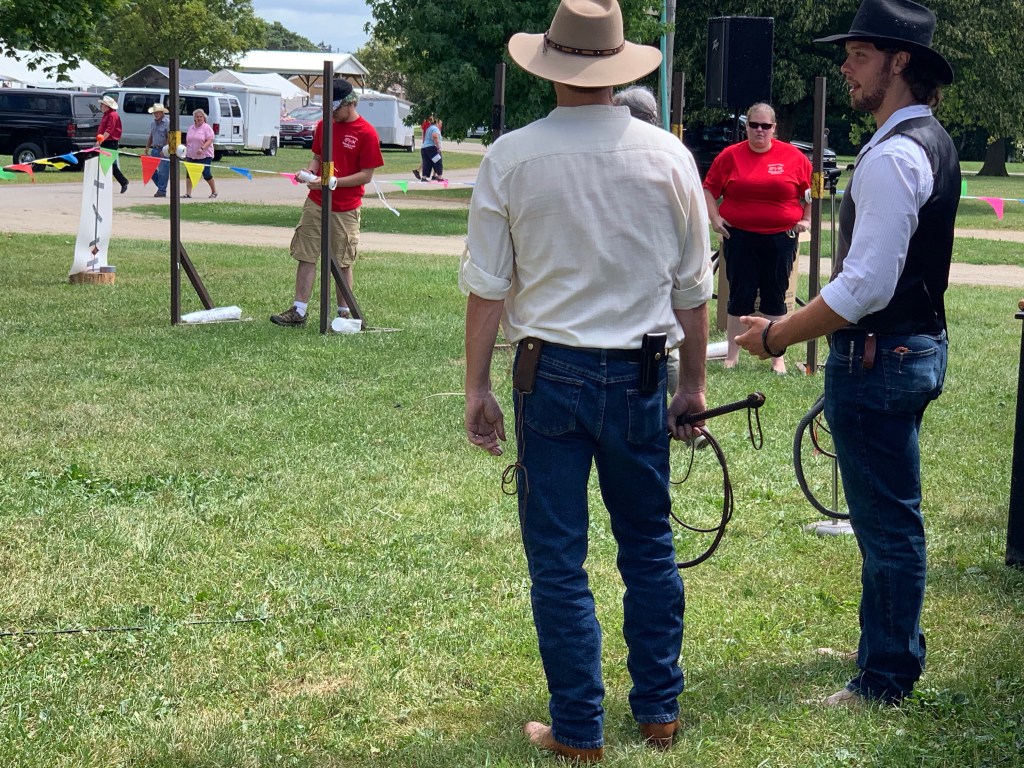
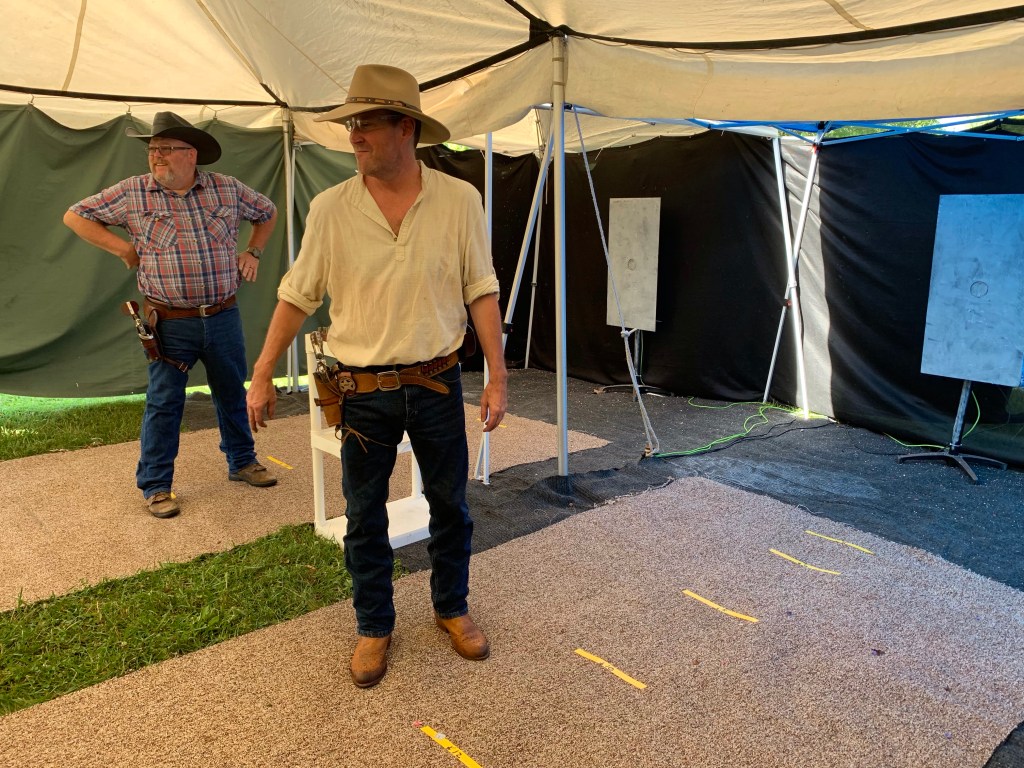

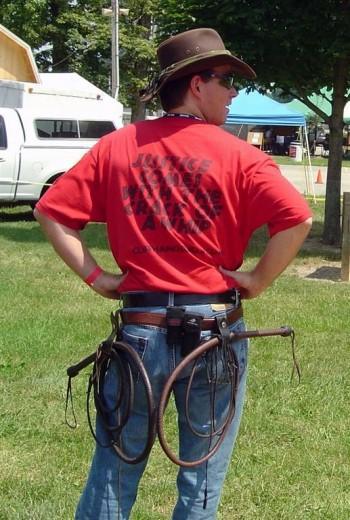 I know that especially lately, each new movie that comes out; I have had grand things to say about them which weaves back through my life to points of origin that are not only sentimental, but deliberately placed there by the important people in my life who raised me. Part of being alive as opposed to half-dead or socially subdued is that you feel things. And I feel things, lots of things—because I have never turned my mind off to the world. I love movies, I love music, I love visiting places, I love food, I love family, I love books, I love comic books, but probably more than anything in my life besides family, I love bullwhips, and I was elated to discover recently that one of the great whip makers with ties to Western Stage Props had made three bullwhips for the upcoming Disney film The Lone Ranger. I was happy to hear that Joe Strain from his business The Northern Whip Company had supplied the whips for the grand revisit to the Old West by The Lone Ranger because it would not only help my friends in the bullwhip industry who make large parts of their livings off sharing their unique skills with the public, but that the modern makers of The Lone Ranger were going to pay tribute to the use of the whip in the classic stories that took place from the 1930s to the late 1950s. Not only would the new Lone Ranger from Disney pay direct tribute to the classic silver bullet mythology, the tenacious horse named “Silver,” the “William Tell Overture,” a very ambitious rendition of Tonto played by Johnny Depp, but they were even going to put a few whip scenes in the film, which used to be a standard in westerns.