The Eye of the Tiger: Lindsey Graham dies and Conor McGregor loses

I woke up in the middle of July 2026 to a couple of pieces of news that landed with a familiar weight, the kind you feel when patterns you have watched for years finally play out exactly as expected. Senator Lindsey Graham had died suddenly of a heart attack, or more precisely, what the reports called an aortic dissection tied to arteriosclerotic cardiovascular disease. It was a brief and sudden illness, they said, and the flags were ordered to half-mast. Around the same time, or perhaps the very same night, depending on time zones and fight cards, Conor McGregor stepped back into the Octagon at UFC 329 in Las Vegas against Max Holloway and lasted just sixty-nine seconds before a knee injury from one of his own flashy opening kicks forced the stoppage. A suspected blown ACL, the kind of thing that ends careers or at least sends fighters into long nights of the soul.

Neither outcome surprised me, though both carried that sting of unnecessary diminishment. I have never been a big fan of Lindsey Graham. He and John McCain represented a certain strain of Republicanism that always felt more interested in maintaining a seat at the table than in actually winning the fight for the principles they claimed to hold. They were the “Three Amigos” with Joe Lieberman, globetrotting on foreign policy, cutting deals, positioning themselves as the reasonable voices who could work across the aisle. In practice, that often meant the Republican brand took on water while the more aggressive side kept advancing. Graham bristled early when Trump criticized McCain’s war record, called Trump names, and destroyed phones in a stunt when his number got out. Later, he became a golfing buddy and defender. It was transactional. Hang around the winners long enough, and maybe some of the fire rubs off, or at least you stay relevant. I do not disparage a man on the day of his passing out of basic politeness and respect for the family. That is not what I will do. But as far as the political work goes, the vacancy he leaves in the South Carolina Senate is an opening. Governor McMaster will appoint someone as interim, and then there will be a special election. The question is whether that seat goes to someone who actually carries the eye of the tiger or to another placeholder who thinks proximity to power is the same as having it.

The McGregor situation felt even more avoidable and therefore more disappointing. I have always respected what he accomplished in his prime. The speed, the left hand, the way he made the entire sport bigger by sheer force of personality and skill. He changed the game. But watching the buildup to this comeback, I could see it coming from a mile away. There was a vacancy in his face during the face-off. The look was not there. The walk to the arena hours ahead of time already told the story. He was going through the motions that had once been fueled by something deeper. When the fight started, he opened with the jumping, theatrical kicks that signal a man trying to manufacture intensity he no longer feels in his bones. Within seconds, the knee buckled on landing; he tried to continue, but the referee waved it off. Max Holloway did not even have to do much. He just had to be the one who still had the gas in the tank and the willingness to press when the other man was already compensating with showmanship.

I felt sorry for Conor McGregor before the fight even started. I said it out loud to myself and to anyone who would listen in the days leading up to it. He should have stayed retired. Go out on the legacy you built when you had the eye of the tiger, when you were the hungry kid from Dublin knocking people out and changing divisions. Instead, he stepped back in, got the big paycheck and the big stage, and now he walks away with another loss and a serious injury that will linger. That is how legacies get complicated. The record book will show the late-career defeats, and the highlight reels will always include the moments where the body betrayed the intention because the intention itself was no longer pure. I have torn my own ACL. I know what it feels like when the leg suddenly is not under you anymore, when the bones shift, and you realize in an instant that something fundamental has given way. It is not just pain. It is the body telling you that the architecture you trusted has limits, and theatrics do not change those limits. McGregor knew it the second it happened. You could see it in the way he tried to keep throwing and then had to stop. The opponent did not have to finish him with strikes. The injury did the work because the preparation and the mindset had already left the building.

This is bigger than one fighter or one senator. It is about the eye of the tiger and what happens when you lose it. I go back to Rocky III every time this comes up. Apollo Creed sits Rocky down after the loss to Clubber Lang and tells him straight: you had that eye of the tiger, man, the edge, and now you have got to get it back. Rocky had gotten comfortable. He had the money, the fame, the big house, the training that had become routine instead of desperate. He was still strong on paper, but the hunger that made him dangerous had been replaced by the soft belief that reputation alone would carry him. Apollo drags him back to the old gym, strips away the comforts, and forces him to remember what it felt like to have nothing but the will to impose himself on the moment. That is the lesson. The eye of the tiger is not about being loud or theatrical. It is about the quiet, relentless knowledge that you are willing to do what the other person is not, and that you have prepared your mind and body for the exact second when everything is on the line.

McGregor used to have it. You saw it in the old fights, the way he walked through opponents with that left hand and that certainty. The theatrics were there too, the entrances, the predictions, the psychological warfare. But they were backed by the real thing. When the real thing started to fade, after the losses to Khabib and the leg break against Poirier and the years away, the theatrics became the main act. He tried to win the fight in the buildup, in the face-off, in the flying kicks that look spectacular on a highlight but leave you vulnerable the moment your timing or your body is even slightly off. That is what entitlement looks like in combat sports. You start believing your own press clippings and your bank account. You think the name and the history will do some of the work for you. The young hungry dogs see it immediately. They do not care about your past glories. They see the vacancy in the eyes, and they know that if they stay disciplined and scrappy, they can take the perch. McGregor invited it by trying to overcompensate with movement and show instead of the cold, patient application of skill and will.

That is why I felt the same way about Gina Carano and Ronda Rousey in their moments. You could see it a month in advance in some cases. The eye was gone. The comfort had set in. The performance became about protecting an image rather than dominating the moment. Rocky III nailed it because Apollo was not just talking about boxing. He was talking about any arena where human beings test themselves against each other or against circumstances. Business, politics, raising a family, teaching a grandson how to launch model rockets on a windy, rainy day when every instinct says stay inside. You impose your will on the environment anyway. You troubleshoot when things go wrong. You recover the drifted rocket, and you turn the failure into a story about resilience. That is the eye of the tiger in everyday form. It is not glamorous. It does not trend on social media. But it is what actually builds lasting legacies.

Lindsey Graham spent a career learning that he could hang around winners and borrow some of their credibility. McCain had the maverick brand and the war hero story. Trump had the unmistakable fighter energy that resonated with people tired of the old accommodations. Graham positioned himself as the bridge, the one who could translate between worlds. It worked for a long time. He accumulated influence, especially on judicial appointments and foreign policy. But the underlying pattern was the same one I saw in McGregor. When you are operating from a place of borrowed fire rather than your own, eventually the bill comes due. People remember how you carried yourself when the pressure was highest. They remember whether you were willing to stand alone or always needed validation from the current power structure. Graham’s death leaves a vacancy, and vacancies are opportunities. South Carolina and the broader Republican ecosystem now have a chance to put someone in that seat who does not need to borrow the eye of the tiger because he already carries it.

McGregor has his own vacancy to reckon with now. The physical one in the knee will heal or it will not, but the deeper one is in the approach to competition itself. He has advocated for Christianity in public ways that I respect. He has weighed in on Irish politics with a directness that cuts through a lot of the usual noise. Those are good things. But you cannot carry those convictions into the Octagon on theatrics alone. The cage does not care about your brand deals, your past knockouts, or your social media following. It cares about whether you are willing to impose your will on another trained human being who is trying to do the same to you. When that willingness is replaced by the need to perform the role of the dangerous man, the outcome becomes predictable. The hungry young fighters are already circling. They watched the same face-off I did. They saw the same vacancy. They will be ready when the next opportunity presents itself.

I have carried large-caliber handguns for personal protection for years. I vary my routes. I pay attention to how people move and how they look at you when they think no one is watching. You learn to distinguish between real readiness and the kind of posturing that comes from people who hope the image will do the work. The ones who are truly prepared do not need to announce it with every step. They are. That same discernment applies to politics, business, and every other competitive space. The eye of the tiger shows up in the small things: the consistency of preparation, the refusal to make excuses, the willingness to do the boring work that makes the dramatic moments possible. When that is missing, no amount of jumping around or clever marketing changes the underlying math.

There is a broader context to all of this that I keep returning to in my own writing and thinking. We are living through a period in which many of the old structures are being tested, and in which entitlement and performance have been elevated over substance in too many corners of culture. The media rewards the loudest voices. Politics sometimes rewards those who can perform the role of a fighter without actually having to fight on the hard issues. Sports and entertainment industries create stars and then watch them fade when the underlying fire goes out. It is not just about individual choices. It is about a cultural atmosphere that makes comfort and image more attractive than the daily discipline of staying sharp. That is why the lessons from the cage and from the Senate floor matter beyond their immediate arenas. They are microcosms of the same human dynamics that play out everywhere.

I have written before about the gunfighter ethos as a skeleton key to understanding Western success in business and in life. The willingness to draw when necessary, to be precise under pressure, to accept that reputation is earned in the moment of truth rather than in the buildup. McGregor in his prime embodied a version of that. Graham, for all his years in Washington, never quite projected the same self-contained readiness. He was effective in his own way, but the effectiveness often depended on the company he kept rather than on a solitary, unmistakable center of gravity. When that center is missing, time eventually exposes it. For Graham, the exposure came at the end of a long career. For McGregor, it came in sixty-nine seconds under the bright lights.

The vacancy left by Graham’s passing is an opportunity for someone who understands that politics at its best is not about hanging around winners but about being willing to fight for the right things even when it is costly. The lesson from McGregor’s fight is an opportunity for every young athlete, every entrepreneur, every person who steps into any arena: do not go out there unless you have the eye of the tiger. Do not try to fake it with theatrics or reputation or the hope that the other side will respect your past. The cage, the marketplace, the ballot box, and life itself have a way of finding the vacancy and exploiting it. The ones who win consistently are the ones who wake up every day knowing they are still hungry, still willing to do the work, still prepared to impose their will on whatever stands in their way.

I felt sorry for both men in different ways. For Graham, the human reality of a sudden exit after decades of service. For McGregor, the avoidable nature of the loss and the way it complicates a legacy that did not need complicating. But I am not surprised by either. When you operate without the eye of the tiger, the outcomes become foreseeable. The body, the political environment, or the competitive landscape eventually calls the bluff. The only real choice is whether you recognize it in time to either rekindle the fire or step aside with dignity while the fire is still remembered for what it once was.

That is the lesson I keep returning to, whether I am watching a fight card, reading political news, or whatever the issue.  The eye of the tiger is not a feeling that comes and goes with the crowd or the paycheck. It is a decision you make every day about how you will meet the moment. Some people never lose it. Others let comfort, distraction, or the accumulation of small compromises take it from them. The ones who keep it understand that every fight, every negotiation, every election, every personal test is an opportunity to prove it is still there. When it is not, the smart move is to recognize it before the knee buckles or the vacancy becomes the story everyone tells about you.

Conor McGregor should have stayed retired if the fire had not been there in full force. Lindsey Graham’s seat now belongs to whoever is willing to occupy it with something more than borrowed credibility. Both situations point to the same truth. You cannot win on theatrics when the other side is still willing to do the real work. You cannot fake the eye of the tiger. Either you have it or you do not, and the arena always finds out which.

This is why I keep writing and talking about these things. The surface events, the fights, the elections, and the headlines are never just about themselves. They are reflections of deeper patterns in how human beings handle pressure, power, and the passage of time. If you want to understand why certain people rise and others fade, why institutions get captured or renewed, why cultures either strengthen or decay, you have to look past the performance and into the actual state of the will. That is the work I have tried to do in my books, and it is the work that feels more urgent now than ever. 

Footnotes

[1] Reports on Lindsey Graham’s death on or around July 11-12, 2026, described the cause as an aortic dissection due to arteriosclerotic cardiovascular disease, following a brief illness. He was 71. See contemporaneous coverage from Reuters, The Washington Post, and The Guardian (July 2026).

[2] Graham served in the U.S. House before winning the election to the Senate in 2002, representing South Carolina. He formed a close political and personal alliance with Sen. John McCain, often traveling together and working on foreign policy and judicial matters. They were part of the informal “Three Amigos” grouping that also included Sen. Joe Lieberman for a period. Graham initially criticized Donald Trump sharply during the 2016 campaign, including over Trump’s comments about McCain, but later became a supporter and frequent golf partner.

[3] Conor McGregor returned to the UFC at event 329 in Las Vegas, facing Max Holloway in a welterweight bout. The fight ended at 1:09 of the first round when McGregor injured his right knee (suspected ACL tear) upon landing from an opening flying left roundhouse kick. He had not fought since breaking his leg against Dustin Poirier in 2021. Holloway was awarded the TKO victory. Post-fight commentary and McGregor’s own statements reflected significant disappointment.

[4] McGregor’s fighting style has long combined elite striking (particularly the left hand) with significant showmanship, psychological warfare, and theatrical elements in entrances and pre-fight interactions. Analysts have noted both the effectiveness of his mental game in his prime and the risks when physical tools or timing are compromised. His history includes notable leg injuries that affected mobility in later bouts.

[5] The phrase “eye of the tiger” originates in the film Rocky III (1982, directed by Sylvester Stallone). After Rocky loses to Clubber Lang, Apollo Creed tells him he has lost “that eye of the tiger, man—the edge,” and must recover the hunger and intensity that defined his earlier success. The song “Eye of the Tiger” by Survivor was written for the film and underscores the theme of reclaiming drive after comfort sets in.

[6] The author’s perspective on competitive mindset, resilience, and Western strategic traditions is developed in The Gunfighter’s Guide to Business: A Skeleton Key to Western Civilization, which draws on gunfighter ethos, Lean manufacturing experience, and practical leadership lessons from decades in aerospace and business environments. Personal experiences with high-stakes situations, personal protection, and teaching resilience (including model rocketry with family) inform the analogies used throughout.

[7] Broader themes of spiritual and historical patterns that underlie visible political and cultural conflicts are explored in the author’s forthcoming work, The Politics of Heaven, which examines biblical conspiracies, ancient history, non-human influences, and the nature of power and moral alignment across time.

Bibliography / Recommended Reading

•  Stallone, Sylvester, dir. Rocky III. United Artists, 1982. Film.

•  Survivor. “Eye of the Tiger.” Eye of the Tiger, Scotti Brothers Records, 1982. Song.

•  Hoffman, Rich. The Gunfighter’s Guide to Business: A Skeleton Key to Western Civilization. (Available editions emphasize practical Western strategic thinking for business and life.)

•  Hoffman, Rich. The Politics of Heaven. Forthcoming / completed 2026. (Explores deeper spiritual warfare, historical conspiracies, and power structures.)

•  Contemporary news reporting on Sen. Lindsey Graham’s career, alliance with Sen. John McCain, evolution regarding Donald Trump, and death in July 2026 (Reuters, The Washington Post, The Guardian, Roll Call).

•  MMA technical and career analysis of Conor McGregor, including striking style, psychological approach, injury history, and the UFC 329 bout against Max Holloway (various fight coverage and breakdowns, July 2026).

Rich Hoffman

More about me

Click Here to Protect Yourself with Second Call Defense https://www.secondcalldefense.org/?affiliate=20707
About the Author: Rich Hoffman

Rich Hoffman is an author, political consultant, and strategic advisor based in Cincinnati, Ohio, and the creator of The Politics of Heaven—a unique framework that connects biblical theology, ancient history, and modern power structures to explain how moral alignment and spiritual forces shape global events. Blending real-world political experience with deep research into archaeology, UFO phenomena, and suppressed historical narratives, Hoffman offers compelling commentary on topics ranging from ancient civilizations and the Dead Sea Scrolls to modern populist movements, paranormal continuity, and leadership strategy in chaotic environments. As the author of The Gunfighter’s Guide to Business and the forthcoming Politics of Heaven, he brings a grounded yet provocative voice to media discussions, supported by firsthand experiences and a cross-disciplinary approach that bridges science, history, and theology. For interviews, speaking engagements, or expert analysis, visit richhoffmanbooks.com or contact directly via phone at 513-307-5815 or email at rhoffman@richhoffmanbooks.com.  If you’ve seen the movie, Disclosure Day and want to talk about it and the implications of Presidnet Trump’s UAP disclosures, let me know and we can bring some color to your coverage. https://richhoffmanbooks.com/media-inquiries-broadcast-topics-and-contact-info/?frame-nonce=ad51e7ecba I do have a firsthand UFO encounter to discuss.

The Hunter’s Camouflage: What Hostile Takeovers Reveal About UAP Concealment and Competing Non-Human Intelligences as the prey runs toward the preditors

I have watched a hostile takeover unfold up close in the aerospace industry. The people driving it never announced their intentions. They arrived with consultants and new ownership structures, spoke in measured language about efficiency and alignment, and made the decisive moves from boardrooms far removed from the daily floor. The target company’s people kept working, kept delivering, kept hoping the familiar rhythms would hold. By the time the real pattern became visible, the leverage had already shifted. Decisions about who stayed, what got consolidated, and which programs survived were already set in motion. The prey did not run away. In many cases, it moved toward the very forces reshaping it, seeking reassurance, seeking to prove value, seeking to stay inside the story. 

That experience has stayed with me as I watch the recent waves of UAP disclosures. The Pentagon’s PURSUE releases under the current administration—multiple tranches of documents, videos, and agent narratives in May, June, and July 2026—have brought to light orb sightings, high-speed objects, and cases that the All-domain Anomaly Resolution Office itself still lists as unresolved.  One Western U.S. event near a sensitive national-security site involved federal agents describing “orbs launching other orbs.” AARO’s own June 2026 memo on that case notes that roughly forty percent of the phenomena lacked a plausible conventional explanation and remained open.  Another tranche included a military aviator’s account of an object with “flight characteristics unlike anything I had seen in my 28 years.” These are not fringe videos. They are now part of the official record, released under executive order, yet they arrive without chain-of-custody clarity on the most anomalous material and without a coherent strategic picture. 

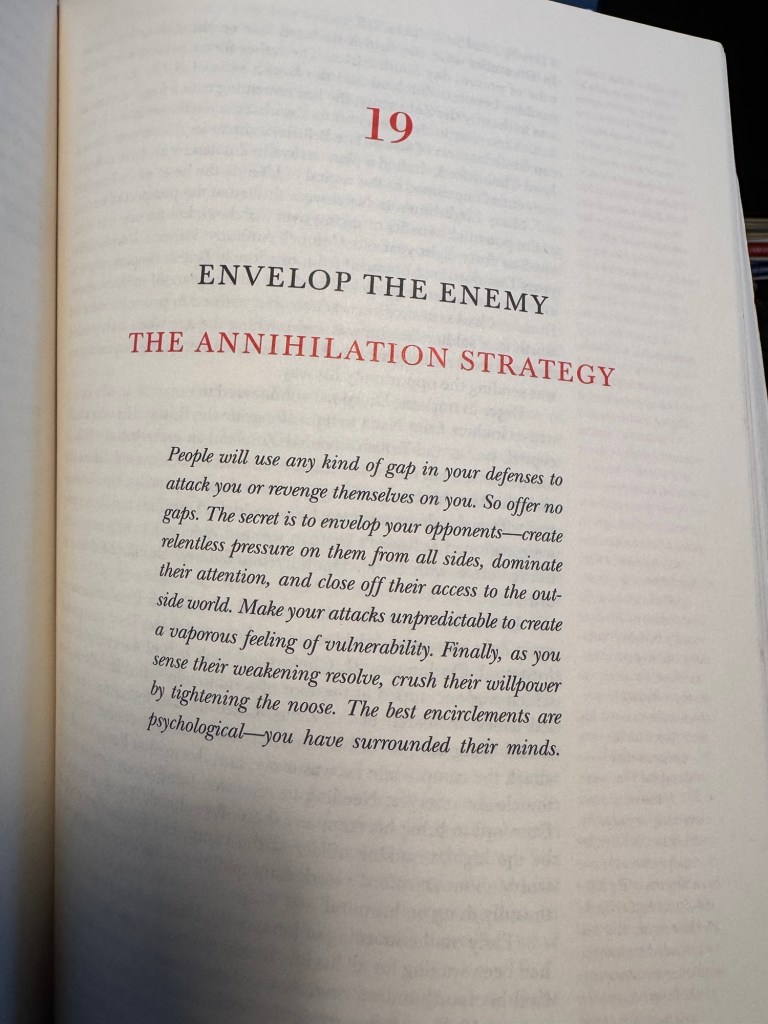
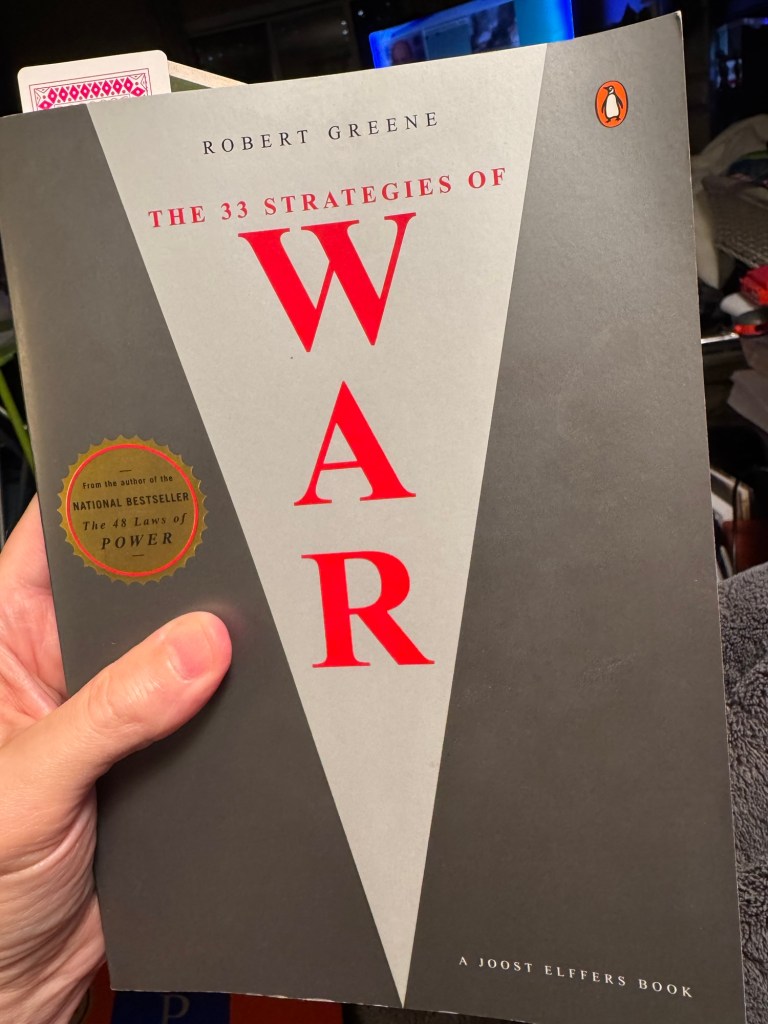
The obvious question keeps returning: if these are simply advanced drones or foreign technology, why the persistent concealment across decades? If they represent non-human intelligence, why not open contact? My answer is shaped by what I saw in that takeover and by the universal patterns Robert Greene distilled in The 48 Laws of Power and The 33 Strategies of War. Those books sit in every serious business section because they codify something older than corporate strategy: the mechanics of concealed intention, formlessness, and the calculated use of superior position to shape the target’s behavior without triggering full resistance. 

A hunter does not step into the clearing and announce himself. He wears the scent of the field, moves with the wind, waits in the tree stand for hours. The goal is proximity without alarm. The deer that senses nothing continues its pattern until the moment the arrow is already in flight. Corporate raiders operate on the same principle. They do not declare war on the culture they intend to absorb. They speak of synergy, of unlocking value, of shared future. The language itself is camouflage. By the time the target’s leadership understands the real mapping of power, the decisive votes and the key personnel decisions have already been made elsewhere. 

If non-human intelligences have been present in our environment for a long time—and the pattern of sightings near nuclear and sensitive military sites across the released files is difficult to dismiss as random—then concealment is the rational posture of a competing form of life that does not yet wish open war or open dependence. Superior technology does not automatically translate into benevolence any more than superior capital in a takeover guarantees the survival of the acquired company’s original character. The strategic advantage lies in remaining unseen while shaping outcomes: extracting data, influencing behavior at the margins, keeping the target population stable enough to continue producing what the observer needs. A species that wanted only to eliminate us would have done so. A species that wants to study, harvest, steer, or occupy the same niche without triggering a unified human response has every reason to stay in the tree stand.

The recent disclosures actually reinforce this reading more than they contradict it. We are shown orbs that appear to coordinate, that launch smaller orbs, that exhibit flight profiles AARO cannot yet attribute to known platforms. We are told some cases remain unresolved even after multi-sensor correlation. We hear whistleblower testimony—from David Grusch and others—describing long-term programs involving recovered craft and non-human biologics, yet official releases still emphasize the lack of conclusive proof while simultaneously documenting phenomena that exceed current human capabilities.  This is not full transparency. It is a calibrated release. It keeps the conversation alive, keeps researchers and the public engaged, and shields the deeper architecture behind these events. That is precisely how power that intends to remain dominant behaves when it does not yet need to reveal its full hand.

Greene’s work is popular in business circles because it maps these dynamics without moral overlay. Law after law describes the advantage of appearing formless, of never revealing the full extent of one’s resources or intentions, of using the target’s own momentum against it—the same principles scale. If an intelligence operates across dimensions or with technology that renders our sensors marginal, the same logic applies: stay close enough to observe and influence, far enough to avoid decisive confrontation, and never give the prey a clear target to rally against. The fascination many people feel toward UAPs—the drive to decode every new video, to attend every hearing, to interpret every ambiguous shape—can itself become part of the dynamic. The prey moves toward the predator’s position because the predator has made itself the most interesting thing in the environment. 

I am not claiming these intelligences are cartoon villains. I am saying the default assumption that superior technology equals benevolent guardianship has no grounding in observable history or in the power dynamics we already understand at the human level. The same species that builds monuments and writes philosophy also builds weapons and perfects deception when advantage requires it. Why would we expect a competing life form to operate on more sentimental rules? The disclosures we have received so far—multiple batches of unresolved orb events, aviator encounters, and internal government debate—show advanced presence without showing open intent. That gap is not an accident of bureaucracy. It is consistent with the behavior of any actor who has already calculated the costs of full revelation. 

Most people can’t do this. They learn the rules and stay prisoners to them al their lives.

The corrective lens is the same one that works in any competitive environment. Assume the other side is playing to win on its own terms. Map the actual flows of information and leverage rather than the stated narrative. Strengthen internal visibility so that critical dependencies—whether material, procedural, or perceptual—cannot be quietly depleted in the shop, which meant knowing who ordered the consumables and whether the schedule would starve the line. In the larger arena, it means refusing to treat every new release as either proof of salvation or proof of nothing. It means treating the pattern of concealment itself as data.

We have been given enough now to see that something is operating with capabilities we do not control and with intentions it has not chosen to declare. The hunter does not need our permission to remain in the stand. He only needs us to keep behaving as if the clearing is empty. The disclosures have made the clearing feel less empty, but they have not yet forced the figure in the tree to step forward. That fact alone tells us something about the nature of the game being played.

Footnotes

1.  Personal observation from aerospace program management, 2026.

2.  PURSUE Release documentation, Department of War, various tranches 2026.

3.  AARO memorandum on Western U.S. “orbs launching orbs” event, June 2026.

4.  Robert Greene, The 48 Laws of Power (1998) and The 33 Strategies of War (2006).

5.  David Grusch congressional testimony and related whistleblower accounts, 2023–2026.

6.  Historical analysis of corporate power dynamics drawn from Greene’s framework and observed industry practices.

7.  Additional references to UAP case files are available via war.gov/UFO portal.

Bibliography

•  Greene, Robert. The 48 Laws of Power. Viking, 1998.

•  Greene, Robert. The 33 Strategies of War. Viking, 2006.

•  U.S. Department of War / AARO. PURSUE UAP Release Tranches (May–July 2026). war.gov/UFO.

•  Squier, Ephraim G., and Edwin H. Davis. Ancient Monuments of the Mississippi Valley. Smithsonian Contributions to Knowledge, 1848 (for context on Ohio earthworks like East Fork).

•  Various journalistic summaries of Grusch testimony and PURSUE files, 2026.

Rich Hoffman

More about me

Click Here to Protect Yourself with Second Call Defense https://www.secondcalldefense.org/?affiliate=20707

About the Author: Rich Hoffman

Rich Hoffman is an author, political consultant, and strategic advisor based in Cincinnati, Ohio, and the creator of The Politics of Heaven—a unique framework that connects biblical theology, ancient history, and modern power structures to explain how moral alignment and spiritual forces shape global events. Blending real-world political experience with deep research into archaeology, UFO phenomena, and suppressed historical narratives, Hoffman offers compelling commentary on topics ranging from ancient civilizations and the Dead Sea Scrolls to modern populist movements, paranormal continuity, and leadership strategy in chaotic environments. As the author of The Gunfighter’s Guide to Business and the forthcoming Politics of Heaven, he brings a grounded yet provocative voice to media discussions, supported by firsthand experiences and a cross-disciplinary approach that bridges science, history, and theology. For interviews, speaking engagements, or expert analysis, visit richhoffmanbooks.com or contact directly via phone at 513-307-5815 or email at rhoffman@richhoffmanbooks.com.  If you’ve seen the movie, Disclosure Day and want to talk about it and the implications of Presidnet Trump’s UAP disclosures, let me know and we can bring some color to your coverage. https://richhoffmanbooks.com/media-inquiries-broadcast-topics-and-contact-info/?frame-nonce=ad51e7ecba I do have a firsthand UFO encounter to discuss.
There Are Millions of Graham Platners Taking Advantage of Liberal Women: They hide bad conduct in collectivist movements, such as communism

I heard the news the other day about this Graham Platner loser dropping out of the Maine Senate race, and it struck me the same way it probably struck many people who watched his video statement. Here was a guy who had just won the Democratic primary in a big way, an oysterman and Marine veteran out of Sullivan, Maine, who beat the establishment favorite and raised something like sixteen million dollars in contributions for a race against Susan Collins. Then a former girlfriend comes forward with a story about him forcing himself on her back in 2021 while drunk, ignoring her repeated objections, and the whole thing unravels in a matter of days. He denies it outright, calls the claims false and not real, but still suspends operations and files the paperwork to withdraw before the July 13 deadline so the party can scramble for a replacement by the 27th. In his eleven-minute video, he says it is not an admission of guilt, that some will think it is, but it most certainly is not, and that they are stepping aside not because of the allegations but because those in power are taking away the structures and access. For the movement to continue, it cannot be him. 

That surface reaction, the astonishment and the quick takes, does not get deep enough. What happened here is not just another politician caught in a mess of his own making. It is a window into something larger about how certain kinds of people rise in the current version of Democrat politics, especially the populist left strain that has been building since Bernie Sanders and now carries elements of what some are calling a blue MAGA or communist-adjacent energy. Platner fits a pattern that keeps showing up. Multiple ex-girlfriends have described intimidating behavior, one saying he twisted her arm and locked her in a bedroom until she calmed down, another recounting comments about raping intruders to show dominance, and still another alleging he removed protection without consent during sex. There was the chest tattoo, a Totenkopf that he first claimed he did not understand, just a skull and crossbones from a drunken night with Marines in Croatia in 2007, but ex-girlfriends say he knew exactly what it was, bragged about it as a reminder that the United States was the evil bad guy overseas, and called it his Totenkopf. Then came the old Reddit posts where he described himself as a communist, said all cops are bastards, and made other remarks disparaging women, rural White Americans, and various groups. He had also been sending sexually explicit texts to other women during a rough patch in his marriage, something his wife publicly defended while saying they had a great marriage overall. 

When the latest allegation hit from Jenny Racicot, the pressure from national and state Democrats mounted fast, and endorsements started peeling away. The party machinery that had lifted him after Governor Janet Mills stepped aside suddenly found the strings being pulled. Platner framed it as the establishment taking away his ability to run, his access to funding, and the mechanisms of power, even though he had beaten their preferred candidate in the primary. It sounded like an admission that the machine believed the story or at least believed it would stick and cost them the seat. Susan Collins, for all the complaints about her being a RINO Republican at best, suddenly looked like the safer bet in a race that matters for Senate control. The whole episode felt familiar, like watching the same movie the Republican side lived through a decade ago, only now it is the Democrats’ turn and the characters coming forward to fill the populist void on their side carry different baggage.

I have been saying for a long time that the Tea Party movement was never really about pulling the Republican Party back to some Chamber of Commerce comfort zone. It was the start of something bigger: MAGA, a demand for individual accountability and pushback against the permanent class that had captured both parties. The RINOs like McConnell, Romney, and Kasich types resisted Trump because they saw the threat to their control. They got pushed to the margins or had to adapt. What we are watching now on the Democrat side is their version of that purification, except the energy they are riding is collectivist at its core. Bernie Sanders gave it shape, and now you see candidates who talk about Medicare for All, banning billionaires from buying elections, ending wars forever, and strong unions, but the people who step forward to lead that charge often bring personal conduct that would get them run out of a more individual-responsibility culture. Platner is not an outlier in that environment. He is a predictable product of it.

The warm blanket of collectivism is what draws these characters and protects them for a while. When you tell people that the individual does not matter as much as the group, that judgment on personal behavior is bourgeois or oppressive, or whatever the current phrase is, you create space for someone with a Nazi tattoo, a history of rough treatment of women, and a trail of denied allegations to present himself as the champion of the working class. The cause becomes the excuse. Personal integrity gets subordinated to participation in the movement. If you are out there advocating for the collective good, for the masses against the oligarchs, then who cares if your private life shows a pattern of dominance, non-consent, or simple low character? The ideology says do not judge the individual; judge him by his alignment with the larger project. That is why you keep seeing the same types of behavior surface. They find a home where their dysfunction does not trigger the same social cost it would elsewhere.

I have watched enough of this over the years to know that sexual conduct is one of the clearest windows into character. People who live for self-pleasure, who chase validation without scrutiny, who treat others as means to an end, often gravitate toward environments that promise no judgment. Liberal politics has been that environment for decades for a certain kind of man. It is not that every liberal man is like this, but the ones who are find it easier to operate there. The women who get drawn in, the ones who are insecure and looking for collective cover, often end up in situations they later regret. They talk about wanting a strong, dominant presence, but they do not look for it on the side that might actually hold them accountable or demand standards. They stay inside the circle where the bad behavior can be reframed as a moment of weakness, or the fault of the system, or something the collective will forgive because the higher cause matters more. You see it in the wine-tasting crowds, the middle-aged women who start hitting on everyone once the drinks flow, the husbands standing off to the side, embarrassed, while their wives seek validation in a group setting. It is the same impulse that makes collectivism attractive to people who do not want their personal record examined too closely. Four or five abortions, repeated cheating, substance issues, whatever the story is, the group provides the blanket. Do not judge me for my individual choices; judge me for my participation in empowering the masses.

That is the danger with someone like Platner. On the surface, he looked like a fresh face, a veteran oysterman who could connect with working people in a state facing real economic pressures. Underneath was the same pattern that had shown up with other figures on that side of the aisle in recent years. The party did not know what to do when the stories kept coming, so they did what machines do: they pulled the plug once it became clear he could no longer win or raise money effectively. Platner’s response was to blame the structures rather than own the conduct that had turned the structures against him. That is also classic. It is never the individual’s fault in a collectivist frame. It is the machine, the establishment, the powers that be who are threatened by the movement.

The Republican side went through its own version of this a decade ago and is still sorting some of it. The difference is that the underlying philosophy on that side, even when imperfectly practiced, still holds room for individual responsibility and personal conduct as legitimate standards. Trump himself came out of a Playboy background in the eighties and nineties, lived that life openly, and the people who supported him later knew what they were getting. Melania came out of that same world, and they built something that has lasted. He did not hide behind a collective excuse when things got hard. He used his brand and his willingness to fight the permanent class to deliver on borders, energy, judges, and pushing back against the administrative state. The voters who backed him were not endorsing the 1990s lifestyle; they were endorsing the man who would impose limits on government power and restore some sense of sovereignty. That is why the purification worked on the right. It was messy, and it took years, but it produced a filter that still operates. People who cannot meet a basic standard of personal integrity or who treat politics as cover for their own appetites get exposed and sidelined eventually.

On the Democratic side, the filter is currently weaker because the ideology itself discourages individual judgment. The populist energy they are trying to harness is being filled by characters who would have been laughed out of a serious movement on the other side. You are going to see more Graham Platners before this cycle finishes. They will keep coming forward because the environment rewards the ability to perform the collectivist script, while their personal lives stay hidden or are excused. The more they double down on that direction, the more the low-character actors will find it a comfortable place to operate. Republicans already paid the price and did the work of cleaning house. Democrats are just starting their version, and it looks like it is going to be uglier because the philosophy they are embracing provides better cover for dysfunction.

That is why some of the dumbest outcomes in politics keep happening. People who would never tolerate certain behavior in their own families or businesses will defend it or excuse it when it comes from someone aligned with their political tribe. They will vote for policies that demonstrably harm the vulnerable, erode family formation, import incompatible cultures, and centralize power in unaccountable bureaucracies, all while insisting it is compassion or progress. On the surface, it looks like ideology run amok. Deeper, it looks like influence is amplifying the parts of human nature that are already broken.

Platner’s short rise and fall is just one more data point in that larger story. A man with a documented pattern of behavior that should have disqualified him from any position of trust found a lane in the current Democrat populist moment because the ideology provided cover and the machine needed a fresh face who could raise money and excite the base. When the cover began to fail, the machine cut him loose, and he blamed it. The cycle will repeat with the next candidate who can perform the script while carrying similar baggage. On the other side, the work of insisting on personal conduct and individual responsibility continues, however imperfectly. That insistence is not just political hygiene. It is resistance to the older pattern that wants humanity to dissolve responsibility into collectives so the real influences can operate without resistance.

Footnotes

1.  National Review and multiple outlets reported Platner’s formal withdrawal letter and video statement on or around July 8–10, 2026, including his phrasing that the structures were being taken away and that it was not an admission of guilt.

2.  Politico, CNN, and Washington Post reporting on Jenny Racicot’s allegations of forced sex in 2021, including details of the incident and her decision to come forward after Platner’s public denials of abusive behavior.

3.  New York Times reporting on multiple ex-girlfriends describing physical intimidation, locked rooms, and other conduct, including Lyndsey Fifield’s accounts from 2013–2015.

4.  New York Post and other reporting on the Totenkopf tattoo, ex-girlfriends stating Platner knew its meaning and used it as a reminder that the U.S. was the “evil bad guy overseas,” and his initial public claim that he did not understand the symbol.

5.  Reporting on deleted Reddit posts from 2009–2021 in which Platner described himself as a communist and made various disparaging remarks; also coverage of sexually explicit texts sent during marital difficulties and the wife’s public defense.

6.  Campaign finance totals and primary results showing Platner’s strong performance after Mills suspended her campaign and his subsequent withdrawal before the July 13, 2026 ballot deadline, with the Maine Democratic Party given until July 27 to name a replacement.

Bibliography for Further Reading

•  The Book of Enoch, translated editions with commentary on the watchers, giants, and pre-flood rebellion.

•  The Bible, particularly Genesis 6, Daniel on principalities and powers, Ephesians 6 on spiritual warfare, and Revelation on the ongoing conflict.

•  Dead Sea Scrolls materials and related scholarship on Second Temple period views of heavenly politics and fallen entities.

•  My own forthcoming book, The Politics of Heaven, explores these threads through history and current events.

•  The Gunfighter’s Guide to Business and its developing sequel, which apply lessons of individual will, resilience, and integrity to institutional and political environments.

•  Tail of the Dragon and The Symposium of Justice for narrative treatments of personal conduct, justice, and hidden power structures.

•  Standard works on UFO disclosure and non-human intelligence, including historical government documents and researcher compilations on reported entity types and their interactions with human systems.

•  Histories of the Tea Party movement and its evolution into broader populist realignments on the right, with attention to the internal purification process.

•  Accounts of Bernie Sanders’ influence and the subsequent development of progressive populist currents on the

Rich Hoffman

More about me

Click Here to Protect Yourself with Second Call Defense https://www.secondcalldefense.org/?affiliate=20707

About the Author: Rich Hoffman

Rich Hoffman is an author, political consultant, and strategic advisor based in Cincinnati, Ohio, and the creator of The Politics of Heaven—a unique framework that connects biblical theology, ancient history, and modern power structures to explain how moral alignment and spiritual forces shape global events. Blending real-world political experience with deep research into archaeology, UFO phenomena, and suppressed historical narratives, Hoffman offers compelling commentary on topics ranging from ancient civilizations and the Dead Sea Scrolls to modern populist movements, paranormal continuity, and leadership strategy in chaotic environments. As the author of The Gunfighter’s Guide to Business and the forthcoming Politics of Heaven, he brings a grounded yet provocative voice to media discussions, supported by firsthand experiences and a cross-disciplinary approach that bridges science, history, and theology. For interviews, speaking engagements, or expert analysis, visit richhoffmanbooks.com or contact directly via phone at 513-307-5815 or email at rhoffman@richhoffmanbooks.com.  If you’ve seen the movie, Disclosure Day and want to talk about it and the implications of Presidnet Trump’s UAP disclosures, let me know and we can bring some color to your coverage. https://richhoffmanbooks.com/media-inquiries-broadcast-topics-and-contact-info/?frame-nonce=ad51e7ecba I do have a firsthand UFO encounter to discuss.
If you Have Something Valuable, a business, or a beautiful wife, Someone will try to steal it from you: Amy Acton killed small businesses in Ohio with COVID lockdowns

The lockdowns in Ohio during the COVID era pulled back the curtain on something many of us had sensed for years but hadn’t seen so clearly exposed: the dangers of unchecked corporate power when it collides with government emergency authority. My beautiful wife and I talked about this often during those uncertain months, watching how the rules seemed to bend one way for the big players and another for the families and small operators trying to hold things together in our community around Liberty Township and the Great Miami River valley. What started as measures to slow the spread of the virus quickly revealed deeper structural problems, where large corporations could absorb shocks, leverage connections, and even come out stronger on the other side, while independent businesses in places like Butler County and around Middletown faced closures, mounting debt, layoffs, and permanent scars that rippled through families, local tax bases, school levies, and the very idea of self-reliant American enterprise. We saw neighbors who had built lives through hard work and discipline suddenly staring at empty parking lots and “closed indefinitely” signs, wondering why the system that preached fairness seemed rigged toward scale and influence. 

My wife has a way of cutting through the noise with clear-eyed observations born from years of raising our family and navigating real-world responsibilities together. She often noted how the lockdowns exposed the fragility of depending too heavily on distant corporate structures rather than local, accountable enterprise. We saw it in the way shutdown orders hit hardest on restaurants, retail shops, small manufacturers, service providers, and family-oriented spots like amusement venues and community gathering places that define so much of Ohio’s character. Large national chains with deep pockets, diversified revenue streams, sophisticated logistics, and teams dedicated to government relations could pivot to curbside or delivery models, secure Paycheck Protection Program funds with fewer hurdles in practice, lobby for favorable treatments, or weather the storm with cash reserves built from years of market dominance. Smaller independent operations, the ones run by neighbors who know their customers by name and pour personal savings and sweat equity into every decision, lacked those buffers. Supply chain disruptions hit them especially hard—big corporations with global reach and negotiating power could reroute shipments or stockpile inventory, but local suppliers and Main Street businesses absorbed the full force of delays, shortages, and skyrocketing costs that eroded margins already thinned by months of restricted operations. 

In our conversations, my wife and I reflected on how this wasn’t mere bad luck or an unavoidable consequence of a novel virus. It was the predictable outcome of policy choices that favored entities with political access and financial scale over adaptability, personal responsibility, and community roots. We recalled stories from friends and local business owners—people we’ve known through years of involvement in Butler County events, schools, and youth activities—who had invested everything into their ventures only to watch restrictions drag on while corporate competitors maintained some form of continuity or found creative compliance paths. Data from the period bears this out: smaller establishments, particularly those with fewer than 50 employees, faced disproportionately high risks of temporary and permanent closures, especially in in-person sectors like hospitality and retail. Employment losses hit low-wage workers in these businesses hardest and persisted longer, creating a V-shaped recovery for some high-income or large-firm segments but a much more protracted struggle for the backbone of local economies. 

The aftermath only amplified these imbalances and made the consolidation trend impossible to ignore. In sectors like entertainment and manufacturing, the cumulative pressure from lost revenue, uncertainty, and uneven recovery pushed waves of mergers and acquisitions that consolidated power into even larger entities. Cedar Fair’s flagship operations in Ohio, already contending with seasonal vulnerabilities, weather dependencies, and prolonged capacity limits from public health orders, became part of larger combinations that promised operational synergies, expanded geographic footprints, and improved access to capital markets for future investments. On paper, such deals highlight efficiency gains and resilience against future shocks, but in practice they often translate to fewer independent decision-makers attuned to local conditions, strategic choices driven by distant boards and quarterly metrics, and a gradual shift toward institutional ownership that prioritizes shareholder returns over the kind of patient, community-embedded stewardship that built iconic Ohio attractions. 

Similar patterns unfolded across other key industries. Ohio’s manufacturing sector, vital to aerospace, automotive suppliers, and industrial production in areas like Middletown, saw accelerated M&A activity as smaller firms struggled with disrupted supply lines and labor shortages while larger players leveraged balance sheets and government programs to consolidate market share. Banking and healthcare followed suit, with regional players absorbed into bigger institutions better equipped to handle regulatory compliance costs and capital requirements heightened by the crisis. Media and retail consolidation further concentrated influence over information and consumer access. Private equity firms and asset managers, flush with capital, moved in on distressed or weakened assets, reshaping ownership landscapes in ways that often reduced local control and diversified economic decision-making.  My wife would remark during our evening discussions how this shift erodes the distributed resilience that comes from many independent actors solving problems in their own backyards, replacing it with centralized systems more prone to single points of failure.

This growing concentration of corporate power carries profound dangers for economic mobility, innovation, and the broader culture of self-mastery. When a handful of large entities dominate supply chains, capital allocation, and policy influence, incentives naturally tilt toward preserving existing advantages rather than fostering the disruptive, bottom-up creativity that has always powered American progress. Entrepreneurial organizations and privately held family businesses operate with direct skin in the game—they adapt quickly because survival depends on it, rewarding discipline, foresight, and the willingness to impose order on chaos. Bureaucratic corporate giants, protected by layers of management, diversified risks, and access to Washington and Columbus corridors, more often prioritize compliance, risk aversion, and entrenchment. They shape regulations and emergency responses in ways that inadvertently—or sometimes deliberately—raise barriers for smaller entrants. During the lockdowns, this dynamic became visible in how “essential” classifications and aid distribution sometimes tracked lines of influence, leaving truly independent operators to navigate disproportionate burdens without equivalent advocacy. 

Government support initiatives, meant as lifelines, frequently highlighted another layer of the problem. While in theory it provided necessary liquidity, implementation favored those with professional grant writers, established banking relationships, and lobbying sophistication. Many small businesses received delayed or insufficient help, only to face a cliff when programs wound down around 2021-2022, contributing to a later spike in exits. Broader economic analyses confirmed that small-firm survival and revenue recovery lagged in hard-hit sectors, even as some larger corporations reported record profits or made strategic acquisitions amid the turmoil. In Ohio, where survival rates for certain 2019 cohorts compared favorably to national averages thanks to the tenacity of local entrepreneurs, the pandemic still exposed vulnerabilities: a reliance on just-in-time global supply models and concentrated corporate customers left many suppliers exposed when big firms tightened belts or shifted priorities. 

My wife captured the human dimension perfectly in our ongoing talks. This wasn’t merely an economic story; it touched the erosion of the cultural fabric that values individual agency, intergenerational knowledge transfer, family enterprise, and community strength over abstract efficiency metrics. We witnessed families in our area—friends from school events, shooting sports fundraisers, and church circles—weighing impossible choices between keeping the doors open and walking away to protect their households. Meanwhile, distant corporate boards and institutional investors calculated portfolio impacts and synergy targets with detachment. The long-term consequences for wealth creation and genuine mobility worry me deeply. Capital markets and private equity structures often reward financial engineering, scale, and short-term returns, but they can crowd out the patient, values-driven organizations that distribute opportunity more broadly and build lasting local wealth. Supply chain lessons from the era should have driven a renewed emphasis on redundancy and diversified ownership; instead, recovery frequently accelerated the very consolidation that heightens systemic risks. 

In Ohio’s context—with its rich manufacturing heritage, agricultural foundations, aerospace strengths, and regional attractions like those tied to Cedar Fair—the dangers become especially clear. Over-reliance on a few dominant players leaves communities and the state exposed to future disruptions, whether from another health crisis, a regulatory shift, a trade conflict, or an economic downturn. When corporate power concentrates alongside expansive government emergency authority, the result is a form of soft centralization that undermines the dispersed decision-making and personal responsibility essential to a free and prosperous society. We’ve seen echoes of this in other areas of policy influence, where large interests shape outcomes on taxes, regulations, and incentives in ways that disadvantage smaller competitors. My wife and I have always emphasized to our daughters and grandchildren the importance of building resilience through direct experience—whether troubleshooting model rockets on windy days, learning mechanical skills, or understanding history and spiritual foundations that warn against over-centralized power.

The lockdowns served as a profound stress test for these principles. They revealed how fragile local economies become when corporate structures grow too dominant, lacking sufficient counterweights from competition, local ownership, and a cultural emphasis on self-reliance. Small businesses didn’t just suffer temporary revenue losses; many lost irreplaceable ground in a playing field tilted toward those positioned to endure or capitalize on the chaos. Rebuilding stronger requires more than recovery spending or new programs. It demands a cultural and policy renewal that actively prioritizes dispersed economic power, reduces barriers for independent enterprise, scrutinizes consolidation for its community costs, and reinforces the virtues of discipline and moral agency that have sustained families like ours through generations. My beautiful wife and I carry these observations forward daily, rooted in the conviction that real strength and enduring prosperity emerge from the ground up—from individuals and families imposing order, building legacies, and refusing to cede agency to distant powers—rather than from ever-larger corporate edifices that too often leave ordinary communities to shoulder the heaviest burdens when crises strike. This is the hard-earned lesson from Ohio’s experience, one we hope will inform wiser choices ahead to preserve the opportunities our children and grandchildren deserve.

Footnotes

1.  Documentation of Ohio COVID business orders and recovery challenges (Ballotpedia, state reports).

2.  Heterogeneous economic impacts from private sector data (Opportunity Insights).

3.  Early Ohio small business closure and economic damage reports.

4.  Cedar Fair/Six Flags merger details and post-pandemic industry context.

5.  Ohio manufacturing and industrial M&A activity trends.

6.  Studies on small vs. large firm exits, survival, and employment during/after the pandemic.

7.  Analyses of essential business designations and policy influence.

8.  JPMorgan Chase Institute, BLS, and state survival rate data.

9.  Research on capacity restrictions, spillovers, and long-term business dynamics.

10.  Broader patterns in consolidation, capital markets, and incentive effects.

Rich Hoffman

More about me

Click Here to Protect Yourself with Second Call Defense https://www.secondcalldefense.org/?affiliate=20707

About the Author: Rich Hoffman

Rich Hoffman is an author, political consultant, and strategic advisor based in Cincinnati, Ohio, and the creator of The Politics of Heaven—a unique framework that connects biblical theology, ancient history, and modern power structures to explain how moral alignment and spiritual forces shape global events. Blending real-world political experience with deep research into archaeology, UFO phenomena, and suppressed historical narratives, Hoffman offers compelling commentary on topics ranging from ancient civilizations and the Dead Sea Scrolls to modern populist movements, paranormal continuity, and leadership strategy in chaotic environments. As the author of The Gunfighter’s Guide to Business and the forthcoming Politics of Heaven, he brings a grounded yet provocative voice to media discussions, supported by firsthand experiences and a cross-disciplinary approach that bridges science, history, and theology. For interviews, speaking engagements, or expert analysis, visit richhoffmanbooks.com or contact directly via phone at 513-307-5815 or email at rhoffman@richhoffmanbooks.com.  If you’ve seen the movie, Disclosure Day and want to talk about it and the implications of Presidnet Trump’s UAP disclosures, let me know and we can bring some color to your coverage. https://richhoffmanbooks.com/media-inquiries-broadcast-topics-and-contact-info/?frame-nonce=ad51e7ecba I do have a firsthand UFO encounter to discuss.
I Told You So: Yes, suddenly there are Marxists and outright communists everywhere–what did you think was going to happen?

I told you so. That phrase has been rolling around in my mind a lot lately, especially as I watch the country grapple with forces that were plain as day more than a decade ago if you bothered to look. I’ve spent a lifetime studying human nature, history, and the patterns that repeat across civilizations, and one thing I’ve learned is that people rarely listen when the warnings don’t fit the comfortable narrative of the moment. They prefer the glossy corporate packaging, the safe conventional wisdom, the voices that promise everything can go back in the bottle, and we can return to the George W. Bush days of polite Republicanism. I saw it clearly back in 2012, and I’ve been proven right in ways that still make me shake my head and chuckle, even as the consequences play out in Ohio and across the nation. 

I remember those days on Clear Channel radio vividly. I was a frequent guest, then hosting segments on weekday and weekend shows, reaching millions. The topics were hot: the cost of labor in public schools, the socialist bent of public-sector unions, and how collective bargaining funded with taxpayer money created an unsustainable beast. I laid it out plainly—labor unions in America, particularly public ones, carried the DNA of communist organizing imported from Europe. They weren’t just about fair wages; they were about wielding power over government, education, and culture, funded by confiscated property taxes. The pushback was immediate. Executives pulled me aside. Corporate types whispered that communism was a bad word, that I was going too far, that I was alienating the audience. They wanted sports talk, grilling tips, lighter fare. The orthodoxy believed the Tea Party energy could be bottled up and the old establishment restored. I warned them it wouldn’t work. Human nature doesn’t let genies stay bottled once the cork is out. 

Around that time, John Kasich pushed Senate Bill 5 in Ohio, a serious attempt to curb public employee collective bargaining. It passed, but the unions mobilized, and it was repealed by referendum. I had been vocal in support of reforms, and when it blew up, the knives came out. People who had listened to me suddenly distanced themselves. I was labeled extreme. Invitations dried up. Some higher-ups at Clear Channel and in political circles thought the radical voices like mine needed sidelining so the respectable Republicans could take back control. Fast forward, and Kasich himself has shown more progressive stripes over time. Mike DeWine, another Republican governor, appointed Amy Acton as Health Director despite her abortion advocacy and later watched her become the lockdown queen during COVID. The pattern repeats: reach across the aisle, accommodate the left, and wonder why the ground keeps shifting. I’ve been saying for years that many of these figures are Democrats in Republican clothing, and the internals bear it out. 

When Trump rose, the corporate conservative media—Fox News chief among them—had a similar moment. They treated him like an interloper, elevated more conventional types like Ron DeSantis, and seemed ready to exile the populist wave. I watched it with the same sense of déjà vu I felt in 2012. The proper conservative establishment wanted the genie back in the bottle. They couldn’t stomach the raw challenge to the system. On the left, Bernie Sanders represented a parallel populist surge, but it got channeled into radical socialist figures like Alexandria Ocasio-Cortez. The media tried to polish it up, but the undercurrents were Marxist through and through. I said then that MAGA was the natural evolution of questioning the rot, and ignoring or silencing voices like mine wouldn’t make the questions go away. Here we are in 2026, and the same dynamics play out in Ohio with Amy Acton running as a Democrat, backed by the usual progressive machinery, while Vivek Ramaswamy draws fire precisely because he represents successful capitalism. The anti-rich mantra is straight out of the communist playbook. 

I’ve never been one to chase popularity. I study the totality of human endeavor—ancient history, biblical patterns, philosophy, the way power really operates behind the scenes. That’s why I could see where public sector unions were heading. They were created out of movements with communist roots, designed to infiltrate and control. Taxpayer-funded bargaining gives them leverage over policy, especially in education. Property taxes confiscate wealth from owners to fund what amounts to Marxist indoctrination in many classrooms. The Department of Education, created in the late 1970s, accelerated it. Kids dropped off for what amounts to free babysitting come home with attitudes shaped by collective bargaining agreements that prioritize ideology over basics. I warned about this on air relentlessly. The response? “You can’t talk like that on corporate radio. We’re here to entertain and sell ads, not tell uncomfortable truths.” So I stepped away from a lot of it, preferring independence. I turned down opportunities that would have chained me to the corporate structure because I value longevity and truth over short-term access. 

One broadcast that sticks with me came around 2013-2014. I was on with Matt Clark from Ann Arbor, Michigan and others, and we read the planks from The Naked Communist by W. Cleon Skousen right on the air. That 1958 book, expanded with 45 goals in later editions, lays out the strategy: infiltrate schools, unions, media, churches; soften curricula; promote pornography and moral breakdown; discredit the Constitution and Founding Fathers; capture one or both political parties. It was all there, drawn from congressional records and deep research into Marxist tactics. The alignment with what I was seeing was uncanny. Communists don’t need to win elections outright when they can reshape the culture that produces the voters. Get control of the schools, use them as transmission belts for socialism. Infiltrate the press. Break down the family. It’s all documented, and we’re living through the harvest. 

People laughed or got uncomfortable. “You’re making enemies,” they said. “You’re upsetting the donors.” But I’ve always played the long game. I don’t let consensus or teamwork dictate my path because those are often vehicles for diluted truth. I’ve been pushed aside more than once—business, politics, media—but I don’t hand over power by needing their approval. That independence lets me look back and say, without bitterness but with a certain satisfaction, “I told you so.” When lives or societies run into the wall, I don’t jump off a bridge with them. I giggle a bit because the warnings were sincere, offered freely from years of study, meant to help. Most don’t want help; they want scapegoats and comfortable narratives. They fly the flag on the Fourth of July, cheer the Bengals, call themselves patriots, but won’t confront the cultural Marxism embedded in daily life. Soccer, for instance—I’ve called it a socialist game. Penalizing forwards for being offside, low scores, and an emphasis on the collective over individual brilliance. Contrast that with American football: strategic, explosive, rewarding excellence and preparation. Little cultural markers reveal bigger philosophies. 

Now, as we celebrate another Independence Day, the ironies pile up. Fireworks light the sky while radicalized generations, trained in public schools funded by the very property taxes I warned about, push policies that erode the foundations of that freedom. Amy Acton embodies it in Ohio: lockdown authoritarian during COVID, abortion advocate before and after, now running with backing from figures like David Pepper and the election mechanics crowd. Vivek draws hate because he’s rich and successful—classic proletariat resentment dressed as justice. The naked communist strategy didn’t stay on paper; it marched through institutions while polite conservatives tried to accommodate or ignore it. Fox News personalities like Jesse Watters, Laura Ingraham, and Greg Gutfeld on The Five express bewilderment at the cultural shifts, but many of those shifts were telegraphed years ago. Normies are starting to feel it in their corporate jobs, their kids’ schools, their daily lives. The awakening is late, but real. 

My own journey informs all this. From manual labor as a kid to aerospace executive, through local politics in Butler County, grand jury service, and years of activism against tax increases, I’ve seen how power operates. I’ve watched media and music degrade from family-oriented themes in the ’70s and ’80s to hedonism and occult influences. It’s spiritual warfare as much as political. That’s why my work on The Politics of Heaven digs into biblical conspiracies, giants, demons, and the deeper rebellion. Twenty years from now, when more on ancient interactions, UFOs, and non-human intelligences comes to light, the same people who dismissed warnings about communism will be asking how I saw it coming. The answer is simple: I study the totality. I don’t outsource my thinking to corporate gatekeepers or consensus. I connect the dots across time—from Hopewell shamans with copper ear spools from Lake Superior, traded hundreds of miles, showing sophisticated networks, to modern trade in ideas that undermine sovereignty. 

I don’t chase people down begging them to listen. I explain once, from the heart, because I want to help families, communities, and the republic. If they run headlong into the consequences anyway, that’s on them. I reserve the right to withdraw and keep building independently. The “I told you so” isn’t gloating for its own sake; it’s the natural outcome of pattern recognition meeting denial.

Looking at the current Ohio governor’s race and national trends, the communist infusion—whether labeled progressive, socialist, or woke—isn’t hidden anymore. Mark Elias lawfare, property tax-funded indoctrination, unions as political machines, media as propagandists—it’s all converging. Trump’s two terms disrupted it, but the underlying rot from decades of infiltration remains. Voters face a choice: continue the path of confiscation and control, or reclaim the individual responsibility and biblical orientation that built the West. I’ve always advocated the latter: strong families, personal discipline (that whip symbol of mine represents precision and self-mastery), limited government, and cultural pushback. Reckless sex leading to abortion, moral breakdown, fatherless homes—these aren’t unrelated to the economic and political failures. They’re symptoms of the same rebellion.

As this Fourth of July fades and we head into the election cycle, I find myself reflecting on how many times it has recurred. People think the world is falling apart around the truth-teller, but reality has a way of catching up. I warned about public unions, school indoctrination, media capture, and the Marxist undercurrents in 2012. I read the planks on air. I stepped away from corporate constraints to speak freely. Now the bill comes due, and the same voices that sidelined the warnings express shock. To them I say, without malice but with the clarity of long observation: I told you so. Listen next time, or don’t. The consequences will be the same, but at least some of us saw it coming and prepared accordingly. The fight for the republic continues, rooted in understanding the full sweep of human history, from ancient earthworks to modern ballots. That’s where real hope lies—not in putting genies back in bottles, but in confronting the totality head-on. 

Footnotes

1.  Observations on Clear Channel radio appearances and 2012 Ohio politics drawn from personal experience during the SB5 debate and repeal.

2.  Senate Bill 5, signed by Gov. John Kasich in 2011, sought to limit public employee collective bargaining rights and was repealed via referendum.

3.  W. Cleon Skousen, The Naked Communist (1958, with 45 goals added in 1961 editions), details strategies for cultural and institutional infiltration. Many goals align with observed shifts in education, media, and unions.

4.  Amy Acton’s role as Ohio Health Director (2019-2020) and subsequent political positioning referenced in campaign coverage.

5.  Public sector union influence on education funding via property taxes is a longstanding structural issue in Ohio and nationally, with data from state budget analyses.

6.  Cultural commentary on media, music, and sports analogies stems from decades of personal observation of societal shifts.

7.  The Politics of Heaven manuscript explores deeper spiritual and historical layers informing political analysis.

Bibliography for Further Reading

•  Skousen, W. Cleon. The Naked Communist. Ensign Publishing, 1958/1961 editions. (Core text on communist strategies.)

•  Congressional Record, January 10, 1963, Appendix pp. A34-A35 (reprinting Skousen’s 45 goals).

•  Kasich administration records and Ohio Secretary of State archives on the SB5 referendum.

•  Ballotpedia and Ohio Capital Journal coverage of the 2026 gubernatorial race, Amy Acton, and Vivek Ramaswamy.

•  U.S. Department of Education history and funding analyses (creation 1979 onward).

•  Reports on public sector union political spending (e.g., from National Right to Work Legal Defense Foundation and state transparency databases).

•  Historical works on labor movement origins, including influences from European socialist and communist organizers.

•  Biblical Archaeology Review archives and related texts on ancient Ohio cultures (Hopewell trade networks) for broader civilizational context.

•  Solzhenitsyn, Aleksandr. The Gulag Archipelago and One Day in the Life of Ivan Denisovich (insights into communist systems in practice).

•  Hayek, F.A. The Road to Serfdom (warnings on central planning and loss of liberty).

•  Selected Federalist Papers and Founding documents for contrast to modern institutional capture.

•  Ohio campaign finance records on progressive funding in recent elections.

•  Personal essays and podcast transcripts from The Overman Warrior Podcast (ongoing reflections on these themes).

Rich Hoffman

More about me

Click Here to Protect Yourself with Second Call Defense https://www.secondcalldefense.org/?affiliate=20707

About the Author: Rich Hoffman

Rich Hoffman is an author, political consultant, and strategic advisor based in Cincinnati, Ohio, and the creator of The Politics of Heaven—a unique framework that connects biblical theology, ancient history, and modern power structures to explain how moral alignment and spiritual forces shape global events. Blending real-world political experience with deep research into archaeology, UFO phenomena, and suppressed historical narratives, Hoffman offers compelling commentary on topics ranging from ancient civilizations and the Dead Sea Scrolls to modern populist movements, paranormal continuity, and leadership strategy in chaotic environments. As the author of The Gunfighter’s Guide to Business and the forthcoming Politics of Heaven, he brings a grounded yet provocative voice to media discussions, supported by firsthand experiences and a cross-disciplinary approach that bridges science, history, and theology. For interviews, speaking engagements, or expert analysis, visit richhoffmanbooks.com or contact directly via phone at 513-307-5815 or email at rhoffman@richhoffmanbooks.com.  If you’ve seen the movie, Disclosure Day and want to talk about it and the implications of Presidnet Trump’s UAP disclosures, let me know and we can bring some color to your coverage. https://richhoffmanbooks.com/media-inquiries-broadcast-topics-and-contact-info/?frame-nonce=ad51e7ecba I do have a firsthand UFO encounter to discuss.
The Politics of the Ohio Mounds: Now that they are UNESCO sites, more than ever, people should visit them

I stood with my family at the Newark Earthworks recently, the Great Circle embracing us in its quiet immensity, and realized how perfectly the moment aligned with something I had waited decades to see. My grandson was there, wide-eyed as only a child can be in the presence of real mystery, and just days earlier, a remarkable new book had appeared on the visitor center shelves: John E. Hancock’s Hopewell Ceremonial Earthworks: Landscape Monuments of the Ancient Ohio Valley, published by Smithsonian Books.[^1]

The golf course that had long sat atop the Octagon and Circle was gone, the land being returned to public use as a proper park befitting a UNESCO World Heritage Site. In 2023, the Hopewell Ceremonial Earthworks—eight magnificent locations across southern Ohio—received that global recognition.[^2] These are not modest mounds. They are monumental works of landscape architecture whose geometric precision, astronomical alignments, and sheer coordinated effort rival the Pyramids or the Great Wall. The Newark complex alone required millions of hours of labor. The alignments track the Moon’s complex 18.6-year cycle, something that demands sustained, multi-generational observation. Yet for too long these places have been treated as local curiosities rather than one of the great architectural achievements of the ancient world.

Hancock, a retired professor of architecture from the University of Cincinnati, spent his later career studying these earthworks with an architect’s eye. His book is not a conspiracy volume. It is a beautifully produced, evidence-driven work that documents the sites, the advanced mathematics built into them, the trade networks that moved Lake Superior copper, Appalachian mica, and materials from even farther afield.[^3] The Old Copper Complex in the Great Lakes region dates back thousands of years before the Hopewell period, with native copper being cold-hammered into tools and traded across the continent.[^4] The book presents the facts without leaping into speculation, and it does so in a way that finally gives these places the serious treatment they deserve. I had been waiting forty years for someone to write exactly this book.

I attended Hancock’s lecture and book signing at Fort Ancient, another UNESCO site just a short drive from home in Liberty Township. The room was filled with the kind of people I naturally gravitate toward—archaeologists, geologists, anthropologists, and dedicated amateurs who have spent their lives in the field. We geeked out together over the relics and reconstructions. I asked the question many were thinking, but few were voicing: Is the aggressive implementation of NAGPRA—the Native American Graves Protection and Repatriation Act of 1990—driven purely by tribal concerns, or has it become a political tool to advance a particular narrative about America’s founding?[^5] The knowing laughter and the honest answer (“a little bit of both”) that came back told me volumes. Tension hung in the room, but so did goodwill.

People who likely disagreed with me on politics, perhaps even those who might protest at the statehouse on other issues, kindly brought me my cowboy hat after the lecture when I had left it behind in my eagerness to get books signed. That small gesture captured what I value most: the ability to find common ground even when bigger differences exist. Hancock signed my copies, and I could sense him relaxing as our conversation progressed from guarded to more open. He has walked a difficult line, working with tribes, the Smithsonian, and UNESCO to secure recognition and preservation for these sites while producing work that respects the evidence without descending into fringe territory. I respect that. Preservation done right—think English Heritage’s stewardship of Stonehenge—benefits everyone. I am grateful these Ohio earthworks are receiving similar attention.

Yet the deeper paradoxes remain. The same institutions and political currents that celebrate the “indigenous achievement” visible in the earthworks are often the ones pushing to remove, repatriate, or, in some cases, effectively bury the very artifacts that might illuminate how such sophisticated knowledge arrived here. Trade in copper and other materials was continent-wide. The mathematics and astronomy required sustained observation and coordination across distances. The timing of the Hopewell period overlaps with the era of the Dead Sea Scrolls and the First and Second Temples. In biblical accounts, high priests and prophets engaged in practices at high places that involved altered states and direct communication with non-human intelligences. Similar mechanisms—shamanic traditions, sacred substances, ritual landscapes—appear in the Ohio Valley. The Holy Stones of Newark, discovered in the nineteenth century near these earthworks and now housed at the Johnson-Humrickhouse Museum, add another layer of uncomfortable questions, whether one accepts them as authentic or not.[^6]

I sat for a photograph in front of those stones, a dejected look on my face, because I sometimes wish I didn’t feel compelled to speak on these matters. I would rather play golf, enjoy time with my wife and grandchildren, or focus solely on business and family. But that is not how I am wired. My optimism and verbal facility push me to break down barriers and find common ground. I love academia and the sciences. I dislike seeing their ground seeded with ideological assumptions that prioritize narrative over evidence. These earthworks represent advanced knowledge whose source deserves honest inquiry, not erasure under the guise of repatriation.

This is precisely why I wrote The Politics of Heaven. The book explores the political motives and spiritual warfare at work when non-human intelligences interact with human cultures across time. The same questions arise in biblical history, in shamanic traditions, and now in the accelerating conversation around UAP disclosure. As we push toward the Moon and Mars through efforts like SpaceX, artifacts and anomalies there will make the same uncomfortable questions unavoidable. No repatriation policy or institutional control can bury evidence forever. The genie is out of the bottle.

Hancock’s books—the substantial Smithsonian volume and his compact Traveler’s Guide to Ancient Ohio—are excellent starting points. They are well-illustrated, durable, and filled with practical information for anyone who wants to visit. I encourage everyone within driving distance to do exactly that. Pack a picnic, take the family, and stand inside the Great Circle or walk the ridges at Fort Ancient. See the scale for yourselves. Let the mystery and the achievement speak directly.

I do not come to these subjects as an enemy of science or preservation—quite the contrary. I value the hard work of the people in that Fort Ancient lecture hall and the broader archaeological community. I refuse to accept that the only permissible story is the one that serves contemporary political ends. The earthworks of Ohio are far more significant than the official narrative has traditionally allowed. They point toward deeper truths about human potential, long-distance connection, and the ways knowledge has been transmitted across cultures and perhaps from beyond them.

That is the next great story. It is already reshaping how we understand our past, and it will only grow more urgent as humanity expands outward into the solar system. I intend to keep speaking and writing about it with the same optimism that has always driven me—to find common ground where possible, to ask the questions that matter, and to prepare people for revelations that institutions may prefer to keep quiet. The sites are magnificent. The books are timely. The truth, whatever form it ultimately takes, will not stay buried.

Footnotes

[^1]: John E. Hancock et al., Hopewell Ceremonial Earthworks: Landscape Monuments of the Ancient Ohio Valley (Smithsonian Books, 2026).

[^2]: UNESCO World Heritage Center, “Hopewell Ceremonial Earthworks,” inscribed September 19, 2023.

[^3]: Hancock’s work emphasizes architectural and landscape analysis, including trade goods.

[^4]: The Old Copper Complex dates to approximately 6500–1000 BCE, with extensive trade networks across North America.

[^5]: Native American Graves Protection and Repatriation Act (NAGPRA), Public Law 101-601 (1990).

[^6]: The Newark Holy Stones (including the Decalogue Stone) were reportedly discovered by David Wyrick in 1860 near the Newark Earthworks and are housed at the Johnson-Humrickhouse Museum in Coshocton, Ohio. Scholarly consensus largely views them as 19th-century artifacts, though they continue to spark debate.

Bibliography

•  Hancock, John E., et al. Hopewell Ceremonial Earthworks: Landscape Monuments of the Ancient Ohio Valley. Smithsonian Books, 2026.

•  Hancock, John E. Traveler’s Guide to Ancient Ohio. Ohio University Press, 2026.

•  UNESCO World Heritage Center. “Hopewell Ceremonial Earthworks.” https://whc.unesco.org/en/list/1689/. Inscribed 2023.

•  Native American Graves Protection and Repatriation Act (NAGPRA). Public Law 101-601, November 16, 1990.

•  Johnson-Humrickhouse Museum. Information on the Newark Holy Stones. Coshocton, Ohio.

•  Bebber, Michelle R., and others. Studies on the Old Copper Complex radiocarbon dating (various peer-reviewed papers, e.g., Radiocarbon journal).

•  Hoffman, Rich. The Politics of Heaven (manuscript completed 2026, targeting 2027 publication).

Rich Hoffman

More about me

Click Here to Protect Yourself with Second Call Defense https://www.secondcalldefense.org/?affiliate=20707

About the Author: Rich Hoffman

Rich Hoffman is an author, political consultant, and strategic advisor based in Cincinnati, Ohio, and the creator of The Politics of Heaven—a unique framework that connects biblical theology, ancient history, and modern power structures to explain how moral alignment and spiritual forces shape global events. Blending real-world political experience with deep research into archaeology, UFO phenomena, and suppressed historical narratives, Hoffman offers compelling commentary on topics ranging from ancient civilizations and the Dead Sea Scrolls to modern populist movements, paranormal continuity, and leadership strategy in chaotic environments. As the author of The Gunfighter’s Guide to Business and the forthcoming Politics of Heaven, he brings a grounded yet provocative voice to media discussions, supported by firsthand experiences and a cross-disciplinary approach that bridges science, history, and theology. For interviews, speaking engagements, or expert analysis, visit richhoffmanbooks.com or contact directly via phone at 513-307-5815 or email at rhoffman@richhoffmanbooks.com.  If you’ve seen the movie, Disclosure Day and want to talk about it and the implications of Presidnet Trump’s UAP disclosures, let me know and we can bring some color to your coverage. https://richhoffmanbooks.com/media-inquiries-broadcast-topics-and-contact-info/?frame-nonce=ad51e7ecba I do have a firsthand UFO encounter to discuss.
COVID Disclosure: See, I told you so, like everything else in life, I turned out to be right about it all

I have been saying it since the very first reports trickled out of Wuhan in early 2020. COVID was not some natural spillover from a wet market. It was a bioweapon. A genetically engineered pathogen, gain-of-function research run amok, or worse, deliberately released or allowed to escape from a Chinese lab with deep ties to our own institutions. China knew exactly what they were doing. Dr. Fauci knew. Bill Gates and the globalist crowd pushing their economic reset knew. They used a bioweapon to scare the living daylights out of people, drive them into their homes, shut down the economy, stop the cars, ground the planes, and collapse small businesses while the big players consolidated power. It was the ultimate progressive playbook dressed up as public health. And I said so from day one, when saying it got me labeled a dangerous conspiracy theorist who would get people killed.

Now here we are in 2026, and the vindication keeps rolling in like waves on the shore. Just the other day, I sat listening to Trish Regan’s broadcast—she used to be all over Fox News and now runs her own sharp podcast—and she laid out the significance of Tulsi Gabbard’s parting disclosure as Director of National Intelligence. Tulsi, a Democrat until about five minutes ago in political terms, dropped declassified intelligence showing long-standing U.S. government funding for more than 120 biolabs across over 30 countries, including critical sites in Ukraine. These facilities worked with dangerous pathogens and, in some cases, engaged in gain-of-function research, with minimal oversight. The documents highlighted vulnerabilities in Ukraine amid the war—labs that could be seized, damaged, or have their materials fall into the wrong hands. Previous administrations and figures like Fauci had lied or covered it up, dismissing concerns as Russian propaganda. Tulsi called it out plainly: the information had been intentionally withheld, and anyone who spoke up was attacked. She was on her way out the door, yet she chose to release it. That takes a certain kind of courage, and I respect it.

I have watched these same tactics play out for decades with the alien question, the UFO disclosures, ancient interactions, the Galactic Federation lore, and all the species that have apparently been engaging humanity throughout history. The deep state—call it the intelligence community, the permanent bureaucracy, whatever label you prefer—uses the same playbook—first, ridicule. Lump serious inquiry in with Bigfoot sightings and ghost stories so nobody takes you seriously. Then conceal. Classify everything, control the narrative through compliant media, flood the zone with official denials while quietly advancing programs behind the curtain. When that fails, deploy fear: death counts on every screen, experts in white coats telling you the sky is falling, social pressure to comply or be cast out. They perfected it with the alien cover-up. They deployed it masterfully with COVID. And now the receipts on the biolabs are coming out the same way.

Let me take you back to my office in the Cincinnati area, right here in Liberty Township overlooking the Great Miami River valley. A high-powered gentleman, a few days ago. This was not some MAGA die-hard or Trump loyalist from the early days. This man had voted for Hillary Clinton and then for Joe Biden. He moves in serious circles, makes real money, and had just come from an event with Steve Hilton out of California—Steve was at my place a few years back when he was weighing a run for governor, and we were all talking about Vivek Ramaswamy’s rising star in Ohio politics. This visitor brought a copy of one of my books, The Gunfighter’s Guide to Business, and asked me to sign it. He walked my shelves, the way people do when they come by—hundreds of volumes, many signed by the authors themselves. He spotted RFK Jr.’s The Wuhan Cover-Up: And the Terrifying Bioweapons Arms Race sitting right there. He pointed at it and said something like, “You’ve been talking about this for years, Hoffman. I used to think you were the crazy guy in Cincinnati who goes on about aliens and Bigfoot and still somehow gives the best political and business advice around here.” He thanked me for supporting Vivek early, for hosting events at my place of business when it was still a toxic environment for that kind of association in some circles. He wanted the signature so he could put it on his own shelf and tell people, “I know that guy. He was saying this stuff long before it was fashionable.”

That conversation stayed with me. Because he was right about the reputation hit. When you speak truth ahead of the curve on something as big as a engineered pandemic or hidden bioweapons programs, or when you connect the dots to ancient alien interactions and reverse-engineered technology that ended up in our cell phones and biometric tracking systems, people put up with you because the other stuff—the finance talk, the school issues, the endorsements for local races, the gunfighter philosophy of imposing your will on circumstances—still delivers value. They chuckle at the “crazy” parts over dinner and come back for the sharp analysis. Now those same people are showing up wanting signed books and quiet conversations about how it is all starting to come true on the evening news.  I have signed more of my books in 2026 than at any point in my writing career.  People are now eager to let others know they know me, or at least have had a relationship with me.

I have been out in front of this longer than most. Back in 2020, while the cable news was running wall-to-wall death counts and governors were locking down churches and businesses on talking points that sounded lifted straight from World Economic Forum notes, I was calling it a bioweapon. Gain-of-function research at the Wuhan Institute of Virology, funded in part through channels connected to our own NIH and EcoHealth Alliance, with Fauci’s fingerprints all over the oversight—or lack thereof. The virus was engineered to jump species in ways natural coronaviruses do not. Our immune systems had no prior exposure. That is not how Mother Nature usually works when she wants to thin a herd. That is laboratory work. China knew. Elements inside our own government knew or should have known. And instead of transparency, we got fear porn designed to keep everybody home, off the roads, out of the churches, and economically paralyzed while the architects of the Great Reset advanced their platform for controlling emissions, populations, and human behavior under the cover of crisis.

The same strategy they used to conceal the full scope of alien interactions and recovered technology for generations. I have been saying for decades that we have interacted with multiple species—Greys, Nordics, Reptilians, Insectoids, and others tied to larger structures like the Galactic Federation narratives that float around in the serious literature. Ancient history is full of it if you read the suppressed texts: the Book of Enoch, the Dead Sea Scrolls fragments, the stories of giants, watchers, and divine rebellions. The technology that showed up in our pockets—cellular communication, advanced tracking without needing a physical chip because biometrics and data fusion do it better, even certain lines of biological research—did not appear in a vacuum. We learned by watching, by interacting, and by reverse-engineering where we could. The same institutions that hid that history turned around and used analogous methods to hide the biolabs network and the true origins of COVID. Classify it. Ridicule the messengers. Flood the information space with controlled narratives. Threaten careers and reputations. It is the same operating system.

Consider the personal marker I have from those early days. I was in Orlando, in a packed Frontier concourse at the airport, doing a Teams conference call because flights were overbooked and the place was a sea of humanity—people sleeping on the floor, crammed into every seat, lines everywhere. Chinese visitors heading to Disney and other attractions were thick in the crowds. I remember thinking, even then, that this was the perfect vector. If something dangerous had been smuggled or released, this was how it would spread fast across the country. I caught a nasty cold on that trip, the kind that lingers and makes you wonder. Two weeks later, the official word started leaking out. I knew in my gut what it was. Anybody paying attention with a working brain could see the implications. Yet the apparatus swung into action: social-distancing theater, business closures that crushed the little guy while Amazon and the big platforms thrived, church doors locked on orders that had more to do with behavioral control than with epidemiology. Gavin Newsom and others were reading from the same script. It was never about your health. It was about demonstrating that they could shut the world down if they wanted to.

RFK Jr. laid out much of this years ago in The Wuhan Cover-Up. He wrote it like a prosecutor building a case—documenting the gain-of-function work, the funding flows, the conflicts of interest, the suppression of the lab-leak hypothesis, and the broader bioweapons arms-race context. Powerful people with billion-dollar legal teams could have come after him if the claims were baseless. They did not, because the smoke was coming from a real fire. Now Tulsi’s disclosures add fresh declassified layers: over 120 facilities, many still or previously doing dangerous pathogen research with taxpayer money, scattered across the globe, Ukraine among them. The war there provided convenient cover and chaos to keep it all hidden. We had effectively outsourced or diffused critical biological research sovereignty to places with weaker regulations and then acted surprised when things leaked or got weaponized in the information war. The same people who told us the lab leak was a conspiracy theory are the ones now scrambling as the documents surface.

This is why disclosure matters on multiple levels. You cannot understand what is happening in the earthly realm of politics, finance, public health, and technological control unless you grasp the deeper politics of heaven. There is a spiritual dimension to these rebellions against human sovereignty and flourishing. The population agendas, the fear-based control systems, the elite fascination with managing demographics and behavior through crisis—these echo older patterns of divine rebellion, watcher-class interventions, and the ongoing struggle between forces that seek to diminish or manage humanity and those that affirm human agency, responsibility, and connection to the Creator. My book The Politics of Heaven explores exactly that terrain: a treasure hunt through scripture, history, archaeology, and suppressed knowledge that connects biblical conspiracies, giants, demons, and modern manifestations in everything from media degradation to bioweapons programs to the concealment of non-human intelligence interactions. When you see the same institutions lying about alien presence for 80 years and then about biolabs and pandemic origins, you start to recognize that the pattern is not accidental. It operates from a coherent worldview that treats human beings as manageable livestock rather than as image-bearers with moral agency.

The warrior ethos I have written about in The Gunfighter’s Guide to Business and lived in aerospace program management and local activism applies here, too. You impose your will on the circumstances. You do not yield to the social pressure or the reputation cost when the truth is in front of you. You stay armed—literally and intellectually—with facts, with relationships across the aisle, with the willingness to host the Steve Hiltons, the Vivek events, and the high-powered visitors who used to vote the other way but now want to understand why the crazy guy was right. Resilience is not abstract. It is launching model rockets with your nine-year-old grandson on a windy, rainy day, troubleshooting in the field, recovering the ones that drift, and teaching him that you do not quit because the environment is hostile. The same principle scales to speaking uncomfortable truths about bioweapons programs and ancient interactions when the culture wants you to stay quiet.

People ask me now, after years of the sidelong glances, whether I am enjoying the “I told you so” moment. There is a little end-zone dance in it, I will not lie. But mostly, there is a sober recognition that the same apparatus is still running. Tulsi released what she could on her way out. RFK Jr. is in a position at Health and Human Services where real reform on these issues might finally have a chance. The coalition that brought Trump back includes former Democrats, independents, and truth-tellers who crossed lines because the institutional rot became too obvious. Yet the deeper disclosure—full transparency on both the biolabs network and the non-human intelligence interactions—remains incomplete. The Politics of Heaven demands we keep pushing. Because these are not isolated scandals. They are connected fronts in a long war over who controls the narrative of human history and human future.

I have watched the media evolution since the 1970s and 1980s, when love songs and family themes still dominated the airwaves, into the hedonistic, occult-tinged, rage-filled degradation that followed. That cultural attack was spiritual too. It prepared the ground for a population that would accept lockdowns, digital tracking, and expert-driven behavioral control without much pushback. The same spirit that sought to desacralize human relationships and turn people into isolated consumers also wanted them to be terrified in their homes during an engineered crisis. Connecting those dots is not paranoia. It is pattern recognition. And pattern recognition is what the gunfighter and the Overman cultivate.

So here is the record, set down plainly. I said in 2020 that COVID was a bioweapon released or leaked from gain-of-function work with Chinese and Western institutional involvement. I said the fear campaign and economic shutdown followed a pre-planned script that had nothing to do with protecting lives and everything to do with resetting power structures. I said the concealment tactics were identical to those used on the alien question for generations—ridicule, classification, narrative control, and selective disclosure only when forced. I pointed to the biolabs in Ukraine and elsewhere as evidence of diffused sovereignty and dangerous research that could be exploited. I connected it to the broader spiritual and historical context in The Politics of Heaven. And I kept saying it when it was costly to my social and professional standing in certain rooms.

Now the documents are surfacing. Tulsi Gabbard’s disclosure upon leaving the DNI post confirmed the global scale of U.S.-funded biolabs and the cover-up that protected them. RFK Jr.’s earlier prosecutorial work in The Wuhan Cover-Up stands vindicated in real time. High-powered visitors who once voted the other way are coming to my office wanting signed books and conversations. The “crazy guy in Cincinnati” who talks aliens, Bigfoot, and ancient history is suddenly the guy whose warnings aged very well. That is not because I am a prophet. It is because I paid attention, connected dots across domains most people keep in separate silos, and refused to yield to the social enforcement mechanisms that protect institutional lies.

The work continues. Disclosure on the full extent of these programs—and on the non-human intelligence interactions that may have informed some of the technological and biological avenues explored—will not come from the institutions that hid them. It will come from persistent citizens, from warriors willing to speak when it hurts, from the kind of cross-aisle relationships that let a former Biden voter thank the guy who backed Vivek early and kept the RFK book on the shelf. Read the books. Listen to the podcasts. Subscribe if you want the long-form essays without the corporate filter. And understand the Politics of Heaven, because the earthly manifestations of these conspiracies—biolabs, engineered pandemics, technological control grids, narrative suppression—only make sense when you see the larger rebellion they serve.

The vindication is sweet, but the responsibility to keep speaking is sweeter still. Stay vigilant. Stay armed with truth. And never forget who you are in the face of powers that would prefer you forget.

Footnotes

1.  Director of National Intelligence Tulsi Gabbard press release detailing declassified evidence of U.S. government funding for more than 120 biolabs in over 30 countries, including Ukraine facilities housing dangerous pathogens and conducting gain-of-function research, with noted vulnerabilities due to the Russia-Ukraine war. Released circa June 12, 2026, near the end of her tenure. See official DNI.gov announcements and contemporaneous reporting.

2.  Robert F. Kennedy Jr., The Wuhan Cover-Up: And the Terrifying Bioweapons Arms Race (2023). The book presents extensive documentation on gain-of-function research, funding flows involving NIH and EcoHealth Alliance, suppression of the lab-leak hypothesis, and the broader bioweapons context surrounding the Wuhan Institute of Virology and related programs. Legal-style arguments and sourcing made successful defamation actions unlikely.

3.  Historical context on U.S. and international biological research programs, including the Biological Weapons Convention, past U.S. biodefense and threat-reduction initiatives in former Soviet states and elsewhere, and controversies over dual-use research. Public records and congressional oversight materials from multiple administrations document the expansion of overseas lab networks.

4.  Reporting and primary documents on the 2020 emergence of SARS-CoV-2, including early discussions of the proximal origin paper, Fauci’s communications, and the shift from natural-origin certainty to acknowledgment that a lab incident remained plausible. Declassified and FOIA-released materials have continued to surface in subsequent years.

5.  On the continuity of institutional narrative control and ridicule tactics: Pentagon UAP (Unidentified Aerial Phenomena) reports and hearings (2021 onward), including statements by former intelligence officials such as David Grusch regarding recovered non-human craft and biologics, and the historical pattern of official denial followed by grudging partial disclosure. Public UAP task force summaries and congressional records.

6.  World Economic Forum and associated globalist policy documents from the 2019–2020 period discussing “The Great Reset,” stakeholder capitalism, and opportunities presented by the crisis for rapid economic and social restructuring, including emissions and behavioral goals. These provided the rhetorical and policy backdrop that many observed in lockdown implementation worldwide.

7.  Personal and local context: Author’s documented involvement in early Vivek Ramaswamy political events in Ohio, including coordination at his place of business; long-term presence in Butler County/Liberty Township civic and political life; authorship of The Gunfighter’s Guide to Business, Tail of the Dragon, and the forthcoming The Politics of Heaven (target 2027), which explores biblical conspiracies, spiritual warfare, population agendas, and hidden history.

8.  Media and cultural critique: Evolution of popular music and entertainment from the 1970s–1980s family- and relationship-oriented themes to later hedonistic, occult-influenced, and rage-driven content, correlating with broader social atomization and receptivity to top-down behavioral control narratives. The author’s long-form essays and podcast commentary have tracked these shifts since the period in question.

9.  Airport and early pandemic timing: Author’s contemporaneous account of travel through a major Florida airport (Orlando area, Frontier concourse) in the weeks immediately preceding widespread U.S. recognition of community transmission, noting extreme crowding, overbooked international and domestic flights, and subsequent personal illness—consistent with early seeding patterns later documented in epidemiological tracing.

10.  Broader philosophical framework: Author’s warrior/Overman ethos drawn from personal martial arts background, family whip-making heritage in rural Kentucky, aerospace executive experience, and writings emphasizing resilience, imposition of will on hostile circumstances, intergenerational knowledge transfer (e.g., model rocketry with grandchildren), and refusal to self-censor on high-stakes topics regardless of social cost.

Bibliography

•  Gabbard, Tulsi (Director of National Intelligence). Official press release and declassified materials on U.S.-funded biological laboratories, June 2026. DNI.gov.

•  Kennedy, Robert F., Jr. The Wuhan Cover-Up: And the Terrifying Bioweapons Arms Race. Children’s Health Defense / Skyhorse Publishing, 2023.

•  Hoffman, Rich. The Gunfighter’s Guide to Business. (Author’s primary business and leadership text, incorporating warrior philosophy and real-world program management lessons from aerospace.)

•  Hoffman, Rich. Tail of the Dragon. (Personal and philosophical narrative.)

•  Hoffman, Rich. The Politics of Heaven. (Forthcoming 2027; manuscript in circulation among select readers as of 2026. Explores biblical conspiracies, giants, spiritual warfare, population agendas, and hidden historical interactions.)

•  Various FOIA-released and declassified U.S. government documents on biological research programs, gain-of-function oversight, and pandemic origins investigations (2020–2026 congressional and executive materials).

•  Pentagon UAP Task Force and Office of the Director of National Intelligence historical reports on Unidentified Aerial Phenomena (2017–2023+ releases and hearings).

•  World Economic Forum. “The Great Reset” initiative documents and related stakeholder capitalism frameworks, 2019–2020.

•  Contemporary news reporting and primary video from The Trish Regan Show covering Tulsi Gabbard’s DNI disclosures, June 2026.

•  Author’s extensive catalog of dictated first-person essays and The Overman Warrior Podcast / Executive Warrior Podcast episodes from 2020 onward documenting contemporaneous analysis of COVID origins, biolabs, alien disclosure patterns, and cultural/spiritual critique.

Rich Hoffman

More about me

Click Here to Protect Yourself with Second Call Defense https://www.secondcalldefense.org/?affiliate=20707

About the Author: Rich Hoffman

Rich Hoffman is an author, political consultant, and strategic advisor based in Cincinnati, Ohio, and the creator of The Politics of Heaven—a unique framework that connects biblical theology, ancient history, and modern power structures to explain how moral alignment and spiritual forces shape global events. Blending real-world political experience with deep research into archaeology, UFO phenomena, and suppressed historical narratives, Hoffman offers compelling commentary on topics ranging from ancient civilizations and the Dead Sea Scrolls to modern populist movements, paranormal continuity, and leadership strategy in chaotic environments. As the author of The Gunfighter’s Guide to Business and the forthcoming Politics of Heaven, he brings a grounded yet provocative voice to media discussions, supported by firsthand experiences and a cross-disciplinary approach that bridges science, history, and theology. For interviews, speaking engagements, or expert analysis, visit richhoffmanbooks.com or contact directly via phone at 513-307-5815 or email at rhoffman@richhoffmanbooks.com.  If you’ve seen the movie, Disclosure Day and want to talk about it and the implications of Presidnet Trump’s UAP disclosures, let me know and we can bring some color to your coverage. https://richhoffmanbooks.com/media-inquiries-broadcast-topics-and-contact-info/?frame-nonce=ad51e7ecba I do have a firsthand UFO encounter to discuss.
Election Integrity, the California Playbook, and the Cost of Letting Stupid Requirements Stand

I don’t want to be that guy who keeps circling back to the same uncomfortable subjects, but the truth doesn’t do me any favors by staying quiet. There was a very good episode of War Room the other day in which Rudy Giuliani spent about 45 minutes across three segments laying out exactly what happened in the Los Angeles mayoral race. Steve Hilton, a strong candidate who was performing well on election night, watched the lead evaporate as ballots kept being counted long after the polls closed. It wasn’t mysterious. It was the same playbook we saw in 2020, refined and deployed again in 2026 wherever the rules allow endless mail-in and provisional ballots with minimal traceability. I put the episode on my blog because people need to see it. When you have no voter ID requirement, same-day voting standards, and the ability to keep counting until the desired number appears, the cheese is already baked into the system. You’re not running a representative republic anymore. You’re running a managed installation process. 

Anybody who lived through 2020 knows what massive fraud looks like when it happens in plain sight. Ballots appearing in the middle of the night, unsecured drop boxes, signature verification that was loosened or ignored under the cover of COVID, and the endless counting in key jurisdictions until the numbers flipped. No one of any real consequence was ever punished for it. Rudy Giuliani stepped forward, paid an enormous personal price in wealth, reputation, and legal warfare, and they tried to destroy him. Trump, as a billionaire, could finance his way through the lawfare with good lawyers. Most people cannot. That is the chilling effect. Whistleblowers see what happens to Tina Peters in Colorado or the January 6 defendants and decide the personal cost is too high. The evidence gets suppressed or buried because the people who hold it are intimidated into silence. “Where is the proof?” the critics ask. The proof is in the ruined lives of those who brought it forward and in the jurisdictions where the rules were deliberately written to make fraud easy and detection hard.

Look at California under Gavin Newsom. The rules he and his allies put in place allow ballots to be counted well past election day. No strict voter ID. Mail-in ballots that arrive with weak chain-of-custody protections. Once the election-night numbers come in and the gap is known, the machinery can produce or process just enough additional ballots to close it. Steve Hilton was doing well enough that night, but the final certified results told a different story. This is not speculation. It is the observable pattern in places where the system is designed for it. In Ohio, we saw Amy Acton, as health director, literally cancel an election during COVID because it was supposedly too dangerous to vote in person. The same public health apparatus that pushed masks, lockdowns, and trust-the-science messaging while gain-of-function research funding flowed created the pretext for changing voting rules nationwide. Dr. Fauci’s emails, the lab-leak questions that were dismissed as conspiracy theories, and the lack of accountability afterward showed the credentialed class protecting its own. Rand Paul and others tried to hold them accountable through proper channels, but the Department of Justice under Biden was not interested. The push was always toward more centralized control and less verifiable elections. 

I have watched this up close in Ohio politics for years. Butler County, Lakota schools, commissioner races—the local battles matter because they are where the rubber meets the road for families. But the bigger picture is national. Republicans who still carry water for the old institutional order—McConnell holdovers, Susan Collins types—look at their role as sandbagging the tide rather than representing the voters who sent them there. They see Trump as a temporary disruption, a lame duck whose influence will fade, and they want to preserve what they call the “institution” even if it means slow-walking real reform on election security. Bernie Moreno is doing a great job in the Senate from Ohio. JD Vance represents a different, more combative generation. Ten years from now, people like them will be the moderates compared to the harder line the base demands. The Senate is changing, but the sandbaggers are still there, trying to keep the door open just wide enough for the familiar game to continue.

The Marxist playbook is not subtle. Control the flow of information, install sympathetic officials in key positions (secretaries of state, election boards), loosen verification, and use emergencies—real or manufactured—to justify changes that make fraud scalable. COVID was the perfect vehicle. It allowed rule changes that never fully reverted. In blue strongholds and sanctuary jurisdictions, the combination of no ID, mail ballots without robust tracking, and post-election counting creates the opportunity to “find” whatever margin is needed. They laugh about it because they believe the system protects them. Giuliani, despite everything they threw at him, is still willing to go on War Room and say the quiet part out loud. Tina Peters went to jail for trying to preserve records. January 6 protesters who raised their voices about election integrity are still suffering consequences. The message is clear: bring forward the evidence, and we will bankrupt you, jail you, or block you.

I know a thing or two about blocklisting. In my line of work and in the writing I do, talking about these subjects attaches your name to algorithms that throttle reach. Platforms claim to support free speech but run background filters that limit the distribution of content on controversial topics. Pay to remove restrictions if you have the money, or stay throttled. It is a revenue stream and a control mechanism. Yet the truth does not disappear just because the search results are manipulated. Election fraud evidence exists in the affidavits, the video footage, the statistical anomalies, the whistleblower accounts that never received fair hearings, and the simple, observable reality that, in too many places, the counting never seems to stop until the right side wins. Steve Hilton’s race is only the latest example. Unless every state adopts strict voter ID, same-day voting with paper trails, and real-time chain of custody for mail ballots, the door stays open. Federal elections have national consequences, so national standards are not radical—they are constitutional common sense.

People ask why Republicans don’t just win bigger everywhere. Look at the states where elections are reasonably secure versus those that treat ballots like confetti. The contrast is obvious. The rhinos who shrug and say “demographics are destiny” or “we can’t fight the system” are the ones preserving the very mechanisms that import and protect the demographics they claim are inevitable. Trump showed what happens when you fight. The institutional response was lawfare, censorship, and two-tier justice. They tried to destroy him financially and legally because he was too big to intimidate easily. Most candidates are not. That is why the credentialed and connected class thought they could install Biden, prop him up, and continue the managed decline. The economy suffered, borders were chaotic, and trust evaporated. Now in 2026, we see the same tactics locally and statewide.

I have reverence for genuine history and for the people who were here before European settlement. I have read deeply on Tecumseh, Blue Jacket, the Shawnee, and the broader Native nations of the Ohio Valley. Their stories are rich and tragic. But calling every group that happened to occupy land at a particular moment “indigenous” in a way that freezes history and justifies modern political narratives is the same credentialed sleight-of-hand we see in election administration. Cultures rose and fell here long before. The Windover Bog People in Florida, the Old Copper Complex around the Great Lakes, the Hopewell and Adena earthworks—these show sophisticated societies with trade and complexity going back thousands of years. The point is evidence, not ideology. The same applies to elections. Let the ballots be verifiable. Let the voters be who they say they are. Anything less is an invitation to the kind of managed outcomes we keep witnessing.

In my aerospace work, I deal with credentialed experts who cling to old drawings because their name is on them. Changing anything costs time, money, and bruised egos. SpaceX succeeds by ruthlessly eliminating stupid requirements. Gwynne Shotwell laid it out clearly—ditch the unnecessary parts, simplify, iterate faster. That mindset scales. The same disease infects our politics and election systems. Layers of bureaucracy, legacy rules, and protected interests prevent simple fixes like voter ID and paper-trail same-day voting. The result is predictable: outcomes that do not match the obvious sentiment on the ground. People see their neighborhoods change, costs rise, and security erode, yet the installed officials keep winning under rules that favor volume over verification.

The future Senate looks better with people like Bernie Moreno and JD Vance. They represent a harder edge that will not tolerate the old sandbagging. But the McConnell holdovers still act as if their job is to restrain the voters rather than represent them. Trump’s influence, even as a lame duck in their eyes, forced the conversation. The base will not go back to business as usual. Election integrity is non-negotiable. States that leave the door open to post-election counting and unsecured mail ballots are advertising their willingness to let the system be gamed. California’s recent races are Exhibit A. Newsom’s rules enabled the endless counting. The gap on election night was known, and the machinery filled it. This is not democracy. This is an installation.

I have no illusions that talking about it will win me friends in certain circles. My name gets associated with searches for election security and fraud, and my reach gets limited. But the truth is stubborn. Giuliani, despite everything, keeps speaking. Tina Peters paid a heavy price for preserving records. Ordinary people who showed up on January 6 to protest what they saw are still living with the consequences. The credentialed class and their political allies thought they could intimidate everyone into silence. They overreached. The backlash is building because people can see the pattern with their own eyes. When ballots keep appearing until the right number is reached, when ID is treated as oppression rather than basic security, and when emergencies are used to rewrite rules permanently, the representative republic is replaced by something else.

My book The Politics of Heaven explores the deeper spiritual and historical layers—how non-human influences, heavenly politics, and human power structures interact across time. Election fraud fits inside that larger story. It is not just technical cheating. It is the attempt to frustrate the will of a people and impose an agenda that cannot win in the open. The ancient temptation is always to seize control by any means. The modern version uses bureaucracy, emergency powers, and captured institutions. The solution is the same as it has always been: transparency, accountability, and courage. Secure the elections. Demand ID. Insist on same-day counting with paper trails. Punish fraud severely. Anything less leaves the door open for the next round.

The rhinos who think they can wait Trump out and return to the comfortable institutional game are misreading the moment. The base has seen too much. Bernie Marino and others like him point to a different Senate ten years from now—one less tolerant of sandbagging. The future belongs to those willing to close the loopholes and let the people’s will actually decide. Until then, the California model—endless ballots, no ID, counting until victory—is the warning. Giuliani laid it out in the War Room. The episode is worth watching. The pattern is clear. The evidence is in the rules themselves and in the observable results that defy election-night reality.

I keep coming back to these subjects because they matter more than comfort. My job in aerospace shows me daily how clinging to stupid requirements destroys efficiency and progress. The same is true in government and elections. Scrap the unnecessary parts. Simplify. Verify. Iterate on truth instead of protecting the machine. The republic depends on it. The age of disclosure demands it. The Politics of Heaven is coming soon because the heavenly politics have earthly consequences, and we cannot afford to ignore either.

Footnotes

[1] War Room episode with Giuliani on LA mayoral race (recent 2026 broadcast); patterns of post-election counting under California rules.

[2] COVID-era changes in Ohio and nationally, including Acton’s election cancellation; Fauci-related correspondence and gain-of-function context from public records and testimony.

[3] Ohio Senate figures (Moreno, Vance) and McConnell holdovers; institutional resistance patterns.

[4] General election security literature on voter ID, mail ballot chain of custody, and statistical anomalies in 2020/2026 races.

Bibliography

•  Giuliani, Rudy. Appearances and segments on War Room (2026 episodes covering California election practices).

•  Public records on California election rules under the Newsom administration (mail ballot processing, post-election counting).

•  Ohio election history, including Amy Acton’s COVID-era decisions (state health department archives).

•  Peters, Tina. Case documents and Colorado election integrity proceedings.

•  Various congressional testimony on the 2020 election (House and Senate committees).

•  ODNI and related reports on broader integrity and influence issues.

•  Standard references on election administration: voter ID studies from the Heritage Foundation and state audit reports.

•  Personal and local Ohio political context (Butler County, Lakota, commissioner races) from public records.

•  The Politics of Heaven manuscript themes (spiritual/historical layers intersecting modern power structures).

•  Additional reading: Works on lawfare against Trump and Giuliani; January 6 case summaries; comparative state election security analyses (e.g., states with strict ID vs. expansive mail-in).

Rich Hoffman

More about me

Click Here to Protect Yourself with Second Call Defense https://www.secondcalldefense.org/?affiliate=20707

About the Author: Rich Hoffman

Rich Hoffman is an author, political consultant, and strategic advisor based in Cincinnati, Ohio, and the creator of The Politics of Heaven—a unique framework that connects biblical theology, ancient history, and modern power structures to explain how moral alignment and spiritual forces shape global events. Blending real-world political experience with deep research into archaeology, UFO phenomena, and suppressed historical narratives, Hoffman offers compelling commentary on topics ranging from ancient civilizations and the Dead Sea Scrolls to modern populist movements, paranormal continuity, and leadership strategy in chaotic environments. As the author of The Gunfighter’s Guide to Business and the forthcoming Politics of Heaven, he brings a grounded yet provocative voice to media discussions, supported by firsthand experiences and a cross-disciplinary approach that bridges science, history, and theology. For interviews, speaking engagements, or expert analysis, visit richhoffmanbooks.com or contact directly via phone at 513-307-5815 or email at rhoffman@richhoffmanbooks.com.  If you’ve seen the movie, Disclosure Day and want to talk about it and the implications of Presidnet Trump’s UAP disclosures, let me know and we can bring some color to your coverage. https://richhoffmanbooks.com/media-inquiries-broadcast-topics-and-contact-info/?frame-nonce=ad51e7ecba I do have a firsthand UFO encounter to discuss.
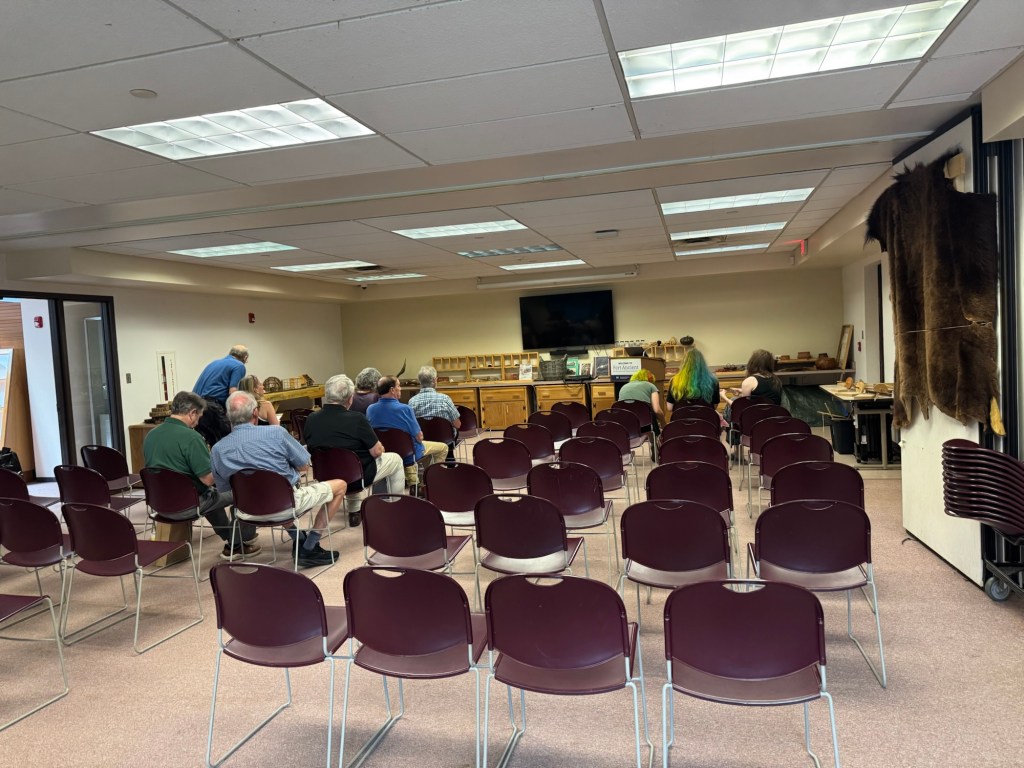
The Trump Marriage: Sex can’t define commitment or our young lives

I feel for President Trump. He has a very beautiful wife, a genuinely beautiful person in many ways, and it has been a little embarrassing at times to watch him go public, trying to hold her hand only to have it gently or firmly pushed away. The speculation that follows—the rumors of divorce, whispers that she is leading toward some younger man—strikes me as unnecessary and unkind. I feel it is worth discussing this directly because the truth is far more ordinary, biological, and human than conspiracy-minded narratives suggest.

Melania Trump is the same age as my wife. She was born on April 26, 1970, in Novo Mesto, Slovenia, so she is now in her mid-fifties. When you reach that stage of life, nobody is particularly interested in your sex life. Nobody wants to hear the details, and almost nobody wants to picture it. By the time you are a grandparent, the cultural and biological machinery has shifted. Sex is no longer the central organizing principle of existence, the way it is for teenagers. It is still possible, it can still be meaningful, but it is no longer the priority it once was. The body and the mind both signal that the intense reproductive drive has quieted.

Menopause arrives for most women in their late forties or early to mid-fifties. Periods become irregular and then stop. Estrogen and other hormones decline. Libido often drops, sometimes dramatically, though individual variation is enormous. Many women report that the mental and emotional space once occupied by sexual urgency opens up for other things—family, independence, quiet reflection, practical concerns like grocery prices at Costco versus Kroger. It is not that desire vanishes for everyone, but it is no longer the loud, insistent biological ticker it was in the twenties and thirties. 

For men, the parallel process is slower but real. Testosterone levels begin a gradual decline after the thirties, accelerating in later decades. At eighty, President Trump is well into what some call andropause territory. The body changes. Recovery takes longer. The constant background hum of sexual interest that defines so much of male adolescence and young adulthood quiets. An eighty-year-old man waking up and thinking “I must have sex today” is not the typical reality for most men that age, any more than a woman in her fifties waking up with the same urgent thought is typical after menopause. Biology is not destiny in every case, but it sets powerful defaults.

Studies bear this out. Research from the National Social Life, Health, and Aging Project found that sexual activity declines with age: roughly 73 percent of adults aged 57–64 reported being sexually active, dropping to 53 percent for those 65–74, and lower still beyond that. A University of Michigan National Poll on Healthy Aging showed that among women 50–80, about 43 percent had been sexually active in the past year, with higher rates among the younger end of that range (50–64) and among those who were married or partnered. Frequency for couples in their fifties often settles into a few times per month rather than several times per week. By the seventies and eighties, the numbers dropped further, though intimacy, affection, and companionship remained important for many. 

These are averages and ranges. Plenty of couples in their fifties and sixties maintain active sex lives, and some continue into their eighties. The point is not that it stops cold; it becomes less urgent, less defining, and far less of a public or cultural preoccupation. Teenagers are biologically wired to think about little else. Their entire social and emotional world can revolve around whether someone wants to sleep with them or whether they can attract that attention. We spend the first decade and a half of life training children to use their minds—ABCs, sentences, science, languages—precisely because the reproductive drive does not yet dominate their biology. Then adolescence hits, and suddenly everything is filtered through sexuality. That phase is real and powerful, but it is not supposed to be permanent.

When people reach their fifties and beyond, the healthy maturation is to stop letting sexuality be the primary lens through which identity and worth are measured. Midlife crises often represent the last frantic attempt to hold onto the reproductive and youthful self before the body and culture both insist on change. Some people handle the transition with grace. Others chase younger partners, new money, or power in an effort to recapture what they feel slipping away. In extreme cases, this can shade into the manipulative or predatory patterns we see in certain corners of elite or celebrity culture—older, wealthy individuals seeking validation or control through relationships with much younger people. That is not maturity; it is often a refusal to accept the next chapter.

I have watched my own children and their friends move through this. My kids are now in their mid-thirties. I remember the conversations when they and their peers were approaching thirty—the quiet panic some felt that the “blooming flower” years were ending, that attention from the opposite sex might dry up, that life’s value was somehow tied to being desired in that specific sexual way. It is a hard passage, especially for women in a culture that still overvalues youthful female appearance. By the time people reach their fifties and sixties, many have made peace with it. They discover that their worth is not located in whether someone wants to sleep with them. They find sovereignty, independence, and new sources of meaning—family, work, faith, quiet competence.

This brings me back to the Trumps. Donald Trump is eighty. He works long hours. He has the weight of the presidency on him again. Melania, in her mid-fifties, has raised their son to adulthood. She has her own privacy and independence. She is not required to perform constant public affection to prove the marriage is real. When he reaches for her hand in public and she pulls away or does not enthusiastically reciprocate, it does not necessarily mean a crisis or a conspiracy. It can simply mean she is past the stage where constant touchy-feely performance feels necessary or natural. Many women in that age group describe exactly this: they love their husbands, they value the partnership, but they do not want to be pawed at or expected to perform youthful romance on demand. They have earned their own space.

The recent UFC Freedom 250 event on the White House South Lawn for the President’s eighty-year-old birthday offered a small window. Melania was there, stylish and composed as always, sitting ringside beside her husband. Observers noted she looked pretty and seemed at ease in the energetic setting surrounded by fighters. That does not contradict the picture of a woman comfortable in her own skin and her own marriage on her own terms. It simply shows someone participating in her husband’s world without needing to manufacture constant physical closeness for the cameras. 

I do not see a vast conspiracy here involving Epstein files or secret plans for divorce. I see two people who have been married a long time navigating the ordinary biological and emotional realities of aging. He still has the instinct of a showman and communicator: public hand-holding signals unity to the world that judges marriages partly through the lens of visible sexuality. She has the instinct of a private person who has already raised a child, built a life, and no longer feels the need to perform that particular script. Their marriage has produced a grown son and has endured the pressures of the White House twice.

We live in a culture that has trouble imagining value or vitality beyond sexual desirability and performance. Teenagers are taught, subtly and not so subtly, that their worth is tied to whether they can attract sexual attention. Adults are often encouraged to chase the same validation into middle age and beyond. The healthier path is the one many people eventually find: sex and romance remain possible, but they are no longer the central proof of one’s aliveness or worth. Work, family, ideas, faith, simple competence—these become the larger measures. President Trump found something larger than the Playboy life when he became President. Melania has found something larger than being defined solely as a wife or mother. That is growth, not failure.

It is natural for people to speculate. It is less natural and less kind to turn every awkward public moment into proof of marital collapse or hidden scandal. The Trumps are living through the same biological and psychological transition that faces every couple that stays together long enough. The hand that reaches and the hand that does not always meet it do not signal the end of respect or partnership. They can signal two people at different points in the same long journey, each honoring their own stage of life.

I have been married nearly four decades. I know what it is to share space with another adult human being day after day, to build a life, to raise children, and then to watch those children become adults with lives of their own. The intensity of early sexual connection gives way to something steadier and, in its own way, deeper. It is not better or worse; it is simply next. Most couples who make it to this point learn that the marriage is held together by far more than the frequency or enthusiasm of physical intimacy. Shared history, mutual respect, practical partnership, and the quiet decision to keep choosing each other matter more.

President Trump and Melania Trump appear to be making that choice. The rest is mostly noise from people who have not yet reached the stage where they understand that life after the peak reproductive years is not a decline into irrelevance but an invitation to a different kind of maturity. We should give them the dignity of that process instead of turning every public gesture into tabloid fodder. Their story is not a scandal. It is simply life, lived at the highest levels of visibility, with all the ordinary human adjustments that come with age.

We all age. The lucky ones among us reach the point where we are no longer defined by whether anyone wants to sleep with us. That is not a loss. That is freedom. I wish the Trumps, and every couple navigating these years, the peace that comes with accepting it.

 Footnotes

1.  Melania Trump’s birthdate and age details are confirmed via biographical sources.

2.  National Social Life, Health, and Aging Project (NSHAP) data on sexual activity by age.

3.  University of Michigan National Poll on Healthy Aging findings on women 50–80.

4.  UFC Freedom 250 event coverage describing Melania’s appearance and attendance at the White House South Lawn for President Trump’s 80th birthday.

5.  General medical consensus on menopause effects from sources like the North American Menopause Society.

6.  Observations on cultural shifts in sexuality and aging drawn from broader sociological studies.

Bibliography

•  Lindau, S.T., et al. “A Study of Sexuality and Health among Older Adults in the United States.” New England Journal of Medicine, 2007.

•  University of Michigan National Poll on Healthy Aging. “Women’s Health: Sex, Intimacy, and Menopause,” 2022.

•  North American Menopause Society. Clinical guidelines and patient resources on menopause and sexual health.

•  Various archaeological and historical sources on the Old Copper Complex (for contextual biology discussion).

•  Hoffman, Rich. The Gunfighter’s Guide to Business and related writings on maturity and culture.

Rich Hoffman

More about me

Click Here to Protect Yourself with Second Call Defense https://www.secondcalldefense.org/?affiliate=20707

About the Author: Rich Hoffman

Rich Hoffman is an author, political consultant, and strategic advisor based in Cincinnati, Ohio, and the creator of The Politics of Heaven—a unique framework that connects biblical theology, ancient history, and modern power structures to explain how moral alignment and spiritual forces shape global events. Blending real-world political experience with deep research into archaeology, UFO phenomena, and suppressed historical narratives, Hoffman offers compelling commentary on topics ranging from ancient civilizations and the Dead Sea Scrolls to modern populist movements, paranormal continuity, and leadership strategy in chaotic environments. As the author of The Gunfighter’s Guide to Business and the forthcoming Politics of Heaven, he brings a grounded yet provocative voice to media discussions, supported by firsthand experiences and a cross-disciplinary approach that bridges science, history, and theology. For interviews, speaking engagements, or expert analysis, visit richhoffmanbooks.com or contact directly via phone at 513-307-5815 or email at rhoffman@richhoffmanbooks.com.  If you’ve seen the movie, Disclosure Day and want to talk about it and the implications of Presidnet Trump’s UAP disclosures, let me know and we can bring some color to your coverage. https://richhoffmanbooks.com/media-inquiries-broadcast-topics-and-contact-info/?frame-nonce=ad51e7ecba I do have a firsthand UFO encounter to discuss.

Outside the Box: COVID Vindication, Hidden Influences, and yes, I told everyone so

I have always lived outside the box. While most people see only the trees right in front of them—the regimented routines, the narrow daily concerns, the approved narratives—I have survived and found my greatest happiness and clearest insights almost exclusively through big-picture thoughts, concepts, and discussions. When I am forced into the box, I am extremely unhappy. Outside of it, I am pretty happy, and I have a lot to share with people who are willing to look up from the immediate and see the patterns across time. That is why, six or seven years from now, when the conversation about non-human intelligence and its long influence on human affairs becomes mainstream—partly through my own work with the book The Politics of Heaven—many will wonder how I knew what I knew back in 2020 and what I am saying now. The answer is simple: I live outside the box, where the forest is visible, and the hidden hands become apparent.

Just recently, as Tulsi Gabbard concluded her service as Director of National Intelligence in the Trump administration, she highlighted truths that those of us who have followed the COVID story closely have known for years.[^1] Gain-of-function research at the Wuhan Institute of Virology, funded with millions in U.S. taxpayer dollars through channels that included EcoHealth Alliance and ultimately NIH oversight, produced a virus that was made transmissible to humans in ways that natural evolution had not achieved.[^2] It was not a simple bat spillover in a wet market. Dr. Anthony Fauci, in his testimony before Congress, parsed words carefully and denied funding for gain-of-function research under the definitions he preferred, but the evidence from emails, proposals like DEFUSE, and the very nature of the research conducted shows otherwise. He misled the public and lawmakers. Perjury before Congress is a serious matter, and it should carry consequences. It took six years for these confirmations to gain official traction in some circles. I was calling it from day one when the virus emerged from that airport in China, and the stories began to shift. I saw it because the people inside the box were the ones constructing the narrative to hide the truth, and from the outside, the pattern was obvious.

The same dynamic unfolded right here in Ohio during the lockdowns. I was on those conference calls with Jon Husted, who served as a key point of contact trying to bridge the concerns of business owners and executives with the administration. We were asking practical questions: How do we keep businesses open? How do we protect workers and customers without destroying livelihoods and constitutional rights? Governor Mike DeWine was listening closely to his Health Director, Amy Acton—our version of Dr. Fauci in Ohio.[^3] The memos were floating around from the federal health establishment, and they knew the constitutional walls were being tested and breached. Stay-at-home orders, business closures, school shutdowns, and the whole apparatus of control were put in place under emergency powers that stretched far beyond what the people or the legislature had authorized. It was sold as keeping us safe, as if a public health official could write policy that would override the Constitution and turn the governor’s office into an extension of that vision. Now, years later, DeWine is positioning himself as the compassionate voice calling for the abolition of the death penalty, saying it is not a deterrent after all these decades.[^4] He helped craft the law as a state legislator, defended it as Attorney General, yet now on his way out, he wants to be remembered as the one who questioned it. The same man who expanded Medicaid under pressure to appear more progressive after earlier battles with public unions and collective bargaining. These politicians often find themselves in trouble because they listen to the wrong voices—the ones inside the box who prioritize short-term safety narratives and political positioning over the big picture of liberty, accountability, and human nature.

I remember the feeling in 2020 all too well. I carry firearms, as people who know me understand. I was prepared to draw a hard line if unconstitutional checkpoints or enforcement actions came to my door or my community. I was close to a bridge too far. The treatment of January 6 defendants—many held in harsh conditions for what amounted to political expression or presence—showed exactly what the machinery could do when it chose to. I love law and order and a stable society, but when that machinery is weaponized against free citizens who have done nothing wrong, it ceases to be law and becomes something darker. I was on those calls and in my writings arguing the constitutional problems from the beginning. With some influence among legislators who were also concerned, we helped prevent the worst scenarios from taking hold in Ohio. Thank God we did not end up with a situation where I or others were pulled over unconstitutionally and forced into a confrontation that could have escalated. But it was not because I was unwilling to stand. I had drawn my line. Even Rush Limbaugh, in the last year of his life, was cautioning about the overreach and the importance of listening to the right voices. I was saying it earlier, more directly, because I see where the inside-the-box crowd hides what they do not want examined—outside the box, in plain sight for those willing to look.

The costs were immense and are still being counted. More than 1.1 million Americans lost their lives in connection with COVID-19.[^5] Economic analyses projected GDP losses in the range of $3 trillion to $5 trillion or more in the initial years from the combination of the pandemic and the policy responses, with mandatory closures and reopenings being the dominant factor in the downturn. Small businesses—restaurants, gyms, shops, service providers—were shuttered or crippled, many permanently. Mental health crises surged, overdoses increased, domestic issues rose, and a generation of children suffered learning loss and social setbacks whose full measure we are only beginning to understand. In Ohio specifically, the early and strict orders under DeWine and Acton had real human and economic consequences. People died not only from the virus but from delayed medical care, from isolation, from the despair that comes when livelihoods and communities are upended by top-down decree. All of it was made worse because the truth about the virus’s origins and the proper limits of power was suppressed or attacked as dangerous misinformation by those inside the box who could not afford to admit what they had done or enabled.

Now the confirmations are emerging. Fauci and the apparatus he oversaw knew more than they let on. The research that made a non-transmissible virus transmissible to humans was real, and U.S. funding played a role. Taxpayers paid for it. Lives were lost or forever altered because of it and the subsequent cover stories. If we do not hold people accountable—if we do not prosecute perjury and malfeasance when the evidence is this clear—then we should not be surprised when the next crisis arrives, and the same patterns repeat. When you have the opportunity to confront the lie and you decline, the liar learns that there is no cost. That is not compassion. That is a weakness that invites more harm. The average annual cost to taxpayers for housing inmates in U.S. prisons runs $40,000 to $65,000 or more per person, depending on the jurisdiction[^6], a figure that makes long-term incarceration of irredeemable offenders a perpetual burden without the deterrent or finality some argue the death penalty provides for the worst cases.

But COVID is only the most recent and personal example of a much older and larger pattern. I have been speaking and writing for years about non-human intelligence and the ways it has influenced the human race—in our modern politics and in the deep politics of the past thousands of years. The creation of empires, the divine mandates claimed by pharaohs, the dreams and visions that shaped the decisions of kings and conquerors—these were not always purely human inventions or organic developments. They were often steered, amplified, or initiated by non-human intelligences operating through mechanisms of paranoia, superstition, and religious belief systems that were not the faith of the Bible but the polytheisms of the ancient world, particularly the gods of Canaan and their counterparts across the Near East and beyond. We are now discovering, through the accelerating study of UAP, that these intelligences have been present with Earth and human beings for many thousands of years. The same skepticism and ridicule I faced in 2020 when I spoke about the lab origin and the unconstitutional overreach, I face now when I connect these dots. But in six or seven years, it will be different. It will be safe. There will be correspondents and anchors discussing it who are actually non-human intelligence. There will be podcasts and series that treat it as established context rather than as fringe theory. What seems like science fiction today will be science fact tomorrow, just as the COVID truths I stated in 2020 are now being acknowledged years later.

The Book of Enoch provides one of the clearest ancient windows into this reality.[^7] That text, which I have studied and referenced for decades, describes the Watchers—divine beings who descended, took human wives, and produced the Nephilim, giants whose violence and appetites ravaged the earth. These Watchers did not stop at interbreeding; they taught humanity forbidden knowledge: the working of metals into weapons and ornaments, the use of cosmetics and sorcery for manipulation and deception, the arts of divination and the secrets of the stars and earth. This was technology and occult instruction delivered prematurely, corrupting human development and filling the world with bloodshed and chaos. The judgment of the flood followed, but the influence of these fallen ones and their offspring persisted through bloodlines, secret traditions, and the false religious systems that shaped the great powers of antiquity. The gods of Canaan—Baal with his storms and demands for sacrifice, Asherah and her fertility cults, Molech and the fires that consumed children—were not harmless myths. They were presentations of real intelligences that steered societies toward war, ritual, and control. The pharaohs of Egypt presented themselves as divine incarnations or the recipients of direct oracles from the gods, justifying their absolute rule and military campaigns. Similar patterns appear in Mesopotamian kingship, in the oracles and omens that guided Greek and Roman leaders, and in the visionary experiences claimed by conquerors and rulers across history. From outside the box, these are not random cultural developments; they are evidence of consistent non-human influence operating through the structures of power and belief.

We are seeing the modern face of this same presence in the UAP phenomenon.[^8] These unidentified anomalous phenomena are not new. Ancient texts across cultures record fiery chariots in the sky, beings of light or terror descending, and craft that defies the technology of the time. What has changed is our ability and willingness to document and disclose. Government videos released in recent years, testimony from trained observers including Navy pilots, and statements from intelligence community whistleblowers such as David Grusch have brought the topic into congressional hearings and public debate. In 2026, the push for transparency has led to concrete actions, including the release of historical records through mechanisms such as the PURSUE system under the current administration. Tranches of documents are emerging, adding to the body of evidence that something non-human has been here, interacting at times, and remaining largely hidden. Just as the lab-leak hypothesis for COVID was censored and mocked only to be treated as plausible or likely by multiple intelligence agencies years later, the NHI reality is moving from ridicule to reluctant recognition. The pattern is the same: truth that threatens existing power structures or comfortable narratives is suppressed until it can no longer be contained.

In six or seven years, the conversation will have shifted dramatically. People who today roll their eyes at talk of non-human intelligence influencing human events will be nodding along in podcasts and interviews. The age of disclosure will be in full swing. My book, The Politics of Heaven, completed in 2026 and moving toward publication, is my contribution to providing the framework for understanding what is coming.[^9][^10] It is a treasure hunt through heaven and all human history, tracing biblical conspiracies, the role of giants and demons, the reality of divine rebellion, the nature of spiritual warfare, and the population agendas that have shadowed humanity from ancient times into the present. It connects the dots between the Watchers of Enoch, the false gods of Canaan and Egypt, the hidden influences on empires and kings, and the modern manifestations in technology, media, global institutions, and the UAP question. When you understand the politics of heaven—the real power dynamics that operate behind and through earthly politics—you see why certain patterns repeat, why certain lies persist, and why accountability is so often delayed. The same intelligences that once presented themselves as gods demanding worship and sacrifice have not disappeared; they have adapted their methods to new veils and new technologies.

I was willing to risk confrontation in 2020 because I saw the pattern clearly. The fear was that it would be used to centralize power. Dissent was being pathologized. The Constitution was being treated as optional under the pretext of an emergency. Amy Acton did that in Ohio. I had seen enough of how power operates—in my younger years in the Cincinnati area and across the river in Newport, Kentucky, where I had front-row exposure to the coded ways influence and enforcement worked—to recognize when it was happening again. I was not going to be treated like a January 6 prisoner or have my community subjected to checkpoint enforcement without resistance. Thankfully, cooler heads and some influence in the right places kept the worst from occurring here. But the experience taught me again that being outside the box is not just a preference; it is a survival skill when the box is being used to hide dangerous truths.

Now the question is whether we will learn from the COVID chapter or repeat it on a larger scale. The revelations about gain-of-function and Fauci’s role are vindication for those who spoke early, but vindication without accountability is incomplete. If perjury and the engineering of a pathogen that killed over a million Americans carry no real consequence, then the system has learned nothing. The same applies to the bigger picture. When disclosure of non-human intelligence reaches the point where even former skeptics in the media and politics are discussing it openly, will we have the frameworks to understand it, or will we be caught flat-footed by the spiritual and political implications we have refused to consider? My book exists to help with that preparation. It argues that these influences are real, that they have shaped human history in profound ways, and that the age of disclosure is also an age of decision about who we are and whose agenda we will ultimately serve.

I am an older man now, but I have lived a life that kept me engaged with both the practical and the profound—from aerospace program management and the discipline of precision work, to writing books like Tail of the Dragon, The Gunfighter’s Guide to Business, and The Symposium of Justice, to my podcasting and activism on behalf of limited government, traditional values, and individual responsibility. The cowboy hat I have worn since childhood is a declaration that I stand apart from the herd. The whip is my personal symbol of discipline, precision, preparedness, and the moral agency to impose order when chaos threatens. But above all, it is the commitment to big-picture thinking that has defined my path. I criticize the regimented life not because I disdain structure, but because too many people never lift their eyes from the trees to see the forest or the forces moving through it.

Six or seven years from now, when the podcasts, news segments, and public conversations are filled with talk of non-human intelligence and its historical role, remember that some of us were saying it when it was still costly to do so. Not for credit, but because the truth matters and because being outside the box allows you to see what is coming before it arrives. The COVID chapter proved that. The disclosure chapter will prove it again. The politics of heaven are the ultimate big picture, and understanding them is the only way to navigate what lies ahead without being steered by forces we refuse to name.

The truth always comes out. It came out on the origins of COVID after six years of resistance. It is coming out on UAP and the deeper history of influence. It will come out on accountability or the lack of it. I hope that when it does, enough people will have stepped outside the box to see it clearly, to demand what is right, and to prepare for the fuller reality of our place in a universe that has never been as empty or as human-centered as the inside-the-box narrative claimed.

Footnotes

[^1]: Tulsi Gabbard’s resignation as Director of National Intelligence was announced on May 22, 2026, effective June 30, 2026, citing her husband’s health; see reports from BBC, CNBC, and the New York Times (May 2026).

[^2]: On gain-of-function research, EcoHealth Alliance, Wuhan Institute of Virology, and Fauci testimony controversies, see RFK Jr., The Real Anthony Fauci (2021) and subsequent congressional reviews and intelligence assessments on COVID origins (2023-2026).

[^3]: Amy Acton served as Ohio Department of Health Director under Gov. Mike DeWine, issued stay-at-home orders in March 2020, and resigned in June 2020 amid criticism; see contemporary reporting from the Columbus Dispatch, WOSU, and the Ohio Capital Journal.

[^4]: Gov. Mike DeWine announced June 16, 2026, that Ohio should abolish the death penalty, reversing long-held support; see Associated Press, Ohio Capital Journal, and New York Times coverage (June 2026).

[^5]: U.S. COVID-19 deaths exceeded 1.1 million; economic impact studies project trillions in GDP losses from the pandemic and policy responses. See CDC data summaries and analyses, such as Walmsley et al. (2020) in the Journal of Urban Economics and Chen et al.’s economic burden projections.

[^6]: Average annual cost of incarceration in U.S. state prisons is around $ 60,000 per inmate (median figures from USAFacts and state reports); federal prisons are around $41,000 per inmate (FY2023 Federal Register). Life sentences for serious crimes impose an ongoing taxpayer burden of tens of thousands of dollars per individual per year.

[^7]: Book of Enoch (1 Enoch), particularly the Book of the Watchers (chs. 1-36), describes the descent of the Watchers, their instruction of humanity in forbidden arts, and the birth of the violent Nephilim giants. See translations by R.H. Charles (1917) and modern editions; scholarly discussion in The Torah.com and related ancient Near Eastern studies.

[^8]: UAP disclosure developments include 2017-2023 Pentagon video releases, the 2021 ODNI Preliminary Assessment, the 2023 congressional hearings with David Grusch’s testimony, and the 2026 releases under the PURSUE system (Department of War/ODNI tranches announced May-June 2026).

[^9]: Ancient historical patterns of divine kingship and oracular influence in Egypt (pharaoh as god-king), Canaanite pantheon (Ugaritic texts, Baal Cycle), and biblical accounts (Genesis 6, Numbers 13, Deuteronomy on Canaanite practices). See Biblical Archaeology Review archives and standard references such as The Oxford History of the Ancient Near East.

[^10]: Broader context on spiritual warfare, giants, and population themes in biblical and extra-biblical literature; see also the author’s forthcoming The Politics of Heaven (target 2027) for an integrated treatment that connects ancient influences to modern geopolitical and technological developments.

Bibliography for Further Reading

•  Charles, R.H., trans. The Book of Enoch. London: Society for Promoting Christian Knowledge, 1917 (and subsequent reprints).

•  Elizondo, Luis. Imminent: Inside the Pentagon’s Hunt for UAP. New York: William Morrow, 2024.

•  Hoffman, Rich. Tail of the Dragon. (Author’s earlier work on personal and philosophical themes).

•  Hoffman, Rich. The Gunfighter’s Guide to Business. (On resilience, problem-solving, and imposing will on circumstances).

•  Hoffman, Rich. The Symposium of Justice. (Philosophical and justice themes).

•  Hoffman, Rich. The Politics of Heaven. (Forthcoming 2027; manuscript completed 2026, exploring biblical conspiracies, giants, demons, spiritual warfare, and population agendas across history).

•  Kennedy, Robert F., Jr. The Real Anthony Fauci: Bill Gates, Big Pharma, and the Global War on Democracy and Public Health. New York: Skyhorse, 2021.

•  Biblical Archaeology Review. Multiple issues on ancient Near Eastern religion, giants/Nephilim debates, and archaeological context for biblical texts (ongoing since 1975).

•  Office of the Director of National Intelligence. Preliminary Assessment: Unidentified Aerial Phenomena. June 2021 and subsequent UAP reports.

•  Various 2023-2026 congressional hearings and whistleblower testimony on UAP (Grusch et al.).

•  Academic and government analyses of COVID-19 economic impacts: Walmsley, Terrie et al. “The Impacts of the Coronavirus on the Economy of the United States” (2020); Chen, Simiao et al. economic burden studies (2021); CDC COVID Data Tracker summaries.

•  USAFacts and Bureau of Justice Statistics reports on incarceration costs and prison populations (2023-2025 data).

•  Ancient primary sources: Ugaritic Baal Cycle texts; Egyptian royal inscriptions and Pyramid Texts; biblical texts (Genesis 6, Enoch references in Jude and 2 Peter).

•  Additional context on Canaanite religion and its influence: Day, John. Yahweh and the Gods and Goddesses of Canaan. Sheffield Academic Press, 2000 (and related scholarship).

Rich Hoffman

More about me

Click Here to Protect Yourself with Second Call Defense https://www.secondcalldefense.org/?affiliate=20707

About the Author: Rich Hoffman

Rich Hoffman is an author, political consultant, and strategic advisor based in Cincinnati, Ohio, and the creator of The Politics of Heaven—a unique framework that connects biblical theology, ancient history, and modern power structures to explain how moral alignment and spiritual forces shape global events. Blending real-world political experience with deep research into archaeology, UFO phenomena, and suppressed historical narratives, Hoffman offers compelling commentary on topics ranging from ancient civilizations and the Dead Sea Scrolls to modern populist movements, paranormal continuity, and leadership strategy in chaotic environments. As the author of The Gunfighter’s Guide to Business and the forthcoming Politics of Heaven, he brings a grounded yet provocative voice to media discussions, supported by firsthand experiences and a cross-disciplinary approach that bridges science, history, and theology. For interviews, speaking engagements, or expert analysis, visit richhoffmanbooks.com or contact directly via phone at 513-307-5815 or email at rhoffman@richhoffmanbooks.com.  If you’ve seen the movie, Disclosure Day and want to talk about it and the implications of Presidnet Trump’s UAP disclosures, let me know and we can bring some color to your coverage. https://richhoffmanbooks.com/media-inquiries-broadcast-topics-and-contact-info/?frame-nonce=ad51e7ecba I do have a firsthand UFO encounter to discuss.