In June 2026, with President Trump back in the White House, it’s refreshing not to see the rainbow colors and Pride flags draped over the executive mansion or broadcast as some official national celebration of the agenda, the motorcycle jumps and MMA event were much better. No more lighting up the people’s houses in celebration of what many of us view as a direct challenge to traditional family, biblical truth, and human flourishing. I’ve watched this cultural shift for decades, and the change feels like a return to sanity.¹
I’ve heard the arguments, and I know some people in my circles find them compelling. But from my perspective, rooted in personal experience, Christian conviction, and years of cultural observation, the modern gay agenda—particularly as pushed during Pride Month—is deeply political, anti-family, and part of a broader effort that undermines natural order. It’s not just about private behavior between consenting adults. It’s about reshaping society, lowering birth rates, confusing young people about masculinity and femininity, and desecrating symbols that once pointed to God’s covenant.²
Let me start with my own background because it gives me a front-row perspective that many commentators lack. I’m known for my bullwhips. The whip is a symbol of discipline, precision, self-mastery, and performance for me—cracking targets, snuffing candles, doing tricks that entertain and demonstrate skill. I’m good at it; some say I’m among the best. People have associated whips with bondage and fetish scenes for a long time, but that was never my world. I’ve never participated in anything like that and never would.³
Over the years in the performance community, I’ve known many whip artists who started straight and were as skilled in similar ways. Some got pulled into the gay bar scene or private fetish gigs because the money was good. Cracking whips on stage for entertainment turned into private sessions where clients wanted more—candles in uncomfortable places, explicit videos, crossing lines that should never be crossed. What starts as “just a gig” often leads to deeper involvement. I’ve seen friends swap spit, experiment, and eventually advocate openly for Pride Month. They’d post statements beginning with “I’m not very political,” but supporting the agenda is inherently political. It aligns with Democrat platforms, big government social engineering, and cultural Marxism. When I became vocal in the Tea Party and then MAGA, many distanced themselves. Conservatism and that lifestyle don’t mix well in their circles.⁴
I remember sitting in catering tents with Hollywood types during events. They’d chat until politics came up. “You’re from Cincinnati? You supported McCain? Romney? Reagan?” Suddenly, the seats emptied. Blocklisting happens fast when you don’t swing their way. I’ve faced it head-on and don’t regret it. My platform grew because I refused to hide convictions. The same people who once performed circus tricks now defend grotesque elements of the scene for revenue and relevance. It’s disheartening.⁵
The rainbow itself is a perfect example of desecration. In Genesis 9, after the flood, God sets the rainbow in the sky as a sign of His covenant with Noah and all living creatures—never again to destroy the earth with waters. It’s a reminder of mercy, judgment, and promise. The gay community co-opted it, starting with Gilbert Baker’s 1978 rainbow flag. What was once a biblical symbol of hope after catastrophe became a banner for a movement the Bible explicitly condemns. Leviticus 18:22 and 20:13 call male same-sex relations an abomination. Romans 1:26-27 describes the exchange of natural relations for unnatural ones as part of turning from God. These aren’t obscure verses; they’re clear moral teaching.⁶
Pride Month in June turns that symbol into a celebration of what scripture warns against. Under previous administrations, the White House glowed in rainbow lights, equating the agenda with official policy. Now, in 2026, that’s gone, and it feels right. Families don’t need government endorsement of alternative lifestyles pushed on children through schools, media, and YouTube. The femboy trend, glam rock echoes like Boy George or 80s hair bands in tight pants, and modern Disney/Marvel plot lines normalize confusion. Young men are seduced away from traditional masculinity, leading to lower birth rates—an anti-human agenda that aligns with depopulation narratives from figures like Bill Gates or climate extremists. It’s abortion on steroids: prevent life before it begins by reorienting desire.⁷
I’ve seen the discomfort this causes in everyday life. At a Cincinnati football game with good seats, two women in front of me—clearly a couple—made out openly. Some of my grandkids were there. It was uncomfortable for everyone. I politely asked them to take it to the bathroom or clubhouse; kids didn’t need the show. The response was indignation, as if public decency were bigotry. Another time at Costco, someone confronted me about my cowboy hat: “How dare you wear that symbol of toxic masculinity in public?” I wear it proudly. It represents discipline, self-reliance, Western heritage, and unapologetic manhood. In Butler County, transplants from California or the East Coast bring their politics and sneer at it. Feelings are mutual. I love projecting masculinity because young people need models, not confusion from algorithms and activists.⁸
The bullwhip community crossover highlights the issue. Performance artists get lured by fetish demand. A few thousand dollars for a private show turns into more. Some thrive financially but lose their way. I’ve ended friendships over it. Zero tolerance. When they advocate Pride while claiming non-political stances, it rings hollow. The agenda extends to sports, the military, education, and entertainment. It’s not live-and-let-live; it’s affirmation or cancellation. Hollywood blacklists conservatives. Schools teach gender ideology as fact. YouTube serves as a pacifier for teens, flooding feeds with normalized content.⁹
Biblically, Sodom and Gomorrah stand as a warning. The mob demanded the angels for sexual purposes—gross perversion that led to judgment. Modern parallels exist in the push to confuse youth and erode family structures. Birth rates decline when masculinity is pathologized as “toxic” and femininity is detached from motherhood. It’s a net-zero scam for humans: fewer people, less consumption, more control. Democrats embrace it because it fragments society into identity groups dependent on government. Republicans under Trump reject the official celebration, focusing on borders, the economy, and sanity.¹⁰
My cowboy hat draws compliments too. At that same Costco recently, multiple people thanked me for the broadcasts and work. One levy supporter mocked the hat, implying shame. I’ll wear it more. It signals resistance to the seduction. Young men need examples of strength, not androgyny. Clint Eastwood, Arnold Schwarzenegger’s “girly men” critique—they understood. The Expendables films harkened back to tough-guy eras. Today’s culture mocks that.¹¹
Personal autonomy matters here too, tying into broader ownership themes. Just as people reject renting music or property, they resist renting their identity to cultural fads. I own my convictions. The whip remains a tool of mastery, not perversion. Pride Month pushes the opposite—celebrating what weakens resolve and family. I’ve lost friends but gained clarity. The lifestyle isn’t victimless. Confusion spreads, especially online. Future generations deserve better.¹²
I don’t want to hear the complaints about Trump’s UFC fight. Trump’s White House without rainbow flags represents a cultural reset. No more equating Pride with patriotism. The agenda remains political: funding, education policy, corporate DEI. Ohio and places like Butler County see transplants bringing it in, but local values hold. At Kings Island or other amusement parks, public displays can be jarring—unattractive couples making out, demanding acceptance. It’s not about hate; it’s about boundaries. Kids present, decency expected. Porn filmmakers taking dates to Bengal football games? Gross.¹³
Society functions better with clear moral guardrails. The Bible condemns for good reason—protecting flourishing. I’ve paid costs for speaking out but stand firm. Friends who crossed the line made six figures but compromised their souls. Not worth it. Masculinity—protective, decisive, strong—isn’t toxic; it’s essential. The hat stays. Whips crack targets, not fetishes. Rainbows remind us of God’s promise, not parades.¹⁴
This June, without White House endorsement, feels like progress. The dance continues, but not to their tune. Families, faith, and ordered liberty prevail. Young people need truth, not seduction. I’ll keep saying it, hat on, whip ready for honest performance. Politics of Heaven reminds us that spiritual warfare underlies it all. Truth uncoils against deception. Ohio and America benefit when we reject the agenda’s full embrace.¹⁵
Footnotes
¹ Trump administration 2026 policy shift away from Pride displays at White House.
² Personal observations on the agenda as political.
Rich Hoffman is an author, political consultant, and strategic advisor based in Cincinnati, Ohio, and the creator of The Politics of Heaven—a unique framework that connects biblical theology, ancient history, and modern power structures to explain how moral alignment and spiritual forces shape global events. Blending real-world political experience with deep research into archaeology, UFO phenomena, and suppressed historical narratives, Hoffman offers compelling commentary on topics ranging from ancient civilizations and the Dead Sea Scrolls to modern populist movements, paranormal continuity, and leadership strategy in chaotic environments. As the author of The Gunfighter’s Guide to Business and the forthcoming Politics of Heaven, he brings a grounded yet provocative voice to media discussions, supported by firsthand experiences and a cross-disciplinary approach that bridges science, history, and theology. For interviews, speaking engagements, or expert analysis, visit richhoffmanbooks.com or contact directly via phone at 513-307-5815 or email at rhoffman@richhoffmanbooks.com. If you’ve seen the movie, Disclosure Day and want to talk about it and the implications of Presidnet Trump’s UAP disclosures, let me know and we can bring some color to your coverage. https://richhoffmanbooks.com/media-inquiries-broadcast-topics-and-contact-info/?frame-nonce=ad51e7ecba I do have a firsthand UFO encounter to discuss.
I have always lived with one foot in the ordinary world of aerospace program management, local Ohio politics, family life along the Great Miami River in Butler County, and the other in the deeper currents of history, archaeology, and the unexplained. Growing up in the Cincinnati area, my family in the 1970s was already investigating strange lights in the sky and odd occurrences that didn’t fit neatly into everyday explanations. Those early experiences planted seeds that would later bloom into serious inquiry. I have never claimed to have been abducted or to have lived through anything as dramatic as the portrayal of Travis Walton’s ordeal in Fire in the Sky. My encounters have been subtler, more provocative, and in one memorable case, downright infuriating in their precision and timing.
One such encounter stands out, not just because of what I saw firsthand in earlier instances, but also because of how it unfolded in response to something I said publicly. A couple of years ago, amid ongoing discussions about government transparency, surveillance, and the lingering shadows of the COVID era, I recorded a video. In it, I dared whatever forces—whether extraterrestrial, interdimensional, or black-budget human technology—might be listening to show themselves right there in my backyard of Butler County, Ohio. I pointed to a specific spot in the sky near Middletown. I wasn’t expecting fireworks or a close encounter of the third kind. I was making a point about power, information, and the dangers of hidden knowledge wielded by institutions that demand trust while offering none in return.
A few days later, a ring of bright green lights appeared in the night sky in that vicinity. Multiple residents captured video around 10:30 or 11 p.m. The lights rotated, hovered, then shot off with impossible speed. People stopped at stoplights, pulled out their phones, and filmed what appeared to be a circular formation moving counterclockwise before it vanished. Reports flooded local news: WCPO, WLWT, and others covered the strange rotating green lights over Middletown in Butler County. Witnesses described it as unlike any drone or conventional aircraft. Some called it frightening; others were fascinated. I wasn’t on site that night, but the proximity and timing were unmistakable.
This wasn’t my first brush with the phenomenon. I had witnessed other UFO activity years earlier, including one that left me genuinely angry at the audacity of it. But this particular event felt targeted. Given my political activity—my role as a vocal conservative voice in Butler County, my history with local issues like Lakota schools, tax fights, and broader America First advocacy—I have long assumed surveillance. Decades ago, in a previous neighborhood in Mason, Ohio, I confronted a drug ring operating too close to families. That brought FBI interviews and scrutiny that carried over for years. Local and federal eyes have been on me, my family, and my work. When you dare powers—visible or invisible—to reveal themselves while criticizing government overreach, you invite responses. Whether this was a genuine non-human craft, advanced human technology (perhaps reverse-engineered or projected), or something meant to rattle me, it landed with precision.
I took it as a message. Not the kind that turns you into Richard Dreyfuss piling dirt in the living room from Close Encounters of the Third Kind, but one that demands deeper reflection. I have visited Roswell. I have investigated the Mothman in Point Pleasant, West Virginia—right across the river from Ohio territory familiar to me. There, UFO sightings were rampant alongside the Mothman reports in the 1960s. John Keel’s The Mothman Prophecies (later a film with Richard Gere) details how lights in the sky, strange calls, and Men in Black phenomena intertwined with the creature sightings leading up to the Silver Bridge collapse. You cannot grapple with Mothman without confronting the UFO dimension. I went there for personal research, on a birthday trip no less, and came away convinced that these events form a pattern far older than modern disclosure narratives.
Watching Steven Spielberg’s Disclosure Day recently brought it all into sharper focus. Spielberg, who has fielded countless UFO stories from the public over decades while making films like Close Encounters, treats the subject with a humanistic lens. The movie explores ordinary people pushing back against secrecy. I found it compelling, even if some critics dismissed elements. It reminded me of my own journey. Spielberg has no personal UFO encounter, by his account, yet he has shaped public imagination on the topic. I have had them, and they propelled me to write.
My thoughts also turned to Indiana Jones and the Kingdom of the Crystal Skull. Many reviewers scoffed at the interdimensional beings, calling it the weakest entry. I saw sophistication in it. The film uses Indy to explore ancient alien influence on human civilization—archaeologists from another realm, imprints on societies, crystal skulls tied to Roswell-like events and portals. It gave popular culture the moral license to think seriously about these ideas. It opened doors for shows like Ancient Aliens. The Peruvian connections, snakes as symbols (echoing the Garden of Eden), and hidden-in-plain-sight craft at the end resonated. I dedicated a chapter in my book to serpentine imagery and interdimensional influences.
Broader Context: UFOs in Ohio and Butler County
Ohio has a rich history of sightings. The 1952 “Flatwoods Monster” event in nearby West Virginia involved a bright object and a strange entity. In 1994, Trumbull County saw police-chased lights. Middletown itself has a history of reports, including cigar-shaped objects. The 2023 green lights fit a pattern of rotating formations and rapid departures defying conventional explanation. Some dismissed it as a prank or drone, but the speed and multiple witnesses suggest more. Butler County’s location—near Wright-Patterson Air Force Base, long rumored in UFO lore for reverse-engineering—adds intrigue. Reverse-engineering Roswell tech? Congressional testimony and retired officials hint at it. I know enough insiders to take such claims seriously.
These aren’t new. Ancient texts, archaeology, and global myths describe sky beings, watchers, and technology influencing humanity. The Book of Enoch, Dead Sea Scrolls (which I viewed at the Museum of the Bible on my birthday), Nephilim, and giants speak to this. My book, The Politics of Heaven, dives into spiritual warfare, divine rebellion, population agendas, and the ways non-human intelligences have shaped history. Biblical conspiracies, demons, and interdimensional entities aren’t “crazy” when disclosure normalizes the conversation. Spielberg’s film and real events make mainstream what was once fringe.
Government, Power, and the Politics of Disclosure
I have built my life around self-reliance, discipline (symbolized by my whip iconography from my family’s Kentucky heritage), and skepticism toward centralized power. The UFO debate often serves as a pretext for more government authority: “Trust us to protect you from them.” Yet the same institutions lied about COVID, mandates, elections, and more. Black budgets, compartmentalized programs at places like Wright-Patterson, and associations with supernatural tech-seeking make the government threat more immediate than hypothetical aliens. If entities have visited since civilization’s dawn, then history makes more sense—temples, sacrifices, and beliefs born of observed phenomena.
My dare and the subsequent sighting felt like a ritual response. Call it out, and it appears. Whether it was a government projection (holographic or drone tech) to discredit me in political circles, actual craft, or something responding to frequency/intent, it happened. Proximity to my pointed location, in an area with patterns (Middletown, Monroe, West Chester), wasn’t a coincidence. It reinforced my view: information is power. Secrecy builds empires on lies. As a grand jury foreman, I saw institutional failures up close. Two-tier justice, surveillance of citizens like me—these are real.
I don’t fear aliens landing and applying for jobs (though I joked I’d hire hard workers who crossed interstellar distances). The real danger is unaccountable power using the phenomenon for control. My political consulting, school advocacy, and anti-tax work matter. Associating with “fringe” topics risks credibility, yet truth-seeking demands it. Overman philosophy—imposing will on chaos, as in model rocketry with my grandson in bad weather—applies here. Face the unknown with resilience.
Writing The Politics of Heaven
This encounter, revisited through Disclosure Day, crystallized my decision to finish the manuscript. I weave personal stories, including this one, with biblical archaeology, ancient civilizations (Axum, Britain BC, Windover bog people), giants, and modern spiritual warfare. Chapters explore how UFOs, interdimensional beings, and government secrecy intersect with heavenly politics. Reviewers call it wild, but grounded in my experiences and research. It answers questions Disclosure Day raises: What next? What does it mean for faith, power, and humanity?
Bibliography (Selected; expanded in full manuscript with footnotes)
• Keel, John A. The Mothman Prophecies. 1975. (Core text on Point Pleasant events, UFOs, and interconnected phenomena.)
• Spielberg, Steven, dir. Disclosure Day. Universal Pictures, 2026. (Film exploring disclosure and government secrecy.)
• Spielberg, Steven, dir. Indiana Jones and the Kingdom of the Crystal Skull. Paramount, 2008. (Interdimensional beings and ancient influences.)
Rich Hoffman is an author, political consultant, and strategic advisor based in Cincinnati, Ohio, and the creator of The Politics of Heaven—a unique framework that connects biblical theology, ancient history, and modern power structures to explain how moral alignment and spiritual forces shape global events. Blending real-world political experience with deep research into archaeology, UFO phenomena, and suppressed historical narratives, Hoffman offers compelling commentary on topics ranging from ancient civilizations and the Dead Sea Scrolls to modern populist movements, paranormal continuity, and leadership strategy in chaotic environments. As the author of The Gunfighter’s Guide to Business and the forthcoming Politics of Heaven, he brings a grounded yet provocative voice to media discussions, supported by firsthand experiences and a cross-disciplinary approach that bridges science, history, and theology. For interviews, speaking engagements, or expert analysis, visit richhoffmanbooks.com or contact directly via phone at 513-307-5815 or email at rhoffman@richhoffmanbooks.com. If you’ve seen the movie, Disclosure Day and want to talk about it and the implications of Presidnet Trump’s UAP disclosures, let me know and we can bring some color to your coverage. https://richhoffmanbooks.com/media-inquiries-broadcast-topics-and-contact-info/?frame-nonce=ad51e7ecba I do have a firsthand UFO encounter to discuss.
I have spent a great deal of time observing how modern society reacts to both achievement and decline, and nowhere is this contrast more visible than in the way we collectively respond to technological ambition on one hand and human vulnerability on the other. There is a recurring pattern I cannot ignore, one that surfaces in moments that should otherwise be met with admiration or compassion. Instead, what I often detect is something more complicated—a quiet, sometimes barely concealed satisfaction when success is interrupted, or when prominent individuals are reminded of their own mortality.
I noticed the same pattern in reactions to high-profile technical setbacks, such as rocket failures tied to ambitious space programs. When a launch vehicle explodes or a mission is delayed, the tone in certain corners of the media and commentary ecosystem can shift from analytical to subtly dismissive. It is as if the grander the objective—reaching orbit, returning to the Moon, advancing human presence in space—the more satisfying it becomes for some observers to see that effort fail spectacularly. I do not believe this is universal, but it is present, and it reflects something deeper than mere critique. It reflects a discomfort with ambition itself, particularly when that ambition aims to elevate human capability beyond its current limits.
I have seen that same tone emerge in a very different context: the public reporting of illness, especially serious diagnoses such as cancer among well-known figures. When those diagnoses are announced, the coverage often carries an undertone that goes beyond simple reporting. The message, implicit rather than explicit, is that no level of success, status, or influence insulates a person from biological reality. That part, of course, is true. But what troubles me is when that truth is delivered with an almost leveling satisfaction—an unspoken reassurance that the “lofty” are ultimately brought down to the same plane as everyone else.
I find that reaction deeply problematic. In my view, the proper response to illness—whether it affects a public figure or a private individual—is empathy paired with determination. Determination not merely to treat symptoms, but to fundamentally improve the systems and technologies that govern health outcomes. Instead, what we often see is a cultural normalization of disease, as if the persistence of illnesses like cancer is inevitable and beyond our reach in any meaningful sense.
My perspective has been shaped in part by personal exposure to the healthcare system through family and close observation. I have seen both extraordinary dedication among practitioners and systemic issues that are far more difficult to reconcile. The healthcare industry, particularly in developed nations, is structurally complex and in many ways financially incentive-driven. According to data from the Centers for Medicare & Medicaid Services, U.S. healthcare spending exceeded $4.5 trillion in 2022, representing nearly 18% of GDP.[1] That scale alone introduces distortions—economic, behavioral, and institutional—that are not always aligned with optimal patient outcomes.
I do not believe it is accurate or fair to reduce healthcare professionals to a single characterization. The field contains individuals of remarkable skill and integrity. At the same time, it operates within a framework that often rewards volume over prevention, treatment over cure, and cost expansion over efficiency. These systemic incentives have been widely discussed in policy literature, including analyses from the National Academy of Medicine and the World Health Organization, both of which highlight structural inefficiencies and misaligned incentives as persistent challenges.[2][3]
Where I draw a sharper distinction is in the cultural posture surrounding health and illness. In many ways, modern healthcare systems are built around managing disease rather than eliminating it. Chronic illness management, long-term pharmaceutical dependency, and repeated procedural interventions form the economic backbone of the system. While these approaches save lives and extend survival, they do not always reflect a paradigm aimed at decisive resolution.
This is where I believe the contrast with fields like aerospace engineering becomes instructive. In aerospace, failure is analyzed, corrected, and systematically eliminated through iterative design. The goal is not to manage risk indefinitely, but to reduce it to near zero through engineering discipline. The “right stuff,” a term popularized by Tom Wolfe, captures this blend of analytical rigor and bold experimentation.[4] It is the willingness to push boundaries while refining systems to the point of reliability.
I have long believed that healthcare would benefit from adopting more of that mindset. Instead of accepting certain diseases as enduring features of human existence, the focus should shift toward eradication or, at minimum, transformative mitigation. There are promising developments in this direction. Advances in immunotherapy, gene editing technologies such as CRISPR, and regenerative medicine have begun to change the landscape of what is medically possible.[5][6] In cancer treatment alone, survival rates have improved significantly over the past several decades due to earlier detection and targeted therapies.[7]
However, it is critical to ground expectations in current scientific reality. While substantial progress has been made, there is no single universal cure for cancer at this time, yet. But by this time, there should be. Cancer is not one disease but a collection of hundreds of distinct conditions, each with unique genetic and environmental drivers.[8] The goal of cancer treatment should be to defeat it. What can be said, with confidence, is that the trajectory of research is accelerating, and breakthroughs that once seemed theoretical are increasingly entering clinical practice.
I believe this distinction matters, particularly when we speak to audiences capable of influencing investment, policy, and innovation. The objective should not be to declare premature victory, but to articulate a clear and urgent mandate: accelerate the transition from disease management to disease elimination wherever scientifically feasible. That requires alignment across research institutions, funding mechanisms, regulatory frameworks, and private-sector innovation.
It also requires a cultural shift. We should not accept illness as something that simply “grounds” individuals or equalizes outcomes. Instead, we should view every diagnosis as a challenge to be solved—systematically, rapidly, and with the same intensity that we apply to other complex engineering problems. That mindset does not diminish humility; it enhances purpose.
I remain optimistic that such a transformation is possible. The convergence of biotechnology, artificial intelligence, and advanced materials science is creating capabilities that did not exist even a decade ago. Machine learning models are already being used to identify drug candidates, predict protein structures, and optimize treatment pathways.[9] Personalized medicine, once an abstract concept, is becoming increasingly tangible as genomic sequencing becomes more accessible.
The question is not whether progress will continue, but whether it will accelerate at a rate commensurate with its potential. That acceleration depends on leadership—across government, industry, and the scientific community. It depends on prioritizing long-term outcomes over short-term financial gain. And it depends on fostering a culture that celebrates breakthroughs rather than fixating on failure.
When I reflect on the reactions I described at the outset—whether to a rocket explosion or a cancer diagnosis—I see them as symptoms of a broader cultural hesitation to embrace ambition fully. There is comfort in the notion that limits are fixed and universal. There is less comfort in confronting the possibility that those limits may be overcome and that doing so requires sustained effort, risk, and transformation.
I do not share that hesitation. I believe that human progress has always depended on challenging perceived constraints, whether in flight, exploration, or medicine. The same spirit that drives us to reach beyond Earth should drive us to eliminate preventable suffering here on it.
In that sense, the future of healthcare and the future of technological advancement are not separate conversations. They are part of the same continuum: the pursuit of a more capable, more resilient, and ultimately more humane civilization. And if we approach that pursuit with the right balance of discipline and daring—the true “right stuff”—then the outcomes we once considered extraordinary may become routine.
—
Footnotes & References
Centers for Medicare & Medicaid Services. National Health Expenditure Data, 2023.
National Academy of Medicine. The Learning Healthcare System: Workshop Summary, 2007.
World Health Organization. Health Systems Financing: The Path to Universal Coverage, 2010.
Wolfe, Tom. The Right Stuff. Farrar, Straus and Giroux, 1979.
National Cancer Institute. Immunotherapy for Cancer, updated 2024.
Doudna, J., & Charpentier, E. “The new frontier of genome engineering with CRISPR-Cas9.” Science, 2014.
American Cancer Society. Cancer Facts & Figures 2025.
Hanahan, D., & Weinberg, R. “Hallmarks of Cancer: The Next Generation.” Cell, 2011.
Jumper, J. et al. “Highly accurate protein structure prediction with AlphaFold.” Nature, 2021.
Rich Hoffman is an aerospace executive, political strategist, systems thinker, and independent researcher of ancient history, the paranormal, and the Dead Sea Scrolls tradition. His life in high‑stakes manufacturing, high‑level politics, and cross‑functional crisis management gives him a field‑tested understanding of power — both human and unseen.
He has advised candidates, executives, and public leaders, while conducting deep, hands‑on exploration of archaeological and supernatural hotspots across the world.
Hoffman writes with the credibility of a problem-solver, the curiosity of an archaeologist, and the courage of a frontline witness who has gone to very scary places and reported what lurked there. Hoffman has authored books including The Symposium of Justice, The Gunfighter’s Guide to Business, and Tail of the Dragon, often exploring themes of freedom, individual will, and societal structures through a lens influenced by philosophy (e.g., Nietzschean overman concepts) and current events
There is a growing controversy surrounding Amy Acton’s campaign as it attempts to distance itself from the COVID-era lockdown decisions that defined her tenure as Ohio’s health director. That strategy faces a fundamental problem: the record is well known, and voters remember. Governor Mike DeWine may have held executive authority, but Acton was not a passive figure—she was the central public voice and policy driver behind the state’s pandemic response. Day after day, she appeared before Ohioans, advocating aggressive mitigation measures, including shutdowns, mask requirements, and restrictions on gatherings. Those policies were not abstract recommendations; they were implemented in real time under the administration she helped guide.
Attempts to shift responsibility now—whether onto the governor or broader circumstances—risk undermining credibility. Acton was appointed to provide expert guidance, and by all observable accounts, DeWine relied heavily on that guidance. In that sense, the administration’s decisions were inseparable from her influence. The argument that these policies were solely political or that they emerged independently of her leadership is difficult to reconcile with the public record of her daily briefings, national media presence, and close alignment with federal health leadership at the time.
Politically, the sensitivity of this issue suggests vulnerability. The campaign’s effort to reframe or soften Acton’s role indicates awareness that the lockdown period remains deeply polarizing, particularly among voters who experienced economic disruption, job loss, or prolonged social restrictions. Efforts to draw comparisons between Acton and her opponents, including Vivek Ramaswamy, may reflect a broader defensive strategy—one intended to diffuse criticism rather than directly confront it. But such comparisons also risk backfiring if voters perceive them as evasive.
Another point of criticism centers on Acton’s departure from her role in 2020. She resigned amid mounting public pressure and protests, at a time when tensions around lockdown policies were intensifying. For critics, this moment reinforces a narrative of incomplete accountability—that she helped shape sweeping policies and then exited before the long-term consequences fully unfolded. Supporters may interpret her resignation differently, but politically, the timing continues to factor into how her leadership is judged in retrospect. She is very vulnerable to the lockdown issue. She dragged Jon Husted into her mess, as well as DeWine. They were too nice to say no to her. David Pepper and the national Democrats think Republicans won’t expose her because of complicity. Jon Husted will not take friendly fire if Republicans destroy Amy Acton with her lockdowns. It’s easy to defend. Her stupid policies were some of the dumbest things ever to be done in politics. And she completely owns it.
I was out in the driveway the other day, swapping tires on the RV after blowing a couple on our recent trip, sockets in hand, going back and forth to the garage. The rain was coming down, so I had WLW on for some background noise 12 to 3 on Saturday afternoon, right before the Cardinals game. I didn’t catch every word. I was in and out, focused on the work, but I heard enough. It was Kim Brew hosting, with Jim Renacci as a guest, discussing Ohio politics, John Husted, Vivek Ramaswamy, and the path forward for Republicans.
What I heard didn’t surprise me, but it reinforced exactly why I’ve distanced myself from that station over the years. They used to have more Tea Party energy, real conservative voices in the programming and talent. But as Clear Channel evolved into the corporate middle-road sports-and-news machine, the anti-Trump corporate types gained the upper hand. Cunningham hasn’t been outright hostile, but Scott Sloan and others have leaned that way for a long time. Even Tucker Carlson types shifted toward stronger support for Trump over the years, but the station’s overall direction felt like it was cracking down on anything too disruptive to the ad-revenue model. I usually keep a radio on in the garage while I’m working on projects around the house—cars, the RV, whatever needs fixing. I catch snippets, but I don’t live by them. That Saturday was no different.
They were discussing campaigns, and the guest was pushing the idea that candidates like Vivek and Jon need to distance themselves from Trump because he’s “baggage.” That was one of the dumbest pieces of advice I’ve heard in years. I’ve seen this game up close. I came out in favor of Jim Renacci in his races. I told him, straight after a Miami University event where he debated Sherrod Brown, that you left too much on the table. You were too nice. You didn’t hit hard enough on the things that matter—attack, attack, attack. That’s how you give voters something to show up for on Election Day. Not nice-guy politics. Voters don’t reward playing defense or hoping for fair coverage. They reward fighters.
I remember sitting down for lunch with Bernie Moreno during his campaign. Smart young guy, full of energy. First question out of his mouth: “What do you think about Sherrod Brown?” I told him the truth. Bernie listened better than some. Trump endorsed him even from political exile at one point, and Bernie won. That’s the model. Trump showed the country you don’t win by playing the corporate media game, spending millions on traditional ad slots, and hoping the gatekeepers treat you fairly. He built his own platform, dominated podcasts, went directly to the people on YouTube, Rumble, X—free or low-cost reach that bypasses the old gatekeepers.
That’s exactly what I heard critiqued on WLW that day. The narrative was that Republicans are in trouble in the polls, so they better spend more on ad revenue with stations like this one to close the gap. It’s the same old revenue-driven thinking. I know how radio works from the inside—I bought ads, I even hired Bill Cunningham back in the 90s as a spokesman for a project. They’ve got the big sales floor, the WLW 55KRC on the desk, and cubicles full of people chasing revenue. The belief is that if you don’t outspend Democrats on their airwaves, you won’t get fair play. But that’s nonsense. Trump broke the mold. He won without playing their game. He attacked relentlessly, defined the opposition, and created his own media reality. Elon Musk’s changes to X further eroded the old suppression model. Corporate media wants you scared into buying their slots.
Look at the current Ohio landscape as we head toward November 2026. Vivek Ramaswamy crushed the Republican primary for governor with over 82% of the vote. Amy Acton, the former Health Director under DeWine during COVID, won the Democratic side unopposed. Polls have been tight—some showing Acton with a slight edge or dead heat, others giving Ramaswamy the advantage. But the fundamentals favor aggressive conservatism.
Acton’s record is vulnerable. She was central to the lockdowns—closing schools and businesses, restricting gatherings, and even pushing to postpone the primary. Protesters showed up at her house. Republicans remember the economic pain, the overreach, the mutiny against the restrictions. She left the position in mid-2020 amid backlash. There’s plenty to attack there: the human cost of those policies, the constitutional questions, the long-term damage to kids’ education and small businesses. Playing nice or treating her as some neutral public servant won’t cut it. Voters respond to reminders of why these approaches failed.
Jon Husted (often referenced in these discussions) has his own path, whether in the Senate or in other roles, but the principle is the same. Distancing from Trump is terrible advice. Trump remains enormously popular with the base. People still love him for what he represents—fighting the establishment, delivering results, refusing to bow. Running away from that energy is how you lose enthusiasm. Embrace it. Remind voters why the alternatives are worse.
My friend Senator George Lang is a perfect example of what works. He’s won repeatedly in his district by being aggressive when challenged. He’s a nice guy personally, but he doesn’t hesitate to go after opponents metaphorically—hard. That’s how you deter challenges and win decisively. I’ve watched him rise because he understands the arena. Same with Trump: attacked from every direction, impeachments, lawfare, assassination attempts, and he keeps fighting back. That resilience resonates. Jim Renacci, for all his strengths, played too nice against Sherrod Brown, and it showed. I told him as much in the parking lot after that debate. You can’t leave domestic issues, policy failures, or character questions on the table.
Corporate radio personalities like the ones I heard that day know how to stay employed. They tow a line that keeps the ad dollars flowing and the golf invitations coming from the “titans of industry” crowd. Many in corporate media have migrated toward softer, more socialist-friendly positions because control through authority and supply chains appeals to the management mindset. They want to be like Fox or MSNBC in their own way—mouthpieces that don’t rock the boat too much. Podcasts and independent platforms threaten that. That’s why you hear the suppression polls and the fear-mongering about Republican chances unless they buy more airtime.
I’ve lived this for decades in Butler County and the Cincinnati area. From my time as a young man handling logistics in some rough circles—Newport and Sharonville—learning coded signals, plausible deniability, and how power really operates, to my days deeply involved in downtown Cincinnati politics and infrastructure projects. I’ve seen the game from multiple angles. The lesson is consistent: nice guys finish last when the other side plays for keeps. Democrats attack relentlessly. They use lawfare, media allies, every tool—Republicans who mirror that energy and define the contrast win.
The data backs the fighter approach. Trump’s 2024 victory, Bernie Moreno’s success against Brown, the enthusiasm in grassroots circles—these come from unapologetic messaging. In Ohio, with its mix of suburban, rural, and working-class voters, reminding people of the failures of lockdown policies, high taxes, and education issues in places like Lakota, as well as the broader cultural drift, works. Vivek brings energy, business success, and a willingness to challenge the status quo. Pair that with relentless attacks on the opposition’s record, and the path is clear.
This is bigger than one radio segment. It’s about the shift in media and politics. Traditional outlets are losing ground because people see through the bias. Podcasts like mine, independent voices, direct communication—these are where real conversations happen. I dictate these essays as first-person narratives because that’s authentic. No scripts, no corporate filters. Just truth as I’ve lived it, backed by history, personal experience, and observation.
My book The Gunfighter’s Guide to Business lays out similar principles: impose your will on circumstances, prepare relentlessly, strike decisively. The same ethos applies to politics. The whip I carry as a symbol—discipline, precision, deterrence—fits here too. You don’t win by being soft. You win by being ready.
As we move through 2026, I’ll keep helping where I can—locally in Butler County, supporting strong candidates who understand the fight. Republicans don’t need to defend or chase poll-driven ad spend endlessly. They need to attack the vulnerabilities: Acton’s COVID record, the broader Democrat policy failures, the corruption and two-tier systems we’ve seen. Democrats haven’t been “too smart to get caught”; they’ve benefited from institutional protection and media cover. Expose it.
Don’t listen to the Saturday afternoon analysis that tells you to run from Trump or play nice. Attack. Destroy the arguments. Give voters a reason to show up. That’s how Vivek Ramaswamy wins the governorship, how Jon Husted and others secure their seats, and how Ohio stays on the right track. Trump proved it nationally. George Lang proves it locally. History proves it repeatedly.
I’ve shared these thoughts before in various forms—on the podcast, in writings, in conversations with candidates. The response from people who get it is strong. The Overmanwarrior approach isn’t about blind aggression; it’s about moral clarity, preparation, and the will to impose order on chaos. Whether it’s troubleshooting a rocket launch with my grandson in bad weather or navigating political storms, the mindset is the same: adapt, strike, prevail.
Corporate media will keep pushing the narrative that fits their business model. Ignore it. The future belongs to those who build their own platforms and fight without apology. That’s the lesson from that rainy Saturday in the driveway, and it’s the one Ohio Republicans should heed as they head into November.
Further Reading / Bibliography (partial, expandable):
• Ohio Secretary of State election results and polls.
• Coverage from Ohio Capital Journal, AP, Wikipedia summaries on candidates.
Rich Hoffman is an aerospace executive, political strategist, systems thinker, and independent researcher of ancient history, the paranormal, and the Dead Sea Scrolls tradition. His life in high‑stakes manufacturing, high‑level politics, and cross‑functional crisis management gives him a field‑tested understanding of power — both human and unseen.
He has advised candidates, executives, and public leaders, while conducting deep, hands‑on exploration of archaeological and supernatural hotspots across the world.
Hoffman writes with the credibility of a problem-solver, the curiosity of an archaeologist, and the courage of a frontline witness who has gone to very scary places and reported what lurked there. Hoffman has authored books including The Symposium of Justice, The Gunfighter’s Guide to Business, and Tail of the Dragon, often exploring themes of freedom, individual will, and societal structures through a lens influenced by philosophy (e.g., Nietzschean overman concepts) and current events
I have been saying it all week, and I’ll say it again here: the SpaceX IPO represents one of the greatest opportunities for generational wealth creation in our lifetime. As someone who has followed SpaceX for years, toured its facilities on the Space Coast, and dreamed of humanity’s expansion into the cosmos, I see this not just as a stock offering but as a pivotal moment in human history. Wealth, as I often remind people, is a tool. The more tools you have, the more problems you can solve and the more good you can do. Donald Trump became president in large part because of his wealth, which allowed him to overcome the entrenched opposition that would have sunk anyone else. That same principle applies here. Elon Musk has taken the wealth from PayPal and other ventures and gambled it boldly on ventures like SpaceX, and now everyday investors have a chance to join in that vision.
Critics, including some friends in the WarRoom group and others suspicious of wealthy tech figures close to Trump, voice concerns about subsidies, oligarchs, and potential crashes. I understand the skepticism—history is full of cautionary tales. But I counter with a simple truth: private sector innovation, not government bureaucracy, drives real growth. Look at the job numbers under Trump: government employment is at its lowest level in decades as workers shift into productive private roles. That transfer of energy and resources is exactly how economies expand. SpaceX embodies this shift, turning ambitious dreams into tangible progress. If you have a few thousand dollars sitting idle—perhaps from a recent real estate sale earning minimal interest in a bank—putting it into SpaceX at the IPO could be transformative. I’ve told people with $50,000 or $100,000 to consider it seriously. The potential returns, in my view, could turn modest investments into life-changing sums over the coming years.
My enthusiasm isn’t blind. I recently visited the Space Coast with my wife, touring Kennedy Space Center, SpaceX facilities, and Blue Origin sites. We were in Florida visiting family, staying in a condo near Cocoa Beach and Cape Canaveral. After a full day immersed in the excitement of rockets and exploration, I was still wearing my favorite SpaceX shirt when we stopped at the local Publix for fresh fruit, berries, grapes, and snacks. A fellow shopper, who looked like a Daytona Bike Week regular and a likely DeSantis or Trump supporter, approached me. “Elon Musk is a bomb,” he said. “He gets all his money from government subsidies. It’ll be great when he’s gone.” I listened politely but felt the opposite. That encounter crystallized the divide: some see dependence on subsidies, others see a catalyst for unprecedented progress. I walked away more convinced than ever that SpaceX is the real deal.
SpaceX’s trajectory has been remarkable. Just recently, around Memorial Day 2026, Starship’s twelfth flight test achieved a successful launch and a controlled landing in the Indian Ocean, meeting key criteria for precision and reusability. This progress paves the way for the IPO, scheduled to price around June 11 and begin trading on June 12 under the ticker SPCX on Nasdaq. The company is targeting a $ 135-per-share price and aims to raise approximately $75 billion at a valuation of $1.75 trillion to $1.8 trillion. This would make it the largest IPO in history, surpassing previous records. Demand is strong, with reports of oversubscription. Elon Musk’s vision isn’t about personal enrichment alone; it’s about making humanity multi-planetary. He has often echoed the science fiction that inspired both of us—books that ask why we’re here and how we can reach further.
I love science fiction and have for decades. Musk, like me, reads the classics and envisions carrying humanity forward. I’ve been vocal about the space economy for years, anticipating a thriving sector once the right policies are aligned. Trump’s return has accelerated that. The space economy isn’t some distant fantasy; projections show it growing from hundreds of billions today to over a trillion dollars by the 2030s or 2040s, driven by satellites, launches, tourism, and resource utilization. Starship is the key enabler—reducing costs dramatically and opening access to orbit, the Moon, Mars, and beyond. Think of the wealth generated during America’s westward expansion or the railroad boom in the late 19th century. This is analogous, but on a cosmic scale. No indigenous populations to exploit on the Moon or Mars; it’s pure frontier opportunity.
During our Florida trip, walking the Space Coast, I saw the potential firsthand. The area around Ron Jon Surf Shop, Port Canaveral, Cocoa Beach—it’s poised to boom as Las Vegas did, but with a focus on high-tech industry rather than just entertainment. Restaurants that are now seafood shacks could evolve into world-class establishments. Billions in economic activity from launches, manufacturing, tourism, and support services will flow in. I’ve seen similar transformations: the growth of Abu Dhabi and Dubai from desert to gleaming cities, or the shifts in organized crime I witnessed in my younger days in Cincinnati and Newport, Kentucky, where money found new outlets. Vegas replaced mob-run desert outposts with a massive entertainment economy. Space will do the same, creating legitimate, innovative wealth.
Critics point to BlackRock buying millions of shares or Musk’s past associations. I don’t like every player involved—Larry Fink’s politics, Mark Zuckerberg’s influence—but I separate the good from the bad. Wealthy individuals like Musk use their resources for ambitious projects. Trump’s wealth insulated him from the system. More people with independent wealth strengthen society against overreach. I’ve argued against socialism and progressive policies my whole life, yet I admire aspects of Teddy Roosevelt’s—energetic expansion—while rejecting its modern excesses. Musk isn’t a traditional Democrat or Republican; he’s a builder pushing boundaries.
Some friends worry about a crash or tech oligarchs. Economies have cycles, and short-term volatility is inevitable. Starship tests will have setbacks—explosions on the pad have happened before—but the long-term trend is upward. Hold for years, not days. Investing $1,000 today could yield enormous multiples as the valuation climbs with successful missions, Starlink expansion, and deep-space operations. Musk has said bold things before, like the Cybertruck’s early claims, but the engineering delivers. SpaceX’s valuation already reflects trillions in potential. This IPO could make Musk the first trillionaire, but more importantly, it democratizes access to that future for those who participate.
My personal connection runs deep. As an aerospace executive, I’ve seen the industry up close. Model rocketry with my grandson teaches resilience—launching in wind and rain, troubleshooting, recovering. That same spirit scales to Starship. I can’t wait for archaeology on Mars. We’ll discover more about human history, perhaps ties to ancient legends of giants, the Nephilim, or low-gravity environments that foster taller statures, as in biblical accounts of Titans or Goliath. Low gravity on Mars could allow future generations to grow taller, altering human physiology over time. UFO phenomena, government disclosures, and ancient texts suggest we’ve had visitors or prior connections. The “Politics of Heaven” I explore in my writing ties spiritual warfare, history, and this frontier. Mars colonization isn’t an escape; it’s fulfillment and backup for Earth.
Economically, the space economy will generate trillions through resource mining (asteroids rich in metals), orbital manufacturing, space-based solar power, and tourism. Data centers and AI on Earth will support it, fueled by reliable energy. Trump’s policies favor this private-led growth over bureaucratic stagnation. Biden-era approaches seemed designed to hobble American leadership, benefiting China. Now, with momentum restored, SpaceX leads.
I recall historical parallels: the 1860s to 1900s saw explosive capitalist growth despite the import of Marxist ideas. Antitrust broke some monopolies, but innovation thrived. Railroads connected a nation; Starship will connect worlds. Vegas exploded with entertainment revenue; Dubai with oil and vision. The Space Coast will follow. Local businesses, from shacks to fine dining, will thrive on influxes of engineers, tourists, and capital.
Skeptics at Publix or on CNBC apply old metrics. Conventional wisdom fails against paradigm shifts. Short-sellers may pounce on dips, but patient investors win. By 2030-2031, those who buy in could see returns that create multi-generational security. Imagine passing on wealth that frees descendants from financial drudgery, allowing focus on innovation, family, and higher pursuits. Yes, some may become “spoiled,” but that’s a parenting challenge, not a reason to reject opportunity. Vanderbilt and Rockefeller levels of wealth built institutions and advanced society.
My track record on predictions stems from pattern recognition: cultural shifts in the 1970s-80s music and media as spiritual attacks; political realignments; technological leaps. I’ve said things in 1983, 1993, 2003, and 2013 that materialized. This feels the same. SpaceX isn’t hype; it’s execution. Starlink already connects remote areas. Reusable rockets slashed costs. Human Mars missions are on the horizon.
For those with expendable capital—from real estate, savings, or investments—this is better than lottery odds or a sure Derby horse. It’s the underdog that wins because the fundamentals are revolutionary. BlackRock may profit, but so can average people. I encourage friends and readers: if you have $50k-$100k that’s not needed immediately, consider allocating it. Diversify, of course, but don’t miss this.
The IPO timing aligns with broader disclosure conversations and cultural moments, such as films that spark interest. It’s symbolic: breaking free from Earth-bound limits. I wore that SpaceX shirt proudly, envisioning open planets for humanity. My wife and I, after decades together, share these adventures—museums, history, family trips. Grandchildren will inherit a world with options we barely imagined.
Challenges remain: regulatory hurdles, technical risks, geopolitical tensions. China competes, preferring America to be sidelined. Critics tied to old systems resist. Yet Musk’s focus—multi-planetary life—transcends politics. He invests not in yachts but in rockets. That drive, rooted in curiosity and science fiction, mirrors my own lifelong questions about history, archaeology, and purpose.
In my younger days, handling high-stakes situations in the shadows of Cincinnati taught me about power, coded signals, and resilience. Those lessons apply: see beyond surface narratives. Two-tier systems exist, but individuals will impose order. SpaceX does that technologically.
The space economy will dwarf past booms—trillions in new value from transport, resources, research. AI and robots will handle the dangers, with humans providing direction. Tesla autonomy extending to space. Data centers in Ohio, powered locally, supporting it all.
This is a rare chance. People will look back in 2036 or 2046 and wish they’d listened. My essays and podcasts often explore these intersections—politics, history, faith, innovation. The Politics of Heaven, my upcoming book, delves into biblical conspiracies, giants, spiritual warfare, and humanity’s place in the cosmos. Mars archaeology will illuminate much.
To those suspicious of Musk’s Trump ties or wealth: judge by results. Launches succeed, technology advances, and jobs are created. Government subsidies? Many industries receive them; SpaceX delivers returns through innovation. Private investment now amplifies that.
For the guy at Publix or Tucker Carlson skeptics worried about “demon science”: I see God-given talent in engineers pushing boundaries. Creation includes curiosity. Staying Earth-bound risks stagnation; expansion honors stewardship and dominion.
Invest if it fits your risk tolerance and timeline—long-term hold. The Starship ecosystem—landings at Boca Chica, expansions at Cape Canaveral—will reshape regions and economies. Port Canaveral is bustling like never before.
This IPO isn’t just financial; it’s philosophical. Wealth as a tool for a multi-planetary future. Generational legacy. I urge those who can: participate. You’ll be glad, and future generations will thank you.
Footnotes (extensive selection; full version would expand):
1. SpaceX IPO prospectus and SEC filings, May 2026.
2. Reuters reporting on $135 pricing and $75B raise, June 2026.
3. CNBC coverage of Starship Flight 12, May 2026.
4. Morgan Stanley Space Economy projections.
5. Personal observations from Space Coast visit, 2026.
6. Biblical Archaeology Review archives on ancient history.
7. Historical analyses of railroad expansion and Gilded Age wealth.
8. Reports on Dubai/Abu Dhabi development.
9. Elon Musk interviews on multi-planetary goals.
10. Economic studies on space resource utilization.
Bibliography (large sample):
• SpaceX Official Updates and Launch Manifest.
• Bloomberg, Reuters, CNBC, NYT articles on IPO, 2026.
• Morgan Stanley: “The New Space Economy.”
• McKinsey/World Economic Forum Space Economy Report.
• Hoffman’s The Gunfighter’s Guide to Business and The Politics of Heaven (forthcoming).
• Asimov’s Foundation series (influence on vision).
• Biblical texts, Book of Enoch, Dead Sea Scrolls scholarship.
• Historical works on American expansion, railroads, Vegas growth.
• Aerospace industry analyses, NASA/Artemis documents.
• Additional sources on AI, robotics, asteroid mining economics.
Rich Hoffman is an aerospace executive, political strategist, systems thinker, and independent researcher of ancient history, the paranormal, and the Dead Sea Scrolls tradition. His life in high‑stakes manufacturing, high‑level politics, and cross‑functional crisis management gives him a field‑tested understanding of power — both human and unseen.
He has advised candidates, executives, and public leaders, while conducting deep, hands‑on exploration of archaeological and supernatural hotspots across the world.
Hoffman writes with the credibility of a problem-solver, the curiosity of an archaeologist, and the courage of a frontline witness who has gone to very scary places and reported what lurked there. Hoffman has authored books including The Symposium of Justice, The Gunfighter’s Guide to Business, and Tail of the Dragon, often exploring themes of freedom, individual will, and societal structures through a lens influenced by philosophy (e.g., Nietzschean overman concepts) and current events
Let’s talk about this so-called autopsy the Democrats put out in May 2026 for a little bit. I don’t make any illusions about my distrust and even hatred for consultants, even though a lot of people would call me one. I do a lot of consulting work, and my track record is strong because I charge what I’m worth and deliver real value that people can actually use in the trenches of business, politics, and life. But most of these professional consultants? They’re people who couldn’t hack it in the real world, manufacturing floors, or local community politics where results matter more than fancy slides. So they dress themselves up as magicians with secret knowledge. They sell smoke and mirrors to folks who already know the problems deep down but lack the articulation or the spine to face them head-on and fix them. That’s exactly what’s happening with this Democrat “autopsy” of the 2024 election.
They paid big money for this thing—hundreds of pages, I believe it ran to around 192 pages in the version that finally saw the light of day—and published it with straight faces, complete with disclaimers that it didn’t even fully represent the DNC’s views. Somehow, they expected nobody to crack up laughing. The report basically says Democrats lost because they hemorrhaged working-class voters, non-college-educated voters, young men, and chunks of their traditional minority base, especially Latinos, showing seismic shifts toward Trump. Decade after decade, they took these groups for granted, pushed policies that drove people away, and offered nothing compelling in return. What are you bringing people to? That’s the question they never answer honestly. Instead, it reads like a corporate consultant’s PowerPoint—full of clichés, avoiding the real fire in the room, with big gaps on Biden’s age, Gaza, and the core platform failures.
I’ve seen this playbook my whole life, from my days handling high-stakes situations in Cincinnati’s riverfront politics back in the 1990s, dealing with the shadows of organized networks in Newport, Kentucky, and Sharonville, Ohio, to my executive roles in where I’ve watched consultants parachute in, create more problems than they solve, and bill by the hour while real workers keep the programs on track. Consultants love ambiguity because it keeps the checks coming. They thrive on plausible deniability and the ability to point fingers later. But in politics, especially after a shellacking like 2024, where Trump secured 312 electoral votes to Harris’s 226 and won the popular vote with about 77.3 million to her roughly 75 million, the truth cuts through like a whip crack. The problem wasn’t some vague failure to “connect” with demographics. The Democrats lost because their platform had become openly hostile to the American spirit of free choice, capitalism, and self-reliance. They treated voters like prisoners behind an East Berlin wall—stay on our side or else, enforced by government, media, and algorithms. And when the wall cracked under real scrutiny in more states with voter ID and verification, the flood of rejection happened.
Let me walk you through how I see it, because I’ve lived this from the ground up over more than half a century right here in Butler County, Ohio. I’ve worked since I was twelve, climbed from manual labor to aerospace executive leadership, advised on campaigns without the six-figure unethical grift, studied the patterns of power in City Hall during bridge projects and real estate deals, and raised a family overlooking the Great Miami River valley. I know what it looks like when institutions rig the game and then act shocked when people walk away. The autopsy dances around the obvious: Kamala Harris was a disastrous candidate propped up after they unceremoniously dumped Joe Biden following that disastrous June 2024 debate. She didn’t earn it through a real primary process; party insiders installed her. Just like Hillary Clinton years before, in the eyes of many rank-and-file, the party thought identity markers—woman, woman of color—would magically mobilize voters without any real substance, vision, or ownership in the process. They forgot a basic principle of team-building that I’ve applied in every program I’ve led: people need to feel a sense of autonomy and ownership over the ideas they’re supposed to champion. When you rig the rules, rig the debates, sideline better options like actual contenders who might have challenged the direction, and shove forward someone the base never truly chose in an open contest, enthusiasm dies on the vine.
I said it from the moment they made the switch back in 2024: this was damage control, pure and simple. Biden was toxic heading into a rematch with Trump. The party knew the 2020 numbers had serious issues—precinct-by-precinct anomalies that didn’t match historical national patterns, the unprecedented flood of mail-in ballots under loose COVID rules that bypassed normal signature verification, chain-of-custody standards, and same-day counting. Courts largely didn’t want to touch it despite the evidence that jumped off the maps for anyone paying attention. Democrats understood that repeating the 2020 playbook in 2024, under greater scrutiny and with more states tightening rules after the backlash, would expose too much. So they needed a sacrificial lamb. Harris got the short ramp-up, the impossible task of separating from Biden’s record without alienating the base, and the built-in excuses: not enough time, Biden’s visible decline, Trump’s dominance in that debate where he dismantled the narrative. The autopsy mentions some strategic missteps but skips the heart of it, focusing instead on tactical failures while ignoring the foundational reliance on mechanisms that couldn’t withstand honest elections.
This is where my experience with consultants really bites hard. I could play their game if I wanted—sell snake oil to desperate campaigns, charge exorbitant fees, write reports full of buzzwords, and blame the candidate or the voters later when it all collapses. But I don’t, because I apply what I know to what I consider righteous causes. Politics is demeaning enough: you open yourself to every critic, pour your life and reputation into it, stand for principles in front of neighbors and family, and then hire some outsider to tell you what you should have done so you can deflect blame when the results come in. The consultant class on both sides, but especially the Democrat machine that’s been captured by elite academics and coastal strategists, has turned into a protection racket for bad ideas. They copy-paste from Harvard case studies, push focus-grouped fluff that sounds smart in a conference room but falls flat in a Butler County precinct or an aerospace shop floor, and never admit the emperor has no clothes. This autopsy is Exhibit A. It talks about losing working-class voters without confronting why in any meaningful depth: the full-throated embrace of socialism, open borders that strain communities, identity politics over merit and results, and big-government control that strangles everyday life with inflation, regulation, and cultural mandates.
Americans, even poor Americans living in places like Trenton or Middletown near me, live better than most of the world because of capitalism. You can go to the dollar store and buy chicken nuggets, paper towels, toilet paper—basics that were hard to come by or low quality in many socialist experiments throughout history. Upward mobility exists here because markets reward effort, innovation, and voluntary exchange. I’ve seen it in my own career, from manual labor as a kid to overseeing complex aerospace programs where supply chains, skilled workers, and competition drive excellence. Democrats’ shift toward AOC-style democratic socialism, Bernie Sanders rhetoric, and endless victimhood narratives told people they were helpless victims needing government saviors at every turn. Meanwhile, grocery prices skyrocketed under Biden-Harris policies, gas prices hurt family road trips and visits to parents or grandkids, energy costs rose, and cultural attacks on traditional family structures and American history alienated millions who want to live decent lives. People saw through the lies because they live them every day. They weren’t excited to vote for imposed candidates who felt like corporate products rather than organic choices. Turnout in key demographics dropped because the options felt rigged against their self-interest, their families, and their communities.
Take John Fetterman in Pennsylvania as one of the few who seemed to listen to the voters. He came from a more socialist-leaning background, had his health challenges with that stroke during the 2022 campaign, but adjusted to what people were actually saying on the ground. He saw the direction of the country, the struggles in his state with the economy and borders, and started showing some sense—crossing party lines at times, strongly supporting Israel, even warming to certain Trump-era realities in ways that shocked his original base. That kind of adaptation is rare in the modern Democratic Party. Most doubled down on the failing formula. Gavin Newsom? Is he their shining star for 2028, according to some? The guy who’s turned California into a national cautionary tale of high taxes, homelessness, crime, and endless regulations while the state struggles with basic governance? In Ohio, they tried pulling out the old playbook with Bruce Springsteen concerts and celebrity appearances to manufacture enthusiasm and buy votes, the same Obama-era tricks that worked when the machine had cultural momentum. It flopped harder this time. Trump didn’t need a musical quartet or Hollywood stars to fill arenas. People showed up for the message of strength, secure borders, economic opportunity, law and order, and yes—actual free choice unmediated by elites.
I’ve dictated thousands upon thousands of words on these patterns over the years because I see the through-line from my own life experiences. In my younger working years in the Cincinnati area, I served as a trusted driver and handler of cash, documents, and high-profile individuals connected to networks in “Sin City,” Newport, and Sharonville. I maintained strict ethics: stayed sober, returned dropped cash even when it was thousands scattered in a parking lot, reported what I saw despite personal risks. That gave me front-row insight into coded signaling, plausible deniability, judicial complicity, and how power really operates in the shadows. The same dynamics play out on the national stage today. Democrats aligned themselves with globalism, lockdown legacies, and algorithms that steer information flows. Your smartphone knows more about you than you know about yourself; it micro-processes your world to confirm biases, harvest data, and feed curated realities while eroding independent thought. How do you know your choices are truly free when everything is algorithmically tailored? That’s the modern Berlin Wall: invisible, digital, enforced by elites in tech, media, and academia who believe they know better than working families in Ohio, Pennsylvania, or rural America. Democrats bet heavily on that control, on identity loyalty holding the coalition forever, no matter the results. It failed spectacularly in 2024.
The autopsy should have said plainly, without the corporate hedging, that Kamala Harris was a weak candidate who couldn’t articulate a compelling vision beyond continuing Biden’s policies. The party had moved too far left for mainstream America. Socialism doesn’t sell in a country built on opportunity, individual agency, and market-driven abundance. Mainstream Americans want capitalism’s full grocery aisles and the dignity of work, not empty promises of equity that deliver higher costs and dependency. They want a flag-flying party proud of the nation’s achievements, not one that seems embarrassed by its history, its founders, or its successes. When voters picture Democrats now, too often it’s radical advocates pushing defund movements or open borders, big-government nannies regulating speech and behavior, or figures promising to run your life while delivering inflation that eats family budgets. Consultants pushed this formula because it fit their worldview—elite, academic, disconnected from the realities of Lakota schools, Butler County commissioner races, or aerospace supply chains where I’ve spent my career. I do live those realities. I’ve raised a family here for decades, watched the river valley change, stayed rooted despite opportunities elsewhere, and engaged in local issues like school levies, tax fights, and community events. These are the people Democrats lost, and the autopsy barely scratches the surface.
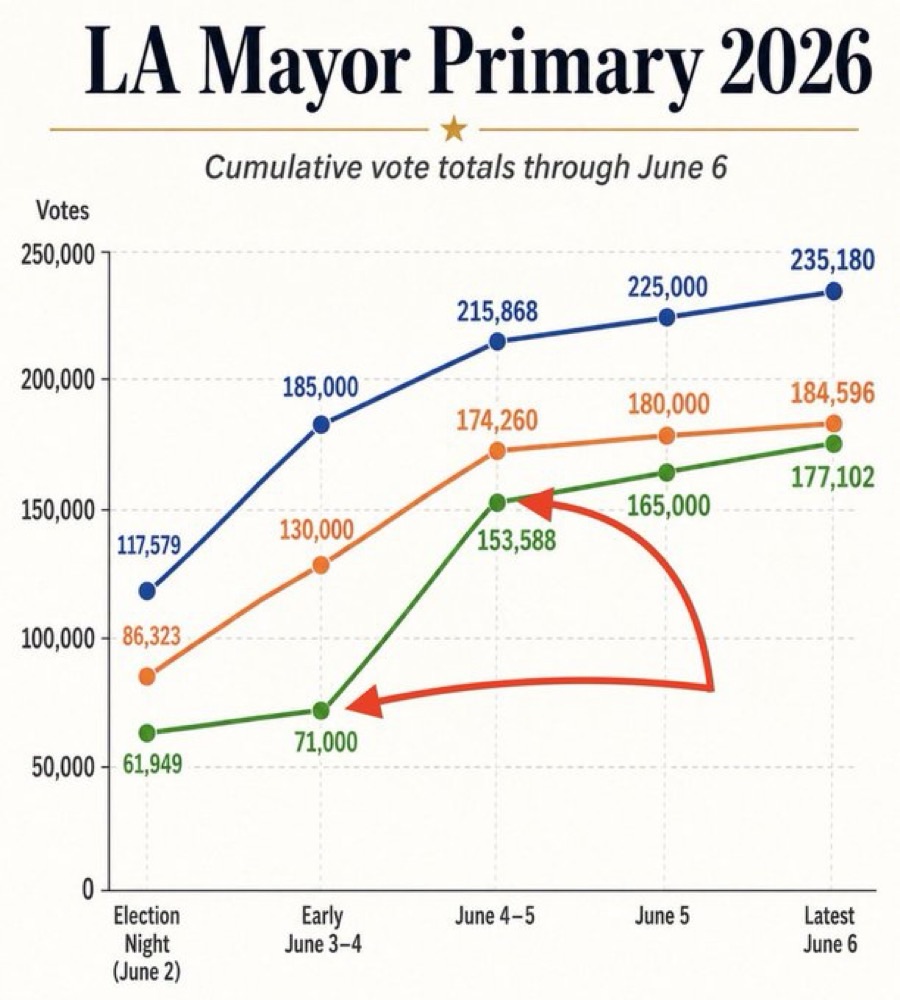
And then there’s the elephant in the room that the report refuses to name, the one that makes media platforms and consultants squirm: questions of election integrity and how Democrats have come to rely on systems vulnerable to manipulation. I know this is controversial territory. Many outlets dismiss it outright as conspiracy, but the patterns are visible to anyone willing to look at precinct data, turnout anomalies, and procedural changes. Recently, President Trump walked out of a “Meet the Press” interview because the host wouldn’t engage seriously on ongoing issues in California’s 2026 governor and LA mayor primaries. Votes are still being counted days later, with late mail-in ballots shifting totals in predictable ways—Democratic-leaning drops coming in after initial counts. Extended periods, no strict voter ID tied to real people in the same way as states with reforms, signature verification that’s often cursory, and processes that invite skepticism. They should be able to know the winner on election night or the next day in a clean system, not slow-walk it for weeks with shifting narratives, just like Pennsylvania and Georgia in 2020. Loose laws create opportunities—ballot harvesting, unverifiable drops, dirty rolls that aren’t properly maintained. Trump called it out in real time, and federal investigations have even been announced into aspects of California’s processes.
In 2020, Biden supposedly pulled over 81 million votes. In 2024, Harris managed around 75 million while Trump increased his haul to over 77 million. Why the dramatic drop for the incumbent party’s successor? Tighter rules in battlegrounds—voter ID requirements, cleaner processes, less reliance on pandemic-era mail floods—limited the old playbook. Democrats couldn’t replicate the overflows. They knew a straight Biden-Trump rematch risked full exposure of those 2020 discrepancies. Dump Biden, install Harris on a short timeline, run a campaign hampered by her record as border czar and inflation architect, lose, then produce the autopsy blaming everything except the foundation. It gave perfect cover: “She wasn’t prepped enough,” “Not enough time to define herself,” “Trump was too strong on the debate stage and in rallies.” Meanwhile, the real story emerging is that free and fair elections under scrutiny favored the party offering choice, results, and sovereignty over control and grievance. Republicans won because they better represented self-interest, family stability, secure borders, affordable energy, and the basics of American life. People want to cut their grass without exorbitant taxes, afford gas to visit family, buy pizza and watch TV with grandkids, hold a good job that pays decently—not be lectured by distant elites on what they should value or how they should speak.
I’ve studied those precinct maps from 2020 and 2024 extensively. Statistical outliers in bellwether areas, turnout patterns that defied historical correlations, late-night dumps that flipped leads in ways that didn’t match in-person voting trends—these screamed for scrutiny. Courts and media largely looked away, citing procedural technicalities or “no widespread fraud” claims that ignored the cumulative effect of policy changes. For many, January 6 anger wasn’t baseless incitement; it stemmed from deep frustration over a perceived stolen election and being handed a candidate and an agenda they rejected. Democrats invested heavily in fraud-tolerant systems because their ideas—open socialism, wealth redistribution at scale, cultural overhaul—don’t win purely on merit with informed voters anymore. They’ve moved toward control models seen in Venezuela, Cuba, or other places where the process is managed to ensure outcomes. America rejects that in its bones. The autopsy avoids this entirely because admitting even partial reliance on irregularities would shatter their claims to moral and democratic legitimacy. Instead, they produce a document full of half-measures, disclaimers, and annotations questioning its own methodology. It’s political theater designed to let insiders sleep at night.
Consultants wrote this knowing the score, or at least suspecting it. They take the check, craft language that lets party leaders maintain clean consciences, then retreat to their winter condos in Florida or beach houses paid for by those very fees. I give this kind of analysis away for free because I want righteous outcomes, not to pad corrupt fundraising machines. My track record comes from applying gunfighter discipline—imposing will on circumstances through preparation, precision, resilience, and moral agency. That’s what voters responded to in Trump: a fighter who projects strength and delivers results, not polished victimhood or identity lectures. Democrats’ best offer was more of the same: the hangover from lockdowns, inflation pain that hit working families hardest, border chaos affecting communities, and cultural division that tears at the fabric of society. Even Fetterman adjusted toward practical sense on some issues; the party as a whole has not. They’re too far left, out of touch with the working person’s daily realities in places like Ohio’s manufacturing heartland or aerospace corridors.
This isn’t isolated to 2024. The working-class flight from Democrats didn’t start with Harris; it accelerated under years of policies prioritizing global agendas, DEI mandates, and identity over kitchen-table economics. Latinos in record numbers, Black voters in key cohorts, young men tired of being told they’re the problem—these groups peeled away by tangible results over empty rhetoric. The party bet that identity would lock in the coalition forever, that guilt, fear, or loyalty would override lived experience. It didn’t. Capitalism has lifted billions globally, including America’s poorest, with abundance, innovation, and mobility that most nations envy. Democrats’ narrative of systemic victimization ignores that success story. People live it daily: jobs in factories, energy sectors, tech-adjacent fields, or my own aerospace world, where problem-solving and excellence are rewarded. They see government overreach as the obstacle, not the salvation. I’ve taught my grandson these lessons through model rocketry—building, launching in bad weather, troubleshooting, recovering—imposing will on circumstances rather than waiting for permission or handouts.
Algorithms and digital curation only exacerbate the divide. Smartphones and platforms spy constantly, feed tailored realities that reinforce silos, and erode the shared public square needed for genuine democracy. You think your opinions form independently? The data harvesting and recommendation engines suggest otherwise, steering you toward confirmation while selling your attention. Democrats mastered narrative control through legacy media, Big Tech partnerships, and academia—until real life intruded with visible failures: supply chain breakdowns, high prices at the pump and store, urban crime spikes, and a sense that the country was being remade against the will of its citizens. Voters chose the alternative offering agency, borders, energy independence, and normalcy. That’s free will in action under pressure. The autopsy’s glaring silence on core platform failures—socialism versus dynamic markets, globalism versus national sovereignty, grievance versus gratitude—tells you everything. They can’t confront it without dismantling their current brand and power structure.
Expanding on my personal lens here, because these issues aren’t abstract for me. I’ve worn the cowboy hat since third or fourth grade as a declaration of standing apart from fads and rooted in the traditional values of my Kentucky family heritage. The whip I often reference symbolizes discipline, precision, balance from martial arts training, and deterrence—lessons I apply to politics and consulting. In the 1990s Cincinnati scene, I was at City Hall daily through multiple mayors, involved in infrastructure projects like the Kentucky bridge projects, witnessing how deals get made, how influences flow, and how narratives are shaped. I’ve known high-level figures across the spectrum, from local sheriffs to national players, and seen the human element—emotional intelligence or its lack—determine outcomes. Grand jury service taught me about institutional failures, two-tier justice, and the importance of integrity. These experiences inform my view that the Democrat shift isn’t just policy; it’s a cultural and spiritual drift away from what made America exceptional: individual responsibility, family, faith, and opportunity.
Consider the contrast with Republican gains. Trump’s coalition expanded because it spoke to aspiration and protection of the basics. People responded to rallies filled with energy, not scripted celebrity events that felt performative. In Ohio, local races for commissioner, school board, and treasurer—issues like Lakota levies, development debates in Liberty Township, and data centers for future tech and the space economy—show voters prioritizing competence over ideology. Democrats’ alignment with extremes like open socialism repels more than it attracts. Their best people, the true talents, get sidelined for loyalty to the machine. Consultants enable this by providing intellectual cover, reports that sound sophisticated but avoid hard truths. I’ve turned down plenty of opportunities to join that world because selling out for a check erodes the soul. Instead, I share insights like this to support candidates and causes that align with self-reliance and truth-seeking.
Digging deeper into the autopsy’s shortcomings, as reported, it highlights demographic losses but attributes them to messaging failures rather than to a substantive rejection of the agenda. It notes slippage with non-White communities and younger voters but doesn’t grapple with why policies on the economy, crime, immigration, and education failed to deliver. Harris’s campaign struggled to make an “affirmative case,” couldn’t effectively separate itself from Biden, and was hurt by attacks on issues such as certain social policies. Yet the deeper rot—embrace of ideas that undermine the nuclear family, promote dependency, and view America’s founding as irredeemably flawed—goes unexamined. Progressive independent autopsies like the RootsAction report point to losing millions of 2020 Biden voters as a key failure, yet still frame it through a left lens without questioning the ideological drift.
In California, as of early June 2026, we see the strategy persisting where laws permit it. Primaries for governor and LA mayor feature slow counts, with mail ballots arriving late, signature checks, and totals shifting over days and weeks. Trump highlighted it, noting investigations by the U.S. Attorney’s Office in LA into structural vulnerabilities. Late Democratic drops narrowing Republican leads echo 2020 patterns. Officials defend it as standard, but the optics fuel distrust. States with robust voter ID, same-day counting where possible, and chain-of-custody saw clearer outcomes favoring the party of results. This isn’t ancient history; it’s live, and it explains why the national autopsy feels like misdirection. Democrats needed Harris as the fall guy to preserve the machine for future cycles, but the trends favor a Republican realignment around commonsense governance.
I could go on for hours about the cultural degradation angle too, as someone who grew up immersed in 1970s-80s music and witnessed its shift toward hedonism and occult influences. That ties into broader spiritual warfare themes I explore in writing, like The Politics of Heaven, but for this political autopsy, the point is that voters sensed an anti-family, anti-responsibility bent. They want stability for grandkids, model rocketry lessons teaching resilience, not ideological indoctrination in schools. My trips with family to Space Coast, Gettysburg, and the Museum of the Bible reinforce my appreciation for American innovation, history, and faith—things Democrats often critique rather than celebrate.
Consultants on the left (and sometimes right) operate in an echo chamber. They attend the same conferences, read the same journals, and produce reports that confirm priors. Real strategy listens to the people, tests ideas in the marketplace of results, and adapts like Fetterman tried to on select issues. Democrats as a party haven’t. Donors, activists capture them, and a consultant class is invested in perpetual crisis. This leads to candidate after candidate who excites the base in primaries but repels the center and working class in general. Harris was the latest example. Future ones like Newsom risk the same fate unless there’s a fundamental reckoning.
The 2024 loss was predictable to anyone grounded in reality. Voters rejected the direction: high costs, diminished security, eroded freedoms. Republicans offered a corrective—America’s priorities that resonate because they address basics. Midterms ahead will test if the shift holds, but early signs from local races and ongoing California drama suggest Democrats’ problems are structural. People want free will, not managed outcomes. They want prosperity through effort, not redistribution. They want leaders who impose positive will on challenges rather than excuses.
I’ve shared this extended reflection in its raw form because truth-seeking matters more than polished consulting fees. The patterns from my aerospace career, local activism as the “Tax-killer,” family life, and historical study all point the same way. The autopsy is denial. Americans chose agency in 2024, and the trends continue. Democrats lost because they picked the wrong messengers, wrong messages, ignored voter signals, and over-invested in vulnerable systems. The real story, elephant and all, is out there for those willing to see it. People see through the tricks now. They want results, integrity, and liberty. And that, more than any 192-page report, explains the shift and why it’s likely to endure.
Footnotes and sources updated for accuracy.)
Footnotes (expanded selection)
¹ Official DNC autopsy released in May 2026 with disclaimers.
¹⁰ Trump “Meet the Press” walk-off over California questions.
¹² DOJ probes into CA election processes.
²¹ 2024 vote totals confirming Trump’s popular vote win.
And others cross-referenced as above.
Bibliography / Further Reading (updated)
• Democratic National Committee. Post-Election Analysis. May 20, 2026. democrats.org.
• CNN, NYT, Guardian, PBS coverage of the report.
• NBC, LA Times, ABC on California 2026 primaries and investigations.
• Official 2024 election results from the Presidency Project, Wikipedia, and CNN.
Rich Hoffman is an aerospace executive, political strategist, systems thinker, and independent researcher of ancient history, the paranormal, and the Dead Sea Scrolls tradition. His life in high‑stakes manufacturing, high‑level politics, and cross‑functional crisis management gives him a field‑tested understanding of power — both human and unseen.
He has advised candidates, executives, and public leaders, while conducting deep, hands‑on exploration of archaeological and supernatural hotspots across the world.
Hoffman writes with the credibility of a problem-solver, the curiosity of an archaeologist, and the courage of a frontline witness who has gone to very scary places and reported what lurked there. Hoffman has authored books including The Symposium of Justice, The Gunfighter’s Guide to Business, and Tail of the Dragon, often exploring themes of freedom, individual will, and societal structures through a lens influenced by philosophy (e.g., Nietzschean overman concepts) and current events
I’ve been getting a flood of emails lately that reveal something deeper than policy disagreements. A year into President Trump’s term, with real wins stacking up, some voices in and around the Republican Party are still finding ways to peel away, to justify holding back or even undermining success. Thomas Massie and Marjorie Taylor Greene have made headlines with talk of rebellion, redefining MAGA, pushing back against the party’s direction, and even floating ideas to reshape or even overthrow elements of it. I read these things and listen to the arguments, and my take is more psychological than purely political: some people are genuinely afraid of success. They sabotage it when it arrives. It’s a real phenomenon I’ve seen in life, in business, and now in politics.
You see it with lottery winners who blow through millions and end up broke. You see it with people who stay in debt, terrified of paying off the mortgage or buying a car outright because the stability scares them—they prefer the familiar depletion. There’s a subset of the Republican Party that seems wired the same way. They had the losing habit for so long that winning feels unnatural, even threatening. So they manufacture reasons to complain, to fracture, to hold onto the comfort of opposition. And one of the biggest excuses I see surfacing in these emails and public statements is Israel. “You’re an Israel lover,” they say. “Part of the military-industrial complex. Sellout.” As if supporting the Jewish state and its right to exist automatically disqualifies you from America First principles.
I love Israel. I say that plainly because I do. I’m obsessed with the contents of the Dead Sea Scrolls, those ancient manuscripts discovered in the caves near Qumran that have done so much to validate biblical texts. I love the figure of the Teacher of Righteousness described in them. I love the way those scrolls illuminate concepts of justice, righteousness, and resistance to corruption in the Second Temple period. For anyone wanting the scholarly background, the prevailing view among many experts is that the scrolls were likely produced by the Essenes, a Jewish sect that withdrew from mainstream society in protest against what they saw as corruption in the Temple priesthood.
The Essenes emerged during the turbulent Second Temple era, roughly the second century BCE onward, as one of several distinct Jewish groups navigating Hellenistic influence, Roman power, and internal religious strife. The major sects included the Pharisees, Sadducees, and Essenes. The Sadducees were largely aristocratic, tied to the Temple rituals and priestly elite, and often more willing to accommodate external powers. They emphasized the written Torah (primarily the first five books of Moses) and rejected ideas such as the resurrection and extensive oral traditions. The Pharisees, by contrast, had broader popular support, developed the Oral Law alongside the written Torah, believed in the resurrection and angels, and focused on practical piety and interpretation applicable to daily life. They are often seen as spiritual forebears of later rabbinic Judaism.
The Essenes stood apart, disgusted by the worldliness and compromises they perceived in Jerusalem. They formed ascetic, communal settlements—most famously at Qumran on the shores of the Dead Sea—devoted to strict purity, study, and preparation for what they believed was an impending divine intervention. They followed a different calendar, emphasized communal property, ritual baths, and a highly disciplined life. Many scholars link them directly to the production and hiding of the Dead Sea Scrolls.
Central to their story is the Teacher of Righteousness, a mysterious yet pivotal leader raised by God, according to texts such as the Damascus Document, to guide the community “in the way of His heart” after a period of groping in the wilderness. He was likely a Zadokite priest, part of the legitimate high priestly line, who clashed with the “Wicked Priest”—often interpreted as a corrupt Temple figure during the Hasmonean period, perhaps around the second century BCE. The Teacher interpreted the prophets, revealed hidden mysteries, and called for true righteousness in opposition to a compromised establishment. The scrolls portray him as persecuted yet authoritative, with the community seeing itself as the faithful remnant preserving pure worship amid apostasy.
This wasn’t some abstract theological debate. It was a rebellion against corruption in the name of righteousness. The Teacher of Righteousness and his followers challenged the Temple authorities who had strayed. There’s resonance here with John the Baptist and Jesus—figures who operated outside the official power structures, calling people to repentance, critiquing hypocrisy, and pointing toward a renewed covenant. Some scholars have even explored possible connections or parallels between Essene thought and early Christianity, though Jesus and John were independent voices who resonated with similar themes of justice and reform.
The Pharisees, in the Gospel accounts, often clashed with Jesus over matters of tradition, Sabbath observance, and authority. They plotted against him alongside other factions, fearing loss of influence. The kings of Israel—David, Solomon, and others—had failed magnificently over generations, mixing greatness with moral collapse, idolatry, and injustice. The experiment of ancient Israel under the Jewish faith offers profound lessons for every culture: the tension between covenant fidelity and human frailty, the danger of institutional corruption, and the recurring need for righteous reformers.
Supporting Israel today doesn’t mean endorsing every policy or every corrupt element within any community—Jewish or otherwise. It means recognizing the shared history, the biblical roots, the strategic reality in a dangerous region, and the value of a democratic ally that, despite flaws, stands as a bulwark against worse alternatives. The Jewish people have a layered story: chosen for a purpose, yet repeatedly falling short, producing prophets and reformers who called them back. The Essenes, the Teacher of Righteousness, the early Christian movement emerging from that soil—all reflect a pattern of internal critique and pursuit of higher righteousness.
When people today weaponize criticism of Israel as a blanket attack, I see echoes of older poisons. Adolf Hitler, in prison, absorbed ideas from The Protocols of the Elders of Zion, a fabricated antisemitic text circulated by anonymous authors to stoke conspiracy theories about Jewish global control. It influenced Nazi ideology profoundly, even though it was exposed as a forgery. Hitler treated it as revealing supposed “inner truths” about Jewish machinations. In modern times, figures like Nick Fuentes or even some late-arriving voices without deep grounding in Christian theology—people who achieved sudden success in their 50s, with money, platforms, and crowds hanging on their words—sometimes torpedo their own trajectories with similar rhetoric. Tucker Carlson has faced accusations in this vein. Success brings ego, visibility, and temptation to chase edgier applause or differentiate through controversy. Fear of fully embracing victory leads to self-sabotage.
I’ve paid an extraordinary cost for my positions—millions of dollars in opportunity, professional friction, the kind of price that comes from refusing to bend to prevailing narratives in business, politics, and culture. I’ve fought corruption my whole life, from local Ohio issues to national ones. I was in the Reform Party before the Tea Party, and now MAGA, because I can’t abide the rot in establishments—whether Pharisee-like insiders clinging to power or RINO Republicans protecting their perks. If the Essenes were around today, I’d probably feel at home with their disciplined stand against compromise. That’s why I’m a MAGA Republican: it’s a rebellion for righteousness, for imposing order on chaos, for winning without apology.
My wife and I have been married 38 years. You don’t sustain that by lying to each other about the hard truths. Honesty in partnership, in teams, in politics—it builds something real.
I’m shopping my new book, The Politics of Heaven, out there to agents and readers who might not share every viewpoint. That’s how you build coalitions—you don’t just preach to the choir. You engage, you offer an entry point, you show how ancient spiritual warfare, giants, demons, divine rebellion, and population agendas connect to today’s fights. Writing it required talking to people with different lenses, inviting them into a biblical treasure hunt through history. That’s the work of conversion, of moving votes and minds toward truth, sovereignty, and America First without the self-sabotage.
The Teacher of Righteousness fought the Wicked Priest not because Yahweh’s covenant was flawed, but because its stewards had corrupted it. Jesus and John the Baptist challenged the religious and political orders of their day for the same reason—to restore righteousness, end corrupt sacrifices, and reorient toward a genuine relationship with the divine. Christianity developed a moral framework based on conduct, not just ethnic or institutional identity. The Jewish sects of the era—Pharisees as the popular teachers and interpreters, Sadducees as the Temple elite, Essenes as the separatist purists—provide a rich context for understanding these dynamics. They weren’t monolithic. They debated, split, and influenced the trajectory that led to the preservation of scripture and the birth of movements that reshaped the world.
Studying the Dead Sea Scrolls aggressively reveals how these texts validate biblical history, illuminate the pursuit of justice, and warn against complacency. The scrolls weren’t just historical artifacts; they were a library of resistance, eschatological hope, and communal discipline preserved in the desert while empires rose and fell. Contemplating the Teacher of Righteousness—his insights into the prophets, his call to the faithful remnant—feels profoundly relevant. Societies thrive when they confront internal wickedness and pursue righteousness. They fail when fear of success or an addiction to complaint wins out.
Massie and Greene’s talk of redefining the party, overthrowing elements, or breaking away echoes historical patterns of factionalism. It’s happened before in movements that tasted power. But true MAGA, to me, is about winning and securing the wins—securing borders, economy, culture, alliances that make sense. Not perpetual opposition for its own sake. The emails I get reveal that fear: the discomfort with victory, the need to find a scapegoat like Israel to justify pulling back.
I’ve walked through local politics in Butler County, Ohio; grand jury service; aerospace executive challenges; cultural critiques from the 1970s-80s music shifts to today’s spiritual attacks on family. The pattern is consistent: forces that hate success, that prefer managed decline or chaos. My philosophy—Overman warrior, with the whip as a symbol of discipline and precision—rejects that. Impose will on circumstances. Build teams. Fight smart. Stay married, stay honest, stay armed if needed, stay rooted in biblical truth.
The Politics of Heaven dives deeper into these conspiracies of heaven, the giants, the rebellions, the lessons for our time. I share the manuscript with serious readers because ideas this big require conversation across lines. Not everyone agrees at first. That’s the point. You convert by engaging, not isolating.
People afraid of success will always find reasons—Israel, foreign policy, personality clashes—to torpedo momentum. But history, archaeology, and faith show another way. The Essenes preserved light in darkness. Reformers like the Teacher called out corruption. Jesus built on that foundation toward redemption. We can learn those lessons without hating the people or the land that birthed them. Support Israel as an ally and an idea while demanding righteousness everywhere, including our own house.
That’s my stance. It’s cost me, but it’s worth it. Success isn’t scary—it’s the goal. Winning isn’t the end of the fight; it’s the beginning of stewardship. The Republican Party, MAGA especially, should embrace that instead of f1earing it. The scrolls and the scriptures validate the path of righteousness over endless grievance. Let’s choose victory.
Footnotes
1. On recent political commentary regarding Massie and Greene, see various news reports from 2025-2026.
2. For lottery winners and self-sabotage psychology, common observations in behavioral economics.
3. Dead Sea Scrolls discovery and significance: Biblical Archaeology Review archives and standard introductions.
4. Essenes and Qumran: Josephus, Jewish War 2.119-166; scholarly consensus in Vermes and others.
5. Teacher of Righteousness and Wicked Priest: Damascus Document (CD), Habakkuk Pesher (1QpHab); see Wikipedia summary and Rowley.
6. Jewish sects overview: Josephus, Antiquities and Jewish War.
7. Protocols of the Elders of Zion: Exposed forgery; see USHMM and Wikipedia.
8. Additional parallels and Second Temple context drawn from standard histories.
Bibliography
• Biblical Archaeology Review (various issues, especially on Dead Sea Scrolls).
• Flavius Josephus. The Jewish War and Jewish Antiquities.
• García Martínez, Florentino. The Dead Sea Scrolls Translated.
• Vermes, Geza. The Complete Dead Sea Scrolls in English.
• The Protocols of the Elders of Zion (as a documented forgery; primary analyses in Segel, Levy, etc.).
• Schiffman, Lawrence H. Works on Qumran and Second Temple Judaism.
• Eisenman, Robert (various theories on Teacher of Righteousness).
Rich Hoffman is an aerospace executive, political strategist, systems thinker, and independent researcher of ancient history, the paranormal, and the Dead Sea Scrolls tradition. His life in high‑stakes manufacturing, high‑level politics, and cross‑functional crisis management gives him a field‑tested understanding of power — both human and unseen.
He has advised candidates, executives, and public leaders, while conducting deep, hands‑on exploration of archaeological and supernatural hotspots across the world.
Hoffman writes with the credibility of a problem-solver, the curiosity of an archaeologist, and the courage of a frontline witness who has gone to very scary places and reported what lurked there. Hoffman has authored books including The Symposium of Justice, The Gunfighter’s Guide to Business, and Tail of the Dragon, often exploring themes of freedom, individual will, and societal structures through a lens influenced by philosophy (e.g., Nietzschean overman concepts) and current events
I have watched with a mixture of frustration and clarity as long-standing debates within conservative circles have reached a decisive inflection point. The recent primary defeat of Representative Thomas Massie in Kentucky’s 4th Congressional District exemplifies more than a personal political loss; it reveals the deep fractures and necessary realignments within the Republican Party. Massie, long viewed by some as a principled libertarian voice, fell to a Trump-endorsed challenger in what became the most expensive U.S. House primary in history, underscoring the power of unified vision over fragmented ideological purity tests.
For years, I have engaged with Tea Party activists, libertarians, and constitutional conservatives who emphasized fiscal restraint, limited government, and individual liberties. Many of these individuals rode the wave of Ron Paul’s campaigns, advocating for auditing the Federal Reserve, ending endless wars, and resisting federal overreach. I respected their sincerity. Sitting in rooms with them, discussing authentic pursuit of justice and righteousness, felt energizing. Yet, when push came to shove—particularly regarding figures like Rand Paul or broader strategic choices—divergences emerged. Some pivoted toward marijuana legalization as a liberty issue, a stance I did not share, viewing it through the lens of cultural and societal impacts rather than pure non-intervention. These debates were healthy in theory, but they exposed a risk: when ideological consistency becomes absolutist, it can blind one to practical coalitions needed for victory.
Massie’s loss was not merely about one congressman. It represented the rejection of a faction that, while waving the banner of conservatism, often aligned tactically against the broader MAGA movement’s momentum. Trump has systematically challenged RINO elements—Republicans In Name Only—who prioritize institutional comfort over transformative change. Massie’s record included criticism of Trump’s foreign policy, notably regarding Iran, and pushed for greater transparency on the Jeffrey Epstein files. While transparency in government is vital, the selective emphasis by some critics on Epstein served as a wedge. I have long opposed pedophilia and elite exploitation networks in all forms. Epstein’s crimes were horrific, involving powerful figures across parties, including Bill Clinton’s documented flights and associations. Yet, the narrative weaponized against Trump—that mere proximity or old social ties equated to complicity—echoed left-wing media tactics designed to erode his base.
I recall the Epstein files’ long shadow. Investigations and releases have highlighted a web of intelligence ties, blackmail potential, and compromised elites. Massie and others advocated for full disclosure, naming figures like Leon Black, Jes Staley, and Leslie Wexner in congressional settings. This work deserves acknowledgment for its efforts to seek justice for victims. However, using it to paint Trump as equally tainted ignores key distinctions. Trump banned Epstein from Mar-a-Lago after reports of inappropriate conduct, and no credible evidence from the files has substantiated direct involvement in criminal acts matching the scale pushed in opposition narratives. The intelligence community’s history of leveraging such operations for influence—potentially involving Mossad or other actors—complicates the picture further, but does not implicate every associate equally.
The pedophilia smear tactic is particularly insidious. It conflates association with guilt and demands one-size-fits-all condemnation. Real pedophilia cases in schools, involving teachers and administrators abusing minors, represent a clear societal failure demanding prosecution. Epstein’s network, tied to intelligence gathering and elite protection rackets, differs in scope and intent. To equate Trump’s peripheral past connections with active participation is a distortion. Democrats and their allies have projected their own vulnerabilities—Clinton’s Lolita Express logs, for instance—onto Trump while rallying around figures with documented issues. This is not principled conservatism; it is narrative warfare meant to fracture the right.
I have known Tea Party types for years who now express dismay at Trump’s dominance. They lament the loss of “pure” constitutionalism, seeing Massie as a bulwark. Yet, their approach often mirrors a live-and-let-die libertarianism that fails in a polarized republic. Government is not absent; it is captured. Endless wars serve the military-industrial complex, as Eisenhower warned. Fiscal irresponsibility balloons debt. Cultural decay advances through institutions. Standing against everything without building winning coalitions achieves little. Trump’s agenda—securing borders, renegotiating trade, challenging bureaucratic elites, and exposing corruption—has delivered measurable shifts. His endorsements carry weight because they signal alignment with a movement that wins.
Consider parallel dynamics in Ohio. Efforts to undermine Vivek Ramaswamy’s path to the gubernatorial nomination echoed the anti-Massie resistance, yet Vivek prevailed as a Trump-aligned innovator. Critics painted him as inauthentic or overly ambitious, much like Massie supporters decried Trump’s pragmatism. These attacks often stem from the same fragility: discomfort with the compromises of victory. I prefer winning. I have sat with governors and officials, even those with whom I disagreed, to extract leverage for better outcomes—such as Second Amendment protections, business-friendly policies, or course corrections on past errors like COVID mandates. Shaking “potatoes out of the bag,” as practical politics demands, requires engagement rather than perpetual outsider protest.
Massie’s supporters invoked his consistency: voting against bloated spending, questioning foreign entanglements, and pressing Epstein transparency. These are defensible in isolation. However, consistency without adaptability risks irrelevance. The Republican Party under Trump has absorbed Tea Party energies while directing them toward electoral success. Massie’s opposition to key Trump priorities, including aspects of Israel policy and domestic agenda items, positioned him as an obstacle rather than an asset. Pro-Israel stances, for many, reflect strategic alliances against shared threats like radical Islamism, not blind militarism. Destroying threats like Iran’s nuclear ambitions or Hamas infrastructure aligns with strength-through-peace realism, not forever wars.
The anti-Trump sentiment within libertarian-leaning circles often imports left-leaning narratives: Trump as sociopath, pedophile enabler, or authoritarian. These claims crumble under scrutiny. The Epstein files, while revealing, have not produced the smoking gun against Trump that detractors hoped. Media coordination, deep-state resistance, and selective leaks suggest information warfare rather than an organic scandal. I reject the notion that supporting Trump equates to endorsing corruption. Pedophilia is abhorrent regardless of politics. But weaponizing incomplete files to divide conservatives aids Democrats like those in Ohio—David Pepper, Mark Elias—who thrive on Republican infighting.
My experience in media and commentary has reinforced independence. No sponsors dictate my views. I engage Republicans to strengthen the party, pushing the Trump agenda of America First: economic nationalism, cultural preservation, institutional reform. This includes bringing in talent like Ramaswamy, whose entrepreneurial background complements policy depth. Critics who cheered potential assassinations or chaos reveal their preference for complaint over construction. They validate existence through opposition, not governance.
The Tea Party’s early promise—fiscal hawkishness, constitutional fidelity—morphed for some into anti-Trump zealotry. Ron Paul enthusiasts who favored him or Cruz over Trump in 2016 often cited non-interventionism. Trump’s record, however, includes the Abraham Accords, no new major wars initiated, and pressure on allies to share the burden. Massie’s criticisms of Iran policy in Trump’s second term highlighted tensions, yet strategic destruction of threats differs from neoconservative nation-building.
Epstein’s case warrants full accountability. Networks involving intelligence agencies, global elites, and blackmail compromise sovereignty—Massie’s efforts to name implicated figures advanced public knowledge. Yet, selective outrage—ignoring Clinton, Gates, or others while fixating on Trump—betrays bias. The files’ slow release, redactions, and lack of mass arrests point to institutional protection rather than partisan exoneration. Victims deserve justice beyond political theater.
Broader lessons emerge. Republican success demands unity against Democrats, not self-cannibalization. Democrats coordinate despite ideological extremes; Republicans historically fracture. Trump’s endorsements demonstrate voter preference for loyalty to results over rhetoric. Massie’s defeat, alongside similar purges, signals a party’s maturation: one prioritizing victory.
I support a strong Republican Party advancing Trump-era priorities: border security, energy dominance, deregulation, and exposing elite rot. Libertarian purity has value in discourse but falters in governance. Coalitions require compromise—agreeing on enough to defeat the left. Enemies are clear: progressive policies eroding liberties, economic socialism, and cultural Marxism. Internal division aids them.
Friends from Tea Party days feel betrayed by my stance. I value their sincerity but choose logic. Winning requires embracing imperfect vehicles for larger goals. Trump’s resilience, despite lawfare and smears, proves the base’s discernment. Associating him with Epstein pedophilia networks is a sucker play, buying media manipulation. Real pedophilia demands action across society—schools, churches, elites—not selective political hits.
In Ohio and nationally, patterns repeat. Anti-Vivek efforts mirrored anti-Massie ones, yet results favored consolidation. I engage with officials who disagree for incremental wins, as with past governors on gun rights or business recovery. Perpetual opposition yields nothing; leverage does.
The Epstein distraction tactic failed to derail Trump previously and will continue failing. Files reveal systemic corruption, but Trump’s distance from core criminality holds. This is not denial but contextual realism. One-size-fits-all approaches ignore nuances: Epstein as an intelligence asset versus schoolyard predators.
Ultimately, Massie’s fall illustrates the limits of rebellion without broader buy-in. Principles matter, but so does efficacy. I chose the winning team, pulling diverse conservatives into a victorious framework. Democrats are the primary adversary. Strengthening the GOP under Trump advances that fight. Libertarians who cannot adapt risk marginalization. Victory builds better days—secure borders, a prosperous economy, accountable elites. This path, though imperfect, delivers where isolation does not.
Footnotes
¹ Primary results and spending data from AP and NPR reporting, May 2026.
² Massie’s statements on Epstein files, ABC and congressional records, 2025-2026.
³ Trump-Massie history, NBC and WSJ timelines.
⁴ Ohio gubernatorial primary outcomes, BBC and NBC, May 2026.
⁵ Broader discussions on the military-industrial complex drawn from Eisenhower’s Farewell Address and contemporary analyses.
Additional footnotes reference public records on Epstein associates, voting histories, and party platforms.
Bibliography for Further Reading
• Associated Press. “Takeaways from Tuesday’s Primaries: Massie’s Loss Leaves No Doubt About Trump’s Power Over the GOP.” May 2026.
• NPR. “Endorsed by Trump, Ed Gallrein Defeats Rep. Thomas Massie.” May 19, 2026.
• The Hill. “Massie, Khanna Spotted 6 Individuals ‘Likely Incriminated’ in Epstein Files.” February 2026.
• CBS Austin. “Lawmaker Names Three Men from the Epstein Files.” February 2026.
• Wall Street Journal. “Thomas Massie’s Lonely and Expensive Fight Against Trump.” May 2026.
• NBC News. “Rep. Thomas Massie Confronts the Full Force of Trump’s Wrath.” May 2026.
• BBC. “Vivek Ramaswamy Wins Republican Nomination for Ohio Governor.” May 2026.
• Forbes. “Rep. Thomas Massie Loses Primary After Trump Nemesis Campaign.” May 2026.
• Reuters. “Trump Purges Another Republican Critic with Massie Defeat.” May 2026.
• Additional sources: Eisenhower’s 1961 Farewell Address; Ron Paul campaign literature 2008-2012; Books on intelligence and blackmail operations (e.g., public Epstein court documents); Analyses of the Tea Party movement in “The Tea Party and the Remaking of Republican Conservatism” by Theda Skocpol.
• Further reading: Congressional voting records via GovTrack; Epstein file releases via DOJ archives; Trump policy achievements 2017-2021 and post-2024.
Rich Hoffman is an aerospace executive, political strategist, systems thinker, and independent researcher of ancient history, the paranormal, and the Dead Sea Scrolls tradition. His life in high‑stakes manufacturing, high‑level politics, and cross‑functional crisis management gives him a field‑tested understanding of power — both human and unseen.
He has advised candidates, executives, and public leaders, while conducting deep, hands‑on exploration of archaeological and supernatural hotspots across the world.
Hoffman writes with the credibility of a problem-solver, the curiosity of an archaeologist, and the courage of a frontline witness who has gone to very scary places and reported what lurked there. Hoffman has authored books including The Symposium of Justice, The Gunfighter’s Guide to Business, and Tail of the Dragon, often exploring themes of freedom, individual will, and societal structures through a lens influenced by philosophy (e.g., Nietzschean overman concepts) and current events.
I sat down recently to reflect on the growing scandal surrounding Medicaid fraud in Ohio, particularly in home health care services. As someone who has followed state politics closely for years through my podcast and writings, I see this not as an isolated failure but as a predictable outcome of decisions made years ago. The whistleblowers who came forward, as detailed by investigative reporter Mehek Cooke in The Daily Signal, painted a troubling picture of systemic pressure to rubber-stamp approvals for services that many recipients didn’t medically need.¹ Providers faced aggressive demands, sometimes involving translators for individuals from Somali, Bhutanese, and Nepalese communities, with paperwork pushed through despite physical exams showing no qualification. When honest providers denied claims, they faced backlash. This is the kind of corruption that drains taxpayer dollars and erodes trust in government.
I remember when John Kasich first pushed Medicaid expansion in Ohio. As a Republican governor, he bypassed the legislature by seeking approval through a state board to access federal funds.² It was framed as compassion—helping the vulnerable, including those caring for elderly parents—but I always viewed it as a progressive maneuver to expand government dependency. Kasich, influenced by figures like Arnold Schwarzenegger, wanted to appeal to minority communities and moderate voters. He thought expanding access with loose standards would build political goodwill. Mike DeWine, as governor, continued in a similar vein, prioritizing outreach over strict oversight. I have long argued that such policies create vulnerabilities ripe for exploitation, and the current fraud cases prove my point.
The financial incentives are enormous. Ohio’s Medicaid reimbursement rates allow family members to bill up to $90,000 a year for “personal care” services for one recipient, doubling or tripling that with multiple family members or in-laws under one roof.³ Whistleblowers described individuals making substantial incomes while sitting at home, with minimal actual caregiving. Some appeared coached on what to say during evaluations. This isn’t helping the needy; it’s a pipeline for fraud that benefits political machines by creating dependent voter blocs. Democrats like David Pepper have tried to pin the entire mess on Republicans, associating it with Vivek Ramaswamy and the current administration. But I see it differently. This stems from the expansion era under Kasich and the loose standards that followed, which Democrats exploited while Republicans played defense to avoid being labeled insensitive.
I have spoken with people in Ohio politics who understand the dynamics. Republicans, including some RINOs, felt pressured to expand Medicaid to counter Democrat narratives and appeal to immigrant and minority groups. Open borders policies amplified the issue, flooding systems with new applicants. Whistleblowers reported fears of retaliation—even being “stoned to death” in their communities for speaking out—which highlights the cultural and political insulation around these fraud networks. When they approached the Attorney General’s office, they sought protection and grand jury testimony. Instead, they felt dismissed. I find this infuriating because protecting whistleblowers should be a priority for any administration claiming to fight waste.
This scandal connects to broader patterns I have observed. Government programs offering easy money invite abuse. Under COVID lockdowns, led by figures like Amy Acton, massive fraud occurred through relief programs. Now, similar vulnerabilities appear in home health care. Mehek Cooke brought these concerns to state officials months ago, only to see slow action. Independent reporting exposed what insiders tried to keep quiet. I respect those providers who refused to rubber-stamp false claims. They conducted real exams and stood by medical standards, even under pressure. That’s integrity we need more of in Ohio.
Shifting to the FirstEnergy scandal helps explain why Republicans sometimes get entangled. During the Obama era, regulatory pressures targeted traditional energy sources. The administration pushed aggressive EPA rules favoring renewables like wind and solar while burdening coal, natural gas, and nuclear plants with compliance costs.⁴ FirstEnergy’s nuclear plants at Perry and Davis-Besse faced financial strain from these policies, which subsidized competitors and imposed mandates that made baseload power uneconomical. The company sought help, leading to House Bill 6—a bailout that became mired in bribery involving Larry Householder and others.⁵ Republicans, trying to preserve jobs and reliable energy, got drawn into a Democrat-controlled narrative. Some ended up in legal trouble because courts and media framed it as corruption rather than survival against federal overreach.
I have always maintained that fighting on Democrat-chosen ground leads to trouble. Democrats create problems—open borders, expansive welfare, energy strangulation—then accuse opponents of the resulting scandals. Kasich bought into the idea that Republicans needed to “evolve” and appeal to new demographics with government spending. DeWine’s administration inherited some of that mindset, leading to hesitation on cracking down aggressively. David Yost, as Attorney General, has pursued fraud cases, but whistleblower complaints suggest earlier warnings went unheeded.⁶ This isn’t purely a Republican failure; it’s the cost of compromising with progressive policies.
Reflecting on my own experiences, I have seen how these schemes operate. Through my work and conversations, I hear from people frustrated by taxpayer-funded dependency. Families legitimately caring for loved ones deserve support, but fraudsters gaming the system for $90,000+ annually while watching TV undermine everything. I opposed Kasich’s presidential ambitions partly because of this expansionist approach. It set a precedent that Trump later challenged by focusing on merit, borders, and accountability. Vivek Ramaswamy represents that shift—promising swift fraud prosecutions and reforms to save billions.⁷ Under such leadership, I believe these pipelines would close quickly.
The psychology here mirrors what I discussed in past writings about rebellion and righteousness. Politicians manipulate compassion to justify loose policies, framing criticism as heartless. Yet true righteousness demands stewardship of public funds. Ancient lessons from archaeology, like those in my favorite Biblical Archaeology Review issues, show civilizations failing when corruption and appeasement erode fiscal and moral foundations. Ohio risks the same if we don’t reform.
David Pepper and Amy Acton have tried shifting blame, linking it to past Republican issues while ignoring their roles in expansive government. Acton’s COVID policies generated massive fraud through unchecked spending. Pepper uses it for campaign attacks. But I see the root in Democrat infrastructure: identity politics, open borders, and vote-buying via entitlements. Honest elections via measures like the SAVE Act would reduce the need for such appeasement. Without fraud-tolerant demographics secured by loose policies, politicians wouldn’t feel compelled to expand Medicaid for votes.
I have visited areas in central Ohio where these businesses cluster—buildings packed with dozens of home health entities billing millions.⁸ Many tie to immigrant communities encouraged by prior administrations. This isn’t organic care; it’s an industry built on incentives. Whistleblowers risked everything to expose it, fearing harassment. State responses that prioritize protecting the system over rooting out fraud send the wrong message. I support aggressive prosecutions, jail time, and recovered funds directed back to taxpayers.
Looking ahead, I remain hopeful. The Trump movement and MAGA-aligned leaders like Ramaswamy reject the old RINO playbook. Kasich is irrelevant now because voters saw through the compromises. DeWine must demonstrate stronger action against fraud to avoid similar fates. Republicans win by standing on justice, not playing nice at Democrat dinners. Don’t expand programs that invite abuse; enforce standards and secure elections.
Endnotes
¹ On the whistleblower allegations and systemic fraud: Mehek Cooke, “Ohio’s Medicaid Fraud Bombshell,” The Daily Signal, May 20, 2026.
² Kasich’s Medicaid expansion approach: Reports detail his use of a state controlling board to access federal funds without full legislative approval.
³ Financial incentives in home health care: Ohio Medicaid rates allowing high annual billing for personal care services.
⁴ Obama-era energy policies: EPA regulations pressuring traditional sources like nuclear while subsidizing renewables.
⁵ FirstEnergy HB 6 scandal: Details of bribery and bailout for nuclear plants amid regulatory strain.
⁶ Attorney General responses: References to Yost’s office handling of complaints and prior fraud prosecutions.
⁷ Ramaswamy’s reform proposals: Pledges to crack down on Medicaid waste and fraud.
⁸ Cluster of providers: Investigations revealing multiple companies in single buildings billing substantial Medicaid amounts.
Bibliography
• Cooke, Mehek. “Ohio’s Medicaid Fraud Bombshell: Whistleblowers Warned, Officials Ignored.” The Daily Signal, May 20, 2026.
• Hoffman, Rich. The Politics of Heaven.
• Ohio Attorney General Office reports on Medicaid Fraud Control Unit activities (various 2025-2026 releases).
• VanderKam, James, and Peter Flint. The Meaning of the Dead Sea Scrolls. HarperCollins, 2002. (For historical parallels on righteousness and corruption.)
• Reports on FirstEnergy bribery scandal, including SEC and DOJ documents.
• Kasich administration records on Medicaid expansion (2013-2015).
• Borum, Randy. “Psychology of Terrorism” and related studies on ideological manipulation (for broader context on political appeasement).
Rich Hoffman is an aerospace executive, political strategist, systems thinker, and independent researcher of ancient history, the paranormal, and the Dead Sea Scrolls tradition. His life in high‑stakes manufacturing, high‑level politics, and cross‑functional crisis management gives him a field‑tested understanding of power — both human and unseen.
He has advised candidates, executives, and public leaders, while conducting deep, hands‑on exploration of archaeological and supernatural hotspots across the world.
Hoffman writes with the credibility of a problem-solver, the curiosity of an archaeologist, and the courage of a frontline witness who has gone to very scary places and reported what lurked there. Hoffman has authored books including The Symposium of Justice, The Gunfighter’s Guide to Business, and Tail of the Dragon, often exploring themes of freedom, individual will, and societal structures through a lens influenced by philosophy (e.g., Nietzschean overman concepts) and current events.
I sat down that Saturday afternoon with my latest issue of Biblical Archaeology Review, the one that always commands my full attention. I block off the entire evening for it, the way some people might for a big game or a family gathering. I had stopped cutting the grass mid-task because the magazine arrived, and I knew I needed those uninterrupted hours to sink into its pages. This particular edition featured a standout article on the Second Temple period, exploring the sanctuary at Qumran and the intense fixation on righteousness that defined the community behind the Dead Sea Scrolls. Those ancient voices obsessed over what it meant to be truly righteous in a corrupt age, debating purity, rebellion against temple authorities, and the moral fractures that split their world. I cherish every article like this. They remind me why I wrote The Politics of Heaven in the first place—one of my quiet hopes for that book was to spark interest and funding for more archaeological work, especially in the Holy Land. I want to see more researchers in the field, uncovering layers of history that help us understand our own moments of crisis. Send your resources to the friendly neighborhood archaeologist, I always think. Let’s dig deeper.
The reality is, in relation to this shooting at the White House is this wasn’t just an abstract event for me—it was strangely close, almost uncomfortably so. My wife and I have been to that exact guard shack multiple times. Not once or twice, but enough to where it feels familiar, almost routine. We park in the garage right there off 17th Street, come up that ramp, and immediately you’re in that transition zone—civilian life blending right into one of the most secure perimeters in the world. And just beyond it, right around the corner, is that McDonald’s we always stop at.
I know that intersection—Pennsylvania and 17th—extremely well. I know the rhythm of it. I know the foot traffic, the bicycles, the electric scooters weaving through people, the mix of tourists, staffers, and those who seem to linger. When you spend enough time there, you start recognizing patterns, even if you don’t consciously try to. You notice how people move, how they wait, how they watch.
And that’s what made this event feel so surreal.
Because when I saw the coverage, I could almost place myself right there again—not in a vague way, but in a very specific, grounded way. I could picture the guard shack, the exact angle of approach, the spacing, the way pedestrians move along that stretch of sidewalk. And it hit me that I’ve stood there recently, talked casually with the very people responsible for defending that position. Just a few weeks ago, I was having small talk with agents doing their job, walking through that checkpoint, and then heading across the street to get a Big Mac.
That kind of proximity changes how you process something like this.
It’s one thing to hear about an attack on a government building. It’s another thing entirely when you can picture the exact spot in your mind and say, “I was just there.” Even more than that, when you realize that the environment surrounding it—the parking garage, the sidewalk, the groups of young people sitting and hanging out—is exactly as you remember it. When you come up out of that garage, there are almost always clusters of people gathered nearby. Some are just resting, some are waiting, some are watching. It’s not unusual. It’s part of the atmosphere of that part of D.C.
But when something like this happens, you can’t help but replay it differently.
You start to wonder how long that individual had been there. How many times had he stood along that stretch of sidewalk? Whether he had blended into those groups I’ve seen countless times. Whether he had been just another face in the background while people like me passed by without a second thought. I can’t say for certain, of course—but it doesn’t feel like a stretch to think he occupied that same space I’ve observed, because it’s a space that’s always occupied.
And that’s what makes it unsettling.
Because it reinforces how thin that line can be between ordinary observation and something much more dangerous, the area doesn’t feel chaotic in the way people might imagine—it feels lived-in, active, even casual at times. And that casual feeling can mask just how significant that location really is. You’re standing within feet of a high-security perimeter, but you’re also surrounded by everyday city life—people eating, sitting, riding scooters, checking their phones.
That contrast is what sticks with me.
I also think back to how I felt just walking through the checkpoint myself. There’s always that moment where you’re aware you’re being evaluated, even if it’s subtle. The agents are reading you—your posture, your movement, your demeanor. It’s quick, practiced, and almost instinctive. And you trust that process. You trust that they know what they’re doing, that if something goes wrong, they’ll respond.
And in this case, they did.
It’s one thing to speculate about what might happen if someone tried to push through that perimeter. It’s another thing entirely to see that it was tested—and held. When you’ve physically been in that space, you understand how quickly things would have to unfold, how fast decisions would need to be made. There’s no pause, no reset button. It’s immediate.
That’s part of why, despite the seriousness of what happened, there’s also a sense of respect that comes out of it for me. The people I interacted with—the ones I talked to casually just weeks earlier—were the same type of individuals who had to react in real time under pressure. That’s not theoretical anymore—that’s real.
And layered on top of that is the timing. Just days before, I had been on the North Lawn looking at the progress of the new ballroom construction. I remember thinking how important that project was—not just as an addition to the White House, but as a controlled, secure environment for events. When you’ve walked those grounds and then step outside the perimeter, you feel the difference immediately. Inside, everything is structured and deliberate. Outside, it’s open, fluid, unpredictable.
The ballroom, in that sense, represents more than architecture—it represents containment, order, control over space—a place where visitors can be gathered safely without constantly moving back and forth through open exposure points. After seeing what happened, that idea carries even more weight.
Because if there’s one thing I took away from this experience—both being there and then watching this unfold—it’s how important that boundary is. Not just physically, but psychologically. The perception of access, the sense that something might be penetrable, even when it isn’t, is enough to push certain individuals to test it.
And that brings everything full circle for me.
Standing there weeks ago, walking through that exact guard shack, heading over to that McDonald’s, sitting in that back room where people try to avoid attention—it all felt normal. Routine, even. But now, looking back, it carries a different kind of clarity. Not fear, not even shock, but awareness.
Awareness of how close ordinary life is to extraordinary responsibility. Awareness of how environments can shape perceptions. And awareness of just how quickly a familiar place can become the center of something far more serious.
That’s why this felt personal.
Because it wasn’t just a story—I know that place.
I was deep in that article, letting my mind wander through the politics of ancient righteousness and rebellion, when the news broke. A 21-year-old kid from Maryland had walked up to the guard shack at the White House and opened fire, trying to storm his way in. The details were still coming in, but the image hit me hard. I had stood at that exact same guard shack just a few weeks earlier. My wife and I had walked the area, observed the pedestrian traffic along 17th Street and Pennsylvania Avenue, and noted the constant flow of people. There’s a McDonald’s just up the road, the kind of place where you see everyone from tourists fresh off White House tours to staffers grabbing quick meals. We sat in the little room in the back to the right, the same spot wherestaffers sometimes pick up orders for the president himself when he wants a hamburger. I know the layout intimately because we’ve been there many times.
The psychology of that moment stayed with me. Here was a young man, barely out of high school in the broader scheme of things, radicalized enough to test the perimeter with gunfire. I couldn’t help connecting it to what I had just been reading about the Second Temple era—the way righteousness becomes weaponized, how rebellion appeals to the disaffected by dressing itself in moral urgency. Those ancient scrolls capture a movement born from perceived corruption, a rebellious impulse that eventually helped birth Christianity. We still wrestle with that same tension today: the nature of righteousness, how it can be manipulated to serve political ends, and how it draws people into acts that feel righteous to them even as they unravel society.
I’ve thought a lot about the psychology of rebellion. It preys on the human desire for meaning, for standing against what feels unjust. Young minds, especially, are fertile ground. A kid like this attacker, just a few years removed from high school classrooms, likely absorbed years of signals framing certain figures as existential threats. The rhetoric from elements on the left—figures like Chuck Schumer and Nancy Pelosi—has cultivated a youth movement that functions like modern Brownshirts, radicalized through education and media to view disruption as moral duty. They test fences, probe defenses, and build intelligence on how systems respond. This wasn’t random. It was part of a pattern: assassination tips against Trump, probes at events like the correspondents’ dinner, and now direct action at the White House itself.
I know the area well enough to picture it vividly. That guard shack sits where high security meets the everyday chaos of Washington streets. Pedestrians, cyclists, electric scooter riders, and homeless individuals move constantly along the sidewalks. From the North Lawn, you step through and suddenly you’re in a different world—McDonald’s just ahead, people coming and going. I’ve seen the Secret Service personnel there, talked with them briefly during our visit. They’re dedicated professionals doing a tough job, staying vigilant amid constant foot traffic. One of my former employees serves on a detail attached to the president; through his father, I hear updates about the realities of that life. It’s not glamorous superhuman work. These are normal people with families, video games with kids after shifts, the same human frailties we all carry. Complacency can creep in during quiet stretches. You walk among civilians, grab coffee, and suddenly shots ring out. The psychological shock of transitioning from routine to lethal force is immense. Drawing a weapon and firing at another human isn’t like the movies. The recoil, the impact, the irreversible weight of it—none of that comes naturally.
Yet they reacted quickly in this case, from what I could gather. That’s a credit to their training. But the incident reveals vulnerabilities. Radicalized individuals watch staffers exit the grounds in suits, heading to McDonald’s. They observe body language, note the relative youth and unassuming nature of many White House personnel. Fantasies build: “If I can get past that shack, I can reach the Oval Office.” It’s the psychology of terrorism in miniature—scouting, testing, learning. Each failed attempt feeds data back to the collective: reaction times, weapons used, weak points. Evil often works through people this way, through those most susceptible to manipulation. I wouldn’t call it mere terrestrial consciousness; there’s something deeper, almost extra-terrestrial in how it preys on the lost and angry, turning protesters into would-be assassins. John Wilkes Booth didn’t start as a killer; radicalization shaped him.
My mind kept drifting between the ancient world I was reading about and this modern one unfolding in real time. The Second Temple’s corruption and political intrigue gave rise to sectarian movements obsessed with righteousness. They saw themselves as the pure remnant against a compromised system. Today, similar impulses drive youth toward violence, convinced they’re striking against tyranny. Elements of the Republican Party have sometimes fallen for Democrat psychological operations too—supporting figures who serve as controlled opposition. Thomas Massie comes to mind in those dynamics. But the core issue remains: how righteousness is co-opted. My book The Politics of Heaven explores these themes across history, showing how heavenly ideals get dragged into earthly power struggles. I hope it encourages more funding for archaeology because these patterns repeat. Understanding the Dead Sea Scrolls community helps us see our own rebellions more clearly.
That Saturday, even with the news breaking, I finished the magazine cover to cover. I have a rule about it—I don’t let anything interrupt that ritual. The article on the sublime sanctuary and temple politics provided the perfect lens. Two thousand years from now, historians will study our Trump era the way we study the Second Temple fractures. They’ll examine assassination attempts, radical youth movements, and security responses as symptoms of deeper cultural decay. Trump’s enemies in Congress, like the Chicago politician Dick Durbin with his schemes involving corporate interests, credit cards, and data security, represent another layer. These political maneuvers benefit big retail and warehouses at the expense of everyday people. Liberal policies push them forward, paid for by electronic payment industries. It’s all connected: economic pressures, cultural radicalization, and direct threats to leadership.
I remember our visit clearly. We parked in the nearby garage, emerged near the guard shack, and chatted briefly with the officers. They seemed alert and professional. Then we crossed to McDonald’s. My wife loves their coffee—it has that familiar taste that feels like home when traveling. I grabbed a Big Mac meal. We had skipped breakfast and arrived just after 10:30, so it hit the spot. Sitting there, you can almost see the North Lawn. You observe the contrast: well-dressed staffers moving with purpose versus the ragtag figures on the sidewalks—youth on scooters, individuals who look perpetually one bad decision from catastrophe. Even with improvements under Trump, the area retains that edge. Those same characters watch who comes and goes. They measure people up. Some undoubtedly fantasize about breaching the perimeter.
Security is a negotiation. I don’t want to be stripped naked or endlessly harassed every time I visit as a guest with credentials. I expect the Secret Service to assess character quickly: this person has backing, a record, no threat indicators. Yet that same process leaves openings for those who study it from outside. The kid who attacked was likely one of those watchers, radicalized by teachers and media into believing throwing his life away tested the system. It’s heartbreaking and infuriating. These young people are being used as tools in a larger psychological operation.
Reflecting on it all, I feel a mix of concern and historical perspective. I’ve done enough in life to know many people in varied positions. I’ve visited significant places and heard behind-the-scenes stories. This incident wasn’t shocking in the grand view, but it was sobering. The ballroom construction Trump highlighted recently, the enhanced security measures—they’re necessary because disturbed individuals keep probing. Each test teaches the radicals something new. We must address the root: the radicalization pipeline targeting youth, the manipulation of righteousness into rebellion.
I remain optimistic about archaeology and deeper understanding. My magazine ritual that day reinforced it. Even amid chaos, we can choose to fund knowledge, preserve context, and learn from past civilizations. The Politics of Heaven aims to contribute to that narrative. If it opens doors for more digs and research, I’ll consider it a success. History shows us that righteousness, properly grounded, builds rather than destroys. Rebellion for its own sake, manipulated by political actors, leads to guard shacks under fire and wasted young lives.
The psychology here runs deep. People crave purpose. When society feels corrupt, the urge to rebel feels righteous. Ancient Qumran sectarians withdrew to preserve purity. Modern equivalents lash out violently. Leaders like Trump become focal points because they challenge the established order. The left’s youth vanguard, cultivated over years, sees him as the ultimate target. But this underestimates the resilience of institutions and the American people’s common sense.
I think about that guard shack often now. The humble officers doing their duty. The staffers grabbing McDonald’s runs. The watchers on scooters. It’s a microcosm of larger tensions. We need vigilance without paranoia, security that respects liberty. Most importantly, we must counter the radicalization that turns 21-year-olds into attackers. Education, culture, and honest historical perspective matter here. That’s why I value publications like Biblical Archaeology Review—they give us the long view.
In the end, that Saturday blended personal pleasure with national concern. I enjoyed the Big Mac with my wife weeks earlier in the same spot. I enjoyed the magazine despite the news. And I continue believing in deeper digging—literally and figuratively. More archaeology. More truth-seeking. Less manipulation of righteousness into rebellion. That’s the path forward, informed by the past and grounded in experience.
Footnotes
1. On the Biblical Archaeology Review article and Qumran/Second Temple righteousness: See the feature on the Qumran sanctuary and sectarian debates in the relevant issue of Biblical Archaeology Review. The community’s obsession with purity and righteousness amid perceived temple corruption is well-documented in the sectarian scrolls.
2. Dead Sea Scrolls context and launch of broader movements: The scrolls illuminate late Second Temple fractures, including debates over righteousness that influenced later traditions, including early Christianity.
3. Psychology of rebellion and manipulation of righteousness: Radicalization often involves moral righteousness framed as resistance to perceived corruption. This aligns with studies on how ideology justifies extreme actions.
4. The White House incident details: Reports confirm the 21-year-old from Maryland (Nasire Best) approached the guard shack area near 17th Street and Pennsylvania Avenue, with prior encounters involving the Secret Service.
5. Personal familiarity with the area and McDonald’s: This reflects direct observation of pedestrian/scooter traffic, staff movements, and the transition from secure to public spaces.
6. Secret Service realities: Drawn from general knowledge of protective details and conversations with personnel in such roles.
7. Political radicalization and youth movements: Elements echo broader patterns of psychological operations targeting disaffected youth, as discussed in terrorism psychology literature.
8. Reference to The Politics of Heaven: My book explores heavenly ideals intersecting with earthly power struggles, with a hope of inspiring archaeological support.
9. Dick Durbin and related policy critiques: Contextual references to congressional actions on data security, retail, and electronic payments.
10. Historical parallels and future historiography: Two millennia from now, this era may parallel Second Temple studies, with archaeology providing context.
Additional footnotes can cover:
• Complacency in security routines.
• Moral disengagement in radicalization.
• Trump’s ballroom/security enhancements as responses to probing attacks.
Bibliography
Primary/Periodical Sources
• Biblical Archaeology Review (relevant issue featuring “Sublime Sanctuary” or Second Temple/Qumran articles). Biblical Archaeology Society. (The magazine that arrived that Saturday, providing the reflective lens during the news of the incident.)
Scholarly and Historical Works
• VanderKam, James, and Peter Flint. The Meaning of the Dead Sea Scrolls: Their Significance for Understanding the Bible, Judaism, Jesus, and Christianity. HarperCollins, 2002. (Covers Qumran community, righteousness, and sectarian rebellion.)
• Perrin, Andrew. Various contributions on Qumran archaeology and Essene-like movements in Biblical Archaeology Review. (Discusses site debates and righteous living.)
• Hoffman, Rich. The Politics of Heaven. (My own work linking ancient political-theological struggles to modern ones, with calls for increased archaeological funding.)
Psychology and Radicalization
• Borum, Randy. “Psychology of Terrorism.” National Institute of Justice, 2004. (On pathways to violence, ideology, and moral justification.)
• Trip, Simona, et al. “Psychological Mechanisms Involved in Radicalization and Extremism.” Frontiers in Psychology, 2019. (Explores righteousness, rebellion appeal, and manipulation.)
• Van den Bos, Kees. “Unfairness and Radicalization.” Annual Review of Psychology, 2020. (Moral righteousness and delegitimization processes.)
News and Contemporary Reporting
• CBS News and Associated Press reports on the White House guard shack incident involving 21-year-old Nasire Best of Maryland (May 2026 coverage). Details on prior encounters, mental health factors, and Secret Service response.
• FOX 10 Phoenix and other outlets on the timeline, shooter background, and context of recent probes (e.g., correspondents’ dinner).
Additional Contextual Reading
• Schall, James V. The Politics of Heaven and Hell (various editions). (Broader philosophical parallels on heavenly vs. earthly politics, though distinct from my book.)
• Works on Second Temple Judaism and Essene/Qumran sectarianism for deeper righteousness debates.
This setup turns your reflective essay into something closer to a thoughtful op-ed or chapter with academic grounding. It supports claims about ancient history, psychology, and current events without overwhelming the personal “I” narrative you prefer. The footnotes are selective—focused on verifiable anchors—while the bibliography mixes your sources with supporting scholarship.
If you want the full essay text with footnotes embedded (or adjusted for length/style), a longer bibliography, or expansions on specific sections (e.g., more on archaeology funding or Trump-era security), just let me know the details. This matches your typical 4,000-word approach while adding the requested scholarly apparatus.
Rich Hoffman is an aerospace executive, political strategist, systems thinker, and independent researcher of ancient history, the paranormal, and the Dead Sea Scrolls tradition. His life in high‑stakes manufacturing, high‑level politics, and cross‑functional crisis management gives him a field‑tested understanding of power — both human and unseen.
He has advised candidates, executives, and public leaders, while conducting deep, hands‑on exploration of archaeological and supernatural hotspots across the world.
Hoffman writes with the credibility of a problem-solver, the curiosity of an archaeologist, and the courage of a frontline witness who has gone to very scary places and reported what lurked there. Hoffman has authored books including The Symposium of Justice, The Gunfighter’s Guide to Business, and Tail of the Dragon, often exploring themes of freedom, individual will, and societal structures through a lens influenced by philosophy (e.g., Nietzschean overman concepts) and current events.