

I woke up in the middle of July 2026 to a couple of pieces of news that landed with a familiar weight, the kind you feel when patterns you have watched for years finally play out exactly as expected. Senator Lindsey Graham had died suddenly of a heart attack, or more precisely, what the reports called an aortic dissection tied to arteriosclerotic cardiovascular disease. It was a brief and sudden illness, they said, and the flags were ordered to half-mast. Around the same time, or perhaps the very same night, depending on time zones and fight cards, Conor McGregor stepped back into the Octagon at UFC 329 in Las Vegas against Max Holloway and lasted just sixty-nine seconds before a knee injury from one of his own flashy opening kicks forced the stoppage. A suspected blown ACL, the kind of thing that ends careers or at least sends fighters into long nights of the soul.
Neither outcome surprised me, though both carried that sting of unnecessary diminishment. I have never been a big fan of Lindsey Graham. He and John McCain represented a certain strain of Republicanism that always felt more interested in maintaining a seat at the table than in actually winning the fight for the principles they claimed to hold. They were the “Three Amigos” with Joe Lieberman, globetrotting on foreign policy, cutting deals, positioning themselves as the reasonable voices who could work across the aisle. In practice, that often meant the Republican brand took on water while the more aggressive side kept advancing. Graham bristled early when Trump criticized McCain’s war record, called Trump names, and destroyed phones in a stunt when his number got out. Later, he became a golfing buddy and defender. It was transactional. Hang around the winners long enough, and maybe some of the fire rubs off, or at least you stay relevant. I do not disparage a man on the day of his passing out of basic politeness and respect for the family. That is not what I will do. But as far as the political work goes, the vacancy he leaves in the South Carolina Senate is an opening. Governor McMaster will appoint someone as interim, and then there will be a special election. The question is whether that seat goes to someone who actually carries the eye of the tiger or to another placeholder who thinks proximity to power is the same as having it.
The McGregor situation felt even more avoidable and therefore more disappointing. I have always respected what he accomplished in his prime. The speed, the left hand, the way he made the entire sport bigger by sheer force of personality and skill. He changed the game. But watching the buildup to this comeback, I could see it coming from a mile away. There was a vacancy in his face during the face-off. The look was not there. The walk to the arena hours ahead of time already told the story. He was going through the motions that had once been fueled by something deeper. When the fight started, he opened with the jumping, theatrical kicks that signal a man trying to manufacture intensity he no longer feels in his bones. Within seconds, the knee buckled on landing; he tried to continue, but the referee waved it off. Max Holloway did not even have to do much. He just had to be the one who still had the gas in the tank and the willingness to press when the other man was already compensating with showmanship.
I felt sorry for Conor McGregor before the fight even started. I said it out loud to myself and to anyone who would listen in the days leading up to it. He should have stayed retired. Go out on the legacy you built when you had the eye of the tiger, when you were the hungry kid from Dublin knocking people out and changing divisions. Instead, he stepped back in, got the big paycheck and the big stage, and now he walks away with another loss and a serious injury that will linger. That is how legacies get complicated. The record book will show the late-career defeats, and the highlight reels will always include the moments where the body betrayed the intention because the intention itself was no longer pure. I have torn my own ACL. I know what it feels like when the leg suddenly is not under you anymore, when the bones shift, and you realize in an instant that something fundamental has given way. It is not just pain. It is the body telling you that the architecture you trusted has limits, and theatrics do not change those limits. McGregor knew it the second it happened. You could see it in the way he tried to keep throwing and then had to stop. The opponent did not have to finish him with strikes. The injury did the work because the preparation and the mindset had already left the building.
This is bigger than one fighter or one senator. It is about the eye of the tiger and what happens when you lose it. I go back to Rocky III every time this comes up. Apollo Creed sits Rocky down after the loss to Clubber Lang and tells him straight: you had that eye of the tiger, man, the edge, and now you have got to get it back. Rocky had gotten comfortable. He had the money, the fame, the big house, the training that had become routine instead of desperate. He was still strong on paper, but the hunger that made him dangerous had been replaced by the soft belief that reputation alone would carry him. Apollo drags him back to the old gym, strips away the comforts, and forces him to remember what it felt like to have nothing but the will to impose himself on the moment. That is the lesson. The eye of the tiger is not about being loud or theatrical. It is about the quiet, relentless knowledge that you are willing to do what the other person is not, and that you have prepared your mind and body for the exact second when everything is on the line.
McGregor used to have it. You saw it in the old fights, the way he walked through opponents with that left hand and that certainty. The theatrics were there too, the entrances, the predictions, the psychological warfare. But they were backed by the real thing. When the real thing started to fade, after the losses to Khabib and the leg break against Poirier and the years away, the theatrics became the main act. He tried to win the fight in the buildup, in the face-off, in the flying kicks that look spectacular on a highlight but leave you vulnerable the moment your timing or your body is even slightly off. That is what entitlement looks like in combat sports. You start believing your own press clippings and your bank account. You think the name and the history will do some of the work for you. The young hungry dogs see it immediately. They do not care about your past glories. They see the vacancy in the eyes, and they know that if they stay disciplined and scrappy, they can take the perch. McGregor invited it by trying to overcompensate with movement and show instead of the cold, patient application of skill and will.
That is why I felt the same way about Gina Carano and Ronda Rousey in their moments. You could see it a month in advance in some cases. The eye was gone. The comfort had set in. The performance became about protecting an image rather than dominating the moment. Rocky III nailed it because Apollo was not just talking about boxing. He was talking about any arena where human beings test themselves against each other or against circumstances. Business, politics, raising a family, teaching a grandson how to launch model rockets on a windy, rainy day when every instinct says stay inside. You impose your will on the environment anyway. You troubleshoot when things go wrong. You recover the drifted rocket, and you turn the failure into a story about resilience. That is the eye of the tiger in everyday form. It is not glamorous. It does not trend on social media. But it is what actually builds lasting legacies.
Lindsey Graham spent a career learning that he could hang around winners and borrow some of their credibility. McCain had the maverick brand and the war hero story. Trump had the unmistakable fighter energy that resonated with people tired of the old accommodations. Graham positioned himself as the bridge, the one who could translate between worlds. It worked for a long time. He accumulated influence, especially on judicial appointments and foreign policy. But the underlying pattern was the same one I saw in McGregor. When you are operating from a place of borrowed fire rather than your own, eventually the bill comes due. People remember how you carried yourself when the pressure was highest. They remember whether you were willing to stand alone or always needed validation from the current power structure. Graham’s death leaves a vacancy, and vacancies are opportunities. South Carolina and the broader Republican ecosystem now have a chance to put someone in that seat who does not need to borrow the eye of the tiger because he already carries it.
McGregor has his own vacancy to reckon with now. The physical one in the knee will heal or it will not, but the deeper one is in the approach to competition itself. He has advocated for Christianity in public ways that I respect. He has weighed in on Irish politics with a directness that cuts through a lot of the usual noise. Those are good things. But you cannot carry those convictions into the Octagon on theatrics alone. The cage does not care about your brand deals, your past knockouts, or your social media following. It cares about whether you are willing to impose your will on another trained human being who is trying to do the same to you. When that willingness is replaced by the need to perform the role of the dangerous man, the outcome becomes predictable. The hungry young fighters are already circling. They watched the same face-off I did. They saw the same vacancy. They will be ready when the next opportunity presents itself.
I have carried large-caliber handguns for personal protection for years. I vary my routes. I pay attention to how people move and how they look at you when they think no one is watching. You learn to distinguish between real readiness and the kind of posturing that comes from people who hope the image will do the work. The ones who are truly prepared do not need to announce it with every step. They are. That same discernment applies to politics, business, and every other competitive space. The eye of the tiger shows up in the small things: the consistency of preparation, the refusal to make excuses, the willingness to do the boring work that makes the dramatic moments possible. When that is missing, no amount of jumping around or clever marketing changes the underlying math.
There is a broader context to all of this that I keep returning to in my own writing and thinking. We are living through a period in which many of the old structures are being tested, and in which entitlement and performance have been elevated over substance in too many corners of culture. The media rewards the loudest voices. Politics sometimes rewards those who can perform the role of a fighter without actually having to fight on the hard issues. Sports and entertainment industries create stars and then watch them fade when the underlying fire goes out. It is not just about individual choices. It is about a cultural atmosphere that makes comfort and image more attractive than the daily discipline of staying sharp. That is why the lessons from the cage and from the Senate floor matter beyond their immediate arenas. They are microcosms of the same human dynamics that play out everywhere.
I have written before about the gunfighter ethos as a skeleton key to understanding Western success in business and in life. The willingness to draw when necessary, to be precise under pressure, to accept that reputation is earned in the moment of truth rather than in the buildup. McGregor in his prime embodied a version of that. Graham, for all his years in Washington, never quite projected the same self-contained readiness. He was effective in his own way, but the effectiveness often depended on the company he kept rather than on a solitary, unmistakable center of gravity. When that center is missing, time eventually exposes it. For Graham, the exposure came at the end of a long career. For McGregor, it came in sixty-nine seconds under the bright lights.
The vacancy left by Graham’s passing is an opportunity for someone who understands that politics at its best is not about hanging around winners but about being willing to fight for the right things even when it is costly. The lesson from McGregor’s fight is an opportunity for every young athlete, every entrepreneur, every person who steps into any arena: do not go out there unless you have the eye of the tiger. Do not try to fake it with theatrics or reputation or the hope that the other side will respect your past. The cage, the marketplace, the ballot box, and life itself have a way of finding the vacancy and exploiting it. The ones who win consistently are the ones who wake up every day knowing they are still hungry, still willing to do the work, still prepared to impose their will on whatever stands in their way.
I felt sorry for both men in different ways. For Graham, the human reality of a sudden exit after decades of service. For McGregor, the avoidable nature of the loss and the way it complicates a legacy that did not need complicating. But I am not surprised by either. When you operate without the eye of the tiger, the outcomes become foreseeable. The body, the political environment, or the competitive landscape eventually calls the bluff. The only real choice is whether you recognize it in time to either rekindle the fire or step aside with dignity while the fire is still remembered for what it once was.
That is the lesson I keep returning to, whether I am watching a fight card, reading political news, or whatever the issue. The eye of the tiger is not a feeling that comes and goes with the crowd or the paycheck. It is a decision you make every day about how you will meet the moment. Some people never lose it. Others let comfort, distraction, or the accumulation of small compromises take it from them. The ones who keep it understand that every fight, every negotiation, every election, every personal test is an opportunity to prove it is still there. When it is not, the smart move is to recognize it before the knee buckles or the vacancy becomes the story everyone tells about you.
Conor McGregor should have stayed retired if the fire had not been there in full force. Lindsey Graham’s seat now belongs to whoever is willing to occupy it with something more than borrowed credibility. Both situations point to the same truth. You cannot win on theatrics when the other side is still willing to do the real work. You cannot fake the eye of the tiger. Either you have it or you do not, and the arena always finds out which.
This is why I keep writing and talking about these things. The surface events, the fights, the elections, and the headlines are never just about themselves. They are reflections of deeper patterns in how human beings handle pressure, power, and the passage of time. If you want to understand why certain people rise and others fade, why institutions get captured or renewed, why cultures either strengthen or decay, you have to look past the performance and into the actual state of the will. That is the work I have tried to do in my books, and it is the work that feels more urgent now than ever.
Footnotes
[1] Reports on Lindsey Graham’s death on or around July 11-12, 2026, described the cause as an aortic dissection due to arteriosclerotic cardiovascular disease, following a brief illness. He was 71. See contemporaneous coverage from Reuters, The Washington Post, and The Guardian (July 2026).
[2] Graham served in the U.S. House before winning the election to the Senate in 2002, representing South Carolina. He formed a close political and personal alliance with Sen. John McCain, often traveling together and working on foreign policy and judicial matters. They were part of the informal “Three Amigos” grouping that also included Sen. Joe Lieberman for a period. Graham initially criticized Donald Trump sharply during the 2016 campaign, including over Trump’s comments about McCain, but later became a supporter and frequent golf partner.
[3] Conor McGregor returned to the UFC at event 329 in Las Vegas, facing Max Holloway in a welterweight bout. The fight ended at 1:09 of the first round when McGregor injured his right knee (suspected ACL tear) upon landing from an opening flying left roundhouse kick. He had not fought since breaking his leg against Dustin Poirier in 2021. Holloway was awarded the TKO victory. Post-fight commentary and McGregor’s own statements reflected significant disappointment.
[4] McGregor’s fighting style has long combined elite striking (particularly the left hand) with significant showmanship, psychological warfare, and theatrical elements in entrances and pre-fight interactions. Analysts have noted both the effectiveness of his mental game in his prime and the risks when physical tools or timing are compromised. His history includes notable leg injuries that affected mobility in later bouts.
[5] The phrase “eye of the tiger” originates in the film Rocky III (1982, directed by Sylvester Stallone). After Rocky loses to Clubber Lang, Apollo Creed tells him he has lost “that eye of the tiger, man—the edge,” and must recover the hunger and intensity that defined his earlier success. The song “Eye of the Tiger” by Survivor was written for the film and underscores the theme of reclaiming drive after comfort sets in.
[6] The author’s perspective on competitive mindset, resilience, and Western strategic traditions is developed in The Gunfighter’s Guide to Business: A Skeleton Key to Western Civilization, which draws on gunfighter ethos, Lean manufacturing experience, and practical leadership lessons from decades in aerospace and business environments. Personal experiences with high-stakes situations, personal protection, and teaching resilience (including model rocketry with family) inform the analogies used throughout.
[7] Broader themes of spiritual and historical patterns that underlie visible political and cultural conflicts are explored in the author’s forthcoming work, The Politics of Heaven, which examines biblical conspiracies, ancient history, non-human influences, and the nature of power and moral alignment across time.
Bibliography / Recommended Reading
• Stallone, Sylvester, dir. Rocky III. United Artists, 1982. Film.
• Survivor. “Eye of the Tiger.” Eye of the Tiger, Scotti Brothers Records, 1982. Song.
• Hoffman, Rich. The Gunfighter’s Guide to Business: A Skeleton Key to Western Civilization. (Available editions emphasize practical Western strategic thinking for business and life.)
• Hoffman, Rich. The Politics of Heaven. Forthcoming / completed 2026. (Explores deeper spiritual warfare, historical conspiracies, and power structures.)
• Contemporary news reporting on Sen. Lindsey Graham’s career, alliance with Sen. John McCain, evolution regarding Donald Trump, and death in July 2026 (Reuters, The Washington Post, The Guardian, Roll Call).
• MMA technical and career analysis of Conor McGregor, including striking style, psychological approach, injury history, and the UFC 329 bout against Max Holloway (various fight coverage and breakdowns, July 2026).
Rich Hoffman
More about me
Click Here to Protect Yourself with Second Call Defense https://www.secondcalldefense.org/?affiliate=20707
About the Author: Rich Hoffman
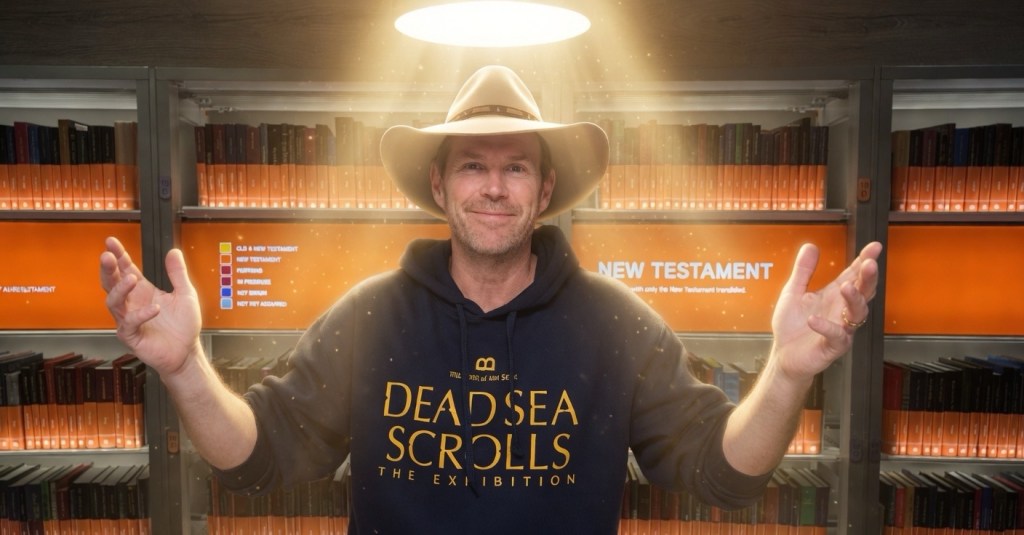
Rich Hoffman is an author, political consultant, and strategic advisor based in Cincinnati, Ohio, and the creator of The Politics of Heaven—a unique framework that connects biblical theology, ancient history, and modern power structures to explain how moral alignment and spiritual forces shape global events. Blending real-world political experience with deep research into archaeology, UFO phenomena, and suppressed historical narratives, Hoffman offers compelling commentary on topics ranging from ancient civilizations and the Dead Sea Scrolls to modern populist movements, paranormal continuity, and leadership strategy in chaotic environments. As the author of The Gunfighter’s Guide to Business and the forthcoming Politics of Heaven, he brings a grounded yet provocative voice to media discussions, supported by firsthand experiences and a cross-disciplinary approach that bridges science, history, and theology. For interviews, speaking engagements, or expert analysis, visit richhoffmanbooks.com or contact directly via phone at 513-307-5815 or email at rhoffman@richhoffmanbooks.com. If you’ve seen the movie, Disclosure Day and want to talk about it and the implications of Presidnet Trump’s UAP disclosures, let me know and we can bring some color to your coverage. https://richhoffmanbooks.com/media-inquiries-broadcast-topics-and-contact-info/?frame-nonce=ad51e7ecba I do have a firsthand UFO encounter to discuss.

