

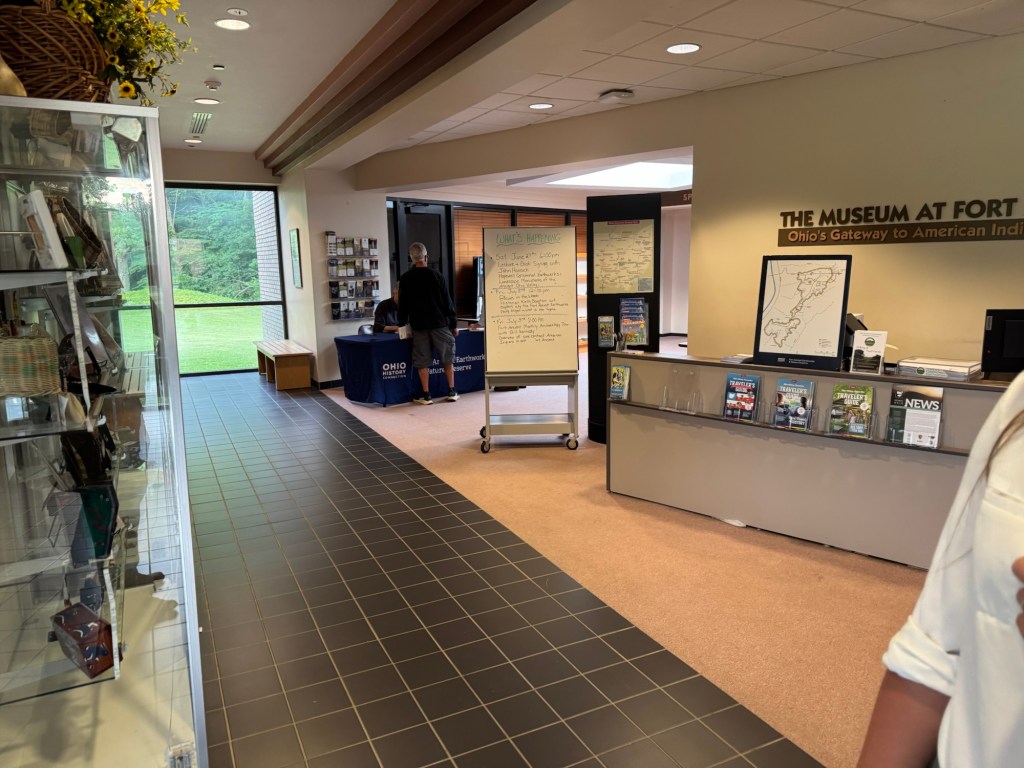
I stood with my family at the Newark Earthworks recently, the Great Circle embracing us in its quiet immensity, and realized how perfectly the moment aligned with something I had waited decades to see. My grandson was there, wide-eyed as only a child can be in the presence of real mystery, and just days earlier, a remarkable new book had appeared on the visitor center shelves: John E. Hancock’s Hopewell Ceremonial Earthworks: Landscape Monuments of the Ancient Ohio Valley, published by Smithsonian Books.[^1]
The golf course that had long sat atop the Octagon and Circle was gone, the land being returned to public use as a proper park befitting a UNESCO World Heritage Site. In 2023, the Hopewell Ceremonial Earthworks—eight magnificent locations across southern Ohio—received that global recognition.[^2] These are not modest mounds. They are monumental works of landscape architecture whose geometric precision, astronomical alignments, and sheer coordinated effort rival the Pyramids or the Great Wall. The Newark complex alone required millions of hours of labor. The alignments track the Moon’s complex 18.6-year cycle, something that demands sustained, multi-generational observation. Yet for too long these places have been treated as local curiosities rather than one of the great architectural achievements of the ancient world.
Hancock, a retired professor of architecture from the University of Cincinnati, spent his later career studying these earthworks with an architect’s eye. His book is not a conspiracy volume. It is a beautifully produced, evidence-driven work that documents the sites, the advanced mathematics built into them, the trade networks that moved Lake Superior copper, Appalachian mica, and materials from even farther afield.[^3] The Old Copper Complex in the Great Lakes region dates back thousands of years before the Hopewell period, with native copper being cold-hammered into tools and traded across the continent.[^4] The book presents the facts without leaping into speculation, and it does so in a way that finally gives these places the serious treatment they deserve. I had been waiting forty years for someone to write exactly this book.
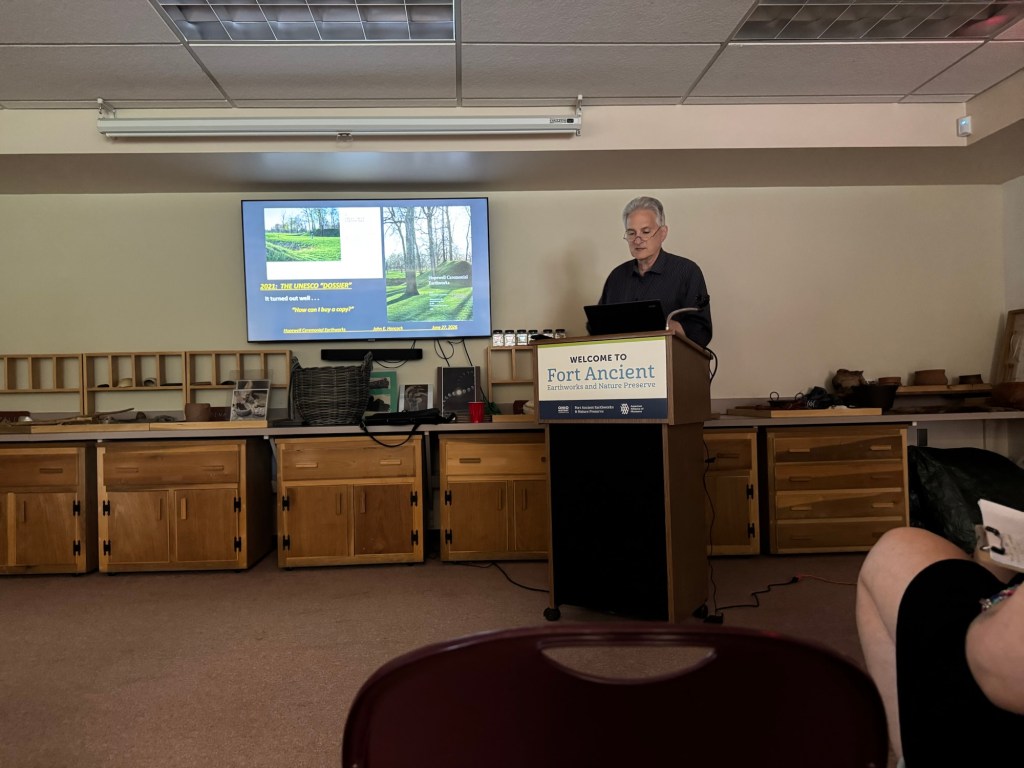
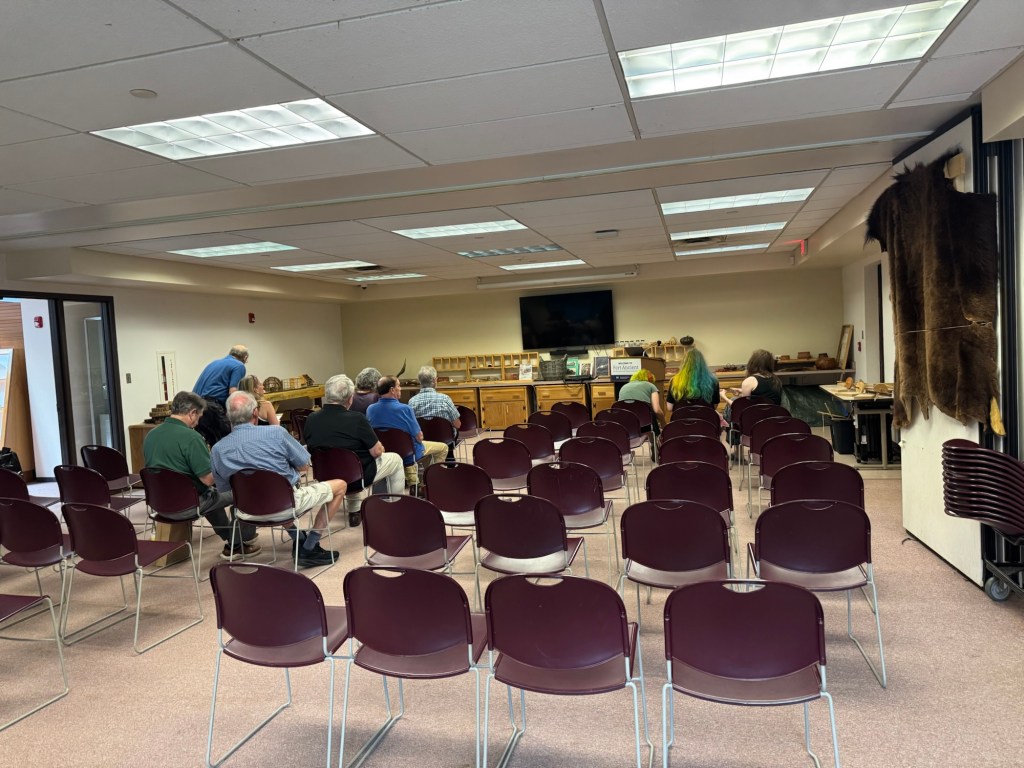
I attended Hancock’s lecture and book signing at Fort Ancient, another UNESCO site just a short drive from home in Liberty Township. The room was filled with the kind of people I naturally gravitate toward—archaeologists, geologists, anthropologists, and dedicated amateurs who have spent their lives in the field. We geeked out together over the relics and reconstructions. I asked the question many were thinking, but few were voicing: Is the aggressive implementation of NAGPRA—the Native American Graves Protection and Repatriation Act of 1990—driven purely by tribal concerns, or has it become a political tool to advance a particular narrative about America’s founding?[^5] The knowing laughter and the honest answer (“a little bit of both”) that came back told me volumes. Tension hung in the room, but so did goodwill.
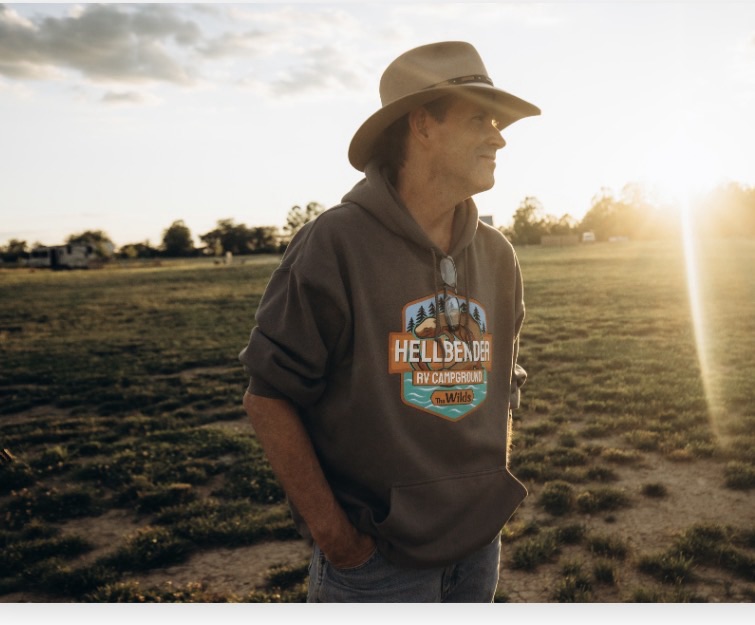
People who likely disagreed with me on politics, perhaps even those who might protest at the statehouse on other issues, kindly brought me my cowboy hat after the lecture when I had left it behind in my eagerness to get books signed. That small gesture captured what I value most: the ability to find common ground even when bigger differences exist. Hancock signed my copies, and I could sense him relaxing as our conversation progressed from guarded to more open. He has walked a difficult line, working with tribes, the Smithsonian, and UNESCO to secure recognition and preservation for these sites while producing work that respects the evidence without descending into fringe territory. I respect that. Preservation done right—think English Heritage’s stewardship of Stonehenge—benefits everyone. I am grateful these Ohio earthworks are receiving similar attention.

Yet the deeper paradoxes remain. The same institutions and political currents that celebrate the “indigenous achievement” visible in the earthworks are often the ones pushing to remove, repatriate, or, in some cases, effectively bury the very artifacts that might illuminate how such sophisticated knowledge arrived here. Trade in copper and other materials was continent-wide. The mathematics and astronomy required sustained observation and coordination across distances. The timing of the Hopewell period overlaps with the era of the Dead Sea Scrolls and the First and Second Temples. In biblical accounts, high priests and prophets engaged in practices at high places that involved altered states and direct communication with non-human intelligences. Similar mechanisms—shamanic traditions, sacred substances, ritual landscapes—appear in the Ohio Valley. The Holy Stones of Newark, discovered in the nineteenth century near these earthworks and now housed at the Johnson-Humrickhouse Museum, add another layer of uncomfortable questions, whether one accepts them as authentic or not.[^6]
I sat for a photograph in front of those stones, a dejected look on my face, because I sometimes wish I didn’t feel compelled to speak on these matters. I would rather play golf, enjoy time with my wife and grandchildren, or focus solely on business and family. But that is not how I am wired. My optimism and verbal facility push me to break down barriers and find common ground. I love academia and the sciences. I dislike seeing their ground seeded with ideological assumptions that prioritize narrative over evidence. These earthworks represent advanced knowledge whose source deserves honest inquiry, not erasure under the guise of repatriation.
This is precisely why I wrote The Politics of Heaven. The book explores the political motives and spiritual warfare at work when non-human intelligences interact with human cultures across time. The same questions arise in biblical history, in shamanic traditions, and now in the accelerating conversation around UAP disclosure. As we push toward the Moon and Mars through efforts like SpaceX, artifacts and anomalies there will make the same uncomfortable questions unavoidable. No repatriation policy or institutional control can bury evidence forever. The genie is out of the bottle.
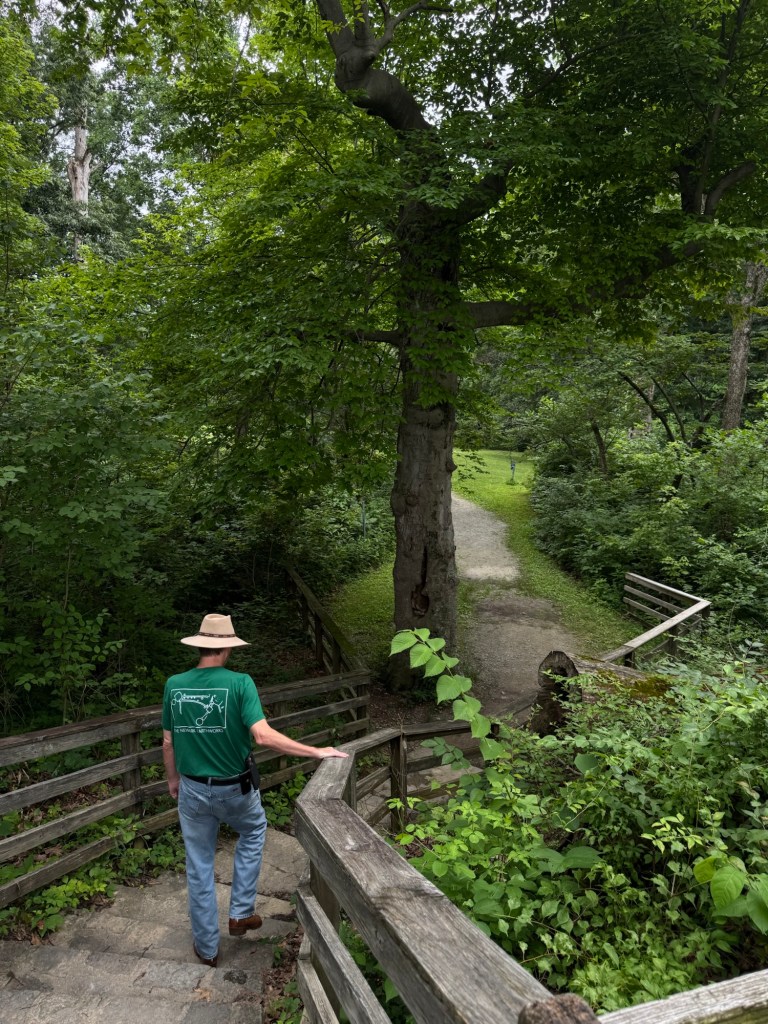
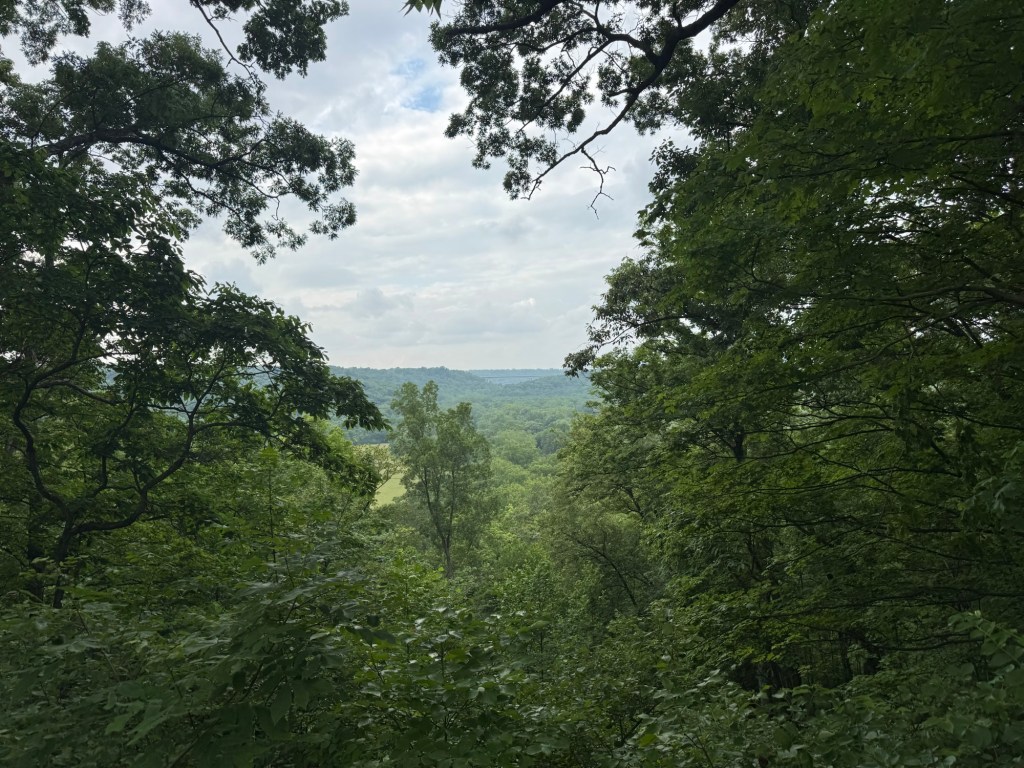
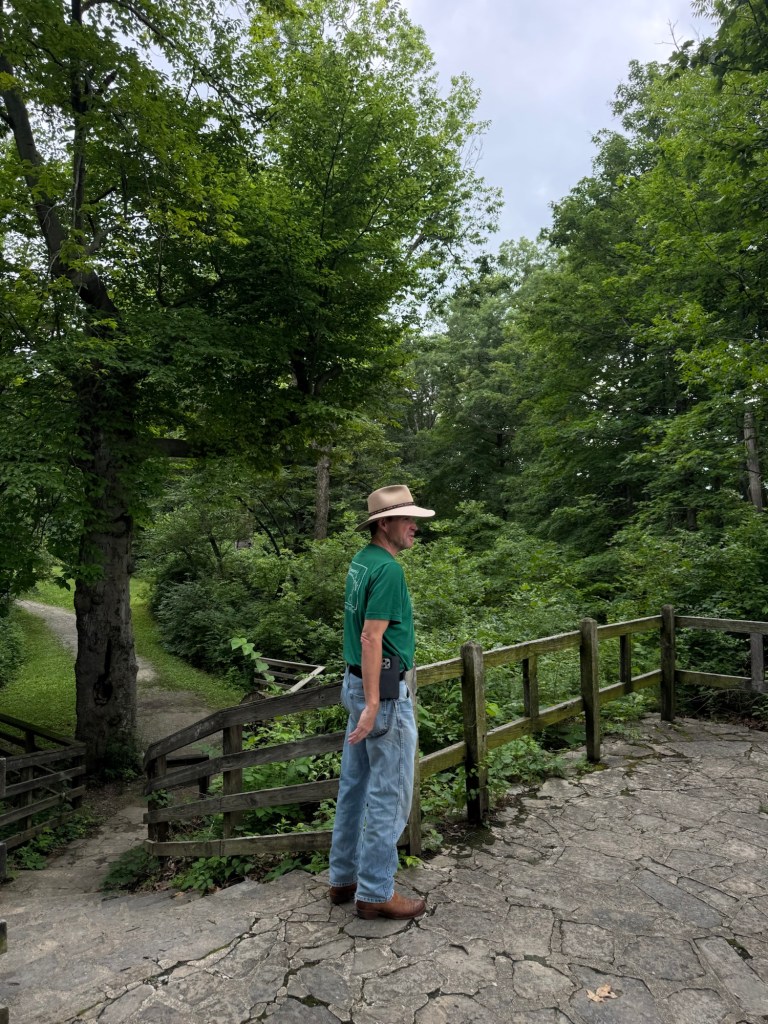
Hancock’s books—the substantial Smithsonian volume and his compact Traveler’s Guide to Ancient Ohio—are excellent starting points. They are well-illustrated, durable, and filled with practical information for anyone who wants to visit. I encourage everyone within driving distance to do exactly that. Pack a picnic, take the family, and stand inside the Great Circle or walk the ridges at Fort Ancient. See the scale for yourselves. Let the mystery and the achievement speak directly.

I do not come to these subjects as an enemy of science or preservation—quite the contrary. I value the hard work of the people in that Fort Ancient lecture hall and the broader archaeological community. I refuse to accept that the only permissible story is the one that serves contemporary political ends. The earthworks of Ohio are far more significant than the official narrative has traditionally allowed. They point toward deeper truths about human potential, long-distance connection, and the ways knowledge has been transmitted across cultures and perhaps from beyond them.
That is the next great story. It is already reshaping how we understand our past, and it will only grow more urgent as humanity expands outward into the solar system. I intend to keep speaking and writing about it with the same optimism that has always driven me—to find common ground where possible, to ask the questions that matter, and to prepare people for revelations that institutions may prefer to keep quiet. The sites are magnificent. The books are timely. The truth, whatever form it ultimately takes, will not stay buried.
Footnotes
[^1]: John E. Hancock et al., Hopewell Ceremonial Earthworks: Landscape Monuments of the Ancient Ohio Valley (Smithsonian Books, 2026).
[^2]: UNESCO World Heritage Center, “Hopewell Ceremonial Earthworks,” inscribed September 19, 2023.
[^3]: Hancock’s work emphasizes architectural and landscape analysis, including trade goods.
[^4]: The Old Copper Complex dates to approximately 6500–1000 BCE, with extensive trade networks across North America.
[^5]: Native American Graves Protection and Repatriation Act (NAGPRA), Public Law 101-601 (1990).
[^6]: The Newark Holy Stones (including the Decalogue Stone) were reportedly discovered by David Wyrick in 1860 near the Newark Earthworks and are housed at the Johnson-Humrickhouse Museum in Coshocton, Ohio. Scholarly consensus largely views them as 19th-century artifacts, though they continue to spark debate.
Bibliography
• Hancock, John E., et al. Hopewell Ceremonial Earthworks: Landscape Monuments of the Ancient Ohio Valley. Smithsonian Books, 2026.
• Hancock, John E. Traveler’s Guide to Ancient Ohio. Ohio University Press, 2026.
• UNESCO World Heritage Center. “Hopewell Ceremonial Earthworks.” https://whc.unesco.org/en/list/1689/. Inscribed 2023.
• Native American Graves Protection and Repatriation Act (NAGPRA). Public Law 101-601, November 16, 1990.
• Johnson-Humrickhouse Museum. Information on the Newark Holy Stones. Coshocton, Ohio.
• Bebber, Michelle R., and others. Studies on the Old Copper Complex radiocarbon dating (various peer-reviewed papers, e.g., Radiocarbon journal).
• Hoffman, Rich. The Politics of Heaven (manuscript completed 2026, targeting 2027 publication).
Rich Hoffman
More about me
Click Here to Protect Yourself with Second Call Defense https://www.secondcalldefense.org/?affiliate=20707
About the Author: Rich Hoffman
Rich Hoffman is an author, political consultant, and strategic advisor based in Cincinnati, Ohio, and the creator of The Politics of Heaven—a unique framework that connects biblical theology, ancient history, and modern power structures to explain how moral alignment and spiritual forces shape global events. Blending real-world political experience with deep research into archaeology, UFO phenomena, and suppressed historical narratives, Hoffman offers compelling commentary on topics ranging from ancient civilizations and the Dead Sea Scrolls to modern populist movements, paranormal continuity, and leadership strategy in chaotic environments. As the author of The Gunfighter’s Guide to Business and the forthcoming Politics of Heaven, he brings a grounded yet provocative voice to media discussions, supported by firsthand experiences and a cross-disciplinary approach that bridges science, history, and theology. For interviews, speaking engagements, or expert analysis, visit richhoffmanbooks.com or contact directly via phone at 513-307-5815 or email at rhoffman@richhoffmanbooks.com. If you’ve seen the movie, Disclosure Day and want to talk about it and the implications of Presidnet Trump’s UAP disclosures, let me know and we can bring some color to your coverage. https://richhoffmanbooks.com/media-inquiries-broadcast-topics-and-contact-info/?frame-nonce=ad51e7ecba I do have a firsthand UFO encounter to discuss.

