

I have been thinking a lot lately about what it actually takes to push a civilization forward, and the more I dig into the mechanics of power, the clearer it becomes that the decisive factor is rarely the collective. It is the rare individual who refuses to accept the current ceiling. Rainer Zitelmann’s New Space Capitalism: The Entrepreneurial Path to the Stars is one of those books that lands at exactly the right moment because it forces the conversation back onto that hard truth. The foreword by Newt Gingrich sets the tone, but the real value is in how Zitelmann lays out the entrepreneurial path to the stars without the usual romantic fog. He understands that the technical pieces are largely in place; the missing ingredient has always been the institutional and cultural permission for individuals to own the risk and the reward.
I have read a lot of books on strategy over the years. Robert Greene’s Power series is solid, particularly when you need to see the patterns that keep repeating across centuries. But the concepts only become useful when you translate them into the actual arena you are operating in—whether that is a small business, a national culture, or the emerging space economy. That is why I wrote The Gunfighter’s Guide to Business the way I did. I wanted to strip the abstraction away and show how leadership actually works when the consequences are real—the same principles scale. At every level, the decisive question is the same: does the system protect and amplify the person who is willing to impose a higher standard, or does it systematically cut that person down to the level of the committee?
That is the danger I keep returning to when I look at the post-colonial messaging that has saturated our universities and media over the last generation. The surface story is that colonialism was uniquely evil and must be endlessly atoned for. The stronger effect is to pathologize the very traits that built the most productive societies in history—individual agency, technological dominance, the willingness to claim and develop resources. A lot of money flows into that messaging, and not all of it is organic. Anyone who has watched the funding streams into American higher education over the last fifteen years knows that Chinese influence, both direct and through corporate intermediaries that depend on the Chinese market, has been substantial. The same pattern showed up in Hollywood a decade ago. The first weekend China box-office number became the make-or-break figure for big studio releases because a hundred-million-dollar Chinese gross was realistic for a major title. Studios adjusted content, softened political edges, and chased that market until the politics shifted and the arrangement began to sour.
China does not need to kick the door in. The preferred method has always been to work the cultural and regulatory back doors until the target society starts policing its own exceptional people. That is the real war, and it is fought at the level of incentives and narrative long before any kinetic phase.
Zitelmann devotes time to the Chinese model and is careful not to caricature it. Roughly 60% of China’s economic activity is in the private sector. The catch, and it is the entire ballgame, is that private ownership does not equal private control. You may hold the equity, but the Party retains the right to manage the owners. The individuals who generate the wealth remain on a short leash. That arrangement can produce impressive aggregate numbers for a while. It cannot produce, and will not tolerate, an Elon Musk.
The clearest demonstration of the difference is the story of Jack Ma. In 2020, at the height of the COVID lockdowns in the West, Ma was still the richest man in China, with a fortune north of $50 billion. He had built Alibaba and Ant Group into engines that actually moved the Chinese economy. Then he made the mistake of publicly criticizing the financial regulators. Within days, the Ant Group IPO—the largest in history at the time—was suspended. Ma disappeared from public view for months. When he resurfaced, he was a chastened figure operating under much tighter constraints. The message was unambiguous: you can get rich, but you will not be allowed to become independently powerful. The state will let you own the assets only as long as you accept that the state ultimately owns you.
That is the model. And it is the model that certain elements within the United States have been trying to import for years through regulatory pressure, board governance norms, and a cultural campaign that treats exceptional individuals as threats to the collective. Look at the pattern. Steve Jobs was pushed out of Apple in 1985 by a board that preferred managerial predictability over the difficult personality who actually created the products. The company nearly died until they brought him back. Sam Altman was removed from OpenAI by the board in 2023 because he was insufficiently candid with them; employees and the market forced a reversal within days because everyone understood that the board lacked the vision Altman did. Travis Kalanick was forced out of Uber in 2017 after investors decided the founder’s edge had become a liability. Jack Dorsey, Jeff Bezos at various pressure points, Elon Musk himself more than once—every one of these people has faced the same institutional reflex. The committee always prefers the safer average over the dangerous high performer.
I call the people who staff those boards Normies. They are not evil in the cartoon sense. They value belonging more than they value results. Their deepest instinct is to reduce variance, and high-agency individuals are the ultimate source of variance. When that instinct captures the governing institutions of a society, the society begins to select against the very people who generate its outsized economic output. Less than one percent of any population produces the breakthroughs that the other ninety-nine percent live off of. If you systematically attack that one percent—through regulation, through cultural stigma, through the soft coercion of “stakeholder” governance—you do not get a more equitable society. You get stagnation, then decline.
China understands this dynamic perfectly and has weaponized it. The goal is not to out-innovate the United States in a head-to-head contest of free individuals. The goal is to change the cultural and regulatory climate in the United States so that the next generation of American Elons Musks never has the room to operate. That is why the post-colonial curriculum, the DEI machinery, the reflexive hostility to “tech bros,” and the expanding regulatory state all point in the same direction. They are different instruments playing the same tune: exceptionalism is the problem, collective management is the solution.
SpaceX is the living counter-example, and that is why the recent IPO matters so much. Elon waited until the Starship factory was producing vehicles at a cadence that actually changes the economics of access to orbit. Only then did he open the capital floodgates. The risk of going public is real—once the ownership base expands, the pressure to behave as a normal public company intensifies. But the dual-class structure and the sheer scale of the opportunity give him a window. The capital will accelerate the cadence from monthly launches to weekly, and eventually to daily. That is how you open a multi-trillion-dollar space economy. It is also why the same forces that neutralized Jack Ma have been trying for years to neutralize Musk through every available regulatory and cultural lever.
I supported Trump for the same reason Musk did. Both of them saw the pattern clearly. Another four years of the prior trajectory would have continued the slow strangulation of the independent centers of production. The Chinese model does not need to conquer America by force. It only needs America to adopt the habit of cutting its own high performers down to size. Once that habit is locked in, the GDP gap closes on its own.
The real debate almost nobody is willing to state plainly is this: China wants to destroy people like Elon Musk. America, at its best, wants to create the conditions that produce more of them and then get out of their way. Everything else—trade policy, university curricula, board governance norms, the cultural treatment of ambition—is downstream of that single civilizational choice. Zitelmann’s book is valuable because it keeps the focus where it belongs. The stars will not be reached by committees optimizing for consensus. They will be reached by the rare individuals who refuse to accept the current limits, and by the societies that still know how to protect them.
Footnotes
1. Rainer Zitelmann, New Space Capitalism: The Entrepreneurial Path to the Stars (Skyhorse Publishing, 2026), with foreword by Newt Gingrich.
2. On the sixty-percent private-sector contribution figures and the limits of private control in China, see Zitelmann’s earlier analysis in “State Capitalism? No, The Private Sector Was And Is The Main Driver Of China’s Economic Growth,” Forbes, September 30, 2019, and the discussion of Chinese commercial space companies in his 2026 work.
3. Jack Ma’s October 2020 speech criticizing Chinese financial regulators, the subsequent suspension of the Ant Group IPO, and his months-long disappearance from public view are documented in Bloomberg, “Jack Ma’s Empire in Crisis After China Halts Ant Group IPO,” December 22, 2020, and contemporaneous reporting from The Guardian and Wired.
4. Steve Jobs’s 1985 ouster from Apple and 1997 return are standard corporate history; see, among many sources, the accounts in Walter Isaacson’s biography and contemporary board accounts.
5. Sam Altman’s removal by the OpenAI board on November 17, 2023, and rapid reinstatement are detailed in OpenAI’s official announcement and subsequent reporting by The New York Times and CNBC.
6. Travis Kalanick’s forced resignation as Uber CEO in June 2017 under pressure from major investors is covered in The New York Times, June 21, 2017.
7. SpaceX’s June 12, 2026 IPO, the $135 share price, approximately $75 billion raised, and roughly $1.75 trillion valuation are confirmed in the company’s S-1 filings and contemporaneous Reuters and CNBC reporting.
8. On Hollywood’s dependence on the Chinese box office in the 2010s and the resulting content adjustments, see the U.S.-China Economic and Security Review Commission report “Directed by Hollywood, Edited by China” (2015) and later analyses of the market’s decline after 2019.
Bibliography
Davenport, Christian. Various reporting on commercial space.
Greene, Robert. The 48 Laws of Power and related works.
Hoffman, Rich. The Gunfighter’s Guide to Business.
Isaacson, Walter. Steve Jobs.
Zitelmann, Rainer. New Space Capitalism: The Entrepreneurial Path to the Stars. Skyhorse Publishing, 2026.
Zitelmann, Rainer. “State Capitalism? No, The Private Sector Was And Is The Main Driver Of China’s Economic Growth.” Forbes, September 30, 2019.
U.S.-China Economic and Security Review Commission. “Directed by Hollywood, Edited by China.” 2015.
Contemporary reporting from Bloomberg, Reuters, CNBC, The New York Times, and The Guardian on Jack Ma (2020), Sam Altman (2023), Travis Kalanick (2017), and the SpaceX IPO (2026).
Rich Hoffman
More about me
Click Here to Protect Yourself with Second Call Defense https://www.secondcalldefense.org/?affiliate=20707
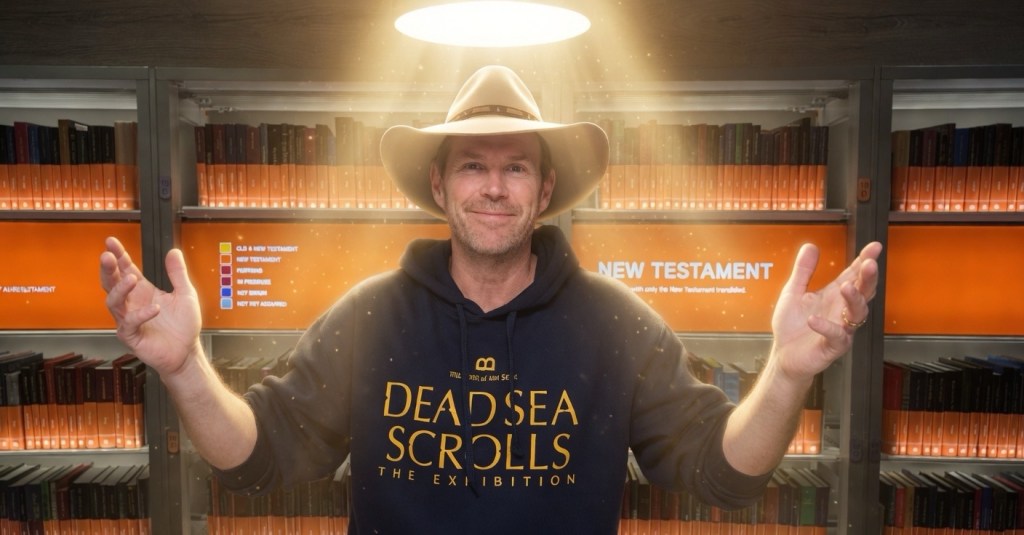
About the Author: Rich Hoffman
Rich Hoffman is an author, political consultant, and strategic advisor based in Cincinnati, Ohio, and the creator of The Politics of Heaven—a unique framework that connects biblical theology, ancient history, and modern power structures to explain how moral alignment and spiritual forces shape global events. Blending real-world political experience with deep research into archaeology, UFO phenomena, and suppressed historical narratives, Hoffman offers compelling commentary on topics ranging from ancient civilizations and the Dead Sea Scrolls to modern populist movements, paranormal continuity, and leadership strategy in chaotic environments. As the author of The Gunfighter’s Guide to Business and the forthcoming Politics of Heaven, he brings a grounded yet provocative voice to media discussions, supported by firsthand experiences and a cross-disciplinary approach that bridges science, history, and theology. For interviews, speaking engagements, or expert analysis, visit richhoffmanbooks.com or contact directly via phone at 513-307-5815 or email at rhoffman@richhoffmanbooks.com. If you’ve seen the movie, Disclosure Day and want to talk about it and the implications of Presidnet Trump’s UAP disclosures, let me know and we can bring some color to your coverage. https://richhoffmanbooks.com/media-inquiries-broadcast-topics-and-contact-info/?frame-nonce=ad51e7ecba I do have a firsthand UFO encounter to discuss.

