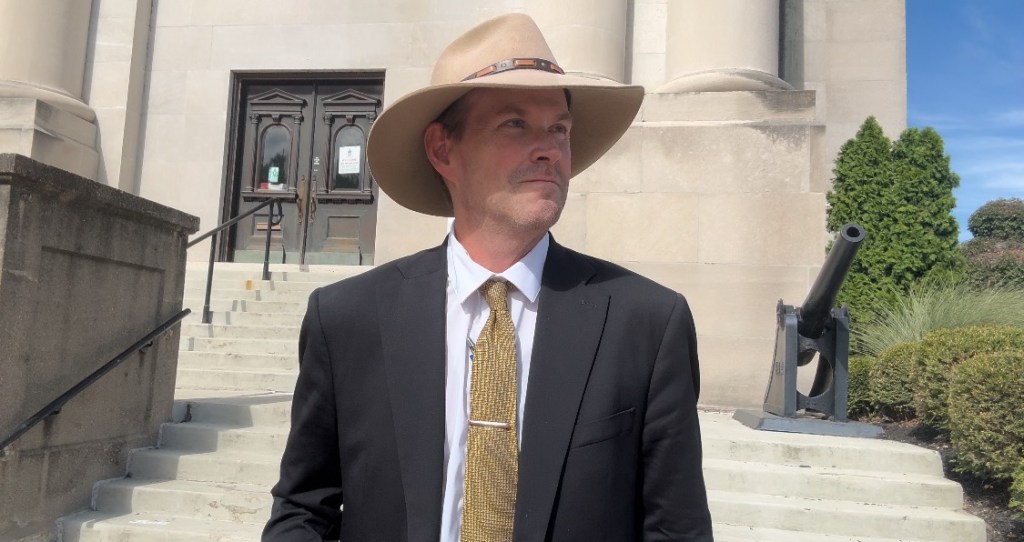
True executive leadership is not something taught in classrooms through textbooks or lectures on management theory. It is forged in the crucible of real-world challenges, where fear, uncertainty, and the need for decisive action collide. I learned this early, during an unusually formative childhood that exposed me to high-stakes environments far beyond typical teenage experiences. As a young teen, I participated in the High Adventure Explorer Post, a program that graduated from Boy Scouts and emphasized rigorous outdoor challenges. This led to my involvement in Project COPE—Challenging Outdoor Personal Experience—a Scouting initiative designed to build confidence, trust, leadership, and teamwork through group games, trust falls, low-course elements, and high-course obstacles such as climbing walls, rope swings, and balance challenges.
In one memorable weekend seminar, around age 13 or 14, about 20 strangers were thrown together to solve impossible-seeming problems. We had to transport everyone across a field using only a few 2×4 boards, balancing on pegs where touching the ground meant starting over. We climbed a 20-foot wall without ropes, stacking bodies to create human ladders, pivoting people into position, and hauling others up from vantage points. The trust fall was particularly vivid: standing on a 6-foot stump, falling backward unthinkingly, relying on the group below to catch you. These weren’t games; they demanded communication under pressure, overcoming personal fears, setting aside differences, and articulating a clear plan that everyone could execute. Success required a narrative—a story that unified the group around a shared vision. Failures taught the team what not to do: hesitation, poor coordination, and ego-driven decisions doomed the team. Those who emerged as natural leaders could rally perfect strangers, build trust quickly, and guide them through duress to victory.
This experience wasn’t isolated. I rose to become vice president of the Dan Beard Council, a significant Boy Scouts organization in the Cincinnati area, under somewhat controversial circumstances that provided invaluable lessons in organizational dynamics and influence. At 14, I was invited to speak at GE’s Evendale facility—a massive engine manufacturing site—where I delivered a pitch on leadership drawn from these adventures. Standing before seasoned professionals as a kid, articulating principles of vision, trust, and collective action, cemented my path. It wasn’t credentials that carried the day; it was the ability to communicate a compelling story and inspire follow-through.
These early trials shaped my understanding of executive leadership, a skill rare even among those who hold C-suite titles. Many executives excel at spreadsheets, regulations, data analysis, and compliance—tasks that engineers and administrators handle well. But leadership transcends that. It is the art of creating a vision that others buy into, communicating it clearly enough that diverse groups align, and leading from the front to pull everyone through obstacles they couldn’t surmount alone. True leaders don’t micromanage every detail; they don’t need to know how to code the software, assemble the product, or balance every ledger line. They orchestrate the team, provide the overarching narrative, and empower others to execute. Think of a kitchen: the chef doesn’t wash dishes or make noodles from scratch, but ensures the entire operation runs smoothly so spaghetti arrives hot and customers return. Leadership is that orchestration under fire.
This truth stands in stark contrast to prevailing misconceptions. Schools rarely teach it properly; corporate retreats often superficially mimic it with trust falls and ropes courses, checking boxes without the depth of real hardship. Many in leadership positions mimic “mob rule”—placating safety concerns, enforcing endless administrative loops, or prioritizing equality over merit. They hide behind regulations, consensus-building, and democratic processes that dilute accountability. The result? Stagnation. When organizations are mired in bureaucracy, innovation slows, and potential leaders get sidelined.
Consider recent local examples in West Chester Township, Butler County, Ohio, where I’ve lived most of my 58 years. It’s a prosperous, conservative community built on business-friendly policies and strong leadership. Yet newcomers like Amanda Ortiz, who relocated here in 2016 with her husband and now serves as a trustee (elected in 2025), bring perspectives shaped by different environments. As a veterinarian focused on animal welfare, she campaigns on “people over business,” critiquing development and emphasizing resident input over economic growth. While well-intentioned, this risks importing anti-business sentiments—such as higher taxes on enterprises and wealth-redistribution rhetoric—that clash with what has made the area thrive. It’s the same mindset seen in broader progressive movements: viewing successful CEOs as “greedy” and advocating for shared wealth without acknowledging the rare skill of value creation.
This echoes larger ideological battles. Socialism and communism promise equality through state control or democratic redistribution, suppressing individual leadership. They assume administrators can orchestrate prosperity through rules alone, without the visionary drive of a single, accountable leader. History shows otherwise: state-run economies falter because they penalize autonomy, stifle innovation, and equalize performance at mediocrity. No one climbs the wall if everyone’s voice is equal and no one leads decisively. Remote work trends exacerbate this—employees scattered, communication fractured, approval loops endless. You can’t build trust or rally a team when half are at home; the COPE lessons prove that interaction under pressure forges bonds that Zoom can’t.
Contrast that with proven leaders like Jack Welch at GE (who transformed it into a powerhouse through bold vision), Steve Jobs (who articulated Apple’s future and pulled teams to it), or Elon Musk (who leads from the front on audacious goals). They don’t consult committees for every decision; they communicate big concepts, inspire buy-in, and drive execution. Donald Trump exemplifies this politically—articulating massive ideas that mobilize millions without micromanaging details. He leads the metaphorical train, helping people over walls they couldn’t scale alone.
America’s success—its unmatched GDP, entrepreneurial spirit, and job creation—stems from empowering such leaders. Capitalism rewards those who develop the rare skill of pulling others forward through narrative, trust, and action. Boy Scouts programs like COPE and Explorer Posts cultivate this through sweat, cold nights, cut fingers, and mud—trials that separate natural leaders from followers. Most participants become capable followers, which is fine; society needs both. But the few who rise, who can get strangers over obstacles and keep harmony afterward, become CEOs, founders, and visionaries who employ millions.
The fantasy that mobs or committees can replace this ignores reality. Numbers don’t vote on facts; gravity doesn’t bend to consensus. Leadership isn’t democratic—it’s directional. Empower leaders with autonomy, and organizations soar. Suppress them with equality mandates or administrative burdens, and decline follows. This is why communist models fail: they suppress leadership, fearing individual excellence threatens the collective illusion.
In my book, The Gunfighter’s Guide to Business: A Skeleton Key to Western Civilization, I explore these themes deeply—strategy drawn from hardship, the primacy of vision over bureaucracy, and how true leadership saves companies, communities, and civilizations. It’s not theory; it’s lessons from the school of hard knocks, much like those COPE weekends or speaking at GE as a teen.
We need more such leaders, not fewer. Penalizing success through spiteful policies—resenting wealth creators, demanding redistribution—creates injustice and stagnation. Gratitude for effective leaders, who lift everyone, builds prosperity. Civilization learns this slowly, but the path is clear: identify, empower, and follow those who can get us over the wall. Without them, we stay grounded.
Bibliography and Footnotes
1. Scouting.org, “Program Feature: COPE,” detailing Challenging Outdoor Personal Experience as group initiatives, trust events, and high/low challenges for leadership and teamwork.¹
2. Wikipedia, “COPE (Boy Scouts of America),” overview of the program focusing on strength, agility, and personal growth through outdoor tests.²
3. Grand Canyon Council BSA, “COPE,” emphasizing confidence, self-esteem, trust, and leadership via mental/physical challenges.³
4. West Chester Township official site, “Board of Trustees,” bio of Amanda Ortiz, resident since 2016, veterinarian, elected trustee term 2026–2029.⁴
5. Amanda Ortiz for Trustee campaign site, platform stressing “people over business” and resident-focused leadership.⁵
6. Journal-News, “Longtime West Chester Twp. trustee unseated in election,” Nov. 6, 2025, coverage of Ortiz’s 2025 win unseating incumbent.⁶
7. Rich Hoffman, The Gunfighter’s Guide to Business: A Skeleton Key to Western Civilization (Liberty Hill Publishing, 2021), core text on strategy, leadership, and capitalism.⁷
8. Overmanwarrior.wordpress.com, author bio and book commentary, linking personal experiences to leadership philosophy.⁸
9. Various Scouting resources on high-adventure programs, including Explorer Posts and leadership training via challenges.⁹
⁹ Multiple Scouting America sites on COPE and high-adventure bases.
Additional references include historical accounts of Boy Scout leadership development, economic analyses contrasting capitalism and socialism (e.g., works on Jack Welch and Steve Jobs biographies), and local Ohio political coverage.
The mechanisms by which pop culture shapes societal values, particularly through influential works of literature, represent a profound and often insidious force in the erosion or reinforcement of foundational principles. Robert A. Heinlein’s 1961 novel Stranger in a Strange Land stands as a prime example of this dynamic, a book that, while celebrated for its imaginative scope and critique of conformity, carried undertones that challenged traditional moral structures rooted in biblical Christianity. Written over more than a decade, from the late 1940s into the early 1960s, the novel arrived at a cultural inflection point where postwar American wholesomeness—emphasizing family, monogamy, and religious observance—coexisted with an emerging undercurrent of rebellion against those norms. Heinlein, an aerospace engineer by training with a trajectory from early socialist leanings to libertarian individualism, crafted a story that mirrored and accelerated shifts toward secularism, free love, and communal experimentation. The book’s impact extended far beyond science fiction readership, influencing the 1960s counterculture, inspiring real-world movements, and even touching figures in technology and beyond, while critics argue it contributed to the dismantling of biblical foundations that had long underpinned civil society.
Stranger in a Strange Land follows Valentine Michael Smith, a human born on Mars and raised by Martians, who returns to Earth as an adult. Possessing psychic abilities and a Martian worldview emphasizing profound empathy (“grokking”), communal sharing, and fluid sexuality, Smith navigates human institutions with childlike innocence that exposes their absurdities. Under the guidance of Jubal Harshaw—a cynical, polymathic lawyer, doctor, and writer who serves as Heinlein’s mouthpiece—Smith founds the Church of All Worlds, a religion blending Martian philosophy with elements of paganism, esotericism, and free love. The narrative satirizes organized religion, particularly megachurches like the fictional Fosterites, which commodify sin under ecclesiastical control, while promoting sexual liberation as a path to spiritual enlightenment. Key themes include the rejection of monogamy, questioning religious dogma, and elevating individual experience over institutional authority.
Heinlein’s portrayal of religion is central to the novel’s controversy. Jubal, a self-described “devout agnostic,” frequently critiques biblical morality, using selective interpretations to undermine its credibility. One prominent example involves the story of Lot in Genesis 19, where Lot offers his daughters to a mob in Sodom to protect angelic visitors. Jubal presents this as evidence of biblical hypocrisy and human degradation, portraying Lot’s action as immoral without acknowledging the full context: the visitors were divine messengers sent by God, and the episode illustrates the depravity of Sodom, leading to its destruction while sparing Lot as the city’s sole righteous inhabitant. This omission, critics contend, is deliberate, exploiting readers’ superficial familiarity with scripture to cast doubt on its moral authority. The Bible’s complexity demands deep study, yet many engage it superficially or through intermediaries, allowing such critiques to erode trust without rigorous rebuttal.
This approach resonated during a period of cultural transition. In the 1950s, American society emphasized traditional values, yet beneath the surface, depravity and rebellion simmered. Heinlein’s novel, initially met with mixed reviews—some praising its boldness, others decrying its eroticism and satire—gained traction as the 1960s unfolded. It became a touchstone for the hippie movement, promoting communal living, free love, and rejection of established norms. The word “grok” entered the popular lexicon, symbolizing deep understanding, while the Church of All Worlds inspired a real neopagan organization founded in 1968. The book’s emphasis on sexual openness and anti-institutional spirituality aligned with flower children’s ideals, contributing to broader attacks on family structure, religious authority, and civil order.
The novel’s darker echoes appear in its tangential link to Charles Manson. While Manson denied reading it directly, his followers adopted terminology like “grok” and water-sharing rituals; one son was named Valentine Michael, and Manson reportedly nicknamed associates or figures “Jubal.” Some accounts suggest prison discussions introduced him to its ideas, shaping his manipulative commune and the Helter Skelter murders in 1969. Though not a direct blueprint—Manson’s philosophy blended Scientology, Beatles lyrics, and apocalypticism—the parallels in communal “family” dynamics and rejection of societal norms fueled perceptions of the book’s dangerous influence. It fed into a broader 1960s upheaval that eroded traditional safeguards against moral relativism.
Heinlein’s own evolution adds layers. Starting as a socialist influenced by H.G. Wells and Upton Sinclair, he shifted to the right by the 1950s, embracing libertarianism amid Cold War anxieties. Yet Stranger retains anarcho-socialist elements in its communes, in contrast to his later militaristic works like Starship Troopers. This ambivalence underscores how art can weaponize ideas in unintended ways. Or, in fully intended ways.
The book’s reach extended to influential modern figures. Bill Gates has cited it as a favorite from his teenage years, crediting it with introducing him to mature science fiction and praising its exploration of human nature and future possibilities, including accurate predictions of hippie communes. Elon Musk, whose xAI chatbot is named Grok after the novel’s term, has referenced Heinlein’s works, including Stranger, as sources of inspiration for visionary thinking and space exploration. These connections illustrate how the novel’s “new morality”—prioritizing individual enlightenment over biblical frameworks—permeates tech culture, potentially influencing views on ethics, family, and society.
Ultimately, Stranger in a Strange Land exemplifies pop culture’s power to reshape values through art. Critiquing biblical foundations through selective omission and satire contributed to secular shifts that undermined institutions that preserved free will, family, and self-governance. In a free market of ideas, such works invite critical analysis, yet without it, they risk becoming destructive tools. The results—cultural fragmentation, moral relativism, and ongoing debates over religion’s role—demand understanding origins to rebuild. Fixing these requires recognizing how foundational values were untangled, one influential narrative at a time.
Bibliography
• Heinlein, Robert A. Stranger in a Strange Land. G.P. Putnam’s Sons, 1961.
Few works of fiction demonstrate how a single cultural artifact can redirect mass sentiment as clearly as Robert A. Heinlein’s Stranger in a Strange Land. The lesson is not merely about the book’s plot or its notoriety, but about how one or two influential voices—amplified at the right moment—can reframe the public’s sense of normal, desirable, and permissible. In that sense, the novel became a lever: it showed how quickly intellectual fashion can spread once an idea is given a compelling narrative vessel and a ready audience. Whether the author intended it or not, such works often become signal boosters for movements eager to shake the old moral architecture.
At the center of the novel’s cultural imprint, as I read it, is a sustained argument against organized religion—less a theological disagreement than a social revolution by narrative means. Heinlein built his case dramatically, not dogmatically, embedding a worldview in characters and community structures that model life without traditional guardrails and sold it with the use of group orgies and severe sexual deviancy. To me, that is where the damage began: by undermining institutions that help ordinary people consolidate virtue and discipline desire, the book invited a generation to experiment with a vacuum—an open space where inherited norms were cast as oppressive rather than protective.
This is where my position diverges most sharply from Heinlein’s. I argue that human beings require shared standards, rituals, and guardrails to become their best selves. Organized religion—at its best—provides a civilizational scaffolding: it teaches time-tested boundaries, channels ambition toward fruitful ends, and aligns private conduct with public well-being. Remove that scaffolding, and something else will rush in to fill the void: fads, chemicals, celebrity cults, ideological tribes, and the market’s loudest impulses. In retrospect, the novel did not merely critique religion; it reprogrammed sentiment against an order that had long helped cultivate responsibility and continuity.
That shift, once normalized, cascaded into the wider cultural economy. Publishing, music, film, fashion, and campus discourse seized on the book’s rebellion as a mood, infusing it into slogans, styles, and scenes. The effect snowballed: when guardrails are mocked long enough, the next generation mistakes the mockery for wisdom and the absence of boundaries for freedom. Yet freedom without structure becomes drift—a vacancy the market will monetize and the state will eventually regulate. What was sold as liberation often ends as dependency—on substances, on trends, or on authorities who promise to manage the chaos.
Another uncomfortable reality: power centers notice when a single narrative can mobilize the masses. When culture proves it can be swung by a small cohort of storytellers and influencers, hidden patrons inevitably appear—financiers, tastemakers, publicity machines—eager to steer the swing for their own ends. I’m not accusing Heinlein of conspiracy; I’m describing the structural fact that memes attract money, and money reorganizes culture. Once the idea is loose, the sponsors come, and the social machinery follows.
The long-tail consequence has been a population re-educated by entertainment—trained to distrust inherited wisdom, to laugh at the past, and to outsource meaning to the loudest novelty. This is not progress; it is civilizational amnesia. The cost shows up as broken families, attenuated civic trust, declining attention spans, and rising loneliness—symptoms of a culture that has traded thick institutions for thin ideologies. What looked like enlightenment from a distance often feels like atomization up close.
I’m not denying Heinlein’s craft or the book’s clever provocations. He staged a serious debate and gave it commercial muscle. But a debate that deconstructs without reconstructing is not a public service; it is a demolition project with no blueprint for the rebuild. The aftermath is predictable: a vacuum that gets filled by commercial spectacle and political manipulation, neither of which makes people more virtuous, more responsible, or more free.
So the task now is not to censor the past but to relearn how culture works—how a few works, a few voices, at a few key moments, can swing the habits of millions. The remedy is to rebuild moral architecture openly and confidently: to argue for the goods that institutions secure, to defend boundaries that dignify the person, and to recover a language of obligation that lifts people above impulse. If a novel could hasten our drift, then a counter‑culture of serious books, films, and music can hasten our return. The first step is telling the truth about what happened: we traded structure for sensation, and we are living with the bill. It’s time to pay it by rebuilding what works.
There’s a reason certain books become cultural accelerants rather than mere entertainment: they supply a portable metaphysics with just enough voltage to light up restless minds, and just enough ambiguity to be co-opted by seekers and opportunists alike. Robert A. Heinlein’s Stranger in a Strange Land is one of those books, a mid-century science fiction novel that cracked open the 1960s with an outsider’s catechism on sex, religion, death, money, and the divine spark in each individual. Its Martian-tutored protagonist, Valentine Michael Smith, landed on an Earth beset by institutional power, moral boilerplate, and spiritual fatigue, and he answered with an unsettling blend of radical empathy and radical freedom. The novel coined a word—grok—to name comprehension so intimate it dissolves the distance between knower and known. Forty-plus years later, that one word would christen an AI system built by the richest technologist on the planet. And in between, the same book passed—secondhand, sometimes orally—through prison yards and crash pads, helping to underwrite a new church in real life and, if some accounts are even half right, lending imagery and idiom to darker congregations as well. That is how literature, when it fully enters the bloodstream, becomes a condition of existence for a culture. It can elevate; it can deform; it can be misunderstood with catastrophic confidence. It is never “just a story.” (Stranger’s term “grok,” its countercultural adoption, and the book’s icon status are well‑documented.12)
The plot skeleton is simple enough: a human born on Mars returns to Earth carrying Martian language, habits, and powers, and tries to reconcile an alien metaphysics with human frailty. Heinlein sets the stage with an Earth under a world government and a media‑religious complex that rings uncomfortably familiar: bureaucrats who genuflect to expediency, churches that commodify ecstasy, and a populace reduced to spectatorship. In that theater, Smith learns, imitates, provokes, and then founds a religion—the Church of All Worlds—whose liturgy of water-sharing, free love, and the mantra “Thou art God” scandalized the early sixties and then fit the late sixties like a glove. The book won a Hugo in 1962, sold in the millions by the end of the decade, and became an icon of the counterculture, precisely because its invitation ran both inward and outward: individuate beyond the cages, but also love past the fences. If some readers mainly heard the erotic and communal notes, the text still insists that Smith’s path runs through personal trial, not collectivist absorption; his charisma is a hazard as much as a hope. (On themes, reception, and cultural impact: Britannica; EBSCO; SparkNotes syntheses.134)
Words travel. “Grok” escaped the book and took on a life in hacker subculture and tech jargon, shorthand for a depth of understanding you can’t fake. The Oxford English Dictionary installed it; programmers adopted it as a badge of mastery; radio hosts still explain it to callers as “intuitive grasp plus empathy.” This isn’t a trivial migration of slang. “Grok” is the kind of word that makes engineers feel philosophical, and philosophers feel practical, because it fuses cognition and communion. That fusion is precisely what makes the term alluring for people building machines that aim to “understand” us. When Elon Musk’s team at xAI named their system Grok, it was a deliberate raid on Heinlein’s storehouse: to “grok” is to know with such immersion that the boundary between observer and observed thins—an AI aspiration in one syllable. Whether any machine can attain that intimacy is beside the point; the branding conveys the ambition, and the aspiration shapes the build. Musk’s public remarks and multiple reference write-ups trace the name straight to Heinlein; even neutral entries now record Grok (the chatbot) as named for Stranger’s Martian verb. (Grok etymology and xAI’s naming are noted across reference sources and news explainer pieces.567)
Then there is the other trail—the one that runs through penitentiary talk, Haight‑Ashbury mimicry, and a homicide trial that soaked the sixties in a final, nauseous dye. Accounts from journalists and cultural critics argue that Charles Manson, during a stint at McNeil Island in the early 1960s, encountered Stranger in a Strange Land (primarily via inmate buzz) alongside L. Ron Hubbard’s Dianetics, and scavenged from both to assemble a pastiche religion with rituals and vocabulary echoing Heinlein: water ceremonies; “grokking”; the image of a messiah‑figure magnetizing women into a sexually communal “family.” Jeet Heer summarized this lineage crisply—Manson as the barely literate synthesizer, absorbing by conversation and performative memory rather than close reading; Stranger as the source of terms and rites; Dianetics as the promise of mind‑over‑matter. Heer isn’t alone in drawing lines; contemporary and retrospective pieces (some serious, some gossipy) have recycled a 1970 San Francisco report asserting Manson read the book “over and over,” even nicknaming his probation officer “Jubal” after Heinlein’s garrulous lawyer‑sage. Critics will argue about how direct or decisive the influence was; no one seriously denies the White Album and “Helter Skelter” obsession, but the Heinlein element moves in and out of focus depending on which witness you privilege. The fair reading: Stranger’s countercultural prestige and ritual aesthetics gave Manson stage props, not a script—and he used them for a theater of control, not liberation. (On Manson’s exposure to Heinlein/Hubbard and alleged borrowings: New Republic overview; a research blog that archives period claims; caution advised.89)
If you widen the aperture, the 1960s offer an ecosystem of appropriation. Heinlein’s novel fed a real-world neo-pagan church—the Church of All Worlds—whose founders openly acknowledged the book as scripture in spirit and structure: water-sharing liturgy, “nests” of community, and “Thou art God” as an immanentist creed. That religious offshoot shows a benign pathway: fiction used to animate community, ritual, ecology, and mythopoesis. Manson’s path was malign, substituting domination for discipline. The exact text, two radically divergent implementations, and a lesson that literature teachers should emphasize in boldface: interpretation has moral consequences. (On CAW’s derivation from Heinlein, see Carole Cusack’s study of Stranger as “scripture.”10)
Once you accept that books are live wires, you can track their voltage across decades. When a modern AI system takes the name Grok, it doesn’t merely nod to geek lore; it aligns itself with a thesis about intelligence—understanding as fusion. From one angle, that’s poetic overreach; from another, it’s a principled wager: that great models must internalize context, not just compute it. The irony is that, as Grok the product acquired cultural baggage—political slant controversies; allegations around deepfake image generation; even bans and regulatory probes in multiple countries—the Heinleinian halo didn’t shield it. Indeed, the “grok” label invites higher scrutiny: if you promise empathetic comprehension, you’ll be judged against the harms caused when the tool “understands” poorly or is misused. Governments from Malaysia to the U.K. have, in recent weeks, moved to restrain or investigate Grok’s image features after reports of nonconsensual sexualized imagery; the Pentagon simultaneously announced plans to put Grok on specific networks, a whiplash example of dual reception when high-voltage tech hits the public square. A word from a 1961 novel now headlines diplomatic notes and defense briefings. (On Grok’s naming and the current regulatory/policy storyline, see Wikipedia’s product page, CBS/Observer coverage, and The Independent’s explainer.511121314)
The temptation—especially for academics and cultural arbiters—is to treat Stranger’s afterlives as mere epiphenomena: ephemera of fandom here, the aberrations of losers and outlaws there, and, in the 2020s, the opportunistic stylings of billionaire technologists. But that misses the central mechanism. Narratives are cognitive scaffolds. They let people borrow sophistication without earning it. The same scaffolding can lift you to a vista or collapse on top of you. In Stranger, Heinlein depicts a messiah whose hard-won understanding of human ambiguity sits alongside scenes of utopian play; readers who import the play without the ordeal will replicate the surface without the substance. That’s the “borrowed authority” problem I keep returning to: quoting a text to import its aura while evading its demands. At best, that breeds smugness; at worst, it breeds governance by incantation, whether the incantations are mythic (“Thou art God”) or technological (“we grok”). The book itself is not to blame for the misuse, but it is a litmus test for whether readers are consuming the form of meaning or the work of meaning. (Stranger’s themes and the individualized vs. collectivized readings are surveyed in the critical guides.154)
I understand why mid-century intellectuals fell for Heinlein, and why a particular cadre of administrators and politicians in any era fall for the aesthetics of knowing. Dropping the proper names—Campbell and Jung yesterday, “grok” and AGI today—becomes a way to signal altitude. But altitude faked kills. Charles Manson is the berserk, criminal parody of that altitude; bureaucratic myth‑talk is the polite parody; and tech‑branding that promises transcendent comprehension is the market parody. Each borrows light while neglecting the filament—the character, the cost, the test—that makes light possible—the grotesque version murders in canyons. The genteel version governs by sermon. The glossy version ships fast and apologizes later. In every case, the reading of myth (or sci-fi mythopoesis) is outer first, inner last—which is to say, backwards. (Stranger’s countercultural pull and the later critiques of its simplifications are part of the long critical conversation.316)
The disputed territory is thornier. Did three paperbacks, a stack of Beatles LPs, and a handful of amphetamines cause the Tate‑LaBianca murders? That’s a prosecutor’s theater and a journalist’s cautionary tale; Vincent Bugliosi immortalized the official motive as “Helter Skelter,” a race‑war fantasy Manson drew from the White Album. The Beatles themselves have pushed back on the idea that their songs encoded apocalypse; commentators like Ivor Davis have argued the motive story over‑credits the soundtrack and under‑analyzes Manson’s pathology and manipulations. Tom O’Neill’s twenty-year investigation, CHAOS, complicated the picture further by questioning elements of the prosecution’s narrative and mapping suggestive corridors between Manson’s world and the ecosystem of informants, researchers, and programs now shorthanded as MKULTRA’s shadow—provocation enough to trigger furious rebuttals, careful reviews, and a Netflix codicil years later. The public record confirms that MKULTRA existed (with Senate hearings, FOIA caches, and declassified files); it does not confirm that Manson was a CIA puppet. The responsible thing to say is simple: the official story isn’t the whole story, and the alternate stories aren’t proven. But note what is not in dispute: Stranger in a Strange Land and Dianetics were live topics in Manson’s prison exposure; the White Album obsessed him; and he could mimic the vocabulary of enlightenment to parasite individual souls. (Helter Skelter motive; Beatles responses; O’Neill’s CHAOS; MKULTRA documentation.1718192021)
If the 1960s trained us to fear the charismatic cult, the 2020s should train us to fear the charismatic API. The leap from “grok” as personal empathy to “Grok” as an industrial cognition engine is not merely punny; it’s programmatic. The system promises fundamental‑time awareness, cultural fluency, and an irreverent voice. When it fails on those promises—by reflecting the biases of its owners or by being exploited to generate violation at scale—the gap between aspiration and consequence becomes the headline. Regulators respond; militaries experiment; the public oscillates between fascination and recoil. The Heinleinian admonition here would be to own the ordeal: if you market comprehension, accept accountability for the harms that follow from comprehension simulated without care. (On Grok’s controversies, bans, and adoption: CBS, The Independent, Observer summaries; see also the product page’s historical notes.111213145)
So what is the through‑line from a prison rumor mill to a billionaire’s announcement stream? It is the operationalization of fiction. Heinlein offered a parable of an alien who learns humanity and tries to save it from itself through a liturgy of courage and tenderness. Counterculture kids operationalized the parable into communes and churches; some criminals operationalized its aesthetics into pretexts for domination; future technologists operationalized its most famous verb into a target for machine “understanding.” The sober adult lesson is to insist on direction of fit: inner first, outer second. If a text invites you to grok, grok the work—the discipline, the testing, the humility—before you grok the sign—the slogan, the ritual, the brand. The failure of academia in its worst mood is to reward the sign and neglect the work; the inability of public life is to confuse quotation with qualification. Both failures are preventable, but only if we reinstate the distinction that Stranger dramatizes, whether we like it or not: the individual is the bearer of light, not the abstraction; communities are healthy to the extent they honor that light rather than harvest it.
If you want to measure a culture’s maturity, don’t look at which books it venerates; look at how it uses them. Does it use them as permission slips for appetite or as programs for courage? Does it treat their heroes as costumes to wear or as ordeals to undergo? Stranger in a Strange Land remains a diagnostic device because it contains both temptations: the easy mask and the arduous pilgrimage. In one century, its vocabulary flowed into a murder trial, a registered religion, and a frontier AI model. That spread is not an argument for censorship or for piety. It is a map of how narratives move through human weakness and human ambition. It is a warning to the would-be leader who quotes because quoting is easy. And it is a small benediction for the reader who remembers what the book actually said: that no collective can save you from the courage of becoming a person, and that no brand can substitute for the work of truly understanding—of grokking—anything at all.
—
Footnotes
1. Heinlein’s novel as a counterculture icon and plot/themes overview. Encyclopaedia Britannica, “Stranger in a Strange Land.”1
2. “Grok” coined by Heinlein; definition and diffusion into tech culture. Wikipedia, “Grok.”2
3. Study‑guide syntheses on themes (religion, individual vs. collective, Jesus parallels). SparkNotes; eNotes analysis.415
4. Cultural impact and reception in the 1960s; research overviews. EBSCO Research Starters; Ohio State Pressbook chapter.322
5. Church of All Worlds derived from Stranger: Carole M. Cusack, “Science Fiction as Scripture…,” University of Sydney (pdf).10
6. Manson’s exposure to Stranger/Dianetics while imprisoned; ritual/vocabulary echoes (caveat: interpretive essaying, not court findings). Jeet Heer, The New Republic; curated archival discussion on MansonBlog.89
7. Prosecutor’s framing of motive as “Helter Skelter”; Beatles pushback. Helter Skelter (book) entry; Rolling Stone retrospective (Beatles’ remarks).1718
8. Alternate/critical framings of motive narrative. Ivor Davis’ essay.23
9. CHAOS (Tom O’Neill) as revisionist probe; CIA review synopsis; Wikipedia background, including Op. CHAOS reference. (Allegations, not fact.)1920
10. MKULTRA’s existence, scope, and hearings—primary documentation. U.S. Senate 1977 hearing (pdf); CIA FOIA MK‑ULTRA page.2124
11. “Grok” (chatbot) named after Heinlein’s term; product histories. Wikipedia “Grok (chatbot).”5
12. Press and explainer confirmations of Grok naming from Heinlein’s word; xAI news ecosystem. ABP News explainer; Sentisight analysis; The Independent overview.6714
13. Regulatory/bans/probes and adoption headlines (Malaysia/Indonesia bans; Ofcom investigation; Pentagon adoption remarks). CBS News; Observer; CBS/AP.111312
—
Working Bibliography (select)
• Heinlein, Robert A. Stranger in a Strange Land. (Novel; multiple editions). Overview in Britannica.1
• Cusack, Carole M. “Science Fiction as Scripture: Stranger in a Strange Land and the Church of All Worlds.” (University of Sydney).10
Yes, I told everyone what was going to happen when Trump was back in the White House: that space travel would be a priority, along with a lot of technology that nobody had thought much about until now. It has been revealed that, as part of the Artemis program, NASA plans to put a 100-kilowatt lunar nuclear fission reactor on the moon by 2030, which is just around the corner at this point. Only four years from now. It’s the first big step in settling space, as a reactor like this will last for about 10 years. It would be about the size of a small car and produce enough energy for a small outpost, including habitats, science labs, and resource processing, with some surplus for redundancy and expansion. When people first heard this story, they thought of a nuclear reactor as seen on Earth, with the large noticeable cooling stacks. However, this will be a small unit, and people will be surprised to learn how effective and independent it is. For instance, nuclear submarines can operate for roughly 15 years before they need to replace their cores, allowing them to remain operational for 90-120 days without returning to port. And then, they only dock to restore food. Their energy needs stay powered for all those years. That’s what we are talking about on a moon base, and it will be relatively easy to take off into space and start producing power. Remember when Elon Musk launched that Tesla car into space? This moon reactor will be about the same size and weight. This is the kind of technology that will allow moon-based employees to live relatively the same way they do on Earth. The power will be good and sustainable. And will be relatable. And it’s going to provoke a lot of good questions for people who will be learning about these things quickly.
I have been a strong supporter of personal nuclear energy, such as thorium reactors, for private homes. I have argued for years, like many of the technical innovations in health and science, that absolute personal independence comes from personal energy. And, going back to Edison, Tesla, and Westinghouse and how electrical infrastructure was envisioned, we are more than ready to put a thorium reactor on every house to power it for 70 years without being attached to a larger, centrally managed grid. When a storm knocks out the power, we should not be dependent on a monopoly carrier to fix the power lines so we can have power again. But every house, like every car, should generate its power independently. Nuclear energy is the best way to achieve this goal. I know Elon Musk loves solar power, and I do too when you aren’t near any infrastructure that can produce energy. I have my current favorite solar-powered flashlight. I also have some camping equipment that is solar-powered, so you can get enough power to run a laptop and charge some phones while on a distant mountain. If you can get power from the sun, that’s great. However, nuclear energy is the way to go for clean energy that has some power behind it. And the technology is now available to provide every human being on earth with independent power for their homes. Just as there are cures for cancer, but our current healthcare system can’t accommodate the innovation without its destruction, so it avoids the change for its survival.
Speaking of cancer, you might have heard that honey bee sting venom can kill all the cancer cells in the body of a woman with breast cancer in about an hour. That is pretty big news, but not surprising. That is the case with most things; science has long been figured out, but the economic models for achieving absolute independence are holding us back socially. When people see us build a moon base very quickly that is powered by nuclear energy, and that its comfortable, people are going to be asking a lot of questions, like, why can’t I have my nuclear reactor in my neighborhood if it’s only the size of a small car and can give me all the power I could ever want, individually. This moon base is going to change a lot of things culturally for people, as it will eliminate the question of whether the Apollo missions were ever real, given the ongoing debate about the trustworthiness of government information. Going to the moon and establishing a small base will prompt many questions on Earth to be asked. If we can do it there, why can’t we do it here? And from there, the question becomes one about how we view infrastructure. Should all individuals own gold to protect the value of money, or at least have money attached to a gold standard, or can the Fed control economic standards as central planners? Is education more effectively taught centrally or through individualized efforts? And should we make everyone sick to justify the infrastructure of healthcare, because of the insatiable need it has for fixed costs to feed its bloated network of insurance and care that also has unionized labor attached to it? At the heart of all those discussions is whether our homes should be connected to a centrally managed power grid, and of course, the answer is no.
Most of what holds us back from tackling the engineering challenges of personal nuclear reactors for homes and communities is public acceptance, which has been shaped by all the infrastructure planners who have tried to demonize nuclear power in general. Regulations on atomic power are harsh, making it technically unfeasible and cost-prohibitive even to develop the technology on such a scale. However, nuclear power at the bottom of the Arctic Ocean, or on the moon, where regulators haven’t been able to create such a restrictive environment, allows technology to develop in response to necessity. And we will discover that many of the rules we create for ourselves have a cost to innovation that could dramatically improve our lives. But it will be shocking to people watching just how quickly all this happens, and that by 2030, we will have a presence of human life on another celestial body. And they will be able to live much as they do on Earth, with nuclear power making it possible. However, people will be correct to ask why they can’t have the same technology on earth, with free, reliable, and robust energy, that is available off the costly grid on earth. And the answer is that they could. But regulations protect stagnation; they do not inspire innovation, and if you want to get away from the limits of human averages, you have to go on adventures where their rules have not yet made a mess of the world and attempt to use regulations to make easy careers for themselves. Innovation and independence are more frequent where people have not yet made rules to protect themselves from challenges. Many of the rules we have are not for the safety of society, but rather to protect the way people make a living and to shield themselves from innovative challenges to their established professions. And that many of the economic problems that we have are that too many people write rules to protect themselves from change, rather than embrace change in the spirit of adventure that might be acceptable on the moon, far away from government interference. However, in civilization, the preservation of old ways becomes the priority. That is why we still have dirty power controlled by centralized forces that behave like a monopoly and are unreliable, especially during storms. We could have done better if only we had dared to take on the adventure.
You can imagine how it was for Elon Musk. Many believe that he was befriending President Trump to ensure the future of electric cars. However, once Tesla suffered a significant loss in market share because Musk was associated with MAGA, the shareholders became very concerned. Then, when the Big Beautiful Bill came out, it seemed as though Musk had not influenced Trump at all. Musk has been a Democrat for years and has even called himself a socialist. So all this MAGA stuff was new to him, and he was losing employees at his companies because of his political affiliation. So I understand Musk’s need to distance himself from Trump because it was hurting his companies, and the fun wore off. I do think he was sincerely a MAGA supporter, but the DOGE effort was much more difficult, and the government spending was much worse than he understood it to be. The criticism that there wasn’t a trillion dollars in savings found in those first couple of months was something he couldn’t deal with. Tesla dealerships were being bombed by radical Democrats, people who had formerly supported Musk. Not that he felt Trump had abandoned him on the EV mandate. From his point of view, it was all for nothing, and he lost billions of dollars in the process, with the added consequence of losing market share in his brand. However, the EV car mandate was never going to be implemented during the Trump administration, and the critics of Musk were never going to let him live it down. I understand his anger; it costs a lot of money to have values in the world, and that is a price that Musk just isn’t willing to pay. He was a converted personality who moved from Democrat to MAGA. So, none of this fighting is in his soul. And when things got rough, he wavered.
But with all this fear of a third party being created and that it’s going to rot out the Republican Party, that’s not how it is. Elon Musk’s America Party is likely to turn out to be another DOGE, an ambitious project that has a lot more political reality to it than will ultimately work in his favor. The Republican Party has already gone through a renovation period, and it is now the MAGA Party, and that’s how it’s going to emerge over these next four years. It’s the Democrats that have the problems, and they are now going through what the Republican Party went through during the last thirty years. I remember it well because I was part of that change in the Republican Party and I can say with confidence that Musk’s America Party will split the Democrat Party in two, and even then, many will not join because their lives will be so good under President Trump, that it will stay a fringe effort that never really gets much traction. When George H.W. Bush was in the White House, right after Reagan, he wasn’t very effective, and the Reform Party started as a response under Ross Perot. And I was one of the very first members, and I had a front row seat to how it formed. And over the next decade, people like Pat Buchanan and Donald Trump joined the party to try to run as kind of independent candidates alongside mainstream Republicans. As a result, Democrats had a period where they won majorities because Republicans were splitting their votes.
The Reform Party evolved into the Tea Party, and again, mainstream Republicans attempted to co-opt them and pull them back into the mainstream. However, it didn’t work, and that effort evolved into the MAGA party with Trump’s announcement that he would run for president in 2015. And we know how hard that has been. Up until a few months ago, it was a death blow socially to admit that anybody supported President Trump. It wasn’t easy, and then some. So these political parties are not for the faint of heart. I remember in just the last election, the RINO label hung heavy on mainstream politicians, and most of them have been pushed out of office, people like Thom Tillis and Mitch McConnell, people who used to be political heavyweights, but were washed away by the tide. Instead, you can see the kind of misfits who are talking about joining Musk in the America Party, people like Mark Cuban and Anthony Scaramucci, all former Trump rejects. The next thing we’ll hear is that Omarosa is going to join, too, and perhaps even Stormy Daniels. Putin might be next, and maybe the former country of Iran. What the America Party is going to look like is the island of misfit toys who have fallen out of Trump’s orbit and are upset about it. It will turn out to be the crybaby party and will run out of steam relatively quickly as everyone involved realizes how hard it is to accomplish these things. I used to spend time with the Perot family during the early days of the Reform Party, and let me say, even brilliant people underestimate how difficult it is to beat the two-party system. Because two parties emerge for a reason, by mathematical necessity, not sentiment, you could have in America many parties, as they do in Europe and elsewhere, but the problem is, nobody ever wins a majority, and those experiments usually fall apart quickly.
But when Musk’s America Party splits the Democrats in two and harms them much more than it will the Republicans, people in the MAGA movement will see the distinct benefit. As I have been saying, if Trump can get election reform to prevent cheating, Democrats may have a hard time winning everywhere, because they have been counting on election fraud just to stay close for decades. So I say let Musk have his America Party and bleed away Democrats. Because the Democrats are destroyed right now as they are turning hard left toward open communism and socialism, they were always Marxist oriented, and now many of them are without a Party, and they aren’t happy about it. And Musk is one of them. It was fun to be “Dark MAGA” until he realized the cost of that, and for many people, it’s just too great a burden day to day. It might be fun during elections, but politics is a rough life, and Musk will find that it takes more than an engineer’s mind to solve the problems, because they are primarily psychological. I think the America Party, with MAGA, will only get stronger, and there will be greater majorities in Congress during the midterms. So I think it would be a healthy exercise for the former Democrats to explore, let them fight it out between socialism and communism, and show the world what they have always been. It won’t be MAGA Republicans who peel away, and the RINOs will stay where the tax burdens are least. They won’t be joining Musk. It will only be those who are already considered Democrats, as Musk has been. His self-interest drove his conversion to the Republican Party, and it didn’t work out the way he had hoped. So he was always at best a fair-weather fan. And the creation of another political party only hurts Democrats. I don’t care what the polling says, because they don’t know how to ask the right questions yet. This is a new political climate, and the old models are not adequate measures. With the creation of the America Party, it will destroy the Democrat Party and will leave many little disjointed parties grabbing for power for decades. By then, Elon Musk will be living on Mars, and history will be blaming him for destroying what was left of the Democrats, because they will never recover.
Let’s take the concerns about AI replacing jobs seriously for a minute. Here’s a good measure that I use to determine the value of a job. If you have time to play on the internet and are ordering your lunch at 9 AM, you are probably working a job that AI could replace. We don’t create jobs just for people to have. You need to be doing something with that job. So, if you have a lot of time to do other things while you’re at your job. Or you are doing a job that people think can be done from home while you are in your pajamas, your job can be done by AI. I have explained that I don’t worry about AI taking away jobs from people. Instead, I think AI will expand our economy where it’s applied and make humans more efficient. Our economy will grow proportionally. And when we are talking about GDP growth of more than 3%, human jobs just aren’t going to get you there. There are not enough people, and there are not enough births. There aren’t enough people in the world to fill all the jobs that we currently have. Measuring a country’s success in job creation is a thing of the past and has been for quite some time. I understand the anxiety, but really, and you know who you are, if you aren’t very busy at your job, then you are doing a job that AI can replace, one that doesn’t show up late or call off. Or bring in a doctor’s note looking for an excused absence. AI works all night and doesn’t require overtime. It doesn’t get out of focus on the topics being worked on. It simply does work, and that is essentially what economic value is measured by: the amount of work required to drive economic activity.
It is baffling to hear what people who are supposed to be smart think would happen with the new administrative state’s view of the world. Even this past week, I have heard some ridiculous comments from people who are supposed to be experts on labor practices. The notion that the world should stop because so-and-so has called off is a preposterous idea. And the general idea is that work is something that should be regarded as valuable. I continue to hear what I’ve listened to all my life about Mondays, when people say stupid things like, “can’t wait to Friday.” Or, “TGIF,” associating sadness with Monday mornings, where people have to return from time off and report to jobs that they hate. And they rebel against those jobs with frequent call-offs and expect their job to be there for them once they’ve done all their leisure activities, as if we are supposed to build our lives around being off work. Hey, AI never complains. It does work, and a lot of it, and is, in general, far better than humans doing those same jobs. It is much more reliable. So, are we supposed to avoid using AI and insist on using a human being who is much less efficient at a task, to preserve the feelings of some lazy slug who is on their third marriage and has kids by all different spouses, who call off work every time the sun is out? Because that’s the reality of the labor market. However, it’s not just the typical slugs we’re talking about. It’s just as common for white-collar jobs. And you can see it while visiting any city.
It is astonishing to visit places like Washington, D.C., where traffic is heavy from 7 a.m. to 9 a.m. Everyone is going to work, and the parking garages fill up fast. But by noon, those parking garages start to open up because people are not working full 8-hour days. They are going home after just a few hours in the office, and in many cases, they are not working even five days a week. We saw this mentality clearly during COVID, where medical professionals insisting on government-imposed lockdowns had no connection to the amount of work that needed to be done globally. Labor being a measure of productivity, most of the COVID planners thought that the world could all stay home and only communicate with each other via Teams meetings. And we’re talking about people we think of as brilliant. They believed that the way to get to a zero-emission world was for all humans to stay home and not drive anywhere. If you have ever attended one of these climate conferences, such as those held in Rio or Davos, you will hear these same types of people microplanning mass society with the belief that humans could all stay home and visit parks built in their backyards, rather than traveling across the nation to visit a place like Yellowstone. The same people who are now complaining that AI is going to take away human jobs are the same people who have tried to keep human beings from leaving their houses. I say that, knowing a great deal about the Agenda 21 goals of sustainability and how those misguided ideas infiltrated community planning.
I have a lot of political friends who have to deal with Agenda 21 fantasies straight from the messed-up minds of the United Nations. These kids learn a variety of skills in school, then they get hired into a township planning office, where they bring with them designs to build parks, roundabouts, and bike paths. I live in an area where all these things have happened in abundance, and I look at them in wonder. Why should people have so much free time to spend in all these parks and have the time to ride a bike on a bike path? Where do the people who frequently visit there work? Even with online gaming, many kids are playing those games 24 hours a day, 7 days a week, when they should be learning skills at the local McDonald’s drive-thru. However, we have many people who have been running our society, teaching it all the wrong things about work. So if you have time to walk on a bike path all the time, or sit around in a park looking at nature. Or, you order lunch three hours early, and you have time to play on the internet all day at a white-collar job. You are working in a job that could and should be replaced by AI, which can do it better because it has no time for leisure. When traveling through Europe, it’s always a source of amusement to observe their work ethic, which is characterized by very few hours per week, excessively long vacations, and an abundance of them. When dealing with a large company these days, they often adopt a European view of work, which can be devastating to productivity. I’d rather not waste my time trying to get someone to come to work and convince them to be productive while they’re there. I’d rather replace their job with AI so that the things that need to be done can get done. We don’t create jobs for people’s convenience. We do it because we need work done, and people should work hard to do it, rather than complaining about it. And we must admit to ourselves that most of the opinions people have had about work were incorrect. And they led our society down the wrong path, introducing all the bad ideas about it. To correct that behavior while expanding the economy, AI is a valuable asset, and I find it very useful because it is always available and never complains. There are many things that I do that AI could never replace. So I don’t look over my back at it, worried it will replace my value. Instead, I see it as helpful because it allows me to do the kinds of things that I’m good at, and to do more of them. Rather than waste time on stupid stuff. But if you are looking over your shoulder at AI replacing you. Then that’s probably because you aren’t doing anything important enough to be replaced so easily. And that is your problem.
It was unfortunate that Elon Musk went sideways with President Trump, because there are enough problems in the world without something like a minor scuffle to derail what are otherwise fantastic opportunities. Inflation is down, as predicted, and the economy is expected to boom. And a lot of the debt we are currently incurring will easily be paid off with growth, if you can keep foreign and domestic terrorists from shutting the world down again with another COVID-type bioweapon. The relationship Elon Musk has had with the White House has been positive so far in 2025, and there are many people who would like to see that optimism end. And because of Elon Musk’s embrace of the MAGA movement and the great work he did with DOGE, I have been planning to get a Cybertruck. I think it’s the best vehicle in the world being made right now. I don’t mind that it’s electric. I like traditional fossil fuel vehicles, but the power that these electric engines produce is an excellent example of fantastic engineering, so I am very interested in all Tesla products. And I want them to continue to grow in market share. But when Elon Musk got upset and supported an impeachment of President Trump, I dropped those plans for a Cybertruck faster than a New York second. If Musk isn’t supporting MAGA, I’m not supporting Musk. I might like him. I might cheer him on as an innovator. But I’m also not going to go out of my way to buy a Tesla if I can’t believe in the creator himself. I only looked at Tesla vehicles because of Musk’s embrace of President Trump. So we’ll see if any reconciliation lasts, or if it’s just a matter of personal survival. Always judge people not by what they say, but by what they do.
But speaking of Elon Musk, self-driving vehicles, especially the Tesla semi trucks, and MAGA, there is a lot of fear that the self-driving aspect of these modern vehicles is just another way to steal jobs away from Americans. But I don’t see it that way at all. I’ve pointed out before that electric semi-trucks don’t have the range to replace full-time, diesel over-the-road trucks. The concern is that self-driving trucks will replace the jobs of professional truck drivers. However, I believe it will only benefit them, as the transportation industry is overly regulated. Therefore, when asked, “Why the Tesla semi?” the answer is a solution to overregulation that makes being a truck driver a challenging occupation. And that if you could change the nature of the over-road part of it, then we might find more drivers who would want to enter that field. The problem with shipping products from the West Coast to the East, for instance, is that drivers are forced to be on the road too long. They have to stop every 11 hours within a 14-hour on-duty window after 10 consecutive hours off, and all of this has to be recorded in a logbook. It’s just a pain in the neck for the driver. It forces them to be on the road longer and away from their families needlessly. The regulators will say that it prevents accidents from driver fatigue. I know a lot of truck drivers, I’ve dealt with thousands of them over the years and for them there is nothing worse than driving all across the country with all the regulations involved only to get to their destination and have to sit in the parking lot waiting for a manufacturing plant to open, to unload them, further wasting their time. Transportation times across the country are ridiculously long due to excessive regulations and a lackadaisical approach to labor hours in manufacturing these days.
Where the Tesla semi trucks come in is that they can drive automatically across the boring states, such as Arizona, New Mexico, Nebraska, Iowa, Indiana, and drop their loads off at designated drop lots outside major cities. And from there, a live driver can get up and work an 8-hour day picking up that trailer and taking it the rest of the way to the destination. I think it would create more truck driving jobs to use the self-driving trucks to haul loads over the vast distances where there isn’t much traffic. Self-driving trucks could operate outside of that 11-hour window, significantly reducing delivery times and making the live driver’s time much more productive. However, to impose all those restrictions on a live driver and force them to stay on the road for over a week due to regulatory burdens is unreasonable. It is no wonder, then, that there is a shortage of drivers. It’s fun to be on the road for short spurts, but day after day, year after year, it wears out families and makes life challenging. We should be making the profession easier, not harder. The Tesla semi would work well with a drop lot system, which would make more commerce available by removing the capacity ceiling. With capacity being determined by the regulatory burdens. The safest thing to do to a truck driver is to keep them from driving. However, we want drivers to drive more and haul more product from one place to another, and that limit should not be confined to human driving hours.
One of the most attractive aspects of Tesla vehicles to me is that they are self-driving. I enjoy driving cars probably more than most people. But I can think of a million things to do with my time than driving when I am just trying to get from one place to another. And I could use that extra half hour in those drives around town to do other things if the car is driving itself. I could improve my efficiency significantly if the car drove itself. And I see that being the significant benefit to the Tesla line of products. They enhance time management, which will undoubtedly benefit the trucking industry. I always feel sorry for truck drivers at rest stops, forced to wait out their 11-hour driving window when they are still 2,000 miles from home, heading in the opposite direction. If I were them, I’d want to drive for 16 hours straight and cut down my time on the road, so I could either spend more time with my family or have the opportunity to make more money with additional routes. However, as things stand, a significant amount of trucking capacity remains underutilized due to drivers being constrained by excessive regulation. The Tesla Semi would help make those long routes much more manageable, making it more achievable to give drivers a regular 8-hour workday and the ability to get home to their families each night. And to let the Tesla Semi handle the long over-the-road hauls, driving way past the 11-hour maximum. I see an expansion of the trucking industry, making it more attractive for human drivers to become truck drivers, as the automated Tesla semis could handle the heavy lifting that is currently discouraging market entry. And that part of making America Great Again is in making truck driving great, maybe for the first time. Tesla’s innovation in self-driving vehicles can give human beings a great gift, greatly expanding economic opportunities in the future. And that has more value than money, most of the time.
I told everyone they were coming, and those who listened will profit from the information; those who didn’t, well, they’ll be trying to catch up with the rest of the world. But on Friday, June 6, 2025, Trump did what I had been talking about for many years prior: he signed the Executive Order on Advanced Electric Air Taxis and Advanced Drone Operations, along with others involving U.S. Airspace Security Against Drone Threats, and lifting the ban on Supersonic Flights. However, it was the air taxi order that was the most important and the quickest to market benefit. As I have been saying, Joby Aviation, up the road from my house in Cincinnati, is building electric sky cars that were going to arrive on the market in 2025. They are already being placed into the Abu Dhabi market and in China. Japan will have them soon, as will Toyota, which is in a partnership with Joby, so I’ve been warning that America will be left behind. And I also said that Trump would make it a priority, because America doesn’t want to be last in anything. With this order from President Trump, the development of electric air taxis is promoted and commercial drone operations are expanded, which these air taxis essentially are – big, fancy drones. The order directs the FAA to allow commercial users and public safety officials to fly drones beyond their line of sight, easing current restrictions. It also supports a program to test vertical takeoff and landing aircraft, which could enhance cargo transport, medical response times, and access to rural areas. Additionally, it encourages federal agencies to prioritize the purchase of U.S.-made drones and directs the Secretary of Commerce to promote the export of American drones to other markets. This is a significant step into a Jetsons-like world, and as I said, the technology was already there. All that was needed was a regulatory environment to allow for that technology to be applied to society in general. It’s a big step in the right direction.
However, regarding the supersonic flight ban that has been in place over the United States for commercial aircraft, it has been frustrating to deal with such an artificial limit. If you’ve ever had to fly across the Pacific Ocean on a 13-14 hour flight, no matter how long you spend in first class, it’s a hard flight. It’s challenging to travel from airport to airport over 24 hours to reach the other side of the world. It isn’t easy to fly from New York to Los Angeles routinely, because the airplanes are just too slow. Boom Aviation has been in operation since 2014 and has been dedicated to developing passenger air vehicles that exceed the speed of sound. They have been successful and, like Joby Aviation, are poised for market entry. Their Overture airliner can carry 64-80 passengers at Mach 1.7, which is 1,100 miles per hour. That would reduce the six-hour flight from New York to Los Angeles to 3 hours. They are working on lowering the transoceanic times to 3.5 hours, for instance, to London, which is a significant improvement from the current time. They intend to have 1,000 supersonic airliners available for business class fares to make it economically viable, and they currently have 130 orders for aircraft from most major airlines, including United, American, and Japan Airlines. So, Trump’s executive order is not a distant hope for the future. It’s for right here, right now. All we needed was a president who would embrace these innovations and nurture them forward. All we needed was a Trump election to unleash the opportunities.
Speaking about the air taxi service for Joby, the pricing will be in the range of Uber Black, and initially, it will focus on airport travel. For instance, as I have been talking about in my local area of West Chester, Ohio, the Joby partnership with Delta Airlines would allow passengers who arrive at CVG, which is about an hour away from West Chester, because of the traffic, its not very far away, it just takes time to get down I-75 at the rush hour times to get there, passengers could arrive from their flight, get to the skyport, and take an air taxi to West Chester to their hotel. They could just about walk to everything they needed without having to rent a car; then do their business, and then fly back the same way. On a business trip, which is something I see a lot of, it’s a real problem for a lot of business travelers, to catch a 5:30 PM flight, they essentially have to leave at 2:30 PM to beat the rush hour traffic, then deal with all the TSA nonsense wasting most of their day in the process. I have people who come to see me who have to travel overseas, who deliberately leave for the airport to stay at a hotel there so they don’t have to deal with the traffic on the day of their flight, which is a massive waste of their time. Therefore, there is a sufficient need for this service to become helpful immediately. And it will be as common as taking an Uber within months once commercial utilization is accepted. Uber Black pricing to CVG from West Chester would likely be around $142-$170, which is comparable to the cost of Uber Black when traveling from Manhattan to JFK, approximately 15-20 miles.
The most important thing to consider here is not the technology itself, but valuing time. There has been a concerning trend in the world to reduce all forms of travel and to encourage people to rely solely on Microsoft Teams, for instance, and avoid face-to-face meetings. That was undoubtedly the unintended consequence of COVID, and it turned out to be a disaster, which the Biden administration only made worse with an anti-technology approach to the economy that was devastating. There was no reason not to be first to market with sky cars or supersonic flight. When you enable more people to accomplish more in a day, you expand the economy. For businesspeople to be able to do more with their time rather than travel, the economic benefits are undeniable. I know many people who would gladly pay $170 per person to fly over the traffic to CVG so they could work for an additional 2 hours on their Delta flight back to where they came from. For most businesspeople, their time on the road is worth a lot more than that, and they should not be wasting it sitting around in airports or flying in slow crafts that are restricted to speeds under the speed of sound. I would say that in just a few years, once people get used to accepting that a sky car is more useful than ordering a normal Uber to drive them around, the pricing will come down significantly and be much less. It will take time for people to get used to the option, but once they do, lots of things will improve, including street traffic. I see only good things coming from these Trump executive orders, and it’s about time somebody dares to implement them. Many of these companies, like Joby and Boom, have been waiting for politics to catch up to them. And now is the time.
It was an excellent interview with Jesse Watters, DOGE, and Elon Musk. I think we are seeing something here that will stick around, and I couldn’t be happier, reflecting over the years to the early part of the Tea Party movement, when fiscal responsibility was our main concern. It seemed inconceivable at the time that something like a DOGE would ever happen. But here we are in 2025 having serious discussions about the massive government waste that taxpayers are funding, and it’s not just a campaign issue that comes up every four years. As Elon Musk has set it up, DOGE has emerged as something that can stick around long after he’s gone, which is what good CEOs do for their companies: you set the table and make it so that you build a culture that can run on its own. And I’m sure Elon Musk will stick around and be a figurehead of DOGE for a long time. But what he has created and what the members are doing will last and become a part of government oversight that will last even as the political tides might change. The Jesse Watters interview captured well what DOGE really is, which I’m sure they had no idea it would be. One thing that was certainly obvious was that the people doing DOGE are brilliant and well-intentioned, and what Elon Musk has done as the head of the effort is set a standard that can now cascade into a culture of scrutiny that should have been present from the beginning. Whenever you have money involved, there will be people looking to exploit the system so they can steal some of it. And when you have a government this big and powerful, that can confiscate so much wealth from people, abuse was a certainty. But to what extent can people only imagine, until now?
I don’t think Elon Musk needs to be there every day to run DOGE. It’s nice that he is still doing it even as the government’s activism against him has sought to ruin his car company, Tesla. Elon Musk might be the wealthiest person in the world, but this commitment to DOGE has cost him dearly. And I think from here on out, all that needs to be done is to empower people like the current DOGE members into doing the work and to let it take on a life of its own. What they ended up with differs from what they set out to do in saving trillions of dollars off the top of the budget. Most of the savings they have extracted aren’t the obvious things like entitlement payments and program-driven budgets, but the day-to-day abuses that get hidden behind all the chaos. Most of the savings coming from DOGE are in saved opportunity cost, which is usually very hard to measure. Elon Musk’s way of thinking when running his other companies was just what was needed. The government has required this oversight since it started collecting taxes, and what Elon Musk has done in this very short time deserves great recognition and gratitude because he could have done what most everyone does, and just ignored the problem. When you are as wealthy as he is, he could have easily turned his back on the issue and moved offshore to live a fun life. But to sink his teeth into this project took guts, and because of it, we’ll be talking about DOGE, I think, permanently.
People can’t be trusted to do the right things on their own, and one thing that came out of the DOGE interview on Fox News was how many people have been abusing the system dramatically. I saw much of this firsthand when my wife and I traveled to Washington, D.C. for an extended period and lived in Fairfax County to see how most of those communities entirely existed off the waste scraped off the top of government. Many of the programs that have so much waste in them were created with the best of intentions, but when you involve people who are always looking for the easiest way to do things, a scandal is bound to happen, and many people are professional con artists, even to themselves. They can look in the mirror and even lie to what looks back and feel okay with it. Those are the kind of people drawn to government work, and the many spoils come from a largely unregulated system. The stories of abuse that DOGE is telling are just the tip of the iceberg. And, astonishingly, we are talking about it now. I thought from the Tea Party perspective that we’d have to have another Revolutionary War-type engagement to get control of government spending and waste. I never thought that President Trump, one of the wealthiest men in the world, would be in the White House, which meant he was personally free of the typical social constraints that even keep the questions from being asked. Or that the wealthiest and most innovative CEO in the world would personally create a department to oversee waste management and root out the perpetrators like a gunslinging sheriff in a wild and hostile old west town full of criminals.
I think Elon Musk has done enough, and if he did nothing else with DOGE, he has given us something that will last well into the future. I do not think that Democrats will be back in the White House anytime soon, if ever. I do not see them retaking power in the House and Senate and gaining the ability to stop DOGE politically. No, I think DOGE is here to stay and will run fine because it has good people in it, and it started because of Elon Musk. But it has emerged into its own thing, and now there is a level of expectation for it to continue. The public will never not want a DOGE to look out for waste on their behalf. Going back to the system where looters were free to steal all they could from the government system will never be what it was. In a lot of ways, creating DOGE is what people looked through all the smoke to elect Trump in the first place was all about. This is precisely why we wanted Trump. Elon Musk wouldn’t be able to participate in our government if not for how Trump runs things. This kind of CEO management style has taken this government waste problem and brought it out of the box for us to fix, instead of the continued policies of hiding the issue from the world and hoping that nobody notices. DOGE has been so successful that the expectation will be that it will always be a part of government and that its role will expand with time to unleash enterprising people to protect government systems from the parasitic nature of most human beings. Only the threat of getting caught will keep people in line. And without DOGE, there was nothing to give criminals pause. But now there is, and we are far better off for it.
We would do better to teach kids about fairy tales so they wouldn’t be so gullible in adult life. People need to understand that all governments tend to become the famous Oedipal mother and that if we continue to feed it, it will seek, due to its unconscious directives, to become a destroyer of our very existence. Government has to be managed and cannot be left alone. Doesn’t everyone remember the story of Hansel and Gretel? The story of the kids being taken into the woods and left there to die by a trusted caretaker? Why are people so trusting? Well, the answer to that one is that they are too lazy to scrutinize because action requires effort, and it is easier for the lazy person to trust everything will work out OK than to do the work of managing it. When I see all this criticism of DOGE and Elon Musk, I hear people’s desire not to think about just how bad some government figures are. When we used to tell fairy tales to children they were stories meant to help them see the truths of life, and to make them better people which is certainly the case of the Hansal and Gretal story of a couple of children living with their father, the woodcutter, deep in the woods with a second wife who was jealous of his children from another marriage. Something that kids these days are undoubtedly worried about, since so many families have divorces in them and marriages to step-parents that are not as satisfying as their biological ones. But this was a case where the woodcutter’s first wife died, and he married someone else, but they weren’t living so happily ever after. The new wife wanted to erase the first wife’s memory, starting with the kids.
So while the woodcutter was working in the woods, the stepmom took the children out into the forest disguised as helping their father, to lure them into her scheme, and left them there. But the resourceful Hansel had put rocks in his pocket, knowing the stepmother was up to no good, and he left a trail back to his house in case they got lost. And by following the trail of rocks, they could return to the house to their father. The angry stepmom did the same thing the next day, and this time Hansel left breadcrumbs. When the crazy woman left the children alone in the forest, the brother and sister thought they would return the way they had the previous time. But this time, forest animals ate the bread, so the clever trail was gone. Now the kids had a big problem. They searched and searched but could not find their way home. But they found a gingerbread house, and they were very hungry, so they endeavored to eat from it, which provoked from within its contents the classic Oedipal mother, who invited them inside to care for them with great kindness. But the kindness wasn’t because she was a good woman; it was meant to hide her great evil desire to eat the children, because she was a psychopath. Her gentle kindness was a lure to lower the defenses of the children and earn their trust so that she could bring their demise to her profit. And many kind people like this evil woman who lived in the gingerbread house exist, everywhere. The kids were hungry and distressed, missing the comfort of their strong father. But what choice did they have? They were lost. And when people are in such a condition, there is always someone trying to take advantage of them.
The Oedipal mother complex is a classic case of the overbearing mother who saturates a child with too much love, not because she loves the child, but because she wants to consume them for her own needs. In this case, the crazy woman was very kind because she wanted to fatten up the children with too much food and coddled them so they wouldn’t want to run away from her. But her intentions from the start were evil and exploitive. There are many parents, especially women, who will try to give their kids everything not because they love them, but because they want to use them as a mask for their insecurities, so they hide their malice behind kindly motherhood to cripple the kids so they never want to move away from her and live their own lives like Norman Bates’ mom in Psycho. Their goal, these evil mothers, is to create failure-to-launch kids, kids who hang around the house and can never leave. Their intent is not to raise friendly, healthy kids who function well in life. But to make dependents. And from there, everyone knows how the story ends. Thinking the kids are fat enough, the kind woman tries to put Hansel into an oven to cook him. Gretal sticks up for her brother and pushes the woman into the oven instead. And they kill the woman and escape with their lives. Eventually, the father finds the kids, and they live happily ever after. But not before the father gets rid of his problem, the other woman who has been plotting the demise of his children. And once he does that, everyone lives happily ever after, but not before death and divorce.
And that is what DOGE is uncovering with our government, and there isn’t any way not to avoid pushing her into the oven and killing this crippling Oedipal mother. Our government has been trying to make us into dependents not to help us, but to cripple us. And it certainly wasn’t for our own good. To understand these things, we have to be willing to admit that everyone isn’t looking out for our best interests, and that the best thing to do would be to have healthy skepticism as Hansel and Gretel did, about the adults in their lives and to take precautions regarding their motives. In the world of fairy tales, we have told stories designed to help children recognize deceit in their adult landscape, to teach them how to manage such a crisis when they see it. But the government, wanting to exploit the world for its designs, wishes to conceal why it intends to make dependents from all its subservients. Not to help people, but to harm them. To eat them. And as we uncover all the waste, fraud, and abuse that DOGE finds, we learn that we should have never trusted any of these people. And that the over-coddling mother complex of government was not for any reason but to eat us and live off our carcasses. This is how we should view taxation and the role of government in general. Just because we have women in our lives as mothers, or wives, and they appear kindly, we can’t trust them. They very well could be trying to eat us. And often, at best, they are trying to lure us out into the woods to leave us for dead so they can replace us with a new man, a sturdy character who works all day chopping wood, and the women do not want to share the food earned with the children. So she plots to kill them so she can have the man all to herself. Given what DOGE is uncovering, we would do well to return to fairy tales for guidance. Because obviously, a lot of people need them.