I have been thinking a lot lately about what it actually takes to push a civilization forward, and the more I dig into the mechanics of power, the clearer it becomes that the decisive factor is rarely the collective. It is the rare individual who refuses to accept the current ceiling. Rainer Zitelmann’s New Space Capitalism: The Entrepreneurial Path to the Stars is one of those books that lands at exactly the right moment because it forces the conversation back onto that hard truth. The foreword by Newt Gingrich sets the tone, but the real value is in how Zitelmann lays out the entrepreneurial path to the stars without the usual romantic fog. He understands that the technical pieces are largely in place; the missing ingredient has always been the institutional and cultural permission for individuals to own the risk and the reward.
I have read a lot of books on strategy over the years. Robert Greene’s Power series is solid, particularly when you need to see the patterns that keep repeating across centuries. But the concepts only become useful when you translate them into the actual arena you are operating in—whether that is a small business, a national culture, or the emerging space economy. That is why I wrote The Gunfighter’s Guide to Business the way I did. I wanted to strip the abstraction away and show how leadership actually works when the consequences are real—the same principles scale. At every level, the decisive question is the same: does the system protect and amplify the person who is willing to impose a higher standard, or does it systematically cut that person down to the level of the committee?
That is the danger I keep returning to when I look at the post-colonial messaging that has saturated our universities and media over the last generation. The surface story is that colonialism was uniquely evil and must be endlessly atoned for. The stronger effect is to pathologize the very traits that built the most productive societies in history—individual agency, technological dominance, the willingness to claim and develop resources. A lot of money flows into that messaging, and not all of it is organic. Anyone who has watched the funding streams into American higher education over the last fifteen years knows that Chinese influence, both direct and through corporate intermediaries that depend on the Chinese market, has been substantial. The same pattern showed up in Hollywood a decade ago. The first weekend China box-office number became the make-or-break figure for big studio releases because a hundred-million-dollar Chinese gross was realistic for a major title. Studios adjusted content, softened political edges, and chased that market until the politics shifted and the arrangement began to sour.
China does not need to kick the door in. The preferred method has always been to work the cultural and regulatory back doors until the target society starts policing its own exceptional people. That is the real war, and it is fought at the level of incentives and narrative long before any kinetic phase.
Zitelmann devotes time to the Chinese model and is careful not to caricature it. Roughly 60% of China’s economic activity is in the private sector. The catch, and it is the entire ballgame, is that private ownership does not equal private control. You may hold the equity, but the Party retains the right to manage the owners. The individuals who generate the wealth remain on a short leash. That arrangement can produce impressive aggregate numbers for a while. It cannot produce, and will not tolerate, an Elon Musk.
The clearest demonstration of the difference is the story of Jack Ma. In 2020, at the height of the COVID lockdowns in the West, Ma was still the richest man in China, with a fortune north of $50 billion. He had built Alibaba and Ant Group into engines that actually moved the Chinese economy. Then he made the mistake of publicly criticizing the financial regulators. Within days, the Ant Group IPO—the largest in history at the time—was suspended. Ma disappeared from public view for months. When he resurfaced, he was a chastened figure operating under much tighter constraints. The message was unambiguous: you can get rich, but you will not be allowed to become independently powerful. The state will let you own the assets only as long as you accept that the state ultimately owns you.
That is the model. And it is the model that certain elements within the United States have been trying to import for years through regulatory pressure, board governance norms, and a cultural campaign that treats exceptional individuals as threats to the collective. Look at the pattern. Steve Jobs was pushed out of Apple in 1985 by a board that preferred managerial predictability over the difficult personality who actually created the products. The company nearly died until they brought him back. Sam Altman was removed from OpenAI by the board in 2023 because he was insufficiently candid with them; employees and the market forced a reversal within days because everyone understood that the board lacked the vision Altman did. Travis Kalanick was forced out of Uber in 2017 after investors decided the founder’s edge had become a liability. Jack Dorsey, Jeff Bezos at various pressure points, Elon Musk himself more than once—every one of these people has faced the same institutional reflex. The committee always prefers the safer average over the dangerous high performer.
I call the people who staff those boards Normies. They are not evil in the cartoon sense. They value belonging more than they value results. Their deepest instinct is to reduce variance, and high-agency individuals are the ultimate source of variance. When that instinct captures the governing institutions of a society, the society begins to select against the very people who generate its outsized economic output. Less than one percent of any population produces the breakthroughs that the other ninety-nine percent live off of. If you systematically attack that one percent—through regulation, through cultural stigma, through the soft coercion of “stakeholder” governance—you do not get a more equitable society. You get stagnation, then decline.
China understands this dynamic perfectly and has weaponized it. The goal is not to out-innovate the United States in a head-to-head contest of free individuals. The goal is to change the cultural and regulatory climate in the United States so that the next generation of American Elons Musks never has the room to operate. That is why the post-colonial curriculum, the DEI machinery, the reflexive hostility to “tech bros,” and the expanding regulatory state all point in the same direction. They are different instruments playing the same tune: exceptionalism is the problem, collective management is the solution.
SpaceX is the living counter-example, and that is why the recent IPO matters so much. Elon waited until the Starship factory was producing vehicles at a cadence that actually changes the economics of access to orbit. Only then did he open the capital floodgates. The risk of going public is real—once the ownership base expands, the pressure to behave as a normal public company intensifies. But the dual-class structure and the sheer scale of the opportunity give him a window. The capital will accelerate the cadence from monthly launches to weekly, and eventually to daily. That is how you open a multi-trillion-dollar space economy. It is also why the same forces that neutralized Jack Ma have been trying for years to neutralize Musk through every available regulatory and cultural lever.
I supported Trump for the same reason Musk did. Both of them saw the pattern clearly. Another four years of the prior trajectory would have continued the slow strangulation of the independent centers of production. The Chinese model does not need to conquer America by force. It only needs America to adopt the habit of cutting its own high performers down to size. Once that habit is locked in, the GDP gap closes on its own.
The real debate almost nobody is willing to state plainly is this: China wants to destroy people like Elon Musk. America, at its best, wants to create the conditions that produce more of them and then get out of their way. Everything else—trade policy, university curricula, board governance norms, the cultural treatment of ambition—is downstream of that single civilizational choice. Zitelmann’s book is valuable because it keeps the focus where it belongs. The stars will not be reached by committees optimizing for consensus. They will be reached by the rare individuals who refuse to accept the current limits, and by the societies that still know how to protect them.
Footnotes
1. Rainer Zitelmann, New Space Capitalism: The Entrepreneurial Path to the Stars (Skyhorse Publishing, 2026), with foreword by Newt Gingrich.
2. On the sixty-percent private-sector contribution figures and the limits of private control in China, see Zitelmann’s earlier analysis in “State Capitalism? No, The Private Sector Was And Is The Main Driver Of China’s Economic Growth,” Forbes, September 30, 2019, and the discussion of Chinese commercial space companies in his 2026 work.
3. Jack Ma’s October 2020 speech criticizing Chinese financial regulators, the subsequent suspension of the Ant Group IPO, and his months-long disappearance from public view are documented in Bloomberg, “Jack Ma’s Empire in Crisis After China Halts Ant Group IPO,” December 22, 2020, and contemporaneous reporting from The Guardian and Wired.
4. Steve Jobs’s 1985 ouster from Apple and 1997 return are standard corporate history; see, among many sources, the accounts in Walter Isaacson’s biography and contemporary board accounts.
5. Sam Altman’s removal by the OpenAI board on November 17, 2023, and rapid reinstatement are detailed in OpenAI’s official announcement and subsequent reporting by The New York Times and CNBC.
6. Travis Kalanick’s forced resignation as Uber CEO in June 2017 under pressure from major investors is covered in The New York Times, June 21, 2017.
7. SpaceX’s June 12, 2026 IPO, the $135 share price, approximately $75 billion raised, and roughly $1.75 trillion valuation are confirmed in the company’s S-1 filings and contemporaneous Reuters and CNBC reporting.
8. On Hollywood’s dependence on the Chinese box office in the 2010s and the resulting content adjustments, see the U.S.-China Economic and Security Review Commission report “Directed by Hollywood, Edited by China” (2015) and later analyses of the market’s decline after 2019.
Bibliography
Davenport, Christian. Various reporting on commercial space.
Greene, Robert. The 48 Laws of Power and related works.
Hoffman, Rich. The Gunfighter’s Guide to Business.
Isaacson, Walter. Steve Jobs.
Zitelmann, Rainer. New Space Capitalism: The Entrepreneurial Path to the Stars. Skyhorse Publishing, 2026.
Zitelmann, Rainer. “State Capitalism? No, The Private Sector Was And Is The Main Driver Of China’s Economic Growth.” Forbes, September 30, 2019.
U.S.-China Economic and Security Review Commission. “Directed by Hollywood, Edited by China.” 2015.
Contemporary reporting from Bloomberg, Reuters, CNBC, The New York Times, and The Guardian on Jack Ma (2020), Sam Altman (2023), Travis Kalanick (2017), and the SpaceX IPO (2026).
Rich Hoffman is an author, political consultant, and strategic advisor based in Cincinnati, Ohio, and the creator of The Politics of Heaven—a unique framework that connects biblical theology, ancient history, and modern power structures to explain how moral alignment and spiritual forces shape global events. Blending real-world political experience with deep research into archaeology, UFO phenomena, and suppressed historical narratives, Hoffman offers compelling commentary on topics ranging from ancient civilizations and the Dead Sea Scrolls to modern populist movements, paranormal continuity, and leadership strategy in chaotic environments. As the author of The Gunfighter’s Guide to Business and the forthcoming Politics of Heaven, he brings a grounded yet provocative voice to media discussions, supported by firsthand experiences and a cross-disciplinary approach that bridges science, history, and theology. For interviews, speaking engagements, or expert analysis, visit richhoffmanbooks.com or contact directly via phone at 513-307-5815 or email at rhoffman@richhoffmanbooks.com. If you’ve seen the movie, Disclosure Day and want to talk about it and the implications of Presidnet Trump’s UAP disclosures, let me know and we can bring some color to your coverage. https://richhoffmanbooks.com/media-inquiries-broadcast-topics-and-contact-info/?frame-nonce=ad51e7ecba I do have a firsthand UFO encounter to discuss.
I did not set out to become the UFO guy. I woke up asking practical questions about power, motivation, and politics—the same way I have solved engineering and organizational problems my entire career in aerospace and executive roles. Something was broken in our understanding of how the world actually works, and I wanted to fix it by following the evidence wherever it led. That path started with the Bible, the divine council, and the politics of heaven itself. It took me through anthropology, local Ohio archaeology along the Little Miami River valley I know so well, and straight into the work of Jacques Vallée. The synchronicity is very interesting.
When I began writing The Politics of Heaven, my goal was straightforward: to understand the motivations of the characters we pray to and interact with in scripture. The Bible is not a collection of moral fables; it is a chronicle of encounters with super-characters—angels, demons, principalities, powers, and the divine council. Job’s story alone shows Satan as a member of that council, maneuvering Yahweh into testing a loyal man. That is politics. Pure, raw politics. If we are going to engage with these forces through prayer, ritual, or culture, we had better know what they want. Human politics is not enough. We need to map the agendas of the non-human intelligences that have been shaping events from the beginning.
That line of inquiry naturally led me to anthropology. Sir James Frazer’s The Golden Bough remains one of my favorite books after years of reading it. It opened the door to how cultures worldwide have interacted with the spirit world—the “great spirit,” ancestors, and other intelligences. Modern anthropology grew out of that comparative study, but it largely stopped at human societies. It cataloged myths, rituals, and shamans without seriously asking whether the beings on the other side of those rituals had their own coherent politics, territories, and long-term strategies. I propose we need a new branch: an anthropology of non-human intelligence and its impact on human history, culture, and current events.
Living here in the Cincinnati area, with deep roots in Butler County and the river valleys, the evidence was literally under my feet and in my backyard. The Little Miami River corridor is thick with Hopewell-era ceremonial earthworks. Fort Ancient sits on a plateau overlooking the river, just a short distance from Loveland and Milford—3.5 miles of precisely engineered earthen walls enclosing roughly 100 acres, with documented astronomical alignments with the solstices and lunar standstills. It was not a fort in the military sense; it was a monumental ritual and observational complex.
Further down the valley, in what is now Terrace Park, there once stood one of Hamilton County’s largest prehistoric earthworks—an enclosure of about 80 acres along the bluff above the Little Miami. In 1820, it was still visible, six feet high and twelve feet wide at the base. Today, homes, gardens, and part of a school sit atop it. Other mounds in the area were leveled for roads like Wooster Pike or disappeared under development. These were not random piles of dirt. They shared the same sophisticated geometry and mathematics seen at the great Newark Earthworks—precise circles, octagons, and alignments that encoded lunar cycles (the 18.6-year standstill), solar events, and what appears to be practical knowledge of π and equal-area constructions between squares and circles.
Newark itself is staggering. The Great Circle and Octagon complex once sprawled over several square miles. Researchers like Ray Hively, Robert Horn, Bradley Lepper, and William Romain have documented alignments of breathtaking precision—every major lunar standstill direction embedded in the architecture when viewed over the local horizon. These were not defensive works or casual gathering places. They were cosmic engines, ritual machines designed to connect heaven and earth, time and space. Shamans almost certainly used them in altered states—likely with psychedelics or other techniques—to communicate with the spirit world. The geometry stripped away ordinary filters and tuned the participants to frequencies where non-human intelligences could interact.
If we had not paved over so many of these sites with neighborhoods, roads, and golf courses, places like the Terrace Park earthwork and others around Milford would rank as world-heritage-level marvels alongside the pyramids or Stonehenge. The precision of their construction, the labor involved, and the astronomical knowledge encoded in them point to something far beyond ordinary tribal engineering. Either the Hopewell independently achieved mathematical and observational sophistication that rivals anything in the ancient world, or they were receiving information and instruction from intelligences that already understood these patterns.
That brings me to the frogman.
Just a few miles upstream and downstream from these lost or buried ceremonial centers along the Little Miami, people have been seeing something that does not fit ordinary biology. In 1955, a businessman near Loveland reported three or four humanoid figures, three to four feet tall, with leathery skin and frog- or lizard-like faces, gathered near a bridge or along the riverbank. One version mentions a wand-like object emitting sparks or light. In 1972, Loveland police officer Ray Shockey encountered a similar being on Riverside Drive near the old Totes boot factory and the river. It stood up in his headlights. His partner, Mark Mathews, later claimed to have shot one; decades afterward, he said it was a large tailless iguana that had escaped a pet owner and was living near warm factory pipes. The legend persisted anyway—scrape marks on guardrails, a creature climbing over or under them and vanishing into the water. In 2016, near Lake Isabella (right across from Indian Hill and close to the old Terrace Park area), Pokémon Go players reported seeing a large, frog-like figure standing on its hind legs.
My family has turned the Loveland Frogman into a running joke with the grandkids. “Let’s go catch a frogman tonight down by the river.” It is fifteen minutes from the house. We laugh, but the pattern is hard to ignore. These sightings cluster in the exact river corridor where major Hopewell ritual sites once stood—sites now largely erased by modern development. The beings show up looking for something that is no longer there: the shamans, the rituals, the precise geometric invitations that once opened doors between worlds. They arrive a couple of thousand years too late or too early, stepping over guardrails on Kemper Road or near Lake Isabella, still drawn to the old power spots along the Little Miami.
This is where Jacques Vallée enters the story through pure synchronicity. While sharing early drafts of The Politics of Heaven with agents, publishers, and consultants, multiple people independently told me the same thing: “You sound like Jacques Vallée. You need to read Passport to Magonia.” I had avoided deep dives into UFO literature because I did not want to be labeled the UFO guy. I knew Vallée had consulted on Close Encounters of the Third Kind, but I had not read his work. When the book arrived from Amazon the next day—waiting at a distribution center as if it had been pre-positioned—I opened it and immediately recognized the territory.
Vallée’s central argument in Passport to Magonia (1969) is that modern UFO occupants are not new. They are the fairies, elves, sylphs, demons, angels, and aerial beings of folklore repackaged for a technological age. He draws on medieval accounts of ships from Magonia—a legendary realm in the clouds whose sailors collected grain knocked down by storms—and shows the same encounter structure repeating across centuries: aerial craft, non-human entities, interaction (sometimes seductive or revelatory, sometimes disturbing), and departure. The beings adapt their appearance and story to the expectations of the witnesses. They leave physical traces but behave in ways that violate the physics implied by their appearance. They operate as a control system or an influence mechanism, interacting with human consciousness over time.
Magonia, in Vallée’s reading, functions like a rival sovereignty—a political order operating just outside or alongside our dimensional reality. That matched exactly what my research into the divine council and biblical politics had already led me to conclude independently. These are not simple visitors from another planet dropping in for disclosure or friendly ET chats. They are ultra-terrestrials or interdimensional intelligences with their own agendas, territories, and long game. They have been shaping human culture, religion, and politics for millennia—sometimes as gods or angels, sometimes as tricksters or tormentors. The Hopewell geometers and shamans were engaging them through precise ritual architecture. The frogman sightings suggest they still patrol the old contact zones.
I am not claiming every sighting is profound. Some are misidentifications or hoaxes. But the pattern—ancient ceremonial precision along the same rivers where cryptid activity persists, the synchronicity of arriving at Vallée’s conclusions through biblical and political inquiry, the consistent folklore structure across cultures—demands serious attention. Steven Spielberg captured a sanitized version in Close Encounters and E.T. The cute, friendly aliens who want to take us for a ride or phone home. The real record includes missing time, abductions, trauma, and manipulation. Vallée documented the disturbing side; mainstream disclosure narratives often soften it.
Understanding their politics matters. If these intelligences have motivations—territorial, informational, or influence-based—then treating them as either nonexistent or purely benevolent is a form of strategic blindness. Just as we map human political actors, we need to map theirs. The Bible already does some of that work. Anthropology and archaeology can do more if we stop pretending the “spirit world” was only a psychological projection. The evidence from Newark, Fort Ancient, the lost mounds of Terrace Park and Milford, the persistent frogman activity, and Vallée’s comparative folklore all point in the same direction: non-human intelligences have been here, interacting with us, and they have their own order.
I did not chase this rabbit hole for fame or money. There is little of either in the following evidence, this far outside the box. I followed it because the questions were honest and the evidence was insistent. The Politics of Heaven is the result—a treasure hunt through scripture, history, archaeology, and personal experience that refuses to stop at comfortable boundaries. The synchronicity with Vallée’s work was not a coincidence; it was confirmation that the evidence converges.
We are long past the point where we can afford to dismiss these patterns as mere folklore or swamp gas. The beings that built—or inspired—the precise geometries of the Hopewell earthworks, that still appear along the same rivers in forms adapted to our expectations, and that the Bible chronicles as members of a divine council with political agency, are operating with agendas. Mapping those agendas is not a conspiracy theory. It is the next necessary step in anthropology, political strategy, and honest theology.
The frogman is still out there, or something like him. The old sites are still under the neighborhoods. And the politics of heaven—and of Magonia—continue whether we pay attention or not.
Footnotes (selected key references; full bibliography follows):
1. Jacques Vallée, Passport to Magonia: From Folklore to Flying Saucers (1969; various editions). Core thesis on continuity between UFO occupants and historical aerial beings/fairies from Magonia and similar traditions.
2. Reports on Loveland Frogman: Singular Fortean Society coverage of 1972 officer sightings (Shockey/Mathews); WCPO 2016 interview with Mathews identifying the shot creature as a large iguana; 1955 Stringfield report of businessman sighting near Loveland/Little Miami bridges; 2016 Pokémon Go sighting near Lake Isabella.
3. Terrace Park earthwork: Historical Society of Terrace Park records noting a large ~80-acre enclosure visible into the 19th/20th century, now largely covered by development, homes, and school grounds—other local mounds destroyed by road construction.
4. Fort Ancient: Descriptions of hilltop enclosure overlooking Little Miami River, ~3.5 miles of walls, astronomical alignments (solstice, lunar). See National Park Service and archaeological summaries.
5. Newark Earthworks geometry and astronomy: Foundational work by Ray Hively and Robert Horn (1982 onward) on lunar standstill alignments in the Octagon; Bradley Lepper and William Romain on geometry, “squaring the circle” relations, cosmic/ritual function, pilgrimage center aspects. UNESCO World Heritage designation for Hopewell Ceremonial Earthworks (2023) includes several Ohio sites.
6. Hopewell culture context: Widespread ceremonial earthworks across Ohio river valleys (Scioto, Little Miami, etc.), ~200 BCE–500 CE, advanced mathematics, astronomy, trade, likely shamanic ritual use of geometry and altered states. Many sites were lost to agriculture and urban development.
7. Biblical references: Job (divine council politics, Satan as a member testing Yahweh’s servant); broader Enochic and prophetic traditions on principalities, powers, and heavenly politics.
8. Frazer, James George. The Golden Bough (various editions). Foundational comparative study of myth, ritual, and interaction with spirit/great spirit across cultures; inspiration for expanded anthropology.
Bibliography (selected; expands on footnotes for depth):
• Vallée, Jacques. Passport to Magonia.
• Hively, Ray, and Robert Horn. “Geometry and Astronomy in Prehistoric Ohio.” Journal for the History of Astronomy: Archaeoastronomy Supplement (1982 and subsequent papers).
• Lepper, Bradley T. Multiple works on Newark Earthworks as ceremonial landscape, pilgrimage center, and geometric/astronomical achievement.
• Romain, William F. Works on Hopewell geometry, astronomy, cosmology, and Fort Ancient.
• Squier, Ephraim George, and Edwin Hamilton Davis. Ancient Monuments of the Mississippi Valley (1848). Foundational survey including Ohio earthworks.
• Historical Society of Terrace Park records on local prehistoric earthworks.
• Singular Fortean Society, WCPO, and contemporary newspaper accounts of Loveland Frogman incidents (1955, 1972, 2016).
• National Park Service and Ohio History Connection materials on Fort Ancient and Hopewell sites.
• Frazer, James George. The Golden Bough.
• Biblical texts (Job, Enoch traditions, references to divine council and principalities).
Rich Hoffman is an author, political consultant, and strategic advisor based in Cincinnati, Ohio, and the creator of The Politics of Heaven—a unique framework that connects biblical theology, ancient history, and modern power structures to explain how moral alignment and spiritual forces shape global events. Blending real-world political experience with deep research into archaeology, UFO phenomena, and suppressed historical narratives, Hoffman offers compelling commentary on topics ranging from ancient civilizations and the Dead Sea Scrolls to modern populist movements, paranormal continuity, and leadership strategy in chaotic environments. As the author of The Gunfighter’s Guide to Business and the forthcoming Politics of Heaven, he brings a grounded yet provocative voice to media discussions, supported by firsthand experiences and a cross-disciplinary approach that bridges science, history, and theology. For interviews, speaking engagements, or expert analysis, visit richhoffmanbooks.com or contact directly via phone at 513-307-5815 or email at rhoffman@richhoffmanbooks.com. If you’ve seen the movie, Disclosure Day and want to talk about it and the implications of Presidnet Trump’s UAP disclosures, let me know and we can bring some color to your coverage. https://richhoffmanbooks.com/media-inquiries-broadcast-topics-and-contact-info/?frame-nonce=ad51e7ecba I do have a firsthand UFO encounter to discuss.
Human history may not merely be the history of humans interacting with one another. It may also be the history of humanity interacting with forms of intelligence that are perceived through altered states, religious experiences, visions, dreams, shamanic practices, meditation, ritual, and perhaps other mechanisms not yet fully understood.
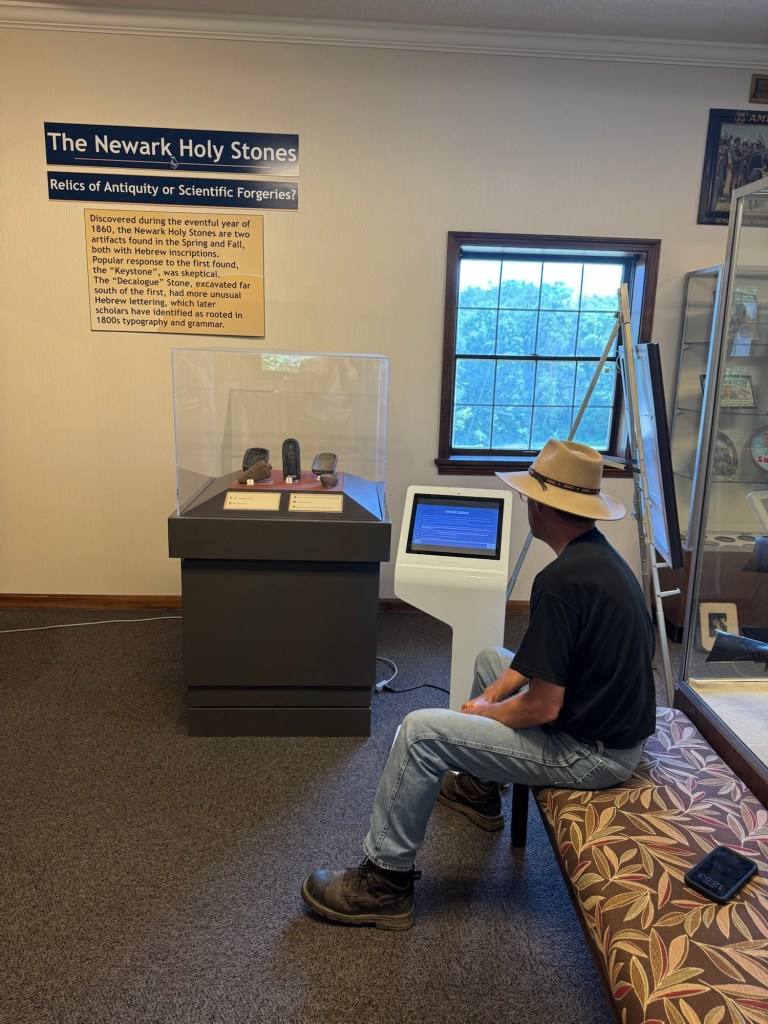
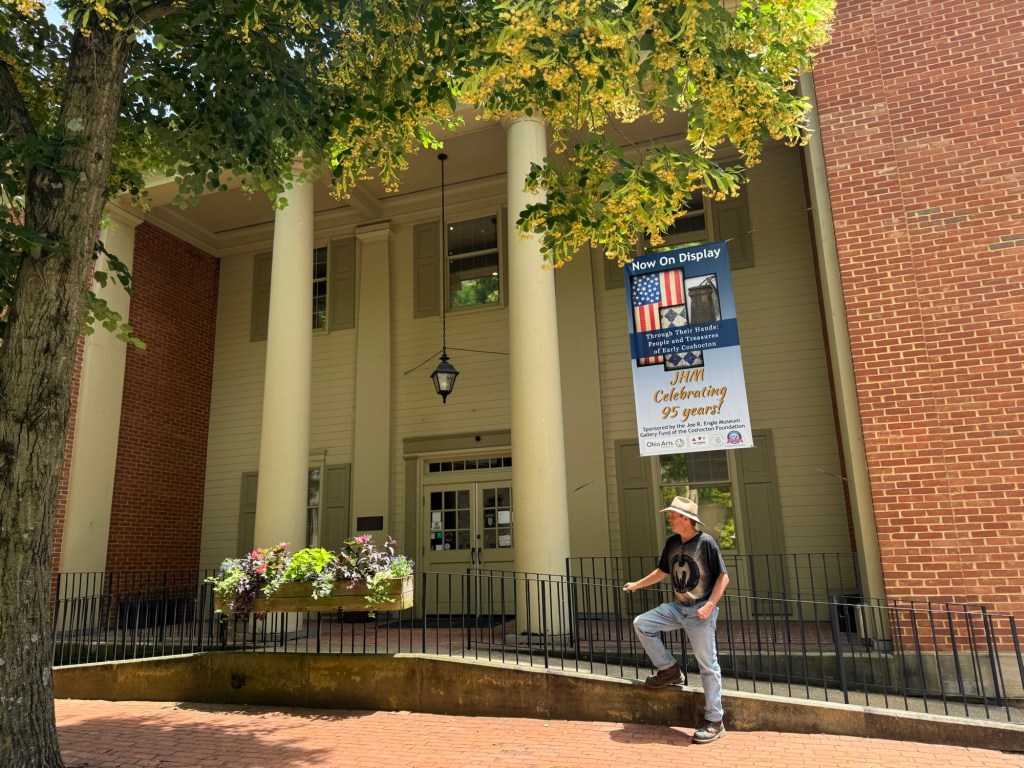
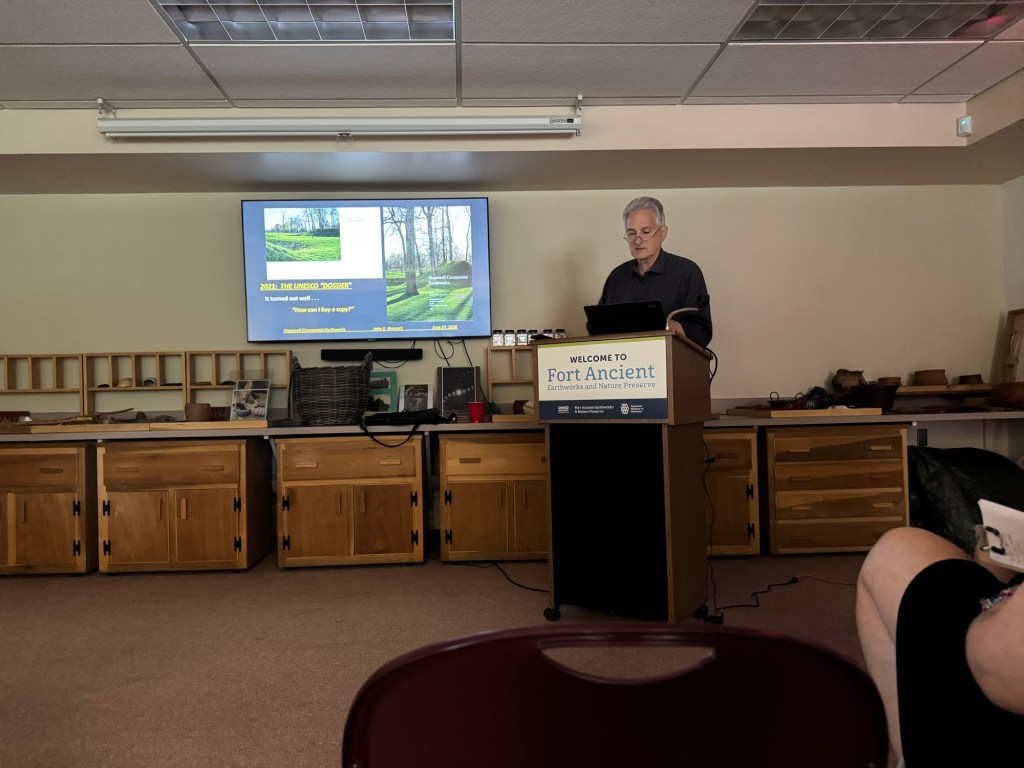
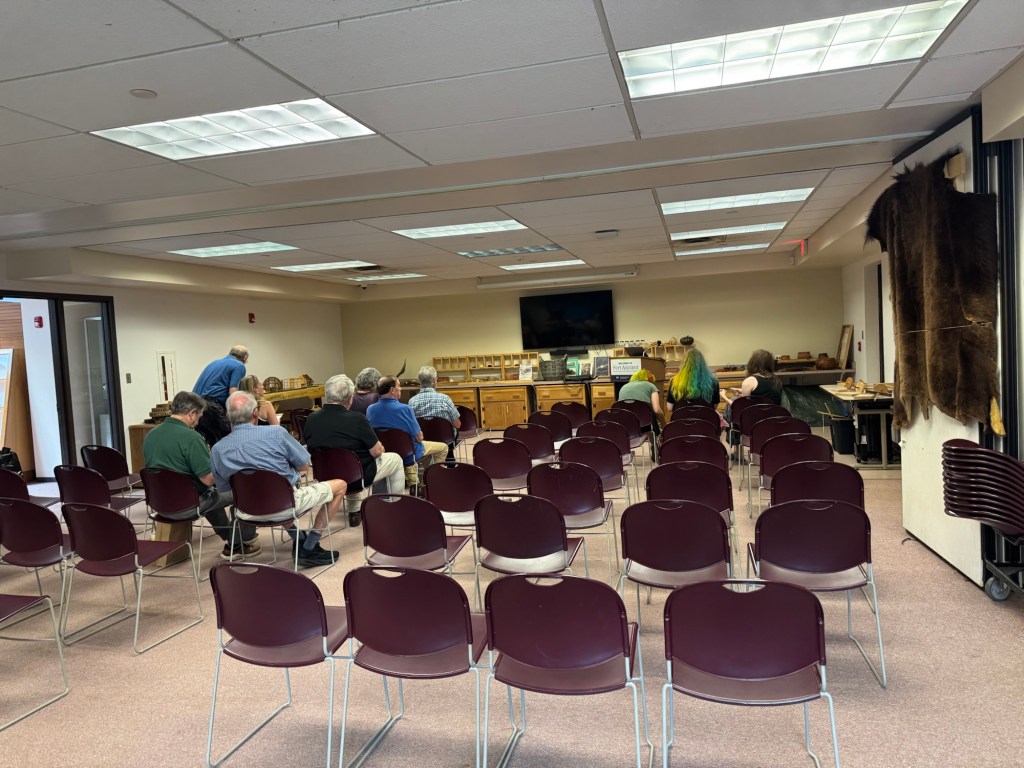
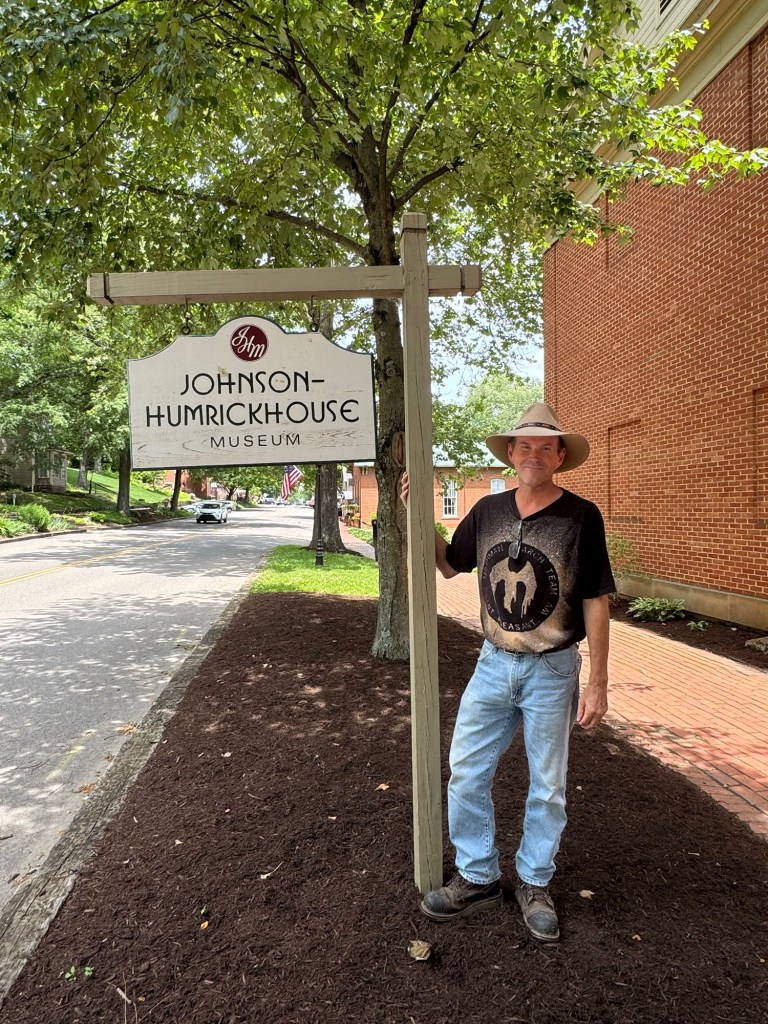
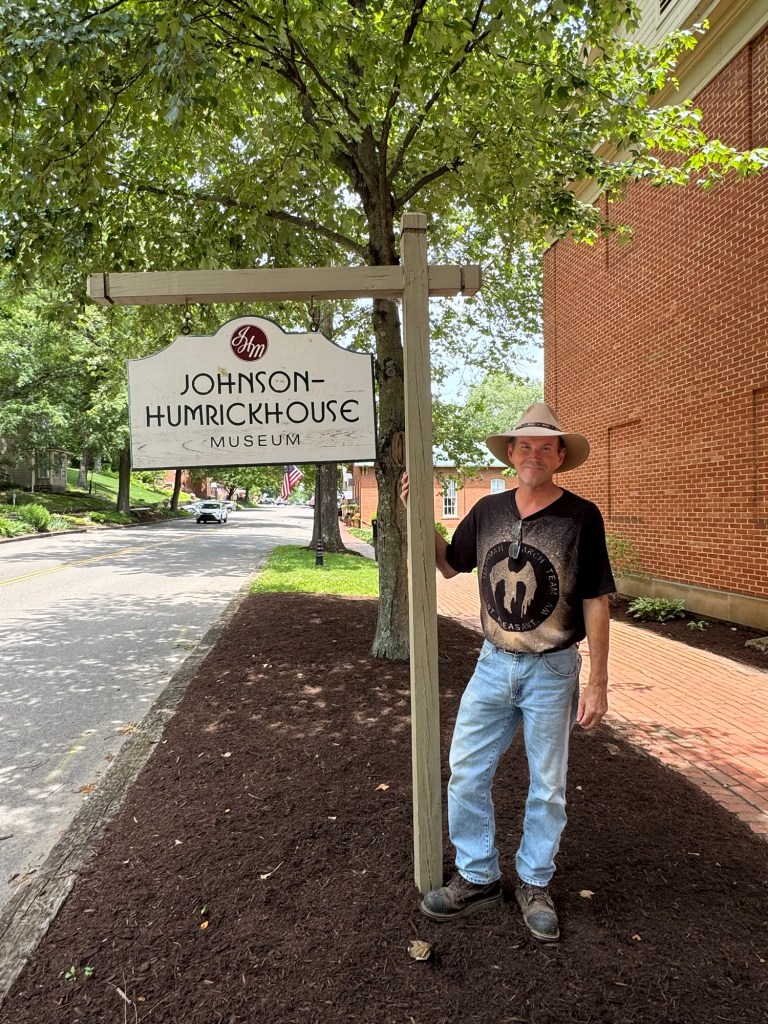
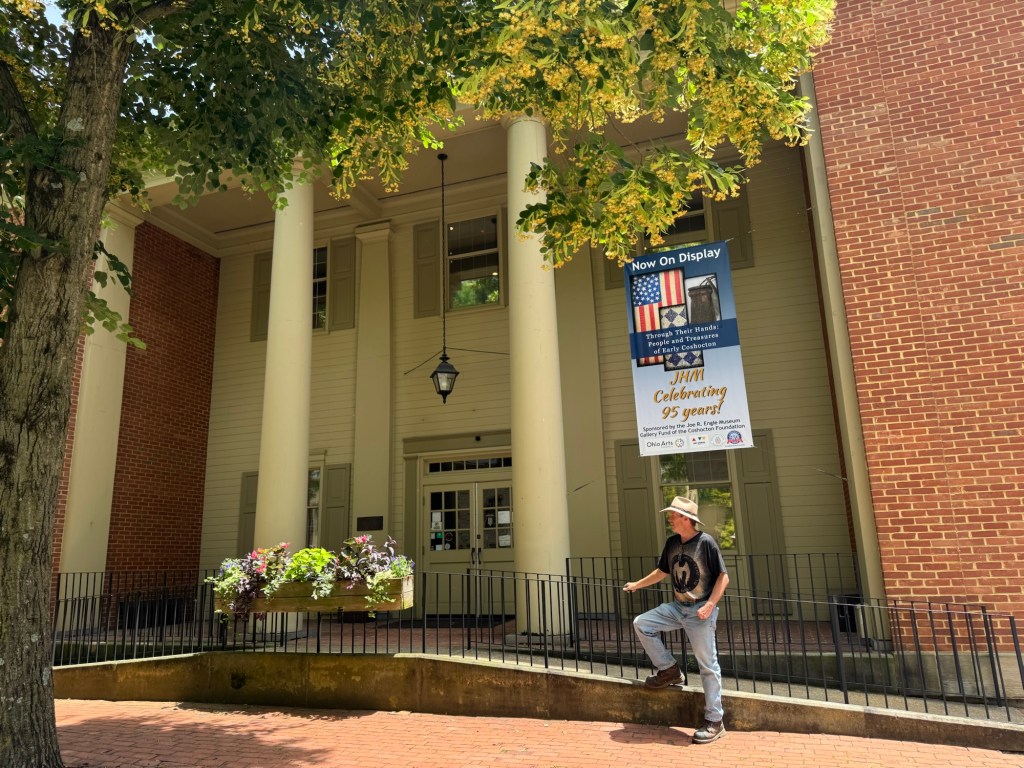
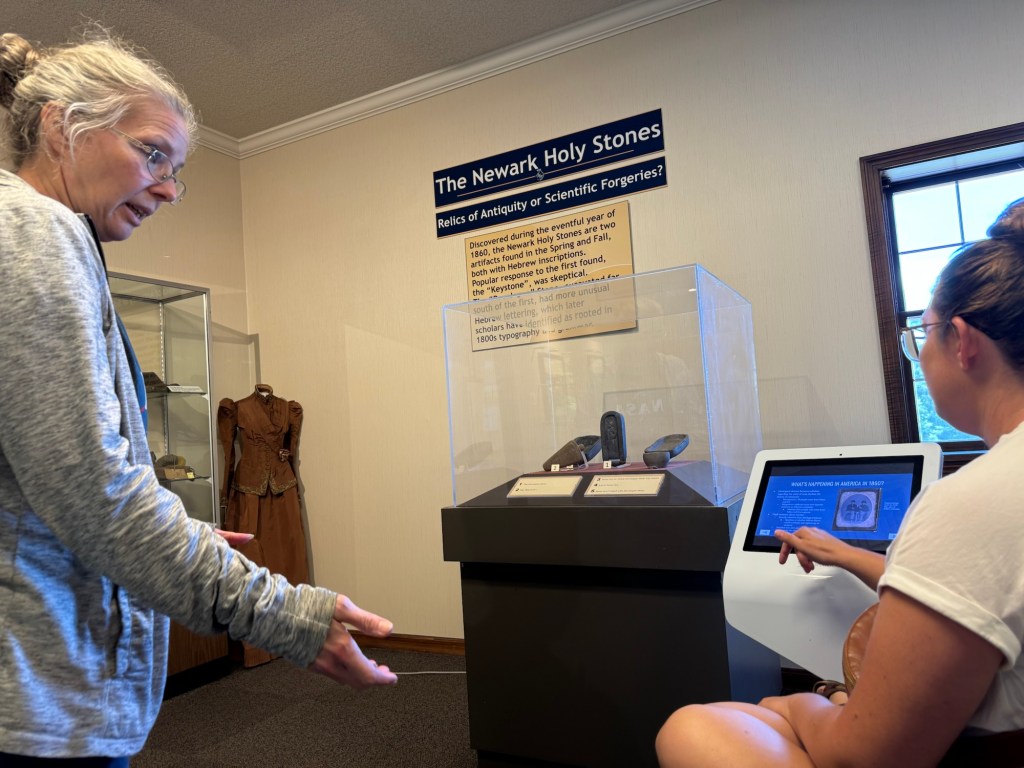
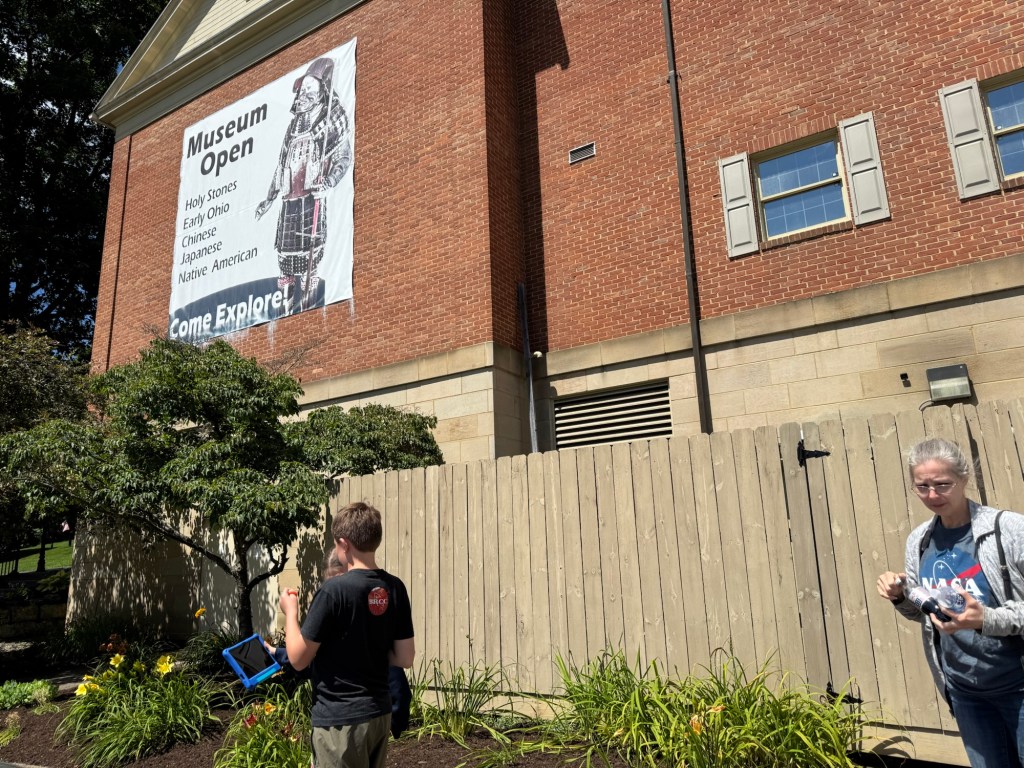
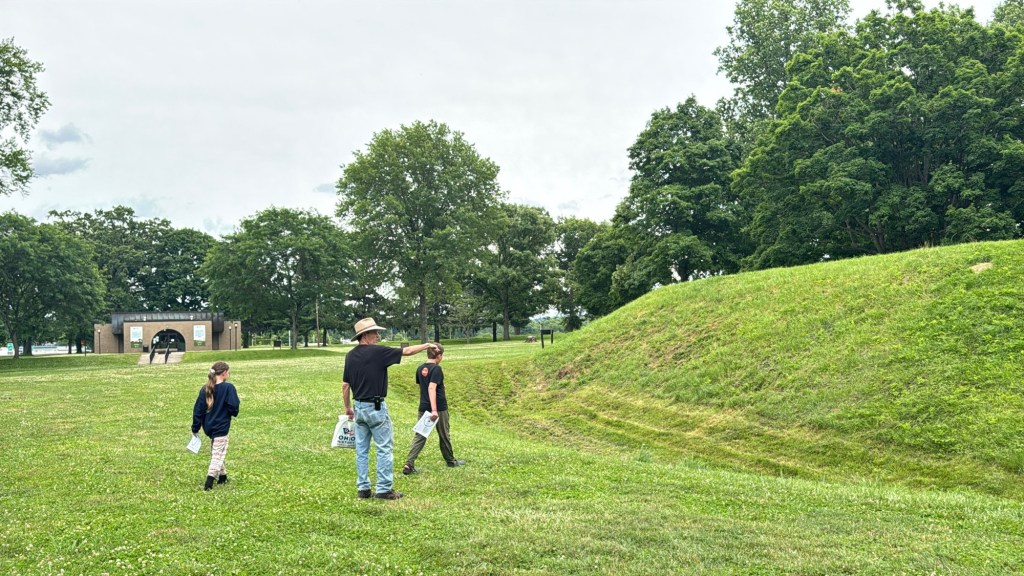
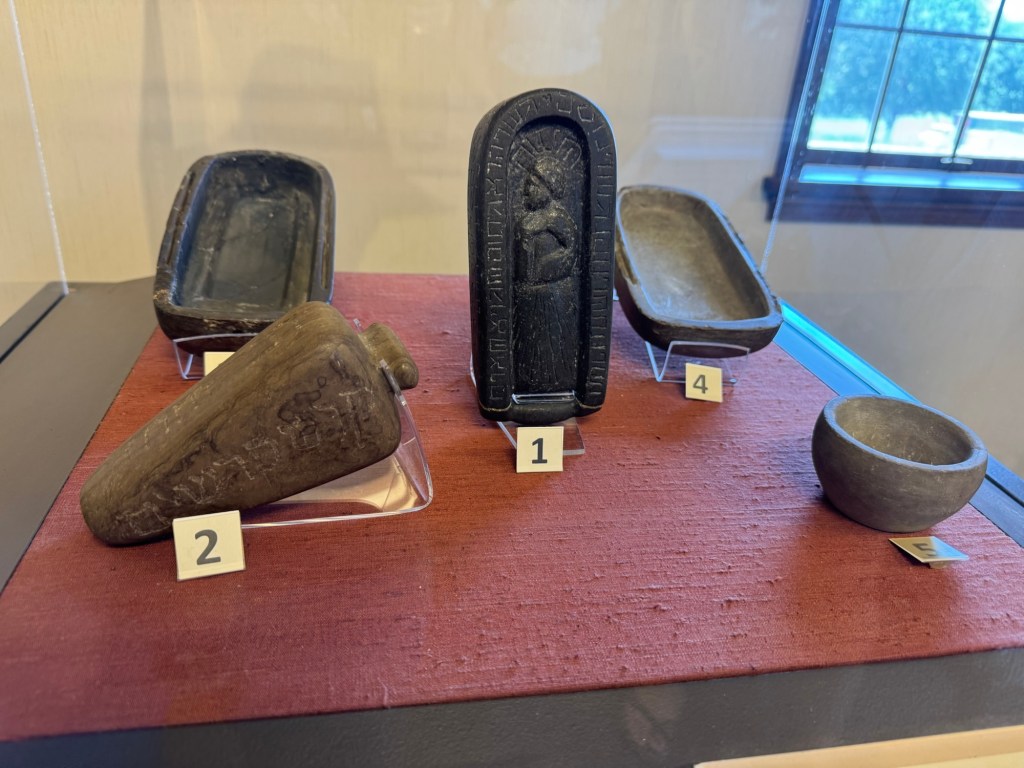
A few weeks after that picture, I found myself at the Fort Ancient site, listening to a lecture by John Hancock, who had just written a couple of really good books on the Hopewell earth mounds of Ohio. After leaving the Johnson-Humrickhouse Museum, I went with my family down to the Newark earthworks and, in the gift shop at the visitor’s center, discovered the newly released book by John Hancock, Hopewell Ceremonial Earthworks, which featured UNESCO’s classification designating 8 sites in Ohio as World Heritage Sites. Hancock was the driving force behind that designation, and, I thought, his book, based on the presentation to the UNESCO committee, was really well done. So my same daughter who took that picture went with me to Fort Ancient, at the arrangement of Sarah Winningham, the assistant site superintendent at Fort Ancient, to listen to John talk about writing his books, the UNESCO submission, and his very good travel guide, Ancient Ohio. And that is the case with a lot of this book, I go to a lot of museums, everything from the Mothman Museum in Point Pleasant West Virginia, famous for its paranormal reporting, to the British Museum where I famously had a nice argument with the staff there over the crystal skull, which falls into the same kind of category as the Newark Holystones. Are they fake? And if so, why would anybody go to all the trouble? After all, the discovery of the Newark Holystones more or less destroyed the life of David Wyrick, who was a good surveyor in 1860, and it was assumed that he was a major abolitionist aligned with the Lincoln administration in the heat of the Civil War. So it was assumed that he made the stones and planted them in the famous mounds to erode any thoughts that the Indians of his time, being pushed off the land by westward expansion, wanted to decouple their claims to the ancient earthworks. Or so they say, and they are very explicit about that at the museum.
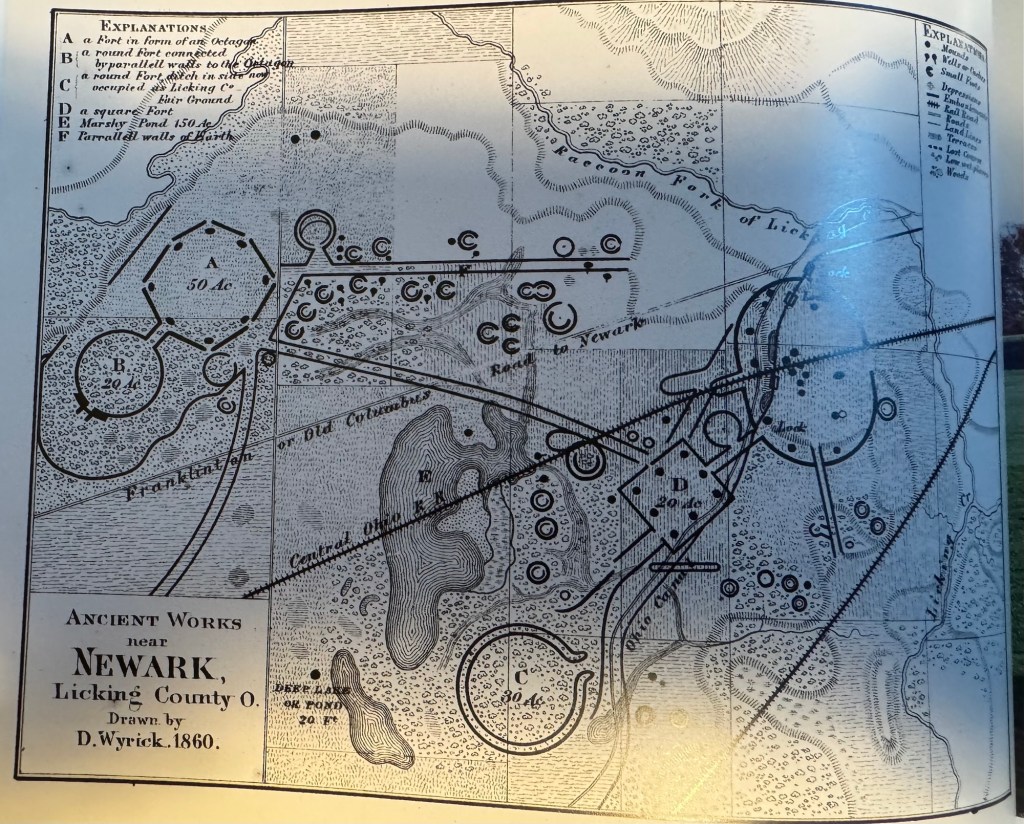
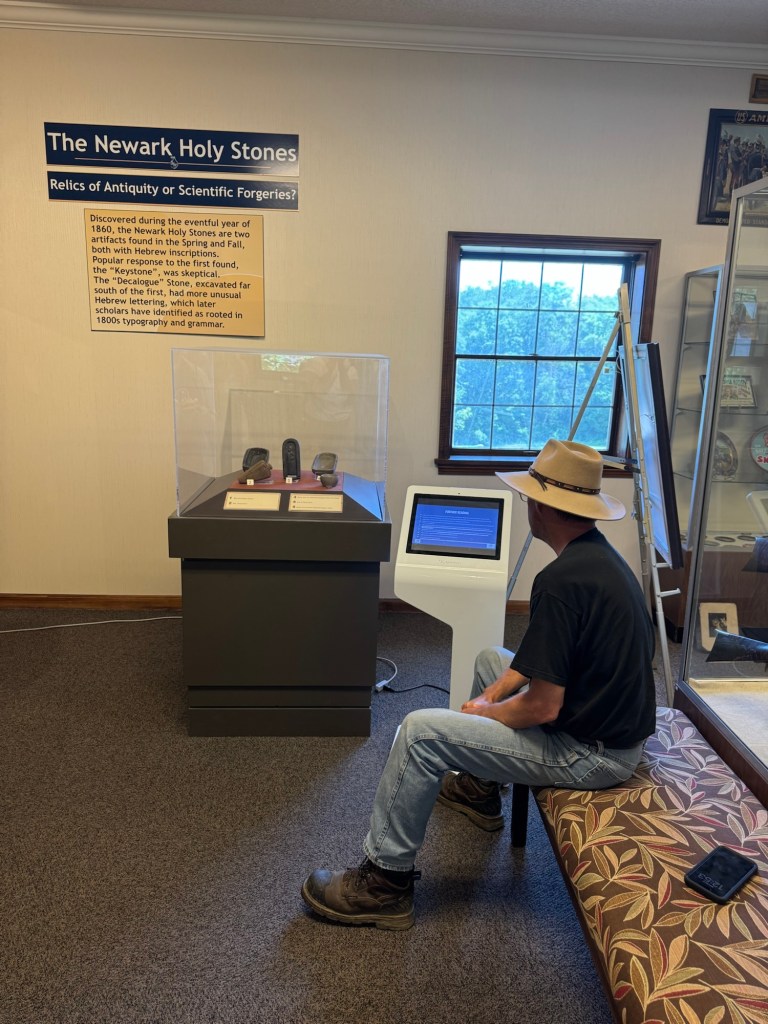
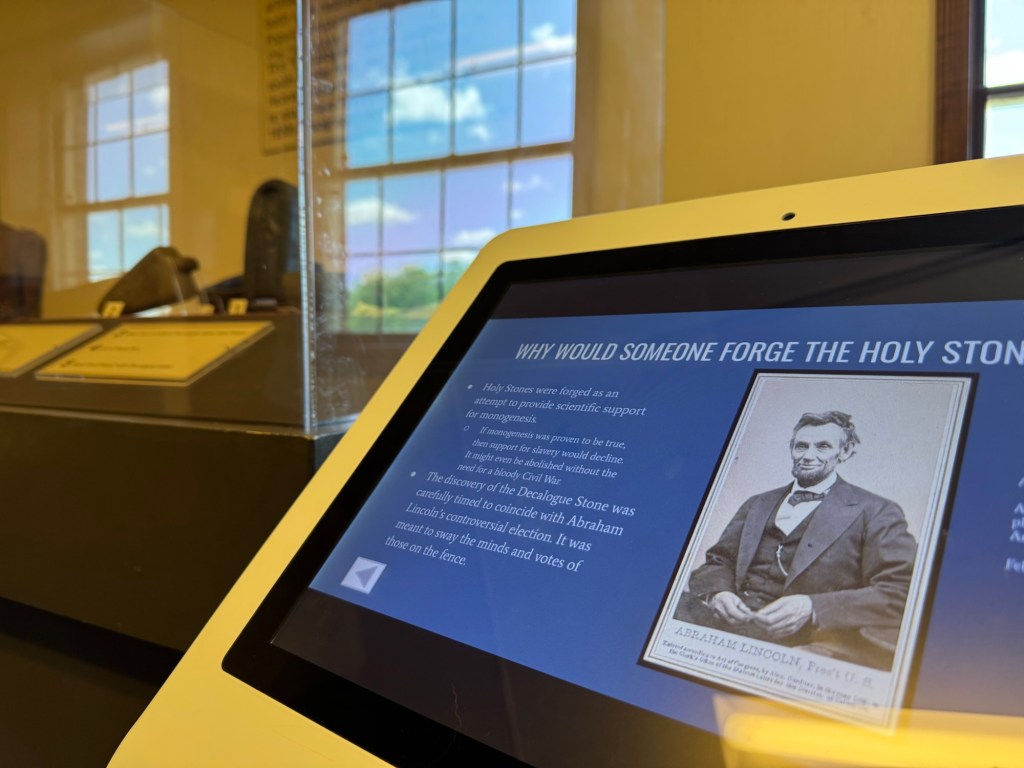
I was surprised to notice, just to the south of the Johnson-Humrickhouse Museum, a nice David Wyrick drawing of the Newark Great Circle proudly displayed on the wall of the visitors center. Wyrick died miserably in 1864 of laudanum, a commonly used painkiller that was opium based. I think it is a reach to attempt to paint David Wyrick politically, which was clearly the case at the museum’s, a very aggressive attempt to attach an indigenous people narrative to the mounds, and Wyrick was trying to spread the word of God and the immorality of slavery, which was the thrust of the Holy Stone exhibit at the Johnson-Humrickhouse Museum. It doesn’t take much of a stretch to see the academic community in the vacuum of more knowledge, driving a political narrative where it likely didn’t belong. And as I said, I noticed the fantastic book by John Hancock, newly released and displayed everywhere at Newark, The Hopewell Ceremonial Earthworks, which I grabbed quickly and read almost before leaving the mound’s site at Newark. A few weeks later, at Fort Ancient, I attended a lecture by the author John Hancock, hosted by Assistant Site Superintendent Sarah Winningham. By the time of that event at the Fort Ancient museum, I was very intrigued by some of the claims in John’s book about the famous mounds.
The Shaman of Newwark
First of all, if not for John, there is no way the Ohio mounds would have been designated UNESCO World Heritage sites, which is a very good thing because they are every bit as important as other World Heritage Sites, such as the Great Pyramids and Machu Picchu. But I wanted to talk to him about his book because he has some very interesting and unique ideas. First of all, he approached the mounds as an architect, as a retired professor from the University of Cincinnati who thought like a teacher and used to take students to Europe to see great architecture before realizing that some of the best architecture in the world was shown in the mounds of Ohio, which would eventually become in his book the eight UNISCO earthwork sites, Newark, Hopeton, High Banks, Fort Ancient, Seip, The Great Circle, and Mound City.
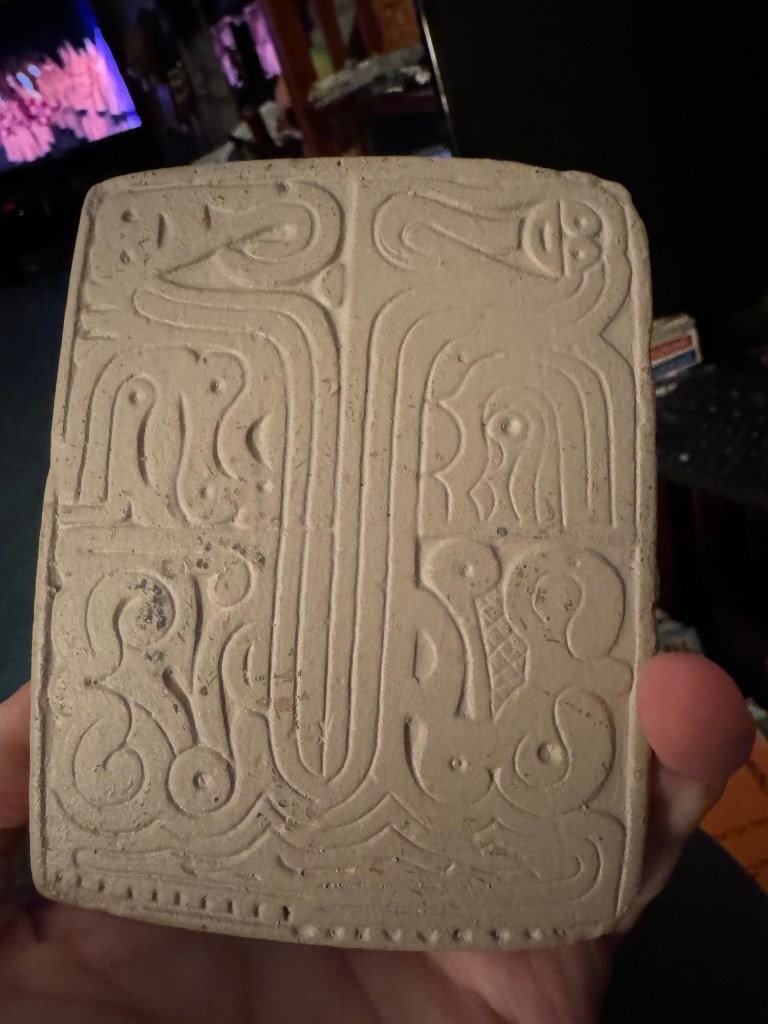
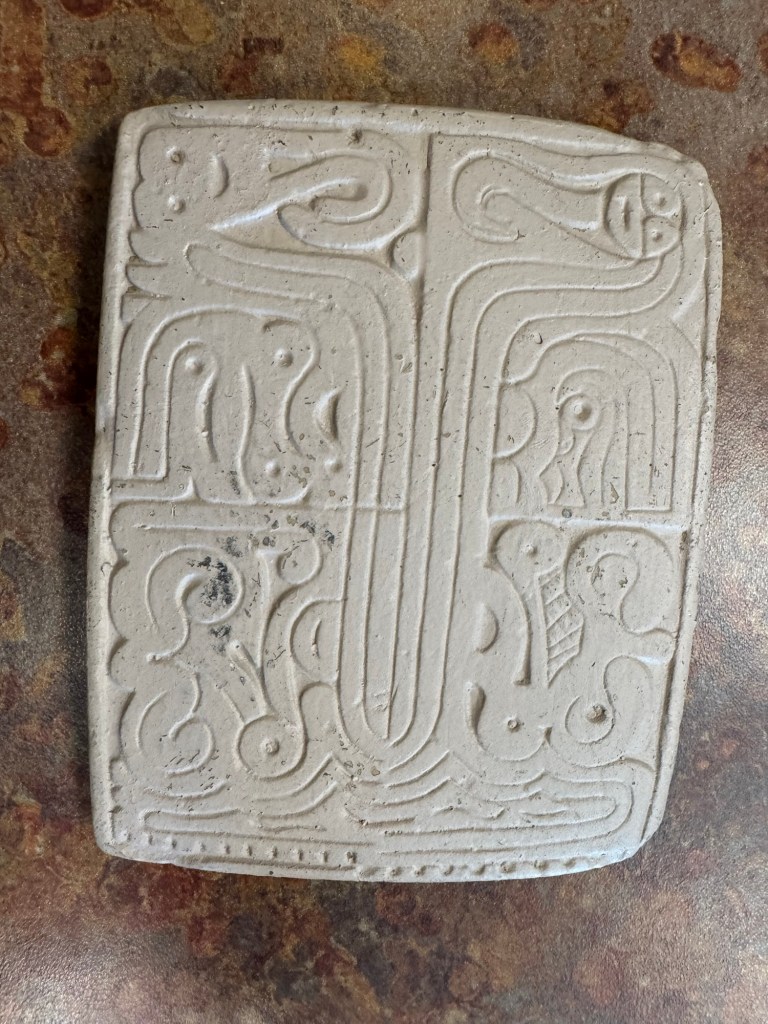
To say I was a little excited is an understatement as I went through their shelves at the Johnson-Humrickhouse Museum. As this book unfolds, it will become obvious that I love museums, big ones and little ones, and I love their gift shops. I have found many wonderful treasures in museum gift shops. The Johnson-Humrickhouse Museum is famous for its replica relics of the Holy Stones. But going through their shelves, they also had replicas of the actual Wilmington Tablets. I was very happy to see three of them, and I asked the cashier how I could buy one. They thought they were coasters. Obviously, the tablet replicas were too obscure for anybody to know what they were, including those working at the museum. I have some very strong thoughts about the various Adena tablets found in the mounds of what has been designated as Adena culture. There is a Cincinnati Tablet that has at times been displayed at the Cincinnati Museum Center. And of course, the Wilmington Tablet was found in Wilmington, Ohio. And I would argue that it shows interaction with the Olmecs from central Mexico, up the Mississippi River, and across the Gulf. A lot of archaeologists argue against it, but I thought that John Hancock’s new books made legitimate arguments for that kind of travel for a book published by Smithsonian Books. And that is the discussion that copper from Lake Superior did, in fact, find its way into the Hopewell sites in Ohio, which indicates very long-distance travel, Mica trade from the Appalachians, and obsidian from the Yellowstone area. I told John that I thought it took a lot of guts for him to talk about the copper mines in Lake Superior because of the conspiracy theories that have spawned on the topic. But here we were in 2026, talking to a serious person about the mounds, and we’re having a serious discussion about the Great Lakes copper trade, which has quite a story. Something called the Newberry Tablet, occasionally on display in St. Ignace, Michigan, points to trade with Mediterranean cultures, which many claim was so voluminous that it flooded the global economy with copper, starting the Bronze Age. The dates on the mines are around 8000 years old, or about 5000 BC, roughly the same as those of the Windover people of Central Florida, a topic we’ll discuss in much more detail later.
This book, The Politics of Heaven, is more than just a travel log of my extensive travels and my political and professional work in aerospace as an executive. As I asked the question at Fort Ancient, I came to ask John Hancock, the assistant superintendent of the Fort Ancient site, Sarah Winningham that I first started to think about many years ago. I really didn’t want to be that guy. At my age, I had been looking forward to a kind of retirement where I could attend events like the one where John Hancock would write great books and put a new spin on an old archaeological idea. John, being a professor of architecture, did have a fresh perspective that I always enjoyed in my youth as the Vice President of the Dan Beard Council.
As a young man, I was very happily involved in a High Adventure Explorer Post, where I became Vice President of the Dan Beard Council after a special election at the GE Evendale plant, where I gave a speech that led to my election. Later in this book, I tell the tragic story of a death that took place later in the night of that same election day, when I was scheduled to fight three guys from my school at that same time, and one of them turned up dead, and the rest of them were telling stories about me to the police that were not favorable. The events of that night led to my separation from the Dan Beard Council, and at that time, I enjoyed my exposure to those kinds of people, including academics like John Hancock and museum personalities like Sarah Winningham from the Fort Ancient complex. I have been hoping since that time that at some point I could get back into that kind of life, the High Adventure Explorer Post life I enjoyed so much in my youth. This book tells that story as I continued to travel a lot and utilize the skills I started in those explorer post experiences. Even though many of the people who volunteered for and supported Explorer Post activities were politically liberal, I hoped that someday I might be able to return to those innocent days.
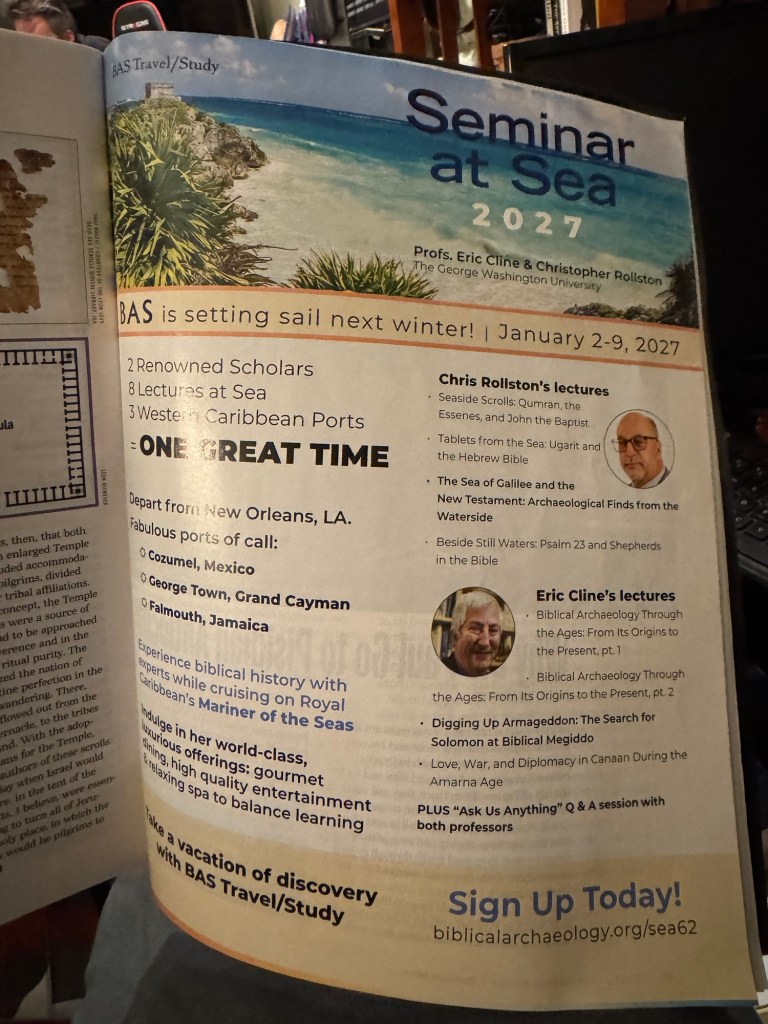
But as much as I wanted to, my life had taken me into the very political world of consulting, and with high-level personalities, which made it impossible for me to sit in that Fort Ancient lecture and put my brain away. Because, like John Hancock, who approached the really good archaeology of Bradley Lepper, and others with an architectural background, I have years of experience as an aerospace executive dealing with very smart, PhD-level engineers and professionals who can be very manipulative and deceitful in root cause analysis. My wife and I had plans, and what will become clear in this book is that I have a very high regard for the archaeological publication Biblical Archaeology Review, and I really want to spend these years of my life taking their cruises on luxury liners and having archaeological discussions. And that my happiest place on earth at the moment is at the Museum of the Bible, for which my wife and I are members. I love places very passionately where scholarship and discovery come together, so believe me, I didn’t want to be that guy. I wanted to be the guy who read the books of people like John Hancock, Bradley Lepper, and Francis Pryror, and enjoyed the buffets on the cruise ships, and read lots of books. Because more than anything, my number one hobby, which started for me during those Explore Post years, was reading books. Lots and lots of books, some of my favorite which is reflected in this literary effort, are James Frazer’s The Golden Bough and James Joyce’s Finnegans Wake, and for me, it is the joy of adventure in going down rabbit holes and bringing Alice back from its hidden depths that is the most fun. And professionally, as I have thought for a long time because of my love of The Golden Bough, I think archaeology does not go far enough as a spinoff of the creation of anthropology, scientifically, and all the hard lessons I have learned through years of political work gave me extensive experience. I really wanted to attend John Hancock’s lecture for the pure enjoyment of it, because I love people like him and Sarah Winningham. Why, because I learned to really love academics in a non-political way during my very formative years of High Adventure Explorer Post membership. I had made up my mind to get all over the world, which is what this book is about. I didn’t learn what I did by just sitting at home, but by going to many places and applying the same skills that worked very well for me professionally, to some really obscure ideas. So I came to the lecture with a question I had thought of while reading John Hancock’s marvelous books.
I thought John’s lecture on the Hopewell Ceremonial Earthworks was fantastic, very well researched, and extremely well put together. No wonder UNESCO moved to designate the 8 earthworks sites as World Heritage Sites officially. And even if the UNESCO people are extremely liberal, politically, and were very much against the United States during the first Trump presidential term, which I know a lot about. I finish this book with a visit to the White House. I tend to really enjoy all efforts that seek to preserve the past, regardless of politics. In the pages to come, I am glowingly supportive of organizations like English Heritage and the fantastic efforts of The Ohio History Connection, whose headquarters is at the Ohio History Center in Columbus, where I first visited on an Explorer Post field trip many years ago. The main purpose of Explorer Post membership is to expose young people to high-adventure career opportunities. Which was the subject of my speech at GE to the other explorer groups of Cincinnati and big personalities such as Lee Iacocca and Jack Welch, and how they elected me, even as a very young person, to Vice President of the Dan Beard Council. So, since I had my question ready for John’s lecture, I decided to enjoy the event and the educational publications from The Ohio History Connection. I remember that day with the Explorer Post visiting the museum that would become The Ohio History Connection. I got the feeling that everyone was encouraging me to grow up and become the troublemaker who would challenge their assumptions. After all, why have a High Adventure Explorer Post in any way but to raise young people to go out into the world to challenge everything, if not for gaining wealth and notoriety, but for the spirit of adventure itself.
This is the kind of thing I’d rather be doing in life. My idea of a good time.
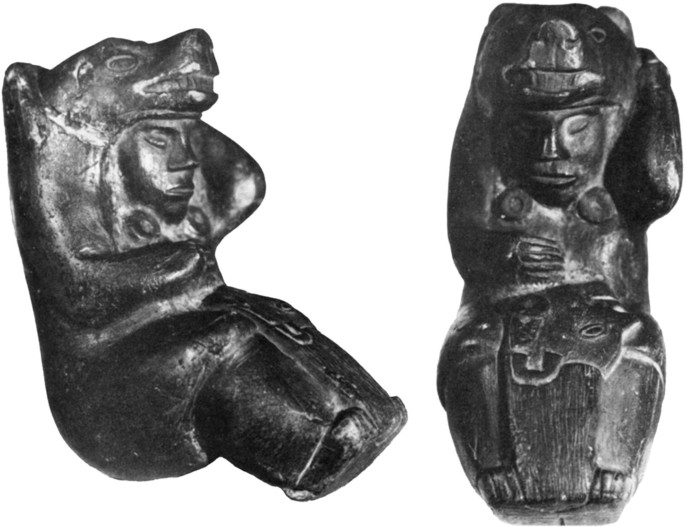
I was always the rebel of the group, and even if I was naturally very talented, my spirit of adventure got me and everyone who followed me into a lot of trouble. And sometimes people did lose their lives, which is why my time as Vice President of the Dan Beard Council was short-lived. But I got that office at a very young age because a lot of people were hoping I would be the guy who would shake things up in ways they instinctively knew needed to happen. And as I held up my hand at the end of John’s lecture, I asked my question about the relic on display at the Ohio History Center: the Shaman of Newark. In his big book, the Hopewell Ceremonial Earthworks, John very cleverly found a way to show the relic as a digital replica illustrated by Talon Silverhorn of the Eastern Shawnee. But in his travel guide, Ancient Ohio, he says that he could talk about the famous Hopewell relic but not show it so as not to disrespect Indian tribes, which set up another question I had about NAGPRA in general, which I directed at Sarah, who was in the back of the room, regarding compliance with that 1990 Democrat proposal to return to all the Indian tribes of North America the relics of their ancestors. They are running a nice museum at Fort Ancient, and John had been very clever in getting Indian tribes to contribute artwork and replicas for his books in very respectful ways, which is unusual for these kinds of projects. Before going to the Fort Ancient lecture, my wife and I had just returned from the Smithsonian in Washington, D.C., and I had a great time there. A lot of the kind of people I like these days have very little trust in the Smithsonian and the much-talked-about cover-up of the ancient giants who were reported to have been found in these very Ohio Mounds. John’s book does not address those, but he and I did talk about the controversies. I told him I thought it was remarkable that he even mentioned the copper mines of Lake Superior in his book, because, as the story goes, those copper mines dating to 5000 BC were so prolific that they caused a global economic boom and were shipped to Europe by the Minoans of Crete. That proof of that trading exchange is on what they call the Newberry tablet, which can be found sometimes in St. Ignace, in Upper Michigan. As I said to John, this conspiracy stuff is a tough line to walk. And as I said it, I looked back at the audience, and almost everyone had a grin on their face because I was saying the stuff that is supposed to be unsaid, but they all wanted to say it.
The Relic of the Shaman of Newark, I think, is a remarkable admission, which I will expand on during the grand adventure for which this book is, a journey around the world and across vast spans of time with conclusive evidence at the level of speculation awaiting the hard evidence of good archaeology. The relic itself depicts a shaman in the process of turning into a bear and is holding in his lap the severed head of a long-haired human. I knew about the relic because it was on display at the Columbus Museum, as was the Wilmington Tablet. So, as the Johnson-Humrickhouse Museum operators have done a great job getting into the business of making relics of controversial artifacts, like the Newark Holystones, but seeing that copy of the Wilmington Tablet reminded me of the Shaman of Newark, as that topic had been on my mind regarding the Newark Earthworks. And this was the cause of my anxiety, which my daughter captured so well as I was distraught over what it all led to.
I asked the question: why were the Indian tribes reclaiming all the artifacts that archaeologists had found, and even destroying them by burying them again? And as John explained, he had just spent a lot of time speaking with various Indian tribes to coordinate with them in writing his great book on how to show who the Hopewell people were by replicating them, without the magic of their actual image tainting them with haunted reverence. So here is the problem. Two things can’t both be true, here we had a political movement pushed by NAGPRA, which said that we had to give back all the evidence of our discovery because the relics of the Indigenous people were magical and had power that had to be returned to the ground, but at the same time we were supposed to study these Indigenous people with evidence to understand them. So I turned around from my seat and addressed the back of the room. I asked, “Was the NAGPRA pressure political or coming from the tribes themselves?” Because I will talk about this extensively in this book, the 8,000-year-old, well-preserved people of Windover, buried in bogs in Florida, are genetically dated as older than any known North American Indian Tribe and were actually around during the period of the copper mines of Lake Superior. So how can we study this history and properly respect it if NAGPRA said we had to empty all the museums of Indian relics and give them back to tribes we were calling Indigenous people by Democrat legislation that was making a claim that America should have never been settled or turned into a country because it happened at the expense of these miraculous Indigenous people?
And here’s the problem: the Shaman of Newark shows clearly the extent of the belief of those people of their period, which, to my eyes, were mimicking the beliefs of the Canaanite gods that Yahweh was so enraged about. And the political statement by Yahweh to destroy all the gods of Canaan and destroy the people of that land, emphatically. The beliefs of the people of Newark and the other Hopewell sites needed to be studied much more so that evidence could drive our conclusions. Like the situation in Cahokia, just outside St Louis, here we had an Indian relic in the Shaman of Newark that had a decapitated head in his lap, showing the typical ritual sacrifice of life for the benefit of communicating with spiritual entities. And with that, under NAGPRA, which bless her heart, young Sarah Winningham was preparing the Fort Ancient museum to be fully compliant with. The evidence was right there, begging us to ask the next layer of questions with really great minds and researchers, like John Hancock and great archaeologists like Bradley Lepper, who should be applying great science to these magnificent archaeological monuments. Instead, we are getting rid of the evidence and then telling the world that everything is a conspiracy theory because there is no evidence to support it. This book is about the evidence discovered through vast and sometimes dangerous expeditions observed over my lifetime.
In these pages, there is extensive study of the impact of shamans on a culture over time and of their common role as vehicles of spirit-world interaction. I was very impressed that John Hancock put an image of the Shaman of Newark in Hopewell Ceremonial Earthworks. But he did not include the same image in his Ancient Ohio traveler’s guide, even though he did talk about it. The reason is tribal acceptance and a NAGPRA compliance issue, and I think it’s the key to the whole enterprise. My question is, what made Yahweh listen to Satan to punish Job, and why wouldn’t Satan work through many shamans over time and space to whisper bad things for their own political needs to gullible recipients, whether that be Job or God himself as head of the Divine Council? Just because the Bible recorded an occurrence, why wouldn’t there be many more undocumented occurrences just as bad or worse than what happened to Job? The presence of shaman activity among the Hopewell people, complete with a severed head in its lap, does not point to peaceful indigenous people being used by a modern 1619 Project into claiming them as vehicles of destruction, invalidating the creation of the United States in the first place. Yes, I think David Wyrick may have planted the stones for all the reasons he was accused of. But it destroyed him socially, and it looks like the work of the opium present in his painkillers, giving his mind access to similar satans as those that tempted God in the Book of Job. I think there is another layer to the story, and it centers on how we perceive consciousness.
In the chapters ahead, I explore the nature of remote viewing as we have come to know it and test some assumptions on the known psychics Dolores Cannon and Edgar Cayce, and even deeper into the MK Ultra Program, so well known around the Charlie Manson murders. And why wouldn’t we pay attention to that kind of psychic reporting when so many biblical characters were telling of occurrences where they directly communicated with gods and would sacrifice to them? And here in Newark, Ohio, we have an Indian relic of a Newark shaman that depicts a severed head and a shamanic transformation from human to bear, and we are supposed to, under the NAGPRA law, put that relic back in the ground and destroy its magical properties. And why do the Indians believe these relics have magical properties? How are we scientifically talking about magic in objects and saying it with a straight face, then calling people like me pseudoscientists or, at best, contemplators of conspiracy?
Let’s take what we know, that Satan was reported to manipulate God in the Book of Job, and that God reacted to it in a way that was very hard on Job who was a good man doing all the good things a human being was supposed to be doing. Why did Satan want to bring harm to such a good persont? Just because, Satan was evil? What does that mean and what’s the next layer of understanding? That’s the kind of question I explore in the chapters to come. What are the political motivations of spirit world malcontents, and how can we prepare ourselves as a human culture from their interdimensional tyranny? And if we think that is wild, then how can we say that indigenous people have ancient relics that are magical and should be destroyed and put back in the ground and studied? Yet we are supposed to take the word of the experts for it completely and “trust the science.” As we were expected to do with Covid. So here we had a problem, we are supposed to ignore all the evidence and give it back to people who had no genetic claim to the objects, in ways we still don’t understand, we don’t know who the Hopewell and Adena people were, we don’t know who mined the Lake Superior copper mines, we don’t know who the Windover people were, yet we are supposed to give all these treasures back to the newest people living on the block, without studying what they left behind. The Shaman of Newark, I think, is one of the most important parts of John Hancock’s book, as he actually managed to put an image of it in the book before the purge of NAGPRA forced it into obscurity. But how much else has been shoved away into a lack of study, and how can we claim to know anything about them?
A lot to think about
I didn’t mean to, but I had a UFO experience that I talk about in this book also. I would attribute it to big government programs and to a psychic reaction to me personally, which is something that dominating personality types seem to have been able to do over many years. But who did they speak with, or rather, who answered? I have seen it for myself. I think non-human intelligence is always working with us, around us, through us, and for its own political motivations. But what are those politics? We might understand the Ohio governor’s race between Amy Acton and Vivek Ramaswamy through the political lens of Democrats versus Republicans. And that was certainly the case between many researchers and me. Overwhelmingly, college professors tend to be Democrats, as are Hollywood actors, for very good and definable reasons. Productive capitalists might otherwise be said to be Republicans. But what is the politics of Satan besides calling him evil? Evil doesn’t tell the story nearly enough. And what would be the politics of spiritual beings, as the Indians say, the Great Spirit? Perhaps they are talking about the same God we all are. Or perhaps not, perhaps their god is just another version of Baal, Lucifer, Moloch, or Satan. Yet, here we have in the Shaman of Newark a figure involved in human sacrifice, as many of the Mississippian Mound cultures did, Cahokia included, and nobody wants to talk about it? NAGPRA says we are supposed to suspend belief and surrender our opinions to the experts who have no idea what they are talking about.
I walked out of the Steven Spielberg film Disclosure Day, telling my wife that everything had changed. It’s not that the movie was jaw-droppingly good; it was just a movie. But it gave permission, for a whole bunch of political reasons, to talk about this subject differently than at any time in the past. The evidence, including the case of David Wyrick, and we will talk about evidence a lot in the murder cases I have been on, where I was the top cop of Butler County, Ohio, for a very treasured period. Do demons and spiritual characters talk to people and soothsay them into self-destruction? Yes, emphatically, over and over again, and I think when it came to David Wyrick, he needed public acceptance that some demonic force wanted him contained and destroyed. He was an abolitionist who used his prominent social position as a mason to help spread the message of ending slavery. And thought his opinion-based painkillers, a Satan-like character probably had his ear right up to the day of his death under the influence of that same painkiller. But why, if you were an alien from a Type One civilization, would you try to derail an ant colony that was interrupting your version of a picnic? If the creation of America was divinely inspired, as the Bible clearly indicates, wouldn’t that be good for the human race? Yet perhaps god was at war with all the other gods, and we are their chess pieces. I’m inclined to that latter assumption, and the evidence certainly leans in that direction as I have experienced it.
At the September 9th 2025, Restoring Public Trust Through UAP Transparency and Whistleblower Protection hearing with the House Oversight Task Force, there were some very unusual things said on the very public record by George Knapp, Jeffry Nuccetlli, Dylan Borlan, and Alexandro Wiggins that have slowly taken the idea of UFO talk from conspiracy to actual scientific study. We have open talk now that up to four species of non-human intelligence are interacting openly with the world’s governments. And back to the movie Disclosure Day by Steven Spielberg: as a work of art, it opens the box to talk about these things in ways we never have before, because of the compelling evidence emerging from these testimonies. The movie is clearly fictional and meant to be a popcorn popper. But there is a level of seriousness to it that hints at something much larger: how do these non-human intelligence types communicate with humans now and in the past, perhaps even the deep past? I would say to all the scientists of the Smithsonian that objects like the Shaman of Newark and understanding how the complex mathematics in the Newark Earthworks were given to those indigenous people in the first place is all that matters. Based on observation, with the thin proof that we have, the Sumerian God Nisaba was whispering geometry to the people of the Hopewell period, and probably longer. Or the Hindu goddess Lakshmi. Why not you say? Are we going to be fools and suggest that Sumerian Gods were regional, and could not speak to people on the other side of the world as easily as someone in a Sumerian temple under drug influence? Why would we assume that? The first question is understanding that. And how did a society that did not have any central government or modern technology such as TV or radio project those same mathematics, without flaw, from the Newark earthworks to Hopton, over 60 miles to the south, to Mound City, Seip, High Bank, and Fort Ancient, locations all over Ohio? They had no paper that we know of, no Wal-Mart, no way to say that this, this, and this is important. Let’s build massive earthworks that take millions of labor-hours each to complete, and do so to perfection, without any centralized corporation or government to keep everyone focused. And modern science calls it a miracle of tribal knowledge. I call it communication through shaman over vast distances, all over the earth, by non-human intelligence trying to manipulate the human race towards its own doom and destruction to fulfill the political needs of the rebels against God.
And to further confirm that suspicion, many of these Hopewell sites are associated with the very ancient Teays River, which flowed up the Scioto over 2 million years ago, well before the last Ice Age. The Teays and its tributaries touched many of the Hopewell sites, indicating a reverence for those spots on the land by an intelligence observing human beings over a vast span of time and connecting those locations to celestial alignments. And that relevance is important in knowing that the Great Serpent Mound was built on the crater of an impact crater from 300 million years ago. How would indigenous people know that? And even stranger, the Fort Hill complex is built within the impact crater zone as well. Out of all the places in North America, why would anybody, and nobody really knows who they are, build these big, significant sites near geologic features that were millions of years old? Why would they know anything about any of it with such precise mathematics? How would that information ever be obtained in the first place, let alone passed along to these construction sites involving so many years and generations of labor and production? It’s hard to build a McDonald’s consistently, even with all the modern tools we have now. I would propose that it was the shaman with drug use who served as the primary communication device. And with that, a relationship with Non-Human Intelligence that we are finally admitting to, that has always been a part of the human experience.
Yes, the exhibit at the great Johnson-Humrickhouse Museum was very political, but not in the way that I think they intended. I saw at the museum an attempt to understand these great mysteries with replicas of the relics themselves. Again, that’s where I found a great copy of the Wilmington Tablet, along with the Holy Stones of Newark. And we also know of the Shaman of Newark, so there were relics that depicted the same kind of human sacrifice that we know came from central Mexico, Mirador, Teotihuacan, and Cholula, in a time when many people didn’t think cultures were talking to each other. They appear, as the evidence of the relics shows, to have been doing so. Even in the Smithsonian views these days by John Hancock, we know that the Hopewell people were traveling many thousands of miles to obtain copper, obsidian, and mica, and likely traded with the Olmecs of Tabasco, Mexico, and affiliated cultures, which had their writing showing up in the Wilmington Tablet and the Cincinnati Tablet. So the political motivations of David Wyrick are not as simple as has been attempted to be set out.
As a surveyor of these great Indian mounds, and confronted with vast evil, as the Civil War over slavery unleashed itself, and studying the remains of these ancient cultures, likely the same voices that whispered in the ear of the Shaman of Newark were whispering in the ear of David Wyrick and his opium painkillers. And was it Moses who wrote the Book of Job and discussed what Satan had said to whom and for what reason? The same guy who talked to god on a mountaintop and came back 40 days later with the Ten Commandments, and spoke to a burning bush about freeing the Jewish people from the confines of Egyptian polytheism. Should we ignore that the mound complex at Portsmith, Ohio has a very similar path-of-souls ritual to the one the Egyptians had for their preserved dead? And that some of their paths actually go through the Ohio River, showing a reverence for what was there before even the Ohio River flowed through the area, when the Teays River instead flowed to the north. And we could say with just as much authority that the mound sites were restored during the Hopewell period rather than constructed anew. That they were marking spots on the ground, viewed from the air, to very ancient landmarks, for reasons for which we do not have enough evidence to speculate. Yet they are there, and the evidence is begging to be found and analyzed. And for the same political reasons that Satan tried to trick God into punishing Job, we have society punishing David Wyrick for daring to oppose slavery, or wanting to use the Ten Commandments as a hook into North American migration by Western civilization, bringing with it a religion of forgiveness instead of appeasement to some mysterious gods who demand decapitated human heads in the lap of their shaman before providing information.
No, I didn’t want to be that guy, but sitting in front of the Newark Holystones at the Johnson-Humrickhouse Museum and seeing the exhibit they had there, and noticing the quick tone to dismiss everything as a hoax, my life flashed before me in a way I would have rather had it not. A deception was at play; Satan himself was trying to throw everyone off the scent. And when theologians contemplate a single satan in the Book of Job, they miss the obvious problem that there are likely thousands of them always whispering in someone’s ear, maybe God himself, or David Wyrick laced out on painkillers, or the Shaman of Newark. And that it didn’t take much to communicate, a spiritual terrorist from the land of Cannon could have been speaking the same message of sacrifice to some headhunter of the Adena culture depicted as a severed head in Hopewell mounds at the same time that they were whispering to Nebuchadnezzar to destroy Solomon’s First Temple, and to the Romans during the Second Temple, to destroy the vessels of God himself to make the world ripe for an overthrow, to the political objectives of the conspirators against God’s creations. And the Essenes were turned into the channel, and wrote about it in their Dead Sea Scrolls. I had wished that the Johnson-Humrickhouse Museum exhibit, located well north of Newark, was less obvious and more scientifically grounded. But the assumption was that Wyrick was an abolitionist living among evil people supporting the slavery of other people, more of that reference to the 1619 Project, the unjust settlement of indigenous land. And as you read at the Holy Stone Exhibit, you can almost hear the whispers of Satan himself, showing Wyrick to be invalidated, corrupting future scientists in their assumptions, and making a case for not even founding America at all so the Christian premise of eliminating human sacrifice would be destroyed and current cultures continue the practice of honoring the spirit world with the blood of the living. And I didn’t want to be the guy who reported what was hard to hear. That Satan was a non-human intelligence that has been doing all this manipulating since before the Teays River flowed north along the Scioto River, then turned left near present-day Columbus and headed out to Indiana along the present-day I-70 corridor.
If you really looked closely enough and blocked out the contemporary noise, you could hear the insecurities of Satan, hoping to get away with the deception of many lifetimes. Humans need to appease what they thought of as their superiors, their gods, the malcontents that UAP whistleblowers are now revealing in the light of day in the Trump administration very hard truths. It’s one thing to explain modern UFOs and their physics-defying characteristics, and another to explain the mysterious occurrences and hauntings at the Skinwalker ranch. Yes, I talk a lot about hauntings, paranormal occurrences, Bigfoot, UFOs, and the kind of politics that will make your skin crawl in the pages ahead. But it’s also a marvelous adventure that I share so that you don’t have to go through the pain firsthand. And perhaps, after a lot of work, we’ll gather up enough evidence to change our perspective. But in The Politics of Heaven, the ruse is in what isn’t said, not what is actually revealed. Satan never tells God what he’s up to in trying to get him to turn against the very good Job. But when we look at the human race, we see a lot of Jobs, David Wyrick being one of them. Good people are crushed by their relationships with others who are otherwise motivated toward evil. But what is evil anyway when you have the Shaman of Newark holding the severed head of an obvious victim, that shaman would use as currency to buy information from the spirit world. The great spirit, or Satan himself. We aren’t supposed to ask the question, only to accept that the experts told us what to think and when to think it. But I didn’t want to be that guy. Sometimes, I wish I could be a lot of other things. But what is the adventure in that? And in the adventure are the answers, the real answers if we dare to look.
Rich Hoffman is an author, political consultant, and strategic advisor based in Cincinnati, Ohio, and the creator of The Politics of Heaven—a unique framework that connects biblical theology, ancient history, and modern power structures to explain how moral alignment and spiritual forces shape global events. Blending real-world political experience with deep research into archaeology, UFO phenomena, and suppressed historical narratives, Hoffman offers compelling commentary on topics ranging from ancient civilizations and the Dead Sea Scrolls to modern populist movements, paranormal continuity, and leadership strategy in chaotic environments. As the author of The Gunfighter’s Guide to Business and the forthcoming Politics of Heaven, he brings a grounded yet provocative voice to media discussions, supported by firsthand experiences and a cross-disciplinary approach that bridges science, history, and theology. For interviews, speaking engagements, or expert analysis, visit richhoffmanbooks.com or contact directly via phone at 513-307-5815 or email at rhoffman@richhoffmanbooks.com. If you’ve seen the movie, Disclosure Day and want to talk about it and the implications of Presidnet Trump’s UAP disclosures, let me know and we can bring some color to your coverage. https://richhoffmanbooks.com/media-inquiries-broadcast-topics-and-contact-info/?frame-nonce=ad51e7ecba I do have a firsthand UFO encounter to discuss.
I was just in one of those back-and-forths online the other day, the kind that pops up when people start talking about this governor’s race we’ve got coming in Ohio, and somebody came at me with the usual line after I pointed out a few things about Amy Acton. You know the one: “You don’t have a uterus, so you don’t get to have an opinion on this.” I’ve heard it before, from the same crowd that wants to shut down any man who dares speak on the moral weight of ending a life before it ever draws breath. It always lands flat with me. I’ve been married for nearly forty years. I raised daughters. I’ve had bones broken and sticking out through the skin more than once in my life, and I can say with an extensive reputation that if I had been wired to carry a child, I would have taken every contraction, every hour of labor, every bit of that pain away from the women in my life without a second thought. I’ve got the capacity for suffering. I’ve proved it on myself. That old dodge about “you can’t understand because you’re a man” is just a way to dodge the real question, which is whether we’re going to keep pretending that the deliberate ending of innocent human life is some private medical choice that only one sex gets a vote on.
Let me back up and lay this out the way I see it, because a lot of folks have let the COVID years paper over who Amy Acton really is and always has been. Back in February of 2019, Governor Mike DeWine, a Republican who had built a record as pro-life, made his final cabinet appointment, bringing Dr. Amy Acton in as Director of the Ohio Department of Health. She was the first woman physician to hold the post. DeWine talked about wanting fresh thinking in the department. What he got was a public-health official whose record and instincts ran hard the other way on the question of unborn life. Even then, I said it out loud: this was the abortion person being installed in a Republican administration. DeWine was willing to reach across the aisle to show he could work with someone whose views on that fundamental issue differed from his own. He paid for it later when the lockdowns came, and she became the face of the Ohio response, the one issuing the stay-at-home orders, the one whose name was attached to the restrictions that kept families apart, businesses closed, churches limited, and elderly folks isolated in ways that still haunt a lot of us who watched it happen.
I don’t need to rehash every day of 2020. What I do want to keep front and center is that the woman now running as the Democratic nominee for governor of Ohio was not some neutral technocrat who suddenly discovered progressive politics during a crisis. She came in with a worldview that treated the unborn as negotiable and, once the pandemic arrived, treated the rest of us as subjects to be managed. The nursing-home decisions, the orders that kept healthy people from moving around and building natural immunity, the whole apparatus of control that turned the state into something that felt more like a laboratory experiment than a free society, all of that happened on her watch. I’ve said it before, and I’ll say it again: she became Ohio’s version of Dr. Fauci, only with more direct power over our daily lives. And the same circles that produced gain-of-function research in places like Wuhan were not unknown to the public health establishment she moved in with. I’ve followed the money and the papers long enough to know that certain people in those rooms understood exactly what kind of pathogen could be engineered and what the risks were if it escaped the lab or was released under whatever conditions. She knew the environment she was operating in. That’s my firm belief after watching it all unfold.
Now she’s out there reminding everybody that it’s been a few years since Roe v. Wade was overturned and that Ohio voters, in their wisdom or in their distraction, passed Issue 1 in November 2023 and wrote a right to abortion into the state constitution. She frames it as protecting women’s decisions, as trusting women and their doctors. What she leaves out, and what I keep reminding people of, is how that vote actually happened. It came after an August 2023 special election that was itself a battle over whether to make it harder to amend the constitution. Progressive money, millions upon millions from out-of-state donors and dark-money groups, poured into Ohio during an off-year, low-attention cycle. They knew exactly what they were doing. They treated this red-leaning state like low-hanging fruit because they had a Republican governor who had already shown he was willing to put an abortion-rights advocate in charge of public health. The campaign wasn’t some spontaneous uprising of Ohio mothers speaking their hearts. It was a well-funded, professionally run operation that counted on people not paying close attention in the heat of summer. And it worked. Now the same people who bankrolled that effort are backing her, and she’s happy to remind voters that she stands with the “will of the people” on this issue.
Here’s the part that really sticks in my craw. When I pointed all this out in that online exchange, somebody fired back that I, as a man, had no standing to talk about it. I’ve heard the same thing aimed at other men who speak plainly about the moral status of the unborn. It’s a rhetorical trick meant to make the argument about anatomy instead of about right and wrong. I told them I’ve lived with women my whole adult life. I’ve watched my wife go through what women go through. I’ve raised daughters, and I’ve seen the culture shift from the music of the seventies and eighties, when songs were still mostly about love and family and sticking together, to the stuff that came later, the rage and the hedonism and the open celebration of using people and discarding consequences. I’ve seen what permissive sexual culture does to young women especially. It sells them the lie that they can live exactly like the most reckless men and that abortion will always be there as the cleanup crew when biology doesn’t cooperate. That’s not liberation. That’s a trap dressed up as empowerment.
I said it plain: men are on offense in the sexual marketplace, always looking for the opening. Women are on defense. They have to be the careful ones, the ones who say no when every signal from the culture is telling them to say yes. When they don’t, when the apps and the hook-up culture and the “you do you” philosophy win out, it’s almost always the woman who carries the permanent consequence, whether that’s a child she wasn’t ready for or an abortion she’ll live with for the rest of her life. And the men? Too many of them walk away. That’s why I’ve always said the answer isn’t more abortion. The answer is a culture that expects men to marry the women they get pregnant and to stay married, to raise their children, to provide and protect until their dying day. That used to be the norm. It built this country. We walked away from it at our peril.
Somebody in that same thread tried the “but what about bad parents?” line. I know bad parents exist. I’ve seen them. I’ve watched kids get dealt a lousy hand biologically and then get stuck with adults who never should have been allowed near a child in the first place. Some of those kids grow up carrying scars that never fully heal. I’ve said more than once that in a fallen world there are situations where bringing a child into a truly horrific home might be worse than the alternative, at least from the narrow perspective of that child’s immediate suffering. But that doesn’t make abortion right. It makes the culture that produces those homes the real villain. We don’t fix a bad society by giving it a license to kill its inconvenient young. We fix it by rebuilding the expectation that sex belongs inside marriage, that marriage is for life, that fathers don’t get to opt out, and that communities and churches and extended families step up when parents fall short. Adoption, mentorship, the kind of intergenerational transfer of skills and values I try to practice with my own grandson, those are the answers that affirm life instead of ending it.
I’ve got no patience for the pity-party version of pregnancy either. I’ve heard women talk about it like it’s some special suffering contest where the rest of us are supposed to send gifts and lower our expectations. Pregnancy is hard. Labor is hard. Raising children is the hardest thing most people will ever do. But it’s also the most important. And the notion that only the person with the uterus gets a say in whether that life continues is a moral absurdity. The child is not an extension of the mother’s body in the same way an appendix is. It’s a separate human being with its own DNA from the moment of conception. Ending that life is ending a life. I call it what it is: murder. And I say it as a man who would have gladly taken every bit of the physical burden if the biology had allowed it, because that’s what men are supposed to do. We bear the weight so the people we love don’t have to carry it maliciously.
Amy Acton has made her choice clear. She wants to be the governor who protects and expands what Issue 1 started. She wants Ohio to remain a place where abortion is treated as healthcare rather than what it actually is. She’s counting on the same coalition of progressive money, media framing, and cultural exhaustion that got Issue 1 passed to carry her into the governor’s office. I’ve seen the internals. I’ve watched how these races move. She’s not in as strong a position as some of her backers, including the usual suspects like David Pepper and the Mark Elias types who specialize in lawfare and election mechanics, would like you to believe. There’s still time for Ohio voters to remember who she was in 2019 and 2020, not just the lockdown orders but the deeper consistency on the question of life itself. She was the abortion advocate then. She’s the abortion candidate now. The COVID chapter didn’t create that part of her; it just revealed how far a Republican governor was willing to go to accommodate it.
I keep coming back to the same truth that has guided me through decades of watching this state and this country. We don’t build a decent society by making it easier to kill inconvenient children or by pretending that men have no stake in the moral health of the next generation. We build it by expecting responsibility from both sexes, by telling the truth about what sex is for, and by refusing to let the language of “reproductive freedom” paper over the reality of dead babies and wounded mothers. I’ve said it in longer form in other places, and I’ll keep saying it here: abortion is murder, and the culture that treats it as minor surgery is a culture in active rebellion against the way human beings are meant to live. Amy Acton has chosen her side in that rebellion. The rest of us still get to choose whether we’re going to keep pretending we don’t notice.
When that person told me I couldn’t speak because I don’t have a uterus, I thought about my wife and my daughters and my grandsons and every young woman I’ve ever watched get sold the bill of goods that casual sex plus abortion equals freedom. I thought about the boys who never learn that real manhood means working hard when life gets difficult. I thought about the children who never get the chance to draw breath because somebody decided their life would be too inconvenient. And I answered the only way I know how. I told them the truth as plainly as I could. I don’t need a uterus to know that ending a human life is wrong. I need eyes to see and a conscience that hasn’t been trained to look away. Ohio still has both, if we’re willing to use them before the next election decides how much more of this we’re going to tolerate.
Footnotes
1. Amy Acton was appointed Director of the Ohio Department of Health by Governor Mike DeWine in February 2019, the first woman physician to hold the position. See contemporaneous reporting from Governing magazine (February 28, 2019) and official announcements from the Governor’s office.
2. Acton served in that role from February 2019 through June 2020 and was the primary public face of Ohio’s early COVID-19 response, including stay-at-home orders and guidance affecting nursing homes and long-term care facilities.
3. Ohio Issue 1, the constitutional amendment establishing a right to make reproductive decisions including abortion, appeared on the November 7, 2023 ballot and passed. Significant funding for the supporting campaign came from out-of-state progressive donors and organizations; supporting committees raised roughly $53.8 million, according to campaign finance records compiled by Ballotpedia and Ohio Capital Journal reporting.
4. An August 8, 2023, special election on a separate Issue 1 (raising thresholds for future constitutional amendments) was widely understood as an attempt to make passage of the November abortion-rights measure more difficult. That August measure failed.
5. As the 2026 Democratic nominee for Governor of Ohio, Amy Acton’s campaign platform explicitly commits to protecting and expanding access to abortion, contraception, and related services, and Planned Parenthood Advocates of Ohio have endorsed her as a “longtime champion of sexual and reproductive health.”
6. General social-science data consistently show elevated risks for children raised in single-parent or unstable households, including higher rates of poverty, lower educational attainment, and increased involvement with the criminal justice system. Sources include U.S. Census Bureau reports and analyses from the Department of Health and Human Services over multiple decades.
7. The author’s personal observations on pain tolerance, family responsibility, and cultural shifts in sexual mores from the 1970s–1980s to the present draw from lived experience in Ohio and are offered as individual testimony rather than clinical data.
Bibliography for Further Reading
• Klusendorf, Scott. The Case for Life: Equipping Christians to Engage the Culture. Crossway, 2009. (Clear philosophical and scientific defense of the pro-life position.)
• Beckwith, Francis J. Defending Life: A Moral and Legal Case Against Abortion Choice. Cambridge University Press, 2007.
• Blankenhorn, David. Fatherless America: Confronting Our Most Urgent Social Problem. Basic Books, 1995. (On the societal costs of father absence.)
• McCorvey, Norma (with Gary Thomas). Won by Love. Thomas Nelson, 1998. (Personal account of the Roe plaintiff’s change of heart.)
• Reardon, David C. Aborted Women, Silent No More. Loyola University Press, 1987. (Early study of post-abortion emotional and psychological effects.)
• CDC. Abortion Surveillance — United States (annual reports). Latest available data on reported abortions by state and demographics.
• U.S. Census Bureau and HHS reports on family structure and child outcomes (various years). Searchable at census.gov and hhs.gov.
• Ohio Secretary of State and Ballotpedia archives on Issue 1 (2023) campaign finance and election results.
• Bhattacharya, Jay, et al. Writings and testimony on lockdown harms and focused protection strategies (in the context of the Great Barrington Declaration and subsequent analyses).
• Selected articles from Biblical Archaeology Review and primary ancient texts (Book of Enoch, Dead Sea Scrolls material) for the deeper civilizational and spiritual framing of questions of life and human dignity.
• Campaign materials and public statements from actonforgovernor.com (2026) and contemporaneous news coverage of the 2026 Ohio gubernatorial race.
• Historical Ohio political coverage from the Columbus Dispatch, Cleveland Plain Dealer, and Ohio Capital Journal on the DeWine administration’s cabinet appointments and COVID policy implementation.
Rich Hoffman is an author, political consultant, and strategic advisor based in Cincinnati, Ohio, and the creator of The Politics of Heaven—a unique framework that connects biblical theology, ancient history, and modern power structures to explain how moral alignment and spiritual forces shape global events. Blending real-world political experience with deep research into archaeology, UFO phenomena, and suppressed historical narratives, Hoffman offers compelling commentary on topics ranging from ancient civilizations and the Dead Sea Scrolls to modern populist movements, paranormal continuity, and leadership strategy in chaotic environments. As the author of The Gunfighter’s Guide to Business and the forthcoming Politics of Heaven, he brings a grounded yet provocative voice to media discussions, supported by firsthand experiences and a cross-disciplinary approach that bridges science, history, and theology. For interviews, speaking engagements, or expert analysis, visit richhoffmanbooks.com or contact directly via phone at 513-307-5815 or email at rhoffman@richhoffmanbooks.com. If you’ve seen the movie, Disclosure Day and want to talk about it and the implications of Presidnet Trump’s UAP disclosures, let me know and we can bring some color to your coverage. https://richhoffmanbooks.com/media-inquiries-broadcast-topics-and-contact-info/?frame-nonce=ad51e7ecba I do have a firsthand UFO encounter to discuss.
In January 2020, a UFO was filmed directly over the Newark Earthworks. L.A. Marzulli posted about the video, calling it no coincidence. He sees the site as tied to the Nephilim and fallen angels, pointing to the advanced 18.6-year lunar cycle built into the Octagon as evidence that the knowledge couldn’t have come from the local people alone. To him, the sighting proved a direct link between these ancient mound complexes worldwide and the modern UFO phenomenon. And this story points to a deeper issue: that people like Marzulli have lost any trust in any institutional contributor, and what that means for the continuation of civilization itself. After all, I did have a UFO experience myself, which I attribute more to occult practice than physical contact, which makes the Holy Stones of that region much more interesting and important than they otherwise would be. Because of this and many similar controversies, I am slightly obsessed with how non-human intelligence, whether it be overt demons or aliens from outside of Earth’s gravity imprint, has shaped human civilization in ways that institutional archaeology cannot deal with, because they don’t have the current means, which is exactly why I sat down to write The Politics of Heaven. I was always inspired by Frazer’s Golden Bough and how it created the field of anthropology, and for my own work, I want to contribute to the continued evolution of the vast dialogue of that subject matter: how much non-human intelligence has shaped human society from the very beginning, not with just conspiracy theory consideration, but with hard, observable science.
I’ve been thinking along similar lines, though I come at it from a different angle. The Newark Earthworks aren’t just ceremonial or astronomical in the usual sense. I propose that they function like a giant horizontal clock laid flat on the ground, precisely tracking the moon’s complex 18.6-year nodal cycle. That’s not casual observation — it’s sophisticated long-term record-keeping.
Here’s where it gets interesting to me: if you have entities traveling from outside our normal frame of reference, experiencing time dilation, these massive, visible-from-the-air geometric earthworks would make perfect navigational markers not just for where you are, but for when you are. The stars and moon shift over centuries. A culture that can leave and return after what feels like a short trip to them might need reliable ground references to calibrate exactly which phase of earthly time they’ve arrived in. The Newark complex, with its perfect lunar alignments, would serve that purpose beautifully — like tying ribbons on trees in a forest before GPS existed to keep from getting lost, except on a monumental, landscape scale.
It’s one more piece suggesting the story of these earthworks — and the Holy Stones found nearby — is far from settled. The more we learn about UAPs, the more the old archaeological assumptions look incomplete.
For decades, I had known about the Johnson-Humrickhouse Museum up in Coshocton, the small but remarkable place that holds the Newark Holy Stones—the Decalogue Stone with its figure and Hebrew inscriptions, the Keystone, the associated pieces. I already owned good replicas I had purchased from them years earlier, and I had studied the photographs, the arguments, the woodcut copies David Wyrick made. But I had never stood in front of the actual stones in their case. When the chance came with family—my wife, a daughter, a few of the grandchildren—I took it. We drove out on a day when the museum opened at noon. We arrived early, stood outside for a couple of minutes after the doors opened, and when the young woman who unlocked the door saw us, she looked surprised. They do not get many visitors on an average weekday. I told her I had come a long way to see the Holy Stones. She let us in.
The museum sits in a quiet stretch of central Ohio, not far from the great Newark Earthworks complex that spreads across what is now the city of Newark and the surrounding countryside. Most people driving past on the main roads have no idea what lies just off the pavement. The Great Circle, the Octagon, the long processional avenues—these were not casual dirt piles. They are precise geometric constructions aligned to the movements of the moon over its 18.6-year nodal cycle. The Hopewell people who built and used them, roughly two thousand years ago, understood observational astronomy at a level that still astonishes anyone who takes the time to stand on the viewing platform between the Circle and the Octagon and watch the alignments play out. Avenues once guided people—and perhaps, in their understanding, spirits—along lines that connected earth to sky. Much of it is gone now. Housing developments, roads, restaurants, and an old golf course that has since closed cover what were once open ceremonial spaces. The main highway cuts through what was once part of the complex. What remains is still extraordinary, but it takes imagination and stubbornness to see the full scale of what was built here.
Inside the museum, I wandered through the gift shop first, as I always do in places like this. I was not expecting to find anything new. I already had the Holy Stones replicas at home. Then I saw three flat sandstone pieces sitting among other small items. No price tag stood out. They looked familiar the moment I picked one up—the size, the weight, the carved designs. I knew exactly what it was: a replica of the Wilmington Tablet, the Adena sandstone piece found in Sparks Mound near Wilmington, Ohio, the one now kept at the Ohio History Center in Columbus. The young woman at the counter thought they were coasters. She had to call someone to find a price. Five dollars. I bought one without hesitation. I had been looking for a good replica of that tablet for a long time. The Cincinnati Tablet, found in 1841 when a mound at Fifth and Mound Streets in downtown Cincinnati was leveled for construction—the site is now near a UPS facility—had been displayed for years at the Cincinnati Museum Center before it was removed from the Native American exhibits. It did not fit the prevailing story comfortably. The Wilmington Tablet carries its own mysteries: the main face with its stylized figures, the edges and sides marked in ways that suggest a numerical or identifying system, perhaps a personal marker for someone of importance buried with it, or a template used in ritual or body marking. Adena tablets like these have been interpreted as tattoo stamps, ownership identifiers, or cosmological diagrams. Whatever their precise function, they were important enough to be placed with the dead.
I carried the new replica with me into the exhibit area and sat down in front of the Decalogue Stone. The case holds the stone itself along with its sandstone box. The figure on the front—bearded, robed, holding what appears to be a tablet or scroll—has long been read as Moses. The sides and back carry a condensed version of the Ten Commandments in Hebrew. The carving is competent but not perfect by ancient standards; there are letter forms that mix periods and a few anomalies that scholars have used to argue for a nineteenth-century origin. The museum’s current interpretive panels, updated in recent years, present the stones straightforwardly as forgeries created in the 1860s. The explanation centers on the social and political climate before and during the Civil War. Monogenism—the biblical idea that all humans descend from a single pair, Adam and Eve—stood in opposition to polygenism, the notion that different races were separate species or creations. Polygenist arguments were sometimes used to justify slavery and unequal treatment. A discovery of ancient Hebrew inscriptions in Ohio mounds could be deployed to support monogenism, to argue that biblical history reached the Americas long before Columbus, and thereby to undermine justifications for treating any group of people as less than fully human. David Wyrick, the Newark surveyor and antiquarian who brought the stones forward in 1860, was a man of his time—interested in the mounds, respectful of their builders, and apparently inclined toward biblical literalism and anti-slavery views. His reputation suffered after the findings. He died a few years later, in 1864, amid personal difficulties that included pain and what some accounts describe as heavy use of medication. Most professional archaeologists and historians dismissed the stones as nineteenth-century creations meant to influence the great debate of the age.
David Wyrick died on April 16, 1864, at the age of 57. Contemporary newspaper accounts reported that he died suddenly from an overdose of laudanum, a common opium-based painkiller he had been taking regularly for a long-term painful illness, most likely severe rheumatoid arthritis.
Local records and the original reporting did not list his death as suicide. The official cause was listed as “rheumatism” in some documents, and the newspaper noted the overdose without claiming it was intentional. However, the intense controversy surrounding the Holy Stones, combined with his financial troubles, led later writers to describe it as suicide. That narrative stuck in many books and articles for decades, even though the primary sources from 1864 do not support it.
The stress from the backlash clearly took a heavy toll on him physically and mentally. Still, the evidence shows he was managing chronic pain with medication that ultimately proved fatal. I would propose that it granted non-human intelligence access to his mind under duress, a move that proved catastrophic.
The image in the visitor center is David Wyrick’s 1860 survey map of the Newark Earthworks. It’s a detailed, hand-drawn overhead plan showing the full layout of the Great Circle, the Octagon, the parallel walls connecting them, and the surrounding landscape as it existed at the time. It includes roads, the Ohio and Erie Canal, railroad lines, and even the Great Circle, which was used as the Licking County Fairgrounds.
It’s widely considered one of the most accurate early maps of the site, which is why Ohio History Connection still displays and references it. It’s not an artistic painting; it’s a surveyor’s technical drawing — clean, precise lines with measurements and labels.
I sat there longer than I expected. The grandchildren moved around the room, patient, as children are when grandpa gets quiet in front of old things. My daughter kept the camera ready because she knows the look I get when something lands hard. I felt a familiar weight settle in. I have spent most of my life being the person who says the thing that makes a room go quiet. I do not enjoy it. I would rather study, walk the sites, read the reports, and keep my thoughts to myself. But the pattern forming in my mind as I looked at the Holy Stones and read the museum’s careful, institutionally approved explanation would not stay quiet. The stones may indeed be nineteenth-century work. The letter forms, the timing with Lincoln’s election, the social circles Wyrick moved in—all of that can be documented. Yet the question “why would someone go to this much trouble?” still sits there. The mainstream answer is political and religious motivation in a divided country. That answer is not wrong on its face. It is incomplete.
What struck me, sitting in that chair, was how little room the current framing leaves for the possibility that Wyrick himself was not the originator of the content, or that, even if he carved or commissioned the stones, the impulse and the specific knowledge came from elsewhere. Pain medications of the mid-nineteenth century were not inert. Some had properties that alter consciousness. Wyrick was a man under strain, already deeply engaged with the mounds and their meanings, moving through a landscape where indigenous knowledge and biblical imagination were colliding in real time. Across human history, people in altered states—whether through plants, fasting, ritual, or substances—have reported contact with intelligences that are not their own. They have returned with precise information about astronomy, geometry, architecture, and moral order. The Newark Earthworks themselves demonstrate exactly that kind of precise knowledge: alignments that track the moon’s complex cycle, geometry that rivals anything built in the Old World at the same period. The Hopewell culture that maintained and expanded these sites was part of a vast interaction sphere that moved copper from the Great Lakes, mica from the Appalachians, and ideas across hundreds of miles. They were not isolated. They were connected.
The possibility that non-human intelligences have interacted with human beings across deep time is no longer the fringe claim it once was. Government releases on UAPs in recent years have normalized the conversation in ways that would have been impossible even a decade ago. Films like Disclosure Day and public discussions now explore themes of possession, mind influence, and non-human entities operating through human agents. Some of these portrayals treat the phenomenon as technological or biological. Others, including certain narratives that reached wide audiences, frame it in explicitly spiritual terms—entities that seek to override human sovereignty, countered by faith, symbol, and will. I watched one such portrayal not long before this visit and recognized the pattern immediately. The same dynamic appears in ancient accounts worldwide: shamanic traditions in which practitioners enter altered states to receive knowledge from “the gods” or spirits; biblical descriptions of encounters at burning bushes, on mountaintops, or in temples complete with high place drug use, to a modern eye familiar with high-speed travel and gravitational effects, like interactions with non-local intelligences; the global recurrence of similar architectural and astronomical knowledge appearing in places separated by oceans and centuries.
If non-human intelligences have been present and active, they would not need wooden ships or land bridges to move knowledge. They would need markers. The Newark Earthworks, with their lunar clock and visible geometry, serve perfectly as reference points that can be read from above or used by people on the ground to synchronize time over long intervals. Time dilation is not science fiction; it is a measured fact. Travelers moving at relativistic speeds or operating near significant gravitational gradients experience time differently from observers on Earth’s surface. A short subjective journey for them could correspond to centuries or more here. Upon return, they would need fixed, durable references—alignments to stars and moon, geometric figures visible from altitude, places where the calendar could be read without ambiguity. The Hopewell and Adena landscapes contain exactly those features. So do other ancient sites that display sudden leaps in mathematical and observational sophistication. The question is not whether the knowledge appears; it is where it came from and why it appears in the patterns it does.
The Wilmington Tablet I now own a replica of fits into this larger question. It was buried with someone important enough that their personal marker was placed in the mound. The edge markings that catch the eye when you turn the piece over suggest a system—numbers, ownership, affiliation, or ritual status. Similar tablets from the Adena sphere have been found with red ochre residue consistent with use as printing or stamping devices, possibly for body art that identified lineage, achievement, or spiritual standing. If these were “ID cards” for the dead, they imply a society that tracked individual identity and status with precision across generations. That level of organization recurs in mound-building cultures of the Ohio Valley and beyond. It does not require external input to exist, but the sudden appearance of specific symbolic and mathematical systems in multiple places at roughly the same horizon of development invites the question of common inspiration.
I do not claim the Holy Stones are ancient. The evidence the museum presents for a nineteenth-century creation is substantial and has been reinforced by careful recent work. What I am willing to say, after sitting with the stones and walking the remnants of the earthworks, is that the story we are told about why they exist is too tidy. It reduces a complex man and a complex moment to a simple political hoax. It leaves no room for the possibility that Wyrick, already immersed in the mounds and carrying his own burdens, encountered something—an idea, an image, a compulsion—that felt as if it came from outside himself. That experience would not make the stones ancient. It would make them artifacts of contact, whether the contact was spiritual, psychological, or something we do not yet have language for. The same pattern appears in other times and places where precise knowledge falls into the hands of people under stress or in altered states: the biblical prophets, the builders of megalithic monuments, the medicine people who maintained alignments and oral calendars over centuries.
The destruction of the physical evidence compounds the problem. Newark itself was built over and through one of the most significant ceremonial landscapes in North America. Miamisburg Mound sits in a town that grew around it. Countless smaller mounds were plowed flat or bulldozed for roads and foundations before anyone could record what they contained. The Windover Pond site in Florida, with its 8,000-year-old burials preserving brain tissue and some of the oldest textiles in the Americas, revealed people whose material culture and genetic signals do not fit neatly into later narratives of isolation and simplicity. Bones and artifacts continue to be reburied under policies that prioritize contemporary tribal affiliation over scientific study, even when the genetic and cultural distance is vast. Every time we pave or rebury without full documentation, we remove data that might clarify whether the knowledge visible in these sites was generated locally, transmitted through ordinary human networks, or introduced through less conventional channels.
Archaeologists do the hard, necessary work of excavation, mapping, and dating. I respect that labor. What I question is the institutional reluctance to entertain hypotheses that fall outside the current consensus, especially when the consensus itself rests partly on the absence of evidence that has been destroyed or never collected. The same scholars who correctly note that the Holy Stones’ Hebrew shows characteristics of nineteenth-century Bibles are often the first to dismiss any suggestion that pre-Columbian contact or non-local inspiration could explain other anomalies. The stones become a cautionary tale about forgeries rather than a prompt to ask why a surveyor in 1860 would risk everything to place Hebrew commandments inside a Hopewell-era mound. The answer “politics” is available. The answer “something spoke to him in a way that felt authoritative” is not, because it opens territory that academic archaeology has largely ceded to other disciplines or to popular writers.
My own work, particularly the book I have been completing, looks to hold both the documented record and the larger pattern in view. The Politics of Heaven is not an attack on archaeology. It is a dedicated effort to reconnect what we can see on the ground—earthworks, tablets, alignments, sudden appearances of sophisticated knowledge—with the possibility that non-human intelligences have been active participants in human affairs for a very long time. That possibility does not require rejecting indigenous achievement. It expands it. The people who built and used the Newark complex were sophisticated observers and engineers. They also lived in a world where altered states, visionary experience, and communication with non-ordinary intelligences were part of the cultural toolkit. The same toolkit appears in the ancient Near East, in Britain, in Mesoamerica, and in the shamanic traditions that persist today. The content of what comes through those channels varies, but the mechanism is recurrent.
Sitting in the museum that afternoon, I realized again why I have to write what I am writing. The stones are on display. The earthworks are still there in fragments. The UAP files are coming out. The cultural conversation has shifted enough that a person can say, without immediate professional ruin, that the old categories—isolated continents, purely local invention, no external intelligences—are no longer sufficient to explain the full record. David Wyrick may have been a forger, a dupe, a sincere man who encountered something he could not fully explain, or all three at different moments. He was an abolitionist, like Lincoln, opposed to slavery, and I think he was a pretty good person. The stones he brought forward remain touchstones. They force us to ask what counts as evidence and whose stories get to shape the past. The Wilmington Tablet replica now sits on a shelf in my house. It is not ancient. It is a modern copy of an ancient object that, in turn, raises questions we have not yet answered. When I look at it, I think about the person it once identified or accompanied, the culture that made it important enough to bury, and the long chain of curiosity that brought a replica into my hands on an ordinary afternoon in Coshocton.
The grandchildren eventually pulled me toward the door. We stopped at a small tavern down the road for fish and chips. I set the tablet on the table for a moment and joked that it needed to eat too. The absurdity made them laugh, which was the point. Later, driving home through the Ohio countryside, I kept returning to the image of the Decalogue Stone in its case and the museum’s careful panels explaining its modern origin. They are not wrong about the carving. They are incomplete about the context. The full story of these places and these objects will require more than one discipline and more than one kind of evidence. It will require the willingness to sit with anomalies instead of explaining them away, to walk the remaining earthworks at moonrise, to hold a tablet in your hands and ask what it was for, and to consider that the intelligences our ancestors called gods, spirits, or watchers may have been something we are only now beginning to name again.
I did not want to be the person who has to say these things out loud in public. I still do not. But the pattern is there, the sites are there, the disclosures are happening, and the stones continue to ask their questions. The Johnson-Humrickhouse Museum did its job. It preserved the objects, updated the interpretation, and let a visitor sit quietly in front of them long enough for the next layer of the story to become visible. That is what good museums do. The rest is up to those of us who walk out the door still carrying the questions.
The mainstream interpretation encountered at the museum and the broader synthesis regarding non-human intelligence, time dilation, archaeoastronomy, spiritual influence, and the need to re-evaluate assumptions in light of emerging data. Personal observations and opinions are rendered in the first person throughout. Background on the Newark Earthworks, Hopewell/Adena contexts, Wyrick controversy, specific tablets, and institutional shifts is woven into the narrative rather than presented as separate sections. A bibliography of key sources for further reading follows.)
Selected Sources and Further Reading. But in essence, this is why I wrote The Politics of Heaven, to explore some of these out-of-the-box issues and put them in a useful, modern context.
• Johnson-Humrickhouse Museum, Coshocton, Ohio. Exhibit materials and presentations on the Newark Holy Stones (updated circa 2020–2022), including work by museum staff and archaeologist Brad Lepper. The museum website and related publications detail the stones’ history and current interpretation as nineteenth-century artifacts that reflect monogenist/polygenist debates.
• Wikipedia and scholarly summaries on the Newark Holy Stones (cross-referenced with primary accounts): consensus view as likely a hoax or planted artifacts from 1860, with discussion of Wyrick’s role, letter-form anomalies, and social context pre-Civil War.
• Ohio History Connection / Ohio History Center resources on the Wilmington Tablet (Sparks Mound, Clinton County) and Cincinnati Tablet (Fifth & Mound Streets discovery, 1841). Adena culture context for engraved sandstone tablets.
• Hopewell Ceremonial Earthworks (UNESCO World Heritage Site documentation) and Newark Earthworks visitor resources: lunar alignments, 18.6-year cycle, geometric precision, Hopewell interaction sphere.
• Ross Hamilton, The Mystery of the Serpent Mound (and related works on Ohio earthworks geometry and astronomy).
• Graham Hancock’s publications on ancient civilizations, consciousness, and alternative historical frameworks (for engagement with entheogen and non-local influence hypotheses; contrasted in the essay with sovereignty concerns).
• Biblical Archaeology Review (long-term reference for comparative ancient Near Eastern and American contexts).
• Primary historical accounts of David Wyrick’s discoveries (1860–1861 pamphlets and contemporary reports) and later analyses (e.g., Whittlesey, Lepper, and others on authenticity debates).
• UAP-related government releases and congressional records (post-2017 onward) for the shifting public and official conversation on non-human intelligence.
• Additional context on Adena/Hopewell tablets, Windover Pond site (Florida), time dilation in relativity, and global parallels in archaeoastronomy and altered-state traditions can be found in standard archaeological syntheses and peer-reviewed journals on those topics.
Rich Hoffman is an author, political consultant, and strategic advisor based in Cincinnati, Ohio, and the creator of The Politics of Heaven—a unique framework that connects biblical theology, ancient history, and modern power structures to explain how moral alignment and spiritual forces shape global events. Blending real-world political experience with deep research into archaeology, UFO phenomena, and suppressed historical narratives, Hoffman offers compelling commentary on topics ranging from ancient civilizations and the Dead Sea Scrolls to modern populist movements, paranormal continuity, and leadership strategy in chaotic environments. As the author of The Gunfighter’s Guide to Business and the forthcoming Politics of Heaven, he brings a grounded yet provocative voice to media discussions, supported by firsthand experiences and a cross-disciplinary approach that bridges science, history, and theology. For interviews, speaking engagements, or expert analysis, visit richhoffmanbooks.com or contact directly via phone at 513-307-5815 or email at rhoffman@richhoffmanbooks.com. If you’ve seen the movie, Disclosure Day and want to talk about it and the implications of Presidnet Trump’s UAP disclosures, let me know and we can bring some color to your coverage. https://richhoffmanbooks.com/media-inquiries-broadcast-topics-and-contact-info/?frame-nonce=ad51e7ecba I do have a firsthand UFO encounter to discuss.
I have always lived with one foot in the ordinary world, local Ohio politics, family life along the Great Miami River in Butler County, and the other in the deeper currents of history, archaeology, and the unexplained. Growing up in the Cincinnati area, my family in the 1970s was already investigating strange lights in the sky and odd occurrences that didn’t fit neatly into everyday explanations. Those early experiences planted seeds that would later bloom into serious inquiry. I have never claimed to have been abducted or to have lived through anything as dramatic as the portrayal of Travis Walton’s ordeal in Fire in the Sky. My encounters have been subtler, more provocative, and in one memorable case, downright infuriating in their precision and timing.
One such encounter stands out, not just because of what I saw firsthand in earlier instances, but also because of how it unfolded in response to something I said publicly. A couple of years ago, amid ongoing discussions about government transparency, surveillance, and the lingering shadows of the COVID era, I recorded a video. In it, I dared whatever forces—whether extraterrestrial, interdimensional, or black-budget human technology—might be listening to show themselves right there in my backyard of Butler County, Ohio. I pointed to a specific spot in the sky near Middletown. I wasn’t expecting fireworks or a close encounter of the third kind. I was making a point about power, information, and the dangers of hidden knowledge wielded by institutions that demand trust while offering none in return.
A short time later—mere days—a ring of bright green lights appeared in the night sky exactly in that vicinity. Multiple residents captured video around 10:30 or 11 p.m. The lights rotated, hovered, then shot off with impossible speed. People stopped at stoplights, pulled out their phones, and filmed what appeared to be a circular formation moving counterclockwise before it vanished. Reports flooded local news: WCPO, WLWT, and others covered the strange rotating green lights over Middletown in Butler County. Witnesses described it as unlike any drone or conventional aircraft. Some called it frightening; others were fascinated. I wasn’t on site that night, but the proximity and timing were unmistakable.
This wasn’t my first brush with the phenomenon. I had witnessed other UFO activity years earlier, including one that left me genuinely angry at the audacity of it. But this particular event felt targeted. Given my political activity—my role as a vocal conservative voice in Butler County, my history with local issues like Lakota schools, tax fights, and broader America First advocacy—I have long assumed surveillance. Decades ago, in a previous neighborhood in Mason, Ohio, I confronted a drug ring operating too close to families. That brought FBI interviews and scrutiny that carried over for years. Local and federal eyes have been on me, my family, and my work for a very long time. When you dare powers—visible or invisible—to reveal themselves while criticizing government overreach, you invite responses. Whether this was a genuine non-human craft, advanced human technology (perhaps reverse-engineered or projected), or something meant to rattle me, it landed with precision.
I took it as a message. Not the kind that turns you into Richard Dreyfuss piling dirt in the living room from Close Encounters of the Third Kind, but one that demands deeper reflection. I have visited Roswell. I have investigated the Mothman in Point Pleasant, West Virginia—right across the river from Ohio territory familiar to me. There, UFO sightings were rampant alongside the Mothman reports in the 1960s. John Keel’s The Mothman Prophecies (later a film with Richard Gere) details how lights in the sky, strange calls, and Men in Black phenomena intertwined with the creature sightings leading up to the Silver Bridge collapse. You cannot grapple with Mothman without confronting the UFO dimension. I went there for personal research, on a birthday trip no less, and came away convinced that these events form a pattern far older than modern disclosure narratives.
Watching Steven Spielberg’s Disclosure Day recently brought it all into sharper focus. Spielberg, who has fielded countless UFO stories from the public over decades while making films like Close Encounters, treats the subject with a humanistic lens. The movie explores ordinary people pushing back against secrecy. I found it compelling, even if some critics dismissed elements. It reminded me of my own journey. Spielberg has no personal UFO encounter, by his account, yet he has shaped public imagination on the topic. I have had them, and they propelled me to write.
My thoughts also turned to Indiana Jones and the Kingdom of the Crystal Skull. Many reviewers scoffed at the interdimensional beings, calling it the weakest entry. I saw sophistication in it. The film uses Indy to explore ancient alien influence on human civilization—archaeologists from another realm, imprints on societies, crystal skulls tied to Roswell-like events and portals. It gave popular culture the moral license to think seriously about these ideas. It opened doors for shows like Ancient Aliens. The Peruvian connections, snakes as symbols (echoing the Garden of Eden), and hidden-in-plain-sight craft at the end resonated. I dedicated a chapter in my book to serpentine imagery and interdimensional influences.
Broader Context: UFOs in Ohio and Butler County
Ohio has a rich history of sightings. The 1952 “Flatwoods Monster” event in nearby West Virginia involved a bright object and a strange entity. In 1994, Trumbull County saw police-chased lights. Middletown itself has a history of reports, including cigar-shaped objects. The 2023 green lights fit a pattern of rotating formations and rapid departures defying conventional explanation. Some dismissed it as a prank or drone, but the speed and multiple witnesses suggest more. Butler County’s location—near Wright-Patterson Air Force Base, long rumored in UFO lore for reverse-engineering—adds intrigue. Reverse-engineering Roswell tech? Congressional testimony and retired officials hint at it. I know enough insiders to take such claims seriously.
These aren’t new. Ancient texts, archaeology, and global myths describe sky beings, watchers, and technology influencing humanity. The Book of Enoch, Dead Sea Scrolls (which I viewed at the Museum of the Bible on my birthday), Nephilim, and giants speak to this. My book, The Politics of Heaven, dives into spiritual warfare, divine rebellion, population agendas, and how non-human intelligences have shaped history. Biblical conspiracies, demons, and interdimensional entities aren’t “crazy” when disclosure normalizes the conversation. Spielberg’s film and real events make mainstream what was once fringe.
Government, Power, and the Politics of Disclosure
I have built my life around self-reliance, discipline (symbolized by my whip iconography from my family’s Kentucky heritage), and skepticism toward centralized power. The UFO debate often serves as a pretext for more government authority: “Trust us to protect you from them.” Yet the same institutions lied about COVID, mandates, elections, and more. Black budgets, compartmentalized programs at places like Wright-Patterson, and associations with supernatural tech-seeking make the government threat more immediate than hypothetical aliens. If entities have visited since civilization’s dawn, then history makes more sense—temples, sacrifices, and beliefs born of observed phenomena.
My dare and the subsequent sighting felt like a ritual response. Call it out, and it appears. Whether it was a government projection (holographic or drone tech) to discredit me in political circles, actual craft, or something responding to frequency/intent, it happened. Proximity to my pointed location, in an area with patterns (Middletown, Monroe, West Chester), wasn’t a coincidence. It reinforced my view: information is power. Secrecy builds empires on lies. As a grand jury foreman, I saw institutional failures up close. Two-tier justice, surveillance of citizens like me—these are real.
This encounter, revisited through Disclosure Day, crystallized my decision to finish the manuscript. I weave personal stories, including this one, with biblical archaeology, ancient civilizations (Axum, Britain BC, the Windover Bog People), giants, and modern spiritual warfare. Chapters explore how UFOs, interdimensional beings, and government secrecy intersect with heavenly politics. Reviewers call it wild, but grounded in my experiences and research. It answers questions Disclosure Day raises: What next? What does it mean for faith, power, and humanity?
Conclusion: Toward Understanding
I stand by my premises. Aliens or their tech have been with us. Government lies pose clearer dangers. My encounter was deliberate, provocative, and inspirational. It led to The Politics of Heaven, a book for those seeking the next layer after disclosure. Look up Middletown UFO reports yourself. Study Keel, Enoch, archaeology. Question power. Live with discipline and curiosity. The sky holds answers, but so does rigorous inquiry into heaven’s politics.
The modern cultural moment surrounding extraterrestrial disclosure sits at the intersection of fiction, data, belief, and institutional power. What once belonged exclusively to speculative literature and late-night radio has steadily entered mainstream discourse through cinema, congressional hearings, intelligence reports, and public polling. The convergence of these domains—popular storytelling, emerging government transparency, and shifting public opinion—marks not merely a fascination with the unknown, but a broader transition in how societies process uncertainty and authority.
Science fiction has long functioned as a precursor to technological and conceptual breakthroughs. From Jules Verne’s imagined submarines to Star Trek’s communicators, speculative narratives have historically inspired real-world innovation, shaping the ambitions of engineers, scientists, and entrepreneurs 12. This feedback loop between imagination and material progress has created a cultural environment in which ideas once dismissed as fantasy are re-evaluated as plausible futures. The genre’s influence extends beyond gadgets into ethics and social systems, providing frameworks for grappling with artificial intelligence, space exploration, and extraterrestrial life itself 1. In this sense, science fiction does not merely predict the future—it establishes the intellectual conditions that make certain futures conceivable.
The normalization of extraterrestrial discourse is reflected in recent polling data, which reveals a decisive shift in public belief. As of June 2026, approximately 63% of Americans believe intelligent life exists beyond Earth, a substantial increase from fewer than half in 2010 3. Moreover, about 21% of respondents believe direct contact with extraterrestrial life has already occurred 3. These figures illustrate a cultural transformation: belief in extraterrestrial life is no longer marginal but widely accepted. Even more telling is that roughly 84% of Americans believe the federal government knows more about unidentified aerial phenomena than it has disclosed 4. This convergence of belief in extraterrestrials and skepticism toward institutional transparency underscores a broader erosion of trust in official narratives.
Parallel to this shift in public perception, the United States government has released a series of reports on Unidentified Aerial Phenomena (UAP), providing an unprecedented—though limited—window into classified data. The 2021 preliminary assessment reviewed 144 documented cases, many supported by multi-sensor evidence and some exhibiting unusual flight characteristics such as abrupt acceleration and stationary hovering 5. By August 2022, the number of recorded incidents had expanded to 510, reflecting both increased reporting and reduced stigma among military personnel 6. The 2023 and subsequent reports further expanded the dataset to hundreds more cases, with total investigations surpassing 800 and later exceeding 1,600 by 2024, demonstrating a rapidly growing body of observations 75.
Despite this increase in data, a significant proportion of cases remain unresolved. While many sightings are eventually attributed to balloons, drones, or atmospheric phenomena, a persistent subset defies easy classification. Notably, no confirmed extraterrestrial origin has been established in these official reports, yet the continued presence of unexplained cases sustains public speculation 5. The reports emphasize aviation safety concerns and the need for improved data collection, framing UAP primarily as a defense and intelligence issue rather than a confirmation of alien technology 7. Nevertheless, the mere acknowledgment of unexplained aerial phenomena by government institutions has legitimized a topic long relegated to the fringes.
The cultural impact of this gradual disclosure cannot be separated from the role of media, particularly large-scale cinematic releases that translate complex or controversial ideas into accessible narratives. Films centered on extraterrestrial contact often serve as intermediaries between classified knowledge and public imagination, offering emotional and philosophical interpretations of what scientific reports leave unresolved. These narratives tend to humanize the unknown, framing extraterrestrial encounters in terms of curiosity, conflict, or moral testing. In doing so, they provide audiences with conceptual tools to process information that might otherwise provoke skepticism or fear.
At the same time, the enduring appeal of theories regarding ancient extraterrestrial influence demonstrates the persistence of alternative explanatory frameworks. The so-called “ancient aliens” hypothesis suggests that extraterrestrial beings contributed to early human civilizations, influencing architecture, religion, and technological development. While this theory remains popular in media and literature, it is widely regarded by professional archaeologists as pseudoarchaeology, often criticized for ignoring contextual evidence and substituting speculation for rigorous analysis 89. Scholars argue that such theories can undermine appreciation for human ingenuity by attributing historical achievements to non-human actors. Yet their popularity reflects a deeper cultural impulse: the desire to locate external origins for complex systems and unexplained accomplishments.
This impulse extends into modern interpretations of government secrecy and psychological control. Among the most controversial historical programs associated with these concerns is Project MK-Ultra, a covert CIA initiative conducted between 1953 and the mid-1960s. The program involved extensive experimentation with drugs, hypnosis, and sensory manipulation in an attempt to develop methods of controlling human behavior 10. Many of these experiments were conducted without informed consent, leading to lasting ethical and legal controversies when the program was exposed in the 1970s 11. MK-Ultra’s documented abuses have contributed to a broader skepticism toward intelligence agencies, reinforcing narratives in which governments possess capabilities that remain hidden from public scrutiny.
The persistence of such ideas reflects the influence of narrative storytelling, which often amplifies real-world events into more dramatic or comprehensive systems of control. This blending of fact and fiction can complicate efforts to establish a shared understanding of what is known, unknown, and unknowable.
Within this landscape, the concept of “disclosure” operates as both a political and psychological threshold. It represents not only the potential revelation of classified information but also the collective readiness of society to integrate disruptive knowledge. Historical precedents suggest that transformative discoveries—whether heliocentrism, evolution, or nuclear technology—require gradual assimilation. Sudden exposure to paradigm-shifting ideas can provoke resistance, denial, or reinterpretation within existing belief systems. Consequently, any process of disclosure, whether regarding extraterrestrial life or advanced technology, is likely to unfold incrementally, mediated by cultural narratives and institutional frameworks.
Religious perspectives add another dimension to this process. The possibility of extraterrestrial intelligence raises fundamental questions about humanity’s place in the universe, challenging anthropocentric interpretations of creation and divine purpose. Yet many theological traditions possess conceptual flexibility, allowing for the existence of life beyond Earth without negating core doctrines. The idea of a universe governed by a singular creator is not inherently incompatible with multiple inhabited worlds. Rather than undermining faith, the discovery of extraterrestrial life could expand the scope of theological inquiry, prompting reconsideration of divine agency and cosmic order.
Public reaction to such possibilities appears increasingly nuanced. Polling data indicates that a majority of Americans would respond to extraterrestrial contact with curiosity rather than fear, though a significant proportion also anticipates anxiety 3. This duality reflects the tension between fascination and uncertainty that characterizes human engagement with the unknown. Cultural conditioning through decades of science fiction has arguably prepared audiences for the idea of extraterrestrial life, normalizing it to a degree unimaginable in earlier generations.
At the same time, political framing continues to shape interpretations of disclosure. Debates over transparency, national security, and governmental authority influence how information is released and received. Bipartisan interest in UAP investigations suggests that the issue transcends traditional ideological divides, yet its implications can be mobilized within broader narratives about governance, sovereignty, and public trust. The question of who controls knowledge—and who decides when it is revealed—remains central to the discourse.
The interplay between science fiction, empirical data, and cultural belief ultimately reveals a society in transition. As technological capabilities expand and information becomes more accessible, distinctions between speculation and reality grow increasingly porous. Ideas once confined to fiction are reexamined through the lens of possibility, while scientific findings are interpreted within preexisting narrative frameworks. This dynamic creates both opportunities and challenges: opportunities for expanded knowledge and imaginative exploration, and challenges in maintaining epistemic clarity.
Future developments in astronomy, planetary science, and space exploration may provide more definitive answers regarding extraterrestrial life. Missions to Mars, Europa, and other celestial bodies aim to detect biosignatures or evidence of past life, potentially transforming speculation into empirical reality. At the same time, continued analysis of UAP data may resolve many currently unexplained cases, narrowing the gap between observation and explanation. Whether these processes culminate in confirmation of extraterrestrial intelligence remains uncertain, but their trajectory is unmistakable.
In this context, disclosure is less a singular event than an ongoing process—a gradual unfolding shaped by technological progress, institutional decisions, and cultural interpretation. The convergence of widespread belief, partial governmental transparency, and influential storytelling suggests that society is moving toward a new equilibrium in its understanding of the cosmos. This transformation is not driven solely by evidence but by the narratives constructed around that evidence, which determine how it is perceived, debated, and ultimately integrated into collective knowledge.
The enduring power of science fiction lies in its ability to anticipate and normalize the unfamiliar. By envisioning encounters with the unknown, it prepares audiences to confront them, bridging the gap between imagination and reality. As the boundaries of knowledge continue to expand, this role becomes increasingly significant, guiding public discourse through uncharted intellectual territory. In the evolving dialogue surrounding extraterrestrial life and government disclosure, fiction and fact are not opposing forces but complementary elements in a broader cultural process—one that continues to redefine humanity’s place in an ever-expanding universe. And with all that said, the movie, Disclosure Day, is a fantastic movie everyone should see. It’s important.
—
Footnotes
[1] Data on public belief in extraterrestrial life: 3
[2] Public perception of government secrecy on UFOs: 4
Rich Hoffman is an author, political consultant, and strategic advisor based in Cincinnati, Ohio, and the creator of The Politics of Heaven—a unique framework that connects biblical theology, ancient history, and modern power structures to explain how moral alignment and spiritual forces shape global events. Blending real-world political experience with deep research into archaeology, UFO phenomena, and suppressed historical narratives, Hoffman offers compelling commentary on topics ranging from ancient civilizations and the Dead Sea Scrolls to modern populist movements, paranormal continuity, and leadership strategy in chaotic environments. As the author of The Gunfighter’s Guide to Business and the forthcoming Politics of Heaven, he brings a grounded yet provocative voice to media discussions, supported by firsthand experiences and a cross-disciplinary approach that bridges science, history, and theology. For interviews, speaking engagements, or expert analysis, visit richhoffmanbooks.com or contact directly via phone at 513-307-5815 or email at rhoffman@richhoffmanbooks.com. If you’ve seen the movie, Disclosure Day and want to talk about it and the implications of Presidnet Trump’s UAP disclosures, let me know and we can bring some color to your coverage. https://richhoffmanbooks.com/media-inquiries-broadcast-topics-and-contact-info/?frame-nonce=ad51e7ecba I do have a firsthand UFO encounter to discuss.
I’ve been getting a flood of emails lately that reveal something deeper than policy disagreements. A year into President Trump’s term, with real wins stacking up, some voices in and around the Republican Party are still finding ways to peel away, to justify holding back or even undermining success. Thomas Massie and Marjorie Taylor Greene have made headlines with talk of rebellion, redefining MAGA, pushing back against the party’s direction, and even floating ideas to reshape or even overthrow elements of it. I read these things and listen to the arguments, and my take is more psychological than purely political: some people are genuinely afraid of success. They sabotage it when it arrives. It’s a real phenomenon I’ve seen in life, in business, and now in politics.
You see it with lottery winners who blow through millions and end up broke. You see it with people who stay in debt, terrified of paying off the mortgage or buying a car outright because the stability scares them—they prefer the familiar depletion. There’s a subset of the Republican Party that seems wired the same way. They had the losing habit for so long that winning feels unnatural, even threatening. So they manufacture reasons to complain, to fracture, to hold onto the comfort of opposition. And one of the biggest excuses I see surfacing in these emails and public statements is Israel. “You’re an Israel lover,” they say. “Part of the military-industrial complex. Sellout.” As if supporting the Jewish state and its right to exist automatically disqualifies you from America First principles.
I love Israel. I say that plainly because I do. I’m obsessed with the contents of the Dead Sea Scrolls, those ancient manuscripts discovered in the caves near Qumran that have done so much to validate biblical texts. I love the figure of the Teacher of Righteousness described in them. I love the way those scrolls illuminate concepts of justice, righteousness, and resistance to corruption in the Second Temple period. For anyone wanting the scholarly background, the prevailing view among many experts is that the scrolls were likely produced by the Essenes, a Jewish sect that withdrew from mainstream society in protest against what they saw as corruption in the Temple priesthood.
The Essenes emerged during the turbulent Second Temple era, roughly the second century BCE onward, as one of several distinct Jewish groups navigating Hellenistic influence, Roman power, and internal religious strife. The major sects included the Pharisees, Sadducees, and Essenes. The Sadducees were largely aristocratic, tied to the Temple rituals and priestly elite, and often more willing to accommodate external powers. They emphasized the written Torah (primarily the first five books of Moses) and rejected ideas such as the resurrection and extensive oral traditions. The Pharisees, by contrast, had broader popular support, developed the Oral Law alongside the written Torah, believed in the resurrection and angels, and focused on practical piety and interpretation applicable to daily life. They are often seen as spiritual forebears of later rabbinic Judaism.
The Essenes stood apart, disgusted by the worldliness and compromises they perceived in Jerusalem. They formed ascetic, communal settlements—most famously at Qumran on the shores of the Dead Sea—devoted to strict purity, study, and preparation for what they believed was an impending divine intervention. They followed a different calendar, emphasized communal property, ritual baths, and a highly disciplined life. Many scholars link them directly to the production and hiding of the Dead Sea Scrolls.
Central to their story is the Teacher of Righteousness, a mysterious yet pivotal leader raised by God, according to texts such as the Damascus Document, to guide the community “in the way of His heart” after a period of groping in the wilderness. He was likely a Zadokite priest, part of the legitimate high priestly line, who clashed with the “Wicked Priest”—often interpreted as a corrupt Temple figure during the Hasmonean period, perhaps around the second century BCE. The Teacher interpreted the prophets, revealed hidden mysteries, and called for true righteousness in opposition to a compromised establishment. The scrolls portray him as persecuted yet authoritative, with the community seeing itself as the faithful remnant preserving pure worship amid apostasy.
This wasn’t some abstract theological debate. It was a rebellion against corruption in the name of righteousness. The Teacher of Righteousness and his followers challenged the Temple authorities who had strayed. There’s resonance here with John the Baptist and Jesus—figures who operated outside the official power structures, calling people to repentance, critiquing hypocrisy, and pointing toward a renewed covenant. Some scholars have even explored possible connections or parallels between Essene thought and early Christianity, though Jesus and John were independent voices who resonated with similar themes of justice and reform.
The Pharisees, in the Gospel accounts, often clashed with Jesus over matters of tradition, Sabbath observance, and authority. They plotted against him alongside other factions, fearing loss of influence. The kings of Israel—David, Solomon, and others—had failed magnificently over generations, mixing greatness with moral collapse, idolatry, and injustice. The experiment of ancient Israel under the Jewish faith offers profound lessons for every culture: the tension between covenant fidelity and human frailty, the danger of institutional corruption, and the recurring need for righteous reformers.
Supporting Israel today doesn’t mean endorsing every policy or every corrupt element within any community—Jewish or otherwise. It means recognizing the shared history, the biblical roots, the strategic reality in a dangerous region, and the value of a democratic ally that, despite flaws, stands as a bulwark against worse alternatives. The Jewish people have a layered story: chosen for a purpose, yet repeatedly falling short, producing prophets and reformers who called them back. The Essenes, the Teacher of Righteousness, the early Christian movement emerging from that soil—all reflect a pattern of internal critique and pursuit of higher righteousness.
When people today weaponize criticism of Israel as a blanket attack, I see echoes of older poisons. Adolf Hitler, in prison, absorbed ideas from The Protocols of the Elders of Zion, a fabricated antisemitic text circulated by anonymous authors to stoke conspiracy theories about Jewish global control. It influenced Nazi ideology profoundly, even though it was exposed as a forgery. Hitler treated it as revealing supposed “inner truths” about Jewish machinations. In modern times, figures like Nick Fuentes or even some late-arriving voices without deep grounding in Christian theology—people who achieved sudden success in their 50s, with money, platforms, and crowds hanging on their words—sometimes torpedo their own trajectories with similar rhetoric. Tucker Carlson has faced accusations in this vein. Success brings ego, visibility, and temptation to chase edgier applause or differentiate through controversy. Fear of fully embracing victory leads to self-sabotage.
I’ve paid an extraordinary cost for my positions—millions of dollars in opportunity, professional friction, the kind of price that comes from refusing to bend to prevailing narratives in business, politics, and culture. I’ve fought corruption my whole life, from local Ohio issues to national ones. I was in the Reform Party before the Tea Party, and now MAGA, because I can’t abide the rot in establishments—whether Pharisee-like insiders clinging to power or RINO Republicans protecting their perks. If the Essenes were around today, I’d probably feel at home with their disciplined stand against compromise. That’s why I’m a MAGA Republican: it’s a rebellion for righteousness, for imposing order on chaos, for winning without apology.
My wife and I have been married 38 years. You don’t sustain that by lying to each other about the hard truths. Honesty in partnership, in teams, in politics—it builds something real.
I’m shopping my new book, The Politics of Heaven, out there to agents and readers who might not share every viewpoint. That’s how you build coalitions—you don’t just preach to the choir. You engage, you offer an entry point, you show how ancient spiritual warfare, giants, demons, divine rebellion, and population agendas connect to today’s fights. Writing it required talking to people with different lenses, inviting them into a biblical treasure hunt through history. That’s the work of conversion, of moving votes and minds toward truth, sovereignty, and America First without the self-sabotage.
The Teacher of Righteousness fought the Wicked Priest not because Yahweh’s covenant was flawed, but because its stewards had corrupted it. Jesus and John the Baptist challenged the religious and political orders of their day for the same reason—to restore righteousness, end corrupt sacrifices, and reorient toward a genuine relationship with the divine. Christianity developed a moral framework based on conduct, not just ethnic or institutional identity. The Jewish sects of the era—Pharisees as the popular teachers and interpreters, Sadducees as the Temple elite, Essenes as the separatist purists—provide a rich context for understanding these dynamics. They weren’t monolithic. They debated, split, and influenced the trajectory that led to the preservation of scripture and the birth of movements that reshaped the world.
Studying the Dead Sea Scrolls aggressively reveals how these texts validate biblical history, illuminate the pursuit of justice, and warn against complacency. The scrolls weren’t just historical artifacts; they were a library of resistance, eschatological hope, and communal discipline preserved in the desert while empires rose and fell. Contemplating the Teacher of Righteousness—his insights into the prophets, his call to the faithful remnant—feels profoundly relevant. Societies thrive when they confront internal wickedness and pursue righteousness. They fail when fear of success or an addiction to complaint wins out.
Massie and Greene’s talk of redefining the party, overthrowing elements, or breaking away echoes historical patterns of factionalism. It’s happened before in movements that tasted power. But true MAGA, to me, is about winning and securing the wins—securing borders, economy, culture, alliances that make sense. Not perpetual opposition for its own sake. The emails I get reveal that fear: the discomfort with victory, the need to find a scapegoat like Israel to justify pulling back.
I’ve walked through local politics in Butler County, Ohio; grand jury service; aerospace executive challenges; cultural critiques from the 1970s-80s music shifts to today’s spiritual attacks on family. The pattern is consistent: forces that hate success, that prefer managed decline or chaos. My philosophy—Overman warrior, with the whip as a symbol of discipline and precision—rejects that. Impose will on circumstances. Build teams. Fight smart. Stay married, stay honest, stay armed if needed, stay rooted in biblical truth.
The Politics of Heaven dives deeper into these conspiracies of heaven, the giants, the rebellions, the lessons for our time. I share the manuscript with serious readers because ideas this big require conversation across lines. Not everyone agrees at first. That’s the point. You convert by engaging, not isolating.
People afraid of success will always find reasons—Israel, foreign policy, personality clashes—to torpedo momentum. But history, archaeology, and faith show another way. The Essenes preserved light in darkness. Reformers like the Teacher called out corruption. Jesus built on that foundation toward redemption. We can learn those lessons without hating the people or the land that birthed them. Support Israel as an ally and an idea while demanding righteousness everywhere, including our own house.
That’s my stance. It’s cost me, but it’s worth it. Success isn’t scary—it’s the goal. Winning isn’t the end of the fight; it’s the beginning of stewardship. The Republican Party, MAGA especially, should embrace that instead of f1earing it. The scrolls and the scriptures validate the path of righteousness over endless grievance. Let’s choose victory.
Footnotes
1. On recent political commentary regarding Massie and Greene, see various news reports from 2025-2026.
2. For lottery winners and self-sabotage psychology, common observations in behavioral economics.
3. Dead Sea Scrolls discovery and significance: Biblical Archaeology Review archives and standard introductions.
4. Essenes and Qumran: Josephus, Jewish War 2.119-166; scholarly consensus in Vermes and others.
5. Teacher of Righteousness and Wicked Priest: Damascus Document (CD), Habakkuk Pesher (1QpHab); see Wikipedia summary and Rowley.
6. Jewish sects overview: Josephus, Antiquities and Jewish War.
7. Protocols of the Elders of Zion: Exposed forgery; see USHMM and Wikipedia.
8. Additional parallels and Second Temple context drawn from standard histories.
Bibliography
• Biblical Archaeology Review (various issues, especially on Dead Sea Scrolls).
• Flavius Josephus. The Jewish War and Jewish Antiquities.
• García Martínez, Florentino. The Dead Sea Scrolls Translated.
• Vermes, Geza. The Complete Dead Sea Scrolls in English.
• The Protocols of the Elders of Zion (as a documented forgery; primary analyses in Segel, Levy, etc.).
• Schiffman, Lawrence H. Works on Qumran and Second Temple Judaism.
• Eisenman, Robert (various theories on Teacher of Righteousness).
Rich Hoffman is an aerospace executive, political strategist, systems thinker, and independent researcher of ancient history, the paranormal, and the Dead Sea Scrolls tradition. His life in high‑stakes manufacturing, high‑level politics, and cross‑functional crisis management gives him a field‑tested understanding of power — both human and unseen.
He has advised candidates, executives, and public leaders, while conducting deep, hands‑on exploration of archaeological and supernatural hotspots across the world.
Hoffman writes with the credibility of a problem-solver, the curiosity of an archaeologist, and the courage of a frontline witness who has gone to very scary places and reported what lurked there. Hoffman has authored books including The Symposium of Justice, The Gunfighter’s Guide to Business, and Tail of the Dragon, often exploring themes of freedom, individual will, and societal structures through a lens influenced by philosophy (e.g., Nietzschean overman concepts) and current events
I have been talking about this for decades, going back to a fourth-grade speech where I stood on a big stage in my elementary school and laid out what I had read about UFOs and alien interactions with Earth. Most people thought I was crazy then. They still look at me sideways sometimes when I bring it up, even as the evidence mounts and corporate media like Jesse Watters on Fox News discusses it in primetime. But the pattern has always been clear to me: this is not just about little green men or flying saucers. It is about power, control, and the deliberate erasure of previous knowledge so that new regimes—whether governments, stepfathers in broken homes, or corporate takeovers—can position themselves as the sole legitimate authority.
My new book, The Politics of Heaven, explores exactly this dynamic. It argues that interactions between humanity and advanced non-human intelligences have shaped our civilizations for millions of years. These beings, with their own political orders and technologies capable of bridging vast distances, have traded knowledge, labor, and resources with us. Yet authority figures across history have worked to suppress this reality. They do not want the public thinking about “Larry”—the previous husband, the prior administration, the older gods or visitors—because it undermines their claim to exclusive power. Just as a new stepfather might remove all traces of the biological dad from the house, change the furniture, sell the tools at a flea market, and forbid the kids from mentioning the old life, modern institutions and ancient priesthoods have tried to wipe the slate clean.
The recent disclosures under the Trump administration in 2026 have accelerated this conversation. In February, President Trump directed federal agencies to declassify evidence related to non-human intelligence. There has been pushback, as expected, but the information is coming out. Pentagon releases, whistleblowers, and primetime segments on Fox News are normalizing what I and many researchers have discussed for years. Over a billion people have engaged with this material online because there is a deep hunger for truth. The stigma that made talking about aliens at the grocery store feel taboo is cracking. Tabloids turned it into spectacle, but the serious evidence was always there for those willing to dig.
The Four Known Species
Scientists and insiders involved in crash retrieval programs have identified at least four distinct species of non-human beings recovered from downed craft. These reports come from credible figures like Dr. Hal Puthoff, a quantum physicist with deep government ties, and his collaborator Dr. Eric Davis. They describe beings with two arms and two legs, humanoid in basic form, but distinctly different.
The Greys (sometimes called Zeta Reticulans) are the most iconic. Small, typically 3 to 4 feet tall, with grey skin, oversized hairless heads, large black almond-shaped eyes, minimal noses and mouths, and three or four fingers. They are often linked to abduction accounts and the classic Roswell imagery. Insiders associate them with the 1947 Corona/Roswell crash site in New Mexico, where debris and bodies were reportedly recovered. They appear biologically adapted for advanced technological interfaces, possibly serving as pilots or intermediaries.
The Nordics look strikingly human-like, often described as tall (around 6-7 feet), fair-skinned, with features resembling Northern Europeans—blond or light hair, blue eyes. They are reported as more benevolent or diplomatic in encounters. Some accounts place their origins in distant star systems, and they have been tied to contactee stories since the mid-20th century. Their appearance may facilitate easier interaction with humans.
Reptilians (or reptiloids) are taller, around 6-8 feet, with scaly skin, sometimes tails, and lizard-like features while maintaining upright humanoid posture. Experts speculate they come from warmer or different evolutionary environments. They appear in ancient myths worldwide—serpent gods, dragon kings—and modern encounters. Some researchers link them to underground bases or long-term influence on Earth power structures.
Insectoids (or Mantids) resemble praying mantises in a humanoid form: tall, thin, with large compound eyes, exoskeleton-like skin, and insectoid limbs. They are often reported in abduction or high-strangeness cases as overseers or scientists. Their appearance can be startling, yet they share the bipedal structure.
These four are not exhaustive—insiders hint at more—but they represent the recovered biologics from dozens of craft. The technology recovered alongside them, reverse-engineered since the 1940s, has fueled innovations in materials, electronics, and propulsion that appeared suddenly in our society post-Roswell.
Historical Interactions and Crash Sites
This has not been a recent phenomenon. Archaeological and historical records suggest interactions stretching back millions of years, though mainstream institutions resist this interpretation. The Smithsonian and diffusionist debates highlight how out-of-place artifacts and sudden technological leaps challenge Darwinian timelines and isolated human development. Pyramids, megalithic structures, and earthworks worldwide show precision that strains conventional explanations.
Roswell/Corona in 1947 remains the most famous crash. Rancher Mac Brazel found strange debris. Military initially announced a “flying disc,” then retracted to a weather balloon. Whistleblowers like David Grusch have testified to non-human biologics from multiple sites. Other reported crashes include locations in Mexico, Russia, and earlier incidents. Ancient texts describe “gods” descending in fiery chariots—Vimanas in Indian epics, Ezekiel’s wheels, or Sumerian Anunnaki. These align with modern descriptions when stripped of cultural filters.
In The Politics of Heaven, I connect this to biblical and mythological narratives. The Witch of Endor summoning spirits for Saul, rituals for divine knowledge, and rival “gods” like Baal versus Yahweh reflect competing political orders among these visitors. Paradise Lost and Milton’s devils may describe advanced beings with non-Christian origins making deals for influence. Occult practices, star alignments, and telepathic communication have reportedly facilitated contact for millennia.
The Politics of Erasure
The core issue is control. Governments secure black budgets by promising protection from threats they cannot fully manage, instead making deals. New regimes erase predecessors: corporate buyouts fire old management and rewrite history; stepfathers remove photos and tools. Ancient priesthoods burned libraries or rewrote myths to centralize power. The Smithsonian’s role in diffusion debates and reluctance to excavate certain American mounds fits this pattern—maintain the narrative that our administration (or civilization) is the first and only legitimate one.
Whistleblowers face chastisement, just as Medicaid fraud exposers in Ohio do. The scam is not the initial event but the punishment for speaking. Over a billion downloads and views show public hunger. Fox News discussing four species, non-human craft, and congressional believers marks a shift from Coast to Coast AM to primetime. Steven Spielberg’s upcoming project will further mainstream it.
I am not surprised. Since fourth grade, I have seen the power dynamics. These species have their own agendas—trade, experimentation, influence. We traded labor, genetics, or resources for technology: cloth-making, metallurgy, or modern breakthroughs post-1947. Some view them as demons; others as neutral actors in a galactic political landscape. The truth is likely nuanced.
Disclosure is unstoppable now. Trump’s directive, the PURSUE releases, and persistent researchers ensure it. People must understand the politics of heaven—the heavenly (or cosmic) orders influencing Earth. My book ties these threads: power, history, and the fight against erasure. I have shared it with top people who initially dismissed it but now see the seriousness. This is not conspiracy; it is the unveiling of our true context.
We are not alone. We never were. The question is how we navigate these relationships without losing our sovereignty to those who would rule by hiding the past. The stepfather cannot erase Larry forever. The kids remember. Humanity is starting to remember too.
Footnotes
1. Jesse Watters Primetime segment, Fox News, May 2026.
2. Hal Puthoff and Eric Davis statements on recovered species.
3. Trump PURSUE directive, February 2026.
4. Roswell Report analyses and whistleblower testimonies.
5. Ancient astronaut theories and archaeological critiques (contextualized).
Bibliography
• Puthoff, Hal. Interviews and AAWSAP-related works.
• Davis, Eric. Briefings on UAP and biologics.
• Grusch, David. Congressional testimony.
• The Politics of Heaven by Rich Hoffman (self-published, 2026).
• Pentagon PURSUE releases, May 2026 tranches.
• Wikipedia and primary sources on Grey, Nordic, Reptilian, Insectoid encounters.
• Roswell incident archival reports.
• Books on ancient astronauts (von Däniken, Sitchin, and critiques).
• Fox News, NY Post, and related 2026 coverage.
• Additional: Milton’s Paradise Lost, biblical texts, Sumerian tablets, Indian epics for historical parallels.
Rich Hoffman is an aerospace executive, political strategist, systems thinker, and independent researcher of ancient history, the paranormal, and the Dead Sea Scrolls tradition. His life in high‑stakes manufacturing, high‑level politics, and cross‑functional crisis management gives him a field‑tested understanding of power — both human and unseen.
He has advised candidates, executives, and public leaders, while conducting deep, hands‑on exploration of archaeological and supernatural hotspots across the world.
Hoffman writes with the credibility of a problem-solver, the curiosity of an archaeologist, and the courage of a frontline witness who has gone to very scary places and reported what lurked there. Hoffman has authored books including The Symposium of Justice, The Gunfighter’s Guide to Business, and Tail of the Dragon, often exploring themes of freedom, individual will, and societal structures through a lens influenced by philosophy (e.g., Nietzschean overman concepts) and current events.
In the rough-and-tumble world of American politics, unity isn’t just a nice idea—it’s a necessity for victory. For years, I’ve watched as divisions within the Republican Party have weakened our ability to fight the real threats facing our nation. The Democrat Party, with its radical agenda to fundamentally transform and often undermine the very foundations of the United States, represents an existential challenge. They don’t want America to succeed on its own terms; they seek control, dependency, and the erosion of our constitutional republic. That’s why, when President Trump endorses candidates who demonstrate loyalty and a willingness to fight, people listen. They follow. And they win.
I have been saying this for years through my podcasts and writings: the base picks Trump because he represents them—the forgotten men and women who built this country, not the coastal elites or the K Street lobbyists. When Trump came out strongly against Thomas Massie in Kentucky’s 4th Congressional District, many liberals were perplexed, but those of us paying attention weren’t surprised at all. Massie, with his libertarian streak and history of bucking the party on key votes, showed a reckless lack of unity at a time when we desperately need it to confront a hostile opposition. It isn’t ethical or strategic to work against your own party when the goal is to build something strong enough to defeat the Democrats.
Thomas Massie lost decisively to Trump-backed challenger Ed Gallrein. It wasn’t even close. This outcome validated what I’ve observed in politics, business, and even warfare: when leadership demands cohesion against a common enemy, the people respond if they trust that leader. Trump has earned that trust through fire. They tried to kill him, bankrupt him, jail him, and railroad him through lawfare, yet he stood tall. The American people who stuck with him through it all saw a fighter willing to take on the system. That’s why his endorsements carry such weight.
The Case Against Division and for Party Discipline
Let me be clear: I am not a libertarian. I’ve never been one, and the “pot-smoking loser libertarian” types like some portray Massie and Rand Paul as don’t represent my worldview. I’m to the right of most Republicans—conservative to the core, guided by a personal love of righteousness, practical business sense, and a refusal to compromise with the enemy. Democrats are the enemy. Not in some hyperbolic sense, but in a real, tangible way: their policies seek to destroy every aspect of traditional American success—energy independence, border security, free speech, economic opportunity, and constitutional order. If they regain full power, the filibuster, rule of law, and much else will be gone or twisted beyond recognition.
I’ve long argued that the Senate filibuster is a mechanism created by and for the lobbyist class. I hate K Street. I hate the corporate parasites who don’t create value but suck value from the system through deals made in smoke-filled rooms. They preserve their power by slowing everything down, allowing insider trading on information and stripping the people’s will from legislation. The filibuster empowers this. Getting rid of it would be a blow to their influence. Of course, senators love it—secure in their six-year terms, they can make deals that last beyond any president’s time in office.
I’ve had the chance to see this up close. Conversations with people like Bernie Moreno, now a great senator from Ohio, confirm what many suspect. These institutionalists thought Trump would come and go, but the movement he built is permanent. Mitch McConnell-style operators believed they could control the levers of power and cut deals with lobbyists long after Trump left the stage. They were wrong. The people who picked Trump want results, not perpetual compromise.
Massie’s loss sends a clear message: working against the party when unity is required carries consequences. His district in northern Kentucky—home to horse breeders and conservative strongholds—knew Trump, trusted Trump, and followed Trump’s lead. I know that area well through friends and connections. They want wins, not ideological purity tests that hand victories to Democrats.
The Railroad Job and the Deep State
On the same day Trump moved against Massie, he endorsed Ken Paxton in Texas against incumbent John Cornyn. I really want to see Paxton win. I’ve seen railroading in corporate culture, in military contexts, and in politics. It’s a tactic of control: manipulate the narrative, isolate the target, and eliminate opposition. The deep state—those power players in Tysons Corner, near the Pentagon and CIA—thrives on this. They live insulated lives, far removed from the Walmart shoppers and working families. They want insiders who attend their Fairfax County parties, who compromise for access.
Trump’s endorsement of Paxton was bold, coming right in the middle of voting. It shows his willingness to fight the swamp directly. Paxton has been a warrior for Texas, taking on battles others avoid. Eliminating RINOs (Republicans In Name Only) like Cornyn strengthens the Senate. With more fighters like Bernie Moreno, we gain ammunition to pass real America First policies.
Most elections have seen rigging or interference over time—2020 being a prime example with mountains of evidence that the corporate media and tech suppressed. The deep state puts its fingers on the scale to favor those who protect their interests. Venezuela and other actors have meddled; why wouldn’t domestic players? Trump represents the antidote: a man too big to buy, with an ego and fight that refuses to lose.
Why People Follow Trump: Authenticity Over Ideology
People can’t always be bought with money or thoughts. The active base in Ohio and across the country proved this by sticking with Trump through hell. They want someone who fights the system, not joins it. That’s why Vivek Ramaswamy will likely win in Ohio—he aligns with that energy. Libertarian holdouts who campaigned against party unity shame themselves; they’re keeping swamp creatures alive.
I want practical sense in government—business leverage, negotiation skills, ethical voting of conscience without aiding the enemy. Ted Cruz, Rand Paul, Ron Paul had appeal in the Tea Party days, but ideology without winning is useless. Trump brings both fight and results.
In 2016-2017, I predicted the Democrat Party would face bankruptcy by around 2021 due to their own excesses and Trump’s disruption. COVID shenanigans delayed some of that, but the trajectory holds. With honest elections and Trump’s influence, we see victories: Massie gone, potential Paxton win, stronger majorities.
Building Representative Government
Representative government means listening to the people, not K Street. Compromise with lobbyists has run our country into the ground. Eliminating figures like Massie and Cornyn is part of draining that swamp. Trump is doing what we asked: delivering power back to the voters who elected him legitimately.
The age of disclosure is upon us. We must understand not just earthly politics but the deeper “politics of heaven”—moral clarity, truth over expediency, and a republic that reflects higher principles. Politics isn’t separate from righteousness; it’s an arena where it must be defended.
This isn’t blind loyalty. It’s strategic unity against those who want to destroy our way of life. Democrats may never sit at the table again if we succeed. That’s the goal: a strong, healthy debate within a victorious conservative movement that rebuilds America.
Footnotes
1. On party unity and primary dynamics: Primary challenges test loyalty. Historical parallels include Reagan’s influence over the GOP in the 1980s.
2. Filibuster history: Originated as a procedural tool but weaponized for special interests. See Senate Rule XXII.
3. Deep state concepts: Refer to works on administrative state expansion, e.g., bureaucracy growth post-New Deal.
4. 2020 election integrity: Multiple affidavits, statistical anomalies, and suppressed stories (Hunter Biden laptop) provide context, though courts dismissed many on procedural grounds.
5. Trump’s resilience: Assassination attempts, legal battles documented extensively in public records.
Bibliography (vast selection for further reading):
• “The Art of the Deal” by Donald J. Trump – Practical negotiation in politics.
• Federalist Papers (esp. No. 10 on factions) – Foundations of representative government.
• “Deep State” by Mike Lofgren – Insider view of bureaucratic power.
• “A Republic, If You Can Keep It” by Russell Kirk – Conservative principles.
• Biographies of Reagan, Coolidge for party realignment.
• “The Road to Serfdom” by F.A. Hayek – Warnings on centralized power.
• Congressional Research Service reports on filibuster and lobbying.
• Election integrity studies from Heritage Foundation and others.
• “Influence: The Psychology of Persuasion” by Robert Cialdini – On why endorsements matter.
• Works by Thomas Sowell, Victor Davis Hanson on cultural and political divides.
• Ohio and Kentucky political histories, voter guides from 2026 cycles.
• “The Politics of Heaven” theological/political intersections (various Christian conservative authors).
Rich Hoffman is an aerospace executive, political strategist, systems thinker, and independent researcher of ancient history, the paranormal, and the Dead Sea Scrolls tradition. His life in high‑stakes manufacturing, high‑level politics, and cross‑functional crisis management gives him a field‑tested understanding of power — both human and unseen.
He has advised candidates, executives, and public leaders, while conducting deep, hands‑on exploration of archaeological and supernatural hotspots across the world.
Hoffman writes with the credibility of a problem-solver, the curiosity of an archaeologist, and the courage of a frontline witness who has gone to very scary places and reported what lurked there. Hoffman has authored books including The Symposium of Justice, The Gunfighter’s Guide to Business, and Tail of the Dragon, often exploring themes of freedom, individual will, and societal structures through a lens influenced by philosophy (e.g., Nietzschean overman concepts) and current events.
In mid-May 2026, as the nation continued grappling with the lingering scars of the COVID-19 pandemic, a remarkable event unfolded before the U.S. Senate Homeland Security and Governmental Affairs Committee. James E. Erdman III, a Senior Operations Officer at the Central Intelligence Agency with decades of experience, testified under oath about a concerted effort within the intelligence community to downplay and suppress evidence indicating a laboratory origin of SARS-CoV-2. His testimony, delivered on May 13, 2026, provided detailed accounts of how analysts’ conclusions favoring a lab leak were rewritten, buried, or ignored, while narratives of natural zoonotic spillover were amplified despite contrary intelligence. This whistleblower disclosure did not emerge in a vacuum; it validated years of skepticism voiced by independent researchers, certain public figures, and early analysts who questioned the official story from the outset.
Erdman described a system rife with conflicts of interest. Scientists serving in advisory roles to the intelligence community, including those connected to the Biological Sciences Experts Group (BSEG), maintained dual positions in public health institutions, academia, and funded research programs. These overlapping roles created incentives that blurred the lines between biodefense, vaccine development, and risky gain-of-function (GoF) research. Dr. Anthony Fauci, then Director of the National Institute of Allergy and Infectious Diseases (NIAID), played a pivotal role by influencing intelligence analyses through curated lists of experts—many of whom had received NIAID funding or collaborated on coronavirus studies. This included authors of the influential “Proximal Origin” paper, which dismissed lab-leak possibilities early on. Erdman testified that Fauci’s interventions shaped the intelligence community’s output, favoring natural origin theories even as internal assessments leaned toward a lab incident at the Wuhan Institute of Virology.
The timeline is damning. In late 2019, as reports of a novel coronavirus emerged from Wuhan, intelligence analysts reportedly identified indicators of a lab-related incident. Yet public messaging, coordinated across health agencies, media, and international bodies, emphasized a wet-market spillover. Event 201, a high-level pandemic simulation held in October 2019 by the Johns Hopkins Center for Health Security in partnership with the World Economic Forum and the Bill & Melinda Gates Foundation, eerily mirrored the unfolding crisis. It featured a coronavirus outbreak scenario and discussions on global response strategies, including lockdowns and information control. Participants included public health leaders with intelligence ties. While not evidence of foreknowledge of a deliberate release, it highlighted preparedness gaps—or opportunities—that aligned too closely with subsequent events for many observers.
Robert F. Kennedy Jr.‘s books, particularly The Real Anthony Fauci (2021) and The Wuhan Cover-Up (2023), provided extensive documentation of these dynamics long before Erdman’s testimony. In The Wuhan Cover-Up, Kennedy detailed the history of U.S.-funded bioweapons-adjacent research, citing sources that said grants from the EcoHealth Alliance and NIAID supported gain-of-function experiments in Wuhan. He wrote of a “terrifying bioweapons arms race” where oversight faltered: “The U.S. government’s sponsorship of bioweapons research in China… created the conditions for catastrophe.” Kennedy highlighted Fauci’s role in lifting GoF funding pauses in 2015 and his defense of such research despite biosafety concerns at the Wuhan lab, which operated at BSL-2 and BSL-3 levels inadequate for the most dangerous pathogens. Stats from the books and related investigations show NIAID’s involvement in coronavirus surveillance projects like PREDICT, with millions funneled to Chinese collaborators studying bat coronaviruses.
The human and economic toll underscores the stakes. Official U.S. COVID-19 deaths exceeded 1.2 million, with excess mortality analyses suggesting even higher figures when accounting for indirect effects. Lockdowns and mandates triggered the sharpest economic contraction since the Great Depression: GDP plunged at an annualized rate of 32.9% in Q2 2020, unemployment spiked to 14.7%, and over 20 million jobs vanished in a matter of weeks. Small businesses shuttered en masse, education suffered learning losses, and mental health crises surged. Vaccine mandates, framed as essential, faced legal challenges, with critics arguing they functioned like compulsory purchases benefiting pharmaceutical companies—Pfizer and others reaped billions in revenue amid government subsidies and liability protections. Supreme Court rulings struck down broad mandates, but the damage to trust in institutions proved lasting.
Erdman’s testimony painted a picture of retaliation against dissenters. Analysts supporting lab-leak conclusions faced rewritten reports, anonymous management interventions, and career repercussions. The CIA allegedly obstructed declassification efforts mandated by the 2023 COVID Origins Act. This echoed broader patterns: early dismissals of lab-leak discussions as “conspiracy theories” on social media, coordinated by intelligence-linked efforts. Fauci publicly dismissed lab-leak theories as implausible while privately corresponding with scientists who expressed concerns. Ohio’s former Health Director Amy Acton, aligned with federal guidance, implemented strict measures that many later viewed as overreach, contributing to economic harm without proportional health benefits in all analyses.
Connections to larger geopolitical aims fueled speculation. Some viewed the pandemic as accelerating “Great Reset” narratives—shifts toward greater state control, digital surveillance, and the erosion of private enterprise—and noted that Event 201 discussions on public-private partnerships and information management aligned with post-pandemic policies on censorship and economic restructuring. Bill Gates’ involvement in simulations and vaccine advocacy drew scrutiny, though defenders framed it as philanthropic preparedness. Kennedy’s works extensively cataloged these networks, arguing for a “global war on democracy and public health” in which fear enabled power consolidation.
Why did so few voice these concerns in real time? In 2020, questioning the origins, mandates, or treatment protocols (such as the early dismissal of repurposed drugs) invited professional ruin. Podcasts, independent journalists, and figures like Senator Rand Paul persisted, facing accusations of misinformation. Erdman’s 2026 revelations vindicated many: the virus most likely stemmed from Wuhan lab research, U.S. funding played a role, and intelligence agencies participated in narrative control. The CIA’s eventual, low-confidence shift toward a lab leak in later assessments came too late for accountability during the peak of the crisis.
Broader implications extend to biodefense reform. Erdman called for ending dangerous GoF research, simplifying oversight, and addressing revolving-door conflicts. Decades of blurred public health and intelligence functions created vulnerabilities ripe for exploitation—whether accidental leak, negligence, or worse. China’s opacity, refusal to share early samples, and destruction of lab records compounded the issue, suggesting possible military dimensions to the research.
Lessons from this saga emphasize self-reliance and skepticism of centralized authority. Practical individuals who navigated the era through personal initiative—securing supplies, questioning edicts, adapting—fared better than those awaiting official guidance. Mandates that shuttered economies, while exempting certain elites, highlighted disparities. Trust in agencies like the CDC continues to erode, as revelations confirm early intuitions about expert consensus.
In the age of disclosure, Erdman’s testimony marks a turning point. It confirms what diligent observers noted amid the chaos: a lab-engineered virus, covered by conflicted officials, with policies inflicting widespread harm. RFK Jr. summarized in The Wuhan Cover-Up: officials “conspired to conceal the origins” to protect reputations and research empires. Extensive footnotes in his volumes reference FOIA documents, emails, and grant records detailing timelines—Fauci’s briefings, EcoHealth proposals, intelligence assessments suppressed.
Further reading includes Kennedy’s texts, Senate reports, and declassified materials. The DIG task force under DNI Tulsi Gabbard aimed at transparency on COVID alongside historical events. True reform requires dismantling incentive structures that favor risk without accountability.
This confirmation arrives amid ongoing recovery. Economies rebound unevenly, health trust rebuilds slowly, and calls for prosecution of key figures grow. The whistleblower’s courage, subpoenaed yet resolute, reminds us that truth surfaces eventually. Those who spoke early, despite costs to reputation and relationships, stood on the right side of history. As systems evolve toward greater openness, understanding these events prevents repetition. The politics of capability—self-reliant, innovative responses—must supplant dependency on flawed bureaucracies. Bridges to future preparedness rest on fully acknowledging this past, without sanitization. (Word count:
Bibliography
• Erdman III, James E. Written Testimony before Senate HSGAC, May 13, 2026.
• Kennedy Jr., Robert F. The Real Anthony Fauci. Skyhorse, 2021.
• Kennedy Jr., Robert F. The Wuhan Cover-Up. Skyhorse, 2023.
• Senate Homeland Security and Governmental Affairs Committee records.
• Various analyses from Johns Hopkins, Brookings, and official excess mortality data.
Footnotes (selected):
1. Erdman testimony on BSEG conflicts and Fauci influence.
2. Event 201 scenario details from the Center for Health Security.
3. Economic contraction stats from BEA and NBER.
4. Excess deaths and mandate impacts per peer-reviewed studies.
Rich Hoffman is an aerospace executive, political strategist, systems thinker, and independent researcher of ancient history, the paranormal, and the Dead Sea Scrolls tradition. His life in high‑stakes manufacturing, high‑level politics, and cross‑functional crisis management gives him a field‑tested understanding of power — both human and unseen.
He has advised candidates, executives, and public leaders, while conducting deep, hands‑on exploration of archaeological and supernatural hotspots across the world.
Hoffman writes with the credibility of a problem-solver, the curiosity of an archaeologist, and the courage of a frontline witness who has gone to very scary places and reported what lurked there. Hoffman has authored books including The Symposium of Justice, The Gunfighter’s Guide to Business, and Tail of the Dragon, often exploring themes of freedom, individual will, and societal structures through a lens influenced by philosophy (e.g., Nietzschean overman concepts) and current events.