Pip: Welcome to The Overmanwarrior — where birthdays are celebrated with academic archaeology texts and the occasional federal statute.
Mara: Rich Hoffman marks his birthday by diving into one of the most contested intersections of science and law in American prehistory — a Florida bog cemetery that may have slipped through a political window just before it closed for good.
Pip: And that window has a name, a date, and apparently a backhoe operator who started all of this.
Mara: Let’s start with Windover, what was found there, and why the law that followed may have been designed to make sure nothing like it ever surfaces again.
The Smoking Gun of Windover: What NAGPRA Was Meant to Conceal
Pip: A bog pond near Titusville, Florida, a housing development, and a backhoe — that is how an 8,000-year-old cemetery came back into the world. The question the post is really asking is what that discovery reveals, and why the political timing of what came after looks less like coincidence and more like damage control.
Mara: The excavation ran from 1984 through roughly 1987, and the post draws directly from the Doran volume to frame what made the site extraordinary: “not just bones in a pond; it is evidence of a sophisticated society that predates the standard Beringia migration story by thousands of years in meaningful ways, and it exposes how politics, not science, has been driving the suppression of our deep past.”
Pip: That is the core claim. A peat bog preserved brain tissue, skin, stomach contents, and woven textiles in 91 skulls and 168 individuals — and the technology those textiles required does not fit the hunter-gatherer label academia assigned to the Archaic period.
Mara: The bioarchaeological record is striking. Adult males averaged around five feet nine inches, with some individuals taller, and the DNA extracted from preserved brain tissue showed haplogroups — A, C, D, and the rarer X — that do not align closely with any living Native American tribes. The post argues that misalignment is precisely what NAGPRA was not built to accommodate.
Pip: NAGPRA passed November 16, 1990, right after the Windover digs wrapped and right alongside the cultural moment of Dances with Wolves. The post is blunt about the sequencing.
Mara: The argument is that the law assumed a direct, unbroken chain between ancient remains and contemporary tribes — and Windover’s DNA simply does not support that assumption for remains this old. The post puts it plainly: “who exactly do you hand them back to?”
Pip: Which is a real question when the remains predate the pyramids and the tribal samples used to justify repatriation claims by thousands of years. The practical consequence, the post argues, is that developers started burying finds quietly, grant money dried up, and the remaining half of the Windover pond has sat untouched under a subdivision plaque ever since.
Mara: Glen Doran, who passed in 2021, and his team documented the peat chemistry, pollen, paleoethnobotany, and DNA precisely because they sensed the profession was about to be constrained. The post also draws comparisons to Cahokia Mounds near St. Louis and Qesem Cave in Israel as parallel cases where institutional science has been slow to pursue evidence that complicates standard timelines.
Pip: The through-line is that Windover is not a local curiosity — it is a pressure test for how archaeology handles findings that inconvenience a legal and political framework built on a shallower history than the ground actually contains.
Mara: The post calls for reform or repeal of NAGPRA not to dismiss anyone’s heritage but to prioritize, in its words, “the human need to know over artificial constraints” — and to fund wet-site digs and offshore mound exploration that currently go untouched.
Pip: Bodies facing north, heads turned west toward the sunset, ritual orientation in a cemetery older than Mesopotamian civilization. The cosmology question does not stay buried.
Mara: The deeper argument here is about who controls the timeline — and what gets lost when the answer is “whoever passed the last law.”
Pip: Eight-thousand-year-old brains in a Florida bog. It is a strange place to find a political fault line, and yet here we are.
Rich Hoffman is an author, political consultant, and strategic advisor based in Cincinnati, Ohio, and the creator of The Politics of Heaven—a unique framework that connects biblical theology, ancient history, and modern power structures to explain how moral alignment and spiritual forces shape global events. Blending real-world political experience with deep research into archaeology, UFO phenomena, and suppressed historical narratives, Hoffman offers compelling commentary on topics ranging from ancient civilizations and the Dead Sea Scrolls to modern populist movements, paranormal continuity, and leadership strategy in chaotic environments. As the author of The Gunfighter’s Guide to Business and the forthcoming Politics of Heaven, he brings a grounded yet provocative voice to media discussions, supported by firsthand experiences and a cross-disciplinary approach that bridges science, history, and theology. For interviews, speaking engagements, or expert analysis, visit richhoffmanbooks.com or contact directly via phone at 513-307-5815 or email at rhoffman@richhoffmanbooks.com. If you’ve seen the movie, Disclosure Day and want to talk about it and the implications of Presidnet Trump’s UAP disclosures, let me know and we can bring some color to your coverage. https://richhoffmanbooks.com/media-inquiries-broadcast-topics-and-contact-info/?frame-nonce=ad51e7ecba I do have a firsthand UFO encounter to discuss.
Pip: The Overmanwarrior is the kind of place where a single post connects Serpent Mound, a meteorite crater, submerged Florida cemeteries, and Spielberg’s Disclosure Day — and somehow it holds together.
Mara: Rich Hoffman is doing exactly that in this episode’s territory: ancient sites, suppressed archaeological questions, and what UAP disclosure might mean for how we read the deep past.
Pip: Let’s start with the serpent itself.
Some of my Jaw Dropping Statements about History: Serpent Mound, Ancient Mysteries, Disclosure, and the Politics of Heaven
Mara: The animating question here is whether mainstream archaeology’s framework for sites like Serpent Mound is constrained less by evidence than by institutional habit — and what disclosure of non-human phenomena might do to that framework.
Pip: The post sets up that tension directly. Here’s the line that frames the whole argument: “Once a framework is set, new evidence is often shoehorned to fit rather than allowed to challenge the foundation.”
Mara: And the stakes of that shoehorning are concrete. Serpent Mound — 1,348 feet long, built atop an 8-kilometer meteorite impact crater in Adams County, Ohio — has radiocarbon dates that have shifted repeatedly, from Adena around 300 BC to Fort Ancient repairs centuries later. The site’s own timeline resists a tidy single-culture attribution.
Pip: The crater detail is the part that stops you cold. Whoever built there chose the rim of a 300-million-year-old impact structure that would have been invisible to casual observation. The solstice and equinox alignments encoded in the mound’s orientation suggest, as the post puts it, “knowledge far beyond simple hunting calendars.”
Mara: The post draws three sites together as what it calls evidence of non-human technological and spiritual interaction. Serpent Mound is the first. The second is Windover in central Florida — an 8,000-year-old Middle Archaic cemetery near the Kennedy Space Center that yielded 168 burials with preserved brain tissue and woven textiles of advanced complexity. The third is Flag Fen in England, a Bronze Age ritual landscape excavated by Francis Pryor featuring timber platforms and votive weapon offerings in wetlands.
Pip: Three sites, three continents, three different millennia — and the argument is that the consistency across them points to real encounters rather than independent invention.
Mara: Closer to home, the post mentions the Miamisburg Mound — 65 feet high, 800 feet in circumference, one of the largest conical mounds in eastern North America — and notes that NAGPRA constraints limit new excavation even as questions multiply.
Pip: And then Disclosure Day lands as the pivot. UAP whistleblower testimony on non-human biologics makes ancient interaction, in the post’s framing, newly plausible — and sites like Serpent Mound may have functioned as celestial recalibration markers for beings who experience time dilation as a physics fact, not a metaphor.
Mara: All of this feeds into the forthcoming book The Politics of Heaven, which the post describes as tackling nineteen of twenty-one chapters on controversial ground because they prioritize evidence over control narratives. Donna D’Errico’s Myth Bound series gets credit here too — her Serpent Mound episode is what opened the conversation, and the post holds her up as the right spirit for this kind of open inquiry.
Pip: The serpent on its ancient crater, the submerged Florida dead, the English wetland offerings — if the post is right, the question isn’t whether these sites are connected. It’s whether we’re finally allowed to ask how.
Mara: What runs through all of this is the idea that the Overton window on ancient history and non-human contact is genuinely shifting — and that the evidence was always there, waiting for the frame to change.
Pip: The serpent watches. Next time, we’ll see what else it’s been keeping an eye on.
Rich Hoffman is an author, political consultant, and strategic advisor based in Cincinnati, Ohio, and the creator of The Politics of Heaven—a unique framework that connects biblical theology, ancient history, and modern power structures to explain how moral alignment and spiritual forces shape global events. Blending real-world political experience with deep research into archaeology, UFO phenomena, and suppressed historical narratives, Hoffman offers compelling commentary on topics ranging from ancient civilizations and the Dead Sea Scrolls to modern populist movements, paranormal continuity, and leadership strategy in chaotic environments. As the author of The Gunfighter’s Guide to Business and the forthcoming Politics of Heaven, he brings a grounded yet provocative voice to media discussions, supported by firsthand experiences and a cross-disciplinary approach that bridges science, history, and theology. For interviews, speaking engagements, or expert analysis, visit richhoffmanbooks.com or contact directly via phone at 513-307-5815 or email at rhoffman@richhoffmanbooks.com. If you’ve seen the movie, Disclosure Day and want to talk about it and the implications of Presidnet Trump’s UAP disclosures, let me know and we can bring some color to your coverage. https://richhoffmanbooks.com/media-inquiries-broadcast-topics-and-contact-info/?frame-nonce=ad51e7ecba I do have a firsthand UFO encounter to discuss.
Pip: The Overmanwarrior is the kind of site where you go to read about local Ohio history and end up reconsidering whether ancient earthwork builders had help from outside the solar system — and honestly, that’s a fair trade.
Mara: Rich Hoffman takes us deep into that territory today — ancient mounds, inscribed stones, and the question of what intelligence, human or otherwise, has been shaping civilization from the beginning.
Pip: Let’s start with the Newark Holy Stones and the case for non-human fingerprints on Ohio’s ancient landscape.
The Newark Holy Stones and Non-Human Intelligence
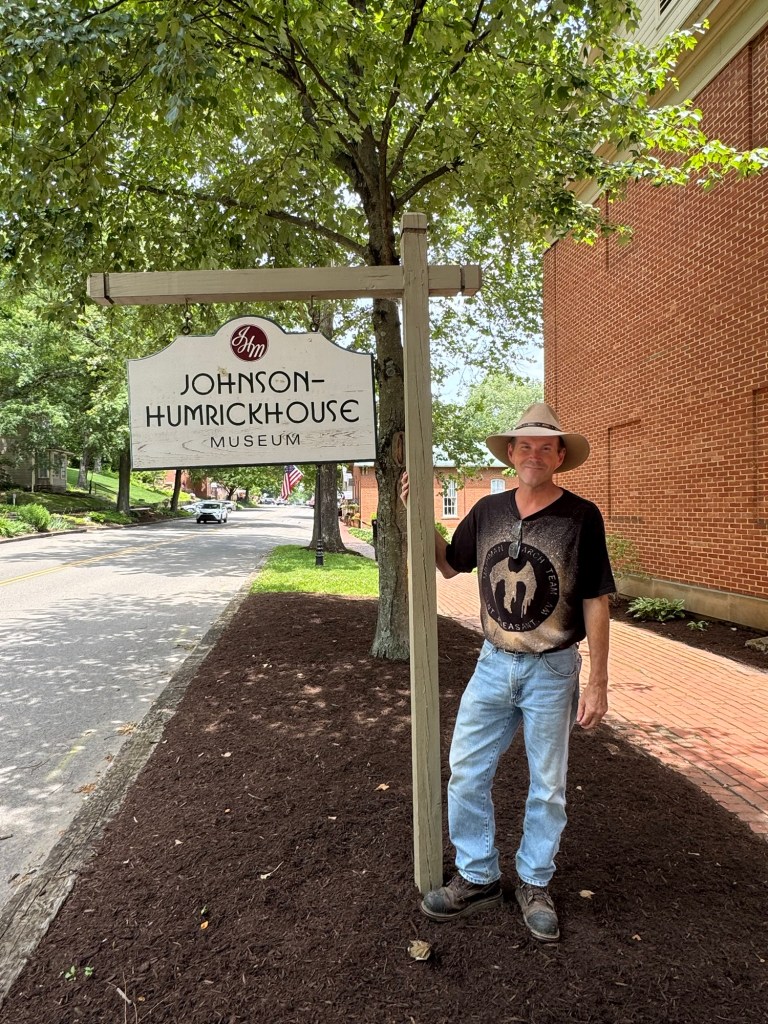
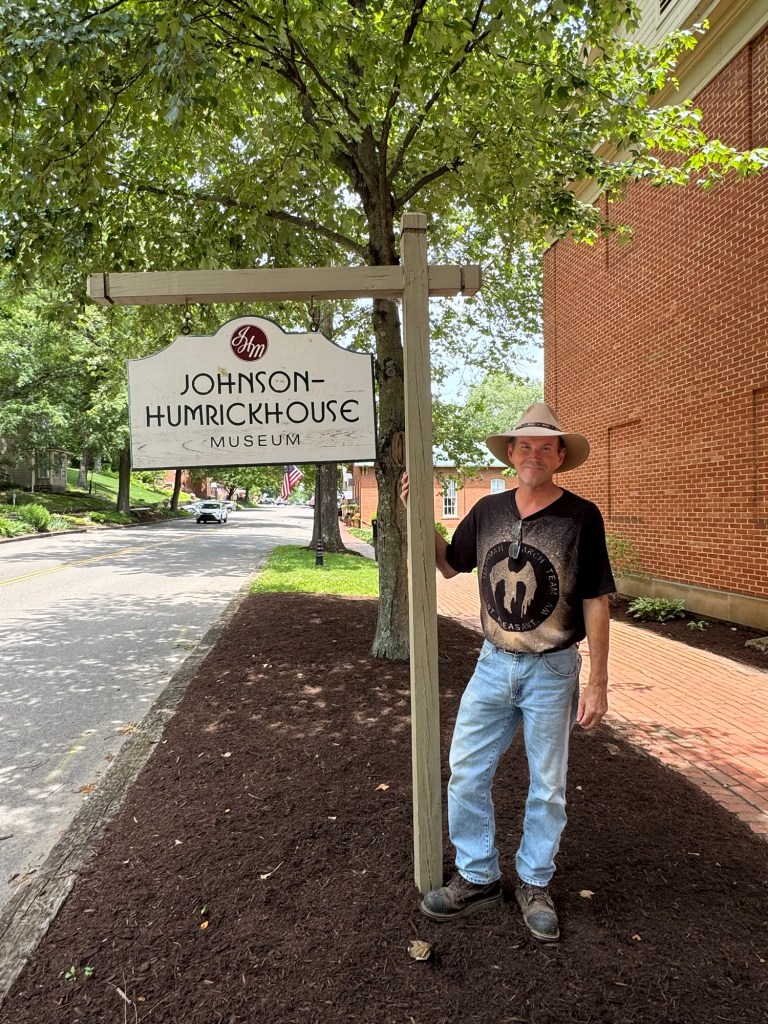
Mara: The post opens with a personal visit — a trip to the Johnson-Humrickhouse Museum in Coshocton, Ohio, where the Newark Holy Stones are held. The question it presses is whether institutional archaeology can fully account for what’s encoded in these sites and objects, or whether the framework itself is too narrow.
Pip: And the museum’s current panels, for what it’s worth, call the stones nineteenth-century forgeries — which is the tidy answer the post keeps poking at.
Mara: The post is direct about why that answer feels incomplete. Here’s the line that anchors it: “The possibility that non-human intelligences have interacted with human beings across deep time is no longer the fringe claim it once was. Government releases on UAPs in recent years have normalized the conversation in ways that would have been impossible even a decade ago.”
Pip: So the UAP disclosure moment is doing real work here — not as a distraction, but as permission to revisit old questions with new seriousness.
Mara: Exactly. The Newark Earthworks themselves are central to that case. The post describes them as tracking the moon’s 18.6-year nodal cycle with geometric precision — and then extends that into a navigational argument: if entities experience time dilation, these lunar-aligned earthworks function as ground references for calibrating not just where you are, but when.
Pip: Which reframes the whole complex from ceremonial site to cosmic waypoint — ribbons on trees in a forest, the post calls it, except monumental and landscape-scale.
Mara: The post also brings in David Wyrick, the surveyor who discovered the Decalogue Stone in 1860 — a carved figure with Hebrew inscriptions. The mainstream reading is Civil War-era political motivation: monogenism versus polygenism, the biblical argument against slavery. The post acknowledges that evidence but calls it incomplete. Wyrick was managing chronic pain with laudanum, already immersed in the mounds, and the post raises the possibility that what came through him “felt as if it came from outside himself.”
Pip: That’s a careful move — not claiming the stones are ancient, but asking whether the origin of the impulse matters as much as the origin of the carving.
Mara: And the post connects this to a broader pattern. The Wilmington Tablet — an Adena sandstone piece the post’s author found a replica of, for five dollars, in the museum gift shop — carries edge markings that suggest a systematic identity or ritual-status marker. The post reads these tablets alongside the earthworks as part of the same question: precise knowledge appearing suddenly, in multiple places, in ways that invite asking where it came from.
Pip: Five dollars for an artifact that raises questions archaeology hasn’t settled. That’s the best museum gift shop story I’ve heard.
Mara: The post is careful to say it respects the archaeological labor. What it questions is the institutional reluctance to hold anomalies open rather than explain them away — and that’s what the book The Politics of Heaven is framed as addressing. The full picture, the post argues, needs more than one discipline and more than one kind of evidence.
Mara: That tension between documented record and larger pattern is really the spine of everything here — and it doesn’t stay confined to Ohio.
Pip: What stays with me is the image of sitting quietly in front of the Decalogue Stone while the grandchildren wait — and still not being able to let the question go.
Mara: The post ends exactly there: the stones keep asking, the earthworks are still standing, and the disclosures are still coming. The conversation isn’t closed.
Rich Hoffman is an author, political consultant, and strategic advisor based in Cincinnati, Ohio, and the creator of The Politics of Heaven—a unique framework that connects biblical theology, ancient history, and modern power structures to explain how moral alignment and spiritual forces shape global events. Blending real-world political experience with deep research into archaeology, UFO phenomena, and suppressed historical narratives, Hoffman offers compelling commentary on topics ranging from ancient civilizations and the Dead Sea Scrolls to modern populist movements, paranormal continuity, and leadership strategy in chaotic environments. As the author of The Gunfighter’s Guide to Business and the forthcoming Politics of Heaven, he brings a grounded yet provocative voice to media discussions, supported by firsthand experiences and a cross-disciplinary approach that bridges science, history, and theology. For interviews, speaking engagements, or expert analysis, visit richhoffmanbooks.com or contact directly via phone at 513-307-5815 or email at rhoffman@richhoffmanbooks.com. If you’ve seen the movie, Disclosure Day and want to talk about it and the implications of Presidnet Trump’s UAP disclosures, let me know and we can bring some color to your coverage. https://richhoffmanbooks.com/media-inquiries-broadcast-topics-and-contact-info/?frame-nonce=ad51e7ecba I do have a firsthand UFO encounter to discuss.
Pip: The Overmanwarrior is a blog that covers Ohio governor’s races, UFO sightings over Middletown, the SpaceX IPO, vinyl records, and ancient mound builders — sometimes in the same week. Rich Hoffman contains multitudes.
Mara: Rich Hoffman’s recent posts cover a lot of ground: Republican strategy heading into the 2026 Ohio governor’s race, a personal UFO encounter and what it means for ancient history, the commercial space economy, and questions about ownership, medicine, and what it costs to stand publicly behind your convictions.
Pip: Let’s start with Ohio politics and the argument that nice guys finish last.
Fighting Back: Ohio Republicans And The 2026 Race
Pip: The core claim here is simple and blunt: Republican candidates who play defense lose, and the 2026 Ohio governor’s race is the test case. Amy Acton’s COVID record is the vulnerability, and the question is whether Republicans will actually use it.
Mara: The post on winning for Republicans puts it directly: “Her stupid policies were some of the dumbest things ever to be done in politics. And she completely owns it.” The argument is that Acton was not a passive figure — she was the daily public voice driving Ohio’s pandemic response, and attempts to distance herself from that record now undermine her credibility.
Pip: The upshot is that if Republicans treat Acton as a neutral public servant, they leave the most obvious attack on the table — and voters who lived through the economic disruption will notice.
Mara: The piece on making a footstool out of your enemies in Ohio adds polling context. An NC Research survey had Ramaswamy ahead 53 to 43, though a Fox News poll showed Acton at 50 to Ramaswamy’s 49. The argument is that conservative non-response bias makes Ramaswamy’s real position stronger than the numbers suggest.
Pip: There’s also a piece on the arrest of blogger D.J. Byrnes — known as “The Rooster” — at the Ohio Statehouse, charged with telecommunications harassment after allegedly sending an explicit image to a state senator. The argument frames that arrest as Republicans finally enforcing basic standards rather than absorbing abuse indefinitely.
Mara: And the Democrat autopsy post argues the 2024 loss wasn’t a messaging problem — it was a platform problem. Trump secured 312 electoral votes to Harris’s 226 and won the popular vote roughly 77.3 million to 75 million. The piece contends Democrats can’t confront that honestly without dismantling their current brand.
Pip: The FirstEnergy piece rounds this out by reframing the HB6 scandal as regulatory warfare — the argument that Ohio energy executives weren’t simply corrupt but were reacting to Obama-era EPA rules designed to make coal and nuclear plants uneconomical.
Mara: The through-line across all of it is the same: passive defense loses, whether in a governor’s race, a media fight, or an energy policy battle. The prescription is consistent — define the opposition, attack the record, and don’t apologize for it.
Pip: From Ohio’s political trenches to something considerably older — let’s talk about what’s in the sky over Middletown.
The Dare And The Green Lights: UFOs And Ancient Ohio
Pip: This segment is about a personal UFO sighting that became the seed for a book — and what it connects to when you start pulling the thread through ancient sites, Dead Sea Scrolls, and government secrecy.
Mara: The UFO encounter post describes recording a video that dared whatever forces might be listening to show themselves over Butler County. Days later, the account continues: “A ring of bright green lights appeared in the night sky in that vicinity. Multiple residents captured video around 10:30 or 11 p.m. The lights rotated, hovered, then shot off with impossible speed.”
Pip: So: dare the sky, the sky responds. Whether that’s craft, projection, or coincidence is left open — but the timing is treated as meaningful.
Mara: The Serpent Mound post connects this to Ohio’s ancient landscape. Serpent Mound stretches approximately 1,348 feet and sits on the rim of a meteorite impact crater roughly 8 kilometers in diameter. The post argues that building the world’s largest serpent effigy on that precise location, with solstice alignments encoded in the geometry, implies knowledge that invites harder questions about its origins.
Pip: The Newark Holy Stones post takes that further — a visit to the Johnson-Humrickhouse Museum in Coshocton to see the Decalogue Stone in person, with Hebrew inscriptions the museum now labels as 19th-century forgeries. The argument isn’t that the stones are ancient, but that the standard explanation — Civil War-era political motivation — is too tidy to be complete.
Mara: The Disclosure Day review and the piece on human sacrifice and ancient idolatry both feed the same manuscript in progress, The Politics of Heaven, which connects UAP disclosure, biblical archaeology, and the long history of non-human intelligences shaping human civilization.
Pip: From ancient craters to active launch pads — the space economy is next.
The Next Gold Rush: Moon, Rockets, And The Space Economy
Pip: The argument here is that the Moon is the new American frontier — resources, manufacturing, and generational wealth — and that the right response to rocket explosions is to iterate faster, not slow down.
Mara: The Moon post makes the case directly: “The Moon is not just a celestial body; it is the key to the next great American expansion, a modern gold rush that will generate wealth, innovation, and opportunity on a scale rivaling the Western frontier.” Helium-3 deposits in the lunar regolith are estimated at over a million tons, and thorium concentrations point toward rare earth deposits with significant energy applications.
Pip: That’s the resource case. The investment case comes from the SpaceX IPO post, which describes Starship’s twelfth flight test achieving a controlled Indian Ocean landing and frames the IPO — targeting 135 dollars a share and a valuation around 1.75 trillion dollars — as a generational wealth opportunity comparable to the railroad boom.
Mara: The New Glenn explosion post argues the opposite of what critics suggest. Blue Origin’s rocket destroyed its first stage and damaged launch infrastructure in a May 2026 static-fire test, but the post treats that as the cost of frontier work — the same iterative failure that defined Apollo and the Shuttle era. SpaceX launched a Falcon 9 from a nearby pad within hours.
Pip: The through-line is Rooseveltian: resources, risk, and expansion without apology. Ohio even gets a spaceport in the vision — Middletown and Monroe as future landing zones.
Mara: And the personal thread runs through all of it — model rocketry with a grandson, a DK book on the Moon picked up at the Smithsonian gift shop, a SpaceX shirt worn to a Florida Publix. The frontier isn’t abstract; it’s a family project.
Pip: From orbit back to earth — the final segment is about what it costs to own your convictions and why the healthcare system should apply aerospace discipline to cancer.
Skin In The Game: Conviction, Ownership, And The Right Stuff In Medicine
Pip: This segment is about a single consistent argument applied across very different domains: that the system rewards managing problems rather than solving them, and that the people willing to pay the personal cost of saying so out loud are the ones who actually change things.
Mara: The medicine post makes the parallel to aerospace explicit: “In aerospace, failure is analyzed, corrected, and systematically eliminated through iterative design. The goal is not to manage risk indefinitely, but to reduce it to near zero through engineering discipline.” The argument is that healthcare should adopt the same posture toward cancer — not chronic management, but eradication as the stated goal.
Pip: And the post on the personal cost of putting your name on what you believe is the autobiography of that principle. Fighting Lakota school levies in 2012 cost Hollywood contacts, book momentum, and radio access — all documented in real time.
Mara: The ownership post adds a consumer-economy dimension. In 2025, U.S. vinyl sales surpassed one billion dollars for the first time in decades — 46.8 million units — while CDs sold around 29.5 million units. The vinyl resurgence is read as a market rejection of the rental economy and the WEF’s “you’ll own nothing and be happy” vision.
Pip: The Dead Sea Scrolls post and the emotional intelligence piece round this out — one arguing that fear of success causes Republicans to self-sabotage, the other that navigating human systems without losing your convictions is a skill, not a compromise.
Mara: And the “you didn’t build that” post ties it to the economic argument: government facilitates but does not originate wealth, and progressive taxation that treats profit as a debt owed to the state inverts the actual relationship between risk-takers and public revenue.
Pip: The common thread is ownership — of your music, your convictions, your medical future, your political record. Renting any of those out is presented as the first step toward losing them.
Mara: The thread connecting all of this is the same question asked at every scale: who controls the thing, and are they willing to fight for it?
Pip: Ohio’s governor’s race, the Newark Earthworks, the lunar regolith, a shelf of CDs — same argument, different altitudes.
Mara: Next episode, we’ll see where those threads lead.
Rich Hoffman is an author, political consultant, and strategic advisor based in Cincinnati, Ohio, and the creator of The Politics of Heaven—a unique framework that connects biblical theology, ancient history, and modern power structures to explain how moral alignment and spiritual forces shape global events. Blending real-world political experience with deep research into archaeology, UFO phenomena, and suppressed historical narratives, Hoffman offers compelling commentary on topics ranging from ancient civilizations and the Dead Sea Scrolls to modern populist movements, paranormal continuity, and leadership strategy in chaotic environments. As the author of The Gunfighter’s Guide to Business and the forthcoming Politics of Heaven, he brings a grounded yet provocative voice to media discussions, supported by firsthand experiences and a cross-disciplinary approach that bridges science, history, and theology. For interviews, speaking engagements, or expert analysis, visit richhoffmanbooks.com or contact directly via phone at 513-307-5815 or email at rhoffman@richhoffmanbooks.com. If you’ve seen the movie, Disclosure Day and want to talk about it and the implications of Presidnet Trump’s UAP disclosures, let me know and we can bring some color to your coverage. https://richhoffmanbooks.com/media-inquiries-broadcast-topics-and-contact-info/?frame-nonce=ad51e7ecba I do have a firsthand UFO encounter to discuss.
In January 2020, a UFO was filmed directly over the Newark Earthworks. L.A. Marzulli posted about the video, calling it no coincidence. He sees the site as tied to the Nephilim and fallen angels, pointing to the advanced 18.6-year lunar cycle built into the Octagon as evidence that the knowledge couldn’t have come from the local people alone. To him, the sighting proved a direct link between these ancient mound complexes worldwide and the modern UFO phenomenon. And this story points to a deeper issue: that people like Marzulli have lost any trust in any institutional contributor, and what that means for the continuation of civilization itself. After all, I did have a UFO experience myself, which I attribute more to occult practice than physical contact, which makes the Holy Stones of that region much more interesting and important than they otherwise would be. Because of this and many similar controversies, I am slightly obsessed with how non-human intelligence, whether it be overt demons or aliens from outside of Earth’s gravity imprint, has shaped human civilization in ways that institutional archaeology cannot deal with, because they don’t have the current means, which is exactly why I sat down to write The Politics of Heaven. I was always inspired by Frazer’s Golden Bough and how it created the field of anthropology, and for my own work, I want to contribute to the continued evolution of the vast dialogue of that subject matter: how much non-human intelligence has shaped human society from the very beginning, not with just conspiracy theory consideration, but with hard, observable science.
I’ve been thinking along similar lines, though I come at it from a different angle. The Newark Earthworks aren’t just ceremonial or astronomical in the usual sense. I propose that they function like a giant horizontal clock laid flat on the ground, precisely tracking the moon’s complex 18.6-year nodal cycle. That’s not casual observation — it’s sophisticated long-term record-keeping.
Here’s where it gets interesting to me: if you have entities traveling from outside our normal frame of reference, experiencing time dilation, these massive, visible-from-the-air geometric earthworks would make perfect navigational markers not just for where you are, but for when you are. The stars and moon shift over centuries. A culture that can leave and return after what feels like a short trip to them might need reliable ground references to calibrate exactly which phase of earthly time they’ve arrived in. The Newark complex, with its perfect lunar alignments, would serve that purpose beautifully — like tying ribbons on trees in a forest before GPS existed to keep from getting lost, except on a monumental, landscape scale.
It’s one more piece suggesting the story of these earthworks — and the Holy Stones found nearby — is far from settled. The more we learn about UAPs, the more the old archaeological assumptions look incomplete.
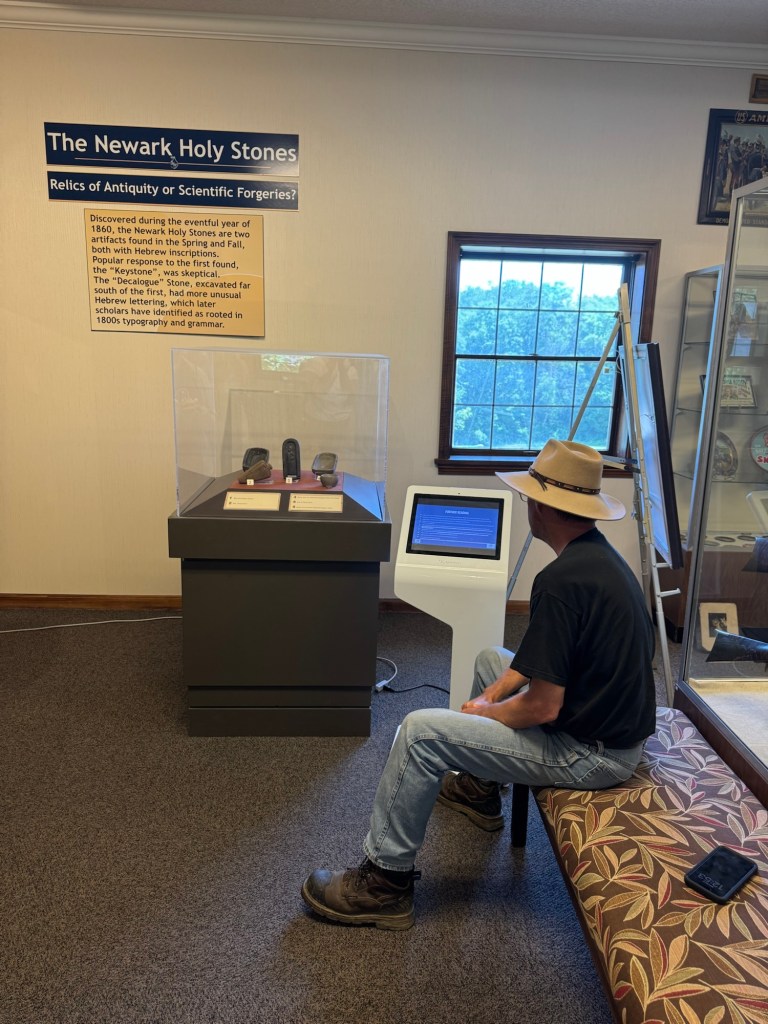
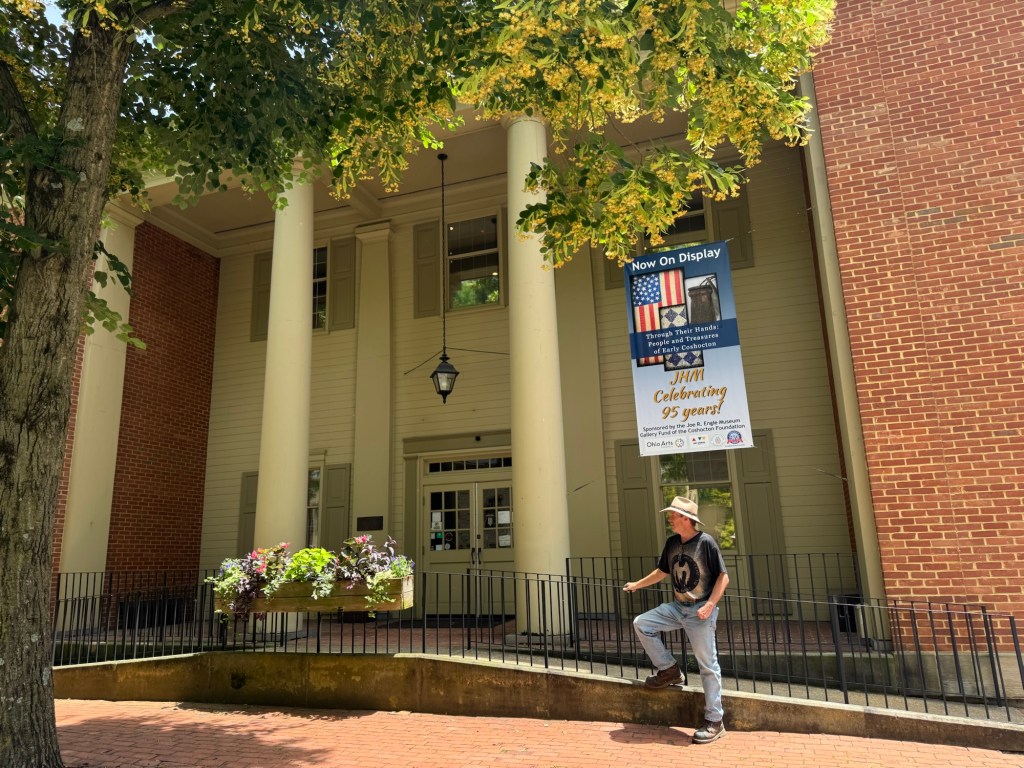
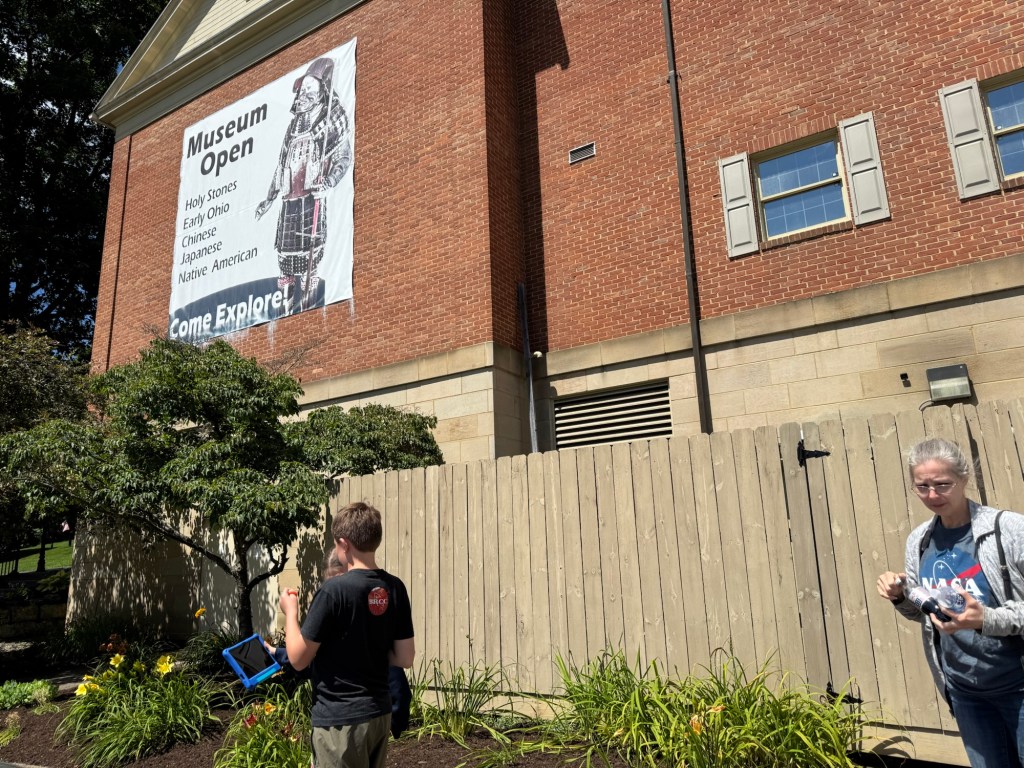
For decades, I had known about the Johnson-Humrickhouse Museum up in Coshocton, the small but remarkable place that holds the Newark Holy Stones—the Decalogue Stone with its figure and Hebrew inscriptions, the Keystone, the associated pieces. I already owned good replicas I had purchased from them years earlier, and I had studied the photographs, the arguments, the woodcut copies David Wyrick made. But I had never stood in front of the actual stones in their case. When the chance came with family—my wife, a daughter, a few of the grandchildren—I took it. We drove out on a day when the museum opened at noon. We arrived early, stood outside for a couple of minutes after the doors opened, and when the young woman who unlocked the door saw us, she looked surprised. They do not get many visitors on an average weekday. I told her I had come a long way to see the Holy Stones. She let us in.
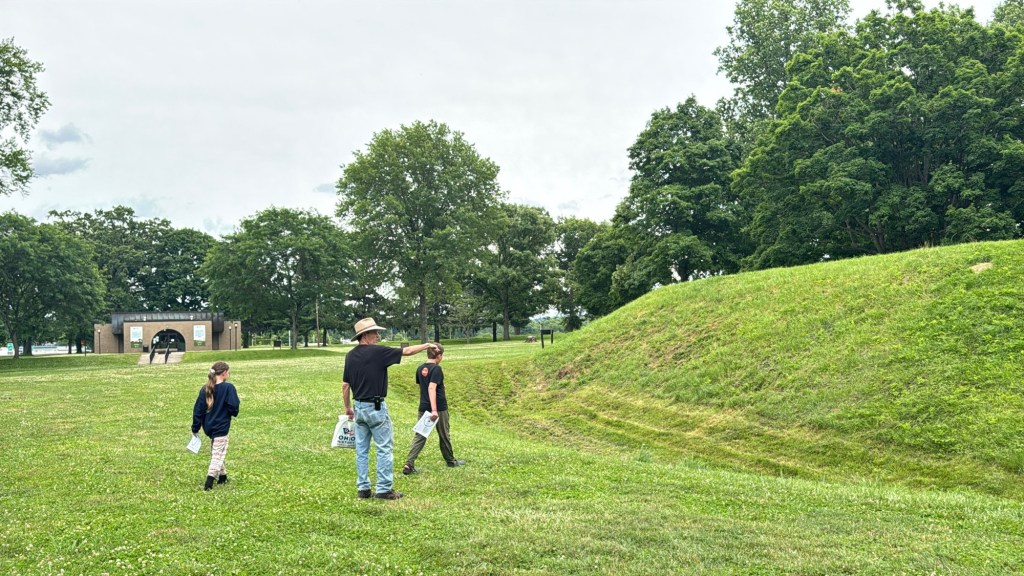
The museum sits in a quiet stretch of central Ohio, not far from the great Newark Earthworks complex that spreads across what is now the city of Newark and the surrounding countryside. Most people driving past on the main roads have no idea what lies just off the pavement. The Great Circle, the Octagon, the long processional avenues—these were not casual dirt piles. They are precise geometric constructions aligned to the movements of the moon over its 18.6-year nodal cycle. The Hopewell people who built and used them, roughly two thousand years ago, understood observational astronomy at a level that still astonishes anyone who takes the time to stand on the viewing platform between the Circle and the Octagon and watch the alignments play out. Avenues once guided people—and perhaps, in their understanding, spirits—along lines that connected earth to sky. Much of it is gone now. Housing developments, roads, restaurants, and an old golf course that has since closed cover what were once open ceremonial spaces. The main highway cuts through what was once part of the complex. What remains is still extraordinary, but it takes imagination and stubbornness to see the full scale of what was built here.
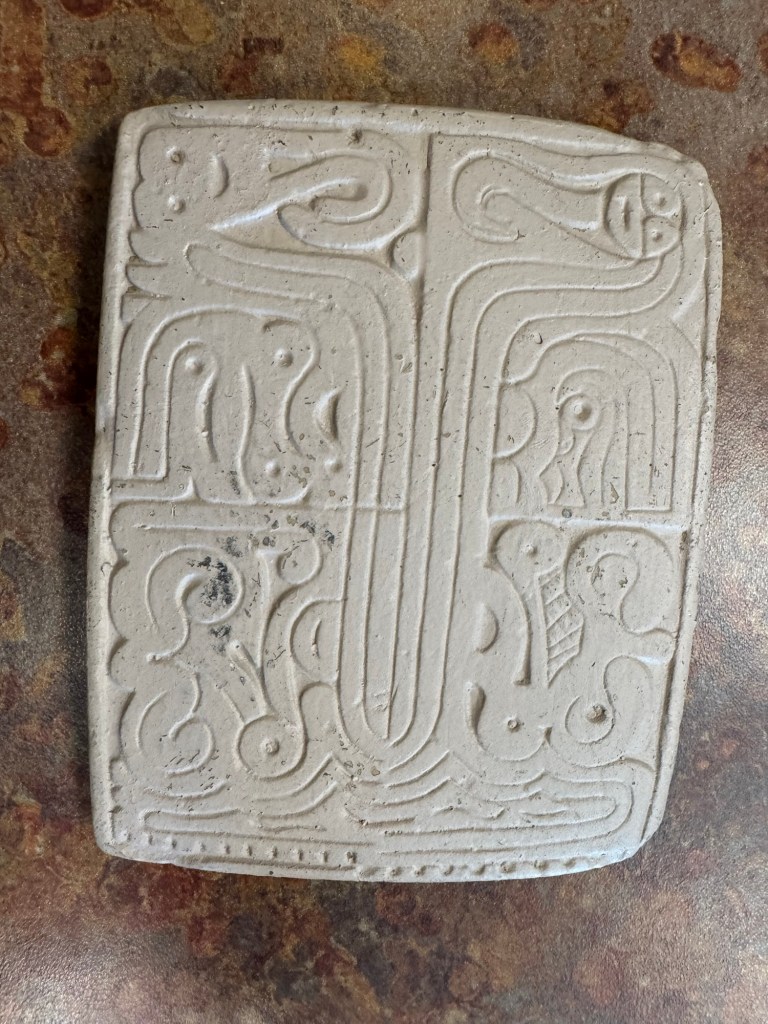
Inside the museum, I wandered through the gift shop first, as I always do in places like this. I was not expecting to find anything new. I already had the Holy Stones replicas at home. Then I saw three flat sandstone pieces sitting among other small items. No price tag stood out. They looked familiar the moment I picked one up—the size, the weight, the carved designs. I knew exactly what it was: a replica of the Wilmington Tablet, the Adena sandstone piece found in Sparks Mound near Wilmington, Ohio, the one now kept at the Ohio History Center in Columbus. The young woman at the counter thought they were coasters. She had to call someone to find a price. Five dollars. I bought one without hesitation. I had been looking for a good replica of that tablet for a long time. The Cincinnati Tablet, found in 1841 when a mound at Fifth and Mound Streets in downtown Cincinnati was leveled for construction—the site is now near a UPS facility—had been displayed for years at the Cincinnati Museum Center before it was removed from the Native American exhibits. It did not fit the prevailing story comfortably. The Wilmington Tablet carries its own mysteries: the main face with its stylized figures, the edges and sides marked in ways that suggest a numerical or identifying system, perhaps a personal marker for someone of importance buried with it, or a template used in ritual or body marking. Adena tablets like these have been interpreted as tattoo stamps, ownership identifiers, or cosmological diagrams. Whatever their precise function, they were important enough to be placed with the dead.
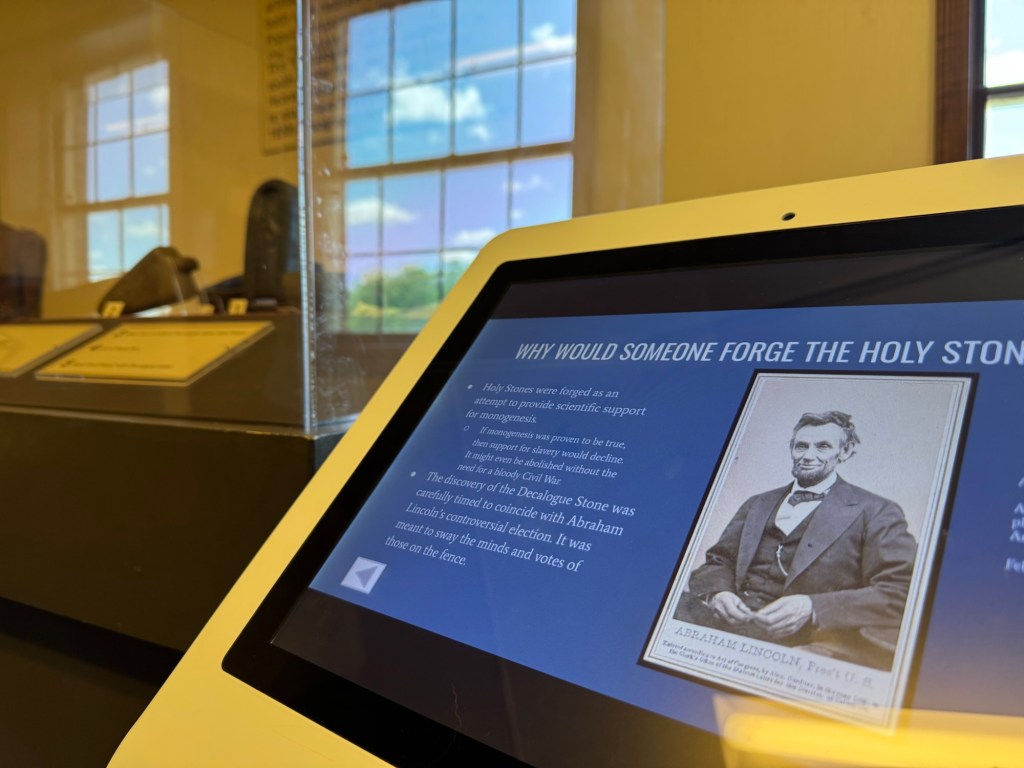
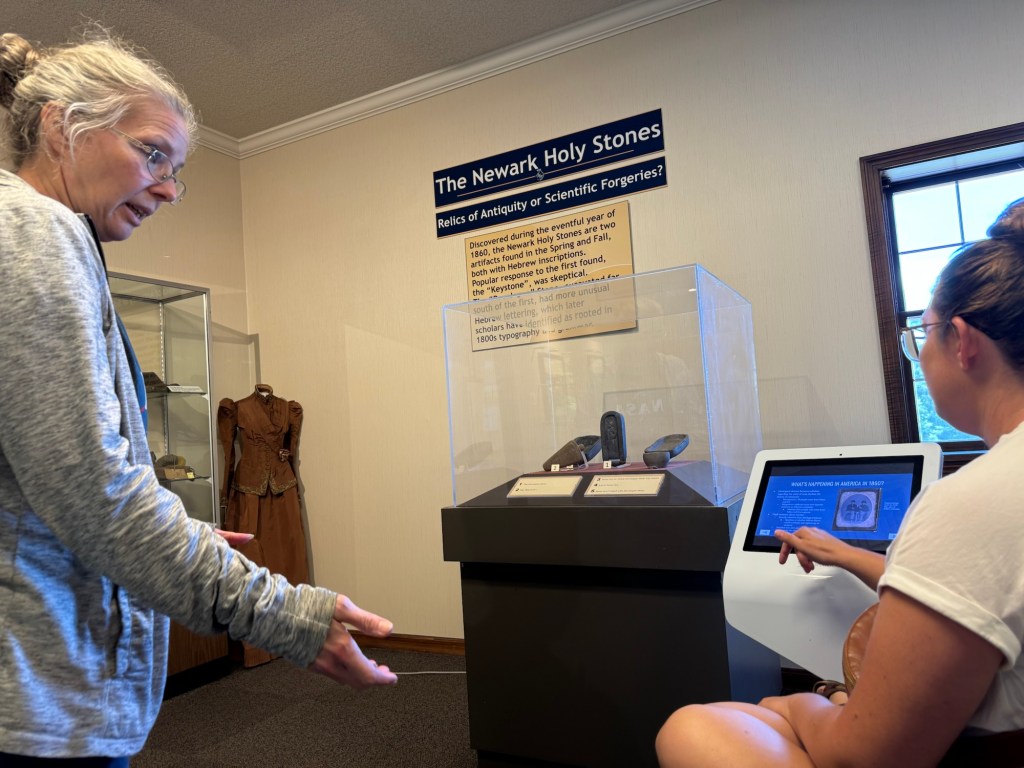
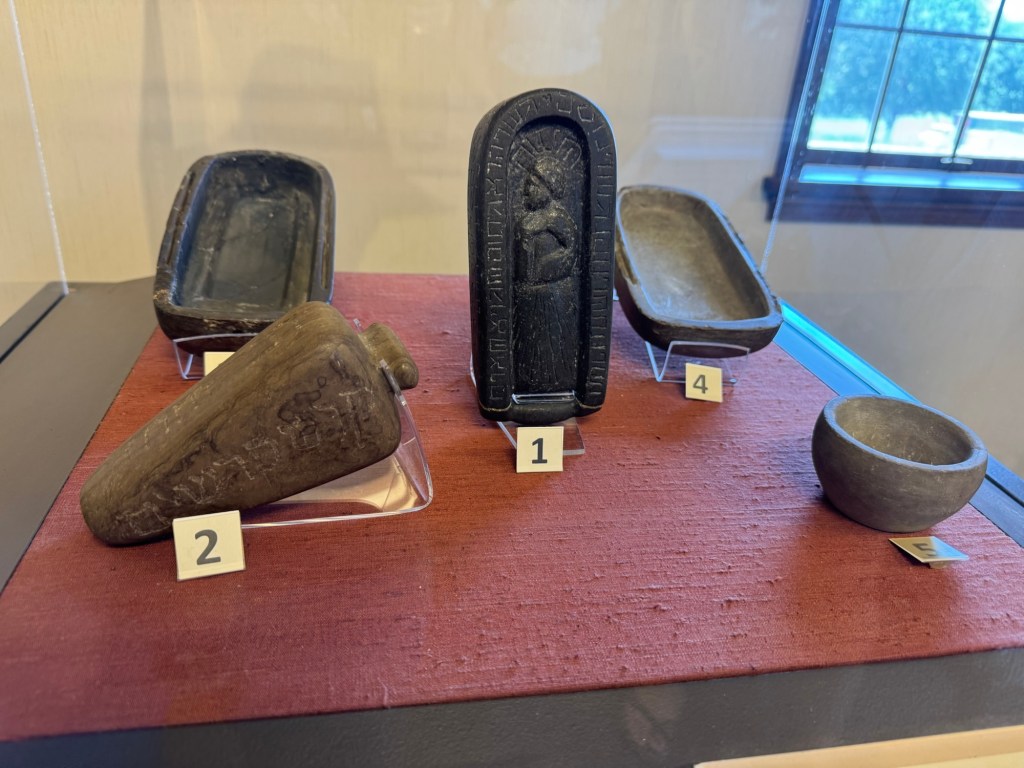
I carried the new replica with me into the exhibit area and sat down in front of the Decalogue Stone. The case holds the stone itself along with its sandstone box. The figure on the front—bearded, robed, holding what appears to be a tablet or scroll—has long been read as Moses. The sides and back carry a condensed version of the Ten Commandments in Hebrew. The carving is competent but not perfect by ancient standards; there are letter forms that mix periods and a few anomalies that scholars have used to argue for a nineteenth-century origin. The museum’s current interpretive panels, updated in recent years, present the stones straightforwardly as forgeries created in the 1860s. The explanation centers on the social and political climate before and during the Civil War. Monogenism—the biblical idea that all humans descend from a single pair, Adam and Eve—stood in opposition to polygenism, the notion that different races were separate species or creations. Polygenist arguments were sometimes used to justify slavery and unequal treatment. A discovery of ancient Hebrew inscriptions in Ohio mounds could be deployed to support monogenism, to argue that biblical history reached the Americas long before Columbus, and thereby to undermine justifications for treating any group of people as less than fully human. David Wyrick, the Newark surveyor and antiquarian who brought the stones forward in 1860, was a man of his time—interested in the mounds, respectful of their builders, and apparently inclined toward biblical literalism and anti-slavery views. His reputation suffered after the findings. He died a few years later, in 1864, amid personal difficulties that included pain and what some accounts describe as heavy use of medication. Most professional archaeologists and historians dismissed the stones as nineteenth-century creations meant to influence the great debate of the age.
David Wyrick died on April 16, 1864, at the age of 57. Contemporary newspaper accounts reported that he died suddenly from an overdose of laudanum, a common opium-based painkiller he had been taking regularly for a long-term painful illness, most likely severe rheumatoid arthritis.
Local records and the original reporting did not list his death as suicide. The official cause was listed as “rheumatism” in some documents, and the newspaper noted the overdose without claiming it was intentional. However, the intense controversy surrounding the Holy Stones, combined with his financial troubles, led later writers to describe it as suicide. That narrative stuck in many books and articles for decades, even though the primary sources from 1864 do not support it.
The stress from the backlash clearly took a heavy toll on him physically and mentally. Still, the evidence shows he was managing chronic pain with medication that ultimately proved fatal. I would propose that it granted non-human intelligence access to his mind under duress, a move that proved catastrophic.
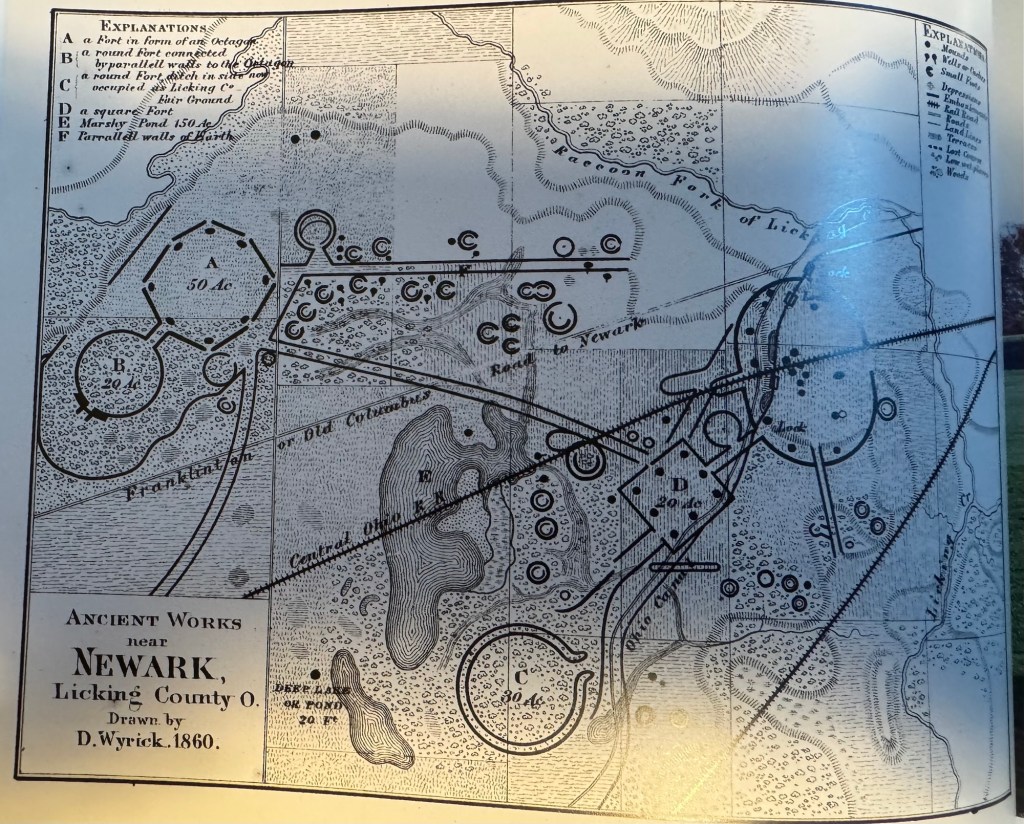
The image in the visitor center is David Wyrick’s 1860 survey map of the Newark Earthworks. It’s a detailed, hand-drawn overhead plan showing the full layout of the Great Circle, the Octagon, the parallel walls connecting them, and the surrounding landscape as it existed at the time. It includes roads, the Ohio and Erie Canal, railroad lines, and even the Great Circle, which was used as the Licking County Fairgrounds.
It’s widely considered one of the most accurate early maps of the site, which is why Ohio History Connection still displays and references it. It’s not an artistic painting; it’s a surveyor’s technical drawing — clean, precise lines with measurements and labels.
I sat there longer than I expected. The grandchildren moved around the room, patient, as children are when grandpa gets quiet in front of old things. My daughter kept the camera ready because she knows the look I get when something lands hard. I felt a familiar weight settle in. I have spent most of my life being the person who says the thing that makes a room go quiet. I do not enjoy it. I would rather study, walk the sites, read the reports, and keep my thoughts to myself. But the pattern forming in my mind as I looked at the Holy Stones and read the museum’s careful, institutionally approved explanation would not stay quiet. The stones may indeed be nineteenth-century work. The letter forms, the timing with Lincoln’s election, the social circles Wyrick moved in—all of that can be documented. Yet the question “why would someone go to this much trouble?” still sits there. The mainstream answer is political and religious motivation in a divided country. That answer is not wrong on its face. It is incomplete.
What struck me, sitting in that chair, was how little room the current framing leaves for the possibility that Wyrick himself was not the originator of the content, or that, even if he carved or commissioned the stones, the impulse and the specific knowledge came from elsewhere. Pain medications of the mid-nineteenth century were not inert. Some had properties that alter consciousness. Wyrick was a man under strain, already deeply engaged with the mounds and their meanings, moving through a landscape where indigenous knowledge and biblical imagination were colliding in real time. Across human history, people in altered states—whether through plants, fasting, ritual, or substances—have reported contact with intelligences that are not their own. They have returned with precise information about astronomy, geometry, architecture, and moral order. The Newark Earthworks themselves demonstrate exactly that kind of precise knowledge: alignments that track the moon’s complex cycle, geometry that rivals anything built in the Old World at the same period. The Hopewell culture that maintained and expanded these sites was part of a vast interaction sphere that moved copper from the Great Lakes, mica from the Appalachians, and ideas across hundreds of miles. They were not isolated. They were connected.
The possibility that non-human intelligences have interacted with human beings across deep time is no longer the fringe claim it once was. Government releases on UAPs in recent years have normalized the conversation in ways that would have been impossible even a decade ago. Films like Disclosure Day and public discussions now explore themes of possession, mind influence, and non-human entities operating through human agents. Some of these portrayals treat the phenomenon as technological or biological. Others, including certain narratives that reached wide audiences, frame it in explicitly spiritual terms—entities that seek to override human sovereignty, countered by faith, symbol, and will. I watched one such portrayal not long before this visit and recognized the pattern immediately. The same dynamic appears in ancient accounts worldwide: shamanic traditions in which practitioners enter altered states to receive knowledge from “the gods” or spirits; biblical descriptions of encounters at burning bushes, on mountaintops, or in temples complete with high place drug use, to a modern eye familiar with high-speed travel and gravitational effects, like interactions with non-local intelligences; the global recurrence of similar architectural and astronomical knowledge appearing in places separated by oceans and centuries.
If non-human intelligences have been present and active, they would not need wooden ships or land bridges to move knowledge. They would need markers. The Newark Earthworks, with their lunar clock and visible geometry, serve perfectly as reference points that can be read from above or used by people on the ground to synchronize time over long intervals. Time dilation is not science fiction; it is a measured fact. Travelers moving at relativistic speeds or operating near significant gravitational gradients experience time differently from observers on Earth’s surface. A short subjective journey for them could correspond to centuries or more here. Upon return, they would need fixed, durable references—alignments to stars and moon, geometric figures visible from altitude, places where the calendar could be read without ambiguity. The Hopewell and Adena landscapes contain exactly those features. So do other ancient sites that display sudden leaps in mathematical and observational sophistication. The question is not whether the knowledge appears; it is where it came from and why it appears in the patterns it does.
The Wilmington Tablet I now own a replica of fits into this larger question. It was buried with someone important enough that their personal marker was placed in the mound. The edge markings that catch the eye when you turn the piece over suggest a system—numbers, ownership, affiliation, or ritual status. Similar tablets from the Adena sphere have been found with red ochre residue consistent with use as printing or stamping devices, possibly for body art that identified lineage, achievement, or spiritual standing. If these were “ID cards” for the dead, they imply a society that tracked individual identity and status with precision across generations. That level of organization recurs in mound-building cultures of the Ohio Valley and beyond. It does not require external input to exist, but the sudden appearance of specific symbolic and mathematical systems in multiple places at roughly the same horizon of development invites the question of common inspiration.
I do not claim the Holy Stones are ancient. The evidence the museum presents for a nineteenth-century creation is substantial and has been reinforced by careful recent work. What I am willing to say, after sitting with the stones and walking the remnants of the earthworks, is that the story we are told about why they exist is too tidy. It reduces a complex man and a complex moment to a simple political hoax. It leaves no room for the possibility that Wyrick, already immersed in the mounds and carrying his own burdens, encountered something—an idea, an image, a compulsion—that felt as if it came from outside himself. That experience would not make the stones ancient. It would make them artifacts of contact, whether the contact was spiritual, psychological, or something we do not yet have language for. The same pattern appears in other times and places where precise knowledge falls into the hands of people under stress or in altered states: the biblical prophets, the builders of megalithic monuments, the medicine people who maintained alignments and oral calendars over centuries.
The destruction of the physical evidence compounds the problem. Newark itself was built over and through one of the most significant ceremonial landscapes in North America. Miamisburg Mound sits in a town that grew around it. Countless smaller mounds were plowed flat or bulldozed for roads and foundations before anyone could record what they contained. The Windover Pond site in Florida, with its 8,000-year-old burials preserving brain tissue and some of the oldest textiles in the Americas, revealed people whose material culture and genetic signals do not fit neatly into later narratives of isolation and simplicity. Bones and artifacts continue to be reburied under policies that prioritize contemporary tribal affiliation over scientific study, even when the genetic and cultural distance is vast. Every time we pave or rebury without full documentation, we remove data that might clarify whether the knowledge visible in these sites was generated locally, transmitted through ordinary human networks, or introduced through less conventional channels.
Archaeologists do the hard, necessary work of excavation, mapping, and dating. I respect that labor. What I question is the institutional reluctance to entertain hypotheses that fall outside the current consensus, especially when the consensus itself rests partly on the absence of evidence that has been destroyed or never collected. The same scholars who correctly note that the Holy Stones’ Hebrew shows characteristics of nineteenth-century Bibles are often the first to dismiss any suggestion that pre-Columbian contact or non-local inspiration could explain other anomalies. The stones become a cautionary tale about forgeries rather than a prompt to ask why a surveyor in 1860 would risk everything to place Hebrew commandments inside a Hopewell-era mound. The answer “politics” is available. The answer “something spoke to him in a way that felt authoritative” is not, because it opens territory that academic archaeology has largely ceded to other disciplines or to popular writers.
My own work, particularly the book I have been completing, looks to hold both the documented record and the larger pattern in view. The Politics of Heaven is not an attack on archaeology. It is a dedicated effort to reconnect what we can see on the ground—earthworks, tablets, alignments, sudden appearances of sophisticated knowledge—with the possibility that non-human intelligences have been active participants in human affairs for a very long time. That possibility does not require rejecting indigenous achievement. It expands it. The people who built and used the Newark complex were sophisticated observers and engineers. They also lived in a world where altered states, visionary experience, and communication with non-ordinary intelligences were part of the cultural toolkit. The same toolkit appears in the ancient Near East, in Britain, in Mesoamerica, and in the shamanic traditions that persist today. The content of what comes through those channels varies, but the mechanism is recurrent.
Sitting in the museum that afternoon, I realized again why I have to write what I am writing. The stones are on display. The earthworks are still there in fragments. The UAP files are coming out. The cultural conversation has shifted enough that a person can say, without immediate professional ruin, that the old categories—isolated continents, purely local invention, no external intelligences—are no longer sufficient to explain the full record. David Wyrick may have been a forger, a dupe, a sincere man who encountered something he could not fully explain, or all three at different moments. He was an abolitionist, like Lincoln, opposed to slavery, and I think he was a pretty good person. The stones he brought forward remain touchstones. They force us to ask what counts as evidence and whose stories get to shape the past. The Wilmington Tablet replica now sits on a shelf in my house. It is not ancient. It is a modern copy of an ancient object that, in turn, raises questions we have not yet answered. When I look at it, I think about the person it once identified or accompanied, the culture that made it important enough to bury, and the long chain of curiosity that brought a replica into my hands on an ordinary afternoon in Coshocton.
The grandchildren eventually pulled me toward the door. We stopped at a small tavern down the road for fish and chips. I set the tablet on the table for a moment and joked that it needed to eat too. The absurdity made them laugh, which was the point. Later, driving home through the Ohio countryside, I kept returning to the image of the Decalogue Stone in its case and the museum’s careful panels explaining its modern origin. They are not wrong about the carving. They are incomplete about the context. The full story of these places and these objects will require more than one discipline and more than one kind of evidence. It will require the willingness to sit with anomalies instead of explaining them away, to walk the remaining earthworks at moonrise, to hold a tablet in your hands and ask what it was for, and to consider that the intelligences our ancestors called gods, spirits, or watchers may have been something we are only now beginning to name again.
I did not want to be the person who has to say these things out loud in public. I still do not. But the pattern is there, the sites are there, the disclosures are happening, and the stones continue to ask their questions. The Johnson-Humrickhouse Museum did its job. It preserved the objects, updated the interpretation, and let a visitor sit quietly in front of them long enough for the next layer of the story to become visible. That is what good museums do. The rest is up to those of us who walk out the door still carrying the questions.
The mainstream interpretation encountered at the museum and the broader synthesis regarding non-human intelligence, time dilation, archaeoastronomy, spiritual influence, and the need to re-evaluate assumptions in light of emerging data. Personal observations and opinions are rendered in the first person throughout. Background on the Newark Earthworks, Hopewell/Adena contexts, Wyrick controversy, specific tablets, and institutional shifts is woven into the narrative rather than presented as separate sections. A bibliography of key sources for further reading follows.)
Selected Sources and Further Reading. But in essence, this is why I wrote The Politics of Heaven, to explore some of these out-of-the-box issues and put them in a useful, modern context.
• Johnson-Humrickhouse Museum, Coshocton, Ohio. Exhibit materials and presentations on the Newark Holy Stones (updated circa 2020–2022), including work by museum staff and archaeologist Brad Lepper. The museum website and related publications detail the stones’ history and current interpretation as nineteenth-century artifacts that reflect monogenist/polygenist debates.
• Wikipedia and scholarly summaries on the Newark Holy Stones (cross-referenced with primary accounts): consensus view as likely a hoax or planted artifacts from 1860, with discussion of Wyrick’s role, letter-form anomalies, and social context pre-Civil War.
• Ohio History Connection / Ohio History Center resources on the Wilmington Tablet (Sparks Mound, Clinton County) and Cincinnati Tablet (Fifth & Mound Streets discovery, 1841). Adena culture context for engraved sandstone tablets.
• Hopewell Ceremonial Earthworks (UNESCO World Heritage Site documentation) and Newark Earthworks visitor resources: lunar alignments, 18.6-year cycle, geometric precision, Hopewell interaction sphere.
• Ross Hamilton, The Mystery of the Serpent Mound (and related works on Ohio earthworks geometry and astronomy).
• Graham Hancock’s publications on ancient civilizations, consciousness, and alternative historical frameworks (for engagement with entheogen and non-local influence hypotheses; contrasted in the essay with sovereignty concerns).
• Biblical Archaeology Review (long-term reference for comparative ancient Near Eastern and American contexts).
• Primary historical accounts of David Wyrick’s discoveries (1860–1861 pamphlets and contemporary reports) and later analyses (e.g., Whittlesey, Lepper, and others on authenticity debates).
• UAP-related government releases and congressional records (post-2017 onward) for the shifting public and official conversation on non-human intelligence.
• Additional context on Adena/Hopewell tablets, Windover Pond site (Florida), time dilation in relativity, and global parallels in archaeoastronomy and altered-state traditions can be found in standard archaeological syntheses and peer-reviewed journals on those topics.
Rich Hoffman is an author, political consultant, and strategic advisor based in Cincinnati, Ohio, and the creator of The Politics of Heaven—a unique framework that connects biblical theology, ancient history, and modern power structures to explain how moral alignment and spiritual forces shape global events. Blending real-world political experience with deep research into archaeology, UFO phenomena, and suppressed historical narratives, Hoffman offers compelling commentary on topics ranging from ancient civilizations and the Dead Sea Scrolls to modern populist movements, paranormal continuity, and leadership strategy in chaotic environments. As the author of The Gunfighter’s Guide to Business and the forthcoming Politics of Heaven, he brings a grounded yet provocative voice to media discussions, supported by firsthand experiences and a cross-disciplinary approach that bridges science, history, and theology. For interviews, speaking engagements, or expert analysis, visit richhoffmanbooks.com or contact directly via phone at 513-307-5815 or email at rhoffman@richhoffmanbooks.com. If you’ve seen the movie, Disclosure Day and want to talk about it and the implications of Presidnet Trump’s UAP disclosures, let me know and we can bring some color to your coverage. https://richhoffmanbooks.com/media-inquiries-broadcast-topics-and-contact-info/?frame-nonce=ad51e7ecba I do have a firsthand UFO encounter to discuss.