

I had waited years for this…………………………………….
In January 2020, a UFO was filmed directly over the Newark Earthworks. L.A. Marzulli posted about the video, calling it no coincidence. He sees the site as tied to the Nephilim and fallen angels, pointing to the advanced 18.6-year lunar cycle built into the Octagon as evidence that the knowledge couldn’t have come from the local people alone. To him, the sighting proved a direct link between these ancient mound complexes worldwide and the modern UFO phenomenon. And this story points to a deeper issue: that people like Marzulli have lost any trust in any institutional contributor, and what that means for the continuation of civilization itself. After all, I did have a UFO experience myself, which I attribute more to occult practice than physical contact, which makes the Holy Stones of that region much more interesting and important than they otherwise would be. Because of this and many similar controversies, I am slightly obsessed with how non-human intelligence, whether it be overt demons or aliens from outside of Earth’s gravity imprint, has shaped human civilization in ways that institutional archaeology cannot deal with, because they don’t have the current means, which is exactly why I sat down to write The Politics of Heaven. I was always inspired by Frazer’s Golden Bough and how it created the field of anthropology, and for my own work, I want to contribute to the continued evolution of the vast dialogue of that subject matter: how much non-human intelligence has shaped human society from the very beginning, not with just conspiracy theory consideration, but with hard, observable science.
I’ve been thinking along similar lines, though I come at it from a different angle. The Newark Earthworks aren’t just ceremonial or astronomical in the usual sense. I propose that they function like a giant horizontal clock laid flat on the ground, precisely tracking the moon’s complex 18.6-year nodal cycle. That’s not casual observation — it’s sophisticated long-term record-keeping.
Here’s where it gets interesting to me: if you have entities traveling from outside our normal frame of reference, experiencing time dilation, these massive, visible-from-the-air geometric earthworks would make perfect navigational markers not just for where you are, but for when you are. The stars and moon shift over centuries. A culture that can leave and return after what feels like a short trip to them might need reliable ground references to calibrate exactly which phase of earthly time they’ve arrived in. The Newark complex, with its perfect lunar alignments, would serve that purpose beautifully — like tying ribbons on trees in a forest before GPS existed to keep from getting lost, except on a monumental, landscape scale.
It’s one more piece suggesting the story of these earthworks — and the Holy Stones found nearby — is far from settled. The more we learn about UAPs, the more the old archaeological assumptions look incomplete.
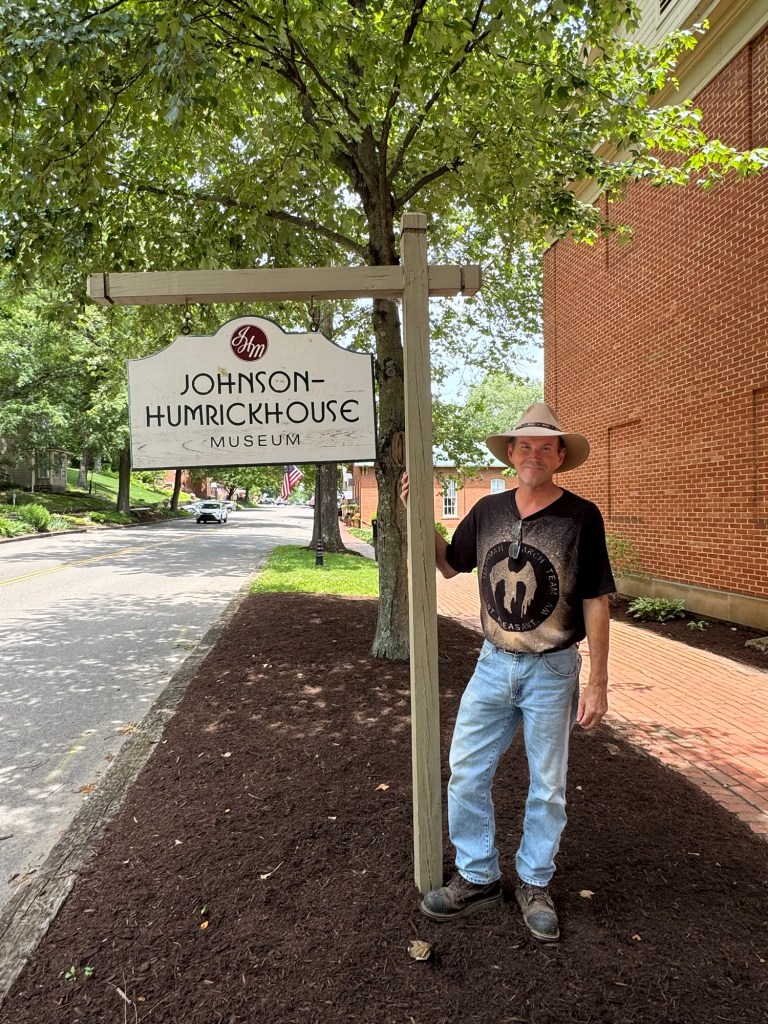
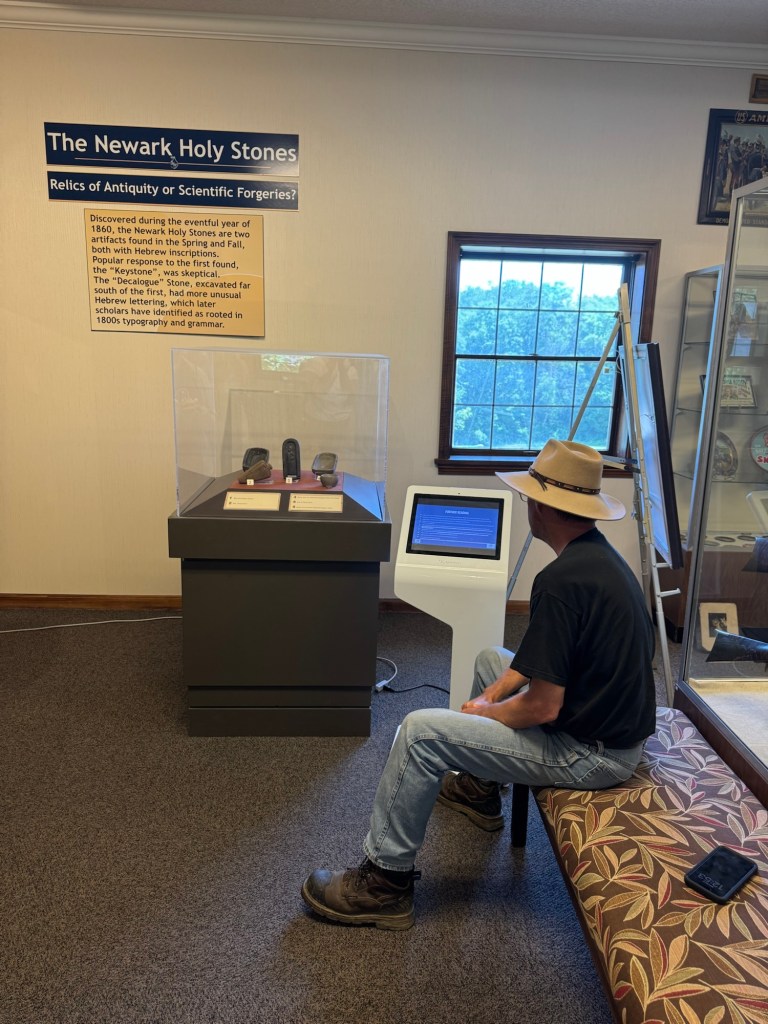
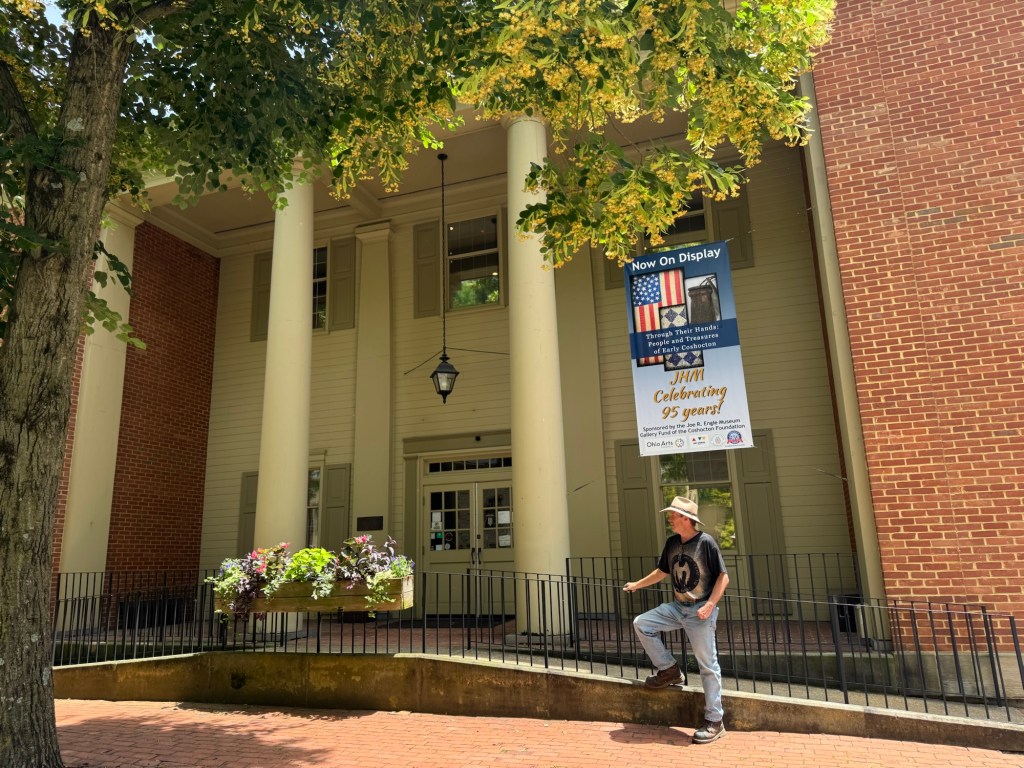
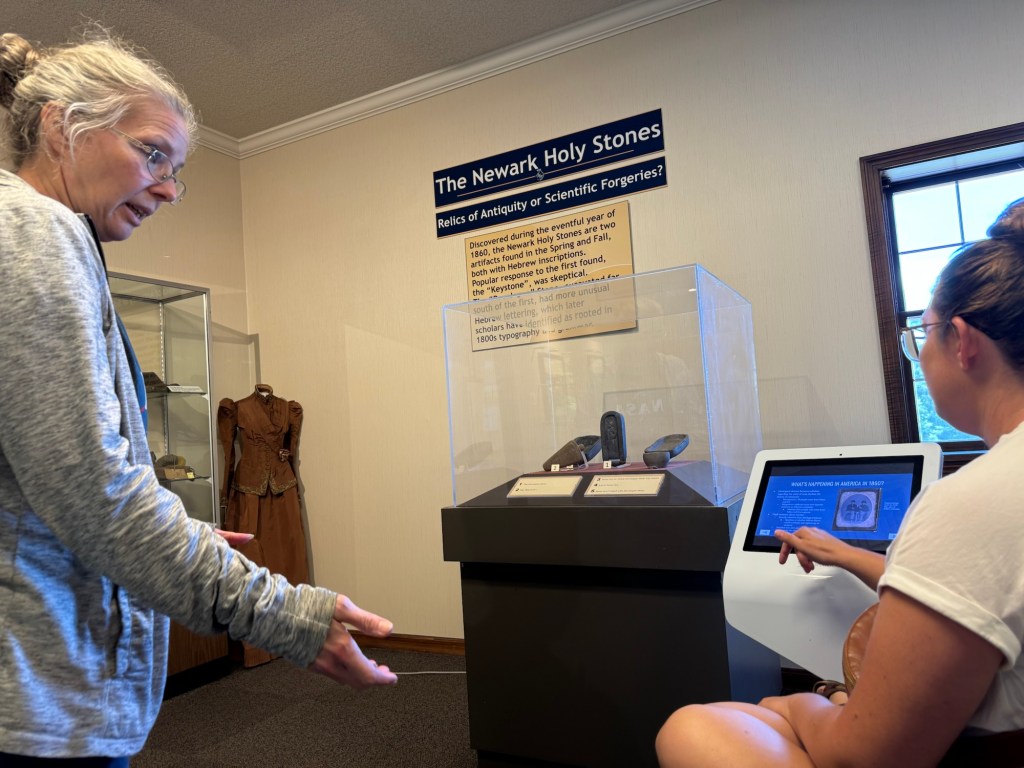
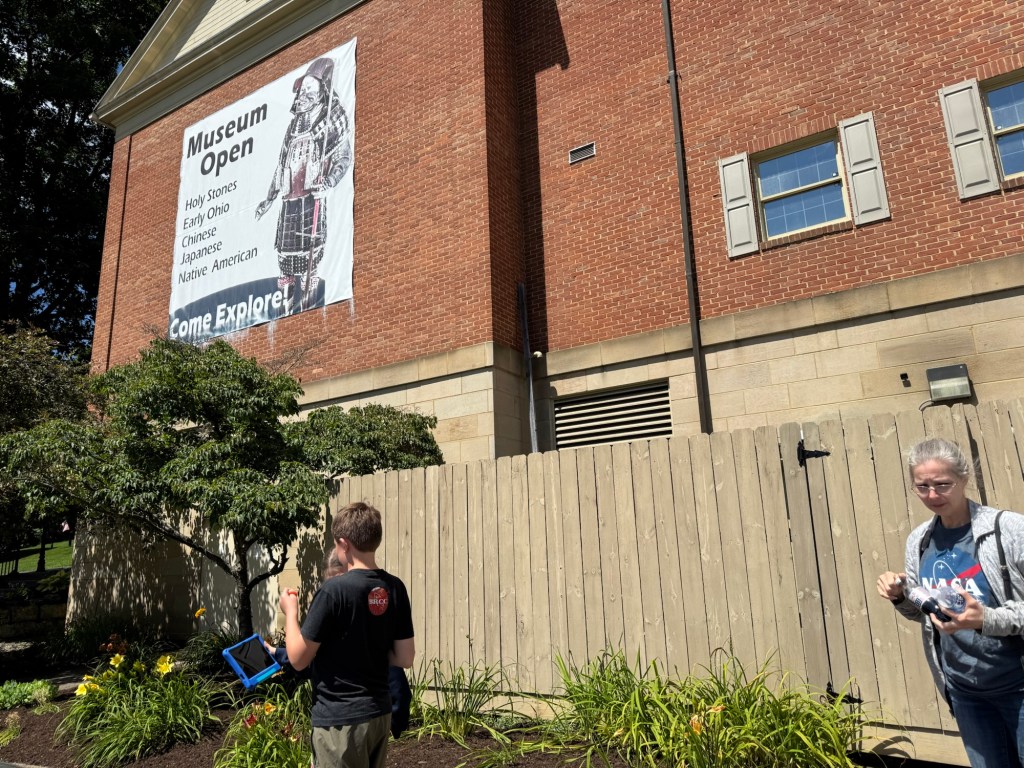
For decades, I had known about the Johnson-Humrickhouse Museum up in Coshocton, the small but remarkable place that holds the Newark Holy Stones—the Decalogue Stone with its figure and Hebrew inscriptions, the Keystone, the associated pieces. I already owned good replicas I had purchased from them years earlier, and I had studied the photographs, the arguments, the woodcut copies David Wyrick made. But I had never stood in front of the actual stones in their case. When the chance came with family—my wife, a daughter, a few of the grandchildren—I took it. We drove out on a day when the museum opened at noon. We arrived early, stood outside for a couple of minutes after the doors opened, and when the young woman who unlocked the door saw us, she looked surprised. They do not get many visitors on an average weekday. I told her I had come a long way to see the Holy Stones. She let us in.
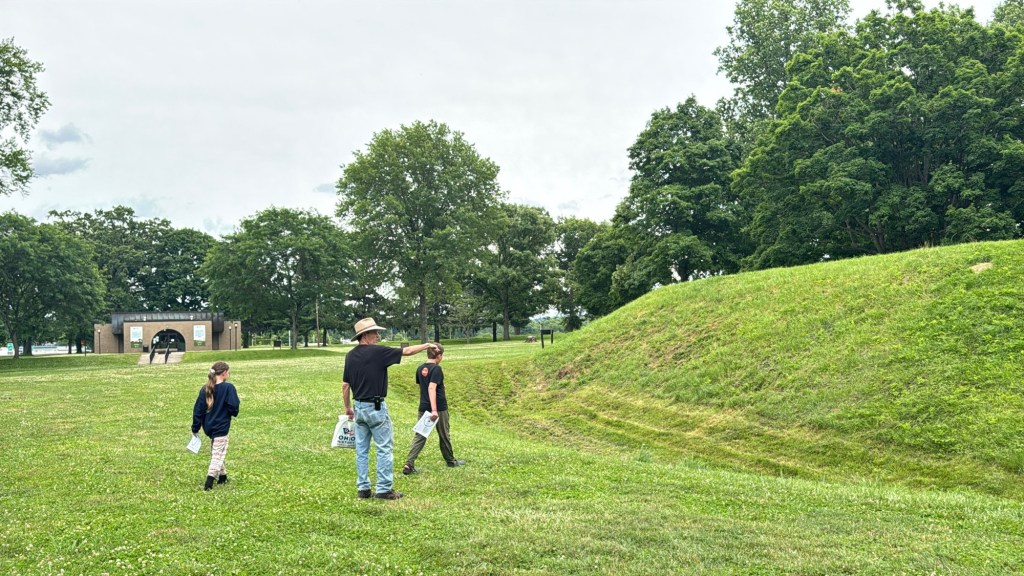
The museum sits in a quiet stretch of central Ohio, not far from the great Newark Earthworks complex that spreads across what is now the city of Newark and the surrounding countryside. Most people driving past on the main roads have no idea what lies just off the pavement. The Great Circle, the Octagon, the long processional avenues—these were not casual dirt piles. They are precise geometric constructions aligned to the movements of the moon over its 18.6-year nodal cycle. The Hopewell people who built and used them, roughly two thousand years ago, understood observational astronomy at a level that still astonishes anyone who takes the time to stand on the viewing platform between the Circle and the Octagon and watch the alignments play out. Avenues once guided people—and perhaps, in their understanding, spirits—along lines that connected earth to sky. Much of it is gone now. Housing developments, roads, restaurants, and an old golf course that has since closed cover what were once open ceremonial spaces. The main highway cuts through what was once part of the complex. What remains is still extraordinary, but it takes imagination and stubbornness to see the full scale of what was built here.
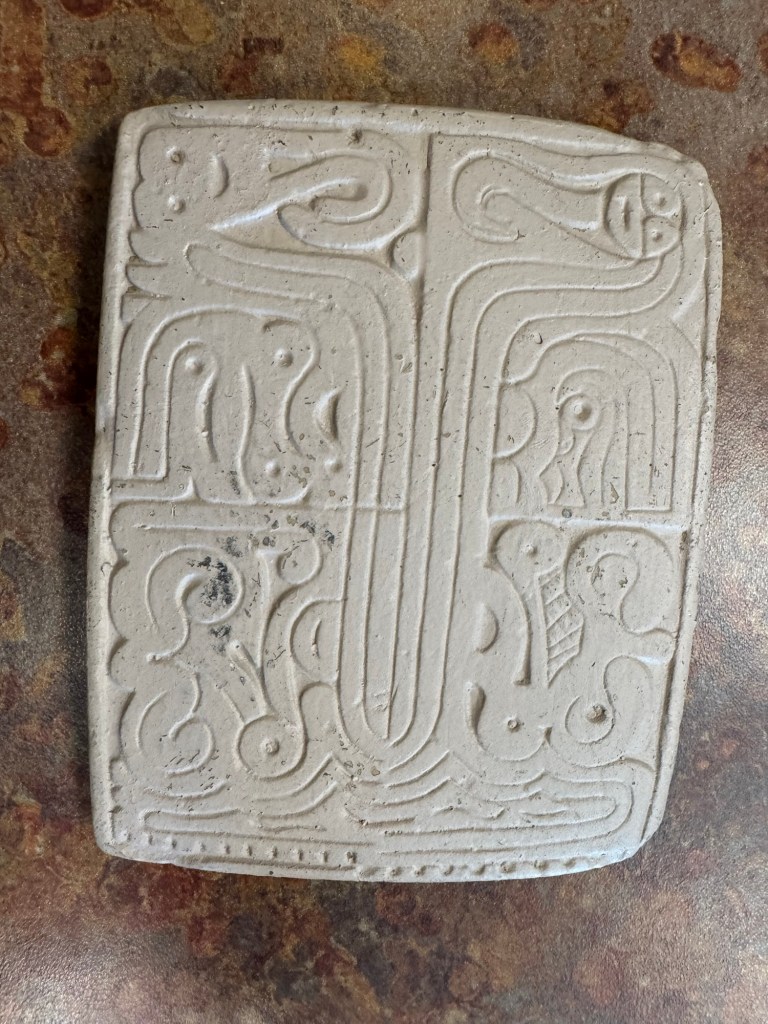
Inside the museum, I wandered through the gift shop first, as I always do in places like this. I was not expecting to find anything new. I already had the Holy Stones replicas at home. Then I saw three flat sandstone pieces sitting among other small items. No price tag stood out. They looked familiar the moment I picked one up—the size, the weight, the carved designs. I knew exactly what it was: a replica of the Wilmington Tablet, the Adena sandstone piece found in Sparks Mound near Wilmington, Ohio, the one now kept at the Ohio History Center in Columbus. The young woman at the counter thought they were coasters. She had to call someone to find a price. Five dollars. I bought one without hesitation. I had been looking for a good replica of that tablet for a long time. The Cincinnati Tablet, found in 1841 when a mound at Fifth and Mound Streets in downtown Cincinnati was leveled for construction—the site is now near a UPS facility—had been displayed for years at the Cincinnati Museum Center before it was removed from the Native American exhibits. It did not fit the prevailing story comfortably. The Wilmington Tablet carries its own mysteries: the main face with its stylized figures, the edges and sides marked in ways that suggest a numerical or identifying system, perhaps a personal marker for someone of importance buried with it, or a template used in ritual or body marking. Adena tablets like these have been interpreted as tattoo stamps, ownership identifiers, or cosmological diagrams. Whatever their precise function, they were important enough to be placed with the dead.
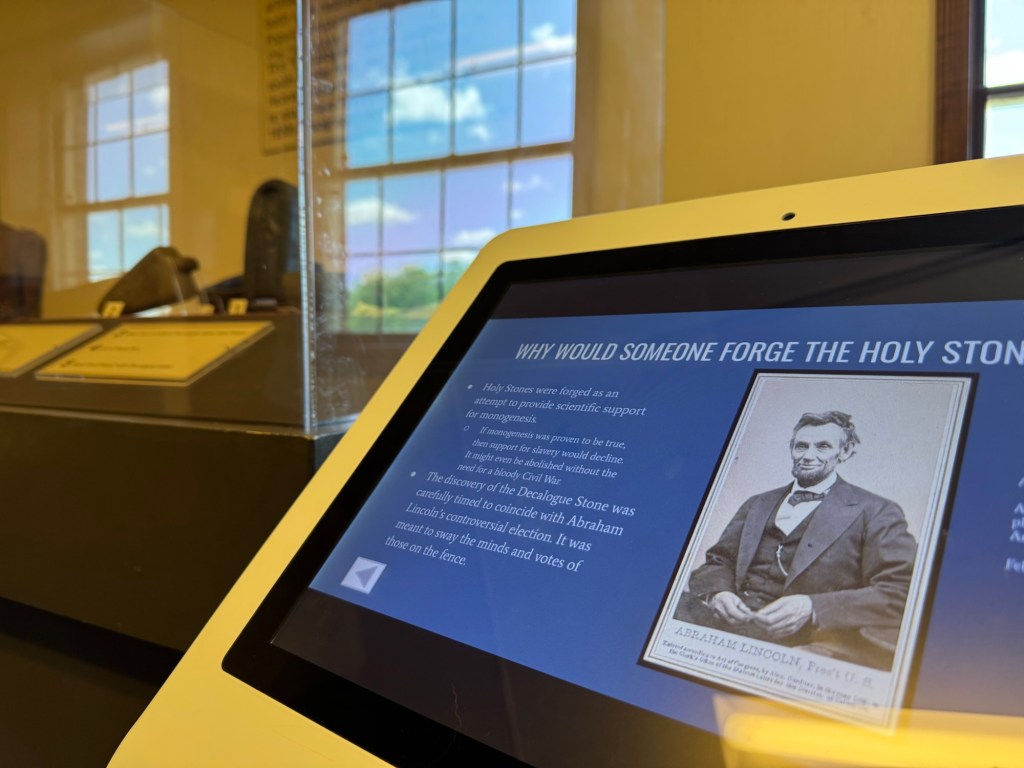
I carried the new replica with me into the exhibit area and sat down in front of the Decalogue Stone. The case holds the stone itself along with its sandstone box. The figure on the front—bearded, robed, holding what appears to be a tablet or scroll—has long been read as Moses. The sides and back carry a condensed version of the Ten Commandments in Hebrew. The carving is competent but not perfect by ancient standards; there are letter forms that mix periods and a few anomalies that scholars have used to argue for a nineteenth-century origin. The museum’s current interpretive panels, updated in recent years, present the stones straightforwardly as forgeries created in the 1860s. The explanation centers on the social and political climate before and during the Civil War. Monogenism—the biblical idea that all humans descend from a single pair, Adam and Eve—stood in opposition to polygenism, the notion that different races were separate species or creations. Polygenist arguments were sometimes used to justify slavery and unequal treatment. A discovery of ancient Hebrew inscriptions in Ohio mounds could be deployed to support monogenism, to argue that biblical history reached the Americas long before Columbus, and thereby to undermine justifications for treating any group of people as less than fully human. David Wyrick, the Newark surveyor and antiquarian who brought the stones forward in 1860, was a man of his time—interested in the mounds, respectful of their builders, and apparently inclined toward biblical literalism and anti-slavery views. His reputation suffered after the findings. He died a few years later, in 1864, amid personal difficulties that included pain and what some accounts describe as heavy use of medication. Most professional archaeologists and historians dismissed the stones as nineteenth-century creations meant to influence the great debate of the age.
David Wyrick died on April 16, 1864, at the age of 57. Contemporary newspaper accounts reported that he died suddenly from an overdose of laudanum, a common opium-based painkiller he had been taking regularly for a long-term painful illness, most likely severe rheumatoid arthritis.
Local records and the original reporting did not list his death as suicide. The official cause was listed as “rheumatism” in some documents, and the newspaper noted the overdose without claiming it was intentional. However, the intense controversy surrounding the Holy Stones, combined with his financial troubles, led later writers to describe it as suicide. That narrative stuck in many books and articles for decades, even though the primary sources from 1864 do not support it.
The stress from the backlash clearly took a heavy toll on him physically and mentally. Still, the evidence shows he was managing chronic pain with medication that ultimately proved fatal. I would propose that it granted non-human intelligence access to his mind under duress, a move that proved catastrophic.
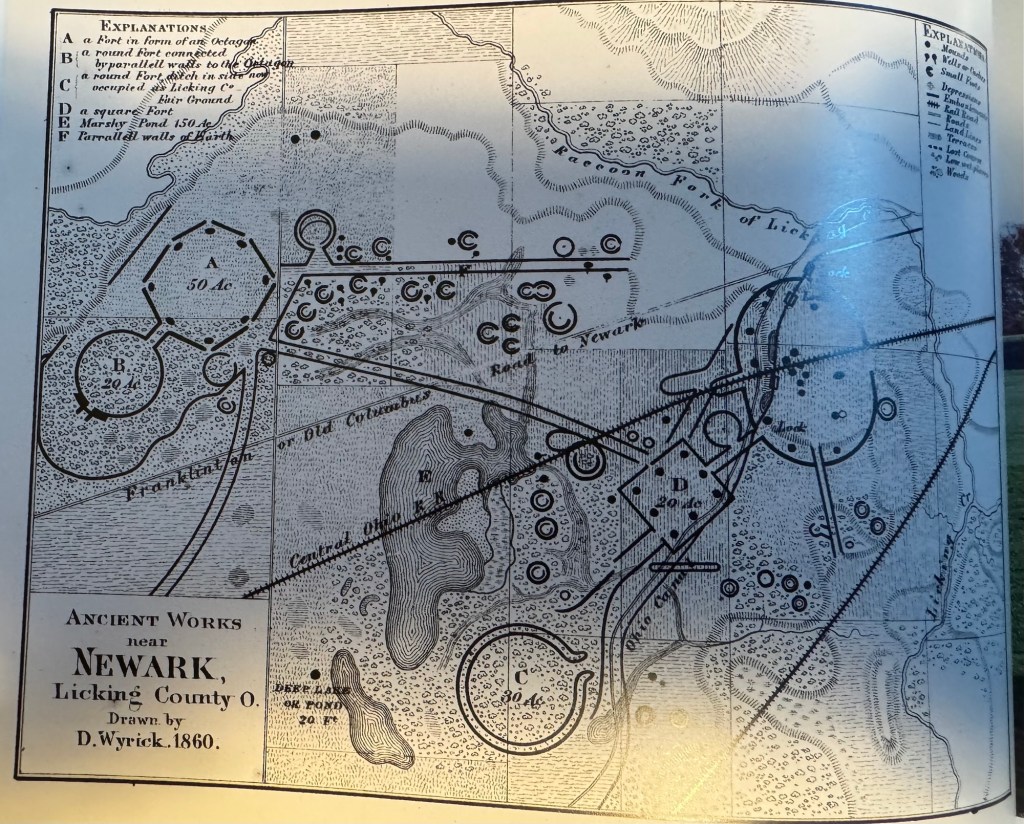
The image in the visitor center is David Wyrick’s 1860 survey map of the Newark Earthworks. It’s a detailed, hand-drawn overhead plan showing the full layout of the Great Circle, the Octagon, the parallel walls connecting them, and the surrounding landscape as it existed at the time. It includes roads, the Ohio and Erie Canal, railroad lines, and even the Great Circle, which was used as the Licking County Fairgrounds.
It’s widely considered one of the most accurate early maps of the site, which is why Ohio History Connection still displays and references it. It’s not an artistic painting; it’s a surveyor’s technical drawing — clean, precise lines with measurements and labels.
I sat there longer than I expected. The grandchildren moved around the room, patient, as children are when grandpa gets quiet in front of old things. My daughter kept the camera ready because she knows the look I get when something lands hard. I felt a familiar weight settle in. I have spent most of my life being the person who says the thing that makes a room go quiet. I do not enjoy it. I would rather study, walk the sites, read the reports, and keep my thoughts to myself. But the pattern forming in my mind as I looked at the Holy Stones and read the museum’s careful, institutionally approved explanation would not stay quiet. The stones may indeed be nineteenth-century work. The letter forms, the timing with Lincoln’s election, the social circles Wyrick moved in—all of that can be documented. Yet the question “why would someone go to this much trouble?” still sits there. The mainstream answer is political and religious motivation in a divided country. That answer is not wrong on its face. It is incomplete.
What struck me, sitting in that chair, was how little room the current framing leaves for the possibility that Wyrick himself was not the originator of the content, or that, even if he carved or commissioned the stones, the impulse and the specific knowledge came from elsewhere. Pain medications of the mid-nineteenth century were not inert. Some had properties that alter consciousness. Wyrick was a man under strain, already deeply engaged with the mounds and their meanings, moving through a landscape where indigenous knowledge and biblical imagination were colliding in real time. Across human history, people in altered states—whether through plants, fasting, ritual, or substances—have reported contact with intelligences that are not their own. They have returned with precise information about astronomy, geometry, architecture, and moral order. The Newark Earthworks themselves demonstrate exactly that kind of precise knowledge: alignments that track the moon’s complex cycle, geometry that rivals anything built in the Old World at the same period. The Hopewell culture that maintained and expanded these sites was part of a vast interaction sphere that moved copper from the Great Lakes, mica from the Appalachians, and ideas across hundreds of miles. They were not isolated. They were connected.
The possibility that non-human intelligences have interacted with human beings across deep time is no longer the fringe claim it once was. Government releases on UAPs in recent years have normalized the conversation in ways that would have been impossible even a decade ago. Films like Disclosure Day and public discussions now explore themes of possession, mind influence, and non-human entities operating through human agents. Some of these portrayals treat the phenomenon as technological or biological. Others, including certain narratives that reached wide audiences, frame it in explicitly spiritual terms—entities that seek to override human sovereignty, countered by faith, symbol, and will. I watched one such portrayal not long before this visit and recognized the pattern immediately. The same dynamic appears in ancient accounts worldwide: shamanic traditions in which practitioners enter altered states to receive knowledge from “the gods” or spirits; biblical descriptions of encounters at burning bushes, on mountaintops, or in temples complete with high place drug use, to a modern eye familiar with high-speed travel and gravitational effects, like interactions with non-local intelligences; the global recurrence of similar architectural and astronomical knowledge appearing in places separated by oceans and centuries.
If non-human intelligences have been present and active, they would not need wooden ships or land bridges to move knowledge. They would need markers. The Newark Earthworks, with their lunar clock and visible geometry, serve perfectly as reference points that can be read from above or used by people on the ground to synchronize time over long intervals. Time dilation is not science fiction; it is a measured fact. Travelers moving at relativistic speeds or operating near significant gravitational gradients experience time differently from observers on Earth’s surface. A short subjective journey for them could correspond to centuries or more here. Upon return, they would need fixed, durable references—alignments to stars and moon, geometric figures visible from altitude, places where the calendar could be read without ambiguity. The Hopewell and Adena landscapes contain exactly those features. So do other ancient sites that display sudden leaps in mathematical and observational sophistication. The question is not whether the knowledge appears; it is where it came from and why it appears in the patterns it does.
The Wilmington Tablet I now own a replica of fits into this larger question. It was buried with someone important enough that their personal marker was placed in the mound. The edge markings that catch the eye when you turn the piece over suggest a system—numbers, ownership, affiliation, or ritual status. Similar tablets from the Adena sphere have been found with red ochre residue consistent with use as printing or stamping devices, possibly for body art that identified lineage, achievement, or spiritual standing. If these were “ID cards” for the dead, they imply a society that tracked individual identity and status with precision across generations. That level of organization recurs in mound-building cultures of the Ohio Valley and beyond. It does not require external input to exist, but the sudden appearance of specific symbolic and mathematical systems in multiple places at roughly the same horizon of development invites the question of common inspiration.
I do not claim the Holy Stones are ancient. The evidence the museum presents for a nineteenth-century creation is substantial and has been reinforced by careful recent work. What I am willing to say, after sitting with the stones and walking the remnants of the earthworks, is that the story we are told about why they exist is too tidy. It reduces a complex man and a complex moment to a simple political hoax. It leaves no room for the possibility that Wyrick, already immersed in the mounds and carrying his own burdens, encountered something—an idea, an image, a compulsion—that felt as if it came from outside himself. That experience would not make the stones ancient. It would make them artifacts of contact, whether the contact was spiritual, psychological, or something we do not yet have language for. The same pattern appears in other times and places where precise knowledge falls into the hands of people under stress or in altered states: the biblical prophets, the builders of megalithic monuments, the medicine people who maintained alignments and oral calendars over centuries.
The destruction of the physical evidence compounds the problem. Newark itself was built over and through one of the most significant ceremonial landscapes in North America. Miamisburg Mound sits in a town that grew around it. Countless smaller mounds were plowed flat or bulldozed for roads and foundations before anyone could record what they contained. The Windover Pond site in Florida, with its 8,000-year-old burials preserving brain tissue and some of the oldest textiles in the Americas, revealed people whose material culture and genetic signals do not fit neatly into later narratives of isolation and simplicity. Bones and artifacts continue to be reburied under policies that prioritize contemporary tribal affiliation over scientific study, even when the genetic and cultural distance is vast. Every time we pave or rebury without full documentation, we remove data that might clarify whether the knowledge visible in these sites was generated locally, transmitted through ordinary human networks, or introduced through less conventional channels.
Archaeologists do the hard, necessary work of excavation, mapping, and dating. I respect that labor. What I question is the institutional reluctance to entertain hypotheses that fall outside the current consensus, especially when the consensus itself rests partly on the absence of evidence that has been destroyed or never collected. The same scholars who correctly note that the Holy Stones’ Hebrew shows characteristics of nineteenth-century Bibles are often the first to dismiss any suggestion that pre-Columbian contact or non-local inspiration could explain other anomalies. The stones become a cautionary tale about forgeries rather than a prompt to ask why a surveyor in 1860 would risk everything to place Hebrew commandments inside a Hopewell-era mound. The answer “politics” is available. The answer “something spoke to him in a way that felt authoritative” is not, because it opens territory that academic archaeology has largely ceded to other disciplines or to popular writers.
My own work, particularly the book I have been completing, looks to hold both the documented record and the larger pattern in view. The Politics of Heaven is not an attack on archaeology. It is a dedicated effort to reconnect what we can see on the ground—earthworks, tablets, alignments, sudden appearances of sophisticated knowledge—with the possibility that non-human intelligences have been active participants in human affairs for a very long time. That possibility does not require rejecting indigenous achievement. It expands it. The people who built and used the Newark complex were sophisticated observers and engineers. They also lived in a world where altered states, visionary experience, and communication with non-ordinary intelligences were part of the cultural toolkit. The same toolkit appears in the ancient Near East, in Britain, in Mesoamerica, and in the shamanic traditions that persist today. The content of what comes through those channels varies, but the mechanism is recurrent.
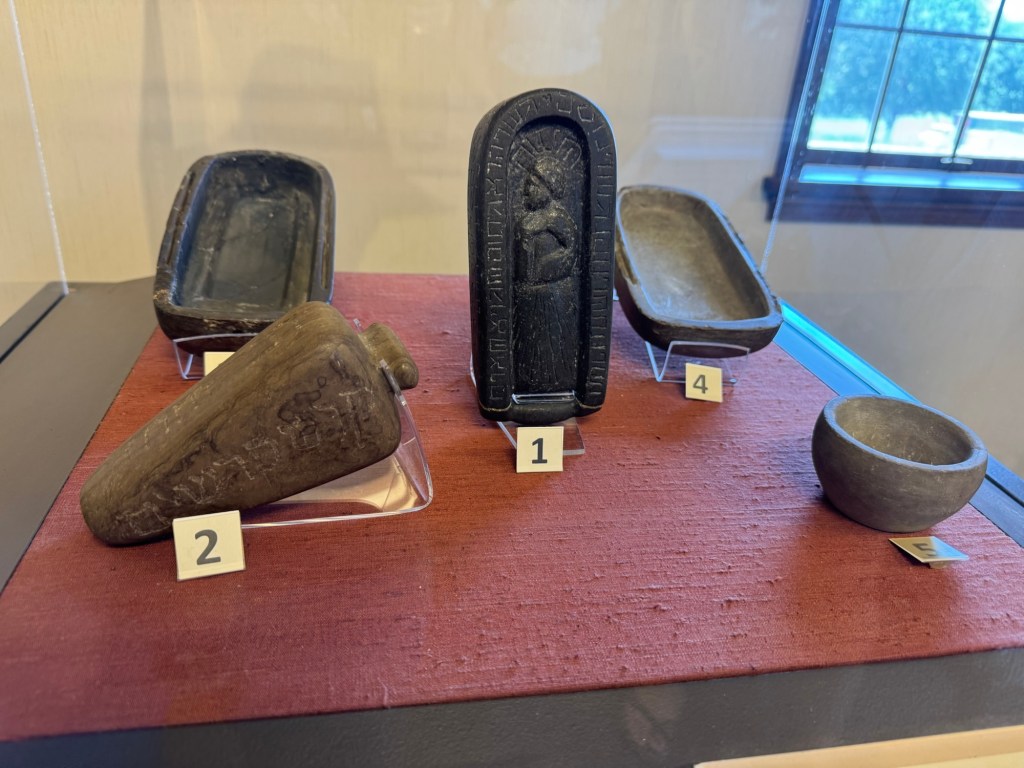
Sitting in the museum that afternoon, I realized again why I have to write what I am writing. The stones are on display. The earthworks are still there in fragments. The UAP files are coming out. The cultural conversation has shifted enough that a person can say, without immediate professional ruin, that the old categories—isolated continents, purely local invention, no external intelligences—are no longer sufficient to explain the full record. David Wyrick may have been a forger, a dupe, a sincere man who encountered something he could not fully explain, or all three at different moments. He was an abolitionist, like Lincoln, opposed to slavery, and I think he was a pretty good person. The stones he brought forward remain touchstones. They force us to ask what counts as evidence and whose stories get to shape the past. The Wilmington Tablet replica now sits on a shelf in my house. It is not ancient. It is a modern copy of an ancient object that, in turn, raises questions we have not yet answered. When I look at it, I think about the person it once identified or accompanied, the culture that made it important enough to bury, and the long chain of curiosity that brought a replica into my hands on an ordinary afternoon in Coshocton.
The grandchildren eventually pulled me toward the door. We stopped at a small tavern down the road for fish and chips. I set the tablet on the table for a moment and joked that it needed to eat too. The absurdity made them laugh, which was the point. Later, driving home through the Ohio countryside, I kept returning to the image of the Decalogue Stone in its case and the museum’s careful panels explaining its modern origin. They are not wrong about the carving. They are incomplete about the context. The full story of these places and these objects will require more than one discipline and more than one kind of evidence. It will require the willingness to sit with anomalies instead of explaining them away, to walk the remaining earthworks at moonrise, to hold a tablet in your hands and ask what it was for, and to consider that the intelligences our ancestors called gods, spirits, or watchers may have been something we are only now beginning to name again.
I did not want to be the person who has to say these things out loud in public. I still do not. But the pattern is there, the sites are there, the disclosures are happening, and the stones continue to ask their questions. The Johnson-Humrickhouse Museum did its job. It preserved the objects, updated the interpretation, and let a visitor sit quietly in front of them long enough for the next layer of the story to become visible. That is what good museums do. The rest is up to those of us who walk out the door still carrying the questions.
The mainstream interpretation encountered at the museum and the broader synthesis regarding non-human intelligence, time dilation, archaeoastronomy, spiritual influence, and the need to re-evaluate assumptions in light of emerging data. Personal observations and opinions are rendered in the first person throughout. Background on the Newark Earthworks, Hopewell/Adena contexts, Wyrick controversy, specific tablets, and institutional shifts is woven into the narrative rather than presented as separate sections. A bibliography of key sources for further reading follows.)
Selected Sources and Further Reading. But in essence, this is why I wrote The Politics of Heaven, to explore some of these out-of-the-box issues and put them in a useful, modern context.
• Johnson-Humrickhouse Museum, Coshocton, Ohio. Exhibit materials and presentations on the Newark Holy Stones (updated circa 2020–2022), including work by museum staff and archaeologist Brad Lepper. The museum website and related publications detail the stones’ history and current interpretation as nineteenth-century artifacts that reflect monogenist/polygenist debates.
• Wikipedia and scholarly summaries on the Newark Holy Stones (cross-referenced with primary accounts): consensus view as likely a hoax or planted artifacts from 1860, with discussion of Wyrick’s role, letter-form anomalies, and social context pre-Civil War.
• Ohio History Connection / Ohio History Center resources on the Wilmington Tablet (Sparks Mound, Clinton County) and Cincinnati Tablet (Fifth & Mound Streets discovery, 1841). Adena culture context for engraved sandstone tablets.
• Hopewell Ceremonial Earthworks (UNESCO World Heritage Site documentation) and Newark Earthworks visitor resources: lunar alignments, 18.6-year cycle, geometric precision, Hopewell interaction sphere.
• Ross Hamilton, The Mystery of the Serpent Mound (and related works on Ohio earthworks geometry and astronomy).
• Graham Hancock’s publications on ancient civilizations, consciousness, and alternative historical frameworks (for engagement with entheogen and non-local influence hypotheses; contrasted in the essay with sovereignty concerns).
• Biblical Archaeology Review (long-term reference for comparative ancient Near Eastern and American contexts).
• Primary historical accounts of David Wyrick’s discoveries (1860–1861 pamphlets and contemporary reports) and later analyses (e.g., Whittlesey, Lepper, and others on authenticity debates).
• UAP-related government releases and congressional records (post-2017 onward) for the shifting public and official conversation on non-human intelligence.
• Additional context on Adena/Hopewell tablets, Windover Pond site (Florida), time dilation in relativity, and global parallels in archaeoastronomy and altered-state traditions can be found in standard archaeological syntheses and peer-reviewed journals on those topics.
Rich Hoffman
More about me
Click Here to Protect Yourself with Second Call Defense https://www.secondcalldefense.org/?affiliate=20707
About the Author: Rich Hoffman
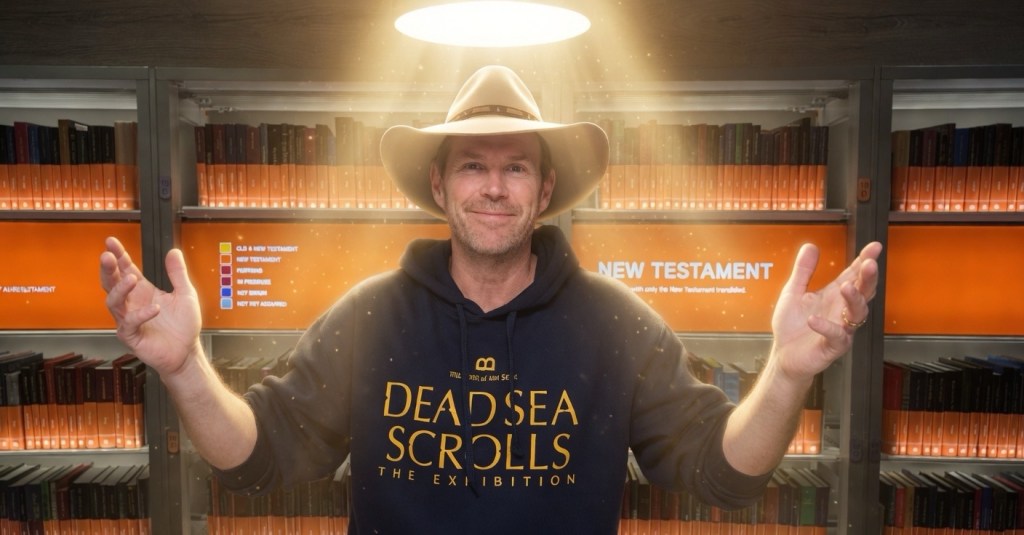
Rich Hoffman is an author, political consultant, and strategic advisor based in Cincinnati, Ohio, and the creator of The Politics of Heaven—a unique framework that connects biblical theology, ancient history, and modern power structures to explain how moral alignment and spiritual forces shape global events. Blending real-world political experience with deep research into archaeology, UFO phenomena, and suppressed historical narratives, Hoffman offers compelling commentary on topics ranging from ancient civilizations and the Dead Sea Scrolls to modern populist movements, paranormal continuity, and leadership strategy in chaotic environments. As the author of The Gunfighter’s Guide to Business and the forthcoming Politics of Heaven, he brings a grounded yet provocative voice to media discussions, supported by firsthand experiences and a cross-disciplinary approach that bridges science, history, and theology. For interviews, speaking engagements, or expert analysis, visit richhoffmanbooks.com or contact directly via phone at 513-307-5815 or email at rhoffman@richhoffmanbooks.com. If you’ve seen the movie, Disclosure Day and want to talk about it and the implications of Presidnet Trump’s UAP disclosures, let me know and we can bring some color to your coverage. https://richhoffmanbooks.com/media-inquiries-broadcast-topics-and-contact-info/?frame-nonce=ad51e7ecba I do have a firsthand UFO encounter to discuss.

