

Pip: The Overmanwarrior is a blog that covers Ohio governor’s races, UFO sightings over Middletown, the SpaceX IPO, vinyl records, and ancient mound builders — sometimes in the same week. Rich Hoffman contains multitudes.
Mara: Rich Hoffman’s recent posts cover a lot of ground: Republican strategy heading into the 2026 Ohio governor’s race, a personal UFO encounter and what it means for ancient history, the commercial space economy, and questions about ownership, medicine, and what it costs to stand publicly behind your convictions.
Pip: Let’s start with Ohio politics and the argument that nice guys finish last.
Fighting Back: Ohio Republicans And The 2026 Race
Pip: The core claim here is simple and blunt: Republican candidates who play defense lose, and the 2026 Ohio governor’s race is the test case. Amy Acton’s COVID record is the vulnerability, and the question is whether Republicans will actually use it.
Mara: The post on winning for Republicans puts it directly: “Her stupid policies were some of the dumbest things ever to be done in politics. And she completely owns it.” The argument is that Acton was not a passive figure — she was the daily public voice driving Ohio’s pandemic response, and attempts to distance herself from that record now undermine her credibility.
Pip: The upshot is that if Republicans treat Acton as a neutral public servant, they leave the most obvious attack on the table — and voters who lived through the economic disruption will notice.
Mara: The piece on making a footstool out of your enemies in Ohio adds polling context. An NC Research survey had Ramaswamy ahead 53 to 43, though a Fox News poll showed Acton at 50 to Ramaswamy’s 49. The argument is that conservative non-response bias makes Ramaswamy’s real position stronger than the numbers suggest.
Pip: There’s also a piece on the arrest of blogger D.J. Byrnes — known as “The Rooster” — at the Ohio Statehouse, charged with telecommunications harassment after allegedly sending an explicit image to a state senator. The argument frames that arrest as Republicans finally enforcing basic standards rather than absorbing abuse indefinitely.
Mara: And the Democrat autopsy post argues the 2024 loss wasn’t a messaging problem — it was a platform problem. Trump secured 312 electoral votes to Harris’s 226 and won the popular vote roughly 77.3 million to 75 million. The piece contends Democrats can’t confront that honestly without dismantling their current brand.
Pip: The FirstEnergy piece rounds this out by reframing the HB6 scandal as regulatory warfare — the argument that Ohio energy executives weren’t simply corrupt but were reacting to Obama-era EPA rules designed to make coal and nuclear plants uneconomical.
Mara: The through-line across all of it is the same: passive defense loses, whether in a governor’s race, a media fight, or an energy policy battle. The prescription is consistent — define the opposition, attack the record, and don’t apologize for it.
Pip: From Ohio’s political trenches to something considerably older — let’s talk about what’s in the sky over Middletown.
The Dare And The Green Lights: UFOs And Ancient Ohio
Pip: This segment is about a personal UFO sighting that became the seed for a book — and what it connects to when you start pulling the thread through ancient sites, Dead Sea Scrolls, and government secrecy.
Mara: The UFO encounter post describes recording a video that dared whatever forces might be listening to show themselves over Butler County. Days later, the account continues: “A ring of bright green lights appeared in the night sky in that vicinity. Multiple residents captured video around 10:30 or 11 p.m. The lights rotated, hovered, then shot off with impossible speed.”
Pip: So: dare the sky, the sky responds. Whether that’s craft, projection, or coincidence is left open — but the timing is treated as meaningful.
Mara: The Serpent Mound post connects this to Ohio’s ancient landscape. Serpent Mound stretches approximately 1,348 feet and sits on the rim of a meteorite impact crater roughly 8 kilometers in diameter. The post argues that building the world’s largest serpent effigy on that precise location, with solstice alignments encoded in the geometry, implies knowledge that invites harder questions about its origins.
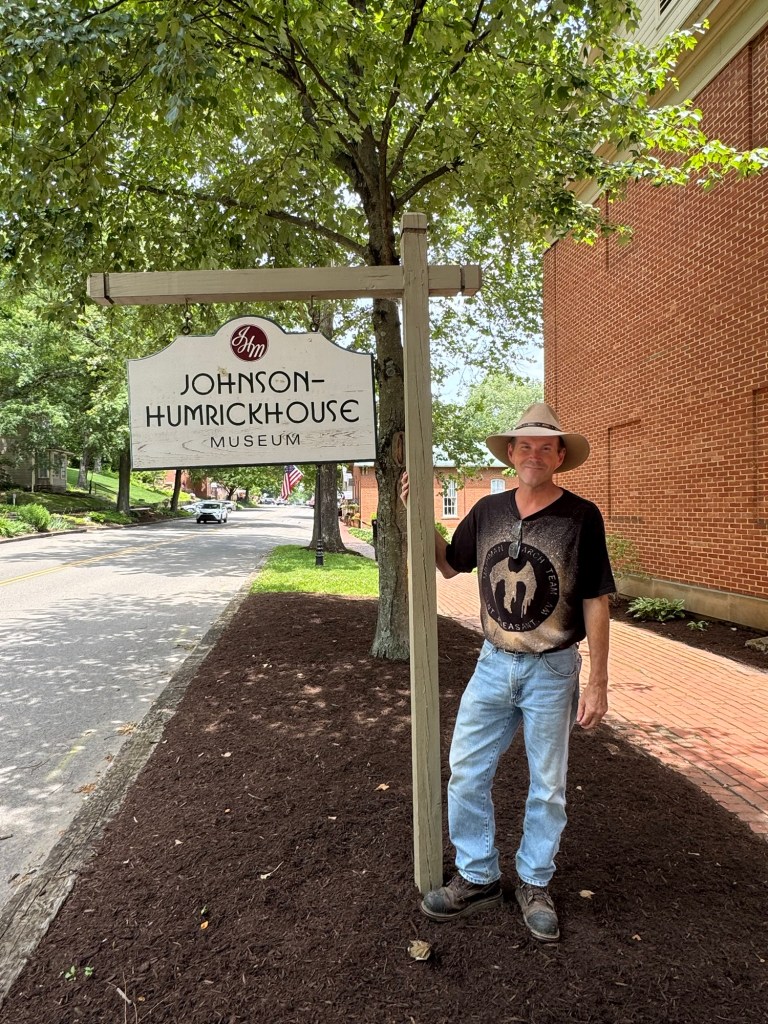
Pip: The Newark Holy Stones post takes that further — a visit to the Johnson-Humrickhouse Museum in Coshocton to see the Decalogue Stone in person, with Hebrew inscriptions the museum now labels as 19th-century forgeries. The argument isn’t that the stones are ancient, but that the standard explanation — Civil War-era political motivation — is too tidy to be complete.
Mara: The Disclosure Day review and the piece on human sacrifice and ancient idolatry both feed the same manuscript in progress, The Politics of Heaven, which connects UAP disclosure, biblical archaeology, and the long history of non-human intelligences shaping human civilization.
Pip: From ancient craters to active launch pads — the space economy is next.
The Next Gold Rush: Moon, Rockets, And The Space Economy
Pip: The argument here is that the Moon is the new American frontier — resources, manufacturing, and generational wealth — and that the right response to rocket explosions is to iterate faster, not slow down.
Mara: The Moon post makes the case directly: “The Moon is not just a celestial body; it is the key to the next great American expansion, a modern gold rush that will generate wealth, innovation, and opportunity on a scale rivaling the Western frontier.” Helium-3 deposits in the lunar regolith are estimated at over a million tons, and thorium concentrations point toward rare earth deposits with significant energy applications.
Pip: That’s the resource case. The investment case comes from the SpaceX IPO post, which describes Starship’s twelfth flight test achieving a controlled Indian Ocean landing and frames the IPO — targeting 135 dollars a share and a valuation around 1.75 trillion dollars — as a generational wealth opportunity comparable to the railroad boom.
Mara: The New Glenn explosion post argues the opposite of what critics suggest. Blue Origin’s rocket destroyed its first stage and damaged launch infrastructure in a May 2026 static-fire test, but the post treats that as the cost of frontier work — the same iterative failure that defined Apollo and the Shuttle era. SpaceX launched a Falcon 9 from a nearby pad within hours.
Pip: The through-line is Rooseveltian: resources, risk, and expansion without apology. Ohio even gets a spaceport in the vision — Middletown and Monroe as future landing zones.
Mara: And the personal thread runs through all of it — model rocketry with a grandson, a DK book on the Moon picked up at the Smithsonian gift shop, a SpaceX shirt worn to a Florida Publix. The frontier isn’t abstract; it’s a family project.
Pip: From orbit back to earth — the final segment is about what it costs to own your convictions and why the healthcare system should apply aerospace discipline to cancer.
Skin In The Game: Conviction, Ownership, And The Right Stuff In Medicine
Pip: This segment is about a single consistent argument applied across very different domains: that the system rewards managing problems rather than solving them, and that the people willing to pay the personal cost of saying so out loud are the ones who actually change things.
Mara: The medicine post makes the parallel to aerospace explicit: “In aerospace, failure is analyzed, corrected, and systematically eliminated through iterative design. The goal is not to manage risk indefinitely, but to reduce it to near zero through engineering discipline.” The argument is that healthcare should adopt the same posture toward cancer — not chronic management, but eradication as the stated goal.
Pip: And the post on the personal cost of putting your name on what you believe is the autobiography of that principle. Fighting Lakota school levies in 2012 cost Hollywood contacts, book momentum, and radio access — all documented in real time.
Mara: The ownership post adds a consumer-economy dimension. In 2025, U.S. vinyl sales surpassed one billion dollars for the first time in decades — 46.8 million units — while CDs sold around 29.5 million units. The vinyl resurgence is read as a market rejection of the rental economy and the WEF’s “you’ll own nothing and be happy” vision.
Pip: The Dead Sea Scrolls post and the emotional intelligence piece round this out — one arguing that fear of success causes Republicans to self-sabotage, the other that navigating human systems without losing your convictions is a skill, not a compromise.
Mara: And the “you didn’t build that” post ties it to the economic argument: government facilitates but does not originate wealth, and progressive taxation that treats profit as a debt owed to the state inverts the actual relationship between risk-takers and public revenue.
Pip: The common thread is ownership — of your music, your convictions, your medical future, your political record. Renting any of those out is presented as the first step toward losing them.
Mara: The thread connecting all of this is the same question asked at every scale: who controls the thing, and are they willing to fight for it?
Pip: Ohio’s governor’s race, the Newark Earthworks, the lunar regolith, a shelf of CDs — same argument, different altitudes.
Mara: Next episode, we’ll see where those threads lead.
Rich Hoffman
More about me
Click Here to Protect Yourself with Second Call Defense https://www.secondcalldefense.org/?affiliate=20707
About the Author: Rich Hoffman
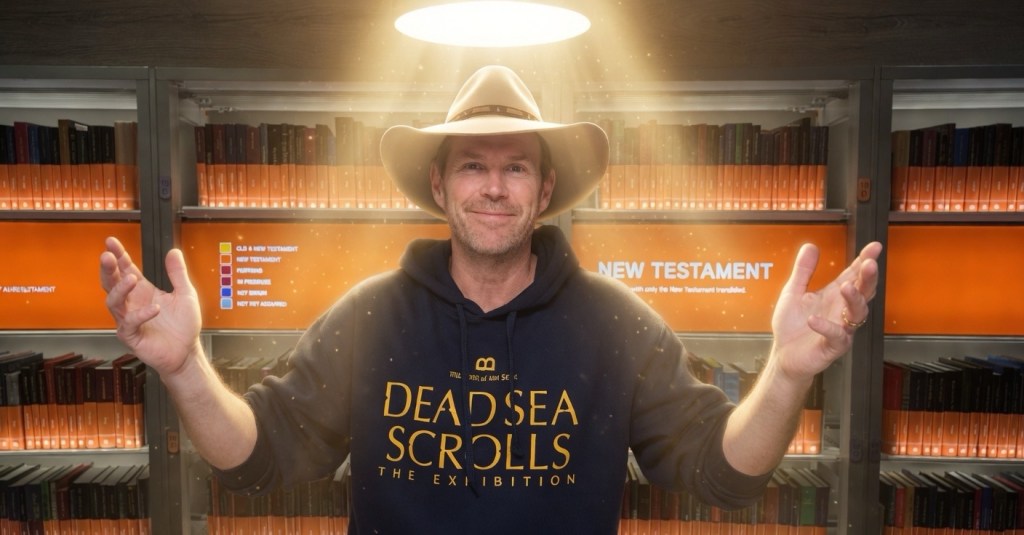
Rich Hoffman is an author, political consultant, and strategic advisor based in Cincinnati, Ohio, and the creator of The Politics of Heaven—a unique framework that connects biblical theology, ancient history, and modern power structures to explain how moral alignment and spiritual forces shape global events. Blending real-world political experience with deep research into archaeology, UFO phenomena, and suppressed historical narratives, Hoffman offers compelling commentary on topics ranging from ancient civilizations and the Dead Sea Scrolls to modern populist movements, paranormal continuity, and leadership strategy in chaotic environments. As the author of The Gunfighter’s Guide to Business and the forthcoming Politics of Heaven, he brings a grounded yet provocative voice to media discussions, supported by firsthand experiences and a cross-disciplinary approach that bridges science, history, and theology. For interviews, speaking engagements, or expert analysis, visit richhoffmanbooks.com or contact directly via phone at 513-307-5815 or email at rhoffman@richhoffmanbooks.com. If you’ve seen the movie, Disclosure Day and want to talk about it and the implications of Presidnet Trump’s UAP disclosures, let me know and we can bring some color to your coverage. https://richhoffmanbooks.com/media-inquiries-broadcast-topics-and-contact-info/?frame-nonce=ad51e7ecba I do have a firsthand UFO encounter to discuss.

