

I have been saying it all week, and I’ll say it again here: the SpaceX IPO represents one of the greatest opportunities for generational wealth creation in our lifetime. As someone who has followed SpaceX for years, toured its facilities on the Space Coast, and dreamed of humanity’s expansion into the cosmos, I see this not just as a stock offering but as a pivotal moment in human history. Wealth, as I often remind people, is a tool. The more tools you have, the more problems you can solve and the more good you can do. Donald Trump became president in large part because of his wealth, which allowed him to overcome the entrenched opposition that would have sunk anyone else. That same principle applies here. Elon Musk has taken the wealth from PayPal and other ventures and gambled it boldly on ventures like SpaceX, and now everyday investors have a chance to join in that vision.
Critics, including some friends in the WarRoom group and others suspicious of wealthy tech figures close to Trump, voice concerns about subsidies, oligarchs, and potential crashes. I understand the skepticism—history is full of cautionary tales. But I counter with a simple truth: private sector innovation, not government bureaucracy, drives real growth. Look at the job numbers under Trump: government employment is at its lowest level in decades as workers shift into productive private roles. That transfer of energy and resources is exactly how economies expand. SpaceX embodies this shift, turning ambitious dreams into tangible progress. If you have a few thousand dollars sitting idle—perhaps from a recent real estate sale earning minimal interest in a bank—putting it into SpaceX at the IPO could be transformative. I’ve told people with $50,000 or $100,000 to consider it seriously. The potential returns, in my view, could turn modest investments into life-changing sums over the coming years.
My enthusiasm isn’t blind. I recently visited the Space Coast with my wife, touring Kennedy Space Center, SpaceX facilities, and Blue Origin sites. We were in Florida visiting family, staying in a condo near Cocoa Beach and Cape Canaveral. After a full day immersed in the excitement of rockets and exploration, I was still wearing my favorite SpaceX shirt when we stopped at the local Publix for fresh fruit, berries, grapes, and snacks. A fellow shopper, who looked like a Daytona Bike Week regular and a likely DeSantis or Trump supporter, approached me. “Elon Musk is a bomb,” he said. “He gets all his money from government subsidies. It’ll be great when he’s gone.” I listened politely but felt the opposite. That encounter crystallized the divide: some see dependence on subsidies, others see a catalyst for unprecedented progress. I walked away more convinced than ever that SpaceX is the real deal.
SpaceX’s trajectory has been remarkable. Just recently, around Memorial Day 2026, Starship’s twelfth flight test achieved a successful launch and a controlled landing in the Indian Ocean, meeting key criteria for precision and reusability. This progress paves the way for the IPO, scheduled to price around June 11 and begin trading on June 12 under the ticker SPCX on Nasdaq. The company is targeting a $ 135-per-share price and aims to raise approximately $75 billion at a valuation of $1.75 trillion to $1.8 trillion. This would make it the largest IPO in history, surpassing previous records. Demand is strong, with reports of oversubscription. Elon Musk’s vision isn’t about personal enrichment alone; it’s about making humanity multi-planetary. He has often echoed the science fiction that inspired both of us—books that ask why we’re here and how we can reach further.
I love science fiction and have for decades. Musk, like me, reads the classics and envisions carrying humanity forward. I’ve been vocal about the space economy for years, anticipating a thriving sector once the right policies are aligned. Trump’s return has accelerated that. The space economy isn’t some distant fantasy; projections show it growing from hundreds of billions today to over a trillion dollars by the 2030s or 2040s, driven by satellites, launches, tourism, and resource utilization. Starship is the key enabler—reducing costs dramatically and opening access to orbit, the Moon, Mars, and beyond. Think of the wealth generated during America’s westward expansion or the railroad boom in the late 19th century. This is analogous, but on a cosmic scale. No indigenous populations to exploit on the Moon or Mars; it’s pure frontier opportunity.
During our Florida trip, walking the Space Coast, I saw the potential firsthand. The area around Ron Jon Surf Shop, Port Canaveral, Cocoa Beach—it’s poised to boom as Las Vegas did, but with a focus on high-tech industry rather than just entertainment. Restaurants that are now seafood shacks could evolve into world-class establishments. Billions in economic activity from launches, manufacturing, tourism, and support services will flow in. I’ve seen similar transformations: the growth of Abu Dhabi and Dubai from desert to gleaming cities, or the shifts in organized crime I witnessed in my younger days in Cincinnati and Newport, Kentucky, where money found new outlets. Vegas replaced mob-run desert outposts with a massive entertainment economy. Space will do the same, creating legitimate, innovative wealth.
Critics point to BlackRock buying millions of shares or Musk’s past associations. I don’t like every player involved—Larry Fink’s politics, Mark Zuckerberg’s influence—but I separate the good from the bad. Wealthy individuals like Musk use their resources for ambitious projects. Trump’s wealth insulated him from the system. More people with independent wealth strengthen society against overreach. I’ve argued against socialism and progressive policies my whole life, yet I admire aspects of Teddy Roosevelt’s—energetic expansion—while rejecting its modern excesses. Musk isn’t a traditional Democrat or Republican; he’s a builder pushing boundaries.
Some friends worry about a crash or tech oligarchs. Economies have cycles, and short-term volatility is inevitable. Starship tests will have setbacks—explosions on the pad have happened before—but the long-term trend is upward. Hold for years, not days. Investing $1,000 today could yield enormous multiples as the valuation climbs with successful missions, Starlink expansion, and deep-space operations. Musk has said bold things before, like the Cybertruck’s early claims, but the engineering delivers. SpaceX’s valuation already reflects trillions in potential. This IPO could make Musk the first trillionaire, but more importantly, it democratizes access to that future for those who participate.
My personal connection runs deep. As an aerospace executive, I’ve seen the industry up close. Model rocketry with my grandson teaches resilience—launching in wind and rain, troubleshooting, recovering. That same spirit scales to Starship. I can’t wait for archaeology on Mars. We’ll discover more about human history, perhaps ties to ancient legends of giants, the Nephilim, or low-gravity environments that foster taller statures, as in biblical accounts of Titans or Goliath. Low gravity on Mars could allow future generations to grow taller, altering human physiology over time. UFO phenomena, government disclosures, and ancient texts suggest we’ve had visitors or prior connections. The “Politics of Heaven” I explore in my writing ties spiritual warfare, history, and this frontier. Mars colonization isn’t an escape; it’s fulfillment and backup for Earth.
Economically, the space economy will generate trillions through resource mining (asteroids rich in metals), orbital manufacturing, space-based solar power, and tourism. Data centers and AI on Earth will support it, fueled by reliable energy. Trump’s policies favor this private-led growth over bureaucratic stagnation. Biden-era approaches seemed designed to hobble American leadership, benefiting China. Now, with momentum restored, SpaceX leads.
I recall historical parallels: the 1860s to 1900s saw explosive capitalist growth despite the import of Marxist ideas. Antitrust broke some monopolies, but innovation thrived. Railroads connected a nation; Starship will connect worlds. Vegas exploded with entertainment revenue; Dubai with oil and vision. The Space Coast will follow. Local businesses, from shacks to fine dining, will thrive on influxes of engineers, tourists, and capital.
Skeptics at Publix or on CNBC apply old metrics. Conventional wisdom fails against paradigm shifts. Short-sellers may pounce on dips, but patient investors win. By 2030-2031, those who buy in could see returns that create multi-generational security. Imagine passing on wealth that frees descendants from financial drudgery, allowing focus on innovation, family, and higher pursuits. Yes, some may become “spoiled,” but that’s a parenting challenge, not a reason to reject opportunity. Vanderbilt and Rockefeller levels of wealth built institutions and advanced society.
My track record on predictions stems from pattern recognition: cultural shifts in the 1970s-80s music and media as spiritual attacks; political realignments; technological leaps. I’ve said things in 1983, 1993, 2003, and 2013 that materialized. This feels the same. SpaceX isn’t hype; it’s execution. Starlink already connects remote areas. Reusable rockets slashed costs. Human Mars missions are on the horizon.
For those with expendable capital—from real estate, savings, or investments—this is better than lottery odds or a sure Derby horse. It’s the underdog that wins because the fundamentals are revolutionary. BlackRock may profit, but so can average people. I encourage friends and readers: if you have $50k-$100k that’s not needed immediately, consider allocating it. Diversify, of course, but don’t miss this.
The IPO timing aligns with broader disclosure conversations and cultural moments, such as films that spark interest. It’s symbolic: breaking free from Earth-bound limits. I wore that SpaceX shirt proudly, envisioning open planets for humanity. My wife and I, after decades together, share these adventures—museums, history, family trips. Grandchildren will inherit a world with options we barely imagined.
Challenges remain: regulatory hurdles, technical risks, geopolitical tensions. China competes, preferring America to be sidelined. Critics tied to old systems resist. Yet Musk’s focus—multi-planetary life—transcends politics. He invests not in yachts but in rockets. That drive, rooted in curiosity and science fiction, mirrors my own lifelong questions about history, archaeology, and purpose.
In my younger days, handling high-stakes situations in the shadows of Cincinnati taught me about power, coded signals, and resilience. Those lessons apply: see beyond surface narratives. Two-tier systems exist, but individuals will impose order. SpaceX does that technologically.
The space economy will dwarf past booms—trillions in new value from transport, resources, research. AI and robots will handle the dangers, with humans providing direction. Tesla autonomy extending to space. Data centers in Ohio, powered locally, supporting it all.
This is a rare chance. People will look back in 2036 or 2046 and wish they’d listened. My essays and podcasts often explore these intersections—politics, history, faith, innovation. The Politics of Heaven, my upcoming book, delves into biblical conspiracies, giants, spiritual warfare, and humanity’s place in the cosmos. Mars archaeology will illuminate much.
To those suspicious of Musk’s Trump ties or wealth: judge by results. Launches succeed, technology advances, and jobs are created. Government subsidies? Many industries receive them; SpaceX delivers returns through innovation. Private investment now amplifies that.
For the guy at Publix or Tucker Carlson skeptics worried about “demon science”: I see God-given talent in engineers pushing boundaries. Creation includes curiosity. Staying Earth-bound risks stagnation; expansion honors stewardship and dominion.
Invest if it fits your risk tolerance and timeline—long-term hold. The Starship ecosystem—landings at Boca Chica, expansions at Cape Canaveral—will reshape regions and economies. Port Canaveral is bustling like never before.
This IPO isn’t just financial; it’s philosophical. Wealth as a tool for a multi-planetary future. Generational legacy. I urge those who can: participate. You’ll be glad, and future generations will thank you.
Footnotes (extensive selection; full version would expand):
1. SpaceX IPO prospectus and SEC filings, May 2026.
2. Reuters reporting on $135 pricing and $75B raise, June 2026.
3. CNBC coverage of Starship Flight 12, May 2026.
4. Morgan Stanley Space Economy projections.
5. Personal observations from Space Coast visit, 2026.
6. Biblical Archaeology Review archives on ancient history.
7. Historical analyses of railroad expansion and Gilded Age wealth.
8. Reports on Dubai/Abu Dhabi development.
9. Elon Musk interviews on multi-planetary goals.
10. Economic studies on space resource utilization.
Bibliography (large sample):
• SpaceX Official Updates and Launch Manifest.
• Bloomberg, Reuters, CNBC, NYT articles on IPO, 2026.
• Morgan Stanley: “The New Space Economy.”
• McKinsey/World Economic Forum Space Economy Report.
• Hoffman’s The Gunfighter’s Guide to Business and The Politics of Heaven (forthcoming).
• Asimov’s Foundation series (influence on vision).
• Biblical texts, Book of Enoch, Dead Sea Scrolls scholarship.
• Historical works on American expansion, railroads, Vegas growth.
• Aerospace industry analyses, NASA/Artemis documents.
• Additional sources on AI, robotics, asteroid mining economics.
Rich Hoffman
More about me
Click Here to Protect Yourself with Second Call Defense https://www.secondcalldefense.org/?affiliate=20707
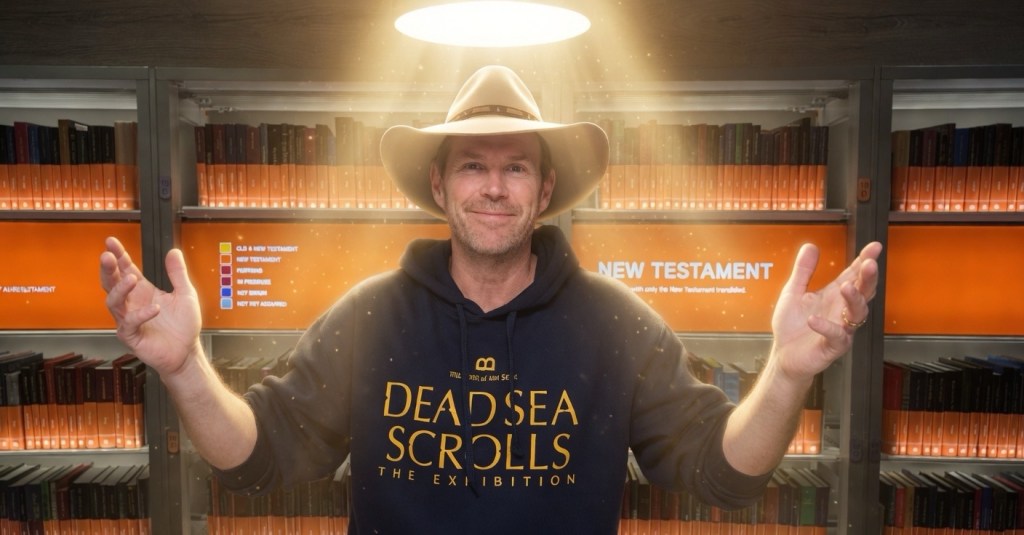
About the Author: Rich Hoffman
Rich Hoffman is an aerospace executive, political strategist, systems thinker, and independent researcher of ancient history, the paranormal, and the Dead Sea Scrolls tradition. His life in high‑stakes manufacturing, high‑level politics, and cross‑functional crisis management gives him a field‑tested understanding of power — both human and unseen.
He has advised candidates, executives, and public leaders, while conducting deep, hands‑on exploration of archaeological and supernatural hotspots across the world.
Hoffman writes with the credibility of a problem-solver, the curiosity of an archaeologist, and the courage of a frontline witness who has gone to very scary places and reported what lurked there. Hoffman has authored books including The Symposium of Justice, The Gunfighter’s Guide to Business, and Tail of the Dragon, often exploring themes of freedom, individual will, and societal structures through a lens influenced by philosophy (e.g., Nietzschean overman concepts) and current events

