

I stood outside Mustang Sally’s in the Liberty Center shopping complex (now closed), my neighborhood in Liberty Township, minding my own business in my cowboy hat and the way I’ve dressed for decades in Butler County, when a couple approached me. They had moved from the East Coast, via New Hampshire, to our area with certain expectations. They weren’t happy. Their comments made it clear they wanted to reshape this place into something more like where they came from. My response was direct: You moved into my backyard and brought your garbage with you, expecting the region to bend to your liking. You left a place you helped mess up, and now you want to import the same problems here. You don’t like the Bible belts, the cowboy hats, or the people who still go to church on Sundays with Christian origins. Do you really expect to show up and change everything overnight?
That encounter lingered with me, not because it was unique—I get recognized from my videos, blog, and activism against the Lakota levies—but because it tied directly into the themes I’ve been exploring in my book The Politics of Heaven. Human sacrifice has always been a recurring temptation for humanity, a way to appease false gods in pursuit of power, prosperity, or protection. This came sharply into focus during graduation season, the rituals in which parents parade their children as offerings to the modern altars of secular success. I’m not particularly fond of these ceremonies; too often, they reveal parents who have done a poor job raising resilient children in a world that demands conformity to destructive ideologies. To understand this, we must go back to the Bible, to the days after King Solomon, when the seeds of betrayal bore bitter fruit.
King Solomon, for all his wisdom and the glory of the First Temple, failed spectacularly. He had hundreds of wives and concubines from foreign nations, each bringing their gods—Ashtoreth, Molech, Chemosh—and he built high places for them. Yahweh, the God of his father David, was provoked to anger. The kingdom would be torn apart after his death, and his descendants would inherit the consequences. Fast-forward roughly 200 years to the reign of Ahaz, king of Judah, a direct descendant of that troubled line. Second Chronicles 28:3 tells us plainly: “He burned sacrifices in the Valley of Ben Hinnom and sacrificed his children in the fire, engaging in the detestable practices of the nations the Lord had driven out before the Israelites.”
This wasn’t a minor slip. Ahaz walked in the ways of the kings of Israel, making molded images for the Baals. He sacrificed and burned incense on high places, hills, and under every green tree. In his distress, he grew more unfaithful, turning to the gods of Damascus that had defeated him, reasoning that if they helped his enemies, they might help him. He shut the doors of the Temple in Jerusalem and set up altars everywhere. The Chronicler emphasizes the depth of this apostasy: Ahaz burned his sons—plural—in the fire according to the abominations of the nations Yahweh had cast out. This was Molech worship, the fiery offering of children in the Tophet of the Hinnom Valley, later called Gehenna, a place of judgment.
Archaeology confirms the horror. Sites across the ancient Near East, from Canaanite high places at Gezer with infant bones in jars beneath standing stones, to the vast Tophets of Carthage (a Phoenician colony with Canaanite roots), reveal urns filled with burned child remains, often dedicated to Baal-Hammon or Tanit. Estimates suggest thousands of such sacrifices over centuries. Classical writers like Diodorus Siculus described bronze statues where children were placed and rolled into flames, with drums beating to drown out the screams so parents wouldn’t relent. The Bible’s condemnation in Leviticus 18:21, Deuteronomy 12:31, Jeremiah 7:31, and elsewhere aligns with this evidence. Yahweh had driven out the Canaanites precisely because of these practices—the land “vomited them out.” Yet Israel repeatedly fell into the same pit.
In the time of Ahaz, about two centuries after Solomon’s peak, the First Temple still stood, a visible reminder of David’s purchase of the threshing floor and the covenant. Yet Judah’s king, with all the advantages of that heritage, chose Molech over Yahweh. He sacrificed his own children—flesh and blood—to secure political advantage, rain, victory, or prosperity. The priests beat drums to mask the cries. This wasn’t abstract theology; it was a direct betrayal of the God who demanded justice, not the blood of innocents. Ezekiel and Jeremiah later railed against similar abominations in the Valley of Hinnom, where people built high places to Baal and burned sons and daughters.
I see the same pattern today in what I call the “Lego moms”—those levy supporters with their uniform, block-like conformity, who confront people like me for wearing a cowboy hat or standing against higher property taxes for public schools. They move here from places they’ve ruined, expecting Butler County’s Bible-belt roots to yield. At graduation ceremonies, they beam with pride as their children are sent off to woke institutions, sacrificing them on the altars of liberal causes, corporate conformity, pronouns, and careerism. “Where’s your kid going to school?” they ask, as if the choice of secular university is a burnt offering for future success. These parents, often in their 40s and 50s, resent the very children who “hold them back,” trading family for social approval and hedge-fund portfolios.
This is modern child sacrifice, not with literal flames but with the slow burn of indoctrination. Abortion, too, fits the pattern—millions offered up for convenience, autonomy, or economic “luck.” Democrats and progressives advocate policies that treat children as obstacles to personal fulfillment. Just as Ahaz hoped Molech would deliver victory, today’s secularists sacrifice the next generation to the gods of climate alarmism, gender ideology, and big government. Public schools become free babysitting services funded by property taxes, turning children into wards of the state while parents pursue careers. I’ve said it before: many parents don’t love their children more than Ahaz loved his. They send pretty little girls and boys to the “meat market” of liberal campuses, where they learn to hate their heritage and conform or perish.
My own experiences in the 1990s living on UC’s campus during the Clinton years showed the early creep of this. It wasn’t as extreme then, but the trajectory was clear. Now, it’s full-blown. These Lego types despise the Bible because it judges them. Second Chronicles 28 provides the reference point for righteous anger against such evil. Yahweh condemned it because He values life, covenant, and moral order—not the appeasement of demons through innocent blood. The prophets tied this to spiritual adultery, just as Solomon’s foreign wives led him astray.
Expanding on the biblical context, the temptation was immense. Before the full revelation of the Torah as we know it, the ancient Near East teemed with gods. Baal, the storm god, demanded loyalty through fertility rites and sometimes blood. Molech (or Milcom of the Ammonites) was particularly associated with child sacrifice for protection or prosperity. Kings like Ahaz, facing military threats from Aram and Israel, panicked and offered what was most precious—their offspring. This mirrored practices among the Phoenicians, Carthaginians, and even farther afield. In the Americas, the Mississippian culture at Cahokia, near modern St. Louis, featured massive earthen pyramids and evidence of ritual sacrifice, including dozens of young women buried with elites in Mound 72. Aztec, Maya, and other indigenous groups practiced heart extraction and other offerings on a grand scale. Trade networks may have linked these ideas across continents. My old screenplay, The Lost Cannibals of Cahokia, explored this, drawing on real archaeology of the mounds that rivaled European cities in scale.
Native American cultures, often romanticized today, shared these ritual elements—burials with retainers, possible foundation sacrifices. The Bible’s command to conquer Canaan wasn’t arbitrary; it targeted a society steeped in such evil to prevent its spread. Yet Israel’s failure shows how seductive it is. Even after the Temple’s destruction and exile, echoes persisted. In the Middle Ages, burnings at the stake during the Reformation carried ritualistic overtones, sometimes tied to power struggles between kings and popes, much like Solomon’s wives influencing policy. Thomas More’s execution comes to mind—resistance to the new order met with fiery judgment.
In our time, the drums still beat to drown dissent. Media, academia, and government celebrate “Pride” and “choice” while parents cheer their children’s transition or ideological capture. The same people who sneer at Bible-thumpers and cowboy hats push levies that raise taxes for more indoctrination. They moved to Ohio’s suburbs expecting to import coastal progressivism, then get angry when locals resist. I despise this weakness. As I’ve written in The Gunfighter’s Guide to Business, true strength comes from imposing will on chaos with discipline, not sacrificing the future for short-term gains. Trump’s approach with his own children—high standards, no nonsense—contrasts sharply with the sacrificial failures of figures like Hunter Biden or the ideological offspring of elite Democrats.
The spiritual warfare is clear. The Politics of Heaven delves into Nephilim, divine rebellion, and how ancient conspiracies echo today. Population agendas, occult influences in media—from 1950s family themes to later hedonism and Crowley-inspired chaos—all serve the same anti-human forces. Graduation ceremonies become pageants of pride in sacrifice: “Aren’t you proud? We’re sending ours to the best (woke) schools.” Meanwhile, resilient families teaching morality, history, and faith get labeled anti-child for wanting better.
Archaeological and historical studies reinforce the Bible. Excavations at Gezer, Carthage’s Tophet (with up to 20,000 urns), and biblical sites show burned infant remains tied to vows for divine favor. Scholars like Patricia Smith analyzed teeth to confirm age and ritual context. The practice wasn’t rare or exaggerated propaganda; it was systemic until reformers like Josiah purged the Tophet. Yet it recurs because humans crave control over the unknown through blood offerings.
I’ve confronted these dynamics locally in Butler County—in Lakota schools, commissioner races, and tax fights. The Lego levy supporters embody the spirit of Ahaz: willing to burn the next generation for perceived advantage. They resent traditional symbols because they expose the guilt. The Bible offers judgment and hope. Hezekiah, Ahaz’s son, reversed much of the damage, reopening the Temple. Repentance is possible, but it requires rejecting the false gods.
Footnotes
1. 2 Chronicles 28:3 (NIV).
2. Commentary on Ahaz’s reign, Enduring Word Bible Commentary.
3. Archaeological reports on Canaanite Tophets, Biblical Archaeology Review.
4. Diodorus Siculus on Carthaginian practices.
5. Excavations at Cahokia Mounds, National Park Service, and related studies.
6. Leviticus 18:21; Deuteronomy 12:31.
7. Jeremiah 7:31; 32:35.
8. Personal reflections on local politics and graduations in Butler County, Ohio.
9. The Gunfighter’s Guide to Business by Rich Hoffman.
10. Studies on Molech worship by John Day and others.
Bibliography
• The Holy Bible, New International Version.
• Dearman, J. Andrew. “The Tophet in Jerusalem.” Journal of Northwest Semitic Languages.
• Heider, George C. The Cult of Molek. JSOT Supplement Series.
• Smith, Patricia. “Infants Sacrificed? The Tale Teeth Tell.” Biblical Archaeology Review.
• Stager, Lawrence E., and Samuel R. Wolff. “Child Sacrifice at Carthage.” Biblical Archaeology Review.
• Tatlock, Jason. Child Sacrifice in the Ancient Near and Middle East. Oxford University Press.
• Various archaeological reports on Gezer, Carthage, and Cahokia.
• Hoffman, Rich. The Politics of Heaven (manuscript) and blog/podcast archives.
• Additional sources from Biblical Archaeology Review, ASOR publications, and historical texts on Phoenician and Mississippian cultures.
Rich Hoffman
More about me
Click Here to Protect Yourself with Second Call Defense https://www.secondcalldefense.org/?affiliate=20707
About the Author: Rich Hoffman
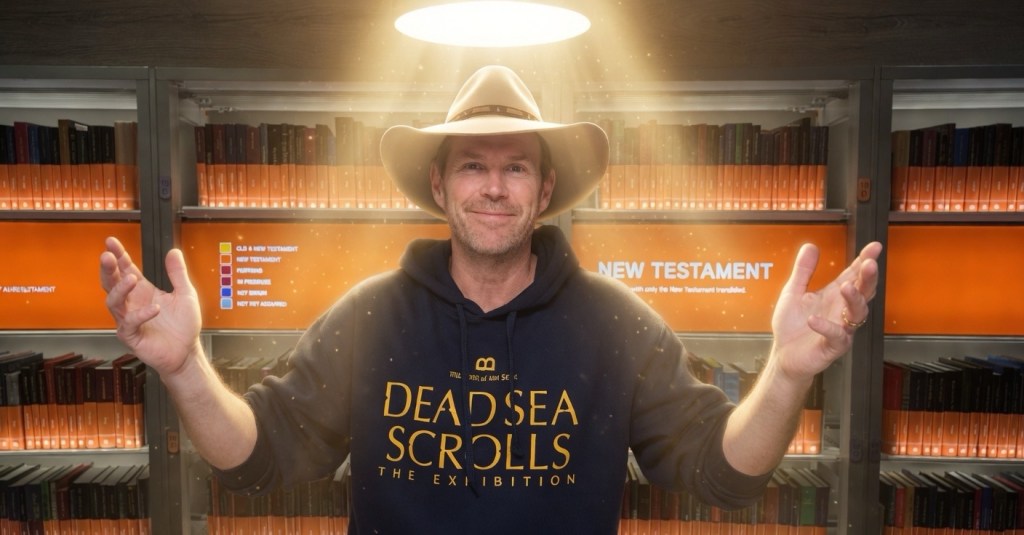
Rich Hoffman is an author, political consultant, and strategic advisor based in Cincinnati, Ohio, and the creator of The Politics of Heaven—a unique framework that connects biblical theology, ancient history, and modern power structures to explain how moral alignment and spiritual forces shape global events. Blending real-world political experience with deep research into archaeology, UFO phenomena, and suppressed historical narratives, Hoffman offers compelling commentary on topics ranging from ancient civilizations and the Dead Sea Scrolls to modern populist movements, paranormal continuity, and leadership strategy in chaotic environments. As the author of The Gunfighter’s Guide to Business and the forthcoming Politics of Heaven, he brings a grounded yet provocative voice to media discussions, supported by firsthand experiences and a cross-disciplinary approach that bridges science, history, and theology. For interviews, speaking engagements, or expert analysis, visit richhoffmanbooks.com or contact directly via phone at 513-307-5815 or email at rhoffman@richhoffmanbooks.com. If you’ve seen the movie, Disclosure Day and want to talk about it and the implications of Presidnet Trump’s UAP disclosures, let me know and we can bring some color to your coverage. https://richhoffmanbooks.com/media-inquiries-broadcast-topics-and-contact-info/?frame-nonce=ad51e7ecba I do have a firsthand UFO encounter to discuss.

