

I just got back from a family trip that turned into one of those unexpected journeys where you set out thinking one thing and come away with something far deeper. We headed out to The Wilds in southeastern Ohio, that remarkable conservation center and safari-style wildlife park built on what used to be strip-mined land. I love zoos and conservation efforts in the right way—the kind that actually preserves species and land while recognizing that humans are part of the picture, not some parasitic afterthought. What I didn’t fully expect was how a side trip just south of there to see the remnants of the Big Muskie would crystallize so many thoughts I’ve been carrying about energy, innovation, capitalism, and the way the political left has twisted conservation into something that often works against human flourishing.
The Wilds sits on nearly ten thousand acres of reclaimed surface-mined land in Muskingum County, near Cumberland. It opened to the public in 1994 after the Central Ohio Coal Company, a subsidiary of American Electric Power (AEP), donated over 9,000 acres to the International Center for the Preservation of Wild Animals. That gift, combined with the reclamation work already underway, transformed what had been an industrial extraction site into one of North America’s largest conservation centers. We stayed right there at the new Hellbender RV Campground at The Wilds—beautiful sites on that same land that once fed coal into the power grid. From the campground, you can head into the park proper and experience open-air safaris rolling through habitats where giraffes, rhinoceroses, cheetahs, and other species roam across rolling terrain that, in its own way, echoes the African Serengeti. The landscape doesn’t look like the steep Allegheny foothills that were here before mining; the stripping and reclamation flattened and reshaped sections into wide, grassy vistas perfect for large herbivores. It’s not the exact ecology that existed pre-mining, but it’s productive, beautiful, and teeming with life in ways that serve conservation science and education every single day.
One afternoon, we drove the short distance south to Miner’s Memorial Park to see the Big Muskie bucket—the last major remnant of what was once the largest dragline excavator ever built. Standing there, walking inside that colossal bucket, touching the steel that once clawed through hundreds of feet of overburden, you can’t help but feel the scale of human ingenuity. The machine itself, officially a Bucyrus-Erie 4250-W, stood nearly twenty-two stories tall, weighed around thirteen and a half thousand tons, and swung a 220-cubic-yard bucket capable of lifting 325 tons of earth and rock in a single bite. The bucket alone is the size of a twelve-car garage or easily two full-size buses side by side. When it operated from 1969 to 1991, Big Muskie moved more than 483 million cubic yards of material, revealing high-sulfur coal seams that powered Ohio homes, industries, and the broader grid through plants like the Muskingum River Generating Station. It walked on massive shoes, its boom stretching over three hundred feet, built on site because nothing that big could be transported whole. Twenty-four hours a day, three hundred sixty-four days a year, it did the work that surface mining made possible—safer in many respects than sending men deep underground into the old room-and-pillar mines, and efficient enough to supply the energy that built modern Ohio.
I grew up in the seventies and eighties, hearing the news coverage of strip mining in Ohio. It was always framed as an environmental catastrophe—radical voices and mainstream outlets alike talking about the “rape of the land,” the destruction of precious topsoil, acid mine drainage polluting streams, and corporate greed tearing up the earth for profit. Central Ohio was a focal point of that conversation. You couldn’t miss it. The narrative was clear: this was primitive, destructive, something that enlightened environmental regulation would eventually rein in and correct. And regulation did come—the federal Surface Mining Control and Reclamation Act of 1977 imposed new standards for contouring, topsoil replacement, and revegetation. I’m not against sensible environmental protections. What concerns me is when those protections become a vehicle for anti-capitalist ideology that ignores the human benefits of energy production and pretends that the companies doing the actual work weren’t already innovating reclamation methods long before politicians and bureaucrats showed up to take credit or impose penalties.
Because here’s what you see when you stand at the Big Muskie bucket and then drive back to The Wilds: the power company that operated the machine also owned vast stretches of the land. They extracted the coal—formed over three hundred million years in ancient swamps and forests—and turned it into usable energy that lit homes, ran factories, and powered the machines that built the modern world. Then they participated in turning the worked-out land into something new and valuable. The Wilds exists in large part because of that private-sector decision to donate thousands of acres rather than walk away or fight endless legal battles. The reclamation wasn’t just compliance; it became an opportunity. What had been stripped to fuel progress was reshaped into a world-class center for wildlife conservation, research, and public education. You can sit at the Overlook Cafe or Terrace Grill at The Wilds, look out over the valley at giraffes and rhinos moving through grasslands that mining and reclamation made possible, and eat a good meal with running water and modern conveniences while the animals graze below. Try doing that with a picnic basket on raw, unrestored ground in the middle of nowhere and tell me which approach actually serves both people and wildlife better.
That contrast hit me hard. The same companies the political left loves to demonize as destroyers of the planet were the ones who made The Wilds possible. AEP’s Central Ohio Coal Company didn’t just comply with later regulations; they were already engaged in preservation and restoration efforts. The environmental movement often attaches itself to these stories after the fact, claiming moral victory while ignoring that the capital, the engineering, and the willingness to take risks came from the private sector. Without the coal extraction that powered Ohio’s growth, without the wealth created by that enterprise, there would have been far less capacity to fund or even imagine large-scale conservation projects like this one. It’s the classic pattern: innovators and producers do the hard work, create the surplus, and then the critics arrive to regulate, tax, and re-narrate history as a story of exploitation that only enlightened government could fix.
I thought about that same dynamic when we talk about today’s energy battles, particularly around nuclear power in Ohio. The two plants—Davis-Besse near Toledo and Perry near Cleveland—have long been critical to the state’s grid. I’ve heard the numbers bandied about; depending on the year and how you count, they contribute a substantial share of reliable baseload power, something in the range of ten to perhaps fifteen percent or more of Ohio’s electricity at times, and historically more when coal was dominant. The exact percentage varies in conversation, but the point is that they matter enormously for grid stability. In a state where natural gas now supplies roughly half or more of generation and coal has fallen sharply from its peak, nuclear provides the steady, high-capacity-factor power that intermittent sources can’t match. Yet for years we’ve watched political attacks from the Obama and Biden eras—subsidies fights, regulatory pressure, public narratives framing nuclear as dangerous or unnecessary—while the same voices rarely offer a credible, scalable replacement that keeps the lights on and the economy growing. It’s the Big Muskie story all over again: paint the producers as villains, ignore the benefits ordinary people receive every time they flip a switch or charge a device, and push policies that ultimately raise costs or reduce reliability for everyone, especially working families.
You see the same pattern in how the left approaches energy restriction as a tool of control. Whether it’s coal in the seventies or nuclear today, the rhetoric is that these things are existential threats to the planet and that only by limiting human access to abundant, affordable energy can we “save” the Earth. But energy is what lifts the burden of labor from human beings. A person hauling water by hand all day isn’t freer or more virtuous than one who turns a tap and uses the saved time to build, create, or rest. Electricity powers the data centers, training the AI models that will transform medicine, logistics, and discovery. It powers the factories, hospitals, schools, and farms that feed billions. The notion that we should all retreat to some primitive campfire existence—sitting around telling stories about pagan gods while the productive capacity of civilization withers—isn’t conservation; it’s a recipe for poverty and stagnation dressed up as virtue. The environmental movement has deep strains of this anti-human thinking, sometimes explicit in population-control rhetoric or degrowth economics that treat human ingenuity and consumption as the problem rather than the solution.
Standing inside that Big Muskie bucket puts it in perspective. That machine represented the best engineering of its era applied to the problem of extracting energy from the ground efficiently and at scale. It wasn’t pretty. It changed the landscape. But it also delivered the energy that made post-war Ohio prosperous, that kept factories running, that let families in Middletown and across the state live with lights, refrigeration, and opportunity their grandparents could only dream of. The coal it uncovered took three hundred million years to form; we used it in decades to build a civilization. Then the same enterprise that did the extracting turned around and helped create The Wilds on the worked land. That’s not destruction followed by cosmetic repair. That’s productive use followed by genuine restoration and the creation of new value. It’s what real conservation looks like when it’s driven by people who understand both the land and the ledger.
I kept coming back to the parallel with the fight over slavery in this country. Republicans led the effort to abolish it, at enormous cost in blood and treasure, while many Democrats and the broader establishment either defended the institution or dragged their feet. After the war, it was Republicans who pushed the early civil rights amendments and enforcement. Yet somewhere along the line, the narrative flipped, and today the party that fought to end slavery is often painted as the problem while the party whose members founded the KKK and enforced Jim Crow for generations gets to claim the moral high ground on race. The pattern repeats with energy and conservation. The companies and workers who built the power grid, engineered machines like Big Muskie, extracted the resources that industrialized the nation, and then reclaimed the land for new uses—these are treated as villains. The activists and politicians who arrived later, often with no skin in the game and plenty of opportunity for moral posturing, get to define “environmentalism” as whatever restricts the producers. It’s the same rhetorical capture, and it serves the same underlying goal: concentrating power in institutions that claim to speak for the Earth while actually limiting human potential.
At The Wilds, you see the better path. Capital enterprise created the wealth and the technology. It extracted the resource that powered progress. It then donated the land and supported the transformation into a living classroom for conservation science. The restaurant with the view, the safari vehicles, the research programs, the campground where families like mine can stay on the very ground that once fed coal into the grid—all of it exists because someone took the risk, did the work, made the profit, and then chose to leave the place better in meaningful ways. The strip mining didn’t “destroy” the land in any permanent sense; it changed it, and human ingenuity changed it again into something that now supports species that never lived here naturally in these numbers. That’s the story of civilization itself: we impose order and purpose on raw nature, we extract what we need to thrive, and when we’re at our best, we restore and improve rather than consume and abandon.
I think about my own work and the themes in The Gunfighter’s Guide to Business—the idea that you impose your will on circumstances rather than waiting for perfect conditions, that resilience and disciplined action turn challenges into advantages. The men who ran Big Muskie didn’t have the luxury of modern environmental impact statements or endless public comment periods. They had a job to do: get the coal out safely and efficiently to keep the power flowing. They did it with machines that still boggle the mind. Then the next generation of the same enterprise looked at the worked land and saw not a scar but an opportunity for something new. That’s the gunfighter spirit applied to energy and land use. You don’t retreat from the necessary work because critics call it ugly. You do it well, you do it responsibly within reason, and you leave the place positioned for the next chapter.
Visiting both sites in the same trip—the living conservation success at The Wilds and the monumental tool that helped create the conditions for it—ought to be required for anyone who wants to have an informed opinion about energy policy in this country. You can’t stand inside that bucket, read the history of how much earth it moved and how much power it ultimately enabled, then walk the safari trails where rhinos and giraffes now graze on reclaimed ground, and still believe the simple story that extraction equals destruction and only government regulators plus activists equal salvation. The truth is more interesting and more hopeful. Human beings using reason, capital, and engineering solved the problem of energy scarcity that had kept our ancestors poor and short-lived. Along the way, we made mistakes, as every generation does. But we also built the surplus that lets us fund conservation at scales that previous societies could never have imagined. The Wilds is proof of that. The Big Muskie bucket is proof of the tool that made part of it possible.
We’re in a moment right now where the same arguments are playing out over nuclear power, over natural gas development, over any serious attempt to expand reliable generation to meet the exploding demands of AI data centers and electrification. The political left still reaches for the same rhetorical weapons: portray the producers as greedy or reckless, emphasize risks while downplaying benefits, offer no realistic replacement that maintains or increases living standards, and treat any expansion of human productive capacity as inherently suspect. It’s the Big Muskie fight with better public relations. The companies that actually keep the grid running—whether legacy coal operators that have reclaimed land or the nuclear fleet that provides steady power—are doing the real work. The activists protesting outside are often performing for an audience that has never had to keep the lights on for millions of people or balance a multi-billion-dollar capital investment against regulatory uncertainty.
I came away from this trip more convinced than ever that the path forward isn’t to demonize the enterprises that built our energy foundation or to pretend that conservation requires halting human progress. It’s to recognize that the best conservation often flows from the same innovative, risk-taking, profit-seeking institutions that extract resources productively in the first place. The Wilds wouldn’t exist without the coal mining that preceded it. The power that lets us enjoy air-conditioned homes, smartphones, and yes, even the electric vehicles some environmentalists champion, comes from somewhere. Right now, a significant portion of that, somewhere in Ohio, includes the steady output of our nuclear plants. We should be building more of that kind of reliable, high-density energy, not tearing it down under the guise of protecting a planet that has survived far worse than human industry and will continue long after our current debates are forgotten.
If you ever find yourself in southeastern Ohio, do what we did. Spend a few days at Hellbender Campground or one of the other lodging options at The Wilds. Take the open-air safari and watch animals that have no business being in Ohio thriving on land that mining and reclamation made suitable for them. Then drive south a short way to Miner’s Memorial Park and stand inside the Big Muskie bucket. Touch the steel. Imagine the machine walking across the landscape, the bucket biting into the earth, the coal coming out to feed the boilers that kept the grid alive. Talk to the exhibits about the workers who ran it and the land that came after. Then go back to The Wilds and have lunch at the overlook with a view of the valley. You’ll see, as I did, that the story of energy in America isn’t a simple morality play of villains and heroes. It’s the story of human beings using their minds and their tools to turn raw materials into civilization, and then, at our best, using the surplus to restore and improve what we touched.
That trip reminded me why I keep returning to these themes in my writing and podcast. The battles over energy, over land use, over what counts as “conservation”—they’re never just about science or engineering. They’re about whether we believe human beings have the right and the capacity to shape the world productively, or whether we accept a vision that treats us as a problem to be managed and reduced. The Big Muskie and The Wilds together make the case for the former. They show what free people and free enterprise can accomplish when they’re allowed to work, to risk, to profit, and to give back in ways that actually endure. Everything else is commentary.
If you’ve read The Gunfighter’s Guide to Business, you know the mindset I’m talking about—imposing order and purpose on circumstances rather than surrendering to them. That’s what built the machine, that’s what powered the grid, and that’s what turned a mined landscape into a living conservation success. We need more of that spirit, not less. The age of disclosure is here, and understanding the politics of heaven—the deeper forces behind the attacks on human energy and human life—matters more than ever. But for today, see the bucket and the park. Stand where the work was done and where the restoration happened. You’ll come away with a clearer head and a stronger conviction that the future belongs to those who build, not those who merely protest.
Footnotes
1. Specifications and operational history of Big Muskie drawn from contemporary engineering records and historical summaries maintained by the Ohio Department of Natural Resources at Miner’s Memorial Park.
2. Details on the land gift from Central Ohio Coal Company (AEP subsidiary) to the International Center for the Preservation of Wild Animals and the subsequent development of The Wilds come from the official history published on thewilds.org.
3. Ohio electricity generation mix data for recent years (natural gas dominant at approximately 50-59%, coal around 20-22%, nuclear from the two plants contributing roughly 10-13% of net generation) sourced from the U.S. Energy Information Administration state analysis and related reports covering the 2024-2026 periods.
4. Bucket capacity, machine weight, boom length, and total material moved by Big Muskie confirmed across multiple engineering and historical sources, including Bucyrus-Erie records and Ohio historical markers.
5. Description of current visitor experience at the Big Muskie bucket exhibit, including ability to stand inside the 220-cubic-yard bucket, based on Ohio State Parks and Ohio DNR public information as of 2025-2026.
6. Information on Hellbender RV Campground at The Wilds, its location on reclaimed land, and amenities, including safari discounts, from the official The Wilds website and 2025-2026 opening announcements.
7. Dining options at The Wilds (Overlook Cafe / Terrace Grill) with views over animal habitats confirmed via official site descriptions of food service and visitor experiences.
8. Broader context on surface mining reclamation practices pre- and post-1977 SMCRA, and the role of private land donation in creating large conservation areas, drawn from Ohio coal industry historical analyses and The Wilds timeline.
9. Recent developments regarding power purchase agreements for Ohio nuclear plants (Davis-Besse and Perry) supporting AI/data center demand, including Meta agreements announced in 2026, reported in industry and local news sources.
10. Philosophical and historical parallels regarding narratives around energy production, conservation, and political rhetoric are interpretive commentary grounded in the observable outcomes at the sites visited and long-term patterns in U.S. energy and environmental policy debates.
Bibliography
• “Big Muskie.” Wikipedia. Accessed 2026. https://en.wikipedia.org/wiki/Big_Muskie (overview of specifications, history, and connection to The Wilds).
• Ohio Department of Natural Resources. “Miner’s Memorial Park & Big Muskie’s Bucket.” ohiodnr.gov. Detailed visitor information and historical markers on the machine and reclamation.
• The Wilds. “History.” thewilds.org/history. Official timeline, including the land gift from Central Ohio Coal Company and the transformation of the mined land.
• U.S. Energy Information Administration. “Ohio – State Energy Profile Analysis.” eia.gov/states/OH/analysis. 2024-2026 data on electricity generation mix, nuclear contribution, natural gas, and coal shares.
• Ohio State Parks / Ohio DNR. Social media and site posts regarding the Big Muskie bucket as a tourist attraction and an engineering landmark (2025).
• The Wilds. “Hellbender RV Campground.” thewilds.org/hellbender-rv-campground. Details on the new campground on reclaimed land and visitor offerings.
• The Wilds. “Food and Shopping.” thewilds.org/food-and-shops. Descriptions of Overlook Cafe and Terrace Grill with habitat views.
• Various contemporary reports on AEP / Central Ohio Coal Company operations and reclamation achievements, including historical coal industry studies from the Ohio Department of Natural Resources.
• Industry announcements regarding Vistra / Energy Harbor nuclear plants and 2026 power purchase agreements with Meta for Ohio nuclear output supporting data centers.
• Historical context on Surface Mining Control and Reclamation Act (SMCRA) of 1977 and its implementation in Ohio coal regions, drawn from state and federal regulatory histories.
This essay reflects my direct observations from the family trip, historical research, and long-standing convictions about energy, innovation, and the proper relationship between human enterprise and conservation. The views expressed are my own, grounded in what I saw on the ground and in what the record shows actually works.
Rich Hoffman
More about me
Click Here to Protect Yourself with Second Call Defense https://www.secondcalldefense.org/?affiliate=20707
About the Author: Rich Hoffman
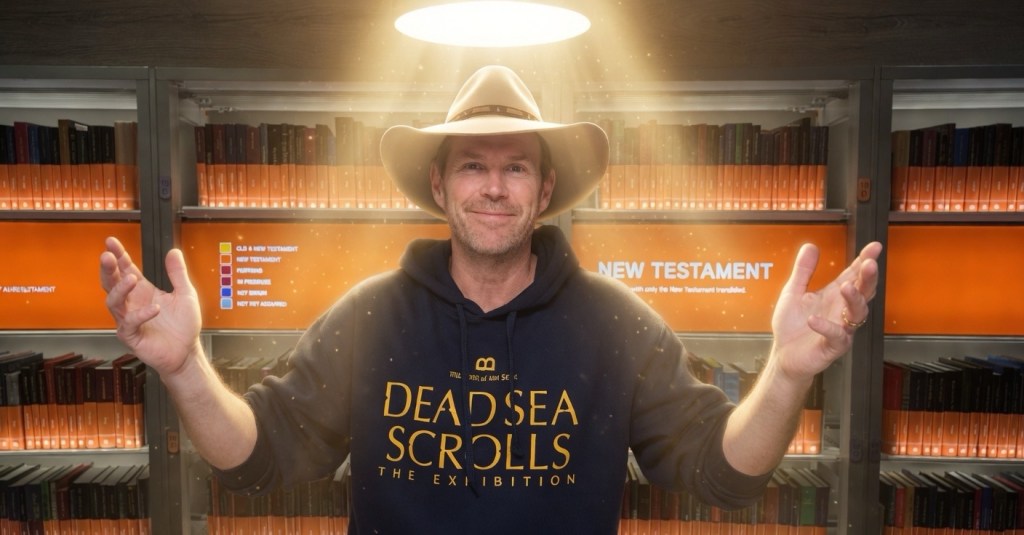
Rich Hoffman is an author, political consultant, and strategic advisor based in Cincinnati, Ohio, and the creator of The Politics of Heaven—a unique framework that connects biblical theology, ancient history, and modern power structures to explain how moral alignment and spiritual forces shape global events. Blending real-world political experience with deep research into archaeology, UFO phenomena, and suppressed historical narratives, Hoffman offers compelling commentary on topics ranging from ancient civilizations and the Dead Sea Scrolls to modern populist movements, paranormal continuity, and leadership strategy in chaotic environments. As the author of The Gunfighter’s Guide to Business and the forthcoming Politics of Heaven, he brings a grounded yet provocative voice to media discussions, supported by firsthand experiences and a cross-disciplinary approach that bridges science, history, and theology. For interviews, speaking engagements, or expert analysis, visit richhoffmanbooks.com or contact directly via phone at 513-307-5815 or email at rhoffman@richhoffmanbooks.com. If you’ve seen the movie, Disclosure Day and want to talk about it and the implications of Presidnet Trump’s UAP disclosures, let me know and we can bring some color to your coverage. https://richhoffmanbooks.com/media-inquiries-broadcast-topics-and-contact-info/?frame-nonce=ad51e7ecba I do have a firsthand UFO encounter to discuss.

