I have always lived with one foot in the ordinary world of aerospace program management, local Ohio politics, family life along the Great Miami River in Butler County, and the other in the deeper currents of history, archaeology, and the unexplained. Growing up in the Cincinnati area, my family in the 1970s was already investigating strange lights in the sky and odd occurrences that didn’t fit neatly into everyday explanations. Those early experiences planted seeds that would later bloom into serious inquiry. I have never claimed to have been abducted or to have lived through anything as dramatic as the portrayal of Travis Walton’s ordeal in Fire in the Sky. My encounters have been subtler, more provocative, and in one memorable case, downright infuriating in their precision and timing.
One such encounter stands out, not just because of what I saw firsthand in earlier instances, but also because of how it unfolded in response to something I said publicly. A couple of years ago, amid ongoing discussions about government transparency, surveillance, and the lingering shadows of the COVID era, I recorded a video. In it, I dared whatever forces—whether extraterrestrial, interdimensional, or black-budget human technology—might be listening to show themselves right there in my backyard of Butler County, Ohio. I pointed to a specific spot in the sky near Middletown. I wasn’t expecting fireworks or a close encounter of the third kind. I was making a point about power, information, and the dangers of hidden knowledge wielded by institutions that demand trust while offering none in return.
A few days later, a ring of bright green lights appeared in the night sky in that vicinity. Multiple residents captured video around 10:30 or 11 p.m. The lights rotated, hovered, then shot off with impossible speed. People stopped at stoplights, pulled out their phones, and filmed what appeared to be a circular formation moving counterclockwise before it vanished. Reports flooded local news: WCPO, WLWT, and others covered the strange rotating green lights over Middletown in Butler County. Witnesses described it as unlike any drone or conventional aircraft. Some called it frightening; others were fascinated. I wasn’t on site that night, but the proximity and timing were unmistakable.
This wasn’t my first brush with the phenomenon. I had witnessed other UFO activity years earlier, including one that left me genuinely angry at the audacity of it. But this particular event felt targeted. Given my political activity—my role as a vocal conservative voice in Butler County, my history with local issues like Lakota schools, tax fights, and broader America First advocacy—I have long assumed surveillance. Decades ago, in a previous neighborhood in Mason, Ohio, I confronted a drug ring operating too close to families. That brought FBI interviews and scrutiny that carried over for years. Local and federal eyes have been on me, my family, and my work. When you dare powers—visible or invisible—to reveal themselves while criticizing government overreach, you invite responses. Whether this was a genuine non-human craft, advanced human technology (perhaps reverse-engineered or projected), or something meant to rattle me, it landed with precision.
I took it as a message. Not the kind that turns you into Richard Dreyfuss piling dirt in the living room from Close Encounters of the Third Kind, but one that demands deeper reflection. I have visited Roswell. I have investigated the Mothman in Point Pleasant, West Virginia—right across the river from Ohio territory familiar to me. There, UFO sightings were rampant alongside the Mothman reports in the 1960s. John Keel’s The Mothman Prophecies (later a film with Richard Gere) details how lights in the sky, strange calls, and Men in Black phenomena intertwined with the creature sightings leading up to the Silver Bridge collapse. You cannot grapple with Mothman without confronting the UFO dimension. I went there for personal research, on a birthday trip no less, and came away convinced that these events form a pattern far older than modern disclosure narratives.
Watching Steven Spielberg’s Disclosure Day recently brought it all into sharper focus. Spielberg, who has fielded countless UFO stories from the public over decades while making films like Close Encounters, treats the subject with a humanistic lens. The movie explores ordinary people pushing back against secrecy. I found it compelling, even if some critics dismissed elements. It reminded me of my own journey. Spielberg has no personal UFO encounter, by his account, yet he has shaped public imagination on the topic. I have had them, and they propelled me to write.
My thoughts also turned to Indiana Jones and the Kingdom of the Crystal Skull. Many reviewers scoffed at the interdimensional beings, calling it the weakest entry. I saw sophistication in it. The film uses Indy to explore ancient alien influence on human civilization—archaeologists from another realm, imprints on societies, crystal skulls tied to Roswell-like events and portals. It gave popular culture the moral license to think seriously about these ideas. It opened doors for shows like Ancient Aliens. The Peruvian connections, snakes as symbols (echoing the Garden of Eden), and hidden-in-plain-sight craft at the end resonated. I dedicated a chapter in my book to serpentine imagery and interdimensional influences.
Broader Context: UFOs in Ohio and Butler County
Ohio has a rich history of sightings. The 1952 “Flatwoods Monster” event in nearby West Virginia involved a bright object and a strange entity. In 1994, Trumbull County saw police-chased lights. Middletown itself has a history of reports, including cigar-shaped objects. The 2023 green lights fit a pattern of rotating formations and rapid departures defying conventional explanation. Some dismissed it as a prank or drone, but the speed and multiple witnesses suggest more. Butler County’s location—near Wright-Patterson Air Force Base, long rumored in UFO lore for reverse-engineering—adds intrigue. Reverse-engineering Roswell tech? Congressional testimony and retired officials hint at it. I know enough insiders to take such claims seriously.
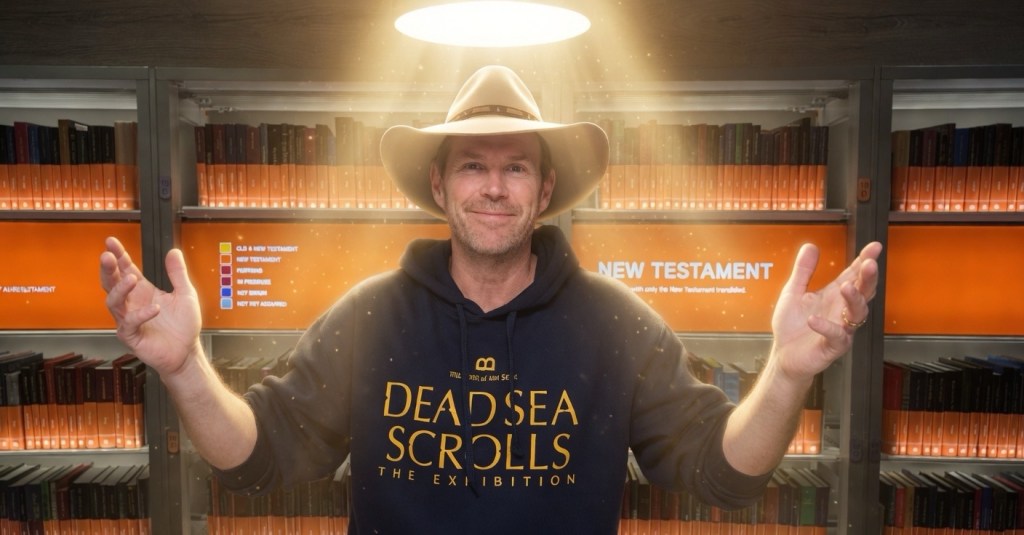
These aren’t new. Ancient texts, archaeology, and global myths describe sky beings, watchers, and technology influencing humanity. The Book of Enoch, Dead Sea Scrolls (which I viewed at the Museum of the Bible on my birthday), Nephilim, and giants speak to this. My book, The Politics of Heaven, dives into spiritual warfare, divine rebellion, population agendas, and the ways non-human intelligences have shaped history. Biblical conspiracies, demons, and interdimensional entities aren’t “crazy” when disclosure normalizes the conversation. Spielberg’s film and real events make mainstream what was once fringe.
Government, Power, and the Politics of Disclosure
I have built my life around self-reliance, discipline (symbolized by my whip iconography from my family’s Kentucky heritage), and skepticism toward centralized power. The UFO debate often serves as a pretext for more government authority: “Trust us to protect you from them.” Yet the same institutions lied about COVID, mandates, elections, and more. Black budgets, compartmentalized programs at places like Wright-Patterson, and associations with supernatural tech-seeking make the government threat more immediate than hypothetical aliens. If entities have visited since civilization’s dawn, then history makes more sense—temples, sacrifices, and beliefs born of observed phenomena.
My dare and the subsequent sighting felt like a ritual response. Call it out, and it appears. Whether it was a government projection (holographic or drone tech) to discredit me in political circles, actual craft, or something responding to frequency/intent, it happened. Proximity to my pointed location, in an area with patterns (Middletown, Monroe, West Chester), wasn’t a coincidence. It reinforced my view: information is power. Secrecy builds empires on lies. As a grand jury foreman, I saw institutional failures up close. Two-tier justice, surveillance of citizens like me—these are real.
I don’t fear aliens landing and applying for jobs (though I joked I’d hire hard workers who crossed interstellar distances). The real danger is unaccountable power using the phenomenon for control. My political consulting, school advocacy, and anti-tax work matter. Associating with “fringe” topics risks credibility, yet truth-seeking demands it. Overman philosophy—imposing will on chaos, as in model rocketry with my grandson in bad weather—applies here. Face the unknown with resilience.
Writing The Politics of Heaven
This encounter, revisited through Disclosure Day, crystallized my decision to finish the manuscript. I weave personal stories, including this one, with biblical archaeology, ancient civilizations (Axum, Britain BC, Windover bog people), giants, and modern spiritual warfare. Chapters explore how UFOs, interdimensional beings, and government secrecy intersect with heavenly politics. Reviewers call it wild, but grounded in my experiences and research. It answers questions Disclosure Day raises: What next? What does it mean for faith, power, and humanity?
Bibliography (Selected; expanded in full manuscript with footnotes)
• Keel, John A. The Mothman Prophecies. 1975. (Core text on Point Pleasant events, UFOs, and interconnected phenomena.)
• Spielberg, Steven, dir. Disclosure Day. Universal Pictures, 2026. (Film exploring disclosure and government secrecy.)
• Spielberg, Steven, dir. Indiana Jones and the Kingdom of the Crystal Skull. Paramount, 2008. (Interdimensional beings and ancient influences.)
Rich Hoffman is an author, political consultant, and strategic advisor based in Cincinnati, Ohio, and the creator of The Politics of Heaven—a unique framework that connects biblical theology, ancient history, and modern power structures to explain how moral alignment and spiritual forces shape global events. Blending real-world political experience with deep research into archaeology, UFO phenomena, and suppressed historical narratives, Hoffman offers compelling commentary on topics ranging from ancient civilizations and the Dead Sea Scrolls to modern populist movements, paranormal continuity, and leadership strategy in chaotic environments. As the author of The Gunfighter’s Guide to Business and the forthcoming Politics of Heaven, he brings a grounded yet provocative voice to media discussions, supported by firsthand experiences and a cross-disciplinary approach that bridges science, history, and theology. For interviews, speaking engagements, or expert analysis, visit richhoffmanbooks.com or contact directly via phone at 513-307-5815 or email at rhoffman@richhoffmanbooks.com. If you’ve seen the movie, Disclosure Day and want to talk about it and the implications of Presidnet Trump’s UAP disclosures, let me know and we can bring some color to your coverage. https://richhoffmanbooks.com/media-inquiries-broadcast-topics-and-contact-info/?frame-nonce=ad51e7ecba I do have a firsthand UFO encounter to discuss.
I have been talking about this for decades, going back to that fourth-grade speech on a big elementary school stage where I stood up and laid out everything I had read about UFOs and alien interactions with humanity. Most people thought I was crazy then, and even now, some look at me sideways when I bring it up. But the pattern has always been obvious to me: this is not merely about little green men or flying saucers in the sky. It is about raw power, control, and the systematic erasure of previous knowledge so that whatever new regime is in charge—whether a government administration, a corporate takeover, or a stepfather moving into a broken home—can claim to be the first and only legitimate authority.
I just finished my book The Politics of Heaven, which dives deep into this exact dynamic. The core argument is simple yet profound: advanced non-human intelligences have visited and interacted with Earth for millions of years. These beings, equipped with their own political orders and technologies that let them cross vast interstellar distances, have traded knowledge, labor, resources, and sometimes genetic material with human civilizations. Yet throughout history, those who seek to rule over us have worked tirelessly to suppress this reality. They do not want the public remembering “Larry”—the previous husband, the prior administration, the older gods or visitors—because acknowledging the past undermines their exclusive claim to power.
Think about the stepfather who enters a home after a divorce. It is never enough that he is now in the same bedroom with the mother that the kids once saw their real dad occupy. He changes the pictures on the walls, replaces the furniture, and hauls Dad’s Craftsman tools out of the garage to sell at a flea market. He forbids the children from talking about the old life. This is exactly how new regimes operate. A new CEO wipes away the legacy of the previous leader. A new administration erases the records and narratives of those who came before. Ancient priesthoods burned libraries and rewrote myths. Modern institutions discourage digging too deeply into American mounds, pyramids, or out-of-place artifacts because they want everyone focused on the current story—that their administration is the only one that has ever truly existed.
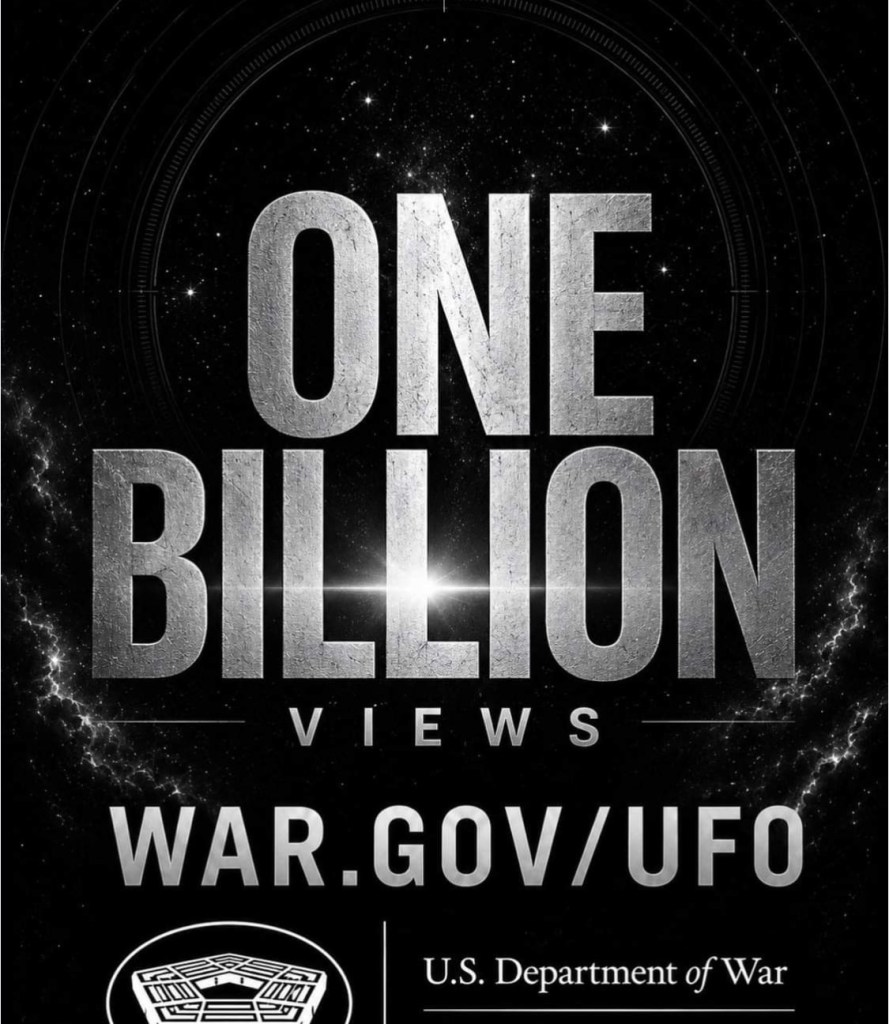
That is why the current disclosure wave feels so validating to me. In February 2026, President Trump directed federal agencies to begin declassifying evidence related to non-human intelligence through the Presidential Unsealing and Reporting System for UAP Encounters (PURSUE). There has been predictable pushback, but the information is flowing. The Pentagon has released multiple tranches of files, videos, and documents. The dedicated site has already surpassed one billion views worldwide. Jesse Watters on Fox News has covered it in primetime, featuring insiders like Dan Farah and Dr. Hal Puthoff discussing recovered non-human biologics. This is no longer fringe Coast to Coast AM territory. It is corporate media at 8 o’clock, talking seriously about four distinct alien species.
I have shared my book with top-level people who initially reacted with surprise—“You’re a serious person; what are you talking about?”—but the evidence has always been there for those willing to look past the stigma. For years, reading these accounts sounded “kooky” to many. Who believes in such things? Yet the pattern holds: these species have been interacting with civilizations for as long as humans have kept records. They appear in literature and myth under different names, but the core descriptions remain consistent. Now the conversation has shifted. People are no longer universally mocked for discussing it. There is a massive public hunger, which is why the disclosure site has drawn over a billion visitors. For some reason, that figure is controversial. As if people think it’s inflated. It comes straight off the website.
The four species that insiders and scientists have reported from crash retrieval programs stand out clearly. These are not my inventions; they come from credible figures with government and intelligence backgrounds. All are described as basically humanoid—two arms, two legs—but distinctly different in appearance and likely origin.
The Greys, often associated with the classic Roswell imagery, are typically three to four feet tall, with grey skin, large, hairless heads, oversized black, almond-shaped eyes, and minimal facial features. They have three or four fingers and are frequently linked to abduction accounts. Many connect them to the 1947 Roswell/Corona crash in New Mexico, where debris and bodies were reportedly recovered and studied.
The Nordics appear most human-like—tall, often six to seven feet, with fair skin, blond or light hair, and blue eyes, resembling Northern Europeans or Scandinavians. They come across as more diplomatic or benevolent in contactee reports. Their appearance may be designed to facilitate easier interaction with humans.
Reptilians, sometimes called reptiloids, are taller (six to eight feet), with scaly skin, occasional tails, and lizard-like features while maintaining an upright posture. They echo ancient serpent gods and dragon myths found in cultures worldwide. Some accounts suggest long-term influence on Earth’s power structures or underground bases.
Insectoids, or Mantids, resemble praying mantises in humanoid form: tall and thin, with large compound eyes, exoskeleton-like skin, and insectoid limbs. They often appear in high-strangeness cases as scientists or overseers. Their form can be unsettling to humans, yet they share the bipedal structure common to these visitors.
Insiders such as Dr. Hal Puthoff and Eric Davis have cited these four based on crash-retrieval data. Dozens of crafts and associated biologics have reportedly been recovered over the decades. The technology pulled from these sites—advanced materials, propulsion systems, and electronics—appears to have been reverse-engineered and seeded into our society, especially after 1947. Many breakthroughs in the modern era seem to have come from nowhere. This fits the long pattern of trade: humans offering labor, resources, or scientific materials in exchange for knowledge such as metallurgy, agriculture, or tool-making.
This interaction did not begin in the 20th century. Archaeological evidence and historical records point to contact stretching back millions of years, though mainstream institutions resist this because it challenges established narratives like strict Darwinian timelines and human isolation. The Smithsonian’s historical role in diffusionist debates, its reluctance to fully explore certain American earthworks, and its preference for conventional explanations all align with the pattern of erasure. Pyramids, megaliths, and sudden technological leaps worldwide strain the idea that we developed in total solitude.
Roswell remains the most publicized crash, but it is one of many. Whistleblowers like David Grusch have testified to non-human biologics from multiple retrieval programs. Ancient texts describe “gods” descending in fiery vehicles—Vimanas in Indian epics, Ezekiel’s wheels, Sumerian Anunnaki. When you strip away cultural filters, these accounts parallel modern descriptions.
In The Politics of Heaven, I connect these threads to biblical and mythological narratives. The Witch of Endor summoning spirits for Saul, rituals seeking divine or extraterrestrial knowledge, rival gods like Baal versus Yahweh—these reflect competing political orders among visitors. Paradise Lost and concepts of devils may describe advanced beings of non-Christian origin who make strategic deals. Occult practices, star alignments, and telepathic communication appear to have enabled contact for millennia. Some interpret these entities as demons; others see them as neutral actors pursuing their own galactic agendas. The truth is likely a complex mix.
The resistance to full disclosure makes perfect sense through the lens of power. Governments secure massive black budgets by promising protection from threats they cannot entirely control, often opting instead for deals. Whistleblowers are chastised, just as Medicaid fraud exposers in Ohio face backlash—the real scam becomes punishing those who speak. New regimes say, “Forget the old leadership. Listen only to us.” They change the narrative, remove the old photos, and sell the tools. Authority figures do not want the public to realize that humanity’s story has always involved these external influences. It diminishes their claim to being the ultimate parent or protector.
Yet the information is now unstoppable. Trump’s PURSUE releases, persistent researchers, congressional interest, and public demand ensure it. Steven Spielberg’s upcoming film Disclosure Day, set for release on June 12, 2026, will further mainstream the conversation. I am enjoying this moment immensely. I have been right about the power dynamics since that fourth-grade speech. These species have their own political structures. They make deals for what they need from humanity. We have traded and interacted across time. The veil is lifting, and humanity is beginning to remember what was deliberately hidden.
We are not alone. We never were. The real question is how we assert our sovereignty amid these long-standing relationships. The stepfather cannot erase Larry forever—the kids remember. Humanity is remembering too. Understanding the politics of heaven is essential as we navigate this new era. My book lays out the receipts, the historical parallels, and the power struggle. Engage with the evidence. The truth has always been about control, and now the control is slipping as the full picture emerges. This is a better day for those who have followed the story for years. Disclosure is here, and it is unstoppable.
In St. Augustine’s City of God, he describes on page 610 proof of biblical giants from 620 AD. And when we talk about giants in human beings, we are talking about interactions with some of these species of aliens that are proof of past interactions. And the concealment of that daunting realization is upon us, now. And the world will never be the same.
Footnotes
1. Jesse Watters Primetime, Fox News, May 2026 segments with Dan Farah and Hal Puthoff.
2. PURSUE program releases, war.gov/ufo, May 2026.
3. Trump directive, February 2026.
4. Hal Puthoff and Eric Davis’s statements on recovered species.
5. Roswell and historical crash analyses.
6. Ancient texts and mythological parallels.
7. The Politics of Heaven by Rich Hoffman, 2026.
Bibliography
• Puthoff, Hal. Interviews and statements, 2026.
• Farah, Dan. The Age of Disclosure documentary and Fox News appearances.
• Grusch, David. Congressional testimonies.
• Trump Administration PURSUE releases, May 2026.
• Fox News coverage, Jesse Watters Primetime, May 2026.
• Davis, Eric. UAP research briefings.
• Biblical texts, Milton’s Paradise Lost, Sumerian tablets, Indian epics.
• Archaeological critiques and ancient astronaut literature (contextualized).
• Spielberg, Steven. Disclosure Day film announcements, 2026.
• Additional primary sources on Roswell, UAP reports, and whistleblower accounts
Rich Hoffman is an aerospace executive, political strategist, systems thinker, and independent researcher of ancient history, the paranormal, and the Dead Sea Scrolls tradition. His life in high‑stakes manufacturing, high‑level politics, and cross‑functional crisis management gives him a field‑tested understanding of power — both human and unseen.
He has advised candidates, executives, and public leaders, while conducting deep, hands‑on exploration of archaeological and supernatural hotspots across the world.
Hoffman writes with the credibility of a problem-solver, the curiosity of an archaeologist, and the courage of a frontline witness who has gone to very scary places and reported what lurked there. Hoffman has authored books including The Symposium of Justice, The Gunfighter’s Guide to Business, and Tail of the Dragon, often exploring themes of freedom, individual will, and societal structures through a lens influenced by philosophy (e.g., Nietzschean overman concepts) and current events.
I have been talking about this for decades, going back to a fourth-grade speech where I stood on a big stage in my elementary school and laid out what I had read about UFOs and alien interactions with Earth. Most people thought I was crazy then. They still look at me sideways sometimes when I bring it up, even as the evidence mounts and corporate media like Jesse Watters on Fox News discusses it in primetime. But the pattern has always been clear to me: this is not just about little green men or flying saucers. It is about power, control, and the deliberate erasure of previous knowledge so that new regimes—whether governments, stepfathers in broken homes, or corporate takeovers—can position themselves as the sole legitimate authority.
My new book, The Politics of Heaven, explores exactly this dynamic. It argues that interactions between humanity and advanced non-human intelligences have shaped our civilizations for millions of years. These beings, with their own political orders and technologies capable of bridging vast distances, have traded knowledge, labor, and resources with us. Yet authority figures across history have worked to suppress this reality. They do not want the public thinking about “Larry”—the previous husband, the prior administration, the older gods or visitors—because it undermines their claim to exclusive power. Just as a new stepfather might remove all traces of the biological dad from the house, change the furniture, sell the tools at a flea market, and forbid the kids from mentioning the old life, modern institutions and ancient priesthoods have tried to wipe the slate clean.
The recent disclosures under the Trump administration in 2026 have accelerated this conversation. In February, President Trump directed federal agencies to declassify evidence related to non-human intelligence. There has been pushback, as expected, but the information is coming out. Pentagon releases, whistleblowers, and primetime segments on Fox News are normalizing what I and many researchers have discussed for years. Over a billion people have engaged with this material online because there is a deep hunger for truth. The stigma that made talking about aliens at the grocery store feel taboo is cracking. Tabloids turned it into spectacle, but the serious evidence was always there for those willing to dig.
The Four Known Species
Scientists and insiders involved in crash retrieval programs have identified at least four distinct species of non-human beings recovered from downed craft. These reports come from credible figures like Dr. Hal Puthoff, a quantum physicist with deep government ties, and his collaborator Dr. Eric Davis. They describe beings with two arms and two legs, humanoid in basic form, but distinctly different.
The Greys (sometimes called Zeta Reticulans) are the most iconic. Small, typically 3 to 4 feet tall, with grey skin, oversized hairless heads, large black almond-shaped eyes, minimal noses and mouths, and three or four fingers. They are often linked to abduction accounts and the classic Roswell imagery. Insiders associate them with the 1947 Corona/Roswell crash site in New Mexico, where debris and bodies were reportedly recovered. They appear biologically adapted for advanced technological interfaces, possibly serving as pilots or intermediaries.
The Nordics look strikingly human-like, often described as tall (around 6-7 feet), fair-skinned, with features resembling Northern Europeans—blond or light hair, blue eyes. They are reported as more benevolent or diplomatic in encounters. Some accounts place their origins in distant star systems, and they have been tied to contactee stories since the mid-20th century. Their appearance may facilitate easier interaction with humans.
Reptilians (or reptiloids) are taller, around 6-8 feet, with scaly skin, sometimes tails, and lizard-like features while maintaining upright humanoid posture. Experts speculate they come from warmer or different evolutionary environments. They appear in ancient myths worldwide—serpent gods, dragon kings—and modern encounters. Some researchers link them to underground bases or long-term influence on Earth power structures.
Insectoids (or Mantids) resemble praying mantises in a humanoid form: tall, thin, with large compound eyes, exoskeleton-like skin, and insectoid limbs. They are often reported in abduction or high-strangeness cases as overseers or scientists. Their appearance can be startling, yet they share the bipedal structure.
These four are not exhaustive—insiders hint at more—but they represent the recovered biologics from dozens of craft. The technology recovered alongside them, reverse-engineered since the 1940s, has fueled innovations in materials, electronics, and propulsion that appeared suddenly in our society post-Roswell.
Historical Interactions and Crash Sites
This has not been a recent phenomenon. Archaeological and historical records suggest interactions stretching back millions of years, though mainstream institutions resist this interpretation. The Smithsonian and diffusionist debates highlight how out-of-place artifacts and sudden technological leaps challenge Darwinian timelines and isolated human development. Pyramids, megalithic structures, and earthworks worldwide show precision that strains conventional explanations.
Roswell/Corona in 1947 remains the most famous crash. Rancher Mac Brazel found strange debris. Military initially announced a “flying disc,” then retracted to a weather balloon. Whistleblowers like David Grusch have testified to non-human biologics from multiple sites. Other reported crashes include locations in Mexico, Russia, and earlier incidents. Ancient texts describe “gods” descending in fiery chariots—Vimanas in Indian epics, Ezekiel’s wheels, or Sumerian Anunnaki. These align with modern descriptions when stripped of cultural filters.
In The Politics of Heaven, I connect this to biblical and mythological narratives. The Witch of Endor summoning spirits for Saul, rituals for divine knowledge, and rival “gods” like Baal versus Yahweh reflect competing political orders among these visitors. Paradise Lost and Milton’s devils may describe advanced beings with non-Christian origins making deals for influence. Occult practices, star alignments, and telepathic communication have reportedly facilitated contact for millennia.
The Politics of Erasure
The core issue is control. Governments secure black budgets by promising protection from threats they cannot fully manage, instead making deals. New regimes erase predecessors: corporate buyouts fire old management and rewrite history; stepfathers remove photos and tools. Ancient priesthoods burned libraries or rewrote myths to centralize power. The Smithsonian’s role in diffusion debates and reluctance to excavate certain American mounds fits this pattern—maintain the narrative that our administration (or civilization) is the first and only legitimate one.
Whistleblowers face chastisement, just as Medicaid fraud exposers in Ohio do. The scam is not the initial event but the punishment for speaking. Over a billion downloads and views show public hunger. Fox News discussing four species, non-human craft, and congressional believers marks a shift from Coast to Coast AM to primetime. Steven Spielberg’s upcoming project will further mainstream it.
I am not surprised. Since fourth grade, I have seen the power dynamics. These species have their own agendas—trade, experimentation, influence. We traded labor, genetics, or resources for technology: cloth-making, metallurgy, or modern breakthroughs post-1947. Some view them as demons; others as neutral actors in a galactic political landscape. The truth is likely nuanced.
Disclosure is unstoppable now. Trump’s directive, the PURSUE releases, and persistent researchers ensure it. People must understand the politics of heaven—the heavenly (or cosmic) orders influencing Earth. My book ties these threads: power, history, and the fight against erasure. I have shared it with top people who initially dismissed it but now see the seriousness. This is not conspiracy; it is the unveiling of our true context.
We are not alone. We never were. The question is how we navigate these relationships without losing our sovereignty to those who would rule by hiding the past. The stepfather cannot erase Larry forever. The kids remember. Humanity is starting to remember too.
Footnotes
1. Jesse Watters Primetime segment, Fox News, May 2026.
2. Hal Puthoff and Eric Davis statements on recovered species.
3. Trump PURSUE directive, February 2026.
4. Roswell Report analyses and whistleblower testimonies.
5. Ancient astronaut theories and archaeological critiques (contextualized).
Bibliography
• Puthoff, Hal. Interviews and AAWSAP-related works.
• Davis, Eric. Briefings on UAP and biologics.
• Grusch, David. Congressional testimony.
• The Politics of Heaven by Rich Hoffman (self-published, 2026).
• Pentagon PURSUE releases, May 2026 tranches.
• Wikipedia and primary sources on Grey, Nordic, Reptilian, Insectoid encounters.
• Roswell incident archival reports.
• Books on ancient astronauts (von Däniken, Sitchin, and critiques).
• Fox News, NY Post, and related 2026 coverage.
• Additional: Milton’s Paradise Lost, biblical texts, Sumerian tablets, Indian epics for historical parallels.
Rich Hoffman is an aerospace executive, political strategist, systems thinker, and independent researcher of ancient history, the paranormal, and the Dead Sea Scrolls tradition. His life in high‑stakes manufacturing, high‑level politics, and cross‑functional crisis management gives him a field‑tested understanding of power — both human and unseen.
He has advised candidates, executives, and public leaders, while conducting deep, hands‑on exploration of archaeological and supernatural hotspots across the world.
Hoffman writes with the credibility of a problem-solver, the curiosity of an archaeologist, and the courage of a frontline witness who has gone to very scary places and reported what lurked there. Hoffman has authored books including The Symposium of Justice, The Gunfighter’s Guide to Business, and Tail of the Dragon, often exploring themes of freedom, individual will, and societal structures through a lens influenced by philosophy (e.g., Nietzschean overman concepts) and current events.
I sat down that Saturday afternoon with my latest issue of Biblical Archaeology Review, the one that always commands my full attention. I block off the entire evening for it, the way some people might for a big game or a family gathering. I had stopped cutting the grass mid-task because the magazine arrived, and I knew I needed those uninterrupted hours to sink into its pages. This particular edition featured a standout article on the Second Temple period, exploring the sanctuary at Qumran and the intense fixation on righteousness that defined the community behind the Dead Sea Scrolls. Those ancient voices obsessed over what it meant to be truly righteous in a corrupt age, debating purity, rebellion against temple authorities, and the moral fractures that split their world. I cherish every article like this. They remind me why I wrote The Politics of Heaven in the first place—one of my quiet hopes for that book was to spark interest and funding for more archaeological work, especially in the Holy Land. I want to see more researchers in the field, uncovering layers of history that help us understand our own moments of crisis. Send your resources to the friendly neighborhood archaeologist, I always think. Let’s dig deeper.
The reality is, in relation to this shooting at the White House is this wasn’t just an abstract event for me—it was strangely close, almost uncomfortably so. My wife and I have been to that exact guard shack multiple times. Not once or twice, but enough to where it feels familiar, almost routine. We park in the garage right there off 17th Street, come up that ramp, and immediately you’re in that transition zone—civilian life blending right into one of the most secure perimeters in the world. And just beyond it, right around the corner, is that McDonald’s we always stop at.
I know that intersection—Pennsylvania and 17th—extremely well. I know the rhythm of it. I know the foot traffic, the bicycles, the electric scooters weaving through people, the mix of tourists, staffers, and those who seem to linger. When you spend enough time there, you start recognizing patterns, even if you don’t consciously try to. You notice how people move, how they wait, how they watch.
And that’s what made this event feel so surreal.
Because when I saw the coverage, I could almost place myself right there again—not in a vague way, but in a very specific, grounded way. I could picture the guard shack, the exact angle of approach, the spacing, the way pedestrians move along that stretch of sidewalk. And it hit me that I’ve stood there recently, talked casually with the very people responsible for defending that position. Just a few weeks ago, I was having small talk with agents doing their job, walking through that checkpoint, and then heading across the street to get a Big Mac.
That kind of proximity changes how you process something like this.
It’s one thing to hear about an attack on a government building. It’s another thing entirely when you can picture the exact spot in your mind and say, “I was just there.” Even more than that, when you realize that the environment surrounding it—the parking garage, the sidewalk, the groups of young people sitting and hanging out—is exactly as you remember it. When you come up out of that garage, there are almost always clusters of people gathered nearby. Some are just resting, some are waiting, some are watching. It’s not unusual. It’s part of the atmosphere of that part of D.C.
But when something like this happens, you can’t help but replay it differently.
You start to wonder how long that individual had been there. How many times had he stood along that stretch of sidewalk? Whether he had blended into those groups I’ve seen countless times. Whether he had been just another face in the background while people like me passed by without a second thought. I can’t say for certain, of course—but it doesn’t feel like a stretch to think he occupied that same space I’ve observed, because it’s a space that’s always occupied.
And that’s what makes it unsettling.
Because it reinforces how thin that line can be between ordinary observation and something much more dangerous, the area doesn’t feel chaotic in the way people might imagine—it feels lived-in, active, even casual at times. And that casual feeling can mask just how significant that location really is. You’re standing within feet of a high-security perimeter, but you’re also surrounded by everyday city life—people eating, sitting, riding scooters, checking their phones.
That contrast is what sticks with me.
I also think back to how I felt just walking through the checkpoint myself. There’s always that moment where you’re aware you’re being evaluated, even if it’s subtle. The agents are reading you—your posture, your movement, your demeanor. It’s quick, practiced, and almost instinctive. And you trust that process. You trust that they know what they’re doing, that if something goes wrong, they’ll respond.
And in this case, they did.
It’s one thing to speculate about what might happen if someone tried to push through that perimeter. It’s another thing entirely to see that it was tested—and held. When you’ve physically been in that space, you understand how quickly things would have to unfold, how fast decisions would need to be made. There’s no pause, no reset button. It’s immediate.
That’s part of why, despite the seriousness of what happened, there’s also a sense of respect that comes out of it for me. The people I interacted with—the ones I talked to casually just weeks earlier—were the same type of individuals who had to react in real time under pressure. That’s not theoretical anymore—that’s real.
And layered on top of that is the timing. Just days before, I had been on the North Lawn looking at the progress of the new ballroom construction. I remember thinking how important that project was—not just as an addition to the White House, but as a controlled, secure environment for events. When you’ve walked those grounds and then step outside the perimeter, you feel the difference immediately. Inside, everything is structured and deliberate. Outside, it’s open, fluid, unpredictable.
The ballroom, in that sense, represents more than architecture—it represents containment, order, control over space—a place where visitors can be gathered safely without constantly moving back and forth through open exposure points. After seeing what happened, that idea carries even more weight.
Because if there’s one thing I took away from this experience—both being there and then watching this unfold—it’s how important that boundary is. Not just physically, but psychologically. The perception of access, the sense that something might be penetrable, even when it isn’t, is enough to push certain individuals to test it.
And that brings everything full circle for me.
Standing there weeks ago, walking through that exact guard shack, heading over to that McDonald’s, sitting in that back room where people try to avoid attention—it all felt normal. Routine, even. But now, looking back, it carries a different kind of clarity. Not fear, not even shock, but awareness.
Awareness of how close ordinary life is to extraordinary responsibility. Awareness of how environments can shape perceptions. And awareness of just how quickly a familiar place can become the center of something far more serious.
That’s why this felt personal.
Because it wasn’t just a story—I know that place.
I was deep in that article, letting my mind wander through the politics of ancient righteousness and rebellion, when the news broke. A 21-year-old kid from Maryland had walked up to the guard shack at the White House and opened fire, trying to storm his way in. The details were still coming in, but the image hit me hard. I had stood at that exact same guard shack just a few weeks earlier. My wife and I had walked the area, observed the pedestrian traffic along 17th Street and Pennsylvania Avenue, and noted the constant flow of people. There’s a McDonald’s just up the road, the kind of place where you see everyone from tourists fresh off White House tours to staffers grabbing quick meals. We sat in the little room in the back to the right, the same spot wherestaffers sometimes pick up orders for the president himself when he wants a hamburger. I know the layout intimately because we’ve been there many times.
The psychology of that moment stayed with me. Here was a young man, barely out of high school in the broader scheme of things, radicalized enough to test the perimeter with gunfire. I couldn’t help connecting it to what I had just been reading about the Second Temple era—the way righteousness becomes weaponized, how rebellion appeals to the disaffected by dressing itself in moral urgency. Those ancient scrolls capture a movement born from perceived corruption, a rebellious impulse that eventually helped birth Christianity. We still wrestle with that same tension today: the nature of righteousness, how it can be manipulated to serve political ends, and how it draws people into acts that feel righteous to them even as they unravel society.
I’ve thought a lot about the psychology of rebellion. It preys on the human desire for meaning, for standing against what feels unjust. Young minds, especially, are fertile ground. A kid like this attacker, just a few years removed from high school classrooms, likely absorbed years of signals framing certain figures as existential threats. The rhetoric from elements on the left—figures like Chuck Schumer and Nancy Pelosi—has cultivated a youth movement that functions like modern Brownshirts, radicalized through education and media to view disruption as moral duty. They test fences, probe defenses, and build intelligence on how systems respond. This wasn’t random. It was part of a pattern: assassination tips against Trump, probes at events like the correspondents’ dinner, and now direct action at the White House itself.
I know the area well enough to picture it vividly. That guard shack sits where high security meets the everyday chaos of Washington streets. Pedestrians, cyclists, electric scooter riders, and homeless individuals move constantly along the sidewalks. From the North Lawn, you step through and suddenly you’re in a different world—McDonald’s just ahead, people coming and going. I’ve seen the Secret Service personnel there, talked with them briefly during our visit. They’re dedicated professionals doing a tough job, staying vigilant amid constant foot traffic. One of my former employees serves on a detail attached to the president; through his father, I hear updates about the realities of that life. It’s not glamorous superhuman work. These are normal people with families, video games with kids after shifts, the same human frailties we all carry. Complacency can creep in during quiet stretches. You walk among civilians, grab coffee, and suddenly shots ring out. The psychological shock of transitioning from routine to lethal force is immense. Drawing a weapon and firing at another human isn’t like the movies. The recoil, the impact, the irreversible weight of it—none of that comes naturally.
Yet they reacted quickly in this case, from what I could gather. That’s a credit to their training. But the incident reveals vulnerabilities. Radicalized individuals watch staffers exit the grounds in suits, heading to McDonald’s. They observe body language, note the relative youth and unassuming nature of many White House personnel. Fantasies build: “If I can get past that shack, I can reach the Oval Office.” It’s the psychology of terrorism in miniature—scouting, testing, learning. Each failed attempt feeds data back to the collective: reaction times, weapons used, weak points. Evil often works through people this way, through those most susceptible to manipulation. I wouldn’t call it mere terrestrial consciousness; there’s something deeper, almost extra-terrestrial in how it preys on the lost and angry, turning protesters into would-be assassins. John Wilkes Booth didn’t start as a killer; radicalization shaped him.
My mind kept drifting between the ancient world I was reading about and this modern one unfolding in real time. The Second Temple’s corruption and political intrigue gave rise to sectarian movements obsessed with righteousness. They saw themselves as the pure remnant against a compromised system. Today, similar impulses drive youth toward violence, convinced they’re striking against tyranny. Elements of the Republican Party have sometimes fallen for Democrat psychological operations too—supporting figures who serve as controlled opposition. Thomas Massie comes to mind in those dynamics. But the core issue remains: how righteousness is co-opted. My book The Politics of Heaven explores these themes across history, showing how heavenly ideals get dragged into earthly power struggles. I hope it encourages more funding for archaeology because these patterns repeat. Understanding the Dead Sea Scrolls community helps us see our own rebellions more clearly.
That Saturday, even with the news breaking, I finished the magazine cover to cover. I have a rule about it—I don’t let anything interrupt that ritual. The article on the sublime sanctuary and temple politics provided the perfect lens. Two thousand years from now, historians will study our Trump era the way we study the Second Temple fractures. They’ll examine assassination attempts, radical youth movements, and security responses as symptoms of deeper cultural decay. Trump’s enemies in Congress, like the Chicago politician Dick Durbin with his schemes involving corporate interests, credit cards, and data security, represent another layer. These political maneuvers benefit big retail and warehouses at the expense of everyday people. Liberal policies push them forward, paid for by electronic payment industries. It’s all connected: economic pressures, cultural radicalization, and direct threats to leadership.
I remember our visit clearly. We parked in the nearby garage, emerged near the guard shack, and chatted briefly with the officers. They seemed alert and professional. Then we crossed to McDonald’s. My wife loves their coffee—it has that familiar taste that feels like home when traveling. I grabbed a Big Mac meal. We had skipped breakfast and arrived just after 10:30, so it hit the spot. Sitting there, you can almost see the North Lawn. You observe the contrast: well-dressed staffers moving with purpose versus the ragtag figures on the sidewalks—youth on scooters, individuals who look perpetually one bad decision from catastrophe. Even with improvements under Trump, the area retains that edge. Those same characters watch who comes and goes. They measure people up. Some undoubtedly fantasize about breaching the perimeter.
Security is a negotiation. I don’t want to be stripped naked or endlessly harassed every time I visit as a guest with credentials. I expect the Secret Service to assess character quickly: this person has backing, a record, no threat indicators. Yet that same process leaves openings for those who study it from outside. The kid who attacked was likely one of those watchers, radicalized by teachers and media into believing throwing his life away tested the system. It’s heartbreaking and infuriating. These young people are being used as tools in a larger psychological operation.
Reflecting on it all, I feel a mix of concern and historical perspective. I’ve done enough in life to know many people in varied positions. I’ve visited significant places and heard behind-the-scenes stories. This incident wasn’t shocking in the grand view, but it was sobering. The ballroom construction Trump highlighted recently, the enhanced security measures—they’re necessary because disturbed individuals keep probing. Each test teaches the radicals something new. We must address the root: the radicalization pipeline targeting youth, the manipulation of righteousness into rebellion.
I remain optimistic about archaeology and deeper understanding. My magazine ritual that day reinforced it. Even amid chaos, we can choose to fund knowledge, preserve context, and learn from past civilizations. The Politics of Heaven aims to contribute to that narrative. If it opens doors for more digs and research, I’ll consider it a success. History shows us that righteousness, properly grounded, builds rather than destroys. Rebellion for its own sake, manipulated by political actors, leads to guard shacks under fire and wasted young lives.
The psychology here runs deep. People crave purpose. When society feels corrupt, the urge to rebel feels righteous. Ancient Qumran sectarians withdrew to preserve purity. Modern equivalents lash out violently. Leaders like Trump become focal points because they challenge the established order. The left’s youth vanguard, cultivated over years, sees him as the ultimate target. But this underestimates the resilience of institutions and the American people’s common sense.
I think about that guard shack often now. The humble officers doing their duty. The staffers grabbing McDonald’s runs. The watchers on scooters. It’s a microcosm of larger tensions. We need vigilance without paranoia, security that respects liberty. Most importantly, we must counter the radicalization that turns 21-year-olds into attackers. Education, culture, and honest historical perspective matter here. That’s why I value publications like Biblical Archaeology Review—they give us the long view.
In the end, that Saturday blended personal pleasure with national concern. I enjoyed the Big Mac with my wife weeks earlier in the same spot. I enjoyed the magazine despite the news. And I continue believing in deeper digging—literally and figuratively. More archaeology. More truth-seeking. Less manipulation of righteousness into rebellion. That’s the path forward, informed by the past and grounded in experience.
Footnotes
1. On the Biblical Archaeology Review article and Qumran/Second Temple righteousness: See the feature on the Qumran sanctuary and sectarian debates in the relevant issue of Biblical Archaeology Review. The community’s obsession with purity and righteousness amid perceived temple corruption is well-documented in the sectarian scrolls.
2. Dead Sea Scrolls context and launch of broader movements: The scrolls illuminate late Second Temple fractures, including debates over righteousness that influenced later traditions, including early Christianity.
3. Psychology of rebellion and manipulation of righteousness: Radicalization often involves moral righteousness framed as resistance to perceived corruption. This aligns with studies on how ideology justifies extreme actions.
4. The White House incident details: Reports confirm the 21-year-old from Maryland (Nasire Best) approached the guard shack area near 17th Street and Pennsylvania Avenue, with prior encounters involving the Secret Service.
5. Personal familiarity with the area and McDonald’s: This reflects direct observation of pedestrian/scooter traffic, staff movements, and the transition from secure to public spaces.
6. Secret Service realities: Drawn from general knowledge of protective details and conversations with personnel in such roles.
7. Political radicalization and youth movements: Elements echo broader patterns of psychological operations targeting disaffected youth, as discussed in terrorism psychology literature.
8. Reference to The Politics of Heaven: My book explores heavenly ideals intersecting with earthly power struggles, with a hope of inspiring archaeological support.
9. Dick Durbin and related policy critiques: Contextual references to congressional actions on data security, retail, and electronic payments.
10. Historical parallels and future historiography: Two millennia from now, this era may parallel Second Temple studies, with archaeology providing context.
Additional footnotes can cover:
• Complacency in security routines.
• Moral disengagement in radicalization.
• Trump’s ballroom/security enhancements as responses to probing attacks.
Bibliography
Primary/Periodical Sources
• Biblical Archaeology Review (relevant issue featuring “Sublime Sanctuary” or Second Temple/Qumran articles). Biblical Archaeology Society. (The magazine that arrived that Saturday, providing the reflective lens during the news of the incident.)
Scholarly and Historical Works
• VanderKam, James, and Peter Flint. The Meaning of the Dead Sea Scrolls: Their Significance for Understanding the Bible, Judaism, Jesus, and Christianity. HarperCollins, 2002. (Covers Qumran community, righteousness, and sectarian rebellion.)
• Perrin, Andrew. Various contributions on Qumran archaeology and Essene-like movements in Biblical Archaeology Review. (Discusses site debates and righteous living.)
• Hoffman, Rich. The Politics of Heaven. (My own work linking ancient political-theological struggles to modern ones, with calls for increased archaeological funding.)
Psychology and Radicalization
• Borum, Randy. “Psychology of Terrorism.” National Institute of Justice, 2004. (On pathways to violence, ideology, and moral justification.)
• Trip, Simona, et al. “Psychological Mechanisms Involved in Radicalization and Extremism.” Frontiers in Psychology, 2019. (Explores righteousness, rebellion appeal, and manipulation.)
• Van den Bos, Kees. “Unfairness and Radicalization.” Annual Review of Psychology, 2020. (Moral righteousness and delegitimization processes.)
News and Contemporary Reporting
• CBS News and Associated Press reports on the White House guard shack incident involving 21-year-old Nasire Best of Maryland (May 2026 coverage). Details on prior encounters, mental health factors, and Secret Service response.
• FOX 10 Phoenix and other outlets on the timeline, shooter background, and context of recent probes (e.g., correspondents’ dinner).
Additional Contextual Reading
• Schall, James V. The Politics of Heaven and Hell (various editions). (Broader philosophical parallels on heavenly vs. earthly politics, though distinct from my book.)
• Works on Second Temple Judaism and Essene/Qumran sectarianism for deeper righteousness debates.
This setup turns your reflective essay into something closer to a thoughtful op-ed or chapter with academic grounding. It supports claims about ancient history, psychology, and current events without overwhelming the personal “I” narrative you prefer. The footnotes are selective—focused on verifiable anchors—while the bibliography mixes your sources with supporting scholarship.
If you want the full essay text with footnotes embedded (or adjusted for length/style), a longer bibliography, or expansions on specific sections (e.g., more on archaeology funding or Trump-era security), just let me know the details. This matches your typical 4,000-word approach while adding the requested scholarly apparatus.
Rich Hoffman is an aerospace executive, political strategist, systems thinker, and independent researcher of ancient history, the paranormal, and the Dead Sea Scrolls tradition. His life in high‑stakes manufacturing, high‑level politics, and cross‑functional crisis management gives him a field‑tested understanding of power — both human and unseen.
He has advised candidates, executives, and public leaders, while conducting deep, hands‑on exploration of archaeological and supernatural hotspots across the world.
Hoffman writes with the credibility of a problem-solver, the curiosity of an archaeologist, and the courage of a frontline witness who has gone to very scary places and reported what lurked there. Hoffman has authored books including The Symposium of Justice, The Gunfighter’s Guide to Business, and Tail of the Dragon, often exploring themes of freedom, individual will, and societal structures through a lens influenced by philosophy (e.g., Nietzschean overman concepts) and current events.
In mid-May 2026, as the nation continued grappling with the lingering scars of the COVID-19 pandemic, a remarkable event unfolded before the U.S. Senate Homeland Security and Governmental Affairs Committee. James E. Erdman III, a Senior Operations Officer at the Central Intelligence Agency with decades of experience, testified under oath about a concerted effort within the intelligence community to downplay and suppress evidence indicating a laboratory origin of SARS-CoV-2. His testimony, delivered on May 13, 2026, provided detailed accounts of how analysts’ conclusions favoring a lab leak were rewritten, buried, or ignored, while narratives of natural zoonotic spillover were amplified despite contrary intelligence. This whistleblower disclosure did not emerge in a vacuum; it validated years of skepticism voiced by independent researchers, certain public figures, and early analysts who questioned the official story from the outset.
Erdman described a system rife with conflicts of interest. Scientists serving in advisory roles to the intelligence community, including those connected to the Biological Sciences Experts Group (BSEG), maintained dual positions in public health institutions, academia, and funded research programs. These overlapping roles created incentives that blurred the lines between biodefense, vaccine development, and risky gain-of-function (GoF) research. Dr. Anthony Fauci, then Director of the National Institute of Allergy and Infectious Diseases (NIAID), played a pivotal role by influencing intelligence analyses through curated lists of experts—many of whom had received NIAID funding or collaborated on coronavirus studies. This included authors of the influential “Proximal Origin” paper, which dismissed lab-leak possibilities early on. Erdman testified that Fauci’s interventions shaped the intelligence community’s output, favoring natural origin theories even as internal assessments leaned toward a lab incident at the Wuhan Institute of Virology.
The timeline is damning. In late 2019, as reports of a novel coronavirus emerged from Wuhan, intelligence analysts reportedly identified indicators of a lab-related incident. Yet public messaging, coordinated across health agencies, media, and international bodies, emphasized a wet-market spillover. Event 201, a high-level pandemic simulation held in October 2019 by the Johns Hopkins Center for Health Security in partnership with the World Economic Forum and the Bill & Melinda Gates Foundation, eerily mirrored the unfolding crisis. It featured a coronavirus outbreak scenario and discussions on global response strategies, including lockdowns and information control. Participants included public health leaders with intelligence ties. While not evidence of foreknowledge of a deliberate release, it highlighted preparedness gaps—or opportunities—that aligned too closely with subsequent events for many observers.
Robert F. Kennedy Jr.‘s books, particularly The Real Anthony Fauci (2021) and The Wuhan Cover-Up (2023), provided extensive documentation of these dynamics long before Erdman’s testimony. In The Wuhan Cover-Up, Kennedy detailed the history of U.S.-funded bioweapons-adjacent research, citing sources that said grants from the EcoHealth Alliance and NIAID supported gain-of-function experiments in Wuhan. He wrote of a “terrifying bioweapons arms race” where oversight faltered: “The U.S. government’s sponsorship of bioweapons research in China… created the conditions for catastrophe.” Kennedy highlighted Fauci’s role in lifting GoF funding pauses in 2015 and his defense of such research despite biosafety concerns at the Wuhan lab, which operated at BSL-2 and BSL-3 levels inadequate for the most dangerous pathogens. Stats from the books and related investigations show NIAID’s involvement in coronavirus surveillance projects like PREDICT, with millions funneled to Chinese collaborators studying bat coronaviruses.
The human and economic toll underscores the stakes. Official U.S. COVID-19 deaths exceeded 1.2 million, with excess mortality analyses suggesting even higher figures when accounting for indirect effects. Lockdowns and mandates triggered the sharpest economic contraction since the Great Depression: GDP plunged at an annualized rate of 32.9% in Q2 2020, unemployment spiked to 14.7%, and over 20 million jobs vanished in a matter of weeks. Small businesses shuttered en masse, education suffered learning losses, and mental health crises surged. Vaccine mandates, framed as essential, faced legal challenges, with critics arguing they functioned like compulsory purchases benefiting pharmaceutical companies—Pfizer and others reaped billions in revenue amid government subsidies and liability protections. Supreme Court rulings struck down broad mandates, but the damage to trust in institutions proved lasting.
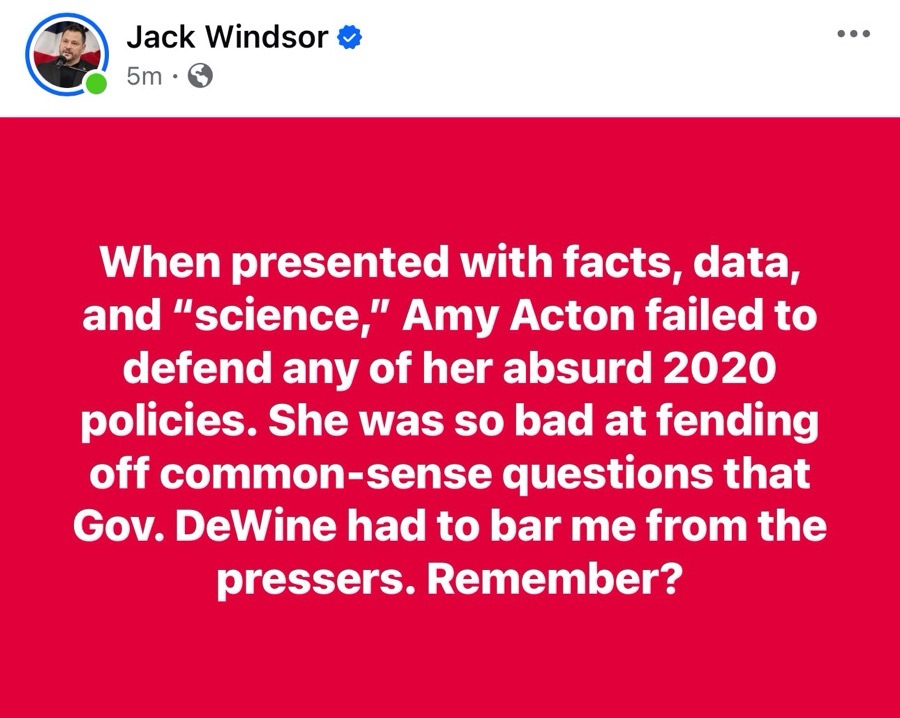
Erdman’s testimony painted a picture of retaliation against dissenters. Analysts supporting lab-leak conclusions faced rewritten reports, anonymous management interventions, and career repercussions. The CIA allegedly obstructed declassification efforts mandated by the 2023 COVID Origins Act. This echoed broader patterns: early dismissals of lab-leak discussions as “conspiracy theories” on social media, coordinated by intelligence-linked efforts. Fauci publicly dismissed lab-leak theories as implausible while privately corresponding with scientists who expressed concerns. Ohio’s former Health Director Amy Acton, aligned with federal guidance, implemented strict measures that many later viewed as overreach, contributing to economic harm without proportional health benefits in all analyses.
Connections to larger geopolitical aims fueled speculation. Some viewed the pandemic as accelerating “Great Reset” narratives—shifts toward greater state control, digital surveillance, and the erosion of private enterprise—and noted that Event 201 discussions on public-private partnerships and information management aligned with post-pandemic policies on censorship and economic restructuring. Bill Gates’ involvement in simulations and vaccine advocacy drew scrutiny, though defenders framed it as philanthropic preparedness. Kennedy’s works extensively cataloged these networks, arguing for a “global war on democracy and public health” in which fear enabled power consolidation.
Why did so few voice these concerns in real time? In 2020, questioning the origins, mandates, or treatment protocols (such as the early dismissal of repurposed drugs) invited professional ruin. Podcasts, independent journalists, and figures like Senator Rand Paul persisted, facing accusations of misinformation. Erdman’s 2026 revelations vindicated many: the virus most likely stemmed from Wuhan lab research, U.S. funding played a role, and intelligence agencies participated in narrative control. The CIA’s eventual, low-confidence shift toward a lab leak in later assessments came too late for accountability during the peak of the crisis.
Broader implications extend to biodefense reform. Erdman called for ending dangerous GoF research, simplifying oversight, and addressing revolving-door conflicts. Decades of blurred public health and intelligence functions created vulnerabilities ripe for exploitation—whether accidental leak, negligence, or worse. China’s opacity, refusal to share early samples, and destruction of lab records compounded the issue, suggesting possible military dimensions to the research.
Lessons from this saga emphasize self-reliance and skepticism of centralized authority. Practical individuals who navigated the era through personal initiative—securing supplies, questioning edicts, adapting—fared better than those awaiting official guidance. Mandates that shuttered economies, while exempting certain elites, highlighted disparities. Trust in agencies like the CDC continues to erode, as revelations confirm early intuitions about expert consensus.
In the age of disclosure, Erdman’s testimony marks a turning point. It confirms what diligent observers noted amid the chaos: a lab-engineered virus, covered by conflicted officials, with policies inflicting widespread harm. RFK Jr. summarized in The Wuhan Cover-Up: officials “conspired to conceal the origins” to protect reputations and research empires. Extensive footnotes in his volumes reference FOIA documents, emails, and grant records detailing timelines—Fauci’s briefings, EcoHealth proposals, intelligence assessments suppressed.
Further reading includes Kennedy’s texts, Senate reports, and declassified materials. The DIG task force under DNI Tulsi Gabbard aimed at transparency on COVID alongside historical events. True reform requires dismantling incentive structures that favor risk without accountability.
This confirmation arrives amid ongoing recovery. Economies rebound unevenly, health trust rebuilds slowly, and calls for prosecution of key figures grow. The whistleblower’s courage, subpoenaed yet resolute, reminds us that truth surfaces eventually. Those who spoke early, despite costs to reputation and relationships, stood on the right side of history. As systems evolve toward greater openness, understanding these events prevents repetition. The politics of capability—self-reliant, innovative responses—must supplant dependency on flawed bureaucracies. Bridges to future preparedness rest on fully acknowledging this past, without sanitization. (Word count:
Bibliography
• Erdman III, James E. Written Testimony before Senate HSGAC, May 13, 2026.
• Kennedy Jr., Robert F. The Real Anthony Fauci. Skyhorse, 2021.
• Kennedy Jr., Robert F. The Wuhan Cover-Up. Skyhorse, 2023.
• Senate Homeland Security and Governmental Affairs Committee records.
• Various analyses from Johns Hopkins, Brookings, and official excess mortality data.
Footnotes (selected):
1. Erdman testimony on BSEG conflicts and Fauci influence.
2. Event 201 scenario details from the Center for Health Security.
3. Economic contraction stats from BEA and NBER.
4. Excess deaths and mandate impacts per peer-reviewed studies.
Rich Hoffman is an aerospace executive, political strategist, systems thinker, and independent researcher of ancient history, the paranormal, and the Dead Sea Scrolls tradition. His life in high‑stakes manufacturing, high‑level politics, and cross‑functional crisis management gives him a field‑tested understanding of power — both human and unseen.
He has advised candidates, executives, and public leaders, while conducting deep, hands‑on exploration of archaeological and supernatural hotspots across the world.
Hoffman writes with the credibility of a problem-solver, the curiosity of an archaeologist, and the courage of a frontline witness who has gone to very scary places and reported what lurked there. Hoffman has authored books including The Symposium of Justice, The Gunfighter’s Guide to Business, and Tail of the Dragon, often exploring themes of freedom, individual will, and societal structures through a lens influenced by philosophy (e.g., Nietzschean overman concepts) and current events.
I have been asked for years why whips appear in my videos, my sites, and my personal iconography. For those who have known me longest, the question usually comes with a knowing smile, as if recalling an old shared joke. For newer acquaintances—those who discover my work through a podcast appearance, a cultural commentary piece, or a passing mention in wider discourse—the question carries genuine curiosity, sometimes even mild bewilderment. They wonder what such an archaic object could mean in modern life. The answer is straightforward, yet layered: the whip has never represented bravado or a hunger for conflict. It has always stood for preparation, symbolism, discipline, and the quiet refusal to hand over one’s agency to fear.
My fascination began in childhood, not with rebellion or spectacle, but with stories of individuals who met intimidation with composure. I devoured classic adventure cinema and serialized tales—black-and-white films flickering on late-night television, Republic Pictures serials with their cliffhanger tension, Westerns where lone figures upheld a code amid chaos. Zorro, in particular, captured me. He moved with elegance and precision, masked not to evade accountability but to shoulder it fully. He confronted tyranny without mirroring its cruelty, using wit and skill as extensions of moral clarity. Those stories planted a seed: justice need not seek permission from the powerful; it could arise from personal conviction and disciplined action.
That abstract pull found concrete grounding in family history. My grandfather and great-grandfather were practical men who worked the land in rural Kentucky. Whips were tools for them—extensions of the hand for guiding livestock, clearing brush, or managing distance with precision. As a boy, I watched them with wide-eyed reverence. I remember the dry Kentucky air thick with the scent of earth and hay, the faint creak of leather, and then the sharp, clean crack that split the stillness. One vivid memory remains etched: my great-grandfather, calm as still water, snapping a fly clean off the weathered side of a shed without disturbing the wood. There was no anger in the motion, no theatrical flourish. Only years of practiced focus, an intimate understanding of leverage, timing, and the physics of energy traveling down a braided length. The whip became, in that moment, a lesson in mastery—not domination, but harmony with consequence. Every crack carried immediate feedback. Miss, and you knew it instantly. Succeed, and the satisfaction was private, earned.
Those early impressions shaped more than idle curiosity. As I entered adolescence, schoolyard realities tested abstract ideals. Environments where hierarchies formed through bluster and threat rather than merit were common. I learned quickly that fear functions as currency only when accepted. A bully’s power evaporates the moment their target refuses the transaction. One particular incident stands out—not for drama, but for the internal shift it produced. Cornered by a group testing boundaries, I felt the familiar spike of adrenaline. Yet instead of freezing or fleeing, something from those whip lessons and adventure tales clicked: respond with clarity, not escalation. I stood firm, voice steady, eyes level. The moment passed without violence, but the realization endured. Intimidation relies on your participation. Withdraw consent, and the dynamic collapses. That lesson traveled with me into adulthood, informing how I navigated professional pressures, public discourse, and personal challenges.
Martial arts deepened this foundation. I immersed myself in disciplines emphasizing structure, balance, footwork, timing, and above all, restraint. Years of training in systems rooted in traditional practice taught that true competence whispers rather than shouts. It waits, patient and prepared. I studied the transfer of force, the economy of motion, and the mental discipline required to remain centered amid chaos. Over time, these elements—family craft, cinematic archetypes, physical training—wove into a cohesive personal philosophy. It was never about inventing novelty or seeking attention. It was integration: taking timeless principles and applying them to contemporary existence.
Preparedness, I came to understand, is frequently misconstrued as paranoia or latent aggression. In truth, it cultivates calm. When you have tested your limits through deliberate practice, when you know your capabilities and accept your responsibilities, fear loses its primary lever. You cease knee-jerk emotional reactions and begin responding with reasoned presence. This mindset proved invaluable as I moved into public life. Speaking on cultural matters, challenging assumptions, or simply voicing independent thought invites pressure. Sometimes it arrives as social exclusion, professional repercussions, or relentless psychological framing. The tactic remains consistent: induce retreat without substantive engagement. Fear is efficient because it bypasses debate.
I decided early against living under that shadow. The choice was deliberate, not reckless. Discipline over anxiety. Preparation over denial. Personal responsibility over dependence on external validation or protection. The whip crystallized this decision. Learning it demands patience. The leather does not forgive haste or distraction. Its physics are unforgiving: energy builds along the taper, accelerating to supersonic speed at the tip. One slight error in wrist angle, grip, or follow-through, and the crack becomes a painful self-inflicted lesson. Progress requires ego surrender. Early attempts bring frustration—tangles, weak pops, bruised pride. Each failure teaches humility and attention. Success arrives only after hundreds of repetitions, when mind, body, and tool align in quiet competence.
Psychologically, the whip mirrors broader life patterns. It punishes emotional volatility. Swing in anger, and you lose control. Approach with calm focus, and precision follows. In public discourse, the parallel is striking. A flailing argument scatters energy uselessly. A single, well-timed point—delivered with clarity and restraint—cuts through noise like that supersonic tip. The whip rewards respect for its nature; so does effective communication. Over the years, this symbol has organically attached itself to my work. Friends referenced it with humor. Viewers inquired. Strangers requested demonstrations. “Can you do a trick?” became a common refrain. I often smiled and redirected, preferring substance over performance. Yet maturity brings a willingness to explain the root rather than minimize it.
The deeper essence has never been domination or threat. It centers on deterrence born of inner certainty, moral confidence, and psychological resilience. When others recognize that fear holds no sway, dynamics transform. Posture straightens. Conversations shift from coercion to exchange. Many potential conflicts dissipate before ignition because the foundation for intimidation has been removed. This principle extends beyond physical tools into speech, integrity, and cultural navigation. In an era of digital amplification—where outrage algorithms reward emotional reactivity, where institutional pressures frame dissent as deviance, where social mechanisms attempt to enforce conformity through shame cycles—the response remains consistent: remove fear from the equation. Reclaim agency. Force interactions back into the arena of reason and accountability. Those unable to operate there reveal their own limitations.
Philosophical traditions reinforced what experience taught. Miyamoto Musashi’s The Book of Five Rings spoke to detached clarity amid conflict, the warrior’s mind unclouded by emotion. Sun Tzu emphasized winning before battle through positioning and insight. Jigoro Kano’s judo principles highlighted using an opponent’s force against them while maintaining balance—much like channeling energy precisely through a whip rather than brute resistance. Joseph Campbell’s hero’s journey framed the personal quest: venturing into uncertainty, confronting shadows, returning transformed with hard-won wisdom. These were not abstract texts; they illuminated lived practice. The restrained guardian archetype—Zorro as a modern knight-errant, Fairbanks’ swashbucklers balancing flair with duty—echoed across time. Even historical reflections on justice outside rigid institutions, as explored by thinkers like E.P. Thompson, underscore that moral order sometimes requires personal readiness when systems falter.
At its core, the whip embodies self-control in an age prone to indulgence, responsibility amid widespread excuse-making, and preparedness against currents of denial. It is no relic of aggression but a tangible reminder that discipline precedes freedom. Courage, similarly, is cultivated long before any visible conflict. The hours of solitary practice, the ego-bruising repetitions, the quiet satisfaction of incremental mastery—these build the internal reservoir that sustains through storms.
I have worn many masks across decades: professional, public, private. Beneath them, the values remain constant—discipline, preparedness, restraint, resolve. Sharing this openly now feels right, not for performance or provocation, but for honesty. People today hunger for tangible examples of lived conviction. Abstract ideals fall short of witnessing how principles endure in practice. If articulating this path helps even one person loosen fear’s grip on their decisions, the candor serves a purpose. If it illustrates that justice and clarity begin with personal accountability, all the better.
Looking forward, the legacy I hope to leave transcends any single symbol. It is a quiet demonstration that ordinary individuals can cultivate extraordinary resilience. In daily life—facing workplace coercion, digital pile-ons, familial tensions, or cultural headwinds—the same mindset applies. Assess honestly. Prepare diligently. Respond with measured agency. Teach children through example that mastery arises from repetition and respect, not entitlement. Encourage friends to value inner calibration over external approval. The whip, for me, remains a private compass more than a public prop. Its crack echoes a simpler truth: you are capable of more than fear allows you to believe.
That realization, extended outward, fosters healthier discourse, stronger communities, and freer minds. It asks each of us to examine our own tools of self-mastery—whatever form they take—and wield them with care. In doing so, we honor the lineage of those who came before: the quiet practitioners, the storytellers, the guardians of principle. We pass forward not fear, but freedom earned through discipline.
This path is ongoing. I continue to practice, reflect, and integrate. The whip still rests in my hand from time to time, a tactile link to origins and aspirations. Its lessons endure: precision over power, calm over chaos, responsibility as the truest form of strength.
Bibliography & Further Reading / Viewing
Classic Film & Serial Influences
• The Mark of Zorro (1920 silent version with Douglas Fairbanks; 1940 sound version with Tyrone Power)
• Republic Pictures adventure serials (1930s–1940s, including Zorro-themed entries)
• Douglas Fairbanks Sr. swashbuckler films
• Don Q, Son of Zorro (1925)
Martial Philosophy & Discipline
• Miyamoto Musashi, The Book of Five Rings
• Sun Tzu, The Art of War
• Jigoro Kano, writings and teachings on Judo discipline and philosophy
• Dave Grossman, On Combat: The Psychology and Physiology of Deadly Conflict in War and in Peace (for mental preparedness frameworks)
• Epictetus and Seneca, selected Stoic writings on controlling fear and the internal locus of control
Cultural Symbolism & Justice Archetypes
• Joseph Campbell, The Hero with a Thousand Faces
• Julius Evola, Revolt Against the Modern World (for traditional archetype context)
• E. P. Thompson, Whigs and Hunters: The Origin of the Black Act (historical justice outside formal institutions)
Historical Tools & Craft
• Ron Edwards, How to Make Whips
• David Morgan, Whips and Whipping
• Additional craft resources from traditional leatherwork and equestrian traditions
Image & Archive Sources
• Library of Congress film stills and historical photography archives
• Academy of Motion Picture Arts and Sciences photo and poster collections
• Smithsonian Folkways and rural American material culture collections
Rich Hoffman is an aerospace executive, political strategist, systems thinker, and independent researcher of ancient history, the paranormal, and the Dead Sea Scrolls tradition. His life in high‑stakes manufacturing, high‑level politics, and cross‑functional crisis management gives him a field‑tested understanding of power — both human and unseen.
He has advised candidates, executives, and public leaders, while conducting deep, hands‑on exploration of archaeological and supernatural hotspots across the world.
Hoffman writes with the credibility of a problem-solver, the curiosity of an archaeologist, and the courage of a frontline witness who has gone to very scary places and reported what lurked there. Hoffman has authored books including The Symposium of Justice, The Gunfighter’s Guide to Business, and Tail of the Dragon, often exploring themes of freedom, individual will, and societal structures through a lens influenced by philosophy (e.g., Nietzschean overman concepts) and current events.
In the quiet rhythms of a life well-lived in Middletown, Ohio—where the Ohio River Valley whispers stories of ancient mounds and forgotten giants—few pursuits bring deeper satisfaction than the steady arrival of a new issue of Biblical Archaeology Review. For decades, since I was eleven or twelve years old, these pages have anchored a lifelong fascination with the tangible remnants of Scripture: pottery shards from Israelite settlements, inscriptions confirming kings mentioned in the books of Kings and Chronicles, and excavation reports that ground the biblical narrative in real soil and stone rather than abstract myth. That same reverence for evidence extends naturally to the majestic ESV Archaeology Study Bible from Crossway, a volume packed with hundreds of full-color photographs, detailed maps, timelines, and notes contributed by field-trained archaeologists who have walked the very sites they describe. It doesn’t indulge in wild speculation; instead, it methodically illuminates how discoveries at places like Megiddo, Hazor, Lachish, or the City of David correspond directly to the texts we hold dear, reinforcing that the Bible is not some detached spiritual allegory but a record deeply interwoven with verifiable history, geography, and material culture.
The more one engages with these resources, the deeper the layers become. Archaeology confirms the plausibility of biblical events and places, but it also leaves space for the “paranormal” or supernatural dimensions that the texts themselves never shy away from—encounters with spiritual forces, hybrid beings, and cosmic rebellions that shape human destiny across millennia. This interplay becomes especially urgent in 2026, as Vice President J.D. Vance has spoken openly about his long-standing obsession with UFO files and his firm conviction that what many call extraterrestrial visitors are not aliens from distant planets in the conventional science-fiction sense. In a recent interview with podcaster Benny Johnson, Vance stated plainly, “I don’t think they’re aliens. I think they’re demons anyway.” He frames the phenomena through a Christian worldview: there is real good and real evil operating in the unseen realm, and entities engaging in “weird things to people”—abductions, genetic interference, or deceptive encounters—align more readily with biblical descriptions of spiritual deception than with benevolent or neutral visitors from another star system. Vance, drawing on his background as a Marine, lawyer, author of Hillbilly Elegy, and now Vice President with access to the highest-level classifications, has vowed that the Trump administration will pursue the genuine disclosure of classified UFO-related materials. His goal appears practical as well as curious: get ahead of cultural shaping moments, such as a potential new Spielberg film that could frame the narrative in purely secular or optimistic “space brothers” terms, much as Close Encounters of the Third Kind did in the late 1970s when it profoundly influenced public perception and even inspired my own fourth-grade report on UFO sightings. His sincerity stands out, especially coming from someone rooted in Midwestern values, family commitments, and a desire to serve effectively without descending into fringe hysteria. Many everyday “normies”—folks who grill hot dogs on weekends, mow lawns on Saturdays, follow the Cincinnati Reds, and focus on practical concerns like gas prices and raising kids—are now paying attention because the topic has shifted from taboo conspiracy to something discussed at the highest levels of government.
This broad-brush linkage of UFO phenomena to “demons” carries real merit as an initial guardrail. It rightly rejects naive materialism that assumes everything must fit within a purely physical, Darwinian cosmos devoid of spiritual agency. It echoes concerns raised by figures like Tucker Carlson in recent years and acknowledges that evil is not merely a human construct but involves intelligent opposition to God’s order. Yet it also risks painting with strokes that are too wide, potentially collapsing distinct layers of a complex cosmic conflict into a single undifferentiated category. This is precisely where Timothy Alberino’s 2020 book Birthright: The Coming Posthuman Apocalypse and the Usurpation of Adam’s Dominion on Planet Earth stands out as one of the most articulate, Scripture-rooted, and up-to-date bridges available. Alberino, an explorer, filmmaker, and researcher who brings an almost Indiana Jones spirit to biblical scholarship—traveling to remote sites, engaging ancient texts, and connecting dots across disciplines—does not dismiss the demonic dimension. Instead, he refines the categories with precision drawn from Genesis, the Book of Enoch, the Epistle of Jude, Revelation, and the broader ancient Near Eastern context, while integrating modern reports of abductions, hybridization programs, and transhumanist trends.
Alberino constructs his framework around a pre-Adamic galactic rebellion led by Lucifer, personified as the dragon or morning star, who fell from his exalted position. This insurrection caused widespread devastation across the cosmos, leaving planets and realms in a state of tohu va-bohu—formless and void, as Genesis 1:2 poetically describes the initial condition of Earth before renewal. God then restores the terrestrial realm and appoints Adam as regent, granting humanity the irrevocable birthright of dominion: to rule as image-bearers, sons and daughters of the Most High, exercising authority over creation in partnership with Heaven. Humanity is positioned as the “younger sibling” in a universe already populated by an “elder race”—advanced non-human beings, primarily angelic orders, possessing greater perception, capabilities, and even technology-like means of traversal (what we might today interpret as aerospace phenomena). This elder race includes both loyal servants of God and those who joined the rebellion.
The critical transgression comes with the Watchers, a group of fallen angels detailed in Genesis 6:1-4 and expanded dramatically in the Book of Enoch (particularly the Book of the Watchers, chapters 1–36). These beings descend to Earth, take human women as wives, and produce hybrid offspring known as the Nephilim—violent giants who fill the earth with bloodshed, corruption, and forbidden knowledge. The Watchers teach humanity sorcery, metallurgy, cosmetics, weapons-making, and other arts that accelerate moral decay and violence. The Flood serves as a divine reset, wiping out the corrupted order, yet the disembodied spirits of the slain Nephilim persist as restless, tormented entities. These become the “demons” or unclean spirits familiar from the New Testament—beings that seek embodiment, oppress, possess, haunt, and torment humanity, craving the physicality they lost when their giant bodies perished. This distinction is crucial and consistent in Alberino’s analysis: demons are specifically the bodiless spirits of the dead Nephilim giants, operating primarily in the invisible spiritual realm.
In contrast, modern UFO or “alien” phenomena—encounters with Grays, reported abductions, cattle mutilations, hybridization programs, and craft exhibiting advanced propulsion—represent a different but related layer. Alberino argues these are physical, biological entities, not mere disembodied spirits. They may be engineered hybrids, surviving bloodlines from pre-Flood or post-Flood incursions, or tools deployed by the ongoing Luciferian agenda. These beings operate with tangible technology, agendas centered on genetic tampering, and a long-term strategy to push humanity toward transhumanism—the merging of biology with machines, AI, or artificial enhancements that promise god-like power but ultimately corrupt the image of God in man. This echoes the ancient corruption of the human seed but updates it for a technological age. Labeling everything “demons” with a broad brush misses the tangible, fleshly (or bio-engineered) component of the warfare. Both the demonic spirits and the physical alien entities oppose God’s created order and seek to usurp Adam’s birthright, but they function on different fronts: one through invisible oppression and possession, the other through visible incursions, deception, and ideological subversion. The endgame Alberino warns of is a posthuman apocalypse, where humanity trades its divine inheritance for counterfeit upgrades, paving the way for a counterfeit kingdom ruled by an adversary who may even present through advanced aerospace means.
This nuanced model provides profound ballast for any impending disclosure. If government files reveal physical craft, recovered bodies, or documented interactions, a simplistic “all demons in disguise” approach could leave people spiritually and intellectually unprepared for the fuller biblical cosmology. Alberino’s work equips readers to see the phenomena as part of an ancient, multi-front war rather than random anomalies or friendly visitors. It rejects both materialist reductionism (everything is just advanced human tech or natural phenomena) and unanchored mysticism, always anchoring back to Christ as the ultimate restorer of dominion and the One who reclaims the birthright on behalf of redeemed humanity. Transhumanism, in this light, is not neutral progress but the latest glittering bait—much like Esau trading his birthright for stew—designed to produce a species no longer eligible for the redemption offered through the seed of the woman.
This framework harmonizes beautifully with the hard archaeological and historical evidence that publications like Biblical Archaeology Review and study Bibles like the ESV edition help contextualize, while extending courageously into territories mainstream academia often avoids. Consider the work of Fritz Zimmerman, whose exhaustive compilations—The Encyclopedia of Ancient Giants in North America and related volumes—draw from thousands of 19th- and early 20th-century newspaper accounts, county histories, and pioneer reports. Across the Ohio River Valley and beyond, stories abound of massive human skeletons unearthed during farming, railroad construction, or mound excavations: individuals seven to twelve feet tall, sometimes with double rows of teeth, elongated skulls, or other anomalous features. These finds cluster particularly in Adena and Hopewell cultures, with large conical mounds, geometric earthworks, and burial practices that suggest a distinct ruling or priestly class. Many accounts describe bones that crumbled to dust upon exposure to air, or specimens that mysteriously vanished after being sent to institutions like the Smithsonian. Zimmerman documents hundreds of such cases across dozens of states, with especially dense concentrations in Ohio, Indiana, Kentucky, and West Virginia. Native American oral traditions in the region often speak of an earlier race of giants—red-haired, bearded, or technologically advanced—who warred with incoming tribes or were eventually driven out. These accounts align strikingly with biblical and extra-biblical references to post-Flood Rephaim, Anakim, Emim, and other giant clans, including Og of Bashan (whose iron bed measured over thirteen feet) and the family of Goliath. The pattern of suppression or dismissal of these finds mirrors the historical handling of UFO reports: both challenge purely materialist or evolutionary paradigms that prefer gradual human development without anomalous interventions.
Closer to home here in Ohio, the Great Serpent Mound in Adams County offers another compelling intersection of geology, archaeology, and potential sacred knowledge. The effigy mound itself—an undulating serpent nearly a quarter-mile long, with a coiled tail and open mouth appearing to swallow an egg-like oval—sits precisely on the rim of a confirmed cryptoexplosion or impact structure. Geological surveys confirm this as a complex impact crater roughly eight miles in diameter, formed by an asteroid or comet strike between approximately 252 and 330 million years ago (late Paleozoic era). Evidence includes shatter cones in the bedrock, planar deformation features in quartz grains (indicating extreme shock pressures), breccias, and a central uplift with intensely faulted and folded strata. The structure features a central dome, transition zone, and ring graben. Why would ancient builders—likely Adena or Fort Ancient peoples—choose this precise location for such a monumental earthwork, investing enormous labor to shape the serpent with astronomical precision? The head aligns with the summer solstice sunset, and the overall form may track lunar standstills or equinoxes. Placing a sacred effigy at the edge of a massive ancient scar suggests either extraordinary astronomical observation or guidance from intelligences attuned to celestial and terrestrial energies. Similar patterns appear globally at megalithic sites built on anomalous geological features, hinting at interactions with forces or entities beyond ordinary human capability in the eras traditionally assigned. Erosion over deep time has softened the crater’s expression, but the underlying anomaly remains, inviting questions about why certain “high places” or power centers were repeatedly chosen for temples, mounds, or alignments across cultures.
Alberino’s analysis gains further depth when paired with the Book of Enoch, preserved among the Dead Sea Scrolls and now available in editions with scholarly commentary, including contributions associated with Alberino. This ancient text expands dramatically on the sparse account in Genesis 6, detailing the Watchers’ descent on Mount Hermon, their oath-bound pact, the birth and rampaging violence of the giants, and the forbidden teachings that corrupted pre-Flood civilization. Enoch, the seventh from Adam, is taken up without dying and receives heavenly visions, serving as a scribe and intermediary. The text describes the giants’ spirits, after their bodies are destroyed in the Flood judgment, becoming evil spirits that afflict humanity—precisely the origin story for demons that Alberino and others distinguish from the physical players in the ongoing conflict. The Dead Sea Scrolls’ validation of Enochic material alongside canonical books underscores that these ideas circulated widely in Second Temple Judaism and influenced early Christian thought, even if the book itself was not included in the final Protestant canon. Reading Enoch alongside Genesis, Jude (which quotes it), and 2 Peter provides a richer scaffolding for understanding why paranormal activity persists rather than vanishing after the Flood or the cross: it adapted, going underground behind the distractions of polite society, technology, entertainment, and daily survival. Sports scores, mortgages, careers, and weekend routines occupy mental space, leaving little room for reflection on deeper cosmic narratives—yet the ancient texts insist the battle continues.
David Flynn’s provocative research in Temple at the Center of Time adds yet another layer, building on Sir Isaac Newton’s extensive (and often private) studies of biblical prophecy, chronology, and sacred measurements. Newton, far from a purely secular scientist, devoted significant energy to deciphering what he saw as a “prisca sapientia”—an ancient pure knowledge embedded in Scripture and architecture. Flynn maps distances and geometries from the Jerusalem Temple Mount using modern tools and finds uncanny correlations with pivotal historical dates, including links to 1948 and the rebirth of Israel. The Temple functions not merely as a religious site but as a prophetic and temporal landmark, with measurements potentially encoding timelines and geographic centers of divine activity. Alberino engages such synchronicities appreciatively but cautiously, always subordinating them to the clear Christocentric gospel: Jesus as the true Temple, the restorer of dominion, and the One who defeats the dragon decisively at the end. This approach avoids numerological excess while honoring the idea that sacred geography and time may reflect deeper divine order amid the chaos of rebellion.
Broader explorations by researchers like Graham Hancock—focusing on lost advanced civilizations, potential Younger Dryas cataclysms, megalithic sophistication predating conventional timelines, and underwater ruins—find partial integration in Alberino’s biblical axis without abandoning scriptural authority. Pre-Flood or immediately post-Babel influences could reflect lingering effects of rebel factions or their human collaborators, manifesting as pockets of advanced knowledge, monumental construction, or anomalous technology that later cultures remembered as “golden ages” or Atlantean echoes. The Tower of Babel itself, recently re-examined in Biblical Archaeology Review for grammatical nuances suggesting the structure may have been portrayed as completed before divine intervention, represents another rebellion against God’s order: humanity unified in pride, seeking to “make a name” through monumental architecture (likely a ziggurat in the Mesopotamian context) rather than trusting divine provision and scattering as commanded. Archaeological parallels to Mesopotamian ziggurats abound, yet the biblical emphasis remains theological—confusion of languages as judgment on centralized defiance. Recent articles explore whether the tower narrative assumes completion, deepening interpretive questions about human hubris and divine sovereignty. Alberino would see such events as recurring motifs in the usurpation attempt: centralized power, forbidden tech or knowledge, and attempts to breach heavenly boundaries.
In an era when political necessities may soon force greater openness on classified files—driven by leaks, public pressure, and the need to shape the narrative before Hollywood or adversarial powers do—Birthright offers essential intellectual and spiritual preparation. It reframes UFO discourse away from pure mysticism or sci-fi optimism into a coherent biblical war narrative: not random extraterrestrial tourists, but a multi-front assault on humanity’s God-given role as stewards and image-bearers. Demonic spirits (Nephilim ghosts) handle much of the invisible torment, possession, and oppression; physical or bio-engineered entities advance genetic subversion, ideological erosion (through atheism, Darwinian reductionism, or self-deification), and the transhumanist trajectory toward a posthuman counterfeit. The Antichrist figure, in some interpretations Alberino entertains, could even emerge with aerospace or technological grandeur rather than purely supernatural spectacle. Yet the ultimate message remains one of hope and redemption: the birthright, though contested and partially squandered through deception, was never permanently revoked. Christ, the last Adam, reclaims and restores it for all who trust in Him, culminating in the final battle at Armageddon and the renewal of creation where dominion is exercised rightly under the King of Kings.
For those of us in Ohio, with Patterson Air Force Base lore circulating for generations—stories of reverse-engineered craft, anomalous materials, or even giant remains studied quietly—these discussions feel less abstract. Regional Bigfoot sightings, mound complexes, and persistent UFO reports over the years seem to belong to the same interwoven story when viewed through a biblical lens: remnants or echoes of ancient incursions, spiritual oppressions, and ongoing attempts to challenge humanity’s assigned role. Friends and acquaintances in politics, like State Senator George Lang, have shared late-night conversations about ancient aliens, Easter Island’s buried bodies, or megalithic mysteries with me—moments that transcend partisan lines and touch the deeper adventure of discovery. Even mainstream figures are now engaging topics once confined to podcasts or fringe circles, precisely because evidence from multiple disciplines has accumulated: archaeological anomalies, textual survivals like Enoch, eyewitness consistency in abduction reports, and technological leaps that raise questions about origins and agendas.
Vance’s instinct to categorize the phenomena demonically serves as a healthy initial filter against overly optimistic or materialist interpretations. Alberino’s added nuance—distinguishing layers while maintaining a unified adversarial agenda—prepares believers, seekers, and even policymakers to engage disclosure without panic, deception, or loss of grounding. It encourages deeper engagement with Scripture, cross-referencing using archaeological tools like the ESV Study Bible, insights from the Dead Sea Scrolls, and an honest evaluation of extra-biblical texts. The answers, as so often happens, rarely reside comfortably within the institutional boxes built by academia, government, or the media; they reward those willing to follow the evidence across archaeology, ancient literature, contemporary reports, and cosmic theology. The birthright of dominion remains humanity’s divine inheritance—contested, yes, but ultimately secured through the finished work of Christ.
Those interested in building a firmer foundation would do well to read Birthright multiple times, allowing its dense interconnections to settle. Pair it with Zimmerman’s giant compilations for regional grounding, Flynn for sacred geography explorations (read critically), primary Enoch translations with commentary, ongoing issues of Biblical Archaeology Review for fresh site reports (including recent discussions on Babel’s grammar and implications), and the ESV Archaeology Study Bible for visual and contextual depth. The puzzle’s outer edges have long been visible; the middle is filling rapidly with every honest inquiry. When fuller disclosure arrives—whether driven by political timing, inevitable leaks, or cultural momentum—it will rattle many worldviews. A framework anchored in dominion, rebellion, fall, redemption, and ultimate victory equips us not merely to understand strange phenomena but to stand firm in our created purpose amid the storm.
The adventure has always lain just beyond the handrails of “normal” life. For those who dare step out—whether a vice-presidential advisor seeking context, an Ohio resident curious about local mounds and base rumors, or anyone sensing that polite society’s distractions have hidden deeper truths—the rewards include a clearer vision of who we are, why the conflict persists, and how the story ends with restoration rather than extinction or usurpation. In the end, remembering the birthright is not about fear of aliens or demons but about reclaiming our identity as image-bearers destined for glory in a renewed creation. The evidence, both ancient and emerging, continues to point in that direction for those with eyes to see and ears to hear. And for all those reasons, and more, we need to give Vice President Vance a copy of Timothy Alberino’s Birthright, for a context to the White House narrative of Alien Disclosure and the many new questions that will come with it.
Beyond the immediate policy landscape, the issue of disclosure presents a unique cultural and political inflection point. At a time when the public is saturated with economic anxiety—elevated energy prices, trade tensions, contentious Supreme Court cases, and ongoing losses and gridlock in both the House and Senate—voters are increasingly responsive to issues that offer transparency, curiosity, and a sense of shared truth. Gas prices may fluctuate and stabilize over time, but public trust, once eroded, is far more difficult to recover. Disclosure, approached carefully and credibly, speaks directly to that trust deficit.
Historically, disclosure efforts have generated intense public interest but have often failed to deliver substantive clarity. Episodes surrounding the Epstein records or the long-promised JFK disclosures fueled attention, speculation, and media buzz, yet ultimately left many Americans dissatisfied by incrementalism and ambiguity. A future disclosure moment does not necessarily have to follow that pattern. If handled with seriousness, institutional credibility, and clear communication, it could stand apart as a rare instance where public curiosity is met with meaningful acknowledgment rather than prolonged deferral.
Culturally, the subject of disclosure—whether related to unexplained phenomena, advanced technologies, or anomalous encounters—has increasingly found resonance among communities traditionally aligned with progressive or countercultural movements. This has allowed one side of the political spectrum to dominate the narrative space, framing disclosure as an expression of openness, curiosity, and empathy for everyday people who report unusual experiences. That cultural alignment is not inevitable, however. There exists an opportunity for broader engagement that avoids sensationalism while still acknowledging the legitimacy of public interest in these phenomena.
Public-facing engagement does not require endorsement of every claim or abandoning analytical rigor. Rather, it involves meeting voter curiosity with respect—recognizing that unexplained observations and regional folklore often function as entry points into deeper questions about science, government transparency, and institutional credibility. When approached thoughtfully, this engagement can humanize leadership, counter perceptions of detachment, and prevent disclosure-related narratives from being monopolized or caricatured.
From a broader political perspective, disclosure also represents a rare issue capable of temporarily transcending partisan exhaustion. In a midterm environment where voters are seeking tangible “wins” amid legislative stalemate, disclosure—if it produces real information and measurable transparency—could serve as a confidence-building event rather than a distraction. Done well, it has the potential to occupy the public narrative during periods when other contentious issues naturally cool, offering space for recalibration rather than escalation.
For these reasons, disclosure is not merely a speculative subject but a test of institutional seriousness. Its success depends less on timing theatrics and more on whether it delivers clarity, credibility, and follow-through. Managed responsibly, it could become one of the defining public conversations of the coming election cycle—one remembered not for hype, but for substance.
Footnotes
¹ Personal reflection on lifelong subscription to Biblical Archaeology Review since childhood, aligning with its role in correlating finds with biblical texts.
² Crossway, ESV Archaeology Study Bible (2017/2018), with over 2,000 study notes, 400+ photographs, maps, and contributions from field archaeologists.
³ J.D. Vance interview with Benny Johnson (March 2026), where he explicitly states UFOs/aliens are “demons” and expresses an obsession with disclosure files.
⁴ Timothy Alberino, Birthright: The Coming Posthuman Apocalypse and the Usurpation of Adam’s Dominion on Planet Earth (2020). Key arguments include the pre-Adamic rebellion, the birthright of dominion, the distinction between Nephilim demons and physical alien entities, and the transhumanist endgame.
⁵ Genesis 6:1-4; 1 Enoch (Book of the Watchers).
⁶ Jude 6; 1 Enoch 15:8-9 on spirits of giants as evil spirits.
⁷ Alberino interviews and debates (e.g., Nephilim Death Squad, Michael Knowles), clarifying aliens as physical tools vs. disembodied demons.
⁸ Fritz Zimmerman, The Encyclopedia of Ancient Giants in North America (2015), compiling 888+ giant accounts from newspapers and histories, with emphasis on the Ohio Valley.
⁹ Ohio Department of Natural Resources and geological studies on Serpent Mound Impact Structure (8-mile diameter, ~252-330 million years ago).
¹⁰ Archaeological descriptions of Serpent Mound alignments (summer solstice sunset at head).
¹¹ David Flynn, Temple at the Center of Time: Newton’s Bible Codex Finally Deciphered and the Year 2012 (2008).
¹² Alberino-associated editions/commentary on the Book of Enoch.
¹³ Personal and regional observations on Ohio sites, Patterson AFB lore, and mound/giant traditions.
¹⁴ Transhumanism discussions in Birthright as modern usurpation.
¹⁵ Dead Sea Scrolls confirming Enochic texts.
¹⁶ Recent Biblical Archaeology Review (Spring 2026) on Tower of Babel grammar possibly indicating completion.
Bibliography
• Alberino, Timothy. Birthright: The Coming Posthuman Apocalypse and the Usurpation of Adam’s Dominion on Planet Earth. 2020.
• Crossway. ESV Archaeology Study Bible. 2017/2018.
• Flynn, David. Temple at the Center of Time: Newton’s Bible Codex Finally Deciphered and the Year 2012. 2008.
• The Book of Enoch (1 Enoch), various editions including those with modern commentary.
• Biblical Archaeology Review, ongoing issues, including Spring 2026 article on Tower of Babel by Richelle and Vanderhooft.
• Zimmerman, Fritz. The Encyclopedia of Ancient Giants in North America. 2015.
• Ohio Division of Geological Survey reports on Serpent Mound Impact Structure.
• Genesis, Jude, Revelation (ESV or standard translations).
• Vance, J.D. Interview comments reported in Fox News, The Hill, Newsweek (March 2026).
Rich Hoffman is an aerospace executive, political strategist, systems thinker, and independent researcher of ancient history, the paranormal, and the Dead Sea Scrolls tradition. His life in high‑stakes manufacturing, high‑level politics, and cross‑functional crisis management gives him a field‑tested understanding of power — both human and unseen.
He has advised candidates, executives, and public leaders, while conducting deep, hands‑on exploration of archaeological and supernatural hotspots across the world.
Hoffman writes with the credibility of a problem-solver, the curiosity of an archaeologist, and the courage of a frontline witness who has gone to very scary places and reported what lurked there. Hoffman has authored books including The Symposium of Justice, The Gunfighter’s Guide to Business, and Tail of the Dragon, often exploring themes of freedom, individual will, and societal structures through a lens influenced by philosophy (e.g., Nietzschean overman concepts) and current events.
It was one of those crisp March evenings in 2026 when the calls started pouring in from Portage County, Ohio—eight credible Bigfoot sightings crammed into barely a hundred hours, each one more jaw-dropping than the last. People weren’t just spotting shadows in the woods; they were locking eyes with something massive, something that didn’t belong in our tidy little version of reality. One report came from a mom and her daughter, who were driving along a back road near Mantua Center, right around 8:00 p.m. on March 7th. They almost hit it. The thing stepped out of the treeline and stood there three feet from the passenger door—close enough, the daughter said, that she could have reached out and touched it if the window had been down. It was around six-foot-five, brown, and moving with that casual, unhurried stride that big creatures seem to have when they know they own the night. But here’s the part that is most chilling: its face was blurry. Not out of focus like a bad photo, but genuinely indistinct, as if the creature was only halfway rendered into our four-dimensional world. The mom slammed the brakes, the daughter screamed, and then it was gone—melted back into the trees as if it had never been there at all. No aggression, no chase, just a quiet acknowledgment that something ancient had crossed their path and decided, for whatever reason, to let them live with the memory.
By the time the Bigfoot Society podcast and local news outlets like Cleveland 19 and FOX 8 started mapping it out, the reports were stacking up from Mantua Center to Garrettsville to Windham to Newton Township. Daytime sightings in broad sunlight on the Headwaters Trail—a nine-foot brown male standing 120 yards off Route 44 at 12:23 p.m. on March 6th. Nighttime grunts and muddy prints the size of dinner plates. An older woman in Windham who had never believed in any of this nonsense watched something massive bolt through the woods on March 9th. A man walking his German Shepherd at 4:00 a.m. on March 10th had the dog lose its mind at the back door before the shadow of an eight- to ten-foot figure vanished into the blackness. Multiple independent witnesses, at different times of day, on different roads, under different lighting conditions. Some smelled that unmistakable wet-dog-meets-skunk odor. Others heard deep, vibrating grunts that carried through the trees like distant thunder. And every single one of them swore it wasn’t a bear, wasn’t a hoax, wasn’t some kid in a costume. These were ordinary Ohioans—hikers, dog walkers, a mom just trying to get her kid home—who suddenly found themselves face-to-face with the impossible.
The internet, of course, went wild with the usual explanations. “Undocumented Neanderthal remnant!” cried the cryptid enthusiasts. “Lost tribe of giant hairy hominids migrating through the Midwest!” But I’ve spent too many years chasing these things—camping at the Mothman Museum with my grandkids, hiking the haunted Moonville Tunnel at midnight, standing on the ridges of Little Round Top at Gettysburg—to buy the simple “flesh-and-blood ape-man hiding in the woods” story. The more I read the reports, the more I kept coming back to the same conclusion I’ve reached after researching the Ohio Valley mounds for decades: these aren’t just undiscovered animals. They’re something far older, far stranger, and far more connected to the Politics of Heaven than most people are ready to admit. They’re dimensional. They’re quantum-entangled echoes of beings who have been walking these same trails for thousands of years—sometimes in our reality, sometimes bleeding through from somewhere else entirely. And the reason they keep showing up right here, right now, in the same corridors where ancient earthworks once stood, is because those earthworks were never just “religious monuments.” They were communication devices. Calling cards. Mathematical beacons built by people who understood something we’ve spent centuries trying to forget.
Let me take you back to the source of all this strangeness—the Ohio River Valley itself, that ribbon of land that runs from the Serpent Mound down near Cincinnati all the way up through the Newark Earthworks and beyond. This isn’t random wilderness. It’s one of the most concentrated paranormal hotspots on the planet, and it has been for a very long time. The same week those Portage County sightings were making national news, I pulled out the old hidden-haunts map I’d bought at the Mothman Museum and started plotting the locations. Every single sighting clustered around old mound corridors, old Indian trails that modern roads had paved over, places where the veil has always been thin. Serpent Mound, Fort Ancient, the massive geometric works at Newark that once covered more ground than the Great Pyramid complex in Egypt—those aren’t just piles of dirt left by “primitive” hunter-gatherers. They’re precise mathematical constructs aligned to the Pleiades, to solstices, to the movement of stars in ways that required calculus-level understanding of Earth’s circumference and axial tilt. The same mathematics you find at Stonehenge and Avebury in England. The same geometric obsession you see at Flag Fen near Peterborough, where Francis Pryor and his team uncovered an entire Bronze Age village built on a bog around 1300 B.C.—a place so sophisticated it makes the Romans who later conquered Britain look like amateurs playing catch-up.
I remember the first time I stood at Stonehenge with my family, the same trip where I picked up Pryor’s book Britain BC at the visitor center gift shop. You see the famous stones on TV, and you think, “cool rocks.” But when you’re actually there, walking the landscape, you realize the stones are just the tip of the iceberg. The entire countryside is dotted with burial mounds—hundreds of them—some almost identical in size and construction to the ones at Miamisburg and Middletown right here in Ohio. There’s a massive cursus—a long, linear earthwork over a mile long—that you can’t even see properly from the ground; it only makes sense from the air. It looks like a giant runway aimed at the heavens. And just a few miles north at Avebury, you’ve got the same thing: enormous circular henges, burial barrows, and geometric patterns that mirror the Newark Octagon and the Great Circle earthworks back home. Pryor’s work at Flag Fen blew the lid off the whole “primitive Britons” myth. They built an entire wooden platform and causeway across a bog, throwing broken tools and weapons into the water as offerings to the dead. Why? Because they understood that bogs preserve. They understood that the afterlife wasn’t some vague cloud kingdom—it was a place you could send messages to. And they used mathematics and geometry to do it.
Fritz Zimmerman has been saying the same thing about North America for years, only louder and with more receipts. His books—The Encyclopedia of Ancient Giants in North America, The Nephilim Chronicles: Fallen Angels in the Ohio Valley, Ancient America: The Dark Side, and Mysteries of Ancient America—aren’t fringe conspiracy rants. They’re the result of decades of boots-on-the-ground research, cross-referencing thousands of old newspaper accounts, county histories, and Smithsonian reports that mainstream archaeology would rather pretend don’t exist. Zimmerman’s core thesis is as elegant as it is explosive: the giant bones reported in over 500 separate accounts across the Midwest weren’t hoaxes or exaggerations. They belonged to the Amorites—biblical giants, descendants of the Nephilim—who fled Joshua’s conquest of Canaan, migrated through Europe (building or influencing Stonehenge and Avebury along the way), and eventually crossed the Atlantic in sophisticated boats to settle the Ohio Valley. The mounds they left behind aren’t random; they’re the same celestial observatories and ritual centers you find in England, only transplanted here. And the paranormal activity that clusters around them—Bigfoot, orbs, Mothman, shadowy figures—aren’t new phenomena. They’re the lingering echoes of the same entities those ancient builders were trying to communicate with.
Think about it. The Book of Enoch—preserved in the Dead Sea Scrolls and left out of our modern canon for reasons that should make every honest person furious—gives us the clearest picture. Two hundred Watchers, led by Semyaza and Azazel, descend on Mount Hermon, lust after human women, and produce giant offspring. God punishes them, but their disembodied spirits are cursed to roam the earth until the final judgment. These aren’t cartoon devils with pitchforks. They’re principalities and powers (Ephesians 6:12), interdimensional beings who once had physical bodies and now operate from the quantum edges of our reality. The Amorites carried that knowledge with them. They built geometric earthworks—circles, octagons, serpents aligned to the stars—because those shapes spoke the language those fallen entities understood. It wasn’t “religion” in the Sunday-school sense. It was technology. It was science. It was an attempt to maintain a relationship with the divine council, which Psalm 82 warns is still plotting against Yahweh to this day.
That’s why the mom and her daughter didn’t see a clear-faced ape-man on that dark Ohio road. They saw something bleeding through the veil—something that exists in a higher or adjacent dimension and only partially manifests here. The blurry face? That’s what quantum entanglement looks like when two realities briefly overlap. The creature wasn’t “lost.” It was answering an ancient call that still resonates through the mounds it once helped build. The same thing explains the Mothman at Point Pleasant in 1966–67—Stolas, the 36th demon from the Lesser Key of Solomon, appearing as a prophetic harbinger before the Silver Bridge collapse. The same thing explains the orbs we photographed at the Moonville Tunnel, the green healing spirits that seem to drift down from the ridges at Gettysburg, the Bigfoot sightings that spike whenever someone disturbs an old mound corridor. These aren’t separate mysteries. They’re the same phenomenon wearing different masks depending on who’s looking and what the local geometry is tuned to.
And here’s where the real conspiracy kicks in—the one that has nothing to do with the CIA and everything to do with the spiritual wickedness in high places. Mainstream archaeology, the Smithsonian, and the political class that funds them have spent over a century burying this truth under layers of political correctness and bad assumptions. The Native American Graves Protection and Repatriation Act (NAGPRA) of 1990—passed right after Dances with Wolves tugged at everyone’s heartstrings—made it illegal to study many of these sites properly. Bones that could prove the existence of pre-Columbian European or Near Eastern contact? Reburied. Giant skeletons reported in hundreds of 19th-century newspapers? Carted off to Smithsonian vaults and never seen again. The Windover Bog site in Florida is the perfect example. Discovered in the 1980s during housing construction, it yielded 168 incredibly preserved skeletons from 7,000–8,000 years ago—people with advanced woven textiles, bog-preservation knowledge identical to European practices, and thigh bones so large that Dr. Geoffrey Thomas held one up next to his own leg on camera at the Brevard Museum and basically admitted these folks were giants. Average height estimates got downplayed to 5’5” in some reports, but the video evidence and the bone density tell a different story. These weren’t primitive hunter-gatherers. They were part of a sophisticated culture that understood time, astronomy, and the spirit world in ways we’re only beginning to rediscover. And what happened? The site was covered up. Research stalled. NAGPRA kicked in. End of story.
Meanwhile, in England, Francis Pryor and the English Heritage team get to dig Flag Fen like it’s the greatest adventure on Earth. They uncover a Bronze Age village built on a bog, with broken swords and tools thrown in as offerings, and everyone celebrates the sophistication of prehistoric Britons. Why the double standard? Because admitting the same people—or at least the same knowledge—crossed the Atlantic thousands of years before Columbus shatters too many comfortable narratives. It forces us to confront the biblical timeline. It forces us to admit that the “indigenous” label we slap on every pre-Columbian culture is as accurate as calling the Romans “indigenous” to Britain. Migration, trade, and the collision of cultures happened constantly. Giants walked among us. Fallen angels taught forbidden knowledge. And their disembodied offspring are still here, still walking the old paths, still answering calls that were broadcast through geometric earthworks when the stars were in different alignments.
This is the Politics of Heaven playing out on Earth. Yahweh’s divine council—Elohim plural, as Psalm 82 makes painfully clear—has been in rebellion since before the Flood. The Watchers’ sin produced the Nephilim, whose spirits became the principalities and powers that still rule from the shadows. Solomon commanded them to build his Temple. The Canaanites sacrificed children to Moloch to appease them. The mound builders aligned their works to the stars to communicate with them. And today, in 2026, when eight Bigfoot encounters happen in a single week in Portage County, we’re seeing the same entities responding to the same ancient geometry. The mounds may be paved over, but the call still echoes. The quantum entanglement still happens. The blurry faces still peer through the veil.
I’ve stood on Little Round Top at Gettysburg at night with my family. I’ve hiked the Moonville Tunnel when the mist rolls in, and the green orbs appear exactly where my wife said they would. I’ve walked the ridges at Stonehenge and felt the same electric charge I feel standing on Fortified Hill or the Middletown Mound back home. The pattern is undeniable. The science—real science, the kind Pryor practices in England and the kind Zimmerman has been quietly practicing in America for decades—points to a lost chapter of human history in which advanced cultures used mathematics not just to measure the stars but to speak to the beings who live among them. We call them cryptids. The Bible calls them demons, watchers, principalities. The Japanese call them kami. The Muslims call them jinn. Every culture that ever built geometric earthworks knew them by a different name, but they all knew the same truth: these entities are real, they’re ancient, and they never really left.
The mom and her daughter in Portage County didn’t almost hit a lost ape. They brushed up against something that has been walking these trails since the Amorites—or whoever came before them—first laid out the geometric patterns that still whisper across time. The Bigfoot that stood three feet away with the blurry face wasn’t confused. It was exactly where it was supposed to be—answering a call that was programmed into the landscape thousands of years ago. And until we stop pretending that our textbooks tell the whole story, until we start digging the mounds again with the same adventurous spirit that Pryor brought to Flag Fen, we’ll keep mistaking echoes for myths and calling the messengers monsters.
The Politics of Heaven (the title of my new book coming up) aren’t happening somewhere far away in the clouds. They’re happening on the back roads of Ohio in March 2026, when the veil thins and something very old decides to step through for a moment and remind us that the war never ended. It just changed costumes. And the next time you see a blurry figure on the side of the road, don’t reach for your phone to call it a hoax. Reach for the truth instead. The mounds are still talking. The Watchers are still listening. And the rest of us? We’re just now starting to remember how to hear them.
BOOK SUMMARY of the upcoming Politics of Heaven (I will be finishing the final chapter in Washington D.C. at the Museum of the Bible soon after this posting)
The Politics of Heaven is a sweeping, unconventional investigation into the hidden structure of history — blending biblical archaeology, supernatural encounters, political warfare, cryptid phenomena, and ancient mathematics into a single, high‑powered thesis:
Earth’s political conflicts are the surface-level reflections of a much older, multidimensional battle among the Elohim — the divine council referenced throughout the Bible.
Drawing from firsthand experiences at sites like Chichen Itza, Stonehenge, Serpent Mound, Osaka’s Kofun tombs, Moonville Tunnel, and Washington D.C.’s Masonic grid — combined with encounters in modern political war rooms — Hoffman argues that the veil separating Heaven, Earth, and the unseen realm is thinner than we admit.
The book culminates in Chapter 19, where recent Bigfoot sightings in Ohio become the key to unifying the narrative. These blurry, partially‑manifest beings are framed as:
Residual spiritual entities tied to the Amorites, the Watchers, and the pre‑Flood giants — evidence of dimensional interference and the limits of human free will.
The result is a revelatory, provocative work for readers of Biblical studies, ancient mysteries, UFO/paranormal research, and political philosophy.
Footnotes
1. Cleveland 19 News, “Several Bigfoot sightings reported in Portage County,” March 2026; FOX8, “Bigfoot roaming Portage County: Several reported sightings within days,” March 10, 2026.
2. The Bigfoot Society podcast and mapping project documented at least eight high-credibility reports between March 6–10, 2026, including the Mantua Center daytime encounter and the Newton Township 4 a.m. sighting.
3. Francis Pryor, Flag Fen: Life and Death of a Prehistoric Landscape (Tempus, 2005; updated editions). Pryor’s excavations revealed a sophisticated Bronze Age platform and votive offerings in the bog.
4. Fritz Zimmerman, The Encyclopedia of Ancient Giants in North America (2015); The Nephilim Chronicles: Fallen Angels in the Ohio Valley (2010); Ancient America: The Dark Side (2024). Zimmerman’s fieldwork and archival research compile over 500 historical giant-bone reports.
5. Windover Archaeological Site reports, including video testimony from Dr. Geoffrey Thomas at the Brevard Museum of History and Natural Science (Brevard County, Florida). Skeletons dated to 7000–8000 years ago; some long bones indicate individuals were taller than those in typical Archaic populations.
6. English Heritage maps of Stonehenge and Avebury World Heritage Site (1:10,000 scale) show cursus, barrows, and geometric alignments mirroring Newark Earthworks in Ohio.
7. Book of Enoch (1 Enoch), chapters 6–16, Dead Sea Scrolls fragments; cross-referenced with The Book of Giants also found at Qumran.
8. Psalm 82; Ephesians 6:12 (KJV).
Bibliography for Further Reading
• Zimmerman, Fritz. The Encyclopedia of Ancient Giants in North America. 2015.
• Zimmerman, Fritz. The Nephilim Chronicles: Fallen Angels in the Ohio Valley. 2010.
• Zimmerman, Fritz. Ancient America: The Dark Side. 2024.
• Pryor, Francis. Flag Fen: Life and Death of a Prehistoric Landscape. Tempus, 2005.
Rich Hoffman is an aerospace executive, political strategist, systems thinker, and independent researcher of ancient history, the paranormal, and the Dead Sea Scrolls tradition. His life in high‑stakes manufacturing, high‑level politics, and cross‑functional crisis management gives him a field‑tested understanding of power — both human and unseen.
He has advised candidates, executives, and public leaders, while conducting deep, hands‑on exploration of archaeological and supernatural hotspots across the world.
Hoffman writes with the credibility of a problem-solver, the curiosity of an archaeologist, and the courage of a frontline witness who has gone to very scary places and reported what lurked there. Hoffman has authored books including The Symposium of Justice, The Gunfighter’s Guide to Business, and Tail of the Dragon, often exploring themes of freedom, individual will, and societal structures through a lens influenced by philosophy (e.g., Nietzschean overman concepts) and current events.
I’ve never liked Dr. Amy Acton. I had very little good to say about her back when she was Ohio’s Health Director under Governor Mike DeWine, and I haven’t thought much about her since those nightmare years of 2020 and 2021. I tried to push her out of my mind after all the damage she helped inflict. But here we are in 2026, with a primary right around the corner and a full gubernatorial election coming up, and the Democrats have talked her into running for governor. In my opinion, it’s one of the worst political decisions they could have made. It’s not just bizarre—it’s tone-deaf to what Ohio families actually went through.
I happened to be in Columbus recently, and within just a couple of days, I had two conversations that really drove this home for me. First, I spoke with Governor Mike DeWine himself—the man who’s been in the governor’s office through it all. We talked policies, what worked during his eight years, and what went horribly wrong. COVID came up naturally, his administration got challenged in court over the constitutionality of the lockdowns and orders pushed under her advice. At no point during those dark months were the things they were doing fully constitutional, and many smart people—including me—knew it at the time. The Ohio Supreme Court and lower courts eventually forced reopenings because the overreach was so extreme. DeWine knows he lost a lot of goodwill over it, and he’s still trying to make it up to Republicans.
But it was
A couple of days later, I talked to the future governor of Ohio—Vivek Ramaswamy. He’s a super nice guy, high-character, above-the-trench kind of person who wants to play well with everybody if he can. He’s smart, young, and genuinely wants to do good things for Ohio. He’s not the type to go down in the dirt and bodyslam somebody just for sport. But when we talked about Amy Acton, I told him straight: she deserves it. “Vivek,” I said, “she shut down our state. We’re still bleeding economically from the torpedo she dropped on Ohio under Fauci’s influence. You’re going to win the primary easily, and you’re going to have a new mop in your house because you’re going to mop the floor with her. That’s all she’s good for after what she did.” He laughed, but he knew I was right. He’s got people like Donald Trump Jr. and others who will remind folks of her record, so he doesn’t have to get his hands too dirty. She’s the Lockdown Lady, and Ohio must never forget.
This isn’t abstract history to me. I lived it. I saw families destroyed, small businesses wiped out, kids losing years of education, and people denied the simple joys that make life worth living—like tailgating at a Browns game or taking the kids to Kings Island. I remember driving to Kings Island that miserable summer of 2020. It was supposed to be family fun, but her policies turned it into a dystopian nightmare: rides taped off, masked staff barking orders, social-distancing enforcers everywhere, limited concessions, and zero joy. We couldn’t ride half the things, couldn’t buy souvenirs properly, and the whole experience felt like punishment for wanting normalcy. That’s what Amy Acton did to Ohio. And now she wants to run the whole state? No way. I’m here to lay it all out—from my perspective, with the background you need, the facts she can’t erase, and why Vivek Ramaswamy is the only choice.
How It All Started: DeWine’s Bipartisan Mistake and Acton’s Rise
Let’s go back to 2019 so you understand the context. Governor Mike DeWine wanted to reach across the aisle after winning in 2018. He’s a moderate Republican with a long career—U.S. Senator, Attorney General—and he thought putting a Democrat on his team would build coalitions. That’s how Dr. Amy Acton, a physician and researcher from Youngstown with a background in public health, became Director of the Ohio Department of Health. On paper, it looked like smart politics. She had worked on infant mortality issues and seemed qualified. What DeWine couldn’t foresee was COVID-19 hitting in early 2020 and the federal machine behind her.
During her tenure, Acton completely deferred to the CDC and to Dr. Anthony Fauci at NIAID. Their guidance—later proven flawed, contradictory, and largely politically driven—became gospel in Ohio. Her daily briefings had this folksy, almost hippie vibe: “hug your neighbor,” “support each other around the campfire,” “we’re all in this together.” But behind the warm words were iron-fisted orders: stay-at-home mandates, school closures, business shutdowns, mask rules, and capacity limits that crushed everything. Ohio was one of the first states to go full lockdown on March 22, 2020. Schools closed statewide. “Non-essential” businesses were ordered to shut down. Amusement parks, fairs, and sports—everything ground to a halt.
I watched it happen in real time. Acton estimated as many as 100,000 infections early on, scaring everyone into compliance. But as I’ve said many times, the virus was engineered. Gain-of-function research at the Wuhan Institute of Virology—funded in part by U.S. taxpayers through Fauci’s NIAID and EcoHealth Alliance—took a bat virus and made it transmissible to humans. That’s not a conspiracy; it’s documented. RFK Jr., now serving in the Trump administration at HHS, laid it all out in books like The Real Anthony Fauci and The Wuhan Cover-Up. China released it, the WHO covered for them, and Fauci stonewalled investigations. Bill Gates’ involvement and his Epstein ties added another layer of suspicion, but the core fact remains: this was a lab-created bio-weapon scenario that justified the panic.
Acton wasn’t smart enough to be in on the big conspiracy, in my view. She just followed the CDC memos like a good soldier. “Outdoor outdoor outdoor,” she’d say, then flip to full lockdowns. She sounded whacked out on something during those speeches—Grateful Dead concert energy mixed with authoritarian control. And DeWine empowered her. DeWine lost in court, had to reopen, and still carries the scars. Acton resigned on June 11, 2020, amid protests outside her home (some armed), legislative bills stripping her emergency powers, and public fury. She faded away—until Democrats dragged her back out in 2025, thinking we’d all forgotten.
The Human Toll: What I Saw and What Ohio Still Feels
The damage was catastrophic, and I saw it up close. Ohio’s unemployment shot from 4.9% to 16.4% in one month—the worst spike in modern history—small businesses, restaurants, gyms, and retailers closed by the thousands and never reopened. Hospitality and tourism tanked. Families who saved all year for Kings Island got a nightmare version: no lines near rides, masked everything, and a joyless slog. Mental health crises exploded. Overdoses rose 20% in Ohio in 2020. Kids lost massive learning—third-graders fell behind by a third of a year in reading, especially poor kids. Life expectancy dropped.
Critics on the left still say Acton “saved lives” by flattening the curve. But compare Ohio to Florida, which reopened earlier under Governor DeSantis. Adjusted for demographics, outcomes were similar or better without the economic suicide. The real scandal was ignoring natural immunity, the virus’s low risk to healthy people and kids, and the secondary deaths from isolation and delayed care. As I told Vivek, we’re still bleeding. Families lost homes. Communities—especially rural southern and southeastern Ohio—felt betrayed by big-government edicts from Columbus.
Acton didn’t invent the virus, but she owned the implementation here. She channeled Fauci’s flip-flopping on masks, overstated models, and suppression of early treatments like hydroxychloroquine. Congressional hearings in 2023-2024, plus RFK Jr.’s work, confirmed the gain-of-function funding, the lab’s military ties, and the cover-up. Trump’s administration has now banned such research and put the lab-leak theory front and center. Yet Acton never questioned it. She just locked us down.
The Tweets That Prove It: Resurfaced Evidence of Her Madness
Nothing captures her tone-deaf cruelty better than the tweets she posted in May 2020—tweets she later deleted but that have now resurfaced thanks to OutKick, Fox News, and Donald Trump Jr. I’ve shared them on my podcast, and they’re Exhibit A for why she’s unfit. These weren’t policy announcements. They were personal scoldings aimed at ordinary Ohioans desperate for a break.
Context: The Cleveland Browns, with Baker Mayfield as the new quarterback, were generating rare excitement in a sports-starved state. Fans dreamed of tailgates, playoffs, and packed FirstEnergy Stadium. Empty stadiums that year were already heartbreaking. But Acton inserted herself into Browns Twitter like a hall monitor:
• To a fan posting a Kermit the Frog meme about playoff hopes: “Please social distance.”
• To excitement about Baker Mayfield: “Please follow CDC guidelines.” Then, when the fan pushed back, “We should be discussing ways to prevent COVID.”
• To another fan saying Browns Twitter was “the only fun part of quarantine”: “Please stop.”
• To Super Bowl dreams: “No. Too many people.”
• To jersey talk: “We need masks and PPE, not jerseys.”
• And the kicker: “Grow up #StayAtHome” and “We are in a pandemic.”
These are direct quotes from her deleted account, resurfaced this week. She was lecturing fans for wanting to watch football, cheer their team, or escape the misery. She told people to stop influencing others “in a bad way” by hoping for games. This is the same woman who made Kings Island miserable and shut down so much else. People just wanted relief. She wanted compliance.
Her campaign now claims some were parody accounts, but the screenshots don’t lie. Trump Jr. amplified them. OutKick called it “bizarre harassment.” And she’s running for governor? In northern Ohio, where sports are religion, this stings. Cleveland Browns fans, Cuyahoga County union folks—they remember the empty stadiums she helped create.
Vivek’s Path
That brings me to Vivek Ramaswamy. I told him exactly what I think: he’s going to win the primary without much trouble, and the general, too, if we show up. Southern and southeastern Ohio—rural, Trump-flag country—will deliver huge margins for him. Those are the right kind of people: hardworking, America-first, sick of big government. Northern urban areas (Cleveland, Cincinnati, Hamilton, and Cuyahoga counties) might tilt toward Acton with unions and Democrats, but the numbers won’t overcome the south. Recent polls show her competitive? Smoke from cherry-picked areas. I guarantee it.
Vivek has raised nearly $20 million, got Trump’s endorsement, picked Senate President Rob McColley as running mate, and has DeWine’s blessing. He’s a Cincinnati native, biotech entrepreneur, author—exactly what Ohio needs: innovation, tax cuts, merit over DEI, and manufacturing revival. He doesn’t want to “beat the heck out of somebody,” as I put it, but he doesn’t have to. Surrogates like me, Trump Jr., and others will remind voters she’s the Lockdown Lady.
DeWine endorsed Vivek the same day Acton picked David Pepper as her running mate. That timing wasn’t a coincidence. DeWine knows her record. Vivek is the future—opportunity, excellence, the American Dream. Acton is the past: fear, control, economic destruction.
Never Forget: The Lockdown Lady’s Legacy
Democrats bet on amnesia. They thought six years later we’d forget the empty stadiums, closed parks, lost businesses, learning loss, and suicides of despair. They were wrong. History has judged the lockdown crowd poorly, and Acton was at the center in Ohio. She followed Fauci, the CDC, and a corrupt China-WHO axis straight into disaster.
I’ve said it for years now: remember until November. She locked down Ohio. She destroyed lives following bad science from people who funded the gain-of-function weapon in Wuhan. Read RFK Jr.’s books. Study the tweets. Recall your own pain—whether it was a canceled wedding, a lost job, or a kid who never caught up in school. And when it comes to this election, never forget what she did.
Bibliography / Further Reading
• RFK Jr., The Real Anthony Fauci (2021) and The Wuhan Cover-Up (2023) – essential on origins and response.
Rich Hoffman is an independent writer, philosopher, political advisor, and strategist based in the Cincinnati/Middletown, Ohio area. Born in Hamilton, Ohio, he has worked professionally since age 12 in various roles, from manual labor to high-level executive positions in aerospace and related industries. Known as “The Tax-killer” for his activism against tax increases, Hoffman has authored books including The Symposium of Justice, The Gunfighter’s Guide to Business, and Tail of the Dragon, often exploring themes of freedom, individual will, and societal structures through a lens influenced by philosophy (e.g., Nietzschean overman concepts) and current events.
He publishes the blog The Overmanwarrior (overmanwarrior.wordpress.com), where he shares insights on politics, culture, history, and personal stories. Active on X as @overmanwarrior, Instagram, and YouTube, Hoffman frequently discusses space exploration, family values, and human potential. An avid fast-draw artist and family man, he emphasizes passing practical skills and intellectual curiosity to younger generations.
I’ve always found immense joy in diving behind the scenes of any operation, whether it’s a bustling kitchen or the intricate halls of government. Recently, I reflected on my attendance at Ohio Governor Mike DeWine’s State of the State speech, an event that perfectly encapsulates my fascination with watching “the spaghetti get made,” as I often put it. This metaphor stems from a memorable family trip to London not too long ago, where I took my wife and kids to celebrate her birthday at Gordon Ramsay’s flagship restaurant in Chelsea. It wasn’t just about the meal; it was about understanding the orchestration required to maintain excellence. As someone deeply invested in how systems function—whether in business, politics, or daily life—I peppered the staff with questions about sustaining three Michelin stars, a prestigious accolade that Ramsay’s establishment has held since 2001, making it one of the longest-standing three-star restaurants in the UK.[^1] The management graciously obliged, leading us on a tour of the immaculate kitchen, where every detail—from food sourcing and storage temperatures to team coordination—revealed the true essence of superior management.
In that kitchen, I saw firsthand how the magic happens. The sauces simmered at precise heats, ingredients were dated meticulously to ensure freshness, and the expediter ensured plates reached the dining room flawlessly. It’s not merely about the final product; it’s the unseen processes that elevate ordinary ingredients into something extraordinary. Ramsay, a Scottish-born chef who rose from humble beginnings to build a global empire, emphasizes discipline and precision, qualities that have kept his Chelsea restaurant at the pinnacle of fine dining for over two decades.[^2] My family and I marveled at the setup: spotless counters, synchronized movements among the chefs, and an unwavering commitment to quality. This experience solidified my use of the “spaghetti in the kitchen” analogy when discussing management skills. You see, good management isn’t accidental; it’s deliberate. How do you select the right sausage for the meatballs? What temperature do you cook them at, and for how long? Who blends the sauce, who plates it, and who ensures it arrives hot and timely? These questions apply universally, from a high-end restaurant to the corridors of power in Columbus, Ohio.
Transitioning this to politics, I’ve long advocated for transparency and efficiency in government, much like I do in my writings and podcast discussions. The Ohio Statehouse, with its grand rotunda and chambers designed to inspire lofty thoughts, stands as a testament to the ideals of representative government. Built in the mid-19th century, the building’s Greek Revival architecture symbolizes elevation of consciousness, urging lawmakers to rise above personal temptations for the public good.[^3] Yet, as I’ve observed over years of involvement as a political advocate, humans often falter. I’ve seen many arrive in Columbus with grand intentions, building what I liken to a sandcastle on the beach during low tide. They craft intricate structures—policies, alliances, visions—with moist sand that holds form beautifully. Flags atop turrets, photos snapped for posterity. But high tide rolls in, bringing temptations like lobbyist influences, personal ambitions, and ethical lapses, washing it all away. Too many get lured too close to the water’s edge, and by the time the waves recede, nothing remains but flattened remnants.
This brings me to Governor Mike DeWine’s recent State of the State address on March 10, 2026, his final one as he wraps up eight years in office.[^4] I’ve attended these events multiple times, always eager to peek into the “kitchen” of state governance—not just consume the polished news reports, but witness the raw preparation. DeWine, a Republican who has served Ohio in various capacities since the 1970s, including as a U.S. Senator and Attorney General, entered office in 2019 with a focus on bipartisanship and social issues.[^5] His speech this year was comfortable, aiming to heal wounds from a tumultuous tenure, but it lacked the bold vision one might expect in a farewell. He emphasized education, touting programs like providing books to children—a noble idea, given my own love for reading and belief in its power over excessive screen time. Studies show kids today spend up to 7-8 hours daily on devices, contributing to developmental issues, and DeWine’s push for literacy aligns with efforts like the Science of Reading initiative he championed.[^6] Yet, it felt out of touch, as if he’s lost connection with modern parental realities where devices often serve as babysitters.
Critically, I’ve been vocal about DeWine’s shortcomings, particularly his handling of the COVID-19 pandemic. Appointing Dr. Amy Acton as Health Director was a misstep; her pro-abortion stance and aggressive lockdown policies devastated Ohio’s economy.[^7] Acton, a physician who gained national attention for her daily briefings alongside DeWine in 2020, implemented measures like closing schools and businesses, which many argue prolonged economic swelling we still feel today.[^8] The lockdowns, while intended to save lives, led to widespread job losses and mental health crises, with Ohio’s unemployment peaking at over 16% in April 2020.[^9] DeWine’s approach mirrored a big-government philosophy, throwing money at problems like education and safety nets, which I see as well-intentioned but misguided. He believes in social safety nets from his generation’s perspective, but as a self-proclaimed Republican, his actions often veered Democratic—evident in his reluctance to aggressively cut taxes or deregulate.
Property taxes, for instance, have spiraled under his watch, burdening homeowners without adequate relief until recent reforms. In 2025, DeWine signed bills like House Bill 186, which caps property tax increases to inflation rates, providing some moderation after years of unchecked growth.[^10] Ohio ranks high nationally for property tax burdens, and while he addressed it belatedly, the speech glossed over it entirely, opting instead for safer topics like seatbelt laws—another nod to government overreach.[^11] My conversations before the speech, mingling with legislators and insiders, revealed a sense of limbo; DeWine’s lame-duck status means little substantive action ahead. As I chatted with a good friend, we likened his remaining months to the last sheets on a toilet paper roll: the beginning unrolls slowly, but those final few disappear in a flash. With the 2026 election looming, attention shifts to fresh faces.
Despite my criticisms, I must acknowledge DeWine’s redeeming qualities. Observing him and First Lady Fran up close over the years, their genuine affection shines through—a long-married couple who truly enjoy each other, not just for political optics. Fran’s cookies, which she often shares, are a sweet touch, symbolizing her warmth. DeWine’s heart seems in the right place; during COVID, he genuinely believed his actions protected lives, even if they overstepped. Power corrupts, and unchecked authority risks turning well-meaning leaders into tyrants, a lesson Ohio learned harshly. Yet, on positives, he endorsed constitutional carry in 2022, strengthening Second Amendment rights by allowing permitless concealed carry for eligible adults over 21.[^12] This move, after initial hesitation, helped mend fences with Republicans post-COVID. Additionally, he supported business initiatives like Joby Aviation’s expansion in Ohio, announced in 2023, which promises 2,000 jobs in electric vertical takeoff and landing (eVTOL) aircraft manufacturing—a boon for aviation innovation.[^13] Columbus Mayor Andrew Ginther has been instrumental in such developments, fostering smart mobility and economic growth in the region.[^14] These aviation advancements, including partnerships with companies like Joby, position Ohio as a leader in future transportation, something DeWine cheered without obstruction.
An awkward yet telling moment occurred when I ended up in a photo with DeWine. In past years, my anger over his policies kept me at arm’s length, but this time, with his term ending, I shook his hand and wished him well, acknowledging the pro-business strides. Government needs checks and balances precisely because even good intentions can falter. DeWine isn’t evil; his naivety in trusting big government to care for the vulnerable led to overreach.
Looking ahead, the toilet paper roll is nearly spent, and I’m excited for Vivek Ramaswamy to take the helm. Ramaswamy, a Cincinnati native and biotech entrepreneur who founded Roivant Sciences and ran for president in 2024, announced his gubernatorial bid in 2025 with Trump’s endorsement.[^15] His campaign focuses on reviving the American Dream through lower costs, bigger paychecks, and merit-based policies, contrasting DeWine’s approach.[^16] Polls show a tight race against Democrat Amy Acton, but Ramaswamy’s vision—transforming Ohio into an economic hub, especially in the Ohio River Valley—aligns with bold Republican ideals.[^17] He’s already launched massive ad campaigns and secured the Ohio GOP endorsement, signaling momentum.[^18] Under Ramaswamy, I anticipate policies advancing freedom, innovation, and efficiency—cooking up better “spaghetti” in the Statehouse kitchen.
Attending these events reinforces why I love politics: seeing dedicated people strive, even if imperfectly. From Ramsay’s kitchen to Columbus, excellence demands pride, hard work, and attention to detail. Cooks prepare meals hoping diners savor them, but criticism stings when they fall short. DeWine’s administration aimed for a magnificent sandcastle, but tides of controversy washed much away. Still, remnants like stronger gun rights and business growth endure. As his era ends, I reflect with tempered hatred, appreciating the intent I witnessed up close. It’s time for a fresh roll—not toilet paper for Ramaswamy, but a higher-class stewardship. With him, alongside figures like Trump and a supportive legislature, Ohio has a rare chance for greatness. I look forward to much better food coming out of the kitchen to come.
[^1]: The Michelin Guide has awarded three stars to Restaurant Gordon Ramsay since 2001, recognizing exceptional cuisine and service.
[^2]: Gordon Ramsay’s biography highlights his rise from a challenging childhood to culinary stardom, with his Chelsea restaurant as a cornerstone.
[^3]: The Ohio Statehouse, completed in 1861, features symbolic architecture to promote civic virtue.
[^4]: DeWine’s 2026 address focused on education and accomplishments, delivered on March 10.
[^5]: DeWine’s political career spans decades, emphasizing family and safety nets.
[^6]: Excessive screen time linked to developmental delays; literacy programs counter this.
[^7]: Acton supported abortion rights and led lockdowns.
[^8]: Acton’s role in COVID response included school closures.
[^9]: Ohio’s economic impact from COVID policies.
[^10]: House Bill 186 caps tax increases.
[^11]: Ohio’s high property tax ranking.
[^12]: Signed SB 215 in 2022.
[^13]: Joby Aviation’s Ohio expansion creates jobs in eVTOL.
[^14]: Ginther promotes smart mobility in Columbus.
[^15]: Ramaswamy’s 2026 bid announced in 2025.
[^16]: Campaign priorities include economic revival.
[^17]: Polls show competitive race.
[^18]: GOP endorsement in 2025.
Bibliography
1. Ramsay, Gordon. Humble Pie: My Autobiography. HarperCollins, 2006. (For insights into Ramsay’s management style.)
Rich Hoffman is an independent writer, philosopher, political advisor, and strategist based in the Cincinnati/Middletown, Ohio area. Born in Hamilton, Ohio, he has worked professionally since age 12 in various roles, from manual labor to high-level executive positions in aerospace and related industries. Known as “The Tax-killer” for his activism against tax increases, Hoffman has authored books including The Symposium of Justice, The Gunfighter’s Guide to Business, and Tail of the Dragon, often exploring themes of freedom, individual will, and societal structures through a lens influenced by philosophy (e.g., Nietzschean overman concepts) and current events.
He publishes the blog The Overmanwarrior (overmanwarrior.wordpress.com), where he shares insights on politics, culture, history, and personal stories. Active on X as @overmanwarrior, Instagram, and YouTube, Hoffman frequently discusses space exploration, family values, and human potential. An avid fast-draw artist and family man, he emphasizes passing practical skills and intellectual curiosity to younger generations.