

I sat down that Saturday afternoon with my latest issue of Biblical Archaeology Review, the one that always commands my full attention. I block off the entire evening for it, the way some people might for a big game or a family gathering. I had stopped cutting the grass mid-task because the magazine arrived, and I knew I needed those uninterrupted hours to sink into its pages. This particular edition featured a standout article on the Second Temple period, exploring the sanctuary at Qumran and the intense fixation on righteousness that defined the community behind the Dead Sea Scrolls. Those ancient voices obsessed over what it meant to be truly righteous in a corrupt age, debating purity, rebellion against temple authorities, and the moral fractures that split their world. I cherish every article like this. They remind me why I wrote The Politics of Heaven in the first place—one of my quiet hopes for that book was to spark interest and funding for more archaeological work, especially in the Holy Land. I want to see more researchers in the field, uncovering layers of history that help us understand our own moments of crisis. Send your resources to the friendly neighborhood archaeologist, I always think. Let’s dig deeper.
The reality is, in relation to this shooting at the White House is this wasn’t just an abstract event for me—it was strangely close, almost uncomfortably so. My wife and I have been to that exact guard shack multiple times. Not once or twice, but enough to where it feels familiar, almost routine. We park in the garage right there off 17th Street, come up that ramp, and immediately you’re in that transition zone—civilian life blending right into one of the most secure perimeters in the world. And just beyond it, right around the corner, is that McDonald’s we always stop at.
I know that intersection—Pennsylvania and 17th—extremely well. I know the rhythm of it. I know the foot traffic, the bicycles, the electric scooters weaving through people, the mix of tourists, staffers, and those who seem to linger. When you spend enough time there, you start recognizing patterns, even if you don’t consciously try to. You notice how people move, how they wait, how they watch.
And that’s what made this event feel so surreal.
Because when I saw the coverage, I could almost place myself right there again—not in a vague way, but in a very specific, grounded way. I could picture the guard shack, the exact angle of approach, the spacing, the way pedestrians move along that stretch of sidewalk. And it hit me that I’ve stood there recently, talked casually with the very people responsible for defending that position. Just a few weeks ago, I was having small talk with agents doing their job, walking through that checkpoint, and then heading across the street to get a Big Mac.
That kind of proximity changes how you process something like this.
It’s one thing to hear about an attack on a government building. It’s another thing entirely when you can picture the exact spot in your mind and say, “I was just there.” Even more than that, when you realize that the environment surrounding it—the parking garage, the sidewalk, the groups of young people sitting and hanging out—is exactly as you remember it. When you come up out of that garage, there are almost always clusters of people gathered nearby. Some are just resting, some are waiting, some are watching. It’s not unusual. It’s part of the atmosphere of that part of D.C.
But when something like this happens, you can’t help but replay it differently.
You start to wonder how long that individual had been there. How many times had he stood along that stretch of sidewalk? Whether he had blended into those groups I’ve seen countless times. Whether he had been just another face in the background while people like me passed by without a second thought. I can’t say for certain, of course—but it doesn’t feel like a stretch to think he occupied that same space I’ve observed, because it’s a space that’s always occupied.
And that’s what makes it unsettling.
Because it reinforces how thin that line can be between ordinary observation and something much more dangerous, the area doesn’t feel chaotic in the way people might imagine—it feels lived-in, active, even casual at times. And that casual feeling can mask just how significant that location really is. You’re standing within feet of a high-security perimeter, but you’re also surrounded by everyday city life—people eating, sitting, riding scooters, checking their phones.
That contrast is what sticks with me.
I also think back to how I felt just walking through the checkpoint myself. There’s always that moment where you’re aware you’re being evaluated, even if it’s subtle. The agents are reading you—your posture, your movement, your demeanor. It’s quick, practiced, and almost instinctive. And you trust that process. You trust that they know what they’re doing, that if something goes wrong, they’ll respond.
And in this case, they did.
It’s one thing to speculate about what might happen if someone tried to push through that perimeter. It’s another thing entirely to see that it was tested—and held. When you’ve physically been in that space, you understand how quickly things would have to unfold, how fast decisions would need to be made. There’s no pause, no reset button. It’s immediate.
That’s part of why, despite the seriousness of what happened, there’s also a sense of respect that comes out of it for me. The people I interacted with—the ones I talked to casually just weeks earlier—were the same type of individuals who had to react in real time under pressure. That’s not theoretical anymore—that’s real.
And layered on top of that is the timing. Just days before, I had been on the North Lawn looking at the progress of the new ballroom construction. I remember thinking how important that project was—not just as an addition to the White House, but as a controlled, secure environment for events. When you’ve walked those grounds and then step outside the perimeter, you feel the difference immediately. Inside, everything is structured and deliberate. Outside, it’s open, fluid, unpredictable.
The ballroom, in that sense, represents more than architecture—it represents containment, order, control over space—a place where visitors can be gathered safely without constantly moving back and forth through open exposure points. After seeing what happened, that idea carries even more weight.
Because if there’s one thing I took away from this experience—both being there and then watching this unfold—it’s how important that boundary is. Not just physically, but psychologically. The perception of access, the sense that something might be penetrable, even when it isn’t, is enough to push certain individuals to test it.
And that brings everything full circle for me.
Standing there weeks ago, walking through that exact guard shack, heading over to that McDonald’s, sitting in that back room where people try to avoid attention—it all felt normal. Routine, even. But now, looking back, it carries a different kind of clarity. Not fear, not even shock, but awareness.
Awareness of how close ordinary life is to extraordinary responsibility. Awareness of how environments can shape perceptions. And awareness of just how quickly a familiar place can become the center of something far more serious.
That’s why this felt personal.
Because it wasn’t just a story—I know that place.
I was deep in that article, letting my mind wander through the politics of ancient righteousness and rebellion, when the news broke. A 21-year-old kid from Maryland had walked up to the guard shack at the White House and opened fire, trying to storm his way in. The details were still coming in, but the image hit me hard. I had stood at that exact same guard shack just a few weeks earlier. My wife and I had walked the area, observed the pedestrian traffic along 17th Street and Pennsylvania Avenue, and noted the constant flow of people. There’s a McDonald’s just up the road, the kind of place where you see everyone from tourists fresh off White House tours to staffers grabbing quick meals. We sat in the little room in the back to the right, the same spot wherestaffers sometimes pick up orders for the president himself when he wants a hamburger. I know the layout intimately because we’ve been there many times.
The psychology of that moment stayed with me. Here was a young man, barely out of high school in the broader scheme of things, radicalized enough to test the perimeter with gunfire. I couldn’t help connecting it to what I had just been reading about the Second Temple era—the way righteousness becomes weaponized, how rebellion appeals to the disaffected by dressing itself in moral urgency. Those ancient scrolls capture a movement born from perceived corruption, a rebellious impulse that eventually helped birth Christianity. We still wrestle with that same tension today: the nature of righteousness, how it can be manipulated to serve political ends, and how it draws people into acts that feel righteous to them even as they unravel society.
I’ve thought a lot about the psychology of rebellion. It preys on the human desire for meaning, for standing against what feels unjust. Young minds, especially, are fertile ground. A kid like this attacker, just a few years removed from high school classrooms, likely absorbed years of signals framing certain figures as existential threats. The rhetoric from elements on the left—figures like Chuck Schumer and Nancy Pelosi—has cultivated a youth movement that functions like modern Brownshirts, radicalized through education and media to view disruption as moral duty. They test fences, probe defenses, and build intelligence on how systems respond. This wasn’t random. It was part of a pattern: assassination tips against Trump, probes at events like the correspondents’ dinner, and now direct action at the White House itself.
I know the area well enough to picture it vividly. That guard shack sits where high security meets the everyday chaos of Washington streets. Pedestrians, cyclists, electric scooter riders, and homeless individuals move constantly along the sidewalks. From the North Lawn, you step through and suddenly you’re in a different world—McDonald’s just ahead, people coming and going. I’ve seen the Secret Service personnel there, talked with them briefly during our visit. They’re dedicated professionals doing a tough job, staying vigilant amid constant foot traffic. One of my former employees serves on a detail attached to the president; through his father, I hear updates about the realities of that life. It’s not glamorous superhuman work. These are normal people with families, video games with kids after shifts, the same human frailties we all carry. Complacency can creep in during quiet stretches. You walk among civilians, grab coffee, and suddenly shots ring out. The psychological shock of transitioning from routine to lethal force is immense. Drawing a weapon and firing at another human isn’t like the movies. The recoil, the impact, the irreversible weight of it—none of that comes naturally.
Yet they reacted quickly in this case, from what I could gather. That’s a credit to their training. But the incident reveals vulnerabilities. Radicalized individuals watch staffers exit the grounds in suits, heading to McDonald’s. They observe body language, note the relative youth and unassuming nature of many White House personnel. Fantasies build: “If I can get past that shack, I can reach the Oval Office.” It’s the psychology of terrorism in miniature—scouting, testing, learning. Each failed attempt feeds data back to the collective: reaction times, weapons used, weak points. Evil often works through people this way, through those most susceptible to manipulation. I wouldn’t call it mere terrestrial consciousness; there’s something deeper, almost extra-terrestrial in how it preys on the lost and angry, turning protesters into would-be assassins. John Wilkes Booth didn’t start as a killer; radicalization shaped him.
My mind kept drifting between the ancient world I was reading about and this modern one unfolding in real time. The Second Temple’s corruption and political intrigue gave rise to sectarian movements obsessed with righteousness. They saw themselves as the pure remnant against a compromised system. Today, similar impulses drive youth toward violence, convinced they’re striking against tyranny. Elements of the Republican Party have sometimes fallen for Democrat psychological operations too—supporting figures who serve as controlled opposition. Thomas Massie comes to mind in those dynamics. But the core issue remains: how righteousness is co-opted. My book The Politics of Heaven explores these themes across history, showing how heavenly ideals get dragged into earthly power struggles. I hope it encourages more funding for archaeology because these patterns repeat. Understanding the Dead Sea Scrolls community helps us see our own rebellions more clearly.
That Saturday, even with the news breaking, I finished the magazine cover to cover. I have a rule about it—I don’t let anything interrupt that ritual. The article on the sublime sanctuary and temple politics provided the perfect lens. Two thousand years from now, historians will study our Trump era the way we study the Second Temple fractures. They’ll examine assassination attempts, radical youth movements, and security responses as symptoms of deeper cultural decay. Trump’s enemies in Congress, like the Chicago politician Dick Durbin with his schemes involving corporate interests, credit cards, and data security, represent another layer. These political maneuvers benefit big retail and warehouses at the expense of everyday people. Liberal policies push them forward, paid for by electronic payment industries. It’s all connected: economic pressures, cultural radicalization, and direct threats to leadership.
I remember our visit clearly. We parked in the nearby garage, emerged near the guard shack, and chatted briefly with the officers. They seemed alert and professional. Then we crossed to McDonald’s. My wife loves their coffee—it has that familiar taste that feels like home when traveling. I grabbed a Big Mac meal. We had skipped breakfast and arrived just after 10:30, so it hit the spot. Sitting there, you can almost see the North Lawn. You observe the contrast: well-dressed staffers moving with purpose versus the ragtag figures on the sidewalks—youth on scooters, individuals who look perpetually one bad decision from catastrophe. Even with improvements under Trump, the area retains that edge. Those same characters watch who comes and goes. They measure people up. Some undoubtedly fantasize about breaching the perimeter.
Security is a negotiation. I don’t want to be stripped naked or endlessly harassed every time I visit as a guest with credentials. I expect the Secret Service to assess character quickly: this person has backing, a record, no threat indicators. Yet that same process leaves openings for those who study it from outside. The kid who attacked was likely one of those watchers, radicalized by teachers and media into believing throwing his life away tested the system. It’s heartbreaking and infuriating. These young people are being used as tools in a larger psychological operation.
Reflecting on it all, I feel a mix of concern and historical perspective. I’ve done enough in life to know many people in varied positions. I’ve visited significant places and heard behind-the-scenes stories. This incident wasn’t shocking in the grand view, but it was sobering. The ballroom construction Trump highlighted recently, the enhanced security measures—they’re necessary because disturbed individuals keep probing. Each test teaches the radicals something new. We must address the root: the radicalization pipeline targeting youth, the manipulation of righteousness into rebellion.
I remain optimistic about archaeology and deeper understanding. My magazine ritual that day reinforced it. Even amid chaos, we can choose to fund knowledge, preserve context, and learn from past civilizations. The Politics of Heaven aims to contribute to that narrative. If it opens doors for more digs and research, I’ll consider it a success. History shows us that righteousness, properly grounded, builds rather than destroys. Rebellion for its own sake, manipulated by political actors, leads to guard shacks under fire and wasted young lives.
The psychology here runs deep. People crave purpose. When society feels corrupt, the urge to rebel feels righteous. Ancient Qumran sectarians withdrew to preserve purity. Modern equivalents lash out violently. Leaders like Trump become focal points because they challenge the established order. The left’s youth vanguard, cultivated over years, sees him as the ultimate target. But this underestimates the resilience of institutions and the American people’s common sense.
I think about that guard shack often now. The humble officers doing their duty. The staffers grabbing McDonald’s runs. The watchers on scooters. It’s a microcosm of larger tensions. We need vigilance without paranoia, security that respects liberty. Most importantly, we must counter the radicalization that turns 21-year-olds into attackers. Education, culture, and honest historical perspective matter here. That’s why I value publications like Biblical Archaeology Review—they give us the long view.
In the end, that Saturday blended personal pleasure with national concern. I enjoyed the Big Mac with my wife weeks earlier in the same spot. I enjoyed the magazine despite the news. And I continue believing in deeper digging—literally and figuratively. More archaeology. More truth-seeking. Less manipulation of righteousness into rebellion. That’s the path forward, informed by the past and grounded in experience.
Footnotes
1. On the Biblical Archaeology Review article and Qumran/Second Temple righteousness: See the feature on the Qumran sanctuary and sectarian debates in the relevant issue of Biblical Archaeology Review. The community’s obsession with purity and righteousness amid perceived temple corruption is well-documented in the sectarian scrolls.
2. Dead Sea Scrolls context and launch of broader movements: The scrolls illuminate late Second Temple fractures, including debates over righteousness that influenced later traditions, including early Christianity.
3. Psychology of rebellion and manipulation of righteousness: Radicalization often involves moral righteousness framed as resistance to perceived corruption. This aligns with studies on how ideology justifies extreme actions.
4. The White House incident details: Reports confirm the 21-year-old from Maryland (Nasire Best) approached the guard shack area near 17th Street and Pennsylvania Avenue, with prior encounters involving the Secret Service.
5. Personal familiarity with the area and McDonald’s: This reflects direct observation of pedestrian/scooter traffic, staff movements, and the transition from secure to public spaces.
6. Secret Service realities: Drawn from general knowledge of protective details and conversations with personnel in such roles.
7. Political radicalization and youth movements: Elements echo broader patterns of psychological operations targeting disaffected youth, as discussed in terrorism psychology literature.
8. Reference to The Politics of Heaven: My book explores heavenly ideals intersecting with earthly power struggles, with a hope of inspiring archaeological support.
9. Dick Durbin and related policy critiques: Contextual references to congressional actions on data security, retail, and electronic payments.
10. Historical parallels and future historiography: Two millennia from now, this era may parallel Second Temple studies, with archaeology providing context.
Additional footnotes can cover:
• Complacency in security routines.
• Moral disengagement in radicalization.
• Trump’s ballroom/security enhancements as responses to probing attacks.
Bibliography
Primary/Periodical Sources
• Biblical Archaeology Review (relevant issue featuring “Sublime Sanctuary” or Second Temple/Qumran articles). Biblical Archaeology Society. (The magazine that arrived that Saturday, providing the reflective lens during the news of the incident.)
Scholarly and Historical Works
• VanderKam, James, and Peter Flint. The Meaning of the Dead Sea Scrolls: Their Significance for Understanding the Bible, Judaism, Jesus, and Christianity. HarperCollins, 2002. (Covers Qumran community, righteousness, and sectarian rebellion.)
• Perrin, Andrew. Various contributions on Qumran archaeology and Essene-like movements in Biblical Archaeology Review. (Discusses site debates and righteous living.)
• Hoffman, Rich. The Politics of Heaven. (My own work linking ancient political-theological struggles to modern ones, with calls for increased archaeological funding.)
Psychology and Radicalization
• Borum, Randy. “Psychology of Terrorism.” National Institute of Justice, 2004. (On pathways to violence, ideology, and moral justification.)
• Trip, Simona, et al. “Psychological Mechanisms Involved in Radicalization and Extremism.” Frontiers in Psychology, 2019. (Explores righteousness, rebellion appeal, and manipulation.)
• Van den Bos, Kees. “Unfairness and Radicalization.” Annual Review of Psychology, 2020. (Moral righteousness and delegitimization processes.)
News and Contemporary Reporting
• CBS News and Associated Press reports on the White House guard shack incident involving 21-year-old Nasire Best of Maryland (May 2026 coverage). Details on prior encounters, mental health factors, and Secret Service response.
• FOX 10 Phoenix and other outlets on the timeline, shooter background, and context of recent probes (e.g., correspondents’ dinner).
Additional Contextual Reading
• Schall, James V. The Politics of Heaven and Hell (various editions). (Broader philosophical parallels on heavenly vs. earthly politics, though distinct from my book.)
• Works on Second Temple Judaism and Essene/Qumran sectarianism for deeper righteousness debates.
This setup turns your reflective essay into something closer to a thoughtful op-ed or chapter with academic grounding. It supports claims about ancient history, psychology, and current events without overwhelming the personal “I” narrative you prefer. The footnotes are selective—focused on verifiable anchors—while the bibliography mixes your sources with supporting scholarship.
If you want the full essay text with footnotes embedded (or adjusted for length/style), a longer bibliography, or expansions on specific sections (e.g., more on archaeology funding or Trump-era security), just let me know the details. This matches your typical 4,000-word approach while adding the requested scholarly apparatus.
Rich Hoffman
More about me
Click Here to Protect Yourself with Second Call Defense https://www.secondcalldefense.org/?affiliate=20707
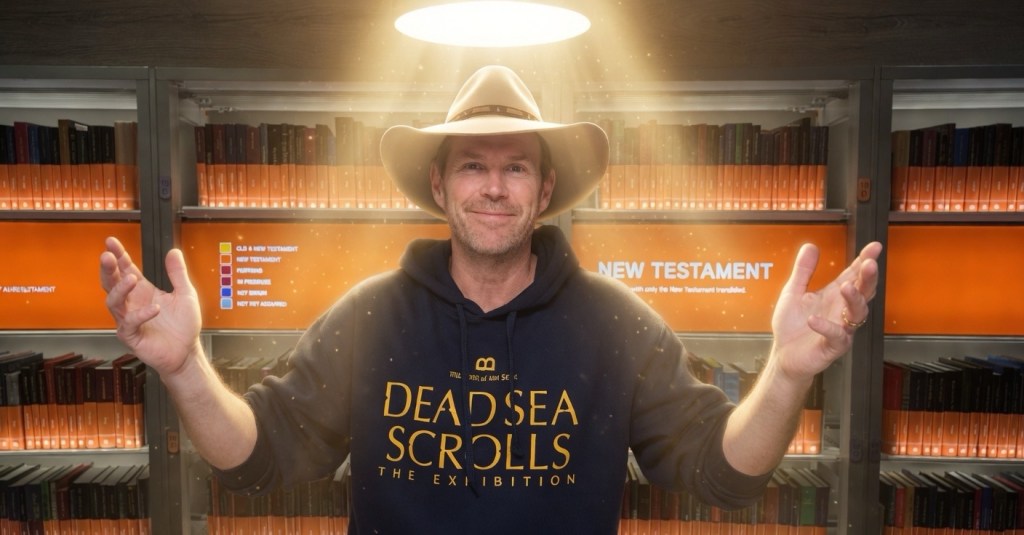
About the Author: Rich Hoffman
Rich Hoffman is an aerospace executive, political strategist, systems thinker, and independent researcher of ancient history, the paranormal, and the Dead Sea Scrolls tradition. His life in high‑stakes manufacturing, high‑level politics, and cross‑functional crisis management gives him a field‑tested understanding of power — both human and unseen.
He has advised candidates, executives, and public leaders, while conducting deep, hands‑on exploration of archaeological and supernatural hotspots across the world.
Hoffman writes with the credibility of a problem-solver, the curiosity of an archaeologist, and the courage of a frontline witness who has gone to very scary places and reported what lurked there. Hoffman has authored books including The Symposium of Justice, The Gunfighter’s Guide to Business, and Tail of the Dragon, often exploring themes of freedom, individual will, and societal structures through a lens influenced by philosophy (e.g., Nietzschean overman concepts) and current events.

