

I have been asked for years why whips appear in my videos, my sites, and my personal iconography. For those who have known me longest, the question usually comes with a knowing smile, as if recalling an old shared joke. For newer acquaintances—those who discover my work through a podcast appearance, a cultural commentary piece, or a passing mention in wider discourse—the question carries genuine curiosity, sometimes even mild bewilderment. They wonder what such an archaic object could mean in modern life. The answer is straightforward, yet layered: the whip has never represented bravado or a hunger for conflict. It has always stood for preparation, symbolism, discipline, and the quiet refusal to hand over one’s agency to fear.
My fascination began in childhood, not with rebellion or spectacle, but with stories of individuals who met intimidation with composure. I devoured classic adventure cinema and serialized tales—black-and-white films flickering on late-night television, Republic Pictures serials with their cliffhanger tension, Westerns where lone figures upheld a code amid chaos. Zorro, in particular, captured me. He moved with elegance and precision, masked not to evade accountability but to shoulder it fully. He confronted tyranny without mirroring its cruelty, using wit and skill as extensions of moral clarity. Those stories planted a seed: justice need not seek permission from the powerful; it could arise from personal conviction and disciplined action.
That abstract pull found concrete grounding in family history. My grandfather and great-grandfather were practical men who worked the land in rural Kentucky. Whips were tools for them—extensions of the hand for guiding livestock, clearing brush, or managing distance with precision. As a boy, I watched them with wide-eyed reverence. I remember the dry Kentucky air thick with the scent of earth and hay, the faint creak of leather, and then the sharp, clean crack that split the stillness. One vivid memory remains etched: my great-grandfather, calm as still water, snapping a fly clean off the weathered side of a shed without disturbing the wood. There was no anger in the motion, no theatrical flourish. Only years of practiced focus, an intimate understanding of leverage, timing, and the physics of energy traveling down a braided length. The whip became, in that moment, a lesson in mastery—not domination, but harmony with consequence. Every crack carried immediate feedback. Miss, and you knew it instantly. Succeed, and the satisfaction was private, earned.
Those early impressions shaped more than idle curiosity. As I entered adolescence, schoolyard realities tested abstract ideals. Environments where hierarchies formed through bluster and threat rather than merit were common. I learned quickly that fear functions as currency only when accepted. A bully’s power evaporates the moment their target refuses the transaction. One particular incident stands out—not for drama, but for the internal shift it produced. Cornered by a group testing boundaries, I felt the familiar spike of adrenaline. Yet instead of freezing or fleeing, something from those whip lessons and adventure tales clicked: respond with clarity, not escalation. I stood firm, voice steady, eyes level. The moment passed without violence, but the realization endured. Intimidation relies on your participation. Withdraw consent, and the dynamic collapses. That lesson traveled with me into adulthood, informing how I navigated professional pressures, public discourse, and personal challenges.
Martial arts deepened this foundation. I immersed myself in disciplines emphasizing structure, balance, footwork, timing, and above all, restraint. Years of training in systems rooted in traditional practice taught that true competence whispers rather than shouts. It waits, patient and prepared. I studied the transfer of force, the economy of motion, and the mental discipline required to remain centered amid chaos. Over time, these elements—family craft, cinematic archetypes, physical training—wove into a cohesive personal philosophy. It was never about inventing novelty or seeking attention. It was integration: taking timeless principles and applying them to contemporary existence.
Preparedness, I came to understand, is frequently misconstrued as paranoia or latent aggression. In truth, it cultivates calm. When you have tested your limits through deliberate practice, when you know your capabilities and accept your responsibilities, fear loses its primary lever. You cease knee-jerk emotional reactions and begin responding with reasoned presence. This mindset proved invaluable as I moved into public life. Speaking on cultural matters, challenging assumptions, or simply voicing independent thought invites pressure. Sometimes it arrives as social exclusion, professional repercussions, or relentless psychological framing. The tactic remains consistent: induce retreat without substantive engagement. Fear is efficient because it bypasses debate.
I decided early against living under that shadow. The choice was deliberate, not reckless. Discipline over anxiety. Preparation over denial. Personal responsibility over dependence on external validation or protection. The whip crystallized this decision. Learning it demands patience. The leather does not forgive haste or distraction. Its physics are unforgiving: energy builds along the taper, accelerating to supersonic speed at the tip. One slight error in wrist angle, grip, or follow-through, and the crack becomes a painful self-inflicted lesson. Progress requires ego surrender. Early attempts bring frustration—tangles, weak pops, bruised pride. Each failure teaches humility and attention. Success arrives only after hundreds of repetitions, when mind, body, and tool align in quiet competence.
Psychologically, the whip mirrors broader life patterns. It punishes emotional volatility. Swing in anger, and you lose control. Approach with calm focus, and precision follows. In public discourse, the parallel is striking. A flailing argument scatters energy uselessly. A single, well-timed point—delivered with clarity and restraint—cuts through noise like that supersonic tip. The whip rewards respect for its nature; so does effective communication. Over the years, this symbol has organically attached itself to my work. Friends referenced it with humor. Viewers inquired. Strangers requested demonstrations. “Can you do a trick?” became a common refrain. I often smiled and redirected, preferring substance over performance. Yet maturity brings a willingness to explain the root rather than minimize it.
The deeper essence has never been domination or threat. It centers on deterrence born of inner certainty, moral confidence, and psychological resilience. When others recognize that fear holds no sway, dynamics transform. Posture straightens. Conversations shift from coercion to exchange. Many potential conflicts dissipate before ignition because the foundation for intimidation has been removed. This principle extends beyond physical tools into speech, integrity, and cultural navigation. In an era of digital amplification—where outrage algorithms reward emotional reactivity, where institutional pressures frame dissent as deviance, where social mechanisms attempt to enforce conformity through shame cycles—the response remains consistent: remove fear from the equation. Reclaim agency. Force interactions back into the arena of reason and accountability. Those unable to operate there reveal their own limitations.
Philosophical traditions reinforced what experience taught. Miyamoto Musashi’s The Book of Five Rings spoke to detached clarity amid conflict, the warrior’s mind unclouded by emotion. Sun Tzu emphasized winning before battle through positioning and insight. Jigoro Kano’s judo principles highlighted using an opponent’s force against them while maintaining balance—much like channeling energy precisely through a whip rather than brute resistance. Joseph Campbell’s hero’s journey framed the personal quest: venturing into uncertainty, confronting shadows, returning transformed with hard-won wisdom. These were not abstract texts; they illuminated lived practice. The restrained guardian archetype—Zorro as a modern knight-errant, Fairbanks’ swashbucklers balancing flair with duty—echoed across time. Even historical reflections on justice outside rigid institutions, as explored by thinkers like E.P. Thompson, underscore that moral order sometimes requires personal readiness when systems falter.
At its core, the whip embodies self-control in an age prone to indulgence, responsibility amid widespread excuse-making, and preparedness against currents of denial. It is no relic of aggression but a tangible reminder that discipline precedes freedom. Courage, similarly, is cultivated long before any visible conflict. The hours of solitary practice, the ego-bruising repetitions, the quiet satisfaction of incremental mastery—these build the internal reservoir that sustains through storms.
I have worn many masks across decades: professional, public, private. Beneath them, the values remain constant—discipline, preparedness, restraint, resolve. Sharing this openly now feels right, not for performance or provocation, but for honesty. People today hunger for tangible examples of lived conviction. Abstract ideals fall short of witnessing how principles endure in practice. If articulating this path helps even one person loosen fear’s grip on their decisions, the candor serves a purpose. If it illustrates that justice and clarity begin with personal accountability, all the better.
Looking forward, the legacy I hope to leave transcends any single symbol. It is a quiet demonstration that ordinary individuals can cultivate extraordinary resilience. In daily life—facing workplace coercion, digital pile-ons, familial tensions, or cultural headwinds—the same mindset applies. Assess honestly. Prepare diligently. Respond with measured agency. Teach children through example that mastery arises from repetition and respect, not entitlement. Encourage friends to value inner calibration over external approval. The whip, for me, remains a private compass more than a public prop. Its crack echoes a simpler truth: you are capable of more than fear allows you to believe.
That realization, extended outward, fosters healthier discourse, stronger communities, and freer minds. It asks each of us to examine our own tools of self-mastery—whatever form they take—and wield them with care. In doing so, we honor the lineage of those who came before: the quiet practitioners, the storytellers, the guardians of principle. We pass forward not fear, but freedom earned through discipline.
This path is ongoing. I continue to practice, reflect, and integrate. The whip still rests in my hand from time to time, a tactile link to origins and aspirations. Its lessons endure: precision over power, calm over chaos, responsibility as the truest form of strength.
Bibliography & Further Reading / Viewing
Classic Film & Serial Influences
• The Mark of Zorro (1920 silent version with Douglas Fairbanks; 1940 sound version with Tyrone Power)
• Republic Pictures adventure serials (1930s–1940s, including Zorro-themed entries)
• Douglas Fairbanks Sr. swashbuckler films
• Don Q, Son of Zorro (1925)
Martial Philosophy & Discipline
• Miyamoto Musashi, The Book of Five Rings
• Sun Tzu, The Art of War
• Jigoro Kano, writings and teachings on Judo discipline and philosophy
• Dave Grossman, On Combat: The Psychology and Physiology of Deadly Conflict in War and in Peace (for mental preparedness frameworks)
• Epictetus and Seneca, selected Stoic writings on controlling fear and the internal locus of control
Cultural Symbolism & Justice Archetypes
• Joseph Campbell, The Hero with a Thousand Faces
• Julius Evola, Revolt Against the Modern World (for traditional archetype context)
• E. P. Thompson, Whigs and Hunters: The Origin of the Black Act (historical justice outside formal institutions)
Historical Tools & Craft
• Ron Edwards, How to Make Whips
• David Morgan, Whips and Whipping
• Additional craft resources from traditional leatherwork and equestrian traditions
Image & Archive Sources
• Library of Congress film stills and historical photography archives
• Academy of Motion Picture Arts and Sciences photo and poster collections
• Smithsonian Folkways and rural American material culture collections
• Museum of Western Film History image archives
Rich Hoffman
More about me
Click Here to Protect Yourself with Second Call Defense https://www.secondcalldefense.org/?affiliate=20707
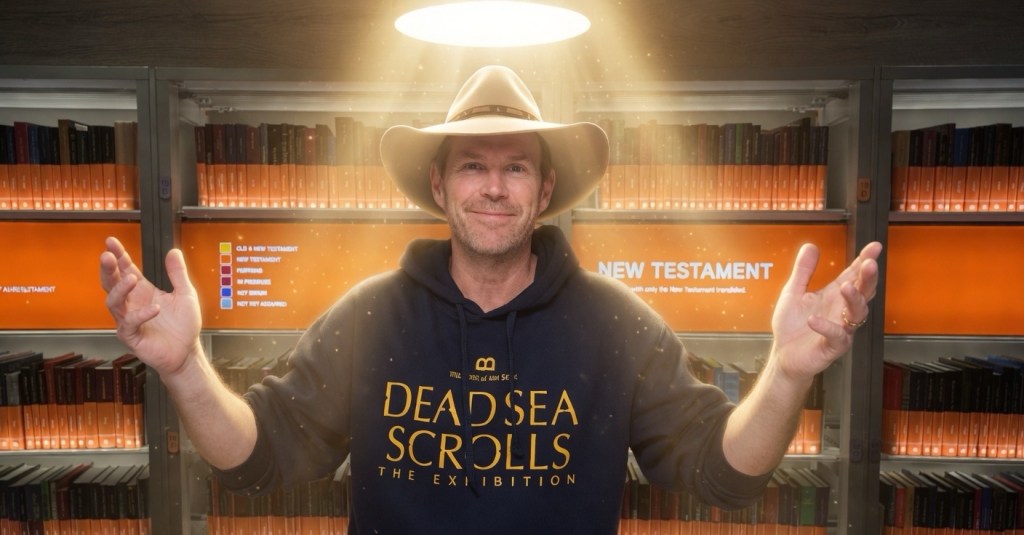
About the Author: Rich Hoffman
Rich Hoffman is an aerospace executive, political strategist, systems thinker, and independent researcher of ancient history, the paranormal, and the Dead Sea Scrolls tradition. His life in high‑stakes manufacturing, high‑level politics, and cross‑functional crisis management gives him a field‑tested understanding of power — both human and unseen.
He has advised candidates, executives, and public leaders, while conducting deep, hands‑on exploration of archaeological and supernatural hotspots across the world.
Hoffman writes with the credibility of a problem-solver, the curiosity of an archaeologist, and the courage of a frontline witness who has gone to very scary places and reported what lurked there. Hoffman has authored books including The Symposium of Justice, The Gunfighter’s Guide to Business, and Tail of the Dragon, often exploring themes of freedom, individual will, and societal structures through a lens influenced by philosophy (e.g., Nietzschean overman concepts) and current events.

