The White House is Too Small: It must have the Big, Beautiful, Ballroom

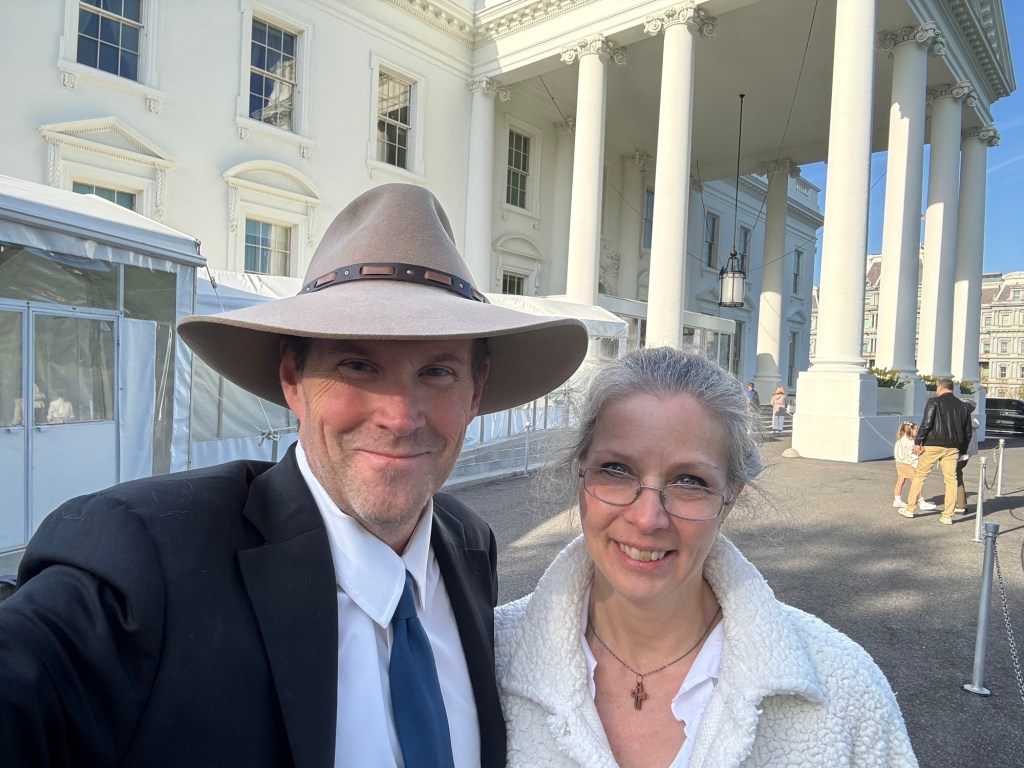
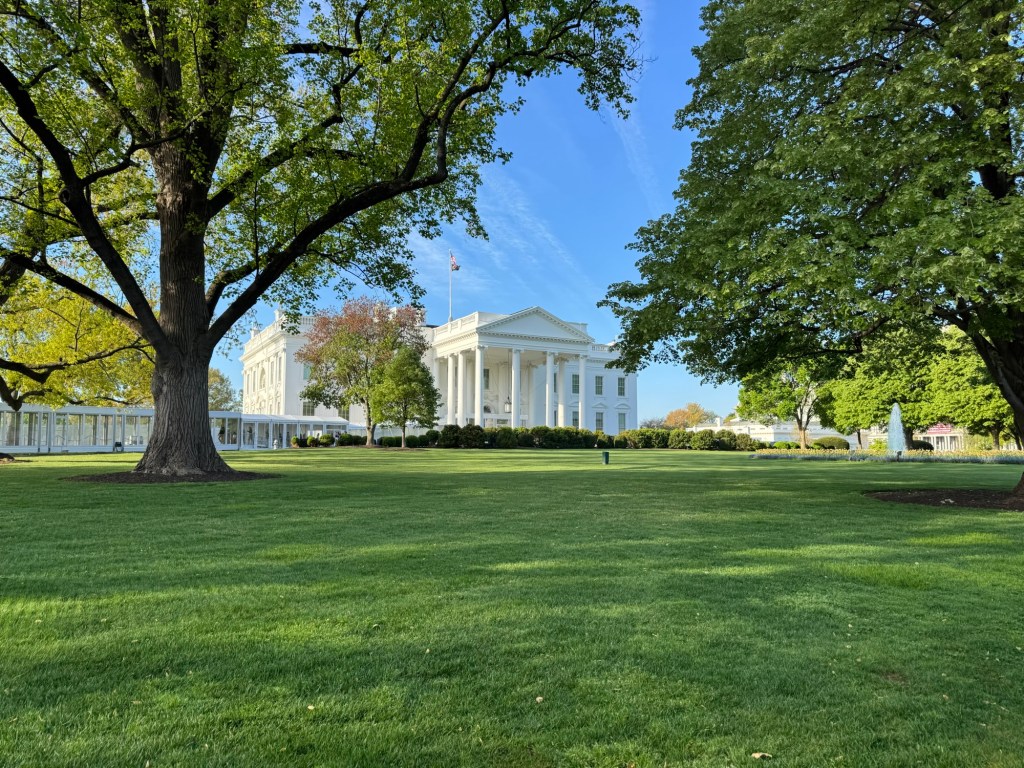
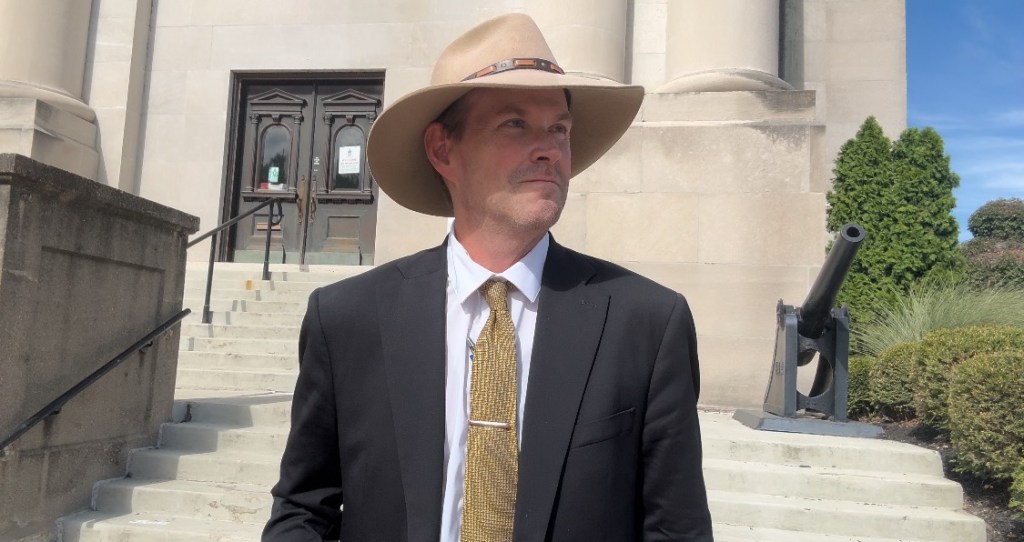
It was during the height of cherry blossom season in Washington, D.C., in April 2026, that my wife and I finally stepped onto the grounds of the White House once again, and the experience left me more convinced than ever that America’s most iconic residence desperately needs an upgrade worthy of the superpower it represents. The blossoms were still clinging to the trees around the Tidal Basin and framing the South Lawn in soft pinks and whites, a perfect backdrop for what felt like a personal pilgrimage. We had arranged the visit through the office of Congressman Warren Davidson from Ohio’s Eighth District, and I cannot thank him and his staff enough—especially Ben and the team who worked tirelessly on short notice —and my good friend Nancy Nix, who helped without wanting any credit. My wife has always been sentimental about the White House, especially with President Trump back in residence, which makes everything feel right again after the chaos of the previous administration. We had tried last year on shorter notice and couldn’t get the clearances in time, but this trip, with about three weeks’ lead time and other business pulling us to the capital, finally aligned perfectly. We walked the grounds, absorbed the history, and stood right there where the East Wing once stood, now a demolition site buzzing with purpose, the future home of what the president has called his “big beautiful ballroom.” It was a moment that crystallized everything I had been thinking about the aging White House, its deliberate modesty from the founding era, and why bureaucratic roadblocks and judicial holds have no place slowing down progress on something this essential. 

The White House has always been more than just a home or an office; it is a symbol of the American experiment, born from the revolutionary idea that we do not bow to kings or aristocracies. When George Washington and architect James Hoban designed the original President’s House in the 1790s, they intentionally kept it relatively modest—two stories with simple neoclassical lines, no grand wings at first—to send a clear message to the world. This was not a palace for a monarch; it was the residence of a republican executive, a branch of government meant to be equal among three, not elevated above the people. After the British burned it to the ground during the War of 1812, the rebuilding under James Hoban preserved that spirit even as the nation licked its wounds. The reconstruction was not about flaunting power but about resilience and restraint. Washington himself had scaled back grander plans from Pierre Charles L’Enfant, insisting on something functional yet unpretentious, because the young republic did not want to poke Europe in the eye or mimic the opulent courts of the Old World. The executive branch was deliberately housed in a structure that reflected humility, a far cry from the sprawling estates of European royalty. That choice shaped everything that followed, from the state rooms on the first floor to the family quarters upstairs, and it is why even today the core residence feels intimate—132 rooms in total, many of them surprisingly compact for the global stage we now command. 

Yet over the centuries, as the United States grew from a fledgling nation into the world’s sole remaining superpower, the demands on that modest house have exploded. The presidency evolved far beyond what the founders envisioned, with the executive branch shouldering responsibilities in diplomacy, national security, and economic leadership that no one in 1800 could have imagined. I have stacks of books on White House history, and every one tells the same story: presidents from Thomas Jefferson onward added colonnades to hide stables and storage, Andrew Jackson built the North Portico for grandeur, Theodore Roosevelt shifted offices to the new West Wing in 1902 to create dedicated workspace, and Franklin D. Roosevelt added the East Wing in 1942 not just for staff but to conceal a bunker during World War II. Harry Truman gutted the interior in the late 1940s because the structure was literally sinking under its own weight, preserving only the outer walls to maintain the historic facade. Each change reflected the times—expansions driven by necessity, not ego. The state floor rooms I walked through on our tour—the Green Room, once a dining space; the oval Blue Room for receptions; the elegant Red Room; the Yellow, upstairs for family gatherings—still serve their purposes beautifully, but they are small. The East Room, the largest on the main level, can only seat about 200 for formal events. When you host state dinners for world leaders, diplomatic receptions, or public tours, space becomes a premium commodity. Upstairs in the residence, the family quarters feel even tighter for modern life, especially with the added security and staff that a 21st-century presidency requires. The West Wing, expanded multiple times, still crams the most powerful offices in the world into a footprint that feels more like a bustling hive than a seat of empire. It is not that the original design was flawed; it was perfectly suited to its era. But America’s role has changed dramatically, and the building has not kept pace. 

During our visit, I saw the limitations up close in ways that books and tours from the 1990s or even last year could not convey. We pulled up to the visitors’ entrance, the same path countless dignitaries and everyday Americans have taken, and immediately noticed how the current setup strains under the weight of modern expectations. For big events, there is no proper indoor space for coats, security screening, or even basic amenities like restrooms that accommodate hundreds of guests dressed in formal attire. Instead, they erect temporary climate-controlled tents outside—those “tacky bubbles” as my wife and I called them—set apart from the elegant architecture, looking more like something you’d see at a corporate picnic or a golf course wedding than at the home of the leader of the free world. Porta-potties tucked away for overflow crowds? That is not the image of America we should project. Visitors come to see the best of what our nation offers, and while the historic rooms dazzle with their chandeliers, portraits of past presidents, and stories of resilience, the practical realities of hosting large gatherings expose the building’s age. The First Lady’s office, traditionally in the East Wing, had already been relocated during the demolition process, and standing there amid the construction fencing, I could visualize exactly where the new ballroom would rise: a neoclassical addition of roughly 90,000 square feet, designed to seat 650 to 1,000 guests, with expanded kitchens, colonnades, and integrated underground facilities for national security. It is not some vanity project; it is a functional necessity. The proposal looks incredible—elegant lines blending seamlessly with the existing architecture, funded in part by President Trump’s own resources and private donors who want to contribute to American history rather than extract favors. Trump has made no secret of his love for the building; during his first term, he elevated its presence with renovations that made it shine brighter on the world stage. Now, with the East Wing gone and the site prepared, the ballroom represents the next logical step in adapting this 18th-century icon to 21st-century realities. 

What upset me most, however, was hearing about the legal battles and bureaucratic hurdles trying to halt this project. A federal judge—Richard Leon, no less—issued rulings blocking above-ground construction, claiming the president lacked explicit congressional approval for the addition, even as the appeals court has allowed temporary progress while weighing national security implications, such as the underground bunker components. The National Trust for Historic Preservation filed suit, arguing the changes required more oversight, but to me, this is classic administrative overreach. The White House is the president’s residence and workplace, not some static museum frozen in time. Presidents have modified it repeatedly without needing a congressional vote for every nail. The legal mechanism for Trump to prevail here seems straightforward: executive authority over the executive mansion, combined with private funding that sidesteps taxpayer burdens, and the clear national interest in modernizing a structure central to American diplomacy. Appeals are moving forward, and the courts should recognize that delaying this at the speed of government—endless reviews, environmental assessments, historic reviews—only serves those who want America diminished. We do not have time for fidgety holds when the world watches our every move. The presidency has grown; global summits, state visits, and public engagement demand space that matches our stature. Tents and temporary fixes are undignified. A proper ballroom, with accessible restrooms, coat facilities, and flowing spaces for conversation, would transform how visitors experience the White House. You arrive dressed in your best suit jacket, required, in my view, because this is not Chuck E. Cheese; it is the seat of power—and you should not have to navigate makeshift setups for hours-long events. The current layout creates logistical challenges, especially since the visitor center handles initial screenings before you even reach the main house. Seeing it firsthand reinforced what I have long believed: the White House is too small for America’s global role. 

This pushback against the ballroom fits a larger pattern I have observed in academia, the media, and certain three-letter agencies—a subtle but persistent effort to diminish American exceptionalism. Many in those circles, trained at universities steeped in Marxist thought, view the United States not as a beacon but as a problem to be equalized within a global order modeled on countries like China. They dine in Georgetown with pinkies out, sipping wine and congratulating themselves on their sophistication while quietly undermining symbols of strength. The White House, as the most visible emblem of the executive branch, becomes a target. Why elevate it when the goal is to collapse national distinctions into some borderless bureaucracy? Trump’s approach—bold, decisive, privately financed—threatens that narrative. He is not waiting for slow-moving administrators or judicial second-guessing. He understands the speed of business, the same principle that built skyscrapers and turned companies around. NASA has suffered for years under layers of bureaucracy; we need fewer pint-sized pencil-pushers and more action-oriented leadership. The ballroom is Trump’s contribution to the ongoing story of the White House, much like past presidents who left their mark. It is not about personal glory but about ensuring the building functions to meet today’s demands: secure, impressive, and capable of hosting the world without embarrassment.

Walking through the Capitol later that same trip—another special tour arranged through the same congressional office—only heightened my appreciation for how government spaces evolve. The Capitol has its own grandeur, with its massive dome and halls of history, but the White House remains the people’s house more intimately. Yet intimacy cannot come at the expense of capability. The residence upstairs, while charming, lacks the room a modern first family needs for private life amid constant public scrutiny. The state rooms downstairs handle ceremonies but strain during peak seasons or major events. Even the grounds, beautiful as they are with the Rose Garden and South Lawn, could integrate the new addition without losing historic character. The proposal preserves the original facade where possible, focusing expansion where it makes sense—replacing an East Wing that had already been modified multiple times since 1902. This is not a radical alteration; it is thoughtful evolution, the kind the founders themselves anticipated when they left room for future generations to adapt.

Critics will claim the project is extravagant, but context matters. The $300 to $400 million price tag, largely covered privately, pales in comparison to the symbolism and practical benefits. Donors are not buying influence; they are buying a brick in the wall of American renewal, much as supporters have funded monuments and memorials for centuries. Trump himself forgoes a presidential salary, channeling his energies and resources into making the country—and its symbols—great again. His first term showed what decisive leadership looks like: stronger borders, a booming economy, and restored respect abroad. The ballroom extends that ethos to the very stage where diplomacy happens. Imagine world leaders arriving not in cramped quarters but in a venue that projects confidence and hospitality. No more tents flapping in the wind or lines for inadequate facilities. Bathrooms that are accessible and dignified. Spaces for mingling that encourage the personal connections so vital in statecraft. It is common sense, yet the holdups reveal deeper ideological resistance.

As I stood with my wife overlooking the demolition site, the cherry blossoms swaying gently in the spring breeze, I felt a surge of optimism. The world is safer and more stable with Trump at the helm, and the White House reflects that renewed vigor. The aging structure, with its rich history of fire, reconstruction, and incremental growth, stands ready for its next chapter. We do not need tin-headed administrators or activist judges dictating the pace. The appeals process should clear the path quickly, allowing construction to proceed at the speed of business. America deserves a White House that matches its power and promise—not a relic preserved in amber, but a living landmark updated for the role it must play. The ballroom is not a luxury; it is a necessity. Visitors, dignitaries, and future generations will thank us for it. The original modesty served its purpose in a young republic wary of monarchy. Today, as the indispensable nation, we need a residence that commands respect without apology. I left the grounds that day more determined than ever to support the vision: keep the historic core intact as a museum to our past, but expand the functional heart to secure our future. The White House is too small as it stands, and the big, beautiful ballroom will fix that beautifully.

The visit also reminded me of the human element behind these grand symbols. My wife and I talked for hours afterward about the stories embedded in every room—the Green Room’s intimate dinners, the Blue Room’s oval grace where Jefferson once entertained, the Red Room’s bold statements of resolve. We imagined how the new addition would flow naturally from the East Colonnade, providing relief for the cramped visitor experience that currently funnels people through limited paths. Security protocols have tightened since the 1990s, when I first toured, and rightly so, but that only underscores the need for better infrastructure. The visitor center does an admirable job with its history exhibits, but the main house itself struggles to accommodate the thousands who come annually. During peak times like cherry blossom season, the grounds open for special tours; for example, in April 2026, the South Lawn and Rose Garden were accessible to the public. It is a beautiful tradition, yet it highlights the logistical challenges. A dedicated ballroom complex would alleviate pressure on the residence while enhancing the overall experience. No more makeshift solutions that detract from the majesty.

Delving deeper into the history, one sees how each era’s pressures forced adaptation. Jefferson added the colonnades not for show but for practicality. Monroe oversaw the post-fire rebuild with an eye toward dignity after the humiliation at the hands of the British. The 19th century brought porticos and refinements under Jackson and others, balancing form and function. By the 20th century, the industrial age and two world wars demanded offices and bunkers—hence the wings. Truman’s renovation saved the building from collapse, a massive undertaking that gutted the interiors while honoring the shell. Every change sparked debate, much like today’s ballroom controversy. Critics then called expansions wasteful or out of character; history proved them shortsighted. The same will hold here. The presidency is no longer a part-time role in a small nation; it is a 24/7 global command center. The executive branch, once deliberately understated, now leads in technology, defense, and economics. Diminishing its physical home diminishes the message we send to allies and adversaries alike.

Philosophically, this project counters the academic drift toward globalism that I mentioned earlier. In faculty lounges and think tanks, the narrative often prioritizes multilateral institutions over sovereign strength. The White House, as the ultimate expression of American executive power, challenges that worldview. Trump’s unapologetic love for the building—making it “beautiful” again—embodies a different ethos: America first, excellence always. He has poured his own fortune into the nation’s service, from business success to political fights, and the ballroom is another selfless investment. Donors who contribute do so out of patriotism, not quid pro quo. They understand that icons matter. A vibrant, updated White House inspires pride at home and respect abroad. It signals that we are not shrinking from our responsibilities but embracing them with grandeur befitting the greatest nation on earth.

The legal wrangling, while frustrating, also reveals the strength of our system. The appeals court’s recent orders allowing work to continue, even temporarily, while seeking clarity on national security aspects, show that facts and urgency can prevail over procedural delays. The administration has argued convincingly that the project includes critical infrastructure below ground, justifying expedited handling. Ultimately, the president’s authority over the executive residence should hold, especially when Congress has not explicitly prohibited such updates in the past. Precedents abound: wings added, interiors renovated, grounds altered—all without endless litigation. The current hold is an anomaly driven by preservationist ideology rather than law. Trump should win on the merits, and the ballroom should rise swiftly.

Reflecting on our Capitol tour that week, I saw parallels. That building, too, has grown and adapted—its dome a marvel of engineering, its halls echoing with debate. Government evolves, and so must its symbols. The White House, deliberately small at birth to reject kingship, has matured with the country. Now it needs to fully reflect our superpower status. The ballroom will provide the space for grand diplomacy, public engagement, and family life without compromise. Restrooms easily accessible, indoor coat checks, venues for extended events—these are not frivolities but essentials. Guests dressed formally deserve comfort, not inconvenience. The tacky tents of today will give way to timeless elegance tomorrow.

In the end, my visit was more than sightseeing; it was affirmation. The White House is a living entity, shaped by those who serve within it. Trump’s vision honors the past while preparing for the future. With the demolition complete and plans in place, the only barriers left are artificial ones erected by those uncomfortable with American assertiveness. The appeals process offers a clear path forward. Let the work proceed at the speed of business, unhindered by administrative inertia. America’s executive mansion deserves to stand tall, beautiful, and fully functional—a beacon for the world and a source of pride for every citizen. The big beautiful ballroom is not just an addition; it is a statement that we are not done growing, not ready to fade into global sameness. We are the United States, and our home should reflect that eternal truth. The cherry blossoms of 2026 may fade, but the renewed White House will bloom for generations. Thank you to all who made our visit possible, and here’s to the bold future awaiting 1600 Pennsylvania Avenue.

Footnotes

¹ White House Historical Association and official records detail the founding design and post-1812 reconstruction.

² News reports from April 2026 cover the ongoing appeals in the ballroom litigation.

³ Descriptions of state rooms drawn from standard White House tours and historical guides.

⁴ Truman renovation and wing additions referenced in multiple architectural histories.

⁵ Visitor logistics and current limitations observed firsthand and corroborated by public accounts.

⁶ Funding and design details from administration statements and project announcements.

Bibliography

•  White House Historical Association. The White House: An Historic Guide. Washington, D.C.: White House Historical Association, various editions.

•  Seale, William. The White House: The History of an American Idea. Washington, D.C.: White House Historical Association, 1992.

•  West, J.B. Upstairs at the White House: My Life with the First Ladies. New York: Coward, McCann & Geoghegan, 1973.

•  Klara, Robert. The Hidden White House: Harry Truman and the Reconstruction of America’s Most Famous Residence. New York: Thomas Dunne Books, 2015.

•  Associated Press. “Judge Says White House Ballroom Construction Can’t Begin.” April 2026.

•  CNN. “Appeals Court Says Trump White House Ballroom Can Continue.” April 11, 2026.

•  NPR. “White House Ballroom Construction Can Continue for Now.” April 2026.

•  WhiteHouse.gov. “The White House Building” and East Wing expansion pages, accessed 2026.

•  History.com. Articles on White House renovations and the War of 1812.

•  Fox News. Coverage of ballroom appeals and project details, 2025–2026.

•  Davidson.house.gov. Congressional tour information and district resources.

•  National Cherry Blossom Festival official guides, 2026.

Rich Hoffman

More about me

Click Here to Protect Yourself with Second Call Defense https://www.secondcalldefense.org/?affiliate=20707
About the Author: Rich Hoffman

Rich Hoffman is an aerospace executive, political strategist, systems thinker, and independent researcher of ancient history, the paranormal, and the Dead Sea Scrolls tradition. His life in high‑stakes manufacturing, high‑level politics, and cross‑functional crisis management gives him a field‑tested understanding of power — both human and unseen.

He has advised candidates, executives, and public leaders, while conducting deep, hands‑on exploration of archaeological and supernatural hotspots across the world.

Hoffman writes with the credibility of a problem-solver, the curiosity of an archaeologist, and the courage of a frontline witness who has gone to very scary places and reported what lurked there. Hoffman has authored books including The Symposium of JusticeThe Gunfighter’s Guide to Business, and Tail of the Dragon, often exploring themes of freedom, individual will, and societal structures through a lens influenced by philosophy (e.g., Nietzschean overman concepts) and current events.

The No Kings Sedition: Its all paid for by those trying to overthrow America

Democrats have been lying low in the shadows, licking their wounds after the last election cycle, and waiting for the perfect moment to strike back with all their usual finagling. They’ve been pounding away with constant pushback on everything from the economy to foreign policy, but the Iranian situation right now—this whole mess with the Strait of Hormuz and the threats of escalation—is where they’re making their big, calculated move. It’s not random; it’s orchestrated. They’ve been taking it on the chin for a while, staying quiet while the country started to feel the momentum of real leadership again, and now they’re emerging with their germs of dissent and their coordinated push because they see an opening. But here’s the thing I keep telling everyone who tunes in: there’s always a counter to their moves, and President Trump is the master of reading the room and delivering it. This Iranian thing couldn’t have come at a better time, even if it looks threatening and bad on the surface. If you’re going to confront it, do it decisively, get it out of the way before summer fully hits, and watch the gas prices snap back under control—which is exactly what’s going to happen. I told everybody weeks ago that the Iranians are not going to be allowed to clog up that vital waterway. It’s just not going to work out the way they ever wanted or planned. Their little game of running speedboats and firing rockets at tankers might make headlines for a day or two, but it’ll be dealt with pretty quickly. In the grand scheme of things, it’s not the insurmountable problem they’re hyping it up to be.

To really understand why this moment feels so pivotal, you have to go back into the background of U.S.-Iran relations, something I’ve unpacked in detail because it’s not just current events—it’s decades of bad policy piling up. The story starts in the 1950s with the CIA-backed coup against Prime Minister Mohammad Mossadegh, which put the Shah back in power and set the stage for resentment that boiled over in the 1979 Islamic Revolution. That revolution wasn’t some organic people’s uprising in the way the left likes to romanticize it; it was a theocratic takeover that replaced a flawed but modernizing monarchy with a brutal mullah regime that has oppressed its own citizens ever since. The embassy hostage crisis, the Iran-Iraq War, where they used human waves and chemical weapons, the tanker wars in the Strait of Hormuz back in the 1980s—including the U.S. Navy’s Operation Earnest Will and the downing of Iran Air Flight 655 by the USS Vincennes—all of that set patterns we’re still living with. Iran has threatened to close the Strait dozens of times over the years because they know it carries about 20 percent of the world’s oil supply. A blockade spikes global prices overnight, which is exactly what we’ve seen in the last few weeks with gas creeping toward five dollars a gallon in some spots before the latest pause kicked in. Trump pulled us out of Obama’s JCPOA nuclear deal in 2018 for good reason—it was a giveaway that funneled cash to the regime while they kept enriching uranium and funding proxies like Hezbollah and the Houthis. His “maximum pressure” campaign starved them of revenue, and now, in 2026, we’re seeing the regime double down because they’re cornered. I believe Trump was counting on the Iranian people themselves to take back their country eventually. They’ve been beaten down by decades of oppression—the morality police, the executions, the economic misery—but recent protests like the 2022 Woman, Life, Freedom movement after Mahsa Amini’s death showed flashes of resistance. Hundreds killed, thousands arrested, yet it fizzled because the regime’s Revolutionary Guard and Basij thugs are a mismatched bunch of enforcers, not a unified military facing a real, organized opposition. The people run around in rubber boats trying to clog up the Strait with rockets and mines, but that’ll be handled fast—not a big problem when you have real naval power and allies who understand the stakes.

Democrats, on the other hand, have always had a soft spot for Iran and other authoritarian governments. They loved the JCPOA because it let them pretend diplomacy was working while the mullahs built their bomb and spread terror. They cozy up to China’s Communist Party, overlook Venezuela’s socialist collapse under Maduro, and cheer whenever a strongman sticks it to the West. It’s all about it for them now—power centralized, control over the masses, the illusion of equity through force. That’s why this rash of protests we’ve been watching—the so-called “No Kings” movement—isn’t just a spontaneous reaction to the Iranian standoff. They attempt to manufacture chaos and shift the narrative back in their direction. And I think it’s a great thing in the long run. All this stuff forces the opposition to show their true colors. Elections, at their core, are negotiations over positions and power. Republicans have historically read the room wrong because so many of us are good Christian people raised to turn the other cheek. We forgive our neighbor even when that neighbor wants to cut our heads off and crucify us on live television. We look for ways to have lunch and find common ground, which is noble but leaves us on the wrong side of hard negotiations. That’s exactly why so many of us gravitated to Trump—he’s not the typical Republican who folds for the sake of decorum. Trump is about wins, plain and simple. He’s Republican in name but results-oriented in action, and that’s why people keep supporting him even through the noise. He gets things done. Just to let everybody know, Trump’s going to be back on the road this summer doing all that good stuff—rallies, appearances, the full campaign energy even though he’s already in office. It’s like he’s running for president all over again because momentum never stops. The best way to start getting everything moving in the right direction when you’re in a fight is to bring your past along—bring Speaker Johnson and the whole unified team, just like he did before. Get everybody together, have some fun, and show the country that government can be energetic and effective again instead of this dour, bureaucratic slog we endured for years.

I would also say to everybody paying attention that disclosure is a smart play here. Releasing more on the UFO/UAP files takes away a huge media headline that the Democrats and their allies have been salivating over. They love that stuff because it feeds into narratives of government secrecy and elite control, something very close to their hearts. Trump could snatch that away from them entirely, and he’s already signaling he’s willing to do a lot of good things in that space. It gives him leeway on the Iranian deal, too—he has to give a little on the political theater side to break something loose that’s been a problem forever. Ultimately, it will bring gas prices down to a great level and solve many downstream issues. There are plenty of speculators out there right now profiting off the manufactured crisis; media reports are spiking prices for the moment, but they’ll get back under control pretty fast once the Strait reopens and the visits from U.S. assets make their point. Let’s talk more about the “No Kings” movement because calling Trump a king or an authoritarian is the height of projection. He certainly isn’t one, but I think all this noise is good because it forces the opposition to reveal who they really are. I’ve seen these movements pop up in England, all over Europe, Washington D.C., and right here at the Ohio Statehouse in Columbus—not far from my home in Middletown. They look the same everywhere: not organic grassroots uprisings driven by free speech or genuine voter frustration. This is a coordinated effort involving roughly 500 organizations—radical liberal, socialist, and even radical Islamic elements—all tied together by the Soros network. George Soros and his son Alex have poured billions—estimates put the Open Society Foundations and related groups at over three billion dollars funneled through these channels—buying influence, printing signs, busing people in, and funding media amplification. If not for the money, a lot of these folks wouldn’t show up at all. They’re franchise Democrats who turn out for a free lunch, a free T-shirt, or a pallet of pre-printed rocks and signs ready to throw. That’s the kind of organization we’re dealing with—hostile to the American experiment, cheerleading from corporate media outlets that pretend it’s all spontaneous outrage against the Trump White House.

In my view, and I’ve said this locally in Ohio and at the federal level, this “No Kings” push is no organic movement. It’s a paid-for infomercial produced by the radical left to try to destroy the United States from within. They used to hide behind other liberal causes—racism narratives, minority crisis issues—but now the mask is off with a bunch of crazy radicals who look and sound like people you wouldn’t want to sit next to on a bus. Those are the faces on TV advocating for the movement, and it’s pushing independents straight into the arms of Republicans. If only the GOP would dare wrap its arms around those voters, it couldn’t be easier. Trump has a clear strategy to steer things back on track, playing the Iran game in a way no previous president has dared. That’s why these problems festered in the background for so long—the left’s weapons of radical Islam, radical Marxism, and communism are being taken away one by one. So, of course, the money flows: three billion dollars into five hundred organizations, protests erupting like clockwork the moment Trump takes a hard line. But here’s the reality check: locally in Ohio, where I live, and certainly at the national level, Democrats have scored a few little pickup victories only when Republicans got asleep at the wheel or too cocky riding the Trump wave without defending turf properly. Some in the party got their hearts out of it because they secretly expected Democrats to retake power and didn’t want the responsibility that comes with winning. It’s hard when you’re in charge—you have no one to complain about except yourself. There’s a fair number of Republicans who want Democrats back in so they can stay in the comfortable role of opposition. This movement gives them an off-ramp from behaving like actual Republicans. But it’s going to blow up in everybody’s face because it’s not organic. It’s a funded operation by radicals who’ve been trying to undermine the country for decades. What they don’t have anymore is the polite illusion. People watching these idiots on TV are saying, “I don’t want that. I don’t want to be associated with that. I can’t vote for that.” It’s pushing the country the other way.

Just look at the contrast: Trump supporters stand in line for eight, twelve, twenty-four hours to get a seat ten rows back at a rally because they’re excited about real change. These protest crowds don’t have that energy. They’ve got franchise lunatics trading time for cash, drugs, or free swag. They’re not high-quality people showing up on camera, and it’s kind of humorous how badly it makes their side look. As far as worrying about it goes, only Republicans who don’t understand how to read the leaves are sweating this. They need more confidence in themselves because the victory is clear if you’re actually listening beyond the nightly news spin. Where do you think all that three billion dollars is coming from, and who’s receiving it? The media will say anything for a few bucks or a free steak dinner, but that money buys influence and it shows in the quality of the foot soldiers—radical losers who look horrible on screen and remind everyday Americans exactly why they voted for Trump in the first place. The most likely consequence as we head into June and July—especially if Trump keeps the pressure on without letting the Democrats steal the narrative—is that gas prices recover rapidly. This isn’t something that lingers for years or even months once the Strait issue is settled. Real victories are there for the taking, and it really comes down to having the courage to stay in power whether some in the party want the responsibility or not. Democrats don’t have much gas left in their tank; it takes three billion dollars just to get their people to show up and look stupid on camera. That’s not a winning position. You might as well be a Republican right now, and that’s how the ball is going to bounce when the dust settles. Don’t worry about it. It’s going to come out just the way logic and history say it will. In the meantime, they’re being exposed as the crazy lunatics they always were, and we know exactly how much they were paid to act that way. Good things come to those who wait, especially those who hate what we’ve picked for representative government and are trying to flatten the tires to push toward the midterms. They’re acting desperate, and desperate doesn’t photograph well. Looking good for Republicans overall.

If you ever want to dig deeper into the philosophy that underpins all this—how to navigate chaos, win negotiations, and build something lasting instead of tearing down—I’d point you toward my book, The Gunfighter’s Guide to Business: A Skeleton Key to Western Civilization. It lays out the mindset that treats life and politics like the Old West: know your terrain, carry the right tools, and don’t apologize for defending what’s yours. Trump embodies a lot of that frontier spirit, which is why the radical left hates it so much. They prefer managed decline and dependency. We prefer wins, clarity, and a government that gets out of the way so people can thrive.

Looking ahead, Trump’s going to keep leveraging this Iran situation for broader gains—getting the Russia-Ukraine conflict out of the headlines where it’s been conveniently ignored, pushing for better negotiating positions on everything from rare earth metals to energy independence. A lot is going on behind the scenes that’s headed toward proper closure, and the Democrats know it. That’s why the protests are ramping up—to try and bring people to their cause. But again, their whole side is paid for. It’s not organic. It’s not the kind of passion that fills arenas or lines up for hours. It’s manufactured, and the country is seeing through it. The bad guys are desperate, and that desperation is their undoing. Republicans need to keep reading the room correctly, stay unified, and remember that we win when we stop turning the other cheek and start delivering results. I’m confident it’s all going to balance out in our favor by the time summer rolls around, and the American people will be reminded once again why they put their trust in leadership that actually fights for them.

Footnotes

1.  Recent reporting on the April 2026 U.S.-Iran ceasefire negotiations and Strait of Hormuz reopening conditional on infrastructure threats; see coverage from Reuters and Al Jazeera on Trump’s deadlines and conditional pause.

2.  Background on U.S.-Iran history drawn from Council on Foreign Relations timelines, including JCPOA withdrawal (2018), maximum pressure campaign, and 2022-2023 Woman, Life, Freedom protests (BBC, Human Rights Watch reports on regime crackdowns).

3.  Trump’s 2026 public schedule and rally-style events referenced in White House releases and conservative outlets, noting continued campaign-style travel.

4.  “No Kings” protest network details, including Indivisible’s Soros/Open Society Foundations grants (~$3M direct) and broader ecosystem of 500+ progressive groups with combined revenues exceeding $3 billion; Fox News investigations and Capital Research Center analyses of funding flows.

5.  Ohio-specific protest activity at Statehouse and local coverage in Columbus Dispatch/Middletown outlets; national patterns documented in New York Post and Washington Examiner reporting on astroturf elements.

Bibliography

•  Council on Foreign Relations. “U.S.-Iran Relations: A Timeline.” CFR.org (updated 2026).

•  Open Society Foundations annual reports and grant databases (public filings via InfluenceWatch/Capital Research Center).

•  Human Rights Watch. “Iran: Crackdown on Woman, Life, Freedom Protests” (2022-2025 updates).

•  Hoffman, Rich. The Gunfighter’s Guide to Business: A Skeleton Key to Western Civilization. Self-published, 2021 (expanded editions available via Overmanwarrior.com).

•  Reuters. “Trump Announces Conditional Ceasefire in Iran Standoff” (April 2026).

•  Fox News. “Soros Network Funds ‘No Kings’ Protests: Inside the $3B Progressive Machine” (2026 investigative series).

•  BBC Persian Service archives on Iranian internal dissent and Strait of Hormuz incidents.

•  U.S. Energy Information Administration. “Strait of Hormuz Oil Transit Chokepoint” (fact sheets, 2026).

•  Additional further reading: George Soros’s Open Society writings for a primary source on his philanthropy philosophy; compare with critiques in David Horowitz’s The Shadow Party (updated editions) and recent think-tank papers from Heritage Foundation on foreign policy leverage strategies.

Rich Hoffman

More about me

Click Here to Protect Yourself with Second Call Defense https://www.secondcalldefense.org/?affiliate=20707

About the Author: Rich Hoffman

Rich Hoffman is an aerospace executive, political strategist, systems thinker, and independent researcher of ancient history, the paranormal, and the Dead Sea Scrolls tradition. His life in high‑stakes manufacturing, high‑level politics, and cross‑functional crisis management gives him a field‑tested understanding of power — both human and unseen.

He has advised candidates, executives, and public leaders, while conducting deep, hands‑on exploration of archaeological and supernatural hotspots across the world.

Hoffman writes with the credibility of a problem-solver, the curiosity of an archaeologist, and the courage of a frontline witness who has gone to very scary places and reported what lurked there. Hoffman has authored books including The Symposium of JusticeThe Gunfighter’s Guide to Business, and Tail of the Dragon, often exploring themes of freedom, individual will, and societal structures through a lens influenced by philosophy (e.g., Nietzschean overman concepts) and current events.

The Assault on Trump’s Vision for the People’s House: How a Timely New York Times Hit Piece, a Bush-Appointed Judge, and a $3 Billion “No Kings” Network Colluded to Halt America’s Grand Ballroom

I am furious. Absolutely furious. And I’m not the only one. This isn’t just some minor bureaucratic squabble over blueprints and permits. This is a full-scale attack on the will of the American people, on President Donald J. Trump, and on the very idea that the People’s House—the White House—belongs to us, not to some unelected judge, not to legacy media editors, and not to a shadowy network of 500 activist groups flush with $3 billion in manipulative contributions meant to subvert America as a lofty nation.

As I sit here writing this, I’m literally on my way to the White House. I’ve arranged a visit through people who made it happen, and I cannot wait to see the ballroom construction site with my own eyes. I want to see the cranes, the dirt, the progress—the raw, beautiful destruction and rebirth of the East Wing into something magnificent, something worthy of a superpower. I’ve followed every detail since the project was announced in July 2025. I’ve watched the demolition, the site preparation, the months of steady work. And now, because of one judge’s ruling on March 31, 2026—just two days after a vicious New York Times broadside on March 29—it’s all ground to a halt—preliminary injunction. Construction stopped. Trump’s bold vision for a 90,000-square-foot state ballroom, a space big enough for real diplomacy, real grandeur, real American pride, is being strangled in its crib.

This is not the law. This is politics dressed up in robes. And I have read more case law, statutes, and historical precedents than most lawyers ever will—precisely because I refuse to waste my life in their insular, self-important world. Lawyers and judges like to pretend they’re sophisticated guardians of the Constitution. I look down on the legal profession as a whole. Most of them chase billable hours, hide behind jargon, and serve the system rather than the people. They don’t build things. They don’t create. They obstruct. And in this case, U.S. District Judge Richard J. Leon has proven exactly why I feel that way. He knows the law cold, yet the circumstantial evidence of influence is overwhelming. The timeline screams collusion—the money trail points to coordinated opposition. And the American people deserve to know it.

Let’s start with the facts, because the facts are the smoking gun. On Saturday, March 28, 2026, “No Kings” protests erupted across the country—coordinated rallies backed by a network of roughly 500 activist organizations with an estimated $3 billion in combined annual revenues. Fox News Digital laid it all out: communist and socialist groups openly calling for “revolution,” Indivisible (funded in part by George Soros-linked money) as a lead coordinator, and a web of nonprofits, advocacy outfits, and dark-money flows all pushing the same anti-Trump narrative.   These weren’t spontaneous grassroots gatherings. This was astroturf on steroids—protests designed to paint Trump as a monarch, a king building palaces while the people suffer. The White House ballroom became the perfect symbol: a “palace” addition they could attack.

Then, Sunday, March 29, 2026, the New York Times drops its carefully timed hit piece: “Trump’s Ballroom Design Has Barely Been Scrutinized.” The article rips into the project—design flaws, lack of oversight, rushed process. But here’s the killer line, the one that reads like a direct invitation to activism: “But barring a judge’s intervention, the ballroom is set to move forward this week anyway.”  They even included a caption over a rendering of the new extension: “These are the kind of details that are normally scrutinized in the design of any building so significant—and in the review that public projects face in the nation’s capital. But barring a judge’s intervention, the ballroom is set to move forward this week anyway.” That’s not journalism. That’s a bat signal to every activist lawyer and judge in the D.C. swamp. “Hey, someone stop this!”

Loser

Two days later—Tuesday, March 31, 2026—Judge Richard Leon issues his preliminary injunction. Boom. Construction halted. The opinion is 35 pages of outrage, complete with 19 exclamation points, lecturing that the President is merely a “steward” of the White House, “not the owner!” and that no statute gives Trump the authority to proceed without Congress.   He paused enforcement for 14 days to allow an appeal, but the damage is done. The project that had been rolling since September 2025, privately funded in large part (over $350 million raised from donors, not taxpayers), suddenly sits idle.

Coincidence? Please. I’ve read enough to know better. Judges don’t admit bias on the record. They don’t write “I saw the NYT and decided to act.” But circumstantial evidence is how we prove collusion every day—in court, in business, in life. The proximity is damning. The project had been underway for months. Leon had had the case before him for months. He denied an earlier attempt at an injunction in February 2026.  Yet he pounces two days after the Times piece that literally suggests “a judge’s intervention.” That’s not organic. That’s influence—whether passive (media shaping the narrative) or active (coordination). And given the $3 billion network behind the No Kings protests, the timing of their weekend rallies, and the Times’ own history of anti-Trump activism, the dots connect too neatly to ignore.

I’m no conspiracy theorist mindlessly chasing shadows.  A lot of people say that I am, because they don’t like the line of questions that I bring up. I’m a guy who reads voluminous amounts of law precisely because I respect the Constitution too much to let it be weaponized. I’ve studied presidential modifications to the White House going back to Theodore Roosevelt’s West Wing addition in 1902, Franklin D. Roosevelt’s East Wing rebuild during wartime, Harry Truman’s full interior gutting and reconstruction from 1948 to 1952. Every one of those presidents made dramatic changes—tearing down walls, adding wings, modernizing for the demands of the era—without endless congressional micromanagement. The White House has evolved because presidents reflect the will of the people who elected them. Trump was elected—overwhelmingly—to make America great again, to project strength, to host state dinners and diplomatic events in a space worthy of the world’s leading power. The current East Room holds maybe 200 seated. The new ballroom? Capacity for 650 or more. It’s practical. It’s visionary. It’s Trump.

Yet here we are, with a Bush-appointed judge—yes, the same old-guard Republican establishment that never fully embraced MAGA—stepping in to “rein him in.” Leon has ruled against Trump before, with sharp language and exclamation points. He’s part of that RINO ecosystem that prefers polite decline over bold rebuilding. The Bushes, the Cheneys, the never-Trump crowd—they want controlled, incremental change. Trump builds big. He builds proudly. He builds for the future. And that terrifies them. It terrifies the legacy media. It terrifies the $3 billion activist machine that spent the weekend screaming “No Kings!” while the Times laid the legal groundwork for a judge to play hero.

Let me be crystal clear: this is bigger than a ballroom. This is about who controls the People’s House. Trump’s election was a mandate. The people voted to disrupt the status quo. We voted for a leader who doesn’t ask permission from bureaucrats to make America respected again on the world stage. A grand ballroom isn’t vanity—it’s diplomacy. It’s hosting leaders from around the globe in a setting that says, “America is back, and we do things in a big, beautiful way.” Without it, we look embarrassed. Small. Weak. Exactly what the No Kings crowd wants.

The legal arguments are a smokescreen. Trump’s team has maintained that the project is privately funded, consistent with historical presidential discretion over White House modifications. The National Trust for Historic Preservation sued, but preservationists have opposed every major change since the beginning of time. The real issue is the separation of powers twisted into obstruction. Congress has never required a vote for every renovation. Presidents have always shaped the executive mansion. Truman’s renovation cost millions and displaced the First Family for years—done by executive action. FDR expanded during the war. Why is Trump held to a different standard? Because he’s Trump. Because the establishment hates that the people chose him.

And the money? Follow it. The Fox investigation into the No Kings network is eye-opening: 500 groups, $3 billion in revenue, including socialist and communist-linked organizations explicitly pushing “revolution.”  That money doesn’t just fund signs and marches. It flows into media influence, legal nonprofits, and donor networks. The Times itself has advertisers, readers, and institutional ties within that ecosystem. Judges? They attend conferences, accept speaking fees, and support charities. Trace the donations, the dark-money pipelines, the shared social circles. I guarantee you’ll find connections—direct or indirect. Text messages. Phone records. Lunches where someone says, “Wouldn’t it be great if a judge stepped in?” The Times practically telegraphed the move. Leon delivered.

This is the game they play: stall, litigate, embarrass. Drag it into the midterms, so Democrats and RINOs can campaign on “Trump can’t even build a ballroom without chaos.” Stonewall the appeal. Hope the 14-day pause turns into months. Meanwhile, the construction site sits idle, costs mount, and donors get cold feet. Classic lawfare.

I look down on this legal profession because it enables exactly this. Lawyers don’t solve problems—they prolong them for fees and power. Judges like Leon cloak personal or ideological bias in legalese. “Steward, not owner!” Give me a break. The people own the White House through their elected representative. Trump is executing their will. The Constitution doesn’t require a congressional committee to approve every nail.

But here’s the good news: public pressure works. The court of public opinion is where we win when the legal system is rigged. Expose the timeline. Blast it on every show, every platform, every X thread: No Kings protests March 28. NYT hit piece March 29 with the “judge’s intervention” line. Leon’s injunction on March 31. Two days. Coincidence, my foot. Demand depositions. Demand discovery on communications between the Times staff, the National Trust, and anyone connected to Leon’s circle. Demand financial disclosures. Where did that $3 billion flow? Did any of it—directly or indirectly—touch organizations Leon supports, charities he backs, or networks he moves in?

Trump’s lawyers need to hammer this on appeal. Not just the statutory authority arguments—though those are strong—but the appearance of impropriety. The rushed timing undermines confidence in the judiciary. If this stands, every future president faces the same gauntlet: activist media plants the seed, funded protesters amplify it, and a sympathetic judge delivers. That’s not justice. That’s oligarchy.

I’m heading to the White House right now to see the site anyway—before or after the pause, the vision is already there in the dirt and steel. I’m excited. I’m proud. And I’m more determined than ever. The ballroom will happen. Trump will deliver. The American people demand big, bold, beautiful things. We rejected the Bushes and their cautious decline. We chose Trump to build.

To Judge Leon: the people see you. The timeline exposes you. History will judge whether you acted on law or on the whispers of the $3 billion machine. To the New York Times: your “journalism” isn’t neutral—it’s activism with deadlines. To the No Kings crowd: keep protesting. Every sign you wave only reminds us why we voted for Trump.

This fight isn’t over. It’s just beginning. And when the ballroom rises—glorious, ahead of schedule, under budget, the envy of the world—we’ll remember who tried to stop it and why. The People’s House belongs to the people. Not to judges. Not to editors. Not to billion-dollar protest networks. To us.

Footnotes

¹ Fox News Digital investigation, “500 groups with $3B in revenues are behind the #NoKings protests,” March 28, 2026.

² The New York Times, “Trump’s Ballroom Design Has Barely Been Scrutinized,” March 29, 2026.

³ U.S. District Judge Richard J. Leon, preliminary injunction opinion, March 31, 2026 (35-page order).

⁴ Reuters, “Judge orders Trump to halt $400 million White House ballroom project,” March 31, 2026.

⁵ Historical precedents drawn from White House Historical Association records on Roosevelt, FDR, and Truman renovations.

Bibliography

•  Fox News Digital. “500 groups with $3B in revenues are behind the #NoKings protests and communist call for ‘revolution.’” March 28, 2026.

•  The New York Times. “Trump’s Ballroom Design Has Barely Been Scrutinized.” March 29, 2026.

•  U.S. District Court for the District of Columbia. Opinion in National Trust for Historic Preservation v. Trump administration, March 31, 2026.

•  Reuters. “Judge orders Trump to halt $400 million White House ballroom project, for now.” March 31, 2026.

•  White House Historical Association. Records of presidential modifications to the White House (1902–1952).

•  Additional reporting from NPR, AP, and Fox on the No Kings funding network and the ballroom project timeline.

Rich Hoffman

More about me

Click Here to Protect Yourself with Second Call Defense https://www.secondcalldefense.org/?affiliate=20707

About the Author: Rich Hoffman

Rich Hoffman is an aerospace executive, political strategist, systems thinker, and independent researcher of ancient history, the paranormal, and the Dead Sea Scrolls tradition. His life in high‑stakes manufacturing, high‑level politics, and cross‑functional crisis management gives him a field‑tested understanding of power — both human and unseen.

He has advised candidates, executives, and public leaders, while conducting deep, hands‑on exploration of archaeological and supernatural hotspots across the world.

Hoffman writes with the credibility of a problem-solver, the curiosity of an archaeologist, and the courage of a frontline witness who has gone to very scary places and reported what lurked there. Hoffman has authored books including The Symposium of JusticeThe Gunfighter’s Guide to Business, and Tail of the Dragon, often exploring themes of freedom, individual will, and societal structures through a lens influenced by philosophy (e.g., Nietzschean overman concepts) and current events.

Give the Vice President a Copy of ‘Birthright’: The best political move that the White House could make would be to talk about Aliens and their relationship to mankind

In the quiet rhythms of a life well-lived in Middletown, Ohio—where the Ohio River Valley whispers stories of ancient mounds and forgotten giants—few pursuits bring deeper satisfaction than the steady arrival of a new issue of Biblical Archaeology Review. For decades, since I was eleven or twelve years old, these pages have anchored a lifelong fascination with the tangible remnants of Scripture: pottery shards from Israelite settlements, inscriptions confirming kings mentioned in the books of Kings and Chronicles, and excavation reports that ground the biblical narrative in real soil and stone rather than abstract myth.  That same reverence for evidence extends naturally to the majestic ESV Archaeology Study Bible from Crossway, a volume packed with hundreds of full-color photographs, detailed maps, timelines, and notes contributed by field-trained archaeologists who have walked the very sites they describe. It doesn’t indulge in wild speculation; instead, it methodically illuminates how discoveries at places like Megiddo, Hazor, Lachish, or the City of David correspond directly to the texts we hold dear, reinforcing that the Bible is not some detached spiritual allegory but a record deeply interwoven with verifiable history, geography, and material culture.   

The more one engages with these resources, the deeper the layers become. Archaeology confirms the plausibility of biblical events and places, but it also leaves space for the “paranormal” or supernatural dimensions that the texts themselves never shy away from—encounters with spiritual forces, hybrid beings, and cosmic rebellions that shape human destiny across millennia. This interplay becomes especially urgent in 2026, as Vice President J.D. Vance has spoken openly about his long-standing obsession with UFO files and his firm conviction that what many call extraterrestrial visitors are not aliens from distant planets in the conventional science-fiction sense. In a recent interview with podcaster Benny Johnson, Vance stated plainly, “I don’t think they’re aliens. I think they’re demons anyway.” He frames the phenomena through a Christian worldview: there is real good and real evil operating in the unseen realm, and entities engaging in “weird things to people”—abductions, genetic interference, or deceptive encounters—align more readily with biblical descriptions of spiritual deception than with benevolent or neutral visitors from another star system. Vance, drawing on his background as a Marine, lawyer, author of Hillbilly Elegy, and now Vice President with access to the highest-level classifications, has vowed that the Trump administration will pursue the genuine disclosure of classified UFO-related materials. His goal appears practical as well as curious: get ahead of cultural shaping moments, such as a potential new Spielberg film that could frame the narrative in purely secular or optimistic “space brothers” terms, much as Close Encounters of the Third Kind did in the late 1970s when it profoundly influenced public perception and even inspired my own fourth-grade report on UFO sightings. His sincerity stands out, especially coming from someone rooted in Midwestern values, family commitments, and a desire to serve effectively without descending into fringe hysteria. Many everyday “normies”—folks who grill hot dogs on weekends, mow lawns on Saturdays, follow the Cincinnati Reds, and focus on practical concerns like gas prices and raising kids—are now paying attention because the topic has shifted from taboo conspiracy to something discussed at the highest levels of government.    

This broad-brush linkage of UFO phenomena to “demons” carries real merit as an initial guardrail. It rightly rejects naive materialism that assumes everything must fit within a purely physical, Darwinian cosmos devoid of spiritual agency. It echoes concerns raised by figures like Tucker Carlson in recent years and acknowledges that evil is not merely a human construct but involves intelligent opposition to God’s order. Yet it also risks painting with strokes that are too wide, potentially collapsing distinct layers of a complex cosmic conflict into a single undifferentiated category. This is precisely where Timothy Alberino’s 2020 book Birthright: The Coming Posthuman Apocalypse and the Usurpation of Adam’s Dominion on Planet Earth stands out as one of the most articulate, Scripture-rooted, and up-to-date bridges available. Alberino, an explorer, filmmaker, and researcher who brings an almost Indiana Jones spirit to biblical scholarship—traveling to remote sites, engaging ancient texts, and connecting dots across disciplines—does not dismiss the demonic dimension. Instead, he refines the categories with precision drawn from Genesis, the Book of Enoch, the Epistle of Jude, Revelation, and the broader ancient Near Eastern context, while integrating modern reports of abductions, hybridization programs, and transhumanist trends.   

Alberino constructs his framework around a pre-Adamic galactic rebellion led by Lucifer, personified as the dragon or morning star, who fell from his exalted position. This insurrection caused widespread devastation across the cosmos, leaving planets and realms in a state of tohu va-bohu—formless and void, as Genesis 1:2 poetically describes the initial condition of Earth before renewal. God then restores the terrestrial realm and appoints Adam as regent, granting humanity the irrevocable birthright of dominion: to rule as image-bearers, sons and daughters of the Most High, exercising authority over creation in partnership with Heaven. Humanity is positioned as the “younger sibling” in a universe already populated by an “elder race”—advanced non-human beings, primarily angelic orders, possessing greater perception, capabilities, and even technology-like means of traversal (what we might today interpret as aerospace phenomena). This elder race includes both loyal servants of God and those who joined the rebellion.  

The critical transgression comes with the Watchers, a group of fallen angels detailed in Genesis 6:1-4 and expanded dramatically in the Book of Enoch (particularly the Book of the Watchers, chapters 1–36). These beings descend to Earth, take human women as wives, and produce hybrid offspring known as the Nephilim—violent giants who fill the earth with bloodshed, corruption, and forbidden knowledge. The Watchers teach humanity sorcery, metallurgy, cosmetics, weapons-making, and other arts that accelerate moral decay and violence. The Flood serves as a divine reset, wiping out the corrupted order, yet the disembodied spirits of the slain Nephilim persist as restless, tormented entities. These become the “demons” or unclean spirits familiar from the New Testament—beings that seek embodiment, oppress, possess, haunt, and torment humanity, craving the physicality they lost when their giant bodies perished. This distinction is crucial and consistent in Alberino’s analysis: demons are specifically the bodiless spirits of the dead Nephilim giants, operating primarily in the invisible spiritual realm.  

In contrast, modern UFO or “alien” phenomena—encounters with Grays, reported abductions, cattle mutilations, hybridization programs, and craft exhibiting advanced propulsion—represent a different but related layer. Alberino argues these are physical, biological entities, not mere disembodied spirits. They may be engineered hybrids, surviving bloodlines from pre-Flood or post-Flood incursions, or tools deployed by the ongoing Luciferian agenda. These beings operate with tangible technology, agendas centered on genetic tampering, and a long-term strategy to push humanity toward transhumanism—the merging of biology with machines, AI, or artificial enhancements that promise god-like power but ultimately corrupt the image of God in man. This echoes the ancient corruption of the human seed but updates it for a technological age. Labeling everything “demons” with a broad brush misses the tangible, fleshly (or bio-engineered) component of the warfare. Both the demonic spirits and the physical alien entities oppose God’s created order and seek to usurp Adam’s birthright, but they function on different fronts: one through invisible oppression and possession, the other through visible incursions, deception, and ideological subversion. The endgame Alberino warns of is a posthuman apocalypse, where humanity trades its divine inheritance for counterfeit upgrades, paving the way for a counterfeit kingdom ruled by an adversary who may even present through advanced aerospace means.  

This nuanced model provides profound ballast for any impending disclosure. If government files reveal physical craft, recovered bodies, or documented interactions, a simplistic “all demons in disguise” approach could leave people spiritually and intellectually unprepared for the fuller biblical cosmology. Alberino’s work equips readers to see the phenomena as part of an ancient, multi-front war rather than random anomalies or friendly visitors. It rejects both materialist reductionism (everything is just advanced human tech or natural phenomena) and unanchored mysticism, always anchoring back to Christ as the ultimate restorer of dominion and the One who reclaims the birthright on behalf of redeemed humanity. Transhumanism, in this light, is not neutral progress but the latest glittering bait—much like Esau trading his birthright for stew—designed to produce a species no longer eligible for the redemption offered through the seed of the woman.

This framework harmonizes beautifully with the hard archaeological and historical evidence that publications like Biblical Archaeology Review and study Bibles like the ESV edition help contextualize, while extending courageously into territories mainstream academia often avoids. Consider the work of Fritz Zimmerman, whose exhaustive compilations—The Encyclopedia of Ancient Giants in North America and related volumes—draw from thousands of 19th- and early 20th-century newspaper accounts, county histories, and pioneer reports. Across the Ohio River Valley and beyond, stories abound of massive human skeletons unearthed during farming, railroad construction, or mound excavations: individuals seven to twelve feet tall, sometimes with double rows of teeth, elongated skulls, or other anomalous features. These finds cluster particularly in Adena and Hopewell cultures, with large conical mounds, geometric earthworks, and burial practices that suggest a distinct ruling or priestly class. Many accounts describe bones that crumbled to dust upon exposure to air, or specimens that mysteriously vanished after being sent to institutions like the Smithsonian. Zimmerman documents hundreds of such cases across dozens of states, with especially dense concentrations in Ohio, Indiana, Kentucky, and West Virginia. Native American oral traditions in the region often speak of an earlier race of giants—red-haired, bearded, or technologically advanced—who warred with incoming tribes or were eventually driven out. These accounts align strikingly with biblical and extra-biblical references to post-Flood Rephaim, Anakim, Emim, and other giant clans, including Og of Bashan (whose iron bed measured over thirteen feet) and the family of Goliath. The pattern of suppression or dismissal of these finds mirrors the historical handling of UFO reports: both challenge purely materialist or evolutionary paradigms that prefer gradual human development without anomalous interventions.   

Closer to home here in Ohio, the Great Serpent Mound in Adams County offers another compelling intersection of geology, archaeology, and potential sacred knowledge. The effigy mound itself—an undulating serpent nearly a quarter-mile long, with a coiled tail and open mouth appearing to swallow an egg-like oval—sits precisely on the rim of a confirmed cryptoexplosion or impact structure. Geological surveys confirm this as a complex impact crater roughly eight miles in diameter, formed by an asteroid or comet strike between approximately 252 and 330 million years ago (late Paleozoic era). Evidence includes shatter cones in the bedrock, planar deformation features in quartz grains (indicating extreme shock pressures), breccias, and a central uplift with intensely faulted and folded strata. The structure features a central dome, transition zone, and ring graben. Why would ancient builders—likely Adena or Fort Ancient peoples—choose this precise location for such a monumental earthwork, investing enormous labor to shape the serpent with astronomical precision? The head aligns with the summer solstice sunset, and the overall form may track lunar standstills or equinoxes. Placing a sacred effigy at the edge of a massive ancient scar suggests either extraordinary astronomical observation or guidance from intelligences attuned to celestial and terrestrial energies. Similar patterns appear globally at megalithic sites built on anomalous geological features, hinting at interactions with forces or entities beyond ordinary human capability in the eras traditionally assigned. Erosion over deep time has softened the crater’s expression, but the underlying anomaly remains, inviting questions about why certain “high places” or power centers were repeatedly chosen for temples, mounds, or alignments across cultures.    

Alberino’s analysis gains further depth when paired with the Book of Enoch, preserved among the Dead Sea Scrolls and now available in editions with scholarly commentary, including contributions associated with Alberino. This ancient text expands dramatically on the sparse account in Genesis 6, detailing the Watchers’ descent on Mount Hermon, their oath-bound pact, the birth and rampaging violence of the giants, and the forbidden teachings that corrupted pre-Flood civilization. Enoch, the seventh from Adam, is taken up without dying and receives heavenly visions, serving as a scribe and intermediary. The text describes the giants’ spirits, after their bodies are destroyed in the Flood judgment, becoming evil spirits that afflict humanity—precisely the origin story for demons that Alberino and others distinguish from the physical players in the ongoing conflict. The Dead Sea Scrolls’ validation of Enochic material alongside canonical books underscores that these ideas circulated widely in Second Temple Judaism and influenced early Christian thought, even if the book itself was not included in the final Protestant canon. Reading Enoch alongside Genesis, Jude (which quotes it), and 2 Peter provides a richer scaffolding for understanding why paranormal activity persists rather than vanishing after the Flood or the cross: it adapted, going underground behind the distractions of polite society, technology, entertainment, and daily survival. Sports scores, mortgages, careers, and weekend routines occupy mental space, leaving little room for reflection on deeper cosmic narratives—yet the ancient texts insist the battle continues. 

David Flynn’s provocative research in Temple at the Center of Time adds yet another layer, building on Sir Isaac Newton’s extensive (and often private) studies of biblical prophecy, chronology, and sacred measurements. Newton, far from a purely secular scientist, devoted significant energy to deciphering what he saw as a “prisca sapientia”—an ancient pure knowledge embedded in Scripture and architecture. Flynn maps distances and geometries from the Jerusalem Temple Mount using modern tools and finds uncanny correlations with pivotal historical dates, including links to 1948 and the rebirth of Israel. The Temple functions not merely as a religious site but as a prophetic and temporal landmark, with measurements potentially encoding timelines and geographic centers of divine activity. Alberino engages such synchronicities appreciatively but cautiously, always subordinating them to the clear Christocentric gospel: Jesus as the true Temple, the restorer of dominion, and the One who defeats the dragon decisively at the end. This approach avoids numerological excess while honoring the idea that sacred geography and time may reflect deeper divine order amid the chaos of rebellion.  

Broader explorations by researchers like Graham Hancock—focusing on lost advanced civilizations, potential Younger Dryas cataclysms, megalithic sophistication predating conventional timelines, and underwater ruins—find partial integration in Alberino’s biblical axis without abandoning scriptural authority. Pre-Flood or immediately post-Babel influences could reflect lingering effects of rebel factions or their human collaborators, manifesting as pockets of advanced knowledge, monumental construction, or anomalous technology that later cultures remembered as “golden ages” or Atlantean echoes. The Tower of Babel itself, recently re-examined in Biblical Archaeology Review for grammatical nuances suggesting the structure may have been portrayed as completed before divine intervention, represents another rebellion against God’s order: humanity unified in pride, seeking to “make a name” through monumental architecture (likely a ziggurat in the Mesopotamian context) rather than trusting divine provision and scattering as commanded. Archaeological parallels to Mesopotamian ziggurats abound, yet the biblical emphasis remains theological—confusion of languages as judgment on centralized defiance. Recent articles explore whether the tower narrative assumes completion, deepening interpretive questions about human hubris and divine sovereignty. Alberino would see such events as recurring motifs in the usurpation attempt: centralized power, forbidden tech or knowledge, and attempts to breach heavenly boundaries. 

In an era when political necessities may soon force greater openness on classified files—driven by leaks, public pressure, and the need to shape the narrative before Hollywood or adversarial powers do—Birthright offers essential intellectual and spiritual preparation. It reframes UFO discourse away from pure mysticism or sci-fi optimism into a coherent biblical war narrative: not random extraterrestrial tourists, but a multi-front assault on humanity’s God-given role as stewards and image-bearers. Demonic spirits (Nephilim ghosts) handle much of the invisible torment, possession, and oppression; physical or bio-engineered entities advance genetic subversion, ideological erosion (through atheism, Darwinian reductionism, or self-deification), and the transhumanist trajectory toward a posthuman counterfeit. The Antichrist figure, in some interpretations Alberino entertains, could even emerge with aerospace or technological grandeur rather than purely supernatural spectacle. Yet the ultimate message remains one of hope and redemption: the birthright, though contested and partially squandered through deception, was never permanently revoked. Christ, the last Adam, reclaims and restores it for all who trust in Him, culminating in the final battle at Armageddon and the renewal of creation where dominion is exercised rightly under the King of Kings.

For those of us in Ohio, with Patterson Air Force Base lore circulating for generations—stories of reverse-engineered craft, anomalous materials, or even giant remains studied quietly—these discussions feel less abstract. Regional Bigfoot sightings, mound complexes, and persistent UFO reports over the years seem to belong to the same interwoven story when viewed through a biblical lens: remnants or echoes of ancient incursions, spiritual oppressions, and ongoing attempts to challenge humanity’s assigned role. Friends and acquaintances in politics, like State Senator George Lang, have shared late-night conversations about ancient aliens, Easter Island’s buried bodies, or megalithic mysteries with me—moments that transcend partisan lines and touch the deeper adventure of discovery. Even mainstream figures are now engaging topics once confined to podcasts or fringe circles, precisely because evidence from multiple disciplines has accumulated: archaeological anomalies, textual survivals like Enoch, eyewitness consistency in abduction reports, and technological leaps that raise questions about origins and agendas.

Vance’s instinct to categorize the phenomena demonically serves as a healthy initial filter against overly optimistic or materialist interpretations. Alberino’s added nuance—distinguishing layers while maintaining a unified adversarial agenda—prepares believers, seekers, and even policymakers to engage disclosure without panic, deception, or loss of grounding. It encourages deeper engagement with Scripture, cross-referencing using archaeological tools like the ESV Study Bible, insights from the Dead Sea Scrolls, and an honest evaluation of extra-biblical texts. The answers, as so often happens, rarely reside comfortably within the institutional boxes built by academia, government, or the media; they reward those willing to follow the evidence across archaeology, ancient literature, contemporary reports, and cosmic theology. The birthright of dominion remains humanity’s divine inheritance—contested, yes, but ultimately secured through the finished work of Christ.

Those interested in building a firmer foundation would do well to read Birthright multiple times, allowing its dense interconnections to settle. Pair it with Zimmerman’s giant compilations for regional grounding, Flynn for sacred geography explorations (read critically), primary Enoch translations with commentary, ongoing issues of Biblical Archaeology Review for fresh site reports (including recent discussions on Babel’s grammar and implications), and the ESV Archaeology Study Bible for visual and contextual depth. The puzzle’s outer edges have long been visible; the middle is filling rapidly with every honest inquiry. When fuller disclosure arrives—whether driven by political timing, inevitable leaks, or cultural momentum—it will rattle many worldviews. A framework anchored in dominion, rebellion, fall, redemption, and ultimate victory equips us not merely to understand strange phenomena but to stand firm in our created purpose amid the storm.

The adventure has always lain just beyond the handrails of “normal” life. For those who dare step out—whether a vice-presidential advisor seeking context, an Ohio resident curious about local mounds and base rumors, or anyone sensing that polite society’s distractions have hidden deeper truths—the rewards include a clearer vision of who we are, why the conflict persists, and how the story ends with restoration rather than extinction or usurpation. In the end, remembering the birthright is not about fear of aliens or demons but about reclaiming our identity as image-bearers destined for glory in a renewed creation. The evidence, both ancient and emerging, continues to point in that direction for those with eyes to see and ears to hear. And for all those reasons, and more, we need to give Vice President Vance a copy of Timothy Alberino’s Birthright, for a context to the White House narrative of Alien Disclosure and the many new questions that will come with it.

Beyond the immediate policy landscape, the issue of disclosure presents a unique cultural and political inflection point. At a time when the public is saturated with economic anxiety—elevated energy prices, trade tensions, contentious Supreme Court cases, and ongoing losses and gridlock in both the House and Senate—voters are increasingly responsive to issues that offer transparency, curiosity, and a sense of shared truth. Gas prices may fluctuate and stabilize over time, but public trust, once eroded, is far more difficult to recover. Disclosure, approached carefully and credibly, speaks directly to that trust deficit.

Historically, disclosure efforts have generated intense public interest but have often failed to deliver substantive clarity. Episodes surrounding the Epstein records or the long-promised JFK disclosures fueled attention, speculation, and media buzz, yet ultimately left many Americans dissatisfied by incrementalism and ambiguity. A future disclosure moment does not necessarily have to follow that pattern. If handled with seriousness, institutional credibility, and clear communication, it could stand apart as a rare instance where public curiosity is met with meaningful acknowledgment rather than prolonged deferral.

Culturally, the subject of disclosure—whether related to unexplained phenomena, advanced technologies, or anomalous encounters—has increasingly found resonance among communities traditionally aligned with progressive or countercultural movements. This has allowed one side of the political spectrum to dominate the narrative space, framing disclosure as an expression of openness, curiosity, and empathy for everyday people who report unusual experiences. That cultural alignment is not inevitable, however. There exists an opportunity for broader engagement that avoids sensationalism while still acknowledging the legitimacy of public interest in these phenomena.

Public-facing engagement does not require endorsement of every claim or abandoning analytical rigor. Rather, it involves meeting voter curiosity with respect—recognizing that unexplained observations and regional folklore often function as entry points into deeper questions about science, government transparency, and institutional credibility. When approached thoughtfully, this engagement can humanize leadership, counter perceptions of detachment, and prevent disclosure-related narratives from being monopolized or caricatured.

From a broader political perspective, disclosure also represents a rare issue capable of temporarily transcending partisan exhaustion. In a midterm environment where voters are seeking tangible “wins” amid legislative stalemate, disclosure—if it produces real information and measurable transparency—could serve as a confidence-building event rather than a distraction. Done well, it has the potential to occupy the public narrative during periods when other contentious issues naturally cool, offering space for recalibration rather than escalation.

For these reasons, disclosure is not merely a speculative subject but a test of institutional seriousness. Its success depends less on timing theatrics and more on whether it delivers clarity, credibility, and follow-through. Managed responsibly, it could become one of the defining public conversations of the coming election cycle—one remembered not for hype, but for substance.

Footnotes

¹ Personal reflection on lifelong subscription to Biblical Archaeology Review since childhood, aligning with its role in correlating finds with biblical texts.

² Crossway, ESV Archaeology Study Bible (2017/2018), with over 2,000 study notes, 400+ photographs, maps, and contributions from field archaeologists.

³ J.D. Vance interview with Benny Johnson (March 2026), where he explicitly states UFOs/aliens are “demons” and expresses an obsession with disclosure files.

⁴ Timothy Alberino, Birthright: The Coming Posthuman Apocalypse and the Usurpation of Adam’s Dominion on Planet Earth (2020). Key arguments include the pre-Adamic rebellion, the birthright of dominion, the distinction between Nephilim demons and physical alien entities, and the transhumanist endgame.

⁵ Genesis 6:1-4; 1 Enoch (Book of the Watchers).

⁶ Jude 6; 1 Enoch 15:8-9 on spirits of giants as evil spirits.

⁷ Alberino interviews and debates (e.g., Nephilim Death Squad, Michael Knowles), clarifying aliens as physical tools vs. disembodied demons.

⁸ Fritz Zimmerman, The Encyclopedia of Ancient Giants in North America (2015), compiling 888+ giant accounts from newspapers and histories, with emphasis on the Ohio Valley.

⁹ Ohio Department of Natural Resources and geological studies on Serpent Mound Impact Structure (8-mile diameter, ~252-330 million years ago).

¹⁰ Archaeological descriptions of Serpent Mound alignments (summer solstice sunset at head).

¹¹ David Flynn, Temple at the Center of Time: Newton’s Bible Codex Finally Deciphered and the Year 2012 (2008).

¹² Alberino-associated editions/commentary on the Book of Enoch.

¹³ Personal and regional observations on Ohio sites, Patterson AFB lore, and mound/giant traditions.

¹⁴ Transhumanism discussions in Birthright as modern usurpation.

¹⁵ Dead Sea Scrolls confirming Enochic texts.

¹⁶ Recent Biblical Archaeology Review (Spring 2026) on Tower of Babel grammar possibly indicating completion.

Bibliography

•  Alberino, Timothy. Birthright: The Coming Posthuman Apocalypse and the Usurpation of Adam’s Dominion on Planet Earth. 2020.

•  Crossway. ESV Archaeology Study Bible. 2017/2018.

•  Flynn, David. Temple at the Center of Time: Newton’s Bible Codex Finally Deciphered and the Year 2012. 2008.

•  The Book of Enoch (1 Enoch), various editions including those with modern commentary.

•  Biblical Archaeology Review, ongoing issues, including Spring 2026 article on Tower of Babel by Richelle and Vanderhooft.

•  Zimmerman, Fritz. The Encyclopedia of Ancient Giants in North America. 2015.

•  Ohio Division of Geological Survey reports on Serpent Mound Impact Structure.

•  Genesis, Jude, Revelation (ESV or standard translations).

•  Vance, J.D. Interview comments reported in Fox News, The Hill, Newsweek (March 2026).

Rich Hoffman

More about me

Click Here to Protect Yourself with Second Call Defense https://www.secondcalldefense.org/?affiliate=20707

About the Author: Rich Hoffman

Rich Hoffman is an aerospace executive, political strategist, systems thinker, and independent researcher of ancient history, the paranormal, and the Dead Sea Scrolls tradition. His life in high‑stakes manufacturing, high‑level politics, and cross‑functional crisis management gives him a field‑tested understanding of power — both human and unseen.

He has advised candidates, executives, and public leaders, while conducting deep, hands‑on exploration of archaeological and supernatural hotspots across the world.

Hoffman writes with the credibility of a problem-solver, the curiosity of an archaeologist, and the courage of a frontline witness who has gone to very scary places and reported what lurked there. Hoffman has authored books including The Symposium of JusticeThe Gunfighter’s Guide to Business, and Tail of the Dragon, often exploring themes of freedom, individual will, and societal structures through a lens influenced by philosophy (e.g., Nietzschean overman concepts) and current events.

The Heart to Take Away Hearts: Taking a stand against mediocrity in Ohio

The 2025 redistricting process in Ohio has emerged as a pivotal moment in the broader national battle over congressional control, with implications that stretch far beyond the Buckeye State. On October 31, the Ohio Redistricting Commission unanimously approved a new congressional map that shifts the balance of power decisively toward Republicans, giving them a projected 12-3 advantage across the state’s 15 districts. This outcome was the result of a tense, behind-the-scenes negotiation between Republican and Democratic leaders, including Governor Mike DeWine, Secretary of State Frank LaRose, Auditor Keith Faber, and legislative appointees like Rep. Brian Stewart and Sen. Jane Timken. Democrats on the commission—Senate Minority Leader Nickie Antonio and House Minority Leader Dani Isaacsohn—reluctantly supported the map, citing the threat of a more extreme 13-2 GOP-dominated map if negotiations failed. The new map redraws key battlegrounds: Rep. Greg Landsman’s OH-1 district now leans Republican (54%-47%), Marcy Kaptur’s OH-9 shifts to a 54.5%-45.5% GOP tilt, while Emilia Sykes’ OH-13 becomes slightly more Democratic at 52%-48%. These changes reflect a broader national trend, where Republican-led states, such as Texas, Missouri, and North Carolina, have aggressively redrawn maps to consolidate power, often under direct encouragement from President Donald Trump. Ohio’s redistricting, however, was not entirely unilateral; constitutional reforms passed in 2015 and 2018 required bipartisan approval for maps to remain valid for a full decade. The compromise avoided a costly referendum that could have frozen the existing 10-5 map and delayed the 2026 primaries, potentially costing taxpayers $50 million.

The political personalities behind Ohio’s redistricting drama reflect the ideological fault lines within the Republican Party itself. Senator Bernie Moreno, a staunch Trump ally, predicted early on that Ohio Republicans would push for a map that reduced Democrats to just two seats. His comments echoed the sentiments of Rep. Warren Davidson and State Senator George Lang, both of whom have expressed frustration with what they perceive as excessive compromise with Democrats. Davidson’s own district, OH-8, has long been a textbook case of gerrymandering, stretching from Troy to majority-minority communities in Hamilton County, effectively diluting Democratic votes. Lang, known for his “business-first” approach, has remained relatively quiet on the specifics of redistricting but is widely seen as aligned with the GOP’s strategic goals. Secretary of State Frank LaRose, meanwhile, played a key role in supporting the bipartisan map, arguing that it reflected Ohio’s political geography and avoided a chaotic referendum fight backed by “dark money special interests”. His stance, however, has drawn criticism from grassroots activists and legal watchdogs, many of whom argue that the map remains a gerrymandered artifact of one-party rule. Former Attorney General Eric Holder, chair of the National Democratic Redistricting Committee, called the map “a gerrymander placed on top of another gerrymander,” though he acknowledged it preserved Democratic incumbents’ ability to compete.  And when you get a compliment from Eric Holder, you are doing the wrong thing for the wrong reasons.

Nationally, Ohio’s redistricting fits into a broader pattern of mid-decade map manipulation driven by Trump’s directive to Republican governors and legislatures. Texas led the charge, redrawing its map to flip five Democratic seats, followed by Missouri and North Carolina, each adding one GOP-leaning district. Ohio’s shift adds two more Republican-leaning districts to the national tally, bringing the potential GOP gain to nine seats before the 2026 midterms. Democrats have responded in kind: California passed Proposition 50, a ballot measure allowing the legislature to redraw its map to add five Democratic seats, countering Texas’s move. Virginia and Illinois are also considering redistricting maneuvers, while states like Indiana and Florida have begun legislative discussions under pressure from Trump and Vice President J.D. Vance. The redistricting arms race has triggered lawsuits, referendums, and constitutional amendments across the country, with the Supreme Court’s upcoming ruling on the Voting Rights Act poised to reshape the landscape further. In this context, Ohio’s 12-3 map is seen by many Republicans as a strategic win, while Democrats view it as a defensive maneuver to preserve viability in key districts. The bipartisan nature of Ohio’s deal, although rare, underscores the high stakes and complex trade-offs involved in redistricting under the Trump-era political landscape, which is a good thing.  The Trump White House understands the situation.

Ultimately, Ohio’s redistricting saga reveals the tension between political pragmatism and ideological purity. Democrats like Dani Isaacsohn and Nickie Antonio have defended their votes as necessary to preserve competitive districts and avoid a worse outcome, even as activists accuse them of capitulation. Republicans, meanwhile, remain divided between hardliners like Moreno and Davidson, who favor aggressive gerrymandering, and institutionalists like DeWine and LaRose, who prioritize stability and legal defensibility. The map itself, while favoring Republicans, does not guarantee outcomes; Democrats have won in GOP-leaning districts before, and the 2026 midterms will test the durability of these new boundaries. What’s clear is that redistricting has become a central battlefield in the fight for congressional control, with Ohio playing a critical role in shaping the national narrative. As Trump’s second term unfolds, and as Democrats mobilize to counteract GOP gains, the redistricting wars will continue to define the contours of American democracy. Whether Ohio’s compromise map proves to be a tactical success or a strategic misstep remains to be seen—but it has already become a case study in the politics of power, representation, and the enduring struggle between exceptionalism and mediocrity.

The fundamental flaw in compromising with Democrats during redistricting—especially under the guise of fairness—is that it inadvertently empowers the very mediocrity that exceptional societies must resist. While it may appear noble or politically sophisticated to preserve all viewpoints and accommodate ideological diversity, the reality is that mediocrity, when institutionalized, becomes a corrosive force. It stifles innovation, suppresses excellence, and erodes the competitive spirit that drives societal advancement. Democrats, often aligned with collectivist ideologies like socialism and Marxism, have historically championed policies that prioritize equality of outcome over merit-based achievement. In doing so, they mask mediocrity as compassion, and fairness becomes a Trojan horse for cultural stagnation. When Republicans yield ground in the name of bipartisanship, they risk legitimizing this mediocrity and weakening the foundations of a high-performing society. Authentic leadership demands the courage to elevate exceptionalism—not dilute it. Redistricting is not merely a cartographic exercise; it is a strategic opportunity to shape the future. If Republicans fail to assert dominance when the political terrain allows it, they may find themselves governed by the very forces they sought to contain. The Ohio map, while a tactical win, reflects a deeper philosophical hesitation—a reluctance to confront mediocrity head-on. And in that hesitation lies the danger of losing the war for cultural and political excellence.  So, while many think it was good to play nice with Democrats, the danger lies in compromise when standards are set and social norms are established.  A failure to take away the heart of mediocrity in a society advancing for greatness might appear to have a merit of its own.  However, in the context of achievement, it undermines the very foundation of excellence we strive for.  And in going forward with these mechanisms of government strategy, when you get a chance to put your foot on the throat of the enemy and put them out of existence, we should do it. Playing fair with Democrats if it brings down your entire society is not a good thing.  It might make those lunches with colleagues more approachable, less tense.  However, by letting mediocrity prevail over logic, nobody is enjoying a better life under the influence of compromise.

Rich Hoffman

Click Here to Protect Yourself with Second Call Defense https://www.secondcalldefense.org/?affiliate=20707

Trump’s Big Beautiful Ballroom: Leading the world starting with real bathrooms

Of course, it’s been a suppression effort from the start, but that’s all behind us now.  Trump has torn down the East Wing of the White House and is building his Big Beautiful Ballroom, and Democrats are having a major meltdown over it.  But of course, the opposition isn’t about money, which the whole effort is being funded privately by Trump and his supporters; the goal is a continuation of what we have seen from Democrats going all the way back to the Clintons in the White House.  Remember when they would put sex toys on Christmas Trees when they were in the White House, and the scandal of them selling access to the Lincoln bedroom?  I’ve pointed it out here many times: the deliberate effort not to give speeches in the Oval Office and, as much as possible, to dethrone the role of the White House on the world stage, in their efforts to erase America and usher in the age of the global citizen.  Barack Obama was really obvious about taking as much of the Office of the White House —the role of the President of the United States — and diminishing it in the world, rather than propping it up.  And when we would point it out, it was called a conspiracy theory, a wild right-winged illusion!  But the truth has come out in the actions of Democrat presidents based on their behavior and their hatred of this Trump ballroom says it all, because it defies the logic of someone who wanted to be proud of their country.  It is conducive to someone who wants to see it destroyed.  And I say all this because my wife and I recently visited the White House, and I can report that the place is a lot different than when Biden was there. 

Remember when Biden would give speeches at that little film studio they did to replace the White House?  That was on purpose, to diminish the White House’s role in the world.  And they’ll tell you that much at the museum and visitors’ center for the White House on Pennsylvania Avenue, just to the east.  The White House was deliberately built small to avoid poking Europe in the eye.  We had built a nation that was throwing off the kingly role of government leadership, and the point was to downplay aristocracy as much as possible.  But we all knew what Trump was before we elected him.  Trump has always been about gold and showing off his winnings in the competitions of life.  And that’s one of the reasons we wanted him in the White House.  America was the world’s leading economy and offered the best opportunities for a good life to anyone who dared work for it.  And we wanted to inspire the world, not bend the knee to it, as Barack Obama had been doing.  When the White House was built, it was meant to send a message that Americans weren’t going to try to mimic the palaces of Europe, that America was planning to mind its own business, do the basic work of government, and retire to the countryside once the Executive jobs were done in the People’s House.  But that was a time when America was a new country trying to find its way.  What emerged defines the role of the White House, and it has needed something like a ballroom for a very long time.  Visiting the White House, nobody should be using a porta-potty for an important event. 

The new ballroom is over 90,000 square feet and costs around $300 million, with $200 million from private donors, including Trump himself.  Trump did get a legal settlement from YouTube for $22 million, which has gone toward the construction budget, so it’s a grand affair, being funded privately.  Certainly not by the taxpayers.  The goal is to have the ballroom finished by the end of Trump’s term in 2029.  The buzz out there says that only 25% of the public supports it, according to the Democrat suppression polls that are out there, which still hope to keep America in a state of depression.  That game is why Biden would speak at that weird little studio set rather than in and around the Oval Office.  They only used those traditional backgrounds when they had to.  But now everyone knows the game of suppression, that’s why Biden had people on his staff who would film themselves having sex in important buildings, a gay rights protestor was its spokesperson, the autopen became the real president that anybody could sign.  The decentralization of the White House was well at play during Biden’s term, which most reasonable people understand now was an overthrow of Trump’s first term.  And the point was to put him and the idea of a glorified and proud America out of the public eye.  And now, Trump is back and building a ballroom that would rival his private estate of Mar-a-Lago in Florida.  And it will be around for a long time.  It’s time that America stopped apologizing for being good and an inspiration to the downtrodden.  And start showing the world what adopting capitalism is all about, and why they should do it.  The ballroom should be their experience when visiting the White House, and when they leave, they should remember it for the rest of their lives. 

I recently sat down with a good friend of mine, Senator George Lang, and we talked about our years together fighting all kinds of issues.  His latest battle is one with stage 4 cancer, which many people consider a death sentence.  He doesn’t, and neither do I.  I think we have cures for cancer right now.  What we have is an oppressive healthcare system that wants people to die to rid the earth of their breathing presence.  And that same hatred is reflected in the attitude toward the White House.  Democrats want people sick and dependent.  And they want them to use the bathroom in a tent on the White House lawn when they visit.  But the senator and I agreed that we would celebrate him being cancer-free when we visited the White House together when the new ballroom opens, which tells you what he thinks about his chances of survival.  But by then, a lot will have changed for the better, and the White House improvements are just the cosmetic aspect of it.  America is learning to be what the world needs out of it.  And the bad guys who have been standing in the way are now getting run over.  So why appease them even slightly?  Why not build a grand ballroom with working bathrooms where people from around the world can come to the White House and be inspired to take capitalism home with them?  And George’s optimism about his own future isn’t rooted in blind sentiment and delusional hope, but in the facts of the matter.  Democrats have wanted American culture dead, and they certainly wanted to downplay the White House and its global significance.  We elected Trump to elevate the office because we didn’t like what Democrats had been doing to it during the Clinton years, during Obama’s time, and indeed when Joe Biden was inserted in as a stage puppet and his entire administration was run by consultants and public relations firms through the autopen.  As a country, we are turning away from all that, and the Trump Big Beautiful Ballroom is the result of that effort, which will usher in a whole new age for the world with America as the example of goodness, which is how it’s supposed to be.

Rich Hoffman

Click Here to Protect Yourself with Second Call Defense https://www.secondcalldefense.org/?affiliate=20707

John Bolton, and Many Others Need to Go To Jail: I would argue their punishment should be much worse

Of course, John Bolton should go to jail.  Trump put people like him in important positions during his first term to appease the never-Trumpers, and it didn’t work out.  And Bolton was given a good job —and a really important one —as National Security Advisor of the United States.  And what he did was take that job and abuse it to make Trump look bad personally.  He always intended to write a tell-all book, and he sent classified documents home to his wife and daughter for it while he was on the job. For that irresponsible and deeply political act, he needs to go to jail.  And I would argue, worse.  I think it’s a firing squad offense.  But Trump tried to bring in people like Bolton to do these jobs where there were better people out there.  And if Trump didn’t, we would probably still be dancing around the bowl with some of these guys.  But Bolton, like Clapper, Comey, Pelosi, Bill Barr, Mike Pence, Paul Ryan, Mitch McConnell, Chuck Schumer, and a whole host of terrible people who played nice to his face but were detrimental backstabbers behind the scenes, openly plotted the destruction of our country.  What they did was far worse than Benedict Arnold’s betrayal of George Washington.  And Bolton committed his crime, thinking that there was no legal system on earth that would prosecute him.  It’s a little secret in the Beltway when you get out into the mansions of Fairfax, just a half hour or so outside the city on the other side of the Potomac.  They look at the executive that people put in the White House as something to wait out and overcome.  And laugh at them because of their lack of any real power.  This is where the idea of self-government, going back to the Bible’s Book of Judges, traces its roots.  How do you give someone the authority to run a society without denying the right to self-rule of the people who vote for people to represent them in high office?  In that ambiguity, people like John Bolton game the system for personal reasons, and they have been horrible for our country.

And notice how it goes, Bolton wrote a book about his classified information leaks, so it’s not like he can deny he did it.  There is plenty of evidence to indict him on.  I’ve been through that Grand Jury process, so I know what goes into prosecutors’ presentations of evidence to secure an indictment.  And for something like this, his book was the clear evidence.  But here’s the thing, and this is the trend of tomorrow: all this double-dipping and profiting off society’s scandals have to come to an end if we are going to lead the world as a capitalist nation.  And that is what is on the table.  It has been for years, but with Trump, we are talking about the first fundamental steps beyond a cosmetic effort at genuine self-governance.  How do you give through an election the power of an executive office to be effective while not trampling on people’s rights in the process?  John Bolton did not have the right to steal classified information for his book, then cry foul when he got caught, because he committed the crime with the “everybody does it defense.”  John Bolton must go to jail and pay for his crimes.  He needs his life destroyed.  But he’s not alone.  If you go to the Walmart out there at Tyson’s Corner in Fairfax, just down the road from the CIA, I would say 1 out of 4 people shopping there need to go to jail for their own abuses of the government for their personal profit.  The situation is that bad, and Trump and his team are just now beginning to clean it all up. 

Bolton lives about 10 miles from where I was talking about. I know how things go along that I-495 traffic pattern.  There are a lot of John Boltons out there, and when they are given opportunities to do good, they should.  If they choose to betray our country, then we must punish them to let others know what will happen to them under the same conditions.  And for clarity on this issue, it really helps people to have a good understanding of the Bible.  I really hate having conversations with people about the Bible where they immediately gravitate to the teachings of Jesus Christ.  That is usually because they haven’t read the Bible for themselves, but rather have just trusted some lazy pastor to translate it for them.  They might carry it around, but they never read it for what it is.  And in the stories of the Bible, there is the struggle for good government, whether on earth or in Heaven.  Even God has trouble with scandalous characters who betray him at every opportunity.  And the Bible struggles with this issue from cover to cover.  The tragedy of Jesus, and as some people say, the redemption is in the forgiveness of sin, as if to say, people will be people.  So let’s forgive them and move on.  Which is precisely why John Bolton thought he would get away with stealing classified documents and writing a book he hoped would make him rich, thanks to his access to the White House.  But in history, he is just one more Judas betraying someone trying to do something good.  It’s the exact nature as the Israelites worshiping Astaroth at the Temple with sex sacrifices until God punished them into worshipping only him, for their own good.  If not punished, they always strayed and betrayed, as many people do these days, because nobody ever wants the responsibility for punishing them. (1 Samual 7:4)

Bolton faces 18 felony counts related to the mishandling of classified information under the Espionage Act (18 U.S.C. 793), specifically, eight counts of unlawful transmission of national defense information, for allegedly sending highly sensitive materials via personal email and messaging apps to unauthorized individuals.  This was learned about because the Iranians hacked his email account.  And we know that because we hacked Iran’s.  Then there are 10 counts of unlawful retention of national defense information, the keeping of classified documents, notes, and writings at his home.   He then used this information to write the book The Room Where It Happened, which was released in 2020, and the only defense Bolton had was that the Biden administration didn’t prosecute him because his book was cleared by the FBI before it was released.  Everyone learned about the Iranians hacking his account in 2021.  But since the government was decidedly anti-Trump at the time under the Biden administration, the authorities appear to have wanted Bolton to write a tell-all book negative about Trump to impact the next election cycle and solidify Trump’s exile from public office.  They never thought Trump would be back, or that people would vote for him as popularly as they did.  So they broke a lot of laws, betrayed our country in the worst ways possible, and felt free to shop at Walmart at Tyson’s Corner and buy $400 televisions for their oversized mancaves without a care in the world about their crimes.  So yes, he needs to be punished, along with many thousands of others who are just as bad, and they all have it coming.  And this is where forgiveness is not the correct method of justice.  Because if we turn the other cheek, they’ll just keep doing these evil acts.  I think our wrath has to draw inspiration from the Old Testament.  God would approve.

Rich Hoffman

Click Here to Protect Yourself with Second Call Defense https://www.secondcalldefense.org/?affiliate=20707

The No Kings Protests Are Going Nowhere: Simon and Garfunkel can no longer save the communist movement from free market needs

The No Kings Protests that were pushed uphill over this past weekend are really quite telling.  It’s the same communist losers from the George Soros side of the fence, the Simon and Garfunkel crowd of old pot-smoking hippies and lazy teacher union types who, like trained seals, look for an easy paycheck, show up with their dumb signs and beg for food like common dogs.  As I have said before, several of the biggest labor unions in the world have buildings just outside the gates of the White House, and they really want to think they have power over the means of production in the United States, and they clearly don’t, and won’t.  They have had a lot of influence in the past because people didn’t know that they were essentially the actions of Karl Marx himself.  On a good day, they wanted European socialism, but what they wish for, policy-wise, is outright communism in the style of China.  Their protests were far from organic as the media tried to shape them.  And as a footnote, most members of the media, primarily on the national level, are members of a labor union, even Sean Hannity, who is a member of SAG-AFTRA (the Screen Actors Guild-American Federation of Television and Radio artists, and an AFL-CIO affiliate that represents broadcasters, journalists, and media professionals like radio and TV hosts.)  That is why so many media types are soft on coverage of these kinds of communist activities.  All labor unions are communist organizations, and they seek to rule by the mob and to take out the management of any organization.  And that’s precisely what’s going on here, with Trump.  He’s a strong executive type that union membership hates, and they are seeking to apply Karl Marx to the success America is seeing and to try to turn people against the good management we are witnessing in the White House.

I have to pick on Simon and Garfunkel for a minute because maybe one of the big keys to this new awakening we are enjoying in modern life is the degradation of the music industry.  Generally, I think the transition of contemporary music and entertainment has been a bad thing.  People used to share a favorite movie at least and a favorite song, and with the decentralizing of so many broadcasters and musicians, free markets have destroyed the common experience.  Everyone can have their own YouTube channel, and everyone can make a hit song.  But not everyone will hear it, so the chances of Simon and Garfunkel writing and singing some modern version of a hippie folk song about smoking pot and free love are much less influential. For instance, many people over 50 will know their song “Feelin’ Groovy” and the Bob Dylan song, “Rainy Day Women.”  People under 50, especially closer to 20, will get most of their information from YouTube, and the content likely won’t be repeated because it comes and goes so fast.  A lot of people might enjoy the entertainment experience, but it won’t be shared in the way that Simon and Garfunkel did, and it won’t be passed from generation to generation as a cultural staple.  So the ability for someone like George Soros to capture people’s minds through music has been greatly diminished in this new entertainment generation, which has as much to do with the sudden rise of the MAGA movement as anything.  A kind of spell has been broken from the capture of our entertainment culture over a long period of time.  Music was used to rally the masses toward communism throughout the latter half of the last century, without question.  And now no musical artist has that kind of influence, so people are waking up and away from those detrimental influences.

And that kind of brain-dead numbness was evident at the No Kings rally, which was as mad at Trump as the teacher’s unions are at moms and dads who insist that they run their children’s lives rather than the mob rule of the public school.  Trump has signed a lot of executive orders to undo essentially the progressive agenda.  There is a lot of legislative support that a supportive House and Senate will undoubtedly follow.  But to undo the mess that many of these embedded communists have imposed on our way of government, Trump has had to sign a lot of them.  And that’s what we voted for.  Trump was a successful executive who brought to the White House all the elements that made him great in the private sector.  And he hasn’t disappointed people. Instead, people have had to come to terms with the roots of their own past.  Many people think in the way that MAGA does, the Make America Great Again movement.  But what does that mean when people are listening to songs from Jefferson Airplane about overt free love, which was causing them to tap their feet to the music while going to work and trying to hold together a marriage?  When the common experience of entertainment gives them a contrary thought, they will likely produce in society, contrary values.  But people are waking up from that fog of contradiction and are enjoying the success Trump has brought to our White House.  And the communist labor union types are being lost in the dust as their influence is vanishing like fog on the horizon of a rising sun. 

So the coverage of this communist No Kings movement around the world was biased toward Karl Marx and not the free market influences of a society independent of the previous tyranny.  In America, we look to empower individuals to achieve above and beyond group associations, so leadership is a high-value enterprise.  We like innovative CEOs and entrepreneurs, like Elon Musk or Steve Jobs.  And Trump made his living being a shining example of outstanding business leadership.  That’s why we wanted him in the White House.  We wanted our government to run like one of his businesses.  And we don’t like the stringy-haired bra burners to weaken our society with the kind of communist drivel we have had to endure for many years, which has delivered us to so many global embarrassments.  At the end of his term, Trump will leave and turn everything over to someone else, which is how the American republic was designed.  We are moving away from the tyranny of the masses, where the common losers of society can have equality with the best and brightest.  We want the best to produce wonderful things we can all enjoy.  But without the exceptional, we get a society of the average, and that was never what America was going to be about.  And why the MAGA movement is moving away from influencers like the communist supporting George Soros and his little son, Alex.  Their money has been weaponized to shape our culture through old mechanisms like music and movies.  But not anymore.  That spell has been broken and will continue to be well into the future, as options have given people independence from the unifying communism of artistic control over the entertainment industry.  The labor union movement put out the call for their members to show up and carry signs against Trump, but it’s an old, tired crowd of people going nowhere.  And their communist movement is slipping through their fingers as the success of the Trump White House continues.  And there is nothing they can do about it, which is a joy to see.

Rich Hoffman

Click Here to Protect Yourself with Second Call Defense https://www.secondcalldefense.org/?affiliate=20707

Yes, We Need a Ballroom at the White House: Setting an expecation for the rest of the world to follow

I recently visited the White House with my wife in 2025.  With Biden or Obama in the People’s House, I had no desire to go anywhere near it.  But with Trump in the Executive Branch, I am pretty proud of the place, and I have taken time this year, with Trump back, to enjoy it.  But for what the White House does on the world stage, it’s too small, and I always thought that would be a problem for Trump, who is used to big settings for deal-making in all aspects of his life.  For what he has made use of at Mar-a-Lago and his many golf resorts, Trump is accustomed to lavish settings, where he feels most at home.  I am glad to see him investing his own money in fixing up the White House and leaving a personal mark on it that matches how the residence has evolved on the world stage.  I love the gold in the Oval Office.  I love the large flag poles for the American flags.  And I love the idea of a new 90,000 sq. ft. ballroom being built for around $200 million of privately invested money.  It’s the right kind of message that the American White House should project to the world when hosting significant events.  As it stands now, the White House is too small inside for large gatherings.  When making deals with people, it is essential to communicate effectively and have a clear understanding of who you are dealing with.  And Trump is all about setting those expectations at the start of a deal, with proper attire and a focus on economic viability represented by gold. These designs are going to cross over into the new ballroom construction, which is set to begin as early as September 2025. 

I get it, when my wife and I were last there, we spent some time enjoying the area around the White House, really for the first time.  And we went to the Visitor’s Center on Pennsylvania Avenue just east of the White House on the south side of the street, and I geeked out on history quite a bit.  The White House was built to be unpretentious for world leaders and to convey that it was not the palace of a king or a ruthless dictator, but the temporary residence of the people’s representative in an executive capacity.  The White House was built small to convey to the world that the people living in it were unpretentious.  It’s a nice idea that represents the founding of our country as a small set of colonies that just wanted to be left alone by the outside world.  But that’s not how things have turned out, and perhaps, that’s for the better.  We are the idea that the rest of the world has for civil government. We essentially do rule the world, and we have learned over time that the best kind of presidents to put in the White House need to be more like Trump and less like Jimmy Carter.  When you are the best at what you do, it’s okay to take pride in your accomplishments and let others know about it.  They need to know there is a specific expectation, and our White House has evolved into being that symbol for the world.  Many people visit there, and the premises themselves are in dire need of renovation to accommodate the growing demand in a world hungry for it.  And if you are going to build something like that, it needs to be opulent and comfortable to facilitate people talking to each other.

We are living in a time where there is always a Marxist assumption to downplay everything, including how we dress.  I’m not a casual Friday kind of person.  I find the practice of dressing down on any professional occasion disgusting because it shows a lack of respect for the work being done.  But when Chuck Schumer says that we don’t need an opulent ballroom at the White House where everyone dresses up in their best to speak to each other, that he’s a hamburger at his desk kind of guy, he’s trying to appeal to the socialists of his party who want to overthrow expectation itself.  And our culture has deteriorated tremendously as a result of those efforts to the point where it has contaminated nearly everything we do.  As individuals, we need to expect more of ourselves, and it’s a very Marxist assumption.  Dress-down days are similar to the kind of people who say on Friday, “Thank God it’s time for the weekend,” because the association is that work equals unhappiness and that American culture needs to work less to be happier.  So we should dread Monday because we are going back to slaving for the “man.”  And we should love Friday because we get freedom from work.  Historically speaking, all of those assumptions were built into our culture by Marxists who wanted to attack the premise of capitalism and take away the management of companies and give the means of production over to the workers of the world, who are supposed to unite and know how to make a profit in a work endeavor.  But America was built on the back of hard work, and that is the kind of president that Trump is.  And when you work hard and smart in a free culture, you can afford nice things, and we should show them off to inspire others to do the same. 

When attending these types of social events, it’s essential to be in large spaces that inspire people to greatness.  And when you go to an event at the White House, it shouldn’t be to see the President of the United States, but some critical person who is at the top of their field who might help advance something you want to do along the lines of new and improved work.  That is the real definition of management in the workplace: to provide workers worldwide with an opportunity to exchange labor for a livelihood.  And the more work people are willing to conduct, and the more critical it is, the more money people should be able to make.  And to showcase those inspirational traits, people should gather dressed in their finest attire to demonstrate to the world that they have something to offer and are worth listening to.  People need space to rub shoulders with a lot of others without feeling pressed together.  So, a 90,000 sq. ft. space to meet in will be fantastic and has been much needed for many years.  We need to set the expectation that the rest of the world must follow, and Trump is making the White House into what it always should have been.  As Americans, we have to stop catering to other people’s lazy natures and their tendency to gravitate to socialism to hide that laziness from the world.  And we need a White House that tells the success story of capitalism, not some non-pretentious younger sibling in the world that doesn’t want to make other countries feel bad about themselves.  We have the greatest economy in the world, and it’s about time that the White House projects that to all the visitors who attend.  People need to be inspired.  Not eating a sandwich at their desk in a t-shirt and a pair of flip-flops.  People need to step it up, and that starts in America at the White House, as Trump is living there by our choice and expectation.  And we need the White House to set a standard that the rest of the world must live up to. 

Rich Hoffman

Click Here to Protect Yourself with Second Call Defense https://www.secondcalldefense.org/?affiliate=20707

Joe Biden’s Presidency Was Illegal: They are using the cancer diagnosis to hide the crime behind sympathy

Just remember, when people say that my topics are too wild to be believed, because lately I have been talking a lot about Atlantis and the origins of ancient civilizations, remember that most of the time, if not every single time, I am right about the things I say.  There is a reason by choice that I do not write for significant publications and flaunt academic credentials as part of a byline.  That is because I don’t trust institutionalism because of what I understand psychologically about the people who make it up, and the limits it places on society.  And I sometimes pick some of those complex and wild topics to stretch my legs.  Because when the rubber hits the road, I am always there to say, “I told you so.”  And that was certainly the case when it came to the origins of COVID-19.  I would say I was the very first person out of all the media in the world to call it what we now know it was, which includes some of the wildest so-called “right-winged media” out there.  And I was among the first to call the election fraud of 2020 what it was, and I turned out to be right about everything.  I have covered many very controversial, far-reaching topics that seem insane at the time, but once the facts all come in, I turn out to be right.  So I am having a little fun with the Joe Biden topic after the tapes captured by Robert Hur made their way into the mainstream media.  I found it astonishing that news commentators like Laura Ingraham were shocked by what they heard, which was that Joe Biden was utterly unable to function in a mental capacity and was essentially a Weekend at Bernie’s presidency, propped up by handlers to appear to be in charge.  It was all a complete deception, and once those tapes hit the news cycle, they announced that he had a ten-year-old prostate cancer diagnosis, hoping to use compassion to get the former president off the front pages.  The Hur tapes bring up a much more catastrophic problem that few people can handle.  But I will.

She knew, among many who did

Joe Biden was illegally inserted and was never in command of the White House, leaving unelected personalities running his presidency completely in the background, and now many of those people have been caught.  Now, the good thing is that this break in trust is healthy for people to experience.  Society has been suckered by a group that we call “elites” who hold the power in our offices outside of elected representation.  And it’s a hard learned lesson that will forever change the Democrat Party.  I think they are destroyed forever, but we’ll see.  I don’t see them ever returning from the damage they have inflicted on themselves over these last five years, starting with the Covid cover-up, and ending with the truth about the Biden presidency.  They lied about everything, including his cancer diagnosis.  It’s possible they even lied to Biden himself to keep him smiling for the cameras and standing at a podium with a stick up his backside to keep him from falling over.  We are witnessing a grand deception on an epic scale that was massively illegal in the process, and people will never forget it.  So as we hear the stories of the media sacrificing themselves now hoping to win back trust, and the Jake Tapper’s of the world come out with their books and are getting raked over the coals for what they knew but didn’t say about the matter, and Jim Comey is getting embarrassed in public at book signings by an angry public, and he smiles and takes it, because he has no other option, remember who told you first about all these things……….I did. 

Trump may want to give Biden a pass, but the former president played right along with the plan, knowing the people behind it.

I run the blog because it gives me a chance to express trustworthy independent journalism, and because of how I live my life, it is free of outside influence.  I can afford to do things almost no other journalist in the world can do.  And that is a very valuable asset in a free speech environment.  And people ask me all the time why I do it.  Well, it’s for cases like this, the Joe Biden case, that I do what I do, even though many of the things I said were ridiculed extensively right out of the gate.  Just as the things I am speaking about, like Atlantis, might seem too wild to seriously consider.  When something is so far outside of a mainstream narrative, people have a hard time with it.  But when that state of disbelief is part of the crime, to use that nature against people to perpetuate a knowing deception on the world, we should all have a significant problem with that type of conduct.  And I certainly do, and that’s why I choose to produce the kind of media I do, in the form that I decided to do it.  And the sum of the whole Biden story is that everything Biden signed as president is invalidated because of this massive cover-up, which is the real reason that the cancer diagnosis came out when it did, to use sympathy to hide the crime.  These people have been caught in a major crime against the United States of America, which is all of us who are citizens of this country, and there is no forgiveness for that transgression.  All the people involved in the Biden cover-up committed a significant crime that must now be punished. 

I had to remind a few good friends I have in the media, who are very close to the White House, when the story broke over a mid-May weekend in 2025 that Biden’s cancer story was a ruse, and not to fall for it.  He’s an old man, and most men will eventually get prostate cancer of some kind.  There is no surprise by that diagnosis, so don’t go soft on Biden because he’s a dying man.  I’ve been warning for a long time that when the crapola hit the fan with Biden, they would try to use a funeral to take people’s minds away from the seriousness of the crime.  And that’s what they tried to do with the cancer diagnosis.  Don’t be a sucker and fall for it.  The real story is that everything Biden touched was illegal, including his nomination of a Supreme Court member in Ketanji Brown Jackson, the extremely liberal trainwreck that should be nowhere near a courtroom.  But it wasn’t Biden who picked her, but rather Barack Obama, and Alex Soros, along with his terrorist father, George Soros.  People we did not elect and had no legal right to the office of the Executive Branch. That means every bill signed was signed under illegal conditions and is invalid.  Everything that Biden had been doing for four years was unlawful.  And how do we know? We know they put him in place with election fraud.  And if that story is too wild for you, then now you have the proof that the people behind Biden lied about his health.  He had this cancer before he was elected president, and they lied about it to put him in office so they could essentially run him as a puppet in the background.  They rigged the entire process to get a compromised puppet in the White House so that they could steal that power away from voters.  Just let that sink in.  This is a bigger story than most anybody could wrap their minds around.  But there it is.  And the damage from this will never allow things to return to what they were before.  And a lot of people are in deep trouble for it.  Jake Tapper and Jim Comey are just the tip of the tip of the iceberg.  And the Democrat Party has hit that iceberg, and is sinking very fast. 

Rich Hoffman

Click Here to Protect Yourself with Second Call Defense https://www.secondcalldefense.org/?affiliate=20707