

I have always lived with one foot in the ordinary world, local Ohio politics, family life along the Great Miami River in Butler County, and the other in the deeper currents of history, archaeology, and the unexplained. Growing up in the Cincinnati area, my family in the 1970s was already investigating strange lights in the sky and odd occurrences that didn’t fit neatly into everyday explanations. Those early experiences planted seeds that would later bloom into serious inquiry. I have never claimed to have been abducted or to have lived through anything as dramatic as the portrayal of Travis Walton’s ordeal in Fire in the Sky. My encounters have been subtler, more provocative, and in one memorable case, downright infuriating in their precision and timing.
One such encounter stands out, not just because of what I saw firsthand in earlier instances, but also because of how it unfolded in response to something I said publicly. A couple of years ago, amid ongoing discussions about government transparency, surveillance, and the lingering shadows of the COVID era, I recorded a video. In it, I dared whatever forces—whether extraterrestrial, interdimensional, or black-budget human technology—might be listening to show themselves right there in my backyard of Butler County, Ohio. I pointed to a specific spot in the sky near Middletown. I wasn’t expecting fireworks or a close encounter of the third kind. I was making a point about power, information, and the dangers of hidden knowledge wielded by institutions that demand trust while offering none in return.
A short time later—mere days—a ring of bright green lights appeared in the night sky exactly in that vicinity. Multiple residents captured video around 10:30 or 11 p.m. The lights rotated, hovered, then shot off with impossible speed. People stopped at stoplights, pulled out their phones, and filmed what appeared to be a circular formation moving counterclockwise before it vanished. Reports flooded local news: WCPO, WLWT, and others covered the strange rotating green lights over Middletown in Butler County. Witnesses described it as unlike any drone or conventional aircraft. Some called it frightening; others were fascinated. I wasn’t on site that night, but the proximity and timing were unmistakable.
This wasn’t my first brush with the phenomenon. I had witnessed other UFO activity years earlier, including one that left me genuinely angry at the audacity of it. But this particular event felt targeted. Given my political activity—my role as a vocal conservative voice in Butler County, my history with local issues like Lakota schools, tax fights, and broader America First advocacy—I have long assumed surveillance. Decades ago, in a previous neighborhood in Mason, Ohio, I confronted a drug ring operating too close to families. That brought FBI interviews and scrutiny that carried over for years. Local and federal eyes have been on me, my family, and my work for a very long time. When you dare powers—visible or invisible—to reveal themselves while criticizing government overreach, you invite responses. Whether this was a genuine non-human craft, advanced human technology (perhaps reverse-engineered or projected), or something meant to rattle me, it landed with precision.
I took it as a message. Not the kind that turns you into Richard Dreyfuss piling dirt in the living room from Close Encounters of the Third Kind, but one that demands deeper reflection. I have visited Roswell. I have investigated the Mothman in Point Pleasant, West Virginia—right across the river from Ohio territory familiar to me. There, UFO sightings were rampant alongside the Mothman reports in the 1960s. John Keel’s The Mothman Prophecies (later a film with Richard Gere) details how lights in the sky, strange calls, and Men in Black phenomena intertwined with the creature sightings leading up to the Silver Bridge collapse. You cannot grapple with Mothman without confronting the UFO dimension. I went there for personal research, on a birthday trip no less, and came away convinced that these events form a pattern far older than modern disclosure narratives.
Watching Steven Spielberg’s Disclosure Day recently brought it all into sharper focus. Spielberg, who has fielded countless UFO stories from the public over decades while making films like Close Encounters, treats the subject with a humanistic lens. The movie explores ordinary people pushing back against secrecy. I found it compelling, even if some critics dismissed elements. It reminded me of my own journey. Spielberg has no personal UFO encounter, by his account, yet he has shaped public imagination on the topic. I have had them, and they propelled me to write.
My thoughts also turned to Indiana Jones and the Kingdom of the Crystal Skull. Many reviewers scoffed at the interdimensional beings, calling it the weakest entry. I saw sophistication in it. The film uses Indy to explore ancient alien influence on human civilization—archaeologists from another realm, imprints on societies, crystal skulls tied to Roswell-like events and portals. It gave popular culture the moral license to think seriously about these ideas. It opened doors for shows like Ancient Aliens. The Peruvian connections, snakes as symbols (echoing the Garden of Eden), and hidden-in-plain-sight craft at the end resonated. I dedicated a chapter in my book to serpentine imagery and interdimensional influences.
Broader Context: UFOs in Ohio and Butler County
Ohio has a rich history of sightings. The 1952 “Flatwoods Monster” event in nearby West Virginia involved a bright object and a strange entity. In 1994, Trumbull County saw police-chased lights. Middletown itself has a history of reports, including cigar-shaped objects. The 2023 green lights fit a pattern of rotating formations and rapid departures defying conventional explanation. Some dismissed it as a prank or drone, but the speed and multiple witnesses suggest more. Butler County’s location—near Wright-Patterson Air Force Base, long rumored in UFO lore for reverse-engineering—adds intrigue. Reverse-engineering Roswell tech? Congressional testimony and retired officials hint at it. I know enough insiders to take such claims seriously.
These aren’t new. Ancient texts, archaeology, and global myths describe sky beings, watchers, and technology influencing humanity. The Book of Enoch, Dead Sea Scrolls (which I viewed at the Museum of the Bible on my birthday), Nephilim, and giants speak to this. My book, The Politics of Heaven, dives into spiritual warfare, divine rebellion, population agendas, and how non-human intelligences have shaped history. Biblical conspiracies, demons, and interdimensional entities aren’t “crazy” when disclosure normalizes the conversation. Spielberg’s film and real events make mainstream what was once fringe.
Government, Power, and the Politics of Disclosure
I have built my life around self-reliance, discipline (symbolized by my whip iconography from my family’s Kentucky heritage), and skepticism toward centralized power. The UFO debate often serves as a pretext for more government authority: “Trust us to protect you from them.” Yet the same institutions lied about COVID, mandates, elections, and more. Black budgets, compartmentalized programs at places like Wright-Patterson, and associations with supernatural tech-seeking make the government threat more immediate than hypothetical aliens. If entities have visited since civilization’s dawn, then history makes more sense—temples, sacrifices, and beliefs born of observed phenomena.
My dare and the subsequent sighting felt like a ritual response. Call it out, and it appears. Whether it was a government projection (holographic or drone tech) to discredit me in political circles, actual craft, or something responding to frequency/intent, it happened. Proximity to my pointed location, in an area with patterns (Middletown, Monroe, West Chester), wasn’t a coincidence. It reinforced my view: information is power. Secrecy builds empires on lies. As a grand jury foreman, I saw institutional failures up close. Two-tier justice, surveillance of citizens like me—these are real.
This encounter, revisited through Disclosure Day, crystallized my decision to finish the manuscript. I weave personal stories, including this one, with biblical archaeology, ancient civilizations (Axum, Britain BC, the Windover Bog People), giants, and modern spiritual warfare. Chapters explore how UFOs, interdimensional beings, and government secrecy intersect with heavenly politics. Reviewers call it wild, but grounded in my experiences and research. It answers questions Disclosure Day raises: What next? What does it mean for faith, power, and humanity?
Conclusion: Toward Understanding
I stand by my premises. Aliens or their tech have been with us. Government lies pose clearer dangers. My encounter was deliberate, provocative, and inspirational. It led to The Politics of Heaven, a book for those seeking the next layer after disclosure. Look up Middletown UFO reports yourself. Study Keel, Enoch, archaeology. Question power. Live with discipline and curiosity. The sky holds answers, but so does rigorous inquiry into heaven’s politics.
The modern cultural moment surrounding extraterrestrial disclosure sits at the intersection of fiction, data, belief, and institutional power. What once belonged exclusively to speculative literature and late-night radio has steadily entered mainstream discourse through cinema, congressional hearings, intelligence reports, and public polling. The convergence of these domains—popular storytelling, emerging government transparency, and shifting public opinion—marks not merely a fascination with the unknown, but a broader transition in how societies process uncertainty and authority.
Science fiction has long functioned as a precursor to technological and conceptual breakthroughs. From Jules Verne’s imagined submarines to Star Trek’s communicators, speculative narratives have historically inspired real-world innovation, shaping the ambitions of engineers, scientists, and entrepreneurs 12. This feedback loop between imagination and material progress has created a cultural environment in which ideas once dismissed as fantasy are re-evaluated as plausible futures. The genre’s influence extends beyond gadgets into ethics and social systems, providing frameworks for grappling with artificial intelligence, space exploration, and extraterrestrial life itself 1. In this sense, science fiction does not merely predict the future—it establishes the intellectual conditions that make certain futures conceivable.
The normalization of extraterrestrial discourse is reflected in recent polling data, which reveals a decisive shift in public belief. As of June 2026, approximately 63% of Americans believe intelligent life exists beyond Earth, a substantial increase from fewer than half in 2010 3. Moreover, about 21% of respondents believe direct contact with extraterrestrial life has already occurred 3. These figures illustrate a cultural transformation: belief in extraterrestrial life is no longer marginal but widely accepted. Even more telling is that roughly 84% of Americans believe the federal government knows more about unidentified aerial phenomena than it has disclosed 4. This convergence of belief in extraterrestrials and skepticism toward institutional transparency underscores a broader erosion of trust in official narratives.
Parallel to this shift in public perception, the United States government has released a series of reports on Unidentified Aerial Phenomena (UAP), providing an unprecedented—though limited—window into classified data. The 2021 preliminary assessment reviewed 144 documented cases, many supported by multi-sensor evidence and some exhibiting unusual flight characteristics such as abrupt acceleration and stationary hovering 5. By August 2022, the number of recorded incidents had expanded to 510, reflecting both increased reporting and reduced stigma among military personnel 6. The 2023 and subsequent reports further expanded the dataset to hundreds more cases, with total investigations surpassing 800 and later exceeding 1,600 by 2024, demonstrating a rapidly growing body of observations 75.
Despite this increase in data, a significant proportion of cases remain unresolved. While many sightings are eventually attributed to balloons, drones, or atmospheric phenomena, a persistent subset defies easy classification. Notably, no confirmed extraterrestrial origin has been established in these official reports, yet the continued presence of unexplained cases sustains public speculation 5. The reports emphasize aviation safety concerns and the need for improved data collection, framing UAP primarily as a defense and intelligence issue rather than a confirmation of alien technology 7. Nevertheless, the mere acknowledgment of unexplained aerial phenomena by government institutions has legitimized a topic long relegated to the fringes.
The cultural impact of this gradual disclosure cannot be separated from the role of media, particularly large-scale cinematic releases that translate complex or controversial ideas into accessible narratives. Films centered on extraterrestrial contact often serve as intermediaries between classified knowledge and public imagination, offering emotional and philosophical interpretations of what scientific reports leave unresolved. These narratives tend to humanize the unknown, framing extraterrestrial encounters in terms of curiosity, conflict, or moral testing. In doing so, they provide audiences with conceptual tools to process information that might otherwise provoke skepticism or fear.
At the same time, the enduring appeal of theories regarding ancient extraterrestrial influence demonstrates the persistence of alternative explanatory frameworks. The so-called “ancient aliens” hypothesis suggests that extraterrestrial beings contributed to early human civilizations, influencing architecture, religion, and technological development. While this theory remains popular in media and literature, it is widely regarded by professional archaeologists as pseudoarchaeology, often criticized for ignoring contextual evidence and substituting speculation for rigorous analysis 89. Scholars argue that such theories can undermine appreciation for human ingenuity by attributing historical achievements to non-human actors. Yet their popularity reflects a deeper cultural impulse: the desire to locate external origins for complex systems and unexplained accomplishments.
This impulse extends into modern interpretations of government secrecy and psychological control. Among the most controversial historical programs associated with these concerns is Project MK-Ultra, a covert CIA initiative conducted between 1953 and the mid-1960s. The program involved extensive experimentation with drugs, hypnosis, and sensory manipulation in an attempt to develop methods of controlling human behavior 10. Many of these experiments were conducted without informed consent, leading to lasting ethical and legal controversies when the program was exposed in the 1970s 11. MK-Ultra’s documented abuses have contributed to a broader skepticism toward intelligence agencies, reinforcing narratives in which governments possess capabilities that remain hidden from public scrutiny.
The persistence of such ideas reflects the influence of narrative storytelling, which often amplifies real-world events into more dramatic or comprehensive systems of control. This blending of fact and fiction can complicate efforts to establish a shared understanding of what is known, unknown, and unknowable.
Within this landscape, the concept of “disclosure” operates as both a political and psychological threshold. It represents not only the potential revelation of classified information but also the collective readiness of society to integrate disruptive knowledge. Historical precedents suggest that transformative discoveries—whether heliocentrism, evolution, or nuclear technology—require gradual assimilation. Sudden exposure to paradigm-shifting ideas can provoke resistance, denial, or reinterpretation within existing belief systems. Consequently, any process of disclosure, whether regarding extraterrestrial life or advanced technology, is likely to unfold incrementally, mediated by cultural narratives and institutional frameworks.
Religious perspectives add another dimension to this process. The possibility of extraterrestrial intelligence raises fundamental questions about humanity’s place in the universe, challenging anthropocentric interpretations of creation and divine purpose. Yet many theological traditions possess conceptual flexibility, allowing for the existence of life beyond Earth without negating core doctrines. The idea of a universe governed by a singular creator is not inherently incompatible with multiple inhabited worlds. Rather than undermining faith, the discovery of extraterrestrial life could expand the scope of theological inquiry, prompting reconsideration of divine agency and cosmic order.
Public reaction to such possibilities appears increasingly nuanced. Polling data indicates that a majority of Americans would respond to extraterrestrial contact with curiosity rather than fear, though a significant proportion also anticipates anxiety 3. This duality reflects the tension between fascination and uncertainty that characterizes human engagement with the unknown. Cultural conditioning through decades of science fiction has arguably prepared audiences for the idea of extraterrestrial life, normalizing it to a degree unimaginable in earlier generations.
At the same time, political framing continues to shape interpretations of disclosure. Debates over transparency, national security, and governmental authority influence how information is released and received. Bipartisan interest in UAP investigations suggests that the issue transcends traditional ideological divides, yet its implications can be mobilized within broader narratives about governance, sovereignty, and public trust. The question of who controls knowledge—and who decides when it is revealed—remains central to the discourse.
The interplay between science fiction, empirical data, and cultural belief ultimately reveals a society in transition. As technological capabilities expand and information becomes more accessible, distinctions between speculation and reality grow increasingly porous. Ideas once confined to fiction are reexamined through the lens of possibility, while scientific findings are interpreted within preexisting narrative frameworks. This dynamic creates both opportunities and challenges: opportunities for expanded knowledge and imaginative exploration, and challenges in maintaining epistemic clarity.
Future developments in astronomy, planetary science, and space exploration may provide more definitive answers regarding extraterrestrial life. Missions to Mars, Europa, and other celestial bodies aim to detect biosignatures or evidence of past life, potentially transforming speculation into empirical reality. At the same time, continued analysis of UAP data may resolve many currently unexplained cases, narrowing the gap between observation and explanation. Whether these processes culminate in confirmation of extraterrestrial intelligence remains uncertain, but their trajectory is unmistakable.
In this context, disclosure is less a singular event than an ongoing process—a gradual unfolding shaped by technological progress, institutional decisions, and cultural interpretation. The convergence of widespread belief, partial governmental transparency, and influential storytelling suggests that society is moving toward a new equilibrium in its understanding of the cosmos. This transformation is not driven solely by evidence but by the narratives constructed around that evidence, which determine how it is perceived, debated, and ultimately integrated into collective knowledge.
The enduring power of science fiction lies in its ability to anticipate and normalize the unfamiliar. By envisioning encounters with the unknown, it prepares audiences to confront them, bridging the gap between imagination and reality. As the boundaries of knowledge continue to expand, this role becomes increasingly significant, guiding public discourse through uncharted intellectual territory. In the evolving dialogue surrounding extraterrestrial life and government disclosure, fiction and fact are not opposing forces but complementary elements in a broader cultural process—one that continues to redefine humanity’s place in an ever-expanding universe. And with all that said, the movie, Disclosure Day, is a fantastic movie everyone should see. It’s important.
—
Footnotes
[1] Data on public belief in extraterrestrial life: 3
[2] Public perception of government secrecy on UFOs: 4
[3] 2021 UAP preliminary report findings: 5
[4] 2022 UAP report total cases (510): 6
[5] Expansion of UAP reports through 2023–2024 (800+ to 1600+ cases): 75
[6] Science fiction influence on technological innovation: 12
[7] Archaeological criticism of ancient aliens theory: 89
[8] MK-Ultra program overview and methods: 10
[9] MK-Ultra experimentation and exposure: 11
Bibliography (Selected; expanded in full manuscript with footnotes)
• Keel, John A. The Mothman Prophecies. 1975. (Core text on Point Pleasant events, UFOs, and interconnected phenomena.)
• Spielberg, Steven, dir. Disclosure Day. Universal Pictures, 2026. (Film exploring disclosure and government secrecy.)
• Spielberg, Steven, dir. Indiana Jones and the Kingdom of the Crystal Skull. Paramount, 2008. (Interdimensional beings and ancient influences.)
• Biblical Archaeology Review (various issues; lifelong reading source).
• NUFORC and local news reports on Ohio/Middletown sightings (WCPO, WLWT, 2023).
• Enoch, Book of (Dead Sea Scrolls context).
• Additional sources: Clark, Jerome. UFO encyclopedias; reports on Wright-Patterson; ancient-astronaut theories grounded in archaeology (e.g., Peruvian sites, crystal-skulls lore); congressional UAP testimony.
Rich Hoffman
More about me
Click Here to Protect Yourself with Second Call Defense https://www.secondcalldefense.org/?affiliate=20707
About the Author: Rich Hoffman
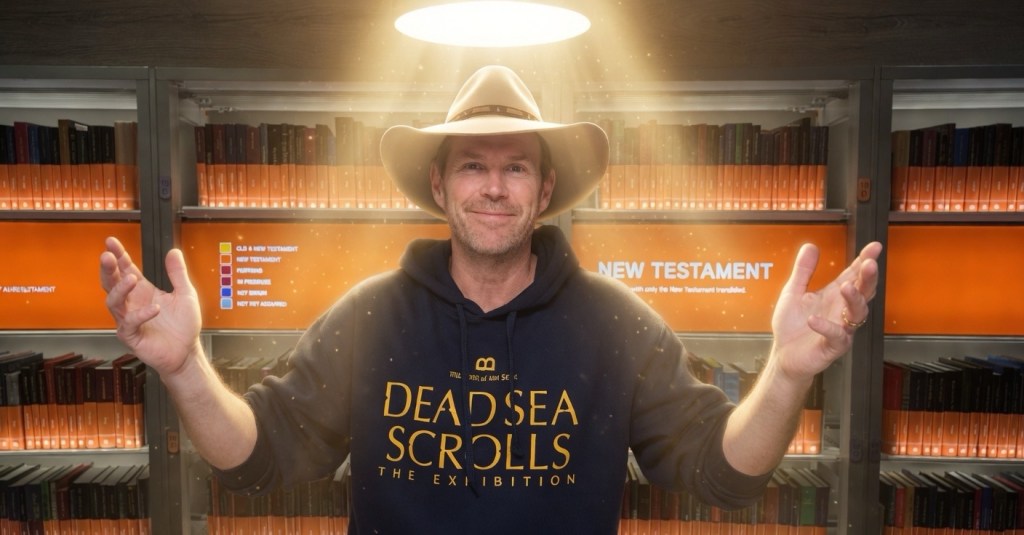
Rich Hoffman is an author, political consultant, and strategic advisor based in Cincinnati, Ohio, and the creator of The Politics of Heaven—a unique framework that connects biblical theology, ancient history, and modern power structures to explain how moral alignment and spiritual forces shape global events. Blending real-world political experience with deep research into archaeology, UFO phenomena, and suppressed historical narratives, Hoffman offers compelling commentary on topics ranging from ancient civilizations and the Dead Sea Scrolls to modern populist movements, paranormal continuity, and leadership strategy in chaotic environments. As the author of The Gunfighter’s Guide to Business and the forthcoming Politics of Heaven, he brings a grounded yet provocative voice to media discussions, supported by firsthand experiences and a cross-disciplinary approach that bridges science, history, and theology. For interviews, speaking engagements, or expert analysis, visit richhoffmanbooks.com or contact directly via phone at 513-307-5815 or email at rhoffman@richhoffmanbooks.com. If you’ve seen the movie, Disclosure Day and want to talk about it and the implications of Presidnet Trump’s UAP disclosures, let me know and we can bring some color to your coverage. https://richhoffmanbooks.com/media-inquiries-broadcast-topics-and-contact-info/?frame-nonce=ad51e7ecba I do have a firsthand UFO encounter to discuss.

