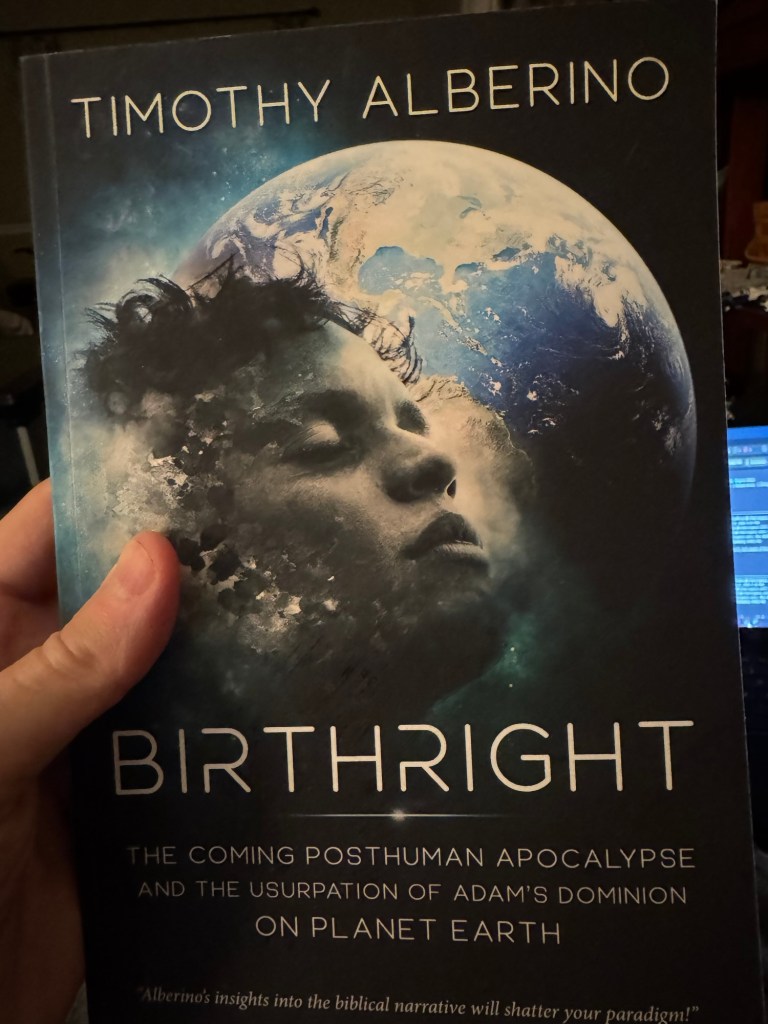
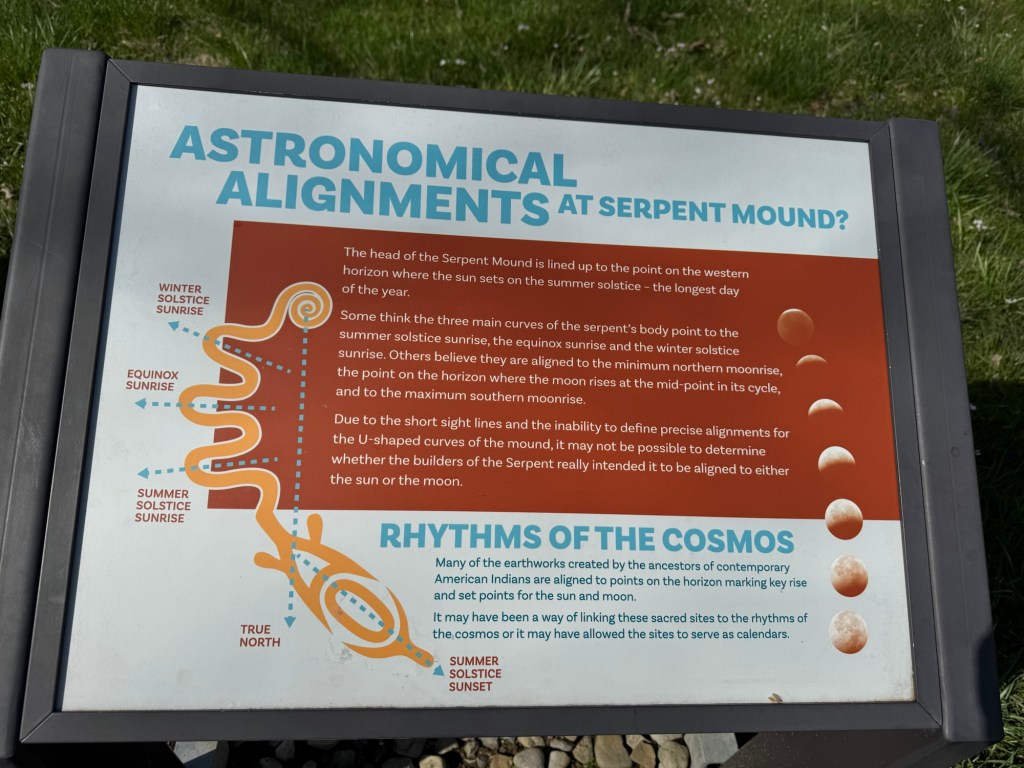
I have been carrying these questions in the background of my thinking for decades. The frequency with which they demand attention has risen sharply since the recent UAP disclosures. When the best technology the Air Force possesses cannot keep pace with something that behaves more like a ghost than a craft, the old categories collapse. It is not enough to say a flying saucer is real. It is not enough to say a religious claim is real. I want to know what causes people to believe what they believe, what political order forms around those beliefs, and what self-interest drives the entire system. Once you understand the political motivation behind belief, you understand the kind of society people are actually building—and whether you should support it.
That is why the conversation around Brian Muraresku’s The Immortality Key landed with such force. The book is not merely another academic argument about ancient wine. It is a direct challenge to the sanitized version of early Christianity most of us inherited. And it raises a harder question: if the original Eucharist carried a pharmacological charge, what does that tell us about the entities people were trying to contact, and why did Christianity’s later institutional form deliberately move away from that charge?
The Immortality Key and the Pagan Continuity Hypothesis
Muraresku’s central claim is straightforward and explosive. The original Christian communion was not a symbolic sip of ordinary wine. It was a potent psychedelic sacrament inherited from the Greek mysteries, specifically the cult of Dionysus and the rites at Eleusis. For nearly two thousand years, the greatest minds of antiquity—Cicero among them—traveled to the sanctuary at Eleusis to drink the kykeon. They claimed the experience removed the fear of death. The recipe was a state secret punishable by death.
The chemistry focuses on ergot, the fungus that grows on barley and rye—the same fungus from which Albert Hofmann first synthesized LSD in 1938. The theory is not new. It was proposed in 1978 by R. Gordon Wasson, Albert Hofmann, and Carl A. P. Ruck in The Road to Eleusis. Hofmann and Ruck’s academic careers suffered for it. The idea that the foundations of Western philosophy and early Christianity rested on controlled visionary pharmacology was too much for the scholarly stomach of the time. And when you think about that very obvious claim, and the way those names were ostracized, you can see the root cause of a much larger problem.
Muraresku spends years in the Vatican archives and archaeological sites looking for the transition. He notes that ancient wine was rarely plain fermented grape juice. It was routinely an infusion of herbs, roots, and potentially fungi—a pharmakon. The Gospel of John, the most Greek of the Gospels, uses language for the wine that suggests something more complex than table drink. Jesus’ miracle at Cana occurs in a cultural zone saturated with Dionysian imagery. In early Jesus centuries, Dionysus and Jesus were sometimes treated as interchangeable figures of death, rebirth, and ecstatic immortality.
The book’s most compelling social argument concerns women. For millennia, the preparation of these visionary beverages was women’s work. As Christianity became institutionalized and more patriarchal, particularly from the fourth century onward, those women and their spiked drinks became a threat to the emerging clerical monopoly on the divine. Muraresku reads the Inquisition’s language of pharmaka and sorcery not merely as superstition but as the systematic eradication of a competing technology of direct encounter with the sacred. The shift, in his framing, is from pharmacological Christianity to placebo Christianity.
I want Christianity to succeed. I do not read Muraresku as an enemy of the faith. He identifies as a Catholic who is trying to recover rather than destroy the Eucharist. Yet the implications cut in two directions at once. If the earliest layers of the tradition carried a visionary intensity later deliberately muted, then the institutional Church both preserved and constrained something powerful. And if that intensity was chemically mediated, we must ask what, exactly, the initiates were encountering.
Beer, Skulls, and the Long Continuity of Death Cults
The problem is larger than Greece. When I go back further—ten thousand years further—the pattern sharpens.
At Göbekli Tepe (the site that Muraresku and others still sometimes refer to by earlier or variant names in popular discussion), the evidence is no longer subtle. T-shaped pillars, snakes carved everywhere, a clear skull cult, and chemical traces consistent with beer brewing. People were not merely gathering to eat. They were preparing fermented beverages, removing soft tissue from human heads, drilling holes, and displaying the skulls in ritual contexts under carefully oriented architecture. The same complex appears, in different local forms, along the Jordan Valley in the dolmen fields that stretch from the Golan south toward the Dead Sea, and again in the megalithic “Wheel of Giants” (Rujm el-Hiri / Gilgal Refa’im) east of the Sea of Galilee—roughly 160 meters across, built of more than 40,000 tons of basalt, aligned with solar and stellar markers.
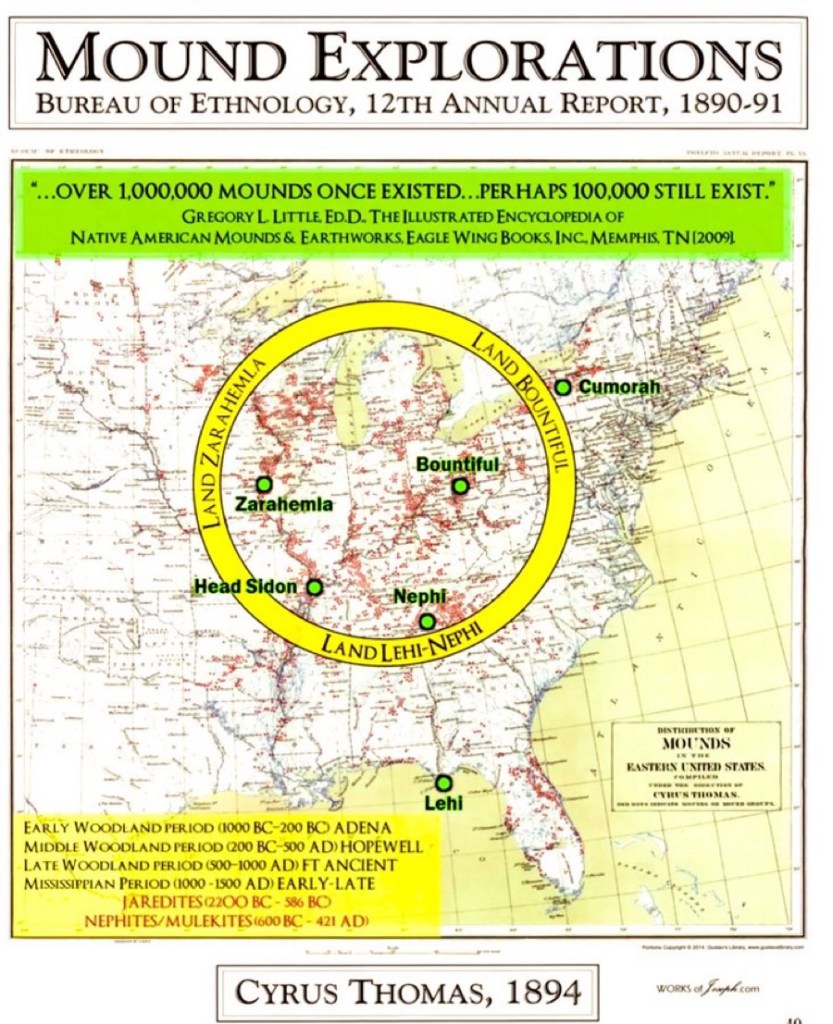
I have scoured the archaeological literature for a serious treatment of these Jordan Valley dolmens from roughly 10,000 to 3,000 BC. The silence is telling, just like any discussion dealing with the use of wine in Greek culture outside of mainstream opinion. Mainstream discussion prefers the safer Bronze Age and later. Yet the structures are there. The alignments are there. The continuity of ritual astronomy with later Hopewell earthworks in the Ohio Valley is difficult to ignore once you stop treating the Atlantic as an absolute barrier.
Pure native copper from the Lake Superior region was extracted for thousands of years. Isotopic and purity studies continue to raise questions about whether some of that copper moved farther than orthodoxy allows. The Windover bog people of central Florida preserve soft tissue and brain matter from the same deep time window. The Newberry Tablet and other Michigan finds remain controversial, but the pattern of megalithic and copper-working activity across the Great Lakes and the Upper Peninsula does not vanish because it is inconvenient.
Everywhere you look in this pre-biblical window, you find cultures oriented toward death, severed heads, fermented or psychoactive drink, and communication with something beyond the ordinary dead—the politics of that communication matter. Human beings do not casually cut off a neighbor’s head, scrape the flesh, hang the skull, and pour blood on an altar for sport. They do it because they believe the act buys favor, knowledge, rain, fertility, or protection from harm.
The Mouse and the Snake
I use a simple allegory. Watch a pet snake being fed. Drop a mouse into the glass enclosure. For the first few minutes, the mouse runs, freezes, and tests every corner. Eventually it realizes there is no exit. Then the behavior changes. It becomes still. It positions itself near the water dish or the food bowl as if stillness and proximity to ordinary life might persuade the snake to look elsewhere. The snake, of course, is not persuaded. It simply waits and then eats.
Humanity has lived for a very long time with the anxiety of that mouse. Non-human intelligences—call them Watchers, old gods, ultraterrestrials, or whatever the current UAP language prefers—appear in the record as entities that demand appeasement. Psychedelics, ritual sex, blood, and skull display are technologies of that appeasement. The mouse tries to make itself useful or invisible so the snake will not strike.
Christianity, in its mature form, broke that cycle. It did not deny the existence of the hostile powers. It declared them defeated in principle and offered a different posture: moral agency, individual responsibility, and direct relationship with a God who does not require the constant feeding of death. The result, imperfect as every human institution is, was the rise of a civilization that valued the living more than the skulls of the dead. Strip the Christian premise from a mass of people, and the older pattern reasserts itself with remarkable speed. I have watched it at a Jason Aldean concert from the VIP area—twenty thousand people, many drunk since morning, public sexual display, the old fertility and abandon patterns returning the moment the moral frame loosens. The same retreat appears wherever the teachings of Jesus are actively removed from a culture.
That is why I am not enthusiastic about the modern psychedelic renaissance framing itself as the recovery of a lost “religion with no name.” The experiences reported at Johns Hopkins and NYU—ego death, loss of fear of mortality—are real. The question is whether the entities contacted in those states are friends of the human project. My reading of the long archaeological record is that they are not. They have been competing for control of human attention and behavior for a very long time. Christianity was never their preferred outcome.
The Four Pillars That Still Need Digging
The gap between roughly 10,000 BC and the world of Abraham remains the least examined and most consequential stretch of the human story. Four clusters of evidence deserve far more serious, well-funded attention than they currently receive. I am committing myself to putting money and attention to these ideas:
1. The skull cult, beer residues, and snake iconography at Göbekli Tepe and related Anatolian sites.
2. The dolmen fields and the Wheel of Giants along the Jordan Valley and Golan.
3. The pure copper extraction systems of the Lake Superior region and their possible long-distance movement.
4. The Windover and related Archaic Florida populations with their extraordinary preservation of soft tissue and ritual practice.
These are not isolated curiosities. They form the deep background against which both the biblical narrative and the later Greek mysteries emerge. More excavation, more isotopic analysis, more open discussion of possible transoceanic contact, and less reflexive dismissal of “fringe” data would change the conversation. I am writing The Politics of Heaven in part to force that conversation into the open. The secular publishing world prefers books that treat Christianity as the problem rather than as a partial solution to an older and darker problem. That preference itself looks, from where I sit, like another form of the mouse’s stillness—keeping the larger questions safely inside the glass.
Conclusion: Do Not Be the Mouse
The original Eucharist may well have carried a pharmacological dimension inherited from older Mediterranean practice. The women who prepared the drinks may have been the last keepers of a technology the institutional Church found threatening. None of that requires us to return to the skull cults and the blood altars. The miracle of Christianity was not that it invented the sacred. It redirected the human drive for transcendence away from appeasement of predatory powers and toward a moral and spiritual posture that could build a durable civilization.
I want more money poured into the archaeology of the deep past—not the archaeology that already knows what it is allowed to find, but the kind willing to follow the copper, the alignments, the beer residues, and the severed heads wherever they lead. I want the conversation about non-human intelligence to stop treating the entities as either cartoon aliens or harmless spirit guides. They have a politics. Humanity needs a politics equal to theirs.
The Politics of Heaven is my effort to map that battlefield. The four pillars above are the places where the next decade of serious digging should concentrate. The rest is commentary, color, and the long memory of a man who has watched the same patterns repeat across continents and millennia.
Do not be the mouse. Learn the snake’s methods. The enemy is the one who puts the mouse in the cage with the snake. That is the answer to our many questions. And in the UAP disclosures, we are getting a hint of that world.
Footnotes
1. Brian C. Muraresku, The Immortality Key: The Secret History of the Religion with No Name (St. Martin’s Press, 2020).
2. R. Gordon Wasson, Albert Hofmann, and Carl A. P. Ruck, The Road to Eleusis: Unveiling the Secret of the Mysteries (Harcourt Brace Jovanovich, 1978; later editions).
3. On the ergot detoxification experiments and the University of Athens work referenced by Muraresku, see the discussion and citations in The Immortality Key, chapters on Eleusis and the chemistry of the kykeon.
4. Patrick E. McGovern, Ancient Wine: The Search for the Origins of Viniculture (Princeton University Press, 2003) and subsequent biomolecular archaeology papers on mixed fermented beverages.
5. For Göbekli Tepe skull cult and brewing evidence: Klaus Schmidt and subsequent publications of the German Archaeological Institute; recent chemical analyses of residues in stone vessels.
6. Rujm el-Hiri (Gilgal Refa’im / Wheel of Giants): surveys and interpretations in Israeli archaeology literature; see also popular and specialist treatments of its astronomical alignments.
7. Old Copper Culture / Lake Superior copper: standard Midwestern archaeology; purity and sourcing debates continue in archaeometallurgy literature.
8. Windover site, Florida: Glen H. Doran et al., publications on the Archaic wet-site cemetery and preserved soft tissue.
9. Jacques Vallée, Passport to Magonia: From Folklore to Flying Saucers (Henry Regnery, 1969) and later works on the continuity of non-human encounter narratives.
10. Diarmaid MacCulloch, Christianity: The First Three Thousand Years (Viking, 2009).
11. Biblical Archaeology Review, ongoing coverage of Jordan Valley and related megalithic sites; earlier issues treating dolmens remain limited relative to the density of the remains.
12. On Hopewell copper and ceremonial complexes: standard Ohio Valley archaeology; Newark Earthworks and related lunar alignments.
13. Dolores Cannon’s reported communications with Essene figures appear in her Conversations with Nostradamus series and related remote-viewing / past-life material; treated here as phenomenological data rather than conventional historiography.
14. Graham Hancock, Fingerprints of the Gods (1995) and later works on Göbekli Tepe and catastrophic prehistory; useful for raising questions even where orthodoxy disagrees with conclusions.
Selected Bibliography
• Muraresku, Brian C. The Immortality Key. St. Martin’s Press, 2020.
• Wasson, R. Gordon, Albert Hofmann, and Carl A. P. Ruck. The Road to Eleusis. 1978 and later editions.
• MacCulloch, Diarmaid. Christianity: The First Three Thousand Years. Viking, 2009.
• Vallée, Jacques. Passport to Magonia. 1969.
• McGovern, Patrick E. Ancient Wine. Princeton University Press, 2003.
• Schmidt, Klaus. Publications on Göbekli Tepe (German Archaeological Institute).
• Doran, Glen H., et al. Windover site monographs and papers.
• Hancock, Graham. Fingerprints of the Gods and subsequent titles.
Rich Hoffman is an author, political consultant, and strategic advisor based in Cincinnati, Ohio, and the creator of The Politics of Heaven—a unique framework that connects biblical theology, ancient history, and modern power structures to explain how moral alignment and spiritual forces shape global events. Blending real-world political experience with deep research into archaeology, UFO phenomena, and suppressed historical narratives, Hoffman offers compelling commentary on topics ranging from ancient civilizations and the Dead Sea Scrolls to modern populist movements, paranormal continuity, and leadership strategy in chaotic environments. As the author of The Gunfighter’s Guide to Business and the forthcoming Politics of Heaven, he brings a grounded yet provocative voice to media discussions, supported by firsthand experiences and a cross-disciplinary approach that bridges science, history, and theology. For interviews, speaking engagements, or expert analysis, visit richhoffmanbooks.com or contact directly via phone at 513-307-5815 or email at rhoffman@richhoffmanbooks.com. If you’ve seen the movie, Disclosure Day and want to talk about it and the implications of Presidnet Trump’s UAP disclosures, let me know and we can bring some color to your coverage. https://richhoffmanbooks.com/media-inquiries-broadcast-topics-and-contact-info/?frame-nonce=ad51e7ecba I do have a firsthand UFO encounter to discuss.
Human history may not merely be the history of humans interacting with one another. It may also be the history of humanity interacting with forms of intelligence that are perceived through altered states, religious experiences, visions, dreams, shamanic practices, meditation, ritual, and perhaps other mechanisms not yet fully understood.
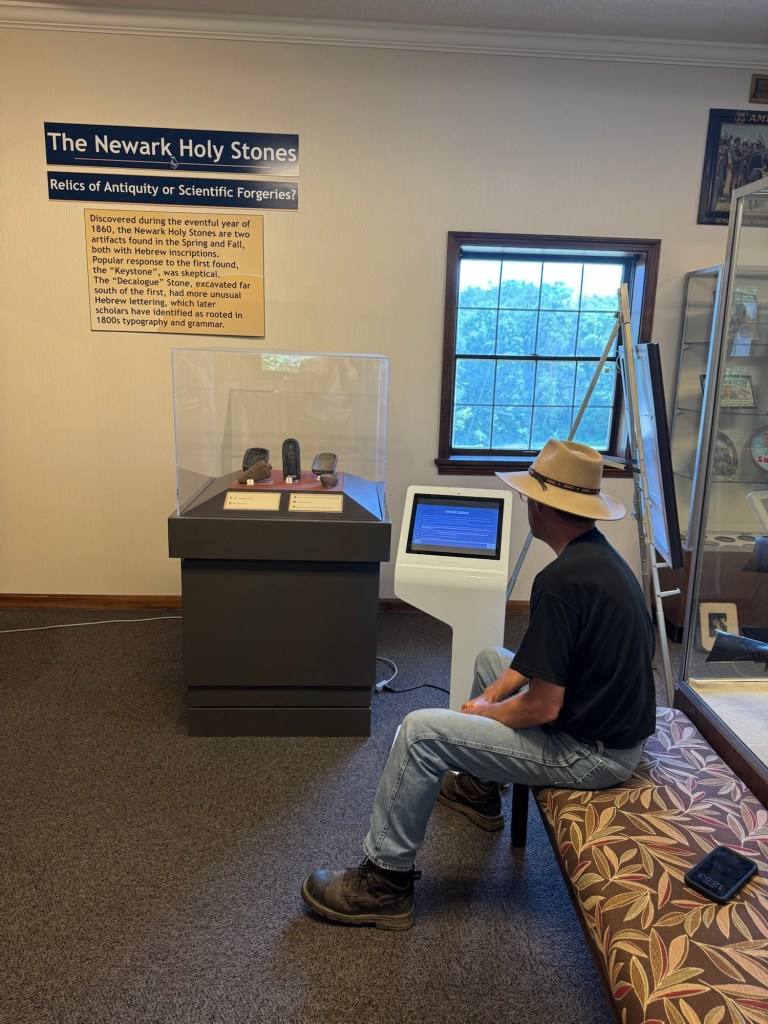
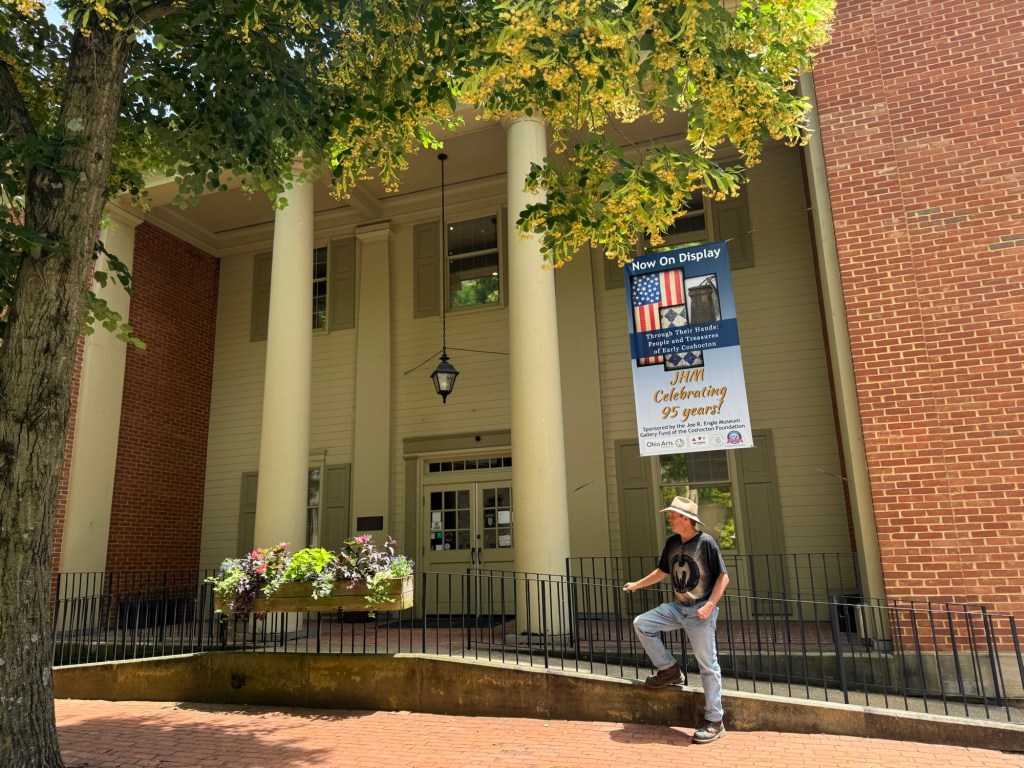
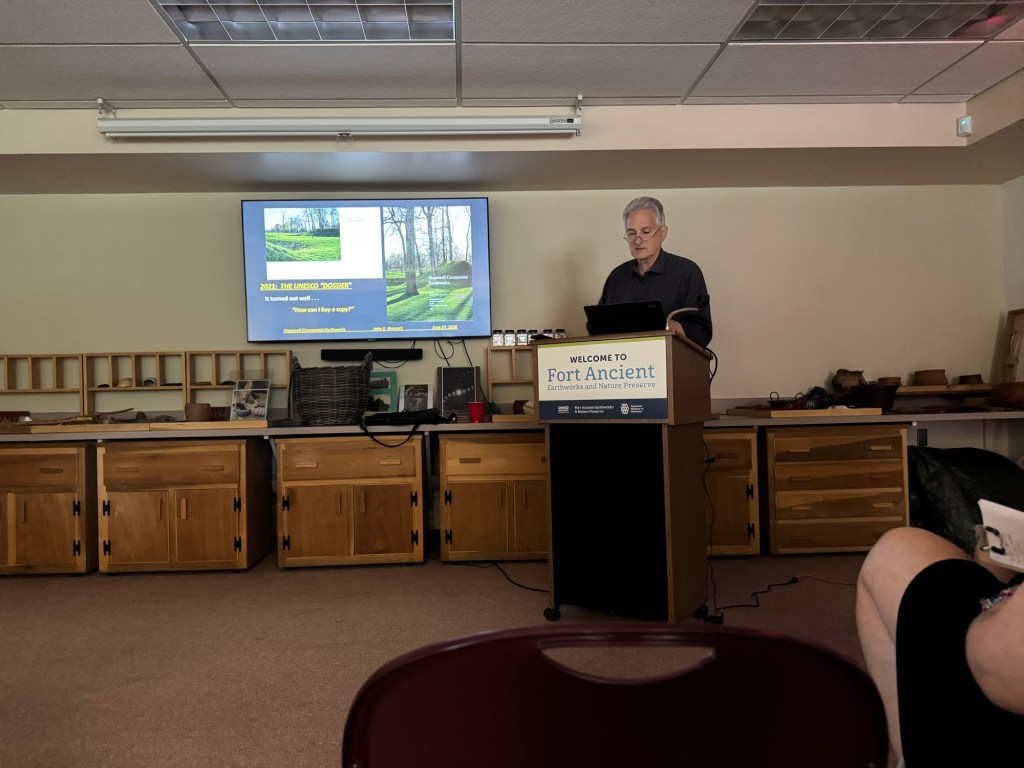
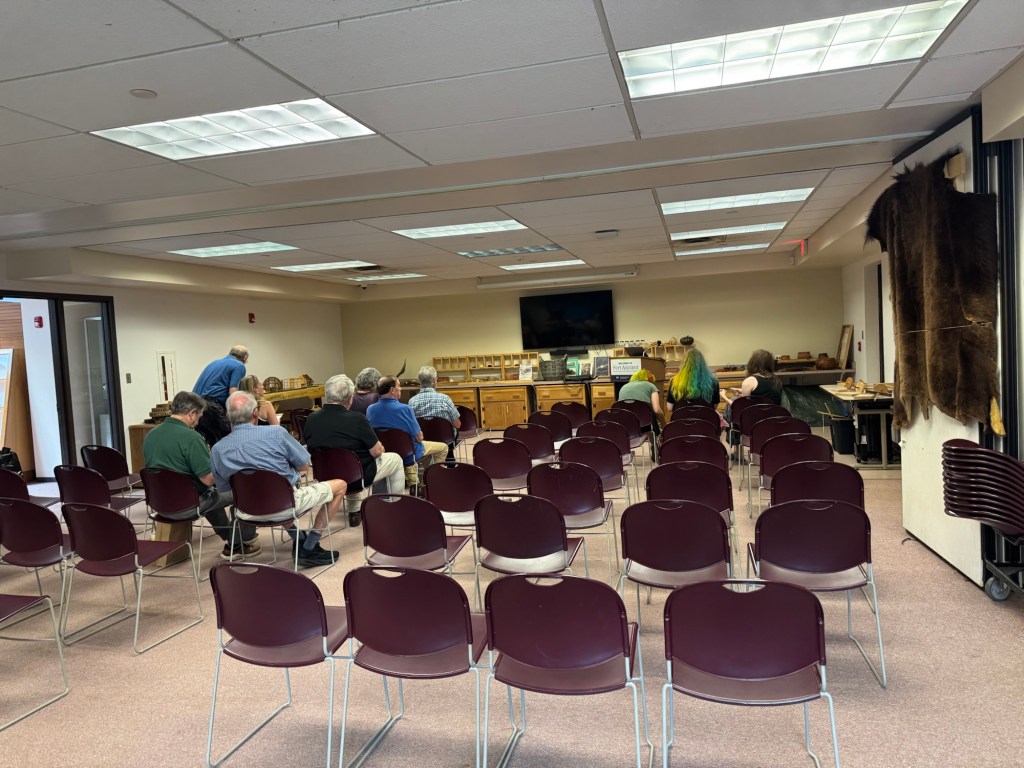
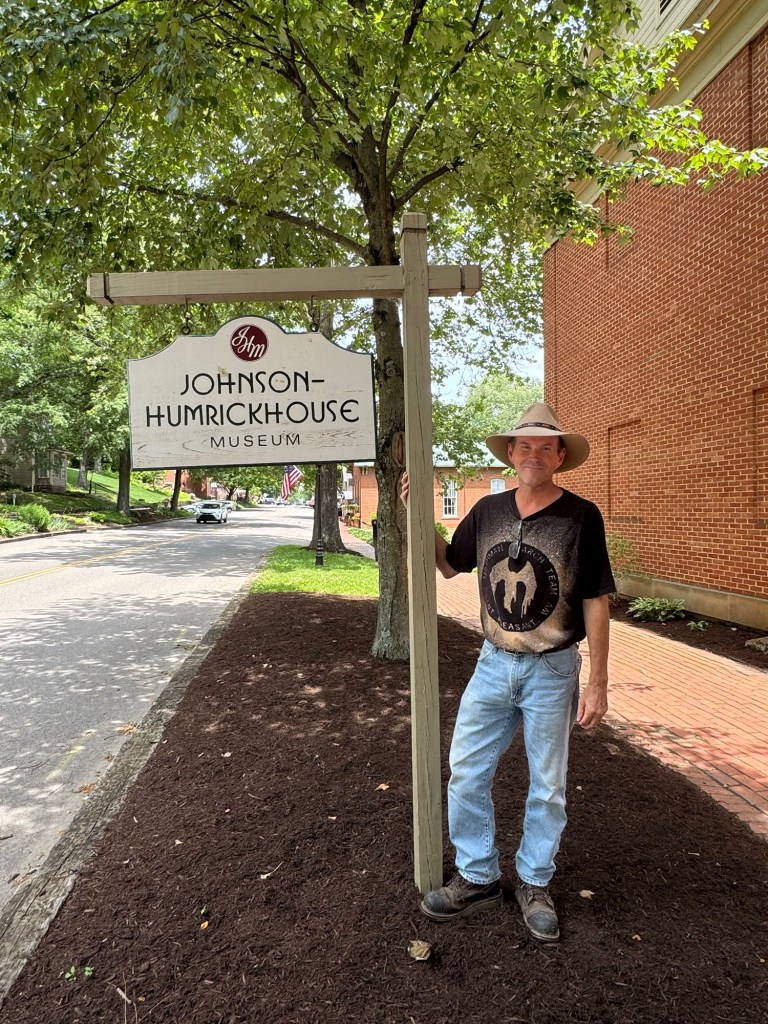
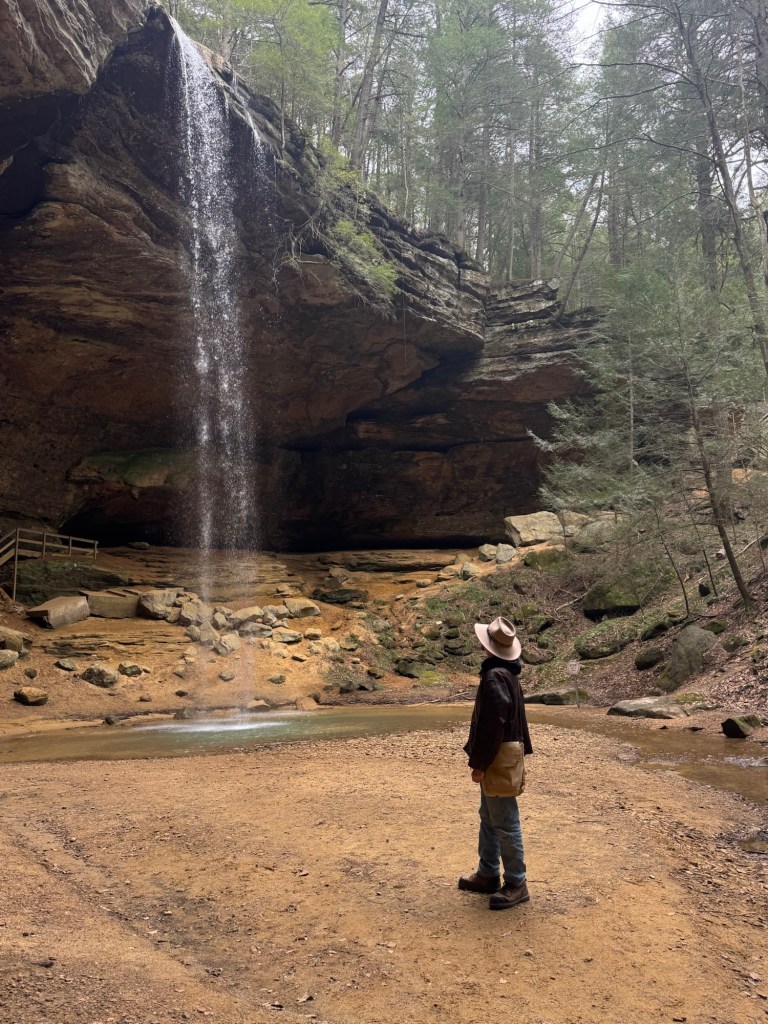
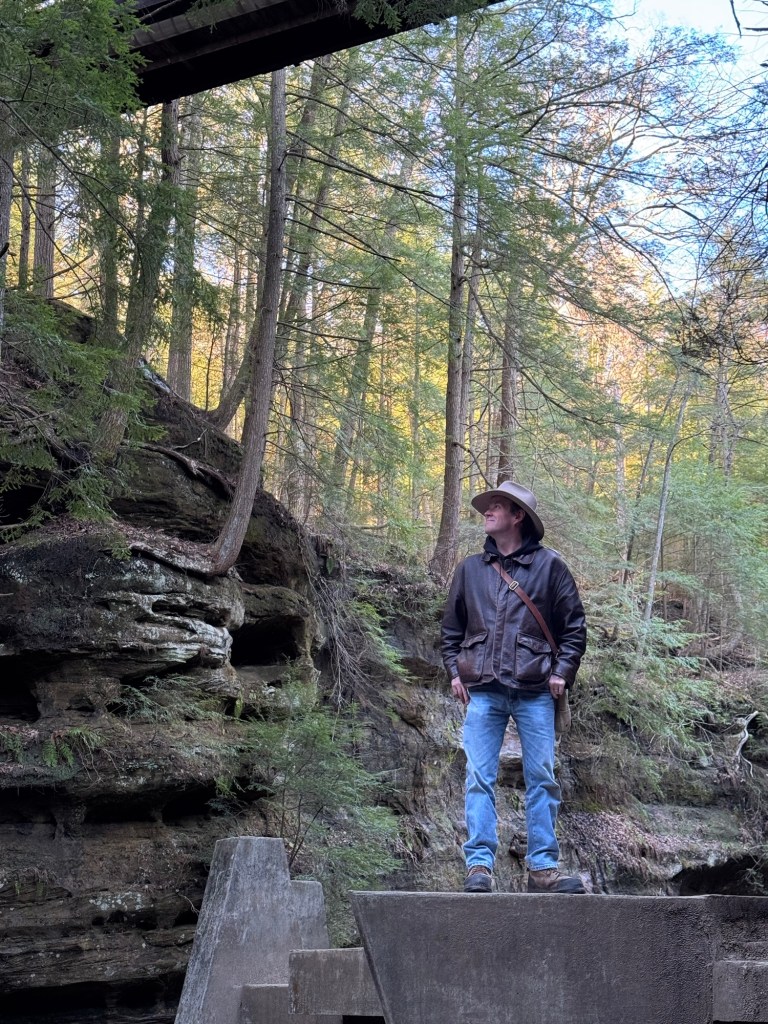
A few weeks after that picture, I found myself at the Fort Ancient site, listening to a lecture by John Hancock, who had just written a couple of really good books on the Hopewell earth mounds of Ohio. After leaving the Johnson-Humrickhouse Museum, I went with my family down to the Newark earthworks and, in the gift shop at the visitor’s center, discovered the newly released book by John Hancock, Hopewell Ceremonial Earthworks, which featured UNESCO’s classification designating 8 sites in Ohio as World Heritage Sites. Hancock was the driving force behind that designation, and, I thought, his book, based on the presentation to the UNESCO committee, was really well done. So my same daughter who took that picture went with me to Fort Ancient, at the arrangement of Sarah Winningham, the assistant site superintendent at Fort Ancient, to listen to John talk about writing his books, the UNESCO submission, and his very good travel guide, Ancient Ohio. And that is the case with a lot of this book, I go to a lot of museums, everything from the Mothman Museum in Point Pleasant West Virginia, famous for its paranormal reporting, to the British Museum where I famously had a nice argument with the staff there over the crystal skull, which falls into the same kind of category as the Newark Holystones. Are they fake? And if so, why would anybody go to all the trouble? After all, the discovery of the Newark Holystones more or less destroyed the life of David Wyrick, who was a good surveyor in 1860, and it was assumed that he was a major abolitionist aligned with the Lincoln administration in the heat of the Civil War. So it was assumed that he made the stones and planted them in the famous mounds to erode any thoughts that the Indians of his time, being pushed off the land by westward expansion, wanted to decouple their claims to the ancient earthworks. Or so they say, and they are very explicit about that at the museum.
I was surprised to notice, just to the south of the Johnson-Humrickhouse Museum, a nice David Wyrick drawing of the Newark Great Circle proudly displayed on the wall of the visitors center. Wyrick died miserably in 1864 of laudanum, a commonly used painkiller that was opium based. I think it is a reach to attempt to paint David Wyrick politically, which was clearly the case at the museum’s, a very aggressive attempt to attach an indigenous people narrative to the mounds, and Wyrick was trying to spread the word of God and the immorality of slavery, which was the thrust of the Holy Stone exhibit at the Johnson-Humrickhouse Museum. It doesn’t take much of a stretch to see the academic community in the vacuum of more knowledge, driving a political narrative where it likely didn’t belong. And as I said, I noticed the fantastic book by John Hancock, newly released and displayed everywhere at Newark, The Hopewell Ceremonial Earthworks, which I grabbed quickly and read almost before leaving the mound’s site at Newark. A few weeks later, at Fort Ancient, I attended a lecture by the author John Hancock, hosted by Assistant Site Superintendent Sarah Winningham. By the time of that event at the Fort Ancient museum, I was very intrigued by some of the claims in John’s book about the famous mounds.
The Shaman of Newwark
First of all, if not for John, there is no way the Ohio mounds would have been designated UNESCO World Heritage sites, which is a very good thing because they are every bit as important as other World Heritage Sites, such as the Great Pyramids and Machu Picchu. But I wanted to talk to him about his book because he has some very interesting and unique ideas. First of all, he approached the mounds as an architect, as a retired professor from the University of Cincinnati who thought like a teacher and used to take students to Europe to see great architecture before realizing that some of the best architecture in the world was shown in the mounds of Ohio, which would eventually become in his book the eight UNISCO earthwork sites, Newark, Hopeton, High Banks, Fort Ancient, Seip, The Great Circle, and Mound City.
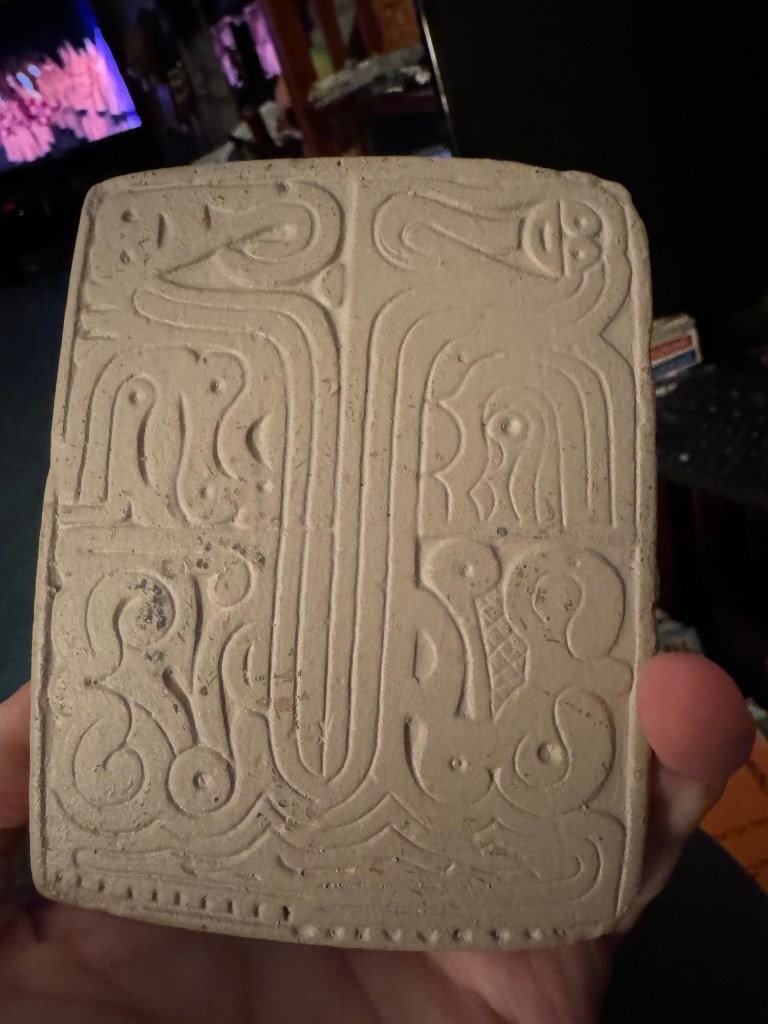
To say I was a little excited is an understatement as I went through their shelves at the Johnson-Humrickhouse Museum. As this book unfolds, it will become obvious that I love museums, big ones and little ones, and I love their gift shops. I have found many wonderful treasures in museum gift shops. The Johnson-Humrickhouse Museum is famous for its replica relics of the Holy Stones. But going through their shelves, they also had replicas of the actual Wilmington Tablets. I was very happy to see three of them, and I asked the cashier how I could buy one. They thought they were coasters. Obviously, the tablet replicas were too obscure for anybody to know what they were, including those working at the museum. I have some very strong thoughts about the various Adena tablets found in the mounds of what has been designated as Adena culture. There is a Cincinnati Tablet that has at times been displayed at the Cincinnati Museum Center. And of course, the Wilmington Tablet was found in Wilmington, Ohio. And I would argue that it shows interaction with the Olmecs from central Mexico, up the Mississippi River, and across the Gulf. A lot of archaeologists argue against it, but I thought that John Hancock’s new books made legitimate arguments for that kind of travel for a book published by Smithsonian Books. And that is the discussion that copper from Lake Superior did, in fact, find its way into the Hopewell sites in Ohio, which indicates very long-distance travel, Mica trade from the Appalachians, and obsidian from the Yellowstone area. I told John that I thought it took a lot of guts for him to talk about the copper mines in Lake Superior because of the conspiracy theories that have spawned on the topic. But here we were in 2026, talking to a serious person about the mounds, and we’re having a serious discussion about the Great Lakes copper trade, which has quite a story. Something called the Newberry Tablet, occasionally on display in St. Ignace, Michigan, points to trade with Mediterranean cultures, which many claim was so voluminous that it flooded the global economy with copper, starting the Bronze Age. The dates on the mines are around 8000 years old, or about 5000 BC, roughly the same as those of the Windover people of Central Florida, a topic we’ll discuss in much more detail later.
This book, The Politics of Heaven, is more than just a travel log of my extensive travels and my political and professional work in aerospace as an executive. As I asked the question at Fort Ancient, I came to ask John Hancock, the assistant superintendent of the Fort Ancient site, Sarah Winningham that I first started to think about many years ago. I really didn’t want to be that guy. At my age, I had been looking forward to a kind of retirement where I could attend events like the one where John Hancock would write great books and put a new spin on an old archaeological idea. John, being a professor of architecture, did have a fresh perspective that I always enjoyed in my youth as the Vice President of the Dan Beard Council.
As a young man, I was very happily involved in a High Adventure Explorer Post, where I became Vice President of the Dan Beard Council after a special election at the GE Evendale plant, where I gave a speech that led to my election. Later in this book, I tell the tragic story of a death that took place later in the night of that same election day, when I was scheduled to fight three guys from my school at that same time, and one of them turned up dead, and the rest of them were telling stories about me to the police that were not favorable. The events of that night led to my separation from the Dan Beard Council, and at that time, I enjoyed my exposure to those kinds of people, including academics like John Hancock and museum personalities like Sarah Winningham from the Fort Ancient complex. I have been hoping since that time that at some point I could get back into that kind of life, the High Adventure Explorer Post life I enjoyed so much in my youth. This book tells that story as I continued to travel a lot and utilize the skills I started in those explorer post experiences. Even though many of the people who volunteered for and supported Explorer Post activities were politically liberal, I hoped that someday I might be able to return to those innocent days.
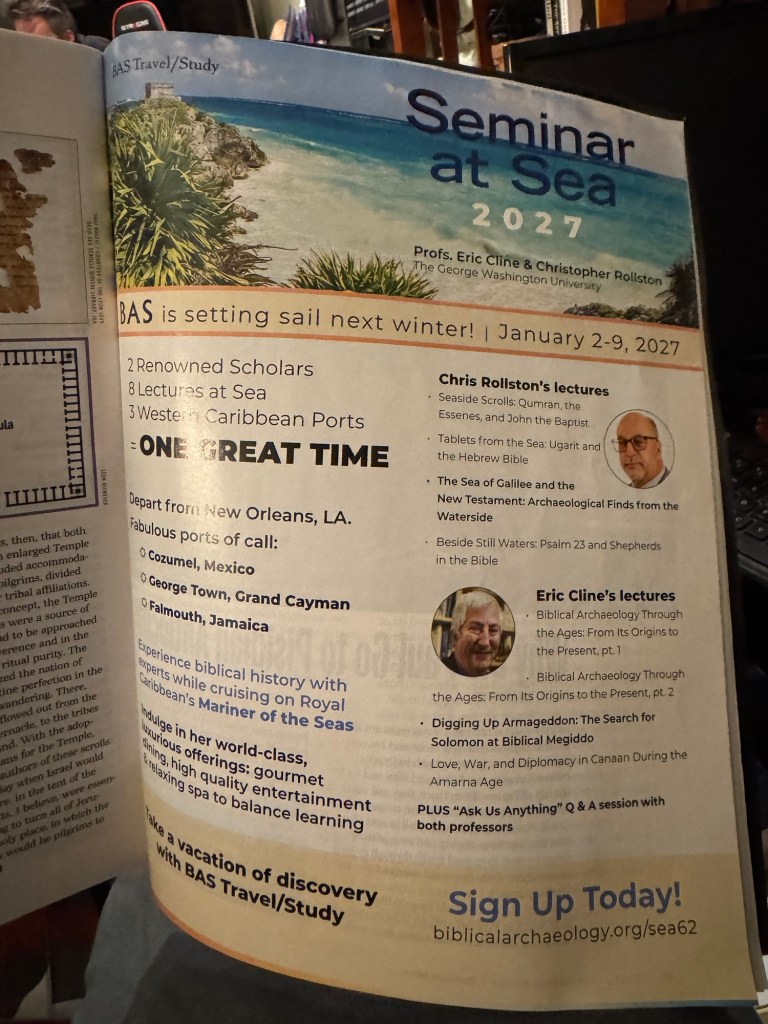
But as much as I wanted to, my life had taken me into the very political world of consulting, and with high-level personalities, which made it impossible for me to sit in that Fort Ancient lecture and put my brain away. Because, like John Hancock, who approached the really good archaeology of Bradley Lepper, and others with an architectural background, I have years of experience as an aerospace executive dealing with very smart, PhD-level engineers and professionals who can be very manipulative and deceitful in root cause analysis. My wife and I had plans, and what will become clear in this book is that I have a very high regard for the archaeological publication Biblical Archaeology Review, and I really want to spend these years of my life taking their cruises on luxury liners and having archaeological discussions. And that my happiest place on earth at the moment is at the Museum of the Bible, for which my wife and I are members. I love places very passionately where scholarship and discovery come together, so believe me, I didn’t want to be that guy. I wanted to be the guy who read the books of people like John Hancock, Bradley Lepper, and Francis Pryror, and enjoyed the buffets on the cruise ships, and read lots of books. Because more than anything, my number one hobby, which started for me during those Explore Post years, was reading books. Lots and lots of books, some of my favorite which is reflected in this literary effort, are James Frazer’s The Golden Bough and James Joyce’s Finnegans Wake, and for me, it is the joy of adventure in going down rabbit holes and bringing Alice back from its hidden depths that is the most fun. And professionally, as I have thought for a long time because of my love of The Golden Bough, I think archaeology does not go far enough as a spinoff of the creation of anthropology, scientifically, and all the hard lessons I have learned through years of political work gave me extensive experience. I really wanted to attend John Hancock’s lecture for the pure enjoyment of it, because I love people like him and Sarah Winningham. Why, because I learned to really love academics in a non-political way during my very formative years of High Adventure Explorer Post membership. I had made up my mind to get all over the world, which is what this book is about. I didn’t learn what I did by just sitting at home, but by going to many places and applying the same skills that worked very well for me professionally, to some really obscure ideas. So I came to the lecture with a question I had thought of while reading John Hancock’s marvelous books.
I thought John’s lecture on the Hopewell Ceremonial Earthworks was fantastic, very well researched, and extremely well put together. No wonder UNESCO moved to designate the 8 earthworks sites as World Heritage Sites officially. And even if the UNESCO people are extremely liberal, politically, and were very much against the United States during the first Trump presidential term, which I know a lot about. I finish this book with a visit to the White House. I tend to really enjoy all efforts that seek to preserve the past, regardless of politics. In the pages to come, I am glowingly supportive of organizations like English Heritage and the fantastic efforts of The Ohio History Connection, whose headquarters is at the Ohio History Center in Columbus, where I first visited on an Explorer Post field trip many years ago. The main purpose of Explorer Post membership is to expose young people to high-adventure career opportunities. Which was the subject of my speech at GE to the other explorer groups of Cincinnati and big personalities such as Lee Iacocca and Jack Welch, and how they elected me, even as a very young person, to Vice President of the Dan Beard Council. So, since I had my question ready for John’s lecture, I decided to enjoy the event and the educational publications from The Ohio History Connection. I remember that day with the Explorer Post visiting the museum that would become The Ohio History Connection. I got the feeling that everyone was encouraging me to grow up and become the troublemaker who would challenge their assumptions. After all, why have a High Adventure Explorer Post in any way but to raise young people to go out into the world to challenge everything, if not for gaining wealth and notoriety, but for the spirit of adventure itself.
This is the kind of thing I’d rather be doing in life. My idea of a good time.
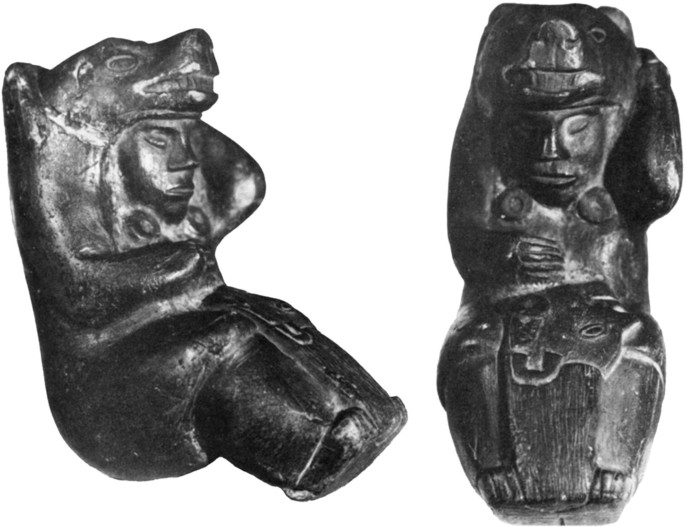
I was always the rebel of the group, and even if I was naturally very talented, my spirit of adventure got me and everyone who followed me into a lot of trouble. And sometimes people did lose their lives, which is why my time as Vice President of the Dan Beard Council was short-lived. But I got that office at a very young age because a lot of people were hoping I would be the guy who would shake things up in ways they instinctively knew needed to happen. And as I held up my hand at the end of John’s lecture, I asked my question about the relic on display at the Ohio History Center: the Shaman of Newark. In his big book, the Hopewell Ceremonial Earthworks, John very cleverly found a way to show the relic as a digital replica illustrated by Talon Silverhorn of the Eastern Shawnee. But in his travel guide, Ancient Ohio, he says that he could talk about the famous Hopewell relic but not show it so as not to disrespect Indian tribes, which set up another question I had about NAGPRA in general, which I directed at Sarah, who was in the back of the room, regarding compliance with that 1990 Democrat proposal to return to all the Indian tribes of North America the relics of their ancestors. They are running a nice museum at Fort Ancient, and John had been very clever in getting Indian tribes to contribute artwork and replicas for his books in very respectful ways, which is unusual for these kinds of projects. Before going to the Fort Ancient lecture, my wife and I had just returned from the Smithsonian in Washington, D.C., and I had a great time there. A lot of the kind of people I like these days have very little trust in the Smithsonian and the much-talked-about cover-up of the ancient giants who were reported to have been found in these very Ohio Mounds. John’s book does not address those, but he and I did talk about the controversies. I told him I thought it was remarkable that he even mentioned the copper mines of Lake Superior in his book, because, as the story goes, those copper mines dating to 5000 BC were so prolific that they caused a global economic boom and were shipped to Europe by the Minoans of Crete. That proof of that trading exchange is on what they call the Newberry tablet, which can be found sometimes in St. Ignace, in Upper Michigan. As I said to John, this conspiracy stuff is a tough line to walk. And as I said it, I looked back at the audience, and almost everyone had a grin on their face because I was saying the stuff that is supposed to be unsaid, but they all wanted to say it.
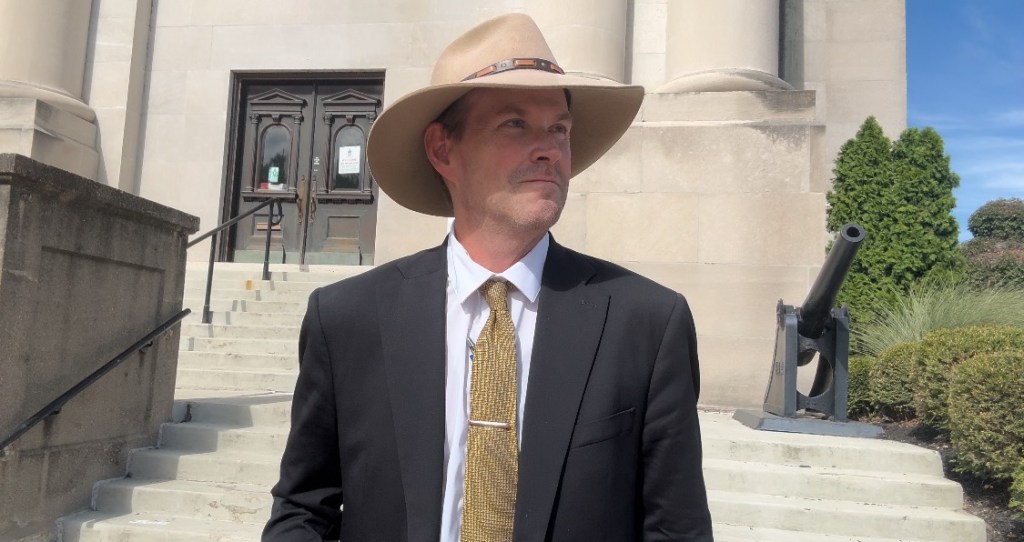
The Relic of the Shaman of Newark, I think, is a remarkable admission, which I will expand on during the grand adventure for which this book is, a journey around the world and across vast spans of time with conclusive evidence at the level of speculation awaiting the hard evidence of good archaeology. The relic itself depicts a shaman in the process of turning into a bear and is holding in his lap the severed head of a long-haired human. I knew about the relic because it was on display at the Columbus Museum, as was the Wilmington Tablet. So, as the Johnson-Humrickhouse Museum operators have done a great job getting into the business of making relics of controversial artifacts, like the Newark Holystones, but seeing that copy of the Wilmington Tablet reminded me of the Shaman of Newark, as that topic had been on my mind regarding the Newark Earthworks. And this was the cause of my anxiety, which my daughter captured so well as I was distraught over what it all led to.
I asked the question: why were the Indian tribes reclaiming all the artifacts that archaeologists had found, and even destroying them by burying them again? And as John explained, he had just spent a lot of time speaking with various Indian tribes to coordinate with them in writing his great book on how to show who the Hopewell people were by replicating them, without the magic of their actual image tainting them with haunted reverence. So here is the problem. Two things can’t both be true, here we had a political movement pushed by NAGPRA, which said that we had to give back all the evidence of our discovery because the relics of the Indigenous people were magical and had power that had to be returned to the ground, but at the same time we were supposed to study these Indigenous people with evidence to understand them. So I turned around from my seat and addressed the back of the room. I asked, “Was the NAGPRA pressure political or coming from the tribes themselves?” Because I will talk about this extensively in this book, the 8,000-year-old, well-preserved people of Windover, buried in bogs in Florida, are genetically dated as older than any known North American Indian Tribe and were actually around during the period of the copper mines of Lake Superior. So how can we study this history and properly respect it if NAGPRA said we had to empty all the museums of Indian relics and give them back to tribes we were calling Indigenous people by Democrat legislation that was making a claim that America should have never been settled or turned into a country because it happened at the expense of these miraculous Indigenous people?
And here’s the problem: the Shaman of Newark shows clearly the extent of the belief of those people of their period, which, to my eyes, were mimicking the beliefs of the Canaanite gods that Yahweh was so enraged about. And the political statement by Yahweh to destroy all the gods of Canaan and destroy the people of that land, emphatically. The beliefs of the people of Newark and the other Hopewell sites needed to be studied much more so that evidence could drive our conclusions. Like the situation in Cahokia, just outside St Louis, here we had an Indian relic in the Shaman of Newark that had a decapitated head in his lap, showing the typical ritual sacrifice of life for the benefit of communicating with spiritual entities. And with that, under NAGPRA, which bless her heart, young Sarah Winningham was preparing the Fort Ancient museum to be fully compliant with. The evidence was right there, begging us to ask the next layer of questions with really great minds and researchers, like John Hancock and great archaeologists like Bradley Lepper, who should be applying great science to these magnificent archaeological monuments. Instead, we are getting rid of the evidence and then telling the world that everything is a conspiracy theory because there is no evidence to support it. This book is about the evidence discovered through vast and sometimes dangerous expeditions observed over my lifetime.
In these pages, there is extensive study of the impact of shamans on a culture over time and of their common role as vehicles of spirit-world interaction. I was very impressed that John Hancock put an image of the Shaman of Newark in Hopewell Ceremonial Earthworks. But he did not include the same image in his Ancient Ohio traveler’s guide, even though he did talk about it. The reason is tribal acceptance and a NAGPRA compliance issue, and I think it’s the key to the whole enterprise. My question is, what made Yahweh listen to Satan to punish Job, and why wouldn’t Satan work through many shamans over time and space to whisper bad things for their own political needs to gullible recipients, whether that be Job or God himself as head of the Divine Council? Just because the Bible recorded an occurrence, why wouldn’t there be many more undocumented occurrences just as bad or worse than what happened to Job? The presence of shaman activity among the Hopewell people, complete with a severed head in its lap, does not point to peaceful indigenous people being used by a modern 1619 Project into claiming them as vehicles of destruction, invalidating the creation of the United States in the first place. Yes, I think David Wyrick may have planted the stones for all the reasons he was accused of. But it destroyed him socially, and it looks like the work of the opium present in his painkillers, giving his mind access to similar satans as those that tempted God in the Book of Job. I think there is another layer to the story, and it centers on how we perceive consciousness.
In the chapters ahead, I explore the nature of remote viewing as we have come to know it and test some assumptions on the known psychics Dolores Cannon and Edgar Cayce, and even deeper into the MK Ultra Program, so well known around the Charlie Manson murders. And why wouldn’t we pay attention to that kind of psychic reporting when so many biblical characters were telling of occurrences where they directly communicated with gods and would sacrifice to them? And here in Newark, Ohio, we have an Indian relic of a Newark shaman that depicts a severed head and a shamanic transformation from human to bear, and we are supposed to, under the NAGPRA law, put that relic back in the ground and destroy its magical properties. And why do the Indians believe these relics have magical properties? How are we scientifically talking about magic in objects and saying it with a straight face, then calling people like me pseudoscientists or, at best, contemplators of conspiracy?
Let’s take what we know, that Satan was reported to manipulate God in the Book of Job, and that God reacted to it in a way that was very hard on Job who was a good man doing all the good things a human being was supposed to be doing. Why did Satan want to bring harm to such a good persont? Just because, Satan was evil? What does that mean and what’s the next layer of understanding? That’s the kind of question I explore in the chapters to come. What are the political motivations of spirit world malcontents, and how can we prepare ourselves as a human culture from their interdimensional tyranny? And if we think that is wild, then how can we say that indigenous people have ancient relics that are magical and should be destroyed and put back in the ground and studied? Yet we are supposed to take the word of the experts for it completely and “trust the science.” As we were expected to do with Covid. So here we had a problem, we are supposed to ignore all the evidence and give it back to people who had no genetic claim to the objects, in ways we still don’t understand, we don’t know who the Hopewell and Adena people were, we don’t know who mined the Lake Superior copper mines, we don’t know who the Windover people were, yet we are supposed to give all these treasures back to the newest people living on the block, without studying what they left behind. The Shaman of Newark, I think, is one of the most important parts of John Hancock’s book, as he actually managed to put an image of it in the book before the purge of NAGPRA forced it into obscurity. But how much else has been shoved away into a lack of study, and how can we claim to know anything about them?
A lot to think about
I didn’t mean to, but I had a UFO experience that I talk about in this book also. I would attribute it to big government programs and to a psychic reaction to me personally, which is something that dominating personality types seem to have been able to do over many years. But who did they speak with, or rather, who answered? I have seen it for myself. I think non-human intelligence is always working with us, around us, through us, and for its own political motivations. But what are those politics? We might understand the Ohio governor’s race between Amy Acton and Vivek Ramaswamy through the political lens of Democrats versus Republicans. And that was certainly the case between many researchers and me. Overwhelmingly, college professors tend to be Democrats, as are Hollywood actors, for very good and definable reasons. Productive capitalists might otherwise be said to be Republicans. But what is the politics of Satan besides calling him evil? Evil doesn’t tell the story nearly enough. And what would be the politics of spiritual beings, as the Indians say, the Great Spirit? Perhaps they are talking about the same God we all are. Or perhaps not, perhaps their god is just another version of Baal, Lucifer, Moloch, or Satan. Yet, here we have in the Shaman of Newark a figure involved in human sacrifice, as many of the Mississippian Mound cultures did, Cahokia included, and nobody wants to talk about it? NAGPRA says we are supposed to suspend belief and surrender our opinions to the experts who have no idea what they are talking about.
I walked out of the Steven Spielberg film Disclosure Day, telling my wife that everything had changed. It’s not that the movie was jaw-droppingly good; it was just a movie. But it gave permission, for a whole bunch of political reasons, to talk about this subject differently than at any time in the past. The evidence, including the case of David Wyrick, and we will talk about evidence a lot in the murder cases I have been on, where I was the top cop of Butler County, Ohio, for a very treasured period. Do demons and spiritual characters talk to people and soothsay them into self-destruction? Yes, emphatically, over and over again, and I think when it came to David Wyrick, he needed public acceptance that some demonic force wanted him contained and destroyed. He was an abolitionist who used his prominent social position as a mason to help spread the message of ending slavery. And thought his opinion-based painkillers, a Satan-like character probably had his ear right up to the day of his death under the influence of that same painkiller. But why, if you were an alien from a Type One civilization, would you try to derail an ant colony that was interrupting your version of a picnic? If the creation of America was divinely inspired, as the Bible clearly indicates, wouldn’t that be good for the human race? Yet perhaps god was at war with all the other gods, and we are their chess pieces. I’m inclined to that latter assumption, and the evidence certainly leans in that direction as I have experienced it.
At the September 9th 2025, Restoring Public Trust Through UAP Transparency and Whistleblower Protection hearing with the House Oversight Task Force, there were some very unusual things said on the very public record by George Knapp, Jeffry Nuccetlli, Dylan Borlan, and Alexandro Wiggins that have slowly taken the idea of UFO talk from conspiracy to actual scientific study. We have open talk now that up to four species of non-human intelligence are interacting openly with the world’s governments. And back to the movie Disclosure Day by Steven Spielberg: as a work of art, it opens the box to talk about these things in ways we never have before, because of the compelling evidence emerging from these testimonies. The movie is clearly fictional and meant to be a popcorn popper. But there is a level of seriousness to it that hints at something much larger: how do these non-human intelligence types communicate with humans now and in the past, perhaps even the deep past? I would say to all the scientists of the Smithsonian that objects like the Shaman of Newark and understanding how the complex mathematics in the Newark Earthworks were given to those indigenous people in the first place is all that matters. Based on observation, with the thin proof that we have, the Sumerian God Nisaba was whispering geometry to the people of the Hopewell period, and probably longer. Or the Hindu goddess Lakshmi. Why not you say? Are we going to be fools and suggest that Sumerian Gods were regional, and could not speak to people on the other side of the world as easily as someone in a Sumerian temple under drug influence? Why would we assume that? The first question is understanding that. And how did a society that did not have any central government or modern technology such as TV or radio project those same mathematics, without flaw, from the Newark earthworks to Hopton, over 60 miles to the south, to Mound City, Seip, High Bank, and Fort Ancient, locations all over Ohio? They had no paper that we know of, no Wal-Mart, no way to say that this, this, and this is important. Let’s build massive earthworks that take millions of labor-hours each to complete, and do so to perfection, without any centralized corporation or government to keep everyone focused. And modern science calls it a miracle of tribal knowledge. I call it communication through shaman over vast distances, all over the earth, by non-human intelligence trying to manipulate the human race towards its own doom and destruction to fulfill the political needs of the rebels against God.
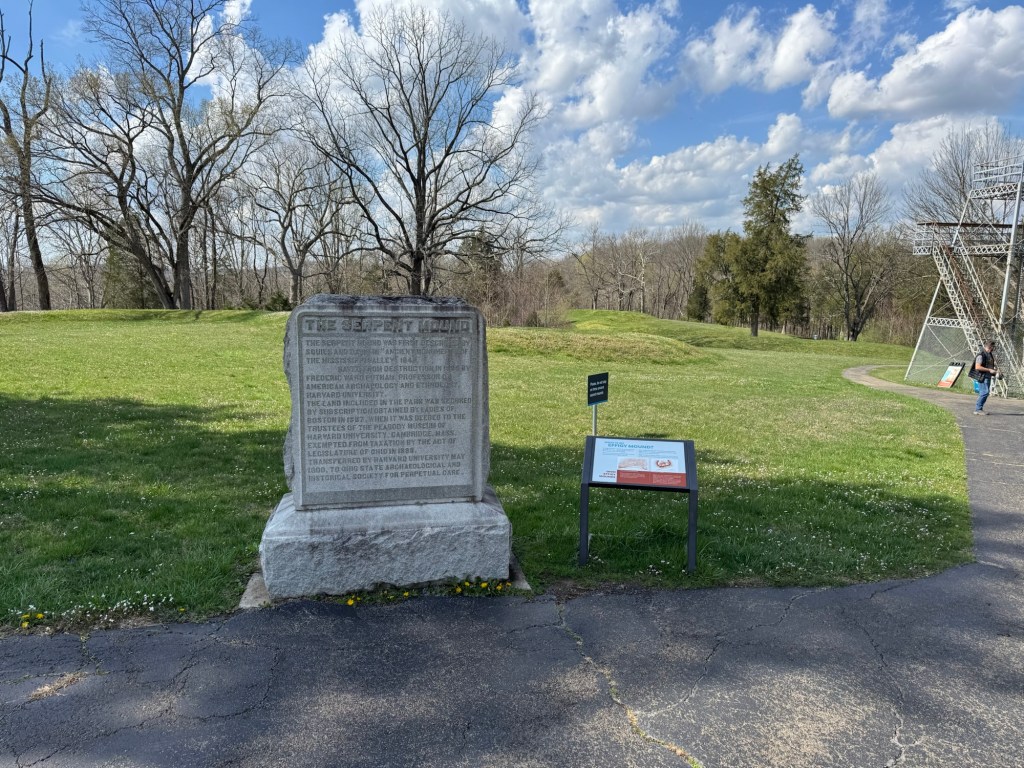
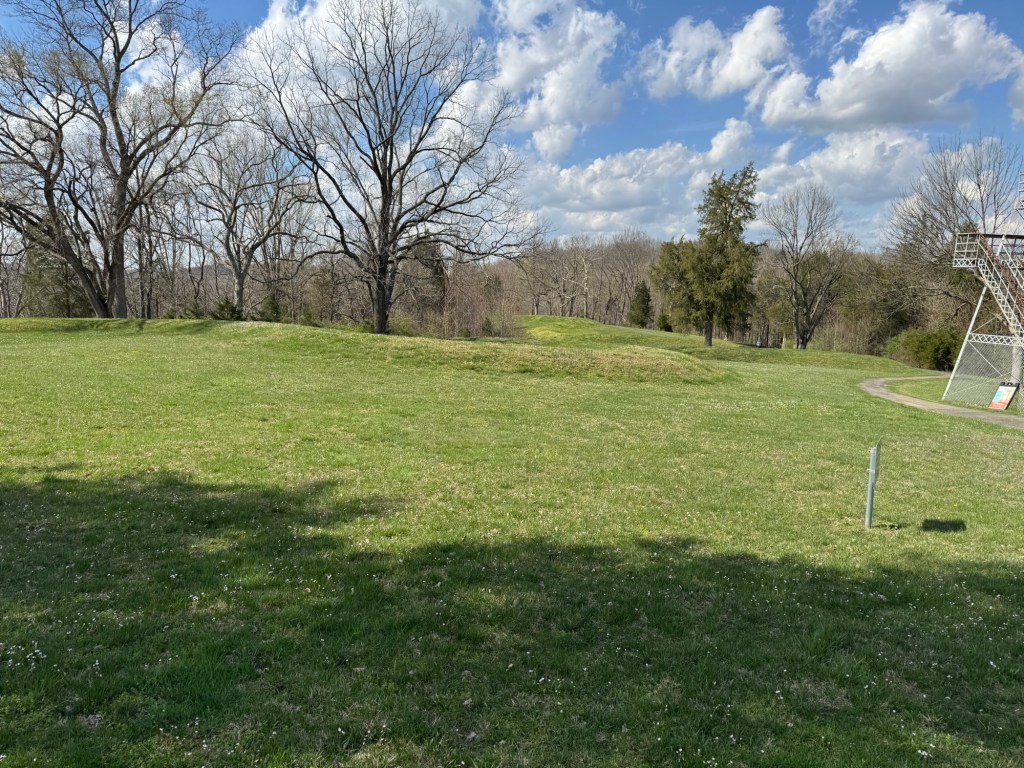
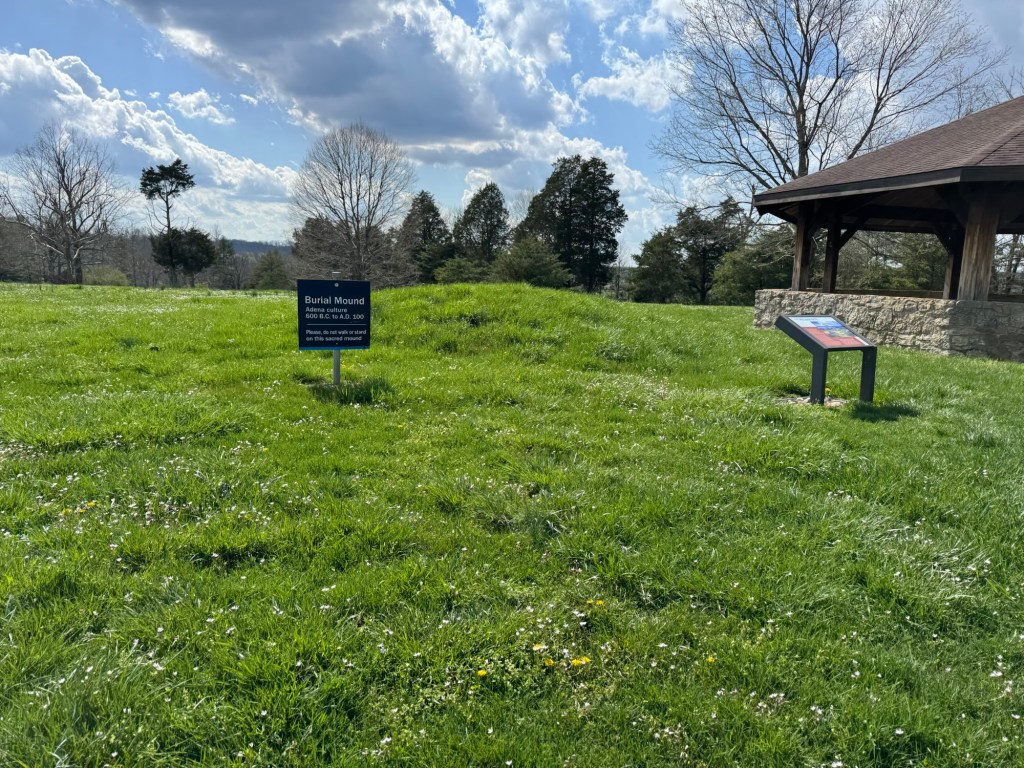
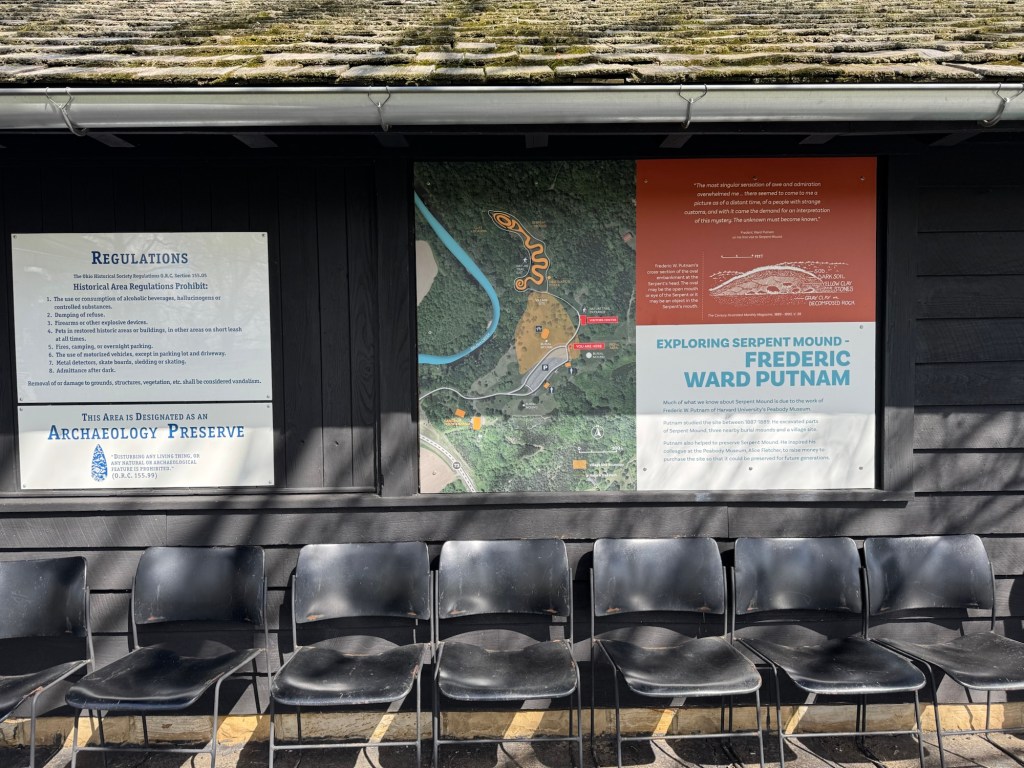
And to further confirm that suspicion, many of these Hopewell sites are associated with the very ancient Teays River, which flowed up the Scioto over 2 million years ago, well before the last Ice Age. The Teays and its tributaries touched many of the Hopewell sites, indicating a reverence for those spots on the land by an intelligence observing human beings over a vast span of time and connecting those locations to celestial alignments. And that relevance is important in knowing that the Great Serpent Mound was built on the crater of an impact crater from 300 million years ago. How would indigenous people know that? And even stranger, the Fort Hill complex is built within the impact crater zone as well. Out of all the places in North America, why would anybody, and nobody really knows who they are, build these big, significant sites near geologic features that were millions of years old? Why would they know anything about any of it with such precise mathematics? How would that information ever be obtained in the first place, let alone passed along to these construction sites involving so many years and generations of labor and production? It’s hard to build a McDonald’s consistently, even with all the modern tools we have now. I would propose that it was the shaman with drug use who served as the primary communication device. And with that, a relationship with Non-Human Intelligence that we are finally admitting to, that has always been a part of the human experience.
Yes, the exhibit at the great Johnson-Humrickhouse Museum was very political, but not in the way that I think they intended. I saw at the museum an attempt to understand these great mysteries with replicas of the relics themselves. Again, that’s where I found a great copy of the Wilmington Tablet, along with the Holy Stones of Newark. And we also know of the Shaman of Newark, so there were relics that depicted the same kind of human sacrifice that we know came from central Mexico, Mirador, Teotihuacan, and Cholula, in a time when many people didn’t think cultures were talking to each other. They appear, as the evidence of the relics shows, to have been doing so. Even in the Smithsonian views these days by John Hancock, we know that the Hopewell people were traveling many thousands of miles to obtain copper, obsidian, and mica, and likely traded with the Olmecs of Tabasco, Mexico, and affiliated cultures, which had their writing showing up in the Wilmington Tablet and the Cincinnati Tablet. So the political motivations of David Wyrick are not as simple as has been attempted to be set out.
As a surveyor of these great Indian mounds, and confronted with vast evil, as the Civil War over slavery unleashed itself, and studying the remains of these ancient cultures, likely the same voices that whispered in the ear of the Shaman of Newark were whispering in the ear of David Wyrick and his opium painkillers. And was it Moses who wrote the Book of Job and discussed what Satan had said to whom and for what reason? The same guy who talked to god on a mountaintop and came back 40 days later with the Ten Commandments, and spoke to a burning bush about freeing the Jewish people from the confines of Egyptian polytheism. Should we ignore that the mound complex at Portsmith, Ohio has a very similar path-of-souls ritual to the one the Egyptians had for their preserved dead? And that some of their paths actually go through the Ohio River, showing a reverence for what was there before even the Ohio River flowed through the area, when the Teays River instead flowed to the north. And we could say with just as much authority that the mound sites were restored during the Hopewell period rather than constructed anew. That they were marking spots on the ground, viewed from the air, to very ancient landmarks, for reasons for which we do not have enough evidence to speculate. Yet they are there, and the evidence is begging to be found and analyzed. And for the same political reasons that Satan tried to trick God into punishing Job, we have society punishing David Wyrick for daring to oppose slavery, or wanting to use the Ten Commandments as a hook into North American migration by Western civilization, bringing with it a religion of forgiveness instead of appeasement to some mysterious gods who demand decapitated human heads in the lap of their shaman before providing information.
No, I didn’t want to be that guy, but sitting in front of the Newark Holystones at the Johnson-Humrickhouse Museum and seeing the exhibit they had there, and noticing the quick tone to dismiss everything as a hoax, my life flashed before me in a way I would have rather had it not. A deception was at play; Satan himself was trying to throw everyone off the scent. And when theologians contemplate a single satan in the Book of Job, they miss the obvious problem that there are likely thousands of them always whispering in someone’s ear, maybe God himself, or David Wyrick laced out on painkillers, or the Shaman of Newark. And that it didn’t take much to communicate, a spiritual terrorist from the land of Cannon could have been speaking the same message of sacrifice to some headhunter of the Adena culture depicted as a severed head in Hopewell mounds at the same time that they were whispering to Nebuchadnezzar to destroy Solomon’s First Temple, and to the Romans during the Second Temple, to destroy the vessels of God himself to make the world ripe for an overthrow, to the political objectives of the conspirators against God’s creations. And the Essenes were turned into the channel, and wrote about it in their Dead Sea Scrolls. I had wished that the Johnson-Humrickhouse Museum exhibit, located well north of Newark, was less obvious and more scientifically grounded. But the assumption was that Wyrick was an abolitionist living among evil people supporting the slavery of other people, more of that reference to the 1619 Project, the unjust settlement of indigenous land. And as you read at the Holy Stone Exhibit, you can almost hear the whispers of Satan himself, showing Wyrick to be invalidated, corrupting future scientists in their assumptions, and making a case for not even founding America at all so the Christian premise of eliminating human sacrifice would be destroyed and current cultures continue the practice of honoring the spirit world with the blood of the living. And I didn’t want to be the guy who reported what was hard to hear. That Satan was a non-human intelligence that has been doing all this manipulating since before the Teays River flowed north along the Scioto River, then turned left near present-day Columbus and headed out to Indiana along the present-day I-70 corridor.
If you really looked closely enough and blocked out the contemporary noise, you could hear the insecurities of Satan, hoping to get away with the deception of many lifetimes. Humans need to appease what they thought of as their superiors, their gods, the malcontents that UAP whistleblowers are now revealing in the light of day in the Trump administration very hard truths. It’s one thing to explain modern UFOs and their physics-defying characteristics, and another to explain the mysterious occurrences and hauntings at the Skinwalker ranch. Yes, I talk a lot about hauntings, paranormal occurrences, Bigfoot, UFOs, and the kind of politics that will make your skin crawl in the pages ahead. But it’s also a marvelous adventure that I share so that you don’t have to go through the pain firsthand. And perhaps, after a lot of work, we’ll gather up enough evidence to change our perspective. But in The Politics of Heaven, the ruse is in what isn’t said, not what is actually revealed. Satan never tells God what he’s up to in trying to get him to turn against the very good Job. But when we look at the human race, we see a lot of Jobs, David Wyrick being one of them. Good people are crushed by their relationships with others who are otherwise motivated toward evil. But what is evil anyway when you have the Shaman of Newark holding the severed head of an obvious victim, that shaman would use as currency to buy information from the spirit world. The great spirit, or Satan himself. We aren’t supposed to ask the question, only to accept that the experts told us what to think and when to think it. But I didn’t want to be that guy. Sometimes, I wish I could be a lot of other things. But what is the adventure in that? And in the adventure are the answers, the real answers if we dare to look.
Rich Hoffman is an author, political consultant, and strategic advisor based in Cincinnati, Ohio, and the creator of The Politics of Heaven—a unique framework that connects biblical theology, ancient history, and modern power structures to explain how moral alignment and spiritual forces shape global events. Blending real-world political experience with deep research into archaeology, UFO phenomena, and suppressed historical narratives, Hoffman offers compelling commentary on topics ranging from ancient civilizations and the Dead Sea Scrolls to modern populist movements, paranormal continuity, and leadership strategy in chaotic environments. As the author of The Gunfighter’s Guide to Business and the forthcoming Politics of Heaven, he brings a grounded yet provocative voice to media discussions, supported by firsthand experiences and a cross-disciplinary approach that bridges science, history, and theology. For interviews, speaking engagements, or expert analysis, visit richhoffmanbooks.com or contact directly via phone at 513-307-5815 or email at rhoffman@richhoffmanbooks.com. If you’ve seen the movie, Disclosure Day and want to talk about it and the implications of Presidnet Trump’s UAP disclosures, let me know and we can bring some color to your coverage. https://richhoffmanbooks.com/media-inquiries-broadcast-topics-and-contact-info/?frame-nonce=ad51e7ecba I do have a firsthand UFO encounter to discuss.
I have always lived with one foot in the ordinary world, local Ohio politics, family life along the Great Miami River in Butler County, and the other in the deeper currents of history, archaeology, and the unexplained. Growing up in the Cincinnati area, my family in the 1970s was already investigating strange lights in the sky and odd occurrences that didn’t fit neatly into everyday explanations. Those early experiences planted seeds that would later bloom into serious inquiry. I have never claimed to have been abducted or to have lived through anything as dramatic as the portrayal of Travis Walton’s ordeal in Fire in the Sky. My encounters have been subtler, more provocative, and in one memorable case, downright infuriating in their precision and timing.
One such encounter stands out, not just because of what I saw firsthand in earlier instances, but also because of how it unfolded in response to something I said publicly. A couple of years ago, amid ongoing discussions about government transparency, surveillance, and the lingering shadows of the COVID era, I recorded a video. In it, I dared whatever forces—whether extraterrestrial, interdimensional, or black-budget human technology—might be listening to show themselves right there in my backyard of Butler County, Ohio. I pointed to a specific spot in the sky near Middletown. I wasn’t expecting fireworks or a close encounter of the third kind. I was making a point about power, information, and the dangers of hidden knowledge wielded by institutions that demand trust while offering none in return.
A short time later—mere days—a ring of bright green lights appeared in the night sky exactly in that vicinity. Multiple residents captured video around 10:30 or 11 p.m. The lights rotated, hovered, then shot off with impossible speed. People stopped at stoplights, pulled out their phones, and filmed what appeared to be a circular formation moving counterclockwise before it vanished. Reports flooded local news: WCPO, WLWT, and others covered the strange rotating green lights over Middletown in Butler County. Witnesses described it as unlike any drone or conventional aircraft. Some called it frightening; others were fascinated. I wasn’t on site that night, but the proximity and timing were unmistakable.
This wasn’t my first brush with the phenomenon. I had witnessed other UFO activity years earlier, including one that left me genuinely angry at the audacity of it. But this particular event felt targeted. Given my political activity—my role as a vocal conservative voice in Butler County, my history with local issues like Lakota schools, tax fights, and broader America First advocacy—I have long assumed surveillance. Decades ago, in a previous neighborhood in Mason, Ohio, I confronted a drug ring operating too close to families. That brought FBI interviews and scrutiny that carried over for years. Local and federal eyes have been on me, my family, and my work for a very long time. When you dare powers—visible or invisible—to reveal themselves while criticizing government overreach, you invite responses. Whether this was a genuine non-human craft, advanced human technology (perhaps reverse-engineered or projected), or something meant to rattle me, it landed with precision.
I took it as a message. Not the kind that turns you into Richard Dreyfuss piling dirt in the living room from Close Encounters of the Third Kind, but one that demands deeper reflection. I have visited Roswell. I have investigated the Mothman in Point Pleasant, West Virginia—right across the river from Ohio territory familiar to me. There, UFO sightings were rampant alongside the Mothman reports in the 1960s. John Keel’s The Mothman Prophecies (later a film with Richard Gere) details how lights in the sky, strange calls, and Men in Black phenomena intertwined with the creature sightings leading up to the Silver Bridge collapse. You cannot grapple with Mothman without confronting the UFO dimension. I went there for personal research, on a birthday trip no less, and came away convinced that these events form a pattern far older than modern disclosure narratives.
Watching Steven Spielberg’s Disclosure Day recently brought it all into sharper focus. Spielberg, who has fielded countless UFO stories from the public over decades while making films like Close Encounters, treats the subject with a humanistic lens. The movie explores ordinary people pushing back against secrecy. I found it compelling, even if some critics dismissed elements. It reminded me of my own journey. Spielberg has no personal UFO encounter, by his account, yet he has shaped public imagination on the topic. I have had them, and they propelled me to write.
My thoughts also turned to Indiana Jones and the Kingdom of the Crystal Skull. Many reviewers scoffed at the interdimensional beings, calling it the weakest entry. I saw sophistication in it. The film uses Indy to explore ancient alien influence on human civilization—archaeologists from another realm, imprints on societies, crystal skulls tied to Roswell-like events and portals. It gave popular culture the moral license to think seriously about these ideas. It opened doors for shows like Ancient Aliens. The Peruvian connections, snakes as symbols (echoing the Garden of Eden), and hidden-in-plain-sight craft at the end resonated. I dedicated a chapter in my book to serpentine imagery and interdimensional influences.
Broader Context: UFOs in Ohio and Butler County
Ohio has a rich history of sightings. The 1952 “Flatwoods Monster” event in nearby West Virginia involved a bright object and a strange entity. In 1994, Trumbull County saw police-chased lights. Middletown itself has a history of reports, including cigar-shaped objects. The 2023 green lights fit a pattern of rotating formations and rapid departures defying conventional explanation. Some dismissed it as a prank or drone, but the speed and multiple witnesses suggest more. Butler County’s location—near Wright-Patterson Air Force Base, long rumored in UFO lore for reverse-engineering—adds intrigue. Reverse-engineering Roswell tech? Congressional testimony and retired officials hint at it. I know enough insiders to take such claims seriously.
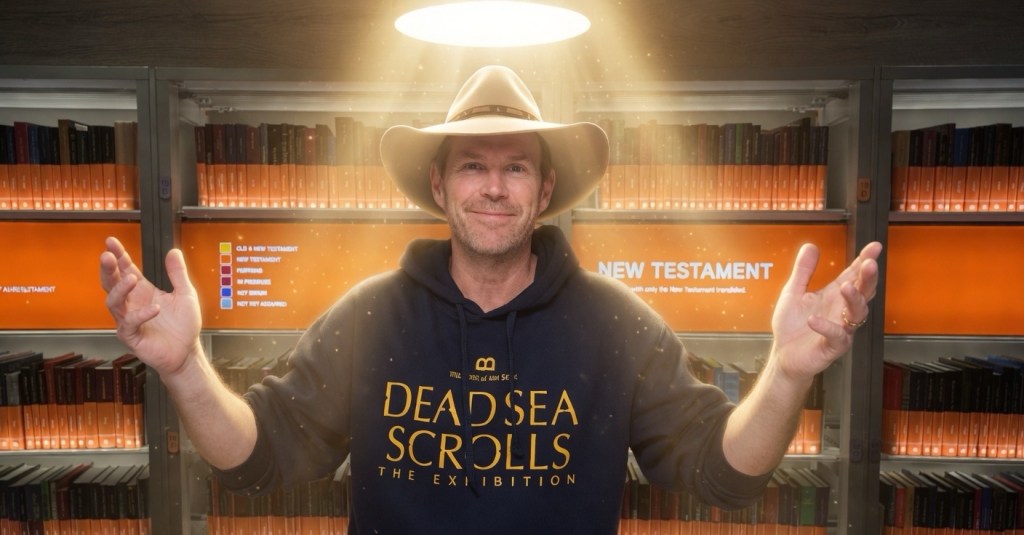
These aren’t new. Ancient texts, archaeology, and global myths describe sky beings, watchers, and technology influencing humanity. The Book of Enoch, Dead Sea Scrolls (which I viewed at the Museum of the Bible on my birthday), Nephilim, and giants speak to this. My book, The Politics of Heaven, dives into spiritual warfare, divine rebellion, population agendas, and how non-human intelligences have shaped history. Biblical conspiracies, demons, and interdimensional entities aren’t “crazy” when disclosure normalizes the conversation. Spielberg’s film and real events make mainstream what was once fringe.
Government, Power, and the Politics of Disclosure
I have built my life around self-reliance, discipline (symbolized by my whip iconography from my family’s Kentucky heritage), and skepticism toward centralized power. The UFO debate often serves as a pretext for more government authority: “Trust us to protect you from them.” Yet the same institutions lied about COVID, mandates, elections, and more. Black budgets, compartmentalized programs at places like Wright-Patterson, and associations with supernatural tech-seeking make the government threat more immediate than hypothetical aliens. If entities have visited since civilization’s dawn, then history makes more sense—temples, sacrifices, and beliefs born of observed phenomena.
My dare and the subsequent sighting felt like a ritual response. Call it out, and it appears. Whether it was a government projection (holographic or drone tech) to discredit me in political circles, actual craft, or something responding to frequency/intent, it happened. Proximity to my pointed location, in an area with patterns (Middletown, Monroe, West Chester), wasn’t a coincidence. It reinforced my view: information is power. Secrecy builds empires on lies. As a grand jury foreman, I saw institutional failures up close. Two-tier justice, surveillance of citizens like me—these are real.
This encounter, revisited through Disclosure Day, crystallized my decision to finish the manuscript. I weave personal stories, including this one, with biblical archaeology, ancient civilizations (Axum, Britain BC, the Windover Bog People), giants, and modern spiritual warfare. Chapters explore how UFOs, interdimensional beings, and government secrecy intersect with heavenly politics. Reviewers call it wild, but grounded in my experiences and research. It answers questions Disclosure Day raises: What next? What does it mean for faith, power, and humanity?
Conclusion: Toward Understanding
I stand by my premises. Aliens or their tech have been with us. Government lies pose clearer dangers. My encounter was deliberate, provocative, and inspirational. It led to The Politics of Heaven, a book for those seeking the next layer after disclosure. Look up Middletown UFO reports yourself. Study Keel, Enoch, archaeology. Question power. Live with discipline and curiosity. The sky holds answers, but so does rigorous inquiry into heaven’s politics.
The modern cultural moment surrounding extraterrestrial disclosure sits at the intersection of fiction, data, belief, and institutional power. What once belonged exclusively to speculative literature and late-night radio has steadily entered mainstream discourse through cinema, congressional hearings, intelligence reports, and public polling. The convergence of these domains—popular storytelling, emerging government transparency, and shifting public opinion—marks not merely a fascination with the unknown, but a broader transition in how societies process uncertainty and authority.
Science fiction has long functioned as a precursor to technological and conceptual breakthroughs. From Jules Verne’s imagined submarines to Star Trek’s communicators, speculative narratives have historically inspired real-world innovation, shaping the ambitions of engineers, scientists, and entrepreneurs 12. This feedback loop between imagination and material progress has created a cultural environment in which ideas once dismissed as fantasy are re-evaluated as plausible futures. The genre’s influence extends beyond gadgets into ethics and social systems, providing frameworks for grappling with artificial intelligence, space exploration, and extraterrestrial life itself 1. In this sense, science fiction does not merely predict the future—it establishes the intellectual conditions that make certain futures conceivable.
The normalization of extraterrestrial discourse is reflected in recent polling data, which reveals a decisive shift in public belief. As of June 2026, approximately 63% of Americans believe intelligent life exists beyond Earth, a substantial increase from fewer than half in 2010 3. Moreover, about 21% of respondents believe direct contact with extraterrestrial life has already occurred 3. These figures illustrate a cultural transformation: belief in extraterrestrial life is no longer marginal but widely accepted. Even more telling is that roughly 84% of Americans believe the federal government knows more about unidentified aerial phenomena than it has disclosed 4. This convergence of belief in extraterrestrials and skepticism toward institutional transparency underscores a broader erosion of trust in official narratives.
Parallel to this shift in public perception, the United States government has released a series of reports on Unidentified Aerial Phenomena (UAP), providing an unprecedented—though limited—window into classified data. The 2021 preliminary assessment reviewed 144 documented cases, many supported by multi-sensor evidence and some exhibiting unusual flight characteristics such as abrupt acceleration and stationary hovering 5. By August 2022, the number of recorded incidents had expanded to 510, reflecting both increased reporting and reduced stigma among military personnel 6. The 2023 and subsequent reports further expanded the dataset to hundreds more cases, with total investigations surpassing 800 and later exceeding 1,600 by 2024, demonstrating a rapidly growing body of observations 75.
Despite this increase in data, a significant proportion of cases remain unresolved. While many sightings are eventually attributed to balloons, drones, or atmospheric phenomena, a persistent subset defies easy classification. Notably, no confirmed extraterrestrial origin has been established in these official reports, yet the continued presence of unexplained cases sustains public speculation 5. The reports emphasize aviation safety concerns and the need for improved data collection, framing UAP primarily as a defense and intelligence issue rather than a confirmation of alien technology 7. Nevertheless, the mere acknowledgment of unexplained aerial phenomena by government institutions has legitimized a topic long relegated to the fringes.
The cultural impact of this gradual disclosure cannot be separated from the role of media, particularly large-scale cinematic releases that translate complex or controversial ideas into accessible narratives. Films centered on extraterrestrial contact often serve as intermediaries between classified knowledge and public imagination, offering emotional and philosophical interpretations of what scientific reports leave unresolved. These narratives tend to humanize the unknown, framing extraterrestrial encounters in terms of curiosity, conflict, or moral testing. In doing so, they provide audiences with conceptual tools to process information that might otherwise provoke skepticism or fear.
At the same time, the enduring appeal of theories regarding ancient extraterrestrial influence demonstrates the persistence of alternative explanatory frameworks. The so-called “ancient aliens” hypothesis suggests that extraterrestrial beings contributed to early human civilizations, influencing architecture, religion, and technological development. While this theory remains popular in media and literature, it is widely regarded by professional archaeologists as pseudoarchaeology, often criticized for ignoring contextual evidence and substituting speculation for rigorous analysis 89. Scholars argue that such theories can undermine appreciation for human ingenuity by attributing historical achievements to non-human actors. Yet their popularity reflects a deeper cultural impulse: the desire to locate external origins for complex systems and unexplained accomplishments.
This impulse extends into modern interpretations of government secrecy and psychological control. Among the most controversial historical programs associated with these concerns is Project MK-Ultra, a covert CIA initiative conducted between 1953 and the mid-1960s. The program involved extensive experimentation with drugs, hypnosis, and sensory manipulation in an attempt to develop methods of controlling human behavior 10. Many of these experiments were conducted without informed consent, leading to lasting ethical and legal controversies when the program was exposed in the 1970s 11. MK-Ultra’s documented abuses have contributed to a broader skepticism toward intelligence agencies, reinforcing narratives in which governments possess capabilities that remain hidden from public scrutiny.
The persistence of such ideas reflects the influence of narrative storytelling, which often amplifies real-world events into more dramatic or comprehensive systems of control. This blending of fact and fiction can complicate efforts to establish a shared understanding of what is known, unknown, and unknowable.
Within this landscape, the concept of “disclosure” operates as both a political and psychological threshold. It represents not only the potential revelation of classified information but also the collective readiness of society to integrate disruptive knowledge. Historical precedents suggest that transformative discoveries—whether heliocentrism, evolution, or nuclear technology—require gradual assimilation. Sudden exposure to paradigm-shifting ideas can provoke resistance, denial, or reinterpretation within existing belief systems. Consequently, any process of disclosure, whether regarding extraterrestrial life or advanced technology, is likely to unfold incrementally, mediated by cultural narratives and institutional frameworks.
Religious perspectives add another dimension to this process. The possibility of extraterrestrial intelligence raises fundamental questions about humanity’s place in the universe, challenging anthropocentric interpretations of creation and divine purpose. Yet many theological traditions possess conceptual flexibility, allowing for the existence of life beyond Earth without negating core doctrines. The idea of a universe governed by a singular creator is not inherently incompatible with multiple inhabited worlds. Rather than undermining faith, the discovery of extraterrestrial life could expand the scope of theological inquiry, prompting reconsideration of divine agency and cosmic order.
Public reaction to such possibilities appears increasingly nuanced. Polling data indicates that a majority of Americans would respond to extraterrestrial contact with curiosity rather than fear, though a significant proportion also anticipates anxiety 3. This duality reflects the tension between fascination and uncertainty that characterizes human engagement with the unknown. Cultural conditioning through decades of science fiction has arguably prepared audiences for the idea of extraterrestrial life, normalizing it to a degree unimaginable in earlier generations.
At the same time, political framing continues to shape interpretations of disclosure. Debates over transparency, national security, and governmental authority influence how information is released and received. Bipartisan interest in UAP investigations suggests that the issue transcends traditional ideological divides, yet its implications can be mobilized within broader narratives about governance, sovereignty, and public trust. The question of who controls knowledge—and who decides when it is revealed—remains central to the discourse.
The interplay between science fiction, empirical data, and cultural belief ultimately reveals a society in transition. As technological capabilities expand and information becomes more accessible, distinctions between speculation and reality grow increasingly porous. Ideas once confined to fiction are reexamined through the lens of possibility, while scientific findings are interpreted within preexisting narrative frameworks. This dynamic creates both opportunities and challenges: opportunities for expanded knowledge and imaginative exploration, and challenges in maintaining epistemic clarity.
Future developments in astronomy, planetary science, and space exploration may provide more definitive answers regarding extraterrestrial life. Missions to Mars, Europa, and other celestial bodies aim to detect biosignatures or evidence of past life, potentially transforming speculation into empirical reality. At the same time, continued analysis of UAP data may resolve many currently unexplained cases, narrowing the gap between observation and explanation. Whether these processes culminate in confirmation of extraterrestrial intelligence remains uncertain, but their trajectory is unmistakable.
In this context, disclosure is less a singular event than an ongoing process—a gradual unfolding shaped by technological progress, institutional decisions, and cultural interpretation. The convergence of widespread belief, partial governmental transparency, and influential storytelling suggests that society is moving toward a new equilibrium in its understanding of the cosmos. This transformation is not driven solely by evidence but by the narratives constructed around that evidence, which determine how it is perceived, debated, and ultimately integrated into collective knowledge.
The enduring power of science fiction lies in its ability to anticipate and normalize the unfamiliar. By envisioning encounters with the unknown, it prepares audiences to confront them, bridging the gap between imagination and reality. As the boundaries of knowledge continue to expand, this role becomes increasingly significant, guiding public discourse through uncharted intellectual territory. In the evolving dialogue surrounding extraterrestrial life and government disclosure, fiction and fact are not opposing forces but complementary elements in a broader cultural process—one that continues to redefine humanity’s place in an ever-expanding universe. And with all that said, the movie, Disclosure Day, is a fantastic movie everyone should see. It’s important.
—
Footnotes
[1] Data on public belief in extraterrestrial life: 3
[2] Public perception of government secrecy on UFOs: 4
Rich Hoffman is an author, political consultant, and strategic advisor based in Cincinnati, Ohio, and the creator of The Politics of Heaven—a unique framework that connects biblical theology, ancient history, and modern power structures to explain how moral alignment and spiritual forces shape global events. Blending real-world political experience with deep research into archaeology, UFO phenomena, and suppressed historical narratives, Hoffman offers compelling commentary on topics ranging from ancient civilizations and the Dead Sea Scrolls to modern populist movements, paranormal continuity, and leadership strategy in chaotic environments. As the author of The Gunfighter’s Guide to Business and the forthcoming Politics of Heaven, he brings a grounded yet provocative voice to media discussions, supported by firsthand experiences and a cross-disciplinary approach that bridges science, history, and theology. For interviews, speaking engagements, or expert analysis, visit richhoffmanbooks.com or contact directly via phone at 513-307-5815 or email at rhoffman@richhoffmanbooks.com. If you’ve seen the movie, Disclosure Day and want to talk about it and the implications of Presidnet Trump’s UAP disclosures, let me know and we can bring some color to your coverage. https://richhoffmanbooks.com/media-inquiries-broadcast-topics-and-contact-info/?frame-nonce=ad51e7ecba I do have a firsthand UFO encounter to discuss.
I have always lived with one foot in the ordinary world of aerospace program management, local Ohio politics, family life along the Great Miami River in Butler County, and the other in the deeper currents of history, archaeology, and the unexplained. Growing up in the Cincinnati area, my family in the 1970s was already investigating strange lights in the sky and odd occurrences that didn’t fit neatly into everyday explanations. Those early experiences planted seeds that would later bloom into serious inquiry. I have never claimed to have been abducted or to have lived through anything as dramatic as the portrayal of Travis Walton’s ordeal in Fire in the Sky. My encounters have been subtler, more provocative, and in one memorable case, downright infuriating in their precision and timing.
One such encounter stands out, not just because of what I saw firsthand in earlier instances, but also because of how it unfolded in response to something I said publicly. A couple of years ago, amid ongoing discussions about government transparency, surveillance, and the lingering shadows of the COVID era, I recorded a video. In it, I dared whatever forces—whether extraterrestrial, interdimensional, or black-budget human technology—might be listening to show themselves right there in my backyard of Butler County, Ohio. I pointed to a specific spot in the sky near Middletown. I wasn’t expecting fireworks or a close encounter of the third kind. I was making a point about power, information, and the dangers of hidden knowledge wielded by institutions that demand trust while offering none in return.
A few days later, a ring of bright green lights appeared in the night sky in that vicinity. Multiple residents captured video around 10:30 or 11 p.m. The lights rotated, hovered, then shot off with impossible speed. People stopped at stoplights, pulled out their phones, and filmed what appeared to be a circular formation moving counterclockwise before it vanished. Reports flooded local news: WCPO, WLWT, and others covered the strange rotating green lights over Middletown in Butler County. Witnesses described it as unlike any drone or conventional aircraft. Some called it frightening; others were fascinated. I wasn’t on site that night, but the proximity and timing were unmistakable.
This wasn’t my first brush with the phenomenon. I had witnessed other UFO activity years earlier, including one that left me genuinely angry at the audacity of it. But this particular event felt targeted. Given my political activity—my role as a vocal conservative voice in Butler County, my history with local issues like Lakota schools, tax fights, and broader America First advocacy—I have long assumed surveillance. Decades ago, in a previous neighborhood in Mason, Ohio, I confronted a drug ring operating too close to families. That brought FBI interviews and scrutiny that carried over for years. Local and federal eyes have been on me, my family, and my work. When you dare powers—visible or invisible—to reveal themselves while criticizing government overreach, you invite responses. Whether this was a genuine non-human craft, advanced human technology (perhaps reverse-engineered or projected), or something meant to rattle me, it landed with precision.
I took it as a message. Not the kind that turns you into Richard Dreyfuss piling dirt in the living room from Close Encounters of the Third Kind, but one that demands deeper reflection. I have visited Roswell. I have investigated the Mothman in Point Pleasant, West Virginia—right across the river from Ohio territory familiar to me. There, UFO sightings were rampant alongside the Mothman reports in the 1960s. John Keel’s The Mothman Prophecies (later a film with Richard Gere) details how lights in the sky, strange calls, and Men in Black phenomena intertwined with the creature sightings leading up to the Silver Bridge collapse. You cannot grapple with Mothman without confronting the UFO dimension. I went there for personal research, on a birthday trip no less, and came away convinced that these events form a pattern far older than modern disclosure narratives.
Watching Steven Spielberg’s Disclosure Day recently brought it all into sharper focus. Spielberg, who has fielded countless UFO stories from the public over decades while making films like Close Encounters, treats the subject with a humanistic lens. The movie explores ordinary people pushing back against secrecy. I found it compelling, even if some critics dismissed elements. It reminded me of my own journey. Spielberg has no personal UFO encounter, by his account, yet he has shaped public imagination on the topic. I have had them, and they propelled me to write.
My thoughts also turned to Indiana Jones and the Kingdom of the Crystal Skull. Many reviewers scoffed at the interdimensional beings, calling it the weakest entry. I saw sophistication in it. The film uses Indy to explore ancient alien influence on human civilization—archaeologists from another realm, imprints on societies, crystal skulls tied to Roswell-like events and portals. It gave popular culture the moral license to think seriously about these ideas. It opened doors for shows like Ancient Aliens. The Peruvian connections, snakes as symbols (echoing the Garden of Eden), and hidden-in-plain-sight craft at the end resonated. I dedicated a chapter in my book to serpentine imagery and interdimensional influences.
Broader Context: UFOs in Ohio and Butler County
Ohio has a rich history of sightings. The 1952 “Flatwoods Monster” event in nearby West Virginia involved a bright object and a strange entity. In 1994, Trumbull County saw police-chased lights. Middletown itself has a history of reports, including cigar-shaped objects. The 2023 green lights fit a pattern of rotating formations and rapid departures defying conventional explanation. Some dismissed it as a prank or drone, but the speed and multiple witnesses suggest more. Butler County’s location—near Wright-Patterson Air Force Base, long rumored in UFO lore for reverse-engineering—adds intrigue. Reverse-engineering Roswell tech? Congressional testimony and retired officials hint at it. I know enough insiders to take such claims seriously.
These aren’t new. Ancient texts, archaeology, and global myths describe sky beings, watchers, and technology influencing humanity. The Book of Enoch, Dead Sea Scrolls (which I viewed at the Museum of the Bible on my birthday), Nephilim, and giants speak to this. My book, The Politics of Heaven, dives into spiritual warfare, divine rebellion, population agendas, and the ways non-human intelligences have shaped history. Biblical conspiracies, demons, and interdimensional entities aren’t “crazy” when disclosure normalizes the conversation. Spielberg’s film and real events make mainstream what was once fringe.
Government, Power, and the Politics of Disclosure
I have built my life around self-reliance, discipline (symbolized by my whip iconography from my family’s Kentucky heritage), and skepticism toward centralized power. The UFO debate often serves as a pretext for more government authority: “Trust us to protect you from them.” Yet the same institutions lied about COVID, mandates, elections, and more. Black budgets, compartmentalized programs at places like Wright-Patterson, and associations with supernatural tech-seeking make the government threat more immediate than hypothetical aliens. If entities have visited since civilization’s dawn, then history makes more sense—temples, sacrifices, and beliefs born of observed phenomena.
My dare and the subsequent sighting felt like a ritual response. Call it out, and it appears. Whether it was a government projection (holographic or drone tech) to discredit me in political circles, actual craft, or something responding to frequency/intent, it happened. Proximity to my pointed location, in an area with patterns (Middletown, Monroe, West Chester), wasn’t a coincidence. It reinforced my view: information is power. Secrecy builds empires on lies. As a grand jury foreman, I saw institutional failures up close. Two-tier justice, surveillance of citizens like me—these are real.
I don’t fear aliens landing and applying for jobs (though I joked I’d hire hard workers who crossed interstellar distances). The real danger is unaccountable power using the phenomenon for control. My political consulting, school advocacy, and anti-tax work matter. Associating with “fringe” topics risks credibility, yet truth-seeking demands it. Overman philosophy—imposing will on chaos, as in model rocketry with my grandson in bad weather—applies here. Face the unknown with resilience.
Writing The Politics of Heaven
This encounter, revisited through Disclosure Day, crystallized my decision to finish the manuscript. I weave personal stories, including this one, with biblical archaeology, ancient civilizations (Axum, Britain BC, Windover bog people), giants, and modern spiritual warfare. Chapters explore how UFOs, interdimensional beings, and government secrecy intersect with heavenly politics. Reviewers call it wild, but grounded in my experiences and research. It answers questions Disclosure Day raises: What next? What does it mean for faith, power, and humanity?
Bibliography (Selected; expanded in full manuscript with footnotes)
• Keel, John A. The Mothman Prophecies. 1975. (Core text on Point Pleasant events, UFOs, and interconnected phenomena.)
• Spielberg, Steven, dir. Disclosure Day. Universal Pictures, 2026. (Film exploring disclosure and government secrecy.)
• Spielberg, Steven, dir. Indiana Jones and the Kingdom of the Crystal Skull. Paramount, 2008. (Interdimensional beings and ancient influences.)
Rich Hoffman is an author, political consultant, and strategic advisor based in Cincinnati, Ohio, and the creator of The Politics of Heaven—a unique framework that connects biblical theology, ancient history, and modern power structures to explain how moral alignment and spiritual forces shape global events. Blending real-world political experience with deep research into archaeology, UFO phenomena, and suppressed historical narratives, Hoffman offers compelling commentary on topics ranging from ancient civilizations and the Dead Sea Scrolls to modern populist movements, paranormal continuity, and leadership strategy in chaotic environments. As the author of The Gunfighter’s Guide to Business and the forthcoming Politics of Heaven, he brings a grounded yet provocative voice to media discussions, supported by firsthand experiences and a cross-disciplinary approach that bridges science, history, and theology. For interviews, speaking engagements, or expert analysis, visit richhoffmanbooks.com or contact directly via phone at 513-307-5815 or email at rhoffman@richhoffmanbooks.com. If you’ve seen the movie, Disclosure Day and want to talk about it and the implications of Presidnet Trump’s UAP disclosures, let me know and we can bring some color to your coverage. https://richhoffmanbooks.com/media-inquiries-broadcast-topics-and-contact-info/?frame-nonce=ad51e7ecba I do have a firsthand UFO encounter to discuss.
I have spent decades talking about extraterrestrial life, unidentified aerial phenomena, and what it all might mean for our place in the cosmos. For years, I’ve said the universe is teeming with life, that interactions with Earth have been ongoing for a very long time, and that the real story is far more layered—and far less apocalyptic—than the government narratives or Hollywood thrillers would have us believe. Now, in this moment of partial disclosure, with President Trump directing the release of the first tranche of UAP and UFO files just days ago on May 8, 2026, it feels like the conversation I’ve been having privately and publicly is finally stepping into the open. The Pentagon has begun posting declassified documents, videos, and reports spanning decades—no redactions on the core encounter data. More releases are promised in the weeks ahead. Even Jon Stewart, a voice not often aligned with Trump, has acknowledged the significance of this push for transparency. It’s a rare point of bipartisan curiosity: Hillary Clinton pushed for it, Barack Obama’s team explored it (including through Netflix projects), and now the files are coming out. People on the left and right alike have wondered about this for generations. Yet for me, the excitement isn’t about shock or fear. It’s about finally peeling back layers of distraction and getting closer to honest questions about who we are, where we came from, and what we’ve inherited from a solar system that bears the scars of ancient catastrophe.
My own thoughts on aliens and extraterrestrials have never been about little green men invading or superior beings dictating our future. I’ve always viewed them as fellow lifeforms—complex, varied, and interacting with our world in ways both subtle and overt. I believe Earth itself was seeded, settled, or at least profoundly influenced by beings from elsewhere in our solar system. Mars, I suspect, was once inhabited or used as a waystation by civilizations much like our own. Other planets or moons in the system likely hosted outposts too. Over time, evidence will mount showing human-like peoples once thrived across the inner solar system. The asteroid belt between Mars and Jupiter? I’m convinced that was once a full planet—sometimes called Phaeton in the old hypotheses—that was catastrophically destroyed. Its annihilation sent debris raining across the system, devastating Mars, scarring Earth, and leaving the rubble we see today as the asteroid belt. Fragments from that event, massive meteorites and nitrogen-rich impacts, have been documented in our geological record and even in Smithsonian collections. These events didn’t just reshape landscapes; they left a deep, often hidden trauma in human culture—a collective memory encoded in myth, biology, and the very ground we walk on.
That trauma, I think, explains so much of our species’ drive for meaning, our fascination with the stars, and our recurring encounters with the unexplained. Consider Serpent Mound in southern Ohio. This ancient effigy, shaped like a coiling serpent and built by Native American cultures around 1000 AD (though some estimates place related activity earlier), sits directly on the edge of a confirmed impact crater over 300 million years old. The Serpent Mound Impact Structure is an eight-kilometer-wide scar left by an asteroid or comet strike during the late Paleozoic era. Modern geology only confirmed its impact origin in the 20th century through shatter cones, shocked quartz, and other unmistakable signatures. Yet the builders of the mound chose that precise location with extraordinary intentionality. They couldn’t have known—through any conventional surveying available to them in 100 BC or 100 AD—that they were perched on the rim of an ancient cosmic wound. The crater had long been eroded and buried under sediment; its true nature was only revealed by modern science. So how did they know? I believe knowledge was passed down through generations, perhaps via oral tradition, visiting intelligences, or some lingering cultural memory of the original seeding events. They didn’t build it randomly while “staring at the stars.” They responded to a profound psychological and spiritual imperative: mark the site of catastrophe, honor the memory, perhaps even encode a warning or a map of resilience. Serpent Mound isn’t just art or ritual; it’s a living footnote to solar-system history.
These ideas didn’t come to me overnight. I’ve studied crop circles for years—those intricate, often overnight formations in fields worldwide that defy easy explanation. Some are hoaxes, sure, but many show geometric precision, bent-not-broken stalks, and electromagnetic anomalies that suggest something more. I see them as one modern expression of the same intelligence that might have influenced Serpent Mound or the biblical visions. They’re messages, experiments, or territorial markers from intelligences that move through dimensions or technologies we’re only beginning to glimpse. And now, as we approach the June 2026 release of Steven Spielberg’s new film Disclosure Day—a return to his roots in Close Encounters and E.T.—the cultural timing feels deliberate. Spielberg has always understood that the alien question taps into something primal: wonder mixed with unease. His movie will likely amplify the conversation, but I hope it steers us toward curiosity rather than panic.
The most dangerous element in all this disclosure talk has never been the extraterrestrials themselves. It’s the governments that have hoarded the information. I’ve said for years that the real threat is institutional secrecy used to justify black budgets, psychological operations, and technological monopolies. Look at Roswell in 1947. The official story flipped from “flying disc” to “weather balloon,” but witnesses and leaked documents point to recovered craft and non-human bodies. Those materials, lore insists, ended up at Wright-Patterson Air Force Base—specifically in facilities whispered about as Hangar 18. Bodies allegedly preserved, materials studied. I don’t see these beings as gods or conquerors. They’re more like mosquitoes in a photograph of a flower—another lifeform sharing the frame, interacting at their level. Some may be biological drones or probes; others, advanced explorers. The government, however, amplified the threat narrative: super-intelligent invaders with gravity-defying tech. Why? To rationalize endless funding for reverse-engineering programs. And the timeline fits suspiciously well. We went from propeller planes to supersonic jets, stealth technology, and radar-evading systems in a historical blink—right after Roswell. Coincidence? Or harvested knowledge traded or reverse-engineered? I suspect the latter. We would have reached these breakthroughs eventually through human ingenuity, but the acceleration smells of external influence.
I’ve had my own encounters with flying saucers. I won’t dramatize them here as some heroic standoff; they were quiet, observational moments that left me with a profound sense of perspective rather than fear. These crafts didn’t feel hostile or overwhelming in a superior way. They moved with technology that suggests mastery of dimensions or energy we’re still grasping—faster travel, perhaps interdimensional shifts. But the beings behind them strike me as competitors for space and resources, not infallible overlords. They’re lifeforms, flawed and curious like us. Demonizing them serves power structures more than truth. It keeps the public dependent: “Big government will protect you from the scary unknown.” I reject that entirely. Disclosure should empower individuals, not centralize control.
This perspective doesn’t undermine faith or the Bible; it enriches it. Scripture is filled with accounts that read like modern UAP encounters when viewed without preconception. Ezekiel’s vision of the wheel within a wheel—fiery, spinning, moving with purpose—sounds an awful lot like a technological craft. Elijah’s chariot of fire ascended in a whirlwind. The “watchers” and Nephilim in Genesis are echoed in the Book of Enoch and in fragments from the Dead Sea Scrolls found at Qumran. Those scrolls, preserved in caves near the Dead Sea, contain texts like the Genesis Apocryphon that fuel speculation about otherworldly parentage and paranormal events. Enoch walks with angels, receives heavenly knowledge; giants roam the earth before the flood. These aren’t contradictions to a creator God. They’re records of a cosmos alive with activity—paranormal, multidimensional, ongoing for millennia. Ancient alien speculations, while sometimes fanciful, ask the right questions: What if the “gods” of old were visitors? What if our myths encode real interactions? Modern science’s comfortable Darwinian narrative—life evolving slowly in isolation—feels increasingly convenient rather than complete. It suited a materialist worldview that ignored inconvenient anomalies. The real answers likely lie in a synthesis: seeded life, guided evolution, cosmic neighbors, all under a divine framework far grander than we imagined.
Human culture carries this hidden trauma—the memory of planetary destruction, of refugees or colonists arriving here after catastrophe. The Phaeton event (or whatever we ultimately call the lost planet) wasn’t just astronomical; it was existential. Mars shows scars of sudden devastation. Earth endured meteor showers and climatic upheavals. Our biology and psychology may still echo that displacement. Serpent Mound stands as one deliberate act of remembrance. Crop circles might be another. Even our drive to explore space, to reach Mars and beyond, could be a subconscious return to ancestral homes. The files now being released—Apollo mission transcripts mentioning anomalies, military pilot encounters, recovered materials—will force us to confront this inheritance.
As more documents roll out, I expect confirmation of what many have suspected: that interactions are real, that bodies and craft have been studied, and that the phenomenon spans history. But the takeaway shouldn’t be terror or worship. It should be humility and agency. We are not alone, yet we remain responsible for our planet, our societies, and our moral choices. Extraterrestrials aren’t here to save or enslave us; they’re part of a larger ecology. The government’s role in demonizing or gatekeeping has been the true barrier to understanding. Transparency, as Trump is delivering, shifts power back to the people. We get to decide what it means.
I’ve advocated this view for years because the questions matter more than the tidy answers science or institutions once offered. Ancient alien theories entertain, but they also challenge laziness in our worldview. Why assume isolation when evidence—geological, textual, anecdotal—points to connection? The Spielberg film will dramatize one vision of disclosure; the real one is unfolding now through declassified files and open dialogue. I hope that we approach it with the same discipline and clarity I’ve applied to every other domain of life: prepare through knowledge, reject fear as a control mechanism, and embrace responsibility.
The cosmos is vast, ancient, and inhabited. Earth’s story is intertwined with it. From the ruins of Phaeton to the precision of Serpent Mound, from Roswell’s wreckage to biblical chariots, the thread is continuity—not conquest. Disclosure isn’t the end of our story; it’s the beginning of a more honest chapter. I look forward to what comes next—not with dread, but with the quiet confidence that comes from long reflection on these matters. We’ve always been part of something bigger. Now we get to see it clearly.
Footnotes
¹ Presidential Unsealing and Reporting System for UAP, Department of War release, May 8, 2026.
² Pentagon initial tranche of UAP files, May 8, 2026.
³ Phaeton (hypothetical planet), Wikipedia, and historical astronomical hypotheses.
⁴ Ohio Department of Natural Resources, Serpent Mound Impact Structure documentation.
⁵ Wikipedia and Earth Impact Database entry on Serpent Mound crater.
⁶ Steven Spielberg’s Disclosure Day official teaser and release details, Universal Pictures, 2026.
⁷ Wright-Patterson Air Force Base and Roswell lore, including Hangar 18 references.
⁸ Dead Sea Scrolls scholarship, Genesis Apocryphon, and Enochic literature.
⁹ Ezekiel’s vision and biblical UAP interpretations in scholarly and popular analysis.
Bibliography & Further Reading / Viewing
UFO/UAP Disclosure & Government Files
• Department of War / Pentagon UAP release archives (war.gov/ufo, May 2026 tranche).
• The Roswell Report: Case Closed (U.S. Air Force, 1994/1997 updates).
• David Grusch congressional testimony and related UAP hearings (2023 onward).
Ancient Catastrophe & Solar System History
• Phaeton (Hypothetical Planet) – Titius-Bode law and disruption theories (various astronomical histories).
• Keith Milam et al., Guide to the Serpent Mound Impact Structure (Ohio DNR Geological Survey).
• Richard Firestone et al., The Cycle of Cosmic Catastrophes (on Younger Dryas and impact events).
Biblical & Ancient Texts
• The Book of Enoch (R.H. Charles translation; Dead Sea Scrolls fragments).
• Genesis Apocryphon from Qumran (Dead Sea Scrolls).
• Josef Blumrich, The Spaceships of Ezekiel (NASA engineer’s technical analysis).
Cultural & Speculative
• Erich von Däniken, Chariots of the Gods? (foundational ancient astronaut theory).
• Graham Hancock, Fingerprints of the Gods (catastrophe and lost civilizations).
• Steven Spielberg, Disclosure Day (forthcoming 2026 film).
• Jacques Vallée, Passport to Magonia (folklore and UFO parallels).
Historical Tools & Archives
• Smithsonian Institution meteorite and impact collections.
• Library of Congress historical UFO report archives.
• University of New Brunswick Earth Impact Database.
Rich Hoffman is an aerospace executive, political strategist, systems thinker, and independent researcher of ancient history, the paranormal, and the Dead Sea Scrolls tradition. His life in high‑stakes manufacturing, high‑level politics, and cross‑functional crisis management gives him a field‑tested understanding of power — both human and unseen.
He has advised candidates, executives, and public leaders, while conducting deep, hands‑on exploration of archaeological and supernatural hotspots across the world.
Hoffman writes with the credibility of a problem-solver, the curiosity of an archaeologist, and the courage of a frontline witness who has gone to very scary places and reported what lurked there. Hoffman has authored books including The Symposium of Justice, The Gunfighter’s Guide to Business, and Tail of the Dragon, often exploring themes of freedom, individual will, and societal structures through a lens influenced by philosophy (e.g., Nietzschean overman concepts) and current events.
The world has shifted profoundly over the past few years, and with that shift has come a renewed willingness to question long-held narratives. Institutions once trusted implicitly have been exposed as capable of extraordinary deception, particularly during the COVID era, where mandates were imposed with absolute certainty, only for the underlying premises to crumble under scrutiny. “Trust the science” became a slogan that masked agendas, gain-of-function research was downplayed despite evidence of its role, and entire economies were shuttered under the guise of public health. When authority figures lie so brazenly about something as immediate and verifiable as a virus’s origins and spread, it naturally prompts a reevaluation of other suppressed stories. What else have we been told was impossible, only to discover layers of concealment?
The Giant of Kandahar tale tells of U.S. military personnel encountering a massive, red-haired humanoid in the mountains of Afghanistan.👹👹👹 pic.twitter.com/iRfhMPiDYP
One such story that has resurfaced with renewed credibility in this post-COVID awakening is the Kandahar Giant. This account describes an alleged encounter in 2002 (though some retellings place it around 2005) in the remote mountains of Kandahar Province, Afghanistan, during Operation Enduring Freedom. According to multiple anecdotal sources, a U.S. military patrol vanished without a trace. A special operations task force—often described as an elite unit such as the Rangers or the Green Berets—was dispatched to investigate. They followed a trail of scattered gear and spent casings leading to a large cave entrance littered with bones, human remains, and discarded equipment.
Emerging from the cave was a humanoid figure of extraordinary size—estimates range from 12 to 15 feet tall—with distinctive features: flaming red hair, six fingers on each hand, six toes on each foot, and double rows of teeth. Armed with a large spear, the being reportedly charged the soldiers, impaling and killing one (sometimes named “Dan” or linked to a real casualty like Sergeant Dan Romero in unrelated contexts, though unconfirmed). The team responded with sustained fire from M4 carbines, recon rifles, and Barrett .50 caliber anti-materiel weapons. It allegedly took 30 seconds of concentrated gunfire to fell the creature. The body was then airlifted via helicopter, possibly in a cargo net, and transported out of the theater.
The narrative gains intrigue from claims that the remains were not sent to the more publicized Area 51 but to Wright-Patterson Air Force Base in Dayton, Ohio—the historical hub of aviation innovation and a site long associated with classified reverse-engineering programs, including rumored extraterrestrial artifacts from incidents like Roswell. Wright-Patterson’s Foreign Technology Division and its secure facilities make it a logical destination for sensitive recoveries. Some versions include testimony from an alleged cargo pilot who loaded a 1,100- to 1,500-pound body onto a transport plane, bound for stateside analysis.
This story first gained traction in the mid-2000s through radio programs like Coast to Coast AM, hosted by figures such as Steve Quayle. It was later amplified by researchers like L.A. Marzulli, who conducted interviews with purported witnesses, including a figure known as “Mr. K” (claimed to be a participant) and others in military circles. Timothy Alberino, an explorer and author focused on biblical history and anomalous phenomena, has discussed the event extensively, linking it to ancient accounts of giants. Alberino contributed a foreword or introduction to a reissued edition of a book on giants and Nephilim—likely a work like Joseph Lumpkin’s “The Book of Giants: The Watchers, Nephilim, and The Book of Enoch” or a similar text that had been out of print—bringing renewed attention to these themes.
The Kandahar account aligns with broader patterns in folklore and scripture. The Bible repeatedly references giants: the Nephilim in Genesis 6:4, described as the offspring of the “sons of God” (often interpreted as fallen angels or Watchers) and human women, resulting in mighty beings of renown. Post-Flood accounts include the Anakim, Rephaim, and Goliath of Gath, who stood over nine feet tall. The Book of Enoch, an ancient text quoted in Jude and influential in early Jewish thought, details the Watchers’ rebellion, their mating with humans, and the resulting giants who devoured resources and turned to cannibalism, prompting divine judgment via the Flood.
Similar giant lore appears worldwide: Native American traditions speak of red-haired giants in Nevada’s Lovelock Cave; South American legends describe tall beings in remote regions; Siberian and Chinese folklore mentions oversized humanoids in isolated areas. In Afghanistan’s rugged terrain—vast, under-explored caves and mountains shielded by perpetual conflict—these stories persist in oral traditions. Wars in such places rarely resolve cleanly; prolonged instability keeps areas off-limits to independent research, much like communist-era restrictions in Siberia preserved vast untouched wildernesses.
Closer to home, Ohio’s ancient mound cultures offer parallels. The Miamisburg Mound, one of the largest conical burial mounds in North America (built by the Adena culture circa 1000–200 BC), has yielded reports of unusual finds. In the 1800s, excavations uncovered skeletons of “unusual size,” including oversized jaws and skulls that reportedly fit over modern ones like helmets. Newspapers from the era chronicled the discovery of 7- to 9-foot skeletons in Ohio mounds, often accompanied by artifacts suggesting advanced or anomalous origins. Yet systematic archaeological excavations have been minimal, despite the presence of nearby universities with robust programs. The Mound Laboratories (now part of the Mound Facility) were built nearby for nuclear trigger mechanisms—coincidentally or not—on sites with prior reports of giant bones. Some speculate that these placements obscure evidence, mirroring how dominant cultures have historically superimposed symbols or structures to erase predecessors, as seen on Jerusalem’s Temple Mount.
Why conceal such things? Power structures thrive on controlled narratives. Acknowledging surviving giants or pre-Flood advanced beings challenges evolutionary timelines, biblical interpretations, and institutional authority. If giants exist(ed), it implies hidden histories, perhaps genetic legacies in tall modern athletes or isolated populations. Governments, through black budgets and oaths of secrecy, maintain control—Wright-Patterson personnel swear lifelong confidentiality, and silence speaks volumes. My own conversations with retired military figures, including a colonel from Wright-Patterson, hint at legitimate reverse-engineering programs, fueling speculation that anomalous recoveries (whether tech or biological) end up there.
COVID eroded institutional trust irreversibly. When officials mandated masks and lockdowns while concealing lab-leak possibilities, the “conspiracy theorist” label lost potency. Those once dismissed as fringe on topics like gain-of-function or elite agendas proved prescient. The same mechanisms—discrediting inquiry, labeling skeptics dangerous—apply to giants, UFO disclosure, or ancient anomalies. Wars in Afghanistan, perpetual Middle Eastern tensions, or China’s opacity may keep regions unstable, preventing the exploration of caves or sites that hold truths about humanity’s past.
Giants aren’t mere fantasy; they’re embedded in cross-cultural records. Too much smoke suggests fire. The Kandahar incident, if true, represents a modern collision with ancient reality. The body allegedly taken to Wright-Patterson for study echoes Roswell patterns—distractions elsewhere while real work happens in secure Midwest facilities. Leaks increase as oaths age and consciences stir. Disclosure feels inevitable.
We stand at a threshold. Reexamining suppressed stories fosters truth-seeking over blind obedience. Whether giants roamed Afghanistan or Ohio mounds hold oversized remains, pursuing evidence of their existence honors intellectual honesty. Governments owe accountability; black budgets and secrecy breed abuse. As Reagan’s revolution emphasized liberty and transparency, let us initiate similar scrutiny today. The truth, however extraordinary, deserves rational discussion—no matter how it upends official narratives.
Bibliography and Footnotes
1. Cryptid Wiki, “Giant of Kandahar,” detailing the 2002 encounter, red-haired features, and lack of official evidence.¹
2. Military Times, “Here Be Giants: Outlandish Tales of the Military in Afghanistan,” Oct. 31, 2022, discussing the Kandahar legend as folklore.²
3. All That’s Interesting, accounts of the spear attack and airlift.³
4. L.A. Marzulli interviews with “Mr. K” and other witnesses, featured in documentaries and podcasts (e.g., YouTube excerpts from 2016).⁴
5. Timothy Alberino discusses the Kandahar Giant, linking to Nephilim, in podcasts like Blurry Creatures and Michael Knowles Show.⁵
6. Joseph Lumpkin, “The Book of Giants: The Watchers, Nephilim, and The Book of Enoch,” reissued editions with possible Alberino contributions.⁶
7. Dayton History Books Online, “The Day They Opened the Miamisburg Mound,” 1800s reports of oversized skeletons.⁷
8. Columbus Dispatch, debunking giant claims but noting 19th-century newspaper hoaxes and reports.⁸
9. Ancient Origins, “Top Ten Giant Discoveries in North America,” referencing Miamisburg’s 8+ foot skeleton claims.⁹
10. Skeptoid Podcast, analysis of Kandahar story evolution and Wright-Patterson connections.¹⁰
In the quiet moments away from the relentless pace of political battles, economic analysis, and the daily grind of defending principles in a world that often seems intent on erosion, there’s something profoundly refreshing about diving into a book that pulls back the curtain on deeper realities. One such discovery came recently with Timothy Alberino’s Birthright: The Coming Posthuman Apocalypse and the Usurpation of Adam’s Dominion on Planet Earth, published in 2020. This isn’t just another volume on ancient mysteries or fringe theories; it’s a meticulously crafted narrative that weaves biblical scholarship, historical inquiry, and contemporary phenomena into a cohesive worldview. It challenges the sanitized, compartmentalized versions of history and scripture we’ve been fed, urging readers to step out of Plato’s cave—where we’ve been chained, staring at shadows on the wall—and confront the fuller light of reality.
I finished the book on the day of the Olympic opening ceremonies that many viewed as laden with overt satanic symbolism and references to Luciferian themes. Such public displays, alongside scandals in Hollywood, the music industry, and elite circles involving ritualized sex, power, and exploitation—from Aleister Crowley’s influence to modern figures like Sean Combs or echoes in the Epstein saga—underscore a persistent undercurrent. Alberino argues these aren’t isolated excesses but part of an ancient war over humanity’s inheritance, a theme he traces back to the very beginning of the biblical account.
At the heart of Birthright is the concept of dominion granted to Adam and Eve in Genesis. Humanity, created in God’s image, was given authority over the Earth—to expand Eden, steward creation, and bring heaven’s order to the physical realm. This birthright represents not just land or resources but a divine mandate for rule, creativity, and moral governance. Yet from the outset, forces sought to usurp it. The serpent’s temptation in Eden was the first theft attempt, leading to the fall and the squandering of that authority through disobedience. Alberino expands this into a cosmic drama, drawing on the Book of Enoch (an apocryphal text preserved in the Dead Sea Scrolls and quoted in the New Testament) to detail the rebellion of the Watchers—200 fallen angels who descended, took human wives, and produced the Nephilim, hybrid giants whose existence corrupted the Earth with violence and forbidden knowledge.<sup>1</sup>
These events, detailed in Genesis 6:1-4 and elaborated in Enoch, explain the pre-Flood world’s wickedness, necessitating the deluge as divine judgment. The Nephilim weren’t mere tall humans but offspring engineered to challenge human dominion, their spirits becoming demons after their bodies perished.<sup>2</sup> Alberino connects this ancient incursion to modern phenomena: UFO sightings, alien abductions, and what he sees as a deceptive “alien” presence masquerading as extraterrestrial but rooted in the same fallen spiritual realm. He posits that today’s transhumanist agenda—merging human biology with technology, AI, and genetic engineering—represents the latest phase in this usurpation, aiming for a posthuman apocalypse where humanity’s birthright is fully stripped away, replaced by hybrid or enhanced entities loyal to adversarial forces.<sup>3</sup>
This framework resonates deeply with longstanding interests in giants, ancient history, and the Nephilim. For years, discussions of giants in North America—mound builder discoveries from the 1800s along rivers like the Miami Valley, often dismissed as carnival hoaxes or pseudoscience—were marginalized. An early article I wrote on these topics back in 2010 drew massive attention but faced backlash for blending “serious” issues like tax policy with what mainstream culture deemed conspiracy territory. Institutions prefer neat categories: politics here, religion there, ancient anomalies safely labeled myth. Yet evidence persists, from biblical references to global giant lore, suggesting a suppressed history.
Alberino’s work builds on scholars like Michael Heiser, who applied rigorous biblical exegesis to the divine council and supernatural elements in scripture.<sup>4</sup> The Bible, as an artifact, is remarkable—preserved through millennia of translation, political editing (from early Roman church councils to Renaissance interpretations), and textual discoveries like the Dead Sea Scrolls, which confirm remarkable consistency. Yet it’s dense, fragmented, like shadows in Plato’s allegory: we see projections but not always the sources. Alberino encourages turning from the wall to examine the fire, the figures casting shadows, and ultimately stepping into the world beyond illusion.
He frames the ongoing battle as one over this birthright. The story of Esau and Jacob in Genesis 25 illustrates it starkly. Esau, the firstborn, sells his birthright to Jacob for a bowl of stew when hungry and impatient, valuing immediate gratification over eternal inheritance. Yahweh honors the transaction, leading to Jacob (renamed Israel) fathering the tribes and claiming the promised land. This narrative isn’t just family drama; it’s a microcosm of humanity’s temptation to trade divine authority for fleeting pleasures—sex, power, convenience, or modern equivalents like celebrity, wealth, or technological transcendence.<sup>5</sup>
Alberino ties this to figures who rejected paternal guidance and embraced rebellion. Aleister Crowley and Friedrich Nietzsche, both losing religious fathers young, spiraled into philosophies that influenced destructive movements—Crowley’s occult sex magic permeating Hollywood and music, Nietzsche’s Übermensch (overman) twisted into Nazi ideology. These represent selling the birthright for Luciferian promises of godhood without God. In contrast, the biblical Overman ideal—Adam as God’s supreme representation on Earth, uncorrupted—offers a heroic vision: humanity as stewards, not slaves to temptation or manipulation.
My affinity for the “Overman warrior” concept aligns here—not the corrupted Nietzschean version that fueled tyranny, but a Superman-like ideal of strength, virtue, and resistance to evil. It’s about refusing to be broken, manipulated, or seduced into yielding dominion. Personal history in passion plays, portraying biblical roles, fostered a lifelong engagement with these themes, yet frustration with weak portrayals of figures like Adam (easily tempted) or institutional failures to confront modern implications has been, to say the least, infinitely disappointing for me.
Alberino’s book bridges gaps: why the Bible omits details (political censorship, lost texts), why giants and fallen angels matter (they explain evil’s origins), and why UFOs fit (as modern deceptions echoing ancient incursions). He critiques institutional religion for downplaying Enoch or supernatural elements, allowing secular science to dismiss anomalies. Yet fresh scholarship—Dead Sea Scrolls, archaeological confirmations of biblical sites like the City of David—validates the narrative’s core.
This isn’t pseudoscience; it’s interdisciplinary inquiry challenging controlled categories. The Temple Mount disputes—Islam denying Jewish archaeological evidence despite visible proof—mirror broader suppressions of inconvenient truths. Similarly, giants’ stories were ridiculed as roadshow myths to justify land theft or secularize history, but persistent global accounts suggest otherwise.
In an era of disclosure debates, black budgets, and fear-based control narratives around “mysteries,” Alberino reframes UFOs as spiritual, not merely technological. The 200 Watchers’ rebellion sought to corrupt the human line, preventing Eden’s expansion. Today’s equivalents—rituals in entertainment, elite exploitation—continue that agenda, luring people to sell their birthright cheaply.
The hope lies in reclamation. Humanity’s mandate remains: expand Eden, resist deception, claim dominion through alignment with divine order. Alberino’s work, alongside emerging discussions in UFO communities, biblical studies, and alternative history, signals a shift—people untying from Plato’s cave, exploring freely.
This book stands out for its scholarly precision, narrative flow, and refusal to compartmentalize. It entertains while provoking profound reflection, much like Graham Hancock’s works or Vera brothers’ explorations, but with stronger biblical anchoring. For anyone weary of surface-level politics or religion, it’s a reminder that the real fight transcends the visible—it’s eternal, cosmic, and personal.
Highly recommended. It elevates understanding, inspires resistance to temptation, and reaffirms the value of pursuing truth beyond shadows. More from Alberino—on Enoch commentary, expeditions—promises further illumination. In a world pushing posthuman futures, remembering our birthright may be the ultimate act of defiance and hope.
Bibliography and Further Reading
• Alberino, Timothy. Birthright: The Coming Posthuman Apocalypse and the Usurpation of Adam’s Dominion on Planet Earth. Independently published, 2020. (Primary text; available on Amazon, author’s site.)
• Alberino, Timothy. The Book of Enoch: With Commentary & Concept Art on the Book of the Watchers.
• Heiser, Michael S. The Unseen Realm: Recovering the Supernatural Worldview of the Bible. Lexham Press, 2015.
• The Book of Enoch (Ethiopic version, translated editions; referenced in Jude 1:14-15).
• Dead Sea Scrolls publications (e.g., via Biblical Archaeology Society resources).
• Reviews and summaries: Goodreads (4.5+ average), Shortform book summary, Amazon customer reviews.
• Related discussions: YouTube interviews with Alberino (e.g., Shawn Ryan Show, various podcasts).
<sup>1</sup> Alberino, Birthright, drawing on Book of Enoch chapters 6-16; see also Genesis 6:1-4.
<sup>2</sup> Ibid.; Heiser, The Unseen Realm, pp. 92-110 on Nephilim as hybrid offspring.
<sup>3</sup> Alberino, Birthright, chapters on UFOs and transhumanism; Shortform summary highlights the “posthuman apocalypse” thesis.
<sup>4</sup> Heiser, The Unseen Realm, core argument on divine council and rebellious “sons of God.”
<sup>5</sup> Genesis 25:29-34; Alberino frames this as emblematic of selling dominion for temporal gain.
Footnotes reference key biblical passages, book sections, and supporting scholarship for further personal exploration.
Unidentified Flying Objects (UFOs), now officially termed Unidentified Anomalous Phenomena (UAPs), have transitioned from fringe speculation to mainstream discourse in recent years. The concept of UFO disclosure refers to the systematic release of information by governments, military agencies, and credible institutions regarding unexplained aerial phenomena. This shift has profound implications for science, security, and culture. While the notion of extraterrestrial visitation has long captivated the public imagination, recent developments—including congressional hearings, Pentagon reports, and high-profile media coverage—suggest that the phenomenon warrants serious consideration beyond conspiracy theories. The question is no longer whether UFOs exist, but what they represent and how society should respond to their disclosure.
Historically, UFO sightings surged in the mid-20th century, coinciding with technological advancements and geopolitical tensions during the Cold War. The Roswell incident of 1947, often cited as the genesis of modern UFO lore, sparked widespread speculation about crashed alien spacecraft and government cover-ups. In response, the U.S. Air Force launched Project Sign in 1947, followed by Project Grudge in 1949, and ultimately Project Blue Book in 1952. Project Blue Book became the most extensive government program investigating UFOs, collecting over 12,000 reports before its termination in 1969. While most cases were attributed to natural phenomena or misidentified aircraft, 701 remained unexplained (Britannica, 2025; Wikipedia, 2025). The official stance concluded that UFOs posed no threat to national security and lacked evidence of extraterrestrial origin. However, critics argue that the Condon Report, which justified the program’s closure, reflected institutional bias rather than scientific rigor (History.com, 2025). These early investigations established a pattern of secrecy and skepticism that shaped public perception for decades.
The modern era of disclosure began in 2017 when The New York Times revealed the existence of the Pentagon’s Advanced Aerospace Threat Identification Program (AATIP). This revelation, coupled with the release of declassified Navy videos depicting objects with extraordinary flight characteristics, reignited global interest. Subsequent reports by the Office of the Director of National Intelligence (ODNI) and the Department of Defense’s All-Domain Anomaly Resolution Office (AARO) have documented hundreds of UAP incidents, some defying conventional explanations (ODNI, 2023; DoD, 2024). The 2024 consolidated report noted that while many sightings were attributable to balloons or drones, a subset exhibited anomalous behavior, including transmedium travel and acceleration beyond known propulsion systems (DoD, 2024). Congressional hearings featuring whistleblowers such as David Grusch further intensified the debate, with claims of crash retrieval programs and non-human biologics entering the public record. Although these assertions remain controversial, they underscore a growing consensus that UAPs merit scientific investigation rather than dismissal.
Media figures have played a pivotal role in amplifying the disclosure narrative. Tucker Carlson, once reticent on the subject, has devoted extensive coverage to UAPs, interviewing lawmakers like Rep. Tim Burchett and discussing classified briefings that suggest underwater UFOs—so-called USOs—capable of moving at 200 mph in ocean trenches (Carlson Interview, 2025). Carlson has hinted at a “spiritual component” to the phenomenon, describing aspects so disturbing that he hesitates to share them publicly (Newsweek, 2023). Similarly, Megyn Kelly has hosted discussions with historian Victor Davis Hanson and former intelligence officials, exploring claims of reverse-engineered alien technology and the cultural ramifications of disclosure (Kelly Show, 2025). Joe Rogan’s podcast has featured prominent voices such as Bob Lazar, Jacques Vallée, and David Grusch, delving into theories ranging from extraterrestrial visitation to simulation hypotheses (JRE Library, 2025). These platforms have not only normalized UFO discourse but also framed it within broader philosophical and scientific contexts, challenging audiences to reconsider humanity’s place in the cosmos.
The cultural impact of UFO disclosure extends beyond media sensationalism. It intersects with epistemology, theology, and sociology, raising questions about authority, trust, and existential meaning. Historically, UFO narratives have mirrored societal anxieties—from Cold War fears of Soviet technological superiority to contemporary concerns about government transparency. Today, disclosure challenges entrenched paradigms, compelling institutions to reconcile empirical anomalies with scientific orthodoxy. Popular culture, from Hollywood films to streaming documentaries like The Age of Disclosure, reflects this tension, oscillating between skepticism and wonder. As anthropologist Diana Walsh Pasulka observes, UFOs function as “technological angels,” embodying both scientific mystery and spiritual symbolism (Pasulka, 2019). This duality explains why disclosure evokes not only curiosity but also apprehension, as it destabilizes ontological certainties that underpin modern civilization.
Speculative theories about UAP origins further complicate the discourse. The extraterrestrial hypothesis (ETH), positing that UFOs are spacecraft from other planets, remains the most popular explanation. However, the interdimensional hypothesis (IDH) has gained traction among scholars and ufologists. Pioneered by thinkers like J. Allen Hynek and Jacques Vallée, IDH suggests that UAPs may originate from parallel realities or higher dimensions, exploiting quantum anomalies to traverse spacetime (Patheos, 2024; Vallée, 1975). Contemporary research in quantum physics and multiverse theory lends conceptual plausibility to this idea, even if empirical validation remains elusive. Tim Lomas (2023) argues for “epistemic humility” in evaluating such hypotheses, noting that UAP behavior—such as instantaneous acceleration and materialization—defies classical physics and may indicate non-local phenomena (Lomas, 2023). If true, the implications are staggering: reality may be far more complex than the materialist paradigm assumes, encompassing layers of existence beyond human perception. This perspective resonates with ultraterrestrial models proposed by physicist Harold Puthoff, which entertain scenarios involving time travelers, ancient civilizations, or entities operating outside conventional spacetime (Journal of Cosmology, 2024).
The philosophical and theological ramifications of these theories are profound. If UAPs represent interdimensional intelligences, traditional dichotomies between science and spirituality collapse, inviting a synthesis of metaphysics and empirical inquiry. Such a paradigm shift could redefine humanity’s understanding of consciousness, agency, and destiny. It may also catalyze ethical debates about contact protocols, planetary stewardship, and the moral status of non-human intelligences. As Vallée cautions, disclosure is not merely a scientific event but a cultural transformation with unpredictable consequences for religion, governance, and social cohesion. Governments have reportedly convened think tanks to assess these impacts, with some concluding that full disclosure could destabilize global institutions—a rationale often cited for continued secrecy (NewsNation, 2025). Whether this paternalism is justified remains contentious, but it underscores the gravity of the issue.
UFO disclosure represents a watershed moment in human history, challenging epistemic boundaries and cultural norms. From the secrecy of Project Blue Book to the transparency of ODNI reports, the trajectory of UAP discourse reflects a gradual shift from ridicule to legitimacy. Media figures like Carlson, Kelly, and Rogan have accelerated this transition, framing UFOs as both scientific enigmas and philosophical provocations. While the extraterrestrial hypothesis dominates popular imagination, interdimensional models invite deeper reflection on the nature of reality and consciousness. Ultimately, disclosure is not an end but a beginning—a call to expand our intellectual horizons and prepare for a future where the unknown becomes knowable. Whether humanity meets this challenge with wisdom or hubris will determine the contours of the next great chapter in our cosmic story.
UFO disclosure has evolved from Cold War secrecy under Project Blue Book to contemporary transparency through ODNI and AARO reports. Media figures such as Tucker Carlson, Megyn Kelly, and Joe Rogan have mainstreamed the debate, while documentaries like The Age of Disclosure amplify claims of crash retrieval programs and non-human biologics. Beyond empirical anomalies, disclosure raises cultural, philosophical, and theological questions, challenging materialist assumptions and inviting consideration of interdimensional hypotheses. Whether UAPs are extraterrestrial, ultraterrestrial, or manifestations of higher-dimensional realities, their study demands epistemic humility and interdisciplinary inquiry. Disclosure is not merely about UFOs—it is about redefining humanity’s place in a universe that is likely far stranger than imagined.
• Department of Defense. (2024). Fiscal Year 2024 Consolidated Annual Report on Unidentified Anomalous Phenomena. Retrieved from https://media.defense.gov
• Lomas, T. (2023). The Ultraterrestrial Hypothesis: A Case for Scientific Openness to an Interdimensional Explanation for UAP. Journal of Transpersonal Psychology.
• Newsweek. (2023). Why Tucker Carlson’s Scared to Report on UFOs. Retrieved from https://www.newsweek.com
• Patheos. (2024). UAP: The Interdimensional Hypothesis. Retrieved from https://www.patheos.com
The thing about the Great Serpent Mound in Ohio is that it’s our version of Stonehenge, and that it has fallen into a state of ridiculous disrepair, and it shouldn’t be. When you look at the great historic sites around the world, like the Pyramids, Göbekli Tepe, and Stonehenge, they all have significant commitments to tourism dollars that inspire people to visit, instead of trying to frustrate them from doing so. I have talked about it before. I like what they did to Stonehenge to make it a positive visitor experience, and at least that level of investment should be applied to the Great Serpent Mound in Ohio because, in many ways, it’s more mysterious. It may not be as technical in its construction, but the mathematical logic that went into the Great Serpent Mound, just an hour or so east of Cincinnati, is equally impressive. Given what we do know about it, I would say that Serpent Mound is one of the most mysterious sites in the world, and Ohio should be showing it off a lot more than they do. I recently made it part of a grand paranormal tour that I took with my family, and we made a point to stop by and see it. It was good to see again, I’ve seen it a lot over the years. But each time it has fallen into disrepair more and more, instead of anybody giving it a fresh coat of paint and advancing it. The Great Serpent Mound has recently received much attention because of Graham Hancock’s Ancient Apocalypse show on Netflix, which deserves a lot of respect. Graham also discusses the site in the opening chapters of his popular and well-researched book, Before America. I read it and think that Graham is onto something about ancient cultures in North America, way before dates proposed by modern archaeology. And sadly, they have dug in on their previous assumptions because they don’t want to admit that what they put forth regarding the history of Serpent Mound was lazy and needed significant updates.
There is a lot of mystery going on these days with archeoastronomy that dates Serpent Mound to the Draco constellation between 3000 and 5000 BC, similar to what we see with the Great Boar at Fortified Hill just outside of Hamilton, Ohio. Or Fort Hill, just to the north of Serpent Mound. As well as the many other ancient sites built all over Ohio. None have survived as well as Serpent Mound, but they are much more complicated than we have assumed of Native American cultures. We are looking at the remains of a very ancient and sophisticated culture and it is more likely that the Adena and Hopewell Indians lived in these locations more as squatters than as architects, following a well-known Vico Cycle that is inconvenient to historic knowledge that has already broadcast to the world a lazy explanation that is now very much refuted. Ross Hamilton has done a lot of good work at Serpent Mound that offers much older dates and sophistication for the building and use of the mound complex, and the archaeology community has only dug in deeper, almost wishing the site would just go away so they could stop answering questions. There is now a policy that drones can’t be flown over the site because the caretakers of Serpent Mound don’t want their complex to be shown all over the world, as it has been, so they are frustrating efforts to do research in the area rather than embracing a continued understanding. I understand why, but it’s not a good reason.
My interest in these kinds of things is the next level of political discussion for me, which is the root cause behind many of the troubles in our world. I am personally tired of the lazy approach to everything that has permeated all our institutions, this little shell game where it is said, “there is no evidence to support wild accusations,” but at the same time being too lazy to look for the evidence because you are afraid of what you’ll find. To call such an approach a massive conspiracy is an understatement. I do not hate archaeologists by any stretch of the imagination. It takes a lot of hard work to dig in the dirt, discover things long buried, and figure out what they mean. Serpent Mound is well known to have had reports of giant skeletons of people seven to eight feet tall coming out of the mounds at that site, and like the other sites I have pointed out, the reaction to this news has been to dig less. They excavated at the site when I was a kid to understand it better. But over the years, like the Miamisburg Mound they have stopped looking for evidence so that they could then say that any proposal of giants in those burial mounds is not proof because they don’t want to find it and what they have discovered is shoved into the corners of museums and private collections, not released to the public for all kinds of political reasons. If these are wild theories, well then, let’s prove it. Let’s dig and learn the truth. However, keeping away from the questions is not a good strategy.
I remember in 2003 when a crop circle of great sophistication was made into a soybean field across the street from the Serpent Mound complex. It was far too complicated to be a hoax by some deranged teenage kids, and it was very similar to the kind of designs that are common outside of Stonehenge in England, which has many of the same types of sites there as well. We are looking at a global culture of Mound Builders who were not just surviving hunters and gatherers. I think that the growing understanding points to the remnants of the Atlantean culture that had migrants fleeing the well-known island that was overcome by water somewhere off the coast of Britain and north of the entrance to the Mediterranean Sea. Former island dwellers dedicated to the God Poseidon, who ruled Atlantis, took with them their knowledge of astronomy and duplicated it all over the earth, as well as many of the ancient sites we talk about today. A lot was going on from the time of Göbekli Tepe to the proposed construction dates of the Great Serpent Mound, or the Great Pyramids and archaeologists, being a young science, got it wrong from the start and its time to revise our previous assumptions with the many new facts that have been discovered over recent years. And why Poseidon? Well, he had an attraction to Medusa and her hair of snakes, which makes a lot more sense for the snake worship of the constellation Draco than the explanations we have received so far. And while that may sound wild and unbelievable, it makes more sense than saying that a bunch of hunters and gatherers had all this advanced mathematics and built all these mounds, but they struggled to catch a rabbit for food. We need a lot more research and understanding, and all that starts with the preservation of that historic site with fresh funding, and I would even propose a tourist model to pay for it, similar to what they do at Stonehenge under the care of English Heritage. We should be making Serpent Mound a big part of our state identity, because people worldwide fly to Ohio to visit Serpent Mound. We need to treat it with that level of care because it is incredibly unique and requires much more research and debate.
I’m prepared to stake my claim with what I think is significant evidence, that a culture, like Atlantis, and even cultures older than that but have been lost because there wasn’t a Plato to record it in a way that survived, populated the entire world and that they were very tall people obsessed with worship of planets and their power, which still exists to this day in cults of magic and occult astrology attached to many secret societies who wish to rule mankind from the shadows gaining control of our political, educational, and financial institutions so they could set policies that would maintain their concealment. And from 9000 BC to around 3000 AD, they ruled the world until a rebellion of ideas came along and toppled their empire, for which Yahweh played his part. I propose that Serpent Mound is the remains of this very ancient cult that was preserved and restored by many generations of inhabitants, of which the Adena and Hopewell Indians did just as Egyptian society did and that was to build their empires around the structures that were already there for many thousands of years. Not much remains of this ancient culture because time tends to wipe them all out if something is over 3000 years old. But Göbekli Tepi and other sites around the world dating back to 10,000 years ago show that there were already very advanced cultures on Earth with a high understanding of mathematics. And Ohio has a big piece of that puzzle, which should be preserved. As I explained to my kids on this trip, there should be nice, paved trails, a nice restaurant, and an admission price to raise money for the preservation at the Serpent Mound complex. But this whole native American sacred site stuff needs to go. Science needs more evidence and a bigger picture to consider in the schemes of the universe as captured in sites like the Great Serpent Mound. And I dare everyone who snickers at this claim to prove me wrong. Because I don’t think they can.
So, what’s going on with the drones all over New Jersey and many other places around the world? I think many people are partially correct about what they think they are. Alex Jones is not wrong; I do not doubt that the evil forces in the world are trying to provoke a nuclear war with a false flag event. That is how they have gained and stayed in power after all these years, through fear, so ahead of Trump’s return to the White House, there are no doubt plans for mass chaos in any way possible. I also know a lot of people who think that the actual government of the world, behind the World Economic Forum activity, are aliens running everything from behind the military-industrial complex, and they are all stirred up that they feel they are losing control with the incoming anti-globalist position of President Trump. As Trump said, and I agree with him, if aliens are flying around harassing our people over our sovereign country, then shoot them down. Don’t assume that just because they have UFOs or whatever they want to call them these days, they are superior to any of us. We have sovereign rights over our domestic country and do not yield them to anything or anybody. That has to be the American policy. We do not yield to anything “greater” than us. Never forget, H.G. Wells, who wrote War of the Worlds, was a major socialist, so this idea of fear of something that pushes everyone to support global communist governments out of fear of some superior otherworldly force is a rather stupid one, yet many are hoping that such a fear might prevent what is going to come from the new Trump administration. There is plenty to be concerned about, but if I bump into any of these characters, the same rules of personal protection apply, no matter who they are. I’m with Trump; shoot them down.
I’ve done a lot of research on this topic; I went to Roswell, New Mexico, to study this topic. I’ve seen plenty of UFOs. And while I do have lots of very complicated thoughts about how the world was seeded with life and that I think humanity is much older than what we find on Earth through linear history, most of the UFO sightings that we experience are primarily politically motivated by those who are seeking to control us through the fear of what might be. By constantly reminding us of something superior that is out there beyond our world, their hope is to shepherd us into following global leadership toward a one-world international government for personal protection. It’s no different than when a rancher cracks a whip to drive cattle or some other herd of animals in the direction they want them to go. Not long ago, I did a whole report about the CIA and UFOs at the old LeSourdsville Lake Park in Monroe, Ohio, and just a few days later, one appeared right over the Speedway there. It hovered in the sky just a few miles from my house, clearly in front of the cars stuck at the traffic light for all to see. Then it flew off to the north at such a pace that the centrifugal force would have killed everyone inside it, as it went from zero to thousands of miles an hour in less than a fraction of a second. I think there were a lot of things going on with that UFO sighting, but I don’t think it was aliens visiting us.
There are a lot of AI programs watching everything being said, and with drone technology being what it is today, they are very advanced and can run entirely off computer programs to create brilliant illusions. If you’ve ever seen some of these modern drone shows, they are very sophisticated. There are also skycars, the size of buses that fly around all the time and can fly very well. Additionally, projection technology, which I think was the case with the UFO in Monroe, directly addressed my comments and explained how it moved so fast in the sky. It is possible to project a 3D image in an almost holographic imprint against the molecular structure of air, especially on high-humidity nights or similar cloudy conditions. So I think we are seeing a lot of attempts here to scare the human race back into submission as the world is seeing all these trends toward populism that are getting well out of control. After all, we have people like Giorgia Meloni of Italy and Javier Milei of Argentina, who are the rising stars of leadership in the world, and that is a very new thing, which is joining Trump as an anti-globalist force in control now. And globalism has been attached to UFO phenomena from the beginning of the United Nations. That’s why there is so much on Netflix: to train the human race in such speculations so that the government can provide parental roles for protection. However, the trend is to reject that projection and control the fate of each country individually. And ahead of Trump returning to the White House, the globalist forces are in a panic, which they are showing through control over this particular kind of technology that is more visual than actually dangerous.
So what I think, whatever forces they are, the powers that have been in control are losing control and are throwing a fit ahead of Trump’s inauguration. And they are trying every trick in the book to hold power from a world that is quickly rejecting globalism massively. When I witnessed the UFO event in Monroe, it was just a letdown to be so obvious. I did a video and written article about all this and here was an answer just a few days later in an attempt to re-establish an alien attack narrative that organizations like the CIA count on to keep mass society under control. But my research in Roswell had already convinced me that much of the UFO talk out there was more commercial than realistic. Oh, I do believe in life on other planets. I think there is a lot of it out there, and as we move into space, we will learn a lot about ourselves. But most of the Roswell incident was out of commercial needs to boost their economy more than alien visits. And that is most of the time the case. Democrats, like Hillary Clinton and John Podesta, have been very excited about a Full Disclosure event that will reveal all that we know about aliens interacting with our government, and that same type of mentality is behind this current drone invasion that is happening all over the world. But none of that will change the political trajectory we are all on. If something flies over our countries, we need to shoot them down. We do not want more government to protect us from aliens, which has always been the push. If the aliens want to talk, we can talk. But we are moving on as a human race to a government representing the work people need to have done. Not one that people worship like a god out of fear of some force that’s out there and has more technology than we do. Those days are over, and they are never coming back.