

I have spent a great deal of time observing how modern society reacts to both achievement and decline, and nowhere is this contrast more visible than in the way we collectively respond to technological ambition on one hand and human vulnerability on the other. There is a recurring pattern I cannot ignore, one that surfaces in moments that should otherwise be met with admiration or compassion. Instead, what I often detect is something more complicated—a quiet, sometimes barely concealed satisfaction when success is interrupted, or when prominent individuals are reminded of their own mortality.
I noticed the same pattern in reactions to high-profile technical setbacks, such as rocket failures tied to ambitious space programs. When a launch vehicle explodes or a mission is delayed, the tone in certain corners of the media and commentary ecosystem can shift from analytical to subtly dismissive. It is as if the grander the objective—reaching orbit, returning to the Moon, advancing human presence in space—the more satisfying it becomes for some observers to see that effort fail spectacularly. I do not believe this is universal, but it is present, and it reflects something deeper than mere critique. It reflects a discomfort with ambition itself, particularly when that ambition aims to elevate human capability beyond its current limits.
I have seen that same tone emerge in a very different context: the public reporting of illness, especially serious diagnoses such as cancer among well-known figures. When those diagnoses are announced, the coverage often carries an undertone that goes beyond simple reporting. The message, implicit rather than explicit, is that no level of success, status, or influence insulates a person from biological reality. That part, of course, is true. But what troubles me is when that truth is delivered with an almost leveling satisfaction—an unspoken reassurance that the “lofty” are ultimately brought down to the same plane as everyone else.
I find that reaction deeply problematic. In my view, the proper response to illness—whether it affects a public figure or a private individual—is empathy paired with determination. Determination not merely to treat symptoms, but to fundamentally improve the systems and technologies that govern health outcomes. Instead, what we often see is a cultural normalization of disease, as if the persistence of illnesses like cancer is inevitable and beyond our reach in any meaningful sense.
My perspective has been shaped in part by personal exposure to the healthcare system through family and close observation. I have seen both extraordinary dedication among practitioners and systemic issues that are far more difficult to reconcile. The healthcare industry, particularly in developed nations, is structurally complex and in many ways financially incentive-driven. According to data from the Centers for Medicare & Medicaid Services, U.S. healthcare spending exceeded $4.5 trillion in 2022, representing nearly 18% of GDP.[1] That scale alone introduces distortions—economic, behavioral, and institutional—that are not always aligned with optimal patient outcomes.
I do not believe it is accurate or fair to reduce healthcare professionals to a single characterization. The field contains individuals of remarkable skill and integrity. At the same time, it operates within a framework that often rewards volume over prevention, treatment over cure, and cost expansion over efficiency. These systemic incentives have been widely discussed in policy literature, including analyses from the National Academy of Medicine and the World Health Organization, both of which highlight structural inefficiencies and misaligned incentives as persistent challenges.[2][3]
Where I draw a sharper distinction is in the cultural posture surrounding health and illness. In many ways, modern healthcare systems are built around managing disease rather than eliminating it. Chronic illness management, long-term pharmaceutical dependency, and repeated procedural interventions form the economic backbone of the system. While these approaches save lives and extend survival, they do not always reflect a paradigm aimed at decisive resolution.
This is where I believe the contrast with fields like aerospace engineering becomes instructive. In aerospace, failure is analyzed, corrected, and systematically eliminated through iterative design. The goal is not to manage risk indefinitely, but to reduce it to near zero through engineering discipline. The “right stuff,” a term popularized by Tom Wolfe, captures this blend of analytical rigor and bold experimentation.[4] It is the willingness to push boundaries while refining systems to the point of reliability.
I have long believed that healthcare would benefit from adopting more of that mindset. Instead of accepting certain diseases as enduring features of human existence, the focus should shift toward eradication or, at minimum, transformative mitigation. There are promising developments in this direction. Advances in immunotherapy, gene editing technologies such as CRISPR, and regenerative medicine have begun to change the landscape of what is medically possible.[5][6] In cancer treatment alone, survival rates have improved significantly over the past several decades due to earlier detection and targeted therapies.[7]
However, it is critical to ground expectations in current scientific reality. While substantial progress has been made, there is no single universal cure for cancer at this time, yet. But by this time, there should be. Cancer is not one disease but a collection of hundreds of distinct conditions, each with unique genetic and environmental drivers.[8] The goal of cancer treatment should be to defeat it. What can be said, with confidence, is that the trajectory of research is accelerating, and breakthroughs that once seemed theoretical are increasingly entering clinical practice.
I believe this distinction matters, particularly when we speak to audiences capable of influencing investment, policy, and innovation. The objective should not be to declare premature victory, but to articulate a clear and urgent mandate: accelerate the transition from disease management to disease elimination wherever scientifically feasible. That requires alignment across research institutions, funding mechanisms, regulatory frameworks, and private-sector innovation.
It also requires a cultural shift. We should not accept illness as something that simply “grounds” individuals or equalizes outcomes. Instead, we should view every diagnosis as a challenge to be solved—systematically, rapidly, and with the same intensity that we apply to other complex engineering problems. That mindset does not diminish humility; it enhances purpose.
I remain optimistic that such a transformation is possible. The convergence of biotechnology, artificial intelligence, and advanced materials science is creating capabilities that did not exist even a decade ago. Machine learning models are already being used to identify drug candidates, predict protein structures, and optimize treatment pathways.[9] Personalized medicine, once an abstract concept, is becoming increasingly tangible as genomic sequencing becomes more accessible.
The question is not whether progress will continue, but whether it will accelerate at a rate commensurate with its potential. That acceleration depends on leadership—across government, industry, and the scientific community. It depends on prioritizing long-term outcomes over short-term financial gain. And it depends on fostering a culture that celebrates breakthroughs rather than fixating on failure.
When I reflect on the reactions I described at the outset—whether to a rocket explosion or a cancer diagnosis—I see them as symptoms of a broader cultural hesitation to embrace ambition fully. There is comfort in the notion that limits are fixed and universal. There is less comfort in confronting the possibility that those limits may be overcome and that doing so requires sustained effort, risk, and transformation.
I do not share that hesitation. I believe that human progress has always depended on challenging perceived constraints, whether in flight, exploration, or medicine. The same spirit that drives us to reach beyond Earth should drive us to eliminate preventable suffering here on it.
In that sense, the future of healthcare and the future of technological advancement are not separate conversations. They are part of the same continuum: the pursuit of a more capable, more resilient, and ultimately more humane civilization. And if we approach that pursuit with the right balance of discipline and daring—the true “right stuff”—then the outcomes we once considered extraordinary may become routine.
—
Footnotes & References
- Centers for Medicare & Medicaid Services. National Health Expenditure Data, 2023.
- National Academy of Medicine. The Learning Healthcare System: Workshop Summary, 2007.
- World Health Organization. Health Systems Financing: The Path to Universal Coverage, 2010.
- Wolfe, Tom. The Right Stuff. Farrar, Straus and Giroux, 1979.
- National Cancer Institute. Immunotherapy for Cancer, updated 2024.
- Doudna, J., & Charpentier, E. “The new frontier of genome engineering with CRISPR-Cas9.” Science, 2014.
- American Cancer Society. Cancer Facts & Figures 2025.
- Hanahan, D., & Weinberg, R. “Hallmarks of Cancer: The Next Generation.” Cell, 2011.
- Jumper, J. et al. “Highly accurate protein structure prediction with AlphaFold.” Nature, 2021.
Rich Hoffman
More about me
Click Here to Protect Yourself with Second Call Defense https://www.secondcalldefense.org/?affiliate=20707
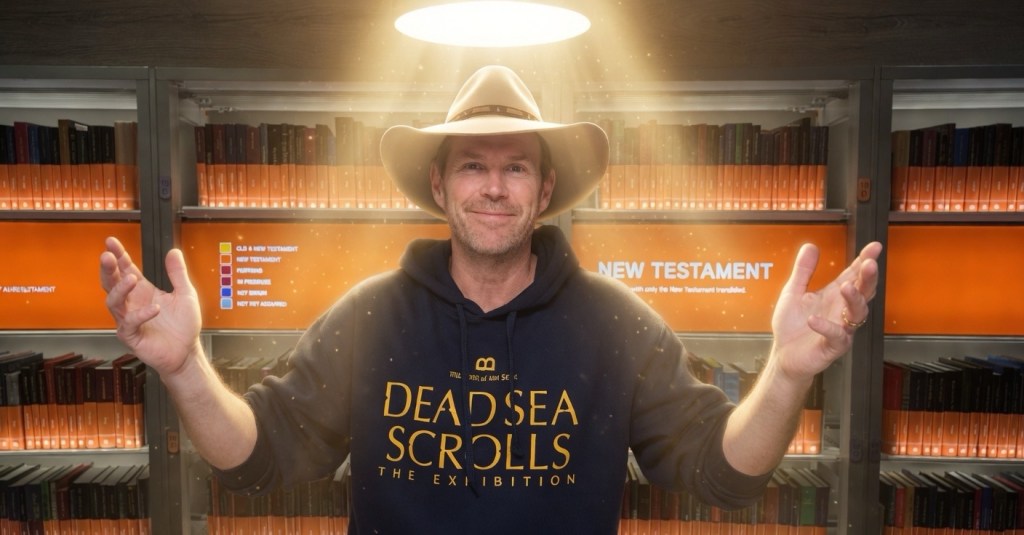
About the Author: Rich Hoffman
Rich Hoffman is an aerospace executive, political strategist, systems thinker, and independent researcher of ancient history, the paranormal, and the Dead Sea Scrolls tradition. His life in high‑stakes manufacturing, high‑level politics, and cross‑functional crisis management gives him a field‑tested understanding of power — both human and unseen.
He has advised candidates, executives, and public leaders, while conducting deep, hands‑on exploration of archaeological and supernatural hotspots across the world.
Hoffman writes with the credibility of a problem-solver, the curiosity of an archaeologist, and the courage of a frontline witness who has gone to very scary places and reported what lurked there. Hoffman has authored books including The Symposium of Justice, The Gunfighter’s Guide to Business, and Tail of the Dragon, often exploring themes of freedom, individual will, and societal structures through a lens influenced by philosophy (e.g., Nietzschean overman concepts) and current events

