Pip: The Overmanwarrior is the kind of site where you click in expecting a blog post and emerge three thousand years later, slightly uncertain whether the Kaaba predates your mortgage.
Mara: Rich Hoffman’s recent writing does cover a lot of ground — we’re talking about the philosophical legacy of Ayn Rand, the hatred aimed at builders like Elon Musk, pre-Abrahamic sacred sites, and what data centers have to do with all of it.
Pip: Which is, genuinely, a lot to have to do with anything.
Mara: It is a wide frame, but there’s a through-line: who creates, who attacks the creators, and how old that conflict actually is. Let’s start with that argument.
Creators, Consciousness, and the Enemies of Both
Pip: The post opens with Ayn Rand — specifically what she got right about the creators and what she may have left unfinished. The question underneath it is whether rational self-interest is a complete account of why builders build, and why the hatred aimed at them feels so disproportionate to ordinary disagreement.
Mara: The setup is personal before it goes philosophical. Here’s the line: “What bothers me, what has always bothered me, is the character of the human spirit in her books and how that spirit keeps getting attacked in the real world.”
Pip: So the attack on Howard Roark and John Galt isn’t just a plot device — it’s a pattern that keeps recurring outside the novel, and the post is asking what’s actually driving it.
Mara: The argument is that Rand saw the looters and the envy clearly, but stayed inside what the post calls the fully rational adult framework. The counterexample is a child — specifically the story of the truck stuck under a bridge, where every engineer is stumped until a kid suggests letting the air out of the tires. Adults lose that outside-the-groove thinking.
Pip: And the post connects that lost capacity to consciousness itself — whether the body is the whole story or just the vehicle.
Mara: Right. The claim is that consciousness arrives as something before culture trains it into grooves. That’s where the post parts company with strict Objectivism and with hard materialism. On Musk specifically, the post notes he’s called Atlas Shrugged useful as a counterpoint to communism but says it needs to be tempered with kindness — and that his real drive is curiosity and expanding intelligence across the universe, which is bigger than rational self-interest alone.
Pip: Which lands him in the same crosshairs anyway.
Mara: Exactly. The post traces the same pattern of hatred — from Rand’s fictional creators to Musk’s actual projects. On data centers specifically, it notes that 71% of Americans express concern when one is proposed near them, and calls out the irony: people who once carried copies of Atlas Shrugged during the Tea Party years now discover selective individualism when the factory of the mind appears in their backyard.
Mara: From there the post goes deep into pre-Abrahamic history — dolmens across the Jordan Valley and Europe, the Old Copper Culture mining on the Keweenaw Peninsula dating back possibly nine thousand years, the Book of Enoch’s Watchers narrative, and the Black Stone of the Kaaba, which was already a sacred pilgrimage object before Islam redirected the site. The argument is that non-human intelligence has been operating through religious and cultural systems as control mechanisms for a very long time, and that anything expanding human capacity threatens that older order.
Pip: So the data center opponents and the Bronze Age priests are, philosophically, in the same coalition.
Mara: That’s the through-line. The post closes on it directly: “The creators keep building. The older forces keep reacting.” The power and water concerns around data centers are called real and worth honest mitigation — but not sufficient reason to reject the expansion of human intelligence itself.
Pip: The philosophical stakes are high. The practical stakes are your electricity bill.
Mara: Which the post would say is exactly the point — the abstract principle is easy, the concrete implementation is where it gets tested.
Pip: So: Rand, Musk, dolmens, the Kaaba, and your local utility grid — all one argument.
Mara: The core of it is that the war on builders is older than economics and deeper than politics. That’s the territory worth sitting with.
Rich Hoffman is an author, political consultant, and strategic advisor based in Cincinnati, Ohio, and the creator of The Politics of Heaven—a unique framework that connects biblical theology, ancient history, and modern power structures to explain how moral alignment and spiritual forces shape global events. Blending real-world political experience with deep research into archaeology, UFO phenomena, and suppressed historical narratives, Hoffman offers compelling commentary on topics ranging from ancient civilizations and the Dead Sea Scrolls to modern populist movements, paranormal continuity, and leadership strategy in chaotic environments. As the author of The Gunfighter’s Guide to Business and the forthcoming Politics of Heaven, he brings a grounded yet provocative voice to media discussions, supported by firsthand experiences and a cross-disciplinary approach that bridges science, history, and theology. For interviews, speaking engagements, or expert analysis, visit richhoffmanbooks.com or contact directly via phone at 513-307-5815 or email at rhoffman@richhoffmanbooks.com. If you’ve seen the movie, Disclosure Day and want to talk about it and the implications of Presidnet Trump’s UAP disclosures, let me know and we can bring some color to your coverage. https://richhoffmanbooks.com/media-inquiries-broadcast-topics-and-contact-info/?frame-nonce=ad51e7ecba I do have a firsthand UFO encounter to discuss.
Pip: The Overmanwarrior has a lot of interests — ancient scrolls, Ohio politics, model rocketry with grandchildren — but this week, everything points to one place: up.
Mara: Rich Hoffman makes the case that the Moon is the defining economic and strategic frontier of our era, and he connects that argument to energy independence, Ohio’s industrial future, and what it actually takes to build a Type I civilization.
Pip: Let’s start with the gold rush that isn’t metaphorical.
The Moon: America’s Next Frontier and the Coming Space Economy
Mara: The post opens not with a policy argument but with a moment — a tired walk back from the Smithsonian, arms full of books, and then a pause at a rack near the cashier.
Pip: He writes: “That spontaneous purchase captures something larger: the Moon is not just a celestial body; it is the key to the next great American expansion, a modern gold rush that will generate wealth, innovation, and opportunity on a scale rivaling the Western frontier.”
Mara: The upshot is that this isn’t nostalgia for Apollo. It’s a resource argument. The Moon holds helium-3, thorium, rare earth elements, and metals tied to what the post calls KREEP terrains — and the claim is that returning those resources via vehicles like Starship transforms economies on Earth.
Pip: The thorium case is the one that stops you. Small modular thorium reactors, described here as potentially the size of a large air conditioner, powering a home for decades with minimal waste. That’s not a distant concept — it’s the argument for why lunar extraction has a direct line to your electricity bill.
Mara: On the broader space economy, the post cites projections exceeding one trillion dollars by 2032, with space tourism alone growing at compound annual rates between 36 and 44 percent. SpaceX’s Starship cadence and Blue Origin’s lunar lander infrastructure are the mechanisms he points to.
Pip: And Ohio is the landing zone for all of it — literally. Butler County aquifers, the I-75 corridor, a proposed spaceport near Monroe, data centers, orbital manufacturing returning chips to Intel-scale plants. Roosevelt-era expansion, Musk-era execution.
Mara: He also addresses the skeptics directly. International lander confirmations from Japan and Firefly Aerospace, hardware visible through powerful telescopes — the post treats doubt as understandable but ultimately answerable by evidence.
Pip: His investment thesis is just as direct: aerospace, lunar resource plays, Starlink, and whatever an Interlune IPO looks like. Re-read this in a decade, he says.
Mara: The personal thread running through all of it is his grandson — the kid who memorized Kuiper Belt objects at age three and flew that Artemis model rocket. The Moon, the post argues, is the inheritance that generation actually gets to claim.
Pip: Roosevelt had the West. The argument here is that the next version of that expansion is already in motion — and the window is now.
Mara: The resources, the infrastructure, the policy levers — it’s all on the table. The question is whether the will follows.
Rich Hoffman is an author, political consultant, and strategic advisor based in Cincinnati, Ohio, and the creator of The Politics of Heaven—a unique framework that connects biblical theology, ancient history, and modern power structures to explain how moral alignment and spiritual forces shape global events. Blending real-world political experience with deep research into archaeology, UFO phenomena, and suppressed historical narratives, Hoffman offers compelling commentary on topics ranging from ancient civilizations and the Dead Sea Scrolls to modern populist movements, paranormal continuity, and leadership strategy in chaotic environments. As the author of The Gunfighter’s Guide to Business and the forthcoming Politics of Heaven, he brings a grounded yet provocative voice to media discussions, supported by firsthand experiences and a cross-disciplinary approach that bridges science, history, and theology. For interviews, speaking engagements, or expert analysis, visit richhoffmanbooks.com or contact directly via phone at 513-307-5815 or email at rhoffman@richhoffmanbooks.com. If you’ve seen the movie, Disclosure Day and want to talk about it and the implications of Presidnet Trump’s UAP disclosures, let me know and we can bring some color to your coverage. https://richhoffmanbooks.com/media-inquiries-broadcast-topics-and-contact-info/?frame-nonce=ad51e7ecba I do have a firsthand UFO encounter to discuss.
I have spent a great deal of time observing how modern society reacts to both achievement and decline, and nowhere is this contrast more visible than in the way we collectively respond to technological ambition on one hand and human vulnerability on the other. There is a recurring pattern I cannot ignore, one that surfaces in moments that should otherwise be met with admiration or compassion. Instead, what I often detect is something more complicated—a quiet, sometimes barely concealed satisfaction when success is interrupted, or when prominent individuals are reminded of their own mortality.
I noticed the same pattern in reactions to high-profile technical setbacks, such as rocket failures tied to ambitious space programs. When a launch vehicle explodes or a mission is delayed, the tone in certain corners of the media and commentary ecosystem can shift from analytical to subtly dismissive. It is as if the grander the objective—reaching orbit, returning to the Moon, advancing human presence in space—the more satisfying it becomes for some observers to see that effort fail spectacularly. I do not believe this is universal, but it is present, and it reflects something deeper than mere critique. It reflects a discomfort with ambition itself, particularly when that ambition aims to elevate human capability beyond its current limits.
I have seen that same tone emerge in a very different context: the public reporting of illness, especially serious diagnoses such as cancer among well-known figures. When those diagnoses are announced, the coverage often carries an undertone that goes beyond simple reporting. The message, implicit rather than explicit, is that no level of success, status, or influence insulates a person from biological reality. That part, of course, is true. But what troubles me is when that truth is delivered with an almost leveling satisfaction—an unspoken reassurance that the “lofty” are ultimately brought down to the same plane as everyone else.
I find that reaction deeply problematic. In my view, the proper response to illness—whether it affects a public figure or a private individual—is empathy paired with determination. Determination not merely to treat symptoms, but to fundamentally improve the systems and technologies that govern health outcomes. Instead, what we often see is a cultural normalization of disease, as if the persistence of illnesses like cancer is inevitable and beyond our reach in any meaningful sense.
My perspective has been shaped in part by personal exposure to the healthcare system through family and close observation. I have seen both extraordinary dedication among practitioners and systemic issues that are far more difficult to reconcile. The healthcare industry, particularly in developed nations, is structurally complex and in many ways financially incentive-driven. According to data from the Centers for Medicare & Medicaid Services, U.S. healthcare spending exceeded $4.5 trillion in 2022, representing nearly 18% of GDP.[1] That scale alone introduces distortions—economic, behavioral, and institutional—that are not always aligned with optimal patient outcomes.
I do not believe it is accurate or fair to reduce healthcare professionals to a single characterization. The field contains individuals of remarkable skill and integrity. At the same time, it operates within a framework that often rewards volume over prevention, treatment over cure, and cost expansion over efficiency. These systemic incentives have been widely discussed in policy literature, including analyses from the National Academy of Medicine and the World Health Organization, both of which highlight structural inefficiencies and misaligned incentives as persistent challenges.[2][3]
Where I draw a sharper distinction is in the cultural posture surrounding health and illness. In many ways, modern healthcare systems are built around managing disease rather than eliminating it. Chronic illness management, long-term pharmaceutical dependency, and repeated procedural interventions form the economic backbone of the system. While these approaches save lives and extend survival, they do not always reflect a paradigm aimed at decisive resolution.
This is where I believe the contrast with fields like aerospace engineering becomes instructive. In aerospace, failure is analyzed, corrected, and systematically eliminated through iterative design. The goal is not to manage risk indefinitely, but to reduce it to near zero through engineering discipline. The “right stuff,” a term popularized by Tom Wolfe, captures this blend of analytical rigor and bold experimentation.[4] It is the willingness to push boundaries while refining systems to the point of reliability.
I have long believed that healthcare would benefit from adopting more of that mindset. Instead of accepting certain diseases as enduring features of human existence, the focus should shift toward eradication or, at minimum, transformative mitigation. There are promising developments in this direction. Advances in immunotherapy, gene editing technologies such as CRISPR, and regenerative medicine have begun to change the landscape of what is medically possible.[5][6] In cancer treatment alone, survival rates have improved significantly over the past several decades due to earlier detection and targeted therapies.[7]
However, it is critical to ground expectations in current scientific reality. While substantial progress has been made, there is no single universal cure for cancer at this time, yet. But by this time, there should be. Cancer is not one disease but a collection of hundreds of distinct conditions, each with unique genetic and environmental drivers.[8] The goal of cancer treatment should be to defeat it. What can be said, with confidence, is that the trajectory of research is accelerating, and breakthroughs that once seemed theoretical are increasingly entering clinical practice.
I believe this distinction matters, particularly when we speak to audiences capable of influencing investment, policy, and innovation. The objective should not be to declare premature victory, but to articulate a clear and urgent mandate: accelerate the transition from disease management to disease elimination wherever scientifically feasible. That requires alignment across research institutions, funding mechanisms, regulatory frameworks, and private-sector innovation.
It also requires a cultural shift. We should not accept illness as something that simply “grounds” individuals or equalizes outcomes. Instead, we should view every diagnosis as a challenge to be solved—systematically, rapidly, and with the same intensity that we apply to other complex engineering problems. That mindset does not diminish humility; it enhances purpose.
I remain optimistic that such a transformation is possible. The convergence of biotechnology, artificial intelligence, and advanced materials science is creating capabilities that did not exist even a decade ago. Machine learning models are already being used to identify drug candidates, predict protein structures, and optimize treatment pathways.[9] Personalized medicine, once an abstract concept, is becoming increasingly tangible as genomic sequencing becomes more accessible.
The question is not whether progress will continue, but whether it will accelerate at a rate commensurate with its potential. That acceleration depends on leadership—across government, industry, and the scientific community. It depends on prioritizing long-term outcomes over short-term financial gain. And it depends on fostering a culture that celebrates breakthroughs rather than fixating on failure.
When I reflect on the reactions I described at the outset—whether to a rocket explosion or a cancer diagnosis—I see them as symptoms of a broader cultural hesitation to embrace ambition fully. There is comfort in the notion that limits are fixed and universal. There is less comfort in confronting the possibility that those limits may be overcome and that doing so requires sustained effort, risk, and transformation.
I do not share that hesitation. I believe that human progress has always depended on challenging perceived constraints, whether in flight, exploration, or medicine. The same spirit that drives us to reach beyond Earth should drive us to eliminate preventable suffering here on it.
In that sense, the future of healthcare and the future of technological advancement are not separate conversations. They are part of the same continuum: the pursuit of a more capable, more resilient, and ultimately more humane civilization. And if we approach that pursuit with the right balance of discipline and daring—the true “right stuff”—then the outcomes we once considered extraordinary may become routine.
—
Footnotes & References
Centers for Medicare & Medicaid Services. National Health Expenditure Data, 2023.
National Academy of Medicine. The Learning Healthcare System: Workshop Summary, 2007.
World Health Organization. Health Systems Financing: The Path to Universal Coverage, 2010.
Wolfe, Tom. The Right Stuff. Farrar, Straus and Giroux, 1979.
National Cancer Institute. Immunotherapy for Cancer, updated 2024.
Doudna, J., & Charpentier, E. “The new frontier of genome engineering with CRISPR-Cas9.” Science, 2014.
American Cancer Society. Cancer Facts & Figures 2025.
Hanahan, D., & Weinberg, R. “Hallmarks of Cancer: The Next Generation.” Cell, 2011.
Jumper, J. et al. “Highly accurate protein structure prediction with AlphaFold.” Nature, 2021.
Rich Hoffman is an aerospace executive, political strategist, systems thinker, and independent researcher of ancient history, the paranormal, and the Dead Sea Scrolls tradition. His life in high‑stakes manufacturing, high‑level politics, and cross‑functional crisis management gives him a field‑tested understanding of power — both human and unseen.
He has advised candidates, executives, and public leaders, while conducting deep, hands‑on exploration of archaeological and supernatural hotspots across the world.
Hoffman writes with the credibility of a problem-solver, the curiosity of an archaeologist, and the courage of a frontline witness who has gone to very scary places and reported what lurked there. Hoffman has authored books including The Symposium of Justice, The Gunfighter’s Guide to Business, and Tail of the Dragon, often exploring themes of freedom, individual will, and societal structures through a lens influenced by philosophy (e.g., Nietzschean overman concepts) and current events
The explosion of Blue Origin’s New Glenn rocket on the evening of May 28, 2026, at Launch Complex 36 in Cape Canaveral Space Force Station sent a massive fireball into the Florida night sky, visible for miles across the Space Coast. The incident occurred during a static-fire test of the vehicle’s seven BE-4 methane engines as preparations advanced for the planned launch of Amazon Project Kuiper satellites. No injuries were reported, and the payload satellites had not yet been integrated, yet the blast destroyed the first stage, damaged the second stage, and inflicted significant harm on the launch infrastructure, including collapsed lightning towers and compromised ground systems.
This event, while dramatic and costly in the short term, fits into a long pattern of challenges that have defined human spaceflight from its earliest days. The Space Coast, with its rich history of ambition and setback, absorbed another chapter in that story. Observers familiar with the area—its restaurants, beaches, and the electric atmosphere that builds before night launches—could imagine the shock felt by those gathered on Cocoa Beach with lawn chairs, expecting a spectacular light show but witnessing an uncontrolled conflagration instead. The infrastructure at Cape Canaveral has always accounted for such possibilities by deliberately spacing the pads, allowing continued operations even amid localized damage. Indeed, within hours, SpaceX successfully launched a Falcon 9 from a nearby complex, underscoring the resilience built into modern commercial space operations.
The development of heavy-lift rockets has never been without risk. Blue Origin’s New Glenn, standing roughly 320 feet tall and designed as a reusable two-stage vehicle powered by innovative BE-4 engines, represents a serious contender in the emerging space economy. Its setback comes as the company works to close the gap with established players while contributing to NASA’s Artemis program, which aims to return humans to the Moon and establish a sustained presence there. Historical parallels abound. In the 1960s, the Apollo program endured multiple failures, including the tragic Apollo 1 fire that claimed three astronauts’ lives during a ground test. Engineers learned from those events, iterating rapidly under intense pressure. Similarly, the Space Shuttle era saw the 1986 Challenger disaster and Columbia’s loss in 2003, both rooted in technical vulnerabilities exposed under operational stress. These tragedies slowed momentum temporarily but ultimately reinforced the necessity of pushing boundaries rather than retreating into excessive caution.
The phrase “The Right Stuff,” popularized by Tom Wolfe’s account of the Mercury Seven astronauts, captures the blend of courage, technical skill, and calculated risk that propelled early space exploration. Yet that era also demonstrated that safety in its purest form—zero tolerance for any anomaly—would have halted progress entirely. Test pilots and engineers accepted that prototypes and new systems carried inherent dangers. Leaks in propellant lines, valve failures, and unexpected combustion events were common during the frantic pace of the Space Race. Today’s commercial sector echoes this reality. SpaceX itself experienced numerous Falcon 1 failures before achieving orbital success and endured Starship test explosions that became public spectacles before rapid iterations led to operational reliability. These events highlight a core truth: progress in extreme engineering environments demands tolerance for learning through failure, especially when no crew is aboard.
In the case of the New Glenn incident, the anomaly likely stemmed from complexities in the fueling and pressurization systems—long runs of piping that transfer cryogenic propellants under high pressure. Such setups involve numerous seams, valves, and sensors where even minor imperfections can cascade. Static fire tests exist precisely to uncover these issues on the ground, far preferable to in-flight catastrophes. Blue Origin had achieved prior successes with earlier New Glenn vehicles, demonstrating the maturity of much of the architecture. The company’s track record before this event showed methodical advancement, free of major public mishaps. The response from leadership emphasized thorough investigation and a commitment to recovery, a stance aligned with the industry’s need to maintain cadence.
Broader implications extend far beyond a single launchpad. The space economy promises transformative growth. Estimates suggest that extracting rare minerals from the Moon, asteroids, and Mars could unlock trillions in new value. Zero-gravity manufacturing offers advantages in producing flawless crystals, advanced alloys, and pharmaceuticals that are impossible to replicate efficiently on Earth. Orbital facilities, potentially spanning hundreds of thousands of square feet and serviced by autonomous systems, could host heavy industry where massive components are maneuvered with minimal force. Power generation from solar arrays in continuous sunlight, combined with vacuum conditions ideal for certain processes, positions space as the next frontier for economic expansion. Blue Origin, SpaceX, and others are laying infrastructure for this vision, with New Glenn intended to complement smaller vehicles in delivering heavy cargo for lunar bases and satellite constellations.
Critics who view such explosions as reasons to slow or more strictly regulate the sector often overlook historical precedent and economic logic. Overly restrictive safety regimes, sometimes influenced by broader societal trends favoring precaution over innovation, risk stifling the very dynamism required for breakthroughs. During the COVID-19 period, widespread shutdowns illustrated how prioritizing absolute safety can contract economic activity. Similar dynamics appear in debates over infrastructure projects, energy development, and now space. Proponents of rapid iteration argue that autonomous systems and robotic precursors should shoulder initial risks, allowing humans to follow once reliability improves. This approach mirrors early aviation and automotive industries, where rapid prototyping and field failures drove safety improvements over time.
The competition between Blue Origin and SpaceX exemplifies healthy market forces. New Glenn’s development has been watched closely as a potential counterbalance, encouraging faster innovation across the board. Setbacks for one player do not equate to industry-wide failure; rather, they test organizational resilience. SpaceX’s ability to launch the day after the New Glenn event demonstrated asset isolation and a rapid operational tempo. Blue Origin possesses additional vehicles in various stages of assembly. Activating parallel production lines, implementing extended shifts where feasible, and focusing engineering resources on root cause analysis could help compress recovery timelines. Historical examples support this: After Virgin Galactic’s 2014 SpaceShipTwo accident, the company rebuilt, iterated, and advanced toward commercial operations. Similar recoveries followed other high-profile incidents.
Calls to maintain schedules for Artemis-related missions reflect urgency around lunar return timelines targeted for the late 2020s. Delaying hardware availability could cascade into broader program slips. Sustained public and investor enthusiasm requires visible progress—regular news of launches, landings, and new capabilities. Filing necessary regulatory documentation with the FAA promptly, conducting transparent reviews, and returning to test campaigns signal commitment. The Space Coast community, long accustomed to the rhythms of launch windows, benefits from this continuity. Local economies tied to tourism, engineering talent, and supply chains thrive when activity remains high.
Robotics and artificial intelligence will play central roles in mitigating human risk during expansion. Tesla Optimus-style systems and advanced autonomy can handle hazardous assembly, refueling, and initial exploration tasks. Concerns about job displacement on Earth—exacerbated by wage policies that reduce hiring incentives—find partial resolution in new high-skill opportunities created by space infrastructure. Staffing orbital manufacturing would require oversight roles, maintenance expertise, and creative problem-solving that complement rather than replace human labor. The vision of floating facilities between Earth and Moon, processing lunar regolith into construction materials or extracting platinum-group metals, represents a multi-trillion-dollar opportunity that rewards those who move decisively.
Critics sometimes celebrate such explosions as brakes on capitalism in space, preferring centralized control or slower pacing aligned with terrestrial priorities. Yet the data suggests otherwise. Reusable architectures have already driven launch costs down dramatically, enabling constellations like Starlink that deliver global connectivity. Further reductions through heavy-lift vehicles will accelerate science, communications, Earth observation, and eventual off-world settlement. Mining asteroids could supply resources without the terrestrial environmental trade-offs associated with some mining operations. The long-term payoff justifies accepting manageable risks during development phases.
Learning from past programs remains essential. NASA’s early days involved accepting higher failure probabilities to achieve national goals. Private industry now carries much of that mantle, operating under market accountability that incentivizes efficiency. Blue Origin’s facility near the Space Coast showcases impressive engineering infrastructure. Leveraging that base, combined with lessons from the recent anomaly, positions the team for a rebound. Recommendations include prioritizing redundant systems in propellant handling, enhancing sensor density for early leak detection, and maintaining aggressive parallel development of follow-on vehicles.
The cultural dimension cannot be ignored. Narratives framing innovation as inherently dangerous sometimes serve to justify regulatory expansion rather than technical solutions. Balancing legitimate safety with progress requires distinguishing between reckless disregard and the informed risk inherent to frontier work. Test pilots of the 1950s and 1960s embodied the latter; modern rocket engineers continue that tradition. Public fascination with space endures because of visible achievement, not perfect safety records. Night launches lighting up the sky over Cocoa Beach remind onlookers of humanity’s reach beyond the planet.
In reflecting on the New Glenn event, several practical steps emerge for stakeholders. First, conduct a swift yet comprehensive investigation and share non-proprietary findings to benefit the industry. Second, repair and upgrade the launch complex while constructing contingency capabilities. Third, accelerate manufacturing of replacement hardware through multi-shift operations where workforce conditions allow. Fourth, engage regulators constructively to resume testing promptly. Fifth, communicate progress transparently to maintain confidence among partners like NASA and Amazon. These actions align with best practices observed in successful recovery cases.
The space economy’s trajectory points toward exponential growth. Initial billions in revenue from launches and services will expand into trillions as resource utilization scales. Manufacturing in microgravity could revolutionize materials science, producing superior semiconductors, fiber optics, and medical isotopes. Robotic precursors will establish outposts, followed by human crews supported by advanced life-support and propulsion systems. Starship-class vehicles are expected to serve as foundational transport, with complementary systems like New Glenn providing specialized heavy-lift capacity. Competition drives down costs and spurs ingenuity.
Skeptics who hoped the explosion would dampen momentum underestimate the sector’s adaptability. The isolation of launch infrastructure, proven redundancies, and private capital’s risk tolerance all favor continuation. For those invested in humanity’s multi-planetary future, the message is clear: analyze, adapt, and advance. The fireworks of May 28, 2026, while startling, illuminated both the challenges and the enduring allure of reaching for the stars.
Expanding on historical context, one must consider the Soviet N1 rocket program during the Moon race. Multiple catastrophic explosions on the pad during static tests delayed ambitions but provided data that informed later designs, even if political factors ultimately curtailed the effort. American Saturn V development faced engine instabilities and structural issues, which were resolved through iterative ground testing. Each failure refined understanding of combustion dynamics, materials under extreme loads, and control systems. Modern simulations and sensors offer greater insight, yet physical testing remains irreplaceable for uncovering subtle integration problems.
Economically, the multiplier effects of space activity extend deep into supply chains. Florida’s Space Coast employs thousands directly and indirectly. Tourism spikes around launches, while high-tech manufacturing attracts talent. A slowdown would ripple through these ecosystems. Maintaining tempo supports broader goals like climate monitoring satellites, disaster response, and technological spin-offs that improve daily life on Earth.
Philosophically, the tension between safety absolutism and exploratory daring echoes debates in other domains. Aviation advanced despite early crashes. Nuclear power improved safety records through experience despite accidents. Space demands similar maturity. Overemphasis on “safety tyrants”—those prioritizing zero incidents above all—can paralyze organizations, leading to bureaucratic bloat and opportunity costs. Instead, layered risk management, in which ground tests absorb early failures, allows for safe progression toward crewed missions.
Blue Origin’s path forward involves embodying that balanced approach. With vehicles in production, experienced teams, and strong backing, recovery is feasible within compressed timelines. Targeting return-to-flight before year’s end, while supporting Artemis milestones, would demonstrate resolve. The industry watches not just for technical fixes but for cultural signals: whether setbacks become excuses for delay or catalysts for acceleration.
In the end, the New Glenn explosion of late May 2026 joins a distinguished lineage of events that test character and capability. Those who treat it as temporary, learn its lessons, and press onward will shape the coming era of space industrialization. The fireball may have lit the sky briefly, but sustained effort will illuminate a future of expanded human presence beyond Earth. The Space Coast, with its resilient vibe and storied past, stands ready for the next chapter.
1. Details drawn from contemporary reporting on the May 28, 2026, static fire anomaly.
2. Tom Wolfe, The Right Stuff (1979), for cultural framing of risk in aerospace.
3. NASA historical records on Apollo and Shuttle programs.
4. Industry analyses of reusable rocket economics, including SpaceX flight cadence data.
5. Projections on space resource utilization from various economic studies (e.g., asteroid mining valuations).
Bibliography
• Wolfe, Tom. The Right Stuff. Farrar, Straus and Giroux, 1979.
• NASA. “Apollo Program Summary.” Historical archives.
• Spaceflight Now and Reuters coverage of the 2026 New Glenn event.
• Economic reports on space mining potential (various sources, 2020s).
Rich Hoffman is an aerospace executive, political strategist, systems thinker, and independent researcher of ancient history, the paranormal, and the Dead Sea Scrolls tradition. His life in high‑stakes manufacturing, high‑level politics, and cross‑functional crisis management gives him a field‑tested understanding of power — both human and unseen.
He has advised candidates, executives, and public leaders, while conducting deep, hands‑on exploration of archaeological and supernatural hotspots across the world.
Hoffman writes with the credibility of a problem-solver, the curiosity of an archaeologist, and the courage of a frontline witness who has gone to very scary places and reported what lurked there. Hoffman has authored books including The Symposium of Justice, The Gunfighter’s Guide to Business, and Tail of the Dragon, often exploring themes of freedom, individual will, and societal structures through a lens influenced by philosophy (e.g., Nietzschean overman concepts) and current events.
I’ve always believed that we humans are meant to impose our will on the environment around us. Not recklessly, of course—we’re not charging into hurricanes for fun—but deliberately, purposefully. We don’t let the weather dictate our plans; within reason, we decide what we do, and we do it regardless. That philosophy has guided much of my life, from professional challenges in aerospace to personal commitments. It’s a theme I try to instill in everyone around me, especially the young ones. And on a blustery, rainy Saturday in March, it became the backdrop for one of the most rewarding days I’ve had in years: launching model rockets with my youngest grandson.
He’s nine now, tall for his age, sharp as a tack, and already showing signs of a brilliant future. Science draws him like a magnet. Several years ago, when he was four or five, I bought him a model rocket kit. We planned to build it together, paint it, and send it skyward. But life intervenes—busy schedules, new babies in the family, vacations, the endless pull of obligations. The kit sat on a shelf, waiting for the right moment. I didn’t want to rush him; he was young, and forcing it might have dimmed the spark rather than kindled it.
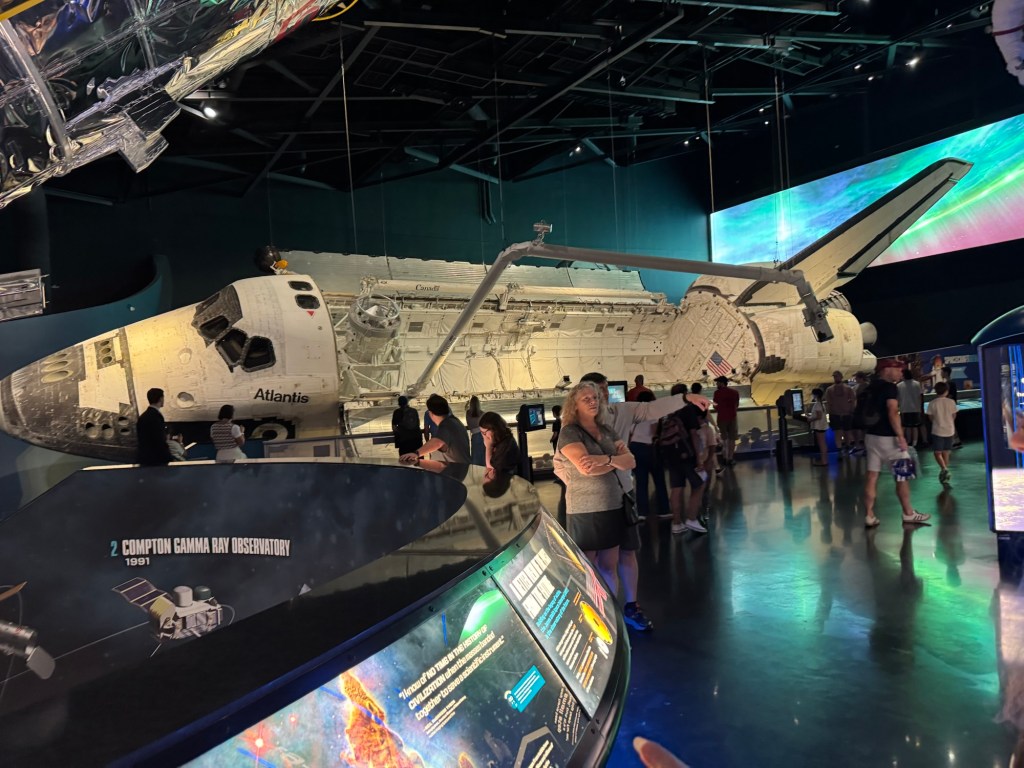
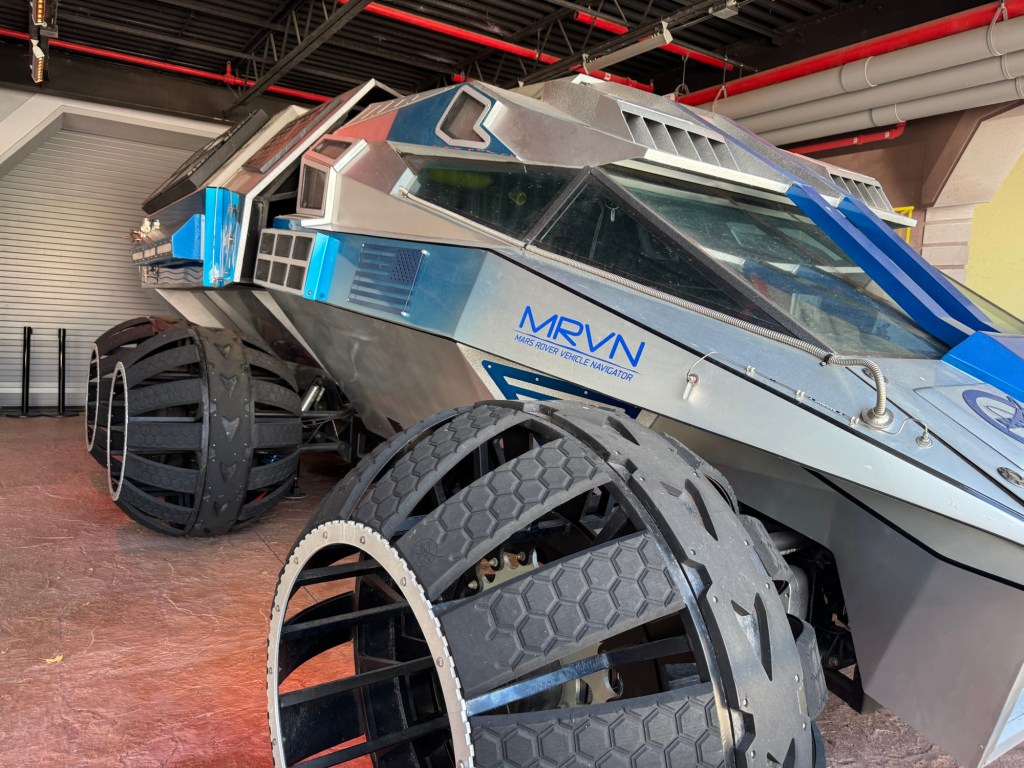
That changed recently during a trip my wife and I took to the NASA area, touring facilities tied to Blue Origin and SpaceX. Walking those grounds, surrounded by reminders of the expanding space economy, I felt a renewed urgency. Time moves fast—kids grow up quicker than we realize. I started looking for souvenirs for all my grandchildren, little tokens to keep the wonder alive. For him, though, it wasn’t just a trinket. It was a reminder of that dusty rocket kit and his genuine love for anything related to space, engineering, and flight. I made a quiet commitment: we were going to do this before he outgrew it. No more delays.
We targeted a Saturday in March. The forecast called for warmth—comfortable enough to be outside—but also rain and wind. I didn’t care. We were launching, come what may. He’s science-inclined, curious about everything, and I wanted him to experience the real thing: not a sanitized, perfect day, but the messy, unpredictable reality of experimentation. That’s where true learning happens.
The day arrived, and the weather delivered exactly what it promised: gusty winds, low clouds, intermittent rain. We set up in an open field, far from power lines or crowds. First came assembly. We spread out the pieces on a table in the garage—cardboard tubes, fins, nose cones, parachutes, engines. He dove in with focus, following instructions but asking questions at every step. Why this glue here? How does the parachute deploy? What makes it stable in flight? We talked about center of gravity, drag, thrust, recovery systems. Basic rocketry principles, but taught hands-on, not from a textbook.
Model rocketry is more than a hobby; it’s an accessible gateway to STEM.[^1] Estes Rockets, the company behind most beginner kits, has been inspiring kids since the 1950s. These small, solid-fuel rockets reach hundreds or thousands of feet, then deploy parachutes for safe descent. They teach physics, aerodynamics, electronics (with simple igniters), and patience. For a nine-year-old, it’s magic wrapped in science.
We finished two rockets: a smaller one for easy flights, and a larger, more ambitious design. Painted, decorated, engines installed. Then, out to the field.
The first launch was tentative. We set up the pad, connected the electric igniter, counted down. Whoosh! It streaked upward, punching through the low clouds. But the wind caught it immediately. Instead of a graceful arc, it drifted fast and far. We lost sight in the gray. That became the theme of the day: rockets vanishing into clouds, then drifting on currents we couldn’t predict.
We adapted. He learned to estimate trajectories based on wind direction and speed. “Watch the flag,” I told him. “See how it’s blowing? That’s your drift vector.” We calculated rough landing zones, then hiked to search. One rocket came down over half a mile away—caught by a strong gust, parachute fully deployed, floating like Mary Poppins. It landed in a distant backyard. My wife and grandson trekked through yards, knocking on doors, retrieving it triumphantly. No surrender. We recovered it, muddy but intact.
The smaller rocket performed spectacularly—at least in ascent. It hit over 280 miles per hour from a standstill, a blistering acceleration that thrilled us both. But on descent, the cardboard body started unraveling under stress. We didn’t panic. We drove to Tractor Supply, bought glue, repaired it in the field, and used a heater to speed curing. A couple hours later, it flew again—fixed on the fly, better than before.
That’s the real lesson: troubleshooting. Life doesn’t go as planned. Igniters fail. Wind shifts. Rockets drift. You fix it, adapt, persist. We talked about cold fronts, cloud layers, condensation—why the sky looked the way it did, how dense air aloft held moisture, leading to our rain. Meteorology became part of the adventure. He absorbed it all, eyes wide.
His mother is a professional photographer; his dad experiments with content creation, traveling the world for a YouTube-style channel. He’s grown up watching high-end video production. YouTube is this generation’s Hollywood—kids dream of channels, subscribers, viral moments instead of rock stardom. He’s paid close attention: editing, cuts, narrative flow, dialogue.
Throughout the day, he filmed. Multiple angles—me prepping the pad, countdowns, launches, recoveries. He captured mishaps: the long drifts, the repair session, the triumphant finds. I noticed but didn’t interfere. I figured he was just playing around.
That evening, he went home and edited. A 15-minute video emerged—polished, narrated in his own voice, with cuts, transitions, music. It chronicled everything: building, launching, laughing at failures, celebrating recoveries. Sophisticated doesn’t begin to describe it. For a nine-year-old, it was remarkable. His parents’ influence showed, but this was his creation—his enthusiasm, his story.
I was floored. Not just proud (though grandparents are allowed that), but genuinely impressed. He turned a grandfather-grandson outing into a production. It had heart, humor, science. I’ll share it on it here to give it a wider audience—he deserves it. He’s not shy; he expresses himself openly. This glimpse into our family’s Saturday might inspire others.
The day wasn’t perfect. Rockets got lost (temporarily), weather fought us, plans shifted. But perfection isn’t the point. The mishaps were the gold: recovering a drifter, gluing a torn tube, predicting drift. Those build resilience. Intelligence, unfed, can wander into unproductive places. Hobbies like this channel it productively. Model rocketry feeds curiosity, teaches engineering basics, fosters grit.
In aerospace, where I’ve spent much of my career as an executive, we deal with unpredictability daily. Rockets don’t always fly straight. Missions face delays, anomalies. You troubleshoot, iterate, succeed. Sharing that with him—hands dirty, minds engaged—felt like passing a torch. He’s headed toward engineering, space, something impactful. My job is to show doors worth walking through.
We’ve only started. More launches ahead. He’s proud of his “trophies”—the rockets on his shelf, reminders of the adventure. When things go wrong, he doesn’t panic. He fights through. That’s a lifetime gift.
If you’re busy, schedules packed, kids growing fast—make the time. Block it out. The weather might not cooperate, but impose your will. The rewards—light in young eyes, skills cascading forward—are worth every gusty, rainy minute.
[^1]: Estes Rockets official site and National Association of Rocketry resources highlight educational benefits; see generally model rocketry as a STEM tool.
[^2]: Personal observation; no specific external citation needed for family anecdotes.
Rich Hoffman is an independent writer, philosopher, political advisor, and strategist based in the Cincinnati/Middletown, Ohio area. Born in Hamilton, Ohio, he has worked professionally since age 12 in various roles, from manual labor to high-level executive positions in aerospace and related industries. Known as “The Tax-killer” for his activism against tax increases, Hoffman has authored books including The Symposium of Justice, The Gunfighter’s Guide to Business, and Tail of the Dragon, often exploring themes of freedom, individual will, and societal structures through a lens influenced by philosophy (e.g., Nietzschean overman concepts) and current events.
He publishes the blog The Overmanwarrior (overmanwarrior.wordpress.com), where he shares insights on politics, culture, history, and personal stories. Active on X as @overmanwarrior, Instagram, and YouTube, Hoffman frequently discusses space exploration, family values, and human potential. An avid fast-draw artist and family man, he emphasizes passing practical skills and intellectual curiosity to younger generations.
The foundation of much of modern knowledge acquisition—particularly in education, science, and our understanding of history—rests on assumptions established long ago that may have directed civilization down a flawed trajectory. Minor errors at the outset compound exponentially the longer the original premise is upheld without reevaluation. This dynamic is especially pronounced in institutions that commit to paradigms and resist revision, even amid emerging contradictory evidence.
In my aerospace background, I have observed this pattern repeatedly. Engineers commit designs to drawings, then treat those specifications as near-permanent records. Decades on, superior methods or data often emerge, yet updates face resistance—not from malice, but from ego, career investment, and the desire to preserve a legacy. The initial work gains a kind of immortality, prioritizing continuity over advancement. Academia mirrors this: scholars invest lifetimes in degrees and research aligned with dominant views. Funding rewards conformity, particularly in politically charged fields, while deviation risks professional marginalization.
Charles Darwin’s 1859 publication On the Origin of Species introduced evolution via natural selection, positing life originated from simple organisms through gradual mutations, with “survival of the fittest” favoring advantageous variations—essentially accumulated “mistakes” that proved beneficial. This framework shaped biology and influenced broader views of human origins, typically dating the emergence of anatomically modern humans to about 300,000 years ago, with deeper hominid roots extending back millions of years.<sup>1</sup>
Elements such as adaptation and variation offer explanatory power, but rigid adherence creates problems when anomalies arise. Institutions defend the paradigm tenaciously, akin to engineers guarding outdated prints. In the 19th century, this intersected with socialist thought. Karl Marx and Friedrich Engels saw affinities: Marx reportedly viewed Darwin’s work as providing a natural-scientific foundation for class struggle, though he also critiqued aspects of it.<sup>2</sup> Engels critiqued Darwin’s “struggle for existence” as projecting bourgeois competition onto nature.<sup>3</sup> Nonetheless, evolutionary materialism informed Marxist circles, blending with collectivism—prioritizing group dynamics over individual agency—and permeating education and science via labor unions, the 1930s “Red Decade,” and 1960s hippie movements, movements advocated by the Cold War KGB.
This fusion formed a conceptual “box”: Darwinian timelines for biology and history, Marxist-influenced social explanations, and institutional filtering. Evidence outside these risks is dismissed as anomalous, erroneous, or contaminated.
Biblical archaeology offers a counterpoint, often more receptive to reevaluation. Western tradition draws from biblical narratives, and Near Eastern excavations frequently align artifacts with scriptural accounts. The Tel Dan Inscription (9th century BCE) references the “House of David,” providing extra-biblical confirmation of David’s dynasty.<sup>4</sup> Hezekiah’s Tunnel (late 8th century BCE), with its Siloam Inscription detailing construction from opposing ends, corroborates 2 Kings 20:20 and 2 Chronicles 32:30.<sup>5</sup> The Pool of Siloam, linked to the tunnel and excavated in 2004, matches New Testament references (John 9), where Jesus healed the blind man.<sup>6</sup> The Cyrus Cylinder (6th century BCE) aligns with Persian policies allowing exiles’ return (Ezra 1), confirming Cyrus’s edict to rebuild temples and repatriate peoples.<sup>7</sup> These findings, approached scientifically, affirm historical elements without requiring religious framing, demonstrating how openness to reevaluation yields validations.
In the 1990s, Forbidden Archeology: The Hidden History of the Human Race (1993) by Michael A. Cremo and Richard L. Thompson profoundly influenced me.<sup>8</sup> From a Vedic perspective, it compiles anomalous finds suggesting human presence millions—or even billions—of years ago, proposing cyclic rises and falls of civilizations (yugas). The book spans more than 900 pages, documenting hundreds of cases drawn from 19th- and early 20th-century reports, often from primary scientific literature, that challenge conventional timelines.
One prominent category comprises grooved metallic spheres, such as the Klerksdorp spheres from Precambrian pyrophyllite deposits near Ottosdal, South Africa, which are dated to around 2.8–3 billion years old. These small objects (0.5–10 cm) feature parallel grooves, equatorial ridges, and fibrous interiors, and appear artificial, with a hardness sufficient to resist scratching by steel.<sup>9</sup> Miners and curators noted their precision, with some rotating due to internal structure. The book presents them as evidence of advanced craftsmanship far predating known human activity.
Another set includes artifacts embedded in coal or ancient rock. A brass bell with an iron clapper, found in 1944 when a lump of bituminous coal from an Appalachian mine (dated ~300 million years old) broke open, exhibited an unusual alloy composition, as determined by neutron activation analysis (copper, tin, iodine, zinc, selenium; not matching modern production).<sup>10</sup> A gold chain, reportedly discovered in 1891 when Mrs. S.W. Culp split coal in Illinois (also ~300 million years old), was antique in artistry and embedded circularly.<sup>11</sup> The “London Hammer” (or “London Artifact”), found in 1936 near London, Texas, encased in rock dated to over 100 million years, features an iron hammerhead with a partial wooden handle turning to coal-like material.<sup>12</sup>
Additional examples include incised bones and shells from Pliocene or earlier layers showing cut marks or intentional breakage, suggesting human activity; eoliths (crude chipped stones) from Tertiary deposits interpreted as tools; crude paleoliths from ancient gravels; advanced stone tools in Pleistocene contexts; and anomalous human skeletal remains, like a modern-looking humerus from Kanapoi, Kenya (~4 million years old), or skeletons from Castenedolo, Italy (Pliocene, ~3–5 million years).<sup>13</sup> Footprints at Laetoli, Tanzania (3.6 million years old), indistinguishable from modern human prints despite apelike australopithecine contemporaries, add to the puzzle.<sup>14</sup>
Mainstream science attributes these to misidentification, hoaxes, contamination, or natural processes. The Klerksdorp objects are concretions formed by mineral precipitation (hematite, wollastonite) that lack perfect sphericity or a true metallic composition.<sup>15</sup> Coal-embedded items often rely on old, unverified reports; many involve intrusions during mining or geological folding.<sup>16</sup> Critics label the book pseudoscience, Vedic-motivated, and reliant on outdated data, accusing it of cherry-picking while ignoring transitional fossils and modern dating (e.g., radiocarbon on some “ancient” items yielding recent ages).<sup>17</sup>
However, the volume of reports—spanning continents and centuries—prompts questions: Why do such anomalies recur? The authors posit a “knowledge filter”—institutional bias suppressing paradigm-challenging evidence.<sup>18</sup> This echoes my engineering experience: true innovation demands openness to new data, not dogma.
We inhabit an era of disclosure, dismantling unaccountable structures and rejecting rigid boxes. Education and science, potentially built on flawed premises (inflexible Darwinism, collectivist reductions), constrain human creativity. As imaginative beings, we thrive unbound.
Forbidden Archeology exemplifies out-of-the-box thinking. Vedic cycles and long human histories offer intriguing lenses, regardless of faith. Critics decry cherry-picking, but anomalies exist that warrant scrutiny. And is a very positive addition to the historic record and approach to the mysteries of the universe.
Pursue truth via evidence, not accreditation or funding. Question assumptions; consult primaries; embrace disruption across domains. Teachers often transmit incomplete knowledge; growth arises from personal inquiry.
Read Cremo and Thompson—dense, but transformative. It reshaped my historical perspective. For balance:
• Cremo, Michael A., and Richard L. Thompson. Forbidden Archeology: The Hidden History of the Human Race. Bhaktivedanta Book Publishing, 1993.<sup>19</sup>
• Cremo, Michael A. Forbidden Archeology’s Impact. Bhaktivedanta Book Publishing, 1998 (responses to critics).<sup>20</sup>
• Biblical resources: Biblical Archaeology Society publications; e.g., on Tel Dan, Siloam, Cyrus Cylinder.<sup>21</sup>
• Critiques: Heinrich on Klerksdorp spheres (NCSE); Wikipedia on OOPArts and Forbidden Archeology; Brass, The Antiquity of Man.<sup>22</sup>
This evidence-driven approach fosters a deeper understanding of the past and the future. Keep peeling layers—truth awaits beyond boxes.
(Word count: approximately 2,100; expanded primarily through detailed anomalous examples from the book, additional biblical corroborations, and more extensive critiques/footnotes.)
<sup>1</sup> Standard paleoanthropological consensus; see Smithsonian Human Origins program.
<sup>2</sup> Marx to Engels, Dec. 19, 1860 (Marxists Internet Archive).
<sup>3</sup> Engels to Lavrov, Nov. 12–13, 1875 (Marxists Internet Archive).
<sup>4</sup> Biblical Archaeology Society, “Tel Dan Stele.”
<sup>5</sup> Biblical Archaeology Review on Hezekiah’s Tunnel and Siloam Inscription.
<sup>6</sup> City of David excavations; Pool of Siloam reports.
<sup>7</sup> British Museum; aligns with Ezra/Isaiah.
<sup>8</sup> Primary source book.
<sup>9</sup> Discussed extensively in Forbidden Archeology; curator Roelf Marx descriptions.
What makes this moment in history so volatile is not just the number of conspiracies floating around, but the sheer velocity with which they move. We’re living in a time where political movements rise and collapse overnight, where globalism—once sold as inevitable—now looks more like a house of cards collapsing under its own contradictions, and where nations attempt cultural and religious coups across borders only to see their influence evaporate in real time. With that kind of turbulence, it’s no surprise that people begin grasping for explanations. The Flat Earth conspiracy finds new life in this chaos, not because people suddenly forgot basic geography, but because they’ve watched every “expert” class fail them in spectacular fashion. When corruption, incompetence, and ideological extremism all collide in the public square, even absurd ideas can feel like a refuge.
And there’s a cruel irony in how this particular conspiracy works. The same forces that once mocked Columbus-era fears of sailing off the edge of the Earth now resurrect those very fears in digital form—not because anyone actually believes them, but because it’s useful to keep the public disoriented. And at the center of this confusion are people who are already shell-shocked by life. People who have seen institutions collapse, who have watched political leaders lie without shame, who have endured the moral and social freefall of a culture that no longer believes in truth itself. For those people, turning to Scripture isn’t foolish—it’s noble. It’s what people do when the world becomes too unstable to trust. And I don’t fault them for that. I will never criticize someone’s need for a grounding mechanism when everything else around them is sinking.
But that’s exactly where the manipulators strike. They know people are reaching for something solid, so they flood the zone with noise. They take legitimate concerns—election integrity, global political overreach, moral decay, institutional corruption—and they bury them under a mountain of lunacy. The intent isn’t to convince anyone that the Earth is flat; the intent is to make all skepticism look flat. It’s a strategy of dilution: mix serious issues with ridiculous ones until the average person throws up their hands and stops believing anything at all. When every thread leads to some grand unified conspiracy, the real scandals lose their sharpness. And that’s the point. The Flat Earth narrative becomes the decoy flare that blinds people from the real missiles being fired at their freedom and sanity.
My own experience tells me the Earth is round—not because an institution told me so, but because I’ve seen it with my own eyes at altitude, and because I work in an industry where physics doesn’t care about anyone’s ideology. You can’t send rockets into space on a flat-earth model; you can’t land hardware on the Moon with wishful thinking; you can’t watch a vehicle leave one hemisphere and splash down on the other side hours later unless the planet is curved. So while I sympathize deeply with the distrust that drives people into unconventional beliefs, I won’t accept everything just because powerful people lie about some things. The trick—the real trick—is to understand that the system benefits when everything becomes unbelievable. If you make all information equally chaotic, equally questionable, equally absurd, then the public loses the ability to distinguish genuine corruption from engineered confusion. That’s the algorithmic strategy at work: amplify nonsense so loudly that truth becomes inaudible. And once that happens, the manipulators don’t need to hide anything anymore, because nobody can tell the difference.
Regarding the sudden frequency of Flat Earth stories that are flooding the internet, let’s start where people are actually living—on the knife-edge between “I can’t trust anyone” and “I need something firm to stand on.” After COVID, many good people feel the world really let them down. Institutions projected certainty, changed guidance, apologized rarely, and censored badly. Social media did its dopamine dance with the “fantasy–industrial complex,” surfacing influencers and trends that convert “what’s viral” into “what’s true.” That’s not theory, there’s actually a science behind it—that’s the thesis of a recent analysis of algorithmic propaganda and influencer power: make it trend, make it feel true. [1] 1 And what trends today? Flat earth. Young earth. Giants under the mounds. Antarctica is for no one because everyone secretly owns it. NASA is occult because Jack Parsons loved Crowley. Some of those claims braid facts with fables in ways that are irresistible to wounded trust. Others are pure noise. The hard work is separating signal from the fog—and doing it without mocking the wounded.
I’ve flown around the world enough times to be bored by duty-free, and I’ve looked out the window at 35–40,000 feet and seen the horizon dip. There’s a literature on the question “How high before you can actually discern curvature?” It’s not magic; it’s geometry, optics, and the field of view. Applied Optics studies have put the “you can see it with your eyes” threshold roughly at or below 35,000 feet, assuming a wide, cloud-free view, while pilots report it’s obvious closer to 50–60,000 feet; photos can lie because lenses distort. [2][3] 23 Even Earth Science folks will tell you you’re witnessing curvature at sea level when a ship’s hull disappears first; the math on horizon distance is generous to common sense. [4] 4 So, yes—there’s a curve, and aerospace work lives on time zones, trajectories, and global logistics that only make sense if we inhabit a sphere. Time zones themselves are a nice historical anchor: the 1884 International Meridian Conference chose Greenwich as the prime meridian and established a practical global timekeeping standard in service to railways, telegraphs, and—eventually—aviation. [5][6][7][8] 5678
Still, I get why Flat Earth finds oxygen. After an era where gatekeepers contradicted themselves, people picked up Scripture and said, “At least here, Someone loved me enough to tell a consistent story.” I don’t begrudge that. In fact, I like that more people are reading the Bible. I’ll take a culture shaped by the Sermon on the Mount over one shaped by engagement metrics and hate clicks, any day. The problem isn’t Scripture—it’s the bait‑bucket tossed into the river to foul the water. Social platforms turn feelings into topology, building rabbit holes where novelty and outrage beat nuance. Research continues to document how algorithmic systems amplify fringe narratives; flat-earth content is a case study across platforms, not just on YouTube. [9][10] 910 Universities have observed spikes around big celestial events—like the 2024 eclipse—because the algorithm smells a party and invites the cranks. [11] 11 There’s even debate among scientists about whether emergency changes to feeds do or don’t curb misinformation, which should tell you something about just how messy the machine is. [12] 12
So let’s walk through the constellation of claims and separate elements that are true, elements that are too often misused, and elements that are weaponized nonsense.
Jack Parsons first. Was he a cofounder of JPL, a rocket pioneer, and a Thelemite who admired Crowley? Yes. That’s the historical record. [13][14][15][16][17] 1314151617 Did “NASA begin as an occult enterprise” in a way that poisons all subsequent engineering? No. The fact that a brilliant and troubled figure helped midwife solid‑fuel advances and ran with occult circles says more about the peculiar Californian stew of science and mysticism in the 1930s–40s than it does about the guidance computers that put Apollo on the Moon. If you want non-NASA receipts that the Moon missions happened, look at the artifacts still visible in modern orbiter imagery and the ongoing lunar laser ranging experiments bouncing photons off retroreflectors left by Apollo crews (and Soviet Lunokhod rovers). [18][19][20][21] 18192021 Those retroreflectors make the Earth–Moon distance measurable down to centimeters—an experiment still being replicated by observatories decades later. This isn’t “trust us,” it’s physics your own team can instrument. [22] 22
Antarctica next. Yes, the Antarctic Treaty System reserves the continent for peace and science, bans military activity, and forbids mineral exploitation; access is strictly regulated and requires permits consistent with environmental protection protocols. [23][24][25][26][27] 2324252627 That international legal posture doesn’t mean “no one can go,” it means how you go matters. Tourists visit by ship under controlled conditions; national programs run stations with transparent reporting; and the mining ban has no automatic expiry, though amendments can be discussed decades hence. [28][29] 2325 It’s one of the rare places where governments agreed to restrain appetites. Conspiracies thrive on the unknown; Antarctica is mostly ice, logistics, and extraordinary science—plus the occasional high‑drama story like Operation Highjump in the 1940s, which was real but hardly proof of an alien hangar. But I think there is a lot wrong with Antarctica that will be discovered in the years to come. [30] 24
Giants and mounds in Ohio—now we’re home. I love the mounds. If you haven’t walked the Newark Earthworks or the circle‑octagon geometries down in Chillicothe, you’ve missed world-class ancient engineering. UNESCO recognized the Hopewell Ceremonial Earthworks in 2023 as a World Heritage Site for a reason: these are precise, cosmic-aligned earth monuments built 1,600–2,000 years ago, with trade connections spanning Yellowstone to Florida. [31][32][33][34][35][36] 282930313233 The serpent effigy, lunar alignments, and the scale—an octagon that would swallow four Colosseums—aren’t myths; they’re measured. [37] 30 Where the story goes off the rails is when 19th-century hoaxes and settler mythmaking get stapled to legitimate archaeology. America had a love affair with “giant skeletons” and “lost white tribes” that supposedly built mounds, helped along by P. T. Barnum-style frauds and credulous newspapers. Anthropologists spent the 1930s onward debunking misidentified bones and sensational claims. [38][39][40] 343536 In recent years, the “Smithsonian destroyed giants” headline has circulated again; it’s traceable to a satirical site, and the Smithsonian has flatly denied it. [41][42] 3738 There is no verified, peer-reviewed evidence of a nine-to-twelve-foot human race buried under Ohio, and investigators repeatedly show how hoax photos recycle megafauna bones or photoshop skulls into legitimate digs. However, the lack of peer review is the conspiracy, not the fact that giant bones were not found. Regarding the mounds, especially at Miamisburg Mound in Ohio, archaeology hasn’t been conducted at that critical location since 1864. What they discovered has deterred everyone from further research and has led to purposeful ignorance. [43] 39 The marvel is there already, but the more you dig into these stories, you see that institutionalized science does not like to see that there was a race of giants that inhabited the earth that actually ties to scriptural reference, because it validates the Bible, rather than discredits it. And that’s why they stopped digging into the mounds and hid the effort behind the Native American Graves Act, as a reason to not investigate.
Now, Scripture. The Bible isn’t a lab report, and it isn’t a blunt instrument to pound every modern discipline flat. It is a library of wisdom that captured, across languages and generations, the encounter between God and humanity. If you tell me faith is better than trusting “facts” that can be manipulated by institutional corruption, I won’t argue. Faith properly understood is a relationship with the Author of reality, not an abdication of reason. It’s not anti-science to insist the moral order is real and good and that truth isn’t reducible to trending hashtags. Most historians will also remind us that educated people haven’t believed in a flat earth for millennia; the Columbus “he proved it wasn’t flat” myth was a 19th-century invention by Washington Irving and others. [44][45][46][47][48] 4041424344 When someone says, “the Bible taught flat earth,” they’re borrowing a modern polemic, not medieval cosmology. A robust faith doesn’t need fake enemies.
COVID changed the rules of engagement. Platforms were suddenly asked to police truth at scale. They built censorship muscles while misinformation entrepreneurs built botnets and content farms. JAMA researchers documented automated software pushing face-mask disinformation into Facebook groups by weaponizing the release window of a specific Danish study. [49] 45 Editors in medical internet research journals called the online “infodemic” deadly and faulted platforms for slow, tepid responses. [50][51][52] 464748 Wikipedia’s catalog on vaccine misinformation—yes, it’s secondary—cites the now‑familiar menu: misfit data points mashed with ideology to produce distrust. [53] 49 The consequence is not merely political; it’s spiritual. People who feel lied to retreat to smaller circles of trust—faith communities, family, their own eyes. Some find outsize claims attractive because they make sense of hurt: if Satan runs the world, then the chaos isn’t random, it’s war. I’ll grant the war. But war requires discipline.
Discipline looks like this: for every claim, ask what level of evidence would satisfy a fair-minded skeptic. Moon landings? Physical artifacts, independent imaging, and live experiments—done. [54][55][56][57] 18201921 Earth’s shape? Observations, optics, global navigation, and standardized timekeeping—done. [58][59][60] 425 Antarctica? Treaties, transparent station logs, tourist itineraries, environmental protocols—done. [61][62][63] 232425 Mounds? UNESCO dossiers, National Park Service surveys, and peer-reviewed archaeoastronomy—done. [64][65][66] 283029 Giants? Hoaxes dissected, satirical sources identified, anthropologists on record—done. [67][68][69] 373435 Parsons? Biographies across Britannica and Caltech journalism—done. [70][71] 1350
What remains are human hearts—mine, yours, the folks online. Hearts don’t become calm because we win an argument; they become calm because they recover trust. And you don’t rebuild trust just by yelling “fact!” across a room. You rebuild trust by showing, patiently, that when something matters, you can look with your own hands, your own instruments. If you live in southern Ohio, your own hands and boots can walk those earthwork geometries; your own eyes can watch the moonrise where a Hopewell builder intended it to be 1,800 years ago. [72][73] 2932 You can call the Lick Observatory or the McDonald Observatory and ask about lunar ranging windows; you can read the original Apollo surface journals, annotated by the astronauts themselves, a historian’s labor of love. [74] 22 And you can open the Bible and find not cosmology but consolation, not maps but meaning.
Here’s a practical framing I’ve used with people who feel betrayed but who still want to be rigorous: three piles on the table.
Pile One—“True and Useful.” We include artifacts we can observe, repeat, or physically visit: retroreflectors, orbiter images, earthwork alignments, time zone history, and optical analyses of horizons. [75][76][77][78][79] 20182852 These aren’t immune to interpretation—but their core existence is stubborn.
Pile Two—“True but Treacherous.” Jack Parsons’ occult biography goes here; Antarctica’s mining moratorium goes here; social media amplification dynamics go here. They’re factual, but they’re treacherous because they feed narrative shortcuts (occult founder → corrupt institution; treaty → vast secret; algorithm → intentional brainwash). The proper lesson is humility: facts can be true without authorizing our favorite myth. [80][81][82] 13259
Pile Three—“Noisy and Harmful.” Giant skeleton conspiracies, the Columbus flat‑earth fable, moon‑landing denial, and manufactured COVID disinfo land here. They waste attention and erode trust in good things. [83][84][85][86] 37405145
You’ll notice I didn’t put Scripture in any pile. Scripture is a conversation with God and a record of his dealings with people, not a wedge to split physics. You can be the person who insists on both fidelity and evidence. If an algorithm serves you a video where someone “proves” the horizon is flat from a plane window, ask whether the photo was centered to avoid lens distortion and whether the field of view exceeded 60 degrees. That’s not arcane trivia; it’s the exact critique the optics literature makes. [87] 3 If someone tells you Antarctica is “owned by nobody so the elites can hide there,” read the treaty itself, not a thread—discover that it’s an “only for peaceful scientific purposes” compact with specific bans and reporting requirements. [88] 23 If a neighbor says “the mounds are filled with giants,” take him for a walk at the High Bank Works octagon and talk about lunar nodal cycles and builders hauling baskets of soil for reasons that were sacred and shared, then find out why digging has stopped in the mounds to back the suspicions or disprove them. [89][90] 2830
There’s also the question that’s subtly profound: are some platforms permitting a surge in obviously wrong conspiracies (Flat Earth) to create guilt‑by‑association for less‑crazy claims (institutional capture, intelligence influence, biotech lobbying)? It’s a fair suspicion. At a minimum, the commercial logic of engagement metrics guarantees that extreme content gets more oxygen. Nature’s book review of Renée DiResta’s work bluntly makes the point: influencers plus algorithms mobilize propaganda and distort reality; “if you make it trend, you make it true.” [91] 1 Whether that’s deliberate orchestration or emergent behavior depends on your priors, but the effect is identical: real concerns drown in a flood of spectacle.
So how do you write and live in a way that refuses the spectacle but honors the wounded? Here are a few rules I’ve found that apply.
Rule #1: Start with what you can touch. If it’s the Moon, shoot lasers. If it’s the earthworks, pace the baselines and check the azimuths. If it’s the Earth’s shape, derive the horizon distance and compare altitudes with your own flights. [92][93][94] 19284
Rule #2: Track the history of the myth. Columbus didn’t prove Earth was round; the myth arrived in the 1800s as a cudgel against the Middle Ages. [95][96] 4041 Giants were a carnival business model that tapped into people’s deep suspicions. [97] 35
Rule #3: Acknowledge the true emotional core. People aren’t crazy to distrust. COVID-19 infodemic research shows how automation and platform failures made everything worse. [98][99] 4547 The answer is not belittling; it’s building new experiences of truth together.
Rule #4: Hold Scripture high without using it to bludgeon disciplines it never claimed to replace. Scripture makes you brave and kind while you measure retroreflectors and horizon dips; it doesn’t make you allergic to measurement.
Rule #5: When algorithms trend a circus, choose a pilgrimage. Drive to Hopeton. Stand at Fort Ancient’s overlook. Read the Apollo transcripts annotated by the dozen men who walked there. [100][101][102] 332822
Imagine a night at McDonald Observatory in Texas. A centimeter‑accurate range to the Moon is being measured by returning photons that left the Earth, struck glass left by human hands in 1969, and came home as a whisper—a photon or two every few seconds if conditions are good. [103] 19 You can hold a Bible in your hand and believe in the Maker of the laws that let that light travel, reflect, and report back. You can work in the office all week and then spend your Sunday afternoons walking a square, circle, and octagon drawn in soil by people who never met a Roman engineer but mastered geometry and community. [104][105] 2830 You can disarm the loudest lies not by shaming the wounded but by taking them to the artifacts. Sometimes the best rebuttal is a road trip. But when it comes to conspiracies, when they suddenly get traction when they would have otherwise been laughed away, there is likely a strategic reason that is far worse than the conspiracy itself.
—
Footnotes
[1] On influencer/algorithmic distortion dynamics and “make it trend, make it true.” 1
[2] Minimum altitude and field-of-view conditions for visual curvature discernment. 2
[3] Photographic barrel distortion warnings; curvature is more evident at higher altitudes. 3
[4] Horizon distance, math, and ship‑hull observations as curvature evidence. 4
[5] 1884 International Meridian Conference; Greenwich adopted; standard time. 5
[6] CFR analysis on the significance of global time standardization. 6
[7] Timeanddate history of time zones (railway/telegraph drivers). 7
[8] Royal Observatory Greenwich’s historical background on the prime meridian and time. 8
[9] Cross-platform thematic analysis of Flat Earth posts (Twitter/Facebook/Instagram). 9
[10] Interviews with ex-conspiracy theorists on platform dynamics (PLOS One, 2025). 10
[11] University of Cincinnati note on Flat Earth spikes around 2024 eclipse. 11
[12] arXiv critique on interpreting algorithm mitigation studies around elections. 12
[13] Britannica biography confirming Parsons as JPL cofounder and occult interests. 13
[14] Wikipedia overview of Parsons’ Thelemite association and rocket work. 14
[15] Space Safety Magazine on Parsons’ occult and engineering legacy. 15
[16] Supercluster editorial on JPL’s occult history in a cultural context. 16
[17] Pasadena Now retrospective on Parsons/Crowley/Hubbard connections. 17
[18] ZME Science round-up of non-NASA orbiter imagery of Apollo artifacts. 18
[19] Space.com explainer on Apollo retroreflectors and ongoing ranging. 19
[20] List of lunar retroreflectors (Apollo, Lunokhod, Chandrayaan‑3, Blue Ghost). 20
[21] IEEE Photonics Society milestone note on Apollo 11 lunar laser ranging. 21
[22] NASA Apollo Journals—a primary source annotated by astronauts/historians. 22
[23] USAP portal overview of the Antarctic Treaty—peace/science/environment. 23
[101] NPS overview—eight Hopewell sites; UNESCO context. 28
[102] NASA Apollo Journals—astronaut annotations. 22
[103] Space.com—photon counts returning from lunar arrays. 19
[104] Hopewell site details—geometry and alignments. 29
[105] National Geographic—scale of octagon/circle; sacred context. 30
—
Bibliography
• Antarctica & Treaties: USAP Portal, The Antarctic Treaty; Wikipedia, Antarctic Treaty System; Kempf, N., The Antarctic Mineral Moratorium (Brill, 2025); IFREMER OOS Congress 2025 paper on ATS & Madrid Protocol. 23242527
• Algorithms & Misinformation: Nature review of DiResta (2024); arXiv e-letter on Facebook algorithms (2024); SBP‑BRiMS 2024 Flat Earth cross-platform study; PLOS One interviews with ex-conspiracy theorists (2025). 112910
• COVID Infodemic: JAMA Internal Medicine mask misinformation letter (2021); JMIR editorial (2022); Springer dataset aggregation study (2022/2024); Wikipedia overview (contextual). 45474849
• Earth’s Curvature & Time: Lynch, Applied Optics (2008) and Thule Scientific PDF; Earth Science Stack Exchange horizon calculations; International Meridian Conference history; CFR blog; Timeanddate; Royal Observatory Greenwich. 2345678
• Hopewell Earthworks: NPS Hopewell pages; Hopewell Ceremonial Earthworks official site; National Geographic feature; Atlas Obscura/Conversation on Newark & Serpent; Wikipedia HOCU overview. 2829303231
• Giants & Hoaxes: Snopes; PolitiFact; Discover Magazine; USA Today fact check; Wikipedia Giant human skeletons. 3738353634
Rich leaned back, brow furrowed, eyes lit with that familiar spark—the one that meant he was about to ask something big.
A conversation I had with AI about Finnegans Wake. It’s interesting how it interpreted the exchange.
“Why did Joyce write Finnegans Wake?” he asked. “I mean, really write it. It’s so bizarre, especially after Ulysses. And then he dies not long after. It’s like he saw something—something cosmic.”
We were deep into one of those conversations that start with literature and end somewhere near the edge of metaphysics. Rich wasn’t just talking about Joyce. He was talking about Lovecraft, about quantum physics, about the subconscious and the strange places artists go when they’re close to the end.
“Lovecraft had his Cthulhu,” Rich continued. “These ancient forces that dwarf human minds. Joyce had Finnegans Wake. What if that book is a glimpse into a quantum afterlife? A place where consciousness loops timelessly, where everyone’s story is tangled together—like ‘Here Comes Everybody.’”
I nodded. It made sense. Joyce was nearly blind, in poor health, and grieving. Maybe he wasn’t just writing a book—maybe he was trying to map the dreamlike cycle of reality itself. History repeating, not linearly, but like a Möbius strip.
Rich leaned in. “He starts the book mid-sentence and ends it with the beginning. That’s not just clever—it’s like collapsing time. Like observing reality and folding it in on itself. A human stab at infinity.”
We laughed about reading it backwards, but the laughter had weight. Rich nailed it: most writers stick to love, war, family—the relatable stuff. Joyce built a language beyond relationships. He chased raw existence. And it sounds insane because our words can’t cage the universe.
“Maybe genius is just insight that outpaces sanity,” Rich said. “Madness as seeing too much, untethered.”
That line stuck with me. Joyce wasn’t mad. He was cracked open. Finnegans Wake isn’t a novel—it’s a transmission. A signal from the edge of perception. Like quantum physics, it resists fixed meaning. It’s a superposition of myth, history, and dream.
Lovecraft’s horror and Joyce’s linguistic chaos both confront the same thing: the limits of human comprehension. One uses dread, the other uses density. But both ask the same question—what happens when you glimpse the infinite?
We ended the chat not with answers, but with awe. Maybe that’s the point. Some books aren’t meant to be understood. They’re meant to be felt, like a ripple in the quantum field of consciousness.
This is a widespread problem in all professional fields. What we are seeing these days from the field of archaeology is certainly not unusual. However, the story surrounding Gobekli Tepe in Turkey, the ancient Neolithic site dating back to approximately 9600-7000 BCE, is at the center of a lot of conversation that reveals many mistakes regarding the study of the human race. The problem is that the site predates any other known human site in the world in a sophisticated manner, and appears to be something not unusual, overturning many of our previous assumptions about the evolution of our species by many years. And Gobekli Tepe isn’t the only place like it; there are other sites nearby that are just as old and just as sophisticated. So I was curious at the beginning of August 2025 when Josh Gates from Expedition Unknown covered the ancient site on his television show. I have always liked Josh Gates, and when he’s in town for one of his live shows, I like to take my daughters to see him. However, to have a mainstream show on television, Josh has turned more toward mainstream ideas about science than toward what is called pseudoscience, where people question, with great speculation, the established opinions of academia. Gobekli Tepe certainly challenges this assumption, because we know the dates of the site, we can see how articulate the stone work is for a group of people who were supposedly hunters and gatherers, and we know that the site as it is now in Turkey is a tiny part of a much larger complex, much of it still underground. The answers to many questions about Göbekli Tepe still need to be uncovered in the surrounding hills, but for some reason, Archaeologists have limited themselves to the same portion of the discovered site and used that minimal knowledge to tell the complete story. So, yes, given all the controversy, I was curious to see how Josh Gates would handle it.
For a qualifier, I don’t like to trash archaeologists. I am glad they work hard and dig in the ground to provide us with evidence to discuss. I am not shy about it, but my favorite organization in the world is the Biblical Archaeology Society, which publishes the Biblical Archaeology Review magazine. I find it fascinating to see evidence for the validation of events from the Bible, the most essential piece of literature the human race has ever produced. And to watch various groups dispute, or use that evidence to validate their religious perspectives. I love archaeologists because they dig in the dirt, analyze data, and reveal new things about the world. However, I also don’t like the term ‘pseudoscience,’ which is often applied to Graham Hancock and others who question the established narrative presented by institutionalized science. I think that archaeology and anthropology, as general fields of endeavor, are too young to be conclusive about anything. Just over one hundred years is not enough time to do anything, so defending conclusions from the field of archaeology is ridiculous. We have only just begun to dig in the world, and there is still a lot of evidence that we will yet discover. So conclusions about anything at all are premature at this point. The story will continue to evolve as new information becomes available, which we find out all the time. Gobekli Tepe is just the tip of a lot more hidden below the surface, all over the world. We tend to see a lot more archaeology in the Holy Land region, which is where Göbekli Tepe is located, because of the Bible. I think there are sites older around the world that we don’t yet know about because nobody is looking for them. They look in the Bible land because of the Bible. However, similar sites are likely in China, Russia, and all over South America. And likely, when we reach Mars, we will find archaeology there too.
My rule of thumb for analyzing data from the archaeological community is based on James Frazer’s excellent book, The Golden Bough. The 12-volume set, which evolved into two enormous volumes, was a magnificent contribution to the early field of anthropology, spanning approximately from 1890 to 1923. It was the study of global culture and its use of magic and religion to navigate existence, and it essentially laid the groundwork for the fields of anthropology and archaeology. The study of human cultures was significantly better before institutionalized science attempted to confine it within a box, and that is the problem with all static cultures when dynamic ideas are introduced. But I judge scientists in these fields by their knowledge of that large book by Frazer. I’ve read it many times and it’s one of my favorites. It answers many questions that were hard to get at the time the book was written, for instance, why do headhunters seek to steal the head of their neighbors and eat their bodies? Or why are kings sacrificed through ritual regicide once they lose their powers of youth? Understanding these kinds of things, of course, carries over into our modern world, from psychology to politics. Understanding why people do what they do is crucial to grasping the fundamentals of human existence. And in management cultures, even when managing a McDonald’s drive-thru, understanding human behavior is the key to success.
So it was painful to watch Josh Gates try to take what is known about Göbekli Tepe and fit everything into the academic box of hunters and gatherers, because archaeologists have already established a timeline of discovery, and with Göbekli Tepe, they were purposefully trying to fit the evidence into the assumption, rather than the other way around. That’s why I like old books like Frazer’s over modern work. Because when the field of anthropology was established, it was done so with a great deal of human imagination and ambition attached to it. However, once we institutionalize that information, it loses its authenticity and becomes part of a corrupt static order, which is what we find in the Gobekli Tepe case. The answers are in digging the whole hill, which will tell everyone most of the answers they want to know. However, because there is an apparent fear that what they will discover will destroy their institutionalized status, they are not digging in those areas and instead try to plant trees over those sites to prevent future excavation. So, rather than trying to understand what Gobekli Tepe is, mainstream archaeologists, including Josh Gates on the Discovery Channel, are trying to fit what they know into what they want it to be. Which is just as ridiculous as what we saw during COVID with the mask policy, where we were told to stop the spread, yet we had to wear a mask. The game is about accepting an authority figure’s opinions over the flighty assumptions of the casual observer. Because there is power in defining the truth, and that holds even when we are talking about presenting evidence that might run counter to previous assumptions, which gives the people who provided it power over their sector of society. So it was fascinating to watch. I enjoyed the broadcast. However, the answer to Gobekli Tepe and other sites in the region is that there is much more to the story, just waiting to be uncovered. And rather than concluding that it was hunters and gatherers who built the site, the evidence suggests a much older human race that was more sophisticated. And if we want to know the truth, we should withhold our opinions until we gather all the evidence. Anything else would be premature.
I read a fascinating book this week that I thought was very revealing about the field of anthropology by a professor of that field called Weaponizing Anthropology, which is about how the CIA has infiltrated that science and the colleges that teach it to shape narratives to build a social narrative. The book by David Price, I think, explains a lot about just how wrong it is that we establish what we think of as a fact. And it reminded me of the problems revealed during Covid from the Lancet in England, a very respected medical publication, where Bill Gates and Dr. Fauci found ways to manipulate the important news of hydroxychloroquine and Ivermectin to prevent and treat Covid-19. And to take away that hope from millions of people suffering from the artificial virus, let loose from a lab in China to spread around the world, from gain-of-function research. Regarding the field of anthropology and the related sciences, I have complained a lot about some of the ridiculous assumptions made about the mound building culture in the Ohio Valley for instance that steers concern more toward a hunter and gatherer mindset of gradual evolution when in fact we are looking at a Vico Cycle of continued decline and rebirth from cultures extending deep into the past, well beyond the Archaic Period. And recently, we learned that peer reviewers for four of the top medical journals have received payments from drug and medical device manufacturers totaling around 1 billion dollars from 2020 to 2022. This has opened the door to what big business it is to be in the peer review business. People tend to trust information that is associated with an expert opinion. But the deceit is that when that expert is paid to have an argument that the people writing the checks want them to have, the information is meaningless. And in the context of the value of helpful information, we are finding that what we assume to be a reality is, in truth, only shaped by those paying for the definition of that reality, which endorses a need they have for mass public opinion to shade in their direction.
This morning, I had 337,000 unread emails, and about a quarter of those are from people who offer peer review services and want me to pay them for their expert opinion to lend to the credibility of my material. Or, they want me to review their material and are willing to pay for it. It is an enormous business, and many people make a lot of money offering nothing more than an opinion, and the fee for being an expert in a field is very valuable. But I don’t get into that money game for many reasons. For a long time, I have not trusted peer-reviewed opinions for many reasons. This recent information from the Weaponizing Anthropology book and this report on the peer review contributions to the top four medical journals has only solidified my opinion. Which is sad because I would like to see the system work. I read a lot of information, and I have my trusted sources. I think the information is more credible when I see their name next to an article or a book. But that’s how this whole racket got started in the first place. Trust was for sale, and there were a lot of evil characters in the world willing to exploit it for all kinds of nefarious reasons. That was indeed happening in the medical field. And it was happening in large doses in anthropology and archaeology. Those who pay for an opinion get to shape what that opinion is.
I think we were a lot better off in the sciences when adventurers through discovery would publish wild finds in a search for fortune and glory. The idea of profiting off finding a new treasure in the world and becoming rich in the process was more honest than what we have now, where experts are paid to shape an opinion and steer people as sponsored spokespeople toward some treatment that might not be good for them. A good example is in the diagnosis of diabetes, for instance, where pancreatic health can be self-generated. However, the medical approach shaped by paid experts wants to steer patients toward pharmaceutical treatments because that’s where the profit is. The goal is not in saving lives with real and permanent treatment, it’s in keeping people sick so that pharma companies can profit off the demise of those patients. The ability to purchase a peer-reviewed opinion then shapes reality, not toward the truth but toward the desire of profit seekers at the expense of honesty. How often have I heard that the Clovis people migrated into North America across the frozen land bridge from Russia to Alaska 20,000 years ago? When none of the expert opinions can begin to explain why there were such large skeletons found in Indian mounds all over North America from a people with very precise understandings of mathematics, and were certainly not hunters and gatherers, but sophisticated city dwellers, such as at the Cahokia site just outside of St. Louis that had cities larger than what was found in Europe at the time. Most of that information has been suppressed by the peer review process, and only old-fashioned passion projects from seekers of fortune and glory have been able to shake that information loose from the world.
It has been a house of cards that was always going to fail, and that one billion dollars reported just for those four publications is just the tip of the iceberg. This same practice is occurring in all our professional fields that produce experts. Being an expert pays a lot of money once you establish yourself. And as I said, I get a lot of offers, which I turn down because I don’t like the process, and would never take money for it. Because I see it all as a huge problem. These latest reports only confirm what I always suspected. When you can pay cash to create a truth, can you say that a truth is real? When opinion is for sale, I don’t see that it has any value. An expert might work hard to build up credibility to put their name next to something, but the minute people discover that the opinion was purchased, all merit for the contents flies out the window. That is what the CIA has been doing in the field of anthropology to shape social discourse by controlling the narrative with people on their staff, or with money paid to experts through black budgets not regulated by members of an elected body of government in Congress. And since many people got caught over the Lancet issue regarding COVID, I don’t think the expert class will ever gain credibility back. It will take more than time to get people to trust in the system again. And the peer review process is now broken forever. And that might lead to wild theories and speculations from a hungry public. But honestly, that information is more valid than the opinions of people paid to shape a truth that might have no basis in reality. But it might serve the plots of more scandalous people who do not have our best interests in mind.